A government contact center does not lose credibility during a crisis.
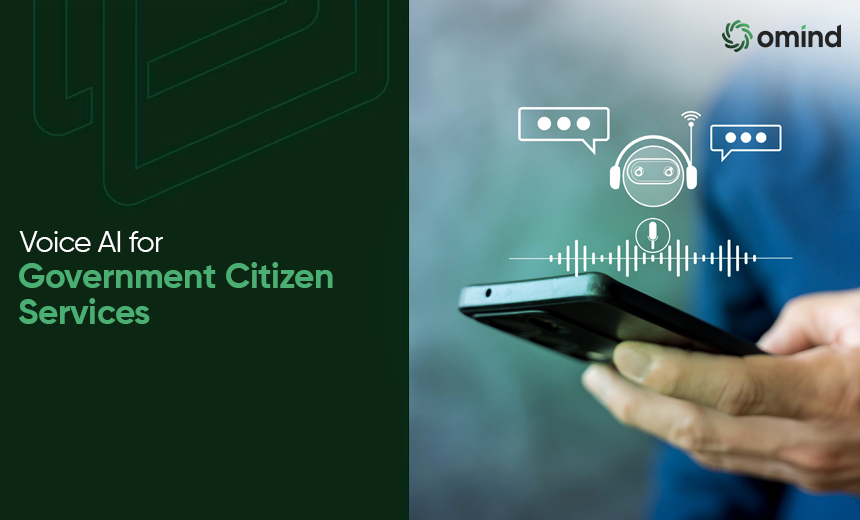
It loses credibility on a Tuesday at 11:22 AM when a citizen calls to check the status of a building permit, waits nine minutes on hold, and hangs up. That happens thousands of times a day. Across DMVs, municipal offices, social services departments, and licensing agencies, the volume of routine calls is relentless. The voice AI for government citizen services helps manage transactional request — status checks, document requirements, renewal deadlines.
However, those calls still consume agent capacity. Consequently, the agents who should be handling fraud disputes, accessibility accommodations, and benefits appeals are instead repeating the same renewal eligibility criteria for the fourteenth time that morning. The math does not work. And citizens pay for it with wait times.
Key Takeaways
- • Government contact centers lose credibility on routine calls — 70% are transactional status checks and renewals that consume agent capacity.
- • Legacy IVR systems with rigid menus create long hold times, repeated transfers, and abandoned calls, driving low ACSI satisfaction scores.
- • Voice AI answers immediately, understands natural language, pulls real-time data from government systems, and resolves routine queries in one call.
- • Intelligent escalation provides full context to agents, eliminating repetition and protecting capacity for complex cases like appeals and disputes.
- • 24/7 availability handles after-hours calls, multilingual support via real-time detection, and ensures equitable access without specialist staffing.
- • Delivers 30-50% queue reduction, higher first-call resolution, lower agent burnout, and maintains full compliance with public sector data security standards.
Where Legacy Systems Fail Citizens?
The problem is not that government call centers lack staff. It is that the systems routing calls were not built to handle modern call volumes at all. Most legacy IVR systems were designed in the early 2000s for a fraction of today’s traffic. Specifically, they were built on branching menu trees: “Press 1 for permits, Press 2 for renewals, Press 3 for…” The assumption was that citizens would self-sort neatly into categories.
They do not. A citizen calling about a delayed passport renewal does not know whether to press 2 or 4. So they press 0 to reach an operator. The operator queue fills. Hold times stretch. The citizen hangs up and either calls back twice more, or shows up in person — adding a second queue to the problem.
How Voice AI for Government Citizen Services Works?
A citizen calls about a vehicle registration renewal and says: “I got a notice in the mail about renewing my registration but I’m not sure what I need to bring.”
The voicebot processes that in natural language — not as a keyword match, but as an intent. It identifies the service category, cross-references the government database for current documentation requirements, and responds with accurate, specific information.
Specifically, the underlying architecture combines automatic speech recognition (ASR), large language model (LLM) reasoning, and real-time API calls to backend government systems. That means the voicebot is not reading from a static script. It is querying live data — permit status, appointment availability, eligibility criteria — now the citizen asks.
Consequently, resolution happens in a single call. The citizen does not need to visit the website, call back, or show up in person to get an answer they could have received in ninety seconds.
How to Handle the Calls That Actually Need a Human Agent?
Not every government call is routine. A citizen contesting a tax assessment needs a human. A benefits applicant with a complex eligibility question needs a case worker. A older person with limited English navigating a Medicare supplement program needs patience and expertise.
Voice AI does not replace those conversations. However, it does protect them. By resolving the high-volume transactional calls — the permit status checks, the renewal deadline questions, the document requirement queries — the voicebot clears agent capacity for the cases that require human judgment.
Specifically, the handoff matters. When a call does escalate to a live agent, the voicebot passes a full context summary: what the citizen said, what was already confirmed, what the system retrieved, and what remains unresolved. The agent reads the brief and picks up without making the citizen repeat themselves from the beginning.
According to McKinsey’s 2023 government digital transformation research, citizen satisfaction drops by 24% when they are required to repeat information across multiple touchpoints in the same interaction. Eliminating that repetition alone meaningfully changes how citizens perceive public service quality.
The After-Hours Problem Nobody Tracks
A small business owner realizes at 9:15 PM that their operating license renewal deadline is tomorrow. They call the licensing office, bur reach voicemail. They either panic, miss the deadline, or spend the next morning in a walk-in queue instead of running their business.
That lost call is rarely tracked inside government reporting. There is no abandoned call on the dashboard for after-hours voicemail. The consequence — a missed deadline, a frustrated citizen, a compliance lapse — shows up somewhere else, weeks later, as a complaint or an appeal.
Voice AI captures those moments. A citizen can call at 10:47 PM and ask about renewal requirements, appointment availability, or document submission status. The voicebot handles the query in real time, confirms what was resolved, and sends a follow-up message if needed. The service window expands to 24 hours without adding a single staff member to a night shift.
Multilingual Service Without Specialist Staffing
Language is one of the sharpest barriers to accessing government services. Specifically, in cities with large immigrant populations, residents who do not speak English fluently frequently report avoiding government services entirely — not because they are ineligible, but because the phone system fails them before a human ever answers.
Legacy systems either default to English-only menus or route non-English speakers into specialist queues with long wait times and limited availability. Consequently, service access becomes unequal by language — which is both an operational failure and an equity problem.
Voice AI resolves this at the infrastructure level. Real-time language detection identifies the caller’s language within the first few seconds of speech. The voicebot switches to the appropriate language and continues the interaction without requiring the citizen to select a language from a menu first.
That matters operationally. However, it also matters for government agencies subject to Title VI compliance requirements, which mandate meaningful access to services for limited-English-proficient individuals receiving federal funding.
How Intelligent Escalation Protects Complex Cases?
The escalation design is where most voice AI deployments for government citizen services succeed or fail. A poorly designed escalation sends a citizen from the voicebot to a hold queue, with no context transferred and no acknowledgment of what already happened. The citizen repeats their name, case number, and reason for calling — again.
A well-designed escalation works differently. When the voicebot identifies a call that requires human judgment — a contested decision, a complex eligibility case, an emotionally distressed caller initiates a warm handoff. The live agent receives a real-time transcript, a summary of what was resolved, and any flags the system identified.
The agent has already informed the call and citizens do not restart from the beginning. Consequently, the handoff stops being a friction point and becomes a continuation of the same interaction. That change directly affects first-call resolution rates, which the International Journal of Information Management identifies as one of the highest impact variables in citizen satisfaction with government services.
Compliance and Data Security in the Public Sector
Government agencies operate under stricter data handling requirements than most private sector organizations. Specifically, voice AI deployed in public sector environments must address:
- Call recording and retention policies aligned with public records laws
- Identity verification that meets agency-specific authentication standards
- Encrypted data transmission between the voicebot and backend government databases
- Audit trail generation for every interaction, accessible for compliance review
- Access control preventing the voicebot from surfacing protected case information to unauthorized callers
Omind’s Voice AI is built with these requirements as architecture constraints, not afterthoughts. The system generates tamper-evident interaction logs, restricts data access by caller authentication level, and operates within encrypted channels throughout the call.
That means agencies can deploy voice AI without creating a compliance gap in their existing data governance framework.
What Measurable Change Looks Like?
The operational shift shows up in specific numbers. Average hold time drops when transactional calls are removed from the agent queue. Government contact centers deploying voice AI for routine citizen requests typically see queue reduction in the range of 30 to 50% for high-volume service categories, according to Gartner’s 2024 Government CIO research.
After-hours call capture begins immediately. Appointments get scheduled, status requests get resolved, and deadline questions get answered during hours that previously generated only voicemail. First-call resolution rates improve when citizens stop cycling back through the system because their original call was not answered. Specifically, resolution in the first interaction removes re-contact volume that compounds the workload throughout the week.
Agent capacity shifts toward complex casework. However, the least visible benefit is retention. Agent burnout in government contact centers is driven significantly by the repetitive, low-complexity calls that fill most of the day. Removing that volume changes the daily experience of the job itself.
How Omind’s Voice AI Fits into Government Operations?
Voice agents connect directly to government database APIs, appointment scheduling systems, and case management platforms through real-time integrations. Citizens speak naturally. The system responds with accurate, live information. Routine calls get resolved. Complex cases get to the right human with full context already transferred.
The service lane stops hemorrhaging calls after 5 PM. The agent queue stops stacking up because a permit status check took twelve minutes to resolve. The voicemail inbox stops collecting deadline questions that nobody returns in time. Government contact centers do not fail citizens during emergencies. They fail during ordinary service moments — the calls that nobody measures, nobody escalates, and nobody follows up until the complaint lands somewhere upstream.
Voice AI for government citizen services closes that gap. Schedule a demo to see how Omind’s Voice AI works inside government service operations.