Weekly writing from the Omind team on how contact centers, BPOs, and enterprise CX teams are using AI to move the metrics that matter — compliance, CSAT, resolution, revenue. No hot takes. No hype. Just what we see working in live deployments.
Contact center leaders have never lacked data. What they often lack is clarity. Every day, thousands of customer interactions take place across voice and digital channels. Yet most quality teams
Voice assistant AI is no longer confined to smart speakers or novelty use cases. Across industries, businesses are embedding voice-driven automation directly into operational workflows—customer support, scheduling, internal IT helpdesks,
In contact centers, customer decisions rarely stall because of a single major failure. More often, they slow down due to small moments of hesitation—requests for repetition, pauses before confirmation, or
Generative AI voicebots are redefining how enterprises approach voice automation. Voicebots have been part of enterprise automation for years. Most early deployments followed a predictable pattern: define intents, design scripts,
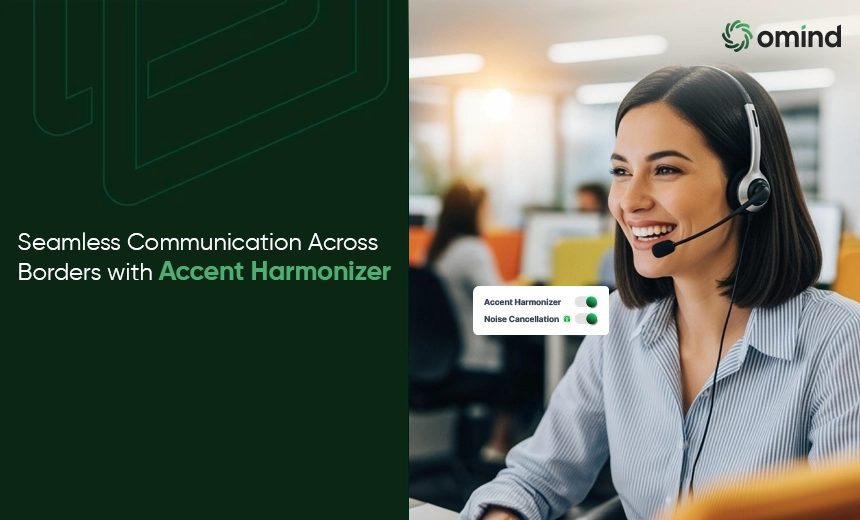
Global contact centers power customer experiences across time zones, cultures, and languages. As operations scale internationally, accent harmonization for contact centers is becoming essential. Theses platforms do not change how
Agent performance depends on more than product knowledge or soft skills. In global contact centers, clarity, comprehension, and communication consistency directly shape customer experience. Yet even the best coaching programs
Workers spend 3.2 hours per week trying to understand or gain clarity from someone’s poor communication. That’s 166 hours a year per employee just decoding unclear messages. The communication challenges
Voice automation has become a defining layer of enterprise customer experience, but many organizations still rely on legacy voice IVR systems designed around menu trees, keypad navigation, and static routing
Regulatory expectations are rising, auditing cycles are tightening, and customer interactions are becoming more complex. Yet many organizations still rely on checklists that review a fraction of interactions and highlight
For contact centers, the biggest shift underway is not in channels or workforce models—it’s in how quality is managed. Traditional QA programs were built for a slower operational rhythm, where
Customer expectations for digital conversations have fundamentally changed. People no longer want chatbots that simply match keywords, reroute queries, or read from rigid scripts. They expect natural dialogue, contextual understanding,
Customer satisfaction and loyalty increasingly depend on how easy, natural, and responsive a brand’s support experience feels. Whether a customer is asking a question, booking a service, or seeking help