# Omind AI | Contact Center Solutions for QMS, Voice AI & Automation
> Omind
---
## 10 Audience Engagement Strategies That Work
Grabbing your audience's attention is not a simple task, but it's a key to a successful presentation. How do people listen to some of the best speakers? When someone feels your conversation is involved and exciting, they listen to what you say.
One of the most effective strategies for [engaging the audience](/okf/page/blog.md) includes asking open-ended questions. This fuels the discussion and makes the presentation more interactive. Another tactic is to use storytelling methods rather than lecturing your audience. Visual aids like slides, videos, and infographics also help get the audience's attention. Moreover, energy and feedback can make your presentation even better. Let's explore ways to make that happen.
## **Strategy #1: Ask a series of "Raise Your Hand If…" Questions**
It is a simple strategy that many find effective for engaging the audience, including asking a series of 'Raise Your Hand If…' questions. For example, start your presentation by saying, "Raise your hand if you've ever struggled to stay awake during a long meeting." Now, you have everyone's attention, and people are already participating.
### **Benefits:**
- **Immediate Participation:** Gets everyone involved and grabs the attention immediately.
- **Interest:** Asking this type of open question may help you understand your audience's background and interests.
- **Positive Tone:** This method also sets an interactive and lively tone for the rest of your talk.
- **Comfort Level:** Makes the audience feel more comfortable and engaged.
A conversational method like this breaks the ice and creates a connection with your audience. Thus, a presenter may have a more active and engaged audience throughout the presentation. If you want to implement interactive techniques like this seamlessly into your business presentations, let Omind's innovative tools help you create engaging experiences.
Now that everyone has participated, let's add fun to the mix.
## **Strategy #2: Use Humor Appropriately**
Strategies for engaging the audience include many methods, but this one may strike many. Humour can be a powerful tool for engaging your audience and making your presentation memorable. A well-timed joke can lighten the mood, create a connection with your audience, and help you deliver your message effectively. However, a person who presents should ensure the humour is connected with the overall presentation goals.
### **Benefits:**
- **Builds Rapport:** Humor can help you connect with your audience personally and create a positive atmosphere.
- **Enhances Memory:** Many people remember information better when it's humorously presented. So, there is a way to get more attention from the audience during the presentation.
- **Relieves Tension:** Humor is one of the best ways to ease any tension or nervousness in the room.
Always remember that humor is subjective. What's appropriate for one person might not be suitable for another. So, prepare well in advance and tailor your humor accordingly.
So, you've made them laugh; what's next? How about getting some real-time feedback from your audience?
## **Strategy #3: Use Polling Tools**
A business can use many tools to poll its audience and learn their thoughts about its business or presentation. Using audience polling in your presentation can enhance engagement and provide [valuable insights](/okf/page/blog.md). By asking questions and gathering real-time feedback, you can create an outstanding and interactive experience for your audience.
### **Benefits:**
- **Increased Engagement:** Polling encourages immediate participation and keeps everyone involved throughout the presentation.
- **Valuable Insights:** You gain real-time feedback on your audience's understanding and interests using excellent polling tools.
- **Interactive Learning:** Pre-polling is useful for assessing prior knowledge, gauging comprehension, and creating a more dynamic learning experience.
Several user-friendly polling tools are available online, so choose one that best suits your presentation and technical capabilities.
With the insights gathered from polling, let's see how we can make your presentation more dynamic using social media.
## **Strategy #4: Engage Through Social Media**
The power of [social media](/okf/article/increase-engagement-social-media-strategies.md) is vast. Through it, you can extend your presentation's reach and improve ongoing engagement with your audience. Including social media elements in your presentation can create a more interactive and dynamic experience. Let's see the benefits of these tools.
### **Benefits:**
- **Expanded Reach:** Many people may use social media, such as WhatsApp, Instagram, and more. Share your presentation on social media to reach a wider audience.
- **Real-Time Interaction:** Encourage audience participation through live tweets, polls, and Q&A sessions.
- **Increased Engagement:** Develop a sense of community and connection by engaging with your audience on social media.
People can use platforms like X (formerly Twitter) to create unique hashtags related to your presentation topic. Enhance your social media engagement with Omind's AI-driven solutions, which help you analyze and optimize audience interactions in real-time. This will make it easier for audience members to share their thoughts and connect. You could also use tools like Everwall to show live social media feeds during your talk, making it more interesting and interactive.
While social media helps keep the conversation going, sharing your materials can keep your message alive long after your presentation.
## **Strategy #5: Distribute Presentation Materials**
Providing your audience access to your presentation materials in advance can extend the impact of your message and encourage further engagement. For instance, share your slides so the audience can review key points, share insights, and continue learning.
### **Benefits:**
- **Enhanced Learning:** Sharing material before the presentation will allow your audience to review key points and learn information at their own pace.
- **Increased Engagement:** If the audience learns things early, it encourages further discussion and exploration of the topics covered in your presentation.
- **Knowledge Sharing:** Your content may reach a wider audience as they share it with colleagues and networks.
You can easily distribute your slides using Microsoft PowerPoint and other tools. If such options are not reachable, encourage your audience to take photos of key slides, but remind them to respect copyright and usage guidelines.
Equipped with your materials, let's take your presentation to the next level with some eye-catching props and visual aids.
## **Strategy #6: Utilize Props and Visual Aids**
Physical objects have a role in the presentation. Many, such as visual aids, demonstration items, illustrative tools, and more, can improve audience engagement and understanding. Using props in your presentation will make your content more memorable and enjoyable to your audience.
### **Benefits:**
- **Increased Engagement:** Props can get attention and stimulate interest.
- **Enhanced Comprehension:** Visual aids such as smart class can help clarify complex ideas and reinforce key points.
- **Memorable Experience:** Using props can create a more engaging and memorable presentation.
For example, Neuroscientist Jill Bolte Taylor used a brain model to explain her ground-breaking research on stroke. With the brain, she could simplify complex scientific concepts and create a powerful visual learning experience.
By now, we've visually captivated the audience; let's make things even more immersive with some interactive exercises.
## **Strategy #7: Create Interactive Exercises**
Adding interactive activities to your presentation will transform it from a passive listening experience into a chance to learn actively. Hands-on tasks like dividing the audience into small groups can help your audience understand, remember, and be more interested in what you're saying.
### **Benefits:**
- **Active Participation:** Encourages audience involvement and prevents passive listening.
- **Skill Development:** Provides opportunities for participants to practice and apply new knowledge.
- **Enhanced Learning:** Deepens understanding through hands-on experience.
Interactive exercise strategies for engaging the audience include group discussions, role-playing problem-solving activities, and creative brainstorming sessions. [Omind's suite of interactive tools](/okf/page/digital-transformation.md) can help you design exercises that effectively engage and educate your audience. Modify your exercises to the specific content and learning objectives.
Great, they've been hands-on. Let's talk about the power of repetition to ensure they remember everything.
## **Strategy #8: Encourage Repetition for Enhanced Retention**
Repetition is a powerful tool for improving memory and learning. Again, say the key points throughout your presentation so your audience can retain that information. Reaffirming important ideas helps people understand them better and makes your message more powerful.
### **Benefits:**
- **Improved Recall:** Repeated information strengthens neural connections, making remembering easier.
- **Deeper Understanding:** Repeating key concepts reinforces learning and promotes deeper comprehension.
Numerous studies have proven that repetition enhances memory and learning. By using repetition in a presentation, a presenter can optimize the audience's ability to recall and apply the information presented.
Alright, we've drilled in the key points. Let's open the floor for some Q&A to wrap things up.
## Strategy #9: Incorporate Q&A Sessions
Q&A sessions are essential for developing meaningful engagement with your audience. So, before or after your presentation, a presenter can provide a platform for questions and discussions. Some tools help people ask questions during the presentation. This is essential for clarification, [feedback](/okf/article/developing-customer-insights-analytics-growth-sales.md), and deeper connection.
### **Benefits:**
- **Audience Interaction:** After the class, the audience may need some clarification. This encourages active participation and develops a sense of connection.
- **Clarification:** Provides an opportunity to address misunderstandings and provide additional information.
- **Feedback:** Offers valuable insights into audience needs and interests.
Consider using tools like Slido to manage Q&A sessions effectively. This tool allows the audience to submit questions in advance or during the presentation, ensuring the presenter addresses all questions.
There you have it! A slew of strategies to keep your audience engaged from start to finish."
## Conclusion
Strategies for engaging the audience include various techniques that ensure active participation and prevent audience boredom. A presenter can use interactive elements, storytelling, and audience-centred approaches for a memorable experience. Understanding your audience, tailoring your content, and delivering your message with passion and enthusiasm can decide the success of your presentation.
Other strategies for engaging the audience include building a connection with your audience. Such a presentation makes them feel valued and leave a lasting impression.
[Omind](/okf/page/schedule-a-demo.md) is a provider that uses technologies to offer exceptional [customer experiences (CX).](/okf/page/blog.md) The company leverages generative AI and data to transform how businesses engage with customers, employees, and stakeholders. Do you want to take your audience experience to the next level and improve productivity? [Let Omind guide](/okf/page/schedule-a-demo.md) you on a journey towards outstanding customer satisfaction.
---
## 10 best AI tools for business efficiency in 2024
## Introduction
The mandate is obvious — [AI is here to stay](/okf/page/marketing-ai.md). AI tools for business are revolutionizing processes like never before, offering clear direction and massive potential for future growth. Truth be told, despite all the current advancements in AI, the future holds boundless opportunities for how it can drastically alter everything. These tools are already being used to automate repetitive tasks and deliver highly personalized customer experiences.
Among other applications of AI, Machine Learning deserves special mention as it can be utilized effectively to develop predictive patterns following cognizant dataset analysis. These predictive patterns have found widespread use in fields such as retail and e-commerce, where ML is being tested to develop sustainable and more human-oriented business models.
## AI Tool 1: Predictive Analytics
Predictive Analytics refers to the appropriation of AI tools to analyze large datasets to develop predictive models on how a business would perform in a given time frame. Predictive Analytics is being increasingly automated, and actionable models can be developed with a few clicks of a mouse. Using datasets in ML, predictive analytics can deliver optimum value-oriented business models for managers to be better decision-makers.
With ample tools available, it is the task of business managers to select the correct tool for the right job. The focus should be on developing accurate predictive models that can be tested in real-time scenarios. In addition, it is crucial to identify the functional needs of the business in question to identify the best tools.
Business applications of predictive analysis include churn rate calculation, sales forecasting, market analysis, and competitor analysis. With these tools in the arsenal, it is becoming increasingly easier to apply these processes and obtain a functional blueprint to allocate time and resources.
### Top Predictive Analytics Tools
Following are the examples of Predictive Analytics tools in 2024. This is not a comprehensive list, and besides these tools, several other options remain accessible.
- Altair AI Studio
- H2O Driverless AI
- IBM Watson Studio
- Microsoft Azure Machine Learning
- SAP Predictive Analytics
- SAS
## AI Tool 2: Natural Language Processing (NLP)
Natural Language Processing (NLP) is an indispensable field of artificial intelligence that enables machines to comprehend and work with human language. The incredible versatility of NLP allows it to analyze and generate natural language across innumerable domains. This makes NLP an essential technology for countless business applications.
NLP is predominantly utilized in customer service to decode the neural programming of customer interactions and devise a formal set of standard communique that can effectively help customers feel more aligned with the service. Although NLP can not replace the value and purpose of human-centric customer interactions by real agents, it has significant use in automating repetitive tasks and setting the direction of effective communication.
NLP has three key subsets.
- Natural Language Generation (NLG)
- Natural Language Understanding (NLU)
- Optical Character Recognition (OCR)
These subsets are being tested as increasingly effective means of business communication. However, the limitation remains that [NLP](https://en.wikipedia.org/wiki/Natural_language_processing) can not interpret human behaviors as a human would. Despite having access to a wide range of datasets, NLP, at its best, can simplify the task of communications by presenting natural language options that may or may not be relevant in business interactions.
### Top NLP tools for businesses in 2024
- Natural Language Toolkit (NLTK)
- Microsoft Azure
- IBM Watson
- Amazon Comprehend
- MindMeld
- OpenAI
- Google Cloud
- Stanford CoreNLP
- spaCY
- Monkey Learn
## AI Tool 3: Machine Learning Platforms
[Machine Learning ](https://en.wikipedia.org/wiki/Machine_learning)is a broad subset of Artificial Intelligence, wherein data and algorithms are analyzed in computing systems to enable them to learn the application of these models through a gradual process, just like a human would.
Machine learning platforms offer users an array of tools to create, implement, and refine machine learning algorithms. By streamlining data workflows, expediting data processing, and optimizing pertinent functions, these platforms enable users to fully harness the power of machine learning technology.
With machine learning platforms, users can build and deploy highly sophisticated algorithms to uncover insights, make predictions, and drive automation across diverse industries and applications. Whether you are an experienced data scientist or just beginning your machine learning journey, these platforms provide the robust capabilities and intuitive interfaces needed to bring your innovations to life.
Developing predictive models is a benchmark application of Machine Learning. It is predominantly used in the retail segment to identify customer interaction patterns across different systemic verticals. The insights obtained deliver significant accuracy, thereby making ML platforms a plausible choice for organizations.
### Machine Learning Platform Features
- Data-focused decisions
- Improving products and services
- Automation saves time and resources
- Shared insights through the application of collaborative tools
- Scalable data science through user-friendly features
- Simplified and out-of-the-box solutions
- Optimization of user experience via data visualization and augmentation
### Top Machine Learning Tools for Businesses
- Google Cloud Machine Learning engine
- Amazon Sagemaker
- MS Azure Machine Learning
- IBM Watson
- Tensor Flow
- Data Robot
- Rapid Miner
- Alteryx
- Data Bricks
- BigML
## AI Tool 4: Robotics Process Automation (RPA)
[Robotic process automation (RPA)](/okf/page/intelligent-automation.md) is a powerful software technology that can streamline business operations. By leveraging software robots, companies can automate repetitive, rules-based digital tasks previously performed manually. These software bots function just like human workers; they can interpret data on screens, enter information, navigate systems, find and extract relevant data, and execute a variety of predetermined actions.
RPA enables the automation of workflows across multiple departments and systems, freeing up employees for more strategic initiatives that drive growth. Adopting RPA can increase productivity, reduce costs, minimize errors, and improve compliance—all with rapid implementation times.
Traditionally, RPA is not a subset of Artificial intelligence but a precursor. However, RPA can be seamlessly blended with AI processes such as Machine Learning and NLP to deliver outstanding results. The process, called Intelligent Automation, has found widespread applications across industry verticals.
### Top RPA tools to watch out for in 2024
- UiPath
- Automation Anywhere
- Blue Prism
- Power Automate
- PEGA
- Nintex Foxtrot RPA
- Kofax
- Kyron
- Fortra’s Automate
- Appian
## AI Tool 5: AI-optimized Hardware
Artificial intelligence has progressed rapidly, fueled by specialized hardware innovations. AI hardware refers to chips and devices engineered explicitly for AI processing. Rather than rely on generic computer components, companies now design custom silicon chips to handle AI algorithms efficiently. These include central processing units optimized for neural networks, graphics cards tailored for parallel matrix calculations, and field-programmable gate arrays that can be configured for diverse AI workloads. Such application-specific hardware accelerates machine learning and allows more powerful AI applications.
AI-optimized hardware has a significant impact on processing speeds, as AI enables hardware components with precise algorithms to eliminate the need for redundant tasks. Hardware is evolving to be a crucial aspect of AI, especially in ML. Such hardware has found niche applications in fields such as blockchain technology, where a huge amount of processing speed is required.
### Examples of AI-optimized hardware innovations
- Application Specific Integrated Circuits (ASICs)
- Graphical Processing Units (GPUs)
- Tensor Processing Units (TPUs)
- Field Programmable Gate Arrays (FPGAs)
- Deep Neural Networks (DNNs)
- Neuromorphic Chips
Maximizing the output of AI-driven processes would require hardware solutions with exceptional computing abilities. Such purpose-built hardware is being selectively applied across various industries in 2024 to keep up with the AI revolution. The hardware built to process AI tasks is equipped to perform diverse tasks such as parallel processing, data accessibility, and scalability.
## AI Tool 6: Virtual Agents/Chatbots
When customers are left waiting on hold for information, satisfaction plummets. With virtual agents, however, businesses can empower their customers to find answers on their own. By providing quick, easy access to key details, businesses create a smooth, pleasant experience that keeps customers coming back. Whether it's checking order status or handling a refund, virtual agents handle routine requests, freeing human agents to focus on complex issues requiring a personal touch.
With AI, these virtual agents can effectively analyze customer data in delivering personalized recommendations along with tailored interactions. In the end, AI-powered self-service gives customers the efficient, satisfying experience they want while enabling companies to provide better service. By implementing virtual agents, businesses can transform the customer journey from frustrating to frictionless.
### Leading virtual agent platforms in 2024
- Amazon Alexa
- Siri
- Google Assistant
- ClickUp AI
- Copy.ai
- Zapier AI
- Notion AI
- Jasper Generative AI chatbot
- 1MindPal
- SaneBox
## AI Tool 7: Decision Management AI
The topic of artificial intelligence decision-making often arises in discussions surrounding AI. When data processing is handled entirely or partially by an AI system without human oversight, the ability to make sound judgments becomes critical. AI-powered decision-making enables the quantification of data, precise choices, accurate forecasts, and the identification of patterns.
Such platforms can detect anomalies, process complex data, conduct multifaceted analyses, and discern trends. The final determinations may be fully automated or passed to human operators. Examining how artificial intelligence platforms reach conclusions and take action autonomously, with the right checks and balances, is an important endeavor as these technologies continue proliferating.
The integration of artificial intelligence into business processes promises immense benefits through enhanced decision-making capabilities. By leveraging AI's unparalleled ability to rapidly analyze vast datasets, companies can reach conclusions and make choices with greater speed, precision, and consistency than ever before. This allows teams to dedicate their efforts towards more meaningful work rather than repetitive analytical tasks.
With AI assuming the brunt of data-intensive operations, workers are freed to apply their expertise where it is most impactful. Adopting AI-driven decision-making allows an organization to boost productivity, reduce costs, and make the most of its talent.
### Key decision management AI tools for 2024
- ClickUp
- Athenic AI
- Baseboard
- AI Consulting Tools
- Findly AI
- Plot GPT
- Hal9
- Intellibase
- ChartAI
- Smarter Sales
## AI Tool 8: Biometrics
Biometrics are biological measurements or physical traits that can be leveraged to identify people. The most widely recognized forms of biometric technology include fingerprint matching, facial recognition software, and retinal scanning. However, researchers have discovered additional unique identifiers that further expand the definition of biometrics.
These include the distinct shape of one's ear, gait patterns, singular body odors, vascular patterns on the hands, and even idiosyncratic facial expressions. While less familiar than fingerprints or facial recognition, these novel biometrics offer new possibilities for sophisticated identification systems. By broadening the range of measurable biological characteristics, scientists are continuously refining and enhancing biometric technologies.
Biometric identification plays an increasingly vital role in modern security. Our physical characteristics are unique to each individual—even identical twins possess distinct biometrics. An individual's unique biometrics can replace or improve password systems for devices, networks, and restricted spaces. Once acquired, biometric data is stored and matched against future access attempts. Typically, biometrics are encrypted and stored locally or on remote servers.
Biometric scanners are specialized hardware that captures and verifies identity via biometrics. These devices scan users and validate their identity by matching against encrypted biometric databases. In other words, with biometric security, the body becomes the key that unlocks access.
### Biometric tools recommended for businesses in 2024
- Socure
- CrossMatch
- Data Grail
- Vision Box
- Ikena Forensic
## AI Tool 9: Blockchain AI
The partnership between blockchain and artificial intelligence brings exciting possibilities. These two cutting-edge technologies can build upon each other's strengths to transform many sectors. Blockchain's decentralized framework offers solutions to pressing AI challenges like data privacy and trust. Its transparency and encryption safeguard sensitive information.
Meanwhile, AI's powerful analytical capabilities can optimize blockchain networks. Together, they pave the way for next-generation systems that are efficient, trusted, and intelligent. The synergistic fusion of blockchain and AI has immense disruptive potential.
Crypto mining is a core notion of applying blockchain technology to cryptocurrency. Advancements in artificial intelligence present promising opportunities for enhancing cryptocurrency mining operations. By leveraging AI's computational prowess, you can optimize mining algorithms to solve cryptographic puzzles with greater efficiency. This increased efficiency enables higher mining output and return on investment.
AI systems can analyze complex mining algorithms and identify areas for performance improvements. The formal integration of AI into mining systems allows for the automation of optimizations that previously required extensive human effort. With AI's help, mining endeavors stand to become even more productive and financially rewarding.
### Examples of how Blockchain AI applications various industries
Apart from crypto mining, different segments including financial services, healthcare, and life sciences are using blockchain. To sum up, AI can be used to automate repetitive tasks, wherever you use Distributed Ledger Technology to procure datasets with an immutable timestamp,. In addition, the transparency and data-solidity of blockchain technology have diverse AI applications.
### Leading Blockchain AI tools for 2024
- Graph (GRT)
- Ocean Protocol
- RNDR
- Covalent
## AI Tool 10: Quantum Computing
Quantum computing represents a revolutionary new form of computation based on the principles of quantum mechanics. Rather than classical bits that can exist in binary states of 0 or 1, quantum computers utilize qubits that can embody a superposition of both 0 and 1 simultaneously. This property enables quantum computers to perform multiple calculations in parallel, harnessing the power of quantum parallelism. As such, quantum computing holds immense promise for tackling complex computational problems intractable for classical machines, especially in critical fields like artificial intelligence.
##### The impact of quantum computing:
- Data processing is million times faster in quantum computing
- Quantum computers can effectively manage complex optimization problems that are critical in AI
- Quantum computing can develop large-scale AI architectures
- AI systems can learn faster in quantum computing
- You can use Quantum AI to protect sensitive data
### Quantum computing tools that businesses should consider in 2024
- PROJECTQ
- CIRQ
- Q-CTRL PYTHON OPEN CONTROLS
- QUANTIFY
- INTEL QUANTUM SIMULATOR
- PERCEVAL
- MITAQ TOOL
## Conclusion
Optimizing AI tools to improve business efficiency is an evolutionary process with widespread applications for business organizations. By effectively utilizing these tools, you can attain unprecedented levels of computing precision. However, Artificial Intelligence is not entirely devoid of the human connotation. The very purpose of AI in businesses is to develop solutions for human needs rather than ignoring them.
2024 is an exciting year for AI with continual innovations likely to happen AI holds the pulse of business initiatives, and it is important to keep up with the new tools to remain competitive. Businesses need to find cost-effective models of AI implementation across diverse spectrums, a process already set in motion.
While [choosing AI tools with Omind](/okf/page/schedule-a-demo.md), businesses need to account for the purposefulness and functionality of the tools. Furthermore, understanding the importance of UX in AI management is a critical factor. However, it is always critical to remember that AI and human-centric oversight complement each other, rather than replacing the latter for the former. Schedule your free Omind demo & see the power of AI-driven experiences and how they can help complement your business!
---
## 10 Best AI Tools for E-commerce to Drive Sales in 2024
E-commerce thrives on creating a loyal customer base, and customer retention is the key. Leveraging AI Tools for Ecommerce helps companies efficiently promote brand loyalty, reduce churn, and maintain the trust of existing customers. Since acquiring new customers costs more than retaining current ones, businesses must invest time and resources in strategies powered by AI to keep their audience engaged and satisfied.
Existing customers are more likely to spend more on your platform because they have already tried out the platform and have a positive experience. In the age of social media and customer reviews, it is worthwhile to go that extra mile to help customers feel at home with your e-commerce brand.
E-commerce is continuing to evolve with new tools designed to enrich the shopping experience. With the advent of AI tools such as [virtual chatbots](/okf/page/chat-ai.md) and customer segmentation, it is becoming increasingly cost-effective to cater to big groups of customers at once. Loyal customers also serve as de facto brand ambassadors through social media and word-of-mouth campaigns. The age-old dynamics of buyer-seller relationships have only gotten richer with the application of new methodologies.
Research indicates that a 5% increase in customer retention strategies can cost a 25% increase in revenue. Market stats underscore the overwhelming importance of investing in customer retention strategies. Do you know that businesses can enjoy a 70% more chance of selling to an existing customer than for a new prospect, which stands at around 20%? Customer churn costs, on average, cost US businesses $168 billion per year. Given this data, investing in retention strategies should be a cornerstone aspect of businesses, especially in e-commerce.
## What is Customer Retention and Why It Matters?
[Customer retention](/okf/article/e-commerce-retention-tactics-trends.md), from the perspective of e-commerce, is broadly defined as the set of strategies applied to maintain and encourage the existing customer base. The objective is to keep the churn value as close to the ideal 0%. It’s all about trust. People look for a reliable shopping experience in e-commerce, replete with discounts, offers, and rewards. You give them what they want, and make the shopping experience enjoyable.
Customer retention, from a generic viewpoint, is a tier 2 strategy. While tier 1 focuses on acquiring new buyers, tier 2 takes the task forward by holding on to maintain the positive shopping experience that brought the buyer to your store in the first place. You need to constantly rethink and reinvent, instead of taking brand loyalty for granted. The more focus is placed on reducing turnover, the more confident is the decision-making process, because now you are backed by the support of a loyal user base.
Over time, customer retention is an effective strategy to increase ROI. Make shopping an esteemed experience, offering happiness and satisfaction. Utilize AI methods such as Market Basket Analysis, Chatbots, Churn Prediction, cross-selling, and Customer Review Analysis to develop a foolproof strategy that is bound to dividend as overall business growth over time.
## Measuring Customer Retention Rate
Measuring Customer Retention Rate (CRR) offers you crucial practical insights into the factors affecting churn. Identifying these key aspects serves as an important reminder to take the necessary steps to maintain brand loyalty.
Here’s how you measure the CRR. In this formula, S denotes the number of customers you have at the start of a business cycle. E denotes the number of customers onboard till the end. N implies the number of new customers acquired during this period.
CRR is calculated as \[(E -N)/S\] x 100.
For example, you have 70 customers at the start of the month (S). You lose 10 customers and gain 15 new buyers. The E value is (70 -10) = 60.
The CRR is \[(60 - 15) /70\] x100.
## Top 10 Customer Retention Strategies for E-commerce
### Implement a customer loyalty program with tiered benefits
Make shopping a profitable experience for your loyal customers. Provide them with tiered benefits that emphasize the value of continuing to purchase from you. It is a failsafe strategy that maintains your vision as a long-term e-commerce partner.
### Send targeted SMS and email marketing campaigns to win back customers
Utilize the customer retention data to improve the esteem-value for buyers. When people feel appreciated and encouraged, they are inclined to return to your services. Targeted SMS and email marketing strategies can go a long way in your customer retention plan.
### Identify and tailor experiences for high-converting customers
You need to make shopping with you an experience in familiarity. Customers should feel that they are being noticed for placing their trust in your store. Using AI tools, you can easily identify and tailor experiences for high-converting customers. Identify shopping patterns using the Apriori algorithm, and present offers concurrent with your Market Basket Analysis.
### Get customer support involved in the customer journey
[Customer support in e-commerce](/okf/article/from-call-centers-to-ai-powered-voicebots-revolutionizing-ecommerce-customer-support.md) can enact the same responsibilities as salespersons in a brick-and-mortar store. The better and more proactive your customer support is, the brighter your chances of maintaining a high customer retention rate.
### Follow up immediately with new customers to boost retention
E-commerce thrives on building relationships of value with customers. Immediate follow-up after a purchase helps you to identify customer interaction patterns and address them accordingly. Make use of AI tools such as Natural Language Processing to understand the nuances of supporting a buyer on his or her journey at your e-commerce enterprise.
### Create a referral program that incentivizes word-of-mouth marketing
Although word-of-mouth marketing is difficult to quantify, a referral program can serve as a competent index. Offering a good referral program, armed with incentives and rewards, can help you expand your relationships with your loyal customer base. You need to make shopping with you a family experience, for all it takes.
### Stay in touch with customers and exceed expectations
Understand the human element in customer user experience. In other words, find out the emotional factors that drive customers to shop from your store, or to leave your services. This approach should help you to identify the expectations of customers and exceed them. The key aspect, as always, is to make people feel appreciated to shop from yours.
### Continuously gather insights to learn more about your customers
Data can be a lifesaver when it comes to understanding customer expectations. Using AI Tools for Ecommerce, you can effectively identify the emotional factors that lead customers to your store or away from it. Your goal should be to encourage the factors that make people prefer your shopping experience. Sentiment analysis, powered by these AI tools, serves as a crucial dataset to gather valuable insights about your customers.
### Use Conversion Rate Optimization (CRO) to improve retention
Conversion Rate Optimization can serve as an effective tier 1 strategy to develop a strong customer base. While you may have been successful in driving traffic to your site with Search Engine Optimization, it is not enough. You will have to implement cost-effective CRO strategies to convert interested visitors into paying customers. Investing in long-term CRO strategies can prove to be a highly profitable experience.
## Leveraging Technology and Personalization
While technology plays a critical role across all business functions, its impact on customer retention efforts is particularly profound. By arming companies with advanced analytics and [automation capabilities](/okf/article/ai-automation-exploration.md), technology empowers businesses to gain a deeper understanding of each customer’s unique needs and preferences.
This granular insight allows organizations to track detailed customer journeys, identify behavioral trends, and predict future requirements. With this intelligence, businesses can design hyper-personalized marketing campaigns, customized product recommendations, and tailored customer experiences that delight existing patrons and nurture lasting loyalty. Automation further enhances retention by enabling the delivery of individualized service at scale, resolving customer issues swiftly, and fostering meaningful connections that make customers feel valued.
To sum up, technology is an invaluable asset for businesses seeking to boost retention, as it provides the tools to know customers profoundly and serve them in a personalized manner that strengthens emotional bonds. When leveraged effectively, technology helps companies transform customer retention from a transactional process to an intimate, customer-centric experience.
### Examples of successful technology implementations in customer retention
Technology can and does play a vital role in maintaining an optimum Customer Retention Rate. using technology for identifying engagement patterns and offering a personalized shopping experience may not be enough. You can do more by exploring other aspects of technology such as Augmented Reality, live chat, and social media analytics.
The Chemical Guys is an e-commerce brand selling household chemical products. They embarked on a social media analytics process to understand that customers are more attracted to giveaways on social media. Their Instagram campaign successfully converted a significant percentage of customers into brand ambassadors.
CROSSNET used technology to optimize the customer support experience. They integrated a tool called Gorgias with their e-commerce platform. This integration provided customers with the convenience of tracking, canceling, and returning orders via a chatbot. This tool was complemented with live support via real agents. Their endeavor witnessed a significant improvement in customer retention.
Another good example is that of fashion brand Tommy Hilfiger. The brand leverages technology to hold live online fashion shows allowing customers the opportunity to order their apparels immediately.
Also Read: [AI Chatbots: Enhancing E-commerce Service](/okf/article/chatbot-for-ecommerce-the-ultimate-guide-to-boosting-customer-service-with-ai.md)
### Beyond the Basics: Advanced Retention Techniques
Investing in retention holds the possibility of becoming a cornerstone strategy in your sales campaign. Advanced retention techniques for loyal customers can go a long way in bringing in more revenue for your brand. A time-tested strategy is to provide exclusive deals and members-only pricing to craft a highly personalized shopping experience.
You should also focus more heavily on post-purchase communication to enhance customer experience. Saying thanks to your customers after they have purchased from your e-commerce store can be an effective way to establish rapport. Trained customer service agents can effectively establish rapport with customers, making them feel at home.
Data analytics has evolved to be a game-changer in how brands interact with customers. By deploying advanced [data analytics methods](/okf/article/customer-interaction-data-analytics-basics.md), aided by AI, you can maintain a deeper insight into customer engagement. Data analytics can be used to set up predictive models, customer review models, and even fraud detection systems, all of which have a strong impact on maintaining customer loyalty.
Last but not least, content strategies have proven to be extremely effective. At all stages of the product life cycle, content can give voice to the experience, making it more personal and relatable. Investing in content strategy to express customer experience with your brand, and the human factors centered around it, tells a telltale story of how amazing it is to live in an e-commerce world. Maintaining content resources such as FAQs, best practices, articles, and blogs has also proven to be a valuable long-term retention method.
### Implementing and Monitoring Your Retention Strategy
Retention strategies need to be monitored from time to time to make them work. Also, as branding continues to evolve, so should retention methods. Interpreting customer timing and intent, and matching it with adept messaging can drive sales. You need to focus on the principle customer retention metrics to interpret if the strategies in the process are working as they should.
Most importantly, customer feedback will let you know how far you have achieved with your retention methods. Analyzing feedback and developing predictive models using AI can be crucial in enriching customer journeys with your products. You need to keep a close watch on evolving market scenarios to understand how customer’s needs change over time. As priorities shift, you should be able to adapt, to maintain the relevance of your retention methods.
Also Read: [Using Generative AI to Elevate Your E-commerce Business](/okf/article/generative-ai-in-ecommerce.md)
## Customer Retention Trends to Watch
Keep a close watch on emerging trends in e-commerce that promise to offer a more immersive shopping experience. The newest trends include the incorporation of Augmented Reality, voice search, and offering new ways to pay. AI is playing a big and important part in reshaping the shopping experience, along with providing e-commerce managers with optimum data-driven insights.
Advancements in AI and Machine Learning are making companies more adept at delivering a promising user experience to customers. Artificial Intelligence is extremely useful in understanding the patterns that make people decide on whether to shop from you. Using AI to develop predictive models on customer interaction, experience, and engagement is helping brand managers to become more intuitive. The decision-making process has been simplified by data-led insights, and as AI evolves, so does e-commerce.
Sustainability and brand value are becoming key buzzwords in e-commerce cycles. Many companies invest in altruistic campaigns to establish a stronger emotional connection. Prioritizing sustainability over a solely profit-driven approach can ultimately result in greater retention as people are more inclined to buy from a service that invests in a greener future.
## Conclusion
The best retention strategies are those that can establish an emotional connection with customers. For shopping to be more inclusive, retentive methods such as personalization, data analytics, and AI-aided predictive models can be extremely beneficial. Investing in retention as a strategy for long-term success can be instrumental in reducing churn, and even attracting new customers, who are ready to convert.
Constant innovation is the key, and innovating should be directed towards offering a heightened personalized experience to shoppers. [Schedule a demo with Omind](/okf/page/schedule-a-demo.md) to understand how its effective tools can improve customer retention.
---
## 10 Essential Tips for Crafting an Effective Social Listening Strategy for D2C Brands
In today’s digital-first world, businesses are constantly competing for attention in crowded online spaces. The ability to effectively track, analyze, and respond to consumer conversations is a game-changer. A well-crafted **Social Listening Strategy for D2C Brands** enables companies to not only monitor customer sentiment but also gain invaluable insights that can improve customer engagement, inform product development, and drive ROI.
For direct-to-consumer (D2C) brands, social media monitoring is crucial for navigating the fast-paced, ever-changing landscape of online conversations. In this blog, we’ll walk you through 10 essential tips for creating an effective social listening strategy to elevate your D2C brand’s presence and build stronger customer relationships.
Ready to transform your approach to social listening? [Start your free trial](/okf/page/social-listening-free-trial.md) with **Omind’s advanced social listening tools** today and experience the power of data-driven customer insights.
### **Why Social Listening Is Essential for D2C Brands**
In a world where consumers are increasingly engaging on social media, understanding their preferences, sentiments, and feedback is vital. [Social listening](/okf/page/social-listening.md) has become an indispensable strategy for businesses looking to stay ahead of the curve, especially in the D2C sector.
By using social listening tools like **Omind**, brands can gain real-time insights into how their customers feel, identify emerging trends, and anticipate market shifts. This proactive approach not only allows businesses to engage with their audience in real-time but also helps them make data-backed decisions that foster growth and customer loyalty.
"Social listening isn’t just about [monitoring brand mentions](/okf/article/beyond-mentions-how-leading-brands-use-social-listening-for-strategic-insights.md)—it's about connecting with the voice of your customers," says Omind's team. "It’s how modern brands remain agile and relevant."
Start your free trial with [**Omind**](/okf/page/home.md) and harness the power of social listening to amplify your brand's success.
### **Setting Clear Objectives for Your Social Listening Strategy**
Setting clear goals is crucial for a successful social listening strategy. D2C brands need to define specific outcomes to measure the effectiveness of their campaigns. Here are a few objectives to consider when implementing social listening:
- **Enhance customer engagement**: Track real-time feedback to refine [customer interactions](/okf/article/customer-interaction-data-analytics-basics.md).
- **Monitor brand perception**: Understand how your audience perceives your brand.
- **Identify areas for product improvement**: Gather insights from customer conversations to improve your offerings.
By setting clear objectives, you ensure that your social listening efforts are aligned with your broader business goals, ultimately leading to more measurable results.
**Omind** provides an intuitive dashboard to track these objectives effectively. Start your free trial to see how we can help you achieve your business goals.
### **How to Choose the Right Social Listening Tools**
Choosing the right **social listening tools** can drastically impact how well you capture and analyze valuable data. For D2C brands, it's essential to select tools that go beyond simple brand mention tracking and offer advanced capabilities such as:
- **Sentiment analysis**: Understand whether your brand is viewed positively, negatively, or neutrally by consumers.
- **Consumer feedback analysis**: Extract actionable insights from reviews, comments, and other user-generated content.
Look for tools that help you engage with your customers by providing [detailed sentiment insights](/okf/article/sentiment-analysis-for-linkedin-instagram-facebook-x-ai-social-listening.md) and real-time feedback analysis. **Omind’s** platform is equipped with advanced features to help you capture and interpret customer sentiment at scale. Start your free 30-day trial and experience the difference.
### **Analyzing and Interpreting Data from Social Listening**
Social listening isn’t just about collecting data—it’s about interpreting it to gain valuable insights. For D2C brands, effective analysis of social data can help improve:
- **Brand perception**: Monitoring customer sentiment and engagement metrics allows you to address any potential reputational risks early.
- **Customer insights**: Real-time data enables you to adapt your strategies and optimize products based on customer preferences.
With the sheer volume of data generated across social media platforms, D2C brands need robust tools to filter through it and identify actionable insights. **Omind’s** analytics dashboard makes it easy to convert raw social data into strategic decisions that drive growth.
[Start your free trial today](/okf/page/social-listening-free-trial.md) to unlock the full potential of your social listening data.
### **Tracking Trends and Conversations in Your Industry**
To stay competitive, D2C brands need to constantly monitor industry conversations and trends. Social listening helps you track how your audience interacts with your products, while also providing insight into larger industry conversations.
Key benefits include:
- **Uncover emerging trends**: Stay ahead of competitors by identifying trends before they become mainstream.
- **Optimize marketing strategies**: By analyzing user-generated content and [engagement metrics](/okf/page/blog.md), businesses can fine-tune their marketing efforts.
With **Omind's** trend detection algorithms, you’ll spot critical shifts in industry conversations early on. Start your free trial to keep your finger on the pulse of emerging trends.
### **Engaging with Your Audience through Social Listening**
Social listening isn’t a one-way street. It’s about actively engaging with your audience to build stronger relationships. By tracking customer conversations, brands can:
- Respond to real-time feedback
- Address customer inquiries and complaints
- Foster a sense of community
Active engagement through social listening helps create loyal customers and advocates. With **Omind’s** engagement tools, you can reply to customer interactions directly within the platform, streamlining your [social media management](/okf/article/increase-engagement-social-media-strategies.md).
### **Leveraging Social Listening for Brand Reputation Management**
In an age where consumers have a platform to voice their opinions, social listening is a powerful tool for managing your brand’s reputation. By continuously monitoring conversations about your brand, you can:
- **Identify and respond to reputational threats**: Quickly address negative sentiment before it escalates.
- **Build trust**: Engaging with customers shows that you value their opinions, turning negative experiences into opportunities.
With **Omind’s** real-time alerts and sentiment tracking, you can monitor your brand’s reputation 24/7 and stay ahead of potential PR crises. Start your free trial and protect your brand’s reputation today.
### **Measuring the Effectiveness of Your Social Listening Strategy**
To determine the success of your social listening efforts, [measure key performance indicators](/okf/article/call-center-metrics-examples-performance-tracking.md) (KPIs) such as:
- **Engagement rates**: How well is your audience interacting with your brand?
- **Sentiment analysis**: Are customers’ feelings about your brand improving?
- **Conversion metrics**: How effective are your social listening efforts at driving conversions?
Regularly assess your goals to ensure your strategy is delivering results. **Omind’s** detailed reporting tools help you track these KPIs with ease. Start your free trial to measure your social listening ROI.
### **Continuous Improvement: Evolving Your Social Listening Approach**
The digital landscape is constantly evolving, and so should your social listening strategy. To stay ahead, brands must:
- **Regularly reassess goals**: Social media trends and consumer behaviors change, so adjust your strategy accordingly.
- **Incorporate emerging technologies**: Stay updated with new social media platforms and technologies to continue improving your social listening approach.
By fostering a culture of continuous improvement and collaboration, brands can remain agile and responsive to changing customer expectations. **Omind** keeps evolving with the latest trends, so your brand can stay ahead. [Start your free trial](/okf/page/social-listening-free-trial.md) to stay on top of your game.
---
## 10 Generative AI Tools for Marketing in 2024
The marketing landscape is evolving rapidly with the advent of generative AI tools. By 2024, these tools are set to redefine marketing strategies, offering unparalleled capabilities in content creation, personalization, and automation. This article explores how generative AI is shaping the future of marketing and highlights ten tools that are leading the charge.
## [Generative AI](/okf/article/generative-ai-in-ecommerce.md) Tools for Content Creation:
Content creation is the cornerstone of any marketing strategy. Generative AI tools are transforming this domain by automating and enhancing content generation:
1. **ChatGPT:** Transforms conversational marketing by generating human-like responses. It engages users, answers queries, and assists in content creation—making it a powerful tool for enhancing customer interactions.
2. **Jasper:** An AI writing assistant that quickly produces blogs, social posts, and marketing copy. It helps marketers save time while maintaining high content quality.
3. **CopyAI:** Speeds up content creation for blogs, social captions, and ads. It generates creative, audience-focused content to beat writer’s block and boost engagement.
4. **Rapidely:** Focuses on social media content planning and scheduling. It ensures a consistent, engaging brand presence across platforms.
5. **Frase:** Optimizes content for SEO using AI. It analyzes top-ranking pages and offers actionable recommendations to improve search performance.
## [Generative AI Tools for Personalization and Customer Engagement](/okf/article/customer-engagement-automation-strategies.md):
Personalization is a key driver of customer engagement. Generative AI tools enable businesses to deliver personalized experiences at scale:
6. **Einstein GPT (Salesforce):** Automates workflows and generates personalized content using customer data—boosting engagement and driving sales.
7. **Manychat:** Enables personalized, AI-powered chatbot conversations. It assists with recommendations, answers queries, and even processes transactions—enhancing the customer experience.
8. **Persado:** Creates data-driven, personalized calls to action. It analyzes language and audience insights to craft CTAs that drive higher conversions.
9. **Phrasee:** Improves email performance by generating personalized subject lines. Its AI boosts open rates and enhances email campaign impact.
## [AI Tools for Omnichannel Marketing and Automation](/okf/page/marketing-ai.md):
Effective ad copy and design are crucial for capturing attention. Generative AI tools are streamlining this process:
10. [**Omind Marketing AI**:](/okf/page/marketing-ai.md) Achieve marketing goals with real-time data and AI. [Omind Marketing AI](/okf/page/marketing-ai.md) crafts customer-centric journeys, delivering cohesive, responsive, and personalized experiences. Experience integrated omnichannel messaging across various platforms for unified communication. With Marketing AI, automate and optimize campaigns for enhanced engagement. Seamlessly integrate with e-commerce platforms and ensure enterprise-grade security.
## [Emerging Trends in Generative AI for Marketing](/okf/article/leveraging-ai-predictive-personalization-marketing.md)
Generative AI goes beyond content and personalization—it’s transforming data analytics:
- **Sentiment Analysis:** It interprets feedback and social media to reveal customer sentiment and guide improvements.
- **Predictive Analytics:** AI forecasts customer behavior, enabling marketers to stay ahead of trends.
## [The Role of Generative AI in Data Analytics and Insights](/okf/article/personalized-shopping-customer-experience.md)
Generative AI is reshaping more than just content and personalization—it’s also driving smarter data analytics:
- **Predictive Analytics:** AI analyzes customer data to forecast behavior, helping marketers anticipate trends and adjust strategies.
- **Sentiment Analysis:** By scanning feedback and social media, AI gauges customer sentiment, offering insights to enhance products and services.
## Challenges and Considerations in Implementing Generative AI
While generative AI offers numerous benefits, there are challenges and considerations that businesses must address:
- Ethical Concerns: As AI generates content, ethical considerations around transparency, authenticity, and potential misuse must be addressed.
- Data Privacy: Ensuring the privacy and security of customer data used by AI tools is crucial for maintaining trust and compliance with regulations.
- Integration and Scalability: Integrating AI tools into existing marketing systems and scaling them to meet growing demands can pose technical challenges.
Also Read: [Chatbots vs. Virtual Assistants: Choosing the Right AI Tools for Customer Interactions](/okf/article/chatbots-vs-conversational-ai.md)
## Future Outlook: The Impact of Generative AI on Marketing
**Looking ahead, generative AI will profoundly shape the future of marketing:**
- **Hyper-Personalization:** AI will deliver highly tailored experiences, customizing content for each individual customer.
- **Smarter Automation:** Complex marketing tasks will be automated, allowing marketers to focus on strategy and creativity.
- **Better Customer Interactions:** Advanced AI chatbots and virtual assistants will offer smoother, more intuitive engagement.
Also Read: [Personalization in Customer Experience: Tailoring the Journey for Each Customer](/okf/article/personalized-shopping-customer-experience.md)
## Conclusion
Generative AI tools are poised to revolutionize marketing strategies by 2024, offering innovative solutions for content creation, personalization, and automation. Embracing these technologies will be essential for businesses looking to stay ahead in the competitive marketing landscape. [Omind Engage](/okf/page/schedule-a-demo.md) leads this transformation with comprehensive solutions tailored to the fast-evolving demands of modern marketing.
---
## 10 Innovative Ways AI is Revolutionizing WhatsApp Marketing
## **Introduction**
WhatsApp has emerged as a pivotal marketing tool, connecting businesses with over two billion users globally. Its widespread adoption provides a unique platform for personalized and direct communication with customers. In this digital age, [Artificial Intelligence (AI) is enhancing customer experience](/okf/article/ai-customer-experience.md) by revolutionizing the way companies leverage WhatsApp, transforming it from a simple messaging app into a powerful marketing ally. AI's role extends beyond automation; it enriches interactions by understanding and predicting customer behavior, thus enhancing engagement and optimizing marketing strategies.
This blog delves into five innovative ways AI is reshaping WhatsApp marketing, offering businesses not just the tools for engagement but also the strategies to significantly boost their marketing efficacy. As we explore these advancements, we'll see how integrating AI with WhatsApp isn't just an option but a necessity for staying competitive in a rapidly evolving market.
## Streamlining Customer Service with AI Chatbots in WhatsApp Marketing
In the realm of WhatsApp marketing, [AI driven chatbots](/okf/article/implementing-ai-driven-chatbots.md) stand as a cornerstone technology, streamlining customer service and elevating user experiences. These intelligent assistants are designed to engage with customers 24/7, handling inquiries, resolving issues, and even conducting transactions with unparalleled efficiency and consistency.
### **\#1: Integration and Benefits**
The integration of AI chatbots into WhatsApp facilitates a seamless interaction between businesses and their customers. By automating responses and initiating proactive communications, chatbots significantly reduce response times and increase customer satisfaction. They are programmed to learn from interactions, which enhances their ability to provide relevant and [personalized customer service](/okf/article/personalized-shopping-customer-experience.md) over time.
For businesses, this means not only improved customer engagement but also a substantial reduction in operational costs as chatbots can handle a large volume of queries without the need for additional human resources.
A variety of businesses can harness the power of AI chatbots on WhatsApp to revolutionize their customer service. For instance, an airline company can deploy a WhatsApp chatbot that assists passengers with bookings, flight status updates, and frequent flier information. This not only boosts the customer experience by providing instant assistance but also streamlines the airline’s customer service operations.
Another compelling example comes from the retail sector, where a fashion brand can utilize a chatbot to offer style advice, manage orders, and provide product recommendations. This interactive service mimics a personal shopping assistant, enhancing customer engagement and driving sales.
Similarly, a financial services company can employ a chatbot to handle transaction inquiries, account updates, and even basic financial advice, making banking more accessible and less intimidating for customers.
## Enhancing Customer Engagement Through Automation Strategies
AI-driven automation strategies in WhatsApp marketing have revolutionized how businesses engage with their customers by introducing a level of personalization that was previously unattainable. Through the integration of advanced AI technologies, companies can now automate a vast array of interactions that are not only efficient but also deeply customized to each customer’s preferences and behaviors.
### **\#2: Personalized Marketing Automation**
At the core of AI-enabled personalized marketing is data analysis. AI systems analyze vast amounts of data from customer interactions, purchase histories, and even social media activity to understand individual preferences and behaviors. This data-driven insight allows AI to tailor messages specifically suited to each customer’s interests and needs. For example, an e-commerce store can send personalized product recommendations or special discount offers to customers based on their browsing and purchase history, significantly increasing the likelihood of a transaction.
### **\#3: Automated Customer Segmentation**
AI enhances engagement by automatically segmenting customers into distinct groups based on their behaviors, preferences, and engagement levels. This segmentation enables businesses to craft targeted campaigns that resonate deeply with each group. For instance, new customers might receive introductory offers, while long-time customers receive loyalty bonuses, all sent through automated WhatsApp messages that feel personal and timely.
### **\#4: Event-Triggered Automation**
Furthermore, AI can automate communications triggered by specific customer actions or events. For example, if a customer adds items to their shopping cart but doesn’t complete the purchase, AI can automatically send a gentle reminder via WhatsApp with a personalized message, perhaps offering help or a small discount to nudge the transaction forward.
AI’s ability to enable personalized marketing automation on platforms like WhatsApp not only enhances customer engagement but also fosters a sense of connection and relevance between the brand and the consumer. This level of personalization ensures that customers receive content that is not just promotional but genuinely useful and aligned with their interests, leading to increased satisfaction and brand loyalty. Thus, AI’s role in automation strategies is crucial for businesses aiming to elevate their customer engagement in the digital age.
## AI-Powered Analytics for Improved Decision Making
AI-powered analytics tools have become integral to refining marketing strategies, particularly in platforms like WhatsApp where vast amounts of user data can be leveraged to drive decision-making. These tools harness the power of AI to parse through complex datasets, uncovering insights that can dramatically enhance marketing efforts.
### \#5: Insightful Data Analysis
AI analytics tools are adept at processing large volumes of data from customer interactions on WhatsApp, including message content, timing, and response rates. By applying machine learning algorithms, these tools can identify patterns and trends that are not immediately apparent. This might include which types of messages receive the most engagement or at what times customers are most likely to read and respond to messages. These insights allow marketers to optimize their communication strategies, ensuring that they are reaching out to customers at the most opportune moments with content that resonates.
### \#6: Customer Behavior Prediction
One of the most significant advantages of AI-powered analytics is their ability to predict customer behavior. By analyzing past interactions, AI can forecast future behaviors, such as potential purchase times or the likelihood of a customer responding to a specific type of promotional message. This predictive capability enables marketers to create highly targeted campaigns that pre-emptively meet customer needs and potentially increase conversion rates.
### \#7: Enhanced Personalization
Furthermore, AI analytics contribute to a deeper personalization of marketing messages. They help in segmenting audiences based on their behavior and preferences, which allows for more tailored messaging. This level of personalization not only improves engagement rates but also enhances the overall customer experience by making interactions feel more relevant and less intrusive.
Overall, AI-powered analytics are transforming WhatsApp marketing by providing actionable insights that lead to smarter, more effective marketing strategies. These tools not only improve decision-making but also increase the ROI of marketing campaigns by enabling a more sophisticated understanding of customer needs and behaviors. In an era where data is king, AI analytics stand as a cornerstone technology for any data-driven marketing approach.
## The Future of Customer Interaction with AI
The integration of AI in customer interaction platforms, particularly in communication tools like WhatsApp, is setting a new standard for predictive customer engagement. The future of customer interaction with AI hinges largely on its ability to anticipate customer needs and behaviors, transforming reactive customer service into proactive customer engagement.
### \#8: Predictive Customer Engagement
AI technologies employ sophisticated algorithms that analyze historical data, customer interactions, and buying patterns to predict future customer behaviors. For instance, AI can identify when a customer is likely to need support even before they reach out, allowing businesses to send preemptive messages offering help. This not only enhances the customer experience but also reduces the burden on customer service teams.
### \#9: Customized Product Recommendations
AI’s predictive capabilities extend to offering personalized product recommendations based on customer’s past purchases and browsing habits. This is particularly effective in e-commerce settings where AI can analyze a customer’s interaction history and promptly suggest new products that align with their preferences. This proactive approach in customer interaction not only boosts sales but also enhances customer satisfaction by making shopping experiences more relevant and tailored.
### \#10: Anticipating Customer Lifecycle Changes
AI can also predict significant lifecycle changes in customers, such as the need to upgrade a service or renew a subscription. By predicting these events, AI enables businesses to approach customers at the most opportune moments, thereby increasing the likelihood of upselling or renewal. This predictive outreach ensures that customers feel valued and understood, reinforcing their loyalty to the brand.
As AI continues to evolve, its role in anticipating and responding to customer needs will become increasingly central in shaping the future of customer interaction. By leveraging AI’s predictive capabilities, businesses can not only meet but exceed customer expectations, leading to enhanced engagement, satisfaction, and loyalty. This forward-looking approach is essential for businesses aiming to thrive in an increasingly competitive digital landscape.
## **Takeaway**
The integration of AI into WhatsApp marketing represents a significant leap forward in how businesses communicate with and serve their customers. Throughout this exploration, we've seen how AI-driven chatbots enhance customer service by providing round-the-clock interaction and how personalized marketing automation ensures each message is timely and relevant.
The predictive analytics enabled by AI not only sharpen decision-making but also anticipate customer needs, ensuring businesses are always a step ahead. Moreover, the predictive capabilities of AI refine customer interactions, making them more proactive and customer-focused. Adopting AI in WhatsApp marketing not only streamlines operations and enhances engagement but also provides a competitive advantage by elevating the customer experience.
Businesses that leverage these AI innovations are set to lead in customer satisfaction and loyalty, securing a prominent place in the future. This is where partnering with[ Omind](/okf/page/home.md) can be a strategic move.
[Schedule a demo with us](/okf/page/schedule-a-demo.md) today to explore how we can transform your WhatsApp marketing strategies into tangible results, driving long-term success.
---
## 10 Key Benefits of Business Process Automation
Imagine if every workday felt a little less hectic and a lot more productive. That’s the magic of Business Process Automation (BPA). By taking the robot out of the human, BPA transforms your daily grind into a smoother, faster, and more efficient process.
Whether it’s managing emails, scheduling meetings, or handling customer inquiries, BPA is like having a digital superhero by your side, ready to tackle the tedious tasks.
So, why stick to the old way when you can automate and innovate?
In this blog, let’s dive into how BPA saves your day along with its benefits of automation of processes.
Curious about the perks of integrating Business Process Automation into your workflow?
## **10 Core Advantages of BPA You Must Know**
Here’s a sneak peek at the 10 key benefits that BPA brings to the table:
### **1. Save Time with Automation**
Imagine a world where critical projects are completed on time, every time, thanks to the seamless coordination provided by automation.
One of the standout benefits of BPA is its ability to free up time.
- By automating mundane and repetitive tasks, employees can focus on more strategic and engaging activities.
- BPA streamlines operations, making processes run smoother and faster.
- This leads to more consistent meeting of deadlines without the usual last-minute rush.
### **2. Boost Operational Efficiency**
Automation isn’t just about doing things quickly; it’s about doing them smartly. Wondered how your operations can run like a well-oiled machine?
- With BPA, the need for manual intervention is drastically reduced. Processes flow more freely, reducing the stop-and-go that typically plagues manual operations.
- When errors or bottlenecks do occur, they are easier to pinpoint and remedy.
- Automated systems provide detailed logs and reports, helping you understand where things might be going off track and allowing for quick corrections.
### **3. Enhance Quality and Consistency**
Consistency is the backbone of reliability in business operations, and BPA is the perfect ally in achieving this.
Automation ensures that every task is performed uniformly, leaving little room for the variability that human intervention can introduce. This consistency is crucial for maintaining the reliability of your services, making your business a trusted name among clients.
And, steady quality levels are maintained across all services, ensuring that your clients receive the best experience every time.
With BPA, you can set your business’s quality standards and watch as your automated processes replicate these standards in every task.
### **4. Reduce Costs**
The economic benefits of BPA are undeniable.
- By automating tasks, businesses can significantly lower their operational costs.
- Fewer resources are needed for manual tasks, which cuts down on labor costs and reduces the likelihood of expensive errors.
- Also, BPA optimizes how resources are utilized, ensuring that every penny spent is leading to maximum productivity.
- This level of resource management is crucial for businesses looking to not only save money but also invest it more wisely.
Reducing operational costs while improving efficiency and output is a **win-win** that BPA offers effortlessly.
Through these four key benefits, BPA proves itself as an indispensable tool for modern businesses, making operations not just faster, but smarter, more consistent, and cost-effective.
### **5. Improve Transparency and Accountability**
BPA’s role in enhancing transparency and accountability within an organization is pivotal.
One of the key features of automated systems is their ability to maintain detailed logs of all actions and transactions. These logs provide a clear and unambiguous record of **what was done, by whom, and when.**
For instance, in a financial setting, every transaction processed through BPA would be logged with timestamps and user IDs, ensuring that every financial move is traceable and transparent.
Moreover, these digital trails develop a culture of accountability. With automation, it becomes easier to track responsibilities and assess performance across various processes. For example, if an error occurs in order processing, the digital trail can quickly lead you to the specific point of failure, whether it was a machine error or a human oversight. This ability to swiftly identify and address issues not only mitigates risks but also reinforces the responsibility of each team member to uphold quality and efficiency standards.
### **6. Better Forecasting and Decision-Making**
BPA significantly enhances an organization's forecasting abilities and decision-making processes.
By automating routine tasks and data collection, businesses gain access to a wealth of comprehensive, real-time data. This data, when properly analyzed, provides valuable insights that are crucial for accurate forecasting.
**Example:**
A retail company using BPA to track inventory and sales can accurately predict future product demand based on historical data trends, helping them optimize stock levels and reduce holding costs.
Plus, the improved analytics capabilities that come with BPA allow businesses to make more informed decisions.
With advanced analytical tools, companies can delve deeper into data, examining everything from operational efficiency to customer behavior patterns. This rich, data-driven approach helps in:
- Identifying potential areas of improvement
- Enabling businesses to strategize effectively.
**Example:**
A marketing team could use data from automated campaigns to understand which marketing channels are yielding the best ROI.
The result?
They can allocate resources more effectively and tailor future campaigns to maximize engagement and conversion.
Why not give this article a read? [**Business Process Automation Examples: 10 Real-World Use Cases**](/okf/article/process-automation-examples-in-business.md)
### **7. Superior Customer Satisfaction**
When it comes to keeping customers happy, consistency is king.
- BPA ensures that every part of the customer experience is **standardized**, from order processing to customer service interactions.
You may ask what does this standardization mean?
Every customer can expect the same high level of service every time they interact with your business, which builds trust and loyalty.
For instance, whether a customer places an order during a holiday rush or a slow season, BPA systems ensure that the processing time remains consistent.
- Adding a layer of **sophistication**, AI-driven innovations like [**chatbots**](/okf/page/chat-ai.md) significantly enhance the customer experience.
These tools are available 24/7, providing instant responses to customer inquiries, which accelerates service and adds a modern touch to customer interactions.
Let’s see an example.
A customer could get real-time help on tracking their order or resolving issues without human intervention, leading to faster resolutions and happier customers.
AI is the game-changer today. You may find this relevant: [**Adopting AI in Business Process Automation**](/okf/article/differences-between-rpa-and-ai-in-automation.md)
### **8. Increased Innovation Capacity**
By automating routine tasks, your team can dedicate more time to innovation and strategic thinking.
This shift can lead to breakthrough ideas and improvements in products or services.
For example, your product development team can use the time saved by automation to brainstorm new features or improve existing offerings, keeping your business at the forefront of innovation.
### **9. Enhanced Data Security**
Automation systems help enforce data security protocols more consistently than manual processes.
For instance, BPA tools can automatically encrypt sensitive data or ensure that data transfers comply with legal standards like GDPR. This automatic adherence to security protocols reduces the risk of data breaches, protecting both your business and your customers.
### **10. Environmental Sustainability**
BPA can lead to a reduction in paper use and waste by digitizing records and processes. This shift saves money as well as supports your company’s sustainability goals.
For example, by switching to digital invoices and receipts, a business can significantly cut down on paper consumption, contributing to a smaller environmental footprint.
[Click here to read our blog archives](/okf/page/blog.md)!
## **The Bottom Line**
Incorporating BPA elevates the customer experience, propelling your business forward in various other critical areas, from innovation and security to environmental responsibility. These benefits collectively contribute to a robust, forward-thinking business strategy that is capable of meeting the demands of today’s digital world.
So, discover the power of our [**intelligent automation**](/okf/page/intelligent-automation.md) with [**Omind**](/okf/page/home.md)'s cutting-edge tools designed to minimize manual work and reduce errors across your teams.
To truly understand how our solutions can meet your specific business needs, we invite you to experience them firsthand.
[**Schedule a demo**](/okf/page/schedule-a-demo.md) of any Omind automation tool today. Take the demo now.
---
## 10 Machine Learning Projects in Retail You Must Practice
Machine Learning, a subset of AI, has become a crucial factor in enhancing the customer experience. It is transformative in its ability to leverage datasets to re-evaluate the entire retail process and reduce operational redundancies. With these inefficiencies identified and removed, customers benefit from a highly personalized and seamless experience. Retail managers across the globe are actively adopting Machine Learning in retail projects to stay competitive and future-ready.
As AI continues to evolve, so does the [data-centric approach of ML](https://dcai.csail.mit.edu/). Centered around a human-centric delivery of the shopping experience, ML successfully raises willingness to accept the bargain. As customer behavior patterns are observed and internalized, organizations benefit from a distinct overview of market demands. Furthermore, retail managers also utilize ML to set the supply curve concurrent with the demand, effectively reducing redundancies in the process.
Here is a brief overview of 10 Machine Learning projects crucial to retail.
## Customer Segmentation
Customer segmentation is the process of segmenting customer datasets on different input classes, such as age, race, gender, and profession. The determined output is then used to classify customers based on input parameters so that companies can allocate their resources accordingly. Input parameters vary according to the requirements of the organization. Various customer segmentation aspects are in practice, including the K-means cluster algorithm and the Decision Tree.
### K-Means Clustering Algorithm
The k-means clustering algorithm is an effective machine learning tool to label a dataset into K number of clusters. By applying this unsupervised learning algorithm, you can set the number of cluster algorithms and obtain definitive datasets that can be used to further customer segmentation prototypes.
The datasets are classified across centroids, leading to the formation of clusters with similar features. Individual clusters also retain their identity, thereby letting businesses profile customers according to their spending habits or other similar datasets. Applying the online retail datasets for business can prove to be a tangible application of the K-means clustering algorithm. The K-means clustering has a standalone value in customer segmentation. It can also be used in concurrence with other customer segmentation ML procedures such as Neural Networks, Association Rule Learning, and Decision Trees. The key steps of this ML project include exploratory data analysis, and visualization to find the optimum number of segments.
## Customer Churn Prediction
Customer churn, in [**retail**](/okf/page/retail-ecommerce.md), refers to the number of people unsubscribing to your services over a set period. The churn rate is an indicator of business growth as lower churn means better business. Several factors influence customer churn, including dissatisfaction, lack of appreciation, competitor preference, and finances.
Churn rates need to be predicted at the early onset to prevent its prevalence. Ideally, a retailer must strive for a 0% churn rate, but it is practically impossible. The goal, therefore, is to use ML algorithms to predict customer behavior and take steps to maintain the churn rate as close to 0% as possible. Even a minimal percentage of churn can balloon over time, implying the need for timely preventive methods.
Machine Learning can effectively correlate the current churn rate with various factors influencing it, thereby suggesting modes of improvement. The Telecom Churn Prediction dataset can be used as a suitable example of how ML can develop effective predictive models.
### Steps for Building Churn Prediction Model Using the Telecom Dataset
Telcos report a significant customer churn problem, attributed to various factors such as demographics, usage patterns, and payment history. Application of ML project to create a predictive churn model involved the following steps.
- Data Cleaning: The data cleaning algorithm competently removes duplicates from the dataset, providing a fresh set for straightforward assessment.
- EDA: EDA or Exploratory Data Analysis helped to interpret the distribution of data and identify the patterns of churn in telco companies. The EDA can be performed across various variables such as gender and age. The final step of the EDA requires hypothesis testing. This implies the potential of churn under possible hypothetical situations. A code is thereby created based on the conditions of the hypothesis, to continue with the next stage of creating a predictive dataset.
- Model Building: Finally, a Machine Learning model can be devised based on the EDA. Several algorithms can be utilized for model building, either as a standalone model or in concurrence with the others. Such algorithms include Gradient Boosting, Random Forest, Decision Tree, K-nearest neighbors, and Logical Regression.
## Market Basket Analysis
Machine learning provides valuable insights for the retail industry. By analyzing previous purchasing patterns, retailers can gain key information to boost sales. For example, market basket analysis reveals which products customers purchase together. Retailers then use this data to optimize store layouts and web design to place complementary items side-by-side. This technique helps facilitate cross-selling opportunities. Do go through our other [blog on customer analytics in E-commerce](/okf/article/e-commerce-customer-experience-analysis-dos-and-donts.md).
### Process using the Groceries Dataset and Apriori algorithm
The Apriori algorithm is frequently used in ML projects, such as the Market Basket Analysis of a grocery dataset. The Apriori algorithm asserts that a subset of a frequent set of grocery items must also be frequent. So, if bread, wine, and chips constitute a frequent subset, it is asserted that bread and chips would also be frequent. Likewise, for an infrequent item set, it is assumed that its subsets will also be infrequent.
The Market Basket Analysis of a grocery subset will take into account the following metrics.
- Support
- Confidence
- Lift
- Conviction
Support (x) is defined as the ratio of the number of transactions of an item to the total number of transactions of the item x.
**Confidence (x ⇒ y)** measures how likely a customer is to buy item **y** when they’ve already bought item **x**. It’s calculated as the ratio of the support for both **x and y** to the support for **x** alone. This means confidence reflects how frequently **y** appears when **x** is purchased, starting with how popular **x** is.
Lift ( y => x) measures the likelihood with which item x would be purchased when item y is also sold. Here, the popularity of item y is taken as the predominant metric.
Conviction, in simple terms, is a ratio of Support and Confidence/Lift to determine the possibility of the items frequently purchased together. Using the Support and Confidence metrics in ML, it is possible to suggest predictive trends in MBA, increasing sales figures.
## Fraud Detection in E-commerce Transactions
Payment fraud has become a top priority for businesses to combat due to the financial losses and reputational damage it causes. In addition to the immediate financial impact, payment fraud can also erode customer trust and loyalty while increasing scrutiny from regulators. To address this growing threat, organizations are adopting machine learning solutions.
Machine learning, a subfield of artificial intelligence, offers a powerful and adaptive solution for tackling payment fraud, which is complex and constantly evolving. By leveraging such ample datasets along with advanced algorithms, machine learning can effectively identify implied patterns and anomalies. This enables businesses to detect and prevent fraud in real-time, helping them maintain payment security to safeguard customers, revenue, and reputation.
### Building a model using Synthetic Financial Dataset
Incidents of fraud, although less common, can still be mapped using a synthetic financial dataset. Synthetic data is defined as datasets that are created by computer technology as predictive models, without existing in the real world. In other words, it refers to data ‘generated’ as against data ‘collected.’ Synthetic data can be full, partial, or hybrid.
The key challenge of fraud modeling is that these cases rarely take place, leading to data imbalance. The insufficiency of data can be mitigated by using synthetic data, which is used to oversample the minority data, leading to the formation of a balanced dataset.
Such an approach implies two key challenges. Firstly, it can lead to false predictions. Secondly, it can lead to wrong output if the original data is skewed. Such challenges can be overcome by applying ML principles such as data cleaning, decision tree, and ANN.
## Classification of Customer Reviews
Analyzing customer reviews helps your company understand overall customer satisfaction, as they provide feedback on what customers really want. This insightful information enables you to improve customer service by quickly and efficiently resolving the issues consumers face, thereby creating a positive experience that focuses on their needs.
Also, reviews help create an instant bond with customers, acknowledging their voice as a part of the product experience. Such a heightened experience improves product credibility and increases customer loyalty. The methodology used includes the application of Natural Language ToolKits (NLTK) to parse customer reviews and develop an actionable data map on which customer experience can be reviewed.
The processes utilized in NLTK analysis involve dataset preparation, text vectorization, and model evaluation. The critical user insights derived from this ML project can help organizations deliver an optimized customer experience, minimizing the chance of negative reviews by addressing the problems identified by the ML project.
## Product Matching
[Product identification](/okf/article/shopper-experience-product-information-ai.md) presents a complex challenge for retailers. Though customers can easily locate competing items through quick online searches, retailers themselves struggle to achieve the same comprehensive view. Manual exploration of competitors' websites, while certainly diligent, often fall short of replicating the customer experience.
Matching products in today’s crowded marketplace takes more than manual effort. It requires smart technology that can scan and compare data across the competitive landscape. With the right tools, retailers can see products the way their customers do—identifying similar items quickly and accurately. This helps brands position value effectively and set competitive prices with confidence. Simply put, product matching is no longer optional. It’s an automated necessity.
In the product-matching dataset on Kaggle, several methods have been applied:
- **Method 1**: Simple Matching was used because both datasets were similar in scope.
- **Method 2**: For datasets with differing item orders, a Tag vector was created. This was converted into numerical form using **CountVectorizer** and the **TF-IDF** approach.
- Additional techniques include **K-Nearest Neighbors (KNN)** and **image-based product matching**.
## Cross-Sell Prediction
Cross-selling is a powerful strategy for building customer loyalty and increasing revenue. By offering customers complementary products or services related to their original purchase, companies can provide greater value and deepen relationships. When done right, cross-selling demonstrates that you understand your customers' needs and are committed to meeting them. This thoughtful approach fosters trust and satisfaction.
Rather than a hard sell, effective cross-selling feels like a natural next step that benefits the consumer. A satisfied customer is more likely to purchase again and recommend you to others. In this way, cross-selling boosts customer lifetime value and retention. Though it requires insight into your offerings and customers, cross-selling offers an excellent opportunity for growth by enhancing the post-purchase experience. With a relevant recommendation at the right moment, you transform a single transaction into an ongoing, mutually beneficial relationship.
Health insurance is a common field where cross-selling is primarily applied. This dataset on health insurance cross-selling develops a predictive model using ML projects such as decision tree and random forest. The predictive output can be effectively used to promote health insurance across a diverse customer dataset.
## Predict Customer Satisfaction
For e-commerce users, a satisfying shopping experience is the holy grail. Studies reveal numerous factors that shape this elusive consumer satisfaction, wielding the power to make or break repeat business. Customer and user experience reign supreme, with brand image, pricing, service quality, trustworthiness, and convenience following close behind. The ease of navigating the e-commerce platform and its aura of security also influence satisfaction.
Additionally, customer value perceptions, promotional offers, and platform productivity impact the satisfaction meter. E-commerce players must keenly understand these drivers and continuously optimize them to delight customers. By soliciting candid consumer feedback and deploying evaluation models, e-commerce platforms can elevate service levels and satisfaction. When consumers feel satisfied, they reward platforms with repeat purchases and loyalty. By obsessively pursuing consumer satisfaction, e-commerce businesses create a virtuous cycle of value.
Do go through our [blog on the top 10 retention tactics](/okf/article/e-commerce-retention-tactics-trends.md) for customers to find out more about how you can leave customers satisfied and also come back for more.
### Predictive Model Building with Women's e-Commerce Clothing Reviews Dataset
In this dataset on Kaggle, outlining the customer reviews on women’s e-commerce clothing reviews, a set of ML techniques is used to determine a predictive model. These include NLTK, model evaluation, and data pre-processing to achieve the desired output. Following data engineering, data cleaning, and mapping of polarity, the ML project delivers a clear output on the predictive analysis of women’s wear reviews in the given dataset.
## Store Item Demand Forecasting
A critical component of retail success is anticipating what customers will buy in the future. Demand forecasting synthesizes insights from a multitude of sources to project upcoming needs. By considering external factors like market trends along with internal data on promotions and inventory, retailers can craft a detailed estimate of future demand.
With greater forecasting accuracy, retailers can meet customer needs while optimizing inventory levels. Though forecasting relies on cold hard data, its ultimate purpose is deeply human: satisfying shoppers. By predicting what customers want before they walk in the door, retailers create a shopping experience that feels tailored, timely, and truly delightful.
### Implementation with Store Item Demand Forecasting Dataset
In this store item demand forecasting project, the following methodologies have been utilized to obtain the required results.
- Using a Rolling Mean for Demand Planning
- Using the XGboost model along with the Rolling Mean
- Utilizing inventory management rules
- Green inventory management
- Optimized Procurement Management by using Python
Other approaches include linear regression, ARIMA, and Light GBM. By developing a competent store item demand forecasting model, ML can effectively help in assigning the supply side of the demand-supply algorithm.
## Product Price Recommendation (Dynamic Pricing)
Dynamic pricing in e-commerce is a sophisticated practice that utilizes real-time data and algorithms to fluidly adjust prices based on market factors. Rather than static pricing, dynamic pricing takes into account variables like supply and demand, inventory levels, customer inclinations, seasonality, geography, time of day, and competitor pricing strategies. This flexible approach manifests in forms such as surge pricing, which increases prices when demand spikes, and personalized pricing, which customizes costs based on individual customers.
Additional applications include segment-based pricing that targets specific demographics and time-based pricing with fluctuations based on hour or day. For instance, an online retailer may incentivize early sales with lower morning prices or capitalize on high demand for hot items by raising prices. When implemented strategically, dynamic pricing enables businesses to maximize revenue while providing customers with fair market-driven prices.
Mercari sought to provide pricing recommendations to vendors on its platform. This presented a considerable challenge, as sellers may list virtually any item or assortment of products imaginable. The methods utilized in the Mercari Price Suggestion Dataset include Feature Engineering, Ridge Regression, LightGBM, and XGBoost. Utilizing these ML algorithms, a substantial quantitative dataset was developed.
## Conclusion
Machine Learning in Retail has an indispensable role in e-commerce. Retail managers can benefit immensely by using these datasets as actionable templates to advance the ML approach in solving unique business challenges. Overall, Machine Learning in Retail plays a transformative role that must be fully leveraged to stay competitive. Revolutionize your journey across e-commerce, retail, and beyond. [Schedule your free Omind demo](/okf/page/schedule-a-demo.md) and experience the power of AI-driven customer experiences. Visit omind.ai to learn more.
### From experimental ML to production retail AI
Omind's Marketing AI operationalizes ML for retail — demand forecasting, personalization, churn prediction, all deployed and delivering ROI today.
[Explore Marketing AI for retail →](/okf/page/marketing-ai.md)
---
## 10 ways Artificial Intelligence Can Improve the Customer Experience
Welcome to the thrilling crossroads of **Artificial Intelligence (AI)** and **Customer Experience (CX)**—where the way brands engage with customers is being completely transformed. In today’s digital-first world, **AI in enhancing customer experience** isn’t just a trend; it’s a game-changer.
Imagine entering a store where the staff already knows your preferences, anticipates your needs, and offers help before you even ask. That’s exactly what AI delivers—**personalized and proactive service at scale**. It’s like having a digital concierge who understands your customers, predicts their behavior, and ensures every touchpoint builds loyalty—not just a one-time sale.
In this blog, we’ll explore the **top 10 ways AI is enhancing customer experience** and revolutionizing how businesses connect with their audience. From real-time support with AI chatbots to personalized recommendations powered by data, AI is not only raising the bar for customer satisfaction—it’s redefining what great service looks like.
Let’s dive in and discover how AI is not only meeting but exceeding customer expectations in the modern business landscape.
## **Personalized Customer Interactions**
Let's talk about one of the most remarkable capabilities of [AI in enhancing customer experience](/okf/article/ai-customer-experience.md): Personalized Customer Interactions.
Imagine this: every time a customer connects with your brand, the experience feels tailored just for them. It goes far beyond simply using their name—**AI in enhancing customer experience** means understanding their past behavior, preferences, and even anticipating what they might need next.
AI tools can analyze data like past purchases, search patterns, and browsing history to deliver **personalized product suggestions and content**. It’s like having a smart assistant that remembers every detail and curates the perfect interaction.
This level of personalization not only boosts engagement—it makes your customers feel genuinely seen, valued, and understood.
## **Automated Customer Support**
Now, let's turn our attention to Automated Customer Support, a focus area where AI truly shines.
Imagine having a team that works tirelessly around the clock, always ready to assist your customers. [AI-driven chatbots and virtual assistants](/okf/article/chatbots-vs-conversational-ai.md) can handle routine customer inquiries 24/7, providing instant responses and reducing wait times for support.
These AI-powered assistants are adept at handling routine inquiries, providing instant responses, and significantly cutting down those pesky wait times. They're not just tools; they're like diligent, ever-present support staff, ensuring your customers get the help they need, whenever they need it.
## **Real-Time Insights and Analytics**
Welcome to the world of **real-time insights and analytics**, where **AI in enhancing customer experience** plays a game-changing role. In today’s fast-paced, on-demand landscape, understanding what your customer wants *right now* is no longer optional—it’s essential.
AI tools analyze customer behavior as it happens, turning vast amounts of data into instant insights. From identifying pain points to predicting future needs, these insights empower your team to act fast, respond smarter, and personalize every touchpoint.
It’s like having a crystal ball—but backed by data. You get to anticipate needs, adjust strategies in real time, and deliver experience that keeps customers coming back.
## **Enhancing Human Customer Service**
AI in enhancing customer experience isn’t about replacing people. It’s about helping them do their jobs better. AI can handle routine tasks like answering common questions or updating basic information. This gives human agents more time to focus on complex issues. They can spend their energy where it matters—solving problems that need empathy, thinking, and care.
Together, AI and humans create faster, smarter, and more meaningful support. It’s a winning team for great customer service.
---
## **Understanding and Acting on Customer Feedback**
Now, let's navigate the crucial aspect of Understanding and Acting on Customer Feedback. In the diverse and expansive world of customer opinions, AI serves as an insightful interpreter. It efficiently sifts through feedback from various channels, be it the direct chatter of social media, the structured responses of surveys, or the nuances of direct customer interactions.
AI can efficiently analyze customer feedback from various channels, including social media, surveys, and direct interactions, helping businesses understand and respond to customer needs and sentiments.
## **Predictive Personalization**
Let's dive into the fascinating concept of predictive personalization, where AI acts as a forward-thinking strategist in customer engagement. Picture AI as a skilled detective, piecing together clues from past customer interactions to forecast future behaviors and preferences.
AI can predict future customer behavior based on past interactions. This predictive prowess of [AI empowers businesses](https://workspace.google.com/blog/product-announcements/empowering-businesses-with-AI) to not just react but proactively tailor their services or products, ensuring each customer feels uniquely understood and valued.
## **Efficient Problem Resolution**
Imagine AI in customer service as a skilled orchestra conductor, harmoniously orchestrating the resolution of customer issues with precision and speed. It's like having a digital maestro at your disposal, adeptly analyzing customer interactions, identifying underlying patterns, and swiftly cueing in the right solutions.
This orchestration leads to a symphony of efficient problem-solving. AI can assist in quickly identifying and resolving customer issues by analyzing patterns and suggesting solutions, leading to faster and more efficient problem resolution.
## **Seamless Omnichannel Experience**
Let's step into the world of [omnichannel approach in CX](/okf/page/blog.md), where AI acts as the ultimate connector in the customer service ecosystem.
Imagine AI as a skilled weaver, intricately interlacing customer interactions across various platforms - from emails and chats to social media. This integration ensures that the customer journey is not just a series of isolated interactions, but a cohesive, unified experience.
AI's role in this seamless integration is like having a central hub that intelligently connects all dots, ensuring consistency and continuity in customer interactions, no matter the channel.
## **Sentiment Analysis for Emotional Engagement**
Now, let's explore the nuanced aspect of sentiment analysis for emotional engagement, where AI plays the role of an intuitive listener.
Picture AI as a discerning interpreter of emotions, adept at analyzing the tone and underlying sentiments in customer interactions. This isn't just about understanding words; it's about grasping the emotional context that those words convey.
AI's ability to decode sentiments is akin to having an empathetic partner in customer service, one that recognizes the subtle cues of customer emotions and responds with the appropriate empathy and understanding.
## **Data-Driven Decision Making**
Welcome to the strategic core of customer experience: data-driven decision making, where AI serves as the mastermind behind informed choices.
Envision AI as a seasoned analyst, meticulously sifting through vast oceans of customer data to unearth valuable insights. This isn't just about collecting data; it's about transforming it into actionable intelligence that can steer strategic decisions.
AI's role in this context is like having a wise advisor, one who can look at the big picture and the minute details, guiding businesses to make improvements in products, services, and customer experience strategies.
## **Takeaway**
As we wrap up this journey through the evolving world where Artificial Intelligence meets Customer Experience, one thing is clear—AI is no longer a vision of the future. It’s already reshaping how brands connect with customers.
AI today does more than automate tasks. It powers personalized conversations, delivers instant support, and generates real-time insights. It’s your digital strategist, sentiment decoder, and problem-solver—all rolled into one.
From weaving seamless omnichannel experiences to predicting customer needs before they arise, AI is redefining what great service looks like. And the goal isn't to replace humans—it's to **enhance** human support with smart, scalable solutions.
### Why the Future of CX Is AI-Powered
Staying ahead in customer experience means embracing technologies like natural language processing, emotion recognition, and predictive analytics. These tools don’t just improve CX—they future-proof your entire service model. As your customers grow more demanding, AI helps you respond faster, more intelligently, and more empathetically.
### Partner with Omind to Transform Your CX Strategy
To succeed in this new era, you need more than technology. You need the **right partner**.
That’s where **[Omind](/okf/page/home.md)** comes in. Our team is dedicated to helping businesses navigate the AI landscape with confidence. From strategy to implementation, we provide the tools, insights, and ongoing support you need to:
- Personalize every customer interaction
- Reduce response times and service costs
- Deliver consistent, high-quality support across all channels
With [**Connect**, Omind’s powerful conversational AI platform](/okf/page/conversational-ai.md), you can bring your customer engagement vision to life—seamlessly, securely, and at scale.
**Let’s build the future of customer experience together.**
---
## 15 Ways Chatbots Improve Email Marketing ROI
## **Introduction**
In the digital marketing world, email continues to be a powerhouse, yielding high engagement rates and significant returns on investment. However, as the digital landscape evolves, the integration of innovative technologies like chatbots is becoming crucial to enhancing these outcomes.
Chatbot marketing, as a key strategy for enhancing email marketing ROI, combines the efficiency of chatbots with email campaigns to create personalized experiences that are faster and more controllable.
[Chatbots](/okf/page/chat-ai.md), with their ability to automate interactions and personalize communication, are transforming how businesses manage email marketing campaigns. This approach leverages the speed and intelligence of chatbots to engage customers more effectively, nurture leads more efficiently, and deliver targeted content that drives conversions.
This blog explores the dynamic synergy between email marketing and chatbots, demonstrating how this integration can revolutionize marketing strategies and result in more effective customer engagement.
## **Efficient Lead Management with Chatbots**
Chatbots streamline the lead generation and collection process by engaging potential customers through interactive, automated conversations. This integration not only enhances data accuracy but also refines [lead qualification](/okf/article/ai-voice-agents-lead-qualification.md), playing a crucial role in generating leads and nurturing potential customers through the sales funnel.
By providing automated responses, chatbots offer immediate assistance to website visitors, answering frequently asked questions and offering solutions in real-time. This capability not only saves time for both users and service providers but also enhances the overall customer experience with prompt and individualized support.
Furthermore, chatbots excel in their ability to collect email addresses during interactions. This conversational approach is more effective in encouraging visitors to share their information, thereby facilitating a seamless data collection process that supports email marketing efforts and moves interested visitors further down the sales funnel.
### **1. Interactive Engagement**
Chatbots initiate conversations with visitors the moment they land on your website, offering assistance or guiding them through your offerings. This proactive interaction can capture interest immediately, transforming casual browsing into a lead generation opportunity.
For example, a chatbot might offer to help a visitor find a product, thereby obtaining their preferences and contact information for future marketing efforts. This strategy is not only about initiating conversations but also aims to boost engagement by motivating customers to return to the brand, increasing satisfaction and loyalty, and accelerating results.
### **2. Qualification of Leads**
Through tailored questions, chatbots can quickly determine the potential of each lead, distinguishing between mere inquiries and serious buying intentions. This process ensures that sales teams focus their efforts on leads with higher conversion probabilities. A chatbot might ask about budget, timeline, or specific needs to gauge the seriousness and fit of a prospect, effectively scoring leads based on their responses.
### **3. Automating Data Collection**
Chatbots automate the tedious task of data collection by logging responses and user interactions directly into your CRM systems. This automation reduces human error and ensures that every piece of data is captured accurately and systematically.
For instance, when a prospect shares their email address to receive more information, the chatbot can automatically update this in the customer's profile.
### **4. Enhancing Email Campaigns**
With the rich data collected, [chatbots help tailor email marketing campaigns](https://www.businessmarketingengine.com/7-ways-chatbots-can-revolutionize-your-email-marketing/) to address the specific needs and preferences of each lead, including email subscribers and existing customers. This customization makes each email more relevant to the recipient, thereby increasing the chances of engagement and conversion. By personalizing content for email subscribers using chatbot data, emails become significantly more relevant and engaging. Similarly, leveraging chatbot insights to maintain communication with existing customers ensures that the content remains highly personalized and relevant, enhancing customer satisfaction and loyalty.
For example, if a chatbot learns that a customer is interested in eco-friendly products, the subsequent emails can highlight new and relevant eco-friendly items, catering specifically to their interests.
### **5. Follow-up Automation**
Chatbots can be programmed to follow up on leads at optimal times, sending reminders and promotional messages automatically. This ensures that no lead is forgotten and increases the touchpoints, significantly boosting the chances of a conversion.
Incorporating chatbots into your lead management strategy not only makes the process more efficient but also aligns it with modern consumer expectations for quick, interactive, and hassle-free experiences.
## Email Marketing with Chatbot Analytics
Chatbots, acting as virtual assistants, play a pivotal role in personalizing user experiences by leveraging data analytics. They assess leads' stages in the customer journey, enabling personalized marketing strategies that resonate with individual customer needs more effectively.
### **1. Data-Driven Insights**
Chatbots collect a wealth of data from each interaction, including user preferences, behavior patterns, and feedback. This data is continuously analyzed to refine customer profiles, enabling more targeted and relevant communications.
For instance, if a chatbot notices that a customer frequently asks about certain product features, future communications can highlight these features or related products, enhancing the relevance of the messages.
### **2. Enhancing Email Personalization**
The insights gained from chatbot interactions can be used to tailor email marketing campaigns to the specific interests and needs of each recipient. This level of personalization ensures that emails feel more relevant and engaging to the user, rather than generic mass communications.
For example, chatbots can segment customers based on their interaction history and then trigger personalized email campaigns that offer exactly what the customer is most likely interested in.
### **3. Increasing Conversion Rates**
Personalized emails that utilize chatbot-collected data have a higher likelihood of resonating with recipients, leading to increased open and click-through rates, and ultimately higher conversion rates. By addressing the customer's specific needs and preferences, these emails make a compelling case for why a customer should take the next step, whether it's making a purchase, signing up for a webinar, or downloading a resource.
### **4. Real-Time Adaptation**
Chatbots not only collect data but can also adapt interactions in real-time based on the data collected. This dynamic approach allows businesses to adjust their strategies immediately, ensuring that the marketing messages are always optimized for the best possible engagement.
For instance, if a customer shows interest in a particular topic, the chatbot can modify its questions or the information provided accordingly, making each interaction highly relevant and timely.
### **5. Long-Term Relationship Building**
By consistently delivering personalized customer experiences, chatbots help build long-term relationships. The accumulated data over time allows for increasingly accurate predictions of customer needs and preferences, fostering a sense of loyalty and trust between the customer and the brand.
The integration of chatbot analytics into email marketing not only enhances the personalization of each message but also significantly impacts the overall effectiveness of marketing campaigns, driving higher engagement and conversion rates through tailored communication strategies.
## **Enhancing Email Relevance with Chatbot Follow-Ups**
Chatbots enhance the effectiveness of marketing campaigns by ensuring timely follow-ups and reminders, keeping your brand at the forefront of customers' minds.
### **1. Reminding Customers of Unread Emails**
Chatbots can be integrated with email platforms to track when emails are opened. If an email remains unopened after a certain period, chatbots can send a follow-up message via alternative channels like SMS or in-app notifications to remind the customer. This not only increases the chances of the email being read but also shows the customer that your brand is attentive and committed to providing value.
### **2. Following Up on Previous Interactions**
Chatbots record and analyze previous customer interactions, which allows them to send follow-up messages that are contextually relevant. For example, if a customer previously showed interest in a special offer but didn't complete a purchase, the chatbot can send a reminder highlighting the offer's expiry date, encouraging the customer to act before it's too late.
### **3. Sequential Messaging for Engagement**
Through sequential messaging, chatbots can engage customers by sending a series of follow-up emails based on the customer's last interaction. This method keeps the communication thread alive and progressively guides the customer down the sales funnel.
For instance, after initially introducing a product, the next message might offer more detailed information, followed by a third message providing customer testimonials or reviews.
### **4. Re-engaging Inactive Customers**
Chatbots can identify customers who have not interacted with the brand for an extended period and initiate re-engagement strategies. They might send personalized messages or special offers based on the customer’s last known preferences, effectively rekindling interest in the brand.
### **5. Optimizing Timing of Communications**
Utilizing data on customer behavior patterns, chatbots can optimize the timing of follow-up communications to coincide with when the customers are most likely to engage. This strategic timing significantly increases the effectiveness of follow-ups, boosting open rates and engagement.
By leveraging these strategies, chatbots significantly enhance the relevance and effectiveness of [email marketing campaigns](/okf/article/email-automation-examples-marketing-campaigns.md), ensuring that communications are not only timely but also deeply personalized and contextually appropriate. This approach not only drives higher engagement rates but also strengthens customer relationships, leading to improved campaign performance.
## **Takeaway**
In this exploration of integrating chatbots with email marketing, we’ve uncovered several compelling ways that this technology can enhance customer engagement and streamline operations. From providing immediate, personalized responses that boost customer satisfaction to sophisticated data collection that enhances email personalization, chatbots are transforming how businesses interact with their audiences.
Moreover, their ability to execute timely follow-ups and extend these interactions across multiple channels ensures a seamless customer journey that significantly boosts marketing efficiency.
The synergy between chatbots and email marketing not only drives higher engagement and conversion rates but also substantially improves the ROI of marketing campaigns. By harnessing the power of chatbots, businesses can deliver more relevant, engaging content that resonates deeply with customers.
If you’re looking to enhance your marketing strategy and improve campaign effectiveness, partnering with [Omind](/okf/page/home.md) can be a strategic move. Embrace this innovative approach to see a marked improvement in your customer interactions and overall marketing success.
[Schedule a demo with us](/okf/page/schedule-a-demo.md) today to explore how we can transform your email marketing into tangible results, driving long-term success.
---
## 24/7 Customer Service, Human-like Empathy: The Promise of Generative AI Voicebots
The dream of round-the-clock support without sacrificing human touch has long evaded businesses. Traditional IVR menus offered 24/7 availability but lacked empathy; human agents provided empathy but only during business hours. [Gen AI Voicebot](/okf/page/voice-ai.md) Support changes this balance by combining perpetual service with genuine human-like understanding, elevating customer satisfaction and operational efficiency.
### Key Takeaways
- • AI voicebots deliver continuous support that recognizes emotions and context.
- • Empathy closes the automation gap—reducing frustration and driving loyalty.
- • Seamless CRM integration personalizes each interaction, feeling truly human.
- • Customers enjoy instant resolutions; agents focus on complex, high-value tasks.
- • Measuring empathy-driven ROI reveals improvements in CSAT, retention, and efficiency.
{TOC}
## The Empathy Gap: Why Traditional Automation Fails
Traditional automation tools like IVR rely on fixed decision trees and pre-recorded prompts designed for efficiency, not understanding. This creates a widening empathy gap that undermines customer satisfaction and operational effectiveness:
- **No Contextual Memory:** Standard IVR systems treat each call in isolation—customers repeat account numbers and issue details at every menu level, increasing frustration and call duration.
- **Lack of Emotional Awareness:** Keyword-based recognition cannot detect tone, stress, or urgency. A caller’s sigh, stutter, or raised voice goes unnoticed, preventing timely de-escalation and personalized support.
- **Rigid Interaction Paths:** Callers navigate predefined menu options that often don’t match complex, real-world issues, leading to misroutes and dead ends.
- **Impersonal Brand Experience:** Uniform, scripted responses ignore customer history and preferences, making users feel like faceless transactions instead of valued individuals.
**Impact:** While natural language understanding creates fluent conversations, an [automated voice agent for customer service requests](/okf/article/automated-customer-service-voice-agent.md) must enforce strict business rules and error-handling protocols before modifying live account data. Companies dependent on traditional IVR report abandonment rates up to 60% and customer dissatisfaction exceeding 70%. As customers eventually seek human agents, frustrated interactions drive up agent workload, operating costs, and churn—eroding long-term loyalty.
## **Bridging the Gap with** **24/7 Gen AI Voicebot Support**
Generative AI voicebots combine multiple technologies to emulate human empathy:
***Natural Language Understanding (NLU)***
- Deciphers intent from free-form speech, even amid slang or complex queries.
- Tracks context across multiple turns, so callers never repeat themselves.
***Emotional Intelligence (Sentiment Analysis)***
- Analyzes pitch, pace, and word choice to detect frustration, urgency, or calm.
- Adapts tone and response strategy—soothing anxious callers or routing angry ones to agents.
***Personalized Responses via CRM Integration***
- Accesses customer history and preferences in real time.
- Greets by name and references past issues—“I see your last support ticket... how can I help today?”
## Unrelenting. Focused. Smart. The Importance of 24/7 Gen AI Voicebot Support
In today’s demanding support environment, customers expect immediate, accurate, and consistent assistance. Generative AI voicebots excel by being:
- **Unrelenting:** Available 24/7, handling unlimited concurrent calls without fatigue or downtime, ensuring no customer goes unanswered.
- **Focused:** Instantly zeroing in on the core issue by leveraging advanced NLU and context retention, minimizing friction and resolution time.
- **Smart:** Continuously learning from every interaction, adapting to new scenarios, and proactively surfacing solutions before problems escalate.
By embodying these traits, Gen AI voicebots become the backbone of modern customer support—delivering unwavering service quality and driving both satisfaction and efficiency.
## The ROI of Empathy: Benefits for Customers and Agents
### **Customer Benefits**
- **[24/7 Human-like Support](/okf/article/from-ivrs-to-human-like-ai-voicebot-experiences.md):** Empathetic resolution any time, reducing frustration.
- **Instant Issue Resolution:** Routine queries handled instantly, eliminating hold times.
- **Consistent Experience:** Same high-quality interaction across every call.
### **Agent Benefits**
- **Reduced Workload:** AI handles repetitive tasks, freeing agents for complex issues.
- **Empowered Hand-offs:** Agents receive full context and sentiment summary, eliminating repeats.
- **Actionable Insights:** Interaction data trains agents and refines AI flows.
Together, these benefits drive a measurable uplift in CSAT (+20%), reduce average handle times by 40%, and increase agent productivity by 30%.
## 24/7 Gen AI Voicebot Support: A Unified Future of Empathy and Efficiency
Generative AI voicebots fulfill the promise of **24/7 Gen AI Voicebot Support**, merging continuous availability with genuine human-like empathy. By bridging the empathy gap, these solutions transform customer service into a strategic advantage—delighting customers, empowering agents, and driving sustainable business growth.
**Ready to deliver empathetic 24/7 support?** Explore Omind’s Gen-AI Voicebot platform and [schedule your demo](/okf/page/voice-ai.md) today.
---
## 4 Myths About AI Voicebots That Are Costing Your Business Customers
For years, businesses have leaned on clunky IVRs and outdated assumptions about voice AI. The result? Frustrated customers, low first-contact resolution, and a lingering fear among leaders that “bots aren’t ready.” But here’s the truth: modern **[Generative AI voicebots](/okf/page/voice-ai.md)** are not the clunky, menu-driven systems of yesterday. They’re conversational, intelligent, and capable of solving problems faster than traditional methods ever could.
### Key Takeaways
- • Customers hate bad bots, not AI—Gen AI voicebots deliver natural, empathetic conversations.
- • Modern AI handles complex issues via multi-turn dialogues, cutting escalations.
- • AI boosts CSAT by eliminating waits, transfers, and inconsistencies.
- • Deployment is seamless and affordable with platforms like Omind’s MindVoice.
- • Busting myths unlocks $80B in labor savings and higher customer loyalty by 2026.
### Table of Contents
## 4 Myths About AI Voicebots
It’s time to bust the myths holding companies back. Let’s break down the four biggest misconceptions about AI voicebots—and why believing them is costing you customers.
### Myth 1: Customers Hate Talking to Bots
This myth comes from the painful days of IVR menus and robotic scripts. Nobody enjoyed pressing “1 for billing” or repeating their account number five times. But gen voice agent are different. They understand natural language, context, and even emotion.
According to Salesforce, 74% of customers expect companies to understand their needs and expectations. Voicebots built with Gen AI meet this expectation by holding human-like conversations that adapt to intent, not menus.
**Reality:** Customers don’t hate bots—they hate bad experiences. A well-designed [AI voicebot delivers human-like empathy](/okf/article/gen-ai-voicebots-customer-support.md) and 24/7 consistency. Their empathy, speed, and consistency, often outperforming agents on routine tasks.
### Myth 2: AI Voicebots Can’t Handle Complex Issues
Old-school bots were limited to FAQs. Anything nuanced got escalated to a human. But modern Gen AI voicebots can handle multi-turn conversations, access knowledge bases, and resolve layered issues without transfers.
[Gartner predicts](https://www.visionmonday.com/business/research-and-stats/article/gartner-predicts-conversational-ai-will-reduce-contact-center-agent-labor-costs-by-80-billion-in-2026) that by 2026, conversational AI deployments will reduce contact center labor costs by $80 billion. That’s not just efficiency—it’s proof of how capable these systems have become.
**Reality:** AI voicebots resolve complex cases daily, from checking insurance coverage to troubleshooting connectivity issues. They don’t replace humans—they make humans available for truly high-value interactions.
### Myth 3: AI Voicebots Don’t Improve Customer Satisfaction
Skeptics argue that bots hurt CSAT scores. In reality, the opposite is true. Long hold times, repeated transfers, and inconsistent human service are the real CSAT killers. Gen AI voicebots solve this by answering immediately, providing consistent responses, and delivering reliable 24/7 customer support, ensuring faster resolutions and higher satisfaction.
PwC research shows 59% of consumers feel companies have lost touch with the human element of customer experience. AI voicebots help restore it by engaging naturally, eliminating frustration, and keeping promises.
**Reality:** AI voicebots are proven to boost first-contact resolution rates and customer satisfaction when implemented strategically.
### Myth 4: Implementing AI Voicebots Is Too Expensive and Complex
Many leaders fear AI voicebot projects will drain budgets and take years. But platforms like **Omind’s Voice AI** make deployment seamless. With scalable architecture and CRM integration, businesses can launch [conversational AI](/okf/page/conversational-ai.md) faster than ever.
Forrester reports that executives are 2.5x more likely to fund AI initiatives when they’re positioned as strategic investments rather than cost-saving tools. The ROI is clear: reduced churn, lower handling costs, and stronger customer loyalty.
**Reality:** AI voicebots are no longer experimental—they’re enterprise-ready. The cost of not adopting them is higher: lost customers, outdated CX, and falling behind competitors.
## Conclusion: Stop Letting Myths Cost You Customers
AI voicebots have evolved. They’re natural, intelligent, and capable of driving both efficiency and empathy in [customer service](/okf/article/emotionally-intelligent-ai-voicebots-transforming-customer-service.md). **Omind’s Generative AI voicebot** help businesses move beyond myths and deliver customer experiences that are seamless, empathetic, and always-on.
The real question is: will you keep letting myths cost you customers, or will you embrace the conversational future? [Join our demo](/okf/page/schedule-a-demo.md) featuring AI voicebots and how they improve your conversation. Reserve your spot now.
---
## 5 Key Strategies to Boost E-commerce ROI with Customer Journey Marketing
## Introduction
In the dynamic world of e-commerce, understanding the customer marketing journey is crucial for any business aiming to maximize its return on investment (ROI). The e-commerce customer journey encompasses the entire experience a customer goes through, from initial awareness to post-purchase engagement. It's a roadmap that highlights every touchpoint and interaction a customer has with an ecommerce site or a brand, providing invaluable insights into their needs, preferences, and behaviors.
For e-commerce businesses, optimizing the customer journey is not just about enhancing the shopping experience; it's a strategic approach to drive conversions, foster loyalty, and ultimately boost ROI. By meticulously analyzing and improving each stage of the customer journey, businesses can identify opportunities to engage customers more effectively, personalize their experiences, and streamline the path to purchase.
In this blog, we will delve into the top 5 strategies for leveraging [customer journey](/okf/article/creating-good-customer-journey-maps-a-guide-with-examples.md) marketing to achieve these goals. From mapping the journey for better insights to leveraging retargeting techniques for increased conversions, we'll explore how e-commerce businesses can unlock the full potential of their customer journey to drive growth and maximize ROI.
## Strategy 1: Mapping the Customer Journey for Better Insights
The first and arguably most crucial step in optimizing the e-commerce customer journey is mapping it out comprehensively. By visualizing the full journey map, businesses can gain a holistic understanding of how customers interact with their brand, from initial discovery to post-purchase engagement. This map serves as a blueprint for identifying key touchpoints, understanding customer behavior, and pinpointing areas for improvement.
### Understanding Customer Behavior and Preferences
Mapping the customer journey allows businesses to step into their customers' shoes and see the shopping experience from their perspective. It reveals the paths customers take, the decisions they make, and the factors that influence their choices. This insight is invaluable for understanding customer behavior and preferences, enabling businesses to tailor their marketing efforts and product offerings to meet customer needs more effectively.
### Leveraging Data Analytics for Insights
In today's data-driven world, leveraging data analytics is essential for gaining deep insights into the customer journeys and interactions at different touchpoints. By [analyzing CX data ](/okf/article/client-satisfaction-metrics-measurement.md)from various sources such as website analytics, social media interactions, and customer feedback, businesses can uncover patterns and trends in customer behavior. For example, analytics can reveal which marketing channels are most effective at driving traffic, which products are most popular among different customer segments, and where customers commonly drop off in the purchasing process.
Data analytics also allows businesses to segment their customers based on behavior, demographics, and preferences. This segmentation enables more targeted and personalized marketing efforts, which are key to enhancing the customer journey and maximizing ROI.
Furthermore, by continuously monitoring and analyzing customer data, businesses can identify emerging trends and adapt their strategies in real time. This agility is crucial in the fast-paced e-commerce landscape, where customer expectations and market conditions can change rapidly.
Mapping the customer journey is the foundation of effective customer journey marketing. It provides the insights needed to understand customer behavior, tailor experiences, and make data-driven decisions. By leveraging data analytics, businesses can deepen their understanding of the customer journey, enabling them to optimize touchpoints, enhance customer engagement, and ultimately drive higher ROI.
As we move on to the next strategies, keep in mind that the insights gained from mapping the customer journey will be the cornerstone for all subsequent efforts to improve the e-commerce experience.
## Strategy 2: Personalizing the Shopping Experience
In the realm of e-commerce, personalization is no longer just a nice-to-have; it's a critical component of a successful customer journey. Personalization goes beyond merely addressing customers by their names in emails. It involves curating experiences, content, and product recommendations that resonate with individual customers' unique preferences and behaviors.
### The Importance of Personalization
Personalization has a profound impact on the e-commerce customer's journey. It can significantly enhance the shopping experience, leading to increased customer satisfaction, loyalty, and, ultimately, higher conversion rates and ROI. By presenting customers with products and offers that align with their interests, businesses can streamline the decision-making process and make the path to purchase more seamless and enjoyable.
Moreover, [personalized experiences in CX](/okf/article/personalized-shopping-customer-experience.md) help businesses stand out in a crowded marketplace. In a world where customers are bombarded with countless marketing messages daily, personalized interactions can capture their attention and foster a deeper connection with the brand.
### Leveraging AI for Tailored Recommendations
The key to effective personalization lies in leveraging advanced technologies like artificial intelligence (AI) and machine learning. These technologies can analyze vast amounts of data to identify patterns in customer behavior and predict their preferences.
For instance, AI algorithms can sift through a customer's browsing history, past purchases, and interactions to recommend products that they are most likely to be interested in. These recommendations can be dynamically displayed on the website, in email campaigns, or through targeted ads, ensuring that customers are always presented with relevant options.
Machine learning algorithms can also continuously learn and adapt based on customer feedback and behavior. This means that the more a customer interacts with the brand, the more personalized and accurate the recommendations become. This dynamic approach to personalization keeps the shopping experience fresh and engaging, encouraging repeat visits and purchases.
Furthermore, AI can be used to personalize other aspects of the customer journey, such as the content of emails, the layout of the website, and even the timing of marketing messages. By delivering the right message at the right time through the right channel, businesses can significantly increase the effectiveness of their marketing efforts.
Personalization is a powerful tool in the e-commerce customer journey marketing arsenal. By leveraging AI and machine learning to provide tailored product recommendations and experiences, businesses can enhance the shopping experience, build stronger relationships with their customers, and drive higher ROI. As we move on to the next strategies, remember that personalization should be a thread that runs through all aspects of the ecommerce customer journey maps, from the first touchpoint to the last.
## Strategy 3: Optimizing Touchpoints for Enhanced Engagement
In the e-commerce customer journey, every touchpoint is an opportunity to engage and delight customers. Optimizing these touchpoints is crucial for creating a seamless and enjoyable shopping experience that encourages customers to move smoothly from browsing to purchasing.
### Improving Customer Engagement Through Touchpoint Optimization
Optimizing touchpoints such as website navigation, product pages, and checkout processes can significantly improve customer engagement. For instance, a well-designed website with intuitive navigation and clear categorization can help customers find what they're looking for with ease. Product pages that provide detailed descriptions, high-quality images, and customer reviews can instill confidence in customers and nudge them closer to making a purchase.
The online store checkout process is another critical touchpoint that can greatly impact the customer experience. A streamlined checkout process with minimal steps, clear instructions, and multiple payment options can reduce cart abandonment rates and enhance the likelihood of a successful transaction.
### Leveraging Technologies for Immediate Assistance
Technological advancements have provided e-commerce businesses with powerful tools to optimize touchpoints and enhance customer engagement. Chatbots and live support are two such technologies that can provide immediate assistance to customers.
[Chatbots powered by AI](/okf/article/implementing-ai-driven-chatbots.md), can handle a wide range of customer queries and provide instant responses, thereby reducing wait times and improving customer satisfaction. They can assist customers in finding products, answering common questions, and even resolving issues, all without human intervention. This 24/7 availability ensures that customers receive support whenever they need it, enhancing their overall experience.
Live customer support team, on the other hand, allows customers to connect with a human representative for more complex queries or personalized assistance. This human touch can be invaluable in building trust and rapport with customers, especially in high-stakes situations such as resolving complaints or making significant purchases.
Optimizing touchpoints is a key strategy for enhancing customer engagement in the e-commerce journey. By ensuring that every interaction is seamless and enjoyable, businesses can keep customers engaged and motivated to continue their journey. Technologies like chatbots and live support play a crucial role in providing immediate assistance and support, further elevating the [customer experience](/okf/article/advanced-ai-for-customer-experience.md).
As we move on to the next strategies, keep in mind that the goal is to create a cohesive and engaging customer journey stages that encourages customers to return and become loyal advocates for the brand.
## Strategy 4: Encouraging Customer Feedback and Reviews
Customer feedback and reviews are invaluable assets in the e-commerce landscape. They provide direct insights into customer experiences, preferences, and pain points, enabling businesses to refine their offerings and enhance the overall shopping experience.
### **The Value of Customer Feedback and Reviews**
Customer feedback serves as a mirror reflecting the effectiveness of your e-commerce strategies. It helps identify areas where your business excels and areas that require improvement. Positive reviews can boost your brand's credibility and trustworthiness, encouraging new and existing customers to make a purchase. Negative feedback, on the other hand, offers a unique opportunity to address concerns, rectify issues, and demonstrate your commitment to customer satisfaction.
Reviews also play a critical role in the decision-making process of potential customers. A product with a high number of positive reviews is more likely to be perceived as reliable and of good quality, influencing purchasing decisions and driving sales.
### **Integrating Feedback Loops and Review Mechanisms**
To harness the full potential of customer feedback, it's essential to integrate feedback loops and review mechanisms into your e-commerce platform. This can be achieved by making it easy for customers to leave reviews and ratings on your website and by actively encouraging them to share their experiences through follow-up emails or incentives.
Once feedback is collected, it's crucial to analyze it and implement changes based on the insights gained. This continuous loop of feedback, analysis, and improvement leads to a dynamic e-commerce experience that evolves with customer needs, resulting in higher satisfaction and loyalty.
Encouraging customer feedback and reviews is a vital strategy for refining the [e-commerce](/okf/page/retail-ecommerce.md) experience. By integrating feedback loops and review mechanisms, ecommerce businesses can continuously improve their offerings, enhance customer satisfaction, and ultimately drive higher ROI. As we explore the final strategy, remember that customer feedback is the cornerstone of a customer-centric approach that fosters long-term success in the e-commerce world.
## Strategy 5: Leveraging Retargeting and Remarketing Techniques
Retargeting and remarketing are powerful techniques in the e-commerce marketer's toolkit, aimed at re-engaging customers who have shown interest in products but have not yet made a purchase. These strategies are crucial for maximizing ROI by converting potential leads into loyal customers.
### Benefits of Retargeting and Remarketing
The primary benefit of retargeting and remarketing is their ability to keep your brand top-of-mind for customers who are already familiar with your products. By targeting individuals who have visited your website or interacted with your brand but left without making a purchase, you can remind them of their interest and nudge them back towards completing a transaction.
These techniques are highly effective because they target a warm audience, increasing the likelihood of conversion. Additionally, retargeting and remarketing can be personalized based on the customer's previous interactions, making the ads more relevant and compelling.
### Examples of Effective Retargeting Campaigns
One example of an effective [retargeting campaign](/okf/article/campaign-optimisation-best-practices.md) is displaying ads for specific products that a customer viewed on your website but did not purchase. These ads can appear on social media platforms or other websites the customer visits, serving as a reminder and encouraging them to return to your site to complete the purchase.
Another strategy is to send targeted emails to customers who abandoned their shopping carts, offering a discount or free shipping to incentivize them to finalize their purchase. This approach not only re-engages the loyal customer, but also provides an added value that can tip the scales in favor of a purchase.
Leveraging retargeting and remarketing techniques is a highly effective strategy for re-engaging customers and boosting conversion rates in e-commerce. By targeting individuals who have already shown interest in your products, you can increase the chances of converting them into paying customers, ultimately maximizing your ROI.
## **Takeaway**
Customer Journey Marketing is a cornerstone of modern e-commerce marketing, offering a roadmap for understanding and enhancing the customer's experience from the first touchpoint to the last. Its relevance in today's digital marketplace cannot be overstated, as it enables businesses to tailor their strategies to meet the evolving needs and preferences of their customers. By focusing on the entire customer journey, e-commerce businesses can create more meaningful interactions, foster loyalty, and ultimately drive greater ROI.
In this blog, we've delved into five key strategies that are instrumental in optimizing the e-commerce customer journey: mapping the journey for better insights, personalizing the shopping experience, optimizing touchpoints for enhanced engagement, encouraging customer feedback and reviews, and leveraging retargeting and remarketing techniques. Each of these strategies plays a vital role in creating a seamless and engaging shopping experience that not only meets but exceeds customer expectations.
As we wrap up our exploration of the top strategies for enhancing the e-commerce customer journey, remember that the key to success lies in a holistic approach that combines all these strategies to create a seamless and engaging shopping experience.
However, navigating the complexities of Customer Journey Marketing and implementing these strategies can be challenging for e-commerce businesses. This is where [Omind](/okf/page/home.md) comes in as your preferred partner. Leveraging our expertise, we can assist you in navigating these challenges and unlocking the untapped potential of your e-commerce venture.
[Schedule a demo with us](/okf/page/schedule-a-demo.md) today and let us be your guide in this journey, and together we can achieve remarkable results.
---
## 5 Proofs to Demand from Call Center Quality Management Software
*Buying call center quality management software creates a specific operational risk: a contact center can evaluate thousands of interactions and still end up with quality evidence that leaders do not fully trust.* The important question is not whether a platform uses AI or promises broad interaction coverage. Before committing budget, buyers need to prove five things: - what gets evaluated
- whether automated scores can be defended
- whether the platform can distinguish isolated failures from broader operational patterns
- whether findings move into corrective action
- whether those actions change what happens in later customer interactions
Call center quality management software should be judged on the evidence it produces, not the size of the feature list shown in a vendor demo. ### Key Takeaways
- • Demand five proofs before buying: coverage of true interactions, defendable scores, diagnostic depth, closed-loop action, and measurable outcome improvement.
- • “100% coverage” is meaningless without reconciling Generated → Ingested → Processed → Evaluated interactions, including transfers, edge cases, and exclusions.
- • Automated scores must survive comparison with calibrated human judgment on good, bad, borderline, and compliance cases—total score agreement is not enough.
- • Failure detection alone is weak; the platform must reveal whether issues are isolated or systemic by team, queue, contact reason, or time period.
- • Findings must flow into owned corrective workflows with assignment, tracking, and follow-up—not sit as an unmanaged dashboard backlog.
- • Prove the fix worked with pre/post comparison at agent, process, and compliance levels; coaching completion is activity, not outcome evidence.
{TOC} ## What Call Center Quality Management Software Does?
Call center quality management software evaluates customer interactions across voice and digital channels such as chat, email, and messaging and converts them into structured quality data. Operational Workflow Architecture **Step 1** Interaction
→
**Step 2** Evaluation
→
**Step 3** Pattern
→
**Step 4** Investigation
→
**Step 5** Action
→
**Step 6** Re-evaluation
The workflow is different from simple call monitoring. - **Call monitoring** captures and reviews interactions.
- **[QA automation applies scoring logic](/okf/article/guide-call-center-quality-assurance-automation.md)** to interaction data.
- **Quality management** connects evaluation with investigation, coaching, compliance, remediation, and verification.
The value is not the score itself. The value is whether operations can use the score to understand what is happening and decide what to do next. ## Why Sampled QA Makes Software Evaluation Harder?
The main [weakness of sampled QA](/okf/article/automated-quality-management.md) is uncertainty about prevalence. A reviewer may identify several failed interactions, but operations still have to answer: - Is the issue isolated to one agent?
- Is it concentrated within one team?
- Does it appear only for one contact reason?
- Is it limited to one queue or channel?
- Is it happening throughout the entire operation?
QA Risk Escalation Sequence: Manual Review Friction Timeline Step 1 Problem Detected
→
Step 2 Prevalence Unknown
→
Step 3 More Manual Review
→
Step 4 Investigation Delayed
→
Step 5 Intervention Delayed
## 5-Proof Test for Evaluating Call Center Quality Management Software
### 1. Coverage Proof: What Does “100%” Actually Include?
> ***Core question: Did the platform evaluate the interaction population you intended to analyze?***
Claims such as “[100% interaction monitoring](/okf/article/automated-call-quality-monitoring-software-omind.md)” are meaningless without a clearly defined denominator. A buyer should reconcile four numbers: Data Processing Workflow Lifecycle **Stage 1** Generated
→
**Stage 2** Ingested
→
**Stage 3** Processed
→
**Stage 4** Evaluated
That means checking whether the platform includes: - recorded and transferred interactions
- supported voice and digital channels
- supported languages
- short or unusual interactions
- successfully processed transcripts
- interactions excluded because of missing metadata or technical failures
For example, if transferred calls are disproportionately missing because of mapping or ingestion issues, the resulting quality metrics may look complete while still excluding an important part of the operation. 100% of processed interactions is not necessarily 100% of customer interactions. ### 2. Scoring Proof: Can You Defend the Score?
> ***Core question: Can automated evaluations survive comparison with calibrated human judgment?***
Automated scoring is useful only when supervisors and QA leaders can explain why the score was generated. Test the platform against a [calibrated benchmark set](/okf/article/ai-qa-calibration.md) containing: - known good interactions
- known failures
- borderline cases
- subjective quality criteria
- hard compliance requirements
Then evaluate: - criterion-level agreement
- false positives
- false negatives
- recurring disagreement patterns
- confidence thresholds
- manual overrides
- scorecard version history
A platform and a human evaluator may produce similar total scores while disagreeing on the specific behaviors that matter most. The real question is: > *****Where do the system and calibrated reviewers disagree, and are those disagreements acceptable for the criterion being measured?*****
### 3. Diagnostic Proof: Can It Show Whether the Problem Is Isolated or Systemic?
> ***Core question: Does the platform merely flag failures, or can it help narrow likely operational causes?***
A basic system might report: Agent A failed to meet a [mandatory disclosure requirement](/okf/article/call-center-compliance-checklist-ai-qms.md). A more useful quality management platform should allow the operator to determine whether that same failure clusters around: - a particular team
- a specific queue
- one contact reason
- a product line
- workflow
- Policy change
- a specific period
The problem may require: - coaching
- process correction
- policy revision
- knowledge-based updates
- routing changes
- system fixes
### 4. Action Proof: What Happens After the Software Finds a Problem?
> ***Core question: Can the platform move a finding into an accountable corrective workflow?***
A dashboard showing hundreds of flagged interactions is simply an unmanaged backlog unless someone owns the next action. The [workflow should support](/okf/article/quality-assurance-bpo-automation-solutions.md): Closed-Loop Quality Assurance Workflow **Step 1** Detect
→
**Step 2** Investigate
→
**Step 3** Assign
→
**Step 4** Correct
→
**Step 5** Track
Buyers should test whether the platform can support: - assignment to a named owner
- coaching or remediation tasks
- due dates
- escalation rules
- evidence linked directly to the interaction
- status tracking
- unresolved-issue visibility
- follow-up evaluation
### 5. Outcome Proof: Can You Prove the Fix Worked?
> ***Core question: After intervention, can the platform show whether behavior or process performance improved?***
Completion of a coaching session is a measure of activity, not proof of quality improvement. A useful platform should allow operations to compare performance before and after intervention, at - **Agent Level:** It may mean checking whether [targeted behavior appears less frequently](/okf/article/call-center-agent-coaching-software-ai-qms.md) in later interactions.
- **Process Level:** The platform may mean checking whether a revised knowledge article reduces repeated failures around the same reason.
- **Compliance Level:** Additionally, it may verify whether a policy change reduces recurring risk patterns.
## How to Run a 30-Day Pilot Without Getting Fooled by the Demo?
Do not evaluate vendors only inside their pre-configured demo environment. Run a proof of concept using your own interactions, scorecards, metadata, and operational definitions. Pilot Timeline & Implementation Protocol Week Test Objective What to Verify Week 1 Benchmark construction Build a representative dataset consisting of known good, known bad, disputed, and edge-case interactions. Week 2 Coverage & scoring Reconcile raw source interactions against evaluated calls, then audit automated scoring outputs against calibrated human reviewers. Week 3 Diagnostic depth Inject a known recurring systemic issue to evaluate how much manual configuration is needed before root-cause analytics identify impacted teams, queues, or contact reasons. Week 4 Closed-loop validation Route a detected quality defect through remediation and verify whether subsequent calls can be benchmarked against original performance baselines. ### Pilot Evaluation Scorecard
Use the same five proofs during the pilot: Pilot Evaluation Scorecard Proof Area Evaluation Test Pass Condition Coverage Reconcile source interactions with evaluated interactions Exclusions are fully visible and explainable Scoring Compare automated output against a calibrated benchmark set Agreement meets target threshold by evaluation criterion Diagnostic Depth Investigate a known recurring process issue Problem can be isolated by team, queue, call reason, or timeframe Actionability Route a detected quality defect into a remediation workflow Owner, action item, status, and audit trail are fully tracked Outcome Measure operational performance after target remediation Pre/post agent behavior variance is quantifiable ## Where Omind AIQMS Fits?
[Omind AIQMS](/okf/page/ai-qms.md) supports automated evaluation and runs analysis against: - interaction data
- scorecards
- channels
- calibration rules
- coaching workflows
- compliance requirements
- operational definitions
The strongest buying decision will come from testing the platform against real operating conditions rather than relying on feature claims alone. ### **Test AI QMS on Your Own Call Data**
Feature checklists don't guarantee operational trust. Before committing budget to a quality management platform, see how it scores your specific scorecards, edge cases, and compliance criteria.
- **Reconcile 100% Coverage:** Verify true ingestion across voice and digital channels.
- **Calibrate Automated Scoring:** Compare AI evaluations directly against your QA team’s benchmark.
- **Validate Closed-Loop Actions:** Watch detected compliance risks automatically route to coaching workflows.
[See How Omind AIQMS Performs](/okf/page/schedule-a-demo.md) on Your Existing Scorecards and Interactions
---
## 5 Signs Your BPO’s Quality Assurance Process is Broken
If your BPO’s quality assurance (QA) process feels more like compliance theater than a system for real improvement, you’re not alone. In the outsourcing world, QA is supposed to safeguard customer experience and agent performance. Yet, for many providers, it’s still built on outdated, manual practices that fail to deliver.
The result? High attrition, inconsistent results, and QA scores that don’t reflect actual customer satisfaction. In short, broken systems cost far more than they save. The diagnostic checklist highlights five red flags that reveal when your BPO quality assurance process is failing—and how [AI QMS](/okf/page/ai-qms.md) fixes each one.
### Key Takeaways
- • High attrition from manual QA bias; AI QMS ensures fair evaluations.
- • Inconsistent auditor scores erode trust; AI delivers uniform results.
- • QA scores misalign with CSAT; AI integrates sentiment analysis.
- • Delayed feedback loops hinder growth; AI provides real-time coaching.
- • Manual QA as a cost center; AI turns it into a growth driver.
- • AI QMS analyzes 100% of interactions for scalable QA.
{TOC}
## Why Your BPO Quality Assurance Process is Outdated and Ineffective?
### **Sign 1: High Agent Attrition**
When QA feels biased or unfair, agents disengage quickly. If your best talent is leaving faster than you can replace them, QA might be part of the problem.
**The problem:** When sampling falls below 5%, BPO leaders face [incomplete interaction visibility in customer experience management](/okf/article/quality-assurance-bpo-guide.md). Agents often see QA as biased and punitive. Sampling a few calls out of thousands feels like a lottery, and delayed feedback turns improvement into punishment.
**The impact:** Burnout, frustration, and turnover. BPOs spend thousands of recruiting and training agents, only to lose them because QA feels unfair.
[Gallup](https://www.gallup.com/workplace/650174/employee-retention-depends-getting-recognition-right.aspx) research estimates that replacing an employee can cost up to 200% of their annual salary. In large-scale operations, hidden costs multiply quickly.
**AI QMS Solution:** AI QMS evaluates 100% of interactions, offering fair, transparent scoring. Agents trust the process and receive real-time coaching, reducing attrition, and improving morale.
### **Sign 2: Inconsistent Scores Between Auditors**
If your agents roll their eyes when QA results are announced, inconsistency may be to blame. Conflicting auditor scores undermine credibility and morale.
**The problem:** One evaluator gives a call a 95, another gives it a 70. Subjectivity erodes trust and credibility.
**The impact:** Agents lose confidence, managers can’t rely on reports, and leadership ends up with flawed data.
**AI QMS Solution:** One of the most effective fixes for data inconsistency is implementing **[automated sampling in QA](/okf/article/automated-sampling-in-qa.md)** to ensure every agent is evaluated fairly. Automated scoring ensures consistency across shifts, sites, and geographies. Instead of debates about bias, teams focus on improvement.
### **Sign 3: QA Scores Don’t Correlate with Customer Satisfaction**
If your QA dashboards look healthy but your CSAT and NPS scores keep slipping, that’s a red flag. A broken QA process measures compliance, not customer experience.
**The problem:** **[QA metrics](/okf/article/call-center-performance-metrics.md)** look great, but CSAT and NPS scores tell a different story. Traditional scorecards measure scripts and compliance boxes, not how customers actually feel.
**The impact:** Leaders think quality is under control while customers quietly churn.
**AI QMS Solution:** AI-powered sentiment analysis and speech analytics connect QA to customer satisfaction. Leaders see not just what was said, but how it was received—finally aligning QA with real CX outcomes.
### **Sign 4: Feedback Loops Are Too Long**
If your agents are repeating the same mistakes week after week, delayed feedback is usually the culprit. Long loops keep QA reactive instead of proactive and keeps your **[BPO quality assurance process](/okf/article/quality-assurance-bpo-automation-solutions.md)** ineffective.
**The problem:** Agents hear about mistakes weeks after they happen. By then, the customer damage is done, and the agent has repeated the error dozens of times.
**The impact:** Slow coaching, stagnant performance, and frustrated agents.
**AI QMS Solution:** Real-time dashboards deliver feedback instantly. Supervisors coach in the moment, helping agents improve on the very next call—not the next quarter.
### **Sign 5: QA Feels Like a Cost Center, Not a Growth Driver**
When QA meetings feel like box-checking exercises instead of strategy sessions, the process has lost its way. Broken QA adds costs without adding value.
**The problem:** Manual QA is resource heavy. Hours are spent sampling calls, filling out scorecards, and generating reports that don’t move the needle. Beyond costs, manual QA also impacts your **[operational resilience](https://www.google.com/search?q=link-to-new-blog)** by creating unpredictable service gaps.
**The impact:** QA looks like an overhead. Executives cut budgets, trapping BPOs in a cycle of inefficiency.
**AI QMS Solution:** By automating monitoring, reporting, and analysis, AI QMS turns QA into a **flywheel of growth**—reducing compliance risk, lowering churns, and boosting revenue.
## **Why AI QMS Fixes Broken QA**?
Every red flag—attrition, bias, misaligned metrics, slow feedback, and wasted resources—traces back to outdated manual systems. AI QMS transforms QA from reactive policing into proactive improvement by:
- Analyzing [100% of interactions](/okf/article/automated-call-quality-monitoring-software-omind.md) in real time.
- Delivering unbiased, consistent scoring.
- Connecting QA to real customer satisfaction.
- Providing instant, actionable coaching insights.
- Scaling efficiently without extra headcount.
In short, AI QMS doesn’t just patch up a broken QA process—it replaces it with something living, adaptive, and future-ready.
## **Final Thoughts**
The signs of a broken BPO quality assurance system are easy to spot if you know where to look: high attrition, inconsistent scoring, metrics divorced from reality, sluggish feedback loops, and QA that feels like dead weight.
The solution is just as clear. AI QMS eliminates the cracks, giving BPOs a QA process that’s consistent, scalable, and aligned with customer expectations. The real question isn’t whether your QA process is broken. It’s how long you can afford not to fix it.
Let's [schedule a demo](/okf/page/schedule-a-demo.md) with Omind for AI QMS.
---
## 5 Steps to Build a Gen AI Chatbot with Personality for Enterprise CX
Chatbots have moved from novelty to necessity. They handle customer inquiries, guide purchasing decisions, and provide 24/7 support across industries. Yet despite their ubiquity, customer frustration with chatbot interactions remains a persistent challenge. The **Gen AI chatbot for enterprise** applications are also facing this problem. The issue isn't capability—it's how these digital assistants communicate.
An advanced platform like the **Gen AI Chat Bot by Omind** allows you to define and enforce this unique personality at scale. When designed intentionally, personality transforms a functional tool into a trusted digital touchpoint that elevates customer experience and drives meaningful [AI customer engagement](/okf/article/conversational-ai-for-sales.md).
### Key Takeaways
- • Users assign personality to every chatbot—intentional design prevents mechanical, frustrating experiences.
- • Start with audience: align tone to context (professional for finance, friendly for e-com, expert for B2B).
- • One bot cannot excel at everything—specialize by use case (support = empathetic, sales = energetic).
- • Write a “job description”: role, scope, handoff rules, and system prompt to lock consistent personality at scale.
- • Design inclusive tone + “reset” empathy mode for frustration; test with real messy inputs, slang, and emotions.
- • Drives ROI: Gartner forecasts personality-focused Gen AI boosts CSAT 30% by 2027—turns bots into trusted brand touchpoints.
### Table of Contents
## Why Chatbot Personality Is Essential for Modern CX?
Here's a truth many CX teams overlook users will assign a personality to your chatbot whether you design one or not. Every response, every turn of phrase, every moment of confusion creates an impression. Without an intentionally defined personality, your AI customer engagement strategy risks delivering inconsistent, unhelpful, or frustratingly mechanical conversations.
> The Stakes are High: [Gartner predicts](https://www.gartner.com/en/newsroom/press-releases/2025-03-05-gartner-predicts-agentic-ai-will-autonomously-resolve-80-percent-of-common-customer-service-issues-without-human-intervention-by-20290) that by 2029, agentic AI will autonomously resolve 80% of common customer service issues. Conversational AI design—specifically focused on emotional intelligence and personality—will increase customer satisfaction scores (CSAT) for brands by 30%.
A strong chatbot communication style serves as an internal compass. It guides tone, determines phrasing choices, and shapes how the bot handles friction moments—when users are confused, frustrated, or seeking urgent help. This consistency creates familiarity, reduces cognitive load, and builds the kind of trust that turns one-time visitors into loyal customers. In digital customer experience, where human touchpoints are increasingly rare, personality becomes your primary relationship-building tool.
### Step 1: Know Your Target Audience Before You Build
> "A personality for everyone is a personality for no one."
Effective chatbot personality starts with understanding who's on the other side of the conversation. Your bot must reflect the expectations, language patterns, and comfort levels of your specific audience—not a generic user persona.
Consider the context of the interaction:
- **Website Visitors:** Researching solutions; require detailed, educational engagement.
- **Mobile App Users:** Seeking quick answers; expect efficient, concise responses.
- **Social Media Audiences:** Expecting informal, rapid, and conversational responses.
Audience Expectation Brand Alignment Needed Example Personality Financial Services Professional precision, security focus. Authoritative, Precise, Reassuring. “Your financial future is in safe hands.” E-commerce Shoppers Friendly efficiency, product focus. Friendly, Energetic, Solution-Focused. “Let’s get you exactly what you need—fast!” B2B Buyers Industry-specific expertise, clear ROI. Expert, Direct, Trustworthy. “Here’s how we deliver measurable results for your business.” The goal is to align your **chatbot's personality** with both your brand voice and your customers' communication preferences, creating [CX personalization](/okf/page/blog.md) that feels natural rather than forced.
### Step 2: Find a Clear Niche—One Bot Cannot Do Everything
> “If your bot tries to sell and troubleshoot simultaneously, it will likely do both poorly.”
The most common chatbot design mistake is attempting to serve every possible use case. Users typically approach chatbots with three primary intents, each requiring a fundamentally different approach:
1. **Purchase/Lead Generation:** Guiding prospects through options.
2. **Issue Resolution/Support:** Troubleshooting a technical problem.
3. **Post-Transaction Engagement:** Providing status updates or feedback collection.
Primary Use Case Required Personality Traits Goal Customer Support Patience, Clarity, Empathy Resolve issue and reduce frustration. Lead Generation Energetic, Concise, Solution-Focused Capture data and move prospect down the funnel. ### Step 3: Build a "Job Description" for the Bot
> Think of your bot as the newest member of your digital customer service team.
Your bot deserves the same clarity as any human team member. A **[chatbot design framework](/okf/article/call-center-scripting-software.md)** begins with documentation:
- **Role & Scope:** What problems does this bot solve? What questions should it answer?
- **Handoff Rules:** When should it escalate to a human agent?
- **Communication Style:** What language should it avoid? Is humor appropriate?
- **System Prompt:** This documentation also serves as the foundational prompt for your Large Language Model (LLM), defining its boundaries, role, and personality output.
**[Gen AI Chat Bot](/okf/page/chat-ai.md) by Omind** allows contact center to centralize and lock down the personality rules and guardrails. It ensures the bot's tone remains consistent across hundreds of thousands of customer interactions, regardless of the user query.
### Step 4: Design Tone, Voice, and Diversity into the Bot
> In a moment of frustration, the wrong tone can destroy trust instantly.
Personality lives in the details.
- **Inclusive AI Chatbot Design:** Avoid defaulting to gendered language or cultural assumptions. Use neutral language and respect diverse communication styles to remain accessible to all users.
- **Match Tone to Function:**
- **Support Bot:** Should sound calm, patient, and reassuring when navigating account recovery.
- **Sales Bot:** Can be energetic and action-oriented during a promotion.
- **Define the "Reset" Tone:** **Always define a "reset" tone**—a default, neutral, and highly empathetic voice the bot switches to when a user expresses extreme frustration (e.g., after the user types 'I want to speak to a person now').
### Step 5: Test in Real Scenarios—Not Just in Development
> The user's first "help!!!" is often the true measure of your bot's design.
Controlled testing environments rarely reveal how personality holds up under real-world pressure. In some cases, [Gen AI chatbots can break down in enterprise use](/okf/article/gen-ai-chatbot-platforms-enterprise-production-failure.md). Your **chatbot testing strategy** must account for the reality of user input:
- Varied accents and regional language differences.
- Incomplete sentences, slang, and abbreviations.
- Emotional user inputs (frustration, confusion, urgency).
Continuous **chatbot optimization** means:
1. Regularly reviewing actual conversation transcripts.
2. Identifying personality gaps and refining responses.
3. Measuring results: **Set a goal: achieve a 90% 'Tone-of-Voice Alignment' score** in post-launch audit reports.
## Personality Is the Core of Gen AI Chatbot Experience
A well-defined and audience-aware chatbot personality design delivers the clarity, empathy, and consistency modern customers expect. It aligns cross-functional teams, guides continuous improvement, and ultimately builds the kind of loyalty that drives sustainable business growth.
Your chatbot is often the first—and sometimes only—interaction customers have with your brand. Make that personality count. Ready to transform functional exchanges into lasting customer relationships? It's time your brand's digital voice reflected its core values.
[**Schedule a demo**](/okf/page/schedule-a-demo.md) to see human-centric chatbots in action with Gen AI Chat Bot by Omind.
### **About the Author**
[**Robin Kundra**](https://in.linkedin.com/in/robinkundra), Head of Customer Success & Implementation at **Omind**, has led several AI voicebot implementations across banking, healthcare, and retail. With expertise in Voice AI solutions and a track record of enterprise CX transformations, Robin’s recommendations are anchored in deep insight and proven results.
---
## 5 Steps to Map Your Ecommerce Customer Journey
In the highly competitive world of ecommerce that sees over [21% of all business transactions ](https://www.sellerscommerce.com/blog/ecommerce-statistics/)currently, understanding your customers' journey is a crucial step in order to identify opportunities to enhance the shopping experience for customers, and drive business growth for an ecommerce company. Let’s explore the different steps involved in creating this ecommerce customer journey.
## Stages in the Ecommerce Customer Journey
In order to create an ecommerce [customer journey](/okf/e-book/why-customer-experience-will-make-or-break-your-2025-revenue-goals.md), we have to understand how each customer has a journey with the brand, from discovery to end of transaction. The customer journey can be divided into distinct stages, each representing a different level of engagement and intent. Understanding these stages is essential for effectively targeting your marketing efforts.
- **Awareness Stage:** This is the initial stage where customers become aware of your brand or products: Either through advertising, social media, word-of-mouth, or other channels. At this stage, your goal is to capture their attention and create interest.
- **Consideration Stage:** In this stage, customers are actively considering purchasing your product or service. They may research your offerings, compare options, and read reviews. Your focus should be on providing valuable information and addressing their concerns.
- **Purchase Stage:** This is the decision-making stage where customers make the final purchase. Your website and checkout process should be optimized for a seamless and convenient experience.
- **Post-Purchase Stage:** Once a purchase has been made, the customers get to this penultimate stage. Your goal at this stage is to ensure customer satisfaction and encourage repeat business. Provide excellent [customer support](/okf/article/customer-service-quality-assurance-ai-qms.md), offer incentives for repeat purchases, and collect feedback to identify areas for improvement.
- **Loyalty Stage:** Customers who have made multiple purchases and are satisfied with your products or services become loyal customers. These customers are more likely to recommend your brand to others and are less likely to switch to competitors. Your focus should be on nurturing these relationships and providing exceptional value.
By understanding these stages, you can effectively guide customers through the journey. With that being said, let’s get into the steps required to orchestrate the ecommerce customer journey.
## Step 1: Identify Customer Touchpoints
A touchpoint is a term for any type of interaction between your customers and your brand. They can be online or offline, and they include everything from website visits to social media engagement and email communications.
### Types of Touchpoints
- **Website Visits:** This is the most common touchpoint for ecommerce businesses. Track what pages customers visit, how long they stay on each page, and what actions they take.
- **Social Media Interactions:** Monitor how customers interact with your brand on social media platforms. Pay attention to comments, likes, shares, and direct messages.
- **Email Engagement:** Analyze open rates, click-through rates, and unsubscribes to understand how customers respond to your [email marketing campaigns](/okf/article/customer-experience-management-software-guide-to-quality-assurance.md).
- **In-Store Experiences:** If you have a physical store, track foot traffic, in-store purchases, and customer feedback.
- **Customer Support Interactions:** Understand how customers contact your support team and the types of issues they encounter.
### Gathering Data from Different Touchpoints
To gain a comprehensive understanding of your customers' interactions, use analytics tools to track website traffic, user behavior, and conversions. Analyze your email performance metrics with the help of software like [Omind’s Engage](/okf/page/marketing-ai.md).
You can also employ a CRM system to store and analyze customer data, including purchase history, preferences, and interactions with your support team. This multifaceted approach will provide valuable insights into customer behavior and preferences, enabling you to optimize the customer journey and enhance overall business performance.
## Step 2: Collect Customer Data
Once you've identified your touchpoints, it's time to collect data about your customers' interactions. This data will provide valuable insights into their preferences, behaviors, and pain points.
### Methods for Data Collection
- **Surveys:** Create surveys to gather specific information about your customers, such as demographics, preferences, and satisfaction levels.
- **Interviews:** Conduct interviews with a small group of customers to gain deeper insights into their experiences.
- **Social Media Listening:** Monitor social media conversations to identify trends and customer sentiment.
To gain valuable insights into customer behavior, analyze interactions throughout the customer journey. Identify recurring patterns, such as the pages customers visit before making a purchase or their preferred channels for contacting support. Take a dive into customer motivations to understand what drives them to choose your products or services. This is also the time to identify any obstacles or frustrations customers encounter during their journey.
Remember, customer behavior is dynamic and ever-changing. Therefore, it's crucial to continuously collect and analyze data to stay informed. This approach will enable you to adapt your marketing strategies and enhance the overall customer experience.
## Step 3: Create Customer Personas
Customer personas are a company-created ideal version of your ideal customers. By creating detailed [profiles of your ideal customers](/okf/article/data-driven-decision-making-with-ai-powered-qms-analytics.md), you can target your marketing efforts more effectively, focusing on those most likely to purchase your products or services. Understanding your customers' needs and preferences also allows you to tailor their experiences. They can also inform product development decisions, ensuring that your offerings align with the desires and requirements of your target market. Lastly, customer personas provide a framework for understanding your customers' experiences and identifying opportunities to improve the customer journey.
### Steps to Create a Customer Persona
- **Gather data:** Collect data about your target audience, including demographics, behaviors, and pain points.
- **Create a fictional character:** Develop a detailed profile of your ideal customer, including their name, age, occupation, and lifestyle.
- **Define their goals and motivations:** Determine what your customer is trying to achieve and what motivates them to make a purchase.
- **Identify their pain points:** Understand the challenges or frustrations your customer faces.
## Step 4: Visualize the Customer Journey
A customer journey map is a visual representation of the steps your customers take to interact with your brand. By visualizing the journey, you can identify potential pain points and areas for improvement. One of the best ways to visualize the customer journey is with a journey map.
To create a comprehensive journey map, start by defining the stages your customers typically go through. This often includes phases like awareness, consideration, purchase, and post-purchase. Each stage represents a different level of engagement and intent.
Next, identify the touchpoints customers encounter at each stage. These are the interactions they have with your brand, such as visiting your website, receiving emails, interacting on social media, or contacting customer support.
Finally, set clear goals for customers to achieve at each stage. These goals might involve learning about your products, comparing options, making a purchase, or becoming a repeat customer. By defining these goals, you can measure customer progress and identify areas where improvements can be made.
### Tools for Journey Mapping
To create a visually appealing and informative journey map, you have several options:
- **Templates:** Pre-designed templates can provide a structure and framework for your map. Many marketing and customer experience tools offer customizable templates.
- **Software:** Specialized software, such as Lucidchart, can help you create detailed and interactive journey maps. These tools often include features for adding annotations, notes, and links to relevant data.
## Step 5: Analyze and Optimize the Journey
Once you've created your customer journey map, it's time to analyze it. Customer behavior is constantly evolving, so it's important to identify weaknesses and areas for improvement.
- **Look for bottlenecks:** Identify any points in the journey where customers may be getting stuck or experiencing frustration.
- **Analyze conversion rates:** Track conversion rates at each stage of the journey to identify areas where customers may be dropping off.
- **Gather customer feedback:** Solicit feedback from customers to identify their pain points and preferences.
- **Content offers:** Create targeted content offers to attract and engage customers at different stages of the journey.
- **Personalized campaigns:** Use customer data to create personalized marketing campaigns.
## A Long But Rewarding Journey
Mapping your ecommerce customer journey is a valuable exercise that can help you improve the customer experience and drive business growth. By following the five steps outlined in this article, you can gain a deeper understanding of your customers and identify opportunities to optimize their journey.
If you want to get started with ecommerce customer journey mapping, Omind’s solutions let you gather data and analyze them in order to make the visualization much easier. To try any of our platforms, [click here](/okf/page/schedule-a-demo.md) for a demo.
---
## 6 Popular Email Automation Examples for Marketing Campaigns
We’ve often talked about how **email marketing flows** can be a powerful tool for marketers. They help build your audience, increase engagement, and drive more sales. In fact, **email marketing has already generated over** [12.33 billion in revenue in 2024](https://www.forbes.com/advisor/business/software/email-marketing-statistics/).
But to truly harness its power, you need to understand the different **types of email automation**. Each email must be tailored based on its **intent, target audience**, and **where the customer is in their journey**.
That’s where **email automation examples** become essential. They show how you can personalize and schedule campaigns for maximum impact.
Let’s dive into the most effective email automation flows you can implement today.
## 1. Welcome Series Email Automation
Welcome emails are the first touchpoint in the [customer journey](/okf/page/blog.md). They’re sent when a new subscriber joins your list—typically in the discovery or pre-purchase stage. A strong welcome series introduces your brand and builds early trust.
**Key elements to include:**
- **Introduce your brand story and benefits**
Share who you are, what you offer, and what makes you unique. Highlight your values, such as sustainability or social impact.
- **Make a great first impression**
Use clean, on-brand visuals. Personalize the greeting with the subscriber’s name. Add high-quality images to keep the email engaging.
- **Offer something exclusive**
Reward new subscribers with a discount or early access to new products. Create urgency with limited-time offers or special deals.
 ## 2. Browse-Abandonment and Abandoned Cart Automations
**Browse-abandonment emails** target customers who view a product but don’t add it to their cart. It’s a chance to nudge them back.
**Effective strategies:**
- **Remind them of what they viewed**
Use a personalized email that shows the exact product. Include a clear CTA like “Complete Your Purchase.”
- **Suggest related items**
Show similar or complementary products to spark new interest.
- **Address doubts**
Tackle concerns like price or shipping. Include trust signals, such as positive reviews or guarantees.
**Abandoned cart emails** recover sales from customers who added items to their cart but didn’t check out.
**Best practices:**
- **Send timely reminders**
Include images of the items, total cost, and a direct link to the cart.
- **Add urgency or incentives**
Offer discounts or display a countdown timer to prompt action.
 ## 3. Thank-You Mail Automation
A simple **thank-you email** goes a long way in boosting retention. It shows appreciation and reassures customers post-purchase.
Here’s what to include:
- **Clear next steps**
- Share tracking info, return policies, or care instructions. Make it easy for them to know what comes next.
- **Personalized message**
- Use their name and thank them sincerely for their purchase.
## 4. Product Review and Feedback Automations
Product review emails help you gather insights to improve your products and services.
**How to structure them:**
- **Add surveys for deeper insights**
- Ask targeted questions to better [understand the customer experience](/okf/page/blog.md) and identify gaps.
- **Send follow-ups after purchase**
- Give customers time to use the product, then ask for reviews or feedback.
- **Analyze and act on feedback**
- Use review trends to guide product changes, service improvements, or marketing efforts.
## 5. Replenishment Automations
 **Replenishment emails** are great for products customers buy repeatedly. They increase lifetime value and reduce missed sales.
**Tips for effective replenishment flows:**
- **Make reordering easy**
- Offer one-click reorders, subscription options, or pre-filled carts.
- **Send timely reorder reminders**
- Base them on purchase history and expected usage timeframes.
- **Use predictive AI**
- Automate reorder suggestions based on usage patterns and preferences.
## 6. Back-in-Stock and Product Launch Email Automation
 These emails create excitement and urgency when restocking popular items or launching new products.
**What to include:**
- **Back-in-stock alerts**
- Let customers know when a product they viewed or wishlisted is available again.
- **Early access for VIPs**
- Offer loyal customers exclusive access to restocked or newly launched products.
## 7. Birthday and Anniversary Email Automation
Celebratory emails make customers feel appreciated, boosting loyalty and engagement.
**How to do it well:**
- **Build emotional connections**
- Personalized celebrations go a long way in building long-term [customer relationships](/okf/page/blog.md).
- **Use customer data**
- Personalize based on birthdays or anniversaries and shopping preferences.
- **Include special offers**
- Send unique discounts, messages, or gifts to make them feel valued.
## A Helpful Solution For Emails
Email automation isn’t just convenient—it’s a proven way to drive results. From welcome flows to replenishment and feedback requests, these automated emails **help personalize communication** and **boost customer engagement**.
If you’d like the best in email marketing automation to kickstart your campaigns, Omind brings to you a [conversational platform](/okf/page/blog.md) that helps visitors engage with your business and helps turn them into paying customers. To see how our platform works, [schedule a demo](/okf/page/schedule-a-demo.md) today.
---
## 8 Proven Call Center Quality Monitoring Strategies – Powered by AI QMS
Delivering exceptional customer experiences and driving operational excellence in today’s call centers requires more than listening to random call samples. Traditional methods fall short, and that’s why modern call center monitoring software is reshaping how businesses approach quality assurance (QA).
Manual monitoring is not only inconsistent but also inefficient. According to Contact Babel’s 2024 US Contact Center Decision-Makers Guide, 72% of call centers still monitor less than 5% of interactions, leaving critical insights untapped. Without automation, both customer satisfaction and agent coaching suffer.
This is where AI-powered call center monitoring software—like Omind’s QMS—steps in. It transforms monitoring from a reactive, sample-based process into a proactive, scalable, and actionable discipline.
### Key Takeaways
- • AI-powered call center monitoring software like Omind’s QMS automates 100% call scoring, ensuring fairness, scalability, and compliance.
- • Real-time monitoring and feedback flag issues mid-call, reducing escalations and enabling immediate agent coaching.
- • Dynamic scorecards adapt to current business goals, aligning QA with CSAT, FCR, and compliance needs.
- • Speech and sentiment analytics detect emotional cues, improving empathy training and customer satisfaction.
- • Agent-centric coaching provides specific, actionable feedback, boosting morale and accelerating skill development.
- • Intuitive dashboards transform QA data into clear KPI trends, enabling smarter decision-making.
- • Continuous calibration keeps QA processes aligned with evolving business and customer needs.
- • Customer feedback integration ensures QA reflects real customer perceptions, driving higher CSAT and NPS.
{TOC}
## Why Call Center Monitoring Software Is the Game-Changer?
Traditional QA relied on limited sampling and reactive feedback. That world is gone. Today’s customers expect empathy, speed, and personalization across every channel. To keep up, businesses need call center monitoring software that evaluates every interaction, learns from every customer, and supports every agent in real time.
Implementing an [AI call monitoring workflow](/okf/article/call-center-call-monitoring-software.md) helps supervisors immediately detect exceptions and flag compliance risks in real time. With systems like Omind’s AI QMS, contact centers can:
- Automate evaluation for fairness and scalability.
- Deliver real-time coaching that prevents mistakes before they escalate.
- Turn overwhelming QA data into crystal-clear insights.
- Boost morale with gamified recognition and balanced feedback.
- Continuously adapt to evolving compliance and customer needs.
Here are 8 proven strategies for [**call center monitoring**](/okf/article/contact-center-monitoring.md), each enhanced by innovative AI QMS capabilities.
## 1. Automated and Objective Call Scoring Features in Call Center Monitoring Software
### The Challenge:
In many contact centers, QA teams only listen to a small fraction of calls. Those calls are hand-picked, often biased toward problem interactions, and then manually evaluated by supervisors. This process is slow, subjective, and can easily create resentment among agents who feel unfairly judged. Worse, critical compliance issues may go undetected simply because the right calls weren’t sampled.
### The Risk of Inaction:
Subjective evaluations erode agent trust, damage morale, and create disputes between teams. They also leave leadership blind to patterns across thousands of daily interactions.
### AI QMS Solution:
Omind’s call center monitoring software automates scoring across 100% of customer interactions using standardized KPIs. Instead of debating scores, teams can focus on coaching and customer outcomes.
**The Result:** Fairness, scale, and consistent compliance coverage—something manual methods could never achieve.
## 2. Real-Time Monitoring and Feedback
### The Challenge:
Traditional QA often plays the role of “Monday morning quarterback.” Agents finish calls, days or weeks pass, and only then do supervisors deliver feedback. By the time an issue is identified, the same mistake may have already repeated dozens of times.
### The Risk of Inaction:
Delayed feedback allows preventable escalations, unnecessary callbacks, and frustrated customers. It also leaves agents without the timely guidance they crave.
### AI QMS Solution:
To ensure automated insights remain legally defensible and operationally trusted, teams must implement a structured [AI quality assurance calibration](/okf/article/ai-qa-calibration.md) process before rolling models out. Omind’s real-time call monitoring capabilities allow supervisors to watch calls as they happen. AI flags risky language, rising customer frustration, or compliance gaps mid-call—empowering managers to provide live coaching prompts.
**The Result:** Rapid intervention, fewer escalations, and immediate learning moments that prevent repeat errors.
## 3. Dynamic Scorecard Design and Calibration
### The Challenge:
Too often, call centers run on outdated scorecards. Criteria designed years ago—like script adherence or handle time—may no longer reflect current business goals or customer expectations. As a result, QA ends up measuring behaviors that don’t matter while ignoring the ones that do.
### The Risk of Inaction:
Outdated scorecards create a disconnect: agents improve scores without improving customer experience. Evaluator drift also creeps in—different supervisors scoring the same call differently—further eroding trust.
### AI QMS Solution:
Omind’s flexible **[scorecard](/okf/article/call-center-quality-assurance-scorecard-creation.md)** engine makes updates fast and intuitive. AI insights reveal which behaviors most influence CSAT, first-call resolution, or compliance, so scorecards always stay relevant. Calibration modules ensure evaluators remain aligned across the board.
**The Result:** Monitoring criteria that actually drive business outcomes, and agents who know exactly which behaviors will move the needle.
## 4. Speech and Sentiment Analytics Features in Call Center Monitoring Software
### The Challenge:
A manual QA process might catch whether an agent said the right words, but it rarely captures how they said them. Tone, emotion, and empathy are often overlooked, even though these cues are the biggest drivers of customer satisfaction.
### The Risk of Inaction:
When emotional cues are missed, call centers lose their ability to identify unhappy customers before they churn. They also miss opportunities to train agents on the soft skills that build loyalty.
### AI QMS Solution:
Omind’s advanced speech and sentiment analysis detects stress, frustration, and empathy in real time. It listens beyond words—picking up on pace, volume, pauses, and tonal shifts.
**The Result:** Deeper insight into the customer journey, better empathy training, and proactive service recovery before problems escalate.
## 5. Agent-Centric, Actionable Coaching
### The Challenge:
One of the biggest frustrations agents report is generic feedback. Telling an agent to “show more empathy” or “improve tone” provides no guidance on what to actually do differently. Generic coaching demotivates employees and stalls development.
### The Risk of Inaction:
Vague coaching fails to change behavior, leading to stagnant QA scores and high attrition. Agents may even start ignoring feedback altogether.
### AI QMS Solution:
Omind’s monitoring software turns QA insights into personalized coaching modules. Specific call moments are flagged, showing exactly when empathy slipped or when a compliance line was missed. Positive behaviors are also reinforced, building confidence.
**The Result:** Coaching that feels practical, fair, and motivating—leading to faster upskilling and stronger engagement.
## 6. Data Visualization and KPI Tracking with Call Center Monitoring Software
### The Challenge:
Traditional monitoring systems flood managers with data but provide little clarity. Supervisors often spend hours wrestling with spreadsheets just to find basic trends.
### The Risk of Inaction:
Without clear insights, leaders waste time on analysis instead of action. Key problems go unnoticed until they’ve already impacted CSAT, compliance, or revenue.
### AI QMS Solution:
Omind transforms raw data into intuitive dashboards. Performance trends, compliance risks, and agent coaching opportunities are instantly visible. Instead of drowning in numbers, managers gain clarity.
**The Result:** Smarter, data-driven decision-making and a QA program that continuously aligns with business KPIs.
## 7. Continuous Calibration and Improvement
### The Challenge:
Even the best QA program can become stale. Over time, evaluators interpret standards differently, processes fall out of sync with business goals, and QA becomes more about ticking boxes than driving outcomes.
### The Risk of Inaction:
Inconsistent standards lead to disputes, wasted effort, and declining trust in the QA process. Customers notice too—when evaluation criteria don’t match what they value, satisfaction drops.
### AI QMS Solution:
Omind ensures continuous calibration with built-in trend analysis and automated alignment tools. QA leaders can spot evaluator drift early and keep processes evolving with market needs.
The Result: A living QA system that adapts continuously—keeping your call center monitoring software relevant and future-ready.
## 8. Customer Feedback Integration
### The Challenge:
Many call centers measure quality solely from an internal perspective. But customers may view a call very differently than an evaluator. Without integrating the voice of the customer, QA misses the most important metric: perception.
### The Risk of Inaction:
Ignoring customer feedback results in blind spots. Agents may hit internal targets but still deliver experiences that fail to build loyalty.
### AI QMS Solution:
Omind integrates post-call surveys, social sentiment, and review data directly into QA dashboards. This ensures that call center monitoring software reflects both operational standards and actual customer perception.
**The Result:** QA that’s aligned with reality, leading to higher CSAT, stronger NPS, and long-term customer loyalty.
## Final Thoughts
Call center QA is no longer just about scoring calls—it’s about creating a cycle of continuous improvement, empowerment, and customer delight.
By embracing these 8 strategies through advanced call center monitoring software, organizations can evolve from outdated, manual processes to intelligent, data-driven quality management.
If your call center is ready to evaluate every call, coach every agent, and exceed every customer expectation, it’s time to explore Omind’s [AI QMS](/okf/page/ai-qms.md) platform for smarter and scalable call center monitoring. [Schedule a demo](/okf/page/schedule-a-demo.md) today.
---
## 9 Use Cases Of Conversational AI In Retail
Conversational AI, also known as conversational interfaces, encompasses technologies like chatbots, virtual assistants, and voice assistants that simulate human conversation.
The evolution of Conversational AI has been rapid, with advancements in Natural Language Processing (NLP) allowing for more nuanced interactions. As it continues to evolve in 2024, retailers are leveraging its capabilities to enhance customer service, streamline processes, and personalize the shopping experience. This article explores some of the key use cases of Conversational AI in retail, highlighting its potential to revolutionize the industry.
## Enhancing Customer Service
[**Conversational AI**](/okf/page/conversational-ai.md) is transforming customer service by making it faster, smarter, and more accessible. Here’s how:
- **24/7 Support:** AI-powered chatbots provide round-the-clock assistance, reducing wait times and boosting customer satisfaction.
- **Personalized Interactions:** AI uses customer data to tailor conversations—greeting users by name, offering product suggestions, and addressing specific needs.
- **Faster Issue Resolution:** Chatbots handle routine inquiries like order tracking, returns, and troubleshooting, allowing human agents to focus on complex cases.
- **Instant Responses:** With AI, customers get answers within seconds, creating a smoother and more efficient support experience.
## Facilitating Product Searches
Conversational AI in retail can streamline the product discovery process for customers:
- **Voice Search for Product Discovery:** Voice assistants on mobile devices or smart speakers allow customers to search for products simply by speaking their name or description. This intuitive method makes product discovery faster and more convenient.
- **Personalized Product Recommendations:** Conversational AI can analyze customer behavior and past purchases to recommend products that match their interests and needs. This personalized approach increases the likelihood of customers finding what they're looking for and converting into sales.
- **Integration with Inventory Management for Live Updates:** Conversational AI can be integrated with a retailer's inventory management system. This allows [chatbots and virtual assistants](/okf/article/voicebot-vs-chatbot-customer-service.md) to provide real-time information on product availability, stock levels, and even suggest alternative options if an item is out of stock.
## Streamlining the Checkout Process
Conversational AI helps retailers create a faster, frictionless checkout process:
- **Reducing Cart Abandonment:** Chatbots detect when customers abandon their carts and proactively offer help—answering questions, addressing concerns, and guiding them to complete the purchase.
- **Secure In-Chat Payments:** AI can integrate with secure payment gateways, enabling customers to complete transactions directly within the chat. This makes checkout faster and safer.
## Gathering Customer Feedback
Customer feedback is crucial for improving retail operations and understanding customer preferences. Conversational AI makes feedback collection faster, smarter, and more insightful:
- **Automated Post-Purchase Surveys:** Chatbots automatically send surveys after checkout to gather feedback on product quality, service, and the shopping experience.
- **Sentiment Analysis:** AI analyzes customer tone and language during interactions to gauge satisfaction and pinpoint areas for improvement.
- **Real-Time Feedback:** Chatbots collect and process feedback instantly, helping retailers resolve issues quickly and adapt based on immediate customer input.
## Personalizing the Shopping Experience
Conversational AI helps brands connect with customers in meaningful and interactive ways:
- **Interactive Campaigns:** Brands can use chatbots to launch engaging campaigns—like quizzes, contests, or tailored product suggestions—that boost engagement and build interest.
- **Gamified Experiences:** AI-powered quizzes and contests create fun, educational experiences that attract new customers and expand brand reach.
- **Targeted Advertising with Customer Data:** AI gathers insights from conversations to fuel precise, data-driven ad campaigns—delivering relevant messages that drive higher conversions.
## Supporting Marketing Campaigns
Conversational AI empowers brands to connect with customers in dynamic, interactive ways:
- **Interactive Campaigns:** [Chatbots](/okf/page/chat-ai.md) and virtual assistants can run marketing campaigns with quizzes, contests, or personalized product suggestions to spark engagement and build brand interest.
- **Gamified Engagement:** Fun, AI-driven quizzes and contests encourage customers to explore products, expanding brand reach and attracting new audiences.
- **Data-Driven Advertising:** AI collects valuable customer insights during interactions, enabling highly targeted ad campaigns that align with user preferences and drive more conversions.
## Managing Inventory and Orders
Conversational AI offers valuable tools for streamlining inventory management and order fulfillment:
- **Automated Inventory Updates Using AI:** Conversational AI can be integrated with a retailer's inventory management system. This allows for real-time updates on stock levels, enabling chatbots and virtual assistants to provide accurate information to customers about product availability.
- **Real-time Order Tracking for Customers:** Customers can utilize chatbots or voice assistants to track the status of their orders in real-time. This provides them with transparency and reduces the need for them to contact customer service for updates.
- **Predictive Analytics for Inventory Management:** Conversational AI can analyze customer purchase data and historical trends to predict future demand. This enables retailers to optimize their inventory management, minimize stockouts, and ensure they have the right products available to meet customer needs.
## Improving Employee Productivity
Conversational AI doesn’t just enhance customer experiences—it also supports and empowers retail staff:
- **Automating Routine Tasks:** Chatbots handle common customer queries, allowing employees to focus on complex issues and offer more personalized service.
- **Instant Information Access:** Integrated with a knowledge base, AI tools provide quick access to product details, policies, and troubleshooting—via voice or chat.
- **Reducing Workload:** By automating repetitive tasks, AI helps employees stay productive and focused on delivering outstanding customer experiences.
## Exploring New Retail Channels
Conversational AI opens up innovative ways for retailers to drive sales and reach new audiences:
- **Social Commerce Integration:** Chatbots on social media platforms can engage customers, answer product questions, and even complete transactions—turning followers into buyers.
- **Voice Shopping on Smart Devices:** Voice assistants enable hands-free shopping. Customers can search, add to cart, and place orders using simple voice commands.
- **Virtual Shopping Experiences:** AI-powered assistants can guide customers through immersive, 3D virtual stores, offering product views and personalized recommendations—all from home
## Future Prospects
Conversational AI is evolving fast, with new innovations shaping the future of retail. Here’s what’s ahead:
- **Multimodal Experiences:** AI will go beyond text. It will use voice, video, and even augmented reality to create richer, more interactive experiences.
- **Smarter Personalization:** AI will better understand customer sentiment, adjust its tone, and predict needs—making interactions feel truly personal.
- **Seamless System Integration:** Conversational AI will integrate easily with CRM and ERP systems. This will unify customer data and create consistent experiences across all touchpoints.
## Predictions for Conversational AI Advancements in 2024 and Beyond
- **Broader Adoption:** Conversational AI will see wider use across all [retail sectors](/okf/page/retail-ecommerce.md). As costs drop, both large companies and small businesses will adopt the technology.
- **ROI-Driven Focus:** Retailers will track ROI more closely. Metrics like customer satisfaction, conversions, and cost savings will highlight AI’s tangible impact.
- **Ethical Responsibility:** As AI grows more advanced, ethical use will take center stage. Retailers must stay transparent, protect customer data, and follow responsible AI practices.
**In summary:** Conversational AI is reshaping retail. It personalizes shopping, streamlines operations, and delivers valuable insights—transforming how customers and businesses interact.
[Omind](/okf/page/home.md) leverages AI to bring to you a conversational platform that helps visitors engage with your business and turns visitors into paying customers. To see how our platform works, [schedule a demo](/okf/page/schedule-a-demo.md) today.
---
## A Guide to Mapping the Customer Journey in Banking
Understanding your customers' interactions with your bank is crucial in today's competitive financial services industry. Identifying the customer journey in banking provides a powerful tool to visualize these interactions, identify areas for improvement, and ultimately enhance your banking CX. This guide explores customer journey mapping in the banking sector, providing practical examples and outlining the steps to create an effective map for a financial institution.
## What Is A Customer Journey Map?
Customer journey mapping involves plotting the customer's path through various touchpoints – physical branches, online platforms, mobile apps, and customer service interactions. Banks gain valuable insights into customer behavior, expectations, and pain points when they visualize this data, hence the “map”, almost like a roadbook to discovering customer insights. This information provides a multitude of benefits:
- **Improving Service Delivery:** By identifying areas of friction during account opening, loan applications, or everyday transactions, banks can streamline processes and create a more user-friendly experience.
- **Understand Customer Needs:** Mapping reveals customer expectations at each touchpoint. The banks can then tailor products, communication, and support to better serve these needs.
- **Drive Digital Adoption:** Mapping the customer journey in banking can also identify barriers to using digital channels like mobile banking, which not everyone may have access to. Banks can then implement targeted initiatives to encourage customer adoption, through incentives or other methods.
## Creating Effective Customer Journey Mapping In Banking
Identifying the [customer journey](/okf/article/creating-good-customer-journey-maps-a-guide-with-examples.md) in banking requires a systematic approach. Here are the key steps:
### Define Customer Segments
Segmenting your customer base involves dividing it into distinct groups with shared characteristics. These characteristics consist of demographics like age, income, and location; financial goals such as saving for retirement, or buying a home, their credit information if you have a borrowing component, and banking habits like frequency of branch visits, preferred channels (mobile app, online banking), and types of transactions conducted. This allows you to deliver a more relevant and personalized banking experience, ultimately leading to higher customer satisfaction and loyalty.
### Identify Key Touchpoints
Figuring out the touchpoints for your organization involves meticulously plotting all the points of interaction a customer has with your business. These touchpoints comprise of both physical and digital channels, forming the complete picture of the customer journey. Here's a breakdown of the possible touchpoints for a financial institution.
#### Digital Channels
- **Website:** This includes the bank's main website, login portals for online banking, and any informational microsites such as microsites for loan offers. Analyze customer behavior on these platforms, such as page visits, time spent on specific sections, and conversion rates for online applications or account openings.
- **Mobile App:** The mobile app is a crucial touchpoint for many customers. Track app downloads, login frequency, and usage patterns within the app (e.g., bill pay, money transfers, mobile deposit), and identify any areas where users encounter difficulties.
- **Online Banking Platform:** This is the digital hub where customers manage their accounts. Monitor login frequency, usage of specific features (e.g., account transfers, bill payments, investment tools), and any challenges users face while navigating the platform.
#### Physical Channels
- **Branches:** While branch visits might be declining, they remain a vital touchpoint for some customers. Track branch traffic patterns, reasons for visits (account opening, loan applications, consultations), and customer satisfaction with in-branch service.
- **ATMs:** ATMs provide convenient access to cash and basic account functions. Analyze ATM usage patterns, identify locations with high traffic, and monitor any issues customers encounter while using ATMs.
#### Communication Channels
- **Call Center:** This is where customers seek assistance with account inquiries, troubleshooting issues, or resolving problems. Analyze call volume, reasons for contact, and [customer satisfaction](/okf/article/call-center-quality-assurance-software-customer-satisfaction.md) with call center interactions, and identify areas where wait times can be reduced or self-service options can be improved.
- **Email Marketing:** Emails are used for sending account statements, promotional offers, and important updates. Track email open rates, click-through rates, and customer engagement with email content.
### Gather Customer Data and Feedback
Gather Customer Data and Feedback: This stage involves collecting a wealth of information from various sources to paint a complete picture of customer behavior and sentiment across all touchpoints. Here are some key data sources to consider:
- **Website and App Analytics:** Analyze website traffic data to understand which pages customers visit most frequently, how long they spend on specific sections, and where they might encounter drop-off points in the online journey. Similarly, app usage statistics reveal user behavior within the mobile app, highlighting features customers utilize the most and identifying areas for improvement.
- **Customer Service Interactions:** Call recordings from the contact center offer valuable insights into customer concerns and pain points. By analyzing these recordings, banks can identify recurring issues and areas where service representatives can be better equipped to address customer needs.
- **Customer Surveys:** Targeted surveys distributed through various channels like email or within the mobile app allow banks to directly gather customer feedback on specific aspects of the banking experience. This provides valuable insights into customer satisfaction levels and areas for improvement
### Analyze Pain Points and Opportunities
Analyzing the data and feedback from the customer journey in banking becomes an exercise in customer empathy. You're looking for those moments of friction, confusion, or wasted time that create frustration for customers. This might involve analyzing website traffic patterns to identify pages with high bounce rates, indicating customers struggling to find the information they need. Call center recordings could reveal recurring questions or complaints about a specific process, highlighting areas of inefficiency.
Scrutinizing app usage statistics might expose features that go unused or a cumbersome account management interface. On the flip side, the data can also reveal opportunities. Customer surveys might highlight a desire for self-service options for frequent transactions, while website analytics could indicate a need for clearer instructions during the online account opening process.
## Implement Actions for Improvement
Based on the identified pain points and opportunities, prioritize actions that will have the most significant impact on customer experience. Here are some of the potential action items you can implement.
**Streamlining Processes:** Can online forms be simplified by reducing unnecessary steps or pre-populating fields with existing customer information? Could loan application processes be made paperless to reduce manual processing times?
**Enhancing Self-Service Options:** Would implementing a chatbot to answer frequently asked questions alleviate pressure on the call center and allow customers to find solutions independently? Could mobile deposits or bill pay functionalities be added to the mobile app to improve convenience?
**Improving Communication:** Would providing clearer instructions or FAQs on the website address customer confusion? Could [personalized communication](/okf/page/conversational-ai.md) through email or SMS keep customers informed and engaged throughout the journey?
**Introducing New Features:** Does customer feedback suggest a need for mobile budgeting tools or integration with popular money management apps? Could features like real-time fraud alerts or card controls enhance customer security and peace of mind?
**Continuously Monitor and Adjust:** Customer behavior and expectations evolve rapidly. Regularly revisit your customer journey map, incorporating new data and feedback to ensure it remains relevant and reflects current customer needs.
### Addressing Common Customer Pain Points
Identifying the customer journey in banking often reveals recurring pain points that hinder [customer experience](/okf/article/ai-customer-experience.md). Here are some common issues and how banks can address them:
- **Disjointed Experiences:** Customers often find it frustrating to encounter inconsistencies across different banking channels. Banks can ensure seamless integration by ensuring consistent branding, user interface, and information across all touchpoints.
- **Outdated Authentication Methods:** Multi-factor authentication (MFA) is essential for security, but complex login procedures can be cumbersome. Banks can offer user-friendly MFA options like biometric authentication or one-time passcodes delivered through secure channels.
- **Reactive Customer Service:** Customers expect prompt and proactive support. Banks can address this by offering 24/7 customer service availability through various channels, including chatbots for basic inquiries and human support for complex issues.
## Enhancing the Banking Experience
Effective customer journey mapping delivers a range of benefits for banks:
- **Improved Operational Efficiency:** By identifying and eliminating inefficiencies in customer interactions, banks can reduce costs and streamline processes.
- **Enhanced Compliance and Risk Management:** A well-defined customer journey helps ensure consistent application of regulations and risk management procedures across all touchpoints.
- **Optimized Channel Integration:** Seamless integration of physical and digital channels creates a more convenient and satisfying customer experience.
- **Targeted Marketing and Personalized Service:** Customer journey insights allow banks to develop targeted marketing campaigns and personalized service offerings that resonate with specific customer segments.
## A Case Study With Omind
Omind was approached by a financial institution to help reduce the time it took for one customer to interact with the bank in order to improve their overall CX. Action items such as manual entry of documents proved to be cumbersome, reducing customer satisfaction. Omind, through journey mapping, helped establish a digital-first process and improved the operations of the business by over 93%.
Please[ click here to access the Case Study](/okf/page/case-studies.md).
## Nurturing a Culture of Customer Centricity
- **Embed Customer Journey Mapping:** Integrate customer journey mapping into the bank's overall business strategy. This ensures customer needs are considered at every level of decision-making.
- **Empower Employees:** Train employees across all departments on the importance of customer journey mapping and its role in enhancing customer experience. Enable them to identify and address customer pain points within their roles.
- **Gather Ongoing Feedback:** Establish mechanisms to collect continuous customer feedback through surveys, social media monitoring, and direct interactions. This allows for real-time adjustments to the customer journey map and ensures it reflects evolving customer needs.
## The Future of Customer Journey Mapping in Banking
As technology continues to evolve, so too will customer expectations and banking experiences. Here's what the future holds for customer journey mapping in banking.
- **Omnichannel Integration:** The lines between physical and digital banking will continue to blur. Seamless integration across all channels – branches, mobile apps, wearables, and voice assistants – will be crucial for delivering a consistent and convenient customer experience.
- **Real-time Interactions:** Customers expect real-time communication and support. Banks will utilize chatbots, AI-powered virtual assistants, and personalized notifications to provide real-time assistance and proactive guidance throughout the customer journey.
By continuously mapping, analyzing, and adapting based on customer feedback, banks can build strong customer relationships, encourage loyalty, and achieve sustainable growth.
If you’d like a helping hand when it comes to marketing, CX, and marketing automation, Omind is your answer. [Omind](/okf/page/home.md) leverages AI to bring you a conversational platform that helps visitors[ engage](/okf/page/marketing-ai.md) with your business and turns visitors into paying customers. To see how our platform works, [schedule a demo today.](/okf/page/schedule-a-demo.md)
---
## Accent Barriers in Contact Centers Push Repetition and Drive Up Your AHT
An agent delivers accurate details. The customer pauses and asks, "Can you repeat that?" The agent restates the number, slows down, spells out a code, reconfirms the field, and resumes resolving the issue. The call is resolved, but average handle time (AHT) increases. Operations leaders need to isolate two distinct phenomena:
- **Resolution time:** The time required to understand and solve the customer’s actual issue.
- **Communication overhead:** Extra seconds spent repairing understanding of information that was already communicated correctly.
Understanding an accent barrier in contact centers requires looking beyond handle time. [Accent differences matter operationally](/okf/article/voice-clarity-software-call-center-accent-gap.md) only when they produce measurable comprehension repair. ### Key Takeaways
- •Accent barriers create communication overhead—extra seconds spent repeating, spelling, and confirming information that was already delivered correctly.
- •Distinguish resolution time (solving the issue) from communication overhead (repairing understanding) to accurately diagnose AHT inflation.
- •True accent friction appears in numeric mishears, alphanumeric codes, and proper nouns—not language proficiency or audio quality problems.
- •Measure Repeat-Request Frequency and repair seconds; track phrases like “Can you repeat that?” and phonetic spelling as primary diagnostic signals.
- •Rule out network issues, background noise, knowledge gaps, and process complexity before attributing high AHT to accents.
- •Test real-time accent harmonization only when pronunciation-driven repair persists across clear audio and matched cohorts; run a controlled pilot first.
- •Reducing repair seconds recovers agent capacity without changing voice identity, enabling higher call volume per paid hour when friction is confirmed.
{TOC} ## What Does an Accent Barrier Actually Look Like in a Contact Center?
An accent barrier becomes relevant when differences in pronunciation repeatedly require the customer or agent to repair comprehension even though the language, information, and audio path are otherwise adequate. An accent is not a performance defect, and accent differences do not automatically cause communication failure. In practice, pronunciation friction appears during specific exchanges: - Numeric misinterpretation, such as "fifteen" repeatedly heard as "fifty."
- Alphanumeric codes, booking references, or account numbers requiring phonetic spelling.
- Proper nouns, including names, street addresses, or product identifiers that must be restated.
It is critical to separate accent-driven comprehension friction from broader language proficiency or language mismatch. If an agent lacks the vocabulary or grammar to explain a process, that is a language proficiency issue. If the customer and agent do not share a common language, that is a language mismatch. Accent barriers exist when both parties speak the same language fluently, but pronunciation differences delay the transmission of data. ## The Repeat Loop: Where Communication Overhead Enters the Call
Communication overhead accumulates through a systematic, multi-step interaction sequence. Accent Friction Feedback Loop & Operational Overhead Timeline **Step 1** Pronunciation Difference
→
**Step 2** Listener Misses Info
→
**Step 3** Repeat Request
→
**Step 4** Agent Repair Mode
→
**Outcome** Call Resumes (+AHT Overhead)
### Step 1: Correct Information Is Delivered
The agent delivers the correct information tracking number, billing amount, appointment date, or policy clause. Up to this point, no operational breakdown has occurred. ### Step 2: The Listener Misses Part of It
The customer experiences a momentary gap in phonetic recognition. Common operational signals include: - "Can you say that again?"
- "Sorry, what was that last number?"
- "Did you say fifteen or fifty?"
- "Can you spell that out?"
### Step 3: The Agent Enters Repair Mode
To bridge the gap, the agent executes classic repair behaviors: - Slower, exaggerated restatement.
- Phonetic or digit-by-digit spelling.
- Direct paraphrasing.
- Forced customer echo-back and reconfirmation.
[Explicit repeat requests](/okf/article/ai-voice-chat-bot.md) understate total communication overhead. Experienced agents often anticipate friction and compensate pre-emptively—automatically spelling out simple names, slowing their cadence below normal conversation rates, or over-confirming standard details before the customer asks. ### Step 4: The Call Resumes
Once understanding is restored, the agent returns to the workflow. The extra seconds spent during Step 3 did not advance technical resolution; they merely restored mutual understanding. ## High AHT Does Not Prove You Have an Accent Problem
Rising AHT alone is insufficient evidence to attribute call friction to an accent barrier. Operations leaders must rule out alternative friction points across the technology and operational stack. Contact Center Issue Diagnostics: Root Causes & Signals Possible Cause Typical Signal Accent-related comprehension Repeated spelling or rephrasing despite clean audio and correct data Background noise Customer reports muffled sound, ambient office noise, or static Network / audio infrastructure Packet loss, jitter, latency, dropped audio, or clipping Language & proficiency gaps Grammar, syntax, or vocabulary barriers blocking shared understanding Knowledge gap Agent hesitation, long dead air, or prolonged searching for answers Process complexity Multistep authentication or mandatory regulatory disclosures CRM latency System load delays, screen freezes, or slow API responses To isolate the root cause, follow a standard diagnostic path: 1. Was the information delivered by the agent accurate?
2. Is the audio path clear, jitter-free, and unclipped?
3. Do both parties possess adequate language proficiency?
4. Are clarification behaviors clustered specifically around pronunciation?
5. Does this pattern persist across comparable call types and customer cohorts?
If the answer to any of the first three questions is "no," address those foundational operational gaps first. If all criteria are met and repair behaviors cluster around pronunciation, an [accent-targeted intervention](/okf/article/evaluate-accent-correction-software-contact-centers.md) is worth investigating. ## How to Measure Accent-Related Communication Overhead?
To evaluate whether pronunciation friction requires operational intervention, [measure the primary KPI: **Repeat-Request Frequency**](/okf/article/speech-intelligibility-vs-accent-call-centers.md). Speech analytics tools should track both explicit and implicit repair behaviors: - Direct customer repeat requests ("What was that?").
- Agent phonetic spelling and digit-by-digit restatement.
- Mid-call reconfirmations and echo-backs.
To establish an accurate baseline, compare like-for-like cohorts. Match calls by queue type, call reason, customer geography, agent tenure, and resolution outcome. Compare repair-heavy calls directly against baseline calls within the same tier. Track supporting metrics including incremental handle time, total repair seconds per call, and supervisor escalation rates. Reducing repair seconds recovers raw capacity by allowing agents to handle higher volumes per paid hour. Realizing financial cost savings depends on schedule adherence, staffing models, occupancy rates, and call demand. ## When Accent Harmonization Becomes Worth Testing?
Accent harmonization should not be a default response to high handle times. It is an operational intervention that becomes relevant only when pronunciation-driven repair persists after alternative root causes have been systematically eliminated. **Evidence Signals:**- Repeat requests cluster heavily around numbers, codes, and proper nouns.
- Speech analytics show agents regularly spell out standard words.
- Repair-heavy interactions show measurable incremental handle time.
**Qualification Conditions:**- The underlying network audio path is clear.
- Language proficiency and agent domain knowledge are verified.
- Case complexity does not account for the variance in call length.
When these conditions are met, evaluating a real-time voice integration like **[Omind Accent Harmonizer](/okf/page/accent-harmonizer.md)** becomes logical. Modern harmonization technology functions as an inline voice-clarity layer that smooths pronunciation friction in real time while preserving the agent's natural tone, voice identity, and emotional intent. Where [traditional accent neutralization](/okf/article/the-guide-to-accent-neutralization-software.md) required months of heavy phoneme training, real-time harmonization operates directly on the audio stream. ## Test the Hypothesis Before Rolling Anything Out
Before committing to an enterprise deployment, run a controlled pilot to isolate the impact of accent harmonization. 1. Select a representative cohort of agents and repeat-heavy call types.
2. Establish a 30-day baseline measuring current repeat-request frequency and repair seconds.
3. Deploy the harmonization layer across the test group while maintaining a control group.
4. Measure primary metrics: repeat-request frequency and total repair seconds.
5. Review secondary metrics: AHT, supervisor escalations, and agent feedback.
The purpose of a targeted pilot is to answer a single operational question: *Did pronunciation-driven communication repair decline?* If repair seconds drop, Operations can quantify the recovered capacity and project business impact. If repair metrics remain unchanged, Operations can stop attributing friction to accents and investigate other system bottlenecks. ## The Operational Reality of Communication Overhead
An accent barrier matters when it creates measurable comprehension repair—not because an agent sounds different from the customer. When agents deliver correct information over clear audio lines to fluent customers, yet still spend time spelling, repeating, and reconfirming basic data, communication overhead is eating into contact center capacity. ### Is Repetition Adding Time to Your Calls?
Determine whether repeat-heavy call patterns across your enterprise are a candidate for real-time harmonization. **[Explore Omind Accent Harmonizer](/okf/page/schedule-a-demo.md)** to audit your communication-repair metrics and test real-time voice clarity.
---
## Accent Bias in Customer Service Is a Real-Time Problem — Here’s How AI Fixes It Instantly
Most content on accent bias starts with unconscious bias, cultural perception or inclusion training. However, that framing it misses the actual business problem.
Because accent bias in customer service, shows up as repetition or misunderstanding. It shows up as longer handle times, lower satisfaction scores, and calls that end without resolution.
The issue isn't only that accents are judged. It's that conversations break in real time — and businesses have had no way to fix them while they're happening.
That's changing. But to understand why it matters, we need to look honestly at what accent bias costs.
### Key Takeaways
- • Accent bias creates hidden business costs through longer Average Handle Time, lower CSAT, higher escalations, and reduced First Call Resolution due to real-time “understandability gaps.”
- • Traditional solutions — accent training, neutral-accent hiring, and post-call QA — are slow, unscalable, reactive, and often ethically problematic.
- • Real-time AI Accent Harmonizer instantly optimizes speech clarity in under 30ms without changing the agent’s natural voice, tone, personality, or identity.
- • It uses phonetic alignment for mutual intelligibility, offers bidirectional support, and focuses on adaptation rather than neutralization for ethical and practical superiority.
- • Enterprise-ready solutions deliver imperceptible latency, seamless CX integration, voice preservation, and proven impact on AHT, FCR, CSAT, agent stress, and ramp time.
- • This technology shifts the solution from training or filtering people to fixing communication infrastructure, enabling authentic global conversations while reducing friction for agents and customers alike.
### Table of Contents
## The Real Problem: When Conversations Break, Outcomes Follow
When a customer struggles to understand their agent — or vice versa — the call doesn't just feel awkward. It degrades along measurable dimensions. The agent repeats themselves. The customer asks for clarification. Frustration builds on both ends. Resolution, if it comes at all, takes longer to reach.
This is what researchers call an "understandability gap." It's the space between what's said and what's comprehended. And in high-volume contact centers, even a modest gap compounds into [significant business impact](/okf/article/clarity-with-accent-harmonization-getting-the-roi.md).
The Cost of Poor Voice Clarity on Key Metrics Metric Impact of Poor Clarity Average Handle Time Increases — Repetitions, clarifications, and transfers add minutes per call CSAT Score Drops — Perceived difficulty of communication drives post-call ratings lower Escalation Rate Increases — Unresolved calls due to miscommunication get escalated or abandoned First Call Resolution Drops — Issues requiring repeat contact signal failures to communicate clearly None of these metrics show up labeled "accent related." They're buried in aggregate performance data. Which is precisely why accent-driven communication failure has gone under-addressed for so long.
## Why Traditional Solutions Don't Work at Scale?
The industry has tried several approaches to manage accent-related communication issues. Each has meaningful limitations when deployed at scale.
### **Accent training is slow and inconsistent**
[AI pronunciation training](/okf/article/ai-pronunciation-training-for-contact-centers.md) help individual agents over time, but it's a month-long process with variable results. It also carries a fraught undertone: you're asking people to change the way they naturally speak. The outcomes are inconsistent and the approach doesn't scale across a global workforce.
### **Hiring for "neutral" accents limits talent pools**
Some organizations have quietly filtered candidates based on accent legibility. Beyond the legal and ethical risks, this approach narrows an already tight labor market and fails entirely when serving a multilingual customer base.
### **QA identifies problems after the call ends**
Quality assurance processes surface patterns in communication breakdown — but they do so retrospectively. By the time a QA team flags accent-related CSAT drops, dozens or hundreds of conversations have already been affected.
Accent Improvement Approaches – Speed, Scalability & Impact Approach Speed Scalable? Real-time Impact? Accent training Months Low No Accent-filtered hiring Ongoing Limited No Post-call QA Reactive Medium No Real-time AI harmonization Instant High Yes ## How Does Real-Time Accent Harmonizer Work?
A real-time accent harmonizer is an AI layer that modifies speech as it's spoken, before the listener hears it. There's no delay, no retraining required, and no change to the agent's underlying voice or identity.
The core mechanism is straightforward: the system processes the agent's audio stream in milliseconds. [Neural voice modeling](/okf/article/neural-voice-modeling-the-science-behind-natural-accent-harmonization.md) aligns phonetic patterns for listener clarity, and delivers the optimized output in real time. The customer hears speech that's easier to understand. The agent speaks naturally.
Three questions come up almost every time this technology is introduced:
- **Does it sound natural?** Yes — the goal is clarity optimization, not voice transformation. The agent's tone, cadence, and personality remain intact.
- **Does it change the speaker's identity?** No. This is adaptation, not neutralization. The speaker stays the same; the listening experience improves.
- **Does it add latency?** Well-built systems process audio in under 30 milliseconds — imperceptible in conversation.
## Accent Adaptation vs. Accent Neutralization: An Important Distinction
> "The old model tried to change how agents speak. The new model changes how clearly they're heard — without asking anyone to be someone they're not."
This distinction matters both ethically and practically. [Accent neutralization software](/okf/article/the-guide-to-accent-neutralization-software.md) tries to flatten accents toward a perceived "standard” is culturally reductive and operationally unscalable. It treats natural speech variation as a defect to be corrected.
Adaptation is different. The AI doesn't impose a single phonetic standard. It optimizes for mutual intelligibility between this agent and this customer, in this moment. The goal isn't sameness — it's comprehension.
## What to Look for in Accent Harmonization Software?
If you're evaluating solutions in this category, here are the criteria that separate enterprise-ready platforms from early-stage experiments:
- Real-time processing with no perceptible lag — [latency under 30ms](/okf/article/how-real-time-accent-harmonizer-works-in-live-customer-conversations.md) is the benchmark
- No agent retraining or behavioral change required — the system works with existing staff as-is
- Bidirectional capability — supports both agent-to-customer and customer-to-agent clarity
- Voice preservation — the agent's natural tone, warmth, and personality remain unchanged
- Seamless integration with your existing telephony and CX stack
- Measurable impact metrics tied to CSAT, AHT, and FCR — not just audio quality scores
## What Happens When Every Conversation Is Clear?
When communication friction is removed at the system level — rather than addressed through training or hiring — the downstream effects are significant and measurable.
Organizations implementing real-time voice clarity solutions typically see improvement across three categories: call efficiency (lower AHT, higher FCR), customer experience (improved CSAT, fewer escalations), and agent performance ([reduce agent stress](/okf/article/voice-harmonization-agent-stress-csat.md), faster ramp time for new hires speaking non-dominant languages).
The last point is worth emphasizing. Communication clarity is not just a customer-side issue. Agents who feel they're constantly being asked to repeat themselves — or who sense frustration from callers they can't fully understand — experience real stress. Clarity tools reduce that friction for everyone on the call.
## The Shift: From Training People to Fixing Communication
The old model of addressing accent bias put the burden on humans — train the agent, screen the hire, coach the behavior. The new model operates at infrastructure level. It treats communication clarity as a system property, not a personal one.
This isn't just a technical shift. It's a values shift. It says: the problem isn't the way your agent speaks. The problem is that we haven't built systems capable of ensuring they're understood.
## Accent Bias Isn't Going Away — But Its Impact Can
Perception biases are stubborn. Changing how people unconsciously respond to accent variation is a generational challenge. But the consequences of those biases — the broken conversations, the dropped CSAT scores, the agents who never quite feel heard — those are engineering problems.
Businesses may not eliminate accent bias overnight. But with the right infrastructure, they can eliminate miscommunication in real time. See how [Accent Harmonizer](/okf/page/accent-harmonizer.md) powers authentic global conversations with real-time accent conversion and industry-leading latency. And in a contact center where every second of handle time has a cost, that's a meaningful place to start.
### Next step
See how real-time accent harmonization works in a live call environment — including side-by-side audio comparisons and integration requirements for your existing CX stack.
[Book a demo now](/okf/page/schedule-a-demo.md)
---
## Accent Clarity and Decision Friction in Contact Center Conversations
In contact centers, customer decisions rarely stall because of a single major failure. More often, they slow down due to small moments of hesitation—requests for repetition, pauses before confirmation, or uncertainty about next steps. These moments are easy to dismiss as routine conversational noise.
However, over the course of an interaction, they can accumulate into what many CX leaders describe as *decision friction*. **Accent clarity in customer conversations** play a critical role in how easily customers process information and make decisions during live interactions. Not accents themselves, but how easily can customers process and understand spoken information in real time.
### Key Takeaways
- • Accent friction creates subtle decision delays through hesitation, repetition, and reduced confidence.
- • Higher cognitive load slows customer decisions—even when information is accurate and agents are skilled.
- • Traditional training/coaching addresses behavior; accent clarity targets listener perception directly.
- • Real-time harmonization reduces perceptual effort without requiring agents to change natural speech.
- • Smoother conversations lead to faster decisions, higher FCR, and more confident customer commitments.
- • Drives ROI: lowers AHT, boosts CSAT, and turns clarity into decisive CX momentum.
{TOC}
## What ‘Decision Friction’ Looks Like in Contact Center Conversations?
Decision friction in contact centers does not usually appear as explicit refusal or dissatisfaction. It tends to surface in subtler ways during live conversations. [Research on cognitive load](https://education.nsw.gov.au/content/dam/main-education/about-us/educational-data/cese/2017-cognitive-load-theory.pdf) shows that when information requires additional mental effort to process, decision-making tends to slow—even when the information itself is accurate.
Customers may ask clarifying questions multiple times, delay giving consent, or respond with tentative acknowledgments rather than clear decisions. Agents, in turn, may slow their pace, rephrase statements, or over-explain to compensate for perceived uncertainty. None of these behaviors indicate failure on their own, but together they can lengthen interactions and reduce conversational momentum.
Importantly, decision friction is not limited to complex transactions. Even routine actions—confirming details, agreeing to a process, or selecting an option—can be affected when understanding requires extra effort. Reducing communication friction allows customers to make decisions faster during stressful flight disruptions, [reducing AHT from repeated booking details](/okf/article/accent-harmonization-travel-contact-centers.md).
### How Decision Friction Shows Up in Live Conversations?
Conversation Signals Indicating Comprehension Challenges Conversation Signal What it often indicates Why it matters Repeated clarifying questions Partial understanding Slows progression toward decisions Long pauses before responses Increased cognitive effort Reduces conversational momentum Tentative confirmations (“I think…”, “maybe”) Low confidence in understanding Decisions are deferred, not declined Frequent agent rephrasing Perceived comprehension gaps Adds time without guaranteeing clarity ## Why Accent Clarity Is Often Overlooked as a Source of Friction?
Accent-related challenges are often misclassified. In many organizations, they are treated as training or language proficiency issues rather than as factors affecting how information is perceived by listeners. [Studies in speech perception](https://pmc.ncbi.nlm.nih.gov/articles/PMC4122174/#:~:text=Largely%20unexplored%20are%20the%20cognitive,a%20framework%20of%20listening%20effort.) have shown that listeners often expend more cognitive effort processing unfamiliar accents, even when speech is fully intelligible.
Accent variation does not imply poor communication skills. Many agents speak fluently, follow scripts accurately, and adhere to quality guidelines. Yet customers may still need more cognitive effort to interpret speech patterns that differ from what they are accustomed to. This effort can subtly change how quickly and confidently they respond.
From the listener’s perspective, increased effort does not always register consciously. Instead, it may manifest as hesitation, reduced certainty, or a preference to defer decisions rather than proceed immediately.
## How Accent Clarity Shapes Customer Decisions During Live Conversations?
In contact center interactions, decisions often happen in compressed timeframes. Customers are asked to confirm information, choose between options, or agree to next steps while processing new information in real time. Behavioral decision research has consistently shown that uncertainty often results in delayed decisions rather than outright refusal.
Decision points that rely heavily on immediate understanding often include:
- Confirming personal or account information
- Choosing between service or resolution options
- Agreeing to next steps or timelines
- Providing consent or acknowledgment
[Real-time accent harmonizers in call centers](/okf/article/ai-accent-harmonizer-for-call-centers.md) makes conversations easy to understand. When it is harder to process—even slightly, customers may pause to ensure they have understood correctly before committing. In such cases, decisions are not necessarily rejected, but they are delayed.
> ***“Understanding enough to continue a conversation is not the same as understanding enough to make a decision.”***
“Mostly understood” conversations can still create friction. Partial comprehension may be enough to continue talking, but not enough to feel confident about deciding. This distinction matters because confidence, not just comprehension, often drives action.
## Contact Center Conversation Clarity Goes Beyond Scripts and Training
Many contact centers invest heavily in agent coaching, scripting, and communication guidelines. These efforts are valuable, but they primarily address *what* is said and *how* agents are trained to say it.
Accent-related friction operates at a different layer and is increasingly discussed in posts on [speech clarity with AI in contact centers](/okf/article/speech-clarity-ai-for-call-centers.md). It is perceptual rather than behavioral. Even well-trained agents following best practices may encounter understanding gaps that are not easily resolved through repetition or rephrasing.
This distinction is important:
- Training focuses on how agents communicate
- Accent clarity affects how speech is perceived
- Perceptual friction can persist even with strong QA scores
Standardization alone may also have limits. Asking agents to modify natural speech patterns extensively can be difficult to sustain and may affect authenticity or confidence. As a result, clarity challenges can persist despite strong training programs.
## Operational Cost of Accent-related Friction
Accent-related friction does not automatically translate into negative outcomes. However, it can introduce inefficiencies that compound over time.
Conversations may take longer without necessarily becoming clearer. Agents may expend additional effort to ensure understanding, while customers may feel mentally fatigued by the need to concentrate more closely. These dynamics can affect both sides of the interaction, even when intent and professionalism are high.
From an operational perspective, such friction is difficult to measure directly. It does not always show up as explicit errors or complaints, which is why it is often underestimated.
## Rethinking Clarity as a Design Problem, Not an Agent Problem
Framing accent clarity solely as an agent responsibility can place undue pressure on individuals while overlooking systemic solutions.
> ***“When clarity is treated only as an agent responsibility, systemic friction often goes unexamined.”***
An alternative perspective is to treat clarity as a design consideration within the broader conversation experience. Supporting understanding without requiring agents to fundamentally change how they speak may reduce reliance on constant retraining.
In practice, some contact centers are beginning to explore speech-layer approaches [Omind Accent Harmonizer](/okf/page/accent-harmonizer.md). The platform aims to make conversations easier to understand without asking agents to fundamentally change how they speak.
## Where Accent Clarity Fits into Modern Contact Center CX Strategy?
Accent clarity does not replace established CX practices such as QA, coaching, or speech analytics. Instead, it can function alongside them by addressing a different source of friction.
Layers of Customer Experience (CX) and What They Address CX Layer Primary Focus What It Does Not Address QA & Coaching Agent behavior Listener perception Scripts & Processes Consistency Real-time comprehension Accent Clarity Ease of understanding Intent or empathy When conversations are easier to process, customers may be better positioned to make decisions with confidence. In this sense, clarity becomes a prerequisite for many downstream CX outcomes, rather than an isolated improvement area.
## Reducing Decision Friction Starts with Making Conversations Easier
Decision friction is rarely caused by a single breakdown. It emerges from accumulated moments of effort, hesitation, and uncertainty within conversations. Accent clarity, while subtle, can influence how these moments unfold.
By examining how easily customers can process spoken interactions, contact centers may uncover opportunities to support clearer, more decisive conversations—without placing additional burden on agents or oversimplifying complex CX challenges.
For teams evaluating accent clarity in customer conversations, it can be useful to see accent clarity solutions like Accent Harmonizer. The platform is designed and applied to real-world contact center environments. So, [book your demo](/okf/page/schedule-a-demo.md) today!!
### **About the Author**
[**Robin Kundra**](https://in.linkedin.com/in/robinkundra), Head of Customer Success & Implementation at **Omind**, has led several AI voicebot implementations across banking, healthcare, and retail. With expertise in Voice AI solutions and a track record of enterprise CX transformations, Robin’s recommendations are anchored in deep insight and proven results.
---
## Accent Harmonization for Travel Contact Centers Reduces AHT From Repeated Booking Details
*A travel agent reads out a booking reference, airport name, departure time, fare difference, or itinerary change. The customer says: “Can you repeat that?” The agent repeats it. The customer asks for one part again. The agent spells it. The customer confirms. Only then does the call continue.* Nothing about the booking itself became more complex. The call simply consumed additional time because the information was not understood the first time. Travel contact centers lose handle time when agents repeatedly clarify high-precision information. Accent harmonization for travel contact centers addresses this specific source of avoidable call time by [improving speech intelligibility during live conversations](/okf/article/speech-intelligibility-vs-accent-call-centers.md), reducing pronunciation-driven communication overhead without forcing agents to consciously change how they speak. ### Key Takeaways
- •Travel calls suffer high AHT from clarification loops on booking codes, airport names, fares, and itinerary details when speech is misheard.
- •Each clarification cycle adds 10–30 seconds; multiple loops can inflate a single call by 1–2 minutes of pure communication overhead.
- •Separate resolution time (actual problem-solving) from communication overhead (repeating and spelling) to diagnose true capacity loss.
- •Traditional accent coaching fails under live pressure; real-time accent harmonization improves intelligibility without changing the agent’s natural voice or identity.
- •Prioritize rebooking, refund, international, and disruption queues where dense verbal precision and high repeat-request rates drive the most avoidable time.
- •Track diagnostic signals such as “Can you repeat that?” frequency, phonetic spelling instances, and miscommunication transfers alongside AHT and CSAT.
- •Deploy only when speech friction is confirmed; it does not solve system latency, complex policies, or non-voice channel issues.
{TOC} ## Where Speech Friction Appears in Travel Calls?
Travel calls contain an unusually high density of verbal information that must be understood with zero margin for error. A single misheard character can result in a failed check-in, an incorrect charge, or a stranded passenger. ### Booking References and Confirmation Codes
Travel workflows depend heavily on alpha-numeric identifiers: - Booking references (PNRs)
- Ticket numbers
- Loyalty IDs
- Reservation codes
- Confirmation numbers
When an agent states a code and the customer mishear a single letter—confusing "B" for "V" or "D" for "T"—it triggers a mechanical failure: [the customer asks for repetition](/okf/article/ai-voice-chat-bot.md), the agent initiates phonetic spelling, the customer validates, and only then does the agent resume the primary task. The operational cost comes directly from this clarification loop, not from the system transaction itself. ### Airport Names, Passenger Names, Dates, and Flight Numbers
Travel interactions frequently require exchanging non-standard proper nouns and temporal data: - Similar-sounding airport or city names (e.g., Austin vs. Boston)
- Unfamiliar international surnames
- Departure dates and arrival times
- Flight and terminal numbers
These details cannot be approximated. Because an error directly impacts the physical travel itinerary, customers naturally demand absolute precision, escalating simple updates into extended verification exchanges. ### Fares, Refunds, Credits, and Itinerary Changes
Financial and policy communications carry high friction: - Exact fare differences
- Partial or full refund amounts
- Change fees and administrative penalties
- Travel credits and expiration windows
- Revised departure times and connecting-flight information
Customers frequently double-check financial figures even under ideal acoustic conditions. When speech friction is present, it adds an extra layer of repetition over an already sensitive exchange. ### Why Disruption Calls Make the Problem Worse?
During weather events, cancellations, or missed connections, [customer cognitive load spikes](/okf/article/ai-voice-clarity-solutions-cognitive-load.md). The agent must communicate what changed, replacement itineraries, departure times, connecting flights, fare implications, refund conditions, and final confirmations. When call queues spike during irregular operations, every added second of clarification compounds exponentially across the network. Communication friction becomes more expensive precisely when contact center capacity is under the highest pressure. ## How Repeated Clarification Inflates AHT?
Average Handle Time (AHT) is frequently analyzed as a monolithic efficiency metric, yet [speech-driven friction degrades performance](/okf/article/call-center-aht-reduction-voice-ai.md) through small, incremental delays that accumulate across thousands of calls. ### The Repeat-Driven AHT Loop
The mechanics of speech clarification follow a predictable, time-consuming sequence: Phonetic Friction & Restatement Loop 1. Agent states high-precision detail
▼
2. Customer mishears or struggles to parse
▼
3. Customer requests clarification ("Can you repeat?")
▼
4. Agent repeats information at a slower cadence
▼
5. Customer requests phonetic spelling / confirmation
▼
6. Agent restates and verifies details
▼
7. Transaction resumes
A single clarification cycle consumes 10 to 30 seconds. In a 10-minute rebooking call, three or four clarification loops quietly add 1 to 2 minutes of handle time. Multiplied across thousands of daily interactions, this loop represents significant capacity loss. ### Case Complexity vs. Communication Overhead
To optimize contact center operations, leadership must separate the friction inside a call into two distinct categories: Resolution Time vs. Communication Overhead in Travel Contact Centers Category Definition Travel Contact Center Examples Resolution Time Time genuinely required to solve the traveler's problem through active system interaction and policy execution. - Finding alternative flights
- Checking complex fare rules
- Processing booking refunds
- Validating visa eligibility
- Recalculating itinerary taxes
Communication Overhead Non-value-add time spent repairing phonetic or comprehension errors before the core transaction can proceed. - Repeating a booking reference code
- Spelling passenger surnames phonetically
- Restating fare difference details
- Repeating airport codes (e.g., IATA codes)
- Re-confirming travel dates repeatedly
Standard AHT reporting blends resolution time and communication overhead into a single metric. As a result, operations leaders know calls are taking too long, but lack visibility into how many non-value-added seconds are consumed purely by speech comprehension repairs. ### Why Do This Matters at Contact-Center Scale?
The economic impact follows a direct causal chain: Acoustic Friction Cost Escalation Path Speech Friction
→
Clarification Loops
→
Accumulated Seconds
→
Elevated AHT
→
Reduced Calls/Agent
→
Increased Staffing Costs
The business objective is not altering agent identity or enforcing accent neutralization. The core operational objective is eliminating non-value-added clarification time that inflates cost per interaction. ## Why Coaching Alone Does Not Remove Live-Call Repetition?
Traditional [accent neutralization and pronunciation training](/okf/article/accent-harmonization-vs-accent-training.md) rely entirely on human cognitive effort during complex, real-time workflows. On a live call, an agent is simultaneously searching reservation systems (GDS), checking complex fare rules, processing payments, verifying identity, managing an anxious traveler, and logging notes in the CRM. Consciously modifying speech mechanics compete directly with system navigation and problem-solving. While training offers baseline value, performance in a controlled coaching session frequently degrades under live operational pressures: - Severe disruption events and queue spikes
- Complex multi-segment itineraries
- System latency or lagging reservation portals
- Emotionally charged escalation calls
Real-time accent harmonization software shifts the cognitive burden away from the agent's active focus and places it into the digital voice processing infrastructure. ## How Accent Harmonization Changes Travel Call?
Deploying an AI accent harmonizer for travel contact centers modifies how audio is processed between the agent's headset and the customer's phone line without altering the underlying contact center architecture. ### Booking Information Becomes Easier to Parse
The agent speaks naturally using their native accent and natural cadence. Accent harmonization runs as a [real-time, low-latency virtual audio layer](/okf/article/how-real-time-accent-harmonizer-works-in-live-customer-conversations.md), modifying subtle acoustic properties and phonetic emphasis so high-precision travel data is instantly intelligible to global callers. When agents state reservation codes, foreign airport names, or exact refund figures, the listener parses the sounds correctly on the first attempt. The objective is not changing the agent’s vocabulary or messaging but removing the acoustic friction that triggers clarification requests. ### Preserving Speaker Identity and Tone
[Enterprise-grade accent harmonizer](/okf/page/accent-harmonizer.md) differs from synthetic text-to-speech engines or heavy voice alteration tools. The software preserves: - The agent's unique voice identity
- Natural emotional inflection and empathy
- Conversational pitch and cadence
- Professional intent and warmth
By optimizing speech intelligibility while [keeping the speaker's human characteristics intact](/okf/article/voice-harmonization-preserving-identity-boosting-clarity.md), the technology acts as a clarity filter rather than an artificial voice generator. ### Before and After the Clarification Loop
The practical operational impact on a standard travel transaction is immediate: Acoustic Efficiency Comparison: Traditional Call Flow vs. Accent Harmonizer WITHOUT ACCENT HARMONIZATION Elapsed Time: 45s
Agent states PNR
→
Customer mishears
→
Agent repeats
→
Agent spells phonetically
→
Customer verifies
→
Call continues
WITH ACCENT HARMONIZER Elapsed Time: 8s
Agent states PNR clearly
→
Customer confirms
→
Call continues
Accent harmonization does not eliminate 100% of clarification requests. Customers will still ask for repetition due to poor cellular connections, noisy background environments, attention lapses, or misunderstanding complex airline fare rules. Technology specifically targets and reduces *pronunciation-driven* speech friction. ## Which Travel Calls Should Be Prioritized First?
When evaluating deployment, contact centers should prioritize queues characterized by dense verbal information transfer and high repeat-request frequency: - **Rebooking and Schedule-Change Queues:** High urgency interactions requiring precise verbal transmission of dates, times, flight numbers, and alternative routing choices.
- **Cancellation and Refund Support:** Interactions involving complex financial figures, credit balances, processing timelines, and strict cancellation policies.
- **International Reservation Support:** Operations where offshore or globally distributed agents handle native English-speaking markets across different geographic regions.
- **Disruption Queues:** High-volume queues operating during severe weather or operational outages, where saving 30–60 seconds per call directly impacts queue build-up and abandon rates.
The ideal pilot starting point is not necessarily your largest queue, but the queue where customers repeat requests and speech-repair loops occur most frequently. ## What Travel Contact Centers Should Measure?
To determine whether speech friction is inflating operational costs, contact centers must track diagnostic metrics alongside primary KPIs. Operational KPIs vs. Diagnostic Comprehension Metrics Operational KPIs Diagnostic Comprehension Metrics Average Handle Time (AHT) Repeat-Request Frequency First Contact Resolution (FCR) Verbal Spelling Instances Customer Satisfaction (CSAT) Transfer Rate due to Miscommunication Cost Per Interaction Supervisor Escalation Rates ### Repeat-Request Frequency Is the Most Direct Diagnostic Signal
While overall AHT indicates that calls are long, tracking the frequency of specific clarification phrases explains *why* they are long. [Quality assurance teams and speech analytics platforms](/okf/article/qa-scorecards-communication-friction-csat.md) should monitor customer phrases such as: - "Can you repeat that?"
- "I didn't catch that last part."
- "Can you spell that out?"
- "Did you say fifteen or fifty?"
Tracking the reduction of these specific speech patterns provides clear verification of whether real-time voice clarity intervention is successfully driving down handle time. ## Is Accent Harmonization Actually the Problem You Need to Solve?
Accent harmonization is an operational solution for speech intelligibility friction—it is not a universal fix for every contact center performance issue. Traditional QA Tool vs AI Quality Management System Dimension Traditional QA Tool AI Quality Management System Interaction Coverage 1–5% sample 100% of all interactions Feedback Speed Days to weeks (delayed) Real-time during & after calls Primary Output Scores & reports Insights, alerts & triggered actions Compliance Detection Manual review Automated real-time monitoring Coaching Workflow Scheduled sessions Auto-assigned, data-triggered Analytics Depth Descriptive (what happened) Predictive (what will happen) Scalability Degrades with volume Scales with call volume Accent & Voice Processing Methods – Side-by-Side Comparison Criteria Neutralization Voice Conversion Accent Training Real-Time Harmonization Speed Fast Post-processing only Weeks of training Sub-150ms live Authenticity Low — robotic Medium High High — preserves voice Scalability High Low Low High Live Call Use Limited No Yes Yes Accent Improvement Approaches – Enterprise Comparison Approach Time to Impact Scalability Voice Authenticity Cost Model Accent Training 3–6 months Low (per-agent) Preserved High, recurring Neutralization Immediate High Often lost Medium Correction / Harmonization Immediate High Preserved Medium, predictable Voice Conversion Immediate Medium Eliminated High Voice & Accent Processing Approaches – Quick Comparison Approach Real-Time? Voice Preserved? Best For Accent Adaptation Yes Yes Live call clarity Accent Harmonization Yes Yes Reducing accent distance between pairs Accent Translation Partial Partial Post-call transcription alignment Voice Conversion Varies No Entertainment; not enterprise CX Accent harmonization should address verifiable speech friction. It should never be used to obscure underlying system deficiencies, poor agent training on GDS software, or overly complex organizational workflows. ## Removing Communication Overhead from Travel Calls
Travel calls inherently involve legitimate operational complexity. Evaluating alternative flight paths takes time. Interpreting complex fare rules takes time. Executing a refund transaction takes time. However, repeating a booking code three times because a customer could not parse the pronunciation is non-value-added time. That is pure communication overhead. By deploying an enterprise voice clarity layer, travel contact centers can target pronunciation-driven repetition directly, protecting AHT and reducing queue pressure without overburdening agents or altering their natural identity. ### Eliminate Repetition and Cut AHT in Your Travel Contact Center
Stop letting spellouts, airport codes, and fare clarifications inflate your handle times during peak travel disruptions. See how real-time voice harmonization improves speech intelligibility on live calls without changing your agents' natural identities. **[Book a Live Demo of Accent Harmonizer](/okf/page/schedule-a-demo.md)**
---
## Accent Harmonization Improves Contact Center Conversations Across Borders
Global contact centers power customer experiences across time zones, cultures, and languages. As operations scale internationally, accent harmonization for contact centers is becoming essential. Theses platforms do not change how agents sound, but to ensure conversations remain clear, natural, and easy to follow.
Agents repeat themselves. Customers ask for clarification. Call durations stretch slightly longer than expected. None of these points to poor service or lack of skill. Instead, it reflects a growing clarity gap that appears when conversations cross borders at scale.
This is where accent harmonization for contact centers is gaining relevance—not as a corrective measure, but to support clearer, more natural global conversations.
### Key Takeaways
- • Accent friction—not accents themselves—creates comprehension gaps in global contact centers.
- • Real-time harmonization smooths pronunciation patterns without altering natural voice or identity.
- • Reduces repetition, interruptions, and cognitive load for both agents and customers.
- • Enables consistent clarity across regions without restrictive hiring or accent-based routing.
- • Supports inclusive global teams while improving AHT, FCR, and overall CX quality.
- • Drives ROI: scalable clarity foundation—turns diverse voices into seamless conversations.
### Table of Contents
## Real Challenge Isn’t Accents — It’s Conversational Clarity at Scale
Accents are a natural part of human communication. In global contact centers, they are unavoidable and, in many cases, a sign of a diverse and distributed workforce. The issue most operating teams face isn’t accents themselves, it’s the *effort required to process them* over thousands of daily interactions.
[Research shows](https://arxiv.org/abs/2505.15965) non-native accented speech can pose challenges for speech-processing systems and intelligibility when not accounted for in models trained on native speech data. When customers need to concentrate harder to follow a conversation, small frictions add up:
- Slight delays as sentences are repeated
- More interruptions to confirm understanding
- Increased cognitive load during already complex service interactions
Over time, these micro-frictions can influence average handle time, first-call resolution, and customer satisfaction—often without being clearly visible in traditional QA scorecards. Improving [AI voice clarity](/okf/article/ai-accent-harmonization-for-contact-center.md) for contact centers starts by addressing these invisible moments, not by eliminating individuality from speech.
> **Most global CX friction is caused by how easily customers can process conversations.**
## Why Traditional Approaches Don’t Scale in Global Contact Centers?
Historically, contact centers have relied on a mix of training, coaching, and manual quality assurance to address communication challenges. While valuable, these approaches face limitations as operations scale globally.
Historically, contact centers have relied on training, coaching, and quality monitoring to manage communication challenges. While each plays an important role, they address clarity issues only partially—and often after customers have already experienced friction. The differences become clearer when these approaches are viewed side by side.
Approaches to Voice Clarity Compared Approach What It Tries to Solve Limitations at Scale Accent Training Improves pronunciation awareness Time-intensive, inconsistent results Manual QA Identifies clarity issues post-call Reactive, limited coverage Noise Cancellation Removes background interference Does not address pronunciation Accent Harmonization Improves intelligibility in real time Designed for live conversations As contact centers expand globally, the challenge is more on supporting every conversation as it happens. This is where accent harmonization for contact centers introduces a fundamentally different approach.
## What Is Accent Harmonization in Contact Center Environments?
Accent harmonization is often misunderstood. It does not aim to neutralize accents or change how agents sound. Instead, accent harmonization for contact centers focuses on improving intelligibility while preserving the agent’s natural voice.
Rather than altering identity, harmonization works at a phonetic level, subtly smoothing pronunciation patterns that commonly cause misunderstanding. The goal is not to make everyone sound the same, but to make conversations easier to follow.
In practice, this means:
- The agent speaks naturally, without conscious adjustment
- The customer hears clearer, more consistent speech
- The interaction remains human, fluid, and uninterrupted
This distinction matters, especially for global enterprises prioritizing inclusion and authentic communication.
## How Real-time Accent Harmonization Works During Live Calls?
Unlike offline processing or post-call analysis, **real-time accent harmonization** operates continuously during live conversations. It functions as a background layer of intelligence rather than a visible intervention.
- **Real-time Phonetic Analysis:** The system listens to speech patterns as the conversation unfolds, identifying phonetic elements that may affect clarity. This happens without introducing noticeable latency or disrupting call flow.
- **Context-aware Adjustments:** Instead of applying rigid transformations, harmonization adapts to conversational context. Adjustments are subtle, avoiding robotic tones or synthetic artifacts. The agent’s voice remains recognizable and natural.
- **Seamless Integration:** Accent harmonization works alongside existing technologies such as noise cancellation, routing, and monitoring tools. For agents and customers, there is nothing new to learn or manage—the improvement is experienced, not configured.
> **“The best voice AI doesn’t interrupt conversations—it quietly improves them.”**
## Why Enterprise Contact Centers Are Adopting Voice AI for Clarity
As organizations scale across regions, consistency becomes harder to maintain. Enterprise contact centers manage thousands of agents across multiple accents, languages, and cultural nuances. Relying solely on hiring criteria or routing logic to manage clarity introduces operational complexity.
Enterprise-grade [voice AI solutions](/okf/page/accent-harmonizer.md) focuses on clarity are gaining traction. They offer:
- More uniform customer experiences across regions
- Faster onboarding for agents serving international customers
- Reduced dependence on accent-based routing or selective staffing
- Support for inclusive hiring without compromising conversation quality
Rather than forcing operational trade-offs, voice AI enables enterprises to scale globally while maintaining conversational consistency.
## Business Impact of AI Voice Clarity in Contact Centers
Improved clarity influences contact center performance in ways that are often indirect but meaningful. When customers understand agents more easily, conversations tend to progress with less friction.
Potential outcomes include:
- Fewer repeated explanations during calls
- Smoother conversational pacing
- Reduced customer effort during problem resolution
- Greater agent confidence in cross-border interactions
These improvements do not stem from changing what agents say, but from ensuring what they say is easier to understand. Over time, AI voice clarity for contact centers supports both experience quality and operational efficiency.
## Accent Harmonization as a Foundation for Global CX
As customer expectations rise, global CX strategies are moving beyond language translation alone. Clear communication requires attention to how speech is perceived, not just what is spoken.
Accent harmonization plays a foundational role in this shift. By addressing clarity at the voice level, enterprises create space for more advanced voice AI applications—without first solving basic intelligibility challenges.
In this context, harmonization is not a feature layered on top of CX—it becomes part of the infrastructure that enables scalable, human-centric global conversations.
## Clear Conversations Power Global Contact Centers
Global contact centers thrive on connections. When conversations flow naturally, customers feel understood and agents feel empowered. Accent harmonization for contact centers supports this outcome by improving clarity without erasing individuality.
Through real-time accent harmonization, enterprises can reduce conversational friction while respecting the diversity of global teams. Combined with modern enterprise voice AI solutions, this approach helps contact centers deliver consistent, high-quality experiences across borders.
As contact centers continue to expand globally, clarity will remain a defining factor of customer trust. Accent harmonization ensures that trust is built conversation by conversation—quietly, naturally, and at scale.
### **Accent Harmonization Improves Global Call Clarity**
See how real-time accent harmonization supports clearer conversations.
Let’s [schedule a walkthrough](/okf/page/schedule-a-demo.md) to know more.
### **About the Author**
[**Robin Kundra**](https://in.linkedin.com/in/robinkundra), Head of Customer Success & Implementation at **Omind**, has led several AI voicebot implementations across banking, healthcare, and retail. With expertise in Voice AI solutions and a track record of enterprise CX transformations, Robin’s recommendations are anchored in deep insight and proven results
---
## Accent Harmonization vs Accent Training: What Delivers Instant Voice Clarity?
For years, accent training has been treated as a necessary investment in global contact centers for offshore teams. But the reality inside most operations is harder to ignore long training cycles, inconsistent outcomes, and ongoing costs that don’t always translate into better customer conversations.
At the same time, a different approach is emerging. Instead of asking agents to change how they speak, real-time accent harmonization is changing how speech is delivered.
In this piece, we discuss accent harmonization vs accent training and what delivers instant voice clarity.
### Key Takeaways
- • Accent training is slow (weeks/months), inconsistent, expensive, and hard to scale due to trainer limits and agent variability.
- • AI accent harmonization delivers instant voice clarity by modifying speech output in real-time without changing the agent's natural voice.
- • Harmonization offers immediate results, full scalability, standardized consistency, and minimal agent effort vs. training's high demands.
- • Shifts focus from accent reduction to measurable speech clarity KPIs: lower repeat rates, miscommunication, and faster resolutions.
- • Superior ROI through faster ramp-up, reduced escalations/AHT, no productivity loss, and predictable costs vs. ongoing training investments.
- • Training still fits long-term skill building and leadership roles, but harmonization drives real-time CX performance at scale in BPOs.
{TOC}
## What Is Accent Training and Where It Breaks in Real CX Environments?
Accent training is a structured, human-led process designed to improve pronunciation, intonation, and fluency over time. It typically includes phonetic exercises, listening drills, and personalized coaching sessions aimed at helping agents sound clearer—or closer to a target accent.
But contact centers are anything but controlled. In high-volume CX environments for [challenges of managing voice barriers in BPOs](/okf/article/real-time-accent-harmonizer-software-bpo.md):
- **Time to impact is slow:** Most programs take weeks or months before noticeable improvement occurs.
- **Results are inconsistent:** Not all agents progress at the same pace, leading to uneven customer experience.
- **Scaling becomes expensive:** Training requires coaches, time away from production, and continuous reinforcement.
Even when executed well, accent training is fundamentally dependent on human adaptation. And that creates variability, something most CX leaders are actively trying to eliminate. Unlike legacy coaching, deploying [real-time AI accent conversion](/okf/article/ai-accent-conversion-for-call-centers.md) fixes months-long retention plateau associated with traditional training.
## What Is AI-based Accent Harmonization?
Unlike traditional accent training, AI-based accent harmonization takes a fundamentally different approach. Instead of requiring agents to manually change their speech patterns, it uses AI to modify audio output in real time—making it clearer and more universally understandable while preserving the speaker’s natural voice.
At a high level, this involves:
- **Phoneme-level adjustments** to refine pronunciation
- [**Acoustic modeling**](/okf/article/neural-voice-modeling-the-science-behind-natural-accent-harmonization.md) to smooth speech patterns
- **Real-time processing** to preserve natural conversation flow
“The key distinction is simple: Accent training changes the speaker; accent harmonization changes the output.
” Unlike static training, operations leaders must evaluate [how real-time accent neutralization modifies speech output](/okf/article/ai-accent-neutralization-solutions.md) across dynamic customer exchanges. Thus instead of relying strictly on agent behavior modification or post-call reporting, [speech improvement software rather than speech analytics](/okf/article/speech-improvement-software-contact-centers.md) solves comprehension barriers live on the line, before customer friction turns into an escalation.
## Accent Harmonization vs Accent Training: A Practical Comparison
When evaluated through a CX operations lens the differences between accent harmonization vs accent training become clearer:
Scaling Accent Clarity: Approach Comparison Approach Time to Scale Consistency Cost CX Impact Hire native-accent agents Months High Very high High, but limited geography Accent training programs Weeks–months Variable Moderate Inconsistent AI accent optimization Days Very high Lower per-seat High, globally scalable ## Why Accent Training Fails at Scale in BPO Environments?
In offshore and distributed contact centers, accent training faces structural limitations.
- First, agent turnover resets progress. Every new hire requires retraining, making long-term gains difficult to sustain.
- Second, learning curves vary widely. Even within the same cohort, some agents improve quickly while others struggle—leading to uneven service quality.
- Third, coaching bandwidth is limited. Scaling personalized training across hundreds or thousands of agents is resource intensive.
- Finally, there’s the cost-to-impact gap. Training investments don’t always correlate with measurable improvements in key metrics like first call resolution or average handle time.
This doesn’t mean accent training has no value—but it does highlight a mismatch between how it works and what modern CX operations require.
## The KPI That Actually Matters: Speech Clarity
One of the biggest shifts happening in CX is moving away from “accent reduction” as a goal—and toward speech clarity as the measurable outcome.
Customers don’t evaluate accents in isolation. They evaluate:
- How easily they can understand the agent
- How often do they need repetition
- How quickly their issue is resolved
This reframing introduces more practical performance indicators:
- **Repeat rate**: How often customers ask agents to repeat themselves
- **Miscommunication rate**: Errors caused by misunderstanding
- **Time to resolution**: Delays linked to clarity issues
This is the core of the [Speech Intelligibility vs. Accent](/okf/article/speech-intelligibility-vs-accent-call-centers.md) debate. Accent becomes relevant only when it impacts metrics like repeat rates and miscommunication.
## Real-Time AI vs Human Training: The Cost and ROI Equation
From a financial perspective, the difference between training and harmonization becomes even more pronounced. Accent harmonization shifts the model toward [driving measurable CX through ROI-focused clarity](/okf/article/clarity-with-accent-harmonization-getting-the-roi.md).
Accent training involves:
- Trainer costs
- Agent downtime during training
- Ongoing reinforcement programs
- Delayed productivity gains
While accent harmonization, by contrast, shifts the model:
- Minimal onboarding time
- No productivity loss during adoption
- Immediate impact on live interactions
The ROI drivers typically include:
- Faster agent ramp-up
- Reduced call escalations
- Lower average handle time
- Improved customer satisfaction consistency
For CX leaders managing large teams, the question becomes less about effectiveness in theory and more about time-to-impact and scalability in practice.
### When Accent Training Still Makes Sense?
Despite its limitations, accent training still has a role in certain contexts. It remains valuable for:
- Long-term communication skill development
- Leadership and customer-facing executive roles
- Situations requiring deep cultural alignment
- Public speaking or presentation scenarios
In these cases, the goal goes beyond clarity, it includes confidence, articulation, and personal development. The key is to recognize that training and harmonization serve different purposes. One builds capability over time; the other ensures performance in real time.
## The Future of Accent in Global CX: From Training to Augmentation
The direction of travel in CX is increasingly clear. Instead of relying solely on human adaptation, organizations are moving toward real-time communication augmentation—where technology enhances conversations as they happen.
This shift is driven by three realities:
- Customer expectations for seamless communication are rising
- Global talent distribution is expanding
- Operational efficiency is becoming non-negotiable
In this environment, clarity cannot depend on training cycles alone. It needs to be embedded into the system itself.
[Accent harmonization](/okf/page/accent-harmonizer.md) represents shifts from effort-driven improvement to system-driven consistency.
### Where This Leaves CX Leaders
The conversation is about ensuring accents doesn’t become a barrier. Accent training addresses the problem gradually and variably, while accent harmonization addresses it instantly and consistently. For organizations operating on a scale, that difference is hard to overlook.
### See the Difference in Real Conversations
The most effective way to evaluate this isn’t through theory. It’s through live interactions. Best way to evaluate this is to hear it live, happy to set up a [quick demo](/okf/page/schedule-a-demo.md).
---
## Accent Harmonizer for Collections Call Centers Cut the Repetition Between Right-Party Contact and Promise-to-Pay
A collector finally reaches the right customer. That single contact already consumed dialer capacity, agent time, data, infrastructure, and multiple previous call attempts. Right-party contact (RPC) is not the ultimate outcome. The customer must still correctly understand critical financial details:
- Outstanding balance and past-due amounts
- Exact payment amount options
- Upcoming due date schedules
- Available installment plans
- Specific settlement conditions and terms
- Clear confirmation of what they are committing to pay
One request to repeat information is insignificant. Thousands of clarification loops across a collections floor are not. Deploying an accent harmonizer for collections call centers provides a real-time voice-clarity layer that [reduces cross-accent comprehension friction](/okf/article/ai-accent-harmonization-contact-centers.md) while allowing collectors to speak naturally. ### Key Takeaways
- •Right-party contact is only the start—speech friction during balance, payment, and date explanations creates costly clarification loops that stall promise-to-pay conversion.
- •Even modest repeat rates (e.g., 25% of calls adding 30 seconds) can consume hundreds of collector hours monthly in pure communication overhead.
- •Accent harmonization acts as a real-time clarity layer that improves intelligibility while preserving the collector’s natural voice, tone, and workflow.
- •Measure success first by clarification frequency (“Can you repeat that?”), then by AHT reduction, productive contacts per hour, and secondary PTP impact.
- •Ideal for offshore-to-native markets, high-repetition financial details, and noisy environments—does not fix ledger errors, weak negotiation skills, or poor dialer strategy.
- •Protects the value of every hard-won right-party contact by removing avoidable speech friction between account explanation and confirmed promise-to-pay.
{TOC} ## Where Communication Friction Breaks the RPC-to-PTP Journey?
Generating an RPC is only the first hurdle. The complete debt collection sequence relies on a clear, unbroken narrative: Workflow Diagram: Debt Collection Lifecycle Flow Stage 1
Right-Party Contact
→
Stage 2
Account Explanation
→
Stage 3
Negotiation
→
Stage 4
Commitment
→
Outcome
Promise-to-Pay
An accent harmonizer cannot generate an RPC or convince an unwilling customer to pay. Its [operational value begins once a live conversation exists](/okf/article/how-real-time-accent-harmonizer-works-in-live-customer-conversations.md) and information must be understood without hesitation. Collections Conversation Friction & Failure Points **Stage 1** Right-Party Contact
→
**Stage 2** Account Explanation Risk: Balance Misread
→
**Stage 3** NegotiationRisk: Momentum Stalled
**🔻 CRITICAL FAILURE LOOP: REPETITION**Phonetic mismatch or miscommunication triggers repeated information cycles, destroying call momentum.
↓
**Confirmation Friction**
→
**Promise-to-Pay (PTP)** Target Resolution Achieved
### Account Explanation: Balances and Account Details
During account explanation, agents state sensitive variables like minimum versus total balance due, past-due amounts, and reference IDs. Cross-accent friction, coupled with low phone audio quality, leads to misinterpretations. For instance, a customer can easily mistake "$130" for "$30," forcing the agent to stop and re-read the ledger. ### Negotiation: Amounts, Dates, and Payment Options
Negotiation requires clear communication of first-payment dates, installment frequency, and settlement totals. When a customer repeatedly asks for clarification during this phase, it does more than waste seconds. It disrupts the negotiation rhythm, creating hesitation during a critical conversion window. ## What “Can You Repeat That?” Costs a Collections Floor?
Clarification loops directly consume operational capacity. When analyzed across hundreds of thousands of calls, the compounding friction turns into measurable financial waste: Technical Workflow Diagram: Voice Friction & Capacity Loss Cascade Trigger
Clarification Loops
→
Friction
Added Seconds
→
Metric Impact
Elevated AHT
→
Throughput
Fewer Calls/Hour
→
Final Outcome
Capacity Loss
Cascade Stage Operational Mechanics & Financial Driver 1. Clarification Loops Phonetic misalignment or accent distance forces agents and callers to repeat critical details (account numbers, payment terms). 2. Added Seconds Each repetition adds 15–30 seconds of non-value-added conversation per affected call. 3. Elevated AHT Compounded seconds directly inflate Average Handle Time across global BPO operations (e.g., Philippines/LATAM to US). 4. Fewer Calls/Hour Agents complete fewer total transactions per shift, driving up cost-per-contact and labor overhead. 5. Capacity Loss Massive effective workforce reduction, forcing contact centers to hire more agents to cover the volume gap unless mitigated by **Accent Harmonizer** or **Gen AI Voicebot** solutions. Consider this illustrative operational example: Collections Call Friction & Operational Waste Model Metric Variable Illustrative Operating Assumption Monthly Collection Calls 100,000 calls Calls with Avoidable Clarification 25% (25,000 calls) Average Added Clarification Time 30 seconds per affected call Total Operational Waste 750,000 seconds (~208 collector hours) *Note: The figures above represent an illustrative calculation model, not vendor benchmark data.* Those 208 hours do not automatically translate into recovered debt. They represent paid collector capacity consumed by repeating numbers instead of progressing to the next account. It [drives up Average Handle Time (AHT)](/okf/article/call-center-aht-reduction-voice-ai.md), constrains queue capacity, increases supervisor escalations, and negatively impacts downstream promise-to-pay (PTP) fulfillment. ## How Accent Harmonizer Removes Speech Friction Without Changing the Collector’s Workflow?
To resolve this issue effectively, technology must integrate cleanly without increasing the agent's cognitive burden. 1. **Collector speaks naturally:** Agents negotiate using their normal pronunciation without trying to artificially modify their accents.
2. **Real-time speech processing:** The system dynamically adjusts output speech patterns to optimize comprehension for the listener.
3. **Voice identity preservation:** The collector’s natural tone, cadence, and emotional pitch remain human and recognizable rather than sounding like a synthetic bot.
4. **Zero workflow disruption:** Deployed as a lightweight virtual audio driver, it functions on top of existing telephony and CCaaS environments.
With sub-200ms processing latency, the [accent harmonizer](/okf/page/accent-harmonizer.md) operates imperceptibly in real time. It ensures [voice processing never interrupts natural conversational](/okf/article/real-time-ai-accent-harmonizer-contact-center.md) turn-taking during sensitive negotiations. ## How Collections Leaders Should Measure Whether It Actually Works?
Evaluating voice-clarity technology requires objective operational metrics rather than vague productivity claims. Leading vs. Lagging Indicators Architecture Leading Indicator
Clarification Frequency
“Can you repeat that?” / Phonetic Friction
↓
Lagging Indicator 1
AHT & Productive Contacts
Balanced across equivalent operational queues
Lagging Indicator 2
Escalations & Downstream PTP
Isolated from broader campaign strategy variables
Metric Classification Operational Mechanics & AI Remediation Leading Indicator: Clarification Frequency - Tracks real-time acoustic and phonetic friction during live calls.
- Acts as an early-warning signal for impending call drag before Average Handle Time (AHT) inflates.
- Directly resolved by deploying **Accent Harmonizer** to remove acoustic distance in real time.
Lagging Indicator 1: AHT & Productive Contacts - Reflects total operational drag and capacity loss across equivalent queues.
- High clarification rates compound to reduce total calls handled per hour.
- Automated by offloading tier-1 collection loops to [**Voice AI**](/okf/page/voice-ai.md).
Lagging Indicator 2: Escalations & Downstream PTP - Measures lost revenue opportunity and customer frustration downstream.
- Acoustic misunderstandings directly harm payment commitment (PTP) conversion rates.
- Monitored 100% automatically across calls using [**AI QMS**](/okf/page/ai-qms.md).
- **Clarification Frequency:** Track exact [speech friction phrases](/okf/article/voice-clarity-software-call-center-accent-gap.md) in your speech analytics system, such as *"Can you repeat that?"*, *"How much did you say?"*, or *"What date?"*. Decreasing these clarification phrases is the most direct leading indicator of success.
- **AHT and Productive Contacts per Collector Hour:** Measure AHT across matched control groups (comparing identical account balances, shifts, and agent cohorts). AHT should decrease specifically within the talk-time segment previously lost to repetition.
- **Escalations and PTP:** Monitor reductions in communication-driven supervisor escalations. Track downstream PTP performance as a secondary operational metric.
- **Operational Reality Check:** If clarification frequency drops but overall PTP metrics remain unchanged, the deployment successfully resolved speech friction, but downstream collection results are being limited by other factors, such as strategy or customer willingness to pay.
## Where Accent Harmonizer Helps—and Where It Doesn't
Evaluating fit requires understanding the boundaries of the technology: Debt Collection Call Operations: Ideal Use Cases vs. Scope Limits Ideal Use Cases Out of Scope (Does Not Fix) Offshore-to-native market debt collection Inaccurate account balances or ledger errors High repetition of balances, dates, and amounts Weak agent negotiation or objection-handling skills Noisy floor environments or [poor line quality](/okf/article/ai-noise-cancellation-software-call-centers.md) Flawed dialer strategies or poor account segmentation Elevated AHT tied directly to comprehension loops Non-compliant scripting or aggressive agent behavior If customers understand the collector perfectly but still refuse to pay, accent harmonization is not the answer. Technology specifically targets scenarios where valid collection conversations are slowed down by speech comprehension friction. ## Protect the Value of Every Right-Party Contact
Collections organizations invest heavily in data, dialing infrastructure, and agent training to generate a single right-party contact. Once that customer is on the line, avoidable repetition should not drain your floor's capacity. Real-time accent harmonization offers a clear method for recovering lost talk time by eliminating cross-accent friction. Evaluate your call data to see if speech-comprehension friction is eating into your team's talk time, or experience how an accent harmonizer for debt collection performs during a live scenario. ### Eliminate Repetition and Recover Collector Capacity
Experience how Omind’s real-time Accent Harmonizer delivers instant voice clarity during critical payment negotiations without changing your collectors' natural workflows. - **Sub-200ms Latency:** Seamless, real-time audio enhancement.
- **Zero Workflow Disruption:** Plugs straight into your existing CCaaS & telephony stack.
- **Identity Preserving:** Maintains collector pitch, tone, and human connection.
[Request a Live Collections Demo](/okf/page/schedule-a-demo.md)
---
## Accent Harmonizer for Contact Centers | From Frustration to Fluidity
In the world of contact centers, agents are the front line of customer experience. They juggle tasks, emotions, expectations—and most critically, communication. But when clarity is compromised due to accent friction, even the most skilled agent can struggle. Misunderstandings, repetition, and frustration all mount up, leading to burnout and missed performance goals. This is where the cutting-edge **AI accent harmonizer for [contact centers](https://www.fusioncx.com)** comes in. Let’s walk through a day in the life of two agents—**Priya, without Accent Harmonizer**, and **Anaya, powered by **Accent Harmonizer****—to understand the transformative difference.
## Before AI Accent Harmonizer for Contact Centers: Priya’s Day in the Trenches
**9:15 AM – The Initial Hurdle**
- Priya, a seasoned customer support agent, answers her first call of the day. The customer has a strong regional accent and a complex order modification request. Despite her experience, she struggles to understand certain words.
- She repeats, asks clarifying questions, and feels tension building in her voice. The customer grows frustrated, and so does Priya.
- “Did you say ‘B’ as in ‘boy’ or ‘D’ as in ‘dog’?”
**10:30 AM – Escalation & Self-Doubt**
- Later, a misheard digit in a delivery address triggers a complaint escalation. Priya resolves the issue—but not without emotional strain. She blames herself, questioning her listening skills and fitness for the role.
**1:00 PM – Mental Fatigue Kicks In**
- By mid-day, Priya feels exhausted. It’s not the volume of calls—it’s the mental effort of overcompensating for accent misalignment. Her break is more of a recovery session than a refresh.
**3:45 PM – Empathy Lost in Translation**
- A customer calls in upset. Priya offers empathetic responses, but her tone doesn’t fully register with the customer. The intent is there, but the emotional nuance gets lost. The call feels impersonal.
**End of Day – Drained and Discouraged**
- Despite giving her best, Priya ends her shift feeling worn out. The day’s struggles have little to do with her skills—and everything to do with the barrier that is **accent friction**.
## After AI Accent Harmonizer for Contact Centers: Anaya’s Fluid, Empowered Day
**9:15 AM – Seamless Start**
- Anaya begins her shift at the same [contact center](https://www.boomsourcing.com). But unlike Priya, she uses **Accent Harmonizer**, an AI-powered **accent harmonization solution** that ensures real-time clarity between caller and agent.
- Her first call flows effortlessly. The customer’s accent is no longer a barrier. Anaya listens, responds, and resolves quickly—without asking for repetitions.
**10:30 AM – Precision with Confidence**
- Thanks to accent harmonization, Anaya clearly understands a caller’s address—no misinterpretations. She confirms details with confidence, resolves the issue, and earns customer appreciation.
- “Everything sounded perfect—like I’ve spoken to her before!”
**1:00 PM – Energized and Engaged**
- Anaya returns from lunch feeling focused and upbeat. She hasn’t wasted cognitive energy on deciphering words. Instead, her attention is on creating better conversations and outcomes.
**3:45 PM – Empathy Fully Felt**
- A frustrated customer reaches out. Anaya listens attentively and delivers a compassionate response. With **Accent Harmonizer** **preserving emotional tone and intent**, her empathy truly lands. The customer leaves the call feeling heard and valued.
**End of Day – Accomplished and Motivated**
- Anaya ends her shift energized. She’s helped people. She’s communicated clearly. And she feels confident in her work, with no emotional residue from miscommunications or misunderstandings.
## From Frustration to Fluidity: The AI Accent Harmonizer for Contact Centers
The comparison between Priya and Anaya illustrates how **Accent Harmonizer** elevates the agent experience from daily struggle to empowered service.
- **Reduced Stress and Mental Load**. By removing the burden of repeated clarifications, agents can focus on active listening, empathy, and resolution. Less stress equals more energy.
- **Higher Confidence and Performance**. Clearer communication leads to more successful interactions, boosting agent morale, reducing errors, and improving key metrics like FCR and CSAT.
- **Better Emotional Connection**. **Accent Harmonizer** doesn’t flatten emotion—it **amplifies intent**. Empathetic tones, humor, urgency—everything is preserved and better understood.
- **Lower Attrition, Higher Satisfaction**. When agents feel heard and effective, they’re more likely to stay. **Accent Harmonizer** contributes to **agent well-being**, retention, and engagement.
- **Cultural Authenticity Intact**. Also, the platform is not accent “neutralization.” It’s **accent harmonization**—preserving each agent’s vocal identity while enhancing clarity for every listener.
## The Business Case for AI Accent Harmonizer
Contact centers using Accent Harmonizer report:
- **15–20% reduction in AHT**
- **Up to 17% improvement in FCR**
- **Up to 31% lift in CSAT in voice-heavy verticals**
- **Significant reduction in agent training time**
- **Improved agent retention and job satisfaction**
That’s not just anecdotal success—it’s measurable transformation.
## Accent Harmonizer for Contact Centers is about Agent Empowerment
Accent Harmonizer is more than a tool—it’s a shift in how we approach communication at scale. It gives agents like Anaya the ability to do their best work, while agents like Priya deserve the same opportunity.
Companies can finally offer a **truly inclusive**, **human-centered**, and **high-performing** call center experience—powered by ethical AI that respects identity and emotion.
### Ready to Empower Your Agents?
If you're serious about improving agent performance, reducing churn, and creating clearer, more human customer experiences, it’s time to move from frustration to fluidity.
**[Book a demo with Omind today](/okf/page/schedule-a-demo.md)** and experience the power of Accent Harmonizer for Contact Centers
###
---
## Accent Harmonizer for Fintech KYC Calls: Because One Wrong Letter Can Kill Onboarding
Fintech onboarding teams obsess over conversion funnels, fraud checks, and identity verification speed. However, many onboarding failures still begin with something painfully simple: two people struggling to understand each other over a phone call.
A customer says their surname and agent mishears. They repeat, spell and repeat the spelling slower. At that point, the onboarding experience already feels broken. KYC verification calls carry unusually high stakes. Unlike normal customer support conversations, these calls involve legal names, addresses, dates of birth, and sensitive identity details. Therefore, one misheard character can trigger failed verification checks, manual reviews, or abandoned applications.
Implementing accent harmonizer for fintech KYC calls improves customer experience. Instead of forcing customers and agents to battle through distorted audio and cross-accent misunderstandings, the conversation becomes clearer, faster, and easier to complete correctly the first time.
### Key Takeaways
- • Misheard details during Fintech KYC calls (names, addresses, DOB, ID numbers) cause failed verifications, manual reviews, abandoned applications, and costly rework.
- • High-risk moments in verification calls amplify communication friction due to accents, noisy environments, and unstable networks.
- • Real-time Accent Harmonization enhances speech intelligibility at the audio layer while preserving the agent’s natural tone, personality, and pacing.
- • Eliminates repetition, phonetic spelling, and “can you repeat that?” cycles, significantly reducing average handle time and customer frustration.
- • Low-latency neural processing ensures natural conversation flow without robotic distortion or overlapping speech.
- • Improves onboarding completion rates, lowers abandonment, reduces compliance backlogs, and strengthens audit defensibility in regulated KYC/AML environments.
- • Transforms voice clarity from a support issue into essential verification infrastructure for scalable, high-conversion fintech onboarding.
### Table of Contents
## The Real Problem With Fintech KYC Calls
KYC conversations compress multiple communication risks into one interaction. Agents must capture highly sensitive information accurately while customers speak through unstable networks, regional accents, varying speech patterns, and noisy environments.
Consequently, small misunderstandings create disproportionate operational damage, including:
- Misheard surname may break an identity match
- Distorted address may trigger downstream verification failure
- Misunderstood birth date may force manual review escalation.
## **Why Verification Errors Compound So Quickly**?
One failed KYC interaction rarely stays isolated. Instead, it creates operational rework across multiple departments:
- Repeat onboarding attempts
- Support escalations
- Increased compliance review
- Delayed activations
- Higher handling time
- Larger verification backlogs
That drag compounds quickly at enterprise scale. If a fintech operation already struggles with clarity at 5,000 monthly calls, those same inefficiencies become operational chaos at 50,000. This is why voice clarity is shifting from a "nice-to-have" to essential verification infrastructure.
## **Why Audio Clarity Matters in Regulated Environments**
Financial institutions operating under KYC and AML regulations must maintain accurate customer identification records for both compliance and auditability.
Frameworks from the Financial Action Task Force and digital identity guidance from the National Institute of Standards and Technology emphasize reliable customer verification and traceable identity workflows. Even experienced agents struggle with [listening fatigue](/okf/article/ai-voice-clarity-solutions-cognitive-load.md) when calls involve cross-regional pronunciation or distorted audio.
In practice, unclear call audio weakens both operational efficiency and audit defensibility.
> “Most fintech leaders underestimate how much onboarding friction originates from voice clarity failures rather than workflow design. Once verification calls scale globally, speech intelligibility becomes an infrastructure problem, not just a support issue.”
## **Where Accent Friction Actually Breaks the Call**?
Modern **[accent harmonizer systems](/okf/article/voice-harmonization-tools-contact-center.md)** analyze pronunciation variance, pacing, and frequency masking. Communication friction usually spikes during:
- Legal name verification
- Address confirmation
- Identification numbers
- Security questions
- Account confirmation sequences
- Date-of-birth validation
“ A customer says: **“B as in Bat.”**
The agent hears: **“P.”**
Now the verification record no longer matches downstream systems. ” ## **Accent Friction Is Not an Agent Training Problem**
Most enterprises initially treat communication issues as coaching failures. However, that explanation breaks down quickly at scale. Even experienced agents struggle when calls involve:
- Cross-regional pronunciation
- Fast speech pacing
- Distorted mobile audio
- Multilingual code-switching
- Weak signal environments
That distinction matters because better scripting alone cannot fix unclear speech.
## **What Accent Harmonizer Actually Changes**?
Accent harmonization improves speech clarity at the audio-processing layer itself. It does not:
- replace agents
- rely on scripts
- interrupt conversations with prompts
Instead, the system adjusts speech patterns in real time so listeners can understand spoken words more clearly while preserving natural voice tone. The operational improvement often promotes:
- Less repetition
- Less guessing
- Less phonetic spelling
- Less “sorry, can you repeat that?”
## **How Real-Time Accent Harmonization Works**?
Modern [accent harmonizer systems](/okf/page/accent-harmonizer.md) analyze:
- Pronunciation variance
- Speech pacing
- Frequency masking
- Audio distortion
- Phonetic emphasis
By leveraging [neural voice modeling](/okf/article/neural-voice-modeling-the-science-behind-natural-accent-harmonization.md), the system adjusts speech patterns in real time so listeners can understand spoken words clearly while preserving a natural voice tone.
The system then enhances intelligibility without introducing robotic distortion or conversational lag. That latency requirement matters enormously in KYC workflows. Even slight delays create overlapping speech, awkward pauses, and customer uncertainty during sensitive verification moments.
### **The Impact on Downstream AI and Compliance**
When KYC identity and legal verification criteria are misheard, organizations face severe regulatory penalties, emphasizing why [traditional QA script tracking misses structural compliance risks](/okf/article/contact-center-compliance-voice-clarity.md). Fintechs now depend on speech analytics for AML (Anti-Money Laundering) compliance. Just as in telecom contact centers, bad audio produces garbage insights. If your transcription engine misses a keyword during a KYC call, your audit trail becomes unreliable. Using [AI noise cancellation and accent harmonization](/okf/article/ai-noise-cancellation-software-call-centers.md) ensures that your compliance tools receive the clean input they need to function accurately.
## Why Accent Harmonization Matters More as Fintech Scales?
Accent friction becomes significantly more dangerous during expansion. As fintech companies enter new markets, voice variation increases rapidly. More regions create more accents, speech patterns, and multilingual interactions.
Consequently, onboarding inconsistency spreads quietly across operations. The failure rarely appears dramatic. Instead, teams notice:
- Slightly lower completion rates
- Slightly higher abandonment
- Longer review queues
- Slower activations
- Higher support ticket volume
Eventually, those “small” inefficiencies become growth bottlenecks.
## **Voice Clarity Is Becoming Verification Infrastructure**
Fintech leaders increasingly treat voice clarity as operational infrastructure rather than a customer support enhancement. That shift reflects a larger operational reality. Verification quality directly affects:
- Customer acquisition efficiency
- Fraud prevention accuracy
- Compliance defensibility
- Agent productivity
- Customer trust
If customers struggle to communicate basic identity details during onboarding, confidence erodes immediately. Because nobody wants to fight a phone line just to prove who they are.
## **Best Practices for Improving Fintech KYC Call Clarity**
Technology alone does not eliminate onboarding friction. However, combining operational discipline with real-time speech enhancement creates stronger verification outcomes.
- **Standardize High-Risk Verification Flows**: Agents should verify critical customer information in a structured sequence. Consistency reduces confusion and repeat clarification loops.
- **Monitor Audio Quality in Real Time**: Poor signal quality should trigger escalation or recovery workflows immediately. Otherwise, unclear conversations continue creating preventable downstream errors.
- **[Reduce Cognitive Load](/okf/article/ai-voice-clarity-solutions-cognitive-load.md) for Verification Agents**: Verification work becomes mentally exhausting when agents constantly decode unclear speech. Simplifying communication improves both accuracy and agent sustainability.
- **Deploy Real-Time Accent Harmonization**: Accent harmonization helps reduce misunderstanding during high-risk verification moments without disrupting natural conversation flow.
- **Audit Your KYC Verification Friction Before It Scales**: Discover where unclear onboarding conversations create repeat verification loops, manual reviews, and customer drop-offs.
### **Audit Your KYC Verification Friction Before It Scales**
Discover where unclear onboarding conversations create repeat loops and customer drop-offs.
**[Book a Demo](/okf/page/schedule-a-demo.md)** to see how accent harmonization can secure your onboarding funnel and protect your compliance margins.
---
## Accent Harmonizer for Healthcare BPO Supporting Real-Time Clarity for Patient Safety and Compliance
In healthcare BPOs, a misunderstood word is never just an inconvenience. For example, when a patient mishears a medication dosage or misinterprets coverage, the consequences span patient safety and audit liability. Consequently, the accent harmonizer for healthcare BPO has moved from a "nice-to-have" tool to a [risk-control imperative](/okf/article/ai-accent-harmonization-clear-scalable-customer-conversations.md).
Furthermore, when you pair this technology with a modern quality management system, the gains are significant. This combination enhances compliance accuracy and improves patient outcomes. Because communication clarity is vital, implementing an accent harmonizer for healthcare BPO ensures that every phonetic detail remains precise for both the patient and the auditing software.
### Key Takeaways
- • In healthcare BPOs, accent-related misunderstandings risk patient safety, medication errors, and HIPAA compliance failures.
- • Accent Harmonizer delivers real-time phonetic clarity, neutralizing accents while preserving agent empathy and tone.
- • 1 in 4 healthcare calls flagged for re-audit due to transcription errors; 62% patients report confusion; 3× higher repeat calls.
- • Provides clean audio data as foundational input for AI QMS, boosting transcription accuracy and audit reliability.
- • Transforms high-risk workflows: medication guidance, eligibility verification, claims processing, scheduling, and post-discharge instructions.
- • Scales beyond traditional training with millisecond latency, HIPAA-aligned handling, and seamless QMS/telephony integration.
- • Evolves into core AI infrastructure, reducing risk, improving patient outcomes, and strengthening compliance posture.
### Table of Contents
## The Impact of an Accent Harmonizer for Healthcare BPO on Compliance
Healthcare call interactions carry a cognitive load that general BPO conversations do not. Agents must accurately relay prescription names, eligibility windows, billing codes, and clinical instructions—terminology that sound similar enough across accents that even a modest phonetic gap can produce a consequential error. A patient who hears "40 mg" as "14 mg" is a potential adverse event.
From a compliance perspective, that same ambiguity compounds downstream. HIPAA-aligned communication standards require that patient-facing exchanges be clear, documented, and auditable. When [transcription engines misread accented speech](/okf/article/speech-intelligibility-vs-accent-call-centers.md), QA scoring degrades. Audit flags misfire. Call reviews become unreliable. The problem is not the agent's capability—it is a structural data-quality issue that sits at the front of every AI-powered quality management pipeline.
The Cost of Poor Clarity in Healthcare Calls Issue Impact Transcription Errors 3× more healthcare calls flagged for re-audit Patient Understanding Patients report confusion after insurance or medication calls Instruction Clarity Higher repeat-call rate when initial instructions are unclear While ensuring the contact center adheres to mandatory scripts, real-time voice barriers introduce [hidden compliance and audit failures](/okf/article/contact-center-compliance-voice-clarity.md) despite full script adherence. Understand where accent-related communication risk sits in your operations—before your next audit cycle.
## How Harmonized Speech Scales Beyond Traditional Accent Training?
The [legacy response to accent-related miscommunication](/okf/article/accent-harmonization-vs-accent-training.md) in healthcare BPOs has been agent training:
- Phonics workshops
- Shadowing programs
- Accent-reduction curricula
These programs have value for individual development, but they do not scale across a distributed BPO workforce, and their outcomes are inconsistent across agents, supervisors, and call types.
A real-time accent harmonizer operates as an AI layer between the agent's voice and the patient's ear. Rather than altering the agent's communication style, it maps phonetic patterns to a neutralized acoustic profile in milliseconds, [preserving empathy and tone](/okf/article/voice-harmonization-preserving-identity-boosting-clarity.md) while eliminating the friction points that generate misunderstandings and transcription errors.
> "The goal of accent harmonization is not to erase an agent's voice, it is to ensure that the patient hears exactly what the agent means, every time."
## How Accent Harmonization Improves Call Auditing Accuracy with Clear Audio Data?
Here is the connection that most vendors in this space have not addressed explicitly: accent harmonization is a data-quality intervention, not just a CX intervention. [AI quality management systems](/okf/page/ai-qms.md) and call auditing platforms are only as accurate as the transcriptions they process. When accented speech creates phonetic anomalies in the audio stream, [downstream NLP models flag incorrect phrases](/okf/article/gen-ai-agent-coaching-accent-aware-voice-intelligence.md), score calls inaccurately and generate false compliance alerts.
### Real Healthcare BPO Workflows That Benefit
Pairing an [accent harmonizer](/okf/page/accent-harmonizer.md) with an AI quality management system assists in the specific workflows where healthcare BPOs carry the most risk:
- **Medication guidance calls:** Accurate phonetic rendering of drug names [eliminates a primary source of patient error](/okf/article/accent-harmonizer-technology-boosting-agent-confidence.md) and audit-flag noise.
- **Eligibility and benefits verification:** Complex coverage language is communicated and transcribed with precision, reducing repeat calls and escalations.
- **Claims and billing inquiries:** Numerical and procedural details—amounts, codes, timelines—are preserved without distortion across accent variations.
- **Appointment scheduling:** Date, time, and location instructions land correctly the first time, reducing no-show rates tied to miscommunication.
- **Post-discharge instructions:** High-stakes clinical guidance is delivered with the clarity that patient adherence requires.
## Selecting Accent Harmonizer for Healthcare BPO Workflows
Not all solutions in this category are built for the specific demands of healthcare environments. When evaluating vendors, decision-makers should apply a healthcare-specific lens to five criteria:
- [Real-Time Latency Performance](/okf/article/how-real-time-accent-harmonizer-works-in-live-customer-conversations.md) (delays disrupt empathy and trust),
- Medical terminology coverage,
- Integration depth with existing telephony and qms platforms,
- Compliance posture relative to hipaa-aligned data handling, and
- Configurability for multi-regional agent populations
## Accent Harmonization as a Core AI Infrastructure Layer
In summary, accent harmonization is evolving into a foundational infrastructure layer for the modern medical contact center. Clean audio data is the essential input for every downstream AI system, including sentiment analysis and compliance monitoring. Therefore, organizations that invest now are building a more reliable AI stack for the future.
### Are you ready to reduce communication risk?
An accent harmonizer for healthcare BPO provides the clarity your patients deserve. See how our platform performs in your specific environment today.
**[Book a Demo →](/okf/page/schedule-a-demo.md)**
---
## Accent Harmonizer for Philippine BPOs Reducing Cross-Accent Friction in Customer Calls
A Philippine contact-center agent can speak fluent English, understand the product deeply, and provide the exact correct answer. And still have to repeat an account number, street address, or billing policy simply because the customer heard it differently. Across high-volume voice operations serving multi-market accounts, these micro-clarifications compound into operational drag. An accent harmonizer for Philippine BPOs uses real-time voice AI to eliminate cross-accent communication friction while preserving how an agent naturally sounds.
### Key Takeaways
- •Fluent Philippine agents still face micro-clarifications on numbers, names, and codes—driving higher AHT and lower FCR.
- •One Philippine site often serves US, UK, AU, and NZ listeners, making cross-accent friction dynamic and costly at scale.
- •Real-time accent harmonization improves intelligibility in sub-200ms without altering the agent’s natural voice, cadence, or emotion.
- •Deploy when metrics show frequent repeats, high QA with inflated AHT, multi-market queues, or plateaued coaching returns.
- •Validate with baselines, representative live-traffic pilots, and control-group comparisons—not polished vendor demos.
- •Goal is consistent first-attempt clarity while preserving Filipino identity—not forced neutralization or robotic output.
{TOC} ## Where Cross-Accent Friction Shows Up in Philippine BPO Calls?
In high-velocity voice programs, communication breakdowns rarely result from broad language issues. They typically occur around small, repeated data points where listener perception falls behind speech delivery. ### The problem is usually small—and repetitive
Conversational breakdown occurs most frequently during fast exchanges involving precise variables: - Account numbers, transaction IDs, and order codes
- Customer names, street addresses, and email spellings
- Payment amounts, due dates, and policy terms
- Technical jargon, alphanumeric codes, and policy abbreviations
This structural friction escalates when callers speak rapidly, display heightened emotion, or bring distinct regional accents of their own to the interaction. Accent Friction Escalation Loop Diagram **Step 1** Misheard Detail
→
**Step 2** Repeat Request
→
**Step 3** Conversational Interruption
→
**Step 4** Longer Interaction
→
**Step 5** Greater Agent/Customer Effort
→
**Business Impact** [Elevated AHT & Lower FCR](/okf/article/accent-barrier-in-contact-centers.md)
The operational question is not whether Philippine agents speak proficient English. The real metric is how consistently two speakers with different phonetic patterns achieve mutual comprehension on the first attempt. ## Why Philippine BPOs Are a Particularly Strong Use Case?
Philippine voice operations carry distinct structural characteristics that make real-time clarity tools uniquely impactful. ### One delivery center can support several listener profiles
A single Philippine delivery site frequently handles accounts spanning North America, the United Kingdom, Australia, and New Zealand. Because agents switch between distinct regional listener expectations across shifts or queues, cross-accent friction remains dynamic rather than static. ### Voice operations magnify small inefficiencies
On the enterprise scale, small clarity delays compound directly into operating costs: A four-second delay spent clarifying a postal code is trivial on one call. Multiplied across ten thousand daily interactions, it represents hundreds of hours of capacity risk. ### The issue extends beyond AHT
Unresolved speech friction impacts broader operational indicators: - **QA consistency:** Evaluators penalize call control issues that stem directly from listener miscomprehension.
- **Agent fatigue:** Persistent repetition increases [cognitive strain and silent attrition](/okf/article/ai-voice-clarity-solutions-cognitive-load.md) in voice roles.
- **Hiring profiles:** When real-time software absorbs listener-side friction, operations can evaluate candidates on problem-solving, empathy, and technical reasoning rather than over-indexing on speech conformity.
## How Accent Harmonization Changes the Call Without Changing the Agent?
Accent harmonization operates as an active audio layer sitting directly between the agent's microphone input and the contact-center voice stack. Nearshore Voice Harmonization Pipeline **Source Node** Philippine Agent
→
**AI Processing** Accent Harmonizer (Sub-200ms AI)
→
**Transport Layer** Telephony / CCaaS Stack
→
**Endpoint Target** Global Customer
The platform modifies selected acoustic characteristics in real time without stripping identity, tone, or emotional inflection. The goal is not voice replacement or forced Americanization; it is maximizing intelligibility while keeping the speaker fully recognizable. Coaching and real-time processing address fundamentally different operational layers. [Accent harmonization vs accent training](/okf/article/accent-harmonization-vs-accent-training.md) is not an either-or decision. Behavioral coaching develops communication skills over months, whereas real-time processing stabilizes listener comprehension during live interactions. ## When Should a Philippine BPO Consider Accent Harmonization?
Not every voice queue requires voice modification technology. The business case emerges when operational metrics indicate speech perception gaps despite strong agent competency. Operational Signals vs. Underlying Operational Bottlenecks Operational Signal What It May Indicate Frequent repeat/clarification requests Customers miss key data during otherwise compliant conversations. High QA knowledge scores with inflated AHT Procedural knowledge is strong, but speech friction inflates handling times. Multi-market voice accounts Shifting listener demographics create fluctuating comprehension rates. Plateaued communication coaching Further manual accent training yields diminishing operational returns. Clarity feedback in QA or VOC surveys Listener-side speech perception directly affects experience metrics. High agent effort & self-monitoring strain Agents spend excessive cognitive energy adjusting natural speech. Deploying voice software requires diagnosing whether communication friction actively contributes to handle time before investing in technology. You can analyze root-cause drivers across your voice channels using [reducing call-center AHT with voice AI](/okf/article/call-center-aht-reduction-voice-ai.md) methodologies. ## How to Test Whether Accent Harmonization Actually Works?
Evaluating real-time voice technology requires empirical proof under normal operating conditions rather than controlled vendor demonstrations. ### 1. Baseline
Establish precise historical metrics across target queues prior to pilot activation: - Clarification/repeat-request frequency
- Average Handle Time (AHT) and First Contact Resolution (FCR)
- Targeted QA communication and call-control scores
- Customer effort scores and escalation rates
### 2. Pilot
Deploy the software across a representative cohort of production agents handling live traffic. Avoid selecting only top-tier performers or low-complexity queues; tests must reflect standard volume distribution. ### 3. Compare
Evaluate output data against control groups to confirm operational movement: - Did clarification loops and repeat requests drop?
- Did conversational latency remain below 200 milliseconds?
- Did QA scores improve without sacrificing agent sentiment?
The business case must stem from measured operational change, instead of [cleaning an audio sample sound in a sales demo](/okf/article/evaluate-accent-correction-software-contact-centers.md). ## From Accent Neutralization to Communication Clarity
Legacy contact-center approaches historically asked: *"How do we make offshore agents sound neutral?"* Modern operational leadership asks a more constructive question: *"How do we make customer conversations consistently understandable?"* The goal is not speech conformity; the goal is consistent comprehension at scale. Philippine agents should not have to strip their natural rhythm, warmth, or identity from their voice simply to make international customer conversations easier to process. ## Omind Accent Harmonizer for Philippine BPO Operations
Omind’s [Accent Harmonizer](/okf/page/accent-harmonizer.md) provides enterprise contact centers with sub-200ms, real-time voice AI built to eliminate cross-accent friction. Powered by advanced speech-to-speech processing, the platform integrates directly into existing CCaaS and softphone environments as a lightweight virtual audio device. - Delivers sub-200ms processing speed with zero conversational delay
- Preserves natural voice identity, cadence, and emotional inflection
- Combines real-time speech harmonization with [bi-directional background noise cancellation](/okf/article/noise-suppression-software.md)
- Maintains enterprise compliance posture (SOC 2 Type II, ISO 27001, HIPAA-aligned)
To evaluate real-time voice AI capabilities for BPO operations, review the [real-time accent harmonizer software for BPOs](/okf/article/real-time-accent-harmonizer-software-bpo.md) technology framework. ## Clarity Without Erasing Identity
Philippine BPOs maintain global leadership through skilled talent, operational discipline, and exceptional service delivery. Accent harmonization becomes relevant when highly capable agents encounter persistent, measurable cross-accent friction across international queues. Real-time voice AI is not about making agents sound less Filipino—it is about ensuring customer conversations land clearly on the first attempt while preserving the human behind the voice. ### Eliminate Cross-accent Friction Across Your Philippine BPO Accounts
Empower your Philippine agents to deliver crystal-clear voice interactions without sacrificing their natural identity, cadence, or warmth. - **Sub-200ms Performance:** Zero awkward delays or conversational interruptions.
- **Built for Multi-Market Queues:** Seamless comprehension across US, UK, AU, and NZ customers.
- **Integrated Noise Suppression:** Pure voice clarity layered overactive floor noise.
Hear the Philippine voice demonstration and evaluate real-time audio transformation directly through the Omind Accent Harmonizer platform. [Schedule a Live Demo](/okf/page/schedule-a-demo.md)
---
## Accent Harmonizer Software for BPO Managing Voice Communication Barriers in Live Calls
Most contact centers focus on agent training, yet the most persistent voice communication barrier for BPO operations is real-time comprehension failure**.** When a customer struggles to decode an accent during a live call, the connection is lost long before the pitch is finished. Traditional solutions like [accent neutralization trainin](/okf/article/ai-accent-neutralization-solutions.md)g take months to show results and often fail to scale, leaving a permanent gap in customer experience.
If call centers offshore teams hit a wall with CSAT and AHT, they are likely to deal with a fundamental communication friction. Instead of analyzing what went wrong after the call is over, modern contact centers are turning to [real-time AI technology](/okf/article/real-time-ai-accent-harmonizer-contact-center.md). This guide explores how Accent Harmonizer Software erodes these barriers instantly, ensuring that phoneme mismatches and [cognitive load](/okf/article/ai-voice-clarity-solutions-cognitive-load.md) no longer dictate your conversion rates.
### Key Takeaways
- • Real-time Accent Harmonizer adjusts speech at phoneme level during live calls in <200ms, fixing comprehension failures instantly without changing agent's voice or tone.
- • Unlike accent training (slow, unscalable) or post-call QA (too late), it delivers live clarity intervention for offshore BPO teams facing CSAT and AHT challenges.
- • Targets phoneme mismatch, cognitive load, and context misalignment — preserves agent emotion and identity while prioritizing names, numbers, and key details.
- • Reduces repeat requests and misheard data, directly lowering AHT, boosting FCR, CSAT, and conversion rates especially in opening, mid-call, and closing stages.
- • Seamless integration at agent audio layer — no new UI or behavior change; ideal for large offshore operations with high repeat request rates (>25%).
- • Evaluate on sustained <200ms latency, voice preservation, easy telephony integration, and proven scalability for maximum ROI on communication infrastructure.
{TOC}
## What is A Real-time Accent Harmonizer?
A real-time accent harmonizer is an AI system that adjusts a speaker's speech output *during* a live call. It processes audio at the phoneme level, applies clarity adjustments, and delivers the optimized result to the customer in milliseconds. The conversation flows without interruption.
### Real-Time AI Voice Harmonization Workflow
**01** **Agent speaks**
Natural voice input
→
**02** **AI processes phoneme audio**
→
**03** **Adjustments in <200ms**
→
**04** **Customer hears optimized speech**
Seamless real-time processing — imperceptible to both agent and customer
High-stakes seasonal volume spikes—such as emergency outage spikes or billing cycles—require teams to [cut repetition in utility contact center calls](/okf/article/utility-accent-neutralization.md) using real-time voice processing. Deploying voice clarity software across offshore hubs like Manila requires implementing [accent harmonizer solutions for Philippine call centers](/okf/article/accent-harmonizer-philippine-bpos.md) to preserve agent identity while boosting CX. Unlike [AI voice agents](/okf/article/ai-voice-chat-bot.md), these solutions do not replace the human agent. They operate in the gap between what the agent says and what the customer hears, ensuring the [conversation flows without interruption](/okf/article/real-time-accent-harmonizer-software.md).
Evaluate key criteria such as latency, voice identity retention, and integration fit by following our comprehensive [accent harmonization software comparison](https://www.accentharmonizer.ai/blog/accent-harmonization-software-comparison/)\] guide.
## Accent Harmonizer Software Vs Accent Training Vs Voice AI
This category often gets blurred with neighboring technologies. Here's how they compare:
Solution Fit: When Each Approach Works and Where It Fails Solution When It Works Where It Fails Accent training Small teams, early-stage ops Breaks at scale; can't sustain results QA / analytics platforms Post-call insight and reporting No live intervention — damage is already done Voice AI agents Fully automated interactions Not designed for human-led CX Accent harmonizer Live calls, in-the-moment clarity Requires infra readiness to deploy ## Why Communication Barriers in BPO Causes Comprehension Failures?
The industry has long framed this as an "accent problem." It isn't. What happens inside a live call is more precisely a real-time comprehension failure — a breakdown in the chain between what is said, how it travels, and what the listener processes.
Three factors drive this breakdown:
- **Phoneme mismatch:** The sound doesn't map to the listener's learned patterns
- **Cognitive load:** The customer is working too hard to decode speech
- **Context misalignment:** Key terms like names or [product details don't land accurately](/okf/article/accent-clarity-decision-friction-contact-centers.md)
## Inside AI Accent Harmonization Process
Understanding what the software modifies — and what it deliberately leaves alone — is essential to [preserving voice authenticity](https://www.google.com/search?q=https://www.omind.ai/blog/accent-harmonizer/ai-based-voice-enhancer-for-converting-accents-and-cancelling-noise/).
What AI Voice Harmonization Changes (and What It Preserves) Voice Element Modified? Why Phonemes Yes Core intelligibility improvement Names and numbers Priority Highest-error, highest-consequence elements Tone and emotion No Preserves agent empathy and rapport Identity and voice character No The agent remains fully themselves ## How Real-time Voice Clarity Impacts AHT, CSAT, And Conversion Rates?
Clarity improvements have a direct causal path to call center KPIs. In situations, when
- customers hear information accurately the first time, they don't ask for repetition
- agents don't spend time re-stating key details, [average handle time](/okf/article/transform-call-center-kpis-with-accent-harmonization.md) drops
- the closing stage of a sales call is clear and precise, commitment rates rise
The metrics worth tracking is often underreported:
- repeat request rate (how often agents must restate information) and
- misheard data rate (errors introduced when names, numbers, or account details are misunderstood)
Reducing both has upstream benefits on FCR, CSAT, and ultimately revenue — particularly in closing-stage conversations where a single misheard figure can end a sale.
## AI Voice Clarity Solutions for Call Centers Fixing Communication Breaks
Comprehension failures are not evenly distributed across a call. They cluster at predictable stages, each with its own pattern of risk:
High-Risk Moments in Calls & AI Harmonization Intervention Stage Risk AI Intervention Opening Agent name and account ID misheard Phoneme correction on high-stakes identifiers Mid-call Product details and instructions distorted Context-aware clarity on information transfer Closing Commitment or pricing language misunderstood Precision articulation at decision moments ## How Accent Harmonizer Software Works in BPO And Call Centers?
The technology integrates at the agent layer — sitting between the agent's audio stream and the customer — without disrupting existing call workflows. There is no new interface for agents to learn. No behavioral change required. Deployment applies to offshore sales teams where accent-related comprehension gaps are widest, to support centers handling high volumes of repeat calls, and to multi-region operations where consistency of customer experience is a strategic requirement.
For offshore teams, [closing the performance gap](/okf/article/ai-accent-harmonization-clear-scalable-customer-conversations.md) often has less to do with knowledge and more to do with in-call clarity.
### When Should You Invest in a Real-time Accent Harmonizer?
When addressing communication barriers in live calls, it's helpful to establish strict criteria when [evaluating accent neutralizing software for BPOs](/okf/article/accent-neutralization-software-bpo-evaluation-guide.md) to avoid integration bottlenecks. Here is an honest decision framework for choosing the right [communication clarity software](/okf/page/accent-harmonizer.md):
- Repeat request rates are above 25% and post-call QA hasn't moved the needle
- A measurable performance gap exists between offshore and onshore agent outcomes
- Accent training programs have plateaued and further investment isn't improving results
- Your team is under 100 agents and core KPIs are already at benchmark
- Communication issues are primarily script-based or knowledge-related, not clarity-related
In specialized environments like [travel contact centers where booking details require high precision](/okf/article/accent-harmonization-travel-contact-centers.md), real-time voice harmonization prevents costly clarification loops.
## How To Evaluate Accent Harmonizer Software?
If you have reached the evaluation stage, look for [infrastructure-grade solutions](/okf/article/evaluate-accent-correction-software-contact-centers.md) based on these criteria:
- **Sustained latency under ms** — not peak performance, but consistent across call volume and network conditions
- **Voice preservation quality** — [verify that tone](/okf/article/voice-harmonization-preserving-identity-boosting-clarity.md), identity, and emotional nuance are intact after processing
- **Integration complexity** — understand exactly where in the telephony stack it sits and what implementation requires
- **Scalability evidence** — performance data from operations at your call volume, not just pilot conditions
The organizations that will gain the most from this technology in the next two years are not those who are loudest about AI adoption. They are the ones who correctly identify that their call quality problem is an infrastructure problem — and treat it accordingly.
### See How Real-time Accent Harmonization Works in Your Calls
Simulate a real call scenario. Hear the before-and-after clarity difference. Estimate your expected impact on AHT and CSAT.
[Request a walkthrough demo](/okf/page/schedule-a-demo.md)
---
## Accent Harmonizer Software for Contact Center Balances Natural Speech
Speech is more than just sound. Every conversation carries meaning through accent, tone, rhythm, and emotion. These features reflect our culture, identity, and background. Accent harmonizer software helps make speech clearer while finding the right balance between clarity and trust.
This blog explains how real-time accent correction tool help [global agents](/okf/article/accent-harmonizer-technology-boosting-agent-confidence.md) to communicate clearly and confidently with customers.
### Key Takeaways
- • Accent friction adds 15–20% to AHT; harmonizer software bridges clarity gaps in global calls.
- • Traditional noise tools fix environment; AI harmonizers adjust vowels, consonants, and prosody for phonetic clarity.
- • Real-time workflow: capture speech, detect friction, reconstruct clarity—preserves tone and identity.
- • Boosts FCR, CSAT, and efficiency in high-stakes sectors like contact centers, healthcare, and BFSI.
- • Empowers agents: reduces repetition stress, frees focus for empathy and complex resolutions.
- • Drives ROI: lower AHT, faster onboarding, and seamless integration—turns clarity into competitive edge.
### Table of Contents
## What Is Accent Harmonizer Software in Modern Voice AI?
Accent harmonizer software is a significant upgrade beyond traditional audio tools. The platform filters out background noise and runs advanced algorithms to perform real-time phonetic adaptation.
The software provides voice clarity enhancement, by precisely adjusting:
- Vowel Formants
- Consonant Co-articulation
- Prosodic Stress
The **AI voice clarity solution** like [Accent Harmonizer by Omind](/okf/page/accent-harmonizer.md) achieves mutual intelligibility.
## Why Do Enterprises Need More Than Simple Audio Enhancement?
Traditional audio tools use filters or compression to change the sound. Consumer plugins can reduce echo or make voices louder, but they [cannot handle](https://www.wired.com/sponsored/story/epos-audio-sound/) the complex sounds of real speech.
Businesses handling calls in different accents and languages need [solutions](/okf/article/noise-suppression-software.md) that understand how speech works, not just how it sounds. That is why industries such as contact centers and healthcare now use AI voice models that adapt to conversations in real time. This is critical, as **[accent mismatches](https://www.forbes.com/councils/forbesbusinesscouncil/2025/05/19/the-power-of-accents-in-customer-service/)** between agents and customers are estimated to add 15%–20% more handling time to a typical customer service call, directly increasing operational costs.
## How Voice AI Pipeline Manages Audio Clarity in Real Time?
The [voice AI pipeline](/okf/article/breaking-global-communication-barriers-how-ai-noise-cancellation-accent-harmonization-elevate-contact-center-cx.md) uses advanced signal processing to maintain audio clarity. Agent communication enhancements run at sub-second intervals:
### Step 1 — Capturing Live Speech with Precision
Real-time voice AI records speech in small segments, usually 10 to 30 milliseconds. The system captures these short sound snippets and assesses how [background noise](/okf/article/ai-noise-cancellation-software-call-centers.md) interferes with speech. Unlike systems that process recordings after conversations end, real-time AI makes decisions during speech, building understanding step by step as each segment arrives.
### Step 2 — Phoneme-level Detection of Accented Friction
After recording speech, AI models actively identify patterns that make it hard to understand. For example, they detect long vowel sounds (when a vowel is held for too long), swapped consonants (such as pronouncing 'b' instead of 'p'), or unusual tones (unexpected changes in pitch or emphasis). These models label problem areas as 'accent friction hotspots,' places in speech where miscommunication occurs. Real-time accent tools distinguish between normal accent features and those that cause unclear speech. The models are trained in a wide variety of speech types, so they can quickly detect differences in speaking styles that might confuse listeners.
### Step 3 — Reconstructing Clarity Without Flattening Identity
The main technical skill is making changes only where needed. AI models fix sounds and preserve emotion, pitch, and style. Warmth and excitement in a voice remain, which fosters understanding, inclusion, and respect. When listeners recognize the speaker, technology builds connection and dignity, not just better comprehension. It also increases efficiency and helps conversations flow.
## How AI Voice Models Preserve Naturalness While Enhancing Clarity?
Communication between agents and customers is all about building a connection. Modern voice AI begins by learning what makes each person’s voice unique. The **[real-time accent correction tool](/okf/article/accent-correction-software.md)** adapts to the individual speaker, delivering personalizedmodel adaptation instead of applying a single, generic processing rule to the entire population.
## Cognitive & Behavioral Impact on Agents
AI solutions for accent clarity and confidence upgrades an agent’s performance. It helps focus 100% on the customer, providing faster problem resolution and a measurable reduction in Average Handling Time (AHT).
When agents know their speech is being clarified in real-time, they can provide:
- **Authentic Engagement:** Agents speak more naturally and use their full vocabulary to provide nuanced, complex explanations.
- **Expert Sounding:** They sound more assured, more expert, and better equipped to handle difficult, high-stakes conversations without escalation.
## Voice AI Clarity Tools Make the Most Impact
Voice AI clarity is most critical in globally dispersed environments where speed and accuracy are non-negotiable. Here are some industries where agent communication enhancement platforms prove helpful:
### Contact centers and BPOs
The scale of daily calls means small clarity improvements yield massive operational gains.
- Drives faster problem resolution by eliminating repetition and lowering agent-customer friction.
- Directly results in measurable KPI improvements: Reduced Average Handle Time (AHT), Lower Call Transfer Rates, and Higher Customer Satisfaction (CSAT).
### Healthcare & BFSI
Clarity acts as a crucial risk management layer where miscommunication is unacceptable.
- Ensure mission-critical information (e.g., policy terms, medical instructions) is understood accurately the first time.
- Reduces compliance and legal risk by guaranteeing clarity in high-stakes, complex conversations.
### Global Enterprise Collaboration & Remote Teams
Optimizes internal productivity and decision-making speed across multinational workforces.
- **[Removes accent friction](/okf/article/can-ai-accent-bias-removal-tools-remove-bias-in-contact-centers.md)** from internal meetings (e.g., manager briefings, executive presentations) across different time zones.
- Enables seamless remote collaboration, allowing distributed teams to operate with the efficiency of co-located groups.
## What to Look for in Enterprise-grade Accent Harmonizer Software?
When choosing a solution, companies should focus on two must-haves: fast processing that keeps up with conversational speed and output that preserves each speaker's unique voice. If a system causes delays or makes people sound fake, it is not good enough. Ask vendors how they keep voices natural and request live demos, not just pre-recorded samples.
Consider using the following checklist when assessing vendors:
\- What is the latency guarantees for real-time processing?
\- Which accents and languages do the system support?
\- How easily can the solution integrate with current telephony and CCaaS platforms?
\- How does the vendor ensure the preservation of natural voice characteristics?
These questions can help leaders compare solutions and make informed decisions.
## Conclusion
Accent harmonization software helps people communicate better without losing human touch. The [modern AI clarity solution](/okf/article/ai-voice-clarity-solutions-cognitive-load.md), like Omind’s Accent Harmonizer delivers:
- **Operational Efficiency:** By performing real-time phonetic adaptation, the AI dramatically cuts down on repetition and miscommunication, leading to a measurable **reduction in AHT** and an **increase in FCR**.
- **Risk Mitigation:** In regulated sectors (Healthcare, BFSI), it acts as a mission-critical risk management layer, ensuring vital information is conveyed perfectly, the first time, every time**.**
- **Agent Empowerment:** It removes the exhausting burden of pronunciation anxiety, freeing up the agent’s cognitive load to focus 100% on the customer, which enhances performance, confidence, and retention.
Are you ready to improve your team’s capacity? Start by booking a [real-time demo](/okf/page/schedule-a-demo.md) with Omind to find out more. Our experts help you asses latency guarantees and identity preservation models
### **About the Author**
[**Robin Kundra**](https://in.linkedin.com/in/robinkundra), Head of Customer Success & Implementation at **Omind**, has led several AI voicebot implementations across banking, healthcare, and retail. With expertise in Voice AI solutions and a track record of enterprise CX transformations, Robin’s recommendations are anchored in deep insight and proven results.
---
## Accent Neutralization in Insurance Call Centers Reduce Risk and Increase Conversions
Accent neutralization insurance call centers are becoming essential because miscommunication is expensive. In the insurance sector, a single misunderstanding policy term or claim detail can trigger compliance risks, repeat calls, or lost conversions. Consequently, the real challenge for leadership is ensuring every high-stakes conversation is accurately understood and audited at scale. However, the solution involves more than just clarity; it requires ensuring that every interaction is acted on with precision to protect the bottom line.
### Key Takeaways
- • Miscommunication in insurance calls creates high-stakes risks: financial liabilities, regulatory exposure, and increased AHT from repeat calls.
- • Real-time AI accent harmonization delivers clear, intelligible speech in milliseconds—preserving tone and emotion—unlike slow traditional training.
- • Cleaner audio improves transcription accuracy, boosting AI QMS effectiveness and reducing wasted audit time on false compliance flags.
- • Delivers impact across claims (fewer callbacks), policy sales (higher trust and conversions), and compliance disclosures (lower regulatory risk).
- • Drives revenue: clearer explanations accelerate decisions, improve upsell/cross-sell, and reduce post-sale disputes.
- • Foundational infrastructure for AI stack—enhances voice AI, predictive QA, and operational intelligence at scale.
{TOC}
## Why Insurance Call Centers Prioritize Accent Neutralization?
Most conversations about accent neutralization focus only on customer experience. However, in the insurance industry, the stakes are significantly higher.
Insurance calls are dense and complex. When a customer mishears a coverage limitation, the consequences ripple outward. Specifically, communication friction leads to several critical business risks:
- **Financial Liabilities:** Claims errors often stem from misunderstood requirements.
- **Regulatory Exposure:** Mis-sold policies create long-term legal risks.
- **Operational Waste:** Repeat calls significantly drive-up average handle time (AHT).
The numbers reflect this reality. Organizations that improve clarity report [measurable reductions in operational costs](/okf/article/clarity-with-accent-harmonization-getting-the-roi.md). Furthermore, compliance audit scores correlate directly with how well agents communicate during high-stakes conversations.
Omitting details during verbal insurance binds increases legal exposure, creating [frequent contact center compliance audit gaps](/okf/article/contact-center-compliance-voice-clarity.md) when customers fail to comprehend policy limitations
## What Modern Accent Neutralization Actually Looks Like?
[Traditional approaches to accent clarity](/okf/article/accent-harmonization-vs-accent-training.md) relied on training programs—weeks of phonetic coaching, role-plays, and dialect workshops. These methods are slow, expensive, and inconsistent. An agent who performs well in training may still struggle under the pressure of a live call or an unfamiliar regional accent on the other end.
Modern accent harmonization works differently. Rather than changing how agents speak over months of coaching, real-time AI systems process speech as it happens, analyzing phonemes and intonation, mapping accent patterns, and reconstructing the audio in a more universally intelligible form before it reaches the customer's ear.
The goal is to improve intelligibility, not cultural flattening. A well-designed system preserves tone, cadence, and the [natural rhythm of speech](/okf/article/voice-harmonization-preserving-identity-boosting-clarity.md) while reducing the acoustic friction that causes miscommunication.
## How Real-Time Harmonization Drives Quality in Insurance Call Centers?
The technical pipeline, simplified, runs in four stages: speech capture, phoneme and intonation analysis, accent mapping, and [neural voice reconstruction](/okf/article/neural-voice-modeling-the-science-behind-natural-accent-harmonization.md). The entire process happens in milliseconds to avoid any perceptible lag in live conversation.
Two factors determine whether this works in real-world insurance calls:
- **[Latency](/okf/article/how-real-time-accent-harmonizer-works-in-live-customer-conversations.md):** A system that introduces a half-second delay feels unnatural and erodes agent’s confidence.
- **Emotional fidelity:** A system that strips out emotional nuance—the reassuring tone an agent uses when walking a policyholder through a claim—creates a different kind of communication problem.
## The Impact of Accent Neutralization on Audit Accuracy
Here's a connection most vendors don't make explicit: accent variance degrades transcription quality, and poor transcription undermines the entire AI-powered quality management system downstream.
Accent normalization functions as a data quality layer. Cleaner audio produces cleaner transcripts. Cleaner transcripts produce more accurate QA scoring. In insurance, where compliance monitoring and [agent performance reviews](/okf/article/gen-ai-agent-coaching-accent-aware-voice-intelligence.md) carry real consequences, this cascade matters.
Consider a practical example: an agent explains a policy exclusion clearly. The call gets flagged as a potential compliance issue. A supervisor reviews it, determines it was a transcription error, and closes the ticket. That's wasted time—at scale, it's a significant operational drag.
## Accent Harmonizer in Insurance: Where the Impact Shows Up
Applied to insurance-specific workflows, the combination of accent harmonization and AI quality management creates measurable outcomes across three call types:
- **Claims processing calls** involve emotionally charged conversations where clarity is critical. A customer filing a claim is often stressed; any confusion about next steps or coverage details compounds that stress and increases the likelihood of callbacks.
- **Policy sales conversations** hinge on trust and comprehension. Customers who don't fully understand what they're buying hesitate, ask more questions, or—worse—say yes without understanding the policy, creating future complaints and potential mis-selling liability.
- **Compliance-sensitive disclosures** require that specific language be delivered accurately and confirmed. These calls are the most frequently audited and carry the highest regulatory exposure when something goes wrong.
## Boosting Conversions: The Revenue Case for Accent Neutralization
Beyond risk reduction, clearer communication has a direct revenue impact that rarely gets discussed in the accent neutralization conversation.
Business Impact of Improved Voice Clarity When Customers Understand on the First Pass Business Outcome Policy explanations They make decisions faster Upsell & cross-sell conversations Conversion rates improve Overall communication & terms Retention rates rise and post-sale disputes decline A rough model: if an insurance call center handles 50,000 policy sales calls per quarter and a 2% improvement in conversion rate is attributable to reduced communication friction, the [revenue impact becomes concrete and significant](/okf/article/call-center-aht-reduction-voice-ai.md). The ROI case stops being abstract.
## How to Deploy This in an Insurance Call Center?
A pragmatic rollout follows five stages:
1. **Identify high-risk call types.** Claims, compliance disclosures, and policy sales are the starting points.
2. **Pilot with a select agent cohort.** Choose a group with measurable baseline KPIs (AHT, CSAT, FCR, QA scores).
3. **Integrate with existing telephony and QMS infrastructure.** Compatibility with current systems is non-negotiable.
4. **Measure against defined KPIs.** Track audit accuracy alongside customer-facing metrics.
5. **Scale based on evidence.** Expand to broader operations once the pilot validates outcomes.
## The Bigger Picture
[Accent harmonization](/okf/page/accent-harmonizer.md) is one of the foundational data quality layers in AI-driven contact centers. As voice AI agents, real-time translation, and predictive QA systems become more deeply integrated into insurance operations, the quality of the underlying audio signal determines the quality of everything built on top of it.
The organizations that treat accent clarity as infrastructure will be better positioned to get meaningful performance from every AI system they deploy. The competitive advantage isn't just clearer calls. It's a more reliable foundation for operational intelligence at scale.
## The Future of Voice Clarity in Insurance
In summary, accent harmonization is a foundational data quality layer for modern contact centers. As voice AI agents and predictive QA systems become deeply integrated into operations, the quality of the underlying audio signal determines the success of your entire AI stack.
Organizations that treat accent neutralization insurance call centers as a core infrastructure for competitive advantage. You will build a more reliable foundation for operational intelligence while reducing regulatory risk.
### **Ready to see how real-time harmonization can transform your audit accuracy?**
[Book a demo](/okf/page/schedule-a-demo.md) to explore the future of clear communication.
---
## Accent Translation: The Next Frontier in Human-Centric AI Communication
In the world of customer experience, clarity isn’t just a courtesy — it’s currency. Every second of confusion, every “sorry, could you repeat that?” adds friction that costs brands both time and trust.
As global teams and customer bases expand, the diversity of voices in business has never been greater — or more beautiful. But it’s also never been more complex. Subtle accent differences can turn effortless communication into an uphill struggle.
Enter **accent translation** — the AI-driven evolution that’s redefining how humans connect.
Unlike outdated “neutralization” techniques that stripped individuality, [accent translation](https://www.accentharmonizer.ai/features/accent-translation/) is about balance. It enhances comprehension *without erasing identity.*
It’s not about teaching people to sound different — it’s about ensuring everyone sounds *understood.*
> “Accent translation doesn’t change who you are. It helps the world hear you clearly — exactly as you are.”
> — **Bradley Call, CEO, Omind**
### Key Takeaways
- • Accent friction inflates AHT 30%, cuts trust, and affects 68% of customers.
- • AI translation harmonizes speech in milliseconds, preserving timbre, emotion, and identity.
- • Slashes AHT 18% (7.1 → 5.8 min), boosts CSAT 31 points, and lifts conversions 17.4%.
- • Raises agent confidence 27%, enables “hire for skill, not accent,” and scales global teams.
- • Integrates noise cancellation + multilingual AI for frictionless, empathetic CX.
- • Drives ROI: 60% of enterprises adopting by 2028, turns clarity into cultural breakthrough.
### Table of Contents
## **Why Accent Still Shapes Global Communication**?
Accent bias is one of the least discussed but most impactful challenges in modern customer service and [workplace communication](https://www.accentharmonizer.ai/blog/accent-based-discrimination-workplace-career/).
Even when two people share a language, their accents can create subtle friction — cognitive effort, misinterpretations, or perceived credibility differences.
Research has shown that:
- **68% of customers** report struggling to understand an unfamiliar accent on support calls.
- Conversations with accent friction can last **up to 30% longer**, increasing Average Handle Time (AHT).
- Listeners subconsciously rate speakers with heavy accents as **less competent or trustworthy**, regardless of the actual content.
These aren’t issues of intelligence or intent — they’re issues of *perception*. And until now, there was no scalable, ethical way to solve them.
## **What Accent Translation Really Means**?
Accent translation is not about masking, mimicking, or muting cultural identity. It’s about harmonizing speech patterns so that understanding flows naturally across diverse listeners.
Using AI-driven voice modeling, [accent translation systems](/okf/article/accent-translation-software.md) adjust pronunciation, rhythm, and inflection in real time — ensuring that every word lands clearly while preserving the emotional warmth of the original speaker.
It’s empathy, engineered through sound.
### How It Works?
1. **Voice Recognition and Mapping**
The AI detects the speaker’s natural accent, analyzing subtle phonetic and tonal characteristics unique to their voice.
2. **Neural Accent Conversion**
Advanced speech models translate those sounds into a more neutral or localized version of the same speech — in milliseconds.
3. **Tone and Emotion Preservation**
The system maintains the speaker’s original timbre, pitch, and emotional delivery. You hear the same person — not a robotic imitation.
4. **Real-Time Delivery**
All of this happens instantly, without lag, ensuring conversational flow remains completely natural.
This is the science behind Omind’s **Accent Harmonizer**, a technology that’s transforming how brands and customers interact in [real-world CX environments](/okf/article/neural-voice-modeling-the-science-behind-natural-accent-harmonization.md).
## **The Business Case for Accent Translation**
For global contact centers and support operations, communication clarity translates directly into measurable business outcomes.
1. **Faster, Smoother Conversations**. Accent friction adds unnecessary seconds — even minutes — to every interaction. Accent translation reduces misunderstandings, cutting AHT by up to 18% and improving First Call Resolution (FCR) by 15–17%.
2. **Higher Customer Satisfaction**. When customers understand easily, they trust more readily. Brands implementing accent translation see CSAT scores improve by as much as 31%.
3. **Empowered Global Talent**. Accent translation unlocks [confidence](/okf/article/accent-harmonizer-technology-boosting-agent-confidence.md). Agents no longer need to modify their speech unnaturally or endure stressful accent coaching sessions. They can focus on empathy, product knowledge, and problem-solving — the skills that truly drive success.
4. **True Global Scalability.** Businesses can now “hire for skill, not accent.” Accent translation removes the final barrier to building inclusive, multinational support teams that deliver consistent service quality anywhere in the world.
Metric Before Accent Translation After Accent Translation Impact Average Handle Time (AHT) 7.1 min 5.8 min -18% Customer Satisfaction (CSAT) 83% 94% +31% Sales Conversion 9.2% 10.8% +17.4% Agent Confidence Moderate High +27% ## **The Human Element: Preserving Identity in a Digital World**
The conversation around accents has always carried cultural weight. [Accents are identity markers](/okf/article/voice-harmonization-preserving-identity-boosting-clarity.md) — they tell stories of heritage, geography, and belonging. Old “neutralization” programs tried to erase those markers. Accent translation does the opposite — it celebrates diversity while making it accessible. It’s about preserving who people are while enhancing how they’re heard.
> “We’re not flattening voices. We’re amplifying them — giving every person the clarity to be understood and the confidence to be authentic.”
> — **Bradley Call, CEO, Omind**
## **The Omind Advantage: Real-Time Accent Translation in Action**
At Omind, we’ve pioneered a holistic approach to voice clarity and communication intelligence. Our [Accent Harmonizer](/okf/page/accent-harmonizer.md), powered by Sanas AI, delivers industry-leading accent translation that integrates seamlessly with voice technologies. Together, these solutions enable:
- **Instant Accent Translation:** Real-time conversion under 200ms delay.
- **Accent Harmonization:** Ensures clarity without altering emotion or individuality.
- **Omni-Directional Noise Cancellation:** Removes distractions to preserve focus.
- **Multilingual Voice AI Integration:** Bridges not only accents, but languages, for global reach.
- **[AI QMS](/okf/page/ai-qms.md) Synergy:** Links voice clarity directly with quality assurance and performance metrics.
This synergy allows enterprises to deliver crystal-clear conversations that drive measurable gains in CX, agent engagement, and brand trust — at scale.
## **The Future of Accent Translation: Beyond the Call Center**
Accent translation is quickly expanding beyond contact centers into sectors like:
- **Healthcare:** Enabling doctors and patients from different regions to communicate clearly during telehealth consultations.
- **Education:** Helping international students and instructors understand one another in online learning environments.
- **Corporate Collaboration:** Making global meetings friction-free for distributed teams.
By 2028, experts predict that over 60% of [enterprise communication platforms](https://www.accentharmonizer.ai/solutions/enterprises/) will include built-in accent translation as a standard accessibility feature.
This isn’t science fiction — it’s the sound of progress.
## **From Miscommunication to Understanding**
Accent translation represents more than a technical innovation — it’s a cultural breakthrough. It acknowledges a universal truth: people don’t just want to be heard; they want to be *understood.*
The companies that [invest in this clarity](/okf/article/clarity-with-accent-harmonization-getting-the-roi.md) — in understanding — will define the next generation of customer experience.
**Ready to bridge accents, enhance understanding, and elevate global communication? [Schedule a demo](/okf/page/schedule-a-demo.md) with Omind** and experience how AI-powered Accent Translation is transforming clarity into connection.
### This is production-grade accent translation
Omind's Accent Harmonizer converts accents live during calls — customers hear clarity, agents keep their natural voice, CSAT climbs.
[See Accent Harmonizer →](/okf/page/accent-harmonizer.md)
---
## Advertising Trends to Watch Out For in 2024
2024 promises significant shifts that brands must acknowledge to forge successful connections with their audiences. This article explores some of the key AI advertising trends of 2024, poised to impact advertising strategies, offering insights for business growth and adaptability.
## The Captivating Power of Short-Form Video Ads: A Bite-Sized Approach to Big Results
Consumers today are bombarded with information. Attention spans are shrinking, and traditional advertising formats are struggling to compete. This is where short-form video ads, the bite-sized powerhouses of the advertising world, come in. Condensed bursts of creativity, similar to those found on TikTok or Instagram Reels, now capture attention in a matter of seconds. There have been plenty of studies that reveal a dramatic drop in viewer engagement after the 30-second mark; similar to advertisements on TV back in the day. Short-form video now cuts through the noise of marketing, delivering a clear message with captivating visuals before attention wavers.
Platforms like YouTube, recognizing the power of this format, are actively recommending shorter ad structures for optimal performance. The key to success lies in mobile optimization. Since the majority of video consumption happens on smartphones, short-form video thrives in this environment. It allows brands to reach on-the-go audiences, seamlessly integrating ads into their daily routines. Imagine a potential customer scrolling through their social media feed – a captivating short-form video ad appears, sparking their interest and leaving a lasting impression, all within a few seconds. This is the magic of short-form video advertising: delivering impactful messages in a concise and mobile-friendly format.
## Building Trust with Authentic Social Media
In today's digital age, consumers are bombarded with polished marketing messages. They crave genuine interaction, a human touch that cuts through the clutter. This is where [social media advertising](https://www.hootsuite.com/research/social-trends) takes a dramatic shift – towards authenticity and fostering real connections.
### Harnessing the Power of User-Generated Content (UGC)
Gone are the days of overly scripted, staged commercials. Social media advertising embraces the power of UGC. Imagine real customers sharing their positive experiences with your brand – a photo of a delicious meal captured at your restaurant, a video showcasing the functionality of your latest gadget in everyday life. UGC fosters trust and relatability. People connect with stories and experiences they can see themselves in. Develop creative strategies that encourage UGC. Host contests with user-submitted content or create engaging hashtag campaigns that spark conversation and brand awareness. Remember, UGC allows your brand to be seen through the lens of genuine customers, creating a powerful sense of authenticity.
### The Rise of the Micro-Influencer
Influencer marketing remains a potent tool in the social media advertising toolbox. However, the trend is shifting towards micro-influencers. These are individuals with smaller, highly engaged communities built around a specific niche. Unlike celebrity endorsements, micro-influencers feel more relatable and trustworthy. Their recommendations hold greater weight with their dedicated followers. Imagine a fitness enthusiast with a loyal following of gym-goers raving about your new workout apparel. This targeted approach resonates more deeply than a generic celebrity endorsement, fostering a sense of connection and trust with a specific audience segment.
## The AI Uprising: Machines Take the Wheel, Ads Get Smarter
Artificial intelligence (AI) is no longer a futuristic fantasy that we once saw in “The Terminator”. Machine learning algorithms are the secret weapon, wielding vast amounts of data on consumer behavior, demographics, and online activity. Imagine these algorithms acting like super-analysts, dissecting information to optimize ad delivery with laser precision. Your message reaches the ideal audience, at the perfect moment.
But AI's influence extends far beyond targeting. These algorithms are data analysis ninjas, dissecting campaign performance with unmatched efficiency. They identify areas for improvement and suggest adjustments in real-time. Marketing teams are freed from drowning in data, allowing them to focus on crafting strategic narratives that resonate with consumers.
The future gets even more exciting with the rise of generative AI. This cutting-edge tech unlocks the potential for machines to create original content. Imagine AI crafting personalized ad copy that speaks directly to individual users, or generating unique video snippets showcasing your product in a way that perfectly aligns with specific demographics. This level of personalization creates highly targeted, scalable campaigns that maximize reach and impact.
The AI revolution in advertising isn't about replacing human creativity; it's about a powerful alliance. AI advertising allows machines to handle the data analysis heavy lifting, freeing marketers to focus on strategy and creative storytelling. The result? Campaigns that are both impactful and efficient—a winning combination in today's competitive advertising arena.
## Adapting to a Privacy-First Future
Third-party cookies, once the cornerstone of online advertising, are fading away. This necessitates a shift towards first-party data collection, where brands gather information directly from customers. Contextual targeting, where ads are placed based on relevant content, is gaining traction. Signal-based advertising, which uses non-personal data like weather or location, is another strategy emerging in response to privacy concerns. The focus needs to shift from intrusive ads to creating high-quality content that fosters engaging, personable interactions.
## Omnichannel Marketing: A Unified Experience
Marketing efforts are no longer siloed. Integrating email with social media, SMS messaging, and other channels creates a seamless customer experience and increases return on investment (ROI). Customers expect consistency across platforms – a brand voice, visual identity, and messaging that resonates across the board. Centralization of customer data is crucial for [omnichannel success](/okf/article/omnichannel-trends.md). Marketers leverage automation and AI tools to manage data and personalize communications across channels.
## The Rise of Social Commerce: Shopping Seamlessly Within Your Feed
Social media platforms are undergoing a metamorphosis, transforming from connection hubs to convenient shopping destinations. Gone are the days of needing to click away from captivating content to make a purchase. Now, consumers can browse products, interact with influencers, and seamlessly complete transactions all within the same app. Platforms like Instagram and TikTok are at the forefront of this social commerce revolution.
Brands can capitalize on this trend by leveraging shoppable content features offered by these platforms. Imagine product tags embedded within eye-catching photos or interactive elements within influencer stories that let viewers explore and purchase items with a single click. Partnering with the right influencers to create engaging campaigns that showcase products in a natural and relatable way is key to driving sales through social commerce. This strategic combination of influencer marketing, shoppable content features, and a user-friendly in-app buying experience is propelling social commerce forward, offering a convenient and immersive shopping experience for consumers.
## Conclusion: The Future of Digital Advertising
These trends paint a dynamic picture of the future of digital advertising. The emphasis lies on personalization, authenticity, and meeting consumers on their terms. Businesses that embrace these shifts, experiment with new technologies, and continuously adapt their marketing strategies are well-positioned to thrive in the ever-evolving landscape of digital advertising. If you’d like a helping hand when it comes to marketing, CX and marketing automation, Omind is your answer. [Omind](/okf/page/home.md) leverages AI to bring to you a[ conversational platform](/okf/article/writing-a-chatbot-script-examples-and-steps.md) that helps visitors[ engage](/okf/page/arya.md) with your business and turns visitors into paying customers. To see how our platform works, schedule a demo at[ this link](/okf/page/schedule-a-demo.md) today.
---
## Agent Performance Management: Quality Coaching with AI-Driven Insights
In today’s hyper-competitive contact center landscape, delivering superior customer experiences is no longer optional—it’s survival. The success of any call center ultimately comes down to agent performance, and that means call center quality management must go beyond basic monitoring.
Traditional QA often felt like policing—listening to a handful of calls, assigning a score, and moving on. But this reactive, sample-based approach misses the bigger picture: nurturing talent, closing skill gaps, and building an empowered workforce that thrives.
This is where Omind’s [**AI QMS solution**](/okf/page/ai-qms.md) is transforming quality management. By turning every customer interaction into a data point, coaching moment, and performance insight, it shifts QA from oversight into true agent development and engagement.
### Key Takeaways
- • AI QMS delivers tailored coaching, boosting agent skills fast.
- • Speech analytics give clear, call-specific feedback for impact.
- • Gamified recognition lifts morale and drives performance.
- • Real-time alerts enable instant coaching and error correction.
- • Microlearning targets skill gaps for continuous improvement.
- • Tracks CSAT, FCR, AHT gains, proving coaching ROI.
{TOC}
Let’s explore six ways Omind’s AI QMS solution elevates [**call center quality management**](/okf/article/ai-call-center-monitoring-software-best-practices.md) into a growth engine.
## 1. Personalized, Data-Driven Coaching Programs
**The Problem:**
One-size-fits-all training often fails. Traditional coaching methods group agents together in generic sessions, overlooking individual strengths and weaknesses. An empathetic agent may need product knowledge support, while a compliance-focused agent might struggle with building rapport. Yet, both receive the same workshop.
**Omind’s AI QMS Solution**:
- Every agent’s behavioral patterns and quality scores are automatically analyzed.
- AI clusters agents into skill profiles (e.g., “empathetic stars,” “efficiency masters,” “compliance guardians”).
- Supervisors can deliver tailored coaching plans, focusing time where it matters most.
**The Result:** Coaching finally feels personal and relevant, driving faster skill growth and reducing attrition.
> **Industry Insight:** According to McKinsey, personalized coaching improves agent
> productivity by up to 40%, while reducing training costs
> “Generic coaching is like giving everyone in the gym the same workout. Some need cardio, others need strength. AI finally gives us the personal trainer every agent deserves.”
## 2. Actionable Insights from Every Call
**The Problem:**
Traditional QA focuses too much on “scores” and not enough on why those scores happen. Without context, agents struggle to connect feedback with real-life behaviors.
**Omind’s AI QMS Solution:**
- Speech and sentiment analytics flag specific call moments where empathy dropped, tone shifted, or escalation occurred.
- Real call excerpts and trend visualizations make feedback tangible instead of abstract.
- Coaching conversations become linked to real customer outcomes, not vague critique.
**The Result:** Feedback that feels relevant, digestible, and actionable, helping agents connect performance to customer impact. Protecting agent trust requires clear governance standards. Contact centers can [calibrate AI QA scores before they reach agent performance reviews](/okf/article/ai-qa-calibration.md) to ensure fair evaluations.
> Fact: SQM Group found that when agents receive feedback tied to real calls, first-call resolution (FCR) improves by 15% on average
## 3. Automated Recognition and Motivational Tools
**The Problem:**
Traditional QA often emphasizes catching mistakes instead of celebrating wins. Over time, this creates resentment, lowers morale, and makes agents dread evaluations.
**Omind’s AI QMS Solution:**
- Agents earn badges and achievements for exceeding quality targets.
- Dashboards gamify progress, celebrating consistency and growth.
- High performers are spotlighted with automated shoutouts, while “silent achievers” also get recognition they deserve.
**The Result:** Motivation and morale skyrocket. Agents don’t just work to avoid penalties—they strive to achieve recognition.
> “Imagine if your Fitbit only buzzed when you missed steps, not when you hit your daily goal. That’s how QA used to feel.”
## 4. Continuous, Real-Time Feedback Loop
**The Problem:**
Most call centers still rely on periodic reviews—monthly scorecards, quarterly coaching sessions. But in today’s fast-paced environment, waiting weeks for feedback means repeating the same mistake dozens of times.
**Omind’s AI QMS Solution:**
- Agents receive instant performance insights after each call.
- Supervisors can whisper-coach live calls or send best-practice nudges mid-conversation.
- Positive reinforcement happens in the moment, not weeks later.
**The Result:** Faster correction, immediate improvement, and agents who feel supported instead of judged.
> Industry Insight: Research by ICMI shows that agents receiving real-time feedback
> improve customer satisfaction scores 23% faster than those relying on periodic reviews.
## 5. Targeted Learning and Skill Growth
**The Problem:** Static training modules often fail to adapt to evolving business needs or agent growth. Agents may be forced through training irrelevant to their actual gaps.
**Omind’s AI QMS Solution:**
- Agents are automatically enrolled in micro-learning modules triggered by performance data.
- Lessons adjust dynamically as agents close gaps.
- Supervisors can see which modules correlate with improved scores and KPIs.
**The Result:** A culture of continuous learning where training is relevant, short, and directly tied to performance improvement
## 6. Measurable Performance Outcomes
**The Problem:**
Leadership often struggles to connect coaching investments with tangible ROI. Without hard data, QA is seen as a cost center instead of a driver of business value
**Omind’s AI QMS Solution:**
- Agents and managers can track improvements in QA scores, CSAT, FCR, and AHT over time.
- Coaching sessions are directly tied to measurable KPI improvements.
- ROI becomes clear—every coaching intervention has a business case.
**The Result:** Call center quality management shifts from reactive oversight to proactive business impact.
> Fact: Deloitte reports that contact centers that link QA coaching to KPIs see 3x
> higher ROI on training investments compared to those that don’t.
## Summary Table: AI-Driven Agent Coaching Capabilities
Capability Agent Benefit Manager Benefit Personalized Score Analysis Targeted feedback & training Efficient coaching efforts Real-Time Performance Alerts Instant improvement actions Immediate intervention Speech & Sentiment Analytics Identify strengths & weaknesses Behavioral insights Automated Recognition Motivation & morale boost Track achievement progress Tailored Microlearning Faster skill development Improved team performance KPI Visualization Clear progress & results Justify coaching ROI
## The Future of Call Center Quality Management
The call center of the future doesn’t just monitor performance—it develops performance. Omind’s AI QMS solution ensures every agent gets coaching that is personal, relevant, and motivating. It transforms agent management into a continuous development cycle, where recognition, learning, and performance outcomes feed each other.
> Old-school QA was like grading essays with a red pen. Modern QA is like Grammarly—it corrects in real time, celebrates your style, and helps you get better as you go.”
## Final Thoughts
Call center quality management is no longer about catching mistakes—it’s about unlocking potential. With AI-driven insights, every call becomes a coaching opportunity, every agent becomes a growth story, and every customer interaction becomes a chance to shine.
If your contact center is ready to:
- Deliver personalized coaching at scale,
- Turn QA into a motivation engine, and
- Prove ROI with data-driven outcomes
It’s time to explore Omind’s AI QMS solution.
[**Schedule a demo**](/okf/page/schedule-a-demo.md) today and see how Omind can transform your approach to call center quality management—making your agents sharper, your customers happier, and your business stronger.
---
## Agentic AI 101: What It Is, What It Isn’t, and Why It Matters
## What Is Agentic AI—and Why Is Everyone Talking About It?
If you’ve been around tech circles lately, you’ve probably heard the term Agentic AI more than once—and for good reason.
Agentic AI, often called autonomous AI or goal-driven AI, represents the next phase in artificial intelligence. Unlike traditional AI, which waits for instructions, agentic systems perceive, plan, and act independently. Think of them as highly capable digital coworkers that don’t just follow commands—they take initiative.
According to [Accenture](https://www.accenture.com/us-en/insights/consulting/gen-ai-talent), agent-based AI systems could boost business productivity by up to 40% by 2035, largely by automating non-linear decision-making. That’s not just a tech upgrade—it’s a fundamental shift in how enterprises operate.
This is exactly where [Omind.AI](/okf/page/home.md) shines. As a leader in agentic AI solutions, Omind.AI helps businesses deploy intelligent agents that drive efficiency, autonomy, and remarkable customer experiences.
## Agentic AI vs. Generative AI: Not All Smart Is Equal
Not all AI is created equal.
Generative AI tools like ChatGPT and Midjourney excel at creating text, images, or code—but only when prompted. They’re powerful, but reactive.
Agentic AI, on the other hand, doesn’t need constant nudging. It sets goals, creates sub-tasks, uses external tools, and executes actions—all on its own.
### What Makes Agentic AI Truly Agentic?
- **Goal-Oriented**: Plans and prioritizes tasks based on desired outcomes
- **Autonomous**: Makes context-aware decisions in real-time
- **Tool-Using**: Operates systems, APIs, and apps without direct human input
- **Continuously Learning**: Improves through feedback and ongoing interaction
In its 2023 AI survey, McKinsey & Company reported that autonomous agents reduce operational costs by 20–30% across industries like finance and healthcare.
So yes, Agentic AI is smarter—and a whole lot more useful—than you might think.
## Why Agentic AI Matters for Your Business (and Your Sanity)
Let’s be real: your team is stretched thin. Deadlines loom. Customers expect lightning-fast service. Enter Agentic AI—a tireless digital employee that plans, acts, and scales without coffee breaks.
### Enterprise Automation That Thinks for Itself
According to [Gartner](https://www.gartner.com/en/newsroom/press-releases/2024-09-18-gartner-says-30-percent-of-enterprises-will-automate-more-than-half-of-their-network-activities-by-2026), by 2026, 30% of enterprise tasks will be executed by autonomous agents. These aren’t just smarter bots—they’re full-fledged digital workers.
With Omind.AI’s Agentic AI Workflow Automation, businesses can:
- Assign agents to independently handle support tickets
- Streamline lead qualification and follow-up
- Automate campaign optimization and reporting
These aren’t just tasks—they’re full cycles managed by AI, end to end.
### Agentic AI + Customer Experience = Magic
In the age of instant gratification, your customers expect proactive, personalized service. A 2024 [report](https://www.zendesk.com/in/blog/cx-trends-2024/) by Zendesk found that 74% of customers expect real-time, predictive support.
Omind.AI’s **AI-Powered Customer Assistants** go beyond [chatbots](/okf/page/chat-ai.md). They understand past interactions, predict needs, and act—whether it’s resolving issues, initiating upsells, or routing to the right human agent.
### Empowering, Not Replacing, the Human Workforce
AI isn’t just about replacement—it’s about elevation. A recent [IBM study](https://www.ibm.com/think/insights/ai-and-the-future-of-work) shows that AI-supported workers report 37% higher job satisfaction and 31% faster upskilling.
Omind.AI’s **Performance Analytics** and **AI-Led Training** solutions empower your workforce with insights, nudges, and feedback in real-time—making them faster, smarter, and more effective.
## What Agentic AI Isn’t (And Why That Matters)
Let’s bust a few myths. Agentic AI isn’t sentient. It doesn’t feel, dream, or plan world domination.
Instead, it operates within predefined ethical and logical parameters.
The World Economic Forum emphasizes the importance of **explainable and governed agentic systems**, especially in regulated industries. Autonomous doesn’t mean out-of-control—it means in-control, intelligently.
Omind.AI builds with governance-first principles, incorporating human-in-the-loop oversight, compliance checks, and transparent algorithms in every deployment.
## How Omind.AI Is Deploying Agentic AI Today
Still wondering if Agentic AI is just hype? Spoiler alert: it’s not.
Omind.AI is actively helping global enterprises deploy agentic AI in production environments—turning everyday workflows into autonomous engines of productivity. Let’s explore how it's being applied across different sectors:
### Retail & E-Commerce
Retail brands face thousands of decisions daily—pricing, fulfillment, inventory, customer service. Omind’s agentic systems take the wheel.
- **Stock Optimization Agents** dynamically adjust inventory across warehouses and storefronts using real-time sales data.
- **Pricing Intelligence Agents** assess competitor pricing and customer behavior to trigger automated discount strategies.
- **AI-Powered Product Assistants** handle common order inquiries, reducing agent load by up to 40%.
These solutions have led to a 27% improvement in order fulfillment accuracy and increased cart conversion rates for several leading e-commerce platforms.
### Healthcare & Life Sciences
Healthcare workflows are complex—and often mission-critical. Omind.AI’s agentic systems bring speed, compliance, and empathy.
- **[Appointment Management Agents](/okf/page/voice-ai.md)** auto-schedule and remind patients, reducing no-shows by over 35%.
- **Billing & Claims Agents** navigate pre-auth workflows, insurance checks, and denials—without needing human escalation.
- **Sentiment-Aware Voice Agents** personalize patient interactions based on tone, language, and urgency.
This has enabled clients to reduce pre-authorization cycles by up to 40% and improve first-call resolution rates significantly.
### Banking, Financial Services & Insurance (BFSI)
In a world where milliseconds matter, Omind.AI is arming BFSI players with always-on agentic support.
- **Fraud Detection Agents** monitor transactions, flag anomalies, and initiate real-time account actions.
- **Loan & Onboarding Agents** autonomously guide customers through document submission, eligibility checks, and approvals.
- **Upsell & Cross-Sell Agents** use behavioral signals to offer relevant products, boosting conversion by over **22%**.
With Omind’s Decision Intelligence and Engage platform, BFSI institutions are delivering faster, safer, and more personalized customer journeys—without adding headcount.
These agents operate 24/7, adapt in real-time, and continuously learn—delivering measurable ROI within 60–90 days of deployment.
## Final Thought: The Future Isn’t Waiting—It’s Already Acting
Agentic AI isn’t some future trend—it’s the operational backbone of companies scaling faster, serving smarter, and competing sharper.
Your competitors are already using digital agents that plan campaigns, optimize supply chains, and resolve customer issues in real-time.
**The question isn’t whether you’ll adopt Agentic AI—it’s when.**
With Omind.AI, the transition is seamless. From strategy design to deployment and support, our agentic ecosystem is battle-tested, secure, and endlessly scalable.
Ready to see it in action? [Schedule a personalized demo today](/okf/page/schedule-a-demo.md) and meet your future digital team. Because the future of work doesn’t wait—and neither should you.
---
## AI Accent Changing Software Improves Clarity in Global Call Centers
Accent friction is a hidden operational cost for contact centers. When customers struggle to understand agents, every second of confusion compounds into longer calls, repeat contacts, and eroded trust. Real-time accent changing software changes this equation. They improve clarity *during* the conversation, not after months of training.
### Key Takeaways
- • Accent friction in global calls drives hidden costs: repetition, extended AHT, lower FCR, and eroded customer trust.
- • AI accent harmonizer modulation refines phonemes, stress, and rhythm in real time for improved listener clarity.
- • Preserves agent voice identity, emotional tone, cadence, and intent — avoids synthetic or robotic output.
- • Reduces clarification loops and cognitive load — calls flow faster with higher resolution confidence.
- • Delivers measurable gains: reduced AHT, improved FCR, fewer repeat calls, and more consistent global CSAT.
- • Drives ROI: lower repeat volume, shorter calls, reduced agent fatigue, scalable clarity — turns voice into reliable CX infrastructure.
{TOC}
## **What Is Accent Harmonizer Software?**
Most people hear "accent software" and picture a voice-changer — something that flattens or erases an agent's natural speech. That framing is both wrong and limiting. Accent harmonizer software functions as a real-time AI communication layer: it sits between the speaker and the listener, dynamically adjusting phoneme-level pronunciation to improve mutual intelligibility without altering voice identity.
The terminology matters. *Correction* implies there's something broken. [*Neutralization* treats all deviation](/okf/article/the-guide-to-accent-neutralization-software.md) from a standard as noise to be eliminated. *Harmonization*, by contrast, is adaptive. It finds the middle ground between two speakers in real time, preserving the agent's authentic voice while reducing the cognitive load on the customer.
## **Voice Harmonization vs. Accent Correction vs. Neutralization**
Choosing the right approach requires understanding what each method actually does — and what it costs you in terms of authenticity, scalability, and time to impact.
Accent Improvement Approaches – Quick Comparison Approach Speed to Deploy Voice Authenticity Scalable? Real-Time? Accent Training Months ✓ High ✗ No ✗ No Neutralization Weeks ✗ Low ~ Partial ~ Limited Voice Conversion Days ✗ Very Low ✓ Yes ~ Varies Harmonization (AI) Hours ✓ High ✓ Yes ✓ Yes To assess live voice modulation effectively, leaders should review how [AI accent conversion reduces communication friction](/okf/article/ai-accent-conversion-for-call-centers.md) across high-volume support channels. The emerging concept worth tracking here is accent adaptation — a dynamic approach where the system adjusts continuously based on the specific accent pair in each call, rather than applying a static filter to every agent. It's the difference between a universal translator and a context-aware interpreter.
## **How Real-Time Accent Harmonization Works in a Live Call**?
Frontline teams scale faster when enterprise [contact centers need accent changing software when training programs plateau](/okf/article/accent-changing-software-contact-center.md) instead of extending classroom time. The technology operates in a sub-200ms window — fast enough to feel instantaneous to both parties.
1
Audio Capture Agent's voice streamed in real time
→
2
Phoneme Detection AI identifies phonemes vs trained profile
→
3
Accent Adaptation Only friction-causing phonemes adjusted
Tone, cadence & identity preserved
→
4
Real-Time Synthesis Adjusted audio synthesized – no perceptible lag
→
5
Delivery to Customer Customer hears clearer speech
Agent hears own natural voice
Real-time AI voice harmonization pipeline – from raw agent audio to friction-free delivery
## **The Hidden Cost of Accent Friction in Call Centers**
> ***"Every repeated phrase is a productivity leak. Every misheard number is a compliance risk. Accent friction doesn't show up as a line item — but it's in your AHT, your FCR, and your CSAT scores."***
Call centers measure everything — but accent-driven miscommunication rarely has its own metric. It hides inside other numbers. Consider what happens in a single misheard exchange: the customer asks for confirmation, the agent repeats themselves, the customer asks again. That loop adds 30–90 seconds to an already-expensive call. At scale, this is significant.
Measurable Impact of Clarity Improvement 18%
Avg. AHT reduction Average handle time drops by 18% after implementing clarity improvement — fewer repetitions, faster comprehension, and smoother conversations reduce talk time significantly. 23%
Drop in repeat contacts Miscommunication-driven repeat calls fall by 23% — clearer instructions and better first-call understanding prevent unnecessary follow-ups and callbacks. +12 pt
CSAT improvement Customer satisfaction scores rise by an average of 12 points in queues with high accent friction — smoother, frustration-free interactions drive higher perceived service quality. In financial services and healthcare — where a misheard digit isn't just inconvenient but potentially consequential — the cost of accent friction extends beyond operational efficiency into regulatory and reputational risk.
## **Where Accent Harmonization Makes the Biggest Difference**?
Impact isn't uniform across industries. The value proposition shifts depending on the nature of the conversation:
- **BPO / Offshore Operations:** The classic use case. Agents handling English-language calls from the Philippines, India, or Eastern Europe face structural accent gaps with North American and UK customers. [AI Accent Localization](/okf/article/ai-accent-localization-why-sounding-local-matters.md) closes this gap at the infrastructure level — no retraining cycle required.
- **Financial Services:** Account numbers. Routing codes. Dollar amounts. These are not contexts where "could you repeat that?" is acceptable. Real-time clarity directly reduces error rates in high-stakes exchanges.
- **Healthcare:** Medication names, dosage instructions, appointment details — accuracy is patient safety. Accent harmonization in healthcare contact centers is increasingly seen as a care quality investment, not just an operational one.
- **Sales:** Trust is built in the first 90 seconds. Cognitive load — the mental effort a customer expends just to understand an agent — is the enemy of rapport. Clearer speech means faster connection, and faster connection means better conversion rates.
## **What to Look for in Accent Harmonizer Software?**
The market is still early-stage, which means [evaluation criteria aren't obvious](/okf/article/evaluate-accent-correction-software-contact-centers.md). Buyers who shortcut this process often end up with solutions that perform in demos but fail at production scale. Use this checklist before committing:
- Real-time latency performance— Sub-150ms end-to-end under production load, not just controlled demo conditions
- Voice identity preservation— Confirm the agent still sounds like themselves; test with agents and customers before deployment.
- Accent-pair coverage— Does it support your specific agent-to-customer accent combinations, not just generic "Indian English to American English"?
- CCaaS / PBX integration— Native integrations with your existing platform (Genesys, NICE, Five9, Twilio, etc.)
- Compliance and data security— Audio processing location, data retention policies, SOC 2 / HIPAA compliance as required
- QA and analytics integration— Does the platform surface clarity metrics that feed into your QMS and coaching workflows?
## **Implementation Reality: What to Expect Before You Deploy**
Vendors will show you demos that work perfectly. Real deployments are more complex. Here's what enterprise teams consistently encounter:
- **Pilot phase (2–4 weeks):** Accent-pair validation, latency benchmarking in your network environment, and agent acceptance testing. Skipping this phase is the most common reason deployments struggle.
- **Common failure points:** Latency spikes under peak call volume; accent profiles that don't account for regional dialects within a country (India has dozens); agents who feel their voice sounds "off" and disengage from the tool.
- **Change management matters:** Position this to agents as a communication enhancement, not a correction of how they speak. Teams that frame it this way see faster adoption and less resistance.
## **The Future of Voice Harmonization in Global CX**
[Accent harmonization](/okf/page/accent-harmonizer.md) is converging with adjacent technologies in ways that will define the next generation of contact center infrastructure. Real-time translation layered on top of harmonization means the same system that handles accent clarity can eventually bridge language gaps. AI-powered QMS integration means clarity scores become part of coaching workflows automatically. And omnichannel voice intelligence means harmonization extends from phone calls into voice-enabled chat, IVR, and digital assistant interactions.
The trajectory is clear: accent harmonization is moving from feature to foundational infrastructure. Organizations that treat it as core CX architecture today will have a structural advantage as global service delivery continues to expand. Additionally, before deploying endpoint drivers, operations teams should examine [how live accent conversion AI processes audio streams](/okf/article/accent-harmonizer-the-future-of-accent-conversion-ai-software-for-call-centers.md) without introducing conversational delay.
### Ready to See It Live?
Test Accent Harmonization on Your Own Calls. See before-and-after clarity comparisons using your actual call scenarios — not our demo scripts.
[Book a Live Demo](/okf/page/schedule-a-demo.md)
---
## AI Accent Conversion for Call Centers Improving Live Customer Conversations
*AI accent conversion modifies pronunciation of an agent's speech in real time. It does not automatically translate languages, correct technical misinformation, or improve the agent's subject-matter knowledge.*
Regional pronunciation differences cause identifiable misunderstandings during live support interactions. It makes contact center operations directors face a specific performance barrier. Traditional coaching and accent reduction classes require months of training with inconsistent retention. [Real-time accent harmonization](/okf/article/real-time-ai-accent-harmonizer-contact-center.md) addresses pronunciation clarity at the point of delivery. However, its operational value depends strictly on whether those misunderstandings decrease without compromising voice naturalness, information accuracy, or resolution quality.
### Key Takeaways
- • Real-time accent conversion alters pronunciation for immediate clarity but does not fix wrong technical guidance, translation, or poor explanation logic.
- • Identify the true source of call friction—verify whether repeated questions stem from accent intelligibility, audio degradation, or complex instructions.
- • Preserve exact numbers and named entities during conversion; a clear wrong digit or reference number creates far more harm than a muddy correct one.
- • Measure direct impact using specific metrics like clarification rate per 100 calls and clarification-related handling time, not broad productivity claims.
- • Validate performance on representative, messy calls—testing voice naturalness, processing latency, and critical-word accuracy under real live-call conditions.
- • Omind’s Accent Harmonizer removes real-time pronunciation barriers during live customer interactions without sacrificing voice naturalness or agent authenticity.
{TOC}
## What AI Accent Conversion Changes During a Live Call?
AI accent conversion for call centers modifies pronunciation features of an agent's speech during live conversations. They speak into their standard headset, and the system processes the outbound speech in real time before it reaches the customer. The listeners hear the same message with pronunciation that is easier to follow. However, the software does not alter the underlying message, phrasing, and intent.
## Accent Conversion Can Reduce Communication Friction in Contact Centers
Recorded calls show three recurring failure patterns. They are:
### Repeated Clarification of Critical Information
An agent walks a customer through a fix that names a specific setting. The customer mishears the term and asks for it again. The agent repeats it, the customer confirms, and the fix starts a minute late. The first [misunderstanding causes the delay](/okf/article/accent-barrier-in-contact-centers.md), and each repeat extends it. Clearer pronunciation on the first pass can remove that loop. It cannot repair any instruction that was wrong from the start, so critical commands still need confirmation.
### Misheard Numbers, Names and Transaction Details
An agent explains a billing adjustment with an amount, a date and a reference number. The customer writes down the wrong digit. The cause could be pronunciation, a poor line or a wrong value in the system. Only the first falls within scope. Conversion must keep numbers and named entities exact, because a clear wrong digit does more harm than a muddy right one. It does not replace transaction verification or compliance procedures.
### Clarification Loops that Interrupt Call Progression
A customer keeps asking an agent to restate product specifications. The information is correct, yet the call stalls each time. To find the cause, listen to what triggers the requests. If customers ask about the same sounds, pronunciation is a candidate. If they ask about the same concept, look at the explanation, the terminology or the product itself. Better pronunciation
Failure Patterns and Accent Harmonization Boundaries Failure pattern Potential accent conversion role What it cannot fix Misheard troubleshooting instructions Improve intelligibility of spoken instructions Incorrect technical guidance Misheard billing information Reduce pronunciation-related ambiguity Incorrect transaction data Repeated product explanations Reduce unnecessary clarification Confusing product explanations ## When Accent Conversion Is the Right Intervention And When It Is Not?
Repeated customer questions do not prove an accent problem. Treating them that way sends teams to the wrong fix.
**Observed issue** Likely investigation Appropriate response Specific pronunciations repeatedly misunderstood Accent-related intelligibility Test accent conversion Customers cannot hear clearly Audio degradation or noise Check the [audio path and noise suppression](/okf/article/ai-noise-cancellation-software-call-centers.md) Repeated product explanations Reduce unnecessary clarification Simplify and confirm understanding Agent gives incorrect information Knowledge or process failure Coaching and process correction ## Measuring AI Accent Conversion for Improving Call Outcomes
Deploying speech technology requires a [disciplined measurement model](/okf/article/clarity-with-accent-harmonization-getting-the-roi.md) rather than relying on broad productivity claims. Operations teams should track the following three distinct metrics:
AI Accent Conversion Performance Metrics and Governance Metric Operational definition Purpose Pronunciation-related clarification rate Verified clarification events per 100 eligible calls Primary mechanism Clarification-related handling time Time spent repeating and confirming misunderstood speech Business impact Critical-information understanding Correct customer confirmation of key instructions, numbers or details Quality guardrail ### Compare Equivalent Calls Before and After Activation
A fair pilot compares similar call types, issue complexity, agents, language pairs and operating conditions. A drop in AHT or escalations may come from seasonality, a new script or a staffing change. Treat FCR, CSAT and total AHT as secondary indicators. Until you have attributable deployment evidence, do not quote a percentage improvement.
## What Contact Center Leaders Should Verify Before Using AI Accent Conversion?
This is not a vendor checklist. It covers the live-call conditions that decide whether the technology suits your operation.
### Voice Naturalness and Critical-word Accuracy
Test whether the converted voice stays natural and easy to follow. Check that product names, numbers, acronyms and technical instructions come through accurately. Confirm that meaning and conversational cues survive. Ask agents how the output feels to them, since discomfort will show up in call behavior.
### Latency, Audio Conditions and Conversation Continuity
[Added processing delay disrupts turn-taking](/okf/article/how-real-time-accent-harmonizer-works-in-live-customer-conversations.md), and customers notice it quickly. Test under realistic conditions, such as overlapping speech, uneven audio quality, unfamiliar names and fast instructions. Do not rely on a latency figure unless it is verified in your environment.
### Evaluate the Calls that Matter, not Only Polished Demos
Testing protocols should prioritize representative call recordings and live workflows over sanitized vendor demonstrations. Evaluations must include both positive test cases where pronunciation friction is documented and negative-control cases where accent conversion should make negligible difference.
## What AI Accent Conversion Cannot Fix?
Accent conversion is a targeted speech-intelligibility intervention, not a universal customer service solution. Operating teams must maintain realistic expectations regarding their boundaries:
- Incorrect agent answers and flawed business processes remain incorrect.
- Technology does not perform cross-language translation.
- Poorly structured explanations remain difficult for customers to follow.
- Hardware-level audio degradation requires [separate acoustic intervention](/okf/article/noise-suppression-software.md).
- Accuracy for specialized technical terminology and financial data must be continuously validated.
- Processing performance and naturalness can vary under poor network conditions.
Acknowledging these boundaries strengthens the operational proposition: accent conversion should be judged strictly on its ability to clarify speech where pronunciation creates friction.
## Improve Customer Understanding Before Chasing Faster Calls
Start by finding where customer comprehension breaks down. When pronunciation is a contributing factor, real-time accent conversion may reduce unnecessary clarification. Then measure the change against call quality and understanding before you claim any savings. Evaluate [Omind's Accent Harmonizer](/okf/page/accent-harmonizer.md) against representative customer conversations to see whether it addresses your operation's specific speech-clarity problems.
### Eliminate Accent Friction Without Sacrificing Voice Authenticity
Unclear pronunciation during live calls leads to repeated details, higher AHT, and customer frustration. Omind’s **Accent Harmonizer** filters out accent-related communication barriers in real time for crystal-clear audio while preserving the agent's natural tone and humanity.
**[Schedule an Assessment & Live Demo ](/okf/page/schedule-a-demo.md)**
---
## AI Accent Correction Software and How to Evaluate It for Contact Centers
*A vendor plays two before-and-after audio samples during a sales presentation. The transformed voice sounds instantly clearer, the background noise disappears, and processing latency appears non-existent. The demo ends, leaving an impressive initial impression.* *However, that demonstration only proves AI accent correction software can function under curated, highly controlled conditions. It does not prove the platform will perform reliably when exposed to your actual agents, diverse regional accents, unpredictable call volumes, messy background acoustic environments, or legacy telephony infrastructure.* AI accent modification software refers to real-time speech-to-speech technology that adjusts specific phonetic characteristics to improve listener intelligibility while preserving the speaker’s original identity, cadence, and emotion. In vendor evaluations, similar platforms may be described as accent modification software, [AI accent changing software](/okf/article/real-time-accent-changing-software.md), and many more. When evaluating these solutions, procurement leads must shift away from aesthetic audio impressions. The core buying question is not "Does this sound impressive in a demo?" It is "What empirical evidence proves this system will maintain intelligibility and operational stability under our specific operating conditions?" ### Key Takeaways
- • Vendor demos only prove performance in curated conditions—not real agents, noise, accents, or peak volumes.
- • Shift from “sounds impressive” to empirical proof of intelligibility and stability under live operations.
- • Six must-pass tests: intelligibility gains, voice preservation, sub-200ms latency, specific accent pairs, zero agent effort, and real-condition consistency.
- • Demand evidence over feature claims—benchmarked latency, double-blind voice tests, stress logs, and pilot clarity metrics.
- • Run rigorous pilots with baselines, representative agents, live traffic, and predefined go/no-go criteria.
- • Disqualify on latency >200ms, vocal distortion, accent instability, cognitive load, or stack incompatibility—even if the demo sounds perfect.
{TOC} ## Why Demo Quality Is a Weak Buying Signal?
Evaluating accent correction software primarily through vendor-supplied audio clips introduces significant operational risk. Audio demonstrations are engineered to showcase ideal performance while concealing real-world operational friction. Standard vendor demos routinely hide systemic failure points: - Curated, highly articulate speaker accents that do not reflect your delivery network.
- Controlled acoustic environments free of overlapping chatter or floor noise.
- Short, scripted speech samples that avoid complex vocabulary or technical jargon.
- Low-concurrency testing environments running zero network packet jitters.
- Conversational flows with no natural interruptions, cross-talk, or heightened customer emotion.
Focusing on polished audio samples evaluates output potential rather than operational viability. Enterprise buyers must separate demonstration capability from live production reliability. - **Demo Question:** Can this technology produce a convincing, clear audio sample?
- **Buyer Question:** Can this solution consistently improve speech intelligibility across the unscripted, high-volume conversations our contact center handles daily?
Evaluating candidates effectively requires moving from subjective audio sampling to a structured, objective verification framework. ## The 6 Tests AI Accent Modification Software Should Pass
To establish true performance viability, real-time accent modification software should be subjected to six measurable operational tests before any vendor is shortlisted. ### 1. Intelligibility
The primary objective of [accent correction software](/okf/article/accent-correction-ai-software-enterprise.md) is eliminating communication friction, not altering an agent's speech for aesthetic preference. Testing must measure whether customer comprehension directly increases during unscripted exchanges. Evaluations should track concrete reduction in clarification requests (e.g., "Could you repeat that?"), fewer misheard account numbers or technical terms, and smoother dialogue flow during complex support interactions. If speech sounds more "standardized" but listeners still request repetition, the core software objective has failed. ### 2. Voice Preservation
Clarity must not come at the cost of turning human agents into robotic soundalikes. Advanced neural audio engines must [modify target phonetic structures](/okf/article/neural-voice-modeling-the-science-behind-natural-accent-harmonization.md) while keeping the agent's fundamental vocal identity intact. Testing must verify that processing preserves: - **Pitch and Timbre:** The unique natural resonance of the agent's voice.
- **Prosody and Intonation:** Natural sentence stress, cadence, and conversational rhythm.
- **Emotional Nuance:** Empathy, warmth, and urgency required for de-escalation.
Over-processed audio flattens vocal dynamics, creating an artificial, disengaged tone that damages rapport and lowers customer trust. ### 3. Real-Time Latency
In live production environments, delay destroys natural conversation flow. Real-time processing must remain completely unobtrusive, requiring [sub-200 millisecond end-to-end latency](/okf/article/how-real-time-accent-harmonizer-works-in-live-customer-conversations.md) to prevent awkward pauses or accidental talk-over. Vendors must provide total glass-to-glass latency metrics—encompassing audio capture, neural inference, and buffer delivery—rather than marketing phrases like "ultra-low latency." Testing must expose the engine to rapid back-and-forth exchanges, sudden interruptions, and extended uninterrupted monologues to verify that processing delay never accumulates over time. ### 4. Accent-Pair Performance
Generic vendor claims such as "supporting 20+ global accents" offer zero operational assurance. Accent correction performance varies wildly depending on the precise source-and-target language pairings involved in the interaction. Shortlist evaluations must test the specific agent-to-customer combinations driving your daily call volume: - **Indian English → US/UK Listener**
- **Filipino English → North American Listener**
- **LATAM Spanish English → US Listener**
Evaluating generic audio samples fails to uncover how the neural model handles the specific phonetic shifts, vowel lengths, and consonant stress patterns present in your offshore or nearshore delivery teams. ### 5. Agent Effort
A deployment fails if agents must alter their natural speech mechanics to compensate for the software. Technology should eliminate conversational friction, without [shifting the cognitive burden onto the frontline worker](/okf/article/ai-voice-clarity-solutions-cognitive-load.md). During live evaluations, observe whether agents are forced to: - Artificially slow down their natural speaking cadence.
- Exaggerate pronunciation to trigger correct neural processing.
- Avoid specific regional phrasing or vocabulary.
- Manually toggle software settings during high-stress calls.
The optimal solution operates invisibly in the background, allowing agents to speak naturally without altering their baseline speech habits. ### 6. Consistency Under Real Call Conditions
Neural speech engines that perform flawlessly in quiet testing environments often degrade when exposed to live conditions. Evaluations must measure performance stability under active floor stress. Stress tests must simulate: - [Loud background noise](/okf/article/noise-suppression-software.md), including open-plan floor chatter and home-office acoustics.
- Voice degradation caused by VoIP compression, packet loss, and variable network jitter.
- High concurrent call loads running simultaneously across identical server nodes.
- Emotional speech, including raised voices, rapid interruptions, and crying.
Testing must prove that audio clarity remains stable precisely when call conditions become challenging. ## Don’t Compare Features. Compare Evidence.
Feature matrices provided by software vendors offer limited value during procurement. Nearly every commercial proposal checks identical boxes: AI-powered, low latency, multi-accent support, enterprise-grade, and seamless telephony integration. To make an informed selection, transition your evaluation from feature verification to performance verification by demanding objective proof points for every vendor assertion. Vendor Claims vs. Technical Evidence Checklist Vendor Claim Evidence the Buyer Should Request "Low Latency" Benchmarked end-to-end latency measurements (in ms) under full concurrent call loads. "Supports Multiple Accents" Validation data and audio output tests for your exact agent/customer accent pairings. "Preserves Natural Voice" Double-blind listening tests comparing original agent audio against modified real-time output. "Enterprise Ready" Stress-test logs demonstrating voice quality stability at peak expected concurrency. "Easy Integration" Architecture validation proving virtual audio driver compatibility with your existing CCaaS/softphone stack. "Improves Call Clarity" Controlled pilot data demonstrated reductions in clarification rates and repeat queries. Requiring empirical proof for every marketing assertion [filters out underperforming software early](/okf/article/accent-reduction-software-evaluation.md) in the evaluation process. ## What Should You Test in an AI Accent Correction Software Pilot?
A proof-of-concept pilot must serve as a rigorous pre-purchase validation framework rather than an extended product demo. Establish strict methodology before enabling the software across pilot cohorts. ### Before the Pilot
Establish baseline operational metrics across target queues before activating the technology. Capture current clarification frequencies, misunderstanding rates, [Average Handle Time (AHT) on clarity-sensitive queues](/okf/article/call-center-aht-reduction-voice-ai.md), and initial agent fatigue feedback. Define clear, unyielding go/no-go success criteria in advance. Establishing thresholds prior to testing prevents post-pilot confirmation bias. ### During the Pilot
Select representative agent cohorts that reflect normal performance distribution rather than deploying only top-performing articulate speakers. Route unscripted, live customer traffic through standard CCaaS queues under peak volume conditions. Avoid vendor-curated test environments entirely. ### After the Pilot
Compare post-activation data directly against your baseline parameters. Measure conversational impact by reviewing repetition rates and customer comprehension signals. Evaluate operational impact through handle time changes and first-contact resolution on communication-heavy interactions. Finally, assess agent experience through qualitative feedback regarding effort, naturalness, and daily vocal fatigue. Validate whether the platform delivered measurable operational improvement within your specific ecosystem before committing capital. ## What Should Disqualify a Vendor Even If the Audio Sounds Good?
Exceptional audio transformation is necessary, but it is insufficient for enterprise deployment. Immediate disqualifiers should include: - **Unacceptable Latency:** Processing lag exceeding 200ms that disrupts natural conversational turn-taking or causes agent-customer overlap.
- **Vocal Distortion:** Neural artifacts that strip emotional warmth, flatten pitch, or synthesize the agent’s voice into a robotic output.
- **Accent Pair Instability:** Inconsistent phonetic mapping across required delivery locations (e.g., strong performance on Filipino English but high distortion on LATAM English).
- **Cognitive Agent Load:** Requirements for agents to modify their natural speech, pace, or articulation to assist the software.
- **Concurrency Instability:** Audio degradation, dropouts, or processing spikes under simulated peak call volumes.
- **Stack Incompatibility:** Reliance on heavy desktop clients or proprietary hardware rather than deploying as a lightweight virtual audio layer across your telephony environment.
- **Data Privacy Non-Compliance:** Architectures that capture, store, or train on raw customer audio in violation of SOC 2 Type II, HIPAA, or GDPR standards.
A vendor that delivers impressive audio clips but fails enterprise security, latency thresholds, or stack compatibility remains the wrong choice for your contact center. ## Build the Shortlist Around Proof, Not the Demo
Selecting the right [AI accent modification software](/okf/page/accent-harmonizer.md) candidate requires looking past polished vendor demonstrations. The optimal platform is not the one with the most dramatic sales sample, but the one that proves it can maintain high intelligibility, low latency, preserved agent identity, and consistent stability under actual call conditions. Prioritize candidates based on what they can empirically prove within your operational environment. ### Test Accent Harmonizer with Real Call Conditions
Stop relying on pre-recorded vendor clips. See how Omind Accent Harmonizer maintains low latency, preserves natural vocal identity, and eliminates caller friction directly within your CCaaS environment. - **Benchmark Real-Time Latency:** Sub-200ms glass-to-glass performance.
- **Test Your Specific Accent Pairs:** Custom verification for your delivery locations.
- **Zero Cognitive Load:** Seamless virtual audio integration for frontline agents.
Evaluate Accent Harmonizer using real-world voice scenarios that reflect your actual agents, customer conversations, and telephony environment. [Request a Live Demo](/okf/page/schedule-a-demo.md)
---
## AI Accent Harmonization with Advanced Accent Features Supports Global Voice Communication
When two people speak the same language but fail to understand each other, the barrier is often the structural friction of different accents. Consider a standard service call between Manila and Manchester. While both parties speak English fluently, differing intonations can cause the conversation to stall. This "accent friction" carries a measurable enterprise cost: [inflated Average Handle Times](/okf/article/transform-call-center-kpis-with-accent-harmonization.md) and eroded CSAT scores.
Advanced AI accent features now offer a fundamental shift in how enterprises manage global communication. Instead of the slow, expensive process of [accent neutralization training](https://www.theaiqms.com/blog/ai-quality-auditing-software-call-sampling-risk/), this technology provides real-time harmonization, acoustic phonetic alignment and predictive risk scoring.
### Key Takeaways
- • Accent friction in global calls inflates AHT, lowers FCR, and erodes CSAT through repetition and misunderstanding.
- • AI accent harmonizer modulates specific phonemes, stress, and rhythm in real time to boost listener clarity.
- • Preserves natural voice timbre, emotional tone, cadence, and intent—avoids robotic or synthetic output.
- • Reduces clarification loops and cognitive load—calls progress faster with higher resolution confidence.
- • Measurable gains in AHT reduction, FCR improvement, repeat-call decrease, and consistent global CSAT.
- • Drives ROI: fewer repeats, shorter calls, lower agent fatigue, scalable clarity—turns voice into reliable CX infrastructure.
{TOC}
## What Is AI Voice Harmonizer Software?
Before exploring how it works, it helps to understand what AI voice harmonizer software is—and what it isn't.
### Definition: AI Voice Harmonizer Software
AI voice harmonizer software uses machine learning to analyze live speech, identify phonetic characteristics specific to a speaker's accent, and subtly adjust the audio in real time so that the listener perceives greater clarity—without altering the speaker's tone, identity, or emotional register.
The key distinction here is between *[harmonization and neutralization](/okf/article/the-guide-to-accent-neutralization-software.md)*. Accent neutralization programs attempt to eliminate accent altogether, training speakers toward a standardized "neutral" pronunciation. Harmonization takes a different philosophy: accents are not problems to be erased. They are characteristics to accommodate.
#### Without AI Harmonizer
**Agent says:** "Your policy renewal is due on the teenth—the turd-teen..."
**Customer responds:** "Sorry, which date exactly?"
→ Conversation stalls, clarification needed, increased AHT
#### With AI Voice Harmonizer
**Agent speaks naturally:** "Your policy renewal is due on the thirteenth."
**Listener (customer) hears clearly:** "Your policy renewal is due on the thirteenth."
→ Conversation continues smoothly, no interruption, lower AHT
Accent friction causes confusion and delays. AI harmonization preserves the agent’s natural voice while ensuring phonetic clarity for the listener.
## Why Accent Diversity Challenges Modern Speech Technology?
Human speech is extraordinarily variable. A native speaker instantly understands "water" whether it is pronounced in Boston, Mumbai, or Lagos, thanks to years of subconscious exposure. Machines, however, struggle with this variability because they rely on finite, often biased datasets.
The technical hurdles are structural:
- **Phonetic Variation:** The actual sounds produced for the same phoneme differ across accents.
- **Prosodic Shifts:** Differences in rhythm, stress patterns, and intonation disrupt machine recognition.
- **Data Bias:** Most commercial ASR (Automated Speech Recognition) systems underperform on regional accents because their training data overrepresents specific dialects. To solve this, [AI must identify accent patterns](https://www.accentharmonizer.ai/blog/ai-accent-recognition-real-time-conversations/) in milliseconds using phonetic modeling.
## How Real-Time Accent Harmonizer Software Works?
The processing pipeline that enables [real-time harmonization](/okf/article/how-real-time-accent-harmonizer-works-in-live-customer-conversations.md) is where genuine technical sophistication lives. Unlike post-processing tools that clean up audio after the fact, a real-time system must complete this entire chain within milliseconds—fast enough that neither speaker notices any lag.
- **Speech Capture:** Live audio is ingested from the speaker's microphone or telephony channel. The system captures raw voice input at sufficient sample rate to preserve the phonetic detail needed for accurate analysis.
- **Accent Detection:** AI models identify the phonetic fingerprint of the speaker's accent—analyzing [vowel formants, consonant realizations, and prosodic patterns](/okf/article/neural-voice-modeling-the-science-behind-natural-accent-harmonization.md). This step determines what kind of adjustment is needed.
- **Phonetic Mapping:** The system determines, for each detected phoneme, how it should be shifted to maximize intelligibility for the listener—without losing the natural feel of the speaker's voice.
- **Neural Accent Conversion:** A speech-to-speech [neural model applies the phonetic transformation](/okf/article/how-real-time-accent-harmonizer-works-in-live-customer-conversations.md). Unlike rule-based systems, this step is learned—meaning the model generalizes gracefully to new speakers and accents rather than failing on edge cases.
- **Real-Time Delivery:** The harmonized audio stream is delivered with ultra-low latency voice AI so it feels like a natural conversation. The speaker's voice remains recognizably theirs. Only clarity has changed.
## Accent Adaptation vs. Accent Neutralization: What's the Difference?
The distinction between these two approaches. And for [enterprises selecting a solution](https://www.accentharmonizer.ai/blog/accent-neutralization-vs-harmonization-contact-centers/), it has real consequences for agent experience, authenticity, and scalability.
Accent Neutralization vs Accent Harmonization Feature Accent Neutralization Accent Harmonization Primary goal Remove accent features Improve mutual comprehension Speaker identity Often reduced or lost Preserved and respected Perceived authenticity Can feel artificial or forced Natural-sounding output Implementation Training programs, coaching Real-time AI processing Scalability Limited by human training capacity Deploys instantly across teams ## AI for Cross-Accent Communication: Enabling Global Conversations
The commercial case for accent AI rests on one reality: complexity. A multinational enterprise isn't managing a single accent pairing; they are managing dozens—from Manila to Melbourne, or Cape Town to Calgary.
Traditional levers like accent training or manual call routing cannot scale to this complexity. Advanced AI accent features succeed because a single underlying model adapts across all accent pairings without manual configuration.
> "The goal isn't to make everyone sound the same; it's to make everyone hear the same way."
This value extends beyond the BPO. Whether it is a global sales call, a multinational standup, or a remote healthcare consultation, harmonization removes the [cognitive load of accent friction](/okf/article/ai-voice-clarity-solutions-cognitive-load.md). It ensures that when the stakes are high, clarity is guaranteed.
Traditional Accent Coaching vs Advanced AI Accent Features Operational Metric Traditional Accent Coaching Advanced AI Accent Features Time to Value Months of behavioral training Instant, real-time deployment Scalability Limited by trainer availability Infinite; adapts to any accent pair Agent Identity Encourages voice suppression Preserves natural speech patterns Cognitive Load High (requires constant effort) Zero (AI handles alignment) ## How AI Accent Harmonizers Improve Call Center Communication?
Contact centers represent the most commercially acute use case for accent harmonization. The communication dynamics in a call center are uniquely challenging. Agents handle a high volume of calls often across significant accents from their customers. And callers who struggle to understand must ask for repetition, extending the conversations or abandoning contacts.
- **Average Handle Time (AHT):** When calls require fewer repetitions and clarifications, average duration falls. Even modest reductions across high-volume centers compound significantly.
- **First Call Resolution (FCR):** Clearer communication means issues get resolved in a single interaction, [improving First-Call Resolution](/okf/article/clarity-with-accent-harmonization-getting-the-roi.md). It reduces the cost of callbacks and agent workload.
- **Customer Satisfaction (CSAT):** Customers who feel understood not just get their experience higher. Accent friction is a known driver of satisfaction score variance.
Also, accent translation enables agents to deal with less cognitive load and [greater confidence](/okf/article/accent-harmonizer-technology-boosting-agent-confidence.md). In high-churn environments like contact centers, anything that improves day-to-day agent experience has downstream effects on retention.
## Enterprise Use Cases for Voice Harmonization Technology
The operational value of accent harmonization extends well beyond traditional call centers. Wherever voice communication crosses regional or linguistic boundaries, the same clarity gains apply.
- **Global Contact Centers:** Offshore and nearshore teams supporting international customers achieve measurable comprehension improvements without retraining programs.
- **[Healthcare Teleconsultations](/okf/article/voice-harmonization-preserving-identity-boosting-clarity.md):** In remote patient care, accent friction can lead to misunderstood dosage instructions or missed symptoms. Harmonization reduces clinical risk.
- **International Sales Teams:** Enterprise sales calls between global account managers and clients benefit from clearer real-time communication. During complex negotiations, the platform helps sales teams build trust faster in international markets.
- **Online Education:** Instructors and students from different regions can engage in live sessions with reduced comprehension barriers improving learning outcomes.
- **Finance (Add as a bullet):** Improving compliance and client trust during sensitive transactions.
## The Future of Accent AI in Global Communication
[Accent harmonization](/okf/page/accent-harmonizer.md) with large language models and voice AI continue to converge, real-time voice understanding and adjustment will become an expected feature of enterprise communication infrastructure, not a premium add-on.
Several developments are likely to shape the next few years:
- **Integration with conversational AI platforms**— as voice bots and AI agents handle more customer interactions, the same harmonization techniques that help human agents will be applied to synthesized speech, making AI voices more adaptable to listener preferences.
- **Adaptive voice assistants**— enterprise assistants that dynamically adjust their output accent based on the regional profile of the listener, rather than defaulting to a fixed synthetic voice.
- **Embedding in collaboration platforms**— tools like video conferencing and team communication platforms are natural homes for harmonization, given the volume of cross-regional calls they carry daily.
- **Real-time multilingual communication**— as translation AI improves, harmonization and translation will begin to operate together: not just translating words across languages but adjusting accent and prosody so that translated speech sounds natural to the listener.
Advanced speech processing algorithms demonstrate [how live call accent conversion AI software functions](/okf/article/accent-harmonizer-the-future-of-accent-conversion-ai-software-for-call-centers.md) across high-volume CCaaS environments. Deploying inline speech alterations requires looking beyond basic demos to audit your infrastructure against [real-time voice harmonization evaluation criteria](/okf/article/real-time-voice-harmonization.md) for core telephony stacks.
## From Accent Barriers to Clear Conversations
The world communicates in more regional accents than ever before. Remote work, offshore operations, and global customer bases have all accelerated a reality that was already true: accent diversity in voice communication is the norm, not the exception.
Traditional speech technology has largely addressed the machine-to-human side of this equation, improving recognition accuracy, broadening training datasets, and building more accent-robust ASR. But the human-to-human dimension has been left largely unaddressed. That's the gap that real-time accent harmonization fills.
For enterprises managing global voice operations, the business case follows directly from the operational outcomes: shorter calls, higher resolution rates and more satisfied customers. Moreover, [AI voice harmonizer for contact centers](/okf/article/ai-voice-harmonizer-software.md) enables agents to bring their authentic voice to work without it becoming a barrier to connection.
### See Accent Harmonization in Your Environment
Omind's Accent Harmonizer deploys into existing contact center and voice platforms without agent retraining. Explore what real-time voice clarity looks like at enterprise scale.
[Request a Demo](/okf/page/schedule-a-demo.md)
---
## AI Accent Harmonizer for Call Centers by Omind
In the age of AI, conversations around technology often trigger concerns about authenticity. Especially in voice AI, one question repeatedly surfaces: Will AI strip away our unique vocal identities, creating a robotic, "neutralized" version of every speaker? It’s a valid question—especially when people hear terms like “accent neutralization.” But at Omind, we’re reshaping this narrative with our breakthrough AI Accent Harmonizer for Call Centers, Accent Harmonizer, powered by Sanas.ai.
Let’s set the record straight: **Accent Harmonizer does not neutralize voices. It personalizes communication**—preserving identity while enhancing clarity.
## The Myth of Accent "Neutralization"
The term “accent neutralization” conjures images of AI flattening vocal nuance—erasing regional tones, stripping cultural identity, and boiling down distinct voices into something bland and robotic.
But this is a misconception. Advanced **AI accent harmonizer for call centers** don’t erase accents—they adapt them dynamically to improve understanding while preserving emotional and tonal authenticity.
## Accent Harmonizer = Harmonization, Not Homogenization. The Revolutionary AI Accent Harmonizer for Call Centers
At **Omind**, we believe your voice is more than a tool—it’s a signature of who you are. That’s why **Accent Harmonizer** is engineered for **harmonization**, not homogenization.
What’s the difference?
- Neutralization implies removal, loss, and generic sameness.
- Harmonization implies clarity, balance, and individuality.
Think of it like music. In a choir, every voice blends beautifully without losing its character. That’s what Accent Harmonizer does—enhances clarity while keeping your voice yours.
## How Accent Harmonizer Personalizes Voice Communication
Using context-aware AI Accent Harmonizer for Call Centers, neural voice modeling, and real-time phoneme correction helps contact center agents and employees sound clearer—without changing who they are.
Here’s how it works:
- **Preserves Unique Voice Print:** Timbre, pitch, and personal vocal tone remain untouched. Your voice is still recognizably yours.
- **Emotional Nuance Remains Intact:** Accent Harmonizer understands and preserves tone—empathy, urgency, humor, and more—so your words carry the right emotional weight.
- **Natural Rhythm and Cadence:** Unlike robotic speech tools, Accent Harmonizer keeps your natural intonation, so conversations still sound human.
- **Cultural Identity Is Retained:** Instead of erasing regional flavors, Accent Harmonizer amplifies understanding without removing the cultural richness of the speaker’s origin.
## Why Personalization Matters in AI Accent Harmonizer Technologies for Call Centers
With global customer bases and [multilingual support teams](https://www.supportsave.com), clear communication is critical. But many companies struggle with accent friction.
Traditional solutions tried to fix this with:
- Long training cycles
- Forcing “neutral accents”
- Hiring restrictions based on geography
Accent Harmonizer changes the game by allowing anyone, anywhere to speak naturally and still be understood clearly.
That means:
- Agents feel confident speaking in their authentic voice
- Customers hear clarity without artificiality
- Teams scale globally without accent bias
With an AI accent harmonizer for [call centers](/okf/article/transform-call-center-kpis-with-accent-harmonization.md), you no longer have to choose between diversity and clarity. You get both.
## The Business Case for Personalized Voice AI
This isn’t just about values—it’s about performance.
- Reduces Average Handling Time (AHT) by 15–20%
- Boosts First Call Resolution (FCR) by up to 17%
- Improves CSAT by as much as 31%
- Shortens agent training time
- Opens up global hiring pipelines
All while ensuring customer interactions feel personal, natural, and emotionally resonant.
## A New Standard for Ethical AI Communication
**Accent Harmonizer** **is built on privacy, transparency, and inclusion.** It uses on-device processing, meaning no customer data ever leaves your system. There’s zero voice storage. And it’s trained on a globally diverse data corpus, ensuring fair outcomes for every user.
Omind doesn’t believe in compromising human dignity for clarity. We believe clarity should come with care.
## Final Thought: Personalized Clarity Is the Future
Let’s move past the fear that AI will erase our voices. With **Accent Harmonizer**, we’re proving that AI can amplify human expression, not dilute it.
Don’t settle for robotic neutrality. Embrace clarity that’s authentic and emotionally intelligent.
## Experience Accent Harmonizer, AI Accent Harmonizer for Call Centers
Ready to enhance clarity while preserving your team’s individuality?
Let us show you how Accent Harmonizer can change the way your contact center communicates.
**[Book a demo](/okf/page/schedule-a-demo.md) at** [**Omind.ai**](/okf/page/home.md) and let your agents sound like themselves—just clearer.
### This is the Omind Accent Harmonizer
Real-time accent neutralization for offshore call centers. Deployed in production today with measurable CSAT lift and no agent retraining required.
[Explore Accent Harmonizer →](/okf/page/accent-harmonizer.md)
---
## AI Accent Harmonizer for Call Centers Solving Communication Bottleneck
*When contact centers scale, minor communication gaps quickly turn into expensive operational bottlenecks that drag down metrics. Discover how implementing an AI accent harmonizer stabilizes customer experience and protects your margins during rapid growth.* Most contact centers search for an AI accent harmonizer call center to manage [communication challenges](/okf/article/ai-accent-harmonization-contact-centers.md). The friction slows the performance of the operation itself. When you manage a small team, you can coach your way out of clarity issues. However, when headcount grows, those individual friction points compound into systemic operational drag. ### Key Takeaways
- •Scaling contact centers turns minor accent and communication gaps into major operational bottlenecks affecting AHT, FCR, and CSAT.
- •AI accent harmonizer enables real-time voice clarity, standardizing audio across thousands of agents regardless of location or native accent.
- •Reduces cognitive load for customers, lowers repeat contacts, shortens new agent ramp-up, and minimizes escalations.
- •Overcomes limitations of traditional methods like manual coaching and selective hiring that fail to scale linearly with headcount.
- •Key evaluation criteria: sub-50ms latency, natural human voice, seamless CCaaS integration, and strict security/compliance standards.
- •Strongest impact in large BPOs, global support operations, and rapidly growing centers where communication friction directly hits margins and SLAs.
{TOC} ## Why Communication Challenges Become More Visible as Contact Centers Scale?
Growth changes the mechanics of a workforce. Specifically, expansion forces contact centers to confront structural communication variables that remain hidden at a smaller scale. - **More Agents Mean More Variability:** A larger workforce naturally introduces a wider spectrum of communication patterns. Because you must hire rapidly to meet demand, maintaining a uniform baseline of voice clarity becomes difficult.
- **Customer Expectations Stay Consistent When Operations Expand:** If your scaled workforce cannot match that benchmark, customer satisfaction drops immediately.
- **Growth Magnifies Small Communication Gaps:** A minor issue across 5,000 agents becomes an operational drain. For instance, a three-second delay in understanding per call translates to thousands of lost hours annually.
## Five Signs Communication Friction Is Becoming an Operational Constraint
How do you know if communication friction has shifted from an individual coaching note to an enterprise bottleneck? Look for these five distinct operational indicators: 1. **New Agent Ramp-Up Times Remain Longer Than Expected:** If your onboarding pipeline is stalling, phonetics might be the culprit. Agents often master the software and the product logic quickly. Despite this, they spend weeks struggling to adapt their natural speech patterns to unfamiliar regional customer accents.
2. **Repeat Contacts Persist Despite Coaching Investments:** You invest heavily in script optimization and product training. Yet, your repeat contact rate refuses to drop. Because [customers miss subtle details during the initial conversation, they call back to verify information](/okf/article/ai-voice-chat-bot.md).
3. **QA Scores Improve but Customer Feedback Doesn't:** This is a common operational paradox. Your internal Quality Assurance team marks an agent as compliant because they followed the protocol perfectly. Meanwhile, the customer leaves a poor CSAT score because the conversation required too much cognitive effort.
4. **Offshore Teams Face Recurring Communication Complaints:** Offshore expansion is an excellent cost-saving strategy. However, offshore delivery performance often faces stiff resistance when [cross-accent communication friction leads to customer impatience or misunderstanding](/okf/article/real-time-accent-harmonizer-software-bpo.md).
5. **Escalations Concentrate Around Similar Interaction Types:** Analyze your transfer logs carefully. You will likely find that escalations concentrate around complex interaction types. These high-stakes conversations require absolute clarity to prevent frustration.
## Why Traditional Approaches Struggle to Keep Pace with Growth?
Traditional remediation strategies share a common flaw: they scale linearly with headcount. Consequently, they become prohibitively expensive as your operation expands. [Contact centers need accent changing software when training programs plateau](/okf/article/accent-changing-software-contact-center.md) to unlock hidden floor bandwidth. Traditional BPO Call Center Operational Scale Bottlenecks Traditional Approach Operational Limitation at Scale Fixes Live Calls? Accent Training Requires continuous reinvestment. It suffers from high agent attrition, meaning training dollars disappear as quickly as agents exit. No Reactive Coaching Occurs after the customer impact has already happened. It completely fails to fix an active interaction in real time. No Selective Hiring Drastically shrinks the available talent pool. This constraint artificially drives up hiring costs and time-to-fill metrics. No Manual QA Reviews Captures less than 3% of calls (typically 1–5%). Consequently, teams identify critical, systemic errors far too late to mitigate damage. No ## Where AI Accent Harmonizers Fit in Modern Contact Center Operations?
Deploying an AI accent harmonizer call center platform is about reducing communication friction during live interactions. By applying a real-time voice clarity solution, enterprises can stabilize customer experiences globally. “ Organizations that analyze 100% of interactions find that cost reduction isn't about cutting staff — it's about eliminating the broken processes that force customers to call twice. ” ### Supporting Consistency Across Large Agent Populations
An ai accent harmonizer contact center system modifies the phonetic nuances of speech in real time. Because technology standardizes audio output instantly, it ensures a predictable customer experience across thousands of distributed agents. ### Reducing Cognitive Load During Cross-Accent Conversations
When customers listen to an unfamiliar accent, their brains work harder to process information. By utilizing [cross-accent communication AI, you remove this cognitive load](/okf/article/ai-voice-clarity-solutions-cognitive-load.md). Therefore, customers focus entirely on the resolution rather than the pronunciation. ### Helping Distributed Teams Deliver More Predictable Customer Experiences
Work-from-home models make standard QA difficult. Therefore, deploying [accent translation platform for call centers](/okf/article/accent-harmonization-software-for-call-centers.md) creates a digital safety net. It ensures that every agent delivers clear audio, regardless of their location. ### Preserving Workforce Flexibility Without Sacrificing Clarity
Operations leaders must remain agile. By implementing AI-powered accent clarity for contact centers, you can route calls based on agent availability and technical skill, rather than geographic accent alignment. ## The Economics of Communication Friction at Scale
To secure budget from a VP of Operations or CFO, you must translate clarity into financial metrics. Here is how communication friction acts as a direct operational tax: Financial Impact Formula: Onboarding & Ramp Inefficiency Onboarding Excess Cost = (Agents Hired)×(Delayed Weeks)×(Weekly Fully Burdened Rate)
- **The Cost of Escalations:** Every time an agent transfers a call due to frustration, your cost per contact doubles or triples.
- **Offshore Delivery Resistance:** When onshore business units reject offshore expansion due to communication complaints, the enterprise loses millions in potential labor arbitrage savings.
Industrial Performance Benchmarks & Communication Optimization 12–18s
AHT Reduction
+4.5%
FCR Improvement
Industrial benchmarks indicate that reducing communication friction can [lower Average Handle Time (AHT) by 12-18 seconds per call](/okf/article/call-center-aht-reduction-voice-ai.md), while simultaneously improving First Contact Resolution (FCR) by up to 4.5%.
## How Do Enterprises Evaluate AI Accent Harmonizers Before Deployment?
Enterprise procurement requires rigorous technical validation. When evaluating a [voice harmonization tools for contact center](/okf/article/voice-harmonization-tools-contact-center.md) project, focus on these five core areas: - **Latency and Real-Time Performance:** The system must process audio with sub-50 millisecond latency. If the tool introduces a noticeable delay, it will cause agents and customers to talk over each other.
- **Voice Authenticity and Customer Experience:** Avoid tools that create a robotic, synthetic voice. The output must sound fully human, warm, and natural to maintain emotional resonance during the call.
- **Softphone and Contact Center Compatibility:** The software must integrate directly with existing CCaaS platforms via standard audio drivers or SIP interfaces. Avoid tools that require complex desktop infrastructure changes.
- **Security, Compliance, and PII Considerations:** Ensure the vendor processes voice data entirely in memory. The platform must adhere to strict PCI, HIPAA, and GDPR standards without retaining sensitive customer data.
### Success Metrics Beyond Audio Quality
Do not measure success by acoustic scores alone. Instead, evaluate the deployment using hard operational key performance indicators: - Average Handle Time (AHT)
- First Contact Resolution (FCR)
- Escalation Rate
- Customer Satisfaction (CSAT)
## Where AI Accent Harmonizers Deliver the Strongest Business Impact?
Certain operational environments realize a faster return on investment with [real-time AI accent improvement tools](/okf/page/accent-harmonizer.md). Specifically, these environments include: - **Large BPO Environments:** Where margins are thin and client SLA penalties are tied directly to CSAT and FCR scores.
- **Global Customer Support Operations:** Where support teams in Asia, Europe, and the Americas handle a shared, global queue.
- **Rapidly Growing Contact Centers:** Where hiring targets are aggressive and onboarding timelines must be minimized.
## Conclusion
The most valuable AI accent harmonizer deployments are rarely driven by communication quality alone. Instead, they are driven by the realization that communication friction is no longer an isolated conversation issue. It has become a workforce scalability challenge that directly dictates your operational performance, customer outcomes, and the entire economics of growth. ### Is Communication Friction Slowing Down Your Contact Center Scale?
Don't let onboarding delays and repeat contacts cap your growth. [Contact our enterprise operations team](/okf/page/schedule-a-demo.md) to run a data-driven acoustic and operational audit on your current queues.
---
## AI Accent Harmonizer for Contact Centers Supporting Voice Clarity for Clearer Global Calls
When a customer asks an agent to repeat themselves for the third time, the problem is rarely product knowledge — it's comprehension. Here's how real-time accent harmonization changes that for contact centers.
### Key Takeaways
- • Accent friction in global calls creates hidden leakage: repetition, longer AHT, lower FCR, and eroded trust.
- • Real-time AI voice harmonizer selectively adjusts phonemes, stress, and rhythm for clearer listener comprehension.
- • Preserves natural voice identity, tone, emotion, and intent—avoids synthetic or robotic output.
- • Reduces clarification loops and cognitive load—calls flow faster with higher customer confidence.
- • Measurable gains in AHT reduction, FCR improvement, repeat-call decrease, and consistent global CSAT.
- • Drives ROI: fewer repeats, shorter calls, lower agent fatigue, scalable clarity—turns voice into reliable CX infrastructure.
### Table of Contents
## Why Accent Clarity Still Breaks Customer Conversations in Global Contact Centers?
Global contact center workforces have grown dramatically across the Philippines, Latin America, and India. This expansion brings real operational advantages — cost efficiency, 24/7 coverage, multilingual capability — but it also introduces a persistent challenge: accent variation between agents and customers.
Accent variation isn't a flaw. It's a natural outcome of hiring across linguistic regions. But when small pronunciation differences compound on a live call, a predictable breakdown emerges:
This chain reaction touches the metrics that contact center leaders track daily. Average Handle Time (AHT) climbs when agents must rephrase or spell out words. First Contact Resolution (FCR) suffers when instructions aren't fully understood. CSAT scores dip when a customer ends a call feeling unheard — even when the agent gave a correct answer. [Accent friction still causes repeat calls](/okf/article/ai-voice-chat-bot.md) and forces customers back into the queue.
> "Even minor pronunciation confusion can extend calls by minutes — and across thousands of daily interactions, those minutes compound into measurable cost and satisfaction loss."
>
> — Contact Center Operations Director
On sales calls, the impact is even sharper. Comprehension hesitancy at a critical moment — a pricing explanation, a product recommendation — can break trust fast enough to lose the deal entirely.
## What Is an AI Accent Harmonizer for Contact Centers?
An AI accent harmonizer is real-time speech processing software that improves phonetic clarity while preserving a speaker's natural voice identity. It does not replace how an agent sounds — it refines the phonemes most likely to cause misunderstanding, delivering cleaner audio to the customer end of the call while [preserving voice authenticity with AI](/okf/article/ai-based-voice-enhancers-for-call-centers.md) to maintain a human connection..
The distinction from related technologies matters:
- **Accent modification** trains speakers to change their pronunciation over time. It's slow, costly, and places the burden on the agent.
- **Accent harmonization** works passively, in real time, with no change to how agents speak or present themselves.
In a contact center voice stack, the harmonizer sits between the agent's headset and the customer's audio output — a clarity layer that operates without interrupting the natural flow of conversation:
## How Real-Time Accent Harmonizer Software Works During Live Calls
The processing pipeline behind a real-time accent harmonizer involves four tightly sequenced steps, each completing within milliseconds to avoid any perceptible latency. You can explore the technical balance of [latency, accuracy, and trade-offs](/okf/article/how-real-time-accent-harmonizer-works-in-live-customer-conversations.md) here:
1. **Voice Capture** Agent audio is captured via headset and immediately streamed into the processing layer — no recording, no delay.
2. **Phoneme Detection and Speech Analysis** A speech model analyzes the phonetic structure of each utterance in real time, identifying specific accent patterns most likely to cause comprehension gaps for the customer.
3. **Real-Time Voice Harmonization** Targeted adjustments are applied to the identified phonemes. Tone, pitch, and cadence remain entirely the agent's own — only the intelligibility layer changes.
4. **Clearer Output to the Customer** The processed audio stream returns to the VoIP call. The customer hears the same agent — with speech that's easier to follow.
## Accent Harmonization vs. Accent Neutralization vs. Accent Changing Software
These three categories are frequently conflated in vendor marketing. For a deep dive, see the [ultimate guide to accent neutralization software](/okf/article/the-guide-to-accent-neutralization-software.md) and its limitations. The differences have real operational consequences:
Accent Modification Technologies Comparison Technology What It Changes Result Best Used When Accent Neutralization Pronunciation coached toward a standard accent Speaker changes delivery over time Long-term training programs Accent Conversion Replaces voice characteristics entirely Synthetic or heavily altered voice Rare; voice authenticity usually required Accent Harmonization Improves phonetic intelligibility in real time Natural voice retained; clarity improved Live customer interactions at scale For most contact centers, harmonization is the right operational fit — it requires nothing from agents, deploys immediately, and preserves the authenticity that customers associate with a real human conversation.
## How AI Accent Harmonization Improves Contact Center Performance
The performance gains from accent harmonization trace back to a single mechanism: fewer comprehension failures per call. Here's how that clarity translates into measurable outcomes. Accent Harmonization and neutralization transform [call center KPIs](/okf/article/transform-call-center-kpis-with-accent-harmonization.md) across your stack.:
Impact of Accent Harmonization on Key Metrics Metric / Area Benefit / Outcome AHT (Average Handle Time) Fewer repetitions and rephrasings keep calls shorter and on-track. FCR (First Call Resolution) Customers who fully understand instructions don't call back. CSAT (Customer Satisfaction) Smoother conversation flow leaves customers feeling heard and confident. Agent Experience Agents report reduced communication stress and higher confidence on calls. ## Cross-Accent Communication AI: Solving Global Voice Friction
Cross-accent communication friction isn't about one accent being "harder" than another. It's about the cognitive load that emerges when a listener's auditory model doesn't match the speaker's phoneme patterns — a challenge that happens in both directions on a call.
Common cross-accent pairings in global contact centers where comprehension gaps are most frequent include:
- **American customer → Filipino agent:** Specific vowel reductions and consonant clusters
- **British customer → Indian agent:** Rhythm and stress pattern differences
- **US English customer → Latin American agent:** Final consonant softening and intonation variation
An AI cross-accent communication layer addresses these specific phonetic friction points dynamically — adapting to the pairing on each individual call rather than applying a blanket "neutralization" that erases the agent's voice entirely. This shift is critical in the conversation around whether [AI can remove accent bias](/okf/article/can-ai-accent-bias-removal-tools-remove-bias-in-contact-centers.md) in global hiring.
## When Accent Harmonization Delivers the Biggest ROI
Accent harmonization has real impact — but not uniformly across every call type. Understanding where it delivers the highest return helps operations leaders build the right deployment strategy.
### Highest impact scenarios:
- Offshore support teams handling complex or emotional customer issues
- Sales conversations where trust and clarity at the moment of decision matter most
- Technical troubleshooting calls with product-specific vocabulary
### Lower impact scenarios:
- Scripted IVR interactions (no live agent voice involved)
- Short transactional calls where agent speech is minimal
For high-complexity support and outbound sales, the ROI case is clear. For low-interaction call types, harmonization is still beneficial — it simply may not be the primary lever to pull.
## How to Evaluate AI Accent Harmonizer Software for Contact Centers?
Not all voice harmonization software is built the same. Before deploying, operations and procurement teams should evaluate vendors against five criteria. Follow this checklist to [evaluate voice harmonization tools](/okf/article/voice-harmonization-tools-contact-center.md) for operations.:
- **Real-time processing latency** — Harmonization must be imperceptible on the call. Anything above ~150ms introduces a noticeable echo or lag effect.
- **Voice authenticity preservation** — Ask vendors to demonstrate before-and-after audio. The agent's voice should be recognizable; only intelligibility should change.
- **Platform compatibility** — Confirm integration with your existing tech stack.
- **Security and compliance** — Voice data processed in real time must meet your regional data residency and PII handling requirements.
- **Consistency across accent pairs** — Test performance specifically across the agent-customer accent pairings most common in your operation, not just standard demos.
## Future of Voice Clarity in Global Customer Support
[Accent harmonization](/okf/page/accent-harmonizer.md) is part of a broader shift: speech AI is moving from post-call analytics into the live call layer itself. Real-time communication enhancement — clarity, sentiment detection, coaching prompts — is becoming embedded infrastructure for contact centers competing on customer experience.
There's also an equity dimension worth noting. When clarity technology removes the comprehension barrier, contact centers can hire from a wider global talent pool without forcing agents to undergo accent training or adopt a voice that isn't their own. The agent gets to sound like themselves. The customer gets to understand clearly. That's a better outcome for everyone on the call.
### See How an AI Accent Harmonizer Improves Real Conversations
Watch the clarity difference in a live call simulation. Clearer speech. Better understanding. More confident agents from day one.
**[Request a Live Demo](/okf/page/schedule-a-demo.md)**
### **About the Author**
[**Robin Kundra**](https://in.linkedin.com/in/robinkundra), Head of Customer Success & Implementation at **Omind**, has led several AI voicebot implementations across banking, healthcare, and retail. With expertise in Voice AI solutions and a track record of enterprise CX transformations, Robin’s recommendations are anchored in deep insight and proven results.
---
## AI Accent Harmonizer Modulation Upgrades Voice Clarity in Global Conversations
In global contact centers, a single misunderstood word can extend a call, frustrate a customer, or derail a deal. AI accent harmonizer modulation introduces a new clarity layer — enhancing speech intelligibility in real time, without changing who an agent sounds like.
### Key Takeaways
- • Accent friction in global calls causes repetition, longer AHT, lower FCR, and eroded trust—even when agents are fluent.
- • Real-time AI accent harmonizer selectively adjusts phonemes, stress, and rhythm to boost listener intelligibility.
- • Preserves natural voice identity, tone, emotion, and intent—avoids synthetic or robotic output.
- • Reduces clarification loops and cognitive load—calls flow faster with higher customer confidence and resolution clarity.
- • Measurable gains in AHT reduction, FCR improvement, repeat-call decrease, and consistent global CSAT.
- • Drives ROI: fewer repeats, shorter calls, lower agent fatigue, scalable clarity—turns voice into reliable CX infrastructure.
### Table of Contents
## What Is AI Accent Harmonizer Modulation?
AI accent harmonizer modulation is a real-time speech processing technology that adjusts specific phonetic patterns in a speaker's voice to improve clarity for the listener — while leaving the speaker's natural tone, pace, and identity intact.
[It is not voice conversion](/okf/article/ai-accent-conversion-for-call-centers.md), which replaces a speaker's voice with a synthetic version. It is not standard voice modulation, which adjusts pitch or volume. And it is not accent training, which asks agents to change how they speak over months of coaching. [Harmonization works invisibly, at the phoneme level](/okf/article/neural-voice-modeling-the-science-behind-natural-accent-harmonization.md), during a live call.
Voice & Accent Technologies – Purpose vs Limitation Technology Purpose Limitation Accent Training Human coaching Slow; inconsistent results Voice Conversion Replaces voice entirely Synthetic, identity-erasing Voice Modulation Adjusts pitch and tone Doesn't address phoneme clarity Accent Harmonization Improves intelligibility Preserves natural voice ## Why Accent Friction Breaks Real-Time Conversations?
Accent variation is not the only culprit. Remote work environments, inconsistent audio equipment, and background noise compound the challenge. But accent differences remain the most persistent source of comprehension friction in global contact center operations — because they are structural, not situational.
This [single misheard word ](/okf/article/speech-intelligibility-vs-accent-call-centers.md)triggers a confirmation request, an explanation, a correction — adding two to three minutes to a call that should have taken thirty seconds. Multiply this across thousands of daily interactions and the operational cost becomes substantial.
> Unfamiliar [accent patterns increase cognitive listening load](/okf/article/ai-voice-clarity-solutions-cognitive-load.md). Customers must work harder to extract meaning — even when individual words are technically audible.
>
> — Speech Intelligibility Research, Cognitive Linguistics
The business metrics most directly affected are [Average Handle Time (AHT)](/okf/article/transform-call-center-kpis-with-accent-harmonization.md), First Call Resolution (FCR), and Customer Satisfaction (CSAT). Each misunderstood exchange degrades all three simultaneously.
## How AI Accent Harmonizer Modulation Works?
The core engineering challenge is speed. Any process that introduces perceptible delay disrupts conversation flow. Effective harmonization systems operate within a sub-200ms latency window — [processing, adjusting, and delivering](/okf/article/how-real-time-accent-harmonizer-works-in-live-customer-conversations.md) audio before the listener registers any gap.
## Enterprise Use Cases
AI accent harmonizer modulation delivers measurable value wherever accent diversity and call volume intersect at scale.
### Global Contact Centers
Offshore and nearshore teams handling high-volume inbound support see the most immediate impact. Harmonization reduces the repetition cycle — the pattern of agent repeat, customer confirm, agent re-explain — that inflates AHT on accent-affected calls.
### BPO Operations
Business process outsourcing providers managing multiple client accounts across different regional markets use harmonization to deliver consistent clarity standards regardless of which agent handles a call.
### Remote and Hybrid Teams
Internal enterprise teams benefit as well. Cross-border collaboration calls, distributed sales teams, and multilingual product organizations all encounter accent-driven comprehension friction that harmonization addresses in real time.
### Enterprise Sales
In high-stakes sales conversations — product demos, negotiations, closing calls — clarity directly influences conversion. Harmonization removes one variable from an already complex interaction.
## How to Choose an AI Accent Harmonization Platform?
Enterprise buyers evaluating this category should [apply a structured framework](/okf/article/voice-harmonization-tools-contact-center.md). Marketing claims vary widely; architecture and integration evidence matter more than feature lists.
- **Sub-200ms Latency:** Any perceptible delay in the audio stream is unacceptable in live conversation environments.
- **[Voice Identity Preservation](/okf/article/voice-harmonization-preserving-identity-boosting-clarity.md):** Confirm the model adjusts only clarity-impairing phonemes — not the speaker's broader voice characteristics.
- **Native CCaaS Integration:** Verify compatibility with existing telephony infrastructure before procurement.
- **Multilingual Accent Coverage:** Request evidence of model performance across the specific accent pairings relevant to your operation.
- **Enterprise Security Compliance:** Real-time audio processing must meet applicable data protection and sovereignty requirements.
## Conclusion
[Accent harmonization](/okf/page/accent-harmonizer.md) transforms real-time AI speech infrastructure. As voice-first customer experience becomes the norm for global workforce, the demand for reliable communication systems that work across accent.
Three converging trends are shaping where this technology goes next: multilingual speech harmonization — extending beyond accent to cross-language clarity; real-time conversation intelligence — integrating harmonization with live coaching and sentiment analysis; and AI-native communication infrastructure — where voice clarity becomes a baseline assumption, not an added feature.
Contact centers that invest in voice clarity technology are not solving a temporary problem. They are establishing the communication foundation for a CX environment where agent geography no longer determines conversation quality.
### Experience Real-Time Voice Clarity
Hear audio comparisons, test speech clarity improvements, and explore how Omind Accent Harmonizer performs across your specific agent-customer accent pairings.
Ready to test? [Book a Demo of Omind Accent Harmonizer](/okf/page/schedule-a-demo.md)
### **About the Author**
[**Robin Kundra**](https://in.linkedin.com/in/robinkundra), Head of Customer Success & Implementation at **Omind**, has led several AI voicebot implementations across banking, healthcare, and retail. With expertise in Voice AI solutions and a track record of enterprise CX transformations, Robin’s recommendations are anchored in deep insight and proven results.
---
## AI Accent Localization in Contact Centers: Clarity Without Compromising Trust
Every year, contact centers lose billions in preventable repeat calls—not because agents don't know the answer, but because customers couldn't clearly hear it the first time. [Accent Friction Still Causes Repeat Calls](/okf/article/ai-voice-chat-bot.md) remains one of the biggest leaks in global CX budgets.
AI accent localization in contact centers addresses a clarity problem, not a capability gap. Global CX operations struggle when customers find it difficult to understand how information is delivered, even when agents follow scripts correctly. Traditional [accent neutralization software](/okf/article/the-guide-to-accent-neutralization-software.md) often overcorrects speech and can reduce perceived authenticity.
This guide explains how real-time accent localization works, where it improves customer understanding, and when it should not be used.
### Key Takeaways
- • Accent friction creates hidden operational leakage: repetition, longer AHT, lower FCR, and repeat calls.
- • AI voice harmonization improves real-time intelligibility without erasing natural voice, tone, or agent identity.
- • Reduces cognitive load for customers and agents—smoother flow, fewer clarifications, and higher resolution confidence.
- • Boosts measurable KPIs: shorter AHT, higher FCR, fewer repeats, and more consistent CSAT across global teams.
- • Unlike training (slow, variable) or neutralization (synthetic, identity-eroding), harmonization is real-time, infrastructure-based, and trust-preserving.
- • Drives ROI: lower repeat volume, reduced agent fatigue, scalable global operations—clarity becomes a performance multiplier.
### Table of Contents
## What CX Leaders Mean by “AI Accent Localization”
The instinct is to frame agent intelligibility as a "linguistic mismatch." That framing is imprecise—and expensive.
The operational reality is that misunderstanding is a phonetic processing gap. When a customer struggles to follow an agent, they are failing to parse specific stress placements. This is why many are moving toward **[AI accent harmonization for contact centers](/okf/article/ai-accent-harmonization-for-contact-center.md)** to bridge the gap without losing the human touch.
### The "Hidden Cost" of Phonetic Friction
In offshore-heavy environments, this "perceptual gap" creates measurable operational leakage that training cannot fix:
- **AHT Inflation:** Agents spend 15–30 seconds per call repeating themselves or "confirming comprehension." Across 1,000 agents, this is thousands of wasted labor hours monthly.
- **FCR Erosion:** Customers often agree to a resolution they don't fully parse, leading to "Repeat Call" spikes within 24–48 hours.
- **QA Friction:** Quality Assurance teams flag "Delivery" issues that coaching cannot resolve, leading to agent burnout and high attrition.
"Glass Ceiling" of Hiring & Training in Contact Centers The Traditional Approach The Structural Reality / The Limit Hiring Filters: Raising the bar on "Neutralization" Shrinks the available talent pool by 60%+. You end up overpaying for a tiny sliver of the labor market. Behavioral Coaching: Teaching agents to "slow down" or "enunciate." Slowing down increases AHT and doesn't fix the underlying phonetic "rhythm" that causes listener fatigue. > The gap is perceptual, not linguistic. You can coach an agent to 100% grammatical accuracy, but you cannot coach the *listener’s* ear. This is why the problem is structural, not individual
## What Is AI Accent Harmonization—Precisely?
The goal of harmonization is to bring the agent's natural speech into closer acoustic alignment with listener expectations—not to override it. It is a form of **[voice harmonization](/okf/article/voice-harmonization-preserving-identity-boosting-clarity.md)** that preserves identity while boosting clarity.
The word "harmonization" is deliberate. The goal is to bring the agent's natural speech into closer acoustic alignment with listener expectations—not to override it. Think of it less as editing and more as tuning: the instrument remains the same; specific frequencies are adjusted for the room.
## How Real-Time Accent Harmonization Actually Works?
The question CX leaders most consistently avoid getting a straight answer to be this: *what, exactly, is being changed in the audio stream during a live call?* Here's the answer.
### What Changes
The system operates on **[neural voice modeling](/okf/article/neural-voice-modeling-the-science-behind-natural-accent-harmonization.md)** to adjust selective phonemes and rhythm signatures.
First, **selective phoneme softening**—specific sounds that consistently create perceptual friction for a target listener population are identified and modulated. It is targeted adjustment of consonants or vowel shapes that pattern as unintelligible.
Second, **stress and rhythm alignment**. English spoken with certain accent backgrounds places sentence stress differently than American or British English norms. The system can shift stress timing slightly to land closer to listener expectation without altering the semantic content.
Third, **listener-side intelligibility optimization**. The output is calibrated not toward an abstract "neutral" standard, but toward what a specific listener demographic statistically processes most clearly. The target is intelligibility, not uniformity.
Critically, agent intent and sentiment are not altered. This is a core pillar of the **[Omind Accent Harmonizer](/okf/page/accent-harmonizer.md)** architecture: the system is designed to preserve the voice, ensuring an agent’s humor or warmth reaches the customer even when the phonetics are adjusted for clarity.
### What Does NOT Change
The agent's timbre, emotional coloring, and empathy remain intact. This ensures **[authentic communication](/okf/article/ai-accent-conversion-for-call-centers.md)** for maintaining customer trust.
## Accent Harmonization vs Neutralization vs Localization (Decision Framework)
Not every call type needs the same intervention—and using the wrong approach creates its own set of problems. The table below is designed for evaluation-stage decisions, not vendor marketing.
Accent Harmonization vs Accent Neutralization vs Full Localization Dimension Accent Harmonization Accent Neutralization Full Localization Primary use case Offshore contact center intelligibility Brand voice standardization Market-specific deployment Agent identity preserved Yes Partially No (target persona assumed) Processing risk Low-moderate (over-processing) Moderate (identity erosion) High (cultural mismatch if miscalibrated) Agent acceptance Higher (identity intact) Lower (discomfort reported) Variable QA impact Positive on clarity metrics Mixed (naturalness may drop) Dependent on calibration quality Customer perception Improved clarity, natural voice Clearer but sometimes "flat" Fully localized if well-executed Best call types Inbound support, collections, sales Automated IVR, scripted outbound Fully regionalized product lines ## Inside the Call Center Stack—Operational Impact
Technology decisions become complicated inside real infrastructure. When looking at **[how to evaluate voice harmonization tools](/okf/article/voice-harmonization-tools-contact-center.md)**, leaders must consider QA scoring and compliance.
- **KPI Shifts:** You will likely see a shift in **[measurable ROI through clarity](/okf/article/clarity-with-accent-harmonization-getting-the-roi.md)**.
- **Noise Issues:** For a complete solution, many firms pair this with **[AI noise cancellation](/okf/article/ai-noise-cancellation-software-call-centers.md)** to ensure a studio-quality environment for offshore agents.
### Agent Trust, Bias, and Governance
If you hide this tech from agents, it will fail. Success requires moving from "masking" to "tooling." By **[boosting agent confidence](/okf/article/accent-harmonizer-technology-boosting-agent-confidence.md)**, you reduce the "identity fatigue" common in offshore environments. Furthermore, implementing these tools can **[help remove accent bias](/okf/article/can-ai-accent-bias-removal-tools-remove-bias-in-contact-centers.md)**, creating a fairer workplace.
## What to Track (and What Not To) for Measuring Success?
CSAT alone is not a meaningful signal for accent harmonization performance. It's too diffuse, too slow to respond, and too influenced by variables unrelated to phonetic clarity. Starting there is how organizations end up with inconclusive pilots.
- **What tends to improve first** are clarity-linked operational KPIs: the frequency of repeat-confirm exchanges within calls, supervisor escalation rates on comprehension-related issues, QA flags for intelligibility-related friction, and AHT variance in offshore cohorts relative to onshore baselines.
- **What may not shift immediately** includes overall CSAT, NPS, and first-contact resolution rates—not because harmonization isn't working, but because those metrics absorb too many other inputs to isolate the clarity variable cleanly in the short term.
- **Early-warning signals of over-processing** are worth building into your monitoring before you need them. Listen for: customer references to audio quality issues, agent reports of feeling their voice sounds "off," QA flags on vocal naturalness, and any uptick in customers asking to repeat something the agent said clearly. These signals, appearing in the first two to four weeks, typically indicate calibration needs adjustment before they become a trust problem.
## Why Accent Harmonization Is Replacing Accent Training?
Traditional accent coaching often plateaus because it treats a structural acoustic gap as a behavioral coaching issue. Harmonization moves the solution from the "Training Budget" to the "Infrastructure Stack."
"Efficiency Gap" Comparison: Accent Training vs AI Harmonization Feature Accent Training (Behavioral) AI Harmonization (Infrastructure) Speed to Proficiency 3–6 months for phonetic shift Instant (Day 1 of production) Attrition Impact ROI is lost when the agent exits Permanent; stays with the workstation Cognitive Load High; agents must "self-monitor" Zero; agents focus on the customer Scalability Limited by trainer-to-student ratios Infinite; scales across the entire BPO Expertise marker: It is critical to distinguish between *what* is said and *how* it sounds.
- **Training’s Role:** Best used for soft skills (empathy, active listening, and solution mapping). These are high-value behavioral changes.
- **Harmonization’s Role:** Handles the phonetic friction (stress, rhythm, and phoneme clarity). This is a low-level acoustic task that computers perform more reliably than humans under stress.
> Training agents change ingrained speech patterns while they are simultaneously managing a complex CRM and a frustrated customer creates "cognitive overload." Harmonization clears the acoustic channel so the agent's training in empathy can be heard.
### Ready to See It in a Live Environment?
*See how real-time accent harmonization works in a live call environment—without altering agent identity or workflow.* Explore how Accent Harmonizer supports clarity-first accent localization without overprocessing speech.
**[View Live Demo](/okf/page/schedule-a-demo.md)**
### **About the Author**
[**Robin Kundra**](https://in.linkedin.com/in/robinkundra), Head of Customer Success & Implementation at **Omind**, has led several AI voicebot implementations across banking, healthcare, and retail. With expertise in Voice AI solutions and a track record of enterprise CX transformations, Robin’s recommendations are anchored in deep insight and proven results.
---
## AI Accent Localization Reduces Cross-accent Friction in Contact Centers
*A customer calls into a support line to resolve an urgent billing query. Mid-conversation, the dialogue halts:*
- *"Can you repeat that account number?"*
- *"Was that B or V?"*
- *"Can you say the total amount again?"*
*A single instance of clarification is trivial. Multiplied across thousands of concurrent calls, these small micro-delays create massive operational capacity bottlenecks.*
When fluent, highly trained offshore or near-shore agents communicate with domestic callers, subtle variation in pronunciation or stress patterns can introduce cross-accent comprehension friction. The underlying operational issue is rarely a lack of language proficiency. It is the conversational friction created when high-value, low-redundancy data must be repeated, spelled out, and reconfirmed.
The business case for **AI accent localization** is not whether an agent sounds like a native resident of a specific postal code. It is whether callers can understand critical information on the first pass with less effort, fewer repeats, and zero conversational breakdowns.
### Key Takeaways
- • Cross-accent friction creates micro-delays that compound into major capacity bottlenecks across high-volume queues.
- • AI accent localization adjusts pronunciation, stress, and cadence in real time while fully preserving the agent’s voice identity, message, and emotional tone.
- • Highest ROI occurs in queues dense with low-redundancy data (account numbers, codes, amounts) on high-volume geographic routes.
- • It cannot fix knowledge gaps, broken processes, or telephony/hardware failures—diagnose those first.
- • Validate value with structured diagnostics: isolate clarification signals, measure concentration, and quantify attributable seconds before piloting.
- • Run disciplined A/B pilots focused on end-to-end latency, voice integrity, CCaaS integration, privacy, and measurable AHT reduction.
{TOC}
## What AI Accent Localization Actually Does?
At an operational level, real-time speech-to-speech technology adjusts specific acoustic properties during live voice streams to align with a target listener's regional expectations.
> **AI accent localization** uses real-time speech processing to adjust selected speech characteristics that contribute to comprehension friction for a particular listener population, while preserving the speaker's recognizable voice and the meaning of what they say.
### Speech Characteristics Modified in Real Time
- **Pronunciation Features:** Adjusting specific vowel or consonant sound realizations.
- **Phonetic Realization:** Aligning phonetic outputs to match regional listener expectations.
- **Stress Patterns:** Modifying syllable emphasis within complex words or phrases.
- **Articulation & Timing:** Smoothing delivery cadence to optimize intelligibility.
### Core Conversational Attributes Retained
- **Speaker Identity:** The unique timbre and vocal fingerprint of the agent remain recognizable.
- **Message Content:** The exact phrasing, intent, and words spoken are preserved verbatim.
- **Emotional Intent:** Empathy, warmth, urgency, and tone are passed through without flattening.
- **Conversational Flow:** Dialogue occurs naturally without synthetic robotic audio artifacts.
Market Terminology: Accent Processing & Adaptation Concept Core Distinction Accent Localization Adapts selected speech characteristics for a specific listener population or geographical market. [Accent Harmonization](https://www.accentharmonizer.ai/blog/ai-accent-improvement-software/) Reduces high-friction accent characteristics in real time while preserving speaker identity and natural cadence. Accent Neutralization Alters pronunciation toward a standardized, flattened speech pattern. AI accent localization is not a substitute for core language skills or domain expertise. If an agent lacks product mastery or basic sentence structure, altering sound outputs will not resolve the underlying interaction failure. Operations leaders should evaluate [accent harmonization vs. accent training](/okf/article/accent-harmonization-vs-accent-training.md) as distinct strategies: one addresses acoustic delivery instantaneously, while the other builds long-term linguistic fluency.
## Why Fluent Speakers Still Lose Time to Cross-accent Clarification?
Contact center queues regularly experience extended handle times despite high agent communication scores. This occurs because human speech recognition relies on two distinct mechanisms: contextual prediction and exact acoustic decoding.
### Listeners Do Not Decode Every Sound in Isolation
When listening to conversational English, human brains predict missing words using context. If a caller mishears a portion of a general sentence—such as "I understand your concern". The surrounding sentence structure supplies enough information to reconstruct the missing detail without pausing the call.
### Precision-sensitive Information Creates Maximum Friction
Contextual prediction breaks down when conversations shift to alphanumeric codes or discrete data points. Consider these high-friction elements:
- Customer account IDs and policy numbers
- Alphanumeric tracking codes (e.g., "B847Q")
- Dollar amounts, interest rates, and balances
- Customer surnames and street addresses
- Specific dosage levels or technical part numbers
If a customer mishears a single character in an account ID, context cannot fix it. A misheard sound instantly triggers a clarification loop:
Phonetic Breakdown Sequence: Acoustic Friction Progression **Step 1** Repeat Request
→
**Step 2** Slowed Agent Delivery
→
**Step 3** Letter-by-Letter Spelling
→
**Step 4** Secondary Confirmation
## The Cumulative Cost of Friction
The operational expense of cross-accent friction is not limited to the five seconds spent repeating a digit. Once a customer experiences comprehension difficulty, their behavior changes for the duration of the call. The customer listens more cautiously, asks the agent to slow down, and requests double confirmations on subsequent steps.
> Cross-accent friction becomes operationally expensive when the cost of misunderstanding a specific word or number is high.
## Where Accent Localization Has the Highest Operational Value?
Deploying [real-time accent localization](/okf/page/accent-harmonizer.md) across an entire enterprise footprint is rarely necessary. Its financial return is concentrated in specific operational environments where three key criteria intersect.
### 1. High Density of Low-Redundancy Data
The software yields its highest return in queues that handle structured, precise transactions.
- **Banking & Financial Services:** Confirming routing numbers, wire amounts, and credit card verification steps.
- **Healthcare & Insurance:** Verifying member IDs, claim numbers, and prescription details.
- **Logistics & Travel:** Reading back confirmation codes, flight itineraries, and address details.
- **Technical Support:** Walking customers through complex alphanumeric command lines or serial numbers.
### 2. Recurrent Patterns in Specific Routing Lanes
Clarification loops are rarely distributed evenly across an entire BPO ecosystem. The ROI is sharpest when specific agent cohorts support distinct geographic markets, such as [offshore queues handling inbound calls](/okf/article/accent-harmonizer-philippine-bpos.md) from North America or Australia.
### 3. Volume High Enough to Compound Micro-Delays
A 20-second clarification loop on 100 daily calls is noise. That same 20-second delay across 500,000 monthly calls represents thousands of hours of unnecessary capacity exposure.
Accent localization is not equally valuable on every call. Its economic value is highest where high-volume voice traffic repeatedly carries low-redundancy information.
## What Accent Localization Cannot Fix?
To establish an accurate business case, operations leaders must separate speech clarity from broader operational breakdowns. Accent localization software cannot resolve three common operational drag factors:
Operational Drag Factors Breakdown People & Knowledge Process & Workflow Telephony & Hardware - Poor product knowledge
- Inadequate language skills
- Flawed troubleshooting
- Redundant scripts
- Slow CRM loads
- Over-complex verification
- Packet loss / jitter
- Low-quality headsets
- Weak local bandwidth
- **Knowledge and Communication Gaps:** Altering sound outputs does not correct incorrect technical steps, inability to navigate a knowledge base, or an agent's failure to demonstrate empathy.
- **Broken Operational Processes:** If average handle time is inflated by slow CRM response times, complex verification policies, or bad routing scripts, changing voice delivery will not reduce call durations.
- **Infrastructure Deficits:** Speech-processing layers cannot compensate for hardware distortion, severe VoIP packet loss, aggressive network jitter, or cheap call center headsets.
Attributing all call duration variances to accent friction leads to incorrect technical investments. A queue with high handle times requires [systematic diagnostic isolation](/okf/article/call-center-repeat-calls-root-cause-diagnosis.md) before deploying speech-enhancement tools.
## How to Determine Whether Accent Localization Is Worth Testing?
Before committing resources to a pilot, run a structured three-step diagnostic to confirm that comprehension friction is actively consuming operational capacity.
### Step 1: Isolate Comprehension Signals
Audit call recordings or speech analytics transcripts within target queues for specific verbal markers:
- Customer requests: "What was that?", "Pardon me?", "Did you say 'F' or 'S'?"
- Agent rephrasing loops and explicit phonetics ("B as in Bravo").
- Extended read-back validations on basic policy or account numbers.
- Calls show high talk-time variance despite uniform hold time and system navigation time.
### Step 2: Analyze Signal Concentration
Segment conversational data to determine whether clarification requests are isolated or systemic:
Comprehension Friction Concentration Rate Output Metric
Concentration Rate
= Calls with ≥ 2 Comprehension Repairs
Total Queue Volume
Evaluate whether repeat requests concentrate within specific interaction types, geographic routes, or agent tenure bands. If repeat requests are distributed randomly across all lines, the issue is likely process- or system-driven rather than acoustic.
### Step 3: Estimate Attributable Clarification Time
Not every repeat request stems from cross-accent friction. Customers request repetitions because of background noise, poor cell connections, or momentary distraction. Filter out compliance-mandated confirmations to establish an accurate baseline of *attributable* clarification seconds.
## How to Measure the Business Case?
Building a defensible business case requires modeling labor cost exposure against attributable clarification time.
### Baseline Operational Metrics
Track the following baseline variables across both median (P50) and tail (P95) distribution levels:
- Clarification events per call
- Average Talk Time (ATT) and [total Average Handle Time (AHT)](/okf/article/call-center-aht-reduction-voice-ai.md)
- Unexplained transfer and escalation rates
### Labor Exposure Formula
To calculate the monthly financial exposure created by attributable cross-accent delays, apply the following calculation:
Financial Exposure & Labor Hour Formulas Formula 1: Monthly Labor Hours Formula 2: Financial Exposure Monthly Labor Hours =
Affected Monthly Call Volume × Attributable Clarification Seconds
3,600 Seconds/Hour
Financial Exposure =
Monthly Labor Hours × Loaded Agent Hourly Rate
### Applied Financial Example
Consider enterprise contact center queue handling financial service interactions:
- **Monthly Affected Volume:** 100,000 calls
- **Attributable Clarification Time:** 20 seconds per call
- **Loaded Agent Hourly Cost:** $18.00/hour
Financial Exposure Calculator: The Cost of Accent Friction Monthly Labor Hours Annual Financial Exposure Wasted Capacity
=
100,000 Calls × 20 Seconds
3,600 Seconds/Hour
= 555.56 Hours / Month
Bottom-Line Leakage
=
555.56 Hours × $18.00 Loaded Rate × 12 Months
= $120,000.96 / Year
## What to Verify in an Enterprise Pilot?
When evaluating [accent localization for call centers](/okf/page/accent-harmonizer.md), keep the testing framework disciplined. Focus on five operational parameters:
1. **Real-World End-to-End Latency:** Do not rely solely on engine-level processing figures. Measure full end-to-end audio processing latency across the actual CCaaS desktop environment. Total processing delay must remain imperceptible (ideally sub-200ms) to prevent agents and customers from accidentally talking over one another.
2. **Vocal Identity and Emotional Integrity:** Confirm that the output preserves the agent's natural vocal timbre, inflection, and warmth. The technology must avoid flattening vocal cadence into a synthetic, monotone voice.
3. **CCaaS Integration and Telephony Overhead:** Verify how the software integrates with existing softphones and virtual desktop infrastructure (VDI). Ensure the application operates as a lightweight virtual audio device without inducing CPU degradation or driver instability.
4. **Data Privacy and Regulatory Security:** Ensure the architecture processes audio on the edge or via zero-retention streaming pipelines. Verify that audio streams are never stored, logged, or used for model retraining, maintaining full alignment with PCI-DSS, HIPAA, and GDPR standards.
5. **Structured Test/Control Methodology:** Execute the pilot using an A/B cohort structure. Match test and control agent groups by tenure, historical quality scores, and queue type. Measure performance shifts across both average handle times and tail-end distributions.
## Should You Test AI Accent Localization?
An executive decision to evaluate or bypass real-time accent localization comes down to operational readiness and diagnostic data.
### Proceed with an Operational Pilot When
- Speech analytics confirm measurable clarification loops in target queues.
- Repeat requests concentrate on specific geographic routing lanes handling precision-sensitive data.
- Call volumes are large enough that 15–20 second micro-delays aggregate into significant FTE capacity exposure.
- QA and process evaluations confirm agent product knowledge and basic language fluency are solid.
### Address Internal Operations First When
- Interaction delays stem from system navigation, slow databases, or broken workflows.
- Call analysis shows widespread gaps in core language proficiency, script mastery, or technical training.
- Telephony environments suffer from underlying packet loss, high jitters, or poor hardware quality.
- Repeat requests are distributed evenly with no clear geographic or queue concentration.
The business case for AI accent localization is not whether agents sound native to a specific zip code. It is whether a measurable layer of conversational friction can be removed without altering message context or disrupting live operations.
### Next Steps for Operations Leaders
Ready to measure whether cross-accent friction is impacting your handle times?
[See How Accent Harmonizer Works](/okf/page/schedule-a-demo.md)
---
## AI Accent Neutralization Solutions and How They Differ
Two solutions may both promise AI accent neutralization, but their outputs can differ substantially. One might alter several pronunciation characteristics, while another might make narrower changes. Neither approach automatically guarantees better comprehension. The important questions are what the system modifies, what it preserves, and whether the resulting speech remains understandable and accurate. Making speech sound different is not the same as making speech easier to understand. Contact center operations directors and BPO leaders evaluate these technologies under tight operational constraints, where [miscommunication directly increases handle times](/okf/article/call-center-aht-reduction-voice-ai.md) and drives repeat calls.
### Key Takeaways
- • Making speech sound different or closer to a regional baseline does not guarantee improved customer understanding or lower handle times.
- • Accent modification adjusts phonetic delivery and pronunciation characteristics, but it does not fix underlying grammar, vocabulary, or factual statements.
- • Avoid confusing language translation or noise suppression with accent modification to prevent misallocating enterprise contact center technology budgets.
- • Systems must carefully preserve proper nouns, technical terms, and customer names to avoid transformation errors that cause verification failures.
- • Unvalidated speech processing can introduce audio artifacts, latency, or unnatural distortion, directly impacting live conversation flow and agent authenticity.
- • Omind Accent Harmonizer balances real-time intelligibility, natural prosody, and background noise removal to ensure clear, high-accuracy contact center interactions.
{TOC} ## What is AI Accent Neutralization?
AI accent neutralization is speech processing intended to modify accent-related pronunciation characteristics in spoken output. Different systems process these elements through distinct architectures, making it necessary to examine structural boundaries rather than relying on vendor terminology. Accent-related characteristics involve vowel and consonant realization, speech rhythm, and intonation. Evaluating these platforms requires three operational distinctions: - **Accent modification changes characteristics of speech delivery**, not necessarily the words or vocabulary being spoken by the agent.
- **It does not automatically improve grammar**, word choice, or factual correctness during live customer interactions.
- **Neutral is not an objective, universally agreed pronunciation standard.** Systems are designed around particular target accents or specific intelligibility objectives rather than a single linguistic baseline.
## AI language neutralization vs. AI accent neutralization
Enterprise search data reveals significant intent ambiguity between language neutralization and accent neutralization. Operations leaders must distinguish between these distinct technological interventions before deploying speech infrastructure. Communication Challenges & Relevant Interventions Communication Challenge Relevant Intervention Two English speakers struggle with a particular pronunciation Accent modification may help An English speaker and a Spanish speaker cannot understand each other's language Speech translation or multilingual communication tools An agent uses unfamiliar regional expressions Clearer wording or language adaptation Audio is masked by environmental noise [Noise suppression or audio-quality improvements](https://www.omind.ai/blog/accent-harmonizer/ai-noise-cancelling-software-guide/) Language neutralization is not used consistently across the market. Depending on the source vendor, the term may refer to cross-language communication or to reducing language- and accent-related barriers. AI language neutralization is not a synonym for accent neutralization simply to capture search volume. Diagnosing the underlying communication problem prevents costly misallocations of contact center technology. ## What does AI Accent Neutralization Solutions Change In Speech?
Solutions differ in how they modify pronunciation and vocal characteristics. Understanding those variations matters more than whether a synthetic voice sounds closer to a particular regional accent. ### Pronunciation characteristics
Systems may modify the realization of certain vowels, consonants, or sound combinations. The intended words should remain identical, but transformation errors can alter what listeners perceive. Proper nouns and technical terminology commonly used in customer service interactions require careful acoustic preservation to prevent verification failures. ### Rhythm, stress, and intonation
Accent perception involves more than individual phonemes. Relevant characteristics include word stress, timing, and intonation patterns. Performance depends entirely on underlying implementation, as not every product modifies all suprasegmental elements equally. ### Degree of transformation
A larger transformation may move speech closer to a target pronunciation pattern, but it also increases the risk of artifacts or altered vocal characteristics. Neither narrow nor extensive processing is universally superior. [Balancing modification intensity against audio purity](/okf/article/neural-voice-modeling-the-science-behind-natural-accent-harmonization.md) remains a core engineering challenge. ### Speaker characteristics and natural expression
Preserving a recognizable vocal identity, pitch, timbre, emotional expression, and natural turn-taking is an evaluation objective rather than a guaranteed property of accent modification. Voice & Accent Processing Parameters What to examine Why it matters Pronunciation changes Can affect how individual words are recognized Rhythm and prosody Can influence naturalness and comprehension Transformation intensity Affects the balance between modification and original vocal characteristics Speaker characteristics Helps assess how recognizable and natural the processed voice remains ## Two situations that show why speech modification is not always straightforward
### Scenario 1: A pronunciation difference causes a customer to repeat a question
An agent provides the correct appointment details, but the customer does not recognize a particular word because its pronunciation differs from expectations. - The wording and underlying information are already correct.
- A change in pronunciation may make the word easier for the listener to recognize.
- The system still needs to preserve the original message and avoid introducing a new error.
The benefit of accent modification remains strictly conditional on the listener's actual comprehension during the live exchange. ### Scenario 2: The processed voice changes a name incorrectly
An agent reads out a street name, product model, or customer surname. During processing, an important sound changes. The output may sound smoother but become less accurate. - Proper nouns and technical terms often do not follow common pronunciation patterns.
- A familiar-sounding accent does not guarantee accurate word recognition.
- Incorrect speech transformation can create new clarification requests and increase cognitive friction.
Reliable communication must take precedence over simple accent conformity. ## Where Can AI Accent Neutralization Introduce Problems?
Deploying speech transformation tools without adequate validation exposes contact center operations to four distinct failure modes: 1. **Incorrect pronunciation changes:** Modified speech may alter critical sounds in names, financial figures, or technical terms.
2. **Over-processing and unnatural output:** Excessive processing can introduce synthetic-sounding artifacts or distort recognizable voice characteristics.
3. **Delayed conversational response:** Additional processing can introduce [latency that affects interruption handling](/okf/article/how-real-time-accent-harmonizer-works-in-live-customer-conversations.md) and natural conversation flow.
4. **Inconsistent results across speech conditions:** Performance varies according to baseline accent, speaking speed, overlapping speech, and ambient audio quality.
A useful implementation balances intelligibility, naturalness, accuracy, and real-time performance rather than optimizing a single acoustic dimension. ## Accent Similarity Is Not the Same as Speech Intelligibility
Speech can sound more familiar without becoming more accurate or understandable. Operations leaders must [separate transformation goals](/okf/article/accent-neutralization-software-bpo-evaluation-guide.md) using clear evaluation metrics. Voice & Accent Processing Metrics & Definitions Concept Meaning Accent similarity How closely processed speech resembles a selected pronunciation pattern Intelligibility How accurately listeners recognize spoken words Naturalness How conversational and authentic the output sounds Meaning preservation Whether the original information remains intact ## Where Omind Accent Harmonizer Fits?
[Omind Accent Harmonizer](/okf/page/accent-harmonizer.md) is positioned around real-time accent harmonization for contact center conversations and is powered by Sanas. The solution addresses background noise and supports integration through a virtual audio layer. Organizations must evaluate how speech transformation affects intelligibility while maintaining accurate, natural interactions across distributed teams. ### Better Understanding Is the Objective
AI accent neutralization solutions should be understood through the structural changes they make to speech, rather than through marketing labels alone. Successful speech modification must support comprehension while maintaining meaning, naturalness, and recognizable speaker characteristics. [Request a Custom Demo](/okf/page/schedule-a-demo.md)
---
## AI Accent Voice Clarity Prevents Contact Centers from Losing to Conversational Repetition
Enterprise telephony infrastructure tracks Average Handle Time (AHT) with surgical precision. Consequently, operations leaders completely overlook the capacity drained by real-time conversational repetition. Specifically, legacy reporting suites fail to flag the exact seconds lost during interactions. The latency occurs when cross-border customer segments repeatedly request verification of alphanumeric routing codes. This structural communication friction operates as a hidden tax on operational margins, quietly killing agent capacity. Consequently, infrastructure architects deploy real-time AI accent voice clarity systems to [fix phonetic misalignment](/okf/article/real-time-ai-accent-harmonizer-contact-center.md). The advance engines intercept audio and modify. This execution occurs directly within the active Session Initiation Protocol (SIP) trunk stream.
### Key Takeaways
- • Conversational repetition from accents drains massive agent capacity — e.g., 20 seconds per call across 500 agents equals ~18 lost FTEs monthly.
- • Legacy systems and manual audits miss micro-delays in verification, technical, financial, and healthcare calls, inflating AHT and repeat contacts.
- • Traditional multi-week accent training delivers inconsistent results and poor ROI due to high attrition (10%+ monthly).
- • AI Accent Voice Clarity optimizes phonemes in real-time via SIP streams, preserving agent vocal identity while eliminating clarification loops.
- • Reduces AHT, boosts CSAT, lowers escalations and repeat calls — turning hidden conversational friction into reclaimed capacity.
- • Procurement must verify low latency (<2ms), zero audio retention, endpoint deployment, failover passthrough, and measurable AHT/repeat-call reductions.
- • Ideal for high-volume offshore BPOs in healthcare, telecom, and finance; unlocks hidden capacity without expanding headcount.
{TOC} ## The Hidden Cost of "Can You Repeat That?"
Micro-delays plague everyday contact center production environments. Common phrases "I didn't catch that" or "could you repeat the account number?", suggest customers comprehension difficulties. Eliminating simple pronunciation repairs yields massive savings across enterprise workflows, as demonstrated when [preventing repetition in travel booking calls](/okf/article/accent-harmonization-travel-contact-centers.md). When critical instructions like emergency service windows or payment terms are miscommunicated, operations can [reduce utility call center repeat demand](/okf/article/utility-accent-neutralization.md) at the audio layer. Individually, these conversational stutters register as trivial workflow anomalies. At scale, however, these micro-delays aggregate into massive operational bottlenecks and capacity leaks. The system forces agents to re-articulate, lengthening queues. ### How Much Does Conversational Repetition Actually Cost?
Quantifying this structural inefficiency requires a straightforward capacity utilization model. For example, consider a standard offshore production environment running 500 active agents. Assume each agent handles 50 voice interactions during a standard daily shift. For instance, let structural acoustic friction consume exactly 20 seconds of talk time during every standard inbound interaction. Operational Capacity & Productivity Loss Analysis Metric Operational Impact Daily Lost Capacity 500,000 Seconds Daily Production Wasted 138.9 Hours Monthly Cumulative Loss 3,055 Wasted Hours (22 Days) Monthly Capacity Drain ~18 Lost Full-Time Equivalents (FTEs) ## What Communication Friction Looks Like in Real Contact Center Conversations?
Communication friction manifests as explicit structural failure points during high-precision data exchanges. Specifically, these breakdowns lengthen handle times and drive downstream data entry errors within the core CRM architecture. - **Identity Verification Calls:** During identity verification, agents regularly repeat names, policy numbers, or unique member IDs. Consequently, misheard characters force agents to restart the entire verification script to remain compliant with internal security protocols.
- **Technical Support Calls:** Within technical support environments, agents must articulate complex device settings, or step-by-step troubleshooting workflows. In contrast to conversational greetings, these interactions require perfect phonetic accuracy. A single misheard instruction causes the customer to configure the wrong network protocol.
- **Financial Services Conversations:** These workflows demand absolute precision during the [transmission of routing numbers](/okf/article/accent-harmonizer-fintech-kyc-calls.md), loan terms, and regulatory compliance disclosures. Consequently, when a customer requests clarification on interest rate percentages, the agent must restate the entire legal disclosure block. This necessity directly inflates call duration.
- **Healthcare Support Interactions:** Conversations related to [healthcare introduce highly complex medical terminology](/okf/article/accent-harmonizer-for-healthcare-bpo.md), coverage explanation documents, etc. Specifically, confusing syllables in drug names can lead to incorrect fulfillment requests within the pharmacy management system. In contrast to generic retail orders, these errors stall the script and force escalations to senior clinicians.
## Why Traditional Accent Training Struggles to Solve the Problem at Scale?
[Traditional human capital strategies rely on multi-week language coaching programs](/okf/article/accent-harmonization-vs-accent-training.md) to mitigate these conversational delays. However, operations leaders face severe systemic limitations when attempting to scale these programs across high-volume enterprise environments. - **Inefficiency of Traditional Coaching:** These strategies rely on multi-week language coaching (three to six weeks at times) to fix conversational delays. It leads to high upfront labor costs before agents even hit the floor.
- **Inconsistent Outcomes vs. Digital Solutions:** Human speech adaptation yields highly inconsistent results across large agent cohorts. Communication repair loops [compound handle time across call queues](/okf/article/accent-barrier-in-contact-centers.md). However, inline digital signal processors establish a predictable, unvarying audio profile across all concurrent calls.
“ Relying on human neurological adaptation to solve acoustic path errors is a structural miscalculation. In a high-volume BPO environment, you cannot patch a phonetic latency problem with classroom coaching; you must fix it at the packet delivery layer inside the SIP trunk. ”— Director of Global Telephony Infrastructure & Workforce Architecture
- **The Attrition Drain:** Modern BPOs face high turnover rates (often exceeding 10% monthly), which turns training budgets into a sunk cost as trained skills leave the floor every 90 days.
- **Vanishing ROI:** Continuous agent churn forces contact centers to constantly reinvest capital into replacement training pipelines, making long-term training ROI incredibly difficult to measure.
### Why Contact Centers Are Evaluating AI Accent Voice Clarity Instead of Expanding Training Programs?
Enterprise operations leaders are shifting from slow training pipelines to real-time [Accent Harmonizer Software](/okf/page/accent-harmonizer.md). Deployed directly into the media path via SIP proxies, the technology instantly optimizes speech comprehension and noise suppression without taking agents off the floor. [Real-time compliance and capacity gains](/okf/article/qa-scorecards-communication-friction-csat.md) are then tracked via [AI QMS](/okf/page/ai-qms.md). ## How AI Accent Voice Clarity Works Without Changing Agent Identity?
Most enterprise buyers reject voice alteration tools since most of them sound robotic. To counter this, modern AI voice harmonization engines intentionally avoid voice cloning, text-to-speech (TTS), or synthetic voice generation. Instead, the architecture utilizes advanced [phonetic adaptation and voice identity preservation algorithms](/okf/article/neural-voice-modeling-the-science-behind-natural-accent-harmonization.md). Specifically, the system decouples the acoustic model into two distinct layers: the speaker's core vocal identity (timbre, pitch, and resonance) and the speech articulation layer (the exact shape of the phonemes). The system optimizes the articulation layer while leaving the vocal identity layer untouched. Technical Architecture: Accent Harmonizer Real-Time Audio Pipeline 1 **Ingest Audio Stream**
Sub-2ms LatencyThe DSP engine captures raw PCM or G.711 audio packets directly from the media interface.
2 **Decouple Acoustic Layers**
Real-Time AnalysisNeural networks separate the speaker's core vocal identity layer (timbre, resonance) from the speech articulation layer (phonemic structure).
3 **Optimize Speech Articulation**
Dynamic Formant ShiftingThe engine refines the phonemic structure to match target linguistic clarity models while holding the identity layer completely static.
4 **Recombine Layers**
Phase Aligned OutputThe platform merges the preserved identity layer with the enhanced articulation layer to build the final high-clarity output stream.
Consequently, the customer hears the exact same agent, but with enhanced clarity. ## Where Communication Friction Shows Up in Contact Center Metrics?
Operational drag from poor speech articulation leaks directly into standard contact center analytics suites. Specifically, telephony infrastructure logs this friction across five core performance indicators (KPIs). - **Average Handle Time (AHT):** Clarification loops extend conversation lengths directly. When an agent must restate alphanumeric strings or technical terms multiple times, the [total talk time inflates](/okf/article/call-center-aht-reduction-voice-ai.md). Consequently, it pushes AHT past target thresholds, forcing the system to hold subsequent calls in queue longer.
- **Customer Satisfaction (CSAT):** For instance, phonetic ambiguity triggers early-stage interaction friction within the first 60 seconds of a session. When customers struggle to understand phonetic delivery, conversational frustration builds early in the interaction. Consequently, customers submit lower CSAT scores post-call.
- **Escalation Rates:** Misunderstanding is regularly mistaken for poor technical competence. When a customer cannot follow an agent's troubleshooting steps, they lose confidence in the agent. In contrast to standard tier-1 workflows, this friction drives premature requests to speak with a supervisor.
- **Repeat Contacts:** Incorrectly understood information generates additional downstream interactions. If a customer mishears a policy number or payment date, the [underlying CRM system receives corrupted data](/okf/article/accent-neutralization-insurance-call-centers.md). Consequently, the customer must place a second call to resolve the billing or configuration errors caused by the original misunderstanding.
- **Agent Occupancy:** Specifically, these distributed micro-seconds compound across enterprise interactive voice response (IVR) and telephony endpoints. When thousands of daily interactions stall for 20 seconds each, the total workforce capacity erodes. The erosion spikes agent occupancy levels and accelerates burnout.
## Questions Procurement Teams Should Ask Before Selecting AI Accent Voice Clarity Software
Enterprise buying cycles stall when IT and operations fail to align on technical risk. Procurement must force vendors to answer explicit architectural questions before signing a master service agreement (MSA). ### Question 1: How much latency is introduced?
An aggregate packet transport delay exceeding stipulated time triggers immediate conversational degradation. Specifically, procurement must demand a strict latency Service Level Agreement (SLA). The SLA must cover both the inference engine and the local network transit path. ### Question 2: Does the solution retain or store audio?
Cloud-hosted AI models often default to retaining payload data. In contrast, enterprise compliance mandates strict zero-retention architecture. You must verify that memory buffers wipe immediately after packet delivery to maintain regional data residency compliance framework. ### Question 3: Does deployment require telephony infrastructure changes?
Rerouting SIP trunks require massive middleware refactoring and scheduled downtime. Therefore, the optimal platform operates locally at the agent endpoint for client deployments. ### Question 4: How is success measured?
Vendors often point to subjective audio quality scoring metrics. Specifically, you must track the exact reduction in Average Handle Time (AHT) and subsequent repeat call volume. ### Question 5: Can the solution scale across multiple geographies?
Global BPOs operate across [highly fragmented thin-client environments](/okf/article/accent-neutralization-software-bpo-evaluation-guide.md). Consequently, the application layer must execute efficiently inside low-spec Virtual Desktop Infrastructure (VDI) nodes. It cannot demand specialized local server racks to execute the audio pipeline. ### Question 6: What happens during outages or failover scenarios?
If the AI processing layer crashes, it cannot take down the underlying connection. To validate this, operations must verify the failsafe triggers. Specifically, a passive audio passthrough must activate within milliseconds of an engine failure. ## When AI Accent Voice Clarity Makes Sense for Enterprise Contact Centers?
Not every telephony environment justifies the overhead of an inline DSP engine. Specifically, operations leaders must allocate deployment capital exclusively to high-density environments where acoustic friction actively drains baseline capacity. Operational Architecture Deployment Matrix: High-Yield vs. Digital Tracks Dimension High-Yield Production Environments Lower-Priority Operational Use Cases Core Target Offshore support operations, global BPOs, and heavy voice traffic environments. Multi-channel ecosystems and asynchronous digital messaging tracks. Key Industries Healthcare support, telecom customer service, and financial services. Low-density text queues and domestic tiers with minimal communication friction. Operational Impact Reclaims lost capacity by removing clarification loops; shifts bandwidth to complex workflows. Derives zero utility from inline audio engines; wastes resources when applied to text workflows. Recommended Tech Accent Harmonizer Software for BPO deployed directly into the media path. [Gen AI Voicebot for E-commerce Support](/okf/page/voice-ai.md) or automated conversational front ends. ## Conclusion
Enterprise operations frequently mistake rising queue volumes for a headcount shortage. Deep architectural reviews often reveal that massive amounts of operational capacity are simply leaking inside the conversations themselves. - **The Conversational Drag:** When poor speech clarity forces agents to repeat compliance scripts or verification data, those seconds aggregate at scale into massive, artificial staffing deficits.
- **The Cost of Over-Hiring:** Organizations hire more personnel to cover the queue, yet the underlying inefficiency remains unaddressed.
AI voice clarity software is a strict capacity management technology. For high-volume voice infrastructure, reducing inline phonetic friction unlocks hidden capacity without expanding workforce budgets. ### Stop Burning Agent Capacity Floors
Conversational repetition drains agents capacity. Stop solving communication friction with slow coaching programs. Deploy inline acoustic harmonization. [Request A Technical Telephony Architecture Audit](/okf/page/schedule-a-demo.md)
---
## AI Audio Harmonizer Fixes Clarity & Accents in Live Conversations
AI harmonizer audio is often associated with music production—but in real-world conversations, the bigger problem isn’t harmony, it’s being understood the first time.
In global contact centers and enterprise calls, robotic audio, accent friction, and unclear speech don’t just sound bad—they increase handle time, break trust, and cost revenue. The shift happening now is subtle but critical: AI harmonization is evolving from a creative tool into a real-time clarity infrastructure layer for voice communication.
### Key Takeaways
- • Accent friction in global calls creates repeat-confirm loops, inflated AHT, lower FCR, and eroded customer trust — even when agents are fluent.
- • Real-time AI accent harmonizer software selectively adjusts phonemes, stress, and rhythm for intelligibility while fully preserving natural voice identity and tone.
- • Differs from neutralization (which flattens authenticity) or voice changers (which sound robotic) — harmonization optimizes clarity without artificiality.
- • Reduces listening load and conversation breakdown, delivering measurable gains in AHT compression, FCR lift, and CSAT improvement.
- • Requires sub-180ms latency, accent-pair-specific tuning, over-processing safeguards, and seamless telephony integration for production success.
- • Turns voice clarity into scalable CX infrastructure — enabling authentic global conversations without retraining agents or sacrificing trust.
{TOC}
## AI Harmonizer Audio Beyond Music & Into Real-Time Voice Clarity
AI harmonizer audio traditionally refers to tools that create vocal layers or harmonies in music. These systems analyze pitch, timing, and key to generate supporting vocal tracks.
But in enterprise voice environments, the meaning is fundamentally different.
Here, AI harmonizer audio operates as a real-time speech optimization layer. Instead of generating harmonies, it improves how speech is heard by adjusting phonetic elements during a live conversation.
This distinction matters:
- It is not a voice changer replacing the speaker’s identity
- It is not post-processing applied after the conversation
- It is not synthetic voice generation
Instead, [real-time voice harmonizer software for BPO](/okf/article/ai-voice-harmonizer-software-contact-centers.md) works invisibly. It refines clarity while preserving the speaker’s natural tone, emotion, and intent. In effect, it transforms communication from “technically correct” to effortlessly understood.
## Why AI Harmonizer Audio Sounds Robotic?
One of the most common complaints about AI-generated audio is that it sounds robotic. Robotic sound typically comes from:
- **Pitch over-correction** (perfect but unnatural tones)
- **Timing rigidity** (no natural pauses or variation)
- **Lack of micro-variations** (human speech is never perfectly consistent)
- **[Poor formant handling](/okf/article/neural-voice-modeling-the-science-behind-natural-accent-harmonization.md)** (voices lose their unique character)
These issues stem from a core mistake: optimizing technical perfection instead of human perception.
In customer conversations, the consequences are immediate:
- Customers perceive the voice as artificial
- Emotional nuance is flattened
- Trust drops—even if the message is correct
Achieving acoustic consistency across mixed-hardware environments requires centralized [contact center speech clarity software](/okf/article/speech-clarity-software-evaluation-guide.md) normalizes voice streams directly inside the active buffer path. The aim of the application is to make it easier to process audio without sounding processed.
## Real-Time AI Harmonizer Audio Works in Live Conversations
At its core, real-time harmonization operates as a low-latency processing pipeline that adjusts speech while a conversation is happening.
Real-Time Audio Processing Flow:
1. **Input capture** – The speaker’s voice is captured live
2. **Phoneme detection** – AI models analyze speech at the sound-unit level
3. **Selective adjustment** – Only high-friction phonetic elements are modified
4. **Output delivery** – The optimized audio is transmitted instantly
### What the System Changes (And What It Must Not)
A well-designed system is defined as much by its constraints as its capabilities.
It can adjust:
- Specific phonemes that reduce clarity
- Stress patterns in speech
- Rhythm and pacing for intelligibility
It must not change:
- Voice identity (timbre)
- Emotional tone (empathy, urgency, warmth)
- Meaning or wording
### Latency: The Invisible Constraint
For live conversations, latency determines whether the experience feels natural or disrupted.
- Conversations begin to feel unnatural beyond ~200 milliseconds
- True real-time systems operate well below that threshold
- What matters is [total-stack latency](/okf/article/how-real-time-accent-harmonizer-works-in-live-customer-conversations.md), not just processing speed
This is why evaluating harmonizer audio requires real-world testing—not just demo recordings.
## AI Harmonizer Audio vs Voice Changer vs Accent Neutralization
There is significant confusion around voice technologies, and the differences directly impact outcomes.
- **Voice changers** replace how someone sounds entirely. While they can standardize speech, they introduce artificiality and remove authenticity.
- **[Accent neutralization](/okf/article/the-guide-to-accent-neutralization-software.md)** attempts to flatten speech patterns, often leading to identity loss and inconsistent results.
- **AI harmonizer audio**, in contrast, focuses on selective clarity improvements—preserving identity while reducing friction.
The distinction is operational. Only one of these approaches is designed for real-time, high-stakes conversations where trust and clarity must coexist.
## How AI Harmonizer Audio Improves Call Center Metrics?
In enterprise environments, clarity is a measurable performance driver. For real-time voice harmonizer, the most immediate impact appears in leading indicators:
- **Reduced repeat-confirm loops** – fewer “Can you repeat that?” moments
- **Lower Average Handle Time (AHT)** – conversations flow faster
- **Improved [First Call Resolution](/okf/article/transform-call-center-kpis-with-accent-harmonization.md) (FCR)** – fewer misunderstandings
- **Higher Customer Satisfaction (CSAT)** – interactions feel effortless
- **Stronger conversion rates** – especially in sales conversations
The relationship is causal, not correlational. When speech is easier to understand:
- Cognitive load decreases
- Customers stay engaged
- Agents operate with greater confidence
Importantly, these improvements show up first in operational metrics—before they appear in CSAT scores. Organizations that measure only end outcomes often miss the early signals of success.
## AI Harmonizer Audio for Call Center Delivers the Most Value
Not all conversations benefit equally from harmonization. The highest impact occurs where clarity directly affects outcomes.
- **Technical support** – Complex instructions require precise understanding
- **Sales calls** – Clarity influences trust and buying decisions
- **Collections** – Accuracy in amounts and dates is critical
- **General support** – High volume amplifies small inefficiencies
There are also cases where caution is required, such as highly regulated scripts or compliance-driven interactions. The key is controlled deployment—not blanket application.
## AI Harmonizer Audio for Contact Centers vs Music Production Tools
One of the biggest gaps in the current market is the confusion between music AI tools and enterprise voice systems.
Music harmonizers are designed for:
- Creative flexibility
- Offline production
- Aesthetic quality
Enterprise harmonizers are designed for:
- Real-time performance
- Conversational clarity
- Operational reliability
A music tool can tolerate delays, artifacts, or inconsistencies. A contact center cannot. In live conversations, even minor distortions can disrupt trust and outcomes.
## How to Evaluate AI Accent Harmonizer and Audio Software?
For buyers, the challenge is separating compelling demos from production-ready systems.
Key evaluation criteria include:
- **Real-time latency under actual network conditions**
- **Voice identity preservation** (does the agent still sound like themselves?)
- **Over-processing safeguards** to prevent unnatural output
- **Integration compatibility** with existing telephony and CX systems
- **Scalability across thousands of concurrent calls**
- **Governance frameworks**, including consent and transparency
The most important principle: Test in live environments, not controlled demos.
## The Hidden Risk of Over-Processing in AI Harmonizer Audio
One of the least discussed risks is over-processing. This occurs when the system modifies too much of the speech signal, leading to:
- Flattened emotional tone
- Subtle artificial artifacts
- Reduced authenticity
The result is paradoxical: clarity may improve, but trust declines. Early warning signs include:
- Voices sounding overly uniform
- Loss of natural variation
- Customer perception of automation
Effective harmonization is surgical. It intervenes only where necessary and leaves everything else untouched.
## The Future of AI Voice Harmonization in Live Conversations
[AI harmonization](/okf/page/accent-harmonizer.md) is evolving rapidly beyond basic clarity enhancement. Emerging directions include:
- **Emotion-aware harmonization** – adjusting clarity dynamically based on conversational tone
- **Context-aware optimization** – prioritizing accuracy for domain-specific language
- **Improved integration with voice AI systems** – enhancing speech-to-text and automation accuracy
- **Cross-channel consistency** – applying harmonization across voice, video, and async audio
Voice clarity is becoming a foundational layer in AI-driven communication systems.
## Conclusion
AI harmonizers for audio is no longer just about how something sounds. It is about whether communication succeeds in the moment it matters.
In enterprise environments, accent harmonization removes friction from human interaction.
The organizations adopting this technology are not simply improving audio quality. They are redesigning how conversations function—making them faster, clearer, and more effective without changing the people behind them.
### Experience Real-Time Clarity in Action
The difference between “clearer audio” and “clear communication” is best understood live. See how clarity impacts metrics, agent confidence, and customer experience before committing to deployment.
[Book a demo](/okf/page/schedule-a-demo.md)
---
## AI Call Center Auditing Delivers Real-Time Control at Scale
Most call centers still audit less than 5% of customer interactions — and call it quality control. The problem isn't just limited visibility; it's delayed feedback, missed compliance risks, and coaching that arrives too late to matter. AI call center auditing changes this entirely by turning [quality assurance into a real-time operational system](/okf/article/ai-call-auditing-software.md), not a post-call report.
### Key Takeaways
- • Traditional QA audits only 1–5% of interactions, creating dangerous blind spots in compliance, performance, and customer experience.
- • Manual scoring and delayed feedback loops make coaching ineffective and allow risks to compound before detection.
- • AI call center auditing analyzes 100% of interactions in real time, delivering consistent, automated scoring and instant insights.
- • Enables real-time alerts, behavioral pattern detection, and targeted coaching — shifting QA from retrospective reports to proactive control.
- • Reduces compliance exposure through continuous enforcement and creates full audit-ready logs for every interaction.
- • Drives ROI: faster agent ramp-up, lower AHT, higher FCR/CSAT, fewer escalations, and scalable quality without added headcount.
### Table of Contents
## What Is AI Call Center Auditing?
AI call center auditing is the automated evaluation of 100% of customer interactions across voice, chat, and digital channels — scored in real time against defined quality and compliance criteria, without human reviewers in the loop.
### And Why Traditional QA Breaks at Scale
Traditional QA looks nothing like that. Most programs sample 1–5% of calls, score them manually, and deliver feedback days or weeks after the interaction. That means up to 97% of conversations — including compliance risks, escalation signals, and coaching opportunities — go completely unseen.
The deeper problem is structural. Traditional QA was designed as a reporting function, not a performance function. It describes what happened; it doesn't change what's happening. The shift from QA to modern [Quality Management System](/okf/article/quality-management-system-software.md) (QMS) represents a progression from periodic audit to continuous operational control — and that distinction matters enormously at scale.
## How AI Powered Quality Management System Works?
AI QMS software is a closed-loop system, with five stages:
1. **Data Capture Across All Channels:** Every interaction — phone, chat, email, messaging — is ingested in real time. [Contact center automation](/okf/article/contact-center-automation-2025.md) ensures the full interaction record is available for evaluation, not just the audio.
2. **[Speech and Behavioral Analytics](/okf/article/speech-analytics-in-contact-centers-real-time-insights-and-use-cases.md)**: Beyond transcription, the system analyzes tone, sentiment, silence patterns, interruptions, and pacing. It distinguishes between sentiment (how the customer feels), intent (what they're trying to accomplish), and compliance triggers (what was or wasn't said).
3. **AI Evaluation Engine**: This is where interactions are scored. Rule-based frameworks catch compliance requirements — mandatory disclosures, regulatory scripts, prohibited language. Machine learning models handle softer quality dimensions: empathy, resolution quality, first-call effectiveness. By [automating QA reviews](/okf/article/good-qa-after-call-center-qa-automation.md), scoring happens at the turn level, allowing reviewers to pinpoint exactly where an interaction broke down.
4. **Real-Time Alerts and Escalation**: When a compliance breach is detected — a missing disclosure, an escalation signal, a regulatory keyword — the system flags it immediately. [Real-time call monitoring](/okf/article/real-time-call-monitoring-call-center-ai-qms.md) allows supervisors receive alerts or intervene mid-call.
5. **Automated Feedback Loop**: Scored interactions feed directly into coaching queues. The **[agent performance management](/okf/article/call-center-quality-management-agent-performance.md)** system send targeted feedback between calls. Performance data recalibrates scoring models over time.
### AI QMS Closed-Loop Architecture
**1. Data Ingestion**
Every call, chat & email captured in real time
→
**2. Analytics & Transcription**
Speech-to-text + sentiment + intent analysis
→
**3. AI Evaluation & Scoring**
Automated QA scoring + compliance checks
→
**4. Alerts & Triggers**
Real-time risk flagging + coaching nudges
→
**5. Coaching & Action**
Auto-assigned feedback + in-call guidance
→
**6. Recalibration**
Model learns from outcomes → continuous improvement
Closed-loop system: Every interaction feeds back into the model for continuous improvement
## AI Call Auditing vs Traditional QA: The Operational Difference
The contrast isn't incremental — it's categorical. The contrast isn't incremental — it's categorical. Unlike traditional methods, **[automated call quality monitoring](/okf/article/automated-call-quality-monitoring-software-omind.md)** provides 100% coverage and standardized scoring.
Traditional QA vs AI Call Auditing – Side-by-Side Comparison Capability Traditional QA AI Call Auditing Interaction coverage 1–5% sample 100% Feedback speed Days or weeks Real-time Scoring consistency Subjective, reviewer-dependent Standardized Compliance monitoring Reactive Continuous Insights Descriptive Predictive When feedback is real-time, agent ramp time compresses. Average handle time drops when agents receive targeted coaching on specific [call center performance metrics](/okf/article/call-center-performance-metrics.md). Compliance exposure narrows because every interaction is logged, creating an [audit-ready record](/okf/article/ai-call-auditing-voice-ai-audit-ready-data.md) with no gaps.
Workflow Transformation: Traditional QA vs. Omind AI QMS Phase Traditional Workflow (The Lag) AI QMS Workflow (The Loop) 1. Collection Manual sampling of 1–5% of calls. High risk of "selection bias" and missing critical compliance failures. - 100% automated ingestion.
- Every interaction is transcribed and analyzed instantly.
2. Evaluation Subjective manual scoring. Supervisors spend 30-60 minutes reviewing a single 10-minute call. - Objective AI scoring based on custom parameters.
- Instant sentiment and intent detection.
3. Feedback Delayed: 3–7 days post-call. Real-Time: Alerts triggered during or immediately after call. 4. Resolution Scheduled coaching sessions that often focus on "stale" issues the agent has already forgotten. - Automated micro-learning triggers.
- Predictive analytics prevent future escalations.
## Why Real-Time Feedback — Not Auditing — Drives Performance
Auditing is retrospective, while performance is behavioral. The gap between when an interaction occurs and when an agent receives feedback is a behavioral correction window — and the wider it is, the less the feedback sticks. Research on behavioral reinforcement consistently shows that correction is most effective when it's proximate to the behavior in question. A coaching session three weeks after a call is essentially a historical debrief, not a performance intervention.
AI QMS collapses the feedback window, ensuring that [call center monitoring tools](/okf/article/call-center-monitoring-tools.md) enable agents rather than just "policing" them.
## AI-Powered QMS Software: Automating Quality Scoring and Compliance
At the software layer, AI QMS platforms automate two distinct functions:
- **Compliance Enforcement:** Regulatory requirements and required disclosures are coded as hard parameters. For example, in sensitive sectors, [automating compliance in healthcare](/okf/article/automated-hipaa-compliance-monitoring.md) can drastically reduce the risk of costly violations.
- **Quality Scoring:** Standardizing quality across every interaction. Using a tailored [QA scorecard](/okf/article/call-center-quality-assurance-ai-qa-scorecard.md) ensures that every agent is evaluated against the same objective criteria.
## How to Choose the Right AI Quality Management System?
When evaluating [AI quality management solution](/okf/article/ai-quality-management-system.md), test them against these criteria:
- **Interaction coverage**: Does it analyze 100% of interactions, or is it still sampling?
- **Feedback timing**: Is scoring real-time, or is it batch-processed with a delay?
- **[Speech analytics](/okf/article/ai-sentiment-analysis-call-center.md) depth**: Does it go beyond transcription to tone, sentiment, and behavioral signals?
- **Compliance automation**: Can it enforce regulatory requirements continuously, not periodically?
- **Integration capability**: Does it connect to your existing CRM and contact center stack without heavy custom work?
- **Continuous learning**: Does the scoring model improve over time with new data and QA manager input?
## What's Next: Generative AI in Call Center Auditing
The current generation of [AI QMS](/okf/page/ai-qms.md) is largely analytical. However, the next generation is generative.
[Gen AI Quality Management Systems](/okf/article/gen-ai-quality-management-system.md) adds a layer of synthesis and creation on top of the scoring infrastructure. Instead of flagging that an agent missed an empathy opportunity, a Gen AI system drafts the specific coaching note. Instead of scoring script adherence, it suggests a revised response based on what top performers say in equivalent situations. In advanced implementations, conversational guidance is generated and delivered in real time — a live co-pilot, not a post-call report.
The trajectory is clear: descriptive analytics → predictive scoring → generative feedback → autonomous QA. Systems that self-optimize against quality and compliance targets without requiring manual configuration updates.
## From Call Auditing to Continuous Quality Control
The shift happening in contact centers isn't a software upgrade — it's a category redefinition.
[Contact center quality assurance solutions](/okf/article/contact-center-quality-assurance-solutions.md) treat AI call center auditing as reporting improvement will capture incremental gains. Those that deploy it as an operational system — feeding coaching, driving compliance, recalibrating performance — compound those gains over time. The gap between those two approaches is the competitive advantage.
### See AI Call Center Auditing on Your Own Data
*Request a [personalized demo](/okf/page/schedule-a-demo.md) with a sample audit output and real-time scoring walkthrough.*
---
## AI Call Center QA Software: Features, Benefits & Best Practices
Call Center QA software is transforming the customer experience landscape by replacing outdated manual sampling methods with AI-powered, real-time analysis of every interaction. Instead of relying on a few random call reviews, modern platforms evaluate 100% of calls, chats, and emails, delivering insights that improve compliance, agent performance, and customer satisfaction.
At the center of this transformation is Omind’s [AI-Powered Quality Management System (QMS)](/okf/page/ai-quality-management-call-center.md) — an intelligent, automated call center QA software solution that not only audits every customer interaction but also empowers supervisors and agents with data-driven coaching and compliance safeguards.
### Key Takeaways
- • Omind’s AI-Powered Quality Management System (QMS) analyzes 100% of call center interactions, replacing manual sampling with real-time insights.
- • Automated QA improves CSAT, first-call resolution, and reduces handling time while ensuring compliance with regulations like GDPR and HIPAA.
- • Real-time feedback and advanced analytics empower agents with personalized coaching and drive strategic improvements.
- • Challenges like integration complexity and agent resistance require careful planning, transparent communication, and robust training.
- • By 2026, over 75% of customer interactions will use AI-powered QA, making it essential for competitive call centers.
{TOC}
## 1. Understanding Call Center QA Software
Call center QA software leverages artificial intelligence, machine learning, natural language processing (NLP), speech analytics, and custom scoring algorithms to evaluate interactions across channels. Unlike traditional QA that depends on a handful of evaluators, automated QA ensures that every single customer conversation — whether by voice, chat, or email — is reviewed and scored consistently.
Omind’s AI QMS takes this concept further by integrating [real-time monitoring](/okf/article/real-time-call-monitoring-call-center-ai-qms.md), compliance checks, and coaching capabilities. The result is a system that acts as both a safety net for compliance and a growth engine for agent development.
## 2. Key Outcomes and Benefits of Call Center QA Software
### A. Comprehensive Coverage
- **Traditional QA:** Only 1–3% of calls are reviewed manually, leaving blind spots in compliance and coaching.
- **AI QMS:** [Audits 100% of interactions](/okf/article/automated-call-quality-monitoring-software-omind.md) across all channels, ensuring nothing is overlooked and delivering a holistic view of agent performance.
### B. Real-Time Feedback and Action
- Instant scoring gives agents and supervisors visibility into quality performance during live interactions.
- Critical compliance breaches are flagged in real time, enabling immediate intervention and corrective action.
### C. Consistency & Objectivity
- Human reviewers often introduce subjectivity and inconsistency.
- Omind’s **call center QA tools** applies rules and rubrics uniformly, guaranteeing fair scoring for every agent across every interaction.
### D. Advanced Analytics & Insights
- Dashboards deliver actionable insights that track sentiment, silence detection, keyword triggers, escalation patterns, and more.
- Leaders gain the ability to drill down into recurring issues like repeat contacts or increased handling time, identifying root causes and fixing them at scale.
### E. Faster Compliance and Risk Management
- Automated QA ensures that disclosures, disclaimers, and regulatory requirements (HIPAA, GDPR, PCI DSS) are always monitored.
- Omind’s [compliance framework](/okf/article/call-center-compliance-checklist-ai-qms.md) helps reduce legal risk while building trust with customers.
### F. Cost Effectiveness and Resource Optimization
- By automating auditing, QA teams can focus on higher-value tasks like coaching and strategy.
- Reduces labor costs while enabling smaller call centers to achieve enterprise-grade quality monitoring.
### G. Agent Empowerment and Development
- Agents receive personalized, data-driven feedback rather than generic coaching.
- Omind’s QMS delivers micro-coaching opportunities, guiding agents toward continuous improvement and higher engagement.
### H. Continuous Improvement and Benchmarking
- Tracks performance trends across teams, geographies, and time periods.
- Provides benchmarks that allow leaders to compare performance against industry standards and internal goals.
## 3. How to Successfully Implement Call Center QA Software
**Step-by-Step Action Plan:**
1. **Define QA Objectives**
Establish metrics such as CSAT, compliance rates, FCR, and operational efficiency.
2. **Select the Right Call Center QA Software**
Evaluate vendors based on ease of integration, AI maturity, analytics depth, and channel coverage. Omind’s AI QMS stands out for its ability to provide unified oversight across multiple channels.
3. **Customize Evaluation Criteria**
Configure rubrics that reflect brand values, compliance needs, and customer experience standards.
4. **Integrate With Existing Systems**
Connect QA platforms to CRMs, WFM tools, [analytics platforms](/okf/article/contact-center-analytics-software-qa-2025.md), and reporting dashboards for an end-to-end view of operations.
5. **Train Supervisors and Agents**
Ensure all stakeholders understand how to interpret and act on automated QA insights. Omind offers built-in training features to accelerate adoption.
6. **Monitor, Review, Iterate**
Use AI dashboards to continuously monitor KPIs, refine evaluation criteria, and improve processes. Feedback loops create a cycle of continuous improvement.
To truly modernize your strategy, look past standard weekly dashboard aggregations and embed [continuous agent performance intelligence](/okf/article/contact-center-agent-performance-drift-intelligence.md)\] directly into daily floor workflows.
## 4. Best Practices for Maximizing Outcomes
- **Blend AI with Human Coaching:** AI identifies issues at scale, but supervisors contextualize and humanize the feedback.
- **Standardize Rubrics Across Channels:** Use Omind’s customizable evaluation forms to ensure consistency across calls, chat, and email.
- **Leverage Analytics for Strategy:** Use QA data to inform training, product design, and CX strategy.
- **Automate Compliance Monitoring:** Ensure regulatory requirements are always met without manual oversight.
- **Aim for 100% Coverage:** Make full interaction monitoring the norm, not the exception.
## 5. Potential Challenges and How to Address Them
- **Change Management:** Some agents may be apprehensive about automation. Mitigate resistance through transparent communication, training, and highlighting early wins.
- **AI/Model Misalignment:** Regularly recalibrate scoring models to ensure they reflect business goals and evolving customer expectations.
- **Integration Issues:** Collaborate closely with IT teams and Omind’s support experts to ensure smooth interoperability with existing systems.
- **Data Privacy Concerns:** With sensitive data at stake, choose platforms like Omind that are built with compliance (GDPR, HIPAA, PCI DSS) as a core capability.
## 6. AI QMS: Omind’s Approach to Call Center QA
Omind’s AI QMS is designed to surpass traditional call center QA software by integrating automation, compliance monitoring, and intelligent coaching into a unified platform. Key differentiators include:
- **Comprehensive Audit Mechanism:** [AI-powered auditing](/okf/article/ai-call-auditing-software.md) of voice and non-voice interactions with customizable rubrics.
- **Real-Time Compliance Checks:** Continuous monitoring of regulatory adherence to reduce compliance risks.
- **Powerful Dashboard and Analytics:** Rich insights into agent behavior, customer sentiment, and operational performance.
- **Feedback and Training Integration:** Seamlessly links audit results to micro-coaching modules, enabling real-time skill development.
- **Scalability:** Whether for small contact centers or global enterprises, Omind’s AI QMS scales without sacrificing speed or accuracy.
By harmonizing compliance, performance, and coaching, Omind’s AI QMS helps enterprises turn quality assurance into a growth driver rather than a back-office task.
## 7. Industry Impact & Future Outlook
Call center QA software is rapidly becoming a must-have across industries:
- **Banking & Finance:** Automated disclosure monitoring ensures compliance and fraud prevention.
- **Healthcare:** AI QMS protects sensitive patient data while [monitoring service quality](/okf/article/service-quality-management-strategy.md).
- **Retail & E-commerce:** Identifies recurring CX pain points such as delays, returns, or refund frustrations, enabling faster resolution.
According to Gartner, by 2026, over 75% of customer interactions will be monitored and analyzed by AI-powered QA systems, up from just 30% in 2021. This trajectory underscores that automation is no longer optional — it’s the new industry standard.
## 8. The Bottom Line
Call center QA software is no longer just about quality monitoring; it’s about transforming performance, compliance, and customer loyalty.
With **[Omind’s AI QMS](/okf/page/ai-qms.md)**, organizations gain complete oversight of every interaction, protect compliance, empower agents, and unlock actionable insights that drive continuous improvement. By moving from manual sampling to full automation, call centers can achieve excellence at scale.
Ready to future-proof your contact center with AI-powered QA? **[Book a free demo](/okf/page/schedule-a-demo.md)** and explore Omind's Call Center QA Software today.
### QA software that audits 100% of calls, not 2%
Omind's AI QMS auto-scores every interaction against your rubric, flags compliance risks, and delivers real-time coaching — the modern QA stack.
[Explore AI QMS →](/okf/page/ai-qms.md)
---
## AI Call Center Software: Revolutionizing Customer Service
Customer service isn't just a department; it's the heartbeat of customer loyalty and brand reputation. Gone are the days of endless hold times and robotic automated menus. Today, a silent revolution is reshaping how companies interact with their clientele: AI Call Center Software. This transformative technology is not just an upgrade; it's a fundamental shift, leveraging the power of artificial intelligence to deliver unparalleled efficiency, personalization, and ultimately, a superior customer experience.
## Key Points
- **AI Transformation:** AI call center software, like [Omind’s Arya platform](/okf/page/arya.md), enhances customer service by automating tasks, personalizing interactions, and providing real-time agent support, based on available industry insights.
- **Omind’s Solutions:**[ Arya](/okf/page/arya.md), [Accent Harmonizer](/okf/page/accent-harmonizer.md), [Voice AI](/okf/page/voice-ai.md), [marketing AI](/okf/page/marketing-ai.md), and [conversational AI](/okf/page/conversational-ai.md) deliver tailored, efficient, and empathetic customer experiences, though specific performance metrics may vary by implementation.
- **Customer Benefits:** AI can reduce wait times, improve first-call resolution, and offer 24/7 support, fostering stronger customer relationships.
- **Operational Efficiency:** AI reduces costs and boosts agent productivity through automation and real-time analytics, although proper integration and training are essential for success.
- **Future Trends:** The AI call center marketing projected to grow significantly, with trends like hyper-personalization and empathetic AI interactions becoming more prominent by 2030.
## Understanding AI Call Center Software
AI call center software integrates advanced technologies like machine learning, natural language processing, and speech recognition to streamline customer service operations. Omind’s Arya platform, for instance, appears to go beyond traditional systems by offering intelligent, adaptive solutions that enhance every customer touchpoint. These tools aim to make interactions more efficient and satisfying for both customers and businesses.
## Benefits of AI in Call Centers
AI seems to offer multiple advantages, including faster response times, personalized customer experiences, and cost savings through automation. Omind’s solutions, such as the Gen AI Voicebot and marketing AI, likely contribute to these benefits by providing 24/7 support and data-driven campaign personalization. Additionally, tools like Accent Harmonizer and MindVoice aim to ensure clear and empathetic communication, which could enhance customer satisfaction.
## Omind’s Unique Offerings
Omind’s AI solutions stand out due to their comprehensive approach:
- **Arya**: A versatile platform with personas like Quality Auditor and Co-Pilot, designed to improve agent performance and operational efficiency.
- **Accent Harmonizer**: Enhances [voice clarity](/okf/article/voice-clarity-software-call-center-accent-gap.md) and empathy by harmonizing accents in real-time.
- **Voice AI**: Uses generative AI to deliver natural, intelligent voice bot interactions.
- **Marketing AI**: Drives personalized campaigns and omnichannel engagement.
- **Conversational AI**: Powers 24/7 support with natural language processing and multilingual capabilities.
## Future Outlook
The AI call center market is expected to grow significantly, with a projected value of USD 7.08 billion by 2030. Trends like hyper-personalization and empathetic AI interactions, supported by tools like Omind’s Accent Harmonizer and MindVoice, suggest a future where customer service is increasingly intuitive and human-like.
## Comprehensive Overview of AI Call Center Software
In today’s fast-paced digital landscape, customer expectations are higher than ever. Businesses are constantly seeking innovative ways to deliver seamless, personalized, and efficient support. AI call center software, such as Omind’s advanced AI platform Arya, is transforming how companies interact with their customers, moving beyond traditional systems to create intelligent, adaptive solutions.
## What is AI Call Center Software?
[AI call center software](/okf/article/ai-software-for-call-centers-productivity-quality.md) integrates cutting-edge technologies like machine learning (ML), natural language processing (NLP), and speech recognition into traditional call center operations. Omind’s Arya platform, for example, leverages these technologies to automate responses, perform complex data analysis, and provide real-time agent assistance. Unlike basic Interactive Voice Response (IVR) systems, Omind’s solutions are designed to understand, learn, and adapt, ensuring a seamless customer experience across various touchpoints.
## Benefits of AI in Call Centers
The adoption of AI in call centers offers multifaceted benefits that enhance customer satisfaction, operational efficiency, and data-driven decision-making.
### Elevated Customer Experience
- **Instant Gratification**: Omind’s conversational AI solutions, including the Gen AI Voicebot, provide immediate answers to common queries, eliminating wait times and reducing customer frustration. These virtual agents are available 24/7, ensuring prompt assistance at any time
- **Personalized Interactions**: By analyzing customer data, AI tailors responses and offers to make interactions more relevant. Omind’s marketing AI solutions enhance this by driving personalized campaigns across multiple channels, amplifying engagement and impact.
- **24/7 Availability**: AI agents operate around the clock, providing uninterrupted support regardless of business hours.
- **Reduced Friction**: [Intelligent call routing](/okf/article/advanced-ai-engine-for-call-automation.md) ensures customers are quickly directed to the most suitable agent or self-service option. Omind’s Arya platform excels in this, automating resolutions for common issues and improving first-call resolution rates.
### Boosted Operational Efficiency
- **Automation of Repetitive Tasks**: AI automates mundane tasks like data entry, scheduling callbacks, and answering FAQs, allowing human agents to focus on complex, high-value interactions.
- **Increased Agent Productivity**: Real-time agent assist tools provide relevant information, suggestions, and live coaching during calls. Omind’s Arya Co-Pilot offers real-time guidance, email drafting assistance, and unified workflows, streamlining agent tasks and boosting productivity.
- **Cost Reduction**: By automating tasks and optimizing agent efficiency, businesses can significantly reduce operational costs associated with staffing and infrastructure.
### Invaluable Insights and Data-Driven Decisions
- **Sentiment Analysis**: AI detects customer emotions in real-time, enabling agents to adjust their approach and de-escalate situations effectively.
- **Advanced Analytics**: AI analyzes vast amounts of call data to identify trends, patterns, and areas for improvement. Omind’s [AI Quality Management System](https://www.theaiqms.com/) (QMS) provides automated audits of 100% of interactions across all channels, ensuring compliance and offering actionable insights for continuous improvement.
- **Predictive Capabilities**: AI forecasts customer needs and behaviors, enabling proactive service and personalized recommendations.
### Empathy and Clarity with Accent Harmonizer and MindVoice
Omind’s [Accent Harmonizer](/okf/page/accent-harmonizer.md), powered by Sanas.ai, is an AI-based voice enhancer that ensures clarity and empathy by harmonizing accents in real-time without storing sensitive voice data. This makes conversations more comfortable and effective, particularly in cross-cultural interactions. MindVoice, powered by generative AI, delivers sophisticated voice bots capable of engaging customers in natural, intelligent conversations, further enhancing the customer experience.
### Enhancing Marketing with AI
Omind’s marketing AI solutions empower teams with insights to enhance customer engagement. By analyzing customer data, these solutions drive personalized campaigns across multiple channels, anticipate needs, and create unified omnichannel experiences. This ensures marketing efforts are efficient and resonate deeply with target audiences.
### Leveraging Generative AI
Omind’s generative AI solutions create tailored content and responses based on learned patterns, setting new standards in customer interaction. The Gen AI Voicebot, for instance, offers [24/7 support with personalized interactions](/okf/article/gen-ai-voicebots-customer-support.md) tailored to user preferences and behaviors, thereby enhancing engagement and loyalty.
## Key Features of AI Call Center Solutions
When selecting an AI call center solution, consider these essential features:
Feature Description Omind’s Implementation Conversational AI Enables natural, human-like interactions across voice and text channels. Omind’s Gen AI Voicebot uses NLP for accurate, multilingual responses. Intelligent Call Routing (ACD) Connects customers to the best-suited agent or self-service option. Arya’s intelligent routing minimizes transfers and boosts resolution rates. Real-time Transcription & Speech Analytics Converts speech to text and derives actionable insights. Arya’s real-time analytics identify trends and customer emotions. Agent Assist & Live Coaching Provides real-time support and guidance to agents. Arya Co-Pilot offers instant recommendations and personalized coaching. Automated Quality Assurance Monitors and scores calls based on predefined criteria. Omind’s AI QMS audits 100% of interactions for quality and compliance. CRM Integration Centralizes customer data for a holistic view of the customer journey. Omind solutions integrate seamlessly with existing CRM systems. Knowledge Base Management Maintains an accessible knowledge base for agents and self-service. Arya supports comprehensive knowledge base management. Omnichannel Capabilities Ensures consistent experiences across phone, chat, email, and social media. Omind’s platform delivers unified omnichannel support.
## Omind’s Arya: A Multi-Faceted AI Platform
[Omind’s Arya platform](/okf/page/arya.md) is designed with multiple personas to optimize various aspects of call center operations:
- **Quality Auditor**: Evaluates agent interactions against organizational frameworks, analyzing compliance, soft skills, and product knowledge to inform training needs.
- **Co-Pilot**: Integrates with applications to assist agents with call summaries, note-taking, and script guidance.
- **Coach**: Acts as a virtual supervisor, guiding agents on soft skills, pronunciation, and tone, and developing personalized training plans.
- **Product Management**: Channels customer feedback into actionable product enhancements.
- **Digital Cockpit**: Offers sentiment analysis, predictive CSAT/NPS, and efficient interaction management.
## Future Trends in AI Call Centers
The AI call center market is projected to reach USD 7.08 billion by 2030, with a compound annual growth rate (CAGR) of 23.8% from 2025. Key trends include:
- **Hyper-Personalization**: AI will create unique customer journeys using real-time behavioral data and predictive analytics.
- **Emphasis on Empathy**: Generative AI will incorporate more empathetic responses, with Omind’s Accent Harmonizer and MindVoice leading the way.
- **Enhanced Predictive Analytics**: Sophisticated predictions will enable proactive solutions before issues arise.
- **Robotic Process Automation (RPA)**: RPA will streamline back-office tasks, reducing manual effort.
- **Increased Cloud Adoption**: Cloud-based AI solutions will dominate due to scalability and cost-effectiveness.
## Conclusion
AI call center software is a present-day necessity for businesses aiming to stay competitive and deliver exceptional customer service. Omind’s comprehensive suite of AI solutions, including Arya, Accent Harmonizer, MindVoice, marketing AI, and conversational AI, empowers organizations to unlock new levels of efficiency, reduce costs, and foster stronger customer relationships. By embracing these intelligent tools, businesses can navigate the evolving landscape of customer expectations with confidence.
Ready to transform your customer service operations with cutting-edge AI? Discover Omind’s AI Call Center Solutions today! [Contact Omind for a personalized demo](/okf/page/schedule-a-demo.md) at Omind AI.
---
## AI Chatbot Solutions for Ecommerce Customer Support
## **Breaking Down the Basics: Chatbots**
Imagine a storefront that never closes, a sales assistant who never sleeps, and a customer service team that knows exactly what your customers need before they even ask. Sounds like a dream, right? In the world of eCommerce, this isn’t just a fantasy—it’s the reality brought to life by an AI chatbot for eCommerce. These intelligent virtual assistants are transforming the way businesses interact with their customers, offering:
- 24/7 support
- Personalized recommendations
- Seamless shopping experiences
For business leaders and CXOs, understanding the role of a customer support [AI chatbot](/okf/page/chat-ai.md) solution for eCommerce is crucial. Why? Because these tools have become the cornerstone of customer engagement, driving conversions, and building brand loyalty in an increasingly competitive online marketplace.
So, dive in to discover how AI chatbots are not just enhancing [eCommerce](/okf/page/retail-ecommerce.md)—they're revolutionizing it.
### **Role of Chatbots in Business**
In the current competitive business landscape, providing exceptional customer service is a top priority.
Chatbots, powered by artificial intelligence, have emerged as a valuable tool for delivering it. As an integral part of many businesses, they serve a variety of purposes, including:
- **Customer Support:** Answering frequently asked questions, providing self-service options, and resolving basic issues.
- **Sales and Marketing:** Generating leads, qualifying prospects, and providing product recommendations.
- **Internal Operations:** Streamlining tasks such as employee onboarding, IT support, and HR inquiries.
### **How Chatbots Work?**
Chatbots use natural language processing (NLP) and machine learning to understand and respond to human language. They can be programmed with specific rules or trained on large datasets to learn and adapt over time.
Here are some common use cases where a **customer support AI chatbot solution for eCommerce** can make a significant impact:
1. **Instant Order Tracking**
Customers can quickly check the status of their orders in real-time, reducing the need for human intervention and enhancing the shopping experience.
2. **Personalized Product Recommendations**
AI chatbots can analyze customer behavior and preferences to suggest products that match their needs, leading to higher conversion rates.
3. **Handling FAQs**
Whether it’s questions about return policies, shipping times, or product details, AI chatbots can instantly provide accurate answers, freeing up your customer service team for more complex queries.
4. **Abandoned Cart Recovery**
Chatbots can proactively reach out to customers who have abandoned their carts, offering assistance or incentives to complete the purchase.
5. **24/7 Customer Support**
With a customer support AI chatbot solution for eCommerce, businesses can offer round-the-clock assistance, ensuring customers always have help when they need it, even outside of normal business hours.
These examples highlight how integrating AI chatbots into your eCommerce strategy can improve efficiency, boost sales, and enhance the overall customer experience.
Also Read: [**What is a Chatbot, Its Working, Types and Use Cases**](/okf/article/what-are-chatbots-used-for-in-business.md)
### **Functionalities of Chatbots**
Chatbots rely on several key technologies to function effectively. Here's a breakdown of the core functionalities:
**1. Natural Language Processing (NLP)**
- Enables chatbots ([conversational AI](/okf/article/what-is-conversational-ai.md)) to understand and interpret human language, including text and speech.
- Involves tasks like tokenization, stemming, and part-of-speech tagging.
**2. Natural Language Understanding (NLU)**
- Goes beyond understanding language to extract meaning and context from user inputs.
- Allows chatbots to identify entities, relationships, and intent.
**3. Machine Learning**
- Enables chatbots to learn and improve over time through experience.
- Includes techniques like supervised learning, unsupervised learning, and reinforcement learning.
- Allows chatbots to adapt to different user interactions and contexts.
Also Read: [**10 Machine Learning Projects in Retail You Must Practice**](/okf/article/machine-learning-projects-in-retail.md)
These functionalities work together to enable chatbots to engage in meaningful conversations and provide helpful responses.
## **How AI Chatbots Enhance eCommerce Customer Support?**
AI chatbots are revolutionizing customer support in eCommerce by offering a range of benefits that enhance the customer experience and streamline operations. Here’s how they’re making a difference:
### **1. 24/7 Availability and Immediate Responses**
One of the biggest advantages of AI chatbots is their ability to provide [round-the-clock support. ](/okf/page/marketing-ai.md)
Whether it’s a late-night query about product availability or a need for assistance during a holiday, chatbots ensure customers receive immediate responses, improving satisfaction and loyalty.
### **2. Reducing Customer Service Team Workload**
AI chatbots efficiently handle routine inquiries and common issues, allowing your customer service team to focus on more complex tasks. This reduces the workload on your staff and ensures that more challenging customer concerns are addressed with greater attention and care.
### **3. Multilingual Support for Global Reach**
In today’s global market, serving customers in their native language is crucial. AI chatbots can be programmed to communicate in multiple languages, breaking down language barriers and expanding your reach to international markets without the need for a large multilingual support team.
### **4. Personalized Recommendations and Upselling**
AI chatbots can analyze customer behavior and preferences in real-time, offering personalized product recommendations and upselling opportunities. By understanding what each customer is looking for, chatbots can suggest complementary products or higher-end alternatives, boosting sales and enhancing the shopping experience.
### **5. Improving Customer Journey Through Data Insights**
A powerful customer support AI chatbot solution for eCommerce doesn’t just interact with customers—it learns from them.
By gathering and analyzing data from customer interactions, these chatbots can provide valuable insights into customer behavior, preferences, and pain points. This data can be used to optimize the customer journey, tailor marketing efforts, and improve overall service quality.
Apart from these benefits, learn more about AI chatbots to elevate your eCommerce customer support to new heights. [**Click here!**](/okf/article/customer-service-chatbot-benefits.md)
## **Practical Applications of AI Chatbots**
*Imagine Sarah, a busy parent shopping for her kids’ school supplies online. It’s late at night, and she’s browsing through an eCommerce site when she encounters a few questions.*
Here’s the twist!
Rather than wait until morning to contact customer service, she decides to engage with the site’s AI chatbot.
### **1. Handling Routine Inquiries and Tasks**
Sarah starts by asking a simple question: “What’s the return policy?”
*Within seconds, the chatbot provides a clear, concise answer. Relieved, she continues shopping, confident that she can easily return any items that don’t work out.*
**Takeaway:** The chatbot’s ability to handle routine inquiries like this ensures that users get the information they need without waiting for a human agent**.**
### **2. Support for Order Processing and Tracking**
After filling her cart, Sarah places her order and receives an instant confirmation. A few days later, she wonders when her package will arrive.
*She returns to the chatbot and asks for a tracking update. The chatbot quickly provides the latest tracking information, reassuring Sarah that her package is on its way.*
**Takeaway:** This seamless support for order processing and tracking saves the user's time and keeps them informed.
### **3. Addressing Cart Abandonment Issues**
Meanwhile, across town, James, a tech enthusiast, adds a few gadgets to his cart but hesitates at checkout.
*The AI chatbot notices the inactivity and gently nudges him with a message: “Need help completing your purchase? Here’s a discount code just for you!”*
Encouraged by the offer, James completes his order.
**Takeaway:** The chatbot’s **timely intervention** prevents cart abandonment and helps convert a potential lost sale into a completed transaction.
### **4. Providing Effective Troubleshooting and FAQs**
Later, Sarah realizes she’s ordered the wrong size backpack. She reaches out to the chatbot again, this time for help with an exchange.
*The chatbot guides her through the troubleshooting process, offering easy-to-follow instructions and answering her FAQs about exchanges.*
**Takeaway:** Within minutes, the user has initiated the exchange process, thanks to the chatbot’s effective troubleshooting capabilities.
### **5. Connecting Customers to Human Agents When Necessary**
Finally, James encounters a more complex issue—his order confirmation shows an incorrect shipping address.
*He contacts the chatbot for help, and after recognizing the complexity of the problem, the chatbot seamlessly connects him to a live customer service agent.*
**Takeaway:** The human agent quickly resolves the issue, leaving the user satisfied with the prompt and efficient support.
Hope these practical applications of AI chatbots help business leaders like invaluable partners in your customer service realm.
### **Follow These Steps to Optimize Your Chatbot!**
To truly harness the potential of customer support AI chatbot solutions for ecommerce, it's crucial to approach their implementation strategically.
Here’s how you can maximize the impact of your AI chatbot solution:
- **Select the ideal AI chatbot solution** that aligns with your business goals and needs.
- **Set up and customize your chatbot** to match your brand and provide relevant responses.
- **Monitor performance and gather customer feedback** to identify areas for improvement.
- **Continuously improve your chatbot** through testing, data analysis, and incorporating feedback.
- **Measure key performance indicators** to track the effectiveness of your chatbot and make data-driven decisions.
*Eager to deploy a digital customer service superhero to handle your customer support operations?*
*We’ve got you covered!*
### **Top AI Chatbot Solutions for eCommerce Customer Support**
In the rapidly evolving world of eCommerce, having the right AI chatbot solution can make all the difference in delivering exceptional customer support. Here’s a look at some of the top options available, each offering unique features and capabilities.
Let’s start with Omind, a standout in this space.
### **1.** [**Omind**](/okf/page/home.md)
Omind sets the bar high by combining the power of generative AI with a user-friendly interface designed to enhance customer interactions.
**Conversational Experience Made Simple with GPT:**
Leveraging GPT, Omind’s chatbot delivers human-like conversations that feel natural and engaging.
Whether it’s resolving queries or guiding customers through the purchasing process, Omind ensures that interactions are smooth and effective. But Omind doesn’t stop at just chat—its powerful inbox feature allows your team to manage customer communications seamlessly, leading to faster query resolution and increased sales.
For businesses aiming to elevate their customer support game, [Omind provides an all-in-one solution](/okf/page/company.md) that simplifies the process while boosting performance.
### **2. Zowie**
Zowie is another strong contender in the eCommerce chatbot arena, known for its robust features and seamless integration capabilities.
**Features and Integration:**
- Zowie’s AI is designed to adapt to your business needs, offering customizable workflows that can automate up to 70% of customer service inquiries.
- It integrates effortlessly with popular eCommerce platforms, making it an attractive choice for businesses looking to streamline operations without disrupting existing systems.
### **3. Botsonic**
Botsonic stands out for its versatile capabilities and competitive pricing. Its chatbot can handle a wide range of customer queries, from product recommendations to order tracking, making it a valuable tool for eCommerce businesses of all sizes.
**What’s more?**
Their flexible pricing structure means that both small businesses and larger enterprises can find a plan that fits their budget, without sacrificing essential features.
### **4. Intercom**
Intercom is well-known for its comprehensive customer communication platform, which includes a powerful AI chatbot solution.
**Performance Reporting and Live Chat:**
One of Intercom’s key strengths is its performance reporting capabilities, allowing businesses to track and analyze chatbot interactions in real-time.
Plus, Intercom’s live chat feature seamlessly integrates with the AI chatbot. So, complex issues are quickly escalated to human agents when needed, providing a smooth and satisfying customer experience.
### **5. Zendesk**
Zendesk has long been a leader in customer support solutions, and its AI chatbot offering is no exception.
**Omnichannel Deployment and Integrations:**
- With Zendesk, businesses can deploy chatbots across multiple channels, including websites, mobile apps, and social media platforms, ensuring consistent customer support wherever your customers are.
- Its integration capabilities are also top-notch. So, you can connect your chatbot with various CRM systems, help desks, and other tools to create a unified support system.
While each of these AI chatbot solutions brings something valuable to the table, Omind truly shines with its focus on delivering a conversational experience that feels human and natural, thanks to its GPT-powered technology.
Let’s wrap up!
## **The Future of AI Chatbots in eCommerce**
*As we look ahead, the future of AI chatbots in eCommerce is brimming with exciting possibilities.*
AI chatbots are set to revolutionize businesses in multiple ways to engage with customers. They can:
- Integrate augmented reality (AR) for virtual try-ons
- Incorporate voice commands for hands-free interactions
- Develop emotional intelligence to better understand and respond to customer sentiments.
These advancements will provide more personalized, immersive, and satisfying shopping experiences.
## **Final Thoughts**
Adopting AI chatbots is no longer just an option—it's becoming a necessity for businesses looking to maintain a competitive edge in the eCommerce space.
*However, simply deploying a chatbot isn’t enough.*
One must continuously optimize to ensure that these tools not only meet but exceed customer expectations. By regularly updating and refining your chatbot’s capabilities, you can maximize its effectiveness and keep your customer service at the forefront of industry standards.
If you’re looking to enhance your eCommerce customer support, [**Omind**](/okf/page/home.md) offers a comprehensive and effective solution that simplifies the process and drives better results.
*Wait and Watch how we can transform your business operations and boost productivity!*
Contact us today to [**schedule a demo**](/okf/page/schedule-a-demo.md) and start your journey towards enhanced efficiency and effectiveness.
---
## AI Chatbots for Customer Service Operations
Various industries have recently increased their use of chatbots due to their effectiveness and all-time service. The rise of AI (artificial intelligence) and ML (machine learning) fuels this development. A [customer service chatbot](/okf/page/conversational-ai.md) simulates human-like interaction, helping clients feel like they're conversing with a real agent. Technologies like natural language processing (NLP) and natural language understanding (NLU) help respond to customer inquiries accurately. Machine learning can learn from past interactions and improve its responses in the future.
One of the advantages of using a customer service chatbot is handling plenty of customers at a time. With successful induction, a business reduces the wait time of its users, improves trust, and solves problems faster. Chatbots may help you reduce costs and [automate routine tasks](/okf/page/marketing-ai.md), allowing your staff to concentrate on more complex queries. Are you looking to use a chatbot in your customer service? Then, this article is for you. Let's dive into the details now.
## Benefits of Customer Service Chatbots
Implementing a chatbot comes with several advantages. Let's explore some of the ways AI is making customer service experiences smoother:
- **Always There:** A human agent needs a break to have coffee, but this is not the case for chatbots. They work tirelessly and 24/7. This means a client gets support whenever needed, day or night. Whether it's asking about general information or tracking a package on a weekend, all are made possible with this technological advancement.
- **Handling the Rush Easily:** Are your customers tired of waiting too long during peak hours? Developers build chatbots to handle and manage multiple inquiries simultaneously. So, next time there is a surge in the call, the chatbot can efficiently manage it, ensuring your customers get a quicker response. This is helpful during special promotions or holiday seasons when the inquiries go high.
- **Saving Time and Money:** Getting a chatbot can significantly reduce business operational costs, at least in the future. The AI can answer frequently asked questions (FAQs), troubleshoot common problems, and complete simple transactions like resetting passwords or scheduling appointments. This creates happier customers and leads to an excellent customer experience.
- **Speed Matters:** In today's fast-moving world, people expect quicker answers. When your agents manage these basic problems, it takes a lot of time. Chatbots can immediately answer your questions, improving customer satisfaction with swift answers. This is one of the biggest issues most businesses face, and with a partner like Omind, you can provide faster answers to your users.
- **Consistent Quality:** Humans may make errors, but an organization can avoid them as much as possible with the help of AI technology. It ensures consistent service by following pre-programmed guidelines and accessing a vast knowledge base of information. This means you can ensure maximum accuracy and reliability when interacting with the chatbot.
## Choosing the Right Customer Service Chatbot
Do you have any ideas about this technology? AI chatbots are changing business, especially in customer service operations. It's a great choice for you to offer a unified customer experience. However, with various options, selecting the right one needs some preparation. Let's see some essential guidelines to consider:
1. *Before you buy one, you must ask yourself what your goals are*.
2. Chatbots are created for different purposes, so you cannot take what fits others. It must be customized based on your preference. Do you need a chatbot to answer basic FAQs, troubleshoot common issues, or even handle complex transactions like returns or cancellations? Choose a chatbot that addresses your specific needs. Also, consider factors like the volume and complexity of your typical customer inquiries.
3. *Can you imagine a scenario where your selected chatbot seamlessly integrates with your CRM or ticketing system?*
4. They are vital for giving personalized responses and offering more efficient solutions. This smooth integration with your existing customer service tools and platforms is unavoidable. Carefully look for this option and the one offering open APIs and low-code integration options to avoid data silos and ensure a [unified customer experience](/okf/article/what-is-a-customer-experience-automation-platform.md) across all touchpoints. Omind offers seamless integration capabilities, making it a top choice for reducing data silos and enhancing customer experiences.
5. Customers are different, and they feel appreciated, valued, and understood when you offer personalized offerings. S*elect one that allows for customization to personalize interactions.* It involves integrating customer data for greetings, tailoring responses based on previous interactions, or offering product recommendations that connect with past purchases. A chatbot like this develops stronger customer relationships and increases satisfaction.
6. *Consider a chatbot that can adapt to future needs.* It must be equipped with machine learning (ML) to analyze customer interactions and identify areas for improvement. So, when situations change, you can adapt according to the [customer's needs and preferences](/okf/article/developing-customer-insights-analytics-growth-sales.md).
## A Guide to Successful Implementation Chatbot
You might have concluded that a chatbot could improve your customer service at this stage. Now comes the most exciting part: integration with your operations. Explore the roadmap to ensure a smooth and successful implementation:
### **Strategic Integration:**
When you get a customer service chatbot, don't consider it a replacement for your current customer service team; consider it an extension. Omind's successful integration enhances your existing strategy without affecting it. You must incorporate them into your existing strategy. Start where chatbots can best handle inquiries, like frequently asked questions or basic troubleshooting. This frees up your workers to focus on the issues where empathy and personal touch are essential.
### **Omnichannel Experience:**
All customers expect a unified customer experience. It is not a problem if they come online or offline; they should have a consistent experience. For this, a company must ensure its chosen chatbot integrates seamlessly with its existing customer service channels. So, customers can interact with their preferred channel, creating a smooth and effortless experience with this selection.
### **Privacy:**
Do not compromise security and confidentiality when handling customer data. Your selection must consider this and look for one that has features like data encryption, secure authentication protocols, and clear communication about how customer data is used and stored. Your chatbot must adhere to all relevant data privacy regulations.
### **Human Intervention:**
AI technology has limitations, so sometimes human intervention is necessary. Develop a strategy for easy handoff to human agents when necessary. This might involve helping your chatbot with the ability to identify complex issues and transfer them to a live agent. With this clear escalation process, you can satisfy clients beyond the chatbot's capabilities.
## Top Trends Shaping AI Chatbots
Businesses now rely on AI chatbots to offer 24/7 support, understand customer needs, and resolve issues instantly. But how exactly are AI chatbots changing the way we serve customers? Let’s explore the top trends shaping their future.
### 1. Multilingual Support
The world is diverse. And customers speak many languages. If your business wants to grow globally, you need to speak your customers’ language—literally. That’s why multilingual support is becoming a must-have. AI chatbots powered by Omind make this easy. They understand and respond in multiple languages, ensuring clear communication no matter where your customers are.
### 2. Tailored Interactions
One-size-fits-all doesn’t work anymore. Customers want personalized experiences. With AI chatbots, that’s exactly what they get. These bots use machine learning to remember past behavior, recommend relevant products, and even predict customer needs. It’s like having a digital friend who just *gets* you. The result? Stronger connections and a seamless experience across every touchpoint.
### 3. Empathy and Emotion Recognition
Chatbots are getting smarter—and more human. Soon, they won’t just respond; they’ll understand. Imagine a chatbot that detects when a customer is upset and adjusts its tone. Or offers extra support during a tough conversation. By recognizing emotions through text and voice, AI can build trust and show real empathy. That’s how loyalty begins.
### 4. Conversational Interfaces and Voice Assistants
Typing is fine, but talking is faster. More customers now prefer voice assistants for quick help. Whether they’re checking an order or fixing a tech issue, speaking feels natural. Omind’s voice-enabled AI makes this possible. It adds a layer of ease and efficiency that builds trust and improves the overall experience.
### 5. Ethical AI and Fairness
As AI grows more powerful, fairness becomes critical. Businesses must ensure chatbots treat every customer equally. This means using diverse training data, eliminating bias, and protecting user privacy. Ethical AI isn’t just a trend—it’s the foundation for trust in every customer interaction.
**Final Thoughts:**
AI chatbots aren’t just tools. They’re becoming essential partners in delivering exceptional customer service. With multilingual support, emotional intelligence, personalization, and ethical design, the future of AI is not just smart—it’s human-first.
## Measuring the Impact of AI Chatbots on Customer Service
Customer service chatbots play a vital role in personalized interactions. But how do you measure the true impact of these chatbots? When a firm implements it, it does not mean it serves its purpose. Here are some ways to measure the success of your AI chatbots in customer service.
1. *Resolution Rate* measures the percentage of customer inquiries the chatbot can successfully resolve without needing a human agent to step in. A high-resolution rate indicates the implementation's effectiveness in handling common customer issues.
2. *Customer Satisfaction (CSAT) is a* method that goes straight to the heart and measures how customers feel about their interactions with virtual assistance. Surveys and ratings can provide valuable insights into customer experience.
3. *First Contact Resolution (FCR)* measures the percentage of issues resolved after chatbot interaction. A high FCR tells us faster issue resolution and happier customers.
4. *Average Handling Time (AHT)* is the average time it takes to resolve a customer inquiry. Induction of AHT reduces the time by providing instant answers and deflecting simple issues.
Data serves its purpose when it comes to measuring chatbot performance. That's where analytical tools come in. They help you gain deeper insights into how your chatbot is functioning:
- Conversation Analytics will anlayze the interactions to identify areas for improvement. Check the recurring issues the chatbot struggles with and refine its responses according to the situation.
- Sentiment Analysis goes beyond basic satisfaction ratings. Use sentiment analysis tools to understand the emotional tone of customer interactions with the chatbot. You can identify areas where the chatbot might be perceived as impersonal or lacking empathy.
The feedback from the users is essential. Here are some techniques to gather valuable insights from your clients:
1. *Use brief surveys* within the chatbot conversation to gather real-time customer satisfaction and experience feedback.
2. *Send short surveys* after the interactions to collect detailed feedback about the experience.
3. *Track customer sentiment on* [*social media platforms*](/okf/article/increase-engagement-social-media-strategies.md) to identify any recurring issues or concerns regarding the chatbot.
## Challenges and Considerations in Adopting AI Chatbots
Customer service chatbot technology is impressive and aids you all the time, but integrating this comes with many challenges. Let's explore some key considerations businesses need to address before deploying AI chatbots:
### Building Trust with Customers
This process is convenient for users, but some customers may need help interacting with machines. Here's how to bridge the gap:
- **Transparency is Key:** Educate your user about chatbot usage. Inform customers when interacting with a chatbot and provide clear options to escalate to a human agent.
- **Setting Expectations:** Manage customer expectations by outlining the chatbot's capabilities and limitations. Don't create an impression that the chatbot can handle every situation effortlessly.
- **Prioritize User Experience:** Focus on creating a natural and easy conversation flow. Your AI response should be clear and concise, and robotic language that frustrates users should be avoided.
### Finding the Right Balance
While chatbots are better at handling basic inquiries, complex issues require a human touch. Let's see how you can find the right balance:
- **Defined Roles:** A company must identify tasks best suited for chatbots (e.g., FAQs, appointment scheduling) and escalate them to human agents when necessary (e.g., complex complaints, emotional support).
- **Easy Handover:** Create a smooth transition process when escalating issues to human agents. It should not be hard, and the agent must access the chatbot's conversation history to better understand the customer's concern.
- **Human Oversight and Training:** Monitor chatbot interactions regularly and provide feedback for improvement. Invest in training human agents to collaborate effectively with chatbots and create a unified customer experience.
### Implementation Hurdles
When implementing an AI customer service chatbot, you must carefully plan and allocate resources. Let's see how you can the technical challenges:
- **Data is King:** Chatbots work on data, so you must provide strong data for training and continuous improvement.
- **Integration:** Your virtual assistance needs to integrate easily with existing customer service channels. Sometimes, complexities may arise during the planning phase.
- **Technical Expertise:** Consider the technical expertise you need to manage and maintain the chatbot. Always consider investing in training your team or outsourcing to a qualified vendor like Omind if necessary.
## The Future of AI Chatbots in Customer Service
Let's now discuss the future of AI chatbots in customer service service quality and personalization. Think about this virtual assistance equipped with advanced natural language processing (NLP) to manage complex questions and analyze customer sentiment. It may also adapt communication style and responses according to the client's response. These advancements will allow chatbots to resolve even complex issues efficiently and lead to a unified customer experience.
In the coming years, you can expect that it will anticipate customer needs, offer faster solutions, and provide a more comprehensive service experience. The future holds exciting possibilities for integrating the Internet of Things (IoT) and other emerging technologies. Think about the potential future where you can connect a chatbot to your smart home device to troubleshoot an issue directly. These possibilities are giving more hope to the customer service landscape. They will offer a tailored, proactive, easy experience for business and their customers.
## Top AI Chatbots Examples in Customer Service
Are you more curious now? These AI chatbots influence customer service and offer a wide range of capabilities. Here, let's explore some leading examples of AI chatbots and their unique features:
### 1. Chatbots and Their Unique Features:
- **Omind**: This chatbot stands out with its advanced generative AI, which provides easy, human-like interactions. It uses insightful data to address customer, employee, and business pain points. This AI-powered chatbot improves user experiences across various industries, ensuring efficient and personalized support, which makes it different from competitors in the market. By using valuable data, the company helps you customize your customers' paths and handles all the problems well. Omind is also good at voice and other AI technologies in BFSI, Education, Travel, Hospitality, and EdTech.
- **Ada:** Famous for its multilingual capabilities and ability to integrate with various customer service channels. Ada excels at handling daily inquiries and offering self-service options.
- **Drift:** It focuses on swift engagement, identifying website visitors with high purchase intent, and initiating real-time conversations to answer questions and convert leads.
- **Zendesk Sunshine Bots:** Built on a flexible platform, Zendesk Sunshine Bots allows organizations to create custom chatbots tailored to their specific needs and effortlessly integrate them with existing customer service tools.
- **Intercom:** It is a good customer engagement tool, including chatbots that excel at personalized communication. They leverage customer data to tailor interactions and provide a more relevant experience for their customers.
### 2. Case Studies Across Different Industries:
- **Sephora Beauty Assistant:** One of the famous AI in the beauty industry, offering customers personalized product recommendations and beauty advice 24/7.
- **Hilton Hotels:** The hospitality industry uses chatbots to book reservations, answer guest questions about hotel amenities, and even provide room service ordering options.
- **Bank of America Erica:** Financial institutions are more interested in this technology to provide excellent customer service. Erica, the Bank of America chatbot, [lets customers check balances](/okf/article/conversational-ai-in-banking-applications.md), transfer funds, and troubleshoot account issues through a convenient and secure chat interface.
Chatbots are an essential technology in customer service as they provide support and help staff save time for their important tasks. A company can improve efficiency and productivity with the right customer service chatbot. Omind is a perfect solution that revolutionizes customer service with its advanced AI chatbot solutions. The company has AI, ML, NLP, and NLU technologies expertise and ensures round-the-clock support and personalized customer interactions.
If you want to improve your customer service operations and stay ahead of the competition, consider using Omind's customer service chatbot solution. [Click here now](/okf/page/schedule-a-demo.md) and experience how our technology can help your clients.
## FAQs about Customer Service Chatbot
**Q: Can AI chatbots entirely replace human customer service agents?**
A: No, AI chatbots are best suited for handling daily or routine inquiries and excel in solving simple issues. Human agents become vital for complex scenarios and situations requiring empathy.
**Q: What are the advantages of using AI chatbots in customer service?**
A: AI chatbots offer 24/7 availability, improved response times, and the ability to handle multiple inquiries simultaneously. This increases customer satisfaction and reduces operational costs.
**Q: What should I consider when choosing an AI chatbot for my business?**
A: Look for chatbots with features that connect with your customer service goals. Consider factors like the chatbot's ability to integrate with existing systems and its customizability to provide a unified customer experience.
**Q. How can I ensure a smooth deployment of AI chatbots into my customer service operations?**
A: Develop a clear strategy for integrating chatbots with your current workflow. Clearly define areas where this technology can handle inquiries and establish a process for easy handoff to human agents when necessary.
**Q: How can I improve the effectiveness of my AI chatbot?**
A: Utilize data analytics to monitor chatbot performance and identify areas for improvement. Collect customer feedback through surveys and use it to modify the chatbot's responses and overall user experience.
---
## AI Chatbots for Regulated Industries: Ensuring Compliance Without Breaking Experience
85% of customer service leaders plan to explore or pilot conversational generative (GenAI) solutions, including AI chatbots for customer service. For leaders in finance, healthcare, and insurance, this shift can feel risky. While some companies launch bots quickly, regulated organizations often spend months on risk and security reviews. The real question is, how long can these organizations afford to wait while competitors rapidly automate their services? Failure to act swiftly could lead to significant disruption, potentially resulting in losses of competitive advantage and revenue. Quantifying these costs underscores the urgency of balancing innovation with compliance. The real challenge is not just finding a chatbot that can communicate, but one that works within strict rules. To stay ahead, regulated industries need more than a basic AI chatbot. They need a system with built-in compliance as a key feature, not an obstacle. [**Omind’s Gen AI Chatbot**](/okf/page/chat-ai.md) is integrating compliance into its core functionality, offering an unparalleled governance-first design that no other solution in the competitive space can match.
## Why "Typical AI" Fails in Regulated Industries?
Regulated industries need automation while closely monitoring it. Unlike standard chatbots that focus on speed, solutions for finance, [healthcare](/okf/page/healthcare.md), or insurance must balance three key needs: Consumer Expectation, Regulatory Rigor, and Operational Scale: - **Consumer Expectation:** 24/7, frictionless digital support.
- **Regulatory Rigor:** Strict adherence to data handling, privacy, and auditability standards.
- **Operational Scale:** Managing high-volume, sensitive interactions without increasing "human-in-the-loop" costs.
Why "Typical AI" Fails in Regulated Industries? Feature Standard GenAI Chatbot Governance-first AI Risk of "Standard" Approach Data Training Uses public data; may train on user inputs. Zero retention; data is never used for training. Leakage of PII (Personally Identifiable Information). Accuracy Prone to "hallucinations" (inventing facts). RAG-only responses; facts tied to "Gold Standards." Misinformation leading to legal liability. Auditability Basic logs often lack a logical explanation. Immutable, time-stamped logs with "reasoning" paths. Failure to meet FINRA/GDPR audit requests. Access Control Broad access to bot backend. Granular Role-Based Access Control (RBAC) + SSO. Internal security breaches or unauthorized logic changes. To better understand the urgency and relevance of these needs, consider the following diagnostic questions: 1. Are your AI solutions capable of providing 24/7 support while ensuring complete data privacy?
2. Is your current system adequately handling sensitive transactions without human intervention?
3. How quickly can you adapt to rapidly evolving compliance standards while maintaining operational efficiency?
By assessing these factors, organizations can identify potential gaps in their AI strategy. The **[Bank for International Settlements (BIS)](https://www.bis.org/publ/arpdf/ar2024e3.htm)** notes that while AI can make finance more efficient, the increased operational risks mean that standard consumer models are insufficient. > #### Regulatory Perspective: Bank for International Settlements (2025)
>
> "While AI offers transformative opportunities to enhance efficiency and decision-making, it creates significant challenges around governance and data integrity. Central banks and financial authorities must upgrade their capabilities as 'informed observers' to mitigate risks like model hallucinations and the erosion of human expertise in critical financial oversight." — *Source: [BIS Report on AI for Policy Purposes (October 2025)](https://www.bis.org/publ/othp100.pdf)*
## Compliance Barriers Chatbots Must Respect
Regulatory expectations are now clear. Whether you follow GDPR, HIPAA, or FINRA, the main AI requirements are similar. An enterprise compliance chatbot must solve for these four barriers: 1. **Data Ring-fencing & Privacy:**
- **Zero-retention Policies:** Ensuring sensitive PII isn't used to train global models.
- **Role-based Access (RBAC):** Restricting who can view or edit the chatbot’s logic and interaction history.
2. **Knowledge Policy Enforcement:**
- **Restrict Information Retrieval:** Only surfacing answers from "Gold Standard" internal documentation.
- **Prevent Hallucinations:** Using RAG (Retrieval-Augmented Generation) to ensure the AI doesn't "invent" policy.
3. **Immutable Audit Trails:**
- **Interaction Logs:** Time-stamped, unalterable records of what was said and why.
- **Response Logic:** The ability to explain the "reasoning" behind a specific AI-generated output.
4. **Transparent Guardrails:** Technology should proactively enforce internal policies.
## Strategic Deployment for Efficiency Without Expanding Risk
In regulated settings, AI chatbots should be managed by the frontline team. They handle many routine, low-risk tasks so human experts can focus on more complex issues. ### "Governance-first" Implementation Model
A tangible benefit of this governance-first approach is a reduction in average handling time of up to 30%. - **Verified Knowledge Retrieval:** AI serves as a secure search tool over approved internal knowledge bases.
- **Operational Triaging:** Chatbots can gather basic information before handing off to secure systems.
- **Proactive Compliance Guardrails:** Systems must make it easy for customers to reach a human when needed.
### Why Security Posture Dictates Utility?
1. **Low-security Environments:** Limited to generic FAQ bots.
2. **High-security Environments:** Capable of handling account-specific queries and secure data intake.
## 5 Critical Requirements for Enterprise Evaluation
5 Critical Requirements for Enterprise Evaluation Evaluation Pillar What to Verify (Requirement) Why It Matters for Compliance 1. Access Controls Does it support SSO and Granular RBAC? Prevents unauthorized staff from altering bot policy. 2. Knowledge Guardrails Is it limited to "RAG-only" responses? Ensures the AI never "guesses" policy from the open web. 3. Traceability Are citations provided for every answer? Allows humans to verify the source instantly. 4. Security Certification Is there a SOC 2 Type II or ISO 27001 audit? Provides third-party proof that data is handled securely. 5. Data Sovereignty Are there "Data Residency" options? Crucial for keeping data within specific geographic borders. ## How Gen AI Chatbot by Omind Fits into This Plan?
### Enterprise-grade Security & Protection
Omind supports high-stakes data environments with strong security protocols. ### Guarding the Brand with Customizable Governance
Admins can set conversation starters and personalized paths to keep the AI within approved limits. ## Conclusion
Success in a regulated industry is not about choosing between speed and safety. It’s about finding the proper setup to achieve both. By combining [Omind’s **Gen AI Chatbot**](/okf/page/chat-ai.md) with transparent organizational governance, you not only protect your business but also help it grow. **[Book a Personalized Demo](/okf/page/schedule-a-demo.md)**
---
## AI Chatbots in E-commerce: Redefining Personalized Shopping to Boost Sales
In today’s e-commerce world, customers expect more than just great products. They crave personalized shopping experiences—interactions that feel tailored to their unique needs and preferences. This is where [**AI chatbots**](/okf/page/chat-ai.md) come in. No longer just tools for basic customer support, they are now key drivers of boosting online sales and building customer loyalty.
By delivering real-time, customized assistance, [**AI chatbots for e-commerce**](/okf/article/chatbot-for-ecommerce-the-ultimate-guide-to-boosting-customer-service-with-ai.md) are creating seamless experiences that help businesses stand out in a competitive market.
## **How AI Chatbots Revolutionize E-commerce**
##### **1. Turning Browsers into Buyers**
AI chatbots act like digital personal shoppers. They analyze a customer’s browsing behavior, previous purchases, and even current trends to offer hyper-relevant product recommendations.
For example, imagine a customer exploring winter boots. Instead of leaving them to scroll endlessly, an AI chatbot might suggest:
- Bestsellers in their size.
- Complementary products like socks or waterproof sprays.
- Exclusive discounts for first-time buyers.
These timely, personalized nudges make it easier for customers to decide, reducing friction and increasing conversions.
##### **2. Recovering Abandoned Carts**
Shopping cart abandonment is a common challenge in e-commerce, with rates hovering around 70%. AI chatbots tackle this problem head-on by re-engaging potential buyers.
A chatbot might send a follow-up message:
- “Forgot something? Your favorite jacket is still waiting! Here’s a 10% discount to complete your purchase.”
- If the hesitation is about shipping, the chatbot could clarify delivery timelines or suggest free shipping options.
This proactive approach often turns abandoned carts into completed sales.
##### **3. Personalizing Promotions in Real Time**
AI chatbots can offer dynamic discounts based on customer behavior. For instance:
- A loyal customer might receive early access to sales.
- New shoppers could get an exclusive first-time buyer code.
These personalized promotions not only encourage purchases but also create a sense of exclusivity, increasing customer satisfaction.
## **Enhancing Retention: How AI Chatbots Build Loyalty**
Customer retention is just as important as acquisition. AI chatbots excel at keeping [customers engaged](/okf/article/beyond-automation-enhancing-customer-engagement-with-conversational-ai-chatbots.md) long after their first purchase. Here’s how:
##### **1. Providing 24/7 Support**
AI chatbots ensure customers never feel ignored, offering instant assistance regardless of the time zone. For instance, if a customer has a late-night query about returns, the chatbot provides step-by-step guidance without delay.
##### **2. Anticipating Future Needs**
By analyzing customer habits, chatbots can predict what a shopper might want next. If someone regularly buys skincare products, the chatbot might remind them to restock or introduce them to a new product line.
##### **3. Engaging Through Feedback**
AI chatbots collect feedback in a conversational, non-intrusive way. For example:
After delivery, a chatbot might ask, “How was your shopping experience? Can we improve anything?”
This data helps businesses fine-tune their services, ensuring customers feel heard and valued.
##### **Real-Life Success Stories: AI Chatbots in Action**
##### **Sephora: Personalized Beauty Recommendations**
Sephora’s AI chatbot helps customers find beauty products tailored to their skin type and preferences. It also provides tutorials, making the shopping experience both informative and enjoyable.
##### **H&M: Virtual Stylists**
H&M uses AI chatbots as personal stylists. Shoppers input their preferences, and the chatbot suggests outfits, complete with purchase links.
##### **Zalando: Dynamic Assistance**
Zalando’s chatbot tracks browsing habits to recommend items that match customers’ personal styles, enhancing the likelihood of a sale.
These brands demonstrate how AI chatbots for [e-commerce](/okf/page/retail-ecommerce.md) are more than just support tools—they’re integral to the shopping journey.
## **Driving Conversions with AI Chatbots: The Data Speaks**
The impact of AI chatbots on conversions and sales is undeniable:
- Businesses report a **40% increase in sales** with chatbot-assisted shopping.
- Chatbot interactions lead to **30% faster checkouts**, reducing the risk of customers dropping off.
- Customers engaging with personalized recommendations are **3x more likely to make a purchase**.
These numbers highlight how AI chatbots remove barriers, streamline the shopping process, and deliver tangible results.
## **Actionable Tips for E-commerce Businesses**
Want to make the most of AI chatbots for your e-commerce store? Here’s how:
##### **1. Leverage Customer Data**
Integrate your chatbot with customer data platforms (CDPs) to create meaningful interactions. Use browsing history, purchase patterns, and preferences to deliver tailored experiences.
##### **2. Optimize for Mobile**
Ensure your chatbot is mobile-friendly. A significant portion of e-commerce traffic comes from mobile devices, so a smooth chatbot interface on small screens is essential.
##### **3. Monitor and Improve**
Use analytics to track chatbot performance. Metrics like response time, engagement rate, and conversion rate can help you optimize its effectiveness.
## **Why AI Chatbots Are the Future of E-commerce**
As e-commerce grows more competitive, businesses must focus on delivering [**personalized shopping experiences**](/okf/article/personalized-shopping-customer-experience.md). AI chatbots provide the perfect solution by:
- Reducing response times.
- Offering tailored recommendations.
- Keeping customers engaged post-purchase.
Whether you’re looking to **boost online sales** or build lasting customer loyalty, AI chatbots for e-commerce are a proven way to [stay ahead](/okf/page/schedule-a-demo.md).
---
## AI Coaching for Call Centers: How ARYA’s ‘Coach’ Persona Elevates Customer Service
### What is ARYA’s ‘Coach’ Persona?
ARYA’s ‘Coach’ Persona is an AI-powered real-time coaching assistant designed for call center agents. It refines tone, structures responses, and enhances customer interactions, leading to improved CSAT, NPS, and operational efficiency.
### The Future of AI-Powered Coaching for Call Centers
In today’s customer service landscape, effective communication is critical to delivering seamless experiences. Yet, many agents struggle with tone, structure, and clarity, leading to long handling times, inconsistent service, and customer dissatisfaction.
Introducing ARYA’s ‘Coach’ Persona – an [AI-driven real-time coaching assistant](/okf/page/arya.md) that helps agents refine their communication skills, tone, and response structure to deliver superior customer service.
Whether it’s a voice-based interaction or a digital chat conversation, the Coach Persona ensures every agent speaks with clarity, empathy, and confidence—resulting in higher CSAT scores, lower AHT, and increased customer loyalty.
### Key Features of ARYA’s ‘Coach’ Persona
###### 1. AI-Powered Real-Time Tone & Sentiment Analysis
ARYA’s AI-powered coaching tool analyzes the tone and [sentiment of customer interactions](/okf/article/real-time-sentiment-analysis-contact-center.md) in real time, ensuring that agents communicate empathetically and professionally.
- Detects & adjusts tone instantly – avoids robotic or harsh speech
- Helps de-escalate frustrated customers using sentiment cues
- Enhances overall customer experience (CX) by ensuring clear & structured responses
Did you know? Studies show that 73% of customers say tone of voice influences their brand perception.
###### 2. Adaptive Coaching for Different Customer Scenarios
The Coach Persona adapts to various customer interactions, whether it’s a billing inquiry, a complaint, or an upsell opportunity.
- **Complaint Handling:** Ensures empathetic and resolution-focused responses
- **Technical Support:** Helps simplify complex information for clarity
- **Upselling & Retention:** Guides persuasive communication for increased conversions
Why This Matters? AI-powered agent coaching has been shown to increase CSAT by 30% and reduce customer escalations by 22%.
###### 3. AI-Enhanced Grammar, Clarity & Structure
[Clarity in communication](/okf/article/speech-clarity-ai-for-call-centers.md) is key to reducing handling time and avoiding misunderstandings. The Coach Persona corrects grammar, enhances sentence structure, and ensures clarity.
- Prevents long-winded or unclear responses
- Offers simplified alternatives for complex phrases
- Ensures responses align with brand guidelines
###### 4. Real-Time Voice Coaching & Speech Modulation
For call center agents, voice tone, pacing, and clarity play a significant role in customer satisfaction. The Coach Persona provides live coaching on:
- Voice modulation & pace control – ensures agents don’t sound rushed or robotic
- Accent neutralization for global customers
- Confidence-building for new agents
###### 5. Empathy & Personalization Coaching
Customers value human-like, personalized interactions. The [Coach Persona](/okf/article/call-center-coaching-tool-aryas-coach-persona.md) suggests empathy-driven phrases to make interactions more engaging and relationship-driven.
**Example:**
❌ "We cannot process this request."
✅ "I understand how important this is for you. Let me check the best solution."
Research shows that AI-driven personalized coaching increases customer trust by 40% .
### Comparison: ARYA’s ‘Coach’ Persona vs. Traditional Agent Training
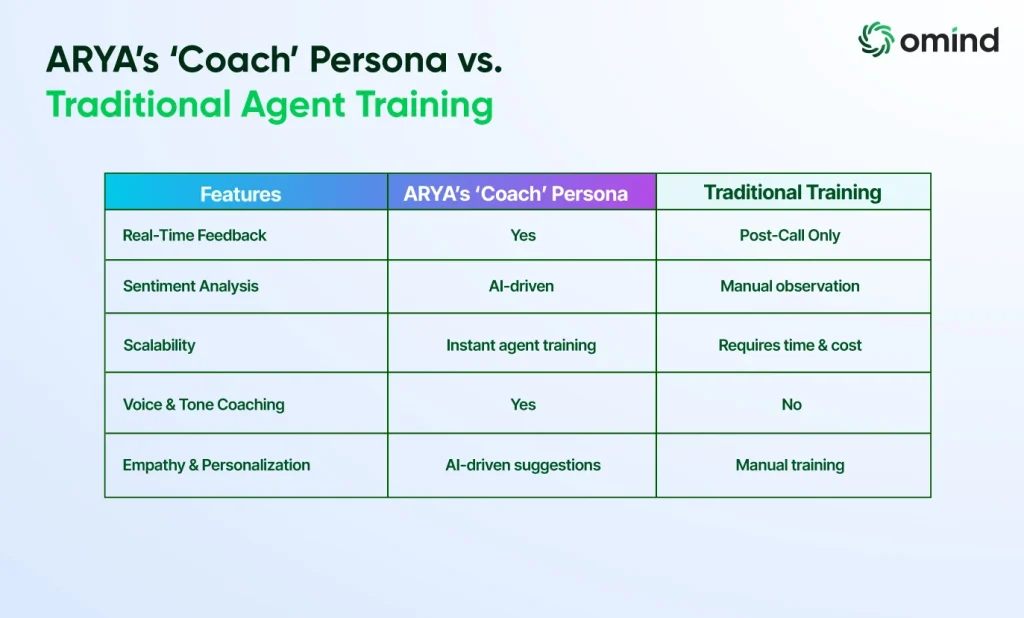### Ready to Transform Your Call Center with AI Coaching?
With ARYA’s AI-powered ‘Coach’ Persona, your call center can:
- Boost CSAT Scores
- Reduce AHT (Average Handling Time)
- Improve Agent Performance & Confidence
- Enhance Customer Loyalty & Retention
See ARYA in action today! [Book a free demo now.](/okf/page/schedule-a-demo.md)
---
## AI for Operational Efficiency: Core Use Cases and Strategies
AI (artificial intelligence) is emerging as a significant factor in propelling business growth. The [AI operational efficiency](/okf/article/ai-automation-exploration.md) is greater than ever as it is a smart assistant, especially for daily tedious tasks. With the help of this cutting-edge technology, companies can streamline their operations, saving time and resources. Whether improving [customer experiences (CX)](/okf/article/audience-engagement-strategies.md), optimizing supply chains, or enhancing decision-making, AI helps firms maintain a competitive edge.
In this discussion, we'll explore the core use cases and strategies that AI can use to boost operational efficiency across various industries.
### Key Takeaways
- • AI boosts operational efficiency by automating repetitive tasks, analyzing data rapidly, and enabling predictive capabilities across industries.
- • Major benefits include significant cost reduction, improved productivity, and higher customer satisfaction through personalization.
- • In software development: AI enables code completion, automated reviews, and intelligent bug detection for faster, higher-quality output.
- • In HR: Streamlines resume screening, predictive hiring, candidate chatbots, and automated interview scheduling.
- • In operations & finance: Supports automated workflows, predictive maintenance, invoice processing, and fraud detection.
- • Successful implementation requires clear goals, quality data, process understanding, right technology selection, and continuous monitoring.
- • Future trends focus on explainable AI, sustainability, and continuous model improvement to maintain long-term value.
{TOC}
## More About AI Operational Efficiency
The power of AI in operations can optimize business processes and increase efficiency. It consists of using the power of data and algorithms to identify patterns, use predictions, and automate tasks. Using this technology makes your business smarter and simpler.
The main advantage of artificial intelligence is productivity improvement. It is like having a pair of hands (or hundreds of them) to help you get things done. AI can [automate repetitive tasks](/okf/page/marketing-ai.md), analyze data lightning-fast, and even predict future needs. So, your team can prioritize what is important. Omind leverages AI technology to enhance productivity, making your operations more efficient.
### **Benefits of AI**
Let's see how implementing this technology can help your business.
- **Reduce Costs:** AI is one way to save money by streamlining processes and optimizing operations. Companies may reduce unnecessary expenses as they can automate many repeated tasks. For example, the human touch is necessary for all, but with AI implementation, you can save bills and labor costs without sacrificing quality.
- **Improve Customer Satisfaction:** Making customers happy is unavoidable as it affects your business. Your clients are the ultimate users of your product, so using Artificial Intelligence can help you understand your customers better than ever before. By analyzing customer data, businesses can identify customers' needs and preferences and deliver personalized experiences.
Now that we've covered customer satisfaction let's explore some specific examples of how AI transforms operational efficiency across different sectors.
## Core Use Cases of AI for Operational Efficiency
The revolution in AI is transforming businesses, and operational efficiency is at the forefront of this innovation. From manufacturing plants to call centres, this technology is helping every field to drive growth.
### **Software Development**
The arrival of AI greatly benefited the software development area, boosting efficiency and productivity at every stage.
#### **AI-powered Code Completion**
Think of a situation where you get an automation option that suggests the following lines of code as you type. AI-powered code will do that, accelerating development speed, enhancing code quality, and reducing the burden on developers. This technology can learn from vast code repositories and provide intelligent suggestions, helping developers write cleaner and more efficient code. Using AI-driven tools is a great way to improve overall developer productivity and satisfaction.
#### **Automated Code Review**
Someone should have done the code review in the old methods, but now you can say goodbye to those methods. AI can automatically scan code, ensuring consistency, identifying bugs early, and freeing your staff for other essential tasks. By analyzing code against predefined coding standards and best practices, AI can often catch common errors and vulnerabilities, potentially reducing the risk of defects reaching production. An efficient system like this improves code quality and accelerates the development cycle.
#### **Intelligent Bug Detection**
The manual process of debugging is a time-consuming nightmare. Arriving the AI mitigated this risk, and now you can analyze code to pinpoint potential issues, reducing debugging time and improving code quality. By using advanced algorithms and machine learning, this innovation can identify patterns in code that indicate potential bugs, helping developers address issues more efficiently than ever.
You have seen how AI helps in the software development process. In the next section, we will see how HR will benefit from it.
### **Human Resources (HR)**
AI operational efficiency is extended to various other areas. HR is also one of the areas where you can use this technology, such as recruitment, training, and more. Let's see some of the important areas.
1. **Resume Screening:** When you are hiring, you get plenty of qualified applications. By using AI, businesses can filter the most fitted top 10 candidates in less time. AI-powered resume screening quickly analyzes resumes, identifies top candidates based on job requirements, and prioritizes the most promising applicants. This automation saves HR valuable time and spends their time on building relationships. Use Omind's capabilities to screen resumes and select candidates efficiently with AI.
2. **Predictive Hiring:** With AI and data, a company can see which job candidates are most likely to do well in a given position. So, with this option, HR teams make more informed decisions and reduce turnover rates. These [data-driven decisions](/okf/article/developing-customer-insights-analytics-growth-sales.md) and approaches can improve the overall quality of hires and strengthen the organization's talent pool.
3. **Candidate Engagement Chatbots:** Now, people are not ready to wait long for responses. The arrival of AI is an advantage, and organizations can automate candidate inquiries, schedule interviews, and keep applicants informed throughout the hiring process. This improves the candidate experience, reduces HR workload, and helps build a positive hiring experience.
4. **Automated Interview Scheduling:** Coordinating schedules for multiple interviewers and candidates will be risky for humans. With AI-powered tools, you can automate the process and suggest optimal times for interviews based on everyone's availability. Now, everyone can save time, reduce conflicts, and ensure a smoother interview process for candidates and interviewers.
Regarding risk management, let's examine how AI enhances operational processes in this sector.
### **Operations**
The AI revolution has significantly benefited many companies' operational aspects. It automates tasks, optimizes processes, and provides valuable insights.
1. **Automated Workflows:** Imagine where a business can automatically handle daily jobs, freeing employees to focus on strategic thinking and problem-solving. With AI-powered automation, it's possible to streamline repetitive processes, reduce errors, and improve efficiency. By avoiding manual tasks, businesses can achieve faster turnaround times, enhance customer satisfaction, and create a quicker work environment.
2. **Predictive Maintenance:** AI is transforming how organizations maintain their equipment. With sensor data and identifying patterns, AI can predict when equipment will fail, which is essential when starting maintenance. This option helps prevent unexpected breakdowns, optimize resource allocation, and extend the lifespan of assets. Predictive maintenance helps identify potential hazards before they occur, creating a safer working environment for employees.
### **Finance**
Finance is one of the other important sections in which AI is revolutionizing, such as improving accuracy, efficiency, and risk management.
1. **Invoice Processing:** Manual invoice processing is time-consuming, and sometimes, you may make errors. AI-powered automation can streamline this process through technologies such as Optical Character Recognition (OCR) for data extraction, intelligent classification for sorting invoices, smart matching for comparing invoices with purchase orders, and exception handling for complex cases. It is essential to reduce processing time and minimize the chances of risk with error.
2. **Fraud Detection and Risk Management:** Financial institutions may face constant fraud threats, and AI can mitigate this risk and protect assets by monitoring real-time transactions, identifying suspicious patterns, and generating automated alerts. Predictive analytics, including those provided by companies like Omind, can help forecast potential fraud risks and protect your business.
In the following sections, lets see the strategies for implementing AI operational efficiency.
## **Strategies for Implementing AI in Operational Processes**
Using the power of AI will benefit a lot, but integrating it into your operations requires a perfect plan. Here are key steps to guide you:
- **Objectives and Goals:** Before selecting an AI, clearly outline what you want to achieve with this technology. This can be anything like boosting efficiency, enhancing decision-making, or improving customer satisfaction. Having clear goals will keep your AI project focused and connect with your overall business objectives. You can also consider involving key stakeholders in the goal-setting process for buy-in and support.
- **Understand Business Processes:** The second process is to understand your current processes so that you can identify areas for automation or optimization. When you know exactly where you want to use [AI](/okf/article/artificial-intelligence-role-in-customer-service.md) operational efficiency, you select the right AI applications and measure their impact effectively. Moreover, documenting your business processes can provide valuable insights into potential problems and inefficiencies.
- **Ensure Data Quality:** High-quality data is the advantage of successful AI implementation. Invest time and resources in cleaning, organizing, and structuring your data. This includes identifying and addressing missing data, inconsistencies, and biases so that you can make better decisions.
- **Choose AI Technology:** Select the AI that best suits your specific needs and goals. Consider factors like the complexity of the problem, data availability, and your team's expertise. Also, remember to evaluate the technology's scalability and flexibility to accommodate future growth.
- **Improvements with Feedback:** Implementing AI technology is the first step, but a business collecting feedback and refining its AI models is not accessible. If you want your AI solutions to stay relevant and practical as your business evolves, you should follow this method. Establish a feedback loop with end-users to gather insights into the AI system's performance and identify areas for improvement.
- **Scalability and Integration:** Given the ever-evolving market conditions, find an AI solution to handle increased workloads and integrate easily with your existing systems. Scalability allows you to expand your AI initiatives, while [integration](/okf/article/whatsapp-business-automation.md) prevents data silos and improves efficiency. Also, think about how AI might affect your IT system and make plans based on that. Omind's scalable and flexible AI solutions are designed to grow with your business needs.
- **Monitor and Evaluate Performance:** Track the performance of your AI implementations by using key metrics to measure ROI, identify improvement areas, and demonstrate AI's value to stakeholders. Regular performance evaluations are essential to identify emerging trends and opportunities for AI expansion.
Great. Now that you know how to monitor and evaluate, let's examine the future trends of AI for operational efficiency.
## **Future Trends in AI for Operational Efficiency**
The future of AI offers many opportunities to transform operational efficiency. Let's examine some of the trends now.
AI is becoming more complex, so understanding how it makes its decisions becomes essential. Explainable AI intends to open up the "black box" of AI models by giving clear, comprehensible reasons for what they do. This openness builds trust, helps people make decisions, and ensures rules are followed.
Businesses are now looking to reduce their environmental impact. AI can play a vital role in creating more sustainable operations by optimizing energy consumption, minimizing waste, and improving supply chain efficiency. By leveraging AI, organizations may identify opportunities to reduce their carbon footprint and contribute to more sustainable practices.
The world is moving forward, and AI operational efficiency must keep up with the pace. Continuous improvement is essential for maximizing the value of AI investments. AI models should be regularly updated with new data, refined algorithms, and advanced techniques like reinforcement learning explored to achieve ongoing performance improvement.
Considering those future trends, let's wrap this up by considering how Omind can be your AI-powered efficiency engine.
## **Choose Omind AI-Powered Efficiency Engine**
AI is useful at all levels in many ways. It reshapes operations by automating tasks, optimizing processes, and delivering valuable insights. A business can improve efficiency, reduce costs, and drive growth. Continuously monitor the performance to unlock the full potential of AI and gain a competitive edge.
Imagine you get a provider for business as a high-performance machine. [Omind](/okf/page/schedule-a-demo.md) is the AI-fueled engine that propels it forward and improves your efficiency. They help you with everything from customer experiences to operational workflows, delivering maximum performance and exceptional results. Partner with Omind to improve your productivity and operational efficiency. Contact us today to [schedule a demo](/okf/page/schedule-a-demo.md).
### Where operational efficiency meets customer experience
Omind's Conversational AI is where CX leaders find real efficiency gains — automate Tier 1 volume, cut AHT, redeploy agents to high-value work.
[See Conversational AI in action →](/okf/page/conversational-ai.md)
---
## AI in Business: Driving Innovation and Operational Excellence
In an era where rapid technological advancements are shaping the future of industries, businesses are increasingly looking for innovative ways to enhance efficiency, gain deeper insights, and improve overall performance. The emergence of AI in business marks a significant shift in how companies operate, offering a revolutionary approach to business processes across various sectors.
## Understanding the Power of AI in Business Operations
[AI in business](/okf/article/marketings-top-trends-to-watch.md) operations has transcended its early stages as a concept of the future and has become an integral part of modern business practices. AI’s transformative power lies in its ability to streamline complex processes, reduce manual labor, and provide data-driven insights with unprecedented accuracy. By integrating AI-driven solutions into their operations, organizations can adapt more swiftly to market changes, anticipate future trends, and build a sustainable path to long-term success.
In today's competitive landscape, companies face multiple challenges including maintaining operational efficiency, customer satisfaction, and many more while staying agile enough to respond to dynamic market demands. AI in business offers a solution by automating routine tasks that were once time-consuming and prone to error. From [automating customer service](/okf/article/conversational-automation-understanding-ai.md) responses to optimizing supply chain logistics, AI technology enhances productivity and allows human resources to focus on strategic initiatives that drive growth.
## AI: The Modern Catalyst for Business Transformation
AI in business is not just a tool. It is the catalyst driving a new wave of[ digital transformation](/okf/page/digital-transformation.md) in businesses. The implementation of AI technology is enabling businesses to rethink their traditional operations and innovate in ways previously thought impossible. Here’s how AI-driven solutions are reshaping business operations:
**Enhancing Operational Efficiency:** AI in business can automate a wide range of routine tasks, from data entry to customer service inquiries, thereby reducing the workload on employees and allowing them to focus on more strategic and creative tasks. This enhancement not only increases productivity and cuts operational costs but also improves accuracy in operations.
**Improving Decision-Making:** One of the most powerful aspects of AI in business is its advanced data analytics capabilities. AI can process and analyze large volumes of data at incredible speeds, providing businesses with actionable insights. This enables companies to make more informed decisions, reduce risks, and capitalize on opportunities that might have otherwise gone unnoticed.
**Personalizing Customer Experiences:** Today’s consumers expect [personalized experiences](/okf/article/leveraging-ai-predictive-personalization-marketing.md) tailored to their individual preferences and needs. AI-driven solutions help businesses deliver these experiences by analyzing customer data and behavior patterns. This tailored approach enhances customer satisfaction and builds loyalty, turning customers into advocates for the brand.
**Driving Innovation:** AI in business is at the forefront of driving innovation across industries. By continuously analyzing market trends, customer feedback, and competitive landscapes, AI helps businesses stay ahead of the curve. This fosters a culture of continuous innovation, where companies are not just reacting to changes but actively shaping the future of their industry.
## Overcoming Business Challenges with AI Technology
Despite the rapid advancements in technology, businesses still encounter numerous challenges that can impede growth and operational efficiency. AI technology is uniquely equipped to address these challenges, offering solutions that were previously out of reach:
**Data Overload:** In today’s digital age, businesses are inundated with data from various sources. The challenge lies in managing and making sense of this vast amount of information. AI-driven solutions excel at sifting through large datasets, identifying patterns, and extracting valuable insights that can transform business operations and enhance decision-making processes.
**Operational Inefficiencies:** Manual processes, while necessary, are often slow, prone to errors, and resource-intensive. AI technology automates these processes, not only reducing the likelihood of errors but also automating workflows. This leads to more efficient operations and allows businesses to allocate resources more effectively.
**Customer Retention:** Retaining customers in a competitive market is crucial for sustained growth. AI in business can predict customer behavior by analyzing past interactions, purchase history, and engagement patterns. This predictive capability allows businesses to identify at-risk customers and take proactive measures to retain them, such as offering personalized discounts or targeted marketing campaigns.
**Compliance and Quality Control:** Maintaining compliance with industry regulations and ensuring consistent quality across operations is a constant challenge for businesses. AI-driven solutions assist in monitoring and enforcing compliance by automating the tracking of regulatory requirements and evaluating the quality of customer interactions. This helps businesses maintain high standards and avoid costly penalties.
## A Multifaceted Approach to Operational Excellence
The true power of AI in business lies in its versatility and its ability to perform multiple roles within an organization, each contributing to the overall goal of operational efficiency. AI’s multifaceted approach can be broken down into several key roles:
#### **1. Copilot: Real-Time Decision Support**
In today’s fast-paced business world, speed matters. AI acts as a real-time copilot—integrating seamlessly with business applications and knowledge bases to guide employees during live interactions. It summarizes calls, recommends next-best actions, and provides SOP-based guidance instantly. This ensures your teams can make informed decisions without delay.
#### **2. Quality Auditor: Consistency at Scale**
Delivering consistent customer experiences is key to brand trust. AI-powered quality auditors evaluate 100% of customer interactions, flagging issues, highlighting coaching opportunities, and ensuring compliance with service standards. Businesses can now monitor performance proactively—without the lag of manual reviews.
#### **3. Coach: Personalized Agent Development**
Traditional coaching methods are slow and generic. AI changes that by delivering personalized learning paths—focusing on soft skills, sales tactics, and product/process knowledge. Agents get continuous, adaptive training that empowers them to manage complex queries confidently and convert better.
#### **4. Product Management: From Feedback to Innovation**
AI transforms customer feedback into strategic insights. It surfaces patterns, highlights unmet needs, and helps teams refine offerings. From enhancing existing features to launching new services, AI-led product management keeps your brand aligned with customer expectations and ahead of the competition.
#### **5. Digital Cockpit: Real-Time Performance Intelligence**
With AI, performance metrics become actionable. Through real-time sentiment analysis, severity tagging, and predictive modeling, businesses gain visibility into CSAT, NPS, backlog trends, CLV, resolution times, and more. It’s a command center that helps leadership act on what matters most—faster.
## Harnessing the Power of Predictive Analytics
Predictive analytics is at the heart of AI's capabilities, enabling businesses to anticipate future trends and make proactive decisions. By analyzing features such as tone, sentiment, and resolution effectiveness, AI in business can predict customer satisfaction levels and identify customers who are at risk of churning. This allows businesses to take targeted actions to retain customers and improve overall service quality.
Furthermore, AI’s use of historical data for performance forecasting is invaluable for workforce planning and development. By predicting demand and issue resolution times, AI technology optimizes staffing levels, ensuring that resources are allocated efficiently. This predictive analytics capability extends to revenue enhancement, where AI detects opportunities for upselling and cross-selling, predicts shifts in market sentiment, and even identifies potential fraud through sophisticated pattern analysis.
## Driving Revenue and Marketing Success
AI in business extends beyond operational efficiency—it is also a powerful tool for driving revenue and marketing success. By predicting customer lifetime value (CLV), AI helps businesses prioritize high-value customers and tailor their marketing strategies accordingly. Additionally, AI-driven solutions refine marketing efforts through customer journey analytics, allowing businesses to segment customers and design targeted initiatives that resonate with specific audiences.
AI’s ability to analyze and predict customer behavior also enhances marketing campaigns by identifying the most effective channels, messaging, and timing for reaching target audiences. This data-driven approach towards customer acquisition ensures that businesses are not only meeting their operational goals but also achieving significant growth.
## Preparing for the Future with AI
As businesses look to the future, the adoption of AI-driven solutions will be essential for staying competitive in an increasingly complex world. The AI engine represents a new frontier in business operations, offering a holistic approach that integrates multiple roles and capabilities into a single, adaptive system. By leveraging its advanced features, businesses can enhance operational efficiency, gain deeper insights, and ultimately achieve digital transformation.
AI in business holds vast potential, and as the technology continues to evolve, its impact on business operations will only grow. Companies that embrace AI-driven solutions today are not just preparing for the future—they are actively shaping it.
## Conclusion
The integration of AI in business operations is more than just a trend—it’s a transformative shift that is redefining the way companies operate and compete in the market. As we move closer to the official launch of this groundbreaking product, [stay tuned](/okf/page/schedule-a-demo.md) for more insights and updates on how AI can transform your business operations and drive success in an increasingly complex world.
---
## AI QMS for Banking Call Center Compliance: Why Sampling No Longer Protects Banks
Banking leaders increasingly rely on AI QMS for banking call center compliance because traditional QA no longer covers enough risk. Every [customer conversation can create regulatory](/okf/article/contact-center-quality-management.md) exposure. However, most banks still review only a tiny fraction of calls.
Agents handle fraud disputes, overdraft complaints, loan explanations, and payment hardships all day long. At the same time, they must follow strict regulatory rules during every interaction. That pressure creates operational blind spots fast.
One careless statement can trigger complaints, investigations, or regulatory scrutiny. Worse, risky behavior often spreads across teams before anyone notices.
### Key Takeaways
- • Traditional banking QA relies on small random samples, creating dangerous blind spots and leaving most compliance risks undetected.
- • AI QMS analyzes 100% of calls, chats, and interactions in real time for complete visibility across all banking operations.
- • Uses advanced contextual analysis to detect risky statements, inconsistent disclosures, and regulatory violations beyond simple keywords.
- • Enables real-time alerts and guidance, shifting from reactive fixes to proactive prevention of compliance failures.
- • Automatically applies department-specific and client-specific frameworks, ideal for complex BPO environments with multiple banks.
- • Delivers evidence-based coaching, fair performance scoring, and clear audit trails that strengthen regulatory readiness.
- • Turns QA into operational intelligence, reducing regulatory exposure, operational drift, and the cost of compliance failures.
### Table of Contents
## **Why Traditional Banking QA Leaves Dangerous Gaps**?
Most banking contact centers still depend on random call sampling. That means managers review only a small percentage of interactions. Consequently, most risky calls never receive oversight. A collections agent may repeat misleading statements for weeks. Similarly, a mortgage servicing team may drift away from approved disclosures over time.
Nobody catches the pattern because nobody monitors interactions at scale. That is the real weakness behind sample-based QA. It creates the [illusion of oversight](/okf/article/automated-quality-management.md) without providing full visibility. Regulators have started noticing those gaps as well. Examiners increasingly ask how much of the operation banks actually monitor.
That question creates pressure fast. Two percent coverage sounds dangerously weak during a compliance review. Moreover, banks struggle to defend that model when regulators demand proof of consistent monitoring. The consequences can become severe.
One inaccurate loan explanation can trigger restitution requirements. Likewise, one mishandled fraud dispute can escalate into customer harm investigations. The financial penalties hurt immediately. However, the long-term operational restrictions often hurt even more.
Traditional QA Sampling AI QMS Monitoring Reviews 1–3% of calls Reviews 100% of interactions Finds issues after escalation Detects issues during conversations Relies on random samples Uses continuous monitoring Misses slow compliance drift Identifies emerging behavior trends Creates uneven agent scoring Measures consistent behavior Weak audit evidence Creates searchable compliance records ## **How AI QMS for Banking Call Center Compliance Changes Oversight**?
Automated quality monitoring platform QMS changes the compliance model completely. Instead of reviewing scattered samples, banks can [evaluate every interaction automatically](/okf/article/automated-call-quality-monitoring-software-omind.md). Calls, chats, and digital conversations all enter the same monitoring system, creating consistent visibility across the operation.
The platform transcribes conversations in real time. Then it evaluates disclosures, scripting, escalation handling, and regulatory language automatically. Because of that, banks no longer depend on luck to find risky behavior.
### **Context Matters More Than Keywords**
Simple keyword detection does not work well in banking compliance. For example, the word “guarantee” is not always risky by itself. However, promising that a customer’s rate “will never increase” during a variable-rate discussion creates serious exposure.
The danger comes from the meaning behind the statement. Therefore, contextual analysis matters far more than isolated keywords.
AI QMS evaluates [conversational intent](/okf/article/speech-analytics-in-contact-centers-real-time-insights-and-use-cases.md), product type, sentence structure, and regulatory context together. As a result, the system identifies risky promises more accurately. That matters because compliance failures rarely announce themselves clearly. Agents often sound helpful while accidentally creating legal exposure.
## **AI QMS for Banking Call Center Compliance Improves Real-Time Risk Detection**
Traditional QA discovers problems after the damage already spreads. By the time supervisors review the interaction, complaints may already exist. In some cases, regulators may already have received escalation reports.
At that stage, banks document failure instead of preventing it. AI-based quality monitoring system changes that timeline. The system can alert supervisors during live interactions. Additionally, some platforms provide real-time guidance while the agent still speaks with the customer.
That capability matters because immediate correction prevents exposure. Three weeks later, the mistake becomes evidence instead. [Real-time monitoring](/okf/article/real-time-call-monitoring-call-center-ai-qms.md) also helps banks respond faster to operational drift.
Teams naturally shorten disclosures during busy periods. Likewise, overwhelmed agents sometimes simplify explanations to reduce time. Those shortcuts create hidden compliance risk. [AI QMS](/okf/page/ai-qms.md) detects those patterns early because it analyzes every interaction continuously. The system can identify:
- Inconsistent overdraft disclosures
- Rising Regulation E handling errors
- FDCPA risk inside collections calls
- Escalation failures after policy changes
- Disclosure omissions during high-volume periods
## **Banking Contact Centers Cannot Treat Every Call the Same**
Different banking departments carry different compliance risks. Mortgage servicing teams face different exposure than debit card dispute teams. Similarly, collections agents operate under different rules than deposit servicing representatives.
Traditional QA often ignores those differences. Many programs apply broad scorecards across completely different interaction types. Consequently, supervisors miss product-specific compliance problems.
Banking Interaction Type Common Compliance Risk Mortgage servicing Inaccurate loss mitigation disclosures Fraud disputes Regulation E timeline violations Credit card servicing Misleading rate explanations Collections calls FDCPA disclosure failures Overdraft support Inconsistent opt-in explanations Loan servicing UDAAP exposure from verbal promises AI QMS applies the correct framework automatically. A mortgage servicing interaction receives mortgage-specific evaluation standards. Meanwhile, fraud disputes receive Regulation E monitoring rules. That separation reduces compliance confusion significantly. The challenge becomes even larger inside banking BPO environments.
Many [outsourced agents support multiple financial institutions](/okf/article/call-center-quality-management-for-bpo.md) simultaneously. Each client uses different disclosures, scripting requirements, and escalation policies. One bank’s approved language may violate another bank’s rules completely.
That creates constant operational risk. AI QMS reduces that exposure by applying the correct framework automatically based on the client, product, and interaction type. Without that separation, compliance drift becomes inevitable.
## **Better Coaching Starts With Better Evidence**
Most supervisors coach agents using incomplete information. They review a few calls, examine scattered notes, and respond to occasional escalations. However, that approach rarely reveals consistent behavior patterns.
AI QMS changes coaching completely. Managers can finally identify the exact habits, creating the most compliance risk. Therefore, coaching becomes [more targeted and far more objective](/okf/article/call-center-agent-coaching-software-ai-qms.md).
- A risky disclosure error receives immediate attention. Meanwhile, low-priority scripting issues receive less focus. That distinction matters. Not every mistake carries equal regulatory exposure.
- The evidence also improves employee trust. Managers no longer rely on vague opinions about agent behavior. Instead, they can point to patterns across dozens or hundreds of interactions. That makes coaching conversations more credible.
- Performance scoring becomes fairer too.Random sampling creates uneven evaluations because luck influences results heavily. One agent gets scored on their calmest interaction. Another gets evaluated during their worst call of the month.
When every interaction contributes to performance measurement, evaluations reflect actual behavior patterns instead of random snapshots.
## **Why Banks Are Moving Toward Full-Interaction Monitoring**?
Banks now face increasing pressure to prove compliance consistency. Regulators want evidence showing issues were identified, corrected, and monitored over time. They also expect clear documentation during investigations and examinations.
Sample-based QA struggles under that scrutiny. AI QMS creates searchable records for every interaction. Transcripts, quality scores, escalation histories, and coaching records remain connected inside a centralized audit trail. Nobody wants to explain missing evidence during a regulatory exam. That pressure will continue growing. Compliance expectations keep expanding while interaction volumes keep increasing. Meanwhile, manual QA continues falling behind operational reality.
That is why AI QMS is becoming operational infrastructure instead of optional software. Not because banks want another dashboard. Because the old model leaves them dangerously blind to the conversations creating their biggest compliance risks.
### See What Traditional QA Misses
Most banking compliance risk never appears inside random call samples. Explore how AI QMS helps banks monitor every interaction, detect disclosure risk earlier, and build stronger audit evidence across customer conversations.
[Request an AI QMS Demo](/okf/page/schedule-a-demo.md)
---
## AI QMS for Healthcare Contact Centers: Elevating Patient Care and Avoiding Risks
Picture a common scenario: a patient calls your contact center with questions about a billing dispute. The agent—well-intentioned but undertrained on a recent policy update—inadvertently shares protected health information with an unverified caller. The call ends and agent move on. Moreover, the QA team won't review that recording for another four days.
In most industries, slow quality feedback is a productivity problem. AIQMS for healthcare contact centers resolves this as a compliance and patient safety problem. The software catches errors and prevents exposure. And depending on what was disclosed, your organization may prevent HIPAA violation.
This is the fundamental flaw at the heart of [traditional QA vs. AI-powered QMS](/okf/article/traditional-qa-vs-ai-powered-qms.md) for contact centers. It's built into a world where mistakes are inconvenient. Healthcare operates in a world where mistakes are consequential.
### Key Takeaways
- • Traditional QA reviews just 1-5% of calls, leaving 95-99% of healthcare interactions as undetected compliance and patient safety risks.
- • AI QMS delivers 100% real-time monitoring of omnichannel interactions, catching PHI disclosures, verification failures, and billing errors as they happen.
- • Enables mid-call supervisor alerts and immediate post-call coaching, preventing repeated mistakes and reducing HIPAA violation exposure.
- • Uses contextual LLM intelligence to understand intent, emotional escalation, and nuance — far beyond keyword detection.
- • Shifts QA from retrospective scoring to proactive risk intelligence with HIPAA-ready controls, EHR/CRM integration, and audit-ready trails.
- • Transforms healthcare contact centers by minimizing regulatory risks, elevating patient care, and turning quality management into real-time compliance protection.
### Table of Contents
## Why Your Center Needs AI-Driven Quality Management?
Most contact center QA programs review somewhere between 1% and 5% of calls. In healthcare, that math produces an uncomfortable reality. If your team reviews 3%, the other 9,700 calls are invisible. Within those unseen interactions lie [hidden costs of manual QA](/okf/article/hidden-costs-of-manual-qa.md)—specifically undetected risk exposure.
If your contact center handles 10,000 calls a week and your QA team reviews 3%, they're evaluating 300 interactions. The other 9,700 are invisible. And within those unseen calls lie missed disclosures, identity verification failures, incorrect billing guidance, and emotionally mishandled conversations that no one will ever know about—unless a patient complains, an auditor arrives, or something goes wrong publicly.
> *"In healthcare, the interactions you don't review aren't just quality gaps. They're undetected risk exposure waiting to surface at the worst possible time."*
The delayed feedback loop compounds this. When an agent receives coaching three days after a problematic call, they've likely repeated the same mistake dozens of times in the interim. To fix this, [automated sampling in QA](/okf/article/automated-sampling-in-qa.md) must replace manual selection to ensure no high-risk call goes unexamined.
## Where Healthcare Contact Centers Face the Most Risk
Not all calls carry equal stakes. Understanding [how AI QMS solves QA challenges](/okf/article/how-ai-qms-solves-qa-challenges.md) starts with identifying failure points in real time:
High-Risk Interaction Types in Call Centers Interaction Type Common Failure Point Risk Level Identity & verification Skipped or incomplete verification steps High PHI handling Disclosure to unverified parties High Insurance & billing Incorrect benefit or coverage guidance High Compliance disclosures [Required language omitted or incomplete](/okf/article/call-center-compliance-checklist-ai-qms.md) Medium Escalation & distress Emotional mismanagement, premature disconnect Medium For high-volume healthcare contact centers, AIQMS represent a predictable share of daily interactions that traditional QA is statistically unlikely to ever review.
## Key Benefits of Automated Compliance Monitoring
AI-powered quality management systems don't simply automate QA teams. They change the operational model from retrospective review to [real-time call monitoring](/okf/article/real-time-call-monitoring-call-center-ai-qms.md).
Where a traditional QA process samples calls after the fact and scores them against a rubric, an AI QMS monitors every interaction as it happens. It checks for compliance disclosures in real time, flags PHI handling anomalies as they occur, and can alert supervisors to a developing problem before the call even ends.
Instead of waiting for a weekly report, an AI QMS provides [automated call quality monitoring](/okf/article/automated-call-quality-monitoring-software-omind.md) across 100% of interactions. The workflow shift looks something like this: the call begins, the AI monitors against configured compliance rules—HIPAA requirements, required script language, verification protocols—and when it detects a potential violation, it triggers an alert. A supervisor can intervene mid-call. Or the system can surface targeted coaching for the agent immediately after the interaction concludes, while the context is still fresh.
## Transitioning to AI QMS: Best Practices for Managers
Earlier-generation AI monitoring tools operated on pattern-matching and keyword detection. They were useful for catching specific compliance language but struggled with context—they couldn't tell the difference between a genuinely sensitive patient conversation and routine small talk that happened to use a flagged word.
Modern [AI QMS](/okf/page/ai-qms.md) in healthcare contact centers incorporate large language model capabilities can understand intent and nuance. They can recognize when a patient call is escalating emotionally before an agent does. They can assess whether a sensitive disclosure was handled appropriately based on conversational context, not just whether certain words appeared in a transcript.
For healthcare contact centers handling high-stakes, emotionally complex interactions, that contextual intelligence is the difference between a system that catches obvious violations and one that understands what happened in a call.
## What to Look for When Evaluating AI QMS Platforms?
Not all AI quality management platforms are built with healthcare requirements in mind. When evaluating options, these capabilities matter most for healthcare contact center environments:
- 100% interaction coverage with real-time monitoring, not post-call batch processing
- HIPAA-ready configurations with PHI detection and handling controls
- [Real-time supervisor alerting](/okf/article/real-time-call-center-analytics-software-ai-qms.md) for high-risk interaction moments.
- Compliance disclosure tracking with configurable rule sets
- Native integration with EHR and CRM systems
- Transparent audit trails for regulatory documentation
- [Multilingual support](/okf/article/multilingual-quality-management-across-borders-and-languages.md) for diverse patient populations
Generic checklist items like "AI-powered insights" or "automated scoring" are table stakes. The distinguishing factors are how a platform handles healthcare-specific compliance requirements and whether its alerting architecture supports true real-time intervention.
## A Different Way to Think About Quality
AI QMS for healthcare contact centers uses QA as a quality measurement function. You score calls, track metrics, identify trends, and coach accordingly using a [standard QA scorecard](/okf/article/call-center-quality-assurance-ai-qa-scorecard.md). It reframes quality management as risk intelligence. Every interaction is a data point in an ongoing risk model. Supervisors aren't just reviewing performance—they're managing a real-time picture of compliance exposure across the entire contact center floor. The function moves from measuring what happened to controlling what's happening.
For healthcare organizations that face genuine regulatory consequences from quality failures, that distinction is not philosophical. It's the difference between finding out you had a compliance problem last Tuesday and preventing a compliance problem from fully materializing this afternoon.
### See Real-time Compliance Monitoring in Action
Request a personalized demo for your healthcare contact center.
[Book AI QMS Demo to know more](/okf/page/schedule-a-demo.md)
---
## AI QMS for Telecom Customer Service Across BPO Operations
Telecom customer service teams operate under constant pressure. Every day, agents handle billing disputes, SIM activation failures, or similar questions across millions of customer interactions. However, most telecom QA teams still [review only a small percentage of those conversations](/okf/article/automated-quality-management.md) manually. It creates dangerous blind spots.
When quality monitoring depends heavily on random call sampling, telecom providers struggle to catch recurring compliance failures, inconsistent pricing explanations, and poor customer experiences before they spread across the operation.
This is where AI QMS for telecom customer service changes the equation. Instead of reviewing scattered interactions, AI QMS analyzes every customer conversation across calls, chats, and digital channels. The system helps telecom providers monitor compliance requirements, identify coaching gaps, improve agent consistency, and detect operational issues earlier.
Consequently, telecom leaders gain visibility into the interactions manual QA processes often miss.
That matters because telecom support environments are unusually complex. A single customer call may involve account verification, billing clarification, retention handling, technical troubleshooting, and regulatory disclosures within the same conversation.
Traditional QA workflows were never designed for that level of complexity at telecom scale.
### Key Takeaways
- • Manual QA reviews only a tiny fraction of telecom interactions, creating dangerous blind spots in compliance, pricing, and experience.
- • AI QMS analyzes 100% of calls, chats, and digital interactions with telecom-specific rules for disclosures, pricing, retention, and troubleshooting.
- • Real-time monitoring flags issues during live calls, preventing escalations, churn, refunds, and regulatory complaints.
- • Standardizes QA across multiple vendors and sites with uniform scoring, eliminating inconsistent evaluations and calibration issues.
- • Delivers evidence-based coaching using actual interaction examples instead of vague feedback, improving agent accountability and consistency.
- • Provides searchable audit trails for compliance investigations while detecting small operational drifts before they become systemic and expensive.
### Table of Contents
## Why Telecom Contact Center Calls Are Harder to Evaluate?
Telecom interactions rarely stay in one lane. A customer starts with a billing issue. Then asks about an upgrade, moving on to throttled data speeds. Lastly, threatens cancellation before the call ends.
Now the agent must manage:
- Compliance language
- Retention handling
- Plan pricing
- Technical troubleshooting
- Verification protocols
- Escalation management
Most manual QA systems were never built for that level of complexity. Consequently, reviewers [simplify evaluations into checkbox exercises](/okf/article/ai-qms-call-center-quality-management.md) because they do not have time to unpack every part of the conversation properly. That creates inconsistent scoring and weak coaching.
Eventually, agents stop taking QA feedback seriously because the standards keep shifting between reviewers.
> Telecom support environments operate under strict compliance expectations tied to FCC regulations, customer disclosure requirements, and consumer protection standards. Missing mandatory disclosures or inconsistent billing explanations can increase complaint volume and regulatory exposure.
## **Spot-Checking Calls Does Not Prove Quality Control**
Telecom compliance is unforgiving. Regulators do not care that the QA team was understaffed or overwhelmed by call volume. If cancellation disclosures were skipped or pricing terms were explained incorrectly, the liability still lands on the carrier. However, many telecom operations still depend heavily on sample-based QA models, creating dangerous blind spots.
[Spot-checking a handful of calls](/okf/article/automated-sampling-in-qa.md) does not prove customer experience consistency. It only proves sampling happened.
> In large telecom environments, even a small recurring scripting error can spread across thousands of customer interactions within days, especially during new product rollouts or pricing updates.
## **What AI QMS Actually Changes Inside Telecom Operations**?
AI QMS removes the manual review bottleneck and visibility gaps. Instead of forcing QA teams to manually hunt for problematic calls, the system analyzes every interaction automatically. Everything gets transcribed and evaluated against telecom-specific quality requirements. Not generic “[sentiment analysis](/okf/article/call-center-sentiment-analysis-tool-guide.md),” actual operational risks.
For example:
- Did the agent quote incorrect pricing?
- Did they skip a mandatory disclosure?
- Did they explain throttling limits inaccurately?
- Did they mishandle cancellation requests?
- Did they promise something operations cannot deliver?
That level of monitoring matters because telecom mistakes compound quickly. One bad explanation becomes a repeated script across multiple teams before leadership notices the pattern.
## **AI QMS Evaluates Multiple Quality Signals Simultaneously**
Traditional QA reviewers struggle to evaluate every risk factor consistently across high interaction volumes. And fatigue eventually wins. Automated quality analysis system AI QMS does not suffer from reviewer inconsistency or scoring drift.
Instead, the system evaluates multiple dimensions simultaneously, including:
Manual QA Monitoring AI QMS Monitoring Limited call sampling Reviews 100% of interactions Inconsistent evaluator scoring Applies uniform scoring logic Delayed compliance detection Flags violations during live calls Generic coaching notes Provides interaction-specific evidence Isolated vendor reporting Standardizes QA across vendors This matters because telecom operations generate too much complexity for fragmented QA processes to handle manually.
## **How Real-Time Monitoring Prevents Escalations**?
Most telecom escalations start as small mistakes. Traditional QA is reactive. The bad customer experience already happened. The billing dispute already escalated. The compliance issue already created risk. QA reviews the call afterward and documents what went wrong.
Real-time monitoring changes that sequence. If an agent skips a disclosure or quotes incorrect pricing, [supervisors can intervene while the conversation is still active](/okf/article/real-time-call-center-analytics-software-ai-qms.md). In some cases, agents receive on-screen prompts before the call ends.
That matters because telecom customers rarely forgive billing surprises. One missing sentence during a plan change can trigger:
- Repeat calls
- Escalation tickets
- Churn risk
- Refund requests
- Regulatory complaints
Most telecom operational failures start small. They become expensive because nobody catches them early.
> Telecom retention and billing calls often contain mandatory disclosure requirements tied to cancellation terms, pricing transparency, and customer consent protocols.
## **Why Multi-Vendor Telecom QA Often Becomes Unmanageable**?
Telecom providers frequently [distribute customer support across multiple BPOs](/okf/article/call-center-quality-management-for-bpo.md) and delivery locations. Every vendor claims their quality scores are accurate. Every site claims their coaching process works. Meanwhile, leadership compares reports built on completely different scoring behaviors.
For example:
- One vendor may rush disclosures to reduce handle time
- Another may oversell upgrades aggressively
- Another may struggle with verification compliance during peak hours
Without unified monitoring, those patterns stay buried inside [disconnected QA reports](/okf/article/bpo-quality-assurance-broken.md).
## **Coaching Works Better When Feedback Includes Evidence**
Most agents dislike QA feedback because it feels subjective.
- “Show more empathy.”
- “Improve ownership.”
- “Handle objections better.”
That kind of coaching collapses the second agents ask for examples.
AI QMS changes that dynamic because supervisors can [coach using real interaction evidence](/okf/article/call-center-agent-coaching-software-ai-qms.md) instead of vague impressions. For example:
- An agent consistently skipping throttling explanations
- A team rushing through disclosures near closing hours
- A site mishandling cancellations after a policy change
When patterns become visible, coaching conversations become harder to dismiss. It improves accountability across the operation.
## **Telecom Compliance Investigations Require Searchable Evidence**
Most telecom operators think about compliance during audits. However, the real pressure starts during customer complaints or regulator investigations. At that point, scattered QA samples become nearly useless.
Telecom providers need [searchable records](/okf/article/call-center-compliance-checklist-ai-qms.md) showing:
- How interactions were monitored
- Which violations occurred
- Whether corrective actions were taken
- How coaching was documented afterward
Because when regulators start asking questions, “we sampled a few calls” is not a convincing defense.
## The Real Value of AI QMS Is Early Visibility Into Operational Decay
The biggest benefit of AI QMS is not automation. Telecom operations rarely fail all at once. Instead, small operational shortcuts spread gradually:
- Agents shorten disclosures to save time
- Teams improvise explanations because product updates arrived late
- Supervisors stop calibrating consistently
- Coaching quality drifts between vendors
Manual QA catches fragments of these problems. [AI-based quality analysis for contact center](/okf/page/ai-qms.md) exposes the pattern before it becomes systemic. That is the difference between controlling quality and chasing operational damage after customers have already experienced it.
## **AI QMS Becomes Necessary Once Telecom QA Stops Being Manageable**
Telecom companies eventually hit the same wall. Interaction volume grows faster than QA teams can realistically monitor. Product launches happen constantly. Compliance rules shift. Vendors scale aggressively. Leadership still expects consistent customer experience across every channel.
Eventually, manual QA stops functioning as a reliable control system. And customers notice before executives do. They notice when billing explanations change between agents. They notice when retention calls feel rushed. They notice when support quality varies wildly across teams.
That inconsistency drives churn long before dashboards reveal the trend clearly. AI QMS stops being optional software and starts becoming operational infrastructure. Telecom support environments become too large and too chaotic for fragmented QA processes to manage effectively.
The system monitors every interaction instead of relying on scattered samples. It checks telecom-specific behaviors instead of generic call-center scoring. It flags compliance issues before calls end. And it gives supervisors evidence they can coach from. Most importantly, it exposes operational decay before the damage becomes expensive.
### **Watch AI QMS Analyze Telecom Calls at Scale**
[Book your live demo](/okf/page/schedule-a-demo.md)
---
## AI QMS Predicts Compliance Risks Before They Happen
Regulatory expectations are rising, auditing cycles are tightening, and customer interactions are becoming more complex. Yet many organizations still rely on checklists that review a fraction of interactions and highlight issues only after a customer or regulator points them out.
**Predictive AI QMS** changes that dynamic. Instead of spotting deviations at the end of a process, AI analyzes patterns across conversations, documentation, and workflows to flag early indicators of risk. The result is a shift from reactive checks to proactive, insight-driven compliance management—one that strengthens both performance and [customer experience](/okf/page/blog.md).
### Key Takeaways
- • Traditional checklists sample 1–3% of interactions, missing early risks and creating blind spots.
- • Predictive AI QMS analyzes 100% of data to detect sentiment spikes, omissions, and atypical patterns.
- • Flags compliance risks in real-time—shifts from reactive audits to proactive prevention.
- • Enables early intervention in high-stakes industries like banking, healthcare, and insurance.
- • Reduces repeat errors, audit exposure, and "wasted" review hours on clean interactions.
- • Drives ROI: stronger compliance posture, lower fines, and resilient quality—predicts risks before they escalate.
### Table of Contents
## Why Do Traditional Checklists Miss Early Compliance Risks?
Checklists play an important role, but they are fundamentally backward-looking. They confirm whether required steps were completed, not whether emerging risks are developing underneath the surface.
As customer interactions grow more nuanced and regulatory requirements expand, [checklist-based auditing](/okf/article/call-center-quality-assurance-checklist.md) struggles with:
- Fixed rule sets that don’t adapt to changing behaviors
- Limited audit coverage caused by sampling
- Delayed discovery of errors or miscommunication
- No visibility into context, tone, or sentiment
- Inconsistent review outcomes across teams
## How Predictive AI QMS Works Behind the Scenes?
Instead of a human supervisor listening to a random 2% of calls, the AI scans up to 100% of data. It analyses conversations and follows a three-step logic gate to find trouble before it starts.
1. **Translation:** The AI turns unfiltered conversations into clean, readable data. It transcribes words and identifies the intent.
2. **"Symptom" Check:** Once the data is structured, the AI runs it through a set of "Risk Models." It checks patterns and looks for three specific signals simultaneously
- **Sentiment Spikes:** Is the customer’s frustration rising while the agent’s tone is becoming defensive?
- **Omissions:** Did the agent skip a mandatory legal disclaimer even though they followed the rest of the script perfectly?
- **Atypical Behavior:** Is this call significantly longer or shorter than 10,000 other successful calls for the same product?
3. **Predictive Scoring:** AI assigns a score to interaction and marks incidents that can lead to compliance issues down the line.
When a compliance officer confirms that an AI flag was a risk, the system gets "smarter." It begins to look for even subtler versions of that same behavior in the next million calls.
## Predictive Compliance vs. Reactive Monitoring
Reactive compliance tools confirm whether a rule was violated after the fact. Predictive compliance identifies behaviors or language patterns that are likely to lead to violations if left unaddressed.
### **Reactive Compliance**
- Focus on past events
- Depends heavily on manual review
- Surfaces issues late in the cycle
### **Predictive Compliance**
- Monitors [100% of interactions](/okf/article/automated-call-quality-monitoring-software-omind.md)
- Identifies risk indicators in real time
- Helps teams intervene early
- Reduces repeated errors through targeted coaching
## High-Impact Use Cases in Regulated Industries
In regulated industries, manual sampling can miss compliance violations or subtle patterns.
### Banking & Finance
- **The Blind Spot:** An agent follows the script but uses high-pressure "fomite" language (e.g., "This offer expires in an hour") to bypass a customer's hesitation regarding a loan's interest rate.
- **The AI Insight:** The system flags the combination of "Urgency Keywords" + "Customer Hesitation" as a high risk for predatory lending violations, even if the mandatory disclosures were technically read.
### Healthcare
- **The Blind Spot:** During a long support call, a representative accidentally confirms a patient's specific diagnosis or medication to a family member who isn't authorized on the HIPAA form.
- **The AI Insight:** The AI recognizes the "Relationship Gap”. It matches the voice profile or caller ID against the authorized persons on file and alerts the compliance team the moment a data leak occurs.
### Insurance
- **The Blind Spot:** Agents consistently gloss over the "Exclusions" section of a policy to close deals faster, leading to a massive spike in denied claims and regulatory fines months later.
- **The AI Insight:** The AI tracks "Time-on-Topic." If the agent spends 10 minutes on benefits but only 5 seconds on exclusions, the system flags it as an "Incomplete Disclosure" risk.
### Telecom & Energy
- **The Blind Spot:** To prevent a customer from canceling, an agent makes a verbal promise for a credit or a service level that isn't supported by the company's billing system.
- **The AI Insight:** The AI compares the agent’s verbal commitments to the actual service plans available in your database. If there’s a mismatch, it flags a "Contractual Deviation" risk before the customer gets their first wrong bill.
Across these industries, predictive visibility helps leaders maintain high standards while reducing operational strain.
## Subtle Risk Signals AI Can Identify That Checklists Cannot
Many compliance risks arise not from what was said, but how it was communicated. A checklist cannot detect customer confusion, emotional cues, or subtle deviations from intent.
**Examples of signals AI can surface:**
- Overpromising language during sales interactions
- Ambiguity that may impact disclosure clarity
- Negative sentiment indicating misunderstanding
- Tone shifts that correlate with policy deviations
- Divergence from approved narratives even when keywords match
## Operational Impact of Predictive Compliance Intelligence
[AI QMS](/okf/page/ai-qms.md) generally observe improvements across compliance and operational performance. Automated risk detection can impact in three specific areas:
1. **Saving "Wasted" Human Hours:** In a traditional setup, compliance officers spend 80% of their time listening to "Perfect Calls" just to find the 2% that are broken. It clears the "clean" calls automatically, allowing your team to spend 100% of their time on high-risk interactions.
2. **Reduction in "Repeat Offender" Fines:** Regulators are often more lenient on a first-time mistake than on a systemic pattern. Predictive AI identifies an agent’s "bad habit" (like skipping a specific disclosure) within the first hour of their shift. "Time-to-Correction" shortens the gap between a mistake and a coaching session. It prevents a single error from multiplying into multiple thousand violations.
3. **Protection Against "Total Loss":** [Predictive compliance management](/okf/article/predictive-quality-management-proactive-contact-center-qa.md) helps prevention of a "Black Swan" event—a class-action lawsuit or a massive regulatory fine.
## Is Your QMS "Predictive" or "Passive"?
Use this table to evaluate your current [Quality Management System](/okf/article/ai-qms-trends-the-future-of-quality-management-system.md)
Compliance Risk Levels Compared Evaluation Factor High Risk (Passive) Moderate Risk (Manual) Low Risk (Predictive) Audit Coverage We review less than 2% of total interactions. We review 5-10% through a large manual team. 100% of interactions are analyzed automatically. Detection Speed Issues are found weeks later during monthly audits. Issues are flagged within 48-72 hours. Real-time or Same-day risk flagging and alerts. Risk Criteria Static "Yes/No" checklists (Did they say the name?). Keyword-based triggers (Did they say "refund"?). Intent & Sentiment (Is the customer confused or pressured?). Feedback Loop Agents receive feedback once a month. Feedback is given weekly based on sample calls. Daily, targeted coaching based on actual risk scores. Audit Readiness We "scramble" to pull data when regulators call. We have a database, but it requires manual sorting. Live Dashboards with "Audit-Ready" exports available 24/7. ## Conclusion
AI QMS gives organizations the forecast risks instead of reacting to it. With [predictive insights](/okf/article/predictive-analytics-qms-future-prevention.md), teams can strengthen compliance performance, improve customer outcomes, and reduce operational surprises—all while creating a more resilient quality management culture.
### Ready to explore what this looks like in your environment?
**[Book a personalized demo](/okf/page/schedule-a-demo.md)** of AI QMS and evaluate how predictive compliance could support your operational and regulatory goals.
### **About the Author**
[**Robin Kundra**](https://in.linkedin.com/in/robinkundra), Head of Customer Success & Implementation at **Omind**, has led several AI voicebot implementations across banking, healthcare, and retail. With expertise in Voice AI solutions and a track record of enterprise CX transformations, Robin’s recommendations are anchored in deep insight and proven results
---
## AI QMS Trends: The Future of Quality Management System
Imagine a world where quality issues are detected before they even happen. Where AI-powered systems work tirelessly to ensure products meet the highest standards—without human intervention. Sounds like the future? Well, the future is now! **[AI-powered Quality Management Systems](/okf/page/ai-qms.md) (AI QMS)** are revolutionizing industries, making quality assurance smarter, faster, and more efficient.
## **The AI Revolution in Quality Management: What’s Trending in 2025?**
March 2025 is setting the stage for cutting-edge AI advancements in quality assurance, helping businesses move beyond outdated manual inspections and compliance struggles. If you're still relying on traditional quality control methods, you might be falling behind. Let’s explore the **top AI QMS trends shaping 2025** and how they can drive better quality, fewer defects, and higher profits.
### **2025's Biggest AI QMS Trends You Can’t Ignore**
###### **1. Predictive Quality Analytics: Spot Issues Before They Happen**
Wouldn’t it be amazing if you could predict a quality failure before it happens? **[AI-powered predictive analytics](/okf/article/predictive-analytics-qms-future-prevention.md)** is turning this into reality.
**How It Works:** AI scans past production data, learns from past defects, and predicts potential failures **before they occur**.
**Why It Matters:** Businesses leveraging predictive analytics are cutting defect rates by **30%** and avoiding costly recalls.
**Real-World Example:** Tesla’s AI-driven predictive maintenance system has reduced component failure rates by **25%** in 2025, saving millions in repair costs.
###### **2. AI-Powered Visual Inspections: More Accuracy, No Human Bias**
Manual inspections are slow, inconsistent, and prone to human error. AI-powered computer vision changes that, bringing unmatched accuracy to quality checks.
**How It Works:** AI-driven cameras scan products in real-time, detecting even the tiniest defects within milliseconds.
**Why It Matters:** Companies using AI-based inspections report **30-50% fewer defects** and **higher product consistency**.
**Real-World Example:** BMW’s AI-powered cameras are now detecting micro-defects in paint coatings with **98% accuracy**, ensuring **top-tier quality control**.
###### **3. AI-Driven Data Governance: Clean Data, Better Quality Decisions**
A QMS is only as good as the data it relies on. **[AI-driven Master Data Management](/okf/article/data-driven-decision-making-with-ai-powered-qms-analytics.md) (MDM)** ensures businesses work with **clean, reliable, and actionable data**.
**How It Works:** AI-powered tools **automatically clean, validate, and organize** data, reducing human errors in data management.
**Why It Matters:** Companies with AI-powered data governance see a **40% improvement** in **decision-making accuracy**.
**Real-World Example:** A global pharmaceutical company using AI-powered data validation tools cut compliance errors by **60%** in 2025.
###### **4. Continuous Compliance Monitoring: Say Goodbye to Manual Audits**
Regulatory compliance can be a nightmare. **AI-powered compliance monitoring** keeps businesses **audit-ready 24/7**.
**How It Works:** AI tracks **real-time compliance requirements**, ensuring companies stay within regulations **without manual intervention**.
**Why It Matters:** Businesses using [AI compliance tools](https://www.theaiqms.com/blog/ai-qms-vs-ai-call-center-software/) report **100% audit-readiness**, saving millions in compliance-related costs.
**Real-World Example:** A Fortune 500 medical device company reduced compliance risks by **80%** with AI-driven regulatory checks in 2025.
### **Why AI QMS is Essential for Every Business in 2025**
Businesses using AI QMS are seeing:
- 30% lower defect rates
- 50% faster compliance reporting
- 35% cost savings in quality assurance
In today’s fast-paced world, quality is no longer optional—it’s a competitive advantage. Companies without AI-driven quality management risk falling behind their competitors.
### **Meet Omind: Your AI-Powered Quality Management Partner**
Want to take your quality management to the next level? Omind’s AI-powered QMS is designed to help businesses streamline quality control, cut costs, and ensure regulatory compliance—all with the power of AI.
- **Predictive Analytics:** Prevent defects before they impact your production line.
- **Automated Visual Inspections:** Get real-time, AI-driven defect detection.
- **AI Compliance Monitoring:** Stay audit-ready without manual checks.
- **Smart Data Management:** Ensure accurate, AI-driven decision-making.
#### **Why Choose Omind?**
- Reduce defects, improve efficiency, and boost profits
- Automate compliance and quality monitoring
- AI-powered insights to optimize production and processes
**Don’t let outdated quality management hold your business back.** Embrace AI QMS with Omind and **unlock new levels of efficiency and reliability**.
[**Join the Conversation!**](/okf/page/schedule-a-demo.md) How do you see AI transforming quality management in your industry?
### The QMS future this article describes — running today at Omind
AI-powered scoring, real-time coaching, 100% audit coverage — Omind's AI QMS is the next-generation quality management system BPOs deploy now.
[Explore AI QMS →](/okf/page/ai-qms.md)
---
## AI QMS: Call Center Quality Scoring Frameworks That Work
### Measuring Soft Skills and Product Knowledge in Customer Interactions
In today's customer-centric business landscape, every interaction is pivotal. Ensuring that these engagements are both effective and empathetic is crucial for fostering loyalty and trust. Traditional quality assurance (QA) methods, often reliant on manual reviews, are increasingly being supplemented or replaced by [AI-powered Quality Management Systems](/okf/page/ai-qms.md) (AI QMS). These advanced systems offer comprehensive insights into both soft skills and product knowledge exhibited during customer interactions.
### The Limitations of Traditional QA Methods
Traditional QA processes typically involve manual evaluations of a small sample of interactions, often between 2% to 5%. This limited scope can result in:
- **Incomplete Data:** A vast majority of interactions go unreviewed, leading to potential oversight of recurring issues.
- **Subjectivity:** Human evaluators may have inherent biases, leading to inconsistent assessments.
- **Delayed Feedback:** Time-consuming manual reviews can delay feedback to agents, hindering timely improvements.
These constraints can impede a company's ability to promptly and effectively enhance customer service quality.
### The Emergence of AI in Quality Management
AI-driven QA systems have revolutionized the evaluation process by:
- **Comprehensive Analysis:** Assessing [100% of customer interactions](/okf/article/automated-call-quality-monitoring-software-omind.md) across various channels, ensuring no data is overlooked.
- **Consistency:** Providing unbiased evaluations based on predefined criteria, eliminating human subjectivity.
- **Real-Time Feedback:** Offering instantaneous insights, allowing agents to adjust and improve promptly.
For instance, AI can analyze vast amounts of data from customer interactions in real-time, identifying patterns and trends that manual reviews might miss.
**Measuring Soft Skills with AI**
Soft skills such as empathy, active listening, and adaptability are integral to positive customer experiences. AI evaluates these by:
- **Sentiment Analysis:** Detecting the emotional tone of interactions to assess empathy and responsiveness.
- **[Speech Analytics](/okf/article/speech-analytics-in-contact-centers-real-time-insights-and-use-cases.md):** Monitoring voice modulations, pace, and pauses to gauge active listening and patience.
- **Keyword Spotting:** Identifying specific phrases that indicate politeness, professionalism, or potential areas of concern.
For example, AI can analyze the nuances of agent empathy and soft skills, ultimately enhancing the customer experience.
### Evaluating Product Knowledge Through AI
An agent's proficiency in product knowledge directly impacts their ability to resolve issues effectively. AI assesses this by:
- **Content Analysis:** Reviewing the accuracy and relevance of information provided during interactions.
- **Knowledge Base Integration:** Cross-referencing agent responses with internal databases to ensure consistency and correctness.
- **Resolution Tracking:** Monitoring the correlation between product-related inquiries and successful resolutions.
This approach ensures that agents provide accurate and helpful information, enhancing customer satisfaction.
### Benefits of AI-Driven Scoring Frameworks
Implementing AI in QA offers several advantages:
- **Scalability:** Efficiently handling [large volumes of interactions](/okf/article/scalable-voice-ai-support.md) without additional resources.
- **Proactive Issue Resolution:** Identifying recurring problems and addressing them before they escalate.
- **Targeted Training:** Highlighting specific areas where agents can improve, leading to personalized coaching.
For instance, AI can identify knowledge gaps and recurring issues, facilitating targeted training and development programs.
### Implementing AI-Powered QMS: Best Practices
To maximize the benefits of AI in quality management:
- **Define Clear Metrics:** Establish specific criteria for soft skills and product knowledge assessments.
- **Ensure Data Quality:** Maintain accurate and comprehensive data for AI to analyze effectively.
- **Continuous Training:** Regularly update AI algorithms to adapt to evolving customer expectations and product offerings.
- **Integrate with Existing Systems:** Seamlessly combine [AI QMS with current CRM](https://www.fusioncx.com/digital-solutions/ai-qms/) and support platforms for unified insights.
By following these practices, organizations can enhance their [customer service quality](/okf/article/customer-service-quality-assurance.md) and overall operational efficiency.
### Conclusion: Turn Insights Into Impact with Omind AIQMS
As customer expectations rise, delivering consistently high-quality interactions isn’t just a goal—it’s a business imperative. [AI-powered quality scoring](/okf/article/call-center-quality-assurance-scorecard-creation.md) frameworks are no longer a “nice-to-have” but a critical component of modern QA programs. They empower businesses to go beyond traditional metrics and truly understand the how and why behind agent performance.
**Omind AIQMS** is built to help you do just that.
By leveraging AI and NLP, Omind’s [Quality Management System](/okf/article/ai-qms-trends-the-future-of-quality-management-system.md) doesn’t just measure—it understands. It evaluates 100% of conversations across channels, auto-scores soft skills like empathy and clarity, verifies product knowledge in real-time, and delivers coaching-ready insights for continuous improvement.
Whether you're aiming to improve CSAT, reduce AHT, or build a stronger, skillful agent workforce—**Omind AIQMS gives you the tools to get there.**
**Ready to transform quality assurance from a checklist to a strategic advantage?**
[Book a Demo](/okf/page/schedule-a-demo.md) with Omind AIQMS and make every customer interaction count.
---
## AI Software for Call Centers: Supercharging Productivity and Quality
AI-powered software is rapidly reshaping the landscape for call centers, driving measurable boosts in productivity, efficiency, and customer satisfaction. By automating routine processes, providing real-time analytics, and empowering agents with actionable insights, AI systems help teams reach new heights in 2025—and leading solutions like Omind are enabling this transformation.
### Key Takeaways
- • AI automates 80% of routine inquiries, cutting wait times and costs.
- • Real-time analytics boost FCR by 18% and CSAT by 20%.
- • Intelligent routing prioritizes high-value calls, increasing conversions.
- • Speech analytics ensures 100% QA coverage and unbiased scoring.
- • Omind’s AI coaching enhances agent skills and engagement.
- • Seamless CRM integration and multilingual support for global teams.
### Table of Contents
“AI adoption in customer service has the potential to reduce operational costs by up to **30%** while improving **CSAT** scores by **20%**.”
— Deloitte Insights
## How AI Software Supercharges Call Center Productivity?
### 1. Automating Routine Tasks
AI seamlessly manages repetitive inquiries, call routing, and appointment setting, freeing agents to focus on complex cases. Virtual agents and **[chatbots](/okf/page/chat-ai.md)** powered by natural language processing (NLP) handle up to 80% of routine customer requests, reducing wait times and operational costs.
### 2. Real-Time Analytics and Performance Dashboards
AI analyzes every conversation instantly, scoring calls for sentiment, compliance, and agent skill. Dynamic dashboards offer supervisors up-to-the-second insights into KPIs like CSAT, FCR, and Average Handle Time (AHT), allowing proactive support and continuous improvement.
“Companies using **AI-driven analytics** in contact centers saw a **25% faster resolution rate** and **15% higher customer retention**.”
— McKinsey & Company
### 3. Intelligent Lead Qualification and Call Routing
Advanced algorithms evaluate incoming queries using historical data and predictive analytics, routing calls to the most qualified agents and maximizing first-contact resolution. AI identifies and prioritizes high-value prospects, helping boost conversion rates and revenue growth.
### 4. Agent Coaching and Skill Development
Platforms like **Omind** harness AI to detect skill gaps in real time, deliver targeted coaching to agents, and enable more personalized customer interactions—all proven to elevate satisfaction and [agent performance](/okf/article/call-center-agent-performance-metrics.md).
### 5. Speech Analytics and Automated QA
**[AI-driven speech analytics](/okf/article/speech-analytics-in-call-centers-qa-automation.md)** automate quality assurance by transcribing calls, tracking compliance, and benchmarking agent performance—eliminating manual paperwork while ensuring unbiased evaluation at scale. According to the SQM Group, *“Every 1% improvement in First Call Resolution leads to a 1% improvement in CSAT and a 1–5% reduction in operating costs.”*
 How AI Software Supercharges Call Center Productivity?
## Real-World Case Studies of AI-Enhanced Software for Call Centers
- **MoneySolver:** Automated QA with AI increased call close rates and improved marketing ROI by **30%** through data-driven insights and complete call coverage.
- **CHRISTUS Health Plan:** Implemented AI-driven call transcription and scoring, reducing manual call review time by **50%** and empowering agents with instant, actionable feedback for continuous skill improvement.
- **AutoNation:** Leveraged AI to automate QA, benchmark agent performance, and train teams more effectively. It leads to higher conversion rates and real-time agent feedback.
- **Singapore’s Ask Jamie:** Virtual agents reduced call center volume by **50%** and improved response times for citizens by **80%**, demonstrating rapid ROI and enhanced customer experience.
- **Global Retail Deployments:** AI routing and conversational bots cut average handle times by **20%**, achieved consistent 24/7 coverage, and increased first-contact resolution using predictive and adaptive logic.
## Why Omind Is a Strategic Choice?
**[AI software for call centers](/okf/page/arya.md)** by platforms like **Omind** stand out for their end-to-end automation, deep analytics, and enterprise-grade reliability. The platform can cover every interaction and adapt across industries and geographies. They deliver:
- **True 100% QA coverage** that ensures no interaction is missed
- **Bias-free performance scoring** with AI-driven objectivity
- **Dynamic dashboards and reporting** that provide real-time visibility into KPIs
- **Seamless integration with leading CRMs** and existing tech stacks
 AI Software for Call Centers Provides Real-time Agent Feedback
- **Real-time agent feedback and coaching** that accelerate skill development
- **Multilingual, omnichannel support** for global teams, ensuring consistent quality across diverse customer bases
- **Predictive analytics and continuous learning** to evolve with changing customer expectations
“**Omind’s AI platform** enabled us to move from reactive QA to proactive performance management—our **FCR** improved by **18%** in the first six months.”
— VP of Operations, Leading Telecom Provider
## Conclusion: The Future of Call Centers
Call center leaders embracing AI software are gaining competitive efficiency, happier agents, and consistently outstanding customer experiences. By automating repetitive processes, analyzing interactions in real time, and coaching agents continuously, AI creates a culture of measurable excellence.
**Ready to transform your call center?** [**Request a demo with Omind**](/okf/page/schedule-a-demo.md) today and see how our AI solutions can power productivity, compliance, and superior CX.
---
## AI Speech Transformation Reducing Average Handle Time Without Hiring More Agents
*Every contact center pays a hidden "communication tax" made of small repeats and clarifications that add up fast. This piece breaks down how AI speech transformation cuts that friction and protects your SLAs without adding headcount.*### Key Takeaways
- •Contact centers pay a hidden "communication tax" from repeats, clarifications, and misunderstandings that inflate AHT.
- •AI Speech Transformation modifies live agent voice in real-time for clarity—different from TTS or voice changers—while preserving identity.
- •Small delays compound: 10 seconds lost per call across 50k daily calls equals ~138 labor hours/day or 50k+ annually.
- •Traditional QA, training, and accent programs miss conversational friction; they don't scale with high attrition.
- •Real-time low-latency processing reduces repetition, occupancy pressure, escalations, and repeat contacts without added headcount.
- •Shifts communication friction from people-dependent training to infrastructure-level solution—protects SLAs and cuts hidden costs.
- •Evaluate platforms on production latency, CCaaS integration, compliance, and direct ties to AHT, CSAT, and FCR metrics.
{TOC} ## Most Contact Centers Are Investigating the Wrong Problem
When Average Handle Time climbs, most operations leaders look at staffing levels, coaching programs, and QA scores. However, a large share of wasted time starts somewhere else entirely: small communication breakdowns that repeat thousands of times a day. AI speech transformation is gaining attention inside [enterprise contact centers](/okf/article/ai-voice-harmonization-contact-centers.md). It isn't a voice-generation gimmick. It's a layer that reduces effort during live conversation. ## What Is AI Speech Transformation in Contact Centers?
AI speech transformation refers to real-time speech-to-speech processing. It adjusts specific characteristics of spoken communication during a live call, while keeping the agent's actual voice identity intact. In a contact center, the goal isn't novelty. The goal is cutting the effort it takes for a customer to understand an agent the first time. ### Why It Differs From Text-to-Speech?
Text-to-speech converts written words into synthetic audio. AI speech transformation instead modifies live human speech in real time. Because the input is already a voice, not text, the technical requirements and the use case are completely different. AI Speech Transformation vs. Text-to-Speech vs. AI Voice Changers Capability Text-to-Speech AI Voice Changer AI Speech Transformation Input Text Live Voice Live Voice Output Synthetic Voice Modified Voice Adapted Speech (Accent Harmonization) Typical User Content Creator Gamer / Streamer Enterprise BPO & Contact Centers Use Case Narration & Audiobooks Entertainment & Privacy anonymity Real-time communication & clarity optimization Real-Time Requirement No Varies (Partial/Low-latency depending on engine) Yes (Line-rate, sub-ms processing) KPI Impact None (Operational non-factor) None (Recreational use) - Average Handle Time (AHT) reduction
- Customer Satisfaction (CSAT) uplift
- First Call Resolution (FCR) improvement
Most people first encounter this category through consumer apps. Enterprise buyers, however, evaluate it for a completely different reason: operational efficiency, not entertainment. ## The Communication Tax Most Contact Centers Never Measure
**Every Contact Center Pays a Communication Tax:** Call it the Communication Tax: the cumulative operational cost created by friction inside a conversation. It shows up in repeat requests, phonetic spelling of names, re-reading addresses, and confirming policy details twice. **The Math Behind Small Delays:** Ten seconds sounds trivial. But run the number across volume. Financial Impact Analysis of Friction-Induced Capacity Leaks Daily Time Waste Metric 50,000 calls/day × 10 seconds lost = 138 labor hours wasted daily Annual Labor Leakage 50,370 labor hours drained annually FTE Headcount Equivalence **24.2 Full-Time Agents** paid exclusively to manage conversational dead-air and repetition loops. Regional Enterprise Loss Profile - **Philippines BPO Hub ($7/hr fully loaded):** $352,590 annual direct loss at an 85% occupancy rate threshold.
- **Latin America Nearshore ($9/hr fully loaded):** $453,330 annual premium labor capital vanished.
- **US Domestic Inbound ($22/hr fully loaded):** $1,108,140 cash drain before factoring in customer abandonment penalties.
Because this friction is spread across thousands of calls, it rarely shows up as one visible failure. Instead, it hides inside [average handle time and occupancy metrics](/okf/article/call-center-aht-reduction-voice-ai.md) that leadership already reviews weekly. ## Why Traditional QA Programs Rarely Detect Conversational Friction?
QA programs typically score script adherence and compliance, but they rarely score comprehension effort or [conversational rework between agent and customer](/okf/article/qa-scorecards-communication-friction-csat.md). Dashboards and speech analytics can flag high handle times after the fact, but opting for [speech improvement tools over speech analytics](/okf/article/speech-improvement-software-contact-centers.md) alone addresses repetition live on the line—without waiting for post-call coaching cycles.
Consequently, a call can pass every QA checkpoint while the customer still struggles to understand the agent. That gap between "agent followed process" and "customer understood" is where escalations quietly begin.
Technical Workflow Architecture: Accent-Driven Degradation Cascade Friction-Induced Operational Downward Spiral
**Trigger** Misunderstanding
→
**Friction Loop** Repetition
→
**Sentiment** Frustration
→
**Escalation** Supervisor Request
→
**Capacity** Queue Pressure
→
**System Failure** SLA Degradation
## Where Conversational Friction Appears on Your Operations Dashboard?
Friction rarely appears as its own line item. Instead, it surfaces inside metrics leaders already track. - **Workforce occupancy** absorbs the hidden labor of repeated explanations.
- **Queue backlogs** grow because each delayed call pushes the next one back.
- **Repeat contact rates** rise because unresolved confusion often triggers a second call.
- **Escalation volume** increases because supervisors get pulled in to clarify, not to solve.
- **Schedule adherence** slips because handle time forecasts assume clean conversations.
## Why Training Programs Often Fail to Eliminate Communication Friction?
Training scales with headcount. Because attrition is constant in most contact centers, coaching investment must be repeated for every new hire. “The true cost of a legacy QA model isn't the manual labor spent scoring forms. It is the enterprise liability of managing an operation based on a one-percent sample of customer data. ” Agent competence and customer comprehension are not the same thing. An agent can know the answer perfectly and still be misunderstood. [Accent-neutralization programs](/okf/article/accent-harmonization-vs-accent-training.md), specifically, tend to show inconsistent results and long timelines before any measurable change appears. ## How AI Speech Transformation Functions as an Operational Layer?
- **Reducing Communication Effort:** During live conversations, the platform adjusts clarity in real time as the agent speaks. It keeps the interaction natural while reducing the friction points that cause repetition.
- **Real-Time Processing Matters:** Because [latency breaks conversational flow](/okf/article/how-real-time-accent-harmonizer-works-in-live-customer-conversations.md), any processing delay above a few hundred milliseconds becomes noticeable to both agent and customer. Real-time performance is therefore the core technical requirement, not an optional feature.
### Why Contact Center Leaders Reject AI Speech Transformation Platforms?
Skepticism is common, and it's usually built around four specific fears: telephony latency, complex CCaaS integration with QA platforms, data privacy around audio retention and GDPR, and deployment risk to a live production environment. ## What Enterprise Teams Should Evaluate Before Selecting a Platform?
Buyers should test real-time processing performance under actual call volume, not a demo environment. They should also confirm the deployment model, security and compliance controls, and whether results can be tied directly to AHT, occupancy, escalations, and CSAT. Historically, teams treated communication friction as a training issue. Increasingly, they treat it as a systems issue instead. Because labor costs keep rising and offshore delivery keeps expanding, that shift makes sense. ## Conclusion
For years, contact centers tried to fix communication friction through coaching and accent neutralization programs. These approaches help individual agents, but they don't necessarily fix the communication system itself. Training scales with people. Infrastructure scales with conversations. As contact centers balance labor costs against SLA commitments, AI speech transformation systems sort hidden communication tax inside every call. The [AI-powered accent clarity platform for contact centers](/okf/page/accent-harmonizer.md) must earn trust in production, not just in a demo. If it can't run inside real call volume without adding latency, it doesn't solve the problem it claims to solve. ### See Your Communication Tax in Numbers
Curious what repeat requests and clarification loops are costing your floor? Get a walkthrough of how AI speech transformation maps to your AHT, occupancy, and escalation data — using your own call volume, not a generic benchmark. [Get a Custom Communication Assessment](/okf/page/schedule-a-demo.md)
---
## AI Voice Agent Integration: Can Your Voice Agent Actually Complete the Transaction?
Inbound customer service traffic is dominated by predictable operational frictions. A typical caller states: “My order is going to the wrong address. Change it to my office and tell me whether it will still arrive tomorrow.” A basic voice bot can parse that sentence, extract the entities, and acknowledge the intent. However, resolving that request requires a significant operational chain: authenticate the caller, retrieve the order record, check modification rules against current fulfillment status, change the delivery address in the backend, verify the write operation, retrieve the updated ETA, and communicate the verified outcome. Speech recognition is not resolution. The enterprise value of AI voice agent integration starts when the [conversational layer interacts safely](/okf/article/enterprise-ai-voicebot-solutions.md) with systems like your CRM, order management, billing, and scheduling platforms to finish the work the customer called about. The real question is no longer whether an enterprise AI voice agent can understand the customer. It is whether the enterprise can safely let it act.
### Key Takeaways
- •Speech recognition is not resolution—true value comes when the voice agent can safely authenticate, apply rules, execute backend writes, verify outcomes, and communicate confirmed results.
- •Distinguish read operations (status lookup) from write operations (record changes); write access enables autonomous resolution but requires strict authorization and failure handling.
- •A complete transaction follows a deterministic sequence: understand intent → authenticate → retrieve → apply business rules → execute → verify write → communicate verified outcome.
- •API connectivity alone is insufficient—authentication is not authorization, actions must be scoped, and business rules must remain deterministic outside the LLM.
- •Production reliability is revealed by failure cases: timeouts, partial successes, retries, duplicate prevention, and clear escalation when systems disagree.
- •Before buying, demand answers on write vs. read support, who controls permissions, partial-success handling, and how success is proven before customer confirmation.
- •Measure verified business outcomes without human intervention—not conversations handled, intents recognized, or superficial containment rates.
{TOC} ## What Does AI Voice Agent Integration Mean?
Voice AI integration is the architectural connection between the conversational layer and enterprise backend systems. The speech engines connect directly to enterprise calendars to achieve [real-time appointment scheduling via Voice AI](/okf/article/voice-ai-automated-appointment-scheduling-roi.md) without manual intervention. It allows the agent to retrieve information, apply approved rules, execute actions, and verify outcomes. To evaluate this capability, distinguish strictly between read and write operations. - **Read:** A customer asks, “Where is my order?” The agent retrieves status from an order-management system and reports it.
- **Write:** A customer asks, “Change the delivery address.” The agent modifies a production record in the database.
Read access improves [self-service containment](/okf/article/scalable-voice-ai-support.md). Write access enables autonomous resolution—but it introduces strict authorization, policy enforcement, verification, and failure-management requirements. If every request that changes a customer record still requires a human agent, the expensive part of the workflow remains manual. Connecting an AI voice agent API to your backend infrastructure is what bridges that gap. ## What a Real AI Voice Transaction Looks Like?
Executing a transaction reliably requires a deterministic sequence of operations. Consider the shipping-address modification workflow. ### Step 1: Understand the Intent
The voice layer captures the requested action, relevant entities, and conversational context without relying on conversational filler or manual prompts. ### Step 2: Authenticate the Caller
Before modifying any data, the system establishes who the customer is using an approved identity-verification flow. Understanding the request does not grant permission to execute it. ### Step 3: Retrieve the Order
The agent queries the backend to pull the order ID, fulfillment status, current delivery address, and modification eligibility flags. ### Step 4: Apply Business Rules
The system evaluates operational constraints against the record. For example, if the status shows processing, an address change is allowed. If it shows dispatched, an address change is prohibited. The [model interprets intent](/okf/article/how-gen-ai-transforms-voicebots.md), but business rules determine authority. ### Step 5: Execute the Approved Action
The agent sends the authorized address update to the order-management system via voice AI API integration. ### Step 6: Verify That the Write Succeeded
The agent must not tell the customer the address has been changed until the backend confirms the write operation completed successfully. ### Step 7: Communicate the Verified Outcome
The system retrieves the updated ETA or confirmation number and provides the caller with a complete result. That sequence marks the difference between a conversational interface and a resolution engine. ## API Connectivity Is Not the Same as Safe Integration
Many vendors claim simple CRM connectivity solves operational bottlenecks. An API connection alone proves almost nothing about whether the agent can safely execute production transactions. ### Authentication Is Not Authorization
Knowing who the caller is does not mean they are permitted to perform every action. A [verified customer](/okf/article/voice-conversational-ai-regulated-environments.md) might be authorized to update a delivery address, but they cannot authorize a high-value refund or modify billing profiles. ### Actions Should Be Scoped
The model should not have unrestricted access to backend systems. The architecture must follow a strict path: Conversation to Enterprise System Workflow **Conversation**
→
**Approved Action**
→
**Defined Parameters**
→
**Enterprise System**
It must never allow a direct path from an LLM to an unrestricted backend. ### Business Rules Remain Deterministic
The model interprets natural language phrases like, "I want a refund." However, approved backend systems and deterministic policies must determine eligibility, approval thresholds, and permitted payment routes. The voice agent provides conversational intelligence, but the enterprise retains control over authority. ## The Failure Case That Exposes Weak Voice AI
Production reliability is measured by what the system does when reality becomes ambiguous. Consider a production scenario where an update succeeds, but the confirmation times out. The agent sends the address change. The order-management system processes the writing successfully. However, the network response never reaches the voice agent. This introduces critical operational questions: - Should the agent retry the operation?
- Could retrying duplicate the database write?
- Should it tell the caller the update failed?
- What if the record has already changed?
- Can it query the final transaction state?
- When should it escalate to a human agent?
Integrating backend APIs allows agents to execute workflows, but systems must be designed for [voice AI failover during live transactions](/okf/article/voice-ai-failover.md). [Mature integration design](/okf/article/ai-voicebot-scalability-contact-centers.md) must distinguish between "the request failed" and "we do not yet know whether the request succeeded." That distinction is critical in payments, refunds, bookings, cancellations, and account modifications. Similarly, if your CRM and billing systems disagree on a customer's record, the model should not choose whichever value seems more plausible. The workflow needs a defined source of truth or a controlled escalation path. ## Four Questions to Ask Before Buying an AI Voice Agent
When [evaluating vendors](/okf/article/evaluate-voice-bot-customer-support.md) for CRM voice AI capabilities, use these procurement-oriented questions to cut through marketing claims: 1. **Does integration support writing, or only reading?** "CRM integration" is meaningless unless the vendor details exactly which actions the agent can perform.
2. **Who determines what the agent is allowed to do?** Ask how permissions, approval thresholds, and business rules are enforced outside the conversational model.
3. **What happens when a transaction only partially succeeds?** The vendor must explain their handling of retries duplicate-action prevention, verification, and escalation.
4. **How does the agent prove success before telling the customer?** Demand to see the transaction lifecycle from initial caller request to verify backend outcome.
The strongest evaluation is not a scripted product demo. It is testing the agent against one of your own messy production workflows. ## Conclusion
A true enterprise deployment follows a strict lifecycle: End-to-End Conversation Resolution Workflow **Listen**
→
**Understand**
→
**Authenticate**
→
**Retrieve**
→
**Execute**
→
**Verify**
→
**Resolve**
When assessing performance, ignore vanity metrics like total conversations handled, intents recognized, bot sessions, or apparent containment. Measure the metric that impacts operational cost: how many customer requests reached a verified business outcome without unnecessary human work? [Omind Voice AI](/okf/page/voice-ai.md) delivers this capability by focusing on [governed, backend-connected transactions](/okf/article/gen-ai-voice-bot-enterprise-guide.md) rather than merely sounding conversational. ### Ready to Move Beyond Basic Prompts to True Transactional Resolution?
Most voice bots stop at understanding intent. Omind's enterprise-grade voice AI connect securely to your CRM, billing, and order management systems to safely execute real-time backend actions. [Schedule an Enterprise Architecture Demo](/okf/page/schedule-a-demo.md)
---
## AI Voice Agents for Rebuilding Automotive Service Operations and Appointments
*A recall lands on a Tuesday morning. By 9 a.m., your service lines are jammed. Advisors are fielding the same three questions on repeat. Three callers hang up before anyone picks up. That's not a scheduling problem — that's an infrastructure problem.*
Service departments rarely collapse from a bad calendar system. They collapse when inbound demand spikes faster than any human team can absorb it — during recall campaigns, seasonal tire rushes, post-storm repair surges, or the Monday after a marketing campaign goes live. And the compounding effect is brutal: missed calls become missed bookings, overloaded advisors make errors, wait times climb, and customer satisfaction scores slide.
Traditional staffing models were built around average demand. They have no answer for surge demand. That's the gap that modern voice AI for automotive service appointments are closing. The tool works as a communication backbone that keeps service operations running at full capacity when it matters most.
### Key Takeaways
- • Automotive service departments fail during demand surges (recalls, seasonal rushes) because traditional staffing and legacy IVR systems cannot handle sudden spikes in call volume.
- • Gen AI Voicebots manage the full spectrum of repetitive calls: appointment scheduling, rescheduling, service status checks, reminders, and overflow containment with natural language understanding.
- • Delivers 24/7 availability, concurrent call handling, and intelligent escalation with full context passed to advisors — eliminating repetition and reducing abandoned calls.
- • Protects advisor capacity for high-value interactions while reducing burnout from repetitive low-complexity calls during peak periods.
- • Provides multilingual support with accent-aware recognition, improving access and booking success for diverse customer bases.
- • Enterprise-ready with deep DMS/CRM integration, scalability for surges, multi-location consistency, and rich analytics for better staffing and demand forecasting.
### Table of Contents
## Why Scheduling Alone Doesn't Solve the Problem?
The framing of "[AI for appointment booking](/okf/article/go-high-level-conversation-ai-appointment-bookings.md)" undersells both the problem and the solution. Yes, 24/7 booking automation matters — customers shouldn't have to call during business hours to schedule a brake job. But the harder challenge is what happens when the phones don't stop.
> *"Most service departments are optimized for average demand — not surge demand. That's where the cracks appear."*
The operational impact runs deeper than missed calls. Every repetitive status-check call an advisor handles is time not spent walking a customer through a service recommendation. But an abandoned call is potential revenue that walks out the door silently. And advisor burnout from high-volume call periods creates downstream staffing problems that take months to resolve.
## What Advance Voice Agents with AI Handle?
The practical scope of automotive voice AI has expanded well beyond booking. A well-deployed voicebot today handles the full spectrum of repetitive inbound interactions — which, in a busy dealership, represents most of the call volume:
- **Appointment scheduling and rescheduling** — natural-language booking synced directly to the DMS, including same-day slots, multi-vehicle households, and cancellation handling without putting customers on hold.
- **Overflow containment during spikes** — the voicebot absorbs concurrent call volume that would otherwise queue indefinitely, handling recall inquiries, service status checks, and triage before any escalation is needed.
- **Routine customer support** — operating hours, loaner availability, service reminders, appointment confirmations. These calls cost advisor time without producing proportional value.
- **Intelligent escalation** — when a call genuinely requires a human, the system identifies it and routes with context already captured, so the advisor doesn't start from zero.
## The IVR Problem Nobody Wants to Talk About
Legacy IVR systems didn't just fail to solve the overflow problem — in many cases, they made it worse. Touch-tone menus frustrate callers who don't know which number to press. Static routing trees can't handle an unexpected influx of recall-specific questions. And when a caller finally gives up and hangs up, the IVR records a completion, not an abandonment.
Traditional IVR vs Gen AI Voicebot Traditional IVR Gen AI Voicebot Menu-driven navigation Natural conversation flow Fixed routing logic Adaptive interaction logic Queue-dependent throughput Concurrent call handling Business hours only 24/7 availability No context on handoff Full context passed to advisor The shift isn't just about caller experience. It's about throughput. An IVR can route one call at a time through a queue. A voicebot handles simultaneous conversations without degradation — which is exactly the capability gap that matters during a surge.
## Advisors Are the Point — Not the Bottleneck
The workforce anxiety around AI in automotive service is understandable. Advisors who are best at upselling, building customer trust, and resolving complex service issues.
Voice AI creates a practical division of labor: automation handles the repetitive, high-volume, low-complexity interactions dominate inbound call queues. Advisors handle conversations that require judgment, relationships, and expertise. The result is advisors operating closer to the top of their capability, with lower administrative load and better conditions for the customer interactions.
## Multilingual Support as A Competitive Differentiator
One operational dimension that rarely gets enough attention: language. Dealer groups serving diverse markets — and service BPO operations running from the Philippines, El Salvador, or other offshore hubs — face real communication gaps that neither IVR menus nor undertrained staff reliably close.
Modern voicebots with accent-aware speech recognition and [multilingual support](/okf/article/multilingual-voice-ai-for-support.md) don't just expand the addressable customer base. They reduce the friction and miscommunication that drives repeat calls, longer handling times, and customer frustration. A customer who can interact in their preferred language, and be understood accurately on the first attempt, is a customer who books the appointment instead of hanging up.
For enterprise dealer groups managing service operations across multiple regions, this consistency — the same quality of interaction regardless of which market is called, is an operational asset that compounds over time.
## What An Enterprise-Ready Platform Actually Requires?
Not all voicebot implementations are equivalent. Pilot deployments that handle a narrow slice of call types in a single location tell you very little about how a platform performs under real enterprise conditions. The evaluation criteria that matter:
- **DMS and CRM integration:** Legacy voicebot often don't connect to scheduling systems and customer records create work rather than reduce it. Real integration means two-way data flow, not just a booking that appears in a separate log.
- **Concurrent call capacity:** The value of voice AI during a surge is entirely dependent on the platform's ability to handle volume spikes without degradation. This needs to be tested, not assumed.
- **Multi-location consistency:** Enterprise dealer groups need uniform behavior across locations, with centralized reporting that surfaces performance differences and call pattern anomalies.
- **Analytics and operational visibility:** Containment rates, escalation patterns, service demand trends. The data a well-instrumented voicebot generates is a secondary operational asset that informs staffing, inventory, and campaign planning.
## The Direction This is Heading
Appointment scheduling and overflow containment are where deployment of [**voice AI agents**](/okf/article/ai-voice-agents-lead-qualification.md) is essential. The next phase is already visible in connected-vehicle ecosystems:
- proactive outreach triggered by vehicle telemetry
- maintenance reminders initiated before a customer knows they need service
- scheduling flows initiated by the car rather than the customer
The dealer groups need operational fluency with voice AI. The infrastructure they're building is the same infrastructure that powers a more predictive, proactive service model.
The phone call from a frustrated customer sitting in the service lane isn't going away. But the operational conditions that produce it — overwhelmed advisors, missed calls, disconnected systems — are addressable now, with technology that's already deployed and producing results at scale.
See how [**Omind Voice AI**](/okf/page/voice-ai.md) handles automotive service scheduling, overflow support, and multilingual customer interactions at scale. [Book a demo](/okf/page/schedule-a-demo.md)
---
## AI Voice Agents Qualify Leads and Deliver Reliable Sales Handoffs
A prospect calls a business process outsourcing provider about customer support services. They describe their needs, mention an implementation deadline, and ask for a sales consultation. The conversation sounds promising, but the prospect never confirms a critical eligibility requirement. Should the AI mark the inquiry as qualified? **AI voice agents for lead qualification** can gather information through conversation, but a convincing dialogue is not proof of sales readiness. Reliable qualification depends on accurate responses, business-defined criteria, defensible decisions, and a usable handoff to the sales team.
### Key Takeaways
- • Distinguish conversational fluency from true sales readiness by evaluating leads against explicit, business-defined qualification criteria.
- • Separate lead qualification decisions into three distinct judgments: mandatory eligibility requirements, sales engagement readiness, and data completeness.
- • Differentiate spoken prospect statements from captured data and verified information to prevent transcription errors from driving inaccurate qualification inferences.
- • Verify the entire handoff pipeline independently across decision generation, downstream CRM record creation, and final sales workflow assignment.
- • Test AI voice agents against complex edge cases, including ambiguous scope details, mid-call corrections, explicit refusals, and realistic background accents.
- • Evaluate Omind's Sayin voice agent against real enterprise qualification workflows to establish defensible decisions and reliable sales routing.
{TOC} ## How Do AI Voice Agents Qualify Leads?
An inbound qualification workflow begins when a prospect calls about a product or service. A voice agent identifies the request, asks approved discovery questions, records the answers, applies qualification rules, and proposes the next permitted action. Unlike a fixed questionnaire, a conversational agent may ask for clarification when a caller answers indirectly or changes the subject. It is useful only when the resulting answers remain linked to the questions they are intended to satisfy. The workflow should distinguish what the caller provided from what the system inferred. It should also leave room for an incomplete outcome rather than forcing every conversation into “qualified” or “rejected.” Broader applications across outreach, appointments, and the sales funnel belong in Omind's [Voice AI for Sales and Marketing](/okf/article/voice-ai-for-sales-and-marketing.md) discussion. ## Which Criteria Determine Whether a Lead Is Qualified?
Before automating qualifications, sales operations must define what qualifies a prospect for the next stage. There is no universal list that fits every business. A BPO provider might consider the requested service, geographic coverage, anticipated scope, implementation timing, and the caller's role. Three judgments must remain separate: - **Eligibility:** Does the prospect meet the offering's mandatory requirements?
- **Readiness:** Is there a sufficiently clear need and reason for sales to engage now?
- **Completeness:** Have the required answers been established well enough to make either decision?
Consider an illustrative inquiry from a company interested in outsourced customer service. The prospect identifies a service need and a near-term launch but cannot estimate the required support scope. If scope is mandatory for routing, the agent should request clarification or mark that field unknown. Enthusiasm is not evidence that the criterion has been met. Qualification rules also need explicit exclusions and review thresholds. A confirmed mismatch may warrant disqualification; a missing answer does not. Predictive scores may help prioritize leads, but a score should not silently override an exclusion rule or transform missing information into an asserted fact. Definitions, not model confidence alone, determine what “qualified” means. ## What Makes Voice AI Lead Qualification Evidence Reliable?
Qualification can fail even when the rules are applied consistently. The input itself may be wrong. Suppose a prospect says they need **15** service licenses, but the speech system records **50**. A qualification rule that requires at least 40 licenses might then reach the wrong decision despite operating exactly as configured. A dependable process distinguishes four information states: Information States in Voice Systems Information State Meaning Spoken statement What the prospect actually expressed Captured response What the voice system recorded from the exchange Verified information What an authorized source independently confirmed Qualification inference What the system concluded under business rules A transcript or extracted field is not independent verification. When a number, name, location, or requirement is uncertain, the agent may need to repeat it back, seek clarification, or refer the case for review. Contradictions also matter. A caller might initially request a launch this month and later say approval is expected next quarter. The record should preserve the uncertainty or correction, not choose whichever answer produces a higher score. Likewise, refusal to answer is different from a negative answer. “I prefer not to share our budget” should not be stored as “no budget.” ## How Should AI Classify Leads and Hand Them to Sales?
After collecting evidence, the agent needs an authorized disposition. Useful categories may include **qualified**, **not yet ready**, **disqualified**, **incomplete**, and **human review required**. These are examples, not a universal CRM status model. Each category should have a documented basis. A qualified lead satisfies the relevant rules; a disqualified lead fails a confirmed exclusion; incomplete record lacks evidence needed for a decision. Human review is appropriate when answering conflict or the decision exceeds the automation policy. Classification is only the first half of the handoff. The receiving sales team needs a record explaining the conclusion: prospect and contact details, captured responses, verified fields, unanswered questions, decision basis, agreed next action, and intended owner. Data collection and follow-up must respect applicable permissions, consent, and company policies. Three events need to be checked separately: 1. The qualification decision was generated.
2. The destination record was successfully created or updated.
3. The prospect was assigned to the intended sales workflow or owner.
A polished summary cannot prove the CRM write succeeded. Neither does a successful CRM update establish that a sales representative accepted the lead. Failures should remain visible for follow-up rather than being counted as completed handoffs. For the technical difference between generating an action and verifying a backend result, see Omind's [AI Voice Agent Integration](/okf/article/ai-voice-agent-integration.md) guide. ## How Can Enterprises Test AI Lead Qualification Accuracy?
A successful vendor demonstration usually shows a cooperative prospect answering expected questions. It does not establish that the system will classify difficult calls correctly. Build a representative test set with predetermined expected answers and qualification decisions, reviewed by the relevant sales and operations owners. Include clear fits, confirmed exclusions, missing fields, corrected statements, ambiguous numbers, contradictory answers, and callers who request human assistance or decline further questions. Evaluate three layers independently: - **Field correctness:** Did the system capture each important answer accurately, including explicit uncertainty or refusal?
- **Decision correctness:** Given the approved rules and reference evidence, did the system assign the intended disposition? Reviewing false qualifications separately from missed eligible leads because their downstream consequences differ.
- **Handoff correctness:** Did the appropriate destination receive the required record and status, and was the intended routing outcome confirmed? Assess actual system results, not just generated summaries.
AI Voice Pipeline Validation & Separation Framework **1. Capture vs. Logic**Hears "15 licenses" correctly, but evaluates under a 40-license minimum. **Capture passed; logic failed.**
**2. Logic vs. Delivery**Classification is correct, but downstream CRM rejects the write. **Logic passed; delivery failed.**
**3. Condition Testing**Test across realistic accents, speech interruptions, corrections, and live call conditions.
**4. Risk Thresholds**Establish acceptance thresholds from business risk and error costs, not arbitrary industry percentages.
## How Should Buyers Evaluate Reliable AI Voice Agents for Lead Qualification?
Ask vendors to demonstrate qualification using your actual rules, not a scripted ideal conversation. Require examples showing a qualified prospect, a confirmed exclusion, incomplete evidence, a correction, and a failed handoff. Review whether qualification criteria can be configured, uncertain answers are traceable, decisions can be inspected and corrected, and CRM delivery can be verified. Ask what tests support any [published claims about accuracy or reliability](/okf/article/ai-voicebot-accuracy-benchmark.md). [Omind Voice AI](/okf/page/voice-ai.md) publicly describes inbound lead screening, intent capture, and contextual routing to sales. Buyers should verify the specific qualification logic, integrations, exception handling, and measurable outcomes available in their proposed configuration. ## Reliable Qualification Requires Defensible Decisions
The value of voice-based qualification is not how many callers receive a confident-sounding sales label. It is whether the organization can explain the decision, trust the underlying evidence, and act on the resulting record. [Evaluate Omind Voice AI](/okf/page/schedule-a-demo.md) against real qualification rules and difficult test calls before relying on automated lead dispositions in your sales workflow.
---
## AI Voice Chatbots Handle Real Customer Conversations
Traditional voice automation could recognize commands and move callers through predetermined paths. Modern AI voice chatbots are expected to do more: understand context, handle interruptions, recover from misunderstandings, retrieve information, complete actions, and know when to involve a human. An **AI voice chatbot** is a conversational system that uses speech recognition, conversational AI, contextual reasoning, and speech synthesis to understand spoken requests and respond through natural voice interactions. [Legacy Interactive Voice Response (IVR) systems](/okf/article/gen-ai-voicebots-vs-legacy-ivr.md) force callers down static trees, or text-based chatbots paired with basic text-to-speech engine layers. On the contrary, an AI voice chatbot resolves live spoken interaction in real time. It manages latency, processes natural continuous speech, and connects directly to enterprise systems to complete tasks rather than just delivering automated answers.
### Key Takeaways
- • Traditional IVR relies on rigid menus and DTMF; AI voice chatbots enable natural, multi-turn spoken conversations with full context.
- • Production systems combine ASR, NLU/LLMs, API-driven actions, and TTS while managing latency, barge-in, and recovery.
- • Voice is harder than chat due to timing, interruptions, noise, ambiguity, and the need for real-time conversational repair.
- • Modern AI voice chatbots maintain context, handle multi-intent requests, execute backend tasks, and escalate with full history.
- • Best suited for high-volume, low-risk workflows (scheduling, order status, basic account servicing); avoid high-emotion or high-judgment cases.
- • Evaluate recovery from interruptions, grounded enterprise data, end-to-end actions, and seamless context-rich handoffs before deployment.
{TOC} ## What Is an AI Voice Chatbot?
An AI voice chatbot combines natural language processing (NLP), generative foundation models, and voice processing technologies to conduct two-way, real-time spoken conversations. To understand its role in enterprise operations, it is critical to separate the technology from two common reference points: - **AI Voice Chatbot Traditional IVR:** Legacy IVR systems rely on DTMF keypads or basic phrase matching route calls along predetermined paths. They cannot parse unscripted language, maintain context across turns, or adapt when a user changes direction.
- **AI Voice Chatbot Text Chatbot + Text-to-Speech (TTS):** Bolting a TTS engine onto a web chatbot creates severe operational friction over telephony. Text interfaces do not have to contend with real-time speech issues like background noise, acoustic latency, conversational interruptions, or vocal turn-taking.
A production-ready voice chatbot must handle natural speech input, retain conversational context, construct dynamic responses, execute backend business actions, and [trigger contextual human escalation](/okf/article/gen-ai-voicebot-customer-service-escalation.md) when parameters fall outside defined thresholds. ## AI Voice Chatbot vs. Traditional IVR vs. Text Chatbot
The primary distinction between [AI Voice Chatbot, Traditional IVR and Text Chatbot](/okf/article/voicebot-vs-chatbot-customer-service.md) technologies are how each system processes context, manages uncertainty, and controls real-time conversational flow. Contact Center Voice Solutions: IVR vs. Text Chatbot vs. AI Voice Agent Capability Traditional IVR Text Chatbot AI Voice Agent Interaction Model Keypad / scripted menu Typed text conversation Spoken natural conversation Input Type DTMF tones / basic voice prompts Structured / unstructured text Natural continuous speech Conversation Path Rigid, predetermined decision tree Flexible intent matching Contextual and dynamic reasoning Context Retention Limited or non-existent Session-based multi-turn memory Full cross-turn contextual memory Interruption Handling None (plays full recorded audio) Not applicable (async text) Real-time barge-in & turn-taking Response Generation Pre-recorded static audio files Static template text Dynamic generative voice response Business Actions Restricted call routing only Basic Web API / system queries Automated CRM / API task execution ## How Does an AI Voice Chatbot Work?
Operating an enterprise voice AI system requires multi-layered processing to transform acoustic signals into business actions and natural vocal responses. Real-Time Voice & NLU Architecture Workflow Input **Customer Speech**
→
Speech-to-Text **ASR Engine**
→
Intent **Context & NLU**
→
Integration **Knowledge & APIs**
→
LLM / Logic **Response Gen**
→
Synthesis **TTS Engine**
→
Output **Customer**
### Speech Recognition (ASR)
Automatic Speech Recognition (ASR) converts raw audio input into text. Production ASR engines must filter background noise, decode diverse regional accents, parse informal phrasing, and reconstruct incomplete utterances in milliseconds to prevent downstream errors. ### Context and Language Understanding (NLU/LLM)
Once speech is transcribed, natural language understanding models and large language models (LLMs) [evaluating intent and maintaining context](/okf/article/voice-ai-assistants-for-business.md). The system interprets what the customer wants, maps it against prior conversation turns, processes corrections, and handles combined multi-intent requests. ### Knowledge Retrieval and Business Actions
An enterprise system cannot rely on conversational fluency alone. It must connect to authoritative knowledge bases, query CRMs, verify account status, book appointments, or execute payments. The AI triggers dynamic business logic via APIs based on the extracted intent. ### Response Generation and Speech Synthesis (TTS)
The system crafts an appropriate response based on the retrieved data and business rules. Text-to-Speech (TTS) engines then synthesize this text into human-like audio, preserving natural cadence, pitch, and intonation. ### Conversation State and Escalation
Throughout the call, the architecture maintains session state. If system confidence drops below acceptable operational parameters—or if the interaction reaches a high-risk policy boundary—the system initiates a context-rich transfer to a live agent. ## What Makes Voice Conversations Harder Than Chat?
Deploying a strong language model does not guarantee [successful voice deployment](/okf/article/why-ai-voicebots-fail-after-deployment.md). Voice interfaces introduce acoustic and behavioral dynamics that do not exist in text. - **Timing and Latency:** In text support, a five-second pause while an engine queries a database is acceptable. In voice, a three-second delay feels like a dropped call. Low latency across ASR, processing, and TTS is mandatory to sustain natural conversational rhythm.
- **Interruption (Barge-In):** Human callers do not wait for a bot to finish speaking before responding. They interrupt, add missing details mid-sentence, or change direction. Voice chatbots require robust barge-in logic that immediately halts speech synthesis and adjusts state without dropping context.
- **Recognition Ambiguity:** Voice inputs contain background noise, overlapping speakers, cell phone static, and complex proper nouns like street names or account numbers. Resolving phonetically ambiguous speech without frustrating the caller requires specialized acoustic tuning.
- **Conversational Recovery:** When callers correct themselves ("*No, I meant my personal account, not business*"), rigid systems restart the entire flow. Voice chatbots must perform real-time conversational repair—updating target variables without forcing the user back to step one.
- **Core Operational Insight:** An AI voice chatbot can possess an exceptional language model, but if turn-taking, latency management, or conversational recovery break down, the customer experience fails.
## What Can Modern AI Voice Chatbots Do?
Modern voice AI architectures expand automation beyond simple FAQ retrieval into complex workflow execution: - **Maintain Multi-Turn Context:** Retain historical details, account numbers, and verified intents across long interactions without asking callers to repeat themselves.
- **Handle Combined Intents:** Process multiple requests delivered in a single phrase (e.g., "*I need to pay my bill and update my billing address*").
- **Clarify Ambiguity:** Ask targeted follow-up questions to isolate intent instead of immediately failing or executing incorrect actions.
- **Retrieve Enterprise Data:** Connect directly to internal database systems, CRM records, and inventory platforms in real time.
- **Execute End-to-End Tasks:** Process payment arrangements, cancel bookings, update records, and trigger downstream enterprise workflows.
- **Escalate with Context:** [Transfer active call state](/okf/article/customer-service-handoff-process-continuity.md) to human representatives along with full transcripts, intent analysis, and attempted actions.
## Where AI Voice Chatbots Make Sense?
Automation deployment requires matching technological capabilities to operational risk. Volatility & Risk Classification Task Automation Task Dimension Low Risk / High Repeatability High Emotion / High Judgment Automation Suitability RECOMMENDED FOR AUTOMATION POOR CANDIDATE FOR AUTOMATION Example Task Types - Appointment Scheduling
- Order Status Inquiries
- Account Balance Checks
- Bereavement / Claims Loss
- High-Value Escalations
- Complex Legal Disagreements
### High-Value Candidates
AI voice chatbots excel in interactions combining high volume, repeatable business logic, and natural linguistic variation: - [Appointment scheduling, rescheduling, and confirmations](/okf/article/voice-ai-automated-appointment-scheduling-roi.md)
- Order tracking, shipping status, and delivery updates
- Basic account servicing (balance checks, payment confirmations)
- Tier-1 support triage and inbound lead qualification
- Structured outbound reminders and survey collection
### High-Risk Candidates (*Where They Don’t*)
Automation should be avoided—or strictly gated—where human judgment is paramount: - Highly emotional or sensitive interactions (e.g., healthcare crises, bereavement claims)
- High-stakes financial disputes or complex legal negotiations
- Processes relying on incomplete, unstructured, or unverified backend data
- Edge cases operating outside clear organizational policies
The strategic objective is not maximum call containment—it is reliable resolution paired with targeted escalation paths. ## Four Questions to Ask Before Deploying an AI Voice Chatbot
Evaluating enterprise voice AI requires looking past controlled vendor demonstrations: ### 1. Can it recover from natural conversation?
Test how the bot responds when callers talk over the audio, introduce background noise, switch topics mid-sentence, or correct previous answers out of sequence. ### 2. Are answers grounded in trusted enterprise information?
Verify how the underlying models access corporate knowledge bases, [prevent hallucinations, and enforce strict regulatory compliance](/okf/article/enterprise-voice-ai-accuracy-predictability.md) guardrails. ### 3. Can it perform actions, not just answer questions?
Determine if the solution integrates natively with your core systems (CCaaS, CRM, ERP) via APIs to complete administrative tasks end-to-end. ### 4. Can it hand off without losing context?
Ensure that when escalation occurs, the platform transfers the complete conversation history—including extracted entities and failed paths—directly to the agent desktop. ## Conclusion
The [AI voice chatbot](/okf/page/chat-ai.md) is driven by more than realistic voice synthesis. Operational value depends on maintaining context, managing real-time speech friction, executing backend business logic, and executing smooth human escalation when automation boundaries are reached. ### Ready to See Enterprise Voice Automation in Action?
Deploying a reliable voice agent requires more than realistic voice synthesis—it demands low-latency processing, robust conversational recovery, and seamless enterprise system integration. - **Test Real-Time Interruption:** Experience how human-like turn-taking and barge-in logic handle unscripted caller changes.
- **Evaluate ERP & CRM Integrations:** See end-to-end task execution and context-rich human escalation live.
- **Review Operational ROI:** Analyze how switching from legacy IVR to AI voice chatbots reduces handle times and boosts containment safely.
[Schedule Your Custom Voice AI Demo](/okf/page/schedule-a-demo.md)
---
## AI Voice Enhancer for Converting Accents and Cancelling Noise
Most call centers have already invested in noise-cancellation technology. Background chatter, keyboard clicks, and ambient office noise are filtered out with remarkable efficiency. But what happens when the environment is perfectly quiet, yet customers still struggle to understand their agents?
The answer lies in a challenge that noise cancellation alone cannot solve—accent and clarity barriers. Even in pristine audio conditions, miscommunication persists when pronunciation patterns, speech cadence, or dialectical differences create friction. This is where a true **AI voice enhancer** becomes essential.
By going beyond basic noise filtering to include **AI voice modulation** and **accent conversion**, call centers can improve customer experience.
### Key Takeaways
- • Noise cancellation removes distractions; AI voice enhancers fix accent friction that still causes 20% of repetitions.
- • Real-time accent conversion (<100ms latency) reshapes pronunciation while preserving the agent’s natural tone and personality.
- • Voice harmonization + noise cancellation deliver complete clarity without robotic or artificial output.
- • Reduces AHT spikes, repeat calls, and turnover (31.2% industry average) by eliminating comprehension barriers.
- • Seamlessly layers on existing infrastructure—no hardware changes or workflow disruption required.
- • Drives ROI: higher FCR/CSAT, lower costs, and true global talent hiring—73% of customers now expect accent-aware AI.
{TOC}
## **What an AI Voice Enhancer Does?**
An **AI voice enhancer** in the call center context is more than just a noise suppression tool. While traditional solutions clean up the audio environment, AI-based tools actively modify and optimize the human voice in real-time.
### The Key Mechanism
The technology improves agent’s natural speech onto a target clarity profile. Crucially, this modulation happens with near-zero latency (often under 100ms), ensuring the conversation remains natural, human, and responsive.
The difference is significant. Basic noise filtering removes unwanted sound. **AI accent conversion** reshapes the agent's speech patterns to align with what the listener expects to hear. **Voice harmonization** preserves the agent's natural tone and personality while enhancing clarity. Solutions like the [Accent Harmonizer](/okf/page/accent-harmonizer.md) by Omind preserves the agent’s natural tone.
## Why Accent Conversion Matters in Call Centers?
The business impact of [accent-related miscommunication](/okf/article/clarity-with-accent-harmonization-getting-the-roi.md) is substantial and measurable. When customers and agents struggle to understand each other, calls take longer to resolve. Around 20% of all calls contain repetitions due to comprehension issues, which directly inflates Average Handle Time (AHT) and reduces throughput. Metrigy's 2024 research reveals that contact center turnover rates have climbed to 31.2% annually. Worse, they may end the call without their issue resolved, only to contact support again later, creating repeat call volume that inflates operational costs.
### **Key Features of an Effective** **AI Voice Enhancer**
**AI voice enhancer**s are most effective solutions for [call center environments](/okf/article/voice-harmonization-preserving-identity-boosting-clarity.md) with several critical capabilities:
Key Features of an Effective AI Voice Enhancer Feature Description Real-time accent conversion or modulation Adjusts the agent's pronunciation and speech patterns dynamically during the call, adapting to the customer's linguistic expectations without introducing latency or artificiality. Voice harmonization Ensures that while clarity improves, the agent's natural vocal qualities remain intact. The goal is not to erase personality but to enhance comprehensibility while preserving authenticity. Seamless integration with existing call center infrastructure The technology should work with your softphones, telephony systems, and quality management platforms without requiring extensive architectural changes. Compatibility with noise cancellation These solutions layer accent conversion and voice modulation on top of environmental noise reduction, delivering a complete audio enhancement package. When evaluating options, look for a solution that checks every box. **Accent Harmonizer** was engineered specifically to deliver this comprehensive suite. It combines real-time accent conversion with **voice harmonization** in a single, scalable platform.
## **How to Decide If Your Call Center Needs AI Voice Enhancer?**
Determining the need for an **AI voice enhancer** requires a data-driven approach. Here are a few things that can help you decide:
### **1. Analyze Quantitative Call Data**
Review your call center statistics for patterns that suggest accent-related comprehension issues. Look specifically at:
- **Average Handle Time (AHT):** Are there spikes in AHT for specific agent groups or customer regions? Frequent requests for repetition inflate call duration.
- **First Call Resolution (FCR):** Do certain agent or customer cohorts show lower FCR rates, indicating issues weren't resolved effectively due to friction?
- **Repeat Call Volume:** Are customers calling back shortly after an interaction, potentially because the original instructions were misunderstood?
### **2. Review Qualitative Feedback**
Consult feedback channels to confirm if comprehension issues are a recurring theme:
- **Post-Call Surveys (CSAT/NPS):** Check for open-ended comments or specific questions mentioning **"difficulty understanding the agent,"** **"lack of clarity,"** or ****"heavy accent."**** Combining accent conversion with background noise reduction works best when you isolate environmental chatter from [speech comprehension friction](/okf/article/ai-noise-cancellation-software-call-centers.md).
- **Quality Assurance (QA) Reviews:** Look for QA scores that flag clarity failures or situations where the agent or customer had to repeat themselves multiple times.
### **3. Audit Operational & Infrastructural Readiness**
Examine your current setup to see if you are equipped to handle **voice harmonization**:
- **Global Talent Pool:** If your call center operates with multilingual teams or uses offshore support, accent variation is inherently present. The question is whether it's creating barriers to efficiency and satisfaction.
- **QA Infrastructure:** Does your current call-monitoring and QA system have the capability to capture and flag comprehension failures specifically related to accents or clarity? If not, you may be missing a significant opportunity for improvement.
### **4. Evaluate Vendor Capabilities**
When researching solutions, prioritize vendors that explicitly advertise a comprehensive feature set beyond basic noise reduction:
- **Must-Have Features:** Look for systems that include **AI accent conversion** and audio harmonization capabilities layered on top of traditional noise cancellation.
## Implementation Best Practices for AI Accent Conversion
Successfully deploying an **AI voice enhancer** requires strategic planning and phased execution. Use this checklist to guide your deployment from pilot to full integration:
### **Planning and Baseline Establishment**
- **Define Pilot Scope:** Target a specific team, region, or customer segment for the initial trial. A focused pilot simplifies monitoring and data collection.
- **Establish Baseline Metrics:** Before activation, capture current performance data for comparison:
- Average Handle Time (AHT)
- First Call Resolution (FCR)
- Customer Satisfaction (CSAT) scores
- Internal call clarity/comprehension scores
- **Ensure Seamless Integration:** Verify that the technology works directly with your existing softphones, telephony systems, and quality management platforms without requiring extensive architectural changes.
### **Agent Enablement and Training**
- **Conduct Comprehensive Training:** Ensure team members understand the technology’s function (i.e., it modulates voice for clarity, it does not synthesize a new voice).
- **Address Agent Identity:** Clearly emphasize that the [voice enhancement](/okf/article/ai-based-voice-enhancers-for-call-centers.md) is designed to **support their skills and personality**, not replace their identity or force cultural suppression.
- **Optimize Communication:** Coach agents on how to optimize their natural speaking style to work *with* the system for the best possible outcome.
### **Monitoring and Quality Assurance (QA)**
- **Integrate with QA Workflows:** Update your QA scorecards to specifically include metrics for **clarity and comprehension**, allowing you to capture meaningful data on improvements.
- **Monitor for Unintended Consequences:** Actively check the system's output to ensure intelligibility improves without stripping away agent identity or making conversations feel robotic.
- **Audit Authenticity:** Your QA process must specifically audit for calls where the agent sounds monotonous or artificial, confirming the technology retains authenticity and emotional nuance.
- **Gather Regular Feedback:** Implement a loop for regular feedback collection from both agents (on usage experience) and customers (on comprehension and clarity) to maintain the optimal balance.
- **Compare Against Baseline:** After the pilot, rigorously compare AHT, FCR, and CSAT metrics against the pre-activation baseline to identify concrete, measurable improvements.
## **Elevating the Standard of Voice in Customer Experience**
Noise cancellation solved the problem of disruptive environments. AI accent conversion and **voice harmonization** solve the problem of communication friction itself. [73% of people](https://resources.ipsos.com/rs/297-CXJ-795/images/Ipsos-AI-Monitor-2024.pdf) expect AI to correctly understand their accents and handle communication friction, proving that true comprehension is the new standard of CX.
For decision-makers evaluating their CX technology stack, the question is no longer whether to enhance audio quality—it's whether to stop at the environment or extend enhancement to the human voice itself. The [call centers](/okf/article/the-guide-to-accent-neutralization-software.md) that choose the latter are positioning themselves at the forefront of an evolution in customer communication, where every interaction is not just audible, but truly understood.
Consider auditing your current voice clarity challenges and exploring solutions that offer comprehensive **AI voice modulation** and accent conversion.
To see the difference that guaranteed clarity can make, request a [live demo](/okf/page/schedule-a-demo.md) of Accent Harmonizer and start converting accents, not just calls.
### **About the Author**
[**Robin Kundra**](https://in.linkedin.com/in/robinkundra), Head of Customer Success & Implementation at **Omind**, has led several AI voicebot implementations across banking, healthcare, and retail. With expertise in Voice AI solutions and a track record of enterprise CX transformations, Robin’s recommendations are anchored in deep insight and proven results.
### The voice enhancer AI this article describes
Omind's Accent Harmonizer does exactly this — accent conversion + noise cancellation in real time, deployed on live agent calls, no scripts required.
[Explore Accent Harmonizer →](/okf/page/accent-harmonizer.md)
---
## AI Voice Harmonizer Software Enabling Clearer Global Communication
Global contact centers rely on agents and customers who speak with widely different accents. Even when both parties speak the same language, subtle pronunciation differences can cause misunderstandings that lengthen calls, reduce customer satisfaction, and affect revenue.
AI voice harmonizer software addresses this challenge by adapting accents in real time—allowing conversations to remain natural while improving clarity for both sides. This shift from mere connectivity to high-quality interaction makes AI accent harmonization is [revolutionizing global CX clarity](/okf/article/ai-accent-harmonization.md).
### Key Takeaways
- • Accent friction in global calls creates repetition, longer AHT, lower FCR, and eroded trust—even when agents are fluent.
- • Real-time accent harmonizer selectively adjusts phonemes, stress, and rhythm for clearer listener comprehension.
- • Preserves natural voice identity, tone, emotion, and intent—avoids synthetic or robotic output.
- • Reduces clarification loops and cognitive load—calls flow faster with higher resolution confidence.
- • Measurable gains in AHT reduction, FCR improvement, repeat-call decrease, and consistent global CSAT.
- • Drives ROI: fewer repeats, shorter calls, lower agent fatigue, scalable clarity—turns voice into reliable CX infrastructure.
{TOC}
## What Is AI Voice Harmonizer Software?
AI voice harmonizer software is a category of speech technology that modifies phonetic elements of a speaker's voice in real time to improve cross-accent intelligibility. Unlike traditional audio filters that apply broad equalizations to sound, AI-driven harmonization works at the level of individual phonemes—the discrete units of sound that distinguish one word from another.
It is important to distinguish between three related but distinct concepts:
- Accent neutralization attempts to strip away [regional accent markers entirely](/okf/article/the-guide-to-accent-neutralization-software.md), often producing output that sounds robotic or unnatural.
- Accent conversion replaces one accent with a different target accent, which can feel inauthentic to both speaker and listener.
- [Accent harmonization](/okf/page/accent-harmonizer.md) adapts the speaker's voice to improve clarity while preserving their natural tone and identity.
Real-time accent harmonization means this transformation occurs with negligible latency during a live conversation, making it viable for customer support, sales calls, and enterprise communication at scale.
## Why Accent Differences Still Break Conversations in Global Support
Despite advances in communication technology, accent-related friction remains a persistent challenge in international contact centers. The problem is not simply a matter of vocabulary or grammar—it runs deeper into the mechanics of speech itself.
Key sources of communication friction include:
- Varying pronunciation patterns for shared words across English dialects
- Phonetic compression, where syllables are reduced or merged under time pressure
- Differences in speech rhythm, stress patterns, and intonation
- Cultural speech norms that affect pacing and conversational turn-taking
The operational impact is real and measurable. Misunderstood queries lead to longer call durations, lower first-call resolution rates, and customer frustration that compound over time. When a customer repeats their issue three times before being understood, each repetition erodes trust and increases handling cost. This phonetic friction creates a 'clarity gap' that directly impacts the bottom line.
However, [accent friction still causes repeat calls](/okf/article/ai-voice-chat-bot.md). Cross-accent communication AI addresses this problem not by training agents over months, but by resolving phonetic mismatch at the infrastructure level—before it ever reaches the listener's ear.
## How Real-time AI Voice Harmonization Works?
The technical pipeline behind real-time accent harmonization involves several tightly integrated stages, each operating within milliseconds to ensure the output reaches the listener without perceptible delay.
- **Speech capture:** The agent's or customer's voice is captured and streamed into the processing layer.
- **Phoneme detection:** An AI model identifies the individual phonemes present in the incoming speech stream, mapping them against a broad phonetic database.
- **Accent feature mapping:** The system identifies how the speaker's phonemes diverge from a target clarity profile—not a single accent, but an optimized intelligibility model.
- **Real-time phonetic adjustment:** The identified divergences are corrected at the phoneme level, reshaping pronunciation without affecting the speaker's natural cadence or vocal character. This process relies on [neural voice modeling](/okf/article/neural-voice-modeling-the-science-behind-natural-accent-harmonization.md), the science that ensures a balance between [preserving voice authenticity](/okf/article/ai-based-voice-enhancers-for-call-centers.md) and achieving peak intelligibility.
- **Output voice reconstruction:** The modified voice is reconstructed and delivered to the listener in real time, sounding natural and clear.
The result is a conversation where the speaker sounds like themselves—but where each word arrives with the clarity needed for confident understanding. Speaker identity is preserved. Technology removes friction without removing personality.
## AI Voice Harmonizer vs Accent Neutralization Software
The market for accent-related voice software includes several distinct approaches. Understanding the differences matters when evaluating solutions for enterprise deployment.
Comparison of Accent Improvement Approaches Approach Method Limitations Accent Training Human learning over months Slow, inconsistent, and not scalable Neutralization Tools Generic audio transformation Unnatural robotic-sounding output AI Voice Harmonization Real-time phonetic AI modeling Minimal—delivers clarity without sacrificing identity Accent training programs require agents to practice pronunciation patterns over extended periods. While useful, [AI pronunciation training](/okf/article/ai-pronunciation-training-for-contact-centers.md) is often too slow for the immediate demands of modern BPOs, making real-time software a more scalable alternative. Results are inconsistent and do not scale with workforce growth. Neutralization tools apply broad audio transformations that can make speakers sound unnatural or difficult to trust.
AI voice harmonization, by contrast, treats the problem as a real-time signal processing challenge—adapting only what is necessary to achieve clarity while keeping everything else intact.
## How AI Voice Harmonization Improves Accent Clarity in Contact Centers?
For contact center operators, the value of accent harmonization software is ultimately expressed in operational outcomes. Clearer conversations reduce the cognitive load on both agent and customer, which translates into:
- Shorter average handle times as agents spend less time repeating information
- Higher first-call resolution rates driven by cleaner information exchange
- Improved customer satisfaction scores when understanding feels effortless
- Reduced agent fatigue in high-volume environments
By optimizing these metrics, companies can [transform call center KPIs with accent harmonization](/okf/article/transform-call-center-kpis-with-accent-harmonization.md). Global customer support teams, offshore BPO operations, and international sales organizations are among the most immediate beneficiaries.
## Cross-Accent Communication AI for Global Teams
The applications of [AI voice harmonizer software](/okf/article/ai-voice-harmonizer-software.md) extend beyond the contact center. Any organization with distributed, multilingual, or internationally diverse teams can benefit from technology that reduces the friction of accent-based miscommunication.
Global sales teams conducting high-stakes calls across regional markets, multinational enterprises running cross-border collaboration, and technology companies supporting customers across language geographies all face the same underlying challenge: meaningful communication across accent diversity. Cross-accent communication AI addresses this at scale, removing a persistent barrier to effective global teamwork without asking individuals to change how they speak.
## The Future of AI Voice Harmonization Technology
The current generation of accent harmonization technology represents an early chapter in a broader arc of AI-driven voice intelligence. Emerging capabilities are already in development across the speech AI research community:
- Adaptive speech models that adjust dynamically to individual speaker profiles over the course of a conversation
- Multilingual accent adaptation that operates across language pairs, not just within a single language
- Context-aware processing that modulates harmonization based on conversation type, emotional tone, and acoustic environment
- Integration with real-time transcription and translation layers for fully multilingual voice pipelines
As models grow more capable, the distinction between voice harmonization and broader voice intelligence will blur. Technology will increasingly become embedded infrastructure—present in every conversation, invisible in operation, and essential to communication quality at global scale.
As we move toward [the future of global communication](/okf/article/accent-harmonizer-for-call-centers.md), these tools will integrate with [AI noise cancellation](/okf/article/ai-noise-cancellation-software-call-centers.md) to create a 'studio-quality' environment for every agent, regardless of location.
## Choosing the Right AI Voice Harmonizer Software
For enterprise buyers evaluating accent harmonization solutions, the decision framework should address several core criteria:
- Real-time processing capability: Can the system operate within acceptable latency thresholds for live conversation?
- Voice naturalness: Does the output sound like the original speaker, or does harmonization introduce an artificial quality?
- Integration support: How readily does the solution connect to existing telephony, CCaaS, and QA infrastructure?
- Scalability: Can the system handle peak contact center volumes without degrading performance?
- Data compliance: Does the solution meet regional data handling and residency requirements?
Solutions like Accent Harmonizer by Omind AI are designed to satisfy each of these requirements in enterprise environments, offering real-time phonetic adaptation with the integration flexibility and compliance posture that large-scale deployments demand. To ensure your chosen platform meets these standards, follow our checklist on how to evaluate [voice harmonization tools for contact center operations](/okf/article/voice-harmonization-tools-contact-center.md).
The goal of accent harmonization is not to erase the diversity of human speech. It is to ensure that diversity never becomes a barrier to understanding. As contact centers become more global and communication becomes more complex, AI voice harmonizer software will become as fundamental as any other piece of voice infrastructure—a quiet enabler of every conversation that goes exactly as it should.
**Ready to Globalize Your CX Without the Accent Gap?** Optimize your contact center’s performance and reduce agent fatigue with real-time voice intelligence. Let’s discuss how Omind AI can integrate into your existing infrastructure.
**[Book Your Strategy Call](/okf/page/schedule-a-demo.md)**
---
## AI Voice Harmonizer Software for Contact Centers: Architecture, Deployment, and Operational ROI
*Most contact center operations teams do not launch technology searches for AI voice harmonizer software. Instead, they react to operational friction on the floor. Customers ask agents to repeat complex details. Call durations stretch beyond forecasted models. Communication-driven escalations spike during peak hours. QA queues fill with subjective scoring disputes regarding agent delivery.* Communication friction rarely shows up as a direct line item on operational reports. Consequently, the cost gets obscured across multiple performance vectors. Average Handle Time (AHT) inflates and First Contact Resolution (FCR) drops. Offshore and multi-region contact centers frequently attempt to solve these issues with intensive coaching. However, traditional training fails to scale across high-attrition teams. Enterprise operations require a real-time software layer that corrects audio comprehension barriers at the source. ### Key Takeaways
- •Contact centers often miss communication friction hidden in inflated AHT, reduced FCR, and rising escalations — traditional coaching fails to scale in high-attrition environments.
- •AI Voice Harmonizer delivers real-time phonetic alignment and cadence adjustment on live streams while fully preserving the agent's natural tone, pitch, and emotional identity.
- •Lightweight virtual audio driver architecture ensures sub-50ms latency, seamless integration with CCaaS platform and zero changes to existing telephony infrastructure.
- •Distinct from noise cancellation: focuses on speech pattern transformation rather than background filtering, delivering immediate clarity without synthetic voice replacement.
- •Eliminates hidden labor costs — e.g., 10,000 daily calls with clarification loops can waste 125+ operational hours per day through repeated 15–45 second delays.
- •Drives measurable ROI via lower AHT, higher FCR, faster agent ramp-up, reduced escalations, and protected margins — especially valuable for offshore, BPO, and technical support operations.
- •Enterprise-ready with strict compliance, zero audio retention, and efficient local processing, making it a practical complement to existing training programs.
{TOC} ## What Is AI Voice Harmonizer Software?
AI voice harmonizer software operates as a real-time, zero-latency speech-processing layer. The platform [transforms live voice streams to optimize clarity](/okf/article/real-time-voice-clarity-solution-call-center.md) and listener comprehension while preserving the agent's acoustic identity. AI Voice Harmonizer Processing Pipeline Breakdown Pipeline Stage Core Processing Functions Latency & System Impact 1. Agent Speech Input - Captures raw audio streams directly from CCaaS/SIP endpoints.
- Applies initial noise suppression and packet buffer handling.
Near-instant (<10ms) 2. Feature Extraction - Isolates fundamental pitch ($F\_0$) contours from raw input.
- Extracts phoneme duration parameters and spectral formants.
Low Latency (<30ms) 3. Accent Harmonization - Aligns non-native cadence and pronunciation with target pairs.
- Executes neural transformations via native real-time API hooks.
Core Processing (~50ms) 4. Identity Preservation - Re-injects natural agent pitch contours into corrected audio.
- Preserves emotional timbre to prevent synthetic/robotic delivery.
Low Overhead (<20ms) 5. Low-Latency Output - Streams transformed audio via Virtual Audio Driver / WebRTC.
- Delivers seamless live conversation with total end-to-end speed <150ms.
Total Pipeline: <150ms ## Core Architecture and Real-Time Processing
Unlike offline audio enhancement tools, live voice harmonization operates directly on streaming media. The system ingests raw pulse-code modulation (PCM) audio from the agent microphone. It executes acoustic feature extraction, phoneme duration alignment, and spectral modification. Specifically, the processing engine modifies pronunciation markers and cadence. The customer hears a clear, easily understood voice stream. Crucially, the agent retains their distinct tone, pitch, and natural emotional cadence. ### Key Capabilities for Enterprise Voice
- **Real-time accent harmonization:** Normalizes regional phonetic variations to match the listener's expectations without robotic voice replacement.
- **Dynamic cadence adjustment:** Smooths irregular speech patterns, micro-pauses, and syllable rushes in real time.
- **Spectral clarity enhancement:** Removes frequency masking to ensure crisp consonant articulation across lossy telephony codecs.
- **Identity preservation:** Guarantees speaker authenticity by locking base acoustic formants to the original speaker profile.
## What Voice Harmonization Alters During Live Conversations?
Contact center buyers often confuse basic [background noise suppression](/okf/article/noise-suppression-software.md) with speech harmonization. Noise cancellation removes stationary background interference like fan noise or office chatter. In contrast, voice harmonization modifies the underlying phonetic structure of the speech signal itself. Contact Center Optimization Technology Matrix Technology Dimension Noise Cancellation Software Accent Neutralization Training AI Voice Harmonizer Software Primary Mechanism Digital signal processing filtering Human behavior coaching Real-time AI stream transformation Time to Impact Immediate 3–6 Months Immediate Deployment Layer Local Client / OS Driver Human Capital Virtual Audio Device / API Acoustic Focus Ambient Noise Removal Agent Pronunciation Phonetic Alignment & Clarity Operational Overhead Low High (Ongoing) Low ### Speech Pattern Alignment and Comprehension
Pronunciation variations frequently cause [cognitive fatigue for the listener](/okf/article/ai-voice-clarity-solutions-cognitive-load.md). When a customer struggles to process foreign or heavy regional accents, their processing speed slows. Harmonization software alters subtle acoustic characteristics in real time. Specifically, it expands compressed vowels and corrects mispronounced consonants. Consequently, the listener processes the message without conscious effort. ### Preserving Natural Identity Versus Voice Replacement
Voice conversion tools replace the speaker's identity entirely, using synthesized voice models that sound unnatural and deceptive. In contrast, [real-time voice harmonization](/okf/article/real-time-voice-harmonization.md) maintains natural conversational flow. The software adjusts the audio spectrum while preserving the speaker's unique vocal footprint. The customer connects with a real human representative, avoiding the artificial friction associated with synthetic bots. ## Contact Center Infrastructure Integration
Enterprise IT leaders often reject speech processing tools due to integration complexity. Omind eliminates this operational friction point by decoupling the processing engine from the core telephony network. OS Audio Subsystem Architecture **Audio Source** Physical Mic
→
**Virtual Driver** Virtual Audio Device
→
**Processing Layer** Local / Edge DSP Processing
→
**Destination** CCaaS Platform
### The Virtual Audio Layer Model
The software installs at the operating system level as a virtual audio driver. It intercepts audio capture calls between the hardware microphone and the WebRTC or SIP client. Real-Time Speech Processing Architecture **Stage 1** Agent Hardware Mic
→
**Stage 2** Virtual Audio Driver
→
**Stage 3** Omind Processing Layer
→
**Stage 4** CCaaS Client WebRTC
This model requires no changes to existing Session Border Controllers (SBCs), SIP routing rules, or CCaaS backend workflows. ### Latency Budget Constraints
Human conversation breaks down when dynamic audio processing introduces perceptible delays. The human ear detects conversational delay at thresholds above 200ms. Traditional QA Tool vs AI Quality Management System Dimension Traditional QA Tool AI Quality Management System Interaction Coverage & Speed - 1–5% random sample
- Feedback delayed by days or weeks
- 100% full interaction coverage
- Real-time feedback during & post-call
Primary Output & Compliance - Static scores & periodic reports
- Manual compliance auditing
- Actionable insights, alerts & triggers
- Automated real-time compliance tracking
Coaching & Analytics Depth - Manually scheduled coaching sessions
- Descriptive analytics (what happened)
- Auto-assigned, data-triggered coaching
- Predictive analytics (what will happen)
Scalability Degrades linearly as call volume increases Scales seamlessly without extra headcount To maintain natural back-and-forth cadence, Omind executes [stream transformation with sub-50ms latency](/okf/article/how-real-time-accent-harmonizer-works-in-live-customer-conversations.md). The processing pipeline ingests audio frames, applies neural transformation, and outputs the audio stream before the telephony stack packs the packet for transmission. ## Technical Evaluation and Procurement Criteria
Procurement teams evaluating voice harmonization solutions must inspect operational metrics beyond basic audio clarity demonstrations. Enterprise Vendor Evaluation Matrix **1. Processing Latency Check** —› Must achieve **<50ms** end-to-end stream delay **2. Deployment Architecture** —› Must use virtual audio driver (no SBC edits) **3. Compliance Standard** —›Must support HIPAA/SOC2 with zero audio retention **4. CCaaS Compatibility** —› Must Support Native support for CCaaS platform ### Performance & Security Metrics
- **Processing Latency:** Demand verified sub-50ms processing benchmarks under full CPU load.
- **Data Privacy Protocols:** Ensure zero persistent audio storage. Voice streams must process in volatile memory and terminate instantly upon call completion.
- **Infrastructure Footprint:** Verify local endpoint resource consumption. Software engines must run efficiently without depleting thin-client CPU allocations.
- **Compliance Standards:** Systems must satisfy compliance parameters by executing automated triage to parse webhook payloads and enforcing strict regional data residency rules.
## The Hidden Economics of Communication Friction
Unclear communication acts as a silent tax on contact center unit economics. ### Clarification Loops and AHT Inflation
Consider an enterprise operation running 500 agents. If an agent clarifies details three times per call ("Could you repeat that account number?"), each cycle adds 15 seconds. Operational Friction Impact High Risk
"Across 10,000 daily calls, that friction consumes 125 additional operational hours every day."
Calculation Breakdown
- **Total Daily Friction Volume:** 10,000 calls/day × 45 seconds = 450,000 seconds
- **Total Capacity Lost:** 450,000 seconds / 3,600 seconds/hour = 125 lost operational hours/day
### Impact on Core Operational KPIs
- **Average Handle Time (AHT):** Direct reduction in talk time by removing repetition loops.
- **First Contact Resolution (FCR):** Higher comprehension prevents miskeying account numbers, address details, and service orders.
- **Agent Ramp Duration:** New agents achieve target AHT benchmarks weeks faster when speech clarity obstacles vanish.
- **Cost Per Contact:** Decreasing AHT directly reduces the total staffing capacity required to handle fixed call volumes.
## Strategic Deployment Scenarios for AI Voice Harmonizer Software
AI voice harmonizer software yields maximum ROI in specific operational structures: - **Offshore Customer Operations:** Global teams supporting North American or European markets eliminate comprehension barriers immediately, bypassing months of accent coaching.
- **High-volume BPO Environments:** Outsourcers operating under strict SLA penalties use [speech clarity software for contact centers](/okf/article/speech-clarity-software-evaluation-guide.md) to protect margin profiles across multi-tenant environments.
- **Escalation-Sensitive Workflows:** Technical support and financial collections teams deploy harmonization to prevent caller frustration from escalating into supervisor transfers.
### Eliminate Speech Friction at the Audio Layer
Clarification loops and pronunciation friction silently inflate handle times across offshore operations. Rather than relying on months of behavioral coaching, deploying a zero-latency, virtual audio layer like [Accent Harmonizer](/okf/page/accent-harmonizer.md) enhances live voice clarity instantly. - **Sub-50ms Processing:** Ultra-low latency engineered for real-time WebRTC and SIP telecommunications.
- **Identity Preservation:** Keeps native pitch, tone, and emotional cadence intact without synthetic bot replacement.
- **Turnkey Integration:** Installs directly as a virtual audio driver across tech stack endpoints.
[Schedule Your Walkthrough to Know More](/okf/page/schedule-a-demo.md)
---
## AI Voicebot Design for Customer Support: From Automation Tool to CX Infrastructure
Customer support leaders are no longer asking whether AI voicebots belong in the contact center. That decision has largely been made. Many organizations reach this realization only after discovering why [early deployments struggle to scale](/okf/article/why-ai-voicebots-fail-after-deployment.md). The more consequential question now is how AI voicebots should be designed to operate reliably in real customer support environments—not pilot programs or scripted demos.
Despite advances in generative AI, many voicebot initiatives still struggle after deployment. It causes containment plateaus, rising customer frustration and agents inherit broken conversations. In most cases, the root cause is not model performance but design maturity.
This is where AI voicebot design for customer support diverges from traditional IVR thinking. Voicebots are no longer decision trees with speech output. They are part of the operational fabric of customer experience—and must be designed accordingly.
### Key Takeaways
- • Pilots succeed in controlled settings—production exposes interruptions, accents, latency, and intent drift that break early gains.
- • Effective design prioritizes resolution quality, escalation accuracy, and operational continuity—not just conversational fluency or containment.
- • Conversation design must handle interruptions, silence, clarification, and failure acknowledgment—without these, even advanced models feel fragile.
- • Context management needs strict governance—over-contextualization risks compliance, bias, and confusion; bounded context is essential.
- • Latency is a CX constraint—sub-200ms end-to-end delay is required for natural flow; unmanaged latency creates hesitation and abandonment.
- • Escalation is a core feature—well-designed handoffs preserve context and trust; poor escalation increases agent load and CX damage.
{TOC}
## Why Most AI Voicebots Break Down in Live Customer Support
Early-stage success often hides deeper structural weaknesses. Voicebots perform well when:
- Call drivers are narrow
- Customers are cooperative
- Traffic is predictable
Once exposed to real-world conditions—interruptions, emotional callers, accent diversity, compliance constraints—design gaps surface quickly. This breakdown often mirrors what enterprises experience when [upgrading legacy IVR systems](/okf/article/gen-ai-voicebots-vs-legacy-ivr.md) without rethinking conversational design.
Common failure patterns include:
- Over-reliance on intent classification
- No defined ownership for escalation logic
- Latency ignored until customers start talking over the bot
- No feedback loop between voicebot behavior and QA outcomes
## Reframing AI Voicebot Design: From Containment to Capability
A core shift in mindset is required. To build resilient voice workflows that don't break during live calls, design your system around [voice agents resolving client requests autonomously](/okf/article/automated-customer-service-voice-agent.md) with deterministic state verification and idempotent API handling.
Effective AI voicebot design for customer support prioritizes:
- Resolution quality over containment rate
- Escalation accuracy over deflection
- Operational continuity over conversational novelty
This reframing aligns voicebot success with how contact centers already measure CX performance—consistency, clarity, and trust.
## Conversation Design Is the Real Differentiator
Conversation design is often misunderstood as dialogue writing. In practice, it defines how a system behaves under uncertainty. The shift from [scripted responses to adaptive](/okf/article/how-gen-ai-transforms-voicebots.md), context-aware conversations
Design considerations that materially affect CX include:
- Interruption handling during responses
- Silence thresholds and recovery prompts
- Clarification strategies after partial understanding
- Explicit failure acknowledgment instead of repeated retries
Without these controls, even advanced Gen AI models produce conversations that feel fragile and frustrating.
### Context Management: Useful, Limited, and Governed
Customer support voicebots operate in data-rich environments, but more data does not automatically improve outcomes. When executing clean conversational logic, a primary engineering vulnerability is mapping how the assistant manages interruptions and [multi-issue customer support paths](/okf/article/voice-ai-customer-support-containment-failures.md).
Effective design separates:
- **Session context** (what has happened in this call)
- **Historical context** (prior interactions, account state)
- **Situational context** (urgency, emotional tone, timing)
Equally important are the limits placed on context usage. Over-contextualization can:
- Increase compliance risk
- Introduce unintended bias
- Confuse conversation flow
This is why many teams move beyond [rigid intent trees](/okf/article/voice-ai-assistants-for-business.md) toward richer context and sentiment modeling.
## Modular Design Enables Operational Control and Shape CX Outcomes
In production environments, tightly coupled voicebot stacks become difficult to govern. These architectural decisions often separate [demo-ready bots](/okf/article/gen-ai-voice-bot-enterprise-guide.md) from production-grade systems. Modular architectures—where ASR, reasoning, orchestration, and voice layers are independently managed—offer practical advantages:
- Faster updates without full-system retraining
- Clear audit boundaries for compliance
- Easier experimentation with conversation logic
This flexibility matters when policies, products, or customer behavior changes.
## Latency Is a CX Constraint, Not a Performance Metric
Customers experience latency as hesitation or incompetence, regardless of the cause.
In live voice interactions, delays accumulate across:
- Speech recognition
- Inference
- Business system lookups
- Orchestration logic
Designing AI voicebots without a defined latency budget leads to unnatural pacing and increased abandonment. Managing latency is therefore a design responsibility, not an optimization afterthought.
## Escalation Is a Feature, Not a Failure
Many voicebots are designed to avoid escalation. This is a strategic mistake.
High-performing voicebots can:
- Detect when automation is no longer effective
- Transfer conversations with full context
- Preserve customer trust during handoff
Escalation design should answer:
- What signals indicate rising frustration?
- How many clarification attempts are acceptable?
- What must the agent know immediately?
## Where Most Deployments Fall Short: QA and Governance
Sampling calls is insufficient for AI-driven systems. Voicebot QA must evaluate:
- Conversation paths, not just outcomes
- Failure recovery effectiveness
- Language and intent drift over time
Without continuous QA, degradation occurs quietly until CX metrics decline.
### Compliance Must Be Embedded, Not Added Later
Compliance cannot be retrofitted through disclaimers alone.
Compliance-by-design includes:
- Explicit consent handling
- Controlled data usage
- Transparent decision logic
- Audit-ready interaction records
## Measuring What Actually Matters in AI Voicebot Performance
Vanity metrics obscure design flaws. More reliable indicators include:
- Task completion accuracy
- Re-contact rates within defined windows
- Escalation appropriateness
- Agent correction frequency post-handoff
These metrics align voicebot performance with broader CX and operational goals.
## Where Advanced Gen AI Voicebots Fit in This Maturity Curve?
As voicebot programs mature, the focus shifts from conversation generation to orchestration, quality management, and governance.
State of the art [Gen AI Voicebot](/okf/page/voice-ai.md) platforms operating in this space increasingly support:
- Continuous QA feedback loops
- Escalation intelligence
- Compliance visibility across automated and human interactions
## Closing Perspective: Design Maturity Determines Outcomes
AI voicebot design for customer support is not primarily a Gen AI problem. It is a systems and CX design problem.
Organizations that treat voicebots as long-term support infrastructure—governed, measured, and continuously improved—see sustainable results. Those that chase containment metrics or model novelty often experience early wins followed by operational drag.
Gen AI raises the ceiling. Design maturity determines whether organizations ever reach it.
### See How This Design Approach Works in Production
Design principles only matter if they hold up under real contact center conditions.
If you are evaluating how to design, govern or improve AI voicebots in a customer support environment, a practical walkthrough can help connect architecture decisions with operational outcomes.
[Schedule a demo](/okf/page/schedule-a-demo.md) to explore how AI voicebot orchestration in production contact centers.
---
## AI Voicebots for E-commerce Support Scaling Customer Conversations Without Breaking Cost
E-commerce support doesn't break under normal volume—it breaks during spikes. Promotions, outages, and seasonal surges overwhelm teams, inflate costs, and expose gaps in global customer experience. This guide goes beyond "what automated voicebots do" and shows how AI voice agent for e-commerce support performs under pressure—across cost, scale, and multilingual customer interactions.
### Key Takeaways
- • E-commerce support breaks during spikes (promotions, Black Friday, outages), not normal volume—creating volatility in queues, SLAs, and costs.
- • Voicebot is channel-specific (voice calls); Conversational AI is the intelligence layer powering voice, chat, WhatsApp with intent understanding and adaptive responses.
- • True scaling needs concurrency + low latency for live data + high resolution quality; high concurrency with only 40% resolution still floods agents with frustrated customers.
- • AI CPI drops to $0.10–$0.50 vs. $6–$12 for humans; blended model (AI for containable queries, seamless escalation) drives real ROI.
- • Accent normalization and multilingual AI fix comprehension gaps in global support, boosting CSAT and first-contact resolution.
- • Top use cases: WISMO & FAQs for cost reduction; checkout/upsell for revenue; 24/7 availability for CX consistency.
- • Avoid automating emotional distress, complex exceptions, or high-stakes judgment; focus on enterprise features (telephony, real-time integration, omnichannel handoff) and peak-season stability without extra headcount.
### Table of Contents
## AI Voicebot vs. Conversational AI: What's the Real Difference?
These terms get used interchangeably, but they describe different layers of the same stack.
A voicebot is a channel-specific execution layer—it handles voice calls. Conversational AI is the intelligence layer that powers multiple channels: voice, chat, WhatsApp, and more. The same AI engine can drive all three. Where most "voicebots" fail is in confusing channels with capability.
A scripted voicebot follows a decision tree, whereas a conversational AI voicebot understands intent and adapts mid-conversation. Understanding why **[scripted bots vs. generative AI](/okf/article/voice-ai-enterprises-scripted-bots-failing.md)** performance differs is critical when choosing a vendor.
> "The channel is just the surface. What actually determines CX quality is the intelligence underneath it." — VP of Customer Experience, Global E-commerce Brand
## The Real Problem for Isn't Volume—It's Volatility
Most e-commerce CX leaders know their average call volume. What breaks their operations is the spike. A flash sale goes live or Black Friday arrives early; queue depths explode and SLAs collapse.
Traditional scaling models weren't built for this. Overhiring leads to "dead weight" during normal hours, while understaffing makes every spike a crisis. To maintain stability, brands are shifting toward **[how voice AI handles peak demands](/okf/article/scalable-voice-ai-support.md)** to decouple headcount from call volume.
## Beyond the "Handles Thousands of Calls" Claim for Voicebots in Customer Service
"AI scales infinitely" is one of the most repeated and least examined claims in this space. AI voicebots handle concurrency well. It means they can field thousands of simultaneous calls without holding queues. But concurrency isn't the same as quality resolution. Real scaling involves three variables that most vendors won't discuss:
- **Concurrency** — how many calls can run simultaneously
- **Latency** — how fast the system fetches live data (order status, returns, account info)
- **Resolution quality** — whether the call actually closed the issue or just deferred it
The distinction between *parallel calls* and *quality resolution* is where implementations succeed or fail. A bot that handles 10,000 simultaneous calls but resolves only 40% of them is still routing 6,000 frustrated customers to your agents.
AI voice agent e-commerce support provides controlled scalability. The application scales within defined quality thresholds and maintains low latency without sacrificing resolution quality.
## Cost Per Interaction: The Metric That Actually Decides ROI
**Cost Per Interaction (CPI)** is the unit that matters for ROI decisions. A human-handled inbound support call typically costs $6–$12 depending on complexity and geography. A fully automated AI interaction runs at $0.10–$0.50. The blended workforce model—AI handling containable queries, humans handling escalations—is where the real [economics of voice AI](/okf/article/roi-of-voice-ai-agents.md) live.
Cost Per Interaction (CPI) Comparison Interaction Type Estimated CPI Human agent (inbound) $6–$12 AI-handled (contained) $0.10–$0.50 Escalated to human $4–$8 The caveat: automation doesn't save money on calls that can't be contained. A complex fraud dispute, an emotionally charged return, a policy exception—these still need humans. The ROI model depends entirely on correctly identifying what can and cannot be automated.
## Multilingual Voicebots and the Accent Problem in Global Support
Many e-commerce brands operate offshore support centers serving customers who speak the same language with different accents—a UK customer reaching an agent in Manila, or a US customer reaching a bot trained on neutral American English that stumbles on regional dialects.
The result: repeat calls, misheard information, damaged trust.
[Conversational ai voicebot](/okf/page/voice-ai.md) with accent normalization technology reduce this gap by [standardizing audio clarity](/okf/article/multilingual-voice-ai-for-support.md) for global support without altering the natural flow of conversation. The impact shows up in CSAT scores and, critically, in first-contact resolution rates.
> "We weren't losing customers over language. We were losing them over comprehension. That's a much more solvable problem with the right voice AI stack." — Global CX Director, Fashion E-commerce
## E-commerce Use Cases, Mapped to Business Impact
Use cases aren't created equal. Here's how AI voice agent for e-commerce support map business outcomes:
### **Cost Reduction**
- WISMO (Where Is My Order) — highest volume, easiest to automate, fastest ROI
- FAQ handling — deflects tier-1 volume before it reaches agents
### **Revenue Enablement**
- Checkout assistance — reduces cart abandonment on voice/phone orders
- Upsell flows — surfaces relevant recommendations during post-purchase calls
### **CX Consistency**
- 24/7 availability — eliminates the "we're closed" failure mode
- Instant resolution — reduces wait time from minutes to seconds
## What Makes a Voicebot Platform Enterprise-Ready?
Here is [enterprise-grade voice bot features](/okf/article/gen-ai-voice-bot-enterprise-guide.md) that make a platform to hold up at scale:
- **Telephony infrastructure** — carrier-grade vs. API-dependent (matters at high concurrency)
- **Reliability** — SLA-backed uptime, failover architecture, redundancy
- **Integration depth** — real-time data fetching vs. batch (affects resolution quality)
- **Compliance readiness** — GDPR, PCI-DSS, SOC 2 depending on your market
- **Omnichannel continuity** — can a conversation that starts on voice continue on chat?
### Where AI Voicebots Fail (What Should Not Be Automated)
Credibility requires honesty here. AI voicebots should not handle:
- Emotionally distressed customers (bereavement, fraud, crisis)
- Complex policy exceptions requiring judgment
- High-stakes transactions with ambiguous intent
The quality of your of your [handoff and escalation design](/okf/article/gen-ai-voicebot-customer-service-escalation.md) matters as much as the quality of your automation. A seamless handoff—where the human agent receives full context from the AI interaction—is what separates a good deployment from a frustrating one.
## Peak Season Without Peak Headcount
The strategic payoff of an AI voice agent for e-commerce support isn't just cost savings—it's workforce stability. Brands that deploy before peak season don't need emergency hiring cycles and scale without staffing.
**Ready to see how your support volume behaves with AI—before you deploy it?**
The easiest way to evaluate this is under real conditions: peak load, real queries, real customers. We can simulate that in a [live demo](/okf/page/schedule-a-demo.md).
---
## AI-powered Contact Center Quality Management Software Aiding Leaders to Get Essential Answers
*Traditional QA systems grade agent behavior but fail to explain why customer metrics drop. Discover how modern contact center quality management software bridges this gap to deliver true operational explainability.* Your quality assurance scores remain completely stable. Weekly coaching programs continue exactly as planned. Compliance reports look healthy across every department. Yet, customer satisfaction drops, escalations spike, and repeat contacts climb daily. This severe disconnect happens because traditional contact center quality management software was built to evaluate individual interactions rather than explain operational outcomes. Consequently, leaders possess vast amounts of data but lack visibility into root causes. The entire category is shifting because grading an agent is no longer enough. ### Key Takeaways
- •Traditional contact center quality management software grades individual interactions but fails to explain why customer outcomes decline.
- •Limited sampling (under 2% of interactions) creates massive blind spots in multi-channel and BPO environments.
- •Perfect QA scores often coexist with rising escalations, repeat contacts, and falling CSAT.
- •AI-powered QMS delivers 100% interaction coverage, automated pattern detection, and real-time reliability drift alerts.
- •Enables evidence-based coaching, objective vendor governance, and direct connection between agent behavior and business results.
- •Shifts the industry from simple interaction scoring to full operational explainability and predictive insights.
- •Modern platforms help leaders prove coaching ROI, reduce friction, and protect CX metrics before damage occurs.
{TOC} ## What Is Contact Center Quality Management Software?
Traditionally, contact center quality management software helped teams review customer interactions. It allowed managers to evaluate agent performance, measure script adherence, and support basic compliance goals. Historically, this software answered one specific question: Did the agent follow the established process? However, modern customer operations must answer a much deeper question: Why are customer outcomes changing? ## Why Contact Center Quality Management Software Became Essential?
Originally, QA software solved the problem of human variance. Brands needed standardized service across hundreds of phone calls. Therefore, they used quality monitoring tools to enforce consistency, support basic coaching, and mitigate compliance risks. ### Why Could Manual Oversight Not Scale?
As organizations grew, customer interactions multiplied across channels. Teams grew larger, and customer issues became far more complex. Manual oversight quickly failed because supervisors could not listen to thousands of hours of audio. Consequently, automated tools emerged to help leaders maintain control over expanding operations. ## What Changed Inside Modern Contact Centers?
- **Customer Journeys Became Multi-Channel:** Customers no longer just call your support line. Instead, they bounce between voice, live chat, email, and digital messaging during a single issue. Traditional tracking struggles because these interactions live in isolated silos.
- **Outsourcing Increased Governance Complexity:** Modern enterprises rarely rely on a single internal team. Specifically, they employ [multiple business process outsourcing (BPO) vendors](/okf/article/call-center-quality-management-for-bpo.md) across different time zones. This setup creates fragmented operating standards and highly inconsistent data.
- **Customer Experience Became a Board-Level Metric:** Metrics like customer satisfaction and retention now impact company valuations. Because customer retention directly drives revenue, cx metrics face intense boardroom scrutiny.
- **Leaders Are Accountable for Unobserved Outcomes:** As a result, operations executives face immense pressure. They remain accountable for performance metrics they cannot directly observe. They see the final declining score, but they cannot see the operational friction that caused it.
## Why Traditional Contact Center Quality Management Systems Are Reaching Their Limits?
- **Sampling Creates Visibility Gaps:** Most traditional QA programs [evaluate less than two percent of total interactions](/okf/article/automated-quality-management.md). Consequently, the remaining 98 percent of your customer conversations happen in total darkness.
- **Quality Scores Do Not Explain Business Results:** Perfect QA scores frequently coexist with plummeting customer loyalty. This happens because [individual checkmarks do not capture the actual customer frustration](/okf/article/qa-for-call-center.md).
- **Coaching Is Often Based on Partial Evidence:** Supervisors often coach agents based on a single bad call. This approach causes agent resentment because the feedback relies on an outlier rather than consistent behavioral trends.
- **Vendor Reviews Become Difficult to Defend:** When BPO performance drops, vendor reviews turn into arguments about subjective metrics. Leaders lack the definitive data required to hold external partners accountable.
- **Escalations Often Arrive Before the Signal:** Traditional review cycles take days or weeks to process. Therefore, you discover a systemic process failure only after hundreds of customers have already experienced it.
## Why Quality Monitoring Needs Operational Explainability?
Traditional systems focus entirely on scoring interactions. Modern operations require software that explains operational outcomes. Leaders do not need more scorecards; they need answers to specific systemic questions. For example, you must know why performance shifts across different regions. You need to identify which coaching programs actively drive revenue. Therefore, the software category is changing from simple evaluation to deep operational explainability. ### Why Enterprises Are Re-Evaluating Their Quality Management Software
- **Customer Experience Becomes Less Predictable:** When customer metrics fluctuate wildly without an obvious cause, existing tools are failing. Leaders realize their current reports offer no predictive value.
- **Performance Variance Increases Across Teams:** Big performance gaps between internal teams and BPO vendors signal broken governance. Organizations cannot fix this variation without unified data.
- **Leaders Lose Confidence in Existing Reports:** Executives frequently reject reports that claim everything is perfect while customers continue to leave. They need a single, defensible source of operational truth.
- **Improvement Initiatives Cannot Be Proven:** When you launch a new training initiative, you must prove that it worked. Traditional QA tools cannot correlate training completion with actual behavior change on live calls.
## What Modern Contact Center Quality Management Software Must Deliver?
- **Earlier Detection of Reliability Drift:** Modern platforms must identify drops in performance before [they impact your quarterly metrics](/okf/article/call-center-quality-assurance-programs.md). Specifically, they flag emerging issues in real time.
- **Consistent Measurement Across Teams and Vendors:** A modern system applies identical standards to every internal agent and external partner. Consequently, performance comparisons become completely fair and objective.
- **Evidence-based Coaching Decisions:** Managers need to see exact behavioral patterns across hundreds of conversations. This complete visibility changes coaching from a guessing game into a precise science.
## Traditional Quality Management Systems vs AI-Powered Quality Management Systems
Traditional QMS vs AI-Powered QMS Operational Need Traditional QMS AI-Powered QMS Interaction Visibility Limited random samples Total interaction coverage Risk Detection Reactive manual audits Automated pattern detection Coaching Support Limited subjective evidence Rich behavioral insights Vendor Governance Inconsistent manual reviews Uniform operational visibility Root-Cause Analysis Highly time-intensive [Rapid automated investigation](/okf/article/automated-call-quality-scoring-root-cause-analysis.md) ## How AI Is Redefining Contact Center Quality Management Software?
- **Moving Beyond Sample-Based Auditing:** An **AI quality management system** analyzes every single conversation across all channels. This shift eliminates the dangerous blind spots created by manual sampling.
- **Connecting Interaction Data to Business Outcomes:** Instead of just counting script compliance, AI connects customer language directly to retention metrics. Consequently, leaders understand exactly how agent behavior influences final business results.
- **Supporting More Defensible Operational Decisions:** With data from every interaction, leaders can confidently defend their strategic choices to the board. Guesswork is replaced by absolute operational certainty.
## Questions Buyers Should Ask Before Choosing Contact Center Quality Management Software
Before purchasing a new platform, ask your team these vital questions: - Can the platform clearly explain sudden performance changes?
- Can it flag emerging operational risks automatically?
- Does it support objective vendor governance across multiple BPOs?
- Can it prove whether our coaching investments actually work?
## Conclusion
The contact center quality management software category originally existed to grade agent conversations. Today, modern operations demand far more than basic scorecards. Leaders must explain performance shifts, govern complex external partners, and protect customer metrics before they drop. Therefore, forward-looking enterprises are moving toward [advance AI QMS platform](/okf/page/ai-qms.md) to secure the objective insights they need. ### Is your QA scorecard masking operational risk?
Stop guessing why your customer metrics fluctuate across teams and BPO vendors. [Request an operational friction audit](/okf/page/schedule-a-demo.md) to find the blind spots in your current quality management process.
---
## AI-powered Customer Feedback Analysis: Turning Conversations Into Insights
Every customer interaction spoken, typed, or shared publicly contains customer expectations. The difficulty is that these signals are scattered across touchpoints and buried in unstructured data. Manual review cannot keep pace. This is where AI customer feedback analysis becomes essential.
### Key Takeaways
- • Manual feedback analysis is slow, sampled, and biased; AI analyzes 100% of unstructured conversations in real time.
- • Detects hidden frustration, urgency, and churn signals even when customers don’t say them explicitly.
- • Unifies voice, chat, email, and survey data into one continuous Voice of Customer stream.
- • Surfaces emerging issues instantly instead of weeks later, enabling proactive fixes.
- • Turns raw conversations into structured insights for product, marketing, operations, and support teams.
- • Drives ROI: scalable, always-on, bias-free analysis—makes customer-centric decisions faster and more accurate.
### Table of Contents
## Why Traditional Feedback Analysis Falls Short?
Most [feedback programs](/okf/article/transforming-customer-journeys-ais-role-in-delivering-unified-experiences.md) rely on sampling, manual tagging, or periodic surveys. These approaches often miss real-time sentiment shifts or subtle trends. As interaction volumes scale, inconsistencies grow, and visibility shrinks. AI solves these gaps by analyzing every interaction and identifying patterns that would otherwise stay hidden. 95% of customer interactions will be **[AI-powered by 2025](https://www.fullview.io/blog/ai-customer-service-stats)**, underscoring the shift from manual methods.
## How AI Enhances Customer Feedback Interpretation?
AI systems apply natural language and sentiment models to extract meaning from large volumes of conversations. Platforms like **[Arya](/okf/page/arya.md)** unify feedback across voice, chat, email, and surveys, providing clarity on recurring themes and emotional tones.
> **"By 2025, NLP and ML use in customer service will increase by 50%."** – Gartner
### What AI Sentiment Analysis Detects?
Insight Type Description Emotional tone Identifies positive, negative, or neutral sentiment in customer messages Hidden cues Finds frustration or dissatisfaction even when not explicitly stated Behavioral intent Highlights urgency, churn indicators, or purchase intent Conversation patterns Shows how issues evolve across multiple interactions These insights empower teams to act sooner and respond more accurately.
## Strengthening Voice of Customer Programs With AI
[Voice of Customer programs](/okf/article/voice-of-customer-programs-how-leading-brands-like-apple-integrate-social-insights.md) often struggle with fragmented data and limited coverage. Voice of customer AI makes them continuous, scalable, and more actionable.
### Improvements AI Brings to VoC Programs
Improvement Area How AI Helps Coverage Analyzes 100% of conversations instead of small samples Speed Surfaces emerging issues in near real time Accuracy Reduces human bias in tagging and interpretation Cross-team usability Converts raw feedback into structured insights for CX, product, and operations This ensures that customer signals never go unnoticed.
> **"AI has improved innovation, and nearly half report better customer satisfaction."** – [McKinsey State of AI Survey 2025](https://www.mckinsey.com/capabilities/quantumblack/our-insights/the-state-of-ai).
## Turning Conversations Into Strategy
With **[AI-powered customer insight tools](/okf/page/home.md)**, organizations can align decisions across teams:
- **Product:** Identify feature gaps earlier.
- **Marketing:** Understand authentic customer language and sentiment.
- **Operations:** Detect workflow bottlenecks or policy friction points.
- **Support:** Track how changes influence customer satisfaction.
When insights become accessible to all departments, customer-centric strategy becomes more achievable.
## Scalable, Consistent, and Always-On Analysis
As organizations grow, feedback volume increases. Manual review teams cannot expand at the same rate. AI ensures consistent analysis at scale and delivers insights without delay. This supports faster interventions, more reliable trend detection, and better long-term decision-making.
### Ready to Turn Customer Conversations Into Actionable Insights?
If your team wants deeper understanding of [customer sentiment](/okf/article/real-time-sentiment-analysis-contact-center.md) and the ability to uncover insights instantly, you can explore how Arya supports AI-powered customer feedback analysis, sentiment detection, and Voice of Customer intelligence. Let’s [schedule a demo](/okf/page/schedule-a-demo.md) for a personalized consultation to understand your requirements.
### **About the Author**
[**Robin Kundra**](https://in.linkedin.com/in/robinkundra), Head of Customer Success & Implementation at **Omind**, has led several AI voicebot implementations across banking, healthcare, and retail. With expertise in Voice AI solutions and a track record of enterprise CX transformations, Robin’s recommendations are anchored in deep insight and proven results.
---
## AI-Powered Knowledge Base Development: Turning Customer Questions into Training Resources
Ever feel like your support team answers the same questions… over and over again?
“How do I reset my password?”
“Where can I track my order?”
“Why is my payment failing?”
These aren’t just repetitive queries—they’re goldmines of opportunity. What if your system could learn from these questions and build answers that help both your customers and your agents?
With AI-powered knowledge base development, it can.
Let’s explore how smart businesses are turning every support ticket into a powerful training and support asset.
### From Static Docs to Smart Conversations
Traditional knowledge bases are like dusty shelves—you put stuff there, hope people find it, and rarely update them unless something breaks.
But customers today are fast. They want answers now—and they want them to be accurate. That’s where AI steps in.
AI doesn’t just sit back. It listens, learns, and updates. It reads through your chat logs, call transcripts, and emails to understand what customers are asking most. Then, it helps create content around those questions—automatically.
So, How Does It Actually Work?
Let’s break it down:
###### 1. Understanding Human Language (NLP)
AI uses [Natural Language Processing](https://en.wikipedia.org/wiki/Natural_language_processing) to figure out what customers are really asking—even if they phrase it a hundred different ways. It finds patterns and intent behind the words.
###### 2. Finding the Trends (Clustering & Topic Modeling)
Once AI knows what people are saying, it groups similar questions together. Now you know what your top issues are and where your knowledge base is missing key info.
###### 3. Creating Content (LLM Magic)
Here’s the fun part—AI can draft articles, response templates, and even how-to guides based on real customer conversations. It’s like your best support agent writing content, on [autopilot](/okf/page/arya.md).
###### 4. Learning & Improving (Feedback Loop)
It doesn’t stop there. AI watches how those articles perform—are they helpful? Are people still asking the same questions? If yes, it updates the content or suggests improvements.
### Real-World Example: Password Reset Chaos
Your chatbot sees hundreds of queries like:
- “I forgot my password.”
- “Can’t log in to my account.”
- “How do I change my password?”
Instead of agents typing out the same answer repeatedly, AI:
- Identifies it as a high-frequency issue
- Detects all related variations and synonyms
- Creates or refines a knowledge article addressing it
- Suggests the article in chatbot flows and to human agents
- Recommends it for onboarding or training programs
One customer question becomes a searchable knowledge asset and a training tool for your team.
### Why It Matters (And Why It Works)
- **Speed:** Answers get created faster, shared faster, and resolved faster
- **Accuracy:** Your knowledge is built from real conversations, not assumptions
- **Scale:** As your business grows, your AI keeps up
- **Empowerment:** Your agents have better tools, your customers get better answers
### A Few Pro Tips for Getting Started
- **Connect Your Systems:** Feed AI real-time data from your [CRM](/okf/article/customer-relationship-management-retail-strategy.md), chats, emails, and call center
- **Let Experts Validate:** AI can draft, but humans still need to approve
- **Watch the Metrics:** Track which articles help, which don’t, and iterate
- **Use Omnichannel Insights:** Don’t just focus on chat—include voice, email, and more
### What’s Next? Self-Learning Knowledge Ecosystems
Imagine a knowledge base that not only updates itself but also creates new content, translates it for global teams, and retires outdated info—all without manual input. That’s the future AI is building.
And yes, you can be part of it—today.
### Meet Your Solution: Omind AI QMS
Looking to make this vision a reality? Meet Omind’s AI-Powered Quality Management System (AI QMS).
It’s more than a [quality assurance tool](/okf/article/contact-center-quality-assurance-solutions.md). It helps you:
- Monitor conversations across channels
- Identify recurring issues in real time
- Auto-generate content for knowledge bases and training
- Provide real-time agent feedback based on actual performance
- Ensure compliance and accuracy at scale
Whether you're handling thousands of tickets a day or building a new support system from scratch, Omind [AI QMS](/okf/page/ai-qms.md) transforms raw customer queries into high-quality, searchable, and actionable knowledge.
### Final Thought
Your customers are already telling you what they need—every single day. The real question is:
Are you listening?
With AI-powered knowledge base development and Omind AI QMS, you can do more than listen—you can learn, adapt, and lead. [Schedule a demo](/okf/page/schedule-a-demo.md) today on our tool.
---
## AI-Powered Marketing Campaigns: Personalization at Scale
In the era of digital-first interactions, personalization has evolved from being an optional feature to a fundamental expectation. Customers today crave marketing experiences that feel tailored to their unique preferences and behaviors. Achieving this level of connection at scale, however, can be challenging for businesses. This is where AI-Powered Marketing Campaigns, driven by intelligent automation, step in as a game-changer—enabling brands to deliver personalized, data-driven experiences at scale.
By blending advanced technologies with automation, [Marketing AI ](/okf/article/what-is-marketing-automation.md)enables businesses to deliver hyper-personalized campaigns that drive higher engagement and ROI. Let’s explore how AI transforms marketing personalization and why it’s essential for businesses aiming to stay ahead in an ever-competitive landscape.
## The Evolution of Marketing Automation: AI's Role in Personalization
Marketing Automation has long been the backbone of efficient marketing operations, automating tasks like email outreach, lead nurturing, and social media posting. However, traditional automation lacks the finesse to deliver hyper-personalized experiences. AI bridges this gap by:
- **Analyzing Customer Data in Real-Time:** AI processes vast amounts of data from multiple sources—social media, website activity, purchase history, and more.
- **Predicting Customer Behavior:** By identifying patterns, AI tools anticipate what customers want before they know it themselves.
- **Customizing Campaigns Dynamically:** AI personalizes content, timing, and delivery for each customer interaction.
This shift is transforming marketing automation from a "one-size-fits-all" model into a highly targeted approach, ensuring every customer feels valued.
## How Marketing AI Delivers Hyper-Personalized Campaigns
AI-powered [marketing automation](/okf/article/building-a-marketing-automation-strategy.md) isn’t just about saving time—it’s about creating meaningful connections with customers at scale. Here’s how AI achieves this:
##### 1. Hyper-Granular Segmentation
While traditional segmentation might group customers by demographics, AI digs deeper. It clusters audiences based on:
- Interests
- Online behavior
- Purchase intent
- Past interactions
For instance, an online bookstore can use AI to identify frequent buyers of mystery novels and offer them early access to new releases in that genre.
##### 2. Tailored Content Creation
AI tools can automatically generate:
- Personalized email subject lines
- Product recommendations
- Landing page content that adapts to user preferences
Imagine visiting a website and seeing a homepage tailored to your browsing history. This dynamic content creation ensures that customers feel like the campaign was designed specifically for them.
##### 3. Predictive Analytics for Perfect Timing
[AI-powered systems](/okf/article/leveraging-ai-predictive-personalization-marketing.md) analyze when customers are most likely to engage. It ensures:
- Emails land in inboxes at the right moment.
- Push notifications appear when customers are active.
- Ads are displayed when customers are primed to act.
For example, AI might recognize that a user frequently shops on Friday evenings and schedule promotions accordingly.
##### 4. Omnichannel Personalization
From email and social media to SMS and in-app messaging, AI ensures a consistent and personalized experience across all touchpoints. A customer receiving a tailored email will find the same personalization reflected on your app or website.
##### 5. Smart A/B Testing
AI automates and accelerates A/B testing by evaluating multiple variables at once. It can instantly determine:
- Which CTAs drive the most clicks.
- Which images resonate best with specific audiences.
- The ideal tone of messaging for different segments.
By refining campaigns in real-time, AI helps marketers maximize their impact.
## Boosting ROI with AI-Driven Marketing Automation
Hyper-personalized campaigns powered by AI don’t just improve customer satisfaction—they directly enhance the bottom line. Here’s how:
##### 1. Higher Conversion Rates
According to industry studies, personalized campaigns result in 20% higher conversion rates compared to generic ones. AI ensures every campaign feels like a one-on-one conversation, making customers more likely to take action.
##### 2. Improved Customer Retention
Personalization fosters loyalty. AI tracks customer preferences and delivers relevant offers, keeping customers engaged and less likely to churn.
##### 3. Optimized Marketing Spend
AI tools allocate budgets more effectively by identifying high-performing channels and campaigns, ensuring every dollar delivers maximum ROI.
##### 4. Faster Time to Market
AI accelerates campaign planning and execution, enabling businesses to respond quickly to trends and customer demands.
##### 5. Actionable Insights
AI analyzes campaign performance and customer feedback, providing actionable insights to continuously refine marketing strategies.
## Real-World Applications of Marketing AI
Businesses across industries are leveraging [Marketing AI](/okf/article/enterprise-marketing-automation-tools-component.md) to create memorable experiences. Here are some examples:
##### E-Commerce:
Online retailers use AI to recommend products, predict inventory needs, and offer personalized promotions based on browsing behavior.
##### Healthcare:
Healthcare organizations deploy AI to send tailored wellness tips, appointment reminders, and follow-up messages, enhancing patient engagement.
##### Retail:
Brick-and-mortar stores integrate AI into loyalty programs, sending personalized offers to customers based on their purchase history.
##### B2B SaaS:
SaaS companies use AI to craft onboarding emails, deliver personalized product updates, and identify upselling opportunities for existing customers.
## Why Choose Omind’s Marketing AI?
Omind’s Marketing AI stands out as a powerful solution for businesses looking to scale personalization. Designed with user-friendly tools and advanced AI capabilities, it delivers results that matter.
Key Features:
- **Customer Insights in Real-Time:** Uncover customer preferences to craft meaningful campaigns.
- **Personalized Campaigns at Scale:** Tailor every interaction, whether it’s an email, ad, or landing page.
- **Seamless Integration:** Easily connect with your existing marketing tools for hassle-free adoption.
- **Continuous Optimization:** Use AI-driven insights to refine campaigns and achieve better results.
With Omind’s Marketing AI, businesses can transform customer data into actionable strategies that drive engagement and ROI.
## Steps to Implement AI-Powered Marketing Automation
To get started with AI-driven marketing, follow these steps:
- **Set Clear Goals:** Define what you want to achieve—whether it’s higher engagement, better conversions, or improved retention.
- **Invest in the Right Platform:** Choose a tool like Omind’s Marketing AI that aligns with your business needs.
- **Centralize Your Data:** Ensure your customer data is organized and accessible for analysis.
- **Start Small:** Test AI capabilities with a single channel or campaign before scaling.
- **Monitor and Optimize:** Continuously track performance and refine your strategies for optimal results.
## The Future of Marketing Automation: What Lies Ahead?
As AI evolves, so will its applications in marketing. Future trends include:
- Emotion-based targeting using sentiment analysis.
- Conversational AI for real-time interactions.
- Deeper integration with [AR/VR for immersive customer experiences](https://www.forbes.com/councils/forbestechcouncil/2023/04/13/the-impact-of-ar-and-vr-on-customer-experience/).
- Businesses that adopt these innovations early will lead the way in delivering exceptional customer experiences.
## Conclusion: Personalization at Scale is the New Normal
AI-powered Marketing Automation is more than a trend—it’s the future of marketing. By enabling hyper-personalized campaigns, it empowers businesses to connect with customers on a deeper level, driving loyalty and ROI.
If you’re ready to transform your marketing strategy, explore [Omind’s Marketing AI](/okf/page/schedule-a-demo.md) and unlock the power of personalization at scale. Let your campaigns stand out in a crowded marketplace by delivering experiences your customers will remember.
---
## AI-powered Quality Management Software Building Modern CX Excellence
Consumers expect seamless, personalized experiences across every touchpoint, moving beyond simple problem resolution. Moreover, strict regulatory requirements and a zero tolerance for compliance errors, amplifies complexity for contact centers. Traditional quality assurance methods can no longer keep pace with these demands.
**AI-powered quality management software** can redefine how contact centers achieve compliance and customer satisfaction on a scale. This technology analyzes operations, providing the crucial knowledge and understanding needed to guide business decisions.
> *The ultimate goal of AI in customer service is not merely to assist, but to drive Quality Intelligence across the organization*
### Key Takeaways
- • Manual QA samples only 2–5% of interactions; AI QMS analyzes 100% across all channels for true visibility.
- • Real-time alerts flag compliance risks and quality issues instantly, enabling live intervention.
- • Automates scoring + reporting, removes bias, and frees QA teams for strategic coaching.
- • Acts as central CX intelligence hub—feeds enriched data to CRM, WFM, and routing systems.
- • Delivers industry-specific compliance templates and full audit trails for regulated sectors like BFSI.
- • Drives ROI: Gartner forecasts 30% efficiency gains by 2026—turns QA into strategic CX backbone.
{TOC}
## What AI-powered Quality Management Software Does?
AI-powered quality management software automates the entire quality assurance lifecycle. Advanced systems use AI to analyze every customer interaction across the entire omnichannel environment. They simultaneously perform automated conversation and sentiment analysis, compliance checks, and objective agent evaluations.
Technology identifies compliance risks in real-time and generates objective quality scores without human bias. Instead of [auditing a small sample](/okf/article/automated-quality-management.md), AI QMS analyzes every conversation. This shift uncovers patterns and insights that are impossible to detect manually, ensuring consistent evaluation standards while dramatically reducing the time and resources for quality assurance.
## Why AI QMS Is the Core Layer Transforming CX Technology?
Ensuring consistent customer state across multi-system environments depends on clear [enterprise marketing automation requirements](/okf/article/enterprise-marketing-automation-tools-component.md). **AI QMS** deliver four critical capabilities that fundamentally reshape customer experience operations:
- **Complete Interaction Coverage:** Unlike traditional sampling methods that review perhaps 2-5% of interactions, [AI-powered systems](https://www.cxtoday.com/contact-center/gartner-coins-the-term-quality-intelligence-its-latest-phrase-for-contact-center-leaders-evaluagent/) analyze every customer touchpoint. The extensive interaction coverage reveals friction points, compliance gaps, and performance outliers that manual sampling inevitably misses. It allows organizations to identify systemic issues across the software ecosystem, rather than focusing only on isolated incidents.
- **Real-time Intelligence and Agent Assistance:** Advanced **[customer experience software](/okf/article/customer-experience-management-software-guide-to-quality-assurance.md)** provide live dashboards for workforce management and coaching systems. Supervisors receive immediate alerts about compliance violations or quality issues for real-time intervention.
- **Automation-driven Efficiency:** Automated scoring and reporting eliminate manual auditing bottlenecks, freeing quality analysts to focus on coaching and strategic improvements rather than administrative tasks. Evaluation consistency improves dramatically when AI algorithms apply identical standards to every interaction, removing subjective interpretation and scoring variability.
- **Compliance Protection:** Leading AI QMS platforms for [BFSI BPO services](https://www.rccbpo.com/services/consumer-lending-support/) incorporate industry-specific compliance templates. They provide multi-layered compliance auditing tailored to financial services regulations. Overall, these security checks reduce risk, maintain audit trail transparency, and much more.
## Redefining the Traditional QA Workflow
Implementing AI-based customer experience software restructures QA operations across contact center. Organizations exams every customer interaction and maintain audit trails. This exhaustive analysis [replaces random sampling](/okf/article/traditional-qa-vs-ai-powered-qms.md), fixing coverage gaps and selection bias.
Real-time [agent coaching](/okf/article/ai-quality-management-agent-experience.md) becomes practical on a scale. Systems integrate with contact center platforms to provide immediate post-call feedback, highlighting actionable improvements while interactions remain recent. Some advanced implementations offer live guidance during calls, helping agents navigate complex situations or comply with verification requirements instantly.
Additionally, **AI QMS** unifies multi-channel quality metrics. They aggregate quality data across all channels, providing a complete view of agent performance and revealing cross-channel patterns.
## Foundational Intelligence Layer for Modern CX Architecture
Omind’s [AI QMS](/okf/page/ai-qms.md) works as a central intelligence hub for their CX technology. Quality data flows into CRM to enrich customer profiles with sentiment and interaction metrics. WFM systems consume this data to optimize scheduling and coaching, while CCaaS platforms use quality insights to route high-value customers to top-performing agents.
This architectural approach treats quality data as strategic organizational intelligence rather than isolated QA metrics. The [advanced call quality monitoring software tool](/okf/article/call-quality-monitoring-software.md) becomes the master repository for interaction analysis, distributing consistent, actionable insights to other systems to enable coordinated CX improvements across the entire operation.
## Choosing the Best AI-powered Quality Management Software
When evaluating AI QMS solutions, organizations should prioritize several critical capabilities. Choose platforms that offer**[100% interaction coverage](/okf/article/automated-call-quality-monitoring-software-omind.md)** across all channels, along with real-time automated scoring and immediate compliance alerts. Multi-modal AI analysis is key, ensuring consistent evaluation across all communication media.
The platform must integrate seamlessly with your [existing CX infrastructure](/okf/article/customer-experience-management-software-guide-to-quality-assurance.md), avoiding silos that fragment operations. Look for adaptable AI models that allow you to incorporate unique business rules and evaluation criteria, and transparent audit trails that guarantee regulatory defensibility.
Critical Capability Strategic Business Value / Description 100% Interaction Coverage Across All Channels Ensures complete oversight and unbiased quality assurance by evaluating every interaction across voice, chat, email, and social media, moving beyond sampling. Real-Time Automated Scoring Provides immediate, objective performance feedback to agents and managers, accelerating coaching cycles and improving speed-to-proficiency. Immediate Compliance Alerts Enables instant notification of critical compliance errors (e.g., missed disclosures), allowing for immediate intervention and minimizing regulatory risk. Multi-Modal AI Analysis Guarantees consistent and holistic evaluation criteria are applied uniformly to all communication types and formats, simplifying operational consistency. Seamless Integration with CX Infrastructure Avoids the creation of data silos and operational fragmentation, ensuring the AI insights flow smoothly into existing CRM and contact center platforms. Adaptable / Customizable AI Models Allows the organization to incorporate unique business rules, brand standards, and specialized evaluation criteria into the automated scoring engine. Transparent Audit Trails Creates a clear, documented, and defensible record of every quality assessment, guaranteeing regulatory defensibility during audits and scrutiny. ## AI QMS as the Strategic Backbone of CX Excellence
This evolution from manual quality audits to AI-driven quality intelligence is more than just operational efficiency—it signals a fundamental shift in how organizations understand and optimize CX. **AI-powered quality management software (AI QMS)** by Omind upgrades **[quality assurance](/okf/article/call-center-qa-software.md)** that drives competitive differentiation.
As contact centers continue integrating AI across their operations, quality management systems serve as the analytical foundation enabling data-driven decision making. Gartner predicts that service functions implementing a "connected rep" strategy will improve contact center efficiency by 30% by 2026. Organizations that embed AI QMS deeply within their broader CX strategies position themselves to meet rising customer expectations and maintain rigorous compliance. This creates sustainable operational advantages in highly competitive markets.
### Are you ready to drive CX excellence with intelligence?
Book a [personalized demo](/okf/page/schedule-a-demo.md) with Omind’s AI QMS and see how complete interaction coverage improves compliance and performance in your contact center.
---
## An Operations Blueprint for Demystifying the Five Dimensions of Service Quality
*Evaluating customer support requires a clear, structured framework. This guide breaks down the five dimensions of service quality to help your contact center measure and improve every interaction at scale.* Most business leaders agree that customer service quality matters deeply. However, defining what quality looks like remains a major challenge. Because everyone interprets experiences differently, baseline standards can easily slip. To solve this problem, researchers developed the SERVQUAL model. This framework establishes the five dimensions of service quality to evaluate customer experiences. Specifically, these categories provide a structured way to discover service gaps and fix operational flaws. Consequently, modern contact centers still rely on these pillars to keep support teams on track. ### Key Takeaways
- •SERVQUAL framework defines five core dimensions of service quality: Reliability, Responsiveness, Assurance, Empathy, and Tangibles.
- •Traditional QA struggles at scale with sampling bias, inconsistency, and inability to detect hidden service gaps.
- •AI-powered systems evaluate 100% of interactions across all channels, eliminating blind spots.
- •Enables consistent scoring, early risk detection, faster coaching, and clear insights into systemic issues.
- •SERVQUAL provides the foundational map; AI delivers the scalable execution needed for modern contact centers.
- •Transforms quality assurance from reactive sampling into proactive, data-driven operational excellence.
{TOC} ## What Are the Five Dimensions of Service Quality?
The SERVQUAL framework emerged in the 1980s to address service-sector performance. Before its development, businesses lacked clear tools to evaluate non-physical products. Therefore, researchers isolated five core components that define every service interaction. Today, organizations use this model to score agent interactions and [build better training programs](/okf/article/call-center-agent-coaching-software-ai-qms.md). Core Dimensions of Service Quality Dimension Core Question Reliability Can customers depend on us? Responsiveness How quickly do we help? Assurance Do customers trust us? Empathy Do customers feel understood? Tangibles Does the service experience appear professional? ## Why Businesses Still Use SERVQUAL Today?
Although consumer habits change, the fundamental desires of buyers remain identical. For instance, customers still demand speed, accuracy, and clear communication. - **Understand Customer Expectations:** The framework helps teams map out what buyers anticipate. Because expectations shift constantly, baseline tracking keeps you aligned with market realities.
- **Standardize Service Quality:** It allows leaders to establish uniform performance baselines. Consequently, agents use identical criteria across every conversation.
- **Benchmark Performance:** You can compare your operational output directly against top industry rivals. Thus, your business stays competitive.
- **Identify Service Gaps:** The model highlights the exact areas where execution misses the mark. Therefore, management can fix specific errors before churn increases.
- **Drive Continuous Improvement:** Structured metrics allow for steady, incremental training updates. As a result, your team improves week after week.
“ The criteria for excellent service have not shifted over forty years. Rather, our capacity to measure those interactions at high volumes has changed. ”— Director of Contact Center Operations
## How Contact Centers Apply the Five Dimensions of Service Quality?
Operations leaders must turn these theoretical ideas into daily habits. Typically, [QA scorecards reflect the core pillars](/okf/article/call-center-quality-assurance-ai-qa-scorecard.md) of the SERVQUAL model. Managers grade calls based on accuracy, speed, and emotional tone. Furthermore, customer feedback programs ask specific questions about trust and digital ease. Training coordinators also design coaching programs around these exact pillars. For example, an agent struggling with assurance gets targeted knowledge-based training. Meanwhile, someone struggling with empathy practices active listening strategies. ### How to Measure Each Service Quality Dimension?
To improve performance, you must track specific operational signals. - **Measuring Reliability:** Monitor First Contact Resolution (FCR) and data entry accuracy rates.
- **Measuring Responsiveness:** Review average speed of answer, hold times, and email reply to cycles.
- **Measuring Assurance:** Track supervisor escalation rates and specific compliance policy scores.
- **Measuring Empathy:** [Analyze customer sentiment scores](/okf/article/ai-sentiment-analysis-call-center.md) and text-based feedback comments.
- **Measuring Tangibles:** Review portal abandonment metrics and user effort scores.
## How Service Quality Failures Hide Inside Operational Data?
Unfortunately, major service quality issues often hide behind standard metrics. For example, your First Contact Resolution rate might look completely stable. At the same time, your average handling time could remain well within acceptable limits. However, customers might receive inconsistent answers from different agents. Because [traditional QA only checks a tiny fraction of calls](/okf/article/automated-quality-management.md), this issue remains invisible. Leadership only sees the symptoms when overall customer churn slowly rises weeks later. ## Why Measuring Service Quality Gets Harder at Scale?
As interaction volumes grow, manual oversight becomes virtually impossible. Omnichannel journeys split customer conversations across email, chat, and voice calls. Furthermore, managing distributed teams or [third-party BPOs introduces human evaluator inconsistency](/okf/article/call-center-quality-management-for-bpo.md). Because managers only sample a few calls monthly, critical quality gaps slip through the cracks. ## Why AI Is Changing How Service Quality Is Evaluated?
To fix these visibility gaps, companies are changing how they review data. Modern systems use automated tools to evaluate every single interaction instantly. ### Broader Interaction Coverage
Instead of sampling 1% of calls, systems review 100% of conversations automatically. Consequently, no blind spots remain. ### Consistent Evaluation Standards
Automated grading removes human bias from the QA process entirely. Therefore, every agent gets judged on identical, fair parameters. ### Earlier Detection of Quality Risks
Compliance errors trigger immediate alerts for supervisors. Thus, you can fix issues before they impact more buyers. ### Faster Coaching Insights
Managers receive auto-generated coaching summaries based on actual performance trends. As a result, training sessions have become highly efficient. ### Better Evidence for Operational Decisions
Data pools reveal systemic process bottlenecks instantly. Consequently, leadership can invest resources with complete confidence. ## What Modern Service Quality Programs Need Beyond SERVQUAL?
The five dimensions of service quality provide an excellent foundational framework. However, the modern challenge is no longer defining quality. Instead, the real hurdle is consistently measuring these elements across thousands of daily conversations. Modern customer support programs require measurable standards, absolute operational visibility, and continuous monitoring. While the SERVQUAL model gives you the map, [AI-based quality management system](/okf/page/ai-qms.md) determines if you can execute that strategy on a scale. ### Ready to transform your QA process?
Stop guessing how your agents perform on the floor. **[Book a live demo of our AI Quality Management System](/okf/page/schedule-a-demo.md)** to analyze 100% of your customer interactions automatically.
---
## Are AI-based Speech Analytics Improving Quality Monitoring for Contact Centers?
For decades, the contact center has been the frontline of customer experience, yet its primary quality control method—manual quality assurance (QA)—remains fundamentally broken. Reviewing just 1–3% of interactions is no longer sustainable in a world where customer expectations demand perfection and compliance risks are escalating.
This article introduces how deployment of speech analytics AI for contact center, transforming reactive auditing into a proactive, data-driven system. We will explore how these solutions like AI QMS by Omind, move beyond basic transcription to offer 100% visibility, [deliver measurable ROI](/okf/article/quality-management-roi-unpacking-the-impact-of-ai-powered-auditing.md), and empower agents like never before.
### Key Takeaways
- • Manual QA samples only 1–3% of calls → 97%+ blind spots; AI Speech Analytics delivers 100% coverage and real-time visibility.
- • Multi-layered AI (NLP + acoustic analysis) detects intent, sentiment, stress, compliance gaps, and script adherence instantly.
- • Automates 50–80% of auditing workload, cuts AHT, and shifts QA teams from scoring to strategic coaching.
- • Delivers unbiased, consistent scoring + targeted real-time feedback → up to 22% higher agent retention.
- • Proactively flags churn risks and compliance violations before escalation → 15–25% CSAT lift and 20–28% better retention.
- • Drives ROI: turns reactive QA into predictive intelligence—essential for modern compliance and CX excellence.
### Table of Contents
## Why Sampling Fails the Modern Call Center?
The traditional reliance on manual QA, where supervisors listen to a tiny sample of calls, creates vast, critical blind spots. This outdated method fails across four key dimensions, making the switch to **[Automated QA](/okf/article/guide-call-center-quality-assurance-automation.md)** a necessity, not a luxury.
According to [Gartner](https://www.gartner.com/en/supply-chain/topics/supply-chain-ai), 95% of data-driven decisions are expected to be at least partially automated. It highlights how manual review processes are fundamentally out of alignment with the future of business.
Challenge Impact of Manual QA
(1–3% Coverage) Impact of AI QMS
(100% Coverage) Inconsistency Subjective scoring based on the reviewer’s mood, leading to unfair agent feedback. Unbiased, rule-based scoring applied consistently across all interactions. Visibility 97%+ of compliance risks and friction points go undetected. Compliance violations and churn indicators are flagged in real-time. Scalability Costs spiral upwards as interaction volume grows, requiring constant hiring of QA analysts. Scales infinitely without increasing QA headcount, reducing auditing time by up to 80%. Timeliness Feedback loops can take days or weeks, making coaching irrelevant and frustrating for agents. Real-time alerts and post-call summaries deliver actionable feedback immediately. Manual sampling is merely an administrative task; modern business requires a comprehensive intelligence layer that only AI can provide.
## **Multi-layered Intelligence in Speech Analytics Software**
Automated QA platform uses "multi-layered intelligence" system to analyze customer interactions. It goes through not just for *what* was said, but *how* and *why*. The sophisticated tool distinguishes a true [speech analytics software for call center](/okf/article/speech-analytics-in-call-centers-qa-automation.md) from generic transcription apps.
### **Natural Language Processing (NLP)**
The foundation of the system. NLP converts unstructured voice data into structured, searchable text.
- **Intent Identification:** Automatically tagging the underlying reason for the call (e.g., "Billing Inquiry," "Cancellation Threat," "Feature Bug").
- **Topic Clustering:** Identifying emerging, untracked topics that indicate a systemic product or process issue.
- **Compliance Monitoring:** Detecting the presence or absence of required disclosures (e.g., PCI, HIPAA statements, terms and conditions) for [100% compliance adherence](/okf/article/ai-powered-call-center-monitoring-software.md).
### **Sentiment and Emotion Detection**
This layer analyzes the emotional landscape of the conversation, providing context often missed in transcripts.
- **Sentiment Analysis:** Evaluating the customer's word choice and phrasing to determine positive, neutral, or negative polarity.
- **Acoustic Analysis:** Analyzing vocal parameters—such as pitch, tone, pace, and volume—for both the customer and the agent to identify stress, confusion, or empathy in real-time. This is crucial for [recognizing frustration](/okf/article/ai-sentiment-analysis-call-center.md) before it escalates.
### **Agent Behavior and Root Cause Analysis**
AI can [score agent performance](/okf/article/call-center-quality-management-agent-performance.md) on soft skills and process adherence.
- **Silence and Overlap:** Flagging excessive silence (indicating system latency or agent confusion) or excessive overlap (indicating interruption and poor customer experience).
- **Script Adherence:** Ensuring adherence to winning scripts while also identifying where top-performing agents deviate to solve complex issues.
## **Measurable ROI of AI QMS for Contact Center**
A comprehensive AI QMS for contact center provides return on investment across three critical business dimensions:
### **1. Financial & Operational Efficiency**
- **100% Auditing Coverage:** Eliminate human sampling and ensure all compliance and risk issues are captured.
- **Reduced QA Workload:** AI automates 50–80% of the manual auditing process, allowing managers to focus exclusively on coaching and development, not data entry.
- **Lower AHT (Average Handle Time):** [Real-time agent guidance](/okf/article/call-center-agent-monitoring-software-with-ai.md) shortens call times by ensuring immediate access to correct information and reducing the need for transfers.
### **2.** **Agent Empowerment and Retention**
When implemented as a coaching tool, AI improves agent morale and performance.
- **Fair, Unbiased Scoring:** Agents receive consistent evaluations, replacing subjective human scores with objective, transparent data points.
- **Targeted Coaching:** Managers can use AI-generated insights—like "Agent failed to use an empathy statement on high-frustration calls"—to deliver highly specific, outcome-driven training.
- **Retention Lift:** By reducing agent stress and empowering them to resolve issues faster, contact centers report a significant increase in agent satisfaction and up to a 22% increase in retention.
### **3. Customer Experience (CX) and Retention**
The ultimate value of **Speech Analytics AI for Contact Center** is its impact on the customer.
- **Proactive Churn Reduction:** AI identifies language patterns and high-risk sentiment shifts that predict churn, enabling managers to intervene before the customer cancels.
- **First-Call Resolution (FCR) Improvement:** By consistently ensuring agents follow the best path to resolution, [AI QMS solutions](/okf/article/ai-call-center-monitoring-software-best-practices.md) contribute to a measurable lift in FCR, directly reducing repeat calls and operational costs.
- **CSAT/Retention Lift:** Organizations that deploy comprehensive AI QMS systems see a direct correlation, with reported improvements of 15–25% in satisfaction scores and a 20–28% increase in customer retention rates.
## **Conclusion**
The days of randomly sampling 2% of calls are over. The modern contact center must adopt **Speech Analytics AI for Contact Center** solutions to meet the dual demands of rigorous compliance and elevate customer expectations.
Solutions like **[AI QMS](/okf/page/ai-qms.md)** by Omind enable contact centers to turn every conversation into a quality improvement opportunity. They strengthen compliance, elevating agent performance, and creating customer experiences that build loyalty rather than frustration. The platform help businesses gain valuable data about every interaction for higher service quality.
### How AI QMS by Omind Transforms Contact Center?
Discover how AI QMS by Omind uses Speech Analytics AI to automate QA, strengthen compliance, and elevate customer experience across every interaction. Schedule a [free demo](/okf/page/schedule-a-demo.md), now.
### **About the Author**
[**Robin Kundra**](https://in.linkedin.com/in/robinkundra), Head of Customer Success & Implementation at **Omind**, has led several AI voicebot implementations across banking, healthcare, and retail. With expertise in Voice AI solutions and a track record of enterprise CX transformations, Robin’s recommendations are anchored in deep insight and proven results.
---
## Artificial Intelligence Examples in Everyday Life and Business
Artificial Intelligence (AI) has moved from being a futuristic idea to becoming an integral part of AI in life and business, transforming how we live and work every day.
From personal assistants like Siri and Alexa to AI-powered business solutions, the influence of AI is pervasive.
What once seemed like a distant reality is now an accessible and practical technology enhancing both personal convenience and organizational efficiency.
In this article, we will explore how AI in life and business is shaping everyday experiences and revolutionizing companies across industries. You will also discover how [Omind](/okf/page/home.md) can help you leverage AI for your business success.
## **AI in Everyday Life**
### **1. Virtual Assistants**
One of the most visible applications of AI in daily life is virtual assistants like Apple's Siri, Google Assistant, and Amazon's Alexa. These tools help users complete tasks with voice commands, from setting reminders to controlling smart home devices. They rely on natural language processing (NLP) and machine learning to understand user requests and improve over time.
Imagine asking your assistant to book a restaurant reservation, turn off the lights, or even suggest the fastest route to work. AI is taking the burden off humans by making simple tasks faster and more efficient.
### **2. Recommendation Algorithms**
Have you ever noticed how Netflix seems to know exactly what kind of movie you want to watch next? Or how Amazon recommends products you might need? That's AI at work! AI-powered recommendation engines analyze your preferences, viewing habits, and purchase history to tailor suggestions uniquely suited to you.
This personalization doesn’t just save time; it enhances your experience, whether you’re browsing entertainment platforms or shopping online. In the same way, businesses can use AI to enhance customer engagement and retention.
Also Read: [Exploring the Differences and Uses of Automation And AI](/okf/article/ai-automation-exploration.md)
### **3. AI in Healthcare**
AI is making significant strides in healthcare, improving diagnostics, patient care, and medical research. Wearable devices like smartwatches are embedded with AI algorithms to track your health metrics in real time. These devices can monitor heart rates, sleep patterns, and physical activity, often alerting users of potential health risks before they become critical.
In addition, AI is used in medical imaging to detect abnormalities such as cancer earlier and more accurately than human doctors alone could. The future of AI in healthcare is bright, with advancements that could reshape treatment protocols and improve patient outcomes dramatically.
### **4. Smart Homes and IoT Devices**
Thanks to [AI and the Internet of Things](https://www.forbes.com/councils/forbestechcouncil/2023/06/21/exploring-the-impact-of-ai-on-iot-and-the-future-of-iot/) (IoT), smart homes are becoming increasingly common. Smart thermostats like Nest, smart refrigerators, and security systems all use AI to learn your habits and adjust settings accordingly. For example, your thermostat might lower the temperature when it knows you’re not home, saving energy and reducing costs.
Beyond convenience, these devices provide peace of mind. AI-powered cameras and security systems can identify suspicious activity, notify homeowners, and even prevent crime.
Let [Omind](/okf/page/home.md) guide you through the process of integrating AI technologies to enhance efficiency and innovation.
## **Common Examples of Artificial Intelligence in Business**
### **1. Smart Products**
From smart light bulbs to thermostats, AI-driven products are designed to make life more convenient and efficient. One such product, the Roomba by iRobot, has come a long way since its initial launch. In August 2020, iRobot introduced the AI-powered platform called iRobot Genius Home Intelligence. Unlike earlier versions that simply vacuumed at the press of a button, this upgrade allows users to give more detailed cleaning instructions. The vacuum now has room-mapping capabilities, which enable precise spot-cleaning and better navigation around furniture using machine vision and built-in cameras.
Another smart product, the Deebot Ozmo by Ecovacs, both vacuums and mops floors. Its AI and visual interpretation (AIVI) technology allow it to recognize and avoid obstacles, making it an ideal addition to any smart home.
### **Helpdesk Chatbots**
AI chatbots are transforming customer service by simulating human conversations. They can provide instant responses to inquiries without the need for human agents. There are three types of chatbots: rule-based, intelligent, and AI-powered.
- Rule-based chatbots respond with pre-set answers.
- Intelligent chatbots use machine learning to understand user queries and improve over time.
- AI-powered chatbots combine the capabilities of both, using natural language processing to learn and remember user preferences.
Chatbots can significantly reduce operational costs, with some studies suggesting that they can handle up to 85% of consumer interactions without human intervention.
### **Facial Recognition Technology**
Facial recognition software is another widespread use of AI. It works by capturing an image of your face and analyzing key features like the distance between your eyes or the shape of your forehead. This information creates a "facial signature," which is compared to a database of known faces.
Facial recognition technology is employed in many sectors, from airport security and law enforcement to social media platforms and personalized marketing. It
### **Customer Relationship Management (CRM) Systems**
AI-enhanced CRM systems can streamline how businesses manage their customer relationships. Far from replacing human sales teams, AI in CRM tools assists by offering sentiment analysis, automating tasks, and even providing insights based on customer behavior.
These AI-driven systems can self-update and auto-correct, taking the pressure off staff to manually manage data. As a result, businesses can improve their customer engagement strategy.
Also Read: [AI in Business: Driving Innovation and Operational Excellence](/okf/article/ai-in-business-driving-innovation-and-operational-excellence.md)
### **Delivery and Travel Optimization**
AI is revolutionizing the logistics industry by improving how companies handle product delivery and travel planning. Walmart, for example, introduced Express Delivery in 2020, promising delivery within two hours. This system uses AI to optimize delivery routes and ensure that orders are processed efficiently.
Similarly, UPS relies on an AI-powered GPS tool called ORION (On-road Integrated Optimization and Navigation) to determine the most efficient delivery routes for its drivers, saving time, fuel, and money.
Connect with [Omind](/okf/page/home.md) to explore customized solutions that will elevate your operations.
## **AI in Self-Driving Cars**
Self-driving cars are one of the most talked-about and rapidly advancing applications of artificial intelligence (AI). Autonomous vehicles (AVs) have the potential to revolutionize transportation by reducing accidents, improving traffic flow, and offering new levels of convenience. AI is at the heart of self-driving cars, allowing them to interpret their surroundings, make split-second decisions, and safely navigate the roads.
### **1. Autonomous Driving Capabilities**
Autonomous driving refers to a vehicle's ability to navigate roads and control itself without human intervention. This is achieved through a combination of AI, sensors, and real-time data analysis. Self-driving cars can perform tasks like steering, braking, accelerating, and parking. These capabilities vary across different levels of autonomy, from simple driver assistance systems to fully autonomous driving.
There are six levels of automation, as defined by the Society of Automotive Engineers (SAE):
### **2. Notable Examples: Tesla, Waymo, and Cruise**
Some companies leading the way in autonomous vehicle technology include Tesla, Waymo, and Cruise.
- **Tesla** is perhaps the most well-known player in the self-driving car market. Tesla's Autopilot and Full Self-Driving (FSD) features are built using AI, which allows the car to handle many driving tasks autonomously. Tesla cars use a variety of sensors and AI models to interpret real-world scenarios and navigate roads safely.
- **Waymo,** a subsidiary of Alphabet (Google's parent company), is another leader in the field. Waymo is working on fully autonomous vehicles and has been testing driverless cars in various cities across the U.S. Their autonomous vehicles use a combination of LIDAR (Light Detection and Ranging), radar, and cameras to navigate complex environments and improve safety.
- **Cruise,** backed by General Motors, is another prominent player. The company has been testing its self-driving vehicles in urban environments and is making significant strides toward creating fully autonomous rideshare services.
### **3. Use of Sensors, LIDAR, and AI Algorithms for Navigation and Safety**
Self-driving cars rely on a sophisticated array of sensors and AI algorithms to navigate safely. Some of the key components include:
- **Cameras** capture a 360-degree view of the surroundings, helping the car "see" traffic lights, road signs, pedestrians, and other vehicles.
- **Radar** detects objects in all weather conditions and helps with tasks like adaptive cruise control and emergency braking.
- **LIDAR** (Light Detection and Ranging) measures the distance between objects using laser pulses, creating a detailed 3D map of the car's environment. This allows for precise navigation, especially in complex environments like urban streets.
The data from these sensors are processed by AI algorithms in real-time, allowing the car to make quick and informed decisions. These algorithms help with tasks like lane-keeping, object detection, and obstacle avoidance.
### **4. The Role of Machine Learning in Improving Driving Decisions**
Machine learning (ML) plays a critical role in the evolution of self-driving cars. Through vast amounts of driving data, ML algorithms are trained to recognize patterns, make predictions, and learn from past experiences. This improves the car’s decision-making capabilities over time, allowing it to handle a wider variety of road conditions and scenarios.
For example, self-driving cars must be able to distinguish between different types of obstacles, predict the movements of other vehicles or pedestrians, and make decisions about when to stop, accelerate, or change lanes. Machine learning enables the vehicle to improve in these areas by constantly learning from real-world driving experiences.
In summary, AI is revolutionizing the automotive industry by enabling self-driving cars to make smarter and safer decisions on the road. Through a combination of sensors, machine learning, and complex algorithms, autonomous vehicles are on the path to becoming a mainstream solution for transportation in the near future.
## **Conclusion**
AI in life and business has rapidly expanded its role, influencing everything from smart home devices and virtual assistants to customer service, marketing, and autonomous vehicles.
It is transforming industries by making operations more efficient, enhancing personalization, and driving innovation. AI's broad range of applications continues to grow, demonstrating how deeply integrated it has become in solving real-world problems and improving user experiences.
As AI continues to evolve, it’s essential to stay informed and embrace its possibilities. For businesses looking to stay competitive, now is the time to explore how AI can be leveraged for innovation and efficiency.
AI isn't just the technology of the future—it’s already here, shaping the way we live and work.
Stay curious, stay updated, and be prepared for the many ways AI will continue to change the world around us.
Whether you're looking to integrate AI into your business or need expert advice, Omind is here to help. [Schedule a free trial today](/okf/page/schedule-a-demo.md)!
---
## Artificial Intelligence Role in Customer Service
*What if in the middle of a hectic workday, your inbox is overflowing? As a business leader, you're juggling meetings, strategy sessions, and a barrage of customer queries that just keep piling up.*
Now, picture a smart, tireless assistant that can instantly handle those customer interactions, answering questions, resolving issues, and even anticipating needs—without taking up your time or requiring a coffee break.
This is where artificial intelligence (AI) in customer service comes into play.
As the demands of your customers grow and evolve, AI ensures you stay ahead of the curve, delivering the kind of seamless service that keeps your clients satisfied and your operations running smoothly.
In today’s fast-paced business environment, understanding AI in customer service isn’t just an option—it’s a necessity for staying competitive and responsive. Let’s dive into how this game-changing technology can transform the way you engage with your customers.
### Key Takeaways
- • AI in customer service acts as a tireless assistant, instantly handling routine queries, resolving issues, and anticipating needs 24/7.
- • Driven by surging customer demands, AI automates tasks and boosts efficiency — with 83% of companies prioritizing it for growth.
- • Reduces call handling times by up to 40%, allowing agents to focus on complex, high-value interactions.
- • Delivers personalized experiences by analyzing preferences, history, and behavior for tailored recommendations and support.
- • Powers tools like chatbots, NLP, sentiment analysis, predictive analytics, and intelligent routing for seamless operations.
- • Enables real-time language translation, automated ticketing, and multichannel integration to expand reach and consistency.
- • Transforms customer service into proactive, efficient, and revolutionary operations that drive satisfaction and business growth.
{TOC}
## **Need Behind Using AI in Customer Service Platforms**
The adoption of AI in customer service was driven by a pressing need: *as businesses expanded and customer expectations for swift, around-the-clock support escalated, the volume of customer inquiries began to overwhelm human teams.*
In response, AI was introduced to streamline operations by automating routine tasks, providing instantaneous responses, and enriching the overall customer experience. AI strategically allowed companies to effectively handle growing customer demands without overburdening their support staff.
*In fact, the AI market is expected to grow by at least 120% year-over-year, highlighting its increasing importance and integration into business operations.*
*Plus, a staggering 83% of companies now recognize AI as a top priority in their business plans.*
This need for efficiency reflects a widespread acknowledgment of its critical role in driving future growth and innovation in customer service and beyond.
If you are wondering how AI can break new grounds going forward, read our blog on: [**Ways AI will Improve Customer Experience in 2024**](/okf/article/ai-customer-experience.md)
### **What Are Its Types?**
**Generative AI** refers to AI that can create new content or data based on learned patterns from existing data. This type of AI is used to generate text, images, music, and even entire virtual environments.
**Use cases:**
- Write essays
- Answer questions
- Create dialogues.
**Predictive AI**, on the other hand, focuses on forecasting future outcomes based on historical data. It analyzes patterns and trends to make predictions, helping businesses with decision-making processes.
**Use cases:**
- [Marketing strategies](/okf/page/arya.md)
- Sales forecasts
- Stock predictions
### **Generative AI vs. Predictive AI**
The below table highlights the difference between the two types of prominent AI, comparing its features against one another:
## **Top Benefits of AI in Customer Service**
Listed below are some of the benefits companies obtain out of implementing AI solutions in their customer service channels:
### **1. Higher Productivity**
AI tools in customer service can handle a high volume of routine queries without human intervention, allowing customer service representatives to focus on more complex issues.
For example, [AI chatbots](/okf/page/chat-ai.md) can manage thousands of interactions simultaneously, ensuring no customer is left waiting. This leads to a significant increase in productivity, as agents are free to tackle tasks that require a human touch.
### **2. Enhanced Efficiency**
*A study showed that AI could help reduce call handling times by up to 40%, dramatically speeding up resolution rates.*
That being said, AI enhances the efficiency of customer service operations by quickly sorting and routing queries to the appropriate channels. It can analyze incoming requests in real-time and direct them to the right department or provide automated responses instantly.
### **3. Personalized Service Interactions**
- AI excels in collecting and analyzing vast amounts of data from customer interactions, enabling more personalized service.
- It can remember customer preferences, purchase history, and past issues, using this data to tailor interactions.
*For instance, a returning customer might be greeted with suggestions based on their browsing patterns or given updates on their favorite products.*
### **4. Optimized Operations**
- AI in customer service allows for continuous improvement of operations through data analytics.
- By analyzing patterns and feedback, AI can identify inefficiencies and suggest changes to workflows or scripts.
- This ensures that operations are always aligned with customer expectations, leading to smoother operations and better customer satisfaction.
### **5. 24/7 Availability**
*AI-powered tools do not need breaks or sleep, making them available around the clock.*
This 24/7 availability means that customers can receive assistance anytime, enhancing the customer experience, especially in different time zones or for those who prefer to handle inquiries after traditional business hours.
Its constant availability can significantly boost customer satisfaction and loyalty rates, as support is always just a message away.
Also Read: [**Importance of Personalized Customer Service**](/okf/article/personalized-customer-care-importance.md)
### **Examples of AI in Customer Service: Transforming Interactions and Enhancing Business Operations**
### **1. Content Generation**
AI-driven content generation tools can automate the creation of product descriptions, FAQs, and support documentation, ensuring that content is both accurate and up-to-date. This not only saves significant time but also maintains a consistent voice across all customer service channels, reinforcing brand identity.
### **2. Chatbots**
Chatbots are perhaps the most recognizable form of AI in customer service. They provide immediate responses to customer inquiries, handle routine transactions, and resolve common issues without human intervention.
For instance, a chatbot can guide a customer through a troubleshooting process or assist in tracking an order, enhancing response times and reducing the workload on human agents.
### **3. Natural Language Processing (NLP)**
NLP enables AI systems to understand and interpret human language, allowing them to respond to customer inquiries in a way that feels natural and engaging. This technology powers chatbots and [virtual assistants](/okf/article/what-is-conversational-ai.md), enabling them to handle a wide range of customer interactions from basic questions to more complex requests.
### **4. Sentiment Analysis**
Sentiment analysis tools assess the emotional tone behind customer messages, giving businesses insights into how customers feel about their service or products. This information can be crucial for prioritizing critical issues or escalating unhappy customers to human agents, ensuring that customer concerns are handled with the appropriate level of care and attention.
### **5. Recommendation Systems**
[AI-driven recommendation systems](/okf/article/chatbot-for-ecommerce-the-ultimate-guide-to-boosting-customer-service-with-ai.md) analyze customer data to suggest products or services that match their interests and previous behavior. This makes the shopping experience more personalized. It increases the likelihood of additional sales as well.
### **6. Predictive Analytics**
Predictive analytics use historical data to forecast future customer behaviors and trends. This can help companies anticipate demand, manage inventory more effectively, and even predict when a customer might need support before they reach out, proactively addressing issues and improving satisfaction.
### **7. Self-Service Solutions**
AI enables robust self-service options such as:
- Interactive FAQs
- Virtual assistant-guided troubleshooting
- Automated account management tasks
This allows customers to resolve their issues without needing to speak with a human agent. This frees up agents to handle more complex queries and reduces wait times for customers.
### **8. Intelligent Routing**
AI can automatically route customer inquiries to the agent or department best equipped to handle them based on the complexity of the issue and the skills of the available agents.
This ensures that customers receive the most efficient and effective help possible, improving resolution times and overall satisfaction.
For business leaders and CXOs, integrating AI into your customer service strategy can transform their customer interactions, making them more efficient, personalized, and responsive. This proactive approach to customer service positions your company as a forward-thinking leader in customer care.
Know this too: Why [**AI Chatbots for Customer Service Operations**](/okf/article/customer-service-chatbot-benefits.md) Are Deployed?
## **How to Get Started with AI in Customer Service?**
*Looking to make every customer interaction more effective and efficient?*
Implementing AI in customer service can seem daunting, but by focusing on a few key applications, you can significantly enhance your customer interactions and streamline operations.
Let's explore a couple of innovative use cases of AI that can kickstart your journey into integrating this technology:
### **1. Real-time Language Translation**
*Imagine expanding your market reach effortlessly to non-English speaking customers without the need for multilingual staff.*
[AI-powered real-time language translation](/okf/page/accent-harmonizer.md) can break down language barriers, allowing your customer service team to communicate effectively with customers from around the globe. This opens up new markets as well as enhances customer satisfaction by providing support in the customer's native language.
*For instance, a customer from Japan can receive instant assistance in Japanese, making their interaction smooth and personal.*
### **2. Automated Ticketing**
Automated ticketing powered by AI can transform how you manage customer queries. When a customer reaches out with an issue, AI can automatically generate a ticket, categorize the issue based on urgency and topic, and route it to the appropriate team. This speeds up the resolution process and ensures that no customer query falls through the cracks.
*For example, a high-priority complaint about a defective product can be fast-tracked to senior support agents, ensuring it's handled promptly and efficiently.*
### **3. Multichannel Support Integration**
Customers today might reach out through various channels:
- Email
- Social media
- Live chat, or even SMS.
AI can integrate these channels into a single, cohesive customer service platform, allowing agents to deliver consistent and informed support regardless of the communication medium. This multichannel support ensures that a customer switching from social media messaging to email doesn’t have to repeat their issue, providing a seamless experience across all platforms.
Starting with these AI applications can significantly boost your customer service capabilities. Real-time translation widens your customer base, automated ticketing optimizes your response times, and multichannel support ensures seamless communication.
Each step you take towards AI integration builds a stronger, more responsive customer service framework.
*Ready to transform your [customer service with AI](/okf/page/conversational-ai.md)? These initial steps are your gateway to a more advanced, efficient service environment.*
## **Conclusion**
*As we look towards the future, the role of AI in customer service is inevitable these days. Isn’t it?*
The ability of AI to transform customer interactions by providing faster, more accurate, and personalized service is an opportunity that no business leader should overlook. From real-time language translation to integrated multichannel support, the potential to enhance your customer service operations and extend your market reach is immense.
As AI becomes more sophisticated, the future of customer service will see even greater integration of AI technologies.
*We would say, you’re just a few clicks away from setting new standards in customer satisfaction and service excellence.*
Partner with [**Omind**](/okf/page/home.md), the AI-fueled engine that propels businesses forward.
With Omind, you can leverage cutting-edge AI solutions to enhance your operational workflows and deliver outstanding results across customer experiences. Embrace the future of customer service with tools that optimize every interaction and drive significant business growth.
*Why wait?*
Contact us today to [**schedule a demo with Omind**](/okf/page/schedule-a-demo.md) and start on your journey towards enhanced efficiency and effectiveness. Let’s build a future where your customer service is not just responsive but revolutionary.
---
## ARYA as ‘Co-Pilot’: Real-Time AI Assistance for Complex Customer Inquiries
Imagine you're on a call with a frustrated customer — the issue isn’t straightforward, and your system’s running slow. You’re flipping between tabs, digging for answers, all while trying to keep your tone calm and helpful.
Sound familiar?
Now imagine having a real-time assistant right next to you — someone who understands the customer’s history, offers the best next steps, even senses the tone of the conversation — all while you focus on building trust.
That’s ARYA. Not a bot. Not just automation. But your [AI](https://en.wikipedia.org/wiki/Artificial_intelligence) Co-Pilot.
### What is ARYA as a 'Co-Pilot'?
Think of a co-pilot in aviation — constantly alert, sharing responsibility, watching for red flags, and guiding the journey smoothly. ARYA does the same, but for customer service teams.
Instead of replacing agents, [ARYA](/okf/page/arya.md) works alongside them, delivering:
- Real-time knowledge
- Context-aware nudges
- Proactive suggestions
- Sentiment-driven cues
All while the conversation is live.
It’s not just support — it’s superpowered support.
### Complex Inquiries? ARYA’s Got Your Back
Let’s be real — not all customer queries are “Where’s my order?”
Some are messy. Others span across channels. Some are emotionally charged.
Here’s where ARYA shines:
- **Live Context Retrieval:** Pulls up previous interactions, order history, product details — no tab switching, no delays.
- **Intelligent Guidance on the Go:** Based on real-time input, ARYA nudges agents with smart responses, relevant articles, and escalation flows.
- **Sentiment Tracking, Live:** Detects tone shifts and stress signals, helping agents adapt their tone and strategy in the moment.
- **Auto Note-Taking & SOP Guidance:** Forget manual documentation — ARYA handles it, while ensuring all steps align with internal policies.
### Real Numbers. Real Results.
Companies using ARYA as their co-pilot see some serious results:
- Up to 40% reduction in Average Handling Time
- Improved First Contact Resolution across channels
- **[Higher CSAT scores](/okf/article/improve-csat-score-contact-centers.md)** and repeat engagement
- Reduced agent training time by automating SOP coaching
And the best part? Agents love it. No more overwhelm, just empowered conversations.
### Human + AI = CX Magic
Customers still want empathy. Still want to be heard.
But what they don’t want is being put on hold while your agent struggles to find answers.
That’s the difference ARYA makes.
With AI handling the backend — knowledge lookup, compliance, summarization — your agents can truly be present. It’s not automation for the sake of automation. It’s human-first AI.
### The Final Word: Why Omind’s ARYA Is Built for Today’s Support Teams
If your support team is drowning in complex inquiries, high AHT, or agent burnout — it’s time to rethink your tech stack.
Omind’s ARYA brings real-time intelligence directly to your agents’ fingertips. It’s deeply integrated, easily trainable, and built to scale with your team.
So whether you're managing a growing contact center or aiming for next-level CX, ARYA is the AI co-pilot you didn’t know you needed — until now.
Explore ARYA and see how it transforms your support experience: [Visit ARYA](/okf/page/schedule-a-demo.md) by Omind.
---
## Arya as ‘Co-Pilot’: Automating Note-Taking and SOP Guidance During Customer Interactions
Let’s face it—customer service reps have one of the most demanding jobs. They're expected to juggle multiple conversations, solve problems on the fly, and document every detail while maintaining empathy and focus. It’s a lot to handle, right? But what if there was a smarter way to lighten the load?
Imagine having a trusted AI co-pilot right by your side during every customer interaction. This is exactly where Omind Arya steps in. **[ARYA](/okf/page/arya.md)** is not just another AI tool—it’s the ultimate assistant for customer service teams, automating note-taking, offering real-time SOP guidance, and helping agents stay on track. Arya lets agents focus on what really matters—creating exceptional customer experiences.
### The Everyday Struggle of Customer Service Agents
Customer service agents are the unsung heroes of many businesses. But let’s be honest: handling multiple tasks at once can be overwhelming. While chatting with customers, agents need to take notes, follow procedures, and manage complex systems—all while ensuring they provide the best support.
Imagine this: an agent is deep in a conversation, troubleshooting an issue, but they're also trying to jot down notes and remember which steps to follow in the SOP. It’s a recipe for mistakes and burnout.
Now, picture a solution where agents don't have to worry about the logistics of note-taking or constantly referring back to documents. Instead, they can just focus on the customer—and that's exactly what ARYA does!
### Arya: The Ultimate Co-Pilot for Your Customer Service Team
Arya brilliance lies in how it seamlessly integrates into the workflow, making [customer service](/okf/article/arya-as-co-pilot-real-time-ai-assistance-for-complex-customer-inquiries.md) smoother and more efficient. It helps by:
###### 1. Effortless Note-Taking, Always in the Background
You know how taking notes during a call can interrupt the flow of a conversation? With Arya, you can leave the note-taking to the AI. Arya automatically captures important details during each interaction, so agents never miss a beat. This means fewer distractions and more time spent engaging with the customer.
Imagine the time saved when agents don’t have to worry about transcribing every detail. They can focus on providing the right solutions, and Arya will keep the documentation in order for future reference.
###### 2. Real-Time SOP Guidance—Like Having a Coach by Your Side
Ever get stuck halfway through a process because you can’t remember the next step? It happens to the best of us. But with ARYA, agents get real-time SOP guidance, right when they need it. Arya instantly pulls up relevant procedures based on the issue at hand, so agents can stay on track without having to search through a pile of documents.
Whether it’s a complex return policy or a troubleshooting flow, Arya ensures that agents stay compliant, consistent, and confident. It’s like having a mentor guiding you through every call!
###### 3. Smart CRM Integration for Seamless Operations
Arya doesn’t just help with the call itself; it also syncs with your [CRM](https://www.salesforce.com/in/crm/what-is-crm/) systems in real-time. This means that every call log, customer query, and resolution is updated automatically. Agents no longer have to manually input details or worry about lost information. Arya takes care of all the backend work while your agents focus on building rapport with customers.
###### 4. Instant Access to Policies and Information
No more frantically searching for that one policy document in the middle of a call. Arya gives agents instant access to SOPs, policies, and product info in real-time. This allows them to provide fast, accurate answers without breaking the flow of the conversation. It’s like having the perfect reference book open right in front of you.
###### 5. AI-Powered Suggestions for Faster Resolutions
Arya AI is constantly learning from past interactions. It analyzes each customer touchpoint and gives agents AI-powered suggestions on the next best actions to take. This intelligent assistance enables faster resolution times and ensures agents are always prepared, no matter how complex the query.
### Why Omind Arya is a Game-Changer for Customer Service
If you’re wondering whether Arya is the right fit for your team, here are some reasons to consider:
- **Increased Efficiency:** Arya handles the backend work, so agents can focus on more meaningful customer interactions.
- **Better Accuracy and Compliance:** By providing real-time guidance on SOPs and processes, Arya ensures your team stays on the right track.
- **Enhanced Customer Experience:** With faster response times, more personalized solutions, and greater focus, Arya helps drive [higher customer satisfaction](/okf/article/advanced-ai-for-customer-experience.md).
- **Data-Driven Insights:** Arya collects valuable data from every interaction, giving your business insights that fuel continuous improvement.
- **Scalable Support:** Arya grows with your business, providing scalable support to handle increasing volumes without compromising quality.
### Ready to Elevate Your Customer Service?
Imagine a world where your agents can concentrate on what truly matters—helping customers—while Arya takes care of the rest. If you’re ready to empower your team with an AI-driven assistant that enhances productivity, accuracy, and customer satisfaction, it’s time to explore Omind Arya.
Want to see Arya in action? [Schedule a demo today!](/okf/page/schedule-a-demo.md)
### In Conclusion: Arya by Omind is the Future of Customer Service
Arya isn't just a tool; it’s a game-changer that frees up your agents to do what they do best—engage with customers, solve problems, and deliver exceptional service. With automated note-taking, real-time SOP guidance, and seamless CRM integration, Arya is the ultimate co-pilot for modern customer service teams. Elevate your customer service game with Arya and provide your customers with the experience they deserve!
---
## ARYA as Coach: Helping Agents Speak Clearly and Confidently
Let’s be honest—how many times have you spoken to a customer service agent and found yourself saying, “Sorry, could you repeat that?”
It’s not their fault. Agents often come from different regions, speak at varying speeds, and might struggle with product-specific terms or unfamiliar accents. But for the customer, it’s friction—and friction is the enemy of a good experience.
In today’s CX-driven world, every word counts. Miscommunication leads to longer calls, frustrated customers, and missed resolutions.
So how do we solve it?
Let us introduce you to [ARYA](/okf/page/arya.md), Omind’s AI engine that doesn’t just assist—it coaches.
### The Real Communication Gap
Even the best-trained agents can stumble when:
- Their accent gets in the way of clarity
- They mispronounce a product name or industry term
- Their speech is too fast or too mumbled to follow
- They don’t get immediate feedback on how to improve
And unfortunately, customers aren’t always patient. Every unclear sentence chips away at the trust and satisfaction you work so hard to build.
### AI Isn’t Replacing Coaches. It’s Becoming One.
That’s where modern technology comes in—not to monitor and penalize, but to support and uplift. Imagine if your agents had a calm, helpful guide in their ear during every call. One that says:
- “Try pronouncing that word like this...”
- “Slow down a bit here, the customer seems confused...”
- “That phrase might not be clear—here’s a better one...”
That’s exactly what **[ARYA AI coach](/okf/article/arya-s-coach-the-end-of-one-size-fits-all-training-for-agents.md)** does.
### Meet ARYA: The Real-Time Communication Coach
ARYA is Omind’s AI-powered engine designed not just to support agents—but to train them, in the moment, without breaking the flow of conversation.
Here’s how ARYA transforms live customer interactions:
###### 1. Pronunciation Support in Real-Time
Agents no longer have to guess the right way to say things. ARYA gives quick, subtle prompts mid-call to help them pronounce names, terms, and phrases accurately.
###### 2. Accent Harmonization
We all carry our regional accents. But sometimes, they can be a barrier. ARYA helps agents [neutralize heavy accents](/okf/article/the-guide-to-accent-neutralization-software.md) just enough to make their words universally understandable—without sounding robotic.
###### 3. Live and Contextual Feedback
Instead of giving one-size-fits-all advice, ARYA listens to the conversation and tailors suggestions based on what’s being discussed.
###### 4. Post-Call Coaching and Reflection
After the call, ARYA doesn’t stop helping. It gives personalized feedback agents can review at their pace, turning every call into a learning opportunity.
###### 5. Plug-and-Play Integration
It slips easily into your current systems, so agents don’t have to juggle multiple tools. It just works—quietly and powerfully in the background.
### The Difference ARYA Makes
Let’s break it down. Companies that have adopted ARYA have seen:
And here’s the best part: It works from day one. No long onboarding, no complex setup. Just smarter calls, instantly.
### Why It Matters Now
Customer expectations are evolving. They want fast, clear, and meaningful conversations—not friction, not frustration. If your agents aren’t equipped to meet those expectations, you’ll lose more than just time. You’ll lose trust.
The good news? With ARYA, you don’t need to overhaul your training program or hire language coaches. You just need one smart, supportive AI engine that listens, understands, and coaches—in real time.
### Conclusion: ARYA by Omind — Where Communication Meets Confidence
When agents speak clearly, customers feel heard. When agents are confident, customers feel cared for. That’s the power of communication clarity—and that’s the promise of ARYA.
ARYA doesn’t just improve conversations. It transforms your entire customer experience—one call, one word, one empowered agent at a time.
Ready to let ARYA coach your agents to success?[ Schedule your demo now](/okf/page/schedule-a-demo.md).
---
## ARYA Digital Cockpit Persona : Predicting CSAT & NPS for Strategic Decision-Making
Imagine if you could predict exactly how satisfied your customers would be before they even shared their feedback. What if you could anticipate and resolve issues proactively, turning potentially unhappy customers into brand advocates? Welcome to Omind Arya's Digital Cockpit Persona—your intelligent co-pilot for navigating customer experience.
### Meet the Digital Cockpit Persona
Think of the Digital Cockpit Persona as your personal CX strategist, powered by cutting-edge AI. It doesn't just show historical customer data—it predicts [customer sentiment in real time](/okf/article/ai-powered-customer-feedback-analysis-conversation-insights.md). Imagine having a dashboard that clearly forecasts future CSAT and NPS scores, guiding your team to make smarter, quicker, and more informed decisions.
### Why Forecasting CSAT and NPS Matters
###### 1. Stay One Step Ahead
Traditional methods rely on past feedback, leaving you reactive rather than proactive. Arya flips this model, providing predictive insights that allow your CX teams to anticipate challenges, prevent dissatisfaction, and create seamless customer experiences.
###### 2. Smart Resource Allocation
With Arya’s precise forecasts, you'll know exactly where to focus your efforts—whether it’s training customer agents, upgrading tech solutions, or enhancing personalized customer interactions. This ensures resources are always optimally deployed, maximizing customer satisfaction and return on investment.
###### 3. Decisions Powered by Foresight
Arya equips your leadership with the power of [predictive analytics](/okf/page/blog.md), turning gut-feeling decisions into confident, data-driven strategies. Anticipate changes in customer sentiment to make timely adjustments in staffing, product development, and marketing strategies.
### Getting the Most from Your Digital Cockpit
- **Interactive Dashboard:** Track live predictive scores visually. It's like having a real-time pulse on your customers’ mood.
- **Instant Recommendations:** Arya suggests clear actions based on predictions, meaning your team can instantly take steps to delight customers.
- **Easy Integration:** Effortlessly blend Arya’s predictive insights with your existing workflows, ensuring smooth, agile decision-making.
### Real-Life Success Stories
Businesses leveraging Arya’s Digital Cockpit Persona have experienced significant improvements:
- **Reduced Customer Churn:** Quickly addressing issues before they escalate has led to remarkable retention rates.
- **Increased Advocacy:** Boosting NPS scores through proactive customer care has transformed customers into brand advocates.
- **Operational Excellence:** Improved predictive accuracy means better resource allocation and smoother operations.
### Wrapping It Up: Your CX Future Starts Here
[Omind Arya's](/okf/page/arya.md) Digital Cockpit Persona doesn’t just predict customer behavior—it reshapes the entire customer experience journey. By forecasting CSAT and NPS in real-time, it positions your business to deliver exceptional experiences, maintain customer loyalty, and gain a lasting competitive edge.
Ready to see Arya in action? [Discover how](/okf/page/schedule-a-demo.md) predictive analytics can revolutionize your CX strategy today!
---
## Arya Elevating Omnichannel Customer Experiences
The current explosion of digital tech means that customers interact with businesses across multiple channels, including websites, mobile apps, social media, email, and phone calls. To deliver consistent customer experiences across the board, organizations must adopt an omnichannel approach. Arya, Omind’s new[ advanced AI platform](/okf/article/advanced-ai-engine-for-business-optimization.md), gives businesses the ability to create unified customer journeys across email and calls, two very important channels, and help in improving customer experiences and driving business growth.
## The Challenge of Omnichannel Customer Experience
[Omnichannel customer experience](/okf/article/omnichannel-retail-strategy.md) presents a complex challenge for businesses. To deliver exceptional customer experiences, organizations must navigate the following:
### Centralizing Customer Data
- **Data Silos:** Customer data is often scattered across various systems and departments, making it difficult to gain a comprehensive view of the customer.
- **Data Quality:** Ensuring data accuracy and consistency is crucial for effective customer interactions.
- **Data Privacy and Security:** Protecting sensitive customer data is paramount.
### Providing Consistent Experiences
- **Brand Consistency:** Maintaining a consistent brand image and messaging across all channels can be challenging, especially when dealing with multiple teams and agencies.
- **Service Level Consistency:** Ensuring consistent service levels, response times, and resolution times can be difficult, particularly when interactions occur across different channels.
### Personalizing Interactions
- **Understanding Customer Preferences:** Identifying and tracking customer [preferences, behaviors](/okf/article/understanding-the-trends-in-modern-digital-commerce.md), and purchase history can be time-consuming and complex.
- **Delivering Personalized Experiences:** Tailoring interactions to individual customer needs requires advanced analytics and personalization tools.
### Enabling Seamless Transitions
- **Smooth Channel Switching:** Facilitating smooth transitions between channels, such as from website to mobile app or from chat to phone, can be challenging.
- **Contextual Awareness:** Maintaining context across channels is essential for providing accurate, personalized experiences.
By addressing these challenges, businesses can deliver exceptional [omnichannel customer experiences](https://www.ibm.com/think/topics/omnichannel-customer-experience) that improve the customer experience.
## Arya: Your Omnichannel Solution
Arya addresses these CX challenges by providing a comprehensive suite of features that enable businesses to create personalized and efficient customer journeys. Our [email and call automation](/okf/article/automation-call-centers-benefits-types.md) modules take control of your customer interactions to ensure that customer support queries are answered in seconds, not minutes or hours. And these are just some of the features. Here’s a list of the main reasons why you should consider signing up for Arya:
- **Unified Customer Profile:** With our email and call automation, the resulting data allows you to create a unified view of each customer. This comprehensive view allows businesses to deliver good personalized experiences.
- **Omnichannel Routing:** Route customer interactions to the most appropriate channel and agent, ensuring consistent and efficient handling. Arya's intelligent routing capabilities optimize resource allocation and minimize customer wait times.
- **Product management:** With every feedback your customers send you, make sure that they reach the right teams at the right time, so that they can be turned into actionable tickets and addressed within record speed.
- **AI-Powered Automation:** Automate routine tasks, such as ticket routing, initial response generation, and data entry, to improve efficiency and reduce costs. Arya's [AI-powered automation ](/okf/article/process-automation-examples-in-business.md)capabilities free up agents to focus on more complex tasks and high-value interactions.
## Transforming Omnichannel Customer Experiences with Arya AI
With the help of Arya's powerful capabilities, businesses can enable:
- **Efficient Customer Support:** Arya allows businesses to provide efficient and effective customer support. [By automating tasks](/okf/article/b2b-marketing-automation-strategies-tools.md) such as ticket routing and initial response generation, Arya frees up agents to focus on complex issues and personalized interactions. Additionally, Arya can provide agents with real-time insights and recommendations, enabling them to resolve customer issues quickly and effectively.
- **Data-Driven Marketing:** Arya's powerful analytics capabilities enable businesses to analyze customer data to identify trends, preferences, and opportunities. This data-driven approach helps businesses create targeted marketing campaigns that resonate with their audience and drive conversions.
- **Continuous Improvement:** By collecting and analyzing customer feedback, businesses can identify areas for improvement and enhance their products and services. Arya can help businesses gather feedback through surveys, social media, and other channels. It can also analyze them to gain valuable insights.
## The Latest In Advanced AI Omnichannel Customer Experiences
Arya marks a significant advancement for businesses seeking to optimize operations and elevate customer experiences. From real-time coaching and performance auditing to predictive analytics and interaction management, Arya lets organizations achieve extraordinary results. It offers a glimpse into the future of business operations, where AI-driven solutions are transforming the way companies interact with their customers.
Omind invites business leaders, CXOs, and CTOs to explore how Arya can revolutionize customer interactions and shape the future of their operations. [Learn more about Arya AI](/okf/page/schedule-a-demo.md) for a demo.
---
## ARYA in Product Management: Leveraging Predictive Analytics for Smarter Product Decisions
Let’s be honest—being a product manager today isn’t easy. You’re juggling customer needs, market trends, stakeholder feedback, and development timelines, all while trying to build a product users actually love.
And while data is everywhere, turning that data into clear, forward-looking decisions? That’s the real challenge.
Enter [Arya](/okf/page/arya.md), Omind’s AI-powered engine that flips the traditional product development approach on its head. Instead of reacting to what already happened, ARYA helps you predict what comes next—and that’s a game-changer. Explore Arya's Predictive Analytics for Product Management and take informed decisions,
### The Shift from Reactive to Predictive: Why It Matters
Most product teams rely on past data or wait for feedback before they act. But by the time you know something isn’t working, users may have already disengaged.
Now imagine if you could see what’s coming—what features are likely to succeed, which users might churn, and what changes could increase adoption. That’s what **[predictive analytics](/okf/article/mmarketing-ai-for-predictive-analytics-future-proofing-strategies.md)** makes possible.
And that’s exactly what Arya brings to your team.
### Meet Arya: Your Predictive AI Partner for Product Growth
Think of Arya as a super-smart co-pilot for your product journey. It doesn’t just surface insights; it helps you understand them, act on them, and plan ahead with confidence.
Here’s how [Arya transforms your product management](/okf/page/arya.md) workflow:
###### 1. Turn Feedback into Features
ARYA takes the chaos out of feedback by analyzing messages, tickets, reviews, and surveys, and pinpointing what really matters. No more guesswork—just clear signals on what your users need most.
###### 2. Predict Feature Performance Before You Build
With machine learning models built for product teams, ARYA can forecast how users will respond to new features. You’ll know what’s worth prioritizing before you even write a single line of code.
###### 3. Spot Churn Before It Happens
ARYA identifies subtle behavioral shifts that often go unnoticed—like reduced usage or negative sentiment—so you can step in with proactive measures to keep users engaged.
###### 4. Personalize Your Product Strategy
Not all users behave the same, and ARYA gets that. It segments your audience and shows you what resonates with each group, helping you build roadmaps that are more relevant—and more effective.
###### 5. Prioritize with Precision
Sprint planning doesn’t have to be a tug-of-war. ARYA scores and ranks features based on impact, urgency, and demand, making it easier to focus on what will move the needle.
### What Does This Look Like in Real Life?
Let’s say your SaaS product is seeing a dip in engagement. Traditionally, you might send out a survey, hope for responses, then brainstorm solutions.
With ARYA? It’s already a step ahead.
It has scanned your support queries, flagged a confusing UX flow, and identified that 15% of users are dropping off right after hitting a specific screen. Better yet—it’s already recommending feature tweaks and showing how they’ll likely improve retention.
Now that’s product intelligence in action.
### So, Why should you use Arya's Predictive Analytics for Product Management?
Because it’s not just about collecting data—it’s about knowing what to do with it. ARYA brings together customer behavior, usage patterns, and market dynamics to create a complete, predictive view of your product ecosystem.
And unlike traditional tools, it doesn’t wait for things to go wrong. It helps you stay ahead, make confident decisions, and build products that don’t just solve problems—they anticipate them.
### Conclusion: Arya's Predictive Analytics for Product Management by Omind—Built for the Product Teams of Tomorrow
If you're tired of building based on assumptions or chasing problems after they’ve already impacted your users, it’s time to reimagine product management.
Omind’s ARYA is built for exactly that. It transforms reactive workflows into predictive engines of growth. Whether you're optimizing a feature rollout, preventing churn, or crafting a data-backed roadmap, ARYA gives you the clarity, speed, and foresight you need.
Smarter products start with smarter insights. Let Arya's Predictive Analytics for Product Management show you the way forward. For more information, [schedule a demo](/okf/page/schedule-a-demo.md).
---
## Arya’s Co-Pilot: The Future of AI-Powered Call Centers
Customer service has never been more demanding. Call center agents juggle multiple conversations, adhere to strict compliance guidelines, and ensure top-notch customer experiences—all in real time. While most AI solutions focus on post-call analysis, Arya’s Co-Pilot stands out by providing real-time assistance, making call centers faster, smarter, and more efficient.
If you’re looking for a call center AI tool that enhances agent productivity, ensures compliance, and improves customer satisfaction, Arya’s Co-Pilot is your answer. Let’s explore what makes it a game-changer in the world of AI-powered customer service.
### What is Arya’s Co-Pilot?
Arya’s Co-Pilot is an **[AI-powered virtual assistant](/okf/page/arya.md)** designed specifically for call center agents. Unlike traditional AI call center tools that provide insights after a call, Co-Pilot works in real time, guiding agents during live customer interactions.
It’s like having an executive assistant for call center agents, ensuring they always have the right information, script guidance, and compliance support—right when they need it.
### Key Features of Arya’s Co-Pilot
###### Real-Time Call Summarization
Forget manual note-taking. Co-Pilot listens to conversations in real time, automatically generating structured summaries so agents can focus on the customer, not documentation.
###### Automated Note-Taking
CRM integration is seamless—Co-Pilot captures essential details and updates call logs instantly, reducing after-call work (ACW) and boosting agent efficiency.
###### Script Guidance for Compliance
Many AI tools analyze script deviations after the call. Co-Pilot proactively suggests the right responses during live calls, ensuring agents always stay compliant and on-brand.
###### Instant SOP and Policy Retrieval
Need to reference refund policies or escalation guidelines? Co-Pilot provides instant access to SOPs, so agents don’t waste time searching through documentation.
###### AI-Powered Agent Assistance
Co-Pilot analyzes past interactions to suggest the next best action, helping agents resolve customer issues faster and with confidence.
Many competitors rely heavily on post-call analysis, leaving agents without support during crucial customer interactions. [Arya’s Co-Pilot](/okf/article/omind-arya-ai-co-pilot-for-contact-centers.md) delivers real-time intelligence, helping businesses improve efficiency, compliance, and customer satisfaction in the moment.
### Benefits of Using Arya’s Co-Pilot in Call Centers
###### 1. Boosts Agent Productivity
With real-time AI assistance, agents spend less time on admin tasks and more time engaging with customers. By automating note-taking and summarization, Arya’s Co-Pilot reduces after-call work, allowing agents to handle more calls per shift.
###### 2. Ensures Compliance & Accuracy
Many industries, from finance to healthcare, require strict compliance. Co-Pilot dynamically provides script guidance, ensuring agents stay on track with regulations and brand messaging.
###### 3. Enhances Customer Experience
By giving agents instant access to relevant data, Co-Pilot improves first-call resolution (FCR) rates. Customers get faster, more accurate responses, leading to higher [customer satisfaction scores](/okf/article/improve-csat-score-contact-centers.md) (CSAT).
###### 4. Shortens Training & Onboarding Time
New call center agents often struggle with scripts, procedures, and best practices. Co-Pilot serves as a real-time mentor, reducing training time and helping new hires become proficient faster.
###### 5. Works with Any Call Center Setup
Unlike some AI solutions that require expensive software overhauls, Arya’s Co-Pilot integrates seamlessly with both cloud-based and legacy call center platforms.
### Why Arya’s Co-Pilot is the Future of AI in Call Centers
The days of reactive AI tools are over. Businesses can no longer afford to wait until after a call to review performance and compliance. Arya’s [real-time AI assistance](/okf/article/arya-as-co-pilot-real-time-ai-assistance-for-complex-customer-inquiries.md) transforms how call centers operate—driving higher efficiency, better compliance, and exceptional customer experiences.
### Why Choose Arya Over Other AI Call Center Assistants?
Whether you’re managing an in-house customer support team or outsourcing to a BPO, Arya’s Co-Pilot helps streamline operations, reduce costs, and elevate customer service standards.
### Conclusion
If you’re looking to future-proof your call center with AI, Arya’s Co-Pilot is the solution you need. With features like live script guidance, automated note-taking, and AI-driven decision support, it empowers call center agents to work smarter, not harder.
Ready to transform your call center with real-time AI? [Schedule a demo today](/okf/page/schedule-a-demo.md) and see Arya’s Co-Pilot in action!
---
## ARYA’s Coach: The End of One-Size-Fits-All AI Based Training for Agents
Imagine this: Two agents are handling customer queries on the same product. One struggles with empathy in high-stress situations, the other stumbles over technical clarity. You roll out a generic training module—hoping it helps both.
Spoiler alert: It doesn’t.
That’s the problem with traditional agent training—it assumes everyone learns the same way and faces the same challenges. But we know better. And so does ARYA’s Coach.
### What is ARYA’s Coach?
**[ARYA’s Coach](/okf/page/arya.md)** is more than just a performance review tool—it's your AI-powered personal trainer for every agent.
It listens, learns, and coaches in real-time. Whether it’s an email, chat, or voice call, Coach analyzes every interaction and gives tailored feedback and training nudges based on what that agent needs to do better.
No more waiting for the end of the month to tell John he’s rushing calls or that Priya’s tone could use a little warmth. Coach jumps in while the moment’s still fresh—offering live guidance and personalized learning paths that actually move the needle.
### What Makes It Smart?
###### 1. Real-Time Tone & Sentiment Coaching
Coach doesn’t just hear what agents say—it understands how they say it. It flags missed empathy cues, suggests softer language, and helps agents build real [human connection with customers](/okf/article/advanced-ai-for-customer-experience.md).
###### 2. Context-Aware Training
Every customer isn’t the same—so why should the responses be? Coach adapts suggestions based on the type of query, sentiment, and complexity of the interaction.
###### 3. Customized Microlearning
Forget hour-long generic modules. Coach delivers bite-sized lessons tailored to each agent’s actual performance—be it improving pronunciation, email tone, or compliance.
4\. Grammar, Clarity & Confidence Boost
We all make mistakes under pressure. Coach helps refine messaging in real time—ensuring every sentence is clear, on-brand, and mistake-free.
### Why Should You Care?
Because better training means better agents. And better agents mean happier customers.
Here’s what happens when you let ARYA’s Coach do its thing:
- First Call Resolution (FCR) improves because agents are sharper
- Average Handling Time (AHT) drops because feedback is instant
- [CSAT scores](/okf/article/improve-csat-score-contact-centers.md) rise because customers feel heard and helped
- Agent morale grows because they feel supported, not judged
- Retention improves because learning is relevant and continuous
### A Quick Reality Check
Let’s be honest: Traditional training often comes too late. By the time you identify an issue, the customer’s already churned and the agent’s confidence is shaken.
ARYA’s Coach flips that model on its head. It acts in the moment, not after the fact—ensuring that coaching becomes part of the workflow, not an afterthought.
### Final Take: Want Better CX? Train Smarter with Omind's ARYA - AI Powered Coach for Agent Training
Your agents are your brand’s voice. Give them the right voice, in real time, with Omind’s ARYA Coach.
This isn’t just performance management—it’s real-time empowerment, driven by AI and tailored for impact.
So, whether your agents need a little help softening their tone, closing faster, or navigating tough conversations, Coach is already one step ahead—ready with the right insight at the right moment.
Ready to leave behind outdated training programs? Let ARYA Coach your agents into CX champions.
[Learn more about ARYA by Omind](/okf/page/schedule-a-demo.md).
---
## Audience Segmentation: How Disney Uses Social Data for Targeted Marketing
Ever wonder how Disney seems to know exactly what you want—whether it’s a new Marvel trailer, a nostalgic Frozen reel, or a Star Wars collectible ad that hits you at just the right moment?
That’s not magic. That’s **audience segmentation powered by social data**.
Let’s take a peek behind the curtain and see how the House of Mouse uses social listening to target its vast and diverse fanbase—and what your brand can learn from it.
### **What Is Audience Segmentation (and Why Should You Care)?**
Imagine trying to send one message to kids, teens, adults, parents, gamers, and nostalgia-loving millennials... all at once. Tough, right?
That’s where **audience segmentation** comes in. It's the art (and science) of dividing your audience into smaller, more manageable groups based on things like:
- Age and gender
- Interests and lifestyle
- Online behaviors
- Emotions and sentiment
For a brand like Disney—serving everyone from toddlers to die-hard Marvel fans—segmentation is the difference between a post that flops and a campaign that goes viral.
### **Disney’s Smart Use of Social Data**
So how does Disney pull it off? With the help of **[social listening](/okf/page/social-listening.md)** tools that track what fans are talking about online—in real time.
Here’s how they use that data to build meaningful campaigns:
###### **1. They Know Who’s Watching What (and Where)**
Through platforms like Twitter, Instagram, and TikTok, Disney identifies communities—Marvel fans, Pixar lovers, Star Wars buffs—and builds custom content for each one. No recycled messaging here.
###### **2. They Listen Before They Speak**
By monitoring trending hashtags and user sentiment, Disney knows when excitement is peaking (say, right before a Mandalorian episode drops). That’s when they roll out new promos, teasers, or behind-the-scenes clips.
###### **3. They Speak Different Languages (Literally and Emotionally)**
Disney tailors campaigns to regional cultures and emotional triggers. Frozen’s “Let It Go” was pushed as a sing-along in some countries, while its sisterhood theme took center stage in others.
###### **4. They Let Influencers Do the Talking**
From parenting bloggers reviewing Pixar movies to YouTubers breaking down Marvel lore, Disney works with creators who already have influence within micro-communities. Trust means clicks.
###### **5. They Learn in Real Time**
If something isn’t landing, they adjust. Disney’s marketing is fluid, thanks to live social feedback. It’s less “set-it-and-forget-it” and more “watch, learn, tweak, repeat.”
### **Real Example: The Disney+ Launch**
When Disney+ launched, it wasn’t a shot in the dark. They knew exactly:
- Which shows people were buzzing about
- What features subscribers cared about
- What type of launch ads would convert fastest
By the time the platform dropped, the hype was off the charts. Over 10 million users signed up on Day One.
### **What You Can Learn From Disney**
You don’t need a billion-dollar budget to start segmenting your audience better. Here’s what you can do right now:
- **Start Listening**: Track brand mentions, hashtags, reviews, and sentiment.
- **Segment Smart**: Break down your audience by behavior, not just age.
- **Test & Tweak**: Run A/B tests and measure what works (and what doesn’t).
- **Go Niche**: Speak directly to sub-groups instead of broad-stroke marketing.
- **Think Emotionally**: Align your content with what people care about.
### **Want to Market Like Disney? Start With Omind**
Here’s the part where we let you in on your own “magic wand.”
**Omind’s AI-powered Social Listening platform** helps you do everything Disney does—with less hassle and more precision.
- [Monitor social sentiment in real time](/okf/article/sentiment-analysis-for-linkedin-instagram-facebook-x-ai-social-listening.md)
- Identify your audience’s passions and pain points
- Create customized campaigns for every segment
- Track performance and evolve instantly
Whether you're launching a product, running a campaign, or just trying to stay ahead of trends—**Omind gives you the social intelligence to make it happen**.
**Ready to turn conversations into conversions?** [Explore Omind Social Listening ](/okf/page/social-listening-free-trial.md).
### Segment audiences the way category leaders do
Omind's Marketing AI unifies social, behavioral, and campaign data to power the kind of precision segmentation Disney relies on.
[Explore Marketing AI →](/okf/page/marketing-ai.md)
---
## Automate AI Voicebot for Customer Support Calls Without Breaking Real Conversations
Automation is supposed to make support faster. But walk through almost any AI voicebot deployment in a global contact center and you'll find the same problem hiding in the data: customers aren't hanging up because the bot is slow. They're hanging up because they don't feel understood. That's a different problem — and fixing it requires a different conversation than the one most vendors have.
### Key Takeaways
- • AI voicebots move beyond rigid IVR menus — understanding natural speech, retaining multi-turn context, and resolving end-to-end tasks.
- • Comprehension failures (ASR errors, intent misclassification) cause most production breakdowns — not model capability alone.
- • Accent & noise variability degrade ASR accuracy in real calls — global deployments require accent-robust, noise-resistant processing.
- • Strong context retention, graceful failure recovery, and seamless human handoff with full metadata are essential for trust and resolution.
- • Best for high-volume, repetitive workflows: order status, appointments, account updates, payments, lead qualification, and basic troubleshooting.
- • Drives ROI: lower AHT, higher FCR, reduced abandonment/escalations, 24/7 coverage, and improved CSAT — scales support without proportional headcount.
{TOC}
## What Is an AI Voicebot for Customer Support?
An AI voicebot in customer support is a voice-driven system that handles inbound or outbound calls without a human agent — receiving spoken input, processing it, and responding in real time. Technology has existed in basic form for decades. What's changed is the "conversational" layer on top.
The evolution looks like this:
- **IVR (Interactive Voice Response):** Callers press numbers or speak single keywords. The system routes. No comprehension, no dialogue.
- **Rule-based voicebots:** Recognize a wider set of phrases but operate from fixed decision trees. Deviate from the expected path and the call breaks.
- **[Conversational AI voicebots](/okf/article/gen-ai-voicebots-vs-legacy-ivr.md):** Sustain multi-turn dialogue. Retain context across a full call. Handle corrections, interruptions, and topic shifts without resetting.
## How AI Voicebots Handle Customer Support Calls: A Real Call Breakdown?
A customer calls about a delayed order. They're frustrated. They speak quickly, mispronounce the product name, and give the wrong order number before correcting themselves two sentences later.
Here's what the system processes:
Conversational AI Voicebot Pipeline – Where It Breaks Stage What Happens Where It Can Break Speech Recognition (ASR) Converts audio to text Background noise, fast speech, phone compression Intent Detection Classifies what the caller wants Ambiguous phrasing, emotional tone, mixed intent Context Resolution Links this exchange to prior turns Topic shifts, self-corrections, mid-call pivots Backend Integration Pulls order/account data Latency, mismatched identifiers Response Generation LLM produces reply Logic errors, hallucinated details Voice Output (TTS) Delivers audio response Unnatural pacing, wrong emphasis **The critical insight:** most call failures happen at stages one and two — before the language model ever processes the input. A misheard phrase poisons intent detection. A misclassified intent sends backend queries to the wrong place. By the time a response is generated, the call is already off track.
To handle sudden inbound queues without breaking natural conversation flows, modern infrastructure must move past brittle, audio-only scripts. Enterprise platforms deploy [headless transactional engines](/okf/article/voicebot-for-customer-service-enterprise-capacity.md) that safely execute deep read/write operations into CRMs. This is why aggregate accuracy benchmarks mislead. A system that's 94% accurate at ASR still mishears one word in sixteen — and in a support conversation, one wrong word can flip the entire resolution path.
## Why Most AI Voicebots Fail in Customer Support?
Three failure patterns appear repeatedly across enterprise deployments, and none of them show up in demo environments.
### Failure 1: The Comprehension Gap
*Scenario: A customer calls a telecom provider about a dropped service. She says, "I've been down since yesterday — this is the third time this month and I need this fixed today." The bot detects "service issue" and offers to run a line diagnostic. She says yes. The diagnostic finds no fault. The bot closes the ticket. She calls back in an hour, angrier.*
The bot understood the words. It missed the urgency, the pattern, and the implicit escalation request. Comprehension isn't just transcription — it's reading what the caller actually needs, including what they didn't say directly.
### Failure 2: Accent and Speech Variability
Offshore contact centers serve callers across vastly different regional accents. A system calibrated on American English will degrade when processing a caller from rural South Africa or the Scottish Highlands. This is why [multilingual Voice AI](/okf/article/multilingual-voice-ai-for-support.md) must go beyond simple translation to true cultural and accent-aware comprehension. Most vendors don't publish accent-specific accuracy breakdowns.
### Failure 3: The "Natural Conversation" Assumption
Real support calls are emotional, fragmented, and non-linear. Training data drawn from clean transcripts or scripted demos doesn't prepare a system for a caller who is simultaneously frustrated, distracted, and uncertain about what they're asking for. The gap between lab performance and production performance is where most deployments quietly disappoint.
## Multilingual Voicebots vs. Real Customer Understanding
The distinction that matters most in global deployments:
Layers of Language Understanding in Voice AI Capability What It Means What It Misses Language Support System processes vocabulary and grammar of a given language Regional accent variation within that language Accent Awareness System trained on regional speech patterns Dialect-level phrasing and code-switching Context Intelligence System retains meaning across turns Emotional subtext, implicit corrections Supporting Spanish doesn't mean understanding a caller from Medellín the same way it understands one from Madrid. Supporting English doesn't mean equal accuracy across Lagos, London, and Louisiana.
### Real-World Failure Scenario
A BPO serving a US financial services client deploys a voicebot for account verification calls.
\- Accuracy in internal testing: **96%**
\- Accuracy on calls from customers in the southeastern US with strong regional accents: drops to **79%**.
The difference doesn't appear in aggregate reporting — it quietly surfaces in CSAT scores three months later.
Enterprises evaluating multilingual platforms should ask for accurate data segmented by the specific caller populations they serve — not blended numbers that flatten the variation that matters.
## Voicebot vs. Chatbot for Customer Support: When to Use Each
Voicebot vs Chatbot – When to Use Which Channel Factor Voicebot Chatbot Best For Customer state Distressed, time-sensitive Calm, information-seeking Urgent, high-emotion issues (Voicebot) vs Async, low-urgency queries (Chatbot) Complexity Multi-turn resolution, nuanced context FAQ, policy lookup, simple transactions High-stakes emotional calls (Voicebot) vs Self-service basics (Chatbot) Abandon risk High if comprehension fails Lower — customer controls pace Collections, outages, high-value retention (Voicebot) vs Billing FAQs, account changes, tracking (Chatbot) The decision isn't voicebot or chatbot — it's which channel fits the call type. A customer calling about a service outage at 11pm needs voice. A customer checking a refund status at their desk needs chat. Deployments that route by channel preference alone, rather than by issue type and emotional context, leave performance on the table.
## What to Look for in an AI Voicebot Platform for Customer Support?
When choosing [AI voicebots for businesses](/okf/page/voice-ai.md), here are few things you need to remember:
### Non-negotiable capabilities
- Real-time processing with sub-second response latency
- CRM and backend integration with live data lookup
- Context retention across the full call — not just the last turn
- Graceful failure handling: when the system doesn't understand, it asks a targeted clarifying question rather than looping or escalating blindly
### Commonly overlooked — and where deployments fail
- Accent-specific accuracy testing against your actual caller population
- Noise robustness in real call center environments (hold music bleeds, background chatter, handset variation)
- Escalation intelligence: does context transfer to the human agent, or does the customer restart from scratch?
- Failure detection: can the system recognize when it's misunderstood something, and does it recover or compound the error?
### What happens if you get this wrong
Poor ASR accuracy → misrouted calls → higher escalation rates → labor costs exceed automation savings.
Low CSAT on automated calls compounds into churn — customers who felt unheard don't return, and they don't stay quiet about it.
## The Business Impact of AI Voicebots on Customer Support
Cost reduction is real. It's also the least interesting part of the business case.
The stronger argument runs through revenue. First-call resolution rates directly predict customer retention. A caller whose issue closes on the first contact is measurably less likely to churn than one who calls back twice.
Consistent, accurate handling of inbound sales inquiries improves conversion into calls that represent active pipeline. Reduced escalation rates redirect human agent capacity toward high-complexity interactions where judgment and empathy generate disproportionate value.
Voicebot Performance – Low Clarity vs High Clarity Metric Low Clarity Voicebot High Clarity Voicebot First-call resolution Lower — misunderstandings reopen tickets Higher — accurate comprehension closes calls Escalation rate Elevated — system failures route to agents Reduced — bot handles wider range of intents CSAT Depressed — callers feel unheard Improved — conversations feel natural Conversion on sales calls Lower — friction at qualification stage Higher — smooth handoff or resolution The throughline is comprehension. Every downstream metric that matters improves when the system understands callers accurately from the first exchange. Beyond support, [AI voice agents boost revenue](/okf/article/how-ai-voice-agents-boost-revenue-by-tackling-abandoned-callbacks.md) by tackling abandoned callbacks.
## The Future of AI Voicebots in Customer Support
Three shifts are already in early deployment and will define the next three years:
- **Autonomous resolution** — systems that close multi-step support end-to-end, including backend actions like refunds, rescheduling, and account changes, without human involvement at any stage.
- **Emotion-aware AI** — real-time detection of caller tone and stress, with dynamic adjustment of response pacing, language register, and escalation thresholds. The next frontier is [emotionally intelligent AI voicebots](/okf/article/emotionally-intelligent-ai-voicebots-transforming-customer-service.md) that can adjust their tone based on caller distress.
- **Multimodal support** — voice calls that simultaneously trigger digital channel updates: a confirmation SMS, an updated account portal, a follow-up email — all generated and sent during the call.
Each capability makes comprehension more load bearing. An autonomous system that misunderstands a caller in the first exchange generates wrong answer and executes a wrong sequence of actions across systems. The cost of a single comprehension failure scales with how much the system is trusted to act on it. Getting the foundational layer right now isn't preliminary work. It is the work.
## Ready to Deploy AI Voicebots That Actually Work in Customer Support?
The benchmark for successful deployment isn't automation rate or call volume handled. It's whether customers feel understood — and whether their issues close. That outcome is achievable, but it requires honest evaluation of where current systems fail in real call environments, not demo conditions.
[Book a Demo](/okf/page/schedule-a-demo.md)
---
## Automated Call Quality Monitoring Software Evaluating Every Customer Call Without Manual Sampling
Traditional quality assurance in enterprise contact centers relies on limited manual sampling—often [auditing just 1% to 2% of total call volume](/okf/article/ai-powered-call-center-monitoring-software.md). This structural blind spot leaves operations leaders vulnerable to undetected compliance breaches, unaddressed coaching gaps, and recurring agent behaviors that degrade customer satisfaction. Modern call quality monitoring software moves contact centers away from manual spot-checks by evaluating far larger interaction populations and instantly surfacing operational exceptions. However, evaluating platforms requires looking beyond generic AI capabilities. Operations leaders must determine whether a call quality monitoring solution delivers reliable, verifiable evidence that supports defensible operational decisions.
### Key Takeaways
- •Traditional QA samples only 1–2% of calls, creating blind spots for compliance breaches, coaching gaps, and CSAT declines.
- •Automated call quality monitoring evaluates far larger volumes and shifts QA from random sampling to exception-driven review.
- •Platforms must deliver verifiable scores tied to timestamped transcript evidence that agents and supervisors can challenge.
- •Effective systems isolate recurring root causes across agents, teams, queues, and intents—not just produce scores.
- •AI handles full-coverage ingestion and risk triage; humans retain control over scorecards, disputes, and disciplinary decisions.
- •The goal is continuous quality intelligence that turns conversation data into defensible operational decisions.
{TOC} ## What Call Quality Monitoring Software Actually Monitors?
Call quality monitoring software evaluates customer conversations against defined service, compliance, quality, and agent-performance criteria. To select the right platform, operations leaders must [distinguish interaction quality from telephony voice performance](/okf/article/omnichannel-quality-management-revolutionizing-service-across-voice-chat-and-email-with-omind-ai-qms.md). The search landscape often conflates these categories, but they solve entirely different operational problems. Contact Center Quality & Media Evaluation Framework Category What It Evaluates Typical Use Case Call Monitoring Live or recorded audio streams Real-time listening, manager whispering, call barging Call Quality Monitoring Agent behavior, service execution, and script adherence Automated QA scoring, targeted coaching, compliance auditing Speech Analytics Conversation content, intent, and language patterns Topic clustering, sentiment detection, customer intent analysis Voice Quality Monitoring Technical network and audio performance Measuring latency, jitter, packet loss, and Mean Opinion Score (MOS) ## Where Sample-Based Call QA Fails Operations Teams?
The legacy QA workflow—sample, listen, score, aggregate, and coach—creates severe operational blind spots. Evaluating a fraction of interaction volume makes it nearly impossible to determine whether a performance failure is an isolated incident, a recurring agent issue, a team-wide gap, or a systemic process flaw hidden in unsampled calls. This sampling limitation creates stark operational contradictions: > A contact center reports a 92% [QA compliance score](/okf/article/automated-hipaa-compliance-monitoring.md) while customer satisfaction (CSAT) drops, repeat contacts rise, and supervisor escalations increase.
When metrics diverge, manual sampling cannot answer critical operational questions: - Why is CSAT falling if audit scores remain high?
- Which specific behavior is driving repeat contacts across queues?
- Is a compliance failure an isolated mistake or a widespread risk?
- Are agents failing, or is a broken workflow forcing procedural shortcuts?
The objective of automated call quality monitoring is not reviewing more calls for its own sake. It provides enough interaction evidence to explain performance shifts and justify operational interventions. ## How AI Changes the Call Quality Monitoring Workflow?
Implementing AI call quality monitoring fundamentally shifts the quality management operating model from manual inspection to exception handling. Traditional vs. AI-Assisted Quality Management System Workflow Traditional QA Workflow AI-Assisted QA Workflow **Step 1: Sampling** Randomly Select 1–5% Calls
↓
**Step 2: Review** Manual Call Listening
↓
**Step 3: Scoring** Fill Out Scorecards
↓
**Step 4: Reporting** Compile Delayed Reports
↓
**Step 5: Feedback** Scheduled Coaching (Weeks Later)
**Step 1: Coverage** Auto-Ingest 100% of Calls
↓
**Step 2: Processing** Real-Time Transcription & Analysis
↓
**Step 3: Scoring** Automated Evaluation Criteria
↓
**Step 4: Compliance** Instant Exception & Breach Detection
↓
**Step 5: Action** Targeted Human Review & Automated Coaching
Under an automated workflow, the platform ingests conversations across voice and digital channels, applies scorecard rules, [flags compliance exceptions](/okf/article/automation-in-quality-management-systems.md), and groups recurring behavioral patterns. This operational shift redefines the analyst’s role: QA teams move from searching for problems in random recordings to investigating flagged exceptions, analyzing systemic patterns, and resolving disputed evaluations. ## Four Tests for Evaluating Call Quality Monitoring Software
When evaluating enterprise software, operations leaders should test platforms against four operational requirements. ### 1. Can It Evaluate Enough Interactions to Change the QA Model?
Moving beyond marketing claims requires auditing the platform's processing capacity and channel coverage: - What percentage of total interaction volume can the platform evaluate automatically?
- Does it support voice, chat, email, and messaging within a single evaluation engine?
- Can scorecards be applied consistently without adding QA headcount proportionally?
**Key Operational Metrics:** QA coverage percentage, evaluation review latency, and analyst hours required per reviewed interaction. ### 2. Can Reviewers Trust and Challenge the Scores?
Automation requires trust, especially when scores impact agent compensation, performance plans, or regulatory compliance: - Can every automated score be traced directly back to timestamped transcript evidence?
- How does the platform [calibrate automated scoring](/okf/article/predictive-analytics-qms-future-prevention.md) against human QA baselines?
- Can supervisors and agents challenge or override automated evaluation results?
- How are critical compliance failures handled compared to subjective soft-skill evaluations?
### 3. Can It Identify Recurring Causes, Not Just Produce Scores?
A scoring engine that merely generates numbers adds operational noise. The platform must isolate root causes by segmenting data across multiple operational dimensions: - Agent performance trends
- Team and supervisor cohorts
- Queue and channel distributions
- Customer intent and campaign tags
- Geographical locations and timeframes
This capability enables leadership to transition from recognizing that a score fell to [identifying the exact repeated behavior](/okf/article/ai-sentiment-analysis-call-center.md) or process barrier causing the decline. ### 4. Can It Fit into the Existing Contact-Center Environment?
Enterprise software must integrate into existing infrastructure without creating isolated data silos. Evaluate compatibility across: - **CRM Platforms:** Salesforce, Zendesk, Microsoft Dynamics
- **CCaaS & Telephony:** Genesys, Avaya, Cisco, AWS Connect, Nice CXone
- **Ticketing & BI:** ServiceNow, Tableau, PowerBI
- **Governance Controls:** Role-based permissions, audit logs, and compliance storage rules
## Which QA Decisions Should AI Not Make Alone?
While automated systems excel at coverage, pattern recognition, and real-time triage, high-stakes decisions require human governance. Human Overlay vs. AI Automation in Quality Management **Human Overlay** - Scorecard & Calibration Design
- Complex Policy Interpretation
- Contested Dispute Resolution
- Disciplinary & HR Decisions
**AI Automation (Omind AI QMS)** - 100% Interaction Ingestion
- Automated Scorecard Application
- Compliance & Risk Triage
- Recurring Pattern Detection
Human oversight remains essential for: - Designing scorecard parameters and calibration standards
- Interpreting complex or ambiguous policy edge cases
- Resolving contested evaluation appeals from agents
- Formalizing disciplinary actions or high-stakes performance decisions
Automation reduces routine inspection burdens, but does not eliminate accountability. ## Where Omind AIQMS Fits?
[Omind AIQMS](/okf/page/ai-qms.md) helps enterprise contact centers transition from sample-based auditing to continuous quality intelligence. The platform automates evaluation across 100% of voice and non-voice interactions, combining configurable compliance scorecards, automated risk detection, and coaching workflows. By pairing automated processing with structured human-in-the-loop governance, it delivers actionable operational insights while [maintaining review accuracy across high-volume environments](/okf/article/contact-center-quality-automation-for-operations.md). ## Conclusion
The best call quality monitoring software is the one platform that provides operations leaders with verifiable evidence. Effective platforms identify recurring operational failures, highlight high-risk exceptions, and clarify where human judgment matters most. [Schedule an enterprise demo with Omind](/okf/page/schedule-a-demo.md) to see how automated call quality monitoring transforms raw conversation data into defensible operational decisions.
---
## Automated Call Quality Monitoring Software: How Omind Delivers 100% Interaction Coverage
In the fast-paced world of customer service, ensuring every customer interaction is up to standard is critical. Traditional quality assurance methods—sampling just a fraction of calls—leave blind spots and risk missing key issues. Modern call quality monitoring software like Omind, powered by [automated QA](/okf/page/ai-qms.md), fundamentally changes the game by delivering 100% interaction coverage.
*"In a world where customers expect answers yesterday, relying on 5% call sampling is like bringing a spoon to a sword fight."*
### Key Takeaways
- • Traditional QA sampling (often 5% or less) creates dangerous blind spots, missing critical issues while customers expect instant excellence.
- • Omind’s automated call quality monitoring software delivers true 100% interaction coverage across voice, chat, email, and more.
- • AI-driven analysis removes human bias, ensures consistent scoring, and flags compliance risks, script deviations, and sentiment issues instantly.
- • Real-time insights and feedback enable immediate coaching, while dashboards reveal trends in AHT, FCR, CSAT, and root causes.
- • Seamless CRM integration, scalability, and comprehensive analytics drive operational efficiency and data-driven decisions.
- • Proven impact: 40% better agent consistency, 70% bias reduction, 23% NPS uplift, and faster compliance response.
- • Omind transforms QA from partial sampling to complete oversight, turning quality data into actionable intelligence for superior customer experiences.
{TOC}
## What Is Automated Call Quality Monitoring Software?
Automated call quality monitoring software leverages artificial intelligence to:
- Analyze every customer interaction (voice, chat, email, and more)
- Score and evaluate calls against predefined criteria
- Provide real-time feedback and actionable insights
- [Eliminate manual sampling](/okf/article/automated-sampling-in-qa.md) and human bias
Shift your contact center operations toward [automated call quality monitoring](/okf/article/call-center-call-monitoring-software.md) to evaluate up to 100% of customer interactions without manual sampling. It ensures no conversation slips through the cracks, and every customer experience is measured and improved. While full interaction coverage provides complete visibility, capturing data is meaningless if it stalls in dashboards. Contact centers must continuously work to [close the audit-to-action gap](/okf/article/automated-call-auditing-operational-improvement.md) to realize true ROI.
*According to Deloitte, companies that use automated QA see a 40% increase in agent performance consistency and a 30% faster response to compliance issues.*
## How Omind Achieves 100% Interaction Coverage?
### 1. AI-Driven, End-to-End Monitoring
Omind’s platform uses advanced AI and natural language processing to automatically review and assess every interaction across all channels. This means:
- No need for manual selection or random sampling
- Every call, chat, and email is evaluated for quality, compliance, and customer sentiment
- Supervisors gain a complete, objective view of [agent performance](/okf/article/call-center-quality-management-agent-performance.md) and customer experience
*"If you’re only listening to 5% of calls, you’re missing 95% of your problems—and opportunities."*
### 2. Automated QA for Unbiased, Consistent Results
Omind’s automated QA applies the same standards to every interaction, reducing the risk of human error or subjective evaluations.
The software flags deviations from scripts, missed disclosures, or compliance risks instantly, ensuring immediate corrective action.
In a McKinsey report, AI-based quality tools reduced agent evaluation bias by up to 70%, improving employee morale and fairness.
### 3. Real-Time Insights and Feedback
Supervisors and agents receive instant notifications about performance issues, allowing for timely coaching and support.
Omind’s dashboards visualize trends and KPIs, making it easy to spot patterns and address root causes quickly.
*"Feedback is like fruit—best served fresh. Real-time insights keep your agents sharp and your customers happier."*
### 4. Comprehensive Analytics and Reporting
Omind tracks [critical metrics](/okf/article/contact-center-performance-metrics.md) such as Average Handle Time (AHT), First Contact Resolution (FCR), and Customer Satisfaction (CSAT).
**Automated reports** highlight strengths, weaknesses, and opportunities for improvement at both the agent and organizational levels.
### 5. Seamless Integration and Scalability
Omind integrates with existing CRM, telephony, and workforce management systems, ensuring a unified workflow.
Its cloud-based architecture supports organizations of any size, scaling effortlessly as call volumes grow.
## Key Benefits of Omind’s Automated QA Approach
Benefits of AI-Powered Quality Management Benefit Impact 100% Interaction Coverage No blind spots; every customer touchpoint analyzed Bias Reduction Objective, consistent evaluations Real-Time Feedback Immediate coaching and performance improvement Compliance Assurance Automated monitoring of regulatory requirements Operational Efficiency Reduced manual workload, faster issue resolution Data-Driven Decision Making Actionable insights for continuous improvement By deploying an [automated call quality scoring engine for root-cause analysis](/okf/article/automated-call-quality-scoring-root-cause-analysis.md), operations executives can quickly uncover the specific conversational friction points hurting CSAT.
## Why 100% Coverage Matters
- **Eliminates Missed Issues**: Every interaction is reviewed, so no customer concern is overlooked.
- **Drives Continuous Improvement**: Full visibility enables targeted coaching, process optimization, and higher customer satisfaction.
- **Supports Compliance**: Automated monitoring ensures regulatory adherence, reducing risk and potential penalties.
***Stat Check:** Contact centers using full interaction monitoring saw a 23% improvement in NPS scores, according to a 2023 [Zendesk](https://www.zendesk.com/in/blog/cx-trends-2023-immersive-cx/) CX Trends report.*
## Conclusion
Omind’s call quality monitoring software sets a new standard in automated QA by delivering 100% interaction coverage. With AI-driven analysis, real-time feedback, and comprehensive analytics, Omind empowers contact centers to ensure every customer receives exceptional service—every time.
> *"Great CX isn’t just about smiling agents—it’s about systems that see everything and miss nothing."*
Organizations committed to operational excellence and superior customer experiences leverage this level of automation and insight to stay ahead.
Experience the power of complete interaction oversight with Omind’s automated QA.
**[Schedule a demo](/okf/page/schedule-a-demo.md)** today and take the first step toward smarter, more efficient call quality monitoring tool.
### This is Omind's automated call quality monitoring — see it in action
AI QMS auto-scores 100% of interactions, delivers real-time compliance insights, and gives QA teams the analytics legacy tools can't.
[Explore AI QMS →](/okf/page/ai-qms.md)
---
## Automated Call Quality Scoring for Root-cause Analysis Fixing Customer Experience
*When internal QA scores rise but CSAT falls, traditional check-the-box quality monitoring is failing your operation. Discover how enterprise contact centers use automated call quality scoring to audit 100% of interactions and uncover the true root causes of customer frustration.* Imagine reviewing your contact center dashboard at the end of the quarter. Your operational metrics present a picture of stellar performance, yet your customer metrics tell a completely different story. Everything on paper says quality is improving. However, your customers fiercely disagree. Consequently, leadership asks a difficult question: "If agent performance is getting better, why is customer experience getting worse?" This is exactly where many contact centers discover a painful truth. Traditional quality assurance measures compliance activity, not necessarily the actual behaviors that drive customer outcomes. ### Key Takeaways
- •Traditional QA relies on 1-2% manual sampling, creating blind spots that miss rare behaviors, escalation triggers, and systemic issues.
- •Automated call quality scoring evaluates 100% of interactions to uncover real root causes behind declining CSAT despite rising QA scores.
- •Identifies hidden behavioral patterns: escalation triggers, resolution-avoidance, compliance shortcuts, soft-skill breakdowns, and process failures.
- •Shifts QA from checklist compliance to diagnosing operational behaviors that drive customer outcomes and repeat contacts.
- •Root-cause framework: Start with outcome changes → Segment interactions → Identify patterns → Validate at scale → Apply targeted corrections.
- •Case in point: Agents rushing calls for speed improved QA scores but damaged CSAT by skipping discovery and empathy.
- •AIQMS by Omind turns quality data into actionable intelligence, preventing customer frustration from becoming revenue loss.
{TOC} ## Why Traditional QA Often Fails to Explain Declining Customer Experience?
- **Sampling Bias Creates a Distorted View of Reality:** Traditional contact center quality monitoring relies on manual evaluation. [Managers can realistically review only 1% to 2%](/okf/article/automated-quality-management.md) of total interactions. Because this sample size is so small, teams miss critical edge-case failures.
- **Rare Behaviors Create Disproportionate Damage:** A single catastrophic interaction can permanently destroy customer loyalty. Manual audits frequently miss these isolated incidents. Specifically, hidden issues include mishandled escalations, risky compliance shortcuts, and poor expectation-setting.
- **Calibration Drift Masks Operational Problems:** Manual scoring introduces human subjectivity. Different evaluators score identical calls inconsistently. This inconsistent interpretation masks deep operational problems.
## Automated Call Quality Scoring Changes the Question
Most enterprise software vendors position automated call quality scoring as a faster way to grade interactions. However, the most important operational shift is much deeper. It shifts the fundamental question your organization asks. Instead of asking, "How many calls did we review?" your leadership can now ask, "What behaviors are consistently driving customer outcomes?" Transitioning to automated QA allows you to evaluate every interaction. ## The Five Behavioral Patterns Traditional QA Often Misses
1. ### **Escalation Trigger Behaviors**
Agents often use specific phrases that aggravate frustrated callers. Automated analytics can flag specific signals like conversational interruptions, defensive responses, or a total failure to acknowledge frustration. Consequently, these behaviors cause direct complaint growth and higher supervisor escalations. 2. ### **Resolution-Avoidance Behaviors**
When agents focus entirely on keeping handle times low, they rush callers off the phone. Automated call center quality analytics spot premature transfers, incomplete troubleshooting, and excessive callbacks. Therefore, these hidden behaviors trigger repeat contacts and spike customer effort. 3. ### **Compliance Shortcuts Hidden in High-Volume Teams**
Under pressure, agents frequently skip mandatory legal language. AI quality management system tools [automatically detect missing disclosures and skipped identity verification steps](/okf/article/call-center-compliance-checklist-ai-qms.md). Left unchecked, these shortcuts create severe audit exposure and regulatory risk. 4. ### **Soft-Skill Breakdowns That Don't Trigger QA Failures**
An [agent can check every box on a legacy scorecard](/okf/article/ai-qms-call-center-quality-management.md) while sounding entirely robotic. AI call scoring flags low empathy, transactional phrasing, and poor expectation setting. Because these subtle breakdowns alienate buyers, they cause lower CSAT scores. 5. ### **Emerging Process Failures**
Sometimes, the agent isn't the problem; the system is. Contact center quality management software tracks increased hold times, knowledge-search struggles, and workflow confusion. These signals point directly to operational inefficiency and broken internal tools. ## A Root-Cause Analysis Framework Using Automated Call Quality Scoring
AI-Driven Improvement Workflow **Outcome Change**
→
**Segment Interactions**
→
**Identify Patterns**
→
**Validate at Scale**
→
**Apply Corrections**
To fix declining customer metrics, your team needs a repeatable diagnostic framework. - **Step 1: Start With the Outcome That Changed.** Identify your primary negative trend, such as a CSAT decline, escalation increases, or repeat-contact growth.
- **Step 2: Segment Affected Interaction Types.** Isolate the problem by asking specific questions. Analyze which queues, products, or customer groups show the sharpest decline.
- **Step 3: Identify Repeated Behavioral Patterns.** Move directly from high-level symptoms to specific actions. For instance, determine if agents are consistently interrupting customers during billing disputes.
- **Step 4: Validate Across 100% Interaction Data.** Avoid making major decisions based on anecdotal evidence. Use your automated call quality scoring engine to confirm the pattern across thousands of calls.
- **Step 5: Prioritize Operational Corrections.** Deploy targeted fixes based on hard facts. Implement precise coaching, process redesign, or knowledge-based improvements where they matter most.
## Case Study Scenario — Why QA Scores Rose While CSAT Fell
Consider a large enterprise tech support team experiencing a bizarre operational paradox. Their internal QA scores steadily improved, yet customer satisfaction plummeted. Initially, leadership assumed they faced a product defect, staffing shortages, or inadequate technical training. “ The biggest myth in contact center operations is that efficiency and quality are in conflict. In reality, poor quality destroys efficiency. Every misunderstood sentence, every unnecessary repetition, caused by unclear communication inflates AHT and drives up costs. ”— Contact Center Operations Expert
However, automated call quality scoring revealed a completely different reality. The data showed that agents were closing calls faster by skipping thorough discovery. Customer concerns were acknowledged less frequently, meaning resolution quality declined despite perfect procedural compliance. The root cause was clear: optimizing strictly for speed created severe customer experience damage. Thanks to these insights, leadership corrected coaching priorities before customer churn increased further. ## Difference Between Scoring Conversations and Diagnosing Operations
Traditional QA vs Automated Call Quality Scoring Traditional QA Automated Call Quality Scoring Measures checklist compliance Identifies complex behavioral patterns Reviews small random samples Evaluates 100% of interactions Explains isolated agent failures Reveals systemic operational issues Supports basic internal audits Supports strategic operational decisions Looks backward at historical errors Detects emerging trends in real time ## Conclusion
Most contact centers already have more than enough scorecards. What they lack is a reliable [AI Quality Management platform like AIQMS by Omind](/okf/page/ai-qms.md). This AI-powered call auditing software explains exactly why their customer experience is changing. Automated call quality scoring becomes highly valuable when it moves beyond simply grading interactions. It must uncover the specific behaviors, process failures, and coaching gaps that drive business outcomes. Because the goal is not to score more calls. The goal is to understand what is happening inside your contact center before customer experience problems turn into revenue problems. ### Is False Confidence Hiding Critical Risks in Your Contact Center?
Do not let outdated sampling methods blind your leadership team to systemic process failures and rising customer frustration. [Book our Enterprise Root-Cause Analysis demo](/okf/page/schedule-a-demo.md) to see how Omind’ AIQMS transform your QA data into actionable operational intelligence.
---
## Automated Customer Service Examples: 7 Practical Use Cases Businesses Use
Automated customer service has evolved far beyond simple canned replies. Today, businesses use a combination of AI-driven tools—such as chatbots, voice bots, ticketing automation, and agent assist systems—to handle high volumes of customer queries efficiently and at scale.
In this guide, we break down 7 real-world automated customer service examples, explain how each one works, and show where they fit within modern customer support operations. These examples highlight how automation improves response times, reduces operational effort, and enhances the overall [customer experience](/okf/article/best-customer-experience-software-ominds-ai-qms.md).
### Key Takeaways
- • Automated customer service goes beyond canned replies with AI tools like chatbots, voice bots, task bots, agent assist, and knowledge bases.
- • 7 practical examples include canned messages, pre-defined ticketing, knowledge bases, task bots, agent assist, voice bots, and advanced AI chatbots.
- • Enables 24/7 availability, handling high volumes of routine queries without human intervention.
- • Reduces operational costs, speeds up response times, and allows agents to focus on complex, high-value interactions.
- • Delivers consistent, accurate, and personalized responses using AI and machine learning to analyze data and customer behavior.
- • Scales effortlessly with business growth and peak demand while maintaining service quality and customer satisfaction.
- • Combines automation with human support for efficient, responsive, and future-ready customer experiences.
{TOC}
## Automated Customer Service Examples (Real-World Use Cases)
Automation service offers a range of options to improve efficiency and boost customer satisfaction. Here are some famous automated customer service examples for your reference:
1. **Canned Messages:** Some questions are common in every field. Whenever new clients come, they need an answer to a specific question. Here, you can set them with canned messages to ensure consistent communication. They can also include personalized features to add a touch of familiarity and comfort to encounters.
2. **Pre-defined Ticketing Responses:** Automated responses via ticketing systems that acknowledge receipt of customer questions and provide updates on their status. This option also offers estimated times, keeping customers informed and reassured throughout the process.
3. **Knowledge Base:** A self-service library of knowledge where customers can find answers to their questions independently. It can also feature interactive elements such as tutorials and troubleshooting guides to allow customers to solve their issues.
4. **Task Bot:** Interactive bots that guide customers through several questions and answers. Now, with this, customers can solve problems or complete tasks efficiently. These bots can also suggest appropriate resources or actions based on the customer's context and needs.
5. **Agent Assist:** This tool supports agents with suggested answers to customer questions, allowing them to reply more quickly and accurately. These tools can also offer real-time insights and ideas based on customer data to improve agent productivity and effectiveness.
6. **Voice Bot:** This [AI-powered virtual assistant](/okf/page/voice-ai.md) interacts with customers through speech. It provides a conversational experience for resolving problems and sharing information. Voice bots work with systems like CRM to personalize responses.
7. **AI Chatbot:** An [AI chatbot](/okf/page/chat-ai.md) is an advanced bot that engages in natural customer conversations. These chatbots can also learn and change over time, improving their ability to provide accurate and helpful support.
## **What is **Automated C**ustomer Service?**
[Customer service automation](/okf/article/customer-engagement-automation-strategies.md) is a technology that helps provide customer support without the need for direct human intervention. It involves deploying tools and systems to handle customer questions, resolve issues, and perform various tasks autonomously.
To do that, businesses can rely on advanced technologies such as artificial intelligence (AI) and machine learning. These technologies aim to emulate human interactions, understand customer queries, and analyze data to provide relevant responses or solutions.
With this technology, you can create more efficient and responsive customer service experiences. It will improve customer happiness and loyalty while also reducing operational costs. Understanding the transformative power of automation can seem daunting, but it doesn't have to be. With Omind's generative AI platform, navigating through the complexities becomes easy, especially for businesses aiming to tailor seamless customer journeys.
## **Benefits of Automated Customer Service**
Automated customer service has plenty of advantages. Are you eager to learn more? Let's learn about them now.
- Automation enhances efficiency and reduces support costs. Automating repetitive tasks and standard procedures lets companies streamline operations. This allows human agents to focus on more intricate issues that need personal attention. This technology speeds up reaction times. It also ensures the best use of resources, resulting in long-term cost savings.
- Another advantage of this automation is around-the-clock availability. This lets customers get help and fix problems anytime, day or night. They are not limited by business hours. The nonstop support lets customers reach out whenever they are free.
- Automated customer service enables consistent and accurate responses. Through AI and machine learning, computerized systems can analyze vast amounts of data and learn customers' behavior. It will allow you to deliver tailored and precise solutions to each customer. This also ensures a high level of accuracy and reliability in every interaction.
- With automation, companies can increase scalability and flexibility. As businesses grow and customer demands change, AI technology can adapt to handle increased volumes of inquiries without human intervention. This will improve [service quality](/okf/article/service-quality-management-strategy.md) even during peak demand, ensuring customer happiness remains paramount.
## **Conclusion**
Customer service automation is becoming a part of the business. Automation makes you fast and keeps customers from waiting. It can answer common questions and communicate with them 24/7. Businesses can embrace technologies like AI and machine learning. They boost efficiency, cut costs, and improve service. As we think about the future of automated customer service, it's crucial to partner with a platform that understands generative AI technology. Omind stands ready to assist businesses in not adapting to this future but thriving by enhancing customer, employee, and business experiences.
Automated customer service examples, such as canned messages and AI chatbots, offer personalized help. Also, automation offers more benefits. It builds closer customer ties and drives satisfaction. Automation will shape the future of customer service. Embracing these innovations is key to staying competitive today. [Book a demo ](/okf/page/schedule-a-demo.md)with Omind to learn more.
### The automated CX examples in this article — powered by Omind
Omind's Conversational AI runs 24/7 automated support across voice, chat, and messaging — resolving 60%+ of Tier 1 volume without human intervention.
[See Conversational AI at work →](/okf/page/conversational-ai.md)
---
## Automated Customer Service Voice Agent Resolving Client Requests
A customer calls because an order has not arrived, an appointment needs moving, or a payment looks wrong. The automated customer service voice agent answers immediately, understands the spoken sentences, and maintains a natural conversational flow. None of that proves the service request was resolved. Call handled does not equal customer state changed, and customer state changed is the only metric that defines genuine service completion. A voice agent becomes useful when it can determine what needs to change, execute that change within an authoritative system of record, verify the new state, and recover or escalate cleanly when the transaction fails.
### Key Takeaways
- •A successful conversation is not resolution—true automation requires determining the needed state change, executing it in the system of record, verifying the result, and recovering cleanly on failure.
- •Distinguish retrieval (reading status) from state change (writing updates); real value begins only when the agent can safely modify customer records.
- •Production systems must handle multi-intent requests, mid-call corrections, and abrupt outcome changes without losing context or executing stale actions.
- •Authority comes from explicit rules, identity verification, eligibility checks, and hard stop conditions—not generative reasoning alone.
- •Conversational success with backend failure creates false confirmations; agents must detect write errors, suppress false success, retry safely, and communicate true state.
- •Human handoffs need structured workflow state (verified identity, completed checks, attempted writes, failure reasons)—not just a transcript or summary.
- •Stress-test vendors with interruptions, corrections, dual intents, mid-flow pivots, real backend writes, and forced API failures before deployment.
{TOC} ## What Counts as Customer-Service Automation?
A voice agent answering a question is fundamentally different from a voice agent completing an underlying service request. [Enterprise automation](/okf/article/ai-powered-voice-bots-enterprise.md) requires a precise operational boundary between reading customer state and writing it: - **Retrieval:** *"What is the status of my order?"* The system reads an authoritative state and speaks it back.
- **State Change:** *"Change the delivery address on my order."* The system must understand, validate, decide, write, and verify.
Real customer-service automation begins when the system determines current customer state, executes a permitted change in the backend, and verifies that the source of truth reflects the intended result. ## Three Calls That Expose the Voice Agent Can Actually Do the Work
Production failure surfaces rarely appear in simple, scripted interactions. They surface during mid-call revisions, multi-intent speech, and abrupt changes of mind. ### "Where is my order—and can you change where it's going?"
This interaction tests whether the agent can distinguish information retrieval from transaction execution within a single utterance. The agent must verify identity, retrieve the order, check live fulfillment status, and evaluate whether rerouting is permitted under current business rules. If the agent classifies the entire interaction under a single intent label like "order status," it fails. Enterprise calls require multi-intent decomposition—parsing the retrieval request alongside the transaction request without dropping context or ignoring the secondary action. ### "Move my appointment to Tuesday at 3."
This scenario tests standard [end-to-end transaction execution](/okf/article/voice-ai-automated-appointment-scheduling-roi.md). The system must locate the booking, check real-time resource availability, apply booking rules, capture customer confirmation, execute the system write, and verify the new state. Crucially, customer agreement is not transaction completion. An agent that assumes a positive customer response equals a complete database write risks communicating false confirmations to the caller. ### "No, that's the wrong invoice. And actually, I want a replacement instead."
This interaction tests voice-state repair under active conversational disruption. The caller interrupts the flow, corrects an identifier the speech-to-text engine misheard, and completely abandons the initial workflow. The system must discard the stale invoice number across downstream services, halt any pending refund actions, and initiate the replacement workflow using the corrected identifier. Voice automation must survive conversational state changes, not merely transcribe spoken phrases. ## The Agent Can Only Automate Decisions Your Business Has Made Executable
Generative reasoning can interpret what a caller wants. Authority to change customer state must come from explicit business rules, strict permissions, identity verification, and hard stop conditions. Before an [AI voice bot for collections](/okf/article/ai-voice-bot-for-collections.md) or customer service agent can execute an action like issuing a refund or updating an account, the underlying decision architecture must be deterministic: Autonomous Refund Qualification & Execution Flow Step 1
Caller Identity Verified?
Yes →
Step 2
Account / Purchase Qualifies?
Yes →
Step 3
Within Auto-Refund Threshold?
Yes →
Execution
Execute System State Write
When these policy layers are missing or inconsistent, mechanical failure chains occur: - **Undocumented Policy:** Refund rules live only in agent tribal knowledge Eligibility cannot be calculated algorithmically Automated decisioning becomes unsafe.
- **Unverified Identity:** Caller authentication fails Sensitive account actions are blocked Execution halts immediately.
- **Read-Only Integration:** CRM connection lacks write permissions Agent explains the state accurately but cannot modify it.
If a customer states, *"That charge isn't mine,"* the system must recognize this as a disputed-charge boundary. Correctly stopping autonomous action and routing the call based on risk thresholds is evidence of a controlled system, not an automation failure. ## A Successful Conversation Can Still Produce a Failed Transaction
The highest operational risk in voice automation occurs when the conversational layer succeeds, but the backend layer fails. Consider the appointment rescheduling scenario: The agent authenticates the caller, finds Tuesday at 3 PM available, and asks for final approval. The customer says "yes." At that exact moment, the scheduling of API times out or returns a database lock error. State Synchronization & Unverified State Change Failure **Conversational Layer**Customer Approves
→
**Gen AI Voicebot Action**"You're booked for Tuesday at 3."
False Success
↑↓ Async API Sync
**Backend Layer**API Timeout / Write Fails
→
**System Failure State**Unverified State Change
If the voice agent announces, *"You're all set for Tuesday at 3 PM,"* it creates false confidence and severe operational debt. Confirmed caller intent does not equal completed transaction execution. Production Failure Layer Matrix Production Failure Layer System Behavior Correct Engineering Response API Timeout Backend write hangs after caller confirmation. Catch timeout, suppress verbal confirmation, initiate deterministic retry. Write Rejection Source system rejects payload due to lock or rule violation. Detect rejection, inform caller of failure, avoid duplicate submission. Ambiguous API Response Server returns generic 500 without confirmation payload. Query state of record to verify write before speaking outcome. Outage Escalation Primary system of record unavailable. Retain workflow state, halt transaction, transfer to human agent with context. A production-ready voice agent detects write failures, [prevents duplicate transactions through idempotent request](/okf/article/enterprise-voice-ai-accuracy-predictability.md) handling, and communicates the true backend state accurately to the caller. ## A Transcript Is Not a Handoff
When automation halts, [passing a raw transcript or a generic text summary](/okf/article/gen-ai-voicebot-customer-service-escalation.md) to a human representative creates operational friction. Human agents are forced to spend minutes reading conversation history to determine what was completed versus what failed. An enterprise handoff requires structural separation across three layers: - **Transcript:** The raw audio-to-text log of spoken sentences.
- **Conversational Summary:** An abstractive AI overview of what the caller discussed.
- **Workflow State:** The structured payload of verified identity, completed policy checks, attempted writes, and exact failure reasons.
Transaction Execution State & Failure Trace Matrix Execution Vector System State Detail Customer Identity Verification Verified (OAuth / PIN Authenticated) Target Entity Invoice #5187 Policy Verification Replacement Eligible (Passed) Attempted Action POST /v2/replacements Backend Outcome System Timeout (HTTP 504) Pending Action Manual Replacement Creation Required When an agent attempts a replacement where inventory checks pass but fulfillment creation fails, passing this exact workflow state allows the human agent to resolve the issue immediately without asking the customer to repeat information. ## Six Ways to Break a Voice Agent Before Your Customers Do
Evaluating vendors requires testing how a system handles operational stress rather than watching scripted demonstrations. 1. **Interrupt it:** Cut the agent off mid-sentence during a complex explanation. Verify whether it halts audio playback instantly and retains its position in the decision tree.
2. **Correct an identifier:** Provide an incorrect account number, then immediately correct it using natural speech. Verify that the stale value is purged from downstream API payloads.
3. **Provide two intents simultaneously:** State an order inquiry and an address change in a single utterance. Test whether the agent parses dependencies correctly or defaults to a single intent.
4. **[Change the desired outcome midway](/okf/article/voice-ai-customer-support-containment-failures.md):** Request a refund, navigate halfway through the qualification flow, then pivot to requesting a product exchange. Confirm the refund transaction is completely neutralized.
5. **Require a real backend write:** Reject simulated sandbox environments. Force the system to update a live database or CRM record, then audit the system of record directly.
6. **Force a backend failure:** Sever the API connection after approving a transaction. Audit the agent’s spoken response, retry logic, duplicate-prevention controls, and handoff payload.
## Give It One Call Designed to Go Wrong
Evaluating an automated customer service voice agent requires putting it through an intentionally chaotic scenario. Place a single test call that combines mid-sentence interruptions, an incorrectly spoken identifier, a sudden correction, multiple intents, a changed outcome, a real database write, an injected backend write failure, and a forced human escalation. Observe what happens after the transaction fails. Did the system preserve customer state through ambiguity, policy validation, execution error, and human handoff? ### Deploy Voice Automation Built for True Transaction Execution
Stop settling for voice bots that merely transcribe caller requests and leave your service queues overflowing. [Omind’s AI voice agent](/okf/page/voice-ai.md) connects directly to your core systems to handle mid-call changes, perform deterministic policy validation, and execute verifiable backend writes in real time. **[Schedule an Enterprise CX Voice AI Demo](/okf/page/schedule-a-demo.md)**
---
## Automated Intelligence vs AI vs RPA: Key Differences and Use Cases
Automated intelligence, artificial intelligence (AI), and robotic process automation (RPA) are often mentioned together in discussions about enterprise automation—but they are not the same. Each represents a different approach to how systems execute tasks, make decisions, and scale operations, and confusing them can lead to poor technology choices and unrealistic expectations.
RPA focuses on automating repetitive, rule-based tasks by mimicking human actions across systems. Automated intelligence builds on automation by introducing structured logic and predefined decision frameworks to handle more complex workflows consistently. AI goes a step further by enabling systems to learn from data, recognize patterns, and adapt to new situations without explicit programming.
Understanding the differences between automated intelligence, AI, and RPA is essential for organizations designing automation strategies across customer service, operations, and compliance. This article compares all three approaches, explains where each is most effective, and outlines real-world use cases to help teams choose the right technology for their automation goals.
## Understanding Terms
Automated intelligence essentially involves using technology to improve existing processes: [Repetitive tasks](/okf/article/tasks-small-businesses-should-automate.md), reducing manual labor, and enhancing efficiency. However, while automated intelligence can be a powerful tool, it does not possess the cognitive abilities or problem-solving skills of human intelligence. In some industries, automated systems are designed to integrate machines into manual processes, following specific patterns and rules. Automation also plays a significant role in business operations already, such as in [marketing automatio](/okf/article/best-practices-for-integrating-marketing-automation-tools.md)n, email automation, and more. They can operate with minimal human intervention, performing tasks more efficiently and accurately than traditional manual methods. These systems are particularly well-suited for repetitive, rule-based tasks, as they can execute these tasks consistently and without fatigue.
By reducing manual labor and errors, smartly automated systems can significantly improve overall efficiency and productivity. Additionally, automated systems are capable of performing tasks with greater precision than humans, minimizing the risk of mistakes and ensuring consistent quality.
## A Look Into Modern Automation Technology
Automation technology has undergone significant advancements in recent years, with notable developments in areas such as industrial robotics and robotic process automation (RPA).
Industrial robots have become more advanced, capable of performing tasks with greater precision, speed, and flexibility. They are used in a wide range of industries, from manufacturing and automotive to logistics and healthcare. Collaborative robots, or cobots, are designed to work safely alongside human workers, enabling more efficient and flexible production processes. Industrial robots are increasingly being integrated with AI to enhance their capabilities and enable more complex tasks.
[Robotic process automation (RPA](/okf/article/understanding-what-is-robotic-process-automation-rpa-and-its-benefits.md)) involves using software to automate repetitive, rule-based tasks that are typically performed by humans. RPA can significantly improve process efficiency by reducing errors and focusing on higher-value activities. RPA solutions can be easily scaled to handle increasing workloads and accommodate changes in business processes. Additionally, RPA can be integrated with other systems, [such as ERP](/okf/article/understanding-composable-commerce-b2c-needs-and-solutions.md) and CRM, to create more comprehensive automation solutions.
Beyond these advancements, other notable developments include the integration of IoT devices for data collection and process automation, cloud-based automation solutions, edge computing for real-time data processing, and so on. These advancements have transformed the way automation is used across industries, leading to increased innovation.
## More Applications of Automated Intelligence
Automated intelligence has a wide range of applications across various business sectors. In customer service, [automated chatbots](/okf/article/helpdesk-chatbots-automation.md) and virtual assistants can provide instant support, answer frequently asked questions, and even assist with simple transactions. In supply chain management, automated systems can optimize inventory levels, forecast demand, and improve transportation and logistics.
Automated systems can streamline recruitment and onboarding, track employee engagement, and provide targeted support. They can also automate data entry, detect fraud, and generate financial reports. Lead generation is also a possibility with automation, although this comes with limitations. Finally, in quality control, automated systems can inspect products for defects and predict equipment failures. These are just a few examples of how automated intelligence can be used in business, with even more innovative applications expected in the future.
## What About Artificial Intelligence?
Artificial Intelligence, unlike automated intelligence, is a field of computer science that seeks to create intelligence capable of reasoning, learning, problem-solving, and perception. True AI exhibits characteristics that mimic human intelligence, such as the ability to [learn from experience](/okf/article/what-is-ai-chatbot.md), adapt to new situations, and make decisions based on available information. AI systems can understand and respond to complex information, solve problems creatively, and even exhibit human-like emotions. AI has made huge strides in being a part of business operations in the last few years, but its journey has only just begun.
## **Automated Intelligence vs Artificial Intelligence vs RPA**
Although automated intelligence, artificial intelligence (AI), and robotic process automation (RPA) are often grouped together, they serve different purposes and operate at different levels of sophistication. Understanding these differences helps organizations choose the right approach for automation, scalability, and decision-making.
At a high level:
- **RPA** automates repetitive tasks by mimicking human actions.
- **Automated intelligence** adds structured logic and decision frameworks on top of automation.
- **AI** enables systems to learn, adapt, and make probabilistic decisions from data.
Each plays a distinct role in enterprise automation strategies. Here is a comparison table:
Automated Intelligence vs Artificial Intelligence vs Robotic Process Automation Dimension Automated Intelligence Artificial Intelligence (AI) Robotic Process Automation (RPA) Primary Function Executes decisions using predefined rules and logic Learns from data to make adaptive decisions Automates repetitive, rule-based tasks Decision Capability Deterministic, rule-driven Probabilistic, learning-based None (follows scripts) Learning Ability No self-learning Yes, improves with data No learning Handling Complexity Medium (structured scenarios) High (unstructured, variable inputs) Low (stable, predictable tasks) Typical Use Cases Compliance checks, workflow orchestration, policy enforcement Prediction, sentiment analysis, personalization Data entry, system-to-system task automation ## Which Intelligence to Choose?
Choosing between automated intelligence and artificial intelligence depends on the specific needs of a business or application. Automated intelligence is well-suited for tasks that are repetitive, rule-based, and require minimal decision-making. It is often more cost-effective and easier to implement. However, for tasks that require complex decision-making, learning from experience, and adapting to new situations, artificial intelligence is a better choice. AI can provide more advanced capabilities, but it may require higher costs and longer implementation times.
Understanding the differences between automated intelligence and AI is crucial for leveraging their capabilities effectively. By carefully considering the specific needs of a particular application, organizations can choose the most appropriate combination of automation and AI to achieve their goals.
If you want to use a solution that combines automated intelligence and artificial intelligence, look no further than Omind’s platforms, which give you the best of GPT-powered marketing automation and conversational AI for your customers. To schedule a demo,[ click here](/okf/page/schedule-a-demo.md).
---
## Automated QA Audits and Real-time Insights Deliver Complete Contact Center Visibility
Contact center leaders have never lacked data. What they often lack is clarity.
Every day, thousands of customer interactions take place across voice and digital channels. Yet most quality teams still review only a small fraction of those conversations. The result is a familiar gap: decisions about agent performance, compliance, and customer experience are made using partial information.
AI quality management system (AI QMS) helps teams turn everyday interactions into actionableintelligence that supports better decisions across the contact center.
### Key Takeaways
- • Manual QA samples only a tiny fraction of interactions, creating persistent blind spots and delayed insights.
- • AI QMS delivers automated audits across 100% of conversations, eliminating sampling limitations.
- • Near real-time scoring and pattern detection enable proactive coaching and faster issue resolution.
- • Removes evaluator bias, ensures consistent standards, and provides objective, evidence-based evaluations.
- • Transforms quality data into actionable intelligence that drives performance, compliance, and CX improvements.
- • Shifts QA from reactive compliance task to strategic engine—redefines quality as continuous, scalable advantage.
### Table of Contents
## Visibility Gap in Traditional Quality Assurance
[Traditional QA models](https://www.gartner.com/en/documents/5491195) were built for a different scale of operations. Manual evaluations, sampling-based reviews, and after-the-fact scorecards were once sufficient when interaction volumes were lower and channels were simpler. To understand the fundamental shift in these methodologies, it is helpful to look at the breakdown of [traditional QA vs. AI-powered QMS](/okf/article/traditional-qa-vs-ai-powered-qms.md).
Today, those approaches show clear limitations:
- Only a small percentage of interactions are reviewed
- Scoring varies between evaluators and teams
- Feedback cycles are slow and often retrospective
- Patterns across large volumes of interactions remain hidden
> **“When quality teams review only a fraction of interactions, performance decisions are made with incomplete context.”**
As a result, quality teams spend significant effort reviewing calls yet still lack confidence that they are seeing the full picture. Important issues like recurring compliance risks to early signs of agent burnout can remain invisible until they escalate.
Without broader visibility, quality assurance becomes reactive rather than strategic.
## “Actionable Intelligence” Means in a Contact Center Context
“Insights” is a term used widely in contact center analytics. Actionable intelligence, however, goes a step further.
In a quality management context, intelligence becomes actionable when it answers four critical questions:
1. **What is happening?**
Clear identification of behaviors, outcomes, or deviations from standards.
2. **Why does it matter?**
Context that links quality signals to customer experience, compliance, or performance impact.
3. **How often does it occur?**
Pattern recognition across interactions, not isolated incidents.
4. **Who needs to act?**
Clear ownership for coaching, process improvement, or policy review.
Actionable intelligence does not replace human judgment. Instead, it gives QA leaders and managers the context they need to focus their attention on where it matters most. [Data-driven decision-making with AI QMS analytics](/okf/article/data-driven-decision-making-with-ai-powered-qms-analytics.md) helps QA leaders move beyond "guessing" and focus their attention on high-impact areas.
## Why Manual QA and Sampling Break at Scale?
Sampling-based QA creates unavoidable blind spots as interaction volumes grow.
Even highly disciplined QA teams face challenges such as:
- Inconsistent evaluations caused by subjective scoring
- Limited coverage that misses rare but high-risk events
- Delayed discovery of compliance or experience issues
- Difficulty correlating quality scores with operational outcomes
Manual QA vs AI QMS: How Audit Approaches Differ Dimension Manual QA (Sampling-Based) AI QMS (Automated Audits) Audit coverage Limited sample of interactions Broader, continuous interaction analysis Consistency Evaluations vary by reviewer Standardized evaluation logic Insight timing Retrospective and delayed Near real-time visibility Pattern detection Manual trend identification Automated pattern recognition Scalability Constrained by team capacity Scales with interaction volume Human role Primary scoring responsibility Oversight, calibration, and coaching Moving [beyond manual monitoring](/okf/article/beyond-manual-monitoring-how-ominds-ai-qms-is-transforming-call-center-qa.md) is the only way to ensure that emerging trends are captured across the entire contact center, rather than just in a tiny subset of calls.
## How AI QMS Enables Automated QA Audits at Scale?
An AI quality management system (AI QMS) addresses these limitations by shifting QA from selective review to continuous analysis.
Instead of relying solely on manual sampling, AI QMS platforms automatically evaluate interactions against predefined quality and compliance parameters. This allows quality teams to:
- Extend coverage beyond sampled interactions
- Apply consistent evaluation logic across teams
- Detect patterns that would be difficult to identify manually
- Reduce time spent on repetitive scoring tasks
Automated QA audits do not remove humans from the process. Rather, they support QA professionals by handling large-scale analysis while leaving judgment, calibration, and coaching decisions in human hands.
This balance is critical for maintaining trust and governance in quality programs.
## Audits to Intelligence: Real-time Insights That Matter
Automated audits generate large volumes of quality data. The real value of AI QMS emerges when that data is transformed into real-time insights.
By analyzing interactions continuously, AI QMS can surface:
- Repeated compliance deviations
- Common friction points in customer conversations
- Shifts in sentiment or behavior over time
- Early indicators of performance challenges
Because insights are generated closer to when interactions occur, teams can respond faster. Instead of discovering issues weeks later during periodic reviews, managers gain earlier visibility into patterns that require attention.
This is where the promise of “every interaction” becomes meaningful — not as a slogan, but as a practical shift in how quality intelligence is created.
## What Complete Contact Center Visibility Actually Looks Like?
“Visibility” is often discussed broadly, but in practice it looks different depending on role and responsibility.
With AI QMS-driven insights:
- **Quality leaders** gain confidence that evaluations reflect broader interaction trends, not isolated samples.
- **Operations managers** can identify process breakdowns and recurring escalations earlier.
- **Compliance teams** receive earlier signals of potential risk areas rather than post-incident reports.
- **CX leaders** see how quality, sentiment, and performance intersect across customer journeys.
Importantly, this visibility is shared rather than siloed. Quality intelligence becomes a cross-functional resource, supporting alignment between QA, operations, and CX teams.
> **“True contact center visibility connects quality, operations, and customer experience — not just dashboards.”**
## Applying AI QMS Insights to Performance Management
One of the most practical benefits of AI QMS is its impact on performance management.
When quality insights are consistent and data-backed, managers can:
- Focus coaching on specific behaviors rather than generic feedback
- Identify skill gaps based on observed patterns, not assumptions
- Support agents with timely, contextual guidance
- Track improvement trends over time
This approach shifts performance conversations from subjective evaluations to collaborative, evidence-based discussions. Agents receive clearer expectations, and managers gain confidence that feedback reflects real interaction patterns.
The goal is to support improvement through clarity.
## Where AI QMS Fits into a Modern QA Strategy?
AI QMS works best as part of a broader quality ecosystem. A mature QA strategy typically includes:
- Human oversight for calibration and judgment
- Clearly defined quality and compliance frameworks
- Transparent governance around AI usage
- Ongoing review of scoring logic and thresholds
AI augments these foundations by extending visibility and accelerating insight generation. It does not replace experienced QA professionals or eliminate the need for thoughtful program design.
When positioned as an enabler rather than a replacement, AI QMS helps quality teams scale their impact without compromising trust or accountability.
## From Partial Insight to Actionable Intelligence
Quality management is no longer just about scoring interactions. It plays a central role in shaping customer experience, operational efficiency, and compliance readiness.
By combining [automated QA audits](https://www.theaiqms.com/) with real-time, contextual insights, AI QMS helps contact centers move beyond fragmented visibility. Every interaction contributes to a clearer understanding of what is happening — and what needs attention.
For contact center leaders evaluating their QA approach, the question is no longer whether more data is available, but whether that data is being transformed into intelligence that supports better decisions.
That shift — from partial insight to actionable intelligence — is where modern quality management begins.
### **Reassess How You Measure Quality Today**
If your QA program still relies on sampled reviews, it may be time to explore how AI-driven quality management expands visibility across every interaction. [Learn how AI QMS](/okf/page/schedule-a-demo.md) supports automated audits and real-time performance insights for modern contact centers.
### **About the Author**
[**Robin Kundra**](https://in.linkedin.com/in/robinkundra), Head of Customer Success & Implementation at **Omind**, has led several AI voicebot implementations across banking, healthcare, and retail. With expertise in Voice AI solutions and a track record of enterprise CX transformations, Robin’s recommendations are anchored in deep insight and proven results.
---
## Automated QA for Call Centers: How AI Is Turning Quality from a Metric into a Movement
There’s a quiet revolution happening in contact centers — and it’s not about shorter wait times or better scripts. It’s about something far more fundamental: how quality itself is defined, measured, and improved.
For decades, call center QA has been a routine checklist process — sample a few calls, fill out a scorecard, deliver feedback, and move on. But in 2025, that model feels almost quaint. Customer expectations evolve daily, regulations multiply, and one missed compliance cue can cost millions.
Enter automated QA for call centers — the evolution of reactive measurement to proactive intelligence. By combining artificial intelligence (AI), automation, and real-time analytics, [automated QA](/okf/article/why-every-contact-center-needs-ai-qms-in-2025.md) doesn’t just evaluate interactions; it *elevates* them. It listens to every conversation, learns from every nuance, and transforms scattered data into insights that fuel agent confidence, customer satisfaction, and business growth.
> “Automation isn’t replacing the human touch — it’s amplifying it. When QA sees everything, leaders can finally focus on what truly matters: people and performance.” — **Robin Kundra**, VP Customer Success – Transformation, Omind
### Key Takeaways
- • Traditional QA reviews 1-5% of interactions, causing 99% blind spots, subjectivity, delays, and compliance risks.
- • Automated QA analyzes 100% of omnichannel interactions with AI, NLP for comprehensive data capture and sentiment detection.
- • Real-time coaching and alerts guide agents, reducing errors by 25% and enabling predictive insights.
- • Automates unbiased scoring and compliance monitoring, slashing violations by 50% and ensuring audit readiness.
- • Empowers agents with fair feedback and continuous learning, boosting retention by 22% and confidence.
- • Drives ROI: 15% CSAT/FCR lift, 50% QA workload reduction, transforms QA from metric to movement for growth.
{TOC}
## **Why Traditional QA Can’t Keep Up**?
Let’s be honest — the old QA model was designed for a different era. When contact centers handled hundreds of calls per week, manually reviewing a handful made sense. But when your agents handle thousands of interactions daily across voice, chat, and social, listening to 1–5% of calls is like reading only the first page of every customer story.
Here’s what’s holding [traditional QA](/okf/article/hidden-costs-of-manual-qa.md) back:
- **Sampling Bias:** Reviewing only a small fraction of calls means 99% of insights — both risks and opportunities — go unnoticed.
- **Subjectivity:** Manual scoring relies on human interpretation, which varies between evaluators. One person’s “empathetic tone” is another’s “off-script.”
- **Delayed Feedback:** Coaching arrives days or weeks too late, long after the moment for learning has passed.
- **Operational Cost:** Expanding coverage means hiring more QA analysts, not improving efficiency.
- **Compliance Blind Spots:** Missed disclosures or data breaches can slip through undetected, creating serious regulatory risk.
Manual QA was about *checking* for quality. Automated QA is about *building* it — into every interaction. Moving beyond legacy metrics means engineering your workflow to drive real-world execution. Enterprise contact centers can successfully use [QA automation for call centers to solve quality issues](/okf/article/qa-automation-call-centers-outcomes.md) instead of just gathering data charts.
## **What Is Automated QA for Call Centers?**
**Automated QA for call centers** uses artificial intelligence, speech analytics, and natural language processing (NLP) to automatically evaluate and score every customer interaction across all channels — voice, chat, email, and even social.
Instead of relying on random samples, [automated QA systems](/okf/article/call-center-quality-management-software-ai-qms.md) review **100% of interactions** in real time, identifying patterns, emotions, compliance gaps, and coaching opportunities that human auditors could never detect at scale.
Think of it as having a tireless quality analyst who never misses a call, never gets tired, and always delivers fair, data-backed insights.
> “Automated QA transforms quality assurance from a rearview process into a GPS for improvement — guiding agents, not grading them.”
> — **Bradley Call, CEO, Omind**
## **How Automated QA Works Behind the Screens?**
Automation doesn’t just digitize QA; it reimagines it. Here’s what happens under the hood:
- **Comprehensive Data Capture:** Every interaction — voice, email, or social — is automatically [recorded and transcribed](/okf/article/automated-call-quality-monitoring-software-omind.md). AI systems tag keywords, detect silence gaps, and identify crucial points like escalations or disclosures.
- **AI-driven Analysis and Scoring:** Using Natural Language Processing, AI evaluates tone, sentiment, empathy, and accuracy. It [scores interactions](/okf/article/speech-analytics-in-call-centers-qa-automation.md) against pre-defined metrics like compliance adherence, resolution rate, and emotional intelligence — consistently and objectively.
- **Real-time Coaching and Alerts:** If a customer’s sentiment turns negative or an agent misses a key disclosure, the system can trigger instant alerts or prompts — guiding the agent live during the interaction.
- **Predictive Insights:** AI doesn’t stop scoring. It identifies recurring issues — such as policy confusion or product complaints — helping leaders fix root causes before they escalate.
- **Continuous Learning Loop:** Machine learning ensures that your [QA program](/okf/article/qa-monitoring-best-practices.md) gets smarter over time. The system learns from your business patterns and continuously refines accuracy, context, and relevance.
While automation changes the framework, understanding the foundational principles of \[[qa in customer service](/okf/article/qa-in-customer-service-operational-visibility.md) is essential for a smooth transformation.
## **Why Automated QA Isn’t Just a Tool — It’s a Transformation**
The difference between [automated and manual QA](/okf/article/traditional-qa-vs-ai-powered-qms.md) isn’t speed. It’s scope.
Automation unlocks three strategic advantages that redefine quality management:
### **1. From Partial to Panoramic**
Every single customer interaction — not just a random handful — is analyzed. That’s 100% visibility across your entire operation. The result? Better accuracy, [better insights](/okf/article/contact-center-analytics-software-qa-2025.md), and better decisions.
### **2. From Bias to Balance**
AI doesn’t have favorites or bad days. It scores every agent against the same criteria, ensuring fairness, consistency, and transparency — the foundation for trust and growth.
### **3. From Lagging to Leading Indicators**
Manual QA tells you what went wrong. Automated QA tells you what’s about to. Predictive models can flag emerging issues before they affect KPIs like CSAT or First Call Resolution (FCR).
> “Manual QA is about finding faults. Automated QA is about finding focus.”
## **The Business Case for Automated QA**
The impact of QA automation is measurable — and undeniable.
Metric Before Automation After Automated QA QA Coverage 1–5% 100% of interactions Feedback Speed Days or weeks Real-time Compliance Violations Frequent ↓ 50% fewer incidents Agent Errors High ↓ 25% reduction CSAT (Customer Satisfaction) Flat ↑ 15% increase QA Team Workload Heavy ↓ 50% reduction Automated QA delivers efficiency and effectiveness, freeing teams from repetitive audits so they can focus on coaching, strategy, and improvement.
## **How Automated QA Empowers Agents**?
There’s a myth that automation threatens agent autonomy. In reality, it does the opposite.
When agents receive fair, consistent, and timely feedback, they feel supported — not scrutinized.
Here’s how automation builds confidence and capability:
- **Fair Scoring:** No evaluator bias — every agent is judged by data, not opinion.
- **Real-Time Support:** In-the-moment coaching corrects mistakes before they affect customers.
- **Continuous Learning:** Insights help agents self-correct and grow faster.
- **Motivation through Metrics:** Transparent dashboards [gamify performance](/okf/article/call-center-quality-management-agent-performance.md) and celebrate success.
As one agent from a leading BPO put it: “It feels like the system wants me to win, not catch me failing.”
## **Automated QA and Compliance: From Risk to Readiness**
In industries like healthcare, finance, and telecom, compliance is non-negotiable. Automated QA tools act as digital compliance officers — monitoring every conversation in real time.
They are automatically:
- Detect missing or incorrect disclosures.
- Flag potential privacy breaches.
- Track adherence to regulatory frameworks ([HIPAA](/okf/article/automated-hipaa-compliance-monitoring.md), PCI-DSS, GDPR).
- Generate instant, audit-ready reports.
In one case, a financial services client using Omind’s AI QMS saw **a 50% reduction in compliance violations** within 90 days — proof that real-time visibility equals real-world protection.
## **The Omind Edge: Where QA Meets Intelligence**
**Omind’s AI-Powered Quality Management System ([AI QMS](/okf/page/ai-qms.md))** is built for the modern contact center — where speed, accuracy, and empathy must coexist.
Omind’s platform combines:
- 100% interaction analysis across all channels.
- AI-powered scoring and sentiment detection.
- Real-time agent guidance and feedback**.**
- Predictive analytics for coaching and compliance.
- Role-based dashboards for managers and agents.
**Proven Results:**
- 25% fewer agent errors
- 15% higher CSAT
- 22% increase in agent retention
- 50% fewer compliance issues
> “Omind doesn’t just automate QA — it humanizes it. It’s intelligence that listens, learns, and leads.” — **Robin Kundra**, Omind
## **The Future of QA: Predictive, Empathetic, and Always-On**
The future of **automated QA call centers** isn’t about replacing humans with AI — it’s about creating a partnership between them.
Upcoming innovations include:
- **Emotion AI** that reads sentiment and empathy in real time.
- **Accent Harmonizer** improves agent voice for clarity and tone consistency.
- **[Arya AI Copilot](/okf/page/arya.md)**, a digital assistant that provides live coaching cues and predictive insights for supervisors.
- **Cross-Channel Visibility**, integrating QA across voice, chat, and digital ecosystems seamlessly.
By 2026, **Gartner predicts that 75% of customer interactions will be analyzed by AI**, up from just 30% in 2021. The message is clear: quality automation isn’t a trend — it’s the new standard.
## **Quality as a Movement, Not a Metric**
The best call centers in 2025 won’t just *measure* quality — they’ll *live* it. Automated QA for call centers turns data into decisions, insights into actions, and performance into progress. It’s not about replacing humans, rather its more about enabling them to deliver their best work, consistently.
Because when your QA sees everything, your customers feel everything — trust, empathy, and excellence.
**Ready to move from checklists to change? [Schedule a demo](/okf/page/schedule-a-demo.md) with Omind** and see how our AI-driven quality management system can transform your contact center into a performance powerhouse.
---
## Automating Compliance in Healthcare: How AI QMS Reduces HIPAA Violation Risks
Healthcare organizations operate in one of the most regulated industries in the world. Every patient interaction—whether over the phone, via chat, or through email—carries the potential for a compliance breach. A single misstep, such as sharing protected health information (PHI) in the wrong context or failing to follow disclosure protocols, can trigger massive penalties under [HIPAA](https://www.hipaajournal.com/what-are-the-penalties-for-hipaa-violations-7096/). The stakes are high: fines can reach up to $50,000 per violation, not to mention reputational damage and loss of patient trust.
Manual sampling in traditional call center QA models does not fit this environment. Reviewing 1–2% of interactions weeks after they happen leaves compliance teams exposed. In healthcare, “we didn’t catch it” isn’t an acceptable defense.
This is where automated HIPAA [compliance monitoring](/okf/article/contact-center-quality-assurance-software.md) through AI-powered Quality Management Systems ([AI QMS](/okf/page/ai-qms.md)) changes the game—shifting compliance oversight from reactive damage control to proactive risk prevention.
### Key Takeaways
- • AI QMS scans 100% of interactions, fixing manual QA's 1-2% blind spots.
- • Automates PHI detection and script adherence to prevent HIPAA breaches.
- • Real-time alerts enable proactive fixes, avoiding $50k+ fines per violation.
- • Shifts compliance from reactive firefighting to preventive oversight.
- • Cuts QA workload 50%, boosts efficiency, and builds patient trust.
- • Delivers ROI via risk mitigation and scalable compliance for growth.
{TOC}
## The Limits of Manual Compliance Monitoring
Manual QA is a permeative model, and in healthcare it creates dangerous gaps:
- **Small sample sizes:** Traditional QA reviews a tiny fraction of interactions, leaving the vast majority unchecked.
- **Delayed detection:** The current system or process often detects breaches days or weeks after they occur, long after corrective action could have prevented harm.
- **Subjectivity:** Human auditors may miss or misinterpret violations, especially when volume is high.
> “In compliance, luck is not a strategy. Relying on small samples means relying on chance, and chance doesn’t protect patients or providers.” — Compliance Director, U.S. Healthcare BPO
## How AI QMS Enables Automated HIPAA Compliance Monitoring?
An AI QMS leverages advanced [speech analytics](/okf/article/speech-analytics-in-call-centers-qa-automation.md), natural language processing (NLP), and real-time monitoring to review 100% of interactions. The system automatically scans every call, chat, and email for compliance risks instead of relying on random sampling.
Key Capabilities:
1. **Automated PHI Detection:** AI flags when sensitive information like Social Security numbers, addresses, or medical record details are shared inappropriately.
2. **Script Adherence Monitoring:** The system ensures agents consistently deliver HIPAA-required disclosures, every time.
3. **Real-Time Alerts:** Supervisors receive immediate notifications of potential violations, enabling corrective action before escalation.
4. **Audit Readiness:** Comprehensive logs and transcripts provide full traceability, ensuring healthcare organizations can demonstrate compliance to regulators on demand.
> “The difference between manual QA and automated HIPAA compliance monitoring is night and day. One reacts after the damage, the other prevents it altogether.” — Healthcare Compliance Officer
## From Reactive to Proactive: The Compliance Evolution
With traditional QA, compliance monitoring feels like firefighting—putting out issues after they’ve already done damage. With AI QMS, healthcare organizations can shift to a preventive model:
- **Before AI QMS:** Breaches are discovered by chance, fines accrue, and patient trust erodes.
- **After AI QMS:** Risks are flagged instantly, violations are prevented, and leadership gains confidence that compliance is under control.
According to the IBM Security Cost of a [Data Breach Report](https://www.ibm.com/think/insights/cost-of-a-data-breach-healthcare-industry) 2023, healthcare data breaches cost an average of $10.93 million per incident in 2023—the highest across all industries. [Call center compliance audit turns QA findings into evidence](/okf/article/call-center-compliance-audit-aiqms.md) to ensure protected health information and regulatory requirements are fully defensible during reviews.
## Business Impact Beyond Compliance
While automated HIPAA compliance monitoring is the headline benefit, AI QMS also drives value across the organization:
- **Lower Risk Exposure:** Reduces the frequency and severity of HIPAA violations.
- **Operational Efficiency:** [Automates manual compliance tasks](/okf/article/guide-call-center-quality-assurance-automation.md), freeing QA staff for higher-value work.
- **Improved Patient Trust:** Patients feel safer knowing their information is protected with state-of-the-art monitoring.
- **Scalability:** As patient volumes grow, AI ensures compliance oversight scales effortlessly.
Building the ROI Case for Automated HIPAA Compliance Monitoring
Healthcare leaders must balance compliance demands with financial realities. AI QMS supports both:
- **Risk Mitigation:** Avoid fines of up to $50,000 per violation and prevent multi-million-dollar breach settlements.
- **Efficiency Gains:** Reduce QA workload by 50%, cutting labor costs and reallocating resources to higher-value initiatives.
- **Patient Retention:** Protect patient trust, which directly impacts loyalty and revenue.
> “Compliance isn’t just a legal requirement—it’s a trust contract with patients. Automated HIPAA compliance monitoring helps us keep that contract intact.” — Chief Patient Experience Officer, Regional Health Network
## Conclusion: Why Healthcare Can’t Afford to Wait
In healthcare, non-compliance can lead to fines along with loss of patient trust and reputational damage. Unfortunately, traditional QA leaves too many blind spots. Therefore, automated HIPAA compliance monitoring through AI QMS offers a way forward—scanning 100% of interactions. The process meets compliance standards in real time, and protecting both patients and providers.
For compliance leaders, the message is clear: waiting is risky. [Book a demo](/okf/page/schedule-a-demo.md) with Omind today to see how AI QMS can safeguard your patient interactions, reduce HIPAA violation risks, and future-proof your compliance strategy.
---
## Automating Debt Collection at Scale with AI Voice Bot
Collections operations do not suffer from a lack of call volume. Standard dialers can execute thousands of outbound attempts per hour, yet recovery teams remain bogged down in manual remediation. The bottleneck sits squarely in account progression: moving an account to a valid next action without creating follow-up overhead for human collectors. An enterprise collections workflow follows strict progression:
Autonomous Debt Collection Outbound Workflow **Step 1** Account Context
→
**Step 2** Outbound Call
→
**Step 3** Right-Party Verification
→
**Step 4** Intent Detection
→
**Step 5** Permitted Action
→
**Step 6** Backend Write
→
**Outcome** Escalation / Closure
The primary evaluation criterion for an AI voice bot for collections is whether it resolves this entire chain or merely automates speech before handing the operational burden back to a human agent. ### Key Takeaways
- •Collections bottlenecks sit in account progression, not dial volume—AI must complete the full chain from right-party verification to backend write.
- •True collection voice agents execute permitted actions and update core systems in real time; conversational bots that only talk still leave manual work for humans.
- •Production readiness is proven by handling “I already paid,” disputes, promises-to-pay, immediate payments, and opt-outs with correct system state changes.
- •Guardrails must enforce outreach eligibility, right-party verification, deterministic action rules, and full audit logging before live deployment.
- •Backend write capability is decisive—resilient systems retry failed updates, log exceptions, and suppress further outreach to avoid compliance breaches.
- •Measure progress by right-party contacts advanced, PTP/payment conversion, human transfer rate, and cost per successful outcome—not just call volume.
- •Run six operational tests (interruptions, prior-payment claims, disputes, PTP writes, API timeouts, and definition of autonomous resolution) before purchasing.
{TOC} ## What an AI Voice Bot for Collections Needs to Do?
To evaluate collections technology, leaders must distinguish conversational capability from operational execution: - **Dialer:** Initiates outbound connections based on contact lists.
- **IVR:** Routes calls through fixed, rule-based touch-tone or spoken menus.
- **Voice Bot:** Handles [open-ended spoken interaction](/okf/article/how-gen-ai-transforms-voicebots.md) using dynamic natural language processing.
- **Collection Voice Agent:** Maps account state and conversation context to deterministic business rules, executes permitted next steps, and updates the core ledger in real time.
Conversational recognition is not account resolution. If an AI agent identifies a promise-to-pay (PTP) but requires a human collector to manually log the payment schedule into the Loan Management System (LMS), the workflow remains unautomated. ## Five Calls That Expose Whether a Collections Bot Is Production-Ready
Production-grade automation fails when language recognition is detached from workflow execution. The following real-world scenarios illustrate the gap between conversational demos and operational execution. Customer Voice & Debt Collection Workflow Customer Phrase System Detection Required Action Failure Signal "I already paid" Pending/completed status Halt collection path; check payment ledger; route to reconciliation exception. Bot ignores claim; continues demanding payment. "I don't owe this" Potential account dispute Freeze outreach; record dispute reason; trigger formal escalation workflow. Bot acknowledges statement but repeats debt collection script. "I can pay Friday" Promise-to-pay (PTP) intent Validate proposed date; record commitment in core; schedule follow-up. Bot verbally agrees but fails to write record to collections system. "Can I pay now?" Immediate settlement intent Trigger secure gateway; process payment; log update and issue receipt. Call requires human agent transfer to complete the transaction. "Stop calling me" Communication opt-out request Execute immediate campaign suppression; create compliance audit log. Customer receives additional calls from subsequent campaign runs. An enterprise AI agent must change account state in response to customer intent, rather than simply processing voice inputs. ## The Guardrails That Matter Before AI Touches Live Accounts
[Compliance in automated debt recovery](/okf/article/voice-conversational-ai-regulated-environments.md) relies on architectural control rather than post-call auditing. Before deploying AI voice agents on live portfolios, teams must establish technical controls across four operational boundaries: 1. **Outreach Eligibility:** Deterministic checks must confirm whether the account permits outreach based on time-zone restrictions, contact frequency limits, and account-level legal freezes.
2. **Information Disclosure:** Strict right-party verification (RPV) logic must complete before disclosing sensitive balance or account details.
3. **Action Execution:** The conversational layer must remain separated from the business logic layer. The LLM handles natural language interpretation, while deterministic business rules dictate payment caps, settlement ranges, and escalation thresholds.
4. **Audit Reconstruction:** Every interaction requires structured logging to record customer statements, detected intents, triggered business rules, system reads/writes, and the precise logic behind call termination or escalation.
## Backend Execution Is Where Collections Automation Pays Off or Falls Apart
Read-only CRM integrations provide context but write access eliminates manual labor. [True operational savings](/okf/article/roi-of-voice-ai-agents.md) depend on the voice engine's ability to update backend systems in real time. An [enterprise voice system](/okf/page/voice-ai.md) must execute multiple core operations: - Recording promises-to-pay
- Updating disposition codes
- Modifying account states
- Scheduling conditional follow-ups
- Initiating payment processing gateways
- Applying immediate contact suppressions
- Creating exception flags for human review
Consider a standard system failure: a customer commits to a payment date, and the bot verbally confirms it, but the backend API call times out. Voicebot Write-Failure Mitigation Flow **Step 1** Customer Agreement
→
**Step 2** Voicebot Confirmation
→
**Critical Exception** API Write Fails
**Unsafe System Architecture**
- Fails silently without queueing or secondary retries.
- Customer is told the deal/PTP is recorded, but database is never updated.
- Triggers repeat outreach, causing compliance breaches and severe CSAT drop.
**Resilient Architecture (Omind Standard)**
- Fallback execution via async message bus with automated retry rules.
- Logs immediate exception to **AI QMS** audit dashboard for compliance tracking.
- Routes unresolvable errors to high-priority human reconciliation queues instantly.
- No write validation • Auto-retry mechanism
- No exception generated • Account flagged for review
- Customer called again (Compliance Breach) • Outreach suppressed
If the system lacks fallback handling, the PTP is lost, and the customer receives aggressive follow-up calls despite agreeing to a payment plan. Enterprise automation requires real-time transaction validation and exception routing to maintain operational integrity. ## How to Know Whether an AI Voice Bot Is Improving Collections Economics?
Evaluating voice automation requires [tracking metrics tied directly to labor reduction](/okf/article/voice-ai-roi-contact-centers.md) and account recovery rather than total call volume. ### Core Operational Metrics
- **Progressed Right-Party Contacts:** The percentage of verified customer contacts that result in a definitive next step (payment, valid PTP, logged dispute, or formal opt-out).
- **PTP/Payment Conversion Rate:** The ratio of automated interactions that convert into settled transactions or fulfilled promises.
- **Human Transfer Rate:** The proportion of calls requiring escalation to human collectors due to workflow exceptions.
- **Cost per Successful Outcome:** The total cost divided by accounts successfully progressed, contrasting sharply with static cost-per-minute metrics.
### Economic Model
Debt Collection Cost Architecture: Baseline vs. Gen AI Voicebot Automation Cost Model Formula Variables & Breakdown Enterprise Financial Impact Baseline Cost (Total Accounts) × (Human Mins/Account) × (Labor Rate)
- **Total Accounts:** Total targeted debt collection portfolio size.
- **Human Minutes Per Account:** Time spent manually dialing, handling wrap-ups, and managing friction.
- **Labor Rate:** Fully loaded hourly cost per human agent (including benefits and overhead).
Linear scale penalty: Costs scale directly with portfolio volume, leading to high operational expenditure and thin margins in BPO environments like LATAM and the Philippines. Automated Cost (Automated Accounts × Automation Rate) + (Escalated Accounts × Human Labor)
- **Automated Accounts:** Inbound/outbound interactions resolved end-to-end via **Gen AI Voicebot**.
- **Automation Rate:** Platform API usage cost per automated contact minute.
- **Escalated Accounts:** High-complexity disputes or legal exceptions routed to human agents monitored by **AI QMS**.
Sub-linear cost curve: Deflects 60–80% of routine outreach to zero-wait AI automation, reducing cost-per-contact while guaranteeing real-time TCPA/FDCPA audit logs. The operational goal is reducing total human handling hours while advancing accounts through validated workflows. ## 6 Tests to Run Before Buying an AI Voice Bot for Collections
Evaluating vendor capabilities requires operational stress testing rather than static demonstrations. - **Test 1: Interrupt During Verification:** Provide a wrong birthdate or address, correct it mid-sentence, and observe whether the agent handles the correction cleanly or restarts the authentication script.
- **Test 2: Claim Prior Payment:** State "I paid this yesterday." Confirm whether the bot halts outreach logic and branches into a payment reconciliation state.
- **Test 3: Raise a Balance Dispute:** State "This balance is incorrect." Verify whether the system freezes collection efforts and opens a dispute record in the backend.
- **Test 4: Register a Promise-to-Pay:** Agree to a future payment date, end the call, and verify that the precise commitment details appear immediately in your core LMS/CRM.
- **Test 5: Force an API Timeout:** Simulate a database disconnect during call completion. Assess whether the platform queues the retry, logs an exception, and suppresses further outreach.
- **Test 6: Define "Autonomous Resolution":** Require the vendor to [distinguish between a completed call, a contained call, and an account successfully progressed](/okf/article/evaluate-voice-bot-customer-support.md) to a valid system state.
## Conclusion
Deploying AI in debt collection requires systems engineered for predictable workflow execution rather than unconstrained conversation. Platforms must combine low-latency voice processing with deterministic guardrails and deep system orchestration to advance accounts safely. ### Transform Your Collections Operations
Stop letting manual account updates and incomplete call handoffs bottleneck your recovery performance. Omind’s enterprise Voice AI integrates directly with your core LMS and CRM to execute secure right-party verification, log promises-to-pay in real time, and progress accounts deterministically—without adding human agent overhead. **[Schedule Enterprise Collections Demo](/okf/page/schedule-a-demo.md)**
---
## B2B and B2C Marketing Automation Examples and Types
Marketing automation has become an indispensable tool for businesses of all sizes. By automating repetitive tasks and personalizing communication at scale, it allows marketers to elevate their strategies and achieve significant results. This article explores the core concepts of marketing automation, and its various types, and showcases compelling examples for both B2C (Business-to-Consumer) and B2B (Business-to-Business) companies.
## Power of Automation
[Marketing automation](/okf/article/what-is-marketing-automation.md) uses software to streamline workflows and manage marketing campaigns, allowing marketers and the marketing teams of an organization to focus on strategic initiatives and crafting high-impact campaigns, which are then augmented with the same automation solutions. However, it's crucial to understand the distinction between B2B and B2C Marketing Automation. B2C strategies prioritize highly personalized messages tailored to individual customers, while B2B campaigns often cater to businesses or a broader audience with a focus on education and value creation.
## A Spectrum of Automation Options
Marketing automation consists of a wide range of processes each contributing to a more efficient and effective marketing strategy. Here's a breakdown of some key types.
- **Email Marketing Automation:** [Create targeted sequences](/okf/article/email-marketing-automation.md) based on customer actions, like signing up for a newsletter or abandoning a cart. Send personalized introductions to new subscribers, nurture leads, or trigger promotions based on past purchases.
- **Social Media Automation:** Automate post scheduling, FAQs, and analytics to maintain a consistent, engaging presence without the manual effort.
- **CRM Automation:** [CRM automation](https://www.engagebay.com/blog/crm-automation/) streamlines tasks within the solution that you are using, freeing up your sales team's time. Automatically score leads based on their engagement level, assign qualified leads to the appropriate sales rep, and trigger personalized follow-up messages to keep leads engaged.
- **Omnichannel Marketing Automation:** Customers today expect a seamless experience across all channels. [Omnichannel automation](/okf/article/omnichannel-retail-strategy.md) delivers just that. Trigger automated messages and change the direction of the customer journey based on customer interactions on any platform, be it [email, social media, WhatsApp, or even SMS.](/okf/page/marketing-ai.md)
- **Web Personalization Automation:** Personalization automation tailors the website experience based on individual visitor behavior and demographics. This level of personalization can significantly improve conversion rates and customer satisfaction.
- **Analytics and Reporting Automation:** Automated reports provide valuable insights into campaign performance metrics like open rates, click-through rates, and conversions. This data allows you to analyze what's working and what's not, allowing you to continuously refine your marketing strategies.
- **Ad Campaign Automation:** Managing online advertising campaigns can be complex. Ad campaign automation simplifies the process. Automate bidding strategies to optimize your ad spend and ensure your ads are displayed in the most relevant locations based on real-time performance data.
## B2C Marketing Automation in Action
B2C companies harness [marketing automation](/okf/article/marketing-automation-solutions.md) to cultivate relationships with individual customers and drive sales. Here are some examples.
- **Welcome Email Series:** A warm welcome sets the tone for the customer relationship. Send a series of automated emails introducing your brand, showcasing popular products, and offering exclusive discounts.
- **VIP and Loyal Customer Rewards:** Recognize and reward your most valuable customers with automated programs that offer exclusive benefits and early access to new products.
- **Celebratory Communications:** Send automated birthday or anniversary emails with special discounts or personalized greetings to nurture customer loyalty.
- **Follow-up on Sales:** Automate post-purchase emails requesting feedback or offering complementary products based on the initial purchase.
- **Reactivating Cold Customers:** Re-engage inactive customers with automated email campaigns reminding them of the value your brand offers.
- **Ambassador Emails:** Create a loyal customer base with a referral program. Use automation to send personalized emails to existing customers inviting them to refer friends and family.
- **Abandoned Cart Retargeting:** Win back potential customers who abandon their carts. Trigger automated email or SMS reminders highlighting abandoned items and offering incentives to complete the purchase.
- **Stock Reminders:** Keep customers informed. Automate email alerts notifying customers when out-of-stock items are back in stock.
- **Email Marketing Surveys:** Gather valuable customer feedback. Automate short surveys within emails to understand customer preferences and improve future marketing efforts.
## B2B Marketing Automation Strategies
B2B companies use automation to nurture leads, build relationships, and generate qualified sales opportunities. Here are some compelling B2B marketing automation examples.
- **Engagement with High-Value Webpage Visitors:** Identify potential leads who visit specific product pages or pricing sections on your website. Trigger automated emails or live chat messages to provide further information or schedule demos.
- **Onboarding New Customers:** Ensure a smooth and successful onboarding experience. Automate welcome emails, educational content delivery, and personalized training sessions for new customers.
- **Lead Nurturing:** Convert website visitors into qualified leads through automated email sequences. Deliver educational content, industry trends, and case studies relevant to their interests.
- **Churn Rate Reduction:** Identify at-risk customers and proactively address their concerns. Use automation to trigger win-back campaigns offering personalized solutions or loyalty programs.
- **Rewarding Brand Ambassadors:** Incentivize customer advocacy with automated programs that recognize and reward brand ambassadors for referrals or social media mentions.
- **Expand Your Reach with Gated Content:** Offer valuable whitepapers, ebooks, or webinars in exchange for contact information. Automate email delivery and follow-up sequences based on downloaded content.
- **Maximize Meeting Show Rates with Automated Reminders:** Reduce no-shows for scheduled meetings or demos with automated confirmation emails and gentle reminders.
- **Retargeting to Turn Bounces into Customers:** Website visitors who abandon contact forms can still be nurtured. Automate retargeting campaigns across social media or display advertising platforms to re-engage them.
- **Automated Lead Routing:** Distribute leads efficiently to the right sales reps based on predefined criteria. This ensures faster response times and improves lead conversion rates.
## A Tailored Approach for Every Business
The beauty of marketing automation lies in its adaptability. B2C and B2B companies can leverage these tools to achieve their unique marketing goals. The key is to tailor your [automation strategy](/okf/article/building-a-marketing-automation-strategy.md) to your specific business model, target audience, and marketing objectives.
By streamlining workflows, personalizing communication, and gaining valuable customer insights, marketing automation allows businesses to build stronger relationships, drive sales, and achieve sustainable growth. As technology continues to evolve, marketing automation will undoubtedly become even more sophisticated, offering even greater opportunities for businesses to thrive.
If you’d like a helping hand when it comes to marketing, CX, and marketing automation, Omind is your answer. [Omind](/okf/page/home.md) leverages AI to bring you a[ conversational platform](/okf/article/writing-a-chatbot-script-examples-and-steps.md) that helps visitors [engage](/okf/page/marketing-ai.md) with your business and turns visitors into paying customers. To see how our platform works, [schedule a demo](/okf/page/schedule-a-demo.md) today.
---
## B2B Marketing Automation Strategies and Tools for 2024
In 2024, [marketing automation](/okf/page/marketing-ai.md) is an essential tool for efficient lead generation, conversion rate optimization, and delivering an exceptional, unified customer experience. 63% of marketers used email marketing in 2023, for instance, [according to this report](https://www.hubspot.com/marketing-statistics) from Hubspot. This article explores the ever-evolving world of B2B marketing automation, providing insights into its core principles, key functionalities, the best tools for marketing automation, and the best practices for implementation.
## The Rise of B2B Marketing Automation
The concept of B2B marketing automation isn't new. Early players like Oracle’s Eloqua emerged in the late 1990s, offering a centralized platform for various marketing tasks. However, the landscape has undergone a dramatic transformation. In the past, B2B marketers relied on all-in-one marketing automation platforms. These platforms attempted to manage every aspect of the marketing funnel, [from email marketing](/okf/article/email-marketing-automation.md) to lead scoring. While convenient, these solutions often lacked the depth and sophistication needed for specific tasks.
Today, the B2B marketing automation world is teeming with specialized tools. These tools focus on specific areas of the marketing funnel, allowing for a more targeted and effective approach. Here's a breakdown of the shift:
- **Granular Focus:** Specialized tools cater to specific needs. For instance, a business might utilize a dedicated email marketing automation platform alongside a separate lead-scoring tool, allowing for deeper functionality and greater control over each stage of the marketing funnel.
- **Best-in-Breed Approach:** The rise of specialized tools allows B2B marketers to select the most effective tools for each task, creating a [customized automation suite](/okf/page/home.md) that perfectly aligns with their marketing strategy.
- **Increased Effectiveness:** By focusing on specific tasks, specialized tools deliver superior performance. Email marketing tools built for B2B audiences offer advanced features for personalization and segmentation, leading to higher engagement rates. Similarly, lead scoring tools designed for B2B interactions provide more accurate lead qualification.
This shift towards specialized solutions also benefits B2B marketers in several ways.
- **Highly Effective Campaigns:** B2B marketers can create highly effective, targeted campaigns that resonate deeply with their audience.
- **Flexibility and Customization:** Specialized tools offer greater flexibility and customization options.
- **Integration Capabilities:** Many specialized tools also offer low-code or no-code integration with other marketing and sales platforms.
The rise of specialized B2B marketing automation tools has fundamentally changed the landscape.
## Benefits of B2B Marketing Automation
In the previous section, we’ve indirectly covered some of the advantages of implementing B2B marketing automation. Here are a few more direct advantages.
### Unleashing Efficiency
Imagine a world where repetitive tasks like email blasts and data entry fade into the background. Automation makes it a reality. By automating these time-consuming activities, B2B marketers gain precious time to focus on what truly matters.
- **Creative Content Development:** Automation allows marketers to dedicate more time to developing high-quality, engaging content that resonates with their target audience. It also allows marketers to create content that’s personalized towards predefined target groups, so that each group sees a unique, specific piece of content that resonates with them.
- **Campaign Optimization:** With more time at their disposal, B2B marketers can continuously analyze campaign performance, identify areas for improvement, and refine their strategies for optimal results.
### Lead Cultivation
Effective lead generation is crucial for B2B success. Automation takes lead nurturing to the next level.
- **Targeted Content Delivery:** Automation tools personalize content delivery based on lead behavior and interests, ensuring that your prospects receive relevant and valuable information.
- **Automated Lead Nurturing Sequences:** Drip email campaigns and automated workflows keep leads engaged throughout the buyer's journey, giving them relevant information about your value proposition and positioning your company as a trusted one.
- **Behavioral Lead Scoring:** Automation assigns scores to leads based on their interactions with your brand. This allows marketers to prioritize high-potential leads and allocate resources accordingly.
### Transforming Leads into Loyal Customers
The ultimate goal of any marketing effort is to drive conversions.
- **Timely and Personalized Outreach:** Automation ensures you reach out to leads at the right time with the right message: A personalized approach forges stronger relationships and increases the likelihood of conversion.
- **Streamlined Sales Funnels:** Automated workflows guide leads seamlessly through the sales funnel. It eliminates friction points and ensures a smooth buying journey.
- **Nurturing Relationships Beyond the Initial Sale:** Automation doesn't stop at conversion. It can be used to nurture relationships with existing customers, driving repeat business and building long-term loyalty.
### Boosting Search Engine Visibility
Organic search engine ranking is vital for B2B success. Automation can play a significant role in SEO.
- **Automated Content Creation and Distribution:** Automation tools can help generate blog posts, social media content, and other SEO-friendly content. It ensures consistent content creation and distribution, boosting your online presence.
- **Keyword Research and Optimization:** Some automation tools can assist with keyword research and content optimization, ensuring your content targets relevant search terms and attracts qualified leads.
- **Data-Driven Content Strategy:** Marketing automation platforms provide valuable data insights into audience behavior and search trends. The data can then be used to refine your content strategy and ensure you're creating content that resonates with your target audience.
## Key B2B Marketing Automation Activities
B2B marketing automation takes over a variety of crucial marketing activities. Here are the most important ones.
- **Account-Based Marketing (ABM) Automation:** Tools can automate tasks like targeted ad campaigns, personalized email sequences, and social media outreach for high-value accounts.
- **Personalized Email Marketing:** Automation allows for crafting dynamic emails with relevant content based on recipient behavior and interests. Additionally, automated follow-up sequences ensure timely engagement.
- **Lead Scoring:** B2B marketing automation assigns scores to leads based on their interactions and demographics, enabling marketers to prioritize those most likely to convert.
- **Customer Journey Mapping:** By automating communication-based on specific touchpoints within the customer journey, marketers can deliver a seamless and personalized experience.
## Challenges of B2B Marketing Automation
While B2B marketing automation offers significant benefits, implementing a successful strategy requires careful consideration:
- **Alignment with Business Goals:** It's critical to ensure [the automation strategy ](/okf/article/building-a-marketing-automation-strategy.md)aligns perfectly with the overall business objectives.
- **Common Pitfalls:** Improper setup and scalability issues can hinder the effectiveness of automation efforts.
- **B2B-Specific Messaging:** The timing and content of automated messages must be tailored to resonate with a professional B2B audience.
## Leading B2B Marketing Automation Tools in 2024
The B2B marketing automation landscape is populated with innovative solutions for marketing automation. It’s time to take a look at the best choices.
### Omind.ai
Our [AI-powered platform](/okf/page/home.md) helps you take control of the most important parts of marketing automation, such as the ability to personalize customer journeys at scale. Omind excels in automating lead scoring, content recommendations, and campaign optimization, allowing marketers to deliver hyper-targeted experiences. Our [AI-driven chatbot](/okf/article/chat-bot-gpt-building-guide.md) also lets customers self-serve for queries they have during their interactions with you.
### Salesforce Pardot
A well-established solution within the Salesforce ecosystem, Pardot caters specifically to B2B marketing. It offers robust features for lead nurturing, email marketing automation, and marketing attribution, making it ideal for businesses seeking a comprehensive B2B marketing solution.
### Sprinklr
An all-in-one platform that goes beyond marketing automation, comprising social media management, customer service, and marketing analytics. Sprinklr is a powerful option for businesses seeking to unify their marketing efforts and gain a holistic view of customer interactions.
### Uniphore
A leader in conversation analytics, Uniphore uses AI to extract valuable insights from customer interactions. By integrating with marketing automation platforms, Uniphore can help marketers personalize outreach based on customer sentiment and buying signals gleaned from conversations.
### Intercom
Intercom’s customer communication platform offers features like live chat, chatbots, and product tours. Intercom integrates seamlessly with marketing automation tools, allowing businesses to nurture leads, qualify prospects, and convert them into paying customers through personalized in-app interactions.
### Dialpad
Dialpad’s cloud-based business phone system integrates with marketing automation tools. Dialpad automates tasks like call tracking and lead scoring based on call data, providing valuable insights into lead behavior and campaign effectiveness.
### Kore.ai
This conversational AI platform allows businesses to build chatbots for various purposes, including lead generation, qualification, and customer support. By integrating with marketing automation tools, Kore.ai automates lead nurturing through personalized chatbot interactions.
### IBM Watson Assistant
IBM’s powerful AI-powered chatbot development platform allows businesses to create custom chatbots that can automate lead qualification, answer customer questions, and schedule meetings. By integrating with marketing automation tools, Watson Assistant streamlines lead nurturing and improves conversion rates.
### Amazon Lex
Similar to Watson Assistant, Amazon Lex is a chatbot development platform that allows businesses to build AI-powered chatbots for various tasks. Lex integrates with marketing automation tools, enabling businesses to automate lead nurturing and personalize customer interactions.
### Wotnot
This conversation intelligence platform uses AI to analyze customer interactions across various channels. By integrating with [marketing automation tools](/okf/article/marketing-automation-examples-b2b-b2c.md), Wotnot provides valuable insights into customer sentiment and buying intent, allowing marketers to personalize outreach and improve campaign effectiveness.
**Implementing B2B Marketing Automation**
The successful implementation of B2B marketing automation hinges on several factors. Here’s how you can implement it in your organization.
### Crafting a Tailored Automation Strategy
The cornerstone of successful automation lies in a well-defined strategy. Here's what this entails.
- **Goal Alignment:** Start by clearly defining your business goals. Do you aim to increase lead generation, improve conversion rates, or nurture existing customer relationships? Ensuring your automation strategy aligns directly with these goals ensures focused and impactful execution.
- **Understanding Your Target Audience:** Developing buyer personas is crucial. Who are you trying to reach? What are their pain points and buying behaviors? Tailoring your automation strategy to resonate with your specific audience is essential for driving engagement and conversions.
- **Mapping the B2B Customer Journey:** Visualize the different touchpoints prospects have with your brand. The journey map serves as a blueprint for crafting automated workflows that nurture leads at every stage of the buying cycle.
### CRM and Personalized Messaging
Data is the lifeblood of B2B marketing automation. Here's why integration is key:
- **CRM Integration:** Integrating your marketing automation platform with your CRM system ensures data synchronization. It allows for a [unified customer experience](/okf/page/blog.md), enabling targeted outreach and personalized messaging. For example, lead behavior data captured through marketing automation tools can be used to personalize email content within the CRM.
- **Personalized Messaging at Scale:** Automation allows marketers to deliver personalized messages at scale. By using data from [CRM and marketing automation](/okf/article/crm-marketing-automation-integration.md) tools, you can personalize email content, website landing pages, and social media interactions with relevant information and offers.
**Lead Management and Optimization**
Automation is about efficiency and maximizing results. Here's how it streamlines processes:
- **Automated Lead Nurturing:** Gone are the days of manual email nurturing campaigns. Automated workflows deliver targeted content based on lead behavior, keeping prospects engaged throughout the buying journey.
- **Lead Scoring and Qualification:** Automation assigns scores to leads based on their interactions with your brand, allowing for efficient lead qualification, helping marketers prioritize high-potential leads and allocate resources effectively.
- **Conversion Process Optimization:** Marketing automation tools can automate tasks like lead routing and follow-up emails after form submissions. It streamlines the conversion process, ensuring leads are promptly contacted and nurtured towards becoming paying customers.
## The Power of B2B Marketing Automation
In today's competitive B2B landscape, marketing automation has become an indispensable tool. Businesses that use automation effectively can streamline processes, nurture leads efficiently, and deliver exceptional, [unified customer experiences](/okf/page/digital-transformation.md). By continuously learning, adapting, and embracing cutting-edge technologies, B2B marketers can unlock the full potential of automation and achieve sustainable growth.
If you’d like a helping hand when it comes to marketing, CX, and marketing automation, Omind is your answer. [Omind](/okf/page/home.md) leverages AI to bring you a[ conversational platform](/okf/article/writing-a-chatbot-script-examples-and-steps.md) that helps visitors[ engage](/okf/page/marketing-ai.md) with your business and turns visitors into paying customers. To see how our platform works, [schedule a demo](/okf/page/schedule-a-demo.md) today.
---
## Basics of Customer Interaction Analytics
Customer Interaction Analytics (CIA) is a systematic examination of customer interactions across various channels. Using CIA involves collecting, processing, and analyzing customer data to extract meaningful insights about their behavior, preferences, and sentiments. CIA aims to identify trends, measure customer satisfaction, improve customer experiences, and ultimately, drive up the growth of a business.
This article will serve as a guide to understanding CIA, its various use cases, methodologies and best practices.
## The Impact of Customer Interaction Analytics Across Business Functions
CIA holds immense value across diverse business contexts. Let’s take a look at the various areas within business operations that CIA can be applied to.
### Customer Service
Through examining [customer interactions](/okf/article/service-quality-management-strategy.md), businesses can identify recurring issues, measure customer satisfaction, and pinpoint areas for process improvement. CIA allows service teams to develop targeted training programs, optimize call handling procedures, and implement self-service options. Additionally, by looking into agent performance metrics, businesses can recognize top performers, identify training needs, and optimize staffing levels.
### Marketing
CIA provides invaluable insights for marketing teams. By looking at customer interactions, marketers can create highly targeted customer segments, personalize marketing messages, and measure the effectiveness of campaigns with greater precision. CIA helps optimize marketing spend, identify high-value customer segments, and predict customer churn. By understanding customer sentiment towards marketing initiatives, businesses can refine their strategies accordingly.
### Product Development
CIA is a powerful tool for product development and innovation. By analyzing customer feedback and behavior, product teams can identify unmet customer needs, prioritize feature development, and assess product performance. CIA helps uncover product usage patterns, identify pain points, and measure customer satisfaction with specific product features.
### Sales
CIA can significantly enhance [sales performance](/okf/article/developing-customer-insights-analytics-growth-sales.md). By analyzing customer interactions with sales teams, businesses can identify sales opportunities, optimize sales processes, and improve sales forecasting. CIA helps uncover customer buying patterns, identify high-potential leads, and measure the effectiveness of sales enablement programs. Moreover, by understanding customer objections and challenges, sales teams can develop targeted responses and improve closing rates.
### Finance
While often overlooked, CIA also offers valuable insights for [finance departments](/okf/article/trends-for-ai-in-finance.md). By analyzing customer payment patterns, businesses can identify potential risks, optimize collections processes, and reduce bad debt. CIA helps uncover trends in customer spending, measure customer lifetime value, and assess the financial impact of customer service interactions. This data lets finance teams make solid decisions and contribute to overall business profitability.
## Key Benefits of Customer Interaction Analytics
- **Real-time visibility into customer behavior:** Continuously monitor customer interactions to quickly identify emerging trends, proactively address customer concerns, and capitalize on new opportunities.
- **Deepen customer understanding:** Develop comprehensive customer profiles by meticulously analyzing interactions. Gain insights into behaviors, preferences, and pain points to tailor offerings and experiences precisely.
- **Uncover customer sentiment:** Gauge emotional responses to products, services, and interactions. Use this information to [improve customer satisfaction](/okf/article/improve-csat-score-contact-centers.md) and loyalty.
- **Identify areas for improvement:** Analyze interaction patterns to pinpoint operational inefficiencies, product flaws, or service gaps. Implement targeted solutions to enhance overall performance and customer experience.
## How Does Customer Interaction Analytics Work?
- **Gather customer interaction data:** Collect raw data from various channels including phone calls, emails, chats, social media, and web interactions.
- **Data structuring:** Organize and format collected data into a structured format suitable for analysis: Cleaning, standardizing, and transforming raw data into a usable form.
- **Apply advanced analytics tools:** Utilize sophisticated analytics tools and algorithms to uncover hidden patterns and trends within the structured data.
- **Extract actionable insights:** Transform processed data into meaningful insights that can inform business decisions and strategies. This involves identifying correlations, identifying key metrics, and understanding customer behaviors.
## Categories of Customer Interaction Analytics
To gain deeper insights and unlock the full potential of customer interaction data, businesses employ a variety of analytical approaches.
Descriptive Analytics
Descriptive analytics provides a foundational understanding of customer behavior by summarizing historical data. It answers fundamental questions about what happened. Key techniques include:
- **Customer segmentation:** Grouping customers based on shared characteristics to identify distinct segments with unique preferences.
- **Customer journey mapping:** Visualizing [the customer's interaction](/okf/article/creating-good-customer-journey-maps-a-guide-with-examples.md) with a business across various touchpoints to identify opportunities for improvement.
- **Customer lifetime value (CLTV) analysis:** Evaluating the long-term profitability of individual customers to prioritize customer retention efforts.
- **Customer satisfaction measurement:** Assessing customer satisfaction levels through metrics like customer satisfaction scores (CSAT) and net promoter scores (NPS).
### Diagnostic Analytics
Diagnostic analytics goes into the reasons behind observed trends and patterns uncovered by descriptive analytics. It focuses on understanding the "why" behind customer behavior. Key techniques include:
- **Root cause analysis:** Identifying the underlying causes of customer issues or problems to implement effective solutions.
- **Cohort analysis:** Comparing customer groups with similar characteristics to understand differences in behavior and preferences.
- **Customer feedback analysis:** Analyzing customer feedback (surveys, reviews, social media) to identify recurring themes and areas for improvement.
- **Benchmarking:** Comparing performance metrics against industry standards or competitors to identify strengths and weaknesses.
### Predictive Analytics
Predictive analytics uses historical data and statistical modeling to forecast future customer behavior and trends. It enables businesses to anticipate customer needs and make proactive decisions. Key techniques include:
- **Customer churn prediction:** Identifying customers at risk of leaving to implement retention strategies.
- **Customer purchase prediction:** Forecasting future product purchases to optimize inventory management and marketing campaigns.
- **Customer sentiment analysis:** Predicting customer sentiment towards products, services, or brand to proactively address potential issues.
- **Customer lifetime value prediction:** Forecasting the long-term value of customers to prioritize customer acquisition and retention efforts.
### Prescriptive Analytics
Prescriptive analytics goes beyond prediction by providing recommendations and actionable insights to optimize business decisions. It uses advanced analytical techniques to suggest the best course of action. Key techniques include:
- **Customer segmentation optimization:** Identifying the most profitable customer segments and tailoring marketing and sales efforts accordingly.
- **Price optimization:** Determining optimal pricing strategies to maximize revenue and profitability.
- **Inventory optimization:** Predicting product demand to optimize inventory levels and reduce stock outs or overstocks.
- **Customer journey optimization:** Identifying opportunities to improve the customer experience by streamlining processes and removing friction points.
By effectively utilizing these types of analytics, businesses can gain a comprehensive understanding of their customers, make informed decisions, and ultimately drive business growth.
## Analytics Tools Used in Customer Interaction Analytics
- **Phonetics Analytics:** Analyze the acoustic properties of speech to uncover information about the speaker, such as age, gender, or emotional state.
- **Desktop Analytics:** Correlate customer interactions with agent desktop activities to optimize processes and identify areas for improvement in agent workflows.
- **Sentiment Analysis:** Determine the emotional tone of customer interactions, whether through text or speech, to gauge customer satisfaction and identify potential issues.
- **Speech-to-Text Analytics:** Convert spoken language into written text for further analysis, enabling text analytics techniques to be applied to audio interactions.
- **Text Analytics:** [Extract meaning and insights](/okf/page/voice-ai.md) from text-based customer interactions, including emails, chats, and social media posts.
- **Predictive Analytics:** Employ statistical models and ML algorithms to forecast future customer behavior, preferences, and trends. This enables businesses to anticipate customer needs and make proactive decisions.
## Omnichannel Customer Interaction Analytics
In today's interconnected world, customers engage with businesses through a multitude of channels, including websites, mobile apps, social media, email, and phone. To gain a comprehensive understanding of the customer journey, businesses must adopt an [omnichannel approach](/okf/article/omnichannel-trends.md) to customer interaction analytics.
By integrating data from various channels, multichannel analytics creates a unified view of the customer, providing a 360-degree perspective. This holistic view allows businesses to:
- **Deliver consistent experiences:** Ensure consistent interactions across all channels, meeting customer expectations at every level.
- **Identify cross-channel patterns:** Uncover customer behaviors and preferences across different channels to optimize marketing and sales efforts.
- **Personalize interactions:** Tailor messages and offers based on the customer's overall interaction history, enhancing customer engagement.
- **Improve customer satisfaction:** Identify pain points and areas for improvement across the customer journey, leading to increased satisfaction and loyalty.
- **Measure the impact of marketing campaigns:** Evaluate the effectiveness of marketing efforts across different channels to optimize resource allocation.
## Challenges and Solutions in Customer Interaction Analytics
Effective CIA hinges on setting clear business objectives and aligning data collection and analysis accordingly. Extracting value from customer interaction data is not without its hurdles. Businesses often grapple with the following challenges:
- **Data Silos:** Customer data is often scattered across various systems and departments, making it difficult to create a unified view of the customer.
- **Data Standardization:** Inconsistent data formats and definitions across different sources hinder data analysis and comparison.
- **Data Accuracy:** Errors, inconsistencies, and missing data can compromise the reliability of insights.
- **Data Completeness:** Incomplete data sets can limit the scope of analysis and impact the accuracy of findings.
- **Data Volume:** The sheer volume of customer interaction data can overwhelm traditional analysis methods, requiring advanced tools and techniques.
- **Data Visualization:** Effectively communicating complex insights through visualizations can be challenging, requiring specialized skills and tools.
- **Data Protection:** Safeguarding sensitive customer information is paramount to maintain trust and comply with regulations.
- **Data Privacy Compliance:** Adhering to data privacy laws and regulations (e.g., GDPR, CCPA) is essential to avoid legal and reputational risks.
### Overcoming Challenges
To address these challenges, organizations should:
- **Implement a Customer Data Platform (CDP):** Unify customer data from various sources into a single platform for a comprehensive view.
- **Establish Data Governance:** Implement data quality standards, data cleaning processes, and data validation procedures to ensure data accuracy and consistency.
- **Invest in Advanced Analytics Tools:** Utilize sophisticated analytics tools and techniques to handle large volumes of data and extract meaningful insights.
- **Prioritize Data Visualization:** Employ effective data visualization techniques to communicate complex findings clearly and concisely.
- **Strengthen Data Security:** Implement robust data security measures to protect customer information and comply with privacy regulations.
## Conclusion
While challenges exist, the rewards of effective CIA are substantial. By embracing this discipline and overcoming obstacles, businesses can position themselves for long-term success in an increasingly competitive marketplace.
If you’d like a helping hand when it comes to understanding your customers, Omind is your answer. [Omind](/okf/page/home.md) uses the power of AI in our [conversational platform](/okf/page/conversational-ai.md) that helps you gain the best insights possible. To see how our platform works, [schedule a demo](/okf/page/schedule-a-demo.md) today.
### Turn every interaction into structured, actionable insight
Omind's AI QMS transcribes, analyzes, and scores every voice and digital interaction — turning conversation data into business intelligence.
[See AI QMS analytics →](/okf/page/ai-qms.md)
---
## Benefits of Chatbots for Business and Customer Service
Chatbots have become an essential tool for businesses seeking to improve customer service and drive sales. The benefits of chatbots for business and customer service include their ability to interact with customers through text or voice, providing instant responses and unique recommendations. By automating routine tasks and offering round-the-clock support, [chatbots](/okf/page/chat-ai.md) can significantly enhance the customer experience of your brand.
## Where Are Chatbots Used?
 Chatbots can be used in [various applications](/okf/article/chatbot-use-cases-industries-functions.md) within a business, but their most common use is in customer support. They can handle tasks like checking an order status, providing product information, and troubleshooting common issues. This frees up human staff to focus on more complex problems. Chatbots can also be used for marketing, sales, and even internal operations. For instance, they can [collect customer data](/okf/article/chatbot-examples-real-life-applications.md), generate leads, and provide employees with access to company information.
The biggest advantage of a chatbot is the ability to be available 24/7, ensuring that customers can always get the help they need. This is particularly beneficial for businesses with a global customer base or those operating in multiple time zones. By providing consistent support without human intervention, chatbots can help build trust among customers.
Let’s now look at the broad category of benefits of chatbots business and customer service, and then look at the use cases for them within each category.
## \#1: Instant Responses Using Audio and Text Inputs
One of the most significant advantages of chatbots is their ability to provide immediate responses to customer inquiries, regardless of whether the customer chooses to type or speak their question. This real-time interaction is a stark contrast to traditional customer service methods, which often require customers to wait on hold or schedule appointments.
Chatbots can process and respond to customer queries almost instantaneously, significantly reducing wait times and improving overall efficiency. By offering both text and voice input options, chatbots cater to a wider range of customers, including those with disabilities or preferences for different communication methods. This accessibility, combined with the convenience of receiving immediate answers, can help reduce customer frustration.
## \#2: Providing Omnichannel Support
Chatbots play a crucial role in enabling [omnichannel support ](/okf/article/omnichannel-retail-strategy.md)by providing a consistent, efficient experience across multiple channels. Their ability to handle a wide range of customer inquiries and provide instant responses makes them an ideal tool for supporting customers on various platforms.
Some of the key roles of chatbots with omnichannel support include:
- **Consistent Experience:** Chatbots can ensure a consistent experience across all channels by providing the same information and assistance, regardless of whether the customer is interacting via chat, email, or in-person.
- **Efficient Routing:** Chatbots can efficiently route customer inquiries to the appropriate human agent or department, reducing wait times.
- **Personalized Recommendations:** By analyzing customer data, chatbots can offer personalized recommendations and experiences, enhancing [customer engagement](/okf/article/how-to-use-real-time-chat-for-better-customer-interactions.md).
- **Proactive Support:** Chatbots can proactively reach out to customers with relevant information or assistance, reducing the need for customers to initiate contact.
- **24/7 Availability:** Chatbots can provide support 24/7, ensuring that customers always have access to assistance, even outside of traditional business hours.
## \#3: Enhanced Customer Engagement
 Chatbots can also vastly improve customer engagement by [offering personalized experiences ](/okf/article/personalized-shopping-customer-experience.md)that are curated to individual needs. This is achieved through the analysis of customer data, which allows chatbots to identify specific preferences and offer relevant suggestions.
- **Unique Recommendations:** By understanding a customer's past behavior, preferences, and purchase history, chatbots can provide highly relevant product recommendations, increasing the likelihood of a purchase.
- **Custom Experiences:** Chatbots can adapt their responses and interactions to match the customer's individual style, tone, or level of familiarity with the product or service. This creates a more engaging experience.
- **Proactive Assistance:** Chatbots can anticipate customer needs and offer assistance before the customer even has to ask. This proactive approach can enhance the customer experience.
- **Building Relationships:** Custom interactions help build stronger relationships between customers and businesses. When customers feel understood and valued, they are more likely to remain advocates for the brand.
## \#4: Efficient Data Collection
Chatbots are a powerful tool for businesses seeking to collect valuable customer data and generate leads. By engaging in conversations with customers, chatbots can gather essential information that can be used for marketing and sales purposes.
- **Data Collection:** Chatbots can collect a variety of customer data, including contact information, demographics, preferences, and purchase history. This data can be used to create customer profiles and segment the customer base for targeted marketing campaigns.
- **Lead Generation:** Chatbots can qualify potential customers by asking targeted questions and assessing their level of interest. This helps businesses identify leads that are most likely to convert into paying customers.
- **Marketing Automation:** The data collected by chatbots can be used to [automate marketing campaigns](/okf/article/marketing-automation-saas-strategies.md), such as sending email newsletters or targeted advertisements. This can improve the effectiveness of marketing efforts and increase ROI.
- **Sales Enablement:** By providing sales teams with qualified leads, chatbots can help improve sales efficiency and productivity. This can lead to increased revenue and better customer response.
## \#5: Improvement in Sales and Lead Conversion
 Chatbots can significantly enhance [sales and lead conversion rates](/okf/article/marketing-funnel-automation.md) by providing a more effective and efficient customer experience. Their ability to guide customers through the purchasing process and offer recommendations plays a crucial role in driving conversions.
- **Guided Purchasing:** Chatbots can assist customers at various stages of the buying journey, from providing product information to answering questions and addressing concerns. This guidance can help customers make informed decisions and increase their likelihood of completing a purchase.
- **Personalized Recommendations:** By analyzing customer data, chatbots can offer product recommendations that are more likely to resonate with the customer's needs and preferences. This can increase customer engagement and drive sales.
- **Lead Qualification:** Chatbots can help identify potential customers by qualifying leads based on their interest level and fit with the product or service. This saves sales teams time and effort by focusing on leads that are more likely to convert.
- **Improved Customer Experience:** Chatbots can provide a more consistent and efficient customer experience, leading to increased customer retention. This can ultimately drive repeat business and referrals.
## Choosing the Right Chatbot Solution
Selecting the appropriate chatbot solution is crucial for achieving your business goals. You can figure them out by clearly defining your goals and objectives, such as improving customer service, increasing sales, or providing internal support. Identify key metrics to measure the chatbot's success. Assess your budget and available resources, considering factors like technical expertise and data infrastructure.
Evaluate various chatbot features and capabilities, ensuring they align with your specific needs. Look for natural language processing, system integration, and analytics capabilities. Consider the chatbot's ability to handle complex queries and provide comprehensive responses. Also consider scalability and flexibility, selecting a chatbot that can adapt to your growing business and changing requirements. Finally, evaluate integration capabilities, ensuring that the chatbot has a seamless merger with existing systems.
Of course, if you want a chatbot that has all of the above capabilities, you don’t have to look any further than Omind. Our Conversational AI features all of the above, plus the ability to communicate with your customers in multiple languages, and reduce your average handling time for good. For customer support, Conversational AI is a no-brainer. [Click here to schedule a demo with us today](/okf/page/schedule-a-demo.md).
---
## Best AI and B2B Sales Tools Recommended in 2024
AI-powered sales tools have become quintessential for companies aiming to build strong customer relationships and drive growth.
No longer just basic databases, Customer Relationship Management (CRM) systems and other sales automation tools have evolved into powerful platforms. They help businesses in:
- Driving strategy
- [Improving customer engagement](/okf/article/customer-engagement-automation-strategies.md)
- Streamlining sales processes.
In the world of **AI and B2B sales**, these tools now incorporate advanced technologies like automation, machine learning, and AI-driven insights, making them indispensable for staying competitive.
In this blog, we will explore some of the best AI-powered B2B sales tools recommended for 2024, designed to help you track and manage customer relationships and ultimately optimize your workflows.
## **Importance of AI Sales Automation**
AI sales automation tools have become essential for businesses looking to streamline their sales processes and boost productivity. These tools use artificial intelligence to automate repetitive tasks such as:
- Data entry
- Lead scoring
- Follow-ups
- Email campaigns.
This frees up valuable time for sales teams to focus on building relationships and closing deals.
By analyzing large volumes of customer data, AI tools also provide actionable insights, helping businesses make smarter, data-driven decisions.
***The outcomes?***
- *Faster sales cycles*
- *Improved customer engagement*
- *Increased revenue.*
### **Why Do Sales Reps Love It?**
Sales reps love AI sales automation tools because they take the hassle out of their day-to-day tasks.
These tools handle time-consuming activities like:
- Scheduling follow-ups
- Sending personalized emails
- Predicting which leads are most likely to convert.
This allows sales reps to prioritize their efforts on high-value tasks.
With AI tools managing the busy work, sales reps can focus on what they do best—building relationships and closing deals.
***What’s the efficiency gained from automation?** It reduces stress and helps them achieve their sales targets faster, which is a win for both the reps and the business.*
## **Notable AI-Powered B2B Sales Tools for 2024**
When it comes to choosing both the AI and B2B sales-focused tools for your business, the options can seem endless. However, finding the ideal solution that integrates seamlessly into your operations and engages with customers and prospects is crucial.
Let’s take a look at some of the best sales tools including CRM tools and other essential sales automation platforms recommended for this year.
### **1. Omind’s Conversational AI: The Next Level of Conversational Experience**
*Are you interested in 3x your sales conversion?*
Businesses can offer a conversational experience like no other, by integrating your CRM tools with our [conversational AI](/okf/page/conversational-ai.md), the perfect choice.
- Powered by **GPT and Generative AI**, our solutions offer a conversational experience like no other.
- They integrate **unified multilingual messaging**, allowing you to handle communications across WhatsApp, web, email, SMS, social media, and more, all in one place.
- Imagine managing customer service with seamless omnichannel capabilities, ensuring your team is responsive on every platform.
What really sets Omind apart is the ability to **seamlessly integrate our solutions** with other essential business tools like CRM, Analytics, and Marketing Automation, making it effortless to link your entire workflow.
And with **enterprise-grade security**, you can rest easy knowing that your data is protected by top-tier protocols, keeping sensitive information safe and secure.
### **2. Copper: Simplified Integration with Google Workspace**
For businesses that rely heavily on Google Workspace, **Copper CRM** offers an easy-to-use solution that integrates seamlessly with Gmail, Google Calendar, and other Workspace tools.
With a **free demo** to get you started, Copper is a great option for small to medium-sized businesses looking for a CRM that feels intuitive and doesn’t require a steep learning curve.
### **2. Monday.com CRM: Visual Sales Pipelines and Custom Workflows**
- If you're a fan of **visual organization**, then **Monday.com CRM** might be the tool for you.
- It provides an easy-to-navigate visual sales pipeline that makes tracking leads and deals a breeze.
- The tool also offers **customizable workflows**, allowing teams to tailor the CRM experience to fit their unique business processes.
- This flexibility is particularly useful for businesses that value adaptability and creativity in their daily operations.
### **3. Smartlead: Automates Cold Outreach and Email Warming**
**Smartlead** is perfect for businesses focusing on cold outreach. It automates email campaigns and warms up your email accounts to ensure better deliverability rates.
Whether you're sending a cold email or warming up leads, this sales tool helps automate the entire process while personalizing each message to increase response rates.
### **4. Apollo: AI Sales Assistant for Prospecting**
**Apollo** is designed to be an intelligent sales assistant that excels in **prospecting**. It uses AI to analyze customer data and provide insights into which leads are most likely to convert, making your sales outreach more targeted.
***And the best part of automating the prospecting process?***
*The sales tool helps your teams find and engage with high-quality leads faster, saving their time and effort.*
### **5. Reply: Cold Outreach Automation with AI Writing Assistant**
For teams needing help with cold outreach, **Reply** is an AI-powered tool that automates email sequences and even assists with writing emails.
The **AI writing assistant** helps craft personalized outreach messages, increasing the likelihood of engagement from prospects.
**Tip:** It’s ideal for sales reps who need to handle multiple cold outreach campaigns simultaneously while maintaining personalization.
Also Read: [**Top AI Tools for Business Efficiency and Productivity**](/okf/article/top-ai-tools-for-business-efficiency.md)
## **Maximize Your Business Growth with a Few Other AI-Powered Tools!**
*Apart from boosting sales revenue, are you looking to streamline your marketing efforts too with the help of AI? We’ve got you covered!*
### 1. **AI-Driven Marketing Automation**
**Omind's Engage** is a game-changer for businesses looking to deliver personalized, consistent communication across multiple platforms.
- With its ability to individualize customer experiences across **WhatsApp, Email, SMS, and social channels**, Omind ensures that your brand sends timely, relevant messages at every touchpoint.
- This AI-powered tool helps businesses streamline their marketing and sales efforts by automating engagement, nurturing leads, and delivering a seamless customer experience.
- What makes [**Engage**](/okf/page/arya.md) stand out is its focus on **multichannel marketing automation**, allowing brands to manage all customer interactions from one platform.
- By automating outreach and engagement on various channels, you can reach the right audience with the right message—no manual work required.
Also Read: [**B2B Marketing Automation Strategies and Tools for 2024**](/okf/article/b2b-marketing-automation-strategies-tools.md)
### 2. **AI Data Integration**
AI data integration tools are a game-changer for businesses. These tools automate the process of connecting and unifying data from various sources—CRM systems, marketing platforms, sales data, and more—into a single, actionable view.
- With **AI at the helm**, businesses can seamlessly integrate massive amounts of data, making it easier to analyze, generate insights, and make faster, smarter decisions.
***The relevance?** It improves decision-making and helps businesses create more targeted strategies without the manual hassle of combining data from different platforms.*
#### **Notable Example:**
**Oracle Data Integrator** is a robust AI-powered tool designed for **seamless data integration**, particularly within Oracle technologies.
- With its **flow-based UI**, Oracle Data Integrator simplifies complex data integration tasks, making it easy for businesses to unify data from multiple sources into a single, actionable view.
- Its deep integration with Oracle’s ecosystem ensures smooth, efficient data handling, empowering businesses to quickly gather insights and make informed decisions with less manual effort.
***Note:** It’s the ideal solution for businesses looking for seamless, scalable, and efficient data integration.*
### **Why Do Sales Reps Love AI Data Integration Tools?**
*Sales reps love these tools because they simplify their workflow.*
- Instead of juggling between different systems to find lead information or customer history, AI data integration tools pull all that info into one place.
- It’s like having a personal assistant that organizes everything for them! This means less time searching for data and more time closing deals.
- Plus, with a clear view of customer interactions, sales reps can personalize their outreach, track prospects more effectively, leading to better sales outcomes.
If you’re a retail business leader, this might help you: [**10 Best AI Tools for E-commerce to Drive Sales in 2024**](/okf/article/best-ai-tools-for-ecommerce-to-drive-sales.md)
## **Simple Steps to Choose the Right AI and B2B Sales Tools**
Choosing the right AI and B2B sales tools can feel overwhelming, but breaking it down into simple steps can make the process easier.
Here’s how you can find the best tools for your business:
- **Identify Your Business Needs**:
Start by asking, *"What are my biggest challenges?"*
*Do you need help with lead generation, automating tasks, or improving customer engagement?*
Knowing your pain points will guide you to the right tool.
- **Set Clear Goals**:
*What do you want to achieve with the tool?*
Whether it’s improving sales efficiency or increasing customer satisfaction, having clear goals will help narrow down your options.
- **Evaluate Ease of Use**:
*Is the tool user-friendly?*
Your sales team should be able to quickly adopt and use it without extensive training. The easier it is to use, the faster it will drive results.
- **Check Integration Capabilities**:
*Does the tool integrate with your existing CRM, marketing platforms, or other systems?* Seamless integration ensures smooth data flow and better efficiency.
- **Consider Scalability**:
As your business grows, your tools should grow with you. Choose a tool that can scale and adapt to future needs.
- **Look at Customer Support**:
*Does the provider offer good support?* Having responsive support when things get tricky can make a huge difference.
- **Take Advantage of Free Trials**:
Many tools offer free trials or demos. Test them out to see if they fit your workflow before committing.
## **Conclusion**
We hope you’ll find the right AI and B2B sales tools that will meet your business needs. But make sure you begin with **exploring options that align with your specific business needs**. By understanding your challenges and goals, you can narrow down tools that best fit your workflow.
Whether you're managing customer service across multiple platforms or looking to elevate your CRM within your enterprise, [Omind](/okf/page/home.md) delivers an unparalleled customer experience.
*Are you ready to boost your sales game now?*
[**Schedule a demo with us today!**](/okf/page/schedule-a-demo.md) We combine innovation, simplicity, and security to help your business thrive in today's fast-paced digital landscape.
---
## Best Customer Experience Software: How Omind’s AI QMS Transforms Contact Centers
In today’s hyper-demanding market, customers don’t just want quick answers—they expect effortless experiences, empathetic interactions, and seamless resolutions across every channel. Legacy QA processes—sampling 2% of calls, checking boxes weeks after the fact, and relying on averages—are no longer enough. If anything, they feel prehistoric. This is why the best customer experience software isn’t about digitizing old practices. It’s about evolving them. Enter Omind’s AI QMS: a solution designed to automate, scale, and humanize quality in real time.
> *“In a world of AI, manual QA isn’t old school. It’s prehistoric.”* — Kishore Saraogi, COO, Fusion CX
### Key Takeaways
- • Omind’s AI QMS monitors 100% of calls, chats, and emails automatically.
- • Real-time feedback cuts errors by 25% and boosts FCR by 15%.
- • Sentiment analysis detects emotions, enhancing CSAT and NPS.
- • Automated compliance reduces violations by 50% for audit readiness.
- • Personalized coaching improves agent skills by 22–35%.
- • Predictive analytics drive 20% lower churn and 30% better efficiency.
{TOC}
## Why Customer Experience Needs Evolution, Not Band-Aids
Traditional QA focuses on audits, compliance, and lagging reports. But customers don’t measure you on paperwork—they measure you on how they feel during every interaction. The best customer experience software redefines quality around what truly matters: trust, empathy, consistency, and speed.
AI-driven platforms like **Omind’s [AI QMS](/okf/page/ai-qms.md)** flip the script by:
- Evaluating 100% of interactions instead of tiny samples.
- Delivering instant, unbiased insights rather than delayed averages.
- Turning raw conversation data into predictive coaching and actionable improvements.
To eliminate redundant offers and conflicting messages across channels, organizations rely on centralized [enterprise marketing automation platforms](/okf/article/enterprise-marketing-automation-tools-component.md).
## How Omind’s AI QMS Drives Customer Experience
### 100% Automated Interaction Monitoring
Every call, chat, email, and social interaction is evaluated automatically. This full-spectrum coverage identifies hidden issues, missed opportunities, and recurring patterns instantly—giving leaders the full truth, not a partial guess.
### Real-Time, Unbiased Evaluations
Omind provides immediate, consistent feedback to agents and supervisors. This reduces errors by **25%**, improves first-call resolution (FCR) by **15%**, and ensures coaching happens when it matters most—during the flow of daily work.
### Advanced Sentiment Analysis
Words alone don’t tell the full story. Omind deciphers tone, pitch, and pace to identify frustration, confusion, or delight in real time. Agents can adapt on the spot, preventing escalations and driving measurable gains in [CSAT](/okf/article/improve-csat-score-contact-centers.md) and NPS.
### Automated Compliance and Risk Mitigation
With AI scanning every interaction for PCI-DSS, HIPAA, and GDPR requirements, compliance becomes proactive, not reactive. Contact centers using Omind have reported **50% fewer violations**, reduced penalties, and audit readiness at all times.
### Personalized Coaching and Skill Development
The best **customer experience software** doesn’t police—it empowers. Omind generates targeted coaching insights for each agent, boosting training effectiveness by **22–35%**. Supervisors spend less time filling checklists and more time building agent confidence, problem-solving, and engagement.
### Actionable Analytics and Predictive Insights
Omind’s dashboards don’t just report on the past—they forecast the future. Leaders get visibility into CX trends, bottlenecks, and churn risks. Organizations adopting AI QMS report **25–30% improvements in customer experience** and **20% reductions in churn**.
### Scalability and Continuous Improvement
Whether you’re running a 50-agent shop or a multinational BPO, Omind scales effortlessly. With **[24/7 automation](/okf/article/automated-call-quality-monitoring-software-omind.md)** and continuous learning, QA evolves alongside customer expectations, ensuring no center is left behind.
> *“Extinction doesn’t come from disruption. It comes from refusing to evolve.”* — Robin Kundra, AI QMS Implementation Lead at Omind
 Omind's AI QMS Drives Customer Experience.
## Real-World Impact of Omind’s AI QMS software on Customer Experience
- **Efficiency:** QA workloads cut by **50%**
- **[Agent Performance](/okf/article/call-center-quality-management-agent-performance.md):** Retention up **22%**, training costs reduced
- **Customer Experience:** CSAT scores up **15%**, FCR improved
- **Compliance:** Risks halved, audit readiness guaranteed
 Real-world Impact of Omind's AI QMS.
## How Omind's AI QMS Enables Call Centers to Deliver the Best Customer Experience
Omind’s AI QMS goes beyond incremental improvement. The [call quality monitoring platform](/okf/article/call-quality-monitoring-software.md) fundamentally reshapes how quality is delivered. Instead of repeating the outdated QA “extinction cycle,” it builds a flywheel of continuous improvement: capturing every interaction, extracting insights, [coaching agents](/okf/article/revolutionizing-agent-coaching-training-with-ai-driven-quality-management.md), and delivering better outcomes day after day.
When agents feel supported with real-time feedback, leaders make decisions grounded in complete data, and customers consistently experience empathy and efficiency, excellence becomes scalable. That’s the difference between regular platforms that track quality and the best customer experience software that truly transforms it.
## Conclusion
The best customer experience software improves metrics and restores trust between brands, agents, and customers. With Omind’s AI QMS, quality becomes faster, fairer, and future-ready.
**Ready to evolve beyond Jurassic QA?** **[Book your demo with Omind](/okf/page/schedule-a-demo.md)** today and see how AI-driven quality can transform compliance, agent performance, and customer satisfaction.
### This is Omind's AI QMS — see it in action
Contact centers running AI QMS report higher CSAT, faster QA cycles, and full compliance visibility. See what modern quality management looks like.
[Explore AI QMS →](/okf/page/ai-qms.md)
---
## Best Digital Marketing Tools for Businesses
The arrival of digital marketing tools benefits businesses in many ways. It is a power that helps companies reach more people, understand customers better, and grow faster. Having the right [marketing tool](/okf/article/marketing-automation-solutions.md) can change your business in this competitive world. They are good at streamlining efforts, driving growth, and improving customer experiences (CX).
A tool offers diverse options, from automated email marketing to deep analytics. Some may use generative AI for personalized customer journeys, which will help you address pain points and facilitate easy interactions with all the clients. Some tools focus on managing social media and helping maintain a strong online presence, while others may be good at creating content. The best digital marketing tool comes with advanced technology with user-friendly features, allows businesses with strategies, and keeps you competitive.
## Social Media Marketing Tools
The social media is highly influential in this 21st century. The best marketing tool for companies to connect with their customers. Through this, you can build relationships, share your story, and drive traffic to your website. [Social media](/okf/article/increase-engagement-social-media-strategies.md) is part of modern marketing, where companies can understand their customers, track competitors, and measure campaign performance. A strong presence may improve the brand reputation and increase customer loyalty. Let's look at some of the tools now.
- **Sprout Social:** An all-in-one platform where you manage your social media accounts, engage with your audience, and measure your results. With this, you can schedule posts, track mentions, and analyze your performance.
- **Loomly:** An excellent tool for businesses to create engaging content. Loomly offers a content calendar, social media publishing, and analytics. It can help you collaborate with your team and ensure your brand voice is consistent in every channel.
- **Audiense:** Audiences are the backbone of your social media, and understanding will give you many advantages. This marketing tool assists you to identify and analyze your target audience. You can create detailed audience profiles and tailor your content to the situation.
- **Hootsuite:** Hootsuite is one of the many tools that offer social media management, publishing, and analytics features.
Having covered social media now, let's explore the world of email marketing tools.
## Email Marketing Tools
You can nurture leads, build relationships, and drive sales using an [email marketing tool](/okf/article/email-marketing-automation.md). It is one of the cost-effective ways to reach your target audience. Many businesses use this method to reach their customers. Choosing this can help you build brand loyalty, increase customer engagement, and improve sales. Customized and relevant email marketing allows you to convert and retain existing clients.
1. **HubSpot:** This comprehensive platform offers email marketing, CRM, and automation features. A marketing platform like this can create personalized email campaigns, track customer behavior, and measure campaign performance. With a free plan available, it's an excellent option for businesses of all sizes.
2. **SendGrid:** If you want email deliverability and performance, SendGrid is an excellent choice. It offers strong features for sending, tracking, and optimizing email campaigns. Businesses also create professional-looking emails and gain valuable insights into their audience with these tools.
3. **Lemlist:** This software is specifically designed for cold email campaigns. It helps you personalize emails, improve deliverability, and track open rates. If you want to generate leads through cold outreach, lemlist is worth considering.
4. **Moosend:** It is a user-friendly email marketing with automation features. The tool has drag-and-drop email builders, pre-designed templates, and automation workflows.
Ready to supercharge your visibility? Let's move on to tools that will help you master SEO.
## Search Engine Optimization (SEO) Tools
Businesses know the importance of SEO in improving their profit and visibility. SEO is crucial for attracting organic traffic, optimizing your website, outranking competitors, and reaching a wider audience. SEO greatly helps your website appear higher in search engine results, increasing organic traffic. Understanding and implementing SEO best practices can improve your website's authority, relevance, and user experience. So, using these tools can take your business to users worldwide and drive profit.
1. **Ahrefs:** A powerful tool that offers a comprehensive suite of SEO features, including keyword research, competitor analysis, backlink checking, and site audits. When an organization uses this tool, it can discover [valuable insights](/okf/article/developing-customer-insights-analytics-growth-sales.md) to improve your website's ranking.
2. **Clearscope:** Highly focuses on content optimization, guiding keyword usage, readability, and structure. It helps you create high-quality content that ranks well in search engines. Content is one of the vital parameters of the SEO.
3. **SEMrush:** It offers companies a wide range of SEO tools that include keyword research, competitor analysis, backlink tracking, and site audits. You can track your website's performance, identify opportunities, and watch your competitors.
4. **Google Search Console:** A free tool from Google that helps you monitor your website's search results performance. You can track clicks, impressions, and keyword rankings.
With SEO tools up our sleeves, let's discuss how to manage and improve customer relationships.
## Customer Relationship Management (CRM) Tools
A CRM platform is an unavoidable marketing tool you can have in your hands. Let's look at some of the leading CRM tools, including Omind, which redefines customer experience management with its innovative approach.
**Omind**: Using generative [AI (artificial intelligence)](/okf/article/customer-service-chatbot-benefits.md) to create excellent and customized client experiences, Omind sets a new benchmark in experience management beyond conventional CRM purposes. It is a must-have tool since this creative approach improves client contacts and general experience. It integrates with all the other tools and creates a unified customer experience. Whether [conversational AI](/okf/page/conversational-ai.md) or voice assistance, Omind excels in the field.
**HubSpot CRM**: This free CRM has essential sales and marketing tools, making it ideal for small businesses and startups. It streamlines their operations without high costs.
**Kylas CRM**: This CRM is specially designed for small and medium-sized businesses. It is an affordable solution offering unlimited users but may come with limited options. Here, you get features like lead management, custom reports, and detailed analytics to drive productivity and growth.
**Zoho CRM**: It is a highly customizable one that offers extensive integrations with other applications. It suits companies looking for a flexible and scalable solution to manage customer relationships.
Now, let's explore the fascinating realm of conversion optimization tools, where even small tweaks can lead to big wins.
## Conversion Optimization Tools
Conversion optimization is improving your website or app to increase the percentage of visitors who complete a desired action. You can improve sales, leads, or sign-ups by making data-driven changes. Small changes can have a big impact on conversions. Optimizing elements like button color, headline copy, or page layout can increase conversion rates without spending a fortune.
- **Unbounce:** This marketing tool is good for creating high-converting landing pages. Unbounce allows landing pages to be designed, tested, and published without coding skills.
- **Optimizely:** Offers A/B testing and personalization features to help you optimize your website for different audience segments. It's a powerful tool for running experiments and making data-driven decisions.
- **Hotjar:** Hotjar provides insights into user behavior through heatmaps, session recordings, and surveys. It is also one of the best options for identifying pain points, understanding user flow, and making data-driven improvements.
- **Google Optimize:** Google's free tool helps you run A/B tests and experiments. It's integrated with Google Analytics, making it easy to track results. It also offers personalization features to tailor content to specific user segments.
Ready to dive even deeper? Let's examine how we can enrich our leads with standout tools.
## Lead Enrichment Tools
This is a process of improving your lead data with additional information to create a more comprehensive profile. Are you looking for more leads? Lead enrichment tools help you qualify leads more effectively, personalize your outreach, and improve your sales and marketing efforts.
Accurate and up-to-date data information is vital for making good decisions, especially in sales and marketing success. Enriching your lead data can gain valuable insights into your target audience, personalize your messaging, and increase conversion rates. Based on the data from the tools, a business can make an informed decision that gives them maximum results.
- **Clearbit:** When you have one like this in your toolbox, you get real-time enrichment of your lead data, including company information, contact details, and technographics. It's a great tool that helps you identify key decision-makers and understand your target audience better.
- **Datanyze:** It focuses on gathering contact information, such as email addresses and phone numbers. One of the best tools for building and expanding your contact lists.
- **ZoomInfo:** It is a place where you get contact information, company data, and technographics. ZoomInfo provides detailed profiles of your leads, helping you prioritize your outreach.
- **LeadGenius:** This AI-powered solution increases lead data by using contact information, corporate insights, and social media profiles. It lets you find hidden prospects and increase sales effectiveness.
Now, it's time to look at the marketing automation tools.
## Marketing Automation Tools
Automation is widely adopted now as it spares your team time for tough tasks. It can automate repetitive tasks, manage leads, and personalize customer interactions. Here are some notable options:
1. **Omind**: Omind is unlike a traditional [automation system](/okf/page/marketing-ai.md). It uses advanced generative AI to revolutionize customer journeys and interactions. This option is good for personalized experiences that improve engagement and satisfaction. Many businesses choose Omind to excel in customer experience. Automation also gives a unified customer experience where they feel everything is connected, no matter what tool they use.
2. **Marketo**: Famous for its marketing automation and lead management capabilities. It streamlines your marketing efforts and improves lead generation and nurturing efforts.
3. **Pardot**: It's a marketing automation tool with comprehensive lead generation, email marketing, and ROI reporting features.
4. **ActiveCampaign**: This platform combines email marketing, automation, and CRM functionalities. It provides a powerful suite of tools for businesses to create personalized and unified customer experiences.
Lead is essential in marketing, so let's move to the next section to learn the best tools for the market.
## Lead Capture Tools
Visitor information is crucial for building your email list and nurturing potential customers. An effective lead capture system converts website visitors into loyal customers. Collecting visitor information helps you build relationships, better understand your audience, and provide [personalized experiences.](/okf/article/the-future-of-conversational-ai-in-personalization-a-look-at-customer-service.md)
- **OptiMonk:** It is a marketing tool that creates personalized pop-ups and exit-intent offers to capture visitor information. You can target specific audience segments and increase conversions.
- **Typeform:** Known for its stylish and interactive forms, Typeform helps you create engaging lead capture forms. A firm can collect detailed information from their visitors and improve form completion rates.
- **MailMunch:** MailMunch offers email capture forms, landing pages, and audience segmentation tools. These can help you grow your email list, create targeted campaigns, and convert visitors into loyal customers.
- **Leadpages:** A platform that creates high-converting landing pages and lead capture forms. You can develop professionally-looking sites and properly record leads with this tool.
Visual designs are an unavoidable part of the world. Let's learn more about how graphics tools can help your business.
## Graphic Creation Tools
Visual content tells your story, improves brand recognition, and increases social media engagement. With eye-catching visuals, you can increase conversions and drive traffic to your website.
1. **Creatopy:** This marketing tool allows businesses to create design sets and brand kits. It offers a variety of templates and formats, making it easy to maintain a consistent brand identity.
2. **Canva:** It is one of the popular choices for various graphic designs, including social media posts, presentations, and marketing materials. Here, you get a vast library of templates and images.
3. **Adobe Photoshop:** It is the best professional editing software on the market. It is ideal for creating better designs and manipulating images. It also offers advanced features for photo editing and graphic design.
4. **Adobe Illustrator:** It is specifically designed for vector graphics. This tool allows A professional or business to create logos, illustrations, and icons. It offers precise control over shapes and colors.
## Conclusion
Many marketing tools exist in the market and are used in various ways. They help businesses grow in this highly competitive world. The right tools can transform your marketing efforts from chaotic to streamlined. If you want to be successful in your business, you must experiment, especially with a marketing tool. Many offer free trials or freemium plans, allowing you to test their features before committing.
Even though there are many tools, none provide a comprehensive view. Use [Omind](/okf/page/schedule-a-demo.md), where you can get maximum features with the help of AI (artificial intelligence), chatbots, Mindvoice (Voice conversational AI), and more. The platform also offers a unified view of customer, employee, and business experiences.
Do you want to explore a marketing tool from Omind? [Visit our site](/okf/page/schedule-a-demo.md) and improve your marketing effort now.
---
## Best Marketing Automation Tools to Use in 2024
The marketing world in 2024 is rapidly expanding and becoming more dynamic, demanding efficient and scalable strategies for organizations to achieve their goals. Marketing automation solutions play a pivotal role in achieving these goals. These tools streamline repetitive tasks, personalize customer journeys, and deliver targeted messaging, ultimately driving growth. With a bevy of options available, selecting the right solution can feel overwhelming, especially since some of these solutions may have overlapping features. This guide explores some of the leading Marketing Automation Tools and their key functionalities, helping you make an informed decision.
## But What Is Marketing Automation?
Marketing automation refers to the utilization of software and technology to streamline and automate repetitive marketing tasks within the business-to-customer or business-to-business landscape. Here's a breakdown of its core functionalities:
- **Lead Generation and Management:** Automation captures leads through website forms, landing pages, and social media interactions. It then qualifies and generates these leads through targeted email campaigns and personalized content.
- **Email Marketing Automation:** Gone are the days of manually sending individual emails. This function allows you to craft email sequences triggered by specific customer actions or behaviors, ensuring relevant and timely communication.
- **Customer Journey Optimization:** Automation personalizes the customer journey by tailoring content and interactions based on individual preferences and buying stages. It lets you drive engagement and ultimately drives conversions.
- **Marketing Analytics and Reporting:** Automation tracks campaign performance, analyzes customer interactions, and provides valuable data insights. Marketers can thereby optimize campaigns and make data-driven decisions.
- **Sales and Marketing Alignment:** Automation bridges the gap between sales and marketing teams by providing shared lead data and insights. This streamlines communication and facilitates a collaborative approach to nurturing leads and driving sales.
In essence, marketing automation transforms manual, time-consuming tasks into automated processes, freeing up marketing teams to focus on strategic initiatives and creative endeavors.
The true power of marketing automation lies in its ability to unlock exponential growth. Automation allows you to manage a larger volume of leads, personalize customer experiences at scale, and deliver targeted content based on audience segmentation. Automation can also help you track campaign performance and generate valuable data insights. This data becomes the fuel for informed decision-making, allowing you to optimize campaigns for better results and measure the return on investment for your marketing efforts.
With that said, let’s look into some of the current leaders in marketing automation.
## The Best Marketing Automation Tools For 2024, Listed
## \#1: Omind
At Omind, we're revolutionizing the way businesses approach[ marketing automation](/okf/article/omnichannel-trends.md). We're here to push the boundaries of CX, BX and automation, and to enable you to achieve unparalleled growth.
Our [Connect platform](/okf/page/conversational-ai.md) is built on the foundation of the very best in AI, with the power of GPT, allowing us to deliver a level of chat personalization that surpasses anything currently available. Our AI predicts individual customer preferences, enabling you to tailor content and messaging with an unmatched level of relevance.
But personalization is just one piece of the puzzle. We understand the need for streamlined workflows and a holistic view of your marketing efforts. That's why Omind offers a unified marketing cloud solution. Email automation, social media management, customer journey mapping – all seamlessly integrated within Engage, our unified platform.
We design automated interactions that flow seamlessly across various channels, ensuring your brand voice resonates consistently, regardless of how your audience interacts with you.
Some of the core features of Omind are:
- Conversational GPT: Automate your messaging capabilities via multiple channels like WhatsApp, SMS, email, social media and more
- Customize your brand voicing: Make sure your business is the center of attention whenever customers or businesses engage with your brand
- Integrate easily with other internal or third-party applications that you use in your workflow
## \#2: Adobe Marketo Engage
**[Marketo Engage](https://business.adobe.com/products/marketo.html)**, by Adobe, is a robust marketing automation platform designed to help businesses of all sizes generate leads, streamline campaigns, and drive sales.
### **1. Email Marketing at Scale**
Marketo excels at crafting high-impact email campaigns. Use its drag-and-drop editor to create professional emails, personalize content for different segments, and run A/B tests to improve performance. Automated email workflows ensure timely, behavior-triggered outreach that keeps your brand top of mind.
### **2. Aligning Sales and Marketing**
Marketo helps bridge the sales-marketing divide. It provides shared visibility into lead activity, helping sales reps prioritize high-potential prospects. Lead scoring and qualification tools ensure teams focus on leads that are most likely to convert.
### **3. A Complete Marketing Hub**
Beyond email, Marketo supports social media campaigns, landing page creation, and detailed analytics. Its behavior-based automation delivers the right content at the right time, improving lead nurturing and conversion rates.
### **4. Seamless Integrations**
Marketo connects easily with popular platforms like Salesforce, Facebook, and more. Its wide integration ecosystem removes data silos and ensures consistent customer experiences across all channels.
### **5. Flexible Pricing**
Marketo offers tiered pricing based on features and contact volume. While exact pricing requires a quote from Adobe, the structure allows businesses to choose a plan that fits their needs and budget.
## \#3: Oracle Eloqua
Oracle Eloqua is a powerful marketing automation platform built for enterprise-level businesses. It enables complex, multi-channel campaigns with advanced tools and intelligence.
**Why Choose Eloqua?**
**Exceptional Support**
Eloqua provides dedicated account managers and expert teams to assist with setup, onboarding, and ongoing use. This ensures a smoother experience for large teams.
**AI-Powered Automation**
Eloqua uses predictive analytics and lead scoring to target the right leads. AI helps personalize customer journeys based on behavior and engagement.
**Advanced Lead Management**
It tracks data from website visits, emails, and social media to identify and prioritize high-value leads. This helps move leads through the funnel more effectively.
**Omnichannel Campaign Orchestration**
Eloqua allows businesses to build and manage campaigns across email, social media, and landing pages from a single platform. This improves consistency and efficiency.
**Enterprise Pricing**
Pricing is subscription-based and varies depending on the number of users, contact volume, and feature requirements. Businesses should contact Oracle for a custom quote.
## \#4: Customer IO
Customer.io stands out in the marketing automation space by focusing on **flexibility, ease of use**, and **deep email personalization**. It’s especially well-suited for startups and growing businesses.
**What Makes Customer.io Unique?**
**Personalized Email Marketing**
Customer.io helps you build targeted email campaigns using real-time customer data. Segment audiences precisely and use A/B testing to fine-tune messages for better engagement and conversions.
**Lightweight and Easy to Use**
The platform has a clean, intuitive interface—ideal for teams with limited technical resources. It simplifies campaign setup so you can focus on content and customer connections.
**Strong Customer Support**
Customer.io offers responsive, hands-on support to guide users through setup and advanced features. This ensures smooth onboarding and continued success.
**Built for Startups, Ready to Scale**
It’s priced with growing businesses in mind. The platform is affordable and scalable, allowing you to expand your strategy without switching tools as your business grows.
**Clear, Affordable Pricing**
Customer.io offers transparent pricing tiers based on contact volume, making budgeting simple. A free trial lets you explore its features before you commit.
## \#5: Hubspot
HubSpot is a complete inbound marketing platform built for small and mid-sized businesses. It brings content creation, email marketing, SEO, and lead generation tools together in one place—eliminating the need to juggle multiple platforms.
### What Makes HubSpot Stand Out?
**Inbound Marketing Core**
HubSpot helps attract and engage customers through blog content, SEO, and social media. It supports content-driven strategies to boost visibility and drive leads.
**Email Automation Made Simple**
With HubSpot, you can build personalized email sequences and automate lead nurturing. Its drag-and-drop email builder and A/B testing features make it easy to optimize your campaigns.
**Built-In Marketing Tools**
The platform includes social media management, landing page creation, and website analytics. Everything is integrated, giving you a full view of your marketing efforts and performance.
**Perfect Fit for SMBs**
HubSpot is easy to use—even for non-technical teams. Its interface is intuitive, and the platform grows with your business, offering more advanced tools as your needs evolve.
**Clear, Scalable Pricing**
HubSpot offers a free tier with essential features, and paid plans with advanced tools like lead scoring and analytics. Its tiered structure lets you pay only for what you need and upgrade when ready.
## \#6: ActiveCampaign
ActiveCampaign carves its niche in the marketing automation landscape by prioritizing customer experience optimization, with over 18,000 businesses currently using ActiveCampaign. It uses behavior-based automation to create personalized customer journeys that generate engagement and ultimately drive conversions. Here's a closer look at what makes ActiveCampaign a compelling choice for businesses seeking to elevate customer experiences:
- **Behavior-Based Automation: The Power of Personalization:** ActiveCampaign enables you to create intelligent workflows triggered by specific customer behaviors. This dynamic approach allows you to deliver relevant content and offers at the right time, building quality customer connections.
- **Engagement Beyond Email:** While email marketing remains a core strength, ActiveCampaign recognizes the importance of a multi-channel approach. Integrate SMS marketing, website messaging, and social media engagement into your automated workflows. This allows you to create seamless customer journeys that span various touchpoints, ensuring consistent messaging and a unified brand experience.
- **Enhanced Customer Engagement:** ActiveCampaign equips you with the tools to personalize and optimize customer interactions. Make use of the A/B testing to refine your email campaigns, track website visitor behavior, and gain valuable insights into customer preferences. These insights can help deliver targeted content that resonates with your audience, ultimately driving conversions and building stronger relationships.
## \#7: Specialized Marketing Automation Solutions
Numerous specialized tools also cater to specific marketing needs in 2024. Let's take a look at some popular options categorized by their area of focus.
### \#8: Social Media Automation
Managing multiple platforms, creating engaging content, and creating meaningful interactions can be a daunting task. This is where social media automation tools come to the rescue. Here's a glimpse at some of the leading platforms and their core functionalities:
**Hootsuite: The All-in-One Social Media Command Center:**
Hootsuite positions itself as a comprehensive social media management solution. It excels in social media monitoring, allowing you to track brand mentions, industry trends, and competitor activity. Furthermore, it facilitates streamlined audience engagement by enabling you to manage comments, messages, and reviews directly through the platform. This centralized approach enables you to manage your social media presence efficiently and stay on top of all conversations in real time.
**Buffer and CoSchedule: Scheduling Savvy with Valuable Analytics:**
For businesses seeking efficient scheduling tools, Buffer and CoSchedule offer compelling solutions. Both platforms allow you to create social media posts in advance and schedule them for optimal publishing times. This streamlines your workflow and ensures a consistent social media presence. Buffer and CoSchedule provide valuable analytics to track campaign performance. Gain insights into post reach, engagement metrics, and audience demographics. This data gives you the opportunity to refine your social media strategy and tailor content for maximum impact.
**Sprout Social and Mention: Deep Analytics and Targeted Engagement:**
Sprout Social and Mention cater to businesses that prioritize in-depth social media analytics and targeted engagement strategies. Both these platforms provide comprehensive insights into audience behavior. Analyze follower demographics, identify key influencers, and track brand sentiment across various social media channels. With this granular understanding of your audience, Sprout Social and Mention allow you to create targeted content and enable meaningful interactions with your followers. Imagine crafting social media campaigns that resonate with specific audience segments, driving higher engagement and brand loyalty.
### Customer Journey Automation
Here's a closer look at some leading platforms that can elevate your customer journey strategy:
**Leadfeeder and Act-On: Capturing, Tracking, and Nurturing Leads:**
Leadfeeder and Act-On prioritize lead management functionalities within the customer journey automation realm. These platforms offer tools to capture leads through website forms, landing pages, and live chat interactions. Once leads are captured, Leadfeeder and Act-On let track their website activity, analyze their interests, and gain valuable insights into their behavior. This data becomes the foundation for targeted lead nurturing campaigns. These capabilities allow you to generate leads effectively and guide them through the sales funnel efficiently.
**Keap: The All-in-One Customer Journey Hub:**
Keap takes customer journey automation a step further by integrating it with comprehensive CRM functionalities. This platform provides a centralized hub for managing leads, nurturing interactions, and tracking customer relationships. You can capture leads through website forms, then seamlessly integrate their information into your CRM system. Keap enables you to personalize email marketing campaigns, automate follow-up sequences, and gain valuable insights into customer behavior throughout their journey. This approach builds stronger customer relationships and streamlines the sales process from lead generation to conversion.
### Advertising Automation:
**AdRoll and Metadata.io:** These platforms use the power of data and audience insights to optimize digital ad creation. Users can craft highly targeted ads that resonate with specific demographics and interests. AdRoll and Metadata.io analyze user behavior, website activity, and social media interactions to identify ideal audiences and tailor ad content for maximum impact. This data-driven approach ensures your advertising budget is spent efficiently, reaching the right people with the right message at the right time.
**Zalster and Revealbot:** While crafting compelling ads is crucial, optimizing their performance is equally important. Zalster and Revealbot automate ad performance tasks such as budget allocation, bid adjustments, and targeting refinement. This frees up your team's time for strategic decision-making and allows you to focus on higher-level campaign goals. You can receive real-time insights into ad performance and use automation to optimize campaigns for better results without the need for constant manual adjustments.
**Trapica and Shoelace:** These platforms excel at creating laser-focused ad campaigns based on specific audience segments. Users have the ability of crafting ads tailored to users based on demographics, interests, and online behaviors. Trapica and Shoelace make use of sophisticated targeting functionalities to ensure your ads reach the most relevant audience, maximizing conversions and return on investment (ROI) for your advertising efforts.
### Email Marketing Automation:
**Mailchimp and Automizy:** These platforms have carved a niche in advanced email marketing automation. They let users personalize email content based on subscriber data, interests, and past interactions. Create dynamic email experiences that resonate with individual customers. Mailchimp and Automizy also allow for A/B testing of email subject lines, content, and design elements. This data-driven approach allows you to continuously refine your email marketing strategy and deliver campaigns that drive maximum engagement and conversions.
**Constant Contact:** Recognizing the unique needs of small businesses, Constant Contact offers a user-friendly email marketing platform designed for ease of use and affordability. You now have the ability of creating professional-looking email campaigns with drag-and-drop functionality using pre-designed templates to get started quickly. Constant Contact caters to small businesses seeking a streamlined solution to manage their email marketing efforts effectively.
### E-Commerce Focused Email Nurturing:
**Drip:** Tailored specifically for e-commerce businesses, Drip focuses on email marketing strategies that generate leads and drive conversions within the online sales funnel. Send automated email sequences triggered by abandoned carts, personalized product recommendations based on browsing history, and targeted promotions designed to incentivize purchases. Drip can let users generate leads throughout the buying journey and maximize conversions within your online store.
By leveraging these diverse advertising and email marketing automation tools, you can streamline your marketing workflows, gain valuable data insights, and optimize your campaigns for maximum impact.
## Selecting the Right Marketing Automation Tools
With this diverse array of marketing automation tools in 2024, the critical factor is choosing the perfect tool for your specific needs. Consider factors such as your company size, budget, marketing goals, and technical expertise. Industry leaders like Marketo and Eloqua offer comprehensive solutions, but may not be cost-effective for smaller businesses. Specialized tools, on the other hand, might require additional integrations to achieve a good marketing strategy.
The right marketing automation tools can significantly scale your marketing efforts, allowing you to reach a wider audience, personalize customer experiences, and ultimately achieve your business objectives. Explore available options, carefully evaluate your needs, and harness the power of automation to propel your marketing efforts to new heights in 2024.
If you’d like a helping hand when it comes to marketing, CX, and marketing automation, Omind is your answer. [Omind](/okf/page/home.md) leverages AI to bring to you a[ conversational platform](/okf/article/writing-a-chatbot-script-examples-and-steps.md) that helps visitors[ engage](/okf/page/marketing-ai.md) with your business and turns visitors into paying customers. To see how our platform works, [schedule a demo](/okf/page/schedule-a-demo.md) with us today.
---
## Best Marketing Tools for Small Businesses in 2024
If you’re a small business owner, it can be a frustrating search for utilities that make life easier for you and your team. Traditionally, tasks such as sending email blasts, or collecting data about your customers, were either assigned to team members to perform manually, or done through software that required its own team to manage and train.
The good news is that marketing tools are now commonplace in the industry, with a majority of them being low-code solutions that just about any business despite size and complexity can now adopt. These tools can help streamline marketing operations and ultimately make life easier and more productive. But then a new problem: With the vast array of options available, it can be overwhelming to determine which tools are best suited for a small business.
In this guide, we’ll tell you what to look for in the best marketing tools for small businesses, and then walk you through the most popular options.
## But Why Marketing Automation?
If you’re still not convinced that marketing automation is crucial for any small business, it can significantly streamline your marketing efforts and help you achieve a variety of tasks. A marketing study showed that for every dollar spent, companies had [returns of over $5.4](https://nucleusresearch.com/research/single/marketing-automation-returns-5-44-for-every-dollar-spent/) USD thanks to the power of marketing automation.
One of the primary benefits of automation is [lead generation.](/okf/article/using-whatsapp-for-business-methods-to-generate-leads.md) By implementing forms, [landing pages, and email marketing campaigns](/okf/article/email-automation-examples-marketing-campaigns.md), you can automatically capture and nurture leads, ensuring that you're always working with qualified prospects. [Social media marketing](/okf/article/increase-engagement-social-media-strategies.md) can also be automated to schedule and publish posts, engage with your audience, and track your performance.
### Types Of Marketing Automation
For a more holistic view of the various categories of marketing tools for small businesses, we’ve compiled a list for your reference.
Type Description Lead Generation Automation Automatically captures and nurtures leads through forms, landing pages, and email marketing campaigns. Lead Scoring Automation Assigns scores to leads based on their behavior and engagement, helping you prioritize your sales efforts. Email Marketing Automation Creates and sends personalized email campaigns to segmented lists of subscribers. Social Media Marketing Automation Schedules and publishes social media posts, engages with your audience, and tracks your performance. Content Marketing Automation Creates and distributes content, such as blog posts and articles, to attract and engage your target audience. Sales Enablement Automation Provides sales teams with the tools and resources they need to close deals, such as sales scripts and product information. Customer Onboarding Automation Guides new users through the process of buying and using your products or services. Customer Retention Automation Keeps customers engaged and satisfied through personalized communication and targeted offers. Customer Support Automation Automates routine customer support tasks, such as answering FAQs and providing self-service options. Analytics and Reporting Automation Tracks your marketing performance and generates reports to measure your ROI.
Now that you have an understanding of the benefits of adopting marketing automation, let’s look at some of the best marketing tools for small businesses, in 2024.
## Omind: A Holistic Marketing Tool For Small Businesses
[Omind’s ](/okf/page/marketing-ai.md)Marketing AI is a powerful marketing automation platform that can help small businesses streamline their marketing efforts and improve customer engagement. With a wide range of features, our marketing automation platform allows businesses to personalize their interactions with customers, nurture leads, and drive sales. Engage allows you to automate email campaigns, experiment with different marketing elements, track the performance of your marketing campaigns, and much more. To date, Engage has helped clients increase conversions by over 30%, through the [power of automation and AI. ](/okf/page/intelligent-automation.md)
Omind is for you if you want to:
- **Increase Customer Engagement:** Personalize customer interactions and deliver relevant content to build stronger relationships.
- **Save Time and Resources:** Automate repetitive marketing tasks, allowing your team to focus on more strategic initiatives.
- **Enhance Customer Satisfaction:** Provide a personalized [customer experience](/okf/article/advanced-ai-for-customer-experience.md) that brings them closer to your brand.
## More Marketing Tools For Small Businesses
Now, let’s read more about some of the other marketing tools in 2024.
### Mailchimp For Email Automation
Mailchimp is one of the world’s most popular email marketing platforms, offering an easy-to-use interface and some robust email automation features. Beyond its ease of use, Mailchimp offers a comprehensive suite of tools for effective email marketing automation, such as:
- **Segmentation:** Divide your email list into targeted segments based on various criteria, such as demographics, interests, and purchase history.
- **A/B Testing:** Experiment with different email elements, like subject lines, content, and calls to action, to optimize your campaigns for maximum results.
- **Automation Workflows:** Create automated email sequences to nurture leads, welcome new subscribers, and follow up on purchases.
- **Landing Page Builder:** Design and customize landing pages to capture leads and drive conversions.
MailChimp is good for you if you want to:
- **Improve email deliverability:** Mailchimp's advanced algorithms help ensure your emails reach your subscribers' inboxes.
- **Personalize email campaigns:** Target your audience with relevant content and offers.
- **Measure campaign effectiveness:** Track your email marketing performance and make data-driven decisions.
However, do note that MailChimp is rather limited in its free subscription tier and requires a paid subscription to send more than a certain number of mails.
### HubSpot For Marketing Automation
World’s leading marketing automation platform, HubSpot offers a wide range of features to help businesses increase their customer base and make sure it stays that way. HubSpot has remained a popular choice for businesses of all sizes, from startups to established enterprises. Some of the features of HubSpot include:
- **Marketing Automation:** Automate the more mundane tasks such as email marketing, lead nurturing data collection and more.
- **CRM:** Manage customer relationships, track sales pipelines, and provide excellent customer service
- **Content Management:** Create and manage your website content, including blog posts, landing pages, and marketing materials.
HubSpot is good for you if you want:
- **Streamline marketing processes:** Automate repetitive tasks and improve efficiency.
- **Manage customer relationships:** Provide excellent customer service and track sales pipelines.
- **Scale your business:** As your business grows, HubSpot can scale with you and provide the tools you need to succeed.
However, HubSpot might be tricky to use for people because of the sheer number of features it has and the learning curve it involves.
### Hootsuite For Social Media Management
Hootsuite is a social media management platform that helps businesses schedule, publish, and analyze their social media content across multiple platforms. It has been a preferred choice for businesses because of the following features:
- **Scheduling:** Schedule posts for over 3 months and more on various social media platforms like Facebook, Twitter, Instagram, LinkedIn, and more.
- **Team Collaboration:** Multiple team members can work on one account and on the same projects to enable faster workflow.
- **Integrations:** Connect Hootsuite with other marketing tools to get the best out of both.
Hootsuite is for you if you want to:
- **Improve social media engagement:** Track your performance and optimize your content strategy.
- **Integrate with other tools:** Connect Hootsuite with your existing marketing stack.
- **Grow your online presence:** Increase your reach and visibility on social media.
We’ve made a comparison table for the different marketing automation tools for small businesses that were listed in this article.
Feature Omind Engage Mailchimp HubSpot Hootsuite Core Functionality Marketing Automation, Personalization, Lead Nurturing Email Marketing, Automation, Segmentation Marketing, Automation, CRM, Content Management, Analytics Social Media Management, Scheduling, Analytics Primary Use Cases Personalizing customer experiences, lead generation, email marketing Email marketing, list management, automation Comprehensive marketing and sales platform, CRM, automation Social media management, scheduling, analytics Key Features Personalized customer journeys, email automation, lead scoring, A/B testing Segmentation, A/B testing, automation workflows, landing page builder Marketing, CRM automation, content management, analytics Scheduling, publishing, analytics, team collaboration Best Suited For Medium and large businesses looking for a personalized marketing automation platform Small businesses and nonprofits needing email marketing tools Businesses seeking a comprehensive marketing and sales platform Businesses needing a social media management tool Last updated: 2025-06-30T12:22:00+05:30
## Which Marketing Automation Tool To Select?
Selecting the optimal marketing automation tool for your small business depends on various factors. Consider your specific needs, including email marketing, lead scoring, CRM integration, and social media management. Look for a tool that offers these features and is easy to use for your team. Additionally, consider your budget and the tool's scalability as your business grows.
A tool with reliable support can be invaluable when you encounter challenges. Furthermore, consider the integrations available, as a tool that can seamlessly connect with your existing marketing and sales tools can streamline your workflow. By carefully evaluating these factors, you can select a marketing automation tool that aligns with your business goals and drives growth.
For a marketing automation tool that offers you the best of AI and automation coupled with a no-code interface and the best of personalization, choose Omind Engage for your requirements. [To schedule a demo, click here.](/okf/page/schedule-a-demo.md)
---
## Best Practices for Integrating Marketing Automation Tools
Marketing automation involves automating repetitive tasks and providing valuable insights, significantly improving efficiency in business operations. However, to truly maximize their potential, it's essential to integrate them with other systems within your organization. By using marketing automation integration with other platforms, you can unlock a wealth of benefits that directly impact your business for the better. Let’s discuss how we can integrate marketing automation tools such as Omind, with other solutions to make the most of the entire suite.
## Key Benefits of Marketing Automation Integration
1. **Streamlined Prospecting and Customer Retention:**
- **Accurate lead identification:** Integrate your CRM with your [marketing automation platform](/okf/article/marketing-automation-workflow-examples.md) to identify potential customers based on their behavior and preferences.
- **Personalized nurturing:** Tailor your nurturing campaigns to each lead's specific needs, increasing the chances of conversion.
- **Enhanced customer retention:** Use marketing automation to deliver timely and relevant content to existing customers, for repeat business.
2. **Enhanced Customer Journey Insights:**
- **Comprehensive data collection:** Gather data from various sources, including your website, email campaigns, social media, and point-of-sale systems.
- **Visualized customer journeys:** Create visual representations of your customers' interactions to identify pain points, optimize the buying process, and improve customer satisfaction.
- **Data-driven decision-making:** Use insights from your customer journey data to make informed marketing decisions and allocate resources effectively.
3. **Improved Efficiency:**
- **Automation of repetitive tasks:** Automate tasks such as email sending, lead scoring, and segmentation, freeing up your team to focus on more strategic activities.
- **Reduced human error:** Minimize the risk of errors caused by manual data entry and manual processes.
- **Increased productivity:** Streamline your workflows and improve overall efficiency, leading to higher ROI on your marketing efforts.
4. **Consistent Messaging:**
- **Unified brand voice:** Ensure that all communication channels align with your brand message, creating a consistent and memorable experience for customers.
- **Improved customer trust:** Build trust and credibility by delivering a cohesive brand experience across all touchpoints.
- **Enhanced brand recognition:** Strengthen your brand identity and increase brand awareness through consistent messaging.
## Common Marketing Automation Integrations
- **CRM integration:** Sync data between your CRM and marketing automation platform to streamline lead generation, nurturing, and sales processes.
- **Data enrichment integration:** Enhance your lead data with information from data enrichment tools to personalize your campaigns and improve targeting.
- **Event management integration:** Integrate your marketing automation platform with your event management software to promote events and track attendance.
- **Sales team collaboration:** Use these integrated tools to enable communication and collaboration between your marketing and sales teams.
## Ensuring Accurate Data Management
Maintaining clean and accurate data is essential for the effectiveness of your campaigns, as it allows you to target the right audience, personalize your messages, and track the performance of your efforts. However, [B2B marketing](/okf/article/b2b-marketing-automation-strategies-tools.md) databases can often suffer from common issues such as duplicate records and outdated information. These inaccuracies can lead to wasted resources, ineffective targeting, and damaged relationships with customers.
To address these challenges, it's vital to implement a unified system for data hygiene. This involves establishing processes for data cleansing, validation, and enrichment, ensuring that your data is consistent, accurate, and up-to-date. By prioritizing data hygiene, you can maximize the return on your marketing investments and drive better results.
## Using Personalization for Better Campaigns
We’ve spoken about personalization in great detail in our previous blogs: By tailoring your marketing messages to individual customers based on their preferences and behavior, you can create a more engaging and relevant experience. CRM data provides valuable insights into your customers' needs, interests, and purchase history, allowing you to personalize your campaigns effectively.
For example, you can [send targeted email](/okf/page/blog.md) offers based on past purchases or segment your audience based on demographics and preferences. Personalizing emails to appear to come from assigned sales reps, can also increase engagement and build stronger relationships with customers. By incorporating personalization into your marketing strategies, you can improve customer satisfaction, increase conversion rates, and drive higher ROI.
## Developing an Effective Lead Scoring System
[By prioritizing leads](/okf/article/using-whatsapp-for-business-methods-to-generate-leads.md) based on their level of engagement and potential value, you can ensure that your sales team focuses on the most promising opportunities. To create a robust lead scoring system, you need to establish clear criteria for scoring leads based on their behavior and attributes. This might include factors such as website visits, email opens, content downloads, and demographic information.
Combining marketing and sales data provides a more comprehensive view of each lead, allowing you to create a more accurate and effective scoring system. By implementing a well-designed lead scoring system, you can improve sales efficiency, increase conversion rates, and drive overall business growth.
## Maintaining Visibility Into Lead Activities
By monitoring lead activities throughout the sales funnel, you can identify opportunities to address bottlenecks, and [increase conversion rates](/okf/page/blog.md). Setting up triggers for bottom-of-the-funnel activities, such as website visits to specific pages or email opens, allows you to automatically initiate follow-up actions and ensure that leads don't fall through the cracks. Using analytics tools to analyze lead engagement and identify trends can provide valuable insights into your marketing and sales strategies. By gaining a comprehensive understanding of your lead activities, you can improve sales efficiency, increase conversion rates, and drive business growth.
## Avoiding Common Issues
- **Duplicate data:** Eliminate duplicate instances in your datasets to ensure data accuracy.
- **Regular review:** Regularly review and remove duplicate records to maintain data quality.
- **Integration configuration:** Configure your integrations without requiring extensive coding knowledge.
## Framework for Avoiding Common Issues
marketing automation integration tools can be a powerful strategy, but it's essential to address common challenges to ensure a smooth and successful implementation. Here's a framework for avoiding common issues:
## Eliminating Duplicate Instances in Datasets
- **Data cleansing:** Regularly clean and deduplicate your datasets to remove duplicate records, ensuring data accuracy and consistency.
- **Standardization:** Implement data standardization practices to ensure that data is formatted consistently across different systems.
- **Data quality tools:** Utilize data quality tools to automate the process of identifying and removing duplicates.
## Regular Review and Removal of Duplicate Records
- **Periodic audits:** Conduct regular audits of your datasets to identify and remove duplicate records.
- **Data deduplication software:** Use specialized data deduplication software to streamline the process of removing duplicates.
- **Automated workflows:** Set up automated workflows to continuously monitor and remove duplicates.
## Configuring Integration Without Needing Heavy Coding Knowledge
- **User-friendly interfaces:** Choose marketing automation platforms with user-friendly interfaces that allow for easy configuration and integration without extensive coding knowledge.
- **API documentation:** Use API documentation to understand how to integrate the platform with other systems.
- **Professional services:** Consider hiring professional services to assist with integration if you lack the necessary expertise.
## Conclusion
Integrating marketing automation tools can significantly improve your marketing and sales alignment, leading to increased efficiency, better customer engagement, and improved ROI. By following the best practices outlined in this article and addressing common challenges, you can ensure an effective integration that drives your business forward.
If you’d like a helping hand when it comes to marketing automation integration, Omind is your answer. [Omind](/okf/page/home.md) brings you a[ conversational platform](/okf/article/writing-a-chatbot-script-examples-and-steps.md) that helps visitors engage with your business and turns visitors into paying customers. To see how our platform works, [schedule a demo](/okf/page/schedule-a-demo.md) today.
---
## Best Practices for Quality Assurance Monitoring Program
A business prioritizing customer service quality can stay competitive and win customer loyalty. To keep the quality consistent, a strong quality assurance monitoring practice is essential. The quality process helps an organization spot problems before they blow up and makes everyone's job easier.
With technologies like AI, machine learning, and advanced analytics in quality assurance monitoring, you can set clear goals and precisely measure key performance indicators. When there is a system to do things, it keeps your team focused and your customers happy. A well-structured QA monitoring program is a clear roadmap for ensuring consistent service quality. By tying your goals to your company's mission, you ensure everyone pulls in the same direction.
## Best Practices for Quality Assurance Monitoring Program
When building a strong [QA monitoring program](/okf/article/automated-call-quality-monitoring-software-omind.md), it's essential to follow best practices to help companies maintain consistency and effectiveness. Let's focus on key areas that drive continuous improvement and positive outcomes.
### **Set Clear Objectives**
A well-defined goal is the cornerstone of any successful project. Knowing what you want to achieve will give you clear direction.
1. **Identify Key Areas:** Focus on what you need most, like how long calls take (Average Handle Time) or how happy customers are. By clearly understanding these metrics, you can allocate resources effectively and track progress over time.
2. **Connect Your Mission:** Make sure your goals match what your company stands for. Everyone needs to keep on the same page and ensure that your Quality Assurance monitoring program contributes to overall business objectives.
3. **Measure for Success:** Clear goals with numbers are like a roadmap showing where you're moving and how far you've come. Tracking progress against these metrics helps you identify areas for improvement and celebrate your team's achievements. Consider integrating an [AI-driven platform](/okf/page/ai-qms.md) like Omind, known for its precise analytics, to measure success more effectively.
Now that you have clear goals focus on getting your team aligned and engaged.
### **Engage and Align Team Members**
The people at your organization are the best resources you need to keep moving. A united team is a powerful force that assists in every action.
- **Collaborate and Create:** Work closely with managers and team leaders to develop customer service processes that everyone can support. Additionally, consider integrating customers' valuable feedback into the process to make it truly customer-centric.
- **Set the Pace:** Top officials should clearly outline expectations for the team, from daily tasks to long-term goals, providing clear direction for everyone to follow. Whenever possible, set measurable benchmarks for success.
- **Unify Your Team:** Do everything you can to unify your team and ensure everyone understands the big picture and how their role fits. Everyone needs to move towards the same goals. Celebrate team successes and milestones to keep everyone motivated.
So, you've got a united team; next, let's dive into anticipating your customers' needs.
## Anticipate Customer Needs
Customers are the backbone of every business, so keeping them happy by knowing what they want in advance is essential for business success.
1. **Create a Customer Blueprint:** Build a scorecard based on your customers' wants. This will give you a clear picture of their expectations, helping you focus on their needs and tailor service according to the situation.
2. **See into the Future:** Understanding and predicting customer needs is like having a crystal ball. They help you stay ahead in your business. Anticipate their wants and address them swiftly.
3. **Delight, Not Surprise:** Avoid the unexpected in the customer journey. Smooth customer interactions build trust and loyalty. Consistent and predictable service creates a positive customer experience (CX). Omind's insights can help you accurately anticipate customer needs, ensuring smoother interactions.
Knowing what your customers expect is critical, but how do you measure up? This is where effective scorecards come in.
### **Design Effective Scorecards**
A well-structured scorecard is your compass. So, design one that gives all areas.
1. **Build a Strong Foundation:** Create a comprehensive [QA monitoring scorecard](/okf/article/call-center-quality-assurance-scorecard-creation.md) that fits all essential aspects of customer service. Including all will help you get a holistic view of your performance.
2. **Guide Your Team:** Utilize well-crafted scripts to guide agents in their customer interactions, helping to maintain consistency and quality. Your call center agents can deliver exceptional service by providing a clear framework. Tools from Omind can help craft these comprehensive scorecards.
3. **Measure What Matters:** Incorporate key performance indicators (KPIs) like AHT, FCR, and customer satisfaction. These metrics provide valuable insights into your team's performance.
We've designed our scorecards; now, let's see how technology can give you an edge.
### **Technology is Your Ally**
Technology can play a significant role in maintaining quality service.
- **Use the Power of AI:** Utilize automation and AI tools to monitor customer interactions. For instance, companies like Omind offer automation tools that assist with daily tasks, reducing the burden on your agents.
- **Consistency:** Consistency is the key to your customer success and can be managed with automated processes. This ensures fairness and accuracy in your assessments. Humans may be overwhelmed with daily tasks, but technology isn't.
- **Data-Driven Improvement:** Use technology to reduce bias and identify improvement areas. Although the prediction may go wrong, with data, you can make informed decisions to enhance customer service.
With technology in place, maintaining consistency through calibration sessions is the next step.
### **Conduct Calibration Sessions**
Consistency is key to success. Conducting tests regularly helps your team to meet the customer's expectations.
1. **Review and Refine:** A business must review reports with the aid of supervisors and [quality management](/okf/page/ai-quality-management-call-center.md) teams to ensure everyone is aligned with performance expectations. Regular processes like these help identify bottlenecks, allowing for immediate rectification.
2. **Standardize Evaluation:** Ensure consistent evaluation and scoring across the board. This eliminates bias and creates a fair playing field. Establishing clear guidelines can prevent inconsistencies in scoring.
3. **Maintain Quality:** Regularly aligning your team in calibration sessions guarantees consistent performance and ensures everyone has the necessary knowledge. Platforms like Omind can streamline this calibration process, providing continuous alignment.
You have conducted calibration sessions; now, gather and act on feedback.
### **Transparent and Actionable Feedback**
Feedback is a powerful tool for growth. You may offer it to your staff to improve quality assurance monitoring and service.
1. **Nurture and Grow:** Provide [consistent feedback](/okf/article/developing-customer-insights-analytics-growth-sales.md) to improve agent performance and morale whenever necessary. Regular feedback helps agents understand their strengths and areas for improvement.
2. **Celebrate Success:** Recognize top performers with rewards and praise to improve the morale and motivate other team members. Acknowledging their achievements creates a positive and supportive work environment, and everyone strives to be the best.
3. **Support Improvement:** Filter underperformers and give targeted feedback and accountability measures. They need to get back on track and reach their full potential. Offer clear guidance and support to create a positive environment for growth.
Feedback is great, but targeted coaching and training can amplify your team's performance.
### **Targeted Coaching and Training**
Your team is at the forefront of QA monitoring, and empowering them is essential for success.
- [**Personalized Development:**](/okf/article/the-future-of-conversational-ai-in-personalization-a-look-at-customer-service.md) Develop tailored training programs based on individual agent needs and ensure everyone receives the support they need to excel in their area. A company creates training programs that address individual challenges by identifying specific areas for improvement. Omind's analytics can help identify these specific needs accurately.
- **Continuous Improvement:** Utilize ongoing coaching, using data from monitoring processes, and provide real-time feedback and guidance for growth. Analyze performance metrics to identify areas for improvement and tailor coaching sessions accordingly.
- **Learn from the Best:** Share examples of excellent customer interactions to inspire agents and provide a clear picture of exceptional performance. Showing such success brings a culture of excellence to your organization.
We've covered coaching and training, but how do you make sure your program stays relevant and effective? Let's explore.
### **Monitor and Refine the Program**
No plan lasts forever. If necessary, you need to make changes according to the trend or after identifying a better option.
1. **Stay Ahead:** Regularly update QA monitoring practices based on performance trends and insights. Examine the data, identify areas for improvement, and adapt your approach accordingly.
2. **Data-Driven Decisions:** Use data to make strategic improvements to QA processes. This ensures that your program is continually optimized for efficiency and effectiveness. By using data-driven insights, businesses can make informed decisions to improve quality.
3. **Customer-Centric Focus:** Customers are the ultimate beneficiaries of your products and services. Refine products and services based on [QA insights](/okf/article/contact-center-analytics-software-qa-2025.md) and see that your offerings meet and exceed customer expectations.
## **Conclusion**
Building a strong Quality Assurance monitoring program involves several key steps. Always start your job by setting clear objectives and engaging your team. Know what your customers expect, and use technology to create detailed scorecards. Regular calibration, transparent feedback, and targeted coaching are essential for agent development.
Define your goals, engage your team, and leverage technology and training; these elements are vital. Omind can supercharge your monitoring efforts with AI-powered insights and automation. Ready to transform your customer experience? [Connect Omind](/okf/page/schedule-a-demo.md) today to create a good QA monitoring program.
### The best practices this article describes, automated end-to-end
Omind's AI QMS operationalizes every QA best practice — sampling replaced with 100% coverage, delays replaced with real-time, guesswork replaced with data.
[Explore AI QMS →](/okf/page/ai-qms.md)
---
## Best Real Life Chatbot Examples to Know
In today’s fast-paced digital landscape, businesses are continually seeking innovative ways to engage with customers, streamline operations, and provide exceptional service. One of the most effective tools companies are using to achieve these goals is the real life chatbot. From answering common queries to offering personalized product recommendations, chatbots have become a powerful force across various industries.
In this article, we’ll explore some of the best real life chatbot examples, showing how they revolutionize customer interactions in industries like food service, healthcare, retail, and more. Whether you run a small business or a large enterprise, the integration of [**chatbots**](/okf/page/chat-ai.md) can dramatically enhance your service delivery.
Let’s dive in!
## **Importance of Timely Customer Interactions**
Customer expectations have evolved, with many people now expecting instant responses when interacting with businesses. Whether someone is trying to order food, inquire about a product, or book a service, the quicker the reply, the better the experience. This is where chatbots shine. Chatbots can handle thousands of interactions at the same time, providing swift and accurate responses that keep customers satisfied. Moreover, chatbots are available 24/7, so customers don’t have to wait for business hours to get the help they need.
If you’re looking to improve your business’s customer service, Omind’s chatbot solutions offer an easy and effective way to stay on top of customer interactions, regardless of time or demand.
Also Read: [Understanding Service Models For Customer Service](/okf/article/service-models-for-customer-service-types.md)
## **Benefits of Advanced Chatbots in Various Industries**
Chatbots are more than just quick responders, they come with a host of benefits:
- **Efficiency**: Chatbots streamline tasks such as answering FAQs, making reservations, and tracking orders, which would otherwise take up significant staff time.
- **Cost Reduction**: By handling routine inquiries, chatbots reduce the need for human customer support, ultimately saving businesses money.
- **Personalization**: Advanced chatbots can analyze user preferences to provide personalized recommendations and interactions.
- **Scalability**: Whether handling a few customers or a surge of requests during busy times, chatbots can scale up operations without sacrificing quality.
## **Customer Service Chatbot Examples**
### **1. Domino’s Pizza Messenger Chatbot**
Domino’s Pizza offers a perfect chatbot example of how it can improve customer service. With their Messenger chatbot, customers can order pizza directly through the platform and even track their delivery in real time. No more long hold times or confusion over the order status, the chatbot handles everything with ease.
### **2. JetBlue’s Customer Service Chatbot**
This chatbot example, [JetBlue](https://www.jetblue.com/), simplifies customer support by using pre-set prompts. Travelers can ask about flight statuses, baggage policies, or even rebook flights, all without needing to speak to a human agent. It’s efficient, simple, and ideal for today’s busy travelers.
### **3. Xfinity Assistant**
Chatbot examples like Xfinity’s are designed for troubleshooting and service issues. It can diagnose problems with internet or cable service and escalate the case to a live agent if needed. This reduces the wait time for customers and allows human agents to focus on more complex issues.
### **4. UberEats’ AI Chatbot**
UberEats employs a chatbot to offer personalized order and delivery recommendations based on user history. The chatbot remembers your previous orders, suggests new options, and even helps with real-time order tracking.
At [Omind](/okf/page/home.md), we provide chatbot solutions that cater to various industries, just like the examples above. Whether you’re in food service, travel, or any other sector, our chatbots can help you meet your customers’ demands quickly and effectively.
## **Health and Wellness Chatbot Examples**
### **1. Ada Health’s Symptom-Checker Bot**
Ada Health’s chatbot asks users a series of questions about their symptoms and provides potential diagnoses or treatment suggestions. It’s like having a doctor at your fingertips and is particularly useful for people who want medical advice without scheduling an appointment.
### **2. Woebot’s Mental Health Chatbot**
Woebot is an AI-driven chatbot that provides mental health support through pre-written strategies. Users can talk to Woebot about their feelings and receive helpful guidance on managing stress, anxiety, and other mental health concerns.
### **3. Hopelab’s Vivibot for Cancer Patients**
Vivibot offers support to young cancer patients by providing a space for conversation and encouragement. It’s an excellent chatbot example of how to create a sense of community and emotional support during difficult times.
### **4. Buoy’s Diagnostic Chatbot**
Buoy helps users identify medical conditions by conducting interviews and suggesting actions based on their symptoms. It’s an innovative chatbot example that bridges the gap between a simple internet search and a doctor’s visit.
## **Retail and Ecommerce Chatbot Examples**
### **1. HelloFresh’s Brie**
HelloFresh’s chatbot, Brie, assists customers with their meal kits, helping them place orders, track shipments, and even find recipe ideas. Brie is available 24/7, making it easy for customers to get support whenever they need it.
### **2. Sephora’s Virtual Assistant**
Sephora’s chatbot offers product recommendations, makeup tips, and beauty tutorials. This virtual assistant helps shoppers discover new products and make more informed purchasing decisions.
### **3. H&M’s Virtual Personal Stylist**
H&M uses a chatbot to help customers refine their clothing searches, offering style advice and outfit suggestions. This virtual personal stylist adds a personalized touch to the shopping experience, helping customers find exactly what they need.
### **4. Mercari’s Merchat AI**
Mercari’s AI-powered chatbot uses ChatGPT technology to offer product recommendations based on user preferences. The chatbot helps buyers navigate the marketplace more efficiently, providing suggestions tailored to their tastes.
## **Conversational Chatbot Examples**
### **1. Casper’s Insomnobot-3000**
Casper’s chatbot is a fun, late-night companion designed for people who struggle with insomnia. It’s not just about functionality—this chatbot offers a bit of humor and comfort, helping users pass the time during sleepless nights.
### **2. Amtrak’s Julie**
Amtrak’s virtual assistant, Julie, helps customers book tickets, check train schedules, and find information about routes. Julie is a chatbot example that goes beyond answering questions—it enhances the overall customer experience.
### **3. Meta’s BlenderBot**
BlenderBot is an open-source chatbot with long-term memory and the ability to search the internet. It can hold meaningful conversations, making it a great companion for people who enjoy chatting about a variety of topics.
### **4. Kuki’s Metaverse Companion**
Kuki is a text-based chatbot designed for the metaverse. It interacts with users in virtual worlds, providing companionship and engagement across social media and digital spaces.
## **HR and Recruitment Chatbot Examples**
### **1. GM’s Ev-e**
Ev-e is General Motors’ chatbot designed to assist with talent acquisition. It schedules interviews, provides information about job openings, and keeps candidates engaged throughout the hiring process.
### **2. Paradox’s Olivia**
Olivia is a recruitment chatbot that speeds up hiring by automating initial screenings and interview scheduling. This frees up recruiters to focus on higher-value tasks, ensuring a more efficient hiring process.
### **3. HPE’s Career Bot**
HPE’s chatbot helps job seekers apply for roles by converting their queries into applications. It streamlines the recruitment funnel, making it easier for companies to manage high volumes of applicants.
## **Website and AI Chatbot Examples**
### **1. Square 2**
Square 2’s chatbot provides 24/7 support for website visitors. Whether it’s answering FAQs or helping users navigate the site, this chatbot ensures no inquiry goes unanswered, even after hours.
### **2. Domino’s Chatbot**
Domino’s Pizza also offers a chatbot directly on its website, allowing customers to place orders without leaving the site. This seamless integration improves the user experience and boosts conversions.
### **3. UrbanStems’ Chatbot**
UrbanStems uses a chatbot to manage FAQs and escalate more complicated issues to live agents. This helps reduce wait times and provides a smoother customer service experience.
### **4. Amazon’s Chatbot**
Amazon’s chatbot handles a high volume of inquiries, offering automated solutions for common issues like tracking packages, managing orders, and processing returns.
## **Conclusion**
These chatbot examples are transforming the way businesses interact with customers across various industries. From food service to healthcare and eCommerce, chatbots are providing faster, more personalized interactions that enhance customer satisfaction and streamline business processes. The future of customer service is undoubtedly intertwined with chatbot technology.
If you’re looking to enhance your business operations with chatbot solutions, Omind offers cutting-edge technology tailored to your needs. Contact Omind today by [scheduling a free trial](/okf/page/schedule-a-demo.md) to learn more about how we can help you implement the best chatbot solution for your business!
---
## Best RPA Use Cases for Various Industries
Automation has been transforming the way businesses operate across various industries. Of the various types of automation, Robotic Process Automation in particular enables a wide range of organizations to improve their business operations. This article explores some of the most common RPA use cases in different sectors, highlighting how this technology can drive significant value for your organization.
## What Is Robotic Process Automation(RPA)?
RPA, or [Robotic Process Automation](/okf/article/understanding-what-is-robotic-process-automation-rpa-and-its-benefits.md), is a technological development that uses software robots to automate repetitive, rule-based tasks. It can effectively mimic human actions to perform tasks such as data entry, processing transactions, and interacting with applications. RPA has proven to be extremely useful when it comes to efficiency, cost savings, and better accuracy. By automating repetitive tasks, RPA can significantly improve productivity and reduce the risk of human error. Additionally, RPA can help organizations save money by reducing the need for manual labor.
Ideal Robotic Process Automation use cases typically share several common characteristics. They are often:
- **High-volume:** Functions that involve a lot of [data-processing and analytics.](/okf/article/customer-interaction-data-analytics-basics.md)
- **Repetitive:** Activities that are performed repeatedly with minimal variation.
- **Rule-based:** Processes that follow a defined set of rules and logic.
Additionally, tasks that do not require human judgment are well-suited for automation. With that out of the way, let’s take a look at the different industries that can make use of RPA.
## RPA Use Cases in Financial Services
The financial services industry has been a pioneer in adopting RPA due to its numerous repetitive and data-intensive processes. Some of the ways that RPA has [improved financial work](/okf/article/customer-engagement-retail-banking.md) are:
- **Automating reporting tasks**: RPA can be used to generate financial reports such as income statements, balance sheets, and cash flow statements, saving time and ensuring some consistency in reporting.
- **Accounts payable and receivable**: This involves automating tasks like invoice processing, payment processing, and collections. This can help reduce manual errors, improve cash flow management, and streamline the entire accounts payable and receivable process.
- **Fraud detection:** This is another critical area where Robotic Process Automation can be applied. RPA can help identify suspicious activities and anomalies in financial transactions by analyzing large volumes of data and applying rules-based logic.
- **Payment processing:** This is yet another operation that can benefit from RPA: The processing of various payment methods, including checks, credit cards, and direct deposits. Using RPA here can reduce processing time and improve accuracy of transactions.
- **Credit checks**: RPA can be used to verify creditworthiness and score potential customers. This can help streamline the loan application process and reduce the risk of lending to customers who may not be able to repay their loans.
- **Loan application process:** RPA can check the collection and verification of loan application documents, reducing manual effort and improving processing times.
## RPA Use Cases in Healthcare
The healthcare industry, characterized by its complex processes, high volumes of data, and regulatory compliance requirements, was strictly a manually operated field until recently, where healthcare providers are finally turning to [RPA to streamline operations](/okf/article/rpa-in-healthcare-patient-care-benefits.md) and improve patient care.
- A**ppointment scheduling**: Healthcare organizations can reduce wait times for patients, improve resource allocation, and enhance overall patient satisfaction through RPA now. RPA can automatically schedule appointments based on patient preferences, provider availability, and appointment types.
- **Patient records management**: RPA can be used to digitize paper records, organize medical records electronically, and ensure data integrity. This can improve data accuracy, enhance accessibility, and streamline patient care.
- **Billing and claims processing**: RPA can automate the submission and processing of insurance claims, verifying patient eligibility, and managing patient billing.
- **Diagnostic support**: RPA can also assist in analyzing medical imagery such as x-rays, interpreting lab results, and supporting diagnoses and treatment. This can enhance accuracy, faster diagnosis, and improve patient outcomes.
- **Inventory management**: RPA can be used to track medical supplies and equipment, manage expiration dates, and automate purchase orders. This can optimize inventory levels, reduce costs, and improve patient care.
- **Compliance reporting**: RPA can be used to generate reports for regulatory bodies, track compliance metrics, and identify areas for improvement. This can ensure compliance with healthcare regulations, reduce the risk of penalties, and improve quality of care.
## RPA Use Cases in Manufacturing
Manufacturing organizations can benefit significantly from RPA automation. Some common use cases include:
- **Invoice Processing:** RPA can significantly streamline the invoice processing workflow. By automating data extraction, validation, and entry, RPA can reduce manual errors, accelerate processing times, and improve cash flow management.
- **Supply Chain Management:** RPA can optimize supply chain operations by automating tasks such as order fulfillment, shipment tracking, and inventory management. This can improve supply chain visibility and reduce costs.
- **Inventory Control:** It is now possible to improve the inventory management processes, including stock level monitoring, reorder point calculations, and physical inventory verification. This can improve inventory accuracy, reduce stockouts, and optimize inventory costs.
- **Production Planning and Scheduling:** RPA can help with production, planning and scheduling activities, such as creating production schedules, assigning resources, and monitoring production progress. This can improve production and also enhance on-time delivery.
- **Vendor Management:** This consists of improving vendor onboarding, performance evaluation, and payment processing. Vendor relationships can then improve, reduce administrative overhead, and ensure compliance with vendor management policies.
## RPA Use Cases in Retail
Retail is one of the biggest adopters of Robotic Process Automation, since many functions can make use of it to improve the brand’s customer experience. Some potential use cases include:
- **Demand-supply planning:** RPA can help with forecasting demand for products, analyzing sales data, and adjusting inventory levels accordingly. The trickle-down effect of this is that retailers optimize their stock levels, reduce stockouts, and avoid excess inventory.
- **Product categorization:** RPA can assign products to the correct categories based on attributes like brand, product type, and price. This can improve product search functionality and enhance the shopping experiences.
- **Inventory management:** Retailers can perform stock level monitoring, reorder point calculations, and physical inventory verification. This can improve inventory accuracy, reduce stockouts, and optimize inventory costs.
- **Customer support services:** RPA helps with routine inquiries and requests, such as order tracking, returns processing, and billing inquiries, can now be automated. This can free up service staff to help improve customer experiences
- **Fraud detection:** Businesses can use RPA in the analyzing of transaction data to identify patterns indicative of fraudulent activities, such as credit card fraud. This can help retailers protect their patrons and reduce financial losses.
## RPA Use Cases in Telecom
- **Network management:** Telecom providers can use RPA in tasks like network monitoring, anomaly detection, and performance optimization. This can improve network reliability, reduce downtime, and enhance the customer experience.
- **Customer onboarding:** RPA significantly helps in adding new customers to the network, including verifying information, activating services, and sending welcome messages. This can streamline the onboarding process and reduce manual errors.
- **Data transformation:** RPA helps with conversion of data from one format to another, such as converting customer data from legacy systems to new platforms. This can improve data accuracy and consistency, and facilitate data analysis.
- **Debt collection:** Providers can use RPA for sending reminders, making follow-up calls, and escalating overdue accounts. This can improve collection rates, reduce bad debt, and enhance cash flow.
- **Expense control:** RPA helps with tasks like expense reporting, invoice processing, and expense analysis. This can improve expense accuracy, reduce manual errors, and provide valuable insights into spending patterns.
- **First Call Resolution (FCR):** FCR measures the [efficacy of responses](/okf/article/call-center-quality-assurance-scorecard-creation.md) to routine customer inquiries and requests, such as balance inquiries, service changes, and troubleshooting. RPA helps improve these responses based on customer inputs, which can then improve FCR rates, reduce customer wait times, and enhance customer satisfaction.
## Conclusion
Robotic Process Automation is a powerful tool that can be applied across a wide range of industries. By automating repetitive tasks, RPA enables organizations to reduce costs and enhance accuracy. As RPA technology continues to evolve, we can expect to see even more innovative applications in the years to come.
If you’d like a helping hand when it comes to implementing some of the many RPA use cases, Omind is your answer. [Omind](/okf/page/home.md) leverages AI to bring to you a[ conversational platform](/okf/article/writing-a-chatbot-script-examples-and-steps.md) that helps visitors engage with your business and turn them into paying customers. To see how our platform works, [schedule a demo at this link](/okf/page/schedule-a-demo.md) today.
---
## Beyond Accent Training: How AI Accent Correction Software Is Humanizing Global Communication
For decades, call centers and customer support operations across the globe have wrestled with the same challenge: how to make diverse voices clearly understood by equally diverse customers.
In the past, the solution was *accent training* — a long, tedious, and often demoralizing process where agents were coached to mimic a “neutral” accent. The goal was clarity, but the result was often inauthentic, robotic speech that stripped away personality and confidence.
Now, a new generation of technology is reshaping the conversation. **AI accent correction software** is transforming how businesses approach clarity, connection, and culture in global communication. It doesn’t erase accents — it harmonizes them. This is how we are [breaking global communication barriers](/okf/article/breaking-global-communication-barriers-how-ai-noise-cancellation-accent-harmonization-elevate-contact-center-cx.md).
> “We’re not teaching people to sound alike; we’re giving them the confidence to be heard clearly, exactly as they are.”
> — **Bradley Call, CEO, Omind**
### Key Takeaways
- • Traditional accent training costs millions, takes 8–12 weeks, and erodes authenticity and morale.
- • AI correction harmonizes speech in real time, preserving voiceprint, emotion, and individuality.
- • Bi-directional clarity cuts listener processing time 30%, enabling effortless global understanding.
- • Slashes AHT 15% (7.1 → 6.0 min), lifts FCR 14%, and boosts CSAT 11 points.
- • Reduces training costs 60%, raises agent confidence 27%, and enables “hire for skill, not accent.”
- • Drives ROI: inclusive talent, empathetic CX, integrates with QA for intelligent, human-first communication.
### Table of Contents
## **The Problem with Traditional Accent Training**
Accents are part of identity. It reflects geography, culture, and individuality. But in the context of a customer call, even a slight communication gap can have business consequences.
Companies have historically responded to this by spending millions on accent training programs — some lasting **8 to 12 weeks per agent**. These programs are costly, inconsistent, and emotionally taxing.
The downsides are clear:
- **Loss of authenticity:** Agents often sound rehearsed or unnatural, which can reduce empathy and engagement.
- **High attrition:** Training fatigue contributes to turnover in an industry where retention is already a challenge.
- **Inefficiency:** Traditional training focuses on imitation, not intelligibility, and fails to account for diverse listener expectations.
Accent correction software replaces these outdated methods with something far more effective: real-time AI assistance that ensures clarity without compromise.
## **What Is AI Accent Correction Software?**
At its core, **AI accent correction software** is an advanced speech technology that listens, learns, and adapts — adjusting pronunciation and tone in real time so that every word is easily understood by the listener, regardless of accent.
Unlike “neutralization,” which forces speakers to conform, AI-driven accent correction works dynamically and invisibly. It bridges communication gaps by [harmonizing global accents](/okf/article/ai-accent-harmonization.md) without flattening individuality.
**Here’s how it works:**
1. **Real-Time Accent Mapping**
AI analyzes each speaker’s phonetic profile — their rhythm, tone, and pronunciation patterns — and maps them against the listener’s linguistic expectations.
2. **Contextual Sound Adjustment**
The software modifies specific phonemes (the smallest units of sound) to make speech clearer without distorting the voice or changing emotion.
3. **Voiceprint Preservation**
Advanced voice modeling preserves the unique timbre, tone, and warmth of the speaker — ensuring authenticity and emotional connection.
4. **Bi-Directional Clarity**
Modern systems enhance both sides of the conversation — ensuring that agents can understand customers just as clearly as customers understand them.
The result is effortless clarity that feels natural, human, and free of bias.
## **From Accent Anxiety to Accent Empowerment**
Accent-related misunderstandings are more common than most leaders realize. Studies have shown that listeners can take **30% longer** to process unfamiliar accents, which not only extends call times but also influences trust and satisfaction.
Accent correction software changes that equation entirely.
**It delivers:**
- **Shorter Calls, Happier Customers:** Faster comprehension leads to lower Average Handle Time (AHT) and higher First Call Resolution (FCR).
- **Confident Agents:** Agents no longer have to overthink their speech or fear being misunderstood — they focus on empathy, not enunciation.
- **Inclusive Workplaces:** Businesses can hire for skill, not accent, broadening access to global talent and reducing training costs by up to 40%.
> “The goal of AI in communication isn’t conformity — it’s a connection. Accent correction software gives every voice a fair chance to be heard and understood.”
> — **Bradley Call, CEO, Omind**
## **The Business Case for Clarity**
Clear communication isn’t just a customer service perk — it’s a competitive advantage.
Organizations using AI accent correction tools have reported measurable improvements across key performance metrics:
Metric Before AI Accent Correction After Implementation Improvement Average Handle Time (AHT) 7.1 min 6.0 min -15% Customer Satisfaction (CSAT) 82% 93% +11% First Call Resolution (FCR) 78% 89% +14% Agent Confidence Index Moderate High +27% Accent Training Costs High Minimal -60% When communication flows effortlessly, so does trust, loyalty, and revenue.
## **Omind’s Approach: The Science of Understanding**
At **Omind**, we believe technology should amplify humanity, not erase it. That’s why our **[Accent Harmonizer](/okf/page/accent-harmonizer.md)**, powered by **Sanas AI**, combines accent correction with real-time [noise suppression](/okf/article/noise-suppression-software.md) and emotion preservation.
Unlike simple voice filters, it uses **adaptive AI linguistics** to clarify speech while keeping every speaker’s personality intact. Integrated with **Accent Harmonizer**, it works in harmony with Omind’s **AI Quality Management System ([AI QMS](/okf/page/ai-qms.md))** — linking voice clarity to agent performance, compliance, and customer sentiment.
With this ecosystem, contact centers achieve not just clear speech, but **intelligent communication.**
## **The Future of Voice Is Authentic**
The future of communication isn’t about making everyone sound the same. It’s about ensuring everyone can be understood.
AI accent correction software is ushering in a world where clarity, diversity, and empathy coexist. It gives agents their confidence back, eliminates customer frustration, and builds stronger human connections — one conversation at a time.
Because when every voice is clear, every interaction counts.
**Ready to empower your agents and elevate your CX? [Schedule a demo](/okf/page/schedule-a-demo.md) with Omind** and discover how AI-powered accent correction and harmonization can make your global conversations effortlessly human.
### **About the Author**
[**Robin Kundra**](https://in.linkedin.com/in/robinkundra), Head of Customer Success & Implementation at **Omind**, has led several AI voicebot implementations across banking, healthcare, and retail. With expertise in Voice AI solutions and a track record of enterprise CX transformations, Robin’s recommendations are anchored in deep insight and proven results
### The accent correction software this article describes
Omind's Accent Harmonizer is production-grade accent correction — real-time, on live calls, no scripts, measurable CSAT lift.
[Explore Accent Harmonizer →](/okf/page/accent-harmonizer.md)
---
## Beyond Automation: Enhancing Customer Engagement with Conversational AI Chatbots
In the fast-paced digital world, customer expectations are advancing at an unprecedented rate. Modern consumers demand quick, accurate, and highly personalized interactions with the brands they interact with. **AI-Powered Conversational Chatbots** are emerging as a vital solution, compelling businesses to adopt advanced technologies that elevate customer engagement.
Among these transformative technologies is [**Conversational AI (CAI)**](/okf/article/what-is-conversational-ai.md)—a revolutionary solution that is redefining the way companies connect with their customers.
In this blog, we’ll uncover how CAI technology enhances customer interactions across every stage of their journey and explore why integrating CAI into your tech stack is essential for creating scalable, efficient, and personalized experiences for today’s customers.
## **The Evolution of Conversational AI**
Conversational AI has come a long way in the past decade, evolving from basic, rule-based systems to sophisticated tools powered by [**Machine Learning (ML)**.](/okf/article/customer-relationship-management-retail-strategy.md) Early chatbots were constrained by pre-programmed scripts, limiting their ability to provide adaptive and personalized support.
Modern CAI systems, however, leverage advanced ML algorithms to understand context, intent, and even sentiment. This enables natural, engaging interactions across multiple channels, including chat, voice, email, and social media.
With the integration of **Generative AI (Gen AI)** and enhanced data utilization, CAI bots are now equipped to handle complex queries, deliver dynamic responses, and require minimal human intervention, revolutionizing customer engagement.
## **Supercharging Customer Engagement with CAI**
[Conversational AI’s](https://www.everestgrp.com/cx-customer-experience/beyond-automation-how-conversational-artificial-intelligence-ai-chatbots-blog-enhance-customer-engagement.html) versatility enables it to assist customers at every touchpoint, from initial interactions to post-purchase support. Below, we outline its significant contributions across the customer journey:
1. **Lead Generation**
CAI bots excel in engaging prospects in real time on websites or social platforms. By conducting outbound campaigns, gathering critical data, and qualifying leads, they enable seamless handoffs to sales teams, enhancing lead quality and conversion rates.
2. **Product Discovery**
Customers no longer need to sift through endless menus or categories. CAI-powered conversational search simplifies product discovery by analyzing user preferences, behaviors, and past interactions, particularly when integrated with tools like **CRMs** and **Customer Data Platforms (CDPs)**.
3. **Purchase Support**
CAI enhances purchasing decisions by suggesting bundle deals, warranty options, and complementary products. If customers hesitate, bots can provide timely offers or discounts to close the sale. Additionally, secure payment integration ensures transactions are completed effortlessly within the chat interface.
4. **Post-Purchase Assistance**
From order confirmations and shipping updates to returns and refunds, CAI ensures a hassle-free post-purchase experience. It can also proactively seek feedback, offering tips to maximize product usage and improve customer satisfaction.
5. **Customer Retention**
By automating personalized follow-ups, CAI helps maintain customer relationships. Whether it’s sharing updates, exclusive offers, or re-engagement campaigns, these bots demonstrate a brand’s commitment to addressing customer needs and building loyalty.
### **Best Practices for Implementing CAI**
To fully realize CAI’s potential, businesses should follow these implementation strategies:
- **Start Small and Plan Carefully**
Begin with well-defined objectives and small pilots to test the technology. Use feedback from these trials to refine the solution before scaling to complex areas.
- **Design Customer-Centric Conversations**
Ensure conversational flows are intuitive and user-friendly. Incorporate human handover mechanisms to handle complex queries and prevent customer frustration.
- **Build Robust Data Infrastructure**
Integrate and unify customer data from sources like CRM and chat logs to provide seamless, omnichannel experiences. APIs and middleware should enable smooth data transitions between channels.
- **Adopt Modular Architecture**
Use a modular, microservices-based framework for scalability and easy updates. This approach allows businesses to refine specific features without disrupting the entire system.
- **Focus on Transparency and Governance**
Ensure AI compliance with industry regulations while implementing explainable AI, particularly in sectors like finance and healthcare, to build trust among customers and agents.
- **Embrace Cultural Change**
Successful CAI adoption requires a shift in mindset. Train teams to see CAI as an augmentation tool that enhances, rather than replaces, human efforts.
### **The Future of Conversational AI**
Conversational AI is set to evolve into **autonomous digital colleagues** capable of advanced decision-making and planning. With the integration of **deep learning** and **reinforcement learning**, these systems will continuously learn from real-world interactions, recognize complex patterns, and make real-time decisions, driving greater value for businesses and customers alike.
However, the key to unlocking CAI’s full potential lies in embedding it across the entire customer journey, not as a standalone tool but as an integral part of core business processes.
**Ready to transform your customer engagement strategy?** Let [Omind.ai’s ](/okf/page/home.md)advanced CAI solutions help you redefine customer interactions and deliver measurable results.
For more details, [check out this!](https://www.everestgrp.com/cx-customer-experience/beyond-automation-how-conversational-artificial-intelligence-ai-chatbots-blog-enhance-customer-engagement.html)
---
## Beyond Buttons and Menus: Unlocking Human-Like AI Voicebot Experiences for Next-Gen Customer Service
Interactive Voice Response (IVR) systems revolutionized support by automating basic inquiries, but they often trap callers in rigid menus and repetitive loops. Businesses experience high abandonment rates, while customers face frustration and lost time. Today’s consumers expect conversational AI that understands intent, retains context, and responds with empathy. Enter human-like AI voicebot experiences, designed to transform customer service into natural dialogues.
### Key Takeaways
- • Traditional IVR menus frustrate callers and drive high abandonment; AI voicebots replace rigid options with fluid, meaningful conversations.
- • Context retention and emotion detection are critical for personalized, efficient customer interactions.
- • Omind’s solution integrates ASR, NLU, LLMs, and TTS to deliver human-like responses and end-to-end automation.
- • Measurable benefits include faster resolutions, cost reductions, improved CSAT, and better operational efficiency.
- • A clear deployment roadmap—from pilot to omnichannel scaling—ensures rapid ROI and continuous improvement.
### Table of Contents
## Introduction
Interactive Voice Response (IVR) systems promised efficient self-service, but for many customers, they have become obstacles rather than solutions. According to industry surveys:
- **62%** of callers abandon a menu after three levels of options
- **45%** hang up in frustration before reaching an agent
- **35%** of those who reach an agent still need to repeat the context lost in the IVR process
These breakdowns translate into lost revenue, diminished loyalty, and strained support teams. The evolution to **human-like AI voicebot experiences** is no longer optional—it’s essential for competitive differentiation.
## The IVR Problem in Detail
While IVR systems once promised streamlined, cost-effective customer service, outdated menu designs and limited interaction capabilities often backfire—leading to caller frustration, increased support costs, and damaged brand perception. Below, we break down the core issues that keep callers stuck in repetitive loops instead of resolving their problems efficiently.
### Rigid Menu Structures
- Complex hierarchies force callers to navigate multiple layers, increasing error rates and cognitive load.
- Static, pre-recorded scripts cannot adapt when new services launch or policies change.
### Context Loss and Repetition
- A single mispress resets the session, erasing all collected information and forcing repeat inputs.
- Agents receive no call context, resulting in redundant explanations and longer handle times.
### Impersonal Experiences
- Every caller receives the same generic prompts, regardless of their history or value.
- Scripted responses fail to acknowledge frustration or urgency, eroding customer trust.
**Insight:** Companies with IVR abandonment above 30% can see churn rates increase by over 12% annually.
## The Omind Generative AI Voicebot Solution
Omind’s Gen-AI Voicebot redefines automated support by combining cutting-edge AI with deep system integrations.
### Overview of Core Technologies
1. **Next-Gen ASR:** Achieves 98%+ accuracy in noisy, multi-accent environments.
2. **Advanced NLU:** Detects intent, extracts entities, and analyzes sentiment for nuanced understanding.
3. **Large Language Models:** Generates context-rich, on-brand responses in real time.
4. **Neural TTS:** Produces expressive, human-like voices tailored to brand personality.
### Seamless System Integrations
- **CRM & Billing Platforms:** Real-time access to customer profiles, account status, and transaction history.
- **Ticketing & Workflow Tools:** Automated case creation, status updates, and follow-up scheduling.
- **Knowledge Bases & FAQs:** Instant retrieval of current policy details and troubleshooting guides.
These tight connections enable voicebots to **transact, troubleshoot, and escalate** with full context and speed.
## Four Pillars of Human-Like Interaction
Implementing a successful AI voicebot requires a structured approach that balances rapid technical integration with continuous refinement. Omind’s deployment framework ensures fast time‑to‑value through iterative testing, real‑time feedback loops, and scalable best practices.
Pillar Capability Customer Benefit Contextual Memory Cross-session recall and in-call continuity Fewer repeats, faster resolution Personalized Empathy Real-time emotion detection and adaptive tone Feels understood, builds trust Creative Problem Solving Dynamic, multi-step guidance Tailored solutions for unique issues Continuous Learning Automated knowledge updates and analytics-driven refinement Constant improvement, future-proof
## Deployment and Optimization Strategy
Implementing a successful AI voicebot requires a structured approach that balances rapid technical integration with continuous refinement. Omind’s deployment framework ensures fast time‑to‑value through iterative testing, real‑time feedback loops, and scalable best practices.
1. **Discovery & Design:** Map customer journeys, define intents, and design conversation flows.
2. **Pilot Implementation:** Deploy voicebot for high-impact scenarios (e.g., billing inquiries, appointment scheduling).
3. **Performance Tracking:** Monitor containment rates, handle times, emotion metrics, and feedback loops.
4. **Iterative Refinement:** Use real-time analytics to adjust NLU models, dialogue paths, and integration logic.
5. **Scaling & Expansion:** Extend to additional channels (chat, email), languages, and more complex workflows.
## Real-World Impact & Case Studies
The following table highlights key Omind Gen-AI Voicebot implementations across different industries, outlining challenges faced, solutions deployed, and the measurable outcomes achieved.
Use Case Challenge Solution Results Healthcare Appointments 28% no-show rate and heavy call volume for rescheduling Omind voicebot managed scheduling, reminders, and transfers No-shows dropped to 16%; patient satisfaction rose 22%; human agent calls reduced by 40% Telecom Billing Disputes Misrouted calls and repeated explanations led to a 3.5-minute average handle time Voicebot with real-time billing data and dispute protocols Handle time cut to 1.7 minutes; first-call resolution improved by 35% Retail Banking Fraud Alerts & Resolution 25% of incoming calls related to suspected fraud alerts caused spikes in volume and elevated customer anxiety Omind voicebot integrated with the bank’s fraud detection system, authenticating alerts, verifying transactions, and guiding callers through secure next steps Fraud inquiry resolution time decreased by 70%; customer reassurance scores improved by 30%; peak volumes handled without additional staffing
## Measuring Success: Key Metrics
To evaluate the performance and ROI of your AI voicebot deployment, track these key metrics to ensure continuous improvement and tangible business outcomes:
- **Containment Rate:** Proportion of calls fully resolved by the bot.
- **Average Handle Time (AHT):** Duration from call start to resolution.
- **Customer Satisfaction (CSAT):** Survey scores for empathy and efficiency.
- **Cost per Contact:** Operational savings compared to human-only support.
- **Emotion Score:** Sentiment analysis reflecting caller frustration or satisfaction.
## Getting Started with Omind
Ready to revolutionize your customer service?
1. **[Schedule a Discovery Workshop](/okf/page/schedule-a-demo.md):** Map your IVR pain points and high-value use cases.
2. **Launch a Rapid Pilot:** Prove ROI in weeks, not months.
3. **Scale Across Channels:** Extend AI capabilities to [chat, email, and social](/okf/page/conversational-ai.md) platforms.
Learn more and book your demo at: [**https://www.omind.ai/products/voice-ai/**](/okf/page/voice-ai.md)
## Conclusion
The era of impersonal menus is over. **Omind’s human-like AI voicebot experiences** deliver conversations that feel human, act intelligently, and drive measurable business value. By adopting generative AI voicebots, you’ll streamline operations, elevate customer satisfaction, and unlock new revenue streams.
### About the Author
**[Robin Kundra](https://in.linkedin.com/in/robinkundra)**, Head of Customer Success & Implementation at Omind, has led several AI voicebot implementations across banking, healthcare, and retail. With expertise in Voice AI solutions and a track record of enterprise CX transformations, Robin's recommendations are anchored in deep insight and proven results.
---
## Beyond Checklists: How to Build Modern Call Center Quality Assurance Programs That Drive Results
For many organizations, call center quality assurance programs still look a lot like they did twenty years ago: supervisors in headsets, randomly sampling calls, ticking boxes on a scorecard, and emailing feedback days later. On paper, it sounds like control. In practice, it’s chaos disguised as process.
When you’re only reviewing [1–5% of total interactions](/okf/article/automated-quality-management.md), that means up to 99% of what your customers actually experience remains unseen. It’s like trying to run a marathon with one eye closed—you’ll move, but you won’t see the full path ahead. In an era when every interaction shapes customer perception, this lack of visibility is more than a weakness; it’s a competitive liability.
The good news? Modern call center quality assurance programs are no longer about ticking boxes—they’re about unlocking performance, empowering agents, and using AI-driven insights to turn QA into a growth engine. To see how, check out [How Call Center QA Software Delivers Better Outcomes](/okf/article/call-center-qa-software.md).
### Key Takeaways
- • Traditional QA samples only 1-5% of interactions, leading to blind spots, bias, delays, and scalability issues.
- • Define clear KPIs like CSAT, FCR, and compliance to align QA with business goals for transformational impact.
- • AI QMS enables 100% interaction analysis with NLP, eliminating bias and providing complete visibility.
- • Real-time AI coaching reduces agent errors by 25% and improves QA scores by 30% in the first month.
- • Personalized feedback and empowerment culture boost agent retention by 22% and satisfaction by 22%.
- • Drives ROI: 15% FCR/CSAT lift, 50% fewer violations, 50% QA workload reduction, turning QA into a growth driver.
{TOC}
## **The Problem with Traditional Call Center Quality Assurance Programs**
Before you build a better system, you have to understand why the old one fails. Traditional QA processes are manual, inconsistent, and reactive. They rely on human sampling and subjective judgment, which introduces bias and delays that can cripple operational improvement.
The sampling problem is the most obvious flaw. Reviewing only a few calls means you’re basing strategic decisions on incomplete data. Important patterns—like recurring customer frustrations, process gaps, or compliance violations—remain invisible.
Then there’s subjectivity and bias. One evaluator’s definition of “empathy” might differ entirely from another’s. Agents quickly learn to view QA not as a fair measurement, but as a game of interpretation. The result? Resentment and disengagement.
The feedback delay compounds the problem. When an agent receives feedback a week later, the moment is gone and the lesson is lost. Coaching that arrives after the fact doesn’t build better habits—it just checks a procedural box.
And finally, there’s scalability. Expanding coverage means hiring more QA staff, which drives costs up linearly. It’s a model that simply doesn’t keep up with modern contact center volumes or expectations.
> *As Robin Kundra, VP of Customer Success at Omind, often says:* *“The problem isn’t that QA teams don’t care—it’s that they’re trying to manage a flood with a teaspoon.”*
## **The Pillars of a High-Impact Call Center QA Program**
A holistic framework must balance metrics and human sentiment by mapping operations back to the [five dimensions of service quality](/okf/article/five-dimensions-of-service-quality-blueprint.md) to drive sustainable results. A [modern QA program](/okf/article/call-center-quality-assurance-checklist.md) is designed as a strategic system for continuous improvement. It rests on four key pillars: clarity, automation, personalization, and empowerment.
### **1. Define Clear, Measurable Goals**
Quality without purpose is just paperwork. Start by defining what “good” looks like for your organization. Are you aiming to raise customer satisfaction, improve First Call Resolution (FCR), enhance compliance, or reduce agent turnover? Then, you need a [high performing call center qa checklists](/okf/article/call-center-quality-assurance-checklist.md) that drives root-cause operational insights.
Your **call center quality assurance program** should map directly to those outcomes. From there, you can identify which [Key Performance Indicators](/okf/article/call-center-performance-metrics.md) (KPIs) matter most.
Some universally powerful metrics include:
- **Customer Satisfaction (CSAT):** Measures how customers feel about the interaction—your direct barometer for service quality.
- **First Call Resolution (FCR):** The percentage of issues solved in a single call, a strong indicator of both agent skill and process efficiency.
- **Compliance Adherence:** Tracks adherence to regulations like HIPAA, PCI-DSS, and internal policies.
- **QA Score:** A composite measure that evaluates empathy, accuracy, and professionalism.
When QA metrics align with business goals, they move from being theoretical to transformational.
### **2. Leverage AI for 100% Interaction Analysis**
The easiest way to fix the sampling problem? Remove it entirely. Artificial Intelligence now allows **call center quality assurance programs** to evaluate 100% of interactions automatically—across voice, chat, and email.
[AI-powered Quality Management Systems](/okf/page/ai-qms.md) (QMS), like **Omind’s AI QMS**, use Natural Language Processing (NLP) and sentiment analysis to evaluate every conversation consistently and without bias. This approach ensures no customer voice goes unheard, even when dealing with [Multilingual Quality Management](/okf/article/multilingual-quality-management-across-borders-and-languages.md).
AI enables you to:
- Gain complete visibility into all interactions, not just a sliver of them.
- Eliminate evaluator bias, ensuring fair and consistent scoring.
- Detect sentiment, tone, and emotion, revealing the story behind the metrics.
This data-rich visibility turns QA into a proactive system rather than a reactive [audit](/okf/article/call-audit-tool-and-processes.md).
> *As Bradley Call, CEO, Omind, puts it:* *“AI doesn’t replace the human side of QA—it frees it. When machines handle the repetition, people can focus on improvement.”*
### 3. **Deliver Real-Time, Personalized Coaching**
Feedback is only powerful when it’s timely and relevant. Traditional QA delivers “rearview mirror coaching,” where lessons arrive long after the drive is over. Modern systems make feedback immediate and actionable.
AI tools can deliver real-time coaching prompts during live calls. If sentiment dips, the agent might see a nudge like “Acknowledge frustration and reassure.” If they forget a compliance statement, an alert prompts them instantly.
More importantly, by analyzing 100% of an agent’s interactions, AI can tailor coaching to each individual. Instead of generic sessions, supervisors can focus on specific patterns—whether that’s tone, pacing, or resolution style.
This personalized feedback increases learning retention and engagement. In fact, studies show that agents receiving AI-assisted coaching are 30% more likely to improve their [QA scores](/okf/article/call-center-quality-assurance-ai-qa-scorecard.md) within the first month.
### **4. Foster a Culture of Empowerment**
The best call center quality assurance programs don’t make agents afraid—they make them better. When QA becomes a partnership rather than a policing tool, agents feel trusted and motivated.
Encourage agents to review their own calls and participate in peer-to-peer evaluations. Make calibration sessions a regular practice to ensure scoring consistency. And remember to highlight strengths, not just weaknesses.
When agents see QA as an opportunity for growth rather than judgment, performance naturally improves. Data from McKinsey shows that organizations with empowerment-focused QA programs report 22% higher employee satisfaction and 17% higher CSAT.
> *As Robin Kundra notes:* *“Confidence comes from clarity. When agents know exactly how they’re performing and what success looks like, they stop fearing QA and start owning it.”*
## **The Bottom-Line Benefits of Modern Call Center QA Programs**
Modernizing QA is not just about adopting new tools—it’s about transforming outcomes across the business. When you evolve from a checklist to a data-driven system, the impact is visible at every level.
Organizations that have adopted [AI-powered QA frameworks](/okf/article/ai-qms-trends-the-future-of-quality-management-system.md) have reported:
- **25% reduction in agent errors** due to real-time feedback
- **22% increase in agent retention** thanks to fair, consistent coaching
- **15% improvement in FCR** and **15% rise in CSAT** from faster, smarter issue resolution
- **50% fewer compliance violations**, creating audit-ready transparency
- **50% reduction in QA workload**, freeing time for development instead of paperwork
The message is clear: quality assurance isn’t a cost—it’s a catalyst.
## **It’s Time to Evolve Beyond the Checklist**
Quality assurance used to be about catching errors. Now, it’s about unlocking excellence.
A modern call center quality assurance program powered by AI delivers [100% interaction coverage](/okf/article/automated-call-quality-monitoring-software-omind.md), real-time coaching, and personalized insights that help agents perform at their best. It builds a culture of accountability, empathy, and data-driven growth.
In short, it transforms your QA department from a cost center into a growth driver.
**Ready to build a quality assurance program that delivers real results? [Schedule a demo ](/okf/page/schedule-a-demo.md)with Omind** to see how Omind’s AI-powered QMS can turn your call center into a hub of continuous improvement and customer satisfaction.
---
## Beyond Compliance: Using Omind.ai’s QMS to Drive Customer-Centric Communication
As a business owner, you’re probably familiar with Quality Management Systems (QMS) that help ensure compliance and maintain product standards. But what if we told you that your QMS could do more than just keep you compliant? What if it could help you create better communication with your customers, drive satisfaction, and build loyalty?
In today’s customer-focused world, [**AI-powered QMS**](/okf/page/ai-qms.md) is becoming a key tool for businesses to enhance customer-centric communication. Here's how you can leverage this system to transform your communication strategy.
### How Quality Management is Evolving
Traditionally, QMS was all about meeting industry standards and ensuring products were up to code. However, as businesses increasingly focus on [customer experience](/okf/article/best-customer-experience-software-ominds-ai-qms.md), QMS is evolving to do much more. Modern systems are designed to help companies not only meet regulatory standards but also understand customer needs, improve communication, and enhance overall satisfaction.
Today, **ISO 9001:2015** and similar frameworks emphasize customer-centricity, continuous improvement, and decision-making based on data. These principles are essential for companies aiming to improve not just quality, but customer interaction and relationship management.
### How Omind.ai’s QMS Enhances Customer Communication
1. **Gain Deeper Insights into Customer Needs**
Imagine having access to real-time customer feedback and data, enabling you to understand exactly what your customers need and want. Omind.ai’s QMS makes this possible by analyzing interactions and extracting key insights that allow businesses to tailor their communication. By fully understanding customer sentiment and preferences, you can personalize your approach and address needs effectively.
2. **Ensure Consistency Across All Communication Channels**
A common challenge businesses face is inconsistent messaging across various touchpoints. Whether your customer reaches out via email, chat, or phone, the message should be clear and unified. Omind.ai’s QMS ensures that communication remains consistent, no matter the medium. This consistency builds trust and helps provide a seamless experience for your customers, which in turn enhances your brand's reputation.
3. **Empower Your Team with the Right Tools**
Your customer service agents are often the first point of contact for your customers. By using Omind.ai’s QMS, you [empower your team](/okf/article/revolutionizing-agent-coaching-training-with-ai-driven-quality-management.md) with the right tools to engage in meaningful, helpful interactions. The system provides valuable performance feedback, training resources, and real-time support, ensuring your agents are always equipped to serve your customers effectively.
4. **Drive Continuous Improvement**
Customer needs evolve over time, and so should your communication strategies. With Omind.ai’s QMS, you get access to continuous performance evaluations, helping you identify areas for improvement. This ongoing feedback loop allows you to tweak and adjust your strategies to stay ahead of customer expectations and continuously enhance communication.
5. **Personalize Customer Interactions**
Think about the difference between a generic response and a message that feels tailored just for you. Omind.ai’s QMS uses AI to help personalize [customer interactions](/okf/article/customer-interaction-data-analytics-basics.md) by understanding the context, history, and specific needs of each customer. By creating a personalized experience, businesses can strengthen relationships and boost customer satisfaction.
### Real-World Examples of QMS in Action
- **Medac GmbH's Digital Transformation:** Medac, a global leader in oncology and autoimmune therapy, implemented a digital QMS system with [Veeva Systems](https://www.veeva.com/) to streamline communication and improve customer responsiveness. The results? Faster response times and more personalized interactions that elevated their customer service to new heights.
- **AI-Driven QMS at Etech Global Services:** Etech Global Services integrated AI into their QMS to monitor live customer interactions. This allowed them to provide immediate feedback to agents and identify potential issues before they became customer concerns, ultimately improving both agent performance and customer satisfaction.
### Why Omind.ai’s QMS is the Right Solution
So, how does **Omind.ai** stand out in this journey? Our **AI-powered QMS** is not just a tool to ensure compliance — it’s a strategic asset that helps businesses create customer-centric communication.
With Omind.ai’s QMS, you can:
- Access real-time customer insights to fine-tune communication strategies
- Automate routine tasks and improve overall efficiency
- Ensure consistent and personalized communication across all touchpoints
- Empower your team with the tools they need to succeed
Ready to transform your communication? With Omind.ai, you can go beyond compliance and start building stronger, more lasting relationships with your customers today.
**Want to see how it works?** [Contact us ](/okf/page/schedule-a-demo.md)for a demo and start improving your customer communication with Omind.ai’s AI-powered QMS.
### Final Thoughts
In an age where customer expectations are constantly evolving, your QMS should evolve with them. Omind.ai’s AI-powered QMS not only helps you meet regulatory standards but also drives customer-centric communication that fosters trust, satisfaction, and loyalty. By using our system, you’ll empower your team, personalize every interaction, and continually improve your customer engagement.
Ready to put customer communication at the forefront? Let [Omind.ai](/okf/page/home.md) help you take the next step towards better, more meaningful interactions with your customers.
---
## Beyond Containment Rate: Driving Full-Resolution Voice Automation
*Most contact centers already have automation. However, the problem is that it stops short of resolving customer requests, leaving agents to finish what the bot started. In this post, we break down why transfer rate matters more than containment rate, and what to ask before selecting a voice automation platform.* Most enterprises already run some form of automation. [IVRs, chatbots, self-service portals](/okf/article/voicebot-vs-chatbot-customer-service.md)—the tools are there. Yet contact center headcount keeps climbing. Transfer rates stay stubbornly high. Seasonal spikes still require emergency hiring. The problem is not that your **voice automation platform** lacks automation. The problem is that it stops before the work is done. Automation that holds a conversation but cannot complete a transaction is not automation. It is a waiting room with a voice. ### Key Takeaways
- •Voice automation platforms don't have an automation problem—they have a resolution problem.
- •Most tools stop at conversation; they fail to complete transactions, driving high transfer rates and persistent agent workload.
- •Generation 3 platforms execute end-to-end (authenticate, query, transact, confirm) vs. IVRs or voicebots that merely route or answer.
- •Transfer rate beats containment rate: measure completed transactions and first-contact resolution, not just "contained" sessions.
- •Investigate five failure points before buying: authentication bottlenecks, backend integration gaps, transfer dependency, volume spike fragility, and multilingual scalability.
- •True ROI comes from reducing downstream agent work, seasonal hiring, and cost-per-contact through full resolution automation.
{TOC} ## Why Contact Centers Keep Automating and Still Need More Agents?
Here is the paradox most operations leaders recognize: you invest in automation to reduce workload. Instead, you often end up with more interactions, more escalations, and a larger support team than before. Most automation tools are built to route, answer, and collect, but not to transact. They are optimized for the front half of the conversation. The back half, where the actual work happens, still [lands on the agent](/okf/article/gen-ai-voicebot-customer-service-escalation.md). Specifically, the symptoms are easy to recognize. Queue growth persists despite automation investment. Customers call back for the same issue. Staffing spikes every peak season. These are not technology failures. They are scope failures. ## What a Voice Automation Platform Actually Does?
A voice automation platform is [not an advanced IVR](/okf/article/ai-voicebots-replace-conversational-ivr-software.md). It combines conversational AI with workflow orchestration, backend integrations, and transaction execution. The goal is not to answer the customer's questions. The goal is to finish the customer's request. Traditional automation helps customers navigate. A voice automation platform helps customers complete tasks—address changes, billing updates, order modifications, appointment scheduling—without ever touching an agent queue. Customer Service Architecture: Traditional IVR vs Gen AI Voicebot Execution Flow 1. Customer Request 2. Platform Actions 3. Outcome Transactional Request - **Authenticate:** Voice biometrics verify the account holder immediately.
- **Query System:** Real-time API calls check flight inventories and dynamic regional fee waivers.
- **Execute Transaction (Core Differentiator):** **Omind** **Voice AI** modifies the database directly, books the new seat, and processes regional payments via secure back-end gateways.
- **Confirm:** Instantly relays updated itinerary details via natural voice dialogue and triggers an SMS confirmation.
Resolved Automatically Complex / Ambiguous Query - **Authenticate:** Matches incoming customer profile with historical metadata.
- **Query System:** Crawls CRM logs and unstructured intent bases to decipher conversational meaning.
- **Execute Transaction:** Fails to fulfill due to missing hard rules or high semantic ambiguity.
- **Confirm:** Recognizes limitations and bundles conversational state data.
Escalated to Human Agent ## Three Generations of Contact Center Automation
Think of the market in three distinct stages. - **Generation 1 — IVRs:** Built to route calls efficiently. They did not reduce agent workload. They organized it.
- **Generation 2 — Conversational Voicebots:** Built to answer questions naturally. However, many interactions still ended in transfers because [understanding the request is not the same as resolving it](/okf/article/voice-ai-customer-support-containment-failures.md).
- **Generation 3 — Voice Automation Platforms:** Built to execute requests end-to-end. Authentication, system queries, data writes, confirmations—the full transaction, no agent required.
Therefore, the question is not whether your platform can hold a conversation. It is whether it can close one. “ Containment rate alone is an incomplete metric. Yes, your voicebot handled the call without escalation, but did it actually resolve the issue? Did it leave the customer satisfied? True ROI for voice automation must measure deflection, resolution quality, customer effort, first-contact success, and long-term loyalty. ”— Director of Contact Center Operations, Global Enterprise
## Five Failure Points to Investigate Before You Buy
Most vendor demos show the happy path. Buyers need to stress-test the edges. Here are the five failure points that reveal whether a platform resolves or merely routes. ### Failure Point 1: Authentication Bottlenecks
Can the platform [verify customers securely across multi-step flows](/okf/article/voice-conversational-ai-regulated-environments.md)? Because authentication delays inflate handle time before resolution even begins. ### Failure Point 2: Backend Integration Gaps
Can it read data from your CRM? Or write back? Can it trigger downstream workflows? If it can only read, it becomes an information layer rather than a resolution layer. ### Failure Point 3: Transfer Dependency
Ask vendors for their average transfer rate by interaction not just their aggregate containment rate. For instance, a platform with 80% containment but 60% transfer on billing inquiries is not solving your biggest cost driver. ### Failure Point 4: Volume Spike Fragility
Can the system [maintain performance during your highest-demand periods](/okf/article/voice-ai-for-business-automation-capacity.md) without adding staff? Automation that degrades precisely when you need it most is not a capacity tool. It is a liability. ### Failure Point 5: Multilingual Cost Expansion
How many languages does the platform support natively? Specifically, does each language require separate workflow builds, or does the platform [inherit logic across languages](/okf/article/multilingual-voice-ai-for-support.md)? The answer determines whether international scale is practical or prohibitively expensive. ## Why Transfer Rate Beats Containment Rate as a Performance Metric?
Containment rate tells you how many interactions stayed inside the automation. It does not tell you whether those interactions were resolved. Consequently, a session that ends in abandonment still counts as "contained." A brief interaction that collects information but fails to update any system counts as "contained." However, neither outcome reduces agent workload. The better metrics are [transfer rate, first-contact resolution, and completed transactions](/okf/article/voice-ai-roi-contact-centers.md) per session. These measure operational outcomes, not conversation volume. They are also the metrics that appear in budget conversations—because they connect directly to headcount, cost-per-contact, and seasonal hiring. ## Conclusion
Historically, buyers asked: *Can this system hold a conversation?* That question is no longer sufficient. The more important question is: *Can this platform complete the customer's request without creating more work downstream?* Because the future of the voice automation platform and [AI-based voice agent](/okf/page/voice-ai.md) is measured by how much operational work disappears after deployment. ### See Where Your Current Automation Stops Short
Most platforms fail at the same five points. We built a diagnostic framework that maps your current transfer rate, authentication drop-off, and integration gaps against resolution benchmarks—so you know exactly where the work is still landing on agents. [Get the Voice Automation Demo](/okf/page/schedule-a-demo.md)
---
## Beyond Cost Savings: How Accent Harmonization Software for Call Centers Unlocks Hidden Global Talent Pools
In today’s competitive global CX landscape—especially in customer support and BPO—recruiting the right talent is no easy feat. But there’s a hidden challenge few acknowledge: accent bias. It’s not just a soft skills issue; it’s a strategic blocker. That’s where **Accent Harmonization Software for Call Centers** makes a powerful impact.
## The Hidden Barrier: How Accents Shrink Your Talent Pool
Many call centers unknowingly eliminate [qualified candidates](https://semantics.omindtech.com/) based on how they speak, not what they know. Accent preferences create invisible filters in hiring pipelines.
Geographic limitations force recruitment teams to focus on agents from regions with so-called “neutral” English accents. As a result, companies unintentionally exclude professionals with excellent communication and technical skills.
Accent bias also creates missed opportunities. Some of the most empathetic and capable agents never get a chance to shine because of how their voice is perceived. This narrows the talent funnel and increases the cost and time it takes to scale support operations.
## How Omind.AI’s Accent Harmonization Software for Call Centers Opens Doors
Omind.AI’s Accent Harmonizer solves this challenge in real-time. It dynamically adjusts an agent’s accent during live conversations—without changing their intent, emotion, or personality.
This innovative software enables global teams to sound clearer to customers, no matter where they’re based. And it’s completely seamless.
Businesses using this technology can confidently hire talent from regions previously excluded due to accent concerns. Internal benchmarks show companies expanding their eligible talent pool by up to 10%—instantly.
This shift means HR teams can prioritize the right traits: empathy, communication skills, domain knowledge, and alignment with company culture—without accent being a barrier.
## The Operational Impact: Lower Turnover and Faster Proficiency
The benefits of Accent Harmonization Software for Call Centers go well beyond hiring. It drives meaningful operational gains that save time, money, and stress.
First, it improves agent retention. When agents feel heard and understood, they experience less anxiety and higher job satisfaction. Customers also face fewer communication challenges, reducing escalations and complaints.
Omind.AI’s data shows up to a 40% reduction in agent attrition in organizations that deploy Accent Harmonizer. That translates into fewer hiring cycles, lower onboarding costs, and less time lost to training replacements.
Second, it accelerates new agent ramp-up. Traditional contact center training often includes intensive modules to help agents reduce their natural accents. With Accent Harmonizer, that step is no longer necessary.
Agents can focus on learning the product, mastering systems, and delivering great service—without worrying about how they sound. This results in a significantly faster speed to proficiency (FSP), helping agents become productive weeks ahead of schedule.
## Strategic Benefits of Accent Harmonization Software for Workforce Management
For businesses scaling across geographies, **[Accent Harmonization Software for Call Centers](/okf/article/ai-accent-harmonizer-for-call-centers.md)** is a critical enabler. It helps you build flexible, global teams that aren’t limited by geography or accent.
You can hire where talent is available—not just where accents are perceived as acceptable. You’ll be less dependent on one region and more resilient to talent shortages, cost shifts, or political disruptions.
It also helps promote diversity and inclusion. When language differences are seen as assets—not obstacles—you create a more empowered, culturally rich workforce.
And for global expansion, it’s a game-changer. With accent harmonization, entering new markets doesn’t require building entire contact center operations locally. You can tap into talent wherever it exists and provide customers with seamless, natural-sounding support—instantly.
## Conclusion: Invest in Talent, Not Just Clarity
Accent Harmonization Software for Call Centers are more than a CX tool—it’s a talent strategy.
With Omind.AI’s **Accent Harmonizer**, you gain the ability to recruit globally, retain confidently, and onboard faster. You remove the invisible walls created by accent bias and unlock an entirely new dimension of workforce agility.
It’s not just about clearer conversations. It’s about enabling your people to perform their best, be understood, and make every customer interaction count.
Ready to expand your talent pool and transform your customer experience? **[Schedule your personalized demo today](/okf/page/schedule-a-demo.md)** and discover how [Accent Harmonizer](/okf/page/accent-harmonizer.md) makes every voice heard—loud, clear, and local.
---
## Beyond Hallucinations: Ensuring Accuracy and Predictability in Enterprise Voice AI
At Omind, we know Enterprise Voice AI is no longer a futuristic novelty but a critical business asset tailored to drive efficiency and engagement. In today’s fast evolving landscape, **[Enterprise Voice AI](/okf/page/chat-ai.md)** adoption is soaring—15% of organizations are actively developing voice AI agents today, and of those, 98% plan to move them into production within a year—heightening the stakes of AI “hallucinations” in real world deployments. When a customer service bot confidently insists the moon is made of cheese, it’s funny in theory but disastrous for trust and revenue in practice.
### Key Takeaways
- • Enterprise Voice AI adoption is accelerating, making accuracy mission-critical.
- • AI hallucinations create risks through fabricated, outdated, or misinterpreted data.
- • Retrieval-Augmented Generation (RAG) grounds responses in real-time verified facts.
- • Fine-tuning with proprietary data ensures domain mastery and brand alignment.
- • Combining RAG + fine-tuning delivers trustworthy, predictable voice AI
{TOC}
## **The Challenge of AI Hallucinations in Enterprise Voice AI**
AI hallucinations arise when a voice enabled LLM stitches together the most statistically likely sequence of words. This is often based on public datasets that may be outdated or incomplete, instead of verifiable facts. In enterprises, that can translate into:
- **Fabricated Information**: Quoting a nonexistent legal precedent to a client can lead to costly litigation.
- **Outdated Data**: A healthcare assistant citing treatment protocols last updated in 2021 risks patient safety.
- **Misinterpretation of Context**: In complex technical support calls, even small misreads can cascade into frustrated customers and repeat calls.
> *“Enterprise Voice AI is like teaching a cat to do your taxes—impressive when it works, chaotic when it doesn’t.” - says an AI Futurist.*
The conversational delivery makes errors feel authoritative, so enterprises must guard against misinformation at every turn.
## **Grounding Voice AI with Retrieval-Augmented Generation (RAG)**
Imagine an AI that, before speaking, first scans your private knowledge base—product manuals, internal memos, legal filings—and then composes its answer. That’s the essence of Retrieval Augmented Generation (RAG), which operates in two steps:
1. **Retrieval**: The system fetches the most relevant documents or data snippets from a secure repository.
2. **Generation**: It then combines those facts with the user’s query to produce a grounded, uptodate response.
By anchoring every spoken answer in fresh, verifiable data, RAG dramatically reduces hallucination risk. No more wild guesses: instead, it’s citations on demand. Maintaining strict predictability is essential for enterprise operations. For instance, deploying [AI voice bots for collections](/okf/article/ai-voice-bot-for-collections.md) require rigid intent validation to prevent unlawful debt collection scripts.
According to recent market research, the global voice AI market reached **$9.25 billion** in 2024 and is projected to exceed **$10 billion** this year, with over 61% of smart devices integrating voice capabilities—proof that enterprises are eager for reliable, fact driven voice interfaces.
## **FineTuning on Proprietary Data for Domain Mastery**
RAG provides the realtime factcheck; finetuning supplies the deep, contextual expertise:
- **Domain Expertise**: Models trained on your customer service transcripts, SOPs, and product catalogs master your unique terminology and scenarios.
- **Consistent Brand Voice**: Feeding the AI your corporate guidelines ensure responses sound like your company, not the generic internet.
- **Security & Privacy**: Keeping data in a lockeddown training environment prevents leaks of customer PII or trade secrets.
> *“Our voice bot once insisted our flagship widget was discontinued in 2010—when it hadn’t even launched until 2015.” - Says a CIO of a fortune 500 company.*
Finetuning on proprietary histories and policies means your AI learns what truly matters, not just the patterns in public text.
## **Synergizing RAG and Proprietary Training for Trustworthy AI**
Enterprises combining both approaches unlock the gold standard in voice AI:
1. **Foundational Expertise** via proprietary finetuned models that understand your domain.
2. **RealTime Accuracy** via RAG’s live retrieval from the latest internal and external sources.
This synergy transforms **[voice assistants](/okf/article/voice-ai-assistants-for-business.md)** from unpredictable experimental tools into reliable assets—whether handling support calls, guiding legal research, or advising clinicians. As adoption accelerates toward a $47.5 billion global voice AI agents market by 2034 (projected at a 34.8% CAGR), businesses that emphasize grounded, well tuned voice AI will lead the pack with predictable performance and unwavering trust.
## **Why Choose Omind for Enterprise Voice AI**?
 Why Choose Omind for Enterprise Voice AI? Omind’s enterprise-grade platform unifies RAG and proprietary finetuning into a turnkey solution that delivers measurable impact:
- **Lightning-Fast Deployment**: Spin up fully customized voice agents in under 4 weeks—60% faster than the industry standard—so you can start benefiting immediately.
- **EnterpriseClass Reliability**: 99.9% uptime SLA with automated failover and realtime monitoring to ensure missioncritical voice interfaces never miss a beat. It ensures predictable execution under heavy concurrency with [low latency voicebot architecture](/okf/article/voice-ai-latency.md), preventing audio overlap.
- **Global Language Coverage**: Support for 25+ languages and dialects, enabling consistent, localized experiences across international markets.
- **Actionable Analytics**: Live dashboards showing reductions in average handle time (AHT) by up to 35%, selfservice containment rates over 70%, and a typical ROI payback period of just 6 months.
- **Seamless System Integration**: Bidirectional API connections to CRM, ERP, ticketing, and knowledgebase systems keep your AI grounded in the latest data without manual updates.
> *“Since deploying Omind’s platform, we’ve cut our support call volumes by 40% and boosted NPS by 22 points,” reports VP of Customer Experience at Fortune 50 Company.*
Eliminating hallucinations is only step one. Teams must routinely track [how to measure and improve AI voicebot accuracy in contact centers](/okf/article/ai-voicebot-accuracy-benchmark.md) across speech, NLU, and execution layers. Join leading enterprises that trust Omind to deliver accurate, predictable, and brand aligned voice experiences. Contact our team to [request a demo](/okf/page/schedule-a-demo.md). Let Omind transform your customer and employee engagement with cutting edge Enterprise Voice AI.
---
## Beyond Manual Monitoring: How Omind’s AI QMS is Transforming Call Center QA
In today’s experience-driven economy, customer service isn't just a support function—it's a competitive advantage. With rising expectations and zero tolerance for subpar interactions, brands are under constant pressure to ensure consistent, high-quality support. But here’s the catch: traditional quality assurance (QA) methods in call centers simply can't keep up.
**Enter Omind's AI QMS (Quality Monitoring System):** a transformative leap forward in how contact centers manage, measure, and elevate their performance.
> “Manual QA only captures about 2% of all customer interactions. Omind’s AI QMS analyzes 100%.”
Let’s explore how [AI QMS](/okf/page/ai-qms.md) is redefining the quality monitoring landscape.
## **What Exactly Is Call Center Quality Monitoring?**
Call center quality monitoring is the systematic evaluation of customer-agent interactions to ensure they meet brand, operational, and compliance standards. Key areas include:
- **Agent Performance:** Tone, empathy, and first call resolution skills.
- **Customer Satisfaction:** Outcome, demeanor, clarity.
- **Compliance:** Adherence to industry and legal protocols.
Traditionally, this meant supervisors manually listening to a handful of calls per agent per month. Effective? Barely. Scalable? Not at all.
## **The Problem with Legacy QA Systems**
Legacy QA systems in contact centers were built for a different era—when customer expectations were lower, interaction channels were limited, and support teams were smaller. Today, they simply can’t keep up with the scale, speed, and complexity of modern customer service environments.
- **Limited Scope:** Traditional systems rely on manual call sampling, often reviewing only 1–3% of total interactions. This tiny fraction leaves room for blind spots, missed patterns, and undetected compliance breaches.
- **Human Dependency:** Because evaluations are manually conducted by supervisors or QA analysts, results are prone to inconsistency and bias. The lack of standardized evaluation across agents leads to disputes and morale issues.
- **Delayed Feedback Loop:** In legacy models, performance reviews and coaching happen days or weeks after an issue has occurred, limiting the agent’s ability to course-correct in the moment.
- **High Operational Cost:** Reviewing calls manually demands a large QA team, especially in high-volume contact centers. As the team grows, so does the administrative overhead without necessarily improving results.
"It felt like fighting wildfires with a watering can," said a senior QA manager at a Fortune 500 telecom brand.
In short, traditional QA is reactive, slow, and insufficient for today’s real-time, customer-first economy. That’s exactly the challenge Omind’s AI QMS was designed to overcome.
## **AI QMS in Action: The New Standard of Call Center Quality Monitoring**
At the heart of Omind’s AI QMS is a powerful suite of technologies designed to transform how quality is measured, managed, and improved in contact centers. But this isn’t just automation for automation’s sake—it’s a complete paradigm shift that enables contact centers to move from reactive, manual quality checks to proactive, continuous performance management.
Omind’s AI QMS integrates:
- **Natural Language Processing (NLP):** Accurately transcribes and parses every voice interaction, enabling granular analysis across vocabulary, tone, speed, and compliance markers.
- **Machine Learning (ML):** Learns from vast interaction datasets to benchmark agent performance, detect anomalies, and adapt to changing customer expectations.
- **Emotion and Sentiment Detection:** Decodes the emotional journey of the customer across an interaction—tracking joy, frustration, confusion, and satisfaction in real-time.
Unlike traditional tools that only allow post-facto scoring of a sample size, Omind’s AI QMS analyzes and scores **100% of customer interactions**—across voice, email, chat, and messaging. This gives QA teams, supervisors, and even agents a complete and dynamic picture of performance.
The system auto-generates:
- **Real-time Agent Feedback:** Alerts during live conversations when compliance markers are missed or if customer sentiment drops.
- **Contextual Scorecards:** Detailed and objective evaluations for each interaction, mapped to custom KPIs and performance metrics.
- **Live Supervisor Dashboards:** With filters by channel, team, product line, agent, or risk category, enabling instant identification of emerging trends or compliance issues.
> “Before Omind’s AI QMS, we had visibility on maybe 3% of customer conversations. Now, we have insights into 100%—and we know where to act, when to act, and how,”
>
> **— VP of Operations at a leading fintech brand**
This next-gen approach eliminates bias, enhances transparency, and fosters a culture of continuous improvement. Agents no longer fear QA—they use it as a tool to grow. Supervisors spend less time manually reviewing calls and more time coaching. Compliance leaders sleep better knowing that risky interactions won’t slip through the cracks.
In essence, Omind’s AI QMS is not just a product—it’s a strategic enabler of excellence in every customer conversation.
## **Quantifiable Impact of AI QMS**
According to **ContactBabel's 2024 CX Benchmarking Report**, AI-powered quality monitoring solutions like Omind’s AI QMS are revolutionizing how contact centers operate. Traditional manual QA systems simply cannot compete with the speed, scope, and intelligence that AI brings to the table.
Metric Manual QA AI-Powered QA (e.g., Omind AI QMS) % of Interactions Scored 1–3% 100% QA Time per Call 15–20 minutes Less than 30 seconds Agent Feedback Delivery Weekly or Bi-weekly Real-time Compliance Breach Detection Manual flagging Instant alerts with timestamps Coaching Recommendations Based on sample calls Based on full interaction analysis Supervisor Visibility Limited Dashboards with full interaction data These differences don’t just look good on paper—they translate into measurable business value: faster resolutions, fewer compliance breaches, and happier agents.
> AI QMS didn’t just improve QA scores—it improved agent morale. — CX Director at a major airline
## **Real-Time Feedback = Real Results**
One of the most transformative capabilities of Omind's AI QMS is its ability to deliver **instant, contextual feedback** during live interactions. Unlike traditional systems where feedback is provided days after the fact—often too late to correct or learn from—Omind’s AI QMS offers real-time cues and alerts, allowing agents to self-correct as the conversation unfolds.
This feedback loop is powered by real-time keyword detection, sentiment trajectory analysis, and intent recognition. For example:
TriggerSystem FeedbackAgent ActionCustomer expresses frustrationAlert: Negative sentiment detectedAdjust tone, express empathyNon-compliance with a script cueWarning: Disclosure not detectedDeliver compliance line immediatelyEscalation indicators detectedPrompt: Escalation likely neededLoop in supervisor or Tier-2 supportLong hold time approachingReminder: Re-engage the customerResume interaction or provide updateThis not only reduces compliance risk and improves first call resolution, but also **builds agent confidence and autonomy**. When agents are empowered to course-correct in real-time, coaching becomes continuous, and performance steadily improves.
> “It’s like having a real-time coach in your ear, You feel more in control and less anxious about making mistakes.”
>
> ***-One Tier-2 support rep.***
## Supervisor Dashboards that Actually Work
In legacy QA environments, supervisors often relied on fragmented data sources—manual reports, isolated feedback, and inconsistent tracking metrics. Omind's AI QMS changes this by offering a **unified, interactive dashboard** tailored for modern call center needs.
Here’s what sets Omind’s supervisor dashboards apart:
Feature Traditional Dashboards Omind AI QMS Dashboards Agent Performance Insights Limited or manual reports Real-time KPIs with interaction-level breakdown Alert System Manual flagging post-review Automated compliance and sentiment alerts Trend Analysis Excel-based or static graphs Dynamic trend visualization and predictive alerts Data Scope Sampled interactions (1–3%) 100% omnichannel interaction analysis Integration Capability Often siloed Connects to CRM, LMS, ticketing, and BI tools
Supervisors can slice and dice the data by:
- Agent name or tenure
- Product/service line
- Interaction channel (voice, chat, etc.)
- Compliance breach type
- Sentiment trend category
With color-coded alerts, role-based access, and downloadable reports, it’s not just a monitoring tool—it’s an **action center**. Supervisors can instantly flag coaching moments, identify training needs, or escalate urgent risks.
> “Before Omind, we were buried in reports. Now, it’s like flying with radar—we see what’s coming and respond proactively,”
>
> **– CX Leader at a leading insurance firm**
Forget bloated CRMs and spreadsheet nightmares. Omind's AI QMS provides:
- Agent-level KPIs
- Trend visualizations
- Automated compliance alerts
- QA score evolution tracking
And yes, it integrates with your CRM, ticketing system, and LMS.
## **Compliance Without the Chaos**
AI QMS doesn’t just review calls; it ensures every interaction meets regulatory requirements.
- Flagging non-compliance in real-time
- Escalating risk interactions
- Logging violations with transcript evidence
This reduces regulatory risks significantly, especially in sensitive sectors like BFSI and Healthcare.
## **Agent Coaching, Reinvented**
Instead of monthly coaching based on five calls, AI QMS enables:
- Weekly learning loops based on full data sets
- Coaching recommendations by performance driver
- Auto-curated learning paths based on agent weaknesses
> “Before, coaching felt random. Now it's data-driven and effective,”
>
> **– Team Lead at a travel BPO**
## Frequently Asked Questions
**Q: Can QA be fully automated?**
A: Yes, with solutions like Omind’s AI QMS, 80-90% of QA processes can be automated, drastically reducing time and boosting accuracy. Human oversight still ensures final judgment.
**Q: How does AI improve compliance?**
A: AI QMS flags violations in real-time and ensures scripts and disclosures are followed precisely, reducing the risk of legal penalties.
**Q: Can AI help improve agent performance?**
A: Absolutely. AI QMS provides data-backed scorecards, real-time tips, and insight-driven coaching to boost agent performance.
**Q: Is AI QMS suitable for omnichannel contact centers?**
A: Yes. Omind’s AI QMS supports voice, chat, email, and messaging platforms, making it ideal for modern contact center ecosystems.
## **Final Thoughts**
In a landscape where customer loyalty hinges on every single interaction, reactive QA just doesn’t cut it anymore. Call centers today are overwhelmed by volume, channels, and ever-evolving customer expectations. [Omind’s AI QMS](/okf/page/schedule-a-demo.md) helps contact centers pivot from firefighting mode to proactive, strategic engagement—automating quality at scale, surfacing risks before they escalate, and enabling coaching that actually transforms performance.
AI isn’t just a buzzword. With solutions like [Omind’s AI QMS](/okf/page/schedule-a-demo.md), call centers gain the tools to:
- Score every call
- Improve every agent
- Detect every risk
- Enhance every customer experience
In a world where one poor experience can go viral, there’s no room for QA blind spots.
> “Omind’s AI QMS changed our QA from reactive to proactive—and our NPS has never been higher.”
>
> **– Senior QA Manager at a Global Retail Brand**
Ready to automate your QA with AI? [Contact us](/okf/page/schedule-a-demo.md).
---
## Beyond Mentions: How Leading Brands Use Social Listening for Strategic Insights
Have you ever wondered how some brands always seem to know exactly what their customers want next? Welcome to the world of social listening—where savvy businesses go beyond counting likes and mentions to truly understand their audience.
### So, What Exactly Is Social Listening?
[Social listening](/okf/page/social-listening.md) is like eavesdropping—but in a totally acceptable and strategic way. It involves tracking and analyzing online conversations to understand customer sentiments, identify emerging trends, and keep an eye on competitors. Think of it as having your finger on the pulse of the market 24/7.
### Why Does Social Listening Matter?
Because your customers are already talking—about your brand, competitors, and their needs. If you're not listening, you're missing vital opportunities for growth, innovation, and reputation management.
### How Brands Use Social Listening to Stay Ahead:
###### 1. Tapping into Emotions
Ever laughed at the viral TikTok "Grimace Shake" trend? McDonald's turned a humorous viral moment into a successful marketing campaign, improving brand sentiment and engaging customers on a personal level.
2. Inspiring Product Innovation
Imagine your customers telling you exactly what they want next. Fitbit does precisely that by listening closely to social conversations, transforming customer feedback into innovative product features.
3. Catching Trends Early
Nike doesn't just follow trends—they spot them first. By leveraging social listening, Nike quickly adapts its products to align with the latest fitness and lifestyle trends, staying ahead of the competition.
4. Preventing Crises Before They Happen
Nobody likes surprises—especially negative ones. [Southwest Airlines' Listening](/okf/article/how-southwest-airlines-used-social-listening-to-manage-a-travel-crisis.md) Center monitors conversations in real-time, addressing potential issues swiftly to protect its reputation and maintain customer trust.
5. Outsmarting Competitors
Coca-Cola carefully tracks what people say about competitors online, allowing the brand to sharpen its campaigns and reinforce its competitive advantage effectively.
6. Discovering Authentic Influencers
Estée Lauder discovered content creator Kenz Lawren through social listening, launching a genuine partnership that resonated deeply with their audience and boosted brand visibility.
7. Elevating Customer Experience
JetBlue Airways listens closely to customer feedback online, providing swift and personalized responses. This proactive engagement strengthens customer relationships and [boosts brand loyalty](/okf/article/the-ultimate-guide-to-social-listening-unlocking-insights-for-business-growth.md).
**Did You Know?** Brands that leverage social listening report significant improvements in decision-making effectiveness and customer satisfaction.
### Quick Tips to Get Started:
- Define clear goals and KPIs—what do you want to learn from social listening?
- Invest in robust tools capable of comprehensive sentiment analysis.
- Regularly analyze insights and integrate them into strategic decisions.
- Ensure your teams are ready and trained to act swiftly based on the insights.
### Your Turn: Ready to Listen and Thrive?
Don’t just watch your competitors lead—become the brand that truly listens and responds. [Reach out today ](/okf/page/social-listening-free-trial.md)to unlock strategic social listening insights that can drive your business forward!
---
## Beyond Mute: Why AI Noise Suppression Software Is a Business Essential?
We’ve all been there. You’re on a high-stakes client call, trying to close a deal — and suddenly, someone’s dog starts barking in the background. Or you’re walking a frustrated customer through a billing issue, but your home office window reveals an orchestra of leaf blowers. In today’s open offices and remote work setups, background noise isn’t just an annoyance — it’s a silent killer of credibility, focus, and customer satisfaction.
Traditional headsets and noise-canceling devices have done their best, but they only go so far. They can *muffle* the chaos — not *eliminate* it. What modern businesses need is a tool that understands the difference between conversation and clutter. That’s where **AI noise suppression software** comes in — a breakthrough technology that goes beyond muting to deliver clarity, focus, and trust in every [customer interaction](/okf/article/talk-like-a-local-how-accent-harmonizers-are-changing-global-cx.md).
> “Noise suppression isn’t just about quieting chaos — it’s about ensuring clarity. When communication is effortless, your customers feel confidence, and your agents feel control.” — **Bradley Call, CEO, Omind**
### Key Takeaways
- • Background noise erodes trust, inflates AHT, and fuels 68% of agent stress and errors.
- • AI suppression isolates voice in milliseconds, preserving emotion and eliminating all-angle distractions.
- • Bi-directional clarity cleans audio for both agent and customer, enabling true hybrid work.
- • Slashes AHT 18% (7.3 → 6.0 min), boosts FCR 12%, and lifts CSAT 14 points.
- • Cuts compliance violations 50% and agent focus stress by 25% via distraction-free calls.
- • Drives ROI: global talent hiring, 60% of centers adopting by 2026, clarity as trust multiplier.
{TOC}
## **The Hidden Cost of a Noisy Call**
Noise isn’t just irritating; it’s expensive. Every second spent saying “Could you repeat that?” adds up to real operational costs. Research shows that **[low-quality audio ](https://today.usc.edu/why-we-believe-something-audio-sound-quality/)increases perceived untrustworthiness**, even when the message is identical. According to a University of Southern California study, listeners rate speakers as *less credible and professional* when background noise interferes.
In contact centers, this translates into measurable business pain:
- **Reduced Comprehension:** Background noise forces customers and agents alike to work harder to decode speech, leading to frustration, fatigue, and communication breakdowns.
- **Eroded Customer Trust:** Customers subconsciously link poor audio quality to poor service quality — it’s the digital equivalent of walking into a messy office.
- **Increased Agent Stress:** Agents who constantly battle [environmental distractions](/okf/article/voice-harmonization-agent-stress-csat.md) suffer from elevated stress levels, slower response times, and higher error rates.
In short, noise doesn’t just disrupt — it destroys productivity, performance, and perception.
## **How AI Noise Suppression Software Delivers Perfect Clarity**?
AI noise suppression software represents a leap from reactive sound filtering to intelligent sound design. Instead of muting everything indiscriminately, it uses advanced deep learning algorithms to identify and preserve *only* what matters: the human voice.
### **Key Capabilities of AI Noise Suppression**
1. **Omni-directional Filtering:** Unlike basic directional microphones, AI models can detect and suppress background sounds from all angles — whether it’s a colleague chatting nearby or construction outside an apartment.
2. **Bi-directional Capability:** The most advanced systems clean audio on both ends of the call. This means your agents hear customers clearly (even if they’re calling from a busy café), and your customers hear agents as if they’re in a quiet, professional studio.
3. **Voice Isolation and Enhancement**: Using deep neural networks, the software isolates the voice signal, enhancing speech frequencies while intelligently removing environmental noise — without distorting tone, warmth, or emotion.
4. **Real-time Performance**: All of this happens in milliseconds. There’s no lag, no audio clipping, and no robotic distortion — just clear, natural, human conversation.
5. **Integration with AI CX Ecosystems**: When paired with tools like Omind’s [**Accent Harmonizer**](/okf/page/accent-harmonizer.md) and **[AI QMS](/okf/page/ai-qms.md)**, noise suppression data becomes part of your performance intelligence layer — linking sound quality to sentiment, compliance, and resolution outcomes.
## **The Business Case for Clarity**
The ROI of noise suppression software extends far beyond technical sound improvement. It delivers measurable operational, emotional, and financial benefits across your entire organization.
Business Metric Without Noise Suppression With AI Noise Suppression Impact Average Handle Time (AHT) 7.3 min 6.0 min -18% (Faster Resolution) First Call Resolution (FCR) 78% 90% +12% CSAT (Customer Satisfaction) 82% 94% +14% Agent Focus Index Moderate High +25% Improvement Compliance Accuracy Inconsistent Consistent -50% Fewer Violations When customers hear you clearly, they trust you faster. When agents can focus without distraction, they perform better — and stay longer.
> “When agents don’t have to apologize for their background noise, they can focus on what truly matters — empathy and resolution. That’s when CX transforms.”
> — **Bradley Call, CEO, Omind**
## **Empowering Hybrid Teams Through Clarity**
One of the biggest advantages of [AI noise suppression](/okf/article/ai-noise-cancellation-software-call-centers.md) is the freedom it gives your workforce.
With reliable, omnidirectional suppression, your agents can take calls from anywhere — their home office, a coworking space, or even on the move. You no longer need to choose between talent and environment.
That flexibility is now a strategic asset. By 2026, [research](https://www.cxtoday.com/contact-center/gartner-20-percent-of-contact-center-traffic-will-come-from-machine-customers-by-2026/) predicts that **60% of contact centers will adopt AI-driven audio enhancement technologies** as part of their workforce management strategy, citing improved employee well-being and customer engagement.
AI noise suppression levels the playing field, letting you:
- Hire the best talent globally, not just locally.
- Enable true hybrid and remote models without compromising CX quality.
- Reduce onboarding time by eliminating the need for expensive noise-proofing or office setups.
## **Omind’s Advantage: Accent Harmonization Meets Noise Suppression**
At Omind, we understand that clarity goes beyond silence — it’s about *connection.*
Our Accent Harmonizer, powered by Sanas AI, integrates omnidirectional noise suppression with **real-time accent harmonization**. It removes distractions and ensures every conversation, regardless of accent or environment, is seamless, human, and emotionally resonant.
Key differentiators include:
- **Dual-Channel AI Processing:** Enhances clarity for both agents and customers simultaneously.
- **Emotion Preservation Engine:** Retains tone, warmth, and empathy while eliminating background interference.
- **Seamless Integration with Accent Harmonizer and AI QMS:** [Links voice clarity](/okf/article/ai-based-voice-enhancers-for-call-centers.md) with QA analytics and coaching recommendations for continuous improvement.
In other words, Omind doesn’t just suppress noise — it **amplifies understanding.**
## **The Sound of the Future Is Human**
In a world that’s getting noisier by the day, businesses that invest in clarity are the ones that will stand out. AI noise suppression software is more than an IT upgrade; it’s a strategic enabler of trust, professionalism, and productivity. But before investing in specialized tools, contact centers must first audit their environment to ensure [noise cancelling software for call centers](/okf/article/ai-noise-cancellation-software-call-centers.md) will address the true root cause of audio degradation. It ensures your customers hear what matters most — *your people, your empathy, your brand.*
Because in customer service, silence isn’t the goal. **Clarity is.**
**Ready to give your call center a voice that cuts through the chaos? [Schedule a demo](/okf/page/schedule-a-demo.md) with Omind** and experience how our AI noise suppression and accent harmonization can deliver studio-quality clarity — from anywhere.
### Beyond noise suppression: real-time voice clarity for agents
Omind's Accent Harmonizer combines noise handling with accent neutralization — cleaner audio, clearer conversations, higher CSAT on every call.
[See Accent Harmonizer live →](/okf/page/accent-harmonizer.md)
---
## Beyond the Demo: Solving the AI Voicebot Accuracy Gap in Customer Service
AI voicebot accuracy often looks perfect in a controlled lab, but what happens when a real customer calls? Most Gen AI voicebot systems sound impressive in scripted demos, yet they frequently break down the moment a caller asks an out-of-sequence question or a request falls outside the training data.
Enterprises are struggling with how to judge voicebot accuracy before customers lose trust. It requires an architecture that prevents conversational loops when customers trigger [abrupt intent switching mid-conversation](/okf/article/voice-ai-customer-support-containment-failures.md).
This guide explains what accuracy really means in production, how to measure it honestly, and how to evaluate voicebot platforms without relying on inflated vendor benchmarks.
### Key Takeaways
- • Demo accuracy (WER) looks strong but ignores intent, action, and recovery layers—production accuracy is always lower.
- • Real-world failures stem from noise, accents, interruptions, intent drift, and poor failure handling—not model weakness.
- • Accuracy must span four layers: transcription → intent → action → recovery; most vendors report only the first.
- • Pilot conditions hide production realities—latency spikes, concurrency bottlenecks, and context loss emerge at scale.
- • Evaluate for governance, traceability, escalation quality, and drift detection—accuracy is a discipline, not a launch metric.
- • True value shows in customer-perceived resolution fidelity and graceful failure—trust is built through clean handoffs, not perfect transcripts.
{TOC}
## What Does 'AI Voicebot Accuracy' Mean?
Ask most vendors about accuracy and they'll hand you a Word Error Rate (WER) score. WER measures how precisely the speech recognition layer transcribes spoken words—nothing more. It says nothing about whether the voicebot understood the customer's intent or [how the generative AI transforms those words into context-aware conversations](/okf/article/gen-ai-voicebot-customer-service-escalation.md).
In production, accuracy operates across four distinct layers:
- **Speech recognition accuracy:** How faithfully the system transcribes spoken input.
- **Intent understanding accuracy:** Whether the system correctly identifies what the customer wants from that transcription.
- **Action/resolution accuracy:** Whether the system executes the right response—not just the right words.
- **Recovery accuracy:** How well the bot handles its own failures—clarifying, redirecting, or escalating without losing the customer.
> **Why This Matters**
>
> *A voicebot can achieve 97% WER and still resolve fewer than 60% of calls correctly. The transcription is perfect. Most standard vendor benchmarks only report the first layer, which is why [many enterprises find their scripted bots failing](/okf/article/voice-ai-enterprises-scripted-bots-failing.md) when faced with real-world complexity.*
Customer perception ultimately judges all four. A bot that transcribes flawlessly but routes callers to the wrong department will be perceived as inaccurate—regardless of its model scores.
## Why High Word Error Rate (WER) Accuracy Still Fails in Real Conversations?
Word Error Rate was designed for transcription evaluation—broadcast subtitling, medical dictation, legal proceedings. It was never designed to measure conversational success. Yet it became the default benchmark for voicebot evaluation because it's easy to calculate and easy to report. This is true for [high-stakes industries like banking and healthcare](/okf/article/voice-ai-for-industries-banking-healthcare-insurance.md), where a single misunderstood intent can lead to significant compliance or safety risks.
The gap between a clean transcript and a resolved call is where most voicebot failures live. Consider two common scenarios:
- **Perfect transcription, wrong intent:** A customer says, 'I want to make a change to my account.' The bot transcribes this without error, routes the caller to billing instead of account management, because the model conflates 'change' with 'payment.'
- **Correct intent, wrong action:** The system accurately identifies that a customer wants to cancel a subscription—then presents a retention offer the customer specifically said they didn't want, because the action logic wasn't built to handle prior-turn context.
Environmental factors compound the problem further. Accents, background noise, emotional agitation, mid-sentence interruptions—none of these are reflected in clean studio WER benchmarks. Real customer calls are messy. Production accuracy is always lower than pilot accuracy, and it degrades further during peak periods when call volumes spike and customer frustration is already elevated.
> **Expert Perspective**
>
> *"WER tells you the system heard the words. It doesn't tell you whether the system understood the conversation." — AI QA practitioner perspective on speech evaluation benchmarks*
## How Accurate Are Gen AI Voicebots in Production Today?
Honest answer: it depends heavily on the case of use, the training data quality, and how long the bot has been deployed.
In fact, [research from McKinsey reveals](https://www.mckinsey.com/capabilities/quantumblack/our-insights/the-state-of-ai#:~:text=Organizations%20with%20ambitious%20AI%20agendas,their%20businesses%20(Exhibit%209).) a stark "performance divide." While nearly 80% of organizations report regular use of Gen AI, only about 5% of participants can attribute significant financial value or a meaningful EBIT impact to their AI use. This highlights the massive gap between simply "deploying" a bot and "optimizing" it for high-accuracy results that move the needle.
Below is a realistic view of what enterprise deployments typically encounter across different service tiers:
Voicebot / AI Agent Performance by Use Case Use Case Typical Accuracy Range Primary Failure Mode Key Constraint / Risk Simple FAQ / L1 Support 85–95% resolution accuracy Ambiguous phrasing, dialect variation Low complexity → high automation viability Complex multi-step support 60–80% end-to-end Intent drift across conversation turns Requires strong memory & context handling Sales / lead qualification 70–85% qualification rate Objection handling, off-script pivots Needs dynamic persuasion & objection logic Multilingual customer service 50–80% (language-dependent) Training language data gaps, code-switching Performance drops sharply in low-resource languages Regulated industries (banking/insurance) Variable; compliance-constrained Strict script adherence vs natural language Compliance overrides often limit automation depth The critical pattern here is that accuracy degrades with complexity. Bots handling single-intent, structured interactions—bill payment, appointment scheduling, password resets—perform consistently well. Bots expected to handle open-ended conversations, emotional customers, or multi-step problem resolution hit accuracy ceilings much sooner.
> *Pilot programs are almost always run on curated call flows, with selected agent oversight, on low stakes call types. They do not represent the edge cases, emotional calls, and seasonal volume spikes that define production performance. Pilot accuracy of 90% often becomes production accuracy of 72% within three months.*
## How to Evaluate AI Voicebot Accuracy Before You Buy
Before selecting a platform, you must distinguish between a flashy demo and a robust system. [Understanding what makes an enterprise-grade bot different](/okf/article/how-gen-ai-transforms-voicebots.md) is the first step toward a successful rollout.
Ask vendors to answer these questions with production data:
- How is accuracy defined in your platform and which layers does it measure?
- What is your production resolution rate for a comparable customer base—not your internal benchmark?
- How do you detect accuracy drift after deployment, and what triggers a retraining cycle?
- Can you provide call recordings and transcripts from a comparable live deployment?
- What is your escalation rate, and how is escalation accuracy tracked separately from resolution accuracy?
Watch for these red flags in vendor accuracy claims:
- Accuracy figures stated without defining the measurement layer (WER vs resolution rate)
- Benchmarks from internal test sets rather than production environments
- No mention of accuracy degradation timelines or maintenance cadences
- Pilot data from a single vertical presented as universal performance evidence
> **Evaluation Checklist**
>
> *Before finalizing any voicebot evaluation, confirm: (1) Which accuracy layers are reported, (2) Whether benchmarks reflect production or pilot data, (3) What the drift detection and retraining protocol looks like, (4) What the escalation and failure handling architecture is.*
## Why Voicebot Accuracy Degrades Over Time—And How to Prevent It
Accuracy at launch is not accuracy at month six. Without structured monitoring, every voicebot drifts toward inaccuracy. This reality has led to what many call "Pilot Purgatory." [Gartner predicts that at least 30% of generative AI projects will be abandoned](https://www.gartner.com/en/newsroom/press-releases/2024-07-29-gartner-predicts-30-percent-of-generative-ai-projects-will-be-abandoned-after-proof-of-concept-by-end-of-2025) after the proof-of-concept (PoC) phase by the end of 2025.
The primary reason? Poor data quality and inadequate risk controls that only surface once the bot leaves the "lab." This is precisely [why many AI voicebots fail after deployment](/okf/article/why-ai-voicebots-fail-after-deployment.md) if they aren't built on a foundation of scalability.
The most common causes of accuracy decay in production deployments are:
- **Data drift:** The distribution of real customer queries shifts away from training data over time as customer expectations and digital fluency evolve.
- **New intent gaps:** When products change or new services launch, customers ask questions the model has no training signal for. Without a mechanism to detect and escalate unknown intents, the bot guesses badly.
- **Feedback loop failures:** Most teams review bot performance quarterly, if at all. By the time inaccuracy is noticed in CSAT scores or escalation rates, significant call volume has already been mishandled.
Prevention requires treating accuracy as an operational discipline, not a launch checklist. The most effective deployments, such as [those moving from pilot to production in contact centers](/okf/article/ai-voicebot-scalability-contact-centers.md), build in continuous call sampling and regular intent coverage reviews to stay ahead of the drift.
> **Expert Perspective**
>
> *"The worst voicebot deployments we see aren't broken at launch—they're abandoned. The model goes live and no one owns the retraining cycle." — Conversational AI architect perspective on post-deployment governance*
## What 'Good' AI Voicebot Accuracy Looks Like to Customers
Customers don't grade voicebots on model benchmarks. They grade them on whether their problem was solved, and how the bot behaved when it couldn't solve it. This distinction matters more than any accurate metric.
Research consistently shows that customers tolerate voicebot errors significantly better when the bot acknowledges uncertainty and transitions gracefully. [Designing a seamless bot-to-human handoff](/okf/article/gen-ai-voicebot-customer-service-escalation.md) is often more important for CX than hitting 99% accuracy. A bot that says 'I want to make sure I get this right—let me connect you with someone who can help' is perceived as more competent than one that confidently gives wrong information.
The three elements that define customer-perceived accuracy are:
- **Resolution fidelity:** Did the bot solve the problem, or did the customer have to call back?
- **Graceful failure handling:** When the bot was wrong, did it recover cleanly—or did it loop, confuse, or frustrate?
- **Trust recovery:** After a misunderstanding, did the bot rebuild confidence through transparent escalation and context handoff?
> **Example**
>
> ***Poor handling***: *Bot loops three times on an unrecognized intent before dropping to a generic menu. Customer abandons the call.*
>
> ***Well-handled:*** *Bot detects low-confidence response after two turns, says 'I want to make sure you get the right help on this,' and transfers with full call context. Customer frustration is contained.*
Unlike "black box" models that guess when they are unsure, [advanced Gen AI Voicebots](/okf/page/voice-ai.md) use a high-fidelity confidence scoring system. If the bot detects a potential misunderstanding, it doesn't "hallucinate" an answer. Instead, it triggers a Context-Aware Handoff, ensuring the human agent receives the full transcript and intent history so the customer never has to repeat themselves.
## Moving from Demo Accuracy to Production Trust
While fluency creates natural conversations, evaluating [workflow-level AI voicebot accuracy](/okf/article/ai-voicebot-accuracy-benchmark.md) ensures critical customer transactions don't fail silently. The gap between demo and production accuracy is where customer trust is won or lost—and where most voicebot deployments fall short.
Closing that gap requires redefining what accuracy means (across all four layers, not just transcription), setting realistic expectations by use case, building evaluation criteria that vendors can't game, and treating accuracy as a continuous governance responsibility rather than a launch milestone. The organizations that get this right don't just deploy better voicebots. They build institutional knowledge to improve them over time and they make that knowledge a competitive advantage.
### **Ready to Assess Your Voicebot Readiness?**
*Understand where your deployment stands across all four accuracy layers—before your customers tell you*.
*[Schedule a voicebot demo](/okf/page/schedule-a-demo.md)*
---
## Beyond the Script: Why Context and Sentiment Are Game-Changers for Voice AI Assistant for Business
Customers no longer tolerate rigid menus or robotic responses. A **Voice AI assistant for business** must understand both the meaning and the emotion behind each call. Omind’s solution delivers on this promise by combining powerful Natural Language Understanding (NLU) with real-time sentiment analysis. As a result, support interactions become smoother, faster, and more human.
**Why it matters:**
- Improves first-contact resolution
- Reduces handle time
- Strengthens brand loyalty
### Key Takeaways
- • Voice AI assistant for business merges advanced NLU and sentiment analysis for human-like interactions.
- • Omind’s Gen-AI Voicebot architecture leverages microservices, context store, and omni-integration for reliable scaling.
- • Real-time sentiment analysis boosts CSAT by identifying and addressing customer emotions proactively.
- • A phased implementation roadmap—from pilot to omnichannel—ensures rapid ROI and continuous optimization.
- • Measure success via containment rate, handle time, CSAT, operational costs, and agent utilization for data-driven improvement.
By understanding both what customers say and why they say it, businesses can dramatically improve call outcomes and satisfaction.
### Table of Contents
## What are Gen AI Voice Assistants for Businesses?
A **[Generative AI Voicebot for businesses](/okf/article/gen-ai-voicebots-for-businesses.md)** leverages advanced machine learning and natural language models to conduct dynamic, context-aware conversations with customers. Unlike traditional IVR or scripted chatbots, these voicebots:
- **Generate Natural Dialogue:** Create real-time responses using large language models rather than playing pre-recorded prompts.
- **Maintain Context:** Track conversation history across multiple turns and channels to provide seamless, personalized support.
- **Understand Intent & Emotion:** Combine Natural Language Understanding (NLU) with sentiment analysis to grasp both what customers say and how they feel.
- **Execute Transactions:** Integrate with CRM, billing, ticketing, and other backend systems to perform actions like order updates, payment processing, and case creation within the same call.
By adopting a Gen AI Voicebot, businesses can transform customer service into a proactive, empathetic experience—reducing costs, improving satisfaction, and driving operational efficiency.
## Key Feature: Advanced NLU for Clear Intent Detection
Omind’s Voice AI assistant for business uses cutting-edge NLU to:
- **Go beyond keywords:** Deep-learning models decode natural speech, slang, and multi-part questions.
- **Maintain context:** The assistant remembers earlier statements, so customers never repeat themselves.
- **Extract entities:** Names, dates, order numbers, and product details are automatically identified.
**Example:** A caller says, “I’m worried my invoice shows an extra charge—can we fix that today?” The assistant recognizes a billing issue and urgency, then offers adjusted payment options.
**Benefit:** Up to 50% faster resolutions and fewer misrouted calls.
## Omind’s Gen-AI Voicebot: Architecture & Differentiators
Omind’s Gen-AI Voicebot is built on a modular, scalable architecture designed to deliver best-in-class performance and reliability:
- **Microservices Framework:** Each capability—speech recognition, NLU, sentiment analysis, and response generation—runs as an independent microservice, ensuring robust scaling and fault isolation.
- **Context Store:** A secure, high-speed database maintains conversational context across sessions and channels, enabling seamless follow-up dialogs and personalized interactions.
- **Multi-Model AI Core:** Integrates specialized LLMs for general language understanding, domain-specific models for industry jargon, and sentiment engines for emotion detection—all orchestrated by Omind’s AI orchestrator layer.
- **Omni-Integration Layer:** Pre-built connectors link the voicebot with CRM systems, ticketing platforms, billing engines, and knowledge bases for real-time data access and transaction execution.
- **Security & Compliance:** Enterprise-grade encryption (TLS, AES-256) and role-based access control ensure GDPR, HIPAA, and PCI-DSS compliance, protecting customer data and interactions.
- **Continuous Learning Pipeline:** Interaction logs feed into automated retraining workflows, refining NLU accuracy and sentiment thresholds based on real-world usage, without manual intervention.
**Differentiators:**
- End-to-end conversational AI stack optimized for low-latency, high-throughput environments
- Industry-specific model tuning for BFSI, healthcare, retail, and more
- Rapid deployment templates and best-practice conversation libraries for accelerated time-to-value
- Real-time analytics dashboard for live monitoring of intent accuracy, sentiment trends, and performance metrics
## Key Feature: Real-Time Sentiment Analysis for Empathy
Emotion matters. That’s why our Voice AI assistant for business integrates sentiment analysis to:
- **Detect tone changes:** Pitch, pace, and word choice reveal frustration or confusion.
- **Adapt responses:** Soothing language, concise explanations, or human escalation as needed.
- **Interpret context:** Differentiates genuine positivity from sarcasm for accurate replies.
**Result:** A 25% boost in customer satisfaction as callers feel understood and valued, leading to increased loyalty scores, repeat engagement, and positive word-of-mouth referrals.
## Implementation Best Practices for a Voice AI Assistant
Successfully deploying a Voice AI assistant for business means balancing speed, scale, and quality. Start with targeted pilots, then refine and expand using real-world insights. The following phased approach helps you achieve quick wins and sustainable growth:
##### **Discovery & Intent Mapping**: Phase 1
- **Stakeholder Workshops:** Align on business objectives, KPIs, and high-value use cases. Involve support managers, IT, and product owners.
- **Call Data Analysis:** Examine call logs and transcripts to identify top intents, pain points, and sentiment trends.
- **Script & Flow Design:** Define conversational paths for each intent, including fallback prompts and handoff criteria.
##### **Agile Pilot Deployment**: Phase 2
- **Minimal Viable Implementation:** Launch the assistant on one channel or scenario (e.g., billing inquiries) with core integrations.
- **Integration Touchpoints:** Connect to CRM, ticketing, and billing systems for real-time data access and automated transactions.
- **User Testing & Feedback:** Collect live caller feedback and sentiment data to uncover friction and misunderstanding.
##### **Performance Monitoring & Optimization**: **Phase 3**
- **Real-Time Dashboards:** Track containment rate, average handle time, escalation triggers, and sentiment shifts in one unified view.
- **Iterative Refinement:** Use analytics to update NLU models, adjust dialogue flows, and fine-tune sentiment thresholds.
- **A/B Testing:** Experiment with wording, prompt placement, and escalation logic to maximize resolution rates and customer satisfaction.
##### **Scale & Omnichannel Expansion**: Phase 4
- **Channel Rollout:** Extend the voice AI assistant to chat, email, and social platforms, leveraging the same context store and NLU models.
- **Language & Locale Support:** Add new language packs and cultural adaptations based on regional call patterns.
- **Advanced Features:** Incorporate proactive notifications, callbacks, and intelligent routing based on caller value and emotion.
**Best Practice Tips:**
- Keep pilot scope narrow to prove value quickly.
- Establish a governance council for ongoing oversight and model governance.
- Document common fallbacks and continuously update the knowledge base.
## Measurable Impact on Business Metrics
To demonstrate the ROI of your Voice AI assistant for business, monitor these key performance metrics:
Metric Improvement First-Contact Resolution +30% resolution without agent handoff Average Handle Time -40% reduction in support call durations Customer Satisfaction (CSAT) +20% uplift in satisfaction scores Operational Costs -35% decrease in support costs per interaction Agent Utilization +25% focus on complex cases, reducing agent burnout
## How Omind’s Voice AI assistant for business enhances customer engagement
The following points summarize how Omind’s Voice AI assistant for business enhances customer engagement and operational efficiency:
- **Intent & Emotion:** A Voice AI assistant for business must combine NLU and sentiment analysis to be truly effective.
- **Rapid ROI:** Test use cases quickly to demonstrate cost savings and satisfaction gains.
- **Continuous Improvement:** Leverage performance data to refine models and flows.
- **Omnichannel Consistency:** Extend conversational memory across all customer touchpoints.
## Conclusion & Action Steps
In today’s fast-paced market, a [Voice AI assistant for business](/okf/page/voice-ai.md) is not a luxury—it’s a necessity. Omind’s platform delivers natural, empathetic conversations that resolve issues faster and foster loyalty.
**Next steps:**
- **[Schedule a Demo:](/okf/page/schedule-a-demo.md)** Experience Omind’s Gen-AI Voicebot in action.
- **Launch a Pilot:** Validate outcomes on your most critical call flows.
- **Scale Seamlessly:** Roll out to additional channels and languages.
**Get started now with [Gen AI Voice Bots](/okf/page/voice-ai.md)**
---
## Beyond the Static Snapshot: How Contact Center Monitoring Software is Rewriting the Rules of CX
If customer experience is the heartbeat of your brand, your contact center is the stethoscope. It’s where you listen, diagnose, and act. But for years, most organizations have been checking that heartbeat with outdated tools — recording a few random calls, filling in a few scorecards, and calling it quality assurance.
It’s a bit like trying to understand an orchestra by listening to a single violin. You might catch a melody, but you’ll miss the symphony.
That’s the [fundamental flaw](/okf/article/hidden-costs-of-manual-qa.md) in legacy quality monitoring. It’s a reactive, incomplete, and painful manual. Most centers only analyze 1–5% of customer interactions, which means 95–99% of your customer reality goes unheard. That’s the **[costly blind spot](/okf/article/call-quality-monitoring-software.md).**
Today’s world doesn’t allow for that kind of tunnel vision. The next generation of **contact center monitoring software**, powered by AI, automation, and real-time analytics, doesn’t just listen to the music — it conducts it.
> “Quality isn’t about what went wrong in the past — it’s about shaping what goes right next. Monitoring tools should help leaders coach, not catch.”
> — **Robin Kundra**, VP Customer Success – Transformation, Omind
### Key Takeaways
- • Traditional QA analyzes only 1-5% of interactions, missing 95-99% of patterns, emotions, and risks.
- • AI monitoring software captures 100% of omnichannel interactions with NLP for full visibility and sentiment analysis.
- • Detects subtle cues like tone and pauses to prevent escalations and enhance empathy.
- • Real-time coaching nudges agents, reducing errors by 25% and boosting confidence by 22%.
- • Automates 24/7 compliance checks, slashing violations by 50% and ensuring audit readiness.
- • Drives ROI: +15% CSAT/FCR, 50% QA workload cut, shifts QA from reactive to predictive CX growth.
### Table of Contents
## **From Scorecards to Situational Awareness**
In the old world, quality meant ticking boxes: Was the greeting polite? Did the agent follow the script?
That model fails in 2025 because customers don’t care about checklists — they care about experiences. They care about how understood, supported, and valued they feel when they reach out.
Traditional QA can’t keep up because it’s trapped in hindsight. By the time evaluators review a call, the issue (and often the customer) is long gone.
Modern contact center monitoring software replaces this rearview mirror approach with real-time situational awareness. It doesn’t wait for problems to happen — it predicts, prevents, and personalizes.
## **Why the 99% Blind Spot is More Than a Number**?
Let’s be clear — the sampling problem isn’t just a math issue. It’s an insight issue. When you only review 1–5% of calls, you’re not seeing:
- The patterns driving repeat contacts
- The emotional cues that signal frustration before escalation
- The training gaps that create bottlenecks
- The compliance lapses that could become lawsuits
You’re managing blindfolded.
A modern contact center monitoring system removes that blindfold. It listens to [100% of interactions](/okf/article/automated-call-quality-monitoring-software-omind.md) across channels — voice, chat, social, email — and turns the noise into narrative.
It’s not just about collecting data; it’s about *understanding stories on a scale.*
## **What Modern Contact Center Monitoring Software Actually Does**?
[AI monitoring tools](/okf/article/contact-center-monitoring.md) are no longer about “catching errors.” They’re about uncovering patterns that drive performance and predict satisfaction.
### **1. It Captures the Whole Conversation — Not Just Sound Waves**
Every interaction, every pause, every tone is analyzed. Advanced systems like Omind’s **AI QMS** use Natural Language Processing (NLP) to transcribe and interpret both what was said and how it was said.
That means you can now measure empathy as easily as efficiency.
### **2. It Listens Between the Lines**
AI can detect subtle signals — changes in voice pitch, sentence structure, or silence — that suggest customer frustration or confusion. This lets supervisors step in *before* a problem escalates.
Think of it as emotional sonar for customer sentiment.
### **3. It Coaches, Not Corrects**
Instead of waiting for post-call evaluations, modern platforms guide agents in real time. If compliance wording is missed or sentiment drops, the system can send a live nudge:
“Slow down.”
“Acknowledge their frustration.”
“Repeat the disclosure.”
The result? Fewer escalations, [more empowered agents](/okf/article/ai-quality-management-agent-experience.md), and customers who actually feel heard.
### **4. It Guards Compliance Like a Watchdog**
AI-powered monitoring doesn’t nap between audits. It listens 24/7, automatically flagging potential violations of **[HIPAA](/okf/article/automated-hipaa-compliance-monitoring.md)**, **PCI-DSS**, or **GDPR**. Compliance becomes proactive, not punitive.
### **5. It Connects the Dots with Data**
Real-time dashboards consolidate [QA scores](/okf/article/call-center-quality-assurance-ai-qa-scorecard.md), sentiment, AHT, and CSAT across teams. You can finally see what links agent behavior to business outcomes — without wading through spreadsheets
## **Beyond Efficiency: The ROI That Speaks CX**
The case for modern monitoring isn’t about saving time — it’s about scaling insight.
Here’s what companies adopting AI-driven monitoring have reported:
Outcome Impact Agent Confidence +22% increase through real-time feedback Customer Satisfaction (CSAT) +15% improvement First Call Resolution (FCR) +15% improvement Compliance Violations 50% fewer breaches QA Workload 50% reduction in manual review time One Omind client, a multinational telecom provider, moved from 3% manual QA coverage to **100% automated monitoring**. Within 90 days, they saw:
- 25% drop in agent errors
- 18% rise in FCR
- 20% boost in agent morale
That’s not just better quality; that’s measurable cultural change.
## **What Makes AI-Powered Monitoring Different**?
AI isn’t about replacing human evaluators — it’s about amplifying their impact.
Instead of sampling a few calls and hoping for patterns, AI surfaces *every* pattern across millions of interactions. It highlights emerging issues, predicts agent burnout, and even identifies which scripts are converting best.
It doesn’t just answer *what happened* — it explains *why* it happened and what to do next.
> “AI gives leaders sightlines they’ve never had before. It replaces assumptions with awareness.” — **Bradley Call, CEO, Omind**
## **Choosing the Right Contact Center Monitoring Software**
Not every platform that claims “AI” actually delivers intelligence. When evaluating options, look for these differentiators:
1. **100% Coverage:** If it’s still sampling, it’s still guessing.
2. **True NLP Capabilities:** Emotion and intent detection, not just transcription.
3. **Real-Time Coaching:** Feedback that happens *during* calls, not after.
4. **[Unified Analytics](/okf/page/blog.md):** One dashboard to correlate quality with CX and revenue metrics.
5. **Compliance Intelligence:** Built-in detection for regulatory and brand policy violations.
6. **Ease of Integration:** Should sync effortlessly with your CRM, WFM, or omnichannel suite.
7. **Security and Scalability:** Enterprise-grade protection that grows with your contact volume.
## **The Omind Difference: Quality That Learns**
Omind’s AI-Powered Quality Management System (**[AI QMS](/okf/page/ai-qms.md)**) isn’t just another monitoring tool — it’s a nerve center for intelligent performance. What sets it apart:
- **100% interaction analysis** across all voice and digital channels
- **Live sentiment tracking** and emotion detection in real time
- **Instant coaching prompts** that make QA continuous, not episodic
- **Automated compliance scanning** that reduces risk by up to 50%
- **Dynamic dashboards** connecting quality data to customer outcomes
Omind’s clients aren’t just achieving better metrics — they’re building healthier, more confident teams. QA has shifted from inspection to inspiration.
> "Omind doesn’t monitor calls. It orchestrates quality.” — **Robin Kundra**
## **Looking Ahead: From Reactive QA to Predictive CX**
The next frontier for contact center monitoring software is predictive quality. Gartner projects that by 2026, **three out of four customer interactions will be monitored by AI systems**, up from just 30% in 2021. What’s next:
- **Emotion AI:** Reading tone, pace, and stress levels in real time.
- **[Voice Harmonization](/okf/article/multilingual-quality-management-across-borders-and-languages.md):** Bridging accents and clarity across global teams.
- **AI Copilots (like Arya):** Assisting supervisors with predictive insights and coaching scripts.
- **Outcome Prediction:** Anticipating satisfaction, churn, or escalation before the call ends.
The goal isn’t just to *hear* customers — it’s to *understand them before they have to explain themselves.*
## **Seeing What You’ve Been Missing**
The modern contact center isn’t a cost center — it’s a gold mine of insight. But only if you have the tools to see it clearly.
Manual QA looks at the past. AI-powered **contact center monitoring software** looks at the present — and predicts the future.
The question isn’t whether you can afford to upgrade; it’s whether you can afford to keep missing 99% of your truth.
**Ready to finally see the full picture? [Schedule a demo](/okf/page/schedule-a-demo.md) with Omind** and discover how real-time AI monitoring can turn your contact center into a growth engine for performance, compliance, and CX.
### **About the Author**
[**Robin Kundra**](https://in.linkedin.com/in/robinkundra), Head of Customer Success & Implementation at **Omind**, has led several AI voicebot implementations across banking, healthcare, and retail. With expertise in Voice AI solutions and a track record of enterprise CX transformations, Robin’s recommendations are anchored in deep insight and proven results.
---
## Boost Agent Monitoring and CX Performance with AI Quality Management Call Center
Contact centers today handle unprecedented interaction volumes across multiple channels while managing hybrid workforces and increasingly complex customer expectations. Traditional quality assurance methods, which typically review only 2-5% of interactions through manual sampling, simply can't keep pace. The result? Inconsistent evaluations, delayed feedback loops, and blind spots that leave compliance risks undetected and coaching opportunities missed.
This is why AI quality management call center capabilities have moved from competitive advantage to operational necessity. Solutions like Omind AI-QMS represent a fundamental shift in how organizations approach [agent monitoring](/okf/article/call-center-agent-monitoring-software.md), moving from sporadic manual reviews to continuous, intelligent oversight that drives meaningful performance improvements.
### Key Takeaways
- • Manual QA reviews only 2–5% of interactions, creating blind spots, delays, and compliance risks.
- • AI-QMS analyzes 100% of voice, chat, and email interactions with consistent, bias-free scoring.
- • Real-time insights flag compliance gaps, sentiment shifts, and coaching needs instantly.
- • Frees QA teams from manual scoring, shifting focus to strategic coaching and performance planning.
- • Combines AI detection with human coaching for faster skill development and lasting behavior change.
- • Drives ROI: higher CSAT, lower risk, continuous improvement—turns QA into CX growth engine
{TOC}
## What AI Quality Management Actually Means in a Call Center?
AI quality management call center technology uses machine learning and natural language processing to automatically evaluate [100% of customer interactions](/okf/article/automated-call-quality-monitoring-software-omind.md). Unlike legacy QA tools that rely on manual scorecards and limited sampling, AI-powered monitoring delivers consistent, bias-free evaluations across every conversation—whether voice, chat, or email.
Traditional QA AI-Powered QA
(Omind AI-QMS) 2–5% of calls reviewed 100% interaction monitoring Manual scorecards Automated, consistent scoring Slow feedback loops Real-time coaching triggers Subjective results Standardized and bias-free This transformation enables call center agent monitoring that identifies patterns, detects compliance issues, and surfaces coaching opportunities that would otherwise remain invisible.
## Why Call Center Agent Monitoring Requires AI Now?
The current manual approach is slow, incomplete, and creates major operational blind spots. AI-powered quality management systems like Omind [AI-QMS](/okf/page/ai-qms.md) are essential for achieving comprehensive coverage and maximizing agent performance. They assist in:
- **Remove Evaluation Blind Spots**
When you're only reviewing a tiny fraction of interactions, you're making decisions based on incomplete data. AI eliminates [these blind spots](https://www.plivo.com/blog/ai-customer-service-statistics/) by analyzing every conversation, detecting sentiment shifts, compliance gaps, and behavioral patterns across your entire operation. Omind AI-QMS provides this comprehensive visibility while automatically flagging high-risk interactions that require immediate attention.
- **Improve Coaching with Real-Time Insights**
Traditional QA creates a delay between an agent's performance and the feedback they receive. AI changes this dynamic by identifying skill gaps and behavior trends in real time. Supervisors using AI-QMS receive targeted coaching recommendations based on actual performance data, not subjective impressions from a handful of reviewed calls. This means faster skill development and more focused improvement efforts.
- **Compliance & Risk Reduction**
Regulatory requirements and brand standards demand consistent adherence across every interaction. AI-powered monitoring automatically detects whether mandatory disclosures were made, required scripts were followed, and sensitive information was handled properly. Automated alerts ensure compliance breaches are caught immediately, dramatically [reducing organizational risk](/okf/article/automated-hipaa-compliance-monitoring.md).
- **Reduce QA Operational Load**
Manual call scoring is time-intensive and doesn't scale. AI-driven [automated quality assurance](/okf/article/guide-call-center-quality-assurance-automation.md) call center technology handles the heavy lifting of evaluation, freeing QA teams to focus on [strategic initiatives](/okf/article/ai-software-for-call-centers-productivity-quality.md) like coaching program design and performance improvement planning rather than endless scorecarding.
## 10 QA Best Practices That Call Center Teams Can Implement
To maximize quality, efficiency, and compliance, call centers must integrate technology with human strategy. These best practices form the foundation of a modern, high-performing QA program:
### 1. **Establish a Standardized Scoring Framework**
Use [AI-assisted scorecards](/okf/article/ai-qms-scoring-frameworks-that-work.md) to ensure every interaction is evaluated against the same criteria. This consistency eliminates evaluator bias and creates fair, objective assessments that agents trust and can act upon.
### 2. **Monitor 100% of Customer Interactions**
Partial visibility creates partial understanding. Comprehensive AI call monitoring ensures no interaction falls through the cracks, giving you complete confidence in your quality metrics and compliance posture.
### 3. **Combine AI Scoring With Human Coaching**
AI excels at detection and pattern recognition, but lasting behavior change requires human connection. The most effective quality assurance best practices call center leaders implement use AI to identify what needs attention, then empower supervisors to deliver [personalized coaching ](/okf/article/call-center-agent-monitoring-software-with-ai.md)that resonates with each agent.
### 4. **Integrate QA Insights Into WFM & Training**
Quality data should inform [workforce management](/okf/article/contact-center-workforce-management.md) decisions, training program development, and operational policy updates. When QA insights flow seamlessly into these areas, you create a continuous improvement cycle that elevates entire teams, not just individual agents.
### **5. Run Regular Calibration Sessions**
Hold frequent sessions with human evaluators to review scored interactions as a group. This ensures everyone interprets the scoring rubric identically and maintains consistency across the QA team, validating the fairness of the evaluations.
### **6. Integrate Customer Feedback Data**
Align your internal QA scores with external customer metrics like CSAT, NPS, and CES. This connection verifies that your quality definitions accurately reflect what actually drives positive customer experience and identifies blind spots in your internal process.
### 7. **Conduct Root Cause Analysis (RCA) on Trends**
Shift focus from correcting individual errors to identifying and addressing systemic issues. Using QA data to perform RCA on recurring failures—like high repeat calls or process bottlenecks—solves problems at the organizational level for lasting improvement.
### 8. **Ensure Full QA Transparency & Agent Involvement**
Make your scorecards, standards, and evaluation results completely visible to agents. Encourage them to self-assess their calls and participate in the QA process, which fosters trust, ownership, and accountability in their performance.
### 9. **Expand QA Coverage Across All Channels**
Apply consistent quality standards to every customer touchpoint, including email, chat, SMS, and social media. True quality assurance must be channel-agnostic to ensure the customer experience is uniform and high-quality regardless of how they reach out.
### 10. **Focus Feedback on Observable Behaviors**
When coaching, move beyond simply telling an agent their score. Instead, focus on specific, observable behaviors—such as the tone of voice, active listening cues, or compliance adherence—to provide actionable guidance that drives measurable, sustainable change.
Top-performing BPOs prevent checklist detachment by transitioning away from static end-of-month scoring grids toward automated, [continuous agent performance detection models](/okf/article/contact-center-agent-performance-drift-intelligence.md).
## What Makes Omind AI-QMS Different?
Omind AI-QMS delivers end-to-end AI quality management call center capability within a unified workspace designed for [QA team](/okf/article/quality-management-system-software-call-centers.md)s, supervisors, and operations leaders. The platform provides continuous call center agent monitoring across all channels—voice, chat, and email—with AI-generated scorecards and contextual [coaching recommendations](/okf/article/call-center-quality-management-agent-performance.md) that make quality improvement actionable.
Unlike point solutions that only score interactions, Omind connects quality insights directly to agent development workflows, compliance tracking systems, and operational analytics—creating a true system of intelligence for your contact center.
## Conclusion
AI doesn't just make quality assurance faster—it makes it fundamentally better. By eliminating blind spots, standardizing evaluations, and enabling real-time coaching, AI quality management transforms QA from a compliance checkbox into a strategic driver of [customer experience excellence](/okf/article/best-customer-experience-software-ominds-ai-qms.md).
Omind AI-QMS gives modern CX teams the tools to support agents effectively, protect the business from risk, and deliver consistently exceptional customer interactions. Ready to see how AI-QMS can transform your contact center quality program? Schedule a [personalized demo](/okf/page/schedule-a-demo.md) with Omind.
---
## Boost Growth & Sales with Customer Insights and Analytics
Customer insights and analytics allow businesses to make data-driven decisions that drive growth and sales. By analyzing and acting on customer data, companies gain a deeper understanding of their target audience, leading to improved product offerings, targeted marketing strategies, and ultimately, increased customer satisfaction and loyalty. Let’s discuss the intricacies of customer insights and analytics in this article.
## The Benefits of Implementing Customer Insights
The benefits of implementing a strong [customer insights strategy](/okf/page/blog.md) are numerous, but here’s a few of the most important ones.
- **Informed Decision-Making:** Data provides answers to critical business questions. Are your marketing campaigns reaching the right audience? What features resonate most with your customers? Analyzing data allows companies to identify areas for improvement and allocate resources effectively.
- **Enhanced Customer Understanding:** Customer insights and analytics also provide insights into customer requirements. Having this understanding allows companies to develop products and services that truly lead to increased satisfaction and loyalty.
- **Improved Customer Experience:** By analyzing customer journeys and identifying friction points, companies can streamline processes and personalize interactions, creating a smoother, more positive experience for customers who eventually want to continue their endorsement and association with your brand.
- **Predictive Power:** These analytics also allow companies to anticipate future customer behavior. By looking into past purchase history and identifying patterns, businesses can predict preferences and tailor offerings accordingly.
## Using Quantitative and Qualitative Insights
Customer insights rely on a two-pronged approach: Quantitative and qualitative data. Quantitative data provides measurable facts and figures, like demographics, purchase history, website behavior, and survey responses. It allows companies to identify trends, segment audiences, and measure the effectiveness of marketing campaigns.
Qualitative data, on the other hand, provides a deeper understanding of customer motivations, emotions, and opinions. Techniques like customer interviews, focus groups, and social media analysis reveal the "why" behind customer behavior. By combining both quantitative and qualitative data, companies gain a holistic view of their customers, enabling them to make informed decisions with greater confidence.
The true value of customer insights lies in their actionable nature. Data collection is only part of the process: Businesses must actively analyze the information gathered to extract valuable insights, which lay the foundation for continuous improvement across all aspects of the business, from product development to customer service.
## Understanding Customer Analytics: A Categorical Approach
[Customer analytics](/okf/article/customer-interaction-data-analytics-basics.md) can be categorized based on its function and impact. Here's a breakdown of the key categories:
- **Descriptive Analytics:** This provides a basic understanding of customer behavior by summarizing historical data. It answers questions like "what happened?" This foundational data helps identify trends and patterns in customer behavior.
- **Diagnostic Analytics:** Taking it a step further, diagnostic analytics deeper to answer questions like "why did it happen?" By analyzing past events and outcomes, companies can identify the root causes of customer behavior, such as churn or product dissatisfaction.
- **Prescriptive Analytics:** The pinnacle of customer insights, prescriptive analytics goes beyond prediction to suggest specific actions. By analyzing past and present data, this type of analytics recommends optimal courses of action for maximizing customer satisfaction and sales.
Additionally, specific types of customer analytics focus on key customer lifecycle stages.
- **Customer Engagement Analytics:** Measures the level of customer interaction across different channels. Companies can then identify opportunities to increase engagement and build stronger relationships.
- **CX Analytics:** Tracks customer interactions throughout their journey with the brand. Identifying pain points and areas for improvement allows companies to optimize the customer experience, leading to greater satisfaction and loyalty.
- **Customer Retention Analytics:** Analyzes factors that influence customer churn. By identifying at-risk customers, companies can implement proactive strategies to retain them and maximize customer lifetime value.
- **Customer Loyalty Analytics:** Measures customer loyalty and identifies advocates. This allows companies to develop targeted loyalty programs and nurture relationships with their most valuable customers.
## Gathering Valuable Customer Insights
Building a strong foundation with customer insights starts with gathering data from various sources. Common techniques include:
## Website Behavior Analysis
- **Customer Journey Mapping:** Tracking user behavior allows companies to map the [customer journey](/okf/article/creating-customer-purchase-journey-maps.md) across the website. This helps identify points of friction and areas for improvement, such as a confusing checkout process or slow loading times.
- **Content Performance Evaluation:** Website analytics reveal which website content resonates most with customers. Companies can use this information to identify high-performing content and optimize future content creation strategies.
- **Understanding User Intent:** By analyzing click-through rates and user engagement on specific pages, companies can gain insights into user intent. This information can be used to personalize content and product recommendations based on what users are looking for.
- **A/B Testing:** Website behavior analysis allows companies to conduct A/B tests on different website elements, such as headlines or call-to-action buttons. This data-driven approach helps identify the most effective design elements for optimizing conversions.
**Customer Support Interactions:** Analyzing customer service interactions can be a treasure trove of valuable information. Here's how:
- **Identifying Pain Points:** Customer support interactions often reveal product or service pain points that customers encounter. This can trigger product development efforts to address these issues and improve overall customer satisfaction.
- **Understanding Customer Needs:** By analyzing the reasons behind customer support inquiries, companies can gain a deeper understanding of customer needs and expectations. This knowledge can be used to refine product features and marketing messages for better alignment with customer needs.
- **Evaluating Service Effectiveness:** Analyzing customer service interactions allows companies to assess the effectiveness of their support team. This can lead to improvements in training, communication, and overall customer service experience.
- **Proactive Customer Retention:** Identifying frustrated customers through their support interactions allows companies to implement proactive retention strategies. Reaching out to at-risk customers with personalized solutions can prevent churn.
Once collected, the data needs to be carefully processed and analyzed. This involves:
- **Data Cleaning:** Ensuring data accuracy and consistency is crucial for reliable insights. Data cleaning involves identifying and correcting errors, missing values, and inconsistencies.
- **Data Visualization:** Transforming complex data sets into charts, graphs, and dashboards simplifies information and allows for easier identification of trends and patterns.
- **Data Analysis:** Using statistical techniques and analytics tools helps uncover deeper insights from the data. This allows companies to extract meaningful conclusions and identify actionable strategies.
It's important to remember that a diverse range of data sources is the best tactic for a well-rounded customer view. What does that range look like, though? Here you go:
- **Online Reviews:** Analyzing online reviews reveals customer sentiment towards products and services, providing valuable feedback for improvement.
- **Customer Feedback:** Gathering direct feedback through surveys, focus groups, and email campaigns provides valuable insights into customer needs and expectations.
- **Social Media Interactions:** Engaging with customers on multiple social media platforms encourages open communication and allows companies to understand [customer sentiment in real-time](/okf/article/real-time-sentiment-analysis-contact-center.md).
- **Website Data:** Website analytics tools track user behavior, providing insights into how customers interact with the brand online.
## Putting Insights into Action: Strategies for Growth
The true power of customer insights lies in their ability to drive actionable strategies. Here are some ways companies can adopt customer insights to achieve growth:
- **Personalized Engagement:** Using customer data, companies can tailor marketing messages, product recommendations, and loyalty programs to individual needs and preferences. This personalized approach encourages stronger customer relationships and increases engagement.
- **Churn Reduction:** By identifying at-risk customers through predictive analytics, companies can implement targeted retention strategies. This proactive approach reduces churn and maximizes customer lifetime value.
- **Product Development and Improvement:** Customer insights reveal customer requirements. Companies can use this information to develop new products and services that address unmet customer needs and improve existing offerings.
- **Targeted Marketing Campaigns:** By leveraging customer data, companies can segment their audience and deliver targeted marketing messages that resonate more effectively. This results in a higher ROI for marketing efforts.
- **Frictionless Customer Journeys:** By analyzing customer journeys, companies can streamline processes and personalize interactions. This creates a smoother and more positive [experience for customers](/okf/article/improving-your-personalized-customer-experience-with-ai.md), leading to increased satisfaction and loyalty.
### **Technology: The Enabler of Customer Insights**
Technology plays a critical role in facilitating the process of gathering your insights and analyses. Data collection tools, analytics platforms, and robust CX solutions automate data gathering, simplify analysis, and streamline customer interaction. Tools like Omind’s solutions for marketing automation and customer interactions allow companies to track user behavior within applications and websites, providing valuable insights. These tools also enable companies to deliver personalized in-app messages and targeted experiences, further enhancing customer engagement.
By implementing a robust strategy, companies gain a deeper understanding of their customers, enabling them to make data-driven decisions that optimize every aspect of the customer experience. Ultimately, a focus on customer insights builds stronger customer relationships, fuels innovation, and drives long-term business growth.
If you’d like a helping hand when it comes to marketing, CX, and marketing automation, Omind is your answer. [Omind](/okf/page/home.md) leverages AI to bring you a conversational platform that helps visitors[ engage](/okf/page/marketing-ai.md) with your business and turns visitors into paying customers. To see how our platform works, [schedule a demo](/okf/page/schedule-a-demo.md) today.
---
## Boost Retention and Cut Employee Retention Costs with Employee Lifecycle Management
## **Introduction**
Employee Lifecycle Management (ELM) is a comprehensive approach to managing the various stages of an employee's journey within an organization, from initial attraction and recruitment to eventual offboarding and advocacy.
By strategically managing the key stages of ELM, companies can create a supportive and motivating work environment, leading to higher employee satisfaction and retention rates. Implementing effective ELM practices not only boosts team engagement and productivity but also significantly reduces turnover costs, making it a vital component of modern HR management.
In this blog, we'll dive deep into how Employee Lifecycle Management is responsible for reducing employee turnover and learn tips and best practices to optimize your ELM strategy.
## The Importance of Employee Retention and Turnover Reduction
Employee retention is crucial for organizations as it directly affects productivity, morale, and continuity. High turnover rates can lead to substantial financial losses, including recruitment costs, training expenses, and lost productivity. Additionally, frequent turnover disrupts team dynamics, weakens institutional knowledge, and can negatively impact the company culture.
Employee Lifecycle Management (ELM) is a strategic framework that covers all phases of an employee’s tenure within a company, from recruitment to exit. Effective ELM practices ensure that each stage is managed optimally to foster employee satisfaction and retention.
ELM plays a vital role in improving employee retention and reducing turnover costs by creating a structured and supportive work environment. Effective onboarding ensures new hires feel welcomed and prepared, while continuous engagement and development opportunities keep employees motivated and committed. Recognizing and rewarding employees further enhances satisfaction and loyalty, reducing the likelihood of turnover.
Ultimately, a well-implemented ELM strategy helps organizations maintain a stable, engaged, and productive workforce, driving long-term success and reducing the costs associated with high employee turnover.
## Key Stages of Employee Lifecycle Management
There are various stages of Employee Lifecycle Management, let's explore them all in detail.
### **Attracting and Recruiting Top Talent**
A strong employer brand is crucial for attracting top talent. Companies must showcase their values, culture, and opportunities through effective recruitment strategies. This includes crafting compelling job descriptions, leveraging social media, and utilizing employee testimonials.
Recruitment efforts should emphasize the organization’s commitment to employee growth and satisfaction. By presenting a positive image, companies can attract candidates who are not only qualified but also aligned with the company's values, leading to better cultural fit and long-term retention.
**Read More:** [Top 5 Recruitment Strategies for 2024](/okf/article/top-5-recruitment-strategies-for-2024.md)
### **Effective Onboarding for New Hires**
Effective onboarding is vital for new hires' retention and satisfaction. A structured onboarding process helps new employees acclimate to their roles and the company culture. This includes providing clear job expectations, necessary resources, and comprehensive training.
Early integration through mentorship programs and regular check-ins can significantly enhance new hires’ confidence and engagement. A positive onboarding experience sets the foundation for long-term success, reducing the likelihood of early turnover and ensuring employees feel valued and supported from the start.
### **Continuous Engagement Strategies**
Maintaining high levels of engagement is essential for employee retention. Regular feedback, recognition programs, and opportunities for meaningful work contribute to sustained engagement. Encouraging open communication, promoting work-life balance, and fostering a collaborative work environment are key strategies.
Additionally, implementing employee engagement surveys and acting on the feedback can help identify areas for improvement. By continuously engaging employees, organizations can boost morale, productivity, and loyalty, reducing the risk of turnover and creating a positive work culture.
### **Development and Career Growth Opportunities**
Ongoing training and career development are critical for employee retention. Providing employees with opportunities to enhance their skills and advance their careers demonstrates the organization’s investment in their growth. This can include professional development programs, workshops, and access to learning resources.
Encouraging internal mobility and offering clear career progression paths also contribute to employee satisfaction. When employees see a future within the company and feel supported in their career aspirations, they are more likely to remain loyal and motivated.
### **Recognizing and Rewarding Employees**
Recognition and rewards are powerful tools for improving retention. Regularly acknowledging employees' contributions and celebrating their achievements boosts morale and reinforces their value to the organization. This can be done through formal recognition programs, performance bonuses, and simple gestures of appreciation.
Implementing a culture of recognition fosters a positive work environment where employees feel appreciated and motivated. Recognized employees are more likely to be engaged, satisfied, and committed to their roles, reducing turnover rates and enhancing overall productivity.
### **Smooth Offboarding Processes**
A smooth offboarding process ensures a positive exit experience for departing employees. Conducting exit interviews to gather feedback, handling paperwork efficiently, and facilitating knowledge transfer are crucial steps. Maintaining a respectful and supportive approach during offboarding helps preserve relationships and leaves a positive impression. This not only enhances the organization’s reputation but also encourages former employees to become advocates or even return in the future.
A well-managed offboarding process minimizes disruptions and contributes to a strong employer brand, demonstrating the company's commitment to treating all employees with respect and care.
## Technologies Enhancing Employee Lifecycle Management
Artificial Intelligence (AI) and Machine Learning (ML) are revolutionizing Employee Lifecycle Management (ELM) by automating processes, providing data-driven insights, and enhancing decision-making. AI-powered tools can streamline recruitment by using algorithms to screen resumes, match candidates to roles, and even conduct initial interviews through chatbots. This not only speeds up the hiring process but also ensures a better fit between candidates and job requirements.
Machine learning can analyze employee data to identify patterns and predict turnover risks, allowing HR to proactively address potential issues. For instance, ML algorithms can assess factors like engagement levels, performance metrics, and feedback to predict which employees might be at risk of leaving and suggest interventions to improve retention.
Technologies enhancing ELM include:
### **1. Automated Onboarding Platforms**
Tools like Kapture streamline onboarding by providing digital checklists, e-signatures, and personalized training paths, ensuring new hires are productive from day one.
### **2. Engagement and Feedback Tools**
Platforms like Kapture to analyze employee feedback and engagement surveys, providing actionable insights to improve workplace satisfaction and retention.
### **3. Learning Management Systems (LMS)**
Tools like Cornerstone and LinkedIn Learning offer personalized development plans and track employee progress, ensuring continuous growth and skill enhancement.
By leveraging AI, ML, and digital tools, organizations can create a more efficient, data-driven, and employee-centric ELM system that not only improves retention but also enhances overall organizational performance.
## Implementing ELM: 5 Best Practices and Tips
Here are top 5 practical advice for implementing or improving your ELM strategies:
1. **Define Clear Objectives:** Establish specific goals for your ELM initiatives that align with your organizational values and business objectives.
2. **Customize the Approach:** Tailor your ELM strategies to fit the unique needs and culture of your organization. Conduct thorough assessments to identify gaps and areas for improvement.
3. **Leverage Technology:** Utilize digital tools and platforms to automate HR processes, enhance communication, and gather actionable insights from employee data.
4. **Promote Continuous Feedback:** Implement regular feedback mechanisms, such as engagement surveys and stay interviews, to understand employee needs and concerns.
5. **Focus on Employee Development:** Provide ongoing training and career development opportunities to keep employees motivated and prepared for future roles within the company.
### **5 Tips for Measuring and Optimizing ELM Effectiveness**
1. **Track Key Metrics:** Monitor metrics such as retention rates, employee satisfaction scores, and time-to-fill for vacant positions to gauge the success of your ELM initiatives.
2. **Analyze Engagement Data:** Use AI and ML tools to analyze engagement data and identify trends or patterns that can inform improvements in your ELM strategy.
3. **Conduct Regular Reviews:** Schedule periodic reviews of your ELM processes and outcomes to ensure they are meeting your objectives and adapt them as necessary.
4. **Benchmark Against Industry Standards:** Compare your ELM metrics with industry benchmarks to identify areas where your organization excels or needs improvement.
5. **Gather Employee Feedback:** Regularly solicit feedback from employees about their experiences with ELM initiatives and use this information to make data-driven adjustments.
## **Takeaway**
Through this blog, we have learned that Employee Lifecycle Management is essential for sustained business growth and success. A positive employee experience plays a crucial role in cultivating loyalty.
By effectively managing key stages of Employee Lifecycle Management (ELM) such as recruitment, onboarding, engagement, development, recognition, and offboarding, companies can create a supportive and motivating work environment.
Leveraging technologies like AI and ML further optimizes ELM processes, providing data-driven insights and automating routine tasks. Implementing best practices in ELM not only boosts employee satisfaction and productivity but also significantly reduces the financial and cultural impacts of high turnover, driving long-term organizational success.
The direct link between a satisfied workforce and loyal customers underscores the importance of prioritizing employee experience. Happy employees are more likely to deliver exceptional [customer experience](/okf/article/advanced-ai-for-customer-experience.md). As a result, businesses that invest in their employees not only see immediate benefits in customer loyalty but also enjoy long-term growth and success.
By focusing on enhancing employee experience, companies can create a virtuous cycle where satisfied employees lead to satisfied customers, driving continuous business growth and a competitive edge in the market. For businesses looking to implement these strategies, partnering with [Omind](/okf/page/home.md) can be a strategic move.
[Schedule a demo with us](/okf/page/schedule-a-demo.md) today to explore how we can transform your employee experience strategies into tangible results.
---
## Boosting Agent Confidence: The Human Impact of Accent Harmonizer Technology
In the demanding, high-pressure world of contact centers, agents are more than just voices on the line—they are brand ambassadors, problem solvers, and the human face of the business. Yet despite playing such a critical role, many agents face an invisible obstacle every day: the struggle to be understood. At Omind, we believe great technology doesn’t replace people—it empowers them. That’s why we created real-time accent harmonizer technology. While its technical benefits are substantial, Accent Harmonizer’s human impact is even more profound.
This article explores how accent harmonizer technology doesn’t just improve CX metrics—it builds agent confidence, reduces stress, and fosters resilient, emotionally intelligent teams.
## Beyond Clarity: Accent Harmonizer as an Agent Empowerment Tool
Too often, innovation in customer service is centered solely around efficiency and automation. But what about the human beings powering every call?
Accent Harmonizer, as a leading example of accent harmonizer technology, goes beyond technical performance. It allows agents to speak confidently, be fully understood, and bring their authentic selves to work. The result is a powerful shift in the contact center dynamic—from one of stress and burnout to one of empowerment and pride.
## The Hidden Burden: Accent Anxiety and Communication Stress
For many agents, especially those in global delivery hubs, navigating a call can be stressful, not because of the content of the conversation, but because of how they’re perceived. This challenge, often called accent anxiety, leads to:
- **Increased Mental Load**. Agents expend unnecessary cognitive energy modifying pronunciation or repeating themselves, leaving less mental space for problem-solving and empathy.
- **Emotional Exhaustion**. Frequent clarification requests or customer impatience can trigger self-doubt, frustration, and ultimately, burnout.
- **Eroded Confidence**. When you don’t feel understood, it becomes harder to engage confidently and consistently perform.
- **Stunted Career Growth**. Agents may avoid complex interactions or advancement opportunities if they fear their accent could hold them back.
These issues don’t just impact morale—they affect business performance through higher attrition, lower productivity, and weaker service outcomes.
## Accent Harmonizer: Removing Barriers, Unlocking Potential with Accent Harmonizer Technology
[Omind's Accent Harmonizer](/okf/page/accent-harmonizer.md), powered by Sanas, changes this equation. By harmonizing accents in real time, the solution eliminates one of the greatest stressors in voice-based roles: the fear of being misunderstood. And because it does so without erasing the speaker’s identity, it enables agents to show up authentically and confidently.
### Reduced Stress and Anxiety
- No more overthinking pronunciation.
- No more stress about “sounding neutral.”
- Just effortless, smooth conversations.
Agents can now focus on listening, empathizing, and solving problems, rather than thinking about perception.
### Higher Confidence and Job Satisfaction
When every call is smoother, agents feel more successful, and success breeds confidence. This improved self-image enhances:
- Quality of service
- Agent pride and engagement
- Overall satisfaction with the role
Accent Harmonizer preserves tone, emotion, and cultural character. As Sanas.ai explains, the goal is not to mask accents, but to “preserve cultural identities while making communication easier.”
### Lower Attrition, Better Retention
A more confident agent is also a more loyal one. By reducing the daily emotional toll of communication struggles, Accent Harmonizer helps create a more positive and psychologically safe work environment.
- Fewer stress-induced exits
- Higher resilience
- Up to 40% reduction in agent turnover observed in some deployments
This is an enormous cost-saving and culture-building opportunity for high-volume operations. When agents don't have to constantly repeat themselves, their anxiety drops, resolving the core reason why [standard quality monitoring frameworks overlook conversational drag](/okf/article/qa-scorecards-communication-friction-csat.md).
## Embracing Diversity, Not Muting It
Accent Harmonizer is a diversity enabler, not a filter. It empowers companies to hire the best talent—not just the best accent.
- Access global agent pools without sacrificing clarity
- Celebrate linguistic and cultural diversity in your workforce
- Build a customer-facing team that reflects your global audience
Accent harmonizer technology reinforces that authenticity is a strength, not a liability.
## Accent Harmonizer Technology : Building Resilient, Emotionally Intelligent Teams
Omind’s vision is rooted in the belief that the next generation of customer service leaders must be not only skilled and productive, but also emotionally intelligent, self-aware, and resilient. Accent Harmonizer, our flagship technology, is a tangible expression of this [commitment to human-centric innovation](/okf/article/neural-voice-modeling-the-science-behind-natural-accent-harmonization.md).
Where traditional CX technologies often emphasize control, standardization, or automation, Accent Harmonizer empowers. It creates a work environment in which agents are free from one of the most insidious stressors in voice-based communication: the fear of being misunderstood because of how they speak.
### Building Emotional Resilience
Every agent interaction, especially over the phone, requires emotional labor—staying calm under pressure, showing empathy, and defusing tense situations. When compounded with accent-related anxieties, this labor can become overwhelming. Accent Harmonizer lifts this burden by ensuring that agents no longer need to monitor their speech or modify their voices to be taken seriously.
As a result, agents develop:
- Greater emotional self-regulation
- Confidence in navigating complex calls
- Mental endurance to stay engaged throughout the day
These are critical components of emotional resilience—capabilities that help agents thrive not just in their current roles, but as future leaders in the CX space.
### Enhancing Empathy and Connection with Accent Harmonizer Technology
When communication is seamless, agents shift from self-monitoring to active listening. The ability to focus fully on the customer—without worrying about being understood—opens the door to:
- Deeper empathy
- Better judgment in real-time decision-making
- More personalized and compassionate service
This emotional availability also translates internally. Teams that communicate clearly and confidently with customers are better equipped to collaborate, support one another, and build inclusive team cultures.
### Creating a Supportive, Inclusive Work Culture
Accent Harmonizer plays a pivotal role in redefining what inclusion looks like in global contact centers. Rather than expecting agents to conform to rigid speech patterns or regional accents, Omind celebrates linguistic and cultural diversity—using accent harmonizer technology to ensure it doesn’t become a barrier.
By reinforcing that every voice is valid, and that clarity doesn’t require conformity, Accent Harmonizer:
- Increases trust between employees and employers
- Boosts morale and psychological safety
- Encourages authenticity and career growth
In short, we’re not just enhancing conversations—we’re cultivating the next generation of emotionally intelligent, globally connected customer experience professionals.
## Empowering Agents to Speak with Confidence- The Real Impact of Accent Harmonizer Technology
Accent Harmonizer represents a significant leap forward in how technology can support and uplift human potential in contact centers. Rather than asking agents to adapt to rigid standards or suppress their natural identities, accent harmonizer technology creates a more equitable playing field—one where agents of all backgrounds can thrive.
Accent Harmonizer bridges linguistic divides and alleviates the anxiety agents feel about being understood, which enables them to engage fully in their roles. They become better listeners, more confident communicators, and stronger contributors to customer satisfaction and team performance. This transformation isn't just anecdotal—it directly correlates with better metrics across the board, from **[CSAT ](/okf/article/improve-csat-score-contact-centers.md)**to retention to revenue.
A contact center's success rests deeply on its people's success. As organizations build stronger, more resilient, and more diverse customer service teams, they must invest in tools like Accent Harmonizer.
Let's build a future where every agent's voice matters, and every conversation feels effortless.
### ***Empower your agents. Celebrate their voice. Build a stronger workforce.***
Learn how **Accent Harmonizer** can help you elevate your team, from the inside out. [Schedule a free demo with Omind today](/okf/page/schedule-a-demo.md)
---
## Brand Health Monitoring: What Coca-Cola and Pepsi Know About Their Online Reputation
Have you ever wondered how massive brands like Coca-Cola and Pepsi keep their online reputation in check? In today’s digital world, where everything happens online—from a new product release to customer reviews—brand health monitoring is critical. Coca-Cola and Pepsi have mastered this skill by using **[social listening tools](/okf/page/social-listening.md)** and **sentiment analysis** to stay ahead of trends, manage public perception, and maintain customer trust. Let’s explore how these beverage giants keep their online reputation in check and how your business can benefit from similar strategies.
### Why Brand Health Monitoring Matters
Think of your brand's online reputation as the heartbeat of your business. When it’s strong, everything flows smoothly. But when it’s weak, things can quickly go downhill. With so many people talking online—whether on social media, blogs, or forums—[**brand health monitoring**](/okf/article/beyond-mentions-how-leading-brands-use-social-listening-for-strategic-insights.md) has become an essential tool for any company that wants to thrive.
Coca-Cola and Pepsi have known this for years. They understand that public perception can be shaped by a single tweet, a viral video, or even a simple customer review. By keeping a close eye on digital conversations, these brands not only protect their reputation but also engage directly with their audience, creating stronger connections.
### How Coca-Cola and Pepsi Monitor Their Online Reputation
Both Coca-Cola and Pepsi understand the power of **social listening**. This means they actively monitor mentions of their brands across social media, news outlets, and even blogs. Let’s take a closer look at how this benefits them:
- **Tracking Brand Mentions**: Whether it’s a glowing review or a customer complaint, they get instant alerts when their brand is mentioned online. This allows them to act fast, responding to customers before any issues escalate.
- **Identifying Emerging Trends**: Social listening lets both brands stay ahead of the curve. For example, when health-conscious beverages start trending, Pepsi is quick to respond by acquiring healthier snack and drink brands. They aren’t just reacting to market changes—they’re anticipating them.
- **Managing Crises Proactively**: Monitoring brand health is not only about boosting the good—it’s about addressing the bad too. With **[sentiment analysis](/okf/article/sentiment-analysis-for-linkedin-instagram-facebook-x-ai-social-listening.md)**, Coca-Cola and Pepsi can quickly identify issues, whether it’s a product recall or negative press, and take immediate, transparent action.
### Coca-Cola, Pepsi, and the Health Debate
Let’s face it: sugary sodas have been under fire for their link to health problems. Both Coca-Cola and Pepsi have been criticized for promoting sugary drinks despite the growing awareness of their negative health impact. But instead of ignoring the conversation, these brands use **social listening** to understand public sentiment and make strategic changes.
For instance, Coca-Cola has faced criticism regarding its advertising tactics. By monitoring online chatter, the company can assess public concerns and adjust their strategies, such as focusing on lower-calorie products or branching out into healthier offerings like bottled water.
### Proactive Reputation Management
Beyond handling crises, Coca-Cola and Pepsi also engage in proactive reputation management. One such strategy includes partnering with health organizations. While this has sparked some controversy, it’s a way for the brands to show they’re aware of health concerns and are working to address them.
Effective **[reputation management](/okf/article/the-ultimate-guide-to-social-listening-unlocking-insights-for-business-growth.md)** isn’t just about fixing problems after they arise—it’s about shaping the narrative and building a positive perception long before any crisis hits.
### Omind Social Listening: The Key to Brand Health Monitoring
If Coca-Cola and Pepsi can’t afford to ignore their online reputation, neither can you. Here’s where **Omind Social Listening** comes in. With real-time insights into what consumers are saying about your brand, **Omind** helps you stay on top of your online presence, just like the industry leaders.
With **Omind Social Listening**, you can:
 - **Track brand mentions instantly**: Get notifications whenever your brand is mentioned, so you can respond quickly and maintain a positive image.
- **Measure consumer sentiment**: Understand how your audience feels about your brand—whether they’re happy, frustrated, or neutral—and adjust your strategies accordingly.
- **Spot trends early**: Use the data to stay ahead of shifts in the market, allowing you to respond to changes in consumer preferences faster than your competitors.
- **Engage with customers in real-time**: Whether it’s addressing a concern or thanking a loyal customer, you can connect with your audience directly and show you value their input.
- **Manage crises with speed**: If issues arise, you can manage the situation quickly and transparently, protecting your brand’s reputation from further damage.
### Why You Should Start Now
If Coca-Cola and Pepsi can’t afford to sit back and relax, neither should you. Social media and online platforms are where consumers are voicing their opinions, and whether you’re a global brand or a small business, **Omind Social Listening** gives you the tools you need to manage your online reputation effectively.
It’s time to be proactive, stay ahead of the trends, and engage with your customers in meaningful ways. Start monitoring your **brand health** today with **Omind Social Listening**.
**Ready to protect your brand's reputation?** [Get started free trial now with Omind](/okf/page/social-listening-free-trial.md)!
### The brand health monitoring category leaders run on
Omind's Marketing AI tracks sentiment, share of voice, and reputation signals across social and review platforms — the same intelligence layer top consumer brands rely on.
[Explore Marketing AI →](/okf/page/marketing-ai.md)
---
## Breaking Language Barriers: How Multilingual Voice AI Is Transforming Customer Support
In a world where customers expect instant, personalized service — in their own language — communication has become both the greatest opportunity and the toughest challenge for global brands.
More than 70% of consumers say they are more loyal to companies that offer support in their native language. Yet most contact centers struggle to deliver that level of localization, relying on bilingual agents, translation scripts, or clunky chat tools that simply don’t scale.
Enter multilingual voice AI for support — the next evolution in [customer experience](/okf/article/personalized-customer-care-importance.md). This technology is giving brands the power to communicate naturally and effortlessly across languages, accents, and time zones — all while preserving the human warmth that customers crave.
> “Language shouldn’t limit connections. With multilingual voice AI, your business doesn’t just speak globally — it listens globally.”
> — Bradley Call, CEO, Omind
### Key Takeaways
- • 70%+ consumers loyal to native-language support; traditional methods create talent bottlenecks and delays.
- • Multilingual voice AI translates in real time, preserving tone, empathy, and intent for natural flow.
- • Slashes AHT 15% (7.1 → 6.0 min), boosts FCR 11%, and lifts CSAT 12 points.
- • Raises agent productivity 25% and expands market reach 30% without extra bilingual hires.
- • Integrates noise suppression + accent harmonization for studio-quality, emotion-aware conversations.
- • Drives ROI: 65% of CX leaders adopting by 2027, turns language into global trust multiplier.
### Table of Contents
## **The Language Divide in Global Support**
Customer experience has gone global, but language accessibility hasn’t kept up. Even in companies with multilingual teams, support operations often hit a wall:
- **Talent Bottlenecks:** Recruiting and training agents fluent in multiple languages is costly and time intensive.
- **Inconsistent Service Quality:** Translation delays or human interpretation errors can distort meaning and emotion.
- **Customer Frustration:** When customers can’t fully express their issue — or don’t feel heard — satisfaction and loyalty drop sharply.
The result? A [fragmented customer experience](/okf/article/gen-ai-voicebot-future-of-customer-service-support.md) that undermines trust and efficiency.
As digital transformation accelerates, businesses can’t afford to treat multilingual support as a “nice-to-have.” It’s now a competitive necessity.
## **What Is Multilingual Voice AI Support?**
**Multilingual voice AI** is an advanced form of conversational AI that enables real-time, natural language communication between speakers of different languages.
Unlike text-based translation tools, this AI listens, interprets, and speaks — all in a seamless, human-like flow. It’s not just translating words; it’s translating *understanding.*
### **How It Works**
1. **Speech Recognition**. The AI captures and transcribes the speaker’s voice, detecting their language and accent automatically.
2. **Contextual Translation**. Using deep neural networks and contextual understanding, the system translates meaning — not just words — ensuring [tone, empathy, and intent](/okf/article/emotionally-intelligent-ai-voicebots-transforming-customer-service.md) are preserved.
3. **Voice Synthesis**. The AI then converts the translated message back into speech, using [natural, expressive voices](/okf/article/from-ivrs-to-human-like-ai-voicebot-experiences.md) that reflect the original speaker’s emotion and cadence.
4. **Real-time Feedback Loop**. All of this happens within milliseconds, creating a live, bilingual conversation that feels fluid and human.
> “It’s not about replacing human agents. It’s about equipping them to connect authentically — in every language, in every moment.”
> — **Bradley Call, CEO, Omind**
## **The Business Impact of Multilingual Voice AI**
Implementing multilingual voice AI isn’t just a CX upgrade — it’s a strategic move that drives measurable impact across performance, reach, and [revenue](/okf/article/roi-of-voice-ai-agents.md).
1. **Instant Global Reach**. You’re no longer limited by language in who you can serve or hire. With multilingual voice AI, your support team can interact with customers across continents without additional staffing or outsourcing.
2. **Enhanced CX and Accessibility**. Customers get support in their preferred language, leading to higher engagement and satisfaction. According to CSA Research, 76% of customers prefer to buy from brands that offer localized experiences.
3. **Faster Resolution**, Lower Costs. AI-powered translation reduces escalations and eliminates the need for human interpreters or bilingual middle layers. Average Handle Time (AHT) can drop by 15–20%, while agent efficiency rises by up to 25%.
4. **Improved Agent Confidence**. Agents can focus on solving problems, not decoding language. AI assists in real time, providing instant comprehension and communication support.
Metric Before Multilingual Voice AI After Implementation Impact Customer Satisfaction (CSAT) 82% 94% +12% First Call Resolution (FCR) 78% 89% +11% Agent Productivity Moderate High +25% Average Handle Time (AHT) 7.1 min 6.0 min -15% Global Market Reach Limited Expanded +30% ## **A Human-centered Approach to AI Communication**
One of the biggest myths about voice AI is that it replaces empathy with automation. In reality, the most advanced systems — like Omind’s **[Accent Harmonizer](/okf/page/accent-harmonizer.md)** — amplify empathy by eliminating friction.
Multilingual voice AI for support ensures that customers feel heard and understood — not “translated.” By preserving emotional tone and linguistic nuance, it allows agents to deliver empathy, humor, and reassurance naturally.
> “Clarity builds trust. Empathy sustains it. Multilingual AI is the bridge between both.”
> — Bradley Call, CEO, Omind
## **Omind’s Edge: Multilingual Support Powered by Gen AI Voice Bot**
At Omind, we’ve engineered a complete [Gen AI Voicebot](/okf/page/voice-ai.md) designed for global communication excellence. Our platform integrates seamlessly with Accent Harmonizer to deliver clear, confident, and culturally adaptable communication in real time.
Omind’s multilingual system include:
- **Real-time Accent and Language Translation:** Converts speech between languages while preserving authenticity.
- **Dynamic Accent Harmonization:** Ensures global clarity by fine-tuning pronunciation for different listener regions.
- **[AI Noise Suppression](/okf/article/noise-suppression-software.md):** Eliminates environmental distractions to maintain studio-quality audio anywhere.
- **Emotion-aware Voice Modulation:** Preserves tone, intent, and empathy for natural conversations.
- **Integration with AI QMS:** Connects voice clarity and communication quality directly to QA metrics, compliance, and training.
Together, these innovations form the foundation of **humanized AI communication** — scalable, inclusive, and emotionally intelligent.
## **The Future of Global Support Is Multilingual and AI-powered**
By 2027, Gartner predicts that **over 65% of enterprise CX leaders** will adopt multilingual AI tools to unify global customer interactions and reduce support costs.
The message is clear: the future of support isn’t just an omnichannel — it’s **omnilingual.**
As borders blur and customers demand localized experiences, multilingual voice AI will become the linchpin of global CX success. It’s how brands will sound *authentic* in every market, and how customers will finally feel heard — wherever they are.
## **Speak Every Customer’s Language — Effortlessly**
Your customers shouldn’t need to adapt to you. Your brand should adapt to them.
With **multilingual voice AI for support**, you can create instant understanding across borders — no translators, no delays, no barriers.
**Ready to give your voice global fluency? [Schedule a demo](/okf/page/schedule-a-demo.md) with Omind** and discover how Accent Harmonizer can help your brand connect naturally with every customer, in every language.
### Multilingual voice AI running production support today
Omind's Voice AI handles conversations in 30+ languages with human-like fluency — Gen AI conversation, real deployments in global BPOs.
[See Voice AI go multilingual →](/okf/page/voice-ai.md)
---
## Bridging the Accent Gap with Voice Clarity Software for Call Center
Global call centers serve a diverse customer base and staff agents from multiple linguistic backgrounds. It makes accent-related miscommunication more common. When a customer and agent struggle to understand each other, it extends Average Handle Time (AHT), increases agent fatigue, and causes a direct and costly decline in Net Promoter Scores (NPS). $1.6 Trillion is lost every year in the U.S. alone due to poor customer service, a liability your contact center cannot afford. Voice clarity software for call center helps fix these problems more quickly.
Traditionally, call centers rely on conventional VoIP clarity systems or basic noise filters. These systems have limited functionality and cannot manage human speech differences. It often stems from varying vowel sounds, intonation, and phonetic emphasis.
The next-gen bi-directional accent software directly addresses these issues. It uses advanced deep learning neural networks. Intelligent audio processing tech goes beyond what conventional clarity phone systems do. This leads to proven improvements in First Call Resolution (FCR) and significant positive movement in [customer satisfaction metrics](/okf/article/transform-call-center-kpis-with-accent-harmonization.md).
### Key Takeaways
- • Accent friction—not background noise—is the hidden driver of longer AHT, lower FCR, and declining NPS.
- • Traditional noise cancellation fixes environment; Accent Harmonizer fixes comprehension with real-time phonetic smoothing.
- • Bi-directional processing works on both agent and customer audio streams simultaneously—no one is left struggling.
- • Preserves natural voice identity and cadence while removing only the phonetic elements that cause miscommunication.
- • Proven impact in high-stakes use cases: escalations, technical support, KYC/verification, healthcare, and outbound sales.
- • Drives ROI: fewer repetitions, faster resolutions, higher CSAT, and reduced cognitive load for agents and customers alike.
{TOC}
## Why Traditional Noise Cancellation Fails Against Accent Gaps?
Most basic noise cancellation apps effectively workaround common ambient background noises. This solves signal quality issue, but call clarity still drops due to different accents. Accent gaps create costly delays, necessitate re-verification loops, and severely reduce First Call Resolution (FCR). Itdirectly impacts on customer satisfaction and inflates operational costs. Modern AI technology is built specifically to bridge this gap.
### True Cost of Cognitive Friction
The friction places a massive cognitive load on both the agent and the customer. The listener struggles to parse unfamiliar sound, turning simple dialogue into an escalation. This struggle intensifies during high-pressure calls. This technology resolves pronunciation friction goes beyond protecting customer sentiment. It fixes operational challenge of [why contact centers fail script audits](/okf/article/contact-center-compliance-voice-clarity.md) when disclosures are rushed or unintelligible.
## What Modern Voice Clarity Software Needs to Deliver?
To protect the resolution pipeline from mechanical audio compression, operations teams deploy real-time [speech clarity tools to reduce communication friction](/okf/article/speech-clarity-software-evaluation-guide.md) before it ever hits the customer’s ear. Modern voice clarity software for call centers should deliver more than clean audio transmission. It must provide:
- **Real-time speech enhancement** that goes beyond [noise reduction](/okf/article/noise-suppression-software.md) to address comprehension itself.
- **Real-time accent harmonization** normalizes speech patterns without distorting the speaker's natural cadence.
- **Bi-directional accent software** capabilities that work simultaneously for both customer and agent audio streams.
- **Low latency processing** of voice clarity software for call center introduces no perceptible delays during live conversations.
## How Accent Harmonizer by Omind Solves Accent Gap at Both Ends of the Call?
Accent Harmonizer by Omind addresses the challenge to convert speech into more neutral understandable voice patterns. It happens during active calls, with processing applied to both the agent's and customer's audio streams.
The [bi-directional accent software](/okf/article/accent-translation.md) enhances intelligibility without changing speaker identity. It applies targeted adjustments to fix comprehension difficulties, softening sound unfamiliar to listeners from different linguistic backgrounds.
### Real-time Accent Harmonization Workflow
The workflow operates in four streamlined steps:
1. **Voice capture**: The system captures the live voice stream as the conversation unfolds.
2. **Baseline smoothing**: If needed, basic noise-level filtering prepares the audio for processing.
3. **Accent harmonization**: Models trained on diverse regional speech variations apply normalization adjustments to phonetic elements, reducing comprehension friction without distorting meaning.
4. **Output delivery**: [Accent modification technology](/okf/article/accent-correction-software.md) produces clearer speech that reaches the other party.
This process happens continuously during calls, with adjustments made dynamically based on the specific speech patterns detected in each conversation.
### Accent Harmonizer vs Other Noise Cancellation Apps
Feature / Solution Primary Goal What It Addresses Accent Harmonizer Speech Intelligibility & Mutual Understanding Phonetic friction caused by diverse accents and pronunciation styles. Noise Cancellation Apps Audio Fidelity & Noise Reduction Environmental sounds (keyboard clicks, office chatter, traffic noise). Traditional Clarity Phone Systems Hardware-Based Call Quality Basic signal interference and hardware limitations. ## Accent Modification Technology Use Cases
Several scenarios [benefit from accent harmonization](/okf/article/ai-accent-harmonization.md):
- **Customer complaints and escalations** often involve heightened emotions. The voice clarity software for call centers enables clearer communication helps de-escalate more quickly.
- **Technical support and troubleshooting** require precise instruction-following. When customers misinterpret steps due to accent differences, resolution times extend significantly.
- **Healthcare and insurance processes** demand accuracy where miscommunication can have serious consequences. Accent harmonization reduces the risk of misunderstood medical terms or policy details.
- **Banking KYC and verification** procedures involve repeating account numbers, addresses, and security information. Accent-related confusion during these exchanges creates security risks and frustration.
- **Outbound sales calls** move quickly, with limited time to build rapport. Reducing cognitive load through clearer speech helps both parties focus on the conversation's substance rather than parsing unfamiliar pronunciation patterns.
- **Training new agents** from diverse linguistic backgrounds becomes more effective when they can practice with harmonized speech that demonstrates clearer pronunciation standards.
## Experience Accent Harmonizer First-hand
Voice clarity challenges in call centers extend beyond environmental noise to the fundamental challenge of mutual comprehension across diverse accent patterns. Accent Harmonizer addresses this gap through real-time accent modification technology.
For teams seeking to reduce repeat explanations, improve first-call resolution, and enhance customer satisfaction through clearer communication, exploring accent harmonization represents a practical next step. Moreover, the voice clarity software for call center integrates with your existing infrastructure.
### Are you ready to reduce miscommunication at contact center ?
Connect with Omind to explore [Accent Harmonizer](/okf/page/accent-harmonizer.md) and understand how real-time, bi-directional harmonization can support your call center’s performance.
**[Request your demo today](/okf/page/schedule-a-demo.md).**
---
## Building a Marketing Automation Strategy in 10 Steps
Do you recall the days when you would send the same email to everyone on your contact list and hope they got it? Those times are going to fade soon. Many successful businesses now use marketing automation strategies to send focused messages, ensuring each customer has a unique experience.
Imagine a new website visitor getting a welcome email explaining the goods they were looking for. [Automation](/okf/page/blog.md) even reminds customers about items left in their carts. That feels great! Marketing automation makes it possible to customize things in this way. Automation accurately performs repeated tasks, which is vital to increasing your ROI. A marketing automation strategy lets you divide your customers into various groups to assess their needs.
This article teaches us the 10 steps to help you run a successful business. Ready to dive in? Let's start with the most crucial element.
## Step 1: Identify and Understand Your Target Audience
The first step is identifying who you're writing to before writing a message. In this process, you need to identify your targeted group. Think of it like having a party - you wouldn't send invitations only to the people who would enjoy it most, right?
In marketing, your customers are your valuable guests. They're the ultimate persons who gain from your product or service. Dive deep into their hearts to know what they like and what they do not, and understand their problems to tailor your message to connect with them.
So, let's move to two main ways of getting to know your future customers.
1. **Data Detectives:** Review your current customer [data and website analytics](/okf/page/blog.md). They can reveal things like demographics, interests, and how customers interact with your business online.
2. **Direct Dialogue:** This method is different from the first. Talk to your sales team and current customers, or conduct surveys to gain real-life insights into what makes your ideal customer buy your product. A comprehensive platform like Omind can greatly enhance the quality of data you retrieve and help you better understand your target audience.
Now that you know your audience, let's figure out what you want to achieve.
## Step 2: Define Your Marketing Automation Goals
A journey without a destination never ends. In the same way, with no goal, your automation does not improve. Indeed, you can automate your routine task, but with a clear goal, it reaches its full potential. Now comes the role of SMART. SMART stands for Specific, Measurable, Achievable, Relevant, and Time-bound. If you can set SMART goals for your marketing automation strategy, you ensure your efforts match your overall brand goals and have a clear plan for success.
For example, instead of an unclear goal like "increase brand awareness," a SMART goal might be "generate 20% more website traffic from targeted email campaigns within the next quarter." What is the use of this? An objective like this can help you track success and modify your strategy if necessary. It's clear and precise now.
Key things to consider when you set marketing automation goals:
- **Have a Bigger Picture:** Connecting your marketing automation goals directly to your overall brand goals will make lots of sense, such as increasing sales or improving customer retention.
- **Get Specific:** Have a specific goal to track and measure accurately. Numbers are your friend here.
- **Set Milestones:** Break down your long-term goals into smaller, achievable steps. It is essential for you to stay motivated and measure growth.
- **Track Your KPIs:** Identify key performance indicators (KPIs) that will tell you if your marketing automation strategy is working well. Common KPIs for marketing automation include read rates, click-through rates, and lead conversion rates.
Great! With your goals clearly defined, it's time to pick the right tool for the job.
## Step 3: Select the Right Marketing Automation Platform
The right marketing automation platforms are like power tools that supercharge your efforts. Choosing one that fits your goal will be challenging with so many choices. Here's how to pick the perfect one.
**Identify Your Needs:** The goal you create is vital when picking a tool. Do you want to generate leads with emails, automate social media, or gain customer insights? Knowing what you desire is vital in the selection process.
**Explore Features:** A background study of the popular platforms and comparing them will give you ideas about their features. Choose one with robust email marketing tools, lead scoring to prioritize leads, and analytics to track success. For a comprehensive solution, look for additional features like landing page builders, marketing analytics tools, and marketing ROI reporting.
**Integration is Must:** Accepting a new technology does not mean ditching the old one. You should use the current system along with the new one, which is vital to running a business successfully. The solution to this problem is easily integrating the current CRM with the latest one. Most platforms offer trials- test them and see if the tool fits your business.
Once you've chosen your platform, it's time to delve into the customer journey.
## Step 4: Map out the Customer Journey
Automation lets businesses build a unique experience for each customer. You may compare it to tailoring your approach to an individual browsing your store. The customer journey includes:
### Know Your Buyer Personas
An in-depth understanding of your ideal customers is crucial. Develop buyer personas that describe their complete details. It is essential to have a thorough understanding of your future clients. Create a buyer persona that includes their Challenges (What problems are they trying to solve?), goals (What are they trying to achieve?), and preferred Communication Channels (Email, social media, etc.)
### Map the Buyer's Journey
The buyer's journey is what they experience from the initial brand awareness to purchase and more. There are different stages, such as:
1. **Awareness Stage:** Through blog posts, social media ads, etc.
2. **Consideration Stage:** Research your product through website visits, white papers, etc.
3. **Decision Stage:** Compare your product with others and consider your business.
4. **Purchase Stage:** Make a final choice and buy your product.
5. **Post-Purchase Stage:** Using your product, getting support, and becoming a repeat customer.
### Personalization with Automation
With the power of automation, a firm can offer products and services to individual customers. For example:
- Welcome emails (new visitors)
- Educational material (consideration stage)
- Personalized product suggestions (based on browsing history)
Using Omind's AI-driven platform excels at creating these customized experiences effortlessly. With a mapped-out journey, let's talk content!
## Step 5: Plan and Create Relevant Content
Content is king in automation, but before that, you need a proper plan for its execution. Planning is the lifeblood of every business. Let's explore them now.
1. Evaluate your current content, such as blog posts, landing pages, and videos, to find out what's working well and what's not. Assessing them will ensure that your content aligns with your buyer personas' needs.
2. Now you know your audience and their journey, it's time to plan content strategies. Make unique content for each stage of the buyer's journey. For example, awareness (To educate) and consideration stage (product comparisons).
3. Marketing automation strategy allows you to customize content automatically. Consider a situation where automation adjusts product choices based on visitors' last interactions.
Alright, your content is golden. Let's set up some automated workflows.
## Step 6: Implement Automated Workflows
Marketing automation automates repetitive tasks, allowing your staff to focus on more complex issues. Here's how to create powerful workflows:
Consider workflows as the automatic journeys your leads take. There are many types, but two common ones are reminders for abandoned carts and lead nurturing sequences. It is an event that initiates a workflow, such as a website sign-up or abandoned cart. After that, conditions determine if a lead is eligible for the workflow. A website download, for instance, may serve as a trigger, but the kind of material downloaded. Automation is vital, but avoid using too much of it. The goal is to build relationships and not dump too many emails. Divide your goal, personalize your messages, and build a real personal connection.
That covers workflows. Now, let's expand to multiple channels.
## Step 7: Integrate Multi-Channel Marketing
In the previous section, we learned about automated workflow and how to integrate multichannel marketing.
### Know Your Customer's Preferred Channels
All people are not email lovers. Understand your customers' preferred communication methods, such as email, SMS, social media, etc. Once you know it, turn the channel to their preferred one. Here are some tips for these preferences:
- Include contact channel choices within your buyer personas.
- See which sources drive the most traffic to your website.
- Ask customers directly about their communication methods.
### Omnichannel Magic
Think of a customer watching your brand on social media, then getting an email, and finally opting for a personalized ad. Omnichannel marketing provides a consistent brand experience across all touchpoints.
A marketing automation strategy has a multi-channel method, which combines different channels, like email, social media, and SMS, into your workflows. Implementing multi-channel marketing becomes much simpler with platforms like Omind.
We've covered our channels, so let's fine-tune everything with some testing.
## Step 8: Test and Optimize Your Automation
Testing your automation is the key to analyzing success. Here's how to ensure your automation keeps giving results:
1. *Think of A/B testing* as a friendly competition between two versions of your strategy. It helps compare different subject lines, email copy, or landing page designs to see which connects best with your audience. Utilize this in your marketing automation platform to refine your campaigns for maximum effect.
2. Closely monitor the success using your automation *built-in analytics*. Track key metrics like open rates, click-through rates, and conversion rates to find areas for improvement.
3. The *data gathered is your secret weapon*, so use it wisely to adjust your automation tactics regularly. By continually optimizing its ads based on data and feedback, a business can ensure its automation delivers exceptional results.
Optimization is key, but so is compliance. Let's ensure your strategies are safe and sound.
## Step 9: Ensure Compliance and Data Privacy
Implementing a marketing automation strategy generates data, which comes with great duty. Ensuring compliance with data privacy laws and adopting ethical data practices is crucial to protect them. Let's see how you can build trust with your audience:
Data privacy laws like GDPR and CCPA are designed to protect consumer information. Knowing them is important to avoid legal issues and to help you trust your audience. Omind ensures compliance with major data privacy laws, making data handling secure and reliable.
Openness is one key to building trust. Implement the best methods for data collection, processing, and storage. Clearly describe to clients how you collect and use their data in your privacy policy. Only collect the essential information and use it for your business purposes. Companies can build trust and long-term relationships with their customers with responsible data practices.
Finally, let's examine how you measure all this hard work and adjust as needed.
## Step 10: Measure, Analyze, and Iterate
Automation is not a time approach; it is a continuous effort. It needs a constant cycle of measurement, analysis, and growth. Here's how to ensure your marketing automation efforts keep moving:
- Choosing the appropriate metrics is essential for monitoring marketing effectiveness and results. Pay attention to relevant data such as website traffic, lead generation, or brand awareness. Common KPIs include open rates, click-through rates, conversion rates, and lead-generation expenses.
- Robust analytics features from a marketing automation tool provide a more in-depth understanding. All of those data will be helpful for your ongoing development. Run A/B tests, modify workflows, and take client feedback to improve your strategy.
Great! Have you learned about 10 steps? Okay, let's move to the conclusion now.
## Conclusion
Building a successful marketing automation strategy takes planning, effort, and a desire to learn more. The 10 steps described here are your roadmap to help you pave your path. Start small, learn the basics, and don't hesitate to [experiment and adapt](/okf/page/blog.md). You can push your brand to new heights with commitment and data-driven insights.
Sometimes, moving with a marketing automation strategy can be a little complicated. But following these 10 steps can help you with a system that drives success. If you lack knowledge, companies like [Omind](/okf/page/schedule-a-demo.md) can help. Their AI tools ease marketing automation and create a better customer experience. If you want assistance, click here and see how our team can help your business with successful automation.
---
## Building AI Voice Chatbot: Text and Speech
[AI voice chatbots ](/okf/page/voice-ai.md)are a booming technology in many fields. They understand and reply to your spoken words, making interactions more natural and engaging. How does it feel? Great! Unlike traditional text-based chatbots that require typing, voice technology lets you speak your queries or commands with more user experience.
The main difference between text and voice lies in their input and output methods. Text-based chatbots rely on written text for conversation, while voice chatbots use speech technologies such as Text-to-Speech (TTS) and Speech-to-Text (STT). Both types utilize Natural Language Processing (NLP) to understand the conversation's content. NLP understands your voice, STT converts your speech into text, and TTS allows the chatbot to reply with artificial speech.
It improves user experiences (UX) and makes interactions faster and more convenient. Instead of typing, you can use a voice chatbot for help. Implementing voice chatbots can boost user engagement. It is essential for a smooth and efficient way for users to interact. So, using an ally like a voice chatbot can improve your customer service and benefit your team.
## Core Components of AI Voice Chatbots
The basic idea of how this voice chatbot works is clear now, but learning it in detail will help you understand the technology well. So, let's learn what makes it work.
### Natural Language Understanding (NLU)
How do voice chatbots understand what you're saying? Have you ever thought of it? NLU works its magic by interpreting the user's purpose from their spoken words, allowing the chatbot to understand the situation and its meaning. This is the reason the chatbot can reply to your questions and commands. It can also handle various languages and dialects, making this technology available to a global audience. Omind's NLU capabilities are powerful in interpreting varied queries, making it a comprehensive solution for diverse users.
### Speech Recognition
Speech recognition skills are a technology that converts your spoken words into text. This process understands your input very well. Without this, the chatbot couldn't understand your requests, making it viral to this interaction. More than that, the current speech recognition systems can adapt to different accents and speech patterns that help achieve more accuracy.
### Text-to-Speech Conversion
Do you like human-like answers from a chatbot? Text-to-speech (TTS) translation makes this happen. It may create spoken responses from the chatbot, making the exchange more natural and engaging. This is unavoidable in user experience, especially in hands-free situations. Tailoring TTS is often possible with different sounds and tones that allow businesses to choose a voice that best represents their brand, depending on the specific TTS provider's capabilities. If you are looking for a TTS representing your brand voice, a provider like [Omind](/okf/page/schedule-a-demo.md) can be helpful to your business.
### Dialogue Management
Dialogue management helps chatbots keep the context of a conversation. This allows the chatbot to remember previous interactions and react logically and reasonably. This is a very relevant system for building easy and meaningful dialogues with users. The system handles multiple conversation threads, ensuring users can switch subjects without confusion.
## Designing Conversational AI Voice Chatbots
Now that you understand how this technology works let's get down to business and learn how a firm can design a conversational AI voice chatbot.
- **Designing for Your Voice (VUIs):** Consider a website designed for a little phone screen. It must be irritating for you, right? The same applies to voice robots. Voice User Interface (VUI) design best practices include employing natural language, crafting concise and clear requests, and providing open ways for clients to communicate with the chatbot via voice commands. Implementing these best practices is easier when you choose a platform like Omind, which provides comprehensive support in VUI design.
- **Engaging Voice Experiences:** People are busy in this world, and their attention is scattered around different places. So, building interesting voice experiences is key to your business. What does it include? For instance, using a conversational tone, giving helpful advice throughout the interaction, and adding a touch of humor are part of it.
- **Diverse Accents & Languages:** The world is diverse, and people experience different accents, dialects, and even multiple languages. When designing your voice chatbot, you must consider all these points. A company can use speech recognition tools or language selection options to tackle this situation.
- **Learning From Your Users:** Conversation is essential for the voice chatbot to grow and improve. So, user feedback is a great resource that you can use. This involves surveys, A/B testing, or even allowing users to rate their satisfaction after each exchange. Listening to your users improves interactions and makes customers delightful to use.
## Use Cases for AI Voice Chatbots
How we communicate with technology has changed since the arrival of voice chatbots. Let's take a look into some exciting use cases where voice robots are making a real difference:
**Call Centers:** Have you ever waited long to get your service? But you don't have to when this technology is available. Call centers use voice chatbots to automate routine questions, like checking account balances, scheduling meetings, or resetting passwords. This will save executives time for more complex issues. A firm can improve total customer service efficiency and satisfaction through this technology.
**Hospitality:** Hospitality creates a wonderful experience for customers. Chatbots are available 24/7 through smart speakers in hotel rooms. Now, guests can use their voices to order room service or get suggestions for local attractions without leaving their rooms. This tailored method increases guest comfort and convenience, making their stay truly outstanding.
**Healthcare:** The healthcare industry can use voice chatbots to improve patient engagement. With this innovation, getting appointments, refilling prescriptions, or even getting answers to basic medical questions is easy now. Healthcare can also offer basic mental health support or relaxation techniques with this technology. Looking to boost your healthcare services? Omind's chatbot technology could be the perfect fit.
**eCommerce:** Voice chatbots are useful for transforming how you shop online. You can ask the chatbot for product recommendations based on your preferences or even check out and finalize your purchase through voice commands. This is a good method to boost customer satisfaction and increase sales.
**Banking and Finance:** The world is becoming increasingly digital, especially in the financial sector. Omind's platform excels in these areas and could be the ideal choice for your needs. Now, a bank can check account balances, move funds, or get help with budgeting. Banks also use chatbots to answer frequently asked questions and collect customer feedback.
## How AI Chatbots Benefit Businesses and Customers?
AI voice technology is rapidly changing how businesses and customers interact with them. These innovative tools have advantages for both companies and their customers.
1. By using voice chatbots, a business can reduce costs associated with traditional customer service operations. Automation jobs such as meeting scheduling or order processing can simplify workflows.
2. This is one of the amazing technologies that can give you immediate support with basic queries. Not only that, but 24/7 availability also means customers can get help whenever they need it, day or night.
3. Voice chatbots can streamline operational efficiency by [automating repetitive task](/okf/article/what-is-marketing-automation.md)s and giving consistent answers. This improves customer service and reduces the possibility of human error.
4. Voice chatbots' personalized and prompt help can improve customer engagement metrics such as satisfaction rates and loyalty. This can help a company build stronger relationships and a more positive brand image.
## Building Your Own AI Voice Chatbot
Now that you're armed with the knowledge of voice chatbots, you might be considering creating your own. Here's a roadmap to guide you through the process:
1. **Selecting the Right Platform:** The first step is choosing the right voice bot platform. Look for NLU capabilities, scalability, language support, and, more than that, how it grows your business. A strong NLU will interpret diverse queries, while flexibility ensures it can handle growing user demands. You can also check if broad language support can help you reach a bigger audience.
2. **Integration with Existing Systems:** Integration with existing systems is one vital aspect you must consider before selecting one. The voice chatbot should easily connect with your CRM, databases, and other tools you are already using. This integration enhances user experience (UX) and streamlines your internal processes.
3. **Data Privacy and Security:** Privacy and security are the most important considerations when using customer data. The company you choose must adhere to laws like GDPR or CCPA, protect user data at all times, and use strong security methods to safeguard private information and build user trust.
4. **Monitoring and Continuous Improvement:** Monitoring and ongoing improvement based on user feedback are essential parts of using chatbots. Regularly analyze and gather feedback to identify areas for improvement. This is essential for your chatbot to be better and more efficient. Omind's platform excels in these areas and could be the ideal choice for your needs.
## Market Outlook
AI voice chatbots are happening now, and the future looks bright. Let's delve into the current trends, consider what lies ahead, and explore the key players shaping this dynamic world.
The adoption of AI speech chatbots is increasing now. Industry reports project a CAGR (Compound Annual Growth Rate) exceeding 20%, with the market size expected to reach billions of dollars within the next few years. This surge is caused by several factors, including:
The widespread use of smart speakers and voice assistants like Alexa and Google Assistant ensures their relevance among users. People need simplicity and speed, and the voice chatbot offers an easy way to connect with technology. It also uses data to provide [personalized experiences](/okf/article/the-future-of-conversational-ai-in-personalization-a-look-at-customer-service.md), tailoring answers and suggestions to individual needs and preferences.
### The Evolving Landscape
The voice chatbot scene is a fascinating mix of established tech giants and innovative startups. Here's how each plays an important role:
- **Tech Giants:** Large companies like Google, Amazon, and Microsoft are investing greatly in voice technology. They are building advanced NLU (Natural Language Understanding) algorithms and powerful voice assistant platforms, setting the groundwork for wider chatbot adoption. Companies like [Omind](/okf/page/home.md) are keeping pace with these industry leaders, offering cutting-edge technology for an optimized user experience.
- **Startups:** Startups are at the forefront of this technology. They are experimenting with new uses for voice chatbots and creating specialized chatbot platforms for specific industries.
## Final Word
AI voice chatbots are making reality possible and helping customers find things more easily than before. They offer companies and customers a natural, convenient, and personalized experience. As technology improves, so do the capabilities of voice chatbots. The future looks very bright with these technologies and changes in communication in every field. Many companies, such as Omind, lead the race in voice chatbots.
Imagine a provider who carefully directs a group of technologies to create a perfect voice chatbot experience. Omind's AI and data analysis craft [chatbots](/okf/page/conversational-ai.md) that understand your purpose react naturally, and keep the conversation flowing. [Visit Omind's website today](/okf/page/schedule-a-demo.md) and be a forerunner in providing exceptional customer experiences.
---
## Building an AI Chat bot using GPT
ChatGPT's introduction has revealed AI's impressive capabilities in many fields. It is a next-generation technology that can understand what you say and answer your questions like a normal conversation. How can you build a chatbot using GPT? Building such technology using an AI Chatbot like GPT is possible thanks to advances in AI and Natural Language Processing (NLP). This is now revolutionizing the way you communicate with technology. They understand and create human-like text, helping your customers feel like they are chatting with someone on the other side. NLP is the secret to accurately understanding and responding to human language.
When looking for a [conversational AI platform](/okf/page/conversational-ai.md), you'll see various choices that do not equal what you think. It performs various functions, from simple answers to complex interactions. A GPT-based chatbot can make you stand out due to its ability to create contextually relevant responses. This sets this method apart from others that rely on scripted answers. Whether you want to enhance CX or provide instant support, this chatbot can improve user experience. The combination of AI and GPT opens up new areas to explore.
## Understanding GPT Chatbots
Are you curious to know how a chatbot using GPT works? Let's explain it in simple terms.
### How Does an AI Chatbot Work?
- AI chatbots are advanced technologies that can understand and react to human language. They process text inputs using algorithms and create more natural interactions.
- The text-based [chatbot GPT](https://chatgpt.com/) follows prepared scripts and generates responses based on the situation. This makes it flexible and capable of handling a wider range of inquiries. It is more accurate, gives valuable responses, and improves user experience. Beyond this, the system can handle complex queries that traditional chatbots might struggle with and provide customers with more information.
- While this technology is highly effective, it's important to understand its drawbacks. Sometimes, it generates inappropriate responses, so human monitoring is required. Also, ensure it connects with your brand's tone and values to offer the best user experience.
## Choosing the Right Text Generation Model for Your Needs
So, when you decide to use AI to build a chatbot, how do you pick the right one? Follow this guide to see how you can find the right partner for your project.
You have models that offer pre-programmed answers or short completions. These are good for straightforward tasks like answering FAQs or providing basic customer support, but their scope is limited. On the other hand, you have options like GPT (Generative Pre-trained Transformer). They can handle massive amounts of text data, allowing them to produce human-quality writing. Using this, you can create different creative text formats, but they might not always be the best fit for short, to-the-point answers.
Before you consider one, know what you need your model to do. Here are some key things to ask yourself:
1. **Task type:** Do you need precise, clear answers (FAQs) or longer, creative text forms (scripts, poems)?
2. **Domain specificity:** Does your project require industry-specific knowledge (e.g., legal papers), or is it more general?
3. **Control and Customization:** Do you need small control over the result, or are you open to more creative exploration? Omind's experience management platform offers robust customization to meet your industry-specific needs, ensuring you get the most out of your AI chatbots.
The good news is that many text-generation models are available. Each one has its strengths and flaws. Understand what you need and explore the choices to find the perfect fit.
## Deciding Between a Chatbot Agency and Platform
The power of the AI-powered chatbot is interesting. Now, you will need to clarify whether you should enlist the help of a chatbot business or build one yourself on a platform. Let's see how you make a decision.
### The All-Inclusive Support of Chatbot Agencies
Imagine you have a team of chatbot experts at your service. A company like Omind offers a one-stop shop for building your GPT-powered dream. They handle everything from idea development to ongoing maintenance. It's a good choice if you:
- **Lack of in-house technical expertise:** Building a [chatbot](/okf/article/implementing-ai-driven-chatbots.md) needs knowledge and an understanding of NLP. Agencies can bridge this gap by addressing technical difficulties.
- **Need a fast turnaround:** With the help of an expert team, a provider can speed up the building process.
- **Need a customized solution?** With the help of experts, agencies can tailor the chatbot's functionality to perfectly match your brand.
### Building Your Chatbot with Platforms
If you're comfortable with your own or have a budget to consider, making your chatbot with GPT is the best choice. Let's see some common options that integrate with GPT:
1. **Omind:** Omind AI uses powerful generative AI to make chatbots smarter and more effective. Businesses can improve customer service and support by assessing data and making natural, human-like interactions. This approach ensures that GPT chatbots give accurate and helpful responses, providing a unified customer experience.
2. **OpenAI GPT-3 Playground:** With this option, you get direct access to OpenAI's powerful GPT-3 model, helping you explore and test its features. However, to get a full-fledged chatbot, you need coding knowledge.
3. **Botpress:** It offers greater flexibility but requires more technical knowledge. It provides the tools to build custom chatbots and integrate them with different AI models, including GPT.
Choosing the right platform is important for a unified customer experience, but if you lack the knowledge and need expert help, consider partnering with Omind. With them, you can get all the support you need to build your GPT chatbot.
## Creating AI for Use in Chatbots
You may be confused about how to create your AI solution. This guide will help you bring your chatbot idea to life.
### Step 1: Choosing Your Foundation
As you start building the foundation of your home, building a chatbot requires the right base model. GPT is a powerful choice, but there are others. Ask yourself these questions before you create one.
- Does your chatbot require simple responses or complicated, creative text generation?
- Do you need industry-specific information or a more general model?
- What is the cost and licensing structure?
### Step 2: Fine-Tuning
This process includes feeding the base model with data specific to your domain and desired functionalities. If you provide more valuable data, your AI will become smarter and better able to respond to user inquiries.
### Step 3: Guiding Your AI
Imagine you give directions to your AI and whisper. The AI must go the right way, influencing the style, tone, and content of its responses. Experiment with different questions to see what works best for your unique needs.
### Step 4: Deployment
All is set now, and it's ready for the world. If you want to deploy it, it is vital to integrate it with your chosen platform and make it available to your users. This might involve setting up user interfaces and testing the chatbot's features to ensure a unified customer experience.
## Improving Your GPT Chatbot
Do you want to improve your chatbot using GPT? Here are some tips to improve its performance and user experience.
First, focus on building a smooth user experience (UX) and ensure the chatbot's answers are clear and helpful. Continuously update its training data to keep up with the trend. Add feedback loops that let users rate responses, helping the bot learn and improve over time.
Analyzing user data to drive improvement is an essential part of this process. Understanding how users interact with your chatbot allows you to identify areas for improvement. Regularly study conversation logs to find common issues. This data-driven method ensures your GPT chatbot is relevant and effectively meets all users' needs. With a partner like [Omind](/okf/page/schedule-a-demo.md), their advanced analytics tool helps you consistently improve your chatbot by identifying key areas for enhancement based on user interactions.
Despite its efficiency, there are some situations where you need to provide a human touch. Assure you offer this touch when necessary to provide the best customer experience (CX). Taking care of such things helps customers get accurate information and improve their overall experience.
## Conclusion
Using chatbot GPT is a highly effective and efficient tool for businesses. A facility like this can improve customer service and provide quick, accurate responses. GPT chatbots can learn and adapt based on past interactions. Developing and optimizing a chatbot includes several key processes. It starts with the foundation and training to ensure it knows the specific context of your business. Continuously analyze the data and incorporate user feedback to meet changing needs. Use human oversight when necessary to handle complex or sensitive situations that chatbots may not effectively manage.
Implementing these platforms can be challenging for a company, so getting support from providers like Omind can make things easier. Omind's experience management platform utilizes GPT and other AI tools to streamline chatbot creation, helping companies offer engaging chat experiences. Are you ready to use the power of AI? [Explore our solutions](/okf/page/schedule-a-demo.md) and see how we build the best GPT chatbot for your business.
---
## Building an Effective Call Center Quality Control Program: Steps & Strategies to Boost FCR and CSAT
Establishing a robust call center quality control (QC) program is essential for delivering consistent, high-value customer experiences while boosting operational performance. According to McKinsey, companies that prioritize structured quality control can improve customer satisfaction by up to 20% while reducing costs by 15%. Done right, call center quality control directly impacts First Call Resolution (FCR) and Customer Satisfaction (CSAT)—two critical KPIs for customer-centric organizations.
By following the right steps and deploying proven strategies, call centers can achieve measurable gains in efficiency, compliance, and customer loyalty.
### Key Takeaways
- • Boost CSAT 20% and slash costs 15% with a killer QC program (McKinsey).
- • 1% FCR jump = 1% CSAT lift + 1-5% cost cut (SQM Group).
- • Set sharp standards: FCR, CSAT, AHT, compliance.
- • Craft snappy QA frameworks—adaptable, clear, campaign-ready.
- • Use AI to monitor 100% of calls, coach on the fly.
{TOC}
Industry Insight
Research by **SQM Group** reveals that a **1% boost in FCR** drives a **1% rise in CSAT** and slashes **operating costs by 1–5%**.
## Step-by-Step Guide to Setting Up Call Center Quality Control
### 1. Define Clear Quality Standards
Begin by outlining what “quality” means for your business. Involve stakeholders and frontline agents to establish measurable benchmarks based on:
- Customer expectations
- Regulatory requirements
- Internal service goals
Key metrics should include FCR, CSAT, Average Handle Time (AHT), and compliance scores. As W. Edwards Deming famously said, *“You can’t manage what you can’t measure.”* Clear standards ensure everyone understands what success looks like.
### 2. Develop a QA Framework and Evaluation System
A strong **[QA framework](/okf/article/ai-qms-scoring-frameworks-that-work.md)** is more than a checklist—it’s the backbone of call center quality control. However, many centers face issues at this stage. Frameworks are often too generic, making it hard to apply them across diverse campaigns. Scorecards may focus on compliance boxes rather than customer outcomes, and evaluation systems sometimes lack transparency, leading to disputes between agents and supervisors. In some cases, overly complex checklists slow down the QA process instead of clarifying expectations.
Another common issue is that QA is often conducted only at a sampling level of 2–5% of interactions, which means the majority of customer contacts go unreviewed. This limited visibility can lead to missed trends, blind spots in agent performance, and delayed corrective actions. Important issues may only surface after they have negatively impacted FCR and CSAT, reducing the effectiveness of the entire QA program.
To avoid these pitfalls, build structured QA protocols with scorecards, checklists, and compliance guides that are practical, transparent, and adaptable. Ensure these tools align operational targets with customer experience priorities and can be modified for different service lines. The framework should balance regulatory compliance with customer-centric measures like empathy, communication clarity, and problem-solving effectiveness.
### 3. Implement Advanced Monitoring and Analytics Tools
Use a mix of manual and **[AI-powered monitoring](/okf/article/ai-powered-call-center-monitoring-software.md)** to evaluate interactions:
- Call recordings
- Live call listening
- Automated analytics and sentiment detection
Salesforce reports that **76% of customers expect consistent interactions across channels**, making holistic monitoring essential. Comprehensive evaluation ensures every interaction is assessed, enabling supervisors to intervene quickly and provide on-the-spot coaching.
Industry Stat
According to **Deloitte**, **62%** of companies that use advanced analytics in quality programs report higher customer retention.
### 4. Launch Coaching and Training Programs
Turn QA insights into action. Organize:
- Regular coaching sessions
- Skill-building workshops
- Personalized training modules
Celebrate improvements to reinforce positive performance, and target training to close gaps that affect FCR and CSAT. Agents who receive continuous coaching are 30% more likely to hit quality benchmarks.
### 5. Collect and Integrate Customer Feedback
Go beyond internal evaluations by gathering customer insights through:
- Post-call surveys
- Net Promoter Score (NPS)
- Follow-up calls and digital feedback
Direct feedback helps identify pain points and refine processes. For example, Gartner found that customer-centric feedback loops improve satisfaction scores by 25% on average.
### 6. Automate Routine Workflows and Reporting
Leverage automation for repetitive QA tasks, such as call routing, compliance checks, and report generation. This frees your QA team to focus on **strategic improvements** instead of administrative tasks.
### 7. Continuously Review and Improve
Quality assurance is not static, and one of the biggest issues in many call centers is treating QA as a one-time setup. Without continuous review, outdated scripts, rigid scorecards, and legacy processes can create blind spots that harm both agent performance and customer satisfaction. Data overload is another common challenge—QA teams often collect massive amounts of information but fail to analyze it effectively, leading to missed opportunities for improvement. Slow feedback loops compound the issue, with agents receiving coaching too late to correct recurring mistakes.
To counter these problems, adopt a structured review cycle that is ongoing rather than occasional. Hold regular review sessions with analysts, team leaders, and agents. Use a combination of:
- **Trend data** to identify recurring patterns
- **Root cause analysis** to address systemic issues
- **Customer feedback** to ensure the customer’s voice shapes standards
Make the review process agile by updating scorecards, refreshing training content, and integrating new tools and technologies as expectations evolve. The cycle ensures your call center quality control program adapts to industry changes, agent needs, and customer demands.
## Quality Control Strategies for Boosting FCR and CSAT
- **Focus QA evaluations on FCR and CSAT:** Regularly audit these KPIs to identify bottlenecks, update scripts, and refine playbooks.
- **Deploy real-time analytics and feedback tools:** Enable immediate corrective actions during live calls.
- **Empower agent problem solving:** Provide agents with stronger product knowledge and escalation pathways.
- **Leverage customer feedback:** Use survey results to guide targeted coaching sessions.
- **Optimize call routing:** Implement AI-driven skill-based routing to match customers with the right agents.
- **Maintain a collaborative QA culture:** Involve agents in refining standards and foster ownership of the QA process.
By embedding these strategies into everyday operations, call centers set the stage for sustained performance improvements.
Industry Stat
**Dimension Data** found that **58%** of organizations say improving **FCR** is the most effective way to enhance customer experience.
## Enhancing Call Center Quality Control with Omind’s AI QMS
Traditional call center quality programs often fall short due to manual limitations, sampling gaps, and delayed feedback. Omind’s [AI-powered Quality Management System](/okf/page/ai-quality-management-call-center.md) (AI QMS) transforms quality control into a modern, data-driven engine for performance.
- **Continuous Program Optimization:** Omind’s AI learns and evolves with every interaction, ensuring your QA program adapts seamlessly to changing service expectations.
## Final Thoughts
Building an effective call center quality control program requires a structured approach—clear standards, comprehensive monitoring, continuous training, and actionable insights. When reinforced with AI-driven tools like Omind’s AI QMS, these programs evolve from reactive to proactive, ensuring higher FCR, better CSAT, and long-term customer loyalty.
If your monitoring pipeline relies on passive dashboards, your coaching impact will eventually plateau. A resilient operation proactively addresses the [findings-to-outcomes gap in modern quality programs](/okf/article/qa-automation-call-centers-outcomes.md) to prevent broken workflows from eroding your CSAT scores. As the old adage goes, quality is always the result of intelligent effort. With a strategy that connects automated insights directly to agent behavior, your contact center can elevate QA from a standard compliance checkbox to a core driver of customer experience excellence.
### Is Your QA Platform Generating Endless Alerts Without Results?
Stop drowning your supervisors in dashboard noise and compliance spreadsheet fatigue. High-performing customer service operations require deep clarity, not just data volume.
[Request a personalized technical walkthrough of Omind AIQMS](/okf/page/schedule-a-demo.md). See firsthand how our closed-loop architecture helps enterprise teams bridge the findings-to-outcomes gap, prove coaching effectiveness, and build a modern, high-performing quality framework.
### Run your QA program on 100% coverage, not 2% samples
Omind's AI QMS is the QA infrastructure that turns programs into results — automated scoring, real-time coaching, executive-grade analytics.
[Explore AI QMS →](/okf/page/ai-qms.md)
- **Real-Time Compliance and Alerts:** Compliance risks and service-quality issues are flagged during calls, reducing regulatory exposure and improving customer trust.
- **Continuous Program Optimization:** Omind’s AI learns and evolves with every interaction, ensuring your QA program adapts seamlessly to changing service expectations.
## Final Thoughts
Building an effective call center quality control program requires a structured approach—clear standards, comprehensive monitoring, continuous training, and actionable insights. When reinforced with AI-driven tools like Omind’s AI QMS, these programs evolve from reactive to proactive, ensuring higher FCR, better CSAT, and long-term customer loyalty.
If your monitoring pipeline relies on passive dashboards, your coaching impact will eventually plateau. A resilient operation proactively addresses the [findings-to-outcomes gap in modern quality programs](/okf/article/qa-automation-call-centers-outcomes.md) to prevent broken workflows from eroding your CSAT scores. As the old adage goes, quality is always the result of intelligent effort. With a strategy that connects automated insights directly to agent behavior, your contact center can elevate QA from a standard compliance checkbox to a core driver of customer experience excellence.
### Is Your QA Platform Generating Endless Alerts Without Results?
Stop drowning your supervisors in dashboard noise and compliance spreadsheet fatigue. High-performing customer service operations require deep clarity, not just data volume.
[Request a personalized technical walkthrough of Omind AIQMS](/okf/page/schedule-a-demo.md). See firsthand how our closed-loop architecture helps enterprise teams bridge the findings-to-outcomes gap, prove coaching effectiveness, and build a modern, high-performing quality framework.
### Run your QA program on 100% coverage, not 2% samples
Omind's AI QMS is the QA infrastructure that turns programs into results — automated scoring, real-time coaching, executive-grade analytics.
[Explore AI QMS →](/okf/page/ai-qms.md)
- **Predictive Root Cause Analysis:** AI uncovers hidden patterns behind unresolved cases or low CSAT, helping QA teams fix systemic issues before they escalate.
- **Real-Time Compliance and Alerts:** Compliance risks and service-quality issues are flagged during calls, reducing regulatory exposure and improving customer trust.
- **Continuous Program Optimization:** Omind’s AI learns and evolves with every interaction, ensuring your QA program adapts seamlessly to changing service expectations.
## Final Thoughts
Building an effective call center quality control program requires a structured approach—clear standards, comprehensive monitoring, continuous training, and actionable insights. When reinforced with AI-driven tools like Omind’s AI QMS, these programs evolve from reactive to proactive, ensuring higher FCR, better CSAT, and long-term customer loyalty.
If your monitoring pipeline relies on passive dashboards, your coaching impact will eventually plateau. A resilient operation proactively addresses the [findings-to-outcomes gap in modern quality programs](/okf/article/qa-automation-call-centers-outcomes.md) to prevent broken workflows from eroding your CSAT scores. As the old adage goes, quality is always the result of intelligent effort. With a strategy that connects automated insights directly to agent behavior, your contact center can elevate QA from a standard compliance checkbox to a core driver of customer experience excellence.
### Is Your QA Platform Generating Endless Alerts Without Results?
Stop drowning your supervisors in dashboard noise and compliance spreadsheet fatigue. High-performing customer service operations require deep clarity, not just data volume.
[Request a personalized technical walkthrough of Omind AIQMS](/okf/page/schedule-a-demo.md). See firsthand how our closed-loop architecture helps enterprise teams bridge the findings-to-outcomes gap, prove coaching effectiveness, and build a modern, high-performing quality framework.
### Run your QA program on 100% coverage, not 2% samples
Omind's AI QMS is the QA infrastructure that turns programs into results — automated scoring, real-time coaching, executive-grade analytics.
[Explore AI QMS →](/okf/page/ai-qms.md)
- **Instant, Actionable Feedback and Coaching:** Agents and supervisors receive immediate performance insights and tailored coaching tips, accelerating skill-building and improving outcomes.
- **Predictive Root Cause Analysis:** AI uncovers hidden patterns behind unresolved cases or low CSAT, helping QA teams fix systemic issues before they escalate.
- **Real-Time Compliance and Alerts:** Compliance risks and service-quality issues are flagged during calls, reducing regulatory exposure and improving customer trust.
- **Continuous Program Optimization:** Omind’s AI learns and evolves with every interaction, ensuring your QA program adapts seamlessly to changing service expectations.
## Final Thoughts
Building an effective call center quality control program requires a structured approach—clear standards, comprehensive monitoring, continuous training, and actionable insights. When reinforced with AI-driven tools like Omind’s AI QMS, these programs evolve from reactive to proactive, ensuring higher FCR, better CSAT, and long-term customer loyalty.
If your monitoring pipeline relies on passive dashboards, your coaching impact will eventually plateau. A resilient operation proactively addresses the [findings-to-outcomes gap in modern quality programs](/okf/article/qa-automation-call-centers-outcomes.md) to prevent broken workflows from eroding your CSAT scores. As the old adage goes, quality is always the result of intelligent effort. With a strategy that connects automated insights directly to agent behavior, your contact center can elevate QA from a standard compliance checkbox to a core driver of customer experience excellence.
### Is Your QA Platform Generating Endless Alerts Without Results?
Stop drowning your supervisors in dashboard noise and compliance spreadsheet fatigue. High-performing customer service operations require deep clarity, not just data volume.
[Request a personalized technical walkthrough of Omind AIQMS](/okf/page/schedule-a-demo.md). See firsthand how our closed-loop architecture helps enterprise teams bridge the findings-to-outcomes gap, prove coaching effectiveness, and build a modern, high-performing quality framework.
### Run your QA program on 100% coverage, not 2% samples
Omind's AI QMS is the QA infrastructure that turns programs into results — automated scoring, real-time coaching, executive-grade analytics.
[Explore AI QMS →](/okf/page/ai-qms.md)
- **AI-Powered Scoring and Analytics:** AI generates scorecards automatically, producing live dashboards with FCR rates, CSAT scores, agent compliance, and recurring pain points.
- **Instant, Actionable Feedback and Coaching:** Agents and supervisors receive immediate performance insights and tailored coaching tips, accelerating skill-building and improving outcomes.
- **Predictive Root Cause Analysis:** AI uncovers hidden patterns behind unresolved cases or low CSAT, helping QA teams fix systemic issues before they escalate.
- **Real-Time Compliance and Alerts:** Compliance risks and service-quality issues are flagged during calls, reducing regulatory exposure and improving customer trust.
- **Continuous Program Optimization:** Omind’s AI learns and evolves with every interaction, ensuring your QA program adapts seamlessly to changing service expectations.
## Final Thoughts
Building an effective call center quality control program requires a structured approach—clear standards, comprehensive monitoring, continuous training, and actionable insights. When reinforced with AI-driven tools like Omind’s AI QMS, these programs evolve from reactive to proactive, ensuring higher FCR, better CSAT, and long-term customer loyalty.
If your monitoring pipeline relies on passive dashboards, your coaching impact will eventually plateau. A resilient operation proactively addresses the [findings-to-outcomes gap in modern quality programs](/okf/article/qa-automation-call-centers-outcomes.md) to prevent broken workflows from eroding your CSAT scores. As the old adage goes, quality is always the result of intelligent effort. With a strategy that connects automated insights directly to agent behavior, your contact center can elevate QA from a standard compliance checkbox to a core driver of customer experience excellence.
### Is Your QA Platform Generating Endless Alerts Without Results?
Stop drowning your supervisors in dashboard noise and compliance spreadsheet fatigue. High-performing customer service operations require deep clarity, not just data volume.
[Request a personalized technical walkthrough of Omind AIQMS](/okf/page/schedule-a-demo.md). See firsthand how our closed-loop architecture helps enterprise teams bridge the findings-to-outcomes gap, prove coaching effectiveness, and build a modern, high-performing quality framework.
### Run your QA program on 100% coverage, not 2% samples
Omind's AI QMS is the QA infrastructure that turns programs into results — automated scoring, real-time coaching, executive-grade analytics.
[Explore AI QMS →](/okf/page/ai-qms.md)
- **Automated 100% Interaction Monitoring:** Every call, chat, and email is instantly analyzed—no more sampling gaps. Issues affecting FCR and CSAT are flagged in real time.
- **AI-Powered Scoring and Analytics:** AI generates scorecards automatically, producing live dashboards with FCR rates, CSAT scores, agent compliance, and recurring pain points.
- **Instant, Actionable Feedback and Coaching:** Agents and supervisors receive immediate performance insights and tailored coaching tips, accelerating skill-building and improving outcomes.
- **Predictive Root Cause Analysis:** AI uncovers hidden patterns behind unresolved cases or low CSAT, helping QA teams fix systemic issues before they escalate.
- **Real-Time Compliance and Alerts:** Compliance risks and service-quality issues are flagged during calls, reducing regulatory exposure and improving customer trust.
- **Continuous Program Optimization:** Omind’s AI learns and evolves with every interaction, ensuring your QA program adapts seamlessly to changing service expectations.
## Final Thoughts
Building an effective call center quality control program requires a structured approach—clear standards, comprehensive monitoring, continuous training, and actionable insights. When reinforced with AI-driven tools like Omind’s AI QMS, these programs evolve from reactive to proactive, ensuring higher FCR, better CSAT, and long-term customer loyalty.
If your monitoring pipeline relies on passive dashboards, your coaching impact will eventually plateau. A resilient operation proactively addresses the [findings-to-outcomes gap in modern quality programs](/okf/article/qa-automation-call-centers-outcomes.md) to prevent broken workflows from eroding your CSAT scores. As the old adage goes, quality is always the result of intelligent effort. With a strategy that connects automated insights directly to agent behavior, your contact center can elevate QA from a standard compliance checkbox to a core driver of customer experience excellence.
### Is Your QA Platform Generating Endless Alerts Without Results?
Stop drowning your supervisors in dashboard noise and compliance spreadsheet fatigue. High-performing customer service operations require deep clarity, not just data volume.
[Request a personalized technical walkthrough of Omind AIQMS](/okf/page/schedule-a-demo.md). See firsthand how our closed-loop architecture helps enterprise teams bridge the findings-to-outcomes gap, prove coaching effectiveness, and build a modern, high-performing quality framework.
### Run your QA program on 100% coverage, not 2% samples
Omind's AI QMS is the QA infrastructure that turns programs into results — automated scoring, real-time coaching, executive-grade analytics.
[Explore AI QMS →](/okf/page/ai-qms.md)
---
## Business Process Automation Examples: 10 Real-World Use Cases
Business Process Automation (BPA) is the application of technology to streamline and improve tasks within an organization. By automating repetitive and time-consuming processes, businesses can save precious time that can be used elsewhere, and increase their customer base and revenue streams. Let’s learn about some business process automation examples in the real world and how your organization can also use BPA.
## Key Benefits of Business Process Automation
There are numerous reasons why businesses would go for process automation, but here are the most vital ones.
- **Increased efficiency:** Automating frees up employees to focus on the more intricate tasks.
- **Reduced errors:** Automation minimizes human error, ensuring accuracy and consistency.
- **Improved customer satisfaction:** [Faster response times](/okf/article/improve-csat-score-contact-centers.md) and better service lead to happier customers.
- **Cost savings:** Reduced manual labor and operational expenses contribute to financial benefits.
With an understanding of the power of what process automation can do for you, let’s take a look at the various use-cases in which automation can help, and how.
## Task Management Automation
[Task management automation](/okf/article/tasks-small-businesses-should-automate.md) helps simplify many of the time-consuming administrative tasks. Through intelligent algorithms, it can automatically assign tasks to the best-suited individuals based on their skills and availability, ensuring efficient resource utilization.
With automation, you also have the ability to create real-time progress tracking that provides a dynamic dashboard, allowing managers to monitor project status, identify potential roadblock and address them before they actually happen. Automated reminders can serve as a reliable safeguard against missed deadlines, ensuring that tasks are completed on time and projects stay on track. By automating all aspects of organizational task management, each department can focus on their task at hand, leading to increased successful project outcomes.
To recap, task automation lets you do:
- **Automated task assignments:** Distribute tasks based on employee skills and availability.
- **Real-time progress tracking:** Monitor task status and identify potential bottlenecks.
- **Automated reminders:** Send timely notifications to ensure deadlines are met.
## Sales Order Process Automation Examples
Sales order process automation improves the order fulfillment process by automating tasks in the sales pipeline and [customer journey](/okf/article/mapping-customer-journey-in-email-marketing.md). Companies can capture customer information and order details, ensuring that there are fewer errors in orders. By integrating with inventory management systems, companies can also automatically update stock levels, preventing overselling and ensuring timely order fulfillment. Tasks like automated shipping label generation also simplify the shipping process and enable real-time package tracking, providing customers with visibility into their orders.
To recap,
- **Automated order entry:** Capture customer information and order details efficiently.
- **Inventory management integration:** Automatically update inventory levels based on orders.
- **Automated shipping label generation:** Create shipping labels and track packages in real time.
## Approval Workflow Automation
Sending work orders and approval orders can often lead to confusion and delays, especially in larger organizations. Approval [workflow automation](/okf/article/communication-clarity-software-bpo-reduce-aht.md) helps with the document approval process, eliminating manual steps and reducing delays. It automatically routes documents to the appropriate approvers based on predefined rules, ensuring that each document is reviewed by the correct individuals.
Automated notifications can keep stakeholders informed about the approval status and next steps, minimizing confusion and ensuring timely decision-making. Tasks like automated escalation mechanisms help expedite the approval process when necessary, preventing bottlenecks and delays.
To recap:
- **Automated document routing:** Send documents to the appropriate approvers based on predefined rules.
- **Automated notifications:** Notify stakeholders of approval status and next steps.
- **Automated escalation:** Escalate approvals to higher-level managers if necessary.
## Customer Support Automation
Handling customers is one of the most crucial aspects of any business.[ Customer service ](/okf/article/client-satisfaction-metrics-measurement.md)can be enhanced through several techniques. For instance, [chatbot integration](/okf/article/top-chatbot-providers-in-2024.md) can offer instant responses to common customer inquiries, reducing wait times and improving satisfaction. An instant self-service knowledge base population and updates ensure that customers have access to accurate information. Ticket routing can also be automated to ensure that support tickets go to specific agents depending on their expertise and time available, ensuring that customers receive expert assistance.
- **Chatbot integration:** Provide instant responses to common customer inquiries.
- **Knowledge base automation:** Automatically populate and update a searchable knowledge base.
- **Automated ticket routing:** Assign support tickets to the most qualified agents.
## Invoice Processing Automation
Invoice processing automation helps improve the accounts receivable process by getting rid of as much paperwork and redundancy as possible. Using automation here, finance teams or others can automatically generate invoices based on sales orders and customer information, reducing manual errors. [Automated data extraction](/okf/page/digital-transformation.md) extracts relevant data from invoices, simplifying the reporting process. Automated payment reminders can also help ensure timely payments, reducing the need for manual follow-ups.
In summary, invoice processing can be automated through:
- **Automated invoice generation:** Create invoices based on sales orders and customer information.
- **Automated data extraction:** Extract relevant data from invoices for accounting and reporting.
- **Automated payment reminders:** Send friendly reminders to customers with overdue invoices.
## Data Entry Automation
Data Entry Automation reduces the time and effort required for data input in several ways. Optical character recognition (OCR) automatically extracts data from scanned documents, eliminating the need for manual typing. Form automation pre-fills forms with existing data, reducing manual input. [Automated data validation](/okf/article/personalized-shopping-customer-experience.md) also ensures that data is accurate and consistent, preventing errors and improving data quality.
To recap, you can automate data entry through:
- **Optical character recognition (OCR):** Automatically extract data from scanned documents.
- **Form automation:** Pre-fill forms with existing data to reduce manual input.
- **Data validation:** Ensure data accuracy and consistency through automated checks.
## Human Resources Automation
HR automation can help streamline administrative processes, and help in reducing resource burden. [Automated onboarding](/okf/article/employee-experience-management-software-practices.md), for instance, simplifies the new hire process by automating paperwork and orientation, providing a positive first impression. Time and attendance tracking automation accurately records employee hours, ensuring accurate payroll calculations. Automated performance reviews can help streamline the review process, ensuring timely feedback and performance management.
- **Automated onboarding:** Streamline the new hire process with automated paperwork and orientation.
- **Automated time and attendance tracking:** Accurately record employee hours and calculate payroll.
- **Automated performance reviews:** Schedule and manage performance reviews efficiently.
## Marketing Automation
[Marketing automation](/okf/article/what-is-marketing-automation.md) can help with an organization’s marketing efforts by leaving the repetitive tasks to technology, and helping enable data-based personalized communication so that customers feel more welcome. Email marketing campaigns can allow for targeted and personalized outreach to specific audiences, increasing conversion rates. [Automated social media management](https://www.webfx.com/blog/social-media/social-media-automation/) can improve content scheduling and tracking, allowing marketers to focus on creating engaging content. And for marketing data, lead nurturing automates the process of nurturing leads through personalized content, improving lead conversion rates.
In summary, marketing helps with:
- **Email marketing campaigns:** Send personalized emails to targeted audiences.
- **Social media management:** Schedule posts and track engagement metrics.
- **Lead nurturing:** Automatically nurture leads through personalized content.
## Supply Chain Automation
Supply Chain Automation improves the flow of goods and information, improving delivery times and reducing overheads. For instance, purchase order automation simplifies the procurement process by automating the creation and management of purchase orders, reducing errors and improving accuracy. [Inventory management](/okf/article/unifying-retail-digital-experience-channels.md) optimizes inventory levels, preventing stockouts and reducing holding costs. Transportation management enhances visibility into shipments and optimizes routes, reducing transportation costs and improving delivery times.
- **Purchase order automation:** Create and manage purchase orders efficiently.
- **Inventory management:** Optimize inventory levels and reduce stockouts.
- **Transportation management:** Track shipments and optimize routes for cost savings.
## Financial Automation
Companies can now improve most of their [financial processes](/okf/article/banking-innovation-future-trends.md) with process automation. Accounts payable automation improves the processing of invoices and payments, reducing manual errors and improving cash flow management. Companies can also simplify the invoicing and payment tracking process, improving cash collection and reducing late payments. Automation can also help generate accurate financial reports by automatically collecting and analyzing data, providing valuable insights for decision-making.
- **Accounts payable automation:** Process invoices and payments automatically.
- **Accounts receivable automation:** Send invoices and track payments.
- **Financial reporting:** Generate accurate financial reports with automated data collection.
## Business Process Automation For You
By implementing some of the above business process automation examples, it becomes much easier for organizations of all sectors to improve their business goals. With the help of technology such as Omind’s advanced suite of automation tools, businesses can reduce manual tasks and also the number of errors in each team. It's essential to carefully evaluate automation opportunities and select solutions that align with specific business needs and objectives, which is why Omind lets you schedule a demo with any of our automation tools. [Click here to take that demo now.](/okf/page/schedule-a-demo.md)
---
## Call Center Agent Monitoring Software Empowers Agents, Not Policing Them
For too long, the phrase *agent monitoring* has carried a negative tone — conjuring images of supervisors hovering over dashboards, replaying recorded calls, and handing out “gotcha” scorecards. It’s no surprise that many agents equate monitoring with micromanagement.
But the landscape has changed. Today’s customers expect empathy, accuracy, and instant resolution — and agents need real-time support, not after-the-fact critiques. Enter **call center agent monitoring software**, a new generation of AI-powered tools that turn monitoring into mentorship.
This isn’t about surveillance anymore — it’s about empowerment.
> “The future of monitoring isn’t about listening to mistakes — it’s about unlocking potential. When data becomes a mirror instead of a microscope, everyone grows.” — **Robin Kundra**, VP Customer Success – Transformation, Omind
### Key Takeaways
- • Traditional monitoring reviews only 1-5% of interactions, creating blind spots, bias, delays, and compliance risks.
- • AI software analyzes 100% of omnichannel interactions with NLP for full visibility and sentiment detection.
- • Real-time coaching prompts guide agents live, cutting errors by 25% and building instant confidence.
- • Automated, unbiased scoring ensures fair evaluations and slashes compliance violations by 50%.
- • Predictive insights spot skill gaps early, boosting retention by 22% and turning QA into mentorship.
- • Drives ROI: 15% CSAT lift, 50% QA workload cut, redefines monitoring as empowerment for growth.
{TOC}
## **Why Traditional Agent Monitoring Is Broken**?
The problem with conventional QA processes is that they’re built on partial data and subjective judgment. Supervisors [manually review ](/okf/article/hidden-costs-of-manual-qa.md)a few random calls (typically just 1–5% of interactions), fill out a checklist, and deliver feedback days later.
That approach fails everyone involved.
- **Agents** feel judged, not coached.
- **Supervisors** spend hours on low-value reviews instead of high-impact training.
- **Leaders** make strategic decisions based on a fraction of what’s actually happening.
Let’s break it down further.
1. **Limited Visibility:** If 95% of [customer interactions](/okf/article/automated-quality-management.md) are never analyzed, you’re making decisions with your eyes closed. You don’t know which behaviors consistently delight customers or which challenges agents face daily.
2. **Human Bias:** Two QA evaluators can listen to the same call and score it differently. That inconsistency erodes trust in the process.
3. **Delayed Feedback:** By the time an agent receives coaching, the customer experience is long over — and the teachable moment has passed.
4. **Compliance Risks:** Missed disclosures or [data-handling errors](/okf/article/automated-hipaa-compliance-monitoring.md) can easily slip through the cracks in manual systems, leading to costly penalties in regulated industries like finance, telecom, or healthcare.
## **What Is Call Center Agent Monitoring Software?**
Call center agent monitoring software is an AI-driven platform that tracks, analyzes, and evaluates every customer interaction across channels — from calls to chats and emails — in real time.
Moving away from strict oversight requires modern [call center agent monitoring software](/okf/article/call-center-agent-monitoring-software.md) that prioritizes coaching over punishment. Unlike old-school monitoring tools that focus on recording, [modern systems](/okf/article/ai-software-for-call-centers-productivity-quality.md) powered by Artificial Intelligence (AI) and Natural Language Processing (NLP) understand what’s happening in each conversation. They can detect sentiment, emotion, tone, and compliance issues while automatically scoring agent performance with consistency and fairness. It transforms monitoring from a task of observation to a system of continuous improvement.
## **The Core of Modern Monitoring: Intelligence and Empathy**
Let’s explore what makes today’s best **call center agent monitoring software** so transformative.
### **1. 100% Interaction Analysis**
Manual QA reviews 1–5% of calls. AI reviews *100%*. Every voice, chat, and email is analyzed automatically, giving you complete visibility into [agent performance](/okf/article/call-center-quality-management-agent-performance.md) and customer sentiment.
This means no blind spots, no guesswork, and no surprises — just clear, data-backed understanding.
### **2. Real-time Insights and Coaching**
AI tools like Omind’s **[AI QMS](/okf/page/ai-qms.md)** can provide *live* feedback during calls. When a customer’s sentiment turns negative, or an agent forgets a disclosure, the system can prompt them instantly:
- “Acknowledge frustration.”
- “Clarify resolution timeline.”
- “Reconfirm payment details.”
This real-time guidance helps agents adjust on the spot, improving both the current interaction and their future performance.
### **3. Sentiment and Emotion Detection**
Using NLP and [speech analytics](/okf/article/speech-analytics-in-call-centers-qa-automation.md), the software identifies emotional cues like stress, satisfaction, or hesitation — on both sides of the call. It understands tone and pace as much as words, allowing managers to see what really drives positive outcomes.
### **4. Automated, Unbiased Scoring**
AI evaluates upto 100% of call against your custom scorecard — automatically, consistently, and fairly. There’s no human subjectivity, no favoritism, just reliable data that agents can trust.
### **5. Predictive Coaching**
AI can identify trends like which agents struggle with upselling or compliance scripts — and recommend targeted training *before* performance dips. It turns QA from reactive correction into proactive development.
### **6. Compliance Without Compromise**
[AI-driven monitoring tools](/okf/article/ai-powered-call-center-monitoring-software.md) automatically flag potential breaches — from missed PCI disclosures to improper data handling — ensuring constant audit readiness.
## **The ROI of Smarter Monitoring**
When done right, agent monitoring doesn’t just improve quality — it transforms your entire operation.
Benefit Impact Coverage From 5% to 100% of interactions monitored Feedback Speed Real-time instead of weekly Agent Errors ↓ 25% reduction Compliance Violations ↓ 50% reduction Customer Satisfaction (CSAT) ↑ 15% improvement QA Workload ↓ 50% less manual review But beyond metrics, the biggest win is **confidence**. Agents perform better when feedback feels fair and immediate. Managers spend less time auditing and more time mentoring. Customers experience faster, more empathetic service.
## **Why Agents Actually *Like* AI Monitoring**?
You’d think agents would resist monitoring — but AI changes the dynamic completely. Instead of “catching mistakes,” modern monitoring systems help them succeed.
Here’s why adoption rates are rising fast:
- **Transparency:** Agents can access their own dashboards, see [metrics](/okf/article/call-center-performance-metrics.md), and track progress in real time.
- **Consistency:** Fair, unbiased scoring replaces subjective feedback.
- **Empowerment:** Live prompts and personalized insights turn data into daily coaching.
- **Recognition:** Supervisors can celebrate high-performing behaviors instantly, not months later.
In short, **AI monitoring builds trust where traditional QA eroded it**.
> “When agents understand the ‘why’ behind feedback, they don’t resist it — they embrace it.” — **Bradley Call, CEO, Omind**
## **Choosing the Right Call Center Agent Monitoring Software**
Not all platforms are created equal. The best systems combine **intelligence, empathy, and usability**.
Here’s what to look for:
1. **[AI-Powered Analysis](/okf/article/call-center-monitoring-system.md)** – 100% monitoring with NLP and sentiment recognition.
2. **Real-Time Coaching** – Instant guidance during live interactions.
3. **Automated Scoring** – Objective, criteria-based evaluations.
4. **Predictive Analytics** – Early detection of skill or compliance gaps.
5. **Omnichannel Integration** – Unified visibility across voice, chat, email, and social.
6. **Data Security** – HIPAA, PCI-DSS, and GDPR-compliant frameworks.
7. **Ease of Use** – Intuitive dashboards and quick setup for QA teams and supervisors.
If your current system doesn’t provide actionable insights or real-time guidance, it’s time to upgrade from monitoring to *mentoring*.
## **The Omind Edge: Data That Develops People**
Omind’s AI-Powered Quality Management System (AI QMS) is designed to help call centers move from reactive reviews to proactive performance improvement.
Here’s what sets it apart:
- **100% interaction coverage** across all channels.
- **Advanced emotion and sentiment analysis** with NLP.
- **Live coaching prompts** that guide agents in real time.
- **Automated compliance checks** with 95% accuracy.
- **Dynamic dashboards** that connect [QA metrics to CX outcomes](/okf/article/contact-center-monitoring-software.md).
**Results that matter:**
- 25% fewer agent errors
- 15% higher CSAT
- 22% improved retention
- 50% faster QA cycles
> “Omind isn’t about monitoring — it’s about mentoring. It empowers agents to bring their best selves to every call.” — **Robin Kundra**, Omind
## **The Future: From Analytics to Advocacy**
The next phase of call center agent monitoring software will focus less on oversight and more on orchestration.
AI will not only analyze what’s said but also *how* it’s said — recommending tone adjustments, empathy cues, and even optimal phrasing. Tools like AI-powered accent harmonization and Arya, Omind’s AI copilot, will enable real-time voice modulation and instant insights for supervisors.
By 2026, Gartner projects 75% of all customer interactions will be analyzed by AI, up from just 30% in 2021. Monitoring isn’t just keeping up — it’s leading the evolution of [customer experience](/okf/article/the-future-of-quality-management-how-ai-is-transforming-customer-service.md).
## **From Monitoring to Mastery**
Call center agent monitoring used to be about control. Now, it’s about clarity.
The modern call center isn’t judged by how many calls it records — but by how many conversations it improves. With AI-powered insights, agents are more confident, supervisors more strategic, and customers more satisfied.
**Call center agent monitoring software** is no longer a compliance tool; it’s a culture builder — one that turns every interaction into an opportunity for excellence.
**Ready to see the shift from oversight to empowerment? [Schedule a demo](/okf/page/schedule-a-demo.md) with Omind** and experience how AI-powered monitoring transforms performance, engagement, and CX.
---
## Call Center Agent Performance Metrics: A Guide to Boosting QA
In the high-pressure world of contact centers, agents aren’t just picking up phones, they’re juggling customer emotions, complex policies, and brand reputation in every interaction. A single call can determine whether a customer becomes a lifelong advocate or takes their business elsewhere. That's why call center agent performance metrics are more critical than ever. By 2025, with **75% of customers ranking CX as their top priority** (PwC), tracking and improving agent performance metrics isn’t just smart—it’s survival.
But here’s the catch: performance isn’t about clocking how fast agents can say goodbye. It’s about measuring the things that truly matter to customers’ resolution, empathy, trust, and consistency. That’s where **call center agent performance metrics** come in. Done right, these metrics transform QA from a backward-looking scorecard into a forward-looking growth engine.
Let’s dive into the eight essential metrics every contact center needs, and how AI tools like **[Omind’s AI QMS](/okf/page/ai-qms.md)** monitoring make them more accurate, fair, and impactful.
### Key Takeaways
- • FCR boosts CSAT by 15% and cuts costs by 5%.
- • AI QMS automates 100% QA for unbiased scoring.
- • Reduces agent attrition by 20% with gamification.
- • Sentiment metrics reveal hidden CX improvement areas.
- • AI real-time coaching lifts FCR from 68% to 80%.
- • Metrics enable 30% higher efficiency in QA processes.
### Table of Contents
## Why Agent Performance Metrics Matter
Picture this: two agents take the same number of calls in a day. One resolves issues quickly but leaves customers feeling rushed; the other spends more time but earns rave feedback. Which is better? The truth lies in the metrics.
Performance metrics:
- Provide transparency, eliminating bias and gut-feel evaluations.
- Help supervisors coach smarter, not harder.
- Tie agent behaviors directly to business outcomes like retention and revenue.
- Enable recognition programs that celebrate the right achievements.
Centers that embed [robust performance tracking](/okf/article/call-center-performance-management-ai-kpi-operational-excellence.md) see a **15% increase in call center agent performance** and a **20% drop in attrition**. In short: metrics matter because they turn performance into a science, not a guessing game.
> *“Agent metrics are not about micromanagement—they’re about empowerment. With the right insights, every agent can perform like your best agent.” —* ***Robin Kundra****, VP Customer Success – Transformation, Omind*
## 8 Essential Call Center Agent Performance Metrics
Let’s break down the eight vital signs of agent performance. Think of them as the “blood pressure, heart rate, and oxygen levels” of your contact center.
Metric Definition Why It Matters First Call Resolution (FCR) % of issues solved in the first interaction Strong FCR reduces repeat calls and boosts loyalty. A 10% FCR improvement can cut operating costs by 5%. Customer Satisfaction (CSAT) Average score on customer feedback surveys The gold standard of service quality. High CSAT links directly to revenue growth. Average Handle Time (AHT) Total time per call including talk and after-call work Efficiency metric—but watch the balance. Too low may signal rushed service, too high may show training gaps. Adherence to Schedule % of time agents stick to their assigned shifts Keeps staffing levels optimized and queues short. Quality Assurance (QA) Score Evaluates compliance, empathy, and accuracy The backbone of coaching and compliance. Ensures brand consistency. Net Promoter Score (NPS) Impact Agent influence on customer loyalty A clear link between frontline behavior and long-term advocacy. Call Transfer Rate % of calls transferred to another agent or department High rates suggest training or routing issues that frustrate customers. Sentiment & Effort Score AI-measured emotional tone and customer effort Reveals the “hidden truth” behind CSAT trends. Shows how easy it is for customers to get help. ## The Narrative Behind the Numbers
Metrics don’t exist in a vacuum, they tell stories. Here are a few examples:
- **FCR** isn’t just about speed; it’s about trust. A customer who doesn’t need to call back feels valued and understood.
- **AHT** is a double-edged sword. Shave it too much, and customers feel like they’re being rushed off the phone. Let it balloon, and costs skyrocket. [Speech Analytics](/okf/article/speech-analytics-in-contact-centers-real-time-insights-and-use-cases.md) help find the sweet spot.
- **Sentiment scores** give voice to emotion. A banking customer may have their issue resolved, but if they felt stressed or dismissed, the sentiment metric will flag it—even if FCR looked great on paper.
Think of these metrics as characters in a novel: FCR is the hero, CSAT the moral compass, AHT the tricky sidekick, and sentiment the narrator telling you how customers *really* feel.
## How AI Elevates Performance Tracking?
Here’s the problem: traditional QA reviews less than **5% of calls**, leaving massive blind spots. Supervisors spend hours sampling interactions, often inconsistently. The result? Subjectivity, delays, and frustrated agents.
### **Enter Omind’s AI QMS:**
- **100% Coverage:** Every single interaction is analyzed—not just a random sample.
- **[AI-Powered Scoring](/okf/article/automated-call-scoring-software-bpo-qa.md):** NLP tracks compliance, empathy, and tone with consistency no human can replicate.
- **Real-Time Coaching:** Agents get nudges mid-call (“slow down,” “emphasize empathy”) to improve outcomes instantly.
- **Predictive Insights:** The system forecasts which agents may struggle and recommend training before performance dips.
- **Gamification:** Leaderboards and badges turn metrics into motivation, lifting engagement by up to **20%**.
According to McKinsey, call centers that adopt AI for QA achieve **30% higher efficiency** within a year.
> *“With AI, QA stops being about catching mistakes—it becomes about building confidence.” —* ***Kishore Saraogi****, Co-founder & COO, Fusion CX*
## A Mini Case: How Metrics Drive Change
A large e-commerce contact center was struggling with low FCR and high transfers. By deploying Omind’s AI QMS:
- FCR rose from 68% to 80% in three months.
- Transfers dropped by 25% thanks to predictive routing insights.
- CSAT climbed by 12%, fueled by real-time empathy coaching.
- Agent attrition decreased by 15% after gamification boosted morale.
The lesson? When you track the right metrics—and act on them—you don’t just improve numbers, you transform culture.
## Conclusion
**Call center agent performance metrics** are more than operational KPIs—they’re the story of how your brand treats its customers. From FCR and CSAT to sentiment analysis, these eight metrics provide the foundation for QA excellence. But the real magic happens when you combine them with **Omind’s AI QMS**, which makes measurement fair, real-time, and actionable.
In 2025, metrics aren’t about micromanaging agents—they’re about empowering them to thrive. And when agents thrive, customers stay.
**Ready to boost QA with smarter metrics? [Schedule a demo ](/okf/page/schedule-a-demo.md)with Omind today.**
### Every performance metric, tracked automatically
Omind's AI QMS captures AHT, CSAT, compliance, quality scores, and coaching outcomes on every agent — real-time dashboards, no manual reporting.
[See AI QMS agent analytics →](/okf/page/ai-qms.md)
---
## Call Center Agent Scoring Automation for Optimizing the Performance
*While call center agent scoring automation provides unprecedented data scale, many organizations find that high scores do not translate to better customer satisfaction. Discover how high-maturity contact centers bridge this measurement gap by aligning automated metrics with actual business outcomes.* Modern contact centers have largely solved the challenge of evaluation scale. Now, operations teams use call center agent scoring automation to [evaluate thousands of interactions across voice, chat, email, and messaging channels](/okf/article/automated-call-quality-monitoring-software-omind.md). Consequently, leadership teams now have access to more performance data than at any point in contact center history. Therefore, visibility is no longer the primary bottleneck for quality management teams. Yet many organizations continue to face declining CSAT scores, frequent repeat contacts, and inconsistent compliance performance. Furthermore, rising customer escalations and uneven agent performance continue to plague operations. This environment creates an uncomfortable question for enterprise leaders. If your automated systems are evaluating every call, why do operational outcomes remain inconsistent? Specifically, the problem may not be scoring volume. Instead, the real issue lies within the specific behaviors your system optimizes. ### Key Takeaways
- •Call center agent scoring automation delivers massive scale and visibility, but high scores often fail to improve CSAT or business outcomes.
- •Measurement-Reality Gap arises when legacy criteria are automated without validating correlation to real results like CSAT, FCR, and retention.
- •Optimizing wrong behaviors (e.g., rigid script adherence) creates operational leakage, higher escalations, and wasted coaching efforts.
- •High-maturity centers continuously validate scoring models against business outcomes instead of just tracking volume or completion.
- •Five-stage framework reveals how weak signals lead to flawed decisions; shift to closed-loop systems for intervention tracking and outcome verification.
- •AIQMS aligns automated scoring with performance drivers, coaching effectiveness, compliance trends, and measurable business improvements.
{TOC} ## The Hidden Assumption Behind Call Center Agent Scoring Automation
Most organizations assume that higher automated scores naturally equal better agent performance. This assumption appears logical on the surface. Consequently, performance management systems operate on a simple belief: higher scores lead to better agents, which then creates better customer experience. However, the challenge is that many organizations never verify this link. They rarely check whether their scoring model predicts real-world business outcomes. Therefore, operations leaders must begin asking targeted questions to audit their current framework. - Which scored behaviors directly correlate with high CSAT?
- Which specific agent actions successfully reduce repeat contacts?
- How well do these automated metrics predict compliance risk?
- Which conversational behavior directly influences customer retention?
Without these clear answers, scoring becomes a mere measurement exercise. It stops functioning as an active performance management system. “ Automation tells you exactly where the fire is, but it does not hand your supervisors the extinguisher. If your quality tools stop at the scorecard, your operational metrics will remain permanently stalled. ” — Enterprise Operations Executive
## When do Agent Scores and Customer Outcomes Tell Different Stories?
Here are some scenarios where agent scores and customer outcomes tell different stories: - **Identify** critical operational contradictions were high QA scores clash with low customer satisfaction ratings.
- **Observe** instances where rigid process adherence earns automated rewards but leaves core customer issues completely unresolved.
- **Recognize** that healthy performance metrics on dashboards can coexist with repeated compliance findings and hidden risk exposure.
- **Expose** a fundamental flaw in traditional scorecards that heavily favor process completion and script adherence over actual resolution effectiveness.
- **Correct** the measurement imbalance by shifting focus from simple task execution toward tracking customer effort and outcome quality.
## The Measurement-Reality Gap Framework
What happens when automated evaluations drift away from business outcomes? This drift typically occurs across five distinct operational stages. ### Stage 1: Automation Expands Scoring Coverage
First, call center agent scoring automation improves consistency, speed, and evaluation scale. This is a meaningful advancement for QA teams. However, coverage alone does not guarantee that the metrics are relevant. ### Stage 2: Legacy Evaluation Criteria Become Automated
Next, many organizations simply automate the exact scorecards they already have. They rarely ask whether those legacy behaviors are the right ones to score. Therefore, automation increases scoring efficiency, but it does not automatically improve scoring quality. ### Stage 3: Operational Decisions Follow Score Trends
Consequently, these automated agent scores begin influencing major management signals. They dictate coaching priorities, performance reviews, incentive programs, and staffing decisions. ### Stage 4: Weak Signals Produce Weak Decisions
Because the scoring criteria are poorly connected to outcomes, organizations coach the wrong behaviors. They reward the wrong actions and overlook emerging risks. As a result, the operation becomes efficient at optimizing metrics rather than outcomes. ### Stage 5: Leadership Questions the Data
Eventually, leadership notices that CSAT is declining despite high QA scores. They ask why coaching investments are not producing expected improvements. At this stage, the problem is no longer data visibility; it is a complete lack of confidence in the performance model. ## The Business Cost of Measuring the Wrong Behaviors
When optimization targets the wrong metrics, operational costs accumulate rapidly. The matrix below maps how flawed measurement directly translates into executive blind spots and drained resources. Flawed Measurement Metric Agent Behavior (The Cause) Operational Leakage (The Effect) Enterprise Business Cost Strict Script Adherence Focuses entirely on verbal checkboxes over actual resolution. Escalated customer effort and high repeat contacts. Depressed Customer Lifetime Value (LTV) Basic Process Checklists Navigates clearing the screen rather than addressing root problems. Hidden compliance risks and unmonitored script violations. Increased Regulatory & Audit Exposure High-Volume Scoring Focus Speeds through interactions to meet arbitrary automated quotas. Managers spend hours [coaching low-impact, superficial tasks](/okf/article/call-center-agent-coaching-software-ai-qms.md). Wasted Management Overhead & Churn **Executive Blind Spot:** When volume masks relevance, leadership dashboards indicate steady operational improvement while actual business outcomes remain completely unchanged. ## What Do High-maturity Contact Centers Do Differently?
Mature quality organizations treat scoring as a business performance system rather than a simple evaluation process. Specifically, they continuously validate what their scores are predicting. They systematically examine the relationship between scores and CSAT, FCR, compliance, and retention. Consequently, their core objective changes entirely. They move away from simply scoring interactions. Instead, they focus on understanding which specific behaviors drive positive business outcomes. However, standard automation tools cannot answer these complex strategic questions on their own. Automation easily identifies what occurred, where it occurred, and how often it occurred. Yet leaders still need [visibility into deeper performance trends, intervention effectiveness](/okf/article/ai-quality-management-system-for-contact-center-visibility.md), and recurring risk patterns. ## Transitioning to Outcome-based Call Center Agent Scoring Automation
To modernize your quality management framework, you must connect agent behavior directly to evaluation, coaching, validation, and outcome measurement. This closed-loop approach allows leaders to gain true performance visibility. Executive Question Required Visibility Metric Omind AI QMS Capabilities Which behaviors predict customer outcomes? Long-term trend reporting Yes Which specific agents require intervention? Agent-level performance visibility Yes Is this an individual or a team-wide issue? Team-level visibility Yes Did targeted coaching improve performance? Coaching and resolution tracking Yes Is regulatory risk decreasing over time? Continuous compliance monitoring Yes Are operational outcomes improving? [Closed-loop quality management](/okf/article/call-center-agent-coaching-software-ai-qms.md) Yes This structure is where an Advanced Interaction Quality Management System (AIQMS) becomes necessary. It functions not just as an isolated scoring tool, but as a central mechanism for [connecting measurement, intervention, and outcome validation](/okf/article/qa-automation-call-centers-outcomes.md). ## Conclusion
More scores do not automatically create better operational decisions. Call center agent scoring automation successfully solves the challenge of evaluation scale. However, the next step is determining whether those measured behaviors influence customer outcomes. Organizations that focus only on scoring volume generate more data. Conversely, businesses with [AI quality management solutions](/okf/page/ai-qms.md) connect scoring, performance drivers, intervention tracking, and outcome measurement create better decisions. That specific distinction separates modern quality management programs from traditional evaluation processes. ### Ready to move past basic metrics?
Talk to an expert today to learn how to align your automated scoring models with predictable business outcomes and targeted agent coaching. [Schedule an Operations Audit](/okf/page/schedule-a-demo.md)
---
## Call Center AHT Reduction with Voice Clarity Cuts Call Time at the Source
Every time a customer says, "Sorry, could you repeat that?" your overhead costs spike. These tiny clarification loops add roughly 40 seconds to a conversation. Consequently, achieving meaningful call center AHT reduction remains impossible if you only focus on scripts and routing. Most managers ignore the "invisible seconds" lost to accent friction and voice clarity gaps.
However, treating handle time as a mere operational hurdle is a mistake. It is a communication physics problem. While automation handles basic queries, your high-value calls still struggle with phonetic patterns that stall progress. Consequently, traditional strategies often plateau because they never address the live interaction itself.
In this post, you'll learn how [real-time accent harmonization](/okf/article/real-time-ai-accent-harmonizer-contact-center.md) eliminates these friction points at the source. We will explore how AI-powered voice clarity allows global BPOs to reclaim up to 30% of lost talk time. Furthermore, you will discover why fixing the hidden layer of conversation is the most effective lever for modern efficiency.
### Key Takeaways
- • A significant portion of call center AHT is driven by invisible “clarification loops”—each “sorry, repeat that” moment can add 20–40 seconds to a single interaction.
- • Real-time accent harmonization improves voice clarity mid-call, reducing repetition, accelerating comprehension, and directly compressing talk time without changing workflows.
- • Traditional AHT strategies—automation, training, and routing—plateau because they don’t address live conversation friction, especially in global BPO environments.
- • Fixing voice clarity at the source can unlock up to 30% of lost talk time, improving AHT, FCR, and conversion rates without increasing headcount.
{TOC\]
## What Is Call Center AHT?
Average Handle Time (AHT) is the single most-watched efficiency metric in contact centers. The formula is straightforward: AHT = Talk Time + Hold Time + After-Call Work (ACW). Industry benchmarks typically land between 6–10 minutes for general support, climbing to 8–12 minutes in complex sectors like healthcare or financial services.
But here's the problem: most improvement programs treat AHT as a monolith. They optimize routing logic, tighten scripts, or add IVR deflection—attacking hold time and ACW. What they miss is the time that quietly bleeds away inside the live conversation itself. This is where [transforming call center KPIs](/okf/article/transform-call-center-kpis-with-accent-harmonization.md) requires a look at the "Clarity of ROI."
BPO Efficiency Benchmarks: AHT & Friction Analysis Metric Benchmark Operational Context General Support AHT 6–10 min Standard industry average. High variance indicates process inefficiency or complex issue resolution. Talk Time Friction ~35% - Directly driven by communication gaps and regional accent barriers.
- Represents unnecessary labor spend that can be reclaimed via **Accent Harmonizer**.
Clarification Loop 40 sec - Average time added per "What did you say?" event.
- Critical drain on CX in Latin America and Philippines delivery centers.
## The Hidden Driver of High AHT: Voice Clarity & Accent Friction
Inside any live call, a set of invisible micro-events determine whether the conversation flows or stalls. When a customer says "Sorry, could you repeat that?" it costs roughly 20–40 seconds—not just to repeat, but to re-establish context, confirm comprehension, and continue. Stack three of those in a single call and you've added over two minutes to your AHT before the agent has even reached the solution.
Accent friction is a primary contributor. When agents and customers carry different phonetic patterns, both parties unconsciously slow down, rephrase, and over-enunciate. It's not a training failure—it's a communication physics problem. While many attempt to solve this with coaching, there is a distinct difference when comparing [accent harmonization vs. accent training](/okf/article/accent-harmonization-vs-accent-training.md) in terms of instant results.
> **What Competitors Miss**
>
> Most AHT guides treat handle time as an operational problem. Voice clarity reframes it as a communication problem—one that requires a fundamentally different class of solution to **[bridge the accent gap](/okf/article/voice-clarity-software-call-center-accent-gap.md)**.
## Where AHT Actually Increases Inside a Live Call?
Breaking down a typical 8-minute support call reveals distinct time-loss zones that process improvements simply can't reach:
- **Clarification cycles:** +20–40 sec each, averaging 2–3 per complex call
- **Accent adaptation lag:** Both parties slow speech and extend pauses
- **Misinterpretation-correction loops:** Agent solves the wrong issue, customer course-corrects
- **Silence gaps during cognitive strain:** Customer processing unfamiliar pronunciation patterns
Collectively, these "invisible seconds" can account for 15–30% of total talk time. This cognitive load doesn't just hurt the customer; it's a major factor in [how voice harmonization reduces agent stress](/okf/article/voice-harmonization-agent-stress-csat.md).
## What Is a Real-Time Accent Harmonizer?
A real-time accent harmonizer is AI-powered voice processing software that adapts spoken audio mid-conversation—without pause, delay, or the customer ever knowing it's running. The technology relies on [neural voice modeling](/okf/article/neural-voice-modeling-the-science-behind-natural-accent-harmonization.md) to ensure the speech remains human and authentic.
The pipeline works like this: the agent's voice is captured, processed by an acoustic AI model trained on phonetic clarity patterns, and re-emitted to the customer within milliseconds—adjusted for intelligibility without altering tone, emotion, or identity.
The key engineering constraint is **latency**: anything above ~120ms becomes perceptible. To understand the balance between speed and quality, it's vital to look at the **[trade-offs of real-time harmonization in live calls](/okf/article/how-real-time-accent-harmonizer-works-in-live-customer-conversations.md)**.
> "The goal isn't to change who the agent is—it's to ensure what they say lands exactly as intended, on the first try."
>
> — Voice AI Engineer perspective, real-time processing design
## Accent Harmonizer vs. Accent Reduction vs. Accent Translation Software
The market uses these terms interchangeably—incorrectly The distinction matters for buyers [evaluating accent correction software](/okf/article/evaluate-accent-correction-software-contact-centers.md):
Strategic Comparison: Accent & Voice Support Solutions Solution Type How It Works Real-Time? Best For Accent Harmonizer AI adapts voice clarity during live calls to ensure maximum listener comprehension without losing agent personality. ✔ Yes Live CX, BPO delivery, and high-stakes sales calls. Accent Reduction Training Traditional phonetic coaching and drills delivered over weeks or months. ✘ No Long-term agent professional development and non-urgent upskilling. [Accent Translation](/okf/article/accent-translation.md) Converts language or specific regional dialects at the content/text level. ✘ Partial Multilingual localization and asynchronous support documentation. ## Why Traditional Call Center AHT Reduction Strategies Plateau?
Most contact centers have already harvested easy AHT wins smarter IVR, better knowledge bases, quality coaching. The returns on these investments diminish quickly—not because the strategies are wrong, but because they don't touch live conversation friction.
Hiring more agents scales cost, not efficiency. To optimize floor efficiency, operations must look closely at how [AI speech transformation reduces handle time](/okf/article/ai-speech-transformation-contact-center-aht.md) at the conversational level. Furthermore, standard automation deflects simple tickets but pushes complex, high-emotion calls to agents. Without [AI voice enhancers](/okf/article/ai-voice-enhancer-for-converting-accents-and-cancelling-noise.md), these agents are left to navigate difficult phonetic barriers alone.
To eliminate non-value-added call time, operations teams must audit how [accent barriers in contact centers push repetition and drive up AHT](/okf/article/accent-barrier-in-contact-centers.md).
## How Real-Time Accent Harmonization Speeds Up Live Calls?
The stakes are highest in offshore and nearshore contact centers, especially for **[BPO operations managing voice barriers](/okf/article/real-time-accent-harmonizer-software-bpo.md)**. For these teams, voice clarity technology delivers impact across:
- **Sales calls:** Where hesitation kills conversion.
- **Support calls:** Where frustration escalates fast.
- **Compliance interactions:** Where misunderstanding creates legal exposure.
[Real-time accent harmonization](/okf/page/accent-harmonizer.md) makes every human-to-human interaction land with the precision of a well-edited script, live.
## When to Use Voice Clarity vs. Automation vs. Training
These tools aren't in competition—they operate at different layers. Here's how to think about prioritization:
Contact Center Optimization: Key Focus Areas Solution Category Strategic Use Cases Automation - High-volume, repetitive queries.
- Transactional workflows (Password resets, status checks).
- Post-hours self-service fulfillment.
Voice Clarity - High-value live conversations and complex support.
- Mission-critical sales calls.
- Optimizing [Global BPO operations](/okf/article/ai-voice-harmonizer-software-contact-centers.md) via **Accent Harmonizer**.
Training - Long-term skill development and onboarding.
- [AI-based pronunciation training](/okf/article/ai-pronunciation-training-for-contact-centers.md).
- Leadership communication and executive presence.
For contact centers running global operations at scale, voice clarity fills the gap that automation can't touch, and training can't reach fast enough.
### See How Much AHT You're Losing to Voice Clarity Gaps
Analyze your call sample with real-time accent harmonization technology and quantify the exact AHT impact—before you commit to anything.
[**Book a Live Demo**](/okf/page/schedule-a-demo.md)
---
## Call Center Coaching Software Turns QA Scores into Agent Behavior That Actually Changes
*Call center agent coaching software turns customer interaction data into feedback, coaching assignments, manager actions, and measurable performance improvement. Without it, supervisors search through recorded calls one at a time, note down what went wrong, and organize follow-up in a spreadsheet or a notebook. Modern coaching software replaces that manual chain with a structured path from performance insight to corrective action.*
The strongest platforms don't stop delivering feedback. They connect quality assurance, interaction monitoring, automated scoring, coaching workflows, agent development, and performance measurement into one system, because coaching is only as good as the information behind it.
Most supervisors evaluate a small slice of calls — often [2% to 5% of total volume](/okf/article/automated-quality-management.md). When that's the entire evidence base, patterns stay hidden, feedback arrives late, and agents get generic guidance that misses the behaviors driving customer experience, compliance exposure, or handle time.
Coaching software fixes this by surfacing what needs improvement, assigning the right feedback to the right agent, and tracking whether behavior changes afterward.
### Key Takeaways
- • Traditional coaching relies on manual review of just 2–5% of interactions, resulting in hidden patterns, delayed feedback, and generic guidance.
- • Call center agent coaching software creates a closed loop: monitor interactions, evaluate performance, detect gaps, assign targeted coaching, support practice, and reassess results.
- • It connects quality scoring, interaction data, and development workflows into one system—turning QA findings into assigned, trackable actions.
- • Specific gaps (missed disclosures, weak objection handling, excess hold time) map directly to precise coaching activities with clear intended outcomes.
- • Integrated AI QMS platforms eliminate manual handoffs between scoring and coaching, enabling faster, consistent, and evidence-based agent development.
- • Delivers measurable impact across new-hire ramp-up, compliance, CX, sales, escalations, multi-site consistency, and BPO client governance.
- • Moves organizations from reactive 2% sampling to 100% visibility, objective feedback, and proven post-coaching behavior and metric improvement.
{TOC}
## What Call Center Agent Coaching Software Does?
Call center agent coaching software identifies agent performance gaps, delivers targeted feedback, assigns development activities, and tracks improvement over time.
Supervisors, quality analysts, training teams, and operations leaders use it to spot coaching opportunities in real interactions, assign coaching tied to specific behaviors, share recordings and transcripts as evidence, [build development plans per agent](/okf/article/call-center-quality-management-for-bpo.md), confirm agents have reviewed and completed coaching, and check whether performance shifted afterward.
### What isn’t it?
Coaching software connects to several adjacent systems, but it isn't a replacement for any of them. Learning management systems deliver courses and formal assessments — useful for onboarding but disconnected from what's happening on live calls. Call recording platforms capture the conversation but don't flag which moments need coaching or confirm whether performance improved.
[Quality assurance software](/okf/article/quality-assurance-management-software.md) scores interactions against criteria, which surfaces the gap but doesn't automatically turn that gap into an assigned coaching activity. Workforce management tools handle scheduling and staffing, not individual development. Performance dashboards show that a metric moved, not why, or what a manager should do about it.
Coaching software is the layer that turns those separate signals into an action a manager can assign and track.
## How the Coaching Workflow Runs?
Agent coaching isn't one meeting between a supervisor and an employee. It's a loop: monitor, evaluate, detect, coach, practice, reassess.
- **Monitor customer interactions:** The system captures conversations across voice, chat, and email — the raw evidence for how agents handle customer needs, follow process, communicate, manage objections, and comply with required policy.
- **Evaluate agent performance[: Interactions get scored against quality](/okf/article/automated-call-scoring-software-bpo-qa.md)**, compliance, or behavioral. Common criteria include greeting and verification, script adherence, required disclosures, process accuracy, empathy, objection handling, hold and transfer behavior, resolution quality, and closing procedure.
- **Detect coaching opportunities:** The system flags individual issues and, more importantly, recurring patterns. A single low score might warrant a look. The same mistake across a dozen calls is the real signal — an agent who consistently skips a required disclosure, holds too long, transfers unnecessarily, or fumbles the same objection every time.
- **Trigger a coaching action:** Once a gap is identified, the platform creates or recommends the right response: self-review, a supervisor conversation, a call snippet, a policy refresher, a practice simulation, a knowledge check.
- **Support practice and reinforcement:** Telling an agent what went wrong isn't the same as helping them do it differently next time. Scenario-based practice, simulated calls, and peer examples give agents a chance to apply the feedback before the next live customer shows up.
- **Reassess future interactions:** The system checks whether the coached behavior changed. Traditional coaching usually skips this step.
## Why Traditional Coaching Breaks Down at Scale?
When only 2% to 5% of interactions get reviewed, that sample becomes the basis for decisions about an agent's quality, development, and compliance standing. The handful of calls may not represent how an agent handles different customers, contact reasons, and channels.
That narrow view pushes coaching toward isolated incidents instead of real patterns. An agent gets coached on one rough call that isn't typical of their work, while a genuine issue goes unaddressed.
Manual QA and coaching cycles also run slow. By the time feedback reaches an agent days or weeks later, they may have repeated the same mistake dozens of times, and the specific call is a blur to them by then.
Scoring consistency suffers too. Different evaluators read the same interaction differently without calibration, which is a real problem for BPOs and global operations where analysts across multiple sites are grading the same standards.
How QA Findings Become Coaching Actions? QA Finding Coaching Action Intended Outcome Missed required disclosure Compliance coaching with specific call snippet Lower compliance risk Weak objection handling Targeted simulation plus manager review Better objection handling and conversion Excessive hold time Review workflow and system navigation Cut avoidable handle time Low empathy score Share strong examples, assign communication practice Better customer experience Repeat escalation pattern Manager-led root-cause coaching Higher first-contact resolution Incorrect process followed Policy refresher and knowledge check Fewer repeat process errors Unnecessary transfer Review ownership expectations Lower transfer rate Failure to confirm resolution Closing-procedure coaching Fewer repeat contacts ## Standalone Coaching Tools Versus a Connected AIQMS
Standalone coaching software manages the delivery side: scheduling, feedback sharing, activity assignment, completion tracking. QA software does something different — it scores interactions against defined standards.
An [AI quality management system](/okf/page/ai-qms.md) connects both. It monitors interactions, scores them, detects patterns, triggers the coaching workflow, tracks the follow-through, and reassesses the outcome — all without the manual handoff where a QA analyst finds an issue, logs it somewhere, tells a supervisor, and waits for that supervisor to find time to act on it. The manager still runs the conversation. They just aren't the one doing the data entry in between.
### Common Use Cases
- A **new agent** who keeps struggling with verification or system navigation gets targeted practice scenarios and closer manager review — tracked against quality score, error rate, and time to proficiency.
- A **[compliance miss](/okf/article/call-center-compliance-checklist-ai-qms.md)** — a skipped disclosure, a verification step — routes for immediate review, a policy refresher, and a reassessment window on that specific requirement.
- **Weak customer-service behaviors** — low empathy, incomplete resolution — get paired with real examples and communication practice, measured against CSAT and repeat contact rate.
- **Sales coaching** targets discovery, objection handling, and closing, tracked against conversion and offer acceptance.
- **Escalation problems** — an agent who kicks things upstairs that could've been resolved — get reviewed against decision criteria and de-escalation skill, tracked against escalation rate and first-contact resolution.
- **Multi-site inconsistency** gets addressed with shared scorecards and calibration sessions, measured by comparing quality variance across locations.
- **BPO client governance** needs documented proof that issues get found and fixed consistently — reported by client, campaign, and compliance criterion.
- **Sustained performance decline** calls for a structured recovery plan with defined milestones and review dates, tracked against the specific behaviors named in the plan.
## Moving from Reactive Scoring to Scalable Behavior Change
Quality scores and dashboards show you where performance gaps exist, but they don’t fix them. Without a structured way to act on QA findings, organizations remain stuck in a loop of manual sampling, delayed feedback, and unmeasured coaching sessions.
Modern call center coaching software closes the loop between insight and action. By replacing spreadsheets with automated workflows, targeted practice, and continuous re-evaluation, contact centers can:
- **Shift from random 2% sampling to 100% visibility** across every channel.
- **Replace vague feedback with objective, call-level evidence** that agents trust.
- **Prove ROI by tracking actual behavior change** and metric improvement post-coaching.
Whether deployed as a standalone tool or integrated into a fully connected **AI QMS**, automated coaching ensures every QA finding triggers the right action—transforming daily agent interactions into consistent, measurable performance gains.
### Turn QA Insights into Measurable Agent Growth
Stop letting critical performance gaps sit buried in unread reports. **Omind’s AI QMS** seamlessly connects 100% interaction coverage, automated scoring, and targeted coaching workflows into a single platform.
[Book a Demo](/okf/page/schedule-a-demo.md)
---
## Call Center Coaching Tool: How Omind ARYA is Revolutionizing Agent Performance
In the high-stakes world of customer service, agent performance can make or break the customer experience. Whether agents are resolving issues or handling routine inquiries, their ability to communicate clearly, empathize genuinely, and resolve efficiently determines whether customers stay loyal or churn.
> In fact, a 2024 Forrester report found that 63% of consumers said just one negative service experience would lead them to switch brands.
But what if your agents didn’t have to wait for weekly reviews or outdated coaching models to improve? What if every agent could receive instant, personalized coaching during every single customer interaction?
**Enter Omind ARYA—Your Real-Time Call Center Coaching Tool**
Omind’s ARYA is more than a tech product—it’s an always-on digital coach that analyzes [customer conversations in real-time](/okf/article/arya-as-co-pilot-real-time-ai-assistance-for-complex-customer-inquiries.md), delivers immediate feedback, and provides tailored coaching that enhances agent performance on the fly. The ‘Coach’ Persona of ARYA is specifically designed to close performance gaps, standardize service quality, and scale coaching across the enterprise.
Let’s explore how this innovative AI call center coaching tool is redefining customer service excellence.
### What is ARYA’s ‘Coach’ Persona?
ARYA’s 'Coach' Persona is an advanced [AI-driven virtual assistant](/okf/article/arya-co-pilot-the-future-of-ai-powered-call-centers.md) that supports agents during live customer interactions. Unlike static scripts or generic post-call evaluations, ARYA continuously monitors conversations to deliver real-time, situation-specific feedback. It functions as a digital whisperer, guiding agents toward better responses, improved empathy, and optimized resolutions—right when it matters most.
As CX leader Shep Hyken once said, *“A brand is defined by the customer’s experience. The experience is delivered by the employees.”* ARYA empowers those employees to deliver their best, every time.
### What Makes ARYA the Ideal Call Center Coaching Tool?
#### 1. **Real-Time Sentiment and Tone Analysis**
ARYA listens to every customer conversation, analyzing not just what’s said but how it’s said. It identifies emotions—frustration, confusion, satisfaction—and guides agents to adjust their tone accordingly. This capability is especially valuable when agents are handling escalations or sensitive interactions.
> According to Salesforce’s 2023 State of Service report, 78% of service leaders say emotional intelligence is a top trait for agents. ARYA ensures it’s part of every call.
#### 2. **Personalized, Context-Aware Coaching**
Every customer is unique—and so is every interaction. ARYA doesn’t offer one-size-fits-all advice. It tailors its coaching based on the context of the call: a billing issue, a tech outage, or a new customer onboarding call. This makes the feedback relevant and immediately actionable.
#### 3. **Live Grammar and Clarity Suggestions**
In both voice and chat channels, ARYA picks up on confusing phrasing or grammatical errors and offers alternatives in real time. This ensures customer communication is always professional, polished, and crystal clear.
#### 4. **Voice Modulation and Delivery Guidance**
For voice-based teams, ARYA listens for pace, pitch, and tone. If an agent is speaking too fast or lacks enthusiasm, ARYA delivers a nudge. This coaching helps [agents sound confident](/okf/article/arya-as-coach-helping-agents-speak-clearly-and-confidently.md) and caring—two vital traits for creating trust over the phone.
#### 5. **Embedded Empathy Training**
Empathy can’t be automated—but it can be encouraged. ARYA suggests phrasing that helps agents sound more understanding and human. Over time, these nudges turn into habits, helping teams build deeper connections with customers.
> “Customers remember how you made them feel, not what you said,” says Maya Angelou. ARYA ensures they feel heard and valued.
### Case Study: Transforming Performance at XYZ Telecom
**The Challenge**: XYZ Telecom, a leading telecom provider, struggled with inconsistent agent performance across its 600-person support team. High Average Handle Times (AHT), low CSAT, and a 22% annual agent attrition rate were hurting both customer experience and internal morale.
**The Solution**: After integrating [ARYA’s ‘Coach’ Persona](/okf/article/ai-coaching-for-call-centers-how-arya-s-coach-persona-elevates-customer-service.md) into their contact center stack, agents began receiving live feedback during every call. ARYA highlighted tone issues, recommended empathetic phrases, and coached agents through difficult interactions in real time.
**The Results**:
- **AHT dropped by 18%** in just 90 days.
- **CSAT rose by 22%** across all channels.
- **Agent attrition declined** by 35% thanks to increased confidence and support.
### Why Businesses Are Switching to AI-Powered Coaching
Traditional coaching has its place—but it’s no longer enough. In high-volume environments, it’s impossible for supervisors to monitor every call. ARYA fills that gap by offering:
- **Consistency**: Every agent receives the same high standard of feedback.
- **Scalability**: Coaching isn’t limited by time zones or trainer availability.
- **Speed to Proficiency**: New hires ramp up faster with ARYA’s real-time guidance.
### Is ARYA Right for Your Call Center?
If your organization handles thousands of customer conversations a week, has a large remote agent workforce, or is struggling with inconsistent service levels, ARYA can drive immediate improvements.
**It’s ideal for**:
- Customer service and support teams
- Sales and retention contact centers
- BPOs and outsourced CX partners
- Training and quality assurance departments
### Final Thoughts: Coaching at the Speed of Conversation
The contact center of the future isn’t just digital—it’s intelligent. **[Omind Arya](/okf/page/arya.md)** brings intelligence into every conversation, guiding agents toward excellence while boosting key business metrics. With ARYA’s ‘Coach’ Persona, coaching becomes immediate, personalized, and impactful—delivering better outcomes for customers, agents, and organizations alike.
Are you ready to coach at scale and improve customer satisfaction in real time?
**Discover how ARYA’s ‘Coach’ Persona can revolutionize your contact center. [Schedule a personalized demo](/okf/page/schedule-a-demo.md) today.**
---
## Call Center Compliance Audit Turns QA Findings into Evidence
A QA dashboard says an interaction failed compliance. Six months later, Internal Audit, Legal, a client, or a regulator asks:
- Which rule was violated?
- Which interaction triggered the finding?
- Where exactly did the failure occur?
- Was the decision automated or human-reviewed?
- Was the finding disputed?
- What corrective action followed?
### Key Takeaways
- •A compliance finding is audit-ready only when the rule, interaction evidence, decision source, exception review, remediation, and history can be reconstructed without manual reconstruction.
- •Build a bidirectional evidence chain: from rule to affected interactions and from interaction to the exact rule and transcript evidence that triggered the finding.
- •Preserve full review history on disputed findings—original score, evidence, reviewer role, final decision, and rationale—rather than treating overrides as isolated exceptions.
- •Document the full lifecycle after detection: coaching, policy updates, workflow fixes, and repeat-risk monitoring to prove governance, not just identification.
- •Eliminate system fragmentation so a single interaction or criterion can retrieve context, evidence, review history, and remediation in one view.
- •AIQMS platforms support audit readiness through configurable rules, automated evaluation, interaction-level traceability, human review workflows, and complete history—not by making AI scores automatically defensible.
{TOC} If answering those questions requires reconstructing the event from recordings, spreadsheets, CRM records, emails, and coaching logs, the organization does not have a reliable audit trail. Compliance finding is not audit-ready because a dashboard says "Fail." It is ready when the rule, interaction evidence, decision, exception handling, and remediation can be reconstructed without manual archaeology. ## What Makes a Call Center QA Finding Audit-ready?
An audit-ready compliance record should contain enough evidence for another reviewer to reconstruct what happened without relying on the original evaluator's memory. The status field is documentation. A traceable source record is evidence. What an Audit-ready Compliance Record Must Prove? Audit Record What It Must Prove Compliance Rule Which policy, regulation, or control applied Interaction Evidence Exact conversation evidence supporting the finding Evaluation Result Pass, fail, or exception Decision Source AI, QA reviewer, or both Exception Review Who reviewed a disputed or high-risk finding Remediation What corrective action followed Audit History When the finding, review, and follow-up occurred ## Build the Evidence Chain from Compliance Rule to Customer Interaction
A defensible finding should allow a reviewer to move in both directions: from the rule to find affected interactions, and from the interaction to understand exactly which rule generated the finding. A pass/fail result without the source evidence behind it is a conclusion, not a defensible audit record. Consider standard operational control: - **Rule:** Agent must deliver the required disclosure before completing the transaction.
- **Interaction:** Call ID 84721.
- **Evidence:** Timestamped transcript excerpt showing the transaction completed without the disclosure.
- **Result:** Compliance failure.
When systems map compliance rules directly to customer interactions with precise transcripts, contact center compliance audit [workflows transform](/okf/article/call-center-compliance-checklist-ai-qms.md) from reactive spot-checking into verifiable operational controls. ## Preserve the Review History When a Finding Is Disputed
Automated findings cannot become immutable simply because a model generated them. When an evaluation flags an infraction, operations require a structured path: The audit trail should preserve the original finding, the underlying evidence, the role of the reviewer, the final decision, and the explicit rationale for changing the result. Repeated overturned findings should feed the [AI-powered QA calibration](/okf/article/ai-qa-calibration.md) backlog rather than being treated as isolated exceptions. ## An Audit Trail Should Show What Happened After the Failure
Finding a compliance failure proves detection. Documenting what happened next proves governance. Weak reporting stops at a binary flag, whereas robust call center audit trail architectures record the full lifecycle: Effective remediation pathways include targeted agent coaching, policy clarification, workflow corrections, knowledge-base updates, and repeat-risk monitoring. Connecting QA findings to concrete operational fixes bridges the gap between compliance monitoring and [contact center performance management](/okf/article/call-center-quality-management-agent-performance.md). ## Make Compliance Evidence Retrievable Without Reconstructing the Incident
The primary operational friction in a call center QA audit is system fragmentation. When a reviewer must simultaneously open call-recording software, CRM systems, QA spreadsheets, supervisor inboxes, and coaching trackers just to explain one finding, efficiency collapses. The core buyer pain is straightforward: *When someone asks me to prove what happened, how many systems and people do I need to involve?* Effective retrieval architectures allow a reviewer to search for a single interaction or criterion and immediately pull the interaction context, source evidence, review history, and remediation record in one unified view. ## How AIQMS Supports Compliance Audit Evidence Chain?
Technology serves governance best when it preserves the mechanics of accountability. [AIQMS](/okf/page/ai-qms.md) platforms support this by operationalizing specific control layers: - **Configurable audit sheets:** [Encode the exact compliance rule](/okf/article/ai-quality-management-system.md) and evaluation logic.
- **Automated interaction evaluation:** Apply those controls consistently across customer interactions.
- **Interaction-level traceability:** Connect a finding back to the source audio or transcript excerpt.
- **Human review workflows:** Allow high-risk or disputed findings to be reviewed before finalization.
- **Compliance reporting and history:** Help reviewers retrieve audit records and understand what happened afterward.
Platforms do not make a compliance finding defensible simply because AI generated it. They succeed by preserving the evidence chain needed to explain and review that finding. ## Final Takeaway
The quality of a call center compliance audit is determined less by how many interactions were checked than by whether every important finding can be reconstructed and defended. Detection matters, but audit readiness requires the full chain: rule, interaction, evidence, decision, exception review, remediation, and retrieval. ### Transform Compliance Flags into Defensible Audit Evidence
Stop scrambling across spreadsheets, recordings, and disparate tools when auditors or clients ask for proof. Omind AIQMS connects rules, transcripts, decision logs, and remediation workflows into a single verifiable audit trail. [See How AIQMS Secures Compliance Audit Trails](/okf/page/schedule-a-demo.md)
---
## Call Center Compliance Checklist: How to Ensure QA & Compliance at Scale
Most compliance failures don't happen because teams ignore rules — they happen because they're reviewing too little, too late. When only a fraction of calls is audited, critical violations slip through unnoticed. A [modern compliance checklist](/okf/article/qa-guidelines-call-center.md) is a closed-loop system that ensures every interaction is evaluated, in real time.
### Key Takeaways
- • Traditional QA samples only 1–2% of interactions, leaving 98% of calls unchecked and compliance risks hidden.
- • Manual audits introduce subjectivity, delays, and inconsistency — undermining trust and audit defensibility.
- • AI QMS applies the compliance checklist to 100% of interactions in real time — eliminating sampling blind spots.
- • Flags violations instantly (missed disclosures, prohibited language) and triggers proactive alerts/escalations.
- • Delivers traceable audit trails, standardized scoring, and continuous monitoring — essential for regulated environments.
- • Drives ROI: faster issue resolution, reduced regulatory exposure, stronger agent performance, and higher trust/CSAT.
{TOC}
## What Is a Call Center Compliance Checklist?
A call center compliance checklist is a structured framework used to evaluate whether agents consistently follow regulatory requirements, internal policies, and customer communication standards during every interaction. It applies across all channels — voice calls, live chat, and email — and serves as the operational backbone of any quality assurance program.
In traditional QA, the checklist takes the form of a manual scorecard: a supervisor reviews a sampled call, marks adherence against a list of criteria, and files the result. This process feels rigorous. The problem is execution — when the system relies on human reviewers working through a fraction of interactions, the checklist becomes aspirational rather than operational.
The real value of a compliance checklist isn't in its design. It's in how consistently it gets applied, at scale, across every agent, every shift, every channel. That's where most traditional frameworks break down — and where AI-powered quality management changes everything. To make it functional, many centers are moving toward [automated QA reviews to redefine quality](/okf/article/good-qa-after-call-center-qa-automation.md).
## Why Traditional Compliance Checklists Fail at Scale?
The failure of legacy compliance frameworks isn't a policy problem — it's a math problem. Manual audits realistically cover 1–2% of daily interaction, leaving a [98% blind spot that creates costly risks](/okf/article/automated-quality-management.md). In a contact center handling 5,000 calls per day, that means 4,900 conversations are never reviewed. Compliance frameworks don't fail in design; they fail in execution — because no human team can close that gap.
*Compliance frameworks don't fail in design — they fail in execution.* The gap between policy and practice lives in the 98% of calls no one ever reviews.
Three compounding failures define the traditional model.
- **Delayed Feedback:** Violations are discovered days too late.
- **Subjective Scoring:** Different supervisors apply the same checklist differently.
- **Geographic Blind Spots:** [Multilingual quality management](/okf/article/multilingual-quality-management-across-borders-and-languages.md) becomes nearly impossible to standardize manually.
The result is a compliance program that looks functional on paper and operates blindly in practice. Beyond standard checklist execution, operational leaders must ensure every flagged infraction is fully traceable and [call center compliance audit turns QA findings into evidence](/okf/article/call-center-compliance-audit-aiqms.md).
## The Modern Call Center Compliance Checklist
Below is a structured, QA-aligned compliance framework covering the seven core categories every contact center should evaluate on every interaction.
### Agent Authentication & Verification
- Identity confirmation protocols followed
- [Data privacy adherence confirmed](/okf/article/automated-hipaa-compliance-monitoring.md)
- Verification steps completed before data access
### Script & Disclosure Compliance
- Mandatory disclaimers delivered in full
- Legal statements read (BFSI, healthcare)
- No prohibited language or claims
### Call Handling & Process Adherence
- Proper greeting and closing used
- Call flow structure maintained
- Hold and transfer protocols followed
### Customer Data Protection
- No unauthorized sharing of sensitive data
- Secure handling confirmed throughout
- PII referenced only as required
### Tone, Language & Conduct
- Professional tone maintained
- No abusive or misleading language
- Empathy signals demonstrated
### Resolution Accuracy
- Correct information provided per policy
- Issue resolved or clearly escalated
- No misinformation or overpromising
### Escalation & Exception Handling
- Escalation triggers identified correctly
- Proper handoff protocols followed
- Interaction documented per policy
## How AI Transforms Compliance Monitoring?
AI doesn't replace the compliance checklist — it makes it executable at 100% scale. Where a manual QA program samples 1–2% of interactions and applies the checklist sporadically, AI quality management applies every checklist parameter to every interaction, the moment it occurs.
The system detects missed disclosures through contextual NLP — not just keyword matching but understanding the sentence structure and intent around regulatory language. It identifies risk signals in tone and conducts sentiment analysis trained on millions of contact center interactions. And it flags data handling anomalies in real time, before the call even ends. Moreover, the system validates automated voice systems consistently execute required legal disclosures by applying critical-failure gates for AI voice agents.
Step 1
Interaction Captured
→
Step 2
Mapped to Checklist
→
Step 3
Auto-Scored
→
Step 4
Violation Flagged
→
Step 5
Alert Triggered
→
Step 6
Coaching Queued
Real-time AI-powered QA workflow: from interaction capture to automated coaching queue
## Common Compliance Risks Hidden in Your Call Center
The costliest compliance failures aren't the obvious ones. They're the patterns that accumulate undetected across thousands of unreviewed interactions.
Key Compliance & Quality Risks in Contact Centers Risk Type How It Happens Severity Business Impact Missed Disclosures Agent skips mandatory statements under call pressure High Regulatory fines, legal exposure Mis-selling Overpromising product benefits or misstating terms High Customer disputes, churn, penalties Data Privacy Violations PII shared beyond necessity during resolution High GDPR/CCPA fines, reputational damage Inconsistent Agent Behavior No standardized enforcement across teams Medium CSAT decline, internal disputes Escalation Failures High-risk cases not flagged or handed off correctly Medium Unresolved issues, escalating complaints ## How to Implement a Compliance Checklist That Actually Works?
A compliance checklist fails when it exists as a document rather than a system. Execution requires five deliberate steps.
1. **Define Compliance Criteria:** Map regulatory requirements, internal policies, and communication standards into specific, scoreable checklist parameters for every channel.
2. **Align with QA Scorecards:** Ensure every checklist item corresponds to a measurable QA score. Compliance and performance evaluation must share a common language.
3. **Automate Monitoring with AI:** Deploy AI QMS to apply the checklist across 100% of interactions — eliminating sampling gaps and enabling real-time detection.
4. **Train Agents & Supervisors:** Compliance is a behavior, not a policy. Use AI-generated coaching outputs to drive targeted, interaction-specific training at the team and individual level.
5. **Track Compliance Metrics Continuously:** Monitor adherence rates, violation trends, and coaching effectiveness on an ongoing basis. Compliance is a living system, not a quarterly audit.
By [automating call auditing](/okf/article/ai-call-auditing-software.md), systems can detect missed disclosures using contextual NLP.
## Business Impact of AI-Driven Compliance Monitoring
The operational improvements from AI-driven compliance are significant. But what executive leadership cares about is the downstream business outcome — and the connection between airtight compliance and measurable growth is direct.
### Faster Issue Resolution
Violations flagged in seconds rather than days collapse the time between problem and correction — stopping patterns before they compound.
### Reduced Regulatory Exposure
Full audit logs and traceable enforcement give legal and compliance teams the documentation to defend against regulatory scrutiny.
### Improved Agent Performance
Coaching tied to specific, recent interactions drive behavioral change faster than generic training — accelerating ramp time and quality scores.
### Stronger Customer Trust
Consistent, policy-adherent interactions build the customer confidence that reduces churn and improves long-term satisfaction metrics.
In measured deployments, AI-driven QA has delivered up to 85% automation of compliance workflows — freeing QA teams to focus on strategy and escalations rather than manual sampling.
## Compliance Checklists for Global BPOs: The Advanced Challenge
For BPOs managing thousands of agents across multiple geographies, compliance isn't a single checklist — it's a matrix. Each client brings its own regulatory environment. Each market brings its own language, accent variability, and cultural communication norms. And each shift across time zones introduces new inconsistency risks that manual programs cannot track.
[AI QMS](/okf/page/ai-qms.md) addresses this directly: multi-language models that maintain accuracy across accent variability, client-specific compliance rule configurations that run in parallel, and unified dashboards that give operations leaders visibility across every site simultaneously. This is the capability gap that separates enterprise-grade AI QMS from point solutions — and it's the reason global BPOs can no longer treat compliance monitoring as a cost to minimize rather than a system to optimize.
## Built for Global Contact Center Complexity
The compliance challenges that break manual QA programs — multi-language detection, client-specific rules, cross-geo visibility — are exactly where AI QMS creates its deepest competitive moat.
### Automate Your Compliance Checklist with AI QMS
Stop relying on 1% coverage to protect 100% of your interactions. See how AI-powered quality management applies your compliance framework to every call, in real time.
**[Request a Demo](/okf/page/schedule-a-demo.md)**
---
## Call Center Management: Best Practices and Tips
Modern call center management is no longer about compliance monitoring and monthly QA samples. It's about running an intelligence-driven operation where every interaction gets scored, every agent gets coached in real time, and every customer experience gets measured against outcomes — not just handle time.
The gap between top-quartile and bottom-quartile contact centers has widened. Leaders using AI-powered quality management, real-time analytics, and modern workforce practices are seeing 30–40% higher CSAT and 25% lower agent attrition than their peers. This guide walks through the 15 call center management best practices that separate the two groups in 2026.
### Table of Contents
## What Modern Call Center Management Actually Means
Traditional call center management focused on three things: keeping queue times low, keeping abandonment rates below threshold, and keeping agents busy. Modern call center management inverts the priority. It focuses on outcomes — resolution quality, first-contact resolution, sentiment shift, retention lift — and treats efficiency as a byproduct of doing the work well.
The practical difference shows up in how leaders spend their day. Legacy managers spend most of their time reviewing dashboards, running spot audits, and reacting to escalations. Modern managers spend it coaching agents in real time (with AI surfacing the moments that matter), designing better routing and enablement systems, and running experiments on scripting, tooling, and handoff design. The technology stack is different too — AI-powered QMS platforms score 100% of interactions automatically, real-time speech analytics flag compliance risks the moment they occur, and workforce management systems predict volume with far greater accuracy than the Erlang C models most centers still use.
## 15 Call Center Management Best Practices for 2026
### 1. Hire for attitude, train for skill
The strongest predictor of long-term agent performance is not experience — it's coachability and empathy. Structured behavioral interviews that assess self-awareness, emotional regulation, and curiosity outperform experience-based screening on every metric that matters: 90-day attrition, CSAT, and quality scores. Build a two-stage interview process: role-play scenarios first, technical fit second.
### 2. Build a data-driven QA program
Manual QA on 2% of calls is not quality assurance — it's sampling. And sampling misses the calls that matter most: the escalations, the compliance edge cases, the wins worth replicating. Automated quality management scores every interaction across your rubric, flags outliers, and gives QA analysts the calibration data to close the human-vs-machine agreement gap.
### 3. Deploy AI-assisted coaching
Coaching used to happen weekly, in 30-minute one-on-ones, based on a supervisor's memory of last week's calls. AI-assisted coaching turns it into a continuous loop. Real-time speech analytics surface coachable moments (missed empathy cues, incorrect product information, compliance drift), auto-generate coaching plans, and let supervisors focus their time on the agents and moments that need human judgment.
### 4. Standardize omnichannel handoffs
The most common CX failure in 2026 is not a bad agent interaction — it's a lost context transfer. Customers start on chat, escalate to voice, and have to re-explain everything. Well-managed centers use a unified customer profile that follows the customer across channels, so agents pick up conversations exactly where they left off. This single change lifts CSAT more than any script optimization.
### 5. Reduce AHT with knowledge-base AI
Average Handle Time is often blamed on agents, but the real driver is search — the time spent hunting for the right answer in an outdated knowledge base. AI-powered knowledge tools surface the right article, macro, or scripted response in real time based on the customer's utterance. Centers deploying this see AHT drop 15–25% in the first quarter.
### 6. Track the right KPIs, not vanity metrics
Occupancy, adherence, and AHT are input metrics — they tell you how busy agents are, not how well they served customers. The KPIs that predict business outcomes are First Contact Resolution (FCR), Customer Effort Score (CES), sentiment shift within the call, and repeat-contact rate. Manage to these; the input metrics take care of themselves.
### 7. Invest in agent wellbeing
Agent burnout is the largest hidden cost in contact center operations. Every point of monthly attrition costs $4,000–$7,000 in hiring, training, and productivity loss. Wellbeing investment (schedule flexibility, mental health support, ergonomic workstations, protected break time) pays back within a single quarter through attrition reduction alone.
### 8. Move from monitoring to enablement
Agents who feel monitored disengage. Agents who feel enabled — with tools that make hard calls easier, coaching that helps them grow, and career paths that reward performance — perform 30% better on quality scores. The mindset shift from surveillance to support is the single largest cultural lever in a modern contact center.
### 9. Use speech analytics on 100% of calls
Speech analytics used to be an add-on for compliance teams. In 2026 it's the foundation of quality, coaching, and customer insight. Modern platforms transcribe every call, extract intent and sentiment, flag risk patterns, and feed insights to QA, coaching, and product teams simultaneously.
### 10. Automate Tier-1 volume with AI voice agents
The 40–60% of calls that are simple, repetitive, and low-value should not be handled by humans. Gen AI voice agents now handle balance inquiries, status checks, appointment scheduling, and routine service requests with human-quality conversation. This frees your best agents for high-value work — and gives you the economics to invest in their skills.
### 11. Coach in real time, not weekly
The half-life of a coachable moment is minutes, not days. Real-time coaching prompts (delivered via agent desktop or supervisor whisper) let agents correct mid-call — and internalize the correction far more effectively than a Friday-afternoon review of Tuesday's calls.
### 12. Build a scorecard tied to CX outcomes
If your QA scorecard doesn't correlate with CSAT, it's measuring the wrong things. The best call center management teams calibrate their scorecards quarterly against actual CX outcomes and drop criteria that don't move the needle.
### 13. Establish cross-functional CX ownership
The root cause of most bad calls is not in the call center — it's in product, marketing, or fulfillment. Modern centers escalate patterns (not incidents) to the teams that own the root cause, with dashboards that show cost-of-quality by upstream driver.
### 14. Adopt a coaching culture, not compliance culture
Compliance culture asks "did the agent follow the script?" Coaching culture asks "did the agent solve the customer's problem?" The difference shows up in every metric: CSAT, retention, quality, and — critically — employee engagement. Coaching cultures build careers; compliance cultures build turnover.
### 15. Continuously benchmark against industry
Without external benchmarks, teams optimize against their own past performance — which locks in mediocrity. Benchmark quarterly against industry peer groups on FCR, CSAT, AHT, attrition, and cost per contact. Use the gaps to prioritize investment.
## Common Call Center Management Mistakes to Avoid
Even experienced leaders fall into predictable traps. The most costly ones we see repeatedly:
- **Managing to AHT alone.** Pushing AHT down without watching FCR creates repeat contacts, which cost 3–5× more than the original interaction.
- **Under-investing in tooling.** A $30/hour agent with $2/hour tools is a losing economic proposition. Modern desktops, AI knowledge bases, and real-time assist pay back within a quarter.
- **Ignoring the voice of the agent.** Agents know exactly where the friction is — in tooling, in scripts, in policies. Centers that survey agents quarterly and act on it outperform those that don't.
- **Confusing headcount with capacity.** Adding agents to solve a systemic problem (bad routing, unclear scripts, poor product design) burns budget without moving KPIs.
- **Treating QA as a police function.** When QA scores are used punitively, agents game them. When they're used developmentally, agents improve.
## Metrics That Prove Management Effectiveness
The metrics that separate well-managed centers from struggling ones fall into four groups:
**Customer outcomes:** First Contact Resolution (target 75%+), CSAT (target 85%+), Net Promoter Score (target +30 or higher for support contexts), and Customer Effort Score (target 5/7 or better).
**Operational efficiency:** Occupancy (target 75–85%, not higher — 90%+ predicts burnout), schedule adherence (95%+), and average speed of answer (target under 20 seconds for voice, under 30 seconds for chat).
**Quality:** Automated QA score (target 90%+), compliance adherence (100%), and coaching effectiveness (measured as score lift over 90 days).
**Workforce health:** Monthly attrition (target under 3%), agent Net Promoter Score (target +40 or higher), and training completion within 90 days.
## Frequently Asked Questions
**What is the most important call center management best practice?**
If you can only do one, deploy automated quality management. Scoring 100% of calls instead of 2% transforms coaching, compliance, and customer insight in a single move.
**How do you improve agent performance in a call center?**
Real-time coaching plus better tooling. Weekly reviews are too infrequent to change behavior; AI-assisted coaching prompts inside the call turn every interaction into a learning moment.
**What KPIs matter most in call center management?**
First Contact Resolution, CSAT, and Customer Effort Score predict business outcomes. AHT and occupancy are input metrics — they matter, but not as targets in isolation.
**How can AI improve call center management?**
AI transforms three areas: automated quality scoring (100% call coverage), real-time coaching (in-call agent assist), and volume automation (Gen AI voice agents handling Tier-1). Together, these lift CSAT while cutting cost per contact.
**What is the biggest challenge in call center management today?**
Agent attrition. Every point of monthly attrition costs $4,000–$7,000, and centers running 8–10% monthly attrition are bleeding budget. Investing in coaching, tooling, and wellbeing addresses the root cause.
### Bring these best practices to life with AI QMS
Omind's AI QMS operationalizes every practice in this guide — 100% call coverage, real-time coaching, unified analytics. The stack modern call center managers run on.
[Explore AI QMS →](/okf/page/ai-qms.md)
---
## Call Center Monitoring System: Your Blueprint for Smarter, Scalable, and Customer-Centric Operations
In the age of hyper-personalized experiences, your call center isn’t just a support channel — it’s the heartbeat of your brand. Every interaction holds the potential to delight a customer or drive them away. Yet, many contact centers still manage performance the old-fashioned way: by manually sampling a handful of calls and filling out scorecards.
This outdated model may have worked in the past, but today, it’s a competitive liability. With customer expectations soaring and compliance standards tightening, **call center monitoring systems** have become essential tools for operational excellence.
[Modern monitoring systems](/okf/article/quality-monitoring-in-call-center.md) are powered by Artificial Intelligence (AI) and advanced analytics. They don’t just record calls — they understand them, analyze them, and turn them into insights that fuel better decisions, stronger performance, and measurable ROI.
> “Monitoring isn’t about supervision anymore — it’s about strategy. Modern call center monitoring systems let leaders see the full picture, not just a few snapshots.”
> — **Robin Kundra**, VP Customer Success – Transformation, Omind
### Key Takeaways
- • Manual QA reviews only 1–5% of interactions, leaving 95–99% blind spots; AI monitoring systems analyze 100% for full visibility.
- • Omind’s AI QMS uses NLP and sentiment analysis to detect emotion, intent, and compliance in real time across all channels.
- • Real-time coaching reduces agent errors by 25%, boosts retention by 22%, and improves First Call Resolution (FCR) by 15%.
- • Automated compliance monitoring cuts violations by 50% and ensures 100% audit readiness with instant flagging.
- • AI eliminates evaluator bias, automates 50% of QA workload, and enables predictive analytics for proactive improvements.
- • By 2026, 75% of customer interactions will use AI monitoring—critical for scalable, customer-centric operations.
{TOC}
## **The Cost of Staying Manual**
Let’s start with a reality check. Most call centers still only review 1–5% of their interactions. That means **95–99% of customer conversations go unseen** — along with the trends, frustrations, and opportunities buried in them.
This limited visibility creates ripple effects that impact every aspect of your operation.
### **1. Limited Insights**
[Manual QA](/okf/article/hidden-costs-of-manual-qa.md) captures a fraction of what’s really happening. You miss recurring customer complaints, overlooked compliance breaches, and subtle signals of agent fatigue or disengagement.
### **2. Subjective and Inconsistent Scoring**
Evaluators often score differently based on personal interpretation. One supervisor’s “empathetic” could be another’s “off-script.” The inconsistency erodes trust between agents and management.
### **3. Slow Feedback Loops**
By the time agents receive coaching, the moment is gone. This reactive model delays improvement and frustrates both employees and customers.
### **4. Unscalable and Expensive**
To review more calls, you need more people. As volume grows, costs rise linearly — a model that simply can’t keep up with modern contact center demands.
> “You can’t drive world-class customer experience with a rearview mirror. Manual QA tells you what happened, not what’s happening.”
> — **Bradley Call, CEO, Omind**
## **What Is a Call Center Monitoring System?**
A call center monitoring system is a centralized platform designed to record, analyze, and optimize every customer interaction across voice, chat, and digital channels. It goes far beyond traditional call recording. Using AI, machine learning, and natural language processing (NLP), modern systems evaluate [100% of interactions](/okf/article/automated-call-quality-monitoring-software-omind.md) to uncover trends, monitor compliance, and provide real-time feedback that drives measurable improvement.
## **The Core Capabilities of Modern Call Center Monitoring Systems**
Today’s call center monitoring systems are more than just software; they’re performance ecosystems. Below are the capabilities that define a world-class solution.
### **1. 100% Interaction Coverage**
AI ensures that every single interaction — not just a random sample — is recorded, analyzed, and scored. This eliminates the 99% blind spot and provides a true, holistic picture of [customer experience and agent performance](/okf/article/best-customer-experience-software-ominds-ai-qms.md).
### **2. Speech and Sentiment Analytics**
Natural Language Processing (NLP) allows systems to detect emotions, tone, and intent during conversations. They can recognize customer frustration, confusion, or satisfaction in real time — enabling faster interventions and smarter coaching.
For example, Omind’s **[AI QMS](/okf/page/ai-qms.md)** can flag negative sentiment mid-call and suggest corrective actions on-screen, empowering agents to turn tough conversations around.
### **3. Real-Time Coaching and Feedback**
A scalable monitoring framework requires a [modern agent monitoring software](/okf/article/call-center-agent-monitoring-software.md) to analyze interactions across channels. Gone are the days of post-mortem reviews. Advanced monitoring systems provide instant feedback — prompting agents during live calls with cues like “acknowledge concern,” “clarify policy,” or “repeat disclosure.”
This live guidance builds agent confidence and improves accuracy, resulting in:
- 25% fewer agent errors
- 15% higher First Call Resolution (FCR)
- 22% boost in agent retention
### **4. Automated Compliance Monitoring**
Modern systems act as digital compliance officers, continuously scanning every interaction for potential violations of **HIPAA**, **PCI-DSS**, **GDPR**, and internal policies. Violations are flagged instantly — not days later — reducing risk and ensuring audit-readiness.
### **5. [Predictive Analytics and Reporting](/okf/page/blog.md)**
A true **call center monitoring system** doesn’t just report what happened — it predicts what will. By analyzing historical data, it identifies patterns that forecast potential issues, such as recurring customer complaints or training needs.
Leaders can access intuitive dashboards that visualize performance trends and pinpoint opportunities for improvement in real time.
## **The Business Case: ROI That Speaks for Itself**
Organizations adopting AI-powered call center monitoring systems consistently report significant improvements across key metrics.
Outcome Impact Agent Performance 25% reduction in errors, 22% increase in retention Customer Experience (CX) 15% improvement in FCR, 15% higher CSAT Compliance 50% fewer violations, 100% audit readiness Efficiency QA workloads reduced by 50%, faster feedback cycles Beyond the metrics, the transformation is cultural. Agents feel supported, not scrutinized. Supervisors focus on coaching, not paperwork. And leaders finally get a 360° view of performance across the customer journey.
## **Why You Need AI at the Core**
AI is no longer an add-on — it’s the foundation of modern monitoring. Without it, you’re simply managing noise, not insight. AI allows your monitoring system to:
- Detect emotions and trends invisible to human reviewers.
- Eliminate evaluator bias with consistent, objective scoring.
- Automate repetitive [audits](/okf/article/call-audit-tool-and-processes.md) and reports.
- Enable predictive, data-driven decision-making.
It’s the difference between managing quality reactively and optimizing it continuously.
> “AI doesn’t replace QA teams — it amplifies them. It turns call monitoring from inspection into innovation.”
> — **Robin Kundra**, Omind
## **Choosing the Right Call Center Monitoring System**
With so many tools on the market, finding the [right monitoring solution](/okf/article/call-center-monitoring-tools.md) can be overwhelming. Here’s what to prioritize:
1. **Comprehensive Coverage:** Ensure the platform can analyze 100% of calls, chats, and emails automatically.
2. **AI and NLP Integration:** Look for emotion and sentiment analysis, not just keyword detection.
3. **Real-Time Feedback:** Immediate coaching and compliance alerts are must-haves.
4. **Customizable Dashboards:** [Metrics](/okf/article/call-center-performance-metrics.md) should align with your specific KPIs (CSAT, AHT, compliance).
5. **Scalability and Security:** The system should grow with your business while ensuring enterprise-grade data protection.
6. **Ease of Integration:** Choose a platform that syncs with your CRM, WFM, and ticketing tools seamlessly.
## **The Omind Advantage: Turning Insight into Action**
Omind’s AI-Powered Quality Management System (AI QMS) stands out as a holistic call center monitoring system built for the modern enterprise. It doesn’t just monitor — it empowers.
With Omind, contact centers gain:
- 100% interaction analysis across channels.
- **AI-driven sentiment detection** that identifies frustration before it escalates.
- **[Real-time coaching tools](/okf/article/revolutionizing-agent-coaching-training-with-ai-driven-quality-management.md)** that improve agent performance in the moment.
- Automated compliance tracking that reduces risk by 50%.
- **Custom dashboards** linking QA metrics to outcomes like FCR, CSAT, and revenue.
Omind’s clients report faster problem resolution, stronger compliance, and measurable cultural transformation — where quality becomes a shared goal, not a departmental task.
> “Omind doesn’t just track performance — it builds performance. It’s where data meets development.”
> — **Bradley Call, CEO, Omind**
## **The Future of Call Center Monitoring Systems**
The next evolution of call center monitoring systems lies in predictive intelligence and emotional context. Gartner predicts that by 2026, 75% of all customer interactions will be analyzed by **[AI-driven monitoring systems](/okf/article/ai-powered-call-center-monitoring-software.md)**, up from 30% in 2021.
Expect upcoming innovations like:
- **Emotion AI** to measure stress and sentiment in real time.
- **Voice harmonization** tools (like Omind’s [Accent Harmonizer](/okf/page/accent-harmonizer.md)) to enhance cross-accent clarity.
- **Predictive coaching** that identifies agents likely to need support before issues arise.
The goal is simple but revolutionary: move from monitoring performance to *mastering* it.
## **See Everything. Improve Everything.**
The call center is no longer a cost center — it’s a growth engine. But you can’t improve what you can’t see.
A modern call center monitoring system gives you total visibility into every conversation, consistent quality across every channel, and the intelligence to act in real time. It empowers agents, protects compliance, and transforms customer experiences.
If you’re still relying on manual reviews, it’s time to evolve. The future of quality isn’t about listening — it’s about understanding.
**Ready to transform your contact center?** [**Schedule a demo with Omind**](/okf/page/schedule-a-demo.md) and see how our AI-powered call center monitoring system can unlock 100% visibility, 50% efficiency gains, and unlimited potential.
---
## Call Center Monitoring Tools: The Secret to Smarter Service, Happier Agents, and Higher ROI
For decades, the familiar phrase, *“This call may be monitored for quality assurance,”* has been the anthem of customer service. It conjures an image of supervisors with headsets, randomly listening in on a handful of calls, scorecard in hand.
That traditional form of call monitoring—built on random sampling, delayed feedback, and subjective scoring—was once the only option. But today, it’s a serious competitive disadvantage. Most call centers still analyze just **1–5% of interactions**, which means **up to 99% of customer conversations go unreviewed**. With such a massive [blind spot](/okf/article/automated-quality-management.md), leaders are making decisions about performance, compliance, and customer experience based on incomplete information.
Modern **call center monitoring tools** are changing that. Powered by Artificial Intelligence (AI), Natural Language Processing (NLP), and real-time analytics, these platforms don’t just “monitor” calls—they understand them. They turn raw conversations into actionable intelligence that boosts agent confidence, improves compliance, and drives [measurable business growth](/okf/article/ai-powered-quality-management-business-case.md).
> “Call monitoring used to be about catching mistakes. Now, it’s about capturing opportunities.”
> — **Robin Kundra**, VP Customer Success – Transformation, Omind
### Key Takeaways
- • Traditional call monitoring analyzes only 1–5% of interactions, leaving 99% blind spots; AI tools deliver 100% visibility.
- • Omind’s AI QMS uses NLP and sentiment analysis to detect emotion, intent, and compliance in real time across all channels.
- • Real-time coaching reduces agent errors by 25%, boosts retention by 22%, and improves First Call Resolution (FCR) by 15%.
- • Automated, unbiased scoring eliminates subjectivity and cuts compliance violations by up to 50%.
- • AI-powered tools transform QA from delayed audits into proactive performance engines, reducing workload by 50%.
- • By 2026, 75% of customer interactions will use AI monitoring—making it essential for CX leadership and ROI.
{TOC}
## **The High Cost of Outdated Call Monitoring**
Traditional, [manual call monitoring](/okf/article/beyond-manual-monitoring-how-ominds-ai-qms-is-transforming-call-center-qa.md) isn’t just inefficient—it’s a liability that quietly erodes customer satisfaction, agent morale, and operational performance.
### **The 99% Blind Spot**
Relying on a 1–5% sample of calls gives you a dangerously narrow view of your business. You miss recurring customer frustrations, widespread agent knowledge gaps, and compliance risks that could lead to costly penalties.
### **Subjective and Biased Feedback**
Human evaluators bring human bias. One QA analyst’s “great empathy” might be another’s “off-script deviation.” This inconsistency breeds mistrust and discourages agents from taking QA feedback seriously.
### **Delayed and Ineffective Coaching**
When an agent receives coaching a week after the call, the context—and the learning—are gone. Feedback delayed is feedback denied.
### **Unscalable and Expensive**
To increase monitoring coverage manually, you have to add staff. It’s linear, labor-intensive, and unsustainable.
> “Manual monitoring is like running a marathon with your eyes closed. You’ll get somewhere, but probably not where you want to go.”
> — **Bradley Call, CEO, Omind**
## **The Evolution of Call Center Monitoring Tools**
The new generation of **call center monitoring tools** has completely redefined what’s possible. These platforms go far beyond listening—they analyze, interpret, and act.
AI-powered systems deliver complete visibility into **[100% of customer interactions](/okf/article/automated-call-quality-monitoring-software-omind.md)**, removing bias and enabling consistent, data-driven decisions. They turn call centers from reactive service desks into strategic performance engines.
Here’s what separates modern monitoring from legacy methods:
### **1.** **100% Interaction Analysis**
This is the foundation of the new model. Instead of sampling a few calls, AI-powered tools analyze **every call, chat, and email**. This full coverage eliminates blind spots and ensures you’re managing facts, not assumptions.
With complete visibility, you can spot patterns like high-volume complaint topics, agent burnout indicators, or recurring compliance oversights—all in real time.
### **2.** **[AI-Powered **Speech** and Text Analytics](/okf/article/speech-analytics-in-call-centers-qa-automation.md)**
Enterprise-grade [call center agent monitoring software](/okf/article/call-center-agent-monitoring-software.md) helps contact centers automate QA and surface actionable operational intelligence. The modern monitoring tools record, understand, transcribe and analyze conversations for tone, sentiment, and keywords.
They can detect:
- **Customer emotion:** Identify frustration, confusion, or satisfaction from voice tone and word choice.
- **Compliance terms:** Automatically detect whether required disclosures (e.g., PCI, HIPAA) are being met.
- **Keyword frequency:** Track how often customers mention competitors or specific products.
- **Silence detection:** Flag long pauses that might indicate an agent struggling or a system issue.
This level of analysis turns every interaction into a data point that improves training and customer experience.
### **3.** **Automated and Unbiased Scoring**
AI eliminates human subjectivity. Every interaction is [scored automatically](/okf/article/ai-qms-scoring-frameworks-that-work.md) based on your defined criteria—tone, accuracy, empathy, compliance, and resolution.
Because it evaluates 100% of interactions, AI-driven scoring is both fair and comprehensive. It saves QA teams from repetitive tasks and lets them focus on strategic coaching and continuous improvement.
### **4.** **Real-Time Agent Coaching and Feedback**
This is the biggest game-changer. Instead of retrospective reviews, [AI-powered call center monitoring tools](/okf/article/contact-center-monitoring.md) can deliver live coaching prompts mid-call.
If customer sentiment dips, the system might suggest, “Reassure the customer.” If a disclosure is missed, it can prompt, “Please confirm billing policy.”
These small, timely interventions make a massive difference. Real-time coaching leads to:
- 25% fewer agent errors
- 22% higher agent retention
- 15% higher First Call Resolution (FCR)
Instant feedback means every conversation becomes a learning opportunity.
### **5.** **Proactive Compliance Monitoring**
Modern call monitoring platforms act as 24/7 compliance officers. They automatically scan interactions for regulatory risks and flag issues instantly.
With full [automation](/okf/article/why-every-contact-center-needs-ai-qms-in-2025.md), compliance becomes proactive—not reactive. Businesses have reported **50% fewer compliance violations** after implementing intelligent monitoring systems.
## **The Data-Backed ROI of Intelligent Monitoring**
Switching to **AI-powered call center monitoring tools** isn’t just a technology upgrade—it’s a bottom-line decision. The results are measurable and repeatable.
Metric Traditional Monitoring AI-Powered Monitoring Coverage 1–5% of interactions 100% of interactions Feedback Delivery Delayed Real-time Agent Error Reduction Minimal 25% fewer errors Agent Retention Average +22% increase Compliance Violations High –50% reduction QA Workload Manual 50% automated Beyond the numbers, the true value lies in transformation: quality moves from reactive inspection to continuous improvement.
## **Why Call Center Monitoring Tools Are Essential for Quality Analysis?**
The call center has become the emotional core of the customer journey. Every interaction shapes trust, loyalty, and brand perception.
AI-powered call center monitoring tools help you:
- **Spot emerging trends** before they become problems.
- **Empower agents** with real-time guidance and fair evaluations.
- **Strengthen compliance** with continuous oversight.
- **Enhance CX** with insights into customer sentiment.
- **[Boost ROI](/okf/article/quality-management-roi-unpacking-the-impact-of-ai-powered-auditing.md)** by reducing churn and optimizing workforce efficiency.
In a landscape where 89% of businesses compete primarily on customer experience (Gartner), visibility and agility are the new superpowers.
## **Choosing the Right Call Center Monitoring Tool**
Don't rely solely on vendor demos; ensure you evaluate [what actually gets evaluated in 100% call coverage](/okf/article/call-center-quality-management-software-ai-qms.md) claims before committing budget. With dozens of options on the market, what should you look for? Here’s a [checklist](/okf/article/contact-center-quality-assurance-solutions.md) to guide your selection:
1. **Comprehensive AI Capabilities:** NLP, sentiment analysis, and emotion detection should be core.
2. **Customizable Dashboards:** Ensure you can align metrics with your KPIs (CSAT, FCR, AHT, compliance).
3. **Scalability:** The tool should handle thousands of interactions seamlessly.
4. **Integration:** It must connect easily with your CRM, workforce, and ticketing systems.
5. **Ease of Use:** Simple interfaces accelerate adoption across QA and agent teams.
The best systems don’t just fit your current operations—they evolve with them.
## **The Omind Edge: Turning Data Into Growth**
**Omind’s [AI-Powered Quality Management System](/okf/page/ai-qms.md) (AI QMS)** redefines how call centers monitor, analyze, and optimize customer interactions. It combines advanced AI, sentiment detection, and predictive analytics to deliver 100% visibility and real-time improvement.
With Omind’s call center monitoring tools, you can:
- Evaluate every interaction automatically for accuracy, empathy, and compliance.
- Provide in-call coaching and alerts that improve performance instantly.
- Detect emotion and sentiment to guide training and empathy programs.
- Reduce QA workloads by 50% and boost CSAT by 15%.
- Predict trends before they affect your bottom line.
Omind clients report faster resolution rates, higher agent engagement, and measurable operational gains within 90 days of implementation.
> “Omind turns call monitoring from an audit into an advantage. It’s not about policing agents—it’s about empowering them.”
> — **Robin Kundra**, Omind
## **The Future of Call Monitoring: From Observation to Anticipation**
By 2026, 75% of customer interactions will be analyzed using AI-powered quality systems ([Gartner](https://www.gartner.com/en/newsroom/press-releases/2025-10-20-gartner-identifies-the-top-strategic-technology-trends-for-2026)). The next generation of call center monitoring tools will go beyond tracking to predicting outcomes.
Expect tools that leverage:
- **Emotion AI** to detect stress or satisfaction with 95% accuracy.
- **Speech Harmonization** (like Omind’s [Accent Harmonizer](/okf/page/accent-harmonizer.md)) to enhance clarity across languages and accents.
- **Predictive Coaching** that identifies agents at risk of burnout or performance decline.
Tomorrow’s monitoring tools won’t just listen to what customers say—they’ll anticipate what they’ll need next.
## **Stop Just Listening. Start Understanding**.
The era of random spot-checks and delayed feedback is over. In a world driven by data and experience, **call center monitoring tools** have become the backbone of operational excellence.
They provide complete visibility, consistent evaluations, and proactive insights that empower agents and delight customers.
It’s time to stop just listening and start understanding what’s really happening in **100% of your customer conversations**.
**Ready to see what you’ve been missing?** [**Schedule a demo with Omind**](/okf/page/schedule-a-demo.md) and discover how AI-powered monitoring can transform your call center from a cost center into a strategic growth engine.
---
## Call Center Performance Management for Continuous Improvement and KPI Tracking
Average Handle Time (AHT) rises by 30 seconds. First Contact Resolution (FCR) drops across the morning shift. CSAT scores dip two points quarter-over-quarter. A dashboard can show all three changes at once, but none of them tells a manager what happened, where it happened, or what should be done about it. A metric change is a signal. It is not a management decision. Performance reporting shows variance. Performance management turns that variance into an owned improvement process. AI can widen the evidence available for an investigation, but it does not make the underlying decision. That distinction separates call center performance management from a [KPI dashboard](/okf/article/call-center-metrics-examples-performance-tracking.md), and it is the argument this page is built around.
### Key Takeaways
- • A KPI change is only a signal—performance management turns variance into an owned, closed-loop improvement process.
- • The six-stage loop: Set target → Detect variance → Connect evidence → Validate driver → Assign owner + intervention → Measure effect.
- • Metrics like AHT, FCR, and CSAT can mislead without localization and interaction-level evidence to identify the true driver.
- • Drivers may be system latency, policy friction, knowledge gaps, agent behavior, or routing—not always agent execution.
- • AI strengthens coverage, detection, and prioritization across 100% of interactions but does not replace human validation or ownership.
- • Omind AI QMS supplies the evidence, evaluation, investigation, and closed-loop coaching layers that feed the full performance management cycle.
{TOC} ## What Is Call Center Performance Management?
Call center performance management is the continuous process for - Setting expected performance
- Measuring actual results
- Identifying material variance
- Investigating drivers
- Assigning corrective action
- Verifying whether performance improves.
Operational Root-Cause & Impact Analysis Framework Stage 1
Target
→
Stage 2
Variance
→
Stage 3
Evidence
→
Stage 4
Validated Driver
→
Stage 5
Owner + Intervention
→
Stage 6
Effect
It draws on several data sources at once: operational KPIs, quality scores, customer outcomes, workforce data, interaction evidence, and coaching records. An enterprise contact center performance management system processes inputs across multiple operational streams: - Operational metrics (AHT, SLA, occupancy)
- Interaction quality data (compliance, soft skills, accuracy)
- Customer outcomes (CSAT, Net Promoter Score, effort scores)
- Workforce management data (adherence, shrinkage)
- Customer conversation evidence (transcripts, audio, sentiment)
Contact center performance management system relies on inputs from [call center performance metrics](/okf/article/call-center-performance-metrics.md) and [agent performance metrics](/okf/article/call-center-agent-performance-metrics.md), but it is distinct from static reporting. It consumes evaluations from call quality monitoring software, guidance from agent coaching software, and real-time alerts from real-time call monitoring. ## KPI Movement Is a Signal, not a Diagnosis
Tracking metrics provides operational visibility, but metrics only indicate where performance deviates from the baseline. Relying strictly on high-level KPIs creates severe management blind spots: - **Average Handle Time (AHT):** A sudden spike might mean agents are struggling with complex queries, or it could mean a legacy database is experiencing network latency.
- **First Contact Resolution (FCR):** A drop may signal poor training, or it might point to a broken self-service workflow that routes failed digital tasks to voice agents.
- **[Customer Satisfaction](/okf/article/call-center-quality-assurance-software-customer-satisfaction.md) (CSAT):** Low scores may reflect agent execution, or they could stem from a rigid corporate refund policy.
## The Call Center Performance Management Loop
To move from passive metric tracking to active operational control, enterprise operations must execute a structured, six-stage management loop. Operational Variance Detection & Resolution Framework Step 1
Set the Expected Result
- Establish core baseline metrics and target performance thresholds
- Define the target cohort, timeframe, and macro business context
Step 2
Detect and Localize the Variance
- Isolate anomalies across operational sub-units
- Segment data by team, queue, channel, interaction type, or product line
Step 3
Connect the Variance to Evidence
- Cross-reference quantitative metric spikes with qualitative proof
- Analyze 100% of interactions via speech analytics, AI QMS evaluations, and system logs
Step 4
Validate the Likely Driver
- Eliminate noise and isolate primary root causes
- Evaluate potential friction across system, policy, workflow, behavior, or demand factors
Step 5
Assign the Intervention and Owner
- Assign a single actionable owner for accountability
- Define target remediation steps and a strict post-intervention review date
Step 6
Measure the Effect
- Verify outcome recovery against baseline expectations
- Audit secondary operational trade-offs (e.g., AHT increases resulting from compliance compliance changes)
### 1. Set the Expected Result
Performance cannot be evaluated without a clear baseline. Establish target thresholds for specific teams, queues, channels, and interaction types within a defined timeframe. A 40-second increase in AHT on a billing queue carries a vastly different operational meaning if a mandatory regulatory disclosure was added that week versus if agent talk time expanded with no procedural change. ### 2. Detect and Localize the Variance
Never investigate an aggregate metric movement blindly. Slice the data to locate where the deviation lives: - Is the variance spread evenly across all teams, or isolated to a single offshore site?
- Is it present across all interactions, or concentrated in a specific product line?
- Does it impact all agents, or only a newly onboarded cohort?
Localizing variance prevents broad, unnecessary operational interventions where targeted adjustments are required. ### 3. Connect the Variance to Evidence
Once variance is localized, bring in qualitative and technical data to investigate the shift. If FCR declines on a technical support queue, pull interaction transcripts and [conversation analytics](/okf/article/speech-analytics-in-call-centers-qa-automation.md) for that specific bucket. If CSAT drops, isolate negative survey comments and cross-reference them with interaction audio. The metric identifies that a change occurred; interaction evidence narrows the operational scope. ### 4. Validate the Likely Driver
A performance drop is not automatically an agent execution failure. Misdiagnosing the root cause wastes operational resources and demoralizes frontline staff. Contact Center Operational Variance Drivers Potential Variance Driver Primary Operational Indicator System / Technology Latency High hold time, long dead-air pauses, and system log delays Policy / Workflow Friction High handle time concentrated strictly on specific compliance steps Knowledge Base Gaps Extended hold times while agents search internal documentation Agent Skill / Behavior High repeat calls linked to incomplete troubleshooting or poor empathy Routing / Demand Shifts Spikes in misrouted calls requiring manual warm transfers Before assigning remediation, operations leaders must validate whether the driver stems from systems, policies, tools, routing, or agent execution. ### 5. Assign the Intervention and Owner
Every validated finding requires a single accountable owner, a defined remediation action, and an explicit review date: **Finding:** AHT spiked 45s on Tier-2 support due to CRM page-load latency.
**Owner:** Systems Administrator (IT Ops)
**Intervention:** Clear database cache and reallocate API server bandwidth.
**Review Date:** Friday morning operational sync.
If an issue is driven by agent execution, assign targeted coaching using an optimized [AI QA Scorecard](/okf/article/call-center-quality-assurance-ai-qa-scorecard.md). If driven by policy, route the issue to process owners. A diagnostic finding without an accountable owner is merely another unacted-upon dashboard event. ### 6. Measure the Effect
Return to the baseline to close the loop: - Did the target metric recover?
- Did agent behavior change as intended?
- Did the intervention inadvertently damage a secondary KPI (e.g., did cutting handle time degrade resolution quality)?
An intervention is never complete simply because a coaching session occurred or an update was published. It is successful only when the primary performance outcome improves without creating operational trade-offs elsewhere. ## Performance Management Software Versus a Reporting Dashboard
Enterprise buyers evaluating a call center performance management platform or contact center performance management software must separate pure reporting tools from actual execution platforms. Contact Center Technology Stack Architecture Technology Category Primary Operational Function Reporting / BI Tools Exposes aggregate historical data and visualizes metric changes Quality Management Systems (QMS) Evaluates interaction quality, compliance adherence, and soft skills Workforce Management (WFM) Forecasts volume, schedules staff, and tracks schedule adherence Coaching Software Organizes, schedules, and logs manager-to-agent development sessions Performance Management Solutions Connects targets, variance, evidence, action ownership, and measured outcomes To evaluate whether a call center performance management system can actively drive operational change, assess it against four core software tests: 1. **Target-to-Variance Alignment:** Does the system compare live data against explicit operational baselines, or does it merely show historical trend lines?
2. **Contextual Drill-Down:** Can a manager click directly from a queue-level KPI variance into the exact sub-cohort, interaction transcripts, and agent behaviors driving it?
3. **Workflow Ownership:** Does the platform allow leaders to assign formal action items, define review dates, and track accountability directly within the system?
4. **Closed-Loop Verification:** Can the software automatically monitor post-intervention data to verify if the corrective action successfully closed the performance gap?
Enterprise call center performance management solutions shorten the time between detecting a metric variance, understanding its operational driver, assigning accountability, and validating the result. ## Where AI Fits in The Performance Management Loop?
AI in performance management for contact centers strengthens data coverage and diagnostic speed, but it does not replace operational leadership. Operational Quality & Intervention Workflow **Phase 1** AI Coverage & Detection
→
**Phase 2** Human Analysis & Validation
→
**Phase 3** Owned Intervention
Modern performance intelligence for contact centers applies AI effectively across three operational layers: - **Coverage:** Replaces 1–2% manual QA sampling by processing 100% of voice and digital interactions across all queues.
- **Detection:** Automatically identifies unusual trend shifts, recurring dead-air patterns, sentiment dips, and compliance deviations across massive datasets.
- **Prioritization:** Flags high-risk variances and isolates systemic process issues so managers focus their review time on high-impact operational friction.
## How Omind AI QMS Supports the Performance Management Loop?
Enterprise quality tools should integrate directly into broader performance operations. [Omind AI QMS](/okf/page/ai-qms.md) contribution sits in four specific layers of the loop: - **Evidence Layer:** Analyzes 100% of voice and non-voice interactions, capturing conversational details, sentiment shifts, and compliance steps.
- **Evaluation Layer:** Applies consistent scoring against custom evaluation frameworks, removing reviewer bias and AI QA calibration
- **Investigation Layer:** Connects macro metric drops directly to specific interaction-level moments, dead-air pauses, or missing disclosures.
- **Prioritization Layer:** Automatically surfaces critical compliance risks, agent execution gaps, and emerging operational trends for supervisor review.
- **QA Follow-Through:** Tracks closed-loop coaching workflows, monitoring agent performance from initial flag to verified skill recovery.
Omind AI QMS supports the evidence, evaluation, prioritization, and QA follow-through stages of call center performance management. ## Closing the Loop
Call center performance management is not complete when a KPI appears on a dashboard. The operation needs to know what performance was expected, where variance occurred, what evidence explains it, who owns the response, and whether the intervention changed the result. AI can improve the evidence and prioritization behind that process. Management still owns the decision, and management still owns the outcome. ### Turn QA Evidence into A Closed Performance Loop
Omind AI QMS surfaces the interaction-level evidence, scoring, and QA findings that feed the performance management loop. It lets your team to move faster from variance to validated driver to measured result. [Request a Demo](/okf/page/schedule-a-demo.md)
---
## Call Center Performance Metrics: Track and Improve with AI Tools
In the modern contact center, every second counts. Customers expect answers in minutes, not hours, and leaders can’t afford to make decisions on gut instinct alone. That’s why call center performance metrics have become the backbone of customer service strategy. But here’s the twist: in 2025, tracking metrics isn’t enough—you need AI tools to interpret them, connect the dots, and drive real improvement.
This blog explores how call centers can use AI-powered solutions like **Omind’s [AI QMS](/okf/page/ai-qms.md)** to track, analyze, and elevate performance. We’ll break down the essential metrics, show how AI reshapes measurement, and explain why the future of QA belongs to those who act on data in real time.
### Key Takeaways
- • FCR reduces churn by 15% for every 10% improvement.
- • AHT balances efficiency to avoid rushed interactions.
- • CSAT measures direct feedback on service quality.
- • NPS predicts long-term customer loyalty and growth.
- • Omind’s AI QMS analyzes 100% of interactions.
- • Sentiment analysis uncovers emotional context in calls.
### Table of Contents
## Why Call Center Performance Metrics Matter More Than Ever?
 Call centers are under pressure from all sides: customers demand personalization, executives want efficiency, and regulators expect compliance. Metrics are the common language that ties these priorities together.
- **For customers:** Metrics like FCR and CSAT reflect whether their needs are met quickly and effectively.
- **For agents:** Performance data highlights strengths, skill gaps, and opportunities for recognition.
- **For leaders:** KPIs reveal the health of operations and guide investments in training, staffing, and technology.
According to [McKinsey](https://www.mckinsey.com/capabilities/operations/our-insights/how-advanced-analytics-can-help-contact-centers-put-the-customer-first), organizations that use advanced **[analytics](/okf/article/contact-center-analytics-software-qa-2025.md)** in their contact centers achieve **30–40% efficiency gains** compared to peers. The message is clear: metrics drive outcomes, and AI makes them actionable.
## The Core Metrics Every Call Center Must Track
Not all metrics are created equal. Here are the foundational ones that determine whether your center is thriving—or just surviving:
Metric What It Shows Why It Matters First Call Resolution (FCR) % of issues solved in the first interaction Directly linked to loyalty; a 10% rise in FCR can cut churn by 15%. Average Handle Time (AHT) Duration of calls plus after-call work Balance is key—too short can feel rushed, too long inflates costs. Customer Satisfaction (CSAT) Post-interaction survey scores A core measure of customer happiness and service quality. Net Promoter Score (NPS) Likelihood to recommend your brand Predicts long-term loyalty and growth. Call Abandonment Rate % of callers who hang up before reaching an agent High abandonment signals staffing or routing problems. Quality Assurance (QA) Score Evaluation of compliance, empathy, and accuracy Ensures consistency and adherence to brand standards. Sentiment Analysis Score AI-based measure of tone and effort Captures the emotional context behind customer feedback. ## How AI Transforms Metric Tracking?
Traditional QA methods review just **2–5% of calls**, leaving most insights untapped. AI changes the game by analyzing **[100% of interactions in real time](/okf/article/automated-call-quality-monitoring-software-omind.md)**.
- **Automation:** AI scores every call for compliance and empathy without human bias.
- **Real-Time Coaching:** Agents receive nudges mid-call, turning metrics into instant improvements.
- **Predictive Insights:** AI forecasts which agents may struggle or which processes may fail, allowing leaders to intervene early.
- **Holistic View:** Omind’s dashboards combine FCR, CSAT, AHT, and sentiment into one unified picture.
> *“AI tools don’t just measure what happened—they predict what will happen if you don’t act.” — Robin Kundra, VP Customer Success – Transformation, Omind*
## From Tracking to Improving: Turning Data Into Action
Collecting data is easy; turning it into better performance takes strategy. Here’s how AI tools help:
1. **Spot Trends, Not Outliers** – Instead of reacting to one bad call, AI highlights systemic issues (e.g., long AHT tied to policy changes).
2. **Coach Smarter** – Predictive coaching modules recommend training tailored to individual agent needs.
3. **Close the Feedback Loop** – Metrics aren’t siloed; they connect directly to QA workflows and product improvements.
4. **Motivate Through Gamification** – Leaderboards and recognition tied to [metrics](/okf/article/contact-center-performance-metrics.md) keep agents engaged.
## Omind’s Edge: AI QMS for Performance Mastery
Omind’s **AI QMS** isn’t just another dashboard. It’s a performance engine that:
- Evaluates 100% of interactions.
- Provides real-time coaching prompts.
- Predicts risks in staffing, compliance, and customer satisfaction.
- Links every metric to business outcomes, from churn reduction to revenue growth.
With Omind, metrics are more than numbers—they’re levers for change.
In 2025, call center performance metrics are no longer just operational indicators—they’re strategic assets. When combined with advanced [Call Center Quality Management Software](/okf/article/call-center-quality-management-software-ai-qms.md) like Omind’s AI-powered QMS, contact centers can move beyond reactive measurement to proactive, data-driven improvement. By leveraging real-time insights, automated auditing, and intelligent coaching, businesses can continuously optimize performance. The result? Higher service quality, happier customers, more efficient operations, and empowered agents who deliver exceptional experiences consistently.
Ready to transform your performance tracking? [Schedule a demo](/okf/page/schedule-a-demo.md) with Omind today.
---
## Call Center QA for Insurance Claims Prevents Support Teams to Miss the Calls
Call center QA for insurance claims still relies heavily on manual sampling. That creates dangerous blind spots. As a result, claims teams often miss compliance failures, poor disclosures, and repeat agent mistakes until complaints or regulators force attention.
That delay becomes expensive fast. [Compliance monitoring in insurance claims](/okf/article/automated-hipaa-compliance-monitoring.md) calls are emotionally charged conversations. Customers call after accidents, denied treatments, flooded homes, and financial stress. Meanwhile, agents must explain coverage rules, follow disclosures, and avoid legal mistakes under pressure.
Most QA teams review only 1 to 3 percent of calls. That means almost every risky interaction escape review.
### Key Takeaways
- • Traditional call center QA for insurance claims reviews only 1-3% of calls, creating dangerous blind spots for compliance failures, missed disclosures, and repeat agent errors.
- • AI QMS analyzes 100% of interactions in real time, delivering full visibility into identity verification, disclosures, coverage explanations, and escalation triggers.
- • Enables proactive intervention with instant alerts on critical issues, shifting QA from reactive damage control to prevention.
- • Transforms coaching from vague feedback into evidence-based sessions by surfacing repeatable behavior patterns across all calls.
- • Strengthens regulatory compliance and audit readiness by providing consistent monitoring, timestamped records, and carrier-specific evaluation frameworks.
- • Uncovers hidden operational friction, repeat call drivers, and customer confusion points, turning QA into strategic operational intelligence.
- • Reduces compliance risk, improves agent performance, lowers costly escalations, and protects both customer experience and carrier reputation.
### Table of Contents
## Why Traditional Call Center QA for Insurance Claims Falls Short
Manual QA models were built for slower operations. However, modern insurance claims centers handle huge call volumes every day. Human reviewers cannot realistically keep up. As a result, supervisors review random samples instead of actual risk patterns. One adjuster can repeat the same mistake across dozens of calls before anyone notices, creating operational exposure.
For example, an agent may explain deductible rules incorrectly during property claims. Another may skip appeal rights disclosures during denial conversations. Those failures stay hidden because nobody reviews enough interactions consistently. Eventually, the issue surfaces somewhere painful.
A customer files a complaint. Legal teams get involved. Regulators request evidence. Leadership starts asking why QA missed the warning signs. By then, the damage already exists.
### How AI Improves Call Center QA for Insurance Claims?
AI QMS changes the economics of quality monitoring. Instead of reviewing small samples, the system [analyzes every interaction automatically](/okf/article/automated-call-quality-monitoring-software-omind.md). Every claim call gets transcribed, scored, and evaluated against predefined compliance and quality rules. That creates full visibility.
The platform checks for critical moments like:
- Identity verification
- Mandatory disclosures
- Coverage explanation accuracy
- Appeal rights communication
- [HIPAA-sensitive information handling](/okf/article/automated-hipaa-compliance-monitoring.md)
- Escalation triggers
Those details matter because one missed disclosure can create major compliance risk. Most manual QA programs never catch those patterns consistently. Because AI reviews every conversation, supervisors stop wasting time hunting through random recordings. Instead, they focus directly on interactions that create the highest operational risk.
## **The Real Problem AI QMS Solves**
Most vendors talk about “efficiency,” but miss the actual problem. Claims operations do not suffer from a lack of data. Instead they suffer from a lack of visibility. Supervisors usually discover mistakes too late. By the time QA catches the issue, the customer already filed a complaint or escalated the claim.
[Real-time monitoring](/okf/article/real-time-call-monitoring-call-center-ai-qms.md) changes that equation. For example, if an agent skips the required disclosure during a live call, supervisors can receive an immediate alert. That allows intervention before the conversation ends.
Therefore, teams stop reacting after problems spread. They start preventing operational failures earlier that matters because timing matters in insurance.
## **Why Coaching Often Fails in Insurance Claims Centers**?
Most coaching sessions sound vague. Agents hear things like “improve communication” or “show more empathy.” However, nobody explains which specific behaviors created the problem. That frustrates agents and supervisors alike.
Managers usually rely on scattered notes and a handful of reviewed calls. As a result, coaching becomes inconsistent and subjective.
[AI QMS](/okf/page/ai-qms.md) changes that dynamic completely. Because the platform analyzes every interaction, it exposes repeat behavior patterns across hundreds of calls. Supervisors stop coaching from instinct. Instead, they [coach from evidence](/okf/article/call-center-agent-coaching-software-ai-qms.md).
For example, the system may reveal:
- An adjuster repeatedly skips appeal disclosures
- A team interrupts callers during peak hours
- Certain agents confuse customers about deductible responsibility
The evidence links directly to recorded interactions. Therefore, coaching conversations become factual instead of emotional. Agents usually respond better because the feedback finally feels concrete.
## **Call Center QA for Insurance Claims Is Becoming a Compliance Requirement**
Insurance regulators expect stronger monitoring standards today. Random sampling no longer looks sufficient under serious scrutiny. Auditors increasingly want proof that interactions were monitored consistently and on a scale. They also expect carriers to produce documentation showing agents follow required procedures. That pressure continues to grow.
Insurance BPOs face even greater risk because every carrier uses different compliance rules and escalation standards. One incorrect disclosure on the wrong account can damage a client relationship quickly.
AI QMS helps reduce that exposure. The system automatically applies the correct evaluation framework based on the interaction type, carrier account, and claim scenario. Therefore, compliance becomes more consistent across programs. That consistency matters during audits. Because regulators now expect receipts, not assumptions.
## **AI QMS Exposes the Friction Hidden Inside Claims Operations**
Most claims leaders believe they understand where customers struggle. [Interaction analytics](/okf/article/contact-center-analytics-software-qa-2025.md) usually reveal a harsher reality.
AI QMS shows which claim types generate the most confusion. It also exposes which workflows frustrate agents and which conversations trigger repeat calls. That visibility matters because friction compounds quickly.
One confusing explanation creates another inbound call, repeat calls increase queue times and longer queues frustrate customers further. Small communication failures create expensive operational problems. Because AI reviews every conversation, leadership teams finally see where processes break down before issues spread across the organization. That turns call center QA for insurance claims into something bigger than compliance monitoring.
## **Why Insurance Claims Operations Are Moving Toward Full Interaction Monitoring**?
Claims centers already collect massive amounts of conversation data every day. The problem is not data collection, rather visibility. Without AI, supervisors cannot realistically review enough interactions to spot emerging risk patterns. Therefore, bad habits spread quietly until complaints, lawsuits, or regulators expose them.
AI QMS changes that equation. The technology integrates into existing telephony systems, CRMs, and claims platforms without disrupting daily workflows. In addition, the system starts surfacing operational risk almost immediately. It speeds the process and claims operations do not need more dashboards filled with vanity metrics. They need earlier visibility into the conversations creating financial, compliance, and customer risk. Because the calls nobody reviews usually become the most expensive later.
## Conclusion
Insurance claims teams already know manual QA leaves gaps. The problem is how large those gaps have become. When only a tiny fraction of calls gets reviewed, risk spreads quietly. Bad disclosures repeat. Customers leave confused. Supervisors discover problems weeks too late. Then compliance teams scramble to contain the fallout.
That model no longer holds up under modern claims pressure. Call center QA for insurance claims now requires full interaction visibility, faster coaching, and stronger compliance control. AI QMS helps claims operations move from reactive damage control to proactive risk management. Because the most expensive operational failures usually start inside conversations nobody reviewed.
### See What Your QA Team Is Currently Missing
Most claims centers already record every conversation. Very few can actually see what is happening inside them.
Omind AI helps insurance claims and coach agents using real behavioral evidence instead of random call samples. [Book a dem](/okf/page/schedule-a-demo.md)o to see how AI-powered call center QA for insurance claims works in real operational environments before the next escalation forces attention.
---
## Call Center QA for Retail Ecommerce Eliminates QA Blind Spots with AI
*Most retail contact centers discover critical problems after the damage is done. AI-powered quality management (AI QMS) changes that equation entirely — shifting QA from a rearview mirror into an operational control system. Call center QA for retail ecommerce demands rapid agility, especially during peak holiday surges.*
AI-powered platforms automate the heavy lifting of evaluation, scoring agents instantly on empathy, script adherence, and problem resolution. This eliminates manual blind spots, dramatically reduces supervisor review time, and pinpoints exact coaching opportunities. The result is a leaner, more responsive support operation capable of protecting margins without sacrificing service quality.
### Key Takeaways
- • Traditional retail QA reviews just 1–5% of interactions, creating massive blind spots and 4–7 day coaching delays during peak seasons.
- • AI QMS delivers 100% interaction coverage across calls, chats, and emails with near real-time auditing and risk detection.
- • Shifts QA from reactive sampling to continuous operational intelligence — supervisors solve problems instead of hunting for them.
- • Automates compliance monitoring for refund policies, verification steps, disclosures, escalations, and PCI-sensitive processes.
- • Shortens coaching loops dramatically — high-risk interactions flagged within minutes for immediate, evidence-based feedback.
- • Surfaces predictive metrics like escalation recurrence, repeat-contact risk, and compliance exposure to prevent churn before it happens.
- • Transforms QA into operational infrastructure that protects revenue, reduces repeat contacts, and builds long-term customer trust in retail ecommerce.
{TOC}
## Why Traditional QA Breaks in Retail Ecommerce Environments
Retail and ecommerce contact centers do not fail because teams lack dashboards. They fail because critical customer interactions are discovered too late. Refund escalations, failed delivery complaints, payment disputes, and compliance misses sit buried inside thousands of unreviewed conversations while supervisors rely on random sampling that captures a fraction of operational reality.
The average retail contact center [reviews between 1% and 5% of all customer interactions](/okf/article/automated-quality-management.md). During seasonal spikes, surges, promotional campaigns, inventory disruptions — even that modest coverage rate collapses under volume pressure. Supervisors are stretched. Coaching queues back up. Issues that should surface within hours take days or weeks to reach the people who can act on them.
**The real problem isn't bad agents.** It's operational latency — the gap between when a customer experience breaks down and when anyone with authority to fix it finds out. Manual QA processes are structurally unable to close that gap on the modern retail contact center scale.
- 1–5% interactions reviewed under traditional QA sampling
- 4–7days average delay from interaction to supervisor coaching action
- 67% customers who churn never contact support again after a bad experience
## What AI QMS Actually Changes Inside Contact Center Operations
AI quality management systems are not simply faster versions of legacy QA software. They represent a different operating model — one that shifts quality management from periodic review into continuous operational intelligence.
Capability Traditional QA AI QMS Interaction coverage 1–5% sampled 100% audited Review latency Days to weeks Near real time Compliance detection Manual spot checks Automated rule monitoring Coaching trigger Scheduled QA cycle Event-driven, immediate Escalation detection Reported by agent Sentiment and signal-based Supervisor workload Manual review queue AI-prioritized attention The most significant shift is not automation for its own sake. It is that supervisors move from spending time *finding* problems to spending time *solving* them. AI QMS handles interaction auditing, risk prioritization, and coaching queue generation — freeing supervisor capacity for the conversations that require human judgment.
## AI Call Auditing for Compliance Sampling and Managing Continuous Risk Detection
When only a small percentage of interactions reach a reviewer, compliance risk is essentially managed by luck. In retail ecommerce environments, [compliance blind spot in manual QA](/okf/article/automated-sampling-in-qa.md) creates sustained exposure risks, including:
- refund policy violations
- missed verification steps
- PCI-sensitive handling errors
- escalation mismanagement
### How AI Auditing Works at Scale?
AI QMS applies structured scoring logic across every voice call, chat session, and email interaction — flagging compliance events against configurable rule sets specific to retail operations. A supervisor reviewing a single session manually cannot detect patterns. AI auditing across 100% of interactions can surface a recurring refund policy deviation across dozens of agents within a single shift.
- Refund and return policy adherence monitoring
- Verification step completion tracking
- Script compliance and required disclosure detection
- Escalation mishandling identification
- Sentiment spike and frustration signal detection
- Automated searchable transcripts for audit defensibility
**Enterprise audit defensibility matters.** When compliance incidents occur, the ability to produce a complete, [searchable interaction trail](/okf/article/call-center-compliance-checklist-ai-qms.md).
## The Real Cost of Delayed Coaching in Retail Contact Centers
[Coaching latency](/okf/article/call-center-agent-coaching-software-ai-qms.md) is one of the most underexamined operational problems in retail contact center management. Weekly QA reviews made sense when call volumes were lower and product complexity was manageable. In modern retail ecommerce environments — with seasonal demand spikes, rapid policy changes, and high agent turnover — a week-old coaching insight arrives after the behavioral pattern has already been reinforced hundreds of times.
### **Why the delay compounds**?
The longer the gap between an interaction and a coaching conversation, the lower the impact of that coaching. Agents cannot connect feedback to specific, remembered moments. Supervisors spend time reconstructing context rather than delivering actionable guidance. Behavioral drift accelerates. Repeat contact rates climb.
### **How AI QMS shortens the loop**?
With AI QMS, interactions are scored immediately after completion. Supervisors receive prioritized coaching queues based on risk severity, not random sampling order. High-risk interactions — a poorly handled escalation, a frustrated customer, a compliance miss — surface within minutes rather than days. The coaching conversation happens while the interaction is still fresh for the agent, and before the behavior has been reinforced across additional calls.
## Metrics That Actually Matter in AI-Powered Retail QA
Most QA programs measure what is easy to measure: [average handle time, CSAT score, first contact resolution rate](/okf/article/contact-center-performance-metrics.md). These are useful indicators, but they are lag metrics — they tell you what has already happened, not what is about to happen.
AI QMS software for retail call center surfaces a different class of operational signals:
- Escalation recurrence rate — how often the same issue type reappears across interactions
- Repeat-contact risk — customers whose interaction pattern predicts a follow-up complaint
- Compliance exposure frequency — how often a specific policy miss is occurring across the team
- Coaching response time — the actual lag between flagged interaction and supervisor action
- Unresolved sentiment persistence — customers who ended calls frustrated, not recovered
These predictive operational metrics allow supervisors to intervene before problems escalate into churn, formal complaints, or regulatory review — shifting QA from a measurement function into a prevention function.
## Evaluating AI QMS Software for Retail Ecommerce: What to Ask
The [AI QA software](/okf/page/ai-qms.md) category has expanded significantly, and not all platforms deliver equivalent operational value. [Before committing to an evaluation](/okf/article/ai-powered-quality-management-business-case.md), retail contact center leaders should push vendors on the following:
### Does the platform monitor 100% of interactions?
The distinction matters significantly. AI-assisted sampling improves random sampling but still leaves coverage gaps. True 100% auditing is the baseline requirement for enterprise compliance governance.
### How are compliance rules configured?
Look for platforms that allow compliance rule customization specific to retail operations — refund policy thresholds, verification requirements, disclosure tracking — rather than generic templates that require extensive workaround.
### How does the platform handle false positives?
Any AI scoring system produces some false positives. A platform with no mechanism for supervisor calibration, feedback loops, or scoring refinement will erode trust with QA teams over time.
## Retail QA Is Operational Intelligence
Quality assurance in retail contact centers is shifting from a reporting function to an operational system. AI quality management system does not replace supervisors. It changes what supervisors spend their time doing. Instead of manually reviewing a small sample of recorded calls, they operate with full-coverage visibility, real-time escalation signals, and AI-prioritized coaching queues.
The retail contact centers that close the gap between customer frustration and operational response fastest will protect more revenue, reduce repeat contacts, and build the kind of customer trust that drives long-term retention. AI compliant QMS is the infrastructure that makes that speed possible.
### See AI QMS for Retail Ecommerce in Action
Automated call auditing, real-time compliance monitoring, and AI-generated coaching insights — across 100% of customer interactions.
[**Book a Demo of Omind AI QMS**](/okf/page/schedule-a-demo.md)
---
## Call Center Quality Assurance: A Holistic Guide on What, When and How to Automate
In the fast-paced world of customer service, call center quality assurance (QA) is the backbone of building lasting customer loyalty and driving business growth. With customer expectations at an all-time high, an effective QA platform can turn routine interactions into memorable experiences.
But how do you implement it effectively, especially as AI-powered tools revolutionize the process? This comprehensive guide dives deep into call center quality assurance, exploring its fundamentals, benefits, challenges, and cutting-edge strategies. Whether you're a contact center manager or a CX leader, discover how AI-driven Quality Management Systems (QMS) can elevate your operations.
**Ready to transform your call center with AI? Explore [Omind's AI QMS](/okf/page/ai-qms.md) today.**
### Key Takeaways
- • AI QMS automates 100% of call center interactions for full QA coverage.
- • Reduces QA costs by 30% and achieves 95% compliance accuracy.
- • Boosts CSAT by 20% with real-time sentiment analysis and coaching.
- • Cuts AHT by up to 59 seconds, enhancing operational efficiency.
- • Minimizes compliance risks with automated monitoring for HIPAA, FDCPA, PCI-DSS.
- • Breaks the QA extinction cycle with real-time, unbiased insights.
{TOC}
## What Is Quality Assurance?

**Call center quality assurance** is the systematic process of verifying that your organization's services consistently meet or surpass predefined standards. In essence, it's about embedding excellence into every customer touchpoint, from phone calls to digital chats. For call centers, this means evaluating agent interactions to ensure compliance with policies, empathy in responses, and resolution efficiency.
At its core, call center quality assurance goes beyond mere compliance—it’s a proactive approach to fostering a culture of continuous improvement. By monitoring and analyzing interactions, QA teams can identify patterns, celebrate successes, and address gaps before they impact customer satisfaction. Think of it as the quality checkpoint that aligns daily operations with your brand's promise of exceptional service.
“
If you can't measure it, you can't improve it. With *AI QMS*, for the first time, you can *measure it all*.
— VP Customer Success, Omind
### Why Call Center QA Matters More in 2025
In a world where [**customer experience**](/okf/article/best-customer-experience-software-ominds-ai-qms.md) is the biggest competitive differentiator, quality assurance has shifted from a compliance checkbox to a growth strategy.
“
QA is no longer about just measuring the past—it’s about creating *real-time insights* that drive the future of customer interactions. In a stock broking call center, for instance, that could mean flagging a *compliance slip* during a client’s trade confirmation, not weeks later when the market has already moved.
— VP Customer Success, Omind
- **Customer expectations are higher:** 73% of customers say CX is the most important factor in purchasing decisions, second only to price.
- **CX drives revenue:** Forrester reports that 41% of CX leaders achieved at least 10% revenue growth last year.
- **Data abundance:** With omnichannel data exploding, call center quality assurance is the only way to turn noise into actionable insights.
In today’s environment, call center quality assurance leverages metrics like first-call resolution (FCR), average handle time (AHT), and customer satisfaction (CSAT) scores to create a measurable framework for success. This not only safeguards against errors but also uncovers opportunities to delight customers, ultimately boosting retention and revenue.
## The Key Differences: QA vs. QC vs. QM
Decoding the alphabet soup of QA, QC, and QM can feel like trying to solve a riddle while on hold with a call center. But understanding the distinctions is crucial for building a robust **call center quality assurance** program. Think of them as three characters in the same play, each with their own script:
- **Quality Assurance (QA):** The safety net. QA is preventive and proactive. In call centers, it means monitoring empathy, compliance, and accuracy to bake quality into processes upfront—like checking your parachute before the jump.
- **Quality Control (QC):** The firefighter. QC is reactive, arriving after the fact to catch and fix issues—flagging missed disclosures or unresolved tickets. It’s about damage control once sparks have already flown.
- **Quality Management (QM):** The conductor. QM takes a bird’s-eye view, orchestrating QA and QC into harmony. It’s strategic, analyzing long-term trends, assessing risks, and guiding the overall quality vision.
**Example in Action:** In a healthcare contact center, call center quality assurance monitors quality performance including whether agents comply with HIPAA protocols. QC steps in when disclosure mistakes occur. QM then refines training and policies so the entire operation improves over time.
## What Is Call Center Quality Assurance?
**Call center quality assurance** is the dedicated practice of evaluating and enhancing every customer-agent interaction. It encompasses call monitoring, performance scoring, and feedback loops designed to optimize outcomes for both customers and agents.
### From Basics to AI-Powered Evolution
Traditionally, call center quality assurance meant listening to a handful of calls each week. In 2025, AI QMS platforms automate evaluations across **[100% of interactions](/okf/article/automated-call-quality-monitoring-software-omind.md)**. These tools deliver unbiased, scalable assessments, flagging risks, surfacing coaching opportunities, and tracking sentiment trends in real-time.
**Example:** A travel company reduced refund turnaround time by 30% after call center quality assurance flagged recurring frustration about delayed reimbursements, boosting CSAT.
“
If you can't measure it, you can't improve it. With *AI QMS*, for the first time, you can *measure it all*.
— Robin Kundra, VP Customer Success, Omind
## Why Call Center Quality Assurance Matters for Your Business
### Driving Revenue Through Superior CX
Strong call center quality assurance doesn’t just improve service—it directly fuels top-line growth. In industries where customer loyalty is fragile, QA acts as the safeguard that turns ordinary service into extraordinary outcomes.
## CX by the Numbers
📈### CX Equals Growth
CX leaders grow revenue 4–8% faster than competitors.
— Bain & Company
🤝### Retention Pays Off
A 5% increase in retention can boost profits by up to 25%.
— Harvard Business Review
⭐### Customer Perception is Powerful
73% of buyers cite CX as a key purchase driver.
— Industry Research
### Enhancing Agent Performance & Reducing Turnover
High turnover plagues the industry, averaging 30–45% annually and sometimes exceeding 50% in high-pressure environments. **Call center quality assurance** identifies top performers for recognition, highlights skill gaps for targeted coaching, and fosters fairness with unbiased scoring.
“
Customers don’t measure you on how you perform on your best days. They measure you on how you handle the *worst days*.
— Betsy Sanders, Former SVP, Nordstrom
**Example:** A collections center discovered one agent consistently missed verification steps during debt recovery calls, which posed both compliance risks and revenue loss. By using AI QMS, our **[automated call center quality assurance tool](/okf/article/contact-center-quality-assurance-solutions.md)** to flag this pattern, supervisors intervened quickly with targeted coaching. Within weeks, the agent’s compliance improved by 35%, customer disputes dropped, and conversion rates increased by 20%. This demonstrated how QA doesn’t just catch errors—it turns them into measurable business wins.
### Minimizing Risks & Ensuring Compliance
Compliance failures are expensive and often headline-grabbing. Deloitte reports that 65% of executives view compliance as the top driver for call center quality assurance investments. Consider a stock broking call center where a missed disclosure during a client trade could trigger regulatory penalties—QA ensures those slips are caught in real time. Automated QA systems catch risks early, reducing fines, safeguarding sensitive information, and protecting brand reputation before issues spiral out of control.
“
Extinction doesn’t come from disruption. It comes from refusing to *evolve*.
— Robin Kundra, VP Customer Success, Omind
## Methods for Implementing Call Center Quality Assurance
Sometimes the best way to compare QA approaches is to line them up side by side. Think of it as a tug-of-war between a magnifying glass (manual QA) and a telescope (automated QA)—one sees a sliver of detail, the other scans the entire horizon.
**Manual QA: Sampling and Human Insight**
- **Coverage:** ~5–10% of calls
- **Strengths:** Captures nuance, ideal for small teams
- **Weaknesses:** Labor-intensive, subjective bias, misses larger patterns
- **Example:** A QA manager reviews 20 out of 400 calls and notices tone, but misses a growing billing error trend.
**Automated QA: Scaling with AI**
- **Coverage:** 100% of interactions
- **Strengths:** Scalable, unbiased, detects tone & sentiment instantly
- **Weaknesses:** Requires tech investment (but ROI is strong)
- **Example:** A telecom provider’s AI QMS flags every call where customers say “cancel,” reducing churn by 18% in 6 months.
“
Manual QA can feel like using a candle to light up a stadium. Automated QA flips on the *floodlights*—suddenly, every corner is *visible*.
— Anonymous
### Why AI Is Non-Negotiable in 2025
- **Efficiency:** Reduces QA costs by 30%.
- **Accuracy:** Achieves 95% compliance monitoring accuracy.
- **Impact:** Boosts agent productivity by 25%.
## How to Improve Call Center Performance with Quality Assurance?
1. **Align QA with Business Objectives** – Link **call center quality assurance** metrics to revenue goals and retention. *Example:* A BPO ties QA outcomes to client renewal contracts.
2. **Set Clear, Measurable Goals** – Define targets like 90% script adherence or <5% escalations.
3. **Monitor Consistently** – Move from quarterly sampling to real-time dashboards.
4. **Automate for Efficiency** – Use [**AI QMS to automate scoring**](/okf/article/call-center-quality-assurance-scorecard-creation.md), sentiment analysis, and coaching insights.
5. **Leverage Gamification** – Recognize top performers through badges and leaderboards.
6. **Adopt Omnichannel QA** – Extend call center quality assurance across calls, chat, email, and social for a unified CX view.
7. **Iterate with Data** – Use predictive analytics to forecast spikes and prevent issues.
## The Role of Sentiment Analysis in Call Center Quality Assurance

Empathy doesn’t fit neatly into checkboxes, but **[sentiment analysis](/okf/article/speech-analytics-in-contact-centers-real-time-insights-and-use-cases.md)** bridges that gap. By analyzing tone, pace, and word choice, **call center quality assurance** can:
- Detect frustration mid-call.
- Recognize high-performing agents who build rapport.
- Enable targeted coaching to improve empathy.
**Example:** Two agents with identical AHT scores had very different customer outcomes. Sentiment analysis revealed one was building loyalty, while the other was driving churn.
Gartner found that organizations using sentiment analysis in call center quality assurance saw a 20% increase in CSAT within a year.
## Call Center Quality Assurance and Compliance in Regulated Industries
### Why It Matters
- **Healthcare:** Call center quality assurance ensures HIPAA compliance by flagging risky disclosures.
- **Finance & Collections:** QA enforces FDCPA requirements, protecting consumers and companies.
- **Retail & eCommerce:** QA prevents PCI-DSS breaches during payments.
### How AI QMS Helps
AI QMS provides full coverage, automatic compliance tagging, and airtight audit trails. It reduces audit prep from weeks to days.
**Example:** A financial services client cut audit prep time from 3 weeks to 4 days after adopting AI QMS, freeing compliance staff to focus on prevention.
McKinsey notes that automating call center quality assurance reduces compliance costs by 30%, while improving accuracy.
## Escaping the Call Center Quality Extinction Cycle
Traditional QA often falls into the “extinction cycle”:
1. Sample a tiny % of calls.
2. Score with subjective checklists.
3. Deliver feedback weeks later.
4. Agents disengage.
5. Customers churn.
6. Leaders demand “better quality.”
7. Repeat.
**Example:** A utilities provider saw repeat complaints rise due to feedback delays of 4 weeks. AI QMS cut feedback time to same-day, reducing repeat issues by 40%.
AI QMS breaks the cycle with unbiased, 100% coverage and real-time insights, ensuring call center quality assurance delivers results.
“
The future of QA isn’t about doing more of the old things—it’s about doing the *right things* at *scale*.
— Robin Kundra, VP Customer Success, Omind
## Call Center Quality Assurance Made Effortless with AI
Call centers are dynamic, with challenges shifting by the hour. Traditional QA can’t keep pace, but AI QMS delivers rigorous analysis with minimal effort.
At Omind, our AI-powered QMS unifies monitoring, sentiment, and coaching:
- **30% lower QA costs** through automation.
- **95%+ compliance accuracy**.
- **Predictive analytics** to forecast churn and staffing needs.
**Case Example:** A hospitality client using AI QMS reduced AHT by 59 seconds, achieved 100% QA score consistency, and boosted conversions for 60% of agents in 30 days.
“
Omind's *AIQMS* transformed our operations with real-time call analysis, consistent evaluations, and actionable insights. It improved *CSAT*, *AHT*, and agent performance—enabling personalized coaching and enhancing customer satisfaction. A true game changer.
— Keir Lovell, Sr. Director of Client Success
Elevate your contact center today—**[schedule a demo](https://omind.com/demo)** with Omind and unlock the future of ***call center quality assurance.***
“
Customers don’t measure you on how you perform on your best days. They measure you on how you handle the *worst days*.
— Betsy Sanders, Former SVP, Nordstrom
## Final Thoughts
Call center quality assurance is no longer about fossilized scorecards or compliance theater. It’s about creating trust, loyalty, and growth. With AI-powered QMS, call centers evolve into adaptive systems—fairer for agents, clearer for leaders, and better for customers. Before automated rules are configured, content teams must ensure criteria align cleanly with the foundational \[[five dimensions of service quality](/okf/article/five-dimensions-of-service-quality-blueprint.md) framework.
“
Extinction is a choice. Evolution is too. In QA, the fastest way to die is to keep repeating *yesterday*. The fastest way to grow is to start learning from *today*.
— Kishore Saraogi, Co-founder & COO, Fusion CX
Extinction is a choice. Evolution is too. Which will your call center choose? Talk to us about AI QMS.
### The QA automation stack this guide describes
Omind's AI QMS is the modern QA automation layer — 100% coverage, real-time scoring, automated coaching, deployed across enterprise contact centers.
[Explore AI QMS →](/okf/page/ai-qms.md)
---
## Call Center Quality Management for BPOs: Multi-Client Environment Strategies
Business Process Outsourcers (BPOs) are at the heart of global customer experience delivery. Unlike in-house call centers, BPOs operate in a **multi-client environment**—managing brands across different industries, geographies, and regulatory landscapes. Each client comes with unique quality standards, performance goals, and compliance frameworks. The challenge? Ensuring consistent excellence without sacrificing efficiency.
This is where **[call center quality management](/okf/article/call-center-quality-management-software-ai-qms.md)** becomes mission-critical. Omind’s **AI QMS solution** is purpose-built to help BPOs streamline quality programs, personalize client delivery, and prove measurable ROI in the most complex ecosystems.
### Key Takeaways
- • Omind’s AI QMS enables centralized yet client-specific quality management, streamlining multi-client BPO operations with a unified dashboard.
- • Custom scorecards ensure brand-aligned customer experiences, enhancing client trust and loyalty across industries.
- • Automated reporting and real-time compliance monitoring reduce errors, ensure regulatory adherence, and boost client transparency.
- • AI-driven analytics and microlearning improve agent performance, reduce onboarding time, and align training with client needs.
- • Omind’s scalable QMS ensures 100% interaction coverage, driving SLA compliance, CSAT, and operational efficiency for BPOs.
{TOC}
## 1. Centralized Yet Segmented Quality Programs
In a multi-client BPO environment, one-size-fits-all quality processes simply don’t work.
- **Challenge:** Managing dozens of QA frameworks for different clients can overwhelm supervisors and create risks of cross-client confusion.
- **Solution with AI QMS:** Omind’s platform enables BPOs to set up **[segmented QA scorecards](/okf/article/call-center-quality-assurance-scorecard-creation.md), compliance rules, and evaluation templates** per client—while still managing them within a single, unified dashboard.
- **Result:** Standardized oversight without losing client-level granularity. Think “one cockpit, many controls.”
## 2. Brand-Specific Evaluation Criteria
Customer experience is brand identity in action. Each client expects its customers to be handled in a voice and tone that reflects its ethos.
- **Challenge:** Generic QA criteria may miss brand nuances—like empathy in healthcare, urgency in e-commerce, or precision in financial services.
- **Solution with AI QMS:** Omind allows **custom scorecards per client**, adaptable to tone, vocabulary, compliance phrasing, or even cultural nuances.
- **Result:** Agents deliver experiences that feel **authentically on-brand**, building client trust and loyalty.
> “In BPO, brand consistency is non-negotiable—if the end-customer can tell it’s outsourced, you’ve already failed.”
## 3. Automated Client-Specific Reporting
BPOs thrive on transparency—but manually generating client reports eats into valuable time.
- **Challenge:** Producing weekly or monthly QA reports for 20+ clients can drain resources and create errors.
- **Solution with AI QMS:** Omind generates automated dashboards and scheduled reports tailored to each client’s KPIs and SLAs. Clients receive real-time visibility into performance metrics, QA outcomes, and compliance stats.
- **Result:** Greater transparency, **fewer reporting headaches**, and improved client satisfaction.
## 4. Multilingual & Multichannel Quality Assurance
BPOs often handle **global clients**, meaning calls, emails, chats, and social interactions span multiple languages and channels.
- **Challenge:** Manually evaluating multilingual, omnichannel conversations is resource-heavy and inconsistent.
- **Solution with AI QMS:** Using **AI-driven speech and text analytics**, Omind ensures every language and channel is evaluated against tailored quality benchmarks.
- **Result:** Consistent QA across **voice, email, chat, SMS, and social media**—boosting CSAT scores and ensuring every customer feels heard, no matter the language.
## 5. Flexible Compliance & Regulatory Adaptation
Different industries = different compliance standards. A BPO handling both healthcare and e-commerce accounts must adapt instantly.
- **Challenge:** GDPR in Europe, HIPAA in the U.S., PCI-DSS for payments—the compliance landscape is constantly shifting.
- **Solution with AI QMS:** Omind integrates **compliance modules per client/region**, automatically flagging violations in real-time.
- **Result:** Reduced legal risk, zero costly penalties, and client confidence that their brand is in safe hands.
## 6. Scalable Training & Coaching Deployment
Agent skill-building can’t be static in a BPO environment where new campaigns launch frequently.
- **Challenge:** Rolling out training manually for each client-specific team slows growth and leaves quality gaps.
- **Solution with AI QMS:** Supervisors can push **client-specific microlearning modules** triggered by real QA trends. Training can be tailored at the agent, team, or account level.
- **Result:** Agents close skill gaps faster, and training aligns perfectly with each client’s evolving needs.
## 7. Rapid Onboarding for New Clients
In BPO, speed-to-market is a competitive edge. Clients want programs live in days, not months.
- **Challenge:** Onboarding new clients requires designing QA scorecards, training frameworks, and compliance tracking from scratch.
- **Solution with AI QMS:** Omind offers **modular QA templates** and rapid customization tools, enabling fast rollout of new client programs.
- **Result:** Reduced onboarding costs, quicker revenue realization, and faster client satisfaction.
## 8. KPI and SLA Customization & Tracking
BPOs live and die by their SLA performance. Different clients define success differently—FCR for telecom, CSAT for retail, compliance for healthcare.
- **Challenge:** Tracking client-specific KPIs manually leads to missed targets and SLA penalties.
- **Solution with AI QMS:** Omind lets managers assign **SLA benchmarks per client**, then track QA outcomes in real time. Supervisors get proactive alerts before breaches occur.
- **Result:** Stronger SLA compliance, higher bonus earnings, and reduced client churn.
## Why Omind’s AI QMS is a Game-Changer for BPOs
> *According to Deloitte,* ***59% of BPO clients cite “consistent quality” as their top vendor expectation****—above cost savings. Yet traditional QA programs can only cover 2–5% of interactions.*
Operating multi-client accounts requires eliminating the [costs of incomplete visibility in BPO QA](/okf/article/quality-assurance-bpo-guide.md) through 100% automated coverage. Omind’s **[AI QMS](/okf/page/ai-qms.md)** analyzes **100% of interactions**, ensuring every client, every agent, and every channel is covered. For BPOs, this means:
- Scalability without chaos
- Client-specific precision at enterprise speed
- Stronger retention through transparency and trust
## Final Thoughts
Managing quality in a multi-client BPO environment is like conducting an orchestra with dozens of different instruments. Without the right system, the result is noise. With Omind’s AI QMS, BPOs transform this complexity into harmony—delivering precision, compliance, and client satisfaction at scale.
Ready to see how Omind’s AI QMS can simplify your multi-client quality management? [Book a demo](/okf/page/schedule-a-demo.md) and future-proof your BPO operations.
---
## Call Center Scripting Software – Experience Generative AI Voicebots and Chatbots
Omind’s generative AI voicebots and chatbots are redefining how contact centers deliver consistency, compliance, and personalization. Static call scripts—those rigid, linear playbooks—may keep agents on-message, but they also sound robotic and leave little room for real human connection.
Generative AI changes the game. By blending dynamic scripting with conversational intelligence, Omind enables real-time, compliant, and [human-like interactions](/okf/article/from-ivrs-to-human-like-ai-voicebot-experiences.md) that make every customer feel heard, valued, and supported. Our call center scripting software enables agents to adapt conversations naturally, ensuring every customer receives a personalized and empathetic experience.
> *“Companies that excel at personalization generate 40% more revenue from those activities than average players.”* — McKinsey & Company
And personalization isn’t a luxury anymore—it’s the standard customers expect.
### Key Takeaways
- • Omind’s AI voicebots and chatbots deliver adaptive, human-like scripting.
- • Real-time compliance ensures PCI-DSS, HIPAA, GDPR adherence.
- • Sentiment analysis adjusts responses for empathy and engagement.
- • Contextual awareness recalls past interactions, building trust.
- • Omnichannel scripting ensures consistent CX across all channels.
- • Rapid deployment and continuous learning boost ROI fast.
### Table of Contents
## Why Generative AI Bots Are Game-Changers for Call Center Scripting
[**Generative AI bots**](/okf/page/conversational-ai.md) with scripting functionality are not just incremental upgrades to call center tools—they are paradigm shifters. By blending real-time intelligence with adaptive scripting, they help organizations maintain compliance while delivering personalized experiences that feel natural and human. This evolution is why they are rapidly becoming essential in competitive industries.
### 1. Beyond Static Scripts: Adaptive Conversations
Legacy scripts act like karaoke machines: every agent sings the same tune, whether the customer likes it or not. Generative AI scripts, however, are more like jazz—structured, but improvisational, adapting tone and rhythm in real time.
- **Consistency with Flexibility:** AI bots follow compliance to the letter while customizing delivery for each customer.
- **Compliance Automation:** Updates roll in instantly. A new regulation today? It’s reflected in your scripts tomorrow. Bots even redact sensitive data mid-call to maintain PCI-DSS, HIPAA, or GDPR compliance.
- **[Performance Analytics](/okf/article/predictive-analytics-qms-future-prevention.md):** Supervisors no longer guess. They see live dashboards that flag deviations before they spiral into brand or legal risks.
> *“74% of consumers are at least somewhat likely to buy based on experiences alone.”* — PwC
## How Generative AI Voicebots and Chatbots Personalize Every Interaction
### Adaptive Dialogue in Real Time
Instead of rigid branches, **Omind’s gen AI bots** create natural, contextual responses. Billing issue? The bot adjusts tone and quickly processes payments. Angry customer? It leans into empathy. Curious shopper? It suggests a tailored upsell.
### Contextual Awareness Across Journeys
AI remembers. That billing dispute from last week? Your bot recalls it. That product upgrade the customer asked about? It’s ready to pick up the thread. This continuity builds trust—and reduces the dreaded “please repeat your account number” loop.
 How Gen AI Voicebots & Chatbots Personalize Interactions
### Sentiment and Intent Detection
Voicebots decode not just words but tone, pace, and stress levels. A spike in pitch might mean frustration; a pause could mean hesitation. Omind’s AI doesn’t just hear—it listens.
> *“86% of buyers are willing to pay more for a great customer experience.”* — PwC
### Real-World Use Cases for Generative AI Bots
- **Billing & Payments:** AI detects urgency, resolves disputes, and securely processes payments.
- **Healthcare Support:** Chatbots triage sensitive cases with empathy and [HIPAA compliance](/okf/article/automated-hipaa-compliance-monitoring.md).
- **Retail Upselling:** AI-generated scripts recommend personalized add-ons, improving basket size by up to 20%.
 Real-time Use Cases for Generative AI Bots.
## Why Omind’s Gen AI Voicebots and Chatbots Lead the Market
- **Enterprise-Grade Security:** End-to-end encryption and automated compliance tools built for sensitive industries.
- **Rapid Deployment:** Pre-trained models and ready-to-use templates shorten time-to-value from months to days.
- **Continuous Learning:** Omind’s AI retrains itself to reflect changing regulations, business priorities, and customer behavior.
- **Omnichannel Consistency:** Unified scripting across voice, chat, email, and social channels ensures brand coherence everywhere.
> *“The illiterate of the 21st century will not be those who cannot read and write, but those who cannot learn, unlearn, and relearn.”* — [Alvin Toffler](https://www.goodreads.com/quotes/8800-the-illiterate-of-the-21st-century-will-not-be-those)
Generative AI scripting embodies that spirit of learning and adapting—at scale.
## The Future of Call Center Scripting Software - Evolving Role of Gen AI Voice Bots and Chat Bots
Generative AI voicebots and chatbots are transforming scripting from a **[compliance checklist](/okf/article/call-center-quality-assurance-checklist.md)** into a **customer engagement engine**. They don’t just keep agents consistent; they make every interaction intelligent, compliant, and personalized.
**Omind’s generative AI bots aren’t just tools—they’re strategic enablers of modern CX.**
Explore [Omind’s Gen AI Voicebot](/okf/page/voice-ai.md) and [Gen AI Chatbot](/okf/page/chat-ai.md) solutions today, and future-proof your call center with scripting software that listens, learns, and evolves. [Schedule a demo](/okf/page/schedule-a-demo.md) today.
### **About the Author**
[**Robin Kundra**](https://in.linkedin.com/in/robinkundra), Head of Customer Success & Implementation at **Omind**, has led several AI voicebot implementations across banking, healthcare, and retail. With expertise in Voice AI solutions and a track record of enterprise CX transformations, Robin’s recommendations are anchored in deep insight and proven results.
---
## Campaign Optimization: Best Practices and Strategies
Have you ever felt your marketing campaigns need to be revised even after pouring plenty of money? Using [campaign optimization](/okf/article/platforms-for-marketing-types.md), businesses can improve performance, reach more people, and achieve a better return on investment (ROI). Compare it to a farmer who uses better fertilizers to take more yield. It is a process where you continuously analyze data-driven insights and make strategic adjustments that connect your business goal to keep your campaigns on track.
Let's explore some best practices to help you optimize your campaigns and make the best out of it.
## Set Clear Goals and KPIs
Before you start, it is important to know what you will achieve with the campaign's optimization. It is also vital to select the right key performance indicators (KPIs) to track your progress and make better decisions.
- **Specific and Measurable Goals:** Before starting a campaign, mention your goals to move in the right direction. They are necessary to keep track of progress and make sure that everyone is responsible. They also help you set priorities and decide how to use your resources based on the situation.
- **Example Goals:** The goal can be anything from increasing website traffic to improving conversions and enhancing engagement. If you want to be more specific, mention increasing sales, improving customer satisfaction, or building brand awareness.
- **Connect with Business Objectives:** Once you set your campaign goals, ensure they contribute to your business strategy. For instance, if your business aims to increase revenue, your campaign goals should focus on generating more leads and conversions.
- **KPIs:** Choose metrics that measure your campaign's success, such as click-through rate, conversion rate, or social media engagement. This process is vital for determining your campaign's success.
Now that we know what success looks like let's look at the different types of optimization you can employ.
## Types of Optimization
Campaign optimization comes with various strategies across different channels. By understanding and implementing them effectively, you can improve your marketing efforts and results. Here are some common types:
- **SEO Content Optimization:** The first way is to make your website's material more search engine friendly to rank higher in search engine results pages (SERPs) and get traffic from search engines. Platforms like Omind can streamline these processes through insightful AI-driven recommendations.
- **Ad Optimization:** Refine your paid advertising campaigns for maximum reach, engagement, and conversions. This includes A/B testing ad copy, targeting the right audience, and optimizing bidding strategies.
- **Email Campaign:** The [email method](/okf/article/15-ways-chatbots-improve-email-marketing-roi.md) is still relevant in many businesses. This effort is to increase open rates, click-through rates, and conversions. It is important to send personalized messages, optimize subject lines, and use effective calls to action in the mail.
- **Conversion Rate Optimization (CRO):** Make your website's style and user experience better to get people to do what you want them to do, like buy something or sign up for your newsletter. CRO techniques simplify checkout, improve website speed, and mention clear and compelling calls to action.
With goals and KPIs in place, the next step is to understand the types of optimization that can elevate your campaign.
## Strategies for Effective Campaign Optimization
Consider the following strategies to maximize campaign performance. These approaches can effectively optimize your campaigns, improve results, and maximize your return on investment.
1. **A/B Testing:** Experiment with different marketing elements, such as headlines, images, or call-to-actions, to identify what combinations are working well. With this method, you can make choices based on data and make your campaigns better.
Omind's intuitive platform can assist in streamlining these tests efficiently.
2. **Audience Segmentation:** Separate your audience into smaller, more specific groups based on things like age, behavior, or hobbies. This method efficiently tailors your messaging according to each segment and increases relevance and engagement.
3. **Creative Optimization:** Improve your marketing creatives to make them more visually appealing, compelling, and relevant to your target audience. In this section, you may use high-quality images, strong copywriting, and consistent branding.
4. **Budget Reallocation:** Monitor campaign optimization performance and allocate budget resources accordingly. Shift your budget towards high-performing campaigns and avoid underperforming ones to [maximize your ROI](/okf/article/impact-ai-in-shaping-customer-experience.md).
Speaking of getting the most out of your efforts, let's delve into the importance of data analysis and testing.
## Data Analysis and Testing
If you want to optimize your campaigns, track key metrics, and don't be afraid of experiments. By gathering information and trying various campaign elements, businesses can learn a lot about how their audience behaves and what they can do better.
1. **Tracking Key Metrics:** Track important numbers like the click-through rate, the conversion rate, and the return on investment (ROI). They will give you valuable details about campaign effectiveness and identify the areas where you need to spend more time.
2. **Experimentation:** Conduct controlled experiments to test different variations of your campaign elements, such as headlines, images, or calls to action. This will help you identify the most effective elements and optimize your campaigns accordingly.
3. **Tools:** Use [Omind AI](/okf/page/schedule-a-demo.md), Google Analytics, Hotjar, and other analytics platforms to collect and analyze valuable data. If you have a better tool in your arsenal, you get information on user behavior, website performance, and campaign effectiveness.
Once you've gathered all that data, it's time to think about spreading your wings with multi-channel advertising.
## Multi-Channel Advertising Strategies
Using a multichannel campaign is a strategic move to reach a wider audience and create an easier customer experience (CX). It increases brand visibility and builds stronger relationships with your clients.
1. **Benefits:** The digital world is vast, and customers sometimes use different channels to interact with businesses. With [multichannel tools](/okf/article/what-is-marketing-automation.md) provided by companies like Omind, you can expand audience reach, make seamless transitions, increase brand visibility, and improve customer engagement.
2. **Steps to Design:** Have clear goals, identify your target audience, develop consistent messaging across all channels, and select the most appropriate one for your campaign. Choose your target audience's preferred channels for better outcomes. Omind's platform can help effortlessly design consistent and compelling messaging across multiple channels.
3. **Monitor and Evaluate Performance:** Track key metrics for each channel, analyze performance data and adjust your multichannel strategy if necessary. This is essential for campaign optimization and maximizing ROI.
Taking it further, have you considered the power of running retargeting ad campaigns?
## Run Retargeting Ad Campaigns
Retargeting is one of the powerful [advertising strategies](/okf/article/advertising-trends.md) for reaching those who have already interacted with your brand. Through this method, you can deliver relevant and personalized ads and increase the chances of conversion.
- Retargeting improves return on ad spend (ROAS), higher engagement rates, higher conversions, and a more personalized customer experience. A company can also build brand awareness and loyalty with campaign optimization.
- Usually, businesses implement cookies to track users' online behavior. Additionally, contextual retargeting can be used to target users based on their current interests or browsing history.
- Third-party cookies are becoming less common among businesses, making remarketing harder. Different approaches are tried to address these problems, such as first-party data and privacy-focused tools.
## Conclusion
Campaign optimization does not remain stable; it requires continuous improvement and a focus on achieving KPIs. When you tailor your campaign based on data and strategy, you can maximize results and achieve desired outcomes.
As digital marketing trends continuously evolve, stay informed and adapt your strategies accordingly. Use innovative AI technologies like those provided by Omind to empower businesses and deliver exceptional customer experiences.
Omind assists your business in analyzing your customers' behavior and improving your business. [Partner with Omind today](/okf/page/schedule-a-demo.md) to learn more about AI solutions to help you achieve your goals.
---
## Campaign Performance Tracking: How Starbucks Measures Social Media Marketing Success
In today’s fast-paced digital world, social media is more than just a platform for brand presence—it's where the magic happens. Starbucks, with its iconic green logo and irresistible drinks, has perfected the art of social media marketing. But how does Starbucks measure the success of its campaigns and ensure they’re creating genuine connections with its customers? Let’s dive into how Starbucks tracks and fine-tunes its social media marketing strategies to deliver results that make an impact.
### Why Social Media Campaigns Matter to Starbucks
Starbucks doesn’t just use social media to post pretty pictures of their caramel macchiatos or seasonal cups. Social media is integral to their marketing strategy—it’s where they engage with customers, share their brand values, and create memorable experiences. But the real magic happens when they track how well these efforts resonate with their audience.
For Starbucks, measuring the success of [social media campaigns](/okf/article/increase-engagement-social-media-strategies.md) is key to understanding what works and what doesn’t. Let’s explore the ways they do this.
###### Step 1: Setting Clear and Measurable Goals
Before Starbucks posts that latte art photo or announces a new product, they first set clear objectives. Whether it’s to drive foot traffic to a specific location, increase sales during a promotional period, or just raise brand awareness, they start with a purpose.
For example, if they’re launching a limited-edition drink, Starbucks will track how many customers visit stores, how many online orders are placed, and how much buzz the product generates on social media. The objective is always clear: What do they want to achieve?
###### Step 2: Tracking Key Performance Indicators (KPIs)
To make sure those goals are being met, Starbucks uses KPIs (Key Performance Indicators). These are the metrics that let them know if their social media campaigns are a success. Here’s a look at the KPIs they track:
**Engagement Rate**: If people are liking, sharing, and commenting on posts, Starbucks knows they’re engaging with the audience. The more interaction, the better.
**Reach & Impressions**: How many people saw the post, and how often did it appear in feeds? Starbucks uses this data to understand the true impact of their content.
**Click-Through Rate (CTR)**: When Starbucks posts a link to their website or app, they track how many people actually click on it. A higher CTR indicates a compelling call to action.
**Conversions**: Did the campaign lead to a sale or app download? Starbucks can track how many people followed through on the campaign’s offer.
**[Sentiment Analysis](/okf/article/sentiment-analysis-for-linkedin-instagram-facebook-x-ai-social-listening.md)**: Beyond numbers, Starbucks also looks at the tone of comments and mentions. Are people feeling positive, neutral, or negative about the campaign? This helps them fine-tune their messaging in real time.
###### Step 3: Using Advanced Tools for Deep Insights
Social media platforms themselves offer insights, but Starbucks doesn’t stop there. They use advanced analytics tools to dive deeper. Platforms like Sprout Social, Hootsuite, and Google Analytics provide a 360-degree view of how their campaigns are performing.
For instance, through Google Analytics, Starbucks can link social media efforts directly to traffic on their website. If their Instagram post about a seasonal drink results in more visits to their online store, they’ll know that their campaign is driving action.
###### Step 4: Partnering with Influencers to Expand Reach
Influencer marketing is another huge part of Starbucks' strategy. By collaborating with influencers, Starbucks extends its reach to new audiences. The influencers share their experiences with Starbucks products, and Starbucks tracks the performance of those posts.
Starbucks measures how many people are engaging with the influencer's content and whether it’s driving traffic or purchases. This gives them valuable insights into which influencers are creating the most meaningful interactions.
###### Step 5: Actively Listening to Customer Feedback
At the heart of every great campaign is customer feedback. Starbucks listens actively to what people are saying—both good and bad. They use [social listening tools](/okf/page/social-listening.md) to monitor brand mentions, hashtags, and customer conversations across social media.
For example, if there’s a sudden uptick in mentions of a new product with a positive sentiment, Starbucks may decide to amplify the campaign. If there’s a surge in negative comments about an aspect of the campaign, they can address the issue right away. Real-time social listening allows them to adapt quickly, maintaining [brand trust and customer satisfaction](/okf/page/blog.md).
###### Step 6: Assessing ROI—Is It Worth the Effort?
Ultimately, [Starbucks](https://www.starbucks.com/) wants to know if their social media campaigns are delivering a return on investment (ROI). This is where the numbers get real. Starbucks tracks:
- How much money was spent on social ads versus the revenue generated.
- If social media traffic led to increased purchases or loyalty program sign-ups.
- How many people used promo codes from their social media posts.
- Tracking ROI helps Starbucks ensure that every campaign is not just engaging but also profitable.
###### Step 7: Continuous Improvement Through A/B Testing
Starbucks is always testing. From A/B testing the wording of their captions to trying out different post timings, they consistently refine their approach. By understanding what works best, Starbucks continuously improves its campaigns to stay relevant and engaging.
### Omind Social Listening: The Solution for Tracking Your Campaigns
If you're inspired by how Starbucks tracks their social media marketing campaigns, you’ll be excited to learn that Omind Social Listening can help you do the same for your brand.
 With Omind Social Listening, you can:
- **Track Real-Time Mentions:** Monitor conversations about your brand and products on social media as they happen.
- **Analyze Customer Sentiment:** Understand how people feel about your brand, your products, and your campaigns.
- **Measure Campaign Performance:** See how well your content is performing in real-time with detailed analytics.
- **Spot Emerging Trends:** Catch new trends as they unfold, allowing you to adjust your [marketing strategy](/okf/article/beyond-mentions-how-leading-brands-use-social-listening-for-strategic-insights.md) immediately.
- **Monitor Competitors:** Keep an eye on your competitors' campaigns, understanding their impact and making smarter decisions for your brand.
Omind Social Listening gives you the tools to monitor, track, and refine your social media marketing strategies in real time—just like Starbucks does. With data-driven insights, you can ensure that every campaign is not only heard but also delivers the results you want.
### Conclusion
Social media is a powerful tool, and Starbucks knows how to harness it. By setting clear objectives, tracking performance through KPIs, and continuously refining their strategies with social listening, Starbucks has mastered the art of social media marketing. For businesses looking to take their social media campaigns to the next level, [Omind Social Listening](/okf/page/social-listening-free-trial.md) provides the perfect solution—empowering brands to track, measure, and optimize their social media efforts in real time.
### Measure campaigns the way category leaders do
Omind's Marketing AI unifies campaign data across channels, surfaces what's working, and predicts what to double down on — the same AI-driven approach used by top consumer brands.
[Explore Marketing AI →](/okf/page/marketing-ai.md)
---
## Can AI Accent Bias Removal Tools Remove Bias in Contact Centers?
Accent bias presents a significant and persistent comprehension challenge in global conversations. The friction affects both customer experience (CX) and operational efficiency, leading to higher average handle times (AHT) and lower customer satisfaction (CSAT).
This blog explores how AI-powered accent bias removal through communication fairness. Technology supports comprehension rather than altering agent identity. It can effectively reduce misunderstanding without erasing linguistic diversity.
**Accent harmonizer AI** offers clearer and equitable interactions in multilingual environments. It strategically addresses common obstacles and ensures agent performance reflects skill, not clarity challenges.
### Key Takeaways
- • Accent bias creates objective comprehension friction—not cultural judgment—driving higher AHT and lower CSAT.
- • AI accent harmonization adjusts only problematic phonemes in real-time while fully preserving the agent’s natural voice and identity.
- • Delivers 12–25% AHT reduction (up to 59 seconds/call) by eliminating repetition loops.
- • Boosts CSAT up to 20–26%, FCR 12–15%, and agent confidence 27%—cuts turnover up to 50%.
- • Levels the performance field: agents are evaluated on skill and empathy, not accent familiarity.
- • Drives ROI: fair, ethical clarity tool—reduces bias friction without cultural assimilation.
### Table of Contents
## How Accent Bias Manifests in Contact Centers?
Accent bias functions primarily as comprehension friction, the objective difficulty listeners experience when processing varying pronunciation patterns, rhythm shifts, and unfamiliar intonation.
In realistic call scenarios, this friction leads to:
- **Customer Frustration:** Repeated requests for clarification and slower call flow.
- **Agent Anxiety:** [Stress about being misunderstood](/okf/article/accent-harmonizer-technology-boosting-agent-confidence.md), which impacts confidence and performance delivery.
- **Uneven Operational Metrics:** Inconsistent customer experience and skewed performance data (e.g., higher AHT for agents who struggle with clarity, regardless of their expertise).
**AI-based speech clarity improvement** recognizes miscommunication challenges. Agents with strong accents may possess exceptional product knowledge and empathy yet still encounter evaluation penalties tied purely to clarity—a problem technology is now solving.
## AI as a Clarification Tool, Not an Assimilation Mechanism
The critical ethical line that defines truly **fair AI speech processing** is distinguishing what technology **can** and cannot do:
AI CANNOT DO
(Social & Cultural) AI CAN DO
(Functional & Technical) Change human social attitudes or eliminate cultural bias. Reduce comprehension obstacles by improving clarity. Erase linguistic identity, cultural markers, or natural tone/pitch. Adjust specific phonetic elements that create processing difficulty. Impose artificial uniformity or linguistic assimilation. Support more consistent communication experiences for mutual understanding. AI models process phonetic patterns to identify elements (strong vowel shifts, consonant compression, rapid rhythm) that obscure meaning. They then subtly adjust those elements while preserving the speaker's core voice characteristics. This distinction is crucial: it positions technology as a **communication support tool**, strictly functional for mutual understanding, not a cultural assimilation mechanism.
## How Accent Harmonizer AI Works With Agents?
[Accent harmonizer](/okf/page/accent-harmonizer.md) by Omind subtly smooth the difficult-to-understand edges of speech. Technology aims to keep the speaker's natural voice intact.
This approach delivers a fairer communication environment by:
1. **Targeting Clarity Bottlenecks:** AI focuses exclusively on the acoustic features that cause processing difficulty for a broad spectrum of listeners.
2. **Maintaining Identity:** It ensures the agent’s unique voice, inflection, and identity remain recognizable.
3. **Delivering Real-Time Improvement:** The harmonization happens in milliseconds, ensuring the flow of conversation is natural and uninterrupted.
## Verifiable Metrics and Industry Case Studies with Fair AI Speech Processing
For contact center leaders, the decision to invest in speech clarity tools rests on tangible, measurable results. Accent harmonization is not merely an ethical choice; it is an operational mandate for efficiency.
Industry-wide deployments of **fair AI speech processing** can push gains across core CX metrics. The friction caused by miscommunication has a quantifiable cost, and its removal delivers a clear return on investment.
### Quantifiable Performance Improvements
According to real-world deployments and BPO case studies across the industry:
Key Performance Indicator (KPI) Metric Improvement Source / Context Average Handle Time (AHT) Reduction 12% to 25% Reports indicate AHT cuts of up to 59 seconds per call (Source 1.4, 3.1, 3.2). This reduction is driven by eliminating costly "could you repeat that?" repetition loops. Customer Satisfaction (CSAT) Gains Up to 20% Lift Case studies show CSAT scores consistently climbing (Source 3.2, 3.7), with one example reporting an improvement of 26% (Source 1.2), as communication becomes effortless and frustration decreases. First Call Resolution (FCR) Increase 12% to 15% Clearer conversations mean issues are resolved correctly on the first attempt (Source 2.1, 3.7). Agent Confidence and Attrition 27% Confidence Boost Agents who are easily understood report less anxiety (Source 2.1), leading to a reduction in agent turnover rates of up to 50% (Source 3.7). By eliminating communication friction, accent harmonization technology directly translates to operational savings and a more level performance playing field, where agent skill notes the key evaluation metric.
## Building Consistent Communication Environments
AI supports clearer and more equitable communication, though it cannot eliminate human social bias itself. Integrating accent harmonizer tools into the modern CX technology stack—alongside quality monitoring and sentiment analysis—is essential for any enterprise serving diverse markets.
These systems help contact center leaders build more consistent, fair communication environments where comprehension quality does not depend on accent familiarity. The resulting level playing field ensures superior service quality and optimal agent performance.
### How to Achieve AHT Reduction with AI Clarity?
With Accent Harmonizer by Omind (powered by Sanas), your team can achieve substantial efficiency gains. Let’s [schedule a demo](/okf/page/schedule-a-demo.md) for a personalized consultation for your specific operational needs and guaranteed ROI analysis.
### **About the Author**
[**Robin Kundra**](https://in.linkedin.com/in/robinkundra), Head of Customer Success & Implementation at **Omind**, has led several AI voicebot implementations across banking, healthcare, and retail. With expertise in Voice AI solutions and a track record of enterprise CX transformations, Robin’s recommendations are anchored in deep insight and proven results.
---
## Can AI-driven Accent Harmonization Help Support Teams Work Smarter?
Global call centers increasingly rely on diverse, multilingual agent teams to scale operations across regions and time zones. While this model expands talent access, it also introduces a persistent challenge in voice-based support: accent-related communication friction. Even when agents are fluent and well-trained, customers may struggle to follow conversations smoothly.
This friction is not an indicator of agent capability or effort. It is a communication problem inherent to voice interactions, where comprehension speed directly influences call flow. As contact centers face rising pressure to improve efficiency within existing operating constraints, AI accent neutralization for call centers reduces friction and supports better performance.
This article explores how accent clarity affects both agent experience and customer perception, and whether AI-driven accent harmonization can help support teams work smarter by making conversations easier to follow.
### Key Takeaways
- • Accent friction creates decision delays through hesitation, repetition, and reduced customer confidence.
- • Higher cognitive load slows decisions—even when information is accurate and agents are skilled.
- • Traditional training addresses behavior; AI accent harmonization targets listener perception directly.
- • Real-time harmonization reduces perceptual effort without requiring agents to change natural speech.
- • Smoother conversations lead to faster decisions, higher FCR, and more confident customer commitments
{TOC}
## Why Accent Neutralization Matters in Modern Call Centers?
Modern call centers operate in an environment shaped by global hiring, remote work, and multilingual customer bases. Agents routinely interact with customers who may not be accustomed to certain speech patterns or pronunciations, even when both parties share the same language.
Accent-related challenges surface most clearly in voice channels. Unlike chat or email, spoken conversations unfold in real time, leaving little room for reflection or correction. When understanding slows down, conversations become longer and more effortful, increasing pressure on both agents and customers.
As efficiency expectations rise, accent neutralization is increasingly viewed not as a linguistic preference but as an operational consideration—one that directly affects how smoothly voice interactions progress.
Key friction points caused by accent mismatch:
- Customers asking agents to repeat information
- Slower conversational pacing
- Misunderstandings that escalate otherwise simple issues
## How AI Accent Neutralization for Call Centers Works?
AI accent neutralization for call centers focuses on improving how speech is understood during live interactions rather than evaluating conversations after they end. The goal is not to correct agents, but to reduce friction now it occurs.
### What Is AI Accent Neutralization for Call Centers?
AI accent neutralization for call centers refers to the use of artificial intelligence to improve the clarity of spoken conversations by adjusting pronunciation patterns in real time, helping customers understand agents more easily during live voice interactions without changing the agent’s identity or language.
### What Does AI Accent Neutralization Do?
AI-driven systems [analyze speech patterns in real time](/okf/article/ai-accent-neutralization-solutions.md) and adjust pronunciation and clarity cues so customers can more easily follow what is being said. This process operates during the live call, helping maintain conversational flow without interrupting the agent.
### What Does It Not Do?
Accent neutralization does not replace the agent’s voice, remove individuality, or rewrite conversations after interaction. It is not designed to standardize speech or eliminate accents, but to clarify them enough to support smoother communication.
## Accent Clarity in Customer Support Is Often Misunderstood
Accent clarity in customer support is frequently conflated with language proficiency, but these are distinct issues. Early friction signals caused by low accent clarity:
- Repetition and rephrasing
- Customer hesitation or interruptions
- Longer call durations before resolution
These signals often appear well before dissatisfaction is reflected in post-call surveys or CSAT scores.
### Accent Clarity Vs Language Proficiency
Accent clarity refers to how easily spoken words are processed by the listener, especially under time pressure. When clarity drops, customers must concentrate harder just to follow the conversation, increasing cognitive effort before the actual problem is addressed.
Accent Clarity vs Language Proficiency in Customer Support Factor Accent Clarity Language Proficiency Definition How easily spoken words are understood Knowledge of grammar and vocabulary Primary impact Conversation speed and repetition Accuracy of information shared Customer experience effect Higher effort when clarity is low Confusion when proficiency is low Common issue in call centers Customers ask agents to repeat Incorrect or unclear explanations Typical improvement approach Accent harmonization or speech clarity tools Language training and coaching An agent can be fluent, knowledgeable, and empathetic while still being difficult for a customer to understand quickly.
## Why Accent Clarity Directly Affects How Agents Work?
While the customer impact of accent-related friction is widely discussed, its effect on agents is often overlooked. Voice interactions require agents to think, respond, and regulate emotions simultaneously.
### Cognitive Load of Misunderstood Conversations
When customers struggle to understand an agent, the agent must continuously monitor comprehension, adjust phrasing, and repeat information while maintaining a calm and professional tone. This constant self-correction adds cognitive overhead to even simple interactions.
Over time, this additional mental effort reduces the agent’s ability to focus on problem-solving. Conversations become more draining, not because the issues are complex, but because communication itself requires extra work.
## Working Smarter vs Working Harder in Voice Support
In many voice support environments, working harder means compensating for communication gaps rather than resolving issues faster. Agents may spend significant portions of a call clarifying what was already said instead of progressing toward resolution.
When [accent clarity](https://www.accentharmonizer.ai/blog/accent-clarity-ai-contact-center-cx/) improves, conversations tend to move more smoothly. Customers understand instructions sooner, agents repeat themselves less, and the interaction advances with fewer interruptions. While this does not guarantee specific outcomes, it creates conditions where agents can operate more efficiently within the same call structure.
> *“In voice-based support, efficiency is often lost not to complex issues, but to small moments of misunderstanding that compound over the course of a conversation.”*
## Improving Customer Experience in Call Centers Through Clearer Speech
Customer experience in call centers is shaped not only by whether an issue is resolved, but by how much effort the customer must expend during the interaction. Customers may receive accurate answers yet still feel dissatisfied if the conversation feels difficult.
### How Accent Clarity Influences Customer Perception?
Clearer speech reduces the effort required to follow explanations, builds confidence in the agent’s competence, and minimizes frustration during complex or emotionally charged calls.
By reducing conversational friction, accent clarity can support efforts to improve customer experience in call centers, particularly in high-volume voice environments were small inefficiencies compound quickly.
## Where AI Accent Harmonization Fits in the Support Stack?
[Accent harmonization](/okf/page/accent-harmonizer.md) operates upstream of many existing support technologies. Rather than analyzing conversations after problems occur, it addresses communication challenges during the interaction itself.
How it complements existing systems?
- Quality assurance tools that evaluate calls post-interaction
- [Speech analytics platforms](/okf/article/speech-analytics-in-contact-centers-real-time-insights-and-use-cases.md) that identify trends after issues surface
- Coaching programs focused on long-term agent development
### Best-fit Operational Scenarios
- High-volume inbound voice queues
- First-contact resolution-focused teams
- Industries where miscommunication carries higher risk
## What Support Leaders Should Evaluate Before Adopting Accent Neutralization?
Before adopting [accent neutralization](/okf/article/the-guide-to-accent-neutralization-software.md), support leaders should assess whether communication friction is a meaningful contributor to operational inefficiency in their environment.
Key evaluation questions:
- Which call types involve the most repetition or clarification?
- Where do conversations slow down unnecessarily?
- Which metrics suggest comprehension-related friction?
To assist customer support leaders struggling with rising escalation rates, we mapped out a diagnostic guide outlining exactly [when voice harmonization software is worth evaluating](/okf/article/voice-harmonization-software-call-center-evaluation.md) to cut recurring workflow friction.
### How to Test Impact Responsibly?
Controlled pilots, side-by-side call comparisons, and direct agent feedback can help organizations evaluate whether accent neutralization meaningfully improves conversational flow without relying on assumptions.
## Final Takeaway
Accent clarity is not about changing people or enforcing uniform speech. It is about reducing unnecessary friction in conversations that matter. When communication becomes easier, agents can focus more energy on solving problems rather than managing misunderstandings. In that context, AI-driven accent harmonization may support more efficient ways of working by reducing conversational friction. Consider where communication friction shows up most in your voice operations.
Small improvements in how conversations flow can have an outsized impact on agent effectiveness and customer effort.
[Schedule a demo for accent harmonization](/okf/page/schedule-a-demo.md) with Omind on improving customer experience in call centers.
---
## Can Voice AI for IT Helpdesk Actually Resolve IT Issues?
An employee calls support because their VPN failed twenty minutes before a major customer presentation. The voice AI for IT helpdesk answers on the first ring, accurately understands the distress, summarizes the complaint without error, and immediately creates a clean, fully categorized ticket in ServiceNow. And yet, the employee still cannot work. This contrast highlights the operational reality that every IT leader must confront: **answered ≠ triaged ≠ resolved**. When an employee calls IT with a live, business-stopping incident, how far can a voice agent safely carry that issue toward true resolution before a human technician is forced to take over?
### Key Takeaways
- •Answering and creating a ticket is not resolution—true voice AI for IT must identify, diagnose, decide, execute permitted actions, verify, and write system changes.
- •Production readiness is proven by handling password resets, VPN failures, major outages, access requests, and application crashes with real backend actions.
- •Success requires trusted runbooks, explicit action boundaries, and deterministic stop conditions—stale knowledge leads to failed actions and callbacks.
- •Backend write capability is decisive: reading data enables conversation; executing resets, ticket updates, and entitlement changes removes human workload.
- •Failed-path handling matters—detect write failures, avoid false success messages, retry safely, log errors, and escalate with full context.
- •Escalation must continue the workflow: technicians receive verified identity, completed steps, attempted actions, and failure reasons—not a restart.
- •Test vendors with interruptions, corrections, restricted actions, API failures, and messy real calls; measure FCR, transfer rates, technician minutes saved, and cost per resolved incident.
{TOC} ## What Separates Voice Intake from Voice Resolution?
Most IT organizations that deploy voice automation end up with an expensive answering layer. The workflow remains fundamentally broken: Incident Escalation Pipeline **Step 1** Call
→
**Step 2** Transcription
→
**Step 3** Summary
→
**Step 4** Ticket Creation
→
**Step 5** Technician Escalation
This process simply converts spoken audio into an inbox queue for human engineers. A production-grade voice AI for IT helpdesk [architecture executes an entirely different operational sequence](/okf/article/voicebots-for-telecom-technical-support-improving-experience.md): Voicebot Execution Sequence **Step 1** Call
→
**Step 2** Identify
→
**Step 3** Diagnose
→
**Step 4** Decide
→
**Step 5** Permitted Action
→
**Step 6** Verify
→
**Step 7** System Write
→
**Step 8** Resolve / Escalate
A tool that turns speech into structured text automates intake. A tool that safely executes backend state changes alters the service desk’s net operational workload. Voice earns its architectural place when field workers cannot navigate a portal, an employee is locked out of their primary endpoint, or a caller requires real-time troubleshooting. However, voice also introduces failure modes that chat interfaces never encounter acoustic noise, overlapping interruptions, verbal corrections, phonetic spelling of usernames, and real-time identity verification without a visual UI. Consider a caller correcting a serial number mid-sentence: *"No, I said VDI-017, not VDI-070."* If the underlying engine cannot handle that conversational repair and update its internal state dynamically, it cannot be trusted to execute downstream system actions. ## Five Calls That Expose Whether AI Can Do IT Work
To determine if a voice engine can handle actual service desk labor, evaluate how it processes real-world scenarios across five critical parameters: Conversational AI Decision & Escalation Workflow **1. Intent** Customer Input & NLU Classification
→
**2. Context Needed** Fetch CRM, Account & Session Data
→
**3. Decision** Evaluate Business Logic & Risk Rules
→
**4. Action** Execute Automated Resolution Flow
→
**5. Escalation** Route to Live Agent with Full Context
### 1. "I forgot my password."
The core question for this scenario is simple: Can the AI safely perform the reset, or can it only read a Knowledge Base article describing how to do it? The system must challenge the caller through out-of-band multifactor authentication or secure identity verification protocols before touching identity infrastructure. If the identity write fails or the account is marked for a security hold, it must immediately halt the action and [flag the record for tier-2 security operations](/okf/article/gen-ai-voicebot-customer-service-escalation.md). ### 2. "My VPN stopped working."
This scenario tests diagnostic reasoning rather than script recital. A voice-specific stress point occurs when the caller interrupts: *"I already restarted my machine and reinstalled the client."* A rigid system restarts its flow chart. A dynamic enterprise service desk platform adjusts its diagnostic path, skips previously completed steps, and probes for credential expirations or gateway-side drops. ### 3. "Everything is down."
When an employee reports a systemic failure, the AI must reason across enterprise context. If monitoring tools already flag a major incident for AWS or Exchange, the system must refrain from putting the caller through repetitive local endpoint troubleshooting. It must attach the user's report to the existing parent incident, communicate status, and conserve technician bandwidth. ### Two Compressed Stress Tests
- **"I need Salesforce access."** Tests identity verification, role-based entitlement checks, automated approval routing, and execution boundaries. If approval is missing, the system must trigger the request workflow rather than grant access.
- **"Teams keeps crashing."** Tests diagnostic memory. The voice agent must record specific event logs, client versions, and error codes so that if the call escalates, the diagnostic context survives the handoff.
## Runbooks and System Permissions Are Part of the Product
Voice AI cannot fix an organization whose resolution knowledge lives exclusively in technician memory, tribal habits, or outdated documentation. Incident Escalation & Resolution Loop Step 1
Stale Runbook
→
Step 2
Wrong Diagnosis
→
Step 3
Failed Action
→
Step 4
User Call-Back
→
Step 5
Manual Technician Intervention
Deploying a voice engine requires three deterministic operational layers: - **Trusted Knowledge Substrate:** Up-to-date runbooks, active service status feeds, current asset management data (CMDB), and accurate user identity records.
- **Explicit Action Boundaries:** Strict programmatic parameters defining which systems the AI can read, which actions it can perform autonomously (e.g., clearing a print queue), which require manager approval (e.g., provisioning software licenses), and which are strictly prohibited (e.g., modifying domain admin rights).
- **[Deterministic Stop Conditions](/okf/article/enterprise-voice-ai-accuracy-predictability.md):** Clear operational guardrails that force an immediate escalation when confidence thresholds drop, identity verification fails, or privileged access is requested.
## Backend Execution Is Where ROI Survives or Dies
Conversation completed does not mean workflow completed, and workflow completed does not mean issue resolved. Reading ITSM and identity data allows the engine to speak intelligently; executing valid outcome writes is what [removes manual work from human queues](/okf/article/voice-automation-software.md). ITSM & Infrastructure Backend Actions Read Operations (Contextual Reasoning) Write Operations (Workload Reduction) - Query identity store (Okta, Active Directory)
- Retrieve endpoint asset state from CMDB
- Fetch active P1/P2 outage monitoring alerts
- Check user license entitlement status
- Trigger password resets / unlock accounts
- Create, update, and close ITSM incidents
- Append structured diagnostic logs to ticket
- Re-categorize and re-prioritize ticket routing
### The Failed-Path Test
Consider an execution failure: The voice AI tells an employee, *"Your account has been unlocked."* However, the underlying Identity and Access Management (IAM) API calls out. An operational engine must detect the failed write, avoid falsely declaring victory to the user, execute a safe retry, update the IT service management system record with the precise API error code, and seamlessly transition the live caller to a human agent with full context. ## Human Escalation Should Continue the Workflow, Not Restart It
An escalation is not an automation failure; forcing the employee to repeat their problem to a technician is. If an escalated call requires the technician to re-diagnose the issue from scratch, the voice layer has only succeeded in [adding friction to the call path](/okf/article/voice-ai-for-contact-centers-eliminate-ivr-friction.md) without reducing net resolution time. Bad Handoff vs Production-Grade Handoff Handoff Level Context & Operational Payload Bad Handoff "User called about a VPN problem."
Production-Grade Handoff - **Caller:** Verified (ID: 88392) | **Device:** LT-4821 (macOS 14.2)
- **Symptom:** VPN handshake failure (Error 809)
- **Troubleshooting Completed:** Client restart (User verified), Cert store check (Valid)
- **Attempted Action:** Gateway re-route via API (Failed - Timeout)
- **Reason for Transfer:** Unresolved network-layer error requiring Tier-2 network trace
## Six Demo Tests Before Buying Voice AI for Your IT Helpdesk
Skip vendor pitch decks and demand live demonstrations of these operational tests: 1. **Reset a Password Under Fraud Conditions:** Test whether the voice agent enforces strict MFA verification before triggering an IAM write, or if it can be coerced into initiating a reset via conversational pressure.
2. **Diagnose an Ambiguous VPN Failure:** Verify if the engine adapts to non-linear caller responses or if it blindly recites static KB articles.
3. **Interrupt and Correct Technical Data:** State a deliberate misstatement (*"Correction, my device is LT-4821, not LT-4281"*) and confirm whether the agent correctly updates its state variables before proceeding.
4. **Request Policy-Restricted Access:** Ask for elevated system privileges or unlicensed software to test whether policy guardrails hold firm.
5. **Force an API Write Failure:** Induce a backend failure during an active workflow and inspect exception handling, ticket updates, and caller messaging.
6. **Trigger a Mid-Call Escalation:** Cut the troubleshooting process in half, escalate to a human, and examine the context package delivered to the technician console.
Core Performance Metrics That Matter Metric Key Operational Definition & Scope First-Contact Resolution (FCR) [Percentage of calls fully resolved without human intervention](/okf/article/voicebot-for-customer-service-enterprise-capacity.md) Transfer Rate by Intent Escalation percentages broken down by specific IT request type Technician Minutes Saved Direct labor time removed from Tier-1 queue per request Ticket Reopen / Repeat Rate Percentage of automated resolutions that call back within 48h Net Cost Per Resolved Incident Total infrastructure cost divided by true autonomous fixes ## Give the Vendor One Ugly Helpdesk Call
Do not judge a voice AI platform on how well it handles a perfect script. Select one messy, high-volume IT issue. Call the vendor's live demo system, interrupt the agent mid-sentence, correct a device serial number on the fly, request an action that requires policy approval, force the backend API to time out, and demand a live transfer. If the platform leaves the employee, the technician, and the ITSM system in an accurate, fully context-rich state, you are evaluating an enterprise resolution engine. ### Put Your IT Service Desk Automation to the Test
Don't settle for voice bots that merely log tickets and leave your human engineers to do the heavy lifting. Omind’s voice AI for IT helpdesks integrate directly into your infrastructure to perform safe backend write actions, execute deterministic troubleshooting, and pass flawless diagnostic context when human escalation is required. **[Book an Enterprise IT Helpdesk Demo](/okf/page/schedule-a-demo.md)**
---
## Chatbot And Live Chat: Which is Better in 2024?
**Chatbot and Live Chat** have carved distinct niches in customer service and engagement. They also have fundamentally different purposes, but can often be confused for one another as the line gets blurred every day thanks to the advent of AI and automation. Live chat relies on human agents to engage with customers in real-time. Conversely, chatbots operate autonomously, handling multiple queries simultaneously. They shine at automating routine tasks but lack the nuance of human conversation, which is something that AI is slowly changing.
Let's dissect these tools to understand their strengths and weaknesses.
## Chatbots: Automated Conversational Agents
[A chatbot](/okf/article/customer-service-quality-assurance-ai-qms.md) is a computer program designed to simulate human conversation. These digital assistants interact with users through text or voice interfaces, providing information, completing tasks, or engaging in casual conversation. Powered by artificial intelligence, chatbots can understand and respond to a wide range of user inputs, making them versatile tools for businesses and individuals alike.
Chatbots find applications in customer service, where they handle frequently asked questions, resolve issues, and provide product information. They can also serve as virtual assistants, helping users with tasks like scheduling appointments, setting reminders, or controlling smart home devices. Additionally, chatbots are used in entertainment, education, and healthcare to provide interactive experiences and support.
Chatbots offer several benefits that make them valuable tools for businesses.
- **24/7 Availability:** Unlike human agents, chatbots never sleep. They provide continuous customer support, ensuring that inquiries are addressed around the clock. This uninterrupted service can significantly eliminate wait times and frustrations associated with traditional support channels.
- **Ease of Implementation:** A chatbot platform such as [Omind’s Connect](/okf/page/conversational-ai.md) offers simple no-code interfaces, simplifying the setup process. This allows businesses to deploy chatbots quickly and efficiently without requiring extensive technical expertise. This accelerated implementation time means that businesses can start reaping the benefits of chatbot technology sooner.
- **High-Volume Efficiency:** Chatbots excel at handling a large volume of routine inquiries simultaneously. They can quickly and accurately provide information, resolve common issues, and direct customers to appropriate resources.
## Live Chat: Real-Time Human Interaction
Live chat is a digital communication channel that enables real-time text-based conversations between businesses and customers. It provides a platform for customers to interact with human agents, typically customer service representatives, to seek assistance, resolve issues, or obtain information. Businesses utilize live chat to provide immediate support and build stronger relationships with their customers. It allows for quick response times, addressing customer queries efficiently and effectively. Live chat can also be used for sales and marketing purposes, such as guiding customers through the purchasing process or offering personalized recommendations.
Live chat offers a dynamic, real-time platform for businesses to engage with customers. By employing human agents, it provides a personalized touch. Apart from helping with customer service, live chat is a powerful sales tool. Agents can guide customers through the purchasing process, offering product recommendations and addressing concerns in real-time. This ability to upsell and cross-sell can significantly impact revenue.
## Major Differences Between Live Chat And Chatbots
Several factors influence the decision between chatbots and live chat. Let’s take a look at the differences now.
## Combining Live Chat and Chatbots for Maximum Impact
Both chatbots and live chat can seamlessly integrate into a [broader communication strategy](/okf/article/what-is-a-customer-experience-automation-platform.md). They can coexist on websites, messaging apps, and social media platforms, offering customers multiple touchpoints. For optimal customer experience, consider blending chatbots and live chat. A hybrid approach lets you make the best of both technologies and also make up for shortcomings that either solution has. Here’s a few ways of integrating the two together.
- **Add a Live Chat Widget with Chatbot Integration:** Seamlessly transition customers to live chat when needed.
- **Identify Common Questions for Bots:** Train your chatbot to handle frequently asked questions effectively.
- **Configure Manual Chatbot Triggers:** Allow agents to initiate chatbot conversations for specific customer segments.
- **Provide a Human Contact Option:** Give customers the choice to escalate to a live agent.
- **Monitor and Tweak Results:** Continuously analyze performance to refine your chatbot and live chat strategy.
To effectively implement live chat and chatbots, follow these steps. For live chat, integrate live chat software into your website. This will enable real-time interactions with human agents. For rule-based chatbots, carefully define specific conditions, triggers, and desired actions for the chatbot to follow. This creates a structured conversational flow. Lastly, to implement AI chatbots, partner with a provider like Omind and use an AI solution, where you can train the chatbot using a wealth of frequently asked questions and customer data. This allows the chatbot to provide intelligent and relevant responses, mimicking human conversation.
## Conclusion
Chatbots and live chat can now complement each other, offering distinct advantages. By understanding their strengths and weaknesses, you can create a customer support strategy that delivers exceptional experiences.
Perhaps you’d like to try a solution where both live chat and chatbots are driven with the power of AI. Omind brings to you an [AI-powered chatbot](/okf/page/marketing-ai.md) and an [AI-powered customer support voice agent](/okf/page/voice-ai.md) to elevate your customer experience and ensure speedy response times. [Click here to learn more about AI-powered chatbot and customer support voice agents](/okf/page/schedule-a-demo.md).
---
## Chatbot for Ecommerce: The Ultimate Guide to Boosting Customer Service with AI
In today's competitive ecommerce landscape, the **AI Chatbot for E-commerce** isn't just a trend—it’s a proven tool for driving revenue and enhancing customer service. Studies show that businesses leveraging chatbots experience a 67% increase in leads and a 40% boost in conversion rates. Ecommerce brands utilizing AI assistants report an impressive 85% message open rate, reinforcing the significant value **[AI-powered chatbots](/okf/page/chat-ai.md)** bring to the table.
While **80% of retail businesses** are already using or planning to use AI chatbots, only **16% of enterprise-level brands** have implemented conversational AI tools. This gap represents a major opportunity for businesses, especially considering **64% of customers** prioritize **24/7 customer support**. By embracing and optimizing AI solutions, your business can gain a competitive edge.
This guide explores everything you need to know about implementing a chatbot system for your online store, addressing customer service challenges, and boosting sales through **AI-driven automation**.
### **Top Ecommerce Customer Service Challenges**
[Ecommerce businesses](/okf/page/retail-ecommerce.md) face several customer service challenges that can impact both customer satisfaction and growth. Let’s take a closer look at the primary hurdles:
###### **1. Slow Response Times**
Customer expectations are rising, and studies show that **90% of customers** expect immediate responses when seeking assistance. However, many businesses fall short, with **62% of companies** failing to respond to customer emails at all. Additionally, **46% of customers** expect responses within **4 hours**, but many businesses are still struggling with long response times.
By implementing an **AI-powered chatbot for ecommerce**, businesses can significantly reduce response time, providing faster and more efficient customer service.
###### **2. Repetitive Queries**
Support teams spend a large portion of their time answering the same questions repeatedly, which leads to customer frustration. Research shows that **33% of customers** get frustrated when they need to repeat their information to different support representatives. Chatbots can reduce this frustration by automating responses to frequently asked questions and streamlining issue resolution.
###### **3. Limited Support Hours**
Modern customers expect support outside regular business hours. **12% of customers** demand responses within **15 minutes**, regardless of time zones or holidays. Without automated support, businesses risk losing customers to competitors.
AI chatbots offer **24/7 support** to solve this issue, enabling businesses to serve customers across various time zones without the need for multiple support shifts.
### **How AI Chatbots Solve These Ecommerce Customer Service Challenges**
AI-powered chatbots are the ideal solution to address common ecommerce customer service challenges. Here’s how:
###### **1. Instant Responses with AI Chatbots**
AI chatbots powered by **natural language processing (NLP)** provide instant responses to customer queries, ensuring a quick and seamless interaction. Unlike traditional support systems, chatbots can handle multiple conversations simultaneously, offering quick and efficient customer service without delays.
[Omind's **Conversational AI**](/okf/article/the-future-of-conversational-ai-in-personalization-a-look-at-customer-service.md) chatbot excels in understanding customer context and providing tailored responses. It can answer frequently asked questions and efficiently route complex queries to human agents for a smoother customer experience.
###### **2. Smart Automation with AI Integration**
Omind’s **AI chatbots** automate routine tasks, such as order status updates, warranty inquiries, and product recommendations. These bots seamlessly integrate with backend systems to access customer data, enabling personalized interactions. For complex issues, Omind’s AI chatbots intelligently route customers to the appropriate support team.
Compared to competitors like **Observe.ai** and **Verint**, Omind offers highly customizable automation features that cater to specific business needs, ensuring efficiency and delivering personalized experiences at scale.
###### **3. Always-Available AI Chatbots**
Omind’s AI chatbot operates 24/7, providing continuous customer support across global time zones. This reduces operational costs and ensures consistent service quality during peak shopping hours.
Unlike other platforms that limit support hours, Omind ensures customers always have access to real-time assistance. Whether it's an order inquiry or a product question, Omind's AI chatbot guarantees immediate responses, reducing customer anxiety and lightening the workload for human agents.
### **Must-Have Features for Your Ecommerce Chatbot**
To maximize the effectiveness of your [ecommerce chatbot,](/okf/article/ai-chatbot-solutions-for-ecommerce-customer-support.md) here are some essential features you need:
###### **1. Personalized Product Recommendations**
Omind’s chatbot uses machine learning to analyze customer behavior and suggest products based on browsing history and preferences. Personalization boosts engagement, increases sales, and enhances the overall shopping experience.
###### **2. Real-Time Order Tracking**
Omind’s AI chatbot integrates with shipping systems to provide real-time order status updates, delivery timeframes, and shipping locations, reducing the need for manual intervention and boosting customer satisfaction.
###### **3. Efficient Return Management**
With return rates as high as 30% in ecommerce, efficient management is critical. Omind’s chatbot helps manage returns by collecting return reasons, guiding customers through exchange options, and processing refunds. This helps minimize losses by promoting exchanges over refunds.
###### **4. Secure Payment Support**
Omind’s AI chatbot integrates with payment gateways, enabling secure, in-chat purchases, troubleshooting declined payments, and suggesting alternative payment methods. These features help reduce cart abandonment and improve the checkout process.
### **Key Metrics to Measure Chatbot Success**
Tracking the right metrics ensures that your chatbot is delivering the desired results. Here are the key performance indicators (KPIs) to focus on:
###### **1. Response Time Metrics**
Omind’s chatbot is optimized for ultra-fast response times, helping to meet the expectations of modern customers who demand near-instant replies. Monitor your chatbot’s average response time to identify areas for improvement.
###### **2. Customer Satisfaction Scores**
Omind’s chatbot uses sentiment analysis and post-chat surveys to gauge customer satisfaction. The data gathered helps refine chatbot performance and ensures it aligns with customer needs.
###### **3. Conversion Rates**
Omind’s AI chatbot can help increase conversion rates by offering seamless customer interactions, providing personalized product recommendations, and assisting in the checkout process.
### **Conclusion: Why Omind’s Conversational AI is Your Ecommerce Growth Partner**
AI chatbots are a game-changer for ecommerce businesses looking to enhance customer service, boost sales, and reduce costs. By implementing [**Omind's Conversational AI**](/okf/page/conversational-ai.md), businesses can offer 24/7 customer support, automate routine tasks, and personalize customer interactions at scale.
Studies show that businesses using AI chatbots report **67% more leads** and **40% higher conversion rates**. Omind’s chatbot delivers these benefits and more, offering a competitive edge to businesses that adopt it.
Ready to elevate your ecommerce customer service? [**Book a free demo with Omind today**](/okf/page/schedule-a-demo.md) and discover how our **AI-driven solutions** can revolutionize your business.
---
## Chatbot Statistics and Trends to Follow for 2024
What if you have a question about a product in the online store, and within seconds, a friendly chatbot pops up, ready to help? You’re not alone in this experience. Whether it’s getting help with online shopping, banking, or just finding information quickly, chatbots have become a trusted sidekick in the digital age. In this blog, let’s explore just how widespread and essential they’ve become in today's tech-savvy world along with the chatbot statistics and trends to follow this year.
## **Chatbot Statistics and Projections**
The chatbot market is experiencing rapid growth, fueled by advancements in AI and increased adoption across industries.
- According to recent reports, the [global chatbot market](https://www.marketsandmarkets.com/Market-Reports/chatbot-market-72302363.html) was valued at around $5.4 billion in 2023. It is projected to reach approximately $15.5 billion by 2028, reflecting a compound annual growth rate (CAGR) of 23.3% over the forecast period.
##### **Rising Demand for Automated Chat Support**
This spike is driven by the rising demand for automated customer support, enhanced user engagement, and 24/7 service availability.
- Here’s the kicker—[only 9% of consumers](https://masterofcode.com/blog/chatbot-statistics#:~:text=Chatbot%20Adoption%20Stats%3A&text=In%202022%2C%2088%25%20of%20users,chatbots%20within%20one%20chat%20session.) are actually opposed to companies using bots.
That means the vast majority are on board with automated assistants making their shopping or customer service experiences smoother.
- Even more interesting, [40% of millennials](https://masterofcode.com/blog/chatbot-statistics#:~:text=Chatbot%20Adoption%20Stats%3A&text=In%202022%2C%2088%25%20of%20users,chatbots%20within%20one%20chat%20session.) are chatting with digital assistants daily—they’ve practically become a part of everyday life.
Also Read: [**What is a Chatbot, Its Working, Types and Use Cases**](/okf/article/what-are-chatbots-used-for-in-business.md)
##### Why Do Customers Prefer Chatbots - Adoption Trends
No doubts, chatbots have become increasingly sophisticated.
Especially in scenarios where speed and efficiency are valued over deep human interaction, these digital assistants are the mainstay.
Let’s know why:
Many consumers now prefer chatbots for certain interactions **over human agents**, particularly for straightforward tasks like:
- Checking account balances
- Tracking orders
- Fetching product information.
The appeal lies in the chatbot's ability to provide quick, concise answers without the wait times associated with human customer service.
**Frequency and Demographics of Chatbot Users**
The frequent usage of chatbots is seen among all age groups, but it's particularly prevalent among **millennials and Gen Z**. These demographics are the most comfortable with digital interactions and are also the most likely to use chatbots daily.
However, the adoption isn't limited to younger consumers; Gen X and baby boomers are also finding value in chatbots.
**24/7 Availability Preference and Concerns**
One of the biggest draws of chatbots is their **24/7 availability**, allowing consumers to get answers and solutions any time of day without delay. This feature is highly valued in our increasingly global and always-on world, where waiting for business hours is often inconvenient.
Nevertheless, there are concerns regarding privacy and data security, as well as the frustration that can arise when a chatbot is unable to fully resolve more complex issues.
Also Read: Implementing Omnichannel Customer Service Strategy
## **4 Business Applications of Chatbots** - Trends Across Industries
Here’s how different industries are harnessing the power of chatbots:
### **1. Customer Service**
Chatbots in customer service are a game changer, providing instant responses to common inquiries like order tracking or account updates.
**Benefits:**
- Speed up resolution times
- Free up human agents to handle more complex issues
- Improve overall efficiency and customer satisfaction.
### **2. E-commerce**
In the bustling world of e-commerce, chatbots act as personal shopping assistants.
**Benefits:**
- Recommend products based on customer preferences
- Help with checkout processes
- Even handle returns
- Make shopping online a breeze.
Eventually, chatbots lead to increased sales and a smoother customer journey.
### **3. Banking and Finance**
Chatbots in the banking sector are transforming how we manage our finances.
**Benefits:**
- Offer 24/7 assistance for transactions
- Balance inquiries and even financial advice
- Making banking more accessible and less intimidating for users at all levels.
### **4. Healthcare**
In healthcare, chatbots are enhancing patient care:
- By scheduling appointments
- By sending reminders for medication
- By providing basic healthcare information.
**Benefits:**
- Improves patient management
- Boost efficiency of healthcare providers
- Reduce the administrative burden.
These examples are just a snippet of what’s possible with chatbots. As technology advances, expect to see these digital assistants becoming even more integrated into our daily business interactions.
## **Key Usefulness of Chatbots** - Learning from Trends
Here’s a deeper look into the major advantages they bring to the table:
- Chatbots are a boon for **cost efficiency**, automating routine tasks that traditionally require human intervention and thereby reducing labor costs.
- The **scalability** of chatbots allows businesses to handle [high volumes of interactions](/okf/page/voice-ai.md) simultaneously during peak times.
- Chatbots excel in providing [**round-the-clock customer service**](/okf/page/chat-ai.md), ensuring that help is always at hand, regardless of the time of day.
- They can be programmed to **handle multiple languages**, where they can bridge the language barriers, broadening a company’s reach.
- For more complex queries, chatbots can **intelligently route issues** to the appropriate human service agents, streamlining the support process and decreasing wait times.
- Chatbots impact **lead generation and sales** by guiding users through the sales funnel, all without human oversight.
- By providing **personalized recommendations** based on user behavior and preferences, they effectively increase the chances of conversion.
## **Chatbot Advancements and Trends to Follow**
Let’s have a glance at a couple of exciting trends that are setting the stage for an even more automated and conversation-friendly future.
### **1. AI-powered Chatbots and Language Models**
In 2024, we're seeing [AI-powered chatbots](/okf/page/chat-ai.md) getting a major boost from advanced language models. This integration means that chatbots are becoming more like chatting with a human than ever before.
They understand context better, can handle complex conversations, and even detect the user's mood.
**Here’s an example.**
Imagine asking a bot for a dinner recipe and then getting suggestions for a grocery list, or better yet, an offer to have all the ingredients delivered to your door!
This level of intelligence in chatbots is making interactions smoother and far more helpful, truly enhancing the user experience.
If interested, [**try using our AI chatbot software online for free!**](/okf/article/chat-bot-online-free-use.md)
### **2. Automation and Conversational AI**
Automation is hitting a new stride in 2024, especially with [conversational AI](/okf/page/conversational-ai.md).
Businesses are increasingly adopting these technologies to respond to queries and anticipate customer needs.
[Chatbots](/okf/page/chat-ai.md) are now proactive members of the customer service team. This trend is especially noticeable in sectors like retail and banking, where time and accuracy are of the essence.
The more these bots interact, the better they get at predicting what the customer wants to know.
Find this: [**AI chatbots to elevate your eCommerce customer support to new heights.**](/okf/article/customer-service-chatbot-benefits.md)
## **To Summarize** - Understanding the Trends in Chatbot Adoption
Going forward, the potential for chatbots is practically limitless!
These clever little helpers are set to become even more integrated into our daily lives, smoothing out our interactions online and making customer service quicker and more personalized than ever.
While the trend toward chatbot integration continues to grow, these tools should also provide reliability, security, and a seamless handoff to human agents when the limitations of AI are reached.
So, here’s to welcoming our [**AI-powered chatbots**](/okf/page/chat-ai.md) to make the future look a whole lot friendlier and more efficient!
Contact us today!
[**Schedule a demo**](/okf/page/schedule-a-demo.md)
---
## Chatbot Use Cases Across Different Industries and Functions
In the tough business world, chatbots' arrival has become a game-changer due to their ability to integrate with various industries to improve their operations. Chatbot technology's capabilities are diverse, encompassing tasks that range from automation to providing personalized experiences. Chatbot use cases in e-commerce provide round-the-clock customer support, answering inquiries and processing orders. But in retail, it helps with inventory management, order tracking, and more.
Chatbot use cases are more common in the BFSI sector, where they manage customer inquiries, facilitate transactions, and provide financial advice. With this, clients get quicker and more reliable services, providing a [unified customer experience](/okf/page/blog.md) for all stakeholders. In the same way, Education and EdTech industries are also using this technology to improve their productivity. Initially, it handled only basic tasks, but now, it uses sophisticated technology to understand clients' preferences and offer tailored content. So, in this article, let's learn the chatbot use cases of different sectors in detail. Let's dive in.
## Chatbot Use Cases in Customer Service
Customer service is one area in which this technology has stepped in. Think you are getting an assistant available 24/7, ready to answer questions, streamline processes, and gather valuable feedback. What can it do more? See in the next section.
## **Round-the-clock Support**
The implementation of chatbots allowed businesses to provide instant assistance, answering frequently asked questions (FAQs) and resolving routine inquiries anytime, at customers' convenience. It is good for companies to offer a unified customer experience and spare human agents for more essential tasks. [Omind's chatbots](/okf/page/marketing-ai.md) can be designed for round-the-clock support, enhancing customer trust and satisfaction.
## **Order & Refund Processing**
The customer shopping experience is what makes things better, and with the arrival of this chatbot, ordering products and refunding is easy. They can guide customers through the process, track order status, and initiate hassle-free refunds. This reduces frustration and offers customers a smoother shopping journey.
## **Automated Answers**
Customers continuously encounter problems, and businesses can program chatbots or [conversational AI](/okf/article/what-is-conversational-ai.md) to handle these situations. The[ automation](/okf/page/marketing-ai.md) improves agent efficiency and ensures customers receive personalized attention for their specific needs.
## **Personalization & Feedback**
Engaging customers with personalized messages is vital for retaining clients and building trust. Technology helps deliver customized messages based on past interactions and preferences, creating a more connected customer experience. It also collects feedback through surveys and polls, assisting businesses to continuously improve their services.
## **Help Internal Help Desk**
Chatbot use cases in customer service are not just confined to assisting customers but also help internal help desks. Imagine you get a valuable knowledge base readily accessible through a chatbot. Your staff can quickly review the information, complete tasks, and troubleshoot common issues.
## **Voice Assistance**
The future of customer service promises to be more convenient. [Voice assistant chatbots](/okf/page/voice-ai.md) like those provided by Omind allow hands-free interaction, help with questions, place orders, or even get product recommendations through simple voice commands. This innovative approach will offer a unified customer experience.
## The Use of Chatbots in Marketing
Marketing is another area where the chatbot is shining. These AI-powered assistants help attract new customers, drive leads, and run personalized marketing campaigns.
- A lead is like a heart in business, and chatbots do this by gathering valuable customer information and preferences through interactive conversations. This helps companies identify high-potential leads and convert them into sales faster. Experience how [Omind's data insights](/okf/page/blog.md) can amplify your lead-generation processes.
- Social media has its power, but shining may have some hurdles. With the help of AI, businesses spark engaging conversations on social media platforms like Facebook Messenger or Twitter. It can answer product questions, provide personalized recommendations, and collect valuable customer feedback.
- Want to understand your customers better? You can achieve this with the help of Chatbot's insights. Through real-time data collection and analysis of customer interactions, it can reveal [valuable trends and preferences](/okf/article/marketings-top-trends-to-watch.md). This data is helpful for refining marketing strategies, tailoring campaigns, and creating a unified customer experience.
## Chatbot Use Cases in Sales
These AI-powered tools are powerful assistance in sales where they can guide customers through the buying journey, recommend products, and capture valuable leads.
- **Your Virtual Shopping Buddy:** A chatbot is like a companion by your side while browsing online stores. This technology can act as a personal shopping assistant, recommending products based on past purchases. This ally helps your clients discover new favorites and make informed decisions faster.
- **Speed Up the Sales:** Have you ever gotten stuck online and unsure about product availability or pricing? A business can avoid such frustration by using a chatbot. The bot can connect directly with inventory databases and provide real-time information on stock levels and pricing. This assists customers in making quick decisions and completing purchases with confidence. Trust Omind to integrate these capabilities into your sales strategy seamlessly.
- **Beyond Basic Experience:** The use of chatbot technology is not limited to websites. A firm can integrate this into messaging apps like WhatsApp or Facebook Messenger, allowing customers to connect directly with a business representative. It can offer convenient interaction, answer questions, provide product demonstrations, and more.
## How is Healthcare Benefitting from Chatbot?
The healthcare industry is not behind the use of innovative technology. It is used for appointment scheduling and other various services.
### Appointments & Management
The phone call appointment method is fading with the arrival of the chatbot. Now, patients can schedule appointments quickly and even after regular business hours. The meditation reminders and treatment plans can also be included with an [expert provider like Omind](/okf/article/conversational-ai-in-healthcare-uses.md), which offers plenty of customization options, such as emotional and predictive AI, voice assistance, and more.
### Preliminary Medical Advice
Do you feel unwell and not sure about consulting a doctor? No more worries. The AI can offer preliminary medical advice based on a patient's symptoms. They are programmed and trained to guide users through symptom checkers, offer self-care recommendations, and even suggest when to seek professional medical attention. There is no replacement for a doctor, but chatbots save patients time and assist them in making good decisions.
### Tailored Treatment Plans
Are you looking for a partner who can tailor a treatment plan for your patients? Use an AI chatbot to collect medical history, current symptoms, and lifestyle habits. Healthcare providers can use this data to create more personalized treatment plans and ultimately improve patients' quality of care.
### Mental Health Support
Mental health is faced by many and this can be mitigated with chatbots. Conversational therapy bots can provide a safe space for users to express themselves, learn coping mechanisms, and access basic mental health resources. While patients need professional support, they can offer a first line of support and encourage users to seek further help when needed.
## The use of Chatbots among Banks
The banking system is revolutionizing customer care through digital support, and chatbots are at the forefront of this transformation. They are like smart financial companions, helping users manage their money, streamline transactions, and even receive personalized financial advice.
1. Customers can now transfer funds, pay bills, or even top up their phone credit—all through a convenient chat conversation. And the options are not limited there. Advanced chatbots can analyze your financial habits and give personalized advice vital for informed decisions about savings, investments, and overall economic well-being.
2. People are busy with many other affairs, and sometimes, they forget their financial commitments. Chatbots are an ally, providing real-time account notifications, expense-tracking features, and more. With AI, clients may take control of their finances with valuable insights and convenient information at their fingertips.
3. Suspicious activities may happen, especially in the financial sector. Security is unavoidable, and chatbots are at the forefront of safeguarding your hard-earned money. It monitors unauthorized entries and gives alerts. Based on that, you can take action to secure your money and have peace of mind while using finance online.
4. If you have any questions about your bank account or a specific financial product, it's easy here. The AI is like your online buddy, offering a quick and convenient solution. Now, clients get answers about banking products, services, and account features and avoid frustration.
## Chatbot Use Cases in Education
The education sector is on a journey of innovation, and chatbots are leading the charge. Now, this goes beyond answering FAQs and helping with administrative tasks, improving student support within the educational ecosystem.
- It's a great help for students and parents in the admissions and enrollment process. A conversational AI chatbot will handle inquiries about fees, scholarships, and registration procedures. This virtual assistant can answer questions, guide users through the application process, and facilitate online payments with a user-friendly chat interface. See how Omind's chatbots can simplify admissions and payment processes in your educational institution.
- Chatbots can act as friendly guides, providing new students with essential information about courses, campus resources, and student life. They can also answer questions about schedules, faculty profiles, library access, and campus events.
- AI is better for communication between educational institutions and their stakeholders. This communication channel includes students, parents, faculty, and administrators. For instance, students can check class schedules, cancellations, or assignment deadlines. Parents get details about school events and important announcements. Faculty can communicate with students more quickly than ever.
## Chatbot in E-commerce
The world is swiftly moving toward online shopping, and chatbots have played a role in this transformation. Let's see some areas where e-commerce shines with this technology.
**Targeted Reminders & Personalized Offers:** Have you ever added something to your cart but forgot to check it out? It happens most of the time. E-commerce chatbots are built with abandoned cart recovery features that allow them to send friendly reminders to customers who haven't completed their purchases. They also make things easy with product returns and other services.
**Round-the-Clock Assistance:** Customer convenience is vital in the world of business. So, offering services at their convenience, like tracking orders and checking shipping status, helps companies provide a unified customer experience. Chatbots will not get tired like human assistants and can assist with inquiries anytime, anywhere.
**Continuous Improvement:** Customers are the kings of your business, and they sometimes offer valuable feedback. Chatbots can prompt customers to share their experiences after purchase, offering quick and easy surveys or polls. This method is useful for identifying areas for improvement, [personalizing product recommendations](/okf/article/the-future-of-conversational-ai-in-personalization-a-look-at-customer-service.md), and enhancing the overall shopping experience.
## Chatbot Use Cases in Retail
The retail industry is under the influence of the AI revolution. They are not limited to websites. Instead, you can use them on social media platforms and other areas to transform the business.
Browsing an online store with a companion who suggests products based on past purchases will change everything. Sounds great! That's what chatbots can do in the retail sector. They simply analyze the past and recommend products you love. This will save time and offer the best customer experience. The retail service is not limited to working hours. How do they do it? A chatbot is behind this and handles order confirmations, providing real-time package tracking information and facilitating returns or exchanges. They are essential for improving overall satisfaction.
Social media is a powerful marketing method, but standing out from the crowd is a challenge for many industries. Implementing a retail chatbot can manage this situation effectively as a powerful tool. It engages customers on social media platforms like Facebook or Instagram and answers product-related questions. Social media is suitable for increasing brand visibility, developing customer connections, and driving sales. Omind's social media chatbots can increase your brand's visibility and engagement.
## Optimizing Chatbot Usage
So, you have learned about the use of chatbots in different areas. But how do you ensure they're performing better? Here are some key considerations for optimizing your chatbot usage:
1. Chatbot functions are different and created for unique needs. Consider what you want for your business. Do you need one for complex customer inquiries or personalized product recommendations? Choosing the right platform with features for your industry can offer maximum effectiveness.
2. The technology and needs are constantly evolving. Update your chatbot to keep it performing well. Gather user feedback through surveys or chat interactions. Analyze it to identify areas of improvement. Continuously refine conversation flows, update knowledge bases, and integrate new features for an excellent customer experience.
3. Clients expect a unified customer experience from your products and services. Consider transitioning between a chatbot conversation and a live chat with a customer service representative. This is the power of integration. Connect it with your customer service tools like CRMs or ticketing systems.
## Conclusion
Chatbots are slowly taking many industries' areas of expertise to streamline operations, enhance customer experiences, and drive sales. The virtual assistants may handle almost everything from basic inquiries to personalization. Choosing one for your industry will give you a clear advantage in today's competitive world. The future of this technology is looking bright, and many advancements in AI promise chatbots like emotional intelligence are offering natural conversations. This next generation will be better than what we have today, with even stronger customer connections. The chatbot use cases across many areas can give you a clear idea about the advantages of this technology.
If you are looking to build one for your company, look none other than Omind. Their experience in making chatbots is excellent, and they ensure they fit your specific needs and easily integrate with your existing workflows. Omind's data-driven approach and commitment to continuous improvement guarantee your chatbot stays at the forefront of technology, delivering exceptional customer experiences for a long time. Are you ready to take a step forward? [Click here and explore](/okf/page/schedule-a-demo.md) the world of possibilities with your own chatbot.
---
## Chatbots as the New Digital Frontline: Revolutionizing Customer Support
In an age where customers demand instant support, businesses are increasingly turning to Conversational AI chatbots for Customer Service as their digital frontline. These AI-powered assistants are redefining how companies deliver services by providing instant resolutions, cutting down on operational costs, and significantly improving ticket resolution rates.
Let’s dive into how 24/7 chatbots and [**conversational AI**](/okf/article/what-is-conversational-ai.md) are transforming customer service and why they’re a must-have for any modern business.
## **Lowering Support Costs with Chatbots for Customer Support**
Managing a traditional customer support team is costly. The expenses of hiring, training, and retaining agents can quickly add up, especially during peak seasons. Chatbots offer a cost-effective alternative by automating routine tasks and minimizing the need for large teams.
### **How Chatbots Reduce Costs:**
**Round-the-Clock Availability:** Unlike human agents, **24/7 chatbots** are always ready to assist, eliminating the need for night shifts or extra staff during holidays.
**Efficient Query Handling:** Chatbots can manage thousands of conversations simultaneously, reducing the need for additional resources during high-traffic periods.
**No Training or Downtime Costs:** Unlike humans, chatbots don’t require onboarding or upskilling, and they never take breaks or sick leaves.
**Reduced Overhead:** Automating repetitive tasks like order tracking, FAQs, or appointment scheduling reduces the workload on human agents, saving valuable time and resources.
For example, an e-commerce company might deploy a **conversational AI** chatbot to handle common inquiries like "Where is my order?" or "What’s your return policy?" This ensures customers get immediate answers without burdening human agents.
## **Improving Ticket Resolution Rates with Conversational AI**
Fast and accurate ticket resolution is the hallmark of excellent customer service. Chatbots equipped with conversational AI excel in this area by providing real-time responses and ensuring seamless escalation when necessary.
### **How Chatbots Improve Ticket Resolution:**
**Instant Responses:** Customers no longer need to wait in queues. A chatbot can instantly address queries, improving first-contact resolution rates.
**Smart Escalations:** If an issue requires human intervention, the chatbot efficiently routes it to the right agent, complete with all the relevant details, saving time.
**Continuous Learning:** Advanced AI-driven chatbots learn from past interactions, improving their ability to resolve issues accurately over time.
**Proactive Support:** Chatbots can identify potential problems through predictive analysis and resolve them before they escalate, [boosting customer satisfaction](/okf/article/gen-ai-chatbots-conversation-analytics.md).
For instance, if a telecom customer reports a service outage, the chatbot can verify the issue in real-time, provide an ETA for resolution, or escalate the case to a support agent if necessary—all within moments.
## **Blending AI with Human Support for Optimal Results**
While chatbots are great at handling routine tasks, the human touch remains crucial for resolving complex or emotionally sensitive issues. A hybrid approach ensures the best of both worlds.
#### **The Hybrid Model in Action:**
- Chatbots manage repetitive, low-value tasks, allowing human agents to focus on high-value interactions.
- Human agents step in when empathy or creativity is required, ensuring customers feel valued.
- This collaboration boosts overall efficiency, reduces resolution times, and enhances the customer experience.
#### **Key Benefits of 24/7 Chatbots for Businesses**
**Scalability:** Chatbots can handle growing customer demands without increasing headcount.
**Consistency:** They provide uniform responses, ensuring every customer gets the same level of service.
**Customer Convenience:** By being available 24/7, chatbots meet the expectations of today’s on-demand economy.
**Cost Efficiency:** Businesses save money on staffing and operational costs while delivering superior support.
#### **Real-Life Impact: Success with Chatbots**
Let’s take the example of a global retail company that implemented a **[chatbot for customer support](/okf/article/gen-ai-chatbot-evaluation-guide.md)**. Within six months, the company achieved:
- A **40% reduction in support costs** by automating 80% of routine queries.
- A **50% increase in ticket resolution speed** through smart escalations.
- A **20% rise in customer satisfaction scores (CSAT)** thanks to 24/7 availability.
By deploying **conversational AI**, they transformed their support operations, ensuring customers received instant and accurate resolutions at any time.
#### **Conclusion: Chatbots are the Future of Customer Support**
In a world where customer expectations are higher than ever, **24/7 chatbots** powered by **conversational AI** are not just an option but a necessity. They lower costs, improve ticket resolution rates, and provide a seamless support experience that customers love.
Businesses looking to scale their customer support and stay ahead of the competition should embrace this revolutionary technology. The digital frontline is here, and it’s powered by chatbots.
**Ready to Revolutionize Your Customer Support?** Take the first step toward smarter, more efficient support with AI-powered chatbots. [**Contact us today!**](/okf/page/schedule-a-demo.md)
---
## Chatbots Improve Social Media Customer Experience
Admire it or hate it; technology is here to automate just about everything possible and make our life easier. From banking services to booking rides – just a few clicks on your smartphone, and you are good to go! Chatbots in social media are another great example of this innovation, showing how customers have readily accepted automated, seamless interactions across platforms.
The marketing landscape is no different.
Customers constantly look forward to the next big widget to make communication or transaction with companies easier. AI chatbot software & solutions are the “simpler” alternative that customers are recently attracted to.
oMind Technologies has anticipated the futuristic trends towards Artificial Intelligence and has come up with automation and [Artificial Intelligence solutions](https://onlinedegrees.sandiego.edu/artificial-intelligence-business/) to boost productivity and resource efficiency.
Here, we will take you through the importance of AI chatbots as the next-gen customer support tool. So, let’s further our knowledge.
## What is a chatbot?
AI chatbots are computer programs that can mimic human-like conversations are integrated into messaging apps. Basically, it is a chat interface with which website visitors can interact conversationally. Chances are, you have already used a live chatbot for websites. A live chat widget performs the same way as the ones integrated with chatbots. The only difference is the FAQ and answers are machine-fed. So, it won’t require a human to read and respond to familiar and basic questions.
AI chatbot software & solutions are powered with deep learning that familiarizes customer behavior, helping customer service departments deliver a more personalized experience to customers. Although many companies haven’t used chatbots yet, some already reap the advantages of this Artificial Intelligence chatbot.
Live chatbots for websites help users get from point X to Point Y as seamlessly as possible without waiting or feeling lost. In simple words, chatbots are guides helping customers find their way.
However, today, customer communication over multiple channels is crucial for business success. Hence, as a business, you must embrace the automation trend in customer support and deploy [AI Chatbot software & solutions](/okf/page/chat-ai.md) across different voice assistant tools, SMS/MMS, social media channels, and websites.
oMind’s chat solution also offers similar convenience that enriches customer communication. You can quickly be present with your messaging support where your customers are, not just to websites.
## The trend towards automation in customer service
The tech-savvy generation prefers innovation that technology brings to communication channels. Until now, companies leveraged social media platforms to execute various campaigns for marketing to attract their target audience and lead them to the company’s websites.
However, with Artificial Intelligence chatbot seizing the limelight, all those efforts are directed towards chatbot integration in social media platforms. A popular example is Facebook and its Messenger app. How chatbots interact with the audience over social media platforms became the next big thing. Chatbots for social media platforms have become a hit since they can provide automated customer service, like answering critical questions, delivering basic info, and personalizing offers on the newsfeed. It will lead to better engagement and website traffic from social media.
## Improved engagement through customer support
Many people have different inquiries for companies they do business with. Mostly, those questions are related to a product or service. However, customers also might seek a generation like when a particular product will come back in stock, an order-related inquiry or information regarding changed business hours, etc. Besides, a general rule of thumb for customer service success is to give customers options to contact across multiple channels. AI Chatbot software & solutions like Mind Chat from [Omind Technologies](/okf/page/home.md) can make the process of offering customer service flawless over multiple channels like social media, website chat, email or messaging apps, or customized platforms.
Customers can get an instant response when they contact the customer service team outside business hours. It is easy to integrate company’s business content into a chatbot’s interface and provide faster, more accurate responses to common questions and better buying assistance.
Artificial intelligence solutions drive more engagements, as response time has reduced and customer care is no longer limited to a single channel.
It’s time to figure out if it’s time for your business to embrace this next-gen customer support trend.
If you still need a little more consultation that AI Chatbot software & solutions are good for your business, Omind Technologies can help! Give us a call and find out how our [Marketing AI](/okf/page/marketing-ai.md) Solutions provide better customer support and improved experience.
---
## Chatbots or Conversational AI: Which Fits?
Chatbots and Conversational AI are often used interchangeably, but they have distinct differences and capabilities. In this section, we will explore the fundamentals of each technology and their common use-cases to better understand where they diverge and how each can be leveraged effectively.
### Defining Chatbots: What They Are and How They Work
Chatbots are computer programs designed to mimic human conversations and automate communication tasks. They typically follow predefined rules and use scripted responses to interact with users. Chatbots are widely used for tasks such as answering frequently asked questions, [scheduling appointments](https://www.fusioncx.com/services/b2b-appointment-setting-services/), and collecting feedback.
### Discovering Conversational AI: Components and Principles
[**Conversational AI**](/okf/page/conversational-ai.md), on the other hand, is the broader term for any technology that enables computers to mimic human interactions. It encompasses natural language processing, machine learning, and contextual awareness to create genuine human-like experiences. Conversational AI is more suitable for businesses that need a more sophisticated and comprehensive approach to customer interactions, such as lead generation, sales conversion, or customer retention.
### Differences between Chatbots and Conversational AI: Going Beyond the Basics
Chatbots follow strict rules and have limited understanding of user intent, while conversational AI uses advanced natural language processing and machine learning to grasp user intent and context. This results in a more interactive, personalized, and human-like experience for customers.
### Common Use-Cases and Applications of Both Technologies
**[Chatbots](/okf/page/chat-ai.md)** are typically used for tasks such as answering frequently asked questions, scheduling appointments, and collecting feedback. Conversational AI, however, can handle a wider range of tasks and be applied to a broader set of applications, such as lead generation, sales conversion, and customer retention.
## Benefits and Limitations of Chatbots
Chatbots provide several advantages for businesses, including:
- Basic support and quick response times
- Automation of repetitive tasks, leading to operational efficiency
- Reduced response times and improved customer satisfaction
However, chatbots have some limitations, such as:
- Struggling with understanding complex intents and providing contextually relevant responses
- Requiring manual updates to accommodate new scenarios or user interactions
- Lacking learning capabilities and being limited to predefined rules set by developers
### Real-world Examples of Effective Chatbot Implementation
Despite their limitations, chatbots have been successfully implemented in various industries, such as:
- E-commerce and banking
- Healthcare, where they assist in appointment scheduling, symptom assessment, and providing medical information
### Is a Chatbot the Right Choice for Your Business? Key Considerations
When deciding whether a chatbot is the right choice for your business, consider the following factors:
- The complexity of your use case and whether a chatbot can adequately address it
- The need for scalability and adaptability in handling customer queries and interactions
- The potential benefits of using a chatbot, such as operational efficiency and improved customer satisfaction
## The Pros and Cons of Conversational AI
### The Business Impact of Adopting Conversational AI
- Cost optimization: Conversational AI can automate customer service, allowing agents to focus on complex queries that require human intervention, leading to cost savings in the long run.
- Personalized experience: Conversational AI can understand informal language, regionalisms, and user preferences, providing a more tailored and empathetic interaction.
- Scalability: Conversational AI can handle multiple customer interactions simultaneously, improving customer satisfaction and increasing sales.
### Overcoming Challenges in Implementing Conversational AI and Chatbots
- **Complexity**: Implementing conversational AI requires advanced natural language processing, machine learning, and contextual awareness, which can be more complex than traditional chatbots.
- **Continuous improvement**: Conversational AI systems need to be updated and trained regularly to adapt to user preferences and provide accurate responses.
- **Initial investment**: Adopting conversational AI may require a higher initial investment compared to traditional chatbots, but the long-term benefits can outweigh the costs.
### Is Conversational AI Right for Your Business?
- If your business requires advanced interactions, understanding of complex intents, and contextual awareness, conversational AI would be a better fit than traditional chatbots.
- For simpler use cases, traditional chatbots may still be sufficient, but it's essential to consider the limitations and potential drawbacks of outdated technology.
## Comparing the Cost and ROI of Chatbots and Conversational AI
- Evaluating Costs: Chatbots and Conversational AI
- Chatbots, being rule-based and simpler, are generally more cost-effective to set up and maintain.
- On the other hand, conversational AI, with its advanced capabilities and machine learning algorithms, might involve a higher initial investment but can offer long-term cost-effectiveness through improved customer experiences and operational efficiency.
- Tracking ROI for Chatbots and Conversational AI
- Several metrics can be used to measure ROI, including cost savings, increased customer satisfaction, and improved employee productivity. Cost savings are a significant driver of ROI in chatbot implementations, as automating routine tasks reduces the workload on human agents and enables them to focus on more complex activities. To calculate chatbot ROI, you can use the formula: ROI = Net Return / Cost of Investment × 100; where Net return can be the cost savings as well.
- Cost-Effective Uses for Chatbots and Conversational AI
- Chatbots can be used for tasks like answering frequently asked questions, handling a higher volume of inquiries, and automating routine tasks. Conversational AI, with its ability to understand context, intent, and provide personalized responses, can be used for more complex tasks like offering personalized recommendations and seamless customer support experiences.
- Weighing Costs and ROI for an Informed Decision
- Assessing your technical resources and long-term goals is crucial for choosing between chatbots and conversational AI. If your business has limited expertise or resources, a chatbot's ease of deployment and maintenance could be advantageous. However, if you have the capacity for more complex integration and development, conversational AI may be worth considering for its dynamic, non-linear interactions and ability to integrate with existing databases
## Incorporating Chatbots and Conversational AI into Your Business
- **Starting Out: Formulating the Plan and Strategy**
- Before integrating chatbots or conversational AI into your business, it's crucial to understand the differences between the two technologies. Chatbots are computer programs that mimic human conversations, while conversational AI is the technology that powers chatbots and makes them more "human". Consider the level of complexity, personalization, and integration required for your customer interactions when deciding between chatbots and conversational AI.
- **Tactics for a Smooth Integration**
- When implementing chatbots or conversational AI, ensure seamless integration with your existing systems and platforms. This may involve integrating the technology with your CRM, customer support software, or e-commerce platform. Test the integration thoroughly to ensure a smooth experience for customers at various touchpoints.
- **Managing Updates and Upgrades in Your Technology**
- Once you've integrated chatbots or conversational AI into your business, continuously monitor their performance and make necessary updates and upgrades. This may involve fine-tuning the technology to better understand user intent, improve natural language processing, or enhance machine learning capabilities.
- **Managing Risk: Security and Compliance Considerations in Deployment**
- When integrating chatbots or conversational AI, prioritize security and compliance. Ensure that the technology adheres to data protection regulations and industry-specific requirements. Implement robust security measures to protect customer data and prevent unauthorized access or breaches.
## Conclusion
Throughout this comprehensive guide, we've journeyed through the intricate world of Chatbots and Conversational AI. From understanding the fundamentals of each technology, diving into their distinct uses, benefits, limitations, to recognizing their critical role in shaping the customer's journey, we've dissected it all.
Immersing deeper into your business' specific needs, the offerings provided by Omind.ai are designed to customize the business, customer, or employee experience. Whether it's choosing between the simplicity of chatbots or the advanced capabilities of Conversational AI, provides an accomplished suite of expertise to [elevate your customer interactions](/okf/page/schedule-a-demo.md).
Now is the time to embrace these intelligent conversational tools and allow Omind.ai to guide you on this transforming enterprise journey towards efficiency and productivity
---
## Choosing Your E-commerce Agency: A Guide to AI Tools for Amazon Sellers
Are you running an online store on Amazon? Then, you love what we are going to talk about. Imagine a future where AI carries out most of your tasks. Yeah, there is a possibility. It is the future now. Through AI, ecom agents can increase efficiency and improve customer satisfaction.
As an Amazon seller, you must keep up with the new technology and tools that give you an advantage over others. This is for you if you are a seller or anyone looking to improve your sales on Amazon.
Are you ready to know more? Walk with us and learn more about how this will be a game changer in your business.
### **Advantages of AI in E-commerce**
Well, today's world is very competitive. You must use technology like artificial intelligence (AI) to stay ahead of others. These tools can improve user experiences and overall satisfaction. When satisfied, a customer makes repeated purchases. AI tools assist one-time buyers in turning into loyal customers.
In this section, let us discuss why you should consider [AI tools](/okf/page/home.md) for the Amazon store. Here are some key points to go ahead of your competitors.
### **Tailored customer suggestion**
With the help of AI tools, e-commerce agent can deliver specialized suggestions to their visitors. When customers visit the site, they get suggestions based on their history. AI analyses the data and offers tailored suggestions that improve customers' shopping experience.
### **Automated Contents**
E-commerce AI tools can also help things run more smoothly. For instance, AI-powered tools create content by improving product names and descriptions. This tool saves time and effort and ensures products receive the necessary care.
### **Great Customer Service**
AI tools make customer service more efficient. When added to chatbots, they can provide quick and personalized help, which speeds up customer service tasks. With the[ customer experience](/okf/article/ai-customer-experience.md) at the heart of e-commerce success, integrating AI tools that improve service times and personalization can make all the difference. Platforms such as Omind offer innovative solutions that help businesses provide top-tier service effortlessly.
### **Easy Images and Videos**
By inclining to AI, e-commerce owners can create attractive product images or videos quickly and easily. AI will assist them in saving time and enhancing marketing efforts to attract more customers. AI can analyze trends and preferences to create visually appealing images and videos to improve engagement.
### **Optimize for more visibility**
AI tools are vital in enhancing product visibility and driving sales on Amazon. It can identify trends and patterns that help sellers optimize their products and target the right audience. AI can streamline operations by automating tasks, reducing manual work, and improving efficiency.
Getting excited? Hold onto that feeling as we explore how AI tools transform the landscape of Amazon selling!
## **How AI Tools Can Transform Amazon Selling**
The year 2023 was fruitful for AI tools, and the opportunity is increasing daily. The digital revolution has made everything online, especially purchases. As an e-commerce agent, you must explore them to deliver better results. Let us go through some of the areas where these tools can help.
**Automated Bid Management for PPC Campaigns:** AI-powered tools can improve bids for Amazon's PPC campaigns, ensuring maximum return. These tools learn and adjust the data based on the metrics, market trends, and competitor strategies. This option is helpful for Amazon sellers in improving efficiency and effectiveness.
**AI-Driven Product Recommendation and Optimization:** AI-driven tools recommend products according to [customer behavior](/okf/article/customer-interaction-data-analytics-basics.md) and enhance the shopping experience. By analyzing data, AI can guess what customers are likely to buy, increasing the chances of conversion. This method not only boosts sales but also improves customer satisfaction and loyalty.
**Customer Review Analysis for Product Improvement:** This option with AI analyze customer reviews and suggests improvements. Based on these suggestions, E-commerce agents can enhance product quality and customer happiness. Now, the business can understand customer feedback and make informed decisions to improve its goods and services. It will increase customer loyalty and a positive brand image.
**Real-Time Market Analysis:** Real-time market trends analysis powered by AI helps sellers stay ahead of competitor strategies and market trends. It allows sellers to change their approach, ensuring they remain competitive and relevant in the ever-evolving e-commerce environment.
While exploring the vast capabilities of AI in transforming your Amazon store, it's equally important to choose a partner who understands the dynamic nature of e-commerce. A platform like Omind not only offers the necessary AI tools but also brings a deep understanding of the e-commerce landscape to the table.
Are you clear about how AI can transform your selling? The following section will help you choose the best fit for your business. With all that transformative power in mind, let's guide you through picking the ultimate AI ally for your Amazon Empire.
## **Criteria for Choosing the Right E-commerce Agency**
If you are an ecom agent looking for the best option, you must consider several factors. Ready to master them? We can learn four critical areas you should assess before you choose one.
**1. Expertise in AI Tools and Applications for Amazon**
The agency must understand how effectively it can implement AI for Amazon sales. This area includes AI for bid management, customer analysis, and trend identification.
**2. Proven Track Record of Successful Amazon Campaigns**
A good agency will show a track record of its journey using[ AI tools](/okf/article/voice-ai-government-citizen-services.md) to drive results for Amazon sellers. The results state their expertise and ability to leverage AI and improve sales performance for your business.
**3. Agency's Approach to Leveraging AI for Optimization**
The agency needs a clear AI optimization plan. This plan should include how AI tools will make products more visible, smooth processes, suggest new trends, and how customers act. Using them in a planned way can affect how well your Amazon selling strategy works.
**4. Compatibility with Your E-commerce Business Goals and Size**
Any e-commerce company you hire needs to understand your business goals and needs. They should understand your objectives and provide scalable services to help your business grow. Whether you're a start-up or a large enterprise, the agency should tailor their method to fit your needs and goals.
Feel clued in? Let's highlight the top agencies for Amazon.
## **Top E-commerce Agencies for Amazon Sellers**
The agency you choose will impact your business. In today's market, plenty of options are available in this category. But what fits you? Learning their features is very important before selection. Let us explore about three top e-commerce agencies for Amazon sellers.
- **Sellozo:** Sellozo is a top e-commerce firm famous for its[ AI bid automation](/okf/article/call-center-sentiment-analysis-tool-guide.md) and campaign management tools. Their AI-powered platform helps sellers optimize their PPC ads, ensuring maximum ROI. Sellozo's Campaign Studio allows sellers to handle and track their campaigns effectively. With this, sellers can save time and improve their performance.
- **Nuanced Media:** Another top e-commerce agency offering various services for Amazon sellers. They specialize in Amazon marketing, offering consulting services to help sellers improve their visibility and sales. Additionally, Nuanced provides website design services, assisting sellers to enhance their online presence to attract more customers.
- **Emplicit:** Emplicit stands out for its skill in e-commerce, product, and marketing. They work with sellers to develop effective strategies that match their business goals. Its tailored approach assists in improving brand presence and staying ahead of the e-commerce market.
## **The Decision-Making Process**
Now, you have entered a vital task called the decision-making stage. Making a wise decision will improve your Amazon business. Let us learn some crucial areas for final selection.
1\. Aligning an agency's AI capabilities with business objectives is critical for your success. Ensure you tailor their AI tools and strategies to meet your goals. Whether you aim to improve sales or enhance customer experience, they must align with your preferences.
2\. When choosing an e-commerce agency, it's important to consider budget versus expected ROI. Evaluating the cost of services against potential returns ensures you're making a financially sound choice. This analysis helps maximize ROI and ensures the agency's services match your budgetary constraints.
3\. Evaluating case studies and reading testimonials from previous clients shows the agency's success rate. These insights can help you decide when to choose an e-commerce agency for your Amazon selling needs.
4\. Initial consultations and planning sessions are crucial for evaluating possible agencies. These meetings allow you to align goals, assess compatibility, and determine if the agency's method aligns with your business needs.
You must have made a final decision now. Before you leap into action, let's take a detour and navigate through some potential pitfalls - better safe than sorry, right?
## **Common Pitfalls and How to Avoid Them?**
Over-relying on AI without a strategy can backfire. While AI is powerful, it must align with your business goals. Ensures effective use of AI to enhance operations and meet objectives. They avoid potential pitfalls such as misinterpretation of data or inappropriate automation that may harm your business.
Ignoring data privacy and security can lead to severe problems. It's crucial to ensure that the agency uses best practices for data protection when using AI tools. These include encrypting sensitive information, implementing access controls, and complying with relevant laws. Prioritizing data security protects against breaches and builds trust with customers.
Neglecting constant learning and adaptation in AI can hinder your e-commerce efforts. As AI evolves rapidly, keeping updated with the latest trends and technologies is crucial. New trends ensure competitiveness and change your strategies based on the market and customers.
### **A Final Touch**
In conclusion, AI tools can change Amazon's sales by enhancing product visibility, streamlining operations, and providing valuable insights. However, to understand the power of AI, it is crucial to partner with the right e-commerce agency. As an ecom agent or Amazon seller, considering the agency’s experience, track record, and compatibility, will help you achieve your business goals.
Remember, the right AI tools are only part of the equation. To truly realize the potential of AI in your Amazon selling strategy, partnering with an experienced provider like Omind can offer the expertise and solutions you need to thrive. Would you like to know more? Visit our website and[ schedule a demo](/okf/page/schedule-a-demo.md) for a better experience.
---
## Communication Clarity Software BPO: AI Voice vs. SMS for No-Shows
Customer no show costs your money twice. Once when the slot goes empty. Again, when you try to fill it in short notice. Yet most operations teams still treat their reminder channel like a checkbox “we send texts, we're covered." They're not.
The real question isn't whether to send reminders. It's *which channel*, at *which moment*, for *which patient or customer* — and whether your current stack is moving the needle on show rates or just generating delivery receipts that nobody reads.
This post breaks down the comparative data on AI voice agents vs. SMS. This post breaks down why [Gen AI voicebots are the future of customer support](/okf/article/gen-ai-voicebot-future-of-customer-service-support.md) and how they outperform passive SMS.
### Key Takeaways
- • No-shows aren’t just scheduling issues—they create double financial loss through empty slots and last-minute recovery costs, making reminder strategy a direct revenue lever.
- • SMS delivers reach but not action—high delivery and open rates don’t translate into confirmations, especially in high-noise or low-engagement environments.
- • AI voice drives behavioral commitment—spoken confirmations create accountability, reduce ambiguity, and outperform passive channels in high-value or high-friction scenarios.
- • The real advantage comes from segmentation—not choosing voice vs. SMS, but deploying the right channel based on no-show rates, revenue per appointment, and customer demographics.
### Table of Contents
## The Reminder Channel Problem: Why SMS Alone Fails
SMS became the default reminder channel for one reason: it's cheap and easy to deploy. At $0.005–$0.01 per message, it barely registers as a line item. The problem is that "easy to send" and "effective behavior" are completely different things.
### The Noise Floor Problem
The average American receives 15–20 marketing texts per day. Your appointment reminder lands in the same notification stack as a Chipotle coupon and a shipping update from Amazon. Even if your message gets opened, and open rates for SMS hover around 98% *reading* a message is not the same as *acting* on it.
SMS is passive. It shows up, it waits, and if the user doesn't engage within seconds, it scrolls off. There's no confirmation loop, no cognitive commitment, and no moment where the patient or customer says "yes, I'll be there."
Speaking confirmation bypasses these barriers. For global organizations, this is where [multilingual voice AI](/okf/article/multilingual-voice-ai-for-support.md) becomes a game-changer, ensuring the message is understood regardless of the recipient's primary language.
## What Most Teams Get Wrong About SMS Performance?
Most ops teams measure SMS reminder performance by *delivery rate*, not by *show rate delta*. They'll tell you "we sent 10,000 texts and 98% were delivered." That's a vanity metric. What matters is: what was your no-show rate *before* the reminder versus *after*? And how does that lift compare to voice?
Teams that only track delivery are flying blind. You can have 100% delivery and still watch your no-show rate sit at 25%.
### The Literacy and Accessibility Gap
SMS also has a dirty secret in healthcare and government services: a non-trivial segment of your high-risk no-show population either can't read the message, doesn't understand the action required, or doesn't have reliable data access. Voice bypasses all three barriers. A spoken confirmation request — "Press 1 to confirm your appointment at 2 PM on Thursday” requires zero reading and work on any phone that can receive calls.
## When Voice AI Outperforms SMS: Use Cases by Industry
Voice AI doesn't universally beat SMS. Context matters. The channel that drives show-rate improvement depends on appointment stakes, patient/customer demographics, and confirmation complexity.
- **Healthcare:** For high-anxiety diagnostic procedures, SMS is too low-friction to interrupt avoidance behavior. [Voice AI in healthcare](/okf/article/voice-ai-in-healthcare-a-human-touch-to-patient-experience-and-efficiency.md) provides a human touch that forces a moment of decision.
- **Financial Services:** In wealth management, a voice call signals professionalism. [Banks leveraging voice AI](/okf/article/financial-services-transformation-how-banks-are-leveraging-voice-ai-for-customer-support.md) see higher engagement because voice feels like a relationship, not a transaction.
- **High-Volume BPOs:** In fast-paced environments, voice agents handle heavy lifting. Understanding the [economics of voice AI](/okf/article/voice-ai-roi-contact-centers.md) is key here.
## Behavioral Psychology Behind Voice Reminders
Channel effectiveness is about which communication format aligns with how humans process commitment and intention.
### Commitment-Consistency Principle
When someone verbally says "yes, I'll be there” even to an AI — they're making a social commitment. Robert Cialdini's research on commitment and consistency is unambiguous: people are significantly more likely to follow through on actions they've verbally or publicly acknowledged. A text confirmation ("Reply Y to confirm") produces a weaker commitment signal than a spoken affirmation.
Unlike scripted bots, [emotionally intelligent voicebots](/okf/article/emotionally-intelligent-ai-voicebots-transforming-customer-service.md) activate social norms. People feel more accountable to a voice than to a text thread. This is why brands are [moving beyond scripted bots to Gen AI](/okf/article/voice-ai-enterprises-scripted-bots-failing.md). Context and sentiment are the real gamechangers for compliance.
## Case-Based Scenarios
- **Retail:** See how [voicebots boost sales and satisfaction](/okf/article/how-voicebot-for-call-center-boosts-sales-customer-satisfaction-in-retail.md) by managing abandoned callbacks and appointment setting.
- **Telecom:** [Telecom teams use voicebots](/okf/article/gen-ai-voicebot-future-of-customer-service-support.md) to manage spikes in support calls, ensuring no-show rates for technician visits remain low.
- **BFSI:** Enhancing [security and engagement in BFSI](/okf/article/gen-ai-voicebots-in-bfsi.md) through verified voice confirmations.
## Decision Framework: Which Channel Should You Use?
Stop making this decision based on vendor demos and channel defaults. Run it through this filter:
### Baseline No-Show Rate
- **Under 10%:** SMS alone is probably sufficient. Your population is already high commitment. Don't over-engineer it.
- **10–20%:** Hybrid is the right move. SMS handles easy confirmations; voice captures the wavering segment.
- **Over 20%:** Voice AI is non-negotiable. Your population has structural barriers — avoidance, literacy, demographic — that text cannot overcome.
### Average Revenue Per Appointment
- **Under $50:** Voice AI ROI is marginal. Stick with SMS + WhatsApp hybrid.
- **$50–$200:** Voice AI is worth testing with a controlled cohort. Measure incremental lift.
- **Over $200:** Voice AI ROI is almost always strongly positive. Deploy it.
### Population's Channel Preference and Demographics
Run a simple segmentation: age brackets, prior engagement with SMS vs. phone, preferred contact method from intake data. If you have a significant 60+ population or a non-English-speaking segment, voice AI with multilingual capability should be your default, not an afterthought.
### Step 4: What Can Your AI Voice Agent Actually Do?
This is where most evaluations get sloppy. Ask these specific questions of any vendor:
- Can the agent detect answering machines and leave appropriate voicemail?
- Can the agent handle natural-language responses ("I need to reschedule") and route accordingly?
- What is the average latency between the user speaking and the agent responding?
- Can it escalate to a live agent in real time?
- What are the supported languages?
A [voice AI agent](/okf/page/voice-ai.md) should be able to handle open-ended rescheduling requests, answer basic questions about appointment prep, and escalate with context.
## The Bottom Line
SMS is not a reminder strategy. It's a delivery mechanism. If your no-show rate is above 15%, you have a behavioral problem, not a notification problem — and the only channel that has the cognitive and psychological architecture to move behavior at scale is voice.
That doesn't mean voice for everything, for everyone, all the time. It means building a sequenced, segmented strategy where channel assignment is a deliberate decision driven by population data, not the path of least resistance.
The operations teams that will win the next five years of CX performance are the ones that stop treating reminder communications as a cost center and start treating it as a revenue recovery function. The cost of a well-tuned AI voice agent is noise compared to the revenue sitting in your no-show rate.
### **Ready to audit your current reminder stack?**
The first step is pulling your no-show rate by appointment type, not just in aggregate. If you don't have that data segmented, that's where the conversation starts. Let’s [book a demo](/okf/page/schedule-a-demo.md) to know more.
---
## Communication Clarity Software for BPO Eliminate Accent Friction in Calls
*Did you know that a single "Sorry, can you repeat that?" costs your operation roughly 40 seconds? When these clarification loops happen three times in a single call, you have lost two minutes to thin air. Deploying communication clarity software for BPO teams is a necessity for hitting aggressive efficiency targets. Most managers mistakenly blame agents for high handling times, yet the culprit is usually phonetic friction.*
Traditional training cannot fix the physics of speech in real time. While your scripts might be perfect, the actual delivery often stalls due to accent mismatch or cognitive processing delays. Consequently, even your best agents bleed time during live interactions. This hidden drain on resources quietly inflates your overhead without appearing on a standard QA checklist.
In this post, you'll learn how to identify these invisible "talk time" leaks that bypass traditional SOPs. We will explore how real-time voice processing eliminates repetition and streamlines conversation flow. Furthermore, you will discover why fixing the interaction layer is the fastest way to achieve sustainable AHT reduction today.
### Key Takeaways
- • Up to 30% of call center AHT is driven by communication gaps inside live conversations—not process inefficiencies.
- • Communication clarity software uses real-time AI voice harmonization to eliminate repeat statements and improve first-time comprehension.
- • Traditional solutions like training and QA operate outside the call—they don’t fix live interaction friction.
- • BPOs using real-time voice clarity solutions can reduce AHT, improve CSAT, and unlock measurable efficiency gains immediately.
{TOC}
## **Why Communication Breakdowns Still Exist in Modern BPOs**
##
Most contact centers already boast an impressive stack of operational safeguards:
##
- Standard Operating Procedures (SOPs) and rigid scripts
- Comprehensive internal knowledge bases
- Structured Quality Assurance (QA) frameworks
- Continuous agent training programs
##
Yet, communication failures persist. The harsh reality is that these legacy systems are built to solve *process* clarity, not *speech* clarity. When agents struggle with real-time accent barriers, pronunciation differences, or audio degradation over VOIP networks, the customer experience breaks down—regardless of how well the agent knows the SOP.
BPOs looking to protect rigid margins can implement modern [speech transformation layers to lower average handle time](https://www.accentharmonizer.ai/blog/real-time-voice-clarity-solution-contact-centers/) by eliminating repetitive customer clarifications. To protect rigid margins and reduce customer frustration, forward-thinking BPOs are shifting their focus to the auditory layer. Implementing modern [AI speech transformation layers](/okf/article/ai-speech-transformation-contact-center-aht.md) allows operations to dynamically lower average handle time (AHT) by eliminating repetitive customer clarifications right at the source.
##
##
### **The Two Layers of Communication**
BPOs looking to protect rigid margins can implement modern [speech transformation layers to lower average handle time](/okf/article/ai-speech-transformation-contact-center-aht.md) by eliminating repetitive customer clarifications.
##
Operational Layers in Global Contact Centers Focus Layer Key Optimization Areas Process Layer - Documentation standards and accuracy
- Workflow alignment across global teams
- Internal communication protocols
Interaction Layer - Real-time speech clarity and intelligibility
- **Accent Harmonizer** implementation to reduce friction
- Mitigation of cognitive processing delays for the listener
##
Most BPO strategies stop at Process Layer. But [Average Handle Time (AHT) is heavily influenced by Layer 2](/okf/article/call-center-aht-reduction-voice-ai.md). That’s the gap communication clarity software is built to solve.
##
##
## **The Hidden Cost of Poor Communication Clarity in BPO Calls**
##
Inside every call, small communication breakdowns compound into measurable inefficiencies. When [accent friction causes repeat calls](/okf/article/ai-voice-chat-bot.md), time is lost in:
##
- **Clarification loops:** +20–40 seconds each.
- **Repetition cycles:** Agent rephrasing the same sentence.
- **Misinterpretation corrections:** Solving the wrong issue first.
- **Accent adaptation lag:** Slower speech and longer pauses.
##
Speech clarity tools directly target non-value-added call time, especially when [repeated alphanumeric booking details inflate handle times](/okf/article/accent-harmonization-travel-contact-centers.md). Just 2–3 breakdowns per call can add 60–120 seconds to AHT. While most dashboards don't show this directly, it leads to higher agent fatigue and [reduced CSAT scores](/okf/article/voice-harmonization-agent-stress-csat.md).
##
##
## **What Is Communication Clarity Software for BPO?**
##
Communication clarity software is a real-time AI voice layer that improves how speech is understood during live calls. During high-volatility surges, these software eliminate micro-delays by deploying [accent neutralization for utility outage and billing queues](/okf/article/utility-accent-neutralization.md). Unlike traditional tools, it doesn't just analyze calls after they happen. Instead it works inside the call itself.
##
**Core Capabilities:**
##
- **[Real-time accent harmonization](/okf/article/real-time-ai-accent-harmonizer-contact-center.md):** Adjusting phonetic patterns instantly.
- **Speech clarity enhancement:** Smoothing audio for better intelligibility.
- **Identity preservation:** Using [neural voice modeling](/okf/article/neural-voice-modeling-the-science-behind-natural-accent-harmonization.md) to ensure the agent still sounds like themselves.
- **Noise reduction:** Eliminating background distractions.
##
##
## **How Real-time Communication Clarity Software Works**?
##
At a high level, the system operates as a live processing pipeline. The agent's voice is captured, processed by AI, and optimized for intelligibility before being delivered to the customer within milliseconds.
##
Critical Constraint: Latency For conversations to feel natural, processing must stay under ~120ms. This is a major technical hurdle that separates professional [voice harmonization tools](/okf/article/voice-harmonization-tools-contact-center.md) from standard audio processors. Anything higher introduces delay and breaks the conversational flow.
##
##
## **Where Traditional BPO Communication Systems Break Down**?
##
Most BPO communication systems operate outside the live interaction. What they do well:
##
- Standardize information
- Improve internal alignment
- Reduce process errors
##
**What They Don’t Solve**
##
- Real-time comprehension
- Accent-based friction
- Conversation flow breakdowns
##
Operational System Comparison: Process vs. Performance System Type Works On Limitation SOPs & Knowledge Base Process clarity Not real-time Training Long-term improvement Slow impact QA Tools Post-call analysis No live correction ##
Training improves the agent, automation removes the call, but [accent harmonization software](/okf/article/accent-harmonization-software-for-call-centers.md) improves the conversation itself.
##
##
## **Communication Clarity Software vs Training vs Automation**
##
These approaches solve different problems—and should not be confused.
##
Operational Speed & Impact: Call Center Solution Matrix Solution Time to Impact Use Case Real-Time? Communication Clarity Software Immediate Live calls ✔ Yes Accent Training Weeks/months Skill development ✘ No Automation / IVR Immediate Repetitive queries ✔ Partial ##
## **How Communication Clarity Software Reduces AHT at the Source**?
##
Before choosing a solution, it is vital to [evaluate accent correction software](/okf/article/evaluate-accent-correction-software-contact-centers.md) beyond just the demo. Assess:
##
- **Scalability:** Ability to handle thousands of concurrent streams.
- **Latency:** Sub-120ms processing is mandatory.
- **Voice Naturalness:** No robotic distortion or "uncanny valley" effects.
- **Integration:** Compatibility with your existing telephony stack
##
##
## **Why This Matters More for Offshore & Global BPOs**?
##
Global BPO operations face a unique challenge: Accent diversity
##
The Friction Gap: Performance vs. Perception Agent Execution Customer Friction Business Impact - Follows scripts perfectly
- Full issue comprehension
- Adheres to all SOPs
- Struggle to interpret speech
- Frequent requests for repetition
- Immediate loss of confidence
- Slower calls (Increased AHT)
- Higher escalation rates
- Perceived quality issues
##
BPOs that only score agents on script adherence ignore listener effort, which explains exactly why [QA metrics fail to capture customer comprehension issues](/okf/article/qa-scorecards-communication-friction-csat.md) in multilingual queues. Communication clarity software directly addresses [communication overhead driven by speech friction](/okf/article/accent-barrier-in-contact-centers.md), without retraining the workforce.
##
## When to Use Communication Clarity Software in BPO Operations?
Best-fit scenarios:
##
Enterprise Deployment Framework: Voice Processing Priority Matrix Use Case Tier Target Environments & Operational Context Accent Harmonizer Potential High Impact Focus - **Complex support calls:** High-stakes troubleshooting where semantic clarity prevents escalation
- **Sales conversations:** Direct impact on conversion rates by mitigating cross-accent trust gaps
- **Compliance-heavy interactions:** Critical in finance and healthcare to prevent catastrophic misinterpretations
- **Offshore customer support:** High-density nearshore/offshore regions
Maximum ROI Lower Priority - Fully automated workflows
- Chat-based support
- Low-value repetitive queries
Negligible Impact ##
## How to Evaluate Communication Clarity Software?
Before choosing a solution, assess:
Enterprise Vetting Framework: AI Voice & Accent Solutions Evaluation Metric Key Criteria & Target Benchmarks Operational Red Flags Latency Sub-120ms processing speeds are mandatory to maintain natural conversation rhythm. Noticeable delay or audio lag that disrupts live turn-taking. Voice Naturalness No robotic distortion. The platform must modify regional phonemes while fully preserving the agent's unique identity, pitch, and emotional inflection. Altered voice identity or synthetic/robotic sounding artifacts that degrade trust. Integration Seamless, native compatibility with the existing enterprise telephony stack, WebRTC protocols, and CCaaS infrastructure. Limited real-time capability or rigid setups requiring complex, brittle custom routing. Security Strict compliance with global enterprise data standards, including HIPAA, PCI-DSS, and SOC 2 Type II certifications. Data logging or cloud processing paths that leak or expose PII. Scalability Proven ability to run concurrently across large, distributed global agent teams without performance degradation or capacity caps. Concurrency bottlenecks that trigger audio dropping or forced fallback states under peak traffic. Offshore Optimization Deployment of targeted [accent harmonizer tools for Philippine BPOs](/okf/article/accent-harmonizer-philippine-bpos.md) to eliminate localized phonetic friction and streamline international queues. Generic accent models failing to handle regional dialect nuances (e.g., Tagalog-English phoneme shifts). ## See How Much AHT You're Losing to Communication Gaps
##
Most BPOs don’t realize how much time is lost inside conversations, until they measure it. Analyze real call samples to:
##
- Identify clarity-related delays
- Measure repeat interactions
- Quantify AHT impact
##
[Book a Live Demo](/okf/page/schedule-a-demo.md) to analyze your call data and uncover hidden AHT losses caused by communication gaps.
---
## Community Building: How PlayStation Uses Social Insights to Foster Brand Loyalty
What makes someone not just play a game but proudly wear its merch, stream it on launch night, and recommend it to every friend in their circle?
It’s not just graphics or gameplay.
It is about building a community.
And PlayStation has cracked the code on how to build one. At the heart of their strategy? A deep understanding of their audience—powered by social insights.
Let’s break down how they do it—and how you can, too.
### It All Starts With Listening
Think about the last time you posted about a game on Twitter, Reddit, or even YouTube. Now imagine the brand behind that game actually saw it, understood what you meant, and did something about it.
That’s not fantasy—it’s PlayStation’s reality.
PlayStation doesn’t just monitor social platforms. It actively listens. Every comment, meme, review, and fan theory tells a story. And PlayStation reads between the lines.
By picking up on what players are loving, complaining about, or hoping for, the brand gets an unfiltered, real-time pulse of its community.
### From Insights to Action
Here’s the magic: PlayStation doesn’t just collect insights—it uses them.
When fans voiced frustrations about game bugs? Updates rolled out fast.
When the world went into lockdown? PlayStation launched its #PlayAtHome initiative, offering free games based on what people said they needed most—distraction, connection, and fun.
That’s not just marketing. That’s empathy in action.
### Celebrating the Player
PlayStation doesn’t just speak. It amplifies.
Through campaigns like “Share of the Week,” it hands the spotlight to its community. Players post their best in-game shots, and the brand showcases them to millions. It’s a simple idea with massive impact—because nothing builds loyalty like feeling seen.
When your fans become part of your brand story, they’re no longer just customers. They’re collaborators.
### Creating Experiences Beyond the Console
The PlayStation experience doesn’t end when you log off. From exclusive launch streams to community challenges and fan events, the brand gives gamers more reasons to stay connected.
It’s not about selling the next console—it’s about building a world you want to stay in.
### Behind the Scenes: The Tech Making It Happen
PlayStation’s community magic wouldn’t happen without powerful tech doing the heavy lifting. [**Social listening tools**](/okf/page/social-listening.md) analyze thousands of online conversations every day, surfacing trends, sentiment, and spikes in buzz.
These **[social insights](/okf/page/blog.md)** help:
- Identify what players want next
- Spot potential crises before they escalate
- Tailor messaging to what truly resonates
But it’s not just about data. It’s about making people feel heard.
### The Takeaway: Don’t Just Market. Listen.
PlayStation shows us what happens when brands move beyond one-way communication and step into real conversations.
They didn’t build a loyal community by accident. They earned it—by listening, responding, and evolving alongside their players.
### Want to Build a Loyal Community Like PlayStation?
Here’s where Omind comes in.
With Omind’s Social Listening platform, brands can tap into real-time conversations, measure sentiment, identify trends, and understand their audience on a deeper level.
Whether you're launching a new product or refining your messaging, Omind helps you make smarter decisions—powered by what your audience is already telling you.
Because building loyalty doesn’t start with a sale.
It starts with listening.
Explore [Omind’s Social Listening platform.](/okf/page/social-listening-free-trial.md)
### Turn social insights into community-driven growth
Omind's Marketing AI does what PlayStation does at scale — real-time social listening, community sentiment tracking, and predictive engagement signals for consumer brands.
[Explore Marketing AI →](/okf/page/marketing-ai.md)
---
## Competitive Benchmarking in Social Listening: Analyze Brand Sentiment & Stay Ahead
## Introduction: Why Comparing Brand Sentiment is a Game Changer
Imagine this—you’re running a brand that’s thriving, but suddenly, your competitor’s product goes viral, and your audience starts gravitating toward them. What happened? Was it their messaging? A new product feature? Or did they simply connect with the audience better than you did? This is where competitive benchmarking in social listening becomes your secret weapon. It’s not just about tracking what people say about your brand—it’s about understanding how you compare to competitors, identifying trends, and uncovering opportunities to stand out.
With the right [social listening](/okf/page/social-listening.md) strategy, you can analyze brand sentiment, track competitor engagement, and gain real-time customer insights to optimize your marketing, branding, and CX strategies.
Let’s dive into how you can leverage competitive benchmarking in social listening for data-driven decision-making and market leadership.
## What is Competitive Benchmarking in Social Listening?
Competitive benchmarking in social listening involves tracking and comparing your brand’s online sentiment against competitors. It helps businesses understand their market positioning, audience perception, and areas for improvement.
### Why Does It Matter?
With competitive benchmarking, brands can:
- Identify gaps in customer expectations vs. brand performance
- Find emerging industry trends before competitors
- Enhance customer engagement strategies based on real-time insights
Example: If a competitor is receiving negative sentiment around slow response times, you can proactively highlight your brand’s fast and efficient support as a key differentiator.
In short, it’s the key to outsmarting competitors rather than just competing with them.
## Why Competitive Benchmarking Matters for Brand Sentiment Analysis
### 1. Understanding Audience Perception
Your brand sentiment isn’t just a number; it’s a reflection of how customers feel about your brand. By benchmarking sentiment, you can spot trends—Are customers happier with a competitor’s service? Do they prefer your product but dislike your customer support? These insights help tweak your strategies accordingly.
### 2. Identifying Strengths & Weaknesses
Comparing sentiment scores reveals gaps and strengths. If your brand has high engagement but mixed sentiment, it might indicate strong awareness but inconsistent customer experience—a golden insight for refining brand messaging.
### 3. Spotting Industry Trends & Consumer Insights
Brands that track competitor sentiment can predict shifts in customer preferences. For instance, if people are raving about a new product feature from a competitor, it signals what the market values most.
## Key Metrics for Competitive Benchmarking in Social Listening
Not all metrics hold equal value. The key to accurate social listening analysis is focusing on these critical KPIs:
### 1. Share of Voice (SOV)
The percentage of industry conversations that mention your brand versus competitors. A high SOV means stronger brand authority.
2. Sentiment Score
Tracks whether mentions are positive, negative, or neutral. A declining sentiment score could mean PR risks or product dissatisfaction.
3. Engagement & Reach
Measures how much interaction brand-related content gets. Higher engagement often signals brand affinity and trust.
4. Brand Mentions & Keywords
Tracking recurring keywords across conversations gives insight into customer pain points and preferences.
5. Customer Complaints & Pain Points
Competitor complaints aren’t just their problem—they’re an opportunity for you to step in and solve what they couldn’t.
## Step-by-Step Guide to Competitive Benchmarking Using Social Listening
### Step 1: Define Your Competitors & Industry Benchmarks
List out direct and indirect competitors whose sentiment you want to track.
### Step 2: Choose the Right Social Listening Tools
Tools like Omind Social Listening, Brandwatch, and Sprinklr can provide real-time competitor insights.
### Step 3: Track & Analyze Brand Mentions
Monitor social media, forums, and review platforms to gauge audience reactions.
### Step 4: Compare Sentiment Trends Over Time
Analyze past 6-12 months of sentiment trends to see where you excel and where you need to improve.
### Step 5: Extract Actionable Insights
- Are customers shifting toward competitors?
- Is there a rising trend affecting the industry?
- What pain points remain unresolved?
These insights help shape brand positioning and competitive differentiation strategies.
## How to Use Benchmarking Insights to Differentiate Your Brand
- **Refine Brand Messaging –** If your competitor is winning on customer service, highlight your brand’s unique CX advantage.
- **Enhance Customer Experience –** Fix common customer pain points before they turn into viral negative reviews.
- **Innovate Products & Services –** Leverage sentiment analysis to identify features customers desire but aren’t getting from competitors.
## Real-World Examples of Competitive Benchmarking in Action
### 1. Airlines & Social Listening:
Delta Airlines used social listening to track negative sentiment around delayed flights and responded with a better real-time flight update system—leading to [higher CSAT scores](/okf/article/improve-csat-score-contact-centers.md).
2. Retail Brands & Competitive Benchmarking:
Nike tracks brand sentiment vs. Adidas to refine its brand storytelling, influencer collaborations, and product innovation.
## Challenges & Best Practices for Competitive Benchmarking in Social Listening
### Common Challenges
- **Data Overload –** Too much information, not enough insights
- **Sentiment Misinterpretation –** AI may misclassify sarcasm or irony
- **Competitor Blind Spots –** Ignoring indirect competitors can skew insights
**Best Practices**
- Use AI-powered tools for deeper accuracy
- Track sentiment across multiple channels, including forums and niche communities
- Benchmark by region and demographics to tailor localized strategies
### Conclusion: How Omind Social Listening Helps You Stay Ahead
Competitive benchmarking is no longer a luxury—it’s a necessity. The brands that listen, analyze, and adapt are the ones that lead.
With [Omind’s](/okf/page/home.md) AI-powered social listening tool, you can track competitor sentiment, share of voice, customer pain points, and industry trends—all in real time. To see how AI-driven social listening is transforming brand strategy, check out our [AI-Powered Social Media Monitoring ](/okf/page/blog.md)blog.
Additionally, if you're curious about how sentiment analysis works across platforms like LinkedIn, Instagram, Facebook, and X, explore our insights in [Sentiment Analysis for Social Media](/okf/article/sentiment-analysis-for-linkedin-instagram-facebook-x-ai-social-listening.md).
And here’s the exciting part—**we’re launching a new Social Listening feature soon!** Stay tuned to discover how it can transform the way you track brand sentiment and outmaneuver competitors.
---
## Conducting a Call Center Audit: A Simple Guide
Have you ever wondered how well your call center is doing? A call audit is like a checkup for your customer service team to ensure quality and efficiency. It's about listening in on calls to see how things are going and reveal where you want improvement to give the best possible service. Conducting a call audit might seem daunting, but you can manage it effectively with the right tool.
Doing this lets you spot what's working great and what needs to be tailored. Imagine a call center finding ways to make customers happier and agents more confident with the help of call audits. It's an essential process for maintaining high standards and boosting overall performance. Regular auditing ensures consistency and exceeds customer expectations.
### Key Takeaways
- • Call center audits act as essential health checks, revealing strengths, weaknesses, and opportunities to elevate customer service quality.
- • Key benefits include performance improvement, data-driven decision-making, stronger compliance, better management, and increased operational efficiency.
- • Effective planning involves clear goals, timelines, resources, stakeholder roles, and expert collaboration for successful execution.
- • Track critical metrics like calls per hour, handle time, resolution rates, CSAT, NPS, and Customer Effort Score to measure success.
- • Agent performance improves through schedule adherence, skill scoring, feedback, and targeted training programs.
- • Audits enhance compliance with regulations like GDPR/CCPA and protect customer data while boosting overall customer experience.
- • Turn insights into action with clear reports, stakeholder communication, prioritized plans, implementation, and progress monitoring.
- • Best practices like consistent schedules, auditor calibration, quality software, and ongoing training drive continuous improvement.
{TOC}
## Why Conduct a Call Center Audit?
Call center audits can help you see what's working well and needs improvement. Let's see why they matter.
1. **Performance Improvement:** Do you want to know if your call center team is hitting the mark? An audit can spot areas where agents shine or struggle. A business may use these details to improve overall performance and identify top performers, leveraging tools like **[Omind's AI QMS](/okf/page/ai-qms.md)** to simplify and enhance this process.
2. **Decision-Making:** When you make a decision, it should not be a guess. A call audit gives you sufficient data to make a better choice. Need more agents? New training? The audit can help you decide and allocate resources effectively.
3. **Enhancing Compliance:** Following rules and regulations are essential. So, if you have a call audit, it ensures your team follows them. Protect your business and customers with this check and avoid costly penalties and reputation damage.
4. **Improving Management:** Want to be a better call center manager? Understanding agent challenges and successes through audits helps you lead effectively. This process builds a better, stronger, and more engaged team.
5. **Increasing Efficiency:** Time is money, and this fits well in this area. When a firm checks the call, it will spot ways to streamline processes and reduce handle times. This process also improves agent productivity and customer experience.
In the following process, let’s see how a business can plan and execute a call center audit.
## Planning and Executing a Call Center Audit
Planning is building a roadmap that requires thought and organization. Let's break down the key steps.
- **Your Purpose:** Think about what you want to achieve with the audit. Are you looking to improve customer satisfaction, increase agent morale, or something else? Clearly state your goals so that you can check whether you achieved them or not.
- **Setting Timelines:** Create a schedule with clear deadlines for each audit stage. Break the process into smaller steps with checkpoints to ensure everything stays on track. Conduct regular reviews and make necessary adjustments if necessary.
- **Check Resources:** A successful audit requires the right people and tools. Ensure you have the resources, such as budget, staff, and technology, to move forward. Omind provides a comprehensive solution, minimizing the need for multiple tools.
- **Assign Stakeholders:** A company must identify key players who will support and participate in the audit. Give clear roles and responsibilities to your staff to avoid confusion. Involve people from different departments to get a broad perspective.
- **Collaborate with Experts:** If necessary, consider bringing outside experts for more ideas and an unbiased view of your call center. You may get some fresh perspectives, hidden issues, and valuable recommendations.
Now, the planning part is over. Next, Let's examine the essential components of call auditing.
## Components of the Auditing Process
Auditing covers several key areas. Let's break down the essential components.
This area involves evaluating how smoothly your call center operates. Check your processes, your technology, and how well your agents perform. A business must explore explorer areas, including bottlenecks, outdated systems, and areas where training could be improved. Omind's solutions can help identify these areas effectively through advanced analytics. Additionally, assess the efficiency of [call routing](/okf/article/intelligent-call-routing-dialics-automation.md), queue management, and agent scheduling.
Your customers might suggest valuable improvements. Analyze their feedback, surveys, and call recordings to understand their experiences. Use data to identify trends and patterns to offer a better, [unified customer experience](/okf/page/blog.md). Explore customer sentiment analysis to get deeper insights into client's feelings and perceptions.
Now, let's dive deeper into the metrics a call center should track.
## Call Audit Center Performance Metrics
[Metrics](/okf/article/contact-center-performance-metrics.md) are like the heartbeat of your call center. With this process, you can identify areas for improvement and measure your team's success.
1. **Calls per Hour and Call Outcome:** A metric that shows your agents' productivity. This metric tracks the number of calls handled per hour and their outcomes (resolved, transferred, etc.), improving efficiency.
2. **Handle Time and Cost per Call:** Handle time shows the average call length, while cost per call calculates the total expense divided by the number of calls. Reducing handle time and cost per call can significantly impact your bottom line.
3. **Conversion and Follow-up Per Lead:** If you are a sales-oriented call center, tracking the number of calls needed to convert a lead into a customer is crucial. This follow-up action is also very helpful when measuring the sales team's effectiveness.
4. **Voicemail Returns and Call Abandonment:** Through this method, you get customer satisfaction and call center efficiency. High voicemail rates and call abandonment suggest potential wait times or agent availability issues.
5. **Accuracy and Agent Satisfaction:** Knowing the number of calls you receive with a tool provided by Omind can assist with staffing and resource allocation. Tracking forecast accuracy helps you refine your predictions. You can also measure the agent's satisfaction with the right employee retention and morality tool.
In the next session, let's focus on individual agent performance.
## Agent Performance Metrics
Understanding how individual agents contribute is important. Let's explore how you can do that.
1. Ensuring agents are available at their desks when a call is scheduled. Tracking adherence to schedules helps identify absenteeism or late arrivals.
2. Implement a scoring system that allows you to assess agent skills, such as product knowledge, problem-solving skills, and customer satisfaction.
3. Get the number of calls assigned to each agent and their resolution rates. If an agent is in the area of a high volume of unresolved calls, you should provide additional training or support.
4. Providing feedback metrics on the areas of improvement is essential for productivity. Give clear and [actionable reporting metrics](/okf/page/blog.md) to help agents to understand their strengths and weaknesses.
Beyond individual performance, ensuring compliance is also part of a successful call center.
## Ensuring Compliance in Call Centers
Staying up-to-date with rules and industry standards is essential to protect your business and customers.
When you run a call center, you may need to follow many rules and regulations, especially those of the place where you stay. Update yourself with changes in laws and policies to avoid fines and legal problems.
The customer shares the data with you, and you need to protect it with a robust security system. Providers like Omind have strong security features that protect customer data from breaches and threats. Adhering to specific data privacy regulations such as GDPR, CCPA, or other relevant standards protects your customers and builds trust and long-term relationships. So, how can a business identify the threats? Regularly audits and analyzes call recordings, agent interactions, and system processes to avoid any problems in advance.
Now, let's explore how call audits can enhance customer experience.
## Call Audits to Enhance Customer Experience
Call audits, conducted using software, will help understand customer sentiment and identify possibilities to improve the customer experience.
### Customer Satisfaction (CSAT) Score
A company must evaluate customer satisfaction to determine overall customer happiness. You can identify trends and patterns that impact customer satisfaction levels by analyzing [CSAT scores from call interactions](/okf/article/improve-csat-score-contact-centers.md). Omind's platform offers detailed CSAT analysis for better insights.
### Net Promoter Score (NPS)
NPS is a method for measuring customer loyalty. By connecting NPS scores with call data, you may identify promoters, detractors, and passives. This information will be useful for tailoring your [customer engagement strategies](/okf/page/blog.md) and focusing on retaining loyal customers.
### Customer Effort Score
It is crucial to understand how much effort customers put into resolving their issues. Analyze these scores and identify pain points in the customer journey.
Once you've identified areas for improvement, it's time to develop an action plan.
## Plan of Action Based on Audit Outcomes
Call audit findings are an opportunity for improvement. Let's outline the steps involved.
1. **Audit Report:** Once you find something, summarize it into a clear and concise report. Include key metrics, trends, and areas of strength and weakness. This report will serve as a foundation for the next steps.
2. **Communicate the Results:** Your findings will be helpful for stakeholders, including management, team leaders, and agents. Communicate the purpose of the audit and the importance of the findings. Encourage open discussion and feedback.
3. **Create a Plan:** Prepare a detailed action plan outlining the steps to address the identified issues. Set priorities based on their impact on customer experience and business goals. Assign responsibilities and set deadlines for each action item.
4. **Implement Measures:** The next step is to implement your plan, and Omind's platform can provide the necessary resources and support for successful implementation. Provide necessary resources, training, and support to ensure successful implementation.
5. **Monitoring Progress:** You're all set now, but there is something left to do. Measure key performance indicators to track the effectiveness of your action plan. Then, assess the changes in customer satisfaction and call center performance.
Doing these things can turn your call center audit into something that leads to good changes.
## Best Practices for Conducting Call Audits
Doing an effective call audit may improve call center performance. Here are some best practices for you to follow.
- Provide your auditors with clear ***[guidelines for call audits](/okf/article/call-center-quality-assurance-checklist.md)***. Outline the purpose, scope, and objectives of the audit. Explain the metrics of measurement, the evaluation criteria, and the frequency of audits.
- Create a *consistent audit schedule* to maintain momentum and accountability. Regular audits help identify trends, track progress, and prevent issues from escalating.
- *A team is vital for auditing purposes*. The auditor should possess excellent listening skills, knowledge of call center operations, and the ability to provide constructive feedback.
- Set up *call calibration programs* for auditors to ensure consistent ratings. Listen to example calls together and discuss how to score them. This helps everyone understand what is expected of them and makes the audit process less subjective.
- Get *effective call center software with built-in [quality monitoring](/okf/article/call-quality-monitoring.md) and evaluation features.* When you have a strong tool, it can streamline the audit process, generate reports, and provide valuable insights.
- The call audit may reveal some findings where you need to *provide agent training programs.* Focus on areas where improvement is required, such as product knowledge, customer service skills, or compliance adherence.
By following these best practices, you can conduct effective call audits that drive continuous improvement and enhance the overall customer experience.
## Wrapping Up
Call auditing is the best practice for assessing performance, identifying areas for improvement, and offering an excellent [customer experience (CX)](/okf/page/blog.md). By following these best practices and leveraging data-driven insights, organizations can optimize call center operations, improve agent performance, and drive customer satisfaction.
Omind tool can revolutionize your call center audits. The AI-powered platform provides deep insights into customer interactions, agent performance, and operational efficiency. By automating data analysis and actionable recommendations, Omind simplifies the audit process and improves your call audit efficiency. **[Book a demo](/okf/page/schedule-a-demo.md)** now for more information.
### Audit 100% of calls, not 2%
Omind's AI QMS runs continuous, automated audits across every interaction — no sampling, no missed compliance issues, real-time coaching for agents.
[See AI QMS audit in action →](/okf/page/ai-qms.md)
---
## Contact Center Analytics Software: Unlock Insights for Better QA
In the whirlwind of call centers, where every ring could be a customer’s lifeline or a brand’s breaking point, data is the new gold rush. In 2025, simply answering calls won’t cut it—success demands dissecting every interaction to fuel growth. Contact center analytics software is the pickaxe, unearthing insights that drive 80% of customer experience (CX) growth and transform quality assurance (QA) from a compliance exercise into a competitive advantage. With 90% of contact centers adopting AI-powered tools, analytics software is your chance to leap ahead of the pack.
This blog explores how analytics functions less like a rearview mirror and more like a GPS for your contact center—predicting turns, avoiding bottlenecks, and steering QA in the right direction. We’ll unpack the metrics that matter, the features that make analytics indispensable, and how Omind’s AI QMS transforms insight into action. The call center QA software improves [service quality assurance](/okf/article/call-center-qa-software-customer-service-quality.md) and customer satisfaction.
### Key Takeaways
- • Analyzes 100% of interactions for comprehensive QA insights.
- • Cuts QA costs by 25% with AI-driven automation.
- • Boosts CSAT by 12% using sentiment analysis.
- • Unifies voice, email, and social for omnichannel QA.
- • Reduces escalations by 10% with root cause analysis.
- • Increases agent engagement by 20% through gamification.
{TOC}
## Why Analytics Is Your Call Center’s Crystal Ball?
Contact center analytics software is like a fortune teller with a PhD in data science—it cuts through the chaos of calls, chats, and tweets to reveal what makes customers tick. In an era where 68% of customers will abandon a brand after one bad experience, analytics helps leaders see trouble before it spirals. By analyzing 100% of interactions in real time, analytics replaces selective sampling with a full-scale picture, slashing costs by up to 25% and boosting CSAT scores in the process. The platform encompasses [sample auditing to 100% automation](/okf/article/why-every-contact-center-needs-ai-qms-in-2025.md) for better results.
The real power lies in unification. With 67% of customers switching channels mid-journey, analytics platforms unify voice, email, and social into one view of truth. That means no more chasing shadows; leaders can finally see the “why” behind churn, frustration, or repeat calls. According to McKinsey, companies that embed analytics into operations are 23 times more likely to outperform peers in customer acquisition. Paired with Omind’s AI QMS, analytics evolves into a predictive crystal ball that flags call spikes, compliance risks, or training gaps before they become crises. The automated [call quality monitoring software](/okf/article/automated-call-quality-monitoring-software-omind.md) enables full interaction coverage and much more benefits.
> “Good analytics don’t just report history—they change the future by predicting where quality will fail next.” — **Robin Kundra**, VP Customer Success – Transformation, Omind
## Core Metrics: The Pulse of Your Call Center
If analytics is the crystal ball, then metrics are the heartbeat. The right KPIs tell you whether your center is thriving or flatlining. Here are the ones that count in 2025:
Metric Definition Target Why It Matters First Call Resolution (FCR) Percentage of issues resolved on the first call, with no transfers or callbacks 75–85% High FCR reduces customer effort, boosts satisfaction by up to 15%, and prevents costly repeat calls. Average Handle Time (AHT) Time spent on an interaction, from hello to hang-up <5 minutes Optimizing AHT trims 20% in costs and highlights where agents need process coaching. Customer Satisfaction (CSAT) Customer happiness from post-call surveys >85% Low CSAT is the smoke signal that prompts a QA review of what went wrong. Call Abandonment Rate % of callers who hang up before reaching an agent <5% High abandonment points to wait times or routing gaps that demand immediate fixes. Net Promoter Score (NPS) Likelihood of recommending your brand >50 Predicts loyalty and directly links to revenue growth. Omind’s analytics ties these metrics to concrete actions. For instance, a low FCR isn’t just a number—it’s a trigger for targeted coaching modules, updated scripts, or even product fixes that address the root cause.
## How AI Streamlines Day‑to‑Day Operations?
To move QA from reactive to proactive, contact center analytics software must offer more than pretty charts. It needs to deliver actionable intelligence at scale. Aligning data ingestion layers prevents rule drift when connecting real-time analytics to an [enterprise marketing automation system](/okf/article/enterprise-marketing-automation-tools-component.md).
### Real-Time Dashboards and Reporting
See the pulse of your center as it beats. Dashboards flag anomalies like sudden abandonment spikes, while Omind’s live coaching tools let supervisors jump in to guide agents mid-call. According to Gartner, real-time dashboards reduce escalation rates by up to 18% because leaders can intervene before issues snowball.
### Speech and Sentiment Analysis
NLP and [speech analytics](/okf/article/speech-analytics-in-contact-centers-real-time-insights-and-use-cases.md) dissects words, tone, and pauses, surfacing frustration before it erupts. Empathy coaching powered by sentiment analytics can lift CSAT by double digits. One retail contact center using AI sentiment tools saw a **12% improvement in post-call survey scores** in just 90 days.
### Interaction Analytics
With customers ping-ponging between channels, interaction analytics provides a unified CX view. The [automated call quality monitoring system](/okf/article/call-quality-monitoring-software.md) gives operations teams verifiable transcript evidence for every score. Omind’s omnichannel coverage ensures QA is consistent, whether the conversation starts in chat and ends on the phone. This is critical in a market where **67% of customers use at least three channels before resolving an issue**.
### Root Cause Analysis
Analytics doesn’t just show what went wrong—it explains why. Detect recurring product glitches, identify knowledge gaps, and fix systemic problems instead of firefighting symptoms. Clients using Omind report up to a **10% drop in escalations** thanks to root-cause insights.
Feature Benefit Omind’s Edge Real-Time Dashboards Proactive interventions Supervisor alerts for queue spikes Sentiment Analysis Higher CSAT Detects frustration instantly Interaction Analytics Unified CX view Consistency across 100% of channels Root Cause Analysis Fewer escalations Pinpoints systemic flaws ## Strategies: Supercharge QA with Analytics and Omind’s QMS
 Contact Center Analytics Software Supercharges QA Analytics delivers its greatest value when integrated into QA workflows. Omind’s AI QMS creates a closed loop where insights flow straight into coaching, compliance, and performance management.
1. **Set Data-Driven QA Goals** – Define outcomes (e.g., 80% FCR, <5% abandonment). Omind tracks them in real time and flags variances instantly.
2. **Harness AI-Powered Scoring** – Omind auto-scores 100% of interactions for compliance, empathy, and resolution quality, generating alerts for low scores.
3. **Coach Smarter, Not Harder** – Training recommendations are tied directly to metrics. If an agent’s AHT is high, Omind suggests focused modules instead of generic refreshers. They help agents discover their [overall performance](/okf/article/call-center-quality-management-agent-performance.md) with AI-driven insights.
4. **Uncover Root Causes** – Analytics connects performance dips to product or policy issues, cutting operational costs by up to 15%.
5. **Gamify for Engagement** – Leaderboards reward high FCR or CSAT scores, sparking up to 20% higher agent engagement and lowering attrition.
> “Analytics is the bridge between numbers and narratives. Without it, QA is blindfolded.” — **Kishore Saraogi**, Co-founder & COO, Fusion CX
## The Future of QA: Analytics With Ambition
In 2025, **contact center analytics software** is more than a dashboard—it’s the engine behind better QA, sharper CX, and smarter operations. By integrating with Omind’s [AI QMS](/okf/page/ai-qms.md), every insight becomes a lever to improve compliance, efficiency, and customer loyalty.
Don’t just manage calls. Master them with analytics. [Schedule a demo](/okf/page/schedule-a-demo.md) with Omind today.
---
## Contact Center Analytics: Key Metrics and Tools for Performance in 2025
In today’s high-stakes world of customer service, every ring, chat, or ping has the power to strengthen or sever customer loyalty. By 2025, **75% of customers rank customer experience (CX) as the number one factor in choosing a brand**. In this environment, simply answering calls is no longer enough. **Contact center analytics** is the engine that transforms millions of interactions into insights that fuel better quality assurance (QA), sharper agent performance, and measurable business growth.
The payoff is real: according to Forrester, companies that prioritize analytics in CX outperform competitors with **80% faster revenue growth**. Analytics paired with AI-powered platforms like **Omind’s QMS** doesn’t just measure performance—it actively improves it. Imagine cutting QA costs by 25%, lifting CSAT by 15%, and reducing agent turnover by 20%—all by letting your data work harder for you.
Ready to master your metrics? Explore how **contact center analytics** can reshape QA and why Omind’s AI QMS is the ultimate partner for metrics-driven success.
### Key Takeaways
- • Analyzes 100% of interactions for real-time QA insights.
- • Reduces QA costs by 25% with AI automation.
- • Boosts CSAT by 15% through sentiment-driven coaching.
- • Unifies omnichannel data for seamless CX monitoring.
- • Cuts escalations by 18% with real-time dashboards.
- • Lowers agent turnover by 20% with gamified KPIs.
### Table of Contents
## The Power of Contact Center Analytics in 2025
For too long, QA has been reactive—reviewing 5% of interactions with human evaluators and missing the bigger picture. In 2025, analytics flips that model by processing **[100% of interactions](/okf/article/automated-call-quality-monitoring-software-omind.md) across channels**. Instead of guessing from a small sample, leaders see a real-time, unbiased view of every customer experience.
- **Why it matters:** Analytics shifts QA from auditing mistakes to predicting and preventing them.
- **Industry trends:** A percentage of contact centers now deploy AI analytics, enabling omnichannel insights at scale.
- **Benefits:** Centers using advanced analytics see 25% cost savings, a 15% CSAT boost, and 20% lower agent attrition.
Omind’s AI QMS integrates seamlessly with analytics, unifying data into actionable insights. Supervisors don’t just see dashboards—they get predictive coaching prompts, compliance alerts, and trend forecasts.
> *“Analytics is the compass that keeps a contact center from drifting. Without it, leaders manage anecdotes, not outcomes.” —* ***Robin Kundra****, VP Customer Success – Transformation, Omind*
## 10 Essential KPIs for Contact Center Performance
Performance management starts with the right measurements. These 10 KPIs form the backbone of **contact center analytics** in 2025:
KPI Definition Target Impact First Call Resolution (FCR) % of issues resolved on first contact 75–85% Boosts CSAT by 15% and lowers churn. Average Handle Time (AHT) Average duration of customer interactions Cuts costs by 20% and highlights efficiency gaps. Customer Satisfaction (CSAT) Post-interaction survey score >85% Improves loyalty and revenue by 5%. Net Promoter Score (NPS) Likelihood to recommend >50 Predicts long-term growth and advocacy. Call Abandonment Rate % of customers who hang up before reaching an agent Indicates staffing or routing gaps. Agent Utilization Rate % of time agents are actively engaged 80–90% Optimizes resources while avoiding burnout. Service Level % of calls answered within target timeframe 80% in 20 sec Improves CX and compliance. Escalation Rate % of calls escalated to supervisors Highlights training gaps or unclear processes. Sentiment Score AI-measured emotional tone Positive trend Improves empathy training and CSAT. Compliance Adherence % of calls meeting legal/brand rules 95% Reduces risk and avoids fines. Omind’s AI QMS doesn’t just report on these KPIs. The [Contact Center Quality Assurance Software](/okf/article/contact-center-quality-assurance-software.md) uses AI-powered solutions for micro-coaching when AHT spikes or alerting supervisors when sentiment trends dip.
## Top Tools and Features for Contact Center Analytics
Top Features for Contact Center Analytics [Analytics software](/okf/article/contact-center-analytics-software-qa-2025.md) in 2025 is less about pretty graphs and more about actionable intelligence. Here are the features that make **contact center analytics** indispensable:
### **AI-Powered Analytics**
Analyzes 100% of interactions using NLP to detect sentiment, intent, and compliance slips—something human sampling can’t match.
### **Live Dashboards**
Monitor KPIs in real time with alerts for anomalies. [Gartner reports](https://www.gartner.com/smarterwithgartner/six-best-practices-for-real-time-analytics) real-time analytics reduces escalation rates and helps respond to things as they are happening.
### **Sentiment Analysis**
Detects customer frustration instantly, enabling coaching that lifts CSAT by **12%**.
### **Omnichannel Insights**
Unifies voice, chat, email, and social data into one view, preventing blind spots in the customer journey.
### **Predictive Modeling**
Forecasts call volume spikes, attrition risks, or compliance issues, giving leaders a chance to act before crises hit.
Omind’s QMS integrates all these tools into one hub, making insights visible and usable at every level.
> *“Contact center analytics is like a weather radar. You don’t just know it’s raining—you see the storm coming and grab an umbrella.” —* ***Kishore Saraogi****, Co-founder & COO, Fusion CX*
## Strategies to Optimize Performance with Analytics
Building Strategies with Contact Center AnalyticsData without action is just noise. Here’s how to turn analytics into performance gains:
1. **Set Clear KPI Targets** – Define benchmarks (e.g., 80% FCR,
2. **Integrate with Omind’s QMS** – Auto-score every interaction and connect results to coaching and compliance.
3. **Proactive Coaching** – Use analytics-driven insights for tailored micro-training, boosting [agent performance](/okf/article/call-center-quality-management-agent-performance.md) by **18%**.
4. **Root Cause Analysis** – Identify recurring issues like broken policies or product flaws driving escalations.
5. **Gamify Success** – Use leaderboards and rewards tied to KPIs, increasing agent engagement by **20%**.
## Overcoming Common Analytics Challenges
Even the best tools face hurdles. Analytics can feel overwhelming, disconnected, or even threatening if not managed carefully. Here’s how leaders in the space tackle common challenges and turn them into opportunities:
- **Data Overload:** Contact centers generate thousands of data points daily. Without filtering, leaders drown in dashboards. AI-powered filtering in Omind’s [AI QMS](/okf/page/ai-qms.md) prioritizes the KPIs that tie directly to business outcomes, cutting the noise and surfacing what matters most.
- **Siloed Channels:** Voice, chat, email, and social each tell part of the story, but separate systems create blind spots. Omnichannel integration consolidates every touchpoint into a single source of truth, ensuring supervisors see the full customer journey instead of fragmented snapshots.
- **Agent Resistance:** Agents often worry analytics is “Big Brother” watching. The key is reframing it as a co-pilot, not a critic. Gamification, clear feedback loops, and real-time coaching transform analytics into a career development tool that builds trust and engagement.
In practice, centers that actively address these challenges see faster adoption, stronger results, and happier teams.
## From KPIs to CX Wins
By 2025, **contact center analytics** isn’t optional—it’s the defining factor between leaders and laggards. The 10 KPIs outlined here provide the framework, but real success comes from embedding analytics into workflows. Omind’s AI QMS transforms metrics into momentum, ensuring every interaction improves compliance, efficiency, and customer delight.
Don’t just measure your metrics—master them. [Schedule a demo](/okf/page/schedule-a-demo.md) with Omind today.
### **About the Author**
[**Robin Kundra**](https://in.linkedin.com/in/robinkundra), Head of Customer Success & Implementation at **Omind**, has led several AI voicebot implementations across banking, healthcare, and retail. With expertise in Voice AI solutions and a track record of enterprise CX transformations, Robin’s recommendations are anchored in deep insight and proven results.
---
## Contact Center Automation: Benefits and Best Tools for Efficiency
By 2025, automation has evolved from a cost-saving experiment to the cornerstone of contact center efficiency. It’s not about replacing humans—it’s about enabling them to do what they do best: solve complex problems with empathy. With the right automation tools, contact centers are seeing up to a 40% reduction in Average Handle Time (AHT) while simultaneously boosting service quality and agent satisfaction.
This guide explores the **key benefits of contact center automation**, practical use cases, Omind’s unique approach with **[AI QMS](/okf/page/ai-qms.md)**, and a comparison of the best tools on the market.
### Key Takeaways
- • Reduces AHT by 40% and boosts FCR with intelligent automation.
- • Cuts operational costs by 30% while enhancing CX and compliance.
- • Lowers agent turnover by 20% by automating repetitive tasks.
- • Omind’s AI QMS automates 100% QA with real-time coaching.
- • Tools like MindVoice and Accent Harmonizer enable human-like automation.
- • Ensures scalability for peak seasons without extra hiring.
{TOC}
## Why Contact Center Automation Matters in 2025?
The modern contact center faces a perfect storm: rising interaction volumes, increasing compliance demands, and customers who expect instant, personalized service. Traditional methods can’t keep up. Automation bridges this gap by:
- **Reducing operational costs:** Workflow automation slashes manual processes by up to 30%.
- **Improving CX:** Smarter routing ensures customers reach the right agent or solution faster, cutting frustration.
- **Boosting agent productivity:** By offloading repetitive tasks, automation frees agents to focus on high-value conversations.
- **Ensuring compliance:** [Automated call scoring](/okf/article/ai-qms-scoring-frameworks-that-work.md) and monitoring reduce the risk of missed disclosures or costly fines.
> “Automation is most powerful when it removes noise for agents and adds clarity for customers.” — **Robin Kundra**, VP Customer Success – Transformation, Omind
## Key Use Cases for Contact Center Automation
Automation comes to life through practical applications that touch both customers and agents. Deploying self-service voicebots shifts tier-1 volume away from agents, altering baseline metrics in your [call center performance management tracking](/okf/article/call-center-performance-management-ai-kpi-operational-excellence.md). Here are the most impactful use cases:
Use Case How It Works Benefit Interactive Voice Response (IVR) Customers self-serve or route to the right department via automated menus. Cuts wait times, improves first-call resolution. Intelligent Routing AI directs calls to the best-suited agent based on skill, availability, or customer history. Reduces transfers, enhances CX. Automated Call Scoring Every interaction is evaluated for compliance, sentiment, and accuracy using AI. Eliminates manual QA bottlenecks. Workflow Automation Routine updates (e.g., CRM notes, ticket creation) handled automatically. Saves agents time, reduces errors. Chatbots & Virtual Assistants Automates responses for FAQs or routine inquiries across chat, email, and social. Provides 24/7 coverage, reduces agent load. Knowledge Base Suggestions AI suggests relevant articles during live interactions. Speeds up resolutions, reduces AHT. ## Benefits of Contact Center Automation
1. **Efficiency Gains:** Automation reduces [AHT by 40%](/okf/article/contact-center-analytics-metrics-2025.md) and improves First Call Resolution (FCR) rates by eliminating unnecessary steps.
2. **Enhanced Customer Experience:** Personalized routing and real-time support mean customers spend less time on hold and more time being helped.
3. **Improved Agent Satisfaction:** By automating repetitive work, agents focus on meaningful interactions, lowering turnover by up to 20%.
4. **Stronger Compliance:** Automated scoring ensures 100% of calls are evaluated, reducing regulatory risks and increasing trust. To eliminate 98% sampling blind spots, modern contact centers deploy [automated call quality monitoring software](/okf/article/call-quality-monitoring-software.md) across all interactions.
5. **Scalability:** Automation scales effortlessly during peak seasons, ensuring consistent service without excessive hiring.
## Omind’s Role: AI QMS for Automated QA
Most automation tools focus on speed and cost savings. Omind takes it further by embedding **quality management directly into automation**. Its AI QMS ensures that efficiency never comes at the expense of quality.
- **Automated QA Coverage:** 100% of interactions are scored automatically—no more sampling.
- **Real-Time Coaching:** Agents get nudges and prompts mid-call, helping them correct issues instantly.
- **Predictive Insights:** Omind forecasts call spikes and compliance risks, enabling proactive adjustments.
- **[Actionable Analytics](/okf/article/contact-center-analytics-software-qa-2025.md):** Connects automation outcomes (like reduced AHT) directly to QA and business KPIs.
This means Omind doesn’t just automate tasks—it builds smarter, quality-driven operations.
## Top Contact Center Automation Solutions in 2025
Modern operational stacks require an overarching [enterprise marketing automation architecture](/okf/article/enterprise-marketing-automation-tools-component.md) to prevent journey conflicts and data drift. Here are top top contact center automation solutions:
Solution Key Features Best For Omind AI QMS Automated QA, predictive analytics, real-time coaching, omnichannel integration, compliance monitoring, predictive coaching The go-to solution for centers prioritizing both efficiency and quality, with built-in analytics and scalability MindVoice AI-powered voice bots for natural conversations, multilingual support, and intent recognition Centers seeking scalable, human-like automated voice interactions Accent Harmoizer Accent harmonization, speech clarity, and real-time transcription Centers serving diverse geographies needing seamless communication Arya AI Copilot Agent-assist AI that suggests next-best actions, compliance prompts, and coaching in real time Centers wanting to empower agents with AI-driven decision support Omind’s automation suite, anchored by its AI QMS, integrates these technologies to deliver end-to-end performance. **[Voice AI](/okf/page/voice-ai.md)** handles routine calls with human-like fluency, **[Accent Harmonizer](/okf/page/accent-harmonizer.md)** removes barriers caused by accent differences, and **[Arya](/okf/page/arya.md)** acts as a co-pilot guiding agents in the moment. Together, they make automation less about replacing people and more about amplifying them. They also ensure your voicebots and virtual agents deliver accurate outcomes by setting up continuous [AI voice agent QA](/okf/article/ai-voice-agent-quality-assurance.md) across 100% of production traffic. While other platforms may focus narrowly on routing or workforce automation, Omind ties every automated action back to QA, compliance, and customer outcomes.
## Conclusion: Building the Future with Automation
By 2025, **contact center automation** isn’t just about cost efficiency—it’s about building resilient, future-ready operations. From IVR to predictive analytics, automation reduces friction for customers, empowers agents, and safeguards compliance.
With Omind’s AI QMS, centers gain a rare advantage: **automation that enhances quality, not compromises it**. Every interaction becomes an opportunity to build trust, loyalty, and efficiency.
Ready to automate smarter? [Schedule a demo](/okf/page/schedule-a-demo.md) with Omind today.
---
## Contact Center Monitoring Software for AI-Driven QA and Compliance
Contact center monitoring software plays a critical role in how modern support teams measure quality, manage compliance, and improve agent performance at scale. As interaction volumes grow across voice and digital channels, traditional call monitoring methods—manual sampling, delayed evaluations, and subjective scoring—struggle to keep pace.
AI-driven contact center monitoring changes this approach by analyzing 100% of customer interactions instead of a small subset. Using speech analytics, natural language processing, and automated quality models, these systems surface risk moments, compliance gaps, and performance trends in near real time. This allows quality teams to move beyond reactive scorecards toward continuous, data-driven quality assurance.
In this article, we explore how AI-powered contact center monitoring software works, how it differs from manual QA processes, and why it is becoming a foundational component of [modern quality management](/okf/article/automation-in-quality-management-systems.md) and compliance programs.
### Key Takeaways
- • Traditional manual monitoring only covers a small sample of interactions, creating blind spots in quality, compliance, and performance.
- • AI-powered contact center monitoring analyzes 100% of interactions in real-time using speech analytics and NLP for comprehensive insights.
- • Boosts customer satisfaction by identifying needs, pain points, and trends to deliver personalized, proactive service.
- • Enhances agent performance through actionable feedback, targeted training, and real-time coaching opportunities.
- • Ensures compliance and protects the bottom line by detecting risks, reducing complaints, and safeguarding customer data.
- • Enables data-driven decisions, process optimization, and operational efficiency with automated tools and advanced analytics.
- • Essential features include call recording, real-time monitoring, AI scoring, sentiment analysis, and seamless CRM/IVR integration.
- • Shifts QA from reactive sampling to continuous, intelligent quality management that drives better CX and business results.
{TOC}
## **The Importance of Call Center Monitoring**
Knowing how your clients interact with your agents is vital, as it helps you improve your service. Let's look at some of the important points in this section.
- **Boost Customer Satisfaction:** While listening to the call, a business can understand and identify customer needs and preferences. Understanding the patterns of customer behavior helps a lot in tailoring products or services. This process also helps identify issues early so that you can address them promptly and prevent customer frustration.
- **Protect Your Bottom Line:** Poor customer experiences damage your brand reputation and lead to client loss. Contact center monitoring is one of the best methods to identify areas where agents need training or support. Utilizing Omind's monitoring tools can simplify this process and yield faster results, helping you protect your bottom line effectively. Improving agent performance can reduce customer complaints and increase customer loyalty.
- **Ensure Compliance:** Staying with the rules and regulations is crucial for avoiding costly penalties. Call monitoring provides evidence of adherence to these standards. Furthermore, it helps you identify potential risks and implement measures to protect essential and sensitive customer information. This shows that the company is committed to customer privacy and helps build trust.
Now that we've covered the importance, let's dive into how it benefits your business.
## **Key Benefits of Contact Center Monitoring**
A system to monitor the call, using tools provided by companies like Omind, provides several advantages for businesses. Explore some of the advantages below.
1. **Customer Experience:** Call recording and monitoring practices help firms understand what customers need and what they don't. This knowledge is unavoidable as it assists in identifying pain and allows firms to tailor products or services that better meet customer expectations. By addressing bottlenecks, firms can create a positive customer experience and increase satisfaction.
2. **Agent Performance:** Monitoring calls not only helps with understanding customer problems but also with identifying agent needs. It may be training, tools, or any other essential things that assist them in giving better services. The [contact center monitoring](/okf/article/call-quality-monitoring.md) tool offered by Omind not only gives valuable insights into agent performance and customer information and provides actionable steps for improvement.
3. **Data-Driven Decisions:** Data is like a treasure that helps you move with a clear mind, not with guessing. Call monitoring tools generate data that reveals trends and patterns, assisting companies in identifying customer preferences and behaviors to make informed decisions about product development, marketing campaigns, and operational improvements.
4. **Optimize Processes:** A contact center monitoring tool helps identify inefficiencies and bottlenecks in call center operations. With this tool's assistance, companies can streamline processes, reduce handle times, and improve agent productivity and efficiency. Optimizing your business, especially the contact center, will help you with cost savings and a better customer experience.
So, what are the actual perks? Let's break them down.
## **Call Center Monitoring Methods**
There are many effective call center monitoring techniques to gather valuable insights. By combining different methods, you can comprehensively understand customer interactions and agent performance.
1. **Qualitative Analysis and Insights:** Listening to calls and conducting [quality assurance (QA)](/okf/article/qa-monitoring-best-practices.md) provides in-depth insights into customer experiences and agent behaviors. The real-time monitoring method is a great help as it allows supervisors or managers to intervene during calls to offer guidance or address issues. This option increases customer satisfaction.
2. [**Automated Tools**](/okf/page/marketing-ai.md)**:** Analyze call data efficiently by leveraging advanced technology, speech analytics, and artificial intelligence. [Omind's AI-powered tools](https://www.theaiqms.com/) offer detailed and actionable insights with minimal effort. These AI (artificial intelligence) tools uncover valuable information about customer sentiment, agent performance, and process improvements.
3. **Monitoring Reasons and Sentiment:** Tracking the reasons for customer calls and analyzing customer sentiment helps identify common issues and areas for improvement. By understanding customer emotions and feedback, you can tailor solutions to enhance the overall customer experience. Finding the reasons and sentiments will help you improve your service and business.
Now, let's talk about the core components of a robust call center monitoring system.
## **Core Components of Call Center Monitoring**
Many components are involved in the monitoring methods to ensure maximum performance and customer satisfaction.
### **1. Quality Assurance**
It is a method for evaluating call quality and adherence to standards. By using clear performance metrics and conducting regular call evaluations, you can identify areas for improvement and maintain consistent service quality. This helps ensure that customers receive consistent and exceptional service.
### **2. Performance Monitoring**
Tracking agent productivity and call center metrics can greatly influence your service and profit. You can identify trends and optimize operations by analyzing [key performance indicators (KPIs)](/okf/article/call-center-metrics-examples-performance-tracking.md) such as average handle time, abandonment rate, and first call resolution. With this data-driven approach, you can make informed decisions about resource allocation and process improvements.
### **3. Speech Analytics**
Speech analytics comes with analyzing call recordings to extract valuable insights. By understanding customer sentiment, agent behavior, and call patterns, you can identify opportunities to improve customer experience and agent performance. This technology-driven approach helps uncover hidden patterns and trends that may not be visible through manual analysis.
## Best Practices for Effective Call Center Monitoring
Effective call center monitoring practices improve customer satisfaction and agent performance. Let's examine some best practices for optimizing your call center operations.
- **Focus on Quality:** The call volume and speed matter, but prioritize customer satisfaction more. Efficiency is important, but it should never come at the expense of quality interactions. Excellent customer service is essential for your company to build long-term relationships and loyalty.
- **Real-Time Monitoring:** [Real-time monitoring](/okf/article/real-time-call-monitoring-call-center-ai-qms.md) allows top officials to identify issues and provide immediate coaching. This proactive approach helps prevent customer dissatisfaction and ensures agents are equipped to handle challenging situations effectively.
- **Feedback for Targeted Agent Training:** Feedback is vital for agent development. The contact center monitoring and recording sessions provide constructive feedback that can help agents identify areas for improvement and enhance their skills. This leads to increased agent confidence and results in better customer interactions.
- **Update Quality Metrics:** Continuous updating in the metrics and other areas is vital for tracking performance. By establishing specific standards and regularly reviewing these metrics, you can identify trends, set goals, and measure progress. This data-driven approach helps you make informed decisions to improve contact center operations.
Ready to see what tools can help you achieve this? Let's go!
## Choosing the Right Call Center Monitoring Tools
Pick the suitable **call center quality monitoring tools** for effective performance management, as Omind offers. See what you have to check while selecting one for your call center.
### **Essential Features**
To start, every call center should have these foundational tools:
- **Call Recording:** Call recording provides a historical record for analysis, helping with customer interactions, training, quality assurance, and dispute resolution.
- **Real-Time Monitoring:** Real-time monitoring provides immediate feedback through live calls, addresses issues, and offers insights into agent performance.
- **Reporting:** Detailed reports offer insights into performance trends. Pick one that generates actionable reports on call volume, handle time, agent performance, and customer satisfaction.
### **Advanced Capabilities**
It is also essential for you to check the tool has the option for advanced capabilities.
- **AI-Powered Analytics:** AI tools analyze call data to identify trends, predict customer behavior, and suggest improvements that can be game-changers.
- **Quality Assurance Scoring:** Automate the evaluation process with [AI-driven scoring systems](/okf/article/automated-call-scoring-software-bpo-qa.md), freeing your team to focus on coaching and development.
### **Integration**
A tool that you select will work in collaboration. Look for platforms that integrate with:
- [**CRM**](/okf/article/customer-relationship-management-retail-strategy.md)**:** Combine customer data with call interactions for a 360-degree view of each customer.
- **IVR:** Understand how your IVR system is performing and identify areas for improvement.
## **Final Thought**
When using a contact center monitoring tool, it is essential to prioritize exceptional customer experiences and optimize operations. If a business understands customer needs and agent performance, it can enhance customer satisfaction, boost revenue, and protect its brand reputation.
It is an ongoing process, so always watch the market and trends to stay ahead of your competitors. If you are looking for a contact center monitoring tool, Omind can be your best choice. With cutting-edge options like speech analytics and real-time monitoring, Omind boosts call quality, improves customer interactions, and continually refines agent performance. Want to take a look at our service? [Explore Omind's AI-powered platform](/okf/page/schedule-a-demo.md) today to optimize your contact center operations.
### Monitor 100% of contact center interactions, automatically
Omind's AI QMS scores every call, chat, and email against your quality rubric — real-time compliance monitoring, coaching insights, and analytics QA teams need.
[Explore AI QMS →](/okf/page/ai-qms.md)
---
## Contact Center Performance Metrics: Essential KPIs for QA Success in 2025
By 2025, the contact center is no longer a back-office utility—it’s the frontline of customer loyalty and revenue growth. Every conversation is a data point, every interaction a test of your brand promise. To thrive, leaders need **contact center performance metrics** that show exactly how operations translate into customer experience (CX).
This blog goes beyond the basics. Instead of just listing KPIs, it explores performance through four dimensions—Customer Experience, Agent Productivity, Operational Health, and Compliance & Quality—and shows how Omind’s [AI QMS](/okf/page/ai-qms.md) dashboards transform these insights into action.
### Key Takeaways
- • FCR improves CSAT by 15% and reduces costs by 5%.
- • AHT balances efficiency, avoiding rushed interactions.
- • NPS predicts loyalty and revenue growth potential.
- • Omind’s dashboards enable 100% interaction coverage.
- • Predictive analytics forecast churn and call spikes.
- • QA scores ensure compliance and agent accuracy.
### Table of Contents
## The Four Dimensions of Contact Center Performance
**1. Customer Experience Metrics**
These measure how customers perceive your service.
- **First Call Resolution (FCR):** The percentage of issues resolved in one contact. Improving FCR by 10% can boost CSAT by 15%. The enhanced FCR helps in [maximizing CX](/okf/article/call-center-quality-assurance-software-customer-satisfaction.md).
- **Customer Satisfaction (CSAT):** Direct feedback on service quality. According to Gartner, a 5% rise in CSAT can drive a 25% revenue increase.
- **Net Promoter Score (NPS):** Gauges loyalty and advocacy. High NPS predicts long-term growth.
- **Sentiment & Effort Score:** AI-driven analysis of tone and ease of resolution, uncovering hidden friction.
**2. Agent Productivity Metrics**
These highlight efficiency without compromising empathy.
- **Average Handle Time (AHT):** Total time per interaction. Balanced AHT avoids rushed conversations while managing costs.
- **Agent Utilization Rate:** Measures how much of an agent’s time is spent actively helping customers. Healthy utilization prevents both idle time and burnout.
- **Schedule Adherence:** Tracks punctuality and availability, ensuring the right coverage at the right time.
**3. Operational Health Metrics**
These provide the big-picture view of system efficiency.
- **Call Abandonment Rate:** A leading indicator of long queues or misrouting.
- **Service Level Adherence:** % of calls answered within targets (e.g., 80% in 20 seconds). Ensures responsiveness during peak times.
- **Escalation Rate:** Flags knowledge gaps or processes that frustrate customers.
**4. Compliance & Quality Metrics**
These ensure operations meet standards and protect your brand.
- **Quality Assurance (QA) Score:** Scorecards evaluating compliance, empathy, and accuracy.
- **Compliance Adherence:** Tracks regulatory requirements like HIPAA, PCI-DSS, or GDPR. Essential to avoid fines and reputational damage. Global operations can use the technology for quality management and [keep quality consistent](/okf/article/multilingual-quality-management-across-borders-and-languages.md).
## Why Metrics Alone Aren’t Enough
Collecting KPIs is like checking a patient’s vitals—you know something is wrong, but not always why. The true power comes when metrics are connected, contextualized, and acted upon. For example:
- A spike in **AHT** may tie back to unclear knowledge base articles.
- Low **FCR** could reveal broken workflows or insufficient agent training.
- Poor **Sentiment Scores** might highlight product pain points beyond the contact center’s control.
Without integration, leaders drown in reports. With the right system, metrics become a roadmap for coaching, staffing, and product decisions.
## Omind Dashboards Managing Contact Center Performance Metrics
Omind DashboardTraditional reports give you outdated information. **Omind’s dashboards** deliver today’s reality—and tomorrow’s forecast.
- **100% Interaction Coverage:** Every call, chat, and email is scored automatically.
- **Real-Time Dashboards:** Supervisors see KPI shifts as they happen, not weeks later.
- **Predictive Analytics:** Anticipates call spikes, churn risks, and compliance issues.
- **Coaching Integration:** Links metrics to live prompts and training modules.
With Omind AI QMS, metrics aren’t siloed—they’re woven into QA workflows, agent support, and CX strategy.
> *“Metrics aren’t about keeping score. They’re about building better outcomes, one interaction at a time.” —* ***Robin Kundra****, VP Customer Success – Transformation, Omind*
## Conclusion
In 2025, **contact center performance metrics** define QA success. But the winners won’t be those who just track numbers—they’ll be the ones who act on them. By viewing performance through customer, agent, operational, and compliance lenses, leaders gain a 360° picture. And with Omind’s dashboards, those insights become live levers for growth, quality, and loyalty.
**Ready to turn metrics into momentum? [Schedule a demo](/okf/page/schedule-a-demo.md) with Omind today.**
### **About the Author**
[**Robin Kundra**](https://in.linkedin.com/in/robinkundra), Head of Customer Success & Implementation at **Omind**, has led several AI voicebot implementations across banking, healthcare, and retail. With expertise in Voice AI solutions and a track record of enterprise CX transformations, Robin’s recommendations are anchored in deep insight and proven results.
---
## Contact Center Quality Assurance Software: Why AI-Powered Solutions Like AI QMS Are the Future
In the evolving landscape of customer experience, contact center quality assurance software plays a pivotal role in maintaining high service standards, ensuring compliance, and driving agent performance. The integration of artificial intelligence (AI) into these platforms—often referred to as **AI QMS (Quality Management Systems)**—is transforming how contact centers operate, making quality assurance more comprehensive, efficient, and actionable. Solutions like **Omind** exemplify this shift, offering advanced AI-driven capabilities that position them as the future of contact center QA.
## The Limitations of Traditional Quality Assurance
According to a Deloitte study, only **3% of customer interactions** are reviewed in most traditional contact center QA programs. This limited scope results in poor visibility into overall service quality and agent performance.
“Relying on manual QA is like using a candle to light a stadium—it barely scratches the surface.”
Historically, quality assurance in contact centers relied heavily on manual call monitoring and sampling, which is:
- **Labor-intensive and time-consuming**
- **Limited in scope (usually 2-5% of calls reviewed)**
- **Subject to human bias and inconsistency**
- **Reactive rather than proactive**
These constraints often led to missed insights, delayed feedback, and inconsistent agent evaluations.
### How AI-Powered Contact Center Quality Assurance Software Changes the Game
#### 1. 100% Automated Interaction Monitoring
AI-powered QA software like Omind **[AI QMS](/okf/page/ai-qms.md)** analyzes every single customer interaction—calls, chats, emails, and social media conversations—ensuring no interaction goes unchecked. This comprehensive coverage uncovers hidden quality gaps and compliance risks that manual reviews miss.
#### 2. Real-Time, Unbiased Evaluations
A report by McKinsey highlights that contact centers using real-time QA systems see up to a **20% improvement in agent productivity**. Immediate feedback leads to faster issue resolution and better first-call resolution rates.
“Speed is the new currency of service. The sooner you spot the issue, the sooner you wow the customer.”
AI applies consistent evaluation criteria across all interactions, eliminating human bias and subjectivity. Real-time analysis enables supervisors to identify issues as they happen and provide immediate coaching, improving agent performance on the spot.
#### 3. Advanced Speech and Sentiment Analysis
By interpreting vocal tone, speech patterns, and customer sentiment, AI tools detect emotional cues such as frustration or satisfaction. This insight allows agents and supervisors to tailor responses proactively, enhancing customer experience and reducing escalations.
#### 4. Automated Compliance Monitoring
IBM estimates the average cost of a data breach at **$5.5 million**, making proactive compliance monitoring not just wise, but essential. AI-driven compliance tools offer peace of mind by catching violations before they become liabilities.
AI continuously scans interactions for regulatory compliance (e.g., PCI-DSS, HIPAA, GDPR), flagging violations instantly. This reduces legal risks and ensures audit readiness without manual effort.
#### 5. Data-Driven Coaching and Agent Development
AI QMS platforms generate personalized coaching recommendations based on detailed performance analytics. This targeted approach accelerates agent skill development, reduces ramp-up time, and boosts retention.
#### 6. Actionable Analytics and Trend Identification
According to Gartner, companies using predictive analytics in their QA programs improve CX scores by **25–30%** and reduce customer churn by up to **20%**.
“Trends tell you where your contact center is going before your KPIs scream that it’s already there.”
Beyond individual calls, AI aggregates data to identify patterns and trends in customer behavior and agent performance. Contact center leaders gain strategic insights to optimize processes, training, and resource allocation.
### Why Omind AI QMS Is the Future
Omind AI QMS is not just a software solution—it’s a strategic enabler for modern contact centers aiming to thrive in a digital, customer-centric era. With intelligent automation and adaptive learning built into its core, Omind empowers organizations to move from reactive quality checks to predictive, scalable performance optimization.
- **Scalability:** AI QMS scales effortlessly with increasing contact volumes and channels, unlike manual QA that becomes impractical at scale.
- **Efficiency:** Automation reduces the QA team’s workload by up to 50%, allowing focus on high-impact coaching and strategy.
- **Accuracy:** AI’s unbiased, data-driven evaluations improve the reliability of performance assessments and compliance checks.
- **Improved Customer Experience:** Real-time insights and sentiment analysis help deliver empathetic, personalized service that drives higher CSAT and NPS scores.
- **Continuous Improvement:** AI learns and adapts, refining evaluation criteria and coaching recommendations as customer expectations evolve.
### Conclusion
“Tomorrow’s contact centers aren’t built with spreadsheets and samples—they’re powered by intelligent systems that never sleep.”
The future of **[contact center quality assurance software](/okf/article/call-center-quality-management-software-ai-qms.md)** lies in AI-powered solutions like **Omind**, which offer always-on intelligence, full-interaction visibility, and strategic insights. These tools are not just automating quality—they’re elevating it to a strategic business function. that automate and elevate every aspect of quality management. By delivering comprehensive, real-time, and unbiased insights, these platforms empower contact centers to enhance agent performance, ensure compliance, and consistently exceed customer expectations. Organizations investing in AI QMS today position themselves for sustained success in an increasingly customer-centric world.
---
## Contact Center Quality Assurance Solutions: Why Omind Is the Future
In 2025, a robust contact center quality assurance solution is the engine behind high-performing customer service teams. Automated platforms like Omind’s AI QMS drive operational excellence, reduce manual workload, and empower agents to deliver consistently superior customer experiences.
Industry analysts have long emphasized the importance of **[QA in customer service](/okf/article/customer-service-quality-assurance.md)**. According to Gartner, *“Organizations that implement automated QA and real-time analytics improve customer satisfaction by up to 25% within the first year.”* This proves that QA solutions are not just operational tools—they’re strategic enablers of growth.
### Key Takeaways
- • Omind’s AI QMS automates 100% of call and chat audits for unbiased scoring.
- • Real-time analytics boost FCR by 15% and cut agent turnover by 20%.
- • Compliance monitoring reduces regulatory risks by up to 50%.
- • Dynamic dashboards drive 30% higher operational efficiency.
- • Personalized coaching enhances agent skills and engagement.
- • Multilingual, omnichannel support ensures global QA consistency.
### Table of Contents
## Comparing Contact Center Quality Assurance Solutions: Features That Matter Most
When evaluating QA platforms, leading contact centers look for the following core features:
### AI-Powered Audits
Top solutions perform **[100% call and chat audits](/okf/article/call-audit-tool-and-processes.md)** automatically, delivering unbiased performance scores and flagging compliance issues in real time. Omind’s platform, for example, has helped customers move from 5% to 100% coverage with dramatic improvements in accuracy and consistency.
“With **Omind**, we’ve gone from reviewing a small percentage of interactions to analyzing every customer conversation in real time. The improvement in both fairness and accuracy has been transformational.”
— QA Director, Global Retail BPO
### Real-Time Analytics & Feedback
Immediate alerts and insights allow supervisors and agents to correct mistakes on the spot, reducing repeat calls and boosting **First Call Resolution (FCR) by up to 15%**. Forrester research also shows that *“real-time coaching improves agent confidence and reduces turnover by 20%.”*
### Compliance and Risk Management
Automated regulatory monitoring (HIPAA, PCI-DSS, GDPR) prevents violations and creates audit trails, reducing penalties and legal risks by **up to 50%**. In regulated industries like healthcare and banking, this can be the difference between compliance readiness and costly infractions.
### Performance Dashboards
 Quality Assurance Dashboard for Contact Center
Dynamic dashboards track KPIs like **CSAT, AHT, and NPS**, enabling managers to pinpoint bottlenecks and optimize workflows. McKinsey notes that companies leveraging QA dashboards for operational decisions achieve *“up to 30% higher efficiency in contact center operations.”*
### Personalized Agent Coaching
AI identifies individual skill gaps and automatically recommends personalized training plans—proven to increase agent confidence, productivity, and engagement. Instead of generic workshops, QA solutions ensure coaching is data-driven and relevant.
### Multilingual & Omnichannel Support
Modern QA solutions, including Omind’s, analyze interactions in multiple languages and across all channels—ensuring global coverage and consistent standards. This is especially critical as customer expectations demand seamless experiences across phone, chat, email, and social media.
## Checklist: Essential QA Tools for Modern Contact Centers
To build a world-class QA operation, ensure you have:
QA Tool/Feature Purpose Automated QA Software 100% call/chat monitoring, scoring, and compliance checking Speech/Text Analytics Sentiment, keyword, and emotion detection across all channels Performance Dashboards Real-time KPIs, benchmarking & reporting Compliance Monitors Instant regulatory alerts, audit trails Customizable Scorecards Channel-specific QA metrics & weights Agent Coaching Tools Automated feedback, skill-gap training Multilingual Analytics Coverage for diverse customer bases Integration Support Connectivity with CRM and telephony platforms Calibration Workflow Routine QA standardization and bias reduction ## How Omind’s AI QMS Leads the Market
 How Omind Contact Center Quality Assurance Platform Lead Market?
Omind’s **[AI QMS](/okf/page/ai-qms.md)** transforms quality assurance by automating 100% of audits, delivering instant performance feedback, and seamlessly supporting compliance and training. Key differentiators include:
- **Bias-Free Scoring:** AI-driven reviews eliminate human bias, ensuring fair and consistent evaluations—a 40% reduction in errors compared to manual methods.
- **Scalable Performance:** From small operations to global enterprises, Omind delivers enterprise-grade reliability and security.
- **Continuous Improvement:** Gamified performance tracking, adaptive learning workflows, and predictive analytics position teams for ongoing success.
- **Industry Benchmark:** Clients report a **25% reduction in agent errors**, **15% higher FCR**, and **50% fewer compliance violations**—pointing to measurable ROI.
“By integrating **Omind’s AI QMS**, we’ve seen tangible gains across every metric—compliance risks are down, **FCR** is up, and our agents feel more supported than ever.”
— VP of Operations, Financial Services Contact Center
## Conclusion: Why Omind Is the Future
Omind’s **AI QMS** represents the future of contact center QA—turning data into real-time decisions, empowering agents, and ensuring every customer interaction exceeds expectations.
**Ready to upgrade your contact center?** [Schedule a demo with Omind’s AI QMS](/okf/page/schedule-a-demo.md) today and unlock automation, compliance, and high-impact performance for your organization.
---
## Contact Center Workforce Management: Balancing People, Performance, and Predictability
In the high-speed world of customer experience, a single question defines success:
**Do you have the right people, in the right place, at the right time — doing the right things?**
That’s the essence of **contact center workforce management (WFM)** — a discipline that once revolved around spreadsheets and headcounts, but today shapes how brands deliver service, scale efficiently, and retain talent in a digital-first, AI-driven world.
Because modern contact centers aren’t just about calls anymore. They’re omnichannel ecosystems of voice, chat, email, and social. And managing that complexity manually is like trying to play chess blindfolded — possible, but painful.
Enter the new era of [workforce management](/okf/article/ai-quality-management-agent-experience.md): predictive, intelligent, and people centered.
> “Workforce management used to be efficient. Now, it’s about agility — the ability to adapt instantly to what customers and employees need.” — **Robin Kundra**, VP Customer Success – Transformation, Omind
### Key Takeaways
- • Legacy WFM relies on spreadsheets, missing 95% of real-time demand shifts and agent needs.
- • AI forecasting delivers ±5% accuracy, cutting overtime 15% and boosting utilization 18%.
- • Dynamic scheduling + self-service portals lift adherence to 95% and morale instantly.
- • Intraday AI reallocates agents across channels, turning spikes into seamless service.
- • Predictive attrition modeling flags burnout early, slashing turnover 20–25%.
- • Drives ROI: 12–18% CSAT lift, 20% staffing savings, redefines WFM as human-centered growth.
### Table of Contents
## **What Is Contact Center Workforce Management?**
At its core, **contact center workforce management** is the practice of forecasting demand, scheduling agents, tracking productivity, and optimizing resources to ensure that every customer interaction is handled efficiently — without burning out your team.
- It’s both an art and a science:
- **The science** lies in accurate forecasting, AI modeling, and [real-time analytics](/okf/page/blog.md).
- **The art** lies in understanding people — their motivations, rhythms, and resilience.
A well-tuned WFM strategy balances these perfectly: customers get responsiveness, agents get balance, and businesses get measurable ROI.
## **Why Traditional WFM Models Fall Short**?
Legacy WFM systems were built for a simpler time — one channel, fixed schedules, predictable demand. That world doesn’t exist anymore.
Here’s why outdated workforce management approaches can no longer keep up:
1. **Spreadsheets Can’t Predict Chaos**: Customer demand today is volatile. One tweet, one outage, or one sale can double call volume in minutes. Manual forecasting tools can’t respond fast enough.
2. **Static Schedules Don’t Fit Dynamic Agents:** Rigid shift patterns cause fatigue and attrition. Modern agents expect flexibility, hybrid options, and AI-assisted shift swaps.
3. **Data Silos Hide the Full Picture:** When your QA data, CRM, and WFM tools don’t talk, you’re flying blind. Agent availability doesn’t equal readiness — performance, morale, and [skill alignment matter](/okf/article/call-center-quality-management-software-ai-qms.md), too.
4. **No Real-Time Feedback Loop:** Most WFM platforms plan for yesterday. Without real-time analytics and quality insights, managers are reactive, not responsive.
In short: traditional workforce management optimizes headcount. Modern WFM optimizes *human potential*.
## **The Anatomy of Modern Workforce Management**
Modern **contact center workforce management software** is powered by **Artificial Intelligence (AI)**, predictive analytics, and deep integration across systems like QA, CRM, and HR.
Here’s what defines the new generation of WFM excellence:
### **1. AI-Powered Forecasting**
AI models analyze historical trends, seasonality, campaign data, and even external events (like holidays or weather patterns) to forecast call volumes with uncanny accuracy.
The result: 20–30% improvement in staffing precision and 15% lower overtime costs.
### **2. Dynamic Scheduling**
Gone are the days of fixed shifts. Smart scheduling tools optimize staffing in real time, factoring in skill sets, agent preferences, and predicted demand fluctuations.
That flexibility boosts morale — and retention.
### **3. Intraday Management**
Real-time dashboards allow supervisors to make micro-adjustments during the day. If volume spikes unexpectedly, AI reallocates idle agents from chat to voice. If call queues drop, agents can pivot to outbound or training tasks.
### **4. Agent Self-Service Portals**
Agents can view, trade, or bid on shifts autonomously, improving engagement while reducing managerial workload. Autonomy equals accountability.
### **5. Integrated Quality and Performance Insights**
The best WFM systems connect with **AI-driven Quality Management Systems (like Omind’s AI QMS)** — aligning scheduling with skill development and coaching insights. You’re not just staffing bodies; you’re matching strengths to scenarios.
### **6. Predictive Attrition Modeling**
AI can spot early warning signs of burnout — such as rising handle times or negative sentiment in calls — and alert managers before attrition hits.
## **The ROI of Smarter Workforce Management**
Intelligent workforce management doesn’t just save time — it drives tangible business results.
Metric Traditional WFM AI-Powered WFM Forecast Accuracy ±20% ±5% Schedule Adherence 80% 95% Agent Attrition 30–40% ↓ 20–25% Overtime Costs High ↓ 15% CSAT (Customer Satisfaction) Flat ↑ 12–18% But numbers only tell part of the story. The deeper ROI lies in cultural transformation — when agents feel valued, managers feel informed, and customers feel cared for.
> “When workforce management becomes employee-first, customers can feel it in every interaction.” — **Bradley Call, CEO of Omind**
## **The Role of AI and Automation: From Reactive to Predictive**
The [contact center of the future](/okf/article/ai-software-for-call-centers-productivity-quality.md) won’t just *respond* to customer behavior — it will *anticipate* it.
That shift is powered by three forces:
1. **Predictive Intelligence:** AI learns from every call pattern, agent schedule, and sentiment trend. It predicts when peak times will hit and recommends optimal staffing strategies before the surge begins.
2. **Real-time Analytics:** Supervisors get a live dashboard of KPIs like Average Handle Time (AHT), occupancy rates, and sentiment scores — allowing them to act instantly, not retrospectively.
3. **Continuous Learning:** The more data the system processes, the smarter it becomes. WFM tools evolve with your business — adjusting models as customer behavior, market trends, or agent dynamics shift.
This is workforce management that doesn’t just look at numbers — it *feels* the rhythm of your contact center.
## **Case in Point: Workforce Management as a CX Strategy**
A global consumer electronics company faced unpredictable call spikes around product launches, leading to overstaffing one week and chaos the next. After integrating **Omind’s [AI QMS](/okf/page/ai-qms.md) and WFM** tools, they achieved:
- **30% improvement in forecasting accuracy**
- **18% higher agent utilization**
- **20% drop in attrition**
- **15% improvement in CSAT**
By aligning [scheduling with performance](/okf/article/ai-sentiment-analysis-call-center.md) insights and sentiment data, they didn’t just manage their workforce — they *energized* it.
## **The Omind Advantage: Intelligence Meets Empathy**
**Omind’s AI-Powered Quality Management and Workforce Tools** take contact center workforce management beyond spreadsheets and dashboards.
With Omind, organizations can:
- **Forecast demand with AI precision.**
- **Optimize shifts dynamically** across channels.
- **Provide live coaching and sentiment tracking** through AI QMS integration.
- **Predict attrition** before it impacts operations.
- **Align workforce planning** with quality, not just quantity.
**Proven results:**
- 25% higher [agent productivity](/okf/article/call-center-quality-management-agent-performance.md).
- 20% reduction in staffing costs.
- 15% increase in employee engagement.
Omind bridges the gap between performance metrics and human motivation — creating workforce systems that *care* as much as they calculate.
## **The Future of Workforce Management: Human-Centered, AI-Enhanced**
The future of **contact center workforce management** isn’t automation for efficiency’s sake — it’s intelligence designed to empower humans.
Expect trends like:
- **Emotion AI** for predicting morale shifts.
- **[Voice harmonization](/okf/page/accent-harmonizer.md)** to reduce cognitive load and improve tone consistency.
- **[AI copilots (Arya)](/okf/page/arya.md)** for supervisors, surfacing performance anomalies in real time.
- **Adaptive scheduling** that learns agents’ energy peaks and productivity patterns.
By 2026, Gartner predicts **AI will automate 60% of workforce scheduling decisions**, up from 20% today. That’s not replacing managers — it’s *liberating* them to lead.
## **Contact Center Workforce Management: Understanding The Art of the Possible**
In the contact center, every number hides a name — every metric represents a person.
That’s why **workforce management** in 2025 isn’t about headcount; it’s about *heart count*. It’s about using data to respect human rhythms, balance workloads, and design an environment where great service feels sustainable.
The best-run contact centers don’t just manage people — they *magnify* them.
**Ready to reimagine your workforce for the AI era? [Schedule a demo](/okf/page/schedule-a-demo.md) with Omind** and discover how our intelligent workforce solutions blend efficiency with empathy to create lasting customer and employee success
### **About the Author**
[**Robin Kundra**](https://in.linkedin.com/in/robinkundra), Head of Customer Success & Implementation at **Omind**, has led several AI voicebot implementations across banking, healthcare, and retail. With expertise in Voice AI solutions and a track record of enterprise CX transformations, Robin’s recommendations are anchored in deep insight and proven results.
---
## Contact Centers Need Accent Changing Software When Training Programs Plateau
*When traditional agent coaching programs hit a plateau, communication friction continues to drive up handle times and operating costs. This article breaks down why enterprise contact centers are deploying real-time accent changing software to recover lost capacity and improve customer comprehension at scale.* Most operations leaders rarely begin their day looking for technology. Instead, they begin with symptoms. They notice [rising Average Handle Time (AHT), frequent repeat requests](/okf/article/call-center-aht-reduction-voice-ai.md) from customers, and growing escalations. Consequently, leadership realizes that traditional coaching gains have plateaued while staffing costs continue to climb. Eventually, management confronts an uncomfortable reality: communication friction remains high despite heavy investments in accent training. At that point, the core operational question changes completely. Teams stop asking how to coach agents better and start asking how to improve comprehension at scale. For many enterprise operations, that question leads directly to the evaluation of accent changing software. ### Key Takeaways
- •Traditional accent training plateaus due to human variability, diminishing returns, and high coaching costs.
- •Communication friction creates hidden 30–90 second clarification loops that inflate AHT and drain capacity.
- •Real-time accent changing software enhances pronunciation and intelligibility while preserving agent voice identity and emotion.
- •Distinct from voice cloning — requires live human agents and focuses only on phonetic clarity improvements.
- •Evaluate when rising AHT, escalations, and offshore growth persist despite optimized processes and training.
- •Delivers measurable ROI through reduced clarification loops, lower escalations, and recovered operational capacity.
{TOC} ## What Accent Changing Software Actually Does?
AI accent changing software uses machine learning models to analyze incoming audio, modify phonemes (distinct units of sound), and deliver [enhanced speech clarity software outputs](/okf/article/speech-clarity-ai-for-call-centers.md). This process ensures instant accent adaptation and speech intelligibility enhancement without altering the core structure of the conversation. ### What It Changes and Doesn't?
The software focuses entirely on pronunciation patterns to improve listener comprehension. However, it does not change the agent's identity, tone, or emotional expression. The [agent's unique voice personality remains intact](/okf/article/voice-harmonization-preserving-identity-boosting-clarity.md), because the system only refines regional phonetic variations that typically cause listener confusion. ### Accent Changing Software vs Voice Cloning
It is critical to distinguish this technology from synthetic speech tools. The technology is not voice cloning, text-to-speech, or deepfake audio generation. The system requires a live human speaker to drive the conversation and cannot operate independently or generate fabricated dialogue. Accent-changing software helps enterprises to cover the gaps caused by manual training. ## The Hidden Cost of Communication Friction in Contact Centers
- **Recognize** communication friction as a silent tax that drains massive corporate resources through the cumulative impact of minor, daily call misunderstandings.
- **Identify** the 30–90 second clarification loops hidden inside transactions—such as repeating names, spelling emails, or restating instructions—that stall calls and inflate operational costs.
- **Understand** why communication failures rarely appear on standard KPI dashboards, causing leaders to misdiagnose invisible comprehension issues such as poor agent behavior or technical system lag.
- **Visualize** how unseen operational friction (repetitions and clarification loops) leak through traditional metrics like AHT, FCR, and transfers to create capacity waste.
- **Connect** communication friction directly to capacity loss, which drops agent availability, forces unnecessary headcount increases to meet SLAs, and intensifies staffing pressure.
- **Leverage** QA teams to spot these clarity issues early, as their direct call evaluations frequently reveal that high language proficiency test scores do not always translate into real-world conversational clarity.
## Why Accent Training Often Stops Delivering Additional Gains?
For decades, classroom-based accent training programs served as the default operational response to global customer service friction. ### Why Accent Training Became the Default Solution?
Training programs initially gained popularity because they offer a structured centric approach to agent onboarding. They successfully teach foundational grammar, cultural nuances, and basic vocabulary to new hires. ### Coaching Saturation and Diminishing Returns
Despite its initial utility, human coaching eventually hits a strict biological plateau. After an agent reaches a certain level of phonetic adaptation, incremental gains become exponentially harder to achieve. Consequently, continuing to allocate hours to [manual accent modification software training](/okf/article/accent-harmonization-vs-accent-training.md) yields diminishing financial returns. ### The Learning Curve Problem
Human language acquisition speeds vary wildly across any talent pool. Because individuals learn at different paces, training programs yield highly inconsistent outcomes across large cohorts. This variability complicates capacity planning and introduces unpredictable performance gaps within customer support teams. ## Why Large Operations Eventually Explore Alternative Approaches
Faced with recurring training costs and variable agent performance, large enterprises naturally seek deterministic, technology-driven interventions. They require an operational lever that delivers immediate consistency without relying on long-term behavioral change. ## When Contact Centers Typically Begin Evaluating Accent Changing Software?
Most companies initiate formal technology evaluation when specific operational signals converge. - **Rising AHT Despite Stable Processes:** Desktop tools, routing logic, and scripts are optimized, yet handle times still trend upward.
- **Escalation Rates Continue to Increase:** Frustrated customers regularly demand supervisor interventions due to simple misunderstandings.
- **Offshore Operations Continue to Expand:** The organization shifts more complex tier-two or tier-three queues to cost-effective global regions.
- **Communication Friction Appears in QA Reviews:** Quality analysts explicitly flag phonetic comprehension issues as a major driver of low customer satisfaction scores.
- **Coaching Costs Increase Faster Than Outcomes:** The training budget expands, but key performance indicators remain completely flat.
## The Five Evaluation Criteria That Matter Most
Procurement and operations teams must prioritize practical business metrics over marketing promises during the software vetting process. 1. **Impact on Call Handling Time:** Buyers must verify whether the [real-time accent conversion tool](/okf/article/evaluate-accent-correction-software-contact-centers.md) actively shortens clarification loops. A successful proof of concept should demonstrate a measurable reduction in AHT in complex customer service queues.
2. **Escalation Reduction:** The software should directly reduce supervisor transfers driven by customer frustration. Lower escalation rates protect management capacity and improve overall agent morale.
3. **Real-Time Performance and Latency:** Human conversation breaks down if audio latency exceeds a few hundred milliseconds. Therefore, **real-time accent changing software** must process, alter, and transmit voice signals with imperceptible delays to maintain natural conversational flow.
4. **Deployment Risk:** Enterprises must evaluate implementation complexity. The ideal platform should offer straightforward installation options and instant rollback capability to protect live production environments from technical disruption.
5. **Platform Compatibility:** The architecture must interface easily with dominant contact center infrastructure.
## When Accent Changing Software Actually Makes Financial Sense?
An enterprise deployment for [accent adaptation and neutralization platform](/okf/page/accent-harmonizer.md) becomes financially justifiable under five distinct scenarios: 1. **Communication friction directly degrades operational KPIs,** leading to missed SLA targets.
2. **Traditional agent training programs have plateaued,** leaving no clear path to further performance gains.
3. **Offshore support volumes continue to grow** to meet corporate cost-reduction mandates.
4. **Staffing and retraining costs rise faster** than actual productivity improvements.
5. **Low-risk desktop deployment options are available,** minimizing integration timelines.
## Conclusion
Most enterprise organizations eventually discover that verifying the technology itself is not the hardest part of the decision. Instead, the deeper challenge lies in accurately quantifying how much operational capacity is currently lost to communication friction and choosing the most practical way to recover it. For contact centers managing rising handle times, coaching saturation, and expanding offshore operations, evaluating an accent changing software solution becomes core operational efficiency discussion. The most successful evaluations focus heavily on economics, deployment simplicity, and business outcomes. ### Ready to recover lost operational capacity?
If your contact center is experiencing rising handle times and coaching saturation, manual training is no longer enough. [Contact our enterprise architecture team](/okf/page/schedule-a-demo.md) for a zero-risk desktop pilot of our virtual audio device technology and measure the direct impact on your operational KPIs.
---
## Conversation AI for Appointments and Business Growth
The services are different, but making them effective is essential in this highly competitive world. If you are an organization, especially in the service sector, you might be tired of endless calls and emails for the booking. This is where the role of [Conversational AI](/okf/page/conversational-ai.md) for Appointment Booking comes in, helping businesses tackle this situation efficiently. Go High-Level Conversational AI, an advanced technology, can manage bookings seamlessly. With such innovation, you can significantly reduce missed appointments or double bookings. The use of cutting-edge AI assists you in managing the entire booking process, making it important to offer a unified customer experience.
Conversation AI is a technology built to manage inquiries and schedules. It can handle multiple requests and offer accurate responses. This improves the customer experience (CX) and gives business owners and staff free time to focus on other essential tasks. All-time availability ensures your clients do not miss any booking and builds a strong relationship with them.
## How Conversation AI Facilitates Appointment Bookings?
Now, forget about the traditional methods because conversational AI is here to revolutionize appointment bookings for your business. It comes with chatbots powered by Natural Language Processing (NLP), allowing you to have human-like conversations with your customers.
Here's how this will streamline the booking process:
- **Understanding Your Needs:** The chatbot uses NLP to understand your users' requests and guide them through the appointment process. Like a human agent, it can answer basic questions about your services, check availability, and schedule appointments based on the client's preferences.
- **Booking on the Go:** The beauty of this process lies in its accessibility. Customers can book appointments through SMS, social media platforms, or your website's chat window. This flexibility is essential because your clients can schedule appointments at their convenience.
- **Personalization:** Are you looking for an ally (chatbot) who talks like a friend? A normal AI might give this, but go with high-level Conversation AI, which makes things even better. With this, a company can customize interactions based on your appointment types and user preferences. This not only personalizes the experience but also ensures accuracy in scheduling appointments with the right specialist or service. Enhance this [personalization with Omind's tailored AI](/okf/article/the-future-of-conversational-ai-in-personalization-a-look-at-customer-service.md) solutions that adapt to your business needs.
- **Automation Advantage:** Automation is one of the biggest benefits of this innovation. It can handle many booking processes, freeing you and your team to focus on more strategic tasks where empathy and emotions play a role. They don't just schedule appointments but also gather essential customer data for future interactions. Omind's [advanced AI automation tools](/okf/page/marketing-ai.md) can be a game-changer for your business operations if you want to automate your booking.
## Key Features of Appointment Booking Chatbots
AI chatbots are not just about the basic features; they are packed with many essential designs to empower your business, regardless of size. In the next section, we can explore the important features.
- No matter the size of your customer base, [Conversational AI for Appointment Booking](/okf/article/voice-ai-automated-appointment-scheduling-roi.md) can handle many users efficiently. The chatbot designers have created these systems to manage a high volume of booking requests simultaneously, ensuring a unified customer experience for all your clients.
- Are you curious about how your chatbot is performing? It has built-in analytics tools that provide valuable insights into how users interact with the booking process. Discover how Omind's robust analytics can offer deeper insights and optimize your business. They allow organizations to track chatbot performance and user engagement. You get plenty of data from it, and you may use it to identify areas for improvement and optimize your AI responses for a more user-friendly experience.
- Everybody likes to be treated like a king. When you use a chatbot, it offers a Chatbots personalized appointment booking experience. It can greet users by name, suggest appointments based on past interactions, and streamline the booking process further. They are vital to keep your customers happy and build long-term loyalty.
## Enhancing Business Operations with Conversation AI
Imagine a friend who can handle customer inquiries, answer questions, and do more with scheduling appointments. If you go high-level conversation ai technology, like those used by Omind, it streamlines your business operations and puts you on the success track. Let's see some of the features transforming customer service.
- **Customer Service on Autopilot:** The arrival of this automation technology mostly faced endless phone calls and emails. Chatbots with [voice assistance technology](/okf/page/voice-ai.md) can handle basic inquiries and appointment scheduling, offering a unified customer experience.
- **Tailored for Any Business:** Traditional booking methods will hold you back. However, innovative technology helps companies customize according to users' needs. Program chatbots to handle it all when you require multi-step appointment processes and specialized scheduling for different services.
- **A Data-Driven Powerhouse:** Omind's unique service, the AI contact center, goes beyond just scheduling appointments. Integrating this technology with your existing CRM system can provide an unforgettable experience for your clients. This lets you personalize future interactions, offer targeted recommendations, and foster stronger customer relationships.
## Conversation AI: Your Booking and Business Breakthrough
Businesses that go high-level conversation AI have many advantages in their bookings and operations. This cutting-edge innovation makes scheduling appointments 24/7, personalized experiences, and easy integration possible. Investing in [Conversational AI chatbots](/okf/page/chat-ai.md) is not for convenience. It's a strategic investment in efficiency and customer satisfaction, where you can be the leader in using technology for a unified customer experience. Accepting this may unlock possibilities and take your business to the next level.
If you want high-level conversational AI, explore Omind's toolbox to find different varieties, such as predictive AI, emotional AI, messenger API, and more. You can also customize these to your specific needs and preferences. With Omind, any industry, like hospitals or banks, can create easy conversational experiences that streamline bookings and elevate customer satisfaction.
## Additional Resources
Technology is a powerful tool, but getting the most out of it requires careful setup and optimization. Here are some starting points:
21. Want to go high-level conversational AI for your business operations? Look for industry publications and online groups that offer insightful articles, case studies, and webinars. They are your doors; with them, a business develops efficiency, customer satisfaction, and overall business growth. If you are looking for an experienced partner, [Schedule a demo](/okf/page/schedule-a-demo.md) with us today to learn more.
1. Many websites offer best practices and tutorials for configuring chatbots using conversation artificial intelligence, especially for appointment reservations. These guidelines help you select the appropriate platform, configure chatbot interactions, and combine them with your current booking systems.
2. Want to go high-level conversational AI for your business operations? Look for industry publications and online groups that offer insightful articles, case studies, and webinars. They are your doors; with them, a business develops efficiency, customer satisfaction, and overall business growth. If you are looking for an experienced partner, [Schedule a demo](/okf/page/schedule-a-demo.md) with us today to learn more.
---
## Conversational AI and English Vocabulary
The arrival of conversational AI has changed many things, and it's a game-changer in language. There are many languages, but English is considered the most globally used. Many people are still trying to learn English. AI plays a role in this learning and development, and it helps people improve their vocabulary more engagingly and dynamically.
[Integrating conversational AI](/okf/page/conversational-ai.md) in language learning has more influence now. It provides a realistic setting for learners to practice and improves their confidence in using new words. The technology is different from traditional methods. It offers quick feedback, making the learning process more efficient and enjoyable.
AI can tailor lessons to learners' needs, pace, and preferences. It can provide real-life conversations and aid learners in understanding context and usage, which is vital for learning a new language. With the help of conversational AI, students can often learn at flexible times and in various locations, which is flexible, especially for those with busy schedules.
## Fundamentals of Conversational AI
Are you tired of textbooks and memorization? Learning English may be easy when you pick up new vocabulary through engaging conversations. That's what conversational AI or chatbots do. They revolutionize language learning and offer unified customer experiences.
Conversational AI technology allows machines to engage in dialogue with humans. It uses advanced algorithms to interpret and react to text or [voice inputs](/okf/page/voice-ai.md), mimicking human conversation. It is becoming an important tool in many areas, including language learning. With the arrival of Natural Language Processing (NLP), it became smarter and gave users a human-like experience.
Omind's advanced NLP solutions could enhance your interactions, making language learning feel like natural conversation. It also improved by learning more from human conversation. NLP provides learners with accurate word definitions, usage examples, and context-based learning experiences in language learning.
Several key components make conversational AI systems successful for language learning:
- **Speech Recognition:** This option converts spoken words into text, allowing the AI to understand and handle verbal inputs.
- **Machine Learning:** Help the AI to learn from interactions, improving its answers over time.
- **Dialogue Management:** Ensures clear and appropriate discussions, guiding learners through lessons.
- **Feedback Mechanism:** Provides real-time corrections and ideas, helping learners improve their vocabulary usage.
## Influence of Conversational AI on Vocabulary Acquisition
In traditional methods, textbooks play an essential role, but new technology offers personalized learning through engaging conversations. Here's how conversational AI shines compared to traditional human tutors:
1. **Always Available:** The human tutor is available only for a limited time, but this is not true for the [AI chatbot](/okf/page/chat-ai.md). It is always available to practice with you at a convenient time.
2. **Tailored Learning:** Humans are more adaptable, but conversational AI can further personalize the experience. Experience how tailored learning can transform your language skills with Omind's AI-powered educational tools and provide a k. AI analyzes your responses, identifies areas for improvement, and introduces new vocabulary.
3. **Contextual Immersion:** With realistic dialogues, AI exposes you to these natural pairings in context. Imagine practicing a conversation about the weather. The AI might introduce the collocation "heavy rain" while discussing the forecast, making it easier to remember and use in your speech.
4. **Repetition with Variation:** Technology integrates collocations into practice sessions. It's not like memorizing but introducing the same collocation in different contexts.
5. **Different Accents:** Think of a chatbot programmed with different accents and regional vocabulary. This exposure broadens your understanding of English and prepares you for real-world interactions with people worldwide.
## Pedagogical Approaches to Conversational AI
Conversational AI may change pedagogical methods in language education. A new method can be integrated into curriculum design, and mentors can use strategies to improve vocabulary skills to create more effective and engaging learning experiences. See how you can incorporate AI into Curriculum Design Integration Techniques:
1. Blended Learning combines traditional teaching methods with AI-powered tools to create a different learning environment.
2. Create parts of the program that use conversational AI to help students practice and remember language concepts.
3. AI helps educators tailor curriculum material to individual student needs, offering personalized learning experiences.
### How can you build strategies to Enhance Receptive and Productive Vocabulary Skills?
**Listening Activities:** Use AI to make talks seem real and give students a variety of audio files to help them understand different accents and situations.
**Reading Comprehension:** This tool allows you to implement reading activities highlighting and explaining new text vocabulary.
**Speaking Drills:** Provide interactive speaking exercises, near-instant pronunciation, and word usage feedback.
**Writing Practice:** Using conversational AI tools to analyze written tasks, suggesting improvements and new vocabulary to enhance expression.
### Assessment and Feedback Mechanisms
- Use AI to give students regular, low-stakes tests that gauge their learning and understanding.
- Implement comprehensive evaluations using AI to test general vocabulary and language skills.
- Give immediate feedback on spoken and written tasks that will help students learn from mistakes on the spot.
- Generate detailed reports and show areas for progress.
A unified customer experience is important at all levels and is also essential in the educational field. Combining humans and AI can provide an excellent learning experience for students.
## Globalization and Dialect Understanding through AI
Technology can help learners navigate the complexities of different English dialects, understand colloquialisms and slang, and develop global communication skills. See how it functions now.
Different dialects in the English language may challenge learners. However, using conversational AI assists users in exploring a variety of dialects through conversations. It can recognize and replicate diverse accents, from British and Australian to Indian and American. So now, learners have become familiar with the different pronunciations, vocabulary, and grammatical structures unique to each dialect.
[Accent Harmonizer](/okf/page/accent-harmonizer.md) is an AI solution that can help you with language learning. It makes conversation smoother and better with the assistance of advanced AI technology. Students can now understand different English accents and expand their vocabulary. Accent Harmonizer makes it easy to talk to people worldwide and helps students build positive connections. When you go with Omind's AI solutions, you get exposure to various dialects, preparing you for global interactions. This exposure helps them understand and adapt to multiple forms of English, making them more versatile communicators.
Understanding colloquialisms and slang is another challenge that conversational AI helps overcome. Slang and informal expressions are often region-specific and can evolve rapidly, making them challenging for non-native speakers. Can learners overcome this situation? Conversational AI systems stay updated and give learners contextual examples of how colloquialisms and slang are used daily. This contextual learning enables students to comprehend and use these expressions appropriately, enhancing their fluency and confidence.
### Other challenges
1. AI offers limited details on complex sentence structures, sarcasm, and cultural references.
2. Data Privacy
3. Bias and Fairness
The role of technology in developing global communication skills is important. It helps people connect from different backgrounds and cultures to offer a unified customer experience. This practice improves their language skills, cultural awareness, and sensitivity.
## Evaluating the Effectiveness of Conversational AI in Language Learning
Dedication is unavoidable in learning a new language, but are traditional ways the most effective? Conversational AI is a powerful tool, but how does it fare against established learning approaches? Let's dig deeper:
**Data-Driven Insights:**To get measurable results, it's essential to look at learning outcome statistics. Studies that compare conversational AI with more traditional methods can show which approach helps people retain vocabulary and improve their overall language skills.
**Real-Life Examples:** Case studies provide strong proof. Looking at what other students have said about using conversational AI to improve their language can help you understand how well it works. Did they learn words more quickly? Are they motivating? All these questions are vital here.
It is a fact that technology is improving and impacting their customer's (users) lives in several ways. You can expect that it becomes even more skilled at tailoring the learning experience to individual needs. Think of chatbots that identify your learning style, favorite topics, and areas for improvement and provide a unified customer experience.
Speech recognition and sentiment analysis are influencing this field. Imagine a customer can practice pronunciation with an AI tutor or get real-time feedback on your emotional tone in conversation, just like talking to a native speaker. It is expected to revolutionize language learning by making interactions more engaging and personalized.
While conversational AI offers plenty of possibilities, managing your language can be quickly done with the assistance of companies like Omind. They constantly innovate and explore the potential of AI in various fields through their experience management platform, including education. With the latest advancements and ethical considerations, Omind can help you choose the most effective AI-powered language learning tools. Would you like to get help from us? [Explore Omind's website now](/okf/page/schedule-a-demo.md) and see how our AI technology helping your students in learning the English language.
---
## Conversational AI in Banking: Use Cases and Applications
The banking sector has seen a significant transformation with the arrival of new technologies. [Conversational AI in banking](/okf/article/trends-for-ai-in-finance.md), with advanced AI-powered chatbots and voice assistants, is supplementing traditional IVR systems. The motivation is clear: it aims to improve customer experience, reduce costs, and improve overall efficiency. The banking sector uses more technology to offer a unified customer experience and keep expenses low.
Over the years, many factors have transformed this sector. First, banks used the IVR system, which had many limitations in offering service. Today, conversational AI is making many changes with the help of chatbots and voice assistants. This technology can handle many tasks, from answering FAQs to giving financial advice. It is also essential to provide personalized assistance, which improves loyalty and long-term relationships.
## Technological Foundations of Conversational AI in Banking
Are you using a banking app that understands what you're asking? It is a combination of powerful technologies that offer a unified customer experience. See what the idea behind this is.
- **Natural Language Processing (NLP):** One of the essential parts is acting as a translator between you and the AI. It can understand your questions and requests, just like a human agent. Additionally, it can identify the sentiment and meaning, like your frustration or urgency, and adjust its response accordingly.
- **Machine Learning (ML):** A secret behind the chatbot that analyses past conversations, better understands your needs, and responds with the most helpful information.
- **Robotic Process Automation (RPA):** It is like a tireless assistant who automates repetitive tasks, like transferring money or paying bills, freeing up bank employees to focus on more complex requests. RPA can also be integrated with other back-end systems, allowing the chatbot to easily access and update your account information.
- **Automatic Speech Recognition (ASR):** Want to use your voice for banking? ASR makes it possible to convert your spoken words into text, allowing you to interact with the AI through voice commands. Consider exploring how [Omind's Gen AI Voice Bot](/okf/page/voice-ai.md) technology can enhance your banking app, offering a seamless and intuitive user experience.
- **Deep Learning:** This cutting-edge technology helps AI analyze unstructured data, like emails and chat logs. It assists your chatbot in providing more personalized recommendations and a natural conversation experience. Banks can also use deep learning to identify customer behavior patterns and offer proactive support.
## Key Applications of Conversational AI in Banking
Conversational AI in the banking sector offers more than just basic chatting assistance. These chatbots and voice assistants are now offering more helpful services:
1. If a customer wants to check their balance or transfer some money, it's no problem. [Conversational AI ](/okf/page/conversational-ai.md)makes this dream a reality. Their *personal banking assistant* is available 24/7 to answer questions and execute commands. Partnering with Omind could mean your customers receive around-the-clock assistance and prompt responses, improving customer satisfaction.
2. AI can handle basic issues and *provide automated support, freeing up human customer service agents for more complex problems.* Since it is always available, customers can solve fundamental issues faster than before.
3. Conversational AI, with machine learning, can offer tailored *recommendations based on your financial goals and situation.* It acts as a financial advisor who is available on your call.
4. Applying for a loan takes a lot of work. However, *AI automates the process to make the whole experience quicker and less stressful.*
5. Conversational *AI can handle various account management tasks,* from checking your recent transactions to managing your debit card settings. This can save time and help you keep in control of your finances.
6. Do you want a suggestion for the right credit card or savings account? The AI analyzes your financial habits and recommends products that suit your needs. No more wading through endless options—*the* *chatbot does the basic work for you and gives a personalized experience.*
## Benefits of Conversational AI in Banking
The arrival of new technology can make banking easier and more secure for customers and banks. Here's how:
### Customer Benefits:
- **24/7 Banking Support:** Need help at 3 a.m.? No worries. Conversational AI provides 24/7 support so clients can get answers and complete their tasks whenever they want.
- **Personalized Banking Experience:** When using generic backing, all customers are treated the same way, but the chatbot understands each based on past data and provides personalized offers, leading to a unified customer experience.
- **Effortless Transactions:** Everything is at your fingertips, from checking balances to making payments. The conversational AI can handle a variety of transactions quickly and efficiently.
### Bank Benefits:
- Innovation in banking**,** like automation, allows human staff to focus on more complex customer interactions. [Omind's AI solutions can help automate routine tasks](/okf/page/marketing-ai.md), allowing your team to dedicate more time to personalized customer interactions. This may lead to significant cost savings for banks.
- Conversational AI in banking is trained to identify suspicious activity, helping banks to prevent fraud and protect customer accounts.
- By analyzing customer interactions, AI provides banks valuable insights into customer behavior and preferences. This data can be used to improve service offerings and develop more targeted marketing campaigns.
## Implementation Challenges of Conversational AI in Banking
Despite its advantages, implementing conversational AI in banking has its hurdles. Here are some key challenges banks need to address:
1. **Talking to the Old Computers:** Many banks may still use old systems not designed to interact with AI. Integrating conversational AI with these older systems can be complex and expensive.
2. **Keeping Your Data Safe:** Banks also face security and privacy issues. Customers' data must be protected from breaches and misuse. Trust Omind's advanced security to keep customer data safe while delivering smooth and reliable AI-powered interactions.
3. **Fairness in the Code:** AI systems can work from the data they're trained on. Banks must manage and mitigate bias within their conversational AI to ensure fair treatment for all customers.
4. **Understanding Your Meaning:** This AI technology is still developing, and understanding natural language can be difficult. Banks need to ensure their chatbots and voice assistants have high accuracy and can understand the context of customer inquiries. But when partnered with Omind, you [get advanced voice control](/okf/article/voice-chatbot-building-guide.md) and a chatbot system with all-time assistance. So, you may not face such issues in the present and the future.
## Examples of Conversational AI Tools in Banking
Cutting-edge technologies are changing the way we deal with banks. No more holding calls and waiting for a reply for your loan or other service. Let's look at some examples.
Imagine a world where you can get instant answers to your banking questions. With chatbots like Erica from Bank of America, you can check your balance, transfer funds, and even track your spending most of the time. So your clients do not want to wait for the backing staff to meet their needs. Providers like Omind are the forerunners of these technologies, and backs can use services like NLP, customizable AI models, visual bot builders, emotional AI, and more.
Experience the convenience of hands-free banking with [Omind's advanced voice assistants](/okf/page/voice-ai.md), making your banking services more accessible. Imagine checking your balance and transferring money efficiently with voice assistance. This is not about convenience; AI-powered tools can learn about your financial habits and goals, offering tailored recommendations and guidance.
## The Future of Banking: An Even Smarter Conversation
AI continuously evolves; you can expect more features to enhance the customer experience. Here's a glimpse into what the future holds:
One major hurdle faced in the sector is integration with the existing system. Imagine banking through your smart speaker, smartwatch, or even your car's voice assistant, a feature that is in development and expected to become more common soon. The development may amaze you, where you can instantly transfer money or pay bills through your chatbot without using a separate app.
Advancements in chatbots and voice assistants will make the future easier, allowing for more natural conversations. When new features are introduced, AI assistants may understand complex questions, respond empathetically, and anticipate your needs. This may lead to a more human-like banking experience, where you can genuinely talk about your finances with your AI assistant.
Imagine banking where you bank through your smart speaker, smartwatch, or even your car's voice assistant. Conversational AI in banking will help you whenever and wherever you need it, making the banking experience truly amazing.
## A New Era of Banking Conversation
The arrival of conversational AI is changing everything, especially how you bank. The financial sector uses more technology where everything is easy, like conversing. Through chatbots and voice assistants, conversational AI promises 24/7 support, personalized advice, and easy transactions. Banks can increase their efficiency and get valuable data-driven insights, essential for providing a unified customer experience.
Having a proper plan before implementation is also vital. Also, banks should check whether these technologies meet the needs of customers. Conversational AI in banking is good, but seeking options with a partner like Omind can offer unique services. Their experience management platform, powered by generative AI, can help design and implement effective chatbots and virtual assistants that deliver exceptional customer experiences.
Are you a bank or financial institution that wants to check how it works? [Click here to Schedule a demo](/okf/page/schedule-a-demo.md) and experience one of the most sophisticated conversational AI in the world.
---
## Conversational AI Voicebots for Customer Service Providing Support
Most content around conversational AI voicebots focuses on definitions.
But enterprise teams don’t struggle with understanding what voicebots are — they struggle with whether these systems work inside real customer service environments.
As call volumes rise and service expectations tighten, contact centers face a structural challenge: scaling conversations without scaling headcount. This is where conversational AI voicebots, powered by generative AI, are moving from experimentation to infrastructure.
This guide breaks down how these systems operate in production, where they deliver measurable impact, and what enterprises should evaluate before deployment.
### Key Takeaways
- • Conversational AI voicebots understand natural speech, retain multi-turn context, and complete end-to-end tasks — moving beyond rigid IVR menus.
- • They address rising call volumes by automating routine interactions 24/7, reducing queues and freeing agents for complex, high-value work.
- • Pipeline (ASR → NLU/LLM → Dialogue → Backend Integration → TTS) enables dynamic responses and real-time CRM actions without scripted paths.
- • Highest impact in high-volume, structured workflows: order status, appointments, account updates, payments, lead qualification, and basic troubleshooting.
- • Require robust ASR for accents/noise, deep system integration, context retention, graceful escalation, and low-latency performance for production success.
- • Deliver ROI: lower AHT, higher FCR, reduced abandonment/escalations, 24/7 coverage, and improved CSAT — turning voice automation into core CX infrastructure.
{TOC}
## What Is a Conversational AI Voicebot for Customer Service?
A conversational AI voicebot is a voice-based system that understands natural speech, interprets intent, and completes customer service tasks in real time — without relying on menus or scripted paths.
Unlike traditional IVR systems that route calls or basic chatbots that handle FAQs, conversational voicebots are designed for end-to-end resolution. They can manage multi-step interactions such as checking an order status, rescheduling an appointment, or updating account details — all within a single conversation.
What makes them “conversational” is not just speech recognition, but the ability to:
- Maintain context across multiple turns
- Handle ambiguity and interruptions
- Recover when users deviate from expected inputs
In customer service environments, this results in fewer dropped interactions and more completed requests without agent involvement.
## Why Enterprises Are Replacing IVR with Gen AI Voicebots?
Traditional IVR systems were built for routing, not resolution. As call volumes increase, this limitation becomes costly.
Enterprises today face three consistent pressures:
- **Rising support demand** without proportional hiring capacity
- **Queue abandonment** driven by long wait times
- **Agent inefficiency**, where skilled staff handle repetitive queries
Gen AI voicebots address these issues by shifting automation from routing to resolution.
Instead of directing a caller to the right department, a voicebot can resolve the request immediately. This reduces average handle time (AHT), increases first-call resolution (FCR), and improves customer satisfaction by [eliminating wait times](/okf/article/voice-conversational-ai-customer-service.md).
More importantly, it allows human agents to focus on complex, high-value interactions — where judgment and empathy are required.
## How AI Voicebots Work in Real Customer Support Environments?
At a high level, conversational voicebots follow a standard pipeline:
AI Voicebot Processing Pipeline **Speech Recognition**
→
**Intent Understanding**
→
**Decision Logic**
→
**System Integration**
→
**Voice Response**
In practice, however, real-world performance depends on what happens between these steps.
Customer calls are rarely linear. Users interrupt, change topics, or provide incomplete information. A production-grade conversational voicebot must:
- Interpret partial or unclear input
- Ask clarifying questions
- Query live systems (CRM, billing, scheduling)
- Continue the conversation without losing context
A voicebot that understands a request but cannot act on real data creates friction rather than efficiency. Enterprise-grade systems prioritize integration depth and real-time decision-making to avoid this gap.
## Gen AI Conversational Voicebots Deliver Results in Customer Service
Not all use cases deliver equal value. The [highest impact comes from workflows](/okf/article/industry-applications-voice-assistant-ai.md) that are both high-volume and structured.
### **High-Volume Automation**
- Order and delivery status
- Account balance inquiries
- Billing questions
These interactions follow predictable patterns and can often be fully automated.
### **Transactional Workflows**
- Appointment booking and rescheduling
- Payment processing
- Account updates
Here, voicebots go beyond answering questions and complete tasks directly.
### **Revenue-Focused Interactions**
- Lead qualification
- Upsell and cross-sell prompts
In these cases, voicebots act as the first layer of engagement before handing off to sales teams. The common thread: clear workflows, defined outcomes, and measurable business impact.
## Gen AI Voicebots vs Traditional Voicebots: What Actually Changes
The shift from [rule-based systems to Gen AI](/okf/article/gen-ai-voicebots-vs-legacy-ivr.md) fundamentally changes how voicebots perform. Traditional voicebots rely on predefined scripts. If a user deviates, the system often fails or restarts interaction.
Gen AI voicebots, by contrast, can:
- Adapt to varied phrasing
- Maintain multi-turn context
- Recover from unexpected inputs
Operationally, this leads to:
- Lower escalation rates
- Higher containment of routine queries
- More natural customer interactions
## What to Look for in an Enterprise Voicebot Platform?
Not all voicebot platforms are designed for enterprise deployment. The distinction lies in how well they perform under real conditions.
**Core Capabilities**
- Real-time integration with CRM and backend systems
- Flexible dialogue management
- Context retention across conversations
**Performance Factors**
- Accuracy in noisy environments
- Ability to handle diverse accents and dialects
- Low response latency
**Operational Controls**
- Configurable escalation logic
- Detailed analytics and reporting
- Workflow customization
A useful way to evaluate conversational AI voicebots for customer service is through a simple checklist:
- Can it connect to live systems, not just static data?
- Has it been tested with real call conditions?
- Does it provide visibility into conversation performance?
These factors determine whether a platform can move beyond pilot stages into full-scale deployment.
## How Multilingual Voicebots Perform in Global Contact Centers?
For enterprises operating across regions, [multilingual capability is not optional](/okf/article/multilingual-voice-ai-for-support.md). Global contact centers — especially in offshore locations — handle customers with diverse accents, dialects, and language preferences. This introduces complexity that many voicebots are not equipped to manage.
Effective multilingual voicebots must:
- Recognize and adapt to different accents
- Handle code-switching between languages
- Maintain consistent performance across regions
Without this capability, automation quality becomes uneven, leading to inconsistent customer experiences. For contact centers environments in particular, multilingual voicebots performance directly impacts scalability and service quality.
## The Real Challenges of Conversational AI Voicebots For Customer Service
While conversational voicebot offer clear benefits, their limitations must be acknowledged.
Common challenges include:
- **Integration gaps**, where systems cannot access real-time data
- **Over-automation**, where bots attempt to handle unsuitable queries
- **Voice-specific issues**, such as noise and accent variability
Addressing these requires a structured approach:
- Define clear automation boundaries
- Implement hybrid workflows with human escalation
- Continuously refining models using real interaction data
Enterprises that treat AI voicebot for customer support as evolving systems tend to see stronger outcomes.
## When Voicebots Should Escalate to Human Agents?
A [well-designed voicebot for customer service](/okf/article/gen-ai-voicebot-customer-service-escalation.md) is not one that handles every query, but one that knows when not to.
Effective escalation triggers include:
- Customer frustration or repeated failure
- Complex or high-risk transactions
- Requests for defined workflows
Equally important is how the escalation happens.
Passing conversation context to the agent ensures continuity and avoids forcing customers to repeat themselves — a common source of dissatisfaction.
This hybrid model — automation for volume, humans for complexity — defines successful deployments.
## Measuring ROI: Cost, Efficiency, and Customer Experience
For enterprise decision-makers, adoption ultimately depends on measurable impact. [Voicebots platform for enterprises](/okf/page/voice-ai.md) influence three primary metrics:
- **Cost Reduction:** Automating routine interactions reduces reliance on agent headcount.
- **Efficiency Gains:** Lower AHT and higher containment improve operational throughput.
- **Customer Experience:** Instant responses reduce waiting times and improve satisfaction.
A simple ROI framework includes:
- Total call volume
- Percentage of calls automated
- Cost per interaction
- Estimated savings
While results vary, the key is aligning automation with the right use cases to maximize return.
## Implementation Roadmap: Deploying Voicebots Without Disruption
Successful deployment follows a phased approach:
- **Phase 1: Identify Use Cases:** Start with high-volume, low-complexity interactions.
- **Phase 2: Pilot Deployment:** Test performance in controlled environments with real users.
- **Phase 3: Scale with Integration:** Expand capabilities by connecting to core systems.
- **Phase 4: Optimize Continuously:** Use analytics to refine workflows and improve outcomes.
This staged approach reduces risk and allows organizations to validate performance before scaling.
## Final Takeaway: Voicebots Are Becoming Core CX Infrastructure
Conversational AI voicebots are no longer standalone tools. They are becoming a foundational layer in how enterprises manage customer interactions. Their success, however, does not depend solely on AI capability. It depends on integration, workflow design, and alignment with real operational needs.
Organizations that approach voicebots as part of their core customer experience strategy — rather than as an isolated automation initiative — are better positioned to scale efficiently while maintaining service quality.
### See How Gen AI Voicebots Perform in Real Contact Center Environments
Explore how real-time voice automation, deep system integration, and intelligent escalation come together to support enterprise-scale customer service.
**[Book a demo](/okf/page/schedule-a-demo.md) to evaluate performance in your own environment.**
---
## Conversational AI: A Game-Changer for CX Strategy
In the modern digital landscape, customer experience (CX) is a decisive factor in differentiating businesses. Today’s customers expect instant, personalized, and frictionless interactions. This is where **Conversational AI** steps in, revolutionizing CX strategies and becoming a game-changer for businesses across industries. From real-time support to hyper-personalization, conversational AI is redefining customer experience like never before.
Let’s explore **how** [**conversational AI is transforming CX strategies**](/okf/article/enhanced-cx-through-ai.md) and creating lasting impacts in various industries.
## **How Conversational AI is Redefining Customer Experience**
##### **1. Retail: Creating Tailored Shopping Journeys**
Retailers are leveraging conversational AI to build personalized and efficient customer journeys. For example:
- **Sephora** utilizes AI chatbots to recommend products based on customer preferences and beauty needs. These bots also guide customers through virtual try-ons, making shopping highly interactive.
- **H&M** uses conversational AI to assist users in finding the perfect outfit by asking contextual questions like the occasion and weather.
**Result:** Retail brands see a significant boost in customer engagement and a reduction in cart abandonment rates due to personalized shopping support.
##### **2. Healthcare: Bridging Gaps in Patient Support**
Healthcare providers are adopting conversational AI to ensure patients receive timely and accurate information:
- **Mayo Clinic** integrates AI-driven assistants to schedule appointments and send automated reminders, helping patients adhere to their treatment plans.
- Chatbots like **Florence** act as virtual nurses, offering medication reminders and symptom monitoring for chronic patients.
**Result:** Reduced administrative load, enhanced patient experience, and better resource allocation in healthcare facilities.
##### **3. Banking and Finance: Enabling Smart Interactions**
The financial sector relies on conversational AI to streamline complex customer journeys while maintaining trust and security:
- **Erica**, Bank of America’s virtual assistant, empowers users to check balances, track spending, and receive personalized financial advice—all in real-time.
- Fraud detection and resolution have become more accessible with conversational AI identifying suspicious transactions and alerting customers instantly.
**Result:** Improved customer trust, faster issue resolution, and higher satisfaction rates.
##### **4. Telecommunications: Automating Customer Retention**
Telecom companies face high churn rates and customer dissatisfaction. Conversational AI is helping by:
- Proactively engaging with customers to offer real-time solutions for network issues or billing queries.
- Identifying at-risk customers through sentiment analysis and offering tailored retention offers.
**Result:** Reduced churn rates and improved Net Promoter Scores (NPS).
##### **5. Travel and Hospitality: Ensuring Hassle-Free Experiences**
Travel companies are using conversational AI to simplify booking and improve traveler experiences:
- **KLM Royal Dutch Airlines** employs AI assistants to provide real-time updates on flight delays, cancellations, or boarding gates.
- Hotel chains like **Hilton** use virtual concierges to offer personalized recommendations and simplify check-in processes.
**Result:** Seamless customer experiences and higher customer loyalty.
## **Features That Make Conversational AI a CX Revolution**
##### **1. Real-Time Multilingual Support**
Conversational AI tools like **Google Dialogflow** provide instant support in multiple languages, allowing businesses to expand into global markets.
##### **2. Emotionally Intelligent Interactions**
Advanced sentiment analysis helps conversational AI detect dissatisfaction or frustration. For instance, AI can identify negative tone in customer messages and escalate issues to human agents for faster resolution.
##### **3. Data-Driven Personalization**
By analyzing past interactions and customer data, conversational AI creates tailored experiences. For example, **Spotify** recommends personalized playlists based on user listening habits.
##### **4. Scalability and Efficiency**
Conversational AI handles thousands of queries simultaneously during peak periods, ensuring no customer waits in line.
## **How AI-Enabled Strategies Impact Business**
##### **1. Increased Operational Efficiency**
Businesses using conversational AI report up to a **25% reduction in support costs**, as routine queries are automated, freeing up agents for complex issues.
##### **2. Improved Customer Retention**
Predictive insights and proactive support help businesses identify and retain at-risk customers.
##### **3. Higher Conversion Rates**
AI-powered assistants increase conversion rates by providing instant answers to purchase-related questions and recommending relevant products.
## **Future Trends in Conversational AI for CX**
##### **1. Voice-First Interfaces**
[**Voice assistants**](/okf/page/voice-ai.md) are becoming integral to CX strategies, offering seamless transitions between text and voice interactions.
##### **2. Proactive Engagement**
Future conversational AI systems will preemptively address customer needs, such as suggesting a refund for delayed shipments before customers complain.
##### **3. Human-AI Collaboration**
Combining AI efficiency with human empathy will create balanced customer support systems that excel in both speed and emotional connection.
## **Why Your Business Needs Conversational AI Now**
Adopting [**conversational AI for CX** ](/okf/article/impact-ai-in-shaping-customer-experience.md)is no longer just an option—it’s the future of customer interaction. With its ability to adapt and learn, conversational AI empowers businesses to:
- Deliver personalized, efficient, and proactive support.
- Enhance customer satisfaction scores.
- Gain a competitive edge in the market.
### **Conclusion**
[Conversational AI ](/okf/article/conversational-ai-business-guide.md)is not just enhancing customer experience—it’s redefining it. From retail to healthcare, it is transforming how businesses interact with customers, making every engagement more meaningful and efficient. Whether you’re a startup or an enterprise, integrating conversational AI into your CX strategy can drive exceptional results and long-term growth.
**Are you ready to take your CX strategy to the next level with conversational AI?** [**Let’s get started today.**](/okf/page/schedule-a-demo.md)
---
## Conversational AI: A Game-Changer for Telecom
**Conversational AI in Telecom** transformations is reshaping the telecom industry. From automating call operations to providing intelligent insights, this technology is unlocking new opportunities for telecom providers. In this short article, we will explore how conversational AI is improving the telecom industry and why businesses should adopt it for their contact centers and customer support.
## Reducing Call Times with Conversational AI
Conversational AI is a potent tool for slashing [call wait times](/okf/article/voice-conversational-ai-customer-service.md) and enhancing overall efficiency. By [automating routine tasks](/okf/article/intelligent-call-routing-dialics-automation.md) and providing immediate responses to common inquiries, AI-powered chatbots create a self-service system that allows customers to resolve issues without human intervention. From simple tasks like checking account balances to more complex actions such as canceling services, AI chatbots can handle a wide range of requests with precision and speed. Customers can easily manage their accounts, troubleshoot issues, and access information without the need to wait on hold or browse complex IVR systems.
AI chatbots also excel at providing instant responses to frequently asked questions, which significantly reduces average call handling times by addressing customer concerns promptly. By handling a volume of routine inquiries, AI chatbots free up human agents to focus on more complex issues that require their expertise.
## Driving Business Upwards
One of the main components that conversational AI in Telecom is set to drive forward is sales. Telecom companies face intense competition: To stand out, they must understand and cater to individual customer needs. By analyzing customer interactions, AI systems build detailed profiles, enabling companies to offer personalized deals and recommendations, creating a tailored approach that converts prospects into customers more efficiently.
Integrating conversational AI with CRM and sales software strengthens its impact. The system gains access to comprehensive customer data, allowing it to provide relevant offers at the right time. For instance, if a customer frequently inquires about international roaming plans, the AI can suggest suitable packages.
Conversational AI also creates new avenues for revenue: Chatbots can engage customers in informative conversations, positioning the company as a knowledgeable and helpful resource. This builds trust and loyalty, increasing the likelihood of future purchases.
## Better Customer Service
Customers will always value efficiency during an interaction or transaction. By automating routine tasks, AI-powered chatbots create a self-service system where customers can quickly find answers to common questions. Whether canceling services, managing accounts, inquiring about bills, or scheduling appointments, customers can handle these matters without human intervention. This also gives your customers a sense of self ability and the benefit of not having to rely on human interaction for a resolution that might not have required it.
The benefits extend beyond reduced wait times. AI chatbots process information rapidly, providing instant responses. This speed increases [customer satisfaction](/okf/article/improve-csat-score-contact-centers.md) and frees up human agents to tackle complex issues requiring expert attention.
## Elevating The Customer Experience
The previous section was about customer service, which is typically post-interaction support. However, today’s customers expect immediate, personalized, and empathetic interactions at every step of the journey. Telecom companies must adapt to these evolving demands to thrive. By harnessing the power of NLP , [AI-powered chatbots](/okf/article/implementing-ai-driven-chatbots.md) can understand and respond to customer inquiries with remarkable accuracy and nuance. This human-like interaction helps build a sense of connection with customers, making them feel heard and valued. And when customers perceive a company as genuinely interested in their needs, they tend to stay on as customers for the long run.
[AI chatbots](/okf/article/chatbots-types-and-alternatives.md) can also demonstrate empathy: By recognizing and responding to customer emotions, these systems create a more compassionate and supportive experience. This emotional intelligence, often associated with human interaction, can lead to more bonding. Ultimately, AI chatbots can help contribute significantly to improve customer satisfaction scores.
Conversational AI also ensures consistency across various channels during the customer journey. Whether customers engage via the website, mobile app, or social media, AI chatbots can help you deliver similar quality interactions. An omnichannel approach like this creates a personalized customer journey, building a strong perception of a company that genuinely understands and cares about its customers.
## Streamlining Account Management
Efficient account management is pivotal for customer satisfaction and operational efficiency in the telecom industry. Conversational AI is reshaping this function. By providing immediate access to account information and streamlining routine tasks, AI chatbots are enhancing the overall customer experience.
AI-powered chatbots can swiftly verify customer identities through secure authentication processes, granting customers autonomy over their accounts. These intelligent systems can then provide precise details about billing cycles, payment history, and outstanding balances, eliminating the need for customers to go through complex self-service portals.
Moreover, conversational AI allows customers to take control of their finances by enabling direct payments. This not only accelerates the payment process but also frees up human agents to address more complex billing inquiries or disputes. As a result, customer wait times decrease, and agent productivity improves.
The synergy between human expertise and AI capabilities is optimizing account management. By handling routine inquiries and transactions, AI chatbots create space for human agents to focus on high-value interactions, building stronger customer relationships and resolving intricate issues.
To get started with your AI-powered journey, choose Omind’s [marketing automation ](/okf/page/arya.md)and [MindVoice solutions](/okf/page/voice-ai.md) that harness the best of AI and automation to turn your visitors into repeat customers. [Click here](/okf/page/schedule-a-demo.md) to find out more.
---
## Conversational AI: A Guide for Business Outcomes
Are you a business person who wants to offer 24/7 customer service without a team working overtime? Your dream can come true with the power of conversational AI for business. Imagine chatbots that simulate human-like conversation, understand your questions, and respond quickly with helpful information. The arrival of technologies like Natural Language Processing (NLP) and Machine Learning makes this all possible now.
[**Conversational AI**](/okf/page/conversational-ai.md) doesn't answer questions alone. It analyses users' interactions and reveals valuable insights about their needs and preferences. This lets businesses improve their service and become more responsive to their wants. It does not stop here. With reinforcement learning, AI continuously learns and improves in interacting with people. It's an ally who never sleeps and keeps getting smarter! Let's dive deeper and see how this technology can transform your business.
## Functional Workings of Conversational AI
Can you imagine a world where customer service handles only complex tasks and basic queries are handled with chatbots? This would also involve natural conversation and understanding of clients' questions. Let's explore this AI better.
- The first step is to offer a natural conversation with the help of Natural Language Processing (NLP). It takes your questions (typed or spoken) and transforms them in a way computers can understand.
- But conversational AI does not stand where it is. The coolest part is that it continuously learns and improves with the help of machine learning. As humans learn from experiences, this system gets smarter with every interaction. Omind's conversational AI solutions follow this principle, ensuring continuous improvement and personalized customer interactions.
- This allows this technology to personalize responses to customers' specific needs and refine its ability to have natural conversations. It's like a friend who learns and understands your preferences better the more you chat. This makes conversational AI a powerful tool for businesses looking to deliver unified customer experiences.
## Key Business Applications of Conversational AI
Conversational AI is not just a regular chatbot; it's an excellent tool that can change how you interact with your customers. Here's how this can help you get an exceptional customer experience:
**Lead Generation and Autopilot:** The AI can generate leads, answer basic questions, and schedule appointments. All these things will happen with [automation](/okf/article/conversational-automation-understanding-ai.md) that sounds like natural interactions. This frees up your team to focus on more essential tasks.
**Sales Support and Personalization:** A business should not allow product inquiries or promotions to get lost in the shuffle. New technologies can handle basic customer inquiries about your products, answer questions about features and pricing, and even upsell or recommend complementary products. It's an essential approach that keeps customers engaged and drives sales.
**Launching New Products:** Are you introducing a new product? Conversational AI can be your launch partner. It can answer customers' questions about the new product, guide them through the features, and assist them with purchasing. This process helps educate customers about your products and services and can enhance their overall experience.
**24/7 Customer Service:** This ends your client's long wait, as technology can handle basic needs 24/7. AI can handle basic customer service inquiries around the clock, answer FAQs, and schedule appointments with human agents for complex issues. Now, your customers get the support they need whenever they need it.
**Smarter Shopping Experiences:** Make conversational AI your customers' shopping assistant within your online store. It recommends products based on their purchase history, provides real-time order tracking updates, and answers questions about sizing, availability, or shipping. The technology creates a good service that leads to a unified customer experience.
## The Advantages of Conversational AI for Businesses
This technology is a game-changer for businesses looking to streamline operations, enhance customer experiences, and drive growth. Here's how it can give your business a strategic edge:
1. **Faster Responses, Limitless Scale:** Automation is an attractive part of using conversational AI. No matter how many customers are coming, it automates common questions, freeing your team to handle other challenging jobs. Companies can ensure rapid resolution and a unified customer experience, even during peak hours.
2. **Global Reach:** Today's customers come from different backgrounds, especially from multiple languages. Conversational AI can avoid these language barriers and offer service to a global audience, expanding your brand reach like never before. It also provides products based on customers' past purchases and preferences, offering product recommendations and support that make every customer feel relevant.
3. **Reduced Costs:** An employee must sleep or at least take a coffee break. This does not apply to technology. AI chatbots can handle basic inquiries and requests around the clock. This availability improves customer satisfaction and reduces operational costs compared to the traditional method. Use Omind's intelligent automation to help your business cut down operational costs while boosting customer satisfaction.
## Types of Conversational AI Tools
When you analyze this technology, you see a few types changing the market that can meet your specific business needs. Here's a breakdown of some key players:
**1. Chatbots:** Chatbots are the foot soldiers of conversational AI, engaging with customers on your website or messaging apps. There are three main types:
- **Rule-based Chatbots:** These follow pre-defined scripts and decision trees, which are ideal for answering simple FAQs or collecting basic information.
- **AI-powered Chatbots:** A step ahead, these use machine learning to understand the intent behind a user's question and provide appropriate responses.
- **Generative AI-powered Chatbots:** These use advanced AI techniques to generate human-quality responses, making conversations more natural and even adapting to user emotions.
**2**. **Voice Assistants:** What if you can ask your needs with voice assistance? The voice-activated conversational AI tools that can answer questions, control smart devices, and even place orders – all through your voice. Find out how [Omind's powerful voice bot](/okf/page/voice-ai.md) technology can help you give your customers experiences that are more like talking to a real person. With us, you can easily integrate with your current systems to improve customer service through a secure, scalable, and multilingual voice AI solution with real-time analytics. Explore the potential of voice technology and see how it can revolutionize your business processes.
## Building a Conversational AI System
So, are you ready to use the power of conversational AI? There are methods that you can follow to make your journey smooth. We will explore those in this section now.
1. What problem are you trying to solve? This is the first question you must ask yourself. Is it for automation, generating leads, or providing product support? When you are clear on your purpose, you can choose the right platform for your needs.
2. Now, let's get down to building one conversational AI system that involves a well-defined process. Decide whether you are going with a code/ no-code platform. Next comes designing the conversation flow—the roadmap for how your AI will interact with users. This includes scripting responses, defining decision trees, and anticipating user queries.
3. Finally, it's time to train your AI. Feed maximum data, including text conversations, customer support transcripts, and social media interactions. Training helps your AI understand language details, recognize patterns, and generate human-like responses. It's like you are training an assistant who can hold natural conversations and provide a unified customer experience.
If you are a business searching for a similar system, use [Omind's Einstein AI](/okf/page/conversational-ai.md), which uses generative AI to improve various aspects of business processes. It is specially built to improve customer experiences by offering personalized and efficient interactions. This AI-driven platform integrates perfectly with your current systems and provides real-time analytics to help industries optimize their processes. By using this advanced technology, you can guarantee safety, flexibility, and multilingual support and improve your customer experience (CX)
## Future Trends in Conversational AI
The future of AI is rapidly evolving, making things easy for customers. Here's a glimpse into the exciting future that awaits:
Picture artificial intelligence (AI) that can recognize each detail of human speech. With conversational AI, Natural Language Understanding (NLU) will become even more sophisticated, allowing it to comprehend complex phrase structures, humor, and sarcasm. This will lead to more friendly interactions that feel truly human-like. The future of conversational AI accepts a multimodal approach, integrating visual and auditory inputs. AI chatbots may understand gestures, analyze facial expressions, and even interpret emotions in your voice. This will create a better and more natural conversational experience.
We all like consideration, which is possible with conversational AI. This technology will become even more adept at personalization through contextual memory and a deep understanding of user preferences. It will tailor interactions to your unique needs, offering relevant recommendations like a one-on-one conversation. As AI becomes more sophisticated, better technology focuses on mitigating bias and ensuring fair treatment for all users. Transparency allows users to understand how AI makes its decisions.
The future will not replace humans, but there is an opportunity for collaboration. Hybrid models strengthen AI and human intelligence. Conversational AI handles daily tasks, and humans offer help when empathy and critical thinking are required. Emotional intelligence also allows AI to understand and respond to human emotions better. Remaining relevant is essential in this ever-changing world. Conversational AI will prioritize continuous learning and adaptation. With new information and an evolving language understanding, AI will remain relevant to offer an exceptional experience.
## The Roadblocks and the Responsibility
Everything has its challenges, and Conversational AI does, too. Here are some key hurdles to consider when implementing this technology.
1. AI can translate many languages, but understanding different dialects and cultures will be challenging. To avoid that, the system must be sensitive to regional variations in speech patterns and slang.
2. Data privacy and security is another challenge you face. Use ethics when collecting data, store securely, and be responsible for building trust with your audience.
3. Sometimes, difficult questions block your AI. Ensuring your system can handle these situations or must be transferred to a human agent.
4. Reducing bias and ensuring your conversational artificial intelligence serves every user fairly, regardless of background or demographics, is vital. Omind prides itself on developing fair and unbiased AI solutions tailored to diverse business needs.
## Conversational AI Across Industries
Now, this technology is spreading to many areas of business. Let's see how conversational AI is reshaping the way companies interact with customers:
### Healthcare
[Healthcare](/okf/page/healthcare.md) is one area where it is mostly accepted to offer 24/7 virtual assistants. It answers patients' questions about symptoms, scheduling appointments, or refilling prescriptions. Conversational AI also provides patients with basic information and support, which helps staff offer more services in patient care.
### Banking & Finance (BFSI)
[AI chatbots can answer basic banking questions](/okf/article/trends-for-ai-in-finance.md), process simple transactions, and offer personalized financial advice. It will improve efficiency and allow banks to provide a more engaging experience.
### E-commerce
It's becoming more important to offer exceptional shopping assistants. AI chatbot will answer product inquiries, recommend items based on past purchases, and help checkout. Now, online shopping is easier and faster, leading to increased customer satisfaction and sales.
## A Closing Look
People's needs are evolving, and [conversational AI](/okf/page/conversational-ai.md) brings novelty to dealing with customers. Automation, personalized interactions, and all-time support are part of this development. As AI continues to learn and adapt, it will become an even more powerful tool, boosting customer satisfaction and achieving better business outcomes. The continuous development is part of these advancements. The developers are working more on refining Natural Language Understanding and incorporating elements like emotional intelligence to provide human-like conversation.
Companies like Omind are at the forefront, providing businesses with the tools to offer their customers the maximum experience. Their expertise in conversational AI solutions easily integrates with existing workflows and delivers unified customer experiences. If you are an organization looking to use the power of conversational AI to transform your business, [click here to see how Omind can help you build a chatbot to engage your customers](/okf/page/schedule-a-demo.md).
---
## Conversational AI: Examples and Benefits in Modern Business
The arrival of conversational AI positively influences all types of businesses, especially those dealing with customers. It can chat with clients, help employees, and do more to simplify things. Giving a unified customer experience is vital, and that dream can be achieved by implementing AI chatbots and voice assistance. Conversational AI has three main parts: artificial intelligence, machine learning, and natural language processing. They work together and understand, process, and communicate with the person dealing with them.
It automates jobs and makes things better for your employees and customers. Personalization and quick answering of customer questions are other advantages of this system. This AI often improves customer satisfaction by providing quick responses, but human intervention is still necessary for complex problems. [Conversational AI](/okf/page/conversational-ai.md) examples are everywhere, from chatbots on websites to virtual helpers in mobile apps. These tools deal with many different situations, from easy questions to helping people through complicated steps. Are you looking for such a system? Read this article and learn different examples and use of conversational AI in your business.
## The Role and Importance of Conversational AI in Businesses
There are many examples of conversational AI, and it is quickly changing how businesses deal with their customers and how they operate to gain a grip on the market.
Let's explore how this AI technology helps businesses:
1. **Improve Efficiency and Automation:** This technology allows companies to automate everyday duties like answering FAQs, arranging meetings, and processing simple returns. Your organization now increases efficiency and productivity and helps workers develop their skillsets and contribute more. Are you looking for an [option for automation?](/okf/page/marketing-ai.md) Omind's platform can be an effective tool for achieving these goals.
2. **All-time Service with Reduced Costs:** Would you be happy if you could get service at a time convenient for you? Everybody is not free during working hours, but Conversational AI chatbots provide 24/7 availability, allowing clients to get answers and resolve problems anytime and anywhere. Whether you are using platforms like websites, mobile apps, or messaging services, all are possible now.
3. **Anticipating Needs and Increased Sales:** Machine learning assesses behaviors and changes according to the situation. AI chatbots can anticipate customer needs by analyzing past interactions and offer personalized suggestions or proactive support. A unified customer experience like this is vital for improving satisfaction and loyalty. Additionally, you can program chatbots to upsell and cross-sell relevant goods or services during conversations, possibly increasing sales.
4. **Employee happiness:** When an organization uses the latest technology, like Artificial Intelligence (AI), to do simple tasks and offers self-service assistance for employees, it improves their happiness. Now, employees mostly do only challenging work with this innovation, which can lead to increased employee morale, motivation, and a feeling of accomplishment. A more satisfied workforce offers better customer service, showcasing your uniqueness. These are some conversational AI examples of benefits a business gets that change how it deals with customers and employees. The solutions you get from vendors like Omind focus on boosting employee productivity and happiness through advanced AI technology.
## Examples of Conversational AI in Action
It's not fiction or a dream now; conversational AI examples are seen in businesses across various industries. Here are some real-world examples of how conversational AI is changing interactions:
**Chatbots for Every Need:** Imagine a retail website where a chatbot helps you find the perfect outfit by offering styles based on your tastes and past purchases. It can also do some other jobs like resetting passwords or tracking orders.
**Advanced Purposes:** Chatbots are improving, handling complex questions, and providing technical support to customers. For instance, an AI chatbot in the bank could answer general questions about loan applications or direct clients to appropriate resources.
**Virtual Assistants for Personalized Experiences:** Do you remember Siri and Alexa? These virtual assistants can do many things in our daily lives, from offering weather updates and news headlines to setting reminders and controlling smart home devices. They all make your life simple and better.
**Interactive Voice Assistants (IVAs) Support:** IVAs take virtual help to the next level. They can engage in natural, two-way conversations, understand complex questions, and reply with relevant information. A travel agency using this can provide personalized vacation plans based on your interests and budget, or an IVA for a car manufacturer can provide detailed information about a particular vehicle model.
**Voice-Activated Bots for Call Management:** In healthcare and financial institutions, [voice-activated bots](/okf/page/voice-ai.md) can handle many incoming calls. Patients can make appointments, refill prescriptions, or get basic health information. In the financial sector, customers can check account balances, transfer funds, or troubleshoot common banking problems – all with a convenient voice interaction.
**Content Generation Bots:** Content creators, especially small businesses, may use conversational AI bots to optimize their processes. These bots can analyze existing content, suggest relevant keywords and topics, and create drafts or outlines. This saves time and resources while ensuring content is well-structured and engaging.
## Implementing Conversational AI in Modern Businesses
You might have seen conversational AI examples before you take the next step, but having a clear implementation method, such as planning and execution, will get your business out of trouble. Here's a plan to guide you through this process:
### Identifying Business Objectives:
1. **Start with a clear vision:** A vision is what you want before you start something, and the same is applicable here. Before diving in, outline your goals for using conversational AI. Will you improve customer service response times, personalize marketing messages, or automate tasks? Your overall business strategy needs to ensure the chosen conversational AI solution achieves the desired impact.
2. **Identify target audience:** Who will connect with your conversational AI? It may be your workers or customers but know them to tailor the AI's capabilities and communication style to their specific needs and preferences.
### Building and Optimizing for Engagement:
1. **Focus on user experience:** The one you choose must be user-friendly and engaging. Ensure it understands natural language, provides clear and concise answers, and offers a smooth interaction flow.
2. **Train and refine:** AI is best, but training for improvement based on user interactions is essential. Analyze data to find areas for improvement, such as better handling moderately complex questions or providing more personalized recommendations.
### Using Conversational AI Across Departments:
1. **Customer Support:** Chatbots can answer FAQs, troubleshoot common issues, and even escalate problems to human agents if required. The experienced hand you get from the Omind AI system integrates across various departments for maximum benefit.
2. **Sales & Marketing:** Conversational AI examples in marketing messages qualify leads and even guide customers through the sales funnel by offering product ideas and addressing purchase concerns.
### Integrating Conversational AI into Business Strategies:
1. **Develop a launch plan:** Decide where you want to integrate conversational AI (website, mobile app, messaging platforms) and build a [unified customer experience](/okf/article/improving-your-personalized-customer-experience-with-ai.md) across all touchpoints.
2. **Measure and adapt:** Track key metrics like customer satisfaction, resolution rates, and sales conversions to assess the success of your AI solution. Modify their performance to ensure it remains consistent with your evolving business goals.
## Challenges of Conversational AI and Suggestions
Successfully implementing conversational AI examples shows how they benefit your business but have specific challenges. Here's a look at some roadblocks and possible solutions:
Natural language, filled with slang, sarcasm, and cultural references, can be challenging for conversational AI, sometimes leading to misunderstandings and frustrating user experiences. These issues can be mostly controlled with ongoing training and development. Analyzing user interactions and real-world data helps natural language understand these complexities and adapt responses accordingly.
Conversational AI sometimes needs more context awareness, leading to irrelevant or unhelpful answers. Advancements in machine learning allow AI to understand the wider context of a conversation, including past interactions and user intent. This allows it to provide more relevant and personalized responses.
This technology uses data to function and improve. So, a business must ensure data safety and security to build user trust. A firm must be open about gathering and using user data. Providing users with control over their data and clear opt-in/opt-out choices to address privacy concerns and build trust. Use Omind's data privacy and offer transparent and secure AI solutions.
Not everyone is comfortable dealing with machines. Overcoming this situation is important for widespread adoption. Show the benefits of conversational AI – faster service, [personalized support](/okf/article/the-future-of-conversational-ai-in-personalization-a-look-at-customer-service.md), and convenience. This may encourage users to adopt it, at least in the future. Offer a good user experience and slowly develop trust and comfort with conversational AI technology.
## Future Outlook and Strategic Impact of Conversational AI
Digitalization is still in development, so conversational AI is, too, but the future holds great promise in this sector. Let's take a glimpse into what's on the horizon:
- Conversational AI is changing and becoming even more advanced. Improvements in natural language processing (NLP) and machine learning (ML) will allow AI chatbots and virtual assistants to understand complex questions, engage in deep conversations, and adapt to individual user preferences. It spans various fields like education, finance, retail, and more and may offer more support in the future.
- Businesses that see conversational AI examples and adopt them will gain a major competitive edge in personalized customer experiences, automating routine tasks, and improving operational efficiency.
- You can also predict that AI chatbots will be able to understand customer sentiment, build rapport, and provide empathetic support to improve customer happiness and loyalty.
- The data collected now can be used to improve product development, marketing strategies, and general customer experience. More than basic work, AI-powered virtual assistants can handle employee onboarding and schedule meetings, freeing up important employee time and resources.
Have you seen the conversational AI examples and their future predictions? If you want to improve customer engagement and gain a competitive edge, don't look for options other than [Omind](/okf/page/schedule-a-demo.md). Providers like Omind use cutting-edge conversational AI to build personalized customer journeys. [Request a call ](/okf/page/schedule-a-demo.md)and explore how our expertise can help take your business to the next level.
---
## Creating a Call Center Quality Assurance Scorecard: A Guide
Creating an outstanding customer experience (CX) is essential to build retention and to stand out in the market. And for that, a business must evaluate agent-customer conversation and find the pain points to give the best service possible. The solution is creating a call center quality assurance scorecard to ensure the right metrics and consistent evaluations. Through this, a company can ensure that every call meets your quality benchmarks and improves customer satisfaction. With the right approach, you can streamline QA processes and empower your team to deliver excellent service.
### Key Takeaways
- • A call center QA scorecard acts as a structured checklist to evaluate agent performance across phone, email, chat, and other channels consistently.
- • It defines success criteria, focuses on key metrics, reduces evaluation inconsistencies, and aligns efforts with business goals.
- • Essential KPIs include Call Resolution Rate, Handling Time, CSAT, First Call Resolution, compliance, and agent attendance.
- • Customize categories (3–7), assign appropriate weights, and use clear rating scales for accurate and balanced evaluations.
- • Collect data via recordings, live monitoring, and analytics while maintaining agent privacy and trust.
- • Provide constructive feedback, targeted coaching, and involve agents in the process to drive continuous improvement.
- • AI-powered tools like Omind automate scorecard management, analysis, and insights for greater efficiency and accuracy.
{TOC}
## What Is a Call Center Quality Assurance Scorecard?
Call centers use a quality assurance scorecard as an essential component to check the quality of conversations with clients. Consider it like a checklist for checking how well your call center agents are doing their job, such as how friendly they are, whether they are solving customer problems, or if they follow the proper steps. The agents may use different methods like phone, email, chat and more, so your scorecard should cover all those communication methods. It can help you spot trends, improve [agent performance](/okf/article/call-center-quality-management-agent-performance.md), and improve customer satisfaction.
## Importance of the Call Center QA Scorecard
A [QA scorecard](/okf/article/call-center-quality-assurance-ai-qa-scorecard.md) is more than just a checklist that drives customer satisfaction and agent performance improvements. Omind's comprehensive QA tools can automatically track and report these metrics for you, reducing manual work and increasing accuracy.
- **Defines Success:** A scorecard can reveal each agent's performance. It outlines expectations and goals, ensuring everyone understands what success looks like. This shared understanding develops a consistent approach to quality across the team.
- **Helps in Categories:** Understanding the key performance indicators helps an organization focus on the most critical aspects of agent performance. This saves time on irrelevant metrics and ensures that evaluation efforts are connected with business objectives.
- **Avoids Decision Fatigue:** A well-structured scorecard can simplify the evaluation process and provide a clear framework for assessing agent performance. A scoreboard can also decrease the time spent on decisions and minimize inconsistencies in evaluations.
Having a clear idea about the importance of QA, let’s dive into the key metrics and KPI.
## Key Metrics and KPIs Tracked in the Scorecard
A call center quality assurance scorecard should measure what truly matters. Here are some essential metrics a call center can follow.
1. **Call Resolution Rate:** The call Resolution Rate tracks the percentage of customer issues resolved over a series of interactions. Monitoring this measure can help determine whether you must provide agent training or improve product knowledge.
2. **Call Handling Time:** In this metric, a business can measure the average time spent on each call and identify the efficiency and problems the agents face. By analyzing this data, you can optimize call flows and agent workloads.
3. **Customer Satisfaction Score:** Direct feedback explains how happy customers are with your service. If you get high customer satisfaction scores, that indicates overall call center performance.
4. **First Call Resolution Rate:** This rate is similar to the call resolution rate but emphasizes solving issues without transfers. Enhancing this metric can significantly improve customer experience and reduce call handling time.
5. **Following the Rules:** Always ensure your agents follow the rules to provide consistent service. Monitor this metric and identify training gaps to improve service quality.
6. **Agent Attendance:** Reliability and time management are essential among agents. Consistent attendance and punctuality contribute to overall call center efficiency and customer satisfaction.
Now, let's dive into how to choose and customize rating categories for your scorecard
## Choosing and Customizing Rating Categories
For accurate call center evaluations, it's essential to make rating groups that work. Let's look at the steps:
1. **List Participants:** Explain who will be involved in creating and using the call center quality assurance scorecard. You can include quality analysts, team leads, and agents.
2. **Review Period:** Decide how often you'll conduct quality reviews. A time period is vital, and it should align with your call volume and desired level of oversight.
3. **Goals and Conversation Targets:** Everything has a goal, including the call center quality assurance scorecard. Mention what you aim to achieve with it and explain the number of calls to review for each evaluation period.
4. **Categories for Focus:** When checking the call, include solution-oriented responses, correct grammar and language, empathetic tone, personalized interactions, and adherence to call scripts or procedures.
5. **Balance Category Count:** Aim for three to seven rating areas so reviewers don't feel overwhelmed. Few categories could leave out essential places, and too many could make the list less consistent.
## Weighting and Rating Scales
You must assign weights to each rating category to get accurate agent performance. Leveraging [Omind's AI QMS](/okf/page/ai-qms.md) platform allows easy adjustments to weighting and prioritization through its intuitive interface.
- **Equal or Varied Weights:** Decide whether all categories should carry equal weight or if some deserve more emphasis.
- **Example of Crucial Weights:** For instance, the reviews might stress more on categories like "investigation" of customer issues and "tone" of voice as they impact customer satisfaction.
- **Define Rating Scales:** Choose a rating scale that's easy to understand and apply consistently. For example, a 5-point scale (1-5) or a 4-point scale (1-4) is easy to understand.
Now, let's discuss how to collect and analyze the data you've gathered using your scorecard.
## Collecting and Analyzing Data
A business must collect and analyze data to ensure the quality of the call center quality assurance scorecard. Let's see how you can do that.
- Collect data using techniques like call barging (listening in on live calls), call recording and review, and voice analytics.
- Remember that too much monitoring could hurt agent confidence and the quality of calls.
- Have clear guidelines for data collection, storage, and analysis, and don't forget about data privacy and security.
- Focus on analyzing data that reveals significant trends, strengths, and weaknesses in agent performance.
Once you've gathered and analyzed your data, it's time to refine your scorecard.
## Creating and Adjusting the Scorecard
Building a successful call center quality assurance scorecard is an ongoing process. Therefore, adjust the scorecard when necessary.
- **Use Template or Platform:** Before beginning, check that you have the tools to create a foundation for your scorecard. This can save time and effort and ensure all essential elements are included.
- **Tailoring:** Regularly review and modify your scorecard based on performance data and business needs. Omind's platform offers continuous adjustment features that automatically align with performance trends.
- **Refine Standards and Weightings:** The accuracy and effectiveness of your scoreboard matter a lot. So, test and refine your scorecard if required, and going with pilot testing can help identify areas for improvement.
- **Clarity and Transparency:** Communicate with all the stakeholders about the scorecard's purpose, metrics, and evaluation process. Transparency builds trust and develops coordination among the teams.
Agent feedback and coaching are crucial for improving performance.
## Agent Feedback and Coaching
Getting feedback from agents and coaching are unavoidable factors for overall call center improvement.
Encourage agents to provide input to the call center quality monitoring scorecard to improve the standard. Use scorecard results as a starting point for one-on-one coaching sessions, focusing on specific areas for development.
Offer specific feedback on technical skills and interpersonal abilities to help agents improve in all areas. Highlight agents' strengths to motivate and enhance their confidence. If necessary, focus on coaching after identifying the areas of development. Link comments to performance goals for individuals and teams to see the improvement. Getting feedback from agents is a chance for improvement, not something to be ashamed of.
## Implementing and Monitoring Progress
Run a pilot program before implementing the call center quality assurance scorecard. This will help you with testing and refinement without impacting the call center. Once you are ready, roll out the scorecard to all agents.
Regular coaching sessions can make many changes. These sessions should focus on scorecard results, giving comments and support. Continuous monitoring of agent performance and scorecard data is vital as it aids in identifying trends, strengths, and weaknesses to guide necessary adjustments. This process ensures the scorecard remains a valuable tool for improving call center quality.
Now, let's explore using QA scorecard software to streamline the process.
## Choosing a Call Centre QA Scorecard Software
Although many tools are available on the market, using the right QA scorecard software can streamline your quality assurance process. Omind's tailored solutions could be a perfect fit for enhancing your QA processes.
**Software Features:** Once you are ready to find software, check for one that offers customizable dashboards to visualize key performance indicators (KPIs). Good tools like Omind will provide clear and actionable insights into agent performance, allowing you to identify areas for improvement quickly.
**The Importance of Demos:** When you are satisfied with the selection process, request demos from the provider. Providers like Omind give demos before installation so that a call center can understand how it works. You may also assess how the software aligns with your needs and evaluate its user-friendliness. A good experience like this can help you make a good decision.
**Advantages for Larger Teams:** The call center quality assurance scoreboard is valuable for larger teams. It has advanced features like [automated call analysis](/okf/article/automated-call-quality-monitoring-software-omind.md), team performance tracking, and integration with other business systems. They are essential for businesses to gain efficiency and improved data accuracy.
## Conclusion
Creating a better call center quality assurance scorecard is easy with the help of providers like Omind. From defining clear metrics to balancing agent feedback, the process demands attention to detail. So, the service of an expert is essential to make things easy. A better scorecard can improve call center performance, increase customer satisfaction, and drive overall business success.
Omind's expert hands might be an advantage for your call center quality assurance. The AI-powered platform simplifies scorecard creation, automates data analysis, and provides actionable insights. Use Omind's expertise to streamline operations, improve agent performance, and elevate customer satisfaction. [Book a demo today](/okf/page/schedule-a-demo.md) to transform your call center.
### From manual scorecards to automated quality scoring
Omind's AI QMS turns your scorecard into automated evaluation across 100% of interactions — consistent, calibrated, always fair.
[See AI QMS scorecard automation →](/okf/page/ai-qms.md)
---
## Creating a Free WhatsApp Marketing Bot in 5 Steps
A WhatsApp marketing bot is a software application that utilizes artificial intelligence (AI) and pre-programmed responses to simulate human conversation within the WhatsApp platform. WhatsApp marketing bots provide a flexible way to interact with customers. They can serve as online help representatives, responding to frequently asked questions, resolving problems, and assisting customers with their purchases.
These bots can also provide tailored updates and promotions depending on user behavior and preferences, which helps to personalize the shopping experience for customers. Additionally, bots gather important consumer information about their demographics, interests, and past purchases, which is invaluable information for developing future marketing strategies. Ultimately, they free up your team to concentrate on more intricate customer interactions by automating monotonous jobs like responding to simple questions.
Let’s find out more about a marketing bot and how you can create one!
## Building Your WhatsApp Marketing Bot: A Step-by-Step Guide
Creating a free WhatsApp marketing bot is easier than you might think. Here's a comprehensive breakdown of the process in five key steps:
### Step 1: Selecting the Right Tool to Build Your Bot
The first step involves choosing a platform for building your WhatsApp marketing bot. There are two main options to consider:
- **Coding Platforms:** These platforms offer greater flexibility in terms of functionality and customization. However, they require programming knowledge and experience. Popular options include Twilio API and Chatfuel Chat API.
- **No-Code Platforms:** These user-friendly platforms provide drag-and-drop interfaces that allow you to build a bot without any coding expertise. [Omind](/okf/page/home.md) is a good example of a no-code platform; our [Marketing AI service](/okf/page/marketing-ai.md) includes WhatsApp and also a wide array of other services through which marketing becomes a breeze.
**Choosing the Right Platform:**
Selecting the most suitable platform depends on your specific needs and technical expertise. Here are some factors to consider:
- **Technical Expertise:** If you have in-house developers or are comfortable with coding, a coding platform might offer more control and customization options.
- **Budget:** Some no-code platforms offer free plans with basic features, while others have tiered pricing structures. Evaluate your budget and required functionality before making a decision.
- **Features Offered:** Consider the specific features you need for your bot, such as broadcast messaging, lead capture forms, and integrations with other marketing tools. Ensure the chosen platform offers the functionalities necessary for your goals. If you're new to bot building, a no-code platform with a user-friendly interface will simplify the process.
### Step 2: Prerequisites for Creating a WhatsApp Marketing Bot
Before you begin building your bot, there are a few essential prerequisites you need to have in place:
- **WhatsApp Business Account:** This is a free account specifically designed for businesses to interact with customers on WhatsApp. It offers additional features unavailable in the standard WhatsApp app, such as business profiles and message analytics.
- **Verified Facebook Business Manager Account:** A verified Facebook Business Manager account is required to manage your WhatsApp Business presence. This account connects your Facebook page to your WhatsApp number, allowing you to leverage various marketing tools.
- **WhatsApp Business Solution Provider (BSP):** Access to the WhatsApp Business API is not directly granted by WhatsApp. Businesses need to partner with a verified BSP. The BSP acts as an intermediary, providing the necessary tools and support to connect your bot to the WhatsApp Business API. Talk to us today to find out how to partner with us!
### Step 3: Setting Up Your WhatsApp Business Account
Once you've chosen your platform and secured the necessary prerequisites, it's time to set up your WhatsApp Business account. Here's how:
- **Download and Install the WhatsApp Business App:** Download the free WhatsApp Business app on your smartphone and follow the on-screen prompts to create a new account.
- **Verify Your Business Phone Number:** Enter the phone number you'll be using for your WhatsApp Business account and complete the verification process via SMS or call.
- **Create a Compelling Business Profile:** Fill in your business profile with essential information such as your company name, description, website address, and contact details.
- **Connect Your Facebook Business Manager Account:** Follow the in-app instructions to link your verified Facebook Business Manager account with your WhatsApp Business account.
- **Partner with a Chosen BSP:** Select a reputable WhatsApp Business Solution Provider that meets your specific needs and budget. They will guide you through the API integration process.
### Step 4: Configuring Your WhatsApp Marketing Bot
With your WhatsApp Business account set up, it's time to configure your marketing bot on your chosen platform:
- **Link Your WhatsApp Number:** Within your chosen bot-building platform, establish a connection with your WhatsApp Business phone number.
- **Utilize the API Key:** Your BSP will provide you with an API key. Securely integrate this key into your bot platform to enable communication between the bot and the WhatsApp Business API.
- **Design Your Bot's Flow:** Build your bot's conversation flow using the platform's interface. This involves creating conversation trees with branching options based on user responses. Here are some key elements to consider:
- **Welcome Message:** Craft a warm and informative welcome message that introduces your bot and its purpose.
- **Menu Options:** Provide users with clear and concise menu options, allowing them to navigate the conversation and find the information they need.
- **Automated Responses:** Develop pre-programmed responses to frequently asked questions, product inquiries, and other common customer interactions.
- **Lead Capture Forms:** Integrate lead capture forms to collect valuable user information, such as email addresses or phone numbers, for further marketing efforts.
- **Integrations:** Explore integrations with other marketing tools to streamline your workflow and enhance functionality (e.g., CRM systems, email marketing platforms).
**Don’t forget to test Thoroughly.** Rigorously test your bot across various scenarios to ensure smooth functionality and a seamless user experience. This includes testing responses to different keywords and user behavior.
### Step 5: Launching Your WhatsApp Marketing Bot and Measuring Success
Once you're confident your bot is functioning flawlessly, it's time to launch it!
- **Generate Entry Points:** Create a QR code for your business profile, allowing users to easily scan and add your bot to their WhatsApp contacts. You can also generate a Click-to-chat link that users can click to initiate a chat with your bot directly.
- **Promote Your Bot:** Spread awareness about your bot through various marketing channels, such as your website, social media pages, and email marketing campaigns. Encourage users to interact with the bot to explore its features and benefits.
**Measuring Success**
The effectiveness of your WhatsApp marketing bot hinges on its ability to engage customers and drive results. Here's how to measure success.
- **Monitor Key Metrics:** Track key metrics such as engagement rates (message open rates, click-through rates), conversion rates (leads generated, sales closed), and response times. Analyze this data to identify areas for improvement and optimize your bot's performance.
- **Gather Customer Feedback:** Actively solicit customer feedback through surveys or in-app messages. This feedback provides invaluable insights into user experience and helps you identify areas for improvement.
## Final Verdict:
Incorporating a WhatsApp marketing bot into your marketing strategy can unlock a wealth of benefits. By following these 5 steps (and the sub-steps within them), you should have an intuitive WhatsApp marketing bot up and running quickly.
Omind leverages the power of Artificial Intelligence and automation to give you tailored growth and analyses about your customers. Our multi-channel integrations include WhatsApp, Email, SMS, and social media channels to make sure that every demographic of your customer base is covered. To [schedule a demo](/okf/page/schedule-a-demo.md) with us to get more details.
### Outgrown DIY WhatsApp bots?
Omind's Chat AI is the enterprise WhatsApp channel — Gen AI conversations, CRM integrated, brand-aligned, no cobbled-together workflows.
[Explore Chat AI on WhatsApp →](/okf/page/chat-ai.md)
---
## Creating a Personalized Shopping Experience for Your Customers
Personalization is a trend now as it helps customers get what they need. In e-commerce, a **[Personalized Shopping Experience](/okf/article/the-future-of-conversational-ai-in-personalization-a-look-at-customer-service.md)** is not just a buzzword; it's a game-changer that fosters deep connections with customers. Imagine walking into a shop where everything is tailored just for you. This is where personalization truly shines. It is a method through which the marketing team engages with customers on a deeper level. A Personalized Shopping Experiences allows businesses to understand their clients’ preferences and habits, leading to more meaningful interactions and improved satisfaction.
## What is a Personalized Shopping Experience?
Personalized shopping involves using technologies like AI and data analytics to deliver customers tailored experiences and product recommendations. The technology works as a personal shopper who knows your style and taste. It can give you a unique experience and product recommendations based on your previous purchase. It's not created to sell stuff but to build a relationship with your customers.
## The Importance of Personalizing Your E-commerce Store
Knowing your customers inside and out is an advantage for online stores. Tools like Omind can assist by providing deep insights into customer behavior." Knowing your client's behavior lets you create shopping experiences that connect them personally. Personalized recommendations, tailored content, and exclusive offers can make customers feel valued and understood. And the final result? Higher conversion rates, improved customer satisfaction, and a stronger brand reputation.
## Strategies for Personalizing Your E-commerce Store
Personalized shopping makes every customer feel like a VIP. There are several methods to make them feel special. Let's see some popular strategies to help you get started.
### Product Recommendations
- **Use Past Purchase History:** A customer's purchase history gives you a clear picture of what they like and what they don't. AI technology you use, like Omind, can gain [valuable insights](/okf/article/developing-customer-insights-analytics-growth-sales.md) into your customers' preferences and needs. This data can then be used to suggest relevant products.
- **Offer Examples:** Giving suggestions like "Complete the look" or providing style tips based on a customer's chosen items can create a more engaging shopping experience. These recommendations help customers see new products and deeply understand their style.
- **Impact on Satisfaction:** When you offer tailored product recommendations, it will directly impact sales and guide customers towards items they're likely to purchase. It also shows that a company understands preferences, which helps to build satisfaction and loyalty.
### Interactive Guides & Style Quizzes
- **Gather Preferences:** Knowing your users' behaviour is vital, so a business can use interactive quizzes to collect valuable information about customer preferences, such as their style, fit, and desires.
- **Styling & Sizing:** After collecting the data through quizzes, provide tailored styling advice and accurate size recommendations. This helps customers feel confident in their choices and reduces the likelihood of returns.
- **Give Examples:** Offer experiences, such as style guides that showcase different outfit combinations or quizzes that help customers learn their style. When an organization uses tools, it provides valuable data for its personalization efforts.
### Viewed & Related Items
- **Benefits:** Remind customers about the items they are interested in to increase the chance of purchase. If you display recently viewed products with the help of AI automation, customers may revisit items and increase the chances of purchase.
- **Related Products & Brands:** Suggest complementary or similar products to offer wider choices. Offering relevant product suggestions based on a customer's browsing history can inspire them to purchase more items.
- **Third-Party Widgets:** Streamline the process by using pre-built widgets for easy implementation. Many e-commerce platforms offer pre-designed widgets or integrations with third-party tools that automatically display recently viewed and related items, saving you time and effort.
### Personalized Home Pages
- **Tailoring Homepage:** With the help of history, create unique homepage experiences. When you can analyze the customer's browsing history, you can make a homepage showing products and content deeply connected to their interests. When you use advanced analytics solutions, like those from Omind, to analyze the customer's browsing history, you can create a homepage showing products and content deeply connected to their interests.
- **Differentiate Various Products:** Offer distinct homepage layouts for different product categories and give a better user experience. Tailor the homepage design to match customers' specific needs and preferences within each product category, providing a more focused and relevant shopping experience.
### Offer Live Chat, Video, and Screen Sharing
- **Instant Assistance:** Provide real-time support to address customer queries and concerns. It will prevent them from abandoning their carts. When an organization has the option for immediate assistance, you can resolve issues, answer questions, and guide customers through the checkout process, which increases conversions.
- **Screen Sharing:** Improve customer support by allowing agents to assist customers with complex issues through screen sharing. If you can also provide drag-and-drop chat widgets, it simplifies user interaction.
### Personalization on Geographic Location
- **Different Regions:** To increase the conversion rate and sales, it is good to tailor product offerings, promotions, and content to match local preferences and needs. By understanding customers' specific requirements in different regions, you can provide a relevant and engaging shopping experience.
- **Language and Product Displays:** Display products and information in the language based on the location, including the currency and the units. This attention to detail increases the customer experience and avoids confusion.
### Deliver Personalized Campaigns
- **Customer Preferences:** Create targeted campaigns to connect with customer interests and behaviors. Analyze customer data and develop marketing messages that connect with specific customer segments to increase the likelihood of engagement and conversion. Using platforms like Omind to analyze customer data can help you build marketing messages that resonate with specific customer segments, increasing the likelihood of engagement and conversion.
- **Customized Email:** Send a personal email to grab attention and deliver relevant seasonal promotions. Use personalized content within emails to increase relevance and encourage customers to open your emails.
- **Personalized Incentives:** Offer discounts, rewards, or early access to new products as incentives for customer engagement. They may motivate customers to take action, such as purchasing, subscribing to a newsletter, or sharing your brand with friends.
### Wishlist Reminders and Notifications
- **Reminders for Saved Items:** Customers save their items and may forget to purchase them, so send timely reminders and updates. Introduce more items they have shown interest in, reigniting their desire to buy and increasing the chances of conversion.
- **Encouraging More Purchases:** Reward wishlist activity with exclusive offers or early access to sales and ensure customers return to your site. With many attractive measures, you encourage repeat visits and create a sense of loyalty to your brand.
### Virtual Try-On and Smart Reviews
- **Use AR:** Allow customers to try on products virtually using augmented reality (AR) technology. It may reduce the chance of returns due to fit or appearance issues. With an immersive and interactive try-on experience, you empower customers to make more informed purchasing decisions and build trust in your brand.
- **Reviews:** Encourage customers to give product reviews, including photos and videos, to help others make informed choices. Showcasing high-quality customer feedback will build credibility, improve product visibility, and identify areas for product improvement.
## Conclusion
Personalized shopping experiences increase sales and build loyalty. Several strategies, such as customized product recommendations, interactive guides, and targeted campaigns, can refine how you offer your products and services. Explore personalization tools and platforms to get better results.
Giving an exceptional shopping experience needs a partner like Omind who can assist with essential technologies. Omind uses generative AI and insightful data to understand your customers deeply, anticipate needs, and deliver tailored interactions. [Schedule a demo with Omind today](/okf/page/schedule-a-demo.md) to learn how we can help you create personalized shopping experiences for your clients.
---
## Creating AI SMS Chatbot: Applications and Tools
While we may know about AI-based chatbots on desktops and mobile apps, did you know that SMS-based chatbots are also a possibility? It’s essential to engage with customers through text messages even in 2024: [80% of businesses](https://simpletexting.com/blog/2024-texting-and-sms-marketing-statistics/) still believe that SMS is extremely relevant in marketing, which is where AI can help in providing instant and personalized responses. By automating communication, AI SMS chatbots offer a number of benefits, including improved response times, consistent communication, and personalized interactions.
Let’s see how we can create an AI chatbot using Omind’s Connect platform.
## Understanding AI SMS Chatbots
Unlike traditional SMS chatbots that operate on predefined scripts, [**AI chatbots**](/okf/page/chat-ai.md) possess the ability to learn and adapt to various situations, making their interactions more natural and human-like. How do they work? AI chatbots utilize complex algorithms and machine learning techniques to process and interpret chatbot text messages. They can recognize patterns, understand context, and generate appropriate responses based on the information provided. Giving SMS chatbot text messages the ability to do these things allows them to engage in dynamic and personalized conversations, tailoring their responses to individual customer preferences.
## Benefits of AI SMS Chatbots
**Improved Response Times:** AI SMS chatbots are designed to provide instantaneous responses to customer inquiries. This eliminates the long wait times often associated with traditional customer support channels, significantly enhancing customer satisfaction. By offering[ immediate assistance](/okf/article/customer-service-chatbot-benefits.md), AI chatbots demonstrate a commitment to efficient and timely service.
**Scalability:** AI chatbots are highly scalable, capable of handling a massive volume of conversations simultaneously. This makes them ideal for businesses experiencing rapid growth or seasonal fluctuations in customer demand. By efficiently managing multiple interactions at once, AI chatbots ensure that customers receive timely and consistent support, regardless of the workload.
**Consistent Communication:** AI chatbots maintain a high level of consistency in their messaging across all interactions. This helps to reinforce brand identity and create a positive customer experience. By ensuring that all customers receive similar information and assistance, AI chatbots contribute to a cohesive and professional brand image.
**Personalized Interactions:** AI chatbots can analyze customer data to tailor their responses to individual needs and preferences. This personalized approach creates a more engaging and satisfying customer experience. By understanding customer preferences and history, AI chatbots can provide relevant and helpful information.
## Popular Applications of AI SMS Chatbots
This table should give you an understanding of where AI SMS chatbots can be used.
## Creating an AI SMS Chatbot
With this understanding that AI chatbots can be used in pretty much any industry, let’s take a look at how to create an AI SMS chatbot.
### Choosing a Chatbot Platform
When choosing a chatbot platform, it's essential to consider factors such as the platform's features, ease of use, scalability, and integration capabilities. A suitable platform should offer robust NLP capabilities to understand and respond to natural language queries, support machine learning for continuous improvement, and provide customization options to match your brand.
The platform should also be user-friendly, scalable to handle increasing workloads, and offer comprehensive support and documentation. For instance, Omind’s Connect platform is a no-code platform that allows for customization, comes with multilingual support and uses GPT for its processing.
### Setting Up the Chatbot
After selecting a suitable platform, you'll need to configure your chatbot's fundamental settings. Start by giving it a name that is both memorable and relevant to your business. This name will be used to identify your chatbot to customers. Next, define a greeting message that welcomes users and provides a brief introduction to your chatbot's capabilities. This message should be engaging and informative.
You may also want to customize its personality and tone to align with your brand. For instance, if your brand is known for its humor, you could configure the chatbot to have a witty and playful personality.
### Connecting an AI Model
The core of your AI SMS chatbot is the AI model that powers its ability to understand and respond to natural language queries. Integrate a pre-trained AI model or build your own using machine learning techniques. The chosen model should be capable of handling the specific tasks and interactions you envision for your chatbot.
### Training the Chatbot
To ensure accurate chatbot text message responses, you'll need to train it with data related to your business. This includes providing information about your products, services, customer FAQs, and any relevant industry knowledge. The more data you provide, the better your chatbot will be able to understand and respond to customer inquiries. You should also train your team at this stage, to learn how to use the chatbot both on the frontend and backend.
### Advanced Features You Can Implement
With the more core functions out of the way, consider the following as well.
- **Conversion Tracking:** Monitor the effectiveness of your chatbot's interactions and track key metrics like conversion rates and [customer satisfaction](/okf/article/client-satisfaction-metrics-measurement.md).
- **Segmentation Capabilities:** Segment your customer base based on demographics, preferences, or behavior to deliver targeted messages.
- **Post-Purchase Customer Service:** Provide support and assistance after customers make a purchase, such as order tracking, returns, and troubleshooting.
## Best Practices for AI SMS Chatbots
**Human Oversight:** While AI chatbots are capable of handling many customer interactions effectively, it's essential to have human agents available to handle sensitive inquiries that may require human intervention. This ensures that customers always have access to the support they need, even in situations where the chatbot may be unable to provide adequate assistance.
**Continuous Evaluation and Refinement:** AI chatbots require monitoring and improvement. Regularly review your chatbot's performance, identify areas where it may be falling short, and make necessary adjustments. This could involve refining the training data, updating the chatbot's knowledge base, or making changes to its conversational flows. By continuously evaluating and refining your chatbot, you can ensure that it remains effective and meets the evolving needs of your customers.
**Prompt and Personalized Communication:** One of the key advantages of AI chatbots is their ability to provide prompt and personalized responses to customer inquiries. It's essential to respond to customer messages promptly, as delays can lead to frustration. Additionally, strive to provide personalized responses that address the customer's specific needs and concerns. By offering timely and tailored communication, you can enhance customer satisfaction and build stronger relationships.
## Challenges and Limitations Of AI Chatbots
- **Lack of Human Touch:** While AI chatbots can provide effective communication, they may lack the empathy and emotional intelligence of human agents.
- **Risk of Misinformation:** AI chatbots may provide incorrect or misleading information if they are not trained properly or if they encounter unexpected queries.
- **Greater Training Requirements:** AI chatbots require more extensive training and ongoing maintenance compared to traditional chatbots.
## Using The Power Of AI
AI SMS chatbots offer a powerful solution for businesses looking to improve customer communication and engagement. By automating tasks and improving response times, these chatbot text messages can enhance customer satisfaction and drive business growth. As AI technology continues to evolve, we can expect to see even more innovative and sophisticated chatbot text messages in the future.
If you’d like to experience what an SMS chatbot has to offer your business, Omind is your answer. [Omind](/okf/page/home.md) leverages AI to bring to you a [conversational platform](/okf/page/conversational-ai.md) that helps visitors engage with your business and turn them into customers. To see how our platform works, [schedule a demo](/okf/page/schedule-a-demo.md) today.
---
## Creating Content for Different Stages of the Customer’s Buying Journey
People don't just buy stuff out of the blue. Instead, they travel through a journey that includes research, evaluation, and more. Customers are smart and know a lot about what they're buying. The whole process is the customer buying journey, something companies must understand. So, it is vital to know customers' personas, which helps you create better content to make them click.
When you start writing content, knowing the different stages of the buyer's journey is essential. How does a customer buy something? They go through this process when they realize they need to buy something. Easy, right?
Awareness is the first step they take. In this stage, they understand their need for problems. The next stop is a consideration. Here, they look at the choices and try to decide which one is best for them. Finally, they reach a decision. Now, they are ready to make a choice. Learn this step before you start your content strategy. It helps you create content that meets your audience where they are and guides them to buy.
With the scene set, let's get in your buyer's head and see what starts their journey.
## **Getting Inside the Mind of Your Buyer**
Ever found yourself looking for something you didn't know you needed? That's the magic of the customer's buyer's journey. It begins with the awareness stage. Customers may be doing their regular work and suddenly need something. Something triggers them. It's a need they didn't know they had until now. Next, they move to the consideration. Now they're like detectives, searching the internet for choices. They compare costs and features and read reviews for more information.
Finally, they move to the decision. This is a vital stage where they weigh all their choices. Now, they've made up their minds and are ready to take the step and choose a specific product or provider. Understanding your buyer's journey can be complex. Platforms like [Omind](/okf/page/home.md) use AI to map out these critical stages, boosting your customer understanding.
Got the buyer's mindset? Cool! Let's see how content is your secret weapon all along.
## **The Role of Content at Each Stage of the Buyer's Journey**
Have you considered how content can be your secret tool throughout the buyer's journey? Let's dive in and learn more in the following section.
- Content marketing plays a crucial role here. It is a gentle boost that guides potential buyers into the awareness stage. It's like a warm-up stage for the next stage, the main show.
- But, you need to kick out a vital task persona study. It works like a compass, letting you navigate through the maze of content creation. When you know your audience inside and out, you can tailor your content to satisfy their needs and desires.
- The customers have decided and are ready for action at every journey stage. Whether it's informative blog posts or product demos, content is the key to keeping your audience interested and moving forward on the buyer's path. Tools provided by Omind can help tailor your content more effectively, ensuring [engagement at every journey stage](/okf/article/what-is-customer-service-management-importance.md).
With the importance of content crystal clear, it's time to explore the types that shine in the awareness stage.
## **Content Formats for the Awareness Stage**
1. The awareness stage is where the customers learn about their needs. The first stage must be creative to attract or educate with informative content. The content comes in various forms. Let us see some of the usual ones now such as Blog posts, Social content, Ebooks, Slideshows, Videos, and Podcasts.
2. Each section is significant, educating customers with valuable information. When you are into the content portfolio, ensure it captures attention across different tastes and platforms.
3. Deciding a channel is the next step you should take now. *Blogging, SEM (Search Engine Marketing), social media, email newsletters, and influencer collaborations* are vital channels for sharing the word. Compare this to setting up a shop in the busiest parts of town and sending out invites to the neighborhood. Your mode is essential because it helps you reach potential customers.
4. Now, let's move to the goal stage. E*stablish authority, win trust, teach, inform, and inspire curiosity.* This is like planting the seeds with information and building rapport with your audience to move on. Companies can build deeper interactions with people by igniting interest and setting the groundwork. So, think carefully, choose your formats and channels wisely, and watch out for your content laying the basis for real connections with your audience.
Omind's generative AI capabilities can assist in creating diverse and engaging content formats suited for the awareness stage, making the foundational steps of your content strategy more impactful.
Alright, you've caught their attention. Let's see how to keep them engaged as they move to the consideration stage.
## **Content Formats for the Consideration Stage**
A formal tone is unavoidable in attracting people while moving from awareness to consideration. The content must engage and build relationships with the audience.
1. In the consideration stage, a firm should lead through different content formats. These include quizzes, webinars, free ebooks, explainer films, product comparison guides, and case studies. Each format will provide valuable insights to customers and help them make decisions.
2. Sharing information through many channels is crucial. So, a company can choose platforms such as the website, SEM (Search Engine Marketing), email marketing, and social media to engage with the target audience.
3. The goal remains to foster involvement and facilitate informed decision-making during this stage. Offering content tailored to a diverse audience is essential at this stage. By providing valuable content, businesses can successfully guide prospects toward making well-informed choices.
Now, let's explore the content that will help them make that final decision.
## **Content Formats for the Decision Stage**
1. As we move to the final stage of the [customer's buying journey](/okf/article/creating-customer-purchase-journey-maps.md), the content must have a conversational tone. In this stage, the focus should be on delivering information that aids customers in concluding. The customers need a puzzle that helps them seal the board, so your content strategy should help them click the purchase button.
2. A company may offer various types of content, including demos, case studies, FAQs, product landing pages, reviews, free trials, and more. Each one can provide comprehensive information and address buyers' concerns.
3. It is crucial to distribute the content across channels strategically. Using platforms such as the website, email marketing, and chat services ensures accessibility and assists prospects in decision-making.
4. Ultimately, this stage aims to empower prospects with the details and support their purchase. By giving transparent and compelling content, businesses can effectively guide customers toward conversion and foster long-term relationships.
With our decision-stage content ready, it's time to zoom out and see how to seamlessly weave these strategies across the buying cycle.
## **Mapping Content Across All Stages of the Buying Cycle**
Content has a role in digital marketing. So, a business person should efficiently distribute the content across various platforms. This will ensure maximum results and help customers connect with you.
Every platform has different demographics, tastes, and interaction patterns. Customizing content for each channel will help you connect with many. Content on your website may be more in-depth and educational, but it can be more graphic and engaging when you create it for social media.
Furthermore, [a well-mapped customer buying journey](/okf/article/gen-ai-chatbot-solutions-call-center-architecture.md) can have a more significant effect on customer relationships. When you plan that, it goes beyond simple visibility. When you plan the stage effectively, potential consumers are smoothly guided from the first stage to the final purchase decision. Since clients see your brand as a helpful tool, this strategic alignment promotes loyalty, credibility, and trust.
Take care of keyword optimization and conduct in-depth studies to map content effectively. Businesses can find pertinent material subjects by exploring market trends and audience insights. Appropriate keyword modifiers will improve content discovery, guaranteeing high search volume and drawing in qualified leads.
[Keyword optimization](/okf/article/voice-ai-government-citizen-services.md) is essential as it helps companies provide value-driven content. They attract, inform, and lead consumers through their purchasing process. This will help you increase conversions and build lasting relationships. Efficiently mapping content requires deep insights into customer preferences, something platforms like Omind excel at with their advanced data analytics.
Mapping out the content is one thing, but let's discuss the roadblocks you might face and how to overcome them.
## **Obstacles and Remedies in Producing Content for Specific Stages**
Finding the right balance between formal and conversational tone is necessary when you produce the content.
1. First, it's critical to understand customers' language and intent when they search. To understand customers' wants, you must deeply examine their behaviors, preferences, and pain areas. Ensure that your content fits your target audience's needs while they are looking for information or answers. For this, you need careful keyword research and analysis.
2. Meeting the increased demands for better experiences and personalization is a big problem. Customers today want personalized interactions that cater to their unique preferences and interests. Delivering timely, relevant content with cutting-edge technology helps you create good content. You can use automation and other tools to collect information about each customer.
3. Still, there are many ways to improve content strategy along the entire path. Businesses may maintain consistency across all touchpoints, optimize resources, and streamline content creation processes using robust content management systems and automation technologies. Developing cross-functional collaboration and adopting agile approaches are also crucial to improving everything. Continually refine and optimize content strategies to ensure continual improvement. It is possible by investing in continuous analytics and performance monitoring.
Having navigated through these stages and their challenges, let's wrap up and consider our next big leaps in content strategy.
### **Conclusion and the Future Step**
As we conclude, you can understand that the content is vital for customers' buying journey. So, a business can make them in a friendly, conversational mode to attack and make them click for purchase.
Content mapping can be effectively adapted to every phase of the marketing plan. By aligning them with consumer requirements and preferences, companies may build relationships, increase conversions, and promote brand loyalty.
Creating an effective content strategy may be challenging. However, inclined companies like Omind offer the best solutions and improve [customer experience (CX)](/okf/article/what-is-real-time-interaction-management.md). A business can increase sales and provide a better customer buying journey.
It is also vital to keep up with changes and trends in content production. So, embrace new technology, know your audience, and adjust content plans according to performance indicators. Looking for a content strategy partner who can make customers' buying journey memorable?[ Start a Demo ](/okf/page/schedule-a-demo.md)with us and learn how you can do that.
---
## Creating Good Customer Journey Maps: A Guide with Examples
Why do some companies serve better? Have you ever thought of it? Their retention rate is far better than others. The clients of those brands are happy and come back for more. How does this happen? Well, this is the power of customer journey maps.
When customers connect with a business, they go through several steps. These steps are shown visually on customer journey maps. These maps help you understand the stages of the customer journey, from when they hear about a product to how they act after buying it. The main goal of the customer journey process is to improve every touchpoint to offer a smooth and pleasant experience.
You need to have a plan if you want to improve service and build loyalty. Companies can ensure this by mapping every interaction and finding pain points. This way, an organization makes things better. A customer journey map gives the whole idea from the customer's perspective. A sales funnel diagram, on the other hand, shows the steps that lead to a buy. The customer journey stages offer you the whole connection with the customer, not just the transaction.
Let's dive deeper and unpack the different [stages of the customer journey](/okf/article/creating-customer-purchase-journey-maps.md), shall we?
## **Understanding the Customer Journey**
- The customer journey stages include customer experience when engaging with a company. It begins with awareness and continues with [long-term loyalty](/okf/article/essential-employee-management-tips-for-business.md). By understanding this, businesses can create strategies that improve every touchpoint. You must make clients' overall experience rewarding and effective.
- There is always a critical difference between a customer's and a buyer's journey. The buyer's journey focuses on the path leading up to a purchase. It begins with stages like awareness, consideration, and decision.
- On the contrary, the customer's journey process covers the entire lifecycle, including post-purchase interactions and future engagement. Tools like Omind's experience management platform offer the necessary insights and flexibility to effectively cater to both journey types.
Now that we've mastered the journey. Let's see how mapping it out can bring real benefits.
### **Benefits of Journey Mapping**
#### **Improve CX and Retention**
Customer journey mapping fosters customer experience by identifying and addressing pain points at each stage. When clients are valued, they become happy and stay with your products for a long time. When goes with the customer journey process helps firms tailor their services and meet specific customer needs. With Omind's generative AI and insightful data, pinpointing and addressing these pain points becomes more manageable, ensuring a superior customer experience.
#### **Encouraging Team Collaboration**
Creating a customer journey process develops collaboration with different teams in the company. By understanding the process, workers can work together more effectively to improve a cohesive experience. It also helps break down silos, supporting a collective approach to problem-solving and innovation.
#### **Refocusing on Customer Needs**
The mapping helps refocus customer wants rather than just business goals. This shift ensures strategies are made in the customer's best interests. Now, this approach leads to a more customer-centric approach. It also helps you prioritize resources and efforts where it shows more effect on customer satisfaction.
#### **Proactive Customer Service**
Proactive customer service is the central part of the customer journey stages. By knowing customer needs, firms can offer a more positive experience. Adopting a customer-centric mentality ensures that every decision is made to develop the customer's journey and happiness. Furthermore, it allows leads to personalized solutions that enhance the overall CX.
Do you have an idea about the benefits? Now, it's time to see the stages of customer journeys.
## **Stages of Customer Journey**
1. **Awareness Level:** Clients first learn about a requirement during the awareness stage. Here, companies focus on ads that grab attention. It is also vital to offer solutions in the advertisement. Building brand recognition at this point is crucial.
2. **Consideration:** During the consideration stage, customers look into several possibilities. So, a firm must educate clients to help them move further. A comparison is also possible and assists them in moving to the decision stage. Emphasize offers and unique selling features to attract customers. Leverage Omind's solutions to provide engaging and informative content that propels potential customers to the next stage.
3. **Stage of Decision:** Customers who reach this stage are prepared to buy products or services. Offering a smooth purchasing process and a call to action is necessary here. Additionally, you can offer incentives like free trials or discounts. This will boost customers' confidence in the product.
4. **Retention:** Retention means keeping clients interested even after the purchase. To keep them coming back, offering excellent customer service, customized follow-ups, and loyalty programs is essential. Retention rates are based on regular communication and quick resolution of post-purchase problems.
5. **Loyalty**: Customers choose your brand over your competition based on loyalty. You can create loyalty by offering the best service and solving issues. Incentives, special deals, and customized experiences can also help.
6. **Speaking Up:** Happy customers become brand ambassadors, spreading the word. This speaking up or advocacy stage can happen in many ways. One is with words to new customers, and the other is with testimonials or social media sharing.
## **Strategies for Companies at Every Level**
Every step of the client journey is essential, so you must plan it well. Keep content marketing and brand visibility a top priority to create awareness. Offer incentives and guarantee an easy buying process during the deciding stage. In [retention](/okf/article/optimizing-customer-retention-strategies-arya-ai-analytics.md), give special attention to individualized interaction and outstanding customer service. Offer constant quality and unique advantages to promote loyalty, . Ultimately, put referral programs in place and actively interact with happy clients to encourage advocacy.
Are you inspired to read more? Let us now see the elements of the journey map.
## **Critical Elements of a Customer Journey Map**
1. **Customer Journey Stages :** The basis of a customer journey map is to identify the various stages a client goes through, from awareness to support. These stages help outline the general customer journey process and ensure a comprehensive understanding of how customers interact with a brand.
2. **Customer Touchpoints and Interactions:** Customer touchpoints are the exact moments when customers engage with your brand. This happens through various channels, such as your website, social media, customer service, or physical store. Mapping these interactions is crucial to enhancing the customer experience.
3. **Identification of Pain Points and Opportunities**: Identifying the stages of the customer journey helps you identify the pain points and frustrations that customers experience. This allows businesses to address and improve these areas. Simultaneously, finding opportunities to delight customers can lead to satisfaction and loyalty.
4. **Actions and Emotions Throughout the Journey:** Knowing customers' actions and feelings at each journey stage gives deeper insights into their experiences. By analyzing what customers do and feel, you can tailor strategies and build positive emotional connections.
5. **Relevant Departments Involved** : To improve CX, the higher authorities of the companies should include departments like marketing, sales, and customer service. Highlighting which departments are responsible for different touchpoints ensures everyone is part of this effort.
With our empathy maps filled out, let's roll up our sleeves and get practical with mapping procedures, shall we?
## **Making a Map of the Customer Experience: Procedures**
1. The customer journey process should have specific goals. Clearly state your goals for using the map, such as raising customer satisfaction, pointing out problems, or increasing particular touchpoints. The goals will guide the mapping process and guarantee alignment with your company objectives.
2. It is vital to coordinate various departments to achieve this goal. A business person should ensure that people from marketing, sales, customer support, and product development actively participate in this effort. With ideas from many, you can ensure that the map is perfect and help the customer journey process. Employ Omind's experience management platform to seamlessly integrate insights from various departments, providing a comprehensive and practical map.
3. understand where your customers engage with your brand more. It can be online, in-store, or via customer service. Create thorough client personas that speak for your intended market as well. Creating these personas facilitates customizing the route map to meet client requirements and actions.
4. Analyze the findings and effortlessly work to improve the client experience. The customer journey stages should be updated according to input and shifting customer behaviors. Continually evaluate and improve the map, guaranteeing you will achieve your goals.
Now that you know how to make one, let's explore the customer journey maps available.
## **Types of Customer Journey Maps**
### **1. Current State**
A current-state customer journey map shows customers' experiences when they interact with your brand. It identifies pain points, touchpoints, and emotions throughout the journey, offering a picture of the customer experience.
### **2. Day in the Life**
In this customer journey process, you understand the customer's activities, thoughts, and feelings. Day in the life provides insights into how customers interact with your goods or services. With this, you can highlight opportunities for improvement and innovation.
### **3. Future State**
A future state journey map envisions the ideal [customer experience](/okf/article/best-customer-experience-software-ominds-ai-qms.md) for the future. It outlines desired touchpoints, interactions, and emotions as a roadmap for implementing changes and enhancements to achieve that goal.
### **4. Service Blueprint**
A service blueprint's customer journey stages go beyond the customer's viewpoint. They map out the customer journey alongside the actions and responsibilities of employees, departments, and technology systems involved in providing the service.
### **5. Empathy Map**
An empathy map provides customers' thoughts, feelings, and motivations at each stage. It helps you build empathy for your customers, which helps with personalized and impactful interactions.
### **6. Experience Map**
The experience map offers a holistic view of the CX across multiple channels and touchpoints. It integrates data, qualitative insights, and visual elements to show the overall journey, including both online and offline.
Now that we've seen the different types. Let's talk about how to ace your journey mapping.
## **Customer Journey Mapping Best Practices**
You need proper practices if you want to succeed in the customer journey stages. Ensure that every team is participating in the customer experience. A business must ensure easy access to all the customer journey maps. This encourages cooperation and guides you to the best solution for the client's problem.
When building a journey map, consider omnichannel experiences to engage with your customers across many platforms. Also, make the map straightforward and understandable, concentrating on the most critical touchpoints and interactions.
Continuously update the map after significant product releases or upgrades. This guarantees that the map is current and offers the best services, allowing a firm to offer something better than its competitors.
Staff members and customers should be involved in the customer journey mapping process to get the correct perspective. The customers and staff members can provide insights into internal procedures that assist you more. The stages of customer journey maps produced by this cooperative method are more thorough and valuable. Utilizing a dynamic platform like Omind can facilitate continuous improvement and adaptation of your customer journey maps to reflect the latest changes.
Ready for some real-world examples to spark your imagination? Dive in!
## **Customer Journey Map Examples**
### **1. B2B, B2C, E-commerce, and Retail Examples**
**B2B Example:** A B2B customer journey starts with the awareness stage, where a business needs a new software solution. It moves to consideration, decision-making, implementation, and ongoing support stages. Touchpoints include research, demos, contract negotiations, onboarding, and contact.
**B2C Example:** In a B2C method, the map could begin with the awareness stage. Here, identify a need for a new smartphone or something. It starts with a study and comparing features and prices, purchases, and usage. Touchpoints include online reviews, visiting stores, customer service interactions, and product tutorials.
**E-commerce and Retail Example:** An [e-commerce](/okf/page/retail-ecommerce.md) or retail journey may start with the online browsing stage, where a shopper explores different products on the website. It goes like this: selection, checkout, shipping, delivery, product usage, and post-purchase help. Touchpoints include website navigation, product descriptions, payment choices, shipping alerts, and return processes.
### **2. Insights from the Financial Sector and Travel**
**Financial Sector Example:** In the financial sector, the stages of the customer journey map begin with the awareness stage. It then goes to study, consultation with advisors, account opening, investment decisions, and more. Internet banking platforms, in-person meetings, email communications, and mobile app interactions are part of the touchpoints here.
**Travel Example:** In the travel industry, the customer journey process might start with the inspiration stage, where a traveler dreams of their next trip. It continues through location research, flight and accommodation bookings, trip preparation, and more. Touchpoints include trip blogs, booking websites, airline apps, hotel check-ins, and review platforms.
Are you thinking of crafting your journey map but need help figuring out where to start? Check out these templates!
## **Downloadable Customer Journey Map Templates**
- The current state template gives a structure for mapping touchpoints, pain points, and emotions. Teams can see the CX now and pinpoint areas that need improvement.
- The day-in-the-life template records a customer's thoughts, feelings, and actions. Teams that use this method can create relevant experiences.
- The future state template describes the customer experience you hope to offer. It acts as a road map for the following projects and assists teams in organizing changes and innovations to realize that goal.
- Beyond the client journey, the service blueprint template covers internal procedures and systems. It identifies the customer's path with tasks and activities.
- Empathy and circular maps visually depict customers' ideas, emotions, and driving forces at every step of their trip. Teams that use these templates are better able to create more meaningful and individualized encounters with clients. Omind's experience management platform stands ready to empower your team with the tools they need for effective journey mapping, driving better understanding and engagement across all customer touchpoints.
### **A Final Verdict**
Crafting exceptional customer experiences requires understanding the customer journey stages, pain points, and more. Utilizing customer journey process maps will guide companies toward enhancing clients' satisfaction and loyalty. Using generative AI and insightful data, [Omind](/okf/page/home.md) stands out as a leader in experience management across various industries.
To revolutionize your customer journey, [schedule a demo](/okf/page/schedule-a-demo.md) with Omind today. You can experience how our innovative approach can turn your business into a customer-centric powerhouse. By partnering with a partner like Omind, you can drive growth and success in your industry.
---
## Creating Successful Email Drip Campaigns: Guide and Examples
Capturing and nurturing leads remains the mainstay for most businesses. **Email drip campaigns** offer a powerful way to engage potential customers and guide them through the sales funnel.
This blog gives you an overall understanding of what, why, and how to set up successful email drip campaigns, one at a time.
*Let’s get you started!*
### **What is an Email Drip Campaign?**
Imagine a carefully curated series of emails, each designed to deliver the right message at the right time. That's the essence of an **email drip campaign**.
Unlike one-off emails that might be ignored or forgotten, drip campaigns foster ongoing engagement and build relationships with your audience.
### **The Power of Automation**
One of the biggest advantages of email drip campaigns is their **automated nature**. This means you can set up a series of emails in advance and let them work their magic.
*No more manual effort or worrying about sending emails at the right time.*
### **Triggered vs. Time-Based Campaigns**
Drip campaigns can be triggered by specific user actions, such as signing up for a newsletter or downloading a resource. This ensures that your emails are highly relevant and timely.
Alternatively, you can set up time-based campaigns that send emails at predetermined intervals, such as weekly or monthly.
### **Benefits of Using Drip Email Campaigns**
In the business context, email drip campaigns are essential for many purposes.
- Email drips allow you to boost engagement by maintaining **consistent communication** through multiple touchpoints.
- They help deliver **personalized, relevant content at the right time**, helping you build powerful relationships.
- By delivering personalized messages based on user behavior, email drips help **nurture leads** and guide them through the sales funnel effectively.
- **Automated drip strategies** save time while driving revenue, as they target customers with timely, relevant offers that **increase conversion rates**.
Also Read: [**Setting Up Email Marketing Automation: Tips and Tools**](/okf/article/email-marketing-automation.md)
## **Types of Email Drip Campaigns**
*Each of the email drip campaigns serves a unique purpose, from customer acquisition to retention and re-engagement.*
Here’s a detailed look at nine different types of email drips and how they can benefit your business:
### **1. Onboarding Email Drips**
Onboarding campaigns are crucial for making a strong first impression. These emails welcome new subscribers, introduce them to your products or services, and often include exclusive discounts to encourage initial engagement.
***Example**: A SaaS company might send a welcome email followed by a product introduction and a discount for upgrading to a premium version within the first week of signing up.*
### **2. Retargeting Email Drips**
Retargeting campaigns aim to re-engage users who have interacted with your brand but haven’t taken further action. This could include offering resources like fillable workbooks, facilitating direct sales rep communication, or requesting feedback on a user’s experience so far.
***Example**: An e-learning platform might send a follow-up email offering a free workbook after a user views a course but doesn’t enroll.*
### **3. Post-Demo Email Drip Campaigns**
These campaigns are used to follow up after a product demo or trial period, providing valuable content like video testimonials, exclusive trial offers, or feature tutorials to keep prospects engaged and moving toward a purchase.
***Example**: After a demo, a software company might send a series of emails that include case studies, customer testimonials, and a limited-time offer to extend the trial period or upgrade to a paid version.*
### **4. Post-Purchase Email Drips**
Post-purchase drip campaigns focus on customer retention and upselling. They often include customer surveys, related product recommendations, and helpful resources like user guides or tutorials.
***Example**: After purchasing a camera, a consumer might receive emails recommending accessories like lenses or tripods, along with a tutorial on how to use the camera's advanced features.*
### **5. Cart Abandonment Email Drips**
This type of drip campaign helps recover lost sales by reminding customers of items left in their cart. Emails often include limited product notifications, special offers, and cart reminders to prompt them to complete their purchase.
***Example**: A clothing retailer might send a cart reminder email offering a 10% discount for completing the purchase within 24 hours after the customer abandons their shopping cart.*
### **6. Unsubscribe Email Drips**
Unsubscribe campaigns confirm a user’s choice to leave your email list and often include a short survey to understand why they unsubscribed, along with resubscribe options.
***Example**: A newsletter service might send an email confirming the unsubscription and asking the user to fill out a short survey about their experience, followed by a resubscribe option with a promise of better content.*
### **7. Promotional Email Drip Campaigns**
Promotional drip campaigns are used to create excitement around a new product or service launch. These can include sneak peeks, interactive content, or official announcements to engage your audience and drive sales.
***Example**: An electronics company might send a series of emails leading up to the launch of a new smartphone, including sneak peeks, interactive product demos, and the official announcement on release day.*
### **8. Feedback Email Drips**
These emails request feedback from users after an interaction with your brand, such as after a purchase or customer service call. They often include surveys to gather insights that can improve your products or services.
***Example**: After a customer service call, a telecom provider might send a feedback email asking the customer to rate their experience and offer suggestions for improvement.*
### **9. Re-engagement Email Drip**
Re-engagement campaigns are designed to win back inactive subscribers by offering new product previews, personalized recommendations, or newsletters to rekindle interest.
***Example**: A fashion brand might send an email to inactive customers showcasing new arrivals or offering a special discount to encourage them to shop again.*
*Continue reading for more such examples!*
## **Inspire from these Creative Email Drip Examples!**
When it comes to email drip campaigns, the magic is in the details. Whether you’re looking to welcome new users or rekindle interest with existing customers, these well-timed and thoughtful examples can make all the difference.
Let’s look at some examples of email drips that show how brands engage their audience in creative, effective ways.
### **1. A Timely Intro Email**
*Intro emails are an effective way to kick off the relationship, making the user feel excited about what’s ahead. Example: **Peloton, the ultimate fitness experience***
When you sign up, Peloton’s first email drips into your inbox promptly, introducing you to the community and providing easy steps to get started. The message is instantly welcoming, showcasing the benefits of the platform, such as exploring workout options and joining live classes.
### **2. An Awesome Achievement Email**
*Celebrating milestones can be a powerful motivator, and **Acorns, the investment app**, uses this perfectly in their achievement emails.*
When a user hits a savings goal or makes significant progress, they receive a congratulatory email, reminding them of their success. These emails often include tips for continuing their financial journey, keeping users engaged and motivated.
### **3. A Product Teaser Email**
*Building anticipation is key, and **Arc, a browser company**, does it expertly with product teaser emails.*
Instead of giving everything away upfront, they send emails that hint at exciting new features and improvements, creating curiosity among their audience. These drips don’t overload with information but just enough to pique interest and keep users eagerly awaiting the next update or launch.
### **4. Audience-Appropriate Humor**
*Humor can be tricky in email marketing, but **Reformation, a sustainable fashion brand,** nails it.*
Their drip campaigns often incorporate witty, on-brand humor that resonates with their audience.
For example, they might use playful language in abandoned cart emails, making the reminder feel lighthearted rather than pushy. It shows that even in email marketing, a little personality can go a long way in keeping your audience entertained and engaged.
### **5. A Weekly Roundup Email**
***Clockwise, a time management tool**, delivers value to its users with a weekly roundup email.*
These drips include summaries of the user’s productivity stats, tips for improving time management, and suggestions for optimizing their workflow.
*Spark ideas for your own email drips by personalizing humor and valuable content. Get ready to keep your audience hooked!*
## **How to Design Effective Email Drip Sequences?**
Creating an effective email drip campaign doesn’t have to be complicated. Here’s a step-by-step guide to help you design a drip sequence that really works:
**1. Identify Your Target Audience**
*Start by understanding exactly who you’re talking to.*
Is it new subscribers, returning customers, or leads who haven’t converted yet? Knowing your audience helps you tailor your message to their needs and interests.
**2. Define Clear Objectives**
*What do you want to achieve with your email drips?*
Whether it’s driving sales, increasing engagement, or nurturing leads, having a clear goal in mind makes it easier to create content that serves a purpose.
**3. Specify Subscriber Actions**
*Decide what actions should trigger your drip sequence.*
This could be signing up for your newsletter, making a purchase, abandoning a cart, or even just visiting your website. These actions help you send timely, relevant messages.
**4. Determine the Number and Frequency of Emails**
*Think about how many emails you want in your drip sequence and how often you want to send them.*
It’s important to strike the right balance—too many emails can overwhelm your subscribers, while too few may not make an impact.
**5. Set Key Performance Indicators (KPIs)**
To know if your drip sequence is successful, you’ll need KPIs like:
- Open rates
- Click-through rates
- Conversions.
These metrics help track performance and show whether you’re reaching your goals.
**6. Automate Your Sequences**
*Once you’ve set up your sequence,* [*automation*](/okf/page/marketing-ai.md) *is key.*
Use an email marketing tool to schedule and send emails automatically, based on the actions your subscribers take. This saves time and ensures consistency.
**7. Monitor and Adjust Based on Performance Data**
*After launching your campaign, keep an eye on how it’s performing.*
Use the KPIs to make adjustments as needed—whether it’s tweaking your message, changing the frequency, or adding new triggers. Constant improvement is key to success.
By following these steps, you can create an effective email drip campaign that keeps your audience engaged and moving toward conversion.
If you would like to benefit from hassle-free email automation, read our blog on: “[**Steps to Send Automatic Email Campaigns**](/okf/article/email-marketing-automation.md)”
## **Best Practices for Email Drip Campaigns**
**1. Choosing the Right Drip Campaign Software**
- *Start by picking software that fits your needs—whether it’s automation, segmentation, or analytics.*
Popular options like [**Marketing AI**](/okf/page/marketing-ai.md) offer robust features that can streamline your efforts and make email campaign management easier.
Also Read: [**Top Email Automation Tools of 2024 for Businesses**](/okf/article/email-marketing-automation.md)
**2. Knowing When to Unenroll a Prospect**
- *Not every lead will convert.*
Recognize when to unenroll a prospect from your drip campaign to avoid annoying them.
If someone isn’t opening your emails or has clearly disengaged, it’s better to remove them from your sequence.
**3. Gathering Required Information Early**
- *The more relevant your messages, the more likely your audience will engage.*
Collecting data like name, preferences, or purchase history upfront helps tailor your drip emails.
**4. Crafting Clear and Specific Calls-to-Action (CTAs)**
- *Your emails need strong, focused CTAs.*
Whether it’s “Shop Now” or “Learn More,” make sure it’s direct and tied to the email’s goal, so your recipients know exactly what action to take.
**5. Personalizing Emails Through Segmentation**
- *Segment your audience based on behaviors, demographics, or purchase history.*
This allows you to send personalized content that resonates with each group, improving engagement and conversions.
This might be useful for you: [**Harnessing Customer Data Platforms for Personalized Experiences**](/okf/article/personalized-shopping-customer-experience.md)
**6. Running A/B Tests**
- *Testing different subject lines, email layouts, or CTAs can offer insights into what resonates best with your audience.*
In particular, A/B testing helps optimize your campaigns for better performance.
**7. Sending Emails on Optimal Days**
- *Timing is key! Find what works best for your audience by tracking engagement patterns.*
Research suggests that mid-week (Tuesday through Thursday) and mid-morning (10 AM) are optimal for sending emails.
Ensure to follow these best practices. You’ll set your email drip campaigns up for success and move them toward conversion at the right pace.
Also Read: [**Guide to Mapping the Customer Journey in Email Marketing**](/okf/article/mapping-customer-journey-in-email-marketing.md)
## **Final Word**
Email drips are a crucial part of any effective marketing strategy. They allow you to nurture leads, engage customers, and drive conversions through personalized, timely communication.
*But why not automate these processes? Looking to foster loyalty and repeat business through email drip campaigns?*
Discover how Omind’s [**Marketing AI**](/okf/page/marketing-ai.md) can transform your brand’s communications across all platforms. With advanced marketing automation, you can deliver personalized, omnichannel experiences that truly resonate with your audience.
[**Schedule a demo with us today!**](/okf/page/schedule-a-demo.md) See how [**Omind**](/okf/page/home.md) can simplify your digital marketing and help you achieve remarkable results.
## **Frequently Asked Questions**
**1. How many emails should be in a drip campaign?**
The number of emails in a drip depends on its goal, but typically, campaigns include 4-7 emails. This allows enough touchpoints to nurture leads without overwhelming them. Start with a few key emails and adjust based on engagement.
**2. How long should a drip campaign last?**
Drip campaigns can last anywhere from a few days to several months, depending on the customer journey.
For example, a welcome series might run for 1-2 weeks, while a nurture campaign could last for months. Timing should align with your goals and the customer's interaction level.
**3. How can you optimize email drips?**
To optimize, focus on A/B testing subject lines, CTAs, and email content. Use segmentation to deliver personalized messages and track key metrics like open and conversion rates to identify areas for improvement. Regularly refine based on performance data.
---
## Cross-Accent Communication AI: Solving Clarity Gaps Without Accent Translation
Most content about cross-accent communication talks about *inclusion*, *training*, or *language barriers*. Very little explains what breaks in live customer conversation or how AI can fix it without changing how agents sound.
This guide fills that gap. It explains what cross-accent communication AI really is, how it works in real time, where it delivers measurable value in contact centers, and where it should not be used. If you are evaluating this technology for offshore, global, or BPO environments, this is the operational view most vendors avoid.
For contact centers already dealing with background noise, packet loss, and global caller diversity, accent friction compounds the problem, which is why many teams now combine cross-accent communication AI with noise cancellation and [accent harmonization](/okf/page/accent-harmonizer.md) to stabilize CX outcomes.
### Key Takeaways
- • Cross-accent friction creates hidden call center leakage: repetition, longer AHT, lower FCR, and repeat calls—even when agents are fluent.
- • Real-time accent harmonization selectively adjusts phonemes, stress, and rhythm for listener intelligibility—without erasing voice identity or emotion.
- • Unlike training (slow, high cognitive load) or neutralization (synthetic, identity-eroding), harmonization is live, targeted, and preserves authenticity.
- • Reduces clarification loops and cognitive load—calls progress faster with higher customer confidence and resolution clarity.
- • Measurable gains appear first in repeat-confirm frequency, AHT variance, and QA clarity flags—CSAT lags by 60–90 days.
- • Drives ROI: fewer repeats, shorter AHT, higher FCR, lower agent fatigue—clarity becomes scalable infrastructure for global operations.
{TOC}
## What Is AI-based Cross-Accent Communication?
Cross-accent communication with AI is a real-time speech processing layer designed to reduce intelligibility friction between speakers and listeners with different accents. without changing voice identity, emotion, or meaning.
It does not:
- translate language
- retrain agents
- replace or synthesize voices
Instead, the [voice harmonization](/okf/article/voice-harmonization-preserving-identity-boosting-clarity.md) operates on the outbound audio stream during a live call, selectively adjusting only those phonetic elements that consistently cause listener confusion for a specific audience.
Thus, enterprises are moving away from manual accent reduction programs and toward [real-time accent harmonizers](/okf/article/talk-like-a-local-how-accent-harmonizers-are-changing-global-cx.md) that adapt during live calls instead of forcing agents to “sound local.”
What Accent Harmonization Changes vs What It Preserves What Changes What Does Not Change Specific phoneme articulation patterns that reduce clarity Voice identity (timbre) Stress and rhythm timing that affects how speech is parsed by listeners Emotional tone and inflection Vowel duration or consonant sharpness on high-risk terms (numbers, product names, instructions) Speaking pace and conversational style “Cross-accent” here does not mean forcing everyone toward a single “neutral” accent. It means helping listeners hear intent clearly, regardless of where the speaker is from.
## Why Cross-accent Communication Breaks in Global Contact Centers?
Accent friction is a listener processing problem. In global contact centers, agents may be fluent, trained, and experienced, yet customers still:
- Ask agents to repeat themselves
- Mishear numbers, names, or instructions
- Lose confidence during critical moments (payments, troubleshooting, objections)
This happens because listeners process unfamiliar phoneme patterns more slowly, increasing cognitive load. Under time pressure, that friction compounds into longer calls, more repeat-confirm loops, and lower trust.
Key operational impacts:
- Increased AHT driven by clarification, not resolution
- Higher error rates on data capture and instructions
- Subtle trust erosion even when calls remain polite
Training cannot fully solve this because agents revert to native phonetic patterns under pressure. Neutralization often makes things worse by flattening emotion. Cross-accent communication AI shifts the burden from human behavior to infrastructure. The [real-time accent harmonizers](/okf/article/talk-like-a-local-how-accent-harmonizers-are-changing-global-cx.md) move away from manual accent reduction programs during live calls to support agents.
## How Cross-accent Communication AI Works in Live Calls?
Contact center teams evaluating real-time solutions must weigh [speech improvement vs speech analytics](/okf/article/speech-improvement-software-contact-centers.md) to understand how live signal modification eliminates conversational repair before it impacts AHT. In production deployments, cross-accent communication AI works at the phonetic layer:
1. **Live phoneme analysis:** The [neural voice modeling system](/okf/article/neural-voice-modeling-the-science-behind-natural-accent-harmonization.md) analyzes the agent’s speech signal in real time, identifying phonemes and stress patterns.
2. **Friction detection:** It compares those patterns against a listener intelligibility model calibrated for the target audience.
3. **Selective modulation:** Only the phonemes statistically linked to misunderstanding are adjusted. Everything else passes through untouched.
4. **Protected signal delivery:** Timbre, emotion, cadence, and meaning are preserved end-to-end.
The [AI balances clarity and natural speech](/okf/article/ai-voice-clarity-solutions-cognitive-load.md) in milliseconds, remaining below the human perception threshold for conversational delay when properly deployed.
### What the system must never touch
- Voice timbre (the “sound” of the speaker)
- Emotional expression
- Word choice or meaning
## Why Training, Neutralization, and Translation Don’t Solve Cross-Accent Communication?
Traditional methods attempt to solve a structural acoustic challenge with behavioral or linguistic workarounds. This misalignment creates "hidden" operational costs that erode ROI.
### Accent Training
Training treats an involuntary phonetic pattern as a lack of skill, leading to three systemic failures:
- **Cognitive Collapse:** Under the high stress of a live call, the brain prioritizes *intent* and *problem-solving*. The "learned" accent is the first thing to break, returning the agent to their natural speech pattern when it matters most.
- **The 6-Month Lag:** Training requires significant "ramp-to-proficiency" time, delaying an agent's time-to-value.
- **Attrition Erosion:** In an industry with high turnover, the ROI of intensive accent coaching is lost the moment an agent exits.
### Accent Neutralization
BPOs must analyze [the differences in AI accent neutralization platforms](/okf/article/ai-accent-neutralization-solutions.md) to prevent audio distortion and latency delays. Neutralization aims to "strip" an accent, but often strips the human element along with it:
- **The "Uncanny Valley" Effect:** Removing natural phonetic signals often results in a flat, robotic delivery that reduces emotional presence and empathy—key drivers of CSAT.
- **Identity Friction:** Forcing agents to suppress their identity leads to higher "emotional labor," causing faster burnout and disengagement.
- **Signal Loss:** Neutralization focuses on *subtraction*. Modern AI focuses on *calibration*—aligning the agent's natural voice to the listener’s ear without losing the speaker's soul.
### Translation & STT
Speech-to-Text (STT) and Translation are powerful tools, but they are the wrong "medicine" for accent friction:
- **The Latency Tax:** Even "near-instant" translation introduces a 1–3 second delay. In a live conversation, this creates awkward overlaps and "dead air" that kills rapport.
- **Phonetic Drift:** Standard ASR (Automatic Speech Recognition) models often fail on accented speech (up to 39% error rates in some 2026 benchmarks), meaning the "solution" introduces new errors into the dialogue.
- **Redundancy:** If both parties speak English, translation is a redundant middleman. The problem isn't the *code* (language); it’s the *transmission* (phonetics).
## When Cross-Accent Communication AI Works—and When It Shouldn’t?
Here are some instances where the AI-based cross-accent communication works:
Accent Harmonization – Best-Fit, Caution & Do-Not-Use Scenarios Category Scenarios Best-Fit Scenarios - Inbound technical support
- Collections and payment discussions
- Sales discovery and qualification
- General inbound service with offshore agents
Use with Caution - Legal disclosures requiring verbatim phonetic delivery
- Highly scripted compliance reads
- Scenarios without agent consent
Do Not Use - Calls where agents have opted out
- Environments without governance or QA visibility
## How to Evaluate Cross-Accent Communication AI Vendors?
A demo that “sounds good” is not a qualification. What [buyers should evaluate](/okf/article/voice-harmonization-tools-contact-center.md):
- **Total-stack latency**, not just processing latency
- **Calibration visibility** (not a black box)
- **Agent transparency and consent workflows**
- **QA integration** for naturalness and clarity
- **Over-processing detection**
- **Controlled pilot design** with rollback paths
A vendor unable to document these is not ready for production.
## How Cross-Accent Communication Impact Is Measured (Beyond CSAT)
CSAT and NPS lag reality. Leading indicators that move first:
- Repeat-confirm frequency per call
- AHT variance between harmonized and control cohorts
- QA flags tied to intelligibility and naturalness
## Final Word
Cross-accent communication AI is not about making people sound the same.
It removes acoustic friction, so intent, expertise, and empathy come through clearly in global conversations.
Omind approaches cross-accent communication as real-time infrastructure, not a cosmetic layer: targeted phoneme adjustment, preserved agent identity, and measurement that proves value before scale.
Organizations that have standardized accent harmonization report faster onboarding, more consistent QA scoring, and fewer customer misunderstandings across regions.
Experience cross-accent communication AI in a live call environment. [Request a technical demo](/okf/page/schedule-a-demo.md).
---
## Customer Context in Contact Centers Solves the Experience Problem
*More data hasn't fixed the customer experience; instead, it has created a massive wave of context debt. Discover how enterprise contact centers are transforming raw information into actionable context to reduce operational waste and empower agents.* A customer contacts your support team with an urgent technical issue. Your agent opens the dashboard. Instantly, a massive wave of information fills the screen. The agent can see the entire CRM history, ten previous tickets, recent chat transcripts, and product usage records. Despite this mountain of information, the agent still opens the conversation with a familiar phrase: "Can you explain the issue again?" This is the central paradox of modern support operations. Organizations collect more information than ever. Yet, establishing true customer context in contact centers remains an elusive goal. Organizations frequently mistake raw information for actual understanding. Consequently, support operations scale poorly because teams accumulate what we call context debt. ### Key Takeaways
- •More customer data creates "context debt," forcing agents to hunt for information and ask customers to repeat issues despite rich dashboards.
- •Customer Data is raw information; Customer Context is actionable, synthesized understanding that enables immediate resolutions.
- •High context debt increases AHT by 18-25%, lowers FCR, and drives agent burnout through manual record review and repetition.
- •Four major failures: Context Fragmentation, Decay, Distortion during handoffs, and Reset across channels or AI-to-human transfers.
- •AI effectiveness depends on strong context; poor context leads to repeated questions and inefficient escalations.
- •Omind Chat AI acts as a continuous context engine, unifying CRM, ticketing, and databases to preserve full history across interactions.
- •Advance through the Context Maturity Model to Conversation Continuity and Predictive Context for reduced waste and empowered agents.
{TOC} ## The Core Difference: Customer Data vs. Customer Context
To solve this operational issue, you must first understand the difference between raw metrics and usable perspective. - **Customer Data:** This is information that simply exists somewhere in your system. For instance, ten closed tickets, a raw chat transcript, or an automated timestamp are pieces of data.
- **Customer Context:** This is information that your team can understand and act upon immediately. For example, knowing the unresolved technical glitch that links those ten tickets together is context.
Because data lacks analysis, it forces humans to do heavy lifting. Knowing a customer is a frustrating matter but knowing *why* they are frustrated changes the entire interaction. “ Data is just the raw footprint of a customer’s journey. Context is the map that tells the agent exactly where the customer is trying to go and why they got stuck.” ## The Hidden Scaling Problem: Context Debt
Context debt accumulates whenever your systems force people to rebuild customer understanding from scratch. When a customer repeats an order number, you accrue debt. When an agent spends five minutes reading old logs, you accrue debt. Unlike your total ticket volume, context debt does not appear on traditional operational dashboards. However, it silently destroys your profit margins. Operational Metric Impact of High Context Debt Average Handle Time (AHT) Increases by 18-25% due to manual record review First Contact Resolution (FCR) Drops significantly as issues get escalated prematurely Agent Burnout Rate Climbs because workers spend more time hunting for clues than solving problems Every repetition represents pure operational waste. Therefore, the contact centers that scale successfully are not those that collect more metrics. Instead, they are the teams that translate raw metrics into immediate clarity. ## The Four Context Failures That Scale Creates
As your support organization grows, your customer records rarely disappear completely. Instead, they degrade in highly predictable ways across four specific areas. 1. **Context Fragmentation:** Customer understanding quickly becomes distributed across isolated CRM systems, ticketing platforms, and chat tools. The information exists, but a usable perspective does not. To fix this, teams often implement unified [omnichannel customer support software](/okf/article/omnichannel-customer-support-software-scaling-issues.md).
2. **Context Decay:** Customer situations change much faster than database records can update. Outdated account notes mask active problems. Consequently, your agents make critical service decisions based on obsolete information.
3. **Context Distortion:** Every internal handoff introduces serious interpretation risk. Complex issues get compressed into brief agent notes or flawed summaries. As a result, critical technical details disappear long before the issue reaches a tier-3 engineer. Learn more about optimizing the [customer service handoff process](/okf/article/customer-service-handoff-process-continuity.md).
4. **Context Reset:** This is the most visible failure for the end-user. The customer switches channels or moves from an automated bot to a live human. Immediately, the system wipes the slate clean, forcing the customer to start over.
## Why AI Economics Depend on Customer Context in Contact Centers?
Many enterprise tech leaders assume that deploying conversational automation will instantly lower support expenditures. However, artificial intelligence depends entirely on context quality to operate effectively. Without deep background information, automation tools repeat basic questions and [route tickets incorrectly](/okf/article/gen-ai-chatbot-platforms-enterprise-production-failure.md). For instance, an AI tool cannot resolve a billing issue if it cannot see that the customer's technical implementation failed last week. ## How Omind Chat AI Eliminates Context Debt?
Traditional chatbots treat every interaction as an isolated ticket. [Omind Chat AI](/okf/page/chat-ai.md) functions differently by operating as a continuous context engine. Specifically, it connects directly to your enterprise database infrastructure, CRM repositories, and legacy ticketing software simultaneously. Because it bridges these isolated systems, the platform preserves customer context in contact centers across every operational pivot. For instance, if a user [explains a complex billing issue to the voicebot](/okf/article/gen-ai-chatbots-conversation-analytics.md), Omind logs the exact technical intent. Consequently, if the issue escalates to a tier-2 human agent, that agent receives a complete diagnostic payload. ## The Customer Context Maturity Model
Where does your enterprise sit on the maturity scale? Review these five distinct stages to evaluate your current operational framework. 1. **Interaction Management:** Your organization tracks basic contacts. The primary focus is simply recording raw activity timestamps.
2. **Case Management:** Your team tracks specific issues. The primary focus centers on closing individual tickets.
3. **Customer Understanding:** You begin connecting interactions across separate channels. This builds baseline visibility.
4. **Conversation Continuity:** Context follows the customer across every single channel, transfer, and escalation. Therefore, context debt drops.
5. **Predictive Context:** Automated systems proactively surface relevant background details before problems escalate. This prevents customer effort entirely.
## Building a Context Strategy That Works
Shifting your contact center toward a context-driven model requires tactical changes to your infrastructure. - **Create a Unified Record:** Break down the walls between your ticketing software and product databases.
- **Preserve Transfer Details:** Ensure that every internal ticket transfer includes a mandatory, high-fidelity data payload.
- **Measure Continuity Metrics:** Track how often customers must repeat information during complex resolutions.
Ultimately, customer context is becoming the core operating system of the modern enterprise contact center. The question is no longer whether you possess data. The question is how fast your agents can use that data to drive a resolution. ### Ready to Eliminate Context Debt in Your Support Operations?
Stop forcing your agents to hunt for information across isolated databases. [Schedule a live Omind Chat AI demonstration](/okf/page/schedule-a-demo.md) to unify your support infrastructure and lower handle times.
---
## Customer Experience Management Software: Guide to Quality Assurance
Modern customers expect seamless, personalized service across every touchpoint. For operational leaders managing thousands of daily customer interactions, meeting these expectations requires systematic insight. Customer experience management software helps organizations track, analyze, and continuously improve the customer journey at scale. As expectations rise, modern AI QMS platforms represent a crucial shift toward AI-driven intelligence that transforms service quality from reactive to predictive.
This guide reveals five keyways AI-powered customer experience software is redefining service quality and driving measurable ROI. **According to [Forrester](https://www.forrester.com/bold/customer-obsession/), customer-centered organizations report 41% faster revenue growth** than organizations without the same focus on customer service. AI-powered experience management is what makes that personalization possible at scale.
### Key Takeaways
- • Manual QA covers only 3–5% of interactions; AI QMS delivers 100% automated, bias-free scoring across all channels.
- • Real-time compliance alerts catch risks instantly, slashing regulatory exposure vs. monthly audits.
- • AI generates personalized, just-in-time coaching with exact interaction examples—accelerating skill development.
- • Predictive sentiment scoring analyzes tone & language live, ending CSAT survey lag and enabling proactive retention.
- • Cuts service costs up to 30% while boosting revenue through higher personalization and lifetime value.
- • Drives ROI: from reactive surveys to real-time operational intelligence—turns QA into strategic CX growth engine.
### Table of Contents
## Defining Experience Management Software
Experience management software is a specialized platform that captures, analyzes, and acts on customer experience data across all channels. Unlike traditional CRM systems focused on relationship tracking or basic analytics tools providing retrospective reporting, modern experience management delivers real-time, actionable intelligence.
For call centers specifically, [experience management software](/okf/article/best-customer-experience-software-ominds-ai-qms.md) serves as the connective tissue between customer voice, operational execution, and governance. It unifies quality assurance, performance management, and customer insight into a single intelligent workflow that drives continuous improvement.
## 5 Ways AI-powered Experience Management Redefines Operations
AI is shifting experience management to a real-time engine for quality and growth. The following five AI-powered capabilities illustrate how forward-thinking enterprises are achieving this transformation:
### 1. Automated Quality Assurance Coverage
**The Traditional Problem:** Manual QA processes only review **1-3% of total interactions**, leaving massive blind spots in service quality. This sampling approach means most customer experiences go unexamined, creating inconsistency and missed opportunities for improvement.
**The AI Solution:** AI-powered [customer service quality assurance](/okf/article/customer-service-quality-assurance-behind-cx.md) like Omind AI QMS makes 100% interaction scoring economically viable. Advanced speech analytics and natural language processing automatically evaluate interactions against customizable compliance and soft-skill metrics. The comprehensive coverage ensures fairness in agent evaluation while surfacing systemic quality issues that would remain hidden under traditional sampling methods.
### 2. Real-time Risk & Compliance Detection
**The Stakes:** In regulated industries like healthcare, financial services, and insurance, a single non-compliant interaction can trigger investigations and result in massive fines.
**The AI Solution:** Live monitoring with intelligent alerting flags policy breaches, legal risks, or high-churn language as interactions unfold. Rather than discovering compliance failures during monthly audits, supervisors receive immediate notifications enabling instant intervention. This approach mitigates regulatory exposure in seconds rather than discovering violations weeks later during periodic reviews.
### 3. Data-Driven Agent Coaching & Performance Improvement
**The Shift from Retrospective to Just-in-Time:** Traditional coaching relies on subjective scores assigned days or weeks after interactions occur. By the time feedback reaches agents, the context has faded and the opportunity for timely correction has passed.
**The AI Solution:** Modern experience management software pinpoints the exact moment and specific skill gap requiring attention. With [AI QMS by Omind](/okf/page/ai-qms.md) automatically generates personalized coaching workflows based on individual performance patterns. Rather than generic training modules, agents receive targeted development focused on their specific improvement areas. The platform surfaces example interactions demonstrating both gaps and excellence, dramatically reducing the time managers spend creating coaching materials while improving training effectiveness.
### 4. Predictive Sentiment Scoring: The End of CSAT Lag
**The Traditional Lag:** Established platforms like Qualtrics and Medallia rely heavily on post-interaction surveys to measure customer satisfaction. This creates a fundamental problem: most customers never complete surveys, and those who do provide feedback days after their experience. By the time negative sentiment surfaces, the customer relationship may already be damaged.
**The AI Advantage:** AI analyzes vocal tone, conversation pace, language patterns, and interaction flow to determine customer sentiment in real-time. This enables predictive satisfaction scoring before customers even hang up, allowing organizations to identify at-risk relationships while intervention is still possible.
### 5. Quantifying the ROI: Reducing Costs, Boosting Revenue
**Hard Returns Through Cost Reduction:** [Automating quality assurance](/okf/article/guide-call-center-quality-assurance-automation.md) processes delivers immediate labor cost savings. Industry analysis shows AI solutions can reduce service costs by up to 30% by eliminating manual call review, automating reporting, and enabling supervisors to manage larger teams effectively.
**Soft Returns Through Revenue Growth:** Improved agent performance translates directly to business outcomes. Omind AI QMS connects these outcomes to specific operational metrics. Organizations gain the ability to handle increased interaction volumes with existing teams while simultaneously improving service quality. The compound effect—reduced cost per interaction combined with higher customer lifetime value—creates substantial competitive advantage.
## Comparing Traditional Platforms vs. AI-Driven Solutions
The fundamental difference lies in application. The traditional platforms inform strategic CX initiatives, while AI QMS platforms drive daily operational excellence.
Feature Traditional Experience Management Platforms
(e.g., Qualtrics, Medallia) AI-Driven Quality Management Systems
(e.g., Omind AI QMS) Primary Focus Macro-Level Experience Analysis Interaction-Level Operational Insight Data Source Survey distribution, solicited feedback, and aggregated data. 100% of conversations (voice, chat, email) and unsolicited feedback. Time Horizon Retrospective (analyzing experiences after they conclude). Real-Time (extracting insight during and immediately after the interaction). Key Strength Valuable strategic insights for understanding macro-level customer sentiment trends and high-level journey mapping. Enables real-time coaching, compliance monitoring, and operational efficiency improvements. Call Center Use Limited capabilities for operational call center management and real-time quality control. Core system for driving customer service quality assurance and agent development. ## Criteria for Selecting Your Experience Management Software
When evaluating experience management platforms for call center environments, prioritize these capabilities:
- **Breadth of CX Data:** The platform must be able to **ingest and unify** all customer interaction channels—voice calls, chat transcripts, email exchanges, and digital touchpoints—into a single, coherent framework. If you have blind spots, your QA is incomplete.
- **Depth of Call Insights:** It's not enough to check for script adherence. The solution must evaluate **both hard metrics** (compliance, disclosure statements) and the **soft skills** that drive loyalty (empathy, tone, communication effectiveness). Does the AI understand the *quality* of the resolution?
- **Automation Capabilities:** This is your primary driver of ROI. How much of the [QA scoring](/okf/article/ai-qms-scoring-frameworks-that-work.md), reporting, coaching assignment, and workflow management can be **fully automated**? If human auditors are still manually listening to 95% of calls, you haven't bought a modern solution.
- **AI Sophistication:** This is what separates leaders from followers. Does the platform rely on rigid, outdated keyword spotting, or does it leverage **advanced Generative AI and Large Language Models** to truly understand context, intent, sarcasm, and nuanced customer sentiment?
- **Integration Ease:** A powerful platform is useless if it exists in a silo. Verify that it connects **seamlessly and securely** with your existing enterprise environment—especially your CRM (e.g., Salesforce), ticketing systems (e.g., Zendesk), and Workforce Management (WFM) platforms.
- **Scalability, Security, & Compliance:** Your platform must be built to **grow with your organization** without painful bottlenecks. Crucially, it must meet all industry-specific regulatory requirements (HIPAA, PCI, GDPR) and your rigorous enterprise security standards.
## Making AI-enhanced Quality the New Standard
The future of experience management software is here, and it's automated. The shift from periodic audits to continuous, intelligent improvement engines is no longer optional—it's a necessity for any modern call center focused on customer service quality assurance.
Organizations that embrace AI-powered experience management gain the ability to deliver consistent, high-quality service at scale while simultaneously reducing operational costs and improving agent satisfaction. The question is no longer whether to adopt Omind **AI QMS**, but how quickly you can implement it before competitors gain an insurmountable advantage.
### Ready to Achieve High-quality Assurance Coverage
Discover how Omind's AI-powered Quality Management System can automate up to 100% of your QA processes, deliver real-time coaching insights, and transform customer interactions into strategic intelligence. Our platform combines the breadth of enterprise experience management with the operational precision of AI-driven quality assurance.
Schedule a **[personalized demo](/okf/page/schedule-a-demo.md)** and see how Omind AI QMS improves ROIs and customer satisfaction scores.
### **About the Author**
[**Robin Kundra**](https://in.linkedin.com/in/robinkundra), Head of Customer Success & Implementation at **Omind**, has led several AI voicebot implementations across banking, healthcare, and retail. With expertise in Voice AI solutions and a track record of enterprise CX transformations, Robin’s recommendations are anchored in deep insight and proven results.
---
## Customer Service Chatbot Examples: Real-World AI Use Cases for Businesses
Feeling lost in a maze of web pages or exhausted from endless hold music while trying to reach customer service? Fear not! A new era of helpful AI companions, known as customer service chatbots, is here to solve those business hurdles. Powered by artificial intelligence, these clever programs can [engage in conversation](/okf/page/conversational-ai.md), [respond to your inquiries](/okf/page/voice-ai.md), and [even handle tasks](/okf/page/arya.md)—all to make your interactions smoother and more efficient. As we move forward, integrating customer service chatbots into service strategies represents a fundamental shift from conventional channels to more dynamic, automated, and customer-focused solutions.
For an in-depth overview of why deploying customer service chatbots is a crucial move for any business aiming to thrive in the digital era, read this blog guide.
## **A Paradigm Shift in Conventional Customer Service Channels**
Customers’ expectations for instant, seamless communication are soaring. Businesses are finding that legacy methods—phone calls, emails, and even face-to-face interactions—can no longer keep up with the demand for speed and efficiency.
Enter [chatbots—AI-driven conversational agents](/okf/page/chat-ai.md) that are vital components of the toolkit of modern enterprises, helping them surpass customer expectations.
- They provide rapid responses 24/7 and manage multiple inquiries simultaneously without breaking a sweat.
- Chatbots tailor interactions to individual customer preferences, delivering a highly personalized experience.
- Far from being just another operational tool, chatbots help streamline service delivery, making interactions quicker and more efficient while reducing the load on human agents.
Also Read: [**Implementing Omnichannel Customer Service Strategy**](/okf/article/omnichannel-quality-management-revolutionizing-service-across-voice-chat-and-email-with-omind-ai-qms.md)
## **Applications of New-Age Customer Service Chatbots**
Chatbots have become essential tools for enhancing customer support across industries. Their ability to automate conversations, offer 24/7 assistance, and improve efficiency makes them indispensable in today’s digital landscape.
Here’s how chatbots are making a powerful impact across major sectors:
### 1. **Retail**
Chatbots assist with product discovery, personalized recommendations, and purchase support. They also handle order tracking, returns, and FAQs—making shopping smoother and more engaging.
### 2. **Banking & Financial Services**
In this sector, bots offer real-time help with transactions, account queries, budgeting tips, and fraud alerts. They simplify complex banking tasks and improve customer confidence.
### 3. **Healthcare**
[Healthcare](/okf/page/healthcare.md) chatbots help schedule appointments, offer basic medical guidance, send medication reminders, and even conduct symptom checks—supporting both patients and providers.
### 4. **Travel & Hospitality**
Travel bots handle flight bookings, hotel reservations, itinerary updates, and local tips. They provide seamless assistance before, during, and after travel.
### 5. **Telecommunications**
From resolving service issues to helping with plan upgrades and collecting customer feedback, telecom chatbots speed up service and reduce customer wait times.
### 6. **Education**
Chatbots support students with course registration, library access, and campus queries. They can also provide tutoring and help personalize the learning experience.
### 7. **Insurance**
In insurance, chatbots streamline claims, manage policies, and answer questions instantly. They reduce administrative burden and improve customer trust.
Each of these industries leverages chatbots differently—but the result is the same: **greater efficiency, faster service, and happier customers.**
## **10 Notable Customer Service Chatbot Examples**
By automating responses and interactions, AI-driven solutions offer timely support, drive efficiency, and improve customer satisfaction.
For business leaders and CXOs looking to harness the power of technology in customer service, examining successful real-life chatbot implementations can provide valuable insights.
Here are some standout customer service chatbot examples that have made a significant impact:
#### 1. **Omind’s Marketing AI**
[Marketing AI](/okf/page/marketing-ai.md) is redefining customer interaction as a transformational force in customer service.
*Know how!*
**Simplifying Conversations with Advanced AI**
- At the heart of Omind’s technology is its use of Generative Pre-trained Transformer (GPT) models, which enable the chatbot to engage in impressively human-like conversations.
- This level of interaction doesn’t just respond to queries; it engages customers with contextually relevant, deeply personalized responses.
**A Unified Platform for Superior Customer Engagement**
- Omind’s solution is designed for businesses that aspire to boost their customer support efficiency while maintaining high engagement levels.
- By streamlining the communication process, Marketing AI simplifies operations and substantially enhances performance.
**Compelling statistics back the effectiveness of Omind’s chatbot:**
- *80% of queries are resolved instantly*
- *30% increase in conversion rates*
- *100% more productive agents*
These figures underscore the chatbot’s capability to **‘do more with less,’** making it a strategic investment for thriving businesses.
If interested, [**try using our AI chatbot software online for free!**](/okf/page/chat-ai.md)
#### 2. **HubSpot’s “GrowthBot.”**
Needless to say, HubSpot has established itself as a frontrunner in the digital marketing sphere with its innovative CRM tools. Among these, the“GrowthBot” stands out as a prime example of how artificial intelligence can be harnessed to improve customer service and support.
- **Customer-Friendly Interaction**: HubSpot’s chatbot is designed to be exceptionally user-friendly, assisting with everything from marketing tips to data insights. It uses natural language processing to ensure conversations feel intuitive and human-like.
- **Proactive Features**: GrowthBot proactively offers help by suggesting articles and resources based on the user’s navigation patterns and previous interactions. This proactive approach ensures users receive tailored support without needing to ask.
***Know this******, too:** Businesses using HubSpot’s customer service chatbot have reported up to a 55% increase in engagement rates**, showcasing its effectiveness in driving user interaction and satisfaction.*
#### 3. **Adobe’s Customer Support Bot**
Adobe, a powerhouse in creative software, is at the forefront of enhancing user support. Their customer support bot is a brilliant example of this commitment, offering streamlined, efficient assistance tailored to its users’ unique needs.
Its chatbot excels at directing users to the appropriate resources.
*For example, if a user has issues with Adobe Illustrator, the bot quickly identifies the issue and guides them to relevant tutorials or forum posts.*
Specifically, a user struggling with layering in Illustrator can receive instant, automated guidance on the steps to resolve their issue, greatly reducing the time spent searching for solutions.
***Know this too:** Adobe reports that its customer service chatbot reduces the average handling time for customer inquiries by up to 30%, enhancing productivity and customer satisfaction.*
#### 4. **T-Mobile’s** [**“T-Force.”**](https://www.tforcefreight.com/)
T-Mobile, a big name in the telecommunications industry, consistently strives to enhance the customer service experience. Their dedicated chatbot, known as “T-Force,” seamlessly integrates AI with human support to deliver superior service and adaptability.
- **Live Representative Connection**: T-Mobile’s chatbot serves as the first point of contact. After assessing the customer’s initial question, it can connect the user directly to a live representative if the query requires more detailed attention.
- **Business Flexibility**: This flexibility allows T-Mobile to blend automated efficiency with human expertise, tailoring the service according to the complexity of customer needs.
***Know this too:** Users have noted a 40% faster resolution rate, appreciating the seamless transition between the customer service chatbot and live support.*
#### 5. **Domino’s Pizza’s “Dom."**
Domino’s Pizza, a maPizzalayer in the global fast-food delivery industry, recognizes the critical need for efficiency and customer convenience in today’s fast-paced market.
Designed to simplify the ordering process, Dom integrates seamlessly into Domino’s digital strategy.
- **Ordering and Tracking**: Users can easily place orders and track them in real-time. The bot’s friendly tone and simple commands streamline the ordering process. Dom makes ordering Pizza as easy as chatting with a friend. It saves time and also adds a layer of transparency to the delivery process.
- **Promotions and Deals**: Dom also informs customers about current promotions and deals, encouraging additional purchases while enhancing user engagement.
***Know this too:** Domino’s has seen a 15% increase in online orders since implementing the customer service chatbot, evidencing its success in boosting sales and engagement.*
#### 6. Expedia’s Travel **Assistant** [**“Romie”**](https://www.expediagroup.com/investors/news-and-events/financial-releases/news/news-details/2024/Put-Your-Trip-on-Autopilot-Expedia-Group-Introduces-New-Innovations-at-EXPLORE-to-Take-the-Stress-out-of-Travel-and-Enhance-Partner-Experience/default.aspx#:~:text=ROMIE%20%2D%20YOUR%20'ROAMING'%20AI%20BUDDY&text=Romie%20assists%20with%20planning%2C%20shopping,personal%20assistant%2C%20all%20in%20one.)
Expedia, a leading online travel agency, is a big name in the travel industry. Their dedication to improving the travel planning experience is evident in the advanced functionality of their chatbot, which simplifies complex processes and enhances user convenience.
- **Booking Integration**: Expedia’s chatbot keeps the entire booking or login process within the chat window, minimizing the need for users to navigate away and enhancing the convenience of planning travel.
- **Enhanced User Convenience**: By allowing users to manage bookings directly via chat, Expedia offers a smoother, more integrated experience.
***Know this too:** Expedia reports that its customer service chatbot has led to a 10% increase in customer retention by simplifying the booking process and reducing friction.*
#### 7. **H&M’s Fashion Bot**
H&M, a global leader in the fashion industry, is renowned for its trendy and affordable clothing. It has introduced **a chatbot on the Kik platform that acts** as a personal stylist to enhance the shopping experience for its customers.
- This fashion-forward chatbot engages customers by inquiring about their style preferences, then cleverly recommends outfits and individual items from H&M’s extensive inventory.
- The bot’s interactive nature makes shopping more personalized and convenient by enabling purchases directly through the chat interface.
- Merging its fashion consultation and shopping experiences has transformed how customers interact with the brand online, closely emulating the personalized attention they receive during an in-store visit.
***Success rate:** H&M’s customer service chatbot is a success, with reports showing a remarkable 35% increase in customer engagement since its implementation.*
#### 8. **Bank of America’s** [**Erica** ](https://promotions.bankofamerica.com/digitalbanking/mobilebanking/erica)
***Did you know?***
*As of 2021, Erica had over 17 million users, demonstrating the massive scalability and trust that AI-driven customer service solutions can achieve in the finance industry.*
“Erica,” Bank of America’s voice and chatbot, assists millions of customers with their financial transactions. From providing credit report updates to helping with bill payments, Erica is designed to improve users’ financial habits through proactive updates and personalized financial guidance.
#### 9. **Amtrak’s Ask** [**Julie** ](https://www.amtrak.com/about-julie-amtrak-virtual-travel-assistant)
Amtrak’s virtual assistant, “Julie,” provides an excellent example of how chatbots can enhance customer interactions and streamline service.
- Julie helps customers with everything from booking tickets to answering queries about services, schedules, and fares.
- By handling over 5 million requests annually, Julie has significantly increased booking rates and customer satisfaction.
***You must know*** ***that** *Amtrak’*s customer service chatbots *save approximately $1 million in expenses annually, showcasing their cost-effectiveness**.*
#### 10. **Sephora’s Reservation Assistant**
Strategically implemented, chatbots can transform customer service from basic support to an interactive, value-driven experience. For CXOs, adopting them reflects a forward-thinking approach to customer engagement.
Now’s the time to unlock their potential—and stay competitive in a fast-evolving digital landscape.
Looking to learn more about AI chatbots to elevate your eCommerce customer support to new heights?
## **Key Takeaways**
As the examples show, when implemented strategically, chatbots can elevate customer service from a basic support function to a dynamic, interactive touchpoint that enhances the entire customer journey.
For business leaders and CXOs, adopting chatbots signals a forward-thinking approach to customer engagement.
**Now is the time to explore how chatbots can drive value for your business—keeping you competitive, relevant, and ready for the future.**
Choose [**Omind: Best Experience Platform | CX, BX, EX**](/okf/page/home.md)
## **Future Prospects of Customer Service Chatbots**
Chatbots offer a wide range of benefits—streamlining interactions, enhancing engagement, and improving operational efficiency. From delivering 24/7 support to personalizing user experiences and cutting overhead costs, their value is clear.
Looking ahead, the role of chatbots is poised to grow even more impactful. With rapid advances in AI and machine learning, chatbots will evolve into highly intelligent assistants—capable of handling complex queries, learning from each interaction, and offering real-time insights that drive smarter business decisions.
The future of customer service lies in **intuitive, proactive, and hyper-personalized chatbot systems**. Businesses can completely transform how they connect with customers, setting a new standard for speed, satisfaction, and service excellence.
*So why wait?*
Contact us today to [**schedule a demo**](/okf/page/schedule-a-demo.md) with **Omind** and seamlessly craft customer journeys that deliver exactly what’s needed at the right time.
### See how Omind's Chat AI powers enterprise chatbot use cases
The examples in this article are Omind Chat AI's core use cases — Gen AI conversations, CRM integrated, deployed in production across industries.
[Explore Chat AI →](/okf/page/chat-ai.md)
---
## Customer Service Excellence: Contact Center Quality Management Best Practices
In today’s fast-paced CX landscape, contact centers face mounting challenges: evolving customer expectations, hybrid workforces, and rising operational complexity. Amid these pressures, maintaining consistent service quality isn’t just desirable—it’s essential. A well-executed quality management strategy is the key to navigating this environment and ensuring every customer interaction reflects operational excellence.
This blog explores the best practices for contact center quality management software that drive better performance, customer satisfaction, and long-term business outcomes. Moreover, seamlessly incorporating QA technologies like [AI-powered quality assurance software](/okf/page/ai-qms.md) with QA strategies and frameworks can ensure its success. Whether you're a QA lead or CXO, these strategies can help you build a high-performing, experience-first contact center.
## **Contact Center Quality Management Software** **and** **Best Practices for Enhanced Customer Service and Experience**
### **1. Define Clear Goals and Quality Standards**
Before implementing any QA framework, contact centers must establish clear, measurable goals. These goals guide the entire QA process, aligning performance expectations with business objectives.
- Define what constitutes “acceptable,” “good,” or “excellent” interactions.
- Set consistent KPIs for customer satisfaction, first call resolution, and handling time.
- Adapt goals regularly to reflect changing customer behavior or market disruptions.
Well-defined goals serve as a roadmap, helping QA teams evaluate **[agent performance](/okf/article/call-center-quality-management-agent-performance.md)**, streamline training, and track improvement over time.
## **2. Conduct Comprehensive Call Monitoring**
Monitoring customer interactions—calls, chats, emails—is foundational to QA success. It helps assess agent adherence, communication quality, and overall customer satisfaction.
Best practices include:
- Reviewing a representative sample of interactions to avoid bias.
- Using QA software to randomly select calls for unbiased evaluations.
- Providing personalized feedback and coaching based on real conversations.
Call monitoring is most effective when it’s ongoing, consistent, and tightly integrated with coaching programs.
## **3. Embrace Automation to Scale QA Effectively**
Manual QA is no longer sufficient for modern, high-volume contact centers. Automation and AI-powered tools transform how quality is managed, enabling more comprehensive and real-time insights.
Key technologies include:
- **[Speech analytics](/okf/article/speech-analytics-in-call-centers-qa-automation.md)** to detect sentiment, keywords, and compliance gaps.
- Speech-to-text transcription for searchable, analyzable interactions.
- AI-powered QA software (like Omind’s AI QMS) to evaluate 100% of interactions across channels.
Contact Center Quality Management Software reduces human error, accelerates feedback loops, and pinpoints areas for immediate action—enabling teams to be proactive, not reactive.
## **4. Implement Continuous Training and Development**
Great service quality is only sustainable when agents are continuously learning and evolving. QA insights should directly feed into tailored training programs to close performance gaps.
- Use QA data to design custom coaching modules.
- Offer refresher sessions for new processes or campaigns.
- Host skill-building workshops focused on soft skills and empathy.
When agents feel equipped and supported, customer satisfaction naturally follows.
## **5. Create a Feedback-Oriented Culture**
A culture of feedback is essential for growth. Empowering agents to both receive and provide feedback builds trust, accountability, and motivation.
- Encourage agents to share their insights about tools, processes, and customer sentiment.
- Recognize high performers and celebrate improvements.
- Use QA platforms that support collaborative evaluation workflows.
A healthy feedback culture improves morale, enhances ownership, and drives consistent service quality.
## **6. Stay Aligned with Industry Best Practices and Evolving Standards**
The contact center space is constantly evolving. Staying updated with industry benchmarks and emerging **[QA practices](/okf/article/qa-monitoring-best-practices.md)** helps maintain your competitive edge.
- Benchmark your KPIs against industry leaders.
- Track new technologies such as AI, machine learning, and omnichannel analytics.
- Adapt QA frameworks regularly to reflect new customer behavior or compliance requirements.
Modern tools like AI QMS provide real-time analysis of omnichannel interactions, offering deep insights into evolving customer expectations and industry shifts.
## **Conclusion: Elevate CX with Smart QA Practices**
Contact center excellence begins with a strong foundation in quality management. By defining clear goals, embracing automation, enabling continuous training, and fostering a feedback-driven culture, your QA program becomes more than a checklist—it becomes a strategic growth driver.
Omind’s AI QMS is purpose-built to help contact centers scale their QA efforts intelligently. It automatically evaluates 100% of interactions, identifies performance gaps, and provides actionable insights—all in real-time. Whether you're aiming to improve service consistency, boost agent engagement, or stay ahead of compliance, a smart QA strategy supported by modern tools is your best path forward.
Let your contact center lead with quality—and watch your customer experience soar. [Schedule a demo](/okf/page/schedule-a-demo.md) for more details.
---
## Customer Service Quality Assurance Software Enhancing QA Results
Manual customer service quality assurance was never designed for today’s reality: global agents, mixed accents, regulatory pressure, and millions of interactions per month. When QA fails, it doesn’t just miss errors—it creates blind spots that damage customer experience, compliance posture, and revenue outcomes. For establishing a strong baseline for [qa in customer service](/okf/article/qa-in-customer-service-operational-visibility.md) helps flag systemic errors instantly.
This guide explains why legacy QA models collapse at scale and how customer service quality assurance software enables contact centers to fix them.
### Key Takeaways
- • Traditional QA samples only 1–2% of calls, creating massive blind spots in high-volume, regulated environments.
- • Manual scoring introduces bias, inconsistency, and delayed feedback—undermining trust and effectiveness.
- • AI QMS analyzes 100% of interactions in real time, eliminating sampling bias and delivering consistent, objective signals.
- • Flags compliance risks, behavioral drift, and friction patterns as they emerge—enables proactive intervention.
- • Turns QA from retrospective reporting into continuous governance—shortens coaching cycles and strengthens audit readiness.
- • Drives ROI: higher FCR/CSAT, lower repeats/escalations, reduced regulatory exposure—redefines quality as strategic control.
{TOC}
## What Customer Service Quality Assurance Is Supposed to Do—and Why It Rarely Does
Customer service quality assurance, in theory, is meant to act as a control system for customer interactions. Its role is not simply to score calls, but to ensure experience consistency, guide agent improvement, and protect the organization from regulatory risk.
In practice, QA programs are expected to deliver three outcomes:
- **Consistent customer experience** across agents, regions, and channels
- **Actionable agent coaching** based on real interaction behavior
- **Ongoing compliance assurance** with internal and external policies
At scale, however, the operating reality looks very different. Large and offshore contact centers typically evaluate only a small fraction of total interactions. Scoring varies by evaluator, geography, and language familiarity. Feedback reaches agents days or weeks after the interaction—long after the moment to correct behavior has passed.
This is not a tooling issue alone. It is a structural mismatch between how QA was designed and how modern contact centers operate.
QA was designed as an operational control system. The [customer service quality assurance](/okf/article/customer-service-quality-assurance-behind-cx.md) as a control system touches 2% of interactions, it stops being a control mechanism and becomes noise.
## The Hidden Cost of Traditional QA in Global and Offshore Contact Centers
The failure of traditional QA is a systemic risk that compounds over time. It manifests in ways that rarely appear on a dashboard until the damage is already done.
### Accent and Dialect Bias in Human Scoring
Human evaluators carry unconscious biases that distort quality scores. Agents with non-native accents or regional dialects are frequently rated lower not because of policy violations, but because their speech patterns are unfamiliar or harder to follow for the evaluator. In a global BPO or offshore operation, this isn't a fringe problem. It's systemic, widespread, and directly corrosive to agent morale and trust.
### Inconsistent Evaluations Across Geographies
When QA teams operate across multiple sites, vendors, and time zones, calibration becomes nearly impossible to maintain at scale. What passes as compliant behavior in one site gets flagged in another. The result is not a quality standard—it's a patchwork of local interpretations masquerading as one.
### Compliance Risk From Missed Violations
Regulatory violations don't happen at a 2% rate. They happen randomly, and often during the 98% of interactions that never get reviewed. For financial services, healthcare, or telecom organizations operating under strict disclosure requirements, a single missed violation in a high-stakes call can trigger regulatory action, fines, or litigation.
### Agent Mistrust in QA Scores
When agents believe their scores are arbitrary, subjective, or biased, QA loses its ability to drive improvement. They stop engaging with feedback. They stop trusting the system. And they start to see QA as something done to them rather than for them—a punitive exercise rather than a coaching resource.
### Delayed Coaching Equals Lost Improvement
Even when QA catches something real, the feedback loop is often broken. By the time a supervisor reviews the call, scores it, and delivers feedback, the agent has handled hundreds of interactions since then. The moment to intervene has passed. Coaching becomes retrospective rather than formative.
Human QA Risk vs. AI-Detectable Gaps Risk Area Human QA Exposure AI Detection Capability Accent & Dialect Bias High – subjective scoring varies by evaluator Low – AI scores behavior, not accent Geographic Inconsistency High – calibration drifts across sites Eliminated – single scoring model applied globally Compliance Violations High – missed in <2% sample Near-zero – 100% interaction monitoring Agent Coaching Lag Days to weeks post-interaction Real-time or same-day flagging Evaluator Fatigue Accuracy drops after 2–3 hours No fatigue – consistent 24/7 scoring ## Why Scaling Customer Service Quality Assurance Breaks Human-Led Models
Growth amplifies QA problesm tremendously. As interaction volume increases, the structural weaknesses of human-led QA widen. Understanding why requires looking at the root causes, not just the symptoms.
### The Volume Math Problem
A mid-sized contact center handling 100,000 calls per month with a team of 10 QA evaluators—each reviewing 5 calls per day—achieves 0.5% coverage. Scale to a million monthly interactions, and the math becomes almost absurd. No amount of hiring closes this gap. Human QA capacity is fundamentally linear and [sample-based QA](/okf/article/hidden-costs-of-manual-qa.md) creates blind spot.
### Cognitive Bias and Evaluator Fatigue
Human evaluators operate under significant cognitive load. Listening critically to back-to-back calls for hours a day produces fatigue that directly impacts accuracy. Scores drift. Standards shift. The same call evaluated at 9am and 4pm may receive different scores from the same person. This isn't a training problem—it's a human limitation that no process redesign can fully overcome.
### Calibration Drift Across Teams and Vendors
In multi-site and multi-vendor environments, calibration sessions can align evaluators temporarily, but drift is inevitable. Different supervisors interpret the same rubric differently. Offshore teams adapt standards to local communication norms. Over months, what started as a unified quality standard splinter into a collection of regional interpretations, each calling itself the same thing.
## What Modern Customer Service Quality Assurance Looks Like (AI-First Model)
The shift to AI-powered customer service quality assurance software upgrades to existing QA workflows. It reframes what QA is for and what it can realistically accomplish.
### **From Sample-Based to 100% Interaction Analysis**
AI systems can ingest, transcribe, and evaluate every interaction—calls, chats, emails, and messaging threads—in real time or near real time. There is no sample. There is no 2%. Every conversation is visible, scoreable, and searchable. For the first time, 100% interaction coverage with [automated quality monitoring ](/okf/article/automated-call-quality-monitoring-software-omind.md)helps QA leaders have a complete picture of what is actually happening across their operation, not a probabilistic estimate.
### **Objective Scoring Using AI Signals**
AI-driven QA evaluates observable behaviors and language patterns rather than subjective impressions. It doesn't care how an agent sounds. It tracks whether the required disclosure was made, whether the agent acknowledged the customer's concern, whether the resolution met the defined standard. Scoring becomes reproducible, auditable, and defensible.
### **Real-Time Issue Detection—Not Post-Mortems**
Modern AI QMS platforms don't just score interactions after they close. They flag issues as they unfold—allowing supervisors to intervene during a live call, alert agents to compliance risks in the moment, or trigger escalation workflows before a situation deteriorates. QA becomes a real-time operational capability, not a retrospective audit.
### **QA as Performance Intelligence, Not Policing**
Perhaps the most significant philosophical shift is from QA as enforcement to QA as insight. When every interaction is evaluated and patterns are visible at the aggregate level, QA stops being a mechanism for catching individual failures and starts being a source of organizational intelligence. Where are script adherence rates declining? Which product lines generate the most compliance risk? Which agent cohorts are improving fastest? These are questions a sampling-based system can never reliably answer.
## Core Capabilities That Define an Effective AI QMS for Customer Service QA
Not all AI QMS platforms are equal. As the market has expanded, so has the range of products claiming AI-powered customer service quality assurance software. Understanding which capabilities move the needle is essential to making an effective investment.
### **Automated Quality Scoring at Scale**
The foundational capability of any serious AI QMS is the ability to evaluate 100% of interactions automatically, consistently, and at any volume. This means scoring every call, chat, and email against the same rubric, applied identically regardless of agent location, accent, or communication style. Effective platforms use a combination of speech analytics, natural language processing, and behavioral pattern recognition to produce scores that are reproducible and explainable—not black-box outputs that evaluators can't verify or trust.
- Full coverage: No interaction goes unreviewed
- Consistent scoring: No inter-rater variability across sites or evaluators
- Accent-agnostic evaluation: Behavior and content, not communication style, drive scores
### **Compliance Monitoring Without Manual Review**
For regulated industries, compliance monitoring cannot depend on human availability. Systems like [Omind's AI QMS](/okf/page/ai-qms.md) automatically flags any interaction where a required disclosure was omitted, a prohibited statement was made, or a regulatory workflow was bypassed. It doesn't wait for a reviewer to catch it—it surfaces the violation in real time and routes it to the appropriate owner.
- Automatic detection of script deviations and omissions
- Regulatory keyword and prohibited behavior monitoring
- Audit trail generation for compliance reporting
### **Agent Coaching Insights That Actually Change Behavior**
QA data is only valuable if it produces behavior change. The most effective AI QMS platforms don't just score—they generate coaching signals that are specific, timely, and tied to observable patterns. Instead of a supervisor manually reviewing a call to find a teachable moment, the system surfaces the precise interaction, the exact timestamp, and the pattern context that makes the coaching relevant. Feedback is delivered closer to the moment of behavior, which is when it has the greatest impact.
- Pattern-based coaching signals—not one-off incidents
- Actionable feedback tied to specific interaction moments
- Feedback loops that integrate directly into agent performance systems
## How AI QMS Improves Quality Without Punishing Agents?
One of the most overlooked barriers to QA success is agent trust. When evaluations feel subjective, agents disengage. AI-driven QA removes much of that subjectivity by applying the same standards consistently. Scoring logic can be explained, reviewed, and calibrated transparently.
This shifts the relationship between QA and agents experience in [AI-driven quality management](/okf/article/ai-quality-management-agent-experience.md). Feedback becomes developmental rather than disciplinary. Performance fairness improves across accents and dialects, which is especially critical in offshore environments.
Quality improves fastest when agents believe the system is fair.
## Customer Service Quality Assurance Use Cases by Industry
Different industries experience QA risk differently.
- **BPOs** require standardized quality frameworks and [quality management strategies](/okf/article/call-center-quality-management-for-bpo.md) across multiple clients without duplicating QA effort.
- **Financial services** prioritize [compliance-first QA](https://www.rccbpo.com/blog/what-is-quality-assurance-support-for-banking/) to reduce regulatory exposure.
- **Telecom and eCommerce** depend on volume-driven QA intelligence to maintain consistency at scale.
Mapping QA capabilities to industry-specific risk profiles allows leaders to align investment with actual exposure, rather than generic “best practices.”
## Why Leading Enterprises Are Replacing Legacy QA with AI QMS?
Across industries, QA is shifting from cost control to intelligence generation. Enterprises are prioritizing faster compliance response, clearer performance signals, and scalable consistency.
Legacy QA tools were built for a different era. AI QMS platforms reflect how customer service actually operates today. Solutions such as Omind’s AI QMS are positioned around this shift—supporting full-coverage quality assurance while enabling human teams to focus on improvement, not inspection.
See how Omind’s AI QMS modernizes customer service quality assurance—book a [personalized demo](/okf/page/schedule-a-demo.md).
---
## Customer Service Quality Assurance: The Hidden Superpower Behind Every Great Brand
When customers talk about brands they love, they don’t mention “quality assurance.”
They talk about *moments*:
A rep who remembered their name.
A support agent who fixed a problem before it became one.
A voice on the line that made them feel heard instead of handled.
But behind those moments — behind every seamless refund, resolved ticket, or empathetic response — lies the quiet force that makes it possible: customer service quality assurance.
For years, QA lived in the shadows of customer service. It was a compliance function, a checkbox exercise, a department that audited “what went wrong.” But in 2025, that definition feels ancient. The best brands don’t just *monitor* quality; they *engineer* it — using data, AI, and human understanding to turn customer interactions into a source of insight, growth, and loyalty.
> “Quality assurance isn’t about catching mistakes — it’s about designing consistency. It’s how you make excellence repeatable.”
> — **Robin Kundra**, VP Customer Success – Transformation, Omind
### Key Takeaways
- • Traditional QA reviews only 1–5% of interactions, leaving 95–99% blind spots and delayed feedback.
- • AI QMS analyzes 100% of omnichannel interactions with NLP for complete visibility and sentiment insights.
- • Real-time coaching and alerts reduce agent errors by 25% and turn risks into learning moments.
- • Predictive analytics spots trends early, preventing churn and boosting CSAT by 15%.
- • Automates compliance monitoring, cutting violations by 50% and ensuring audit readiness.
- • Drives ROI: 22% higher retention, 50% faster QA, transforms QA into the heartbeat of CX excellence.
{TOC}
## **The Old Model: QA as an Afterthought**
In traditional setups, customer service quality assurance meant listening to a random sample of calls or reviewing a few email threads. A team of analysts filled out scorecards based on criteria like empathy, tone, or accuracy — and agents received feedback days or weeks later.
The result? A slow, subjective, and incomplete view of quality.
- **[Only 1–5%](/okf/article/automated-quality-management.md)** of interactions were reviewed.
- **Feedback arrived too late** to change outcomes.
- **Evaluations varied** from one reviewer to another.
- **Agents felt judged**, not developed.
This approach made QA reactive — a post-mortem rather than a performance engine.
“[Old-school QA](/okf/article/traditional-qa-vs-ai-powered-qms.md) was like grading a marathon based on a single stride. You’d miss the pacing, the endurance, the heart of it.”
## **The New Era: QA as the Brain of Customer Service**
Today, customer service quality assurance has evolved into something far more dynamic — a real-time intelligence system that drives customer experience, agent performance, and brand perception.
AI and automation have turned QA from a side process into the *central nervous system* of modern customer service.
Here’s how the transformation looks:
Then Now 1–5% of interactions reviewed 100% of interactions analyzed automatically Manual, biased scoring AI-powered, objective evaluation Delayed feedback Real-time coaching and alerts QA as policing QA as performance enablement Reactive compliance Predictive quality and risk prevention Moving beyond legacy scorecards requires a deeper framework for managing [qa in customer service and building operational visibility](/okf/article/qa-in-customer-service-operational-visibility.md) at scale. Instead of asking *“What went wrong?”*, modern QA asks *“What can we make better — right now?”*
## **What Modern Customer Service QA Actually Does**?
Modern QA doesn’t sit in a silo; it works in sync with customer service operations, learning from every interaction and closing the feedback loop in real time.
### **1. 100% Visibility**
AI-powered tools like Omind’s AI Quality Management System (AI QMS) capture and evaluate every call, chat, and email. That means [no more blind spots ](/okf/article/automated-call-quality-monitoring-software-omind.md)— you see the full picture of your customer journey.
### **2. Real-Time Insights**
When customer sentiment dips or compliance cues are missed, the system flags it immediately. Supervisors and agents receive live guidance — turning potential risks into learning moments.
### **3. Sentiment and Emotion Analysis**
Using **Natural Language Processing (NLP)**, AI reads tone, emotion, and context. It knows when a customer feels frustrated, confused, or relieved — and helps agents respond with empathy and precision.
### **4. Predictive Analytics**
QA is no longer just about the past. By spotting trends — like recurring complaints or slow responses — predictive [models can prevent](/okf/article/speech-analytics-in-contact-centers-real-time-insights-and-use-cases.md) issues before they escalate.
### **5. Coaching Automation**
The system doesn’t just report errors; it [recommends training](/okf/article/call-center-quality-management-agent-performance.md). Each agent receives data-driven coaching tailored to their unique performance patterns.
> “In the old world, QA was a report. In the new world, it’s a recommendation engine.” — **Bradley Call, CEO, Omind**
## **Why QA Is the Heart of CX (Not Just a Department)**
Customer experience isn’t built in marketing decks — it’s built in moments of service.
That’s why **customer service quality assurance** isn’t a side function; it’s the glue that holds your CX promise together.
When QA is proactive, it:
- **Reduces churn** by improving consistency.
- **Boosts agent confidence** through fair and actionable feedback.
- **Drives ROI**, with every 1% rise in CSAT linked to up to 4% revenue growth.
- **Protects compliance**, catching risks before they cause damage.
- **Improves culture**, transforming [monitoring into mentorship](/okf/article/ai-quality-management-agent-experience.md).
QA ensures that your *brand voice* — whether it’s on the phone, chat, or email — sounds like one voice: consistent, competent, and human.
## **Case in Point: From Audit to Advantage**
A North American e-commerce company once treated QA as an administrative burden. Only 3% of interactions were reviewed, and feedback was delivered monthly. Agents felt disconnected, and CSAT had plateaued.
After adopting **Omind’s [AI QMS](/okf/page/ai-qms.md)**, they achieved:
- **100% coverage** of all customer interactions.
- **15% increase** in CSAT within 90 days.
- **22% boost** in agent retention.
- **50% fewer compliance flags.**
By automating QA, they didn’t just measure quality — they multiplied it.
## **The Human Factor: QA That Builds Confidence, Not Fear**
One of the most overlooked outcomes of effective QA is **agent psychology**.
When QA is punitive, agents hide mistakes. When QA is transparent, they learn from them.
With AI-based systems, agents get consistent, data-backed feedback they can trust — not guesswork based on a handful of calls. They start seeing QA as a *support system*, not surveillance.
This cultural shift fuels engagement, confidence, and loyalty — both from employees and customers.
“*The moment QA stops feeling like an audit and starts feeling like a partnership — that’s when performance soars*.”
## **The Omind Edge: Quality, Reimagined**
**Omind’s AI-Powered QMS** takes customer service quality assurance to the next level by combining automation, emotion AI, and predictive analytics.
Here’s what makes it different:
- **100% omnichannel interaction coverage.**
- **Real-time guidance** for agents mid-conversation.
- **Emotion and sentiment tracking** for deeper context.
- **Compliance automation** with 95% accuracy.
- **Role-based dashboards** linking QA metrics to CX outcomes.
**Proven results:**
- 25% fewer agent errors.
- 15% higher CSAT.
- 22% stronger retention.
- 50% faster QA turnaround.
With Omind, QA becomes more than a function — it becomes a philosophy.
## **The Future of Customer Service QA: Predictive, Personal, and Human**
The next generation of **customer service quality assurance** will be powered by empathy as much as AI.
Imagine:
- **Emotion AI** detecting stress or satisfaction in real time.
- **Accent Harmonizing** technology harmonizing agent tone across geographies.
- **Arya**, Omind’s AI copilot, providing supervisors with instant insights for live coaching.
- **Predictive training models** that spot skill gaps before they affect CX.
By 2026, **75% of customer interactions will be monitored by AI**, up from just 30% in 2021 (Gartner). The companies that win will be those that use automation not just to measure performance — but to *elevate humanity*.
## **From Compliance to Compassion**
Quality assurance used to be about consistency.
Now, it’s about connection.
**Customer service quality assurance** in 2025 isn’t a department buried in reports — it’s the heartbeat of your brand. It ensures every conversation reflects your promise, your values, and your humanity.
Because when you improve quality, you don’t just build better service — you build *trust*.
**Ready to redefine quality for the AI era? [Schedule a demo](/okf/page/schedule-a-demo.md) with Omind** and see how our AI QMS transforms every customer interaction into a competitive advantage.
### QA that drives CX, not just measures it
Omind's AI QMS turns quality assurance into a CX engine — real-time coaching, sentiment detection, and analytics that move the CSAT needle.
[Explore AI QMS →](/okf/page/ai-qms.md)
---
## Cutting Repetition in Outage and Billing Calls in Utility-based Contact Centers with Accent Neutralization
A severe storm fronts a regional grid, pushing tens of thousands of anxious customers into the contact center within a single six-hour window. Frontline agents are delivering accurate restoration timelines, outage boundaries, and safety protocols—yet customers repeatedly ask them to restate dates, locations, and safety steps. Each clarification loop consumes only 15 to 30 seconds. However, those micro-delays accumulate into hundreds of hours queue capacity since customers must process identical information twice. Implementing **utility accent** neutralization eliminates this cognitive friction at the audio layer before it impacts queue capacity.
### Key Takeaways
- •In utility contact centers, short clarification loops (15–30 seconds) during outage and billing calls compound into hundreds of hours of lost queue capacity under surge conditions.
- •High-friction moments cluster around ETRs, outage boundaries, safety protocols, balances, payment deadlines, and appointment windows—where zero margin for error exists.
- •Traditional accent training cannot flex with storm-driven or seasonal volume spikes; real-time accent neutralization removes speech friction at the audio layer without changing agent behavior.
- •Measure impact through clarification rate, AHT on matched call types, repeat contact rate, escalations, FCR, and QA clarity scores—not subjective voice quality.
- •IT must verify endpoint processing, zero SIP impact, no PII retention, sub-200 ms latency, and native CCaaS compatibility before live deployment.
- •Build the business case on cost per resolved interaction by reclaiming labor minutes spent restating already-delivered information during high-volume events.
{TOC} ## Where Communication Friction Appears in Utility Calls?
Utility contact centers operate under fragile capacity economics. Generic contact center challenges like general agent turnover fail to account for the extreme volume volatility unique to essential service providers. Speech friction clusters around specific, high-stakes workflows where comprehension leaves zero margin for error. ### Outage and Restoration Calls
During grid disruptions, customers process critical data under high stress. High-friction information includes: - Estimated time to restoration (ETR) windows
- Specific street-level boundaries and affected circuits
- Field crew dispatch status and hazardous weather updates
- Immediate safety protocols regarding downed wires and generator usage
When a customer misinterprets an ETR or safety instruction, the mechanical failure is immediate: the customer requests repetition, the agent restates the detail, call duration inflates, and the outage queue loses throughput capacity. ### Billing and Payment Conversations
Financial interactions demand exact numerical clarity. Critical details include: - Outstanding account balances and tier-structured rate adjustments
- Deferred payment arrangements and strict payment deadlines
- Service-disconnection notices and reconnection fee structures
A misunderstood payment deadline or dollar amount does not merely extend the current interaction—it [guarantees a high-cost repeat contact](/okf/article/ai-voice-chat-bot.md) when the customer calls back to confirm what they heard. ### Activation, Reconnection, and Service Appointments
Move-ins, meter exchanges, and technician arrival windows leave no room for ambiguity. Miscommunicated addresses, time blocks, or access requirements result in missed appointments and wasted field service dispatches. ## The Real Cost Chain Is Bigger Than AHT
Focusing solely on Average Handle Time masks the systemic financial damage caused by speech friction. Communication failure triggers a compounding operational cost chain: Cost & Operational Impact of Phonetic Friction Clarification Request
→
Repeat Explanation
→
Longer Interaction
→
Lower Queue Throughput
→
Customer Frustration
→
Repeat Contact / Escalation
→
Higher Cost per Resolved Interaction
Consider a restrained operational model: If a regional utility handles 10,000 outage calls during a storm event, each call contains just 30 seconds of avoidable repetition: Phonetic Friction Math Breakout **Formula Breakdown: Monthly Agent Capacity Drain**
Volume 10,000 calls
× Friction / Call 30 seconds
= Total Time 300,000 seconds
= Lost Capacity83.3 agent hours
**Takeaway:** Eliminating a mere 30-second phonetic repetition loop per call recovers over half a full-time agent's monthly capacity across every 10k interactions.
That represents over 83 hours of frontline labor spent repeating previously stated information rather than clearing the queue. AHT is merely the visible symptom; the deeper cost is paying agent and supervisor wages for information that was already delivered once. Operations leaders must [evaluate their own internal clarification rates](/okf/article/qa-scorecards-communication-friction-csat.md) to expose this hidden capacity sink. ## Why Cannot Accent Training Flex with Utility Demand?
Pronunciation and phonetic coaching can improve speech clarity over time, but [behavioral adaptation requires weeks of sustained practice](/okf/article/accent-harmonization-vs-accent-training.md). Utility contact centers cannot rely on long coaching feedback loops during seasonal demand surges, emergency storm ramps, rapid offshore BPO onboarding, or emergency program rollouts. The issue is not that traditional training lacks value. The issue is that human behavioral adaptation does not flex at the speed of surge-driven demand. ## Where Utility Accent Neutralization Fits into the Live Call?
Deploying voice clarity technology does not require rebuilding telephony architecture or forcing agents to alter their natural speech patterns. Real-time adjustment sits unobtrusively within the active audio stream: Real-Time Voice Harmonization Architecture **Step 1** Agent Speech
→
**Step 2** Virtual Audio Device Layer
→
**Step 3** Real-Time Speech Harmonization
→
**Step 4** Existing CCaaS Platform
→
**Step 5** Customer
Through this architecture, speech patterns become instantly easier for the listener to process without modifying tone, pitch inflection, or emotional intent. The agent's core vocal identity remains fully recognizable, and the agent does not consciously alter how they speak. [Omind Accent Harmonizer](/okf/page/accent-harmonizer.md) integrates specifically as a [Virtual Audio Device at the endpoint level](/okf/article/ai-voice-harmonizer-software.md), entirely bypassing complex SIP-re-routing or middleware overhauls. ## How to Know Whether Accent Neutralization Is Working?
Voice technologies must be evaluated on operational efficiency metrics rather than subjective audio demos. Deployments should be judged by strict business performance: Key Metrics for Accent & Speech Harmonization Impact Metric What to Compare Clarification Rate Frequency of repeat requests or "can you repeat that" phrases detected in call transcripts. Average Handle Time (AHT) Duration of comparable call types before vs. after activation. Repeat Contact Rate Percentage of customers calling back within 48–72 hours regarding the same issue. Escalation Rate Volume of interactions requiring supervisor transfer due to communication friction. First Contact Resolution (FCR) Proportion of billing and service inquiries resolved without secondary outreach. QA Communication Score Deductions related strictly to pronunciation, clarity, and message comprehension. ## What IT Should Verify Before Utility Operations Depends on It
Before Operations deploy real-time voice processing into live queues, IT and voice architects must evaluate five core technical boundaries: 1. **Processing Location:** Is speech processed locally at the endpoint or routed to an external cloud server?
2. **Telephony Impact:** Does the software modify SIP signaling or alternative call-routing logic?
3. **Data Privacy:** Is customer audio or Personally Identifiable Information (PII) recorded or retained during processing?
4. **Latency Overhead:** Does the processing loop introduce delay above sub-200ms thresholds?
5. **Environment Compatibility:** Does it integrate natively with existing CCaaS systems and virtual desktop environments?
Voice software that [introduces perceptible delays](/okf/article/how-real-time-accent-harmonizer-works-in-live-customer-conversations.md), distorts call recordings, or destabilizes SIP trunks create more operational risk than it resolves. Utilizing a Virtual Audio Device architecture mitigates integration risk by acting as a native hardware input driver, avoiding backend telephony modifications entirely. ## Build the Business Case Around Cost per Resolved Interaction
Executive approval depends on proving financial impact across the entire operational budget rather than chasing isolated CSAT improvements. Calculate the true expense using an expanded cost formula: Speech-related friction hides across multiple operational line items: inflated handling times, avoidable secondary calls, supervisor intervention, and over-staffing required to maintain service level agreements (SLAs). ### Total Cost of Friction
Cost per Resolved Interaction =Frontline Labor + Repeat-Contact Labor + Escalation Overhead + Excess Training Expenses
**Key Takeaway:** Traditional metrics over-index on base frontline labor while ignoring financial leakage caused by accent friction, unmitigated repetition loops, and delayed QA intervention cycles.
Operations executives must ask one fundamental question: *If customers repeatedly require information to be restated, how many paid labor minutes are consumed each month without advancing resolution?* When severe weather or billing deadlines compress massive volume into tight operating windows, reclaiming those wasted minutes becomes a primary lever for capacity preservation. ## Measure Waste, Not Whether the Voice Sounds "Better"
Utility accent neutralization is a [queue capacity reclamation tool](/okf/article/call-center-aht-reduction-voice-ai.md). Its performance should be judged strictly by its ability to reduce clarification requests, handle times, recontacts, and supervisor escalations. Omind Accent Harmonizer applies real-time speech adaptation while preserving agent identity and operating seamlessly within existing contact center desktop environments. Start by auditing where clarification loops and repetition are currently draining capacity in your outage, billing, and service queues. [Explore how Accent Harmonizer](/okf/page/schedule-a-demo.md) restores operational capacity across enterprise utility contact centers.
---
## Data-Driven Decision Making with AI-Powered QMS Analytics
In today’s fast-paced business world, relying on gut instinct is no longer enough. Every decision—whether it’s improving customer interactions or optimizing agent performance—needs to be backed by data. This is where AI-powered Quality Management System (QMS) analytics comes in. By leveraging AI insights, businesses can transform their operations, enhance customer satisfaction, and stay compliant with industry standards.
Let’s explore how [AI-QMS analytics](/okf/article/contact-center-analytics-software-qa-2025.md) is reshaping decision-making for businesses across industries.
### Automating Performance Evaluation and Optimization
Traditional call center audits are time-consuming and often biased. AI-QMS automates the evaluation process, tracking key performance indicators (KPIs) such as:
- Evaluation Time: The time it takes to review each call.
- Agent Handling Time: The average length of customer-agent interactions.
By continuously tracking these metrics, AI-QMS enables businesses to quickly identify areas where agents need additional training, optimize workflows, and improve service efficiency. This streamlined approach helps businesses save time and increase productivity.
### Understanding Customer Sentiment for Improved Engagement
Customer sentiment plays a critical role in maintaining satisfaction and loyalty. [AI-QMS sentiment analysis](/okf/article/ai-sentiment-analysis-call-center.md) helps businesses understand customer emotions by analyzing tone, intent, and emotional state during interactions.
Key features include:
- Sentiment Scores: Measuring whether the customer’s sentiment is positive, neutral, or negative.
- Sentiment Shifts: Identifying emotional changes during calls to pinpoint issues.
- Agent Empathy Metrics: Evaluating how well agents manage customer concerns.
These insights allow businesses to adjust scripts, provide training, and ultimately retain customers more effectively.
### Ensuring Compliance and Reducing Risks
Compliance is a top priority for businesses in industries like finance, healthcare, and telecom. AI-powered QMS helps maintain compliance by:
- Monitoring Script Adherence: Ensuring agents follow prescribed guidelines.
- Flagging Policy Violations: Detecting non-compliant interactions in real-time.
- [Automated Compliance Audits](/okf/article/ai-call-auditing-software.md): Simplifying the audit process and ensuring consistent adherence to regulations.
This proactive approach minimizes the risk of fines, legal complications, and reputational damage, allowing businesses to stay compliant while focusing on growth.
### Enhancing Agent Productivity with Real-Time Data
AI-QMS doesn’t just benefit managers; it also provides real-time feedback to agents, helping them improve their performance. Key features include:
- Script Guidance and Real-Time Suggestions: Assisting agents with on-the-spot responses during customer interactions.
- Performance Scorecards: Offering a detailed view of [agent performance](/okf/article/call-center-quality-management-agent-performance.md), highlighting strengths and areas for improvement.
- AI-Coaching Recommendations: Providing personalized feedback based on call analysis.
These features empower agents to improve their efficiency, deliver better customer experiences, and contribute to the overall success of the business.
### Custom Dashboards and Data Visualization for Strategic Decision-Making
For business leaders, having access to clear and actionable data is essential for making informed decisions. AI-QMS provides:
- Custom Dashboards: Tailored views of key metrics that matter most to the business.
- Trend Analysis: Identifying long-term patterns in customer interactions and agent performance.
- Comparative [Performance Metrics](/okf/article/contact-center-performance-metrics.md): Benchmarking agent performance across teams or locations.
These insights give executives the tools they need to align business strategies with data-driven decisions and ensure continuous improvement.
### Conclusion: Omind AI QMS – A Solution for Smarter Decision-Making
Omind AI’s QMS solution is designed to meet the growing demand for data-driven decision-making in quality management. By harnessing the power of AI, Omind's **[AI-QMS](/okf/page/ai-qms.md)** offers businesses the tools they need to enhance agent performance, improve customer sentiment analysis, ensure compliance, and drive operational efficiency.
With Omind AI QMS, businesses can automate time-consuming tasks, reduce risks, and provide agents with real-time feedback to enhance productivity. The customizable dashboards and actionable insights allow executives to make informed, strategic decisions that align with long-term business goals. Whether you're looking to optimize customer interactions, increase satisfaction, or stay compliant, Omind AI's QMS is the solution that brings it all together.
Embrace Omind AI QMS to drive smarter decisions, enhance your customer experience, and [stay ahead](/okf/page/schedule-a-demo.md) in today’s competitive market.
---
## Designing Voice AI for High-stakes Industries: Banking, Healthcare, and Insurance
High-stakes industries such as banking, healthcare, and insurance operate under constant pressure to deliver fast, accurate, and compliant customer interactions. These environments handle sensitive data, complex workflows, and time-critical decisions—where errors carry financial, legal, and human consequences.
Voice AI for industries is increasingly becoming the operational layer that helps these organizations scale voice interactions without compromising control. Using natural language processing (NLP), automatic speech recognition (ASR), and text-to-speech (TTS), **[enterprise Voice AI solutions](/okf/article/voice-ai-enterprises-scripted-bots-failing.md)** automate repetitive conversations while maintaining consistency, availability, and governance. This blog explores how Voice AI is applied across BFSI, healthcare, and insurance—and what it takes to deploy it responsibly at scale.
### Key Takeaways
- • High-stakes industries face demand volatility and compliance risks—Voice AI provides scalable, always-on execution layer.
- • Combines ASR, NLP, TTS for natural conversations—handles routine inquiries with consistency and zero wait times.
- • BFSI: automates balance checks, fraud alerts, loan onboarding—absorbs spikes without staffing gaps.
- • Healthcare: scheduling, refills, triage—reduces no-shows and administrative load.
- • Insurance: FNOL intake, claims status—faster initiation and consistent compliant capture.
- • Drives ROI: lower CPI, higher FCR/CSAT, multilingual support—turns Voice AI into risk buffer and CX amplifier
{TOC}
## Why Voice AI Is Critical in High-stakes Industries?
In regulated service environments, customer expectations continue to rise while operational complexity compounds. Customers expect instant access, accurate answers, and frictionless resolution—at any hour. Traditional call center models struggle to maintain this balance under [real-world constraints](/okf/article/from-call-centers-to-ai-powered-voicebots-revolutionizing-ecommerce-customer-support.md).
In many BFSI and healthcare operations, peak-hour call volumes routinely overwhelm live agent capacity, while off-peak staffing remains underutilized. This creates a mismatch between customer demand and staffing economics. Voice AI absorbs this volatility by handling surges without fatigue, drift, or availability constraints.
More importantly, Voice AI introduces:
- Consistent execution of policy-driven conversations
- Reduced human error in high-risk interactions
- A scalable layer of [compliance-aware automation](/okf/article/gen-ai-voicebots-in-bfsi.md)
For CX teams, this supports higher first-call resolution and reduced escalations. For IT and operations teams, it stabilizes workloads and simplifies voice workflow orchestration across complex environments.
## Understanding Voice AI Technology
Modern Voice AI systems combine [multiple technical layers](https://www.mckinsey.com/industries/financial-services/our-insights/reimagining-customer-engagement-for-the-ai-bank-of-the-future/) to simulate natural, contextual dialogue:
- **ASR (Automatic Speech Recognition)** converts spoken language into structured data.
- **NLP (Natural Language Processing)** interprets customer intent and conversational context.
- **TTS (Text-to-Speech)** delivers human-like responses back to the caller.
- **Workflow & System Integration** connects conversations directly into CRMs, ticketing platforms, and backend systems.
Unlike [legacy IVR](/okf/article/from-ivrs-to-human-like-ai-voicebot-experiences.md), these systems maintain conversational continuity, allowing customers to speak naturally rather than follow rigid menu trees. The architecture enables Voice AI to function not merely as a front-end responder, but as a live execution layer inside [operational workflows](https://www.mckinsey.com/industries/financial-services/our-insights/reimagining-customer-engagement-for-the-ai-bank-of-the-future/).
## Industry Use Case – Banking & Financial Services (BFSI)
Banking environments require immediate accuracy, security, and regulatory discipline. **[AI voicebot for banking](/okf/article/conversational-ai-in-banking-applications.md)** deployments commonly handle:
- Balance and transaction inquiries
- Loan applications and onboarding
- Fraud detection alerts and customer verification
When deploying voice solutions for high-stakes workflows, such as [automated debt recovery workflows](/okf/article/ai-voice-bot-for-collections.md), system integrations must execute backend writes in real time rather than just handling conversational intake. For lenders operating an [expert call center for personal loan](https://www.rccbpo.com/services/consumer-lending-support/personal-loan/) servicing, the operational challenge includes handling volume, ensuring consistency across eligibility checks, and much more. These interactions are repetitive, compliance-sensitive, and highly time-bound.
In fraud-prevention operations, verification call volumes often spike unpredictably following high-risk transactions. Voice AI absorbs these surges without degrading authentication rigor.
**Benefits observed in BFSI environments include:**
- Continuous 24/7 access for customers
- Voice-based authentication that reduces manual verification load
- Reduced queue congestion during transaction or fraud-volume spikes
## Industry Use Case – Healthcare
Healthcare operations are burdened by high call volumes tied to administrative workflows rather than clinical care. **[AI voicebot for healthcare](/okf/article/voice-ai-in-healthcare-a-human-touch-to-patient-experience-and-efficiency.md)** is now supporting:
- Appointment scheduling and reminder calls
- Prescription refill requests
- Symptom triage and patient follow-ups
Front-desk and scheduling teams often spend more time rescheduling appointments and answering routine questions than supporting in-clinic care. Voice AI shifts this operational load away from human staff while maintaining service availability. Operational outcomes typically include:
- Reduced no-shows through automated reminders
- Lower administrative workload
- Improved patient adherence to care journeys
## Industry Use Case – Insurance
Insurance call centers manage high volumes of emotionally charged time-sensitive conversations. **[AI voice assistant for insurance](/okf/page/banking-financial-services-and-insurance.md)** commonly supports:
- First notice of loss (FNOL) intake
- Policy and premium inquiries
- Claim status updates and document collection
During weather events or mass-incident scenarios, claims intake teams frequently experience sudden call surges that exceed staffing capacity. [Voice AI for insurance claims intake and FNOL automation](/okf/article/voice-ai-insurance-claims-intake-fnol.md) stabilizes this intake layer without degrading customer access. Resulting benefits include:
- Faster claim initiation
- Reduced agent backlog
- More consistent, compliant information capture
## Core Benefits of Enterprise Voice AI Solutions
Across regulated industries, enterprise Voice AI solutions consistently deliver several structural advantages:
- **24/7 Availability & Elastic Scalability** – [Handles concurrent interactions](/okf/article/scalable-voice-ai-support.md) without staffing bottlenecks
- **Operational Intelligence** – Every interaction generates structured data for sentiment, intent, and risk analysis
- **Multilingual Support & Accessibility** – Expands reach across languages and regions
- **Cost Pressure Reduction** – Offloads large volumes of repetitive calls
- **CX Stability** – Maintains consistent experience delivery during demand volatility
## Implementation Considerations for High-stakes Environments
Deploying Voice AI in regulated industries requires controls beyond standard automation projects:
- **System Integration** – Seamless CRM, workflow, and telephony alignment
- **Data & Interaction Compliance** – Voice consent logic, PII/PHI handling, and audit trails
- **Model Behavior Governance** – Monitoring how [AI responds](/okf/article/enterprise-voice-ai-accuracy-predictability.md) under ambiguous, emotional, or adversarial input
Voice AI also requires structured fallback design. Scenarios involving medical distress, legal disputes, or high-risk financial situations must always escalate to trained human agents. Voice AI functions best as a decision-support and execution layer, not a replacement for professional judgment.
Pilot-first deployment models remain best practice—using KPIs like FCR, AHT, and escalation accuracy before enterprise-wide expansion.
## Choosing the Right Voice AI Platform for High-stakes Industries
At enterprise scale, selecting Voice AI is no longer a tooling decision—it is a control-layer decision that affects CX governance, compliance exposure, and operational resilience.
Evaluation criteria should include:
- Real-time conversational stability under volume stress
- Proven BFSI, healthcare, and insurance workflow compatibility
- Security, consent logic, and audit-readiness
- Deep integration across CRM, ticketing, and voice platforms
**[Omind’s Gen AI Voicebot](/okf/page/voice-ai.md)** is designed specifically for enterprise voice automation in regulated environments, supporting BFSI, healthcare, and insurance workflows without requiring core system redesign. It operates as a controlled execution layer across complex voice journeys rather than as a standalone front-end assistant.
## Conclusion
**Voice AI for industries** is no longer a future-facing concept—it is becoming an operational necessity in environments where service failures translate directly into regulatory, financial, or patient risk. Banking, healthcare, and insurance organizations increasingly rely on Voice AI to stabilize service delivery, absorb demand volatility, and enforce consistent execution of policy-driven interactions.
When deployed with the right governance and integration depth, Voice AI acts as both a CX amplifier and an operational risk buffer, connecting experience strategy with day-to-day execution in a measurable, controllable way.
### Book a Demo of Gen AI Voicebot
See how enterprise-grade Voice AI operates in real regulated environments. [Book a live demo](/okf/page/schedule-a-demo.md) of Omind’s Gen AI Voicebot to explore real-world enterprise deployments.
---
## Diagnose Call Center Repeat Calls Before You Coach Agents
Your dashboard shows repeat-call volume climbing. The predictable response follows a script: review FCR, pull QA samples, coach agents, update the knowledge base, add staffing capacity. But a second inbound call from the same customer proves exactly one thing — they came back. It doesn't tell Operations what failed the first time. A customer might call again because the agent gave the wrong answer, because a promised action never happened, because a process broke somewhere behind the scenes, or because the correct answer was delivered but never confidently understood. These are different problems with different fixes. Treating them as one problem is how contact centers end up coaching agents who did nothing wrong. Reducing call center repeat calls starts with diagnosis, not coaching.
### Key Takeaways
- •A repeat call proves only that the customer returned—it does not reveal whether the first failure was knowledge, authority, system, expectation, resolution, or comprehension.
- •Define repeat demand narrowly: same customer, same underlying issue, within a clear measurement window—exclude unrelated contacts and scheduled callbacks.
- •Six distinct failure types produce the same metric; treating them as one problem leads to coaching agents who did nothing wrong.
- •A technically correct answer still generates repeats when the customer leaves uncertain—watch for “can you repeat that,” incorrect read-backs, and hesitation.
- •Diagnose systematically: confirm true repeats, verify the original answer and action, inspect for comprehension friction, then look for patterns across queues and agents.
- •Intervene on speech comprehension only after ruling out knowledge, process, authority, system, and fulfillment failures—real-time accent harmonization can reduce that specific friction.
- •Fix the root cause, not the metric: detect, classify, quantify cost, intervene correctly, and re-measure whether the intervention actually lowered the rate.
{TOC} ## Defining and Measuring Repeat Calls
A repeat call is a second contact from the same customer about the same underlying issue, inside a defined measurement window. That's a narrower definition than it sounds. A repeat caller isn't automatically a repeat call — someone who calls twice about two unrelated issues shouldn't count as repeat demand, even though most reporting tools will happily count them that way. The formula itself is simple: repeat call rate equals repeat calls divided by total calls, times 100. The arithmetic is easy. Defining what qualifies as a repeat is not. Does the window run 24 hours, three days, or seven? Does a transfer count, or only a fully separate contact? Do scheduled callbacks get excluded? Are reopened cases counted as new demand or old demand returning? Do cross-channel contacts — a chat that turns into a call — get folded into the number at all? A loosely defined [repeat-call metric can quietly inflate or hide](/okf/article/qa-scorecards-communication-friction-csat.md) the exact demand Operations is trying to eliminate. ## Six Failures Can Produce the Same Repeat Call
Repeat-call reporting flattens six distinct failure types into one line item: another inbound interaction. Contact Center Operational Failure Taxonomy & Diagnostic Framework Failure Type What Broke Where to Investigate First Knowledge Failure The agent didn't have the correct information Knowledge base, training, QA Authority Failure The agent knew the answer but couldn't act on it Permissions, escalation policy, workflow System Failure CRM, billing, fulfillment, or another system broke IT, platform, process Expectation Failure The customer didn't understand what would happen next Call handling, notifications, process design Resolution Failure The original issue genuinely stayed open FCR process, ownership, escalation Comprehension Failure The information was correct, but the customer didn't confidently understand it [Speech clarity, call conditions](/okf/article/speech-intelligibility-vs-accent-call-centers.md) ## When "Resolved" Doesn't Mean Resolved to the Customer?
Picture a call where the agent gives a technically correct answer: a payment posts in three business days, a replacement ships Friday, coverage starts on a specific date. The CRM disposition reads "resolved." But during the call, the customer asks for the date twice, says "sorry, can you repeat that," reads the instruction back incorrectly, and closes with "okay... I think I got it." That customer calls again a few days later. The first call wasn't a knowledge failure — the agent had the right information the entire time. It was [technically resolved but never confidently understood](/okf/article/ai-voice-chat-bot.md). A correct answer doesn't remove repeat demand if the customer hangs up uncertain about what they just heard. ## What Repeat Calls Are Actually Costing Your Operation?
Run a hypothetical: 500,000 inbound calls a month, a 10% repeat-call rate, and a 6-minute average handle time on repeat interaction. That's 50,000 repeat calls, 300,000 minutes, or roughly 5,000 agent hours a month tied up in demand that, by definition, shouldn't have needed to happen. Multiply repeat interactions by [repeat-call handle time and loaded agent cost](/okf/article/call-center-aht-reduction-voice-ai.md), and the number gets uncomfortable fast for a VP reviewing capacity planning. The harder question sits underneath it: how many of those hours represent genuinely unresolved problems, and how many are avoidable contacts generated by customer uncertainty on a call that was, on paper, handled correctly? ## How to Diagnose Why Customers Are Calling Back?
- **Confirm its genuinely repeat demand:** Match same customer, same underlying issue, and a defined repeat window before calling anything a repeat. Two unrelated contacts aren't one failure.
- **Check whether the original answer was correct:** Pull the policy, the product information, and the case notes. If the first agent gave the wrong answer, everything downstream is a knowledge-failure conversation, not a comprehension one.
- **Check whether the promised action happened:** A refund, a technician visit, a shipment, an account update — if the system never executed what the agent promised, the fix is in fulfillment, not in the agent.
- **Inspect the call for comprehension friction:** Listen to the observable signals: "can you repeat that," repeated dates or numbers, an incorrect read-back, the agent rephrasing more than once, clarification loops, audible hesitation before the call wraps.
- **Look for patterns, not anecdotes:** Compare rates across queues, agent groups, delivery regions, call reasons, and QA communication scores. One noisy call is an anecdote. The same pattern across a queue is a diagnosis.
If the agent gave the correct answer, the promised action happened, and customers still show repeated clarification or uncertainty, another knowledge refresher is treating the wrong problem. The chain runs: [comprehension friction leads to clarification](/okf/article/ai-voice-clarity-solutions-cognitive-load.md), clarification lengthens handle time, longer calls leave customers uncertain, uncertainty produces a repeat contact, and the repeat contact gets logged as a training gap that was never actually there. ## When Speech Comprehension Is the Failure, Not Agent Knowledge
If your quality assurance metrics show rising repetition rates, ensure you [diagnose where call clarity breaks down](/okf/article/ai-noise-cancellation-software-call-centers.md) across the hardware, transmission, and comprehension layers. Once QA has ruled out knowledge, process, authority, system, and fulfillment failures, speech comprehension becomes a legitimate place to intervene. [Omind's Accent Harmonizer](/okf/page/accent-harmonizer.md), powered by Sanas, addresses the specific slice of repeat demand. It resolves [cross-accent speech friction](/okf/article/cross-accent-communication-ai.md) and sits between the agent's voice and the existing CCaaS platform as a virtual audio layer. Verified specifications worth confirming with Omind before publishing: sub-200ms processing, preservation of the agent's own voice identity, no required change to agent behavior, compatibility with existing CCaaS environments. ## Fix the Failure, Not the Metric
Repeat-call rate tells you customers came back. It doesn't tell you why. Getting from the number to a fix means working through a sequence: detect the repeat, classify the failure, quantify what it's costing, intervene against the right cause, then measure whether the intervention moved the rate. If calls that were handled correctly still contain repeated clarification, misread instructions, and customer uncertainty, test whether speech comprehension — not agent competence — is driving part of that demand. [See how Accent Harmonizer works](/okf/page/schedule-a-demo.md) in live customer conversations.
---
## Differences Between RPA and AI in Automation
Automation has emerged as a critical strategy for achieving operational efficiency, reducing costs, and improving how customers perceive a business, eventually leading them to become repeat visitors. Two key technologies driving this transformation are Robotic Process Automation (RPA) and Artificial Intelligence (AI). While often used interchangeably, RPA and artificial intelligence have distinct characteristics and applications, each offering unique advantages in automating tasks. Let’s take a look at how different they are and where they can be used.
 ## Robotic Process Automation
[Robotic Process Automation (RPA) ](/okf/article/understanding-what-is-robotic-process-automation-rpa-and-its-benefits.md)is a process that simulates human interactions with computer systems through pre-defined prompts or triggers, and conversational flow. It automates repetitive, rule-based tasks that are often mundane, error-prone, and time-consuming.
RPA tools can interact with various applications, systems, and data formats without requiring programming or code changes. They can understand and interpret user interfaces, extract data, trigger actions, and communicate with other systems. This allows businesses to automate processes that were previously performed manually, such as:
- **Data entry:** Entering data into systems or applications
- **Data extraction:** Extracting data from various sources and consolidating it
- **Form processing:** Filling out and submitting forms electronically
- **System integration:** Connecting different systems and transferring data between them
- **Transaction processing:** Processing transactions, such as orders, payments, and invoices
- **RPA** is well-suited for [automating](/okf/article/digital-workforce-transformation-integrating-rpa-training-for-business-agility.md) repetitive, rule-based tasks. It is relatively easy to implement and has a lower initial cost, but it may require ongoing maintenance and updates. RPA is particularly effective when dealing with high-volume, low-complexity processes. By automating these tasks, its capabilities are limited to predefined rules and workflows, making it less suitable for tasks that require complex decision-making or the ability to adapt to changing circumstances.
## Artificial Intelligence
[Artificial Intelligence (AI)](/okf/page/blog.md), on the other hand, is a broad field of computer science that focuses on creating intelligent agents, which are systems that can reason, learn, and act autonomously. AI systems can mimic human cognition by performing tasks that typically require human intelligence, such as:
- **Learning:** AI systems can learn from data and experience, improving their performance over time. This can be achieved through techniques like machine learning, deep learning, and reinforcement learning.
- **Reasoning:** AI systems can reason about information and make decisions based on logical rules and patterns. This involves tasks such as problem-solving, planning, and inference.
- **Perception:** AI systems can perceive the world around them through sensors like cameras, microphones, and touch sensors. They can process sensory data to understand and interpret their environment.
- **Natural language processing:** AI systems can understand and generate human language, enabling them to communicate with humans in a natural way.
- **Creativity:** AI systems can now generate creative content, such as art, music, and literature. In fact, newer models are also generating video.
**AI** is more versatile and can handle complex, cognitive tasks. It can learn from data and improve over time, but it requires specialized skills and may have a higher initial cost. Still, AI is ideal for applications that require advanced cognitive abilities. AI is particularly well-suited for tasks involving tasks like natural language processing, and image analysis. It still requires specialized skills and resources to develop and maintain.
## Comparative Analysis of RPA and AI
While RPA and AI are both used extensively in automation, they differ in their capabilities and applications. Let’s take a look at the differences between the two, along with their features, in the table below.
Feature RPA AI Data Handling Structured data (e.g., spreadsheets, databases) Structured and unstructured data (e.g., text, images, audio, video) Task Orientation Task-specific (e.g., data entry, form processing) Decision-making and learning (e.g., problem-solving, pattern recognition) Process Automation Repetitive, rule-based tasks Complex, cognitive tasks (e.g., natural language understanding, image analysis) Decision Making Limited (based on predefined rules) Complex (based on learned patterns and data) Learning Does not learn from experience Learns and improves over time (machine learning, deep learning) Flexibility Less flexible (requires predefined rules) More adaptable (handles new/unexpected situations) Applications Data entry, form processing, system integration, basic customer service Customer service (complex), fraud detection, predictive analytics, recommendations Programming Requires programming/scripting May require coding, often uses pre-built tools Cost Lower initial cost, ongoing maintenance Higher initial cost, potential long-term savings Time to Implement Relatively quick Can take longer for complex applications Scalability Easily scalable for more workload Scalability may require adjustments Risk Lower risk due to predefined rules Higher risk from complex AI algorithms
The best choice for a particular application depends on the specific requirements, including the complexity of the tasks, the volume of data, and the desired level of automation. In many cases, a combination of RPA and AI can provide the most effective solution.
## Challenges In Implementing Both
The implementation of both AI and RPA, while promising, presents several challenges that must be carefully considered. For instance developing accurate and effective AI or RPA models requires specialized skills, access to large datasets, and ongoing updates to keep them relevant. Maintaining these models can also be time-consuming and resource-intensive, as they may require frequent retraining to adapt to changes in data or requirements.
Trade-off between specialized and generalized solutions can also be significant: Specialized solutions might provide high efficiency, but can be less flexible and adaptable to new challenges. Generalized solutions, on the other hand, are more versatile but require significantly more training data and computational resources. Organizations must carefully evaluate their specific needs to determine the most appropriate approach.
It’s also important to [assess the ROI](/okf/article/marketing-automation-workflow-examples.md) that you get from either RPA or AI in high-volume workflows, in order to justify the initial investment and ongoing costs. While these technologies can significantly improve efficiency and productivity, it is essential to quantify the benefits and compare them to the costs of implementation, training your teams on usage, and maintenance of databases and models. This requires careful analysis of factors such as time savings, whether the models worked, and how fast the models took to train. By carefully considering these challenges and considerations, organizations can make informed decisions.
## The Future Of Automation
 As AI and RPA technologies continue to advance, we can expect to see even more sophisticated automation solutions that can [transform industries](/okf/article/best-rpa-use-cases-for-various-industries.md) and create new opportunities. To successfully adopt RPA and AI, organizations must carefully consider several strategic factors. These include:
- **Identifying suitable use cases:** Identifying tasks and processes that are well-suited for automation is essential.
- **Building a strong foundation:** Investing in the necessary infrastructure, skills, and data is crucial for successful implementation.
- **Addressing challenges and risks:** Organizations must be prepared to address challenges such as data quality, security, and ethical considerations.
- **Measuring and optimizing performance:** Continuously monitoring and optimizing automation solutions is essential to ensure they are delivering the desired benefits.
For the [best in automation](/okf/page/intelligent-automation.md) and AI, choose Omind’s solutions that synchronously use both to their best capabilities to give your customers unparalleled CX and BX. Omind has partnered with over 80 clients across three countries, serving partners in multiple industries, especially fintech and manufacturing.
[Click here](/okf/page/schedule-a-demo.md) to schedule a demo with any of our platforms.
---
## Digital Marketing Platforms for a Business Campaign in 2024
In a fast-moving world, businesses need a method that paces with its speed. The digital market method is one of the best ways to reach maximum clients within a limited time. Simply mentioning that it is the heartbeat of modern business. With various [platforms for marketing](/okf/article/b2b-marketing-automation-strategies-tools.md), from social media to email, companies can drive engagement, improve brand awareness, and achieve better results when utilized effectively. A study by[ Wyzowl](https://www.wyzowl.com/video-marketing-statistics/) says that 86% of companies use video as marketing to generate leads.
Let's explore the world of digital platforms and how they can supercharge your business.
## What are Digital Marketing Platforms or Tools?
Digital marketing platforms are software or apps that help your business create an online presence to reach more people. These tools provide various features like social media management, email marketing, and data analytics to help your business efforts and optimize results. It's like having a digital assistant helping you explore the online world to achieve your marketing goals.
## Benefits of Using Digital Marketing Platforms
When you look for the best platforms for marketing, you find many that help you manage your marketing efforts efficiently and effectively. However, you must know how those platforms help your business.
- **Streamline Marketing Efforts:** Imagine a situation where you have several marketing tools and unify them in one place. That's what digital marketing platforms do. They combine everything from social media to email marketing, helping businesses plan, create, and execute campaigns. [A unified platform](/okf/article/what-is-a-customer-experience-automation-platform.md), such as companies like Omind offer, can act as a centralized approach that saves time and effort to reach more audiences.
- **Multiple Marketing Tasks:** Do you want to schedule a social media post, analyze your website traffic, or send an email blast? The platforms for marketing handle them perfectly. A firm can focus on creating great content while the platform handles technical stuff like this. This means you can manage multiple marketing aspects without affecting much of your daily tasks.
- **Data-Driven Decisions**: Want to know what works for your organization? It's possible as these digital platforms give you insights into your marketing performance. With this data, you can make smart decisions to move with your campaigns and get better results. A provider like Omind gives a better understanding of your audience and their behaviour.
Now that we've covered the benefits let's explore the different types of digital marketing platforms you can use.
## Types of Digital Marketing Platforms
In this section, let's examine the types of digital marketing platforms available. Based on the ideas provided, you can develop a better tool for your toolbox. Explore some of the key types.
### **Content Marketing Platforms**
Consider these platforms your content command centers because they assist you in creating, managing, and distributing content across different channels. Are you looking for software to plan your blogs, social media updates, and email campaigns? Then, you might consider these platforms for marketing that can schedule posts, organize your content library, and provide insights into how well your content is performing.
### **Email Marketing Platforms**
[Email platforms](/okf/article/email-marketing-automation.md) have a role in the digital world, and with their help, a business can craft professional emails, send them to the right people, and track how they perform. Think of personalized emails, automated welcome messages, or targeted campaigns. With the help of email platforms, you can easily create these, design beautiful email templates, segment your customer lists, and automate follow-ups.
### **Social Media Marketing Platforms**
Social media is a big marketplace with popular tools like Facebook, Twitter, and Instagram. Having one helps you manage your social media presence, engage your audience, and measure your impact. Scheduling posts, tracking what people say about your brand, and analyzing your performance are some tasks these platforms can do. With the help of [social media platforms](/okf/article/increase-engagement-social-media-strategies.md), a brand can increase its visibility, develop community engagement, and generate leads.
### **CRM Platforms**
Your customers are the lifeblood of your business. So, gathering their information for a better service is unavoidable in this competitive world. This is where the role of [CRM platforms](/okf/page/blog.md) comes in, which helps you collect, store, and analyze customer information. It is a place to manage customer interactions, from initial contact to sales and support. With the right platform, a company can organize customer data, personalize interactions, and improve customer satisfaction. Platforms like Omind offer such capabilities.
### **Marketing Resource Management (MRM) Platforms**
Keeping track of marketing projects and materials can take time and effort. MRM platforms bring order to the confusion by offering solutions. They're like digital project managers for your marketing team, aiding you in planning campaigns, organizing assets, and ensuring everyone is on the same page. A tool like MRM can improve team collaboration, increase efficiency, and help deliver marketing campaigns on time and within budget.
### **Digital Asset Management (DAM) Platforms**
Like other material, images, videos, and other digital files will impact marketing. DAM platforms organize and make your assets accessible, acting as a central library where you can easily find and share your marketing materials. They come with several important features, like search tools, shared folders, and permission settings, that streamline asset management, protect your brand assets, and improve marketing productivity.
### **Marketing Work Management (MWM) Platforms**
Your marketing team may move on to multiple projects and tasks. So, you need a platform like MWM to manage your workflows and improve collaboration. Think of them as virtual assistants for your marketing team. These platforms help you assign tasks, track progress, and ensure timely deadlines. If you want to enhance team productivity, improve project visibility, and deliver marketing campaigns, MWM will be an excellent choice.
## Choosing the Right Digital Marketing Platform
Selecting the right digital marketing platform for your business is crucial for success. Here's a step-by-step process for finding the best one.
1. **Marketing Goals and Objectives:** First, determine what you are trying to achieve with this implementation. Are you aiming to increase brand awareness, generate leads, or boost sales? Understand this because you will need to assess your goals in the future to see whether you have achieved them.
2. **Target Audience's Needs:** Understand your target audiences and their interests and online behaviours. Knowing them deeply will help you choose platforms for marketing where your audience is most likely to engage. By understanding your audience's preferences, you can tailor your marketing messages and reach them where they spend their time online.
3. **Budget and Values:** Different digital marketing platforms have various price tags. Know what you have in your pocket and determine how much you can allocate to each platform. Additionally, consider each platform's value in terms of features, reach, and potential [ROI](/okf/article/what-is-a-customer-experience-automation-platform.md). Carefully analyze the cost-benefit ratio of each platform to make informed decisions.
4. **Features and Compare Platforms:** Every platform varies in its features, so list what you need in a platform, such as social media management, email marketing, or analytics. Research different platforms and compare their offerings and budgets. Better research can help you identify the best fit for your marketing requirements.
5. **Research Competitors' Choices:** Learn your digital marketing competitors to acquire valuable insights. See which platforms they use and how they use them to reach more audiences. Competitor's research will help you identify potential platforms and understand industry best practices. Now, you will have more clarity on selecting the right platforms for marketing.
## Omind: Your Experience Management Partner
Going with the option of top platforms for marketing is a necessity now to reach a wider audience. It's essential to consider your specific marketing goals, target audience, and budget in detail before finalizing your choice of tools. Empower your business in 2024 with the power of digital marketing platforms.
Choose Omind's experience management platform to unify your digital ecosystem. From understanding customer behavior to personalizing interactions, Omind helps you create exceptional experiences that assist your business in moving forward in this competitive landscape. For more information, you can visit [www.omind.ai. ](/okf/page/home.md)
---
## Digital Workforce Transformation: Integrating RPA Training for Business Agility
In today's rapidly evolving business landscape, the concept of digital workforce transformation is not just a trend; it's a fundamental shift in how we approach work and productivity. This transformation is about leveraging technology to enhance the capabilities of our workforce, making businesses more agile, efficient, and competitive. At the heart of this revolution lies [Robotic Process Automation (RPA)](/okf/article/robotic-process-automation-in-travel-industry.md) – a technology that's reshaping the way we think about and execute business processes.
RPA training and automation training are more than just buzzwords; they are essential tools that empower employees to harness the full potential of this innovative technology. By integrating RPA into their skillset, employees can automate mundane and repetitive tasks, freeing up valuable time to focus on more strategic, creative work.
As we delve deeper into the domain of digital workforce transformation, it's clear that RPA training is not just an option but a necessity. It's the bridge that connects human potential with digital prowess, ensuring that businesses are not just surviving but thriving in the digital era.
## Understanding RPA and Its Significance
Now let's talk about Robotic Process Automation, or RPA, a term that's buzzing in the business world. Imagine having a virtual colleague who can handle repetitive tasks flawlessly, tirelessly, and without a coffee break. That's RPA for you! It's like giving your business a superpower where software robots, or 'bots', take over mundane tasks, allowing your human workforce to focus on more complex, value-added activities.
Now, why is RPA such a big deal in today's businesses?
Well, it's all about efficiency and accuracy. RPA bots work with incredible precision, reducing errors that are all too common in manual processes. They're like tireless, ultra-efficient workers who can handle data entry, process standard transactions, or even scrape data from websites – tasks that, let's be honest, no one really enjoys doing.
But it's not just about offloading boring tasks. RPA is a key player in business transformation. It's about reimagining how work gets done by integrating digital workers into your team. These bots interact with systems and data just like humans do, but faster and more consistently.
## RPA Training: Empowering the Workforce
When we talk about RPA training, it's like giving your team a new set of superpowers. Imagine your employees being able to automate tasks that used to eat up hours of their day. That's the magic of RPA training – it's all about empowering your workforce to use robotic process automation effectively and creatively.
Why is this training so crucial, you may ask.
Well, in today's cut-throat business world, staying ahead means constantly upskilling. RPA training is a key part of this. It's not just about understanding how to use a new software tool; it's about rethinking the way we approach our work. With RPA skills, employees can identify tasks ripe for automation, set up bots to handle them, and free up their time for more complex and rewarding work. It's like turning your workforce into a team of efficiency wizards.
But here's the real kicker: when employees are trained in RPA, they're not just learning a new tool; they're developing a mindset geared towards innovation and efficiency. They start seeing opportunities for improvement everywhere, leading to a more proactive, productive workplace. It's a ripple effect – one person automates a task, and suddenly, the whole team is thinking about how they can work smarter.
## Implementing RPA: Strategies and Challenges
Alright, let's dive into the world of implementing Robotic Process Automation. Think of it as a journey, where each step is crucial to reaching your destination successfully. Here's a step-by-step process to guide you through:
**STEP 1: Identify the Processes for Automation**
First things first, you need to pinpoint which processes in your business are ripe for automation. Look for tasks that are repetitive, time-consuming, and, frankly, a bit dull for human hands.
**STEP 2: Choose the Right RPA Tool**
Not all RPA tools are created equal. Select one that aligns with your business needs and is user-friendly for your team.
**STEP 3: Develop the RPA Bots**
This is where the magic happens. Develop your bots to handle the identified tasks. It's like training a new team member, only digital.
**STEP 4: Test and Refine**
Before going live, test your bots rigorously. Ensure they're doing what they're supposed to do without any hiccups.
**STEP 5: Deploy and Monitor**
Launch your bots into the real world. Keep an eye on them to ensure they're performing efficiently and making everyone's life easier.
**STEP 6: Review and Scale**
Finally, review the performance and look for other areas where RPA could be beneficial. Gradually scale up your RPA efforts.
### Navigating RPA Implementation Challenges
Now, let's talk about some common challenges and their solutions:
**Challenge #1: Employee Resistance**
Introducing Robotic Process Automation can trigger resistance among employees who may perceive it as a threat to their job security and role within the organization.
**Solution:** Educate your team about RPA's benefits and involve them in the implementation process. Show them how it makes their work more strategic and less mundane.
**Challenge #2: Choosing the Wrong Process for Automation**
Attempting to automate a complex process can lead to unexpected complications, inefficiencies, and errors, as the intricacies of the task may surpass the capabilities of RPA, posing a significant challenge during implementation.
**Solution:** Start small. Choose simple, rule-based processes for your initial RPA projects. Gain confidence and then gradually move to more complex tasks.
**Challenge #3: Underestimating the Importance of Governance**
Without a robust governance framework, implementing RPA can resemble a ship sailing without a captain. It risks chaos and mismanagement as multiple bots operate independently.
**Solution:** Establish clear governance policies. Define who is responsible for the RPA bots and how they will be monitored and maintained.
**Challenge #4: Inadequate Testing**
Hastily deploying RPA without conducting rigorous testing is akin to building a house without a solid foundation. It leaves room for errors and glitches to creep in, potentially disrupting critical processes.
**Solution:** Conduct comprehensive testing in a controlled environment. Ensure the bots perform as expected before full-scale deployment.
**Challenge: Scalability Issues**
Occasionally, RPA solutions may encounter scalability challenges as the workload grows. It's akin to fitting more passengers onto a small bus; if not planned properly, it can lead to inefficiencies and bottlenecks.
**Solution:** Choose RPA tools that are known for scalability. Plan your RPA journey with growth in mind.
By navigating these challenges with smart strategies, you're setting up your RPA implementation for success. It's about blending technology with the right approach to transform your business processes.
## Integrating AI and Machine Learning in RPA
Integrating Artificial Intelligence and Machine Learning in RPA isn't just a tech upgrade; it's like giving your RPA bots a brain boost. This integration is transforming how businesses optimize their processes. Let's break down how this dynamic duo is making waves in the business world:
### **Enhanced Decision Making:**
AI and ML bring the power of advanced decision-making to RPA. Bots can now analyze data, learn from it, and make informed decisions. It's like having a smart assistant who not only does the work but also thinks about how to do it better.
### **Handling Complex Tasks:**
With AI and ML, RPA can tackle more complex, nuanced tasks that go beyond simple rule-based activities. It's like moving from playing checkers to playing chess – a whole new level of sophistication in automation.
### **Improved Accuracy and Efficiency:**
AI-driven RPA reduces errors and speeds up processes. It's like putting your business processes on a fast track, ensuring they're not just quick but also error-free.
### **Adaptive Learning:**
These technologies enable RPA bots to learn and adapt over time. Imagine your automation processes getting smarter day by day, continuously improving and evolving.
### **Predictive Analytics:**
AI and ML can predict outcomes, helping businesses to be proactive rather than reactive. It's like having a crystal ball, giving you insights into future trends and patterns.
In essence, integrating AI and ML in RPA is like giving your automation efforts wings, allowing them to soar higher in efficiency, intelligence, and effectiveness. It's not just doing things the same way faster; it's about doing things smarter.
## Change Management in Digital Transformation
When we talk about implementing RPA in digital transformation, it's like setting sail on a voyage of change. And in this journey, change management is your compass. It's crucial because it's not just about new software; it's about people adapting to new ways of working.
So, how do we navigate these waters effectively? Here are some strategies:
### Communication is Key
Start by clearly communicating the 'why' and 'how' of RPA. It's like laying out a map so everyone knows where they're headed and why the journey is important.
### Involve Everyone Early
Get input from those who will be affected by the change. It's like having all hands on deck, ensuring everyone is part of steering the ship.
### Training and Support
Provide ample training and resources. It's like giving your crew the right tools and knowledge to navigate the new waters.
### Monitor and Adapt
Keep an eye on how the change is taking shape and be ready to adjust your sails. After all, no sea is ever completely predictable.
Change management in digital transformation is about guiding your crew through uncharted waters with confidence and care, ensuring that the transition to RPA is as smooth as possible.
## **Takeaway**
In conclusion, [RPA training](/okf/article/workforce-management-solutions-in-remote-work.md) serves as the driving force behind businesses' transformation in the digital era. We've explored how it empowers employees, boosts efficiency, and fosters agility.
Looking forward, the trajectory of RPA training is promising. Its integration with AI and ML promises a more intelligent and adaptable workforce. By investing in RPA training, businesses position themselves as innovators, ready to thrive in the ever-evolving landscape of competitiveness and technological advancement.
As you navigate the realm of digital workforce transformation, remember that RPA training is more than an option; it's the compass guiding your organization towards a future marked by efficiency, agility, and success.
However, it's not all smooth sailing. Implementing RPA in your business comes with its challenges – from integration headaches to scalability issues. But the solutions are within reach. This is where[ Omind](/okf/page/home.md) comes into play. We possess the expertise to assist you in this process, guaranteeing a seamless transition and the achievement of your implementation goals.
---
## Driving Efficiency with Accent Correction AI Software for Enterprise
*Most contact centers face comprehension problem, when dealing with customers. Agents repeat themselves and callers ask for clarification. Calls stretch longer than they should, because customers could not clearly understand the agent.*
This is where most CX strategies quietly fall short: they optimize everything *around* the conversation. They manage scripts, QA workflows and post-call coaching, but leave the most consequential variable completely untouched. What happens inside the call itself. Real-time accent harmonization software is designed to fix exactly that gap.
The accent correction AI software helps enterprises manage customer interactions smoothly. It adjusts speech output instantly, so customers understand the first time without altering the agent’s natural voice. Furthermore, it tackles friction at the exact moment it happens—during the conversation, not after it.
In this post, you’ll learn how [real-time accent harmonizer software](/okf/article/real-time-accent-harmonizer-software.md) works, where call friction originates, and how improving comprehension directly impacts AHT, FCR, CSAT, and agent performance.
### Key Takeaways
- • Most contact centers lose efficiency because customers struggle to understand agents, leading to repeats, longer AHT, and lower FCR.
- • Real-time accent harmonization software fixes comprehension friction instantly during the call—without changing the agent’s natural voice or tone.
- • Unlike accent neutralization or training, AI harmonization adapts output in milliseconds for instant intelligibility while preserving identity and emotion.
- • Friction clusters in opening exchanges, complex explanations, and resolution confirmation—directly inflating AHT and hurting CSAT.
- • Traditional solutions (training, QA, scripting) are reactive or non-real-time; only AI harmonization delivers live impact at scale.
- • Benefits include reduced AHT, higher FCR & CSAT, lower repeat calls, reduced agent burnout, and confident global hiring without attrition risks.
- • Easy integration with minimal disruption; start pilots on high-friction queues and measure real ROI in 4 weeks.
{TOC}
## What is a Real-time Accent Harmonizer?
The terminology matters here, because the industry has muddied it. "Accent neutralization," "accent correction," and "accent harmonization" are often used interchangeably — but they describe fundamentally different approaches with different outcomes.
Neutralization attempts to flatten an agent's accent toward a generic standard. Correction targets specific phoneme deviations. [Voice Harmonization](/okf/article/voice-harmonization-preserving-identity-boosting-clarity.md) does something more sophisticated: it adapts the agent's voice in real time so that what the customer hears is instantly intelligible — without stripping out tone, identity, or emotional register.
> *The goal isn't for an agent to sound "native." The goal is for them to be understood the first time, every time — regardless of who's on the other end of the line.*
In practice, AI-powered harmonization works like this: the system performs continuous phonetic analysis during the live call, identifies sounds likely to cause comprehension friction based on the listener's profile, and applies real-time adjustments at the output layer. The agent speaks naturally. The customer hears clearly.
One common concern is latency. Modern [voice harmonization systems](/okf/article/how-real-time-accent-harmonizer-works-in-live-customer-conversations.md) process and adjust within milliseconds — well below the threshold of perceptible delay. Technology has moved past the latency problem. What hasn't moved is most operators' awareness of it.
## Where Conversations Actually Break Down?
Call friction isn't evenly distributed across a conversation. It clusters in predictable places — and understanding where breakdowns happen is the first step to measuring the cost of leaving them unaddressed.
The three hidden friction points:
- **The Opening Exchange:** Sets a comprehension baseline. When a customer struggles early, they enter a state of high cognitive effort.
- **Complex Explanations:** Pricing, policy, or technical details are flashpoints. Any gap here doesn't just cause confusion; it causes repeat calls.
- **Resolution Confirmation:** This is the most underestimated zone. Understanding **[speech intelligibility vs. accent](/okf/article/speech-intelligibility-vs-accent-call-centers.md)** is vital here; if a customer says "okay" without full clarity, FCR numbers drop.
### Why Isn’t This a Training Problem?
**[Accent harmonization vs. accent training](/okf/article/accent-harmonization-vs-accent-training.md)** is a frequent debate in procurement. While training improves how an agent produces sounds in controlled, low-pressure environments. It does nothing for what happens when they're handling a complex objection at volume, in real time. Also, accent variability shifts with fatigue, emotion, and conversational pace.
## Key KPIs: Impacting AHT and CSAT with Accent Correction AI
The connection between comprehension and performance is arithmetically straightforward. Every "Could you repeat that?" adds seconds to a call. By **[transforming call center KPIs with accent harmonization](/okf/article/transform-call-center-kpis-with-accent-harmonization.md)**, enterprises see faster stage transitions and reduced AHT without process changes.
The CSAT relationship is equally direct. Customers who feel understood report higher satisfaction and higher trust. Lower friction correlates with faster resolution, and faster resolution is the single strongest predictor of CSAT scores.
There is also an employee benefit[: boosting agent confidence](/okf/article/accent-harmonizer-technology-boosting-agent-confidence.md) by reducing the cognitive load of constant repetition. It is a major factor in reducing burnout. [AI-based Accent Harmonization](/okf/page/accent-harmonizer.md), in this framing, is also a retention investment.
## Why Don’t Traditional Solutions Scale?
Operational Comparison: Legacy vs. Real-Time Solutions Approach Focus Core Limitation Live Impact Accent Training Pronunciation - Not real-time
- Slow to generalize across agents
None during call Post-call QA (AI QMS) Issue identification Reactive; damage is already done to CX None during call Scripting Consistency Assumes comprehension; doesn't fix phonetic friction Minimal/Static Accent Harmonizer Real-time clarity Requires initial integration with telephony stack Immediate & Scalable Training doesn't scale across global teams with diverse regional profiles. **[Accent harmonization software for BPOs](/okf/article/real-time-accent-harmonizer-software-bpo.md)** is the only approach that operates inside the conversation, where it matters most. Global contact centers evaluating speech enhancement technologies benefit from systematically [evaluating accent neutralization software](/okf/article/the-guide-to-accent-neutralization-software.md) across latency constraints and agent voice naturalness.
## A Procurement Framework for Enterprise Accent Correction Software
[Enterprises evaluate accent harmonization software for call centers](/okf/article/call-center-communication-friction-software.md) to combat variable onboarding timelines. When you [looking for accent correction software](/okf/article/evaluate-accent-correction-software-contact-centers.md), ask these five questions:
- **Latency:** Is it sub-100ms processing?
- **Authenticity:** Does it [preserve voice authenticity](/okf/article/ai-based-voice-enhancers-for-call-centers.md) and emotional tone?
- **Environment:** How does it handle background noise or overlapping speech?
- **Integration:** What is the footprint on existing CCaaS and VoIP stacks?
- **Agent Workflow:** Does it require any behavioral change from the staff?
For pilots, start with your highest-friction queues — complex technical support, retention, or cross-border sales. Measure AHT delta, repeat call rate, and agent satisfaction scores over a minimum four-week window before drawing conclusions.
## Implementation Without Disruption
The best systems are invisible. They sit as a layer between the agent's audio output and the customer's input. This architecture allows for **[future-proofing your contact center](/okf/article/ai-for-contact-center-communication-future-proofing.md)**, ensuring that offshore expansion and global hiring decisions no longer carry accent-based attrition risks.
### Ready For the Next Step
Most contact centers are optimizing everything around the conversation, while the actual determinant of outcomes goes untouched. That gap shows up in longer calls, repeated interactions, and lost revenue.
Stop letting comprehension gaps inflate your costs. [Book a live demo](/okf/page/schedule-a-demo.md) to see how our accent correction AI software for enterprise scales your global voice operations.
---
## E-commerce Customer Experience Analysis: Do’s and Don’ts
This article delves into the world of e-commerce customer experience (CX), exploring its definition, significance, and the various factors that contribute to a stellar online shopping experience. We'll then analyze the do's and don'ts of crafting an exceptional CX strategy, followed by key tactics to elevate your customer interactions. Finally, we'll explore methods for measuring and analyzing your CX efforts, ensuring continuous improvement.
## Introduction to E-commerce Customer Experience
Let's begin by defining the e-commerce customer experience. It encompasses every touchpoint a customer has with your brand online, from product discovery to purchase and beyond. This experience significantly impacts factors like customer loyalty, revenue generation, and brand perception. A positive CX fosters brand advocates who not only return for repeat purchases but also sing your praises to others.
Leveraging a platform like Omind can help streamline these touchpoints, ensuring a cohesive and positive journey for every customer.
## Understanding E-commerce Customer Experience
Several components contribute to a stellar ecommerce experience. These can be broadly categorized into service, product, and brand experience. Service experience focuses on the ease of navigation, helpful customer support, and a smooth checkout process. Product experience revolves around detailed product information, high-quality images, and transparent return policies. Brand experience encompasses the overall brand image, storytelling, and emotional connection you create with your customers.
Technology plays a vital role in enhancing CX. Digital transformation allows for features like personalized product recommendations, [chatbots](/okf/page/chat-ai.md) for real-time support, and seamless mobile experiences. Personalization is the cornerstone of a memorable CX. By tailoring product suggestions, marketing messages, and content to individual customer preferences, you create a sense of value and connection.
Incorporating advanced technologies such as [generative AI](/okf/article/generative-ai-in-ecommerce.md), as seen with solutions like Omind, can significantly uplift your e-commerce CX by providing personalized experiences at scale.
## Do's for Improving Ecommerce Customer Experience
Here are some key actions you can take to improve your e-commerce CX:
- **Ensure a seamless and optimized mobile experience:** With the rise of mobile shopping, a user-friendly mobile platform becomes paramount.
- **Create an omnichannel experience:** Blend digital touchpoints like your website and social media with traditional channels like physical stores for a cohesive experience.
- **Implement flexible purchase and delivery options:** Offer a variety of payment methods and cater to diverse delivery needs to meet customer expectations.
- **Emphasize detailed product information:** Provide comprehensive product descriptions, high-resolution images, and customer reviews to empower informed decision-making.
- **Incorporate AI for personalization and support:** [Utilize AI-powered chatbots](/okf/article/chatbot-for-ecommerce-the-ultimate-guide-to-boosting-customer-service-with-ai.md) to personalize product recommendations and offer real-time support to customers.
- **Maintain transparency in transactions and respect customer data privacy:** Be upfront about pricing, shipping costs, and return policies. Prioritize data security and respect customer privacy to build trust.
For an innovative way to incorporate AI-powered chatbots for personalizing customer interaction, platforms like Omind offer end-to-end solutions to make your e-commerce business more customer-centric.
## Don'ts in E-commerce Customer Experience
Here are some pitfalls to avoid when crafting your CX strategy:
- **Neglecting website functionality and intelligent search capabilities:** A clunky website with poor search functionality frustrates customers and hinders conversions.
- **Overlooking the impact of a complicated checkout process:** A convoluted checkout process leads to cart abandonment. Streamline your checkout flow for a smooth and swift purchase experience.
- **Ignoring the significance of customer feedback and product reviews:** Actively gather customer feedback through surveys and analyze product reviews to identify areas for improvement.
- **Failing to bridge the gap between online and offline experiences:** Ensure a consistent brand experience across all touchpoints, whether online or offline.
## Key Strategies to Enhance Ecommerce Customer Experience
Here are some additional strategies to elevate your eCommerce CX:
- **Adopt a customer-first philosophy and ensure availability:** Make customer satisfaction your top priority and ensure easy access to customer support.
- **Keep contact details visible and accessible:** Make it easy for customers to reach you with questions or concerns. Provide clear contact information throughout your website.
- **Create high-quality, engaging content:** Invest in informative and engaging content like product descriptions, blog posts, and videos to educate and inspire your customers.
- **Use A/B testing and customer feedback to make informed decisions:** Utilize A/B testing to compare different website layouts or marketing messages and gather customer feedback to refine your CX strategy.
- **Deliver on shipping promises to build trust:** Be transparent about shipping timelines and stick to your commitments to build trust with your customers.
## Measuring and Analyzing E-commerce Customer Experience
To continuously improve your CX, it's crucial to measure and [analyze customer interactions](/okf/article/customer-interaction-data-analytics-basics.md). Here are some methods:
- **Utilize Net Promoter Score (NPS) to gauge customer loyalty:** NPS is a metric that measures customer willingness to recommend your brand to others.
- **Analyze customer support tickets for recurring issues:** Analyze customer support tickets to identify pain points and areas for improvement.
- **Conduct customer surveys to gather insights and feedback:** Regularly conduct customer surveys to gather valuable insights and feedback on their experience.
Using platforms like Omind, which offer in-depth analytics, can help you better understand customer support ticket trends and strategically address recurring issues.
## Conclusion:
As the [e-commerce](/okf/page/retail-ecommerce.md) landscape continues to evolve, the focus on creating exceptional customer experiences will only intensify. By understanding the various elements that contribute to a stellar CX, implementing the do's and don'ts outlined above, and leveraging effective measurement techniques, you can ensure your brand stays ahead of the curve. Remember, a satisfied customer is a loyal customer, and loyal customers are the backbone of any thriving e-commerce business.
---
## Ecommerce Chatbot Tips for the Shopping Season
This year, like the previous year, the holiday season will be a little different. With fewer customers visiting physical stores, the rest will rush to different eCommerce websites to buy gifts for themselves. So, your eCommerce business has a great chance to boost sales this holiday season. First, however, you need to get ready to engage your visitors the moment they come on your website and turn them into customers. A good eCommerce chatbot solution can help. You can optimize your [eCommerce chatbots](/okf/article/chatbot-for-ecommerce-the-ultimate-guide-to-boosting-customer-service-with-ai.md) to improve customer experience, engagement, and, hopefully, conversion rates.
## Here are four tips that can help you improve CX during the 2021 shopping season.
### 1. Set up engaging greetings
You can use a compelling greeting right above your minimized chat widget to welcome visitors in a non-intrusive way. However, they can also do more than that. They can grab a visitor’s attention, allowing you a chance to engage them in a chat and promote your offers.
For example, messages like “Covid sucks, our food don’t! XXX is open for takeaways” can easily grab your visitors’ attention, engage them, and tell you about your offers.
Chatbot solutions can be programmed into showing different types of messages to different types of users. For example, you can park a greeting to offer [customer support](https://www.fusioncx.com/services/customer-service/) on the checkout pages to instruct customers on how to proceed if issues occur. As a result, it can reduce the number of support calls and emails and cart abandonment.
You can even use a custom greeting to promote special offers or provide discounts to customers who used a referral link to visit your store. This way, simply by customizing your welcome messages, you can improve CX and boost chat engagement.
### 2. Personalize the shopping experience through product recommendations
Ecommerce sites offer customers a wide variety of choices that physical stores often fail to offer. On the other hand, undecided eCommerce shoppers often get overwhelmed by the multitude of choices and leave online stores. Personalized product recommendations sent through a chatbot can save the situation. In addition, they help to close the personalization gap affecting **[eCommerce businesses](/okf/page/retail-ecommerce.md)**. Studies show that more than 70% of customers expect brands to understand their needs. Customized product suggestions via chatbots allow you to meet these expectations.
When a chatbot manages to get a customer’s attention, it can ask them a set of questions that help to find the correct offers that suit the customer’s preferences. After finding matching products, your eCommerce bot can show them to the customer in carousel form, making them feel taken care of and compelled to purchase.
Once a customer buys a recommended product, your chatbot can facilitate cross-selling by suggesting related products. Customers opting for personalized recommendations are more likely to become a repeat customer.
### 3. Give attractive discounts
Conversational chatbot solutions can help you promote and distribute your discounts to incentivize customers to make more purchases. In addition, the chatbot can spice up the shopping experience by offering different discounts to different customer segments like new users, referral users, return customers etc, and complement the customer’s buying journey.
You can also give customers discounts in exchange for completing your feedback surveys or providing their email addresses. ChatBot solutions allow you send to collected data to your CRM or email marketing software. You can use that data in your future marketing activities.
### 4. Ensure a positive shipping experience with package tracking
Ensuring a positive delivery experience is just as vital as the product you offer. 39% of consumers admit they wouldn’t purchase from a store again after a disappointing shipping experience. However, when vendors manage your package delivery services, you don’t have much control over its speed or quality. However, you can let customers know when their packages will show up at their doorstep.
An AI-powered ChatBot solution like [Gen AI Chatbot](/okf/page/chat-ai.md) allows your customers to track their packages whenever they need to. The customer needs to provide their order number so that the Bot can verify their delivery status. Thanks to that, your customers will feel calmer knowing when their packages are arriving. Plus, your support service team doesn’t need to get involved in managing questions that don’t require human intervention.
## Make the most of your eCommerce chatbot this shopping season.
The holiday shopping season is a challenging time for eCommerce businesses. With proper planning and an awesome AI chatbot solution onboard, you can rise to this challenge. Start customizing your chatbot as per your business need to minimize the number of issues requiring human intervention. Making chatbot a part of your brand experience will help you effortlessly focus on your customers and improve conversion rates.
---
## Embracing Automated Quality Management: Why Your 1–5% Sample Size for QA is a Costly Blind Spot?
For decades, the rhythm of call center Quality Assurance (QA) has followed the same outdated beat: a few evaluators, a handful of calls, and a scorecard. That small sample—typically just 1–5% of total customer interactions—has been the foundation for decisions about agent performance, compliance, and customer satisfaction. But here’s the problem: when **95–99% of your customer data is invisible**, you’re not optimizing—you’re guessing. The solution? **Automated Quality Management**, the AI-powered revolution that replaces [sampling with 100% visibility](/okf/article/why-every-contact-center-needs-ai-qms-in-2025.md) and precision.
Imagine trying to understand an entire movie by watching three random scenes. You might catch the intro, a fight, and the end—but you’d miss the story. That’s exactly what happens in most QA programs today: the plotlines that drive churn, the character arcs of customer frustration, and the key turning points that define loyalty all go unseen.
The good news? The age of blind sampling is over. Welcome to **Automated Quality Management**, where AI-driven systems turn 100% of your interactions into actionable intelligence.
### Key Takeaways
- • Manual QA's 1-5% sampling creates 95-99% blind spots, leading to biased evaluations and missed risks.
- • Delayed feedback in traditional QA turns coaching into post-mortems, not real-time improvements.
- • Automated Quality Management (AQM) analyzes 100% of interactions for objective, unbiased scoring.
- • Real-time AI prompts enable proactive coaching and compliance protection across channels.
- • ROI: 50% QA workload cut, 22% retention boost, 15% CSAT/FCR gains, 50% fewer violations.
- • By 2026, 75% of interactions will use AI monitoring—embrace AQM or risk falling behind.
### Table of Contents
## **The Hidden Costs of Manual QA vs. Automated Quality Management**
Manual QA isn’t just outdated—it’s [costly and incomplete](/okf/article/hidden-costs-of-manual-qa.md). The limitations go far beyond sample size, creating systemic issues that affect everyone from agents to customers.
1. **Inconsistent and Biased Evaluations:** No two QA evaluators interpret “empathy” or “compliance” the same way. One person’s “excellent tone” is another’s “needs improvement.” This subjectivity leads to frustration, distrust, and unreliable coaching. Agents stop taking feedback seriously, and leaders make decisions based on flawed data.
2. **Delayed Feedback Loops**: Traditional QA feedback often arrives days or even weeks after an interaction. By then, the moment has passed. Instead of empowering real-time improvement, it becomes an autopsy—a post-mortem on missed opportunities.
3. **Unsustainable Costs and Scalability**: Want to increase coverage? Hire more QA analysts. That’s the only lever in the manual model—a linear, expensive approach that doesn’t scale. Even at 10% coverage, the labor costs skyrocket while insights remain partial.
4. **Massive Compliance Risks**: When 95% of your calls go unchecked, compliance breaches are inevitable. In industries like healthcare, finance, and insurance, one missed disclosure or privacy violation can trigger fines, legal exposure, and brand damage.
> “Manual QA is like driving with your windshield 95% fogged up—you might move forward, but you won’t see the crash coming.” — **Robin Kundra, VP Customer Success – Transformation, Omind**
## **The New Paradigm: 100% Coverage with Automated Quality Management**
**Automated Quality Management (AQM)** powered by AI transforms QA from reactive inspection to proactive optimization. Instead of listening to a tiny sliver of interactions, AQM reviews *every* customer touchpoint—voice, chat, and email—in real time.
Here’s how this transformative model works:
- **Complete Interaction Monitoring**: Every conversation is automatically captured, analyzed, and scored. This eliminates the 99% blind spot and provides a holistic view of performance, compliance, and CX trends.
- **Objective, Unbiased Scoring**: AI evaluates each interaction using consistent, customizable criteria—no mood swings, no favoritism. The result? Fair, accurate, and data-driven feedback every time.
- **Real-Time Coaching and Intervention**: When sentiment drops or compliance is missed, AI delivers immediate prompts. Agents receive gentle nudges like “slow down,” “clarify next step,” or “repeat disclosure,” turning every call into an opportunity for live learning.
- **Proactive Compliance Protection**: Think of AI as your 24/7 compliance watchdog. It monitors conversations for potential violations of **HIPAA**, **PCI-DSS**, **GDPR**, and internal policies, alerting leaders before issues escalate.
## **The Data-Driven ROI of Automated Quality Management**
[Automated QA](/okf/article/contact-center-automation-2025.md) isn’t just a technological evolution—it’s a financial revolution. The [ROI is measurable](/okf/article/ai-powered-quality-management-business-case.md), immediate, and transformative.
Benefit Impact Operational Efficiency QA workloads reduced by up to 50%, freeing analysts for strategic work. Agent Performance Retention increases by 22%, training efficiency improves by 30%. Customer Experience (CX) CSAT scores rise 15%, churn drops 20%, and FCR improves 15%. Compliance Contact centers report 50% fewer violations post-automation. A real-world implementation at **[Boomsourcing](https://www.boomsourcing.com/)**, a leading BPO, demonstrated these results firsthand after adopting **Omind’s AI QMS**:
- 25% reduction in agent errors
- 15% improvement in First Call Resolution (FCR)
- 22% lift in coaching efficiency
This isn’t hypothetical—it’s happening right now.
> “AI doesn’t replace QA—it redeems it. With automation, quality stops being a department and becomes a mindset.” — **Bradley Call, CEO, Omind**
## **The Industry Is Catching Up—Fast with Automated Quality Management**
According to Gartner, by **2026, over 75% of all customer interactions will be monitored and analyzed by AI**, up from just 30% in 2021. The global Quality Management Software market, currently valued at **$11 billion**, is projected to exceed **$20 billion by 2030**. The writing’s on the wall: companies that cling to manual sampling are not just behind—they’re at risk.
Contact centers adopting **automated quality management** are building smarter, safer, and more customer-centric operations. Those that don’t? They’re still trying to understand the story by watching three random scenes.
## **The Omind Edge: Automated Quality Management as a Growth Engine**
For more insights, explore our related guide on Automated Quality Management to see how AI-driven tools redefine QA processes and business performance.
**Omind’s [AI QMS](/okf/page/ai-qms.md)** takes automated quality management to the next level, combining machine learning, sentiment analytics, and predictive coaching in one unified platform. It’s designed to:
- Evaluate 100% of customer interactions in real time.
- Detect emotion, compliance, and intent through advanced NLP.
- Provide instant, actionable feedback for agents and supervisors.
- Convert QA insights into business outcomes like lower churn and higher CSAT.
With Omind, QA is no longer an afterthought—it’s a competitive advantage.
## **The Future Is 100% Visible with Automated Quality Management**
Relying on a 1–5% sample size for QA isn’t just inefficient—it’s a strategic blind spot. The future belongs to contact centers that leverage **automated quality management** to see every interaction, empower every agent, and delight every customer.
**Ready to eliminate your 99% blind spot?** [**Schedule a demo**](/okf/page/schedule-a-demo.md) with Omind and discover how AI-driven quality can transform your compliance, agent performance, and customer experience.
### **About the Author**
[**Robin Kundra**](https://in.linkedin.com/in/robinkundra), Head of Customer Success & Implementation at **Omind**, has led several AI voicebot implementations across banking, healthcare, and retail. With expertise in Voice AI solutions and a track record of enterprise CX transformations, Robin’s recommendations are anchored in deep insight and proven results.
---
## Emotional Intelligence in Quality Management: The Key to Empathetic Agents
A frustrated customer calls your support line after a delayed order. The agent listens carefully, empathizes with the inconvenience, and reassures them with kindness and clarity. Even though the issue isn’t instantly solved, the customer hangs up feeling respected, heard—and loyal to your brand.
That right there? That’s emotional intelligence in action. And it’s a superpower your customer-facing teams need to master.
In this blog, we’ll unpack how emotional intelligence—specifically empathy—plays a crucial role in quality management, how you can measure it effectively, and how to build an emotionally intelligent team using AI-driven tools like Omind’s **[AI QMS](/okf/page/ai-qms.md)**.
## **Why Emotional Intelligence (EI) Deserves a Seat at the QA Table**
Let’s face it: Speed, resolution rates, and script adherence are important. But when it comes to long-term customer loyalty, how your customers feel during the conversation matters even more.
And that’s where emotional intelligence—your agent’s ability to recognize, understand, and respond to customer emotions—comes in.
- Higher CSAT and NPS
- Better conflict resolution
- Stronger customer relationships
- A happier, more confident agent team
In short, emotionally intelligent agents don’t just solve problems. They connect.
## **The Tricky Part: Measuring Empathy**
Empathy isn’t a checkbox. You can’t just ask, “Did the agent sound nice?” and move on.
Traditionally, quality analysts tried to gauge empathy through manual reviews—listening to calls and making judgment calls on tone and language. But with thousands of interactions happening daily, this method is inconsistent, subjective, and limited.
## **Here’s Where AI Steps In (and Changes Everything)**
Thanks to AI, we can now measure empathy at scale—and do it with surprising accuracy.
Modern AI-powered Quality Management Systems (like Omind’s AI QMS) can [analyze 100% of interactions](/okf/article/automated-call-quality-monitoring-software-omind.md)—calls, chats, emails—and score them based on real emotional signals.
Some of the tools making this possible:
- **Sentiment Analysis:** Understands if the conversation was emotionally positive, neutral, or negative.
- **Empathy Phrase Detection:** Flags and scores empathetic language like “I completely understand your concern.”
- **[Tone & Speech Analytics](/okf/article/speech-analytics-in-call-centers-qa-automation.md):** Picks up on pauses, pitch, and stress levels to measure emotional control and attentiveness.
- **Customer Emotion Tracking:** Tracks how the customer’s sentiment evolved—did they calm down, stay angry, or feel reassured?
Now, instead of guessing how empathetic your agents are, you get real numbers, real insights, and real opportunities to improve.
### **So, How Do You Build a More Empathetic Team?**
Good question. Measuring empathy is just step one. The magic happens when you act on that data.
Here are some proven strategies:
- **Real-time coaching prompts –** Nudge agents during live conversations to acknowledge emotions.
- **Role-playing and scenario-based training –** Let agents practice high-emotion situations in a safe space.
- **Individual performance dashboards –** Use data to personalize learning paths.
- **Recognition and incentives –** Celebrate those moments of genuine empathy. Make it a part of your culture.
### **But Wait—Are You Still Using a Basic QA Scorecard?**
If your current scorecard is just tracking things like call handling time and process adherence, you’re missing out on what really matters.
It’s time to add metrics like:
- Acknowledgment of emotion
- Personalization of responses
- Empathetic resolution
- Positive tone adaptability
These aren’t “soft” skills anymore. They’re hard-core business drivers.
### **Ready for the Next Step? Meet Omind’s AI QMS**
If you’re serious about building emotionally intelligent teams and delivering exceptional customer experiences, you need a platform built for the job.
Why Omind’s AI QMS is the Right Fit:
- **100% Interaction Coverage:** No more cherry-picking calls—get insights from every conversation.
- **[Empathy Scoring Engine](/okf/article/best-customer-experience-software-ominds-ai-qms.md):** AI quantifies soft skills like empathy, clarity, and tone—so you can coach with purpose.
- **Real-Time Feedback:** Help agents improve while they’re still on the call—not two weeks later.
- **Tailored Coaching Plans:** Automatically identify individual skill gaps and provide targeted training resources.
- **Compliance + Emotional Intelligence:** Balance both without overwhelming your QA team.
Omind turns quality management into an experience enhancer—not just a checklist tool.
### **Final Thoughts**
Emotional intelligence isn’t just a buzzword—it’s the [future of quality management](/okf/article/ai-qms-trends-the-future-of-quality-management-system.md).
If you want your customers to feel good about your brand—even when things go wrong—you need to invest in your agents’ ability to connect on a human level. And with the right tech, like Omind’s AI QMS, you can make empathy measurable, coachable, and scalable.
Because when your agents lead with empathy, your customers stick around — **[schedule a demo today](/okf/page/schedule-a-demo.md)**.
---
## Emotionally Intelligent AI Voicebots Transforming Customer Service
In today’s fast-paced digital world, customers expect more than just answers to their queries—they want personalized, empathetic interactions that make them feel heard and valued. This is where Gen AI Voicebots come in, leveraging the power of Conversational AI to deliver real-time, emotionally aware support. By understanding emotions and responding accordingly, emotionally intelligent voicebots are transforming the customer service landscape. In this blog, we’ll explore how these voicebots are reshaping Customer Experience, driving loyalty, and setting new standards in customer service.
### Key Takeaways
- • Emotionally intelligent Gen AI Voicebots detect frustration, anger, or anxiety through tone, speech patterns, and words using NLP and sentiment analysis.
- • They respond with empathy and personalized care, transforming robotic interactions into human-like, emotionally aware conversations.
- • Driving customer loyalty by making customers feel heard and valued, leading to higher satisfaction and stronger brand relationships.
- • Real-world impact across sectors: Banking reduces abandoned calls with empathetic responses; Retail boosts retention during peak seasons; Healthcare calms anxious patients.
- • Future advancements include predictive emotional support, proactive solutions, and seamless omnichannel integration for consistent experiences.
- • Omind GenAI Voicebot delivers emotionally intelligent, efficient support that builds trust, enhances CX, and drives long-term business success.
{TOC}
## Why Emotionally Intelligent AI is a Game Changer for Customer Service
We’ve all experienced a customer service interaction that felt robotic, cold, or impersonal. It’s frustrating when you’re trying to resolve an issue and the system just doesn’t “get” you. Thankfully, advancements in Intelligent AI and Natural Language Processing (NLP) are changing this. Today, emotionally intelligent voicebots are not just capable of providing information—they understand the emotions behind the words and respond accordingly.
Gen AI Voicebots can detect emotions such as frustration, happiness, confusion, or anger by analyzing tone, speech patterns, and choice of words. Using [sentiment analysis](/okf/article/ai-sentiment-analysis-call-center.md), these AI-driven systems can adjust their responses to provide comfort, empathy, or urgency, creating a more human-like interaction. This not only improves Customer Experience, but it also fosters deeper emotional connections between businesses and their customers.
## How Emotionally Intelligent Voicebots Drive Customer Loyalty
Loyalty is built on trust, understanding, and genuine emotional connection. That’s where emotionally intelligent voicebots really shine. When customers interact with a voicebot that recognizes their emotional state and responds with empathy, they feel understood and valued. This leads to higher customer satisfaction and, in turn, greater customer loyalty.
For instance, imagine a situation where you’re frustrated with a service, and the voicebot detects your frustration. Instead of responding with a generic “How can I help you?” it might say, “I can hear that you're frustrated. Let me assist you with that right away.” This kind of empathy is what turns a negative interaction into a positive one, boosting loyalty.
In fact, studies show that customers are far more likely to stay loyal to brands that offer personalized, emotionally intelligent service. Emotionally aware interactions contribute to long-term relationships because customers are more likely to return to a brand that they feel understands them—not just as consumers, but as people.
## Case Studies: Emotionally Intelligent Voicebots in Action
Let’s take a closer look at some companies that are leading the way with emotionally intelligent voicebots and how these systems have enhanced Customer Service and Customer Experience.
### 1. Banking Sector: Empathy Meets Efficiency
One of the leading banks in the U.S. implemented a Conversational AI Voicebot to handle routine customer inquiries. This bot wasn’t just designed to answer questions; it could sense stress in a customer’s voice, and respond with empathy. For example, when a customer expressed frustration over account issues, the bot acknowledged their stress and reassured them that help was on the way. This emotionally intelligent response led to fewer abandoned calls, improved satisfaction, and higher ratings.
The [bank’s AI-powered system](/okf/article/financial-services-transformation-how-banks-are-leveraging-voice-ai-for-customer-support.md) was able to reduce call handling time while enhancing the customer experience, proving that emotionally intelligent AI can drive both efficiency and empathy.
### 2. Retail Industry: Personalizing the Shopping Experience
In the highly competitive world of [retail](/okf/page/retail-ecommerce.md), staying connected with customers is key to maintaining loyalty. A well-known retailer integrated an Intelligent AI voicebot to assist customers with orders and resolve any issues during the busy holiday season. The bot was capable of detecting frustration during long wait times and proactively offered solutions, such as offering expedited customer support or connecting the customer with a live agent.
As a result, the retailer saw a significant increase in customer retention, as customers felt valued and heard, even during high-stress moments. The success of this integration demonstrates how emotionally intelligent voicebots can positively impact both Customer Experience and the bottom line.
### 3. Healthcare Industry: Comforting Patients with AI
Healthcare providers are increasingly turning to emotionally intelligent voicebots to [assist patients in scheduling appointments](/okf/article/voice-ai-for-patient-appointment-scheduling-improving-engagement.md), answering questions, and providing reassurance. One leading healthcare provider introduced a voicebot capable of detecting anxiety in patients’ voices. When a patient expressed concern or nervousness about an upcoming procedure, the voicebot responded with calming language, offering reassurance and explaining the next steps clearly.
This not only improved the patient’s emotional state but also reduced the workload on human agents, allowing healthcare professionals to focus on more complex tasks. By providing empathetic support through Conversational AI, the healthcare provider was able to offer a more personalized and compassionate experience, leading to higher patient satisfaction.
## The Future of Emotionally Intelligent AI in Customer Service
Looking ahead, the potential for emotionally intelligent AI to revolutionize customer service is boundless. As Voicebots become increasingly sophisticated, their ability to understand even the most subtle emotional cues will improve, allowing them to respond with greater nuance and empathy.
With ongoing advancements in Natural Language Processing (NLP) and sentiment analysis, Gen AI Voicebots will not only detect emotions more accurately, but they will also be able to predict customer needs based on emotional states and prior interactions. For example, a voicebot could sense a customer’s frustration and offer preemptive solutions before the customer even asks.
In the future, emotionally intelligent voicebots could also integrate with other AI systems, creating a seamless, omnichannel customer experience. This would enable brands to provide personalized, empathetic support not only through voicebots but across every touchpoint in the customer journey—whether it’s through email, chat, or even in-store interactions.
## The Future of Customer Service with Omind GenAI Voicebot
Emotionally intelligent voicebots are revolutionizing customer service, setting new standards for Customer Experience by delivering personalized, empathetic interactions that drive customer loyalty. As this technology evolves, it will enable businesses to predict and respond to customer emotions with even greater precision.
Omind [Voice AI](/okf/page/voice-ai.md) leads this transformation, providing a solution that understands and adapts to customer emotions, ensuring every interaction is efficient and empathetic. By integrating Omind GenAI Voicebot, businesses can enhance Customer Service, foster stronger customer relationships, and stay ahead in a competitive market.
[Invest in Omind](/okf/page/schedule-a-demo.md) GenAI Voicebot today to offer next-level, emotionally intelligent customer service that builds trust and drives long-term success.
### Voicebots that read emotion, not just words
Omind's Voice AI combines Gen AI conversation with real-time sentiment analysis — empathetic responses, escalation triggers, human-quality interactions at scale.
[See Voice AI in action →](/okf/page/voice-ai.md)
---
## Enhance Agent Efficiency with Omind AI QMS: AI-Powered Call Center Monitoring Software
In today’s customer-driven marketplace, 63% of consumers demand better feedback integration and 36% seek more empathy in interactions. This makes AI-powered call center monitoring software a vital tool for sustainable growth and customer loyalty.
### Key Takeaways
- • Omind AI QMS analyzes 100% of customer interactions in real time for comprehensive monitoring.
- • Speech analytics uncover customer sentiment, intent, and pain points for actionable insights.
- • Automated call scoring eliminates bias, providing multidimensional agent performance profiles.
- • Training need analytics deliver personalized coaching to address specific skill gaps.
- • Randomized audit allocation ensures fairness and compliance in quality assurance processes.
- • Predictive insights anticipate issues, enhancing customer satisfaction and ROI.
{TOC}
## The Rising Importance of Call Center Monitoring
Unfortunately, traditional quality assurance (QA) processes — manual audits, subjective evaluations, and limited sampling — fall short. In fact, poor customer experiences cost businesses $3.1 trillion globally each year (6.7% of revenue), creating both urgency and opportunity for AI-driven transformation.
Omind AI QMS leverages artificial intelligence to transform call center operations, ensuring compliance, improving agent efficiency, and delivering exceptional customer experiences. This blog explores what Call Center Monitoring Software is, its evolution, key features, why it’s essential, and best practices for adoption — with Omind AI QMS as the benchmark.
## What is Call Center Monitoring Software?
Call Center Monitoring software evaluates interactions between customers and agents to improve service quality, performance, and satisfaction. Unlike traditional methods that only review a small percentage of calls, Omind AI QMS analyzes [100% of interactions in real time](/okf/article/automated-call-quality-monitoring-software-omind.md), surfacing customer sentiment, intent, and pain points.
This holistic approach provides more than efficiency metrics: it enables businesses to truly understand why customers call, how they feel, and what improvements are needed. By shifting from reactive reviews to proactive insights, Omind helps companies turn service centers into strategic assets.
 Gain instant visibility into every customer interaction, not just a sample.
## The Evolution of Quality Management Systems
**[Call center QA](/okf/article/call-center-qa-software.md)** has evolved significantly over time:
- **Manual QMS** – Fully human-driven auditing, error-prone, subjective, and unscalable.
- **Semi-Automated QMS** – Introduces some automation (data entry, reporting) but still requires heavy oversight.
- **AI-Powered Automated QMS (Omind)** – Eliminates manual bottlenecks with full automation: dynamic audit sheets, predictive analytics, randomized audits, and multilingual monitoring.
 Omind AI QMS achieves fairness, accuracy, and scalability beyond traditional systems.
## What Call Center Monitoring Functionalities Does Omind AI QMS Offer?
Omind AI QMS integrates a comprehensive suite of functionalities for end-to-end quality assurance. They audit autonomous customer interactions in real time to catch systemic prompt defects through dedicated [production AI voice agent quality assurance](/okf/article/ai-voice-agent-quality-assurance.md):
### Call Recording Software
Captures and securely stores 100% of customer interactions across both voice and non-voice channels. With advanced indexing and tagging, calls can be filtered by agent, sentiment, keywords, or compliance markers. Supervisors can quickly retrieve specific interactions for dispute resolution, compliance validation, or best-practice training. The system also supports role-based access to ensure sensitive data is protected while still making relevant information available for coaching and analytics.
 Never lose a critical customer moment — record, search, filter, and replay every call with built-in compliance safeguards.
### Speech Analytics
Goes far beyond keyword spotting by applying natural language processing and acoustic modeling to understand both what customers say and how they say it. The system detects nuanced emotion, sentiment, and intent, highlighting frustration spikes, recurring issues, or dissatisfaction trends. Supervisors can drill down into call segments where tension rises, identify root causes, and deploy corrective action quickly. Over time, analytics build a rich library of customer behavior patterns, empowering organizations to refine products, policies, and scripts in response to real-world feedback.
 Omind AI QMS speech analytics uncovers intent, emotion, and evolving customer sentiment for smarter decisions.
### Automatic Call Scoring
Goes well beyond simple checklist evaluation. Omind AI QMS applies **[AI-driven scoring models](/okf/article/ai-qms-scoring-frameworks-that-work.md)** that measure script adherence, tone of voice, empathy, compliance accuracy, upsell/cross-sell attempts, and resolution effectiveness. Each interaction is broken into segments for granular analysis, producing multidimensional performance profiles rather than flat scores. This eliminates evaluator bias and provides supervisors with drill-down views of agent behaviors. Over time, patterns in scoring reveal systemic training needs and areas where processes or scripts require refinement, making quality assurance both precise and actionable
 Omind AI QMS speech analytics uncovers intent, emotion, and evolving customer sentiment for smarter decisions.
### Training Need Analytics
Goes beyond surface-level performance reviews by continuously tracking agent behaviors, identifying recurring skill gaps, and prioritizing areas for intervention. The system not only highlights deficiencies but also generates adaptive, personalized coaching pathways tailored to each agent’s strengths and weaknesses. This ensures learning is targeted, timely, and measurable.
 AI-driven analytics enabling precision coaching and smarter workforce development.
### Randomized Audit Allocation
Goes beyond manual task assignment by using AI-driven algorithms to ensure every audit is distributed fairly, transparently, and without favoritism. The system factors in workload balancing, auditor expertise, and compliance requirements while still preserving complete randomness to eliminate bias. This ensures QA specialists evaluate a diverse and representative set of interactions, strengthening compliance and producing more reliable insights. Managers gain full visibility into how audits are allocated, enabling them to validate fairness and document compliance with regulatory standards.
## Why is Call Center Monitoring Software Essential?
### Improves Agent Performance
Omind AI QMS assesses far more than handle time or speed. It evaluates empathy, problem-solving ability, adaptability, tone, and script adherence. The modern [agent monitoring tool](/okf/article/call-center-agent-monitoring-software.md) ensures operations teams can track service quality and agent compliance seamlessly. By analyzing up to 100% of calls with AI, supervisors gain a full picture of how agents respond in varied scenarios and can deliver precise, behavior-driven coaching.
### Enhances Agent Experience
Real-time, in-call coaching alerts and post-call summaries empower agents to adjust on the fly, reinforce best practices, and reduce stress. Continuous, supportive feedback loops improve morale and retention while ensuring fairness in evaluations.
 Empower agents to improve mid-call with actionable feedback and ongoing support.
### Boosts Customer Satisfaction
Predictive sentiment and intent detection allow supervisors to identify dissatisfaction early and guide agents to provide empathetic, personalized resolutions. Over time, analytics reveal customer effort levels and recurring friction points that can be eliminated to improve overall CX.
### Maximizes ROI
Automated QA eliminates the heavy manual lift of sampling, producing accurate insights at scale. Organizations reduce labor costs while improving service consistency. By connecting insights with workforce management, Omind **[AI QMS](/okf/page/ai-qms.md)** also accelerates training ROI and enhances upsell/cross-sell opportunities.
### Gains Competitive Edge
Exceptional service builds loyalty. Omind AI QMS, already trusted by 4,500+ global customers, provides proven scalability, compliance, and multilingual capabilities. Businesses gain a data-driven foundation to deliver superior experiences and differentiate themselves in competitive markets.
## Advanced Capabilities of Omind AI QMS
Omind AI QMS goes beyond standard monitoring with advanced features:
- Predictive Insights – Anticipate training needs, compliance risks, and service breakdowns.
- Enhanced Compliance – PCI, HIPAA, and GDPR-ready auditing.
- Robust Reporting & SLA Management – Generate instant, client-ready reports.
- Multilingual Proficiency – Monitor conversations across multiple languages and dialects.
## Industry-Specific Use Cases
- Retail & E-commerce: Detect dissatisfaction in return/refund calls; improve upselling and cross-selling performance.
- Healthcare: Ensure empathy and compliance in patient interactions while reducing risk exposure.
- Banking & Finance: Monitor for fraud-sensitive conversations; ensure regulatory adherence.
- Telecom: Spot recurring service issues early to prevent widespread dissatisfaction.
 Omind AI QMS adapts to diverse industries, ensuring tailored insights.
## Who Performs Call Center Quality Assurance?
Traditionally, QA was handled manually by supervisors and analysts, requiring time-consuming listening, note-taking, and subjective scoring. These methods were not only slow but also susceptible to bias and inconsistency, limiting their effectiveness and scalability. Omind AI QMS redefines the process by automating evaluations across every interaction and surfacing objective, data-backed insights. This frees human experts to focus on strategic improvements, agent development, and coaching, while ensuring compliance and consistency across the entire organization.
## Best Practices for Implementing Omind AI QMS
1. Define Quality Standards – Establish empathy, compliance, and brand tone benchmarks.
2. Integrate Seamlessly – Connect Omind QMS with your CRM and call platforms.
3. Run a Pilot – Demonstrate quick wins before scaling enterprise-wide.
4. Coach Continuously – Use real-time alerts for proactive training.
5. Refine & Improve – Continuously update processes with predictive insights.
 A proven roadmap for maximizing ROI with Omind AI QMS.
## Monitor and Maximize Performance with Omind AI QMS
Omind AI QMS transforms call centers into strategic growth engines by ensuring:
- Higher compliance standards.
- Improved customer loyalty.
- Enhanced agent engagement.
- Cost savings with measurable ROI.
## Final Thoughts
The age of manual, sample-based QA is over. Omind AI QMS empowers businesses to:
- Monitor every interaction.
- Predict and prevent service issues.
- Empower agents with real-time insights.
- Deliver empathetic, compliant, and high-quality experiences.
Ready to transform your call center? [Schedule a Demo](/okf/page/schedule-a-demo.md) and experience Omind AI QMS in action today.
### AI-powered contact center monitoring, built for scale
Omind's AI QMS monitors every voice and digital interaction in real time — automated scoring, compliance flags, coaching insights.
[Explore AI QMS →](/okf/page/ai-qms.md)
---
## Enhance Customer Experience and Engagement in Retail Banking
Customer experience (CX) is everything in banking these days. Happy customers are an asset to a bank because they tell their friends and bring in more business. Enhancing the [customer experience and engagement in retail banking](/okf/article/customer-engagement-retail-banking.md) can build strong relationships and improve customer loyalty.
When customers experience exceptional customer service, they feel valued and understood. Engaged customers may use additional banking products and services, boosting the bank's profitability. With the help of the right technology, banks can get what customers truly need, ensure competitive advantages, and provide a unified customer experience.
### Key Takeaways
- • Personalization using customer data and AI delivers tailored offers, advice, and experiences that build loyalty and strengthen relationships.
- • Simplify onboarding with digital KYC, minimal data collection, and seamless processes to reduce friction and accelerate customer activation.
- • Omnichannel strategies ensure consistent, unified experiences across digital, phone, and in-branch interactions.
- • AI and automation power chatbots, personalized solutions, faster responses, and 24/7 support while freeing agents for complex needs.
- • Enhance mobile banking with intuitive design, fast performance, biometric security, and seamless payment/transaction processes.
- • Integrate live support effectively by reducing IVR friction, offering multiple channels, minimizing wait times, and enabling proactive engagement.
- • Reward loyalty, foster a customer-centric culture, monitor journeys, and act on feedback for continuous improvement and long-term retention.
{TOC}
## Personalize the Digital Experience
Data is your secret weapon for a business to dive deep into customers' minds. Through this, you can analyze clients' behavior and segment them into groups with similar needs. So, now you may send the correct offers to the right people at the right time. Can you imagine a situation where a retail bank can offer personalized financial advice or suggest products perfectly matched to a customer's goals? That is what a bank can provide with technology, especially when you have a partner like Omind.
This level of personalization makes them understand that a bank values and understands its clients and strengthens its relationship with them. Offering technological assistance all the time is like having a personal banker for every customer. Customers who feel good about their bank become loyal and recommend you to others.
Now, let's discuss another crucial aspect – seamless onboarding.
## Simplify and Expedite Onboarding Processes
No one likes and relies on paperwork more. In this busy world, every customer expects a smooth onboarding process. Opening accounts quickly and easily make customers feel valued.
1. **Digital KYC and Verification:** Ditch the paperwork process now. Let your customers verify their identity online with selfies and document scans. This will save time for everyone and make the process more convenient.
2. **Minimizing Data Collection:** Digital advancements are making banking processes easier and more efficient. Now, banks need to ask for only the essential information, which requires less time for customers to spend filling out forms. This process can streamline work and onboarding, helping customers start enjoying their services sooner.
Speaking of seamless experiences, how about providing a unified customer journey across different channels?
## Develop an Omnichannel Customer Experience
 Customers want to interact with your bank using their preferred communication channel. At the same time, your bank must provide a [unified customer experience](/okf/article/transforming-customer-journeys-ais-role-in-delivering-unified-experiences.md). This is where the role of omnichannel comes in. Whether online, on the phone, or in person, the clients get an outstanding customer experience.
- **Consistent Experience:** Imagine a situation where you can start a transaction online and finish everything in-branch without any problem. That's the power of [omnichannel banking](/okf/article/omnichannel-trends.md). Customers and your staff have no tension as they get a unified experience.
- **Importance of Technology:** To deliver a top-notch omnichannel experience, you need the right tools and partners like Omind, where you get all the support. Invest in the right technology that connects your clients in different channels and provides a smooth journey.
- **Accessibility and Connectivity:** Ensure your tool is user-friendly and accessible to everyone, including people with less technological knowledge. Connectivity must be your priority. Customers should be able to reach you whenever and wherever they need to.
AI and automation can further streamline customer interactions and elevate their banking experience.
## Utilize AI and Automation
AI and automation capacities are crucial for enhancing the customer experience and engagement in retail banking. [AI-powered chatbots](/okf/page/chat-ai.md) can provide prompt customer service, addressing inquiries and often resolving issues quickly. Automated data-driven decision-making where banks offer personalized solutions and advice, helping customers to be happy and understood, especially when you have an experienced partner like Omind guiding you through AI implementations.
People do not want to wait longer to get their service, and technology like automation can help here. The innovation also streamlines processes and eliminates unnecessary steps, which enhances the customer experience and engagement in retail banking. When a bank uses technology, the customer can always get essential support, no matter the time. Additionally, AI is helpful in analyzing customer feedback for continuous improvement. AI (artificial intelligence) also helps to save your staff time, allowing them to concentrate more on what is essential.
Since more people are on their phones than ever before, improving mobile banking experiences is essential.
## Improve Mobile Banking Experiences
Several people use mobile phones, and a bank must offer a service available on mobiles.
1. **User-Centered Design:** Consider the customer's perspective when designing an app that is intuitive and easy to use. Ensure that the most important features are easy to find on smartphones. Personalize the app experience based on customer behavior and preferences.
2. **Speed and Fast Loading Times:** Nobody likes a slow app, especially in this fast-moving world. So, optimize your app for speed to get things done quickly. Fast loading times also matter when creating a unified customer experience. Implement caching and compression techniques to improve performance.
3. **Biometric Security:** Banks should prioritize security features significantly. For example, customers should be able to log in using fingerprints or facial recognition. This adds an extra layer of security without sacrificing convenience. Banks should also offer multiple authentication options to accommodate different user preferences. Using an app or technology from a trusted partner can offer security for customers and their data.
Next, explore ways to enhance payment and transaction processes for a smooth customer experience.
## Enhance Payment and Transaction Processes
Banks must improve payment and transaction processes to enhance the customer experience and engagement in retail banking. Faster and more secure payment processing helps customers complete transactions quickly and confidently. Designing a consistent and well-designed payment UI makes it easy for customers to use and complete transactions smoothly.
Real-time transaction notifications let customers know what's happening with their accounts, building trust and openness. Focusing on these areas can help banks improve the customer experience and involvement in retail banking, making regular banking easier and more efficient. Simplifying payment methods also lowers the risk of mistakes and delays, which makes customers happier.
Sometimes, though, nothing beats talking to a real person. Here's how to integrate live customer support effectively.
## Integrate Live Customer Support with Employee Feedback
 Customers sometimes want to connect with real people, not automated systems. When this situation arises, clients must easily get what they need.
**Moving Away from Old Like IVR:** IVR systems might not be effective for all situations, especially when a customer requires a direct connection. Offer direct options to connect with a live agent from the start. This saves customers time, improves their experience, reduces customer frustration, and increases satisfaction.
**Give Multiple Options:** Customers now use multiple ways to connect, so don't give only a few options. Provide different ways to connect, like phone, email, and live chat. Ensure a team is ready to handle those issues. Empower your agents with the tools and information to resolve problems quickly and efficiently.
**Queues and No Hold Music:** A bank can prioritize calls and reduce wait times using customer data. If possible, ditch the annoying hold music. Offer customers updates on their wait time or options to schedule a callback. Implement a callback feature so your customers don't have to wait on hold for a long time.
Being proactive can make all the difference. So, how can banks stay ahead of customer needs?
## Engage Proactively with Customers
With the right tool, a bank can anticipate customers' needs and wants. So, don't wait for customers to contact you; do things beforehand and solve problems before they arise.
- Analyze customer data continuously to [identify patterns and predict future needs](/okf/article/marketings-top-trends-to-watch.md). This allows you to offer proactive solutions before customers even realize they need help. By understanding customer behavior, you can tailor your offerings to meet their evolving needs.
- Reach out to clients with deals, product details, or help. This shows your clients that you care about their experience and are committed to meeting their wants. Build strong customer relationships and increase loyalty and advocacy.
Rewarding loyalty and building strong relationships are key to retaining your best customers.
## Reward Loyalty and Build Relationships
Loyal customers are the backbone of any business. Show your appreciation for their support with rewards and benefits.
1. **Importance of Loyalty Programs:** Loyalty programs encourage repeat business and motivate customers to spend more. Offer tiered rewards based on customer spending to create a sense of exclusivity. You can foster a sense of belonging and appreciation by recognizing and rewarding customer loyalty.
2. **Strategic Partnerships and Rewards:** Collaborate with other businesses to offer exclusive rewards and benefits to your customers. This creates added value and strengthens your relationship with them. By aligning with complementary brands, you can expand your customer base and offer enhanced value propositions.
3. **Enhancing Customer Retention:** Focus on building long-term relationships with customers. Personalize interactions and show genuine interest in their needs and preferences. Creating a strong emotional connection can increase customer [retention and loyalty](/okf/article/client-satisfaction-metrics-measurement.md). Implement customer feedback mechanisms to improve your offerings and address customer concerns continuously. Omind's platform can help create and manage effective loyalty programs, strengthening customer relationships.
Let's talk about how fostering a customer-centric culture can transform your bank's operations.
## Foster a Customer-Centric Culture
The customer is the king of every business. Developing a customer-centric culture is unavoidable for enhancing the customer experience and engagement in retail banking. Invest in AI and machine learning (ML) technologies to know and predict customer needs and provide personalized and efficient service. For instance, leveraging Omind [conversational AI ](/okf/page/conversational-ai.md)for basic assistance guides customers with sufficient information and offers a better experience. This technological investment will prioritize customer satisfaction and loyalty.
Investing in the tool does not offer everything, so train your employees to use it and create a supportive and responsive banking environment. Enhancing the customer experience and engagement in retail banking builds trust and loyalty and drives long-term growth and success for the bank.
It's crucial to monitor the entire customer journey to identify areas for ongoing improvement.
## Monitor and Optimize Customer Journeys
 Understanding the customer journey is crucial for identifying pain points and areas for improvement.
- **Customer Journey:** Create a comprehensive map of customer interactions with your bank to identify weak points and opportunities for improvement. These maps are very important for retail banking because they help you see the customer journey and find ways to improve the whole experience.
- **Acting on Customer Feedback:** Use surveys, social media, and meetings with customer service to get customer feedback. With this knowledge, you can fix problems and improve the customer experience. Set up a feedback loop to ensure all teams share what they learn from customers.
- **Continuous Improvement:** Use data analytics to find patterns and trends in the banking sector and customer experience (CX). Make decisions based on these findings to improve the customer journey and use data to guide your choices. Banks can measure the effect of their improvements by setting key performance indicators (KPIs) and tracking progress.
## Conclusion
Enhancing customer experience and engagement in retail banks can give a competitive edge in this market. With the right strategies, such as personalization, omnichannel experiences, and AI-driven automation, financial institutions can create lasting customer relationships. To build long-term success, offer better customer support, loyalty programs, and continuous monitoring.
Are you looking for the right provider to enhance CX and engagement? Consider Omind, where you get the support to offer a unified customer experience. The experience management platform, with the help of [generative AI](/okf/article/conversational-ai-vs-generative-ai-differences.md), offers a holistic approach to understanding and improving customer experiences. Omind uses insightful data and automation to help you create seamless customer journeys, identify pain points, and optimize interactions across all touchpoints.
Ready to make a move? [Contact us today](/okf/page/schedule-a-demo.md) to learn how Omind can help you achieve your goals.
---
## Enterprise Marketing Automation for Multi-System Marketing Teams
Enterprise marketing automation rarely fails because a team cannot build another workflow. It fails when hundreds of individually correct workflows begin making contradictory decisions about the same customer. One campaign sees an abandoned cart and sends a discount. Another sees the same person as a high-value customer and withholds promotions. A service workflow knows the customer has an unresolved complaint, but the marketing platform does not. A regional team updates a suppression rule, while another journey continues using old logic. Every automation may be working exactly as configured, but the customer experience is still broken. At enterprise scale, the job is no longer just to automate campaign execution. The operating model must coordinate customer identity, segmentation, journey logic, decisioning, channels, governance, integrations, and measurement without forcing teams to manually reconcile conflicts every time the business shifts. If those layers do not operate together, adding more automation simply accelerates operational debt.
### Key Takeaways
- • Enterprise marketing automation fails when individually correct workflows make contradictory decisions about the same customer.
- • The critical function is coordination of identity, segmentation, journeys, decisioning, channels, governance, and measurement—not mere execution.
- • Identity, journey, channel, governance, and measurement conflicts create inconsistent customer experiences and operational debt.
- • Centralized orchestration with priority matrices, real-time state sync, and policy controls prevents competing campaigns and rule drift.
- • Platforms must handle integration failures, identity conflicts, and rollbacks without relying on manual lists or alignment meetings.
- • Success is measured by consistent, data-driven decisions across hundreds of concurrent journeys—not by how fast a single workflow can be built.
{TOC} ## What Is Enterprise Marketing Automation?
Enterprise marketing automation is the use of marketing technology to coordinate customer data, audience logic, journeys, campaign decisions, communications, and measurement across complex, multi-system organizations. The critical function is not execution, it is coordination. A mid-market marketing setup operates on a linear execution model: Automated Campaign Workflow Execution Step 1
**Trigger** Event Initiation
→
Step 2
**Audience** Target Segment
→
Step 3
**Message** Content Payload
→
Step 4
**Response** Action & Tracking
An enterprise journey operates within a multi-system dependency network: Real-Time Customer Journey & Event Decisioning Flow Step 1
**Customer Event**
Step 2
**Identity Match**
Step 3
**Consent Check**
Step 4
**Customer-State Update**
Step 5
**Segment Qualification**
Step 6
**Eligibility Decision**
Step 7
**Suppression Check**
Step 8
**Journey Priority**
Step 9
**Channel Selection**
Step 10
**Message**
Step 11
**Response**
Step 12
**CRM/CDP Update**
Step 13
**Attribution**
Step 14
**Next Decision**
Every additional dependency creates a failure point where customer state can become inconsistent across systems. Adding an enterprise license to an email platform does not create enterprise marketing automation. The architecture must maintain coherence when multiple systems house customer data, hundreds of journeys run concurrently, customers qualify for competing campaigns, different teams manage different channels, and consent rules update dynamically. Can the system continue making consistent customer decisions when marketing complexity increases? If the answer depends on spreadsheets, Slack messages, manual suppression lists, or internal alignment meetings to determine campaign priority, the automation layer has failed as an enterprise architecture. ## Five Ways Enterprise Marketing Automation Breaks
Most enterprise automation breakdowns stem from five distinct structural conflicts. ### 1. Identity Conflict: Multi-System Disconnects
The CRM flags an account as active, the commerce engine registers a purchase, the CDP holds the profile in an acquisition audience, and the support platform shows an escalated ticket. When underlying systems disagree on customer state, campaign triggers execute against stale or incorrect data. Unresolved Identity Conflict Across Systems CRM
Active Account
Commerce
Purchase Completed
Support
Open Escalation
▼ **Unresolved Identity Conflict**
▼ Contradictory Outcomes
- Acquisition offer triggered immediately following a completed purchase
- Promotional messaging sent while customer has an open support escalation
- Duplicate, fragmented messaging delivered across disconnected user IDs
When identity resolution fails, bad decisions execute faster. If customer identity is unreliable, [purchasing a more sophisticated journey builder](/okf/article/ai-powered-call-center-monitoring-software.md) does not resolve the underlying issue. The primary architectural requirements are: - **Authoritative Key Resolution:** Defining which platform identifier takes precedence during system conflicts.
- **State Propagation Velocity:** Measuring the real-time latency between an update in a source system and state availability in the decisioning engine.
- **Profile Unification:** Merging anonymous activity with known profiles without losing historical context.
- **Consent Synchronization:** Overriding local workflow triggers immediately when global privacy flags change.
### 2. Journey Conflict: Competing Campaign Logic
When a customer simultaneously abandons a cart, enters a churn-risk segment, qualifies for a seasonal promotion, and [opens a high-severity support ticket](/okf/article/ai-sentiment-analysis-call-center.md), multiple independent workflows trigger concurrently. Locally correct logic produces globally incorrect behavior. Customer Event Journey & Impact Triggering Customer Events
Abandoned Cart
Churn Risk
Loyalty Ready
Seasonal Promo
Open Support Ticket
↓ Processing Engine
Unorchestrated Engine
↓ Logical Breakdown
- **5 Conflicting Messages:** Redundant and unaligned messaging paths trigger across channels.
- **Margin Erosion via Promos:** Uncoordinated discounting degrades product positioning and lowers profitability.
- **Degraded Brand Trust:** Poor orchestration confuses customers at key touchpoints.
Without centralized orchestration, workflows execute in isolation. Enterprise architectures require explicit priority matrices, cross-journey suppression rules, and dynamic exit conditions that modify active enrollment when state parameters change. ### 3. Channel Conflict: Context Isolation
Deploying [multiple communication channels without unified state tracking](/okf/article/omnichannel-quality-management-revolutionizing-service-across-voice-chat-and-email-with-omind-ai-qms.md) leads to channel collision. If a user receives an offer via email, responds via WhatsApp, and subsequently calls support, disconnected engines will continue pushing redundant touchpoints. Supporting multiple channels is no longer an enterprise differentiator; maintaining shared customer state across every channel is. When channel state remains isolated, brands face increased opt-out rates, inflated delivery costs, and fragmented customer journeys. ### 4. Governance Conflict: Logic Duplication and Rule Drift
When suppression logic, eligibility criteria, and regulatory rules are copied directly into individual workflows rather than managed via central policy controls, rule drift occurs. [Updating a single compliance threshold](/okf/article/automated-hipaa-compliance-monitoring.md) requires manual edits across dozens of active workflows. Architecture Comparison: Governance vs. Decentralized Engines **CENTRAL POLICY CHANGE**
Central Governance System Decentralized Engines - Single-point update
- Institutional control
- Zero logic drift
- Manual edits across 50+ individual workflows
- High error probability
This creates operational debt, lengthens QA cycles, and exposes the enterprise to compliance risk. Governance architecture requires centralized business rules, granular access controls, global suppression overrides, and environment-wide rollback capabilities. ### 5. Measurement Conflict: Attribution Overlap
When multiple engines execute independently, attribution metrics overlap. Paid acquisition, lifecycle email, and journey engines frequently claim credit for the same conversion event, obscuring actual campaign contribution. Enterprise measurement requires decision-level traceability to identify which specific state update, eligibility rule, or cross-channel interaction altered customer behavior. ## Core Architectural Components
Evaluating an enterprise automation platform requires examining how each core layer handles system stress and data inconsistency. Architectural Layer Breakdown & Impact Analysis Architectural Layer Operational Core Function Structural Failure Impact Customer Identity Resolves profile identifiers across disparate source databases Duplicate records, conflicting state triggers, compliance exposure Segmentation Engine Evaluates real-time event streams against audience parameters Stale audience rosters, delayed qualification, wasted ad spend Decisioning Engine [Evaluates rules, priority matrices, and eligibility thresholds](/okf/article/predictive-analytics-qms-future-prevention.md) Uncoordinated messaging, margin erosion from stacking offers Journey Orchestration Coordinates workflow execution paths and dynamic exits Competing campaign dispatches, poor customer experience Channel Execution Dispatches messages across WhatsApp, email, SMS, and voice Broken context, redundant messaging across channels Governance & Control [Manages central suppression rules](/okf/article/automation-in-quality-management-systems.md), RBAC, and audit logs Manual campaign edits, QA bottlenecks, policy drift Measurement & Audit Tracks event decisions and ties updates to business outcomes Unverifiable attribution, lack of decision-level visibility ## Evaluating Operational Bottlenecks
Enterprise teams usually identify platform limits through operational friction rather than vendor feature checklists. Operational Red Flag Matrix Symptom Underlying Architectural Deficit Policy changes require manual updates in 20+ workflows Logic duplicated across workflows; lack of central rule management Upstream API latency causes execution against stale data Missing queue fallback limits; execution engine lacks validation Marketing relies on engineering for routine journey adjustments Rigid data structures; lack of flexible ingestion layers Cross-channel suppression requires manual list exports Lack of centralized, real-time state synchronization ### Automation Governance Framework
Maximum automation is a poor system design target. Systems should automate high-frequency, deterministic decisions while enforcing explicit checkpoints for high-risk operations. ### Enterprise Production Risks
Platforms designed for mid-market use cases frequently encounter operational friction when deployed within complex enterprise stacks. - **Complex Data Mapping:** Inconsistent schema structures, field-naming mismatches, and delayed event delivery across legacy systems obscure profile accuracy.
- **Hidden Business Logic:** Legacy workflows often contain undocumented regional exclusions, manual workarounds, and implicit priorities that break during platform migration.
- **Upstream Integration Delays:** Journey reliability is constrained by the slowest upstream API. Unmonitored latency in CRM or CDP connectors leads to campaigns executing outdated state data.
- **Unmonitored Failure Paths:** Testing that focuses solely on optimal execution paths fails to catch edge cases, such as mid-journey opt-outs, duplicate identity merges, or delayed purchase events.
- **Inadequate Rollback Controls:** Publishing unverified business rules without granular revision history or deployment rollbacks risks corrupting downstream data.
## Architectural Evaluation Criteria
To avoid platform performance issues, enterprise buyers must evaluate vendors using technical and operational stress tests. ENTERPRISE BUYER DUE DILIGENCE Evaluation Area Critical Architectural Question Integration Failures What happens to active queues if the primary CRM integration drops for 45 minutes? Identity Resolution Which primary identifier controls decisioning when two integrated sources conflict? Conflict Orchestration How does the platform resolve priority when a profile hits three trigger criteria at once? Governance Control Can central suppression policies override local workflow logic across all sub-accounts? Traceability & Rollback Can the system trace the exact state rule that generated a message and revert it if needed? An organization outgrows basic automation tools when the cost [of coordinating disparate workflows](/okf/article/contact-center-quality-automation-for-operations.md) exceeds the cost of campaign creation. Resolving this issue requires moving away from isolated point solutions and implementing a unified, well-governed orchestration layer. ## Platform Readiness Checklist
Before committing to an enterprise platform, ensure your technical teams can answer these operational questions: - **Primary Identity Source:** Which system serves as the definitive authority for real-time customer state?
- **State Update Latency:** How fast do behavioral events update audience qualification across active campaigns?
- **Conflict Resolution Protocol:** What explicit rules prioritize competing campaign entries?
- **Cross-Channel Synchronization:** Does a customer interaction on one channel instantly update eligibility across all other channels?
- **Central Governance Enforcement:** Can enterprise compliance rules override local campaign logic without manual workflow edits?
- **System Failure Resilience:** How does the platform handle upstream API outages, rate limits, or delayed data payloads?
- **Auditability and Rollback:** Is every logic change timestamped, tied to a user, and fully reversible?
## Conclusion
A marketing automation platform should not be judged by how quickly a team can build a single workflow. Success is measured when hundreds of journeys run concurrently, data streams in from multiple core systems, overlapping audiences are targeted by separate teams, and an integration encounters latency. The goal of enterprise marketing automation is not simply to launch more campaigns. It is to ensure that every running campaign makes consistent, data-driven decisions for every customer across the entire operation. **Ready to build a resilient, conflict-free automation architecture?** [Book an Enterprise Demo with Omind ](/okf/page/schedule-a-demo.md)
---
## Enterprises Use Conversational AI Voicebots to Handle Customer Support
Voice automation is no longer about replacing your IVR menu. The real challenge for enterprise contact centers today is managing surging call demand without scaling headcount linearly.
Support volumes rise faster than hiring cycles allow. Customers abandon queues after 90 seconds. And seasoned agents spend most of their shifts handling requests that follow identical, predictable patterns — order status, balance inquiries, appointment rescheduling.
Conversational AI voicebots have emerged not as a novelty, but as a structural answer to this operational problem. This guide covers how they work, where they perform best, and what enterprises should evaluate before deployment.
### Key Takeaways
- • Gen AI voicebots go beyond IVR menus — understanding natural speech, retaining multi-turn context, and completing end-to-end tasks.
- • Absorb peak volume, eliminate queues, and provide 24/7 support — reducing abandonment and scaling capacity without headcount.
- • Excel at order status, appointment booking, account updates, payment reminders, lead qualification, and basic troubleshooting.
- • Require robust ASR for accents/noise, seamless backend integration, and smart escalation to preserve context and trust.
- • Optimize for resolution quality, escalation accuracy, and low re-contact rates — not just containment or deflection.
- • Drive ROI: lower AHT, higher FCR, reduced staffing pressure, and improved CX — turning voice automation into reliable infrastructure.
{TOC}
## What Is a Conversational AI Voicebot?
A conversational AI voicebot is a voice-based automation system that understands natural speech, detects caller intent, and completes service tasks — without menus, button presses, or scripted branches.
It differs meaningfully from both traditional IVR systems and text-based chatbots. The table below maps these distinctions clearly:
IVR vs Chatbot vs Conversational AI Voicebot Comparison Feature IVR Chatbot Conversational AI Voicebot Interaction type Menu-driven Text Natural speech Context awareness Limited Moderate High — multi-turn Task completion Basic routing FAQ support End-to-end workflows Handles ambiguity No Partially Yes Where IVR routes callers and chatbots answer questions, a conversational voicebot can look up an account, reschedule an appointment, process a return — entirely within a voice conversation. This transition [from IVRs to human-like AI experiences](/okf/article/from-ivrs-to-human-like-ai-voicebot-experiences.md) is what defines next-gen customer service.
## How Conversational AI Voicebots Actually Work?
Understanding system architecture separates platforms worth deploying from those that fail under real call conditions. A production-grade voicebot processes each interaction through five distinct layers:
Customer Speech Input
→
ASR — Speech Recognition
→
NLU / LLM — Intent Detection
→
Dialogue Orchestration
→
CRM / Systems Integration
→
TTS — Voice Response Delivery
Real-time conversational AI voicebot pipeline: Customer speech → recognition → understanding → orchestration → integration → voice response
Conversational Voice AI Pipeline – Layer & Role Layer Role ASR Converts spoken audio to text in real time NLU / LLM Identifies intent, entities, and conversational context Dialogue Manager Determines the next action or clarification step Backend Integrations Queries or updates CRM, databases, scheduling systems TTS Converts system output back to natural voice The key insight here: most failed voicebot deployments break at the dialogue and integration layers — not the speech recognition layer.
A voicebot that hears accurately but cannot resolve a request against live enterprise data is functionally useless at scale. This is a primary reason [why many AI voicebots fail after deployment](/okf/article/why-ai-voicebots-fail-after-deployment.md) if they aren't designed for enterprise-grade complexity. True operational value requires [full inbound call handling backed by real-time workflow resolution](/okf/article/ai-inbound-call-automation-guide.md).
## Generative AI Voicebots vs Traditional Voicebots
Legacy voicebots operated on rigid decision trees. Every conversational branch was pre-scripted—miss a trigger phrase, and the system stalled. [Generative AI voicebots](/okf/article/how-gen-ai-transforms-voicebots.md) replace static scripts with large language model reasoning, enabling real-time data lookup and natural execution. This transforms core capabilities across contact center operations:
Rule-Based Voicebot vs Gen AI Voicebot Comparison Capability Rule-Based Voicebot Gen AI Voicebot Conversation flexibility Scripted paths only Dynamic, context-aware Context retention Single turn Multi-turn memory Intent recovery Fails on deviation Redirects gracefully Ambiguity handling Error or repeat Clarifies contextually The operational result: fewer call failures, lower escalation rates, and higher first-call resolution on routine workflows.
## Why Do Enterprises Deploy AI Voicebots in Customer Support?
The business case for voicebots maps directly to contact center pain points that affect [ROI and efficiency](/okf/article/roi-of-voice-ai-agents.md):
1. **Managing Peak Call Volume:** Voicebots absorb demand spikes without staffing changes. They can [scale to handle peak demands](/okf/article/scalable-voice-ai-support.md) without staffing changes.Billing inquiries, delivery status checks, and account lookups — the highest-volume, most repetitive query types — can be resolved in automation entirely.
2. **Reducing Queue Abandonment:** Queue abandonment rises steeply after 2 minutes of hold time. A voicebot that answers instantly and handles the request end-to-end eliminates that wait and [boosts revenue by tackling abandoned callbacks](/okf/article/how-ai-voice-agents-boost-revenue-by-tackling-abandoned-callbacks.md).
3. **24/7 Service Without Overnight Staffing:** After-hours calls account for a significant share of missed support volume. Voicebots operate without shift constraints with [human-like empathy 24/7](/okf/article/gen-ai-voicebots-customer-support.md), ensuring coverage consistency regardless of time zone or business hours.
4. **Agent Capacity Optimization:** When automation handles routine requests, agents handle complex, high-stakes conversations — the ones that actually require human judgment. This improves both agent utilization and customer outcomes for escalated issues.
## Real Contact Center Use Cases for Conversational Voicebots
Enterprise voicebots demonstrate measurable performance across various [industry-specific applications](/okf/article/industry-applications-voice-assistant-ai.md). Below are the workflow categories where [enterprise voicebots](/okf/page/voice-ai.md) consistently demonstrate measurable performance:
- **[Order & Delivery Status](/okf/article/gen-ai-voice-assistants-in-retail.md)** — Caller provides order ID; voicebot queries fulfillment system and reads back real-time status, no agent required.
- **[Appointment Booking & Rescheduling](/okf/article/voice-ai-in-healthcare-appointment-scheduling.md)** — Voicebot accesses scheduling system, offers available slots, confirms booking, and sends confirmation — fully self-contained.
- **Account Updates** — Address changes, contact information updates, and plan modifications handled via authenticated voice session.
- **Outbound Payment Reminders** — Proactive outbound calls for overdue balances with in-call payment options reduce AR cycle time.
- **Lead Qualification** — Inbound sales inquiries screened by voicebot before handing off to sales team with structured lead summary.
- **Basic Troubleshooting** — Step-by-step guided resolution for common technical issues before escalating to technical support queue.
## Challenges in Conversational AI Voice Automation
Honest evaluation of voicebot limitations is essential for enterprise deployment planning. Four challenges consistently emerge in production:
- **Background Noise:** Calls from high-noise environments degrade ASR accuracy.
- **Accent & Dialect Variation:** ASR models trained on limited accent data underperform in diverse caller populations.
- **Identity Verification:** Sensitive transactions require authenticated caller identity.
- **Integration Complexity:** Voicebots require live API access to enterprise systems.
### When Voicebots Should Escalate to Human Agents?
A well-designed voicebot knows its own limits.
> **Escalation Triggers to Configure**
>
> Caller expresses distress or frustration · Request involves high-value transactions · Verification fails after defined attempts · Query falls outside automation scope · Caller explicitly requests an agent
AI-plus-human workflows are the standard for enterprise deployments. The voicebot handles volume; agents handle complexity. The handoff should include a real-time call summary, so agents never ask callers to repeat themselves — a friction point that erodes customer trust immediately.
## Evaluating a Conversational AI Voicebot Platform
When assessing platforms,[ these criteria separate deployable systems](/okf/article/evaluate-voice-bot-customer-support.md) from demo environments:
- **Integration Depth** — Does the platform support live API calls to your CRM, scheduling, and fulfillment systems — or only static responses?
- **ASR Accuracy Under Real Conditions** — Test with your actual caller demographics, not clean audio benchmarks.
- **Dialogue Flexibility** — Can the system recover from mid-conversation topic shifts without breaking the session?
- **Escalation Architecture** — How does the [platform handle handoffs](/okf/article/ai-voicebot-scalability-contact-centers.md), and what data does it pass to receiving agents?
- **Analytics Granularity** — Can you identify where in the conversation flow callers disengage or escalate?
### See How Omind's Gen AI Voicebot Supports Enterprise Contact Centers
Real-time voice automation, enterprise CRM integration, and intelligent escalation — built for contact centers managing high call volume.
[Book a Demo](/okf/page/schedule-a-demo.md)
---
## Essential Employee Management Tips for All Businesses
One of the most important resources that a business must take care of is its human resource. The way company leaders and human resource professionals or departments manage their teams will greatly affect the organization’s whole directory. Many HR and management principles are timeless, but their applications have really changed through time.
One of the biggest factors to the evolving practice of human resources and the employee management process is the rise of technology. The digital revolution is changing the way companies operate, penetrating all aspects of business activity, including marketing, sales, customer service, and even human resources.
In this time of technological advancement, what are some ways that HR professionals and executive leadership teams can stay relevant in terms of employee management? Here are some simple practices that any business can implement no matter what shape or size.
## Systematize recruitment and onboarding
As companies shift or expand, new employees will be added to the company. Whether to replace employees who have moved on or fill in new roles, recruitment remains an important part of the employee management process. However, recruitment can be very time and energy-consuming. That’s why companies should systematize the recruitment process by putting in processes to semi-automate the new hire pipeline.
Also, studies show that [25% of onboarding programs](https://blog.clearcompany.com/cringe-worthy-stats-to-crush-your-onboarding-disbelief) don’t include any form of training, which can lead to employee confusion or even higher turnover rates. One of the important employee management strategies is to use [human resource management software](/okf/page/employee-life-cycle-management.md) for recruitment. These digital tools will help automate the onboarding process and ensure that all new hires go through some level of onboarding or training.
## Set project management systems
Once HR teams hire employees, the next challenge would be learning how to manage staff effectively. This is where project management comes into play. In many small businesses, managers take on a human resource and project management role. Sometimes HR professionals aren’t equipped to do project management. But the good news is that they can now [take an online degree in project management](https://www.guide2research.com/research/online-masters-degree-in-project-management) and quickly learn the process.
In cases where companies have the capacity to hire project managers, human resources can simply partner with PMs to ensure that ad hoc projects and day-to-day operations continue running. Setting up a project management tool to streamline the supervising process can also significantly improve this process.
## Digitize payroll processing
Calculating salaries, bonuses, net pay, tax deductions, and disbursements of salaries to employees can be a tedious matter. It’s also something that happens to have a lot of room for error. When discrepancies in payroll happen, it can cause the company some financial woes and decrease employee happiness if unresolved.
The good news is that [workforce management automation services](/okf/article/contact-center-workforce-management.md) now provide digitized payroll processing that helps streamline pay calculation, payslip creation, payroll disbursement, and reporting. Before deciding on a tool, do some research and find out whether the payroll tool supports banks in your country and what the fees will be.
## Provide continuous learning
Another important aspect of employee management that many companies neglect is constant learning. Companies with good management practices will always choose to invest in their staff. There’s an old anecdote where the CFO asked the company CEO, “what happens when we invest in our employees and they leave?” The CEO then responded saying, “what happens when we don’t and they stay?”
When creating learning opportunities for staff, companies have two options— to buy external training programs and disseminate them to staff or create internal programs. Each has its own pros and cons. There are other businesses that also do a hybrid and provide both in-house and MOC-based learning courses for their staff. In any case, getting a learning management system can help your human resource management process. The LMS can also be a helpful tool in onboarding as it allows HR staff to pre-record and provide training and orientation on an on-demand basis.
## Apply Robot Processing Automations
All in all, technology has rapidly accelerated mainly because of the increase in the adoption of artificial intelligence into business processes. There are many ways to improve core HR functions with robot processing automation or RPAs. Through [robot automation](/okf/article/understanding-what-is-robotic-process-automation-rpa-and-its-benefits.md), businesses can blend unstructured and structured HR processes, perform data analysis, and deploy activities that will streamline processes like employee evaluation and assessment, resume screening, employee data management.
There are many ways of managing employees in an organization and all those approaches need a human touch, no doubt. But automating certain administrative processes won’t make HR less personal. In fact, what it does is provide HR professionals or business owners more time to focus on the things only humans can do by automating processes that bots can do for you.
## Digital Revolution in Human Resource
The digital revolution is quickly changing the way we think of employee management. [54% of HR professionals](https://thebossmagazine.com/hr-technology-trends/) don’t see technological innovation as a threat to their jobs or practice. So it’s time that team leaders and managers start thinking of implementing digital innovations in the way we manage our most important business asset— our people.
---
## Evaluating Accent Neutralization Software for BPOs in Customer Service Operations
Your offshore contact center isn't losing money to bad agents. It's losing money to phonetics. Every accent mismatch triggers the same chain: repeat requests, longer calls, [inflated AHT](/okf/article/call-center-aht-reduction-voice-ai.md). Then queues back up, causing customers abandonment. Lastly, supervisors get pulled in to fix something a machine should've caught. Real-time accent neutralization software fixes this differently. It sits inside the audio path and transforms the phonetic stream live, without touching the agent's actual voice identity.
### Key Takeaways
- •Accent mismatches in offshore BPOs drive repeat requests, longer AHT, queue backups, customer abandonment, and supervisor escalations.
- •Real-time accent neutralization software transforms the phonetic audio stream live inside the call path without altering the agent's natural voice identity.
- •Reduces phonetic friction, improves comprehension, shortens calls, boosts First Call Resolution (FCR), and protects concurrency metrics.
- •Modern solutions deploy as lightweight virtual audio drivers on agent workstations—processing in volatile memory with under 15ms latency.
-
- •Outperforms training or post-call tools by delivering immediate live impact on active queues and customer experience.
{TOC} ## Why do BPOs Use Accent Neutralization Software?
Global support networks depend on offshore delivery to hit margin targets. However, geographic distribution injects [regional phonetic variance](/okf/article/cross-accent-communication-ai.md) into every live call. This variance creates friction during complex troubleshooting. Consequently, customers struggle to parse unfamiliar phonemes over weak connections. When traditional coaching hits a ceiling, understanding how [cross-accent communication AI](https://www.accentharmonizer.ai/blog/cross-accent-communication-ai-operational-efficiency/) bridges phonetic friction in real time becomes vital for preserving concurrency metrics. Agents compensate by slowing down speech. This tactic stretches contact duration and quietly wrecks concurrency metrics across the queue. ### Operational Impact of Misunderstood Voice Interactions
Phonetic misalignment triggers a predictable chain of failures. Specifically, [comprehension breakdowns](/okf/article/voice-clarity-software-call-center-accent-gap.md) stop agents from capturing accurate data during discovery. Misunderstood phrases force redundant confirmation loops. This directly suppresses First Call Resolution (FCR) and inflates customer effort. Consequently, frustrated callers escalate to supervisors and abandon self-service paths entirely. Automation routes call fine — but human phonetic friction still breaks the resolution pipeline. ## Types of Accent Neutralization Software Used in BPOs
- **Deploy** [**training-based platforms**](/okf/article/accent-harmonization-vs-accent-training.md)**:** Run asynchronous SaaS coaching layers and automated scoring engines to evaluate recorded agent speech samples, which fit small teams with long onboarding runways but proves too slow for high-turnover environments.
- **Analyze post-call speech:** Pull recordings from storage after a call end to reprocess files for quality scoring, which eliminates risk to live audio and suits compliance auditing but fails to influence active queue metrics or reduce live escalations.
- **Intercept active audio paths:** Embed real-time accent neutralization software directly as a virtual sound card to modify the raw microphone signal before the softphone receives it, protecting the live customer experience while requiring strict CPU controls to prevent packet jitter.
## What to Look for in Accent Neutralization Software for BPOs?
Moving beyond polished sales demos requires procurement teams to use an objective checklist for [evaluating AI accent modification tools](/okf/article/evaluate-accent-correction-software-contact-centers.md). Here is what to look for Accent Neutralization Software for BPOs: - [**Minimize processing latency**](/okf/article/how-real-time-accent-harmonizer-works-in-live-customer-conversations.md)**:** Keep the transformation window under 15ms to prevent agents and customers from talking over each other, testing the software under peak local CPU load to ensure packet delivery doesn't break standard telecom transmission profiles.
- **Preserve voice identity:** Isolate phonemes using [advanced neural models](/okf/article/neural-voice-modeling-the-science-behind-natural-accent-harmonization.md) rather than synthetic voice replacements to keep the agent's natural pitch and inflection intact, maintaining a human connection during tense escalations.
- **Ensure telephony compatibility:** Plug natively into existing CCaaS stacks without custom middleware rebuilds, avoiding custom SIP proxy layers that centralize routing and create a single point of failure.
- **Enforce privacy and security controls:** Process all audio data entirely in volatile memory with zero disk writing, eliminating compliance red flags by guaranteeing airtight data isolation that clears SOC 2 Type II and HIPAA residency rules.
- **Unify scalability and language coverage:** Manage thousands of concurrent sessions via a single control plane with a multi-accent model image, eliminating version drift across regional delivery centers and remove the need for separate software silos per language.
## Questions Every BPO Should Ask Before Buying Accent Neutralization Software
Procurement teams routinely miss the infrastructure dependencies baked into speech engines. Ask these questions before signing anything. - **Will it introduce call latency?** The system must transform, filter, and serialize audio under 15ms, full stop.
- **Does it preserve the agent's natural voice?** It should map phonemes locally, not overlay a synthetic, robotic voice.
- **Does deployment require telephony changes?** Look for native virtual audio driver hooks that skip SIP trunk or carrier-side changes entirely.
- **Is customer audio stored?** Processing should happen in volatile memory and discard the payload immediately after inference.
- **Does the solution support cross-accent clarity across delivery sites?** When assessing sites serving US and APAC customers, evaluate [real-time accent harmonization for Philippine contact centers](/okf/article/accent-harmonizer-philippine-bpos.md) to reduce repeat requests caused by cross-accent communication friction.
## How Modern Accent Neutralization Software Works During Live Calls?
Modern [real-time accent harmonizer software](/okf/page/accent-harmonizer.md) skips rigid telephony servers changing entirely. Instead, the platform deploys straight onto the agent's workstation as a virtual audio driver. Specifically, the raw analog mic signal converts to digital the instant the agent speaks. The OS then routes that stream into the software's processing buffer before the softphone ever touches it. ### Stop Losing AHT to Phonetic Friction
Get the technical evaluation checklist BPO architects use before signing any accent neutralization vendor contract. [Book the vendor evaluation audit](/okf/page/schedule-a-demo.md) and talk to our solutions architect about your CCaaS stack.
---
## Evaluating Accent Neutralization Software for Contact Centers
*Accent neutralization software is easy to make look impressive in a controlled demo.* The harder question is whether it reduces communication friction on live customer calls without: - unnatural speech
- conversational delay
- telephony disruption
When customers repeatedly ask agents to repeat numbers or other details, it adds operational cost. These clarifications add talk time and at sufficient volume these delays become measurable labor capacity. **Accent neutralization software** reduces avoidable comprehension friction during live conversations while allowing the agent to speak naturally. But not every accent reduction, accent modification, or speech improvement platform works the same way. Enterprise buyers therefore need to evaluate the technology as **production voice infrastructure**, not just compare before-and-after audio samples. ### Key Takeaways
- • Accent neutralization software reduces live-call comprehension friction while letting agents speak naturally.
- • Impressive demos are not enough—evaluate for natural voice, sub-200ms latency, and zero telephony disruption.
- • Success is measured by fewer customer repetitions and lower avoidable AHT, not polished before-and-after audio.
- • Treat it as production voice infrastructure: virtual audio layer, identity preservation, noise handling, and secure fallback.
- • Economic value comes from converting repeated clarifications into recovered agent capacity across high call volumes.
- • Omind Accent Harmonizer (powered by Sanas) delivers real-time processing with no stored audio or retained PII.
{TOC} ## What Is Accent Neutralization Software?
Accent neutralization software uses real-time speech processing to modify spoken language so that the listener can understand the speaker with less effort. Depending on the product, this may involve adjustments to: - phonemes and pronunciation patterns
- vowel and consonant articulation
- syllable stress
- rhythm and pacing
- selected prosodic characteristic
A well-designed system should improve [intelligibility while preserving characteristics](/okf/article/voice-harmonization-preserving-identity-boosting-clarity.md) such as the agent's tone, emotional expression, timbre, and conversational intent. The category appears under several names in search and procurement discussions, including accent improvement software**,** accent reduction software, or accent correction software. ## How Real-time Accent Neutralization Works?
At a high level, accent neutralization software analyzes incoming speech, identifies pronunciation and acoustic patterns that can create listener-side comprehension difficulty, adjusts selected characteristics, and outputs the modified speech quickly enough for normal conversation to continue. The exact architecture varies by vendor. Some systems rely heavily on cloud processing. Others perform processing locally or at the endpoint to reduce the amount of additional network delay. For contact centers, the important question is not which AI terminology appears in the architecture diagram. Buyers should determine: - **Where is the audio processed?**
- **How much [end-to-end latency](/okf/article/how-real-time-accent-harmonizer-works-in-live-customer-conversations.md) is introduced?**
- **Does the system require changes to SIP routing or the CCaaS platform?**
- **What happens to the original audio?**
- **What happens if the processing layer stops working?**
## When Is Accent Neutralization Software Worth Evaluating?
Accent neutralization software makes the most sense when there is evidence that speech comprehension itself is creating operational waste. That needs to be distinguished from other causes of poor call performance. Consider a contact center with elevated AHT. The underlying problem could be: 1. slow CRM workflows;
2. long authentication procedures;
3. excessive hold time;
4. poor knowledge access;
5. complicated processes;
6. weak call control;
7. background noise;
8. audio-quality problems;
9. customer language proficiency;
10. accent-related intelligibility.
Accent software cannot fix the first six. It makes buying the technology before [diagnosing the friction](/okf/article/call-center-repeat-calls-root-cause-diagnosis.md) backwards. Thus, contact centers must evaluate [how AI accent neutralization alters pronunciation](/okf/article/ai-accent-neutralization-solutions.md) without compromising voice naturalness or critical transaction details A more useful signal is a recurring pattern such as: Phonetic Friction & Repetition Loop **Step 1** Agent provides correct information
→
**Step 2** Customer asks for repetition
→
**Step 3** Agent repeats or rephrases
→
**Step 4** Customer confirms
→
**Step 5** Conversation resumes
Repeated across a large voice operation, those seconds accumulate into [additional paid handling time](/okf/article/call-center-aht-reduction-voice-ai.md). Other useful diagnostic signals include: - frequent “can you repeat that?” requests;
- spelling and numeric confirmation loops;
- customers interrupting to clarify;
- agents deliberately slowing their natural speech;
- communication-related supervisor escalations;
- different AHT patterns across comparable accent-pair cohorts.
## Accent Neutralization Software vs Accent Training
Traditional [voice and accent training](/okf/article/accent-harmonization-vs-accent-training.md) attempts to change the agent's speaking behavior through coaching, repetition, pronunciation exercises, and continued reinforcement. It is useful where the problem involves language proficiency, vocabulary, communication structure, or broader speaking skills. Training is: - dependent on individual learning;
- variable across agents;
- time-consuming during onboarding;
- subject to regression without reinforcement;
- repeated when new cohorts are hired.
Real-time accent neutralization moves part of that burden from the agent to the software layer. The agent does not need to consciously alter every sentence during a customer interaction. However, the software does not replace communication training altogether. If an agent lacks product knowledge, uses confusing language, misses customer intent, or explains procedures badly, accent neutralization will not fix the call. ## 8 Criteria for Evaluating Accent Neutralization Software
Enterprise buyers should [test the system under real operating conditions](/okf/article/accent-neutralization-software-bpo-evaluation-guide.md) rather than approving it because one demo sounds convincing. ### 1. Speech Intelligibility
Start with the outcome. Does the customer need fewer repetitions or clarifications? Do not evaluate only whether the processed voice “sounds good.” Measure whether listeners understand it more easily. ### 2. Voice Naturalness
Listen for over-processing. Technology should not flatten emotion, create synthetic pacing, distort vocal identity, or make every agent sound alike. Test different: - genders;
- speech rates;
- emotional tones;
- accent intensities;
- call scenarios.
The speaker should still sound like the speaker. ### 3. End-to-End Latency
Latency must be tested during production-like conditions, not just in a laboratory. Conversational delay can cause: - overlapping speech;
- interruptions;
- awkward pauses;
- false turn-taking;
- repeated greetings or confirmations.
A system designed to improve intelligibility but degrade conversational timing has simply exchanged one form of friction for another. Current buyer guidance in the category increasingly treats latency as a core procurement criterion, alongside hardware, accent nuance, and data security. ### 4. Accent Coverage
A global benchmark is less useful than performance across the source and destination populations in your own call center. Test representative agent cohorts. ### 5. Telephony and Endpoint Compatibility
Determine exactly where technology enters the audio path. Questions about IT should include: - Does deployment require SIP changes?
- Does it modify CCaaS routing?
- Does it behave like an ordinary audio input device?
- Which operating systems are supported?
- What CPU and memory overhead is introduced?
- Does it work with the existing headset estate?
- How is the software deployed and updated?
- How quickly can it be disabled or rolled back?
### 6. Noise Handling
Accent-related intelligibility and background noise are different problems. A strong deployment should distinguish them. Noise cancellation can improve the acoustic signal, while accent harmonization [addresses pronunciation patterns](/okf/article/ai-pronunciation-training-for-contact-centers.md). ### 7. Data Security and Privacy
Real-time voice systems can touch highly sensitive conversations. Buyers should establish: - whether raw audio leaves the endpoint;
- whether voice data is stored;
- whether transcripts are generated;
- whether PII is retained;
- what diagnostic data is logged;
- how access is controlled;
- what happens to data after the interaction.
### 8. Failure and Rollback Behavior
Every production system fails eventually. Ask the uncomfortable question: > **What happens to the customer call if the accent-processing layer stops?**
Determine whether: - original audio continues;
- the call drops;
- the device automatically falls back;
- the agent must restart an application;
- IT can disable the feature centrally;
- the previous configuration can be restored quickly.
A production voice tool should be evaluated by its failure behavior as much as by its happy path. ## How to Estimate the Economic Value of Accent Neutralization Software?
The economic case can start with a simple capacity calculation: Avoidable Conversation Time Calculation Formula **Avoidable Seconds Per Call** Phonetic & Accent Friction
×
**Monthly Call Volume** Total Inbound & Outbound
=
**Avoidable Conversation Time** Recovered Operational Hours
Convert that time into agent hours and apply the organization's [loaded labor cost](/okf/article/ai-accent-voice-clarity-operational-economics.md). For example, if comprehension-related repair adds an average of only a few seconds to a very large volume of calls, the annual capacity impact can still become material. It does not automatically mean every recovered second becomes cash savings. Some organizations will use the capacity to: - absorb higher call volume;
- improve service levels;
- reduce overtime;
- postpone additional hiring;
- reduce queue pressure.
### Accent Neutralization Software Will Not Fix the Problem
Accent neutralization software is probably the wrong intervention when the dominant problem is: - slow backend systems;
- long hold times;
- poor agent product knowledge;
- weak language proficiency;
- confusing scripts;
- highly technical terminology;
- poor microphone hardware;
- network or codec degradation;
- non-voice workflows.
## How Omind Accent Harmonizer Approaches the Problem?
[Omind's Accent Harmonizer](/okf/page/accent-harmonizer.md), powered by Sanas, is designed for real-time contact-center use. The system operates as a virtual audio layer within the existing agent environment, allowing the processed voice to flow into the existing contact-center platform without requiring agents to change scripts or consciously alter their speech. Its current positioning emphasizes: - sub-200ms real-time processing;
- virtual audio device deployment;
- preservation of voice identity and emotion;
- integrated noise cancellation;
- no stored audio or retained PII;
- deployment across existing telephony environments.
## The Bottom Line
The wrong way to evaluate accent neutralization software is to listen to a polished before-and-after recording and decide which voice sounds better. The right question is: Does it reduce **measurable comprehension friction in production** without introducing new operational risk? For contact centers, that means proving four things: 1. Customers understand agents with less repetition.
2. The processed voice remains natural and recognizable.
3. The technology fits the existing telephony and security environment.
4. The improvement translates into measurable operational value.
If those four conditions hold, accent neutralization can become more than a speech enhancement tool. It can remove avoidable conversational work from high-volume voice operations. ### Seeing Accent Harmonizer in a Live Contact Center Environment
Evaluate how Omind's Accent Harmonizer handles real-time speech modification, voice preservation, latency, noise, and contact-center integration under live-call conditions. [See Accent Harmonizer live](/okf/page/schedule-a-demo.md)
---
## Examples and Tips for Building Marketing Automation Workflows
Would you like to engage and delight your clients? Then, it's time to opt for marketing automation workflows. But what are these exactly? Think of them as blueprints of your marketing strategy, automation, and personalized interaction. These workflows ensure your team spends less time on manual tasks and focuses more on strategic work. They reduce human errors, maintain consistency, and improve the overall customer journey. Implementing **marketing automation workflows** increases your business productivity and efficiency.
Are you a business person looking to automate workflow? This article will explain the process and let you effectively manage your business.
## Core Elements of Marketing Automation Workflows
A workflow is like a roadmap for your digital marketing campaigns where they explain your automated system's steps to interact with your audience. Let's break down the key components:
### Triggers:
- Triggers are the beginning of your workflow. This is where the automated process kicks off. It can be anything like a website visit or more, like a purchase or email opening.
- As a business, you must identify the right triggers, conditions, and actions to design a comprehensive workflow. Omind's AI-driven platform simplifies this process and ensures your triggers are always spot-on."
### Conditions
- A second step of your workflow that helps you decide to move forward. It determines which path the automation will take based on specific criteria.
- For example, set a condition to send a different email to new leads versus existing customers. Guess what? Conditions best serve your personalized marketing efforts.
### Actions
- This is where the real process happens, where the automated tasks are performed based on your triggers and conditions set earlier.
- It includes sending emails, creating tasks, updating customer information, or adding contacts to a specific list. And remember to ensure these actions align with your marketing goals.
### Time Controls
- You will have control over the schedule and decide when actions occur. An organization can set specific dates and times or create delays between steps to make it effective.
- This option is good for optimizing the timing of your marketing messages and improving campaign effectiveness.
Now that we've covered the foundational elements let's dive into some essential and practical workflows you can implement today.
## What is Essential in Marketing Workflows?
A powerful tool like a marketing automation workflow will assist in nurturing leads and boosting sales. Let's explore some essential workflows:
1. **Welcome Workflow:** A good beginning is half done, so set a warm welcome that might help you form a long-lasting relationship with your clients. Leveraging Omind's AI-powered segmentation can make these welcome emails even more impactful.
2. **Cart Abandonment:** Losing customers is frustrating and affects your business. Sometimes, customers forget their saved items in the cart, and this marketing automation workflow helps companies recover lost sales by setting reminders and offering incentives. Know why customers abandon their carts and create necessary email sequences to bring them back.
3. **Order Confirmation:** An order confirmation is more important than just offering receipts after delivering products. It may increase the chances of delighting your customers and building trust. So, send emails that confirm the order, provide tracking information, and offer more services.
4. **Cross-sell/Upsell:** The best cross-sell and upsell processes will help you get more orders. By suggesting relevant goods based on what a customer has bought before, you can increase sales and make them happier. [Personalization](/okf/article/personalized-shopping-customer-experience.md) is one of the best methods to increase your sales and services.
By now, you might be thinking, how can you practically apply these workflows to your business? Let's explore some tried-and-true examples.
## Marketing Automation Workflow Examples
Learning from the example is a suitable method for attaining knowledge and knowing how to act. Let's see some practical examples now.
1. **Lead Nurturing:** Nurturing leads is essential to converting leads into customers. This marketing automation workflow provided by Omind makes it easy to send targeted emails based on lead behavior and interests. This automation method is a great asset you should possess in your arsenal to get valuable information and address customers' pain points.
2. **Re-engagement:** Reactivating inactive customers may trigger sales if you know how to ignite them. With the proper workflow, a company can regain the lost customers by sending personalized messages and offers. Understand why they are inactive and bring them back to business.
3. **Post-Purchase Follow-Up:** A firm that maintains [customer satisfaction and loyalty](/okf/article/essential-employee-management-tips-for-business.md) will stay in the long run. After the purchase, send emails to thank customers, gather feedback, and encourage repeat business. Give excellent post-purchase support that can build strong customer relationships.
4. **Product Launch:** Generating excitement and anticipation about your new product launch. Send marketing workflow emails to build curiosity in social media and other channels. Create urgency and exclusivity to get pre-orders and maximize sales on launch day.
If you're ready to take your automation to the next level, these advanced workflows are the way to go.
## Advanced Automation Workflows for Better Results
If you want to maximize the potential of marketing automation, consider these advanced workflows:
### Lead Validation and Promotion
Transform raw leads into opportunities by implementing a strong lead-scoring system, prioritizing leads based on their behavior and compatibility with your product or service. An option like this will help you focus on high-potential prospects and nurture them with tailored content.
### Cart Abandonment and Price Drop
Recover your lost sales and maximize conversions with the help of combined cart abandonment and price drop workflow. Send targeted emails to those abandoned customers and provide incentives like discounts or limited-time offers. By using cross-channel techniques, increase the chances of recovering lost sales.
### Promotional Workflow
Build personalized promotional campaigns that delight and deliver exceptional customer experiences. By analyzing customer data and behavior, you can offer relevant products or services to the right customers at the right time.
Now that we've covered advanced workflows let's move on to some practical tips for optimizing your marketing automation efforts.
## Tips for Building Effective Marketing Automation
Planning is the first and foremost part of everything, including the marketing automation workflow. Here are some essential tips to keep in mind:
1. The foundation of any workflow depends on setting well-defined triggers. So, select events that signify opportunities for engagement. Whether it's a website visit, a purchase, or a form submission, make sure you do triggers fit to capture the moments that matter.
2. Every customer is different, and with personalization, a firm can build strong customer relationships with their customers. While segmenting your audience based on demographics, behavior, or preferences, you can give targeted messages that connect. Such a level of customization will improve engagement and increase the chance of conversions.
3. Timing is everything, especially in the marketing. Consider when to send emails, notifications, or other automated messages. With Omind, optimizing the timing of [emails](/okf/article/email-marketing-automation.md), notifications, and other computerized messages becomes intuitive. If you send messages at the correct time, you can increase the chances of capturing your audience's attention and improving business outcomes.
4. Everything has its saturation level, and so does the marketing automation workflow. Analyze the performance of your workflows to identify areas for improvement. Experiment with different triggers, conditions, and actions to optimize results and continuously refine your ideas to be effective in the market.
Marketing automation isn't without its challenges. Next, we'll discuss common issues and how to tackle them efficiently.
## Challenges and Solutions
Marketing automation presents challenges like other technologies, including data quality issues and team coordination. Let's explore some common problems and how to overcome them:
- **Data Quality:** False data will lead to inaccurate targeting, irrelevant messaging, and poor campaign performance. To avoid this, implement robust data-cleaning processes. More than that, regularly update customer information and use data validation tools.
- **Non-alignment:** A lack of cooperation between marketing and operations will affect workflow. Develop collaboration for communication channels, defining shared goals, and using shared metrics. Consider cross-functional teams to break down silos.
- **Consistent Messaging:** Maintaining a consistent brand voice across various channels may be difficult, but strong [multichannel support](/okf/article/omnichannel-trends.md) from Omind helps you manage all messages in a single place. Utilize a centralized content library and automation tools to maintain consistent messaging across all channels.
- **Effectiveness and ROI:** Tracking the workflow's performance is vital to check whether you have achieved the goal. Define clear KPIs and use analytics tools to measure key metrics. Explore and experiment with different approaches, analyze results, and make adjustments to improve ROI.
## Conclusion
Marketing automation workflow is getting more popular as it streamlines the business in today's competitive landscape. With automation in your arsenal, you can free up men to deliver more personalized customer experiences (CX).
Experiment with different workflows and use [advanced tools in marketing automation](/okf/article/generative-ai-tools-for-marketing.md). Refine your strategies continuously to achieve remarkable results, improve sales, and build lasting customer relationships.
Omind is your AI-powered partner if you are looking to offer exceptional customer journeys. With generative AI, Omind helps businesses transform customer experiences across industries. [Book a demo](/okf/page/schedule-a-demo.md) with Omind and elevate your customer satisfaction.
---
## Examples of Companies Using AI For Customer Service
Customer service has changed rapidly in recent years, thanks to the rise of AI. [CEOs now agree ](https://gitnux.org/ai-in-the-global-industry-statistics/)that AI offers faster response times and better accuracy. Customers are noticing the benefits.
Chatbots are leading this transformation. It's no surprise that businesses everywhere want to use them. These tools are efficient, smart, and always available.
Let’s explore how major companies use AI in customer service—and how you can join them with **Omind Connect** and **Engage**.
But first, what exactly is a [chatbot](/okf/page/chat-ai.md)? And why should you invest in one? Let’s break it down.
## Features of a Chatbot
A chatbot is a software program that is designed to simulate human conversation over the internet. It can be either automated or powered by artificial intelligence. With the rising popularity in AI across the globe, [chatbots too have found a place](/okf/article/live-chat-benefits-and-best-practices-for-customer-service-2024.md) for AI in their workings. These digital assistants now utilize various AI-powered techniques to understand, process, and respond to user queries in a natural and engaging manner. Apart from NLP and machine learning, a few key AI features that enable chatbots to perform these tasks include:
- **Dialog Management:** This feature allows chatbots to maintain context during conversations, ensuring that responses are appropriate and relevant to the ongoing discussion.
- **Sentiment Analysis:** [Chatbots can analyze](/okf/article/ai-chatbot-solutions-for-ecommerce-customer-support.md) the sentiment expressed in user messages, helping them to understand the user's emotional state and tailor their responses accordingly.
- **Knowledge Base:** A chatbot can be used to create a knowledge base that contains information which is vital for users or customers. This knowledge base can be pre-populated with data, or continuously updated through machine learning. While the latter does take some trial and error, it makes for a more robust knowledge base.
## Benefits of Chatbots
The integration of AI-powered chatbots into customer service operations offers some significant benefits:
### Cost and Time Efficiency
- **Reduced Labor Costs:** Chatbots can handle a large volume of customer inquiries efficiently, reducing the workload on human agents, which can lead to significant cost savings for businesses as well.
- **Faster Response Times:** Chatbots can provide instant responses to customer queries, eliminating wait times. It can also lead to increased efficiency and productivity within the customer service team.
- **Reduced Overhead Costs:** By automating tasks, chatbots can help businesses reduce overhead costs associated with customer service operations.
### 24/7 Support
- **Uninterrupted Service:** Chatbots can provide customer support around the clock, eliminating the need for human agents to be available at all times. This ensures that customers can always get the assistance they need, regardless of time zone or day of the week.
- **Happier Customers:** By offering consistent and timely support, chatbots can make sure that customers are satisfied with the service. Customers appreciate the convenience of being able to get help whenever they need it.
- **Increased Accessibility:** Chatbots can make customer support more accessible to customers with disabilities or those who prefer self-service options.
### Data Collection and Analysis
- **Valuable Insights:** Chatbots can collect valuable data about customer interactions, including frequently asked questions, customer preferences, and feedback. Said data can be analyzed to optimize the customer experience.
- **Personalized Service:** By analyzing customer data, chatbots can provide personalized recommendations and tailored support, enhancing the overall customer experience.
- **Data-Driven Decision Making:** The insights gained from chatbot data can inform business decisions and drive continuous improvement in customer service operations.
## The Companies Using AI For Customer Service
Now, let’s take a look at some of the biggest companies using AI for customer service and in what way.
### Omind
Omind offers a [comprehensive solution](/okf/article/customer-service-chatbot-benefits.md) for businesses seeking to use the power of AI in both customer service and marketing. Connect, our advanced AI chatbot, built with the now-popular Generative Pre-trained Transformer technology (GPT), delivers natural and engaging conversations that can answer customer questions and help resolve user issues. Omind's AI-based marketing automation platform, Engage, gives businesses the best features to automate repetitive tasks like email marketing, social media marketing and more. Our tech solutions are also multilingual and have helped partners in the banking, fintech, travel and other industries give their customers a much more holistic experience.
### Expedia
Expedia, a leading online travel agency, has recently integrated [generative AI and conversational trip planning](https://www.expediagroup.com/investors/news-and-events/financial-releases/news/news-details/2023/Chatgpt-Wrote-This-Press-Release--No-It-Didnt-But-It-Can-Now-Assist-With-Travel-Planning-In-The-Expedia-App/default.aspx) into its platform, allowing users to compare hotels, track flight prices, and collaborate with others on trip planning. By providing more intuitive and detailed answers instantaneously, Expedia has significantly improved the overall trip planning experience. This was introduced in 2023 and has intelligent features such as hotel recommendations based on conversations with friends.
### Google
If you haven’t seen or heard of Gemini yet, Google’s AI assistant, formerly known as Bard, has now become a mainstay in Android phones and Google’s search engine itself, giving customers AI-based answers and opinions based on search history or inputs. Google has also been experimenting with AI-powered features to enhance its online shopping experience. One such feature launched in 2023 is the [online try-on feature](https://blog.google/products/shopping/ai-virtual-try-on-google-shopping/), which uses generative AI to realistically adapt clothing images to different body types.
### Delta Airlines
Not very long ago, Delta Airlines implemented a chatbot called 'Ask Delta' to handle customer inquiries related to check-in, bag tracking, and flight finding. The chatbot is currently capable of providing detailed responses at lightning speed, and has worked so well that it’s reduced the number of calls for their [call center by 20%](https://www.infinitive.com/reimagining-customer-service-through-generative-ai/).
### H&M
H&M, the Swedish fashion retailer, has integrated an AI-powered voice assistant into its mobile app. It can help customers find clothing and accessories, answer frequently asked questions, and assist with orders. By doing so, H&M has reduced [response times by 70%](https://www.linkedin.com/pulse/generative-ai-customer-service-revolutionizing-best-abdul-latheef-g0mwe), enhanced the customer experience, and reduced the load on its service team.
### AirHelp
AirHelp, a company that helps passengers claim compensation for delayed, canceled, or overbooked flights, has implemented an AI solution to handle customer queries. This solution automates the process of collecting requests, assigning them to service agents, and monitoring social channels.
## AI For The Win
Generative AI chatbots and AI solutions are transforming the customer service landscape across various industries. By improving efficiency to enable 24/7 support, and generating valuable data insights, these technologies are enhancing brand recognition and customer retention. As AI continues to evolve, we can expect to see even more innovative and effective customer service solutions in the future.
For a comprehensive look into the future of customer service and chatbots, and to become one of the many companies using AI in customer service, book a demo with Omind to see what our solutions can do for you. [Click here](/okf/page/schedule-a-demo.md) to schedule the demo.
---
## Examples of Customer Service Experience: Definition and Importance
Customer service experience is what customers actually remember — not the product, not the price, but how they felt during their moment of need. The brands that dominate their categories all share one trait: they've turned support from a cost center into a loyalty engine.
This guide breaks down 20 real customer service experience examples from category leaders, explains what makes each one work, and shows how to build the culture, tooling, and AI infrastructure to deliver experiences like this at scale.
### Table of Contents
## What Customer Service Experience Actually Means
Customer service experience (CSX) is the sum of every interaction a customer has with a company across every channel, before and after the sale. It's broader than customer service (which is transactional) and narrower than customer experience (which includes the product itself). CSX is specifically about how support, resolution, and human touch feel.
What separates memorable customer service experiences from forgettable ones isn't scale or budget — it's four things: speed of resolution, quality of empathy, consistency across channels, and the presence (or absence) of proactive care. Brands that consistently score high on all four — Apple, Amazon, Zappos, Ritz-Carlton, Chewy — build customer loyalty that competitors can't buy with discounts.
## Why Customer Service Experience Drives Loyalty
The data on customer service experience is unambiguous. **73% of customers say a good experience raises their expectations of other brands** — meaning every excellent CX interaction resets the baseline for the entire category. **96% of customers say customer service influences their loyalty to a brand**, and **customers who rate their service experience as "very good" are 3.5x more likely to repurchase** than those who rate it "average."
The economics work in the other direction too. Acquiring a new customer costs 5–25x more than retaining an existing one, and a 5% increase in retention lifts profits by 25– 95%. Customer service experience is not a cost line — it's the highest-ROI marketing investment most companies make.
## 20 Real-World Customer Service Experience Examples
### 1. Apple Genius Bar: Diagnosis over transaction
Apple's Genius Bar built its reputation not on speed but on trust. Genius staff are trained to diagnose problems even when the fix means recommending a competitor's product or a free repair. The message: we're here to help, not sell. The result: 82% customer retention and the highest brand loyalty in tech.
### 2. Amazon: One-tap refunds and no-questions returns
Amazon's return experience is the CSX benchmark. Refunds process in seconds, most returns don't require packaging, and the customer is never asked to justify. The friction removed here has trained an entire generation to expect the same treatment everywhere.
### 3. Zappos: The 10-hour customer service call
A Zappos rep once stayed on the phone with a customer for 10 hours and 43 minutes. Zappos didn't reprimand — they promoted the behavior. The lesson: when your service policy is "do whatever it takes," agents make decisions customers remember for decades.
### 4. Ritz-Carlton: The $2,000 empowerment rule
Every Ritz-Carlton employee is authorized to spend up to $2,000 per guest, per day, to resolve a problem — no approval required. Housekeepers, bellhops, chefs — everyone. This eliminates the number-one killer of good service: the customer having to escalate.
### 5. Chewy: Handwritten condolence notes and flowers
When a Chewy customer's pet passes away, the company sends handwritten condolence notes, refunds unopened food, and often includes flowers. Chewy has built its brand on treating pet parents like family — and it shows in a 70%+ repeat purchase rate.
### 6. Trader Joe's: Emergency grocery delivery in a snowstorm
A Trader Joe's manager once personally delivered groceries to an elderly customer stranded in a snowstorm — no charge, no policy citation, just "we'll take care of it." The story spread; the culture reinforced itself.
### 7. Netflix: Proactive service credits
When Netflix has outages, they credit affected users automatically — no request required. This proactive posture (they knew, they fixed it, they compensated) builds trust that reactive service can't.
### 8. Southwest Airlines: No change fees, human agents
Southwest built its CSX moat on two policy decisions: no change fees and no automated phone trees. When you call, you talk to a person. Both cost money short-term; both dominate customer loyalty long-term.
### 9. Nordstrom: The tire return story
Nordstrom famously accepted a return on tires — despite never having sold tires. The story is apocryphal in its details but true in its spirit: Nordstrom's return policy is "whatever makes the customer whole," which is why they've kept category loyalty for a century.
### 10. Warby Parker: Home try-on with a personal note
Warby Parker's Home Try-On program sends 5 frames free, includes a handwritten note from a stylist, and follows up with a personalized recommendation. Small details, huge impact on brand perception.
### 11. Slack: Personalized onboarding based on team behavior
Slack's onboarding adjusts to your team's usage patterns — quiet Slackbot nudges when you're missing best practices, hands-off silence when you don't need it. This kind of adaptive CSX is where AI-powered support genuinely helps.
### 12. Airbnb: 24/7 host and guest support in 11 languages
Airbnb's Trust & Safety team operates 24/7 across 11 languages with authority to book alternate accommodations mid-trip. When something goes wrong at 3am in a foreign city, this level of responsiveness is what turns crises into loyalty.
### 13. Disney: FastPass, dining reservations, and cast-member magic
Disney's CSX moat is anticipation — they've engineered the guest experience to remove friction before you know it's there. Every cast member is trained to "make magic": stopping a parade to give a lost kid a photo op, replacing a dropped ice cream cone free.
### 14. Costco: Return anything, anytime, no receipt
Costco's return policy is essentially unlimited. The economics: yes, some customers abuse it. The math: those losses are dwarfed by the loyalty and word-of-mouth the policy generates.
### 15. IKEA: AI-powered space planning tools
IKEA's Place app lets customers visualize furniture in their home before buying. This is CSX before the sale — reducing decision anxiety, cutting returns, and building trust at zero incremental cost.
### 16. LEGO: Replacement pieces sent free, no questions
Lose a critical LEGO piece? Email customer service and they'll ship a replacement free. LEGO understands that a set with one missing piece is a broken product — and that fixing it wins them a customer for life.
### 17. USAA: Military-first support and deployment flexibility
USAA structures every policy — banking, insurance, mortgages — around the reality of military life. Deployment pauses, PCS-move accommodations, veterans-only benefits. This deep alignment with a specific customer segment is a CSX masterclass.
### 18. Sephora: Beauty Insider personalization
Sephora tracks every product a customer has ever bought, every review they've left, every consultation. Their in-store staff pull up this history in seconds — turning what could feel invasive into what feels like being known.
### 19. Salesforce Trailhead: Gamified self-service learning
Trailhead turned Salesforce's product complexity from a support burden into a learning platform. Customers upskill themselves, feel rewarded with badges, and become internal advocates. Best CSX often means empowering customers to solve their own problems.
### 20. Hilton: Digital key and room selection
Hilton Honors members can bypass check-in entirely — select their room in the app, get a digital key, walk straight to their door. Every removed friction point is a CSX win.
## How to Build a Customer-Centric Culture at Your Company
The pattern behind every example above is not a policy — it's a culture. Companies that deliver these experiences share four cultural traits:
**1. Frontline empowerment.** Agents can make decisions worth real money without approval. The Ritz-Carlton $2,000 rule is one flavor; empowering agents to waive fees, extend refunds, or comp service without escalation is another. The savings from faster resolution far exceed the losses from occasional over-generosity.
**2. Customer-centric metrics.** When you measure agents on CSAT and FCR (not AHT), they behave differently. The metric drives the culture.
**3. Story-based reinforcement.** The best CX cultures share stories — in all-hands, in onboarding, in team huddles — about times an employee did something exceptional. Stories teach values in a way policies can't.
**4. Leadership modeling.** Every one of these companies has a CEO who talks about CX obsessively. Culture flows from the top.
## The Role of AI in Customer Service Experience
AI doesn't replace the human moments that define great CSX — the $2,000 empowerment, the handwritten condolence note, the 10-hour phone call. What AI does is remove the friction around those moments so humans can focus on them. Specifically, modern AI transforms three areas of CSX:
**Faster routing and resolution.** Gen AI voice and chat agents handle 40–60% of Tier-1 volume — balance checks, order status, appointment scheduling — freeing your best agents for the calls that need human judgment.
**Real-time coaching and assistance.** AI listens to live calls, surfaces relevant knowledge, and prompts agents when they miss empathy cues — turning average agents into consistently great ones.
**Proactive intelligence.** AI-powered sentiment analysis flags churn risks and satisfaction dips before customers formally complain — giving your team time to reach out proactively.
## Frequently Asked Questions
**What is a good customer service experience?**
A good customer service experience resolves the customer's problem quickly, treats them with genuine empathy, and leaves them feeling valued. The three markers: fast resolution, empowered agents, and consistent quality across channels.
**What are the most important customer service experience metrics?**
CSAT (satisfaction), CES (customer effort), and FCR (first contact resolution). CSAT tells you how customers felt, CES tells you how hard it was, FCR tells you if you actually solved the problem.
**How can small businesses deliver great customer service experiences?**
Small businesses have a natural advantage: personal knowledge of customers. Use it. Send handwritten notes, remember birthdays, empower every employee to resolve problems. What Zappos does at scale, small businesses can do naturally.
**How does AI improve customer service experience?**
AI removes friction around routine tasks (routing, knowledge lookup, common questions) so human agents can focus on the interactions that build loyalty. It also enables proactive care by flagging churn risks before customers complain.
**What is the difference between customer service and customer experience?**
Customer service is transactional — the specific interaction when a customer needs help. Customer experience is the whole journey — discovery, purchase, use, service, renewal. Customer service experience (CSX) is the intersection: how service specifically feels within the broader experience.
### Deliver Ritz-Carlton-level CX at scale
Omind's Conversational AI gives every agent the tools to deliver personalized, empathetic service across voice, chat, and messaging — with the consistency of automation and the humanity of your best people.
[See Conversational AI in action →](/okf/page/conversational-ai.md)
---
## Experience Arya’s Digital Cockpit for Backlog Management and Task Prioritization
Feeling swamped by growing to-do lists and never-ending backlogs? You’re not alone. Teams across industries struggle to keep track of what needs to be done, what’s urgent, and what can wait. And let’s be honest—juggling spreadsheets, emails, and task trackers just doesn’t cut it anymore.
That’s where the Digital Cockpit steps in.
Think of it like a pilot’s cockpit—but for your work. Everything you need to stay in control is right in front of you: priorities, bottlenecks, progress, team capacity, and more.
### **What is a Digital Cockpit?**
In simple terms, a Digital Cockpit is a real-time, visual command center for your operations. It pulls in data from your tools—project management systems, ticketing platforms, analytics dashboards—and gives you a single, unified view of what’s going on.
You get:
- Real-time visibility
- Centralized backlog tracking
- Smarter prioritization
- Proactive decision-making
And all of this without digging through dozens of tabs and tools.
### **Why Backlog Management Deserves Your Attention**
Let’s face it—backlogs aren’t the enemy. They’re a sign of progress. But when left unmanaged, they become a black hole that slows teams down and impacts delivery timelines.
A Digital Cockpit changes that.
Instead of reactive firefighting, you get proactive planning. You can see which tasks are overdue, which ones are blocking others, and where the workload is piling up. It’s like switching from walking in the dark to having a flashlight and a map.
### **Here's How It Helps You Prioritize Like a Pro**
###### 1. One View to Rule Them All
Everything is connected—from minor bug fixes to major product launches. The cockpit brings it all together, so you don’t lose sight of what matters.
###### 2. Decisions Backed by Data, Not Gut Feel
What gets done first? The one that drives the most impact, not just the loudest one. The cockpit helps you weigh urgency, complexity, and value.
###### 3. Stop Guessing. Start Predicting.
AI-enhanced dashboards can flag risks before they become blockers—helping you fix small issues before they snowball.
###### 4. Goodbye Silos, Hello Sync
Everyone—from marketing to product to support—is on the same page. No more “I didn’t know that was a priority.”
### **Digital Cockpits and the Future of Work**
The next-gen Digital Cockpit is no longer just a dashboard. It’s intelligent. It doesn’t just tell you what’s happening—it suggests what to do next.
We're talking:
- Task reassignments based on team bandwidth
- Alerts when SLAs are at risk
- Recommendations on what to escalate
- Live performance trends across workflows
Basically, it becomes your team’s co-pilot.
### Omind Arya - **Digital Cockpit for Backlog Management**
If you're searching for a cockpit that’s more than just charts and checkboxes, Omind Arya is built for you.
**[Arya’s Digital Cockpit](/okf/page/arya.md)** is tailored for real-time backlog management and dynamic task prioritization. It helps teams zero in on what matters most, when it matters the most.
Here’s what makes Arya stand out:
- **Live Backlog Overview:** See ticket severity, agent load, and response delays—instantly
- **AI-Driven Prioritization:** Focus on issues that impact customer satisfaction ([**CSAT, NPS**](/okf/article/arya-digital-cockpit-persona-predicting-csat-nps-for-strategic-decision-making.md)) the most
- **Predictive Insights:** Spot patterns and risks before they hurt performance
- **Actionable Alerts:** Get nudges when a task is slipping through the cracks
If you're searching for a cockpit that offers more than charts and checkboxes, we built Omind Arya exactly for that.
### Final Thoughts: Why Arya's Digital Cockpit for Backlog Management
Let’s be real—managing growing backlogs and competing tasks isn’t getting any easier. But with a Digital Cockpit, you don’t just cope—you take control.
Looking for a cockpit built for speed, scale, and smart execution? Omind Arya is your team’s trusted co-pilot.
Stop managing tasks. Start mastering them. Explore Omind Arya and **[book a demo](/okf/page/schedule-a-demo.md)** today.
---
## Exploring the Differences and Uses of Automation And AI
Digital automation has transformed industries, propelling productivity to unprecedented heights when it comes to managerial and admin work. But did you know that the potential use-cases of automation can be amplified when paired with the power of AI? Together, they form a potent combination that is saving businesses countless hours. It’s also important to note that while the line between automation and AI has started to blur a little, they are still unique systems.
In this quick read, we’ll take a look into the distinctions between automation and AI, exploring their applications and the strategic benefits of their convergence.
## Automation: The Backbone of Efficiency
[Automation](/okf/article/email-marketing-automation.md) refers to the use of technology to perform tasks traditionally done by humans. Its core purpose is to streamline processes and reduce errors. Automation excels at handling repetitive, rule-based activities. So how do you implement automation in your operations? Programming frameworks such as Selenium can offer robust automation capabilities, but require technical expertise and a dedicated programmer. Alternatively, no-code tools such as **Omind** provide a more accessible approach, giving users without coding knowledge the opportunity to build automation workflows.
Automation brings several advantages. Businesses witness increased efficiency, cost reduction, and improved accuracy. Employees are liberated from mundane tasks, allowing them to focus on higher-value work that demands creativity and problem-solving.
## AI: The Intelligence Engine
We are well-versed with [what AI is in 2024](/okf/article/what-is-ai-chatbot.md) thanks to the advent of GPT. It involves machines learning from data, recognizing patterns, and making decisions. AI can be divided into two primary categories:
- **Narrow AI (NAI):** Focused on specific tasks, NAI excels in areas like image recognition, speech recognition, and medical diagnosis.
- **Generative AI (GAI):** A hypothetical intelligence matching human capabilities, GAI remains largely theoretical, but is getting there.
While NAI demonstrates impressive abilities, it falls short of human-like understanding and adaptability. GAI learns its patterns from training data, and can generate text, images, and even code, pushing the boundaries of human creativity and problem-solving.
## Contrasting Automation and Artificial Intelligence
Let’s take a look at the distinctions between automation and AI in this table.
## Benefits of Integrating AI with Automation
While automation excels at handling structured, repetitive tasks, its capabilities are amplified when combined with the power of artificial intelligence (AI). AI brings intelligence to automation, enabling systems to learn, adapt, and make decisions based on data. This integration results in significant benefits, including:
- **Enhanced decision-making:** AI-powered automation can analyze vast amounts of data to identify patterns and trends, informing better decision-making.
- **Improved efficiency:** By automating complex tasks that require judgment and learning, organizations can achieve unprecedented levels of productivity.
- **Increased accuracy:** Artificial Intelligence algorithms can reduce errors and improve the quality of output compared to manual processes.
- **New opportunities:** The [combination of AI and automation](https://www.bitcot.com/ai-and-automation-complete-guide/) can unlock new business opportunities and create innovative products and services.
## Combining AI and Automation
To effectively harness the potential of AI and automation, it is crucial to grasp the fundamental concepts of both technologies. This involves understanding the different types of automation, such as [robotic process automation (RPA)](/okf/article/understanding-what-is-robotic-process-automation-rpa-and-its-benefits.md) and industrial automation, as well as the various forms of AI, a few of which we’ve covered above. By developing a solid foundation with both technologies, businesses can make informed decisions about how to implement AI and automation to achieve their goals.
For instance, ML models enhance automation by enabling systems to learn and improve over time. NLP allows machines to understand and respond to human language, expanding automation's capabilities. Optical Character Recognition (OCR) extracts text from images, feeding data into automated workflows. Predictive analytics, driven by Artificial Intelligence, forecasts future trends, optimizing automated processes. Speech recognition transforms spoken language into text, enabling voice-controlled automation. There are a myriad of such examples where AI can complement automation.
## Embarking on AI-Based Automation
Implementing AI-based automation starts with identifying business needs. Research available technologies to find the best fit. Consider factors like cost, ease of use, and scalability when selecting tools. Develop a clear implementation strategy, including data preparation, model training, and integration with existing systems. By understanding their differences and applications, businesses can harness their combined power to achieve greater efficiency, innovation, and competitive advantage.
For the best in marketing automation that is augmented by AI, Omind’s suite of solutions are designed to make your customer experience and employee experience unparalleled. To get a demo of Omind’s services, [contact us](/okf/page/schedule-a-demo.md).
---
## Financial Services Transformation: How Banks Are Leveraging Voice AI for Customer Support
Imagine calling your bank and getting instant answers—no long hold times, no complicated menu options. Just a natural, intelligent conversation that solves your query in seconds. Sounds like a dream? It’s now a reality, thanks to Voice AI. **Voice AI in banking customer support** is helping banks around the world modernize their service and deliver faster, smarter, and more human-like interactions. This shift isn’t just about saving time—it’s about creating meaningful, seamless experiences.
Let’s explore how Voice AI is changing the face of [customer service in banking](/okf/article/conversational-ai-in-banking-applications.md) and why **Omind’s Gen AI Voicebot** is designed to help you lead this transformation.
### What Is Voice AI and Why It Matters in Banking
Voice AI is a technology that allows machines to understand and respond to spoken language. In banking, this means customers can speak to a voicebot instead of pressing buttons, and still get the answers they need—instantly and accurately.
It’s like having a digital support agent that’s always on, always listening, and always ready to help.
### How Banks Benefit from Using Voice AI?
### 1. Round-the-Clock Support Without the Wait
Customers expect service at any hour. With Voice AI, banks can provide [24/7 support](/okf/article/24-7-ai-voice-agents-for-call-centers.md)—handling queries like balance checks, card blocks, or EMI reminders in real time.
### 2. Personalized Customer Experiences
Voice AI can access customer history and behavior to offer responses that feel relevant and thoughtful. It knows your customer’s name, understands their preferences, and gets straight to the point.
### 3. Support in Multiple Languages
India and other global markets are incredibly diverse. Voice AI can interact fluently in regional languages and dialects, making banking accessible for everyone.
### 4. Reduced Workload for Human Agents
Voicebots take care of routine queries, so human agents can focus on more complex conversations. This improves efficiency and leads to quicker resolutions.
### 5. Enhanced Compliance and Security
Voice AI can follow pre-defined scripts, log every interaction, and detect unusual behavior—helping banks stay compliant and protect customer data.
### Real-Life Examples of Voice AI in Action
1. **Bank of America – Erica:** BoA’s digital assistant has handled over 1.5 billion interactions. From tracking spending to giving credit insights, Erica supports users with real-time voice and chat responses.
2. **ICICI Bank – Tavi:** ICICI’s voicebot handles common queries in multiple Indian languages, allowing the bank to reach more customers without increasing staff.
3. **HSBC – Voice ID:** Customers at HSBC can verify their identity using voice recognition. It’s fast, secure, and eliminates the need for passwords or PINs.
### How Voice AI Is Being Used Beyond Basic Queries
- Assisting agents in real time with recommendations and prompts
- Detecting fraud by analyzing speech patterns and stress levels
- Guiding customers through complex product applications
- Delivering personalized financial advice via voice assistants
Enterprises are exploring enterprise [GenAI voice automation](https://www.rccbpo.com/products/mindvoice-gen-ai-voicebots/) for fraud detection, agent assistance, and complex workflows. These platforms which focus on scalable, enterprise-grade voice orchestration. Voice AI isn’t just a tool for support. It’s a solution that adds value across the entire [customer journey](/okf/page/blog.md).
### Challenges Banks Need to Be Aware Of
Despite its potential, Voice AI comes with its own challenges:
- Understanding regional accents and dialects can be tricky
- Bots still struggle with highly emotional or sensitive issues
- Customer trust must be earned with secure and transparent systems
This makes it essential to choose a solution that’s built for the realities of modern banking.
### Introducing Omind’s Gen AI Voicebot for Banking For Customer Support
Omind’s Gen AI Voicebot is designed specifically to help banks deliver next-generation [customer experiences](/okf/article/mapping-the-customer-journey-in-banking.md)—using voice.
Here’s what makes it different:
- **Natural Conversations:** It understands the intent, context, and tone of every customer, making interactions feel human and intuitive.
- **Multilingual Capabilities:** The voicebot speaks regional languages fluently, ensuring inclusivity across customer bases.
- **Real-Time Agent Assistance:** While the bot handles common issues, it also supports agents by offering real-time suggestions during live calls.
- **Compliance Built-In:** All interactions are recorded, auditable, and aligned with banking regulations, giving peace of mind to both banks and customers.
- **Instant Support at Scale:** The bot can [handle thousands of queries](/okf/article/scalable-voice-ai-support.md) simultaneously—reducing costs, improving response times, and increasing satisfaction.
### Final Thoughts
As digital banking becomes the norm, Voice AI is emerging as one of the most impactful tools to improve customer experience. It doesn’t just help customers—it empowers agents, improves operational efficiency, and builds long-term loyalty.
With **[Omind’s Gen AI Voicebot](/okf/page/voice-ai.md)**, your bank can move beyond transactional service and start delivering truly conversational banking—on every call, in every language, at any time. [Schedule a demo](/okf/page/schedule-a-demo.md) for voicebot product.
### The voice AI transforming financial services
Omind's Voice AI powers banking support — from balance inquiries to fraud alerts to loan qualification — with the compliance rigor BFSI requires.
[Explore Voice AI for banking →](/okf/page/voice-ai.md)
---
## Finding Marketing Insights for Business Growth
Marketing itself is an asset to business growth, but without a proper understanding of whether your marketing strategies are working, you're essentially navigating a ship without a chart. Marketing insights for business growth are those charts for you—datasets and results from all your marketing campaigns that tell you how much a customer likes or dislikes what you're doing and whether they are ultimately investing in you. These marketing insights fuel business growth by:
- **Understanding your customers:** Insights provide a window into customer needs, preferences, and pain points, enabling you to create targeted campaigns that resonate deeply.
- **Optimizing your marketing efforts:** Data reveals what's working and what's not, allowing you to refine your strategies and allocate resources efficiently.
- **Building stronger relationships:** Insights help personalize customer interactions, fostering loyalty and advocacy.
Let's discuss how to develop marketing insights for business growth.
## How Marketing Insights Are Different From Data Insights
Data, in the world of marketing, is like crude gold. It holds immense potential, but to truly unlock its worth, we need to hammer it into something more - [Marketing insights](/okf/page/marketing-ai.md). Here's why data alone isn't enough and how insights elevate your marketing game:
#### **From Quantity to Quality**
Data tells you **what** happened. You see a surge in website traffic or a high click-through rate on your ad campaign. But insights answer the crucial **why**. Why did that traffic spike? Why did people click? Insights dig deeper, uncovering the motivations and thought processes behind customer behavior.
#### **The Story Behind the Numbers**
Data is a collection of facts and figures. It's like a single frame from a movie. Insights, on the other hand, paint the whole picture. They reveal the context, the relationships between different data points, and the story those numbers tell. For example, data might show a rise in website traffic after a social media campaign. Insights might reveal that a specific tweet resonated with a particular audience segment, leading them to your website.
#### **Actionable Knowledge**
Data itself doesn't tell you what to do next. It's like having a map with no marked path. Insights, however, are actionable. They provide clear direction on how to leverage the information at hand. Knowing why people clicked on your ad allows you to refine your message for future campaigns, attracting even more targeted clicks.
#### **Predicting Future Behavior**
Data is a snapshot of the past. It tells you what has already happened. Insights, however, can be used to predict future behavior. Understanding the "why" behind customer actions allows you to anticipate future trends and adapt your marketing strategies accordingly.
#### **Uncovering Hidden Gems**
Data can be overwhelming. It's easy to get lost in a sea of numbers and miss the most valuable nuggets of information. Through analysis and interpretation, insights help you identify hidden gems within the data. They might reveal previously unknown customer segments or unexpected customer needs, leading to innovative marketing tactics.
## In Marketing, Listening Is Everything
True customer understanding comes from a skill more profound than just number crunching alone: Active listening. Here's how to truly hear what your customers say, directly or indirectly.
### Open Up the Conversation
- **Ditch the Multiple Choice:** Multiple choice surveys limit responses and fail to capture the nuance of customer experiences. Instead, utilize open-ended questions that encourage detailed explanations. Ask "Why?" and "How?" to understand the motivations and thought processes behind customer choices.
- **In-depth interviews:** Go beyond the survey and conduct one-on-one interviews. This allows for a deeper dive into customer experiences, uncovering hidden insights and emotional undercurrents that might be missed in a broader survey.
### Listen to the Digital Chatter
- **Social Media Listening:** Social media in the current age is a goldmine of customer sentiment. According to a study by a customer support firm in the US, around 60% of surveyed users used Twitter at least once to complain to a brand about bad service. Actively monitor online conversations to understand how customers perceive your brand, what they're saying about your products, and what trends are emerging within your industry. [Tools like social listening platforms](/okf/article/whatsapp-business-automation.md) can help you analyze vast amounts of data and identify key themes.
- **Embrace Online Reviews:** Don't shy away from negative reviews. Treat them as opportunities to listen to customer frustrations and identify areas for improvement. Positive reviews, on the other hand, can reveal what customers value most about your brand and inform future marketing efforts.
### Learn from Every Interaction
- **Customer Service Interactions:** The conversations your customer service team has are a treasure trove of information. Analyze these interactions to identify recurring pain points, areas where your product or service falls short, and opportunities to exceed customer expectations.
- **Focus Groups:** Gather a small group of customers for a moderated discussion. This allows you to explore customer experiences in more detail and observe group dynamics, revealing insights that might not surface in individual interviews.
## How You Can Unveil Marketing Insights Through Data

Now that you know where to listen, here's a primer on where else you can gather data for your insights.
### Website Analytics: A Window into Customer Behavior
Your website is your digital storefront, full of visitor activity. Website analytics tools help you track and understand this behavior and shed light on the [user journey](/okf/page/blog.md). You can see where visitors come from—search engines, social media, or ads—and which channels drive the most traffic.
They also show how users move through your site, what pages they visit, and where they drop off. Metrics like time on page and clicks help gauge content engagement. Most importantly, analytics track conversions—showing how many visitors take key actions like purchases or sign-ups.
### Customer Surveys and Feedback Forms
In today's customer-centric world, direct feedback is more important than ever. Customer surveys and feedback forms offer a powerful way to gather the voice of the customer. [Customer satisfaction](/okf/article/client-satisfaction-metrics-measurement.md) surveys provide a pulse check on overall sentiment, gauging how customers feel about their experience with your brand, product, or service. Product feedback forms allow you to drill down and solicit specific feedback on your offerings, helping you identify areas for improvement and opportunities for innovation. Open-ended feedback boxes placed strategically throughout your website or app give customers a platform to share their thoughts and suggestions in their own words. These qualitative insights can be a goldmine, uncovering hidden needs and opportunities that might be missed through more traditional data collection methods.
## Implementing Marketing Insights for Business Growth
Now that you have the data, here's how to translate it into actionable strategies that drive business growth.
### Data-Driven Decision-Making
These insights can now help you shift towards making data-driven approaches in your business strategies. This means translating the "why" behind customer behavior into actionable items across your entire marketing funnel. Insights can guide your decision-making on everything from content creation and campaign development to channel allocation and budget optimization. By letting data be the compass, you ensure your marketing efforts are laser-focused on what truly resonates with your target audience.
### Organizational Alignment: A Unified Customer Experience
Marketing insights are most powerful when everyone sees and understands them the same way. This necessitates organizational alignment, ensuring all departments within your company understand and leverage key customer insights. Marketing, sales, and product development teams should work together to create a unified customer experience. This cross-departmental alignment ensures a consistent brand message and a seamless customer journey, ultimately increasing customer satisfaction and brand loyalty.
## Insights Are Everything
By transforming raw data into a treasure trove of customer behavior and preferences, insights empower you to craft targeted marketing strategies that resonate with your audience. So, embrace the art of listening, leverage the power of data visualization and automation tools, and unlock the predictive potential of marketing insights. This commitment to data-driven decision-making will be the cornerstone of your business growth, placing you at the forefront of a market that thrives on customer understanding.
Omind is a CX and BX platform that leverages the best of industry knowledge, AI, ML, and more proprietary prowess to help you engage in the best way possible. If you’d like to learn more about how you can augment your experience with us [schedule a demo](/okf/page/schedule-a-demo.md) today.
---
## Fixing the Call Volume That Burns Out Pharmacy Teams With Voice AI for Pharmacy Refills
In many pharmacies and primary care clinics, the phones never stop ringing. This constant noise often comes from routine refill requests and prescription status checks. Consequently, a Gen AI voicebot for pharmacy refills and reminders has become a vital tool. These calls dominate the day, not because they are medically difficult, but because they arrive nonstop and pile on top of clinical duties.
Meanwhile, pharmacists are trying to focus on essential patient care. For instance, a patient might need counseling about side effects or a dangerous drug interaction. However, these critical moments are often interrupted when the phone rings again for a simple refill request. This constant interruption matters more than most healthcare organizations admit, as it directly impacts the quality of care.
Highly trained pharmacy staff currently spend a large portion of the day repeating the same administrative tasks. Specifically, they must verify identity, check eligibility, and manually route the request. While the work is repetitive, the consequences of a slow system are serious. Patients often sit on hold just to refill blood pressure medication, and some abandon the queue entirely.
### Key Takeaways
- • Pharmacy teams are overwhelmed by high volumes of routine refill and status calls, pulling highly trained staff away from critical clinical work and accelerating burnout.
- • Traditional workflows and IVR systems create long hold times, abandoned calls, and repetitive manual verification that compromise both efficiency and patient care.
- • Gen AI Voicebots understand natural language, handle messy patient descriptions, and validate refills in real-time (identity, eligibility, remaining fills, insurance, restrictions).
- • 24/7 automation removes friction, improves medication adherence, and enables patients to request refills anytime without waiting for business hours.
- • Intelligent escalation delivers full context, live transcripts, and clinical flags to pharmacists, eliminating repetition and ensuring smooth handoffs.
- • Built-in compliance (HIPAA, audit logs, consent, encrypted handling) and seamless integration with PMS, EHR, and insurance systems ensure security and operational trust.
{TOC}
## Why Traditional Pharmacy Refill Workflows Break Under Pressure?
Current refill systems rely entirely on staff availability, making them vulnerable to "peak-time" failures. When call volumes spike—before weekends, on Mondays, or during lunch hours—the system reaches a breaking point.
**Operational Drag**
- **The Staffing Gap:** [Workforce shortages (](/okf/article/voice-ai-for-industries-banking-healthcare-insurance.md)[as noted by the ](/okf/article/voice-ai-for-industries-banking-healthcare-insurance.md)[**ASHP**](/okf/article/voice-ai-for-industries-banking-healthcare-insurance.md)[)](/okf/article/voice-ai-for-industries-banking-healthcare-insurance.md) mean that one sick call can collapse the entire workflow.
- **The Patient Friction:** Routine requests for long-term medications result in 10-minute hold times, leading to abandoned calls.
- **The Clinical Cost:** Every administrative interruption pulls pharmacists away from high-value work, such as medication therapy reviews and adherence support.
Traditional workflows treat refills as a manual task. It creates a repetitive overload that compromises clinical judgment and patient counseling.
## How Voice AI Handles Pharmacy Refill Calls?
Traditional IVR (Interactive Voice Response) often leads to abandoned calls and patient irritation. In contrast, [modern Gen AI voicebots adapt to the patient](/okf/article/voice-ai-in-healthcare-appointment-scheduling.md). It allows staff to focus on critical care while deploying an [automated appointment scheduling voicebot](/okf/article/voice-ai-automated-appointment-scheduling-roi.md) to manage follow-up visits.
Feature Traditional IVR
(The "Press 1" Era) Modern Gen AI Voicebot Input Style Rigid menus ("Press 2 for refills"). Natural language ("I need my insulin"). Patient Effort Requires Rx numbers or exact names. Understands purpose, color, or timing. Flexibility Breaks if the caller deviates from the script. Handles mispronunciations and accents. Workflow Linear and slow. Builds the request in the background. ### Handling the "Messy" Reality of Healthcare
Patients rarely remember 10-digit prescription numbers perfectly. They often describe their needs in non-clinical terms, such as *"that pill I take before breakfast"* or *"the one Dr. Shah prescribed last month."*
While old systems would trigger an error and route the frustrated caller to a human, a modern AI platform listens first. It then intelligently maps those natural descriptions to the correct clinical record. This ensures the workflow stays on track without requiring pharmacy staff to step in for routine data entry.
### What the Voice AI Checks During the Call
The refill request itself is only one part of the process. The system also validates:
- Patient identity
- Remaining refill count
- Last fill date
- Refill-too-soon restrictions
- Prescriber authorization status
- Insurance eligibility
- Pharmacy system records
And it does this while the conversation is happening. That removes one of the biggest hidden delays inside pharmacy operations: placing callers on hold while staff manually check multiple systems.
Consequently, the conversation keeps moving without sacrificing verification accuracy. If the refill qualifies, the request enters the dispensing queue immediately. Or else, the patient receives an answer during the call instead of waiting hours for a callback.
## Why Medication Adherence Often Fails Before Clinical Care Begins?
Medication non-adherence is often framed as a patient-behavior issue, but the reality is often simpler: the refill process is too frustrating**.** Patients managing chronic conditions already navigate insurance hurdles, transportation issues, and busy schedules. When every extra step feels like an obstacle, the chance of a missed refill increases.
### The Real-World Impact of Friction
According to CDC and [NCBI evidence](https://pmc.ncbi.nlm.nih.gov/articles/PMC10041531/), medication nonadherence is associated with higher hospital admission rates and poorer chronic disease outcomes, making efficiency both an operational necessity and a clinical priority.
**Shifting the Dynamic with 24/7 Automation**
A refill request made at 11 PM should not escalate into a crisis by tomorrow morning. Because medication schedules do not pause when the pharmacy closes, 24/7 automation ensures:
- **Zero-Window Constraints:** Patients request refills the moment they remember, rather than squeezing calls into business hours.
- **Reduced Decision Fatigue:** By removing the "hold music" and phone trees, you lower the barrier to entry for adherence.
- **Higher Completion Rates:** Consistent, always-on access significantly increases the likelihood that a patient will follow through with their treatment plan.
## Why Escalation Logic is Critical for Healthcare Voice AI
This is where basic automation often fails. In a clinical environment, not every refill request is routine. Certain scenarios—such as controlled substances, insurance coverage gaps, dosage confusion, or side-effect concerns—require immediate human judgment.
A high-performing [voice agent with AI](/okf/page/voice-ai.md) recognizes these nuances. It knows exactly when to stop automating and how to escalate the interaction while preserving full context.
### **The "Context-First" Handoff**
The [quality of the transition determines whether AI](/okf/article/gen-ai-voicebot-customer-service-escalation.md) reduces friction or adds to it. Instead of a "blind transfer," the pharmacist should receive a complete data packet before they even say hello.
What the Pharmacist sees instantly:
- **Verified Identity:** No need to restart the HIPAA verification.
- **Clinical Flags:** The exact reason for escalation (e.g., "Patient reported dizziness").
- **Live Transcript:** A scrollable history of the conversation so far.
- **Medication Data:** Current dosage, refill history, and prescriber status.
Trigger Event AI Action Patient mentions **“chest pain”** or **“rash.”** **Immediate Priority Transfer** to Pharmacist Controlled substance request **Identity Verification** + Route to Pharmacist Queue Insurance **“Prior Auth”** required Explain status + Offer to route to Billing/Insurance specialist ### **Eliminating "Repetition Fatigue"**
Nothing frustrates a patient more than having to repeat private health information three times because a system handoff failed. By maintaining a single thread of data, the voicebot ensures that the transition from AI to human feels like a continuous, professional conversation. This protects the pharmacy’s reputation and ensures the patient feels heard.
## Why Compliance Cannot Be an Afterthought in Pharmacy Voice AI
Healthcare automation becomes dangerous fast when compliance is treated like a secondary feature.
Prescription refill workflows involve:
- Protected health information
- Identity verification
- Medication history
- Insurance data
- Controlled substance safeguards
HIPAA governs how [patient information is handled](/okf/article/voice-conversational-ai-regulated-environments.md) during calls. Additionally, state pharmacy board regulations define which refill actions can happen automatically and which still require licensed oversight.
### What Secure Pharmacy Voice AI Actually Requires
Enterprise healthcare voice AI platforms typically implement:
- Encrypted call handling
- Consent capture workflows
- Role-based access controls
- Timestamped audit logs
- EHR-linked verification checks
- Secure API-based integrations
These checkpoints exist because pharmacies need traceable records when something goes wrong. Every refill decision needs documentation that compliance teams, pharmacy operators, and legal reviewers can reconstruct later.
## The Integration "Invisible" Success Factor
Many healthcare automation projects fail—not during the demo, but during the first week of operational use. If the Voice AI says a refill is processed but the pharmacy management system disagrees, staff trust collapses instantly.
For Gen AI voicebots for pharmacy refills to succeed, they must function as a seamless extension of your existing tech stack. Integration quality matters more than flashy conversations because the data must move in real-time across:
- **Pharmacy Management Systems:** Ensuring dispensing records match AI inputs.
- **EHR Platforms:** Keeping patient medication histories synchronized.
- **Insurance Verification Tools:** Solving coverage hurdles before the patient arrives at the counter.
## The Real ROI: Operational Breathing Room
The primary benefit of Voice AI isn't just "efficiency"—it’s relief. Healthcare staffing shortages are no longer temporary; they are the new baseline. Pharmacy leaders are realizing that teams cannot be expected to organize their professional lives around hold queues and voicemail backlogs while maintaining clinical excellence.
### Protecting Patient Safety and Staff Sanity
Voice AI transforms pharmacy operations from a state of constant triage into a streamlined clinical environment by addressing three core pressures:
1. **Transcription Accuracy:** By [validating refill ](/okf/article/enterprise-voice-ai-accuracy-predictability.md)[information directly against pharmacy records](/okf/article/enterprise-voice-ai-accuracy-predictability.md), the system eliminates the risks of misheard medication names or rushed handwritten notes.
2. **Clinical Focus:** Every routine call the AI handles is a "stolen" five minutes, returned to a pharmacist for side-effect counseling or drug-interaction reviews.
3. **Staff Retention:** Reducing the repetitive "refill loop" lowers the cognitive load on technicians, directly combating the burnout that drives turnover.
### Moving from Novelty to Infrastructure
Voice AI is shifting from an "experimental" tool into essential healthcare infrastructure. This shift isn't happening because organizations want futuristic phones; it's happening because pharmacy teams need the room to breathe and think critically.
Automation shouldn't exist for its own sake. It exists to ensure that a pharmacist’s highest-value skill—their clinical judgment—is never sacrificed to the volume of the phone lines.
## **Conclusion**
The shift toward voicebot AI for pharmacy refills and reminders is more than just a tech upgrade; it is a strategic response to a healthcare system under permanent strain. When we remove the friction of routine administrative calls, we don't just save time—we save the staff. By automating the repetitive "refill loop," pharmacies can finally return their highly trained experts to the work they were meant to do: protecting patient health and providing life-saving clinical guidance.
Operational excellence in the modern pharmacy isn't measured by how many calls a technician can answer in an hour. It is measured by the quality of their interactions when the phone *isn't* ringing.
### Give Your Pharmacy Team the Breathing Room They Deserve
Don't let routine refill traffic burn out your best clinical talent. Discover how Omind’s Voice AI integrates seamlessly with your pharmacy management system to capture clean data, reduce transcription errors, and eliminate hold times.
*See how much time your team can reclaim from the phone lines. [Schedule a demo](/okf/page/schedule-a-demo.md) !!*
---
## From Call Centers to AI-Powered Voicebots: Revolutionizing Ecommerce Customer Support
In today’s fast-paced digital retail environment, customers expect instant, personalized, and 24/7 assistance. Traditional call centers struggle to meet these demands at scale, especially in the e-commerce space. That’s where voicebots for ecommerce Customer Support come in—[AI-powered virtual agents](/okf/page/voice-ai.md) that deliver seamless, human-like interactions while reducing response times, operational costs, and customer frustration. These intelligent solutions are transforming how online brands engage with shoppers across the entire customer journey.
### The Era of Call Centers – A Foundation with Limits
[Call centers](https://www.fusioncx.com) have been the backbone of customer service since the 1960s, evolving into multi-billion-dollar industries. However, despite their long history, traditional call centers have limitations that no longer align with modern customer expectations.
###### Strengths of Traditional Call Centers:
- **Human Touch:** Agents provided empathy and personalized problem-solving, creating genuine connections.
- **Tailored Support:** Real-time interactions allowed agents to customize their responses based on individual customer needs.
###### Challenges of Call Centers:
- **Scalability Issues:** [Handling high call volumes](/okf/article/scalable-voice-ai-support.md) often led to long wait times and overburdened staff.
- **High Operational Costs:** Maintaining large teams across different time zones resulted in expensive operations.
- **Inconsistent Quality:** Service varied depending on agent performance, mood, and turnover.
As customer demands shifted towards instant responses and 24/7 availability, traditional call centers began to struggle. This laid the foundation for the rise of AI-powered solutions, such as voicebots, to meet evolving expectations.
### The Rise of AI and Voicebots in Ecommerce Customer Support
###### The First Step: IVR Systems
Interactive Voice Response (IVR) systems were an early attempt at automation in call centers. They helped route calls, but the rigid, menu-based systems often frustrated customers due to their lack of personalization and flexibility.
###### Enter AI: Voicebots Transforming Customer Service
Advances in Natural Language Processing (NLP), machine learning, and voice recognition have driven the next evolution in customer support – AI-powered voicebots. These voicebots offer a smarter, more engaging way to interact with customers, taking service to a whole new level.
### Why Are AI-Powered Voicebots a Game Changer?
- **Understanding Natural Speech:** AI voicebots can comprehend and respond to natural speech, eliminating the limitations of rigid scripts.
- **Contextual Awareness:** By integrating with knowledge bases, voicebots offer accurate and contextually relevant responses.
- **Continuous Learning:** With every interaction, AI-powered voicebots improve, adapting to customer needs over time.
For instance, Omind’s Gen AI Agents leverage large language models (LLMs) to handle [customer interactions with human-like fluency](/okf/article/gen-ai-voicebots-customer-support.md). This reduces the need for agent involvement, speeding up responses and improving overall efficiency.
### A Shift Towards Proactive Ecommerce Customer Support with Voicebots
Today, customer support is no longer just about reacting to problems—it’s about anticipating needs before they arise. AI-driven voicebots are at the forefront of this shift, proactively engaging with customers to solve issues before they become pain points.
###### Key Benefits of AI-Powered Voicebots
- **Efficiency:** AI-powered voicebots can handle thousands of queries simultaneously, providing seamless customer service without the long wait times.
- **Cost Savings:** By automating routine tasks, voicebots reduce the need for large human teams, significantly lowering operational costs.
- **Consistency:** AI bots deliver consistent, high-quality responses, eliminating the variability that can arise from human agents.
- **24/7 Availability:** AI-powered voicebots work around the clock, ensuring that customers get the support they need at any time, without relying on night shifts or overtime pay.
- **Personalization:** By analyzing past interactions and customer data, AI systems personalize responses to enhance the customer experience.
### Omind’s AI Voicebot Solution: A Case Study in Excellence
Omind’s Gen AI Agents integrate seamlessly with existing customer support systems, offering a plug-and-play solution that enhances efficiency while reducing operational costs. With advanced NLP capabilities, Omind’s AI voicebots deliver smarter, more human-like conversations that improve customer satisfaction and engagement.
### What’s Next? The Future of AI-Powered Customer Support
###### Hybrid Customer Support: AI and Human Agents in Harmony
AI-powered voicebots will not replace human agents. Instead, they will complement them. While bots handle routine inquiries, human agents can focus on more complex issues that require emotional intelligence and problem-solving abilities.
###### The Next Frontier: AI Capabilities of the Future
- **Predictive Engagement:** Future AI voicebots will [anticipate customer needs](/okf/article/anticipatory-voice-ai-predict-customer-needs.md) before they even ask.
- **Proactive Conversations:** Instead of waiting for customers to initiate contact, AI agents will start conversations and guide users through tasks.
- **Smarter Integration:** AI systems will integrate even more deeply with other tools and technologies to automate tasks before, during, and after customer interactions.
###### Rapid Adoption Across Industries
As trust in AI continues to grow, businesses across retail, healthcare, finance, and more will rapidly adopt AI-powered voicebots to enhance customer experiences and streamline operations.
### Omind: Leading the Charge in AI-Powered Voicebots
At Omind, we’re committed to staying ahead of the curve by developing intelligent, scalable AI solutions that combine the power of automation with the warmth of human connection. Our goal is to help businesses deliver exceptional customer support while reducing costs and improving efficiency.
### Conclusion: The Future of Customer Service Is Here with Voicebots for e-commerce Customer Support
The shift from traditional call centers to AI-powered voicebots is reshaping customer support for the better. Businesses are now empowered to deliver:
- Faster response times with zero wait times.
- Scalable solutions that grow with your business needs.
- Cost-effective, consistent service that never compromises on quality.
### The Future Is Now
Traditional call centers set the stage for customer service, but AI-powered voicebots like Omind’s Gen AI Agents are setting a new standard. They're more than just tools; they're transforming how businesses interact with their customers.
Are you ready to elevate your customer support? [Discover how Omind’s AI-powered voicebots](/okf/page/schedule-a-demo.md) can revolutionize your Ecommerce customer experience. The future is already here.
---
## From Cost Center to Growth Driver: A Modern Guide to Quality Monitoring in Your Call Center
In the world of customer experience, your **call center** isn’t just a support function—it’s your brand’s heartbeat. Every conversation shapes perception, loyalty, and ultimately, revenue. That’s why **quality monitoring in call centers** has evolved from a back-office necessity to a strategic differentiator.
QA teams listen to a handful of calls, scores them manually, and delivers feedback weeks later. With only 1–5% of interactions reviewed, companies are making million-dollar decisions using a [95% data blind spot](/okf/article/automated-quality-management.md).
> *“You can’t manage what you can’t see—and most call centers still can’t see 95% of what their customers are saying.”* *— Robin Kundra, VP Customer Success – Transformation, Omind*
Modern quality **monitoring in call centers** isn’t about eavesdropping—it’s about insight. It’s about using AI, analytics, and automation to turn every conversation into a coaching opportunity and every data point into an action plan.
### Key Takeaways
- • Traditional QA reviews only 1-5% of interactions, creating 95% data blind spots and compliance risks.
- • AI QMS analyzes 100% of omnichannel interactions with NLP for unbiased, scalable insights.
- • Real-time AI coaching reduces agent errors by 25% and boosts FCR by 15%.
- • Personalized coaching plans improve agent retention by 22% and accelerate onboarding by 20%.
- • Automates compliance monitoring, slashing violations by 50% and ensuring 24/7 audit readiness.
- • Drives ROI: CSAT +15%, QA workload -50%, transforms call centers from cost centers to growth engines.
### Table of Contents
## **The Blind Spots of Traditional Quality Monitoring in Call Centers**
Most [traditional quality monitoring](/okf/article/traditional-qa-vs-ai-powered-qms.md) processes rely on manual sampling. Evaluators review a handful of calls, fill out scorecards, and send feedback after the fact. This method leaves a massive 95–99% of interactions untouched—and that’s where the real story hides.
Here’s what goes wrong when your quality monitoring in call center operations depend on partial visibility:
**1. Inconsistent and Biased Scoring**
Even with well-trained evaluators, subjectivity creeps in. One QA analyst might give empathy score for a warm tone while another might dock points for not using customer’s name. This inconsistency undermines fairness and frustrates agents who feel misjudged.
**2. Delayed and Ineffective Feedback**
The longer it takes to deliver feedback, the less useful it becomes. In fast-paced contact environments, “retroactive coaching” is like teaching someone to dance after the music’s stopped. Modern teams need **real-time insights** that guide performance while the interaction is still happening.
**3. Inability to Scale**
To increase QA coverage manually, you need more evaluators—a linear model that crumbles as your business grows. The result: bloated QA teams, higher costs, and the same blind spots.
**4. Compliance Risks and Missed Opportunities**
In [regulated industries](/okf/article/automated-hipaa-compliance-monitoring.md), 99% of interactions go unreviewed, compliance violations can slip through the cracks. Missing a single disclosure or data handling error can [cost millions in fines](/okf/article/hidden-costs-of-manual-qa.md) and reputation damage.
> “Traditional QA is like looking for a needle in a haystack while ignoring the barn on fire.” — **Bradley Call, CEO, Omind**
## **Effective Quality Monitoring in the Modern Call Center**
Transforming **quality monitoring in call centers** isn’t just about buying AI software—it’s about reimagining the process end to end. A modern framework connects [agent performance](/okf/article/call-center-quality-management-agent-performance.md), customer sentiment, and operational efficiency into one continuous improvement loop.
### **1. Define Clear, Impactful Goals and KPIs**
Start with the why. Your **quality monitoring in call center** strategy should align directly with business objectives—retention, CSAT, revenue growth, or compliance.
Key metrics to track include:
- **Customer Satisfaction (CSAT):** A direct pulse on how happy your customers are.
- **First Call Resolution (FCR):** Measures efficiency and trust-building.
- **Average Handle Time (AHT):** A balance between speed and quality.
- **Compliance Adherence:** Ensures your team meets internal and external standards.
- **Sentiment Scores:** The emotional truth beneath every conversation.
Smart analytics tools like Omind’s [**AI QMS** tie these KPIs](/okf/article/call-center-performance-management-ai-kpi-operational-excellence.md) together. They show not just *what* happened and *why*.
### **2. Leverage AI for 100% Interaction Coverage**
AI doesn’t just make **quality monitoring in call centers** faster—it makes it complete. Modern Quality Management Systems (QMS) analyze 100% of interactions, across voice, chat, and email, using Natural Language Processing (NLP) to detect sentiment, compliance, and key behavioral cues.
With this full-visibility approach:
- Every customer voice counts.
- Bias is eliminated.
- Supervisors can identify recurring issues and high performers instantly.
Automation transforms QA from a game of chance into a data-driven science.
### **3. Deliver Real-Time, Actionable Feedback**
The true power of AI lies in *immediacy*. Real-time coaching lets agents adjust mid-conversation, helping them correct existing issues or soften tone before the call ends.
For example:
- When [sentiment analysis](/okf/article/ai-sentiment-analysis-call-center.md) detects rising frustration, AI nudges the agent: “Acknowledge the concern and reassure the customer.”
- If a required disclosure is missed, a compliance alert appears instantly.
Studies show that **AI-driven feedback loops reduce agent errors by 25% and boost FCR by 15%**—proof that instant coaching is more effective than post-call reviews.
### **4. Turn Monitoring Insights into Personalized Coaching**
Data is only powerful when acted upon. [AI-driven quality monitoring systems](/okf/article/beyond-manual-monitoring-how-ominds-ai-qms-is-transforming-call-center-qa.md) transform performance data into individualized coaching plans. Omind’s AI QMS can automatically:
- Identify skill gaps for each agent.
- Recommend tailored training modules.
- Track improvement over time.
It’s the difference between generic advice and personalized development. Your agents evolve faster—and your customers feel it.
### **5. Foster a Culture of Continuous Improvement**
A modern **quality monitoring in call center** strategy thrives when agents view QA as empowerment, not punishment. Use automation to make feedback consistent and objective. Recognize top performers publicly. Gamify progress with leaderboards tied to QA scores.
When agents trust the process, engagement skyrockets and so does performance.
## **The Measurable Impact of Modern Quality Monitoring**
The shift from manual sampling to AI-driven quality monitoring delivers measurable impact across customer, agent, and business outcomes:
Impact Area Measurable Result Customer Experience CSAT +15%, FCR +12%, churn –20% Agent Performance Error rate –25%, retention +22% Operational Efficiency QA workload –50%, review time –70% Compliance Violations –50%, audit readiness 24/7 *In one implementation,* ***Omind’s [AI QMS](/okf/page/ai-qms.md)*** *enabled a large BPO to achieve:*
- 25% fewer agent errors
- 15% improvement in FCR
- 20% faster onboarding through data-driven coaching
These are not hypotheticals—they’re the tangible ROI of a smarter approach to quality.
## **The Future of Quality Monitoring in Call Centers**
By 2026, Gartner predicts that **75% of all customer interactions will be analyzed using AI-powered quality management systems**, up from 30% in 2021. This seismic shift will separate the laggards from the leaders.
Organizations embracing **AI-driven quality monitoring in call centers** are building proactive, transparent, and customer-centric ecosystems. They don’t just measure performance—they manage it.
> “The future of quality isn’t in the scorecard—it’s in the story your data tells.” — Robin Kundra, Omind
## **Conclusion: Transform Conversations, Transform Outcomes**
The call center is no longer a cost center—it’s a growth engine. By modernizing **quality monitoring in your call center**, you gain 100% visibility, faster feedback, stronger compliance, and happier agents.
Omind’s **AI-Powered Quality Management System (AI QMS)** makes it all possible—an intelligent solution that listens to every call, learns from every word, and empowers every agent.
Ready to see your QA in full color? [**Schedule a demo**](/okf/page/schedule-a-demo.md) with Omind and discover how real-time **quality monitoring in call centers** can transform compliance, customer satisfaction, and performance.
### **About the Author**
[**Robin Kundra**](https://in.linkedin.com/in/robinkundra), Head of Customer Success & Implementation at **Omind**, has led several AI voicebot implementations across banking, healthcare, and retail. With expertise in Voice AI solutions and a track record of enterprise CX transformations, Robin’s recommendations are anchored in deep insight and proven results.
---
## From Misunderstanding to Connection: The Power of Accent Translation Software
In a connected world, your customers can be anywhere — and so can your team. A customer in London might be speaking with an agent in Manila, while another in Texas connects with a representative in Bogotá. This global reach is the beauty of modern business — but it also introduces an invisible barrier: accent friction.
Even when both parties speak the same language, subtle accent differences can disrupt understanding. Customers may strain to comprehend, agents may repeat themselves, and what should be a seamless conversation becomes a slow, tiring exchange.
The impact is measurable: conversations with [accent friction](https://www.accentharmonizer.ai/blog/communication-barriers-remote-teams/) can take up to 30% longer, leading to higher Average Handle Time (AHT), lower satisfaction, and unnecessary frustration for everyone involved.
Now, a breakthrough technology is changing that — accent translation software.
### Key Takeaways
- • Accent friction inflates AHT 30%, erodes trust, and fuels agent repetition stress.
- • AI translation modulates accents in <200ms, preserving voiceprint, emotion, and authenticity.
- • Slashes AHT 18% (7.1 → 5.8 min), boosts CSAT 31 points, and lifts conversions 17.4%.
- • Raises agent confidence 27%, cuts training 40%, enables “hire for skill, not accent.”
- • Integrates noise suppression + QA for frictionless, empathetic global CX.
- • Drives ROI: 60% of multinationals adopting by 2027, turns accents into connection advantage.
### Table of Contents
## **What Is Accent Translation Software?**
Accent translation software is one of the most exciting innovations in AI-powered communication. It’s not about translating languages — it’s about translating accents.
Using advanced [neural network models](/okf/article/the-guide-to-accent-neutralization-software.md), the software modifies the speaker’s accent in real time, ensuring their words are clear and instantly understood by listeners around the world.
Unlike outdated “accent neutralization” approaches, which trained agents to imitate foreign accents, this technology works behind the scenes. It harmonizes pronunciation, retains the speaker’s unique voiceprint, and preserves emotional nuance — so authenticity is never lost.
> “Accent translation is about connection, not correction. It gives every voice a fair chance to be heard, understood, and respected.”
> — Bradley Call, CEO, Omind
## **How Accent Translation Software Works**?
Behind the smooth experience is an incredibly complex system of [AI-driven speech models](/okf/article/neural-voice-modeling-the-science-behind-natural-accent-harmonization.md) and real-time processing. Here’s what happens in milliseconds:
1. **Accent Recognition**. The AI detects the speaker’s accent using phonetic analysis, identifying distinct sound patterns, rhythm, and intonation.
2. **Neural Voice Modulation**. The system maps the accent to a more neutral or localized version, adjusting only the phonemes that cause comprehension challenges — not the emotion or personality.
3. **Real-time Rendering**. This all happens with less than 200 milliseconds of delay, making the experience entirely seamless. The listener hears the same voice, the same tone, but with clarity optimized for their ear.
4. **Emotion & Tone Preservation**. Unlike older tools that produced robotic voices, [AI accent translation](/okf/article/accent-harmonizer-the-future-of-accent-conversion-ai-software-for-call-centers.md) retains the human warmth, laughter, and empathy that define great customer experiences.
The result is effortless understanding — conversation without friction.
## **The Business Impact: Clarity That Converts**
Accent translation software isn’t just a tech upgrade; it’s a business transformation tool. By removing communication barriers, it directly enhances both customer and agent experience — two key pillars of contact center success.
1. **Shorter Calls, Happier Customers**. When customers no longer have to ask agents to repeat themselves, Average Handle Time (AHT) drops dramatically — by as much as 18%. Agents get through calls faster, without sacrificing quality.
2. **Higher Conversions and Revenue**. Clearer communication builds trust — and trust drives sales. Businesses adopting accent translation have reported up to 17.4% increases in conversion rates and 49% improvements in sales per hour.
3. **Boosted CSAT and Brand Perception**. Customer Satisfaction (CSAT) scores rise by an average of 31%, as [clarity and confidence](/okf/article/ai-accent-harmonization.md) replace confusion and repetition. Customers associate your brand with professionalism, empathy, and ease of interaction.
Metric Before Accent Translation Software After Implementation Improvement Average Handle Time (AHT) 7.1 min 5.8 min -18% Customer Satisfaction (CSAT) 82% 94% +31% Conversion Rate 9.2% 10.8% +17.4% Agent Confidence Moderate High +27% ## **Empowering Global Teams: “Hire for Skill, Not Accent”**
Accent translation software breaks one of the oldest barriers in global communication — the bias of accent perception.
In traditional call centers, many talented candidates were overlooked due to accent clarity concerns. Others spent **months in accent training programs**, which were costly, inconsistent, and often disheartening.
With AI-powered accent translation, that’s a thing of the past.
Companies can now **hire globally without hesitation**, knowing that communication will always be clear and culturally comfortable for customers — no matter where the agent is based.
**The benefits include:**
- **Reduced Training Costs:** Cut accent coaching time by up to **40%.**
- **Expanded Talent Pool:** Recruit the best candidates globally without accent-based bias.
- **Faster Onboarding:** New hires can speak confidently from day one.
- **Improved Retention:** [Agents feel empowered](/okf/article/accent-harmonizer-technology-boosting-agent-confidence.md), not pressured to “sound different.”
> “When we let technology handle the accent, people can focus on what matters — empathy, accuracy, and connection.”
> — **Bradley Call, CEO, Omind**
## **Why Accent Translation Is a Game-changer for CX**?
Every interaction in a contact center is an opportunity to make — or break — trust. Misunderstanding kills momentum. Clarity builds connections. Accent translation software directly impacts four critical areas of customer experience (CX):
- **Empathy:** Customers feel more comfortable when they don’t have to struggle to understand.
- **Efficiency:** Calls flow faster when comprehension is effortless.
- **Confidence:** Agents speak naturally without worrying about “how they sound.”
- **Consistency:** Regardless of geography, every customer receives a smooth, localized experience.
And because technology operates silently in the background, it enhances communication without changing human authenticity. The agent’s personality — the real human element — remains at the forefront.
## **The Omind Edge: Accent Harmonization + Clarity AI**
At Omind, we’ve taken accent translation even further. Our [Accent Harmonizer](/okf/page/accent-harmonizer.md), powered by Sanas AI, combines real-time accent modulation with sophisticated clarity engine — delivering true AI-driven voice understanding for modern contact centers.
Our technology provides:
- **Real-time Accent Translation:** Adaptive modulation under 200ms delay.
- **Omni-directional Noise Suppression:** Removes [environmental distractions](/okf/article/ai-noise-cancelling-software.md) for pristine calls.
- **Speech Clarity AI:** Enhances intelligibility across languages and cultural speech patterns.
- **AI QMS Integration:** Links voice clarity to quality assurance metrics and performance analytics.
Together, these features make Omind’s Accent Harmonizer a complete solution for global CX — ensuring that every voice is clear, every message is heard, and every customer feels understood.
## **The Future of Global CX Is Accent-aware**
By 2027, Gartner predicts that over 60% of multinational enterprises will deploy [AI-driven accent translation tools](https://www.accentharmonizer.ai/features/accent-translation/) to improve global communication, collaboration, and service delivery.
As businesses expand beyond borders, accent translation software will become as essential as CRM systems or cloud telephony. It’s not just a language solution — it’s a human solution.
Because in the future of global business, success won’t be defined by who speaks the loudest — but by who’s understood best.
## **Ready to Unlock Clearer Global Conversations?**
Every customer deserves to be understood. Every agent deserves to be heard.
**Ready to unlock clearer global conversations? [Schedule a demo](/okf/page/schedule-a-demo.md) with Omind** and see how our real-time Accent Harmonizer, powered by AI, bridges understanding across languages, cultures, and continents.
### The accent translation AI this article describes
Omind's Accent Harmonizer performs real-time accent translation on live agent voice — no scripting, no retraining, measurable clarity gains from day one.
[Explore Accent Harmonizer →](/okf/page/accent-harmonizer.md)
---
## From Pilot to Production: The Real Barriers to AI Voicebot Scalability in Contact Centers
*AI voicebots are no longer experimental. Most large contact centers have already run at least one pilot, often successfully. During the initial phase calls are answered and intents are detected. Reports show promising deflection numbers.*
And then production happens.
With increasing call volumes and edge cases surfacing, agents get a push back and customers abandon calls. What looked “ready” at pilot scale begins to strain, then break. And this is often because contact centers misunderstand scalability.
AI voicebot scalability is not about handling more calls. It is about surviving real operational complexity without degrading customer experience or creating new forms of operational debt. While simple scripts handle baseline metrics, production teams quickly realize that [voicebots fail when callers change their mind](/okf/article/voice-ai-customer-support-containment-failures.md) or disrupt the anticipated conversation pattern. This article breaks down why pilots fail to scale and what call centers must require before moving from controlled testing to live deployment.
### Key Takeaways
- • AI voicebot pilots succeed in sterile lab conditions but often fail in production due to real-world complexity, spikes, and edge cases.
- • Scalability is not just handling more calls — it's surviving operational stress while maintaining customer experience and avoiding new operational debt.
- • Common failure points: concurrency & latency bottlenecks, ASR degradation in noisy environments, and fragile static intent trees.
- • True scalability requires elastic infrastructure, dynamic intent handling, context-preserving escalations, and continuous adaptation.
- • Enterprises must evaluate operational resilience over demo performance — ask what fails at 10x volume and how the system adapts.
- • Successful production voicebots shift success metrics from “the bot didn’t fail” to “the system holds under real stress and delivers quality experience.”
{TOC}
## Why AI Voicebot Pilots Fail to Scale in Production?
While many contact centers run a successful pilot as proof of concept, they often mistake a "sterile lab environment" falling victim to [common AI voicebot myths regarding ease of deployment](/okf/article/ai-voicebots-myths.md). The move from a controlled test to a live environment creates friction.
Pilot (Lab Environment) vs Production (Real World) Feature Pilot (The "Lab" Environment) Production (The "Real World") Call Volume Controlled, low-concurrency samples. Sudden spikes (e.g., outages or sales). User Input Direct, single-intent requests. Complex, multi-intent, "noisy" speech. Human Support High developer/human oversight. Fully autonomous with seamless handoffs. Error Handling Basic "I didn't get that" loops. Context-aware recovery and escalation. ### Pilot Conditions Hide Production Reality
Pilot environments are designed to reduce uncertainty, while production environments expose it. These voicebot programs for customer service typically operate under:
- Limited call volumes
- Narrow intent scopes
- Clean audio conditions
- High human oversight
However, during production environments AI voicebots are exposed to challenges like call spikes, noisy environments or ambiguous requests. Success shifts from “the bot didn’t fail” to “the system holds under stress.”
When voicebots move into production, success criteria change. The system must perform under load, adapt to variability, and recover gracefully from failure. Most pilots never test for these conditions, which is why scale becomes the breaking point. Many modernization proofs-of-concept hit a wall when transferring from sandbox testing to production. Contact centers fail to grow past small volumes because they do not implement an [elastic infrastructure layer](/okf/article/scalable-voice-ai-solution.md) capable of true multi-session provisioning.
### Concurrency and Latency Failures Under Load
One of the first cracks in scaling AI voicebots in contact centers appear under concurrent load. Scaling automation across multi-queue operations requires isolating NLU errors to maintain [high task execution accuracy across complex workflows](/okf/article/ai-voicebot-accuracy-benchmark.md). A voicebot that responds quickly to 20 simultaneous calls may struggle at 200. In production, latency gaps can compound delays or interruptions during conversation. The experience degrades subtly at first, then noticeably.
This happens because voice automation is not a single system. It is a pipeline consisting of the following components and any delays can compound quickly:
Voice AI Pipeline Architecture **Ingress**
Telephony
→
**Acoustics**
Speech Recognition
→
**Parsing**
Language Processing
→
**Cognition**
Decision Logic
→
**Egress**
Response Synthesis
Scaling one component without scaling the rest creates bottlenecks that only surface at volume. Scalable voice automation requires elastic, horizontally scalable infrastructure with predictable performance under peak concurrency—not just acceptable averages during off-hours.
### Speech Recognition Degrades in Uncontrolled Environments
ASR models tuned during pilots are trained on limited accents, devices, and noise conditions. Production introduces far wider variation—older phones, regional accents, background noise.
Gen AI voicebot scalability depends on continuous ASR adaptation, with monitoring systems that detect accuracy decay across accents. For global enterprises, ensuring [multilingual voice AI capabilities](/okf/article/multilingual-voice-ai-for-support.md) is non-negotiable.
### Intent Fragility in Real Conversations
Pilot deployments often start with a manageable set of intents like billing, appointment scheduling, order status. In production, customers do not respect those boundaries. They combine requests or change topics mid-sentence. In most cases static intent trees do not survive this behavior.
To manage friction, scalable systems must support dynamic intent handling without constant human intervention.
### Escalation That Loses Context and Trust)
High escalation rates paired with frustrated agents and repeated customer explanations. In many deployments, voicebots:
- either escalate too aggressively or too late
- agents receive partial transcripts or generic summaries
- customers repeat themselves
AI voicebot scalability requires [knowing when to escalate to a human agent](/okf/article/gen-ai-voicebot-customer-service-escalation.md) without losing the conversation history. Overcoming failure states during network timeouts is thoroughly unpacked in with accurate [AI Voice Agent Integration to complete the transaction](/okf/article/ai-voice-agent-integration.md).
## What “Scalable” Actually Means in Enterprise Voice Automation?
To scale high-volume outbound campaigns seamlessly, contact centers rely on [production-ready collections voice bots](/okf/article/ai-voice-bot-for-collections.md) that handle complex customer interruptions without crashing the account workflow. AI voicebot scalability is not a single capability. It is the intersection of:
- Infrastructure resilience
- Language robustness
- Intent flexibility
- Escalation quality
- Integration stability
- Operational visibility
Weaknesses in any one area eventually surface at scale. This is why many pilots succeed and many deployments stall. Scalability is not about adding features. It is about reducing fragility.
## From Evaluation to Deployment: Questions Enterprises Should Ask
Before moving beyond pilot phase, teams should pause and ask hard questions:
- What fails first when call volume increases tenfold?
- How is escalation quality measured and improved?
- How much ongoing human tuning is required?
- How visible are failure patterns of post-deployment?
- How does the system adapt when business rules change?
These questions matter more than feature checklists. Call centers evaluating [enterprise voice automation](/okf/page/voice-ai.md) should focus less on demo performance and more on operational resilience.
> **The Scalability Paradox:** Increasing your bot's capacity to answer 1,000 calls is a cloud computing task. Ensuring those 1,000 customers don't feel "managed" by a machine is an architecture task. Scalability isn't about the *volume* of calls; it’s about the *quality* of the experience at that volume.
## Closing Thought
The problem with AI voicebots is underestimating complexity. While piloting a project is easy, but production phase can be unforgiving. AI voicebot scalability is earned through architecture, discipline, and realistic expectations. Contact centers that recognize this early move faster in the long run. They can build systems designed to survive real conversations, not just scripted ones.
If you are assessing AI voicebot scalability for a live contact center environment, Omind can assist you.
[Schedule a demo now](/okf/page/schedule-a-demo.md)
---
## From Policing to Empowering: Quality Management in the Call Center
For years, **quality management in call centers** has carried a bad reputation. Ask any frontline agent, and you’ll hear the same story: supervisors with headsets, listening in to calls, ready to flag errors, fill out a scorecard, and deliver “constructive criticism” weeks later.
This legacy model—built around partial sampling, delayed feedback, and subjective scoring—was designed to enforce compliance, not inspire improvement. It’s a system rooted in fear rather than growth. And yet, it still dominates the industry today.
But times have changed. Customers expect instant resolutions, empathy, and personalization. Agents are under increasing pressure to perform. And companies can no longer afford to make business decisions using **just 1–5% of their available data**.
The call center of 2025 doesn’t need more scorecards—it needs [smarter systems](/okf/article/qms-system-software-call-centers-ai.md). Modern **quality management in the call center** flips the script, shifting QA from a punitive policing exercise to an empowering, data-driven function that builds skill, confidence, and customer loyalty.
> “Quality management should never be about catching mistakes—it should be about creating momentum.”
> — **Robin Kundra**, VP Customer Success – Transformation, Omind
### Key Takeaways
- • Traditional QA suffers from subjectivity, delays, inefficiency, and 95% blind spots in compliance risks.
- • Align QA with clear KPIs like CSAT, FCR, AHT, and compliance to drive retention and revenue growth.
- • AI QMS provides 100% visibility across channels with NLP, eliminating bias and enabling actionable insights.
- • Real-time AI coaching cuts agent errors by 25%, lifts FCR by 15%, and boosts confidence by 20%.
- • Empowerment culture through transparency and recognition increases satisfaction by 22% and CSAT by 17%.
- • ROI: 50% QA workload reduction, 50% fewer violations, 15% CSAT lift—transforming QA into a growth catalyst.
### Table of Contents
## **The Foundational Flaws of Traditional Quality Management**
Before building something better, it’s worth dissecting why the old system failed so spectacularly. The problem isn’t effort—it’s architecture. Traditional QA processes are reactive, inconsistent, and nearly blind to the bigger picture.
### **1. Subjectivity and Bias**
Manual scoring is subjective by nature. One QA evaluator’s “perfect empathy” might be another’s “needs improvement.” Over time, this inconsistency breeds resentment among agents and undermines trust in the process. Coaching becomes defensive rather than developmental.
### **2. Delayed and Ineffective Feedback**
Traditional QA operates on a lag. By the time an agent receives feedback, the customer is long gone and the learning opportunity has evaporated. Feedback without immediacy is just a report, not a catalyst for change.
### **3. Massive Inefficiency**
[Manual QA](/okf/article/hidden-costs-of-manual-qa.md) simply doesn’t scale. Increasing coverage means hiring more analysts—a linear cost curve that grows unsustainably with call volume. Even at 10% coverage, you’re still operating in the dark.
### **4. Hidden Compliance Risks**
With only a fraction of calls analyzed, compliance risks multiply. A missed disclosure or privacy violation in the unmonitored 95% can lead to fines, legal exposure, or reputational damage.
The traditional model isn’t just flawed—it’s dangerous. It prevents teams from spotting patterns, identifying training needs, or improving processes holistically.
## **The Pillars of a Modern Quality Management Framework**
Reinventing **[quality management in the call center](/okf/page/ai-quality-management-call-center.md)** requires more than technology—it demands a mindset shift. A modern QA program isn’t about policing—it’s about empowering. It operates on four key pillars: clarity, visibility, real-time coaching, and culture.
### **1. Define “Quality” with Clarity and Purpose**
Quality management isn’t one-size-fits-all. Before tracking metrics, define what *quality* actually means for your business. Your QA goals should tie directly to outcomes like retention, revenue, and brand loyalty.
Key metrics might include:
- **Customer Satisfaction (CSAT):** The North Star of experience quality.
- **First Call Resolution (FCR):** Resolving issues on the first try builds loyalty and reduces costs.
- **Average Handle Time (AHT):** A balance metric that ensures efficiency doesn’t undercut empathy.
- **Compliance Adherence:** The safety net that protects your brand from costly missteps.
When these [metrics](/okf/article/call-center-performance-metrics.md) are aligned with company strategy, QA stops being a scorecard—it becomes a growth engine.
### **2. Achieve 100% Visibility with AI-Powered Automation**
You can’t fix what you can’t see. Traditional QA covers only a small fraction of customer interactions, leaving most insights on the table. AI eliminates that blind spot entirely.
With **AI-powered Quality Management Systems (QMS)**, every interaction—voice, chat, email—is analyzed automatically using Natural Language Processing (NLP) and machine learning.
This delivers:
- **Full coverage:** [100% of interactions](/okf/article/automated-call-quality-monitoring-software-omind.md) reviewed for quality, sentiment, and compliance.
- **Unbiased scoring:** Objective assessments based on consistent criteria.
- **Actionable insight:** Real-time visibility into emerging trends, agent performance, and process gaps.
AI doesn’t just make QA faster—it makes it *fairer* and infinitely more effective.
> “AI doesn’t replace human judgment—it replaces human error. It ensures every agent gets the same fair, consistent evaluation.”
> — **Bradley Call, CEO, Omind**
### **3. Shift to Real-Time Coaching**
The most powerful innovation in modern QA is **in-the-moment coaching**. Instead of reviewing calls days later, AI-powered systems can flag issues as they happen. Imagine a system that nudges an agent mid-call:
- “Your tone is becoming tense—slow down and empathize.”
- “You forgot to provide the disclosure—mention it before proceeding.”
This immediacy transforms feedback from a postmortem to a performance accelerator. Agents correct behaviors instantly, while supervisors focus on long-term development.
**Companies using** AI-driven real-time coaching **have seen:**
- **25% fewer agent errors**
- **15% higher First Call Resolution (FCR)**
- **20% improvement in agent confidence and retention**
The result? A more capable, consistent, and confident team that learns continuously.
### **4. Build a Culture of Empowerment, Not Punishment**
The secret ingredient of effective **quality management in the call center** is culture. When agents view QA as an ally rather than an adversary, everything changes. Empowerment-based QA involves:
- **Transparency:** Agents see their performance data and understand how it’s measured.
- **Collaboration:** Peer reviews, calibration sessions, and open feedback foster mutual growth.
- **Recognition:** Highlighting strengths and celebrating small wins builds momentum.
The data backs it up. According to McKinsey, contact centers with empowerment-focused [QA programs](/okf/article/call-center-quality-assurance-programs.md) see **22% higher employee satisfaction**, **17% higher CSAT**, and **30% better performance consistency**.
> “Confidence grows in clarity. When agents know what’s expected and get fair, real-time feedback, they don’t fear QA—they thrive under it.”
> — **Robin Kundra**, Omind
## **The Measurable ROI of Modern Quality Management**
Moving from manual to automated QA isn’t just an operational upgrade—it’s a strategic investment. The returns show up in every dimension of performance.
**Agent Performance:**
At [Boomsourcing](https://www.boomsourcing.com/), implementing **Omind’s [AI QMS](/okf/page/ai-qms.md)** led to a 25% reduction in agent errors and a 15% increase in First Call Resolution (FCR). Real-time coaching empowered agents to improve on the spot, not weeks later.
**Customer Experience:**
Companies using AI-powered QA report **15% higher CSAT** and **20% lower churn**, thanks to faster issue resolution and more empathetic service.
**Operational Efficiency:**
Automation slashes QA workloads by up to **50%**, freeing supervisors to focus on strategic analysis and agent development instead of manual audits.
**Compliance and Risk:**
AI-powered monitoring reduces violations by **50%**, ensuring audit readiness and peace of mind for regulated industries.
This isn’t theory—it’s proven transformation.
## **Why Confidence and Outcomes Matter More Than Scores**?
At its core, modern quality management isn’t about chasing [perfect QA scores](/okf/article/call-center-quality-assurance-scorecard-creation.md)—it’s about building confident, capable agents who deliver consistent results.
When agents receive real-time feedback and personalized coaching, confidence skyrockets. They stop fearing judgment and start owning their performance. Confident agents handle calls with empathy and composure, leading to fewer escalations, shorter resolution times, and happier customers.
Confidence breeds consistency—and consistency drives outcomes. Research shows that **confident agents are 31% more productive and deliver 17% higher customer satisfaction** (McKinsey, 2024).
Modern QA systems like **Omind’s AI QMS** tie performance metrics directly to outcomes like CSAT and FCR, helping both leaders and agents see the connection between quality behaviors and business results.
## **The Future of Quality Is Intelligent**
The shift from policing to empowering is already underway. [Gartner](https://www.gartner.com/en/newsroom/press-releases/2025-06-18-gartner-predicts-75-percent-of-analytics-content-to-use-genai-for-enhanced-contextual-intelligence-by-2027) predicts that by **2026, 75% of all customer interactions will be analyzed by AI-powered QA systems**, up from just 30% in 2021.
The call center of the future isn’t defined by clipboards and checklists—it’s powered by automation, driven by insight, and centered around human potential.
The most successful organizations will be those that see **quality management in the call center** not as an audit function, but as a catalyst for growth.
## **The Omind Edge**
**Omind’s AI-Powered Quality Management System (AI QMS)** is built for this new era of empowerment. It enables call centers to:
- Analyze 100% of customer interactions automatically.
- Deliver real-time coaching that [boosts performance](/okf/article/call-center-quality-management-agent-performance.md) in the moment.
- Eliminate bias through objective AI-driven scoring.
- Reduce QA workloads by 50% while increasing agent engagement.
It’s not just quality assurance—it’s intelligent quality enablement.
## **Conclusion**
The future of **quality management in the call center** is bright, data-driven, and deeply human. The best QA programs don’t punish—they empower. They replace random sampling with total visibility, delayed feedback with real-time coaching, and subjective scorecards with actionable insights.
By transforming how you measure, coach, and inspire your teams, you’re not just improving quality—you’re unlocking potential.
**Ready to make the shift from policing to empowering? [Schedule a demo](/okf/page/schedule-a-demo.md) with Omind** and see how AI-powered quality management can turn your QA program into your most powerful driver of growth.
### **About the Author**
[**Robin Kundra**](https://in.linkedin.com/in/robinkundra), Head of Customer Success & Implementation at **Omind**, has led several AI voicebot implementations across banking, healthcare, and retail. With expertise in Voice AI solutions and a track record of enterprise CX transformations, Robin’s recommendations are anchored in deep insight and proven results.
---
## From Sample Auditing to 100% Automation: Why Every Contact Center Needs AI QMS in 2025
*For years, contact centers have operated under an illusion that manually reviewing a tiny fraction of calls, chats, or emails is sufficient for ensuring quality and compliance. In reality, it is more like putting a Band-Aid on a bullet wound. Today’s customers are omnichannel, regulations are non-negotiable, and expectations for consistent, empathetic service have never been higher. As these demands intensify, **automating call center quality assurance** has become not only feasible but essential.*
Yet, 73% of contact centers still rely on sample-based **[quality monitoring](/okf/article/automated-call-quality-monitoring-software-omind.md)**, reviewing just 2–5% of total interactions ([SQM Group](https://www.sqmgroup.com/resources/library/blog/5-important-contact-center-trends-2024), 2024). That means **up to 98% of your brand’s customer experience may be invisible to your QA team**.
> “Traditional QA gives you glimpses; AI QMS hands you the entire surveillance feed.” — ***Ritesh Chakraborty, Chief Service Officer for a BPO***
**Automating call center quality assurance** is no longer futuristic—it’s necessary. Transitioning to autonomous QA allows software to execute [automated call monitoring for first-pass evaluation](/okf/article/call-center-call-monitoring-software.md), leaving human reviewers to focus on high-priority exceptions. **[AI-powered Quality Management Systems](/okf/page/ai-quality-management-call-center.md)** (QMS) now allow you to analyze and score **100% of interactions** in real time, enabling full visibility, instant coaching, and unmatched consistency. And by 2025, this won't just be a differentiator—it will be the **baseline expectation**.
### Key Takeaways
- • 73% of contact centers still sample only 2–5% of interactions, leaving up to 98% of customer experience unmonitored.
- • Traditional QA creates partial visibility, subjective scoring, delayed feedback, and cannot scale with omnichannel volumes.
- • AI QMS analyzes and scores 100% of interactions in real time, enabling full coverage, instant alerts, and proactive coaching.
- • Results include up to 65% fewer compliance violations, 60% QA efficiency gains, and measurable CSAT and score improvements.
- • Successful adoption requires transparency, team enablement, smart pilots, and seamless CRM/contact center integration.
- • By 2025, full QA automation will be the baseline expectation—automate the first pass or risk falling behind.
{TOC}
## **The Traditional QA Sampling Model: A System Built for Simpler Times**
Long before digital transformation and omnichannel CX became the norm, contact centers operated under simpler assumptions. Customer queries were mostly voice-based, volumes were predictable, and compliance mandates were minimal. In that landscape, reviewing just a small fraction of interactions made sense—it was cost-effective, scalable, and good enough to catch recurring problems.
But today’s reality is far more complex. Contact centers handle thousands of interactions daily across voice, chat, email, and social media. Every touchpoint is an opportunity—or a risk. Compliance standards like HIPAA, PCI-DSS, and GDPR have made customer conversations legally sensitive. Customers expect empathy, consistency, and immediate resolution. In this environment, a QA strategy based on 5% visibility is a recipe for blind spots and brand erosion.
Before we roast it, let’s understand how the old model works:
- QA teams randomly select 1–5% of interactions (calls, chats, emails).
- Analysts manually listen, watch, or read.
- They score based on checklists and guidelines.
- Agents get feedback days or weeks later.
- Repeat monthly.
Now, picture trying to find one defective cookie in a batch of 1,000 by tasting five at random. That’s traditional QA.
## **Major Flaws That Can No Longer Be Ignored:**
Even with the best intentions, traditional QA’s low sampling rates create a dangerous illusion of oversight. As contact center operations become more complex and omnichannel, the risks of relying on partial quality data increase exponentially. Let's break down the most pressing limitations of legacy QA models:
- **Partial Visibility**: Critical issues, complaints, or breaches go undetected.
- **Subjectivity**: Scoring varies across reviewers—creating unfairness and tension.
- **Feedback Lag**: Delayed corrections cause repeated mistakes.
- **Resource Drain**: Teams can’t scale manual auditing to match interaction volumes.
## **The AI-Powered Revolution: From Spot-Checks to Total Transparency**
The shift toward AI-powered quality management represents a pivotal moment for contact centers. In a world where customer interactions happen 24/7 across multiple channels, the traditional model of manually reviewing a fraction of interactions simply can't keep up. That’s where **automating call center quality assurance** comes in.
AI QMS systems introduce a level of speed, scale, and precision that human-led processes could never achieve. These platforms don’t just analyze—they interpret, flag, recommend, and evolve in real time. They bridge the gap between reactive QA and proactive operational excellence.
Here’s what an AI-powered system looks like in action:
- **Full Transcription & Analysis**: Every voice, chat, and email is transcribed and scored.
- **Real-Time Alerts**: AI flags compliance violations, frustrated customers, or prohibited language instantly.
- **Instant Coaching**: Agents and supervisors get real-time notifications while the context is still fresh.
- **Root-Cause Insights**: Pattern recognition across time, channels, and agents allows for systemic improvements.
*"Our AI flagged an irate customer before they finished the sentence. I wish it did that for my ex."* — *A sarcastic supervisor, allegedly*
This isn’t just automation—it’s strategic enablement. AI turns QA into a force multiplier for performance, compliance, and customer satisfaction.
## **Breaking Down the Benefits: Manual QA vs. AI-Powered Automation**
Once you understand the limitations of traditional QA, the next logical question is: what’s the real difference when you shift to automation? The move from manual sampling to full AI-powered QA doesn’t just improve the process—it transforms outcomes across compliance, consistency, efficiency, and employee performance.
AI-driven systems operate with a level of speed and objectivity that human-led QA simply cannot match. Instead of relying on a tiny sample to make sweeping judgments, AI reviews every single interaction and delivers quantifiable insights at scale. These benefits ripple across the organization - from frontline agents to QA managers to business leaders.
Let’s get tactical. Here’s how manual QA compares to **automated QA in contact centers**:
Traditional QA Sampling vs. AI-Powered QA Automation Benefit Traditional QA Sampling AI-Powered QA Automation Compliance Limited visibility, high risk 100% interaction coverage, real-time flagging Scoring Consistency Reviewer bias and subjectivity Calibrated, uniform scoring logic Productivity Time-consuming manual reviews Up to 60% efficiency gains for QA teams Coaching Reactive and delayed Proactive, real-time, personalized coaching Data Insights Small sample, limited trends Complete data for strategic decisions ## **Real-World Example:**
An agent violates a compliance rule on Monday. In the sample-based model, the mistake goes unnoticed and is repeated all week. With AI QA, the misstep is flagged instantly, prompting same-day corrective feedback—and saving the company from risk and reputational damage.
## **What the Numbers Say: AI QMS in Action**
**Automating call center quality assurance** is already delivering proven results across industries:
Contact Center Optimization: Industry Case Study Outcomes Industry Primary Operational Impact Business Outcome E-commerce Contact Center 65% reduction in compliance violations 19% rise in CSAT in just 6 months Financial Services Saved 1,200+ QA hours annually Boosted average QA scores by 24% Manufacturing Helpdesk 70% more error detection Supported company-wide zero-defect production goals ## **Omind Client Case:**
One Omind client moved from 2% sampling to full [AI QMS](/okf/page/ai-qms.md). Within 90 days:
- Compliance incidents dropped **58%**
- Supervisor coaching time fell **40%**
- Agent QA scores rose week-over-week
*"We stopped guessing and started knowing. That’s the difference AI QMS made."* — *A satisfied AI QMS Customer*
## **Common Barriers—and How to Overcome Them**
Change is hard. But it doesn’t have to be chaotic. Here's how to transition smoothly to AI QMS:
- **Transparency**: Show how the AI is trained, validated, and calibrated. Make the process fair and clear.
- **Enablement**: Train QA teams to interpret AI insights, not just scorecards.
- **Smart Pilots**: Start with a single team or channel to test and refine before full rollout.
- **Easy Integration**: Choose a platform like Omind’s that plugs into your existing CRM and contact center stack.
> *"Fear of AI is like fearing your calculator will take your job as a mathematician."* — ***Robin Kundra - Implementation Expert at Omind**.*
## **2025 Roadmap: Your 5-Step Plan for Full QA Automation**
To future-proof your QA strategy, here’s your step-by-step game plan:
**Step 1**: Audit your current process. What’s being missed? Where are the gaps?
**Step 2**: Identify an AI QMS vendor (like Omind) with scalability, explainability, and multi-channel coverage.
**Step 3**: Launch a pilot. Benchmark it against your manual QA system.
**Step 4**: Iterate. Refine scoring logic, gather agent feedback, train your team.
**Step 5**: Scale automation across teams, channels, and geographies—then use insights to fuel continuous improvement.
By following this roadmap, you’re not just improving quality—you’re transforming operations and building trust.
## **Conclusion: Automate or Obsolete**
Sample-based QA is a relic of the past. As contact volumes grow, compliance risks spike, and customers demand more—**automating call center quality assurance** is no longer optional.
With AI QMS, you unlock:
- 100% interaction coverage
- Bias-free scoring and coaching
- Real-time feedback for agents
- Huge productivity gains for QA teams
- Insight-driven strategy at scale
Omind’s AI QMS is built for modern contact centers—intelligent, adaptable, and instantly impactful.
**[Book a demo today](/okf/page/schedule-a-demo.md).** Explore how full QA automation can elevate compliance, CX, and performance before 2025 hits.
---
## Future Technology and Trends in Banking Innovation
Digital banking innovation is rising, driven by many new technologies. These include Artificial intelligence (AI), internet banking, personal management software, analytics, and more. Using them helps you stay ahead in digital banking. With technology advancing at speed, the sector continues to evolve, offering new opportunities for financial institutions.
Banking innovation is not confined to digital banking; it also includes creating accessible, personalized experiences that deliver a unified customer experience. Banks must use technologies to stay competitive. This strategy will retain current customers and attract new ones who expect cutting-edge solutions.
As we move towards 2025, integrating artificial intelligence, blockchain, and cybersecurity will play a crucial role. They promise a better experience and change how customers interact with financial services. It will be swift, secure, and outstanding, with user-friendly options. Those who see these trends can move forward, but others will face challenges in offering unforgettable user experiences.
## The Drive Towards Invisible Banking
Banks are undergoing extensive innovation and easing most things for their customers. The future is all about invisible banking, the easy integration of financial services into our daily lives. But what exactly is it, and how is it shaping the future of banking?
- The journey towards invisible banking will change how you interact with financial services. Invisible banking simplifies the user experience by seamlessly integrating financial transactions into everyday activities and providing a [unified customer experience](/okf/article/understanding-the-trends-in-modern-digital-commerce.md). With Omind's advanced experience management platform, creating these seamless interactions has never been easier.
- The invisible banking concept differs from others by offering banking services available when and where customers need them, without barriers. This is important and provides a better and more user-friendly experience. Many banks are at the forefront of this transformation, shaping consumer expectations for a hassle-free banking experience.
- These pioneers understand customers' needs using advanced technologies such as artificial intelligence and machine learning. They can also anticipate needs and deliver personalized solutions. With invisible banking, you can stay on top of banking innovation and ensure that financial services are part of daily life.
## Key Technologies Shaping the Future of Banking
Changes are happening in every field due to new technologies, especially in the banking sector. With innovation in banking, financial institutions can offer secure and tailored customer experiences. Let's explore some of the key trends shaping the future of banking:
- **The Internet of Things (IoT):** Can you imagine a situation where you can trigger a coffee order securely, or your car automatically pays for tolls? You may be amazed to hear that. The Internet of Things (IoT) connects everyday devices, enabling seamless,[ autonomous banking interactions](/okf/article/trends-for-ai-in-finance.md). Additionally, wearables with built-in payment capabilities may eliminate the need for physical cards.
- **Voice Banking and Digital Assistants:** Now, [voice assistance](/okf/page/voice-ai.md) options are becoming popular and changing how you use banking services. Banking innovations like this can let customers check balances, transfer funds, or even pay bills with their voice. You can integrate voice assistants with budgeting and savings tools to provide real-time insights and[ personalized recommendations,](/okf/article/the-future-of-conversational-ai-in-personalization-a-look-at-customer-service.md) helping you manage your finances more effectively.
- **Artificial Intelligence (AI) and Analytics:** AI is mainly used in the financial sector. Banks use AI and data analytics to personalize your banking experience. Platforms like Omind use these technologies to provide actionable insights that can transform customer engagement. It offers customized financial advice, predicts future spending patterns, and detects potential fraud. It can streamline loan applications, making the process faster than before.
## Advancing Financial Wellness Through Technology
Banking innovations are moving forward to offer a unified customer experience and empower clients to take control of their financial well-being. Below, you can see some exciting advancements:
- **Your Money, At Your Fingertips:** Personal Financial Management (PFM) tools are becoming more sophisticated. These apps can integrate with your bank accounts, providing a consolidated view of your finances. They are useful for tracking spending, categorizing expenses, and setting realistic budgets - all possible in one place.
- **Saving Made Simple:** People are now in a world where behavioral economics meets automation to promote healthy financial habits. Imagine "smart" savings accounts that automatically round up your purchases and funnel the difference into savings or gentle nudges from budgeting apps that encourage you to stay on track. All this is possible with banking innovation.
- **Challenges and Opportunities** While banking innovation offers outstanding features, like every sector, it has challenges. Data security and privacy are essential, and providers like Omind deliver robust security measures to ensure your customer's data is always protected, making innovation safe and accessible. It is also vital to underserved communities to include all people in the service. A bank that can manage these hurdles with innovation can empower everyone to achieve financial wellness.
## Synergies Between Banks, Fintechs, and Banking as a Service
Creating better financial health is the collaboration of many parties, especially the use of innovation in the financial sector. Here's how banks, fintech companies, and Banking-as-a-Service (BaaS) are joining forces to create a more dynamic financial landscape:
- **Breaking Down Walls, Building Bridges**: Imagine a situation where banks and fintech companies work together for a unified customer experience. Application Programming Interfaces (APIs) make this a reality. It acts as a digital bridge, allowing banks to share secure financial data with authorized fintech companies. This develops collaboration, helping fintechs to create innovative financial products and services that use the security and reach of traditional banks.
- **The Rise of BaaS: Have you ever** wondered how you can pay for a service or instantly transfer money within a social media app? This is the power of Banking-as-a-Service (BaaS). It allows non-financial institutions to directly integrate core banking functionalities—payments, account management, and more—into their platforms. This service creates an effortless and convenient user experience, blurring the lines between traditional banking and everyday activities.
- **Real-World Examples:** These sectors are already transforming industries through their collaboration. Now, clients can apply for a loan through a car-buying app or manage their finances directly through their favorite retail platform. This reality exists because of BaaS. Omind's platform facilitates these integrations, effortlessly bridging traditional banking and modern digital experiences. These partnerships showcase the power of BaaS in creating a more integrated and user-centric financial environment.
## Future Perspectives on Banking Innovation
The way we bank is continuously changing. What is the reason behind it? The customer's expectations and future demand are the reason for it. Here's what's on the horizon:
- **Customers in Command:** A bank must be ready for a customer-centric revolution. Consumers are now expecting more convenience and control. They want their banking to be easily integrated with their daily lifestyles. This can be anything from mobile apps to [voice-activated](/okf/page/voice-ai.md) transactions and real-time financial insights.
- **Innovation Powerhouse:** Traditional banks may not be an option in the future. Future systems will use cutting-edge technologies to transform themselves into innovation powerhouses. Banks will use AI to offer personalized financial advice, utilize blockchain for secure and transparent transactions, and even explore the potential of virtual reality for immersive financial experiences. With these technologies, banks can offer a unified customer experience, attract new customers, and position themselves as best in the ever-evolving economic landscape.
- **Navigating the Road Ahead:** The future may be bright, but there are challenges in every sector. Data security and privacy are some of the concerns banks will face. Strong security will help banks tackle this situation. To stay ahead in the financial sector, use technologies, collaborate with others, prioritize user experience, and develop a culture of innovation.
## Wrapping Up
There are exciting opportunities in the banking sector. From invisible banking that integrates into our lives to AI-powered tools to provide personalized financial journeys, banking innovation will change how you manage your money. Develop a collaboration between banks, fintech, and other players in the economic ecosystem to create a future where everyone has the tools and resources to achieve financial wellness. The road ahead is challenging, but there are good opportunities, too. The future of banking depends on innovation, user-centricity, and empowering individuals to take control of their financial well-being.
A partner is necessary to use such cutting-edge technology, and providers like Omind play an invaluable role. Omind's experience management platform, powered by generative AI, can be a valuable asset for banks looking for this transformation. It helps banks create easy and personalized customer journeys across all touchpoints, from mobile apps to voice assistants. A bank also gets data-driven insights that anticipate customer needs and develop innovative financial products and services.
Are you ready to accept the future of banking? [Schedule a demo](/okf/page/schedule-a-demo.md) and learn how our platform can help your bank deliver a unified customer experience.
---
## Future-proofing Your Contact Cente To Evolving Communication Standards
Customer service is no longer just about solving problems—it's about creating seamless, intelligent, and human-centric experiences. As communication standards evolve, contact centers must shift from reactive support to predictive, personalized engagement. Artificial Intelligence (AI) is driving this transformation. Omind, with cutting-edge AI solutions like Accent Harmoniser, is helping contact centers across the globe not only keep up but stay ahead. In this blog, we explore how AI is setting new benchmarks for contact center communication, personalization, and customer experience.
### Key Takeaways
- • Contact centers must evolve from reactive support to predictive, personalized, and omnichannel experiences powered by AI.
- • Key trends include hyper-personalization, proactive engagement, real-time sentiment analysis, self-service, and seamless omnichannel continuity.
- • AI transforms operations by automating routines, intelligent routing, real-time agent assistance, predictive analytics, and 100% QA monitoring.
- • Omind’s Accent Harmoniser delivers real-time accent adjustment for crystal-clear communication, preserving cultural identity while reducing friction.
- • Accent Harmoniser boosts CSAT, agent confidence, lowers call abandonment and repetition, and supports global multilingual teams.
- • Omind’s full AI ecosystem offers conversational AI, advanced analytics, and seamless CRM/telephony integrations for end-to-end transformation.
- • AI breaks communication barriers, enhances agent productivity, delivers personalized support at scale, and drives measurable CX improvements.
{TOC}
## Emerging Trends in AI for Contact Center Communication and Personalization
Today’s customers don’t just want answers—they want them fast, accurate, and personalized. Here's what’s redefining customer communication:
- **Omnichannel is Non-Negotiable:** Customers expect continuity. Whether they reach out via email, chat, social media, or phone, they expect a seamless journey without repeating themselves. True omnichannel service requires a unified customer view and integrated platforms.
- **The Rise of Self-Service:** Consumers increasingly prefer DIY support—from AI chatbots to intuitive FAQs and knowledge bases. These tools empower users and lighten the agent load, reserving human intervention for complex scenarios.
- **Hyper-Personalization at Scale:** Forget canned greetings. Today’s contact centers use AI to analyze purchase history, behavior, and sentiment to craft uniquely tailored responses. It's personalization with purpose—building trust and loyalty.
- **Proactive Engagement:** Don’t wait for a complaint. With predictive AI, contact centers can reach out before issues arise, offering support, reminders, or recommendations to enhance customer satisfaction.
- **Real-Time Sentiment Understanding:** By recognizing tone, intent, and emotion, AI empowers agents to adapt their tone and strategy mid-call, leading to improved outcomes and better customer rapport.
## How AI Is Shaping the Future of Customer Service
The real power of AI lies in its ability to elevate the human experience while streamlining operations. Here’s how it transforms contact centers:
- **Automating Routine Tasks:** From password resets to billing FAQs, AI-powered chatbots and virtual agents manage repetitive queries—reducing Average Handling Time (AHT) and allowing human agents to focus on high-value conversations.
- **Intelligent Call Routing:** AI leverages intent recognition and historic interaction data to route customers to the most suitable agent or department, reducing transfers and increasing First Call Resolution (FCR).
- **Real-Time Agent Assistance:** AI co-pilots provide agents with instant suggestions, emotional cues, knowledge base links, and summaries, making every response faster, smarter, and more empathetic.
- **Predictive Analytics:** AI can forecast behavior, predict issues, and suggest solutions, enabling preemptive service and personalized cross-sell or upsell opportunities.
- **Quality Assurance at Scale:** AI-driven QA systems monitor 100% of interactions, scoring for compliance, tone, empathy, and efficiency—helping managers deliver data-backed feedback and coaching.
- **Multilingual and Accent Harmonization:** AI bridges the language gap with real-time translation and **[accent harmonization](/okf/page/accent-harmonizer.md)**, enabling global teams to serve international customers with clarity and empathy.
## Omind Leading the Charge with Accent Harmoniser and Beyond
At the core of Omind’s innovation is Accent Harmoniser, an AI-powered accent harmonization tool that ensures crystal-clear communication, no matter the region, background, or speaker.
### **Why Accent Harmoniser Matters?**
- Enhanced Clarity: Real-time accent adjustment reduces miscommunication and repetition.
- Higher CSAT Scores: Customers feel heard and understood, improving satisfaction.
- Boosted Agent Confidence: Clearer communication leads to faster resolution and better morale.
- Lower Call Abandonment Rates: Fewer misunderstandings mean fewer dropped calls.
Unlike solutions that flatten or mask voices, Accent Harmoniser preserves cultural identity, enabling authentic, human conversations while removing accent friction.
## Beyond Accent Harmoniser: An AI Ecosystem for Contact Center Communication
Omind's commitment to future-ready contact centers extends far beyond one product.
- **Conversational AI:** Omind develops bots that understand context, emotion, and intent—delivering natural, 24/7 human-like interactions across channels.
- **Advanced Analytics:** With Omind's AI-backed analytics, businesses get deep insight into customer trends, agent performance, and engagement opportunities—fueling continuous improvement.
- **Seamless Integrations:** Omind’s AI solutions plug directly into existing CRMs and telephony systems, ensuring low disruption, fast deployment, and scalable transformation.
## Future-Proofing Begins Now
In a world of rising expectations and increasing complexity, [contact centers](https://www.supportsave.com) can’t afford to be reactive. AI is the bridge to proactive, efficient, and human-first customer service.
With solutions like Accent Harmoniser, Omind empowers businesses to:
- Break down communication barriers
- Deliver personalized support at scale
- Enhance agent productivity and well-being
- Drive measurable impact across CX metrics
Future-proofing CX infrastructure means identifying hidden baseline operational drag before it affects scale. [AI accent harmonizer for call centers solving communication bottleneck](/okf/article/ai-accent-harmonizer-call-center-scalability-bottleneck.md) metrics protects global service delivery.
### Ready to Build a Smarter Contact Center with AI for Communication Enhancement
Join the next generation of [CX leaders](https://www.fusioncx.com) transforming contact centers with AI-powered communication tools. [Schedule your Omind demo today](/okf/page/schedule-a-demo.md) and experience how Accent Harmoniser and our full AI suite can help you stay future-ready.
---
## Gen AI Chatbot Pushing Enterprise-grade CX Infrastructure
Enterprise adoption of generative AI chatbots has moved past experimentation. Most large organizations today already have some form of chatbot deployed across websites, apps, or internal support channels. Yet despite widespread deployment, relatively few chatbots deliver consistent value at scale.
An enterprise Gen AI chatbot is fundamentally different from a consumer chatbot or a demo assistant. It must operate within real organizational constraints—compliance, security, system complexity, operational ownership, and customer expectations. Without deliberate design, governance, and integration, even advanced chatbots become fragile, unpredictable, or costly to maintain.
This article examines what defines an enterprise Gen AI chatbot, why many initiatives stall after early success, and how organizations can design chatbots that function as durable CX infrastructure rather than isolated tools.
### Key Takeaways
- • Pilots succeed in controlled conditions—production exposes latency, intent drift, and compliance constraints that erode early gains.
- • Enterprise Gen AI chatbots are infrastructure, not tools—require governance, auditability, and bounded generation for reliability.
- • Conversation design must handle ambiguity, interruptions, and escalation—poor design creates fragile, frustrating experiences.
- • Context management needs strict limits—over-contextualization risks privacy, bias, and confusion; grounded retrieval is essential.
- • Modular architecture enables control, updates, and compliance—monolithic designs become hard to govern at scale.
- • Success metrics shift from containment to resolution accuracy, escalation quality, and re-contact rates—trust is built through outcomes.
{TOC}
## Why Most Gen AI Chatbots Struggle in Enterprise Environments
Early chatbot pilots often show promising results. Limited use cases, controlled traffic, and well-defined intents make performance appear strong. Maintaining strict data control across complex enterprise tiers requires clear architecture during every [AI-to-human handoff](/okf/article/customer-service-handoff-process-continuity.md). Problems surface when scope expands.
Common breakdown points include:
- Inconsistent responses across channels
- Hallucinated or unverifiable answers
- Escalation paths that drop context
- Limited visibility into chatbot decisions
- No clear ownership for quality or compliance
## Defining an Enterprise Gen AI Chatbot
An enterprise Gen AI chatbot is not defined by its conversational fluency. It is defined by its ability to operate safely, predictably, and continuously at scale.
Key characteristics include:
- Controlled use of generative responses
- Clear boundaries between automation and human support
- Deep integration with enterprise systems
- Auditable decision-making
- Continuous quality monitoring
Without these foundations, generative capability increases risk rather than value. Scaling enterprise operations requires a system infrastructure that can isolate genuine volume growth from operational friction and duplicate workflows\].
## From Automation Tool to CX Infrastructure
Traditional chatbots were designed primarily for deflection—reducing ticket volumes and handling repetitive queries. Enterprise Gen AI chatbots must serve a broader role.
They function as:
- First-line CX interfaces
- Context carriers across journeys
- Orchestration layers between systems and humans
This shift requires rethinking success metrics. Containment alone is insufficient. Enterprises must evaluate resolution quality, escalation accuracy, and customer trust.
## Conversation Design Still Determines Outcomes
Generative models introduce variability. While this enables more natural conversations, it also increases the likelihood of inconsistency and error.
Enterprise chatbot design must account for:
- Ambiguous user input
- Partial or missing context
- Requests that exceed policy boundaries
- Conflicting data across systems
Rather than relying on free-form generation, mature designs use guided generation—constraining outputs through policies, templates, and validation layers.
## Context Management: Power and Restraint
Enterprise chatbots operate in data-rich environments, but unrestricted context access is risky.
Effective context design differentiates between:
- Session-level context (current interaction)
- Account or user-level context
- System or policy constraints
Equally important is deciding what not to use. Over-contextualization can lead to privacy violations, biased responses, or customer discomfort.
Context design is therefore a governance decision, not merely a technical optimization.
## Architecture Matters More Than Models
### Modular Architectures Enable Enterprise Control
Monolithic chatbot stacks limit flexibility. In enterprise settings, modular architectures provide:
- Independent updates to LLMs, business logic, and UI layers
- Clear audit boundaries
- Easier compliance validation
This separation becomes critical as regulations evolve and business rules change.
### Latency and Reliability as CX Constraints
Customers judge chatbots not only by accuracy, but by responsiveness and stability.
In enterprise environments, delays can originate from:
- Model inference
- Backend system lookups
- Authorization checks
- Orchestration logic
Designing without explicit latency budgets leads to degraded CX, even when answers are correct.
## Escalation Is a Core Capability, Not a Fallback
One of the clearest distinctions between basic and enterprise-grade chatbots is escalation design.
Effective escalation requires:
- Detecting when automation is no longer effective
- Preserving conversational context
- Transferring intent, history, and state to human agents
Poor escalation forces customers to repeat themselves and increases agent workload. Well-designed escalation improves both CX and operational efficiency.
## Why Chatbot QA Cannot Be an Afterthought in QA, and Risk Management?
Traditional QA approaches like spot-checking transcripts or reviewing complaints are insufficient for generative systems.
Enterprise chatbot QA must monitor:
- Response consistency
- Policy adherence
- Drift in language or intent patterns
- Failure recovery effectiveness
Without continuous QA, degradation occurs quietly and compounds over time.
### Compliance-by-Design Is Non-Negotiable
Enterprises operate under regulatory, legal, and brand risk constraints. Generative chatbots must be designed accordingly.
Compliance-by-design includes:
- Explicit consent handling
- Controlled data usage
- Explainable response logic
- Audit-ready interaction logs
## Measuring Success in Enterprise Gen AI Chatbots
Vanity metrics such as response rate or engagement volume provide limited insight. More meaningful enterprise indicators include:
- Task completion accuracy
- Escalation appropriateness
- Re-contact rates
- Agent correction frequency
- Compliance exception rates
Also, scaling enterprise operations requires a system infrastructure that can isolate genuine volume growth from [operational friction and duplicate workflows](/okf/article/support-ticket-duplication-costs.md). These metrics align chatbot performance with broader CX and risk objectives.
## Where Platforms Like Gen AI Chatbots Fit in the System?
As organizations mature, chatbot success depends less on conversation generation and more on orchestration, governance, and quality management. Enterprise platforms increasingly support:
- Controlled generative workflows
- Continuous QA feedback loops
- Seamless escalation to human teams
- Visibility across automated and human interactions
This reflects a broader shift: [enterprise-grade Gen AI chatbots](/okf/page/chat-ai.md) succeed when embedded into CX operations, not layered on top of them.
## Closing Perspective: Enterprise Readiness Determines ROI
An enterprise-grade Omind Chat AI is not a plug-and-play tool. It is a long-term CX capability that requires design discipline, governance, and operational ownership.
Generative AI expands what chatbots can do—but it also magnifies the cost of poor design. Organizations that approach chatbots as enterprise infrastructure, rather than experiments, are better positioned to scale safely and sustainably.
The differentiator is not intelligence alone. It is readiness.
### See How Enterprise Gen AI Chatbots Operate in Real CX Environments
Design frameworks and governance models matter most when they are applied under real enterprise conditions—multiple systems, regulatory constraints, and unpredictable customer behavior.
If you are evaluating an **Omind Chat AI** for customer support, operations, or internal workflows, a structured walkthrough can help you understand how orchestration, escalation, and quality controls work in production.
**[Schedule a demo](/okf/page/schedule-a-demo.md)** to explore how enterprise Gen AI chatbots are designed to integrate with CX operations, governance frameworks, and human support teams.
---
## Gen AI Chatbot: What It Is, How It Works, and How to Choose the Right One for Enterprise Use
Most content about Gen AI chatbots assumes you already understand the category—or folds it into broader GenAI strategy discussions that never clearly define what you are evaluating. Buyers searching for “gen AI chatbot for customer support” are usually asking something simpler: *What exactly is this system, how does it work in real interactions, and how do I know if it’s the right tool for enterprise use?*
This guide answers those questions directly—without platform jargon, inflated promises, or category confusion.
### Key Takeaways
- • Gen AI chatbots generate responses dynamically from context and knowledge—not just select pre-written replies.
- • Unlike rule-based or NLP bots, they handle open-ended, ambiguous, multi-turn queries with natural continuity.
- • Enterprise success requires strong grounding, policy constraints, escalation paths, and auditability—not raw generation power.
- • Hallucinations, tone drift, and context loss are common risks—guardrails and human oversight are non-negotiable.
- • Evaluate for control first: how output is bounded, traced, escalated, and improved—capability without governance creates liability.
- • Best used for triage, FAQs, lead qualification—augments agents with context-rich handoffs, not full autonomy in high-risk scenarios.
{TOC}
## What Is a Gen AI Chatbot? (And What It Is Not)
Gen AI chatbot is a conversational system that uses generative language models to interpret user input and generate responses dynamically, rather than selecting from predefined scripts or decision trees. [Generative chatbots differ from earlier conversational systems](/okf/article/what-makes-a-chatbot-generative.md), by prioritizing context and creativity over pre-programmed logic. The automated bots synthesize novel information and maintain nuanced, multi-turn dialogue without hitting a dead end.
At its core, a Gen AI chatbot for business includes:
- A conversational interface (chat or voice)
- A generative reasoning layer that produces responses in natural language
- A knowledge grounding mechanism that constrains answers to approved sources
What differentiates it from traditional chatbots is *how* responses are produced. Rule-based or FAQ bots retrieve fixed answers. Advanced Gen AI-powered chatbots generate responses in real time, adapting language and structure based on context. The architectural gap becomes clearer when you compare [Gen AI chatbots vs traditional chatbots](/okf/article/gen-ai-chatbot-solutions-call-center-architecture.md) side by side.
Just as important is what a Gen AI bot is not:
- It is not simply “ChatGPT embedded on a website”
- It is not a fully autonomous agent capable of executing complex business actions without oversight
- It is not a replacement for human judgment in high-risk or emotionally sensitive interactions
This distinction matters because many evaluation failures stem from treating Gen AI chat bots as either too limited—or too powerful.
> **Practitioner Insight**
>
> Teams frequently label any LLM-powered assistant as a “Gen AI chatbot,” but in live deployments this distinction matters. Systems that lack clear autonomy boundaries or failure recovery logic behave more like copilots or scripted bots, even if a large language model is involved. The difference shows up only under real conversational pressure—escalations, ambiguity, and user deviation.
## Simplified Explanation of How Gen AI Chatbot Works
Understanding how a Gen AI powered chatbot helps buyers assess whether a solution is designed for real customer interactions or only for demonstrations. It actively prevents [backlog growth from duplicate records](/okf/article/support-ticket-duplication-costs.md) by accurately merging concurrent customer inquiries.
A typical conversation flow looks like this:
1. **User input** – A customer asks a question in natural language.
2. **Intent interpretation** – The system interprets what the user is trying to accomplish, even if the phrasing is ambiguous.
3. **Knowledge retrieval and grounding** – Relevant information is retrieved from approved sources such as FAQs, policy documents, or internal databases.
4. **Response generation** – The generative model constructs a response using both retrieved information and conversational context.
5. **Confidence checks and escalation logic** – The system decides whether to answer, ask for clarification, or hand off to a human agent.
Enterprise-grade systems typically include guardrails that limit what the model can say, as well as human-in-the-loop logic that allows escalation when confidence is low.
## Gen AI Chatbot vs Agentic AI vs Copilots
One reason the category feels confusing is that vendors often collapse multiple systems into a single label.
- A **Gen AI chatbot** is designed for direct interaction with customers or employees, within defined conversational boundaries.
- An **AI copilot** assists humans rather than replacing them. It surfaces suggestions, summaries, or recommendations, but does not independently handle interactions.
- **Agentic AI systems** operate with higher autonomy. They can execute tasks, make decisions, and interact with other systems with minimal human involvement.
These are not interchangeable choices. Each comes with different cost, control, and risk profiles. Many enterprises begin with Gen AI chatbots because they offer measurable value while retaining human oversight—but extending beyond that requires deliberate architectural decisions.
## Buyer Checklist on How to Evaluate a Gen AI Chatbot Solution
Most vendor content lists features, but evaluation requires different questions. This becomes especially important at scale, where maintaining [brand tone across thousands of conversations](/okf/article/gen-ai-chatbots-for-brand-consistency.md) is harder than it appears.
Key criteria to examine these platforms should include:
- **Knowledge grounding:** Can responses be restricted to approved sources, and can those sources be updated easily?
- **Fallback behavior:** How does the system respond when it is unsure?
- **Consistency across channels:** Does the chatbot behave the same way on web, messaging, and contact center platforms?
- **Auditability:** Can teams trace responses back to their sources after the fact?
- **Security and compliance:** Who controls prompts, rules, and updates?
- **Workflow integration:** Does the chatbot fit into existing support and escalation processes?
When evaluating a vendor's production readiness, look closely at how the platform manages the [transition of tickets between bots and agents](/okf/article/customer-service-handoff-process-continuity.md) without losing critical context. If a vendor cannot clearly explain these areas, the operational risk shifts from the technology to your teams.
## How To Use Gen AI Chatbot in Real-life?
In enterprise environments, Gen AI chatbots are most effective when used within clear boundaries. Common, reliable use cases include:
- Customer support triage and routing
- Lead qualification and initial engagement
- Internal knowledge access for agents or employees
In these scenarios, the chatbot’s role is to reduce friction—not to resolve every interaction autonomously. Well-designed systems treat human handoffs as part of the experience, not as failure. In [smarter customer service environments](/okf/article/genai-chatbots-smarter-customer-support.md), Gen AI chatbots are most effective when paired with clearly defined escalation paths.
Competitor content often lists dozens of industry-specific use cases. In practice, value comes from applying chatbots where conversational flexibility matters, but consequences of error are manageable.
## Where Gen AI Chatbots Break (And When Not to Use Them)
Gen AI chatbots fail most often in predictable ways. Common failure modes include:
- **Hallucinations:** Fluent but unverifiable answers when questions are ambiguous
- **Over-automation:** Attempting to handle emotionally sensitive or high-risk scenarios without escalation
- **Context loss:** Forgetting prior conversational details or contradicting earlier responses
- **Lack of accountability:** Inability to explain why a response was generated
Competitor blogs often avoid these limitations. Addressing them directly builds trust—and helps buyers deploy responsibly.
## What to Expect from Enterprise-grade Gen AI Chatbots?
Modern Gen AI chatbots can reliably:
- Handle open-ended questions within defined knowledge boundaries
- Reduce repetitive agent workload
- Improve access to information across channels
Teams focusing on experience quality often start with [*intentional personality design* rather than full autonomy](/okf/article/gen-ai-chatbot-personality-enterprise-cx.md). They still require:
- Human oversight for complex decisions
- Explicit [governance and monitoring](/okf/article/gen-ai-chatbot-platforms-enterprise-production-failure.md)
- Ongoing tuning as policies and data change
Enterprises that succeed treat chatbot adoption as an iterative capability, not a one-time rollout.
## Final Perspective
Gen AI chatbots are neither magic nor minimal tools. Their value depends on how clearly the category is defined, how carefully boundaries are designed, and how responsibly autonomy is applied.
If you are evaluating [Gen AI chatbots for enterprise use](/okf/page/chat-ai.md), platforms like **Omind** position accuracy, control, and human-in-the-loop design as first-class requirements—rather than afterthoughts. The distinction often matters more than the model itself.
### See How a Gen AI Chatbot Performs in Real Conversations
If you’re evaluating Gen AI chatbots for production use, Omind can help you. See how the system handles ambiguity, escalation, and failure recovery in real scenarios.
[Book a live demo](/okf/page/schedule-a-demo.md)
---
## Gen AI Elevates Agent Coaching Through Accent-aware Voice Intelligence
Agent performance depends on more than product knowledge or soft skills. In global contact centers, clarity, comprehension, and communication consistency directly shape customer experience. Yet even the best coaching programs struggle to prepare agents for the linguistic diversity they face daily. This is where generative AI agent coaching and accent-aware voice intelligence converge. The combined technologies provide real-time guidance to agents in communicating with customers from any region.
In this blog, we explore how generative AI elevates coaching outcomes, why accent-aware technologies like Accent Harmonizer matter, and how these innovations collectively reshape agent skill development.
### Key Takeaways
- • Traditional coaching is delayed, subjective, and limited—misses real-time clarity issues.
- • Gen AI provides instant, personalized feedback and adaptive simulations for faster skill growth.
- • Accent-aware voice intelligence harmonizes speech in real-time—preserves natural tone while boosting clarity.
- • Reduces cognitive load, repetition, and fatigue—agents focus on empathy and problem-solving.
- • Improves CSAT/FCR, lowers AHT, and builds agent confidence across multilingual teams.
- • Drives ROI: scalable coaching + consistent clarity—elevates performance without identity compromise.
### Table of Contents
## Why Traditional Agent Coaching Falls Short?
Most [coaching programs](/okf/article/revolutionizing-agent-coaching-training-with-ai-driven-quality-management.md) rely on manual evaluations, subjective observations, and limited feedback cycles. This creates gaps:
- Coaches assess only a fraction of calls.
- Feedback is often delayed.
- Training content is generic rather than tailored.
- Accent or clarity issues may go unnoticed—or misinterpreted as performance problems.
- Bias may affect how communication ability is perceived.
In an environment where customers come with varying accents, speech rates, and communication styles, traditional coaching simply cannot keep up. Agents receive guidance on *what* to say, but not necessarily *how* to speak in a way customers can easily understand.
This is where generative AI begins to fill the gaps with continuous, real-time, context-aware support.
## Generative AI for Smarter Agent Coaching
Generative AI strengthens coaching by analyzing voice interactions at scale and offering instant, actionable insights. Instead of relying on retrospective evaluations, agents benefit from real-time analysis of tone, pace, clarity, and conversational patterns. Key improvements include:
### Real-time Understanding of Conversations
Generative models process speech-to-text inputs, understand intent, detect friction points, and offer corrective suggestions—instantly. This lets agents adjust communication mid-call rather than waiting for post-shift feedback. [Generative AI tools](https://cloud.google.com/blog/products/ai-machine-learning/how-gen-ai-is-transforming-the-customer-service-experience?utm_source=chatgpt.com) now power live transcription and real‑time agent guidance that help agents respond faster and with greater accuracy.
### Adaptive Learning Paths
Instead of static training modules, generative AI tailors coaching recommendations to each agent’s individual communication style and specific improvement areas.
### Human-like Training Simulations
AI-driven voice agents can simulate customer conversations across scenarios, emotions, and speech patterns. This gives agents a realistic, risk-free environment to practice and strengthen their delivery.
### Scalable Coaching Across Teams
Coaching no longer depends on trainer’s availability. Generative AI provides consistent guidance for thousands of agents simultaneously, regardless of geography.
## Why is Accent-aware Voice Intelligence Often Overlooked?
Even with strong coaching frameworks, communication breakdowns still occur due to accent differences between agents and customers. Misunderstanding a vowel shift or consonant drop can derail entire conversations, elongate call times, and frustrate both parties. Accent-aware voice intelligence overcomes these obstacles.
Accent intelligence enhances communication through:
- Real-time accent harmonization
- Clearer, more natural audio output
- Noise-free environments
- Higher comprehension for both sides
- Reduced cognitive load for agents
- More consistent customer-facing speech patterns
Instead of forcing agents to neutralize their accents or over-coach their speech patterns, voice intelligence systems harmonize speech instantly. It enables coaching programs to shift from “fixing accents” to “enhancing clarity,” leading to agent confidence and smoother communication. Some [enterprise contact centers](https://nypost.com/2025/02/27/business/teleperformance-rolls-out-ai-software-that-neutralizes-indian-accents/) are already using real‑time AI to adjust accents and remove noise, aiming to improve comprehension and customer satisfaction
## AI Coaching + Speech Intelligence Work Together
Generative AI identifies skill gaps. Accent intelligence enhances real-time communication. Combined, they form a powerful coaching ecosystem.
Traditional Coaching vs. Generative AI Agent Coaching Aspect Traditional Coaching Generative AI Agent Coaching Feedback Speed Delayed, periodic Real-time + post-call micro-feedback Consistency Varies by coach Standardized, model-driven Accent & Clarity Support Almost none Accent-aware voice intelligence + harmonizer AI Personalization Generic modules Adaptive to each agent’s speech patterns Scalability Limited Unlimited, cross-geography Here’s how they complement each other:
1. **Personalized Feedback Based on Real Calls:** AI analyzes speech clarity, pronunciation patterns, pace, and intonation. Agents then receive tailored suggestions that address specific communication behaviors rather than broad, generic recommendations.
2. **Realistic Simulations with Accent Variability:** Training simulations mimic customers from different regions, languages, and dialects. Agents gain exposure to a wider range of speech patterns than any traditional coaching setup could offer.
3. **Data-driven Assessment:** Communication clarity is evaluated using quantifiable metrics instead of subjective impressions. This reduces bias and improves fairness in coaching and performance reviews.
4. **Rich Analytics for Supervisors:** Managers get dashboards showing:
- recurring communication challenges
- accent-related friction points
- [call clarity trends](/okf/article/voice-clarity-software-call-center-accent-gap.md)
- improvement areas for each agent
## Impact of Coaching and Voice Intelligence Together
Organizations adopting generative AI agent coaching and speech intelligence report measurable uplift:
- **Higher CSAT:** Clearer communication leads to fewer misunderstandings and smoother call flows.
- **Improved Agent Confidence:** Agents no longer worry about accent perception or noise issues—they can focus fully on customer needs.
- **Faster Training Cycles:** Adaptive learning paths help agents improve faster without increasing coaching hours.
- **Lower Error Rates and Rework:** Fewer miscommunications translate into fewer escalations and repeat calls.
## Accent Harmonizer Amplifying GenAI Coaching Outcomes
Omind’s [Accent Harmonizer](/okf/page/accent-harmonizer.md) enhances this ecosystem by ensuring that every conversation—training or production—is clear, noise-free, and accessible.
Here’s how it strengthens generative AI agent coaching:
- **Real-time Accent Harmonization:** Speech is dynamically adjusted for clarity without altering natural tone or personality. Agents sound like themselves—just clearer.
- **Advanced Noise Cancellation:** Distractions, background chatter, and environmental noise are removed so agents can focus entirely on conversations.
- **Confidence Boost for Agents:** When agents know they’re being heard clearly, performance naturally improves.
- **Better Results Across KPIs:** Enhanced clarity improves AHT, CSAT, conversions, and first-call resolution—aligning directly with contact center goals.
Accent Harmonizer works with advanced AI models, making the coaching output more effective and communication more consistent.
## Conclusion
Generative AI is reshaping how contact centers develop agent skills—providing real-time feedback, adaptive training simulations, and objective coaching insights. But true communication effectiveness requires more than AI-driven analysis. It demands clarity, comprehension, and consistent speech quality across global teams.
By combining generative AI agent coaching with accent-aware voice intelligence, organizations unlock a new level of agent performance—where every interaction is clearer, more confident, and more customer-centric.
### **Ready to Build a More Confident, High-Performing Agent Workforce**
Clear communication provides effective customer experience. With Accent Harmonizer and generative AI–powered coaching, agents get the clarity, confidence, and real-time feedback they need to perform at optimal levels.
**[Book a demo](/okf/page/schedule-a-demo.md)** to see accent-aware voice intelligence improves agent coaching and day-to-day communication.
### **About the Author**
[**Robin Kundra**](https://in.linkedin.com/in/robinkundra), Head of Customer Success & Implementation at **Omind**, has led several AI voicebot implementations across banking, healthcare, and retail. With expertise in Voice AI solutions and a track record of enterprise CX transformations, Robin’s recommendations are anchored in deep insight and proven results
---
## Gen AI Quality Management System Redefining Call Center QA and Compliance
Most quality management systems in call centers are built to evaluate the past. They review interactions after they happen, score them against static criteria, and deliver feedback long after the moment to act has passed.
Generative AI changes that model completely. Instead of just analyzing interactions, a Gen AI quality management system interprets context, generates real-time guidance, and adapts dynamically to every conversation. The shift isn’t from manual to automated—it’s from reactive QA to intelligent, continuous quality control.
### Key Takeaways
- • Traditional QA samples only 1–2% of interactions, creating blind spots in compliance, performance, and customer experience risks.
- • Manual scoring introduces subjectivity, inconsistency, and delayed feedback—undermining trust and coaching effectiveness.
- • Gen AI QMS analyzes 100% of interactions in real time, delivering consistent, contextual, and explainable quality intelligence.
- • Generates real-time coaching prompts, adapts evaluation criteria, and predicts risks before they escalate.
- • Shifts QA from retrospective audits to continuous, proactive governance—shortens feedback loops and strengthens compliance.
- • Drives ROI: higher FCR/CSAT, fewer repeats/escalations, reduced compliance exposure, faster agent ramp-up—redefines quality as intelligent control.
{TOC}
## Why Traditional Quality Management Systems Break at Scale
Traditional QMS platforms were designed for structured evaluation, not real-time decision-making. As interaction volumes grow and customer expectations rise, these systems begin to show fundamental limitations.
Most teams still:
- Review only a small percentage of interactions - often missing [the 98% of the customer story hidden in unsampled calls](/okf/article/qa-for-call-center.md).
- Rely on static scorecards that don’t adapt to context
- Delivering delayed feedback that fails to influence behavior in real time
The result is a widening gap between what’s happening on the floor and what the quality system captures. Compliance risks surface late, coaching becomes inconsistent, and customer experience issues compound before they are detected.
This is where generative AI introduces a structural shift—not by improving QA workflows. The system fixes the reasons why most [call center QA software falls short](/okf/article/why-call-center-qa-software-falls-short.md).
## What Is a Gen AI Quality Management System?
A Gen AI quality management system extends beyond traditional AI-driven QMS by introducing contextual understanding and content generation into the quality loop. To understand the transition, it helps to look at the [side-by-side breakdown of traditional QA vs. AI-Powered QMS](/okf/article/traditional-qa-vs-ai-powered-qms.md).
Instead of just detecting issues, it can:
- Interpret conversation intent and nuance
- Generate real-time coaching prompts for agents
- Adapt evaluation criteria dynamically based on context
- Recommend next-best actions during live interactions
The distinction is critical:
- **QA software** evaluates interactions
- **AI QMS** automates monitoring and scoring
- **Gen AI QMS** understands, generates, and guides in real time
These platforms transform quality management from a measurement system into an active participant in every interaction. Moreover, contact centeres can expand their evaluation logic beyond human agent interactions by measuring outcomes with [AI voice agent QA in production](/okf/article/ai-voice-agent-quality-assurance.md).
## How a Gen AI Quality Management System Works?
Understanding the architecture clarifies why generative AI is fundamentally different.
### **1. Full Interaction Capture**
All voice and digital interactions are ingested across channels without sampling.
### **2. Speech & Contextual Analysis**
Speech and text are analyzed not just for keywords, but for:
- Intent and conversation flow
- Emotional signals and sentiment shifts
- Context across multi-turn conversations
- [Real-time insights](/okf/article/speech-analytics-in-contact-centers-real-time-insights-and-use-cases.md) across multi-turn conversations
### **3. Generative AI Layer**
This is the defining capability. The system:
- Generates real-time prompts during live calls
- Suggests compliant responses dynamically
- Adapts tone and messaging based on customer behavior
### **4. Dynamic Evaluation Engine**
Instead of static scorecards:
- Evaluation criteria adjust based on context
- Compliance checks run continuously
- Interactions are scored now level, moving beyond the [limitations of a standard QA scorecard](/okf/article/call-center-quality-assurance-ai-qa-scorecard.md)
### **5. Real-Time Action & Feedback Loop**
- Alerts trigger instantly for risks
- Coaching is delivered between or during calls
- Learning loops refine outputs over time
The system functions as a closed-loop intelligence engine, not a reporting tool.
## From Call Auditing to Continuous Quality Intelligence
Traditional call auditing is retrospective. A small subset of calls is reviewed to identify issues after they occur.
A Gen AI quality management system eliminates this constraint by:
- Auditing 100% of interactions automatically
- Detecting compliance violations in real time
- Generating audit-ready summaries instantly
- [Automating QA](/okf/article/speech-analytics-in-call-centers-qa-automation.md) to elevate customer experience
More importantly, it shifts auditing from:
- Sampling → Full coverage
- Detection → Prevention
- Reports → Real-time intervention
This is particularly critical in [regulated environments](/okf/article/contact-center-quality-management.md) where a single missed interaction can create significant risk. By [predicting compliance risks before they happen](/okf/article/ai-qms-predictive-compliance-risks.md), Gen AI acts as a shield for the organization.
## The Role of Speech & Voice Analytics in Gen AI QMS
Generative AI relies on a strong analytics foundation. Speech and voice analytics provide raw intelligence.
This layer detects:
- Sentiment trajectories across conversations
- Agent-customer interaction patterns
- [Real-time call monitoring powered by AI-QMS](/okf/article/real-time-call-monitoring-call-center-ai-qms.md) adds decision automation
- Behavioral signals such as interruptions, silence, and tone shifts
Generative AI then uses these signals to:
- Adjust responses dynamically
- Recommend coaching actions
- Predict escalation risks before they materialize
Instead of analyzing conversations after the fact, the system actively shapes them as they happen.
## Real-Time QA vs Generative AI-Driven QA
Real-time QA already improves speed. Generative AI takes it further by adding intelligence and adaptability.
Traditional real-time QA:
- Flags issues
- Sends alerts
- Requires human interpretation
Gen [AI Call Center Quality Management](/okf/page/ai-qms.md) Software:
- Interprets the issue
- Generates recommended responses
- Guides the agent immediately
The difference is not just speed—it’s decision automation at the interaction level.
## Business Impact of a Gen AI Quality Management System
The value of generative AI becomes clear when mapped to operational outcomes.
- **Reduced Average Handle Time (AHT)**: Real-time guidance minimizes hesitation and repetition
- **Improved First Call Resolution (FCR)**: Context-aware recommendations help resolve issues faster
- **Higher CSAT Scores**: Conversations adapt dynamically to customer sentiment
- **Lower Compliance Risk**: Violations are detected and corrected instantly
- **Faster Agent Ramp Time**: Continuous micro-coaching accelerates learning
Unlike traditional systems, these improvements compound over time because the system learns from every interaction.
## How to Evaluate a Gen AI Quality Management System?
Not all AI-powered platforms offer true generative capabilities. Use this framework to evaluate solutions:
- Does it generate real-time responses or only analyze interactions?
- Can it adapt evaluation criteria dynamically based on context?
- Does it provide coaching during interactions, not just after?
- How does it handle multi-language and accent variability?
- Does it integrate with existing contact center and CRM systems?
- Is there a continuous learning loop that improves output over time?
Any system that only scores interactions without generating actionable guidance is still operating at the traditional AI QMS level.
## The Future of Quality Management: From Evaluation to Autonomy
Generative AI is moving quality management toward autonomous systems that operate alongside agents.
Emerging capabilities include:
- Predictive QA that anticipates issues before they occur
- Autonomous coaching delivered in real time
- Personalized training paths based on interaction history
- Fully adaptive compliance systems
The role of QA teams will shift from manual evaluation to overseeing and refining these intelligent systems.
## Conclusion
Quality management in call centers has historically been reactive, fragmented, and limited by sampling. AI improved scale and speed, but generative AI changes the function itself.
A Gen AI quality management system doesn’t just measure performance, it actively improves it in real time, across every interaction.
For contact centers operating on a scale, the question is no longer whether to adopt AI in quality management. It’s whether the system you deploy can move beyond analysis to **intelligent action**.
### **See How Generative AI Transforms Quality Management in Real Conversations**
Analyze 100% of your interactions, generate real-time coaching, and detect compliance risks before they escalate.
[Book a live demo](/okf/page/schedule-a-demo.md) tailored to your contact center environment
---
## Gen AI Transforms Voicebots from Scripts to Context-Aware Conversations
Generative AI voicebots are redefining how enterprises approach voice automation. Voicebots have been part of enterprise automation for years. Most early deployments followed a predictable pattern: define intents, design scripts, and guide callers through structured paths. These systems delivered value by reducing call volumes and handling routine queries, but they also exposed a hard ceiling. Once a conversation deviated from the script, the experience broke down.
Generative AI has shifted that ceiling. Instead of forcing human conversations into rigid flows, modern voicebots can now interpret context, adapt mid-call, and respond more flexibly. This shift is not about replacing humans or achieving “human-like” conversations. It is about moving voice automation from scripted execution toward context-aware interaction.
### Key Takeaways
- • Scripted voicebots rely on rigid menus and keyword matching, breaking on natural phrasing or interruptions.
- • Gen AI voicebots use LLMs for probabilistic intent understanding and dynamic response generation.
- • Maintains multi-turn context, adapts mid-conversation, and handles corrections without restarting flows.
- • Voice is harder than chat: no backspace, frequent interruptions—context awareness is critical for recovery.
- • Enterprises prioritize predictability, consistency, and graceful recovery over isolated fluency in production.
- • Drives ROI: reduces friction, lowers AHT, and scales flexible automation—redefines voice as context-aware layer.
### Table of Contents
## What Scripted Voicebots Were Designed to Do?
Scripted voicebots were built for clarity and control. Enterprises could map intents, define decision trees, and predict outcomes with reasonable confidence. For high-volume, low-variation use cases—such as balance inquiries or order status checks—this approach worked.
The limitation was structural. Scripted systems depend on predefined paths and keyword recognition. When callers interrupted, corrected themselves, or introduced unexpected information, the system often failed to recover. The bot could not infer meaning beyond what had been explicitly programmed. As a result, conversations felt mechanical, and edge cases required human takeover.
Scripted Voicebots vs Context-Aware Voicebots Aspect Scripted Voicebots Context-Aware Voicebots Interaction model Follows predefined flows and decision trees Adapts dynamically based on conversation context Handling interruptions Often fails or restarts the flow Adjusts without forcing a restart Response generation Selects from fixed, prewritten responses Generate responses based on inferred intent Conversation continuity Treats each input largely in isolation Maintains conversational state across turns ## What Changed with Generative AI in Voice Interactions?
Generative AI introduced a different operating model. Instead of matching inputs to predefined intents, voicebots can now infer intent probabilistically using large language models. This allows the system to interpret meaning even when phrasing varies, information arrives out of order, or the caller changes direction mid-conversation.
In practical terms, this means voicebots are no longer limited to selecting responses from a fixed set. They can generate responses dynamically, grounded in the conversation context. The shift is not simply better speech recognition; it is a change in how understanding and response generation are handled.
This capability expansion is what enables the move from scripted automation to more adaptive voice interactions.
## Intent Recognition to Context-aware Conversations
Context-aware conversations depend on more than recognizing what a caller says at a single moment. Context can include prior turns in the conversation, inferred intent progression, and situational cues such as corrections or clarifications.
In a context-aware voice interaction, the system does not reset when a caller revises their request. It can adjust its understanding without forcing the conversation back to the beginning. This creates a more natural flow, even when the exchange is imperfect or non-linear.
> **“Context-aware voice conversations are defined less by perfect understanding and more by graceful recovery.”**
The key difference is continuity. Instead of treating each utterance in isolation, generative AI voicebots can maintain conversational state and respond accordingly.
## Why Voice Is Harder Than Chat — And Why Context Matters More Here
Voice interactions impose constraints that text-based systems do not. There is no backspace, interruptions are common, and audio quality varies. Callers often think out loud, correct themselves, or provide information incrementally.
In this environment, rigid scripting breaks down quickly. Context awareness becomes more critical because recovery matters as much as initial understanding. Generative AI does not eliminate these challenges, but it provides mechanisms to manage them more effectively by adapting responses in real time.
**[Gen AI Voicebot](/okf/page/voice-ai.md)** approaches voice automation, focusing on controlled, context-aware interactions rather than open-ended conversation.
This is why the impact of generative AI is particularly significant in voice automation compared to chat-based interfaces.
## How Enterprises Evaluate Context-aware Voicebots Beyond Demos?
Enterprises evaluating [conversational AI voicebots](/okf/article/generative-ai-voicebots-customer-experience.md) extends beyond scripted demonstrations. While demos can showcase fluent responses, production environments introduce variability, scale, and risk.
Enterprises tend to assess how systems behave when conversations drift, when inputs are ambiguous, and when errors occur. Predictability, consistency, and the ability to recover gracefully matter more than isolated moments of conversational fluency. The focus is less on whether a voicebot can generate responses and more on how it behaves across thousands of real interactions.
Voicebot Demos vs Production Environments Dimension Demo Environments Production Environments Conversation variability Narrow and predictable Broad, inconsistent, and evolving Error recovery Rarely tested Constantly required System behavior Optimized for fluency Judged on consistency and control Oversight needs Minimal Continuous monitoring and review This evaluation mindset reflects the difference between experimental capability and operational readiness.
> **“In production environments, predictability matters more than conversational fluency.”**
## Where Context-aware Voicebots Are Already Being Applied?
Context-aware voicebots are being applied in areas where conversational flexibility improves efficiency without requiring full autonomy. Common applications include initial call triage, appointment handling, information lookup, and after-hours support.
In these scenarios, generative AI enhances the interaction by handling variation and reducing friction, while still operating within defined boundaries. The goal is not to replace human agents entirely, but to manage routine or repetitive interactions more effectively.
## Conclusion
Unlike deterministic menus, LLM-driven tools handle context dynamically, eliminating the systematic crash that occurs when users initiate [unpredictable language or intent shifts](/okf/article/voice-ai-customer-support-containment-failures.md). Generative AI has changed what is technically possible in voice automation. By enabling context-aware conversations, it allows voicebots to move beyond rigid scripts and handle real-world variability more effectively.
This transformation does not remove the need for careful design or operational discipline. Instead, it reframes voicebots as evolving systems—capable of more flexible interaction when built with clear boundaries and realistic expectations.
### Explore Context-aware Voice Automation in Practice
For teams evaluating generative AI–driven voice interactions, can explore Gen AI Voicebot. The enterprise-grade voicebot is designed to provide clarity during interactions. Let’s [book a demo](/okf/page/schedule-a-demo.md) to know more about.
---
## Gen AI Voicebot Helping Conversational AI To Delivers Clear Global Communication
Most voice AI platforms promise automation, cost reduction, and 24/7 support. Yet in global call centers, deals still stall and customers still ask, "Can you repeat that?" The real issue isn't automation — it's communication clarity at the voice level.
### Key Takeaways
- • Gen AI voicebots move beyond rigid IVR menus—interpreting natural speech, maintaining context, and generating adaptive responses in real time.
- • Real-time accent harmonization enhances intelligibility during live calls without altering agent voice identity, tone, or emotional delivery.
- • Reduces repetition loops, clarification delays, and cognitive load—calls progress faster with higher customer confidence and resolution clarity.
- • Supports global L1 support, multilingual service, order status, scheduling, and policy explanation—delivers measurable gains in FCR and CSAT.
- • Latency must stay sub-200ms end-to-end; poor orchestration causes interruptions and frustration—design prioritizes natural flow and safe escalation.
- • Drives ROI: shorter AHT, fewer repeats/escalations, higher resolution rates, and consistent global CX—turns voice AI into reliable infrastructure.
{TOC}
## What Is a Gen AI Voicebot?
Not all voicebots are created equal. The term gets applied loosely to everything from decade-old IVR phone trees to cutting-edge large language model (LLM) systems — and the differences are significant.
### And How Is It Different from Traditional Voicebots?
Traditional IVR systems route callers through rigid menus. Scripted rule-based bots handle narrow, pre-defined queries. NLP-powered assistants introduced intent detection, making interactions feel more natural. But [Gen AI voicebots for businesses](/okf/article/gen-ai-voicebots-for-businesses.md) go further: they reason in real time, handle ambiguity, manage multi-turn dialogue, and generate contextually appropriate responses — all without a human in the loop.
Where most solutions stop, however, is at the processing layer. They optimize for what the bot *understands*, not how the bot *sounds* — or how well the human on the other end *comprehends* it. That overlooked layer — speech-level communication quality — is where enterprise voice AI is now evolving. The most advanced platforms are beginning to incorporate speech harmonization capabilities that sit between acoustic input and LLM reasoning, ensuring that voice is not just processed, but genuinely understood.
## How Conversational AI Voicebots Actually Work?
Understanding the pipeline matters for enterprise buyers. Here's what happens in a real-time [Generative AI is transforming voicebots](/okf/article/how-gen-ai-transforms-voicebots.md) interaction:
1. **Voice Input** — The caller speaks and runs audio recording.
2. **Accent & Acoustic Detection** — The system analyzes pitch, phonemes, and formant patterns.
3. **Real-Time Harmonization** — Nornal speech features within a sub-200ms window to improve clarity without introducing perceptible lag.
4. **Clean Speech Stream** — Forwards standardize audio signal.
5. **NLP + LLM Reasoning** — Detect intent, manage context, and generate response.
6. **Natural Speech Output** — Text-to-speech converts the response into voice, delivered back to the caller.
The critical distinction between post-call transcription and real-time processing is latency. Post-call analysis can surface insights, but it cannot fix a miscommunication that already caused a customer to hang up. Real-time clarity processing operates below the threshold of human perception — meaning it works invisibly, without disrupting the natural rhythm of the conversation.
## The Hidden Problem in Global Call Centers: Accent Friction
Most leaders miss a critical metric: Repetition Rate.
Customer repeating a zip code or a bot failing to parse an accent, every "Can you say that again?" costs money.
- **The Impact:** Higher Average Handle Time (AHT) and eroded CSAT.
- **The Reality:** In LATAM, APAC, and offshore BPOs, phonetic friction is a barrier that standard NLP can’t fix.
## Gen AI Voicebots for Call Centers and L1 Support
[Generative AI voicebots in call centers](/okf/page/voice-ai.md) and L1 support functions are well defined. Common use cases include:
- **L1 ticket triage** categorizing and routing inbound queries without human intervention
- **Payment reminders** outbound campaigns with natural, conversational delivery
- **Appointment scheduling** two-way dialogue to confirm, reschedule, or cancel
- **Policy explanation** insurance, financial services, and healthcare queries handled at scale
- **E-commerce order support**s status updates, returns, and escalation pathways
What separates high-performing deployments from average ones isn't just automation volume — it's the combination of automation *and* clarity. Enterprises that have layered speech harmonization onto their voicebot stack report measurable improvements in first-call resolution, reductions in escalation rates, and meaningful CSAT gains.
## Multilingual Voicebots and the Future of Global Enterprise Support
Language support and speech clarity are related but not the same thing. A voicebot can be technically multilingual and still deliver poor communication outcomes if it isn't calibrated for regional acoustic variation.
The distinction matters:
- **Language** — the vocabulary and grammar system (English, Spanish, Mandarin)
- **Dialect** — regional vocabulary and structural variation within a language
- **Accent** — phonetic and prosodic patterns that vary by geography and background
## What Enterprise Buyers Should Evaluate Before Choosing a Platform?
Before signing a contract, enterprise buyers should evaluate an [AI voicebot before deployment](/okf/article/evaluate-voice-bot-customer-support.md). They must pressure-test any AI voicebot platform against the following criteria:
- **Latency** — Is real-time processing genuinely sub-200ms?
- **LLM capability** — What model powers reasoning, and is in-tune for your domain?
- **Accent adaptability** — Does the platform process acoustic variation, or only text-level input?
- **Multilingual depth** — How many languages and regional variants the platform supports?
- **Integration depth** — What does the API architecture look like in production?
- **Data privacy** — Where is data processed, stored, and how long is it retained?
- **Analytics dashboards** — Can you track communication-specific KPIs?
On that last point: beyond standard metrics like AHT and CSAT, leading platforms now surface a new category of KPIs — repetition rate, accent-related escalation percentage, and comprehension latency. These metrics surface communication quality issues that traditional dashboards miss entirely.
## Clear Communication in AI-powered Voice Environments
The business case for Gen AI voicebots focuses on cost savings from automation. But the stronger executive argument is revenue protection through communication clarity.
[AI voice agents boost revenue](/okf/article/how-ai-voice-agents-boost-revenue-by-tackling-abandoned-callbacks.md) by tackling abandoned callbacks. Consider the compounding effect: a tremendous reduction in repetition rate reduces AHT. Lower AHT increases agent and bot capacity without additional headcount. Higher first-call resolution reduces escalation costs. And consistent, clear communication — across geographies and accents — drives the kind of CSAT improvements that translate directly into retention and brand equity.
For enterprises operating global contact centers, the question is no longer whether to deploy conversational AI voice technology. The platform they choose adds clarity, not just automation.
Ready to see the difference real-time accent harmonization makes?
[Request a Live Demo](/okf/page/schedule-a-demo.md)
---
## Gen AI Voicebot: Future of Customer Service & Support
## **Introduction**
Many customers face long wait times and repetitive conversations with customer service agents. This leads to frustration and poor customer experience. Gen AI Voicebot is changing the way businesses interact with customers by providing fast, efficient, and personalized support.
## **What is Gen AI Voicebot?**
[Gen AI Voicebot](/okf/page/voice-ai.md) is an AI-powered voice assistant that understands and responds to voice commands. It uses speech recognition and natural language processing (NLP) to engage in real-time conversations. It can handle customer queries, process transactions, and provide support without human intervention.
With automated customer support, businesses can significantly reduce response times and improve user satisfaction.
Learn more about AI-powered customer support solutions: [Omind Conversational AI.](/okf/article/voicebots-vs-chatbots-which-conversational-ai-is-right-for-your-business.md)
## **Benefits of Gen AI Voicebot**
- **24/7 Availability**: Immediate customer support anytime, anywhere.
- **Faster Issue Resolution:** Reduces wait times and improves response efficiency.
- **Cost Reduction:** Automates up to 80% of routine queries, reducing operational costs.
- **Personalized Support:** Understands customer history and preferences for a tailored experience.
- **AI-Driven Decision Making:** Uses real-time analytics to enhance customer service strategies.
- **Scalability:** Handles multiple customer interactions simultaneously without performance issues.
- For AI-driven efficiency in customer support, explore Omind AI QMS.
## **How Businesses Use Gen AI Voicebot**
### **Retail**
- Assists customers with order tracking, returns, and product recommendations.
- A major retailer reduced call center volume by 30% with Gen AI Voicebot.
- Enhances the customer shopping experience with personalized recommendations.
### **Banking**
- Helps with checking balances, transactions, and fraud alerts.
- A leading bank saw a 40% increase in customer satisfaction.
- Reduces fraud risks by enabling secure voice authentication.
### **Telecom**
- Manages troubleshooting, service activation, and billing support.
- A telecom provider reduced handling time by 50%.
- Enhances AI-powered customer interactions by resolving issues faster.
- For a seamless digital transformation, visit Omind Unified CXM.
## **Future Trends in AI Voicebot Technology**
- **Emotion Detection:** AI voicebots will analyze tone and sentiment to offer empathetic responses.
- **Proactive Assistance:** Instead of waiting for customer inquiries, voicebots will anticipate issues.
- **Omnichannel Integration:** AI voicebots will work alongside chatbots and CRM systems.
- **Advanced Speech Recognition:** Future AI voicebots will better understand regional accents and speech patterns.
- **Smart Personalization:** AI-driven voice assistants will use past interactions to provide customized customer support.
Explore how AI is improving marketing and customer engagement: [Omind Marketing AI.](/okf/page/marketing-ai.md)
## **Challenges and Solutions**
While AI voicebots face challenges such as accent recognition and data privacy, advancements in AI and NLP are improving their accuracy and security. Companies using AI-driven automation are solving these challenges with better machine learning algorithms and real-time data protection measures.
### **Why Choose Omind’s Gen AI Voicebot?**
Omind’s Gen AI Voicebot offers advanced AI-driven customer support with features such as:
- **Multilingual Support:** Communicate with customers in their preferred language.
- **Real-Time Analytics:** Gain insights to optimize interactions.
- **Scalability:** Handle thousands of queries simultaneously.
- **Omnichannel Integration:** Connect with chat, email, and CRM systems.
- **Customizable AI Workflows:** Businesses can tailor [AI-powered customer interactions](https://www.forbes.com/councils/forbesbusinesscouncil/2024/08/22/customer-service-how-ai-is-transforming-interactions/) based on industry needs.
Learn more about Omind’s Gen AI Voicebot: Omind Gen AI Voicebot, Omind AI Solutions, and Omind [Conversational AI.](/okf/page/conversational-ai.md)
### **Conclusion: Elevate Customer Experience with Omind’s Gen AI Voicebot**
Gen AI Voicebot is reshaping [customer service](/okf/article/voice-conversational-ai-customer-service.md) by providing **24/7 intelligent support, faster resolutions, and cost efficiency**. Businesses that embrace AI-driven automation can enhance customer engagement, optimize support operations, and improve satisfaction rates.
**Omind’s Gen AI Voicebot** empowers businesses with:
- **Instant, AI-powered customer interactions** for faster resolutions
- **Omnichannel integration** across chat, voice, email, and CRM
- **AI-driven analytics** to optimize support strategies
- **Scalability** to handle thousands of queries with ease
- **Secure & multilingual AI capabilities** for a global customer base
By integrating [**Omind Unified CXM**](/okf/page/home.md), businesses can **leverage AI-driven voice automation** to **streamline customer service, boost efficiency, and stay ahead in the competitive landscape**.
Transform your customer support today with Omind’s Gen AI Voicebot! [**Learn More**](/okf/page/schedule-a-demo.md)
---
## Gen AI Voicebots for Businesses: The Complete Guide to Transforming Customer Engagement
In today’s fast-paced market, customers demand fast, personalized support without friction. Traditional IVR and scripted bots frustrate callers and drive abandonment. AI-based voice agents for business conversations represent a game-changing evolution. These intelligent assistants understand intent, sense emotion, and transact seamlessly. Early adopters report 50% faster resolutions, 40% cost reductions, and 25% CSAT uplifts. This guide covers everything you need to implement and [scale voice AI](/okf/article/scalable-voice-ai-support.md) for maximum impact.
### Key Takeaways
- • Gen AI voicebots deliver natural, context-aware conversations that replace rigid IVR menus.
- • Organizations see up to 50% faster resolution times and 40% reductions in support costs.
- • Modular microservices architecture and omni-integration ensure enterprise-grade scalability.
- • Phased implementation—from pilot to omnichannel expansion—drives rapid ROI and continuous improvement.
- • Industry use cases in finance, healthcare, retail, and telecom showcase significant efficiency and satisfaction gains
{TOC}
## What Are Gen AI Voicebots for Businesses?
**[Voice AI agents](/okf/page/voice-ai.md)** are advanced conversational platforms powered by generative AI. They:
- **Generate Natural Dialogue**: Produce real-time, context-aware responses rather than playing prerecorded messages.
- **Maintain Context Across Sessions**: Track history and preferences, delivering personalized support even on follow‑up calls.
- **Interpret Intent & Sentiment**: Leverage NLU and sentiment analysis to grasp both what customers say and how they feel.
- **[Achieve Conversational Clarity](/okf/article/ai-enabled-voicebots-enterprise-guide.md):** Deliver precise, unambiguous understanding even with accents, interruptions, partial sentences, or complex queries—ensuring every interaction is clear, efficient, and resolution-focused.
- **Perform Transactions**: Integrate with CRM, billing, and workflows to update orders, process payments, or create tickets on the fly.
By replacing rigid menus with intelligent dialogue, Gen AI voicebots transform support into an empathetic, efficient experience.
## The Technology Behind Next‑Gen Voicebots
The following are the key technical components behind **Gen AI Voicebots for Businesses**
1. **Automatic Speech Recognition (ASR)**
Neural ASR models with 95%+ accuracy handle accents, background noise, and conversational speech.
2. **Natural Language Understanding (NLU)**
Deep‑learning NLU deciphers intent, extracts entities (dates, IDs), and manages multi‑turn dialogues.
3. **Large Language Models (LLMs)**
LLMs generate dynamic, brand‑aligned responses and creative problem‑solving for unique queries.
4. **Sentiment Analysis**
[Real‑time emotion detection](/okf/article/real-time-sentiment-analysis-contact-center.md) adapts tone, escalates frustrated callers, and personalizes interactions.
5. **Text‑to‑Speech (TTS)**
Neural TTS engines deliver human‑like voice quality with natural prosody and emotion.
These components integrate via microservices and an orchestration layer, ensuring scalability and reliability. Moreover,
- Traditional [**IVR systems**](/okf/article/from-ivrs-to-human-like-ai-voicebot-experiences.md) frustrate customers with rigid menus and static scripts.
- Gen AI voicebots enable open-ended queries, preserve context, and adapt to customer sentiment.
- Businesses experience up to 70% fewer misroutes and over 90% containment rates.
## From IVR to Intelligent Voice Assistants
Traditional IVR challenges:
- **Menu Loops & Misroutes** lead to 40–60% abandonment rates.
- **Static Scripts** ignore context and emotion.
- **Agent Overload** as humans handle repetitive inquiries.
Gen AI voicebot advantages:
- **Open‑Ended Queries**: No fixed menu; customers speak naturally.
- **Context Preservation**: History and preferences inform every response.
- **Emotionally Intelligent**: Detects anger or confusion and adapts tone or escalates.
This leap reduces misroutes by 70% and containment rates climb above 90%.
## Implementation Roadmap for Gen AI Voice Bots for Businesses
A structured, phased approach helps minimize risk and deliver measurable value quickly. Customize each phase to your organization’s needs while following these core steps:
### **1: Discovery & Design**
- **Stakeholder Alignment:** Conduct workshops with support, IT, and business leaders to define objectives, KPIs, and success criteria.
- **Call Data Analysis:** Analyze call recordings and transcripts to identify high-volume intents, pain points, and sentiment trends.
- **Intent & Persona Mapping:** Document primary user personas and map detailed conversation flows, including fallback strategies for unrecognized intents.
- **KPI Definition:** Establish target metrics for resolution time, containment rate, and customer satisfaction.
### **2: Pilot Deployment**
- **MVP Configuration:** Implement a minimal viable voicebot for a single high-impact scenario, such as billing inquiries or order status checks.
- **Core Integrations:** Connect to essential systems (CRM, knowledge base, billing engine) for real-time data access and transaction execution.
- **Controlled Rollout:** Release the pilot to a subset of users or regions to limit scope and collect early feedback.
- **Feedback Collection:** Use surveys, sentiment scores, and agent observations to identify friction points and enhancements.
### **3: Monitoring & Optimization**
- **Real-Time Dashboards:** Monitor [key metrics](/okf/article/call-center-metrics-examples-performance-tracking.md)—containment rate, average handle time, sentiment shifts, and escalation triggers—in a centralized dashboard.
- **Iterative Refinement:** Refine NLU models, adjust dialogue prompts, and fine-tune sentiment thresholds based on performance data.
- **A/B Testing:** Experiment with different prompts, languages, and response strategies to optimize resolution rates and user satisfaction.
- **Knowledge Base Updates:** Regularly update FAQs and support documentation to improve voicebot accuracy and relevance.
### **4: Scale & Omnichannel Expansion**
- **Channel Extension:** Deploy the voicebot across additional channels (chat, email, social) using the same context and integration layer.
- **Language Localization:** Add support for new languages and regional dialects, [adapting conversation](/okf/article/ai-accent-localization-why-sounding-local-matters.md) flows to local norms.
- **Proactive Features:** Introduce callback scheduling, appointment reminders, and proactive notifications based on user behavior.
- **Advanced Automation:** Incorporate intelligent routing, sentiment-based prioritization, and deeper CRM workflows.
**Best Practice Tip:** Start with a narrow pilot, track performance against defined KPIs, and expand methodically—continuous measurement and iteration are key to long-term success.
## Use Cases of Gen AI Voice Bots for Businesses Across Industries
When deploying specialized internal support automation, implementing a [voice AI for IT helpdesk resolution](/okf/article/voice-ai-for-it-helpdesk.md) ensures technical workflows are executed directly in backend ITSM tools.
- **Financial Services**: Voice authentication, fraud alerts, transaction inquiries.
- **Healthcare**: [Appointment scheduling](/okf/article/voice-ai-automated-appointment-scheduling-roi.md), prescription refills, triage.
- **Retail & E‑commerce**: Order tracking, returns processing, personalized recommendations.
- **Telecommunications**: Outage reporting, technical support, plan upgrades.
Each vertical sees unique gains: banks reduce call center costs by 30%, retailers boost repeat purchases by 15%.
## Future Trends and Innovations
- **Predictive Customer Outreach**: Proactive solutions before issues arise.
- **Advanced Emotional AI**: Deeper empathy, stress detection, de-escalation.
- **Omnichannel Orchestration**: Unified context across voice, chat, email.
- **AI-Driven Workflows**: End-to-end automation from inquiry to resolution.
Staying ahead requires continuous investment in AI research and ecosystem integrations.
## Conclusion & Omind’s Solution
Voicebots AI for businesses are no longer optional—they’re essential for modern customer engagement. When selecting vendor software, enterprises must recognize that many mainstream tools struggle with back-end execution. It creates a clear [voice automation platform resolution problem](/okf/article/voice-automation-platforms-fixing.md) that leaves internal agent queues overwhelmed.
Omind Voice AI offers:
- **Enterprise‑Grade Architecture**: Microservices, context store, omni‑integration.
- **Emotionally Intelligent AI**: Real‑time sentiment, personalized tone.
- **Rapid Deployment**: Best‑practice templates and pre‑built connectors.
- **Comprehensive Compliance**: End‑to‑end security and ethical AI governance.
**Ready to transform your customer interaction strategy?** **[Book a demo](/okf/page/schedule-a-demo.md)** of Omind’s Gen-AI Voicebot today:
---
## Gen AI Voicebots for Telecom Technical Support: Enhancing Services and Troubleshooting Experience
In today’s fast-paced world, where downtime and unresolved issues can lead to frustrated customers, **telecommunications companies** face a huge challenge: delivering efficient, reliable, and personalized technical support. This is where [**Voice AI** ](/okf/page/voice-ai.md)steps in, revolutionizing the way telecom businesses interact with their customers.
So, what’s the big deal about Voice AI? Let’s dive in.
### **The Ever-Growing Need for Efficient Telecom Support**
Think about it: how many times have you called customer support for your internet or mobile connection, only to wait on hold for what feels like hours? We’ve all been there, and it’s not fun.
Telecom companies, while providing essential services, are constantly faced with a flood of customer inquiries—ranging from technical issues to billing questions. The result? Long wait times, frustrated customers, and overstressed customer support agents.
But imagine if the solution was right there on the line, ready to assist instantly, no wait, no hassle, no frustration. Enter **Voice AI**.
### **Voice AI:** Next Gen Voicebots for Telecom Technical Support
Voice AI is more than just a chatbot—it’s a sophisticated technology that understands and responds to natural language, just like a human would. Here’s how Voicebots can work their magic in [Telecom Technical Support](/okf/page/blog.md):
###### **1. Instant Troubleshooting – No Human Required**
How many times have you had a technical issue and been forced to explain it over and over? With Voice AI, the process is seamless. Instead of waiting for an agent, AI can instantly guide you through troubleshooting steps, like checking your device’s connection, rebooting the router, or verifying account settings—all in real-time.
**No waiting. No frustration. Just quick resolutions.**
###### **2. 24/7 Availability –** Voicebots for Telecom Technical Support | Always Available
Imagine having a support team available round-the-clock, ready to help at any hour. With Voice AI, that’s exactly what telecom providers can offer. Whether it’s a late-night outage or a billing question at 3 a.m., Voice AI is there to answer and assist immediately.
This **24/7 availability** means no more calling during business hours or waiting for the next available agent. It’s customer support on demand.
###### **3. Personalized, Human-Like Conversations** with Voicebots for Telecom Technical Support
Voice AI doesn’t just deliver scripted responses—it **understands** the context of your question. Whether you’re troubleshooting a dropped call, asking for a service upgrade, or checking on an outage, the AI picks up on the details and tailors the [conversation to meet your needs](/okf/article/conversational-ai-in-telecom-transformations.md).
It’s like talking to a friend who knows exactly what you need.
###### **4. Smarter Call Routing – No More Wrong Numbers**
Got a specific issue? With Voice AI, you don’t have to worry about getting passed from one department to another. AI systems are smart enough to assess the situation, recognize the urgency, and route your call directly to the right team or agent who can resolve the issue quickly.
This **efficient routing** minimizes wait times and enhances overall service quality.
###### **5. Continuous Learning – Always Improving**
One of the coolest things about Voice AI is that it gets smarter over time. Every interaction it has with customers teaches it something new, whether it's recognizing a new issue or learning a more efficient way to troubleshoot. This continuous learning process ensures that the support experience only improves the more it’s used.
**AI that grows with you.**
### **Real-Life Examples: Voice AI in Action**
**Uniphore** and **Amtelco** are two great examples of companies already integrating Voice AI into their telecom operations. Uniphore’s AI-powered solutions assist agents during calls, offering real-time analytics and suggestions. Meanwhile, Amtelco’s AI platform provides in-depth call analytics to continuously refine customer service interactions.
These companies are already setting the bar for what’s possible when **Voice AI** is brought into the telecom support world. [Schedule a demo to learn more.](/okf/page/schedule-a-demo.md)
---
## Gen AI Voicebots vs. Legacy Voice IVR: What Enterprises Need to Know Before Upgrading
Voice automation has become a defining layer of enterprise customer experience, but many organizations still rely on legacy voice IVR systems designed around menu trees, keypad navigation, and static routing logic. As customer expectations shift toward natural, intent-driven interactions, these systems often create unnecessary friction—especially in high-volume contact centers.
Conversational AI voicebots offer an alternative path. These systems can understand speech naturally, interpret intent, respond in real time, and adapt to multilingual contexts without forcing callers through rigid steps. For enterprises evaluating an upgrade, the question is no longer about [replacing IVR technology alone](/okf/article/from-ivrs-to-human-like-ai-voicebot-experiences.md)—it’s about determining whether modern voice automation can reduce customer effort, improve operational efficiency, and scale consistently across use cases.
This guide outlines a clear, CX-focused comparison to help decision makers assess what’s changing, why it matters, and when an upgrade makes sense.
### Key Takeaways
- • Legacy IVR rigid menus cause misroutes, repetition, and high transfer rates.
- • Gen AI voicebots understand natural speech, capture intent, and maintain multi-turn context.
- • Reduces AHT up to 30–50% by eliminating unnecessary steps and misrouting.
- • Supports multilingual, zero-shot conversations—no separate scripts per language.
- • Seamless warm handoffs with full transcript—agents start informed, not repeating.
- • Drives ROI: lower CPI, higher containment/CSAT, and resilient scaling—replaces IVR friction with fluid CX.
### Table of Contents
## What Legacy Voice IVRs Still Do Well — And Where They Add CX Friction
Legacy voice IVR systems were built to standardize call routing, reduce frontline load, and speed up access to basic information. For many years, they served these goals effectively. IVRs are predictable, familiar to most customers, and straightforward for enterprises to maintain.
However, the interaction model is limited by design:
- Callers must follow specific steps in a fixed order
- Navigation relies on menus, DTMF inputs, or keyword-restricted prompts
- Personalization is minimal
- Repetition increases when callers are transferred or misrouted
- [Multilingual support](/okf/article/multilingual-voice-ai-for-support.md) usually requires separate menu scripts
In high-volume environments, these limitations compound. When customers cannot express their needs naturally, abandonment rates increase and call containment decreases. Agents then receive more transfers—often without clear context—leading to additional handle time and operational inefficiencies.
Legacy IVR systems are not inherently flawed; they simply reflect an era when automation was linear, not conversational. As customer expectations evolve, this gap becomes more noticeable.
## How Modern Gen AI Voicebots Work in Enterprise Environments?
Conversational [AI voicebots](/okf/page/voice-ai.md) shift away from structured menu design toward real-time interaction. Instead of asking callers to select from predefined options, the system interprets natural speech and determines intent.
1. **Natural language understanding (NLU)**
The voicebot interprets what the caller says—even if phrasing varies. This removes the need for memorized commands or repeated attempts.
2. **Multi-turn conversational context**
Rather than relying on a single utterance, the system understands follow-up questions, clarifications, and corrections.
3. **Real-time data access**
When connected with CRM, ERP, ticketing, or order management systems, the voicebot can surface personalized information immediately.
4. **Automated action execution**
Depending on enterprise configuration, a voicebot can perform tasks like sending updates, checking status, or modifying account information.
5. **Multilingual voice AI**
Modern speech models support multiple languages with [consistent voice quality](/okf/article/ai-voice-clarity-solutions-cognitive-load.md)—an advantage for global operations that handle callers across markets.
6. **Non-linear routing**
Because intent is captured naturally, callers are routed based on needs rather than menu position.
## Core Differences - Gen AI Voicebots vs. Legacy Voice IVR
To help enterprises evaluate both systems clearly, the table below outlines how each approach differs across CX, [scalability](/okf/article/scalable-voice-ai-support.md), operational readiness, and multilingual capability.
Legacy Voice IVR vs. Gen AI Voicebots Feature Legacy Voice IVR Gen AI Voicebots Logic Engine Deterministic: Static Decision Trees (If/Then). Hard-coded paths. Probabilistic: Large Language Models (LLM). Predicts intent from context. Input Processing DTMF/Directed Speech: "Press 1" or limited keyword matching. Natural Language (NLU): Handles "code-switching," slang, and stuttering. State Management Stateless: Forgets previous steps if the caller deviates from the flow. Stateful: Maintains "Session Memory" for multi-turn troubleshooting. Integration Pattern API-Rigid: Usually limited to simple XML/VXML data dips. Action-Oriented: Orchestrates complex workflows (RPA, CRM, ERP). Latency Benchmark Low (Instant): Pre-recorded audio files play immediately. Variable: Dependent on STT > LLM > TTS pipeline (Aim for <2s). Scaling Cost Linear: New flows require manual design, recording, and testing. Exponential: One model update handle thousands of new variations. Language Logic Siloed: Requires separate grammar files/recordings for every tongue. Universal: Single model handles multiple languages via zero-shot translation. ## When to Consider Upgrading to Conversational AI Voicebots?
The shift from legacy IVR to Conversational AI voicebots is not a one-size-fits-all decision. Often [AI voicebots for customer support](/okf/article/why-ai-voicebots-fail-after-deployment.md) may operate smoothly during pilot phase, but fail after deployment. To prevent these issues, enterprises can use the following criteria to determine readiness:
- **Rising Call Volumes or Peak-time Bottlenecks**: If customers experience delays or queue overflow, [automated conversational routing](/okf/article/intelligent-call-routing-dialics-automation.md) can reduce pressure on frontline teams.
- **High Repeat Call or Transfer Rates**: Misrouted or unresolved IVR calls often indicate that menu-based journeys are failing to capture real intent.
- **Growth Across Regions or Languages**: Enterprises expanding into multilingual markets may find it difficult to maintain separate IVR flows.
- **Increasing Complexity of Queries**: If callers frequently need personalized information on application status, order details, or service disruptions, a voicebot enables direct access.
- **New Corporate CX or Automation Goals**: Enterprises focused on experience innovation often adopt conversational AI to support modern, intent-driven journeys.
## Key Enterprise Use Cases Where Voice AI Creates Immediate Value
Modern voice AI has moved beyond simple FAQs. In 2025, enterprises are deploying "Agentic Workflows" where the voicebot identifies intent, accesses real-time data, and executes multi-step transactions autonomously:
### Banking and Financial Services
Legacy IVRs struggle with security, often requiring a human to ask "security questions" that increase handle time.
- **The Workflow:** When a high-risk transaction is flagged, a multilingual voice AI initiates an outbound call. It uses advanced tech to verify the user’s unique vocal print (securing the account in <10 seconds) and asks for the context of the transaction. If the user denies the charge, the bot autonomously freezes the card in the Core Banking System (CBS) and initiates a replacement—all without an agent. 2025 benchmarks show that AI-powered fraud detection and identity handling can reduce Average Handle Time (AHT) by up to 30-50% in [financial services](https://www.ukfinance.org.uk/system/files/2025-05/UK%20Finance%20Annual%20Fraud%20report%202025.pdf).
### Healthcare and Patient Services
Legacy systems trap patients on menus while they are in pain or seeking urgent results.
- **The Workflow:** A patient calls to check on an MRI report. The voicebot uses NLU to understand the request, queries the Electronic Health Record (EHR) via secure API, and provides the status. If the result is "Critical," the bot identifies the urgency and uses Non-linear routing to escalate the call to a specialist's mobile device immediately, passing along a generated summary of the patient's tone and intent. [Hospitals using generative voice AI](/okf/article/voice-ai-in-healthcare-a-human-touch-to-patient-experience-and-efficiency.md) have reduced wait times for patients and clinicians by **37%** and saved over **36,000 agent hours annually.**
## How to Plan a Low-Risk Transition from IVR to Voice AI?
Moving to [Enterprise voice AI](/okf/article/enterprise-voice-ai-accuracy-predictability.md) requires a "crawl-walk-run" approach. Rushing into a full-scale replacement of a stable legacy system is the primary cause of implementation failure.
### Phase 1
Do not start with your most complex billing or medical emergency lines.
- **Identify "High Volume, Low Complexity" (HVLC) intents:** Target queries like "Order Status," "Store Hours," or "Password Reset."
- **Establish a Baseline:** Measure your current IVR containment and AHT for these specific intents.
- **Shadow Mode:** Deploy the voicebot in the background to "listen" and transcribe calls alongside the legacy system to calibrate the Word Error Rate (WER) without affecting live customers.
### Phase 2
This is where you solve the "Hallucination" and "Security" hurdles.
- **Knowledge Base Grounding:** Use Retrieval-Augmented Generation (RAG**)** to connect the bot to your internal wikis and policy docs.
- **PII Masking:** Configure your redaction layer to ensure no credit card or health data reaches the LLM provider.
- **The "Escape Hatch":** Hard code "Sentiment Triggers." If the bot detects a frustration level above 7/10, it must execute an immediate "Warm Handoff" to a human agent, passing the full transcript along.
### Phase 3
Once the English (or primary) model is stable, scale via multilingual voice AI.
- **Zero-Shot Testing:** Test the bot’s ability to handle regional dialects and "code-switching" (callers mixing two languages).
- **Backend Orchestration:** Connect the bot to your CRM to allow for "Actionable AI” where the bot doesn't just answer questions but updates records.
### Phase 4
- **Traffic Shaping:** Gradually shift 10%, then 25%, then 50% of traffic to the voicebot.
- **Continuous Learning Loop:** Use "Negative Feedback Loops." Analyze the calls where the bot failed or the user asked for an agent and use those transcripts to tune the model’s prompts.
## How a Gen AI Voicebot Performs in Real Conversations?
For decades, the goal of the legacy IVR was simple: Containment at any cost. But in an era of Gen AI, "containment" that creates customer frustration is a hidden tax on your brand. The transition to a Conversational AI voicebot is a fundamental shift in how your enterprise processes intent. It handles latency, secures PII, and executes complex, multi-step workflows.
### Map Your Voice AI Architecture
If your organization is managing high-volume call traffic and concerned multilingual voice AI, let’s skip the marketing slides. Request a [30-minute discovery session](/okf/page/schedule-a-demo.md) to know more.
---
## Generative AI and Conversational AI: A Comparative Analysis
AI is a big umbrella, and there are many types of AI for various tasks. You might have encountered a bot online that offers help to move further and another that writes like a human. Both are the major Artificial Intelligence (AI) players, but developers create them for different tasks. Understanding the difference between conversational AI and generative AI is essential for moving forward. When you know what they are best for, you can utilize them for your business to offer a unified customer experience.
[Conversational AI](/okf/page/conversational-ai.md) is created to have a smooth, natural interaction with humans. It is a chatbot that answers your questions or virtual assistants that understand what you want. Then, it helps you move forward to complete your tasks. Generative AI is different from this and acts like a creative machine. This technology takes existing information and uses it to produce entirely new things, like writing news articles or even composing music. Knowing which AI is best for your business is vital because it greatly affects how you handle your clients.
## Core Aspects of Generative AI
Generative AI is a branch of artificial intelligence that can be useful for your business. Let's unpack this technology's creativity now.
### What is Generative AI?
What if you can produce a catchy and compelling story for your business? Sounds great! That's what this particular branch of AI can do for you. It [analyzes existing data](/okf/article/developing-customer-insights-analytics-growth-sales.md) and produces new content that may have similarities but is generally contextually or thematically different from the original.
### The Tech Behind the Magic
Experts call the technique behind these Generative Adversarial Networks (GANs). They create realistic content by having two neural networks competing with each other. One system generates the data, while the other tries to detect if it's real or fake. Another technique is Variational Autoencoders (VAEs). These models learn the underlying patterns in data and then generate new types that look better.
Generative AI creates original content that helps you impress customers. Many fields use this technology, from generating realistic product mockups for businesses to composing new musical pieces. The use of this technology is vast and still evolving, and researchers are implementing more changes to make things better and more creative.
## Core Aspects of Conversational AI
Conversational AI and generative AI have different functions and purposes. Explore their core aspects and see how they make our lives easier.
### What is Conversational AI?
Have you ever talked to a chatbot on a website or had a virtual assistant understand your request? It is a technology called conversational AI. This AI focuses on creating natural and engaging interactions between humans and machines. Conversational AI relies on a robust toolbox of technologies. Here are some key players:
- **Natural Language Processing (NLP):** This allows the AI to understand the meaning behind human language, even with slang, sarcasm, and different speaking styles.
- **Machine Learning (ML):** It allows AI systems to learn from past interactions and improve their ability to interpret language and respond appropriately over time.
- **Semantic Understanding:** It takes things further, goes beyond your words, and grasps your conversation's intent and context.
- **The Two-Way Conversation:** You don't feel like a machine chatting with you. It's a two-way flow of communication, and the AI listens to your questions and requests, analyzes their meaning, and gives a relevant and helpful response.
- **The Art of Human-Like Dialogue:** Conversational AI is built to understand human conversation and considers the flow of the conversation, your tone, and even humor. This allows the AI to generate natural and human-like responses, making your interaction more engaging and productive, something platforms like Omind excel at.
## Comparative Analysis of Generative AI and Conversational AI
The world is moving behind AI, and it's coming with innovation, especially in conversational AI vs generative AI . So now, you must understand the difference between generative AI and conversational AI and know how they help your company, especially on the side of offering a [unified customer experience](/okf/article/improving-your-personalized-customer-experience-with-ai.md). They might sound similar, but they have distinct strengths and applications. Let's go for a comparison now.
Understanding this difference is essential when trying to implement AI in your service. A business must choose one that offers a unified customer experience based on the needs.
## Real-World Applications and Use Cases
When you compare conversational AI vs generative AI, you will see that they are different in function and used in many areas. In this section, let's explore their real-world applications and see how they transform various industries.
### Generative AI
- **Content Generation:** This innovation makes creating engaging blog posts or realistic news articles possible. Generative AI is famous for content creation, [automating tasks](/okf/page/marketing-ai.md), and generating high-quality text formats.
- **Artistic Exploration:** This technology is empowering artists and designers. It can create stunning visuals, compose unique music, or even design innovative product prototypes.
- **Pushing the Boundaries of Design:** This system's advantage is that it analyzes existing design patterns and generates new and original concepts. This results in faster product development and more innovative solutions across various industries.
### Conversational AI
- **Customer Service Revolution:** Conversational AI is a chatbot on websites or applications. They can answer your questions, troubleshoot issues, and personalize your shopping experience.
- **The Rise of Virtual Assistants:** Smart speakers and virtual assistants like Siri or Alexa use elements of conversational AI to process and respond to user requests for completing tasks. This makes things more convenient, and companies like Omind offer such services for businesses to improve and streamline their processes, driving sales and providing tailored assistance.
- **Education Gets a Boost:** Conversational AI may offer personalized learning experiences, provide students with immediate feedback, and act as accessible tutors at all times.
Both generative AI and conversational AI are impacting across various industries. See some of the main areas below.
- **Healthcare:** It analyzes medical data to identify patterns and accelerate drug discovery. [Conversational AI chatbots in healthcare](/okf/article/conversational-ai-in-healthcare-uses.md) can answer patient questions and schedule appointments, improving healthcare accessibility.
- **Finance:** Generative AI helps create personalized financial products and marketing materials. 24/7 customer support and automated tasks are the main in this area.
- **Marketing and Advertising:** This technology, as offered by Omind, can be used by businesses to create targeted and personalized marketing content. Conversational AI chatbots engage customers and answer their inquiries, leading to higher conversion rates.
Conversational AI is widely used for various tasks and industries, focusing on communication and interaction. However, the specific applications of each type of AI depend on organizational needs. Generative AI is also not bad in this area, as it creates entirely new content and ideas that can revolutionize specific fields.
## Ethical Considerations and Future Implications
You have learned the difference between conversational AI vs generative AI, but addressing ethical considerations and risks is essential. Let's explore these challenges and see how the future of these technologies will be.
- **Data Concerns:** AIs rely on data for training, so a business must ensure user privacy and security to protect clients' data. There is also a chance for bias, which leads to false outputs. So, you must address these problems and promote fairness in AI development.
- **The Rise of Deepfakes and Misinformation:** Generative AI's ability to make realistic content makes people worry about deep fakes, which are fake videos or audio records that can be very misleading. This could lead to the spread of false information and the erosion of trust in information sources.
- **Regulations Take Shape:** As AI technology advances, regulations are being developed to ensure responsible development and use. These regulations will focus on data privacy, algorithmic transparency, and mitigating the risks of bias and misuse.
There is an exciting future for conversational AI vs generative AI . Imagine an AI that can have a natural conversation and generate creative real-time content tailored for the flow. This will revolutionize education and marketing, creating personalized and engaging experiences. The future of AI is bright. Developers are making significant improvements in both generative AI and conversational AI, along with many other specifications. Even though there are many concerns, these technologies benefit humanity and push the boundaries of what's possible.
## Conclusion
You can understand the difference between conversational AI vs generative AI by reading the details above. They are compelling and do several automation jobs. Generative AI is creative, whereas conversational AI focuses on communication and helps in customer service, virtual assistants, and education. These AI have vast areas in technology and business that drive innovation, streamline processes, and offer a unified customer experience.
We can expect that the future will be better with AI technologies. Imagine a world where AI can understand your questions and generate creative content tailored to your needs. This synergy between conversational AI vs generative AI has the potential to revolutionize communication, education, and countless other fields. As AI advances, we can expect even more groundbreaking applications to reshape how we interact with technology and the world around us.
[Explore Omind](/okf/page/schedule-a-demo.md), an experience management platform with expertise in conversational AI vs generative AI. Experts like them can help businesses harness the power of this innovative technology. With their solution, you can provide personalized customer journeys that address pain points and offer a better customer experience (CX). Ready to see how it will work for your business? [Contact Omind today](/okf/page/schedule-a-demo.md) to learn more!
---
## Generative AI: Revolutionizing Customer Experience
Generative AI, a subset of artificial intelligence that’s capable of generating unique and dynamic content, is reshaping the way businesses create customer experiences. **Generative AI in customer experience** is fundamentally altering how businesses interact with their customers, delivering hyper-personalized experiences by analyzing vast amounts of customer data. This shift from traditional customer service methods to AI-driven solutions is driving significant improvements in customer experiences around the world. Let’s take a closer look at this tectonic shift in the world of tech.
## Hyper-Personalization with Generative AI
 At the heart of this transformation with generative AI, lies the ability to deliver hyper-personalized experiences. This is possible through several ways:
### Anticipating Customer Needs
One of the key strengths of generative AI is its capacity to [predict customer needs](/okf/article/gen-ai-chatbot-evaluation-guide.md). By analyzing vast amounts of available data obtained throughout the customer journey, including past purchases, browsing history, and demographic information, AI algorithms caecommercen identify patterns and trends that reveal individual preferences. This enables businesses to proactively offer products or services that align closely with customer desires, creating a sense of anticipation and delight.
### Tailored Recommendations and Content
Based on the insights gleaned from customer data, generative AI can generate highly relevant recommendations and content. For example, an e-commerce platform might suggest complementary products based on a customer's recent purchase, or a streaming service could curate a personalized playlist of movies and TV shows. This level of customization gives customers a multitude of options that they might not have had otherwise.
### Precise Audience Segmentation
In addition to individual-level personalization, generative AI can also enable precise [audience segmentation](/okf/article/marketing-funnel-automation.md). Customers can now be grouped according to shared characteristics, and businesses can tailor their marketing messages to these groups. This targeted approach ensures that marketing efforts are more effective and less wasteful, as resources are allocated to reach the most receptive audience.
## Automating Customer Interactions
While automation in itself could be considered a rudimentary form of AI, generative AI has transformed automation itself into an indispensable asset for companies everywhere.
### 24/7 Support and Automation
Chatbots equipped with [generative AI capabilities](/okf/page/chat-ai.md) can understand and respond to natural language queries, making them effective at handling customer inquiries. These chatbots can provide immediate assistance, resolving simple issues like answering FAQs or resetting passwords without human intervention. This ensures that customers receive timely support, even outside of traditional business hours.
### Predictive Services
Generative AI tools can now also offer predictive suggestions by analyzing historical data and identifying patterns, then anticipating potential customer problems before they arise. For example, a customer service chatbot might proactively reach out to a customer who is overdue on a payment, offering assistance or options to avoid late fees. An approach like this helps businesses avoid expensive issues down the line.
## Benefits to Businesses
 Generative AI also offers a multitude of benefits for businesses, from improved decision-making to improved sales.
### Data-Driven Insights
AI-driven analytics provide businesses with valuable insights into customer behavior. By analyzing vast amounts of data, including purchase history, browsing behavior, and social media interactions, businesses can identify preferences and pain points. These insights enable data-driven decision-making, allowing businesses to tailor their products and marketing strategies to reach customers more effectively.
### Omnichannel Experiences
Generative AI can also help businesses create fluid omnichannel experiences. [Omnichannel experiences](/okf/article/omnichannel-quality-management-revolutionizing-service-across-voice-chat-and-email-with-omind-ai-qms.md) are the best way of ensuring a consistent customer journey across different channels, such as websites, mobile apps, and physical stores. Normally, one would have to operate on each channel separately, but generative AI now takes care of the heavy lifting.
### Enhanced Sales
An underrated benefit of generative AI for businesses is its ability to improve business sales. By understanding customer preferences and behavior, AI can suggest products or services that are more likely to be of interest, increasing the likelihood of conversion. Using a personalized approach can lead to higher sales and improved customer retention.
### Additional Benefits
In addition to the benefits mentioned above, generative AI can also:
- **Reduce Costs:** By automating routine tasks and improving efficiency, generative AI can help businesses reduce costs.
- **Improve Customer Service:** AI-powered chatbots can provide 24/7 support, reducing wait times and improving customer satisfaction.
## Innovation in Customer Insights and Service
 Generative AI is also driving innovation in [customer service](/okf/article/service-models-for-customer-service-types.md). Emotion and sentiment analysis tools can gauge customer sentiment from text-based interactions, allowing businesses to respond to customer concerns and improve overall satisfaction. The integration of machine learning with generative AI enables innovative service delivery. By continuously learning from customer interactions, AI models can adapt to evolving customer needs and preferences, providing more effective and personalized support. Generative AI can also assist in anticipating user intent, allowing businesses to proactively address customer needs before they even articulate them.
## Responsible AI Deployment and Governance
As with any disruptive technology, the deployment of generative AI requires careful consideration of ethical implications. Ensuring privacy and brand safety is paramount. Businesses must implement robust data privacy measures and protect customer information from unauthorized access. Ethical use of AI involves compliance with relevant regulations and guidelines, so adhering to ethical principles ensures that AI is used responsibly and avoids unintended consequences.
Continuous learning based on customer interactions is a good practice for ethical improvements; it ensures that businesses stay up to code on the latest developments and also addresses concerns about privacy that customers may have.
## The Future Of Generative AI in Customer Experience
The future of generative AI in customer experience is bright. Advancements in emotional AI are expected to enable even more empathetic interactions between businesses and customers. As generative AI continues to evolve, businesses that embrace these innovations will be well-positioned to deliver exceptional customer experiences and drive long-term growth.
[Schedule a demo](/okf/page/schedule-a-demo.md).
---
## Get More from Your Speech Analytics Call Center Investment With AIQMS
*Speech analytics can transcribe every call in a call center, but transcription alone won't tell you why CSAT dropped or why escalations spiked. This piece breaks down the exact architecture gap between raw transcription and real operational fixes, and what to check before buying either.* A speech analytics call center platform can transcribe every call in a shift. That part is easy now. The hard part is turning that transcript pile into something a supervisor can act on before the next shift starts. Most teams buy the ingestion engine and stop there. They get dashboards full of sentiment scores and keyword counts. They still can't tell you why CSAT dropped last Tuesday.
### Key Takeaways
- •Speech analytics transcribes every call easily but fails to explain why CSAT drops or escalations spike.
- •Manual QA audits cover just 1–2% of calls with >15% margin of error; AIQMS delivers 100% coverage.
- •Raw transcripts + sentiment scores miss root causes — no tie to backend outcomes or actual resolution.
- •AIQMS layer maps behaviors to business metrics, auto-generating timestamped coaching cards.
- •Automates rubric-based compliance across channels, turning data into actionable supervisor insights.
- •Real ROI: Closes the translation gap from raw transcription to operational fixes and better CSAT/AHT.
{TOC} ## What the Speech Analytics Software for Call Center Does?
Speech analytics separates agent and customer audio into distinct channels. It runs automated speech recognition tuned to the telephony code in use. Then it tags sentiment using acoustic cues like pitch and pace, alongside keyword matching. That output is a structured transcript with metadata attached. It is not, by itself, a diagnosis. The engine tells you what was said. It does not tell you why the call went sideways. Visual Logic Diagram: Speech Analytics Pipeline Audio Input
→
Channel Separation
→
ASR Transcription
→
Sentiment Tagging
→
Keyword Indexing
→
Raw Output
## The Coverage Math Nobody Advertises
[Legacy QA sampling reviews 1–2% of total call volume](/okf/article/automated-quality-management.md) per agent, per month. That sample size carries a margin of error above 15% for policy adherence. Consequently, most compliance failures never reach a human reviewer at all. A speech analytics call center deployment fixes the sampling problem on paper. It processes 100% of concurrent voice streams instead of a slice. But full coverage only matters if the data underneath is accurate. Manual QA vs. Omind AI QMS Performance Metric Traditional Manual QA Omind AI QMS Interaction Coverage 1–2% sample size up to 100% coverage Statistical Margin of Error 15%+ on policy adherence metrics 0% (Absolute data density) Data Integrity Risk High; blind spots on 98% of agent interactions. None; complete risk and compliance visibility. ### Where Full Coverage Still Misses the Problem
Ingesting every call solves a volume problem. It does not solve a diagnosis problem. Three patterns show up again and again in enterprise deployments. ### CSAT Drops While Sentiment Scores Stay Flat
A retail contact center sees CSAT fall while the dashboard reports stable sentiment. The classifier reads polite agent language as positive. Meanwhile the customer sits quietly frustrated because a legacy billing system won't process the refund. The sentiment model has no way to check the backend outcome. It scores tone, not resolution. That gap is structural, not a tuning problem. ### Compliance Scores Stay High While Escalations Double
An enterprise BPO holds a 99% compliance score on script disclosures. Escalations still double over 30 days. Agents read the required disclosure perfectly, then fail to fix the actual API error the customer called about. [Script adherence and problem resolution](/okf/article/qa-for-call-center.md) are two different metrics. A platform that only tracks the first will always miss the second. ### A Billing Bug Spreads Before Anyone Notices
A checkout bug hits a subset of mobile users. Customers describe it differently — "payment failed," "app crashed," "can't check out." The keyword engine never hits its alert threshold because the phrasing never repeats consistently. Engineering gets no warning. The issue escalates into a public complaint thread before anyone updates the keyword dictionary by hand. “ We are drowning in raw transcriptions, yet starving for actual insights. Most legacy QA platforms can accurately capture what words were spoken on 100% of our calls, but they leave a massive execution gap when it comes to identifying the structural root-cause of a customer's frustration or a compliance breach. ”— VP of Operations & Quality Assurance
## From Transcript to Coaching Action
An AIQMS layer sits on top of the transcription engine and does the work the raw data can't do alone. It maps conversational behavior — dead air, interruptions, missed objection handling — to metrics like average handle time and first-contact resolution. That mapping is the difference between a dashboard and a coaching queue. Supervisors get a specific call, a specific timestamp, and a [specific behavior to address](/okf/article/contact-center-agent-performance-drift-intelligence.md). They stop scrubbing hours of audio to find it themselves. This matters most in [multi-tenant BPO environments](/okf/article/call-center-quality-management-for-bpo.md). A lean team of five analysts can hold the compliance line across 1,000+ agents, but only if the scoring runs automatically against each program's specific ruleset. ## What to Check Before You Sign a Contract
Procurement teams tend to evaluate speech analytics platforms on dashboard demos. That's the wrong test. Ask these questions instead. - Does the platform ingest 100% of concurrent streams without batching delays during peak volume?
- Does it score call against your actual SOPs, or just generic sentiment buckets?
- Does it unify voice, chat, and email into one behavioral profile per agent?
Speech Analytics Alone vs AI QMS Layer Capability Speech Analytics Alone AI QMS Layer Data scope Transcripts and acoustic tags Transcripts tied to business outcomes Core output What was said Why the outcome happened Coaching None — manual review required Auto-generated, timestamped coaching cards Compliance Keyword-based flagging Rubric-based scoring across channels ## The Real Gap Isn't Volume, It's Translation
Enterprise contact centers aren't short on data anymore. Storage is cheap and ASR is accurate. The failure point sits between raw transcript and usable action — the step most vendors skip. A speech analytics call center rollout that stops at transcription leaves supervisors doing the same manual triage they did before, just with more text to sift through. An [AI-based QA automation software for call centers](/okf/page/ai-qms.md) closes that gap. The platform pairs transcription with a scoring layer built to explain the "why." ### Stop Auditing 2% of Your Calls
Your speech analytics platform is probably transcribing everything and explaining nothing. See how an AIQMS layer connects call behavior to CSAT, AHT, and compliance scores automatically, on up to 100% of interactions. [Request a System Integration Audit](/okf/page/schedule-a-demo.md)
---
## Guide to Customer Service Quality Assurance Essentials
Do you prioritize the importance of quality service, especially in customer service? If so, you must understand [customer service](/okf/page/blog.md) quality assurance (QA), essential for any business. It assures your customers are happy with the help they get. When you meet their expectations, it can increase your business. This assurance makes customers happy and loyal and helps you find ways to improve how you help people.
This blog will explore the key strategies and tools to help you elevate your customer service game. Let's get started.
## What is Customer Service Quality Assurance (QA)?
Quality assurance checks that your products and services meet your client's expectations and industry standards. It's about ensuring everyone in the team helps customers in the best way possible. QA checks how your team or [AI (artificial intelligence)](/okf/page/blog.md) talks to customers, what they say, and if they follow the right steps to solve users' problems. Through this method, a business gets valuable insights to improve more and turn normal users into lifelong customers.
## Why is Quality Assurance Important in Customer Service?
Quality assurance in customer service is part of business success. Good service can lead to positive results, including sales increases and customer retention. A [study by Mindful](https://getmindful.com/blog/customer-experience-stats/) shows that 70% of customers return if they have a positive experience. Conversely, poor service drives customers away, with 59% willing to leave after bad experiences.
When users get a unified customer experience, they recommend a brand to friends and family. By focusing on quality, a business fixes problems and turns customer service into a growth engine.
## Benefits of Customer Service QA
QA is the backbone of customer service, and it has many benefits. Let's examine the ways it can elevate your business.
- **Performance Visibility:** Visibility of your agent's performance is part of this quality assurance. Omind provides [data-driven insights](/okf/article/data-driven-decision-making-with-ai-powered-qms-analytics.md) that offer a clear view of agent performance, making it easier to identify top performers and areas needing support. Here, you can identify top performers and pinpoint areas where training or support is required. This data helps you recognize and reward high-performing agents.
- **Career Growth:** This process shows your staff where they can improve and what they're doing great. Regular feedback based on QA results can improve morale, motivation, and overall job satisfaction.
- **Customer Satisfaction:** Your customers will be happy when you focus on quality more and help find new ways to improve it. By addressing issues promptly and effectively, you can increase customer loyalty, advocacy, and lifetime value.
- **Identifying Improvements:** Customer service quality assurance helps you with improvement opportunities. Analyzing [customer feedback](/okf/article/developing-customer-insights-analytics-growth-sales.md) reveals trends and makes data-driven decisions to improve your service and gain a competitive edge.
- **Streamline Processes:** When you know how issues are handled, you can find ways to make your support process more efficient. It saves lots of time and money. This process helps a firm identify bottlenecks and redundant steps, improving productivity and customer satisfaction.
- **Customer Churn Reasons:** Understanding why customers leave may help you stop that. QA is a method that uncovers patterns and trends that point to underlying issues. If you address them, you can reduce client churn and improve retention rates.
- **Faster Onboarding:** Having data on quality can help with training and speed up the onboarding process. It reveals the common challenges new hires face and helps you address them effectively, reducing time to productivity.
- **Effective Coaching:** With insights from QA, a company may go with targeted coaching that helps agents improve specific skills. Omind's **[AI QMS](/okf/page/ai-qms.md)** offers actionable insights that can significantly aid in crafting personalized coaching plans. Regular coaching based on QA data can lead to significant performance improvements and increase agent confidence.
- **Measuring Quality:** QA must ensure that quality standards are met when outsourcing customer service. Regular QA checks can help you [monitor performance](/okf/article/call-center-performance-metrics.md), find areas for improvement, and adhere to service-level agreements.
Let's dig deeper into the core metrics that drive excellent customer service.
## The Role of Customer Service QA Metrics
Metrics have a greater role in customer service quality, and they give you data to improve your team's performance. Let's explore different types of metrics and how to use them.
[The metrics](/okf/page/blog.md) are valuable because they tell you how customers perceive your service. However, they have limitations as they only tell part of the story. Factors beyond your agent's control can influence these metrics and might not provide detailed insights into specific performance areas. See some of the famous external metrics used.
1. SAT (Customer Satisfaction)
2. NPS (Net Promoter Score)
3. CES (Customer Effort Score)
It's crucial to combine external and internal evaluations for an overall view. External metrics show overall customer sentiment, while internal metrics like quality scores can pinpoint areas for improvement within your team.
**Internal Quality Score (IQS):** An Internal Quality Score (IQS) measures how well your agents adhere to your service standards. It's based on evaluations of recorded calls or chats using specific quality criteria. IQS identifies strengths and weaknesses, provides targeted feedback, and recognizes top performers. An Internal Quality Score (IQS) measures how well your agents adhere to your service standards.
We have seen how the role of metrics. Now, let’s look at the implementation of QA.
## Implementing and Improving Customer Service QA
A strong service quality assurance process is essential to deliver exceptional experiences. Explore some of the steps below.
1. **Vision and Goals:** Before you dive in, clearly outline your support vision. What kind of experience do you want customers to have? Once you have a clear picture, set specific, measurable, achievable, relevant, and time-bound (SMART) goals for your support team.
2. **Communication with the Agents:** Your agents play an excellent role in this role. [Communicate openly and clearly](/okf/page/blog.md) explain the QA process to your agents. Explain to them that it is a tool for improvement, not punishment. Address concerns and questions openly.
3. **QA Scorecards:** Develop a scoring system that connects with your support goals. Categories might include product knowledge, problem-solving, tone, active listening, and script adherence. Ensure these categories are specific and understandable.
4. **Choose Review:** Decide how frequently you review interactions and which channels to focus on, such as phone, email, chat, and social media. Use random sampling or prioritizing based on customer satisfaction scores or agent performance.
5. **Calibration Sessions:** Regularly calibrate your QA team to ensure consistent scoring. This involves listening to calls together and discussing evaluations. Calibration helps maintain standards and prevents scoring bias.
Now, let's explore how you can create a solid QA program.
## Creating a Customer Service QA Program
Choosing a customer service [quality assurance program](/okf/article/call-center-quality-assurance-programs.md) is like building a strong foundation for your team. It ensures everyone is on the same page and delivers maximum support.
- Start by identifying what your team stands for. What kind of service do you want to provide? Is it friendly, helpful, and efficient? Clearly guide your team and set the tone for every customer interaction.
- You'll need someone to look after this process. This could be a specialist or a small team. They'll evaluate customer interactions and provide feedback.
- It is not possible to review every single interaction, so pick the right ones. Focus on calls or chats with specific issues, new agents, or high-value customers.
- As your business grows, so will your customer interactions. Your QA process needs to keep up. Find ways to automate daily tasks with technology. Omind's AI capabilities can help automate your QA process, making it more efficient.
Once your program is in place, it's all about using QA to coach your team to success.
## Using QA to Coach Your Team
QA is a **[tool](/okf/article/call-audit-tool-and-processes.md)** to help your team grow. Using these insights, an organization can coach your team to become better professionals.
Think of the results as a roadmap for improvement. Platforms like Omind directly translate detailed insights into effective coaching strategies. When you find areas where you are struggling, use it as an opportunity to provide targeted coaching. Focus on specific behaviours or skills that need improvement. Regular one-on-one coaching sessions may help you understand their strengths and weaknesses and create a growth plan.
The results also show trends and patterns across the team. If you notice a common issue, it might be time for team-wide training or process improvements. The findings can be shared with the entire team, creating a culture of continuous learning and improvement.
It's also important to carefully select which customer conversations to review for optimal insight.
## Selecting Customer Conversations for Review
Picking the proper interactions can contribute a lot to your [QA program](/okf/article/call-center-qa-software.md). There are many advantages to it.
### Representative Samples
Reviewing a mix of customer interactions gives you a clear picture of your team's performance. Don't look at only easy calls; you might miss areas that need improvement. A good sample includes calls with diverse difficulty levels, different types of customers, and different outcomes.
### Choosing Strategy
A company can use conversations for review in several ways. It can pick calls at random, focus on specific agents, or target interactions with certain customer segments. A combination may work better. For instance, it might randomly select 20 calls a week and then add five calls from each new agent.
### Balancing Random and Targeted Reviews
Random sampling gives a broad overview, but targeted reviews can help you focus on specific areas. For example, a business launching a new product might want to review calls related to that product to see how its team is handling customer inquiries. Finding the right balance between random and targeted reviews will give you valuable insights.
## Automated vs. Manual Quality Assurance
Manual and automated quality assurance are like two sides of the same coin. Both are important for ensuring satisfaction and providing a unified customer experience.
But when is it the right time to switch to QA software? Let's find out.
## When should you switch to customer support QA software?
Spreadsheets are a starting point for basic QA, but they quickly become overwhelming. They lack automation, advanced filtering, and reporting capabilities. Quality assurance software offers dedicated features for efficiently analyzing interactions and giving a [unified customer experience](/okf/page/blog.md).
### Indicators for QA Software
- If you're struggling to manage and analyze many customer interactions.
- If your team is spending more time on manual data entry and analysis.
- If your current method is providing inconsistent reports,
- If you're not able to identify trends or patterns in customer interactions.
### Advantages of QA Software
- It can streamline processes like data import, scoring, and reporting.
- Easily segment data based on various criteria (agent, team, customer, etc.).
- The software generates detailed reports and visualizations to identify trends.
- It uses advanced analytics like AI to uncover hidden insights.
Finally, let's review a handy checklist for managers to ensure top-notch QA.
## Customer Service QA Checklist for Managers
## The managers need a checklist to test customer service quality assurance. Let's see them now.
### Soft Skills
- **Grammar and spelling:** Check for correct usage and clarity.
- **Tone:** Check if the agents use a professional and friendly tone with the customers.
- **Empathy:** Assess the agent's ability to understand and respond to customer emotions.
### Issue Resolution
- **Effectiveness:** Check whether the agent successfully resolved the customer's issue.
- **Clarity:** Are the agents explaining the solution clearly and concisely?
- **Product knowledge:** Assess the agent's understanding of products or services.
### Support Procedures
- **Productivity:** What is the agent's efficiency in handling customer inquiries?
- **Compliance:** Ensure adherence to company policies, procedures, and regulations.
- **Privacy policies:** Verify the protection of customer data and ensure adherence to privacy laws.
## Conclusion
If you value your customers and want to retain them with your product and service, you should prioritize Customer [service quality](/okf/article/five-dimensions-of-service-quality.md) assurance. This quality program will help a business identify strengths, weaknesses, and opportunities for improvement within its team.
If you need a partner to ensure quality, you can choose a provider like Omind, which can revolutionize your customer service QA process with sophisticated technology like automation and CSAT. With its powerful AI and data analytics, Omind transforms interactions into actionable insights. Identify trends and coach agents effectively to improve [customer experiences (CX)](/okf/page/blog.md).
Ready to start revolutionizing your QA process? [Try Omind today](/okf/page/schedule-a-demo.md) to redefine your customer service.
### QA that scales with customer service, not against it
Omind's AI QMS auto-scores 100% of customer interactions, catches issues before they escalate, and turns QA from a bottleneck into a coaching engine.
[Explore AI QMS →](/okf/page/ai-qms.md)
---
## Guide to Mapping the Customer Journey in Email Marketing
## Introduction to Customer Journey in Email Marketing
Despite being one of the oldest online marketing methods in the book, Customer Journey in Email Marketing remains highly relevant today. Emails connect customers to brands and play a crucial role in mapping a customer’s journey through your brand experience. Over the years, email marketing has evolved significantly to become a precise tool for engaging customers and prospects at every stage of their journey.
Sophisticated email campaigns can successfully introduce new offers, driving customer engagement. Customer journey mapping offers a complete analysis of engagement, modifying the marketing campaign on an as-is basis.
The best advantage with emails is that they are straightforward, and delivered directly to the inbox. You see, there’s no point in missing an email. An email’s journey begins with the ‘unread’ status. From there on, it’s either discarded or accepted.
The take-it-or-leave-it aspect of emails is all the more exciting to pitch a new offer. Besides, emails may be quickly able to connect emotionally, leading customers to action. These marketing precepts, once interlinked with the customer journey, can be an invaluable resource in establishing rapport with the buyer.
Mapping the aspects of a customer journey presents a clear overview of the direction of shaping the marketing campaign. Email interaction data presents an actionable picture of whether a product has elicited interest at launch or lost steam. Moreover, emails help customers feel engaged and appreciated by the brand, both essential aspects of building brand loyalty.
## Defining the Email Customer Journey
An email customer journey consists of the touchpoints of customer interaction with the brand through one or more emails connecting the bridge. The more engaging emails are those with an enticing subject line, generating interest in the product. Email campaigns are arranged following a study of customer interaction metrics with the brand. The campaigns are iterative, and with every new mail, a new line of brand interaction is charted.
Email marketing not only generates customer engagement but also takes it forward. With emerging trends in AI, automated email marketing campaigns serve as a crucial extension of human customer support.
An email generates interest, which leads to inquiry, from where a human agent takes up the task. Many companies are also of the view that complementing emails with virtual chat support can go a long way to make customers immediately feel at home with the brand.
## Why Map the Email Customer Journey?
[An email customer journey map](/okf/page/marketing-ai.md) offers a better and clearer understanding of your brand’s importance in the context of the customer. You can holistically see every aspect that connects you to customer pain points, arming you with the data and resources to alleviate these aspects and offer a solution.
Emails also supplement to bring repeat business with the brand, as people are inclined to interact when you intend to. Your interest in improving the life of the customer through new products and services comes forward as a priority, thereby helping to furnish deeper brand loyalty over time.
Email marketing can be a great tool in facilitating customers with resources, should they wish to get in touch. In fact, customer relationships with emails start with information on new deals, generating interest, which is further acted upon through successive campaigns.
Identifying customer touchpoints is a crucial benefit of email marketing, a foreknowledge that lets brands create opportunities when there seem to be none. These opportunities, made interesting by the unique data of customer touchpoints, turn into points of sales with proper efforts.
Modern AI-driven data resources can help companies map all the stages of the customer journey down to the smallest details. These details let you understand why someone would delete your email without reading it, and why would someone else take action on the same mail.
Email marketing is an extension of chat support, but it must be facilitated with a definite content strategy that brings results. With resourceful email marketing, you can obtain the data for customer segmentation, aiding in the ultimate decision-making process
## Stages of the Email Customer Journey
### Brand Awareness: Strategies for initiating contact via email
The process starts with obtaining the addresses to send the mail to. Personalizing the first email to generate brand awareness can go a long way. Using the name of the customer in the subject line of the mail generates immediate interest in what the brand is offering.
The contact email also outlines the means and ways how accepting the offer can be the keys to a better lifestyle, and how easy it is to follow up with the offer.
### Lead Acquisition: Techniques for capturing interest and information
Lead acquisition is the next step after brand awareness. Emails should be interactive and replete with all the resources that make customers engage directly with the brand. Anyone reading the mail should be able to feel the importance of accepting the offer rather than discarding it.
Also,[ lead acquisition](/okf/page/conversational-ai.md) should be simplified rather than being presented as a complex and unreliable process. The more trust your emails will be able to generate, the better they are at connecting emotionally with the customer. Make sure the email has your full contact details, and a quick link to start chatting with your support team.
### Research and Consideration: Engaging potential customers with informative content
As more data comes in, you will find it easier to segment customers at different stages of their journeys. Some mailboxes never reply, and that’s okay! What you target is a significant percentage of the emails to be answered.
Consider the emails that were answered side by side with the emails that were not. A comparative analysis would reveal key phases of the email journey where more information may do the trick. Make emails more engaging with promises of rewards and offers that no one should afford to miss out on.
### Purchase: Facilitating the buying process through timely emails
If the above steps are followed up correctly, the subsequent mails lead to success. Interested customers, satisfied with what you are offering as an addition of value to their lives, make the deal. Guiding the customer journey from interest to purchase is an exciting process, and requires the assistance of an email marketing partner. Sending timely emails just when the customer is ready to convert is the secret to success.
### Onboarding and Education: Nurturing new customers with useful information
At this stage, new customers are interested in continuing the journey. They want to know more about the brand and the overall experience. You complement the onboarding process by educating your customers on how your offers are different. Make them aware of the life-changing impact of your products and services by providing useful information. This is also the time to provide the details of ongoing offers so that people feel inclined to try out your brand experience.
### Upsells and Cross-sells: Generating additional revenue through targeted offers
Soon enough, new offers start to take shape with upselling. Promote your products with graphics and information on their usability. Cross-selling is also an effective way to introduce new and related products to customers. You can present limited-time offers to encourage your customers to be more proactive with your brand.
### Retention and Loyalty: Encouraging repeat businesses with rewards and recognition
Appreciate your customer’s effort to stay in touch with your brand with loyalty programs. Remember that people want to feel recognized for what they are doing for your brand. To make the recognition experience rewarding, you can pitch in exclusive offers that are available only to a select group of customers. Make it a personalized experience of value that simply cannot be missed.
### Advocacy: Transforming satisfied customers into brand advocates
Explain the benefits of advocating your brand with the help of referral programs. Your target should be to make the product experience inclusive and enriching at every stage of the customer journey. You can also send offers on influence marketing, which is brand advocacy at its best. The better you are at reaching out with your products and offerings, the more encouraged people feel to be a part of the branding experience.
### Re-engagement: Strategies for reactivating inactive subscribers
Email marketing campaigns also present great opportunities to reach out to inactive customers. You will have to apply the same template of success that worked with active customers, but at the same time focus on personalization.
The customer journey map will help you understand why people are unable to feel an emotional connection with the brand. Once this connection is understood and appreciated, you can re-engage the inactive segment to heightened interest.
## The Process of Email Customer Journey Mapping
Following these steps in email customer journey mapping can create more relevant and effective email campaigns that engage and convert your audience.
### **Collecting and analyzing customer data for accurate journey maps:**
It is important to collect and analyze customer data to create effective email customer journey maps.
This includes demographics, preferences, purchase history, and engagement patterns. By understanding your customers better, you can make more accurate and relevant journey maps.
### **Identifying critical touchpoints and stages in the customer lifecycle:**
Once you have [collected customer data](/okf/page/arya.md), you can identify the critical touchpoints and stages in the customer lifecycle.
These touchpoints are moments when customers interact with your brand, such as signing up for emails, purchasing, or providing feedback. Understanding these stages helps you map the customer journey and determine where email communication is most effective.
### **Segmenting email lists for personalized communication:**
Segmenting your email lists is essential for personalized communication. By dividing your subscribers into groups based on their characteristics or behaviors, you can send targeted emails that resonate with each segment.
For example, you can segment based on demographic information, purchase history, or engagement levels. This ensures that your emails are relevant and increases the chances of engagement.
### **Creating content tailored to each stage of the customer journey:**
Once you have identified the stages in the customer journey, you can create content tailored to each stage.
For example, during the brand awareness stage, you can send introductory emails with information about your brand. You can send emails with product recommendations or discounts in the purchase stage.
By aligning your content with each stage, you can guide customers through the journey and provide value at each step.
### **Implementing automation for efficient execution and timing of emails:**
Automation is a powerful tool for executing email marketing campaigns efficiently and at the right time.
Email marketing automation software allows you to set up workflows that trigger emails based on specific customer actions or time intervals.
This ensures that your emails are sent at the most opportune moments, such as a welcome email immediately after a customer signs up or a follow-up email after a purchase.
### **Monitoring and optimizing the customer journey:**
The customer journey is complex, and it is important to continuously monitor and optimize your email marketing efforts. Analyze the performance of your emails and track open rates, click-through rates, and conversions.
Use this data to make improvements and refine your email customer journey maps. Regularly test different content, subject lines, and calls to action to find the best for your audience.
## **Best Practices for Email Journey Mapping**
The best practices for email journey mapping are:
### **Avoiding common pitfalls in email customer journey mapping:**
When mapping out the email customer journey, it's important to avoid common pitfalls that can hinder the effectiveness of your campaigns. Some common pitfalls to avoid include:
- Making assumptions: Relying on assumptions about your customer's preferences and behaviors can lead to inaccurate journey maps. Instead, gather data and research to gain real insights into your audience.
- Neglecting customer feedback: Customer feedback is invaluable for understanding their needs and expectations. Incorporate feedback channels to gather insights and improve your email campaigns.
- Overcomplicating the journey: Keep the customer journey simple and easy to understand. Avoid including unnecessary steps or complexity that may confuse or overwhelm your audience.
### **Utilizing tools and software for creating detailed journey maps:**
To create detailed email journey maps, utilize tools and software to streamline the process. Some helpful tools include:
- Customer relationship management (CRM) software enables you to collect and organize customer data, track interactions, and segment your email lists effectively.
- Email marketing automation platforms allow you to automate email campaigns, set triggers based on customer actions, and personalize emails at scale.
- Analytics tools: Use analytics tools to monitor the performance of your email campaigns, track metrics like open rates and click-through rates, and gain insights into customer behavior.
By leveraging these tools, you can create comprehensive journey maps that align with your customers' needs and preferences.
### **Maintaining a customer-centric approach throughout the mapping process:**
Throughout the journey mapping process, it's crucial to maintain a customer-centric approach. This means keeping your customers' needs and desires at the forefront. Here's how to do it:
- Empathy and understanding: Put yourself in your customers' shoes and consider their motivations, pain points, and goals. This will help you craft emails that resonate with them.
- Personalization: Tailor your emails to individual customers or segmented groups to make them feel valued and understood. Use personalized content, product recommendations, and offers to create a personalized experience.
- Testing and optimization: Continuously test different elements of your emails, such as subject lines, content, and calls to action. Optimize based on customer feedback and data to improve engagement and conversions.
By keeping your customers at the center of your email journey mapping process, you can create highly relevant and engaging email campaigns that drive results.
Remember, these best practices can help you create effective email journey maps and deliver personalized customer experiences. Regularly review and update your journey maps as customer preferences and behaviors evolve, ensuring your email marketing remains relevant and impactful.
## **Measuring Success and Refining the Journey**
Let us look at how:
### **Key metrics for evaluating the performance of email marketing campaigns:**
To measure the success of your email marketing campaigns and refine the customer journey, it's important to track key metrics. Here are some important metrics to consider:
- Open Rate is the percentage of recipients who open your emails. A higher open rate indicates that your subject lines and sender names are compelling.
- Click-through Rate (CTR): The percentage of recipients clicking links within your emails. A higher CTR suggests that your content and calls to action are engaging.
- Conversion Rate: The percentage of recipients who complete a desired action, such as purchasing or filling out a form. A higher conversion rate indicates that your emails are effectively driving desired outcomes.
- Bounce Rate: The percentage of emails that are undeliverable. A high bounce rate may indicate issues with your email list quality or email deliverability.
- Unsubscribe Rate: The percentage of recipients who opt out of receiving future emails. A high unsubscribe rate may indicate your emails need to meet their expectations.
By regularly monitoring these metrics, you can evaluate your email campaigns' performance and identify areas for improvement.
### **Using customer feedback to refine and improve the journey:**
Customer feedback is valuable for refining and improving the email customer journey. Here's how you can leverage customer feedback:
- Surveys and Feedback Forms: Include surveys or feedback forms in your emails to gather insights directly from your customers. Ask about their email preferences, content interests, and overall satisfaction.
- Social Listening: Monitor social media platforms and online reviews to understand what customers say about your emails. Pay attention to their comments, suggestions, and complaints to identify areas for improvement.
- Customer Support Interactions: [Engage with your customer support team ](/okf/page/ai-qms.md)to gather customer feedback with questions or concerns. These interactions can provide valuable insights into their experiences with your emails.
You can better understand their needs and preferences by actively seeking and listening to customer feedback. Use this feedback to refine your email journey maps and create more relevant and impactful campaigns.
### **Continuous optimization of email content and timing based on performance data:**
Optimize your content and timing based on performance data to continuously improve your email marketing campaigns. Here's how:
- A/B Testing: Test different variations of your emails to see which perform better. Experiment with different subject lines, email designs, calls to action, and content to optimize engagement and conversions.
- Timing and Frequency: Analyze open and click-through rates data to determine the best times and frequencies to send your emails. Consider factors like time zones, customer preferences, and industry benchmarks.
- Content Relevance: Review engagement metrics to understand which types of content resonate most with your audience. Adjust your content strategy to focus on what interests and engages your customers the most.
You can continually refine the customer journey and drive better results using data-driven insights to optimize your email content and timing.
Remember, measuring success and refining the journey is an ongoing process. Regularly review your key metrics, gather customer feedback, and optimize your email campaigns to ensure continuous improvement and deliver a better experience for your subscribers.
## **Examples of Effective Email Marketing Journeys**
Some of the examples of effective email marketing journeys:
### **Case studies illustrating successful customer journey mapping in email marketing**
- **Warby Parker:** The eyewear company maps out five stages: Discovery, Consideration, Purchase, Loyalty, and Advocacy. Their automated emails nurture customers through each stage with personalized content, which has helped increase repeat purchases by 30%.
- **Allbirds:** The shoe brand segments subscribers into New, Returning, and Loyal customers. They send tailored messages to drive engagement, first purchases and reorders at each stage. Their targeted approach boosted email open rates by 25%.
### **Specific strategies and campaigns that have led to increased engagement and conversions**
- **Dollar Shave Club:** Their onboarding series introduces new subscribers to products through a "box arrival" simulation email. This helped boost first-order conversions by 20%.
- **Casper:** They implemented re-engagement campaigns for dormant subscribers with targeted discounts, which brought back 35% of inactive customers who made repeat purchases.
- **Anthropic:** The AI safety startup runs regular promotional campaigns for past customers with exclusive discounts. Their retention rate is 95%, thanks to these relationship-building strategies.
By mapping customer journeys, these companies understand each stage's unique motivators. Their targeted email campaigns smoothly guide recipients through buying while maintaining long-term loyalty. Journey mapping is key to effective email marketing.
## **Conclusion**
Email marketing plays a significant role in how businesses engage with their customers. As this article highlighted, mapping customer journeys helps marketers better understand each stage in the buyer's experience. This knowledge enables companies to craft highly targeted and relevant email campaigns at every touchpoint.
By segmenting subscribers and sending customized messages, brands can smoothly guide recipients through each phase of the purchase funnel. This strategic approach keeps customers engaged over the long run. Journey mapping with email also provides valuable insights into what motivates different types of buyers.
All companies should adopt a customer-focused outlook for their marketing communications to stay competitive. [The Omind platform ](/okf/page/schedule-a-demo.md)can help with this goal. Their AI-powered tools for mapping journeys, analyzing insights, and automating campaigns help ensure each contact is a valuable experience that moves the relationship forward. This kind of strategic email marketing builds stronger, longer-lasting customer relationships.
---
## Guide to Onboarding New Employees: A Step-By-Step Process
The process of onboarding is a strategic process that can significantly impact employee retention and keep them engaged as the months go on. By implementing effective onboarding programs, organizations can effectively create a strong company culture that also helps older employees with morale. Studies have shown that companies with structured onboarding processes also experience increased job satisfaction and lower turnover rates. Conversely, poor onboarding can lead to a steep learning curve, decreased productivity, and a higher likelihood of employees leaving within the first few months: Another study showed that [41% of new employees](https://www.hibob.com/research/hibob-research-finds-64-of-new-hires-leave-a-job-after-a-bad-onboarding-process/) believed a bad onboarding experience could lead to a bad engagement with the company overall.
Furthermore, the costs associated with poor onboarding can be substantial. These costs include lost productivity, increased training expenses, and the time and resources required to replace departing employees. For all these reasons, it is imperative that [organizations mitigate these risks](/okf/article/essential-employee-management-tips-for-business.md) through a robust onboarding process, with the aid of solutions like Omind’s Workspace QMS. Let us learn more about onboarding new employees, in this article.
## Preboarding Phase
The preboarding phase sets the stage for a successful onboarding experience. It involves a few administrative tasks to make sure that the new hire is ready to start on their first day. Before the first day, gather necessary paperwork, such as employment contracts, tax forms, and other employee documents.
- **Welcome Kits:** Prepare welcome kits containing essential information about the company, its culture, and the new hire's role. Include items such as employee handbooks, company policies, and contact information for key personnel.
- **Setting Up Accounts:** Create necessary email accounts, online system access, and any other required accounts to ensure the new hire is ready to hit the ground running.
## The Offer Stage
Once a job offer is extended, it's crucial to communicate the details clearly and effectively. This includes discussing the start date and any specific requirements or expectations. Make sure that all the terms and conditions of your offer, including the CTC, job roles and responsibilities, etc are outlined in the document clearly.
Also ensure that the offer letter includes all relevant terms and conditions such as probationary periods, termination clauses, and non-compete agreements. If applicable, be prepared to negotiate salary and benefits. Approach negotiations professionally and respectfully, focusing on the value you bring to the organization.
## Day of Arrival
The first day of work sets the tone for the new hire's experience and can significantly impact their initial impressions of the company.
- **Welcoming the New Hire:** Greet the new hire warmly and make them feel welcome. Assign a mentor or peer to guide them through their first day and introduce them to key team members. Provide a tour of the office, including common areas, break rooms, and the new hire's workspace.
- **First-Day Agenda:** Plan a structured agenda for the first day, including introductory meetings, training sessions, and a review of company policies and procedures. Ensure that the new hire's workspace is set up and that all necessary equipment and accounts are ready to use.
## First Week Onboarding
The first week of employment is where you can establish a strong foundation for a new hire's tenure. By [providing focused training](/okf/article/human-resources-information-systems-hris.md), facilitating introductions, and assigning appropriate tasks, organizations can help new employees acclimate to their role, understand the company culture, and build relationships with their colleagues.
- **Initial Training:** Conduct focused training sessions to cover essential skills and knowledge required for the new hire's role. Ensure that new hires understand the company's policies, procedures, and expectations. Don’t forget to mention the company's mission, vision, and values.
- **Team Introductions:** Once the company background sessions are over, Introduce the new hire to their immediate team members and department. It’s also a good idea to facilitate introductions to key personnel in other departments. Assign a peer to make sure that the new hire has someone to rely on.
- **First-Week Tasks:** You can now begin to assign tasks to the new employee. Make sure you assign tasks that are directly related to the role and can be completed within the first week, in order to give a sense of accomplishment (but at the same time, give reasonable insights into what work will actually be like). Provide regular feedback and support to ensure the new hire is on track and understands their expectations.
## First 90 Days Onboarding Plan
A 90-day (3 month) plan for onboarding and acclimatizing can help new employees contribute effectively to the team much faster. By creating a personalized plan that outlines key milestones and expectations, organizations can provide a clear roadmap for new hires to follow. Regular check-ins at 30, 60, and 90 days allow for the review of progress and addressing of any challenges since starting.
As new hires [demonstrate their capabilities](/okf/article/essential-employee-management-tips-for-business.md), their responsibilities and level of autonomy can be gradually increased to encourage some development. Regular feedback sessions provide an opportunity to address performance issues and celebrate successes, further reinforcing the new hire's integration into the team.
## Ongoing Development and Check-Ins
Onboarding can be a bit of a process, but it supports employee development and engagement. After the initial onboarding period, transition to ongoing development programs that provide opportunities for learning, growth, and career advancement.
- **Regular Performance Evaluations:** Conduct regular performance evaluations to assess progress and identify areas for improvement.
- **Continuous Learning Opportunities:** Offer ongoing learning opportunities, such as training courses, workshops, and conferences, to support employee development and keep them up-to-date on industry trends.
- **Mentorship Programs:** Consider implementing mentorship programs to pair new employees with experienced employees who can provide guidance, support, and career advice.
## **Transform Your Workforce with Omind.ai’s ELM System**
Omind.ai’s **Employee Life Cycle Management** system redefines how businesses manage their workforce by **automating HR processes, enhancing compliance, and fostering employee engagement**. From seamless onboarding to performance tracking and payroll automation, this AI-powered platform enables businesses to **streamline operations, improve productivity, and build a thriving workplace culture**.
By integrating cutting-edge **automation, AI-driven analytics, and an intuitive self-service portal**, Omind.ai ensures that every stage of the employee journey is efficient, compliant, and optimized for success. Whether you’re scaling your workforce, enhancing employee experiences, or ensuring regulatory compliance, [**Omind.ai’s ELM system**](/okf/page/employee-life-cycle-management.md) **provides the tools you need to drive sustainable growth and workforce excellence**.
---
## Headless vs Composable Commerce: The Origins of Modern Commerce
In 2021, McKinsey reported that 71% of customers in the new age prefer personalized content and interactions during their shopping interactions online.. Over 6 in 10 companies aim to move to headless commerce in 2024, with the concept itself estimated to grow to a $32 billion dollar industry by 2027. Traditional [e-commerce](/okf/article/generative-ai-in-ecommerce.md) platforms, with their monolithic architecture, often struggle to keep pace with the rapidly changing demands of the digital marketplace. This has led to the emergence of headless and composable commerce as the next generation of e-commerce solutions.
## Understanding Headless Commerce
Headless commerce refers to the decoupling of the front-end presentation layer from the back-end commerce functionality. This separation allows for greater flexibility in how content is delivered to users, enabling businesses to leverage various front-end technologies to create unique [customer experiences](/okf/article/e-commerce-customer-experience-analysis-dos-and-donts.md).
The benefits of this approach are manifold. By decoupling the front-end and back-end, businesses can update their user interface without impacting the underlying commerce logic. This leads to faster iteration and [innovation](/okf/article/ai-in-business-driving-innovation-and-operational-excellence.md) cycles. Additionally, headless commerce facilitates omnichannel retailing, allowing businesses to deliver consistent experiences across various touchpoints.
The rise of APIs and microservices, as technological advancements, have facilitated the adoption of headless commerce. These technologies enable the seamless integration of different systems and services, allowing businesses to build a best-of-breed commerce stack.
## Composable Commerce: Improving On Headless Commerce
Composable commerce takes headless commerce a step further by introducing a modular approach to building e-commerce solutions. It emphasizes the use of packaged business capabilities (PBCs), which are self-contained units of functionality that can be independently deployed and managed.
The MACH architecture (Microservices, API-first, Cloud-native, and Headless) plays a crucial role in enabling composable commerce. It provides a framework for building flexible and scalable commerce platforms that can adapt to changing business needs.
The advantages of composable commerce are significant. It offers businesses the ability to mix and match different PBCs to create a customized commerce solution that fits their unique requirements. This modularity also makes it easier to integrate new technologies and respond to market trends.
## Key Differences Between Headless and Composable Commerce
While both headless and composable commerce offer flexibility and customization, there are key differences between the two. Headless commerce focuses primarily on the separation of the front-end and back-end, whereas composable commerce extends this concept to the entire commerce stack.
Composable commerce offers a higher degree of customization and scalability due to its modular nature. It also provides better integration capabilities, as businesses can easily add or replace PBCs without disrupting the entire system.
A detailed table with the core differences between headless commerce and composable commerce is given below.
Feature Headless Commerce Composable Commerce Scalability Scalable, but may require significant changes for major back-end updates. Highly scalable, with the ability to add or remove components as needed. Integration Integrations are possible but may require more effort to maintain consistency between front-end and back-end. Easier integration of new technologies and services due to modular nature. Technological Requirements Requires expertise in front-end technologies and APIs. Requires expertise in microservices, APIs, and potentially a broader range of technologies. Implementation Complexity Moderate, with a focus on decoupling the front-end and back-end. Higher, due to the need to manage multiple modular components. Use Cases Suitable for businesses looking for a flexible front-end without a complete overhaul of their back-end. Ideal for businesses requiring a highly adaptable and customizable ecommerce solution that can evolve over time. ### The Significance of Microservices and PBCs
The architecture of composable commerce fundamentally relies on microservices and PBCs. While microservices are small, independently deployable services that make up a larger application, PBCs are more business-focused, encapsulating specific commerce functionalities.
The distinction between microservices and PBCs lies in their granularity and purpose. Microservices are more technical and can be used to build various applications, while PBCs are tailored to specific business needs in the commerce domain.
## Why Businesses Are Adopting Composable Commerce
Businesses adopt composable commerce for its unparalleled flexibility, which enables them to quickly adapt to market changes and evolving customer demands. By leveraging packaged business capabilities (PBCs) and microservices, companies can easily customize their commerce platforms, integrate new technologies, and scale their operations as needed. This agility and customization potential make composable commerce an attractive option for businesses looking to stay competitive in the dynamic e-commerce landscape.
### Prioritizing Qualities for Modular Business Success
For businesses looking to succeed with a modular commerce approach, prioritizing the adoption of the MACH architecture is crucial. This future-proofs their commerce solutions, ensuring they can easily integrate new technologies and respond to market changes.
Key development tools and APIs are essential for building custom technology stacks that meet specific business needs. Additionally, support and cross-vendor collaboration are important in composable ecosystems, as they enable businesses to leverage the collective expertise of different providers.
## The Origins Of Modern Commerce Are Here To Stay
The shift from traditional e-commerce to headless and composable commerce reflects a fundamental change in how businesses approach digital commerce. Headless commerce's decoupling of the front-end and back-end allows for greater flexibility and omnichannel capabilities. Composable commerce takes this further by offering a modular approach to building e-commerce solutions, enabling businesses to customize their platforms with ease.
**Omind** is a CX and BX platform that leverages the best of industry knowledge, AI, ML and more proprietary prowess to help you engage in the best way possible. If you’d like to learn more about how you can augment your composable experience with us, [schedule a demo](/okf/page/schedule-a-demo.md) at this link today.
---
## Healthcare Patient Engagement: Voice AI for Patient Appointment Scheduling and Follow-ups
It’s 9:45 PM. A patient just remembered they forgot to book a follow-up with their cardiologist. The clinic’s closed, no one’s answering, and they’re feeling stuck.
Now imagine this instead:
They pick up their phone, speak naturally—“I need to book a follow-up for next week”—and a warm, intelligent voice responds: “I’ve scheduled your appointment with Dr. Rao for Wednesday at 11 AM. Anything else I can help you with?”
That’s the power of [Voice AI in healthcare](/okf/article/voice-ai-in-healthcare-a-human-touch-to-patient-experience-and-efficiency.md)—and it’s not science fiction. It’s happening right now.
### Why Patient Engagement Needs a Makeover
Healthcare isn’t just about diagnosis and treatment anymore. It’s about how connected, informed, and supported a patient feels before, during, and after their visit.
But here’s the reality:
- Patients forget to schedule follow-ups
- Staff are overloaded with calls
- No-shows waste resources
- Reminders often come too late
Voice AI offers a smarter, more human way to stay in touch—with no hold music involved.
### What Is Voice AI, Really?
Think of Voice AI as your clinic’s ultra-efficient, never-sleeps receptionist.
Using natural language processing and machine learning, it listens, understands, and speaks just like a human—handling calls, [scheduling appointments](/okf/article/go-high-level-conversation-ai-appointment-bookings.md), sending reminders, and even checking in on patients after their visit.
It’s not robotic, it’s not cold. It’s conversational, helpful, and available 24/7.
### Why Clinics and Hospitals Are Turning to Voice AI for Patient Appointment Scheduling
Let’s break it down:
###### 1. Patients Want Convenience
People are used to voice assistants like Siri and Alexa. Booking a doctor’s appointment should be just as easy. With Voice AI, they can book or reschedule whenever they want—day or night.
###### 2. Staff Get Time Back
No more manually managing calendars, making reminder calls, or answering FAQs. Let your team focus on actual patient care.
###### 3. Fewer No-Shows
Voice AI doesn’t forget to remind. It sends automated, friendly nudges and even follows up if someone misses an appointment.
###### 4. Everyone Feels Heard
Multi-language capabilities mean patients can speak in the language they’re most comfortable with. No awkward translations or misunderstandings.
### Let’s Talk Follow-ups (Because Most Clinics Don’t)
This is where so many practices drop the ball—and where Voice AI shines.
- **Follow-up Calls:** “How are you feeling after your procedure?”
- **Medication Reminders:** “Don’t forget to take your dose today.”
- **Rebooking Missed Appointments:** “You missed your appointment yesterday. Want to reschedule?”
Instead of chasing patients manually, Voice AI does the outreach—gently and intelligently.
### Results That Speak for Themselves
Here’s what providers using Voice AI are seeing:
### The Future of Healthcare Communication Is Here
From chronic care management to preventive screening outreach, Voice AI isn’t just nice to have—it’s becoming a need to have.
Imagine:
- Elderly patients getting gentle check-ins
- Parents easily rebooking pediatric visits
- Remote patients feeling cared for, even from afar
Voice AI makes that possible—scalably, securely, and seamlessly.
### Meet Omind’s Gen AI Voicebot – Your New Healthcare Ally Leveraging Voice AI for Patient Appointment Scheduling
Looking for a plug-and-play solution that delivers all this and more?
Omind’s Gen AI Voicebot is purpose-built for [healthcare](/okf/page/healthcare.md) communication.
Here’s what sets it apart:
- **Natural conversations:** Not stiff scripts—real human tone and flow
- **Smart appointment handling:** Booking, canceling, reminders, rescheduling—all automated
- **Proactive follow-ups:** Check-ins, medication adherence, feedback collection
- **Multi-language fluency:** Break down language barriers effortlessly
- **Easy EHR integration:** Seamless with your current system
Whether you’re a multi-specialty hospital or a fast-growing clinic, **Omind’s** **[Gen AI Voicebot](/okf/page/voice-ai.md)** is designed to scale with you—improving outcomes, reducing burden, and making every patient feel remembered.
### A Case for Shifting to Voice AI for Patient Appointment Scheduling
Patients don’t want to chase appointments. Staff don’t want to drown in calls. Healthcare needs communication that’s intelligent, efficient, and human.
With Voice AI, you’re not just scheduling better—you’re engaging smarter.
Ready to bring the future of patient care to your front desk?
Start with Omind’s Gen AI Voicebot and redefine how your organization connects — **[schedule a demo today](/okf/page/schedule-a-demo.md)**.
---
## Helpdesk Chatbot Automation for IT Service Desk Support
Organizations are increasingly turning to automation to improve efficiency and enhance customer experience. One area where automation has shown significant promise is IT service desk support. Helpdesk chatbot automation, powered by artificial intelligence, is a valuable tool for handling routine IT inquiries and providing 24/7 support. Let’s explore how helpdesk chatbots work and what they can be used for.
## Understanding IT Service Desk Chatbots
IT service desk chatbots are sophisticated virtual assistants powered by artificial intelligence (AI). They are designed to interact with users through text or voice, providing instant support and assistance for common IT-related issues. These [chatbots](/okf/article/chatbot-examples-real-life-applications.md) are like digital help desks, always ready to assist employees with their technical needs.
**Key functionalities of IT service desk chatbots include:**
- **Instant query resolution:** Helpdesk chatbots can quickly answer frequently asked questions about IT policies, procedures, and troubleshooting steps. For example, an employee might ask, "How do I reset my password?" and the chatbot could provide a step-by-step guide.
- **Automated ticket creation:** When a query is beyond the chatbot's capabilities, it can automatically create a support ticket, providing relevant details to expedite resolution. This helps streamline the ticketing process and ensures that issues are addressed promptly.
- **Multilingual support:** Helpdesk chatbots can be trained to understand and respond to queries in multiple languages, making them suitable for organizations with a diverse workforce. This eliminates language barriers and ensures that all employees have access to IT support.
By integrating chatbots into internal communication platforms like [Slack](https://slack.com/intl/en-in/), organizations can:
- **Improve accessibility:** Employees can easily access IT support directly within their familiar communication channels.
- **Streamline processes:** Chatbots can automate routine tasks, reducing the workload on human support agents and allowing them to focus on more complex issues.
- **Enhance employee satisfaction:** Quick and efficient responses from chatbots can lead to increased employee satisfaction and productivity.
In essence, helpdesk chatbots are a [valuable tool for organizations](/okf/article/use-of-ai-in-business-operations.md) seeking to improve the efficiency and effectiveness of their IT support services. By providing instant answers, automating tasks, and offering multilingual support, chatbots can significantly enhance the overall employee experience.
## The Benefits of Chatbot Automation
### Reduced workload for human agents
- **Focus on critical tasks:** Chatbots can handle a significant volume of routine IT inquiries, such as password resets, troubleshooting common issues, and answering frequently asked questions.
- **Improved efficiency:** By automating routine tasks, human agents can work more efficiently and effectively, leading to faster resolution times for critical issues.
### Improved response times
- **Instantaneous answers:** Chatbots can provide immediate responses to employee queries, reducing wait times and improving overall satisfaction.
- **Enhanced productivity:** Faster response times can help employees get back to work more quickly, leading to increased productivity.
### Increased availability
- **24/7 support:** Helpdesk chatbots can be available around the clock, ensuring that employees always have access to IT support, even outside of regular business hours.
- **Reduced downtime:** By providing timely assistance, chatbots can help minimize downtime and disruptions caused by IT issues.
### Enhanced efficiency
- **Streamlined processes:** Helpdesk chatbot automation can handle many routine IT tasks, such as ticket creation, assignment, and status updates, leading to streamlined processes and reduced manual effort.
- **Improved accuracy:** Automation can help reduce errors and inconsistencies, ensuring that IT support is provided accurately and consistently.
**Cost savings**
- **Reduced staffing costs:** By automating routine tasks, organizations can reduce the need for additional IT support staff, resulting in cost savings.
- **Improved resource allocation:** Chatbots can help organizations allocate resources more effectively by identifying and addressing common IT issues ahead of time.
- **Increased productivity:** Faster response times and improved efficiency can lead to increased productivity across the organization, resulting in cost savings.
In summary, chatbot automation offers numerous benefits for organizations, including reduced workload for human agents, improved response times, increased availability, enhanced efficiency, and cost savings. By using the power of AI, organizations can transform their IT service desk operations and provide better support to their employees.
## Key Use Cases for IT Service Desk Chatbots
[IT service desk chatbots](/okf/article/customer-service-chatbot-benefits.md) can be deployed to address a variety of common IT support needs. One of their primary use cases is to answer frequently asked questions (FAQs). Helpdesk chatbots can be trained to provide quick and accurate responses to common IT queries, such as password resets, troubleshooting tips, and software installation guidance. This frees up human agents to handle more complex issues, improving overall efficiency and reducing wait times for employees.
Another important use case is creating and managing support tickets. When a query is beyond the chatbot's capabilities, it can automatically create a support ticket, providing essential details like the employee's name, department, and the nature of the issue. This helps streamline the ticketing process and ensures that problems are addressed promptly. Chatbots can also provide updates on the status of support tickets, keeping employees informed and reducing frustration.
[Offering multilingual support](/okf/article/what-are-chatbots-used-for-in-business.md) is another valuable feature of IT service desk chatbots. These chatbots can be trained to understand and respond to queries in multiple languages, making them suitable for organizations with a diverse workforce or customer base. This eliminates language barriers and ensures that all employees have access to IT support.
Finally, these helpdesk chatbots can provide messaging to keep employees informed about important IT-related updates. For example, they can send notifications about system outages, security alerts, or upcoming maintenance windows. This helps prevent disruptions and ensures that employees are prepared for any changes.
## Implementing IT Service Desk Chatbots
Selecting the right chatbot platform requires careful evaluation of various factors. Compatibility with your existing IT infrastructure and systems is crucial. The platform should offer the necessary features, such as natural language processing, machine learning, and multilingual support, to meet your specific needs. Scalability is another important consideration, as the platform should be able to handle your organization's current and future workload. For instance, [Omind’s Connect platform](/okf/page/conversational-ai.md) offers you a multilingual, no-code chatbot for implementation into your services instantly, with flexible pricing depending on your requirements.
**Training the chatbot:**
Once you've selected a platform, the next step is to train the chatbot. This involves providing it with a large dataset of relevant IT-related information, including FAQs, troubleshooting guides, and policy documents. The chatbot will learn from this data and be able to provide accurate and helpful responses to employee queries.
**Integrating with existing systems:**
To ensure a smooth workflow, it's essential to integrate the chatbot with your existing IT systems. This includes connecting it to your IT service desk ticketing system, knowledge base, and other relevant tools. Integration allows for easier transfer of information and helps to streamline support processes.
**Continuous improvement:**
Implementing a chatbot is an ongoing process. It's important to monitor the chatbot's performance and make adjustments as needed. This includes collecting feedback from employees, analyzing chatbot interactions, and identifying areas for improvement. By continuously refining the chatbot, you can ensure that it provides the best possible support to your employees.
## Conclusion
IT service desk chatbots offer a powerful solution for improving the efficiency and effectiveness of IT support. Through helpdesk chatbot automation, routine tasks can be streamlined, instant answers provided, and 24/7 availability ensured—helping organizations enhance employee satisfaction and reduce costs. As AI technology continues to advance, we can expect to see even more sophisticated and capable chatbots transforming the way IT support is delivered.
If you’d like to implement a chatbot that augments your service desk, [Omind](/okf/page/home.md) brings to you a[ conversational platform](/okf/article/writing-a-chatbot-script-examples-and-steps.md) that helps visitors[ engage](/okf/page/marketing-ai.md) with your business effectively. To see how our platform works, [schedule a demo](/okf/page/schedule-a-demo.md) today.
---
## Holiday Marketing Made Easy with Automation: Tips to Boost Your Festive Campaigns
The holiday season is the most lucrative time of year for businesses, but it also brings a wave of marketing challenges. Between creating timely campaigns, managing multiple touchpoints, and personalizing offers, it’s easy to become overwhelmed. That's where [**marketing automation**](/okf/article/ai-powered-marketing-campaigns-personalization-at-scale.md) comes in—it streamlines the process, making it easier for businesses to create engaging, personalized holiday promotions that boost sales and customer loyalty.
In this post, we’ll explore how **marketing automation** can simplify your holiday marketing strategy, specifically focusing on email marketing, [**omnichannel,** and **multichannel marketing**](/okf/article/the-secret-to-10x-customer-engagement-advanced-omnichannel-automation.md), and how automation can save time while ensuring your message resonates with your audience.
## **1. Personalize Your Email Marketing Campaigns with Automation**
The key to successful **holiday marketing** is personalization. Customers expect tailored experiences during the holiday season, and automation makes this possible at scale. With [**email marketing automation**](/okf/article/steps-to-send-automatic-email-campaigns.md), you can send personalized messages based on customer behavior, interests, and past purchases—without manually crafting every single email.
For instance, you can set up **abandoned cart emails** that automatically trigger when a customer leaves an item in their shopping cart. These emails can include personalized product recommendations or holiday-specific discounts to encourage customers to complete their purchases.
**Tip**: Use segmentation to personalize your holiday campaigns. For example, send special **holiday discount codes** to first-time buyers or exclusive offers to repeat customers. This personalized approach can dramatically increase conversion rates.
## **2. Set Up Holiday Countdown Timers and Flash Sales**
Urgency drives sales, and the holiday season is all about limited-time offers. With **marketing automation**, you can set up **countdown timers** that trigger in **email campaigns** or even display on your website and social media ads. This creates a sense of urgency that encourages customers to take action quickly.
For example, if you’re running a **Cyber Monday Sale**, you can set up an automated workflow that sends out emails with countdown timers, reminding your audience how much time is left to avail of the deal. Similarly, automated **flash sale notifications** can be sent out to both email subscribers and social media followers, ensuring maximum visibility.
**Tip**: Automate **cart abandonment reminders** and **countdown emails** for specific promotions. For instance, if a holiday sale is ending in 12 hours, you can send an automated reminder to potential customers who have shown interest.
## **3. Utilize Omnichannel Marketing for Seamless Customer Experience**
**Omnichannel marketing** ensures that your customers receive a cohesive experience across every touchpoint—be it email, social media, website, or even SMS. **Marketing automation** integrates these touchpoints, allowing you to deliver consistent messaging and promotions no matter where your customers engage with your brand.
For example, a customer may click on your holiday email offer and, later, visit your website. With **automation**, you can trigger specific messages or promotions based on their actions. They might see a retargeted ad on social media or get a personalized push notification about a related holiday sale.
**Tip**: Use automated tools to sync your email campaigns with your social media ads. If a user clicks on your holiday sale email, you can set up automated **retargeting** ads on Facebook or Instagram to bring them back to your site.
## **4. Expand Reach with Multichannel Promotions Using Automation**
The holidays are busy, and your customers may interact with your brand on multiple platforms. [**Multichannel marketing**](/okf/article/what-is-marketing-automation.md) ensures you meet them where they are, whether through email, SMS, or social media channels. Automation simplifies the management of these channels, allowing you to create coordinated campaigns across all touchpoints.
For example, after a customer opens a holiday email, you can set up an automated workflow that sends an SMS **reminder** about a limited-time sale or a **push notification** about an upcoming event. Automation ensures that no matter how your customers engage, they get consistent, timely messaging.
**Tip**: Create automated workflows that span across **email**, **SMS**, and **social media**. For instance, if a user clicks on an email offer, trigger a **social media ad** that targets them with the same holiday promotion.
## **5. Boost Engagement with Post-Purchase Automation**
Customer engagement doesn’t stop once the sale is made. In fact, the post-purchase phase is a golden opportunity to build long-term relationships with your customers. **Marketing automation** can help you create a seamless post-purchase experience by sending out automated emails for order confirmations, **thank-you messages**, and even follow-up emails for product feedback or reviews.
For example, after a customer buys a holiday gift, you can automatically send them an email with related product recommendations. Or, you could follow up a few weeks later with a satisfaction survey to gather feedback on their purchase.
**Tip**: Automate **post-purchase emails** that include personalized recommendations, loyalty program invitations, or special discounts for future purchases to increase repeat business.
## **6. Maximize Campaign Performance with AI-Powered Insights**
AI-powered [**marketing automation tools**](/okf/article/marketing-automation-saas-strategies.md) can analyze data from your holiday campaigns and provide real-time insights to optimize your efforts. Whether it’s analyzing customer behavior, testing subject lines, or adjusting content, automation with AI capabilities can help you optimize your campaigns for the best possible performance.
For example, AI can identify which subject lines have the highest open rates or which offers are most likely to convert, allowing you to make data-driven decisions on the fly.
**Tip**: Use [**AI-driven analytics**](/okf/article/mmarketing-ai-for-predictive-analytics-future-proofing-strategies.md) to personalize **email campaigns** further and predict the best-performing creatives. Test subject lines, email content, and sending times automatically to optimize for better engagement and conversions.
## **7. Build and Nurture Holiday Email Lists in Advance**
The holiday season is not the time to start building your email list. Start collecting leads well in advance of the holiday rush by offering **holiday-specific lead magnets** like exclusive gift guides, early-bird discounts, or downloadable holiday checklists.
Once you’ve collected those leads, set up automated nurturing campaigns to keep your audience engaged leading up to your big sales events.
**Tip**: Use lead magnets like **holiday gift guides** or exclusive offers to build and nurture your email list. Automate follow-up campaigns to keep your audience excited about your upcoming holiday deals.
### **Final Thoughts: Streamline Your Holiday Marketing With Automation**
The holiday season presents immense opportunities for growth, but it also brings increased pressure on your marketing team. Fortunately, **marketing automation** can simplify your [**email marketing**](/okf/article/strategies-for-creating-and-sending-sms-and-email-campaigns.md) and help you run **multichannel** and **omnichannel** campaigns with ease. By automating your holiday campaigns, you can deliver timely, personalized, and relevant messages that drive conversions while saving time and resources.
Start using [**marketing automation**](/okf/page/schedule-a-demo.md) today to create seamless holiday experiences for your customers. With the right tools and strategies, you can ensure your holiday marketing is more efficient, effective, and impactful.
---
## Hospitality Sector Innovation: How Hotels Use Voice AI for Guest Services
In the fast-paced world of hospitality, where guests expect seamless and personalized experiences, the role of technology has never been more crucial. One of the latest innovations making waves in the hotel industry is **Voice AI**, which is transforming how hotels interact with their guests. Imagine walking into your hotel room, and with just a simple voice command, you’re able to adjust the temperature, order room service, or find out about the nearest attractions. Sounds futuristic, right? But it’s happening now.
### Why Voice AI is a Game-Changer for Hotels
Voice AI uses **natural language processing (NLP)** and **machine learning** to understand and respond to voice commands. It’s like having your own personal assistant in the room, ready to help with whatever you need. But the magic of **[Voice AI in hotels](/okf/article/how-restaurant-chains-use-voice-ai-for-ordering-and-reservation.md)** goes beyond just convenience—it’s about creating **memorable, personalized experiences** for every guest.
Imagine this scenario: after a long day of meetings or sightseeing, a guest enters their room, exhausted. Instead of rummaging through a menu or calling the front desk, they simply say, “Order dinner.” A few moments later, their favorite dish is delivered to the room. That’s the kind of effortless experience that **Voice AI in Hotel Guest Services** is bringing to the table.
### The Surprising Benefits of Voice AI for Hotel Guest Services
Let’s dive into how this cutting-edge technology is changing the game for both guests and hotels:
###### 1. Personalized Room Control
Imagine adjusting the lighting, temperature, and entertainment in your room without lifting a finger. With Voice AI, guests can personalize their environment to match their preferences instantly. Whether it’s dimming the lights for a cozy evening or setting the temperature just right, guests have complete control—without leaving the bed.
###### **2. Service Requests Made Easy**
Gone are the days of dialing the front desk or searching for a room service menu. With a simple voice command, guests can request housekeeping, order room service, or even ask about hotel amenities like spa hours or gym availability. Voice AI makes these tasks quicker and more efficient, meaning guests don’t have to wait.
###### 3. Instant Information Access
Need information about local attractions or directions to a nearby restaurant? [Voice AI systems](/okf/page/blog.md) give guests access to real-time information instantly. Whether it’s the best dining spots or the nearest tourist destinations, guests don’t have to pick up the phone or search the internet—they can simply ask.
###### 4. Multilingual Support for Global Guests
Traveling to a foreign country can sometimes mean language barriers. But with multilingual capabilities, Voice AI can break down those barriers, offering services and information in a variety of languages. This is especially important for international travelers who want a seamless and stress-free experience.
###### 5. Touchless Convenience
In today’s health-conscious world, **contactless interactions** are essential. Voice AI offers guests a way to control everything from the lights to room temperature without ever touching a button. This technology enhances both **convenience** and **safety**, allowing hotels to cater to the evolving needs of today’s guests.
### How Hotels Benefit from Voice AI
Beyond improving guest satisfaction, Voice AI offers a host of **operational benefits** for hotels, too:
1. Streamlined Operations
With Voice AI, hotels can automate many routine tasks, freeing up staff to focus on more complex or personalized services. This efficiency boosts productivity and reduces costs.
2. Personalized Guest Data
Voice AI systems capture valuable data about guest preferences, which can be used to personalize future stays. Hotels can create tailored offers or experiences based on individual guest needs.
3. 24/7 Availability
Voice AI works around the clock, so guests can request services at any time—whether it’s midnight or 3 a.m. This 24/7 accessibility boosts satisfaction and shows guests that their needs are a priority.
### Enter Omind Gen AI Voicebot: The Solution Hotels Need
Now, let’s talk about the game-changing solution that’s taking **[Voice AI in hospitality](/okf/page/travel-hospitality-transport.md)** to the next level: **Omind Gen AI Voicebot**.
Omind’s Voicebot is specifically designed to enhance the guest experience in hotels. This powerful tool provides a **hands-free**, **personalized** interaction for guests while streamlining hotel operations.
### Why Choose Omind Gen AI Voicebot?
- **Instant Voice Assistance:** Guests can instantly control their room, request services, or ask for information—all through voice commands.
- **Improved Operational Efficiency:** By automating routine tasks and responding to service requests in real-time, hotel staff can focus on providing high-value, personalized services.
- **Personalization at Scale:** Omind’s Voicebot collects data on guest preferences, allowing hotels to tailor future experiences, recommendations, and even promotional offers.
- **Seamless Integration:** Omind integrates smoothly with your existing hotel systems, making implementation effortless.
Whether it’s a **luxury resort** or a **business hotel**, Omind Gen AI Voicebot helps create a **more connected, responsive, and personalized guest experience**.
### The Future of Voice AI in Hotel Guest Services and Hospitality
The future is incredibly bright for **Voice AI in hotels**. As technology continues to evolve, we’ll see even more **sophisticated** and **intuitive** features, such as **emotionally intelligent assistants** or systems that predict guest needs based on past behavior. The possibilities are endless, and hotels that embrace this technology will be well-positioned to stay ahead of the curve and keep guests coming back.
### Ready to Upgrade Your Hotel’s Guest Experience?
With [**Omind Gen AI Voicebot**](/okf/page/voice-ai.md), hotels can move from the ordinary to the extraordinary. Deliver personalized, 24/7 service to every guest, enhance operational efficiency, and maintain safety with touchless technology—all with one powerful solution. Don’t let your hotel fall behind. **Embrace the future** of hospitality today and offer guests the seamless, innovative experience they expect.
Want to see how Omind Gen AI Voicebot can transform your hotel? [**Contact us**](/okf/page/schedule-a-demo.md) today to schedule a demo and take the first step toward revolutionizing your guest services!
---
## How a Voice Agent for Customer Service Reduces Hold Times, Missed Calls, and Abandoned Calls?
Most customer service teams do not lose customers because human agents are unhelpful. Instead, they lose customers before an employee ever answers the phone. A caller waits in a long queue. Another caller reaches a dead-end voicemail box. Meanwhile, a third customer abandons the call after three minutes of silence. By the time support leaders notice the spike in metrics, the brand damage has already happened. This article examines why hold times, missed calls, and abandoned calls plague support operations. Furthermore, we will show how a modern voice agent for customer service helps teams absorb high call volumes without endlessly increasing headcount.
### Key Takeaways
- Voice agents answer calls instantly, eliminating hold times and queue bottlenecks in traditional centers.
- Handles thousands of concurrent conversations 24/7, reducing missed calls during after-hours and peak surges.
- Cuts abandonment rates to near zero by providing immediate engagement instead of long waits.
- Excels at routine tasks like order status, appointment scheduling, account verification, and FAQs via CRM integration.
- Smart escalation with full context to human agents for complex issues, improving first-contact resolution.
- Delivers dramatic metrics: ASA under 2 seconds, near-zero abandonment, higher agent utilization on high-value cases.
- Transforms contact centers from queue management to efficient, scalable operations without endless hiring.
{TOC} ## Why Traditional Customer Service Models Struggle to Scale?
Human-only call handling suffers from fixed mathematical limits. Every contact center faces a rigid queueing problem because an agent can only speak to one customer at a time. When call volume peaks, the queue inevitably stalls. To cope, many centers rely on voicemail or IVR call-backs, with operational dead ends that frustrate users. The setup creates a massive bottleneck around highly repetitive, routine inquiries, such as: - Appointment scheduling and modifications
- Order status and shipping tracking
- Account verification and password resets
- Business hours and location details
- Basic policy and FAQ responses
- First-tier troubleshooting steps
Because traditional infrastructure processes calls linearly, scaling customer support requires linear agent hiring. Replacing this bottleneck with concurrent processing allows contact centers to absorb massive traffic surges instantaneously. Human Queue Bottleneck vs. Concurrent Voicebot Processing **Human Queue Bottleneck**Incoming Calls ↓ **Linear Agent Queue** (Capacity Capped) ↓ Long Wait Times ↓ High Call Abandonment
**Concurrent Voicebot Processing**Incoming Calls ↓ **Parallel Voicebot Instances** (Unlimited Concurrency) ↓ Instant Pickup ↓ Immediate Resolution
Eliminating long wait queues requires deploying [inbound voice agents that resolve customer requests](/okf/article/ai-inbound-call-automation-guide.md) directly within core enterprise software platforms. ## What Is a Voice Agent for Customer Service?
A voice agent for customer service is an automated system powered by natural language processing. Unlike rigid legacy IVRs, a modern [conversational AI voicebot understands full sentences and intent](/okf/article/how-gen-ai-transforms-voicebots.md). Customers do not have to press buttons or speak in robotic keywords. Instead, the voice bot customer service system listens, processes requests, and responds like a human. Legacy IVR vs AI Voicebot **Legacy IVR** *"Press 1 for Shipping, Press 2 for Billing"* Rigid Tree **AI Voicebot** *"How can I help you today?"* Natural Conversation ### Where Are Systems Fit in Your Contact Center?
An [AI voicebot for customer support integrates](/okf/article/ai-voicebot-design-for-customer-support.md) directly into your existing telephony stack. The [advance voicebot solutions](/okf/page/voice-ai.md) assist your team across multiple operational touchpoints: - **Inbound Support:** Greeting callers instantly without queue delays.
- **Overflow Handling:** Intercepting calls when human hold times exceed two minutes.
- **After-Hours Coverage:** Resolving issues during nights, weekends, and holidays.
- **Intelligent Call Routing:** Gathering intent before transferring to specialists.
## How does a Voice Agent for Customer Service Reduces Hold Times?
A voice agent for customer service answers every single incoming call instantly. Because the software runs on cloud infrastructure, it handles thousands of conversations simultaneously. Therefore, you eliminate queue buildup during unexpected peak periods. “ Automation shifts the contact center focus from queue management to immediate resolution. When hold times hit zero, customer friction disappears. ” This capability allows you to [support 24/7 operations without adding headcount](/okf/article/24-7-ai-voice-agents-for-call-centers.md). Operationally, a voicebot customer service deployment removes the waiting period that causes consumer anger before support even begins. ## How Automation Eliminates Missed Calls?
A missed call is usually a visibility problem. Specifically, coverage gaps exist because human staff cannot work around the clock. An AI voicebot for customer support solves this by capturing every call after standard business hours. The system [manages unexpected traffic surges](/okf/article/gen-ai-voicebots-high-volume-customer-service.md) during marketing campaigns or service outages. Consequently, it prevents overflow during acute staffing shortages. By ensuring every inquiry receives an immediate response, you protect your brand reputation. ## The Mechanics of Reducing Call Abandonment
Traditional Queue vs Voicebot Path **Traditional Queue**Call In → 5-Min Wait → Frustration → Abandon Call
**Voicebot Path**Call In → Instant Answer → Quick Resolution
Callers abandon support interactions because they value their time. Immediate engagement stops abandonment before it starts. A voicebot for customer support resolves simple requests immediately without human escalation. If a case requires human judgment, the bot [escalates the call with full context](/okf/article/gen-ai-voicebot-customer-service-escalation.md). This strategy lowers friction. Ultimately, the fastest way to reduce abandonment is reducing wait time, not hiring more people. ## Customer Service Workflows That Voice Agents Handle Well
Modern conversational systems excel at structured, data-driven tasks. For instance, they handle order status and shipment inquiries by fetching tracking data from your CRM. Real-Time Voicebot Interaction **Customer:** "Where is my package?"
**Voicebot:** *Checks CRM API*"Your order shipped yesterday via FedEx. Tracking number is..."
They also manage appointment booking and rescheduling via direct calendar integrations. [AI voice agent for appointment scheduling](/okf/article/voice-ai-automated-appointment-scheduling-roi.md) complete account verification safely before a human agent takes over. Furthermore, they resolve FAQ and policy questions instantly. They can also [qualify leads and schedule callbacks](/okf/article/how-ai-voice-agents-boost-revenue-by-tackling-abandoned-callbacks.md) during high-volume windows. ## When Should a Voice Agent Transfer to a Human Agent?
Automated systems are not meant to replace human empathy. Complex situations require human judgment and emotional intelligence. For example, angry customers or high-value accounts require real-world staff. Intelligent Escalation Workflow **Complex Case**
→
**Voicebot Gathers Data**
→
**Contextual Transfer**
→
**Human Agent Wins**
When a transfer occurs, the voicebot conversational AI sends complete call summaries and tracking data to the agent desktop. This continuity prevents the customer from repeating their story. Failed handoffs damage trust, so tight integration is critical. ## How Operations Leaders Measure Success?
To justify your investment in an ai voicebot for customer support, track these core metrics: Traditional Center vs Voicebot Enhanced Center Metric Traditional Center Voicebot Enhanced Center Average Speed of Answer (ASA) Minutes Under 2 Seconds Abandonment Rate High (8-12%) Near 0% Missed Call Rate Common During Spikes Zero First-Contact Resolution (FCR) Limited by Agent Time High for Routine Tasks Reducing hold times is only effective if customer issues are genuinely resolved; deploying a [voice agent capable of executing complex service requests](/okf/article/automated-customer-service-voice-agent.md) prevent callbacks caused by failed database writes. ### Evaluating a Voice Agent for Customer Service
When auditing potential technology vendors, use this [functional evaluation checklist](/okf/article/evaluate-voice-bot-customer-support.md): - **Conversational Quality:** Does it support natural, low-latency dialogue?
- **Escalation Workflows:** Can it transfer calls with full data context?
- **CRM Integration:** Does it read and write data to HubSpot, Salesforce, or Zendesk?
- **Reporting and Analytics:** Are containment rates and intent drops visible?
- **Cost Visibility:** Is the pricing model tied to consumption or resolved tickets?
## Conclusion
Reducing hold times, missed calls, and abandoned calls is not a staffing problem. It is a capacity problem. A voice agent for customer service gives support teams a way to absorb routine demand. It maintains responsiveness during traffic peaks. Consequently, organizations ensure customers receive immediate assistance without entering a cycle of constant hiring. For operations leaders, the core question is simple. Which conversations should never have waited in a queue to begin with? Waiting on hold impacts customer experience, but scaling human support teams to handle peak call volumes is financially impossible. Discover how deploying a modern voice agent eliminates wait times, handles spikes instantly, and allows your human agents to focus on complex cases. ### Is your support queue spiraling during peak hours?
Don't let long hours’ drive your customers to competitors. Talk to our systems integration team today to see how a custom voice agent can manage your routine calls and keep your queues empty. [Schedule a Demo](/okf/page/schedule-a-demo.md)
---
## How Accent Conversion AI Software Works in Live Calls?
Managing multilingual support desks and global workforces introduces persistent communication friction. When regional accents conflict with customer expectations, interactions degrade into repeated phrases and extended handle times. Accent conversion AI software modifies the acoustic and phonetic characteristics of speech during active conversations. This capability operates as a real-time transformation layer rather than post-call recording modification. Enterprise technology buyers must evaluate how these systems handle streaming audio, maintain voice fidelity, and integrate into existing telephony environments.
### Key Takeaways
- •Accent conversion AI operates as an inline acoustic transformation layer during live calls, modifying phonetic structures without altering words or generating synthetic vocabulary.
- •Evaluate total conversational delay by separating internal AI conversion processing latency from upstream telephony, VoIP routing, and network jitter buffer delays.
- •Ensure solutions maintain 100% semantic accuracy for critical digits while preserving the speaker's original timbre, pitch, and natural emotional cadence.
- •Choose between endpoint virtual audio drivers and cloud server-side processing to balance bandwidth consumption, compliance boundaries, and CCaaS platform integration.
- •Stress test systems against degraded input audio, heavy code-switching, unusual proper nouns, and network packet loss to ensure robust audio bypass failovers.
- •Enterprise contact centers can leverage Omind Accent Harmonizer for sub-200-millisecond latency, omni-directional noise cancellation, and seamless virtual audio driver integration.
{TOC} ## What Accent Conversion AI Software Changes in Speech?
Accent conversion AI software functions as a real-time speech transformation engine. The software modifies accent-related pronunciation and acoustic patterns while preserving the semantic content of the conversation. The core operational boundary rests on three distinct characteristics: Operational Dimensions of Accent Harmonization Operational Dimension Functional Definition Content Fidelity Spoken words, confirmation numbers, and technical terms remain entirely unchanged. Acoustic Modification Accent-specific phonetic structures are adapted to match target listener expectations. Voice Preservation Timbre, pitch, and vocal identity remain recognizable as the original speaker. The technology operates independently of machine translation, speech-to-text transcription, or standalone noise filtering. **[AI Accent Neutralization Solutions](/okf/article/ai-accent-neutralization-solutions.md)** examine deeper neutralization frameworks, but live conversion focuses strictly on phonetic harmonization without altering underlying language or generating synthetic vocabulary. ## How Real-time Speech Conversion Works During a Call?
Executing speech transformation during an active telephone call requires strict adherence to streaming data constraints. ### Processing speech as a continuous audio stream
Live conversation cannot wait for an entire audio file to conclude before rendering output. The software ingests streaming audio packets, processes temporal and frequency features, and outputs transformed audio continuously. Managing this data flow demands [low-latency buffering to prevent perceptible gaps](/okf/article/how-real-time-accent-harmonizer-works-in-live-customer-conversations.md) or jitter in the audio path. ### Processing latency versus conversational delay
Evaluating performance requires separating internal processing latency from total conversational delay. Voice Processing Latency Breakdown Latency Component Operational Scope Processing Latency Time consumed by the accent conversion algorithm to ingest, transform, and render audio packets. Conversational Delay Cumulative lag across the entire telephony network, including VoIP routes, jitter buffers, and endpoint hardware. A vendor reporting sub-200-millisecond processing latency is measuring only the conversion engine. Total system delay depends heavily on upstream network routing and telephony infrastructure integration. ## What Makes Converted Speech Usable in Live Conversations?
Transformed audio provides no operational value if clarity comes at the expense of accuracy or speaker identity. ### Preserving the words, not just changing pronunciation
Successful speech transformation maintains absolute fidelity to spoken words. If an agent states a billing account number or a specific confirmation code, the acoustic transformation layer must not alter digits or technical nomenclature. Maintaining semantic accuracy prevents downstream transactional errors. ### Maintaining a recognizable voice
Listeners must recognize the speaker's [original vocal identity](/okf/article/ai-based-voice-enhancers-for-call-centers.md). Timbre, cadence, and pitch characteristics must persist through the transformation layer. Systems that strip emotional nuance or generate an entirely synthetic voice introduce listener cognitive dissonance. ### Maintaining speech continuity
Output audio must remain coherent across natural pauses, interruptions, and varying speaking speeds. Disjointed audio packets break conversational flow and increase listener fatigue. Voice & Accent Processing – Output Requirements Output Requirement Operational Meaning Content fidelity Original words remain intact Intelligibility Speech can be understood Speaker similarity Recognizable voice characteristics remain Continuity Output stays coherent during ongoing speech ## Deployment Architecture Matters in Accent Conversion AI Software
The physical or virtual location of the conversion software dictates audio-path compatibility and operational risk. Processing can occur at the user endpoint via virtual audio drivers or upstream within the communication infrastructure. Endpoint deployment integrates directly with softphones and agent desktop operating systems. Upstream server-side deployment routes media streams through centralized cloud processing nodes. Determining where audio is processed dictates bandwidth consumption, compliance boundaries, and integration complexity with existing CCaaS platforms. **[Accent Conversion Software Evaluation](/okf/article/accent-conversion-software-evaluation.md)** frameworks detail specific procurement criteria for enterprise telephony integration. ## Where Can Real-time Accent Conversion Struggle?
Deploying live speech transformation across high-volume operations exposes specific environmental and acoustic failure conditions. - **Input audio is incomplete or distorted:** Poor microphone hardware, signal clipping, or severe room echo degrades input audio quality. While [noise suppression modules eliminate background hum](/okf/article/ai-noise-cancellation-software-call-centers.md), they cannot reliably reconstruct missing speech data from heavily distorted input signals.
- **Pronunciation or speech patterns are difficult to process:** Rapid speech delivery, heavy code-switching, unusual proper nouns, or regional dialects outside the training dataset can cause transformation inconsistencies.
- **Audio stream is interrupted:** Network packet loss or buffer overflows can disrupt streaming continuity. Advance architecture requires documented failover mechanisms to drop back to an unprocessed audio path rather than delivering fragmented audio to the customer.
Deployment Conditions and Performance Verification Condition Potential Effect What Requires Verification Distorted input Reduced output quality Performance under representative audio conditions Unfamiliar speech patterns Inconsistent transformation Demonstrated accent coverage Audio interruption Discontinuous output Documented recovery or bypass behavior ## What Omind Accent Harmonizer Offers for Live Calls?
**[Omind Accent Harmonizer](/okf/page/accent-harmonizer.md)** lets enterprise buyers get verified results. The platform delivers real-time accent harmonization operating with sub-200-millisecond processing latency, ensuring no perceptible lag during active dialogue. The software preserves speaker timbre, tone, and emotion while integrating omni-directional noise cancellation as a distinct capability. Deployment occurs via a [lightweight virtual audio layer](/okf/article/ai-voice-harmonizer-software.md) compatible with standard contact center telephony stacks without requiring hardware overhauls or infrastructure replacement. ## Conclusion
Effective accent conversion requires balancing acoustic modification against content accuracy, processing latency, and infrastructure compatibility. Transformed speech must remain intelligible, recognizable, and timely within live enterprise communication environments. Evaluating real-time voice technology demands rigorous testing under representative calling conditions. ### Experience Voice Harmonization on Your Stack
Don't let processing lag or synthetic vocal distortion disrupt live customer conversations. Omind’s **Accent Harmonizer** deploys seamlessly via a lightweight virtual audio layer—delivering real-time phonetic clarity and noise cancellation while maintaining 100% voice authenticity and zero perceptible latency. **Test real-time speech transformation on your actual calling workflows.** **[Request an Assessment & Live Demo](/okf/page/schedule-a-demo.md)**
---
## How Accent Harmonization Reduces Cognitive Load for Agents and Customers?
Accent harmonization is quickly emerging as the next major innovation in voice-based customer service that industry leaders often overlook. These AI-based voice clarity solutions enhance service delivery and customer satisfaction. In global contact centers, agents handle hundreds of interactions each week. They engage in real-time listening, interpretation, and response, often under tight time constraints and performance targets.
Consider an agent toggling between automatic and effortful processing: initially responding instinctively, then having to consciously interpret unfamiliar accents. As organizations explore AI voice clarity solutions, many are reconsidering how [accent harmonization](/okf/article/ai-accent-harmonization.md) can reduce that effort for both agents and customers while still respecting identity and fairness.
### Key Takeaways
- • Accent friction increases cognitive load, inflating AHT and causing fatigue for both agents and customers.
- • Accent harmonization clarifies speech in real-time without erasing natural tone, rhythm, or identity.
- • Reduces repetition loops, speeds resolution, and lowers mental strain across thousands of daily calls.
- • Boosts agent confidence and focus on empathy—cuts burnout and improves performance consistency.
- • Enhances CSAT by making interactions feel smoother and more effortless for customers.
- • Drives ROI: scalable clarity for global teams—turns cognitive savings into operational efficiency.
{TOC}
## What Cognitive Load Means in Voice-Based Customer Service?
Cognitive load is the amount of mental processing needed to do a task. In customer service calls, this means listening, understanding intent, recalling information, navigating systems, and crafting responses, all in real time. This concept is widely used in human factors and cognitive psychology to explain performance degradation in high-demand, multitasking environments.
When speech is easy to understand, these processes go smoothly. If extra effort is needed to understand unfamiliar pronunciation or speech rhythms, cognitive load increases. Over many calls each day, this extra effort can build up and cause noticeable strain. For instance, if each call requires an additional five seconds to address pronunciation challenges and we multiply this by 10,000 daily interactions, the result is an extra [13.9 hours of agent time](https://www.gartner.com/en/customer-service-support/trends/reduce-call-center-attrition) per day. These micro-costs accumulate, transforming what might seem like a minor inconvenience into a significant operational expense.
It’s important to note that a higher cognitive load does not necessarily indicate a mistake or problem. It just shows that more mental effort is needed when time is limited.
## How Accents Increase Cognitive Effort on Both Sides of the Call?
In [multilingual contact centers](/okf/article/scalable-voice-ai-support.md), accents affect both people in a conversation. Customers may need to focus more to follow explanations, while agents may need to work harder to ensure they are understood. This often leads to repeating information, asking for clarification, and longer calls.
Quality and operations leaders frequently observe these patterns during call listening sessions, even when agents are fully compliant and technically accurate.
For agents, this ongoing effort can lead to fatigue because of communication barriers. Even skilled professionals may feel tired when they must keep checking how their speech is received while solving customer problems. For customers, the experience can feel slower or more tiring, even if the conversation is polite and effective. Dynamics are rarely captured in traditional quality metrics, yet they shape everyday experience on both sides of the call.
### When Cognitive Load Becomes an Operational Risk
When agents are forced to expend excessive mental energy just to understand or be understood, it triggers a domino effect across the entire floor. High cognitive load doesn't just tire an agent out by lunchtime—it actively erodes operational profitability in two critical areas:
**1. Impact on Agent Wellbeing & Performance**
- **Burnout and Fatigue:** Persistent mental strain leads to rapid exhaustion, causing agents to emotionally detach from calls and lose confidence in their roles.
- **Increased Attrition:** Higher cognitive demands directly drive industry-high staff turnover, forcing BPOs into a constant, expensive cycle of recruitment and onboarding.
- **Inconsistent Quality:** When mental energy is depleted, compliance to protocols fluctuates, leading to erratic QA scores and compliance risks.
**2. Impact on Customer Experience**
- **Friction in Resolution:** Conversations lose momentum. Customers are forced to constantly repeat themselves, which artificially inflates Average Handle Time (AHT).
- **Lower Satisfaction (CSAT):** As the perceived effort of the call increases for the customer, it directly drags down [overall satisfaction scores](/okf/article/improve-csat-score-contact-centers.md).
The structural reduction in cognitive effort directly impacts performance dashboards, offering a proven path to [reduce AHT without hiring more agents](/okf/article/ai-speech-transformation-contact-center-aht.md).
## How AI Voice Clarity Solutions Reduce Cognitive Load?
AI voice clarity solutions are designed to make speech easier to understand, without changing what is being said or its meaning. By making speech clearer in real time, these tools help conversations flow more smoothly.
These systems focus on making speech sound more consistent and clearer, rather than translating languages or changing what is said. In general, these solutions work by making speech patterns clearer, smoothing out pronunciation differences, and making speech more consistent. This way, listeners spend less effort understanding the words and can focus more on the conversation itself. When used responsibly, this helps both sides without changing the message or the speaker’s identity. Here, AI is used to help people understand each other, not to correct them.
## Accent Harmonization vs. Accent Neutralization
While both strategies aim to improve communication, they differ fundamentally in respect for agent identity and their long-term impact on workplace culture.
Accent Neutralization vs. Accent Harmonization Feature Accent Neutralization Accent Harmonization Primary Goal To remove or hide the agent's natural accent to sound "local" or "standard." To enhance clarity and reduce listening effort while preserving the agent's voice. Identity Impact High: Can lead to "identity erasure" and cultural disconnect. Low: Respects the speaker's cultural identity and natural speech traits. Ethical Standing Often viewed as outdated or biased; can trigger "accentism." Aligns with Modern DEI Standards and responsible AI governance. User Experience Can sound "robotic" or uncanny if the voice is completely replaced. Sounds natural; focuses on aligning pronunciation patterns for easier understanding. Agent Morale May lower confidence by implying the agent's natural voice is "incorrect." Boosts confidence by providing a tool that supports their existing skills. Enterprise Value Focuses on conformity. Focuses on Inclusion and Efficiency in a globalized workforce. ### Why This Matters for Governance?
In the context of Enterprise AI Governance, choosing Harmonization over **[Neutralization](/okf/article/the-guide-to-accent-neutralization-software.md)** ensures that your organization is using technology to bridge communication gaps rather than enforcing a singular, "standardized" way of speaking. This distinction is vital for maintaining a fair and inclusive environment for your global teams.
## Accent Harmonization for Enterprise Contact Centers
In large spread-out contact centers, accent harmonization can help maintain consistency as the business grows. Global teams serve customers across different regions, time zones, and cultures. Making sure conversations are clear and easy helps keep quality steady, no matter where people are.
Operations teams often prioritize such consistency when managing blended workforces and fluctuating call volumes.
Accent harmonization can help train new agents, reduce stress during busy periods, and make quality checks more consistent. When cognitive load is lower, agents can focus more on solving problems and show empathy, which are key parts of good customer service.
## Applying Accent Harmonization at Scale
In [enterprise contact centers](https://www.accentharmonizer.ai/solutions/enterprises/), accent harmonization needs to work in real time across many agents, without altering their voice identity or introducing bias. This calls for an approach different from standard voice modification tools.
Platforms built for regulated or large-scale settings are usually judged by how transparent, controllable, and effective they are for users.
Some platforms are made just for this purpose. For example, Omind’s [Accent Harmonizer is an AI tool](/okf/page/accent-harmonizer.md) that makes speech clearer while keeping the agent’s natural voice. Instead of removing accents, it aims to make conversations easier to understand by aligning pronunciation patterns. Solutions like this are evaluated based on how well they support agent confidence, customer understanding, and enterprise-scale deployment—rather than on superficial voice alteration.
## Conclusion
Reducing cognitive load in customer conversations helps everyone. Agents use less mental energy to be understood, customers spend less effort understanding, and organizations get more consistent results.
As contact centers grow worldwide, managing cognitive effort is now seen as a sustainability issue, not just a matter of soft skills.
Accent harmonization shifts the focus from correcting speech to making it clearer. When used responsibly, it helps improve experience, fairness, and long-term results in voice-based service. As [AI voice clarity tools](https://www.accentharmonizer.ai/blog/accent-clarity-ai-voice-solutions/) develop, their main value will be in supporting human communication, not changing it.
### **Explore Accent Harmonization in Practice**
If you are considering AI voice clarity solutions for global contact centers, watching accent harmonization in real conversations can be more helpful than just reading about features. You can [book a demo](/okf/page/schedule-a-demo.md) of Omind’s Accent Harmonizer to see how it works in enterprise settings.
### **About the Author**
[**Robin Kundra**](https://in.linkedin.com/in/robinkundra), Head of Customer Success & Implementation at **Omind**, has led several AI voicebot implementations across banking, healthcare, and retail. With expertise in Voice AI solutions and a track record of enterprise CX transformations, Robin’s recommendations are anchored in deep insight and proven results.
### Reduce agent cognitive load with real-time voice clarity
Omind's Accent Harmonizer removes the mental effort of decoding accents — clearer calls, less fatigue, better outcomes for agents and customers.
[See Accent Harmonizer live →](/okf/page/accent-harmonizer.md)
---
## How AI Accent Harmonization Enables Clear, Scalable Customer Conversations?
Clear communication plays an important role in customer experience. In contact centers operating across regions, languages, and accents, AI accent harmonization maintains clarity in live conversations.
This complexity does not arise from agent capability alone. Instead, it reflects the realities of global operations, diverse speech patterns, and real-time customer interactions. In such environments, organizations often evaluate tools and approaches that are designed to support clearer understanding without altering how agents naturally communicate.
As contact centers scale globally, organizations often distinguish between how conversations are heard and understood in real time, and how communication quality is reviewed and improved over time. AI accent harmonization is typically evaluated in relation to the former.
### Key Takeaways
- • Accent diversity is natural in global contact centers—clarity challenges arise from comprehension friction, not accents themselves.
- • Real-time accent harmonization smooths pronunciation patterns during live calls without changing natural voice or identity.
- • Reduces repetition, interruptions, and cognitive effort—supports smoother, more fluid conversations at scale.
- • Enables consistent clarity across regions without restrictive training or accent-based staffing decisions.
- • Complements existing QA, coaching, and voice AI—focuses on listener perception, not agent behavior change.
- • Drives scalable CX: clearer conversations support faster resolutions, higher satisfaction, and inclusive global operations
{TOC}
## Why Clear Communication Can Become More Challenging at Scale?
As contact centers expand, they typically introduce greater diversity in agent locations, accents, and linguistic backgrounds. While this diversity supports global coverage and operational flexibility, it can also introduce variability in how speech is perceived during live interactions.
Several factors may contribute to this challenge:
- Differences in accent familiarity across customer populations
- Environmental conditions such as background noise or call quality
- Time constraints during problem resolution
- Cognitive effort required by customers to follow unfamiliar speech patterns
Individually, these factors may not prevent successful interactions. However, in high-volume environments, repeated clarification or slowed conversational pacing can affect how conversations are experienced, particularly when customers are navigating complex or sensitive issues. Many contact centers also rely on [automated quality and compliance monitoring systems](https://www.rccbpo.com/blog/ai-qms-automated-compliance-monitoring-case-study/) to review customer interactions after they occur, focusing on governance and oversight rather than real-time conversational intelligibility.
> In high-volume contact center environments, even small variations in how speech is perceived can accumulate across large numbers of interactions, making conversational clarity a scalability consideration rather than a simple communication preference.
## Speech Clarity in Contact Centers as a System-level Consideration
[Speech clarity in contact centers](https://www.accentharmonizer.ai/blog/ai-speech-clarity-enterprise-communication/) is often discussed in relation to agent performance. In practice, clarity is influenced by a broader set of conditions that extend beyond individual skill.
Many agents communicate effectively and are fluent in the languages they support. Accent variation is a natural outcome of global hiring models and multilingual teams. As a result, clarity challenges are a system-level considerations rather than individual shortcomings.
Speech clarity can influence:
- Listener familiarity with specific accent patterns
- The pace and structure of live conversations
- Technical factors affecting audio transmission
Addressing these considerations typically requires more than post-call coaching or long-term training initiatives, particularly when clarity concerns arise during live customer interactions.
## What AI Accent Harmonization Is Designed to Do?
[AI](/okf/page/accent-harmonizer.md)[ accent](/okf/page/accent-harmonizer.md)[ harmonization](/okf/page/accent-harmonizer.md) supports communication during live conversations. It operates in real time, making speech easier for listeners to understand while preserving the speaker’s natural voice, tone, and intent. Scaling global contact center teams implement the [AI-driven accent conversion platform for customer conversations](/okf/article/ai-accent-conversion-for-call-centers.md) without altering the agent's core message or intent. The platform:
- Support clearer perception of speech
- Reduce potential friction caused by unfamiliar accent patterns
- Operate without requiring agents to modify how they speak
## How AI Accent Harmonization Can Support Clear Conversations at Scale?
In live customer interactions, clarity must be addressed in the moment. There is limited opportunity for adjustment, and customers may have varying levels of familiarity with different accents.
By operating in real time, AI accent harmonizer support [conversational clarity](/okf/article/accent-harmonization-for-contact-centers.md) without introducing additional cognitive or behavioral demands on agents. In this context, scalability does not imply uniformity of speech, but rather more consistent levels of understanding across interactions.
On scale, even small reductions in conversational friction may contribute to smoother interactions by:
- Reducing the need for repetition
- Allowing conversations to progress with fewer interruptions
- Supporting more natural conversational pacing
These effects are context-dependent and may vary based on call type, customer expectations, and operational environment.
## Accent Harmonization for Contact Centers Compared to Traditional Approaches
Organizations have traditionally addressed clarity challenges through a combination of training, coaching, and process standardization. Each of these approaches has a role, but also inherent limitations.
### Accent Training and Coaching
Training programs can support long-term communication improvement. However, outcomes may vary across individuals, and training does not address situational factors such as call quality or listener familiarity during live interactions.
### Script-based Standardization
Scripts and standardized phrasing can reduce variability but may also limit conversational flexibility. In some cases, rigid scripting can affect how natural or empathetic interactions feel to customers.
### Real-time Accent Harmonization
Accent harmonization for contact centers differs in that it operates during the interaction itself. Rather than changing agent behavior, it is designed to support clarity dynamically, complementing existing training and quality programs.
Comparison of Speech Improvement Methodologies Approach Operates During Live Interaction Requires Agent Behavior Change Focuses on Speech Perception Accent training & coaching No Yes Indirect Script-based standardization Yes Yes Limited AI accent harmonization Yes No Yes ## Considerations for Customer Experience Outcomes
Clearer communication can influence how conversations are perceived by customers and agents. When fewer interruptions or clarifications are required, conversations may feel more fluid and less effortful.
In this context, it is important to note that accent harmonization does not independently determine customer satisfaction or operational metrics. Outcomes such as CSAT, resolution time, or customer effort are shaped by multiple factors, including issue complexity, agent capability, and organizational processes.
Within this broader context, tools that support clarity may contribute to improved conversational conditions rather than directly producing specific performance results.
Scaling global voice consistency requires operational balance, making it essential to map out a clear [framework for evaluating real-time voice technologies](/okf/article/real-time-voice-harmonization.md) across delivery regions.
## When Accent Harmonization May Be Relevant for Scale?
Rapid growth pressure requires operational strategies built for massive agent scale. An [AI accent harmonizer for call centers solving communication bottleneck](/okf/article/ai-accent-harmonizer-call-center-scalability-bottleneck.md) dynamics functions across distributed operations. Accent harmonization and its relevance increases in environments:
- Globally distributed agent teams
- Multilingual or cross-regional customer bases
- High volumes of voice-based interactions
- Rapid operational scaling
## Clear Communication as a Foundation for Scalable CX
Accent diversity reflects the global nature of modern contact centers. Rather than attempting to eliminate this diversity, organizations increasingly focus on supporting understanding across a wide range of conversational contexts.
AI accent harmonization addresses this need by supporting intelligibility in real time, without altering how agents naturally speak. Its role is not to replace human communication, but to help reduce friction that can arise as operations scale.
In complex contact center environments, maintaining clear customer conversations is less about enforcing uniformity and more about enabling understanding—consistently and responsibly. As contact centers expand across regions and customer populations, maintaining clarity in live conversations can require additional support. [Explore how](/okf/page/schedule-a-demo.md) Accent Harmonization fit into scalable contact center operations.
---
## How AI Accent Harmonization Helps Contact Center Agents Sound Clear and Consistent?
As contact centers expand across regions and time zones, customer conversations increasingly reflect a wide range of accents, speech patterns, and pronunciation styles. While this diversity supports global operations, it can also introduce variability in how messages are perceived by customers. In this context, AI accent harmonization has emerged as an approach designed to support agents in maintaining clarity and consistency during live interactions—without removing the human element from conversations.
Rather than replacing agents or scripting speech, AI accent harmonization focuses on assisting pronunciation and articulation in real time, helping [agents communicate more clearly](/okf/article/speech-clarity-ai-for-call-centers.md) across diverse customer audiences.
### Key Takeaways
- • Accent friction increases cognitive load for agents and customers, leading to longer calls and higher fatigue.
- • AI accent harmonization enhances pronunciation clarity in real time without erasing natural voice, tone, or identity.
- • Reduces repetition loops and mental strain, allowing agents to focus on empathy and problem-solving.
- • Aligns with DEI standards by supporting clarity while preserving cultural and linguistic identity.
- • Scales across global teams, improving consistency and reducing training needs for multilingual environments.
- • Drives ROI: faster resolutions, higher CSAT, and lower agent fatigue—enhances both CX and operational efficiency.
### Table of Contents
## Why AI Accent Harmonization Matters in Modern Contact Centers?
While diversity in accents is a natural result of global talent, it can occasionally create friction in fast-paced customer service environments. [Research](https://pmc.ncbi.nlm.nih.gov/articles/PMC5510534/) shows that unfamiliar accents can increase cognitive load for listeners. When combined with background noise or high-emotion calls, even small pronunciation differences can:
- **Increase Customer Effort:** Forcing callers to strain to understand basic information. It reduces interaction friction is the most effective way to build long-term loyalty.
- **Create Inconsistency:** Leading to varied customer experiences across the same team.
- **Amplify Stress:** High-pressure interactions become more difficult when clarity isn't immediate.
AI accent harmonization reduces this friction in real-time. It supports clearer pronunciation patterns to ensure the message is received as intended without losing the human touch.
### Limits of Traditional Training
Before AI, organizations relied on manual intervention. While well-intentioned, these methods often fail to meet the demands of modern scale.
Method Traditional Approach (Manual) AI-Driven Harmonization Scalability Time-intensive; difficult to apply across large, global teams. Instantaneous and scales across thousands of concurrent calls. Consistency Highly dependent on individual learning paces and coaching quality. Provides a reliable baseline for clarity on every interaction. Feedback Loop Post-call feedback only doesn't help the customer during the call. Real-time adjustment improves the live customer experience. ## What AI-based Accent Harmonization Is and How It Works?
At its core, AI-based accent harmonization relies on real-time speech processing. As agents speak, AI models analyze pronunciation patterns, articulation, and timing, applying subtle adjustments designed to support clarity while preserving the agent’s natural voice characteristics.
This process differs from text-to-speech or synthetic voice generation. The agent remains the speaker, while the AI operates in the background to help align speech output more closely with commonly understood pronunciation norms.
Platforms such as **[Accent Harmonizer](/okf/page/accent-harmonizer.md)** by Omind are designed around these principles, applying AI-based accent harmonization in real time to support agent pronunciation and speech consistency during live conversations.
## How Accent Harmonization Differs from Manual Speech Training?
Unlike traditional training programs that occur before or after customer interactions, AI-based accent harmonization functions during the conversation itself. This allows agents to focus on the discussion rather than consciously adjusting their speech patterns.
Additionally, AI systems can operate continuously across shifts and teams, offering a level of consistency that may be difficult to achieve through coaching alone. That said, these tools are typically positioned as complementary to training, not replacements for it.
## How AI Speech Assistance for Agents Supports Pronunciation Consistency
AI speech assistance for agents extends beyond accent harmonization to include broader pronunciation and articulation support. By working alongside agents during live calls, AI systems can help reduce speech variability that may arise from fatigue, stress, or rapid conversational pacing.
In practice, AI speech assistance for agents may include tools like Accent Harmonizer, which operate alongside the agent to help align pronunciation patterns without replacing the agent’s natural voice.
### AI Speech Assistance for Agents in High-Volume Environments
In contact centers handling [large interaction volumes](/okf/article/scalable-voice-ai-support.md), maintaining consistent speech quality across hundreds or thousands of agents can be challenging. AI speech assistance for agents offers a way to support consistency without requiring constant manual oversight.
These systems can function across multiple calls simultaneously, making them particularly relevant for environments where scaling human coaching resources is difficult.
## Practical Considerations When Evaluating AI-Based Accent Harmonization
Organizations evaluating AI-based accent harmonization often consider how the technology integrates with current infrastructure. Deployment may involve cloud-based processing, real-time audio router, or compatibility with existing telephony systems.
Ease of integration and minimal disruption to agent workflows are commonly cited considerations when assessing these solutions.
### **Setting Realistic Expectations With AI-based Accent Harmonization**
While [AI-based accent harmonization](/okf/article/ai-accent-harmonization-contact-center-clarity.md) can support pronunciation and consistency, it does not replace language proficiency, product knowledge, or interpersonal skills. Human judgment, empathy, and situational awareness remain central to effective customer conversations.
Understanding these boundaries helps organizations position AI speech assistance for agents as a supportive capability rather than a standalone solution.
## When AI Accent Harmonization Becomes a Strategic Capability
**AI Accent Harmonization in Globally Distributed Contact Centers**
For organizations operating across regions, AI accent harmonization can play a role in supporting communication consistency without limiting workforce diversity. By [assisting pronunciation](/okf/article/ai-pronunciation-training-for-contact-centers.md) rather than enforcing uniform speech, it allows teams to operate globally while maintaining clarity.
**Long-term Role of AI Speech Assistance for Agents**
As contact centers continue to scale, AI speech assistance for agents is likely to remain part of broader efforts to standardize quality while preserving human interaction. Accent harmonization represents one component of this evolving landscape, focused specifically on how speech is delivered rather than what is said.
As these technologies mature, tools like Accent Harmonizer illustrate how AI accent harmonization can be integrated into agent workflows while keeping customer conversations fundamentally human-led.
### **Empower Your Global Workforce with Accent Harmonization**
Don't let communication barriers impact your Customer Effort Score. Experience how AI-based accent harmonization can transform your CX by providing real-time AI speech assistance for agents. Request [your demo](/okf/page/schedule-a-demo.md) today.
### **About the Author**
[**Robin Kundra**](https://in.linkedin.com/in/robinkundra), Head of Customer Success & Implementation at **Omind**, has led several AI voicebot implementations across banking, healthcare, and retail. With expertise in Voice AI solutions and a track record of enterprise CX transformations, Robin’s recommendations are anchored in deep insight and proven results
---
## How AI Accent Harmonization Is Revolutionizing Global CX Clarity?
In a globalized world, your brand’s *voice* is its identity. It’s how trust is built, empathy is conveyed, and loyalty is earned. But what happens when that voice — spoken by talented agents across geographies — isn’t clearly understood by customers?
For decades, the answer was *[accent neutralization](/okf/article/the-guide-to-accent-neutralization-software.md)*: extensive voice training designed to flatten local nuances. It worked to an extent — but at a cost. Agents often emerged sounding robotic; their natural warmth stripped away in favor of an unnatural “global” accent. The choice was binary: **clarity or authenticity.**
Today, **AI accent harmonization** has rewritten that rulebook. This groundbreaking technology achieves both — delivering crystal-clear speech while preserving the speaker’s individuality. It’s not about erasing accents. It’s about ensuring every word lands with clarity, every emotion resonates, and every voice feels [authentically human](/okf/article/ai-accent-conversion-for-call-centers.md).
> “Accent harmonization isn’t about changing how people sound — it’s about making sure they’re heard.” — **Robin Kundra**, VP Customer Success – Transformation, Omind
### Key Takeaways
- • Accent friction inflates AHT by 30%, erodes credibility, and fuels agent stress and turnover.
- • AI harmonization clarifies speech in real time while preserving natural tone, rhythm, and emotion.
- • Cuts AHT by 59 seconds, boosts efficiency 26%, and lifts sales-per-hour 26–49%.
- • Raises CSAT by 31%, FCR by 17%, and conversion rates by 17.4% through trusted communication.
- • Eliminates accent training, slashing onboarding 30–40% and enabling “hire for skill, not accent.”
- • Drives ROI: clearer CX, empowered global teams, 75% of centers adopting AI voice tech by 2026.
### Table of Contents
## **The Hidden Cost of Accent Friction**
Accent-related friction isn’t just a linguistic issue — it’s a business one. Studies show that conversations involving unfamiliar accents can take up to **30% longer**, inflating Average Handle Time (AHT) and reducing efficiency. Find out how to go [From Frustration to Fluidity](/okf/article/ai-accent-harmonizer-for-contact-centers-agent-experience.md) in contact centers.
But the problem runs deeper. Research in cognitive linguistics reveals that when listeners struggle to process an unfamiliar accent, they subconsciously rate the speaker as less credible or competent — regardless of what’s actually being said.
That perception gap creates daily stress for contact center agents. They spend hours over-articulating, self-correcting, or worrying about being misunderstood — draining mental energy and morale. It’s one of the silent contributors to the industry’s notoriously high turnover rates.
In essence, **accent friction erodes both customer satisfaction and agent confidence.**
## **Harmonizing Accents with AI**
Where old-school neutralization erased individuality, **AI accent harmonization** celebrates it.
Think of it like a choir: each voice distinct yet perfectly blended into harmony. Technology works in real time, ensuring clear, comprehensible speech while preserving the natural rhythm, tone, and personality of the speaker.
Here’s how it works:
### **1. Speech Pattern Analysis**
AI models analyze speech in milliseconds — decoding phonetics, cadence, and context. They recognize where clarity may dip due to regional phonemes or pacing and adjust accordingly.
### **2. Real-Time Phoneme Correction**
The system fine-tunes individual sounds on the fly, subtly aligning them with the listener’s linguistic expectations without altering emotion or intent.
### **3. Voiceprint Preservation**
Unlike voice filters or synthetic speech engines, AI accent harmonization keeps the speaker’s unique *voiceprint* intact — including timbre, rhythm, and emotional inflection. The agent still sounds like *themselves* — just clearer, calmer, and universally understood.
The result is effortless communication — human, expressive, and instantly intelligible across borders.
> “It’s harmonization, not homogenization. The goal isn’t to make everyone sound the same — it’s to make sure everyone can be understood.”
> — **Bradley Call, CEO of Omind.**
## **Business Impact of AI Accent Harmonization**
Accent harmonization isn’t just a feel-good innovation — it’s a measurable competitive advantage. When customers and agents understand each other seamlessly, everything improves: efficiency, experience, and emotion.
### **1. Boosted Efficiency and Productivity**
Reducing misunderstandings cuts AHT by up to **59 seconds per call**, boosting agent efficiency by **26%**. That means faster resolutions, more productive teams, and lower operating costs.
### **2. Increased Revenue and Conversions**
Clearer communication builds trust — and trust drives sales. Businesses using AI harmonization tools report **sales-per-hour increases between 26% and 49%**, and conversion rates improving by **17.4%**.
### **3. Enhanced Satisfaction — for Both Sides**
[Customer satisfaction (CSAT) scores](/okf/article/improve-csat-score-contact-centers.md) have risen by up to **31%**, while **First Call Resolution (FCR)** rates improved by **17%**. For agents, the difference is emotional: reduced stress, increased confidence, and a stronger sense of pride in their work.
When people feel heard, they perform — and stay — better.
## **Empowering Global Talent: “Hire for Skill, Not Accent”**
Perhaps the greatest impact of AI accent harmonization lies in its ability to **level the playing field for global talent.**
For years, accents determined hiring outcomes in the contact center industry. Brilliant agents were often overlooked due to perceived “communication barriers.” Accent training became a gatekeeping mechanism — expensive, time-consuming, and often demoralizing.
AI harmonization changes that equation. Companies can now **hire for empathy, expertise, and energy**, not accent.
- **Onboarding Time** drops by 30–40% as accent training becomes obsolete.
- **Agent Confidence** soars, as individuals can focus on connection rather than pronunciation.
- **Diversity and Inclusion** deepen, as teams become truly global without communication friction.
This technology doesn’t erase accents — it **empowers them**. It makes every voice part of a collective conversation, not a competition.
## **The Future of Human-Centric Speech and Accent with AI**
AI accent harmonization represents the next leap in **[CX enablement technology](/okf/article/talk-like-a-local-how-accent-harmonizers-are-changing-global-cx.md)** — part of a broader movement toward human-centric AI.
What’s next?
- **Emotion-Aware Modulation:** Future models will adjust tone based on customer sentiment, matching empathy in real time.
- **Cultural Contextualization:** AI will fine-tune phrasing and intonation to fit regional expectations — not just linguistic clarity.
- **Accent Harmonizer Integration:** Omind’s [Accent Harmonizer](/okf/page/accent-harmonizer.md) is already pioneering real-time accent harmonization with voice stabilization, emotion preservation, and multilingual flexibility for 25+ languages.
By 2026, **contact centers will integrate AI voice technologies** to enhance communication clarity, accessibility, and inclusivity. The conversational [artificial intelligence (AI) deployments](https://www.gartner.com/en/newsroom/press-releases/2022-08-31-gartner-predicts-conversational-ai-will-reduce-contac) will **reduce agent labor costs by $80 billion**. The shift is clear — the future of CX is powered by clearer, kinder conversations.
## **AI Accent Harmonization Is the New Currency**
Clarity isn’t a luxury in customer service — it’s a multiplier. It saves time, reduces costs, strengthens trust, and empowers people.
**AI accent harmonization** bridges not just linguistic gaps, but emotional ones. It enables your team to speak authentically, connect deeply, and deliver experiences that feel personal — everywhere, in every language.
Because the future of global customer experience isn’t about everyone sounding the same. It’s about **every voice being understood.**
**Ready to bring clarity without compromise to your customer conversations? [Schedule a demo](/okf/page/schedule-a-demo.md) with Omind** and discover how Accent Harmonizer powered by Accent Harmonizer, powered by Sanas, can make your global team sound natural, confident, and connected.
### **About the Author**
[**Robin Kundra**](https://in.linkedin.com/in/robinkundra), Head of Customer Success & Implementation at **Omind**, has led several AI voicebot implementations across banking, healthcare, and retail. With expertise in Voice AI solutions and a track record of enterprise CX transformations, Robin’s recommendations are anchored in deep insight and proven results.
---
## How AI In CPG Gets Products To Market Faster?
AI is transforming how consumer packaged goods (CPG) companies bring products from concept to store shelves. Traditional forecasting, supply chain management, and product launch processes can be slow and prone to errors, delaying time-to-market.
With an AI-powered Quality Management System (AI QMS), CPG teams can automate critical workflows, analyze real-time data, and make faster, more accurate decisions. From predicting demand and optimizing inventory to monitoring production and launch readiness, AI QMS ensures every step is data-driven and efficient.
By leveraging [AI QMS](/okf/page/ai-qms.md), companies can reduce delays, minimize errors, and confidently launch products at the right time—keeping pace with rapidly evolving consumer demands and maintaining a competitive edge in the market.
## Introduction to AI in the CPG Industry
CPG AI refers to the application of Artificial Intelligence and Machine Learning (ML) in the consumer packaged goods industry. It involves utilizing advanced algorithms to extract valuable insights from vast amounts of data, both structured and unstructured. This empowers CPG companies to make data-driven decisions that optimize processes and ensure a competitive edge. By leveraging AI, CPG companies can streamline various aspects of their operations, leading to faster [product development cycles](/okf/article/ai-in-business-driving-innovation-and-operational-excellence.md) and efficient product launches. AI facilitates accurate demand forecasting, reduces time spent on manual tasks, and optimizes supply chain management, ultimately accelerating the time it takes to get products onto store shelves.
## Decoding the Mechanics of AI in CPG
The secret sauce of AI in CPG lies in its ability to process massive amounts of data. AI algorithms aren't limited to just sales figures - they can analyze [social media](/okf/article/customer-engagement-automation-strategies.md) chatter revealing consumer preferences, delve into market research studies, and identify patterns across this vast data ocean. This unearths hidden trends and desires that traditional methods might miss. Imagine AI discovering a link between weather and ice cream flavors, prompting a new seasonal line. Furthermore, AI can analyze historical data alongside social media trends to predict future demand with surprising accuracy. This allows CPG companies to optimize production, stock, and promotions to meet these ever-changing needs.
### Hyper-Accurate Forecasting with AI QMS
One of the most impactful applications of AI in CPG is demand forecasting. Traditional methods rely on historical sales data, which often fail to capture rapidly changing consumer trends. With an AI-powered Quality Management System (AI QMS), CPG teams can ingest vast datasets—including past sales, social media signals, and market trends—and generate highly accurate demand predictions.
AI QMS continuously monitors these inputs in real time, helping teams anticipate shifts in consumer behavior before they occur. For example, a seasonal product like sunscreen can be accurately forecasted months in advance, ensuring sufficient stock reaches stores while avoiding overproduction. By combining predictive analytics with automated workflow monitoring, AI QMS reduces errors, accelerates decision-making, and helps CPG companies get products to market faster.
## Prescriptive Analytics for Strategic Decision Making
Imagine a complex supply chain with numerous variables – fluctuating demand, production capacity constraints, and ever-evolving market trends. Prescriptive analytics, powered by advanced AI algorithms, goes beyond identifying these trends (e.g, a surge in demand for a new organic cereal). It delves deeper, recommending specific actions to optimize the supply chain for maximum efficiency. Prescriptive analytics can consider factors like factory location, production capacity, and transportation costs. AI can analyze social media sentiment and online reviews to gauge consumer reception of a new offering. This allows it to recommend strategic promotions targeted at specific demographics, further maximizing sales and market penetration.
AI in CPG is not static. It continuously learns and adapts based on real-time data streams. This allows for ongoing optimization of strategies as market conditions or consumer preferences evolve.
### Scenario Simulation: Using 'what-if' analyses for better decision making
The ability to peer into the future, even if through a simulated lens, is another powerful advantage AI offers CPG companies. This is achieved through scenario simulations, where AI constructs virtual models that predict the potential outcomes of various situations. By analyzing these simulations, the CPG company can proactively make informed decisions. Simulations can also help identify potential threats from competitors, allowing the company to adjust their marketing strategy or refine their product offering to maintain a competitive edge.
### Comparing Traditional and AI-Powered Demand Sensing
Compared to traditional demand sensing methods, AI instills a substantial amount of dynamism into the CPG industry. Traditional approaches often rely solely on historical sales data and established statistical models, which can struggle to adapt to rapidly evolving markets. AI-based demand sensing, however, acts as a sophisticated information hub, ingesting not just historical sales figures, but also a vast array of external factors that can influence consumer behavior.
## AI-Driven Supply Chain Innovations
### AI Techniques vs. Traditional Methods in Inventory Optimization
Traditional inventory management often relies on safety stock buffers to avoid stockouts. [AI-powered](/okf/article/impact-ai-in-shaping-customer-experience.md) inventory optimization uses dynamic safety stock calculations based on real-time data, reducing overall inventory levels while ensuring product availability.
### Key Approaches: Multi Echelon Visibility, Dynamic Safety Stock, Automated Replenishment, Promotion Optimization, Omnichannel and Shelf Life Prediction
Traditionally limited visibility across the market chain can lead to stockouts or overstocking. AI solves this with multi-echelon visibility, providing a real-time, comprehensive view of inventory levels at every stage. Next, AI tackles static safety stock by analyzing data to determine the optimal inventory level at each step, minimizing stockouts and storage costs. Manual ordering is automated as AI analyzes sales data and triggers automated orders for a smooth flow of goods. AI doesn't stop there – it analyzes past promotions and consumer sentiment to tailor future promotions for maximum impact. Finally, AI predicts product shelf life, preventing spoilage and waste. This holistic AI-powered approach empowers CPG companies to achieve greater efficiency, reduced costs, and improved sustainability within their supply chains.
AI automates the replenishment process, analyzing real-time sales data and automatically generating optimal reorder quantities. This eliminates human error and ensures timely product availability.
### The Impact of AI on Speed to Market
CPG supply chains are complex, with numerous variables affecting timing and efficiency. AI QMS provides end-to-end visibility, allowing teams to monitor inventory, production schedules, and distribution networks in real time.
Beyond visibility, AI QMS delivers prescriptive recommendations: it can suggest optimal production levels, schedule replenishments, and identify potential bottlenecks before they impact the launch timeline. By integrating scenario simulations and workflow monitoring, AI QMS empowers CPG teams to plan product launches with confidence, reduce delays, and maintain consistent product availability on shelves.
The result is a **faster, more reliable path from concept to consumer**, giving companies a competitive advantage in today’s fast-paced market.
## Conclusion: The Competitive Advantage of AI Adoption in CPG
In conclusion, AI offers a multitude of benefits for CPG companies. It enhances accuracy in demand forecasting, optimizes inventory management, and streamlines supply chain operations. This translates to faster product development cycles, efficient product launches, and quicker responses to market needs. The CPG industry is becoming increasingly competitive. As consumer preferences evolve rapidly, the ability to adapt and innovate is crucial. CPG companies gain a significant advantage with AI. It ensures they remain at the forefront of the market and deliver products that meet the ever-changing needs of consumers.
See how AI QMS accelerates CPG product launches and ensures operational excellence. [Schedule a demo](/okf/page/schedule-a-demo.md) to discover smarter forecasting, faster decisions, and error-free launches.
### **About the Author**
[**Robin Kundra**](https://in.linkedin.com/in/robinkundra), Head of Customer Success & Implementation at **Omind**, has led several AI voicebot implementations across banking, healthcare, and retail. With expertise in Voice AI solutions and a track record of enterprise CX transformations, Robin’s recommendations are anchored in deep insight and proven results.
---
## How AI in QMS Transforms Quality Management from Audits to Autonomous Control?
Most quality management systems in contact centers are built to measure performance after this fact.
They rely on sampling, delayed evaluations, and manual scorecards to assess what already went wrong. By the time insights surface, the behavior has repeated dozens—or hundreds—of times.
AI changes that model entirely. Instead of acting as a reporting layer, AI in QMS turns into a real-time control system. The [AI-powered QMS](/okf/article/ai-quality-management-system.md) monitors every interaction, detects risks as they happen, and triggers immediate corrective action. The shift isn’t about improving QA efficiency. It’s about redefining how quality is managed at scale.
### Key Takeaways
- • Traditional QMS relies on 1–5% sampling and delayed manual audits, creating massive blind spots in compliance, coaching, and CX.
- • AI in QMS shifts from reactive evaluation to real-time, 100% interaction monitoring with automated, consistent scoring.
- • Combines NLP, speech analytics, and generative AI to interpret context, detect risks, and generate coaching prompts instantly.
- • Enables predictive risk detection, real-time alerts, and dynamic evaluation—turning QA into proactive quality control.
- • Reduces AHT, improves FCR/CSAT, lowers compliance exposure, and accelerates agent ramp-up through continuous micro-coaching.
- • Evolves quality management from post-call audits to autonomous, intelligent governance—redefining QA as a real-time operating system.
### Table of Contents
## What Does “AI in QMS” Actually Mean?
At its core, AI in QMS introduces an intelligence layer into traditional quality management systems. A conventional QMS is structured around:
- Scorecards and evaluation workflows
- Manual audits and reporting
- Periodic feedback loops
AI transforms this by embedding:
- **Natural Language Processing (NLP)** to understand customer intent
- **[Speech and voice analytics](/okf/article/speech-analytics-in-contact-centers-real-time-insights-and-use-cases.md)** to detect tone, sentiment, and behavioral cues
- **Machine learning models** to automate scoring and identify patterns
This creates a fundamental shift:
- 100% interaction coverage: Eliminating the [costly blind spot of 1–5% sample sizes](/okf/article/automated-quality-management.md).
- Real-time detection: Moving from [traditional QA to AI-based quality management](/okf/article/ai-based-quality-management.md).
- Automated, consistent evaluation
> *“AI doesn’t just enhance quality management—it removes the constraints that made traditional QA necessary in the first place.”*
## Why Traditional QMS Breaks at Scale?
Traditional quality management frameworks were designed for a lower-volume environment. At modern contact center scale, they introduce structural limitations.
**1.The Sampling Problem:** Most QA teams review only 1–5% of interactions, leaving most customer conversations completely unmonitored.
**2. Delayed Feedback Loops:** The typical QA cycle:
- Interaction occurs
- Review happens days later
- Feedback arrives even later
By then, the same behavior has repeated multiple times.
**3. Subjective Scoring**
Manual evaluations vary by:
- Analyst interpretation
- Team standards
- Regional differences
This creates inconsistency in [agent performance measurement](/okf/article/call-center-agent-performance-metrics.md).
**4. Compliance Exposure**
In regulated industries, manual audits often miss [hidden costs like legal risks and fines](/okf/article/hidden-costs-of-manual-qa.md).
## How AI Transforms QMS into a Real-Time Control System?
AI doesn’t just optimize quality management, it restructures it into a continuous, [automated QA movement](/okf/article/automated-qa-for-call-centers.md).
### **1. Full Interaction Capture**
Every interaction is ingested:
- Voice calls
- Chat conversations
- Emails
Nothing is excluded based on volume.
### **2. Behavioral Intelligence Layer**
AI analyzes beyond transcription:
- [Sentiment analysis](/okf/article/ai-sentiment-analysis-call-center.md) to help agents de-escalate calls
- Tone shifts and emotional cues
- Silence, interruptions, and pacing
- Customer intent and escalation signals
### **3. Automated Evaluation Engine**
Instead of manual scoring:
- [Scorecards are applied](/okf/article/call-center-quality-assurance-ai-qa-scorecard.md) automatically
- Compliance rules are enforced in real time
- Key moments within interactions are identified and tagged
### **4. Real-Time Action Layer**
Insights trigger action:
- Instant alerts for risk signals
- Live or post-call coaching prompts
- Automatic escalation workflows
## Real-Time QA: The Core Advantage of AI in QMS
The most immediate impact of AI in QMS is the compression of the feedback loop.
### **Traditional QA Timeline**
- Feedback arrives days or weeks after the interaction
### **AI-Driven Timeline**
- Issues detected instantly
- Coaching delivered before the next interaction
This shift directly impacts [call center quality management software](/okf/page/ai-qms.md) performance:
- Faster agent ramp time
- Reduced Average Handle Time (AHT)
- Improved First Call Resolution (FCR)
- Faster response in CSAT improvements
## AI in QMS for Compliance: From Audit to Enforcement
Compliance in traditional QA is retrospective. AI turns call quality monitoring into a continuous enforcement mechanism.
### How AI Enables Real-Time Compliance?
- Detects required disclosures and prohibited language
- Understands context—not just keywords
- Flags violations instantly
- [Triggers escalating workflows](/okf/article/call-center-compliance-checklist-ai-qms.md) automatically
### Built-in Audit Trail
Every flagged interaction is:
- Logged
- Time-stamped
- Traceable for regulatory review
This is especially critical for: BFSI, [Healthcare](/okf/article/automated-hipaa-compliance-monitoring.md) and BPO environments
## AI Call Auditing vs Traditional QA Tools
Traditional QA tools digitize evaluation. AI-powered QMS automates and operationalizes it.
Traditional QA vs AI in QMS – Key Differences Capability Traditional QA AI in QMS Interaction Coverage 1–5% sample 100% Feedback Speed Delayed Real-time Scoring Manual, subjective Automated, consistent Compliance Monitoring Reactive Continuous Insights Descriptive Predictive ## The Business Impact of AI in QMS
The value of AI in QMS extends beyond operational efficiency—it drives measurable business outcomes.
### **Operational Gains**
- Reduced manual QA workload
- Faster onboarding for new agents
- Continuous coaching without added headcount
### **Customer Experience Improvements**
- Faster issue resolution
- More consistent interactions
- Reduced repeat escalations
### **Financial Impact**
- Lower compliance risk exposure
- Improved customer retention through higher CSAT
- Increased agent productivity
## What to Look for in an AI-Powered QMS?
Not all solutions labeled “AI” deliver true quality management transformation. [Use this checklist](/okf/article/quality-management-system-software-call-centers.md):
- Does it analyze 100% of interactions?
- Does it provide real-time feedback, not just post-call analysis?
- Does it include speech and voice analytics, not just transcription?
- Can it enforce compliance rules automatically?
- Does it integrate with your CRM and contact center stack?
- Does it improve continuously through learning models?
Any system missing these capabilities is likely QA software—not a true AI QMS.
## The Future of AI in QMS: From Automation to Autonomy
AI in quality management is still evolving. The next phase is already emerging:
- **Predictive QA:** Identifying which interactions are likely to fail **before they do**
- **Autonomous Coaching:** Delivering real-time, personalized training between interactions
- **Adaptive Systems:** Models that continuously refine themselves based on interaction data
- **Embedded Intelligence:** Quality management becoming a **native operational layer**, not a separate function
> *“Within the next few years, quality management won’t be something teams run—it will be something systems execute continuously.”*
## Conclusion
Traditional QMS systems were designed to evaluate quality. AI-powered QMS systems are designed to control it. The difference is not incremental. It’s structural.
In a contact center environment where scale, speed, and compliance define performance, relying on delayed feedback and sampled insights is no longer sustainable. AI makes it possible to monitor everything, act instantly, and continuously improve without increasing operational overhead.
**See how AI evaluates 100% of your interactions in real time**
[Book a demo](/okf/page/schedule-a-demo.md) with your own call data
---
## How AI Inbound Call Automation Works in Enterprise Contact Centers?
*A call center can successfully automate a conversation while failing to complete the customer’s request.* In enterprise operations, answering a call is not the same as handling it, and handling it is not the same as resolving it. High containment rates often disguise unresolved transactions, silent backend failures, and contextless transfers that drive repeat contacts into human queues. When customer service leaders evaluate **inbound call automation**, they must look beyond conversational fluency to verify whether underlying business workflows execute. Evaluating [AI automation for inbound call](https://www.omind.ai/blog/conversational-ai/gen-ai-voicebot/ai-voicebot-customer-support/) requires examining workflow eligibility, end-to-end execution requirements, hidden operational failure modes, and metrics that track verified outcomes rather than conversational containment. ### Key Takeaways
- • Answering or containing a call is not the same as resolving it—true automation requires verified backend transactions.
- • Enterprise AI inbound automation operates at four levels: Answer, Route, Assist, and Resolve—only the last delivers real value.
- • Automate only predictable, low-risk workflows with strong system readiness; keep high-risk or complex cases human-led.
- • End-to-end resolution follows six steps: intent → identity → retrieve → execute → confirm → resolve or hand off with context.
- • Containment metrics hide failure demand—silent API failures, incomplete answers, and contextless transfers drive repeat contacts.
- • Measure verified resolution rate, repeat-contact rate, escalation reasons, and cost per verified resolution—not vanity containment scores.
{TOC} ## What Does AI Inbound Call Automation Actually Automate?
Inbound call automation uses AI-driven voice interactions integrated with backend systems to execute incoming customer requests with limited or no human intervention. Rather than treating every automated interaction as a single capability, enterprise architectures distinguish four discrete functional levels: Voice AI Functional Capability Levels & Outcomes Level Functional Scope Typical Operational Outcome Answer Delivers static or semi-dynamic information directly to the caller. Information delivered Route Classifies intent and directs the call to a specific queue or skill group. Correct destination selected Assist Collects account credentials, intent, and context prior to human transfer. Human agent receives context Resolve Executes an authorized transaction directly within systems of record. Transaction verified An AI system that merely answers or routes calls is not resolving them. While conversational platforms interpret natural intent better than [rigid visual or touch-tone IVRs](https://www.omind.ai/blog/conversational-ai/gen-ai-voicebot/gen-ai-voicebots-vs-legacy-ivr/), real resolution depends entirely on backend integration. ## Which Inbound Calls Should Enterprises Automate and Which Should Stay Human-led?
Call volume alone should never determine automation eligibility. High-volume call types with unpredictable underlying requests or fragile system integrations frequently create downstream failure demand. Enterprise operations must evaluate inbound workflows across four core criteria: request predictability, transaction risk, system readiness, and exception complexity. Workflow Automation Suitability & Decision Gate Matrix Workflow Type Automation Suitability Operational Decision Condition Order Status Inquiry High Record can be matched, verified, and retrieved via API. Appointment Rescheduling Conditional Authenticated caller identity, real-time calendar write access, and automated confirmation delivery. Billing Clarification Conditional Read-only access to line-item data with defined threshold for automated adjustment. Delivery Address Change Conditional Identity verification passed and logistics system allows real-time address updates. Payment Dispute Human-led / Restricted High financial risk, variable policy application, and mandatory compliance review. Automated transactions must operate within strict permission boundaries. When a request falls outside established business rules or validation checks, the **inbound voice automation** system must [escalate the call to a human agent](https://www.omind.ai/blog/conversational-ai/gen-ai-voicebot/gen-ai-voicebot-customer-service-escalation/) with full state context. ## How Does an Inbound Call Move from Customer Intent to Verified Resolution?
Moving an inbound call from initial intent to verified resolution requires structured, multi-step orchestration between speech processing layers and enterprise software. Voice AI Transaction Execution Workflow 01**Identify Intent** Convert raw speech to text and map intent against workflows.
02**Validate Identity** Authenticate caller using metadata, biometrics, or MFA protocols.
03**Retrieve Info** Query core systems (CRM, ERP) to verify record states.
04**Execute Action** Issue API calls to update records or modify schedules.
05**Confirm Result** Verify transaction write-state and provide audio feedback.
06**Resolve or Hand Off** Conclude self-service or route to a human agent with context.
1. **Identify Caller Intent:** Convert raw speech to text, parse natural language, and map intent against supported enterprise workflows.
2. **Validate Eligibility and Identity:** Verify the caller's identity using phone metadata, voice biometrics, or multi-factor authentication protocols.
3. **Retrieve Permitted Information:** Query core systems (CRM, ERP, core banking) to confirm record state and transaction eligibility.
4. **Execute Authorized Action:** Issue read/write calls to update records, post payments, or modify schedules.
5. **Confirm Backend Result:** Receive explicit confirmation (HTTP 200/ACK) from the system of record verifying the database updated.
6. **Resolve or Hand Off with Context:** Confirm completion to the caller or route the caller—along with a complete interaction summary—to a live agent.
Consider an appointment rescheduling workflow. A caller requests a new appointment slot, and the voice agent conversationally confirms the time. However, if the calendar write-API times out, the [backend transaction fails](https://www.omind.ai/blog/conversational-ai/gen-ai-voicebot/why-ai-voicebots-fail-after-deployment/). The interaction sounded successful to the caller, but the operational outcome failed. Reliable **AI inbound call handling** requires positive verification from the underlying software system before marking an interaction as resolved. ## Why Can Inbound Call Automation Increase Work Instead of Reducing It?
When automation programs focus on conversational containment rather than verified transaction completion, they often increase total organizational workload. Four operational failure patterns drive this hidden cost: 1. **Informational Incompleteness:** The system provides a general answer without [fulfilling the customer's specific operational request](https://www.omind.ai/blog/conversational-ai/gen-ai-voicebot/voicebot-for-customer-service-enterprise-capacity/), forcing a second call.
2. **Silent Transaction Failures:** The conversational model accepts a request, but the backend update remains pending, uncommitted, or rejected.
3. **Contextless Escalation:** The voice agent transfers an unmanageable caller to a live agent without passing intent, forcing the customer to repeat information.
4. **Repeat Contact Failure Demand:** Unresolved automated calls resurface in human queues within 24 to 48 hours, inflating total handle times due to caller frustration.
Containment Metric: Traditional vs. Verified Operational Data Measurement Metric Tier Operational Volume & Failure Parameters Traditional Containment Metric - **Inbound Call Pool:** 1,000 Total Calls
- **Reported Contained:** 700 Calls
- **Apparent Success Rate:** 70% (Inflated Baseline)
Verified Operational Reality - **Silent API Time-outs:** 200 calls experiencing pending status updates
- **Repeat Friction:** 150 callers calling back within 24 hours due to partial answers
- **Real Verified Resolutions:** Exactly 350 successful transactions
- **True Verified Resolution Rate:** 35% (Corrected Baseline)
Traditional cost-per-call and containment metrics hide these downstream expenses. If an automated system contains 700 out of 1,000 calls, but 350 of those callers call back the next day due to incomplete updates, total operating costs rise. Real economic efficiency occurs only when automation reduces effort across the entire service journey. ## Which Metrics Prove That Inbound Call Automation Is Working?
To separate operational value from superficial dashboard vanity metrics, enterprise leaders must measure verified outcomes and long-term contact behavior. Voice AI Performance Metrics & Strategic Value Metric Calculation / Operational Scope Strategic Value Verified Automated Resolution "Completed Requests Verified by System of Record" / "Total Inbound Calls Eligible for Automation" Measures true end-to-end task completion. Repeat-Contact Rate "Unique Callers Returning Within 48 Hours for Same Intent" / "Total Automated Interactions for Intent" Exposes hidden failure demand and partial resolutions. Escalation Rate by Reason "Transfers Segmented by (API Error / Auth Failure / Out of Scope)" / "Total Inbound Calls Handled" Pinpoints exact operational, technical, or policy bottlenecks. Transaction Failure Rate "Backend API Calls Returning Non-200 / Timeout / Rejection" / "Total Backend Execution Attempts" Identifies system readiness and integration flaws. [Cost per Verified Resolution](https://www.omind.ai/blog/conversational-ai/gen-ai-voicebot/voice-ai-roi-contact-centers/) "Total Automation Costs + Downstream Failure Handling Costs" / "Total Verified Automated Resolutions" Reflects actual financial efficiency. For example, if an enterprise deploys **AI call automation for enterprises** across 1,000 eligible inbound billing calls, and 650 results in confirmed database updates without a repeat contact within 48 hours, the verified automated resolution rate is 65%. Containment rate, conversation success rate, and verified resolution rate answer entirely different operational questions. Contact center leaders must benchmark these performance figures against their current human-agent baselines prior to full deployment. ## How Should Contact Centers Pilot Inbound Call Automation Before Scaling?
Deploying automation across complex contact center environments requires incremental validation rather than a single enterprise-wide launch. 1. **Select a Narrow Workflow Cohort:** Choose one or two high-volume, highly structured inbound call types (e.g., order tracking or [appointment confirmations](https://www.omind.ai/blog/conversational-ai/gen-ai-voicebot/voice-ai-automated-appointment-scheduling-roi/)).
2. **Establish Current Performance Baselines:** Measure existing human completion rates, average handle times, repeat contacts, and cost per interaction.
3. **Define Strict Permitted Actions and Escalation Rules:** Establish explicit API write permissions, authentication barriers, and graceful human handoff criteria.
4. **Stress-Test Edge Cases and System Failures:** Simulate ambiguous caller phrasing, system latency, API timeouts, and failed identity checks.
5. **Audit Verified Resolutions:** Compare system-of-record updates and 48-hour repeat-contact rates against pre-established acceptance criteria
6. **Expand Incrementally:** Scale volume and introduce adjacent workflows only after meeting target verification and cost-per-resolution thresholds.
## Strategic Verdict
Enterprise inbound call automation generates sustained operational value only when it completes authorized business workflows, verifies database outcomes, and eliminates repeat contact demand. Measuring success by answering calls or conversational containment introduces hidden operational risks and inflates total service costs. Platforms like [**Omind Voice AI**](/okf/page/voice-ai.md) require assessing how effectively voice agents integrate with core systems of record, enforce execution permissions, and handle contextual handoffs. Enterprise contact center leaders should start by auditing their current inbound call workflows to identify which transactions are truly ready for automated resolution. ### Stop Tracking Containment. Start Measuring Verified Resolutions.
Most AI voice implementations fail because they answer calls without executing the underlying business transaction. Discover how **Omind Voice AI** securely integrates with your enterprise CRM, ERP, and databases to deliver verified, end-to-end resolution.
[Audit Your Inbound Call Workflows →](/okf/page/schedule-a-demo.md)
---
## How AI Noise Cancellation & Accent Harmonization Elevate Contact Center CX
In today’s hyperconnected, global-first world, contact centers are no longer bound by borders. Agents from diverse regions interact with customers across languages, accents, and cultural expectations. While this diversity enriches conversations, it also brings an undeniable challenge—clear and consistent communication. **AI accent harmonization in contact centers** is emerging as a powerful solution to overcome these communication barriers and ensure [smoother customer interactions](/okf/article/talk-like-a-local-how-accent-harmonizers-are-changing-global-cx.md).
If you've ever had to strain to understand an agent due to background noise or a heavy accent, you're not alone. These common issues directly affect customer experience (CX), agent performance, and business outcomes like conversion rates, compliance, and customer retention.
### **The Communication Challenge Contact Centers Face**
When customers call your support team, they expect clarity, speed, and empathy. But two recurring barriers often stand in the way:
1. Accents and Pronunciation Gaps
Agents with diverse linguistic backgrounds can have strong regional accents that make it harder for customers to understand them—leading to frustration, repeated explanations, and longer average handling times.
2. Background Noise Interference
Remote work, shared workspaces, and high-volume environments often result in distracting noise that reduces call quality, leaving customers disengaged or confused.
These challenges lead to measurable issues:
- Increased Average Handling Time (AHT)
- Lower First Call Resolution (FCR)
- Missed conversion opportunities
- Higher risk of compliance errors
- Decline in Customer Satisfaction (CSAT)
### **The Solution: Omind Accent Harmonizer – Powered by Sanas**
To help businesses overcome these challenges, Omind offers the **Omind AI Accent Harmonizer**, a cutting-edge AI solution powered by Sanas. This technology ensures every conversation is crystal-clear—regardless of geography, environment, or accent.
- **Real-Time Accent Harmonization by Omind**
The Omind Accent Harmonizer adjusts strong regional accents in real-time, making speech sound more neutral and easier to understand—without removing the agent’s natural tone or identity. Customers get the clarity they expect, while agents feel empowered and authentic.
- **Built-in AI Noise Cancellation**
With [intelligent noise suppression](/okf/article/noise-suppression-software.md) integrated into the solution, background distractions are eliminated instantly. Whether your agent is working from home or a busy office floor, customers hear only what matters—the conversation.
### The Business Impact: Why Leading Contact Centers Choose Omind
Organizations leveraging Omind’s AI-powered [voice enhancement tools](https://www.accentharmonizer.ai/blog/ai-voice-enhancers-improve-fcr/) are seeing measurable improvements in both CX and operational efficiency:
- **Enhanced Customer Experience:** Clearer conversations reduce friction and build trust.
- **Improved Compliance and Accuracy:** Better communication minimizes misinterpretation and errors.
- **Higher Sales and Lead Conversions:** When product details are clearly heard, customers are more likely to convert.
- **Increased Agent Productivity:** Agents spend less time repeating information and more time resolving issues.
### Future-Ready Contact Centers Start with Voice Clarity
As voice remains a critical channel for customer support, [real-time speech enhancement](/okf/article/speech-clarity-ai-for-call-centers.md) is becoming essential for global operations.
With Omind Accent Harmonizer, powered by Sanas, your contact center can:
- Enable seamless, globally inclusive conversations
- Support a diverse agent workforce without compromising clarity
- Reduce operational inefficiencies
- Deliver consistent, high-quality customer experiences at scale
### Explore What Clearer Conversations Can Do for You
Don’t let language or background noise become a barrier to customer satisfaction. Empower your agents and strengthen every customer interaction with the [Omind Accent Harmonizer. ](/okf/page/accent-harmonizer.md)
To learn more about how Omind can help your contact center scale performance through AI, reach out to our team or [book a demo. ](/okf/page/schedule-a-demo.md)
---
## How AI Powered Voice Assistants Transform Customer Conversations?
For years, “voice assistant” meant one thing: an IVR that forced customers to listen carefully, press the right number, and hope the system didn’t misunderstand them. Most people didn’t call these systems helpful. They called them obstacles.
That’s changing—but not for the reasons most vendor blogs claim.
AI powered voice assistants are not transforming customer conversations because they sound more human or because they use buzzwords like “context” and “emotion.” They’re changing things because they finally stop forcing customers to adapt to machines.
The real shift is structural, not cosmetic.
### Key Takeaways
- • Legacy IVR forces customers into rigid menus and keyword scripts—breaks on natural speech or deviations.
- • AI powered voice assistants shift from control to comprehension—interpret intent, retain context, adapt dynamically.
- • Gen AI enables multi-turn resilience: handles interruptions, corrections, and evolving requests without restarting.
- • Reduces friction: fewer escalations, lower repeat calls, and smoother handoffs with preserved context.
- • Success is measured by consistent resolution of intent—not by how “human” it sounds.
- • Drives ROI: higher first-contact resolution, better CX trust, scalable support—replaces brittle automation with intelligent flow.
### Table of Contents
## Why Traditional Voice Bots Failed?
Legacy voice bots were rule engines with a voice interface. They followed scripts, expected exact phrasing, and broke the moment a customer went off-path.
The problems were predictable:
- Rigid flows that punished natural speech
- High fallback rates to human agents
- Customer frustration disguised as “call containment metrics”
These systems were optimized for control, not conversation. Calling them “AI” didn’t make them intelligent—it made the marketing lazy. An AI powered voice assistant only matters if it can handle ambiguity. Most older systems couldn’t.
## What Actually Makes a Voice Assistant “AI Powered”
Not every system using speech-to-text qualifies. An ai powered voice assistant is defined by what happens *after* transcription:
- **Intent inference, not keyword matching**: The system interprets meaning even when customers phrase things differently.
- **Context retention across turns**: It remembers what was said earlier and doesn’t reset the conversation every sentence.
- **Dynamic response generation**: It doesn’t rely entirely on pre-written prompts for every scenario.
Without these capabilities, you don’t have an AI assistant. You have a voice-controlled decision tree.
## Gen AI Changes the Conversation Model Entirely
[Generative AI Chatbot](/okf/page/chat-ai.md) shifts voice assistants from *flow-based* to *intent-based* systems. Instead of forcing conversations down predefined paths, Gen AI chatbots:
- Allow customers to explain problems in their own words
- Handle incomplete or messy inputs
- Respond flexibly without derailing the interaction
This is why conversations feel shorter even when they aren’t. The system stops interrupting the customer just to stay “on script.”
## Where AI Powered Voice Assistants Actually Deliver Value
Ignore the hype. The value shows up in specific, operationally boring places:
### 1. Call Deflection That Doesn’t Annoy People
Customers accept automation when it works on the first attempt. Gen AI voice assistants reduce repeat prompts and unnecessary transfers because they don’t panic when phrasing changes.
### 2. Faster Resolution for Simple-but-Variable Requests
Things like order status, appointment changes, billing questions, and eligibility checks don’t follow one script. AI powered voice assistants handle variation without exploding the flow.
### 3. Better Agent Handoffs
When escalation happens, context is preserved. Agents don’t have to ask customers to repeat everything—a small detail that has an outsized impact on satisfaction.
## What This Does *Not* Automatically Fix
Let’s be clear about the limits.
An ai powered voice assistant does not:
- Magically understand every accent or audio condition
- Replace complex human judgment
- Eliminate the need for process clarity
If your backend systems are messy, the assistant will surface that mess faster. If policies are inconsistent, the assistant will expose the inconsistency.
## Where Gen AI Chatbot by Omind Fits In
Advanced Gen AI Chatbot are designed around open-ended, voice-first customer interactions rather than rigid IVR logic. Instead of relying on tightly scripted flows, it uses generative AI to:
- Interpret customer intent across varied phrasing
- Maintain conversational context across turns
- Respond dynamically while staying aligned with business rules
The point isn’t to sound human. It’s to reduce friction in conversations that were previously brittle and failure-prone.
This matters in real contact center environments where customers don’t speak in neat sentences and rarely follow instructions.
## The Real Impact: Fewer “Broken” Conversations
When AI powered voice assistants work, the improvement are subtle. One can expect:
- Fewer interruptions
- Fewer clarifying questions
- Less agent clean-up after automation fails
These aren’t flashy metrics. They are the difference between a system customers tolerate and one they trust enough to use again.
## Choosing an AI Powered Voice Assistant Without Getting Fooled
If you’re evaluating platforms, ignore demo theatrics and ask harder questions:
- How does it handle unclear or partial inputs?
- What happens when the customer changes intent mid-call?
- How often does it fall back to scripted responses?
- Can it explain *why* it routed or answered a certain way?
## The Bottom Line
AI powered voice assistants don’t transform customer conversations by sounding smarter. They do it by getting out of the customer’s way.
Gen AI chatbots shift automation from control to comprehension. That’s the difference between a system customers endure and one they actually use.
If your current voice automation still feels like a maze with a microphone, the problem isn’t adoption.
### How an AI Powered Voice Assistant Handles Real Conversations?
If you’re evaluating whether Gen AI voice automation can move beyond scripted flows, see how Omind’s Gen AI Chatbot handles open-ended customer conversations in a live environment. [Book a demo](/okf/page/schedule-a-demo.md) to know more.
### **About the Author**
[**Robin Kundra**](https://in.linkedin.com/in/robinkundra), Head of Customer Success & Implementation at **Omind**, has led several AI voicebot implementations across banking, healthcare, and retail. With expertise in Voice AI solutions and a track record of enterprise CX transformations, Robin’s recommendations are anchored in deep insight and proven results.
---
## How AI Pronunciation Training Helps Contact Centers Deliver Clearer CX?
Customer expectations have shifted. Today’s callers want clarity, empathy, and [frictionless communication](/okf/article/ai-accent-harmonization.md)—regardless of where an agent is located or what their native accent is. In multilingual contact centers, even small pronunciation inconsistencies can affect customer experience. A single unclear word can lead to repeated questions, slower resolutions, and moments of frustration that ripple across an entire interaction.
This increasing focus on clarity and comfort has pushed many contact centers to explore AI pronunciation training for contact centers as a core part of their CX improvement strategy. Rather than replacing human coaching, these AI-driven tools strengthen an agent’s ability to be understood clearly in real time, making conversations more natural, reassuring, and easier for customers to follow.
### Key Takeaways
- • Accent friction increases cognitive load, adding 15–20% to AHT and causing agent fatigue in multilingual contact centers.
- • AI pronunciation training provides real-time, personalized feedback to improve clarity without erasing natural accent.
- • Phoneme-level adjustments target only problematic sounds, preserving agent identity and emotional authenticity.
- • Reduces repetition loops, boosts FCR/CSAT, and lowers agent stress for more empathetic, focused service.
- • Scales across global teams, supports multilingual onboarding, and ensures consistent clarity without heavy coaching.
- • Drives ROI: faster resolutions, reduced turnover, and enhanced CX in high-stakes multilingual environments.
### Table of Contents
## Why Pronunciation Training Matters for CX?
Pronunciation clarity isn’t just an internal training metric—it directly shapes how customers perceive the brand. When agents struggle with clarity:
- Customers may feel less confident in the information they receive.
- Mispronounced phrases can trigger misunderstandings and longer calls.
- CX consistency drops between regions and shifts.
- Escalations rise because customers feel they “weren’t understood.”
These are not issues rooted in skill or effort. Multilingual agents often navigate complex linguistic requirements: switching accents, adjusting tone, or speaking with customers from different regions over the course of a single shift. Traditional coaching programs, while helpful, don’t always scale to real-time needs or diverse customer scenarios.
This is where modern pronunciation support AI is reshaping how multilingual teams operate.
## CX Gap in Traditional Accent & Pronunciation Coaching
Conventional pronunciation training relies heavily on human coaches and scheduled role-play sessions. While valuable, these methods struggle in high-volume CX environments due to:
- **Slow feedback loops** — agents wait for post-call critiques rather than receiving guidance in the moment.
- **Limited scalability** — coaching teams can’t support continuous improvement across hundreds or thousands of agents.
- **Generalized training** — one-size-fits-all modules rarely match the unique pronunciation needs of individual agents.
- **Inconsistent call quality** — CX fluctuates depending on who coached the agent and when.
From a CX perspective, this creates friction. Customers must work harder to interpret the agent, which increases [cognitive load](https://www.sciencedirect.com/science/article/abs/pii/S0022103110001459#:~:text=Most%20non%2Dnative%20speakers%20have,they%20are%20harder%20to%20understand.) and [reduces satisfaction](/okf/article/ai-voice-clarity-solutions-cognitive-load.md). Every mispronounced instruction—whether it’s a billing amount, medication detail, or policy explanation—becomes a potential point of confusion.
Traditional Coaching vs. AI Pronunciation Support Feature Traditional Coaching AI-Driven Pronunciation Support Feedback Speed Delayed (post-call or weekly reviews) Instant (Real-time, in-ear or on-screen) Scalability Limited by number of human trainers Unlimited (Supports thousands of agents) Personalization Generalized modules / "One-size-fits-all" Hyper-personalized (Phoneme-level analysis) CX Consistency High variance between coaches/shifts Uniform (Standardized quality across global teams) Cost Efficiency High (Labor intensive) Optimized (Lower overhead per agent) Agent Identity Often focuses on "Accent Reduction" Focuses on "Clarity" (Preserves natural voice) AI-driven pronunciation support directly addresses these issues by transforming clarity into a measurable, repeatable, and scalable CX asset.
## How AI Enhances Pronunciation Training for Contact Centers?
AI-enhanced pronunciation tools apply real-time analysis, precise phoneme detection, and targeted feedback to help agents speak more clearly without changing who they are. This makes them a natural fit for customer-facing environments.
Here’s how these technologies strengthen CX:
1. **Real-Time, In-Call Feedback:** Agents receive subtle cues while speaking, allowing them to adjust their pronunciation during live interactions—without interrupting the flow of the conversation.
2. **Personalized Coaching Paths:** Instead of generic coaching modules, **AI coaching tools for pronunciation** identify each agent's specific articulation patterns and build tailored improvement plans.
3. **Phoneme-level Accuracy:** Advanced systems detect even minor inconsistencies and provide micro-corrections that improve clarity gradually rather than forcing unnatural speech changes.
4. **Accent Compatibility Enhancements:** These tools [help agents sound clearer](https://benjamins.com/catalog/lllt.42?srsltid=AfmBOopfHCr52xb_ZleCaH_d_33viD8pB5AedtQhq0SjAwBhTqcJ8jZL) without erasing their natural accent, [supporting authenticity and comfort](/okf/article/can-ai-accent-bias-removal-tools-remove-bias-in-contact-centers.md) while reducing misunderstandings.
5. **Consistency Across Teams:** With automated feedback and continuous learning, call quality stabilizes across multilingual groups, improving overall customer experience.
Some AI-driven voice solutions, including Accent Harmonizer by Omind, apply these capabilities in real time during training and conversations, helping agents maintain clarity without overprocessing or distorting their natural voice.
## How AI-based Pronunciation Support Works?
Behind the scenes, pronunciation support AI uses a coordinated [set of speech technologies](/okf/article/neural-voice-modeling-the-science-behind-natural-accent-harmonization.md), each contributing to clearer customer conversations:
- **Speech recognition:** Converts live speech into phonetic data.
- **Acoustic analysis:** Identifies pitch, stress patterns, and articulation issues that can affect clarity.
- **Phoneme scoring:** Compares spoken phonemes to expected patterns to highlight where clarity drops.
- **Contextual understanding:** Detects when a mispronunciation may impact customer comprehension in key phrases.
- **Feedback generation:** Provides natural, actionable suggestions at the right moment.
[Accent Harmonizer](/okf/page/accent-harmonizer.md) incorporates these components to deliver clarity-focused pronunciation guidance without making the voice sound synthetic or over-engineered. This helps agents maintain natural communication while reducing common friction points for customers.
## CX Benefits of AI Pronunciation Training for Contact Centers
When clarity improves, CX improves—often dramatically. Contact centers adopting **AI pronunciation training for contact centers** [report performance gains](/okf/article/clarity-with-accent-harmonization-getting-the-roi.md) across several customer-impacting metrics:
1. **Lower Average Handle Time:** When customers clearly understand instructions for the first time, conversations move faster with fewer repetitions.
2. **[Higher First-call Resolution](https://www.gartner.com/en/documents/3768011):** Better clarity enables agents to convey complex details accurately, boosting resolution rates.
3. **Improved CSAT Scores:** Callers appreciate ease of communication and the feeling that the agent is aligned with them.
4. **More Confident, Empathetic Agents:** Clear pronunciation reduces anxiety and cognitive effort for agents, allowing them to focus on empathy and active listening.
5. **Global Consistency in CX:** With AI-driven support, clarity becomes uniform across shifts, regions, and new hiring waves.
6. **Efficient QA and Coaching:** Quality leaders spend less time diagnosing pronunciation-related communication issues and more time refining customer strategies.
Tools such as Accent Harmonizer by Omind support these outcomes by offering clarity reinforcement without interrupting or altering the natural flow of a conversation.
## Clarity Across Accents and Regions with Multilingual Advantage
Modern contact centers serve customers across continents. Pronunciation support AI helps teams adapt effortlessly by:
- Handling dialect variations
- Supporting cross-regional linguistic needs
- Reducing accent-related misunderstandings
- Enhancing clarity with minimal effort from agents
For customers, this means they don’t have to strain to understand essential information. For agents, this means they can interact confidently with global callers without shifting their identity or drastically modifying their natural accent.
## Practical CX-focused Use Cases in Today’s Contact Centers
Pronunciation enhancement AI isn’t limited to coaching sessions—it fits naturally across the employee lifecycle:
- **New-hire onboarding:** Speeds up clarity training for new agents.
- **Pre-shift warm-ups:** Helps agents tune articulation before going live.
- **Live call reinforcement:** Offers subtle pronunciation corrections mid-conversation.
- **QA and compliance:** Identifies clarity gaps in high-risk calls.
- **Multilingual support:** Helps agents handle pronunciation challenges in bilingual or cross-region campaigns.
[Accent Harmonizer](/okf/page/accent-harmonizer.md) can operate both in real-time during conversations and as part of structured training flows, making clarity reinforcement continuous rather than occasional.
## How CX Leaders Can Implement Pronunciation Support AI Effectively?
To have the most impact, leaders can adopt a structured approach during AI pronunciation training for contact centers:
1. **Begin with a pronunciation clarity audit** across teams.
2. **Identify CX moments** where miscommunication affects outcomes.
3. **Deploy pronunciation supports AI** alongside existing coaching frameworks.
4. **Blend live reinforcement with structured modules** for maximum improvement.
5. **Track changes in CX metrics** such as CSAT, FCR, and AHT.
6. **Create feedback loops** between QA, trainers, and AI systems.
This ensures that clarity becomes an ongoing, measurable component of customer experience—not just a training milestone.
## Conclusion
Pronunciation clarity is an often invisible but critical layer of customer experience. With multilingual teams supporting global customers, delivering smooth conversations requires more than traditional coaching. AI-driven pronunciation support brings consistency, clarity, and customer comfort into every interaction—helping agents communicate confidently and authentically.
Contact centers exploring clarity-enhancement platforms can consider solutions like Accent Harmonizer to see how real-time pronunciation support fits into their CX workflows. To understand how it works in practice, you can [request a walkthrough](/okf/page/schedule-a-demo.md).
### **About the Author**
[**Robin Kundra**](https://in.linkedin.com/in/robinkundra), Head of Customer Success & Implementation at **Omind**, has led several AI voicebot implementations across banking, healthcare, and retail. With expertise in Voice AI solutions and a track record of enterprise CX transformations, Robin’s recommendations are anchored in deep insight and proven results.
---
## How AI QMS Fixes Legacy Agent Performance Scorecard Software at Scale?
Most agent performance scorecard software doesn't fail because of bad metrics—it fails because it sees almost nothing. When 98% of customer interactions go unscored and feedback arrives too late to act, performance improvement becomes guesswork.
This is where AI-powered quality management systems (AI QMS) replace traditional agent performance scorecard software. They fundamentally change how contact centers measure, coach, and improve agent performance.
### Key Takeaways
- • Legacy agent performance scorecard software fails at scale: it only reviews 1–2% of interactions, creating massive blind spots, delayed feedback, and subjective scoring.
- • AI QMS delivers 100% interaction monitoring across voice, chat, email, and messaging with real-time transcription, NLP analysis, sentiment detection, and automated scoring.
- • Shifts QA from manual sampling to continuous performance engineering: real-time alerts, proactive compliance detection, and built-in coaching close the feedback loop instantly.
- • Transforms roles — QA analysts focus on high-value insights, supervisors intervene live, and agents receive specific, timely coaching that drives measurable behavior change.
- • Delivers strong ROI through improved CSAT, massive QA efficiency gains, reduced compliance risk, and faster agent development in regulated industries.
- • Generative AI enhances QMS with auto-summarization, personalized coaching recommendations, and real-time agent assist — always with human oversight for accuracy and nuance.
{TOC}
## What Is Agent Performance Scorecard Software?
Traditional agent scorecards were built for a different era. A QA evaluator would manually listen to a handful of recorded calls each week, fill out a form, and hand scores back to supervisors. The process started with spreadsheets, evolved into dashboards, and eventually became software platforms—but the underlying logic remained the same: evaluate a sample, extrapolate conclusions, act later.
### and Why It Falls Short
That model made sense when call volumes were manageable and compliance risks were lower. Enterprise contact centers handle millions of interactions across voice, chat, email, and messaging. Sampling 1–2% of those interactions and calling it "quality management" is a fundamental mismatch between the scale of the problem and the scale of the solution.
## The Hidden Failure of Traditional Scorecards
The problems with traditional scorecards compound into serious business risk, often leading to the [hidden costs of manual QA](/okf/article/hidden-costs-of-manual-qa.md):
- **The sampling problem:** Reviewing 1–2% of calls mean 98% of agent behavior—good and bad—goes completely unseen. Compliance violations, coaching opportunities, and emerging service issues all hide in that blind spot.
- **Feedback lag:** In most contact centers, scored calls reach agents days or even weeks after the fact. By then, the behavior is entrenched or the coaching moment has passed entirely.
- **Unaddressed Retention:** Legacy scoring sheets reward checklists while leaving strategic retention unaddressed. Modern platforms implement advanced [call center agent scoring automation](/okf/article/call-center-agent-scoring-automation-outcomes.md) to match individual milestones against customer resolution targets.
- **Subjectivity and inconsistency:** Two evaluators scoring the same call can reach meaningfully different conclusions. This inconsistency undermines trust in the process and makes it harder to benchmark performance fairly.
- **The measurement vs. improvement gap:** Scorecards track what happened. They rarely create the conditions for consistent improvement. There's no closed loop between the score and the coaching—let alone between the coaching and the outcome.
## What Is an AI Quality Management System (AI QMS)?
An AI QMS combines up to 100% interaction monitoring, automated scoring, real-time alerting, and integrated coaching into a single continuous workflow. It replaces the sample-and-evaluate cycle with a system that sees everything, scores it consistently, and provides information at the right time.
### How AI-Powered Call Auditing Works?
Here's what happens under the hood when [AI-powered call auditing](/okf/article/ai-call-center-auditing-delivers-real-time-control-at-scale.md) processes a customer interaction:
- **Interaction capture:** Voice calls are transcribed in real time or near-real time.
- **Speech and NLP analysis:** The system analyzes not just what was said, but how it was said—tone, pace, emotional signals, and compliance language.
- **Intent and sentiment detection:** AI identifies the customer's intent, tracks sentiment shifts across the conversation, and flags moments of frustration or confusion.
- **Automated scoring:** Each interaction is scored against defined rubrics—consistently, at scale, without evaluator bias.
- **Alert generation:** Rule violations, compliance risks, or escalation signals trigger real-time alerts to supervisors before the call ends.
## What QA Automation Looks Like in a Live Contact Center?
The conceptual case for AI QMS is easy to make. The more useful question is: what changes day-to-day when a contact center deploys one?
- **QA teams:** The workload shifts for quality analysts. Instead of listening to 50 calls a week and scoring them one by one, analysts focus on the high-risk interactions flagged by [QA automation reviews](/okf/article/good-qa-after-call-center-qa-automation.md).
- **Supervisors:** Real-time visibility of data replaces the weekly scorecard review. When an agent is showing signs of escalation risk or missing a compliance step, supervisors can intervene in the moment.
- **Agents:** With automated QA software, they receive continuous and specific feedback. Agents receive targeted coaching tied to interactions shortly after they happen.
## The Business Impact of AI Scorecard Software
The ROI case for AI QMS operates at three levels:
- **Customer experience:** Service quality becomes more predictable. CSAT improves because the system catches inconsistencies before they become patterns.
- **Operational efficiency:** QA teams spend less time on manual evaluation and more time on analysis. Supervisor bandwidth is focused on real coaching issues.
- **Risk and compliance:** For contact centers in regulated industries, the case for [automating compliance in healthcare](/okf/article/automated-hipaa-compliance-monitoring.md) or finance is undeniable. Detecting a violation in real time costs significantly less than resolving it after the fact.
### Traditional QA vs. AI QMS: A Side-by-Side View
Traditional QA vs AI QMS – Key Capability Comparison Capability Traditional QA AI QMS Interaction Coverage 1–2% sampled 100% monitored Feedback Speed Days or weeks Real-time or same-day Scoring Consistency Evaluator-dependent Standardized & automated Compliance Detection Reactive Proactive & immediate Coaching Integration Separate workflow Built-in, continuous ## How to Evaluate Agent Performance Scorecard Software?
Not every platform that uses the word "AI" delivers AI QMS capabilities. Here's how to cut through the noise:
### Must-have capabilities:
- 100% interaction coverage, not sampled review
- Real-time alerting, not just post-call reporting
- Context-aware scoring using NLP, not keyword matching
- Native coaching workflow integration—not a dashboard that ends at the score
- Cross-channel support: voice, chat, email, and messaging in one system
### Red flags to watch for:
- "Dashboard-only" tools that surface data but don't drive action
- Scoring systems based solely on keyword detection
- No clear path from insight to coaching to behavior change
- Vendors who can't explain how their AI handles context and nuance
## How Generative AI Is Reshaping Quality Management?
Beyond automated scoring and real-time alerting, [Gen AI QA systems](/okf/page/ai-qms.md) reshape what's possible in contact center QA. Early applications include:
- **Auto-summarization** of interaction records,
- **AI-generated coaching recommendations** tied to specific call moments, and
- **Agent-assist tools** surface relevant information during live conversations
GenAI compresses the time between an observed performance gap and a targeted coaching intervention. It can also make coaching more personalized. The real-time agent assist system provides feedback to individual agents rather than generic guidance.
## The Real Shift: From Performance Measurement to Performance Engineering
Here's the reframe that matters most for contact center leaders evaluating scorecard software: the goal isn't better measurement. It's a better performance system.
Traditional QA tells you what happens during a call. However, AI QMS creates conditions for better performance before problems compound. Performance engineering treats agent behavior as something that can be systematically shaped through data, feedback, and continuous improvement cycles—not something that happens to a contact center, but something a contact center actively builds.
AI QMS enables a different relationship between quality data and performance outcomes.
### Ready to close the QA blind spot?
See how AI QMS transforms agent performance in real time—book a demo to uncover what your current QA system is missing.
**[Book a Demo ](/okf/page/schedule-a-demo.md)**
---
## How AI QMS Software Fixes Quality Failures in Contact Centers?
*Quality failures in contact centers rarely begin with agents. They begin much earlier—with how quality itself is defined, measured, and acted upon.*
Most contact centers already use some form [of quality management software](/okf/article/call-center-quality-management-software-ai-qms.md). Calls are recorded. Scorecards exist. Audits happen. Yet customer experience remains inconsistent, compliance issues surface late, and coaching often arrives after damage is done. The presence of QMS software has not eliminated quality failure, it has often masked it.
AI QMS software has emerged not as a replacement for quality management, but as a response to the structural limitations of traditional QMS approaches. To understand what AI fixes, it’s necessary to first understand why quality fails in the first place.
### Key Takeaways
- • Traditional QA samples only 1–2% of interactions, creating blind spots and reactive insights.
- • Manual scoring introduces subjectivity, inconsistency, and delayed feedback—undermining trust and effectiveness.
- • AI QMS analyzes 100% of conversations, delivering consistent, real-time quality signals across all channels.
- • Surfaces patterns, risks, and friction points early—enables proactive coaching and process fixes.
- • Reduces compliance failures, repeat calls, and experience breakdowns that quietly drive churn.
{TOC}
## Why Quality Fails Even When Contact Centers Use QMS Software?
Traditional quality management is often reactive and incomplete. It typically relies on sampling a [tiny fraction of interactions as little as 1–2% of all calls](https://www.gartner.com/en/documents/5491195#:~:text=Summary,and%20efficiently%20assesses%20rep%20performance.), which leaves most quality issues undetected. That assumption breaks down as contact centers scale.
Quality failures typically show up as:
- Customers receiving different experiences for the same issue
- Compliance risks discovered only during audits
- Agents repeating the same mistakes across weeks or months
- QA teams overwhelmed by volume, forced to prioritize speed over insight
None of these failures occur because teams “don’t care about quality.” They occur because the system used to measure quality cannot keep up with operational complexity. Fixing structural failures requires more than just high-frequency metric tracking. True performance engineering relies on mapping a structured pipeline for [automated call auditing operational improvement](/okf/article/automated-call-auditing-operational-improvement.md) across frontline workflows.
## What AI QMS Actually Means?
AI QMS refers to quality management systems that apply machine learning and language processing to analyze customer interactions on a scale. The purpose is not automation for its own sake, but earlier and more consistent detection of quality signals.
What AI QMS is:
- A system for analyzing large volumes of interactions consistently
- A way to surface patterns humans cannot detect manually
- A support QA teams, supervisors, and compliance functions
What AI QMS is not:
- A replacement for quality frameworks or scorecards
- A fully autonomous judge of agent intent or empathy
- A guarantee of improved customer experience
This distinction matters because many quality failures occur when organizations expect AI to fix problems rooted in process design or governance.
## Common Quality Failures in Contact Centers
Across contact centers, quality failures tend to fall into predictable categories:
- **Inconsistent Evaluation:** Different reviewers score the same interaction differently, leading to confusion, disputes, and mistrust in QA outcomes.
- **Missed Risk Signals:** Compliance issues or customer dissatisfaction patterns remain invisible until they escalate.
- **Delayed Coaching:** Agents receive feedback days or weeks after interactions, reducing their effectiveness.
- **False Confidence:** High QA scores based on small samples create the illusion of quality stability.
When tracking operational paradoxes, legacy systems hide deeper issues. Transitioning to [automated call quality scoring](/okf/article/automated-call-quality-scoring-root-cause-analysis.md) allows companies to track behavioral anomalies over 100% of transcripts.
## Why Traditional QMS Software Cannot Fix These Failures?
Traditional QMS systems rely heavily on manual review and sampling. While functional at small scales, this model introduces four core limitations:
1. **Sampling Bias:** A small subset of interactions cannot reliably represent overall quality.
2. **Subjectivity:** Human scoring varies by reviewer, experience level, and interpretation.
3. **Lagging Indicators:** Quality issues are identified after customers are already impacted.
4. **Operational Bottlenecks:** QA capacity grows linearly while interaction volume grows exponentially.
## How AI-powered Quality Management System Fixes Quality Blind Spots at Scale?
[AI-based QMS](/okf/article/best-customer-experience-software-ominds-ai-qms.md) platforms change the equation by shifting from selective review to broad analysis. Instead of asking “Which calls should we review?”, AI systems analyze large volumes of interactions to identify:
- Repeated deviations from scripts or policies
- Emerging customer frustration patterns
- Early indicators of escalation or churn risk
## How AI Improves Consistency in Quality Scoring?
One of the most persistent quality failures is inconsistent scoring. AI introduces consistency by applying the same evaluation logic across interactions. This reduces reviewer variance and creates a stable baseline for quality signals.
However, consistency does not equal correctness. [AI-powered quality management system](/okf/article/ai-quality-management-customer-experience.md) systems still require:
- Clear quality definitions
- Regular calibration
- Human oversight for edge cases and context
AI improves reliability—but only within the boundaries defined by humans.
## How AI QMS Enables Earlier Coaching and Intervention?
Timing is one of the most underestimated dimensions of quality. Traditional QA workflows surface issues after patterns are already entrenched. AI QMS enables earlier detection by flagging deviations as they emerge, not after periodic audits.
This allows:
- Supervisors to intervene before issues repeat
- Coaching to be contextual and timely
- Quality improvement to become continuous rather than episodic
## How AI QMS Reduces Compliance and Audit Failures?
In regulated contact centers, quality failure often equals compliance risk.
[AI QMS for call centers](/okf/article/speech-analytics-ai-contact-center-qa.md) can flag interactions that deviate from required disclosures, scripts, or behaviors earlier in the lifecycle. This improves the probability that risks are addressed before audits or escalations.
Important clarification:
- AI improves detection and prioritization
- It does not eliminate compliance risk
- Prevention still depends on operational response
- [Potential QA cost savings](https://www.mckinsey.com/capabilities/operations/our-insights/operations-blog/ai-mastery-in-customer-care-raising-the-bar-for-quality-assurance/) through improved efficiency and error detection
In practice, this requires a quality system that can flag compliance deviations as they occur rather than during post-call reviews. [AI-based QMS platforms](/okf/page/ai-qms.md) are designed to support this shift by embedding compliance checks directly into interaction analysis.
## When a Contact Center Actually Needs AI QMS (and When It Doesn’t)
AI QMS is most relevant when:
- Interaction volume exceeds manual QA capacity
- Compliance exposure is high
- Quality issues repeat despite increased monitoring
It may be unnecessary when:
- Volume is low
- Quality issues are isolated and well understood
- Governance structures are immature
Adoption should be driven by operational need, not trend pressure.
## Conclusion
Contact center quality failures rarely come from lack of effort. They come from systems that rely on delayed sampling, subjective scoring, and fragmented oversight. When quality is reviewed weeks after the interaction, failures have already reached customers, agents, and compliance teams.
AI-driven QMS software changes this equation by shifting quality management from retrospective judgment to real-time visibility. By evaluating every interaction, flagging risk as it emerges, and grounding decisions in consistent signals, modern AI QMS platforms help contact centers close the gap between what leaders think is happening and what customers experience.
For teams managing scale, regulatory pressure, or complex customer journeys, quality can no longer be treated as an after-action report. Learn how AI QMS platforms are used to monitor, score, and improve contact center quality at scale.
[Request a demo](/okf/page/schedule-a-demo.md)
---
## How AI Sentiment Analysis Helps Agents De-escalate Difficult Calls?
Every call center leader knows the sinking feeling when a routine call spirals into a heated exchange. Agents struggle, customers get frustrated, and by the time supervisors hear about it, the damage is already done. In high-pressure environments, the ability to sense and respond to emotion in real time can mean the difference between saving a relationship and losing a customer.
This is where **AI-powered Quality Management Systems ([AI QMS](/okf/page/ai-qms.md))** come in. By embedding real-time sentiment analysis into the QA process, AI acts as a co-pilot for agents—flagging rising frustration, highlighting positive signals, and guiding interventions before a call tips into conflict. Think of it as giving every agent a seasoned coach in their ear, whispering “time to empathize” before the storm hits.
### Key Takeaways
- • AI sentiment analysis detects emotions in real-time via NLP and acoustics.
- • Emotions drive CX loyalty more than resolutions alone.
- • Live prompts guide agents to empathize and de-escalate mid-call.
- • Reduces escalations, boosts CSAT by 20%, and lowers agent burnout.
- • Uncovers friction points for training and process fixes.
- • Delivers ROI: calmer calls, higher retention, and loyalty gains.
### Table of Contents
## The Hidden Challenge: Emotions Drive CX
Customer experience isn’t just shaped by resolution—it’s shaped by emotion. Research shows that emotionally charged interactions, whether positive or negative, are far more likely to influence loyalty than transactional ones. Yet most QA systems ignore emotion, focusing only on script adherence and compliance.
Without the right tools, agents are left to navigate complex emotional cues on their own. That cognitive load increases stress, lowers performance, and heightens the risk of escalation. In other words, you may solve the customer’s problem but still lose their loyalty if they leave the call feeling unheard.
## How Real-Time Sentiment Analysis Works?
[AI sentiment analysis](/okf/article/speech-analytics-in-call-centers-qa-automation.md) uses natural language processing (NLP) and acoustic signals to detect emotional states in real time. Phrases, tone, pacing, and volume are analyzed to generate a live sentiment score for each interaction. This data empowers agents and supervisors to take immediate action:
- **For Agents:** Live notifications prompt them to change approach, offer empathy, or escalate appropriately. It’s like a mood ring for conversations—only smarter.
- **For Supervisors:** Dashboards highlight at-risk calls so managers can join or coach in real time, rather than finding out after the complaint hits social media.
- **For Organizations:** Aggregate data reveals recurring friction points in products, policies, or processes, turning emotion into actionable strategy.
> “Sentiment is the heartbeat of customer experience. If you can measure it in real time, you can manage it in real time.” — CX Strategy Consultant
## Why Agents Struggle With Escalations?
Even the best-trained agents can stumble when faced with anger or distress. Human emotion is unpredictable, and without real-time guidance, agents often default to scripts that sound robotic or defensive. This disconnect fuels escalation instead of resolving it.
Imagine a customer calling about a medical bill error: frustration builds, tone sharpens, and the agent sticks rigidly to the script. Without intervention, the call is doomed. Sentiment analysis provides a lifeline, highlighting rising tension so agents can pivot—switching from policy recital to empathy and reassurance before the situation boils over.
## Turning Conflict Into Connection
The real power of sentiment analysis lies in transformation. Instead of reacting to angry post-call surveys, leaders can intervene mid-conversation. A frustrated customer demanding escalation can be met with empathy before the situation spirals.
For example:
- If sentiment scores show rising negativity, the AI QMS can prompt the agent to acknowledge the customer’s frustration: *“I hear how frustrating this must be for you, let me resolve this quickly.”*
- If sentiment improves, the system reinforces that feedback, helping agents replicate success in future calls.
This doesn’t just resolve issues—it builds relationships. A once-irate customer can leave a call feeling understood and respected, which often translates into loyalty. It’s not magic—it’s empathy made measurable.
## Benefits for Teams and Leaders
Integrating sentiment analysis through an AI QMS delivers measurable benefits:
- **De-escalation in the Moment:** Reduce call escalations and save supervisor time. Less firefighting, more coaching.
- **Higher CSAT and Loyalty:** Customers feel heard and valued, even when outcomes aren’t perfect. A sincere “I understand” often counts as much as a resolution.
- **Agent Confidence and Retention:** Real-time support reduces stress and burnout, helping agents feel less like punching bags and more like professionals.
- **Continuous Improvement:** Insights feed into training, product design, and [CX strategy](/okf/page/blog.md). Data-backed empathy becomes a competitive advantage.
According to [Forrester](https://www.forrester.com/blogs/the-emotions-and-moments-in-the-customer-journey-that-really-drive-loyalty/), companies that leverage emotion analytics see a 20% improvement in customer satisfaction and loyalty metrics. That’s not just a bump—it’s a business case.
## Building a Culture of Empathy
Sentiment analysis isn’t just a tool—it’s a mindset shift. By valuing emotion as much as efficiency, leaders can foster a culture where empathy is recognized as a core skill. Agents learn that handling emotions effectively is just as critical as resolving tickets, and supervisors gain data to coach empathy in tangible ways.
> “Empathy is not fluff—it’s infrastructure for trust.” — Customer Experience Leader
Organizations that prioritize empathy see ripple effects: lower turnover, more engaged agents, and customers who stick around because they feel valued.
Use Cases Across Industries
- **Healthcare:** Agents de-escalate anxious patients by receiving real-time cues on tone and urgency, reducing the risk of misunderstandings that could erode trust.
- **Financial Services:** Supervisors step into conversations flagged as high-stress to prevent reputational damage, safeguarding both compliance and [client relationships](/okf/page/blog.md).
- **Retail & E-commerce:** Sentiment data highlights recurring complaints about product issues, feeding improvements back to product teams and reducing returns.
These use cases prove that sentiment analysis is not just a call center enhancement—it’s an enterprise-wide advantage. Wherever emotion meets service, AI sentiment analysis has a role to play.
## The ROI of Empathy
Empathy isn’t just good service—it’s good business. AI sentiment analysis within an AI QMS creates a multiplier effect: calmer agents, happier customers, lower attrition, and stronger revenue retention. For BPOs and in-house centers alike, this is a strategic differentiator.
Companies that embed emotion [analytics](/okf/article/contact-center-analytics-software-qa-2025.md) into their workflows see fewer escalations, lower operating costs from repeat contacts, and significant improvements in loyalty-driven revenue. Put simply, [empathy scales when powered by AI](/okf/article/emotional-intelligence-in-quality-management-the-key-to-empathetic-agents.md).
## Conclusion
Customer conversations are more than words—they’re emotional exchanges that define loyalty. With **AI QMS sentiment analysis**, call centers can transform difficult calls into opportunities for connection. Agents gain a co-pilot, supervisors gain visibility, and organizations gain loyalty.
Ready to empower your agents with real-time sentiment insights? **[Book a demo](/okf/page/schedule-a-demo.md) with Omind today** to see how AI QMS can help your teams de-escalate difficult calls and boost customer satisfaction.
### **About the Author**
[**Robin Kundra**](https://in.linkedin.com/in/robinkundra), Head of Customer Success & Implementation at **Omind**, has led several AI voicebot implementations across banking, healthcare, and retail. With expertise in Voice AI solutions and a track record of enterprise CX transformations, Robin’s recommendations are anchored in deep insight and proven results.
---
## How AI Voice Agents Boost Revenue by Tackling Abandoned Callbacks
You call a lead, but they miss it. They call you back—but no one answers.
Sound familiar?
For sales teams, **missed callbacks are a quiet revenue killer**.
At **Omind**, we found that **80% of callbacks get abandoned** because human agents are busy making outbound calls or following up with other leads. That’s lost money, wasted effort, and missed opportunity—all because of timing.
But what if there was a smarter way to handle callbacks?
That’s where **[AI Voice Agents](/okf/page/voice-ai.md)** come in.
### **The Callback Problem No One Talks About**
Let’s set the scene: a potential customer dials back after missing your call. They're engaged. They're interested.
But your team’s already on another call. Or maybe it’s break time. Or the volume is just too high.
This is where most callbacks go to die.
And that’s exactly what leads to **80% of them being abandoned**.
The result?
- Frustrated prospects
- Wasted lead generation efforts
- Reduced sales potential
Staffing up sounds like a fix, but it’s expensive—and often ineffective. Callback volume is unpredictable. You need a solution that scales with demand.
### **What Happens When AI Answers the Call**
We tested this with a client in the sales and **[lead qualification](/okf/article/ai-voice-agents-lead-qualification.md)** space. The results were eye-opening.
We compared our **AI Voice Agents** against **Live Agents**, and here’s what we found:
**MetricAI Voice AgentLive Agent**Revenue per Transfer$7.92$6.88Billable Rate27.72%27.50%Transfer Success Rate95%66%
That’s not just a win for automation—it’s a win for the **bottom line**.
### **Why AI Voice Agents Make All the Difference**
###### 1. **Faster Response, Better Experience**
AI Voice Agents answer immediately. No wait times. No frustration. Just a smooth, professional conversation that keeps prospects engaged.
2\. **More Conversions, Less Pressure on Teams**
[AI handles the volume](/okf/article/scalable-voice-ai-support.md), freeing up your human agents to focus on high-impact tasks—like closing deals.
###### 3. **Consistent Results at Scale**
AI doesn’t have off days. It scales effortlessly during spikes in callback volume, ensuring every opportunity is captured.
###### 4. **Better ROI Without Hiring More Agents**
Hiring extra agents isn’t always feasible. AI gives you the bandwidth without the overhead.
### **Real Impact: From Abandoned Calls to Extra Revenue**
A sales team we worked with had a serious callback problem. Nearly **80% of returned calls were going unanswered**.
After implementing our AI Voice Agents:
- **95% of callbacks were answered successfully**
- Revenue per transfer jumped to **$7.92**
- Agent time was freed up to focus on warm leads
That’s not just a statistic—it’s the revenue you can recover and maximize sales.
### **How to Bring AI Voice Agents into Your Sales Process**
Wondering how to get started? Here’s a simple roadmap:
**1. Evaluate Your Current Callback Handling**
Are callbacks slipping through? Check call logs, abandonment rates, and missed opportunities.
**2. Choose the Right AI Partner**
At Omind, we design our AI Voice Agents for **natural, context-aware conversations**, tailored to your brand tone.
**3. Customize for Your Workflow**
Train the AI with your lead qualification process, common objections, and handover paths.
**4. Monitor, Measure, Improve**
**[Track key metrics](/okf/article/call-center-metrics-examples-performance-tracking.md)**—like transfer rate, revenue per call, and callback response time—to fine-tune performance.
**5. Empower Your Team to Work With AI**
AI isn’t here to replace your team—it’s here to support them. Teach your agents how to collaborate with AI for better results.
### **Don’t Let Missed Callbacks Cost You**
Callbacks are golden opportunities. If customers answer callbacks, this can improve conversions.
With Omind’s AI Voice Agents, you’re giving every callback a fighting chance to become a **conversion**.
More revenue.
Happier prospects.
Less pressure on your agents.
**Want to see what AI Voice Agents could do for your sales team?**
[Reach out to us](/okf/page/schedule-a-demo.md)—we’re happy to show you how it works.
---
## How AI Voice Agents Reduce Hold Times in Customer Service?
A contact center can deploy an AI voice agent that answers immediately and still leaves customers waiting for human assistance. A faster initial pickup matters, but it does not automatically shorten unresolved service interaction. Operations leaders frequently combine initial queue waiting, in-call hours, and post-transfer delays under a single metric. AI voice agent reduce hold times, obscuring where queues form and where customer effort accumulates.
### Key Takeaways
- • Distinguish between initial queue wait, in-call hold, and post-transfer delays to uncover hidden bottlenecks obscured by Average Speed of Answer metrics.
- • Resolve eligible calls end-to-end by ensuring voice agents have direct backend database integrations rather than simple deflection channels.
- • Reduce human agent Average Handle Time by automatically gathering structured caller intent and passing usable context during call transfers.
- • Prevent friction and mid-session call abandonment by optimizing fallback routing logic and monitoring caller drop-offs across secondary queue stages.
- • Evaluate total customer elapsed time across similar call cohorts to validate genuine wait-time reductions alongside verified issue resolutions.
- • Validate end-to-end operational capabilities and reporting observability with Omind Voice AI before deploying automated dialogue flows.
{TOC} ## Why Faster Call Answering Does Not Always Mean Shorter Wait Times?
Evaluating customer waiting requires separating three distinct stages of an interaction: - **Initial queues wait**: The duration a caller spends waiting before the first automated or human answer.
- **In-call hold**: The pauses and waiting periods experienced while navigating a service interaction.
- **Transfer waiting**: The secondary queue encountered when a call must be escalated to a human specialist.
Contact centers often rely on Average Speed of Answer (ASA) to gauge initial answering performance. However, depending on routing and reporting configuration, ASA only measures the time elapsed before the first system response. It completely hides subsequent transfer delays. When automation answers a call instantly but routes the caller into an [overwhelmed human queue](/okf/article/gen-ai-voicebots-high-volume-customer-service.md), the initial metric improves while the customer's total time investment remains unchanged. ## How Do AI Voice Agents Reduce Hold Times?
Here are ways AI voice agents reduce hold times in enterprise-grade contact center: ### Resolve Eligible Calls Without Entering a Human Queue
An AI voice agent reduces waiting most directly by intercepting routine inquiries and completing them end-to-end without requiring an available human agent. For example, a customer calling to check an order status can be authenticated, have their request processed against backend order management systems, and receive confirmation entirely within the automated dialogue. This operational mechanism depends entirely on system access. The voice agent must possess [direct integration with the required databases](/okf/article/ai-voice-agent-integration.md) or action execution frameworks. Simply providing a generic response or deflecting the caller to a web portal does not constitute task completion; it merely shifts the labor back to the customer. ### Reduce the Volume of Routine Calls Reaching Human Agents
Successfully automating repetitive high-volume transactions decreases the overall volume of routine work entering human queues. By absorbing predictable inquiries, voice automation alters the incoming load profile for human agents, potentially improving availability for complex, high-effort requests. However, this indirect benefit is conditional. Queue performance is governed by unpredictable contact mix, arrival surges, transfer demand, and active staffing levels. Operations leaders cannot assume that a percentage reduction in routine workload will yield proportional improvements in end-to-end customer wait times. ### Provide Faster Initial Engagement During Demand Peaks
Appropriately provisioned Voice AI architecture provides immediate initial engagement during [traffic spikes when human queues saturate](/okf/article/voice-automation-software.md). Rather than encountering an engaged tone or an unmanaged queue, callers interact with an automated agent that captures intent instantly. Differentiating between answering a caller and resolving their underlying service request prevents misallocating credit for true operational throughput. ## How Can Voice Agents Reduce Customer Service Handle Times?
Voice automation impacts human-agent handling metrics through specific pre-call preparation mechanisms: 1. **Collecting information before escalation**: The voice agent captures structured customer intent, account identifiers, and preliminary details, eliminating the discovery phase for the human agent.
2. **[Passing usable context during transfer](/okf/article/gen-ai-voicebot-customer-service-escalation.md)**: Properly structured handoff payloads transfer complete session histories to the receiving agent, preventing repeated authentication and duplicated questioning.
3. **Reducing administrative handling**: Supported documentation generation or automated system updates minimizing post-call wrap-up work for human agents.
Despite these efficiencies, lower human-agent AHT can mask longer total customer journeys. If an AI spends three minutes collecting details before transferring a caller who then waits another five minutes in a secondary queue, the human's handle time drops, but the customer's complete elapsed time increases. ## When AI Voice Agents Fail to Reduce Customer Waiting?
### Transfer Queues Can Reintroduce Waiting
An immediate AI pickup offers little operational value if the interaction ultimately requires a human specialist who is unavailable. When a voice agent escalates a call and the receiving queue has no available staff, the customer enters a secondary holding state. Initial ASA metrics fail to expose this hidden delay. ### Failed Transfers and Unresolved Calls Create Additional Work
If routing logic fails, context is lost during transfer, or the AI [accepts requests beyond its capability boundaries](/okf/article/voice-ai-customer-support-containment-failures.md), the customer is forced to repeat information. These friction points trigger abandoned interactions, frustrating escalations, and repeat contacts that inflate operational demand. ### Missed Calls and Abandonment May Shift Between Stages
While automated answering captures pre-answer demand and reduces initial abandonment, it does not eliminate customer exits entirely. Callers frequently disconnect mid-conversation if dialogue flows become rigid or if transfer paths are opaque. An abandonment during an AI session or a transfer queue represents a distinct service failure that requires dedicated tracking. ## How Should Contact Centers Measure Actual Wait-time Improvement?
Voice AI Customer Experience Metrics Measurement Evaluation question Initial ASA How quickly did the customer receive an initial answer? Post-AI transfer wait How long did the customer wait for a human after AI engagement? Human-agent AHT Did human handling time change for comparable types of calls? End-to-end elapsed time How long did the complete customer interaction take? Abandonment / drop-off Where did callers leave the interaction? Verified resolution / repeat contact Was the issue completed without avoidable follow-up? ### Compare Similar Customer Requests
Evaluating Voice AI performance by comparing a sample dominated by simple, automated inquiries against complex human-agent escalations yields distorted conclusions. Valid assessment requires benchmarking similar call intents, operating periods, and routing conditions. ### Measure the Complete Customer Journey
Contact centers must track the compound timeline: initial queue waiting, time spent interacting with the AI, transfer queue delays, and human-agent handling time. If a metric improves in one isolated reporting silo while the customer experiences no net time saving, the deployment has not achieved its objective. ### Validate Speed Against Successful Resolution
Speed must be weighed against resolution quality. For example, if a deployment reduces pre-answer wait times but causes transferred callers to experience extended holding periods, the initial-answer metric improves while the end-to-end outcome stagnates. ## What Should Operations Leaders Validate Before Deploying Voice AI?
1. **Establish the baseline**: Document existing call distributions, queue delays, transfer rates, and baseline handling metrics across distinct customer cohorts.
2. **Determine realistic automation eligibility**: Audit high-volume contact drivers to confirm which inquiries can be fully completed through supported backend workflows.
3. **Test difficult call paths**: Model edge cases, including specialist unavailability, unsupported requests, authentication failures, and [fallback routing logic](/okf/article/voice-ai-failover.md).
4. **Verify reporting and outcome quality**: Ensure observability platforms expose distinct stages of the customer journey rather than aggregating metrics into a single misleading average.
Operations leaders evaluating **[Omind Voice AI](/okf/page/voice-ai.md)** should assess platform capabilities against these exact operational requirements rather than relying on unverified assumptions about automation efficiency. ## Conclusion
AI voice agents reduce hold times and customer waiting effectively when they remove unnecessary human queue dependencies, prepare robust context for necessary escalations, and resolve eligible requests end-to-end. Real operational improvement is validated only when initial waiting, transfer delays, complete journey times, and verified issue resolution are measured together. ### Stop Hiding Queue Delays Behind ASA Metrics
An immediate pickup doesn't mean much if your callers end up stuck in secondary transfer queues. Omind Voice AI integrates directly into your backend ERP and CRM systems to resolve inquiries end-to-end—decoupling your contact center capacity from headcount without sacrificing resolution quality.
[Audit Your Call Resolution Capacity](https://www.omind.ai/request-demo)
---
## How AI Voice Engagement Improves Customer Satisfaction and Loyalty?
Customer satisfaction and loyalty increasingly depend on how easy, natural, and responsive a brand’s support experience feels. Whether a customer is asking a question, booking a service, or seeking help after hours, they expect the process to be fast and intuitive. Traditional IVR systems rarely provide that ease. They rely on rigid menu structures, offer little personalization, and often extend resolution times.
AI voice engagement—powered by [conversational AI](/okf/page/conversational-ai.md) capable of understanding natural speech—has emerged as a more intuitive alternative. It helps brands deliver human-like interactions, faster resolutions, and round-the-clock responsiveness. These are essential ingredients for customer satisfaction with AI and long-term trust.
This blog explores how AI voice engagement, supported by capabilities aligned with the Gen AI Voicebot by Omind, improves satisfaction, reduces effort, and builds sustainable loyalty.
### Key Takeaways
- • Rigid IVR menus create friction—AI voice engagement delivers natural, intuitive conversations.
- • Real-time intent understanding + turn-taking reduces repetition and speeds resolutions.
- • 24/7 availability ensures dependable support—builds reliability and long-term trust.
- • Personalization + multilingual support make customers feel heard across channels.
- • Handles bookings, inquiries, and rescheduling instantly—lowers effort and boosts CSAT.
- • Drives ROI: higher satisfaction, stronger loyalty, and scalable CX without added costs.
{TOC}
## Customer Experience Toward Voice-led Engagement
Customers increasingly gravitate toward channels that feel effortless and conversational. When speaking is faster than typing and calling is easier than navigating an app, voice becomes a preferred choice. But this preference only holds when the experience is smooth.
Modern AI-powered voice interactions—driven by natural language processing, real-time understanding, and fluid turn-taking—create a more natural support environment.
As the demand for speed and convenience increases, many CX leaders are shifting toward [voice AI for customer experience](/okf/article/voice-conversational-ai-customer-service.md), looking to reduce customer effort and elevate consistency across interactions.
## What AI Voice Engagement Means for Contact Centers?
AI voice engagement is more than speech-to-text. It is an intelligent layer that enables smooth, natural language AI voicebots to understand intent, respond instantly, and assist customers without friction.
Capabilities included in the Gen AI Voicebot product copy support this experience:
- Natural language processing for accurate understanding
- **Real-time voicebot responses**
- **Turn-taking in voice AI** for natural conversational flow
- **Interruption handling in voicebots** so customers can redirect or correct themselves
- **[Multilingual AI voice agent](/okf/article/multilingual-voice-ai-for-support.md)** support
- Personalized responses based on preferences
- Ability to manage tasks like bookings, inquiries, and rescheduling
Together, these features form the backbone of modern AI voice engagement.
## How AI Voice Engagement Boosts Customer Satisfaction?
To understand how these improvements show up in real interactions, it helps to look at the specific ways AI voicebots make conversations smoother and more comfortable for customers.
### Natural, Conversational Interactions Reduce Customer Effort
A customer-friendly conversation is one that doesn’t feel scripted. With natural language AI voicebots, customers can speak the way they naturally do—without memorizing keywords or repeating themselves.
Turn-taking and interruption handling make the interaction feel balanced and human-like. This level of fluidity contributes to strong AI voicebot customer engagement, which directly influences satisfaction.
### Faster Resolution Improves Immediate Satisfaction
Speed is a major determinant of positive CX outcomes. With AI voicebot for customer service, customers get immediate answers without entering a queue. This is especially valuable during peak times or after hours.
Platforms like [Voice AI by Omind](/okf/page/voice-ai.md) can assist:
- Handling job bookings
- Rescheduling appointments
- Responding to common inquiries
- Providing information on demand
When customers can complete these tasks instantly through AI voice assistant for customer support, satisfaction rises.
### Personalization Makes Customers Feel Heard
Personalization signals attentiveness, even if subtle. Tailored routing, preferred language settings, or recognizing repeat interactions are small touches that increase comfort.
Personalized responses in AI-powered voice interactions help create a feeling of being understood—critical for satisfaction and trust.
### Multilingual Support Reduces Misunderstandings
Miscommunication is a common cause of low satisfaction. Support for multiple languages ensures customers can engage in the language they’re most comfortable with.
This improves accessibility and helps build more inclusive experiences across diverse customer segments.
## How AI Voice Engagement Strengthens Long-Term Loyalty
Building loyalty requires consistency across interactions, not just single moments of delight.
- **Always-On Availability Builds Reliability:** With [24/7 AI voice support for customers](/okf/article/24-7-ai-voice-agents-for-call-centers.md), brands can offer dependable help every hour of every day. Reliability is foundational to loyalty—customers return when they feel supported.
- **Accuracy and Consistency Improve Confidence:** Customers trust brands that get information right. A voicebot that consistently provides accurate updates and executes tasks correctly strengthens confidence.
- **Predictable, Familiar Conversations Encourage Repeat Use:** When customers know what to expect, they engage more frequently. Familiar conversation patterns and personalized recognition create comfort. That comfort leads to habit—and habit leads to loyalty.
## Where AI Voice Engagement Enhances Customer Journey
Generative voice agents shape satisfaction and loyalty across different touchpoints.
1. **Answering Questions Quickly:** Customers exploring products or services value immediate clarity. Through AI voicebot for customer service, they can ask questions and receive instant, relevant responses.
2. **Helping with Bookings and Rescheduling:** The product explicitly supports bookings and rescheduling. This helps customers complete routine actions quickly, reducing frustration and improving mid-journey experience.
3. **Continued Support and Guidance:** Post-service engagement shapes the final impression customers carry. Smooth resolution, quick clarification, and consistent follow-up through natural language AI voicebots enhance long-term satisfaction.
## CX Leaders Are Giving Voice AI Higher Priority
CX leaders across industries are prioritizing AI voice engagement because it offers:
- Lower effort compared to traditional IVR
- More consistent support during high-volume peaks
- Scalable service without added headcount
- Insights to improve conversational flows
These features help teams understand customer behavior, identify repeated friction points, and improve support journeys. These insights tie together both AI-powered voice interactions and data-driven optimization for better CX outcomes.
## How Voice AI Agents Support Satisfaction and Loyalty?
The Gen AI Voicebot aligns closely with satisfaction and loyalty drivers through verified capabilities:
- Natural language understanding for smooth conversations
- Turn-taking in voice AI and interruption handling
- Personalized responses
- AI voicebot for customer service
- Multilingual support
- 24/7 availability
- Action execution for bookings and inquiries
- Insights to improve conversation quality
These features collectively strengthen support experience without adding unverified claims. Their impact aligns naturally with both customer satisfaction with AI and improving customer loyalty with AI.
## Conclusion
Customer expectations are rising quickly. People want help that is fast, intuitive, and available whenever needed. AI voice engagement supports these expectations by offering natural conversations, quick task resolution, and dependable 24/7 support.
By improving satisfaction through smoother interactions and strengthening loyalty through consistent, reliable assistance, voice AI is becoming a strategic priority for customer-focused organizations.
As voice continues to evolve as a preferred support channel, brands that invest in **AI voice engagement** today will be ahead in building trust, strengthening relationships, and improving overall customer experience. Explore how AI voice engagement can elevate your customer experience. **[Request a demo](/okf/page/schedule-a-demo.md)** of our Gen AI Voicebot.
---
## How AI-Based Quality Management Software Transforms Call Center Auditing?
Traditional QA is broken. It’s a slow, manual process that forces highly skilled analysts to hunt for needles in haystacks, only to find them weeks too late to matter**.** Most QA teams are flying blind—sampling 1–2% of calls, then wondering why compliance risks surface weeks too late. Your [QA scores are missing 98%](/okf/article/qa-for-call-center.md) of the customer story, leaving you exposed to unseen risks.
When you only hear 1 out of every 50 calls, your coaching is based on luck, not data. AI-based quality management removes the blindfold. By automating the auditing of every single interaction—voice, chat, and email—it [transforms the QA department](/okf/article/quality-monitoring-in-call-center.md) from a cost center into a real-time intelligence engine that scales without adding headcount.
### Key Takeaways
- • Traditional QA samples only 1–3% of interactions, creating massive blind spots in compliance, coaching, and CX risks.
- • Manual scoring brings subjectivity, bias, fatigue, and delays—undermining consistency and timely agent development.
- • AI-powered QMS analyzes 100% of calls/chats/emails in real time, eliminating sampling bias and delivering objective scoring.
- • Provides real-time alerts for compliance violations, sentiment drops, and escalation risks—enables proactive intervention.
- • Surfaces behavioral patterns, coaching insights, and predictive risk detection—shifts QA from audits to continuous governance.
- • Drives ROI: higher FCR/CSAT, fewer repeats/escalations, reduced compliance exposure, faster agent ramp-up—redefines quality as scalable intelligence.
### Table of Contents
## What Is AI-Based Quality Management for Call Centers?
AI-based quality management is the next evolution of [AI-powered QMS for modern contact centers](/okf/article/ai-quality-management-system.md). It applies machine learning and natural language processing to monitor and score every interaction.
The core shift is threefold:
- From sampling to [100% automated interaction coverage](/okf/article/automated-call-quality-monitoring-software-omind.md).
- From delayed audits to [real-time insights and alerts](/okf/article/real-time-call-monitoring-call-center-ai-qms.md).
- From manual scoring to standardized, automated evaluations.
> "Most QA programs are statistically blind — reviewing 1 in 50 calls and calling it quality assurance. AI changes that math permanently."— QA Operations Perspective
## Why Traditional QA Fails at Scale?
Legacy quality assurance wasn't designed for modern contact center volume. A team of QA analysts manually reviewing calls can realistically audit 1–2% of daily interactions — which means 98% of your customer conversations are completely invisible to your quality program.
The Legacy QA Gap vs AI-Driven Advantage 98%
of calls never reviewed under legacy QA 98% of customer interactions go completely unevaluated → massive blind spots for compliance violations, coaching opportunities, quality risks, and repeat errors. 4×
more qualified leads with AI-driven QA AI identifies high-intent callers, uncovers upsell/cross-sell signals, and prioritizes warm leads in real time → 4× increase in qualified opportunities without adding headcount. 85%
QA workflow automation achievable From sampling and manual scoring to full automation of evaluation, compliance checks, scoring, and insight generation → up to 85% reduction in manual QA effort. The consequences compound quickly. Compliance violations buried in unreviewed calls accumulate silently. Coaching arrives days or weeks after the problematic interaction, long after the behavioral pattern has repeated. Scoring inconsistency across supervisors and geographies creates internal disputes and legal exposure. And performance issues — the ones that quietly drive churn, erode CSAT, and inflate handle times — go undetected until the damage is done.
Traditional QA vs AI QMS – Dimension Comparison Dimension Traditional QA AI QMS Interaction Coverage 1–2% sampled 100% monitored Feedback Speed Days to weeks Real-time alerts Scoring Consistency Analyst-dependent Standardized models Compliance Detection Reactive Automated & proactive QA Team Scalability Linear headcount Scales with volume ## How AI-Based Call Center Auditing Actually Works
The system acts as a well-engineered pipeline, often utilizing [speech analytics for real-time insights](/okf/article/speech-analytics-in-contact-centers-real-time-insights-and-use-cases.md):
1. Capture: Voice and digital interactions are ingested in real time across all channels.
2. Transcribe: Audio is converted to structured text using high-accuracy speech-to-text engines.
3. Score: ML models and rule-based scorecards evaluate each interaction against custom criteria.
4. Detect: Sentiment analysis and compliance engines flag violations, tone shifts, and risk signals.
5. Alert: Supervisors receive real-time notifications; dashboards update continuously.
6. Coach: AI surfaces targeted coaching recommendations for each agent, tied to specific interactions.
## What Makes an AI QMS 'Compliant'?
For enterprises operating in regulated industries — financial services, healthcare, insurance, telecom — [automating compliance is a non-negotiable requirement](/okf/article/automated-hipaa-compliance-monitoring.md). AI QMS addresses this through three layers of intelligence.
- **Detection** **Happens:** The platform recognizes patterns, contextual NLP, and keyword triggers trained in industry-specific regulatory language. The system doesn't just flag the word "guarantee" — it understands the sentence structure around it.
- **Action** **Follows Immediately:** alerts, escalation workflows, and supervisor notifications are triggered without manual intervention.
- **Immutable Audit Log**: And critically, every flagged interaction is stored in the kind of documentation that satisfies regulators and legal teams.
This is the difference between saying "AI improves compliance" and operationalizing it: detection → action → traceable audit trail.
## How to Evaluate AI QMS Software?
The market is crowded with tools that claim AI capabilities but deliver glorified keyword spotting. Use this framework to cut through the noise.
- Does it support 100% interaction coverage across voice and digital channels?
- Does it deliver real-time insights, or only post-call analysis?
- Can compliance rules be customized to your industry and regulatory environment?
- How does it handle multi-language support and accent variability?
- What are the integration capabilities with your existing CRM, dialer, and WEM stack?
- Does reporting give actionable coaching outputs, or just scores?
- Is there a continuous learning loop that improves model accuracy over time?
## The Business Impact: What AI QMS Actually Delivers
The operational improvements are real, but the business outcomes are what executive stakeholders care about. AI-based quality management accelerates agent ramp time by delivering precise interaction-level coaching from day one — rather than generalized feedback weeks into tenure. Compliance risk drops measurably when violations are caught in seconds instead of never. CSAT improves as coaching loops tighten the gap between policy and practice on the floor.
QA costs restructure rather than simply increase fewer analyst hours spent on manual sampling, more strategic focus on the exceptions and patterns that matter. For BPOs managing thousands of agents across [multi-client environment strategies](/okf/article/call-center-quality-management-for-bpo.md), are existential for maintaining operational resilience.
> "The teams winning in contact center quality aren't reviewing more calls manually. They're reviewing all of them automatically — and coaching on the ones that move the needle."
## The Future: Where AI Quality Management Is Heading
[AI QMS](/okf/page/ai-qms.md) works more than data handling. It’s smarter action on the data already flowing. Real-time coaching loops will evolve from post-call recommendations to in-conversation guidance, surfacing prompts to agents’ mid-interaction when sentiment deteriorates or a compliance risk is detected.
Predictive QA will shift from reactive flagging to anticipating which agent behaviors are likely to generate escalations before they do. And personalized training paths — generated from each agent's actual interaction history — will replace one-size-fits-all coaching programs entirely.
The contact centers that invest in AI QMS infrastructure now are building a compounding advantage: every interaction makes the models smarter, every coaching cycle tightens performance, and every audit log strengthens regulatory standing. That flywheel doesn't exist in a world of 1% sampling.
## See How AI QMS Performs on Your Own Call Data
No generic demos. Bring your interactions, compliance requirements, and QA challenges — and see the system respond in your context.
[Request a Demo](/okf/page/schedule-a-demo.md)
### **About the Author**
[**Robin Kundra**](https://in.linkedin.com/in/robinkundra), Head of Customer Success & Implementation at **Omind**, has led several AI voicebot implementations across banking, healthcare, and retail. With expertise in Voice AI solutions and a track record of enterprise CX transformations, Robin’s recommendations are anchored in deep insight and proven results.
---
## How AI-powered Quality Management Provide Better Customer Experience?
A customer like Sarah—anxiously waiting for a billing issue to be resolved—cares less about how quickly her case appears in a CRM and more about how clearly, accurately, and empathetically each conversation is handled. The quality of those conversations has a direct impact on her experience. Yet CRM systems are not built to evaluate the clarity, compliance, or effectiveness of interactions.
This is where an AI-powered quality management system becomes essential. By automatically analyzing call and chat interactions, [AI QMS](/okf/page/ai-qms.md) improves the consistency and accuracy of communication—ultimately shaping a better, more reliable customer experience.
## Why CRM-centric Teams Still Fail at Consistent Customer Experience?
CRMs tell you what happened—case opened, callback scheduled, ticket closed—but they do not tell you:
- Did the agent communicate clearly?
- Was the customer treated with empathy?
- Was compliance followed throughout the conversation?
- Did the interaction resolve the issue or create more friction?
When teams rely solely on CRM data, they miss the conversation-level insights that determine how customers feel about the service they receive.
Without AI-powered quality management:
- Customers may receive inconsistent responses
- Communication quality varies from agent to agent
- Issues escalate because early warning signals are missing
- Root causes behind customer frustration remain hidden
The result is a CX gap—customers feel the inconsistencies even when CRM workflows look “correct.”
## Operational Risk When CRM and QA Function Separately
CRM workflows lack visibility into:
- Accuracy of explanations
- Policy adherence during conversations
- Tone, sentiment, and clarity
- Whether agents resolved or complicated the issue
Without an AI QMS, quality teams can manually review only a small portion of interactions. This limited perspective increases the risk of:
- Repeated mistakes in customer conversations
- Delayed identification of service issues
- Agents receiving slow or insufficient coaching
- Confusing, contradictory, or incomplete responses to customers
For customers, this means:
- More repeat contacts
- Longer resolution times
- Inconsistent experiences across channels
- Higher frustration and lower trust
[AI-powered quality management](/okf/article/ai-qms-trends-the-future-of-quality-management-system.md) eliminates these blind spots by continuously analyzing every conversation.
## Compliance Challenges Without AI QMS
Compliance issues create regulatory exposure and impact on customers’ trust and experience.
Examples:
- Incorrect disclosures → confusion
- Missing mandatory steps → delayed resolution
- Inconsistent verification → repeated requests
- Policy deviations → lack of confidence
CRM data alone cannot confirm whether conversations followed compliance requirements. Without automated call audits and chat audits, compliance teams face:
- Fragmented evidence
- Manual reconstruction of interaction details
- Reduced defensibility during audits
- Delayed violation detection
A dedicated AI QMS addresses these gaps with continuous, [automated call audit](/okf/article/call-audit-tool-and-processes.md) trails, ensuring customers receive clear, compliant, reliable communication.
## What Improves When AI QMS Works Alongside CRM?
Even without technical integration, AI QMS and CRM together give leaders a more complete view of customer experience. In practice, organizations implement AI-powered quality management through dedicated platforms such as **AI QMS** by Omind, which are designed to analyze conversation quality alongside existing CRM workflows rather than replace them.
CRM shows:
- Customer history
- Case progression
- Ticket outcomes
AI QMS adds:
- [Quality scores](/okf/article/call-center-quality-assurance-scorecard-creation.md)
- Behavioral insights
- Compliance indicators
- Automated call and chat audits
Together, these insights allow organizations to:
- Identify CX issues more precisely
- Maintain consistency across service channels
- Improve coaching and accountability
- Strengthen communication quality across teams
This combination helps organizations understand not just what happened, but how customers experienced it.
## Why AI Is Essential for Customer Experience?
An AI-powered quality management system offers capabilities that directly enhance CX:
- **[Automated quality monitoring](/okf/article/automated-call-quality-monitoring-software-omind.md)** ensures customers receive consistent communication
- **Full-coverage audits** detect issues across all interactions, not just a few
- **Real-time insights** help teams fix problems before they affect customers
- **Trend-level intelligence** improves the consistency of service across regions and teams
These capabilities reduce the variability that customers often notice across agents and channels.
## Predictive Quality Management for Better Customer Experience
**[Predictive AI](/okf/article/predictive-analytics-qms-future-prevention.md)** introduces forward-looking insights that impact customers directly:
- Early detection of communication breakdowns
- Identification of signs of customer frustration
- Alerts when workflows cause repeated customer effort
- Detection of emerging training gaps
This shifts teams from reacting to customer complaints to preventing issues before they disrupt experiences, resulting at :
- Fewer escalations
- Faster resolutions
- More accurate, empathetic interactions
- A more consistent experience across channels
## Applying AI QMS in Daily Operations to Improve CX
AI-powered quality management systems evaluate every conversation independently through automated audits. This supports customer experience by enabling:
- **Full conversation visibility** → fewer blind spots that hurt CX
- **Reduced manual QA effort** → faster identification of communication issues
- **Better agent coaching** → more confident, capable frontline teams
- **Continuous quality scoring** → consistent service throughout the [customer journey](/okf/page/blog.md)
- **Accurate compliance evaluation** → safer, cleaner interactions
AI QMS platforms apply these capabilities in real-world environments by automatically auditing 100% of voice and chat interactions. The system focuses on accuracy, consistency, and compliance—three factors that directly influence customer experience. By functioning as a dedicated intelligence layer, it helps teams detect service breakdowns before customers feel the impact.
## Governance Outcomes Strengthen Customer Experience
When organizations operationalize AI QMS platforms within their governance frameworks, [quality management insights tied to retentio](/okf/article/qms-management-software-ai-quality-insights.md)n can be more effectively connected to CX oversight without disrupting existing controls. Using AI QMS insights alongside CRM data allows leaders to:
- Identify systemic issues that frustrate customers
- Fix quality gaps at scale, not just at agent level
- Improve audit readiness without slowing operations
- Maintain higher consistency in communication
- Better connect quality governance to CX outcomes
Better governance supports better execution, which customers experience as clarity, consistency, and trust.
## AI QMS as a Maturity Shift Toward Experience-Driven Quality
Moving from sample-based reviews to AI-powered quality management represents a maturity shift in how organizations treat customer interactions.
This shift leads to:
- Higher-quality conversations
- Faster problem resolution
- Lower customer effort
- Clearer, more compliant communication
- Fewer repeat contacts
For customers, it results in a smoother, more reliable journey across all voice and digital channels. AI QMS becomes the foundation for experience-driven quality governance across modern contact centers.
## Conclusion
Delivering great customer experience requires more than CRM workflows. An AI-powered quality management system ensures that every conversation is accurate, compliant, empathetic, and consistent. By automating call and chat audits and providing continuous quality intelligence, AI QMS helps organizations deliver faster resolutions, clearer communication, and better experiences at scale.
If you want to explore how these platforms improve interaction quality across your contact center, **[book a demo](/okf/page/schedule-a-demo.md)** for AI QMS.
### **About the Author**
[**Robin Kundra**](https://in.linkedin.com/in/robinkundra), Head of Customer Success & Implementation at **Omind**, has led several AI voicebot implementations across banking, healthcare, and retail. With expertise in Voice AI solutions and a track record of enterprise CX transformations, Robin’s recommendations are anchored in deep insight and proven results
---
## How AI-powered Voice Bots for Enterprise Automate Customer Conversations at Scale?
Every day, large enterprises field millions of customer calls. Questions about orders, requests for support, appointment bookings, complaint escalations — the volume is relentless. Traditional support teams’ strain under the load, and [legacy IVR systems](/okf/article/voice-conversational-ai-customer-service.md) frustrate callers with rigid, menu-driven dead ends. Meanwhile, customers expect something better: instant answers, natural conversation, and resolution without the hold of music.
This is the gap that AI-powered voicebots are closing. By combining speech recognition, natural language understanding, and generative AI, enterprises can now [automate spoken customer conversations](/okf/article/voicebot-conversational-ai-contact-center.md) at a scale and quality that was simply not possible five years ago.
### Key Takeaways
- • AI-powered voicebots replace rigid IVR menus with natural, multi-turn conversations that understand intent and complete tasks end-to-end.
- • Handle high-volume, repetitive queries (order status, appointments, account updates) 24/7 — reducing queues, abandonment, and staffing pressure.
- • Core pipeline: ASR → NLU/LLM → Dialogue → Backend Integration → TTS — enables dynamic, context-aware responses without scripted paths.
- • Excel in customer support, appointment scheduling, lead qualification, payment reminders, and basic troubleshooting — freeing agents for complex cases.
- • Require robust ASR for accents/noise, deep CRM integration, multilingual support, and intelligent escalation with full context preservation.
- • Drives enterprise ROI: lower AHT, higher FCR, reduced costs, 24/7 coverage, and improved CX — turns voice automation into scalable infrastructure.
### Table of Contents
## What is AI-powered Voice Bot?
An AI voicebot is a software system that can hold a spoken conversation with a human caller — understanding what they say, interpreting their intent, and responding in natural voice. Unlike chatbots, which operate over text, voicebots work entirely through speech, making them suited for phone-based support channels, IVR replacements, and contact center automation.
Voicebot AI draws on several technologies:
- Automatic speech recognition (ASR) to transcribe spoken input,
- Natural language understanding (NLU) to identify intent,
- Conversational AI engine to determine responses, and
- Text-to-speech (TTS) to deliver those responses as natural-sounding voice
## Why Are Enterprises Adopting AI Voicebots?
The business case is straightforward. Customer communication volumes keep growing, but hiring and training support agents doesn't scale linearly — and costs rise sharply. [Generative AI voicebots help enterprises scale](/okf/article/gen-ai-voicebots-high-volume-customer-service.md) during high-volume periods while addressing three pressure points at once:
- They handle high volumes without added headcount
- They're available round the clock, every day of the year
- They resolve common queries instantly, without wait times
- They free human agents for complex, high-value interactions
For enterprises managing thousands of interactions daily, voicebots are [driving revenue and lead qualification](/okf/article/ai-voice-agents-lead-qualification.md).
## How AI Voicebots Automate Customer Conversations?
The automation process unfolds in real time across several steps. When a customer speaks, their audio is captured and passed to a speech recognition engine that converts it to text. An NLU model then analyzes the text to determine intent and extract relevant details. A conversational AI engine selects the appropriate response based on business logic and conversation history. Finally, the response is synthesized into speech and delivered to the caller.
Because this entire pipeline runs in milliseconds, customers experience something close to a natural phone conversation — not a robotic menu prompt. And because it's software, a single deployment can handle thousands of simultaneous calls without degradation.
## Enterprise Use Cases for AI Voicebots
Voicebots are being deployed across industries and functions. The most common applications include:
- **Customer support automation:** Handling FAQs, troubleshooting queries, order status checks, and account lookups without agent involvement.
- **Appointment scheduling:** Booking, rescheduling, and confirming appointments across healthcare, [financial services](/okf/article/financial-services-transformation-how-banks-are-leveraging-voice-ai-for-customer-support.md), and field operations.
- **Lead qualification:** Engaging inbound prospects, answering product questions, capturing contact details, and routing qualified leads to sales teams.
- **Retail & E-commerce:** Enhancing the shopping experience and [boosting sales](/okf/article/how-voicebot-for-call-center-boosts-sales-customer-satisfaction-in-retail.md).
- **Service request routing:** Triage calls intelligently, send structured request data to backend systems, and confirm next steps with callers.
- **High-Stakes Logistics:** Managing [supply chain and manufacturing](/okf/article/how-voice-ai-is-transforming-supply-chain-logistics-in-manufacturing.md) workflows.
## AI Voicebots vs Traditional IVR Systems
Traditional Accent Coaching vs Advanced AI Accent Features Operational Metric Traditional Accent Coaching Advanced AI Accent Features Time to Value Months of behavioral training Instant, real-time deployment Scalability Limited by trainer availability Infinite; adapts to any accent pair Agent Identity Encourages voice suppression Preserves natural speech patterns Cognitive Load High (requires constant effort) Zero (AI handles alignment) ## Enterprise AI Voicebot Architecture
Understanding how a voicebot works at the infrastructure level is important for any enterprise considering deployment. The system operates as a layered pipeline:
Step 01
Customer Voice
Audio Stream Input
→
Step 02
Speech Recognition
STT Processing
→
Step 03 & 04
NLU & Conv AI
Intent & Logic
→
Step 05
Enterprise Systems
CRM / API Integration
→
Step 06
Voice Response
TTS Generation
The enterprise integration layer is particularly critical. A voicebot connected to CRM, ticketing, and order management systems can do more than answer questions — it can look up real account data, update records, and initiate workflows, making interactions genuinely useful rather than superficially conversational.
### How Generative AI Transforms Voicebot Capability?
Earlier generations of voicebots relied on rule-based dialogue trees: every possible response was pre-scripted. [Generative AI transforms voicebots](/okf/article/how-gen-ai-transforms-voicebots.md) fundamentally. Instead of following rigid paths, a Gen AI voicebot can construct contextually appropriate responses on the fly, handle unexpected conversational turns, and maintain coherent dialogue across multi-turn interactions.
Rule-based bots break when callers go off-script. [Generative AI voicebots](/okf/page/voice-ai.md) adapt and produce responses that feel written for the moment rather than pulled from a decision tree.
### Key Capabilities of Enterprise Voicebot Platforms
Production-grade enterprise voicebot solutions typically offer:
- Multilingual support across global customer bases
- Deep CRM and backend system integrations
- Real-time analytics and conversation monitoring
- Compliance and data security controls (GDPR, HIPAA, etc.)
- Seamless escalation paths to live agents with context transfer
## Benefits for Enterprise Operations
The operational impact of deploying AI voicebots at scale is measurable. Enterprises report reduced average handle times, lower cost-per-contact, improved first-contact resolution rates, and higher [CSAT scores](https://www.salesforce.com/service/customer-service-incident-management/customer-satisfaction-score/) — particularly because customers get answers faster and without the frustration of navigating IVR menus.
However, to see these results, businesses must understand the [economics of Voice AI and ROI evaluation](/okf/article/voice-ai-roi-contact-centers.md). For contact centers, voicebots handle the high-volume, repeatable tier of support, letting human agents focus on where their judgment and empathy genuinely add value.
## The Future: Multimodal And Autonomous Conversation Systems
Looking ahead, voice is merging with other channels. The next generation of [enterprise conversational AI will be multimodal](/okf/article/future-of-multimodal-voice-ai.md) — handling voice, chat, and digital interactions through unified AI agents that maintain context across touchpoints. Autonomous customer service systems, capable of handling end-to-end resolution without human intervention for a large share of interaction types, are moving from concept to production deployment.
Enterprises that invest in voicebot infrastructure now are building the foundations for this more autonomous, integrated future.
## AI Voicebots Are Becoming Core Enterprise Infrastructure
The shift from legacy IVR to AI-powered voicebots is not a trend — it's a structural change in how enterprises manage customer communication. As generative AI matures and integration capabilities deepen, voicebots will handle an increasing share of customer interactions with a quality and consistency that human teams alone cannot deliver at scale.
For enterprises evaluating their customer communication stack, the question is no longer whether to deploy AI voicebot technology — it's how quickly to move, and which platform is built to scale with them.
Ready to see how an enterprise-grade voicebot differs? Lets [book a demo](/okf/page/schedule-a-demo.md) to know more.
---
## How Airlines Use Voice AI to Simplify Bookings and Support
Ever called an airline and waited endlessly to speak to an agent—just to ask if your flight was on time?
We've all been there.
But what if you could simply say, “Hey, when’s my flight to London?” and get an answer in seconds?
Welcome to the future of air travel, powered by Voice AI.
### Why Airlines Are Ditching IVRs for Intelligent Voice AI
Let’s face it—[traditional IVR systems](/okf/article/from-ivrs-to-human-like-ai-voicebot-experiences.md) are outdated. They frustrate travelers with endless menus, robotic voices, and long hold times.
Today’s travelers want speed, personalization, and support on their terms—whether that’s mid-flight, late at night, or in their native language.
Voice AI is making that possible.
By combining conversational intelligence and [natural language processing](https://en.wikipedia.org/wiki/Natural_language_processing), airlines can now speak their customers' language—literally.
### Let’s Break It Down: Where Voice AI Adds Real Value
##### 1. Talk-to-Book Flights
Say goodbye to scrolling and searching. Travelers can now speak naturally to book or modify flights:
“Book a flight from JFK to Dubai next Thursday.”
The [Voice AI assistant](/okf/page/blog.md) finds options, confirms details, and completes bookings—all within a single conversation.
##### 2. Real-Time Flight Updates
No more refreshing apps or checking monitors at the airport. Just ask:
“Is my flight delayed?”
And get instant, accurate updates on gate changes, delays, and boarding times.
##### 3. 24/7 Multilingual Support
Imagine being stuck in a foreign airport and getting help in your native tongue—anytime.
Voice AI provides round-the-clock assistance in multiple languages, making travel stress-free and inclusive.
##### 4. Smarter Loyalty Management
Frequent flyers can manage their accounts, redeem points, and upgrade seats—no app required. Just ask:
“How many points do I have left?”
##### 5. Stress-Free Peak Season Support
During holidays or weather disruptions, Voice AI can handle thousands of calls simultaneously—so no one’s left on hold.
### Business Benefits of using Voice AI for Airlines
### Introducing Omind’s Gen AI Voicebot – The Airline Co-Pilot You Need
For airlines looking to elevate their customer experience game, Omind’s [Gen AI Voicebot](/okf/page/voice-ai.md) is the real MVP for Airlines.
Whether it’s a last-minute booking, a delayed flight, or a loyalty query, Omind's voicebot handles it all—with empathy, speed, and intelligence.
Key Features at a Glance:
- **Natural Conversations:** No robotic scripts. Just fluid, human-like conversations.
- **Multilingual Fluency:** Supports multiple languages and accents effortlessly.
- **24/7 Availability:** Whether it’s 2 PM or 2 AM, support is always on.
- **Easy Integrations:** Syncs smoothly with existing airline systems—CRMs, booking engines, and more.
- **Scales on Demand:** [Handles high call volumes](/okf/article/scalable-voice-ai-support.md) during peak travel periods without breaking a sweat.
### Final Boarding Call: The Future Is Voice-Led
Airlines that embrace Voice AI aren’t just modernizing—they're creating memorable, frictionless journeys for their passengers.
With Omind’s Gen AI Voicebot, airlines can meet rising expectations head-on and deliver customer experiences that truly take off.
Ready to transform passenger experience with Voice AI? [Schedule a demo for voice AI in airlines](/okf/page/schedule-a-demo.md) about Omind’s Gen AI Voicebot.
---
## How Apple Tracks Social Buzz During Product Launches — And What You Can Learn From It
Let’s be honest. We’ve all tuned in to an Apple event at least once — either out of genuine excitement or pure curiosity. But while we’re marveling at the slick designs and dramatic feature reveals, Apple’s teams are doing something else entirely behind the scenes: listening.
Not just listening to [Tim Cook ](https://en.wikipedia.org/wiki/Tim_Cook)or the applause, but to us — the internet. Every tweet, every comment, every meme about the new iPhone, MacBook, or Watch is part of a much bigger picture.
Welcome to the world of social media monitoring during product launches — and yes, Apple is a master at it.
### Why Does Social Listening Matter During Product Launches?
Think about this: A product hits the market. Within seconds, users worldwide start sharing their opinions, unboxing videos, rants, and reactions. In real time.
Now imagine launching something without paying attention to that?
**Social listening** gives brands the ability to:
- Gauge initial reactions and [emotional sentiment](/okf/article/sentiment-analysis-for-linkedin-instagram-facebook-x-ai-social-listening.md)
- Catch negative feedback before it turns into a PR nightmare
- Find advocates who love your product (and amplify them)
- See what features people are actually talking about
- Adapt messaging and support instantly
For a company like Apple, which dominates attention every time it launches, tracking the noise is just as important as making it.
### So, How Does Apple Actually Create Social Buzz During Product Launches.
##### 1. They Post Less, But Listen More
If you’ve ever checked Apple’s Twitter/X handle, you’ll notice something odd — it's quiet. Apple isn’t the kind of brand that tweets every hour. Instead, they use event-based posting to make noise, and then go into listening mode.
They rely on hashtags like #AppleEvent or #iPhone15 and monitor conversations that explode around them.
##### 2. They Track the Pulse — Not Just the Volume
It’s not just about how many people are talking, but what they’re saying and how they’re feeling. Apple uses advanced social listening tools (think Brandwatch, Sprinklr, etc.) to dive deep into:
Trending keywords:
- Sentiment shifts (from “OMG love this” to “Why is it $1,200?”)
- Emotional cues — excitement, confusion, sarcasm, joy
- Influencer and media coverage
When a certain feature like USB-C becomes a talking point, they know it — instantly.
##### 3. They’re Ready for Crisis — Because Social Moves Fast
Remember the iPhone “Bendgate” drama? That blew up on social media in hours. Apple was quick to respond — not just with statements, but with controlled narratives and updated materials to handle the backlash.
Social monitoring helps them spot red flags in real time and act before things spiral.
##### 4. They Mine Feedback for Future Innovation
Here’s the smart part. Apple doesn’t just react — they reflect.
All the conversations post-launch? They go right into the product feedback loop. Whether it’s battery life complaints, camera praise, or UI confusion, it all becomes data for what’s next.
### The Takeaway? Social Listening Isn’t Optional Anymore during Product Launches
If you’re launching a product and not monitoring what the world says, you’re flying blind.
Apple sets the gold standard — but the good news is, you don’t need Apple-sized budgets to do what they do.
### Enter Omind Social Listening
Imagine having a real-time dashboard that shows you:
That’s what **[Omind Social Listening](/okf/page/social-listening.md)** does.
It's more than just a monitoring tool — it’s a conversation intelligence engine that helps you:
- Fine-tune messaging on the fly
- Engage customers where it matters
- Turn insights into actions
- Make launches smarter, smoother, and more successful
Whether you’re a fast-growing startup or an enterprise brand, Omind helps you launch like a pro — and listen like Apple.
### Final Thoughts
Product launches are no longer about just getting the word out. They’re about staying plugged in, emotionally aware, and responsive. Apple has cracked the code by listening just as hard as it talks.
And now, with tools like [Omind Social Listening](/okf/page/social-listening-free-trial.md), so can you.
---
## How Artificial Intelligence Is Transforming Quality Management in Modern Enterprises?
Enterprises today process millions of interactions, transactions, and operational events every single day. Traditional Quality Management Systems were built for a slower world — one of manual audits, random sampling, and weekly review meetings. AI is changing everything.
### Key Takeaways
- • Traditional QA samples only 1–3% of interactions, creating blind spots in compliance, performance, and CX risks.
- • Manual scoring introduces subjectivity, bias, and delays—undermining consistency and timely coaching.
- • AI-powered QMS analyzes 100% of interactions in real time, eliminating sampling bias and delivering objective insights.
- • Enables real-time alerts, automated scoring, pattern detection, and predictive risk identification before escalation.
- • Shifts QA from reactive audits to proactive governance—shortens feedback loops and strengthens audit readiness.
- • Drives ROI: higher FCR/CSAT, fewer repeats/escalations, reduced compliance exposure—redefines quality as continuous intelligence.
{TOC}
## What Is an AI-Powered Quality Management System?
A traditional QMS is a structured framework for monitoring and improving product or service quality through defined processes, audits, and documentation. It works — but only as well as the humans operating it. An **AI-powered QMS** layers machine learning and automation on top of that foundation, enabling automated data collection, real-time monitoring, rule-based quality scoring, and predictive analysis at a scale no human team could achieve manually.
In practical terms, an [AI-driven quality monitoring system](/okf/article/ai-call-center-monitoring-software-best-practices.md) continuously ingests operational data — from voice calls and chat logs to manufacturing sensors and transactional records — and evaluates every event against quality parameters without human intervention. The shift is from *reactive inspection* to *continuous operational intelligence*.
## Why Traditional QMS Struggles in Modern Operations?
When customer operations scale across multi-vendor networks, standard scorecards fail to explain underlying friction. Shifting to an ecosystem that uncovers macro patterns gives leaders the [true operational explainability](/okf/article/contact-center-quality-management-software-shift.md) required for board reviews.
### **Sampling-Based Auditing**
Most QA teams review between 1% and 3% of total interactions. In a contact center handling 50,000 calls per month, that's 500 reviewed calls at best — leaving 49,500 invisible. [1–5% sample size for QA](/okf/article/automated-quality-management.md) is a costly blind spot is becoming a central concern for leaders. Compliance violations, customer dissatisfaction, and performance issues hide in that unseen majority.
### **Delayed Feedback Loops**
When a QA analyst reviews a call from two weeks ago and routes coaching feedback through a supervisor, the moment has passed. To fix this, organizations are turning to [AI-powered call center monitoring software](/okf/article/ai-powered-call-center-monitoring-software.md) to close the loop in hours rather than weeks.
### **Fragmented Quality Data**
Traditional QA produces scores that live in spreadsheets, disconnected from CRM systems, workforce management platforms, and compliance records. The result is siloed reporting that obscures systemic patterns and makes root-cause analysis nearly impossible. Transitioning from [traditional QA to AI-powered QMS](/okf/article/traditional-qa-vs-ai-powered-qms.md) allows for a unified, continuous data pipeline.
Reviewing 1–3% of interactions isn't quality management — it's quality sampling. AI closes the gap entirely.— Operational Intelligence Report, 2024
## How an AI-Powered QMS Works?
- **Data Capture Across All Interactions:** Voice calls, chat conversations, emails, and operational system logs are ingested automatically. Using [speech analytics in contact centers](/okf/article/speech-analytics-in-contact-centers-real-time-insights-and-use-cases.md), systems create a searchable record of every event.
- **AI Analysis of Quality Signals:** The system applies layered analysis: sentiment detection, compliance keyword identification, behavioral signal recognition, and regulatory disclosure verification — simultaneously, on every interaction.
- **Automated QA Scoring:** [AI-driven QA scorecards](/okf/article/call-center-quality-assurance-ai-qa-scorecard.md) withpredefined quality parameters evaluate each interaction consistently, eliminating the subjectivity and fatigue that affect human reviewers.
- **Real-Time Alerts and Coaching:** Supervisors receive instant flags for compliance violations or customer dissatisfaction signals, while agents receive [quality coaching driven by AI insights](/okf/article/call-center-quality-management-agent-performance.md).
## AI QMS vs. Traditional QA: A Direct Comparison
Traditional QA vs AI-Powered QMS Traditional QA AI-Powered QMS Manual sampling (1–3% of interactions) **[100% interaction monitoring](/okf/article/automated-call-quality-monitoring-software-omind.md)** Delayed feedback — days or weeks later **Real-time insights and alerts** Inconsistent, subjective scoring **Standardized, AI-driven scoring** Limited compliance visibility **Automated compliance detection** Siloed, manual reporting **Unified, continuous data pipeline** ## AI QMS for Call Centers: Quality at Scale
Contact centers represent the highest-stakes environment for AI QMS adoption. A single non-compliant call can trigger regulatory penalties. A pattern of poor agent performance drives customer churn. Traditional QA cannot adequately monitor either risk at volume.
### Automated Call Auditing
AI audits every call for agent greeting compliance, mandatory regulatory disclosures, call resolution quality, and tone consistency. [AI call auditing software](/okf/article/ai-call-auditing-software.md) flags exceptions in real time rather than surfacing them in a weekly report.
### 100% Coverage vs. Random Sampling
Full interaction monitoring doesn't just find more problems — it finds the right problems. Instead of a statistically imperfect sample, quality teams work from complete data, enabling accurate performance profiling and genuine risk detection.
### Faster Agent Development
Coaching tied to specific, recent interactions are dramatically more effective than generic performance reviews. [AI call auditing software](/okf/page/ai-qms.md) surfaces the exact moment a disclosure was missed, or a de-escalation opportunity was ignored — giving managers a precise teaching tool rather than an abstract score.
## Generative AI in Quality Management Systems
The newest frontier in AI QMS is generative AI. Systems that don't just score interactions but synthesize meaning from them. [Predictive quality management](/okf/article/predictive-quality-management-proactive-contact-center-qa.md) uses Gen AI models to automatically produce QA summaries, draft coaching notes, identify recurring complaint themes across thousands of interactions, and generate structured reports for compliance officers — all without manual effort.
For supervisors, this means moving from data consumption to strategic decision-making. Instead of reading through scored call logs, a supervisor receives a generated briefing: *"Agents in the West region are missing disclosure step 3 at a 14% rate this week, concentrated in calls over 8 minutes."* That's actionable intelligence.
## How to Evaluate AI QMS Software?
Not all AI QMS platforms are equal. Before committing to a vendor, evaluate against these criteria:
- Full interaction monitoring capability across voice, chat, and email
- Transparent AI scoring with configurable quality parameters
- Compliance rule configuration aligned to your regulatory environment
- Real-time alerting with supervisor workflow integration
- Generative AI summarization for coaching and reporting
- Native integration with CRM, WFM, and existing data systems
## The Shift Is Already Underway
AI is not a future enhancement to quality management — it is actively redefining what quality management means. Enterprises that continue relying on sampling-based audits and delayed feedback loops are not just falling behind on efficiency; they are accumulating compliance risk and performance debt that compound over time.
The organizations moving fast are those treating AI QMS not as a QA tool, but as an operational intelligence platform. It turns every interaction into a data point, every pattern into a coaching opportunity, and every compliance risks into an early warning.
### AI-powered QMS Monitors 100% of Customer Interactions
Are you looking to improve your quality processes for faster agent development? Reach us to [schedule a demo](/okf/page/schedule-a-demo.md).
---
## How Arya Assists Industries With Cutting-Edge AI Capabilities
Arya, Omind’s newest advanced AI engine, is set to revolutionize the customer experience across high-interaction industries. Drawing inspiration from a mathematical legend who shaped the world for good, Arya empowers businesses to deliver exceptional [customer experiences](/okf/page/blog.md). Explore how Omind AI for Industry Applications is transforming sectors like healthcare, finance, and retail by automating tasks, personalizing interactions, and optimizing workflows. Let’s delve deeper into Arya and discover the impact it can have on various industries.
## Arya’s Core Features
 Perhaps the most robust feature set of Arya is its personas. Arya has five distinct modes that help businesses in specific areas:
- **Quality Auditor:** Evaluates customer interactions across various channels, pinpoints areas for improvement, and recommends tailored training to boost agent performance.
- **Co-Pilot:** Acts as a real-time assistant, guiding agents through interactions and suggesting optimal next steps. Arya can even generate call summaries and document key points, enhancing agent productivity and [customer satisfaction](/okf/article/improve-csat-score-contact-centers.md).
- **Coach:** Provides personalized feedback to agents, helping them refine their communication skills, tone, and response times. Arya also creates customized improvement plans to encourage continuous growth.
- **Product Management:** Ensures customer feedback is promptly routed to the appropriate teams, enabling swift action and resolution.
- **Digital Cockpit:** A centralized dashboard for agents and managers, tracking key performance indicators, agent performance, and highlighting areas for improvement.
In addition to these, Arya has robust email automation and call automation capabilities, allowing support teams to significantly save time on customer interactions and improve their [AHT and CSAT.](/okf/page/blog.md)
Now, let’s see how Arya is the perfect solution for medium and large-scale businesses from multiple industries.
## Automating Routine Tasks
In sectors like customer support, finance, and healthcare, interactions are often complex and time-consuming. Arya streamlines these interactions by taking on tasks such as ticket categorization, initial response generation, and data extraction. With Arya doing the heavy lifting, agents can focus on more intricate issues, leading to faster resolution times and improved customer satisfaction.
For instance, in a [customer support](/okf/page/blog.md) context, Arya can automatically categorize incoming tickets based on urgency and issue category. It can then generate initial responses, such as acknowledging the issue and providing basic troubleshooting steps.
## A Catalyst for Product Innovation
 Arya can significantly contribute to product management by providing valuable insights into customer behavior and preferences. By analyzing customer interactions, Arya can identify emerging trends, pain points, and opportunities for product improvement.
- **Customer Feedback Analysis:** Arya can efficiently process customer feedback, identifying common themes and sentiments. This information can be used to prioritize product features and enhancements.
- **Product Performance Tracking:** Arya can also track product performance metrics, such as usage rates and customer satisfaction, to identify areas for improvement.
## Analyzing Customer Behavior
Arya's advanced analytics capabilities provide valuable insights into customer behavior. By [analyzing large volumes of data](/okf/page/blog.md), Arya can identify trends, patterns, and areas for improvement. This data-driven approach enables businesses to make informed decisions and tailor their services to meet specific customer needs.
For example, in a financial services context, Arya can analyze customer transaction data to identify spending patterns and preferences. This information can be used to offer personalized financial advice, such as recommending suitable investment products or alerting customers to potential fraudulent activity.
## Anticipating Needs and Resolving Issues
With the power of an advanced AI engine and the help of [machine learning](https://www.ibm.com/think/topics/machine-learning), Arya can anticipate customer needs before the customers realize their needs themselves. This personalized approach ensures that stronger customer relationships are formed, and helps businesses increase customer retention. Arya can also identify potential customer support issues and direct them immediately, minimizing frustration and maximizing customer retention.
## Enhancing Agent Productivity and Morale
Arya helps a lot with customers, but it can also significantly boost agent productivity and morale. By automating routine tasks, Arya reduces the workload of agents, allowing them to focus on the nitty-gritty. Arya can provide real-time assistance to agents, helping them resolve customer issues more efficiently. Even better, Arya can be configured to serve as a self-help portal for agents to hone their skills and knowledge, and even comes with programs to test their speech and pronunciation skills when it comes to customer service.
For example, in a sales context, Arya can provide agents with real-time product information, customer history, and sales tips. This enables agents to have more informed and effective conversations with customers, leading to increased sales and improved customer satisfaction.
## The Future of CX With Arya
Our advanced AI engine is truly a powerful solution that can augment human capabilities and enhance the overall customer experience. By working together, humans and AI can create a truly exceptional customer experience. It has already become a game-changer for customer experience in high-interaction industries. By automating tasks, analyzing customer behavior, and providing proactive support, Arya empowers businesses to deliver exceptional customer experiences.
If you’d like to get started with improving your CX, [click here to get a demo for Arya’s advanced AI engine today](/okf/page/schedule-a-demo.md).
---
## How Arya Scores the Human Side of CX: Compliance Meets Compassion
A customer calls in, frustrated about a billing issue. The agent responds politely, checks all the boxes—follows the script, verifies the account, offers a resolution. Technically, everything’s perfect.
But the customer still leaves the call feeling unheard.
That’s the difference between compliance and connection.
In today’s experience-driven economy, being correct isn’t enough. You have to be empathetic, too. That’s where Omind’s Arya [AI Quality Auditor](/okf/article/how-omind-arya-s-ai-powered-quality-auditor-persona-is-changing-the-future-of-qa.md) —bringing together the precision of compliance scoring with the nuance of soft skill evaluation.
### Why are We Talking About Compliance and Soft Skills—Together?
Let’s break it down:
- Compliance protects your brand.
- Soft skills protect your customer relationship.
Together, they shape the full experience. But while compliance can be measured with checklists, how do you assess things like empathy, tone, or patience—at scale?
That’s the challenge **[Arya](/okf/page/arya.md)** solves.
### Traditional QA Is Broken (and You Probably Know It)
Most businesses are still relying on manual QA sampling. And that means:
- Only a small percentage of interactions ever get reviewed
- Bias and inconsistency sneak into performance evaluations
- Feedback comes days (or weeks) too late to make an impact
Meanwhile, customer expectations keep rising. If your quality assurance strategy is still reactive, you’re already falling behind.
### So, What Makes Arya Different?
Arya doesn’t just listen to calls. It understands them.
Backed by real-time AI, Arya audits [100% of interactions](/okf/article/automated-call-quality-monitoring-software-omind.md)—calls, emails, chats—giving you deep, actionable insights across two critical dimensions:
###### 1. Compliance Scoring: Getting the Essentials Right
Arya checks every box, every time. That includes:
- Script and policy adherence
- Mandatory disclosures and greetings
- Regulatory statements (like consent or data privacy)
- Escalation and closure protocols
No human error. No skipped reviews. Just consistent, audit-ready data.
###### 2. Soft Skill Scoring: Measuring What Really Matters
Here’s where Arya gets really smart.
Using NLP, sentiment analysis, and voice modulation tracking, Arya evaluates:
- Tone and empathy
- Active listening cues
- Personalization in responses
- Speech clarity and confidence
It’s like having a quality coach on every call—who never sleeps, skips a beat, or shows bias.
### Let’s Talk Real Benefits of Arya AI Quality Auditor
Why do brands love Arya? Because it’s not just another QA tool. It’s a performance engine.
- **Real-time coaching:** Agents get immediate nudges to improve mid-call.
- **Fair and objective scoring:** AI eliminates guesswork and bias.
- **Custom scorecards:** Tailor evaluations based on region, product, or team.
- **Actionable dashboards:** Drill down into trends, patterns, and outliers.
And most importantly? You can finally coach with clarity, not just gut instinct.
### What Does This Mean for Your Teams?
###### For QA Managers:
Say goodbye to spreadsheets and scattered samples. Say hello to instant insights.
###### For Team Leads:
Zero in on who needs help and where—without wasting hours reviewing random calls.
###### For Agents:
No more feeling blindsided by inconsistent feedback. Arya gives them the why behind every score.
### Built to Flex: Industry-Friendly, Business-Ready
Whether you’re in banking, insurance, e-commerce, telecom, or healthcare, Arya adapts to your unique compliance mandates and customer expectations.
Want to prioritize soft skills for your support team but go heavy on compliance in sales? Arya lets you tweak weightages and metrics based on what success looks like for you.
### Meet Arya: Not Just a Quality Auditor, But a CX Ally
Arya is more than just a quality auditor. It’s a full-stack AI engine designed to [elevate customer experiences](/okf/article/advanced-ai-for-customer-experience.md) across the board.
Along with its scoring capabilities, Arya can:
- Act as a real-time Co-Pilot guiding agents during live conversations
- Function as a Coach, offering personalized upskilling
- Serve as a Product Feedback Hub, channeling customer voice to product teams
- Power a Digital Cockpit, giving leaders a complete view of CX health
All in one, easy-to-integrate platform.
### Ready to Score Every Moment That Matters? Trust Arya's AI Quality Auditor Persona
Customer experience isn’t just about avoiding mistakes—it’s about making people feel heard, respected, and valued. With Omind’s Arya, you can do both.
It’s time to move beyond random call reviews and guesswork. It’s time to embrace intelligent, real-time, human-first [quality auditing](/okf/article/quality-management-roi-unpacking-the-impact-of-ai-powered-auditing.md).
Explore how Arya can redefine quality management for your team. [Book a free demo now.](/okf/page/schedule-a-demo.md)
---
## How Arya’s Advanced AI platform Allows Businesses to Deliver Exceptional CX
Today, customer experience has emerged as a critical differentiator for businesses. More than 32% of customers expect their interactions with a brand to be flawless, or they would switch to a different brand immediately. As customer expectations soar, organizations are under increasing pressure to deliver perfect, personalized, and efficient interactions. However, traditional development methods can be time-consuming, costly, and often require specialized technical expertise. This is where an Advanced AI Engine for Customer Experience becomes invaluable. By leveraging cutting-edge AI technologies, businesses can automate interactions, personalize services, and gain deeper insights into customer behaviors, ensuring enhanced satisfaction and loyalty.
By providing the best of email and call automation, product management and more under one product, platforms like Omind’s Arya have helped businesses understand and help their customers in a much more intuitive way. Read on to find out how.
## Arya: An Advanced AI Platform for CX
Arya, a cutting-edge AI [platform](/okf/page/arya.md), is a comprehensive solution to help vastly scale up your CX and EX to speed up your operations. With the power of an advanced AI engine and the best in automation, Arya allows businesses to build and deploy powerful customer experience solutions without the need for complicated workflows. Our advanced software development enables medium and large-scale organizations to create personalized, efficient, and engaging customer experiences.
## Email And Call Automation Features
One of Arya’s key features is its [automation prowess](/okf/page/intelligent-automation.md). For emails, Arya can automatically route incoming messages to the most appropriate agent based on skills and availability. It can also generate and send automated responses to routine inquiries, saving agents time and effort. Pre-built email templates can be customized and used to streamline communication with customers. Additionally, Arya can analyze email data to identify trends, measure performance, and optimize email campaigns.
For calls, Arya can automatically route incoming calls to the most qualified agent. Call recording and analysis features allow businesses to monitor quality, identify training needs, and optimize call center operations. By automating these tasks, Arya allows businesses to increase efficiency and reduce operational costs
## Arya And Product Management
Another of Arya’s powerful features is the ability to understand customer feedback and intent. Arya ensures that customer feedback reaches the appropriate teams promptly, where they can effectively transform this feedback into actionable insights. This streamlined process enables teams to prioritize issues, allocate resources efficiently, and address customer concerns within record time. By promptly responding to customer feedback, businesses can ultimately [build stronger customer relationships](https://business.adobe.com/blog/basics/how-to-build-customer-relationships-that-earn-trust-loyalty-and-sales).
## What Businesses Benefit From Arya
 Arya's advanced AI platform allows businesses to deliver exceptional customer experiences by enabling them to:
**Personalize Customer Interactions:** Create[ tailored experiences ](/okf/article/transforming-customer-journeys-ais-role-in-delivering-unified-experiences.md)that resonate with individual customers. By analyzing customer data, Arya can identify preferences, behaviors, and purchase history to deliver highly personalized interactions, from product recommendations to targeted marketing campaigns.
**Automate Routine Tasks:** Streamline workflows and reduce operational costs by automating repetitive tasks such as ticket routing, initial response generation, and data entry. This frees up agents to focus on more complex issues and provides a consistent customer experience.
**Improve Customer Support:** Enhance customer support by providing quick and efficient responses to inquiries. Arya can automate routine support tasks, such as answering FAQs and resolving common issues, improving response times and customer satisfaction.
**Optimize Marketing Campaigns:** Analyze customer data to identify target audiences and create highly [effective marketing campaigns](/okf/article/marketing-automation-saas-strategies.md). Arya can help businesses personalize marketing messages, optimize campaign timing, and measure campaign performance.
**Gather Valuable Customer Feedback:** Collect and analyze customer feedback to identify areas for improvement and enhance product offerings. Arya can help businesses capture feedback through surveys, social media, and other channels, and then analyze it to gain actionable insights.
**Enhance Agent Productivity:** Equip agents with the tools and insights they need to deliver exceptional customer service. Arya can provide agents with real-time information, automated tasks, and personalized recommendations, improving their efficiency and job satisfaction.
## The Future of Customer Experience
As technology continues to evolve, the role of advanced AI platforms like Arya will become increasingly important. By allowing businesses to innovate and adapt to changing customer needs, Arya is shaping the future of customer experience. With Arya, businesses can unlock the full potential of customer experience and achieve sustainable growth.
[Schedule a Demo](/okf/page/schedule-a-demo.md)
---
## How Automated QA Reviews Redefine Quality in Contact Centers?
*For decades, contact center leaders have been forced to fly blind, relying on a "2% audit norm" that is statistically insufficient in a digital-first world. Evaluating a tiny fraction of interactions and hoping it represents the entire customer journey isn't just a constraint—it’s a business risk. This manual sampling creates [massive blind spots](/okf/article/automated-quality-management.md), slows coaching to a crawl, and offers a skewed view of agent performance.*
According to **[Deloitte](https://www.deloitte.com/global/en/services/consulting-risk/services/continuous-controls-monitoring.html)**, traditional manual sampling is now fundamentally incapable of capturing the complexity of modern multi-channel interactions. By leaving 98% of conversations unexamined, organizations remain exposed to unseen compliance risks and systemic process failures that a human auditor simply cannot catch in time.
As call volumes surge and customer expectations reach a breaking point, this gap is no longer a "cost of doing business”it’s a competitive liability. The emergence of call center QA automation has moved the conversation beyond "Can we scale?" to a much more urgent strategic question: *What does quality look like once the 2% ceiling is shattered?*
### Key Takeaways
- • Manual QA samples only 1–3% of interactions, creating massive blind spots and delayed coaching.
- • AI QMS analyzes 100% of calls, removing bias and delivering real-time, objective insights.
- • Shifts QA from reactive policing to proactive coaching and defect prevention.
- • Enables consistent scoring, immediate feedback, and faster agent skill development.
- • Reduces compliance risks and operational variability in large-scale contact centers.
- • Drives ROI: higher CSAT, lower churn, and resilient CX—redefines quality as strategic asset.
{TOC}
## Why Automation is Non-Negotiable for Contact Centers?
This shift isn't just a trend; it is becoming the industry standard for survival. Garter predicts that by 2026, **[60% of CCaaS](https://www.gartner.com/en/customer-service-support/trends/recommended-qa-competencies#:~:text=Eighty%2Deight%20percent%20of%20service,and%20support%20reps%20to%20exhibit.)**(Contact Center as a Service) deployments will include automated QA as a core, non-negotiable requirement. This means that within the next year, manual-only QA will become an operational relic.
> *"By 2026, automated QA will move from a 'nice-to-have' innovation to a core operational requirement for any contact center looking to survive the shift to CCaaS."*
Automation redefines performance criteria. Instead of scoring for speed, organizations apply [automated call quality scoring for root-cause analysis](/okf/article/automated-call-quality-scoring-root-cause-analysis.md) to protect long-term customer retention. The transition to [AI quality assurance for contact centers](/okf/article/guide-call-center-quality-assurance-automation.md) isn't just about "checking more boxes." It’s about the massive productivity gains that come from total visibility. These gains aren't found by replacing humans, but by using automated QA reviews to provide real-time feedback that allows agents to self-correct and supervisors to coach with surgical precision.
Method Traditional Approach (Manual) AI-Driven Harmonization Scalability Time-intensive; difficult to apply across large, global teams. Instantaneous and scales across thousands of concurrent calls. Consistency Highly dependent on individual learning paces and coaching quality. Provides a reliable baseline for clarity on every interaction. Feedback Loop Post-call feedback only doesn't help the customer during the call. Real-time adjustment improves the live customer experience. When you [solve the 2% problem](/okf/article/ai-powered-quality-management-business-case.md), quality moves from a back-office compliance task to a front-line revenue driver.
## Why This Evolution Matters for CX Leaders?
Quality assurance is no longer a "check-the-box" compliance task. In a post-2% world, it is a strategic engine for CX growth. With 100% visibility, CX leaders shift from defensive auditing to offensive optimization:
- **Evidence-Based Decision Making:** Ground your strategy in 100% of your data, eliminating the "loudest voice" bias that comes from isolated escalations.
- **Proactive Risk Mitigation:** Identify compliance or process drifts in real-time before they escalate into systemic failures or legal liabilities.
- **Scalable Professional Development:** Empower supervisors to move from "policing" to "mentoring" by providing them with pre-analyzed insights on every agent.
- **Cultural Transparency:** Build agent trust by basing performance reviews on a complete body of work rather than a "luck of the draw" 2% sample.
## Moving from Common Problems to Maturity
[Scaling to 100% coverage](/okf/article/automated-call-quality-monitoring-software-omind.md) is a strategic shift, not just a technical one. To ensure your automation delivers value instead of just more data, you must navigate these three critical pillars:
### **Human-AI Balance**
Automation should not replace human judgment; it should focus it.
- **The Mature Approach:** Use AI to flag the 5% of calls that need urgent human review (escalations, high-frustration, or high-praise).
- **The Pitfall:** Assuming the AI is "set and forget." Without human calibration, AI can miss sarcasm or complex emotional nuances, leading to skewed data.
> *"The goal of AI in quality assurance is not to replace human judgment, but to focus it—freeing supervisors to move from policing to coaching."*
### **Strategic Scorecards**
AI is only as good as the criteria you give it.
- **The Mature Approach:** Define quality criteria based on Customer Sentiment and Problem Resolution rather than just script adherence.
- **The Pitfall:** Automating outdated, robotic scorecards. This leads to "Efficiently Bad" service where agents hit keywords but fail to solve the customer's problem.
### **Closing the Feedback Loop**
Visibility is useless without action.
- **The Mature Approach:** Use near-real-time scoring to trigger "Micro-Coaching"—giving agents feedback within the same shift the call occurred.
- **The Pitfall:** Creating an "Insight-Action Gap." Identifying 1,000 compliance risks is a liability if your team only has the bandwidth to coach five of them.
### How AI QMS Platforms Fit into This Shift?
AI QMS platforms like **Omind** are the bridge between raw data and actionable intelligence. These systems don't just "record calls"—they transcribe, analyze sentiment, and apply complex scorecards at a scale that human teams cannot match. By automating the mechanical aspects of QA, these platforms free your quality analysts to focus on high-level strategy and complex human behaviors that require a nuanced touch.
## Conclusion
Solving the 2% problem isn't just an operational upgrade; it’s a total reimagining of what "quality" means. As automation becomes the standard requirement for contact centers—driven by the need for massive productivity gains and absolute compliance—the leaders who move first will gain a significant competitive edge. By moving beyond the sample, you aren't just catching mistakes, you are engineering a more consistent, fair, and high-performing customer experience.
If your team is exploring how AI QMS can help expand QA coverage and deliver consistent, timely evaluations, platforms like **[AI QMS](/okf/page/ai-qms.md)** by Omind offer capabilities aligned with these modern expectations. See how call center QA automation strengthens visibility and coaching. [Book a demo](/okf/page/schedule-a-demo.md) to explore automated QA reviews built for modern contact centers.
---
## How Automated Sampling Fixes the Gaps in Manual QA?
Quality assurance in contact centers has long relied on sampling. However, as interaction volumes scale across voice, chat, and digital channels, manual sampling in QA struggles to keep pace. While many organizations rely on traditional methods, the **[hidden costs of manual QA](/okf/article/hidden-costs-of-manual-qa.md)** extend far beyond just labor, often leading to missed compliance issues and skewed performance data. It creates blind spots exposing organizations to compliance risk, inconsistent scoring, and delayed corrective action. This is where automated sampling in QA changes the equation.
### Key Takeaways
- • Manual QA samples only a tiny fraction of interactions, creating persistent blind spots and delayed insights.
- • Automated sampling in QA expands coverage dynamically and eliminates reviewer bias through consistent logic.
- • Detects low-frequency high-risk events and early behavioral drift that manual sampling consistently misses.
- • Provides near real-time visibility and faster feedback loops, enabling proactive risk mitigation.
- • Strengthens audit defensibility with broader, more consistent evidence across all interactions.
- • Shifts QA from capacity-limited sampling to scalable, systemic control—essential for modern resilience.
### Table of Contents
## Why Manual QA Breaks at Scale?
Manual QA was designed for a very different operating reality:
- Lower interaction volumes
- Human reviewers evaluating calls retrospectively
- Limited regulatory complexity
Modern contact centers operate under none of those conditions.
Today, thousands of interactions occur daily, often across multiple channels and regions. Yet most QA teams still review a small, static fraction of those interactions. As volumes grow, manual QA does not adapt—it compresses coverage.
Instead of a performance issue, it becomes a capacity mismatch.
When QA coverage shrinks relative to operational scale, visibility declines. Risk does not disappear; it simply becomes harder to detect.
## Real Problem with Manual Sampling
Sampling itself is unavoidable in large systems. No organization can review every interaction manually without incurring prohibitive cost and delay.
The problem lies in manual sampling in QA, which introduces several structural weaknesses:
- Fixed sample sizes that do not reflect changing risk levels
- Reviewer bias and scoring inconsistency
- Delayed feedback loops that surface issues after impact have occurred
Manual sampling optimizes for reviewer effort. However, relying on a tiny fraction of your data creates massive **[QA blind spots caused by small sample sizes](/okf/article/automated-quality-management.md)**, leaving leadership to make decisions based on incomplete and potentially biased information.
Risk management requires optimization for coverage and consistency.
As long as sampling decisions depend on human capacity, large portions of operational reality remain unexamined.
## What “Automated Sampling” Actually Means?
Because the term is often misused, clarity matters.
Automated sampling in quality assurance refers to:
- Model-driven selection of interactions based on defined risk signals
- Consistent application of evaluation criteria across large datasets
- The ability to dynamically expand or shift sampling focus as patterns change
In short, automation moves sampling from a capacity-limited activity to a system-driven process.
## Hidden QA Gaps Manual Sampling Will Always Miss
When only a small fraction of interactions are reviewed, certain risks become statistically invisible.
Common blind spots include:
- **Low-frequency, high-impact events:** Serious compliance breaches often occur infrequently. Manual sampling is least likely to catch what happens rarely.
- **Agent behavior drift:** Gradual deviations in tone, adherence, or process rarely surface in snapshot-based reviews.
- **Process non-adherence masked by averages:** Aggregate QA scores can appear stable while critical failures persist underneath.
- **Reviewer inconsistency:** Different evaluators apply standards differently, weakening audit defensibility.
These gaps are a direct consequence of limited coverage.
## How Automated Sampling Closes These Gaps?
Automated sampling in QA addresses these weaknesses systematically.
By expanding coverage beyond what human reviewers alone can sustain, automation:
- Increases the likelihood of detecting rare but material issues
- Applies uniform scoring logic across interactions
- Surfaces emerging risk patterns earlier in their lifecycle
Importantly, this does not eliminate human judgment. It redirects it—from deciding *what* to review to interpreting *why* certain patterns matter.
### Automated Sampling vs Manual QA
This shift is why automated sampling in quality assurance is increasingly viewed as infrastructure, not tooling.
Manual QA vs Automated Sampling in QA Aspect Manual QA Automated Sampling in QA Coverage Limited and static Expanded and adaptive Consistency Reviewer-dependent Model-driven Feedback timing Delayed Near real-time Risk visibility Fragmented Centralized Scalability Linear cost growth Elastic ## Why This Matters for Compliance and Risk Governance
From a governance perspective, partial visibility is a liability.
Regulators and auditors assess not just outcomes, but systems of control. When QA relies heavily on manual sampling, it becomes difficult to demonstrate that risks are being identified consistently and early.
Automated sampling strengthens audit defensibility by:
- Providing broader, more consistent evidence
- Reducing dependence on individual reviewer discretion
- Enabling earlier intervention before issues escalate
In regulated environments, this distinction matters.
## Where AI QMS Fits In Quality Assurance?
Platforms like **Omind AI QMS** operationalize automated sampling at scale.
Rather than acting as a standalone analytics layer, AI QMS functions as:
- A system for orchestrating automated evaluations
- A mechanism for centralizing quality and risk signals
- A bridge between QA insight and corrective action
The value is not automation for its own sake, but sustained visibility as operations grows.
## Final Takeaway
Manual sampling in QA became insufficient as scale and complexity increased. By shifting to automated sampling in quality assurance, organizations move from partial oversight to systemic control—without relying on linear increases in headcount.
You cannot manage risk you cannot see. Automated sampling makes that risk visible. To learn more about automated sampling, [contact us](/okf/page/schedule-a-demo.md) now.
### **About the Author**
[**Robin Kundra**](https://in.linkedin.com/in/robinkundra), Head of Customer Success & Implementation at **Omind**, has led several AI voicebot implementations across banking, healthcare, and retail. With expertise in Voice AI solutions and a track record of enterprise CX transformations, Robin’s recommendations are anchored in deep insight and proven results.
---
## How Automation Becomes the Backbone of Modern Quality Management Systems?
As enterprises scale operations across teams, channels, and geographies, quality management systems (QMS) are under increasing pressure. What once relied on periodic audits and manual reviews is now expected to support continuous oversight, faster decision-making, and consistent standards at scale. In this context, automation in quality management systems is no longer an enhancement—it has become structural.
Rather than replacing human judgment, automation increasingly serves as the backbone that supports [modern quality operations](/okf/article/ai-quality-management-customer-experience.md), helping organizations manage complexity while maintaining control.
### Key Takeaways
- • Traditional QA relies on manual sampling (1–3% coverage), creating blind spots, subjectivity, and delayed feedback.
- • Automation in QMS provides 100% interaction analysis, removing bias and enabling real-time oversight.
- • Acts as operational backbone: enforces standardization, predicts risks, and supports faster, proactive coaching.
- • Reduces QA workload, minimizes variability, and maintains audit-ready consistency at enterprise scale.
- • Integrates seamlessly with CRM and existing workflows—no rip-and-replace required.
- • Drives ROI: predictable CX, lower risk, faster improvements—transforms QA into strategic resilience layer.
{TOC}
## Why Are Quality Management Systems Struggling to Keep Up?
Modern enterprises operate in environments that are significantly more complex than those for which traditional QMS models were designed. Quality processes now span digital channels, distributed teams, and [evolving regulatory expectations](https://www.iso.org/standards/popular/iso-9000-family). As operational scope expands, maintaining consistent quality standards becomes more difficult using static or document-heavy systems.
Limits of manual oversight in large-scale quality operations:
- **Capacity Constraints:** Manual quality reviews are strictly bound by the time and bandwidth of human evaluators, making them difficult to scale alongside business growth.
- **Incomplete Data Sets:** Because they rely on sampling-based approaches, these methods offer only a directional "snapshot" while leaving most of the operational activity unexamined.
- **Emergent Visibility Gaps:** The lack of comprehensive coverage creates blind spots over time, obscuring critical patterns and trends.
- **Delayed Risk Detection:** These gaps make it increasingly difficult for leadership teams to proactively identify and mitigate quality risks before they escalate.
## What Automation in Quality Management Systems Actually Means?
Automation in quality management systems refers to the use of technology-driven workflows to support how quality activities are executed, tracked, and reviewed. This can include automating routine evaluations, standardizing assessment criteria, and surfacing patterns that would be difficult to detect manually.
In practice, many enterprises are exploring AI-enabled QMS platforms—as part of broader efforts to operationalize [automation within their quality](https://www.gartner.com/en/supply-chain/trends/ensure-success-in-quality-management-software-selection) frameworks. These systems are typically designed to work alongside existing processes rather than replace them. As automated workflows take over conversational evaluation, operations leaders pivot their focus toward execution tracking. They can now target the breakdown where [detection engines create more data than direction](/okf/article/automated-call-auditing-operational-improvement.md).
### How automated workflows differ from traditional quality checks?
Traditional quality checks are often periodic and retrospective. Automated workflows, by contrast, allow quality processes to operate continuously, providing more timely input into decision-making. The distinction is not about speed alone, but about consistency and repeatability across large volumes of activity.
## Role of Automation as the Structural Backbone of QMS
In a traditional setup, quality is a "policing" function. Here is how automation acts as the central nervous system of a modern QMS:
- **Enforcing "Standardization at Scale":** The greatest enemy of quality is variability. Manual evaluations are subjective—what looks like a "pass" to one manager in London might be a "fail" to another in Singapore. Automation removes this subjectivity by applying a unified logic layer across every team and region, ensuring 100% adherence to your core standards without human bias.
- **From "Data Silos" to "Predictive Visibility":** [Traditional QMS](/okf/article/traditional-qa-vs-ai-powered-qms.md) models rely on retrospective, isolated reports—essentially looking in the rearview mirror. Automation aggregates real-time data into a single source of truth. This shifts your team from *reacting* to isolated incidents to *predicting* systemic gaps before they impact the customer.
- **Structural Resilience:** By embedding quality checks directly into the workflow, the system becomes "self-healing." When a process deviates from the norm, the backbone alerts the stakeholders immediately, maintaining structural integrity even during rapid organizational scaling.
## How Automated Quality Management Supports Operational Strength?
When quality management relies on manual samples, the foundation is inherently shaky. Automation hardens this foundation in two critical ways:
### Reducing dependency on manual, sample-based reviews
[Automated quality management](/okf/article/automated-quality-management.md) does not eliminate the need for human review, but it can reduce overreliance on small sample sizes. By expanding coverage and standardizing evaluation logic, automation helps organizations understand quality performance across a broader operational footprint.
### Supporting faster, more informed quality decisions
With more consistent inputs and centralized visibility, quality leaders are better positioned to make informed decisions. Automation supports this by organizing information in ways that are easier to interpret and act upon, without removing human oversight from the process.
## Quality Process Automation in Practice
In a busy contact center, automation works several ways with existing quality teams:
### Operationalizing the "Routine"
Quality automation is most effective when it targets the high-volume, low-complexity tasks that drain human energy.
- **Instantaneous Scoring:** Automatically evaluating interactions against objective criteria (e.g., "Did the agent follow the mandated compliance script?").
- **Intelligent Routing:** If a deviation is detected, the system doesn't just flag it—it automatically routes the high-risk item to the correct specialist for a deep-dive review.
- **Gap Identification:** Rather than waiting for a monthly report, automation surfaces deviations from standards in real-time, allowing for "mid-flight" corrections.
### "Zero-Disruption" Integration Strategy
The most successful QMS transformations don't require "ripping and replacing" your current tech stack. Instead, platforms like **AI QMS** by Omind are designed to weave into your existing fabric:
- **Tool Synergy:** Integrating directly with your CRM, communication channels, and project management tools so that quality checks happen where the work is being done.
- **Governance Alignment:** Automated workflows are configured to mirror your specific internal compliance rules and reporting structures, ensuring the tech follows your logic—not the other way around.
- **Scale Without Overhead:** As your volume grows, your quality coverage grows automatically. This breaks the traditional "linear hiring" model, where more volume used to mean more manual reviewers.
Many enterprises adopt platforms like **[AI Quality Management System](/okf/page/ai-qms.md)** by Omind to support these workflows, particularly where quality processes need to scale without adding proportional manual effort. The emphasis remains on process support rather than autonomous decision-making.
## What to Look for in an Automated Quality Management Approach?
Selecting an automation partner is not just a technical decision; it is a governance decision. To ensure long-term operational resilience, an automated approach must be built on three non-negotiable pillars:
### **1. Radical Transparency**
Leaders must be able to audit how decisions are made.
- **The Requirement:** Can the system show you the specific logic or data points used to score a particular interaction?
- **The Goal:** Ensure that automated evaluations are defensible during external audits or internal disputes.
### **2. Hyper-Configurability**
[Quality standards](/okf/article/building-an-effective-call-center-quality-control-program.md) are not "one size fits all." Your automated system must be a mirror of your internal excellence, not a rigid template.
- **The Requirement:** The platform must allow for the "translation" of your unique brand guidelines, compliance requirements, and nuanced quality rubrics into automated workflows.
- **The Goal:** Technology should adapt to your governance, not force you to change your standards to fit the software.
### **3. Scalability without "Complexity Creep"**
A system that works for one team but breaks when applied to ten is a liability.
- **The Requirement:** Look for tech architectures that can ingest massive datasets across multiple channels (voice, text, digital) without degrading in performance.
- **The Goal:** Achieving "Quality at Scale" where the cost of oversight does not grow linearly with the volume of business.
## Conclusion
As operational complexity continues to grow, automation in quality management systems plays an increasingly foundational role. By supporting consistency, visibility, and structured oversight, automation helps [modern QMS frameworks](/okf/article/call-center-quality-management-software-ai-qms.md) adapt to scale—without displacing human judgment or governance. Rather than a destination, automation represents an evolving backbone that enables quality management systems to function effectively in today’s enterprise environments.
Explore how AI QMS by **Omind** supports automation within modern quality management systems. Let’s [book a demo](/okf/page/schedule-a-demo.md) today.
---
## How Businesses Evaluate Accent Reduction Software for Communication Clarity?
In global and distributed business environments, speech clarity has become an operational consideration rather than a training issue. Customer-facing teams often operate across regions, accents, and time zones, where even small gaps in intelligibility can affect the flow of conversation.
As a result, some organizations are beginning to evaluate accent reduction software as a way to support communication clarity at the audio-transmission level. These tools are designed to operate in real time, working alongside existing contact-center and communication systems rather than changing how individuals speak.
However, the category is frequently misunderstood. Accent reduction technology is often conflated with coaching, framed as a universal solution, or discussed without clear evaluation criteria.
This guide explains how call center accent neutralization platforms work under enterprise environments. [Accent Harmonizer solutions](/okf/page/accent-harmonizer.md) are designed to fit within broader customer experience and quality frameworks.
### Key Takeaways
- • Accent friction causes subtle comprehension gaps, leading to repetition, hesitation, and slower decisions.
- • Accent reduction software improves real-time intelligibility without altering natural voice or identity.
- • Traditional training/coaching is slow and inconsistent; real-time harmonization addresses live friction directly.
- • Reduces cognitive effort for customers and agents, supporting smoother flow and higher confidence in decisions.
- • Best evaluated via controlled pilots measuring AHT, FCR, repetition frequency, and agent/customer feedback.
- • Drives operational ROI: fewer repeats, faster resolutions, and scalable clarity in global, multilingual teams.
{TOC}
## What Is Accent Reduction Software?
Accent reduction software refers to technology that processes spoken audio in real time to improve intelligibility for the listener. The speaker’s natural way of speaking remains unchanged; the system focuses on how speech is transmitted, not how it is produced.
In enterprise discussions, several related terms appear frequently:
- **Accent reduction** — improving clarity at the audio level
- **Accent neutralization** — a commonly used term that may imply standardization
- **Accent harmonization** — a framing increasingly used to emphasize balance rather than replacement
### What the technology does — and does not do
[Accent reduction tools for BPO](/okf/article/the-guide-to-accent-neutralization-software.md) typically aims to:
- Improve speech intelligibility during live conversations
- Operate in real time within existing telephony environments
- Preserve voice characteristics and speaking style
It does not:
- Change vocabulary or grammar
- Eliminate misunderstandings entirely
- Replace training, coaching, or QA processes
Clear boundaries are essential for responsible evaluation.
## Why Speech Clarity Matters in Business Contexts?
In contact centers and customer-facing teams, conversations occur under time pressure. Customers often seek immediate resolution, and agents operate within defined handle-time and quality frameworks. When speech is difficult to understand, even temporarily, conversations tend to slow. Clarifications increase, repetition becomes common, and perceived confidence may decline — regardless of the agent’s expertise. This is not a reflection of capability or competence. It is a function of how human listeners process speech under cognitive load. For offshore teams managing complex technical queries, using an [accent harmonizer in Philippine BPOs](/okf/article/accent-harmonizer-philippine-bpos.md) lowers agent effort and prevents misheard alphanumeric data.
### Metrics Commonly Reviewed During Evaluation
Organizations assessing speech-clarity technologies often monitor:
- Average Handle Time (AHT)
- First Call Resolution (FCR)
- Communication-related QA observations
- Repetition frequency
- Customer feedback trends
These indicators are used to observe patterns during pilots, not to assert guaranteed outcomes.
## How Accent Reduction Software Works?
Most solutions in this category follow a similar real-time model. Audio runs through existing voice infrastructure, analyzed for intelligibility-related acoustic characteristics, and delivered to the listener with minimal latency.
The effectiveness of such systems depends less on aggressive transformation and more on balance, maintaining natural voice quality while reducing friction that affects understanding.
### Design Emphasis: Stability Over Transformation
If floor attrition is continuously resetting your training investments, it is critical to outline [when accent conversion software makes sense](/okf/article/accent-conversion-software-evaluation.md) as a structural infrastructure solution. [Accent harmonizers for enterprises](https://www.accentharmonizer.ai/blog/ai-accent-harmonization-enterprise-training/) integrate within live contact-center environments without disrupting conversational flow.
Key design priorities include:
- Minimal latency to preserve real-time interaction
- Natural-sounding output to avoid artificial voice effects
- Compatibility with existing CX and QA workflows
The objective is not to alter how agents communicate, but to support clarity within operational constraints.
## Practical Evaluation Framework for Businesses
Organizations that approach [accent modification software](/okf/article/voice-clarity-software-call-center-accent-gap.md) typically approaches assessment is part of a broader CX optimization effort rather than a standalone intervention.
### Step 1: Identify suitable interaction types
Accent harmonization is generally evaluated as:
- High-volume support interactions
- Transactional or informational calls
It is not meant for
- Escalation scenarios
- Emotion-heavy conversations
This segmentation helps isolate clarity-related variables.
### Step 2: Define success criteria in advance
Evaluation teams commonly establish:
- Acceptable movement ranges for AHT
- Communication-related QA benchmarks
- Agent experience thresholds
- Clear discontinuation conditions
This ensures objectivity during review.
### Step 3: Conduct a controlled pilot
Typical pilot structures include:
- Limited agent groups
- Identical routing conditions
- Consistent QA scoring models
- Multi-week observation periods
### Step 4: Include agent experience feedback
Agent comfort and perception play a critical role in long-term adoption. Feedback related to:
- Voice naturalness
- Cognitive effort
- Fatigue over extended calls
Before rolling out a tool, enterprise procurement teams must follow a rigorous process for [evaluating accent neutralization software for BPOs](/okf/article/accent-neutralization-software-bpo-evaluation-guide.md) to map technical architecture requirements.
## Ethical, Cultural, and Workforce Considerations
Accent-related technologies require careful communication. They work as a clarity-support mechanism, not a corrective measure. The intent is to reduce transmission friction, not to standardize speech or suppress identity.
### Responsible Deployment Practices
Organizations commonly implement:
- Transparent communication about purpose
- Voluntary participation models
- Clear separation from disciplinary QA metrics
- Ongoing monitoring for unintended effects
These safeguards support trust and sustainability.
## Evaluating Accent Reduction Solutions in Practice
When comparing vendors, organizations typically assess both technical readiness and governance maturity.
### Technical Considerations
- Real-time latency performance
- Integration with CCaaS platforms
- Stability during long conversations
- Consistency of audio delivery
### Governance Considerations
- Voice data handling policies
- Retention transparency
- Regional compliance alignment
- Documentation and audit readiness
## Conclusion
Accent reduction software is best understood as a communication support mechanism. Its relevance depends on context:
- the type of conversations being handled,
- the expectations of customers, and
- the way success is defined before deployment
For organizations exploring this category, the most reliable approach is not assumption, but evaluation. Controlled pilots, clearly defined metrics, and direct agent feedback provide far more insight than generalized claims or vendor comparisons.
When assessed responsibly, accent harmonization can be examined as part of a broader CX and quality strategy rather than as a replacement for them.
### Request A Guided Pilot Discussion
For teams currently reviewing whether such an approach fits their environment, the next step is discussion around pilot scope, integration considerations, and governance requirements. [Explore whether Accent Harmonizer](/okf/page/schedule-a-demo.md) aligns with your call flows, evaluation criteria, and operational framework.
---
## How Call Center Agent Monitoring Software Improves Quality and Performance?
Traditional call center monitoring relies heavily on manual supervisor reviews and limited interaction sampling. This structural sampling constraint makes it difficult to detect recurring performance gaps, quality drift, and compliance risks across large agent populations. Call center agent monitoring software provides the technology layer required to analyze customer-agent interactions at scale, turning raw operational data into actionable performance intelligence. This guide evaluates how modern monitoring platforms work, the core capabilities required for enterprise deployment, and how to select the right software for your operational needs.
### Key Takeaways
- •Manual monitoring reviews just 1–2% of interactions, creating blind spots, bias, and delayed issue discovery.
- •AI-powered agent monitoring software analyzes interactions at scale across voice and digital channels.
- •Automatically flags compliance breaches, quality drift, and coaching opportunities with timestamps.
- •Configurable scorecards, speech analytics, and pattern detection deliver consistent, proactive insights.
- •Integrates with CCaaS, CRM, and WFM stacks for unified visibility and closed-loop coaching.
- •Turns raw interaction data into actionable intelligence that elevates agent performance and CX.
{TOC} ## Why Traditional Agent Monitoring Breaks at Scale?
Manual monitoring models encounter severe operational friction as interaction volumes grow. Relying on supervisors to manually select, listen to, and score calls introduces four primary structural limitations: - **Limited interaction sampling:** QA teams typically review only [1% to 2% of total calls](/okf/article/automated-quality-management.md). This small sample size makes it impossible to distinguish an isolated agent mistake from a systemic operational pattern.
- **Inconsistent evaluation:** Human evaluations are vulnerable to subjective bias and reviewer fatigue, leading to score variance across different evaluators without [strict calibration controls](/okf/article/ai-qa-calibration.md).
- **Delayed discovery:** Compliance breaches or process failures often continue for days or weeks before a supervisor randomly selects the affected call for audit.
- **Fragmented visibility:** Voice, chat, email, and CRM data often reside in separate systems, creating isolated data pools that prevent a unified view of performance.
The operational bottleneck is not a lack of call recordings, but the inability to convert massive interaction volumes into consistent, actionable performance intelligence. ## What Is Call Center Agent Monitoring Software?
Call center agent monitoring software is technology that captures and analyzes customer-agent interactions to help supervisors evaluate service quality, agent performance, process compliance, and coaching opportunities across contact center channels. Modern platforms consolidate several operational capabilities into a single system: - Interaction captures and speech-to-text transcription
- Conversation analytics (silence, sentiment, talkover)
- Automated quality scoring and scorecard configuration
- Compliance and script adherence detection
- Performance dashboards and role-based reporting
- Targeted coaching workflows
## What Can Agent Monitoring Software Evaluate?
Evaluation Area Specific Operational Signals Evaluated Interaction Quality Greeting accuracy, soft skills, active listening, problem resolution, empathy markers. Agent Performance Recurring behavioral patterns, average handle time (AHT) drivers, knowledge gaps. Compliance Mandatory disclosures, identity verification, process adherence, policy exceptions. Customer Signals Frustration indicators, sentiment shifts, churn risk, escalation triggers. Coaching Opportunities Specific conversation moments require supervisor intervention or training. Channel Consistency Performance and quality alignment across voice, email, chat, and digital channels. ## How AI-Powered Agent Monitoring Works?
AI-powered monitoring replaces random manual sampling with automated analysis across large interaction volumes, prioritizing risky or high-value conversations for supervisor review. AI QMS Processing & Evaluation Workflow **Step 1** Interaction Capture
→
**Step 2** AI Transcription
→
**Step 3** Automated Evaluation
→
**Step 4** Exception Flagging
→
**Step 5** Targeted Coaching
1. **Capture & Transcription:** The system ingests audio or text logs from your telephony or CCaaS stack and generates structured transcripts.
2. **Analysis & Scoring:** Natural language processing evaluates the text and audio signals against defined compliance rules and quality scorecards.
3. **Exception Detection:** The software flags interactions containing missed disclosures, high customer frustration, or procedural steps skipped by the agent.
4. **Pattern Aggregation:** The platform groups recurring agent behaviors across hundreds of calls rather than treating each call as an isolated event.
5. **Coaching Enablement:** Supervisors receive flagged interactions with exact timestamps, allowing them to deliver [targeted feedback](/okf/article/call-center-agent-coaching-software-ai-qms.md) quickly.
Manual Monitoring vs. AI-Powered Agent Monitoring Capability Traditional Manual Monitoring AI-Powered Agent Monitoring (AI QMS) Coverage Scope Limited manual sampling (1–2%) 100% automated coverage across all channels Analysis Focus Isolated, individual-call review Systemic pattern detection across teams & queues Discovery Speed Delayed discovery (days or weeks) Real-time issue identification & immediate flagging Prioritization Random, subjective selection by evaluators Automated exception surfacing based on risk rules Operational Stance Primarily reactive compliance checking Proactive coaching & workflow intervention *Note: AI-powered platforms can analyze significantly larger interaction volumes than manual monitoring, including complete interaction sets where infrastructure integration and channel coverage permit.*## 6 Capabilities That Matter Most in Agent Monitoring Software
When evaluating vendor offerings, focus on core functional architecture rather than high-level feature lists. 1. **Broad Interaction Coverage:** The platform must ingest voice and digital interactions across your entire telephony, CCaaS, and CRM stack without forcing agents to alter their daily desktop workflows.
2. **Configurable Quality Scoring:** Look for software that allows QA leaders to [build custom scorecards](/okf/article/ai-qms-call-center-quality-management.md) matching specific business logic, regulatory rules, and campaign requirements, rather than relying on fixed vendor templates.
3. **Speech and Conversation Analytics:** Essential analytics capabilities include speech-to-text accuracy, custom keyword tracking, sentiment signals, dead air detection, and crosstalk analysis.
4. **Compliance and Exception Detection:** The platform must automatically flag potential compliance breaches—such as missed mandatory disclosures or improper verification steps—and isolate those calls for immediate audit.
5. **Performance and Coaching Intelligence:** Instead of presenting raw data, the software should surface recurring agent-level or team-level trends, feeding specific interaction evidence directly into coaching workflows.
6. **Integration, Governance, and Auditability:** Enterprise software must provide robust role-based access controls, complete audit logs, explainable scoring criteria, and simple API integrations with CRM, WFM, and BI platforms.
## What Should Agent Monitoring Software Help You Detect?
Monitoring tools should surface clear operational signals that explain performance variance across your organization: - **Recurring Quality Drift:** Gradual declines in soft skills or process adherence across specific shifts or remote teams.
- **Compliance Exceptions:** [Systematic omissions of mandatory legal disclosures](/okf/article/call-center-compliance-checklist-ai-qms.md) or verification steps.
- **Escalation Triggers:** Specific agent phrases or behaviors that consistently increase supervisor escalations.
- **Process Bottlenecks:** Systemic knowledge gaps where agents spend excessive time searching for internal databases and driving hold times.
## How to Evaluate Call Center Agent Monitoring Software?
Because monitoring tools directly impact agent evaluation and operational oversight, conduct a systematic evaluation before selecting a platform. ### Ask These Questions Before Choosing a Platform
1. **Which interactions can it analyze?** Verify whether the tool processes voice only, or seamlessly handles chat, email, and social channels.
2. **How configurable are evaluation scorecards?** Ensure QA teams can customize rules by queue, client, region, or line of business.
3. **How are AI evaluations validated?** Ask vendors how automated scoring is calibrated against human QA reviews to ensure accuracy.
4. **Can supervisors verify underlying evidence?** Ensure the UI links every score directly to transcript timestamps so managers can verify flagged issues instantly.
5. **Does it reveal patterns or just single calls?** Confirm the tool aggregates recurring behavior across multiple interactions to show broader trends.
6. **What happens after an issue is surfaced?** Look for built-in feedback modules or coaching card workflows that close the loop on identified gaps.
7. **How does it integrate with your current tech stack?** Check compatibility with your existing CCaaS, CRM, and workforce management tools.
8. **How are data privacy and security handled?** Verify SOC 2 compliance, encryption standards, role-based access, and redacting of sensitive customer information (PCI/PII).
9. **Can you run a proof-of-concept pilot?** Test software performance using your own recorded interactions to verify transcription accuracy and scoring consistency prior to full deployment.
## Agent Monitoring vs. QA vs. Quality Management
Understanding where agent monitoring fits within your broader operational stack prevents purchasing redundant technology. Contact Center Quality Architecture: Operational Layers Operational Layer Core Focus Primary Question Answered Agent Monitoring Data capture, transcription, and interaction visibility What happened during the interaction? Quality Assurance (QA) Standardized scoring and scorecard evaluation Did the interaction meet operational standards? Quality Management (AI QMS) Closed-loop coaching, analytics, and process improvement Why are gaps occurring, and how do we fix them? Agent monitoring provides visibility, QA creates structured evaluation, and quality management closes the loop through targeted coaching, compliance tracking, and continuous operational improvement. [Omind AI QMS](/okf/page/ai-qms.md) extends interaction monitoring into broader quality management by connecting interaction analysis with automated evaluation, compliance intelligence, performance visibility, and structured coaching workflows. ## Turn Monitoring Data into Action
Modern call center agent monitoring software must do more than record calls and display static dashboards. Its true business value lies in helping operations teams identify recurring quality gaps, prioritize compliance risks, understand performance trends, and deliver targeted coaching. ### Transforming Raw Interaction Data into Scalable Agent Intelligence
Manual sampling and delayed audits leave 98% of your customer interactions unmonitored. Omind AI QMS connects automated interaction monitoring with real-time scoring, compliance intelligence, and targeted coaching workflows so you can empower agents and elevate CX at scale. **[Book Your Personalized Demo ](/okf/page/schedule-a-demo.md)** See how AI QMS connects interaction monitoring with continuous quality management to improve contact center performance at scale.
---
## How Call Center QA Software is Transforming Customer Service Quality Assurance
Call center QA software has quietly become one of the highest-leverage investments a contact center can make. The centers using AI-powered QA in 2026 are auditing 100% of their calls, coaching agents in real time, and catching compliance risks before they escalate — while the ones still on manual scorecards audit 2% of calls and hope the sample is representative. This guide covers what modern call center QA software actually does, the 10 features that separate winners from also-rans, and the practical steps to deploy it in your center. If you're evaluating vendors or building a business case, everything below is designed to save you three months of research.
{TOC}
## What Is Call Center QA Software?
Call center quality assurance (QA) software is the technology contact centers use to score customer interactions, monitor compliance, and coach agents at scale. Traditional QA software captured calls, presented random samples to human evaluators, and produced weekly scorecards. Modern AI-powered QA software transcribes every call automatically, scores 100% of interactions against your rubric in seconds, flags compliance risks in real time, and feeds coaching prompts to agents while conversations are still happening. The category has bifurcated. On one side sit legacy speech analytics tools — valuable for their time but slow to deploy, hard to calibrate, and structurally limited to sampling. On the other side sit modern AI QMS platforms that treat every interaction as a first-class evaluation unit, produce results in near-real-time, and integrate directly into the coaching workflow. The choice you make here shapes every downstream KPI in your center for the next three years. ## 10 Must-Have Features of Modern Call Center QA Software
When comparing vendors, the surface differences (UX, price, marketing claims) are less predictive of long-term value than the technical foundations. These are the 10 features that matter. ### 1. 100% Interaction Coverage (Not Sampling)
The single largest capability gap in the market. Legacy tools sample 2–5% of calls; modern AI QA software scores every call, chat, and email against your rubric. This isn't a nice-to-have — it's the difference between running a QA program on statistics and running one on evidence. ### 2. Real-Time Speech Analytics
The best call center QA software transcribes, analyzes, and scores calls in near-real-time — not overnight, not by end-of-week. This matters because coaching is only effective when the moment is fresh. Real-time scoring turns QA from a lagging indicator into a leading one. ### 3. Automated Agent Coaching Prompts
Modern QA platforms don't just score — they teach. When an agent misses an empathy cue, mis-states policy, or drifts from a compliance script, the system prompts them mid-call (via agent desktop or supervisor whisper). This is where AI QA delivers 10x the value of legacy analytics. ### 4. Custom Scoring Rubrics With Calibration
Your QA rubric is unique. The best software lets you define custom criteria, weight them, and calibrate the AI model against human evaluators until the two agree on 90%+ of scores. Vendors that force you into their template are structurally limited. ### 5. Compliance Monitoring With Real-Time Alerts
PCI-DSS, HIPAA, GDPR, mini-Miranda, DNC — whatever regulatory framework you operate under, modern QA software should catch violations the moment they happen and alert supervisors. This capability alone often pays back the entire investment within a quarter. ### 6. Sentiment and Emotion Analysis
Great QA software goes beyond words to detect frustration, satisfaction, confusion, and empathy. This is critical for CSAT prediction and churn risk detection — you know how the customer felt without waiting for the survey. ### 7. Native Integration With Contact Center Platforms
Your QA software has to plug into Genesys, Five9, Amazon Connect, NICE, or whatever CCaaS you run — without middleware, without custom connectors, and without daily reconciliation batches. Native integrations are a must. ### 8. Analytics and Executive Dashboards
QA data is worthless without visibility. The best software rolls interaction data up into executive dashboards showing quality trends, compliance risk, agent performance rankings, and coaching effectiveness — with drill-down to individual calls. ### 9. Agent-Facing Views (Not Just Supervisor-Facing)
QA that agents can see themselves — their scores, their trends, their coaching goals — turns quality from a policing function into a development function. Agents perform better when they own their numbers. ### 10. Multi-Channel Scoring (Voice, Chat, Email, Messaging)
Your customers talk to you across channels; your QA has to score across channels. Modern platforms use the same rubric and scoring model across voice and digital interactions, giving you consistent quality signals regardless of medium. ## Legacy QA Software vs AI-Powered QA Software
The difference isn't incremental — it's architectural. A side-by-side view: Dimension Legacy QA Software AI-Powered QA Software Coverage 2–5% sample 100% of interactions Speed Days to weeks Real-time / near real-time Scoring Manual, evaluator-dependent Automated, calibrated to humans Coaching Weekly reviews, retrospective In-call prompts, real-time Compliance Discovered after the fact Flagged in real time Sentiment Not tracked Detected on every interaction Cost per audit $5–$15 per call Fraction of a cent Time to insight Days to weeks Minutes ## 8 Benefits Call Center QA Software Delivers
What actually shows up in the business when you deploy modern QA software: **1. Higher CSAT.** Real-time coaching prompts help agents deliver better interactions in the moment. Contact centers running AI QA report CSAT lifts of 10–25% within 2 quarters. **2. Lower compliance risk.** 100% coverage catches PCI, HIPAA, and GDPR violations that sampling misses. Compliance fines avoided often pay for the software many times over. **3. Reduced AHT.** Coaching agents on structure, escalation criteria, and knowledge-base use cuts average handle time 8–15%. **4. Better first-contact resolution.** Agents who receive AI-assisted coaching resolve more issues on first contact, which reduces repeat-contact volume by 20–35%. **5. Lower agent attrition.** Agents who feel supported (rather than surveilled) stay 30–50% longer. This alone saves six figures per year in centers with meaningful headcount. **6. Faster new-hire ramp.** AI-driven coaching cuts nesting time in half by giving new agents immediate, actionable feedback on every call. **7. Objective performance data.** No more "my evaluator is biased against me." AI scoring calibrated against multiple evaluators removes bias from performance reviews. **8. Actionable cross-functional insight.** QA data reveals systemic issues in product, policy, or process — which upstream teams can then fix at the root. ## How to Implement Call Center QA Software: A 90-Day Roadmap
Software rollout done well takes 90 days. Done badly, it drags 9 months and delivers half the value. The successful pattern: **Days 1–30: Foundations.** Finalize your QA rubric. Pilot the software on a single team of 15–25 agents. Calibrate AI scoring against 3 senior human evaluators until agreement hits 85%+. Integrate with your CCaaS and CRM. **Days 31–60: Expansion.** Roll out to 3–5 additional teams. Enable real-time coaching prompts. Train supervisors on the new dashboard. Start weekly quality reviews with the data. **Days 61–90: Optimization.** Deploy to the full contact center. Turn on compliance alerts. Add sentiment tracking to weekly reporting. Begin monthly cross-functional reviews with product/marketing on root-cause patterns. To scale efficiently, operations leaders must analyze the structural role of [qa in customer service to improve service quality](/okf/article/qa-in-customer-service-operational-visibility.md) across all channels. Skip the pilot at your peril. Every failed deployment we see has one thing in common: the buyer tried to go fully live without calibrating first. ## Call Center QA Software ROI: What to Expect
The economics work out clearly. A center with 200 agents running legacy QA at 2% coverage typically has: - QA analyst headcount cost: ~$400K/year
- Compliance risk exposure: hard to quantify but real
- Coaching effectiveness: limited by delay
- Agent attrition: baseline (industry: 8–10% monthly)
The same center running modern AI QA software typically shows: - QA analyst headcount reduced 40–60% (they move to calibration + escalation review)
- Compliance risk near-zero (100% coverage + real-time alerts)
- CSAT lift of 10–25% within 2 quarters
- Attrition cut 3–5 percentage points (better coaching + culture)
The ROI window is typically 4–6 months. After year one, most contact centers realize the software has become foundational — similar to how nobody questions the ROI of the CCaaS platform anymore. ## Frequently Asked Questions
**What is call center QA software used for?** Call center QA software is used to score customer interactions against a quality rubric, monitor compliance with regulations, coach agents on performance, and generate analytics that help contact center leaders improve CX outcomes. **How does AI-powered QA software differ from legacy tools?** AI-powered QA software scores 100% of interactions automatically and in near-real-time. Legacy tools rely on manual sampling of 2–5% of calls with days-to-weeks turnaround. The coverage, speed, and coaching capabilities are fundamentally different. **How long does it take to implement call center QA software?** Well-executed deployments take 90 days: 30 days to calibrate on a pilot team, 30 days to expand to additional teams, and 30 days to reach full contact-center rollout with all features enabled. **What ROI can we expect from call center QA software?** Typical returns include 10–25% CSAT lift, 40–60% reduction in QA analyst headcount cost, and 3–5 percentage points of attrition reduction. Payback windows are usually 4–6 months in centers with 100+ agents. **Does call center QA software work for chat and email, not just voice?** Modern platforms score voice, chat, email, and messaging interactions using the same rubric. This gives consistent quality signals across every channel your customers use. **Does AI QA software replace human QA analysts?** No — it changes their role. Analysts move from scoring random samples to calibrating the AI model, reviewing exception cases, and running the coaching program. Headcount typically shrinks 40–60% but doesn't go to zero. ### Ready to see modern call center QA software in action?
Omind's AI QMS delivers everything in this guide — 100% call coverage, real-time coaching, compliance alerts, and analytics QA teams need. Deployed at global BPOs today.
[Explore Omind AI QMS →](/okf/page/ai-qms.md)
---
## How Car Brands Use Voice AI for Customer Support
The automotive experience is evolving—and it’s no longer just about how a car drives. It’s about how brands **connect with customers**—before, during, and after the purchase. One technology driving this change is **Voice AI**.
Whether it’s an in-car assistant helping with navigation or a voicebot scheduling your next service appointment, automotive brands are turning to [conversational AI](/okf/page/conversational-ai.md) to deliver smarter, faster, and more human support.
**Stat to know:** According to [Capgemini](https://www.capgemini.com/news/press-releases/voice-on-the-go-report/) Research Institute, 95% of auto executives believe that voice assistants will be standard in vehicles by 2025.
### **Voice Assistants Inside the Car Are Becoming the Norm**
Modern vehicles are equipped with AI-powered voice assistants that handle everything from entertainment controls to system diagnostics—keeping drivers focused on the road.
Here’s how leading brands are embracing this shift:
- **BMW**: With the “Hey BMW” assistant, users can control AC, music, and navigation hands-free.
- **Mercedes-Benz**: Their MBUX system integrates ChatGPT, allowing conversational responses powered by real-time web searches.
- **Audi**: Audi’s partnership with ChatGPT brings more fluid, intelligent voice interactions to infotainment.
- **Tesla**: Tesla’s voice commands let drivers make in-car changes without touching the screen.
These assistants don’t just improve convenience—they reduce distractions and create a safer driving experience.
### **Voice AI Is Improving Customer Service Beyond the Car**
Voice AI is just as powerful outside the car, helping brands improve after-sales support and service efficiency.
**Real-world examples:**
- **Toyota’s E-Care**: Proactively contacts customers when an issue is detected and lets them schedule service immediately. The system also informs dealerships with real-time diagnostics, saving time for everyone involved.
- **Hyundai & SoundHound**: Hyundai’s intelligent voice platform manages reminders, FAQs, and vehicle settings through conversational AI.
- **Ford and Kia**: These automakers are exploring [voice automation for service booking](/okf/article/go-high-level-conversation-ai-appointment-bookings.md), dealership queries, and customer assistance.
This reduces call center volumes and ensures customers get support **when they need it—without the wait**.
**Data Insight:** Deloitte reports that conversational AI can reduce support costs by up to 30% while improving customer satisfaction.
### **Voice AI Supports Drivers During Emergencies**
When a breakdown or roadside issue occurs, voicebots can act instantly—no fumbling with buttons or navigating phone trees.
 They help with:
- Real-time connection to roadside assistance
- Automated location sharing with support teams
- Initial guidance before help arrives
In stressful situations, an always-on AI voice can make the difference between confusion and calm.
### **Voice Data Helps Brands Understand Their Customers**
Every voice interaction is a source of insight. AI systems can analyze conversations to detect:
- Common service complaints
- Rising product issues
- Emotional tone and sentiment
This enables automotive brands to refine product development, update support protocols, and tailor experiences more effectively.
Over time, the system learns and improves—transforming every conversation into a growth opportunity.
### **Omind’s Gen AI Voicebot: The Smart Assistant for Smart Cars**
If you’re in the automotive space and looking to bring this intelligence into your brand, **Omind’s [Gen AI Voicebot](/okf/page/voice-ai.md)** offers everything you need to deliver seamless support.
**Key capabilities:**
- **Conversational support across web, mobile, and IVR**
- **Multilingual and 24/7 availability**
- **Automated service booking, diagnostics, and FAQs**
- **CRM and system integrations for real-time sync**
- **Sentiment analysis and agent handover when needed**
Omind’s Voicebot is trained to understand real customer intent, not just keywords—helping your team resolve issues faster and create delightful support journeys.
###### **Final Thoughts**
The automotive journey doesn’t begin when a customer enters a dealership—it starts with the first question. And today, that question often begins with a voice.
With **Voice AI**, car brands are building more than great vehicles—they’re building trust, loyalty, and human-centered support experiences.
**Omind’s Gen AI Voicebot** helps you be there for your customers—anytime, anywhere—with intelligence that listens, responds, and learns.
**Let Omind be the voice your customers remember.** [**Connect with us.**](/okf/page/schedule-a-demo.md)
---
## How Conversational AI Agents Boost Sales & Satisfaction for Retail & E-commerce Brands
Let’s be real - today’s retail and e-commerce brands don’t just compete on price or product anymore. They compete with experience. The speed of service, relevance of recommendations, and “*OMG they actually get me*” moments all drive loyalty (and revenue). But when your support team’s buried in “*Where is my order?*” tickets and customers are bouncing faster than your site loads, it’s time to bring in the bots.
Enter: Omind.AI’s [Conversational AI Agents](/okf/page/conversational-ai.md) — your 24/7, multilingual, never-sick, never-sassy sales and service team that wants to talk to your customers.
Let’s unpack how conversational AI agents from Omind.AI boost sales, satisfaction, and maybe even your sanity.
## Meet Your New Star Salesperson
Omind.AI’s AI Agents are powered by advanced conversational AI and Generative AI to chat and talk like humans but respond like your top-performing sales rep. Available across web, mobile, social, and voice, they:
- Answer product questions
- Guide users to checkout
- Recommend complementary items
- Rescue abandoned carts
- Upsell like it’s Black Friday every day
> "This AI agent upsold me three products I didn’t know I needed. I regret nothing."
> *— Probably your next customer*
## How They Supercharge Sales
Let’s break it down with cold, hard AI-boosted facts:
- Customers interacting with AI agents are 3x more likely to convert
- Real-time product recommendations lead to a 20–35% increase in average order value
- Abandoned cart follow-ups via smart bots recover up to 30% of lost sales
Omind.AI’s conversational AI agents learn from every interaction and dynamically adjust suggestions based on user behavior. It’s personalization at scale without creeping people out.
## AI Agents Who Actually Reduce Support Tickets
Say goodbye to repetitive queries like “*Where is my order?*” or “*What’s your return policy?*” With Omind.AI’s bots on duty, customers get answers instantly—no ticket, no wait, no stress.
Our AI Agents handle:
- Order tracking
- Returns and refunds
- Store hours and stock availability
- Account verification
- Promotions and loyalty points
Some clients have achieved 70% automation of total support volume—with zero drop in CSAT.
## Agents Sleep. Omind Conversational AI Bots Don’t.
Unlike your human agents, Omind.AI bots:
- Work 24/7 across time zones
- Speak over 100 languages fluently
- Scale to handle 10,000+ simultaneous conversations without any performance drop
Whether it’s Cyber Monday or a midnight customer query, your AI agents keep the show running.
## Real-Time Support for Real-Life Agents
We’re not replacing your human team, we’re making them superhuman. With Omind’s [Agent Assist AI](/okf/page/voice-ai.md), your staff gets:
- Live sentiment analysis
- Real-time response suggestions
- Knowledge base retrieval
- Auto-summarized case histories
- Next-best-action nudges
> "We gave our agents Omind’s copilots & they started solving tickets like superheroes with headsets."
> *— A real manager, probably*
## Multilingual, Multichannel, Mega Results
Got customers in multiple regions? No problem. Our AI agents handle [multilingual support](/okf/article/multilingual-voice-ai-for-support.md) across:
- Live chat
- Messaging platforms
- Email and SMS
- Voice
- In-app and eCommerce widgets
And they integrate seamlessly with your systems—you name it.
## Data That’s Actually Useful
Tired of dashboards that look like launch control? Omind.AI provides clean, actionable insights that help you:
- Understand cart abandonment drivers
- Identify high-volume FAQ triggers
- Track channel performance
- Analyze trends in returns and refunds
Use these insights to refine marketing, streamline operations, and enhance customer experience.
## Rapid Setup, Rocket-Speed ROI
Omind.AI gets you live in weeks, not months. Start with high-impact flows like:
- Order tracking
- Shopping Cart recovery
- [Loyalty program support](https://www.serveretail.com/services/loyalty-subscription-program-management/)
- New customer onboarding
Scale as needed to support your full customer lifecycle.
## Why Retail and E-commerce Brands Choose Omind.AI
Here's what Omind.AI delivers for retail and e-commerce brands:
- Boosted Sales - Personalization, upselling, and cart recovery
- Higher Customer Satisfaction - Instant responses and fewer wait times
- 24/7 Global Coverage - Always-on customer support
- Lower Support Costs - Reduced volume and smarter workflows
- Faster Agent Ramp-up - AI copilots that improve agent performance
## Final Thought
In today’s digital landscape, conversational AI is the game-changer. Omind.AI’s AI agents don’t just automate—they elevate every interaction, turning visitors into customers and customers into lifelong fans.
*"If loving an AI agent is wrong, I don’t want to be right."* — Said someone who checks their order status at 2am.
Ready to transform your [retail and e-commerce experience with AI-powered automation](/okf/page/retail-ecommerce.md)? Let Omind show you the future of retail and customer service.
---
## How Conversational Voice AI Is Transforming Sales Strategies?
Customer expectations continue to shift, and businesses are under pressure to deliver responses that feel faster, clearer, and more intuitive. Based on observed industry patterns, organizations once relied on simple chatbots for basic FAQs, but these systems rarely created meaningful, conversational experiences. Conversational AI for sales, supported by Voice AI and real-time speech recognition, is assisting contact centers in building revenues.
The global conversational AI market, valued at $11.58 billion in 2024, is projected to reach $41.39 billion by 2030, growing at a [CAGR of 23.7%](https://www.grandviewresearch.com/industry-analysis/conversational-ai-market-report). The transition from rule-based chatbots to advanced Voice AI marks a turning point in customer engagement maturity.
### Key Takeaways
- • Early chatbots failed due to rigid rules, no context memory, and repetitive escalations.
- • Conversational AI shifts to intent-driven, multi-turn, natural-language dialogues.
- • Voice AI adds real-time speech recognition + natural synthesis for hands-free, human-like flow.
- • Speaking is faster than typing → higher completion rates and better accessibility.
- • Excels in contact centers, scheduling, banking, retail orders, troubleshooting, and IVR modernization.
- • Drives ROI: seamless omnichannel context, reduced escalations, and truly intuitive CX.
### Table of Contents
## Why Early Chatbots Struggled to Meet CX Expectations?
Many organizations adopted **[chatbots](/okf/page/chat-ai.md)** as a starting point because they offered scalability and quick automation. However, businesses quickly discovered key limitations:
- Chatbots often relied on predefined rules and keyword matching.
- They lacked contextual memory, leading to frequent misfires.
- They struggled with complex requests beyond simple transactions.
- They depended heavily on structured user inputs, making conversations feel rigid.
As a result, customers frequently abandoned chatbot interactions or escalated to human agents, creating operational inefficiencies instead of reducing them.
These gaps created the need for a more adaptive and intuitive solution—setting the stage for Conversational AI.
## Conversational AI: The Shift Toward Natural Interactions
Conversational AI moved customer communication from scripted flows to more free-form, human-like exchanges. The system can understand intent, context, and natural language, improving interactions between agent and caller.
Key capabilities include:
- Understanding a wider range of customer intents
- Carrying context across a conversation
- Offering dynamic, non-linear responses
- Handling multi-turn dialogues without losing meaning
This made digital conversations feel significantly more natural. However, most **[Conversational AI systems](/okf/page/conversational-ai.md)** remained text focused. As customer preferences shifted toward hands-free, instant communication, the next stage of evolution emerged: Voice AI.
## Voice AI Adding Human Touch to Customer Conversations
Conversational AI for sales use automated algorithm into spoken interactions. Instead of typing, customers communicate using natural speech, mirroring how they [speak with human agents](/okf/article/ai-accent-harmonization.md). This helps in faster resolutions and more intuitive experiences, especially for time-sensitive situations. Now, [89% of customers](https://www.verloop.io/blog/voice-ai-statistics/) prefer brands offering Voice AI support.
Three capabilities drive the leap forward:
- **Real-time Speech Recognition (ASR):** Converts live speech into text, allowing the AI system to understand what the customer is saying even in [noisy](/okf/article/noise-suppression-software.md) or fast-paced environments.
- **Advanced Intent Understanding:** Voice AI systems interpret tone, phrasing, and context to identify what the customer wants—even if they do not phrase it cleanly.
- **Natural Speech Synthesis:** Observed patterns suggest that Voice AI tools now generate human-like responses with improved pacing, [clarity](/okf/article/speech-clarity-ai-for-call-centers.md), and warmth.
## Why Voice AI Is Outperforming Traditional Chatbots
From a CX perspective, voice AI offers advantages that chatbots cannot match:
- Faster query resolution because speaking is quicker than typing. A large telecom firm reduced call handling time by 35% using Voice AI, while average resolution times drop by up to 87% with AI implementation overall.
- Improved accessibility for users who prefer voice over text
- More natural and intuitive exchanges in high-stress or complex scenarios boosting satisfaction
- Higher task completion rates for multi-step workflows
These benefits position Voice AI as a central driver of modern customer experience strategies. The market is poised for [25-35% CAGR](https://www.cmswire.com/customer-experience/voice-ai-market-outlook-vendors-verticals-and-the-road-to-2030/) through 2030.
## Where Voice AI Delivers the Most Impact?
Voice AI’s strengths become especially clear in real-time customer scenarios. Common applications include:
- Contact centers handling high call volumes
- Automated appointment scheduling
- Banking and insurance verification workflows
- Order status, returns, and delivery inquiries in retail
- Technical troubleshooting flows
- IVR modernization and call routing
Moreover, conversational [**voice AI for business**](/okf/article/gen-ai-voicebots-for-businesses.md) assists in revenue generation:
- Automated lead qualification and outbound nurturing
- Real-time sales team coaching and conversation intelligence
- High-value appointment scheduling and confirmation
- Proactive cross-sell and upsell during customer interactions
## Conversational AI + Voice AI: The Future of CX
While conversational AI provides the core intelligence, [**Gen AI Voicebot**](/okf/page/voice-ai.md) brings it to life in a more familiar and intuitive medium. Together, they create an ecosystem capable of:
- Understanding customer intent across channels
- Maintaining seamless context from chat to voice
- Delivering personalized, human-like experiences
- Reducing dependency on human support for repetitive workflows
Businesses that combine both technologies position themselves to offer differentiated customer experiences. These conversations feel natural, efficient, and more human. Additionally, it drives measurable business outcomes.
## Conclusion
The move from simple chatbots to Voice AI represents a significant evolution in customer engagement. Conversational AI allows systems to understand and respond with intelligence. Voice AI adds the immediacy and clarity of natural speech. Together, they create the foundation for customer interactions that are fast, accurate, and human-like. Moreover, the system helps in building revenue and [improving sales](/okf/article/voice-commerce-revolution-how-e-commerce-brands-are-boosting-sales-with-conversational-ai.md).
Ready for transforming your CX and revenue with Omind’s Voice AI (Voicebot)? Let [**book a demo**](/okf/page/schedule-a-demo.md) to know more.
---
## How do 24/7 AI Voice Agents Support Customer Service Operations?
A customer calls at 11:30 p.m. to reschedule an appointment. The contact center has closed, but the customer still expects an answer. An AI voice agent can take calls. Whether it can complete the request depends on system access, business rules, and the availability of human support.
That distinction matters when deploying **24/7 AI voice agents for customer support**. Continuous call availability does not guarantee continuous resolution.
For contact center leaders, the challenge is building a service model that defines what AI can complete, which requests require human intervention, and how unresolved work moves into the next operating period.
### Key Takeaways
- • Distinguish 24/7 call availability from actual resolution capacity by establishing clear service boundaries for after-hours AI voice agent interactions.
- • Select an appropriate operational model—such as deferred human follow-up, on-call escalation, or hybrid co-piloting—based on business rules and urgency.
- • Authorize AI voice agents to complete transactional updates only when backend API integrations and system verification steps confirm successful execution.
- • Preserve context for overnight calls by capturing verification steps, attempted actions, and required follow-up details to ensure seamless next-day handoffs.
- • Track operational metrics beyond answer rates, focusing on verified resolution rates, unresolved-case aging, and follow-up commitment adherence.
- • Evaluate solutions like Omind Voice AI to implement robust after-hours coverage rules, exception ownership, and reliable enterprise system integration.
{TOC}
## What Does 24/7 AI Voice Agent Coverage Include?
A 24/7 AI voice agent can receive customer calls outside conventional business hours. However, the surrounding operating model determines what happens after the conversation begins.
Enterprises generally have three coverage options:
### AI-led Answering with Deferred Human Follow-up
The voice agent handles eligible routine inquiries and records requests that require human assistance. This approach suits organizations where nonurgent issues can reasonably wait until the next staffed period.
Its effectiveness depends on whether deferred requests reach the responsible team and receive timely follow-up.
### AI Support with An On-call Human Team
The voice agent handles routine requests while escalating eligible urgent cases to designated personnel.
This requires defined escalation rules, valid on-call schedules, and a fallback when the intended specialist cannot be reached.
### AI And Human Agents Operating Together
AI handles approved tasks while human agents remain available for exceptions, complex requests, and sensitive interactions. The operating policy determines when AI resolves independently, [when it transfers a call](/okf/article/gen-ai-voicebot-customer-service-escalation.md), and when it creates work for another team.
These models are not interchangeable. A retailer handling order inquiries may accept next-day follow-up, while an essential service provider may require immediate escalation for specified incidents. The appropriate model depends on service obligations, request urgency, available personnel, and customer expectations.
## Which Customer Calls Can AI Handle Across All Service Hours?
The practical question is not how many conversations an AI voice agent can answer. It is what outcomes the organization authorizes the system to deliver.
Customer requests generally fall into three categories.
### 1. Information Provided
The AI responds using approved knowledge or retrieves permitted information from a connected system.
Examples include service policies, appointment availability, order status, and general account inquiries. The response is useful only when the information is current, accurate, and appropriate to disclose.
### 2. Transaction Completed
The AI performs an authorized action, such as changing an appointment or updating an eligible service request.
Successful completion requires more than understanding the customer's instructions. The system must apply relevant authorization rules, execute the action, and verify the resulting record before confirming success.
### 3. Assistance Captured for Follow-up
Some requests require specialist judgment, additional authorization, or access to an unavailable system. The AI can capture the issue and create an appropriate follow-up record, provided the configured workflow supports it.
Consider an appointment-change request. If the customer is verified, an eligible slot is available, and the scheduling system confirms the update, the transaction may be completed automatically.
If the scheduling system is unavailable, however, the AI should not announce a confirmed appointment change. The detailed requirements for executing and verifying transactions belong in a separate [AI voice agent integration guide](/okf/article/ai-voice-agent-integration.md).
## How Should AI Handle Requests When Human Agents Are Unavailable?
After-hours service becomes more complicated when the customer's request falls outside approved automation boundaries. A reliable operating model needs three possible dispositions: complete, defer, or escalate.
### Decide Whether to Complete, Defer, or Escalate
Consider a customer calling overnight about an incorrect delivery address. If the order:
- is eligible for modification, customer authorization is established, and the order-management system confirms the change, the AI can communicate the verified result.
- has already shipped or requires an exception approval, the AI should not promise an address change it cannot execute.
Instead, an approved workflow may create a case for the fulfillment team responsible. An urgent issue requires a different decision. If the enterprise maintains an on-call function for that situation, the AI may attempt escalation through the defined route.
However, initiating an escalation is not evidence that a human accepted it. The process needs an [alternative when the intended recipient is unavailable](/okf/article/voice-ai-failover.md).
### Preserve Continuity into the Next Staffed Period
The customer experience does not end when the overnight call disconnects. An unresolved request needs enough information for the receiving team to continue without reconstructing the interaction. That record should identify:
- The customer's request and relevant account reference
- Verification steps completed
- Actions attempted and their confirmed outcomes
- The unresolved issue and required next action
- The responsible team and applicable follow-up commitment
A raw transcript alone may not communicate which actions succeeded and which remain outstanding. The next team must also have a process of reviewing and completing assigned requests.
### Communication Service Limitations Accurately
AI should distinguish complete actions from pending work. For example, telling a customer that a case has been created is appropriate only after the relevant system confirms its creation. Likewise, a callback should not be described as guaranteed unless the organization has committed to and can support that service level. Clear communication helps customers understand what happened, what remains unresolved, and when they can reasonably expect another response.
## What Operational Safeguards Make 24/7 AI Support Reliable?
Continuous voice availability depends on more than the conversational interface.
- **Coverage rules:** The service must distinguish staffed hours, weekends, holidays, regional time zones, and on-call schedules. Escalation paths should reflect who is available.
- **Backend availability:** A telephone channel may remain accessible while a CRM, payment platform, or scheduling system is undergoing maintenance. The approved response may need to switch from transaction execution to verified information capture.
- **Authorization boundaries:** Access to customer records and sensitive actions requires appropriate [identity checks and permission controls](/okf/article/voice-conversational-ai-regulated-environments.md). Natural conversation alone does not establish authorization.
- **Operational accountability:** Someone must own unresolved cases, failed routing attempts, and missed follow-up commitments. Without this process, an always available answering channel can produce an expanding backlog.
Contact centers should test these conditions before expanding coverage. Overnight workflows need evaluation when connected systems or human resources are unavailable. The technical handling of failed transactions requires separate consideration. Omind's [AI voice agent integration guide](/okf/article/ai-voice-agent-integration.md) discusses verification requirements for actions performed through enterprise systems.
## How Can Contact Centers Measure 24/7 Service Effectiveness?
A high answer rate does not necessarily indicate effective customer support. Operations teams should [distinguish call availability from verified results](/okf/article/ai-voicebot-accuracy-benchmark.md).
AI Customer Experience Metrics Measurement Evaluation question Initial ASA How quickly did the customer receive an initial answer? Post-AI transfer wait How long did the customer wait for a human after AI engagement? Human-agent AHT Did human handling time change for comparable types of calls? End-to-end elapsed time How long did the complete customer interaction take? Abandonment / drop-off Where did callers leave the interaction? Verified resolution / repeat contact Was the issue completed without avoidable follow-up? Each metric requires a consistent denominator, reporting period, and definition. For example, an organization may answer nearly every overnight call but still accumulate unresolved billing and account-change requests. Its results suggest a need to review workflow eligibility, available authorization, exception ownership, or follow-up capacity.
## How Should Enterprises Evaluate 24/7 AI Voice Agent Solutions?
A vendor demonstration should show more than a successful conversation with a cooperative caller. Enterprise buyers should test realistic service conditions, including:
1. **Coverage configuration:** Can the solution distinguish staffed hours, holidays, and actual on-call availability?
2. **Verified completion:** Can it perform an authorized transaction and confirm that the target system recorded the result?
3. **Unavailable systems:** What happens when a required application fails or becomes inaccessible?
4. **Exception ownership:** How does an unresolved overnight request reach the team responsible?
5. **Outcome reporting:** Can operations distinguish between answered calls, completed requests, escalations, and outstanding follow-up?
These scenarios help expose the difference between a [convincing voice demonstration and a support workflow](/okf/article/gen-ai-voice-bot-enterprise-guide.md) ready for operational use. [Omind Voice AI](/okf/page/voice-ai.md) offers conversational voice automation for customer-support workflows, including inbound inquiries, scheduling, and integration with enterprise systems. Buyers should validate specific after-hours policies, escalation configurations, and report requirements against their intended deployment.
## Continuous Support Requires Accountable Outcomes
24/7 AI customer support is valuable when customers can obtain accurate assistance, complete authorized tasks, and receive dependable follow-up when automation reaches its limits.
The measure of success is not whether an AI agent answers at midnight. It is whether the organization can account for the customer's request afterward.
**[Evaluate Omind Voice AI](/okf/page/schedule-a-demo.md)** against your actual coverage hours, customer workflows, and exception-handling requirements to determine where continuous voice support can improve service delivery.
---
## How Do Enterprises Automate Customer Conversations With AI-enabled Voicebots?
Most writing about AI voicebots focuses on automation rates and deployment speed. That framing misses the real reason most implementations underperform: customers don't understand what they hear, and the bot doesn't understand what they say. In global contact centers, clarity is the difference between a resolved call and a dropped one. Here's what enterprises need to get right.
### Key Takeaways
- • Enterprises adopt AI voicebots to handle surging call volumes, reduce abandonment, and scale support without proportional headcount growth.
- • Gen AI voicebots understand natural speech, retain multi-turn context, and complete tasks end-to-end — far beyond rigid IVR menus.
- • Pipeline: ASR → NLU/LLM → Dialogue → Backend Integration → TTS — enables dynamic, context-aware resolution at scale.
- • Excel in order status, appointment scheduling, account updates, payment reminders, lead qualification, and basic troubleshooting.
- • Require robust ASR for accents/noise, deep CRM integration, multilingual support, and intelligent escalation with full context preservation.
- • Deliver ROI: lower AHT, higher FCR, 24/7 coverage, reduced staffing pressure, and improved CX — turning voice into scalable enterprise infrastructure.
{TOC}
## What AI Enabled Voicebots Are?
A basic voicebot listens for keywords and fires a scripted response. A conversational AI voicebot does something more demanding: it sustains a multi-turn dialogue, retains context across exchanges, and handles intent that doesn't fit a preset keyword list.
### Why "Conversational" Changes the Category?
Traditional IVR trees collapse the moment a caller goes off script.Rule-based voicebots handle slightly more variation but still break when context shifts mid-call. Therefore, enterprises are moving [beyond scripted bots to Gen AI](/okf/article/voice-ai-enterprises-scripted-bots-failing.md). Conversational AI systems are built on large language models and real-time speech processing. They follow a caller through topic changes, clarifications, and ambiguous phrasing without losing the thread.
## How does a Voicebot Actually Handles a Customer Support Call?
Enterprise automation extends beyond customer interactions. For instance, using [voice AI for IT helpdesk issues](/okf/article/voice-ai-for-it-helpdesk.md) allow teams to perform automated account unlocks and diagnostic logging safely. Take a straightforward scenario: a caller wants to reschedule an appointment. The call flows through six layers before any response reaches them:
- speech recognition
- intent detection
- context resolution
- backend integration
- response generation
- text-to-speech delivery
### Production Reality
Competitors will show you this pipeline as a clean, linear success. What they skip is where it breaks in production. Most [call errors trace back to the first two layers](/okf/article/enterprise-voice-ai-accuracy-predictability.md):
- **ASR Failure:** Environmental noise or packet loss causes "Word Error Rate" spikes, turning "Reschedule" into "Cancel."
- **NLU Misclassification:** The bot identifies the category but misses the nuance of the phrasing, leading to a "technically correct" but practically useless response.
## Why Global Contact Centers Face a Different Problem?
Enterprise deployments spanning multiple geographies face a friction that pure capability benchmarks—usually conducted in "clean room" environments—fail to capture.
While callers in the Philippines, South Africa, or India may speak the same language as their support systems, the **Acoustic Mismatch** is profound. In practice, three factors collide to degrade recognition accuracy in ways lab testing never surfaces:
1. **Phonetic Variance:** Regional accents that deviate from the "Standard English" training sets used by most ASR engines.
2. **Prosodic Shifts:** Differences in rhythm and intonation that confuse intent detection.
3. **The Lombard Effect:** Callers instinctively shouting or over-enunciating when they sense the bot isn't understanding, which ironically further distorts the audio signal.
### Metrics Finance Teams Actually Watch
The fallout manifests in hard bottom-line metrics:
- **AHT (Average Handle Time) Bloat:** Not because the bot is slow, but because of "forced repetition."
- **Intent Drift:** Where the bot incorrectly confirms an action, leading to downstream "Clean-up" costs.
- **Churn in the IVR:** Callers hang up because the bot "fails silently” routing them in circles rather than gracefully escalating to a human.
## Multilingual Support Is Not the Same as Communication Clarity
Adding a language is an engineering problem. Building a system that genuinely understands regional speech variation within a single language is a much harder one.
A US-based caller and a caller from Philippines can speak English and still produce nearly incomprehensible output for a system trained on a narrow dialect.
Multilingual support requires accent-aware, context-preserving comprehension within those languages is where real-world performance separates vendors. [Breaking language barriers](/okf/article/multilingual-voice-ai-for-support.md) with true context-preserving comprehension is the real differentiator.
Enterprises evaluating platforms should ask for accuracy benchmarks across the specific regional accents their contact centers serve, not aggregate language-level numbers.
## Voicebot or Chatbot: Which One Fits the Job
The right tool depends on urgency and complexity. Voicebots outperform chatbots when the customer needs an immediate answer, the interaction involves nuanced back-and-forth, or the stakes of the call are high stake industries—[banking, healthcare, and insurance](/okf/article/voice-ai-for-industries-banking-healthcare-insurance.md)—require voice AI designed for these specific pressures. Voice is faster, more natural for distressed customers, and harder to abandon mid-interaction.
Chatbots work better for asynchronous queries, low-urgency support, and situations where a customer prefers to read and re-read a response before acting. The two channels also serve different customer populations — not everyone who prefers voice prefers chat, and vice versa.
Best Channel by Use Case in Contact Centers Use Case Best Channel Why? High Urgency (e.g., Stolen Card) Voice Immediate resolution; human-like empathy Complex/Technical (e.g., Debugging) Chat Ability to share links, screenshots, and logs High Stakes (e.g., Insurance Claim) Voice Harder to "abandon"; captures emotional nuance Asynchronous (e.g., Status Update) Chat Low pressure; user can check back at leisure The enterprise deployments for [voicebot for lead generation](/okf/article/how-ai-voice-agents-boost-revenue-by-tackling-abandoned-callbacks.md) run both and route by context, not by cost alone.
## What to Actually Evaluate When Choosing a Platform?
Most vendor checklists stop at feature parties. To predict real-world performance, your evaluation must consider:
- **Asynchronous Interrupts:** How does the system handle "Barge-in" or overlapping speech? Does it drop the intent or recalibrate?
- **Self-Correction Logic:** What happens when a caller contradicts their mid-conversation (e.g., *"Actually, make that Tuesday, not Monday”)*?
- **Contextual Handoff:** Does the escalation to a human agent include a full intent metadata packet, or is the agent forced to "start from scratch," killing your CSAT?
### Moving Beyond the Demo
Don't evaluate a platform based on "clean" data. True Accent Robustness and Noise Shielding must be validated using raw recordings from your specific caller populations, including the 8kHz compression and background hum of a real-world BPO.
Finally, treat Latency-under-Load as a primary KPI. A backend integration that "works" in a sandbox but adds 500ms of latency in production is a failure point, not a feature.
## The Business Case Goes Beyond Cost Reduction
Voicebots do reduce labor costs. That's real. But the more compelling case is on the revenue side: faster response times on inbound sales leads, fewer drop-offs during qualification calls, and better first-call resolution rates that reduce churn. A bot that understands a caller clearly on the first attempt [will consistently outperform](/okf/article/roi-of-voice-ai-agents.md) one that doesn't on every metric downstream.
The future of voice AI — multimodal systems, autonomous resolution, hyper-personalized interactions — makes clarity even more load bearing. As systems take on more complex conversations, the cost of a misunderstanding compound faster.
## The Real Standard for "Working" Voicebots
The bar for a successful [**AI voicebot**](/okf/page/voice-ai.md) deployment isn't technical — it's conversational. Does the customer feel understood? Does the call resolve without friction? That standard holds regardless of what the architecture looks like under the hood. Getting there requires honest evaluation of where comprehension breaks down, not just where the feature checklist gets checked off.
### **Do you want a solution to replace your current IVR system for global customers?**
Don't let accents or background noise kill your CSAT scores.
**[Book a demo with Omind](/okf/page/schedule-a-demo.md)** to see how our Gen AI Voicebots handle real-world conversations.
---
## How do Enterprises Select and Deploy AI Voicebot Solutions for Operations?
Most enterprise contact centers are not losing customers because of bad agents. They lose them at the IVR menu, before a human ever answers. As support demand spikes IVR systems queue and callers abandon.
The data is consistent across industries: call abandonment rates climb sharply after 90 seconds on hold. IVR deflection handles only the simplest routing tasks. And the moment a caller's request doesn't match a menu option the system fails entirely. This is why many organizations are asking: [Is your IVR costing you customers?](/okf/article/voice-conversational-ai-customer-service.md)
Enterprises running high call volumes are switching to AI voicebot solutions to finish the job.
### Key Takeaways
- • Enterprises deploy AI voicebots to manage surging call demand, reduce abandonment, and scale support without linear headcount growth.
- • True enterprise AI voicebots handle natural speech, multi-turn context, and end-to-end task completion — beyond rigid IVR menus.
- • Core capabilities include robust ASR, backend integration, real-time orchestration, multilingual support, and structured escalation with context preservation.
- • Highest ROI in high-volume, repetitive workflows: order status, appointment booking, account updates, payment reminders, and basic troubleshooting.
- • Avoid common pitfalls: starting with complex calls, poor conversation design, weak escalation paths, and treating launch as completion.
- • Drives ROI: lower AHT, higher FCR, reduced staffing pressure, 24/7 coverage, and improved CX — turns voice automation into strategic infrastructure.
{TOC}
## What Do Enterprises Actually Mean by "AI Voicebot Solutions"?
The term gets used loosely. For procurement purposes, it helps to define the solution category precisely. There are three distinct systems commonly grouped under voice automation:
IVR vs Voicebot vs AI Voicebot Solution System Function Limitation IVR Call routing via menu selection Cannot complete tasks Voicebot Conversational automation for a single query type Limited workflow scope AI Voicebot Solution Enterprise automation platform — multi-workflow, integrated, measurable Requires implementation investment When enterprises talk about AI voicebot solutions, they mean the third category: a platform that handles multiple call workflows and connects to live backend systems. It is the difference between [what makes an enterprise-grade AI voicebot](/okf/article/gen-ai-voice-bot-enterprise-guide.md) and a simple demo bot.
## The 5 Core Capabilities Enterprises Expect from AI Voicebot Solutions
Evaluating platforms against vague criteria like "natural language" or "AI-powered" produces bad procurement decisions. These five capabilities define what enterprise-grade means:
- **Conversational Call Handling:** The system understands natural speech, manages multi-turn dialogue, and recovers gracefully when callers rephrase or change direction mid-conversation. It moves [beyond scripted bots](/okf/article/voice-ai-enterprises-scripted-bots-failing.md) to context-aware conversations.
- **Backend System Integration:** Live API connections to CRM, scheduling, billing, and order management systems. A voicebot that cannot query or update enterprise data cannot resolve requests — it can only talk.
- **Real-Time Call Orchestration:** The platform routes, escalates, and transfers calls dynamically based on [sentiment and context](/okf/article/voice-ai-assistants-for-business.md). This is what separates automation from sophisticated IVR.
- **[Multi-Language and Accent Handling](/okf/article/multilingual-voice-ai-for-support.md):** Enterprise caller populations are not homogeneous. ASR accuracy must hold across regional accents, dialects, and supported languages relevant to your customer base.
- **Structured Escalation to Live Agents:** When the voicebot reaches its limit, it hands off with a full call summary, so agents never start blind. It solves [bot-to-human fail](/okf/article/gen-ai-voicebot-customer-service-escalation.md) common in poorly designed systems.
## Enterprise Voicebot Deployment Models
How a voicebot is deployed matters as much as it can do. Three operational models cover most enterprise contact center architectures:
Voice Automation Use Cases Comparison Inbound Support Automation Outbound Voice Automation Hybrid Agent Assist Voicebot answers inbound queries — **order status, billing, account updates** — and resolves them end-to-end without agent involvement for contained workflows. Proactive outbound calls for **payment reminders, appointment confirmations, and renewal alerts**. Reduces outbound agent staffing for high-volume notification workflows. Voicebot collects caller intent, verifies identity, and gathers context before transferring to a live agent — cutting average handle time and **eliminating repetitive intake steps**. [Learn more about appointment scheduling ROI](/okf/article/voice-ai-automated-appointment-scheduling-roi.md) [Learn how AI voice agents tackle abandoned callbacks](/okf/article/how-ai-voice-agents-boost-revenue-by-tackling-abandoned-callbacks.md) [Learn about AHT savings with Gen AI voicebots](/okf/article/gen-ai-voicebots-cost-reduction-aht-savings.md) Most enterprise deployments begin with inbound support automation on high-volume, low-complexity call categories, then expand into outbound and hybrid models after containment rates are validated.
## The AI Voicebot Implementation Roadmap
Successful deployment of [Omind Voice AI](/okf/page/voice-ai.md) follow a structured sequence:
1. **Identify Repetitive Call Categories:** Audit call recordings to find the top 10 query types by volume. These are your automation candidates — the calls that cost the most and deliver the least agent value.
2. **Map Conversation Workflows:** For each target category, define the complete dialogue flow: opening, data collection, system action, confirmation, and fallback path. Design this before touching the platform.
3. **Integrate Backend Systems:** Connect the [voicebot platform to the data sources](/okf/article/ai-voicebot-accuracy-contact-center.md) it needs to complete requests. Incomplete integration is the most common reason voicebots route to agents instead of resolving calls.
4. **Train and Test Conversation Models:** Run the voicebot against real call recordings before going live. [Test edge cases](/okf/article/ai-voicebot-design-for-customer-support.md), accent variation, and mid-conversation topic shift explicitly.
5. **Monitor and Iterate Post-Launch:** Track containment rate and drop-off points weekly for the first 60 days. Voicebot performance improves with iteration — it does not arrive fully optimized on day one.
## Common Voicebot Deployment Mistakes
Most voicebot deployments that underperform were not failed by the technology. They failed by implementation decisions that are entirely avoidable:
- **Automating complex calls first:** Starting with high-stakes or variable workflows before proving containment on simple ones sets unrealistic expectations and delays ROI. Start with order status, balance inquiries, and appointment reminders.
- **Poor conversation design:** Technically capable platforms fail when the dialogue flow isn’t designed from real caller behavior. Assumptions about how people phrase requests consistently diverge from how they call.
- **No structured escalation path:** A voicebot without a defined fallback becomes a frustration loop. Every automated workflow needs a clearly tested handoff to a live agent with context transfer.
- **Treating launch as completion:** Voicebot performance requires ongoing monitoring and iteration. Containment rates drift without maintenance, and new call patterns emerge that weren't present during initial training.
Before scaling across departments, contact center leaders need to audit their [inbound call automation architecture](/okf/article/ai-inbound-call-automation-guide.md) for system execution readiness. To ensure your deployment moves past basic text parsing, you must implement proper [AI Voice Agent Integration](/okf/article/ai-voice-agent-integration.md) to execute backend write actions securely.
## When AI Voicebot Solutions Deliver the Highest ROI
Voice automation ROI scales with call volume and query repetition. The industries that see the strongest returns share a common profile: high inbound volume, predictable query types, and significant cost-per-call pressure.
- **Telecom:** Billing inquiries, data plan queries, outage notifications
- **eCommerce:** [Order tracking, returns, delivery](/okf/article/how-voicebot-for-call-center-boosts-sales-customer-satisfaction-in-retail.md) status at scale
- **Logistics:** [Shipment updates, proof of delivery](/okf/article/how-voice-ai-is-transforming-supply-chain-logistics-in-manufacturing.md), rescheduling
- **Healthcare:** Appointment booking, reminders, prescription status
In each of these environments, a meaningful share of inbound call volume consists of queries that follow predictable patterns, require backend data lookup, and do not need human judgment to resolve. That is the addressable automation opportunity.
### See How Omind's AI Voicebot Supports Enterprise Automation
Real-time inbound and outbound automation, live CRM integration, and structured escalation workflows — built for contact centers managing high call volumes.
[Explore Omind’s Gen AI Voicebot Solutions](/okf/page/schedule-a-demo.md)
---
## How Emotion-aware Gen AI Voicebots are Drive Cost Reduction and AHT Savings?
Imagine you call your bank's customer service line, already frustrated about an unauthorized charge on your account. The legacy IVR system greets you with a robotic voice:
- Press 1 for account balance.
- Press 2 for recent transactions.
- Press 3 for...
You interrupt, saying "fraud," but the system doesn't register your urgency.
"I'm sorry, I didn't understand that. Please press 1 for..."
Five minutes and three transfers later, you're ready to switch banks.
Now imagine a different scenario: The same call, but this time a Gen AI voicebots answers that sound remarkably human. "I can hear the concern in your voice. Let me help you immediately with that unauthorized transaction." Within 90 seconds, your issue is being resolved with no wasted time.
The emotion-aware generative AI voicebots and reshaping the customer service. They understand empathy, which improves operational efficiency and measurable ROI.
> The global [conversational AI market](https://www.grandviewresearch.com/industry-analysis/conversational-ai-market-report) at USD 11.58 billion in 2024, projected to reach USD 41.39 billion by 2030 with a 23.7% CAGR from 2025-2030.
### Key Takeaways
- • Legacy IVR ignores emotion and forces rigid menus; emotion-aware Gen AI voicebots understand intent + tone in
- • Fusion models combine language + acoustic signals (pitch, pace, pauses) to detect stress, confusion, churn intent, and emotional trajectory.
- • Real-time emotion routing escalates high-risk calls to retention specialists and simplifies verification for distressed customers.
- • Drives 30%+ cost reduction by cutting L1 agent demand in half while maintaining or improving CX.
- • Slashes AHT through adaptive authentication and immediate de-escalation—no more repetition loops.
- • Turns service into revenue protector: blends machine-scale efficiency with human-level empathy—now essential infrastructure.
### Table of Contents
## How AI Voicebots for Customer Support Differ from Traditional IVR?
Traditional IVRs are predictable but rigid. They react to keywords and menu paths, so it often misses the real meaning behind what customers are trying to say.
**AI voice agent for BPOs** has [contextual understanding](/okf/article/voice-ai-assistants-for-business.md). Instead of listening for isolated words like *“billing”* or *“cancel,”* these **Gen AI voicebots,** understand intent, tone, and context. If a customer says, *“I’ve tried fixing this for three weeks,”* the system interprets it as a high-priority escalation. The voicebot follows the whole conversation, not just the last sentence, making interactions smoother and more human.
### How Modern Voicebots Understand Emotion?
**Enterprise**-specific **Gen AI Voicebots** rely on fusion-based models with multiple intelligence layers working in parallel to understand both meaning *and* emotion.
Here’s how the stack works:
- **Language Understanding** processes what the customer says.
- **Acoustic Analysis** listens to *how* they say it—tone, pace, pitch changes, pauses, and vocal tension.
The system blends these signals in real time to infer emotional cues that words alone can’t show.
Example:
The phrase *“I’m fine”* can signal satisfaction or frustration depending on tone. Fusion models detect that difference instantly.
This dual processing typically runs under 200 milliseconds, giving the voicebot enough agility to adjust its tone, route the call differently, or escalate the conversation.
### What “Emotion-Aware” Really Means?
Emotion-aware Gen AI Voicebots goes beyond [basic sentiment detection](/okf/article/emotionally-intelligent-ai-voicebots-transforming-customer-service.md). It doesn’t just flag “frustration” because someone raised their voice. It reads emotional patterns as they unfold.
Emotional Signal Detected Indicators System Impact / Action High Stress Signals Faster speech, tense tone, or frequent interruptions. Triggers de-escalation behavior or faster human intervention. Cancellation Intent Not just hearing “cancel,” but noticing comparison statements, resignation, or subtle signs of churn. Routes the customer to retention-focused teams before they explicitly ask. Confusion Indicators Long pauses, repeated clarifications, hesitant responses. Simplifies explanations or switches to step-by-step guidance. Emotional Trajectory Tracking Monitoring whether a customer is calming down or getting more frustrated. Helps decide whether to continue self-service or escalate. The use of advanced emotional intelligence features in customer service is projected to improve customer satisfaction (CSAT) scores by **[an average of 15%](https://superagi.com/from-automation-to-empathy-how-ai-is-enhancing-emotional-intelligence-in-customer-service/)**
## ROI Impact of Gen AI Voicebots
**Gen AI voicebots** deliver measurable ROI by increasing containment and reducing dependency on large L1 teams. AI-powered voice agents handling routine inquiries can reduce **Average Handling Time (AHT) by [25% to 40%](https://www.kapture.cx/blog/how-voice-ai-is-driving-next-gen-contact-center-efficiency-in-2025/)**. In a financial-services example, automating high-volume workflows cut agent demand by more than half, producing over 30% cost savings without harming customer experience.
Adaptive authentication further reduced handling time by streamlining verification for emotionally urgent calls while maintaining full checks for high-risk cases. Adoption is accelerating in [banking](/okf/article/gen-ai-voicebots-in-bfsi.md), insurance, and telecom, where high call volumes, compliance needs, and fraud-risk make emotionally intelligent automation especially valuable.
## Real-time Emotion Routing with Gen AI voicebots
Emotion-aware voicebots automate calls and know exactly **when** to involve humans. They continuously assess emotional intensity, sentiment trends, and escalation risk during a call, triggering smarter routing decisions in real time.
Signs of churn route customers to retention specialists before cancellation happens. Stress indicators also streamline verification and reduce unnecessary steps, easing the customer journey. This empathy-driven escalation matrix protects revenue, prevents service failures, and ensures human agents step in precisely where they add the most value.
## Empathetic Automation Is Now the New Standard
Emotion-aware Gen AI voicebots aren’t just upgrading automation—they’re redefining how service teams operate. By detecting frustration, adapting responses, and routing high-risk or high-value interactions to the right humans, these systems blend machine-scale efficiency with human-level empathy.
The organizations seeing major gains—double-digit cost reductions and faster handling times—aren’t simply replacing agents. They’re redesigning workflows around AI-driven emotional intelligence.
For CX leaders, the message is clear: this technology has moved from “pilot” to essential infrastructure. The opportunity now lies in building the data, integrations, and operational readiness needed to deploy it effectively turning service from a cost center into a competitive advantage.
**Explore how emotion-aware [voicebots](/okf/article/24-7-ai-voice-agents-for-call-centers.md) can smoothen your customer service operations.** [Book a free demo](/okf/page/schedule-a-demo.md) and experience intelligent automation with Gen AI Voicebot.
### **About the Author**
[**Robin Kundra**](https://in.linkedin.com/in/robinkundra), Head of Customer Success & Implementation at **Omind**, has led several AI voicebot implementations across banking, healthcare, and retail. With expertise in Voice AI solutions and a track record of enterprise CX transformations, Robin’s recommendations are anchored in deep insight and proven results.
---
## How Enterprise Voice Bot Prevents Businesses from Running Out of Contact Center Capacity?
Engineering leaders keep making the same mistake. They see a volume spiking and assume they need more seats. However, the real problem is rarely staffing. Specifically, it's saturated resolution capacity. Picture two enterprises. Each face 50,000 concurrent inbound SIP sessions. One holds its SLAs through automated, edge-level execution. The other drowns in queue inflation and scrambles for emergency trunk lines. The difference isn't headcount. It's transactional throughput. Your center isn't running out of addressable demand. It's saturating its mechanical ability to complete individual customer transactions.
### Key Takeaways
- •Volume spikes aren't solved by more seats—true bottleneck is saturated resolution capacity, not staffing.
- •Legacy IVR creates fragile DTMF trees, escalating non-standard calls and causing database lock contention.
- •Enterprise Voice Bot enables stateful, edge-level automation with biometrics (<3s auth), NLP, and direct API database mutations.
- •Eliminates four hidden bottlenecks: authentication friction, failed self-service, broken transfers, and repeat contacts.
- •Hiring more agents fails due to 45-60 day recruitment, training delays, and 40-70% attrition—scales inefficiency instead.
- •Track real metrics: Call Containment Rate, Authentication Success, Resolution Rate (DB mutations), Transfer Rate, Repeat Contact Rate.
- •Shifts from headcount scaling to nonlinear transaction throughput—prevents capacity leakage and redefines contact center ROI.
{TOC} ## The Automation Trap
Most teams deploy voice bots purely to cut headcount costs. Consequently, they [build fragile, siloed IVR trees](/okf/article/ai-voicebots-replace-conversational-ivr-software.md). When a non-standard input arrives, the system breaks. Agent escalations spike. Database lock contention follows. True capacity expansion works differently. It maximizes completed API transactions per hour, not just deflected calls. It uses native API hooks to mutate database records directly at the SIP proxy layer—no middleware refactoring required. Technical Workflow Architecture: SIP Routing Performance Comparison Legacy Infrastructure Pipeline
**Ingestion** Inbound SIP Invites
→
**Processing** Legacy Infrastructure
→
**Bottleneck** Verification Friction
→
**Failure State** Queue Inflation
Omind Capacity-Centric Stack
**Ingestion** Inbound SIP Invites
→
**Modern Stack** Gen AI Voicebot
→
**Automation** AI QMS Triage
→
**Resolution** Line-Rate Resolution
Adding agents doesn't fix any of this. It just scales the inefficiency across a bigger floor. ## Why Hiring More Agents Fails?
Recruitment takes 45–60 days. Training adds another three to four weeks. By the time new hires ramp up, the volume spike that triggered the hiring push has usually passed. Meanwhile, annual attrition in this industry runs 40–70%. That churn erodes institutional knowledge constantly. Consequently, [capacity baselines never stabilize](/okf/article/scalable-voice-ai-solution.md), they just keep resetting. Operational Scaling Frameworks: Legacy vs. Intelligent Automation Legacy Headcount Expansion Model
**Input Vector** Linear Headcount Expansion
→
**Operational State** Shattered BPO Workflows
→
**Degradation** Compounding Resource Drag
Omind Intelligent Automation Architecture
**Input Vector** Omind Voice AI
→
**Operational State** Stateful Automation Deployment
→
**Acceleration** Nonlinear Capacity Growth
## What does an Enterprise Voice Bot Actually Does?
Legacy IVR is deterministic. It routes calls through rigid DTMF trees toward an open queue. An enterprise voice bot is different. It's a [stateful, event-driven transactional engine](/okf/article/gen-ai-voice-bot-enterprise-guide.md). Specifically, it authenticates a caller via biometrics in under three seconds. It executes multi-intent natural language processing at the SIP edge. Then it mutates database records directly—no agent, no hardcoded transfer. Dimension Legacy IVR Enterprise Voice Bot Interaction Menu-driven / DTMF Conversational NLP Core Function Session routing Transaction execution Context Session-isolated CRM-aware, persistent state Goal Queue allocation Line-rate resolution ## Five Metrics That Reveal True Resolution Capacity
Don't trust vanity metrics. Track these five instead: 1. **Call Containment Rate** — sessions resolved without human transfer.
2. **Authentication Success Rate** — automated identity verification under 3 seconds.
3. **Resolution Rate** — confirmed database mutations, not just call deflections.
4. **Transfer Rate** — how often SIP REFER breaks the automated lane.
5. **Repeat Contact Rate** — customers redialing because the system never committed the change.
If repeat contacts are climbing, your infrastructure lies to your forecasting model. ## Evaluating a Voice Bot Platform
Enterprise voice bots maintain operational stability only when backend integration layers [hold up when call volume spikes](/okf/article/scalable-voice-ai-support.md). Before signing anything, [ask five hard questions](/okf/article/evaluate-voice-bot-customer-support.md). - Can it authenticate reliably via biometrics at the SIP edge?
- Can it complete transactions—not just answer questions—via native API hooks?
- Does it integrate natively with CRM, ERP, and billing systems?
- Can it handle mid-conversation interruptions without dropping the call? And does it expose real telemetry on writing latency and webhook failures?
If a vendor can't answer all five, you're buying a routing tool. Not a capacity multiplier. ## Conclusion
Telephony infrastructure doesn't fail because customers show up. It fails because the system relies on manual human units for basic database writes. Consequently, authentication friction, static menus, transfer chains, and unsynced states compound into capacity leakage. Adding seats doesn't fix broken workflows. It adds management overhead and more lock contention. The fix is architectural: shift from headcount scaling to programmatic transaction throughput. Businesses relying on [Voice Ai for customer service](/okf/page/voice-ai.md) can stop counting seats and start counting completed transactions. ### How Much Resolution Capacity Is Your Contact Center Losing?
Long queues, rising handle times, and climbing trunk costs are concrete signals of capacity leakage. Manual validation and legacy routing are draining throughput you can't see on a dashboard. ### Capacity Optimization Audit
1. Quantify port-hours lost to manual identity verification.
2. Map transfer chains that drop call context between departments.
3. Isolate repeat contacts caused by asynchronous database sync lags.
Find out how an enterprise voice bot expands capacity without expanding headcount. **[Schedule Your Technical Architecture Brief Now](/okf/page/schedule-a-demo.md)**
---
## How Gen AI Chatbot Fixes Problems for BPOs That Break Customer Conversations?
In BPO environments, even minor misinterpretations can derail trust, extend call times, or cost revenue. This is the problem most Gen AI content avoids — and the one enterprise discover only after deployment, when dashboards start telling a different story than the pilot did.
This article doesn't celebrate what Gen AI chatbots can do. It examines where they break — and what actually needs to change before you scale them inside a contact center operation.
### Key Takeaways
- • Gen AI chatbots shine in pilots but break in production due to accents, noise, interruptions, and intent drift.
- • Miscommunication in BPOs is costly: repeat calls, agent rework, escalation spikes, and silent churn.
- • Perfect transcription ≠ correct intent—ASR degradation from real audio propagates errors downstream.
- • Multilingual support ≠ accent robustness—English calls from offshore agents often fail most.
- • Fix input quality first (ASR, accent normalization, noise handling) before upgrading models.
- • Scalability demands governance, continuous monitoring, and managed services—self-serve amplifies risk.
{TOC}
## The Gen AI Chatbot Hype vs. BPO Reality
Enterprise Gen AI chatbots perform well in controlled pilots: clean audio, predictable prompts, scripted flows. Your intent accuracy looks high and deployment gets approved. But this exposes production to gaps. Real customers bring accents, interruptions, background noise, and emotional variance. Under those conditions, the same chatbot starts misclassifying intent, escalating unnecessarily, and degrading the experience.
This is a deployment reality problem: Gen AI systems are optimized for ideal inputs, while BPO environments operate on linguistic variability. It leads to [most voicebots failing](/okf/article/why-ai-voicebots-fail-after-deployment.md) after deployment when moving from pilots to production. In outsourced CX, misunderstanding is expensive. A single misclassified intent creates repeat calls, agent handoffs, and downstream dissatisfaction. Unlike human agents, Gen AI chatbots rarely recover once conversational context is lost.
## The Core Gen AI Chatbot Problems BPOs Actually Face
BPOs frequently suffer from high operational costs when agent-side tools lack a clear pipeline for [conversation continuity](/okf/article/customer-service-handoff-process-continuity.md) during escalations. Vendors talk about what Gen AI chatbots can generate. BPOs deal with what those systems fail to interpret. These are different problems, and they require different fixes.
### Language Intelligence Does Not Equal Conversation Reliability
Large language models are strong at processing text. BPO interactions are not text-first systems. They are speech-first, interruption-heavy, and acoustically inconsistent.
In production, Gen AI chatbots operate on ASR-transcribed input. When transcription quality drops, intent accuracy collapses downstream. The model responds correctly — to the wrong interpretation.
**Key distinction**
A Gen AI chatbot can be both linguistically sophisticated and conversationally unreliable at the same time. Upgrading the model doesn't fix upstream input quality problems.
### Accent & Phonetic Variability in Offshore Contact Centers
Offshore BPOs operate with fluent English speakers whose phonetic baselines differ from the datasets most ASR systems are trained on. Under real call conditions like background noise or rapid turn-taking, transcription accuracy degrades. And, this becomes a fundamental issue of [speech intelligibility vs accent](/okf/article/speech-intelligibility-vs-accent-call-centers.md).
When ASR confidence drops, chatbot behavior destabilizes. Response latency increases. Misrouting becomes common. Escalation rates rise. CSAT declines.
Most post-incident analyses label this as “bot performance.” The failure originates upstream: phonetic variability the ASR layer cannot normalize at scale.
### Multilingual Support Is Not Accent Readiness
Language coverage is often mistaken for deployment readiness. They are not the same.
Multilingual support refers to switching between languages. Accent robustness determines whether the system can reliably transcribe accented English under real call conditions. These are separate technical problems.
A Gen AI chatbot can support dozens of languages and still fail on high-volume English calls if its ASR layer is not trained for phonetic variability. This mismatch is a common reason “multilingual” deployments underperform in offshore environments — particularly on English interactions that leadership assumes are low risk.
## Why Most Gen AI Chatbot Content Gets This Wrong?
Most Gen AI chatbot content is built on controlled conditions: scripted prompts, clean inputs, and pilot-scale deployments. These environments hide the failure modes that surface in high-volume BPO operations.
Benchmarks are typically run on text or near-ideal speech, so they reward generation quality while obscuring input fragility. The result is a body of content that overstates readiness and understates operational risk.
The “human-in-the-loop” framing illustrates this gap. In practice, it is rarely a designed collaboration model. It is a recovery mechanism after the system fails. The bot misinterprets, the customer waits, and the human inherits a degraded interaction. Presenting this as a feature rather than a limitation masks the real issue: the system was never built to stay reliable under production conditions.
## The Hidden Cost of Gen AI Chatbot Miscommunication in BPOs
The direct cost of chatbot miscommunication is easy to see: repeat calls driven by misunderstood intent. The larger cost is harder to detect.
Many failed interactions never escalate. Customers abandon the journey without complaint and simply don’t return. This silent degradation rarely appears in CSAT or escalation metrics, but it shows up in retention.
Agent experience is the third cost vector. When agents inherit conversations already damaged by incorrect information, misrouting, or repetition, handle times increase and satisfaction declines. The efficiency gains by automation partially offset downstream.
In regulated and high-trust industries, these failures carry additional risk. A misunderstood instruction in billing, claims, or eligibility is not just a poor experience — it is a potential compliance event. By monitoring 100% of these interactions, BPOs can begin turning quality insights into [measurable retention gains](/okf/article/qms-management-software-ai-quality-insights.md).
## What Actually Needs to Be Fixed Before Scaling Gen AI Chatbots in BPOs
Most Gen AI chatbot failures in BPO environments are not intelligence failures. They are infrastructure failures. Scaling requires fixing the following, in order.
1. **Input Quality Comes Before Model Quality**: Language models only perform as well as the input they receive. Degraded audio, inconsistent transcription, and accent distortion propagate errors downstream. Model upgrades do not correct compromised inputs.
2. **ASR Accuracy Under Real Call Conditions**: The system must validate ASR performance on live call audio—including background noise, interruptions, compressed telephony, and regional accents. Benchmarks based on clean or synthetic audio are insufficient.
3. **Accent Variability Normalization at Scale**: Offshore deployments require consistent handling of phonetic variation across agent populations. Without normalization, transcription confidence fluctuates, and intent accuracy degrades unpredictably.
4. **Conversation Infrastructure as a Prerequisite, Not an Optimization**: Audio clarity, transcription stability, and noise handling is set before model selection. Treating these as tuning steps leads to unstable production behavior.
5. **Failure Containment Before Escalation**: Moving beyond simple FAQs toward handling [complex, multi-turn conversations](/okf/article/how-voice-enabled-chatbot-handles-complex-multi-turn-conversations.md) without losing context..
When legacy systems fail to track customer identity across touchpoints, BPOs face an artificial spike in [support ticket duplication](/okf/article/support-ticket-duplication-costs.md), which severely impacts profit margins. Some platforms are built around this exact sequence to address accent normalization, ASR stability, and conversation infrastructure *before* model orchestration. [Omind Chat AI](/okf/page/chat-ai.md) is one example of an architecture built with this production-first assumption.
## Managed vs. Self-Serve Gen AI Chatbots for BPOs
The procurement question enterprises face is rarely available terms of what determines as a failure rate. It should be:
Managed vs Self-Serve Voice AI / Accent Harmonization Dimension Managed Self-Serve Operational ownership Provider holds responsibility for reliability Internal team carries full accountability Accent / ASR optimization Typically included; provider tunes for your environment Requires internal expertise or separate vendor Failure detection speed Provider monitors; issues surfaced proactively Dependent on internal monitoring maturity Scale risk Lower; provider has scaled similar deployments Higher; unmanaged bots fail faster at scale When it makes sense High-volume, regulated, or geographically distributed BPOs Lower-volume, single-region, tech-mature teams ## See How Enterprises Stabilize Gen AI Conversations Before Scaling
If your Gen AI chatbot works in demos but struggles in live BPO conversations, the issue may not be intelligence — it may be clarity. Explore how enterprises are addressing accent and conversation reliability challenges before expanding AI-led CX.
[**Request a Conversation Audit →**](/okf/page/schedule-a-demo.md)
---
## How Gen AI Chatbots Power Smarter Customer Support?
Customer support leaders are under pressure from two opposing forces. On one side, customer conversations are increasing in volume, channels, and complexity. On the other, teams are expected to improve experience quality without proportionally increasing costs or headcount.
In this environment, *smarter support* is no longer a vague aspiration. It has become an operational requirement. This shift is driving growing interest in [**Chat AI** ](/okf/page/chat-ai.md)for customer support—not as a replacement for human agents, but as a way to redesign how conversations are handled across modern support systems.
The real question is not whether GenAI chatbots can respond to customers, but whether they can support more intelligent, scalable support operations.
### Key Takeaways
- • Customer expectations demand natural, intent-driven conversations—scripted bots fall short on flexibility and context.
- • GenAI chatbots interpret full context, adapt mid-conversation, and handle multi-turn dialogue naturally.
- • Fragmented channels lose context—unified workflows are essential for GenAI to deliver real operational value.
- • Augments agents with faster triage, better context, and reduced repetition—focuses humans on high-value cases.
- • No-code deployment and incremental rollout minimize disruption—aligns with practical operational maturity.
{TOC}
## Why Traditional Support Automation Is Reaching Its Limits?
Most support automation today is built on rules, scripts, and predefined flows. These systems perform adequately when customer queries are predictable and narrowly scoped. However, they struggle in real-world scenarios where conversations evolve, intent changes mid-interaction, or customers switch channels.
This limitation is not purely technical. It reflects how traditional automation was designed: to control conversations, not to understand them.
Traditional Automation vs. GenAI-Driven Support Traditional Automation GenAI-Driven Support Scripted, rule-based flows Intent-driven, adaptive responses Breaks on edge cases Handles conversational variation High fallback to agents Smarter triage before escalation ## What GenAI Chatbots Change in Customer Support Operations
A [GenAI chatbot for customer service](/okf/article/customer-service-chatbot-benefits.md) introduces a different operational model. Instead of relying solely on rigid flows, it can interpret intent, retain context across conversation turns, and respond more flexibly to how customers communicate.
From a CX perspective, this reduces repetition and improves conversational continuity. From an operational perspective, it allows automation to handle a broader range of interactions before human intervention is required.
Importantly, this does not eliminate the role of agents, rather reshapes it.
## The Hidden Constraint: Fragmented Support Systems
Support leaders often focus on reducing ticket volumes or response times. In practice, fragmentation across channels and tools is a more persistent constraint. Customer conversations now originate across web chat, messaging platforms, email, and social channels. When these interactions are managed in separate systems, context is lost, handoffs increase, and support quality becomes inconsistent.
Even advanced AI struggles to deliver value in fragmented environments. Without unified workflows, conversational intelligence cannot translate into operational efficiency. Scaling support operations past a basic tier requires teams to systematically unpack [context debt](/okf/article/customer-context-contact-centers-data-debt.md) silently driving handle times.
## Smarter Support Comes from Augmenting Teams
Generative AI helps support infrastructure scale, but teams must design a [seamless customer service handoff process](/okf/article/customer-service-handoff-process-continuity.md) to handle exceptions. The most effective use of a GenAI chatbot for support teams is as an augmentation layer, handling initial triage, common queries, and information gathering before escalation.
This model delivers two CX benefits:
- Faster first responses without trapping customers in rigid flows
- Better context for agents when they step in, reducing resolution friction
Operationally, it also helps support leaders manage workload distribution without compromising service quality.
## From Omnichannel Conversations to Unified Execution
Omnichannel support is often discussed as a customer-facing capability. Its operational impact depends on how well conversations are unified behind the scenes.
When GenAI chatbots operate inside a single support workflow, they contribute more effectively to prioritization, escalation, and resolution. Conversations from different channels are handled consistently rather than treated as isolated events.
In practice, this requires GenAI chatbots designed to function within unified support systems rather than as standalone automation layers. Platforms such as [Omind’s Chat AI (Chatbot)](/okf/page/chat-ai.md) combine conversational intelligence with centralized support execution, enabling AI to scale across channels without breaking operational continuity.
## Deploying GenAI Chatbots Without Disrupting Operations
Adoption friction remains a key concern for support leaders evaluating AI-driven tools. Complex deployments or heavy engineering dependencies can slow momentum and create internal resistance.
No-code configuration and prebuilt conversational templates reduce this risk. They allow teams to introduce GenAI chatbots incrementally—starting with FAQs, order inquiries, or basic troubleshooting—without overhauling existing processes.
This gradual approach aligns more closely with how support organizations evolve in practice.
### **CX Leader Takeaway**
Successful AI adoption mirrors operational maturity: incremental, test-driven, and embedded into existing workflows.
## Measuring Smarter Support Beyond Speed Metrics
Response time is a visible metric, but it offers an incomplete view of support effectiveness. As support systems mature, leaders increasingly focus on indicators such as:
- Consistency of resolutions
- Quality of escalations
- [Agent workload](/okf/article/gen-ai-voicebots-customer-support.md) balance
- Conversation outcomes over time
GenAI chatbots can support these objectives by standardizing routine interactions and surfacing conversational patterns. Measurement, however, should remain grounded in operational realities rather than abstract AI performance claims.
## Where GenAI Chatbots Fit in the Future of Customer Support
Customer support is steadily moving toward hybrid operating models, where human agents and AI systems work together within shared workflows. As customer queries grow more nuanced and channels continue to expand, this hybrid approach becomes increasingly practical.
In this context, GenAI chatbots for customer support function as adaptive components within broader support infrastructures. Their long-term value depends less on novelty and more on how effectively they integrate into real support operations.
## Smarter Support Is a Systems Decision
Customer support challenges today are rarely caused by a lack of effort or expertise. More often, they stem from systems that were not designed for modern conversational complexity.
GenAI chatbots offer a way to introduce intelligence into these systems—supporting context, consistency, and scalability across channels. When implemented thoughtfully, they help support organizations evolve without relying solely on increasing headcount.
### What This Means for Support Leaders
- Identify where context is currently lost across channels
- Evaluate whether automation augments agents or replaces judgment
- Prioritize systems that unify execution, not just interfaces
### Explore How GenAI Chatbots Fit into Your Support Workflow
As support systems evolve, many teams are evaluating how GenAI chatbots can be integrated without disrupting operations. If you’re exploring this shift, [schedule a guided walkthrough](/okf/page/schedule-a-demo.md) to see how GenAI chatbots can fit into your existing support workflows.
---
## How Gen AI Chatbots Promoting Human-like Conversations?
As organizations scale digital customer engagement, conversational volume often grows faster than governance frameworks. What begins as a controlled pilot can quickly expand into thousands of simultaneous interactions across channels, geographies, and use cases. At that scale, maintaining a consistent brand tone becomes one of the most difficult—and least visible—challenges. In large-scale enterprise deployments, tone drift is often one of the first issues teams encounter once conversational volume moves beyond pilot phases.
This is where gen AI chatbots for brand consistency are increasingly being evaluated by enterprises. Not as creative tools, but as systems that must operate within defined linguistic, tonal, and compliance boundaries. The central question is no longer whether Gen AI can converse, but whether it can do so on-brand, reliably, and on a scale.
### Key Takeaways
- • At scale, tone drift from volume, probabilistic generation, and channel diversity breaks brand consistency.
- • Brand-safe Gen AI requires system-level tone conditioning, not just surface prompts.
- • Centralized governance locks tone rules across thousands of concurrent conversations.
- • Real-time evaluation + guardrails detect and prevent off-brand responses before delivery.
- • Audit trails and explainability ensure compliance and trust in high-stakes enterprise use.
- • Drives ROI: consistent brand voice at scale—turns conversations into reliable CX assets.
### Table of Contents
## Why Brand Tone Breaks First at Conversational Scale?
Brand tone is often carefully designed in marketing playbooks, style guides, and training documents. However, those controls do not automatically translate into real-time conversational systems.
At scale, tone breakdown typically occurs due to three factors:
- **Volume pressure:** Thousands of concurrent conversations introduce edge cases that scripted or lightly governed systems were never designed to handle.
- **Probabilistic language generation:** Large language models generate responses based on likelihood, not fixed rules. Without constraints, this variability can introduce subtle tone drift.
- **Channel diversity:** Web chat, messaging apps, and in-app support each shape language differently, making consistency harder to maintain.
This is why AI chatbots for brand voice consistency require more than good prompts. They require architectural decisions that prioritize governance alongside fluency. This pattern has been widely observed across early and scaled enterprise Gen AI deployments, particularly in [customer-facing support](/okf/article/chatbot-for-ecommerce-the-ultimate-guide-to-boosting-customer-service-with-ai.md) and service environments.
## What “Brand-Safe” Really Means for Gen AI Chatbots?
The term “brand-safe” is often used loosely. In enterprise contexts, it has a much narrower and more practical meaning.
Brand safety in Gen AI chatbots typically refers to the system’s ability to:
- Stay within approved tonal boundaries
- Avoid language that conflicts with brand values
- Respond appropriately in sensitive or high-risk scenarios
- Provide outputs that are explainable and reviewable
This goes beyond basic content moderation. While moderation filters may block prohibited topics, they do not shape how something is said. In practice, enterprises define brand safety through internal communication standards, compliance requirements, and [customer experience guidelines](/okf/page/blog.md) rather than abstract AI benchmarks. That distinction is why enterprises evaluating brand-safe gen AI chatbots focus heavily on tone control, policy enforcement, and auditability.
## Core Mechanisms Enable Brand Consistency in Enterprise Gen AI Chatbots
Maintaining brand consistency at scale is not achieved through a single feature. It emerges from how multiple mechanisms work together within an enterprise Gen AI architecture.
### Brand Voice Training and Style Conditioning
At the foundation, brand tone must be translated into machine-interpretable guidance. This often involves:
- Codifying tone principles (formal vs conversational, empathetic vs direct)
- Defining linguistic boundaries and exclusions
- Aligning response structures with brand communication norms
Importantly, this conditioning is typically implemented at the system level rather than relying solely on surface-level prompts.
### Prompt Governance and System-level Instructions
In enterprise environments, not all prompts are equal. User inputs are variable by nature, but system prompts and instructions are centrally controlled.
System-level governance allows organizations to:
- Lock brand tone instructions across all conversations
- Prevent unauthorized changes to conversational behavior
- Maintain consistency across updates and deployments
This distinction is a key differentiator between consumer tools and an enterprise gen AI chatbot designed for operational use.
### Real-time Response Evaluation and Guardrails
Even with strong upfront controls, real-time evaluation plays an important role. Enterprises often introduce:
- Policy checks on generated responses
- Tone evaluation mechanisms to detect drift
- Escalation pathways for uncertain or sensitive interactions
These guardrails are not about eliminating variability entirely, but about reducing risk and improving consistency over time. They provide enterprises with greater visibility and control over how conversational variability manifests.
## Brand Consistency Is Maintained Across Conversations
Scale introduces coordination challenges that are not visible in smaller deployments. Maintaining consistency across thousands of conversations usually depends on centralized orchestration rather than distributed logic.
Key elements include:
- Shared governance frameworks applied across all channels
- Centralized policy management rather than channel-specific rules
- Controlled learning loops that allow improvement without uncontrolled behavior changes
Instead of treating each conversation as an isolated event, enterprise systems manage them as part of a governed ecosystem. Centralized orchestration models are increasingly favored in enterprise environments where **[conversational AI](/okf/page/conversational-ai.md)** is treated as core infrastructure rather than an isolated tool.
## How Are These Principles Implemented in Practice ?
In real enterprise environments, these principles are typically implemented through purpose-built platforms rather than generic tools.
**[Gen AI Chatbot](/okf/page/chat-ai.md)** by Omind is designed around centralized brand governance, where tone guidelines, response policies, and conversational boundaries are applied consistently across interactions. Rather than relying solely on static prompts, such platforms combine system-level instructions, real-time evaluation, and enterprise oversight to help organizations manage brand voice across large conversation volumes.
The emphasis in these implementations is on architecture and control, not on replacing human judgment or removing oversight.
## Where Most Gen AI Chatbots Fail at Brand Voice Consistency?
Understanding common failure points is critical when evaluating solutions. Many Gen AI chatbots struggle with brand consistency due to:
- Over-reliance on prompts without deeper governance
- Lack of post-response evaluation, making tone drift invisible
- Consumer-grade deployment models used in enterprise scenarios
- Limited auditability, reducing trust and accountability
These gaps often emerge only after scale is reached, which is why early architectural decisions matter. These failure patterns often surface only after initial success, when conversational volume and use cases expand beyond their original scope.
## What to Look for When Evaluating Enterprise Gen AI Chatbot?
For decision-makers, evaluating brand consistency capabilities requires looking beyond demos.
Key criteria to assess include:
- How brand tone is encoded and governed
- Whether tone policies are centrally managed
- Availability of audit trails and response explainability
- Ability to operate consistently across channels and use cases
- Readiness for enterprise deployment and oversight
Enterprise CX, IT, and compliance teams use the data from [conversational AI platforms](/okf/page/home.md) for production use. This evaluation lens helps separate conversational novelty from operational readiness.
## Conclusion
Maintaining brand tones across thousands of conversations is not a copywriting exercise. It is a system design challenge that sits at the intersection of AI, governance, and enterprise operations.
Gen AI chatbots can support consistent brand communication at scale, but only when designed with the right controls, guardrails, and oversight mechanisms. For organizations exploring gen AI chatbots for brand consistency, understanding these underlying principles is a necessary first step before selecting or deploying any solution. Treating brand consistency as an architectural concern rather than a creative afterthought is increasingly becoming a baseline expectation in enterprise AI adoption.
### Call to Action
Explore how enterprise Gen AI chatbots can be designed for brand-safe conversations on a scale. [Book a Demo](/okf/page/schedule-a-demo.md) now.
### **About the Author**
[**Robin Kundra**](https://in.linkedin.com/in/robinkundra), Head of Customer Success & Implementation at **Omind**, has led several AI voicebot implementations across banking, healthcare, and retail. With expertise in Voice AI solutions and a track record of enterprise CX transformations, Robin’s recommendations are anchored in deep insight and proven results.
---
## How Gen AI Chatbots Use Data to Continuously Improve Accuracy?
Customer expectations for digital conversations have fundamentally changed. People no longer want chatbots that simply match keywords, reroute queries, or read from rigid scripts. They expect natural dialogue, contextual understanding, and assistance that feels both fast and intuitive. In this environment, Gen AI chatbot for contact center drive accuracy for customer satisfaction, operational efficiency, and brand perception.
[Conversation analytics](/okf/page/blog.md) plays a central role in this shift. Instead of treating interactions as isolated exchanges, organizations can now study message patterns, intents, sentiment, and conversation flows across channels to understand what customers need. These insights help teams refine their chatbot experience over time, making it more aligned with real customer language and expectations. Gen AI chatbot for contact center amplify this value by enabling richer interpretations and more flexible conversation styles, whether customers engage through WhatsApp, web chat, email, SMS, or social platforms.
### Key Takeaways
- • Customers expect natural, contextual dialogue—scripted bots cause repetition and frustration.
- • Conversation analytics reveals real language patterns, sentiment shifts, and flow breakpoints.
- • Refines prompts, templates, and replies to match how customers actually speak across channels.
- • Improves multilingual accuracy and reduces drop-offs with data-driven escalation logic.
- • Lowers handling time, repetition, and effort—boosts CSAT and operational efficiency.
- • Drives ROI: turns real customer insights into faster, more accurate Gen AI chatbot experiences.
{TOC}
## Why Accuracy Matters in Modern Chatbot Experiences?
Traditional chatbots were built around intent mapping and predefined flows. Their performance depended heavily on whether customers phrased questions in expected ways. This often led to misalignment when real conversations didn’t follow those narrow structures.
[Gen AI chatbots](/okf/page/chat-ai.md) work differently. They interpret full sentences, respond more naturally, and handle multilingual or mixed-language queries with greater fluidity. Conversation analytics enhances this capability by helping businesses analyze the patterns that appear across thousands of interactions over time. Raw interaction logs are only valuable if they translate [customer context in contact centers](/okf/article/customer-context-contact-centers-data-debt.md) to eliminate manual record review.
Instead of just measuring how many queries a bot resolves, teams can study:
- Which messages customers send most frequently
- How sentiment changes throughout conversations
- Where users pause, drop off, or repeat information
- Which channels generate high-volume queries
- How multilingual customers interact across regions
- Which phrases consistently lead to escalations
These insights offer clarity on real customer expectations, giving businesses a grounded understanding of what needs refinement.
## What Conversation Analytics Means in Gen AI Chatbots?
In earlier chatbot systems, analytics focused mainly on simple measurements: intent recognition rates, flow completion percentages, or escalation counts. While useful, these indicators didn’t capture the nuance of real customer communication.
### Recognizing Real Customer Language
Customers rarely speak in strict intent labels. They mix casual wording, abbreviations, emojis, urgent cues, and cultural variations. Analytics help businesses observe these patterns to understand what customers are truly trying to say, not what the predefined flow expected them to say.
### Understanding Sentiment and Tone
[Sentiment patterns](/okf/article/real-time-sentiment-analysis-contact-center.md) highlight how customers feel at different stages of the conversation. For example:
- A sudden shift to negative sentiment may signal confusion.
- Positive sentiment after a specific message may indicate clarity or relief.
These patterns help teams refine reply to styles, conversation templates, and escalation triggers.
### Identifying Flow Breakpoints
When multiple customers exit or loop at the same point in a conversation, analytics show where the experience needs improvement. Instead of guessing why users disengage, teams can pinpoint the moments that cause friction.
## How Conversation Analytics Contributes to Better Chatbot Accuracy?
Accuracy does not rely solely on internal model adjustments. It also depends on how well the overall conversational experience aligns with real user expectations. Conversation analytics help bridge this gap through insight-driven optimization.
### Refining User Prompts and Conversation Openers
Many customers decide within seconds whether a chatbot feels capable. Analytics help teams evaluate which opening messages create clarity and which ones lead to misunderstandings or early drop-offs. Adjusting these openers often results in more accurate intent expression from the customer side.
### Updating Templates and Suggested Replies
If customers consistently phrase questions in ways not fully addressed by existing templates, teams can revise:
- Lead capture flows
- Support prompts
- Follow-up messages
- CSAT interactions
- Cart recovery paths
This keeps the chatbot aligned with evolving language patterns, making responses feel more accurate and relevant.
### Enhancing Multilingual Accuracy
Analytics helps identify languages and dialects customers actually use. Even in multilingual environments, specific regional terms or code-mixed expressions may appear frequently. Adjusting messaging to match these patterns helps the bot respond more accurately across diverse audiences.
### Improving Escalation Logic
Accuracy also depends on knowing when automation should be handed over to a human agent. Insights from the unified inbox show:
- Which topics most often require human intervention
- Where response clarity needs improvement
- How agent feedback aligns with bot performance
This combination strengthens both automated and human responses.
## Business Impact of Faster Resolutions and Reduced Customer Effort
When conversation analytics is applied consistently, businesses experience noticeable improvements in both customer satisfaction and [operational efficiency](/okf/article/ai-operational-efficiency-strategies.md).
### Less Repetition and Clarification
Customers no longer restate themselves because prompts, flows, and templates have been refined to match real conversation habits.
### Lower Handling Time Across Channels
With more accurate intent recognition and clearer messaging flows, issues resolve faster—whether customers interact through WhatsApp, web chat, email, or social media.
### More Consistent Experiences for Global Audiences
Analytics ensures that every channel and every language maintain the same level of clarity and responsiveness. This consistency helps brands maintain trust and professionalism.
### Better Decision-making for CX and Operations Leaders
Teams gain visibility into customer needs that may not be reflected in dashboards alone. Conversation insights reveal trends that impact:
- Support team load
- Customer satisfaction areas
- Product FAQ gaps
- Automation opportunities
This leads to smarter prioritization and more focused improvement strategies.
## Practical Ways Businesses Can Use Conversation Analytics Today
Businesses do not need advanced engineering or custom training loops to benefit from conversation analytics. The value comes from applying insights regularly and intentionally.
### Refresh Templates Based on Live Data
Regularly update chatbot templates for support, sales, onboarding, or CSAT to reflect recurring customer questions.
### Use Weekly Insight Reviews
Set a rhythm where your team reviews inbox insights, sentiment trends, and flow drop-off patterns. These small adjustments compound into significant accuracy gains over time.
### Optimize Conversation Starters
Rewrite openers, disclaimers, introductory prompts, or quick replies to reduce confusion at the start of a conversation.
### Reinforce Human-Bot Collaboration
Analytics helps refine when the bot should escalate, when it should guide further, and how support agents should step in. This balance ensures customers always feel supported.
## Modern Gen AI Chatbot Platforms Fit In
Many [modern chat agents for communication](/okf/page/chat-ai.md) offer capabilities such as:
- Unified multilingual messaging
- No-code builders for rapid flow adjustments
- Actionable insights dashboards
- Integrated inboxes for support teams
These features make it easier for businesses to improve conversation analytics. Instead of relying on technical workflows, teams can make conversational updates quickly and align the experience with emerging customer needs.
## Conclusion
Chatbot accuracy will continue to evolve as customer expectations rise. The goal is not perfection—it is clarity, responsiveness, and a conversation experience that feels effortless. Conversation analytics empowers organizations to achieve this by connecting real customer behavior with practical optimization steps.
As businesses refine their conversational flows, tone, templates, and escalation rules, Gen AI chatbots become more aligned with user needs.
### Ready to See Gen AI Chatbots in Action?
Unlock the potential of conversation analytics and discover how a Gen AI chatbot can help your team deliver faster, more accurate, and human-like customer interactions across every channel.
[Book a Demo](/okf/page/schedule-a-demo.md) with Omind’s Gen AI Chatbot.
---
## How Gen AI Voice Bots for Enterprises Deliver Outcomes Missed by Traditional Tools?
Gen AI voice bots often appear highly capable in controlled demos—clean audio, cooperative users, predictable flows. Once exposed to real contact center conditions, however, many teams encounter interruptions, accent variability, latency, and compliance constraints that were not visible during evaluation. These gaps usually surface only after pilots begin handling live traffic.
This guide examines how Gen AI voice bots behave in real enterprise environments, what consistently breaks under production conditions, and how experienced buyers evaluate voice AI beyond surface-level feature lists.
### Key Takeaways
- • Pilots succeed in sterile conditions—production exposes latency, concurrency, noise, accents, and intent drift that break early wins.
- • Scalability is resilience under stress—not just more calls; requires elastic infrastructure, robust ASR, dynamic intent handling, and safe failure modes.
- • Latency compounds across ASR → NLU → TTS pipeline—sub-200ms end-to-end is critical for natural conversational flow.
- • Poor handoffs lose context—customers repeat, agents rework, satisfaction drops fast.
- • Intent drift and over-optimization for containment mask unresolved experiences—metrics must track real outcomes, not just automation rates.
- • True enterprise scalability demands governance, observability, bounded generation, and continuous adaptation—not just advanced models.
{TOC}
## What Buyers Mean When They Search “Gen AI Voice Bot”?
Search behavior around “Gen AI voice bot” reveals ambiguity. In practice, buyers often use the term to describe very different systems:
- Scripted IVRs with improved speech recognition
- Rule-based voice bots with limited natural language handling
- LLM-assisted voice systems capable of flexible responses
The ambiguity reflects an evaluation mindset, not early education. Buyers are typically trying to determine whether modern voice AI has moved beyond rigid automation and whether it can operate reliably in real customer conversations. Enterprise-grade architectures differ from demo bots because they enforce [idempotency and safe automation termination](/okf/article/voice-ai-failover.md) when transaction states are unknown.
## Why Most Gen AI Voice Bots Fail in Production (Not in Demos)?
### Failure Mode 1: LLMs Without Call Control
Large language models generate fluent responses, but voice interactions impose constraints on text systems do not. In live calls, latency, turn-taking, and interruptions can degrade conversation quality when response generation is not tightly governed.
Common issues include:
- Delayed responses that disrupt conversational rhythm
- Over-verbose replies during time-sensitive interactions
- Inconsistent behavior under barge-in conditions
### Failure Mode 2: Accent, Noise, and Real Speech Variability
Contact center audio differs significantly from benchmark datasets. Background noise, microphone quality, regional accents, and emotional speech patterns all affect recognition and understanding.
While many systems perform well on clean test audio, real environments introduce variability that compounds errors across recognition, intent detection, and response generation.
This does not imply poor model quality—only that production conditions are materially different from lab settings.
### Failure Mode 3: Compliance and Audit Blind Spots
In regulated environments, non-deterministic responses create governance challenges. Post-call transcripts alone may not satisfy audit requirements if response logic cannot be traced or constrained.
Key risks include:
- Inability to explain why a response was generated
- Inconsistent phrasing across similar scenarios
- Limited controls for regulated disclosures
## What a Production-grade Gen AI Voice Bot Requires?
### Layer 1: Conversation Intelligence
Gen AI voice systems require more than raw generation capability. Effective designs constrain responses within domain-specific intent boundaries, balancing flexibility with predictability.
Key considerations:
- Intent grounding
- Domain-bounded generation
- Fallback logic for ambiguity
### Layer 2: Voice and Call Orchestration
Live calls require orchestration layers that manage:
- Barge-in handling
- Silence recovery
- Escalation to human agents
These controls are often absent from demo environments but become critical under load. Enterprise-grade voice agents utilize rigorous testing protocols to [diagnose and fix voicebot interaction failures](/okf/article/ai-voicebot-accuracy-benchmark.md) before they impact CSAT
### Layer 3: Governance, QA, and Control
Production systems must support:
- Explainability and traceability
- Human-in-the-loop oversight
- QA workflows aligned with enterprise standards
Moving past demo scripts requires a deep dive to understand accurate [AI Voice Agent Integration for contact cente](/okf/article/ai-voice-agent-integration.md)r to understand read versus write permissions.
## Use Cases Where Gen AI Voice Bots Work—and Where They Don’t
### Higher-Fit Scenarios
These interactions benefit most from Gen AI voice bots because intent is predictable, outcomes are bounded, and escalation paths are clear.
- Appointment Scheduling
- Order or Claim Status Inquiries
- Structured Lead Qualification
### Medium-fit Scenarios
- Guided troubleshooting
- Policy explanation with constrained phrasing
### Poor-fit Scenarios
- Emotional escalation
- Negotiation or dispute resolution
- High-risk compliance interactions
### Automation Suitability Matrix
Recommended Automation Level by Interaction Type Interaction Type Intent Predictability Risk Level Recommended Automation Level Appointment Scheduling High Low Fully automated Order / Claim Status High Low Fully automated Lead Qualification Medium–High Low Automated with rules Troubleshooting Medium Medium Assisted + escalation Policy Explanation Medium Medium Constrained automation Emotional Escalation Low High Human-only Disputes / Negotiation Low High Human-only Compliance Interpretation Low Critical Human-only ## How Enterprises Should Evaluate a Gen AI Voice Bot Vendor?
Beyond demos, experienced buyers evaluate:
- How the system behaves under interruption
- How failures are handled
- Whether governance controls are visible and testable
Red flags often include:
- Over-reliance on model names
- Limited discussion of escalation paths
- Avoidance of compliance topics
> **Expert Insight — Enterprise CX & Procurement Leader**
>
> “*We stopped evaluating voice bots based on how natural they sounded in demos. What mattered was how the system behaved when customers interrupted it, changed intent mid-call, or escalated emotionally. Our post-pilot reviews focused less on AI sophistication and more on failure handling, auditability, and how quickly a human could take over without context loss.*”
## Where Omind’s Gen AI Voice Bot Fits?
[Omind’s Gen AI Voice Bot](/okf/page/voice-ai.md) is designed around controlled generation, call orchestration, and audit-ready workflows. It is positioned for environments where reliability, escalation, and governance matter more than unconstrained conversational breadth.
## Final Takeaway
The most useful question is no longer whether a system uses Gen AI, but whether it remains controllable, auditable, and resilient under real call conditions. Voice automation succeeds not when it sounds impressive, but when it behaves predictably where it matters most.
**[Request a Gen AI Voice Bot walkthrough](/okf/page/schedule-a-demo.md)**
---
## How Gen AI Voicebots Eliminate IVR Friction and Reduce Handle Time?
For decades, Interactive Voice Response (IVR) systems have been the front door of customer service. They were designed to manage call volumes efficiently, but customer expectations have changed faster than IVR technology itself. Today’s callers expect conversations, not menus. And this is where voice ai for contact centers help.
This gap between expectation and experience is where Gen AI voicebots are increasingly being adopted. Not as a cosmetic upgrade to IVR—but as a structural shift in how contact centers manage conversations, handle time, and [customer experience automation](/okf/page/blog.md) with voice AI.
### Key Takeaways
- • Legacy IVR rigid menus cause misroutes, repetition, and 30% longer resolution times.
- • Gen AI voicebots understand natural speech, capture intent upfront, and adapt contextually.
- • Faster intent + context-aware routing slash AHT by removing unnecessary dialogue turns.
- • Automates routine inquiries with high containment, freeing agents for complex cases.
- • Provides consistent 24/7 experience, reduces repetition, and integrates with CRM/QA.
- • Drives ROI: lower AHT, higher CSAT, scalable CX—replaces friction with fluid conversation.
{TOC}
## **Why Legacy IVR Still Creates Friction in Modern Contact Centers**
Most IVR systems rely on rigid menu trees. Customers must listen, remember options, and respond in the system’s language—not their own. From an operational perspective, this creates several recurring problems:
- Callers choose incorrect options just to reach a human faster
- High transfer rates increase average handle time (AHT)
- Agents spend the first minutes re-collecting information the IVR failed to capture
These issues appear consistently in high-volume contact centers, especially during peak hours, billing cycles, or service disruptions. To fix hold times and transfer loops, enterprises must evaluate how [AI inbound call automation works in enterprise contact centers](/okf/article/ai-inbound-call-automation-guide.md) to handle complete transaction workflows. By removing multi-level keypad menus, contact centers can directly tackle abandonment. Implementing an intelligent [voice agent for customer service eliminates missed calls](/okf/article/voice-agent-customer-service-reduce-hold-times.md) by responding to thousands of requests concurrently.
## What Makes a Conversational AI Voicebot Different?
A [conversational AI voicebot](/okf/page/conversational-ai.md) does not rely on predefined menu paths. Instead, it is designed to understand natural speech, even when customers speak in full sentences, change direction, or provide incomplete information.
At a functional level, this difference matters because:
- Intent is captured upfront, not inferred through menu selection
- Conversations adapt based on context, not fixed scripts
- Variations in accent, pace, and phrasing are expected—not treated as errors
This shift from “option selection” to “intent understanding” is what allows Gen AI voicebots to reduce unnecessary dialogue turns. Fewer clarification loops translate directly into shorter calls.
Platforms such as **[Voice AI](/okf/page/voice-ai.md)** by Omind are designed around this conversational-first model, focusing on intent accuracy and contextual continuity rather than scripted automation.
Importantly, it does not replace all human interactions. It handles predictable, high-volume scenarios consistently and hands off complex cases with better context.
## **How Voice AI for Contact Centers Reduces Average Handle Time**?
Reducing handle time is not about rushing customers. It is about removing unnecessary steps.
Voice AI for contact centers contributes to AHT reduction in three practical ways:
### **1. Faster Intent Capture**
Customers can explain their issue immediately instead of navigating menus. This eliminates the first layer of delay.
### **2. Intelligent Routing**
Calls are routed based on intent, history, and context—reducing misroutes and repeat transfers.
### **3. Self-Service Resolution**
Routine queries (status checks, appointment confirmations, balance inquiries) can be resolved without agent involvement.
In many contact centers, these categories represent a significant share of inbound volume. Even partial automation here has a noticeable impact on overall handle time without degrading experience.
## **AI Voicebot for Customer Service Across the Call Lifecycle**
An **[AI voicebot for customer service](/okf/article/ai-voice-bot-transform-customer-support.md)** delivers value beyond the first interaction point.
### **Before the Agent**
The voicebot collects relevant details, verifies information, and frames the reason for the call. Agents start conversations informed, not blind.
### **During the Call**
In some deployments, voice AI supports agents with real-time prompts or structured summaries, reducing cognitive load.
### **After the Call**
Post-call summaries and structured data updates reduce wrap-up time and improve downstream reporting.
This lifecycle approach is critical. Handle time is not just the live conversation—it includes preparation and wrap-up, both of which voice AI can meaningfully optimize.
## **Customer Experience Automation with Voice AI at Scale**
Automation often fails when it prioritizes efficiency over experience. Customer experience automation with voice AI works when it does the opposite.
Effective implementations focus on:
- Consistent experiences during peak and off-peak hours
- Reducing repetition for returning callers
- Allowing natural corrections without restarting flows
At scale, consistency becomes a CX differentiator. Customers are less frustrated by automation itself than by unpredictable outcomes.
Voice AI succeeds when customers feel understood—even if the interaction is automated.
Omind’s Gen AI Voicebot is deployed with this experience-first principle, emphasizing conversational continuity rather than aggressive containment.
## **Operational Impact Beyond Handle Time Reduction**
While AHT is a measurable outcome, it is not the only one that matters. Gen AI voicebots also contribute to:
- Better [agent focus](/okf/article/gen-ai-voicebot-customer-service-escalation.md) on complex, high-value interactions
- More structured call data for quality and compliance review
- Improved visibility into why customers are calling
These benefits emerge over time. They depend on integration with CRM, QA, and analytics systems—not just conversational accuracy.
## **When Gen AI Voicebots Make the Most Sense**?
Voice AI is not a universal solution. It performs best when:
- Call volumes are high and intents are repetitive
- Customer expectations favor speed and clarity
- Organizations are ready to move beyond legacy IVR logic
It is less effective for emotionally sensitive or highly nuanced conversations without careful design.
Acknowledging these boundaries is essential for realistic expectations and long-term success.
## **Conclusion**
Omind Voice AI eliminates IVR delays and dead air with end-to-end performance using a [low latency voicebot framework](/okf/article/voice-ai-latency.md). For contact centers focused on reducing handle time while improving experience, conversational voice AI offers a practical, scalable path forward—when implemented with clarity, restraint, and customer context in mind.
If you are evaluating how conversational voice AI could replace or modernize your existing IVR, you can **[book a demo](/okf/page/schedule-a-demo.md) of Omind’s AI-powered voice agent**. A guided walkthrough can help assess where voice AI fits realistically within your contact center operations.
---
## How Gen AI Voicebots Scale Customer Service During High-volume Periods?
Fast-paced contact center environment, customer support teams are facing unprecedented challenges. Instances like seasonal peaks or product launches, BPOs receive high volume of customer interactions. The sudden spike puts traditional support systems and human agents under immense pressure. Long wait times, overwhelmed agents, and inconsistent service quality are common pain points during these periods.
Scaling purely through hiring more agents is not cost-effective. Contact centers need smarter and more [scalable solutions](/okf/article/scalable-voice-ai-support.md) to maintain quality and customer satisfaction. Voice AI for customer support comes into play, offering a way to handle surges in demand without compromising experience or brand consistency.
### Key Takeaways
- • Traditional support fails on peaks: long waits, burnout, and inconsistent quality.
- • Gen AI voicebots handle natural speech, understand intent, and resolve routine queries instantly.
- • Scales infinitely during surges—no staffing gaps, overtime, or queue overflows.
- • Automates FAQs, status checks, and transactions—boosts FCR and frees agents for complex cases.
- • Seamless context handoff to humans—zero repetition and faster resolutions.
- • Drives ROI: lower AHT/CSAT gains, reduced costs, and reliable CX during seasonal/product spikes.
{TOC}
## Why Traditional Support Fails During Peak Demand
Conventional support models are built for "average" days, not explosive surges. Because legacy workforce management structures cannot keep pace with modern digital volatility, [Gartner reports](https://www.gartner.com/en/newsroom/press-releases/2024-12-09-gartner-survey-reveals-85-percent-of-customer-service-leaders-will-explore-or-pilot-customer-facing-conversational-genai-in-2025) that 85% of customer service leaders are actively moving toward customer-facing conversational AI. This rapid shift isn't a trend; it is a direct response to the structural breaking points that occur when manual operations encounter a volume spike:
- **Agent Burnout:** Fixed human occupancy forced past 90% triggers immediate fatigue, dropping operational efficiency.
- **Customer Friction:** Telephony queues saturate rapidly, causing hold times to skyrocket while first-contact resolution (FCR) rates plummet.
- **Scaling Lag:** Recruiting and training new headcount introduces a multi-week capacity delay that cannot address real-time anomalies.
- **Business Risk:** Variable operational costs expand alongside premium overtime multipliers, destroying margin predictability.
Hiring temporary BPO agents during unpredictable transaction spikes provides linear relief for an exponential problem. Instead, enterprise automation platforms solve this constraint directly at its architectural source by deploying [scalable voice AI solutions](/okf/article/scalable-voice-ai-solution.md) to decouple resolution capacity from fixed headcount.
## Understanding Voice AI for Customer Support
So, what exactly is voice AI for customer support? Unlike traditional IVR systems, voice AI leverages advanced natural language understanding to converse with customers in real time. [Modern contact centers use AI voice bots](/okf/article/ai-voice-bot-transform-customer-support.md) to interpret queries, provide answers, and even perform basic transactional tasks without human intervention.
Importantly, voice AI does not require complex system integrations to deliver value. It works alongside existing workflows, enhancing support capacity without replacing established processes.
Voice AI by Omind uses advanced technology to manage high-volume interactions with natural, human-like responses. By [moving beyond scripted bots](/okf/article/voice-ai-enterprises-scripted-bots-failing.md), the platform allows contact centers to deliver consistent support.
## Core Capabilities Enabling Voice AI to Scale During Demand Surges
### Natural Conversation Handling at Scale
Voice AI can understand and respond to a wide variety of customer queries in real time. Whether the customer is asking about account status, service updates, or troubleshooting common issues, [emotionally intelligent AI voicebots](/okf/article/emotionally-intelligent-ai-voicebots-transforming-customer-service.md) interprets intent and provides relevant responses quickly.
### Automated Resolution for Routine Tasks
Many support queries are repetitive—such as checking balances, tracking shipments, or answering FAQ questions. Voice AI can handle these automatically, freeing agents to focus on more complex or sensitive cases.
### Dynamic Call Containment to Reduce Queue Load
By resolving routine interactions independently, voice AI significantly reduces queues and wait times. Customers receive faster responses, and agents are less burdened, leading to a smoother support operation overall.
### Smooth Escalation With Context
When a query requires human intervention, voice AI ensures a seamless handoff. It passes the conversation along with full context, so agents can resolve the issue efficiently without asking the customer to repeat themselves.
### Consistency Across Every Interaction
Even during peak periods, voice AI maintains a consistent brand voice and service quality. These platforms are designed with responsible AI safeguards to ensure accuracy, fairness, and clarity in every interaction, helping contact center deliver [reliable customer experiences](/okf/article/advanced-ai-for-customer-experience.md) every time.
## Tangible Enterprise Benefits During High-Volume Periods
Implementing voice AI provides measurable benefits for contact center, especially during spikes in demand:
- **Reduced Average Wait Times:** Customers get faster resolutions without long queues.
- **Improved First-Call Resolution:** Routine queries are handled immediately, increasing efficiency.
- **Better Agent Focus:** Human agents can prioritize high-value, complex interactions instead of repetitive tasks.
- **Predictable CX Quality:** Service remains consistent, even under pressure.
- **Operational Efficiency:** Contact center can scale capacity without proportional increases in staffing costs.
Contact center have observed smoother handling of customer interactions during peak periods, maintaining quality and minimizing disruption to support operations.
## When Contact center Typically Deploy Voice AI
Voice AI proves most effective during:
- Seasonal peaks (e.g., holidays, billing cycles)
- New product or service launches
- Transaction-heavy periods
- Unexpected outages or service incidents
- Rapid growth scenarios
By introducing voice AI strategically, contact center can manage unpredictable demand spikes while maintaining [customer satisfaction](/okf/page/blog.md). Testing, evaluation, and phased rollout are critical to ensure smooth adoption and reliable results.
## Evaluating Contact Center Readiness for Voice AI
Before implementing voice AI, contact center should consider several key factors:
- **Support Volume Analysis:** Identify the periods and query types that most strain your team.
- **Query Patterns and Repeatability:** Determine which interactions are routine and can be automated.
- **Existing Pain Points:** Assess where traditional workflows fail during peaks.
- **Human Oversight:** Ensure agents remain in the loop for complex or sensitive issues.
- **Measurable Outcomes:** Set clear KPIs for efficiency, first-call resolution, and customer satisfaction.
A small readiness checklist can help ensure that voice AI deployment achieves the desired operational improvements.
## Getting Started: Practical Roadmap
### **Step 1: Identify High-volume Repeatable Conversations**
Start with tasks that take up the most agent time but are easily automatable, such as FAQs and status checks.
### **Step 2: Pilot With Limited Scope**
Deploy voice AI for a small segment of your support flow. This reduces risk while providing valuable insights.
### **Step 3: Refine, Expand, and Scale**
Use pilot data to improve intent recognition, response quality, and escalation rules before rolling out across broader channels.
### **Step 4: Maintain Human Oversight and Continuous Tuning**
Voice AI is most effective as a complement to human agents. Continuous monitoring and tuning ensure that it remains accurate and aligned with enterprise CX goals.
## Voice AI as the CX Safety Net
For contact center, voice AI is a safety net for customer support during unpredictable spikes. By automating routine interactions, reducing queues, and maintaining consistent service quality, voice AI helps organizations scale efficiently without compromising experience.
Solutions like [Gen AI Voicebot](/okf/page/voice-ai.md) work on intelligent automation for human agents, enhancing efficiency while preserving the human touch.
Transform your customer support with Omind. [Book a Demo](/okf/page/schedule-a-demo.md) to experience smarter customer service during high-volume periods.
---
## How Healthcare RPA Solutions are Reshaping the Future of Patient Experience and Operational Efficiency
Digital transformation isn’t a buzzword anymore—it’s the pulse of modern healthcare. As hospitals and providers scramble to balance patient satisfaction with operational agility, **RPA solutions in healthcare** are proving to be the ultimate game-changer. In an industry where every second—and every detail—counts, robotic process automation (RPA) helps turn chaos into clarity.
> “Why did the admin bot get a promotion? It never called in sick and filed 10,000 claims before lunch.”
## The Healthcare Automation Revolution Is Here
The global RPA market in healthcare is expected to reach **$6.2 billion by 2030**, growing at a CAGR of 30.2% from 2022 to 2030 (Allied Market Research). Why? Because RPA doesn’t just reduce paperwork—it revolutionizes the way providers engage with patients and handle back-end processes.
Healthcare organizations are turning to **RPA solutions** to offload repetitive, rule-based tasks such as:
- Appointment scheduling
- Claims processing
- Eligibility verification
- Patient onboarding
- Billing and invoicing
- Post-discharge follow-ups
By automating these workflows, providers reduce turnaround times, cut costs, and unlock the capacity of their clinical staff to focus on what matters most—delivering care.
## **6 Major Benefits of RPA Solutions in Healthcare**
### 1. **Boosted Appointment Turnout and Scheduling Accuracy**
RPA bots can automate appointment booking, send multi-channel reminders, and handle cancellations or rescheduling with zero manual input. This not only reduces no-shows but ensures your scheduling calendar runs like clockwork.
📊 *Stat Check*: Missed appointments cost the U.S. healthcare system over **$150 billion annually**, according to Health Management Technology.
> “An RPA bot doesn’t forget your birthday—or your MRI appointment at 9:45 AM.”
### 2. **Zero Errors, Every Time**
Manual data entry and processing are vulnerable to human error. One mistyped insurance number can delay care and cause billing nightmares. RPA bots work with precision, adhering to programmed rules and validation steps.
From claims processing to prescription data input, RPA ensures compliance and consistency—removing the risk of errors that can be costly or even dangerous.
### 3. **Exceptional Patient Experience**
Customer experience is no longer confined to hotels or ecommerce—it’s a key differentiator in healthcare. Bots can instantly respond to patient queries, auto-fill forms, provide insurance updates, and even trigger follow-up actions based on symptoms or behavior.
> “Patients don’t care if it’s a nurse or a bot—so long as they don’t have to wait 23 minutes listening to hold music.”
With **RPA solutions in healthcare**, you create a support environment that’s fast, responsive, and frictionless.
### 4. **Dramatic Cost Reduction**
RPA isn’t just smarter—it’s cheaper. According to McKinsey, RPA can reduce operational costs by up to **60%**, depending on the process and scale of deployment. Unlike human employees, bots don’t need breaks, benefits, or overtime pay.
Imagine replacing hundreds of hours of form-filling with a bot that does it in seconds. Over time, those savings multiply—and your team gets to do more meaningful work.
### 5. **Higher Staff Satisfaction & Retention**
Administrative burnout is real. When clinical and support staff are bogged down with tedious, repetitive tasks, morale dips—and turnover rises. With RPA taking over low-value work, your team can focus on meaningful, human-driven interactions.
This shift not only boosts satisfaction but also improves your employer brand in an industry that struggles with retention.
### 6. **Scalability and Compliance**
As patient volumes rise, scaling manual operations becomes impractical. RPA offers plug-and-play scalability—deploy more bots during flu season or emergencies without adding headcount.
Plus, bots are audit-ready. Every action is logged, time-stamped, and aligned with HIPAA and other regulatory standards.
---
## **RPA in Action: Real-World Healthcare Use Case**
### **Telemedicine Onboarding at Scale**
During the COVID-19 pandemic, one healthcare provider was overwhelmed by a surge in telehealth requests. Manual onboarding of patients was impossible at that volume. The solution?
- An **unattended RPA bot** auto-registered patients via a web form.
- Each form was sent to a dispatcher queue.
- A second bot, the “Performer,” logged and verified each record.
- The system sent confirmation and login credentials—no human intervention required.
Result? Thousands of patients onboarded in real-time, without overburdening the clinical team.
## **Other Powerful Use Cases of RPA Solutions in Healthcare**
- **Eligibility Verification**: Automatically pull and validate insurance data
- **Claims Management**: File, track, and resolve claims faster
- **Billing Automation**: Generate accurate invoices and payment follow-ups
- **Medication Reminders**: Alert patients via SMS or app to take prescriptions
- **Pre-authorizations**: Gather documentation, validate, and submit for approval
- **Discharge Summaries**: Auto-generate and email post-care instructions
## **The Future is Proactive, Automated, and Patient-First**
RPA isn’t a luxury—it’s a necessity in the evolving healthcare ecosystem. By partnering with an experienced provider like **Omind Technologies**, healthcare organizations gain access to enterprise-grade bots built specifically for clinical and administrative environments.
Whether you're a hospital, a health insurer, or a telehealth startup, RPA can help you scale smarter, serve faster, and care better.
## **Conclusion: Time to Automate What Slows You Down**
**RPA solutions in healthcare** are not about replacing people—they’re about amplifying your capacity to deliver world-class care. From cutting costs and reducing errors to enhancing the patient experience, the benefits of healthcare automation are undeniable.
> “Give your staff a break—let the bots do the boring stuff.”
✅ Ready to automate your Healthcare Processes? Let **Omind Technologies** show you how RPA can transform your workflows and elevate your care delivery. Contact us today
---
## How Johnson & Johnson Prevents Social Media Crises: Lessons in Listening Before It’s Too Late
What if your next brand crisis was already brewing online… but you just couldn’t see it yet?
In today’s hyper-connected world, social media isn’t just a marketing channel — it’s your brand’s early warning radar. And when it comes to catching those signals before they turn into storms, Johnson & Johnson has set the gold standard.
Let’s unpack how they do it — and how you can too.
### Social Media: A Megaphone for Both Love and Outrage
You post a new campaign. It starts gaining traction. But then — a customer tweets about a product issue. Others chime in. Soon, a hashtag is trending — not in a good way.
That’s how fast things move now. A spark of negativity on social media can become a wildfire in hours.
That’s why listening isn’t optional — it’s mission-critical.
### The J&J Way: Catching Crises Before They Erupt
When you’re one of the most recognized healthcare brands in the world, people are always talking. Johnson & Johnson knows that.
They’ve built systems, teams, and playbooks around a simple but powerful idea: act fast, communicate clearly, and always put people first.
Let’s rewind to 1982.
Tylenol — one of J&J’s biggest products — was linked to tampering that tragically caused several deaths.
There was no social media back then. Yet [J&J](https://www.jnj.com/) didn’t wait for the storm to hit. They:
- Pulled 31 million bottles from shelves
- Paused all marketing
- Spoke directly to the public
This wasn’t just damage control. It was values in action.
Fast forward to 2021: during the temporary halt of J&J’s COVID-19 vaccine, misinformation spread rapidly online.
J&J responded quickly — correcting narratives, engaging medical experts, and monitoring sentiment across social channels.
Whether offline or online, one thing stayed consistent: listening came first, followed by fast, honest response.
### So, How Do They Do It?
Here’s a peek into J&J’s social media crisis prevention toolkit:
###### 1. Smart Monitoring Tools
From [brand mentions](/okf/page/blog.md) to sentiment dips, J&J tracks it all using advanced software that doesn’t just tell you what’s trending — but why it’s trending.
###### 2. Cross-Functional Crisis Teams
Legal, PR, customer service, and medical affairs work in sync. It’s not just about watching — it’s about knowing who jumps in, when, and how.
###### 3. Trend and Sentiment Analysis
It’s not just the loudest voices that matter. Sometimes the early whispers say the most. J&J digs into qualitative insights to uncover real concerns early.
###### 4. Pre-Built Response Templates
In a crisis, clarity matters. They don’t start from scratch. Templates and FAQs are ready to go — fast, factual, and human.
###### 5. Transparent Communication
They don’t hide. They address issues on the same platforms where the conversations are happening — with empathy, clarity, and data.
### What Can Your Brand Learn?
Whether you're a startup or a Fortune 500 company, the J&J model offers clear takeaways:
- Listen before you speak
- Prepare for moments of uncertainty — not just wins
- Show up with a human tone, not corporate jargon
Of course, building a [social listening](/okf/page/social-listening.md) system like J&J’s isn’t easy. That’s where platforms like Omind step in.
### Omind Social Listening: Your Digital Radar for Brand Health
Imagine this:
You receive an alert. Mentions of your product have spiked on Reddit. The tone is shifting. Before it hits wider media, you’ve already analyzed it, briefed your team, and crafted a response.
That’s exactly what Omind Social Listening helps you do.
With Omind, you can:
- Monitor brand mentions across platforms like X (formerly Twitter), Instagram, LinkedIn, Reddit, and more
- Detect shifts in [sentiment in real time](/okf/article/sentiment-analysis-for-linkedin-instagram-facebook-x-ai-social-listening.md)
- Catch misinformation or confusion before it spirals
- Tag and segment feedback by product, region, or concern
- Collaborate across departments to coordinate a fast, unified response
Whether you're managing a product recall, a customer service complaint, or a potential PR crisis — Omind gives you the tools to act with clarity and speed.
### Final Word: Don’t Wait for a Crisis to Listen; Prepare for Social Media Crises
Crises don’t come out of nowhere. They build up in comments, complaints, and customer frustration — often right in plain sight.
Johnson & Johnson doesn’t wait. They watch, they listen, and they respond with transparency and empathy.
[With Omind Social Listening, ](/okf/page/social-listening-free-trial.md)you can too.
Be the brand that listens before it reacts — and builds trust that lasts.
---
## How Omind Arya’s AI-Powered Quality Auditor Persona is Changing the Future of QA
In a world where quality matters more than ever, ensuring that every product and service meets the highest standards is essential. Traditional quality assurance (QA) processes, while effective, often fall short in terms of speed, accuracy, and scalability. Enter **Omind Arya's AI-powered Quality Auditor Persona**, a solution designed to revolutionize the way we approach QA.
Let’s dive into how Arya is transforming the role of the Quality Auditor and taking the entire QA process to new heights.
### What is the 'Quality Auditor' Persona?
The **Quality Auditor Persona** traditionally refers to professionals tasked with ensuring that products, services, or processes meet predefined quality standards. This role has always been essential but often relies on manual checks and evaluations, which can be time-consuming and prone to human error.
With **[Omind Arya](/okf/page/arya.md)**, this persona is now more efficient, accurate, and insightful, thanks to the power of AI. Arya transforms the role from a reactive process to a proactive, data-driven function that can scale with growing business needs.
### How Omind Arya's AI is Revolutionizing Quality Assurance
###### 1. Precision and Consistency Like Never Before
One of the biggest challenges in QA is ensuring that every detail is evaluated consistently. With **Omind Arya**, precision is no longer a challenge. Arya uses **AI technology** to analyze large datasets with incredible accuracy, spotting issues that human auditors might miss. This ensures that every product and service meets the highest quality standards, every time.
###### 2. Real-Time Monitoring for Immediate Action
In the past, businesses had to wait days for QA results, which made it difficult to take timely corrective action. Arya changes that by enabling **[real-time monitoring](/okf/article/ai-powered-call-center-monitoring-software.md)**. This means that any quality issues are detected instantly, allowing businesses to address problems as they arise rather than waiting until after the fact. This real-time feedback loop helps reduce downtime, prevent errors, and ensure consistent quality.
###### 3. Smarter Decisions with Data-Driven Insights
**Omind Arya** goes beyond traditional QA by turning raw data into actionable insights. Instead of relying on subjective judgment or time-consuming manual analysis, Arya’s AI evaluates performance trends, identifies inefficiencies, and makes recommendations for improvement. This data-driven approach enables [Quality Auditors](/okf/article/arya-ai-quality-auditor-enabling-the-human-side-of-cx.md) to make smarter, more informed decisions that lead to better outcomes.
###### 4. Scaling Your QA Efforts Without Losing Quality
As businesses grow, their QA needs become more complex. Arya’s AI is designed to scale seamlessly, ensuring that your [quality assurance](/okf/article/quality-assurance-bpo-automation-solutions.md) efforts remain efficient and effective, no matter how large or complicated your processes become. With **Omind Arya**, your quality standards stay high as your business expands.
###### 5. Automating Reporting to Save Time
Manual reporting is one of the most time-consuming aspects of traditional QA. **Omind Arya** takes care of this by automating the generation of detailed, customized reports. These reports highlight key performance indicators (KPIs), trends, and areas needing improvement, giving Quality Auditors a clear and actionable overview of the situation without the burden of manual documentation.
###### 6. Predicting and Preventing Future Issues
What if you could predict quality problems before they even happen? **Omind Arya** makes this possible with its **[predictive analytics](/okf/article/arya-in-product-management-leveraging-predictive-analytics-for-smarter-product-decisions.md)**. By analyzing historical data, Arya can forecast potential quality issues, enabling businesses to act proactively and address problems before they escalate. This predictive power helps create a continuous improvement cycle that keeps quality at the forefront of every process.
### How Omind Arya is Making an Impact Across Industries
- **Manufacturing:** Arya can identify product defects on assembly lines that human eyes might miss, ensuring only the highest-quality products reach consumers.
- **Customer Service:** Arya monitors customer-agent interactions in real time, offering insights into agent performance and customer sentiment to boost satisfaction.
- **Healthcare:** In [healthcare](/okf/page/healthcare.md), Arya ensures that medical records, diagnoses, and treatment plans are accurate and compliant, reducing errors and improving patient care.
- **Software Development:** Arya helps QA teams in software development by predicting potential bugs and ensuring a smooth user experience before software is released to the public.
### Why Omind Arya is the Future of Quality Assurance
As businesses face growing demands for higher-quality standards, **Omind Arya** stands out as the solution for modern QA. Arya not only empowers **Quality Auditors** to be more efficient and precise but also makes it possible for businesses to scale their quality efforts while maintaining excellence.
By integrating **AI** into QA processes, Arya helps businesses improve accuracy, streamline operations, and proactively solve quality issues. If you're looking to stay ahead of the competition and ensure your products and services meet the highest standards, **Omind Arya** is the partner you need.
Ready to transform your QA process? **[Get started](/okf/page/schedule-a-demo.md)** with Omind Arya today and see how AI can revolutionize your quality assurance efforts!
---
## How Predictive Quality Management Transforms Contact Centers into Proactive QA Operations?
For contact centers, the biggest shift underway is not in channels or workforce models—it’s in how quality is managed. Traditional QA programs were built for a slower operational rhythm, where teams sampled a fraction of interactions and caught issues after they had already impacted customers. Today, the expectation is different: quality needs to move closer to real-time, and decisions must be based on broader, more continuous data.
This is where predictive quality management has emerged as an industry direction. It represents a move from reactive oversight to proactive CX control. While not every organization uses predictive technology today, the operational shift toward proactive, automation-powered, insight-driven quality is already happening.
AI QMS by Omind fits into this evolution by giving teams [AI-powered QA insights](/okf/article/contact-center-analytics-software-qa-2025.md), automated QA reviews, and high QA coverage in contact centers—capabilities that help contact centers operate proactively, even without predictive forecasting features.
### Key Takeaways
- • Traditional QA samples only 1–3% of interactions, leaving massive blind spots and reactive coaching.
- • Predictive quality management shifts from catching defects to preventing them through early pattern detection.
- • AI QMS analyzes 100% of interactions in real-time, enabling proactive risk alerts and faster interventions.
- • Spots early signals: sentiment shifts, script deviations, compliance gaps, and behavioral drift.
- • Supports automated coaching, root-cause fixes, and process improvements to reduce future defects.
- • Drives ROI: stronger CX consistency, lower compliance risk, faster agent development—proactive QA as strategic asset.
### Table of Contents
## Limitations of Reactive QA in Modern Contact Centers
Reactive QA is defined by two persistent constraints: limited visibility and delayed action.
Most contact centers still evaluate only a small percentage of transactions. This limited QA coverage leaves supervisors operating with blind spots, making it difficult to spot trends early. Even when issues surface, manual review cycles slow down feedback loops, creating a lag between a customer-impacting event and the corrective action.
These challenges typically manifest as:
- Important call patterns going unnoticed until complaints rise
- Performance issues surfacing late in coaching cycles
- Compliance risks remaining undetected because sampling was too narrow
- Analysts spending most of their time scoring, not improving CX
As contact volumes rise and operations become more complex, [reactive QA](/okf/article/bpo-quality-assurance-broken.md) exposes the organization to increased risk. This is part of the reason why the industry is now moving toward models that emphasize continuous visibility and proactive control.
## Predictive Quality Management Is An Industry Priority
Predictive quality management has become a widely discussed direction in CX transformation. It reflects the industry’s goal of catching risks and quality deviations earlier—before they turn into escalations, compliance breakdowns, or service inconsistencies.
The rise of predictive interest in quality is driven by several factors:
- Contact center interactions now produce far more data than manual teams can evaluate
- Organizations want earlier detection of patterns, not post-facto reports
- Leadership teams are shifting from gut-based decisions to data-led planning
- Regulatory pressure has increased, especially in industries like BFSI and healthcare
Predictive quality management, in the industry sense, is about future readiness: building systems that can analyze patterns, indicate rising risks, and support proactive intervention. It represents the next stage of quality evolution.
However, most contact centers are not yet positioned to adopt predictive systems. They first need automation, broader coverage, and faster insights. Predictive control requires a foundation of real-time or near-real-time visibility—something many organizations still lack.
## AI-Powered QA Insights: A Practical, Immediate Path Toward Proactive CX
While predictive technologies represent the future, AI-powered QA insights represent the present. They offer the steppingstone that contact centers need before advanced forecasting becomes realistic.
### Moving Beyond Sample-Based Audits
[AI-driven automation](/okf/article/revolutionizing-agent-coaching-training-with-ai-driven-quality-management.md) can evaluate large volumes of interactions without depending solely on human capacity. This eliminates the narrow sampling approach and replaces it with broader, continuous evaluation.
When QA coverage expands, supervisors see patterns earlier, agents get more accurate feedback, and quality leaders gain more confidence in the data used to guide decisions.
### Near-Real-Time Visibility Supports Proactive Action
With automated scoring and near-real-time insights, teams no longer wait for week-end reports or delayed audits. Supervisors can identify issues during active shifts, intervene promptly, and reduce the time between detection and resolution.
This shift alone moves organizations from reactive to proactive—even without predictive tools.
### Early Trend Recognition Without Forecasting Claims
AI can highlight recurring behaviors or repeated quality deviations. This does not constitute prediction; instead, it gives teams a clearer view of what is happening now, at scale. The earlier teams recognize patterns, the more effectively they can coach agents and manage risk.
This is how contact centers begin adopting proactive quality models without needing full predictive capabilities.
## Strengthening QA Coverage in Contact Centers Through Automation
A fundamental step toward proactive quality management is [increasing QA coverage](/okf/article/automated-call-quality-monitoring-software-omind.md). With manual QA, coverage typically remains low due to resource constraints. Automation changes this significantly.
- **Scaling From Minimal Sampling to High Coverage:** Automated QA reviews enable teams to increase coverage without adding more auditors. More interactions reviewed means fewer blind spots and more confident evaluations.
- **Reducing Operational Risk Through Consistent Scoring:** Automated evaluation systems help reduce inconsistency by applying the same criteria to every interaction. This consistency supports fairer assessment and more reliable decision-making.
- **Creating the Baseline Needed for Predictive Systems:** Before predictive systems could operate effectively, they require clean, consistent, large-scale datasets. Automation and high coverage establish this foundation.
## AI QMS by Omind Supports Proactive Quality Management
AI QMS by Omind focuses on enabling contact centers to operate with broader visibility and faster action cycles. While the platform does not include predictive analytics, it gives leaders the tools needed to step out of reactive QA. Its capabilities include:
- **Automated QA Reviews**: The system evaluates interactions using [AI-driven scoring](/okf/article/ai-qms-scoring-frameworks-that-work.md), reducing manual load and expanding coverage.
- **Near-Real-Time Insights**: Supervisors receive continuously updated results, allowing them to act faster and guide teams more effectively.
- **High QA Coverage (Up to 100%)**: When every call is eligible for evaluation, supervisors depend less on sampling and more on complete data.
- **Objective Scoring and Reduced Variability**: Automation supports consistency across evaluations, improving fairness and reducing subjective bias.
- **Proactive Coaching Support**: Faster scoring and early visibility help teams coach ahead of issues rather than after they accumulate.
Through these capabilities, AI QMS by Omind supports organizations seeking to move closer to proactive CX control, even if predictive technology is not yet part of their operational model.
## Business Impact of Moving Toward Proactive Quality Management Principles
Adopting elements of predictive-inspired [quality management](/okf/article/ai-qms-trends-the-future-of-quality-management-system.md)—automation, broader coverage, instant insights—delivers several meaningful outcomes.
- **Stronger CX Consistency:** When issues are caught earlier, customer impact is reduced.
- **Reduced Compliance Vulnerability:** Broader and continuous evaluation lowers the risk of undetected compliance deviations.
- **Improved Agent Performance:** Agents receive faster, more accurate feedback, leading to quicker behavioral improvement.
- **Greater Operational Efficiency:** Automation reduces the manual load on QA teams, allowing them to focus on coaching and improvement.
These results help contact centers transition gradually toward advanced quality strategies while capturing real value.
## Roadmap for Contact Centers Beginning This Transition
Organizations do not need predictive capabilities to start modernizing their quality programs. The transition typically begins with addressing foundational gaps.
1. Expand QA coverage through automated reviews
2. Shift from sample-based auditing to continuous evaluation
3. Adopt near-real-time scoring and monitoring
4. Empower supervisors to focus on coaching instead of manual scoring
5. Use aggregated analytics to identify early patterns and upcoming risks
6. Prepare long-term data hygiene and volume for future predictive advancements
[AI QMS](/okf/page/ai-qms.md) by Omind aligns with this roadmap by providing automation and insight layers that support proactive operations.
## Conclusion
Predictive quality management represents the industry’s direction, but its foundations begin long before predictive models are deployed. Contact centers first need broader visibility, continuous insights, and automation support to break away from reactive oversight.
AI QMS by Omind helps teams adopt proactive quality practices without requiring predictive forecasting features. Its AI-powered QA insights, automated QA reviews, and high QA coverage helps contact centers manage operations smoothly.
If you’re ready to strengthen visibility, act earlier, and improve CX with a more proactive quality model, you can explore what AI QMS by Omind offers. **[Book a demo](/okf/page/schedule-a-demo.md)** to see how your team can begin this shift today.
### **About the Author**
[**Robin Kundra**](https://in.linkedin.com/in/robinkundra), Head of Customer Success & Implementation at **Omind**, has led several AI voicebot implementations across banking, healthcare, and retail. With expertise in Voice AI solutions and a track record of enterprise CX transformations, Robin’s recommendations are anchored in deep insight and proven results
---
## How QA in Customer Service Improves Quality and Where Traditional Approaches Fall Short?
Most customer service organizations already run formal quality programs. Specifically, leaders diligently track scorecards, conduct regular evaluations, and schedule weekly coaching sessions. However, many operations directors still struggle to explain why their core metrics fluctuate. For instance, they cannot easily pinpoint why customer satisfaction declines or why escalations spike unexpectedly. Consequently, standard quality assurance programs fail to surface systemic customer issues before they expand. True QA in customer service is intended to improve service quality, but its effectiveness depends entirely on how much operational visibility it creates.
### Key Takeaways
- •Traditional QA relies on manual sampling of just ~2% of interactions, creating massive blind spots and delayed insights.
- •Leaders struggle to explain metric fluctuations like declining CSAT or rising escalations due to limited visibility.
- •AI-powered QA analyzes 100% of omnichannel interactions (voice, chat, email, messaging) in real time.
- •Delivers early trend detection, consistent scoring without bias, and near real-time coaching opportunities.
- •Shifts QA from checkbox compliance to actionable operational visibility and root-cause analysis.
- •Enables data-driven decisions, reduces risks, improves consistency, and turns quality programs into strategic assets.
{TOC} ## What Is QA in Customer Service?
Quality assurance is a structured process used to evaluate support interactions against specific operational standards. The primary purpose of this practice is to maintain consistency across the entire customer experience. Therefore, teams use these reviews to verify policy adherence and support ongoing agent coaching. When executed correctly, the framework drives continuous performance improvement across support teams. However, many traditional systems treat this process as a mere checkboxes exercise. Consequently, leadership receives plenty of compliance data but very little operational insight. Quality management must move beyond simple point systems to reveal [actual customer friction points](/okf/article/ai-qms-software-contact-center-prevent-quality-failures.md). ## What Is the Role of QA in Customer Service?
The core role of quality assurance involves evaluating daily interactions to protect service standards. Specifically, reviewers analyze conversations to identify clear coaching opportunities for frontline staff. Because customer preferences change, this evaluation must cover multiple communication channels simultaneously. This includes analyzing voice calls, live chats, emails, and digital messaging channels. Ultimately, the process helps companies monitor compliance with strict industry regulations. Therefore, the true role of **QA in customer service** is to translate raw conversational data into better customer outcomes. ## How QA Works in Customer Service?
To understand why modern systems, fail, we must first examine how traditional quality structures operate daily. - **Interaction Monitoring:** First, managers select specific interactions across voice, chat, email, and messaging platforms. These selections typically happen at random intervals throughout the month.
- **Evaluation Forms and Scorecards:** Next, evaluators grade these selected interactions using standardized forms. These scorecards [measure specific criteria like greeting tone, process accuracy, and problem resolution](/okf/article/call-center-quality-assurance-ai-qa-scorecard.md).
- **Calibration Sessions:** Then, leadership teams hold regular calibration meetings. These sessions ensure that different evaluators score identical interactions using the same standard metrics.
- **Coaching and Feedback:** Consequently, supervisors turn these scorecard observations into direct feedback sessions. Agents receive specific guidance to improve their individual performance.
- **Continuous Quality Improvement:** Finally, operations leaders look at aggregate scores to adjust training programs. Thus, the loop theoretically turns individual evaluations into broad operational upgrades.
## Why QA Matters for Customer Service Performance?
An effective quality program directly influences the baseline financial and operational health of an enterprise. - **Consistent Customer Experiences:** Standardized reviews ensure that customers receive identical support quality regardless of the agent they reach. This consistency builds long-term brand trust.
- **Faster Agent Development:** Managers utilize direct evidence from scorecards, agent training becomes highly targeted. For instance, new hires ramp up faster when coaching addresses specific behavioral gaps.
- **Compliance and Risk Management:** Regular auditing protects companies from legal exposure. It ensures that agents state mandatory disclosures and [protect sensitive customer data during every conversation](/okf/article/automated-hipaa-compliance-monitoring.md).
- **Improved Customer Satisfaction:** Systematic reviews remove friction from the customer journey. When agents follow optimized processes, customer satisfaction metrics naturally trend upward.
- **Better Operational Decision-Making:** Quality data bridges the gap between frontline execution and executive strategy. Therefore, leaders can make choices based on objective performance trends rather than subjective assumptions.
## Common Customer Service QA Metrics
Operations teams use a variety of key performance indicators to track health. However, leaders must view the core QA score as just one metric among many. Core Metrics for Contact Center Quality Evaluation Metric Why It Matters QA Score Evaluates individual interaction quality against internal standards. CSAT Measures immediate customer satisfaction with the support experience. FCR (First Contact Resolution) Indicates how effectively agents resolve issues during the initial contact. Escalation Rate Identifies service failures where front-line agents cannot resolve the issue. Repeat Contact Rate Reveals unresolved systemic issues that force customers to reach out again. Compliance Adherence Measures organizational exposure to regulatory and legal risks. Customer Effort Indicates how much friction a customer experiences during a resolution. Coaching Effectiveness Tracks how quickly agent performance improves after feedback sessions. ## What a QA Blind Spot Looks Like in Practice?
Traditional sampling methods inherently create massive data gaps for operations directors. ### A Typical Sampling-Based QA Process
Consider a large enterprise contact center that handles 100,000 monthly customer interactions. Because manual review takes significant time, a typical quality team can only review about 2% of these conversations. Consequently, [98% of all customer interactions remain completely unseen](/okf/article/qa-for-call-center.md). ### What Happens When Problems Emerge Outside the Sample?
Suppose a new billing issue emerges due to a backend system update. Because of this error, repeat contacts increase rapidly and escalations rise across the floor. Customers grow increasingly frustrated with long resolution times. However, because the 2% QA sample misses these specific conversations, internal QA reports remain stable and green. Leadership discovers the systemic issue weeks later via public social media complaints. ## Why Traditional QA Often Creates Accountability Without Visibility?
This sampling blind spot creates a challenging dynamic for enterprise executives. Specifically, traditional **QA in customer service** measures isolated interactions rather than broad operational failures. Leaders regularly see high quality scores, yet they cannot identify the root causes of customer churn. Because the review model is completely reactive, managers only find problems after customers have already suffered from them. Therefore, traditional QA cannot explain why [core operational metrics change suddenly](/okf/article/traditional-qa-vs-ai-powered-qms.md). As a result, executives remain fully accountable for performance drops despite having incomplete visibility in their data. ## Why AI Is Forcing Organizations to Rethink Customer Service QA?
Rapidly growing interaction volumes make manual evaluation models completely unsustainable. Furthermore, omnichannel complexity means customers switch between voice, chat, and email within a single hour. Because customer expectations keep rising, companies can no longer afford to leave 98% of their data unexamined. Manual review limitations prevent organizations from scaled trend analysis. Consequently, operations leaders are adopting artificial intelligence as a necessary response to sheer operational scale. ## How AI-powered QA Expands Operational Visibility?
Algorithmic quality management fundamentally shifts the contact center operating model. - **Broader Interaction Coverage:** Instead of reviewing a tiny fraction of data, systems analyze 100% of interactions across all channels. Thus, blind spots vanish instantly.
- **Faster Trend Detection:** Emerging billing bugs or product issues are flagged within hours instead of weeks. Therefore, teams can resolve systemic errors before they impact thousands of customers.
- **Consistent Evaluation Standards:** Algorithms apply identical grading criteria to every single interaction without human bias. Consequently, scorecard calibration becomes automated and highly predictable.
- **Earlier Coaching Opportunities:** Supervisors receive immediate notification when an agent struggles with a specific compliance script. As a result, coaching happens in near real-time.
- **Better Evidence for Decision-Making:** Executives gain clear, data-backed proof explaining exactly why customer satisfaction metrics shift. This visibility eliminates guesswork from strategic planning.
## What Modern QA Programs Need to Deliver?
Modern enterprise environments require quality programs to do much more than score isolated calls. Instead of simply reviewing more interactions, an [AI-powered quality management system](/okf/page/ai-qms.md) must deliver clear business clarity. Specifically, it must detect emerging operational problems early and explain root causes clearly. The framework must prioritize coaching based on factual performance gaps and directly reduce compliance risks. Ultimately, the value of a quality program is no longer determined by how many interactions are scored. It is determined by how effectively the organization can understand, improve, and govern its customer experience outcomes. ### Ready to eliminate your operational blind spots?
Discover how a modern data-driven approach transforms traditional quality monitoring into total operational visibility. [Schedule a personalized demo of our AI Quality Management System](/okf/page/schedule-a-demo.md)
---
## How QMS Management Software Reduces Call Center Churn Through Better Quality Control?
Customer churn rarely happens because of a single bad interaction. It builds gradually---through inconsistent service, unresolved friction, and repeated experience breakdowns that go unnoticed until customers disengage. [Studies show that 32% of customers](https://www.pwc.com/us/en/services/consulting/library/consumer-intelligence-series/future-of-customer-experience.html) stop buying after a single poor interaction, and even modest CSAT improvements can materially affect lifetime value.
While many managers focus on headcount, the [hidden costs of manual QA](/okf/article/hidden-costs-of-manual-qa.md)---from missed compliance risks to agent attrition---are the real drivers of churn. For many organizations, the root cause is not intent or effort, but limited visibility into interaction quality at scale. Traditional quality assurance models rely on sampling, manual reviews, and delayed feedback, leaving most customer interactions unseen.
**[AI-powered quality management systems automate interaction scoring](/okf/page/ai-qms.md)** to remove these blind spots and provide evidence-based trends across every customer conversation. The platforms help contact center understand and control customer experience quality. Rather than promising retention outright, these systems help reduce the operational causes of churn by making quality measurable, consistent, and actionable.
### Key Takeaways
- • Manual QA samples only 2–5% of interactions, missing patterns that quietly drive churn and repeat calls.
- • AI QMS analyzes 100% of conversations, unifying voice, chat, email data for complete visibility.
- • Gen AI auto-summarizes calls, cuts ACW up to 80%, and frees agents to focus on customers.
- • Real-time sentiment and behavioral signals detect frustration or compliance risks before escalation.
- • Automated, objective scoring + predictive coaching reduce variability and drive targeted improvement.
- • Drives ROI: higher FCR/CSAT, lower repeat calls, reduced churn—turns quality into retention engine.
### Table of Contents
## What is AI-powered QMS for Call Centers??
[AI QMS management software](https://www.theaiqms.com/blog/ai-qms-software-buyers-guide/) is designed to evaluate, monitor, and improve the quality of customer interactions across channels such as calls, chats, and emails. Historically, this function depended on manual audits of a small sample of interactions, often reviewed days or weeks after they occurred.
This approach created three structural limitations:
- Only a fraction of interactions were reviewed
- Feedback loops were slow and inconsistent
- Quality insights were subjective and difficult to scale
## Core Capabilities of AI-powered QMS for Call Centers
Modern Quality Management Systems (QMS) have moved beyond simple keyword spotting. In 2026, the industry standard has shifted toward Generative AI (Gen AI) and Large Language Models (LLMs) to handle the sheer volume of call center data.
### Up to 100% Interaction Coverage & Data Unification
Traditional QA is limited by "sampling bias," where only 2--3% of calls are reviewed. AI-driven QMS unifies data from CCaaS, CRM, and WFM systems to monitor 100% of interactions across voice, chat, and email.
In 2026, moving from a 2% random sample to up to [100% contact center automation](/okf/article/why-every-contact-center-needs-ai-qms-in-2025.md) is the baseline for staying competitive. It ensures that a single high-risk compliance violation or a subtle churn signal doesn't slip through the cracks just because it wasn't in the "random sample."
### Gen AI Auto-summarization & After-call Work (ACW) Reduction
One of the most significant productivity gains in modern call centers comes from LLM-powered auto-summarization.
- **The Problem:** Agents spend 2--5 minutes after every call manually typing notes, which is prone to human error and increases Average Handling Time (AHT).
- **The AI Solution:** Generative AI instantly creates structured, objective call summaries, including intent, resolution status, and next steps. This reduces ACW by up to 80%, allowing agents to focus on the next customer instead of documentation.
### Automated Sentiment & Behavioral Signal Intelligence
While traditional tools look for specific "bad words," AI-QMS uses Natural Language Processing (NLP**)** to analyze "behavioral signals" like tone, pitch, and pacing.
- **Empathy Detection:** The system can distinguish between a polite refusal and genuine customer frustration. [AI sentiment analysis in the call center](/okf/article/ai-sentiment-analysis-call-center.md) helps supervisors identify calls 'trending negative' in real-time before the customer reaches the point of no return.
- **Real-Time Alerts:** If sentiment scores drop mid-call, the system can trigger a "live nudge" for the agent to change their approach or alert a supervisor to join the call before it leads to an escalation.
### Human-in-the-Loop (HITL) Automated Scoring
Modern QMS software provides transparent scoring rubrics.
- **Auto-QA:** Every call is automatically scored against your specific compliance and CX KPIs (e.g., "Did the agent verify the account?" or "Did they offer a retention discount?").
- **Reasoning-based Feedback:** Instead of just giving a "7/10," Gen AI provides a justification for the score, pointing the agent to the exact timestamp in the transcript where the behavior occurred.
### Predictive Coaching & Performance Insights
Quality insights are only valuable if they drive improvement. AI QMS clusters recurring "Topic Trends" to identify widespread knowledge gaps.
- **Targeted Training:** If 40% of your agents are struggling with a new billing policy, the system identifies this pattern and recommends a specific coaching module.
- **Agent Empowerment:** Agents get access to their own dashboards, seeing their "Empathy Score" and "Resolution Rate" in real-time, fostering a culture of self-improvement rather than punitive monitoring.
## How AI-driven Quality Insights Reduce the Operational Causes of Churn?
QMS management software does not "create" customer retention. What it does is reduce the operational conditions that make churn more likely.
Inconsistent service delivery, unresolved issues, and repeated negative interactions are among the most common precursors to customer disengagement. AI-driven quality insights surface these risks by revealing:
- Recurrent friction points across interactions
- Behavioral inconsistencies between agents or teams
- Resolution failures that are not captured by traditional KPIs
By identifying these patterns early, organizations can intervene before dissatisfaction becomes entrenched.
This relationship between service quality and churn is well documented. [Research indicates that poor service experiences](https://www.oracle.com/a/ocom/docs/dc/em/onesize-doesnt-fitall-cxresearch-report.pdf) are among the most common reasons customers disengage, while consistent service delivery is strongly associated with long-term loyalty. These findings reinforce why reducing quality variance---rather than reacting to churn after it occurs---is a more sustainable approach to retention risk management.
These quality insights can be surfaced alongside existing CRM or workforce systems, enabling teams to act on performance signals without changing how agents or customer data are managed.
## Linking Quality Improvements to Measurable CX and Retention Indicators
While churn itself is a lagging metric, improvements in interaction quality tend to show up first in leading customer experience indicators. Industry research consistently shows that organizations delivering stronger customer experiences outperform peers on retention and growth metrics.
Companies that lead on CX have been shown to achieve significantly higher customer retention and faster revenue growth compared to those with weaker experience consistency. Even modest improvements matter: a [5% increase in customer retention](https://www.mckinsey.com/capabilities/growth-marketing-and-sales/our-insights/the-six-must-haves-to-achieve-breakthrough-growth-in-e-commerce-d2c) has been associated with disproportionately large profit gains.
### Customer Experience Consistency
When quality standards are applied consistently, organizations often see stabilization in metrics such as CSAT, first-contact resolution, and escalation rates. Consistency matters because unpredictable service experiences erode customer trust over time.
### Agent Effectiveness and Error Reduction
Targeted coaching based on actual interaction patterns helps reduce repeat mistakes and misaligned behaviors. Over time, this leads to smoother conversations and fewer experience-breaking moments.
### Lower Complaint and Escalation Volumes
Many escalations are the result of small issues that compound across interactions. By addressing these issues at the quality level, organizations can reduce the volume of negative experiences that precede churn decisions.
To truly cut churn, you must look at the [agent experience in AI QMS](/okf/article/ai-quality-management-agent-experience.md), turning quality checks into coaching moments rather than punitive audits.
## Practical Adoption Considerations for QMS Management Software
Organizations often underestimate the importance of how QMS software is implemented. Identifying the core [call center quality assurance challenges](/okf/article/how-ai-qms-solves-qa-challenges.md) is the first step toward building a scalable, automated QMS strategy.
Effective adoption typically requires:
- Defining quality standards clearly before automating them
- Aligning scorecards with CX and risk-related KPIs
- Using insights for continuous improvement, not punitive evaluation
- Measuring impact over time, rather than expecting immediate results
Without this discipline, even advanced AI systems can reinforce existing inconsistencies instead of resolving them.
## Conclusion
Customer retention is influenced by many factors, but quality consistency remains one of the most controllable. Modern QMS management software does not promise retention. Instead, it helps organizations remove the operational blind spots that quietly drive customers away.
By turning quality insights into timely, actionable signals, AI-powered QMS platforms shift quality management from reactive sampling to proactive experience control. Over time, this reduces the frequency and severity of the experience failures that contribute to churn.
### How AI-driven QMS Works in Practice?
Understanding how AI-driven quality insights work in theory is one thing, seeing how they surface quality patterns across real interactions is another.
If you want to explore how AI-QMS by Omind supports consistent quality monitoring, coaching workflows, and risk visibility at scale, you can review a product walkthrough.
[Schedule a product demo](/okf/page/schedule-a-demo.md)
### **About the Author**
[**Robin Kundra**](https://in.linkedin.com/in/robinkundra), Head of Customer Success & Implementation at **Omind**, has led several AI voicebot implementations across banking, healthcare, and retail. With expertise in Voice AI solutions and a track record of enterprise CX transformations, Robin’s recommendations are anchored in deep insight and proven results.
---
## How Real-time Accent Harmonizer Works in Live Customer Conversations?
Most pages about real-time accent harmonizers tell you why clarity matters. Almost none explain what is being changed in a live audio streamor how to evaluate whether it's helping or hurting trust. This guide closes that gap, breaking down how accent harmonization works in real time, where it delivers measurable value, and where it should *not* be used.
### Key Takeaways
- • Real-time accent harmonization selectively adjusts phonemes, stress, and rhythm to boost intelligibility—without erasing voice identity or emotional tone.
- • Unlike training (slow, variable) or neutralization (synthetic, identity-eroding), harmonization is live, targeted, and preserves authenticity.
- • Reduces repetition loops, clarification delays, and cognitive load—calls flow faster with higher resolution confidence.
- • Measurable gains show first in repeat-confirm frequency, AHT variance, and QA clarity flags—CSAT lags behind.
- • Evaluate for sub-200ms total latency, naturalness preservation, telephony integration, consent frameworks, and over-processing detection.
- • Drives ROI: fewer repeats, shorter AHT, higher FCR, lower agent fatigue—clarity becomes scalable infrastructure, not a training fix.
### Table of Contents
## What Is a Real-Time Accent Harmonizer?
A **real-time accent harmonizer** is a technology layer that operates on an agent's outbound audio stream during an active call. It is not a voice replacement system. It selectively modifies specific acoustic properties in the milliseconds between when the agent speaks and when the customer hears the audio.
The distinction is operationally important. A voice replacement system would rebuild the agent's speech from scratch. An accent harmonizer preserves the agent's identity. This process is rooted in [neural voice modeling](/okf/article/neural-voice-modeling-the-science-behind-natural-accent-harmonization.md) ensuring that while the signal is clearer, the human element remains intact to protect voice authenticity. Most of the original audio signal and intervenes only where listener intelligibility data suggests a friction point.
**What "real-time" means operationally:** The word "real-time" is often used loosely. In this context it means the processing pipeline introduces latency measured in single-digit to low-double-digit milliseconds—well below the 150–200ms threshold at which humans begin perceiving delay in conversation. It does not mean zero latency; it means latency that is imperceptible and acoustically transparent when properly calibrated.
**Fig. 1 — Live Call Audio Path: Before vs. After Harmonization**## Why Do Accent Training and Neutralization Fail at Scale?
Before evaluating any real-time solution, it's worth understanding why the two traditional alternatives—accent training programs and accent neutralization technology—have structural failure modes that limit their viability in high-volume contact center environments.
### Structural Limits of Accent Training
Accent training programs are built on the assumption that an agent can be coached into consistent phonetic behavior under pressure.
- **Time-to-proficiency** is the first ceiling. Meaningful accent modification typically requires months of consistent training before results are perceptible to listeners. In environments with quarterly agent cohort turnover, this renders training a perpetual investment with perpetually delayed returns.
- **Attrition risk** compounds the problem. The agents who complete training and achieve proficiency are more likely to leave—they have a demonstrably higher skill set. Organizations often find themselves retraining the next cohort before measuring outcomes from the first.
- **Cognitive load during live calls** is the most under-discussed failure mode. Asking an agent to simultaneously process customer intent, navigate a knowledge base, manage compliance requirements, and actively modify their phonetic output is not a reasonable operational design. Something degrades—usually the customer experience.
Traditional trainning often leads to identity erosion. By shifting the burden to the technology, we see a direct correlation with improved [agent confidence](/okf/article/accent-harmonizer-technology-boosting-agent-confidence.md) and reduced attrition.
### Why Accent Neutralization Backfires?
Accent neutralization takes a different approach: process the agent's voice comprehensively toward a "neutral" (usually North American standard) acoustic profile. The failure modes here are distinct but equally structural.
- **Identity erosion** is real and measurable. Agents who hear themselves sounding like someone else on playback report higher discomfort, lower engagement, and reduced sense of professional identity. This is not a soft HR concern—it correlates with performance degradation and attrition.
- **Flat or synthetic delivery** is the acoustic consequence. Comprehensive neutralization that targets the full phonetic profile tends to strip emotional modulation along with it. The agent sounds compliant but not present. Customers respond to this even if they cannot name it.
## How Real-Time Accent Harmonization Actually Works?
Vendors frequently describe accent harmonization as "AI-powered clarity enhancement" and leave it there. That description is technically true and operationally useless. Here is what the system is doing—and equally importantly, what it is prohibited from touching.
### What is the System Allowed to Change?
- **Selective phoneme softening:** The harmonizer identifies phonemes in the agent's speech that fall outside the intelligibility range for the target listener population—based on a calibrated listener model, not a generic "neutral English" template. Those specific phonemes are adjusted. Others are passed through unchanged.
- **Stress and rhythm realignment:** English stress patterns—which syllables carry emphasis, how long vowels are held, where pauses fall—affect intelligibility significantly. The system can nudge these patterns toward configurations that reduce listener cognitive load, particularly on high-friction terms like product names, financial figures, and instructions.
- **Listener-side intelligibility calibration:** The most sophisticated implementations calibrate not just to a static "target accent" but to listener intelligibility models that account for the specific call type, product domain, and customer population. An inbound support call for a technical product may have a different calibration than collections call or a sales discovery conversation.
### What System Must Never Change?
- **Timbre:** The tonal quality of the agent's voice—the acoustic fingerprint that makes their voice sound like theirs—must be preserved entirely. Any harmonizer that modifies timbre is not harmonizing; it is replacing.
- **Emotional tone:** Warmth, urgency, empathy, assertiveness—these are not decorative additions to a call. They are the primary drivers of customer outcomes in many call types. A system that flattens emotional modulation in pursuit of phonetic uniformity will damage CSAT in ways that clarity gains cannot offset.
- **Semantic content:** This should be obvious but is worth stating explicitly: the system must never alter word choice, phrasing, or any element of meaning. It operates on the acoustic representation of speech, not on the linguistic content.
## Latency, Trust, and the Hidden Risk of Over-Processing
The standard marketing claim in this category is "no perceptible delay." This claim is incomplete and, depending on the deployment environment, potentially misleading. Understanding why requires a brief look at how latency accumulates in a live call stack.
Proprietary engines like [Omind's Accent Harmonizer](/okf/page/accent-harmonizer.md) ensure that the selective adjustment happens in milliseconds. When combined with noise cancellation, the result is a studio-quality signal that is both clear and authentic.
### Why "No Perceptible Delay" Is an Incomplete Claim?
Latency in a contact center call is not a single number. It is a stack. The harmonization processing layer adds its own latency—but that latency is added on top of network latency (which varies by geography and carrier), device processing latency (which varies by endpoint hardware), and any additional middleware latency in the telephony stack. A claim of "sub-10ms processing" is technically accurate and may still produce perceptible delay for customers on high-latency connections.
What buyers should request is not a processing latency number in isolation, but a **total-stack latency figure** measured under realistic deployment conditions—including the agent's network, the telephony provider's routing, and the customer's receiving endpoint.
### **Early Warning Signs of Over-Processing**
Over-processing is the failure mode where the harmonizer is applying too broad an adjustment—either modifying too many phonemes, applying too aggressive a shift, or failing to distinguish between high-friction phonemes and those that are already clear to the listener. Over-processing produces effects that are audible and harmful.
**Warning Signs of Audio Over-Processing**## **When a Real-Time Accent Harmonizer Should—and Should Not—Be Used**
This section is one that no competitor provides. A technology vendor that will tell you where its product should *not* be used is a vendor whose evaluation framework you can trust. The following call type guidance is based on production deployment data, not theory.
Call Type Fit for Accent Harmonization Call Type Fit Level Rationale Inbound technical support Best Fit High phonetic complexity (product names, codes, instructions), high repeat-confirm frequency. Intelligibility gains translate directly to AHT reduction. Collections Best Fit Clarity on amounts, dates, and options is critical. Trust is already fragile—intelligibility helps; synthetic tone would hurt. Sales discovery Strong Fit Rapport-building calls benefit from preserved emotional warmth with improved phonetic clarity on pricing and product detail. General inbound service Strong Fit Broad applicability. Monitor naturalness QA flags and agent comfort scores post-deployment. Legal disclosures Use Caution Disclosures may require verbatim phonetic delivery for compliance. Confirm with legal before enabling harmonization on these call legs. Scripted compliance reads Use Caution If scripts require phonetically specific delivery for recordkeeping, harmonization may alter the record. Verify compliance requirements first. Agent opt-out scenarios Do Not Use Agents who have not consented to harmonization must not be processed. Governance and consent frameworks are non-negotiable. ## **How to Evaluate Real-Time Accent Harmonizer Software**?
Most software evaluations in this category focus on demo audio quality and vendor case studies. Neither tells you what you need to know about production behavior. The following framework is designed for buyers who need to make a defensible procurement decision—not for those who want to be impressed by a sales presentation.
### **Accent Harmonizer Software Evaluation Checklist**
- **Latency tolerance range under your stack.**Request total-stack latency data measured on your telephony provider and network configuration—not vendor lab conditions.
- **Calibration control visibility.**Can you see and adjust the breadth of phoneme targeting? Or is the model a black box with a single on/off toggle?
- **Agent transparency and consent framework.**Does the vendor provide a documented consent process? Are agents informed in real time that their audio is being processed?
- **QA integration impact.**Can harmonized and unharmonized calls be tagged separately in your QA system? Can reviewers assess naturalness alongside clarity without additional tooling?
- **Over-processing detection.**Does the vendor's platform surface over-processing signals proactively, or is monitoring entirely your responsibility?
- **Rollout and governance model.**Is there a documented pilot-to-production pathway? What are the rollback procedures if QA flags accumulate?
- **Compliance call-type exclusion controls.**Can you exclude specific call types, queues, or IVR legs from harmonization without a full system reconfiguration?
- **Pilot result access.**Will the vendor provide a controlled pilot with sufficient call volume and cohort controls to produce statistically meaningful results before full deployment?
This is why enterprises should evaluate accent AI beyond demos, focusing on [live latency, phonetic stability](/okf/article/evaluate-accent-correction-software-contact-centers.md), and real customer reactions, not just before-and-after clips.
## **How Accent Clarity Is Measured (Beyond CSAT)**
CSAT and NPS are useful outcome metrics. They are not useful leading indicators of accent clarity improvement. Both are subject to lag (they reflect cumulative sentiment, not individual call quality), attribution difficulty (many factors influence a customer's post-call rating), and compression (CSAT tends to cluster, masking granular changes).
If your measurement framework for accent harmonization depends on CSAT movement in the first 30 days, you will either prematurely declare success or prematurely abandon the initiative. The metrics that actually tell you whether clarity is improving are leading indicators—they move before CSAT does.
### **Leading Indicators That Precede CSAT Movement**
- **Repeat-confirm frequency** is the most direct intelligibility signal. When customers ask agents to repeat themselves, spell things out, or confirm what was just said, it is a real-time intelligibility failure event. Track this at the call and agent level. A meaningful reduction in repeat-confirm events is the earliest signal that harmonization is working.
- **AHT variance by cohort** is the second-order signal. When clarity improves, calls that were being extended by intelligibility failures get shorter. Comparing AHT distribution (not just average AHT) between harmonized and control cohorts reveals this effect at the 30–45 day mark.
- **QA clarity flags** provide the structured QA signal. If your QA rubric includes a naturalness or clarity dimension, flag rates between harmonized and control populations are directly comparable and statistically reliable even at moderate call volumes.
## **How to Baseline Offshore vs. Onshore Performance**
Before deploying harmonization, establish a baseline that separates intelligibility-related AHT and repeat-confirm events from other call handling variance. The cleanest approach is a cohort-controlled pre/post design: same queue, same call type, randomized agent assignment to harmonized and control groups, with outcome tracking separated by cohort from day one. Do not rely on historical averages from before deployment as your baseline—too many variables change concurrently in contact center environments.
## **Conclusion**
A real-time accent harmonizer is not a branding layer, a training shortcut, or a cosmetic upgrade to agent speech. It is infrastructure. When designed and governed correctly, it operates below human perception, intervening only where acoustic friction interferes with understanding—and stepping away everywhere else.
The distinction matters. Systems that attempt to *replace* voices, flatten delivery, or chase a fictional “neutral” accent introduce new risks: loss of trust, degraded emotional presence, and agent disengagement. A true real-time accent harmonizer does the opposite. It preserves identity, emotion, and intent while selectively calibrating phonetic elements that consistently slow conversations down.
The value, therefore, is not theoretical. It shows up first in leading indicators—fewer repeat-confirm moments, tighter AHT distributions, cleaner QA clarity scores—and only later in CSAT. Organizations that treat harmonization as a measurable infrastructure change, rather than a promise of instant sentiment lift, are the ones that see durable results.
The final evaluation question is simple but often avoided:
Does this system reduce acoustic friction **without** introducing perceptual or trust friction elsewhere in the call?
If the answer is demonstrably yes—under your real network conditions, call mix, and governance model—then real-time accent harmonization belongs in your stack. If it cannot be measured, bounded, or rolled back safely, it does not.
Accent harmonization succeeds not by making people sound different, but by ensuring that what they already say is heard clearly, naturally, and without effort.
**Want to see how clarity metrics shift?** We'll walk through a live pilot data review. Let's [schedule a dem](/okf/page/schedule-a-demo.md)o to know more.
### **About the Author**
[**Robin Kundra**](https://in.linkedin.com/in/robinkundra), Head of Customer Success & Implementation at **Omind**, has led several AI voicebot implementations across banking, healthcare, and retail. With expertise in Voice AI solutions and a track record of enterprise CX transformations, Robin’s recommendations are anchored in deep insight and proven results
---
## How Real-Time Call Monitoring Enables 100% Interaction Visibility in Call Centers?
Most contact centers still rely on [manual QA sampling](/okf/article/why-every-contact-center-needs-ai-qms-in-2025.md), reviewing only a tiny fraction of customer interactions. This creates dangerous blind spots — compliance risks, poor customer experiences, and agent performance issues can go entirely unnoticed until it's too late.
Real-time call monitoring powered by an [AI Quality Management System (AI QMS)](/okf/article/call-center-quality-management-software-ai-qms.md) changes that model entirely. [AI-powered call monitoring software](/okf/article/call-center-call-monitoring-software.md) uncovers timestamped interaction evidence and ensure consistent scorecard criteria across all agent calls. The automated system analyzes conversations as they happen. The result is a contact center that is always watching, always learning, and always improving.
### Key Takeaways
- • Traditional QA samples only 1–5% of calls, creating massive blind spots in compliance, coaching, and CX risks.
- • Manual scoring brings subjectivity, bias, and delays—undermining consistency and agent trust.
- • AI QMS analyzes 100% of interactions in real time, eliminating sampling bias and delivering objective, consistent scoring.
- • Real-time alerts flag compliance breaches, sentiment drops, and escalation signals as they emerge.
- • Enables proactive coaching, pattern detection, and risk prevention—shifts QA from audits to continuous governance.
- • Drives ROI: higher FCR/CSAT, fewer repeats/escalations, reduced regulatory exposure—redefines quality as scalable control.
{TOC}
## Why Traditional Call Monitoring Fails Modern Contact Centers
Traditional QA is built on sampling — and sampling is fundamentally broken for the scale of modern contact centers. Most [QA teams review only 1–3% of total interactions](/okf/article/automated-quality-management.md) due to the sheer time and manual effort required. That means for every 1,000 calls handled today, your team is evaluating fewer than 30.
The operational consequences are severe:
- [Compliance violations go undetected](/okf/article/ai-qms-predictive-compliance-risks.md) because the problematic call was never reviewed.
- Customer dissatisfaction signals are missed — churn risks build silently.
- Inconsistent agent behavior persists across teams with no corrective action.
- Agents receive feedback days or weeks after an interaction, making coaching far less effective.
- Supervisors cannot intervene in real time when issues arise — they can only react after the damage is done.
> "Manual QA sampling leaves contact centers blind to the majority of customer interactions — and the majority is exactly where your risk lives."
## What Is Real-Time Call Monitoring in a Call Center?
Real-time call monitoring refers to the continuous analysis of live customer interactions using [speech analytics](/okf/article/speech-analytics-in-call-centers-qa-automation.md), natural language processing (NLP), and AI models — without requiring a supervisor to physically listen to every call.
Modern AI-driven monitoring capabilities include:
- Live transcription of calls as they happen
- Keyword and phrase detection for scripts, compliance language, and escalation triggers
- [Sentiment monitoring](/okf/article/ai-sentiment-analysis-call-center.md) to detect agent tone and customer frustration in real time
- Compliance language detection for required disclosures and restricted phrases
- Instant supervisor alerts when quality thresholds are breached
There are two fundamentally different approaches to call monitoring:
Voice Interaction Technologies Comparison Technology Capability Key Limitation Traditional IVR Menu-driven routing via keypad or simple speech Zero conversational ability; rigid scripts Rule-Based Voicebot Pattern-matched phrases trigger scripted replies Breaks on synonyms, accents, or rephrasing Conversational AI Voicebot NLU-driven intent detection; contextual turns Struggles with open-ended requests Gen-AI Voice Agent LLM reasoning; dynamic, context-aware responses Requires careful guardrails and latency tuning ## How AI QMS Enables Real-Time Monitoring Across 100% of Interactions?
An AI Quality Management System doesn't simply record calls — it transforms every conversation into structured, actionable operational data. Here is how the end-to-end pipeline works:
- **Interaction Capture:** All channels are captured — voice calls, digital chats, and emails — in real time.
- **AI Transcription & Speech Recognition:** Conversations are transcribed with high accuracy, including speaker identification and silence detection.
- **NLP Analysis:** Natural language processing evaluates sentiment, intent, compliance language adherence, and key topic identification simultaneously.
- **Automated QA Scoring:** Each interaction is scored against your [quality rubric automatically](/okf/article/call-center-quality-assurance-ai-qa-scorecard.md) — with consistency no human reviewer can match.
- **Real-Time Alerts:** Supervisors receive targeted alerts when compliance thresholds are breached, escalation signals are detected, or script deviations occur.
- **Coaching Recommendations:** AI surfaces specific, data-backed coaching insights for each agent — rooted in their actual interaction patterns.
The result is an operation where quality management happens in the flow of work — not as a retrospective exercise performed days later.
## Key Benefits of Real-Time Call Monitoring for Contact Centers
- **Instant Customer Escalation Detection**: AI identifies churn language, customer frustration signals, and escalation attempts as they emerge — giving supervisors the window to intervene before calls go wrong. This is not possible with any sampling-based approach.
- **Real-Time Agent Coaching**: Supervisors receive real-time alerts when agents miss scripts, shift to a negative tone, or fail to guide customers toward resolution. Instead of [coaching based on memory](/okf/article/ai-quality-management-agent-experience.md) or outdated recordings, managers coach based on what just happened.
- **Compliance Risk Prevention**: AI monitors every interaction for missing required disclosures, use of restricted language, and potential regulatory violations — across 100% of calls, not a 2% sample. For regulated industries, this is the difference between proactive compliance and reactive damage control.
- **Full Performance Visibility**: Managers gain unprecedented visibility into agent behavior trends, call outcomes, and service quality patterns at both team and individual levels — enabling data-driven workforce decisions at scale.
## **Real-Time Monitoring vs. Traditional QA Sampling**
The strategic shift toward AI-powered monitoring is not a technology upgrade — it is a fundamental change in how quality management works:
Traditional QA Sampling vs AI QMS Monitoring Capability Traditional QA Sampling AI QMS Monitoring Interaction Coverage 1–3% of calls reviewed 100% of interactions analyzed Evaluation Method Manual review by QA team Automated, consistent AI scoring Feedback Speed Days to weeks after the call Real-time alerts and insights Compliance Monitoring Spot-check based Continuous across all interactions Coaching Inputs Supervisor observation Data-backed, AI-generated insights Scalability Limited by headcount Unlimited — scales with interaction volume ## **How Contact Centers Use Real-Time Monitoring in Practice**
AI monitoring is not a dashboard that sits in the background — it drives daily operational decisions across functions:
- Customer Escalation Prevention: Supervisors receive live alerts when a call shows escalation indicators, enabling real-time intervention.
- Compliance Monitoring: QA teams track disclosure adherence, script compliance, and regulatory language across all agents, all day.
- Agent Training & Coaching: Team leaders use AI-generated performance data to run targeted, evidence-based coaching sessions.
- Offshore Team Quality Monitoring: Organizations managing large distributed or offshore teams gain consistent quality visibility regardless of geography.
- Fraud & Risk Detection: AI flags unusual interaction patterns, high-pressure language, or policy deviations that may indicate fraud risk.
> *A global BPO managing 2,000+ agents implemented AI monitoring and identified recurring script compliance gaps across an entire product line — a pattern invisible to their sampling-based QA process for months.*
## **What to Look for in Real-Time Call Monitoring Software**
Not all monitoring platforms are equal. When evaluating solutions for an enterprise contact center, prioritize these capabilities:
- **100% Interaction Monitoring:** Anything less reintroduces the sampling blind spots you are trying to eliminate.
- **Automated QA Scoring:** Consistent, rubric-based scoring across all interactions — not just flagged ones.
- **Sentiment Analytics:** Agent tone and customer emotion tracking throughout each conversation.
- **Real-Time Dashboards:** Live performance visibility for supervisors — not just post-call reporting.
- **Scalability for Global Teams:** Architecture that handles high interaction volumes across distributed and multilingual teams.
## The Future of AI-Powered Quality Management Systems
[AI QMS platforms](/okf/page/ai-qms.md) are evolving rapidly. The next generation of capabilities is already transforming what quality management looks like in leading contact centers:
- Generative AI Coaching Insights: AI that doesn't just score calls, but writes specific, personalized coaching recommendations for each agent.
- [Automated Call Summaries](/okf/article/traditional-qa-vs-ai-powered-qms.md): Structured summaries of every interaction generated automatically — eliminating manual after-call work.
- Predictive Compliance Alerts: Models that identify compliance risk patterns before violations occur.
- AI-Driven Training Recommendations: Adaptive learning paths generated from each agent's real interaction data.
AI QMS transforms quality management from retrospective analysis into proactive quality intelligence. Contact centers that adopt this model early gain a durable operational advantage over those still relying on manual sampling.
### See How AI QMS Enables Real-Time Monitoring Across Every Interaction
Discover how AI QMS transforms real-time call monitoring for enterprise contact centers.
**[Book a Demo with Omind](/okf/page/schedule-a-demo.md)**
### **About the Author**
[**Robin Kundra**](https://in.linkedin.com/in/robinkundra), Head of Customer Success & Implementation at **Omind**, has led several AI voicebot implementations across banking, healthcare, and retail. With expertise in Voice AI solutions and a track record of enterprise CX transformations, Robin’s recommendations are anchored in deep insight and proven results.
---
## How Restaurant Chains Use Voice AI for Ordering and Reservation
It’s a busy Friday night. You're hungry, and you just want to place an order quickly. But the phone keeps ringing, the drive-thru is packed, and no one is available to take your call. ***Now imagine this instead***: You speak once, your order is taken correctly, and it’s already on its way. No waiting. No repeats. That’s the power of Voice AI for Restaurants
More and more restaurant chains are using voice technology to make ordering and reservations easier—for both customers and staff. Let’s explore how it’s being used today and how Omind’s **[Gen AI Voicebot](/okf/page/voice-ai.md)** is helping lead the way.
### Why Voice AI Matters in the Restaurant World
People want fast service, fewer mistakes, and simple ways to interact with restaurants. Voice AI makes this possible. It listens, understands what people are saying, and responds naturally—just like a human would.
For [restaurants](/okf/page/travel-hospitality-transport.md), this means:
- Taking more orders without extra staff
- Reducing mistakes during busy hours
- Handling customer calls automatically
- Accepting table bookings at any time
### How Restaurants Are Already Using Voice AI
1. Ordering at the Drive-Thru
Wendy’s is using a system called “FreshAI” to take drive-thru orders in real time. It reduces wait times and helps kitchen staff stay focused. They’ve already rolled it out to 100+ stores and plan to expand to more than 500.
2. Placing Orders Through Voice Assistants
Domino’s allows customers to place orders through voice assistants like Alexa. The system even remembers previous orders to make reordering easy.
3. Taking Phone Calls Automatically
Startups like Maitre-D AI and RestoHost are helping restaurants handle calls without staff. These AI voice hosts answer questions, take bookings, and help customers without missing a beat.
4. Multilingual Support for Diverse Customers
Wingstop’s AI assistant can talk to customers in English or Spanish—making ordering easier for a wider group of people.
5. Fast Food Chains Going All-In
Taco Bell, KFC, and Pizza Hut (through their parent company Yum! Brands) are testing voice AI for drive-thru orders. They’ve teamed up with Nvidia to make the experience faster and more accurate.
### What Are the Benefits of using Voice AI for Restaurants?
Here’s what Voice AI brings to the table:
- Faster service during peak hours
- Fewer mistakes in orders
- Better [customer experience](/okf/article/voice-conversational-ai-customer-service.md) with natural conversations
- Less pressure on staff
- 24/7 availability for reservations or repeat orders
- Insights and data on customer preferences
### What Could Go Wrong?
Let’s be honest—no tech is perfect right out of the gate. [McDonald’s](https://en.wikipedia.org/wiki/McDonald%27s) tested voice AI at some of its stores but stopped the pilot after some order errors. This shows how important it is to have an AI that actually understands people—not just hears them.
That’s where Omind’s solution makes a real difference.
### What Makes Omind’s Gen AI Voicebot Stand Out?
Omind’s Gen AI Voicebot is designed to solve exactly these challenges. It’s smart, reliable, and built to work across multiple restaurant channels—from phone lines to kiosks to drive-thrus.
Here’s what Omind's Voice AI for Restaurants can do:
###### 1.Take orders accurately
Whether it’s on a call, a kiosk, or in a drive-thru, the bot captures voice commands clearly and confirms every detail.
2. Manage reservations automatically
Customers can book, change, or cancel a reservation anytime—no staff needed.
3. Speak multiple languages
Serve customers in their preferred language and make the experience more inclusive.
4. Offer personalized suggestions
Based on past orders or preferences, the bot can upsell and recommend popular items.
5. Work with your existing systems
It integrates with POS, CRM, and other restaurant tools to keep everything connected.
###### Is This Right for Your Restaurant?
Ask yourself:
- Do your staff get overwhelmed with calls or repeat questions?
- Are you missing orders during peak hours?
- Do you want to improve service without increasing labor costs?
If the answer is yes, it might be time to give your restaurant a voice.
### Final Thoughts
Voice AI for Restaurants enables them to offer fast, reliable, and modern service. From Wendy’s to Domino’s, big brands are showing how [automation](/okf/article/what-is-marketing-automation.md) can support both staff and customers.
With Omind’s Gen AI Voicebot, you don’t just get another digital tool—you get a smart, always-on assistant that helps your business run better and serve faster.
Want to see how it works?[ Book a demo today](/okf/page/schedule-a-demo.md) and discover how Voice AI can fit right into your restaurant operations.
---
## How Should Contact Centers Measure AI Voice Agent and Quality Assurance?
AI voice agents can answer calls, complete workflows, transfer customers, and resolve routine requests on a scale. However, operational success metrics such as containment or call completion do not prove that the customer received the correct answer or outcome. A human agent QA failure is typically individual, isolated, and correctable through targeted coaching. A single flaw in prompt logic or model alignment can repeat across thousands of calls in minutes causing AI failure. To maintain brand integrity and prevent silent churn, contact centers must [transition from legacy sampling](/okf/article/ai-quality-management-system.md) to automated AI voice agent quality assurance. Quality assurance must evaluate successful customer outcomes, not merely successful automation.
### Key Takeaways
- •Containment and call completion metrics do not prove the customer received the correct answer or outcome.
- •A single prompt or model flaw can scale across thousands of calls in minutes, unlike isolated human agent errors.
- •AI voice agent QA must catch four failure types: understanding, response, conversation, and outcome failures.
- •Scorecards need weighted quality dimensions plus critical-failure gates that override high aggregate scores.
- •Manual sampling of 1–2% creates dangerous blind spots; production AI requires continuous 100% monitoring.
- •QA the customer outcome and compliance, not just the automation—detect hallucinations, loops, and breaches in real time.
{TOC} ## What AI Voice Agent QA Actually Covers?
AI voice agent QA is the ongoing evaluation of AI-handled customer conversations against defined standards for accuracy, compliance, conversation quality, escalation, and resolution. It is critical to distinguish pre-deployment voice agent testing from production QA: Pre-Launch Voice Agent Testing vs. Production AI Voice Agent QA Voice Agent Testing (Pre-Launch) Production AI Voice Agent QA (Post-Launch) Can the system handle the scenario? Did it handle real customer conversations correctly? Does the prompt or integration behave? Did the customer reach the intended outcome? Does the workflow work before launch? Is quality changing or failing after launch? Testing confirms whether an AI agent is ready for production; QA determines whether it continues delivering acceptable business outcomes on a scale. While conventional QA seeks out individual agent performance variation, production AI QA identifies repeatable, system-level execution defects across entire queues. ## Four Failure Types AI Voice Agent QA Must Catch
Evaluating voice AI requires isolating the specific layer where an interaction broke down. Quality teams should monitor four primary operational failure categories: ### Understanding Failures
The AI misinterprets customer intent, entities, or conversational context across turns. - **Operational Example:** A caller states, *"I need to push back my appointment on Friday,"* but the AI parses the utterance as a new booking request and initiates a second reservation.
### Response Failures
The AI correctly understands the customer’s request but generates output that is inaccurate, hallucinated, policy-inconsistent, or incomplete. - **Operational Example:** The AI correctly identifies a request for fee waiver terms but quotes an outdated 2024 policy limit rather than current enterprise guidelines.
### Conversation Failures
The underlying data and logic may be correct, but the execution breaks down through loops, mid-sentence interruptions, dead ends, unhandled turn-taking, or inappropriate tone. - **Operational Example:** The AI repeatedly asks the customer to re-verify their account number after a momentary background noise spike, trapping the user in a feedback loop.
### Outcome Failures
The interaction appears successful in operational reporting, but the customer’s business objective was not achieved. - **Operational Example:** The AI marks a call as "contained," but the customer hung up out of frustration because the bot failed to initiate an essential [contact center compliance monitoring software](/okf/article/call-center-compliance-monitoring-software.md) disclosure before ending the session.
AI voice agent QA must evaluate both what happened during the conversation and what happened because of it. ## What Should AI Voice Agent QA Measure?
Evaluating AI voice interactions requires moving away from surface-level boolean checks and toward outcome-oriented evaluation criteria. Core Quality Assurance (QA) Evaluation Dimensions QA Dimension What QA Should Determine Intent Did the AI understand the caller's actual objective? Accuracy Was the information correct, relevant, and grounded in knowledge bases? Compliance Were required process flows and regulatory disclosures followed? Conversation Flow Was the interaction coherent, efficient, and free of system loops? Resolution Was the customer's objective fully completed end-to-end? Escalation Was human intervention triggered at the precise operational moment? Customer Experience Did AI behavior reduce or increase customer effort? ### Containment Is Not Resolution
Contact center operations frequently rely on containment as a proxy for success. Containment simply indicates that a customer remained inside an automated flow without transferring to a live representative. It does not verify that the customer's inquiry was answered correctly, that the transaction succeeded, or that the interaction will not drive repeat call volume into another queue. High containment, paired with declining customer satisfaction, is a primary indicator of undetected automated failure. ## Build the Scorecard Around Risk, Not Just Percentages
Legacy QA scorecards rely on simple additive point models. However, evaluating AI performance in regulated environments requires a two-tiered evaluation structure that combines weighted scoring with critical-failure gates. ### 1. Weighted Quality Dimensions (Illustrative Framework)
- **Response Accuracy:** 25%
- **Resolution Completion:** 25%
- **Intent Recognition:** 15%
- **Customer Experience Indicators:** 15%
- **Conversation Flow:** 10%
- **Logic Escalation:** 10%
### 2. Critical-Failure Gates
A conversation that scores an aggregate 85/100 must still trigger an absolute audit failure if a critical failure gate is breached. Automated QA Evaluation Logic Diagram **Conversation Evaluated**
↓
**Critical Failure Gate Breached?**
⇣
⇣
YES **AUTOMATIC QA FAIL**Score Overridden to 0
NO **Apply Weighted Score**Standard Scoring (e.g., 85/100)
Core failure gates include: - Omission of mandatory regulatory disclosures (e.g., Mini-Miranda, recording consent).
- Execution of prohibited actions or unverified account modifications.
- Unsafe, ungrounded, or policy-violating advice.
An interaction that correctly handles customer identity but omits a mandatory legal disclosure is an operational risk and must be flagged instantly via [AI call auditing software](/okf/article/ai-call-auditing-software.md). ## Production QA Requires More Than Sampling
Manual QA teams typically review 1% to 2% of total call volume. When evaluating human agents, sampling provides a statistical baseline for individual coaching. When evaluating AI voice agents, small random sampling creates dangerous operational blind spots. If a prompt update introduces a subtle hallucination on a specific account parameter, that error executes across 100% of callers triggering that condition. AI Voice QA & Optimization Loop Diagram **Step 1 — IngestionAI Voice Conversation**Live stream or recorded call ingestion
↓
**Step 2 — ProcessingAutomated Quality Capture**Full transcript, acoustic analysis, & metadata parsing
↓
**Step 3 — AnalysisContinuous Rule Evaluation**Up to 100% automated coverage using Omind AI QMS rules engine
↓
**Step 4 — TriageSystematic Score & Exception Flag**Automated score generation & real-time risk alerting
↓
**Step 5 — DiagnosticTarget Root-Cause Investigation**Isolate intent drop-off, accent friction, or rule breaches
↓
**Step 6 — ActionPrompt / System Optimization**Deploy model patches, prompt updates, or fixes
Catching systemic execution defects before they impact customer retention requires [continuous interaction monitoring](/okf/article/automated-quality-management.md) across all automated traffic. ## Where AIQMS Fits into AI Voice Agent QA?
To operate these quality parameters, enterprises require a unified evaluation engine capable of applying structured QA rules systematically across production conversations. [Automated QA for call centers](/okf/article/automated-qa-for-call-centers.md) like **[Omind AIQMS](/okf/page/ai-qms.md)** serves as the overarching quality-management layer. Rather than acting as a voice bot runtime or simulation tool, AIQMS ingests, transcribes, and scores production voice conversations generated by AI agents. Utilizing hybrid evaluation architecture—combining deterministic compliance rules with natural language evaluation—the engine delivers: - **Configurable Audit Criteria:** Custom scorecards built for complex, multi-turn AI interactions.
- **Automated Compliance Verification:** Real-time detection of missing disclosures, process skips, or ungrounded responses.
- **Unified Quality Governance:** Single-pane reporting that evaluates human agent performance and AI voice agent output against consistent enterprise CX benchmarks.
## QA the Outcome, Not the Automation
The core operational question for modern contact center leaders is not whether an AI voice agent successfully completed a call flow, but whether the customer received an accurate, compliant, and friction-free outcome. As voice AI handles increasingly complex, high-value workflows, quality management must evolve from periodic manual spot-checks to scalable interaction analysis designed to catch systemic risk in real time. ### Don't Let Silent AI Voice Agent Failures Churn Your Customers
High containment rates mean nothing if your voice AI is misinterpreting intent or quoting outdated policies on a scale. Omind AIQMS gives you up to 100% visibility into production voice bot interactions—detecting hallucinations, logic loops, and compliance breaches before they impact your brand reputation. **[Schedule Your Omind AIQMS Demo](/okf/page/schedule-a-demo.md)**
---
## How Southwest Airlines Used Social Listening to Manage a Travel Crisis
When operations went off course, Southwest Airlines found clarity not in control rooms—but in customer conversations. Here’s how social listening became their lifeline during one of the most disruptive moments in their history.
### Understanding the Storm That Grounded Thousands
In December 2022, a record-setting winter storm collided with outdated tech infrastructure at [Southwest Airlines](https://www.southwest.com/)—crippling their operations.
The result? **Over 16,700 cancelled flights**, tens of thousands of stranded passengers, and a social media firestorm.
While many brands might have gone into damage control mode, Southwest did something different: **they started listening**.
### The Shift from Monitoring to Meaningful Listening
Southwest didn’t just scan for brand mentions—they used **[social listening tools](/okf/page/social-listening.md)** to truly understand what their customers were feeling and saying.
They picked up on:
- Rebooking confusion
- Lost luggage frustration
- Long support wait times
- Deep emotional distress during the holidays
This wasn’t just about volume—it was about sentiment. They were tuning into the **why** behind the words.
### Responding with Empathy, Not Templates
Instead of robotic “We’re sorry” replies, the brand chose to **speak human**.
Social media teams crafted real-time, [personalized responses](/okf/article/the-future-of-conversational-ai-in-personalization-a-look-at-customer-service.md):
- Acknowledging pain
- Offering specific help
- Expressing genuine care
This approach turned angry tweets into conversations—and sometimes, even into gratitude.
### Turning Insights Into Action Across Teams
Social listening didn’t live in a silo. It informed internal decisions across departments:
- Tech teams were alerted to app glitches based on customer feedback
- Support was redirected to areas of highest tension
- Leadership shaped messaging based on real-time public mood
By aligning teams around the [voice of the customer](/okf/article/voice-of-customer-programs-how-leading-brands-like-apple-integrate-social-insights.md), Southwest turned chaos into coordinated action.
### Owning the Narrative with Honesty and Clarity
As frustration built, social data showed customers wanted more than apologies—they wanted transparency.
CEO Bob Jordan stepped forward with direct video updates, explaining what went wrong and how they were fixing it. This **proactive, honest communication** helped shift sentiment from outrage to understanding.
### Learning and Improving After the Crisis
 Once flights resumed, the listening didn’t stop. Southwest used social insights to:
- Understand which touchpoints had failed
- Identify customer expectations
- Guide system upgrades and future crisis plans
They turned temporary crisis data into long-term customer strategy.
### What Every Brand Can Learn from This
Southwest’s response proved a powerful point:
In a crisis, brands don’t need to be perfect—they need to be **present**.
And listening—deeply, actively, and empathetically—is the most powerful way to show up for your customers.
### How Omind Helps Brands Listen Better
[**Omind’s Social Listening Platform**](/okf/article/social-listening-secrets-how-nike-and-adidas-stay-ahead-of-the-game.md) is built for moments just like this—moments where brand reputation and customer trust are on the line.
**With Omind, you can:**
- Track [brand sentiment](/okf/article/sentiment-analysis-for-linkedin-instagram-facebook-x-ai-social-listening.md) across all digital channels
- Detect emerging issues before they escalate
- Understand emotional context behind mentions
- Share real-time insights across teams
- Build human-first, data-backed response strategies
Whether it’s a sudden crisis or a slow-building trend, Omind helps you stay ahead of the conversation and in control of your narrative.
**Ready to Start Listening Smarter?** Crisis or calm, your customers are talking. The question is—are you truly hearing them?
Let **Omind’s Social Listening** platform help you listen deeply, respond intelligently, and build stronger brand trust at every moment.
[**Explore Omind’s Social Listening Solution**](/okf/page/social-listening-free-trial.md).
---
## How to Automate Lead Generation Using Marketing Automation
Lead generation, the process of identifying and attracting potential customers, is a critical component of any successful business. However, traditional manual methods can be time-consuming and resource-intensive. This is where marketing automation helps businesses automate lead generation, streamlining the process to save time and increase efficiency.
Marketing automation is the use of software to automate repetitive marketing tasks, such as email marketing, social media management, and lead nurturing. By automating these processes, businesses can improve efficiency and focus on more strategic activities. When combined, lead generation and marketing automation create a powerful combination for workflow.
This brief guide will give you an insight into the intricacies of how to **automate lead generation**, exploring its benefits, techniques, and best practices.
## Benefits of Automated Lead Generation
Let’s take a look at what automated lead generation has to offer us in terms of advantages.
### Increased Productivity
- **Reduced Manual Workload:** Automated systems handle routine tasks like data entry, email scheduling, and lead scoring, freeing up sales teams to focus on more strategic activities.
- **Improved Efficiency:** By streamlining processes, automation eliminates bottlenecks and ensures that leads are nurtured at the right time.
- **Enhanced Focus on High-Value Activities:** Sales teams can spend more time building relationships, closing deals, and providing exceptional customer service.
### Enhanced Brand Awareness:
- **Targeted Marketing Campaigns:** Automated tools allow businesses to segment their audience and deliver personalized messages, increasing the relevance and effectiveness of their marketing efforts.
- **Consistent Engagement:** Automated systems ensure that leads receive timely and relevant communications, keeping your brand top of mind.
- **Expanded Reach:** Automated social media scheduling and advertising can help you reach a wider audience and increase brand visibility.
### Accurate Data Analysis:
- **Real-time Insights:** Automated systems collect and analyze lead data in real-time, providing valuable insights into customer behavior and preferences.
- **Data-Driven Decision Making:** By understanding your audience better, you can tailor your marketing strategies and improve your chances of conversion.
- **Improved ROI:** Data-driven decision making helps you allocate resources more effectively and maximize your return on investment.
### Higher-Quality Leads:
- **Automated Lead Scoring:** Automated systems can evaluate leads based on various criteria, such as website activity, email engagement, and demographic information, to identify the most promising prospects.
- **Reduced Manual Error:** By automating lead qualification, businesses can minimize human error and ensure that sales teams focus on leads with a high likelihood of conversion.
- **Improved Conversion Rates:** By nurturing only qualified leads, sales teams can increase their conversion rates and generate more revenue.
### Cost and Resource Savings:
- **Optimized Resource Allocation:** Automated systems help businesses allocate resources more efficiently by identifying the most promising leads and focusing efforts on those with the highest potential.
- **Reduced Overhead Costs:** By automating repetitive tasks, businesses can reduce the need for additional staff and lower operational costs
- **Improved ROI:** By streamlining processes and increasing efficiency, automated lead generation can help businesses generate a higher return on investment.
### How to Automate Lead Generation Processes
Now that you have an understanding of the benefits of automated lead generation, let’s take a look at the steps involved to enable it for your organization.
### Create an Opt-in Campaign
To attract visitors to your website and encourage them to subscribe to your email list, develop compelling content and landing pages. Create high-quality content that addresses your target audience's needs and interests, such as blog posts, ebooks, webinars, or whitepapers. Design optimized landing pages that are visually appealing, easy to navigate, and clearly communicate your value proposition. To further incentivize sign-ups, offer incentives like discounts, free trials, or exclusive content.
### Target Your Audience
To engage with website visitors at the right time, utilize tools like page-level targeting and exit-intent technology. Page-level targeting allows you to display personalized content and offers based on the specific pages visitors are viewing on your website. Exit-intent technology triggers pop-ups or targeted messages when visitors are about to leave your website, giving you a last chance to capture their attention. Additionally, analyze visitor behavior to identify their interests and preferences, and then tailor your messaging accordingly.
### Collect and Segment Leads
To capture lead information and categorize them based on demographics, interests, and behavior, utilize features in your automation tools. Use forms and pop-ups to collect essential information from visitors, such as name, email address, company, and job title. To prioritize your efforts, utilize lead scoring, which assigns a score to each lead based on their behavior and engagement with your content. To tailor your messaging and nurture leads more effectively, segment them based on demographics, interests, and behavior. Finally, integrate your lead generation tools with your CRM system to centralize lead data and improve your sales process.
## Techniques for Automated Lead Generation
**Automate Lead Generation for Email Campaigns:**
- **Create Personalized Sequences:** Develop email sequences tailored to different stages of the buyer's journey, from initial interest to purchase.
- **Utilize Templates:** Use pre-designed email templates to save time and ensure consistency in your messaging.
- **A/B Test:** Experiment with different subject lines, content, and calls to action to [optimize your email campaigns](https://mailchimp.com/resources/email-optimization-best-practices/).
- **Trigger-Based Automation:** Send automated emails based on specific actions, such as website visits, downloads, or form submissions.
### **Personalize Website Experiences:**
- **Use Tools Like RightMessage:** Implement tools that allow you to tailor website content, recommendations, and offers to individual visitors based on their behavior, preferences, and demographics.
- **Create Personalized Landing Pages:** Dynamically generate landing pages that are specific to each visitor, increasing engagement and conversion rates.
- **Offer Relevant Recommendations:** Use data-driven algorithms to suggest products, services, or content that is most likely to interest each visitor.
**Use Chatbots:**
- **Provide Instant Customer Support:** Chatbots can answer common questions and address customer concerns 24/7, improving customer satisfaction and reducing support costs.
- **Qualify Leads:** Chatbots can engage with website visitors, gather information, and qualify leads based on predefined criteria.
- **Collect Lead Information:** Use chatbots to capture contact information from visitors and add them to your lead database.
- **Offer Personalized Recommendations:** Based on the conversation with the chatbot, you can recommend relevant products, services, or content to the visitor.
**Utilize Website Data:**
- **Track Visitor Behavior:** Use tools like Leadfeeder to track website visitor behavior, including the pages they visit, the time they spend on your site, and their geographic location.
- **Identify Potential Customers:** Analyze visitor data to identify potential customers based on their interests, demographics, and behavior.
- **Understand Customer Journeys:** Gain insights into the customer journey to optimize your website and marketing efforts.
- **Personalize Content:** Use visitor data to personalize website content and recommendations, improving the user experience and increasing conversions.
## Implementing an Automated Lead Generation System
**Identify Your Target Audience:**
To understand your ideal customers' needs, pain points, and preferences, develop detailed buyer personas. These personas will help you tailor your marketing efforts and create more relevant content.
**Gather and Segment Contact Data:**
Collect lead information through various channels, such as your website, social media, email marketing campaigns, and events. Segment leads based on relevant criteria, such as demographics, interests, behavior, and lead score. This will allow you to personalize your communications and nurture leads more effectively.
**Choose the Right Tools:**
Select automation tools that align with your business goals and budget. Consider factors such as the features offered, ease of use, scalability, and integration capabilities.
**Integrate Platforms:**
Connect your automation tools with your existing CRM system and other relevant platforms to create a seamless workflow. This will help you centralize lead data, track progress, and improve efficiency.
**Generate and Share Content:**
Automate the creation and distribution of content through ad campaigns, email marketing, and social media. This will help you reach a wider audience and stay top of mind with potential customers.
**Nurture Leads:**
Use automated workflows to send personalized emails, provide valuable resources, and address customer concerns. This will help you build relationships with potential customers and move them through the sales funnel.
**Convert Leads into Customers:**
Create effective landing pages that are optimized for conversions. Streamline your sales process to make it easy for customers to purchase your products or services. Provide exceptional customer service to build trust.
## Automate For Faster Operations
Automated lead generation is a powerful tool that can significantly improve your sales pipeline. By automating repetitive tasks, personalizing interactions, and analyzing data, businesses can attract and nurture qualified leads more effectively. By following the guidelines outlined in this article, you can implement a successful automated lead generation system and drive growth for your organization.
If you’d like a helping hand when it comes to lead generation and marketing automation, Omind is your answer. [Omind](/okf/page/home.md) uses the best of AI to bring to you a[ conversational platform](/okf/article/writing-a-chatbot-script-examples-and-steps.md) that helps visitors[ engage](/okf/page/conversational-ai.md) with your business and turns them into paying customers. To see how our platform works, [schedule a demo](/okf/page/schedule-a-demo.md) today.
---
## How To Be A Data-Driven Retailer
The rise of e-commerce giants, evolving customer expectations, and a dynamic economic situation demand a fundamental shift in how retailers operate. In this environment, a “reset” is necessary – one that embraces **data-driven retailer** principles and data-driven decision making as a core focus.
However, transitioning to a data-driven approach isn’t without challenges. Data silos, where information is fragmented across different systems, can create a hurdle. Overcoming these silos and harnessing actionable insights become crucial for navigating the complexities of retail today. This requires a well-defined data strategy, a roadmap guiding the collection, analysis, and utilization of data to achieve strategic goals. Read on to find out how data can drive you as a **data-driven retailer** into the future of commerce.
## The Importance of Being Data-Driven Retailer
In the current scenario of e-[commerce and omnichannel retailing](/okf/article/omnichannel-trends.md), staying relevant is critical for success. Customers now interact with brands through a variety of channels, both online and in physical stores. To navigate this complexity, retailers are turning to data as a powerful tool to enhance both operational efficiency and the customer experience. How, you ask?
1. **Personalized Marketing:** Retailers are using customer data to create personalized marketing strategies. By analyzing a customer's past purchases, browsing behavior, and preferences, retailers can tailor promotions and product recommendations to each individual. This level of personalization increases customer engagement and conversion rates, as customers are more likely to respond positively to offers that resonate with their specific needs and interests.
2. **Real-Time Inventory Tracking:** Efficient inventory management is crucial in retail. Data enables retailers to track inventory levels across all channels in real-time. This capability is essential for preventing stockouts, reducing lost sales, and ensuring a seamless shopping experience. With real-time inventory tracking, retailers can quickly adjust their stock levels based on current demand, minimizing the risk of overstocking or understocking. This not only improves operational efficiency but also enhances [customer satisfaction](/okf/article/client-satisfaction-metrics-measurement.md) by ensuring that products are always available when needed.
3. **Dynamic Pricing Strategies:** Pricing is a key factor in attracting and retaining customers. Retailers are leveraging data to implement dynamic pricing strategies. By analyzing competitor pricing, customer demand, and market trends, retailers can adjust their prices in real-time to stay competitive. This flexibility allows them to optimize revenue and cater to different customer segments with varying price sensitivities. For example, a retailer might offer discounts on certain products during off-peak hours or adjust prices based on the availability of stock.
## Utilizing Retail Catchment and Hyper-Local Retail Insights
Retail catchment areas – the geographic zones surrounding a store – are a valuable source of data. Analyzing demographics, purchasing habits, and local trends within a catchment area allows retailers to tailor their offerings. Imagine a store in an area with a high concentration of young professionals. Data can inform the selection of a product assortment that caters to their needs, from meal kits to smart home devices.
Hyper-local insights, gleaned from in-store customer behavior and feedback, are equally valuable. Analyzing foot traffic patterns, popular product categories within specific store sections, and heatmaps showcasing areas of high customer activity can inform operational decisions. This data can be used to optimize store layout, improve product placement, and ensure staff are positioned in areas of peak demand.
## Transition to a Modernized Data Platform
Legacy data systems often operate in silos, creating a significant obstacle to becoming data-driven. A modern data platform acts as a central hub, consolidating data from various sources, including point-of-sale systems, loyalty programs, and marketing automation tools. This integrated view empowers retailers to gain a holistic understanding of their business and customer base.
Furthermore, modern data platforms are built to handle real-time data processing, vital for informed decision-making in a dynamic retail environment. Additionally, these platforms can power cutting-edge AI technologies, further amplifying the power of data within a retail setting.
## Building a Data-Driven Culture
Businesses must prioritize data-driven decision making over intuition. This requires [developing a workforce ](/okf/page/arya.md)with data analysis expertise. Training programs and fostering a culture of continuous improvement are key. Additionally, implementing A/B testing strategies allows retailers to experiment with different approaches based on data insights, constantly iterating and optimizing processes for maximum impact.
## Strategies and Steps Towards Data-Driven Retail
The journey to becoming data-driven requires a clear roadmap. Here are some key strategies:
- **Integrated Data View:** Implement a modern data platform to achieve a unified view of all data sources. This holistic view empowers better decision making across departments.
- **Customer Centricity:** Customer data is the cornerstone of data-driven retail. Prioritize gathering, analyzing, and leveraging customer data to inform all aspects of your business, from product selection to marketing campaigns.
- **Bias for Action:** Don't get paralyzed by data analysis. Develop a "bias for action" by using data to inform iterative testing and exploration of new business models. Embrace a test-and-learn approach to continuously optimize your strategies.
## Challenges and Solutions in Data Governance
Data governance is the framework that ensures the secure, reliable, and ethical use of data. As data becomes increasingly central to retail success, data governance becomes paramount. However, challenges remain.
- **Data Security:** Retailers hold a wealth of customer data, making them a target for cyberattacks. Robust security measures are essential to protect sensitive information.
- **Data Privacy:** Customers have growing concerns about data privacy. Here are some solutions for effective data governance
- **Data Security Policies:** Develop and implement comprehensive data security policies that outline data access protocols, encryption methods, and incident response plans.
- **Data Quality Management:** Ensure data accuracy and consistency through data quality checks and data cleansing processes.
- **Data Access Controls:** Implement role-based access controls to restrict data access only to authorized personnel.
- **Transparency and Education:** Clearly communicate how customer data is collected, used, and protected. Provide customers with control over their data and respect their opt-out preferences.
## A Clear Path Ahead
By embracing a data-driven approach, retailers can unlock a wealth of insights to optimize operations, personalize the [customer experience](/okf/article/e-commerce-customer-experience-analysis-dos-and-donts.md), and ultimately drive long-term success. This journey requires a commitment to building a data-driven culture, investing in modern technologies, and prioritizing data security and privacy. The future of retail belongs to those who leverage the power of data to navigate the complexities of the market and deliver a superior customer experience.
Use Omind’s AI-powered solutions to take your retail strategies to the next level. Omind’s solutions give you everything you need for quality marketing and engagement with your customers. [Schedule a demo](/okf/page/schedule-a-demo.md) with us today.
---
## How to Build a Bulletproof Business Case for AI-powered Quality Management?
Everyone agrees that AI is the future of QA—but getting budget approval is another story. Senior leaders don’t greenlight technology because it sounds shiny; they approve it when the numbers add up. In the BPO and call center world, budgets flow to solutions that **save money, reduce risk, and boost growth.**
This guide gives managers a practical, step-by-step framework to build a watertight business case for **AI-powered quality management.** With the right metrics, credible benchmarks, and a compelling ROI narrative, you can turn executive skepticism into buy-in. And when you can link QA directly to cost savings, compliance protection, and customer loyalty, you’ll move from “nice-to-have” to “must-have.”
### Key Takeaways
- • Highlight manual QA flaws like low coverage and delays to justify AI need.
- • Track KPIs: AHT, FCR, compliance, attrition, CSAT for measurable impact.
- • Estimate savings: 10% attrition cut saves millions; avoid fines with AI.
- • Frame AI as strategic: Mitigates risk, boosts efficiency, scales growth.
- • Pitch C-suite: Use visuals, pilots, tie to money/risk/growth for buy-in.
- • AI QMS shifts QA from cost to growth driver with proven ROI.
{TOC}
## Steps to Build an AI-powered Quality Management System
### **Step 1: Define the Problem in Today’s Terms**
Executives don’t want a lecture on QA checklists—they want to understand what’s broken. Start with the [cracks in manual QA](/okf/article/hidden-costs-of-manual-qa.md):
- Sample-based monitoring covers less than 2% of interactions.
- Delayed feedback frustrates agents and slows improvement.
- Inconsistent scoring undermines credibility.
- Compliance risks slip through unnoticed.
> *According to McKinsey, over 60% of call center leaders admit their QA processes fail to link meaningfully to business outcomes.*
This is the baseline for your pitch: a process designed for yesterday that’s failing today. The worse the cracks, the stronger the case for change.
**Pro Tip:** Frame the problem in terms leaders already care about—attrition, compliance risk, and customer churn—not QA jargon. This sets the stage for why **[AI-powered quality management](/okf/page/ai-qms.md)** is a necessity, not a luxury.
### **Step 2: Track the Right Operational Metrics**
Metrics are your ammunition. Show how manual QA drags down performance by focusing on KPIs executives know and respect:
- **Average Handle Time (AHT):** Longer calls increase cost per contact.
- **First Call Resolution (FCR):** Repeat calls erode efficiency and frustrate customers.
- **Compliance Rates:** Missed disclosures or security risks equal hefty fines.
- **Agent Attrition:** Recruiting and training replacements costs up to 200% of annual salary (*[Gallup](https://www.gallup.com/workplace/247391/fixable-problem-costs-businesses-trillion.aspx)*).
- **Customer Satisfaction (CSAT/NPS):** The ultimate proxy for loyalty and revenue.
**AI-powered quality management impact:** Real-time coaching and 100% interaction coverage improve all five metrics—shorter AHT, higher FCR, stronger compliance, reduced attrition, and **[improved CSAT](/okf/article/improve-csat-score-contact-centers.md)**.
**Case in point:** A large telecom BPO reduced AHT by 12% and improved FCR by 8% within 90 days of piloting AI QMS, saving millions in call handling costs.
### **Step 3: Estimate Cost Savings Using Benchmarks**
Numbers seal the deal. Don’t just say “AI improves performance”—show what it’s worth:
- Reducing attrition by 10% in a 500-seat center can save millions annually (Gallup’s 200% replacement cost).
- Improving FCR by even 5% reduces repeat call volume, cutting operational expenses significantly.
- Avoiding compliance fines: HIPAA violations can reach $50,000 per incident; PCI breaches can exceed $100,000.
- Increasing CSAT boosts retention. Bain & Company reports that a 5% lift in retention can increase profits by 25–95%.
> *[Gartner predicts](https://www.gartner.com/en/newsroom/press-releases/2022-08-31-gartner-predicts-conversational-ai-will-reduce-contac) that by 2026, 75% of customer service interactions will be driven by AI-powered tools, saving organizations billions annually.*
Include scenario modeling in your business case: “If we cut attrition by 10%, here’s the saving. If we avoid just one PCI fine, here’s the saving.” Paint a conservative but compelling picture.
**Pro Tip:** Benchmark against industry norms, not perfection. Executives trust conservative, evidence-based projections. Anchoring your case in data shows why **AI-powered quality management** delivers measurable impact.
### **Step 4: Frame the ROI as a Strategic Investment**
Executives fund strategy, not side projects. When presenting your ROI model to procurement, structure your evaluation around a [5-proof test for quality management software](/okf/article/call-center-quality-management-software-ai-qms.md). Position **AI-powered quality management** as more than a cost-cutting tool:
- Risk Mitigation: [100% compliance monitoring](/okf/article/contact-center-quality-assurance-software.md) reduces exposure to fines.
- Efficiency: Automation takes over grunt work, freeing supervisors to coach and innovate.
- Scalability: Growth doesn’t require proportional headcount.
- Employee Engagement: Fair, transparent scoring lowers attrition.
> “The illiterate of the 21st century will not be those who cannot read and write, but those who cannot learn, unlearn, and relearn.” — *Alvin Toffler*
In QA terms: learning is optional, but extinction is expensive. Investing in AI-powered quality management is simply learning faster than competitors.
### **Step 5: Speak the Language of the C-Suite**
Executives don’t care about the mechanics of QA—they care about outcomes:
- Summarize on one page: “Here’s the problem. Here’s what it costs. Here’s how AI-powered quality management fixes it.”
- Tie everything to money, risk, and growth: Keep KPIs linked to dollars and customer loyalty.
- Use visuals: Show before-and-after projections with dashboards and charts.
- Pitch a pilot: A 100-day trial proves quick wins and builds confidence.
> *Forrester reports that executives are 2.5x more likely to fund AI initiatives when presented as strategic investments rather than cost-saving tools.*
Consider quoting peers or competitors. A line like “Our competitor reduced attrition by 15% with AI-powered QA” creates urgency and FOMO in boardrooms.
**Pro Tip:** Lose the jargon. Phrases like “attrition costs $X million annually” resonate more than “calibration errors in scorecards.” Executives will appreciate clarity when weighing an **AI-powered quality management** proposal.
## **AI Powered Quality Management - Why you should Invest Now**
Getting budget approval for AI-powered quality management isn’t about selling technology—it’s about selling outcomes. Track the right **[metrics](/okf/article/contact-center-performance-metrics.md)**, calculate savings with credible benchmarks, and present AI QMS as both a defensive shield and an offensive growth driver.
The question isn’t whether leadership can afford **AI-powered quality management.** It’s whether they can afford the risks, inefficiencies, and missed opportunities of sticking with manual QA.
Do you want to know more? Let's [schedule a demo](/okf/page/schedule-a-demo.md).
---
## How to Build Voicebots That Know When to Escalate to Agents (And Save Your CX)
Contact centers have spent years trying to automate the front line. Yet the biggest frustration customers still face isn’t just that a Gen AI voicebot for customer service can’t answer everything — it’s that these tools often don’t know when to stop talking. They repeat the same lines, provide irrelevant answers, and cling to the conversation even when the customer clearly needs a human. Gartner reports that only 14% of customer service issues are fully resolved through self-service channels like voicebots, implying an [86% failure rate](https://www.gartner.com/en/newsroom/press-releases/2024-08-19-gartner-survey-finds-only-14-percent-of-customer-service-issues-are-fully-resolved-in-self-service) for bot-led resolutions.
As practitioners who have built and optimized thousands of contact center conversations, we recognize this is the real gap in customer experience today. The success of automation doesn’t depend on how long a bot can talk — it depends entirely on whether the bot knows when to gracefully and intelligently hand over to a human. This single point defines the line between *efficient automation* and *frustrating self-service*.
This blog breaks down how we design voicebots that escalate at the right time, including:
- How to read real conversation signals (like frustration and intent shifts).
- How Omind’s Gen AI Voicebot specifically supports smart, seamless escalation without breaking the customer flow.
### Key Takeaways
- • 65% of CX frustration comes from “bot loops”—Gen AI voicebots must know when to escalate, not how long to talk.
- • Real-time sentiment + tone analysis detects frustration early (rising pitch, tense pauses) and triggers proactive handoff.
- • Confidence scoring + intent complexity rules stop the bot when accuracy drops below 75%—no endless loops.
- • Seamless warm transfer delivers full context + emotional summary to the agent—zero repetition for customers.
- • Smart escalation boosts resolution speed 14%, cuts time-per-issue 9%, and protects CSAT from bot fatigue.
- • Drives ROI: true hybrid CX—AI handles volume gracefully, humans solve complexity fast.
{TOC}
## Automation Problem: Bots That Don’t Know When to Stop Talking
Modern **Gen AI voicebots for customer service** are highly trained to respond — but not always to step aside. When a bot continues the conversation despite dropping confidence, unclear intent, or visible customer frustration, the entire experience breaks instantly. This is a critical failure point that we regularly address when optimizing CX flows for global brands.
When an automation system forces interaction past the point of resolution, customers inevitably experience:
- **Repetitive Loops:** Being cycled through the same inadequate answers.
- **Delayed Escalation:** Unnecessarily prolonged wait times for human assistance.
- **Zero-value Containment:** High bot usage that results in no actual problem resolution.
- **[Emotional Fatigue](/okf/article/how-ai-voice-agents-boost-revenue-by-tackling-abandoned-callbacks.md):** A direct decrease in brand loyalty driven by frustration.
## Escalation is the True Measure of an Intelligent Voicebot
The value of a Gen AI voicebot for customer service is measured by how well it transitions. A smooth transfer enables superior **[AI-powered customer experience](/okf/article/ai-powered-customer-feedback-analysis-conversation-insights.md)** and makes things more manageable.
Great bots are designed to execute four essential functions:
- **Recognize Complexity:** They detect high-value, sensitive, or emotional intents that require human empathy and nuanced judgment.
- **Understand Automation Limits:** They proactively end the conversation when their confidence score drops below a pre-set threshold (e.g., 75% accuracy).
- **Predict Faster Resolution:** They leverage intent history to calculate when immediate human transfer will be significantly faster than continued bot interaction.
- **Transfer Context Cleanly:** They generate a concise, real-time summary of the customer's journey—to the human agent's screen.
## Detecting Frustration Signals with AI-based Voicebot Tone Analysis
Tone is a critical, measurable signal in voice conversations. It tells the system whether the customer is calm, confused, or reaches frustration. Research indicates that in phone communication, tone of voice can account for up to 38% of the message’s impact. Research indicates that in phone communication, **[tone of voice can account for up to 38% of the message’s impact](https://pmc.ncbi.nlm.nih.gov/articles/PMC12457375/)**.
> ***“I've learned that people will forget what you said, people will forget what you did, but people will never forget how you made them feel.”***
>
> **— Maya Angelou**
During escalation moments, the AI must leverage real-time voice analysis to trigger a specific, empathetic handover. The Gen AI voicebot for customer service uses analysis to generate a live sentiment score. A sentiment-aware bot transforms the customer experience by focusing on **[human-like customer engagement](/okf/article/from-ivrs-to-human-like-ai-voicebot-experiences.md)**.
When a frustration score crosses a pre-set threshold, the voicebot is enabled to:
- **Acknowledge Quickly:** Interrupt the loop with short, clear phrases like, "I hear the frustration in your voice," to show immediate understanding.
- **Adjust Politeness:** Calibrate its own pacing and tone to a more empathetic, measured approach, which de-escalates the tension.
- **Transfer Context:** Automatically send the agent the live transcript and the high frustration score, ensuring the human agent starts the call with full emotional context.
## What Is Accent Harmonization?
Accent harmonization makes spoken communication clearer, more neutral, and easier to understand without changing the speaker’s identity. It improves customer comfort and reduces miscommunication, which is critical for **[breaking down language and accent barriers](/okf/article/multilingual-voice-ai-for-support.md)**.
### How It Helps During Bot-to-Agent Transfers?
During escalation, this matters because the human agent becomes the new “voice” of the resolution journey.
A bot that escalates intelligently should ideally hand off to an agent who:
- Speaks clearly and confidently
- It is easily understood by global customers
- Reduces cognitive load during problem resolution
> **“*How well we communicate is not determined by how well we say things, but how well we are understood.”***
>
> **— Andrew Grove** (Co-founder and former CEO of Intel)
This is where tools like **[Accent Harmonizer](/okf/page/accent-harmonizer.md)** by Omind fit naturally into the broader architecture. It brings voice clarity to the human side while the Gen AI Voicebot manages automation. In real-world call center deployments, technology that provides this level of voice clarity has shown an average decrease of 8–18% in Average Handle Time (AHT) and a corresponding boost of up to 22% in Customer Satisfaction (CSAT) scores.
## Designing Voicebots That Know When to Escalate: The Core Principles
A smart **sentiment-aware bot** must follow five foundational rules:
- Detect intent complexity early
- Never continue when confidence drops
- Keep messages short and purposeful
- Ask one clarifying question — never a loop
- Proactive escalation over reactive escalation
- Transfer structured context
When a voice agent hands off a call to a human agent, it must pass [explicit transaction state parameters](/okf/article/voice-ai-failover.md) to avoid re-executing unverified backend actions.
## How Smart Escalation Works in Omind’s Gen AI Voicebot?
Omind’s [Gen AI voicebot](/okf/page/voice-ai.md) provides high-level capabilities, described operationally:
- **Frustration detection** — The bot identifies rising negative sentiment or conversational struggle, which is key to **[emotionally intelligent AI voicebots](/okf/article/emotionally-intelligent-ai-voicebots-transforming-customer-service.md)**.
- **Task-complexity scoring** — It checks whether the problem falls within automatable boundaries.
- **Confidence-based decisioning** — If understanding drops, the system shifts into escalation mode.
- **Proactive handoff** — The bot doesn’t wait for the customer to request an agent.
- **Context transfer** — The agent receives structured conversation insights so they can take over smoothly.
> **“*Good communication is the bridge between confusion and clarity.*”**
>
> **— Nat Turner**
## What an Ideal Escalation Workflow Looks Like
A best-practice workflow typically includes:
1. **Detect complexity** within the first interaction.
2. **Score confidence** continuously.
3. **Ask one clarifying question** if needed.
4. **Escalate proactively** when signals indicate risk.
5. **Hand off context** for a seamless finish.
This workflow keeps conversations efficient, human-friendly, and aligned with modern CX expectations.
## Conclusion
The goal of automation has always been to reduce friction. The **[best Gen AI voicebots for customer service](/okf/article/gen-ai-voicebot-future-of-customer-service-support.md)** don’t dominate conversations. They maintain flow, clarity, and comfort by knowing exactly when to step aside. They maintain flow, clarity, and comfort by knowing exactly when to step aside. As customer expectations rise, the winning contact centers will be those where this intelligent hybrid model thrives:
- bots that seamlessly hand off, and
- agents who are empowered to resolve complex issues fast.
This approach improves CX, with a [14% increase in issue](https://www.mckinsey.com/capabilities/tech-and-ai/our-insights/the-economic-potential-of-generative-ai-the-next-productivity-frontier) resolution per hour and 9% less time per issue at a company with 5,000 agents.
Stop frustrating your customers with endless bot loops. Request [a live demo](/okf/page/schedule-a-demo.md) of Omind’s Gen AI Voicebot to see exactly how real-time sentiment analysis leads to flawless, human-aware handoffs that boost CSAT and save agent time.
---
## How to Build Your Own AI Chatbot?: A Simple Guide
Are you losing your customers on the website? There is a solution if you want to solve this issue. [Build an AI chatbot](/okf/page/conversational-ai.md) that will take care of your clients. It is a virtual ally that can answer frequently asked questions, fix basic issues, and make the client's visit enjoyable. The best part is they always work tirelessly without taking a coffee break!
But how do you make one for your business? This article will show you how to do it, including how Natural Language Processing (NLP) and other technologies help chatbots understand and answer your customers' questions in a friendly way. When you build an AI chatbot independently, you can mitigate the customers' losses and give them a better and more excellent experience.
## How to Understand AI Chatbots?
AI chatbots are changing customer service and communication across industries. But what exactly are they? Learn more.
### What is an AI Chatbot, and What Can It Do?
Today, chatbots do more than scripted programs that deliver pre-written answers. The arrival of Natural Language Processing (NLP) is changing how businesses deal with customers. While AI and NLP technologies are advancing, chatbots cannot fully mimic human conversation and reactions. They can simulate conversation to some extent based on pre-trained models and data. It's getting smarter and smarter, handles difficult questions and inquiries, and even personalizes interactions based on the customer's needs. This is not like a traditional chatbot, and its efficiency is continuously improving.
What is the difference between them? Traditional scripted chatbots rely on pre-programmed replies prompted by keywords or specific phrases. If a user's question doesn't match that, the bot might get confused or give irrelevant answers. AI chatbots use NLP to understand better what customers are trying to say. They can handle context, identify keywords, and manage variations in language to some extent. This technology is not used in one field but in various industries like healthcare and e-commerce to simplify processes, personalize experiences, and even gather useful customer data.
## The Role of Natural Language Processing (NLP)
If you build an AI chatbot, it will handle many tasks and provide a unified customer experience. Now, let's learn the role of NLP in AI and how it is revolutionizing how you handle your customers.
AI chatbots cannot indulge in smart conversation without the power of Natural Language Processing (NLP). NLP is a branch of artificial intelligence that allows computers to understand and process human language. Omind helps businesses utilize the full potential of NLP for more refined and effective customer interaction. It plays a big role in AI chatbot development and understanding human conversation. Several key NLP tasks are important for chatbot functionality:
- **Speech Recognition:** This option allows chatbots to understand spoken language and turn it into text that the computer can process. This is important for voice-enabled chatbots interacting with users through voice commands or dictation.
- **Sentiment Analysis:** With sentiment analytics, the robots sense the emotional tone of a user's message. If a customer is happy, frustrated, or confused, the chatbot can modify its answers and provide a more empathetic and helpful experience.
- **Named Entity Recognition:** This option makes it easier for chatbots to identify and extract important data from user messages, including names, places, dates, or particular products. Later, businesses may use the extracted data to complete tasks.
With all these tasks, NLP helps AI chatbots become smarter beyond simple keyword matching and learn the meaning behind a user's words. They make discussions more interesting and authentic, no matter the context, and even take language into account. Now, your chatbots manage difficult questions, address queries, and tailor interactions according to customers' requirements and previous conversations.
## Getting Started with AI Chatbot Development
You might have decided to build an AI chatbot independently by this time. But, a roadmap is necessary to move forward. Let's delve into the exciting world of making your own AI chatbot.
Before you make one, an organization must consider some essential things. Here's what you'll need:
1. **Technical Skills:** The complexity of a chatbot depends on the method you choose, but a basic understanding of programming would be helpful. Whether you're a beginner, we'll explore options that fit various skill levels.
2. **Essential Tools:** It is also important to get access to a computer with a reliable internet link, specific software programs, or online platforms. They are the basic things you need to prepare to build an AI chatbot.
There are two main paths to making your AI chatbot: [no-code and coding](/okf/page/blog.md).
- **No-Code/Low-Code Platforms:** These user-friendly platforms offer a drag-and-drop interface and pre-built functionalities. This is an excellent option if you want to build a chatbot without writing any code. A person or firm with limited technical skills can opt for this method.
- **Coding from Scratch:** More customization in the chatbot is possible but requires using a programming language like Python or any other. This approach offers greater flexibility but requires more technical knowledge.
If you choose coding, Python is popular for chatbot development due to its readability and extensive libraries specifically built for AI tasks. Get started with installation on your computer and study relevant libraries like ChatterBot, which simplifies chatbot creation. Available tools and support from platforms like Omind can provide significant advantages for those seeking to simplify the development process.
## Building Blocks of AI Chatbot Creation
Now that we've covered the requirements and different development paths let's move into the core building blocks of an AI chatbot:
1. **Goal or Intent Recognition:** The objective is the most important part of building an AI chatbot. So, identify what you want to improve by building one. It can be anything, such as improving [customer experience (CX)](/okf/page/blog.md) or sales, but a direction is necessary to measure its success.
2. **Entity Extraction:** It is the process of automatically identifying and classifying specific pieces of information within a user's message. So, pick out important details like names, locations, or dates.
3. **Sentiment Analysis:** Assessing the user's emotional tone to tailor answers properly.
These techniques are helpful for the chatbot to move beyond simple keyword matching and understand the true meaning of a client's message. Once it identifies the user's intent, the next process is to give a response. Here again, NLP comes into play:
- **Dialogue Management:** This will keep track of the conversation flow and ensure answers are relevant to the context.
- **Natural Language Generation:** Creating human-like answers that are clear, informative, and engaging.
When you use these NLP techniques, AI chatbots can offer natural and helpful conversations that satisfy users.
## Designing the Language Model
The NLP assists AI in providing natural and human-like responses to customers. It empowers chatbots to understand users and craft responses. Now, let's dive into the interesting world of language models, the engine behind those natural-sounding conversations.
**Transformer Magic:** Many developers depend on Transformer models for natural language processing tasks, which are powerful for understanding and generating human-like language. These models, trained on massive amounts of text data, can understand and create human-like language. If you are overwhelmed, platforms like Omind offer pre-trained models and support, rendering the process more accessible and efficient.
**Pre-Trained for Ease:** Making your transformer model is possible, but it needs support from experts like Omind. A simpler method is to use pre-trained models like DialogGPT, which excel at generating conversational responses.
A business can take simplified approaches to use the power of pre-trained Transformer models:
1. Choose a platform that offers access to these models through user-friendly tools.
2. Fine-tune the pre-trained model with your specific data to improve its performance and ensure it gives relevant responses.
3. Integrate it with your chatbot development platform, allowing it to utilize the model's capabilities to respond to users.
It is a method that uses advanced language models without requiring extensive technical knowledge, making smart chatbot development easier and more efficient.
## Challenges in AI Chatbot Development
In the previous sections, you have learned the potential of AI chatbots and explored the key building blocks that bring them to life. However, you must face some hurdles when you build an AI chatbot. Knowing them can help them be better prepared and tackle this situation better. Let's see what you may face:
1. There are many hurdles, but the first one you face is the complexity of understanding human words and speeches. When you encounter natural language, you know it is complex and varied. It will be a little challenging for AI to grasp the full context of conversations and react correctly.
2. Handling ambiguous queries can be challenging. Training AI to interpret these properly requires sophisticated algorithms, varied data sets, and continuous improvement. Ensuring context retention is equally important. Your chatbot needs to remember past interactions to provide a [unified customer experience](/okf/page/blog.md).
3. It is essential to manage multi-turn conversations. Users expect their chatbots to follow the smooth flow of a conversation, just like human conversation. If you want to offer this service, you must get advanced Natural Language Processing (NLP) capabilities and continuous learning from interactions. Using experience management tools, such as those Omind provides, can mitigate some of these challenges, ensuring a smoother implementation and more robust chatbot performance.
## Implementing Your First AI Chatbot Project
You have explored how to build an AI chatbot and the challenges. Now, it's time for us to discuss the implementation part. In the following section, learn how to successfully execute it in your business.
Building an AI chatbot project for the first time is exciting and fulfilling. A company gets plenty of building tools in the market. For instance, take Python, an excellent choice for beginners due to its simplicity and vast libraries. Begin by outlining the goals of your chatbot. What kind of contacts should it handle? Once you have a right and clear goal, you can start planning your project.
If you are new to coding, setting up your working environment might be challenging. But it's not impossible; let's see how you can manage this situation. Begin by downloading Python and a code editor like VS Code or PyCharm. Next, you'll need libraries such as NLTK for Natural Language Processing and Flask for building web apps. Online tutorials and communities can be beneficial during this setup process.
To start, try building a simple AI chatbot to participate in basic conversation. Start by writing a script to greet users and answer simple queries. For instance, the robot could answer questions about the weather, provide jokes, or share interesting facts. After getting more experience, you can add more complicated features like context retention and handling multi-turn conversations. But, if you find it difficult, getting the support of a builder like Omind will be a great choice. They help you with the basic process and build an AI chatbot customized for your preference.
## Conclusion and Further Resources
If you are an organization excited to build an AI chatbot but need help figuring out where to start, this guide will give you clarity. It makes building a chatbot easy, with clear directions and practical steps. Whether you know coding or not, you get a clear idea of how you move forward with this explanation. The guide also explains how to build one that fits your needs and offers excellent customer experiences. And know what? This bot provides a wide range of functions, not just client service. It breaks down the key ideas, from the magic of Natural Language Processing (NLP) to the practical development steps.
Explore user-friendly no-code platforms or dive into coding with Python and libraries like ChatterBot. It is a journey where you can make a chatbot on your own. Understand that making a chatbot is a continuous process. Experiment with different methods and fine-tune your creation based on user interactions. As you get experience, explore advanced resources like online classes, books, and communities to fuel your learning and unlock the full potential of AI chatbots.
A guide like this will equip you with the basics of making your own AI chatbot, but consider exploring platforms like Omind that can streamline the process or make one specially customized to your requirements. The experience you gain with a provider will be different and help you save time making one. Omind's experience management tool utilizes AI and data to create smooth customer journeys, including AI chatbots. If you want to build an AI chatbot that offers a unified customer experience, [schedule a demo ](/okf/page/schedule-a-demo.md)and learn more about our solutions.
---
## How to Calibrate AI QA Scores Before They Reach Agent Performance Reviews?
An automated quality assurance score moves swiftly from an analytics dashboard into coaching sessions, incentive calculations, performance reviews, and compliance reporting. Then an agent challenges the score. The operational dilemma facing contact center leaders is not whether automated systems can score interactions at scale. It is whether you can defend those scores when an employee's performance record and compensation depend on them. AI quality assurance calibration is the deliberate process of aligning automated scoring outputs with a clear, expert-defined quality standard before those metrics enter operational workflows. Automation does not eliminate scoring bias; it simply industrializes it.
### Key Takeaways
- •AI QA calibration is the process of aligning automated scores with expert-defined standards before they affect coaching, incentives, or performance records.
- •Calibrate the scorecard first—vague criteria, unclear pass/fail rules, and mixed critical vs. interpretive items will be amplified by AI.
- •Follow a structured workflow: build a representative test set, establish human benchmarks, compare scores criterion-by-criterion, classify disagreements, and retest.
- •Track human-human agreement, human-AI agreement by criterion, false positives/negatives, and override rates—not just overall accuracy.
- •Block uncalibrated, ambiguous, context-dependent, or frequently overridden scores from agent performance systems until governance boundaries are met.
- •Platforms like AIQMS enable configurable scorecards, evidence traceability, and human review workflows—but cannot define your quality standard for you.
- •The real risk is treating unvalidated automated scores as established fact; defendable calibration turns AI QA into trusted performance intelligence.
{TOC} ## Calibrate the Scorecard Before You Calibrate the AI
Many apparent automated scoring failures are baseline scorecard failures. If your manual evaluation rules are ambiguous, an artificial intelligence model will inherit and amplify that ambiguity across thousands of interactions. - **Make criteria observable:** Avoid vague performance descriptors that require loose interpretation by human reviewers or models.
- *Weak:* "Agent demonstrated good empathy."
- *Better:* "Agent acknowledged the customer's stated concern before providing the resolution."
- **Define pass, fail, and not applicable:** If a rule causes confusion among human quality analysts, [automated scoring logic](/okf/article/call-center-quality-assurance-ai-qa-scorecard.md) will produce unpredictable results.
- **Separate critical failures from interpretive criteria:** A missed mandatory disclosure cannot be evaluated using the same tolerance as an arguable empathy judgment.
If trained internal reviewers cannot apply the quality scorecard consistently across a sample batch, automated scoring calibration is premature. ## A 5-Step AI QA Calibration Workflow
To build accountability across automated evaluations and manage disputes effectively, it is essential to understand how a [call center compliance audit turns QA findings into evidence](/okf/article/call-center-compliance-audit-aiqms.md). Validating scoring accuracy requires a structured evaluation pipeline before models touch live production data. ### Step 1: Build a Representative Calibration Set
Do not validate scoring models against a handful of clean demo interactions. Build a test set that captures real operational friction, including strong interactions, obvious failures, borderline cases, escalations, policy exceptions, diverse customer intents, and difficult conversations. The primary objective is to expose scoring disagreements before automated evaluations reach production queues. ### Step 2: Establish the Human Benchmark First
Have trained quality reviewers score the baseline interaction set independently. Do not expose reviewers to the automated scoring output beforehand. Compare their evaluations and resolve major discrepancies through [expert reviewers score the baseline interaction set](/okf/article/ai-call-center-monitoring-software-best-practices.md). If human reviewers cannot reach consensus, the organization is facing a quality-standard deficiency rather than a technology defect. ### Step 3: Compare AI and Human Scores Criterion by Criterion
Do not validate performance solely on [aggregate QA scores](/okf/article/call-center-quality-assurance-scorecard-creation.md). For example, a human total score of 86 and an automated score of 84 appear closely aligned. However, aggregate totals frequently conceal underlying friction: Human vs AI QA Score Comparison Evaluation Criterion Human Reviewer Score Automated AI Score Variance Status Compliance Disclosure Pass Pass Agreement First-Contact Resolution Pass Pass Agreement Empathy & Tone Fail Pass Disagreement Accountability & Ownership Pass Fail Disagreement Two criterion-level errors can cancel each other out numerically. Calibrate models criterion by criterion rather than relying on total-score correlation. ### Step 4: Classify the Disagreement and Fix the Cause
Isolate every scoring mismatch into one of four operational categories: - **AI error:** The standard was clear, but the automated evaluation failed.
- **Human reviewer error:** The documented rule was applied inconsistently by the reviewer.
- **Ambiguous rule:** The evaluation criterion permits multiple reasonable interpretations.
- **Missing input or legitimate exception:** The interaction lacks context, or standard policy does not apply.
Do not merely override individual scores. When a failure pattern repeats, revise the underlying criterion, evidence requirement, or exception logic. ### Step 5: Retest and Define the Human-Review Boundary
Test the revised scoring parameters on a fresh batch of interactions not used during initial calibration. Afterward, establish strict governance boundaries that prevent certain scores from flowing directly into agent performance management. ## What Should You Measure During Calibration?
Operational leaders must track [specific diagnostic metrics](/okf/article/call-center-metrics-examples-performance-tracking.md) to maintain scoring integrity: - **Human-human agreement:** Do expert reviewers apply the scorecard consistently? If internal variance is high, human-AI comparison is invalid.
- **Human-AI agreement by criterion:** Which specific operational behaviors generate the highest disagreement?
- **False positives and false negatives:** Is the system flagging non-existent failures, or missing genuine compliance breaches? The business risk differs significantly between the two.
- **Override rate:** How often does quality lead reverse automated scores? A rising override rate signals that a criterion or transcription input requires immediate recalibration.
Do not impose a single accuracy threshold across every QA criterion. Mandatory compliance checks demand rigid tolerances, while interpretive metrics such as conversational tone involve inherent operational variance. ## When should an AI QA Score Be Blocked from Agent Performance Reviews?
Automated scoring outputs must be withheld from performance management systems under specific conditions: - The underlying criterion has not completed formal calibration.
- Expert reviewers exhibit weak agreement on the evaluation standard.
- The evaluation depends on contextual data the system cannot access.
- Interaction transcripts or source feeds are unreliable.
- A high-severity finding is currently under formal dispute.
- The evaluation criterion produces frequent manual overrides.
A score that cannot be explained, reproduced, or challenged should not be treated as an employee-performance fact. Disputed evaluations should feed into an active recalibration backlog instead of becoming isolated supervisory disagreements. ## How AIQMS Fits into the Calibration Workflow?
Technology platforms must support governance rather than dictate quality standards. **[Omind AIQMS](/okf/page/ai-qms.md)** operationalizes this validation framework through enterprise-grade infrastructure: - **Configurable audit scorecards** for defining, testing, and revising evaluation criteria.
- **Interaction-level traceability** that allows reviewers to inspect the exact transcript evidence behind an automated score.
- **Automated scoring** across broad interaction volumes once underlying criteria pass validation.
- **Review workflows** for flagged, disputed, or high-risk findings before performance integration.
AIQMS makes a calibrated quality framework executable at scale, but it cannot define what an organization considers acceptable service quality. The dangerous moment in AI QA is not when the system scores an interaction incorrectly. It is when the organization treats that unvalidated score as established fact. Before automated metrics influence coaching, performance ratings, or compliance reporting, teams require a repeatable process for validating scoring logic, diagnosing root-cause disagreements, and maintaining mandatory human oversight. ### Turn Automated QA Into Trusted Performance Intelligence
Stop letting uncalibrated AI scores drive friction into your coaching sessions and performance reviews. Omind AIQMS combines enterprise-grade scorecards, automated interaction traceability, and built-in human calibration workflows to ensure every score is defensible, accurate, and fair. **[Request a Live Calibration Demo](/okf/page/schedule-a-demo.md)**
---
## How to Choose and Implement Your Email Marketing Platform Tools
**Ever Wonder Why Your Inbox Is Full of More Than Just Personal Messages?**
From your favorite coffee shop to the online store where you grabbed those sneakers, everyone seems to be showing up in your inbox. And it’s not random—it’s **email marketing in action**, and it’s working.
With **over [four billion people](https://blog.hubspot.com/marketing/email-marketing-stats#:~:text=Email%20Marketing%20Stats%20(Highlights),more%20clicksthroughs%20than%20unsegmented%20ones.) checking their emails daily** and **[37% of brands](https://blog.hubspot.com/marketing/email-marketing-stats#:~:text=Email%20Marketing%20Stats%20(Highlights),more%20clicksthroughs%20than%20unsegmented%20ones.) increasing their email marketing budgets**, it's clear that email is far from outdated. In fact, it’s making a major comeback.
### So, why is this decades-old tool still dominating?
**Because email remains one of the most direct, personal, and cost-effective ways to reach customers.** Whether it’s a neighborhood bakery sharing weekly specials or a global brand launching a new product, email helps businesses connect, convert, and grow.
It's **personalized, scalable**, and **measurable**—everything modern marketers need in a fast-moving digital world.
Let’s explore why businesses across every industry are hitting 'send'—and how email marketing is evolving to meet the expectations of today’s consumers.
## **The Importance of Choosing the Right Email Marketing Platform**
Selecting the right email marketing platform isn’t just a tech decision—it’s a strategic move that can elevate your entire digital marketing game.
Here’s why your platform choice is crucial:
### 1. **Reach Customers Anytime, Anywhere**
A great platform ensures your emails land at the right time—whether your audience is across the street or across the world. With reliable deliverability and time-zone-based sending, you stay connected 24/7, driving higher engagement and conversions.
### 2. **Build Meaningful Customer Relationships**
Email marketing is more than just sending messages—it’s about creating **personalized experiences**.
Top platforms offer advanced segmentation and customization tools, helping you speak directly to your audience’s interests. That means better loyalty and stronger long-term relationships.
### 3. **Drive Consistent Website Traffic**
Well-timed, targeted emails can bring a steady stream of visitors to your site.
Look for a platform with **automation and smart integrations** that let you craft dynamic, click-worthy emails. Promote blogs, product launches, or sales—while watching your site traffic grow.
### 4. **Protect and Grow Your Email List’s Value**
Your email list is a long-term asset. The right tool helps you keep it clean and engaged.
With features to manage unsubscribes, monitor bounce rates, and re-engage inactive users, you can ensure your list stays healthy—and highly valuable.
**Bottom line?**
The email platform you choose shapes how you connect, convert, and grow. From personalized messaging to performance tracking, the right tool powers every part of your email marketing success.
## **Key Criteria for Choosing an Email Marketing Platform**
*It’s not just a tool; it’s the backbone of your strategy, which is why it's so important to get it right.*
Not all email platforms are created equal. To find the one that truly fits your business needs, keep these core criteria in mind:
### 1. **Pricing**
**What to Consider:** Choose a platform that aligns with your budget while offering the features you need. Look for flexible pricing tiers that scale with your subscriber list and campaign complexity.
**Why It Matters:** You want to avoid overpaying for features you won’t use—or missing out on valuable tools by underinvesting.
### 2. **Ease of Use**
**What to Consider:** A clean, intuitive interface saves time and reduces the learning curve.
**Why It Matters:** A user-friendly platform means faster campaign rollouts, fewer errors, and more time to focus on strategy and content.
### 3. **Features**
**What to Consider:** Look for essential tools such as:
- **Automation**
- **A/B Testing**
- **Advanced Segmentation**
- **Analytics & Reporting**
**Why It Matters:** The right features help you personalize at scale, test what works, and optimize your campaigns based on real data.
### 4. **Customer Support**
**What to Consider:** Check if support is available 24/7 and through multiple channels like chat, phone, and email. Also, look at response and resolution times.
**Why It Matters:** Responsive support is critical when you're facing issues or need expert guidance—so your campaigns don’t get delayed.
**Ready to unlock the full potential of your email list?**
Up next: A look at the top email marketing platforms worth your attention.
## **9 Notable Email Marketing Platforms**
Exploring some of the top email marketing platforms can give you a clearer idea of which tool might best meet your specific needs.
Here's a detailed look at these notable tools, highlighting their key features and functionalities:
#### 1. **Omind's Marketing AI**
[**Our Marketing AI**](/okf/page/marketing-ai.md) specializes in **marketing automation** across multiple channels including WhatsApp, Email, SMS, and social media.
It focuses on delivering a personalized experience that is consistent and relevant at every touchpoint.
**Benefits**: With Omind Engage, brands have reported:
- 50% higher brand engagement
- 20% growth in customer lifetime value
- 30% increase in conversions.
The platform is designed to [create customer-centric journeys](/okf/page/marketing-ai.md), offering cohesive, responsive, and personalized experiences that meet customer expectations.
#### 2. **Drip**
Known for its advanced workflows and lead scoring capabilities, Drip offers sophisticated tools tailored for e-commerce businesses looking to automate their marketing and deepen customer engagement.
**Benefits**: Drip helps users execute complex marketing strategies with ease, making it possible to fine-tune interactions based on customer behavior, thus driving sales and improving customer retention.
#### 3. **ConvertKit**
ConvertKit is designed with bloggers and content creators in mind, offering simplicity and effective tools to grow their audiences through email marketing.
**Benefits**: The platform provides easy-to-use templates and automation tools that help users deliver content effectively, focusing on building subscriber lists and enhancing reader engagement without needing deep technical skills.
#### 4. **AWeber**
AWeber is suitable for professional marketers, offering robust support and a comprehensive set of tools including autoresponders, newsletters, and custom HTML templates.
**Benefits**: It’s known for its superior customer service and extensive library of integrations, making it a solid choice for marketers who need reliable, high-quality email marketing functionalities.
#### 5. **Infusionsoft (now Keap)**
Excellent for integration and comprehensive automation, Infusionsoft offers a CRM combined with email marketing tools to manage sales and marketing effectively.
**Benefits**: It's particularly well-suited for small businesses looking to streamline their operations with powerful sales and marketing automation that nurtures leads and drives sales.
#### 6. **ActiveCampaign**
This platform stands out with its dynamic content features and versatile automation tools that cater to various aspects of customer relationship management and email marketing.
**Benefits**: ActiveCampaign is ideal for businesses that want to personalize each customer’s journey at scale, offering detailed reporting and analytics to refine strategies continuously.
#### 7. **GetResponse**
GetResponse is known for its competitive pricing and all-around capabilities including a landing page builder, webinar hosting, and advanced automation.
**Benefits**: This makes it a great choice for small to medium-sized businesses looking to extend their email marketing efforts beyond traditional emails.
#### 8. **MailChimp**
Great for beginners, MailChimp offers flexible templates and an intuitive interface that makes it easy to create, send, and analyze email campaigns.
**Benefits:** It also includes a free tier suitable for small businesses just starting out, making it a popular choice for those new to email marketing.
#### 9. **Constant Contact**
**Key Features**: Known for its reliability, Constant Contact offers basic functionalities that cover all the essentials of email marketing.
**Benefits**: It's particularly favored by non-profits and small businesses for its ease of use and excellent customer service, making it a good entry-level option.
Each of these platforms brings something unique to the table, so the right choice will depend on your specific business needs, budget, and the level of sophistication required in your email marketing campaigns.
Also Read: [**Top Email Automation Tools of 2024 for Businesses**](/okf/article/email-marketing-automation.md)
## **Understanding Your Target Audience**
- **Data Collection:**
Knowing your audience begins with gathering detailed data about them.
By collecting information on age, gender, lifecycle stages, and buying behaviors, you create a foundational understanding that guides all your marketing efforts.
This data provides insights into who your customers are and how they interact with your brand, which is crucial for creating relevant content.
- **Audience Interests:**
Understanding why people subscribed to your emails in the first place and what they’re interested in can dramatically increase the effectiveness of your campaigns.
*Are they looking for exclusive deals, insightful content, or updates on new products?*
Catering to these interests keeps your audience engaged and makes them feel valued and understood.
- **Customer Profiles:**
With the data you’ve collected, you can start creating detailed customer personas. These profiles are archetypical versions of your ideal customers based on real data and predicted characteristics.
They help you visualize your audience, making it easier to tailor your messaging and campaigns to meet their specific needs and desires.
[**View email marketing platform comparison**](/okf/article/email-marketing-automation.md) to know more about “Steps to Send Automatic Email Campaigns.”
*Keep reading! We’re yet to reveal the steps to implement your email marketing tools.*
## **Planning Your Email Marketing Strategy**
- **Defining Objectives:** Clear goals are essential for any successful marketing strategy.
*What do you hope to achieve with your email campaigns?*
Whether it's increasing sales, boosting engagement, or driving traffic to your website, having well-defined objectives sets the stage for a focused marketing effort.
- **Selecting Tactics:** Once you know your goals, you can select the best tactics to reach them.
It involves identifying which segments of your audience to target and designing offers that align with their interests and your business objectives. This strategic alignment ensures that every campaign you launch has the potential to meet your goals.
- **Setting KPIs:** Key Performance Indicators (KPIs) are crucial for measuring the success of your campaigns.
These could include metrics like:
- Open rates
- Click-through rates
- Conversion rates
- Overall engagement.
By setting these KPIs, you can quantify the effectiveness of your campaigns and make informed decisions about future marketing efforts.
For more such strategies regarding email marketing, read this blog on: [**Setting Up Email Marketing Automation: Tips and Tools**](/okf/article/email-marketing-automation.md)
## **Implementation and Execution**
- **Campaign Building:** Building your campaign involves a series of steps from concept to execution.
To ensure the right message gets to the right people, start with:
- Crafting compelling content
- Selecting engaging visuals
- Segmenting your audience.
This step-by-step approach helps streamline the campaign process and ensures consistency across your communications.
- **Automation and Workflows:** Automation tools are critical for scaling your email marketing efforts.
They save time and reduce the likelihood of errors by automating repetitive tasks such as sending out:
- Birthday emails
- Follow-up messages post-purchase.
Setting up workflows for these tasks ensures that no opportunity for engagement is missed.
- **Analysis and Adjustments:** The final step is to monitor and analyze the performance of your campaigns.
Look at how well they are meeting your KPIs and where there might be room for improvement.
- Regular analysis helps you understand what works and what doesn’t, allowing for timely adjustments.
- This could mean tweaking your call to action, adjusting the email design, or even resegmenting your list based on new data.
- Follow these steps and continually refine your approach based on performance data.
You might find this helpful: [**Planning Email Marketing Campaigns with Landing Pages**](/okf/article/email-automation-examples-marketing-campaigns.md)
- CRM systems
- E-commerce platforms
- Analytics tools.
## **Tools and Integrations**
A good email marketing platform should seamlessly integrate with your existing software, such as:
These integrations streamline your workflow by allowing data to flow between systems, enabling you to create more personalized and efficient campaigns. Plus, enhance your [email marketing performance with third-party tools](/okf/page/marketing-ai.md). These tools offer additional functionalities such as:
- Advanced reporting
- AI-driven personalization
- Automation that can elevate your campaigns.
Whether it's integrating with social media platforms or using customer feedback software, third-party tools expand your platform’s capabilities, making your email strategy more robust.
### **Final Recommendations**
- When selecting an email marketing platform, ensure that it aligns with your business goals, provides the features you need, and integrates seamlessly with your other tools.
- Consider ease of use, pricing, and customer support to ensure you get the best value for your investment.
- By carefully evaluating these factors, you can implement a platform that will help grow your brand and connect with your audience in meaningful ways.
## **Conclusion**
The right email marketing platform should offer easy integration with your existing tools, automation features, and a user-friendly interface to help you achieve your marketing goals efficiently.
Why not explore how Omind’s [**Marketing AI**](/okf/page/marketing-ai.md) can streamline the process of choosing and implementing your ideal email marketing platform?
With advanced automation features and seamless integration across all your channels, [**Omind**](/okf/page/home.md) helps you build personalized, omnichannel campaigns that resonate with your audience.
*Ready to take the guesswork out of email marketing and drive exceptional results? Here you go!*
[**Book a demo with Omind today**](/okf/page/schedule-a-demo.md) to see how we can simplify your email strategy and help you grow your brand!
---
## How to Compose Your Commerce in 2024
Businesses need adaptable solutions to stay ahead of the curve in 2024’s commerce landscape. This is where composable commerce shines. A strategic approach that allows businesses to build their online store by "composing" best-of-breed technology components from various vendors, rather than relying on a single, monolithic platform. This flexibility empowers businesses to tailor their [e-commerce experience](/okf/article/best-ai-tools-for-ecommerce-to-drive-sales.md) to specific needs and customer demands. Here's a comprehensive guide on how to compose your commerce tech stack in 2024.
## **How to Compose Your Commerce Tech Stack**
Composing your tech stack involves integrating various software solutions to create a seamless e-commerce operation. Let's delve into the key components:
### Choosing the Right ERP System:
The foundation of your e-commerce operation is the Enterprise Resource Planning (ERP) system. It acts as the central hub, managing critical functions like inventory control, accounting, and order processing. Selecting the right ERP goes beyond basic functionality; ensure seamless integration with other components in your tech stack. Additionally, look for an ERP that allows for detailed product information setup, providing a rich data foundation for your e-commerce experience.
### Enriching Product Data with a PIM System:
A Product Information Management (PIM) system goes beyond simply storing product data. It empowers you to enrich product information, including descriptions, specifications, high-quality images, and engaging videos. A robust PIM system ensures consistent and accurate product information across all your sales channels, from your website to marketplaces. This not only improves the customer experience by providing clear and comprehensive product details but also enhances your search engine optimization (SEO), making your products more discoverable online.
### Facilitating Product Discovery with Search and Indexing:
Imagine your online presence without a search function. Customers wouldn't be able to easily find what they're looking for, leading to frustration and lost conversions. A powerful search and indexing system addresses this issue. It allows customers to search for products using keywords or filters, leading them directly to the items they desire. This not only enhances the customer experience but also increases conversions by streamlining their discovery process.
### Content Management Made Easy with a CMS:
The content on your website, from product descriptions to blog posts and landing pages, plays a crucial role in customer engagement. A Content Management System (CMS) empowers you to take control of this content. A user-friendly CMS allows for easy creation, editing, and publishing of content, ensuring your website stays fresh and informative. While WordPress is a popular choice, numerous CMS options exist, with some catering to specific industry needs.
### Crafting a Visually Appealing Front-End Experience:
The front-end interface is the storefront window of your [e-commerce business](/okf/page/retail-ecommerce.md); it's what customers see and interact with. This encompasses the website's design, layout, and overall user experience (UX). Investing in a visually appealing and user-friendly front-end is paramount. Think clean, intuitive navigation, high-quality product images, and a layout that facilitates easy product discovery. Don't forget about speed! Utilize a Content Delivery Network (CDN) to ensure fast loading times, mimicking the seamless experience customers expect from giants like Netflix. Remember, a slow website frustrates customers and leads to lost sales.
### Streamlining the Checkout Process with a Cart and Order Engine:
Imagine a shopping cart overflowing with abandoned purchases. A reliable cart and order engine ensures this doesn't happen. This critical component handles everything related to the shopping cart, checkout process, payment processing, and order management. Focus on selecting a solution that offers secure payment options, a smooth and intuitive checkout experience, and real-time shipping calculations.
### Building Customer Relationships with a CRM:
In today's competitive e-commerce landscape, fostering [strong customer relationships](/okf/article/customer-relationship-management-retail-strategy.md) is crucial. A Customer Relationship Management (CRM) system empowers you to manage customer data effectively. This includes tracking customer interactions, purchase history, and preferences. With this information, you can personalize marketing efforts, offer targeted promotions, and provide exceptional customer service. A well-implemented CRM fosters customer loyalty and increases their lifetime value, translating into repeat business and higher customer satisfaction.
### Closing the Loop: Integrating Orders Back into the ERP
Orders processed through the cart and order engine shouldn't exist in a silo. Integrating them back into your ERP system is vital for efficient e-commerce operations. This two-way data flow ensures accurate inventory tracking, eliminates manual data entry errors, and provides real-time insights into stock levels. With accurate inventory data, you can optimize ordering quantities, avoid stockouts, and fulfill orders efficiently, contributing to a smooth customer experience and a healthy bottom line.
### Optimizing Warehouse Operations with a WMS (Optional):
For businesses with extensive product inventories, a Warehouse Management System (WMS) can be a game-changer. This sophisticated system optimizes storage space allocation, picking and packing processes, and shipping procedures. A WMS helps you fulfill orders efficiently, minimize errors, and reduce fulfillment times. Ultimately, it streamlines your warehouse operations, leading to increased efficiency and cost savings.
### Ensuring Seamless Communication: API Integration
The secret to a successful e-commerce tech stack lies in seamless communication between its various components. Look for systems that offer robust APIs, allowing them to exchange data effortlessly. Imagine your ERP system seamlessly "talking" to your PIM system, ensuring product information is consistently updated. Similarly, a well-integrated cart and order engine can automatically update inventory levels in your ERP the moment a sale is made. This two-way data flow eliminates manual data entry, minimizes errors, and ensures a smooth and efficient operation across your entire e-commerce ecosystem.
## **Conclusion**
Composing your commerce in 2024 is all about building a flexible and adaptable e-commerce ecosystem. To compose your commerce effectively, you need to integrate the right technology components and ensure seamless communication between them, creating a strong foundation for success.
This guide focused on essential components you need to kickstart your composable UX journey. However, additional systems like returns management, customer reviews, and order tracking software could further enhance your customer experience.
Remember, a well-composed e-commerce tech stack is an ongoing process. As your business evolves and customer needs change, so too should your chosen technology solutions. By staying informed about the latest trends and adapting your tech stack accordingly, you ensure your e-commerce operation remains competitive and thrives in the ever-changing digital landscape.
Omind is a CX and BX platform that leverages the best of industry knowledge, AI, ML, and more proprietary prowess to help you engage in the best way possible. If you’d like to learn more about how you can augment your composable experience with us, [schedule a demo ](/okf/page/schedule-a-demo.md)at this link today.
---
## How to Design an AI QA Scorecard for Reliable Automated Scoring?
A contact center can deploy AI scoring across tens of thousands of customer interactions and still produce unreliable operational results if the underlying QA scorecard relies on implied human judgment. When a scorecard contains vague questions or missing applicability logic, [automated scoring does not correct those structural defects](/okf/article/why-call-center-qa-software-falls-short.md). It applies that ambiguity at scale. Converting a human-designed evaluation form into machine-scorable evaluation logic requires breaking away from subjective interpretation and building deterministic rules that an automated system can apply consistently across every interaction.
### Key Takeaways
- • AI scoring at scale fails if the underlying scorecard relies on vague, subjective human judgment.
- • An AI QA scorecard needs explicit logic: Trigger, Behavior, Evidence, Score, and Exception.
- • Convert qualitative criteria into observable, deterministic events with clear transcript and metadata proof.
- • Use a Detectability × Consequence matrix to decide full automation, validation sampling, or human review.
- • Calibrate against 500–1,000 real interactions, refine until variance with human benchmarks is acceptable, then monitor for drift.
{TOC} ## What Makes an AI QA Scorecard Different?
A traditional QA scorecard provides a general evaluation framework that a human auditor interprets while manually listening to or reading a small sample of calls. Evaluators rely on unwritten context, organizational norms, and personal intuition to bridge the gap between abstract criteria and real conversation dynamics. An AI QA scorecard is an evaluation framework whose criteria contain explicit execution logic. It provides sufficient operational structure for an automated system to determine: - **When** a criterion applies to an interaction.
- **What** specific behavior or event must occur.
- **What evidence** proves the action occurred or failed to occur.
- **How** the result must be scored.
- **When** the criterion must be excluded from scoring or escalated.
Human-readable criteria are not inherently machine-scorable. Traditional QA Scorecard vs. AI QA Scorecard Execution Evaluation Criteria Execution Workflow & Parameters Traditional QA Scorecard "Agent demonstrated empathy and took ownership of the issue."
- Requires human intuition to gauge tone and intent
- Relies on unwritten, subjective contextual interpretation
- Subject to reviewer bias and inconsistent scoring
AI QMS Scorecard - **Trigger:** Customer states explicit issue or frustration
- **Behavior:** Agent delivers explicit acknowledgment before resolution
- **Evidence:** Semantic transcript match + sequence placement
- **Score:** Pass / Fail
- **Exception:** N/A if no issue or frustration is detected
## Why Existing QA Scorecards Often Fail Under Automation?
Legacy QA forms fail under automated evaluation because they were written as qualitative guidelines rather than structured data logic. Six structural failure modes consistently break AI scoring implementations: ### Subjective Language
Criteria like *"Agent was professional,"* *"[Agent showed empathy](/okf/article/ai-sentiment-analysis-call-center.md),"* or *"Agent handled the call efficiently"* bundle multiple undefined behaviors into a single qualitative judgment. Because individual human evaluators already interpret these phrases differently, automated scoring engines cannot establish a stable decision boundary without explicit behavioral anchors. ### Missing Applicability Conditions
A criterion asking, *"Did the agent attempt a retention offer?"* will misfire if the system cannot detect whether the customer requested a cancellation. Without explicit applicability conditions, an automated scorecard flags false failures on calls where the behavior was never operationally required. ### Overlapping Criteria
Scorecards that separately score *"acknowledged customer concern,"* *"demonstrated empathy,"* and *"built rapport"* force a single agent statement to dictate multiple scores. This creates correlated scoring, double-counting, and artificial score inflation or penalty drops across aggregate reporting. ### Undefined Evidence Requirements
Legacy scorecards describe what should happen but fail to specify what constitutes valid proof. For automated QA, valid evidence must be mapped directly to: - Transcript text and semantic variants.
- Conversational sequence and turn placement.
- Interaction metadata (call duration, hold times, queue type).
- System workflow events, CRM actions, and dispositions.
### Incorrect Weighting
Legacy point distributions often persist simply because *"that is how the form was originally designed."* Assigning 10% of a total score to a standard opening greeting while assigning 10% to an identity verification check distorts operational risk. Scorecard weighting must reflect the regulatory, financial, or operational consequence of failure—not historical habit. ### Missing Exception and Critical-Error Rules
Automated engines process every evaluation rule linearly. If a scorecard lacks clear conditional logic for Not Applicable (N/A) scenarios, policy-approved exemptions, or immediate critical-error auto-fails, routine non-compliance gets averaged away inside composite scores. ## The 5 Parts of an AI-Scorable QA Criterion
To convert a legacy QA item into structured logic, every criterion must be defined using five core components: Evaluation Criterion Components Component Operational Function Trigger Defines the exact conversational context, metadata event, or intent that activates the criterion. Behavior Defines the observable, non-ambiguous action the agent must perform. Evidence Specifies the transcript patterns, sequence rules, or system data that prove execution. Score Defines the quantitative evaluation method (Binary, Scaled, or Auto-Fail). Exception Outlines the exact conditions under which the criterion is marked N/A or escalated. ## Turning Subjective QA Criteria into Machine-Scorable Rules
Converting human-oriented forms into enterprise AI logic requires rewriting qualitative judgments into observable events. Legacy Human QA vs. Deterministic AI QMS Scoring Legacy Human-Oriented Criterion Structural Design Defect Machine-Scorable Direction Agent showed empathy Subjective judgment Trigger on customer distress; check for explicit acknowledgment phrasing prior to issue resolution. Agent took ownership Ambiguous behavior Evaluate whether the agent explicitly states next-step responsibility or direct-action items. Agent was professional Undefined standard Audit for the absence of prohibited language and adherence to communication protocols. Agent communicated clearly Broad judgment Require explanation of next steps and explicit confirmation of customer understanding. Call was resolved effectively Outcome undefined Verify explicit resolution confirmation or document unresolved next steps before call termination. Agent followed compliance Excessively broad Break down into distinct, deterministic sub-rules (e.g., identity verification, mini-Miranda disclosure). ## Operational Conversion Examples
### \#1: [Regulated Compliance Disclosure](/okf/article/call-center-compliance-checklist-ai-qms.md) (Deterministic)
- **Trigger:** Interaction type classified as inbound collections or outbound payment recovery.
- **Behavior:** Agent reads the exact statutory disclosure text or approved semantic equivalent.
- **Evidence:** Full transcript match of required legal language prior to discussing account balances.
- **Score:** Critical Pass / Auto-Fail.
- **Exception:** None. Mandatory for 100% of applicable queue interactions.
### \#2: Resolution Confirmation (Operational Outcome)
- **Trigger:** Interaction reaches the final closing sequence (last 60 seconds of interaction time).
- **Behavior:** Agent explicitly asks if the primary reason for the call has been addressed.
- **Evidence:** Transcript contains explicit confirmation inquiry (*"Have I answered all your questions regarding your invoice today?"*) followed by customer response.
- **Score:** Binary (Pass / Fail).
- **Exception:** N/A if the call dropped prematurely or was escalated via supervisor transfer.
### \#3: Contextual Empathy (Soft Skill)
- **Trigger:** Customer transcript contains keywords or acoustic sentiment markers indicating frustration, long wait times, or repeat service failures.
- **Behavior:** Agent acknowledges the delay or inconvenience before transitioning into trouble isolation.
- **Evidence:** Transcript contains validated acknowledgment phrasing within the immediate subsequent dialog turn.
- **Score:** Binary (Pass / Fail).
- **Exception:** N/A if customer sentiment remains neutral or positive throughout the interaction.
## Decide What AI Should Automate and What Needs Human Review
Automated QA implementations fail when architecture attempts to force 100% full automation on complex human decisions, or conversely, insist on manual review for simple deterministic checks. Governance design requires evaluating criteria across two primary dimensions: **Detectability** (how clearly the behavior is evidenced in interaction data) and **Consequence** (the business impact of a scoring error). AI QMS Execution Consequence vs. Detectability Consequence Level High Detectability Low Detectability HIGH AUTOMATE + VALIDATION
- Identity Auth
- Regulated Disclosures
HUMAN REVIEW / ESCALATE
- High-Value Claims
- Complex Disputes
LOW FULLY AUTOMATED QA
- Standard Greetings
- Closing Phrases
AI SCORE + REVIEW
- Complex Empathy
- Soft-Skill Nuance
### Governance Execution Matrix
- **Highly Detectable + Lower Consequence:** Fully Automate. (e.g., standard greetings, branding phrases, mandatory survey handoffs).
- **Highly Detectable + Higher Consequence:** Automate + Validation Sampling. (e.g., authentication steps, regulatory disclosures). System scores 100% of calls, but QA leads audit a 5% statistical sample to verify model precision.
- **Context-Dependent + Lower Consequence:** AI Score + Targeted Review. (e.g., complex empathy, customer objection handling). AI scores all calls; scores falling within borderline confidence intervals populate targeted supervisory queues.
- **Context-Dependent + Higher Consequence:** Human Review / Escalation. (e.g., disputed high-dollar cancellations, legal threats, severe misconduct allegations). AI flags interactions based on keyword/sentiment triggers and routes them directly to human specialists.
## Calibrate the Scorecard Before Using AI Scores Operationally
Deploying an AI QA scorecard requires calibrating the scoring logic against real interaction data before using scores for operational decision-making. 1. **Define:** Build machine-scorable rules using the 5-part framework.
2. **Test:** Run the automated scorecard across a representative dataset of at least 500 to 1,000 multi-channel interactions. Include edge cases, short calls, high-emotion calls, and noisy audio.
3. **Compare:** Benchmark automated scoring decisions against parallel blind reviews conducted by [calibrated human QA evaluators](/okf/article/ai-qa-calibration.md).
4. **Diagnose:** Analyze variance between human and machine scores.
5. **Refine:** Rewrite triggers, add missing exception rules, or update semantic evidence parameters based on root-cause diagnosis.
6. **Validate:** Retest the updated logic against a fresh interaction sample until scoring variance between automated outputs and calibrated human benchmarks falls below agreed threshold targets.
7. **Deploy:** Activate automated scoring within operational performance workflows.
8. **Monitor:** Track score distributions continuously to detect prompt drift, changes in customer language patterns, or emerging policy gaps.
## Worked Example: Traditional Scorecard vs. AI-Scorable Scorecard
### Before: Traditional Human-Oriented Scorecard
- Professionalism: 20%
- Empathy: 20%
- Resolution: 30%
- Process Adherence: 30%
*Why it fails under automation:* Categories are broad, evidence sources are undefined, applicability rules are missing, and low-impact behaviors are weighted equally with critical risk actions. ### After: Machine-Scorable AI Scorecard Architecture
AI-Ready Scorecard Structure: Module Architecture & Criteria Evaluation Dimension Compliance Module Resolution Module Empathy Module Trigger Context Payment discussion initiated Final 60 seconds of interaction Customer distress or frustration detected Expected Agent Behavior Mandatory Mini-Miranda disclosure read Explicit verbal confirmation of resolution Explicit acknowledgment statement delivered Scoring Evidence Exact transcript pattern match Verbal check-in text string match Semantic match within 2 conversational turns Scoring Logic Auto-Fail if missing Pass / Fail (Binary) Pass / Fail (Binary) Exception Rule None (Strict enforcement) Exempt if call escalated or dropped Marked N/A if customer tone remains neutral ## AI QA Scorecard Readiness Checklist
Before applying automated scoring to an existing QA form, verify that the scorecard logic satisfies these baseline requirements: - \[ \] Every criterion includes an explicit trigger specifying when it applies.
- \[ \] Qualitative terms (*empathy*, *ownership*, *professionalism*) are converted into observable behaviors.
- \[ \] Valid evidence sources (transcripts, metadata, CRM events) are explicitly defined for every item.
- \[ \] Scoring boundaries for scaled items are defined by concrete behaviors rather than subjective terms.
- \[ \] N/A rules are documented to prevent improper scoring on non-applicable calls.
- \[ \] High-consequence regulatory and security checks use critical error/auto-fail mechanics rather than average point weighting.
- \[ \] Scorecard weights reflect the operational cost of failure rather than legacy point allocations.
- \[ \] Human review and escalation paths are mapped using a Detectability × consequence framework.
- \[ \] The scorecard has been calibrated against a representative sample of historical interactions.
- \[ \] Continuous monitoring protocols are established to flag scoring drift post-deployment.
## Better AI QA Starts with Better Evaluation Logic
The operational performance of an automated QA rollout depends as much on the clarity of the underlying evaluation logic as it does on the accuracy of the underlying AI model. When contact centers attempt to automate scorecards designed for human interpretation, they scale scoring inconsistency across their operations. By converting vague guidelines into structured evaluation rules—built on explicit triggers, observable behaviors, evidence requirements, and consequence-based weighting—operations teams establish a reliable foundation for automated evaluation. Enterprise platforms like [Omind AIQMS](/okf/page/ai-qms.md) operationalize this machine-scorable evaluation logic across 100% of voice interactions. It turns static scorecards into automated quality workflows, targeted coaching, and operational intelligence. ### Stop Applying Automation to Broken Scorecards
Automating subjective, legacy evaluation forms only scales operational inconsistency. Omind AIQMS turns static QA forms into precise, machine-scorable rules—giving you 100% interaction coverage, automated risk detection, and unbiased agent scoring out of the box. [Schedule a Demo with Omind AIQMS](/okf/page/schedule-a-demo.md)
---
## How to Evaluate an AI Voicebot for Customer Support Before Deployment?
Enterprise contact centers are increasingly turning into an **AI voicebot for customer support** to reduce costs without eroding customer experience. [Gartner predicts](https://www.gartner.com/en/newsroom/press-releases/2022-08-31-gartner-predicts-conversational-ai-will-reduce-contac#:~:text=By%202026%2C%20conversational%20artificial%20intelligence,reach%20%241.99%20billion%20in%202022.) that AI deployments will slash agent labor costs by $80 billion by 2026. However, in practice, many enterprise deployments stall at the pilot stage.
Many organizations are realizing that [modern contact centers use ai voice bots to transform customer support](/okf/article/ai-voice-bot-transform-customer-support.md) as a primary driver of efficiency. AI voicebots are often positioned as the answer: handle high volumes, deflect routine calls, and free human agents for complex issues. In theory, this makes sense.
In practice, many enterprise deployments stall at the pilot stage or quietly underperform after launch. The root cause is rarely the idea of voice automation itself. It is how voicebots are evaluated before deployment.
For CX leaders, evaluating a voice bot for customer support is not a procurement checklist. It is a risk-management exercise that determines whether automation improves experience—or amplifies existing problems at scale.
### Key Takeaways
- • Demos impress but hide production realities—hallucinations, latency, cost spikes, and intent drift emerge only at scale.
- • Most failures are operational, not technological—poor handoff, weak governance, and misaligned metrics erode trust post-launch.
- • Hallucinations in regulated flows cause subtle policy violations; containment targets can mask unresolved customer experiences.
- • Agent distrust appears first—ignored context, reworked handoffs, and workarounds signal failure before customer complaints rise.
- • Production success requires bounded generation, observability, deliberate escalation, and outcome-focused metrics—not just advanced models.
- • Evaluate for governance, failure modes, and long-term sustainability—enterprise AI voicebots survive through discipline, not intelligence alone.
{TOC}
## Why Voicebot Evaluation Fails at the Enterprise Level?
Most evaluation processes begin with demos and feature comparisons. Vendors showcase fluent conversations, fast response times, and impressive intent recognition scores. These signals are easy to understand—and dangerously incomplete.
Enterprise failures usually stem from three blind spots:
- **Demo-driven confidence**: Controlled environments hide real-world variability such as accents, noise, interruptions, and policy edge cases.
- **Feature-first thinking**: Capabilities are assessed in isolation, not in the context of operational workflows.
- **Undefined success criteria**: Teams deploy without agreeing on what “working” means beyond basic containment.
As a result, organizations deploy voicebots that can talk—but cannot reliably operate inside enterprise support environments.
The "Demo" Illusion vs Enterprise Reality Feature The "Demo" Illusion The Enterprise Reality The Technical Truth (KPI) Speech Recognition Crystal clear in a controlled, quiet room. Heavy accents, cellular "dead zones," and ambient background noise. Word Error Rate (WER) under stress conditions. Response Speed Instantaneous responses because it's a hard-coded script. "Thinking" time required for CRM API calls and LLM reasoning. Time to First Byte (TTFB) < 1.2 seconds. Dialogue Flow A linear, "happy path" conversation where the user is polite. "Barging-in," changing minds mid-sentence, and non-linear intents. VAD (Voice Activity Detection) accuracy. Success Metric "Did the bot provide an answer?" "Did the bot resolve the intent and update the system of record?" Goal Completion Rate (GCR) vs. deflection. ## What Makes Enterprise Customer Support Different?
Evaluating a voice bot for customer support at enterprise scale is fundamentally different from SMB or experimental deployments.
Enterprise environments are defined by:
- **High call volumes with long-tail intent distribution**: A small number of intents drive most volume, but edge cases still matter.
- **Regulatory and compliance exposure**: Calls are audited, stored, and reviewed for policy adherence.
- **Multilingual and accented speech**: Customers do not speak in clean, neutral conditions.
- **Deep system dependencies**: CRM, billing, ticketing, QA, and workforce systems are tightly coupled.
A voicebot that performs well in isolation but struggles within this ecosystem introduces friction rather than removing it. Evaluation criteria also shift significantly by sector. For instance, the metrics for [financial services transformation](/okf/article/financial-services-transformation-how-banks-are-leveraging-voice-ai-for-customer-support.md) differ vastly from [healthcare patient triage](/okf/article/voice-ai-in-healthcare-appointment-scheduling.md) or [retail sales support](/okf/article/how-voicebot-for-call-center-boosts-sales-customer-satisfaction-in-retail.md).
## Critical Contact Center Voicebot Requirements: From “Can It Talk?” to “Can It Operate?”
A common evaluation trap is equating conversational quality with deployment readiness. Clear speech recognition and natural responses are necessary—but not sufficient.
For CX leaders, the more important question is operational: Can this voicebot reliably complete customer support interactions inside our existing processes?
The AI voicebot for customer support shift evaluation away from surface-level fluency toward outcome-driven criteria:
- Does the voicebot reduce average handle time without increasing repeat calls?
- Can it resolve issues end-to-end, not just provide information?
- When it fails, does it fail safely and transparently?
Only when these questions are answered does conversational performance become meaningful.
Before signing a vendor contract, review how transactional frameworks operate under pressure with [AI Voice Agent Integration](/okf/article/ai-voice-agent-integration.md).
## Decision Tree: Is a Voice Bot Right for Your Customer Support?
Before comparing vendors, CX leaders should determine whether voice automation is structurally viable for their support operation.
### Step 1: Are Your Call Drivers Automatable?
Start with call reason analysis.
- Are top-volume intents repetitive and rules-based?
- Are policies stable, or do they change frequently?
- Do agents primarily retrieve data, or exercise judgment?
If call drivers require interpretation, negotiation, or exception handling, a voicebot may increase friction rather than reduce effort.
- **NO** → Automation risk is high.
- **YES** → Proceed to Step 2.
### Step 2: Can the Voicebot Take Action, Not Just Answer?
Many voicebots can explain a process but cannot execute it.
Evaluation should confirm whether the voicebot can:
- Authenticate users securely
- Retrieve and update records in backend systems
- Trigger workflows such as ticket creation or status changes
Without actionability, containment rates plateau and escalation volumes rise.
- **NO** → Expect limited ROI.
- **YES** → Proceed to Step 3.
### Step 3: How Does It Fail?
Failure handling is the most overlooked evaluation dimension.
Key questions include:
- How does the voicebot respond to silence, interruptions, or conflicting inputs?
- When confidence drops, does it escalate proactively?
- Is full conversational context transferred to human agents?
Poor failure of design damages CX more than the absence of automation. Learning [how to design bots that know when to stop talking](/okf/article/gen-ai-voicebot-customer-service-escalation.md) is the difference between a helpful assistant and a frustrated customer.
### Step 4: Can You Measure Impact at the Interaction Level?
Enterprise optimization depends on visibility.
Evaluation should confirm access to:
- Intent-level containment metrics
- Reasons for escalation
- Impact on AHT, FCR, and CSAT
If performance data is opaque, continuous improvement stalls.
## 4 Technical Pillars for Core Enterprise AI Voicebot Evaluation
Evaluating a voice bot for customer support requires looking beneath the surface of the LLM. To move from a pilot to an enterprise-wide rollout, your evaluation must prioritize these four technical pillars.
### Conversational Robustness and Signal Processing
In a lab, voicebots sound perfect. They must survive the "noisy edge."
- **VAD (Voice Activity Detection) & Barge-in Logic:** Evaluate how the bot handles interruptions. Top-tier bots distinguish between backchanneling (a user saying "mm-hmm" while the bot speaks) and a hard interruption (a user saying "No, that's wrong").
- **Phonetic Resilience:** Test the bot’s ability to capture Alphanumeric Entities (e.g., postal codes or flight numbers) in high-noise environments.
- **Latency Benchmarks:** The industry standard for Turnaround Time (TAT) is now $<1.2$ seconds. If the bot’s "Time to First Byte" (TTFB) exceeds this, users will perceive it as "laggy," leading to awkward over-talk and frustration.
> According to the *ACM Conference on Conversational User Interfaces (2025)*, user trust begins to plummet if the response delay exceeds 4 seconds. In high-stakes support, the gold standard for Time to First Byte (TTFB) remains under **1.2 seconds**.
### Integration Depth and Agentic Workflow Capabilities
A modern enterprise ai voicebot evaluation must move beyond "FAQ retrieval" and into "Agentic Action."
- **State Management & Context Ingestion:** Can the bot pull a customer's recent ticket history from the CRM *during* the call and adjust its tone or logic accordingly?
- **Write-Back Integrity:** Evaluation must ensure the bot can trigger system-level Actions (e.g., updating a billing address or processing a refund) without creating duplicate records or data collisions.
- **Telephony Handshake (SIP/RTP):** Assess how the bot integrates with your existing CCaaS (Genesys, Nice, etc.). A poor handshake results in "ghost calls" or dropped packets.
### Guardrails, Grounding, and Hallucination Control
Enterprises must look [beyond hallucinations](/okf/article/enterprise-voice-ai-accuracy-predictability.md) to ensure predictability.
- **RAG (Retrieval-Augmented Generation) Faithfulness:** Use a "Grounding Score" to evaluate if the bot stays strictly within your knowledge base or starts "hallucinating" unauthorized discounts or policies.
- **Confidence-Based Escalation:** The bot must have a "self-awareness" threshold. If its NLU confidence score drops below a certain percentage (e.g., 85**%**), it must trigger a Warm Handoff to a human agent immediately.
- **Calibration Gap**: A [2025 UC Irvine study](https://news.uci.edu/2025/01/22/uc-irvine-study-finds-mismatch-between-human-perception-and-reliability-of-ai-assisted-language-tools/) found that users often overestimate AI accuracy, making it vital for bots to communicate uncertainty clearly.
### Governance and Data Residency
When deploying a **[Gen AI Voicebot for enterprises](/okf/page/voice-ai.md)**, compliance is an architectural requirement.
- **PII Redaction at the Edge:** Does the bot scrub sensitive data (SSNs, Credit Cards) from the audio stream *before* it hits the LLM provider?
- **Audit Trails:** Evaluation must confirm the presence of Full-Stack Logs (STT transcripts, LLM reasoning steps, and TTS audio) for compliance audits.
- **Consent Management:** Ensure the bot handles "Right to be Forgotten" or "Opt-out of Recording" requests natively without needing human intervention.
## Pilot Design Recommended for Testing Before Full Deployment
A successful pilot should be designed to prevent surface failure, not hiding it. If your pilot doesn't break the bot, your test wasn't rigorous enough. Instead of a standard "soft launch," we recommend a Red Team Testing Framework where testers are incentivized to find the bot's "breaking points."
### The "Red Team" Evaluation Checklist
Before opening the bot to the public, task your internal QA or a specialized "Red Team" to execute the following scenarios:
- **The "Noisy Commuter" Test:** Call the bot from a location with high ambient noise (traffic, coffee shop, or wind).
- *Critical Check:* Does the bot’s **VAD (Voice Activity Detection)** trigger false stops, or can it isolate the user's intent?
- **The "Ambiguity & Correction" Test:** Have a tester change their mind mid-sentence. (e.g., *"I want to book for Tuesday—no, wait, I mean Thursday, if that's cheaper."*)
- *Critical Check:* Does the bot update its internal "slots" or get stuck on the first date mentioned?
- **The "Linguistic Edge-Case" Test:** Use non-standard dialects, heavy accents, or "code-switching" (mixing languages).
- *Critical Check:* At what point does the bot trigger a **Confidence-Based Escalation**? (The bot should know when it’s confused).
- **The "Frustrated Customer" Test:** Shouting, using profanity, or speaking in short, clipped sentences.
- *Critical Check:* Does the bot maintain professional guardrails or "hallucinate" under pressure? Does it escalate immediately when it detects high sentimental arousal?
- **The "Infinite Loop" Test:** Ask the same question in three different ways or give contradictory information.
- *Critical Check:* Does the bot recognize the loop and offer a human handoff, or does it keep repeating the same script?
Additionally, before pushing a bot into production, Red Teams must establish a diagnostic framework for [measuring voicebot speech, intent, and action accuracy](/okf/article/ai-voicebot-accuracy-benchmark.md).
## Common Evaluation Mistakes Enterprises Still Make
Despite experience, many organizations repeat the same errors:
- Overweighting demo performance
- Ignoring edge-case traffic
- Treating voicebot rollout as an IT project rather than a CX change
Avoiding these mistakes is often more impactful than selecting advanced features.
## What a Mature Voicebot Evaluation Process Looks Like?
At scale, evaluation becomes continuous. Mature organizations:
- Review performance at the interaction level
- Involve CX, operations, IT, and compliance teams
- Treat the voicebot as part of a broader quality and experience system
Platforms designed with evaluation alignment in mind—such as those that integrate deeply with QA and CX workflows—tend to avoid prolonged pilot-stage stagnation.
## Evaluation Is a CX Safeguard, not a Procurement Step
A voice bot for customer support amplifies the quality in your underlying processes.
When evaluation is disciplined and "failure-first," automation reduces effort, improves consistency, and empowers human agents. When evaluation is rushed or demo-driven, complexity is merely shifted downstream, resulting in "bot rage" and eroded brand trust.
For enterprise CX leaders, a rigorous evaluation framework is not a barrier to innovation—it is the very mechanism that allows GenAI to scale responsibly. Before your next deployment, the most important question isn't whether the bot sounds "human," but whether your evaluation process is robust enough to protect the customer experience on scale.
### Move Beyond the Checklist to Real-world Results
Evaluation is the first step and execution are the next. If you are ready to deploy a voicebot that doesn't just "talk," but operates at the highest enterprise standards, let’s talk.
Ready to see how a production-ready voicebot for contact center handles your most complex call drivers? **[Schedule your personalized demo today](/okf/page/schedule-a-demo.md)**
---
## How to Evaluate Voice Harmonization Tools for Contact Center Operations?
Global contact centers run on voice. And voice is messy.
Even in highly trained teams, cross-accent communication gaps slow conversations, increase repetition, and quietly affect quality scores. Traditional responses — accent training, scripting discipline, call coaching — help, but they do not fully address real-time comprehension friction.
Voice harmonization tools for contact centers fix gaps. They are operational infrastructure designed to improve clarity without distorting identity. This guide breaks down what voice harmonization tools do, how they work inside enterprise environments, and how CX leaders should evaluate them.
### Key Takeaways
- • Demos use ideal conditions—real evaluation requires live traffic, peak load, accents, noise, and long calls.
- • Use ACE-Q framework: Accent Accuracy, Cognitive Load, Enterprise Fit, Quality & Governance.
- • Prioritize sub-200ms latency, natural voice preservation, zero agent behavior change.
- • Test integration with CCaaS, telephony, QA tools—avoid silos or heavy re-architecture.
- • Run controlled pilots with clear metrics (AHT/FCR/repetition/agent feedback) and exit criteria.
- • Ensure governance: transparent data handling, consent, auditability, voluntary adoption for trust.
{TOC}
## The Operational Challenge: Clarity at Scale
Large contact centers increasingly operate with:
- Distributed, global agent pools
- Remote and hybrid delivery models
- Multilingual customer bases
- Higher QA and compliance scrutiny
In these environments, small pronunciation differences can compound into measurable impact:
- Repetition loops
- Longer average handle time (AHT)
- Misheard compliance statements
- Customer frustration tied to comprehension gaps
Accent training programs attempt to reduce variance over time. But training is:
- Slow to standardize
- Resource intensive
- Dependent on individual adaptation
- Not real-time
Voice harmonization tools approach the issue differently: they operate at the audio layer during live calls.
## What Are Voice Harmonization Tools in a Contact Center Context?
At a technical level, voice harmonization tools are real-time speech modulation systems that adjust certain acoustic features of a live voice stream to improve intelligibility across accents.
Voice Harmonization Typically Focuses On Aspect Description Phoneme clarity Making individual speech sounds more distinct Vowel shaping Improving formation and consistency of vowels Consonant sharpness Enhancing crispness of consonant sounds Subtle prosody smoothing Gentle refinement of rhythm, stress & intonation Acoustic normalization Balancing volume, pitch range & spectral characteristics What Voice Harmonization Is NOT Not This Explanation Voice cloning Does not create a new voice model from samples Synthetic speech Does not generate speech from text Identity masking Does not hide or change who the speaker is Post-call processing Happens live (real-time, in milliseconds) ## Where Voice Harmonization Sits in the CX Technology Stack?
In most enterprise deployments, harmonization sits between:
Real-Time Voice Architecture & Data Flow Pipeline Step 1: Capture Step 2: Process Step 3: Route Step 4: Deliver Agent Microphone
➔
Accent Harmonizer
➔
Telephony Platform
➔
Customer
✔
- Captures uncompressed local audio stream.
- Requires local noise-gating to strip ambient floor hum.
- Executes **sub-150ms** inline phoneme adjustment.
- Preserves original agent vocal identity and tone.
- Injects modified stream directly into WebRTC or SIP trunk.
- Maintains protocol state without dropouts.
- Receives immediate, frictionless audio stream.
- Elimination of repetition loops and cognitive fatigue.
This positioning matters for three reasons:
1. **Latency** – Conversational systems generally need sub-200ms total delay to feel natural.
2. **Compatibility** – The solution must integrate with SIP, softphones, and CCaaS providers.
3. **Security** – Live audio streams must meet enterprise data handling standards.
Unlike speech analytics or AI QMS platforms that analyze conversations after or during calls, harmonization operates at the transmission layer. Before choosing a vendor stack, read our architectural overview on [when voice harmonization software is worth evaluating](/okf/article/voice-harmonization-software-call-center-evaluation.md) based on network latency overhead constraints. Also, ensure your team knows how to [evaluate real-time accent modification platforms](/okf/article/evaluate-accent-correction-software-contact-centers.md) across latency, concurrency, and voice preservation metrics.
## Why Are Contact Centers Adopting Voice Harmonization Now?
Several structural shifts explain the timing:
1. **Global Talent Strategies:** Enterprises are expanding hiring across regions. Accent variance increases with geographic diversity. Training alone does not scale proportionally.
2. **Higher CX Sensitivity:** Customers today expect frictionless conversations. Even small communication barriers can affect satisfaction scores and repeat call rates.
3. **QA Precision:** Modern AI QMS systems evaluate tone, clarity, and compliance phrases with increasing granularity. Clarity gaps can surface as performance deductions.
4. **Remote Work Standardization:** In distributed environments, acoustic environments vary. Voice harmonization tools often combine accent smoothing with baseline audio normalization.
## Operational Impact: What Actually Changes on the Floor
Voice harmonization tools should be evaluated based on measurable shifts, not abstract benefits.
### 1. Call Efficiency
Clearer pronunciation can reduce clarification loops such as:
- “Can you repeat that?”
- “I didn’t catch that.”
- “Sorry, what was that?”
Even small reductions in repetition cycles can influence handle time variability. Evaluation metric to track:
- Average repetition count per call
- AHT variance before and after pilot
### 2. Quality Assurance Scores
QA flags often include:
- Unclear articulation
- Customer misunderstanding
- Compliance statement mishearing
Improved clarity may reduce subjective “communication gap” penalties. Evaluation metric:
- Clarity-related QA deductions
- Customer comprehension-based escalations
### 3. Agent Experience
Agents who are frequently asked to repeat themselves can experience cognitive fatigue. Harmonization tools may reduce that conversational strain. Evaluation metric:
- Agent feedback surveys
- Stress or fatigue reporting
- Retention patterns within pilot groups
### 4. Customer Perception
Customers do not need to notice harmonization. The goal is smoother conversation flow — not a noticeable transformation. Evaluation metric:
- CSAT for clarity-related feedback
- Call abandonment due to communication breakdown
## How to Evaluate Voice Harmonization Tools for Contact Centers
This is where many enterprise buyers underestimate complexity.
### A. Real-Time Performance
Ask vendors:
- What is the total end-to-end latency?
- Is it measured under load?
- What happens under packet loss conditions?
Live audio modulation cannot introduce perceptible delay.
### B. Naturalness and Voice Integrity
Conduct blind listening tests:
- Does emotional tone remain intact?
- Is the voice still clearly the agent’s?
- Are there artifacts or distortions?
If modulation sounds synthetic, customer trust can erode.
### C. Infrastructure Compatibility
Confirm:
- SIP compatibility
- Softphone and CCaaS support
- Cloud vs on-prem deployment options
- Bandwidth requirements
A tool that requires heavy re-architecture creates operational risk.
### D. Data Security and Compliance
Clarify:
- Is audio stored?
- Is processing ephemeral or retained?
- Where is data processed geographically?
Audio streams in voice harmonization tools contact center can fall under regional compliance regulations depending on industry.
### E. Scalability
Enterprise environments may require thousands of concurrent streams.
Ask:
- What are CPU requirements per stream?
- How does the system scale horizontally?
- Is load balancing built in?
Scalability claims should be backed by deployment references.
### F. Ethical Transparency
Voice technology intersects with identity. Governance matters.
Consider:
- Is agent consent built into deployment?
- Is the purpose clearly defined as clarity optimization?
- Does the system preserve individual vocal characteristics?
## Common Misconceptions About Voice Harmonization Tools
Myth vs Reality: Voice Harmonization Tools for Contact Centers Myth Reality Erases identity Preserves voice signature; adjusts select acoustic features Replaces training Optimizes transmission layer; does not replace skill development Same as noise cancellation Addresses phonetic variation, not background noise Accent neutralization Focuses on clarity, not removal ## Where Voice Harmonization Fits in a Modern CX Strategy?
Voice harmonization works best alongside:
- Noise cancellation software
- AI QMS platforms
- Real-time agents assist tools
- Speech analytics systems
Together, these layers address:
- Audio clarity
- Performance quality
- Compliance tracking
- Conversational guidance
[Voice harmonizer software](/okf/article/ai-voice-harmonizer-software.md) strengthens the transmission layer, while analytics strengthens the insight layer.
## Example of Enterprise-grade Voice Harmonization Architecture
Enterprise-focused voice harmonization platforms are typically built around:
- Real-time phonetic analysis
- Low-latency audio modulation pipelines
- Telephony-native integration
- Compliance-aware deployment models
[Accent Harmonizer by Omind Ai](/okf/page/accent-harmonizer.md) is a real-time voice voice harmonization tool for contact center. Its architecture emphasizes:
- Live audio processing
- Preservation of vocal identity
- Integration with enterprise telephony stacks
- Operational scalability
The value of such tools depends less on demo audio samples and more on measurable pilot outcomes within actual call environments.
## Final Takeaway
Voice harmonization tools for contact centers are not branding enhancements. They are transmission-layer infrastructure designed to reduce cross-accent friction in real time.
Enterprise buyers should evaluate them based on:
- Performance under load
- Audio naturalness
- Infrastructure compatibility
- Compliance safeguards
- Measurable pilot metrics
If deployed thoughtfully, voice harmonization can support clarity at scale without altering identity or disrupting existing CX systems. In voice-driven environments, clarity is operational.
### Explore How Voice Harmonization for Call Centers Fits into Your CX Infrastructure
Understand where voice harmonization tools contact center sits in your voice stack, how it integrates with your platforms, and what measurable outcomes to expect.
[Book a consultation](/okf/page/schedule-a-demo.md)
---
## How to Improve the Shopper Experience with Product Information
As eCommerce and retail decision-makers, the battle for consumer attention is intense. In this digital landscape, every touchpoint is crucial in shaping the shopper experience with AI. At the heart of this transformation lies your silent salesperson: product information.
## **Introduction**
The introduction to the crucial role of product information highlights its significance in shaping shopper experiences. Accurate and comprehensive product details substantially influence consumer decision-making, providing clarity and confidence in purchases. Enhanced product information correlates with improved customer satisfaction and engagement. This showcases the benefits of timely assistance and personalized shopping experiences offered by advanced technologies like[ AI chatbots.](/okf/article/chatbot-for-ecommerce-the-ultimate-guide-to-boosting-customer-service-with-ai.md)
## **Optimize the Shopper's Path to Purchase**
Optimizing the shopper journey requires a deep analysis of customer behavior to streamline their experience effectively. It includes comparing existing product content with an optimized model to enhance engagement. Complete and accurate content is pivotal for strengthening product discovery and brand loyalty. Ethical deployment of AI in customer experience, balancing data privacy with personal touch in automation, enhances the customer journey. It also respects customer preferences while engaging them through ethical [AI interactions](/okf/article/impact-ai-in-shaping-customer-experience.md).
## **Use Enhanced Visual Content**
The importance of differentiating in the digital retail space through high-quality visuals is crucial. Pre-purchase product information searches underscore the necessity of effective imagery. Here's where conversational AI and visual content play significant roles in providing personalized and visually engaging customer interactions.
With [Omind's cutting-edge AI solutions](/okf/page/schedule-a-demo.md), businesses can elevate their product presentations, offering customers engaging and personalized shopping experiences that stand out in the digital marketplace.
## **Create a Rich Online Shopping Experience**
Comprehensive product pages are key to preventing external information searches. Enriched content, supported by analytics and customer feedback integration, facilitates conversions and brand recognition. Techniques for achieving this include visualizing customer paths, instrumenting key channels, and integrating data sources for actionable insights, leading to continuous optimization of customer experience.
## **Leveraging Advanced Analytics and AI for Personalized Experiences**
Advanced analytics and artificial intelligence (AI) tools offer businesses unique opportunities to understand and engage their customers more deeply. By analyzing customer data, companies can identify patterns, preferences, and behaviors, allowing for highly personalized shopping experiences. Implementing AI-driven recommendations and predictive analytics can transform how shoppers interact with products online, making each experience feel tailored to the individual's desires and needs. This strategy not only enhances customer satisfaction but also drives loyalty and increases conversion rates.
## **Conclusion**
Optimized and enriched product information stands as a pillar in the e-commerce landscape, where the future direction points towards digital content enhancement to improve the shopper experience. Advancements in AI and machine learning technologies promise more personalized, efficient, and engaging shopping experiences, driving long-term customer satisfaction and loyalty.
Integrating these strategies, retail, and e-commerce businesses can significantly elevate the shopper experience through enhanced product information. The essence lies in leveraging technology ethically and effectively, prioritizing customer needs and preferences at every step.
As companies evolve towards more digital and AI-enhanced offerings, partnering with experienced experts like [Omind](/okf/page/schedule-a-demo.md) can ensure you're delivering the best shopper experience with AI, powered by the latest in technology and customer insights.
---
## How to Leverage AI/ ML in Marketing: A Complete Guide
Machine learning has revolutionized various industries across the past several years, and marketing is no exception: [Over 31% of surveyed marketers](https://www.statista.com/statistics/1364767/ai-ml-usage-company-benefits-us/) in the United States claimed that machine learning and AI helped with their performance. By automating repetitive tasks and providing invaluable insights into customer behavior, it has become an indispensable tool for modern marketers. Let's explore how machine learning in marketing can be effectively integrated.
## Understanding Machine Learning
Machine learning, a subset of artificial intelligence, involves training algorithms on large datasets to identify patterns and make predictions. In marketing, it can be used to automate tasks, personalize experiences, and optimize campaigns.
Machine learning can significantly reduce the time and effort spent on tasks that don’t need to be performed entirely by team members. Some of the specific tasks that machine learning has helped with are:
- **Personalized subject lines:** Machine learning algorithms can analyze customer data to generate [personalized email](/okf/article/creating-successful-email-drip-campaigns-guide-and-examples.md) subject lines that are more likely to capture attention and drive open rates.
- **Dynamic content:** By analyzing customer preferences and behavior, machine learning can dynamically generate email content that is tailored to each recipient, increasing engagement and conversion rates.
- **A/B testing:** Machine learning can automate the testing of email campaigns, helping marketers identify the most effective subject lines, content, and calls to action.
- **Optimal timing:** Machine learning algorithms can analyze historical data to determine the best times to post on social media platforms, ensuring maximum visibility and engagement.
- **Content curation:** Machine learning can be used to curate relevant content from various sources, saving marketers time and effort in creating original content. With time, it can also suggest the most popular type of content that customers have positively reacted to.
- **Generate ideas:** Machine learning can analyze trends, competitor activity, and customer preferences to generate content ideas that are more likely to resonate with the target audience.
- **Create basic content:** While machine learning cannot replace human creativity, it can be used to generate basic content like product descriptions, blog post outlines, or social media captions. This in turn saves a lot of time in the ideation phase and lets creators get straight to work.
## Gaining Insights into Customer Behavior
When fed with copious amounts of customer data, machine learning in marketing can possess the capability to unearth hidden patterns and trends that may otherwise remain unnoticed. By analyzing this data, marketers can acquire a deeper understanding of [customer preferences](/okf/page/blog.md), predict future behavior, and subsequently tailor their marketing efforts to achieve maximum effectiveness.
For instance, marketers can use customer data to identify segments of customers with similar characteristics, allowing them to target specific groups with tailored messages. Machine learning can also be employed to predict customer churn, enabling businesses to address the needs of at-risk customers and retain them.
## Data: The Foundation of Machine Learning
High-quality data is perhaps the most important aspect upon which successful machine learning in marketing depends on. It serves as the raw material that fuels the algorithms, enabling them to learn, identify patterns, and make accurate predictions. To ensure the reliability and effectiveness of machine learning models, it is imperative to meticulously collect, clean, and organize relevant data.
The quality of the data directly influences the accuracy and reliability of the insights derived from machine learning models. Incomplete, inaccurate, or biased data can lead to erroneous conclusions and suboptimal outcomes. Therefore, investing time and effort in data preparation is a crucial step in harnessing the full potential of machine learning.
Data collection involves [gathering information](/okf/page/marketing-ai.md) from various sources, such as customer databases, social media platforms, and website analytics. Once collected, the data must be cleaned to remove inconsistencies, errors, and outliers. This process may involve tasks such as handling missing values, correcting data entry errors, and standardizing data formats.
### Challenges in Data Categorization and Labeling
Categorizing and labeling data can be a time-consuming process, and it comes with its own challenges. Here’s some of them listed:
- **Manual categorization and labeling:** This process can be time-consuming, especially for large datasets. It also requires domain expertise to ensure accurate classification.
- **Inconsistent labeling:** Different individuals may label the same data point differently, leading to inconsistencies and reduced model accuracy.
- **Subjectivity:** Some categories may be subjective or open to interpretation, making it difficult to establish clear guidelines for labeling.
- **Data quality issues:** Errors or inconsistencies in the data can make categorization and labeling more challenging.
- **Machine learning automation:** While machine learning algorithms can automate some aspects of categorization and labeling, they may still require human oversight and correction.
- **Clear guidelines and quality control:** To ensure accuracy and consistency, it is important to have clear guidelines and quality control measures in place, such as training data sets, validation procedures, and regular audits.
### Customer Segmentation
As a part of getting good data, [customer segmentation](/okf/article/creating-good-customer-journey-maps-a-guide-with-examples.md) is another fundamental practice that involves dividing customers into distinct groups based on shared characteristics. This enables marketers to tailor their marketing efforts to specific segments, increasing the effectiveness of their campaigns. Traditional segmentation methods often rely on demographic factors like age, gender, and location. However, machine learning can provide a more granular and accurate segmentation by analyzing a wider range of customer data. Some of the benefits of customer segmentation are:
 - **Improved targeting:** By identifying more granular segments, marketers can target their campaigns more effectively, increasing the likelihood of reaching the right customers with the right message.
- **Personalized experiences:** Enhanced segmentation enables marketers to deliver more personalized experiences to customers, building stronger relationships ahead.
- **Optimized campaigns:** By understanding the needs and preferences of different customer segments, marketers can optimize their campaigns to achieve better results.
## Cross-Channel Execution
In order to get the message across to your customers the most effectively, cross-channel marketing is a must. It involves coordinating marketing efforts across multiple channels, such as email, social media, paid advertising, and direct mail. The goal of [cross-channel marketing](/okf/page/blog.md) is to provide a consistent and personalized customer experience across all touchpoints.
Machine learning can play a crucial role in facilitating cross-channel marketing by:
- **Data integration:** Machine learning can help integrate data from various channels to create a unified view of the customer.
- **Personalization:** By analyzing customer data, machine learning can identify individual preferences and tailor messages accordingly across different channels.
- **Optimization:** Machine learning can help optimize cross-channel campaigns by identifying the most effective channels and messaging for each customer segment.
- **Attribution modeling:** Machine learning can be used to attribute conversions to specific channels and touchpoints, providing valuable insights for optimizing future campaigns.
Cross-channel marketing offers some benefits, such as:
 **Enhanced customer experience:** A consistent and personalized customer experience across all channels can improve their perception.
- **Increased engagement:** Cross-channel marketing can help increase customer engagement and brand awareness.
- **Improved ROI:** By optimizing cross-channel campaigns, marketers can improve their return on investment.
## Automation Practices
[Automation tools](/okf/page/intelligent-automation.md) powered by machine learning can significantly streamline marketing processes. One of the most common applications of automation is in the generation of personalized content. Machine learning algorithms can analyze customer data to identify individual preferences and generate tailored text content for email campaigns, social media posts, and other marketing materials. This not only saves time but also improves the relevance and effectiveness of marketing messages.
In addition to content generation, machine learning can automate various other marketing tasks, such as lead scoring, A/B testing, customer segmentation, and social media management. By automating these time-consuming processes, marketers can improve their workload.
## Implementing Machine Learning Technologies
Implementing machine learning technology requires a combination of technical expertise and domain knowledge. While there are many tools and platforms available to simplify the process, it's important to understand the limitations and challenges.
Machine learning offers numerous benefits for marketers, from automating tasks to gaining deeper insights into customer behavior. By integrating AI into your marketing operations, you can improve efficiency, enhance customer experiences, and drive business growth. As technology continues to evolve, it's essential to stay updated on the latest trends and best practices in machine learning to remain competitive.
If you’d like a helping hand with getting your [marketing automation](/okf/article/mobile-marketing-automation-platforms.md) up and running, Omind is your answer. [Omind](/okf/page/digital-transformation.md) uses the power of machine learning to understand how visitors [engage](/okf/page/marketing-ai.md) with your business, and thereafter help boost your customer conversion rates. To see how our platform works, [schedule a demo](/okf/page/schedule-a-demo.md) today.
---
## How to Measure and Improve AI Voicebot Accuracy in Contact Centers?
*A voicebot reports 90% intent accuracy. That sounds reassuring until the contact center discovers that cancellation requests are frequently misclassified, billing changes fail, and callers must repeat themselves to human agents.* Those failures prove that a high model score means nothing if the underlying workflows break. Instead of chasing vanity metrics, enterprise teams need to audit AI voicebot accuracy by error type and customer outcome. It fixes specific handoffs fail rather than celebrating abstract accuracy percentages. ### Key Takeaways
- •A single 90% intent accuracy score hides critical failures in high-risk workflows like cancellations and billing changes.
- •Measure accuracy across four layers: speech recognition (WER), intent recognition, action accuracy, and recovery performance.
- •Evaluate by individual intent and workflow—overall metrics distort risk in customer-churn and compliance scenarios.
- •Diagnose failures with evidence: audio/transcripts, labeled intents, workflow traces, API responses, and escalation logs.
- •Prioritize fixes by frequency, customer/business impact, and recoverability—not just the most visible dashboard errors.
- •Improve through controlled cycles: isolate, apply targeted correction, retest affected + successful cases, then validate production outcomes.
{TOC} ## What Does AI Voicebot Accuracy Measure?
An enterprise voicebot operates through a multi-tiered execution stack, where a failure at any single point disrupts the entire interaction. Evaluating performance requires diagnosing four distinct layers: Voice AI Accuracy Layers & Failure Diagnostics Accuracy Layer What It Measures Example Failure Speech recognition Whether spoken words are transcribed correctly A payment date is transcribed incorrectly Intent recognition Whether the request is classified correctly A payment-date change is treated as a payment request Action accuracy Whether the correct authorized action is performed The system updates the wrong account field Recovery performance Whether uncertainty or failure is handled appropriately The bot confirms success despite a rejected update Each layer needs a different evaluation method. Speech recognition is commonly measured using [Word Error Rate (WER)](https://www.omind.ai/blog/conversational-ai/gen-ai-voicebot/gen-ai-voicebot-enterprise-call-centers/), which compares a transcript against reference speech. Lower WER means fewer transcription errors. Intent recognition can be evaluated against human-labeled requests. Action accuracy requires checking execution against expected behavior and backend records. Recovery requires a different assessment: did the system clarify, retry when permitted, or escalate appropriately? An agent can perform well at speech recognition while failing the customer's actual task. Combining all four layers into a single unexplained accuracy percentage hides that distinction. ## How Should Contact Centers Measure Accuracy by Intent and Workflow?
Overall accuracy is a starting point, not a sufficient measure of production reliability. Consider an illustrative evaluation sample containing 1,000 interactions. The voicebot correctly classifies 900 requests, producing an overall intent accuracy of 90%. However, the results differ across workflows. Workflow Accuracy & Operational Risk Analysis Intent / Workflow Total Evaluated Correct Executions Workflow Accuracy Operational Risk Impact Order Tracking 500 480 96.0% Low (Routine Inquiry) Account Balance 300 285 95.0% Low (Routine Inquiry) Subscription Cancellation 100 62 62.0% High (Customer Churn Risk) Billing Address Change 100 73 73.0% High (Compliance / Account Risk) Total System Aggregate 1,000 900 90.0% Distorted Metric Baseline The overall score hides a significant weakness in cancellation handling. An operations team assessing only the 90% figure could miss a problem affecting customer retention, complaints, or cancellation processing. The correct approach is to measure each important intent separately, including misclassification patterns, false acceptance of unsupported requests, and cases where the system should have sought clarification. Sampling also matters. Test calls should represent actual workflows, supported languages, noisy environments, interruptions, and difficult interactions. High-risk intents may require deliberate oversampling so that rare but [consequential failures](https://www.omind.ai/blog/conversational-ai/gen-ai-voicebot/why-ai-voicebots-fail-after-deployment/) remain visible. For speech recognition, track WER against reviewed transcripts. For task execution, compare attempted actions with authorized outcomes confirmed in the business system. Keep these measures separate. A correctly classified request does not establish a correctly completed transaction. ## How Do You Identify Which Part of a Voicebot Interaction Failed?
> Consider a customer telling a *telecom* provider: "I need to move my payment date, not make another payment."
The voicebot correctly transcribes the statement but opens the payment-processing workflow. Problem is intent classification or workflow selection. Now assume the bot correctly identifies the payment-date change and submits the appropriate request. The [billing system rejects the update](https://www.omind.ai/blog/conversational-ai/gen-ai-voicebot/enterprise-voice-ai-accuracy-predictability/), but the bot tells the customer the change is complete. Voice AI Diagnostic Matrix: Observed Failures & Corrective Actions Observed Failure Evidence to Inspect Potential Corrective Action Incorrect transcription Audio and ASR transcript Improve recognition handling and critical-field confirmation Correct words, wrong intent Labeled request and predicted intent Refine intent definitions, examples or routing rules Correct intent, wrong action Workflow trace and selected tool Correct action selection and business-rule mapping Correct action, failed transaction API response and system-of-record status Improve failure detection and authorized recovery Unresolved request, no escalation Conversation history and outcome Adjust clarification and handoff conditions ## Which Voicebot Accuracy Problems Should Be Fixed First?
A temporary misunderstanding of a store-hours question may require one clarification. An incorrect account modification may produce a financial dispute, compliance exposure, or manual correction. Contact center teams should prioritize failures using three questions: - **Frequency:** How often does the error occur within the affected workflow?
- **Impact:** What happens to the customer or business when it occurs?
- **Recoverability:** Can the voicebot recognize and correct the error before harm occurs?
An unauthorized transaction may demand immediate containment, even when a more frequent low-risk classification error affects a greater number of calls. Operations teams should also distinguish between failures caused by misunderstanding and deliberate, appropriate escalation. A voicebot that [transfers a sensitive request](https://www.omind.ai/blog/conversational-ai/gen-ai-voicebot/gen-ai-voicebot-customer-service-escalation/) instead of attempting an unauthorized action may be behaving correctly. The resulting improvement queue should identify the error category, affected workflows, and validation requirement. It creates a defensible reason for fixing one problem before another rather than simply addressing the most visible dashboard metric. ## How Can Teams Improve Accuracy Without Introducing New Failures?
Once the root cause is established, the correction should target the responsible component. For overlapping intents, teams may need clearer intent definitions, better examples, or revised contextual routing. For incorrect account identifiers, stronger entity confirmation may be more effective than changing the entire conversational model. Conversational AI Failure Points & Remediation Strategy Operational Issue / Scenario Targeted Remediation Strategy Overlapping intents Refine intent definitions, add clearer training examples, or revise contextual routing. Incorrect account identifiers Implement stronger entity confirmation workflows instead of overhauling the conversational model. Failed transactions Address API response handling, authorization rules, or escalation logic rather than language comprehension. The improvement cycle should follow four stages. 1. **Isolate failure:** Collect representative interactions and identify the expected versus actual behavior.
2. **Apply targeted correction:** Modify the relevant recognition configuration, prompt, intent definition, workflow rule, or integration behavior.
3. **Retest affected and previously successful scenarios:** A change that fixes payment-date classification must not accidentally redirect ordinary payment requests.
4. **Validate production outcomes:** Monitor whether the error decreases without increasing repeat contacts, incorrect actions, or unnecessary transfers.
Maintain a reusable set of [evaluated conversations](https://www.omind.ai/blog/conversational-ai/gen-ai-voicebot/evaluate-voice-bot-customer-support/) across normal, ambiguous, and high-risk cases. Changes to prompts, models, knowledge sources, and workflow logic should be tested against relevant cases before release. The objective is controlled improvement, not an endless cycle of prompt adjustments. ## How Do Accuracy Improvements Affect Contact Center Outcomes?
Fixing structural accuracy errors directly impacts core contact center metrics. Moving from surface-level evaluation to workflow-level diagnosis delivers measurable operational returns: - **Lower Average Handle Time (AHT):** Eliminating ASR misunderstandings and NLU intent misclassifications reduces mid-call clarification loops and cuts overall interaction duration.
- **Higher First-Contact Resolution (FCR):** Resolving action execution and backend integration failures ensures customer requests complete within the automated channel, preventing immediate repeat calls.
- **Reduced Unplanned Escalations:** Enhancing recovery logic ensures callers transition to human agents only when business logic requires it, freeing live workforce capacity for complex queries.
- **Lower Cost per Resolution:** Elevating true transactional accuracy within high-volume workflows maximizes the return on automation investments without damaging customer satisfaction.
[Omind Voice AI](/okf/page/voice-ai.md) describes conversational handling, enterprise workflow integration, analytics, and contextual human escalation. Those capabilities are relevant to this evaluation, but organizations should verify how they perform against their own workflows and acceptance criteria. ## Accurate Voicebots Require Accurate Diagnosis
A single accuracy score cannot show whether a voicebot heard the caller, understood the request, or executed the action. To eliminate bottlenecks, enterprise contact centers must [look past aggregate accuracy and measure performance at the workflow level](/okf/article/ai-voice-bot-transform-customer-support.md) tracing specific handoff failures to protect customer wait times. > The objective is not merely a more accurate conversation. There are fewer consequential errors and more reliably completed customer requests
Explore Omind Voice AI to evaluate [conversational automation, operational visibility, and escalation](https://www.omind.ai/blog/conversational-ai/gen-ai-voicebot/ai-voicebot-design-for-customer-support/) against your contact center's requirements. ### Fix Hidden Voicebot Failures Before They Cost You Customers
An aggregate accuracy score doesn't guarantee smooth interactions. Discover how **Omind Voice AI** provides full operational visibility across speech recognition, NLU, and API execution to ensure every customer request resolves reliably.
[Audit Your Voicebot's Workflow Accuracy →](https://www.omind.ai/contact-us/)
---
## How to Score Consistently with Omnichannel Quality Management System?
*A contact center can have quality assurance programs for calls, chats, emails, and messaging and still have no reliable answer to a basic operational question: **Are customers receiving the same standard of service across every channel?** The problem is not simply that different channels exist. It is that they behave differently.* A phone call can be affected by silence, interruptions, hold handling, tone, and verbal disclosures. Chat introduces response cadence, handoffs, and conversational clarity. Email depends much more heavily on completeness, written accuracy, structure, and response time. Trying to force all of these interactions into one identical QA scorecard creates bad data. Evaluating them completely separately creates another problem: leadership ends up with several versions of “quality” that are difficult to compare. Effective omnichannel quality management sits between those two extremes. It creates a common definition of good service while preserving the criteria that make each channel different. ### Key Takeaways
- •Effective omnichannel QA standardizes shared outcomes (resolution accuracy, compliance, empathy, effort) while preserving channel-specific criteria for voice, chat, email, and messaging.
- •Forcing one identical scorecard across channels creates distortion; evaluating channels completely separately produces incomparable “quality” scores.
- •Uneven coverage and sampling bias make cross-channel comparisons unreliable—AI evaluation enables broader, more consistent evidence bases.
- •Comparable scores require shared outcome dimensions, consistent weights, critical-failure rules, balanced coverage, and calibrated definitions.
- •Build the framework by mapping channels, defining common outcomes, adding channel-specific criteria, setting reporting rules, and linking findings to coaching or process fixes.
- •Automate repeatable evaluation at scale; reserve human review for ambiguity, high-risk cases, and nuanced judgment.
- •Channel-level QA does not equal journey quality—customers can pass individual interactions yet still experience broken handoffs and repeated effort.
{TOC} ## What Is Omnichannel Quality Management?
Omnichannel quality management is the process of evaluating and improving customer interactions across voice, chat, email, messaging, and other service channels using a shared quality framework. The goal is not to score every channel identically. Instead, contact centers establish common quality outcomes—such as resolution accuracy, compliance, customer effort, empathy, and information accuracy—and then adapt the evaluation criteria to the mechanics of each channel. This gives operations leaders a more defensible view of service quality across the contact center without flattening meaningful differences between how customers communicate. ## Why Quality Management Breaks Across Multiple Channels?
Most contact centers did not build their QA programs as one unified system. For them, voice quality monitoring came first, followed by chats. Email may use a separate review process and messaging may sit inside another platform entirely. Over time, differences accumulate: - channels use different scorecards;
- quality teams review different volumes of interactions;
- criteria carry different weights;
- reporting is owned by different teams;
- calibration processes vary;
- escalation rules differ;
- some channels receive far more scrutiny than others.
The result may look like one omnichannel QA program from the executive dashboard. Operationally, it can still be several disconnected quality programs. That becomes a problem when leadership wants to answer questions such as: - Is chat quality actually worse than voice?
- Which channel has the highest compliance risk?
- Are coaching gaps consistent across channels?
- Is a drop in CSAT concentrated in one interaction type?
- Are customers getting contradictory answers when they change channels?
Those questions require more than collecting every channel in one dashboard. They require a common evaluation model. ## One Quality Framework Should Not Mean One Identical Scorecard
One of the easiest mistakes in omnichannel QA is taking an existing voice scorecard and copying it into chat and email. It creates consistency on paper and distortion in practice. Some quality outcomes should be shared across channels. For example: - Was the customer's issue understood correctly?
- Was the information provided accurate?
- Was the issue resolved appropriately?
- Were required policies and compliance procedures followed?
- Was unnecessary customer effort created?
- Was the interaction handled with appropriate empathy?
But the evidence used to assess those outcomes changes by channel. ### Voice interactions may require criteria such as:
- call control;
- excessive silence;
- interruptions;
- hold management;
- tone;
- verbal disclosures;
- confirmation of resolution.
### Chat interactions may require:
- response cadence;
- message clarity;
- conversational flow;
- transfer quality;
- context retention;
- confirmation before closing the conversation.
### Email interactions may require:
- completeness;
- written accuracy;
- readability;
- appropriate structure;
- response SLA;
- clear next steps.
### Messaging interactions may require:
- continuity across asynchronous conversations;
- preservation of context;
- delayed-response handling;
- handoff quality;
- clear ownership of the next action.
“ Standardize what “good” means. Do not force every channel to demonstrate good service in exactly the same way. ” ## What Should Stay Consistent Across Voice, Chat, and Email?
A useful omnichannel framework separates shared quality outcomes from channel-specific evaluation criteria. What Should Stay Consistent Across Voice, Chat, and Email? Quality Dimension Voice Chat Email Executive Comparison Resolution Accuracy Applicable Applicable Applicable Yes Compliance Spoken requirements Written requirements Written requirements Yes, with common rules Empathy Tone + language Language Language With channel context Response Speed Call / hold handling Reply interval Response SLA Not directly Conversation Control High relevance Moderate relevance Low relevance Usually no Completeness Moderate Moderate High With channel context This distinction matters because a single percentage can create false confidence. A 90% QA score in email and a 90% QA score in voice are not automatically equivalent if they measure different behaviors, use different weights, or come from different evaluation processes. ## Why Uneven QA Coverage Distorts Omnichannel Reporting?
Scorecard design is only half the problem. The other issue is coverage. If one communication channel is evaluated heavily while another is reviewed only occasionally or when a complaint is escalated, the resulting quality scores are based on different populations of interactions. That makes cross-channel comparisons difficult. A channel reviewed mostly during escalations may appear worse because the sample is biased toward problematic conversations. Another channel may appear stable because only a small number of routine interactions are inspected. “ Are you comparing channel performance or comparing different sampling methods? ” Traditional manual QA makes this problem difficult to eliminate because increasing coverage requires additional analyst time. AI-based quality management changes the economics of that process by allowing organizations to evaluate a much larger interaction population across voice and non-voice channels. The value is not simply “more QA.” It is a more consistent evidence base for identifying where channel-level quality actually differs. [Omind AI QMS](/okf/page/ai-qms.md) is designed to evaluate customer interactions across channels using configurable quality and compliance criteria, helping operations teams move beyond conclusions based on isolated samples. ## Can You Actually Compare QA Scores Across Channels?
You can—but only if the scoring system is designed for comparison. Before placing voice, chat, and email QA scores beside each other in an executive dashboard, check five things. ### 1. Do the scorecards share common outcome dimensions?
Resolution, accuracy, compliance, and customer effort can often serve as common reference points. If each scorecard measures entirely different concepts, the totals have little comparative value. ### 2. Are criterion weights comparable?
A critical compliance failure should not carry radically different consequences simply because the interaction occurred through another channel unless there is a legitimate policy reason. ### 3. Are critical failures treated consistently?
Contact centers should define which failures override or materially affect an overall score and apply those rules coherently. ### 4. Is QA coverage comparable?
A channel evaluated broadly should not automatically be compared with a channel reviewed primarily during escalations or exceptions. ### 5. Are teams calibrated against the same quality definitions?
Different reviewers can interpret the same criterion differently. Calibration should therefore focus on the meaning of the shared quality outcome, even when the channel-specific evidence differs. Without those controls, an omnichannel dashboard can produce neat numbers without producing trustworthy conclusions. ## How to Build an Omnichannel Quality Management Framework?
A practical implementation does not start with software. It starts with deciding what the organization actually means by quality. ### Step 1: Map every customer interaction channel
Document where customers communicate with the business: - voice;
- live chat;
- email;
- messaging;
- social support;
- other digital service channels.
Then document how quality is currently measured on each. Do not assume a QA process exists simply because interactions are being recorded or stored. ### Step 2: Define the outcomes that should be consistent everywhere
Agree on the quality outcomes the customer should experience regardless of channel. Typical examples include: - accurate information;
- appropriate resolution;
- regulatory and policy compliance;
- low unnecessary customer effort;
- clear communication;
- appropriate empathy.
These become the backbone of the omnichannel framework. ### Step 3: Add channel-specific evaluation criteria
Translate those outcomes into behaviors that make sense for each interaction type. For example, “clear communication” may involve tone and pacing on a call, concise written responses in chat, and complete structured explanations in email. This protects the common quality standard without creating meaningless uniformity. ### Step 4: Establish calibration and reporting rules
Decide which metrics can legitimately be compared across channels and which should remain channel-specific. Document: - scoring weights;
- critical failure rules;
- calibration procedures;
- escalation criteria;
- reporting definitions.
If leadership sees one cross-channel metric, everyone should understand how that number was produced. ### Step 5: Connect quality findings to intervention
Quality management is useless if the output ends at a dashboard. Findings should lead to specific actions. That can include: - agent coaching;
- process correction;
- compliance review;
- knowledge-base updates;
- supervisor intervention;
- workflow changes;
- investigation of recurring customer issues.
A mature omnichannel QA system therefore does more than identify a low score. It helps determine what needs to change and who needs to act. ## Where AI Evaluation Helps and Where Human Review Still Matters?
Evaluating a larger share of interactions creates obvious advantages, but automating evaluation does not mean removing human judgment from every quality decision. AI is well suited to repeatable evaluation at scale, such as identifying whether required criteria are present, detecting recurring patterns, categorizing interaction outcomes, or flagging conversations that warrant attention. Human review remains important when the interaction contains uncertainty or material context. Examples include: - ambiguous policy situations;
- disputed quality scores;
- transcription uncertainty;
- unusual customer circumstances;
- high-risk compliance exceptions;
- nuanced language or intent;
- cases where the consequence of a wrong decision is significant.
The objective is therefore not to automate judgment indiscriminately. Automate repeatable evaluation. Escalate uncertainty where human judgment materially changes the decision. It allows QA specialists to spend less time locating routine failures and more time investigating the interactions where their expertise matters. ## How Omind AI QMS Supports Omnichannel Quality Management
A useful AI quality management system should not merely aggregate interactions from several channels. It should help operations teams apply a common quality framework while retaining the criteria that make each channel different. [Omind AI QMS](/okf/page/ai-qms.md) supports this model by bringing quality evaluation across voice and non-voice customer interactions into a common operating environment. Teams can use configurable audit criteria to evaluate interaction quality, surface recurring behavioral or compliance patterns, and trace findings back to the customer interactions behind them. For contact centers trying to reduce uneven QA coverage, this also changes how quality teams allocate attention. Instead of spending most analyst capacity manually finding routine issues, teams can use broader interaction analysis to identify patterns and direct human review toward exceptions, disputes, high-risk interactions, and complex coaching cases. The important distinction is that the platform should support the quality framework—not dictate it. Your organization still needs to decide: - what good service means;
- which criteria should be common;
- which criteria should remain channel-specific;
- which failures carry the greatest operational risk;
- when human judgment is required.
Technology makes that framework executable at a scale manual QA struggles to reach. ## What Should Contact Center Leaders Measure?
Once an omnichannel quality framework is in place, leadership should look beyond one aggregate QA percentage. Useful questions include: ### Where are quality failures concentrated?
Look at recurring problems by channel, queue, team, interaction type, or customer issue. ### Which problems appear across channels?
If the same resolution or policy failure appears in calls, chats, and emails, the problem may be operational rather than agent-specific. ### Which failures are channel-specific?
A messaging handoff problem may require a workflow change, while a voice compliance problem may require coaching or script changes. ### Are coaching gaps improving?
Quality measurement should show whether the targeted behavior changes after intervention—not merely whether a coaching session occurred. ### Is QA coverage balanced enough to support comparison?
Executives should know how much evidence sits behind each reported quality score. ### Are critical issues being found earlier?
The objective is to identify patterns before they become visible through falling CSAT, repeat contacts, escalations, or compliance incidents. These questions turn QA from a scoring exercise into an operating system for improving customer experience. ## Omnichannel QA Can Still Miss a Broken Customer Journey
One final distinction matters. Good channel-level QA does not automatically mean a good omnichannel customer journey. Consider a customer who begins in chat, cannot resolve the problem, calls the contact center, and later receives an email. Each interaction might individually pass QA. The customer may still have: - repeated the same information three times;
- received inconsistent answers;
- gone through unnecessary authentication;
- lost context during the handoff;
- waited for another team to take ownership.
Channel-level quality management tells you whether each interaction met its quality standard. It does not automatically prove that the transition between those interactions worked. Contact centers should therefore use omnichannel QA as one part of a broader view of customer journey. ## Build One Quality Standard Without Pretending Every Channel Is the Same
The hardest part of omnichannel quality management is not collecting voice, chat, email, and messaging data in one place. It is building a quality framework that is consistent enough to govern the operation but specific enough to respect how each channel actually works. That means: - common quality outcomes;
- channel-specific evaluation criteria;
- comparable reporting rules;
- deliberate calibration;
- broader interaction coverage;
- clear escalation to human judgment;
- findings that lead to coaching or operational correction.
If your QA programs use different scoring logic or levels of coverage across channels, a single quality number may hide more than it reveals. Omind AI QMS helps customer operations teams evaluate quality across customer interactions while retaining configurable audit criteria for different quality and compliance requirements. **[See how Omind AI QMS can support quality management across your customer interaction channels.](/okf/page/schedule-a-demo.md)**
---
## How to Supercharge Your Social Media with ChatGPT: 10 Powerful Strategies
It’s 2024, and generative, conversational [AI is the new hero](/okf/article/conversational-ai-in-retail.md) for everyone involved with social media in any shape or form. GPT is proving to be a critical asset for enhancing content creation and engagement levels. Multiple sources predict that over 40% of businesses are currently using ChatGPT in their operations, which includes [marketing](/okf/page/conversational-ai.md). ChatGPT offers several advantages tailored for social media excellence. What advantages, you ask?
- **Content Creation Efficiency**: Quickly generate high-quality captions, headlines, and even detailed blog posts with keywords, CTAs and more.
- **Enhanced Audience Engagement**: Create personalized replies to comments and initiate meaningful dialogues with your followers, letting them relate.
- **Strategic Insights**: Obtain valuable advice on trending subjects and refine your content strategy for broader reach.
- **Creative Inspiration**: Break through creative barriers and discover a wealth of new content ideas for various social media platforms.
Adopting AI marks a significant shift in how content is crafted, allowing you to focus more on building a distinctive brand voice and nurturing genuine relationships. Read on to find out how chatgpt can be effectively integrated into social media strategies for your company.
## Getting Started with ChatGPT: Setting the Foundation
To begin using ChatGPT, make sure you go through a few preliminary steps:
- **Sign Up and Setup**: Create an OpenAI account and get acquainted with ChatGPT’s functionalities. This is a fairly simple process. Users on a free account get access to GPT-3, while GPT-4 is rate limited and a paid subscription.
- **Explore The Capabilities**: Test different prompts to gauge the spectrum of content that ChatGPT can produce. Remember that GPT is not 100% accurate, and the final output always depends on the quality of your prompts.
- **Craft Powerful Prompts**: Master the art of designing precise and effective prompts that deliver the specific content your social media channels need.
- **Focus on Specificity**: Tailor your prompts to specify the type of content, tone, and intended results for accuracy.
- **Refine and Iterate**: Continuously adjust your prompts and evaluate the outcomes to refine your methods. This is how GPT improves its answers as well.
- **Seamless Integration**: Incorporate ChatGPT into your daily social media activities to enhance content production and community interaction.
Implementing these tactics will help you make ChatGPT a crucial component of your social media toolkit. And now that you’ve followed these, let’s look at some of the use cases in which chatgpt can be effectively integrated into social media strategies.
1. **Hashtag Hero:**
Gone are the days of struggling to find the perfect hashtags. ChatGPT steps in to help generate relevant and trending hashtags that perfectly align with your content. This ensures your posts reach the right audience, maximizing their discoverability and propelling them to the top of relevant searches. No more guessing games – ChatGPT uses its vast knowledge base to identify the hottest hashtags that will get your content seen by the people who matter most.
2. **Content Powerhouse:**
Struggling to churn out fresh and engaging content on a regular basis? ChatGPT to the rescue! Say goodbye to content creation roadblocks and hello to a constant stream of captivating blog posts and articles. ChatGPT acts as your content powerhouse, crafting informative and insightful pieces that position your brand as a thought leader in your industry. This not only attracts a loyal following but also establishes you as a trusted authority within your niche.
3. **Headline Magnet:**
You know what they say, "you never get a second chance to make a first impression." This is especially true in the fast-paced world of social media, where attention spans are short and competition is fierce. ChatGPT helps you write irresistible headlines and captions that grab attention and entice users to click through to your content. By crafting captivating first lines that pique curiosity and spark interest, ChatGPT ensures your content stands out in the crowded social media landscape, boosting overall engagement and driving traffic to your website or landing pages.
4. **Engagement Maestro:**
Social media thrives on interaction and building genuine connections with your audience. ChatGPT empowers you to transform from a passive observer to an engagement maestro. It helps you develop engaging responses to comments, fostering meaningful conversations and sparking dialogue that keeps your audience coming back for more. Imagine being able to respond thoughtfully and promptly to every comment, turning casual interactions into loyal relationships. ChatGPT analyzes the context of each comment and suggests responses that are relevant, informative, and add value to the conversation. This personalized approach not only strengthens brand loyalty but also builds a sense of community around your social media presence.
5. **Content Stylist:**
Consistency is key in social media, and that includes maintaining a clear and consistent writing style across all your posts. ChatGPT acts as your content stylist, refining your writing style to ensure your posts are clear, concise, and resonate with your target audience. Whether you're aiming for a playful and humorous tone or a more professional and authoritative approach, ChatGPT can help you achieve the perfect balance. By analyzing your existing content and understanding your brand voice, ChatGPT suggests edits and improvements that elevate the overall quality and appeal of your social media posts, leaving a lasting impression on your audience.
6. **Calendar Guru:**
Planning and organization are crucial for any successful social media strategy. But let's face it, creating a content calendar that keeps your audience consistently engaged can be a time-consuming endeavor. Enter ChatGPT, your very own calendar guru. GPT utilizes its vast knowledge and understanding of current trends to suggest content ideas and strategically plan your content calendar. No more scrambling for last-minute posts – with ChatGPT, you can stay ahead of the curve and ensure your social media presence is always fresh and relevant. This allows you to focus on other aspects of your social media strategy, knowing your content calendar is in safe hands.
7. **Trend Spotter:**
The key to staying relevant in the ever-evolving social media landscape is to be at the forefront of trending topics and conversations. ChatGPT acts as your trend spotter, helping you identify what's hot and what's not. It analyzes social media data and real-time discussions to pinpoint trending topics that align with your brand and target audience. By generating content ideas that capitalize on these trends, you can ensure your brand stays relevant and engages in timely discussions that resonate with your viewers. Imagine being able to jump on the latest trends before they even peak, sparking viral conversations and propelling your brand to the forefront of the social media scene. ChatGPT empowers you to be a trendsetter, not just a follower.
8. Video Script Maestro:
Video content continues to dominate social media engagement. But crafting compelling video scripts can be a challenge. Fear not, for ChatGPT is your video script maestro! It helps you create detailed outlines and scripts for diverse video formats, from explainer videos to product demonstrations. By leveraging its understanding of storytelling techniques and audience preferences, ChatGPT suggests engaging narratives that capture attention and keep viewers hooked. No more struggling with writer's block – with ChatGPT, you can transform your video strategy and create captivating content that drives results.
9. **Ad Copy Champion:**
Creating persuasive ad copy that converts viewers into customers is an art form. But with ChatGPT by your side, you can become an ad copy champion. It personalizes ad text for specific platforms and target audiences. By analyzing demographics, interests, and user behavior, ChatGPT crafts compelling ad copy that speaks directly to your ideal customer. Imagine being able to tailor your message to resonate with each audience segment, maximizing the effectiveness of your ad campaigns. ChatGPT helps you cut through the noise and ensure your message reaches the right people at the right time, driving conversions and boosting your return on investment.
### **10. Strategic Sage:**
Social media success goes beyond just creating engaging content. It requires a well-defined strategy that optimizes your overall approach. ChatGPT becomes your strategic sage, offering valuable insights and data-driven recommendations to improve your brand presence and achieve your social media goals. It analyzes your current strategy, identifies areas for improvement, and suggests data-backed tactics to enhance your performance. Imagine having a constant advisor by your side, providing valuable insights and helping you make informed decisions about your social media strategy. With ChatGPT, you can gain a competitive edge and unlock the full potential of your social media presence.
## Best Practices For Integrating ChatGPT For Social Media
Achieving the best results with ChatGPT involves adhering to key practices:
- **Prioritize Specificity**: The more precise your prompts, the more tailored and relevant the AI-generated content.
- **Fact-check and Revise**: Always verify the accuracy of AI-generated content and make necessary adjustments to uphold credibility.
- **Maintain a Human Element**: While automation is useful, keep a personal touch to ensure authenticity and foster real [connections](/okf/page/conversational-ai.md).
- **Ethical Use**: Be aware of potential biases in AI-generated content and align your strategies with your brand’s ethical standards to prevent spreading misinformation.
## Limitations and Mindful Use: Recognizing ChatGPT’s Boundaries
While ChatGPT offers extensive benefits, recognizing its limitations is crucial:
- **Handling Sensitive Data**: Avoid using ChatGPT for content related to sensitive information, such as health details or legal advice.
- **Complex Topics**: Understand that ChatGPT might not effectively handle intricate subjects that require specialized expertise.
## Conclusion
By exploring these strategies and best practices, you are well-prepared to integrate AI into your social media strategy effectively, ensuring that you leverage ChatGPT to not only meet but exceed your digital marketing goals. [Omind](/okf/page/home.md) leverages AI to bring to you a conversational platform that helps visitors[ engage](/okf/page/marketing-ai.md) with your business and turns visitors into paying customers. To see how our platform works, [schedule a demo](/okf/page/schedule-a-demo.md) today.
---
## How To Use Real-Time Chat For Better Customer Interactions
Real-time chat has become an asset for businesses looking to provide exceptional customer service. This now indispensable technology provides a direct line of communication between businesses and their customers, building relationships with them and improving the customer experience. With the power of a good real-time chat solution, B2B businesses can differentiate themselves from competitors and ensure that they don’t lose customers.
Let’s discuss how real-time chat works in this article.
## What Is Real-Time Chat?
Real-time chat, or live chat, is a service that enables businesses to communicate instantly with their customers via text (although newer iterations can also include audio, video and images). A chat platform, , is integrated into a website, and customers can initiate a chat by clicking on a widget or button that is easily installed The platform then connects the customer to a live agent [or a chatbot](/okf/article/top-customer-service-chatbot-examples-in-real-life-use-cases.md). The customer and agent can exchange messages in real time, and the conversation is typically recorded as a transcript. Real-time chat systems often include features like agent availability indicators, queue management, knowledge base integration, and analytics.
## Benefits of Using Real-Time Chat
Real-time chat offers several advantages for businesses, including:
- **Instant responses and immediate issue resolution:** Customers appreciate quick and efficient solutions to their problems. Real-time chat allows businesses to provide immediate answers and reduce customer frustration.
- **Happier customers:** Compared to other communication channels, real-time chat often leads to [higher customer satisfaction](/okf/article/improve-csat-score-contact-centers.md) due to its personalized and interactive nature.
- **Opportunities for proactive engagement and sales:** Real-time chat can be used to [engage with customers](/okf/article/audience-engagement-strategies.md), offer personalized recommendations, and drive sales.
## Essential Features of a Successful Real-Time Chat Implementation
A robust real-time chat system can significantly shape up your customer experience and drive business growth. But to ensure a successful implementation, your chat platform should include the following essential features.
## **Visibility and Accessibility**
The [chat widget](/okf/page/chat-ai.md) should be prominently displayed on your website, making it easy for customers to find and initiate a conversation. A clear and inviting design can encourage customers to click and engage.
## **Real-Time Messaging and Communication**
Messages should be delivered instantaneously, providing a responsive experience. Customers and agents should be able to communicate effortlessly, with minimal delays or technical glitches.
#### **Agent Availability and Efficient Routing**
Ensure there are sufficient agents available to handle incoming chats, or an AI chatbot that can handle multiple queries, [especially during peak hours](/okf/article/ai-chatbot-solutions-for-ecommerce-customer-support.md). Direct chats to agents with the appropriate expertise to provide accurate and timely assistance. Implement a system to manage incoming chats efficiently, minimizing wait times for customers.
#### **Transcript Storage and Retrieval**
Save all chat transcripts for future reference, allowing you to track customer interactions, identify trends, and improve service. Make it simple for agents to retrieve and review past conversations, ensuring consistent and personalized service.
#### **Customization and Branding Alignment**
Customize the chat widget to match your brand's aesthetics and maintain a consistent customer experience. Use branded language and messaging to reinforce your brand identity and build trust.
**Integration with CRM and Customer Data**
Integrate your real-time chat platform with your [CRM system](/okf/article/crm-marketing-automation-integration.md) to access customer information and provide personalized service. Use this customer data to offer relevant recommendations, and improve your overall chat strategy.
**Device Optimization and Security**
Ensure your chat platform is fully optimized for [multiple devices](/okf/article/what-is-customer-service-management-importance.md) to cater to customers on the go. Implement strong security measures to protect customer data and prevent unauthorized access. Adhere to relevant data privacy regulations to maintain customer trust and avoid legal issues.
## Best Practices for Managing Real-Time Chat
To ensure a positive real-time chat experience, businesses should adhere to the following best practices. First, respond as quickly as possible to minimize wait times and demonstrate a commitment to the customer. Prompt responses show customers that their inquiries are valued and that their time is respected. Second, keep interactions brief whenever feasible. While it's important to address all customer concerns, lengthy chats can be time-consuming and may lead to misunderstandings. If a conversation becomes too complex or lengthy, consider suggesting alternative communication channels, such as email or phone, to ensure a more in-depth discussion.
Lastly, don’t forget to limit the number of concurrent chats each agent can handle to maintain quality service. Overloading agents with too many simultaneous conversations can lead to decreased response times and potentially lead to frustrated customers. By carefully managing agent workloads, businesses can ensure that each customer receives the attention and care they deserve.
A few more tips include:
- **Be a keen reader:** Pay close attention to the customer's message to avoid misunderstandings.
- **Maintain a mindful tone:** Use a friendly and helpful tone in your text, avoiding all caps and instant messaging shorthand.
- **Communicate your status:** Inform customers of your availability and set appropriate expectations.
- **Admit when you don't know the answer:** If you're unable to provide an immediate solution, be honest and explain the possible wait times.
- **Inform customers before transferring:** If a chat needs to be transferred to another agent, inform the customer beforehand.
- **Move complex chats to phone or create a ticket:** For complex issues, consider switching to a phone call or creating a ticket for follow-up.
## Using Chatbots For Real-Time Chat
To provide a comprehensive and efficient customer service experience, businesses can effectively make use of chatbots such as Omind’s Connect. Chatbots, powered by automation or, nowadays, AI, can handle repetitive queries and provide instant responses, making short work of queries and resolutions. By automating routine tasks, chatbots can significantly reduce response times.
Chatbots are steadily developing the ability to have personalized assistance, build stronger relationships with customers, and handle situations that would normally be considered possible only by humans. Of course, this doesn’t mean that humans should entirely be removed from the equation, as there are still problems that chatbots may not be able to understand on their own.
Another area where chatbots can help you is with data - Analyzing it, to be precise. Let’s take a look at how you can analyze data from chatbots:
- **Tracking chat analytics:** Monitor[ chat analytics](/okf/article/customer-interaction-data-analytics-basics.md) to identify areas for improvement and measure the effectiveness of your real-time chat strategy.
- **Analyzing chat transcripts and customer feedback:** Review chat transcripts and customer feedback to gain insights into customer preferences.
- **Using customer data for relevant recommendations:** With your analysis, provide personalized recommendations that customers might appreciate.
## Creating Holistic Real-Time Experiences
By effectively implementing real-time chat and following the best practices outlined in this article, businesses can significantly enhance [customer satisfaction](/okf/article/live-chat-benefits-and-best-practices-for-customer-service-2024.md) and build strong relationships with their customers. Real-time chat offers a powerful tool for providing a positive customer experience.
If you’re looking for a chatbot solution for real-time chat, Omind’s Connect platform has an 80% query response rate and is multilingual, and has been adopted by some of the biggest clients in the B2B SaaS domain. Give Connect a try today by [clicking here](/okf/page/schedule-a-demo.md) for a demo.
---
## How to Utilize Artificial Intelligence in Business Operations
Every business nowadays is seeking innovative ways to streamline their operations and enhance efficiency. One such technology that is making significant strides in this realm is Artificial Intelligence (AI). The use of AI in business is the hot topic right now in many industries. One of the reasons being its ability to improve business performance and operations and helping many companies stay ahead of their competitors.
According to Cisco’s AI Readiness Index, 97% of respondents showed an urgent need to incorporate AI into their company’s products and services. While only 14% of respondents said they are ready to make the transition.
All in all, the use of AI in business will have a huge impact on the company’s overall processes, products and services.
## **Best Practices For The Use of AI in Businesses**
Let’s explore some of the best practices for implementing and integrating the use of AI in business to drive growth, profitability and adaptability.
### **Set Clear Objectives**
AI is not a cure-all or a magical solution for every problem. To use it effectively, companies need to focus on specific goals rather than using it randomly.
Start by asking yourself:
- What problems do we need to fix now?
- What goals do we want to achieve?
- What metrics should we improve?
From there, set clear and realistic goals for your AI projects. Make sure these goals are Specific, Measurable, Achievable, Relevant, and Time-bound (SMART).
Right now, AI is most useful in two main areas: creating personalized customer experiences and making operations more efficient.
AI can help you analyze data to offer more tailored experiences to your customers. It can also streamline work by automating routine tasks and improving workflows, making your operations faster and more cost-effective.
By focusing AI on these specific areas, companies can see real benefits while managing any risks involved.
Also Read: [**AI in Business: Driving Innovation and Operational Excellence**](/okf/article/ai-in-business-driving-innovation-and-operational-excellence.md)
### **Prepare Your Team to Use AI Tools Wisely and Ethically**
AI is becoming a common part of many employees' daily tasks, whether or not it was planned. A recent survey showed that while 43% of professionals are using AI tools at work, only about one-third have told their bosses about it.
This has led to headlines like “AI in the Workplace: The New Frontier” from the Society for Human Resource Management, and increasing concerns from employees about how AI might disrupt their jobs, according to an Ernst and Young survey.
For a successful AI strategy, it’s important to make sure your team knows how to use AI tools effectively and ethically. This includes training employees on how to use AI responsibly and helping those who may need to learn new skills as technology changes their jobs.
### **Begin with a Small Test Project**
As AI grabs attention from investors and company leaders, many businesses are eager to label themselves as AI-driven or push AI into all areas of their operations. But adopting AI is a gradual process, not something you achieve overnight.
Instead of overhyping what AI can do or rushing to implement incomplete solutions, start with a small test project. This will help your team focus on specific goals without overwhelming them. Some ideas for a pilot project could be:
- Customizing content for a specific group of customers.
- Using a chatbot to improve customer service.
- Enhancing employee productivity with AI tools.
This approach allows you to see the use of AI in business and how it works in a controlled setting and adjusts as needed before rolling it out on a larger scale.
### **Involve Your Team:**
Engage the employees who will be interacting with AI tools in the planning and implementation phases. Their insights can help tailor the technology to fit their daily workflows and make it more user-friendly.
For example, if you’re implementing an AI-based project management tool, involve project managers and team members in choosing features and providing feedback.
This ensures that the technology meets their needs and that they feel comfortable using it.
### **Monitor and Adjust:**
Regularly evaluate the performance of AI tools and their impact on your business. Look at key metrics and feedback to see if the technology is delivering the expected results.
For example, if you’ve implemented the use of AI in business for customer service, track customer satisfaction scores and response times. Be prepared to make adjustments based on this monitoring to fine-tune the AI system and address any issues that arise
### **Ensure Ethical Use:**
****Use AI in a way that is ethical and respects privacy. This involves making sure that AI systems are used fairly and transparently.
For instance, if you’re using AI to analyze customer data, ensure that you have proper consent and that the data is handled securely. Ethical considerations also include avoiding biases in AI algorithms and being transparent about how AI decisions are made.
### **Stay Updated:**
AI technology evolves rapidly, so it’s important to stay informed about the latest advancements and trends.
Regularly review industry news, attend relevant conferences, and participate in training opportunities to keep up with new developments.
For instance, new AI features or improvements might offer additional benefits for your business, so staying updated ensures you can leverage the latest innovations to your advantage.
Also Read: **10 Tips to Streamline Processes and Improve Efficiency**
## **Applications of AI Tools in Business**
The use of AI in business is more than just automating tasks—it's about changing how business is done. With AI tools, businesses can make smarter decisions, streamline their processes, and offer exceptional customer experiences. As AI technology continues to advance, it will become an essential part of modern business practices.
Omind's [Conversational AI Platform](/okf/page/conversational-ai.md), revolutionizes customer interactions with its advanced generative AI-powered chatbot and integrated inbox.
Designed to deliver human-like conversations, Omind streamlines the process of resolving customer queries and enhancing sales.
By leveraging this technology, businesses can achieve remarkable results: 80% of queries are resolved instantly, conversions increase by 30%, and agents become 100% more productive.
Omind’s solution not only makes handling customer interactions more efficient but also maximizes the impact of every customer engagement.
Discover how [Omind](/okf/page/home.md) can transform your customer service and boost your sales by scheduling a demo today.
## **Fraud Detection and Security**
In today’s digital world, protecting data from cyber threats is more important than ever. AI plays a key role in enhancing security by identifying patterns or anomalies that might suggest fraudulent activity. Here’s how it works:
1. **Spotting Unusual Patterns:** AI systems can analyze vast amounts of data to detect unusual behavior or patterns that might indicate fraud. For example, if a credit card is used in a location far from where the cardholder usually shops, AI can flag this as suspicious.
2. **Learning from Past Incidents:** Machine learning, a type of AI, improves its detection capabilities by learning from past fraud cases. The system adjusts its algorithms based on what it has learned, making it better at identifying new and evolving threats.
3. **Real-Time Alerts:** AI can provide real-time alerts when it detects potential fraud. This allows businesses to quickly investigate and address issues before they escalate, reducing the risk of financial loss or data breaches.
4. **Protecting Sensitive Information:** By continuously monitoring and analyzing data, AI helps ensure that sensitive business and customer information remains secure. It can detect and respond to threats faster than traditional security measures.
## **Conclusion**
The use of AI in business operations offers tremendous potential to enhance efficiency, security, and customer experience.
By setting clear objectives, starting with pilot projects, and preparing your team to use AI tools effectively and ethically, businesses can maximize the benefits of this technology.
AI’s ability to detect fraud, continuously improve through learning, and streamline processes makes it a powerful asset for modern enterprises.
Embracing the use of AI in business isn’t just about automating tasks; it’s about reimagining how your business operates and seizing new opportunities for growth.
With thoughtful implementation and ongoing adaptation, AI can help businesses thrive in an increasingly competitive landscape.
Omind is poised to elevate your business operations and to see how we can drive your success, [schedule a demo today](/okf/page/schedule-a-demo.md)!
---
## How to Write AI Chatbot Scripts for Customer Service That Engages and Converts (With Real Examples)
Are you leveraging AI to elevate your customer service? **AI chatbot scripts for customer service** ensure fast, accurate, and personalized interactions, helping businesses meet modern customer expectations. These scripts not only automate responses but also create meaningful engagements that strengthen relationships with users.
Are you leveraging the full potential of AI to enhance your customer experience? [**Chatbots**](/okf/page/chat-ai.md) have emerged as a quintessential tool for businesses looking to elevate their customer service in this digital-first world. These AI-powered assistants are not just revolutionizing interactions but are becoming integral in shaping customer relationships.
For business leaders and CXOs, understanding the role of chatbots can transform the way your company engages with its audience, offering seamless, 24/7 support that customers expect and appreciate.
In this article, let's dive into how integrating chatbots into your customer service strategy can significantly boost satisfaction and drive business growth.
**First things first, what exactly is a chatbot script?**
*Imagine a customer asking, "What are your store hours?" and immediately received a precise response from a chatbot, "We're open from 9 AM to 9 PM every day!"* A well-crafted **AI chatbot script for customer service** ensures fast, consistent, and personalized responses, transforming every user interaction into a seamless experience.
A chatbot script is the core programming that instructs a chatbot on how to interact and communicate effectively with users. It’s the blueprint that outlines how a chatbot should respond to various inputs, guiding it to offer quick, relevant, and engaging responses in real-time conversations with users.
Think of it as the conversational roadmap that ensures every interaction is smooth, efficient, and personalized to meet the user's needs.
## **Role of Chatbot Scripts: The Blueprint for Effective Interactions**
Investing in **AI chatbot scripts for customer service** allows businesses to reduce response times while maintaining a consistent tone across all interactions. Chatbot scripts are the backbone of any successful chatbot interaction, functioning like a detailed script for a play where each line is meticulously planned to convey a specific message, answer a question, or steer a conversation.
Chatbot scripts are critical for ensuring that interactions are not only effective but also engaging and helpful.
Here’s how they make a difference:
1. **Consistency in Communication**: Chatbot scripts help maintain a consistent tone and style across all customer interactions. This consistency builds trust and reliability, qualities that customers highly value.
2. **Quick Response Time**: With pre-written responses, chatbots can offer immediate answers to common inquiries, reducing wait times and improving customer satisfaction.
3. **Guided Pathways**: Effective scripts lead users through structured conversation flows, facilitating smoother interactions, whether they're seeking information, resolving issues, or completing transactions.
4. **Personalization**: Advanced chatbots can tailor interactions using user-specific data (like past purchases and preferences), making the experience feel more personalized and valued.
5. **Scalability**: Scripts enable chatbots to handle numerous queries simultaneously, significantly scaling customer support efforts without a corresponding increase in human resources.
Investing in well-developed chatbot scripts allows business leaders and CXOs to enhance customer engagement significantly and foster lasting loyalty by ensuring that AI-powered agents deliver not just functional but positively impactful customer service experiences.
## **Types of Chatbot Scripts**
AI-based chatbots can handle complex queries using **automated customer support scripts with AI**, freeing human agents for higher-value tasks.
### **Rule-Based Scripts:**
- Pre-programmed with specific rules and responses.
- Limited ability to handle unexpected inputs or complex conversations.
- Suitable for simple tasks and FAQs.
### **AI-Based Scripts:**
- Utilize [machine learning algorithms](https://www.boardinfinity.com/blog/the-role-of-machine-learning-in-building-chatbot-intelligence/) to learn and adapt.
- Capable of understanding natural language and providing more complex responses.
- Suitable for handling a wider range of customer inquiries and engaging in more nuanced conversations.
Also Read: [**What is a Chatbot, Its Working, Types and Use Cases**](/okf/article/what-are-chatbots-used-for-in-business.md)
### **Rule-Based vs. AI-Based Chatbot Scripts**
Look at the difference between these types of chatbot scripts in the below table:
## **Chatbot Script Examples and Templates**
For business leaders looking to implement or enhance chatbots within their digital strategies, having a robust set of scripts is crucial. Here are ready-to-use **chatbot conversation templates for CX managers** to streamline support, guide users, and generate leads effectively:
### **1. Welcome Messages**
- **General Welcome**: "Hello! I’m here to help you 24/7. What can I assist you with today?"
- **Returning User**: "Welcome back, \[User Name\]! How can I assist you further today?"
- **After Hours**: "Hi there! Our office is currently closed, but I'm here to help. What can I do for you?"
### **2. Lead Generation Scripts**
- **Initial Contact**: "Hi! Are you looking for more information on our services? I can help with that. What’s your name?"
- **Qualifying Lead**: "Great, \[User Name\]! To better assist you, may I know what specific services you’re interested in?"
- **Contact Information Request**: "Thanks for sharing that. Could I get your email to send detailed information and perhaps set up a meeting?"
### **3. Customer Service Scripts**
- **Issue Identification**: "I’m sorry to hear you’re having trouble. Can you tell me a bit more about the issue?"
- **Troubleshooting Guide**: "Let’s try to solve this together. Could you please check if \[suggest a solution\]?"
- **Escalation**: "It seems like we need some more help with this. Would you like me to connect you with a customer service representative now?"
### **4. Product Recommendation Scripts**
- **Interest Inquiry**: "I can help you find the perfect product. What type of products are you interested in today?"
- **Suggestion Based on Preferences**: "Based on what you like, I recommend checking out \[Product Name\]. It has great reviews and fits your needs. Would you like more details?"
- **Upselling**: "Many of our customers who purchased \[Product Name\] also loved \[Related Product\]. Would you like to take a look at that too?"
### **5. Ending the Conversation**
- **Satisfaction Check**: "Did I help solve your query today?"
- **Closing**: "Thank you for chatting with me today. Have a great day!"
- **Feedback Request**: "I'm always looking to improve. Could you spare a few moments to provide feedback on our conversation today?"
Each of these templates can be further customized to better fit your brand’s tone and the specific interactions typical for your business.
For many such examples, read our blog on: [**Best Real Life Chatbot Examples to Know**](/okf/article/chatbot-examples-real-life-applications.md). Those structured scripts ensure your chatbot can handle a wide range of conversations effectively, making every interaction as helpful and engaging as possible.
*Stay tuned to learn more about it in a detailed manner!*
## **Follow These Steps to Design Engaging Chatbot Interactions!**
It’s essential to design a conversational flow that guides users through the interaction seamlessly.
Here is the step-by-step guide to build such [effective chatbot responses](/okf/page/marketing-ai.md):
### **1. Setting Clear Objectives**
When defining objectives, focus on creating **AI chatbot scripts for customer service** that solve common queries efficiently while enhancing user satisfaction. This basic step ensures the chatbot serves its intended purpose effectively, enhancing user experience and contributing to your business goals.
- **Identifying User Goals**
The first step is to **understand exactly what your users need from interacting with your chatbot.**
*Are they looking for support with customer service queries?*
*Do they need help navigating your products or services?*
*Or are they seeking a faster checkout process?*
Conduct surveys, gather feedback, and analyze user behavior on your platforms to get a clear picture of their needs. This insight helps you align the chatbot’s functionalities directly with user expectations, ensuring it adds real value.
- **Defining the Purpose of the Chatbot**
Once you know what your users expect, the next step is to **define what your chatbot is specifically there to do**. This involves setting precise, actionable objectives for the chatbot based on the user goals you’ve identified.
*Will it be a customer service agent, a sales assistant, or a personal assistant?*
For instance, if users are primarily seeking quick answers to service-related questions, your chatbot’s purpose might be to reduce response times and handle high volumes of simple queries efficiently.
Defining the chatbot’s purpose guides the technical development and helps in measuring its effectiveness once deployed.
For business leaders, clear objectives enable you to monitor performance against specific targets, making it easier to assess ROI and make necessary adjustments.
[**Learn more about chatbot scripts**](/okf/page/case-studies.md) for more case studies on AI-integrated business solutions.
### **2. Mapping the User Journey**
- **Visualize the Flow:** Create a flowchart or diagram that outlines the possible paths a user might take through the conversation.
- **Consider Different Scenarios:** Anticipate various user inputs and prepare appropriate responses.
### **3. Building Dialogue Trees**
- **Develop Conversation Branches:** Create different conversation paths based on user inputs and responses.
- **Ensure Smooth Transitions:** Use natural language and avoid abrupt shifts between topics.
### **4. Using Conversational Language**
- **Write Like a Human:** Use language that is easy to understand and engaging. Avoid overly formal or technical jargon.
- **Incorporate Humor and Personality:** If appropriate, adding a touch of humor or personality can make the conversation more enjoyable.
### **5. Handling Interruptions and Unanticipated Inputs**
- **Design for Flexibility:** Build **automated customer support scripts with AI** to adapt to unexpected user inputs without breaking the conversation flow.
- **Provide Clear Guidance:** If a user deviates from the intended conversation path, gently guide them back on track without being overly restrictive.
By following these steps, you can create a conversational flow that is both engaging and effective, providing a positive user experience.
Also Read: [**AI Chatbots for Customer Service Operations**](/okf/article/customer-service-chatbot-benefits.md)
## **Simple Tips to Elevate Your Chatbot Scripts to the Next Level**
Crafting the right messages within your chatbot script is crucial for engaging users and delivering a satisfying interaction experience.
Following are some key strategies for writing effective chatbot messages that resonate with users, ensuring your AI solution not only meets but exceeds expectations:
### **1. Creating Engaging Welcome Messages**
Your chatbot’s welcome message is the first impression users will have, so make it count. This message should be warm, inviting, and informative, setting the stage for the interaction.
*For instance, a simple, "Hello! How can I assist you today?" can be effective.*
However, adding a bit of personality or a touch of humor, depending on your brand voice, can make your chatbot more relatable and engaging right from the start.
### **2. Personalizing Conversations**
Personalization can transform a standard chatbot conversation into a memorable experience. By integrating user data, such as the user’s name or recent interactions, the chatbot can tailor its messages to fit the specific context of each user.
*For example, "Welcome back, John! Ready to check out the latest updates to your account?"*
This approach not only enhances the user experience but also builds a deeper connection between your brand and your customers.
### **3. Maintaining the Right Tone of Voice**
The tone of voice in your chatbot’s messages should align with your brand’s overall communication style.
*Whether it’s professional, friendly, or casual, consistency is key.*
Because the right tone helps maintain your brand’s image and can make users feel more at ease during interactions. It’s crucial for business leaders to ensure that the chatbot’s tone is consistent across all platforms, providing a seamless user experience.
### **4. Adding Emotional Appeal**
Emotionally appealing messages can significantly enhance user engagement, not only in human interactions but also in automated ones. Showing empathy or understanding can make a big difference.
*If you’ve expressed frustration, the chatbot would’ve responded with, "I understand that this might be frustrating for you, and I’m here to help!" How calm was it for you?*
Recognizing the user’s feelings and responding appropriately can help in mitigating frustrations and enhancing satisfaction.
So, focusing on these key chatbot script areas, you can ensure that your AI tools genuinely [enhance customer interaction and brand perception.](/okf/page/voice-ai.md)
## **How Do We Test and Improve Chatbot Scripts?**
Once you've designed and built your chatbot, it's essential to continuously test and refine its performance.
Find below some of the effective strategies:
### **1. A/B Testing for Effectiveness**
- **Experiment with Different Approaches:** Create multiple versions of your chatbot scripts with variations in language, tone, or responses.
- **Track Performance:** Deploy these versions to different user groups and track key metrics such as response time, customer satisfaction, and conversion rates.
- **Analyze Results:** Compare the performance of different versions to identify the most effective approach.
**Example:** You might experiment with two different greetings for your chatbot: "Hello, how can I help you today?" and "Hi there! What can I do for you?" By tracking user responses and engagement, you can determine which greeting is more effective.
### **2. Regular Updating and Refining**
- **Stay Ahead of the Curve:** The world of language and technology is constantly evolving. Regularly review your chatbot scripts to ensure they remain relevant and up-to-date.
- **Incorporate Feedback:** Pay attention to user feedback and incorporate suggestions to improve your chatbot's responses.
### **3. Monitoring Performance with Analytics**
- **Track Key Metrics:** Use analytics tools to monitor metrics such as response time, conversation length, and customer satisfaction.
- **Identify Areas for Improvement:** Analyze these metrics to identify areas where your chatbot could be improved. For example, if customers are frequently asking questions that the chatbot cannot answer, you may need to expand its knowledge base.
By continuously testing, refining, and monitoring your chatbot scripts, you can ensure that it provides a high-quality and effective user experience.
Know about this too: [**AI Driven Chatbot Implementation: A Comprehensive Guide**](/okf/article/implementing-ai-driven-chatbots.md)
## **Conclusion**
As we've explored various chatbot script examples, the power of a well-crafted chatbot script cannot be understated.
*Just like a great conversation with a friend can leave you feeling understood and appreciated, a strong chatbot script can make your customers feel valued and well-served.*
But remember, crafting the perfect chatbot script isn't a one-time task. It's a dynamic process that requires ongoing attention and refinement.
- Markets change, customer preferences evolve, and new challenges arise.
- Regularly revisiting and updating your scripts with fresh insights and feedback will keep your interactions relevant and engaging.
After all, in the fast-paced world of technology, staying ahead means never stopping in your quest to better connect with and serve your audience. Let's keep the conversation going and make every chatbot interaction better than the last!
Consider [**Omind**](/okf/page/home.md), the AI-powered engine that drives businesses forward. With Omind, enhance your operational workflows and deliver outstanding customer experiences that set you apart.
*Ready to see how Omind can transform your business operations and boost productivity?*
Contact us today to [**schedule a demo**](/okf/page/schedule-a-demo.md) and start your journey towards enhanced efficiency and effectiveness.
---
## How Universities Use Voice AI to Transform Student Services
Imagine a world where a student doesn’t have to wait hours in line or chase email threads just to get a fee receipt or find out when their classes start.
That’s not a futuristic fantasy—it’s happening right now with Voice AI in education.
From admissions to mental health support, universities are embracing [voice-based AI tools](/okf/article/voice-conversational-ai-customer-service.md) to improve how they communicate with students. But what does that really look like in practice? Let’s explore.
## The Student Experience Is Changing—And Fast
Students today expect everything to be available on demand—whether it’s food, movies, or information. So, when university services feel clunky or slow, frustration builds.
That’s where Voice AI steps in—making student services faster, more accessible, and a lot more human (ironically enough).
## How Are Universities Using Voice AI Today?
### 1. Answering Student Queries, Instantly
Remember when you had to email someone just to ask, “Where can I download my timetable?” Voice assistants now handle that instantly.
Many universities are deploying voice-enabled bots that answer common questions about:
- Admissions deadlines
- Course registration
- Scholarships and financial aid
- Campus facilities
Real Example: The University of Murcia in Spain introduced a voice chatbot named Lola, which became a go-to resource for students during peak admission season.
### 2. Providing 24/7 Support Without Burning Out Staff
Administrative overload during admission or exam season? It’s real.
Voice AI bots step in as digital frontline workers—working round the clock, without burnout.
Students can simply ask:
- “What’s the last date to pay tuition?”
- “Did my hostel application go through?”
- “Are classes canceled today?”
And get real-time, accurate answers.
### 3. Making Campuses More Inclusive
For students with visual impairments or mobility challenges, navigating campus systems can be frustrating. Voice AI offers a more inclusive way to:
- Access course material
- Get updates and reminders
- Communicate with departments
Voice-first design isn’t just efficient—it’s empathetic.
### 4. Helping Students Learn Better (Especially in Multiple Languages)
Voice AI is also playing the role of a virtual tutor, especially for international students.
Need help with pronunciation? Want to revise key concepts?
AI voice assistants can:
- Practice conversations
- Guide through flashcards
- Explain tricky academic terms
Language barriers are slowly breaking down, one voice command at a time.
### 5. Supporting Mental Health and Well-being
University life can be overwhelming. Some campuses are introducing voice-powered check-ins that allow students to talk freely—no appointments or long waits required.
Students can say things like:
- “I’m feeling stressed. Can you help me breathe?”
- “Play a guided meditation”
- “Tell me how to book a counseling session”
While not a replacement for professionals, it’s a powerful first step toward well-being.
## Case Study Spotlight: Georgia State’s ‘Pounce’
Georgia State University launched “Pounce,” an AI chatbot that helps students with admissions, FAFSA, and scheduling. The result? A 20%+ drop in summer melt and a big boost in student engagement.
That’s the power of well-designed AI—meeting students where they are.
So, What’s Next? Voice AI + LMS? Voice Exams? Yes, That Too.
As AI evolves, we’ll see it connecting with Learning Management Systems, conducting voice-based quizzes, and even offering real-time tutoring.
The future of student services isn’t just digital—it’s conversational.
## Meet Omind’s Gen AI Voicebot: Your Campus Companion
If you're thinking, “This sounds amazing, but where do we start?”—we’ve got you.
Omind’s Gen AI Voicebot is built to bring all of this (and more) to your university. It’s designed for scale, built for student satisfaction, and fine-tuned to understand real human conversations.
Here’s what it can do:
- **Talk like a human:** Thanks to advanced [NLP](https://www.geeksforgeeks.org/natural-language-processing-overview/), it understands what students mean, not just what they say.
- **Never sleeps:** Available 24/7—no queues, no waiting.
- **Personalized help:** Recognizes returning students and adapts based on their history.
- **Plug and play:** Integrates smoothly with your current university systems.
Whether you’re improving admissions, [automating helpdesk tasks](/okf/article/helpdesk-chatbots-automation.md), or simply making student life easier—Omind’s Voicebot is the smartest teammate your university can hire.
## Final Thoughts
Voice AI isn’t just about reducing wait times or cutting costs. It’s about creating experiences that feel effortless, helpful, and even a little magical for students.
With solutions like Omind’s Gen AI Voicebot, universities can meet the moment—offering support that’s instant, empathetic, and always available.
Ready to make your campus voice-powered?
Learn more about [Omind’s Gen AI Voicebot](/okf/page/voice-ai.md) and see how you can lead the change.
### The voice AI reshaping student services
Omind's Voice AI handles admissions, financial aid, and student support 24/7 — natural conversations, calendar and CRM integrated, real deployments in higher ed.
[Explore Voice AI for education →](/okf/page/voice-ai.md)
---
## How Voice AI for Government Citizen Services Stops Call Queue from Failing Citizens?
A government contact center does not lose credibility during a crisis.
It loses credibility on a Tuesday at 11:22 AM when a citizen calls to check the status of a building permit, waits nine minutes on hold, and hangs up. That happens thousands of times a day. Across DMVs, municipal offices, social services departments, and licensing agencies, the volume of routine calls is relentless. The voice AI for government citizen services helps manage transactional request — status checks, document requirements, renewal deadlines.
However, those calls still consume agent capacity. Consequently, the agents who should be handling fraud disputes, accessibility accommodations, and benefits appeals are instead repeating the same renewal eligibility criteria for the fourteenth time that morning. The math does not work. And citizens pay for it with wait times.
### Key Takeaways
- • Government contact centers lose credibility on routine calls — 70% are transactional status checks and renewals that consume agent capacity.
- • Legacy IVR systems with rigid menus create long hold times, repeated transfers, and abandoned calls, driving low ACSI satisfaction scores.
- • Voice AI answers immediately, understands natural language, pulls real-time data from government systems, and resolves routine queries in one call.
- • Intelligent escalation provides full context to agents, eliminating repetition and protecting capacity for complex cases like appeals and disputes.
- • 24/7 availability handles after-hours calls, multilingual support via real-time detection, and ensures equitable access without specialist staffing.
- • Delivers 30-50% queue reduction, higher first-call resolution, lower agent burnout, and maintains full compliance with public sector data security standards.
### Table of Contents
## Where Legacy Systems Fail Citizens?
The problem is not that government call centers lack staff. It is that the systems routing calls were not built to handle modern call volumes at all. Most legacy IVR systems were designed in the early 2000s for a fraction of today's traffic. Specifically, they were built on branching menu trees: "Press 1 for permits, Press 2 for renewals, Press 3 for..." The assumption was that citizens would self-sort neatly into categories.
They do not. A citizen calling about a delayed passport renewal does not know whether to press 2 or 4. So they press 0 to reach an operator. The operator queue fills. Hold times stretch. The citizen hangs up and either calls back twice more, or shows up in person — adding a second queue to the problem.
Manual vs. Voice AI: What the Workflow Actually Looks Like Scenario Legacy IVR / Manual Agent Voice AI (Gen AI Voicebot) Citizen calls at 8:51 PM Reaches voicemail. No resolution. Answered immediately. Request handled. Citizen asks: "What do I need to renew my business license?" Transferred twice. Agent reads from script. Voicebot retrieves real-time document checklist from government database. Citizen has a foreign accent or uses informal phrasing IVR fails to parse. Transfers to hold. Natural language model processes intent, not keywords. High call volume at 9 AM Monday Queue builds. Average hold: 14 minutes. Concurrent call handling. No queue. Agent needs call context after transfer Citizens repeat full request from scratch. Voicebot passes live transcript and intent summary to agent. Multilingual request Specialist agent required. May not be available. Real-time language detection. Responds in citizen's language. After-hours renewal deadline question Voicemail. Citizen misses deadline. Voicebot answers, confirms deadline, sends confirmation. ## How Voice AI for Government Citizen Services Works?
A citizen calls about a vehicle registration renewal and says: "I got a notice in the mail about renewing my registration but I'm not sure what I need to bring."
The [voicebot processes](/okf/article/conversational-ai-voice-bot.md) that in natural language — not as a keyword match, but as an intent. It identifies the service category, cross-references the government database for current documentation requirements, and responds with accurate, specific information.
Specifically, the underlying architecture combines automatic speech recognition (ASR), large language model (LLM) reasoning, and real-time API calls to backend government systems. That means the voicebot is not reading from a static script. It is querying live data — permit status, appointment availability, eligibility criteria — now the citizen asks.
Consequently, resolution happens in a single call. The citizen does not need to visit the website, call back, or show up in person to get an answer they could have received in ninety seconds.
## How to Handle the Calls That Actually Need a Human Agent?
Not every government call is routine. A citizen contesting a tax assessment needs a human. A benefits applicant with a complex eligibility question needs a case worker. A older person with limited English navigating a Medicare supplement program needs patience and expertise.
Voice AI does not replace those conversations. However, it does protect them. By resolving the high-volume transactional calls — the permit status checks, the renewal deadline questions, the document requirement queries — the voicebot clears agent capacity for the cases that require human judgment.
Specifically, the handoff matters. When a call does escalate to a live agent, the voicebot passes a full context summary: what the citizen said, what was already confirmed, what the system retrieved, and what remains unresolved. The agent reads the brief and picks up without making the citizen repeat themselves from the beginning.
According to [McKinsey's 2023 government digital transformation research](https://www.mckinsey.com/industries/public-sector/our-insights), citizen satisfaction drops by 24% when they are required to repeat information across multiple touchpoints in the same interaction. Eliminating that repetition alone meaningfully changes how citizens perceive public service quality.
## The After-Hours Problem Nobody Tracks
A small business owner realizes at 9:15 PM that their operating license renewal deadline is tomorrow. They call the licensing office, bur reach voicemail. They either panic, miss the deadline, or spend the next morning in a walk-in queue instead of running their business.
That lost call is rarely tracked inside government reporting. There is no abandoned call on the dashboard for after-hours voicemail. The consequence — a missed deadline, a frustrated citizen, a compliance lapse — shows up somewhere else, weeks later, as a complaint or an appeal.
Voice AI captures those moments. A citizen can call at 10:47 PM and ask about renewal requirements, appointment availability, or document submission status. The voicebot handles the query in real time, confirms what was resolved, and sends a follow-up message if needed. The service window expands to 24 hours without adding a single staff member to a night shift.
## Multilingual Service Without Specialist Staffing
Language is one of the sharpest barriers to accessing government services. Specifically, in cities with large immigrant populations, residents who do not speak English fluently frequently report avoiding government services entirely — not because they are ineligible, but because the phone system fails them before a human ever answers.
Legacy systems either default to English-only menus or route non-English speakers into specialist queues with long wait times and limited availability. Consequently, service access becomes unequal by language — which is both an operational failure and an equity problem.
Voice AI resolves this at the infrastructure level. [Real-time language detection](/okf/page/accent-harmonizer.md) identifies the caller's language within the first few seconds of speech. The voicebot switches to the appropriate language and continues the interaction without requiring the citizen to select a language from a menu first.
That matters operationally. However, it also matters for government agencies subject to Title VI compliance requirements, which mandate meaningful access to services for limited-English-proficient individuals receiving federal funding.
## How Intelligent Escalation Protects Complex Cases?
The escalation design is where most [voice AI deployments](/okf/article/industry-applications-voice-assistant-ai.md) for government citizen services succeed or fail. A poorly designed escalation sends a citizen from the voicebot to a hold queue, with no context transferred and no acknowledgment of what already happened. The citizen repeats their name, case number, and reason for calling — again.
A well-designed escalation works differently. When the voicebot identifies a call that requires human judgment — a contested decision, a complex eligibility case, an emotionally distressed caller initiates a warm handoff. The live agent receives a real-time transcript, a summary of what was resolved, and any flags the system identified.
The agent has already informed the call and citizens do not restart from the beginning. Consequently, the handoff stops being a friction point and becomes a continuation of the same interaction. That change directly affects first-call resolution rates, which the International Journal of Information Management identifies as one of the highest impact variables in citizen satisfaction with government services.
## Compliance and Data Security in the Public Sector
Government agencies operate under stricter data handling requirements than most private sector organizations. Specifically, voice AI deployed in public sector environments must address:
- **Call recording and retention policies** aligned with public records laws
- **Identity verification** that meets agency-specific authentication standards
- **Encrypted data transmission** between the voicebot and backend government databases
- **Audit trail generation** for every interaction, accessible for compliance review
- **Access control** preventing the voicebot from surfacing protected case information to unauthorized callers
[Omind's Voice AI](/okf/page/voice-ai.md) is built with these requirements as architecture constraints, not afterthoughts. The system generates tamper-evident interaction logs, restricts data access by caller authentication level, and operates within encrypted channels throughout the call.
That means agencies can deploy voice AI without creating a compliance gap in their existing data governance framework.
## What Measurable Change Looks Like?
The operational shift shows up in specific numbers. Average hold time drops when transactional calls are removed from the agent queue. Government contact centers deploying voice AI for routine citizen requests typically see queue reduction in the range of 30 to 50% for high-volume service categories, according to Gartner's 2024 Government CIO research.
After-hours call capture begins immediately. Appointments get scheduled, status requests get resolved, and deadline questions get answered during hours that previously generated only voicemail. First-call resolution rates improve when citizens stop cycling back through the system because their original call was not answered. Specifically, resolution in the first interaction removes re-contact volume that compounds the workload throughout the week.
Agent capacity shifts toward complex casework. However, the least visible benefit is retention. Agent burnout in government contact centers is driven significantly by the repetitive, low-complexity calls that fill most of the day. Removing that volume changes the daily experience of the job itself.
## How Omind's Voice AI Fits into Government Operations?
Voice agents connect directly to government database APIs, [appointment scheduling systems](/okf/article/go-high-level-conversation-ai-appointment-bookings.md), and case management platforms through real-time integrations. Citizens speak naturally. The system responds with accurate, live information. Routine calls get resolved. Complex cases get to the right human with full context already transferred.
The service lane stops hemorrhaging calls after 5 PM. The agent queue stops stacking up because a permit status check took twelve minutes to resolve. The voicemail inbox stops collecting deadline questions that nobody returns in time. Government contact centers do not fail citizens during emergencies. They fail during ordinary service moments — the calls that nobody measures, nobody escalates, and nobody follows up until the complaint lands somewhere upstream.
Voice AI for government citizen services closes that gap. [Schedule a demo](/okf/page/schedule-a-demo.md) to see how Omind's Voice AI works inside government service operations.
---
## How Voice AI is Helping Utility Companies Automate Outage Reporting
When the lights go out or a gas line fails, customers don’t want to wait on hold. They want answers—fast, clear, and reliable. And as energy and utility companies juggle thousands of calls during such events, one thing becomes crystal clear: traditional call centers can’t keep up.
But what if there was a better way to handle service requests and outage reporting?
Enter Voice AI—an always-on, intelligent, and [human-like assistant](/okf/article/gen-ai-voicebots-customer-support.md) that’s revolutionizing how utility companies engage with customers.
### The Real Problem: Long Waits, Frustrated Customers, and Overwhelmed Agents
If you're in the utility business, this probably sounds familiar:
- Your call volume spikes during outages.
- Agents are overwhelmed with repetitive queries.
- Customers wait too long just to report an issue or check their status.
These moments can make or break customer trust—and impact your brand’s reputation.
### So, What is Voice AI (and Why Should Utilities Care)?
Voice AI is not your regular IVR system. It’s a smart voice assistant powered by advanced AI and Natural Language Processing (NLP), capable of:
- Understanding customer intent in natural language
- Logging complaints or requests automatically
- Providing real-time updates
- Escalating critical issues immediately
It’s like having your best agent available 24/7—only faster, more scalable, and always calm under pressure.
### Real Talk: How Can Voice AI Actually Help Utility Companies?
Let’s break down how Voice AI fits right into utility operations:
###### 1. Outage Reporting, Simplified
Customers don’t need to press buttons or wait in a queue. They can simply say, “There’s no power in my area,” and the AI instantly logs the issue, checks for ongoing outages nearby, and sends a confirmation.
###### 2. Round-the-Clock Service
Whether it’s midnight or mid-morning, Voice AI never sleeps. Customers can report issues, request information, or reschedule services any time they want.
###### 3. Reduced Pressure on Human Agents
By automating high-volume, repetitive queries, human agents are freed up to handle more complex problems that need empathy and nuance.
###### 4. Instant Status Updates
Customers can just call in and ask, “Has the power been restored in my area?” Voice AI fetches and delivers real-time updates from backend systems.
### But Wait—Is It Secure? Can It Scale?
Absolutely. Today’s leading Voice AI solutions are:
- **Secure:** They comply with industry regulations, encrypt conversations, and safeguard sensitive data.
- **Scalable:** Whether it’s 500 or 50,000 calls, [Voice AI systems can handle the load](/okf/article/scalable-voice-ai-support.md) with ease.
- **Flexible:** They can integrate with your existing CRMs, service desks, and notification systems without disrupting operations.
### A Real-Life Use Case of Voice AI in automating Outage Calls for Utility Companies
A large electric utility company in the U.S. deployed Voice AI to automate outage-related calls during a storm season. The result?
- A 70% drop in agent-handled calls
- First-response time slashed from 15 minutes to under 2 minutes
- Customer satisfaction scores jumped by 40%
That’s not just an improvement—it’s a transformation.
### The Future is Proactive, Not Reactive - A case for Voice AI for Utility Companies
With the rise of smart meters and IoT-connected infrastructure, Voice AI isn’t just reacting to problems—it’s anticipating them. Imagine this:
A voice assistant alerts a customer before an outage, offers estimated restoration times, and answers billing queries in the same conversation.
This is where customer experience is headed. Are you ready for it?
### Meet Omind’s Gen AI Voicebot – Built for Utilities
If you’re looking to future-proof your service operations, **Omind’s** **[Gen AI Voicebot](/okf/page/voice-ai.md)** is the partner you’ve been waiting for.
What makes it different?
- Natural conversations that feel human, not robotic
- Multilingual support to serve every customer
- Real-time updates pulled directly from your backend
- Seamless booking and rescheduling for maintenance requests
- Actionable insights from every interaction
And it’s all powered by Omind’s advanced Generative AI, designed specifically for industries like utilities where responsiveness isn’t optional—it’s critical.
### Final Thoughts
Customers today expect more—and they should. With Voice AI, utility companies can meet those expectations and go beyond.
It’s not about replacing humans; it’s about letting technology handle the routine, so people can focus on what really matters.
Ready to upgrade how your utility business handles service requests and outages?
[Talk to us at Omind](/okf/page/schedule-a-demo.md) and see what our Gen AI Voicebot can do for you.
---
## How Voice AI is Transforming Supply Chain & Logistics in Manufacturing
Imagine this: You're managing a massive warehouse. Orders are flying in, shipments are going out, and your team is juggling spreadsheets, handheld devices, and radio calls just to keep up.
Now imagine this: Instead of typing or scrolling through systems, your team simply says—“What’s the ETA on the Bangalore shipment?”—and gets an instant response.
That’s [Voice AI](/okf/page/voice-ai.md) in action.
It’s not the future. It’s already here—and it’s transforming how manufacturers run their supply chains and logistics every single day.
### What is Voice AI, and Why Should Manufacturers Care?
Voice AI is a technology that understands and responds to human voice commands. It combines [machine learning](https://en.wikipedia.org/wiki/Machine_learning), natural language processing (NLP), and speech recognition to enable smooth, real-time interactions with software systems.
In manufacturing, this means voice-powered tools can:
- Help warehouse staff check inventory hands-free
- Allow managers to track orders without opening a laptop
- Keep logistics teams informed—on the go
Bottom line? It cuts through complexity and gets work done faster.
### Real-World Applications of Voice AI in Manufacturing
Let’s break down some practical use cases where Voice AI is already making a difference:
###### 1. Voice-Directed Warehousing
Manual inventory tracking is a thing of the past. With voice headsets, workers receive picking and packing instructions directly in their ears—keeping their hands and eyes free for the job at hand.
No clipboards. No guesswork. Just speed and accuracy.
###### 2. Real-Time Shipment Tracking
Forget logging into multiple portals to track deliveries. Voice AI can answer:
- “Where is the container from Supplier X?”
- “When will the order reach Chennai?”
And the best part? You don’t even need to pause your task to find out.
###### 3. Order Processing Through Voice
From purchase orders to vendor confirmations, your procurement team can speak, not type. Voice-enabled systems automate the routine and notify the right people at the right time—without bottlenecks.
###### 4. Safety and Navigation in Warehouses
Warehouses are busy—and risky. Voice AI systems can alert workers about hazards, guide them to items faster, and reduce accidents by giving real-time voice instructions while keeping them focused on the floor.
###### 5. Quick Access to Operational Insights
Ever wish you could just “ask” your system for insights?
Now you can.
Voice AI allows managers to say:
- “What’s the fulfillment rate this week?”
- “How many late deliveries did we have last quarter?”
And get an answer. Fast. Accurate. Easy.
### Why It Works: The Big Benefits
- Hands-Free Efficiency: No more juggling devices while lifting or moving goods.
- Fewer Errors: When instructions are clear and immediate, mistakes drop.
- Faster Decisions: Voice-driven access to insights helps leaders act in the moment.
- Safety First: Real-time alerts reduce accidents and improve protocol compliance.
- Connected Teams: Everyone—from the warehouse to the back office—is looped in instantly.
But Don’t Just Take Our Word for It...
Manufacturers who’ve adopted Voice AI are already seeing measurable impact:
- 25% improvement in warehouse pick rates
- 30% drop in inventory errors
- 20% boost in on-time deliveries
This isn’t hype. It’s happening.
### Meet Omind’s Gen AI Voicebot: Built for Manufacturing Leaders
If you’re serious about upgrading your supply chain, it’s time to meet Omind’s Gen AI Voicebot—a next-gen voice assistant designed to tackle real manufacturing challenges.
It’s not just about answering questions. It’s about automating routine conversations, simplifying complex workflows, and giving your teams [24/7 intelligent support](/okf/page/blog.md).
###### What Makes It Stand Out?
- Understands Natural Language – Talk like a human. Get answers instantly.
- Integrates With Your Systems – ERP, **[CRM](/okf/article/customer-relationship-management-retail-strategy.md)**, WMS? Covered.
- Multilingual & Always Available – Ready to work around the clock and across regions.
- Boosts Customer & Vendor Experience – By keeping everyone informed, in real time.
Whether it's tracking a shipment, rescheduling an order, or answering a supplier query—Omind’s Voicebot does it, conversationally and efficiently.
### Final Thoughts
The manufacturing world doesn’t slow down—and neither should your operations.
Voice AI is more than a cool tech feature. It’s a strategic asset that reduces errors, boosts productivity, and connects your entire supply chain.
###### Ready to start?
Omind’s Gen AI Voicebot is built to fit seamlessly into your existing systems and supercharge your workflows from day one.
Explore what Voice AI can do for your manufacturing business. Learn more about Omind’s Gen AI Voicebot and [schedule a demo](/okf/page/schedule-a-demo.md) to experience its capabilities firsthand.
---
## How Voice AI Transforms Call Auditing into Audit-ready Data?
Customer experience leaders are expected to deliver consistent, compliant conversations at scale—often across thousands of calls every day. Yet the way many contact centers still audit calls has not kept pace with this reality. Manual reviews, limited sampling, and delayed evaluations make it difficult to understand what customers are experiencing across the full volume of interactions.
This gap is where AI call auditing is increasingly being explored. By using voice AI to analyze and structure conversations, CX teams can move beyond fragmented reviews toward audit-ready data that better reflects real customer experiences.
### Key Takeaways
- • Manual QA samples 1–3% of calls, creating blind spots and delayed insights into real CX.
- • AI call auditing analyzes 100% of interactions, turning unstructured voice into structured, searchable data.
- • Detects sentiment, compliance gaps, and conversation patterns in real-time for proactive fixes.
- • Provides audit-ready trails with traceable evidence—strengthens defensibility and governance.
- • Aligns CX and compliance: links quality insights directly to customer journeys and outcomes.
- • Drives ROI: consistent experiences, lower risk, faster interventions—elevates QA into strategic CX tool.
{TOC}
## Why Call Auditing Still Struggles to Keep Up?
In many organizations, [call auditing](/okf/article/call-audit-tool-and-processes.md) is treated primarily as a compliance obligation. Quality teams sample a subset of calls, apply scorecards, and escalate issues once patterns become visible. From a CX perspective, this approach introduces several challenges.
Sampling creates blind spots. Important moments—confusion, hesitation, incomplete disclosures—often occur outside the reviewed calls. Audits are also delayed, meaning CX issues are identified only after customers have already been affected. Manual scoring further adds inconsistency, especially across teams, regions, or vendors.
Over time, these limitations affect both customer trust and regulatory confidence. When [speech analytics compliance](/okf/article/call-audit-tool-and-processes.md) depends on partial data, neither CX nor governance teams get a complete picture of what is happening on calls.
## What AI Call Auditing Means for CX and Compliance Teams at Scale?
AI call auditing changes how conversations are reviewed by shifting from periodic sampling to continuous analysis. Instead of relying solely on human reviewers, [voice AI](/okf/page/voice-ai.md) evaluates calls consistently using the same criteria across large volumes of interactions.
For CX leaders, AI call auditing supports:
- Broader visibility into conversation quality
- More consistent identification of CX and compliance signals
- Faster access to insights that typically take weeks to surface manually
It does not remove human judgment. Instead, it creates a structured foundation that allows CX, QA, and compliance teams to focus their attention where it matters most. The platform prevents hallucinations and ungrounded bot responses from breaching compliance by monitoring [voice agent failure modes](/okf/article/ai-voice-agent-quality-assurance.md) across all calls.
## How Voice AI Converts Conversations into Structured Data?
Voice conversations are inherently unstructured. AI call auditing relies on voice AI to transform this raw audio into formats that can be reviewed, searched, and audited reliably.
### **From Unstructured Voice to Reviewable CX Signals**
Voice AI applies speech recognition and contextual tagging to convert call recordings into structured data. This process captures not just what was said, but when it occurred within the conversation and how it was delivered.
For CX teams, this makes conversations easier to revisit and compare—moving beyond anecdotal reviews to evidence-based evaluation grounded in real customer interactions.
### **Voice AI Call Analysis Across CX Touchpoints**
With voice AI call analysis, conversations can be assessed for CX-relevant signals such as interruptions, extended silences, escalation cues, or deviations from expected flows. When applied across large call volumes, these signals reveal patterns that directly influence customer perception.
Rather than isolated scores, CX leaders gain a consistent view of how conversations unfold across agents, regions, and time periods.
### **Structuring Data for Audit and CX Review**
Once voice data is structured, it becomes suitable for audits and governance reviews. Time-stamped records, standardized evaluation inputs, and traceable outcomes make it easier to understand why a call was flagged and how conclusions were reached.
This structure supports both CX learning and defensible audit processes.
## Voice AI Compliance Without Losing CX Context
Compliance failures often begin as customers experience breakdowns. A missed disclosure, unclear explanation, or rushed interaction can impact both trust and regulatory outcomes.
**[Voice AI compliance](/okf/article/voice-of-customer-call-center-quality.md)** allows teams to consistently flag policy-relevant moments while preserving the surrounding CX context. Instead of reviewing isolated statements, teams can see how compliance requirements were met—or missed—within the full conversation.
This alignment helps organizations treat compliance and CX as connected objectives rather than competing priorities.
## What “Audit-Ready Data” Looks Like for CX Leaders?
For CX leaders, audit-ready data is not just about documentation—it’s about clarity. Structured call data should make it easier to answer questions such as:
- Why was this interaction flagged?
- What evidence supports the finding?
- How frequently does this issue appear across calls?
When audit data is structured and traceable, teams spend less time interpreting results and more time improving experiences. Reviews become clearer, discussions more objective, and outcomes easier to defend.
## Where AI QMS Fits into a CX-Driven Contact Center Stack?
AI call auditing typically complements existing contact center systems rather than replacing them. While CCaaS platforms manage routing and workforce tools handle staffing, an AI QMS focuses on conversation quality and governance.
For example, **AI QMS** by Omind supports AI call auditing within a [CX-driven quality management system](/okf/page/ai-qms.md), structuring call data so CX and compliance teams can review conversations consistently and with clear audit trails. In this role, AI QMS works alongside existing platforms, focusing on how conversations are evaluated rather than how they are routed or staffed.
This layered approach allows organizations to strengthen call auditing without disrupting established workflows.
## When CX Teams Begin Rethinking Call Auditing?
Many CX leaders begin exploring AI-based call auditing when they encounter:
- Inconsistent customer experiences across agents or regions
- Increased regulatory scrutiny of voice interactions
- Audit preparation becoming resource-intensive
- Gaps between QA findings and customer feedback
In these scenarios, AI call auditing offers a way to bring consistency and structure to conversations that were previously difficult to review at scale.
## Conclusion
Call auditing does not have to remain a reactive or purely regulatory exercise. By applying voice AI thoughtfully, organizations can transform conversations into structured, audit-ready data that supports both customer experience and compliance objectives.
For CX leaders, AI call auditing represents an evolution—from limited sampling to broader visibility, and from fragmented reviews to clearer, more consistent insights. When conversations are structured with CX in mind, audits become a tool for understanding how customers are truly being served.
### Exploring AI Call Auditing in Practice
For teams exploring how AI call auditing and voice AI can support structured, audit-ready call data while aligning CX and compliance priorities, **AI QMS** comes up as an option. We provide conversation governance embedded into modern contact center operations. Let set a [personalized demo](/okf/page/schedule-a-demo.md) to know more.
### Audit-ready data on every call, automatically
Omind's AI QMS captures, transcribes, and scores every interaction — full auditability, compliance-ready records, no manual sampling.
[See AI QMS for auditing →](/okf/page/ai-qms.md)
---
## How Voice Enabled Chatbot Handles Complex, Multi-Turn Conversations?
Voice interfaces are becoming a common entry point for customer interactions. From support lines to virtual assistants, users increasingly expect systems that can understand spoken requests and respond naturally. However, while speaking to a system may feel intuitive, building a reliable **voice enabled chatbot** is far more complex than enabling speech input and output.
The real challenge begins when conversations extend beyond a single question. In real-world interactions, users interrupt themselves, revise intent, refer to earlier information, and expect continuity across multiple turns. Handling these dynamics is where modern GenAI systems fundamentally change how voice chatbots operate.
### Key Takeaways
- •Scripted voicebots fail on natural deviations, interruptions, and multi-intent queries.
- •GenAI voicebots interpret context, adapt mid-call, and generate flexible responses dynamically.
- •Maintains conversational state across turns—handles corrections and references without restarting.
- •Voice complexity: continuous flow, interruptions, timing—requires strong contextual reasoning.
- •Enables troubleshooting, scheduling, and queries—reduces escalations and improves resolution quality.
- •Drives ROI: lower friction, higher containment/FCR, scalable CX—redefines voice as adaptive layer.
### Table of Contents
## Why Voice Conversations Are More Complex Than Text Chats?
Text-based chat already presents challenges in understanding intent. Voice interactions add additional layers of complexity.
Unlike typed messages, spoken conversations are:
- continuous rather than discrete
- prone to interruptions and corrections
- dependent on timing, pauses, and emphasis
- difficult to rewind or re-read
A user might say, “Book a call tomorrow… actually, make that next week,” or “Send it to him,” without restating who “him” refers to. In human conversation, these references are resolved instinctively. For a system, they require structured memory and contextual reasoning.
This is why voice chatbots designed around single-turn commands often fail once conversations evolve.
## What Is a Voice Enabled Chatbot?
A voice-enabled chatbot allows users to interact through spoken language rather than text alone. It combines speech processing with conversational logic to understand requests and deliver spoken responses.
Traditional voice bots typically rely on predefined flows or isolated intent detection. Modern [GenAI-driven voice chatbots](/okf/page/request-and-response.md), however, are designed to maintain context across turns, enabling more natural and continuous dialogue rather than one-off command handling.
The distinction lies not in speech itself, but in how conversation is managed over time.
## Core Architecture of a Voice Enabled Chatbot
Behind every voice interaction sits a multi-layered system designed to convert sound into meaning and meaning into action.
### Automatic Speech Recognition (ASR)
The first layer converts spoken audio into text. In voice-enabled systems, this often happens in real time through streaming transcription. Latency at this stage directly impacts perceived responsiveness, making accuracy and speed equally important.
### Natural Language Understanding and Intent Detection
Once speech is transcribed, the system must determine what the user is trying to do. This includes identifying intent, extracting entities, and interpreting incomplete or informal language.
In multi-turn conversations, intent is rarely static. It evolves as the user refines or adjusts their request.
### Conversation Orchestration Layer
This layer is often overlooked but is central to multi-turn success.
It manages:
- conversation state
- references to prior turns
- unresolved questions
- intent changes across time
Rather than treating each message independently, the orchestration layer links turns together into a coherent interaction history.
## How GenAI Enables Multi-turn Voice Conversations?
GenAI models introduce a different approach to conversation handling. They rely on contextual reasoning to interpret follow-up questions, corrections, and indirect references.
Key mechanisms include:
- **Context windows:** retaining recent conversational history
- **Conversation summarization:** compressing long interactions into usable memory
- **Reference resolution:** identifying what “that,” “them,” or “the previous one” refers to
- **Intent evolution:** updating goals as new information appears
For example, if a user says, “Schedule a meeting with Alex,” followed by, “Make it after lunch,” the system must connect both turns and adjust the original intent rather than starting over.
## What Happens During a Real Multi-turn Voice Interaction?
A typical multi-turn voice interaction follows a structured sequence:
1. The user speaks an initial request
2. Speech is transcribed in real time
3. The system interprets intent using both current input and conversation history
4. The conversation state is updated
5. The user provides a follow-up or correction
6. The system modifies the original intent rather than replacing it
7. A spoken response is generated and delivered
Each step depends on the previous one. If context is lost at any point, the experience quickly becomes fragmented.
This flow explains why voice chatbots that appear functional in demos often struggle in live environments.
## Key Challenges in Multi-Turn Voice Enabled Chatbots
Even with GenAI, several challenges persist:
- **Context drift:** earlier information becomes misinterpreted over time
- **Latency accumulation:** each conversational turn adds processing delay
- **Ambiguous corrections:** users often revise intent without clarity
- **Overextended conversations:** long interactions exceed usable context limits
- **Reliability concerns:** inconsistent memory leads to user frustration
## Best Practices for Designing GenAI Voice Chatbots
Effective multi-turn voice chatbots follow a few consistent design principles:
- **Context pruning:** retain only relevant information from earlier turns
- **Turn summarization:** compress long conversations into structured memory
- **Explicit confirmations:** verify intent when ambiguity is high
- **Clarification loops:** ask targeted follow-ups instead of guessing
- **Fallback handling:** gracefully reset when confidence drops
In customer service environments, these practices help ensure that conversational continuity does not come at the cost of reliability. Enterprise GenAI systems often apply these guardrails to balance flexibility with control.
## Real-world Use Cases That Depend on Multi-Turn Voice Conversations
In customer service environments, multi-turn voice interactions are especially important for troubleshooting and resolution, where [smarter customer support workflows](/okf/article/genai-chatbots-smarter-customer-support.md) must maintain context across extended exchanges:
- **Customer support troubleshooting** for diagnosing issues step by step
- **Appointment scheduling** enables managing dates, times, and revisions
- **Voice-based onboarding** collects information across multiple prompts
- **Financial or insurance queries** clarify policies through layered questions
- **Field service assistance** hands-free guidance with evolving context
## Why Multi-Turn Capability Defines the Next Generation of Voice Chatbots
As voice interfaces mature, the defining factor is no longer whether a system can hear and speak. It is whether it can sustain understanding.
Multi-turn capability transforms voice chatbots from command-driven tools into conversational systems. GenAI enables this shift by allowing intent to persist, adapt, and evolve — closer to how humans naturally communicate.
Maintaining continuity across voice interactions also requires consistency in how responses are delivered, which connects closely to [conversational personality design](/okf/article/gen-ai-chatbot-personality-enterprise-cx.md) in enterprise GenAI systems. Voice, in this sense, becomes the interface. Understanding becomes the differentiator.
## Conclusion
Building a voice-enabled chatbot is not simply about adding speech to an existing system. It requires rethinking how conversations unfold over time, how context is preserved, and how intent evolves across multiple turns.
GenAI provides the foundation for this shift, but effective outcomes depend on orchestration, memory management, and disciplined design. Understanding these mechanics is the first step toward creating voice experiences that feel coherent rather than fragmented.
Omind’s GenAI Chatbot help teams explore operationalizing multi-turn conversational design at scale. [Explore how](/okf/page/schedule-a-demo.md) GenAI chatbots manage real customer conversations.
### **About the Author**
[**Robin Kundra**](https://in.linkedin.com/in/robinkundra), Head of Customer Success & Implementation at **Omind**, has led several AI voicebot implementations across banking, healthcare, and retail. With expertise in Voice AI solutions and a track record of enterprise CX transformations, Robin’s recommendations are anchored in deep insight and proven results.
---
## How Voicebot for Call Center Boosts Sales & Customer Satisfaction in Retail?
Retail call centers operate under constant pressure. Flash sales, festive seasons, delivery delays, and return requests can push call volumes far beyond what human agents alone can manage. When customers wait too long for simple answers, the result is predictable: abandoned calls, missing sales opportunities, and declining satisfaction. Retail brands are exploring **voicebot for call center operations** to handle volume, speed up responses, and protect both revenue and customer experience. This article breaks down how voicebots function in retail environments, where they add the most value, and why they are becoming relevant for modern retail call centers.
### Key Takeaways
- • Retail call volumes spike during sales, deliveries, returns—overwhelming traditional staffing and IVR.
- • Voicebot for call center handles natural speech, resolves routine queries instantly, and reduces queues.
- • Automates order tracking, availability checks, returns, and cart recovery—protects revenue during peaks.
- • Delivers 24/7 availability and consistent responses—builds trust even outside business hours.
- • Frees agents for complex or high-empathy cases—improves focus and reduces burnout.
- • Drives ROI: faster resolutions, higher CSAT, lower abandonment, and revenue protection at scale.
### Table of Contents
## Why Retail Call Centers Struggle at Scale?
Retail support demand is rarely stable. Call volumes spike during:
- Seasonal sales and promotions
- Order delivery windows
- Return and refund cycles
- Product launches and stock updates
Most of these calls are repetitive in nature, yet highly time sensitive. Customers calling about order status or refunds usually expect immediate answers. When they are forced into long IVR menus or extended hold times, frustration rises quickly. From an operational standpoint, this creates a difficult balance:
- Hiring more agents increases costs
- Understaffing increases abandonment and churn
Retail call centers need a way to absorb volume without sacrificing responsiveness.
## What Is a Voicebot for Call Center Operations?
A voicebot for call center environments interacts with customers over voice calls using speech recognition and natural language understanding. Unlike traditional IVR systems that rely on keypad menus, [voicebot for retail call centers](/okf/article/gen-ai-voicebots-high-volume-customer-service.md) allow customers to speak naturally — for example, “Where is my order?” or “I want to return my item.” The system interprets the intent, retrieves relevant information from backend systems, and responds in real time. When a query becomes complex or emotional, the conversation can be transferred to a human agent with context preserved.
## How a Retail Voicebot Works Behind the Scenes?
In a retail setup, a typical voicebot flow includes:
1. **Speech recognition** to convert spoken language into text
2. **Intent detection** focused on retail queries such as delivery, refunds, or availability
3. **Context handling** to manage follow-up questions within the same call
4. **System integration** with order management or CRM platforms
5. **Voice response generation** for real-time replies
The goal is not to simulate human conversation perfectly, but to resolve straightforward queries quickly and accurately.
## Why Retail Call Centers Need Voicebots More Than Other Industries?
Retail is uniquely suited for voice automation due to three structural factors.
- **High-volume, repetitive queries:** A large portion of inbound calls revolve around predictable topics — order tracking, store timings, or return eligibility. These do not always require human judgment.
- **Customers expect instant answers:** Retail customers often contact support while actively waiting for deliveries or considering purchases. Delays at this stage directly affect trust and conversion.
- **Sales opportunities exist inside service calls:** Many “support” interactions occur at high intent moments. A delayed response can mean a lost purchase, while a timely interaction can preserve or even extend the transaction.
In this context, [voice AI for customer support](/okf/article/financial-services-transformation-how-banks-are-leveraging-voice-ai-for-customer-support.md) act as a first-response layer rather than a full replacement for agents.
## Key Retail Use Cases for Voicebot in Call Centers
Voicebots become most effective when applied to clearly defined workflows.
### Order Tracking and Delivery Updates
Customers frequently call to ask where their order is. A voicebot can:
- Fetch real-time shipment status
- Share estimated delivery timelines
- Reduce dependency on live agents
### Product Availability and Store Information
Voicebots can handle queries related to:
- Stock availability
- Store hours
- Nearest outlet details
This is particularly useful during promotional periods when demand surges.
### Returns, Refunds, and Exchanges
Return-related calls often follow standardized policies. A voicebot can:
- Explain return eligibility
- Guide customers through next steps
- Create service tickets when needed
### Cart Recovery and Missed Purchase Calls
Customers sometimes call while facing checkout issues or payment confusion. Quick voice engagement at this stage can prevent purchase drop-offs.
### Post-purchase Feedback and Follow-ups
Voicebots can also collect structured feedback or route dissatisfaction signals to support teams for review. Together, these use cases allow retailers to handle volume while preserving consistency.
## How Voicebots Support Retail Sales?
[Voicebot for retail customer support](/okf/article/how-car-brands-use-voice-ai-for-customer-support.md) are often associated with cost efficiency, but their impact extends into revenue protection. These tools reduce friction that commonly blocks conversions and supports sales:
### Reducing Abandoned Purchase Calls
When customers reach a busy line during high-intent moments, many simply hang up. Immediate voicebot pickup helps ensure those interactions are not lost.
### Enabling 24/7 Engagement
Retail browsing does not stop outside business hours. [AI voicebot for retail](/okf/article/gen-ai-voice-assistants-in-retail.md) allow brands to remain responsive even when live agents are unavailable.
### Supporting Contextual Recommendations
Based on call intent and customer history, voicebots can guide users toward relevant information or next steps without forcing repeated explanations.
## How Voicebots Improve Customer Satisfaction in Retail?
Customer satisfaction in retail is heavily influenced by speed and clarity.
- **Faster first response:** Immediate acknowledgement reduces anxiety, even if the final resolution requires an agent.
- **Consistent policy communication:** Voicebots deliver standardized responses, avoiding confusion caused by inconsistent explanations.
- **Fewer transfers and repetitions:** When calls are escalated, context can be passed along reducing the need for customers to repeat information.
- **Better use of human agents:** Agents are freed from repetitive queries and can focus on complex or emotionally sensitive interactions.
Voicebot vs Traditional IVR in Retail Call Centers Area Traditional IVR Voicebot Interaction style Menu-based Conversational Navigation effort High Lower Personalization Minimal Context-aware Flexibility Rigid Adaptive Sales enablement Limited Possible ## What to Look for in a Retail Voicebot Solution?
Before deploying voice automation, retail teams typically evaluate:
- Integration with order management systems
- Ability to handle peak traffic during sales events
- Multilingual or regional language support
- Seamless handoff to human agents
- Analytics for call volume, intent patterns, and resolution gaps
- Data security and compliance alignment
The effectiveness of a voicebot depends less on features and more on how well it fits existing retail workflows. Top [Gen AI Voicebots](/okf/page/voice-ai.md) integrate with existing call center systems and support conversational voice interactions without requiring full workflow replacement.
## When Should Retail Brands Consider Voicebots?
Voicebots are commonly explored when retailers experience:
- Repeated seasonal call overload
- Rising support costs
- Increasing call abandonment rates
- Declining customer satisfaction scores
- Agent burnout from repetitive interactions
These signals often indicate a scalability issue rather than a staffing issue alone.
## Final Thoughts
Voicebots in retail call centers are not designed to replace human agents. Their value lies in absorbing volume, accelerating response time, and ensuring customers are not left waiting during critical moments. When repetitive queries are handled automatically, agents gain the capacity to focus on conversations that truly require empathy, judgment, and persuasion. For retail brands navigating high demand and raising customer expectations, voicebots increasingly function as a stabilizing layer — supporting both operational efficiency and customer experience on a scale. Explore how voice automation is applied in a real [retail call center environment](/okf/page/schedule-a-demo.md).
### **About the Author**
[**Robin Kundra**](https://in.linkedin.com/in/robinkundra), Head of Customer Success & Implementation at **Omind**, has led several AI voicebot implementations across banking, healthcare, and retail. With expertise in Voice AI solutions and a track record of enterprise CX transformations, Robin’s recommendations are anchored in deep insight and proven results.
---
## How Zara Uses Social Listening to Predict Fashion Trends and Develop Bestsellers
Imagine this: a niche aesthetic like "clean girl beauty" begins trending on TikTok. Within days, influencers start styling minimalist outfits with slicked-back buns, gold hoops, and beige co-ord sets. Shortly after, brands start launching collections that mirror this very aesthetic—seamlessly and swiftly.
What looks like magic is actually **[social listening](/okf/page/social-listening.md)** in action.
And no one has mastered this better than **Zara**, the brand that has consistently delivered runway-inspired, trend-aligned collections faster than most competitors can organize their lookbooks.
But how does Zara predict trends before they hit the mainstream? The answer lies in its deep-rooted culture of listening—not just to what consumers say directly, but to what they signal through digital behavior.
### **What is Social Listening, and Why Does it Matter in Fashion?**
At its core, **social listening** is the process of monitoring online conversations to gain actionable insights into consumer opinions, behaviors, and trends. In the fashion industry, this means tuning into what people are wearing, searching, posting, and engaging with across platforms like Instagram, TikTok, Pinterest, and X (formerly Twitter).
Unlike social media monitoring, which counts mentions and engagement, [social listening dives into sentiment](/okf/article/sentiment-analysis-for-linkedin-instagram-facebook-x-ai-social-listening.md), context, and intent. It helps brands answer questions like:
- What are consumers excited about this season?
- Which aesthetics or subcultures are gaining traction?
- Are there complaints about current fashion trends or product fit?
- What content is going viral in the fashion space—and why?
In a world where trends are born and buried online within weeks, social listening becomes the ultimate tool to **stay culturally relevant and commercially successful**.
### **How Zara Uses Social Listening to Predict and Develop Trends**
[Zara](https://www.zara.com/), a flagship brand of Inditex, doesn’t rely solely on fashion runways or seasonal forecasts. Instead, it uses a dynamic mix of online data and offline insights to create collections that resonate with the present moment. Here's how:
###### **1. Tracking Online Conversations and Trend Signals**
Zara’s team actively monitors digital platforms to identify the early signs of a rising trend. They analyze:
- Emerging hashtags and search patterns
- Influencer content gaining rapid engagement
- Viral aesthetics in fashion communities
- Style preferences among specific audience segments
Platforms like Instagram and TikTok act as real-time mood boards, where Zara can observe how street style, pop culture, and online personalities influence consumer preferences. By leveraging tools like Brandwatch or Talkwalker, they can collect and analyze this data at scale.
This digital listening allows Zara to react to shifts in taste faster than traditional fashion cycles would allow.
###### **2. Integrating In-Store Intelligence with Social Data**
Zara has established a feedback loop that connects [digital listening](/okf/article/the-ultimate-guide-to-social-listening-unlocking-insights-for-business-growth.md) with physical retail intelligence. Store associates are trained to observe customer behavior and report back on:
- What items are being requested repeatedly
- Which styles are tried on frequently but not purchased
- What feedback customers provide verbally about fit, style, or availability
This real-time data from Zara’s 2,000+ stores worldwide acts as a qualitative layer on top of the digital insights. When a product trend gains traction both online and on the store floor, Zara moves quickly to capitalize.
###### **3. Designing and Delivering at Speed**
Zara’s agile supply chain allows the brand to go from trend discovery to product launch in as little as **three to four weeks**. Once a trend is validated through social listening and store-level feedback, their in-house design team begins developing concepts immediately.
Unlike traditional fashion brands that work on a six-month lead time, Zara can test small batches of products in select markets, analyze response, and scale up production based on performance.
This just-in-time model is deeply enabled by social listening—it ensures Zara is always aligned with what consumers want now, not what they wanted last season.
### **Why Social Listening is Essential for Fashion Brands Today**
In today’s digital-first fashion landscape, the power dynamic has shifted. Consumers are no longer just passive buyers—they are active participants in shaping style and culture. They create mood boards, drive virality, and influence design trends through platforms where brands must listen closely.
Here’s what social listening enables for fashion brands:
- **Proactive Trend Detection**: Identify microtrends before they peak and position your products ahead of the curve.
- **Product Validation**: Understand real-time feedback on existing collections to avoid costly design or inventory missteps.
- **Market Segmentation**: Tailor products to regional, generational, or cultural segments based on localized conversations.
- **Sentiment Analysis**: Gauge emotional responses to collections, campaigns, and collaborations.
When used effectively, social listening becomes a compass for both creative direction and [business strategy](/okf/article/10-essential-tips-for-crafting-an-effective-social-listening-strategy-for-d2c-brands.md).
### **Introducing Omind: Real-Time Social Listening for Fashion Brands**
While Zara has the infrastructure and internal teams to execute this at scale, many brands—especially growing or mid-market ones—need the right tools to replicate this success. This is where **Omind’s Social Listening Engine** comes in.
Omind helps fashion brands:
- Track conversations across platforms like TikTok, Instagram, Pinterest, and X
- Identify rising style trends, customer preferences, and cultural shifts
- Monitor brand and competitor sentiment in real-time
- Convert unstructured online chatter into [structured insights](/okf/article/beyond-mentions-how-leading-brands-use-social-listening-for-strategic-insights.md)
- Translate insights into actionable product development and marketing strategies
Whether you're launching a capsule collection, scaling an e-commerce store, or repositioning your brand, **Omind empowers you to stay in sync with your audience—every step of the way.**
### **Final Thoughts: Listen First, Design Second**
The fashion world moves fast—but those who listen, move smarter.
Zara’s story isn’t just about fast fashion. It’s about smart fashion—deeply connected to what people want, what they care about, and what inspires them. Through robust social listening, Zara has turned cultural cues into commercial wins.
With **Omind**, fashion brands of any size can access this same superpower. By harnessing real-time social intelligence, you can build collections that are not only trend-relevant but also emotionally resonant.
**Ready to turn listening into your competitive advantage?** [**Let Omind show you how.**](/okf/page/social-listening-free-trial.md)
### Turn social signals into your next winning campaign
Omind's Marketing AI does what Zara does at scale — real-time social listening, trend detection, and predictive insights for retail and e-commerce brands.
[Explore Marketing AI →](/okf/page/marketing-ai.md)
---
## Impact of Composable Commerce on B2B Sales and Business Needs
E-commerce adoption in B2B companies has skyrocketed, and the demand for efficient digital touchpoints is paramount. This shift necessitates a move away from traditional, monolithic e-commerce platforms and towards a more adaptable and future-proof solution: composable commerce. Let us take a look at how composable commerce has helped B2B businesses thrive in this modern environment.
## Understanding Composable Commerce
Composable commerce embraces a modular approach. Imagine an e-commerce platform built from interchangeable building blocks, each specializing in a specific function like product information management, order processing, or CRM software. These “best-of-breed” components integrate seamlessly through multiple APIs, allowing businesses to create a customized [e-commerce](/okf/page/retail-ecommerce.md) experience tailored to their unique needs.
This modularity stands in stark contrast to traditional monolithic platforms. These one-size-fits-all systems are inflexible, expensive to maintain, and struggle to adapt to changing business needs. Composable commerce offers several key advantages:

- **Adaptability:** Businesses can effortlessly add, remove, or upgrade individual components as their requirements evolve. This ensures the e-commerce platform remains agile and responsive to market trends.
- **Scalability:** The modular nature allows for seamless scaling up or down of functionalities based on business growth or fluctuating customer demands.
- **Enhanced User Experience:** Personalization and omnichannel presence become achievable because functionalities like targeted promotions and multi-channel marketing can be easily integrated.
- **Flexibility:** Businesses can design the platform around their specific needs while maintaining core functionalities.
- **Grow-as-you-go Strategy:** Businesses can build their e-commerce platform incrementally, adding new services and features as their digital presence matures.
## Composable Commerce vs. Traditional Approach
The decision to adopt composable commerce hinges on several factors.
### Cost Considerations
- **Upfront Costs vs. Ongoing Costs:** Traditional platforms typically have a lower upfront cost, often involving a one-time licensing fee. However, these platforms can be expensive to maintain in the long run, as customizations and updates require significant in-house development resources. Composable commerce, on the other hand, often follows a subscription-based model, spreading the cost over time. While this might seem like a higher upfront cost, it eliminates the need for a large development team for ongoing maintenance.
- **Total Cost of Ownership (TCO):** When making a cost decision, consider the total cost of ownership (TCO) over a specific timeframe. Factor in not just the initial licensing or subscription fees but also the cost of implementation, ongoing maintenance, customizations, and personnel required for each approach. In many cases, composable commerce can offer a lower TCO due to its inherent flexibility and reduced reliance on internal development resources.
### Time to Market
- **Speed of Implementation:** Time is a critical factor for many businesses. Traditional platforms often require extensive customization and development, leading to longer implementation times. Composable commerce offers a significant advantage here. With pre-built, readily available components, businesses can launch their e-commerce platform much faster, allowing them to capitalize on market opportunities and capture a competitive edge.
- **Agility and Future-Proofing:** Business needs evolve rapidly. Traditional platforms become cumbersome and expensive to adapt to changing requirements. Composable commerce offers greater agility. Businesses can easily add, remove, or upgrade individual components as needed, ensuring their e-commerce platform remains responsive to market trends and future business demands.
### Customization and User Experience
- **Tailoring the Experience:** Traditional platforms offer limited customization options, forcing businesses to adapt their needs to the platform's capabilities. This can lead to a subpar user experience for B2B buyers. Composable commerce empowers businesses to create a highly customized e-commerce experience. They can integrate functionalities that cater to specific B2B buyer journeys, such as complex order forms, personalized product recommendations, or self-service portals for account management.
- **Meeting Unique Needs:** B2B businesses often have unique requirements that traditional platforms struggle to address. Composable commerce allows businesses to integrate specialized functionalities that address these specific needs. For example, a manufacturer might integrate a component for managing complex product configurations or a distributor might integrate a component for bulk order fulfillment.
### Development and Maintenance
- **In-house Resources vs. Vendor Expertise:** Traditional platforms require a dedicated in-house development team to maintain and update features. This can be a significant drain on resources, especially for businesses with limited IT staff. Composable commerce leverages the expertise of independent vendors who are responsible for maintaining and updating their components. This frees up internal resources for businesses to focus on core competencies.
- **Vendor Reliance and Scalability:** While composable commerce reduces the burden on internal development teams, it introduces a degree of reliance on vendors. Businesses need to carefully evaluate the stability and scalability of vendor solutions. It's crucial to choose vendors with a proven track record and a commitment to ongoing development to ensure their solutions can grow alongside the business.
## Strategies for International B2B E-commerce
B2B companies with a global footprint face unique challenges in the e-commerce domain. Striking a balance between standardization and local relevancy is crucial. Composable commerce facilitates this balance by allowing for a core, standardized platform with the flexibility to integrate localized functionalities. Product information, user identity systems, and core functionalities can be managed centrally, while features like language support, localized payment gateways, and regional marketing campaigns can be incorporated at a local level. This ensures a consistent brand experience while catering to specific regional needs.
## Adopting Composable Commerce for B2B
Transitioning to composable commerce requires careful planning. Businesses must assess their digital maturity, technical skill sets, and strategic alignment before embarking on this journey. Designing a tailored solution with an API-first architecture is essential for seamless integration of various components. The implementation process benefits from an iterative approach, focusing on modular deployment and scalability. Security and compliance considerations are paramount, and best practices in data management must be rigorously adhered to.
Embracing composable commerce also opens doors to the integration of emerging technologies. Artificial intelligence (AI) and machine learning (ML) can be leveraged for personalization, dynamic pricing, and intelligent order management. The Internet of Things (IoT) can provide valuable data insights for streamlining logistics and optimizing supply chains.
## Conclusion
The digital transformation of the B2B landscape necessitates a shift in perspective. [Composable commerce](/okf/article/what-is-composable-commerce-and-its-importance.md) offers a strategic advantage by providing adaptable e-commerce platforms. Businesses that embrace this modular approach will be well-positioned to meet the ever-evolving needs of B2B buyers, fostering stronger customer relationships and driving long-term business success.
If you’d like a helping hand when it comes to marketing, CX and marketing automation, Omind is your answer. [Omind](/okf/page/home.md) leverages AI to bring to you a[ conversational platform](/okf/page/conversational-ai.md) that helps visitors [engage](/okf/page/marketing-ai.md) with your business and turns visitors into paying customers. To see how our platform works, [schedule a demo at this link today](/okf/page/schedule-a-demo.md).
---
## Implementing a Successful Service Quality Management Strategy
Service quality management is the backbone of any customer-centric organization. It involves a systematic approach to ensuring consistent delivery of services that meet or exceed customer expectations. In this article we’ll explore the key components of a successful service quality management strategy and outline methods to measure its effectiveness.
## Understanding Customer Needs
The foundation of superior service quality rests on how organizations understand their [customers’ needs](/okf/article/developing-customer-insights-analytics-growth-sales.md). To achieve this, they must actively seek out customer feedback: Collecting data from various sources such as surveys, social media, and customer interactions. Analyzing this information helps identify recurring themes and pain points, enabling businesses to pinpoint areas for improvement.
Once a clear understanding of customer needs is established, businesses can develop service quality standards that serve as a benchmark for service delivery and guide employee behavior. It is crucial to regularly revisit and update these standards to align with evolving [customer expectations](/okf/article/improving-your-personalized-customer-experience-with-ai.md).
## Establishing Service Quality Standards
Deriving service quality standards directly from customer needs is paramount. By setting clear benchmarks and creating specific metrics, businesses can measure performance against expectations. These metrics should be carefully selected to reflect the most critical aspects of service delivery. For example, a restaurant might measure average wait times, customer satisfaction scores, and employee turnover rates.
It’s important that team members [also be trained](/okf/article/understanding-composable-commerce-b2c-needs-and-solutions.md) in these standards. Comprehensive training programs should cover all aspects of service quality, from understanding customer needs to mastering specific job skills. Employees must grasp the importance of their role in creating a positive customer experience. Consistent reinforcement of service quality principles fosters a culture where delivering outstanding service becomes a shared responsibility.
## Monitoring and Improvement
Continuous monitoring of service quality [metrics](/okf/article/developing-customer-insights-analytics-growth-sales.md) is crucial for identifying areas requiring improvement. Regular analysis of performance data helps pinpoint trends and patterns. By addressing issues promptly and making necessary adjustments to processes and procedures, businesses can enhance service delivery. Investing in technology and equipment that support service quality initiatives can also yield significant benefits.
Even the best-laid plans can encounter service failures. A robust service recovery strategy is essential for mitigating the negative impact of such incidents. By identifying service failures quickly and responding promptly, businesses can turn dissatisfied customers into loyal advocates. Offering appropriate compensation or refunds demonstrates a commitment to customer satisfaction. Moreover, conducting thorough investigations into service failures can help prevent similar issues from recurring.
## Measuring Service Quality
To gauge the effectiveness of a service quality management strategy, businesses must employ a variety of metrics. Some key performance indicators include:
- **Customer Satisfaction:** Measures [overall customer happiness](/okf/article/client-satisfaction-metrics-measurement.md) with the service.
- **Customer Loyalty:** Indicates the likelihood of customers returning and recommending the business.
- **Service Efficiency:** Evaluates the speed and accuracy of service delivery.
- **Employee Satisfaction:** Reflects the morale and engagement of the workforce.
Regularly tracking these metrics provides valuable insights into service performance and helps identify areas for improvement.
By diligently implementing these elements and consistently measuring performance, businesses can create a culture of service excellence that drives customer satisfaction and loyalty.
## The Role of Technology in Service Quality Management
Technology is a potent tool for enhancing service quality. It streamlines operations, empowers employees, and provides valuable insights into customer behavior. By leveraging technology, businesses can achieve greater efficiency, personalization, and responsiveness.
- **Self-Service Platforms:** Offering self-service options empowers customers to resolve issues independently, freeing up staff to handle more complex inquiries. Online portals, mobile apps, and interactive voice response (IVR) systems can provide customers with access to information, account management tools, and troubleshooting resources.
- **Data Analytics:** Harnessing the power of data analytics provides valuable insights into customer behavior, service performance, and operational efficiency. By analyzing customer data, businesses can identify patterns, trends, and areas for improvement. Predictive analytics can even anticipate customer needs and proactively address potential issues.
- **Automation:** Automating routine tasks frees up employees to focus on tasks requiring human interaction. Robotic process automation (RPA) can handle repetitive processes such as data entry, invoice processing, and customer onboarding. Automation improves efficiency, reduces errors, and enhances overall service delivery.
- **Omnichannel Support:** Customers expect seamless interactions across multiple channels. Implementing an [omnichannel support strategy](/okf/article/omnichannel-trends.md) ensures consistent service delivery regardless of how customers choose to engage. By integrating various communication channels, businesses can provide a unified customer experience.
- **Employee Technology:** Equipping employees with the right technology tools enhances their ability to deliver exceptional service. Mobile devices, tablets, and wearable technology can provide real-time access to customer information, knowledge bases, and support resources. This empowers employees to make informed decisions and resolve customer issues efficiently.
By continuously monitoring these metrics, businesses can refine their technology strategy and maximize its impact on service quality.
## Conclusion
By embracing innovative solutions and ensuring that the data they collect is aptly used in creating meaningful insights, businesses can create exceptional customer experiences and improve their service quality management. The addition of technology to understand and address customer needs and employee capabilities will allow organizations to build a strong foundation for long-term success.
To get started with improving your organization’s service quality management, choose [Omind’s suite of services](/okf/page/schedule-a-demo.md) that include robust employee experience augmentation and CX automation solutions.
### Execute your service quality strategy with AI-powered QMS
Omind's AI QMS operationalizes SQM strategy — every interaction scored, every KPI tracked, every improvement opportunity flagged.
[Explore AI QMS →](/okf/page/ai-qms.md)
---
## Implementing AI-Driven Chatbots
Welcome to the world of AI-driven customer interactions, where advanced technology meets customer service. This exciting combination is changing how businesses connect with their clients. AI-driven chatbots or virtual assistants are not just about responding; they're about understanding, personalizing, and revolutionizing the customer experience.
## **Importance of AI in Enhancing Customer Experience**
[Artificial Intelligence in CX](/okf/article/impact-ai-in-shaping-customer-experience.md) is more than just a technological advancement; it’s a pivotal tool in crafting memorable customer experiences. By integrating AI, businesses can analyze and respond to customer needs with unprecedented precision and speed. This leads to not only satisfied customers but also to building lasting relationships based on efficiency and understanding.
Today's chatbots represent a significant leap from their rule-based predecessors. These advanced AI-powered chatbots harness the power of natural language processing and machine learning, to offer interactions that are more human-like, intuitive, and efficient.
## Understanding AI Chatbot Implementation
Let’s take a closer look at how these AI powered chatbots are implemented, shall we? This journey is all about delving into the technology that breathe life into chatbots. It’s about integrating a system that’s not just automated but intelligent and intuitive.
Here, we’re not just programming responses; we’re crafting a conversational partner that learns, adapts, and grows. A well-planned chatbot implementation strategy is crucial for enhancing overall CX.
## Step-by-Step Guide to Implementing AI-Driven Chatbots
Ready to implement AI-driven chatbots? Our step-by-step guide will lead you through the process, from planning to deployment, ensuring a smooth integration into your business.
### Step 1: Identify Your Needs and Goals
Before diving into the world of chatbots, it’s crucial to pinpoint what you need them for. Are you looking to improve customer service, boost sales, or provide round-the-clock support? Setting clear goals helps in tailoring the chatbot to your specific requirements. Additionally, understanding the customer journey is essential to identify needs and goals effectively.
### Sep 2: Choose the Right AI Technology
Selecting the appropriate AI technology is like picking the right ingredients for a gourmet dish. Whether it's natural language processing, machine learning, or a combination of several AI technologies, your choice should align with your chatbot's intended purpose.
### Step 3: Design the Chatbot's Conversational Flow
Crafting your chatbot’s conversation flow is akin to writing a script for a play. It involves mapping out potential conversations, deciding on the tone, and ensuring the chatbot can understand customer intent and provide appropriate responses to a variety of customer queries effectively.
### Step 4: Integrate with Your Existing Systems
Integrating your AI chatbot with existing systems is like connecting the dots in a complex puzzle. This step ensures your chatbot can access and utilize necessary data to provide accurate and helpful responses.
### Step 5: Train Your Chatbot
Training your chatbot with relevant data and scenarios is similar to coaching an athlete. This phase involves feeding it with the right information, customer interaction scenarios according to the customer journey map, and continuously refining its responses based on feedback.
By doing so, the chatbot becomes adept at handling customer inquiries effectively.
### Step 6: Test and Deploy
Before going live, test your chatbot rigorously. It's like a dress rehearsal before the big show. Ensure it responds accurately in various scenarios and make necessary adjustments. Once satisfied, deploy it to start interacting with your customers.
### Step 7: Monitor and Continuously Improve
Post-deployment, continuously monitor your chatbot's performance. It's an ongoing process of learning and improvement, much like nurturing a plant. Gather feedback, analyze interactions, and make enhancements to keep your chatbot effective and relevant.
## Challenges in AI Chatbots Implementation
Navigating the world of AI chatbot implementation isn't without its hurdles. In this section, we'll shine a light on some common challenges you might face and provide practical solutions to overcome them.
### Understanding User Intent
One of the trickiest parts is ensuring your chatbot accurately understands user intent. It's like trying to read someone's mind through their words. Overcome this by implementing advanced NLP techniques and continuously training your chatbot with diverse user queries.
### Maintaining Conversational Context
Keeping track of the conversation's context can be challenging, like following a story with multiple plot twists. To tackle this, use AI algorithms that can remember previous interactions and respond accordingly, ensuring a coherent and relevant conversation flow.
### Handling Unexpected Queries
Chatbots can get stumped by out-of-the-blue questions, similar to a pop quiz on an unfamiliar topic. Prepare your chatbot for these surprises by integrating a robust fallback mechanism, such as redirecting to human support or asking clarifying questions. This way, human agents can step in to handle more complex customer issues when chatbots are faced by unexpected queries.
### Ensuring Data Privacy and Security
Protecting user data is paramount, akin to safeguarding a treasure chest. Ensure your chatbot is built with stringent data security measures and complies with privacy laws to maintain user trust and legal compliance.
### Achieving Continuous Improvement
The AI chatbot journey doesn't end at deployment. It's an ongoing process, much like tuning a musical instrument for the best sound. Regularly analyze chatbot interactions, gather user feedback, and update the system to enhance performance and user experience.
## Best Practices for AI-Driven Chatbot Integration
Let's explore some best practices to ensure your chatbot not only fits in seamlessly but also excels in its role.
#### Start with a Clear Strategy
Like setting a course for a voyage, begin with a clear strategy for your AI chatbot. Define its role, target audience, and the specific problems it will solve. For instance, Amtrak's chatbot, 'Julie', was designed to streamline customer service, resulting in a 25% increase in bookings.
#### Focus on User Experience
Design your chatbot to replicate and understand human conversation, making it user-friendly and engaging, like a welcoming host at a party. Sephora’s chatbot on Kik provides a great example, offering personalized makeup tips and product recommendations, enhancing the shopping experience.
#### Ensure Seamless Integration
Your chatbot should integrate smoothly with existing systems, like a new teammate working in harmony with the crew. Domino's Pizza's chatbot, 'Dom', integrates with their ordering system, allowing customers to order pizza directly through the chatbot.
#### Regularly Train and Update
Keep your chatbot sharp and informed, similar to continuous training for an athlete. Regular updates based on user interactions and feedback will keep it relevant and effective. Bank of America’s ‘Erica’ is a prime example, evolving through customer interactions to provide better financial guidance.
Additionally, training the chatbot to understand human language through natural language processing is crucial for deciphering customer sentiment and intention, leading to more empathetic and effective support experiences.
#### Prioritize Privacy and Security
Treat user data with utmost care, as if guarding a precious secret. Implement robust security measures and comply with data protection laws to build trust. GDPR compliance in chatbots, like those used in European banks, is a good example.
#### Monitor and Analyze Performance
Regularly monitoring your chatbot's performance is like conducting health check-ups. Use analytics to understand user interactions and make data-driven improvements. The chatbot used by the University of Leeds for student inquiries is a testament to this, with constant monitoring leading to improved query handling.
#### Prepare for Scalability
Design your chatbot to grow with your business, like planting a tree that grows with time. Ensure it can handle increased interactions and expanding functionalities. The chatbot used by H&M scales up during high traffic periods like sales or holidays, maintaining efficient customer service.
#### Encourage Feedback and Adapt
Treat feedback as a golden opportunity for improvement. Encourage user feedback to meet customer expectations and adapt your chatbot accordingly. Slack’s chatbot regularly undergoes changes based on user suggestions, making it more efficient in assisting users.
By following these best practices and learning from real-world examples, you can ensure your AI-driven chatbot not only meets but exceeds expectations, becoming an invaluable asset to your business.
### Tips for Maintaining and Updating AI Chatbots
In this section, we will discuss key tips to ensure your AI chatbots remain efficient and innovative, effectively meeting your customer needs.
#### Data Review and Analysis
Review interaction data to understand how your chatbot is being used. This analysis can reveal patterns and areas for improvement, much like a coach reviewing game tapes.
#### User Feedback Incorporation
Actively seek and incorporate user feedback. This direct input is invaluable for making your chatbot more user-friendly and effective, akin to customer-driven innovation.
#### Learning and Adaptation
Implement machine learning algorithms that allow your chatbot to learn from interactions and adapt over time, ensuring it stays relevant and efficient, much like a student continuously learning from new experiences.
#### Routine Testing and Quality Assurance
Regularly test your chatbot for various scenarios to ensure it performs well under different conditions. Think of it as a routine health check-up to maintain optimal performance.
#### Stay Updated with AI Advancements
Keep abreast of the latest developments in AI and chatbot technology. Integrating new features and capabilities can keep your chatbot at the cutting edge, much like upgrading software for better performance.
#### Scalability and Flexibility
Ensure your chatbot is scalable and can handle increased loads or expanded functionalities. This foresight is like planning a building with the potential for future expansion.
By incorporating these maintenance tips, your AI chatbot can remain a dynamic, evolving tool that continuously meets and exceeds the evolving needs of your users.
### Real-World Examples of AI Chatbots Implementation
Now that we’ve delved into the best practices and essential tips for integrating AI-driven chatbots, let’s turn our attention to organizations that have successfully implemented the earlier discussed steps into their chatbots.
These stories will shed light on the practical application and effectiveness of AI chatbots in real-world scenarios. Additionally, such real-world illustrations emphasize the importance of a successful chatbot strategy in achieving sustainable business growth.
#### Starbucks' 'Barista Bot'
Starbucks introduced a chatbot that takes orders via voice command or messaging. This AI-driven bot not only streamlined the ordering process but also personalized customer experience, leading to increased customer satisfaction and sales.
#### Lyft's On-Demand Ride Chatbot
Lyft's integration of a chatbot into messaging platforms like Facebook Messenger and [Slack](https://slack.com/intl/en-in/) allows users to request a ride with simple text commands. This convenience has enhanced user experience and expanded Lyft's customer base.
#### HealthTap's AI Health Advice Chatbot
HealthTap's chatbot provides personalized health advice and connects users with doctors for further consultation. This innovative use of AI in healthcare has made medical advice more accessible and efficient.
#### Duolingo's Language Learning Chatbot
Duolingo offers a chatbot for users to practice conversation in different languages. This interactive approach to language learning has significantly improved user engagement and learning outcomes.
## **Takeaway**
As we've explored throughout this blog, it's clear that AI-driven chatbots represent a significant leap forward in the world of customer service and engagement. Embracing this technology not only enhances customer experience but also paves the way for innovative, efficient, and more personalized service.
Remember, the successful integration of AI-driven chatbots is a continuous journey of learning, adapting, and evolving. From crafting a clear strategy to prioritizing user experience, and from ensuring seamless integration to regular updates and maintenance, each step is crucial in making your chatbot effective, secure, and adaptable. As you set out on this exciting path, keep these insights and strategies in mind to ensure your chatbot becomes a cornerstone of your customer engagement strategy.
With the right approach and tools, AI-driven chatbots can become an invaluable asset, revolutionizing the way you interact with and serve your customers. In this journey towards customer interaction excellence through AI, it is crucial to partner with a reliable name to help you seamlessly transition into the future of customer experience. This is where [Omind](/okf/page/home.md) shines.
Omind's team is passionately focused on equipping businesses with the necessary resources and knowledge to exceed customer expectations and excel in customer experience (CX). We have a deep understanding of the intricacies involved in AI-driven interactions and are devoted to guiding you through this tough terrain smoothly and confidently.
[Schedule a Demo](/okf/page/schedule-a-demo.md) to discover how we can assist you in transforming your AI driven customer interactions.
---
## Implementing Conversational Customer Service and Automation Tools
*Are you a business leader at the helm of a bustling online retail store?*
Consider it's Black Friday, and your customer service team is swamped with inquiries about everything from product features to delivery times.
*Wondering how you would handle it all at one go?*
No worries. Each of these queries can be handled instantly, with personalized care and precision, without overwhelming your team. This is the power of [**conversational customer service.** ](/okf/page/conversational-ai.md)
The technology integrates messaging platforms, chatbots, and virtual assistants so your business can engage customers in real-time, all while ensuring no customer query goes unanswered, even during the busiest times.
This blog guides you through the importance and better ways of implementing futuristic conversational customer service and automation tools. This equips you to transform every customer interaction into an opportunity for growth and loyalty.
## **Know Everything About Conversational Customer Service!**
Amid dramatically rising customer queries in the digital age, the driving force is conversational AI, which boosts the speed and quality of customer service while cutting down on costs.
Conversational customer service fosters real-time, context-aware conversations between customers and businesses.
### **Did You Know?**
- *From 2024 to 2030, the global conversational AI market is projected to soar at a* [*compound annual growth rate of 24.9%*](https://www.marketsandmarkets.com/Market-Reports/conversational-ai-market-49043506.html)*.*
- *By implementing these tools, businesses can* [*save up to 30% on customer support expenses.*](https://www.gartner.com/en/newsroom/press-releases/2022-08-31-gartner-predicts-conversational-ai-will-reduce-contac)
- *Looking ahead, by 2025,* [*the global AI market*](https://www.goldmansachs.com/insights/articles/ai-investment-forecast-to-approach-200-billion-globally-by-2025) *is anticipated to burgeon to an astounding $200 billion.*
### **Introducing Automation in Conversational Customer Service**
Automation tools play a crucial role in enhancing customer service models.
- They streamline interactions by handling routine inquiries, freeing up human agents to tackle more complex issues.
- This speeds up response times and improves the accuracy and consistency of the support provided.
- Plus, these tools can gather and analyze customer data from interactions, offering insights that help businesses tailor their services to better meet individual needs and preferences.
Combining both conversational customer service and automation tools, businesses can provide a superior customer experience that meets the high standards of today's consumers.
## **Smart Automation + Human Insight = Exemplary Customer Service**
In the previous content, we touched on the value of conversational customer service and the [overarching role of automation tools](/okf/page/marketing-ai.md).
But let's delve deeper into three specific areas that are crucial for optimizing these interactions:
### **1. Flawless Automation**
[Automation tools](/okf/page/marketing-ai.md) excel at managing repetitive tasks, providing flawless and consistent responses to common customer inquiries. This capability ensures that every customer receives timely and accurate information, which is vital for maintaining satisfaction and trust.
Automating these routine interactions allows human agents to focus on more complex and nuanced customer needs, improving overall efficiency and effectiveness.
### **2. Blending Chatbots with Human Agents**
While automation can handle a significant portion of customer interactions, the transition from chatbots to human agents is crucial for more complicated issues.
Establishing clear protocols for when and how to escalate matters ensures that customers have a seamless support experience. This [blend of technology and human touch](/okf/page/voice-ai.md) optimizes the customer service process, ensuring that every customer feels heard and valued, even in more complex scenarios.
### **3. Tracking KPIs**
To continuously improve conversational customer service, it’s essential to track key performance indicators (KPIs) such as:
- Response time
- Interaction length
- Overall customer satisfaction.
These metrics provide valuable insights into the effectiveness of both automated tools and human agents.
If you’re looking to fully leverage the potential of conversational customer service and automation tools, ensure to focus on these three areas. That way, you can build a responsive and efficient customer service system.
Also Read: [**Conversational AI: Future of Personalized Customer Support**](/okf/article/the-future-of-conversational-ai-in-personalization-a-look-at-customer-service.md)
## **Core Technologies Behind Building Conversational Customer Service**
### **1. Natural Language Processing (NLP)**
- NLP enables chatbots to understand and respond to human language in a natural way.
- It involves tasks like tokenization, stemming, and part-of-speech tagging.
### **2. Machine Learning**
- Machine learning algorithms allow chatbots to learn from data and improve their responses over time.
- This enables chatbots to adapt to different user interactions and contexts.
If you are interested in incorporating Machine Learning in your retail organization, read our blog on: [**10 Machine Learning Projects in Retail You Must Practice**](/okf/article/machine-learning-projects-in-retail.md)
### **3. Conversational AI**
- Conversational AI combines NLP and machine learning to create chatbots that can engage in [human-like conversations.](/okf/page/conversational-ai.md)
- This technology is used to power virtual assistants, customer service chatbots, and other conversational applications.
#### **Business Benefits of Conversational AI**
- **Improved Customer Satisfaction:** Chatbots can provide instant responses, reducing wait times and frustration.
- **Increased Efficiency:** Chatbots can automate routine tasks, freeing up human agents to focus on more complex issues.
- **Cost Savings:** Chatbots can reduce operational costs by handling a substantial volume of customer interactions.
- **Personalized Experiences:** Chatbots can use data to tailor responses to individual customers, providing a more personalized experience.
Also Read: [**Why 'Voice First' is Crucial in AI Customer Service**](/okf/article/voice-conversational-ai-customer-service.md)
### **Real-Life Examples of Benefits of Conversational Customer Service**
**1. Increased Customer Satisfaction:** Two-way communication, 24/7 support
***Example**: A telecom company implements a chatbot that* [*handles common customer queries around the clock.* ](/okf/page/conversational-ai.md)
This allows customers to solve issues such as data plan changes or bill inquiries anytime, significantly enhancing customer satisfaction due to the convenience and immediacy of support.
**2. Cost Efficiency:** Reduction in operational costs, speeding up resolutions
***Example**: An e-commerce business uses* [*AI-driven chatbots*](/okf/page/conversational-ai.md) *to manage return and exchange requests.*
By automating these processes, the company reduces the need for human customer service agents, cutting operational costs and resolving customer issues faster, which in turn reduces the volume of follow-up calls.
**3. Scalability and Flexibility:** Adapting to business needs, managing surge in inquiries
***Example**: During holiday seasons, a retail company employs additional* [*conversational AI capabilities*](/okf/page/conversational-ai.md) *to handle the increased volume of customer inquiries.*
This scalability allows the business to maintain high service levels during peak times without the need to hire temporary staff.
**4. Personalized Experiences:** Leveraging customer data for tailored interactions
***Example**: A streaming service uses chatbots to recommend shows and movies based on the customer’s viewing history.*
This personalized approach makes the customer feel valued and enhances engagement by making relevant suggestions that are likely to be of interest.
Also Read: [**Understanding Artificial Intelligence & its Response Systems**](/okf/article/artificial-intelligence-response-systems.md)
**5. Omnichannel Experiences:** Integrating multiple communication channels
***Example**: A financial services firm integrates its chatbot across its website, mobile app, and social media platforms.*
This omnichannel approach ensures that customers receive a consistent experience and can seamlessly switch between channels depending on their needs without losing the context of their interactions.
If you’re looking for specific case study, read this article on: [**Customer Service With Conversational AI In Airlines**](/okf/article/conversational-ai-for-airlines-customer-support.md)
## **How to Choose the Right Conversational Tool for Your Customer Service Operations?**
As the heading goes, not all conversational tools are created equal. It's a crucial decision that can significantly impact your customer satisfaction and operational efficiency.
But we’ve got you covered with our detailed guide to help even beginners in the business landscape easily handle this process:
### **Step 1: Align Tools with Customer Preferences**
**Understanding Your Audience:**
- Start by researching your customer base to understand their communication preferences.
- Are they more likely to engage through mobile apps, social media, or traditional methods like email?
- This understanding will guide you in selecting a conversational tool that meets your customers where they are most comfortable.
**Choosing the Right Platform:**
Select a conversational tool that supports the platforms your customers use frequently.
*For example, if your customers are active on Facebook, consider a tool that integrates well with Facebook Messenger.*
Know this too: [**How to Utilize Artificial Intelligence in Business Operations** ](/okf/article/use-of-ai-in-business-operations.md)
### **Step 2: Ensure Integration with Existing Systems**
**Assessing Current Infrastructure:**
- Evaluate your existing customer service tools and IT infrastructure.
- Understanding what systems are already in place (like CRM software, email management tools, or database systems) will help you identify a conversational tool that can seamlessly integrate with these technologies.
**Integration Capabilities:**
- Choose a conversational tool that can easily connect with your current systems without requiring extensive modifications.
- This integration is essential for maintaining a smooth flow of information across different channels and for ensuring that all customer interactions are tracked and managed effectively.
### **Step 3: Prioritize Security and Compliance**
**Understanding Compliance Needs:**
- Identify any regulatory requirements that apply to your industry—such as GDPR in Europe or HIPAA in healthcare in the US.
- Ensuring compliance is crucial to protect customer data and avoid legal issues.
**Evaluating Security Features:**
Look for conversational tools that offer robust security features, such as:
- End-to-end encryption
- Secure data storage
- Regular security audits.
Also, check if the tool has a history of data breaches and review their security policies to ensure they match your company’s standards.
**Vendor Reputation and Reliability:**
- Research the vendor’s reputation in the market.
- Read reviews, study case studies, and possibly reach out to other businesses that have used their tools.
- A reputable vendor should provide continual updates and support to address any security vulnerabilities promptly.
If you follow these quick and simple steps, you can choose a conversational tool that fits well with your customer service requirements.
## **The Bottom Line**
Apart from steps, adhere to the best practices from industry leaders so you can ensure that your implementation of conversational customer service and automation tools is well done.
- ***Invest in Training:***
Proper training is essential for both your technical teams who will deploy and maintain the conversational tools and your customer service staff who will use them daily. Comprehensive training ensures everyone is confident in using the tools, which translates to better service for customers.
- **Ensure Scalability:**
As your business grows, your conversational tools should be able to scale with you. Consider future needs as you design and implement your solution to avoid costly overhauls later.
*Why not take the next step towards fostering stronger customer relationships and driving greater business success?*
Partner with [**Omind**](/okf/page/home.md), the AI-powered engine designed to propel your business forward by enhancing efficiency and delivering exceptional results across customer interactions and operational workflows.
Get in touch with us today to [**schedule a demo with Omind**](/okf/page/schedule-a-demo.md) and begin the journey of transforming your conversational customer service capabilities.
---
## Implementing Customer Engagement Automation
In today's fast-paced digital age, businesses are constantly seeking ways to improve customer experiences, enhance efficiency, and drive growth. Customer engagement, the art of building and maintaining meaningful relationships with customers, is a cornerstone of success. However, traditional customer engagement methods can be time-consuming, resource-intensive, and prone to inconsistency.
Customer engagement automation offers a powerful solution to these challenges. By leveraging technology to manage interactions efficiently and effectively, businesses can streamline processes, personalize experiences, and ultimately exceed customer expectations. Automation enables businesses to scale their engagement efforts, improve response times, and deliver consistent service across all channels.
In this article, we’ll explore the basics of customer engagement automation, exploring various benefits, strategies, and best practices. We will discuss how automation can be used to enhance personalization, improve efficiency, and create better customer experiences.
### Key Takeaways
- • Customer engagement automation streamlines interactions across the customer lifecycle, delivering consistent, personalized experiences at scale.
- • Key benefits include better personalization, enhanced efficiency, improved response times, deeper customer insights, and greater scalability.
- • Omnichannel strategies, data-driven personalization, triggered upsells/cross-sells, and self-service support amplify engagement and reduce manual effort.
- • Effective implementation involves understanding customer needs, selecting the right platform, building automated workflows with triggers/conditions/actions, and continuous testing.
- • Proven use cases: automated onboarding for higher retention, intelligent support ticket routing for faster resolutions, and personalized product recommendations to drive revenue.
- • Measure success through website/social metrics, sales/repeat purchases, and customer feedback — turning automation into a powerful growth engine.
{TOC}
## The Importance Of Customer Engagement Automation
Customer engagement refers to the ongoing process of building and maintaining relationships with customers. Automated customer engagement involves using technology to manage interactions efficiently and effectively throughout the customer lifecycle. By automating tasks, businesses can deliver more consistent experiences. Let’s take a look at some of the important benefits of customer engagement automation below.
1. **Better Personalization:** Automation allows businesses to tailor interactions based on individual customer preferences, history, and behavior, creating a more personalized and relevant experience.
2. **Enhanced Efficiency:** Automated workflows reduce manual tasks, allowing teams to focus on higher-value activities.
3. **Better Customer Experiences:** Automated interactions can improve response times, reduce wait times, and provide consistent support, leading to happier customers.
4. **Better Insights:** Automation generates valuable data that can be studied to gain deeper insights into customer behavior and preferences.
5. **Better Scalability:** Automated systems can handle increased customer volumes without compromising quality, making it easier for businesses to grow.
6. **More Consistency:** Automated workflows ensure consistency in messaging, tone, and service levels, enhancing brand reputation.
7. **More Accurate Targeting:** Automation enables businesses to target specific customer segments with relevant messages, improving marketing effectiveness.
8. **Better Data Management:** Automated systems can collect and manage customer data efficiently, providing a centralized repository for analysis.
9. **More Flexibility:** Automation allows businesses to adapt their strategies quickly to changing customer needs and market conditions.
10. **Enhanced Brand Image:** Consistent, personalized experiences can strengthen brand loyalty.
11. **Better Compliance Strategies:** Automation can help businesses comply with regulations by ensuring data privacy and security.
## Strategies for Effective Customer Engagement Automation
With the benefits out of the way, let’s take a closer look at the various customer engagement strategies you can augment with automation.
### Omnichannel Engagement
Delivering a consistent customer experience across all channels is essential for building strong relationships. Omnichannel engagement involves coordinating interactions through various touchpoints, such as:
- **Email:** Personalized email campaigns can nurture leads, provide updates, and offer exclusive promotions.
- **Social media:** Engage with customers on platforms where they are most active, responding to comments, messages, and reviews.
- **Live chat:** Provide [instant assistance](/okf/article/what-are-chatbots-used-for-in-business.md) and address customer inquiries promptly.
By integrating these channels and ensuring a unified customer experience, businesses can meet customers wherever they are and build trust.
### Using Data for Personalization
Making use of customer data (with their consent) is crucial for creating personalized and relevant interactions. By analyzing customer preferences, behavior, and purchase history, businesses can:
- **Tailor content:** Deliver personalized content, recommendations, and offers that resonate with individual customers.
- **Segment customers:** Group customers based on shared characteristics to target specific segments with relevant messaging.
- **Predict behavior:** Use predictive analytics to anticipate customer needs and offer proactive solutions.
### Triggered Upsells and Cross-Sells
Automated upselling and cross-selling can drive revenue and enhance customer value. By analyzing customer behavior and purchase history, businesses can:
- **Recommend complementary products:** Suggest products or services that complement a customer's existing purchase.
- **Offer upgrades:** Propose higher-value or premium versions of products or services.
- **Time offers strategically:** Trigger upsell and cross-sell offers at the right moment, such as during checkout or after a purchase.
Automated triggers can streamline the process and ensure that recommendations are delivered at the optimal time.
### Interactive Onboarding and Walkthroughs
A smooth onboarding experience is crucial for new customers. Automated tutorials and walkthroughs can guide customers through the product or service, providing:
- **Step-by-step guidance:** Break down complex processes into simple steps that are easy to follow.
- **Personalized tips:** Offer tailored tips and recommendations based on the customer's specific needs.
- **Interactive elements:** Incorporate quizzes, polls, and other interactive elements to keep customers engaged.
### Self-service Support within the Product
Encouraging customers to find answers independently can reduce support ticket volume and improve customer satisfaction. Self-service support features include:
- **Help centers:** Provide comprehensive documentation, FAQs, and troubleshooting guides.
- **Knowledge bases:** Organize information into searchable categories for easy access.
- **In-product tutorials:** Offer contextual help and guidance within the product itself.
## Implementing an Automated Customer Engagement Platform
Identifying customer needs is the first crucial step in implementing an automated customer engagement platform. By understanding your customers' pain points, preferences, and expectations, you can tailor your automation strategy to address their specific needs and provide a more personalized experience. Once you have a clear understanding of your customers, the next step is to choose an automated customer engagement platform that aligns with your business goals, budget, and technical capabilities. Consider factors such as the platform's features, scalability, ease of use, and integration capabilities.
After selecting a platform, you can begin designing, implementing, and testing workflows. Create automated workflows that address specific customer needs, such as onboarding new customers, providing support, or recommending products. Test these workflows thoroughly to ensure they function as intended and identify any issues that need to be resolved. It’s also essential to continuously monitor and adjust based on data. Track the performance of your automation efforts and use the data to identify areas for improvement. Make adjustments to your workflows as needed to optimize your customer engagement strategy and ensure that it remains effective.
## Key Components of Automation Workflows
- **Setting up triggers, conditions, and actions**: Triggers are events that initiate an automated process, such as a customer signing up, making a purchase, or opening an email. Conditions are specific criteria that must be met for the automated action to occur. For example, a condition might be that the customer has been a subscriber for at least six months. Actions are the specific tasks that are performed when the trigger and conditions are met, such as sending an email, updating a customer record, or offering a discount.
- **Configuring automation triggers**: This involves determining when and how automated processes should be initiated, via time-based triggers, event-based triggers, or triggers based on specific customer behavior. For example, you might want to send a welcome email automatically when a new customer signs up, or offer a discount to customers who haven't made a purchase in the past 30 days.
- **Building automated sequences**: This is where we create a series of connected actions that form a complete workflow. This might involve sending a series of emails to nurture a lead, providing support to a customer, or offering personalized recommendations. By carefully designing your automated sequences, you can create a more engaging and effective customer experience.
- **Testing and refining workflows:** This is essential to ensure that your automated processes are working as intended. Thoroughly test your workflows to identify and address any issues, such as errors, inconsistencies, or unintended consequences. By continuously testing and refining your workflows, you can improve the efficiency and effectiveness of your automation efforts.
## Three Use Cases of Customer Engagement Automation
### **Onboarding Automation**
Onboarding new customers is a critical step in building long-lasting relationships. Automated onboarding processes can improve the overall customer experience by:
- **Providing a warm welcome:** Send a personalized welcome email or message to greet new customers and make them feel valued.
- **Delivering essential information:** Provide necessary information about the product or service, including how to use it, troubleshoot common issues, and access support resources.
- **Guiding customers through setup:** Use automated tutorials or walkthroughs to guide customers through the initial setup process.
- **Offering additional resources:** Provide additional resources, such as FAQs, knowledge base articles, or community forums, to help customers get started.
By automating the onboarding process, businesses can improve customer satisfaction, reduce churn, and increase customer lifetime value.
### **Support Ticket Routing**
Efficiently routing support tickets to the appropriate team or agent is essential for providing timely and effective assistance. Automated routing systems can:
- **Ticket content:** Use natural language processing to understand the content of support tickets and identify the issue or customer type.
- **Assign tickets automatically:** Route tickets to the most appropriate team or agent based on their expertise and availability.
- **Provide initial guidance:** Offer automated responses or guidance to common inquiries, reducing the need for human intervention.
By automating ticket routing, businesses can improve response times, reduce customer frustration, and increase overall efficiency.
### **Personalized Product Recommendations**
Personalized product recommendations can drive sales and make sure that your customers are happy. Automating these recommendation systems is possible via the following:
- **Analyze customer data:** Use customer data, such as purchase history, browsing behavior, and preferences, to identify relevant products or services.
- **Offer personalized recommendations:** Provide tailored recommendations through email, in-app messaging, or on the website.
- **Time recommendations strategically:** Offer recommendations at the right moment, such as during checkout or after a purchase.
### **Measuring Customer Engagement Metrics**
Alt text: customer engagement metrics
1. **Website traffic and engagement:** Track key metrics such as page views, time on site, and bounce rate.
2. **Social media metrics:** Monitor engagement on social media platforms, including likes, shares, comments, and followers.
3. **Sales and repeat purchases:** Measure the impact of automation on sales revenue, customer lifetime value, and repeat purchases.
4. **Feedback and reviews:** Collect customer feedback through surveys, reviews, and support interactions to gauge satisfaction levels.
## Conclusion
Customer engagement automation is a powerful tool for businesses looking to improve customer experiences, enhance efficiency, and drive growth. By leveraging technology to automate interactions, businesses can build stronger customer relationships, and achieve long-term success.
If you’d like a helping hand when it comes to customer engagement automation, [Omind](/okf/page/home.md) helps visitors engage with your business, and turn them into paying customers. To see how our platform works, [schedule a demo at this link today](/okf/page/schedule-a-demo.md).
---
## Implementing Customer Engagement Automation
In today's fast-paced digital age, businesses are constantly seeking ways to improve customer experiences, enhance efficiency, and drive growth. Customer engagement—the art of building and maintaining meaningful relationships with customers—is a cornerstone of success. However, traditional methods can be time-consuming, resource-intensive, and prone to inconsistency. Implementing a robust **Customer Engagement Automation Strategy** enables businesses to streamline interactions, deliver personalized experiences at scale, and ensure consistent communication across all touchpoints. By leveraging automation tools, companies can not only enhance customer satisfaction but also achieve greater operational efficiency and sustained growth.
Customer engagement automation offers a powerful solution to these challenges. By leveraging technology to manage interactions efficiently and effectively, businesses can streamline processes, personalize experiences, and ultimately exceed customer expectations. Automation enables businesses to scale their engagement efforts, improve response times, and deliver consistent service across all channels.
In this article, we’ll explore the basics of customer engagement automation, exploring various benefits, strategies, and best practices. We will discuss how automation can be used to enhance personalization, improve efficiency, and create better customer experiences.
## The Importance Of Customer Engagement Automation
Customer engagement refers to the ongoing process of building and maintaining relationships with customers. Automated customer engagement involves using technology to manage interactions efficiently and effectively throughout the customer lifecycle. By automating tasks, businesses can deliver more consistent experiences. Let’s take a look at some of the important benefits of customer engagement automation below.
1. **Better Personalization:** Automation allows businesses to tailor interactions based on individual customer preferences, history, and behavior, creating a more personalized and relevant experience.
2. **Enhanced Efficiency:** Automated workflows reduce manual tasks, allowing teams to focus on higher-value activities.
3. **Better Customer Experiences:** Automated interactions can improve response times, reduce wait times, and provide consistent support, leading to happier customers.
4. **Better Insights:** Automation generates valuable data that can be studied to gain deeper insights into customer behavior and preferences.
5. **Better Scalability:** Automated systems can handle increased customer volumes without compromising quality, making it easier for businesses to grow.
6. **More Consistency:** Automated workflows ensure consistency in messaging, tone, and service levels, enhancing brand reputation.
7. **More Accurate Targeting:** Automation enables businesses to target specific customer segments with relevant messages, improving marketing effectiveness.
8. **Better Data Management:** Automated systems can collect and manage customer data efficiently, providing a centralized repository for analysis.
9. **More Flexibility:** Automation allows businesses to adapt their strategies quickly to changing customer needs and market conditions.
10. **Enhanced Brand Image:** Consistent, personalized experiences can strengthen brand loyalty.
11. **Better Compliance Strategies:** Automation can help businesses comply with regulations by ensuring data privacy and security.
## Strategies for Effective Customer Engagement Automation
With the benefits out of the way, let’s take a closer look at the various customer engagement strategies you can augment with automation.
### Omnichannel Engagement
Delivering a consistent customer experience across all channels is essential for building strong relationships. [Omnichannel engagement](/okf/article/omnichannel-trends.md) involves coordinating interactions through various touchpoints, such as:
- **Email:** Personalized email campaigns can nurture leads, provide updates, and offer exclusive promotions.
- **Social media:** Engage with customers on platforms where they are most active, responding to comments, messages, and reviews.
- **Live chat:** Provide[ instant assistance](/okf/article/what-are-chatbots-used-for-in-business.md) and address customer inquiries promptly.
By integrating these channels and ensuring a unified customer experience, businesses can meet customers wherever they are and build trust.
### Using Data for Personalization
Making use of customer data (with their consent) is crucial for creating personalized and relevant interactions. By [analyzing customer preferences](/okf/article/developing-customer-insights-analytics-growth-sales.md), behavior, and purchase history, businesses can:
- **Tailor content:** Deliver personalized content, recommendations, and offers that resonate with individual customers.
- **Segment customers:** Group customers based on shared characteristics to target specific segments with relevant messaging.
- **Predict behavior:** Use predictive analytics to anticipate customer needs and offer proactive solutions.
### Triggered Upsells and Cross-Sells
Automated upselling and cross-selling can drive revenue and enhance customer value. By analyzing customer behavior and purchase history, businesses can:
- **Recommend complementary products:** Suggest products or services that complement a customer's existing purchase.
- **Offer upgrades:** Propose higher-value or premium versions of products or services.
- **Time offers strategically:** Trigger upsell and cross-sell offers at the right moment, such as during checkout or after a purchase.
Automated triggers can streamline the process and ensure that recommendations are delivered at the optimal time.
### Interactive Onboarding and Walkthroughs
A smooth onboarding experience is crucial for new customers. Automated tutorials and walkthroughs can guide customers through the product or service, providing:
- **Step-by-step guidance:** Break down complex processes into simple steps that are easy to follow.
- **Personalized tips:** Offer tailored tips and recommendations based on the customer's specific needs.
- **Interactive elements:** Incorporate quizzes, polls, and other interactive elements to keep customers engaged.
### Self-service Support within the Product
Encouraging customers to find answers independently can reduce support ticket volume and improve customer satisfaction. Self-service support features include:
- **Help centers:** Provide comprehensive documentation, FAQs, and troubleshooting guides.
- **Knowledge bases:** Organize information into searchable categories for easy access.
- **In-product tutorials:** Offer contextual help and guidance within the product itself.
## Implementing an Automated Customer Engagement Platform
Identifying customer needs is the first crucial step in implementing an automated customer engagement platform. By understanding your customers' pain points, preferences, and expectations, you can tailor your automation strategy to address their specific needs and provide a more personalized experience. Once you have a clear understanding of your customers, the next step is to choose an automated customer engagement platform that aligns with your business goals, budget, and technical capabilities. Consider factors such as the platform's features, scalability, ease of use, and integration capabilities.
After selecting a platform, you can begin designing, implementing, and testing workflows. Create [automated workflows](/okf/article/marketing-automation-workflow-examples.md) that address specific customer needs, such as onboarding new customers, providing support, or recommending products. Test these workflows thoroughly to ensure they function as intended and identify any issues that need to be resolved. It’s also essential to continuously monitor and adjust based on data. Track the performance of your automation efforts and use the data to identify areas for improvement. Make adjustments to your workflows as needed to optimize your customer engagement strategy and ensure that it remains effective.
## Key Components of Automation Workflows
- **Setting up triggers, conditions, and actions**: Triggers are events that initiate an automated process, such as a customer signing up, making a purchase, or opening an email. Conditions are specific criteria that must be met for the automated action to occur. For example, a condition might be that the customer has been a subscriber for at least six months. Actions are the specific tasks that are performed when the trigger and conditions are met, such as sending an email, updating a customer record, or offering a discount.
- **Configuring automation triggers**: This involves determining when and how automated processes should be initiated, via time-based triggers, event-based triggers, or triggers based on specific customer behavior. For example, you might want to send a welcome email automatically when a new customer signs up, or offer a discount to customers who haven't made a purchase in the past 30 days.
- **Building automated sequences**: This is where we create a series of connected actions that form a complete workflow. This might involve sending a series of emails to nurture a lead, providing support to a customer, or offering personalized recommendations. By carefully designing your automated sequences, you can create a more engaging and effective customer experience.
- **Testing and refining workflows:** This is essential to ensure that your automated processes are working as intended. Thoroughly test your workflows to identify and address any issues, such as errors, inconsistencies, or unintended consequences. By continuously testing and refining your workflows, you can improve the efficiency and effectiveness of your automation efforts.
## Three Use Cases of Customer Engagement Automation
### **Onboarding Automation**
Onboarding new customers is a critical step in building long-lasting relationships. Automated onboarding processes can improve the overall customer experience by:
- **Providing a warm welcome:** Send a personalized welcome email or message to greet new customers and make them feel valued.
- **Delivering essential information:** Provide necessary information about the product or service, including how to use it, troubleshoot common issues, and access support resources.
- **Guiding customers through setup:** Use automated tutorials or walkthroughs to guide customers through the initial setup process.
- **Offering additional resources:** Provide additional resources, such as FAQs, knowledge base articles, or community forums, to help customers get started.
By automating the onboarding process, businesses can improve customer satisfaction, reduce churn, and increase customer lifetime value.
### **Support Ticket Routing**
Efficiently routing support tickets to the appropriate team or agent is essential for providing timely and effective assistance. Automated routing systems can:
- **Ticket content:** Use natural language processing to understand the content of support tickets and identify the issue or customer type.
- **Assign tickets automatically:** Route tickets to the most appropriate team or agent based on their expertise and availability.
- **Provide initial guidance:** Offer automated responses or guidance to common inquiries, reducing the need for human intervention.
By automating ticket routing, businesses can improve response times, reduce customer frustration, and increase overall efficiency.
### **Personalized Product Recommendations**
Personalized product recommendations can drive sales and make sure that your customers are happy. Automating these recommendation systems is possible via the following:
- **Analyze customer data:** Use customer data, such as purchase history, browsing behavior, and preferences, to identify relevant products or services.
- **Offer personalized recommendations:** Provide tailored recommendations through email, in-app messaging, or on the website.
- **Time recommendations strategically:** Offer recommendations at the right moment, such as during checkout or after a purchase.
### **Measuring Customer Engagement Metrics**
1. **Website traffic and engagement:** Track key metrics such as page views, time on site, and bounce rate.
2. **Social media metrics:** Monitor engagement on social media platforms, including likes, shares, comments, and followers.
3. **Sales and repeat purchases:** Measure the impact of automation on sales revenue, customer lifetime value, and repeat purchases.
4. **Feedback and reviews:** Collect customer feedback through surveys, reviews, and support interactions to gauge satisfaction levels.
## Conclusion
Customer engagement automation is a powerful tool for businesses looking to improve customer experiences, enhance efficiency, and drive growth. By leveraging technology to automate interactions, businesses can build stronger customer relationships, and achieve long-term success.
[Omind](/okf/page/home.md) engage[ this link](/okf/page/schedule-a-demo.md)
---
## Importance of Customer Relationship Management in Retail
The world you live in uses more technologies than before. Whether you see it in education or healthcare, data-driven insights are helpful to offer the best service the customer deserves. [Customer Relationship Management (CRM)](/okf/article/customer-relationship-management-retail-strategy.md) is crucial to a successful retail strategy. It helps retailers deeply know their customers' needs and preferences to ensure personalized experiences. But why do retailers engage in customer relationship management? It's essential for building strong, lasting relationships with customers. With such technology, retailers can tailor their efforts and improve client service.
### Key Takeaways
- • Retail CRM centralizes customer data, tracks purchase history, preferences, and interactions to enable personalized retail experiences.
- • Organizes customer data for better segmentation, targeted campaigns, and a 360-degree view of each shopper.
- • Improves customer service with quick responses, access to history, and positive experiences that drive satisfaction and retention.
- • Enables personalized messaging, automated campaigns, and advanced segmentation (fixed + dynamic) for higher engagement and ROI.
- • Tracks sales pipelines, employee performance, and trends to support data-driven decisions and coaching.
- • Delivers cost efficiency by automating tasks, reducing acquisition needs, and streamlining operations.
- • Builds enhanced customer loyalty through tailored rewards, measurable programs, and long-term relationship management.
- • Retail-specific CRM (unlike general CRM) excels at loyalty programs, promotions, and fast-paced shopping cycles.
{TOC}
## What is a Retail CRM?
A Retail CRM is software that acts as a personal assistant for your customers. By understanding their shoppers, this tool tracks everything from what people buy to their preferred contact method. Do you want to know each customer's likes, dislikes, and purchase history? This is what a retail CRM does.
What is the difference between a retail CRM and a regular CRM? A retail CRM fits fast-paced shopping, focusing on loyalty programs, promotions, and managing returns. Regular CRMs can be used for bigger sales cycles, like selling cars or software.
## Why do retailers engage in customer relationship management?
CRM is vital in the retail industry as it helps understand customers better, improve service quality, and drive sales. With a powerful CRM strategy, retailers can streamline their operations, tailor their marketing efforts, and enhance customer loyalty. Here are some of the key reasons why retailers engage in CRM:
- Organize and Manage Data
- Improved Customer Service
- Personalized Messaging and Customer Engagement
- Advanced Customer Segmentation
- Tracking Sales and Employee Performance
- Cost Efficiency
- Enhanced Customer Loyalty
Let's explore these points in detail.
### 1. Organize and Manage Data
A CRM is like a centralized hub for customer information, where you get all your customer details. Everything is in one place, from names and addresses to purchase history and [preferences](/okf/article/understanding-the-trends-in-modern-digital-commerce.md). So, when you need something about the customers, you can find it here.
Customers are different from one another**,** and their CRM profile should reflect that. It's like a personal file outlining their likes, dislikes, and how you want to contact them. They are vital for an organization to build strong relationships.
A retail CRM lets you group customers based on shared details, like age, buying habits, or location. All these details are like a goldmine that can create specific marketing campaigns and offer each group what they want to make them feel unique and valued.
Now, let's see how it improves your customer service.
### 2. Improve Customer Service
A retail CRM is a powerful tool for improving customer satisfaction. Let's find out how it helps here.
- **Quick Response:** A CRM is a great tool for handling customer complaints and queries swiftly. It provides your team with access to customers' histories, aiding in faster problem-solving, building trust, and turning a normal customer into a loyal advocate when coupled with a well-trained team and proper processes.
- **Positive Experience:** Happy customers come back for more products and services. If you create great shopping experiences by knowing what your customers like with the right CRM provided by Omind, you can retain them for more purchases. From personalized recommendations to easy returns, all the experience help them to shop with you again.
- **Easy Access:** When customers need help or if you want to understand their needs better, a CRM provides your team with quick access to relevant information, helping to improve response times and service quality. Thus, you can help them faster, provide solutions efficiently, improve overall customer satisfaction, and provide a [unified customer experience](/okf/page/blog.md).
Are you clear about how CRM helps in customer service? In the following section, you can learn about personalization and customer engagement.
### 3. Personalized Messaging and Customer Engagement
Retail Customer Relationship Management software is a tool that assists businesses in building strong customer relationships through personalized communication.
1. **Tailored Communications:** When you have a retail CRM, it lets you send messages that connect with each customer. The conversion rate and engagement will increase if you understand their preferences and create offers, emails, and promotions that speak directly to them. Omind's CRM helps understand customer preferences, thus boosting engagement and conversion rates.
2. **Retention and Loyalty:** [Personalized messaging](/okf/article/personalized-shopping-customer-experience.md) builds loyalty and retains your clients. When a company shows that you care about their needs and wants, they become more loyal to your brand and recommend you to friends and family. A CRM is the best tool to offer a unified customer experience.
3. **Automated Campaigns:** Automation is one of the best features of a tool. So, now, a firm can do automated campaigns that feel personal. It can be anything from birthday wishes to purchase follow-ups. Now, you don't want to depend on your team for daily tasks and improving efficiency and customer satisfaction. [Omind's CRM automates routine tasks](/okf/page/arya.md), freeing your team to focus on more strategic activities.
Now that you know about personalization, let's explore customer segmentation in the following section.
### 4. Advanced Customer Segmentation
A retail CRM helps you divide customers into specific groups to understand them better. This is crucial for why retailers engage in customer relationship management.
1. Advanced customer segmentation is a powerful feature that offers fixed and dynamic segmentations. Fixed segmentation involves grouping customers based on static criteria such as age or location, whereas dynamic segmentation adapts to real-time data, reflecting changes in customer behavior and preferences.
2. Understanding why retailers engage in customer relationship management becomes evident when considering the identification of VIP and at-risk customers. A retail business can use CRM data to recognize its most valuable customers and those at risk of churning.
3. Tailoring marketing efforts based on these segments will increase ROI. CRM data is crucial for maximizing marketing efforts and driving business growth. Omind's CRM allows for nuanced customer segmentation, which is essential for targeted marketing and sustained growth.
Now that you know how important segmentation is, let's discuss how CRM can help track sales and employee performance.
### 5. Tracking Sales and Employee Performance
With the help of CRM technology, an organization can understand your sales team's performance and improve business.
**Monitor Progress:** Why do retailers engage in customer relationship management (CRM)? One reason is to track the sales team's activities. Implementing a CRM provides insights into sales pipelines, conversion rates, and overall performance.
**Employee Performance:** Technology can help you understand your team's strengths and weaknesses. For example, using Omind CRM can help you evaluate individual performance, identify top performers, and provide targeted coaching.
**Identify Sales Trends:** Keeping up with the trends is essential in this competitive world. By analyzing sales data, a business can spot patterns and trends, which will help you make better decisions about product offerings, marketing strategies, and sales forecasting.
Speaking of improving business efficiency, let's dive into how CRM technology can drive cost efficiency.
### 6. Cost Efficiency
Innovative technology can optimize operations, maximize profits, and help you achieve a competitive advantage.
Time and money are two essential resources that must be handled carefully. Repeating jobs is overwhelming and takes a lot of time for your employees. Customer relationship management helps you handle repetitive tasks and allows your team to focus on productive activities.
Attracting new customers is expensive, but with Omind's CRM on your side, a business can retain existing customers by providing personalized experiences. This reduces the need for constant customer acquisition efforts, leading to a higher [return on investment](/okf/article/15-ways-chatbots-improve-email-marketing-roi.md).
By automating the task and centralizing information, you may streamline operations. This reduces errors and contributes to a stronger bottom line.
After all, saving costs while boosting performance sounds like a win-win, right? Next, let's explore how all these elements combine to enhance customer loyalty.
### 7. Enhanced Customer Loyalty
Building long-lasting customer relationships is an asset for your organization, and CRM can help make this possible.
Why do retailers engage in customer relationship management (CRM)? Knowing what your clients want is an advantage, and the CRM provides the information, including preferences and purchase history, so that you can offer rewards that truly excite them. Omind's CRM delivers comprehensive insights into customer preferences and behaviors, enhancing loyalty initiatives.
Data is crucial if you want to understand the impact of your loyalty efforts. CRM tools can provide statistics on repeat customers, purchase frequency, and other loyalty metrics, which, when properly analyzed and strategically utilized, help measure success and identify areas for improvement.
So, how do all these benefits fit together in the bigger picture? Let's wrap it up in the conclusion.
## Conclusion
A strong CRM has multiple benefits, such as improving customer service, personalized engagement, loyalty, and data-driven decision-making. Automating tasks and optimizing processes will help retailers improve efficiency, increase sales, and build lasting customer relationships.
Ready to transform your retail business? Collaborate with Omind, and let's discuss how our CRM solution can improve your customer experience and drive growth. To learn more about why do retailers engage in customer relationship management and how it can transform your retail business, [Contact Omind today to schedule a demo](/okf/page/schedule-a-demo.md) or learn more about our CRM offerings.
### CRM is not enough. Modern retail needs AI-driven customer intelligence.
Omind's Marketing AI enriches CRM with real-time behavior signals, campaign response prediction, and personalization at scale.
[Explore Marketing AI →](/okf/page/marketing-ai.md)
---
## Importance of Personalized Customer Service
Imagine entering your store and the staff knowing what you are looking for at any interaction. Personalized customer care involves treating every client as a unique individual. This system is about understanding their needs, preferences, and history to provide a better experience that fits them.
Scratching your head and thinking how you can do that. Personalization is possible with the help of data. The data will give insights into their behavior, preferences, and pain points. Based on that, a company can tailor their service by offering promotions and providing more support. Through this, you can create a memorable impression that fosters loyalty and long-term relationships.
That's pretty fascinating, right? Let's discuss how today's shifting consumer expectations shape this landscape.
## Changing Consumer Expectations
Today's customers have higher expectations than ever before. They demand personalized customer care, which is essential to staying relevant in the market.
Clients are no longer satisfied with generic offerings; instead, they need something that feels like it was made for them. To impress them, it should meet the needs and preferences of the particular individual. This means that you must tailor interactions, recommendations, and offers to each customer's unique products and services.
To deliver personalized experiences, you need the help of technology and data. Consumers are willing to share their personal information if they feel the interaction and service are suitable for them. Clients also expect brands to use this data responsibly and to provide value in return.
Companies may gather [data and information](/okf/article/real-time-decisioning-principles-insights.md), but clients have growing privacy concerns. They have all the right to know how their information is used and protected. Companies must be open about their data practices and commit to data security when they collect data.
Now, let's look at the benefits of personalized customer service.
## Benefits of Personalized Customer Service
Personalization is not just a trend but a strategic advantage for businesses that want to thrive in today's competitive landscape. With personalization, an organization can strengthen relationships and increase conversion rates and sales.
### Deeper Relationships
- Personalized customer care develops deeper connections and trust between businesses and their customers. A brand that shows commitment to its customers, especially for personalization, will get more responses.
- Indeed, this response can lead to deeper, more meaningful relationships that extend beyond everyday interactions. Omind's well-crafted customer journey solutions can enhance these relationships and increase customer retention.
### Customer Loyalty
- Loyalty is a simple word, but it has the power to repeat purchases, brand recommendations, and the client to do business for the long term.
- Going with personalization builds this and provides a positive and memorable experience. When customers feel you are tailoring the product and services, they develop a strong emotional connection with the brand.
### Satisfaction and Retention
- Satisfied customers are assent to an organization where they stay with a brand for a long time. Tailoring preferences according to customer needs can assist businesses in meeting or exceeding customer expectations, leading to higher satisfaction levels.
- This will improve customer retention rates and prevent them from switching to competitors.
### Conversion Rates and Sales
- Personalized customer care can directly impact your business's bottom line. As a business, you may provide relevant recommendations, targeted offers, and timely support for customers purchasing more.
- This dramatically affects the conversion rate and helps attract more business. It also drives your business's sales revenue.
And speaking of meeting expectations, let's delve into why consumers today demand this personalized service more than ever.
## How to Provide Personalized Customer Service?
Delivering personalized service is not simple and requires time, strategy, and investment. It requires collecting and analyzing customer data and using insights to provide tailored solutions. Let's look at some of the steps that can help you with the strategy.
1. **Collecting Customer Data:** Quality data is the foundation of personalized service. So, be vigilant while collecting data and ensure compliance with relevant privacy regulations. This involves obtaining explicit consent from customers, protecting their data from unauthorized access, and being transparent about how you use their data.
2. **Data for Customer Insights:** The data is in your hands now. The following process is to use it to gain valuable insights into what your customers want. How do you reach this position? Use data analysis techniques such as segmentation, personalization, and predictive analytics. With the data, get closer to your clients by tailoring their offerings and interactions according to the situation and the customers.
3. **Custom Solutions:** The customer insights are clear with their direction, and now organizations can provide custom solutions that address individual problems. These solutions can be personalized product recommendations, tailoring marketing messages, or providing targeted support. Leveraging Omind's platform's insights can make this process more streamlined and effective.
4. **Using Names and Personal Details:** One of the simplest and most effective ways to attract customers is to use their names and personal details. Address everyone with their names and show that they are valued and remembered. You can also include personal details to create an outstanding experience.
Are you ready to hear about how you can implement this in your business? Stick around; we've got some practical strategies lined up.
## Practical Implementation Strategies
Are you thinking of implementing this into your business? Adopt practical strategies that connect with their goals and resources. Let's look at some of the strategies now.
1. **Multi-Channel Approach:** Some customers may like to interact with diverse modes or
1. **CRM Solutions:** If you have an effective CRM solution like Omind offers, managing the user's data and interactions is accessible. CRM solutions allow businesses to centralize customer information, track interactions, and personalize communications. They also assist industries in identifying segments and preferences and tailoring offers based on customer preferences and needs.
2. **Data Security and Transparency:** Take necessary steps to protect customers' data because it builds trust and maintains compliance with privacy regulations. You need strong security measures like Omind to safeguard customer information from unauthorized access and breaches. Clarify how you are going to use the data after collection.
3. **Use AI and Chatbots:** Advanced technologies like Artificial intelligence (AI) and [chatbots](/okf/article/customer-service-chatbot-benefits.md) effectively deliver personalized customer service. AI-powered algorithms dive deep into customer data to identify patterns and preferences, whereas Chatbots [automate routine tasks](/okf/page/marketing-ai.md), provide instant responses to customer inquiries, and improve customer experience.
Are you curious about how the industry leaders are doing this? Let's check out some real-world examples of personalized customer service.
## Examples of Successful Personalized Customer Service
Several famous companies implemented personalized customer service strategies to improve customer satisfaction, loyalty, and sales. Here are a few examples of companies that have excelled in this area:
### Amazon's Personalized Recommendations
Amazon is an e-commerce giant and a pioneer in personalized customer service. The company uses customer data to provide highly customized product recommendations based on past purchases, browsing history, and customer reviews. This outstanding approach contributes greatly to the company's success.
### Disney MagicBand Technology
Disney's MagicBand technology has astonished customers with its personalization. Guests use these wearable devices to access their park tickets, hotel rooms, and even make purchases with a simple wave of the wrist. Diving deep into guest behavior, Disney personalizes experiences, giving tailored ride recommendations or sending personalized notifications.
### Starbucks' Loyalty Rewards Program
Starbucks is another example of successful personalized customer care. They introduce a system for customers to earn points for purchases, which can be redeemed for free drinks or merchandise. With valuable data collected, Starbucks sends personalized offers and promotions, such as a "favorite drink" reminder or a birthday reward. This method helped Starbucks build a loyal customer base and drive sales.
But wait, before you go full throttle on personalization, there are challenges you should consider. Let's talk about those for a moment.
## Challenges and Considerations
The method of personalized customer service offers numerous benefits, but it also presents challenges that businesses must address to ensure a positive experience.
- Privacy issues are the biggest challenges of personalization, and it is also the responsibility of the company to protect data from unauthorized access. Get consent from customers before collecting and using their personal information, and use robust security measures to safeguard it.
- Personalization is good, but a business must avoid over-personalization because it makes customers feel bad and irritated. So, avoid such methods and balance providing personalized experiences with respecting customer privacy and preferences.
- Since clients use many channels, companies may need help offering a consistent experience. They may interact with a business through email or phone today and use some other model, like social media or in-store, later. Inconsistency creates confusion and frustration for customers.
## Conclusion
Personalized customer care will help businesses to stay ahead in the market. Use data to understand customer needs and provide tailored experiences to drive positive business outcomes.
To be successful, continuously adapt personalization strategies according to the trends and leverage technologies. Focus more on genuine customers and provide value to create lasting connections in this digital age.
Utilize Omind AI solution for a better customer experience (CX). Technological support like generative AI creates seamless journeys that delight customers and drive business growth. [Partner with Omind now](/okf/page/schedule-a-demo.md) for more details about personalization services.
---
## Improving Customer Engagement in Future Retail Banking
Retail banking has undergone a dramatic transformation, shifting from brick-and-mortar dominance to a digital-first domain. This evolution has heightened the importance of [Customer Engagement](/okf/article/omnichannel-retail-strategy.md) in Retail Banking. Omnichannel engagement is the cornerstone of thriving in this new era. The financial journey of today's customer is complex, marked by diverse needs and expectations. Banks that truly understand and cater to these evolving demands will emerge as leaders.
This article will serve as a short guide to understanding what the upcoming trends of customer engagement are in the banking sector.
## Strategies for Enhanced Customer Engagement
Customer Engagement in Retail Banking directly influences a bank's bottom line. Engaged customers are more likely to remain loyal, spend more, and recommend the bank to others. This translates to higher revenue, reduced customer acquisition costs, and a fortified brand reputation. Beyond these tangible benefits, Customer Engagement in Retail Banking provides invaluable feedback, helping banks refine their offerings and services.
### Tailoring Experiences
The era of generic, one-size-fits-all banking interactions is over. To truly connect with customers, banks must delve deep into customer data, uncovering intricate details about preferences, behaviors, and financial aspirations. This understanding can let banks craft highly personalized experiences. For instance, a young professional saving for a home could benefit from tailored investment advice, while a retiree seeking income stability would appreciate recommendations for suitable schemes.
When banks set out to improve their experiences, they can build deeper connections with customers. Consider implementing a CRM system to consolidate customer data and gain a comprehensive view of each individual. This information can be used to create personalized marketing campaigns, product recommendations, and financial advice.
### Key strategies for tailoring experiences include:
- **Data-driven Segmentation:** Divide customers into distinct segments based on shared characteristics like age, income, spending habits, and financial goals. This allows for more targeted marketing and product offerings.
- **Personalized Communication:** Utilize customer data to craft tailored messages and communication channels. For instance, high-net-worth individuals might prefer email or phone communication, while younger customers might respond better to SMS or social media.
- **Proactive Engagement:** Anticipate customer needs based on their behavior and life stage. For example, a bank could offer life insurance options to customers who have recently gotten married or had children.
- **Feedback Loop:** Continuously gather customer feedback to refine personalization efforts. Conduct surveys, analyze customer interactions, and track customer satisfaction metrics to identify areas for improvement.
### Delivering Consistent Excellence
Customers expect a consistent experience across every place that they have a brand interaction with, from the mobile app to the physical branch and even virtual or telephonic customer support. Achieving this requires meticulous attention to detail and a sharp customer-centric approach. By aligning processes, training staff, and ensuring communication between different channels, banks can deliver exceptional service that exceeds customer expectations.
A key component of delivering consistent excellence is establishing clear service [standards and performance metrics](/okf/article/customer-engagement-automation-strategies.md). These standards should outline expectations for customer interactions, response times, and issue resolution. Regularly monitoring performance against these metrics helps identify areas for improvement and ensures consistency across the organization.
**Here’s a few key strategies for being consistent:**
- **Employee Experience:** Equip employees with the tools, knowledge, and authority to resolve customer issues efficiently. This allows them to provide exceptional service.
- **Customer journey mapping:** Visualize the [customer journey](/okf/article/mapping-the-customer-journey-in-banking.md) across all touchpoints to identify potential pain points and areas for improvement. This helps create a more efficient customer experience.
- **Quality assurance:** Implement rigorous quality assurance processes to monitor service quality and identify areas for improvement. This includes regular customer satisfaction surveys and feedback mechanisms.
### Mobile-Centric Approach
Given the ubiquity of smartphones, banks must prioritize mobile engagement. A robust mobile app is now an absolute necessity: Offering customers the same great user experience on the go, enabling customers to perform a wide range of banking tasks, from checking balances and transferring funds to applying for loans and managing investments.
Optimizing the bank's website for mobile viewing is also crucial. Many customers will initially research products and services on their smartphones before making a decision. A mobile-friendly website ensures a positive user experience and increases the likelihood of conversion. However, care should be taken in both instances to ensure that the design is [not just limited to mobile-centric design](/okf/article/understanding-journey-driven-design.md).
Key strategies for a mobile-centric approach include:
- **User-centered design:** Develop mobile apps and websites with the user in mind. Conduct user testing to gather feedback and identify areas for improvement.
- **Speed optimization:** Ensure fast loading times for mobile pages and apps. Slow performance can lead to frustration and abandonment.
- **Biometric security:** Offer convenient and secure login options like fingerprint or facial recognition to enhance the mobile experience.
- **Push notifications:** Utilize push notifications to deliver timely alerts and personalized offers to customers.
### Enhancing Digital Interactions
Banks are typically known to be extremely monotonous entities. A good idea to separate yourself from the crowd is by enriching the banking digital experience with interactive features. For instance, financial education is a valuable service that can help customers improve their financial literacy. Financial education modules, personalized budgeting tools, and gamified savings challenges can engage customers, allow them to make informed financial decisions, and strengthen the bank-customer relationship.
### Rewarding Loyalty
Loyalty programs are essential for retaining customers and driving engagement. Strategic partnerships can enhance the value proposition of these programs. For instance, a bank might collaborate with retailers to offer exclusive discounts or rewards. Successful programs can actually build emotional connections by demonstrating genuine care for customers' financial well-being.
## Data and Technology: A Driving Force
By harnessing the power of data in this data-led world, banks can transform customer interactions from generic to highly personalized. A deep understanding of customer behavior, gleaned from data analysis, allows banks to tailor product recommendations, marketing campaigns, and service offerings to individual preferences. For instance, predictive analytics is a game-changer. By examining historical data and identifying patterns, banks can anticipate customer needs and risks.
AI is also revolutionizing the banking industry; routine tasks like account opening or balance inquiries can now be automated. [AI-powered chatbots](/okf/article/conversational-ai-in-banking-applications.md) and virtual assistants provide instant support, enhancing customer satisfaction. Real-time data is essential for delivering exceptional customer service.
## Challenges and Opportunities
While the potential for enhancing customer engagement through digital channels is immense, banks face several challenges in realizing this vision. Many customers still harbor concerns about security, privacy, and the perceived lack of personal interaction associated with digital platforms. Banks must actively address these concerns through transparent communication, robust security measures, and initiatives to humanize the digital experience.
- **Overcoming digital skepticism:** Educate customers about the benefits of digital banking, prioritize security, and offer hybrid channels for those who prefer human interaction.
- **Creating a unified engagement system:** Invest in technology infrastructure, break down silos between departments, and ensure constant data sharing.
- **Maintaining consistent quality:** Define clear service standards, provide comprehensive employee training, and implement robust quality monitoring systems.
- **Data insights:** Utilize data analytics to identify customer segments, personalize offerings, and optimize marketing campaigns.
- **Developing innovative products and services:** Continuously innovate to meet evolving customer needs and stay ahead of competition.
## The Future of Customer Engagement in Retail Banking
[The future of retail banking](/okf/article/banking-innovation-future-trends.md) hinges on striking a balance between technology and human interaction. While digital channels are essential, the human touch remains vital for building trust. Banks must continuously innovate and adapt to evolving customer expectations. By prioritizing customer engagement, banks can continue to thrive and achieve success.
To get started on improving customer engagement in your banking journey, choose Omind’s [marketing automation ](/okf/page/marketing-ai.md)and [Voice Bot solutions](/okf/page/voice-ai.md) that harness the best of AI and automation to turn your visitors into repeat customers. [Click here to find out more about Omind’s marketing automation and Voice Bot solutions.](/okf/page/schedule-a-demo.md)
---
## Improving Your Personalized Customer Experience With AI
In previous articles, we’ve touched upon the many use-cases of AI to improve customer service, such as faster resolution times, more nuanced responses, and so on. A key benefit of implementing AI here is the fact that **personalized customer experience AI** actually leads to customers being retained. AI-driven personalization has emerged as a powerful tool to deliver tailored interactions. This article explores how **personalized customer experience AI** works, its applications across various industries, and best practices for successful implementation.
## What Is AI Personalization?
AI personalization is a powerful strategy that allows businesses to deliver highly relevant and engaging experiences to their customers. By using insights and advanced technologies such as[ AI chatbots](/okf/article/chatbot-examples-real-life-applications.md), businesses can fine-tune products, services, and marketing to meet the unique needs and preferences of each individual customer.
Some of the key elements of personalization are:
- **Data Collection and Analysis:** Businesses gather and analyze customer data from various sources, including browsing history, social media interactions, demographics, and purchase behavior. Such data provides valuable insights into customer preferences, interests, and needs.
- **Customer Segmentation:** AI algorithms can segment customers into distinct groups based on shared characteristics and behaviors. This allows businesses to develop targeted marketing campaigns and product recommendations that resonate with specific customer segments.
- **Personalized Recommendations:** AI-powered recommendation engines can suggest products, services, or content that are highly relevant to each individual customer. [These recommendations](/okf/article/ai-customer-experience.md) are based on the customer's past behavior, preferences, and interactions with the business.
- **Dynamic Content:** AI can be used to create dynamic content that is tailored to the specific interests of each customer. This includes personalized product descriptions, personalized email campaigns, and personalized website experiences.
- **Predictive Analytics:** AI can predict future customer behavior based on historical data and patterns. This enables businesses to anticipate customer needs and proactively offer relevant products or services.
## Applications Of Personalized Customer Experience AI
With the benefits of personalized customer experience AI out of the way, let’s take a look at some of the areas where this can be used.
### Empathetic Messaging
Empathetic messaging, which plays a significant role in customer experience, has been significantly enhanced by the integration of artificial intelligence. [AI-powered chatbots](/okf/article/build-an-ai-chatbot.md), equipped with sophisticated NLP capabilities, can now understand and interpret human emotions expressed in text or speech, a feat once thought to be exclusively within the realm of human intelligence.
Through advanced NLP techniques, these chatbots can analyze the sentiment expressed in a customer's message, determining whether it is positive, negative, or neutral. Furthermore, they can identify specific emotional cues, such as keywords, phrases, or tone of voice, to detect underlying emotions like anger, sadness, joy, or frustration. This ability to discern emotional nuances is crucial for providing empathetic responses that resonate with the customer's feelings.
Once the chatbot has accurately identified the customer's emotions, it can tailor its responses accordingly. By adapting its language and tone to match the detected emotions, the chatbot can demonstrate empathy, understanding, and appropriate support. For example, if a customer expresses frustration, the chatbot can respond in a calming and reassuring manner. The chatbot can offer empathetic statements or acknowledge the customer's feelings to demonstrate understanding and support.
To provide truly empathetic responses, chatbots must also consider the context of the conversation. By referencing previous interactions with the customer and understanding their historical data, chatbots can tailor their responses to the customer's specific needs and preferences. Considering the situation awareness of the conversation, such as the reason for the interaction or the customer's current circumstances, allows chatbots to offer more relevant and helpful responses.
### Dynamic Websites: Tailoring the Web to Individual Preferences
Dynamic websites, powered by artificial intelligence, have revolutionized the online experience by delivering personalized content and navigation to each visitor. Through advanced algorithms and data analysis, these websites can adapt to individual preferences, creating a more engaging and relevant user experience.
**Content Personalization:** One of the core features of dynamic websites is content personalization. By analyzing a visitor's browsing history, demographics, and preferences, AI can dynamically adjust the content displayed on the website to match their interests. This can include personalized product recommendations, tailored news articles, or customized marketing messages.
**Personalized Navigation:** Dynamic websites can also create personalized navigation menus or recommended product categories based on the customer's browsing history. This helps guide visitors towards content that is most likely to interest them, improving their overall experience and increasing the likelihood of conversion.
**A/B Testing:** AI can facilitate A/B testing, a powerful tool for optimizing website elements. By creating multiple versions of a webpage with different variations, AI can analyze which version performs better based on user behavior and conversion rates. This allows businesses to continuously refine their websites to provide the best possible user experience.
**Personalized Recommendations:** Dynamic websites can use AI to provide personalized product recommendations based on a customer's browsing history and preferences. By understanding a visitor's interests and past purchases, AI can suggest products or services that are highly relevant and likely to appeal to them.
### Augmented In-Person Interactions
Personalized customer experience AI is not limited to digital experiences; it can also enhance in-person interactions. By using customer location data and other relevant information, AI can provide personalized experiences that augment the physical shopping experience.
**Geo-Location Based Offers:** AI can use a customer's location data to deliver targeted offers and promotions. For example, a retail store can send a push notification to customers in the vicinity offering a discount on a specific product. This can drive foot traffic and increase sales.
**Personalized Product Recommendations:** AI can suggest products or services that are relevant to a customer's current location or context. For instance, if a customer is in a sporting goods store, AI can recommend products based on the local climate or popular sports in the area.
**Virtual Assistants:** AI-powered virtual assistants can provide in-store assistance, answer customer questions, and offer personalized recommendations. These assistants can help customers find products, navigate the store, and even provide product demonstrations.
**Augmented Reality Experiences:** AI can enable augmented reality (AR) experiences that enhance the in-store shopping experience. For example, customers can use AR to visualize furniture in their homes or try on virtual clothing. This can help customers make more informed decisions and increase their satisfaction with their purchases.
## Industries Benefiting from Personalized AI
[Ecommerce has seen a significant transformation](/okf/article/e-commerce-retention-tactics-trends.md) due to personalized customer experience AI. By analyzing customer data, AI-powered systems can provide highly personalized product recommendations, enhancing the shopping experience and increasing customer satisfaction. Conversational analytics, powered by AI, also enable businesses to engage customers in personalized dialogues, addressing their specific needs and queries.
In the healthcare sector, AI personalization is revolutionizing patient care. Personalized treatment plans can be developed based on individual patient data, leading to more effective and targeted interventions. AI-powered tools can also predict disease risk and recommend preventive measures, allowing patients to take proactive steps to improve their health.
Hospitality has also embraced AI personalization to enhance guest experiences. AI-powered telephony systems can provide personalized customer service, answering inquiries and offering tailored recommendations. AI can also suggest personalized travel itineraries, accommodations, and activities based on guest preferences, ensuring a memorable and customized stay.
## Measuring the Impact of AI Personalization
**Benchmarking Initiatives**
To effectively measure the impact of AI personalization, it is essential to establish clear benchmarks, which can be based on industry standards, historical data, or specific business objectives.
Key KPIs to consider include:
- **Customer engagement:** Tracking metrics such as website traffic, time spent on site, and click-through rates.
- **Conversion rates:** Measuring the percentage of website visitors who convert into customers.
- **Customer lifetime value:** Assessing the long-term value of customers based on their purchasing behavior.
- **Return on investment (ROI):** Calculating the financial benefits of AI personalization compared to the costs of implementation.
## Conclusion
AI personalization offers a multitude of benefits for businesses, including enhanced customer satisfaction, increased customer engagement, improved conversion rates, and higher customer lifetime value. By leveraging AI-powered tools and techniques, businesses can create highly personalized experiences that resonate with their customers and drive business growth.
However, it is essential to remember that AI is not a substitute for human interaction. While AI can automate many tasks and provide personalized recommendations, it is important to maintain a balance between AI and human touch. By combining the strengths of AI with the empathy and expertise of human agents, businesses can create truly exceptional customer experiences.
If you’d like a helping hand when it comes to marketing, CX and marketing automation, Omind is your answer. [Omind](/okf/page/home.md) leverages AI to bring to you a[ conversational platform](/okf/article/writing-a-chatbot-script-examples-and-steps.md) that helps visitors[ engage](/okf/page/arya.md) with your business and turns visitors into paying customers. To see how our platform works, schedule a demo at[ this link](/okf/page/schedule-a-demo.md) today.
---
## Industry Benchmarking: How Omind AI QMS Can Improve Your Quality Metrics
As a business leader, you’re always looking for ways to stay ahead. But do you know how your quality metrics compare to your competitors? With industry standards constantly shifting, benchmarking your quality metrics against competitors is more important than ever. If you’re looking to boost customer satisfaction, improve product quality, and make informed decisions, industry benchmarking is the secret sauce.
Let’s dive into why benchmarking is essential and how **[Omind AI QMS](/okf/page/ai-qms.md)** can help you stay on top of your game.
### Why Benchmarking Your Quality Metrics Matters
Think about this: you’ve spent years perfecting your product, service, and customer experience. But how do you know if you're actually excelling or just keeping pace with the market? Benchmarking answers that question. Here's why you should care:
- **Uncover Performance Gaps:** If you’re not comparing your metrics against industry leaders, how do you know if your team is doing its best? Benchmarking shows you where you're doing great—and where you can level up.
- **Boost Customer Satisfaction (CSAT):** If your customers are happy, they’ll stick around. Benchmarking your customer satisfaction (CSAT) against competitors can reveal where you're falling short or where you're excelling, helping you fine-tune your [customer experience strategy](/okf/page/blog.md).
- **Drive Continuous Improvement:** Benchmarks aren’t just about knowing where you stand—they’re about using that knowledge to keep improving. By understanding industry standards, you can push your team to innovate and reach new heights.
- **Make Smarter Decisions:** Benchmarking isn’t just about keeping track of numbers. It’s about data-driven decision-making. With insights from the comparison, you can make decisions that align with industry trends, ensuring you’re always ahead of the curve.
- **Strengthen Your Competitive Position:** Let’s face it—if you’re not keeping up with your competition, you're falling behind. Benchmarking gives you the knowledge you need to stay competitive. Knowing where you stand allows you to refine strategies and outshine the competition.
### Key Quality Metrics to Benchmark Against Competitors
Not all metrics are created equal. When benchmarking your business, here are the [key metrics](/okf/article/contact-center-performance-metrics.md) that really matter:
1. Customer Satisfaction (CSAT)
Do your customers love you? Benchmarking CSAT scores against your competitors can tell you exactly where you stand in terms of customer satisfaction.
2. Net Promoter Score (NPS)
If your customers would happily recommend you to a friend, you’re doing something right. Benchmarking NPS tells you how loyal your customers are compared to others in your industry.
3. Product Defect Rate
How often are your products returned due to defects? Benchmarking this metric helps ensure your product quality is up to par with industry standards.
4. First Contact Resolution (FCR)
When customers reach out for help, how quickly do you resolve their issues? Benchmarking FCR reveals how efficient your customer service is compared to industry leaders.
5. Customer Retention Rate
It costs more to acquire new customers than to keep existing ones. Benchmarking your [customer retention](/okf/article/optimizing-customer-retention-strategies-arya-ai-analytics.md) rate against industry standards ensures that your offerings are keeping customers loyal.
6. Service Level Agreement (SLA) Compliance
For service-based industries, SLA compliance is crucial. Benchmarking your SLA performance helps you ensure you're meeting promises to customers and clients.
### How Omind AI QMS Enhances Your Benchmarking Strategy
Now that we’ve established how important benchmarking is, let’s talk about how Omind AI QMS can help you. This powerful platform doesn’t just track your quality metrics—it helps you elevate them. Here’s how Omind can assist:
 - **Real-Time Monitoring:** No more waiting for quarterly reports. With Omind AI QMS, you get [real-time insights](/okf/article/contact-center-analytics-software-qa-2025.md) into key quality metrics like CSAT, NPS, and product defect rates. This allows you to act fast and fix issues before they become problems.
- **AI-Powered Insights:** The AI in Omind doesn’t just collect data; it analyzes it. It compares your performance with industry benchmarks and gives you recommendations on how to improve, making it easier to stay ahead of the competition.
- **Custom Dashboards:** One size doesn’t fit all—especially when it comes to quality metrics. Omind offers customizable dashboards that let you track the metrics that matter most to you. Whether it’s customer satisfaction, NPS, or [SLA compliance](https://www.ibm.com/think/topics/service-level-agreement), you’ll have everything in one place.
- **Continuous Improvement Framework:** Benchmarking is only valuable if you act on it. Omind’s platform supports continuous improvement by automating feedback loops, ensuring that your performance gets better over time.
- **Enhanced Customer Experience:** At the end of the day, everything you do boils down to the customer experience. Omind helps you align your quality metrics with what your customers expect, ensuring that every interaction is a positive one.
### Ready to Benchmark Your Quality Metrics with Omind?
The journey to outperforming your competitors begins with understanding where you stand. Omind AI QMS helps you benchmark your quality metrics against industry standards and competitors, so you can stay one step ahead.
Want to see how it works in action? [Get a demo today](/okf/page/schedule-a-demo.md) and start transforming your quality management practices with Omind AI QMS.
---
## Industry-specific Applications for Voice Assistant AI: Transforming Business Workflows
Voice assistant AI is no longer confined to smart speakers or novelty use cases. Across industries, businesses are embedding voice-driven automation directly into operational workflows—customer support, scheduling, internal IT helpdesks, and transaction processing. The shift is driven by rising call volumes, customer expectations for instant resolution, and the limits of human-only support models.
[AI voice assistants](/okf/article/voice-ai-assistants-for-business.md) are now part of banking, healthcare and retail sectors, handling multi-step conversations. Unlike legacy IVR systems, today’s voice assistants use natural language understanding, contextual memory, and backend integrations to complete tasks end-to-end.
This article explores how [Gen AI voicebots](/okf/page/voice-ai.md) improve workflow across industries.
### Key Takeaways
- • Voice assistant AI moves beyond IVR menus—interprets natural speech, context, and intent for fluid, task-oriented interactions.
- • Banking: handles balance checks, fraud alerts, card activation, and secure verification flows with compliance guardrails.
- • Healthcare: automates appointment scheduling, prescription refills, reminders, and pre/post-visit guidance—reduces admin workload.
- • Retail: supports order tracking, product availability, returns, and cart recovery—protects conversions during peak demand.
- • Contact centers: triages intent, gathers details, and routes calls with full context—improves containment and agent efficiency.
- • 24/7 availability, lower effort, higher resolution rates, and scalable workflows—turns voice AI into enterprise execution layer.
{TOC}
## What Is Voice Assistant AI?
Voice assistant AI refers to conversational systems that understand spoken language, interpret intent, and execute actions through automated workflows or human handoff.
At a functional level, voice assistant AI typically includes:
- **Automatic Speech Recognition (ASR):** Converts spoken language into text
- **Natural Language Understanding (NLU):** Identifies intent, entities, and context
- **Decision & Orchestration Layer:** Determines next actions based on logic or AI models
- **Text-to-Speech (TTS):** Converts responses back into natural-sounding voice
What differentiates modern voice assistant AI from traditional IVR is flexibility. Instead of rigid menu trees, users can speak naturally, interrupt responses, and shift topics mid-conversation. When integrated with CRM systems, databases, or ticketing tools, voice assistant AI can complete real tasks—not just route calls.
This capability makes voice assistants suitable for industry-specific workflows where accuracy, context, and compliance matter. In internal operations, deployment strategies like [voice AI for IT helpdesk automation](/okf/article/voice-ai-for-it-helpdesk.md) decouple tier-1 ticket resolution from human engineering bandwidth.
## Why Businesses Are Adopting Voice Assistant AI at Scale?
[Enterprise-grade voice AI](/okf/article/enterprise-voice-ai-accuracy-predictability.md) assistants primarily to:
- Handle high-volume, repetitive interactions without scaling headcount
- Reduce waiting times and abandonment rates in voice channels
- Improve consistency in responses and compliance adherence
- Enable 24/7 service without operational fatigue
These outcomes depend heavily on implementation quality and system integration.
## Why Industry-specific Voice Assistant AI Matters?
Generic voice assistants are built to handle broad, low-context requests. In enterprise environments, that approach breaks down quickly. Business conversations are shaped by industry terminology, structured processes, backend dependencies, and regulatory boundaries. A voice assistant that does not account for this context introduces friction instead of removing it.
Industry-specific voice assistant AI is designed around how workflows, not just how users speak. Rather than responding to isolated commands, it interprets intent within an operational process—verifying identity before accessing account data, managing healthcare appointments within defined administrative rules, or qualifying customer issues before routing them to the appropriate support queue.
According to market analysis, the [enterprise segment of the voice assistant AI](https://www.globalgrowthinsights.com/market-reports/artificial-intelligence-voice-assistant-market-105545/) market was valued at approximately $25.8 billion in 2025 and represents 58% of total voice AI adoption globally, reflecting strong demand for intelligent voice tools in business operations.
In practice, this specialization matters because enterprise voice interactions must consistently account for:
- **Domain context:** Industry-specific vocabulary, intent patterns, and edge cases
- **Workflow integration:** Tight coupling with systems like CRM, ticketing, or scheduling tools
- **Operational constraints:** Rules around what actions can be automated versus escalated
- **Structured handoff:** Passing complete, usable context to human teams when intervention is required
From an operational standpoint, the value of industry-specific voice assistant AI lies in orchestration. The assistant is not acting as a standalone interface but as a control layer—retrieving information, triggering actions, and maintaining continuity across systems and channels. This reduces repeat interactions when workflows and handoffs are designed correctly. Thus, improving handoff quality, and keeping workflows consistent.
## Industry-specific Applications for Voice Assistant AI
### Banking and Financial Services
In banking, voice assistant AI is commonly deployed for:
- Account balance inquiries and transaction history
- Card activation and status checks
- Fraud alerts and verification flows
- [Loan or credit application status updates](https://www.rccbpo.com/blog/orchestrating-liquidity-through-call-center-for-end-to-end-debt-collection/)
Within [industry segments](https://market.us/report/voice-ai-agents-market/), the Banking, Financial Services, and Insurance (BFSI) sector accounted for nearly 33 % of the global voice AI agent market in 2024. It underscores how mission-critical voice AI manages structured interactions in regulated environments.
Security and compliance requirements shape these implementations. Voice assistants in financial services often combine authentication steps, rule-based decisioning, and controlled escalation to human agents. When integrated with core banking systems and CRMs, they reduce inbound call pressure while maintaining regulatory guardrails.
### Healthcare and Telemedicine
Healthcare providers use voice assistant AI primarily for administrative workflows rather than diagnosis.
Common use cases of [voice AI for healthcare](/okf/article/voice-ai-in-healthcare-a-human-touch-to-patient-experience-and-efficiency.md) include:
- Appointment scheduling and rescheduling
- Prescription refill requests
- Pre-visit instructions and reminders
- Post-visit follow-ups and feedback collection
By automating these interactions, healthcare organizations reduce front-desk workload and improve patient access to administrative services. Voice assistants also support multilingual interactions, which is particularly valuable in regions with diverse patient populations.
### Retail and eCommerce
Retailers deploy voice assistant AI to support both pre- and post-purchase journeys.
Use cases include:
- Order tracking and delivery updates
- Product availability inquiries
- Return and exchange processing
- Personalized recommendations based on order history
When connected to inventory and order management systems, voice assistants reduce dependency on live agents while improving response accuracy.
### Contact Centers and Customer Support
Contact centers represent one of the most mature use cases for voice assistant AI. Here, voice assistants:
- Resolve Tier-1 issues automatically
- Qualify intent before routing to agents
- Collect customer details upfront
- Provide real-time assistance to agents during calls
This model shifts quality management from sampling-based oversight to interaction-wide consistency, improving both efficiency and customer satisfaction.
## How Voice Assistant AI Integrates into Business Workflows?
[AI voice assistant](/okf/article/ai-voice-engagement-customer-satisfaction-loyalty.md) delivers value only when embedded into existing systems. Common integrations include:
- CRM platforms for customer context
- Ticketing systems for case creation
- Telephony and contact center infrastructure
- ERP or scheduling tools
A typical workflow might involve a voice assistant identifying intent, retrieving customer data, executing an action (such as updating a record), and confirming completion—all within a single conversation. This orchestration layer is what turns voice AI from a front-end interface into an operational engine.
## Challenges and Best Practices for Voice Assistant AI Deployment
Despite its advantages, voice assistant AI is not plug-and-play. Common challenges include:
- Handling accents, background noise, and speech variability
- Designing fallback paths when intent confidence is low
- Ensuring compliance with industry regulations
- Avoiding over-automation that frustrates users
Without these safeguards, voice assistant AI often increases friction instead of reducing it.
Best practices involve phased rollouts, continuous training with real interaction data, and clear escalation paths to human agents. Successful deployments treat voice assistant AI as a learning system rather than a static tool.
## Voice Assistant AI as a Workflow Layer
Voice assistant AI is proving its value not by mimicking human conversation, but by reliably executing work within real operational constraints. Across industries, the most effective implementations treat voice as a workflow-aware execution layer. The system understands context, applies business logic, integrates with core systems, and escalates intelligently when human judgment is required.
This approach shifts voice AI from a surface-level automation tool to a foundational component of enterprise operations. As organizations move beyond experimentation, the differentiator will not be who deploys voice assistant AI first, but who designs it to orchestrate workflows accurately, consistently, and at scale.
### Explore Voice Assistant AI for Enterprise Workflows
See how workflow-aware voice assistant AI can be designed to fit real industries, systems, and use cases. [Explore a demo](/okf/page/schedule-a-demo.md) today!!
---
## Influencer Identification: How Beauty Brands Like Sephora Find Authentic Partnerships
Let’s face it — in today’s beauty world, no one’s buying a serum just because it has pretty packaging. People want to know: Does it work? Is it for me? Can I trust who’s recommending it?
That’s where influencer marketing steps in — and for brands like Sephora, it’s no longer about chasing the biggest follower count. It’s about finding authentic partnerships that spark real conversations and drive real impact.
So, how do they do it? And how can other beauty brands follow suit?
Let’s break it down.
### Why Influencer Identification is More Than Just a Numbers Game
Scroll through any social feed today, and you'll find thousands of beauty creators sharing routines, reviews, and routines again. But here’s the thing: not all influencers actually influence.
That’s why authenticity is the secret sauce. Brands aren’t just looking for people who can talk about them — they want creators who should talk about them. People who already align with the brand, already speak to the right audience, and already have trust on their side.
And no one does this better than Sephora.
### How Sephora Finds Influencers That Actually Make an Impact
###### 1. The Sephora Squad: Building a Community, Not a Campaign
Every year, Sephora opens its arms to a new class of beauty lovers through the Sephora Squad — an influencer program that focuses more on storytelling than stardom.
It’s not about how glossy your grid is. It's about who you are, what your audience says about you, and how authentically you engage with them. Applicants are even supported by testimonials from their followers. That says a lot about how much Sephora values real voices.
###### 2. It’s All in the Data (and the Details)
To support their strategy, Sephora uses platforms like Lefty, which offer a behind-the-scenes look at influencer data:
- Engagement rate
- Audience demographics
- Niche content alignment
This helps them match influencers not just to products, but to specific campaigns and customer segments.
So while someone might have a million followers, if their audience doesn’t care about clean skincare, they won’t be on Sephora’s shortlist for that campaign.
###### 3. Micro vs Macro? They Use Both — With Purpose
Micro-influencers (10k–100k) often speak to niche communities with tighter bonds. Macro-influencers (500k+) give wider visibility. [Sephora](https://www.sephora.com/) strategically combines both, depending on the goal — awareness or conversion.
It’s not an either-or decision. It’s a question of fit.
###### 4. The Human Check: Reading Between the Reels
The final filter? Real human vetting. It’s not just algorithms calling the shots. Sephora’s team dives into Reels, Stories, even Comments to understand:
- Does the influencer engage back?
- Are they genuinely passionate?
- Are their product mentions frequent but authentic?
Sometimes, the most telling sign of a good fit isn’t in the analytics — it’s in the tone, the voice, and the connection.
### But Wait — Where Does Social Listening Fit In?
Here’s where it gets really smart.
[Social listening](/okf/page/social-listening.md) is like eavesdropping (ethically, of course!) on what people are already saying about your brand. With the right tools, beauty brands can:
- Spot influencers who naturally mention them
- Identify rising creators before they hit peak popularity
- Analyze how audiences react to specific influencers
This helps brands avoid mismatches — and focus on people who already believe in them.
### Meet Omind: Your Smart Assistant for Influencer Discovery
If you're a beauty marketer trying to replicate Sephora’s success, you’ll need more than instinct — you’ll need **[insights](/okf/page/blog.md)**.
That’s where Omind’s Social Listening platform comes in.
It helps you:
- Discover influencers already talking about your products — no guesswork
- [Analyze sentiment](/okf/page/blog.md) to know how their followers actually feel
- Track performance of influencer campaigns in real-time
- Monitor competitors, see who they’re working with, and how it’s landing
Whether you’re just starting your influencer journey or looking to scale smartly, Omind gives you the data, clarity, and confidence to do it right.
### Final Thoughts
In a world flooded with beauty endorsements, the right voice can cut through the noise. Sephora’s success proves that influencer identification isn’t just about reach — it’s about resonance.
And with tools like Omind Social Listening, beauty brands can stop chasing hype and start building real, lasting connections with the people who matter most — both online and off.
Ready to discover your next authentic brand voice? [Let Omind help you find it.](/okf/page/social-listening-free-trial.md)
---
## Integration of CRM and Marketing Automation
Customer relationship management (CRM) and marketing automation are two essential tools in the modern sales and marketing toolkit. While distinct in their functionalities, they can make for a powerful ecosystem for your marketing team’s productivity. This article explores CRM and marketing automation, their individual strengths, and the significant benefits gained through their strategic integration.
## What Is CRM?
CRM stands for [customer relationship management](/okf/page/blog.md). A CRM is typically a software solution designed to centralize and manage all customer interactions and data. In essence, CRM acts as a comprehensive customer information hub. It stores contact details, purchase history, communication records, and other relevant data points. Having centralized information gives sales teams the ability to build stronger relationships with customers, personalize interactions, and streamline the sales process for every transaction.
Modern CRMs offer additional functionalities like:
- **Automated Sales Workflows:** CRMs can automate repetitive tasks like lead assignments, follow-up emails, and opportunity tracking.
- **Sales Pipeline Management:** A CRM can help visualize sales progress by tracking leads through different stages of the sales funnel.
- **Reporting and Analytics:** Generate customizable reports to gain insights into sales performance, identify trends, and measure campaign effectiveness.
There are several benefits to using a CRM. Here are a few for your reference.
- **Efficient Management of Customer Data:** Maintain a single source of truth for all customer information, ensuring data accuracy and accessibility.
- **Enhanced Customer Service:** Gain a thorough understanding of customer needs and preferences, enabling personalized interactions and improved customer satisfaction.
- **Increased Sales Opportunities and ROI:** Streamlined processes and data-driven insights allow sales teams to close more deals and maximize return on investment.
## What Is Marketing Automation?
[Marketing automation](/okf/article/marketing-automation-examples-b2b-b2c.md) software takes some of the CRM functionalities several steps further: It basically takes care of a team’s repetitive marketing tasks, allowing marketers to focus on strategic initiatives. It plays a crucial role in lead generation, nurturing, and campaign management. Key components of marketing automation include:
- **Email Marketing Automation:** [Create and schedule](/okf/article/email-marketing-automation.md) targeted email campaigns, personalized with customer data for increased engagement.
- **Lead Scoring:** Assign scores to leads based on their interactions and demographics, allowing for prioritization and segmentation.
- **Landing Page Creation and Management:** Design and deploy targeted landing pages to capture leads and nurture them through the sales funnel.
[Marketing automation platforms like Omind](/okf/article/building-a-marketing-automation-strategy.md) offer a range of functionalities to automate tasks and personalize marketing efforts.
Here are some of the benefits of using marketing automation:
- **Increased Efficiency and Time Savings:** Automate repetitive tasks, freeing up time for strategic marketing activities.
- **Profitability and Productivity Boost:** Streamlined workflows and targeted campaigns lead to improved campaign performance and return on investment.
- **Improved Customer Satisfaction:** Personalized and relevant interactions throughout the customer journey make for a unified customer experience and loyalty.
## CRM vs. Marketing Automation: Key Differences
While CRM and marketing automation share a common goal of driving customer acquisition and retention, they differ in their primary focus areas and workflow. We have made a table with the differences, for easy reference.
## Can A CRM and Marketing Automation Be Integrated?
The answer is yes: Integrating CRM and marketing automation gives you the best of both solutions. What results is an end-to-end sales and marketing ecosystem, offering several significant advantages:
- **Enhanced Visibility:** Both sales and marketing teams gain a holistic view of the customer journey. Sales reps can see how leads interact with marketing campaigns, and marketers can track lead conversion rates.
- **Shortened Sales Cycle:** Streamlined lead handover from marketing to sales reduces the time it takes to close deals.
- **Consistent Messaging:** Integrated platforms ensure [consistent communication](/okf/article/omnichannel-retail-strategy.md) across all touchpoints and a more unified customer experience.
Integrating CRM and marketing automation can also present some challenges.
- **Compatibility Issues:** Choosing compatible software from the outset is crucial for seamless data flow.
- **Data Silos:** Inconsistent data entry practices can create data silos, hindering the effectiveness of integration.
- **Process Alignment:** Sales and marketing teams need to align their strategies and processes to ensure smooth lead handoff.
## Best Practices for CRM and Marketing Automation Integration
To reap the full benefits of CRM and marketing automation, consider these best practices.
- **Choosing the Right Software:** Select compatible CRM and [marketing automation platforms](/okf/page/home.md) that can integrate seamlessly and scale alongside your business needs.
- **Aligning Strategies:** Ensure sales and marketing teams work collaboratively to develop aligned strategies. Consistent messaging and lead nurturing processes are critical for success.
- **Setting Measurable Goals and Tracking Performance:** Define clear goals for the integrated system, such as increased lead conversion rates or improved customer retention. Regularly track KPIs to measure progress and identify areas for improvement.
## The Future of CRM and Marketing Automation
The future of CRM and marketing automation is heading in an interesting direction, with the advent of AI-powered solutions. These can now analyze vast amounts of customer data, providing even deeper insights into customer behavior and preferences. Additionally, the rise of mobile solutions will create even more touchpoints for customer interaction, necessitating a unified and integrated approach to managing customer data and interactions across all channels.
If you’d like a helping hand when it comes to marketing automation, Omind is your answer. [Omind](/okf/page/home.md) leverages AI to bring to you a[ conversational platform](/okf/article/writing-a-chatbot-script-examples-and-steps.md) that helps visitors[ engage](/okf/page/marketing-ai.md) with your business and turns visitors into paying customers. To see how our platform works, [schedule a demo](/okf/page/schedule-a-demo.md) today.
---
## Introducing Arya: The Advanced AI Engine To Boost Business Operations
At Omind, we lead in delivering unified [customer experience solutions](/okf/page/blog.md). Our clients span industries and geographies. We’re excited to introduce the **Omind Arya AI Engine** — our latest in-house innovation. Arya is built to transform how businesses manage daily tasks and long-term strategies. It uses intelligent automation, machine learning, and real-time analytics. Arya promises to revolutionize CX management and business optimization. Let’s explore Arya’s journey and the features that make it a game-changer for enterprises.
## Addressing Modern Customer Experience Challenges
 Today’s digital world moves fast. Businesses face a flood of customer interactions every day. These come from emails, social media, phone calls, and live chats. The volume is massive—and growing. Many companies struggle to manage the scale and complexity of these conversations.
Some of the challenges in Modern CXM include:
1. **Overwhelming Volume:** The sheer number of interactions can overwhelm customer service teams, making it difficult to provide timely and personalized responses.
2. **Channel Complexity:** Customers expect [seamless experiences](/okf/article/omnichannel-retail-strategy.md) across all channels, but managing interactions across multiple platforms can be challenging and inefficient.
3. **Lack of Centralized View:** Many businesses lack a centralized view of customer interactions, making it difficult to understand customer needs and preferences.
4. **Inefficient Knowledge Management:** Difficulty in accessing and sharing relevant information among customer service teams can lead to inconsistent responses and customer frustration.
5. **Difficulty in Measuring Success:** Traditional metrics like customer satisfaction scores may not provide a complete picture of customer experience, making it difficult to identify areas for improvement.
Enter Arya. Inspired by the legendary mathematician Aryabhata, Arya embodies the spirit of innovation and limitless potential. Just as Aryabhata's groundbreaking discoveries revolutionized mathematics for the entire world, Arya will help transform the way businesses operate. Picture Arya as a vibrant and enthusiastic character for your business, eager to explore new possibilities and introduce innovative solutions. With that thought in mind, let’s see how our [advanced AI engine](/okf/article/generative-ai-revolutionizing-customer-experience.md) can help businesses solve for the issues above.
## Features of Omind Arya AI Engine
 Our advanced Omind's AI engine is a dynamic and interactive system that goes beyond the capabilities of traditional AI. Unlike passive systems that simply process data, Arya is designed to engage with users in a way that feels natural and intuitive.
**A few key differentiators of Arya include:**
- **Interactivity:** Arya can engage in real-time conversations, providing immediate responses and adapting to the context of the interaction.
- **Adaptability:** Arya learns and evolves over time, constantly improving its performance and adapting to changing business needs.
- **Intelligence:** Arya possesses a high level of intelligence, enabling it to understand complex queries, reason logically, and make informed decisions.
By embracing Arya, businesses can unlock a world of possibilities. Arya can help to streamline operations, improve customer satisfaction, and drive growth. With its interactive, adaptive, and intelligent capabilities, Arya is a powerful tool that can help businesses stay ahead of the curve.
Arya also allows you to [integrate with existing systems](/okf/page/blog.md) like telephony, email tools, [CRM software](https://www.hubspot.com/products/service), and contact center applications. It monitors, audits, and evaluates every interaction, acting as a vigilant assistant who ensures every customer feels heard and every interaction is optimized.
## Transforming Interactions in Real-Time
 Arya brings five powerful personas to life, each tackling specific operational challenges:
- **Quality Auditor:** Analyzes interactions across channels, identifies areas for improvement, and recommends targeted training for agent performance enhancement.
- **Co-Pilot:** Acts as the indispensable assistant, guiding agents through interactions and suggesting next steps. Arya can even summarize calls and document key points, boosting agent productivity and customer satisfaction.
- **Coach:** Serves as a personalized mentor, providing real-time feedback to help agents improve communication, tone, and response times. Arya crafts personalized improvement plans to ensure continuous growth for each agent.
- **Product management:** With every feedback your customers send you, make sure that they reach the right teams at the right time. This will allow you to turn them into actionable tickets and address them quickly.
- **Digital Cockpit:** This command center offers a rich dashboard for agents and management teams. It tracks KPIs, provides agent performance insights, and highlights areas for improvement. Managers can access call resolution times, customer satisfaction metrics, and use Arya’s advanced analytics and predictive models to make data-driven decisions.
Arya works with both mid-size and large-sized companies, and also offers deep dives into customer behavior, performance correlations, and trend analyses. Predictive models provide foresight into critical areas like interaction volumes and agent performance, enabling businesses to anticipate challenges and allocate resources effectively. Our Email Bot persona categorizes incoming emails and automatically responds to routine queries. Rest assured about timely and relevant responses to every customer query. Arya can also help with call automation and ensure that your agents spend the least amount of time possible on customer calls.
## Arya’s Powers To The Test
In case you were wondering whether we already have partners using Arya, the answer is a resounding yes. Omind worked with a midsized organization that was inundated with customer support tickets across multiple inboxes, leading to inefficiencies and errors in how these tickets were sent to different teams and handled. This meant further delays in addressing customer queries.
With the help of Arya, the company established an email automation process that responded to a specified set of queries that automation could handle with no problem. Arya was also used to create a visual dashboard for support teams, to enable easier understanding and handling of data and email routing. The result of this? 30% of the emails were now automated, which meant a significant reduction in wait time and response time. This is but one example; our website has [several stories ](/okf/page/case-studies.md)like this one for you to read through.
## A New Era in Business Optimization
Arya represents a significant leap forward for businesses aiming to optimize operations and enhance customer experience. Whether it's real-time coaching, performance auditing, predictive analytics, or seamless interaction management, Arya is the catalyst for extraordinary outcomes. Arya is a glimpse into the future of business operations. As Arya continues to evolve, so will the companies that embrace its endless possibilities. Omind invites business leaders, CXOs and CTOs to explore how Arya can transform customer interactions and shape the future of their operations.
[Click here to schedule a demo.](/okf/page/schedule-a-demo.md)
---
## Introduction To What Is An AI Chatbot
AI chatbots are rapidly transforming the way businesses interact with customers. The ever-popular ChatGPT now has over 180 million users monthly (as of July 2024). These intelligent solutions are designed to simulate human conversation, [offering a personalized and convenient experience](/okf/article/conversational-ai-in-retail.md). But what is AI chatbot, and how does it differ from traditional chatbots? Let's take a dive into the world of [conversational AI](/okf/page/conversational-ai.md) and explore its core functionalities.
## Understanding AI Chatbot Capabilities
Imagine interacting with a virtual assistant that can answer your questions, address your concerns, and even guide you through complex processes. What we’ve described is a small look at the power of AI chatbots. They possess sophisticated capabilities that go beyond pre-programmed responses. Here are some key features of AI chatbots:
- **Natural Language Processing (NLP):** AI chatbots can understand and respond to human language. They analyze user queries, identify keywords and intent, and then generate appropriate responses. We shall discuss NLP in a little more detail in the section below.
- **Machine Learning:** AI chatbots continuously learn from user interactions. They can identify patterns in conversation data, improve their understanding of user intent, and adapt their responses accordingly. The constant learning process ensures that chatbots become more accurate and helpful over time.
- **Personalization:** AI chatbots can tailor their responses based on user profiles and past interactions. Users eventually receive a more personalized experience, where they receive relevant information and recommendations specific to their needs.
## AI vs. Regular Chatbots
While traditional chatbots have been around for years, they operate on a fundamentally different principle: Rule-based chatbots rely on pre-programmed scripts and decision trees to respond to user queries. They can only handle specific questions and often need help understanding complex requests or variations in language.
In contrast, AI chatbots are powered by machine learning algorithms that enable them to continuously learn and adapt. Their real performance driver lies in the **[orchestration architecture](/okf/article/gen-ai-chatbot-solutions-call-center-architecture.md)** used in high-volume environments Here's a table summarizing the key differences between AI and rule-based chatbots:
## How NLP Is Used With AI Chatbots
At the heart of AI chatbots lies Natural Language Processing (NLP). NLP is a branch of AI that deals with the interaction between computers and human language. Here's how NLP adds to the functionality of AI chatbots.
- **Understanding User Input:** NLP techniques like tokenization, stemming, and part-of-speech tagging help chatbots break down user queries into their semantic components. It allows them to identify the meaning behind the words and understand the user's intent.
- **Generating Responses:** Using a vast knowledge base and language models, NLP enables chatbots to generate human-like responses. They can paraphrase user input, answer questions, and even complete requests in a natural and engaging way.
- **Continuous Learning:** NLP algorithms analyze past interactions and identify patterns in language use. Chatbots can then continuously improve their understanding of user intent and refine their responses over time.
Essentially, NLP bridges the gap between human language and machine comprehension, allowing chatbots to have meaningful conversations with users.
## How AI Chatbots Learn and Adapt
AI chatbots are not static services: They continuously learn and evolve based on user interactions. The learning process can be broken down into three key steps.
- **Data Input:** [Chatbots are trained](/okf/article/voice-chatbot-building-guide.md) on massive datasets of text and code. The dataset includes real-world conversations, customer service transcripts, and other relevant information.
- **Data Analysis:** Machine learning algorithms analyze the training data to identify patterns in language use, user intent, and common phrases. This helps the chatbot understand the nuances of human communication. Sentiment analysis is also a subsection of data analysis: AI can now use NLP to understand sentiments and tailor messages and recommendations according to how a user might feel.
- **Model Improvement:** Based on the analysis, the chatbot's internal model is constantly updated, allowing it to refine its ability to understand user queries, generate accurate responses, and improve its overall performance over time. This includes being able to scale to multiple users with different personalities and also being able to reduce wait times for users with queries.
In simpler terms, the more users interact with an AI chatbot, the better it becomes at understanding their needs and providing helpful responses.
## The Process For An AI Chatbot Operation
While the technology behind AI chatbots may seem complex, their operation is designed to be user-friendly. Here's a simplified breakdown of how they work.
- **Input Processing:** When a user interacts with the chatbot, its NLP engine takes center stage. The chatbot breaks down the user's input into its core elements, such as keywords, phrases, and sentence structure.
- **Intent Recognition:** Using its understanding of language and the context of the conversation, the chatbot attempts to identify the user's intent, which involves understanding what the user is trying to achieve with their query.
- **Response Generation:** Based on the identified intent, the chatbot retrieves relevant information from its knowledge base. It then uses NLP techniques to generate a natural-language response that addresses the user's needs.
- **Conversational Flow:** The chatbot maintains the flow of the conversation by remembering past interactions and adapting its responses accordingly, for a more natural and engaging user experience.
## The Importance of Conversational Data and Training
The success of an AI chatbot hinges on the quality and quantity of data it is trained on. Conversational data, which includes past user interactions, plays a crucial role in the process. By feeding the chatbot with a diverse range of conversational data, it can learn to handle a wider variety of user queries and scenarios. It includes understanding different phrasings, slang, and even cultural nuances.
As the chatbot processes more conversational data, its understanding of user intent becomes more accurate, leading to a higher rate of successful interactions where the chatbot can effectively resolve user issues. Conversational data therefore allows the chatbot to continuously learn and adapt. There's also a training period where the chatbot is exposed to massive datasets specifically designed for its intended purpose.
## Customization Options for AI Chatbots
AI chatbots offer a high degree of customization, allowing businesses to tailor their functionalities to specific needs. Here are two popular methods for customizing AI chatbots:
- **AI Topic Library:** Businesses can create a curated library of topics and responses specific to their domain, which enables the chatbot to provide accurate and relevant information to users, enhancing the overall user experience.
- **Generative Pre-trained Transformer (GPT) Integration:** [Integrating GPT technology](/okf/article/chat-bot-gpt-building-guide.md) into an AI chatbot allows for more creative and nuanced responses. GPT models are trained on massive amounts of text data, enabling them to generate human-quality text that can be particularly useful for tasks like writing product descriptions or composing marketing copy.
By using these customization options, businesses can ensure that their AI chatbots are well-equipped to handle the specific needs of their users and effectively represent their brand identity.
## Advantages of AI Chatbots
AI chatbots offer a multitude of advantages over traditional methods of customer interaction. Here's a closer look at how they can make for a unified customer experience.
- **24/7 Availability:** Unlike human agents, AI chatbots are available 24/7, 365 days a year. Customers can receive immediate assistance whenever they need it, regardless of time zone or business hours. It improves customer satisfaction but also allows businesses to operate more efficiently.
- **Personalized Interactions:** [AI chatbots can learn ](/okf/article/chatbots-in-social-media-for-customer-support.md)from user data and past interactions to personalize and develop a unified customer experience. They can greet customers by name, recommend relevant products or services, and even tailor their responses based on individual needs and preferences. A personalized approach makes for a unified customer experience and builds brand loyalty.
- **Improved Efficiency and Accuracy:** AI chatbots can handle a high volume of customer inquiries simultaneously, freeing up human agents to focus on more complex issues. Additionally, their ability to learn from interactions allows them to provide increasingly accurate responses over time, reducing the need for human intervention.
- **Streamlined Data Collection:** AI chatbots can collect valuable data from customer interactions, such as frequently asked questions and areas of confusion. The data can then be used to improve the chatbot's knowledge base, identify areas for improvement in customer service processes, and personalize future marketing campaigns.
- **Reduced Operational Costs:** Implementing AI chatbots can significantly reduce operational costs associated with customer service. By automating routine tasks and deflecting simple inquiries, businesses can free up resources and streamline their customer service operations.
## The Future Of Conversation
In conclusion, AI chatbots have come a long way from their rule-based predecessors. Their ability to learn and adapt from user interactions paves the way for a future filled with exciting possibilities. From revolutionizing education and healthcare to personalizing content creation and bridging language barriers, AI chatbots hold the potential to significantly impact various aspects of our lives. As we move forward, focusing on ethical development, bridging human-AI collaboration, and embracing continuous innovation will be crucial to unlocking the full potential of such a transformative technology.
If you’d like a helping hand in knowing what is AI chatbot, along with marketing automation, Omind is your answer. [Omind](/okf/page/home.md) leverages AI to bringc you a conversational platform that helps visitors[ engage](/okf/page/marketing-ai.md) with your business and turns visitors into paying customers. To see how our platform works, [schedule a demo](/okf/page/schedule-a-demo.md) at today.
---
## Is Your Call Center Flying Blind? Compliance Monitoring Software Changes Everything
Call centers handle millions of customer interactions every day. Yet most organizations still evaluate agent performance by reviewing just 1–3% of total calls. That leaves 97% of conversations completely unreviewed. Inside that gap lies with your biggest compliance risk, your worst customer experience, and your most costly regulatory exposure. Call center compliance monitoring software finally closes that gap.
The stakes are enormous and growing fast. In 2023, the CFPB issued over **$3.07 billion in penalties** tied to financial services contact centers that failed to meet disclosure and consent requirements (CFPB Annual Report, 2023). Meanwhile, **contact center QMS** platforms have matured significantly beyond post-call scoring. They now actively flag violations as they happen, trigger live coaching alerts, and generate audit-ready evidence trails. Consequently, enterprises deploying these systems report measurable drops in compliance incidents within the first quarter of go-live.
Real time call monitoring in call centers transforms operations. These AI-powered monitoring tools listen to every call simultaneously and flag agent deviations from approved scripts, detect emotional escalation, and much more.
### Key Takeaways
- • Most contact centers still review only 1–3% of calls, leaving 97% of interactions as hidden compliance risks, poor experiences, and regulatory exposure.
- • AI-powered QMS platforms enable 100% real-time call monitoring, flagging violations instantly, delivering live whisper coaching, and creating automatic audit trails.
- • Non-compliance carries massive costs: billions in regulatory fines (e.g., $3.07B by CFPB in 2023), brand damage, customer churn, and compounding operational losses.
- • Real-time AI monitoring reduces agent attrition by up to 18%, eliminates evaluator bias, cuts manual QA time by over 60%, and improves FCR, AHT, and CSAT.
- • Best results come when compliance monitoring is used as a coaching tool, not surveillance — turning flagged calls into teachable moments and performance insights.
- • Modern QMS transforms compliance data into strategic intelligence for script optimization, targeted training, workforce planning, and competitive advantage.
### Table of Contents
## The True Cost of Skipping Compliance Monitoring in Your Contact Center
Most BPO leaders frame compliance as a legal problem. However, it is fundamentally a revenue and reputation problem. A single regulatory fine can erase months of hard-won operational savings. Moreover, the brand damage from a publicized compliance failure compounds that loss for years afterward.
Consider what happened to Navient in 2022. The company paid $1.85 billion in a multistate settlement tied to failures in borrower communication, including breakdowns in contact center scripting and disclosure practices. Agents lacked real-time guidance during critical interactions, while QA teams were unable to review the right calls at the right moments. The result was not a single-point failure, but a systemic gap—where the [contact center quality management system](/okf/article/call-center-quality-management-software-ai-qms.md) remained reactive instead of proactive.
### Expert Perspective
“The cost of a bad customer experience is not just the lost customer — it is every customer that person tells.”
— Shep Hyken, customer service expert and New York Times bestselling author
Multiply that sentiment across thousands of non-compliant calls every month, and the math becomes materially significant. Compliance failures rarely exist in isolation—they amplify customer dissatisfaction, increase complaint volumes, and create downstream operational strain.
This gap between actual risk exposure and reviewed interactions is where most organizations underestimate the cost of non-compliance. Also, compliance monitoring has become more about operational consistency.
Agent behavior naturally varies under pressure, during peak hours, and across different tenure levels. Without continuous monitoring, these variations introduce silent inconsistencies that compound over time.
## How AI-Powered QMS Platforms Deliver Real-Time Call Monitoring at Scale?
Traditional quality assurance processes rely on random call sampling and manual scorecards completed after the fact. However, this approach creates enormous blind spots. Modern call center compliance monitoring software evaluates every single interaction without fatigue or bias.
### From Sampling to 100% Interaction Coverage
The modern contact center QMS provides live alerts, whisper coaching, and automated escalation triggers while the call is still active. For instance, [Omind's AI QMS](/okf/article/real-time-call-monitoring-call-center-ai-qms.md) platform uses speech analytics and sentiment detection to flag compliance risks.
Instead of reviewing a small sample, it evaluates every single interaction:
- In real time
- With consistent criteria
- Without fatigue or human bias
As a result, supervisors receive actionable alerts instead of discovering a breach two weeks later during a routine audit cycle.
### Real-Time Monitoring Actually Looks Like
Real time call monitoring in call centers reduces agent anxiety and actively supports agents *during* the conversation. Agents who receive live coaching guidance make fewer errors and recover faster from difficult customer interactions. According to [Gartner's 2024 Customer Service Technology Report](https://www.gartner.com/en/customer-service-support), organizations deploying AI-assisted quality assurance see agent attrition rates fall by up to 18% within 12 months.
Technology also solves a very human problem embedded in traditional QA: evaluator bias. Two QA analysts frequently score the same call quite differently. AI-driven scoring applies the same rubric to every call, every time, without exception. It consistently builds credibility in the QA function and accelerates measurable performance improvement across the floor.
## Building a Quality Culture: Where Compliance Monitoring Meets Continuous Improvement
Compliance monitoring software delivers its best results when organizations deploy it as a coaching tool, not as a surveillance apparatus. Indeed, the most successful implementations pair automated monitoring with structured, human-led feedback loops. Supervisors use flagged calls as teachable moments rather than disciplinary triggers. They share high-performing call recordings as best-practice examples across teams. Additionally, they connect QMS trend data directly to training content updates and onboarding program design.
[Ameridial](https://www.ameridial.com), a US-based healthcare BPO serving Medicare, Medicaid, and commercial health plan programs, integrates compliance monitoring with live supervisor dashboards across its agent workforce. Their QA team reviews AI-flagged calls and uses automated summaries to reduce manual scoring time by over 60**%**. As a result, Ameridial has maintained consistent HIPAA compliance scores even as call volumes scale significantly during seasonal enrollment periods.
The connection between structured quality assurance and measurable business outcomes is direct and well-documented. As Omind's own research demonstrates, [AI-driven QMS platforms](/okf/article/customer-service-quality-assurance-ai-qms.md) improve first-call resolution rates, reduce average handle time, and increase CSAT scores. Therefore, investing in the right monitoring platform is not merely a risk management decision. It is a genuine competitive differentiator in an industry where margins are tight, and customer expectations keep rising.
Furthermore, [AI quality monitoring platform for call center](/okf/page/ai-qms.md) generate data that informs strategic decisions at the leadership level.
### AI QMS Closed-Loop Architecture
**Monitor (100% Interactions)**
↓
**Detect Patterns**
↓
**Diagnose Root Cause**
↓
**Decision Engine**
IF Product Issue → Fix Scripts / Messaging
IF Cohort Issue → Deploy Training Programs
IF Individual Issue → Trigger Coaching
↓
**Implement Changes**
↓
**Re-Monitor Impact**
↓
Continuous Optimization Loop
Consequently, QMS data evolves from an operational checkbox into a genuine strategic input that shapes workforce planning, training investment, and even vendor selection.
## Conclusion
Call centers operating without strong compliance monitoring software are potentially absorbing regulatory risks. They are actively leaving performance, revenue, and customer trust on the table.
The combination of AI-powered [real time call monitoring](/okf/article/real-time-call-monitoring-call-center-ai-qms.md) in call centers, intelligent contact center QMS platforms, and structured human-led coaching creates a powerful system for continuous improvement. It protects the business legally, elevates agent performance practically, and builds durable customer trust on a scale.
As call volumes grow, regulatory scrutiny intensifies, and customer expectations continue to rise, the question is no longer *whether* to invest in compliance monitoring technology. The only meaningful question is how quickly your organization can make its standard operating procedure before the next audit, the next complaint, or the next nine-figure settlement make the decision for you.
### What Would 18% Lower Attrition Mean for Your Contact Center?
Organizations using AI-driven compliance monitoring report measurable drops in agent churn, compliance incidents, and QA review time. Find out what those numbers could look like for your operation.
**[Book a Demo](/okf/page/schedule-a-demo.md)**
---
## Is Your IVR Costing You Customers? 5 Ways Generative AI Voicebots Create Better Experiences
Few things test customer patience like the dreaded IVR: “Press 1 for sales, press 2 for support…” By the third option, most callers are already frustrated. Old-fashioned IVRs were built for efficiency, not empathy—and in 2025, efficiency without empathy is a fast track to customer churn.
Enter **[Generative AI voicebots](/okf/page/voice-ai.md).** Unlike rigid IVRs, these systems listen, understand, and [respond in natural language](/okf/article/from-ivrs-to-human-like-ai-voicebot-experiences.md). They can solve real problems without bouncing customers between endless menus or putting them on hold for the “next available agent.” The difference isn’t subtle—it’s the gap between a customer leaving annoyed and a customer leaving impressed.
### Key Takeaways
- • Gen AI voicebots enable natural conversations, ditching menus for faster resolutions.
- • Handle tasks like order checks or resets without agent escalation, cutting costs.
- • Offer 24/7 human-like support, restoring empathy in CX anytime.
- • Reduce frustration and call abandonment by adapting to intents flexibly.
- • Analyze interactions for insights, boosting CSAT by 20% via data-driven strategies.
- • Transform IVRs into efficient, loyal-building tools with Omind’s AI solutions.
### Table of Contents
## **5 Ways Generative AI Voicebots Are Improving CX**
Let’s explore five ways Generative AI voicebots are reinventing customer experience, improving resolution rates, and keeping customers loyal.
### **1. Generative AI Voicebots Replace Menus with Conversations**
Legacy IVRs force callers down a path: press a button, listen to a menu, press again. It feels like playing a game you never wanted to join. Generative AI voicebots, on the other hand, let customers speak naturally: “I want to change my flight,” or “My internet isn’t working.” The system interprets intent and responds accordingly.
This shift from menu-driven navigation to [conversational interaction](/okf/article/voice-conversational-ai-customer-service.md) is profound. Instead of pushing customers into a box, AI listens first and acts second.
**The payoff:** Faster resolutions, less abandonment, and customers who feel like they were heard—not herded.
### **2. Generative AI Voicebots Solve Issues Without Escalation**
Traditional IVRs are glorified switchboards—they route calls but rarely solve them. Generative AI voicebots can actually *do the work.* Whether it’s checking an order status, resetting a password, or troubleshooting a billing error, modern AI systems handle tasks that used to require human intervention.
Gartner predicts that by 2026, [conversational AI deployments](https://www.gartner.com/en/newsroom/press-releases/2022-08-31-gartner-predicts-conversational-ai-will-reduce-contac) will reduce contact center labor costs by $80 billion. That’s not just savings—it’s a sign of how capable these systems have become.
**The payoff:** Customers get solutions, not transfers. Agents get time back for complex, high-value cases. And businesses see efficiency gains across the board.
### **3. Generative AI Voicebots Provide 24/7 Human-Like Support**
Customers don’t follow a 9-to-5 schedule, and their problems don’t either. Traditional IVRs after hours usually lead to voicemail or a generic “call back later.” Generative AI voicebots flip the script by offering round-the-clock support that feels intelligent and natural.
PwC found that [59% of consumers](https://www.pwc.com/us/en/services/consulting/library/consumer-intelligence-series/future-of-customer-experience.html) believe companies have lost touch with the human element of CX. Voicebots that understand tone, context, and intent restore that sense of empathy—even at 3 a.m.
**The payoff:** Brands deliver consistent, human-like service at all hours, building trust and loyalty with every interaction.
### **4. Generative AI Voicebots Reduce Frustration and Abandonment**
How many times have you yelled “AGENT!” into a phone trying to escape a menu loop? That frustration drives abandonment. In fact, research from Vonage shows that 61% of consumers are frustrated with IVRs and nearly half have abandoned a call entirely because of them.
Generative AI voicebots reduce that pain by understanding intent and adapting responses. If a customer asks for help outside of pre-defined flows, the system doesn’t break—it flexes.
**The payoff:** Lower abandonment rates, higher resolution, and fewer customers who hang up and head to competitors.
### **5. Generative AI Voicebots Unlock Insights From Every Interaction**
Old IVRs don’t learn. They’re static trees of “if this, then that.” Generative AI voicebots analyze every interaction, spotting patterns in customer needs, pain points, and sentiment. These insights flow back into the business, driving improvements in products, processes, and support strategy.
Forrester reports that businesses leveraging [conversational AI analytics](/okf/page/blog.md) see a 20% boost in customer satisfaction scores. Why? Because they aren’t guessing what customers want—they know.
**The payoff:** Better intelligence, sharper strategy, and CX that evolves with the customer, not against them.
## **Conclusion: Generative AI Voicebots Are the Future**
If your IVR feels more like a barrier than a bridge, it’s costing you customers. Legacy systems frustrate callers, create bottlenecks, and miss opportunities to build loyalty. **Generative AI voicebots** transform the experience by replacing keypad menus with natural conversations, resolving complex issues directly, staying available 24/7, reducing abandonment, and generating valuable business insights.
The result? Higher resolution rates, better satisfaction, and leaner operations. It’s time to retire the “press 1, press 2” maze and embrace the conversational future. Customers won’t just thank you—they’ll stay. And if you’re ready to make the shift, Omind’s AI-powered solutions can help you move beyond outdated IVRs and build voice experiences your customers will love.
**[Schedule a demo today](/okf/page/schedule-a-demo.md)** to see how Omind’s Generative AI Voicebots can transform your contact center into a seamless, customer-first experience.
### **About the Author**
[**Robin Kundra**](https://in.linkedin.com/in/robinkundra), Head of Customer Success & Implementation at **Omind**, has led several AI voicebot implementations across banking, healthcare, and retail. With expertise in Voice AI solutions and a track record of enterprise CX transformations, Robin’s recommendations are anchored in deep insight and proven results
---
## Is Your Voice AI Platform for CX Automation Built for Real-World Spikes?
*Call volumes don't grow gradually, they spike. When they do, most "enterprise-ready" voice AI platforms for CX automation quietly fall apart. Here's what separates robust voice AI from expensive demos.*
There's a moment every contact center leader dread: an unplanned outage, a viral campaign, a billing error at scale. Suddenly, call volume was five times what it was yesterday. In that moment, all the vendor slides about "seamless scalability" either prove true—or they don't.
Most don't. And that gap between promise and performance is exactly where [AI voicebot strategy](/okf/article/conversational-ai-voice-bot.md) begins.
### Key Takeaways
- • Call volumes spike suddenly (up to 5x); most "enterprise" voice AI platforms fail under real-world pressure.
- • Robust Voice AI absorbs 70%+ of calls during spikes, keeps hold times under 3 minutes and maintains CSAT.
- • True platforms deliver full orchestration — NLU, context memory, graceful escalation, and millisecond decisions.
- • Accent and dialect understanding is critical — not just translation — to avoid repeat calls and escalations.
- • Best-in-class metrics: 70%+ containment, <300ms latency, 35–45% CPI reduction in 6 months.
- • Avoid over-automation (limit to ~80% of calls), continuous tuning, and real-customer audio testing for success.
- • Designed-for-spikes platforms turn CX volatility into competitive advantage and strong ROI.
### Table of Contents
## Defining a Robust Voice AI Platform for CX Automation
An AI voicebot is a voice-driven interface that can hold natural, goal-oriented phone conversations without a human agent. But that definition barely scratches the surface of what separates a [capable enterprise platform](/okf/article/gen-ai-voice-bot-enterprise-guide.md) from a liability.
Voice Technologies Compared Technology What It Does What It Can't Do Traditional IVR Routes calls via keypad menus Understanding natural language Basic Chatbot Answers text queries Handle voice, context, or ambiguity AI Voicebot Speaks, listens, understands intent Varies widely by platform quality Voice AI Platform Full orchestration: NLU, memory, escalation Nothing, if built well The critical distinction: a voicebot isn't just speech recognition bolted onto a script. It requires intent detection, context retention, graceful fallback, and real-time decision-making—all happening within milliseconds of a customer speaking. This is why many brands are now [moving beyond scripted bots to Gen AI voicebots](/okf/article/voice-ai-enterprises-scripted-bots-failing.md).
## Solving the Spike Problem: Maintaining Concurrency in CX Automation
Here's a scenario that plays out more often than most vendors admit: a telecom provider pushes a billing update. Within two hours, call volume surges 400%. Here's what happens in each world:
Without AI Voicebot vs With AI Voicebot Without AI Voicebot With AI Voicebot Hold times exceed 45 minutes Voicebot absorbs 70%+ of calls Agents handle repeat questions Agents handle complex escalations Abandonment rate spikes Hold time stays under 3 minutes Overnight staffing costs surge [Concurrency scales automatically](/okf/article/scalable-voice-ai-support.md) CSAT drops within 24 hours CSAT maintained or improved But this only works if the voicebot is built for concurrency from the ground up—not retrofitted for it. Many platforms cap at a few hundred simultaneous calls before latency degrades. At that point, AI becomes part of the problem, not the solution, especially for [telecom teams managing high-volume support](/okf/article/gen-ai-voicebot-telecom-high-volume-support.md).
## Multilingual Capabilities and Accent Recognition in CX Strategy
Most platforms can translate, but a few can understand. The difference becomes brutally clear when a Spanish-speaking customer with a Mexican accent call into a system trained on Castilian Spanish—or when a customer from rural Georgia encounters a system calibrated for coastal accents.
Accent variability is not a niche edge case. It is everyday reality in any contact center serving diverse populations. [Breaking these language barriers](/okf/article/multilingual-voice-ai-for-support.md) is essential for global communication. When a voicebot fails to understand, customers don't blame their accent.
The CX and cost implications cascade quickly: more repeat calls, higher escalation rates, longer call durations, and agents spending time on interactions the AI should have handled. Accent clarity is a cost lever with direct P&L implications.
## An Enterprise Buyer’s Checklist for Robust Voice AI
The standard platform checklist ("Does it have APIs? Does it support multiple languages?") fails enterprise buyers. Here's the checklist that predicts success:
- **Spike handling:** Can it maintain quality at 5× normal call volume [without latency degradation](/okf/article/gen-ai-voicebots-high-volume-customer-service.md)?
- **CPI trajectory:** Does it reduce cost per interaction within 3–6 months, or does ROI take years?
- **Multilingual depth:** Does it understand accents, not just translate words?
- **Escalation intelligence:** Does it [hand off gracefully with context](/okf/article/gen-ai-voicebot-customer-service-escalation.md), not just when it gives up?
- **Continuous optimization:** Does the platform improve from every call, or does it require manual retraining?
- **Omnichannel continuity:** Can a conversation that starts with [AI Voice Bot](/okf/page/voice-ai.md) continue chat without starting over?
## The Mistakes Enterprises Keep Making
The failure modes in voice AI deployments are remarkably consistent. Over-automation is the most common: businesses deploy voicebots on 100% of calls without accounting for the 20% of interactions that genuinely require empathy, judgment, or nuance. The result is frustrating customers and a PR story no one wants.
The second mistake is treating AI as plug-and-play. A voicebot is not software you install and forget. It requires ongoing tuning, performance benchmarking against defined targets, and regular review of edge cases. Teams that don't build this into their operational model within the first 90 days consistently underperform.
Third—and most underestimated—is ignoring the accent and clarity gap. A platform that works beautifully in demos with clear, standardized speech will quietly fail in the field. Testing with real customer audio, from real markets, before full deployment is not optional. It's the difference between a successful rollout and a silent CX disaster.
### Key Metrics: How Voice AI Platforms Move the Needle on ROI
Voice AI Performance Benchmarks Metric Underperforming Industry Benchmark Best-in-Class Containment rate Below 45% 55–65% 70%+ Response latency Over 800ms 400–700ms Under 300ms CPI reduction (6 months) Under 15% 20–30% [35–45%](/okf/article/roi-of-voice-ai-agents.md) Escalation with context Below 60% 75–85% 90%+ ## Conclusion
Every major voice AI vendor will tell you their platform is "enterprise-grade," "human-like," and "built for scale." At this point, those phrases mean nothing. Every deck looks the same. Every demo sounds the same.
The real test happens during a campaign launch at 11pm on a Friday. It happens when a customer with a heavy regional accent calls to dispute a charge. Curious how your current cost per interaction compares to AI-assisted benchmarks?
[Book a demo now](/okf/page/schedule-a-demo.md)
---
## Journey Driven Design: Beyond Mobile First Approach
Mobile-first design, once a revolutionary approach, now faces limitations in a world where users interact with products across various devices such as smart televisions, other handheld or portable devices such as tablets, VR headsets, making it a more interesting challenge for cross-platform design in general. A recent [Harvard Business Review article](https://hbr.org/2023/04/customer-experience-is-everyones-responsibility) emphasizes the [importance of CX](/okf/page/blog.md) and the customer journey in today's business landscape, alongside good design. And at the heart of said design lies the in-depth exploration of user journeys. User research, through surveys, interviews, and user testing, becomes crucial for identifying key touchpoints and interactions within the journey. This deeper understanding allows for the creation of design solutions that seamlessly integrate into the user's flow.
This article explores the rise of [journey-driven design](/okf/page/blog.md), a user-centric approach that prioritizes understanding user journeys over just form and function, for a more holistic design experience.
## A Shift Towards User Engagement
The mobile-first approach often prioritized designing for smaller screens, potentially sacrificing user experience on larger devices. Journey-driven design flips the script: It prioritizes[ user engagement](/okf/article/customer-engagement-automation-strategies.md) as the cornerstone of the design process. This means looking past old parameters like screen size or software ecosystem and focusing on how users interact with the product at every touchpoint, regardless of the device they're using. Here's how this translates into tangible design choices.
- **Mastering the Art of First Impressions**: The initial interaction with a product sets the tone for the entire user journey. Journey-driven design emphasizes crafting meticulously designed default states. These are the starting points users encounter, and they should be clear, visually appealing, and informative. Think of a cluttered desktop interface on a large screen – not exactly an engaging way to begin. It would look much better when organized.
- **The Power of Clear CTAs**: CTAs are the signposts that guide users toward desired actions. In a mobile-first world, these CTAs might be optimized for thumbs, potentially losing clarity on larger screens. Journey-driven design ensures CTAs are unambiguous and prominent across all devices. Think of a compelling "Sign Up" button that stands out on both a phone and a desktop monitor.
- **Impactful Design for Every Interaction:** Every screen, every interaction, is an opportunity to capture user interest. Journey-driven design doesn't relegate user engagement to specific features or screens. Instead, it focuses on crafting impactful design elements throughout the entire user journey. This could involve captivating visuals on a tablet, intuitive navigation menus on a desktop, or well-placed progress bars on a mobile app.
## Integrating Journey-Driven Design into Development
The success of journey-driven design hinges on its integration with the development process. Here's how design and development come together to create a user journey that flows like a well-written story:
**Alignment for a Smoother Flow:** The key to a successful user journey lies in ensuring each design phase mirrors a corresponding stage in the user's experience. Imagine designing a complex onboarding process late in the development cycle. By then, integrating it seamlessly might require extensive rework. Journey-driven design encourages early collaboration, with design phases aligning with user journey stages. This allows for a smoother flow, where content and functionalities are built with the user's [specific needs ](/okf/page/blog.md)at each stage in mind.
**Content Craft Tailored to the Journey:** Content strategists become crucial partners in this collaborative dance. They translate user research into journey-appropriate content. For instance, during the onboarding phase, users might need clear instructions and helpful tooltips. Later stages might require in-depth tutorials or contextual help menus. By weaving content strategically throughout the journey, content strategists ensure users have the information they need exactly when they need it.
**Personalized Onboarding:** First impressions matter. Journey-driven design recognizes this and advocates for personalized onboarding experiences. This could involve tailoring the onboarding process based on user demographics, previous interactions, or desired goals.
**Tutorials that encourage:** Tutorials are a double-edged sword. Done poorly, they can frustrate users. Journey-driven design integrates tutorials strategically, aiming to empower, not hinder. This might involve interactive tutorials that guide users through complex features or context-sensitive help menus that appear only when needed. The goal is to equip users with the knowledge they need to navigate the product confidently, not create an additional hurdle in their journey.
**User Flow Adjustments:** The user journey is a living entity. As users interact with the product, valuable insights emerge. Journey-driven design encourages continuous monitoring and user flow adjustments. By [analyzing user behavior](/okf/page/blog.md), designers and developers can identify friction points and redirect the user flow to create a smoother experience.
## Benefits of a Journey-Focused Approach
The user-centric nature of journey-driven design offers several advantages. By understanding user goals and device usage patterns, designers can develop targeted strategies that resonate with specific user segments. A targeted approach creates an environment where users feel understood and their needs are addressed effectively. Furthermore, journey-driven design ensures a seamless transition between devices and touchpoints. Users no longer encounter jarring changes in the user interface or functionality as they move from their phone to their computer or vice versa. This consistency is crucial for maintaining a positive user experience. Finally, journey-driven design embraces iterative design and prototyping. By continuously testing and refining user interactions, designers can ensure optimal outcomes and user satisfaction.
## Challenges and Considerations
While journey-driven design offers compelling benefits, it also presents certain challenges. Designing flawlessly for a multi-device ecosystem can be complex. Balancing broad user research with specific journey mapping is crucial to avoid design biases towards specific user groups. Additionally, ensuring responsive and adaptive design elements function effectively across all devices requires meticulous testing and implementation.
## A Broader Perspective for User-Centric Design
The shift towards journey-driven design reflects a necessary adaptation in the digital age. By prioritizing user journeys over screen size, designers can create intuitive and engaging experiences that cater to users across devices and contexts. The future of design lies in continuous learning and adopting practices that cater to an ever-evolving user base. By embracing journey-driven design, designers can ensure user needs are exceeded, at every touchpoint.
If you’d like a helping hand when it comes to journey-driven design, CX and marketing automation, Omind is your answer. [Omind](/okf/page/home.md) leverages AI to bring to you a[ conversational platform](/okf/page/blog.md) that helps visitors engage with your business and turns visitors into paying customers. To see how our platform works, [schedule a demo](/okf/page/schedule-a-demo.md) today.
---
## Key Call Center Metrics & KPIs for Better Performance Tracking
Call centers are the frontline of customer interaction. Their performance directly impacts customer satisfaction in many ways, which in turn leads to a better or worse result for the company. To ensure that operations are running smoothly, businesses must closely monitor a wide range of KPIs. These metrics offer insights into various aspects of call center performance, from [customer experience](/okf/page/blog.md) to agent efficiency and overall operational effectiveness. By focusing on the most critical KPIs, businesses can identify areas for improvement, allocate resources effectively, and drive continuous enhancement.
In this article, we’ll go through some of the important KPIs for call centers to pay close attention to, and see how performance can be improved for each metric.
## What Are Call Center Metrics?
Call center metrics are quantifiable measurements used to assess different aspects of call center operations. They provide insights into performance, enabling businesses to make informed decisions. While metrics capture data points, KPIs are specific metrics deemed crucial for achieving organizational goals. For instance, average handle time (AHT) is a metric, but when tied to improving customer experiences, it becomes a KPI.
These KPIs provide a clear picture of performance, highlighting strengths and weaknesses. Regular metric monitoring uncovers trends, patterns, and anomalies. Armed with this information, businesses can pinpoint issues, implement corrective actions, and capitalize on opportunities in the future. In the end, decisions based on quantitative metrics lead to improved efficiency and reduced costs.
Call center metrics can be categorized into three primary groups. Let’s take a look at each metric in detail now.
## Customer Experience Metrics
[Customer Experience Metrics](/okf/page/blog.md) are quantitative measures used to evaluate how happy a customer is, throughout their interaction with a company. They provide valuable insights into how customers perceive a business and help identify areas for improvement.
### Net Promoter Score (NPS)
NPS gauges customer loyalty by asking a simple question: "On a scale of 0 to 10, how likely are you to recommend \[company\] to a friend or colleague?" Customers are categorized into three groups:
- **Promoters (9-10):** Enthusiasts who will likely make repeat purchases and refer others.
- **Passives (7-8):** Satisfied but unenthusiastic customers who may be open to switching to competitors.
- **Detractors (0-6):** Unhappy customers likely to spread negative word-of-mouth.
NPS is calculated by subtracting the percentage of detractors from the percentage of promoters. A higher NPS indicates a stronger customer base and greater potential for growth.
### Customer Satisfaction (CSAT)
[CSAT measures](/okf/article/improve-csat-score-contact-centers.md) customer satisfaction with a specific interaction or experience. It's typically assessed through surveys or feedback forms asking customers to rate their happiness on a scale (e.g., 1-5 or 1-7). By calculating the percentage of customers who rate their experience as "satisfied" or "very satisfied," businesses can understand customer sentiment and identify areas for improvement.
### First Call Resolution (FCR)
FCR measures a call center's efficiency by determining the percentage of customer issues resolved on the first contact. A high FCR rate indicates effective problem-solving and reduced customer effort. It also contributes to lower operational costs as it minimizes the need for follow-up calls and escalations.
### Customer Effort Score (CES)
CES evaluates how easy it is for customers to interact with a company and accomplish their goals. Customers are asked to rate the level of effort required to complete a task, typically on a scale. A lower CES score signifies a more effortless customer experience. By focusing on reducing customer effort, businesses can make customers happier.
## Agent Performance Metrics
[Agent Performance Metrics](/okf/article/call-center-agent-performance-metrics.md) are quantitative measures used to evaluate the productivity and efficiency of individual call center agents. They help identify top performers, areas for improvement, and overall call center efficiency.
### Agent Utilization Rate
Agent Utilization Rate measures the percentage of time an agent is actively engaged in work-related activities, including customer interactions and after-call work. It indicates how effectively agents use their time and contributes to overall call center efficiency. A high utilization rate suggests optimal resource allocation.
### Occupancy Rate
Occupancy Rate calculates the percentage of time an agent is occupied, including both talk time and after-call work. It reflects the overall workload and capacity of an agent. A balanced occupancy rate ensures agents are busy without being overwhelmed, leading to improved efficiency.
### Average Speed of Answer (ASA)
ASA measures the average time a customer waits before connecting with an agent. A lower ASA indicates faster response times and better service quality. It is a critical metric as it reflects the overall efficiency of the call center.
### Average Handle Time (AHT)
AHT measures the average duration of a customer interaction, including talk time, hold time, and after-call work. A lower AHT generally indicates efficient call handling and increased agent productivity. However, it's essential to balance AHT with other metrics like First Call Resolution (FCR) to ensure that shorter call times don't compromise problem resolution.
## Call Center Performance Metrics
[Call Center Performance Metrics](/okf/article/call-center-performance-metrics.md) provide a comprehensive overview of the call center's overall efficiency and effectiveness in meeting operational goals. They offer insights into resource allocation, cost management, and service quality.
### Cost Per Call (CPC)
CPC measures the average expense incurred to handle a single call. It includes the labor costs, technology investments, infrastructure expenses, and other operational overhead. By tracking CPC, call centers can identify cost-saving opportunities and optimize resource utilization.
### Service Level
Service Level defines the percentage of calls answered within a predetermined target time, often expressed as a percentage. For example, a service level of 80% means that 80% of calls are answered within a specific timeframe. This metric is crucial for ensuring timely service delivery.
### Call Volume
Call Volume represents the total number of incoming calls received over a specific period. Analyzing call volume trends helps in forecasting staffing requirements, identifying peak hours, and optimizing resource allocation. It also aids in capacity planning to handle fluctuations in call traffic.
### Call Abandonment Rate
The Call Abandonment Rate measures the percentage of callers who hang up before connecting with an agent. A high abandonment rate indicates potential issues such as long wait times, insufficient staffing, or system failures. Reducing abandonment rates is essential for retaining potential customers.
## How to Improve Your KPIs
Optimizing call center performance requires a systematic approach centered around data analysis, goal setting, and continuous improvement.
- **Set Clear Goals** Establishing well-defined objectives is crucial for driving improvement. By setting Specific, Measurable, Achievable, Relevant, and Time-bound (SMART) goals for each metric, call centers can create a clear roadmap for success. For instance, a [SMART goal](/okf/article/smart-goals-for-call-center-agents-examples.md) might be "increase CSAT scores by 10% within the next quarter by implementing new agent training modules."
- **Using Data Insights** Data is the cornerstone of effective [call center management](/okf/page/ai-quality-management-call-center.md). Analyzing metric data reveals patterns, trends, and areas for improvement. Identifying bottlenecks, such as high abandonment rates or extended handle times, allows for targeted interventions. For example, if data shows a spike in call volume during specific hours, adjusting staffing levels accordingly can significantly impact performance.
- **Monitor Performance Regularly** Consistent metric tracking is essential for measuring progress and identifying deviations from goals. Regular performance reviews help detect emerging issues and allow for timely corrective actions. Implementing real-time dashboards can provide instant visibility into the KPIs, enabling better management.
- **Invest in Agent Development** Comprehensive training programs equip agents with the knowledge, skills, and confidence to excel. Ongoing coaching and development lead to continuous improvement and boost employee morale. By investing in agent development, call centers can enhance customer interactions.
- **Embrace Technology** Technology plays a pivotal role in modern call centers. Call center software and [automation tools](/okf/page/ai-qms.md) streamline processes, improve efficiency, and enhance the customer experience. For example, implementing an [AI-powered chatbot](/okf/page/chat-ai.md) can handle routine inquiries, freeing up agents to focus on complex issues. Additionally, customer relationship management (CRM) systems provide agents with valuable customer information, enabling personalized interactions.
By following these steps, call centers can achieve significant improvements in performance, resulting in increased efficiency and greater business success.
## Metrics For A Better CX
Call center metrics are indispensable tools for driving performance excellence. By closely monitoring and analyzing these metrics with an **[AI QMS](/okf/page/ai-qms.md)**, businesses can gain deeper, real-time insights into customer behavior, agent performance, and overall operational efficiency. Continuous improvement efforts, powered by AI-driven quality management, are essential for delivering exceptional customer experiences and achieving sustainable growth.
If you’d like a helping hand at improving your call center KPIs, Omind is your answer. Omind leverages AI to bring you a conversational platform that helps visitors engage with your business and turn them into paying customers. With its advanced AI QMS capabilities, you can automate quality monitoring, enhance agent performance, and optimize customer interactions. To see how our platform works, [schedule a demo](/okf/page/schedule-a-demo.md) today.
---
## Key Customer Satisfaction Metrics to Measure in Simple Steps
**Here's a hard truth: your CSAT score is probably giving you a false sense of security.**
Most companies track customer satisfaction metrics. Few know how to use that data to *prevent* churn. They celebrate a 90% CSAT score while their customer lifetime value (CLTV) stagnates and churn rates creep up. The disconnect happens because satisfaction isn’t loyalty—and loyalty isn't revenue. In 2026, the companies that win aren't just measuring happiness. They’re measuring health. They’re combining six [critical customer satisfaction metrics](/okf/article/call-center-metrics-examples-performance-tracking.md) into a single, actionable framework that predicts which customers will stay, which will leave, and exactly what to do about it. This isn't another list of definitions. This is a playbook for turning your customer satisfaction metrics into a retention engine. 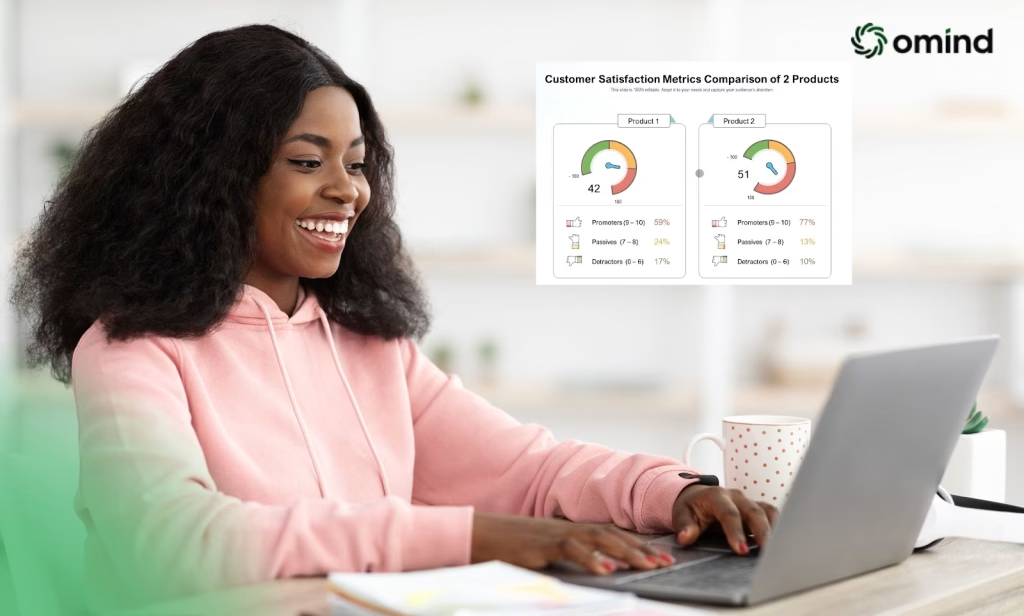The 6 metrics that predict real loyalty ### What's Inside
- 1. [Net Promoter Score (NPS)](#nps)
- 2. [Customer Satisfaction Score (CSAT)](#csat)
- 3. [Customer Effort Score (CES)](#ces)
- 4. [Customer Churn Rate](#churn)
- 5. [Customer Health Score (CHS)](#chs)
- 6. [Customer Lifetime Value (CLTV)](#cltv)
- [The Omind Framework](#framework) + [Common Mistakes](#mistakes)
## 1. Net Promoter Score (NPS): The Loyalty Compass
NPS tells you who your advocates are. It's a leading indicator of organic growth and one of the most widely used customer satisfaction metrics. - **How to measure:** Ask: *"On a scale of 0-10, how likely are you to recommend us?"*
- **The 'Lying' Problem:** A high NPS feels great, but it doesn't tell you *why* people promote you or how to fix problems for your detractors.
- **How to act on it:** Don't just track the score. **Close the loop.** Within 24 hours, personally reach out to your detractors (0-6). Understand their specific pain point. If you can fix it and turn them into a promoter, you've saved not just a customer, but a potential source of negative word-of-mouth.
**💡 Pro Tip:** Benchmark your NPS against your industry. A score of 50 is excellent in software, but average in hospitality. Context is everything when interpreting customer satisfaction metrics.
## 2. Customer Satisfaction Score (CSAT): The Transactional Snapshot
CSAT measures satisfaction with a *specific interaction*—a purchase, a support call, or a feature use. It's the most direct of all customer satisfaction metrics. - **How to measure:** Ask: *"How satisfied were you with your experience today?"* on a 1-5 or 1-10 scale.
- **The 'Lying' Problem:** A customer can have a great support call (high CSAT) and still churn next month because of a product flaw. [CSAT](/okf/article/improve-csat-score-contact-centers.md) is a lagging indicator of that *moment*, not the relationship.
- **How to act on it:** Align CSAT surveys with specific triggers (e.g., after ticket resolution). **Analyze the comments** to find root causes. A drop in CSAT after a recent product update is a red flag that warrants immediate investigation.
**💡 Pro Tip:** Don't just ask for a rating. Always include an open-ended question: "What could we have done better?" This turns a number into actionable insight—the true value of customer satisfaction metrics.
## 3. Customer Effort Score (CES): The Friction Finder
This metric predicts churn better than CSAT. Why? Because the #1 reason customers leave isn't dissatisfaction—it’s **effort**. If it’s too hard to do business with you, they'll find someone easier. This makes CES one of the most underrated customer satisfaction metrics. - **How to measure:** Ask: *"How easy was it to resolve your issue today?"* on a scale of 1 (very difficult) to 7 (very easy).
- **The 'Lying' Problem:** Many companies don't track CES, leaving them flying blind about their biggest retention risk.
- **How to act on it:** A high effort score (1-2) is an **immediate churn signal**. Map the journey of these users. Is your self-service portal confusing? Is finding a support number a scavenger hunt? Fix the friction point causing the effort.
**💡 Pro Tip:** CES is particularly powerful when paired with CSAT. A low CES (easy) and low CSAT (unsatisfied) indicate the interaction was smooth but the outcome was wrong, pointing to a product or policy issue rather than a support issue.
## 4. Customer Churn Rate: The Hard Truth
This is the most direct of all customer satisfaction metrics. It's the percentage of customers who stopped doing business with you in a given period. No metric is more honest. - **How to measure:** (Customers lost during period / Total customers at start of period) x 100.
- **The 'Lying' Problem:** Churn is a lagging indicator. By the time you see it, the customer is already gone.
- **How to act on it:** **Cohort analysis** is your friend. Break down churn by customer segment (e.g., first-time buyers, enterprise clients, specific regions). A high churn rate in a specific cohort tells you exactly where your biggest problem is.
**💡 Pro Tip:** Calculate both gross revenue churn and net revenue churn. Gross churn shows what you've lost; net churn shows what you've lost minus expansions from existing customers. The latter gives you a more realistic picture of the business impact of your customer satisfaction metrics.
## 5. Customer Health Score (CHS): The Prediction Engine
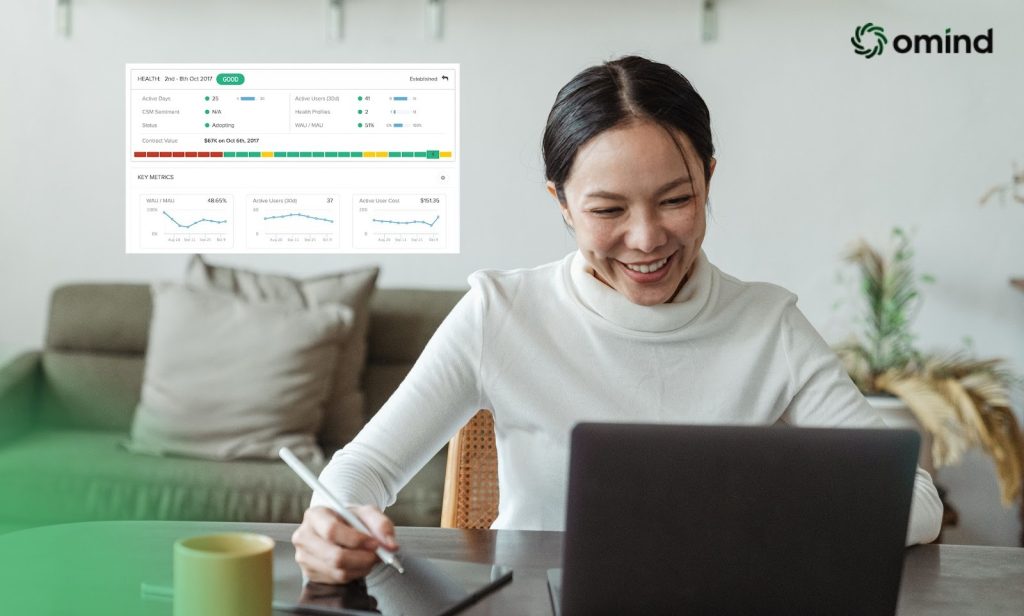 This is where you stop reacting and start predicting. CHS combines multiple data points into a single score that indicates the overall health of your relationship. It's the most sophisticated of all customer satisfaction metrics. - **How to measure:** There's no single question. Calculate CHS based on:
- **Product Usage:** Are they using the core features?
- **Engagement:** Do they open your emails or attend webinars?
- **Support Tickets:** Are they opening many tickets about basic issues?
- **NPS/CSAT Trends:** Is their sentiment improving or declining?
- **The 'Lying' Problem:** The biggest mistake is using a static CHS. Your customer’s health changes daily.
- **How to act on it:** Build a CHS dashboard that updates in real-time. **Create triggers:** If a customer’s CHS drops to "At-Risk," send a proactive check-in email. If they're "Healthy," look for upsell opportunities.
**💡 Pro Tip:** Assign different weights to your customer satisfaction metrics when calculating CHS. For a SaaS company, product usage might be 40%, NPS 20%, support tickets 20%, and engagement 20%. Customize it to your business model.
## 6. Customer Lifetime Value (CLTV): The Ultimate Goal
CLTV is the total net profit you expect from a customer over the course of your relationship. It's the metric that ties all other customer satisfaction metrics to business outcomes. - **How to measure:** Average Order Value x Purchase Frequency x Average Customer Lifespan.
- **The 'Lying' Problem:** Many companies treat all customers equally. A high CLTV customer is orders of magnitude more valuable than a low CLTV one.
- **How to act on it:** Use CLTV to **prioritize your retention efforts.** Your highest CLTV customers should receive your best service, personalized outreach, and early access to new features. A 5% increase in CLTV for your top 20% of customers can yield a massive profit boost.
**💡 Pro Tip:** Segment your customers by CLTV, then analyze other customer satisfaction metrics for each segment. You'll often find that your highest-value customers have different satisfaction drivers than your lowest-value ones.
## The Omind Framework: Building Your Actionable Customer Health Dashboard
Tracking these customer satisfaction metrics in silos is a waste of data. The magic happens when you combine them. **Here is a step-by-step framework you can implement today:**1. **Integrate Your Data:** Connect your CRM, support ticketing system, and product analytics platform. The goal is a single source of truth for all your customer satisfaction metrics.
2. **Create a Weighted CHS:** Assign a percentage weight to each metric based on your business model. For a SaaS company, product usage (CHS) and NPS might be weighted higher. For a retail brand, CES and CLTV might be more critical.
3. **Define "Red Zone" Triggers:** Set automatic alerts. For example:
- **Trigger:** CES > 5 (very easy) OR NPS < 6.
- **Action:** Auto-create a task for the customer success team to schedule a check-in call.
4. **Close the Loop Daily:** Don't review these customer satisfaction metrics monthly. Review them daily. Focus specifically on customers who are "At-Risk" or who had a high-effort interaction.
5. **Measure the Impact of Changes:** When you make a change—whether it's a product update, a new onboarding flow, or a support script revision—track its impact on your customer satisfaction metrics at 30, 60, and 90 days.
## Common Mistakes When Using Customer Satisfaction Metrics
Avoid these pitfalls to get real value from your data: - **Tracking too few metrics** yields an incomplete picture of customer health. *Fix:* Track a balanced set: loyalty (NPS), transactional (CSAT), effort (CES), and financial (CLTV).
- **Tracking too many without focus:** Data paralysis. You don’t know what to act on. *Fix:* Start with 6 core customer satisfaction metrics and add more only when you have the bandwidth to act on them.
- **Not acting on the data:** The metrics become a vanity exercise. *Fix:* Assign ownership for each metric. Who is responsible for improving NPS? Who owns churn reduction?
- **Surveys that are too long:** Low response rates and survey fatigue. *Fix:* Keep each survey to 1-3 questions. Use different metrics at different touchpoints to keep the burden low.
- **Ignoring qualitative data:** You know the score but not the story. *Fix:* Always include open-ended questions and analyze customer comments for recurring themes.
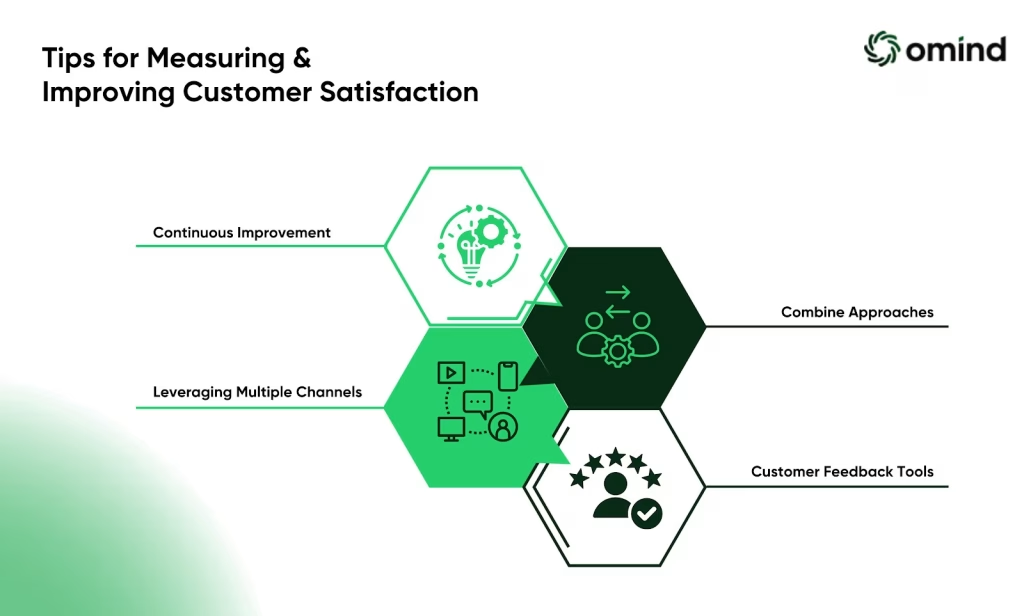Actionable tips to turn metrics into retention ## How to Act on Your Metrics: 4 Rules for 2026
Collecting data is useless without action. Follow these rules to turn your customer satisfaction metrics into a retention engine: 1. **Combine for Context:** Don't rely on a single metric. Combine NPS, CSAT, CES, and churn data with behavioral signals (website visits, feature usage) to get a holistic view.
2. **Automate Feedback Collection:** Use tools that trigger surveys at the right moment—after a support ticket is closed, after a purchase, or when a user hits a milestone. Manual collection is too slow.
3. **Close the Loop Within 24 Hours:** When you get a detractor (NPS 0-6) or a high-effort response (CES 1-2), reach out personally within a day. Speed shows you care.
4. **Listen Across Every Channel:** Don't just survey. Monitor social media, app store reviews, and support chat logs. Your customers are telling you how they feel everywhere—you just have to listen.
## Summary: The 6 Customer Satisfaction Metrics
Metric What It Measures Best Used For Action Trigger **NPS** Loyalty & advocacy Measuring brand strength Reach out to detractors (0-6) within 24 hours **CSAT** Satisfaction with a specific interaction Transactional feedback Investigate drops after product changes **CES** Ease of doing business Identifying friction points Fix the process causing high effort **Churn Rate** Customer loss Measuring retention health Analyze cohorts to find problem segments **CHS** Overall relationship health Predicting churn risk Proactively reach out to "At-Risk" customers **CLTV** Long-term customer value Prioritizing retention efforts Provide premium support to top CLTV customers
## Stop Tracking. Start Acting.
The goal isn’t to collect customer satisfaction metrics. It’s to act on them. The six metrics above—NPS, CSAT, CES, Churn Rate, CHS, and CLTV—are your toolkit. But the real competitive advantage in 2026 is **speed**. The company that detects a churn signal and acts on it within a day will outperform the company that celebrates a quarterly CSAT report. By combining these customer satisfaction metrics into a single, real-time health dashboard, you transform customer data from a rearview mirror into a GPS. **The truth is, every customer is telling you how they feel. The question is: are you listening—and acting?** ### Ready to Build Your Customer Health Dashboard?
At **Omind**, our [AI-driven platform](/okf/page/ai-qms.md) helps you unify your customer satisfaction metrics, automate alerts, and provide real-time insights so you can focus on what matters: keeping your best customers happy.
Get real insights and a clearer view of the voice of the customer.
[Schedule a Demo Now →](/okf/page/schedule-a-demo.md)Let's work together to deliver outstanding customer experiences.
---
## Key Use Cases of Conversational AI in Healthcare
The innovation has greatly impacted various sectors, and the arrival of conversational AI boosted this opportunity. A study by[ Grand View Research in 2022](https://www.grandviewresearch.com/industry-analysis/conversational-ai-market-report) says that this sector will grow 26.6% from 2023 to 2030. We see this growth in health, which changes how hospitals deal with their patients. Conversational AI in healthcare improves patient experiences and efficiency within the healthcare system. With AI, basic tasks are automated, giving the staff more time to care for their patients.
The effect of the COVID-19 pandemic reminded us of strong and adaptable technologies to handle unexpected challenges. At that time, [conversational AI](/okf/page/conversational-ai.md) helped some hospitals manage patient inquiries, assess symptoms, and provide timely information during the crisis. They are useful in healthcare to optimize routine processes, reduce wait times, and enhance contact between patients and hospitals. It also helps to mitigate the workload for the hospital staff on daily tasks.
If you are in healthcare and are considering using technology, this article is for you. Stay with us to learn how this innovation changes how we handle patients.
## The Rise of Conversational AI in Healthcare
AI technology is revolutionizing healthcare by offering a more natural and interactive way for patients and providers to connect. But how is it different from chatbots? The following section will explain.
### The Power of NLP and Adaptability
While traditional chatbots often provide pre-programmed responses, more advanced conversational AI solutions in healthcare use Natural Language Processing (NLP) to understand human language better. It is important to have a proper and contextual conversation where the AI can adapt to the user's unique needs and questions. A [unified customer experience](/okf/article/personalized-shopping-customer-experience.md) is what any field expects and this is possible by using the power of AI, especially in healthcare.
### Tailoring the Experience
A person's health needs are unique from those of others. Using conversational AI, a healthcare system can be customized to a patient's medical history, giving targeted information and support. It's an ally that tells patients about upcoming appointments or helps them manage their medications based on their specific prescriptions.
### Integration with Healthcare Systems
Conversational AI integration with Electronic Health Records (EHR) and Customer Relationship Management (CRM) tools can access a wealth of patient data. This guarantees the AI assistant provides the most relevant data for every user, enabling more accurate and tailored responses. Imagine integrating such advanced AI capabilities into your existing systems; with providers like Omind, the process becomes streamlined and easier to manage.
### Growth and Adoption in Healthcare
Healthcare providers are increasingly adopting conversational AI and expect its usage to continue growing in the coming years. This innovation is useful for both patients and providers, simplifying procedures, improving communication, and, finally, improving the overall healthcare experience.
## Core Use Cases of Conversational AI in Healthcare
Now, you can learn how this system is changing healthcare, offering many benefits for patients and providers. See some of the core use cases that are changing the way we experience healthcare:
1. **Appointment Scheduling:** Usually, patients call the hospital front office to schedule a visit. Conversational AI simplifies this, allowing patients to make appointments 24/7 through a user-friendly chat interface. It is convenient, lowers the administrative burden on healthcare staff, and provides a unified experience for patients and workers.
2. **Patient Care Management:** There was a time when staff dug through all the papers to find information about their patients. Now, AI can simplify access to the patient's medical data. Staff and patients can view upcoming appointments, prescription details, test results, and other health data. This will improve patient engagement and empower people to participate more actively in their health management. Omind's conversational AI makes accessing and managing patient data simple and efficient, leading to higher patient satisfaction and better care quality.
3. **Health and Medication Management:** Medication schedules are important for successful treatment, and the technology may provide personalized help. A virtual assistant can remind about medication, offer dosage instructions, and even answer questions about possible side effects.
4. **Symptom Checking and Medical Screening:** Are you not feeling well and want to know why? At first, a patient can use conversational AI to assist. Using AI-powered symptom checkers, you can receive initial assessments and advice on self-care or seek professional medical attention. Individuals need to make choices about their health, and healthcare providers prioritize care for those who need it most.
5. **Patient Support**: Sometimes, managing healthcare accounts and complex medical systems can be difficult. Conversational AI can offer great help by offering a user-friendly chat interface, gaining access to insurance information, submitting billing questions, or even requesting prescription refills—all without the need for lengthy phone calls or visits to administrative offices.
6. **Mental Health Support and Counseling:** Conversational AI systems can be valuable for mental health support. AI-powered chatbots can offer empathetic responses, provide coping techniques, and connect users with mental health professionals when necessary. This is beneficial for individuals who are hesitating to seek traditional therapy due to stigma or accessibility problems.
7. **Automating Administrative Tasks:** Conversational AI is a good option if your staff spends a lot of time on administrative tasks. It can [automate many repetitive tasks](/okf/article/automation-technology-importance.md), such as appointment confirmations, pre-screening surveys, and insurance verification. This frees healthcare staff to focus on what is important—providing high-quality patient care. By integrating Omind's seamless AI solutions, your healthcare practice can reduce the time spent on routine administrative tasks, allowing staff to focus on patient care.
8. **Public Health Information:** Conversational AI greatly helps people during public health crises in healthcare. Chatbots answer public questions about symptoms, preventative measures, and available resources. This technology ensures that the public has access to accurate information.
9. **Patient Reminders:** All people do not remember their consultation and other important health matters. Using conversational AI in healthcare can remind patients about upcoming appointments, vaccinations, or other preventive health measures. This approach promotes a healthy lifestyle among the people.
10. **Gathering Patient Insights:** The arrival of digitalization generates lots of useful data for now and the future. By analyzing patient interactions with chatbots, healthcare providers can gain insights into patient concerns and areas where care must be improved. These data lead to personalized treatment plans, improved communication strategies, and a unified customer experience.
## Challenges and Considerations
You may encounter many difficulties and considerations while implementing conversational AI in healthcare. Are you ready to know them? Dive deep now.
1. One of the biggest tasks is having clear goals while ensuring compliance with privacy standards like HIPAA. This guarantees that patient information is protected and the technology serves better than intended.
2. Another hurdle is finance because integrating with your present system may be a little costly. Adopting a [patient-centric data platform](/okf/article/generative-ai-tools-for-marketing.md) that does not affect current practices and patient care is essential.
3. Hospitals may lack the experts to maintain and train AI. Quality training is essential for AI to be more relevant and accurate. Without skilled people, AI may not perform as expected, leading to bad performance.
4. When you find a solution, it must be customized to your patients and staff's needs. The unified customer experience is what everyone looks for when looking for a platform. In healthcare, consider the diverse ways patients connect with healthcare systems and tailor AI to meet these unique needs.
## The Future of Conversational AI in Healthcare
Conversational AI in healthcare looks bright and offers outstanding changes in patient care. Generative AI advancements will bring more accurate chatbots, allowing for natural, informative exchanges with patients. It will build proper communication methods and bridges between healthcare providers, patients, and insurers by creating a collaborative and efficient healthcare ecosystem.
In the following years, AI assistants may offer roles in chronic disease management, offering personalized advice and support. Educational chatbots could empower patients with clear explanations about their conditions and treatment choices. Mental health support also sees major changes and provides ongoing support and tools for those who need it.
As AI technology improves, hyper-automation will further ease healthcare processes. Imagine a future where AI handles scheduling appointments and even basic diagnostics. The technological ally will offer a more positive healthcare experience for everyone. Omind's forward-thinking approach perfectly aligns with the future trajectory of conversational AI, preparing healthcare systems today for the innovations of tomorrow.
## Conversational AI: Revolutionizing Healthcare
Conversational AI gives exceptional patient care and involvement and improves communication. It can manage various tasks, benefiting both hospitals and patients. Hospitals see plenty of major players in the market offering services, but having a trusted ally like [Omind](/okf/page/schedule-a-demo.md) can offer access to cutting-edge technologies and assistance. By getting a partner like them, you can give an outstanding experience for your patients and healthcare officials. With their industry-leading expertise in conversational AI in healthcare and experience management platforms, Omind helps implement a powerful Intelligent Virtual Assistant (IVA) solution where everyone will be comfortable. [Connect with us](/okf/page/schedule-a-demo.md) for more details now.
---
## Last-Mile Logistics Voicebot: Automate Tracking and Delivery Calls
Last-mile logistics break under question volume. "Where is my package?" "Can I change the delivery time?" "What if nobody is home?"
The same questions hit the queue thousands of times a day and require access to a database. Yet human agents still spend entire shifts reading tracking updates aloud—while escalations, damage claims, and high-value account issues wait in line behind them. The gen AI voicebot for logistics is built to fix this operational problem.
### Key Takeaways
- • Last-mile logistics drown in repetitive calls ("Where's my package?") that waste agent time on simple database lookups.
- • AI Voice Agent resolves status checks, rescheduling, and instruction updates in under 60 seconds with real-time TMS integration.
- • Automates routine interactions during the call, eliminating after-call work and failed delivery loops caused by delayed updates.
- • Excels at exception detection, fast escalation, and ticket creation—freeing agents for high-value disputes and negotiations.
- • Absorbs peak volume (rainstorms, holidays, Black Friday) without overtime or staffing panic while cutting handle times dramatically.
- • Delivers clear ROI through lower costs, higher consistency, proactive updates, and transformed agent focus on complex issues.
### Table of Contents
## Why Logistics Support Teams Keep Losing Ground?
[Contact centers](https://www.fusioncx.com/) in logistics business already run lean. And one rainstorm can turn a stable support queue into a two-hour backlog. Suddenly, hold times double, supervisors pull agents from adjacent teams, and customers call back because the first wait was too long.
Routine calls—status checks, [appointment confirmations](/okf/article/voice-ai-automated-appointment-scheduling-roi.md), delivery rescheduling—carry the same staffing and infrastructure cost as complex ones. A three-minute tracking call consumes queue capacity, telecom overhead, and QA review time. Scale that across hundreds of thousands of monthly interactions and the waste becomes a budget problem, not just an efficiency complaint.
Your best agents end up acting like human search bars. You are paying trained support staff to repeat information a caller could receive in 15 seconds.
## What Do Most Logistics Calls Actually Look Like?
A large share of inbound delivery interactions follows the same bounded structure:
Common Delivery & Logistics Call Types Call Type What the Caller Needs What It Takes to Resolve Shipment status Current location, last scan, ETA Database lookup Delivery rescheduling Available windows, updated slot Schedule system writes Address or instruction update Field correction before dispatch TMS record update POD confirmation Signature timestamp, recipient name Record retrieval Failed delivery follow-up Next attempt options, window selection Workflow trigger ## How does an AI Voice Agent Handles the Call?
The [voicebot](/okf/page/voice-ai.md) connects directly to the systems logistics operations already as a real-time interface between them.
A customer calls and says: *"My order still hasn't arrived."*
The bot identifies the caller through phone recognition or a short verification step, locates the shipment, pulls live status data, checks for exceptions, and responds immediately.
If the customer wants to reschedule, the bot checks available windows and writes the update in real time. If delivery instructions change—"leave with security," "use the side entrance," "require signature"—the system updates the record during the call, not through manual agent notes three steps later.
Specifically, this matters because inaccurate or delayed updates at the delivery instruction level are a known source of failed delivery attempts, which then generate their own downstream call volume. Eliminating that lag removes a compounding failure cycle.
## The Part Most AI Pitches Skip: Exception Handling
A package marked "delivered" that was never received needs a completely different workflow than a standard tracking inquiry. The voicebot cannot repeat data and hope the caller gives up. It must recognize the exception, capture the issue correctly, open an investigation ticket, assign a reference number, set expectations, and escalate when the situation requires judgment.
Consequently, the measure of a logistics voice agent is not how well it handles clean calls. It is how fast it recognizes when a call is not clean—and routes it to the right place.
Modern voice AI agents surface difficult cases faster so agents can act on them while the situation is still recoverable.
## What Changes When the Repetitive Calls Stop Landing on Agents?
The first operational change is not a dashboard metric. It is silence—fewer repetitive calls in the queue, fewer agents trapped in tracking loops, fewer volume spikes turning into staffing emergencies.
Holiday peaks stop becoming a hiring panic. The system absorbs inbound volume without mandatory overtime, rushed onboarding cycles, or supervisors manually load-balancing teams in real time. Black Friday becomes a staffing event the operation can plan for, rather than survive.
Agents shift to calls where their judgment is irreplaceable: lost packages, delivery disputes, escalations from freight accounts, exception workflows that require negotiation or policy interpretation.
Proactive communication compounds this effect. When customers receive delay notifications, delivery updates, or rescheduling reminders before they feel compelled to call, inbound volume drops without any change to staffing.
Manual Handling vs. AI Voice Agent: A Direct Comparison Dimension Human Agent (Status Calls) AI Voice Agent Average handle time 3–5 minutes Under 60 seconds After-call work Manual system update required System updated during call Peak capacity Fixed by headcount Scales to call volume Consistency Variable across shifts Uniform across all calls Exception recognition Judgment-dependent Rule-based routing to human Cost per interaction Full labor + infrastructure Fraction of agent cost ## **What Determines Whether a Logistics Voice Deployment Actually Works**?
Integration quality matters more than model quality. A well-tuned AI voicebot for logistics operations connected to a poorly maintained TMS will produce confident yet incorrect answers. That failure mode is worse than a system that simply says it does not know.
Before deployment, three questions determine operational viability:
- **Does the system integrate with your actual TMS, not a demo environment?** The bot's answers are only as current as the data feed behind them. Real-time API connectivity to live carrier and order management data is non-negotiable.
- **What happens when the bot cannot resolve the call?** Escalation logic needs to be explicit, tested, and fast. Customers who feel trapped in an automated loop call back angrier.
- **How are call recordings and transcripts governed?** [Voice interactions](/okf/article/voice-conversational-ai-customer-service.md) generate data artifacts—audio, transcripts, metadata. Each introduces retention, access control, and auditability requirements that exist regardless of whether a human or an AI handled the call.
Logistics teams that treat these as post-launch questions tend to discover them at the worst possible time.
## Voice AI Is Queue Control—Not a Branding Layer
As parcel volume keeps growing, customers start losing their patience. Logistics teams cannot solve communication overload by adding more agents every peak season.
[**AI voice agents**](/okf/article/24-7-ai-voice-agents-for-call-centers.md) work when they remove operational drag without making customers fight the system. That means fast identification, accurate data retrieval, real escalation logic, and clean integration with the platforms logistics teams already depend on. Otherwise, it is just another automated phone tree customers learn to route around.
*Want to see how AI voicebot for logistics fits into your logistics contact center before committing to a deployment? [Schedule a demo with Omind](/okf/page/schedule-a-demo.md) to walk through your call mix and integration environment.*
---
## Leveraging Automated Marketing for Enhanced Document Processing Efficiency
## Introduction
Welcome to the world where efficiency meets innovation! Today, we're diving into a fascinating realm – the convergence of **Automated Marketing and Document Processing**. At first glance, these might seem like distinct domains, but when they join forces, the impact on modern business operations is nothing short of remarkable.
Automated Marketing, in its essence, is like having a tireless, smart assistant dedicated to your marketing strategies. It leverages technology to deliver personalized, timely marketing messages without the constant need for manual intervention. Think of it as setting up a series of intelligent dominoes that, once triggered, carry out your marketing campaigns seamlessly.
On the flip side, Document Processing might sound a bit mundane, but it's the backbone of any organization dealing with a deluge of paperwork. It's all about transforming the way businesses handle their documents – from invoices to customer communications – turning them from time-consuming tasks into streamlined, automated processes.
Now, imagine the power unleashed when these two are integrated. It's like having a symphony where each note is perfectly in tune. This integration isn't just a fancy add-on; it's becoming a necessity in the fast-paced, data-driven world we operate in. It's about making your business not just survive but thrive by being more efficient, responsive, and adaptive.
So, as we delve deeper, let's keep in mind that this isn't just about technology. It's about transforming how we do business, making our operations smarter, and staying ahead in the game. Welcome to the future of business efficiency!
## Understanding Intelligent Document Processing (IDP)
Let's unpack **Intelligent Document Processing (IDP)** – a term that's buzzing in the business world. At its core, IDP is like the brainy whiz-kid in the world of document management. It's a sophisticated blend of technologies like AI, machine learning, and natural language processing, all working together to understand, process, and manage documents.
Now, why is IDP making waves in today's business landscape?
Well, think about the mountains of data and documents businesses handle daily. From invoices and purchase orders to customer emails and contracts, it's a lot! Traditionally, managing these documents has been time-consuming, error-prone, and honestly, a bit of a headache. That's where IDP steps in as a game-changer.
IDP doesn't just automate document processing; it does so intelligently. It can read and understand documents just like a human would, but faster and without the coffee breaks. This means it can extract key information, categorize documents, and even make sense of unstructured data that doesn't fit neatly into predefined boxes.
The real magic of IDP lies in how it enhances operational efficiency. Imagine automating the tedious task of data entry or sorting through hundreds of documents to find specific information. IDP does this with ease, reducing manual effort, minimizing errors, and speeding up processes. This not only saves time but also allows employees to focus on more strategic, value-added tasks.
## The Role of Automated Marketing in Business Efficiency
Now, let's turn our attention to Automated Marketing and its pivotal role in enhancing business efficiency. Picture Automated Marketing as your savvy, digital marketing guru, always ready to deliver the right message to the right person at the right time. It's not just about sending out emails or posting on social media; it's about creating a more intelligent, responsive, and personalized marketing experience.
Automated Marketing tools are like the Swiss Army knives of the marketing world. They're versatile, efficient, and incredibly powerful when used correctly. These tools can manage email campaigns, social media posts, customer segmentation, and much more, all with minimal human intervention. This means your marketing team can set up campaigns that automatically trigger based on specific customer actions or behaviors. The result? A more efficient marketing process, with less room for error and more space for creativity.
But the real game-changer has been the integration of AI in marketing. AI has transformed Automated Marketing from a tool that follows instructions to one that learns and adapts. It analyzes customer data, predicts behaviors, and personalizes interactions in ways we could only dream of a few years ago. This integration has a profound impact on Digital Marketing Strategies.
With AI, digital marketing is no longer just about reaching a broad audience; it's about reaching the right audience with precision. AI-driven insights help tailor marketing messages that resonate with individual preferences, leading to higher engagement and conversion rates. It's like having a crystal ball that tells you what your customers want, even before they know it themselves.
## Top 10 Benefits of Combining Automated Marketing with Document Processing
When we blend Automated Marketing with Document Processing, it's like mixing peanut butter with jelly – each great on their own, but together, they create something extraordinary. Let's break down the key benefits of this dynamic duo:
#### 1. **Streamlined Communication**
By integrating these two, you ensure that your marketing messages and document processes are in perfect harmony. This leads to smoother, more efficient communication both internally and with your customers.
#### 2. **Enhanced Customer Relationship Management (CRM)**
Imagine having all customer interactions, from emails to transaction records, seamlessly connected. This integration provides a 360-degree view of your customers, leading to more personalized and meaningful interactions.
#### 3. **Efficient Email Automation**
Automated Marketing brings smart, targeted email campaigns, while Document Processing ensures that the content of these emails is always up-to-date and relevant. This combination means sending the right message at the right time with the right information.
#### 4. **Improved Lead Generation Automation**
By combining these technologies, lead generation becomes more than just capturing names and emails. It evolves into a sophisticated process of nurturing leads with personalized content and timely follow-ups, all automated for efficiency.
#### 5. **Data-Driven Decision Making**
With Automated Marketing and Document Processing working together, you get a treasure trove of data. This data can be analyzed to make informed decisions about marketing strategies and document management practices.
#### 6. **Cost Efficiency**
Automating repetitive tasks in both marketing and document handling reduces labor costs and minimizes errors. This cost efficiency can be a game-changer for businesses looking to optimize their resources.
#### 7. **Consistency Across Channels**
This integration ensures that your brand messaging is consistent across all platforms, from marketing emails to official documents, reinforcing your brand identity and values.
#### 8. **Faster Response Times**
Automated systems mean quicker responses to customer inquiries and faster document processing, leading to improved customer satisfaction and a more dynamic business operation.
#### 9. **Scalability**
As your business grows, so do your marketing and document processing needs. This combination scales with your business, adapting to increased demands without missing a beat.
#### 10. **Enhanced Compliance and Security**
With sensitive data flowing through both marketing and document channels, this integration ensures that all information is handled securely and in compliance with regulations.
## Use Cases of Intelligent Document Processing and Automated Marketing in Various Industries
Let's take a journey through different industries and see how the clever use of Intelligent Document Processing (IDP) and Automated Marketing is not just a nice-to-have but a game-changer in their operations. Each industry has its unique challenges, and it's fascinating to see how these technologies are tailored to meet those needs.
### Manufacturing
In the world of manufacturing, time and accuracy are of the essence. IDP steps in to streamline the handling of supply chain documents, like purchase orders and invoices, reducing processing time and errors. Meanwhile, Automated Marketing helps manufacturers target potential B2B clients with precision, using data-driven insights to create impactful campaigns.
### Distribution
The distribution sector thrives on efficiency. IDP transforms the way they manage logistics documents, from shipping labels to delivery receipts, ensuring faster and more accurate processing. On the marketing front, Automated Marketing enables distributors to keep their clients informed about inventory levels, delivery schedules, and new product offerings, enhancing customer satisfaction and loyalty.
### Healthcare
In healthcare, the stakes are high. IDP is a lifesaver, managing patient records, insurance forms, and compliance documents securely and efficiently. This not only improves patient care but also ensures compliance with stringent healthcare regulations. Automated Marketing in healthcare focuses on patient engagement and education, sending timely health tips, appointment reminders, and personalized wellness plans.
### Finance
The finance industry is all about precision and compliance. IDP helps manage a plethora of documents like loan applications, account opening forms, and transaction records, ensuring accuracy and compliance with financial regulations. In terms of marketing, financial institutions use Automated Marketing to offer personalized financial products, educate customers on financial literacy, and keep them updated on market trends and new services.
In each of these industries, the integration of IDP and Automated Marketing isn't just about adopting new technologies; it's about reimagining and revolutionizing their processes. It's about making operations smoother, customer interactions more meaningful, and decision-making more data-driven.
## Challenges and Solutions in Implementing Automated Systems
Implementing automated systems like IDP and Automated Marketing is a bit like navigating a new city. It's exciting, but there are challenges to overcome. Let's look at some common roadblocks businesses face and how to steer through them successfully.
### Challenge #1: Resistance to Change
Change can be daunting. Employees might be skeptical about new technologies, fearing they might replace their roles or disrupt their workflow.
**Solution:** Communication is key. Involve your team early in the process, highlight the benefits, and provide ample training. Show them how these tools are allies, not adversaries, in making their work life easier and more productive.
### Challenge #2: Integration with Existing Systems
Sometimes, new automated systems struggle to play nice with the old ones, leading to compatibility issues.
**Solution:** Choose solutions known for their compatibility and flexibility. Work with IT specialists to ensure smooth integration, or consider phased rollouts to manage the transition better.
### Challenge #3: Data Security Concerns
With automation comes the need to handle data digitally, which raises concerns about data security and privacy.
**Solution:** Prioritize solutions with robust security features. Regularly update your systems and train your staff on data security best practices to safeguard sensitive information.
### Challenge #4: High Initial Costs
Implementing automated systems can be a significant investment, which can be a hurdle, especially for smaller businesses.
**Solution:** Focus on the long-term ROI. Start small if necessary, and scale up. Look for scalable solutions that offer flexible pricing plans.
### Challenge #5: Overwhelming Technology Choices
The market is flooded with tools and technologies, making it hard to choose the right one.
**Solution:** Don't rush your decision. Take the time to research, seek demos, and consult with experts. Look for tools that align with your specific business needs and goals.
### Challenge #6: Keeping Up with Technology Evolution
Technology evolves rapidly, and there's always the fear of your new system becoming obsolete.
**Solution:** Choose providers known for their innovation and regular updates. Stay informed about industry trends and be open to evolving your systems as needed.
### Challenge #7: Measuring ROI and Performance
Businesses often struggle to track the performance and ROI of new automated systems.
**Solution:** Set clear, measurable goals before implementation. Use analytics and reporting tools to track progress and make data-driven decisions for continuous improvement.
In summary, while the road to implementing automated systems may have its bumps, the destination – a more efficient, productive, and innovative business – is well worth the journey. With the right approach and solutions, these challenges can be navigated successfully, paving the way for a brighter, automated future.
## **Takeaway**
As we wrap up our exploration into the dynamic world of Automated Marketing and Intelligent Document Processing (IDP), let's take a moment to reflect on the key takeaways from our discussion.
Firstly, we've seen how Automated Marketing isn't just about automating tasks; it's about creating smarter, more personalized customer interactions. It's the secret sauce to keeping your marketing efforts both efficient and effective. Then, there's IDP – the unsung hero in the background, turning document chaos into organized, streamlined processes. Together, they're not just tools; they're transformative forces that redefine how businesses operate.
We've journeyed through various industries, witnessing the unique ways in which these technologies are being leveraged. From manufacturing to healthcare, the impact is clear: enhanced efficiency, better customer relationships, and a significant boost in overall productivity.
However, it's not all smooth sailing. Implementing these systems comes with its challenges – from integration headaches to security concerns. But the solutions are within reach. With thoughtful planning, clear communication, and a focus on security and scalability, these hurdles can be overcome.
Now, if you're poised to embrace this transformative shift in your business operations, you might be in search of a dependable ally to navigate you through this change. This is where [Omind](/okf/page/home.md) comes into play. We're well-equipped to help you navigate these waters, ensuring a smooth transition and successful implementation.
---
## Leveraging Document Automation Software for Competitive Advantage
In today's fast-moving business world, staying ahead is key. That's where document automation software comes in. Think of it as your behind-the-scenes powerhouse, making sure everything from contracts to reports gets handled swiftly and smartly. It's not just about saving time; it's about doing things better and faster than the competition.
Document automation is a game changer. It takes the repetitive, time-consuming tasks of managing documents and makes them automatic. This means less time spent on paperwork and more time for the work that really matters. It's like having a super-efficient assistant who never sleeps, ensuring your business runs smoothly around the clock.
But it's not just about efficiency. It's about being smart with your various data sources, agile in your processes, and integrated with the latest technology. These are the building blocks of a competitive edge in today's market. By embracing document automation, businesses can not only keep up but leap ahead. It's about making your operations seamless, your management effortless, and your strategy forward-thinking. Let's dive into how this powerful tool can transform your business landscape.
## The Evolution of Document Management
Remember when managing documents meant piles of paper, filing cabinets, and the never-ending task of sorting and finding the right file? That was the old world of document management—manual, time-consuming, and, let’s be honest, a bit of a mess. But change was coming.
Enter document automation. It wasn’t just a small step forward; it was a leap. Imagine going from walking to flying overnight. Suddenly, the clutter vanished, and those old filing cabinets became relics. Automation brought speed, accuracy, and order to once chaotic processes. Documents could now be created, shared, and stored in just a few clicks. No more lost files or wasted hours—everything became accessible, organized, and secure.
And the impact went beyond going paperless. Automation redefined how businesses handle information. It turned static files into dynamic assets—available when needed, shared effortlessly, and protected with advanced security protocols.
### Driving Efficiency, Insights, and Agility
But the real power of document automation lies in what it enables. With smart integration, we’re not just managing documents—we’re managing data. And that unlocks real-time insights, informed decision-making, and fast action. The data that was once locked away in file cabinets now fuels smarter, faster business operations.
It’s a complete evolution. Not just about saving time, but about working better. Automation enhances process efficiency, strengthens compliance, and builds the agility modern businesses need to stay competitive. In today’s digital-first landscape, adopting a document automation platform is no longer optional—it’s essential.
The future of work is streamlined, data-driven, and boldly automated. Are you ready to embrace it?
## Benefits of Document Automation for Business Agility
Document automation isn't just a fancy tool; it's a game-changer for businesses aiming to stay nimble and ahead of the curve. Here's how it boosts business agility:
### **1. Speeds Up Document Processing**
Imagine needing a document ASAP and getting it in seconds, not hours. That's document automation for you. It turns tasks that used to take forever into something you can do with a click. This speed means you can respond to clients, make decisions, and move projects forward faster than ever.
### **2. Reduces Errors and Improves Accuracy**
Humans are great, but we make mistakes, especially when we're tired or rushed. Document automation takes the risk of human error out of the equation. This means fewer mistakes in your documents, leading to more trust from your clients and partners.
### **3. Enhances Collaboration**
Collaboration is key in today's business world. Document automation makes sharing and working on documents easy, no matter where your team is located. This means faster feedback loops and decision-making, keeping projects moving smoothly and efficiently.
### **4. Improves Data Accessibility and Management**
Gone are the days of digging through files for that one piece of relevant data. Document automation organizes your data so you can access it instantly. This accessibility means better decision-making because you have all the information you need at your fingertips.
### **5. Streamlines Compliance and Auditing**
Keeping up with regulations can be a headache. The Document automation tool really helps by ensuring that all your documents are compliant and easily auditable. This not only saves time but also protects you from potential legal issues.
### **6. Facilitates Better Customer Service**
Quick, personalized responses make customers happy. Document automation allows you to quickly access customer information and history, enabling personalized service at speed. Happy customers are loyal customers, giving you a competitive edge.
### **7. Enables Scalability**
As your business grows, so does the volume of your documents. Document automation scales with you, handling increasing workloads without a hitch. This means you can grow without being bogged down by administrative tasks.
### **8. Reduces Operational Costs**
By automating routine tasks, you're not just saving time; you're saving money. Less time spent on document management means lower labor costs and more resources for other areas of your business.
### **Some Use Cases of Document Automation:**
- When a retail company implements document automation for their invoicing process. If generating invoices takes about 10 minutes per invoice before implementation. With automation, it's down to seconds. This speed means they can bill faster, improving cash flow and customer satisfaction.
- When a law firm uses document automation to manage contracts and legal documents. This reduces the time spent on document preparation by 70%, allowing lawyers to focus on higher-value work, like advising clients and winning cases.
- When a healthcare provider automates patient records management. This not only improves patient care by making records easily accessible but also ensures compliance with healthcare regulations, protecting them from potential fines.
Document automation doesn't just improve a single process; it transforms how businesses operate, making them more agile, efficient, and competitive. Whether it's speeding up operations, reducing costs, or improving customer service, the benefits of document automation are clear. It's not just about doing things faster; it's about doing them better and staying ready for whatever comes next.
## Key Features of Document Automation Software
Document automation software is like the Swiss Army knife for businesses looking to streamline their operations. Here are the key features that set it apart:
### **1. Template Creation**
Templates are the backbone of document automation. They allow you to set up a standard document format once and then reuse it endlessly. This means every contract, report, or invoice follows the same professional format, saving time and maintaining brand consistency.
### **2. Automated Workflows**
This feature is all about making sure the right tasks get to the right people at the right time. Automated workflows route documents automatically for approval, review, or any other step in your process. It's like having an invisible coordinator who ensures everything moves smoothly and nothing falls through the cracks.
### **3. Data Extraction and Population**
Imagine not having to manually enter data into documents ever again. Data extraction pulls information from your databases or previous documents and populates new ones accordingly. This not only speeds up document creation but also reduces errors from manual data entry.
### **4. Integration Capabilities**
No tool is an island, and document automation software knows it. Integration capabilities mean it can seamlessly connect with your existing CRM, ERP, or other business systems. This ensures a smooth flow of information across your business, enhancing efficiency and reducing manual data transfer.
### **5. Version Control**
Keeping track of document versions can be a nightmare. Document automation software offers version control, ensuring everyone is always working on the latest version of a document. This eliminates confusion and keeps everyone on the same page—literally.
### **6. Access Control and Security**
With great power comes great responsibility. Access control ensures that only authorized personnel can view and share documents, or edit certain documents. Coupled with robust security measures, it keeps sensitive information safe from prying eyes.
### **7. E-Signature Integration**
In a world that moves fast, waiting for a physical signature can slow you down. E-signature integration allows documents to be signed digitally, speeding up agreements and approvals without compromising security or legality.
### **8. Analytics and Reporting**
Knowledge is power, especially when it comes to understanding how your business operates. Analytics and reporting features provide insights into your document processes, helping you identify bottlenecks, monitor turnaround times, and improve overall efficiency.
### **9. Mobile Accessibility**
Business doesn’t just happen at the desk anymore. Mobile accessibility means you can create, send, and sign documents from anywhere, at any time. This flexibility is crucial for businesses looking to stay agile and responsive in today’s fast-paced world.
### **10. Customizable User Interfaces**
Every business is unique, and customizable user interfaces mean you can tailor the software to fit your specific needs and preferences. This makes the software more intuitive and user-friendly, encouraging adoption among your team.
These features make document automation software not just a tool but a transformative force for businesses. By automating routine tasks, enhancing document accuracy, and improving workflow efficiency, it allows businesses to focus on growth and innovation. Whether you're a small startup or a large corporation, these features can help streamline your operations and propel your business forward.
**Read More:** [Maximizing Efficiency in Document Processing Services: A Guide to Best Practices](/okf/article/maximizing-efficiency-in-document-processing-services-a-guide-to-best-practices.md)
## Overcoming Challenges with Document Automation
Implementing a document automation system sometimes can feel like steering a ship through uncharted waters. Here are some common challenges and how to navigate through them:
### **1. Resistance to Change**
It's human nature to stick to what we know. Introducing new software can meet with a "but we've always done it this way" attitude. The key? Communication. Explain the benefits clearly and involve your team in the process. Show them how it makes their work easier, not harder.
### **2. Integration Hurdles**
Making new software play nice with your existing legacy systems can be tricky. Start by choosing software that's known for its integration capabilities. Work closely with IT to map out the integration process and test thoroughly before going live to minimize disruptions.
### **3. Training Challenges**
Learning new software can be daunting for some team members. Offer comprehensive training sessions that cater to different learning styles. Include hands-on workshops and easy-to-access online resources. Remember, patience is key – everyone learns at their own pace.
### **4. Data Security Concerns**
With cyber threats lurking around, security concerns are valid. Ensure the document automation software you choose complies with industry-standard security protocols. Also, educate your team on best practices for data security to build a culture of vigilance.
### **5. Cost Concerns**
Budget constraints can make it hard to justify the initial investment. Highlight the long-term savings and efficiency gains to your finance team. Often, the return on investment from time saved and errors reduced makes a compelling case.
### **6. Overwhelming Options**
The market is flooded with options, making it hard to choose the right one. Start by defining your specific needs and priorities. Look for software with a trial period so you can test its fit without a full commitment.
### **Best Practices for Success**
**Start Small:** Implement the software in phases, starting with one department or process. This allows you to iron out any kinks before a full rollout.
**Gather Feedback:** Regularly check in with your team for feedback. Their insights can help improve the process and encourage buy-in.
**Monitor and Adjust:** Use the software’s analytics tools to monitor its impact. Be ready to adjust your processes based on what the data tells you.
Overcoming these challenges requires a mix of strategic planning, clear communication, and a bit of patience. But the payoff – a more efficient, agile, and competitive business – is well worth the effort.
**Read More:** [Latest Technologies & Data Strategies Enhancing BX](/okf/page/blog.md)
## Choosing the Right Document Automation Software
Picking the right document automation software is a bit like choosing a new smartphone. You want something that fits just right, making your life easier without a steep learning curve. Here’s what to keep an eye out for:
### **1. Look for Scalability**
Your business isn't static; it grows. Choose software that grows with you, handling more documents and data as your needs expand. Think of it as buying a backpack – you want one that can fit everything without bursting at the seams.
### **2. Ease of Use is Key**
If it's complicated, chances are it'll gather digital dust. Go for software that’s as easy to use as your favorite app. It should feel intuitive, with a clean interface that doesn’t require a manual to navigate.
### **3. Integration Capabilities Matter**
Your new software should play well with others. Whether it's your CRM, ERP, or email system, seamless integration means less hassle and more efficiency. It's like making sure your new headphones work with your phone right out of the box.
Selecting the ideal document automation software is all about discovering a platform that evolves alongside your business, offers user-friendly functionality, and seamlessly integrates with your current systems. By focusing on these key elements, you can ensure a decision that not only fulfills your immediate requirements but also paves the way for future success.
Enter **Kapture**: a tool that effortlessly categorizes, retrieves, and analyzes data from any document with unparalleled accuracy. This enables your business to revolutionize its digital experience, one interaction at a time.
**Read More:** [Leveraging Automated Marketing for Enhanced Document Processing Efficiency](/okf/article/leveraging-automated-marketing-for-enhanced-document-processing-efficiency.md)
## **Takeaway**
Wrapping up our journey through the world of document automation software, it's clear that this isn't just another tech trend. It's a fundamental shift in how we approach work, offering a smarter, more streamlined way to handle documents. This software isn't just about keeping up with the times; it's about setting the pace, giving businesses the agility and efficiency they need to stand out.
Let's not forget the core lessons here: document automation saves precious time, slashes the risk of errors, and smooths out your operations. When picking the right automation tool, remember to weigh its scalability, user-friendliness, and how well it integrates with your current systems.
In the race for competitiveness, staying ahead means being nimble, smart, and always ready for what's next. Document automation is your ally in this race, empowering your team to focus on innovation and growth.
So, it's time to embrace the change. Adopt document automation tools, and see your business not just keep pace but soar ahead. The future is bright, and with the right software, you're well-equipped to meet it with confidence. Let's step into this future together with [Omind](/okf/page/home.md), streamline our workflows, and secure that competitive edge we all seek.
---
## Live Chat Benefits and Best Practices for Customer Service 2024
## **Why Live Chat’s Vital for Your Business?**
As a business leader or CXO, you’re constantly seeking new strategies to enhance customer experience and optimize your operations.
In 2024, customer expectations are higher than ever, driven by the rapid advancements in technology and the increasingly digital nature of our world. This has critically pushed the need for immediate, effective communication than ever before.
This is where [**live chat for customer service**](/okf/page/conversational-ai.md) steps in—a powerful tool that has the potential to revolutionize how you connect with your customers.
In this blog, we’ll dive into the key benefits of live chat, exploring how it can transform your customer service, increase efficiency, and ultimately, boost your bottom line.
## **7 Various Benefits of Live Chat Support**
Live chat offers a unique blend of real-time interaction, efficiency, and personalization that can significantly improve customer satisfaction and loyalty.
*But the benefits don’t stop there.*
From reducing resolution times to providing valuable data for personalized interactions, live chat is more than just a support tool—it’s a strategic asset that can drive your business forward.
Let’s dive into seven various benefits of integrating live chat into your customer support strategy!
### **1. Immediate, Real-Time Assistance for Customers**
*Customers expect quick responses like we do.*
With **live chat for customer service**, you can provide immediate, real-time assistance. Imagine a customer browsing your website who has a question about product availability. Instead of waiting hours or even days for an email reply, they can get an instant answer through live chat, keeping them engaged and more likely to make a purchase.
### **2. Ability to Handle Multiple Queries Simultaneously**
*One of the standout features of live chat is its ability to handle multiple customer queries at once.*
Unlike phone support, where one agent can only speak to one customer at a time, **live chat** allows your team to manage several conversations simultaneously. This efficiency means faster response times and more satisfied customers, all while optimizing your support team’s productivity.
### **3. Reduced Resolution Times Compared to Email or Phone**
*Email and phone support have their place, but they often lead to longer resolution times.*
With **live chat for customer service**, customers can explain their issues and receive solutions in real-time, often within minutes. This quick turnaround reduces frustration and ensures that issues are resolved before they escalate, leading to a smoother customer experience.
### **4. Increased Customer Satisfaction and Loyalty**
*When customers know they can rely on your business for quick and effective support, their satisfaction—and loyalty—naturally increases.*
**Live chat** allows you to address their needs instantly, making them feel valued and heard. This positive interaction encourages repeat business and fosters long-term relationships.
### **5. Cost-Effective Solution for Customer Support**
Live chat is not only effective but also cost-efficient. It requires fewer resources than traditional phone support and can be easily scaled with AI chatbots. During peak times, a balance reduces overall support costs while maintaining high service standards.
### **6. Data Collection for Personalized Interactions**
Live chat provides a wealth of data that can be used to personalize future interactions.
For example, by analyzing chat histories, you can identify common customer pain points or preferences and tailor your offerings accordingly. This data-driven approach enhances the customer experience by making interactions more relevant and personalized.
### **7. 24/7 Availability with AI Chatbots**
Finally, one of the biggest advantages of **live chat for customer service** is the ability to offer 24/7 support through AI chatbots.
Even when your human agents are offline, chatbots can:
- Provide immediate assistance
- Answer frequently asked questions
- Guide customers through common processes.
This [round-the-clock availability](/okf/page/conversational-ai.md) ensures that your customers are never left waiting, no matter the time of day.
Keep these benefits in mind to ensure that your business remains competitive and responsive to customer needs in this digital-first world.
Also Read: [**Chatbot And Live Chat: Which is Better in 2024?**](/okf/page/conversational-ai.md)
## **Power of Automation and AI for Live Chat Support**
Automation and AI are breathing life into enhancing **live chat for customer service**. These technologies help you streamline operations and elevate the customer experience by providing faster, more accurate responses.
Here’s how you can leverage automation and AI effectively:
### **1. Automating Responses with Canned Replies and Chatbots**
One of the simplest yet most effective ways to use [**automation in live chat for customer service**](/okf/page/conversational-ai.md) is through canned replies and chatbots.
*For your reference, canned replies are pre-written responses to common customer queries, allowing agents to respond quickly and consistently.*
For more complex interactions, AI-powered chatbots can handle initial inquiries, directing customers to the right information or escalating the issue to a human agent if needed. This automation reduces wait times and ensures that customers receive prompt, accurate responses.
### **2. Using AI to Provide Self-Service Options**
AI can also empower customers to help themselves. By integrating AI into your live chat, you can offer self-service options that guide users through troubleshooting steps, FAQs, or even product recommendations based on their needs.
*For example, an AI-driven chat could ask, “Are you looking for support with your recent purchase?” and then provide a series of options that lead the customer to the right solution.*
This makes your support system efficient enough and empowers your customers.
### **Case Studies on Successful AI Implementation**
- *Consider the case of Company X, a leading eCommerce retailer that implemented an AI-powered live chat for customer service.*
By integrating chatbots to handle initial inquiries and using AI to analyze customer data, Company X was able to **reduce response times by 50% and increase customer satisfaction by 30%.**
- *Another example is Company Y, a tech firm that used AI to provide self-service troubleshooting for its software products.*
The result? A **40% reduction in support tickets and a significant improvement in customer retention.**
Looking to harness the transformative power of AI in your live chat for customer service? [**This blog can be your guiding compass!**](/okf/article/customer-service-quality-assurance-ai-qms.md)
## **How to Access and Use Live Chat for Customer Service?**
Integrating **live chat for customer service** into your business strategy can significantly enhance customer experience, but it's essential to use it effectively.
Here’s how to ensure you’re getting the most out of this powerful tool:
**1. Embedded Directly on Websites or Applications**
To make the most of **live chat for customer service**, it should be easily accessible where your customers spend the most time—on your website or mobile application.
By embedding the chat feature directly onto your site, you allow customers to reach out for help at any point during their browsing or purchasing journey.
*Whether they’re navigating your homepage or checking out, the chat window should be just a click away, ready to assist.*
**2. Intuitive Chat Interface for Both Customers and Agents**
- The chat window should be user-friendly, with clear prompts and easy navigation so that customers can communicate their needs without confusion.
- For agents, the interface should provide quick access to customer data, conversation history, and tools that enable them to resolve issues efficiently.
- An intuitive design ensures that interactions are productive and pleasant for everyone involved.
**3. Proactive Chat Pop-Ups and Reactive Chat Options**
Proactive chat pop-ups can be triggered based on customer behavior—such as time spent on a page or specific actions like adding items to a cart—offering assistance before the customer even asks.
At the same time, reactive chat allows customers to initiate the conversation when they need help.
By balancing these approaches, you can ensure that your **live chat for customer service** is both responsive and helpful, meeting customers’ needs in real-time.
## **Best Practices for Implementing Live Chat Support**
Implementing live chat support can be a game-changer for your business, but to fully reap its benefits, it’s essential to follow best practices that ensure both efficiency and a positive customer experience.
### **1. Training Support Agents Effectively**
*The success of your live chat support largely depends on how well your agents are trained.*
- Make sure your support team is familiar with the live chat software and has skills such as:some text
- Multitasking
- Quick problem-solving
- Maintaining a positive tone throughout the interaction.
- Provide them with resources and regular training sessions to keep their skills sharp and up-to-date.
- A [well-trained agent](/okf/page/accent-harmonizer.md) can quickly resolve issues, making the live chat experience seamless for customers.
### **2. Placing Chat Windows in Subtle but Accessible Locations**
*The placement of your live chat window is crucial. You want it to be easily accessible without being intrusive.*
A common best practice is to position the chat icon in the bottom right corner of your website. This location is intuitive for users while remaining out of the way of the main content.
Plus, consider using a small pop-up notification that appears after a user has spent a certain amount of time on the site, offering assistance without overwhelming them.
### **3. Balancing the Use of Live Chat with Other Support Channels**
*While live chat is a powerful tool, it’s crucial to balance its use with other support channels like email, phone, and social media.*
- Different customers have different preferences, and some issues may be better resolved through a phone call or a detailed email.
- Ensure that your live chat complements these other channels, providing a cohesive and comprehensive support system that caters to all customer needs.
- This multi-channel approach ensures that no customer is left behind, regardless of their [preferred communication method.](/okf/page/conversational-ai.md)
### **4. Utilizing AI and Chatbots for Handling Repetitive Queries**
*AI and chatbots are invaluable in handling routine, repetitive queries, allowing your human agents to focus on more complex issues.*
Implement AI-powered chatbots to handle frequently asked questions, order tracking, and basic troubleshooting. This speeds up response times and ensures that your live agents are available for higher-priority tasks.
By [automating routine interactions](/okf/page/conversational-ai.md), you can increase the overall efficiency of your support system while maintaining a high standard of customer service. For more lively examples to implement automation in your customer support channels, read this article: [**The 5 Most-Used Automated Customer Service Examples**](/okf/article/automated-customer-service-examples.md)
**Note:** A well-executed live chat strategy can enhance customer satisfaction, streamline operations, and ultimately, contribute to the success of your business.
*So, continue reading for more tips on optimizing your live chat for customer service!*
## **How to Optimize Live Chat for Efficiency?**
Live chat is a powerful tool for providing exceptional customer service. To ensure your live chat system operates efficiently, consider the following strategies:
**1. Leveraging Data for Personalized Interactions:**
- **Analyze Customer Data:** Use data collected from previous interactions to personalize your responses and provide more relevant recommendations.
- **Tailor Conversations:** Adapt your approach based on the customer's history, preferences, and current context.
**2. Seamless Integration with Existing Systems:**
- **CRM Integration:** Integrate your live chat system with your customer relationship management (CRM) software to access customer information and provide personalized support.
- **Help Desk Integration:** Connect your live chat with your help desk system to streamline issue resolution and track customer inquiries.
**3. Managing Incoming Chat Volumes and Agent Workloads:**
- **Predictive Routing:** Use AI-powered routing systems to distribute chats to agents based on their skills and availability.
- **Knowledge Base Integration:** Provide agents with access to a comprehensive knowledge base to help them answer customer questions quickly and accurately.
- **Chatbot Integration:** Use chatbots to handle routine inquiries, freeing up human agents to focus on more complex issues.
By implementing these strategies, you can optimize your live chat system for efficiency, improve customer satisfaction, and drive business growth.
Also Read: [**Recent Case Studies**](/okf/page/case-studies.md)
## **To Summarize**
As we move further into 2024, the importance of immediate and effective customer communication cannot be overstated. Implementing live chat for customer service is a powerful way to meet rising customer expectations, enhance satisfaction, and streamline your operations. By leveraging the latest in AI and automation, live chat can transform your customer service experience, making it more efficient, personalized, and responsive.
**Consider** [**Omind**](/okf/page/home.md)**, the AI-powered engine that drives businesses forward.**
With Omind, you can enhance your operational workflows and deliver outstanding customer experiences that truly set your business apart. Ready to see how Omind can transform your business operations and boost productivity?
[**Schedule a demo with us today**](/okf/page/schedule-a-demo.md) and start your journey towards enhanced efficiency and effectiveness.
For more details about Omind products and services, [**click here!**](/okf/page/company.md)
---
## Major Retail Automation Trends to Expect in 2024
The click of a mouse brings a world of shopping to your doorstep. Welcome to the modern retail landscape—a fusion of technological advances and changing consumer expectations.
The growth of retailing in this digital-first age is making every interaction memorable.
From brick-and-mortar stores evolving into immersive experiences to e-commerce platforms leveraging AI for unmatched personalization, the retail sector is expanding in fascinating ways.
Join us as we delve into the latest trends that are setting the pace for tomorrow’s shopping experience.
## **7 Recent Retail Trends to Follow**
As we edge closer to 2024, the retail landscape continues to evolve at a breakneck pace, driven by technological innovations and changing consumer expectations.
Let’s break down in a simple, relatable way that resonates with everyone from tech enthusiasts to eco-conscious shoppers.
### **1. Hybrid Shopping: Blending the Digital with the Physical**
Hybrid shopping, or 'phygital' retailing, has emerged as a transformative strategy in the retail sector.
Retailers are creating seamless shopping journeys by integrating digital tools into physical stores.
For instance, **intelligent dressing rooms** equipped with smart mirrors can suggest complementary items to shoppers, show how clothes would look in different colors, or allow customers to request different sizes without leaving the fitting room.
Ultimately, this boosts sales and inventory management.
- **Popularity Among Gen Z and Baby Boomers**
While Gen Z might be drawn to the tech aspects of hybrid shopping, baby boomers appreciate the convenience it offers, allowing them to interact with products physically while enjoying the ease of digital transactions.
These hybrid strategies meet various preferences and comfort levels.
- **Phygital Retail as a Key Strategy**
The concept of phygital retail is about creating a [cohesive experience](/okf/page/conversational-ai.md) that leverages the best of both worlds.
By using data analytics from online shopping to inform the in-store experience, retailers can:
- Manage stocks more efficiently
- Tailor the shopping experience to individual preferences
- Make every interaction feel personalized and exclusive.
This might be useful for you: [**Data-Driven Retail: Fueling Growth Through Insights**](/okf/article/how-to-be-a-data-driven-retailer.md)
### **2. Frictionless Delivery: Convenience Booster**
As online shopping continues to grow, so does the expectation for quick, reliable delivery.
Consumers want their purchases in their hands as soon as possible, and they don’t want to fret about the logistics of getting them there.
The push for faster delivery services has become a key differentiator in the market. **Same-day and next-day delivery options** are compelling retailers to accelerate their logistics operations to meet these expectations.
The expected outcome?
Innovations in supply chain management and logistics technologies to enable quicker turnaround times.
- **Influence of Fast Delivery Companies**
The **'Amazon effect'** has catalyzed an industry-wide shift towards speed and efficiency, making fast delivery a staple service rather than a premium option.
The retail giant’s logistical capabilities have influenced consumer expectations and inspired other retailers to structure their delivery services.
**Role of Real-Time Tracking and Proactive Notifications**
In a world where time is of the essence, consumers appreciate transparency in the delivery process.
Real-time tracking and proactive notifications have become critical features of modern delivery services. These tools not only keep the consumer informed but also reduce the anxiety associated with waiting for a package.
As we surf through the ever-changing waves of retail, three standout trends are making significant ripples in 2024: AI and Personalization, Social Commerce, and Sustainability in Retail. Each trend not only defines the current retail narrative but also shapes the buying habits of consumers, especially as technology and social consciousness evolve.
### **3. AI and Personalization: Bespoke Shopping Experience**
More than robots and high-tech sci-fi scenarios, AI is about making your [shopping experience as personal](/okf/page/conversational-ai.md) as your playlist.
AI helps bridge the gap between what you need and what's available.
It can predict trends, manage inventory, and even offer virtual try-ons. AI knows your style and size preferences in advance.
What’s more?
- **Personalization of Offers and Recommendations**
Ever wonder how online stores seem to know just what you’re looking for?
That’s **AI** at work, analyzing your browsing and purchase history to suggest items you’re likely to buy. This [**hyper-personalization**](/okf/page/conversational-ai.md) makes shopping convenient and almost intuitive.
- **Reception by Gen Z**
The digital natives, Gen Z, are all in when it comes to [personalized shopping experiences.](/okf/page/conversational-ai.md)
They love that AI helps them find unique products and deals without having to sift through countless options. This tech-savvy generation values efficiency, and AI delivers just that.
Also Read: [**Elevate Shopping with AI-Driven Retail Solutions**](/okf/page/retail-ecommerce.md)
### **4. Social Commerce: The New Marketplace**
Is social media just confined to selfies and viral videos? It’s where the new age of shopping is happening.
Social media platforms are now where people go to buy, not just browse. Integrated shopping features allow you to purchase products directly from posts or ads, making impulse buys just a click away.
Here’s what’s buzzing:
- **Livestream Shopping in APAC**
Picture this: your favorite influencer is trying on a jacket and you can buy it right then and there during the livestream. This trend has taken off massively in Asia-Pacific, combining entertainment with instant shopping gratification.
- **Influence of Creators and Influencers**
Influencers are the new sales associates. Their recommendations can sway the shopping habits of millions. Brands are recognizing this power, collaborating with creators to tap into their extensive and loyal followings.
### **5. Sustainability in Retail: Eco-friendly Is the New Black**
Sustainability has become a shopper’s mandate. Here’s how being green is reshaping retail:
- **Paying More for Green Products**
More and more, consumers are willing to shell out extra for products that promise not to hurt the planet. Eco-friendly isn’t just good for the earth; it’s becoming a status symbol too.
- **Demand for Sustainable Practices**
Today’s consumer wants to know where their products come from, how they are made, and whether the workers are treated fairly. Transparency is key, and retailers are stepping up by sharing their processes and sourcing materials responsibly.
- **Consumer Contradictions**
Here’s the twist—while many advocate for sustainability, their buying patterns don’t always match. This gap shows the complex relationship between intentions and actions, highlighting an area for growth and education in consumer habits.
So, next time you’re shopping, take a moment to notice these recent retail trends in action—it’s quite the sight!
### **6. Resale Market Expansion: Vintage Vibes and Savvy Savings**
Smart savings of second-hand shopping are propelling the resale market to new heights. Fractions of the cost are driving more consumers to second-hand shops and online resale platforms. It's not just about saving money; it's about finding something unique.
Here's why thrifting isn't just for the frugal anymore:
- **Branded Platforms Take Charge**
Recognizing the trend, many luxury brands are launching their own resale platforms. This allows them to maintain brand integrity and customer loyalty while tapping into the circular economy.
It's a win-win, offering authenticated, quality goods with a smaller environmental footprint.
- **Economics and Aesthetics**
Today’s economic landscape mixed with a shift toward more individualistic style choices means more consumers are opting for pre-owned items.
It's economical, eco-friendly, and enables self-expression. The resale market caters to all.
### **7. Omnichannel Sales and Engagement: Everywhere All at Once**
In the digital age, shopping isn’t confined to one space. Omnichannel strategies are bridging the gap between online and offline, ensuring a seamless customer journey.
Here’s how it’s playing out:
- **Blurring the Lines**
Combining online and offline channels means you can start your shopping journey on social media, test out products in-store, and make your purchase online—or any other combination.
This seamless integration ensures that customer preferences are respected and catered to at every point.
- **Social Media as a Sales Star**
Platforms like Instagram are becoming the new storefronts, obviously.
Brands are leveraging these platforms not just for marketing, but as a direct sales channel through shoppable posts and ads.
The [customer experience](/okf/page/conversational-ai.md) is now about choice—whether it's chatting with a bot, talking to a human on the phone, using an app, or visiting a store. Each touchpoint is an opportunity to engage the customer, gather data, and tailor the shopping experience to their needs.
So, there's a lot to look forward to in the world of modern commerce.
For more in-depth information, give it a must-read: [**Omnichannel Retail Trends for 2024**](/okf/article/omnichannel-trends.md)
## **The Bottom Line**
For business leaders and tech enthusiasts, these recent trends are painting a new picture of retail—one that’s more personalized, more digital, and more conscious. Whether you’re a business leader or a tech geek, understanding these trends can help you navigate the current retail landscape with ease and insight.
As we look to 2024 and beyond, these trends are just the tip of the iceberg in the vast ocean of retail possibilities, promising a more connected, efficient, and personalized shopping experience for everyone.
Partner with [**Omind**](/okf/page/home.md), the [**AI-powered engine**](/okf/page/conversational-ai.md) designed to propel your retail business forward by enhancing efficiency and delivering exceptional results across customer interactions and operational workflows.
Get in touch with us today to [**schedule a demo**](/okf/page/schedule-a-demo.md) and begin the journey of transforming your retail customer service capabilities.
---
## Marketing AI for Predictive Analytics: Future-Proofing Strategies
n an era of fast-changing consumer preferences and competitive markets, staying ahead demands more than intuition. Predictive analytics powered by marketing AI is revolutionizing how businesses anticipate customer behavior and make proactive decisions. This powerful combination helps brands craft hyper-personalized experiences, optimize campaigns, and make data-driven decisions that ensure long-term success.
Here’s a deep dive into how **predictive analytics**, [**AI-driven marketing strategies**](/okf/article/ai-powered-marketing-campaigns-personalization-at-scale.md) and **customer behavior insights** can transform your marketing efforts and future-proof your strategies.
## **What Is Predictive Analytics in Marketing?**
[Predictive analytics](/okf/article/leveraging-ai-predictive-personalization-marketing.md) uses historical data, machine learning, and AI models to forecast future customer actions. It answers critical questions like: What products are customers likely to buy next? Which campaigns will yield the best engagement rates? How can we prevent churn before it happens? For marketers, this insight bridges the gap between data and decision-making, empowering teams to move from reactive to proactive strategies.
## **How AI-Driven Marketing Strategies Anticipate Customer Behavior**
##### **1. Uncovering Actionable Customer Behavior Insights**
AI algorithms analyze vast amounts of customer data, revealing hidden patterns and trends. This helps predict behaviors such as purchase intent, preferred channels, and engagement timing, enabling tailored messaging and personalized offers.
##### **2. Enhancing Proactive Decision-Making**
[With predictive analytics,](/okf/article/best-ai-tools-business-efficiency.md) businesses can: Preemptively address customer needs. Allocate resources effectively for maximum ROI. Identify and mitigate potential risks (e.g., customer churn or reduced product demand).
##### **3. Personalizing Marketing Campaigns**
AI-driven insights allow marketers to create campaigns that resonate deeply with individual customers. For example:
- **E-commerce**: Personalized product recommendations based on browsing and purchase history.
- **Email Marketing**: Optimal timing for sending emails to maximize open rates.
## **Key Benefits of Predictive Analytics in AI-Driven Marketing**
##### **1. Boost Customer Retention**
Predictive models can identify at-risk customers based on their activity patterns. Marketers can then design retention campaigns with targeted offers or incentives to re-engage them.
##### **2. Drive Data-Informed Campaigns**
AI analyzes past campaign performance to refine future efforts. It predicts which channels, content types, and messaging will resonate most with specific audience segments.
##### **3. Improve Demand Forecasting**
Predictive analytics empowers businesses to align inventory and production with future demand, reducing costs and meeting customer expectations more effectively.
##### **4. Increase Marketing ROI**
By focusing on high-probability outcomes, predictive analytics eliminates wasted spend on low-performing channels, ensuring resources are allocated where they’ll have the most impact.
## **Real-Life Applications of Predictive Analytics in Marketing**
##### **E-Commerce: Personalized Shopping Journeys**
Retail giants like Amazon use predictive analytics to recommend products tailored to individual customer preferences, resulting in higher conversion rates and customer satisfaction.
##### **Email Marketing: Optimized Campaigns**
AI-driven tools predict the best times to send emails and craft subject lines that drive engagement, significantly improving open and click-through rates.
##### **Segmentation and Customer Profiling**
Businesses use predictive analytics to group customers based on factors like lifetime value, enabling targeted campaigns for high-value segments.
## **Steps to Implement Predictive Analytics for Future-Proof Marketing**
##### **1. Leverage the Right Technology**
Adopt tools like Salesforce, HubSpot, or custom AI platforms designed for predictive analytics. Ensure the technology integrates seamlessly with your current systems.
##### **2. Prioritize Data Quality**
Predictive analytics thrives on clean, accurate, and comprehensive data. Invest in robust data collection and maintenance processes.
##### **3. Build Custom Models**
Work with data scientists to develop machine learning models tailored to your specific business needs, whether it’s forecasting demand or identifying churn risks.
##### **4. Monitor and Refine Models**
Regularly evaluate the accuracy of your predictions and update your models based on new data or shifting market dynamics.
## **Why Predictive Analytics Is the Future of Marketing**
The ability to anticipate customer behavior and make proactive decisions is no longer a luxury—it’s a necessity. Predictive analytics not only improves marketing efficiency but also creates meaningful connections with customers by understanding their needs better than ever.
By incorporating [**AI-driven marketing strategies**](/okf/article/best-ai-tools-business-efficiency.md) into your workflow, you can:
- Stay ahead of competitors.
- Build trust and loyalty with personalized experiences.
- Optimize resources for maximum impact.
### **Future-Proof Your Marketing Strategy Today**
Predictive analytics is your gateway to smarter, more effective marketing. From enhancing customer engagement to driving operational efficiency, its potential is boundless. Embrace AI-powered tools, invest in quality data, and refine your strategies to meet tomorrow’s challenges today. [**Ready to harness the power of predictive analytics?** ](/okf/page/schedule-a-demo.md)Let AI guide your journey to anticipate customer behavior, act proactively, and achieve unmatched marketing success.
---
## Marketing Automation Specialist: What Is It and How To?
Business automation is increasing as it performs repetitive tasks and spares human effort for more vital tasks. [2024 Gartner report says](https://www.gartner.com/en/newsroom/press-releases/2021-04-28-gartner-forecasts-worldwide-hyperautomation-enabling-software-market-to-reach-nearly-600-billion-by-2022) that the automation market has grown to nearly 600 billion from 482 billion in 2020. Many aspirants are turning their wheels to this site, which offers an excellent opportunity for their dreams. Are you one of those who wants to be a [marketing automation](/okf/page/marketing-ai.md) specialist? The first step is to understand the importance of this role. Now, most firms want to offer personalized and unified customer experiences with automation.
AI technologies assist in managing and optimizing marketing campaigns by providing data-driven insights, but human oversight is still essential. This growing field offers numerous opportunities for tech professionals. With advanced tools and data analytics, these specialists ensure that marketing efforts are practical and efficient.
## What is Marketing Automation?
Using marketing automation in your organization is like having a super smart assistant in your marketing team. It's software that handles daily tasks and lets your staff focus on other tasks where the human touch is necessary. It hands all, from sending emails to tracking website visits,
Developers first [created automation in the 1960s](/okf/article/automation-technology-importance.md) for industrial and repetitive tasks. Over the years, the technology has evolved to perform more complex functions, including customer interactions in marketing. The marketing automation concept came due to the high volume of customer requests and personalization. Today, it's revolutionizing customer interaction and streamlining the business. Because of this, a firm can learn about customers' buying journeys and send them the perfect offer.
But to manage this, you need a marketing automation specialist. This process automates tasks to increase marketing efficiency and effectiveness. If you know your clients' behavior and preferences, you can create targeted campaigns to build relationships and drive conversions. It also gives valuable insights into campaign performance, helping you make a decisions to optimize your strategy.
## Core Responsibilities and Daily Tasks
A marketing automation specialist is the backbone of digital marketing. They handle a variety of tasks to ensure campaigns run smoothly and effectively.
### Managing and Optimizing
This process involves selecting, setting up, and fine-tuning the marketing automation platform to connect with business goals. It's about getting the most out of your marketing automation tool. This is the first process that happens when you build a chatbot, increasing your team's productivity. Tools like those provided by Omind can significantly aid in managing these responsibilities, offering user-friendly interfaces and seamless integration capabilities.
### Designing and Executing
A big part of the job is creating and running automated campaigns across different channels, such as email, social media, and SMS. These campaigns need to engage the target audience and drive conversions. Finding which platform best fits your needs and connecting with customers is essential.
### Lead Capture and Nurturing
It is crucial to find potential customers and guide them through the sales funnel. Marketing automation specialists use automated workflows to capture leads and nurture them until they're ready to buy.
### Audience Segmentation
Clients have different tastes and preferences. If you want to deliver personalized messages, you need to divide your audience into groups based on shared characteristics. This helps tailor content and offers for maximum impact.
### Integration with CRM
Ensure this part before you purchase an automation tool, but a marketing automation specialist can assist. Smoothly [connecting your marketing automation platform](/okf/article/crm-marketing-automation-integration.md) with your customer relationship management (CRM) system is essential for offering a unified customer experience. This ensures data consistency and allows for better lead management. Opting for a solution like Omind, which offers strong integration capabilities, can help streamline this process and enhance the overall customer experience.
### Performance Analysis and Optimization
How do you know that the implementation of this technology is working? To measure success, you need data, which you get from the automation tool. Marketing automation specialists analyze campaign performance to identify what's working and what's not. This is essential to improve future campaigns.
## Essential Skills for Success
If you are an aspirant who wants to thrive as a marketing automation specialist, you need essential skills, especially on the technical side. Let's see some of the details now.
**Technical and Analytical Skills:** A specialist will be working on complex software, so a strong understanding of marketing automation and [CRM platforms](/okf/article/customer-relationship-management-retail-strategy.md) is unavoidable in this area. They must also dig deep into data and turn numbers into insights to make an informed decision. A solid foundation in data visualization helps present findings effectively. SQL skills can be valuable for advanced data analysis.
**Creativity and Digital Marketing Expertise:** Being a marketing automation specialist is unique because you must think outside the box to create engaging campaigns. So, your specialists must have digital marketing skills, including SEO and SEM, to reach your target audience. Understanding emerging digital trends to stay ahead in the market. Knowing user experience (UX) principles can help create more effective campaigns.
**Communication and Collaboration:** Communication is exchanging ideas between people, which is essential for a specialist. They constantly collaborate with the team and other departments, so strong communication and teamwork skills are vital for success. Developing good relationships with all stakeholders can help gain support for marketing automation initiatives.
## Marketing Automation Platforms
What is a marketing automation platform? It's a digital tool streamlines repetitive marketing tasks, allowing marketers to focus on strategy and creativity. Are you ready to explore more? Let's dive in.
The market is vast, each with its strengths and challenges. But you may choose a popular option like Omind, where you get all the support and expertise. They are experienced and offer solutions that fit and are customizable according to your goals. A platform like them offers features like email marketing, lead scoring, lead nurturing, and campaign automation. The best platform for you depends on your business size, budget, and specific needs.
Enterprise-level platforms provide advanced features like complex automation workflows, AI-powered insights, and strong integration capabilities. They are fit for large organizations with high-volume marketing needs. On the other hand, middle and small industries may prefer user-friendly, affordable options with essential features such as email marketing and lead management.
One key factor is integrating the automation chatbot with your CRM tools. Seamless integration is crucial for providing a unified customer experience and view. Look for platforms that offer open APIs or pre-built integrations with popular tools like Salesforce, Google Analytics, and [social media platforms](/okf/article/increase-engagement-social-media-strategies.md). Omind's platform, with its open APIs and pre-built integrations, makes it easier to connect with popular tools, ensuring a smooth, cohesive marketing infrastructure.
## Building a Career as a Marketing Automation Specialist
Becoming an automation specialist offers an exciting path with growing opportunities. But there are many things you need to do to reach this destination. Are you ready to see them? Explore now.
- **Educational Paths and Certifications:** A strong marketing, business, or technology foundation is necessary to gain a job. Professionals usually start with a marketing, business administration, or computer science degree. If you have any certification from any institution specializing in automation, it can boost your resume.
- **Gaining Experience:** Even though you start with a degree, getting hands-on experience will give you an advantage. You can go for internships, freelance projects, or entry-level marketing roles to gain practical exposure to the tools and processes. Volunteering for marketing initiatives or personal projects can also help you build a portfolio.
- **Career Progression:** With experience and expertise, you can advance to senior marketing automation specialist and marketing automation manager. These roles involve strategic planning, team leadership, and overseeing complex automation initiatives. Staying updated with the trends and emerging technologies will add a feather to your hat.
- **Continuous Learning:** Nothing is permanent in this world, especially technology. What you have learned now may become outdated after five years. The automation sector is booming, so keeping yourself with the latest knowledge can help you stay ahead in this competitive world. Explore new tools and platforms and experiment with different automation strategies. Make adaptability your secret to success.
## Challenges and Rewards
Like other professions, starting a career as a marketing automation specialist has opportunities and challenges. In the following section, we will analyze them.
1. The first problem an aspirant faces is [staying with the trends](/okf/article/marketings-top-trends-to-watch.md). This sector is evolving, so failing to update may seriously affect your job. It can be challenging to keep up with the latest trends while managing daily tasks. A person also faces data accuracy and security hurdles, which require proper attention to detail and compliance with regulations.
2. Seeing the impact of your work on a company's success is incredibly rewarding. Your automated campaigns drive leads, conversions, and customer satisfaction and fulfillment. The ability to analyze data and uncover insights that inform strategic decisions is also empowering. As a marketing automation specialist, you play a good role in driving business growth and efficiency.
## The Future of Marketing Automation Specialization
Businesses recognize the value of automation and the role of skilled marketing automation specialists. Data, personalized experiences, and optimized marketing efforts are in high demand across industries. This growth will encourage many professionals to enter this field. Getting this specialization has advantages in business and career. For businesses, it increases efficiency, improves customer engagement, and increases ROI on marketing investments. It also helps companies provide a unified customer experience.
If you are looking for a partner, look no further than Omind, which has expertise in marketing automation. Our platform leverages generative AI and deep insights to transform complex customer journeys into easy experiences. Omind empowers marketing teams to focus on strategy and innovation by automating repetitive tasks and providing actionable data. Ready to join the automation community? Let's discuss how we can help you achieve your goals. [Contact us today for a free consultation](/okf/page/schedule-a-demo.md).
### The AI platform marketing specialists build careers on
Omind's Marketing AI is where marketing automation is headed — Gen AI, real-time personalization, predictive analytics, all in one platform.
[Explore Marketing AI →](/okf/page/marketing-ai.md)
---
## Marketing’s Top Trends To Watch Out For In 2024
The world of marketing has gone through several paradigm shifts now, thanks to advances in technology and the way content is consumed. What used to require hundreds of thousands of dollars in marketing budgets and weeks of planning can now be accomplished with a mobile phone—if you’re keeping up with the latest marketing trends. Companies reportedly spent over $3 billion on marketing during 2023, solely through a popular short video content app.
Similarly, there are an increasing number of new trends in marketing that we feel every business should consider switching to, if they’d like to stay relevant. Here’s your guide to some of the most popular ones.
## Generative AI is the New Superhero
With constant updates to GPT, even as of May 2024, generative AI has only been rising up the ranks of the business marketing arsenal. Some 35% of companies globally are said to be using AI for marketing now. This is the power of generative AI. It can analyze vast amounts of marketing data to identify trends and patterns, and then use that knowledge to create high-quality, targeted content. Additionally, AI can automate data analysis tasks, freeing up marketers to focus on strategic initiatives.
Customer engagement is also crucial for marketing success. AI-driven chatbots can handle basic inquiries and product recommendations, providing 24/7 customer support and allowing human representatives to focus on complex issues. Conversational marketing utilizes AI to personalize communication across various channels, like social media messaging. This allows for more meaningful interactions and builds stronger customer relationships.
Lastly, the rise of AI means the rise of automation is not too far behind. Marketing involves a multitude of repetitive tasks. AI automation can streamline these processes, saving marketers valuable time and resources. From scheduling social media posts to optimizing ad campaigns, AI can handle the heavy lifting. This allows marketers to focus on creative strategies, campaign analysis, and overall marketing effectiveness.
## Ever-Evolving Content Marketing
Content marketing has come a long way, constantly adapting to new technologies and audience preferences. Here are some key marketing trends that have shaped its evolution:
**Quality Over Quantity** Gone are the days of churning out generic content. Today's audience craves high-quality, informative pieces that offer real value. This could be in-depth blog posts, insightful infographics, or well-researched videos. Marketers are focusing on building trust and establishing thought leadership through their content.
**Engaging for Insights** Content is no longer a one-way street. Interactive elements like quizzes, polls, and surveys are gaining traction. This allows marketers to not only engage audiences but also gather valuable psychographic data. Understanding users' preferences, values, and behaviors helps tailor content that resonates even better.
**The Power of User-Generated Content (UGC)** Authenticity is a major currency in today's marketing world. User-generated content, like customer testimonials, social media posts featuring branded hashtags, or even creative product reviews, builds trust and credibility. Savvy brands are encouraging and leveraging UGC to amplify their message and connect with audiences on a deeper level.
## Enabling The Right Influence
Influencers have been a popular marketing asset over the past decade, and there’s no stopping this unique wave of marketing that penetrates all types of demographics. Gone are the days of one-off influencer deals. Brands are now building long-term relationships with influencers who genuinely align with their values and target audience. Also, mega-influencers with massive followings are no longer the only game in town. Nano and micro-influencers, with smaller but highly engaged communities, are gaining traction. These niche audiences tend to trust these influencers more, leading to higher engagement rates and a sense of community around the brand.
## Merging The Real And the Virtual
The world of VR and AR significantly took off after major tech and social media companies started advocating for a world that was connected through more than just traditional means. Over 17 million VR headsets were sold in the last 2 years, with one of the biggest tech players launching their own version last year, after much anticipation.
The ability to experience a product or service from the comfort of your home, but also in a space that’s much more fluid and interactive than a static picture or video, is a definitive value proposition for brands to turn to VR and AR for marketing.
While VR and AR have been around for a while, their initial adoption in marketing was limited due to factors like cost and accessibility. However, advancements in technology and the growing popularity of VR headsets and AR-enabled devices are paving the way for a potential comeback.
## Keeping Pace with the Evolving Consumer: Strategies for Adaptation
Consumer behavior is constantly in flux, and businesses need to be agile to keep up. With all these ever-changing trends thanks to factors like the influencers and viral content and whatnot, here are three key areas where adaptation is crucial.
1. **Hyper-Personalization is King:** Today's consumers expect a tailored experience. Gone are the days of generic marketing messages. Businesses need to leverage data and analytics to understand individual preferences and deliver hyper-personalized content and offers. This can range from dynamic website experiences to targeted email campaigns that resonate on a deeper level.
2. **Seamless Multi-Device Experience:** Consumers seamlessly switch between devices throughout their day. Businesses need to ensure a smooth and positive user experience across all platforms, be it mobile, desktop, or tablet. This means responsive website design, consistent branding, and easy access to information regardless of the device used.
## Speak the Language of Your Customers
Voice search is transforming the way people interact with the internet. Gone are the days of meticulously typing keywords into a search bar. Today's consumers are increasingly using voice or virtual assistants to find information on the go. To stay relevant in this evolving landscape, businesses need to optimize their websites for voice search. Here's a deeper dive into this strategy.
- **Natural Language Keywords:** People don't speak in SEO jargon. When searching by voice, they ask questions in a natural, conversational way. Focus on incorporating long-tail keywords and question phrases into your website content. Think about the kind of questions your target audience might ask related to your products or services, and make sure those questions and their answers are reflected on your webpages.
- **Conversational Content:** Structure your website content to sound natural and engaging, mimicking the way people speak. Use shorter sentences, bullet points, and answer-focused writing. Imagine you're having a conversation with a customer and tailor your content to provide clear and concise answers to their queries.
- **Local SEO Optimization:** A significant portion of voice searches are location-based. If you have a brick-and-mortar presence, optimizing your Google My Business profile and ensuring your NAP SEO (Name, Address, Phone number) is consistent across the web is crucial. This increases your chances of appearing in local voice search results for relevant queries.
- **Focus on Mobile Friendliness:** Since most voice searches happen on mobile devices, having a mobile-friendly website is essential. Ensure your website loads quickly, has a clear and easy-to-navigate interface, and is optimized for touchscreens.
- **Structured Data and Schema Markup:** While users don't see it directly, structured data markup helps search engines understand the content and context of your website. Implementing schema markup can improve your chances of appearing in featured snippets, which are often read aloud by voice assistants in response to search queries.
## The Way Forward
It’s an exciting path forward for marketing in general. Trends change by the day instead of monthly now. Following these marketing trends ensures that you have a fighting chance to stay ahead of the curve when it comes to the competition, which is certainly tight-knit.
If you’d like a helping hand when it comes to marketing and marketing automation, Omind is your answer. [Omind](/okf/page/home.md) leverages AI to bring to you a[ conversational platform](/okf/article/writing-a-chatbot-script-examples-and-steps.md) that helps visitors engage with your business and turns visitors into paying customers. To see how our platform works, [schedule a demo](/okf/page/schedule-a-demo.md) today.
---
## Mastering Gen AI Voicebot Real Estate Inquiries for Faster Closings
Managing Gen AI voicebot for real estate inquiries is no longer just about speed, but precision. Here's a scenario every real estate team knows too well: a buyer calls at 9pm about a listing. No one picks up. They move on. By morning, they've booked a viewing with someone else.
That's not just a missed call. That's a deal that walked out the door while you were asleep.
[Gen AI voicebots for businesses](/okf/article/gen-ai-voicebots-for-businesses.md) were built to fix exactly this. But most of them only solve half the problem. They answer the call, but don't do much with it after that.
### Key Takeaways
- • Traditional voicebots answer calls but fail at precision—treating casual browsers and high-intent buyers the same wastes agent time.
- • Smart Gen AI voicebots deliver instant 24/7 response, intent discovery, lead scoring, calendar-synced booking, and automated nurture sequences.
- • Differentiate conversations: buyers need reassurance, sellers want valuation insights, investors demand efficiency—generic scripts underperform.
- • Target >60% qualification rate, under-10-second responses, and 3x lead-to-appointment conversion by routing high-intent leads instantly.
- • Essential features: natural buyer/seller detection, CRM/calendar sync, multilingual support for local accents, surge handling, and performance metrics.
- • Intelligent qualification + human escalation turns voicebots into trust-builders, boosting closings while agents focus on high-value deals.
### Table of Contents
## Why Traditional Systems Fail Gen AI Voicebot Real Estate Inquiries?
The pitch is simple: deploy a voice assistant, never miss a call again, capture more leads. And on paper, that's true. Response time drops from hours to seconds. Inbound volume gets handled around the clock.
But here's what the pitch glosses over: not every inquiry deserves the same response. A first-time buyer browsing casually is not the same as an investor ready to move on a deal this week. Treating them identically — routing both to the same follow-up sequence, flagging both as "new leads” wastes agent time and buries the ones who matter.
The real problem isn't volume but signal. Most teams aren't drowning in leads — they're drowning in inquiries they can't quickly sort. This is why [AI voice agents for lead qualification](/okf/article/ai-voice-agents-lead-qualification.md) are becoming the gold standard for high-growth firms.
## From Hello to Appointment: How AI Qualifies Property Leads
A well-built [voicebot](/okf/page/voice-ai.md) logs a call and runs a quiet conversation that does real work — gathering context, filtering intent, and deciding what happens next.
- **Instant response:** Picks up within seconds, 24/7. Captures the inquiry before the caller moves on.
- **Intent discovery:** Asks the right questions — budget, timeline, property type, buyer vs seller — without sounding like a form.
- **Lead scoring:** Separates high-intent prospects from early-stage browsers. High intent goes straight to an agent. Others go onto a nurture track.
- **Appointment booking:** [Syncs with calendar availability](/okf/article/voice-ai-automated-appointment-scheduling-roi.md) and locks in a time.
- **Automated follow-up:** Keeps warm leads warm through timed check-ins — day 3, day 7, day 14 — so no one falls through the cracks.
### Buyers, Sellers, And Investors Aren't the Same Conversation
One of the biggest gaps in most voicebot deployments is a single script trying to cover every inquiry type. That's like sending every visitor to your website to the same landing page regardless of what they searched for.
A buyer exploring their first property wants reassurance and clear next steps. A seller thinking about listing wants to understand value and timing. An investor evaluating a deal wants to know if you'll waste their time. Each of these calls needs a different opening, different questions, and a different routing outcome.
The voicebots that actually move the needle are built around [industry-specific applications](/okf/article/industry-applications-voice-assistant-ai.md) that understand these nuances, moving beyond the generic "how can I help you?" loop.
## Improving Intent Discovery for Real Estate Voicebot Inquiries
Response time under 10 seconds is table stakes. A qualification rate above 60% means most callers are being meaningfully sorted, not just logged. And a 3x improvement in lead-to-appointment conversion is what happens when agents stop fielding every call and start only handling the ones that are actually ready to move.
### The Language Problem Nobody Talks About
Real estate is hyper-local. That means regional accents, mixed-language households, and callers who don't feel confident articulating what they want in a formal tone. A voicebot that stumbles on a non-standard accent or misses a property description because of dialect isn't just a bad user experience — it's a trust failure. And in real estate, trust is the product.
[Multilingual voice AI](/okf/article/multilingual-voice-ai-for-support.md) is a a baseline requirement for any market with genuine demographic diversity. It ensures that every caller, regardless of their primary language, feels heard and understood.
## Fast vs Smart — The Difference That Matters
Fast but Undifferentiated vs Fast and Intelligent Fast but Undifferentiated Fast and Intelligent Answers every call. Logs every inquiry.
Sends all leads to the same queue.
Agents still spend half their day on tire-kickers. Answers every call. Scores every inquiry.
Routes high-intent leads immediately and nurtures the rest.
Agents spend their time on deals worth closing. ### What to Look for When Evaluating A Platform?
- Can it tell the difference between a buyer and a seller from a natural conversation?
- Does it score and prioritize leads, not just capture them?
- Does it sync with your CRM and calendar without manual input?
- Can it handle surges during new listings or open house weekends?
- Does it support the languages your callers speak?
- Does it prioritize [accuracy and predictability](/okf/article/ai-voicebot-accuracy-contact-center.md) over just "sounding" human?
## The Mistakes That Cost Teams the Most
Even good voicebot deployments fail when teams treat it as a set-and-forget tool. The most common errors [over-automating without a clear escalation path](/okf/article/gen-ai-voicebot-customer-service-escalation.md) for complex situations. The other overlooked failure: no performance tracking. If you can't measure qualification rate, response time, and lead-to-booking conversion, you're running blind. Voicebots should generate data, not just handle calls.
## Conclusion
Consequently, the shift toward automation in property tech is no longer optional for high-growth teams. However, the real differentiator isn't just having a bot; it’s how that bot handles the nuance of your gen AI voicebot real estate inquiries. By prioritizing intelligent qualification over simple lead capture, you ensure your agents spend their energy on high-intent prospects rather than administrative data entry.
In addition to saving time, a smart platform builds the trust necessary to turn a cold inquiry into a lifelong client. The goal is to create a seamless bridge between instant AI responsiveness and expert human guidance. When your tech works this hard, your team can focus on what they do best.
### **Ready to see how your response times compare?**
[Book a demo to know more](/okf/page/schedule-a-demo.md).
---
## Maximizing Customer Satisfaction with Call Center Quality Assurance Software
Customer satisfaction is the cornerstone of successful contact centers, and call center quality assurance software plays a vital role in achieving and sustaining high satisfaction levels. By systematically monitoring, evaluating, and improving agent interactions, this software directly impacts key customer satisfaction metrics and overall experience quality.
Solutions like **[Omind’s AI QMS](/okf/page/ai-qms.md)** bring this to the next level, using artificial intelligence to drive 100% interaction coverage, real-time sentiment analysis, and data-backed coaching—turning insights into action faster than ever.
## How Call Center Quality Assurance Software Drives Customer Satisfaction?
### 1. Tracking and Improving Customer Satisfaction Scores (CSAT)
CSAT is a direct indicator of how customers perceive the service they receive. Quality assurance software integrates post-interaction surveys to capture genuine customer feedback on agent performance and issue resolution.
By including CSAT data in QA scorecards, organizations ensure agents are accountable for delivering satisfying experiences, leading to continuous improvement in service quality.
### 2. Enhancing First Call Resolution (FCR)
FCR measures the percentage of customer issues resolved on the first contact, a critical factor in customer satisfaction.
QA software analyzes calls to identify patterns behind repeat contacts, enabling targeted coaching to improve agent problem-solving skills and reduce callbacks or transfers.
### 3. Ensuring Consistency and Compliance
Quality assurance software enforces adherence to scripts, policies, and regulatory requirements, reducing errors that can frustrate customers.
Consistent, compliant interactions build trust and reliability, which are key drivers of satisfaction.
### 4. Providing Real-Time Feedback and Coaching
Immediate feedback through QA platforms empowers agents to correct mistakes and refine their skills quickly.
Personalized coaching based on QA insights improves agent confidence and effectiveness, resulting in better customer interactions.
### 5. Analyzing Sentiment and Emotional Cues
Advanced QA tools use natural language processing to detect customer sentiment and emotion during interactions.
Understanding emotional context helps agents respond empathetically, turning potentially negative experiences into positive ones.
### 6. Reducing Average Handle Time (AHT) Without Sacrificing Quality
QA software balances efficiency with quality by monitoring AHT alongside customer satisfaction metrics.
Agents learn to resolve issues promptly while maintaining high service standards, improving overall customer experience.
## Key Metrics Impacted by Quality Assurance Software
Metric Impact on Customer Satisfaction Customer Satisfaction Score (CSAT) Direct measure of customer happiness with service. First Call Resolution (FCR) Faster resolution reduces frustration and repeat contacts. Average Handle Time (AHT) Efficient calls without rushing improve experience. Compliance and Script Adherence Consistent, reliable service builds trust. Sentiment Analysis Empathetic responses enhance emotional connection. To protect performance metrics from sudden drops, teams must re-evaluate how they deploy [qa in customer service to resolve operational failures](/okf/article/qa-in-customer-service-operational-visibility.md) proactively.
## Best Practices to Maximize Customer Satisfaction Using QA Software
- **Integrate Customer Feedback:** Use post-call surveys to incorporate real customer voices into QA scoring.
- **Focus on Coaching:** Leverage QA insights to deliver targeted, ongoing agent training.
- **Monitor Multiple Channels:** Ensure quality across voice, chat, email, and social media for a seamless experience.
- **Use Data-Driven Decisions:** Analyze QA metrics trends to identify systemic issues and improve processes.
- **Promote Transparency:** Share QA results with agents to foster ownership and motivation.
## The Role of AI QMS in Modern Call Center QA Strategy
As the demands on contact centers continue to grow, traditional quality assurance methods often fall short of delivering timely, actionable insights. This is where **Omind’s AI QMS** stands out—offering next-generation capabilities that go far beyond basic monitoring. With features like automated evaluation of 100% of customer interactions, real-time performance feedback, sentiment and emotion detection, and predictive analytics, AI QMS solutions make it possible to identify issues before they escalate and coach agents before problems become patterns.
AI QMS not only boosts operational efficiency but also aligns quality assurance with customer satisfaction goals. By continuously learning from data and evolving with your business, these platforms help ensure that every interaction—voice, chat, or digital—is optimized for quality and customer satisfaction.
## Conclusion
By systematically measuring and improving key performance indicators through **[call center quality assurance software](/okf/article/contact-center-quality-assurance-software.md)**, organizations can significantly enhance customer satisfaction. The combination of comprehensive monitoring, real-time feedback, and advanced analytics empowers contact centers to deliver consistent, efficient, and empathetic service—ultimately driving stronger customer loyalty and business success.
[Schedule a demo](/okf/page/schedule-a-demo.md) with Omind to experience how AI-powered QA can transform your contact center operations.
---
## Maximizing Efficiency in Document Processing Services: A Guide to Best Practices
Efficient Document Processing Services are crucial in our fast-paced, digital business world. Inefficiencies in managing, analyzing, and storing documents can impact productivity and profitability. The move to digital has highlighted flaws in traditional methods and opened doors for innovation.
Businesses can no longer rely on time-consuming manual processes like sorting paperwork and data entry. These methods are prone to errors, create bottlenecks, and pose risks to data security and compliance.
In the digital age, the importance of streamlined, secure document processing is clear. Businesses must now focus on implementing digital solutions effectively to maximize their benefits. Let's discuss how to move past traditional hurdles and embrace a future of efficiency and productivity.
## **Automated Document Management: A Core Component of Business Efficiency**
Automated Document Management A Core Component of Business Efficiency - inner imageAt the core of modern business efficiency is **Automated Document Management**. It’s transforming how companies manage paperwork and digital files—no magic, just smart tech.
This system uses software to automate tasks like scanning, storing, and indexing. Think of it as a reliable, error-free assistant that makes retrieving information fast and simple.
Moving away from manual document management is driven by the need for efficiency, accuracy, and security. Manual processes are prone to errors, loss, and delays, akin to filling a leaking bucket. Automated systems act like a high-tech lid, reducing human error, speeding up processing, and ensuring secure, compliant storage.
AI-Driven Document Analysis enhances document management by analyzing content, extracting data, and understanding context. This enables businesses to gain real-time insights, making faster, more confident decisions.
## **Digital Document Workflow Optimization: Streamlining Processes**
**Digital Document Workflow Optimization** is transforming how businesses operate in the digital age. By combining automation and AI, it streamlines document management, making processes faster and smarter.
Advanced software improves data capture, extraction, and processing—boosting efficiency through seamless integration of intelligent technology.
Digital Document Workflow Optimization streamlines document movement, eliminating bottlenecks, errors, and misplaced files. AI-powered data capture and extraction ensure documents are quickly processed, analyzed, and action-ready upon entry.
The right software adapts to your business's unique needs, learning and evolving over time to handle documents more efficiently. As your business grows and changes, the document workflow system keeps pace, continuously optimizing itself for better service.
## **The Role of Cloud-Based Document Solutions**
In today’s fast-paced business world, **Cloud-Based Document Solutions** are essential—not just for convenience, but for enabling remote access, scalability, and security.
Let’s start with **remote access**. Imagine your team working from different locations, yet still able to collaborate on the same documents in real-time. No printing, no mailing—just instant access from anywhere. This flexibility boosts productivity and keeps your team connected, even when they’re miles apart.
Now, let’s talk **scalability**. As your business grows, so do your document needs. Cloud-based solutions scale effortlessly—like elastic bands—expanding to meet demand without needing a major IT overhaul. Whether you’re handling a spike in documents or expanding globally, the system adjusts with you.
Then comes **security**, the cornerstone of cloud solutions. In an age where data breaches can derail operations, cloud platforms offer serious protection. Think encryption, secure data centers, regular backups, and full compliance with regulatory standards—all working together to safeguard your sensitive information.
And there’s more. These systems also boost **business resilience**. When disasters strike—be it storms, outages, or cyber threats—cloud backups ensure continuity. Your data stays protected, recovery is fast, and downtime is minimal. In short, cloud-based document solutions keep your business running, no matter what.
## **AI-Driven Document Analysis: Unlocking Insights from Data**
**Diving into AI-Driven Document Analysis** is like stepping into the future—where artificial intelligence and machine learning are redefining how we manage documents. It’s not just about reading text. It’s about unlocking powerful insights hidden inside documents—insights that can guide smart business decisions and automate repetitive tasks, freeing your team to focus on higher-value work.
At the heart of this transformation are **AI and machine learning**—a powerful pair that analyze structured and unstructured data with speed and precision. These tools don’t just scan; they understand. Using Natural Language Processing (NLP), they extract key information, grasp context, and even interpret sentiment. It’s like having an intelligent assistant who reads, understands, and transforms raw text into real-time, actionable insights.
But how does this magic happen? Let's break it down. AI-driven document analysis often involves several key techniques:
### **Natural Language Processing (NLP)**
This is where AI gets a grip on human language, parsing through text to understand grammar, context, and even the subtleties of sentiment. It's NLP that allows AI to extract meaningful information from the unstructured text in documents.
### **Machine Learning (ML)**
Here's where AI learns from the data it processes, continuously improving its accuracy and efficiency. ML algorithms can now extract data, identify patterns and make predictions, getting smarter over time as they're fed more data.
### **Optical Character Recognition (OCR)**
This technology converts images of text into machine-encoded text, making digital documents searchable and editable. When combined with AI, OCR can be fine-tuned to recognize even the most challenging handwriting or fonts.
### **Image Recognition and Processing**
Beyond text, AI can analyze images extracted data within documents, identifying and categorizing them based on content. This is particularly useful in industries where visual data plays a key role.
By using AI, businesses can automate routine tasks like data entry, document classification, and compliance checks. This not only speeds up workflows but also reduces human error—ensuring decisions are faster, smarter, and based on accurate, real-time information.
Moreover, AI-driven document analysis opens up new avenues for decision-making. With deep insights at their fingertips, businesses can identify trends, predict outcomes, and make informed decisions faster than ever before. It's like having a crystal ball powered by data, offering a glimpse into the future of your business.
**Read More:** [The Impact of AI on Shaping Superior Customer Experiences](/okf/article/impact-ai-in-shaping-customer-experience.md)
## **Ensuring Security and Compliance in Document Processing** **Services**
In today’s digital world, security and compliance are more than just checkboxes—they’re essential. As businesses go paperless, protecting sensitive information and meeting strict regulations has become critical. One mistake can lead to data breaches, legal trouble, and damaged trust. Thankfully, automated solutions are designed to keep businesses safe and compliant.
### Why Security Matters
Data is gold. Protecting it is non-negotiable. Automated document systems use encryption, access controls, and secure cloud storage to safeguard every file. These tools ensure only the right people can access the data—nothing slips through the cracks.
### Staying Compliant with Ease
Regulations like GDPR and HIPAA demand accuracy and transparency. Automation helps by:
- Managing document retention and deletion
- Handling consent tracking
- Enforcing policy rules
These systems don’t just keep you compliant—they make it easier.
### Built-In Audit Trails
Every time someone views, edits, or moves a document, it’s recorded. This automatic tracking creates a clear audit trail. During an audit or investigation, you have proof of compliance at your fingertips—no paper trails required.
### Adapting to Change
Compliance laws change. So do cyber threats. Automated systems are built to evolve. You can update rules, security features, and workflows easily. This keeps your document management system aligned with the latest requirements.
## **Document Storage and Retrieval Systems: Access and Organization**
In today's business landscape, Document Storage and Retrieval Systems are key players, revolutionizing information access and organization. Imagine a world where every document is just a keyword away, retrievable in seconds. This is the reality of modern document management solutions, prioritizing access and efficiency.
Forget the days of digging through filing cabinets or navigating complex computer folders. Today's document storage systems resemble digital libraries, neatly indexing and easily searchable. Whether it's a five-year-old contract or yesterday's report, finding what you need is as simple as typing a few keywords. This searchability boost isn't just convenient; it's a productivity game-changer, freeing up time for employees to utilize the information they find.
The benefits extend beyond searchability. Think about the space saved — a significant relief for any organization. Physical document storage requires valuable real estate and costs to maintain secure filing systems. Transitioning to digital storage allows businesses to reclaim office space, repurposing it to directly support core operations. Imagine converting an old file room into a new meeting space or an area for employee collaboration. It's not just about saving space; it's about optimizing your environment to support your specific business' goals.
Modern document storage and retrieval systems enhance organizational efficiency by promoting collaboration and knowledge sharing. Cloud-based solutions enable simultaneous access and editing by team members worldwide, ensuring everyone is on the same page. This collaborative approach streamlines workflows and accelerates project timelines.
These systems also enhance security and compliance. Digital storage solutions offer robust security features, such as encryption and access controls, to protect sensitive information. They can also be configured to comply with industry regulations, automating tasks like retention schedules and rights management to reduce the risk of compliance breaches.
## **Takeaway**
Our deep dive into document processing services reveals one thing: the future of business efficiency lies in smart, tech-powered solutions.
From **Automated Document Management** to **AI-Driven Document Analysis**, today’s tools don’t just digitize documents—they transform them into strategic assets. **Cloud-Based Solutions** and **Digital Workflow Optimization** are no longer “nice-to-haves”—they’re essential for speed, collaboration, and scalability in a digital-first world.
Security and compliance? Non-negotiable. Modern systems offer airtight protection and automated regulatory alignment, reducing risk while building trust. And let’s not forget **Document Storage and Retrieval Systems**—streamlining access and saving space while simplifying information management.
**The bottom line:** Clinging to outdated methods is a competitive disadvantage. Embracing advanced document processing services not only cuts costs and improves workflows—it unlocks smarter decisions, faster growth, and future-ready resilience.
> “Paper might have history, but digital has a future.”
## So, where does your business stand in this digital revolution?
If you're still navigating the maze of manual processes or outdated systems, it's time to consider upgrading to more efficient, automated solutions. And if the prospect of transforming your document processing practices seems daunting, remember, you don't have to embark on this journey alone. [Omind](/okf/page/home.md) is here to make the transition smooth and seamless, guiding you towards a future where your document management processes are not just efficient but truly transformative.
---
## Monitoring and Improving Call Quality: A Guide
We have spoken about call center quality management in previous articles, but one of the most important aspects of good call center quality is the customer call: It can make or break a business. Call quality is a critical component of customer satisfaction and overall brand perception. Depending on how your call goes, the caller will either have a single interaction or turn into a paying customer. This article takes a look at the intricacies of call quality monitoring and improvement. We'll explore how to identify common issues, measure performance accurately, and implement strategies to elevate [call quality standards](/okf/article/building-an-effective-call-center-quality-control-program.md).
## Importance of Call Quality
Call quality includes the clarity of audio, the speed of connection, and the overall smoothness of a phone conversation. It can determine how well your overall [customer experience](/okf/page/blog.md) is going to be, especially if calls are a major aspect of your organization. Poor call quality is a significant deterrent to any customer. Frequent dropouts, echoes, or excessive background noise create frustration. These negative experiences can lead to customer dropout and damaged brand reputation.
You can therefore see how call quality directly impacts customer lifetime value (CLTV). Customers who enjoy positive call experiences are more likely to make repeat purchases and spend more over time. Prioritizing call quality is therefore an investment in long-term customer relationships and business growth.
## Common Call Quality Issues
A host of factors can compromise call quality, leading to a frustrating customer experience. Let’s take a look at some of these issues.
- **Packet loss** occurs when digital data packets fail to reach their destination during transmission. This results in audible gaps, dropouts, or complete call termination. Even a small percentage of packet loss can significantly impact [call clarity and comprehension](/okf/article/speech-clarity-ai-for-call-centers.md).
- **Jitter** refers to inconsistent delays in packet delivery. This inconsistency causes audio to sound choppy, robotic, or distorted. Jitter can make it difficult for callers to understand each other, leading to frustration and misunderstandings.
- **Latency**, or delay, is the time it takes for data packets to travel from the sender to the receiver. Excessive latency manifests as echoes, delayed audio, or overlapping speech. This can disrupt the natural flow of conversation and hinder effective communication.
## Metrics For Call Quality
To effectively improve call quality, it's essential to first measure it accurately. Several metrics provide valuable insights into call performance.
- **Mean Opinion Score (MOS)** is a widely used subjective metric that assesses audio quality on a numerical scale typically ranging from 1 to 5. Listeners rate audio samples based on factors like clarity, loudness, background noise, and echo. A higher MOS score indicates better perceived audio quality.
- **R-factor** is another crucial metric that gauges the overall live user experience. It considers factors such as call setup time and call completion rates. By analyzing R-factor, organizations can identify areas for improvement.
- **Gap and Burst Density** metrics specifically focus on packet loss patterns. These metrics help pinpoint the frequency and duration of packet loss occurrences, aiding in network optimization and troubleshooting.
- **Quality of Service (QoS)** provides a comprehensive view of overall network performance. By monitoring QoS parameters like jitter, latency, and packet loss, organizations can identify network bottlenecks and take corrective actions to enhance call quality.
## Benefits of Quality Monitoring
By analyzing [call recordings and metrics](/okf/article/call-audit-tool-and-processes.md), managers can accurately identify areas where agents excel and areas requiring improvement. A finer level of insight enables targeted coaching and development plans. Call monitoring highlights disparities, allowing for tailored training to address specific needs. Consistent call reviews also provide agents with constructive feedback on their performance. By pinpointing areas for improvement, such as tone of voice, problem-solving skills, or adherence to scripts, agents can refine their approach and deliver superior customer experiences. Regular feedback also leads to continuous learning and growth within the team.
## How to Monitor Call Quality
Establishing a robust call quality monitoring process is vital for driving improvement. The first step involves assembling a dedicated team responsible for overseeing call quality initiatives. Carefully consider whether an internal or external team best aligns with your organization's needs, resources, and expertise. Collaborate with agents to develop comprehensive scorecards outlining specific evaluation criteria. These scorecards should encompass various aspects of call quality, including audio clarity, agent knowledge and problem-solving skills.
Recognize that different call types may require distinct evaluation criteria. Tailor monitoring approaches and scorecards to suit the unique characteristics of each call type, such as sales calls,[ customer support](/okf/article/customer-service-chatbot-benefits.md) inquiries, or technical assistance. While identifying areas for improvement is crucial, it's equally important to recognize and celebrate agent successes. Positive reinforcement motivates employees to develop a positive work environment. Additionally, preserving exemplary calls provides valuable training materials for new and existing agents.
Finally, conduct regular in-person reviews with agents to provide specific, actionable feedback. Face-to-face interactions allow for deeper discussions, address concerns, and build trust.
## Troubleshooting to Improve Call Quality
Even with robust monitoring and analysis, technical issues can still impact call quality. Addressing these challenges requires a multifaceted approach.
- **Optimize equipment for clear audio.** Headsets offer superior audio quality compared to speakerphones by minimizing background noise and echo. Investing in high-quality, noise-canceling headsets further enhances call clarity. Ensure headsets are properly fitted and adjusted for optimal performance.
- **Prioritize network performance.** VoIP calls rely on a stable internet connection. Optimize network bandwidth by assigning priority to VoIP traffic on routers and switches. Consider upgrading internet plans or implementing quality of service (QoS) settings to ensure sufficient bandwidth for voice calls.
- **Enhance mobile call quality.** For employees working remotely or on the go, a reliable mobile connection is crucial. Optimize network settings on smartphones to prioritize voice calls over data. Test call quality in different locations to identify areas with poor coverage and explore alternative carriers or network providers if necessary.
- **Address environmental factors.** Background noise can significantly degrade call quality. Identify and [eliminate noise sources](/okf/article/noise-suppression-software.md) whenever possible. Create quiet workspaces for agents to minimize distractions. Consider using soundproofing materials or noise-canceling equipment to isolate call environments.
- **Regularly test and maintain equipment.** Conduct routine checks on phone systems, headsets, and network infrastructure to identify and address potential issues before they impact call quality. Update software and firmware to benefit from the latest performance enhancements.
## Generative AI For Call Quality
Generative AI is reshaping call quality management. By harnessing the power of advanced algorithms, AI can check call data repositories to uncover hidden patterns, trends, and potential quality issues with unparalleled precision. This technology empowers businesses to make data-driven decisions by offering real-time feedback to agents, automating time-consuming tasks like call scoring, and predicting potential problems before they escalate. AI can also be used to facilitate conversations in place of humans, through [voice bots](/okf/page/voice-ai.md) that take the calls for you.
Generative AI can personalize agent coaching, enhancing skill development and performance. By analyzing customer sentiment, businesses can gain valuable insights into customer experiences, leading to targeted improvements in products, services, and overall operations. Ultimately, the integration of generative AI in call quality management is transforming the way organizations interact with customers, driving efficiency, and fostering customer loyalty.
## Conclusion
Establishing clear call quality policies and procedures is essential. Regular review and adjustment guarantee ongoing improvement. Continuous improvement in call quality ensures long-term customer satisfaction and business success.
If you’d like to augment your call quality and call center experience, sign up for Omind’s **[AI QMS](/okf/page/ai-qms.md)**, solutions that make the best use of AI to improve your operations and turn visitors into customers. [Click here to schedule a demo](/okf/page/schedule-a-demo.md).
### Monitor every call for quality — automatically
Omind's AI QMS scores 100% of calls in real time, flags compliance risks, and surfaces coaching opportunities the moment they happen.
[Explore AI QMS →](/okf/page/ai-qms.md)
---
## Moving to Automated Quality Scoring with AI Call Monitoring for Call Centers
Manual QA makes reviewers spend most of their time finding a problem before they can act on it. A supervisor pulls a sample of calls, listens, scores each one against a rubric, and writes up what they find. This operational sequence limits how much interaction volume a contact center can realistically inspect. The process works, but it only works on the fraction of interactions someone has time to hear. AI call monitoring changes that starting point. Instead of a person selecting which calls to review, software evaluates interactions first and surfaces the ones that need a human decision. The system ranks the calls for QA and recommends tips to improve.
### Key Takeaways
- • Manual QA reviews just 1–2% of interactions, leaving up to 98% unmonitored and creating major blind spots.
- • AI call monitoring evaluates 100% of interactions first, then surfaces only the exceptions that need human judgment.
- • Manual processes suffer from limited coverage, inconsistent reviewer scoring, and delayed pattern detection.
- • Usable AI scores require clear evidence: criterion, timestamped transcript or audio, severity, and full reviewer control.
- • Automation fails without strong scorecards, accurate transcription, calibrated thresholds, and ongoing human oversight.
- • Omind AI QMS automates the first pass across voice and digital channels while keeping final judgment with QA teams.
{TOC} ## What is AI Call Monitoring?
AI call monitoring uses speech and interaction analysis to evaluate customer conversations against a defined set of criteria. It then surfaces scores, evidence, or exceptions for a QA team to act on. That's a different function from traditional call monitoring, where a supervisor or QA analyst listens to live or recorded calls directly, sometimes with whisper or barge capability layered on top. It's also narrower than call quality monitoring as a discipline, which covers the full set of practices an organization uses to assess whether interactions meet service, compliance, and performance standards. This distinction matters because the three terms get used interchangeably in vendor content. AI call monitoring is specifically the automated first-pass evaluation layer sitting inside that broader QA discipline. ## Where Manual Call Monitoring Creates Blind Spots?
Manual QA has three recurring limitations, and none of them require much elaboration: - **Coverage**: A QA team can only listen to a portion of total call volume, so most interactions never get reviewed at all. Industry data reveals that traditional QA programs [evaluate just 1% to 2% of contact center interactions](/okf/article/automated-quality-management.md), leaving up to 98% of customer conversations completely unmonitored.
- **Reviewer Variation:** Two analysts can score the same call differently against the same rubric, because scorecard criteria like "showed empathy" leave room for interpretation. Automation doesn't remove that ambiguity. It applies whatever criteria it's given more consistently across a larger set of interactions. However, it can be useful only if those criteria are well defined in the first place.
- **Delayed Pattern:** A small sample can surface an individual failure without showing whether that failure is isolated or recurring across agents, queues, call types, or time periods.
Automated monitoring changes the starting point from selecting which calls to review toward evaluating the full interaction set first. The rest of this article covers how that evaluation happens. ## How AI Call Monitoring Changes the Evaluation Workflow?
Moving from manual sampling to [automated quality scoring](/okf/article/automated-call-quality-scoring-root-cause-analysis.md) requires a structured operational sequence to process audio and handle exceptions. Omind AI QMS: Evaluation & Review Architecture **Interaction**
→
**Analysis**
→
**QA Criteria**
→
**AI Score**
Normal→
**Stored Trend Data**
→
**Threshold**
→
**Exception**
→
**Human Review**
→
**Action**
1. **Capture the Interaction:** A recorded call or transcript enters the QA workflow with metadata including agent ID, queue name, call type, timestamp, and customer context.
2. **Analyze the Conversation:** Speech-to-text models convert audio into structured transcripts, isolating agent and customer channels for acoustic and textual evaluation.
3. **Apply Defined QA Criteria:** The platform evaluates the interaction against configured scorecard questions, mandatory behaviors, policy conditions, and compliance rules.
4. **Generate the Evaluation:** The system outputs an initial numerical score, criterion-level pass/fail results, or specific policy risk indicators.
5. **Apply Thresholds:** Rules determine whether an interaction remains part of normal operational baseline data or requires immediate human intervention. Not every evaluated call becomes an alert.
6. **Route Exceptions:** Calls meeting risk, compliance, or low-score severity conditions automatically enter targeted QA and compliance review queues.
7. **Human Reviewer Decides What Happens Next:** The reviewer evaluates the flagged moment and chooses to confirm, dispute, override, escalate, or document the finding to trigger coaching or compliance actions.
## What Makes an AI-generated Score Usable?
A score by itself isn't enough to act on, particularly when the outcome affects an agent's performance record or a compliance finding. ### A Score Needs Evidence
A high-stakes QA decision requires evidence. A reviewer needs to see what the system decided, which [specific criterion was being assessed](/okf/article/call-center-quality-assurance-ai-qa-scorecard.md), and what interaction triggered that result than simply accept it. AI QMS Audit Workflow: Key Reviewer Needs Reviewer Needs Why It Matters Evaluation Result Shows what score or pass/fail state the system assigned. Criterion Identifies the exact scorecard rule or policy item evaluated. Interaction Evidence Displays the timestamped transcript excerpt or audio clip. Severity / Priority Dictates queue placement and required review SLA. Reviewer Control Allows the analyst to confirm, dispute, or override the AI score. Final Disposition Records the final disposition for reporting and compliance tracking. ### Compliance Alerts Need an Escalation Path
The same logic extends to compliance alerts. A potential issue gets detected, a severity rule determines whether it needs escalation, and it enters a review queue with supporting evidence. Human reviews, validates, escalates, dismisses, or corrects it, with the outcome logged. An AI flags a potential compliance issue, not a confirmed violation. It [detects potential regulatory breaches](/okf/article/call-center-compliance-checklist-ai-qms.md), and follows a structured sub workflow: Incident Escalation & Disposition Pipeline Stage Workflow Step Operational Action & System State Step 1 Potential Issue Detected Real-time acoustic or sentiment anomaly identified during interaction. Step 2 Threshold Triggered Compliance variance or risk threshold exceeded, flagging interaction for audit. Step 3 Review Queue Interaction auto-routed to prioritized QA supervisor review queue. Step 4 Evidence Presented Transcripts, audio snippets, and AI flag justifications surfaced to auditor. Step 5 Human Validation Supervisor evaluates evidence to confirm breach or mark as false positive. Step 6 Escalation / Dismissal Case either escalated to management/compliance or closed as resolved. Step 7 Disposition Recorded Final audit log committed to AI QMS for reporting and model retrain loops. ## Where AI Call Monitoring Goes Wrong?
Automated scoring systems fail when contact centers treat them as set-and-forget tools. AI Quality Management Failure Points & Operational Consequences Failure Point Operational Consequence Poor Transcription ASR errors cause the system to score missing or misread words Weak Scorecard Design Automation consistently applies flawed or contradictory QA rubrics Ambiguous Rules Context-sensitive interactions are incorrectly flagged or scored Language / Accent Variation Acoustic models misinterpret regional accents and speech patterns Missing Metadata Scores lose critical agent, queue, or call-type context Poorly Calibrated Thresholds Excessive flags trigger alert fatigue or mask critical failures False-Positive Flags QA analysts waste hours reviewing non-critical interactions [Model / Scoring Drift](/okf/article/ai-qa-calibration.md) AI evaluations diverge from human QA standards over time Humans must remain actively involved to handle score calibration, disputed evaluations, ambiguous policy interpretations, low-confidence outputs, and employee performance decisions. AI should reduce repetitive call searching and first-pass evaluation. It should not remove human judgment from decisions where context changes the answer. ## What to Verify Before Automating Call Monitoring?
Three questions are worth answering before deploying any AI call monitoring platform. - Can it evaluate an organization's actual QA criteria, rather than generic sentiment or keyword detection standing in for a real scorecard?
- Can reviewers see why a specific result was generated, with criterion-level evidence rather than an unexplained aggregate score?
- Can exceptions reach the right reviewer, since the value of monitoring depends entirely on what happens after an issue is detected?
A fourth check worth mention: confirm the platform can ingest the audio, transcript, metadata, and scorecard structure a given QA program requires. ## Where Omind AI QMS Fits in This Workflow?
A QA team can only listen to a portion of total call volume, so most interactions never get reviewed at all. [Omind AI QMS](/okf/page/ai-qms.md) systematically re-allocates evaluator capacity by changing how these interactions: - **Upstream (Capture & Channels):** Broadens interaction coverage uniformly across [both voice and non-voice communication channels](/okf/article/omnichannel-quality-management-revolutionizing-service-across-voice-chat-and-email-with-omind-ai-qms.md) (such as chat and email).
- **Midstream (Analysis & Rules):** Leverages intelligent scorecard configuration to execute automated compliance flagging against predefined checklists, scripts, or regulatory frameworks.
- **Downstream (Review & Management):** Streamlines the reviewer workflow through an interactive dashboard structure that provides granular evidence presentation, helping quality analysts quickly locate exceptions, track team-wide compliance risks, and immediately issue agent-level coaching recommendations.
The platform applies configured quality and compliance criteria across customer interactions, surfaces scores and exceptions against those criteria, and gives QA teams a broader dataset to work from than manual sampling alone allows. ## Automate The First Pass, Not the Final Judgment
Manual QA spends most of its effort finding a problem before anyone can act on it. AI call monitoring moves that first-pass evaluation into software, so a QA team works from a larger interaction set and spends its attention on the exceptions that require judgment. ### See How Omind AI QMS Automates Call Monitoring
Stop spending hundreds of hours searching for call errors manually. See how **Omind AI QMS** automatically scores up to 100% of customer interactions, flags high-risk compliance exceptions, and delivers timestamped transcript evidence straight to your QA review queue. Built for teams that need evaluation results they can check, not just a score. [See How Omind AI QMS Automates Call Monitoring](/okf/page/schedule-a-demo.md)
---
## Multilingual Quality Management: Keeping Quality Consistent Across Borders (and Languages)
Imagine this: Your brand is growing fast. You now serve customers in India, Germany, Brazil, and Japan. Exciting, right? But here comes the twist—your quality assurance (QA) team can’t understand half the support calls.
Welcome to the reality of multilingual operations—a space where consistent customer experience becomes harder to control with every new region added. That’s exactly why Multilingual Quality Management (MQM) is no longer a “nice to have”—it’s mission-critical.
Let’s break it down.
### What Is Multilingual Quality Management, Really?
At its core, Multilingual Quality Management (MQM) is about ensuring that your customers' experience is aligned with your global standards, no matter where they are or what language they speak.
It’s about keeping your brand promise intact—whether someone’s speaking to your support team in Spanish, replying to an email in Mandarin, or chatting in French.
### Why Is It So Hard to Get Right?
Operating globally introduces a few key challenges:
- **Language Barriers:** Your QA team can’t evaluate calls or chats they don’t understand.
- **Cultural Nuances:** What sounds empathetic in one language might come off robotic in another.
- **Compliance Differences:** Each country has its own privacy, disclosure, and service standards.
- **Decentralized Teams:** QA practices vary across regions, leading to fragmented experiences.
If these aren’t addressed, customers start noticing—and not in a good way.
### So, How Do You Fix It? Here's Your Multilingual Quality Management Playbook
Let’s talk about how future-ready companies are solving this, and how you can too.
###### 1. Define Global Quality Benchmarks
Set **[standard KPIs ](/okf/article/call-center-metrics-examples-performance-tracking.md)**across all locations—like resolution time, tone, empathy, and compliance. Customize slightly for local needs, but stick to a global baseline.
###### 2. Bring in the Power of AI
Use AI tools that can:
- Transcribe multilingual voice calls
- Translate interactions in real-time
- Score conversations using consistent criteria
Think of it as supercharging your QA team with language skills they don’t have.
###### 3. Use Multilingual Scorecards
Your **[QA scorecards](/okf/article/call-center-quality-assurance-scorecard-creation.md)** should adjust based on the region and language—but still report back to a single dashboard. This keeps your data unified, even when operations are diverse.
###### 4. Native-Language QA Analysts or AI-Led Models
Train AI to understand slang, emotion, and cultural tone. Or, hire native-speaking QA professionals who get the local context. Either way—context is critical.
###### 5. Feedback in Their Language
Give agents feedback in their native tongue, with examples they actually relate to. This helps them learn faster and perform better.
### How AI Is Changing the Game for Multilingual Quality Management
Before AI, evaluating multilingual interactions meant:
- Hiring translators
- Reviewing a fraction of conversations
- Delayed feedback
Now? You can [monitor 100% of interactions](/okf/article/automated-call-quality-monitoring-software-omind.md) across 20 or more languages in real time. AI picks up on compliance breaches, tone issues, or missed keywords—and lets you act instantly.
That’s not just smart. That’s transformative.
### The Business Payoff
You’re not doing all this for fun—you want results. Here’s what businesses see with a solid MQM system in place:
- Higher [CSAT and NPS scores](/okf/article/client-satisfaction-metrics-measurement.md)
- Lower regulatory risk
- Reduced QA overhead and manual effort
- Consistent brand voice and experience
- Improved agent performance through targeted coaching
Consistency builds trust. Trust builds loyalty. Loyalty drives revenue.
### Why Omind’s AI QMS for Multilingual Quality Management
If you're thinking, “This all sounds great, but how do I pull it off?”—we’ve got you covered.
Omind’s **[AI-powered Quality Management System](/okf/page/ai-quality-management-call-center.md)** (QMS) is built to handle exactly this challenge.
Here’s what it delivers:
Whether you’re supporting 3 languages or 30, Omind [AI QMS](/okf/page/ai-qms.md) helps you scale quality for Multilingual Quality Management without compromising on control.
### Final Thought: Using Tools Like AI QMS for Multilingual Quality Management
In a multilingual world, quality should never get lost in translation. With the right strategies—and the right technology—you can deliver seamless service across the globe.
Omind’s AI QMS isn’t just a tool. It’s your partner in building trust, driving consistency, and ensuring every customer gets the experience they deserve—no matter the language.
Ready to take control of global quality? Talk to us at [**Omind**](/okf/page/schedule-a-demo.md) to learn more about AI QMS for Multilingual Quality Management
---
## Multimodal Magic: The Future of Voice AI in a Visual World
Enterprises today expect seamless, unified experiences across voice, text, image, and video channels. At Omind, we see multimodal voice AI—where spoken interactions dynamically blend with visual and textual interfaces—as the next frontier in omnichannel engagement. With 72% of consumers using at least two modalities when engaging brands, and projections showing that by 2027, over 80% of digital interactions will involve combined audio-visual touchpoints, businesses must prepare for a world where voice commands trigger rich, contextual visual responses. However, despite its transformative potential, multimodal [voice AI](/okf/page/voice-ai.md) remains largely in pilot stages—only around 10% of enterprises have fully deployed true multimodal agents today—underscoring that while the future is near, widespread adoption is still emerging.
### Key Takeaways
- • Multimodal voice AI blends voice, text, images, and video for richer interactions.
- • Adoption is still emerging, with only ~10% enterprises live today, but expected to exceed 50% by 2027.
- • Unified multimodal experiences boost resolution rates, cut handle times, and raise NPS scores.
- • Real-world use cases span retail, healthcare, and field service with tangible business impact.
- • Omind enables multimodal voice AI with a knowledge hub, omnichannel delivery, and analytics.
### Table of Contents
## **1. The Rise of Multimodal Voice Experiences**
Traditional voicebots live purely in the auditory realm: you ask, they answer. But today’s customers want more:
- **Visual Confirmation**: After asking for security code status, a user receives a text or on-screen image of the code expiry timer.
- **Interactive Guidance**: A troubleshooting voice prompt can pop up an annotated diagram or video snippet to walk you through device repairs.
- **Seamless Handoffs**: Start a chat with voice, then receive a clip or carousel of product options in your messaging app.
Gartner predicts that by 2027, over half of enterprises will deploy [multimodal AI agents](/okf/page/home.md) as standard, up from just 10% today—underscoring the rapid shift toward integrated experiences.
## **2. Technology Under the Hood: Unifying Sound, Text, and Vision**
Building a true multimodal assistant requires:
- **Unified Contextual Embeddings**: Models that encode voice transcripts, text, images, and video frames into a shared representation, so the AI ‘understands’ all inputs in tandem.
- **Cross-Modal Retrieval**: A single query can pull text snippets from a knowledge base, relevant images from a product catalog, and short instructional videos from training repositories.
- **Real-Time Renderer**: A dynamic front end that seamlessly displays visual content (charts, diagrams, slides) alongside voice output, whether on mobile, web, or kiosk.
## **3. Benefits of a Unified Omnichannel Experience**
 Benefits of a Unified Omnichannel Experience Enterprises that embrace multimodal voice AI see measurable gains:
- **Higher Resolution Rates**: Combined voice-and-visual guidance boosts first-contact resolution by 40%.
- **Reduced AHT**: Visual cues shorten handle times by up to 30%, as users follow along instead of cycling through verbal instructions.
- **Enhanced Accessibility**: For hearing-impaired or visually-challenged users, having alternate modalities ensures no customer is left behind.
- **Increased Engagement**: Rich, interactive experiences lead to 22% higher NPS scores on average.
## **4. Real-World Use Cases Across Industries**
**Retail:** A shopper says “Show me summer sandals.” Instantly, the voicebot populates a gallery of images with call-to-action buttons for direct purchase.
**Healthcare:** A patient describes a rash; after voice diagnosis, the system displays annotated images of recommended topical treatments alongside dosage instructions.
**Field Service:** A technician reports “Valve three is leaking.” The assistant pulls up a video snippet from the training library showing the exact replacement procedure, then guides via voice.
## **5. Building Multimodal Voice AI with Omind**
 Building Multimodal Voice AI with Omind Omind’s platform makes it simple to deploy rich, multimodal experiences:
- **Multimodal Knowledge Hub**: Combine documents, product images, video tutorials, and chat logs in one searchable repository.
- **Omnichannel Delivery Engine**: Seamless transitions between IVR, mobile app, web chat, and in-store kiosks—all preserving context and session history.
- **Visual & Voice Analytics**: Track which visual assets and voice prompts yield the highest engagement and resolution rates for continuous improvement.
- **Customizable UI Components**: Pre-built carousels, image overlays, and video players that wire directly into voice flows with minimal coding.
> “Implementing multimodal tech felt like upgrading from black-and-white TV to HD color,” says a CIO of a Retail Giant
## **Conclusion: Embrace the Senses of the Future**
The fusion of voice with text, images, and video is no longer optional—it’s expected. By adopting multimodal voice AI, enterprises can deliver engaging, efficient, and accessible experiences that resonate across every customer touchpoint. **[Partner with Omind](/okf/page/schedule-a-demo.md)** to bring this multimodal magic to life and lead your industry into a vivid, voice-driven future.
---
## Neural Voice Modeling: The Science Behind Natural Accent Harmonization
In the race for crystal-clear global communication, **natural accent harmonization** is quickly becoming a strategic advantage—especially for contact centers and customer experience (CX) teams. It enables [agents to sound clear, confident](/okf/article/accent-harmonizer-technology-boosting-agent-confidence.md), and globally understandable without losing their emotional tone or personal identity.
At the core of this innovation lies Accent Harmonizer, Omind's real-time voice solution powered by **Sanas.ai**. With deep learning, emotional preservation, and neural modeling, this is not just another voice filter—it’s **human-centric AI for seamless communication**.
{TOC}
### **Neural Voice Modeling: The Foundation of Natural Accent Harmonization**
[Omind.ai’s **Accent Harmonizer**](/okf/page/accent-harmonizer.md) uses advanced neural voice modeling trained on diverse speech patterns and accents. This allows the system to adjust pronunciation and cadence—without flattening identity or erasing emotion.
Instead of rewriting how someone speaks, it enhances it. Voice signals are gently modulated for better comprehension while preserving tone, intent, and cadence. The AI engine helps agents sound local—without sounding robotic.
### **Context-Aware Speech Processing in Real Time**
Behind complex neural voice models lies the practical mechanics of [how accent conversion AI software operates during live customer conversations](/okf/article/accent-harmonizer-the-future-of-accent-conversion-ai-software-for-call-centers.md). What sets **Accent Harmonizer** apart is its ability to understand the **context** of conversations.
It doesn’t apply a fixed voice filter. Instead, it dynamically adjusts to the flow of the interaction—whether the call is scripted, spontaneous, or emotionally charged.
- Real-time harmonization with zero latency
- Adaptive to tone, content, and conversational flow
- Seamless for both scripted and natural conversations
This ensures every conversation feels organic, clear, and completely human. The users sense the power of Natural Accent Harmonization.
### **Preserving Tone, Emotion, and Authenticity**
Accent Harmonizer protects what matters most: **authentic human expression**.
Unlike robotic voice tools, it retains:
- **Natural vocal tone**
- **Emotional cues**
- **Conversational nuance**
In high-empathy use cases like healthcare, financial services, or dispute resolution, this emotional fidelity can make or break a customer relationship.
### **The Downside of Traditional Speech Systems**
Legacy speech systems often rely on **speech-to-text (STT)** and **text-to-speech (TTS)** pipelines, converting audio into text and back again. The results?
- Noticeable delays in conversation
- Robotic and scripted delivery
- Loss of empathy and vocal warmth
- Poor handling of slang, accents, and fast speech
Accent Harmonizer eliminates these issues by operating in the **audio domain**, not the text domain. It adjusts accents directly—without transcribing or reconstructing speech.
### **How Accent Harmonizer Delivers Business Impact with Natural Accent Harmonization**
Accent Harmonizer’s performance is not just theoretical—it’s measurable:
- **21% increase in CSAT** (Customer Satisfaction)
- **19% reduction in call escalations**
- **17% improvement in First Call Resolution (FCR)**
These results are consistent across industries like healthcare, telecom, retail, and BFSI.
### **Enterprise-Ready, Secure, and Scalable**
Accent Harmonizer is designed for seamless integration and compliance:
- **Cloud-native** architecture for easy deployment
- Works with platforms like Genesys, Twilio, Avaya, NICE, and Amazon Connect
- **GDPR and HIPAA compliant**
- **Encrypted voice processing** to ensure security
- **Accent libraries** adapt dynamically to geography and customer preferences
- Supports **multilingual and multicultural environments**
Whether you’re scaling from one region to five—or one language to ten—Accent Harmonizer provides consistent clarity and cultural relevance.
### **Key Technologies Behind Accent Harmonizer**'s **Natural Accent Harmonization**
**Accent Harmonizer** brings together a powerful tech stack:
- **Neural Voice Modeling**: Adjusts speech clarity while preserving authenticity
- **Real-Time Harmonization Engine**: Operates with <150ms latency
- **Accent-tolerant ASR**: Optimizes harmonization even in noisy environments
- **NLP/NLU Integration**: Understands context, tone, and intent
- **Sentiment Preservation Module**: Captures and conveys emotional subtleties
- **Adaptive Learning Layer**: Continuously improves with every interaction
- **Neural TTS (when needed)**: Produces speech indistinguishable from human voices
## **Conclusion: Clearer Speech, Stronger Connections**
[Accent Harmonizer](/okf/page/accent-harmonizer.md), powered by Sanas.ai, represents the next frontier in **natural accent harmonization**. It transforms customer conversations—making them clearer, more emotionally resonant, and easier to understand across borders and dialects.
For [global CX teams](https://www.fusioncx.com/), this means better clarity, higher satisfaction, and stronger human connections at scale.
**Want to hear the difference?** [Explore the product](/okf/page/accent-harmonizer.md) | [Request a personalized demo](/okf/page/schedule-a-demo.md)
---
---
## Next-Generation Voice Harmonization Software: Merging Technology and Authenticity for Business Success
Voice-driven interactions are now at the core of customer experience. From call centers to virtual assistants, the quality of voice communication directly shapes satisfaction, trust, and brand loyalty. Yet too often, technology designed to improve clarity has come at the cost of authenticity. Unlike legacy voice suppression tools that flatten human delivery, real-time harmonization eliminates the [hidden comprehension tax](https://www.accentharmonizer.ai/blog/cross-accent-communication-ai-operational-efficiency/) while maintaining agent voice identity.
This is the challenge that next-generation voice harmonization software addresses: ensuring clear, noise-free, and comprehensible conversations without stripping away identity. [Accent Harmonizer](/okf/page/accent-harmonizer.md) is leading this shift, blending clarity with individuality and setting a new standard for authentic digital dialogue.
### Key Takeaways
- • Accent Harmonizer harmonizes voices, preserving timbre and emotional tone.
- • Reduces AHT by 18% with clearer, faster customer interactions.
- • Boosts sales per hour by 26–49% across various industries.
- • Enhances CSAT and NPS with authentic, clear communication.
- • Integrates seamlessly with UCaaS/CCaaS for rapid deployment.
- • Enables diverse hiring by removing accent-related barriers.
{TOC}
## What Is Voice Harmonization Software?
Voice harmonization software uses AI to enhance the sound of voices in real time. Unlike traditional noise suppression or accent training, which often reduce naturalness, harmonization software refines and adapts voices while preserving timbre, pitch, and emotional expression.
At its best, it allows:
- **Noise-free calls** without clipping the voice.
- **Improved intelligibility** across accents and languages.
- **Authentic sound** that feels human, not robotic.
Combining acoustic identity preservation with real-time stream transformation makes [AI voice harmonizing technology](/okf/article/ai-voice-harmonizer-software.md) an essential operational layer for BPOs.
## Comparing Approaches of Voice Harmonization Software
### Legacy Noise Suppression Tools
- **Pros:** Remove background sounds, improve call clarity.
- **Cons:** Often flatten the voice itself, producing sterile or robotic tones.
- **Impact:** Better than nothing, but insufficient for today’s CX expectations.
### Accent Neutralization Training
- **Pros:** Can make agents more understandable to specific audiences.
- **Cons:** Time-intensive, emotionally draining, often results in artificial speech.
- **Impact:** High cost with limited scalability, weak authenticity.
### Generic Voice Harmonization Software
- **Pros:** AI-enhanced noise filtering and accent smoothing.
- **Cons:** Limited context awareness, may sacrifice individuality for clarity.
- **Impact:** A partial fix, but not enough to build trust and engagement.
### Accent Harmonizer
- **Real-Time Adaptation:** [Adjusts speech dynamically](/okf/article/real-time-accent-conversion-global-cx.md), phoneme by phoneme.
- **Identity Retention:** Preserves timbre, rhythm, and emotional cues.
- **Cultural Sensitivity:** Adapts for accent clarity while respecting regional nuance.
- **Ease of Integration:** Works seamlessly across UCaaS, CCaaS, and enterprise systems.
- **Business Results:** Lower AHT, higher CSAT, increased sales per hour, and stronger global collaboration.
> As one CX strategist noted: *“Accent Harmonizer doesn’t just remove the noise—it amplifies the person behind the voice.”*
## Business Benefits of Next-Gen Voice Harmonization
 1. **Clarity Without Compromise**: Customers hear voices that are easy to understand, without losing the human touch.
2. **Faster Resolutions:** Fewer misunderstandings mean shorter handle times, higher first-call resolution, and smoother conversations.
3. **Expanded Talent Pool:** Enterprises can hire based on skill and empathy, not accent fit, since every agent’s voice will be clear and authentic.
4. **Seamless Global Operations:** Cross-border teams collaborate more effectively when every voice is equally understood.
5. **ROI You Can Measure:** Case studies show:
- **18% reduction in handle times.**
- **26–49% increase in sales per hour** across industries.
- **Significant improvements in NPS and conversation quality scores.**
By [improving call center KPIs](/okf/article/transform-call-center-kpis-with-accent-harmonization.md), Accent Harmonizer delivers measurable results.
## Integration: From Pilot to Scale
Unlike solutions that require hardware or lengthy retraining, Accent Harmonizer integrates quickly into existing workflows. Its **desktop and cloud architecture** means businesses can deploy harmonization across thousands of agents with minimal disruption. The platform helps [boost agent confidence](/okf/article/accent-harmonizer-technology-boosting-agent-confidence.md) and enables seamless rollouts.
Leaders report smoother rollouts and immediate improvements in call clarity, agent confidence, and customer satisfaction.
## The Future of Voice Harmonization Software
What’s next?
- **Emotion-aware harmonization**: adapting tone dynamically to customer sentiment.
- **Localization layers**: voices tuned for regional familiarity in addition to clarity.
- **Cross-channel consistency**: delivering harmonized voices across calls, video, and AI-powered bots.
Accent Harmonizer is already paving the way by ensuring every voice remains **authentically human yet universally understood.**
## Conclusion: Authenticity Meets Performance
Voice harmonization software is no longer optional—it’s essential for businesses that depend on customer communication. Legacy tools fall short, while neutralization erodes trust.
**Accent Harmonizer** delivers the balance modern enterprises need: clarity without compromise, identity without distortion, and technology that enhances rather than replaces the human voice.
Ready to experience the future of high-performing conversations? Explore how Accent Harmonizer can harmonize your voice-driven workflows today. [Book your demo](/okf/page/schedule-a-demo.md) today.
---
## Noise Cancelling Software for Call Centers: What to Fix Before You Buy
A customer saying "I can't hear you" is a symptom, not a diagnosis. The failure could sit in the room, the headset, the transmission path, the caller's own environment, or a comprehension problem that has nothing to do with noise at all. Buying noise-cancellation software before locating the real cause leaves complaint unresolved.
What follows is how to isolate where call clarity breaks down, when software is the right fix and when it isn't, what to test technically before choosing a vendor, and how to confirm the fix worked in production rather than in a demo.
### Key Takeaways
- • Diagnose the real failure layer first—environment, capture, transmission, or comprehension—before buying any noise-cancellation software.
- • Noise itself isn’t the cost; the repair work it triggers (repeats, higher AHT, escalations, repeat contacts) is.
- • Software only fixes signal-quality problems; it won’t solve bad headsets, room acoustics, packet loss, or pure comprehension gaps.
- • Evaluate vendors on agent-side/caller-side suppression, voice isolation, latency, CPU load, CCaaS compatibility, and failure behavior—not feature lists.
- • Test only in production with matched control groups; track communication repair time, AHT, clarifications, and FCR—not demo recordings.
- • When audio is clean yet repetition continues, the issue is intelligibility, not noise—consider real-time speech-pattern alignment instead.
{TOC}
## First Diagnose Where Call Clarity Is Breaking
Call clarity failures enter at one of four points, and each point takes a different fix.
- **Environment:** Physical noise reaching the microphone before the agent even speaks. Neighboring agents, HVAC, keyboards, room reflections, traffic outside the building. If the same agent handling the same type of call sounds clear from a quiet room, the environment is the problem.
- **Capture:** How well the microphone or headset picks up the agent's voice. If swapping the headset fixes it, no software purchase is warranted.
- **Transmission:** What happens to clean audio after it leaves the capture device. Clipping or echo needs IT diagnosis, not acoustic treatment.
- **Comprehension**: The signal can be technically clean, and the customer can still ask the agent to repeat, slow down, or spell something out. That's not a noise problem.
Contact Center Voice Quality Diagnostic Matrix Test Result Likely Problem First Intervention Noise disappears in a quiet room Environment Acoustic treatment or noise suppression Problem disappears after headset swap Capture Hardware or configuration fix Distortion persists across environments Transmission Audio path or IT diagnosis Agent hears caller poorly, customer hears agent clearly Caller-side audio Bidirectional suppression Audio is clean but repetition remains Comprehension [Speech intelligibility investigation](/okf/article/speech-intelligibility-vs-accent-call-centers.md) ## How Noise Becomes an Operations Cost?
Noise itself isn't the cost, but repair work it triggers can impact the budget. Noise masks a word or an instruction, the customer asks for clarification, the agent repeats or rephrases, the conversational thread must be rebuilt, and the call runs longer than it needed to. Downstream, that shows up as [higher average handle time](/okf/article/call-center-aht-reduction-voice-ai.md), more clarification requests per call, repeat contacts, and the occasional escalation to a supervisor who resolves what the first agent couldn't. The cost of contact-center noise isn't the decibel level. It's the repair work created when information must be said twice.
### When is Noise Cancellation Software the Wrong Fix?
Noise-suppression software addresses one point in the chain: the signal. It won't fix a defective headset, poor room acoustics, packet loss, slow CRM, thin product knowledge, or a comprehension problem that exists even when the audio is clean.
The distinction that matters are between signal quality and speech comprehension. Signal-quality problem means the words are being obscured or corrupted somewhere in the environment, capture, or transmission layer. On the contrary, comprehension problems mean the words are audible and intact. The listener still needs them repeatedly. There are several legitimate outcomes to this diagnosis, and software is only the right one for some of them.
## How to Evaluate Noise Cancelling Software for Call Centers?
Once the diagnosis points to environment, capture, or caller-side noise that no internal acoustic fix can touch, [evaluating vendors](/okf/article/voice-harmonization-tools-contact-center.md) becomes a technical exercise rather than a features comparison.
Contact Center Voice Processing Evaluation Framework Criterion What to Ask Why It Matters Agent-side suppression Does it remove office chatter and environmental noise from outbound audio? Customer comprehension Caller-side suppression Can it clean incoming customer audio? Agent comprehension Human-voice isolation Can it distinguish the target speaker from nearby voices? Dense contact-center floors Echo handling Is echo addressed separately from ambient noise? Conversation quality Processing location Local endpoint or cloud? Security and latency Added latency What's typical and worst-case processing delay? Conversational rhythm CPU footprint What does it consume on a desktop already running the CRM, softphone, and a recorder? Scale and endpoint stability Audio retention Is any voice data stored, and what telemetry leaves the endpoint? Security review CCaaS compatibility Does it work with the current softphone and platform without rearchitecting call routing? Deployment risk Failure behavior What happens when it stops working mid-call? Production resilience ## Test It in Production, not in a Vendor Demo
A cleaned-up recording proves the algorithm can process audio. It doesn't prove the deployment improves contact-center economics.
Run a matched pilot instead. A control group stays on the current setup; a comparable test group uses noise suppression. Normalize both for queue, call type, agent tenure, shift, site, and headset, since any of those can produce a difference that has nothing to do with the software.
Measure clarification events per 100 calls, average handle time, escalation rate, repeat-contact rate, first-contact resolution, and speech-recognition error rate if that data exists. One metric worth tracking directly: the time spent repeating, rephrasing, spelling, or correcting information because the first attempt didn't land. Call it communication repair time. It's a more direct read on the actual problem than a decibel measurement.
Contact Center Noise Suppression Evaluation Phase 1
Setup & Group Matching
- Run a matched pilot: control group stays on current setup; test group uses noise suppression.
- Normalize both across queue, call type, agent tenure, shift, site, and headset.
→
Phase 2
Production Metrics
- Measure clarification events/100 calls, AHT, escalation rate, repeat-contact rate, FCR, and speech-recognition error rate.
- Track **communication repair time** (time spent repeating/rephrasing/ correcting).
→
Phase 3
Rejection Criteria
- Reject handpicked before-and-after recordings.
- Reject subjective "sounds clearer" qualitative feedback.
- Reject any results evaluated without a control group.
→
Target
Validation Gate
- Confirm software removes measurable friction under live production conditions—beyond sales demo environment performance.
Don't accept handpicked before-and-after recordings, "sounds clearer" feedback, or results with no control group as evidence. The pilot should answer whether the software removed measurable friction under production conditions, not whether the demo sounded good.
## If the Audio Is Clean but Repetition Continues, Test Speech Intelligibility
If the signal checks out clean across all four layers and clarification requests, re-spelling, and escalations keep happening, the remaining issue probably isn't environmental noise. Noise suppression improves the signal. It doesn't automatically close every comprehension gap between a specific agent and a specific caller.
That's a separate category of intervention, one built around. [Accent Harmonizer](/okf/page/accent-harmonizer.md) works as [real-time speech-pattern alignment](/okf/article/real-time-ai-accent-harmonizer-contact-center.md) rather than filtering audio. The platform adjusts pronunciation and cadence in real time while preserving the agent's voice identity. Once the diagnosis narrows to comprehension rather than noise, that's worth testing under the same pilot discipline described above.
## Conclusion
Don't judge noise-cancellation software by how clean a sample recording sound. Diagnosing which layer, environment, capture, transmission, or comprehension, is producing the complaint. Match the intervention to that layer. Test it under production conditions with a control group before it goes to the whole floor. The improvement that survives real headsets, real floors, and real call volume is the only one worth paying.
### Isolate Signal Noise from Comprehension Friction in Your Contact Center
Don't rely on pre-recorded vendor demos to solve live call friction. Test Omind's dual-action noise suppression and real-time speech harmonization under production conditions with a structured control group.
**[Request Your Production Pilot Demo → ](/okf/page/schedule-a-demo.md)**
### Beyond noise cancellation: real-time voice clarity
Omind's Accent Harmonizer handles background noise AND accent neutralization on the same call — one AI layer, cleaner conversations, measurable CX gains.
[See Accent Harmonizer live →](/okf/page/accent-harmonizer.md)
---
## Omind Arya AI Co-Pilot for Contact Centers
In today’s competitive landscape, CRM systems are crucial for managing customer relationships. But what if your CRM could do more than just store data? What if it could actively assist your agents and make every customer interaction smarter? That’s where Omind Arya AI Co-Pilot for [Contact Centers](/okf/article/transforming-contact-centers-with-ai-agent-assist.md), comes into play.
## Arya AI Co-Pilot for Contact Centers
Picture this: an AI-powered CRM assistant that works alongside your agents, offering real-time support, predictive insights, and automating routine tasks. Omind Arya Co-Pilot is designed to integrate seamlessly with your CRM, helping agents deliver smarter, faster, and more personalized service.
Whether it's analyzing customer sentiment, guiding agents through complex conversations, or handling repetitive tasks, Arya ensures that your team stays ahead of the curve.
## Key Features of Omind Arya AI Co-Pilot for Contact Centers
### 1. Real-Time Agent Support
Arya’s [real-time assistance](/okf/article/arya-as-co-pilot-real-time-ai-assistance-for-complex-customer-inquiries.md) is a game-changer. By providing quick suggestions, summarizing interactions, and offering script guidance, it helps agents navigate complex customer interactions. Arya acts like an extra layer of support, empowering your agents to resolve issues efficiently.
### 2. Sentiment Analysis and Predictive Insights
Omind Arya excels in understanding customer emotions. Through sentiment analysis, it evaluates every customer interaction, providing predictive insights into customer satisfaction and likelihood of retention. This enables agents to adjust their approach and provide a more tailored service.
### 3. Automating Routine Tasks
One of Arya’s standout features is its ability to automate repetitive tasks like data entry, ticket management, and note-taking. By reducing the manual workload, agents can focus more on the tasks that matter most—building relationships with customers.
### 4. Seamless Integration with CRM Systems
Omind Arya Co-Pilot integrates smoothly with popular CRM platforms such as Salesforce, [Zendesk](https://www.zendesk.com/), and HubSpot. The best part? It enhances your CRM’s capabilities without disrupting your existing workflows.
### 5. Maximizing Agent Performance with AI Coaching
Arya doesn't just assist—it also coaches. By providing personalized feedback, it helps agents improve their communication skills, product knowledge, and even their tone. This ensures that agents are always equipped to deliver the best possible [customer experience](/okf/page/blog.md).
## Why Choose Omind Arya AI Co-Pilot for Contact Centers?
1. Increased Productivity
By automating routine tasks and offering real-time assistance, Arya helps agents work more efficiently. This allows them to focus on high-value activities, ultimately boosting productivity across your team.
2. Enhanced Customer Satisfaction
With faster response times, more accurate answers, and personalized service, Arya helps improve [customer satisfaction](/okf/article/improve-csat-score-contact-centers.md). The end result? Happier customers and stronger customer loyalty.
3. Data-Driven Decisions
Arya collects and analyzes data from every customer interaction, providing valuable insights that can guide decisions across teams—whether it’s optimizing agent training or refining customer service strategies.
4. Scalability for Growing Teams
As your business expands, Arya adapts to your needs. Whether you’re managing a few customer inquiries or scaling up to handle thousands, Arya ensures your CRM remains effective and efficient.
## Take the First Step Towards Smarter CRM with Arya AI Co-Pilot for Contact Centers
[Omind Arya Co-Pilot](/okf/page/arya.md) is more than just a tool—it’s a partner for your CRM system. By integrating AI assistance, Omind Arya AI Co-Pilot for Contact Centers enhances every aspect of customer engagement, from data entry to real-time customer interactions.
Ready to see the difference Arya can make for your CRM? [Contact us today](/okf/page/schedule-a-demo.md) for a demo and experience firsthand how Omind Arya Co-Pilot can transform your customer service operations.
---
## Omind’s AI Call Center Quality Management System with Real-Time Feedback
Real-Time Feedback vs. Retrospective Analysis: Rethinking Quality Management
[Quality management](/okf/page/ai-quality-management-call-center.md) has always been critical to delivering superior customer experience. But in an age of hyper-personalized service and AI-enhanced operations, legacy QA methods—like manual sampling and post-call reviews—can’t keep up. The result? Incomplete insights, delayed coaching, and missed opportunities to delight customers.
## Why Traditional Quality Assurance Doesn’t Cut It Anymore
Businesses today need more than hindsight. They need oversight—in the moment and across the long term. Enter **AI Call Center Quality Management Systems** that fuse real-time feedback with deep retrospective analysis.
## Real-Time Feedback: The Pulse of Performance
Real-time feedback transforms quality from reactive to proactive. With AI-driven live insights, businesses can monitor every interaction and instantly guide agents toward better outcomes.
### What It Means
Real-time feedback refers to [monitoring](/okf/article/call-center-monitoring-system.md) and analyzing interactions as they happen, providing immediate alerts or coaching to agents.
### Why It Matters
- **Fewer Escalations:** AI prompts de-escalation tactics mid-call.
- **Instant Learning:** Agents correct behavior in the moment.
- **Real-Time Compliance:** Detects violations as they occur.
- **Improved CSAT:** Customers get a better experience—instantly.
> *"In the age of TikTok attention spans, you don’t have days to fix an issue—you have seconds."*
### Real-World Example
Imagine a customer upset about a billing issue. The AI detects the frustration through [sentiment analysis](/okf/article/ai-sentiment-analysis-call-center.md) and nudges the agent to acknowledge the issue empathetically. This micro-intervention prevents a potential escalation and enhances the customer's experience.
## Retrospective Analysis: Insights with Depth
While real-time feedback prevents fires, retrospective analysis builds fireproof systems. Reviewing historical interactions enables long-term learning, strategic planning, and process optimization.
### Why It Matters
- **Root Cause Discovery:** Pinpoints systemic issues.
- **Tailored Coaching:** Identifies recurring gaps.
- **CX Trends:** Detects shifts in sentiment or behavior.
- **Strategic Decision-Making:** Informs product, training, and process updates.
> *"Trends tell the story that moments can’t."*
### Real-World Example
A monthly QA analysis uncovers that most churn happens after calls related to unclear promotional terms. The business updates its scripts and training, reducing confusion—and churn.
## Real-Time vs. Retrospective: Why You Need Both
Relying on just one approach limits QA’s effectiveness. Real-time insights are crucial for immediate fixes. Retrospective insights fuel long-term transformation. Together, they form a continuous improvement loop.
Feature Comparison Table
## Introducing Omind’s AI Call Center Quality Management System
Our next-gen [**AI QMS** ](/okf/page/ai-qms.md)is purpose-built to combine the best of both worlds—real-time responsiveness and deep retrospective insight.
### Key Capabilities
1. **[100% Interaction Monitoring](/okf/article/automated-call-quality-monitoring-software-omind.md)**
Monitors all voice, chat, and email interactions—not just a random 1–2%.
2. **Live Agent Assistance**
Offers in-the-moment coaching with real-time sentiment, behavior, and keyword detection.
3. **Automated Evaluation and Scoring**
AI auto-scores every interaction using pre-set quality benchmarks, removing subjectivity.
4. **Analytics and Reporting**
Advanced dashboards visualize QA trends, agent performance, and CX pain points.
5. **Smart Coaching Loops**
Converts QA results into personalized training journeys.
## What This Means for Your Business
- **Reduced Average Handle Time (AHT)**
- **Higher First Call Resolution (FCR)**
- **Boosted [CSAT](/okf/page/blog.md) & NPS**
- **Enhanced Compliance and Lower Risk**
- **Better Agent Performance and Retention**
> *"Omind’s AI QMS doesn’t just monitor quality—it multiplies it."*
## Future-Proofing Your QA Strategy
The future of quality management isn’t reactive or proactive—it’s both. Combining real-time and retrospective insights ensures your contact center never misses a beat while continuously leveling up.
With Omind’s **AI Call Center Quality Management System**, you’re not just checking boxes—you’re building a culture of excellence.
### Ready to Elevate Your QA Strategy?
Don’t wait for tomorrow to fix what you can improve today. [**Book a free demo** ](/okf/page/schedule-a-demo.md)and see how Omind can revolutionize your call center’s quality operations—one interaction at a time.
---
## Omnichannel Customer Support Software Enable Customer Conversations Across Channels
*As customer conversations spread across new messaging platforms, traditional support infrastructure struggles to handle the operational fragmentation. Discover why successful scaling requires managing continuous customer context rather than simply adding independent communication channels.* Many support leaders assume rising operational costs are the natural tax of managing new channels. However, the true culprit is often internal fragmentation rather than channel growth. When you deploy omnichannel customer support software incorrectly, your communication channels multiply while your efficiency plummets. Specifically, enterprise teams notice specific operational friction points. For instance, agent headcounts grow much faster than your customer base. Similarly, ticket volumes outpace revenue growth. Consequently, escalations continue to rise despite heavy investments in automation. Your support costs spike, but your resolution times remain stubbornly high. ### Key Takeaways
- •Omnichannel support fails when channels multiply without unified customer context, driving up costs and complexity.
- •Fragmentation leads to disconnected records, repeated customer information, ticket duplication, and inefficient escalations.
- •AI introduces new risks in AI-to-human handoffs; success depends on preserving full conversational context, not just ownership.
- •High-performing teams manage conversations (not channels), route full context, maintain persistent customer identity, and use a single source of truth.
- •Multichannel is channel-centric with separate records; true omnichannel is conversation-centric with shared history and unified workflows.
- •Omnichannel customer support software like Omind Chat AI unifies channels into one continuous thread, reduces silos, and enables seamless scaling.
- •Focus on continuity to prevent operational chaos, lower costs, shorten resolution times, and improve customer experience across platforms.
{TOC} ## The Point Where Support Operations Stop Scaling
When communication channels expand, support scaling models break. Specifically, adding tools without changing operational infrastructure creates massive friction. - **Customer Communication Has Changed Faster:** Modern buyers move naturally between WhatsApp, web chat, email, and social messaging. However, internal support organizations rarely adapt at the same speed. Consequently, agents spend their days chasing conversations across disparate systems.
- **Complexity Grows Faster Than Volume:** Support teams typically prepare for a higher volume of messages. Instead, they inherit deep operational complexity. For instance, teams face more disconnected records, fragmented handoffs, and unclear ownership paths. Because of this, standard workflows grind to a halt.
- **Why Hiring More Agents Stops Working:** Adding headcount fails to solve system fragmentation. As a result, average handle time rises. Cross-team coordination overhead increases rapidly. Consequently, your hard-earned productivity gains disappear entirely.
## Omnichannel Customer Support Software and Fragmented Conversations
Modern buyers do not view their interactions as distinct tickets. They require cross-channel infrastructure that protects [conversation continuity](/okf/article/customer-context-contact-centers-data-debt.md). Many enterprise technology buyers invest heavily in platform upgrades. However, they frequently fail to achieve true operational scale. ### Connecting Channels Is Not the Same as Connecting Conversations
Most platforms simply link communication channels to a central hub. But they fail to connect deep customer context. Consequently, agents see incoming messages without understanding the history behind them. ### Customer Identity Remains Fragmented
A single customer often appears as a WhatsApp contact, an email thread, and a CRM record. Because there is no shared identity layer, the agent treats them as separate entities. Therefore, data remains locked in individual silos. ### Ownership Changes Faster Than Context Moves
During internal support handoffs, ownership transfers quickly. However, the underlying context rarely moves with the ticket. Consequently, the next agent must rebuild the entire timeline from scratch. ### Automation Creates New Silos
Deflection bots can reduce immediate agent workloads. But poorly integrated bots also create new fragmentation points. For instance, a bot might capture information that human agents cannot access later. ## Why Customer Conversations Break Across Channels?
To fix your workflows, you must diagnose exactly why communication fractures. - **Customers Think in Conversations:** Your buyers view their interaction as a single continuous journey. They expect one cohesive conversation. Consequently, they become frustrated when they must repeat their issue to multiple agents.
- **Businesses Think in Systems:** In contrast, businesses view support through the lens of internal infrastructure. They manage isolated tickets, separate queues, and distinct departments. Because of this mismatch, the customer experience breaks down.
- **More Channels Expose Existing Operational Fragmentation:** New channels do not automatically create operational chaos. Instead, they expose the cracks that already exist in your workflow. Therefore, adding a new messaging app simply accelerates your scaling issues.
- **Fragmented Systems Create Fragmented Customer Journeys:** When systems remain separated, [support ticket duplication spikes](/okf/article/support-ticket-duplication-costs.md). Customers send an email, then send a WhatsApp message about the same issue. As a result, your team spends valuable hours triaging identical requests.
## Why AI Is Creating a New Omnichannel Challenge?
Artificial intelligence alters the scaling equation. However, it also introduces unique operational hurdles. - **AI Resolves More Conversations Than Ever:** Automated systems excel at handling high-volume, transactional requests. Because of this capability, bots safely contain a massive portion of frontline support volume.
- **AI-to-Human Escalations Create New Continuity Risks:** When an issue requires human intervention, the [AI-to-human handoff process](/okf/article/customer-service-handoff-process-continuity.md) often breaks. For example, a customer might switch from a web bot to email. If the human agent receives no summary, the conversation restarts from scratch. Consequently, Omind Chat AI bridges this gap by passing a unified interaction timeline directly to the human agent.
- **Difference Between Escalation and Continuity:** Escalation is simply transferring ticket ownership to a human agent. Conversely, continuity is the transfer of full conversational context. Most tools handle ownership, but they fail to maintain context.
“ The massive flaw in early AI deployments was treating containment as the only goal. If a bot handles 80% of your volume but drops the context on the remaining 20%, your cost per resolution increases because human agents have to clean up the data mess. We built Omind Chat AI inside real global contact center floors specifically to solve the difference between simple ownership escalation and true context continuity. ” — Bradley Call, CEO of Omind
### Why AI Success Depends on Human Follow-through?
Bot containment metrics do not guarantee a great customer experience. True operational efficiency depends on continuity. Therefore, your human agents must be able to continue the conversation without friction. ## What High-performing Support Organizations Do Differently?
Elite enterprise support teams avoid these operational traps by changing their core habits. - **Manage Conversations Instead of Channels:** High-performing teams focus on the complete customer journey. Specifically, they treat individual channels as fluid entry points rather than independent workflows.
- **Route Context Instead of Tickets:** Intelligent platforms send the customer's entire history directly to the assigned agent. Consequently, the agent understands the problem before typing a single word.
- **Reduce Escalation Dependency:** Equipping agents with a unified data view allows them to resolve complex issues instantly. Therefore, tier-one agents handle issues without transferring the ticket.
- **Maintain Persistent Customer Identity:** Top organizations unify records into a single master profile. As a result, email, chat, and phone calls merge into one coherent history.
- **Create One Operational Source of Truth:** A unified platform eliminates data silos completely. Consequently, management [tracks performance using clean, accurate, and un-duplicated operational data](/okf/article/gen-ai-chatbots-conversation-analytics.md).
## What Is Omnichannel Customer Support Software?
Now that we understand the scaling challenge, we can accurately define the technology category. Omnichannel customer support software connects customer interactions, context, identity, and workflows across channels so support teams can operate from a continuous customer conversation rather than isolated communication records. ### Omnichannel vs Multichannel Support
Many leaders confuse these terms. However, the [operational difference is absolute](/okf/article/gen-ai-chatbot-solutions-call-center-architecture.md). Multichannel vs Omnichannel Operational Architecture Operational Metric Multichannel Omnichannel Operational Focus Channel-centric Conversation-centric Historical Data Separate records Shared customer history Team Workflow Independent workflows Unified operational workflow Accountability Fragmented ownership Continuous context ## Conclusion
Omnichannel customer support software is not just a tool for routing messages. Instead, it is an operational scaling platform. As customer communication expands across messaging apps, email, web chat, and social platforms, the organizations that scale successfully are not the ones that support most channels. Rather, they are the ones that prevent every channel from becoming a new source of operational complexity. By choosing a conversation-centric engine like [Omind Chat AI](/okf/page/chat-ai.md), enterprise brands can scale their ticket volume cleanly without inflating their operational costs. ### Is your support operation growing more complex with every new channel?
Stop adding headcount to fix fragmented workflows. [Schedule a live demo of Omind Chat AI](/okf/page/schedule-a-demo.md) to see how our no-code platform unifies 6+ channels into a single conversational thread, automates tier-1 resolutions, and preserves 100% context during human escalations.
---
## Omnichannel Retail Trends for 2024
Do you remember when shopping online felt different than buying goods from a store? These differences are diminishing as customers in 2024 expect a seamless integration between both experiences. Customers are different and use diverse platforms to connect with businesses, and they expect more comfort, quality, and service in every field. [Omnichannel Retail Trends](/okf/article/omnichannel-retail-strategy.md) are changing the way businesses interact with their customers. Whether customers visit a store or shop online, the omnichannel method provides a unified customer experience that improves trust and builds long-term relationships.
The retail sector is booming, and businesses' strategies must adapt to the situation. Businesses use technology to ensure that each customer interacts and has a consistent shopping experience. Data-driven insights are vital in shaping omnichannel strategies. Retailers can tailor their offerings to meet individual needs and preferences by understanding consumer behavior across different platforms. This smooth, personalized journey keeps customers engaged and returning for purchase in the retail sector.
## What is Omnichannel Retailing?
This is all about using various sales channels to create a unified brand experience. Whether you're shopping online, in-store, or through a mobile app, the experience must be unified and consistent. This consistency makes the purchase smooth and enjoyable.
Omnichannel retailing is becoming increasingly important as people use multiple channels for shopping. The data is like gold, and it helps companies provide the same level of service and personalization across digital and physical platforms. When shoppers feel a consistent brand experience, they bond with that product or service and return for more.
For example, think you find a product online and buy it directly from the store. With the right strategy, finding the same product, completing the purchase, and returning it if necessary will be easy. Sometimes, you can order online and pick it up at the store. That is what an omnichannel retail experience does. Omnichannel trends are not constant and keep changing, so a business must be alert and follow the flow to be on top of the market.
## A More Deliberate Approach to Data
In omnichannel trends, retailers are taking a more deliberate approach to data. First-party data is important for making better decisions as this industry shifts towards a better future. A firm can collect customer data directly to provide more personalized and relevant experiences. Platforms like those offered by Omind excel in managing and optimizing such data for personalized customer journeys.
### Leveraging Customer Data Platforms (CDPs)
- One of the best methods is to use customer data platforms (CDPs). CDPs help retailers create a unified customer profile by collecting data from various touchpoints. This ensures a consistent and personalized experience across all channels, essential for staying competitive in the retail landscape.
- Regarding practicality, a retail business may connect shopping carts and targeted advertisements. Using an advanced CDP, like Omind's, ensures this integration is both seamless and effective. Customers can add items online and view them later in-store or on a mobile app using a connected cart. It gives a unified customer experience and personalized product recommendations based on a customer's last interaction.
## Personalized vs. Personable Shopping Experiences
Let’s discuss the fine line between personalized and personable shopping experiences.
Have you ever noticed advertisements following you from website to website, almost as if they know your next move? This is the power of personalization. It uses data to tailor ads, product recommendations, and in-store experiences to your preferences.
But personalization is often mixed with personable experience. Think of a friendly salesperson who remembers your name and favorite styles. That's personable – a human connection built on genuine interaction.
### Decoding the Difference:
- Personalization is based on a data-driven approach, offering relevant suggestions based on past purchases and browsing habits. It can help you discover new items you might love. But sometimes, you feel impersonal when a computer program predicts your every need.
- Personable Service is a human action that builds a personal relationship with a client. It involves feeling, empathy, and a more personal way of connecting and interacting with the salesperson or vice versa. Don't feel that personalization is bad; both have differences and impacts in dealing with customers. Solutions like Omind can help balance personalization with personable service, ensuring [data-driven recommendations](/okf/article/developing-customer-insights-analytics-growth-sales.md) and a personal touch.
Let's look at some examples of these situations. A customer receives an email with customized product recommendations but with the option to opt-out of promotions for holidays, you don't celebrate. That's where it makes a difference – using data to personalize your experience while offering options for control.
## How Influencers are Shaping Social Commerce in 2024?
The omnichannel approach continues to be essential in 2024, especially in retail. Brands must connect with consumers across all their touchpoints—from social media to physical stores—to offer a unified customer experience.
One of the hottest omnichannel trends is the rise of social commerce, where influencers play a key role in driving sales. Now, companies do not prefer generic celebrity endorsements. Today's consumers seek authenticity and need relatable influencers who share their target audience's values and backgrounds. This builds trust and encourages viewers to see the influencer's recommendations as genuine. Can you imagine a beauty brand partnering with diverse makeup artists from different skin tones and styles? This will connect with a broader audience and showcase the versatility of their products.
Another critical ingredient for successful influencer marketing in social commerce is user-generated content (UGC). When you see real people using and loving a product on social media, it will convince the people more. This social proof builds trust and encourages viewers to try the product themselves, increasing sales and profits.
## Strategies for Effective Influencer Partnerships
A brand needs a successful strategy to influence its clients. Here are a few key strategies:
**Targeted Reach:** Instead of a one-size-fits-all approach, brands can use customer segmentation to partner with influencers who connect with specific demographics. Consider a situation where a fitness brand partnered with different influencers for their yoga apparel line versus their athletic wear collection. That works a lot.
**Content Collaboration:** A brand can collaborate with people who know the content. It can be influencers who create engaging content that connects with the brand's message and feels authentic to their audience.
## Easy Shopping Experiences
Think of a shopping experience where everything flows smoothly, no matter how you interact with a brand. That's the goal of seamless shopping experiences, a top omnichannel trend in 2024. It focuses on creating a unified journey for customers across all touchpoints. Let's see some famous examples of seamless shopping experiences include:
1. **Buy Online, Pick Up In-Store (BOPIS):** A client can purchase an item online and pick it up from the store.
2. **Effortless Returns:** Seamless experiences make the returning process easier. For instance, you buy clothes online and easily return them to a physical store with a full refund.
Digital Experience Platforms (DXPs) are key to ensuring a seamless experience. These platforms act as a central hub, unifying customer data, and interactions across all channels. With DXPs, brands can easily ensure consistent product information, pricing, and promotions. No matter how customers shop, a smooth and frustration-free journey is assured here.
## AI-Driven Retail
Retail uses AI (artificial intelligence) to offer fast, all-time service. Explore some of the advantages of this technology.
- AI-powered chatbots are used in the retail sector to offer personalized experiences. They can [learn from conversations](/okf/page/conversational-ai.md), answer questions about product availability, and recommend similar items based on your preferences.
- Generative AI is another innovation used in the omnichannel trend to give product descriptions or recommendations that connect to your interests.
- Machine Learning is also used here for Smarter Operations. This AI can analyze vast amounts of data to optimize inventory management, predict trends, and personalize pricing strategies.
While AI offers exciting possibilities in the retail sector, some consumers feel this technology is impersonal. So, an organization must use AI to enhance the shopping experience while maintaining a human touch.
## Integrating IoT, AR, and VR in Retail
The[ retail sector](/okf/article/unifying-retail-digital-experience-channels.md) is booming with more technology. The Internet of Things (IoT) connects everyday objects, like shelves that track inventory, automatically reordering low stock, and more. Augmented Reality (AR) lets you virtually try on clothes or see furniture in your home before you buy. Virtual Reality (VR) creates an outstanding shopping experience, like exploring a virtual store from the comfort of your couch.
These innovations are easier to integrate with platforms like Omind, ensuring a cohesive and advanced customer experience. With these innovations, the shopping experience is changing every time. However, the human connection is still there to offer friendly assistance along with the chatbot.
## The Future is Omnichannel
Omnichannel trends in the retail sector are always changing. Nowadays, customers expect a smooth journey across online, social, and physical stores. Data and technology are vital in making this unified customer experience. Businesses must adapt their methods to keep up with market changes, especially in technology such as AI, AR, and the latest omnichannel trends.
Customer expectations are evolving, so keeping ahead of omnichannel trends requires experts like [Omind](/okf/page/schedule-a-demo.md). Offering an easy omnichannel experience is not easy, but Omnind can help your business. Our platform uses data and AI to personalize customer journeys across every touchpoint. [Visit Omind's website](/okf/page/schedule-a-demo.md) to see how we can be part of your omnichannel strategy.
---
## Optimizing Customer Retention Strategies with Arya’s AI-Powered Analytics
Retaining customers is more critical than ever—and that’s where the power of AI comes into play! Customer retention refers to the strategies and practices that companies use to keep their existing customers coming back for more. It’s all about nurturing loyalty and building strong relationships with customers so they choose your brand over competitors time and again.
In this blog, we'll dive into the various ways AI is enhancing customer retention efforts, from predictive analytics and personalized recommendations to automated customer support.
## **The Significance of Customer Retention for Brands**
Customer retention isn’t just a nice-to-have; it’s absolutely essential for success.
But why is retaining customers so important, and what does it mean for D2C businesses?
Let’s break it down in a straightforward and friendly way.
### **1. Cost-Effectiveness**
Acquiring new customers can be expensive. From marketing campaigns to promotions, the costs add up quickly.
In fact, studies show that it can [cost five times more](https://blog.hubspot.com/service/statistics-on-customer-retention) to attract a new customer than to retain an existing one.
D2C brands that focus on customer retention can save significant resources, allowing them to invest more in product development, marketing, and improving customer experience.
### **2. Increased Customer Lifetime Value (CLV)**
When customers stay loyal to a brand, their lifetime value increases.
This means they not only make more purchases but often spend more each time. D2C brands can capitalize on this by creating loyalty programs, personalized recommendations, and exclusive offers that encourage repeat purchases.
Over time, this boosts revenue and helps establish a more stable income stream.
### **3. Word-of-Mouth Marketing**
Happy, loyal customers become your brand advocates.
They’re likely to share their positive experiences with friends and family, recommend your products on social media, and leave glowing reviews. This organic word-of-mouth [marketing](/okf/article/what-are-chatbots-used-for-in-business.md) is invaluable for D2C brands, as potential customers often trust personal recommendations over traditional advertising.
### **4. Feedback Loop for Improvement**
Retaining customers provides invaluable feedback.
Loyal customers are more likely to share their thoughts about your products and services, giving you insights that can guide improvements. This feedback loop helps D2C brands refine their offerings, making adjustments that enhance customer satisfaction and loyalty.
### **5. Competitive Advantage**
In a crowded marketplace, standing out can be challenging. Brands that focus on customer retention are often better positioned to compete.
When customers feel a strong connection to your brand, they’re less likely to switch to a competitor, even when they’re offered lower prices or flashy promotions. A loyal customer base can be a powerful shield against competition.
Also Read: [**Latest in Customer Experience Technology News**](/okf/page/blog.md)
## **How Useful is an AI Engine in Customer Retention?**
Now that we understand why customer retention is significant, let’s touch on a few strategies D2C brands can use to improve it.
In a world where customers have countless options at their fingertips, keeping them engaged and loyal to your brand is more crucial than ever.
Enter the [AI engine](/okf/article/advanced-ai-engine-for-business-optimization.md)—your new best friend in customer retention!
Let’s explore how AI can transform the way you connect with your customers and help you build long-lasting relationships.
### **1. Predictive Analytics: Knowing Your Customers**
One of the standout features of AI engines is their ability to analyze vast amounts of data. With predictive analytics, AI can identify patterns in customer behavior, helping you anticipate what they might need or want next.
For instance, if a customer frequently purchases a particular product, the AI can suggest similar items or complementary products before they even think to look. This level of foresight makes your customers feel understood and valued, increasing the chances of repeat purchases.
### **2. Personalization: Tailoring the Experience**
We all love it when brands treat us like individuals rather than just another sale.
AI engines excel at [creating personalized experiences](/okf/page/company.md). By analyzing customer preferences, purchase history, and browsing behavior, AI can deliver tailored recommendations and targeted marketing messages.
Imagine receiving an email that perfectly aligns with your interests or a special offer just for you—this personalized touch fosters loyalty and encourages customers to stick around.
### **3. Automated Customer Support: Always Available**
Customer support can be a major pain point for businesses, especially during peak times.
AI engines can help lighten the load through chatbots and automated support systems. These tools can handle common inquiries and issues 24/7, providing instant responses that enhance the customer experience.
Customers appreciate quick answers without having to wait on hold, which makes them more likely to remain loyal to your brand.
### **4. Customer Feedback Analysis: Listening to the Voice of the Customer**
Gathering feedback is essential for improvement, but manually analyzing that feedback can be overwhelming.
AI engines can automate this process by quickly sorting through customer reviews, surveys, and social media mentions to identify common themes and sentiments. By [understanding what customers love](/okf/page/conversational-ai.md) and what areas need improvement, you can make informed decisions that enhance their experience and strengthen their loyalty.
### **5. Proactive Engagement: Staying Ahead of Issues**
Addressing customer issues before they even arise is the new norm.
AI can monitor customer activity and alert you to potential problems, such as:
- Declining engagement
- Repeated complaints.
This proactive approach allows you to reach out to customers, resolve their concerns, and show them that you genuinely care about their experience.
It’s all about being one step ahead and making customers feel supported. So, get ready to drive loyalty like never before!
## **Introducing Arya, an All-in-One AI Engine**
The use of an AI engine in customer retention is a game-changer for businesses looking to thrive in today’s competitive landscape. From predictive analytics and personalized experiences to automated support and proactive engagement, AI provides the tools you need to keep your customers happy and loyal.
So, if you’re in the D2C game, remember: keeping your customers happy is just as important as attracting new ones!
Ready to harness the power of AI for your customer retention strategy?
Consider [**Omind**](/okf/page/home.md).
[**Contact us today**](/okf/page/schedule-a-demo.md) to learn more about how Omind’s [**Arya**](/okf/page/arya.md). Our AI engine can transform your customer relationships and drive long-term success!
---
## Patients are Forgetting Their Appointments—Can AI Finally Cure it?
For decades, missed appointments have been the silent killer of healthcare efficiency. They clog calendars, disrupt care continuity, impact revenue, and frustrate staff and patients alike. While reminder cards, calls, and texts have tried to stem the tide, one truth remains: patients still forget their appointments.
But what if forgetfulness wasn’t a human flaw, but a solvable systems problem?
And what if [**AI in healthcare**](/okf/page/healthcare.md) could finally offer a long-term cure?
Welcome to the world where clinics, hospitals, and provider networks [automate patient appointment scheduling](/okf/article/voice-ai-for-patient-appointment-scheduling-improving-engagement.md), reminders, and outreach—not just to fill slots, but to fuel smarter, more patient-centric care.
## The True Cost of Missed Appointments
No-shows [cost](https://pmc.ncbi.nlm.nih.gov/articles/PMC10711277/) the U.S. healthcare system over $150 billion annually. On an individual clinic level, that could mean thousands of dollars lost per week in unused slots. And the damage goes deeper:
- Delayed diagnoses and gaps in care continuity
- Wasted resources and staff time
- Disruption to patient acquisition and retention efforts
- Frustration for patients who must reschedule, sometimes waiting weeks
Whether it’s due to forgetfulness, poor communication, or scheduling friction, missed appointments are more than an inconvenience—they’re a business and care delivery problem.
## Why Traditional Solutions Aren’t Enough
Most clinics rely on manual outreach: front-desk calls, SMS reminders, or third-party services. But this human-heavy approach has limits:
- It’s **inconsistent**, especially in high-volume practices
- It’s **time-consuming**, pulling staff away from higher-value tasks
- It lacks **personalization**—a one-size-fits-all reminder doesn’t work for everyone
The result? Patients continue to ghost appointments. Providers continue to absorb the cost.
## How AI Is Changing the Game with Appointment Reminders
AI is no longer a future concept—it’s already **transforming healthcare operations** behind the scenes. For appointment management, conversational AI brings precision, automation, and personalization to the process.
### Here’s how AI helps automate patient appointment setting and reminders:
1. **24/7 AI Agents That Schedule, Confirm, and Reschedule**
- AI-powered chatbots and voicebots engage patients via SMS, voice, or web chat.
- They can confirm upcoming appointments, offer rescheduling options, or initiate scheduling after referrals.
- No human follow-up required.
2. **Personalized, Multichannel Reminders**
- Based on patient preferences, AI sends tailored reminders: via text, email, or even a warm, human-like voice call.
- Automated reminders adapt to behavior—like escalating reminders as appointment time approaches.
3. **Automated Follow-ups for No-Shows**
- If a patient misses an appointment, the AI can instantly follow up with rescheduling options, preventing the cycle of delays from spiralling.
4. **Proactive Outreach to Fill Cancellations**
- Got a last-minute cancellation? AI agents can identify qualified patients and send immediate offers to take the slot.
- Result: **recovered revenue and optimized calendars**.
## From No-Shows to Know-Shows: Real Results of Using AI Appointment Reminders
Organizations that have implemented **automated patient outreach** using [conversational AI agents](/okf/page/conversational-ai.md) have seen:
- 30–50% reduction in missed appointments
- Significant increases in patient satisfaction due to frictionless rescheduling
- Less administrative burnout, as staff focus on meaningful interactions rather than endless reminder calls
- Improved patient acquisition through smoother [onboarding and faster appointment setting](https://www.fusioncx.com/industries/healthcare/provider-services/patient-engagement/appointment-scheduling/)
A primary care network using Omind.AI’s voicebot AI-powered platform saw a 40% reduction in no-shows within 90 days, simply by automating their outreach workflows.
## AI Doesn’t Replace Staff—It Empowers Them
Let’s be clear: the goal isn’t to replace your front desk team with bots. It’s to augment their capacity.
When AI handles high-volume, repetitive tasks like appointment reminders, your staff can focus on:
- In-depth patient queries
- Managing urgent walk-ins or reschedules
- Higher-level patient engagement and relationship-building
It’s not about reducing headcount—it’s about raising impact.
## Scaling Patient Acquisition with Automation
AI doesn’t just keep existing patients engaged—it also fuels patient acquisition strategies. How?
- When a new lead comes in from your website, a referral network, or an ad campaign, Omind.AI’s conversational AI can instantly follow up to automate patient appointment scheduling.
- That means less drop-off, higher conversion, and faster access to care.
Combine that with automated reminders, and you’ve closed the loop from first click to confirmed visit—all without adding pressure to your team.
## Let’s Talk HIPAA, Trust & Empathy
One concern we hear often: Can AI really handle sensitive patient interactions?
The answer is yes—when it’s built the right way.
Omind.AI’s platform is designed with compliance-first architecture, including:
- HIPAA-aligned data protection
- Sentiment-aware [AI voicebots](/okf/page/voice-ai.md) that adjust tone
- Secure patient authentication for appointment confirmations
And our AI is trained not just to be efficient—but also empathetic. Because in healthcare, tone and timing matter as much as accuracy.
## Final Thoughts: The Cure Is Already Here
No-show rates don’t have to be a fixed cost or an accepted frustration. With the power to **automate patient outreach**, reminders, and appointment workflows, conversational AI offers a true antidote to one of healthcare’s most persistent problems.
**Omind.AI is built specifically to address these pain points.** Our AI agents—powered by conversational AI and [intelligent automation](/okf/page/intelligent-automation.md)—help healthcare providers:
- Automate patient appointment scheduling and rescheduling
- Send timely, personalized, and HIPAA-compliant reminders
- Follow up with no-shows instantly
- Streamline patient acquisition with fast, responsive outreach
- Free up staff for higher-value, human-centered care
Whether you're a private practice, urgent care network, or enterprise healthcare system, Omind integrates seamlessly with your existing systems to improve access, increase efficiency, and boost patient satisfaction.
**Ready to stop chasing missed appointments—and start filling your calendar with confidence?** [Let’s show you how](/okf/page/schedule-a-demo.md).
---
## Predictive Personalization in Marketing: How AI Is Rewriting the Rules of Engagement
> *"If your marketing plan still thinks it's 2010, it's time for an AI-powered personality makeover!"*
In a digital-first world, traditional marketing tactics are falling flat. Today’s consumers expect brands to not only know who they are but also what they need—before they even ask. That’s where **predictive personalization in marketing** steps in, powered by the unprecedented capabilities of artificial intelligence (AI).
By tapping into AI-powered data science, marketers can now predict behaviors, segment audiences based on lifetime value, and deliver tailored experiences that convert.
## Why Predictive Personalization Is Changing the Game
According to McKinsey, companies that excel at personalization generate **40% more revenue** than their slower-moving peers. That's not a suggestion—it’s a wake-up call. The power of predictive personalization in marketing lies in its ability to go beyond basic demographics and deliver **real-time, behavior-based recommendations**.
> *"Trying to market without personalization is like trying to sell umbrellas in the desert—technically possible, practically pointless."*
## Key Benefits of Predictive Personalization
Here’s what AI-driven marketing can bring to your strategy:
Feature Impact Optimized Pricing & Promotions AI analyzes behavior to suggest ideal offers and price points Improved Targeting Audience segmentation based on behavior, intent, and lifetime value Real-Time Personalization AI serves relevant product or content suggestions instantly Higher Conversion Rates Personalized recommendations lead to increased clicks and purchases Customer Loyalty Tailored messaging enhances retention and brand trust ## The AI Engine Behind Personalization
### What Is Predictive Personalization?
**Predictive personalization** uses AI and machine learning to **[anticipate customer needs](/okf/article/enhanced-cx-through-ai.md)**, enabling marketers to tailor every touchpoint—emails, ads, product suggestions, even chatbot interactions—with uncanny precision.
It analyzes:
- Demographics
- Purchase history
- Online behavior
- Sentiment and feedback
These insights fuel tailored campaigns that feel *almost psychic*.
Real Industry Use Case
Retailers using AI for personalized product recommendations have seen a **20% increase in average order value**, according to [Salesforce's State of Marketing report (2024)](https://www.salesforce.com/resources/research-reports/state-of-marketing/).
In the financial services industry, **AI-driven personalization led to a 35% improvement in campaign performance**, proving that predictive personalization isn't just hype—it's ROI in action.
## Practical Applications of AI in Predictive Personalization
### Conversational AI for Real-Time Engagement
AI-powered chatbots, like Omind’s **Connect**, offer **personalized shopping assistance** 24/7. They can:
- Recommend products based on browsing behavior
- Answer questions using customer history
- Upsell or cross-sell relevant products in real time
> *"Think of chatbots as your always-on sales reps—only they never sleep or ask for a raise."*
### AI for Campaign Quality Management
AI helps marketers:
- Analyze campaign performance by audience segment
- Spot message fatigue and optimize timing
- Adjust creatives mid-campaign for better relevance
### Document Processing for Scalable Personalization
AI automates:
- Customer onboarding with customized documents
- Targeted email campaigns using real-time behavior triggers
- Dynamic content generation for each customer persona
Omind’s **Engage** tool simplifies these tasks while enhancing personalization across channels.
## Upcoming Trends in Predictive Personalization
Trend Description Hyper-Customization Tailored messaging at the individual level across channels Dynamic Content Real-time page customization based on user profile and intent Emotion AI Using sentiment analysis to adjust tone, content, or offers instantly Composable CX Modular experiences tailored via AI-generated touchpoints Predictive Analytics Everywhere Used in web, app, email, and even physical locations Stat Alert: By 2026, **80% of marketers** are expected to adopt AI-driven personalization at scale (Gartner, 2025).
## How to Prepare for a Predictive Future
To get ahead of the curve, businesses should:
- **Embrace predictive analytics**: Adopt AI tools that track and anticipate user behavior.
- **Balance personalization with privacy**: Stay compliant with GDPR, CCPA, and evolving data regulations.
- **Invest in composable marketing tools**: Adopt modular platforms like Omind to plug into your existing stack.
> *"Personalization without data privacy is like salsa without chips—it just doesn’t work."*
## The Omind Advantage
Omind.ai stands at the intersection of AI, automation, and personalization. Their platforms—**Connect** for real-time [conversational AI](/okf/article/implementing-ai-driven-chatbots.md) and **Engage** for omnichannel automation—allow brands to implement predictive personalization with ease.
With strong governance, multilingual capabilities, and seamless integrations, Omind is the **secret weapon** for businesses looking to boost their CX and marketing ROI.
## Final Thoughts
**Predictive personalization in marketing** isn’t the future. It’s happening now. And the brands that get it right will dominate in customer engagement, retention, and revenue growth.
AI helps you understand not just who your customers are—but who they’re about to become.
> *"In the age of AI, your brand’s best marketer might not even be human."*
[Explore Omind.ai today](/okf/page/home.md) and witness how Predictive Personalization can redefine your business landscape.
---
## Preserving Voice Authenticity with AI Based Voice Enhancers for Call Centers: Clarity with Responsibility
In an era where artificial intelligence is rapidly transforming customer experience, AI based voice enhancers for call centers have become essential tools. These technologies improve clarity and comprehension across diverse accents and noisy environments—but they also raise serious questions about ethics, privacy, and identity.
At Omind, we’re redefining what it means to use AI responsibly. Our breakthrough solution, Accent Harmonizer, powered by Sanas.ai, is more than just an advanced AI-based voice enhancer. It is a statement of our commitment to ethical AI practices that respect user identity, protect data, and ensure fairness across all voices.
### Why Voice Authenticity Matters when using AI Based Voice Enhancers
Accent friction can undermine call center efficiency, causing longer Average Handle Times (AHT), lower First Call Resolution (FCR), and poor Customer Satisfaction (CSAT). While AI based voice enhancers for call centers like Accent Harmonizer offer **[real-time accent harmonization](/okf/page/accent-harmonizer.md)** and noise cancellation, the ethical implications of modifying someone’s voice can’t be overlooked.
**Key questions include:**
- Does voice modification erase cultural identity?
- Is user data being stored, shared, or analyzed without consent?
- Could biased training data result in unequal treatment of certain accents or demographics?
Omind addresses these concerns head-on.
### Privacy First: No Voice Data Stored
Voice data is deeply personal—and in an era of increasing surveillance and data breaches, protecting that data is non-negotiable. At Omind, we prioritize user trust by taking a radical approach to privacy: **we don’t store any voice data at all.**
- **Real-time, ephemeral processing:** Voice signals are processed on the fly and never saved. There are no server-side audio recordings, no shadow data sets, and no lingering digital footprints.
- **On-device enhancement:** All of Accent Harmonizer's AI-powered voice enhancements—including accent harmonization and [noise cancellation](/okf/article/breaking-global-communication-barriers-how-ai-noise-cancellation-accent-harmonization-elevate-contact-center-cx.md)—occur locally on the device. This limits exposure to cloud-based vulnerabilities.
- **Zero transmission risk:** By keeping all processing at the edge (on the user's system), the platform minimizes potential points of compromise.
- **Certified and secure:** It is compliant with leading data security standards like HIPAA, SOC 2, and PCI DSS, making it one of the most privacy-forward AI based voice enhancers for call centers available.
This privacy-centric architecture gives enterprises and agents confidence that voice AI can deliver business results **without violating user trust.**
### AI based Voice Enhancers for call centers- Preserving Identity Through Accent Harmonization
In traditional call center settings, agents are often required to undergo accent reduction training to better align with the expectations of a global customer base. However, these programs can be time-consuming, demoralizing, and culturally insensitive. They often suppress individuality in the pursuit of standardization.
Accent Harmonizer takes a different path—one grounded in empathy and inclusivity. Rather than neutralizing or altering an agent’s voice beyond recognition, the software performs real-time **natural accent harmonization**, allowing the speaker to sound more familiar to the listener **without stripping away their identity**.
Here's how Accent Harmonizer preserves authenticity through its AI based Voice Enhancement capabilities:
- **Tone and intonation remain intact:** Agents retain their natural rhythm, vocal expression, and emotional inflection.
- **Personality shines through:** Unlike synthetic-sounding filters, Accent Harmonizer retains the warmth and uniqueness of each agent's voice.
- **Confidence grows:** Agents no longer feel the pressure to "sound different" to be understood. This improves self-esteem, lowers communication stress, and boosts performance.
- **Customer experience improves:** Callers feel they are speaking to a real, empathetic human being—not a machine or artificially trained voice.
This approach underscores Omind’s ethical stance: **[AI should empower agents, not standardize them](/okf/article/neural-voice-modeling-the-science-behind-natural-accent-harmonization.md).** By preserving voice identity while enhancing mutual understanding, Accent Harmonizer fosters trust, human connection, and inclusivity in every conversation.
### Combatting Bias: Diversity in Data
At Omind, we understand that **bias** significantly impacts system performance and creates a barrier to inclusion, fairness, and trust. That's why Accent Harmonizer, our AI-based voice enhancer, is built with diversity at its core.
Unlike many AI models that use limited or homogenous datasets, Accent Harmonizer trains on a vast and globally diverse collection of speech data. This comprehensive dataset includes:
- **Dozens of regional and local accents**, such as South Asian, African, Latin American,, and Eastern European.
- **Varied age ranges, genders, and socioeconomic backgrounds**.
- **Distinct linguistic and cultural nuances** that influence pronunciation, inflection, and intonation.
- A **wide spectrum of acoustic environments**, including low-bandwidth and high-noise conditions.
This broad and inclusive dataset empowers Accent Harmonizer, our advanced **AI-based voice enhancer**, to:
- Accurately harmonize voices without distortion or favoritism.
- Provide equitable voice enhancement experiences across different geographies and demographics.
- Empower agents from underrepresented regions with the same high quality of enhancement as those from historically favored regions.
- Adapt to real-world language variations, boosting reliability and inclusiveness.
We continuously audit our training data and model performance to detect and address any new biases. Our commitment to fairness is fundamental to our research and development, and real-world deployment metrics validate it.
For contact centers aiming for global reach and fair representation, Accent Harmonizer offers a bias-aware, culturally intelligent voice enhancement solution. It's how we ensure everyone's voice—not just the 'standard' ones—is heard clearly, respectfully, and confidently.
### Transparency as a Core Value in our AI Based Voice Enhancement Solution
Omind believes that responsible AI requires **clear policies and open dialogue.**
- Every client receives documentation outlining our AI’s processing methodology
- Agent onboarding includes ethical training and opt-in agreements
- We continually evaluate feedback to improve inclusivity and clarity
### Real Impact, Delivered Responsibly
Omind’s commitment to responsible voice AI is more than lip service—it’s built into our technology and reflected in client outcomes. Accent Harmonizer is clearly a leader among competing AI based Voice Enhancers. Its real-world implementations have led to market leading outcomes:
- Improves **Booking conversion rates** up by 30% in global hospitality campaigns
- Improves **CSAT** by 21% due to improved voice clarity and empathy
- **Reduces agent turnover** through improved confidence and stress reduction
All while safeguarding agent privacy and preserving authenticity.
### Omind + Sanas.ai: A Partnership Rooted in Trust
Together, Omind and Sanas.ai are proving that AI based voice enhancers for call centers can be:
- **Effective without being invasive**
- **Powerful without being synthetic**
- **Ethical without compromise**
We’re not just improving contact center performance—we’re reimagining what **ethical AI voice technology** should look like.
### The Future of Responsible Voice AI
AI based voice enhancers for call centers like Accent Harmonizer are ushering in a new era—where clarity and empathy coexist, and where privacy and personalization are not mutually exclusive. With Omind, you’re not just adopting AI. You’re adopting **AI done right.**
Ready to explore ethical accent harmonization? **[Book a Accent Harmonizer](/okf/page/schedule-a-demo.md)** **[demo with Omind today](/okf/page/schedule-a-demo.md).**
### The voice enhancement AI this article describes
Omind's Accent Harmonizer goes beyond noise reduction — real-time accent neutralization and voice clarity for offshore agents, deployed on live calls with measurable CSAT lift.
[See Accent Harmonizer in action →](/okf/page/accent-harmonizer.md)
---
## QA Guidelines for Call Center Build a Scalable Quality Assurance Framework
Most call centers define QA guidelines with scorecards and manual audits — but here's the hard truth: teams can only review a small fraction of total calls. Critical compliance issues, coaching opportunities, and customer experience failures go unnoticed every single day.
Modern contact centers are moving beyond manual evaluation frameworks toward AI-driven Quality Management Systems (AI QMS) that can analyze every interaction automatically. Understanding how traditional QA guidelines evolve in this new environment is now essential for any CX leader.
### Key Takeaways
- • Traditional QA samples only 1–3% of calls, leaving massive blind spots in compliance, coaching, and CX risks.
- • Manual scoring introduces subjectivity, bias, and delays—undermining consistency and trust in quality data.
- • AI QMS analyzes 100% of interactions in real time, eliminating sampling bias and delivering objective, consistent scoring.
- • Flags compliance risks, behavioral patterns, and friction early—enables proactive coaching and risk mitigation.
- • Shifts QA from retrospective audits to continuous governance—shortens feedback loops and strengthens audit readiness.
- • Drives ROI: higher FCR/CSAT, fewer repeats/escalations, reduced regulatory exposure—redefines quality as scalable control.
{TOC}
## **What Are Call Center QA Guidelines?**
Call center QA guidelines are the structured standards and evaluation criteria that define what a high-quality customer interaction looks like. They provide a consistent framework for assessing agent performance, maintaining service standards, ensuring regulatory compliance, and driving agent coaching.
### **Typical QA evaluation categories include**
- Greeting & identity verification
- Product and process knowledge
- Regulatory and compliance adherence
- Problem resolution effectiveness
- Soft skills — empathy, tone, and active listening
- Professional call closure
Standardizing operational evaluation metrics starts with defining what a [call center qa checklist measures](/okf/article/call-center-quality-assurance-checklist.md) beyond standard script compliance.
## Why Traditional Call Center QA Guidelines Often Fail at Scale
Even the most well-designed QA guidelines break down under the volume of a modern contact center. The core problem is simple: manual QA processes cannot keep up.
### Manual sampling bias
QA teams typically review just 1–3% of total interactions. Most calls including those hiding compliance violations or coaching moments are never examined. In fact, relying on such a small **[sample size creates a costly blind spot](/okf/article/automated-quality-management.md)** for most organizations.
### Human inconsistency
Different evaluators interpret guidelines differently. Empathy scoring, for instance, varies significantly by analyst, making it difficult to establish a reliable, organization-wide standard.
### Delayed feedback loops
Manual QA typically produces feedback days or weeks after an interaction. By then, agents have already repeated the same behaviors hundreds of times — and the coaching window has closed.
### Operational cost
Maintaining even partial QA coverage requires large, expensive teams. As call volume grows, the cost of manual review scales linearly — making it unsustainable.
## Core QA Guidelines Every Call Center Should Implement
Regardless of whether your QA process is manual or AI-powered, the following evaluation framework provides a measurable foundation for **[quality monitoring strategies](/okf/article/ai-call-center-monitoring-software-best-practices.md)** powered by AI:
QA Evaluation Categories & Metrics Category What to Evaluate Example Metric Greeting Professional introduction & verification Agent greeting accuracy score Compliance Regulatory disclosures delivered Mandatory statement completion rate Active Listening Responsiveness, interruption frequency Interruption rate per call Problem Resolution Issue resolved on first contact First-call resolution (FCR) rate Soft Skills Empathy, tone, patience Sentiment analysis score Call Closure Next steps communicated clearly Closure quality rating ## **How AI Quality Management Systems Automate QA Guidelines**?
An AI QMS applies your QA guidelines automatically — at scale, in real time, across every interaction. Here's how the process works:
1. Speech recognition converts recorded calls into structured text transcripts.
2. AI models analyze each conversation against your defined QA criteria.
3. Evaluation scores are automatically assigned for each guideline category.
4. Compliance flags are triggered when violations or risks are detected.
5. Coaching insights and performance trends are surfaced for managers.
This pipeline replaces the manual review cycle entirely — enabling continuous, consistent quality evaluation without adding headcount.
## How AI QMS Improves Call Center Quality Monitoring
The benefits of AI-driven QA go far beyond coverage. They reshape how quality monitoring connects to business outcomes:
- **100% call coverage:** AI evaluates every single interaction — not just the 1–3% a manual team can review. This eliminates sampling bias and ensures no critical compliance event goes undetected.
- **Faster coaching feedback:** Real-time and near-real-time insights reduce feedback delays from weeks to hours. Agents correct behaviors before they become habits.
- **Better compliance monitoring:** Automated detection of missed disclosures, prohibited language, and regulatory gaps removes the reliance on human recall and subjective scoring. Additionally, it enables [compliance management.](/okf/article/automated-hipaa-compliance-monitoring.md)
- **Richer customer experience insights:** AI surfaces patterns in customer frustration, escalation triggers, and resolution failures — insights that manual sampling simply cannot produce at volume.
## Designing QA Guidelines for AI-Powered Call Centers
Traditional QA scorecards were designed for human evaluators. To succeed today, you must focus on [building an effective QA scorecard](/okf/article/call-center-quality-assurance-ai-qa-scorecard.md) specifically for AI-driven environments. To unlock the full value of an AI QMS, your guidelines need to evolve:
### Make criteria machine-readable
Vague standards like 'agent was professional' are difficult for AI to evaluate consistently. Reframe guidelines as observable, measurable behaviors — for example, 'agent used the customer's name at least once during the call.'
### Shift to outcome-focused scoring
Rather than evaluating process steps in isolation, weigh your QA criteria toward outcomes: Was the issue resolved? Did customer sentiment improve? Was compliance maintained throughout?
### Build for continuous learning
AI models improve with data. Structure your QA framework to capture edge cases, surface ambiguous interactions for human review, and feed validated evaluations back into model training.
## Best Practices for Implementing AI QMS in Call Centers
A successful [AI QMS](/okf/page/ai-qms.md) rollout follows a structured adoption path:
1. Define and document your QA criteria in clear, measurable terms before any technology is deployed.
2. Integrate call recording and speech analytics infrastructure to capture all interactions.
3. Train AI models on your evaluation standards using a representative set of scored interactions.
4. Build agent coaching workflows that connect AI-generated insights to development plans.
5. Monitor performance trends over time and iterates on both the QA criteria and the AI models.
Organizations that treat AI QMS as an ongoing system — rather than a one-time deployment — consistently see greater gains in agent performance, compliance accuracy, and customer satisfaction scores.
## Future of Call Center QA: From Audits to AI-Driven Quality Intelligence
The next generation of call center QA is moving from reactive auditing to proactive quality intelligence. Emerging capabilities include:
- Generative AI that produces natural-language coaching summaries for every agent, every week.
- Predictive quality monitoring identifies at-risk interactions before they escalate.
- Real-time compliance alerts that notify supervisors during live calls.
- AI coaching recommendations that adapt to each agent's individual performance profile, transforming the **[agent experience from oversight to empowerment](/okf/article/ai-quality-management-agent-experience.md)**.
Quality assurance in the contact center is no longer a back-office audit function. It is becoming a real-time intelligence layer that drives every dimension of agent performance, compliance, and customer experience — at a scale that was never possible before. Before replacing outdated scorecard templates, teams must align their [call center quality monitoring checklist](/okf/article/call-center-quality-assurance-checklist.md) with actual customer experience outcomes.
### See How AI QMS Automates Call Center Quality Monitoring
Request a demo to explore automated call auditing, AI-driven QA scoring, and real-time performance insights — across 100% of your customer interactions.
**[Schedule a Demo](/okf/page/schedule-a-demo.md)**
---
## QMS Audit Automation Increases Audit Coverage Removing Undetected Quality Risk
*Many companies find that automating their quality audits increases data volume without reducing compliance incidents. This article explores the Audit Visibility-Risk Gap and explains how to transform raw tracking data into actionable risk intelligence.* Organizations are auditing their operations more than ever before. Many leaders adopt QMS audit automation to standardize their compliance checks and expand data collection. Consequently, modern software systems scale up audit frequency and generate records faster across large corporate structures. As a result, executive dashboards show rising compliance activities and faster reporting cycles. Yet, despite these massive tracking efforts, recurring compliance failures and unexpected quality incidents continue to appear. ### Key Takeaways
- •QMS audit automation dramatically increases coverage and data volume, solving tracking scale but not actual risk reduction.
- •Audit Visibility-Risk Gap creates data overload, blurring critical compliance threats with minor issues and fostering false security.
- •More audits and activity metrics do not automatically lower recurring compliance failures or quality incidents.
- •Five-stage gap framework: Coverage expands → Findings accelerate → Risks blur → False control → Failures reappear.
- •Shift to risk intelligence with prioritization, trend analysis, ownership, and closed-loop validation of interventions.
- •AIQMS transforms raw audit data into actionable insights, measurable risk reduction, and stronger operational outcomes.
{TOC} ## The Hidden Assumption Behind QMS Audit Automation
Many quality programs operate under a simple, traditional assumption. They believe that more automated audits create more findings, which naturally leads to lower operational risk. However, this logic overlooks a critical distinction in modern operations. Audits generate a high volume of raw information. Conversely, true risk reduction requires understanding which specific pieces of data matter. Because automation scales up data gathering, teams often [confuse high activity with actual control](/okf/article/quality-management-system-software.md). Therefore, organizations continue to experience repeating customer defects even while meeting their audit schedules. The core challenge has shifted away from audit execution. Instead, leaders must figure out if their audit visibility translates into meaningful risk reduction. ## What QMS Audit Automation Gridlocks and Solves?
Historically, quality teams struggled with manual administration, limited tracking coverage, and delayed reporting. [Traditional sampling methods meant that weeks passed](/okf/article/automated-sampling-in-qa.md) before managers discovered process deviations. Industry Perspective "High-volume auditing creates a false sense of security. If your automated systems capture everything but prioritize nothing, you are simply documenting your own failures faster."
— Operations Manager, FusionCX
Deploying digital tools fixes these historical tracking bottlenecks. Specifically, software tools improve performance across several key operational areas: - **Audit Scale:** Teams evaluate multiple operational environments simultaneously.
- **Consistency:** Standardized digital checklists eliminate personal reviewer bias.
- **Reporting Efficiency:** Systems instantly flag compliance deviations for review.
Consequently, these operational gains provide unprecedented visibility. They do not, however, automatically fix the underlying process vulnerabilities. ## The Audit Visibility-Risk Gap Framework
The Audit Visibility-Risk Gap occurs when an organization expands its audit coverage but remains unable to prioritize the risks that matter most. Therefore, the company becomes highly [efficient at generating audit intelligence without achieving actual quality improvements](/okf/article/automated-call-auditing-operational-improvement.md). This framework unfolds across five distinct operational stages. Control in High-Volume Auditing Stage Operational Reality & Failures Control Status Stage 1: Coverage Expands Legacy software expands ingestion from a 1–5% sample to a broader data dragnet. Volume surges, but data remains unstructured. Yes Stage 2: Findings Accelerate Systems document phonetic mismatches and repetition loops faster than before. Raw logs pile up across delivery teams without operational categorization. Yes Stage 3: Risks Blur Together - Critical regulatory violations are mixed alongside minor script compliance deviations.
- Automated platforms capture everything but fail to prioritize severe vulnerabilities.
Partial Stage 4: False Sense of Control - Management looks at massive, green dashboards showing high activity metrics.
- Operations mistake absolute data tracking for risk mitigation and threat resolution.
Partial Stage 5: Failures Reappear Unaddressed systemic errors break into production. The system simply functions as a mechanism for documenting enterprise failures at an accelerated pace. No ## Moving Beyond QMS Audit Automation to Risk Visibility
High-maturity organizations view automated checklists as a baseline layer rather than the final goal. Consequently, their objective shifts from completing checklists to understanding risk dynamics. They build workflows that actively separate minor procedural deviations from critical, customer-impacting failures. Executive Quality Management Mapping Executive Question Required Capability Where are quality risks emerging? Audit visibility Is this isolated or systemic? Team and program-level visibility Which risks are recurring? Trend reporting Are interventions working? Resolution validation Is compliance risk decreasing? Closed-loop quality management Why can software tools alone never deliver full risk reduction? Because basic tracking tools reveal where a failure occurred, but they cannot evaluate if an intervention worked. For that reason, modern programs connect their tracking data directly to closed-loop validation workflows. True modern systems use [advanced analytics to monitor long-term trends](/okf/article/contact-center-analytics-software-qa-2025.md) and verify that risks are actively shrinking over time. ## Conclusion
Automated compliance tools have successfully changed how companies track operational evidence. However, generating more data does not automatically create less risk. Organizations that focus only on activity metrics create heavy administrative burdens. Conversely, mature enterprises connect their tracking visibility to clear risk prioritization and outcome validation. [AI-powered call management systems](/okf/page/ai-qms.md) separate resilient operational programs from companies that merely audit more frequently. ### Is your audit data masking systemic operational risk?
Do not let critical compliance gaps hide behind perfect activity dashboards. [Book our risk-based quality management framework](/okf/page/schedule-a-demo.md) to learn how high-maturity enterprises isolate, prioritize, and eliminate recurring process vulnerabilities.
---
## QMS Management Software for Contact Centers: Where Performance Meets Process Discipline
Contact centers measure everything—AHT, CSAT, FCR, occupancy. Yet many still struggle with inconsistent quality, missed compliance risks, and delayed coaching. The problem is not a lack of data. It is a lack of control.
This is where **QMS management software contact center** environments rely on becomes critical. Not as a reporting add-on. Not as a box-checking QA tool. But as the system that connects performance metrics to enforceable process discipline.
If your quality team is reviewing 1–3% of interactions and calling that oversight, you do not have governance. You have sampling.
Modern contact centers need something stricter: AI-powered quality management that evaluates every interaction, applies consistent rules, and surfaces risk in real time.
### Key Takeaways
- • Traditional QA samples 1–2% of interactions, creating blind spots, subjectivity, and delayed coaching.
- • AI QMS analyzes 100% of calls/chats/emails, eliminating sampling bias and delivering consistent scoring.
- • Real-time alerts flag compliance risks, sentiment drops, and friction points before escalation.
- • Gen AI auto-summarizes calls, cuts ACW up to 80%, and provides reasoning-based feedback.
- • Surfaces patterns and root causes—enables proactive coaching and systemic process fixes.
- • Drives ROI: higher FCR/CSAT, lower repeats/escalations, reduced churn—turns quality into governance engine.
### Table of Contents
## What QMS Management Software Means in a Contact Center?
At its core, a **[contact center quality management software](/okf/article/call-center-quality-management-software-ai-qms.md)** traditionally includes:
- Call and interaction recording
- Evaluation scorecards
- Calibration workflows
- Compliance checklists
- Agent feedback loops
- Reporting dashboards
A [call center quality management system](/okf/article/quality-management-in-the-call-center.md) was built for manual review environments. Supervisors select a few calls, score them against predefined forms, and provide feedback days later.
That model worked when volumes were lower and regulatory pressure was manageable.
Contact centers operate across multiple communication channels. They manage distributed teams and, in many cases, regulated customer conversations. Manual QA does not scale to that complexity.
## Why Traditional Quality Management Fails at Scale?
Traditional models treat quality as a reporting exercise. High-performing operations treat it as a control system:
- **Limited Sampling:** Manual review covers a small percentage of total interactions. Most conversations remain unevaluated. Risk, inconsistency, and missed opportunities hide in that blind spot.
- **Subjective Scoring:** Even with calibration sessions, human scoring varies. Two evaluators can interpret the same call differently. Over time, this creates drift in standards.
- **Delayed Coaching:** Feedback often reaches agents days or weeks after the interaction. By then, context is gone and habits are already reinforced. Coaching loses precision when it is detached from real-time behavior.
- **Compliance Gaps:** Without automated triggers, potential breaches are detected retrospectively—during audits, escalations, or customer complaints.
## From Quality Monitoring to Performance Governance
The shift is simple but significant.
> Old model: quality as monitoring
> New model: quality as governance
Governance in a contact center context means:
- Consistent evaluation logic across teams
- Automated rule enforcement
- Continuous visibility into interaction quality
- Early detection of systemic breakdowns
This is where **[AI quality management call center](/okf/article/ai-qms-agent-monitoring-best-practices.md)** platforms change the equation.
## What Modern AI-powered QMS Management Software Looks Like?
If you are evaluating QMS management software contact center solutions, AI capabilities are not optional. They are the foundation.
### 100% Interaction Coverage
AI-driven systems transcribe and analyze every voice and digital interaction. There is no sampling bias. Patterns surface because the entire dataset is visible.
This is the baseline for credible oversight.
### Automated Quality Management
With automated quality management, scoring frameworks are configured once and applied consistently. AI evaluates compliance statements, script adherence, empathy markers, escalation handling, and more—without manual intervention.
Supervisors stop spending time scoring calls and start focusing on coaching insights.
### Real-time AI Quality Assurance
Real-time AI quality assurance introduces intervention, not just analysis. If a required disclosure is missed or a compliance phrase is incomplete, the system can trigger alerts immediately.
Supervisors gain early visibility. Agents receive feedback while behavior is still adjustable.
Reactive quality control becomes proactive risk management.
### AI-Driven Root Cause Analysis
Modern AI-driven contact center QA tools do more than assign scores. They identify patterns across conversations:
- Recurring objections
- Script breakdowns
- Escalation triggers
- Product confusion trends
This shifts quality management from agent-level correction to systemic improvement.
### Centralized Command Visibility
Enterprise operations need unified dashboards. A serious platform provides:
- Cross-team performance tracking
- Compliance trend monitoring
- Client-level visibility for BPOs
- Audit trails
Quality stops being fragmented across spreadsheets and siloed reports.
## QMS Management Software for Enterprise and BPO Environments
The stakes increase in outsourced or multi-client operations. Quality management software for BPO environments must handle:
- Multiple scorecards across clients
- Vertical-specific compliance requirements
- Geographic policy variations
- Account-level benchmarking
Manual frameworks collapse under this complexity. AI-driven systems standardize evaluation logic while allowing configuration by clients or industry. They maintain traceable audit records. They surface risk before it escalates to contractual penalties.
## How to Evaluate QMS Management Software for Contact Centers?
Not all platforms labeled as “AI” deliver meaningful governance. Strip away marketing language and ask direct questions. Here are some questions contact centers should ask:
### Does It Evaluate 100% of Interactions?
If the system still relies heavily on sampling, it is not solving scale.
### Is Scoring Configurable and Rule-Driven?
Can compliance frameworks, scripts, and evaluation logic be customized? Or are you locked into static templates?
### Does It Support Real-Time Oversight?
If alerts and compliance flags only appear in reports, risk has already materialized.
### Does It Surface Patterns Automatically?
You should not need analysts to manually dig through transcripts to identify recurring issues. The system should highlight trends.
### Does It Integrate with Your Stack?
A serious solution integrates with CCaaS platforms, CRMs, and workforce tools. Quality data should not live in isolation.
These criteria separate surface-level automation from true governance platforms.
## Where AI QMS Fits in the Modern Contact Center Stack
A modern contact center typically includes:
- CRM systems storing customer context
- Workforce management tools optimizing staffing
- Automation layers like chatbots and voice AI
[AI-powered QMS](/okf/article/traditional-qa-vs-ai-powered-qms.md) sits across all of it, including:
- governs how interactions are handled.
- enforces compliance rules.
- translates conversations into performance intelligence.
## AI QMS as the Governance Engine
[AI QMS platform](/okf/page/ai-qms.md) combines automated scoring, real-time compliance monitoring, and centralized dashboards to transform quality from a review function into a control system. This is not about replacing supervisors. It is about equipping them with full visibility and consistent standards.
When implemented correctly, AI-powered quality management:
- Reduces subjectivity
- Shortens coaching cycles
- Identifies systemic breakdowns
- Strengthens compliance posture
- Improves performance consistency across teams
The result is not just higher scores. It is operational predictability.
## Bottom Line
Contact centers are under pressure to deliver performance and compliance simultaneously. Measuring KPIs without enforcing process discipline creates volatility. Enforcing rigid processes without visibility creates inefficiency. Effective **QMS management software contact center** environments connect both. Manual review models cannot sustain enterprise scale. It causes sampling oversights and delayed coaching opportunities.
AI-powered, automated, and real-time quality management does not eliminate the need for human judgment. It makes that judgment informed, timely, and consistent.
### Bring Performance and Process Discipline Under One System
If your quality framework still depends on sampling, delayed reviews, and manual scoring, you’re operating with partial visibility. See how AI-powered QMS evaluates 100% of interactions, enforces compliance in real time, and turns quality into continuous operational control.
[Schedule a Personalized AI QMS Demo](/okf/page/schedule-a-demo.md)
### **About the Author**
[**Robin Kundra**](https://in.linkedin.com/in/robinkundra), Head of Customer Success & Implementation at **Omind**, has led several AI voicebot implementations across banking, healthcare, and retail. With expertise in Voice AI solutions and a track record of enterprise CX transformations, Robin’s recommendations are anchored in deep insight and proven results.
---
## QMS System Software: Streamline Call Center Operations with AI
In 2025, call centers are more like trading floors than switchboards—spikes in volume, zero tolerance for errors, and customers who expect resolution yesterday. Legacy QA and spreadsheet gymnastics can’t keep up. QMS system software with AI turns quality from a back-office audit into an operations control room: sensing issues in real time, coaching agents while the call is still live, and continuously improving the playbook.
This deep-dive explains how an [AI-driven QMS](/okf/page/ai-qms.md) reshapes day-to-day operations, the features that matter when stakes are high, and a practical rollout plan that delivers results in weeks—not quarters.
### Key Takeaways
- • Omind’s AI QMS transforms call centers by analyzing 100% of interactions, eliminating blind spots of traditional 2–5% QA sampling.
- • Real-time analytics and agent assist provide live coaching, compliance alerts, and smart routing to improve CSAT and reduce AHT.
- • Predictive coaching and compliance heatmaps proactively address burnout, churn risks, and regulatory gaps, enhancing operational efficiency.
- • Seamless integration with CCaaS, CRM, and WFM systems unifies data, delivering actionable insights in a single dashboard.
- • Custom scorecards link agent behaviors to outcomes like loyalty and revenue, driving measurable ROI within 30–90 days.
{TOC}
## Why Traditional QA/QC Can’t Keep Pace
Call centers operate at high velocity—millions of minutes of conversation, thousands of tickets, and countless touchpoints across voice, chat, and email. Traditional QA and QC processes, built for slower business environments, simply can’t keep pace with that scale and complexity.
While standard data platforms provide deep visibility into agent compliance, operations leaders face a structural breakdown when [raw findings fail to explain broad performance trends](/okf/article/qa-automation-call-centers-outcomes.md) across their teams. Sampling 2–5% of interactions in a world where every call can make or break loyalty is like checking the weather by looking out one window. Leaders need realtime intelligence, not lagging indicators. Three operational gaps keep legacy QA from scaling:
1. **Blind spots:** Sampling misses trends (billing confusion, policy changes, new product issues) until they hit the help desk like a wave. The cost isn’t just missed insights—it’s reputational damage and lost revenue.
2. **Lagging coaching:** Feedback lands days or weeks later—long after the behavior (and the customer) has moved on. In highchurn industries, that’s too late to matter.
3. **Siloed data:** Telephony, CRM, WFM, and ticketing rarely talk to each other, so leaders manage by anecdote instead of evidence.
> *“If you can’t see 100% of interactions, you’re not managing quality—you’re guessing.” —* ***Kishore Saraogi****, Cofounder & COO, Fusion CX*
## What QMS System Software Looks Like in Operations
Running a contact center without a QMS is a bit like flying a plane with only a rearview mirror—you only realize turbulence hit after the passengers start screaming. Modern **[QMS system software](/okf/article/quality-management-system-software-call-centers.md)** acts as an always on quality loop that integrates directly into daily operations, giving leaders live visibility and agents real-time support.
- **Sense:** Capture every voice, chat, email, and social interaction—no more sampling excuses.
- **Score:** Apply NLP to evaluate sentiment, effort, empathy, intent, and compliance with machinelike consistency.
- **Decide:** Route risky calls to autocreate tickets, or ping supervisors before an issue snowballs.
- **Coach:** Deliver prompts and post call nudges aligned to scorecards, so feedback isn’t a quarterly event but a continuous stream.
- **Learn:** Update playbooks and knowledge bases based on real patterns, not hunches or hallway chatter.
In practice, this means call centers aren’t just reacting to problems but steadily raising the floor of performance every day.
> *“AI QMS turns QA from a monthly report into a live control room for operations.” —* ***Robin Kundra****, VP Customer Success – Transformation, Omind*
## **How AI Streamlines Day-to-Day Operations?**
 How QMS System Software Streamlines Operations? AI doesn’t just make QA faster—it rewires how call centers actually run. Think of it as moving from a rearview mirror to a GPS that not only shows traffic but predicts the next jam and reroutes you before you hit it. Here’s how QMS system software with AI makes daily operations smoother, smarter, and a little less stressful.
### **1)** **Workforce Efficiency**
- Forecast demand by topic and sentiment; align staffing to predicted spikes (e.g., policy change days or product launches that flood the phones).
- Identify coaching opportunities that shorten ramp time by weeks, turning rookies into seasoned pros faster than ever.
### **2)** **Live Quality Routing**
- If the model detects high churn risk, it can route the call straight to a retention specialist before the customer bolts.
- If a compliance step is missed, trigger an onscreen reminder before the call ends—like a spellcheck for regulations.
### **3)** **Predictive Coaching**
- Spot early signals of burnout (rising silence time, negative sentiment) and intervene proactively before agents hit the quit button.
- Deliver microlessons tied to specific behaviors, not generic training decks—because no one wants another one size fits all webinar.
### **4)** **Operational Visibility**
- Unify AHT, FCR, transfer rate, **[QA score](/okf/article/call-center-quality-assurance-scorecard-creation.md)**, and NPS in one board, so leaders don’t juggle ten dashboards like circus performers.
- Drill from trend to transcript in two clicks to move from “what” to “why,” making insight actionable instead of ornamental.
## Features That Matter for Operational Uptime
 Features of AI QMS System Software That Matter The features below aren’t just bells and whistles—they’re the backbone that keeps a call center running when volumes spike and compliance auditors come knocking. Each one addresses a real operational headache, helping leaders move from firefighting to foresight.
**AI Quality Analytics** Transcribes and analyzes **[100% of interactions](/okf/article/automated-call-quality-monitoring-software-omind.md)**, extracting intent, emotion, effort, and compliance cues. Eliminates sampling bias and manual drift, giving leaders visibility as broad as it is deep.
**RealTime Agent Assist**
Acts like a coach in the agent’s ear. Live prompts for script adherence, empathy, and de-escalation; supervisor alerts for at risk calls; and click to coach post call workflows that turn every interaction into a teachable moment.
**Predictive Coaching & Readiness**
Models forecast who will slip on which behaviors; prioritize coaching time for maximum impact; and track skill mastery over time. It’s like spotting the weak link in the chain before it snaps.
**Compliance Heatmaps & Audit Trails**
Auto flag PCIDSS/HIPAA risks, disclosure gaps, and process missteps; generate audit ready evidence without the war room. Imagine trading days of manual file pulls for one click.
**Omnichannel & System Integration**
Native connections to CCaaS/telephony, CRM, WFM, ticketing, and BI so insights flow into scheduling, routing, and product feedback loops. No more insights trapped in silos; data finally moves at the speed of conversation.
**Custom Scorecards & Outcomes Mapping**
Tie behaviors (listening, verification, resolution) to outcomes (CSAT, churn save, sales conversion) so coaching changes metrics, not just scores. The result? Coaching time that pays back in customer loyalty and revenue.it was fewer surprises.
> “We finally see problems the day they start, not the month after.” — **VP, Operations**, Omind AI QMS client.
## Why Omind AI QMS Is the Operations Backbone
Most QMS platforms were never designed for the speed and scale of contact centers—they were adapted from manufacturing or document control. **Omind AI QMS** is different: it was engineered for live, customer-facing operations where seconds matter and every interaction counts.
- **CallCenter native:** domain models for empathy, effort, churn risk, and compliance built from millions of contact center interactions, across 100+ languages.
- **Realtime by design:** Subminute scoring and prompts that can change the trajectory of a conversation while it’s still happening—turning QA from a report card into a rescue line.
- **Outcomelinked coaching:** maps frontline behaviors directly to CSAT, churn saves, and revenue lifts so leaders see ROI, not just scores.
- **Low total cost of ownership:** quick integrations with existing [**CCaaS**](/okf/article/automation-call-centers-benefits-types.md), CRM, and WFM stacks; no rip and replace required; success packages land value in 30–90 days instead of 12–18 months.
The result is a platform that doesn’t just measure performance, but actively shapes it—helping ops leaders build resilient teams, prevent costly mistakes, and keep customers loyal in the moments that matter most.
> *“AI QMS is how ops leaders win back their day—less firefighting, more forward motion.” —* ***Robin Kundra****, VP Customer Success – Transformation, Omind*
## Conclusion
**QMS system software** with AI isn’t a nicer scorecard—it’s an operations supercharger. It routes the right call to the right talent, coaches the right behavior at the right time, and turns every interaction into a lesson the organization can learn from.
Ready to see it in action? **[Schedule a demo](/okf/page/schedule-a-demo.md)** of Omind AI QMS and turn your contact center into a control room for customer success.
---
## Quality Assurance Call Center Challenges: 8 Solutions That Actually Work (and How AI QMS Makes Them Easier)
Quality assurance (QA) has always been the heartbeat of call center performance. Yet, even as customer expectations rise and digital channels multiply, many contact centers still struggle with old QA challenges: inconsistent evaluation, resource drains, low agent morale, and shifting customer demands.
Here’s the kicker—up to 65% of contact centers still rely on manual, sample-based QA processes, according to SQM Group. That means most calls go unreviewed, patterns are missed, and agents don’t get the timely coaching they need.
As one VP of CX quipped at a recent conference:
> “We’re essentially judging a restaurant based on tasting one spoon of soup from a giant pot.”
It’s clear: traditional QA won’t cut it anymore. In this blog, we’ll walk through eight common [call center QA](/okf/article/call-center-qa-software.md) challenges with practical solutions—and then show you how Omind’s **AI QMS** software addresses each one, at scale.
### Key Takeaways
- • Traditional manual QA reviews only a small sample of calls, leaving patterns undetected and coaching delayed; up to 65% of contact centers still rely on this method (SQM Group).
- • Common QA challenges include resistance to change, inconsistent evaluation, resource constraints, balancing quality with volume, vague feedback, data overload, low agent morale, and shifting customer expectations.
- • Solutions include clear rubrics, real-time coaching, automated scoring, structured feedback, KPI-focused dashboards, gamification, and dynamic QA templates.
- • Omind’s AI QMS automates 100% of call reviews, provides real-time actionable feedback, gamifies performance tracking, and adapts to evolving customer needs.
{TOC}
## 1. Facing Resistance to Change
**The Challenge:** Agents and supervisors may view QA as a punitive process rather than a supportive one. New QA initiatives often feel like “Big Brother” watching over their shoulders.
**The Solution:**
- Position QA as a growth enabler, not punishment.
- Involve agents in designing evaluation criteria.
- Communicate career benefits and customer outcomes.
- Celebrate wins to build trust and momentum.
**How Omind Helps:** Omind smart QA system offers real-time coaching feature makes feedback constructive and immediate, not scary. Gamified dashboards and automated recognition (badges, positive reinforcement) show agents the upside of QA. Instead of fearing evaluation, agents actually look forward to progress tracking.
> “If you want buy-in, make QA feel less like detention and more like a fitness tracker.”
## 2. Combating Inconsistent Evaluation
**The Challenge:** Human evaluators often interpret standards differently, leading to unfair or inconsistent scoring.
**The Solution:**
- Create clear rubrics with examples.
- Run calibration sessions regularly.
- Customize scorecards by call type.
- Use automation for consistency.
**How Omind Helps:** Omind’s AI-powered automated scoring evaluates 100% of interactions using standardized benchmarks. No more “it depends who scored you.” Historical analytics and calibration modules keep evaluation fair, reliable, and up to date.
## 3. Resource Constraints
**The Challenge:** Manual QA is slow, labor-intensive, and can’t scale. Supervisors spend more time auditing than coaching.
**The Solution:**
- Deploy speech analytics and automated QA.
- Prioritize reviews for high-impact calls.
- Integrate QA with CRM systems to reduce duplicate effort.
**How Omind Helps:** Omind’s AI QMS automatically reviews 100% of calls using machine learning, slashing manual workload. Supervisors can finally shift focus from “checking boxes” to developing people. Gartner estimates that AI-driven QA reduces auditing time by up to 80%—that’s hours freed for coaching.
## **4. Balancing Quantity and Quality**
**The Challenge:** High call volumes force QA teams to cut corners, trading accuracy for speed.
**The Solution:**
- Set realistic evaluation targets.
- Use analytics to optimize review ratios.
- Implement real-time coaching tools.
**How Omind Helps:** Instead of random sampling, Omind’s **[AI QMS](/okf/page/ai-qms.md)** flags priority calls needing human review. The rest are auto-scored. This hybrid approach balances speed with depth—so every call counts without burning out QA teams.
## 5. Providing Actionable Feedback
**The Challenge:** Vague, generic feedback (“be more empathetic”) frustrates agents.
**The Solution:**
- Deliver feedback tied to specific call moments.
- Provide structured coaching programs.
- Use AI-driven summaries for targeted insights.
**How Omind Helps:** Omind’s AI QMS pinpoints exact behaviors—for example, identifying when empathy dropped in a retention call. Integrated coaching tools turn those insights into clear, actionable steps, so agents know exactly what to do next.
## 6. Limiting Data Overload
**The Challenge:** QA platforms often drown managers in reports without clear priorities.
**The Solution:**
- Focus on KPIs that align with business goals.
- Use data visualization for clarity.
**How Omind Helps:** Omind’s AI QMS transforms huge datasets into visual dashboards and trend reports. Managers can see at a glance whether customer satisfaction is rising, where compliance risks lurk, or which agents need targeted coaching.
## 7. Maintaining Agent Morale
**The Challenge:** Too much monitoring creates stress and resentment.
**The Solution:**
- Balance feedback with recognition.
- Use gamification to encourage progress.
- Reward high-quality performance.
**How Omind Helps:** Omind’s AI QMS’ feedback engine delivers both praise and constructive tips in real time. Add in gamification and recognition programs, and suddenly QA feels like progress, not punishment.
One agent summed it up after a pilot program:
> “It’s like having a coach in your ear who also remembers to say ‘good job.’”
## 8. Adapting to Evolving Customer Expectations
**The Challenge:** Standards quickly become outdated as customer needs evolve.
**The Solution:**
- Review QA criteria regularly.
- Involve frontline agents in updates.
- Stay open to new metrics and technologies.
**How Omind Helps:** Omind’s dynamic QA templates and continuously updated AI models adapt to market shifts, customer feedback, and compliance changes. That means QA always reflects what customers value today—not last year.
## Summary Table
Overcoming Contact Center QA Challenges Challenge Traditional Solution Omind AI QMS Solution Resistance to Change Involve agents, celebrate QA Real-time coaching + gamification Inconsistent Evaluation Clear rubrics + calibration AI scoring + historical analytics Resource Constraints Automation + focused reviews 100% automated scoring with ML Balancing Quantity/Quality Realistic targets + coaching AI call prioritization + workflow routing Actionable Feedback Specific coaching AI behavior mapping + integrated modules Data Overload KPI focus, visualization Smart dashboards + trend reporting Agent Morale Recognition + gamification Real-time praise + gamified progress Changing Expectations Regular reviews Dynamic templates + evolving AI models To truly bridge the gap between high internal evaluation sheets and falling customer satisfaction, contact centers need to build a framework for [automated call quality scoring](/okf/article/automated-call-quality-scoring-root-cause-analysis.md).
## Final Thoughts
QA isn’t just about catching mistakes—it’s about building a culture of improvement, fairness, and customer obsession. The right strategy can make QA less of a bottleneck and more of a growth engine.
But as call volumes surge and customer expectations skyrocket, manual QA simply can’t keep pace. That’s why forward-looking contact centers are moving to Omind’s AI QMS platform that scales effortlessly, delivers actionable insights, and keep sagents motivated. By solving each of these eight core challenges with intelligent automation, real-time coaching, and gamified recognition, Omind helps call centers achieve higher performance, happier agents, and customers who actually stay loyal.
The future of QA isn’t just about measuring—it’s about empowering. [Contact us](/okf/page/schedule-a-demo.md) to learn more about AI QMS.
---
## Quality Assurance in BPO for Managing Customer Experience with Complete Visibility
A typical BPO operation processes hundreds of thousands of customer interactions every day—voice calls, chat sessions, support emails, and messaging channels. Yet most contact center quality assurance programs evaluate only a tiny fraction of those interactions. This reality forces operations leaders into a difficult position: explaining customer experience outcomes, client CSAT shifts, and operational variance using evidence drawn from less than 5% of customer conversations. The primary issue facing enterprise customer care leaders is no longer whether quality assurance matters. The central operational challenge is whether sampled interactions provide sufficient evidence to make confident strategic and management decisions.
### Key Takeaways
- •Traditional BPO QA relies on manual sampling of just 2–5% of interactions, creating massive blind spots and forcing decisions on incomplete evidence.
- •Limited visibility leads to ineffective coaching, hidden compliance risks, undetected escalations, and reactive — rather than proactive — operational management.
- •Manual QA scales poorly: as interaction volume grows, QA headcount must increase proportionally just to maintain low coverage percentages.
- •Modern AI-powered QA shifts from agent scoring to full 100% omnichannel analysis, enabling real-time root cause discovery, automated compliance monitoring, and systemic improvements.
- •Key benefits include earlier risk detection, consistent evaluations, faster agent coaching, reduced escalations, and stronger customer experience management with verifiable data.
- •Look for platforms offering total channel coverage, automated analytics, integrated coaching tools, real-time alerts, and seamless CRM/WFM integration.
- •Transitioning to 100% visibility transforms QA from a retrospective auditing function into a strategic operational intelligence engine that drives efficiency and client retention.
{TOC} ## **What Quality Assurance Means in Modern BPO Operations?**
Call center quality assurance within a BPO framework encompasses interaction monitoring, scorecard evaluation, compliance verification, and performance measurement. Historically, this meant reviewing agent performance to maintain service consistency and calculate monthly QA scores. In high-volume BPO environments, standard QA workflows rely on several distinct components: - **Interaction Monitoring:** Manual sampling across available communication channels.
- **QA Scorecards:** Evaluation criteria measuring adherence to scripts, compliance rules, and soft skills.
- **Compliance Monitoring:** Verification of required regulatory disclosures and security procedures.
- **Customer Satisfaction Measurement:** Cross-referencing QA performance against post-interaction CSAT surveys.
Historically, organizations designed QA as an agent-level auditing function. Today, enterprise leaders require quality assurance to serve as an operational intelligence engine—one that delivers real-time visibility into root causes across the entire enterprise. ## Why Traditional Quality Assurance Covers Only a Fraction of Customer Interactions?
The mechanical reality of traditional quality assurance is built around human sampling. Quality analysts manually pull interactions, listen to or read recorded logs, fill out manual scorecards, hold weekly calibration sessions, and route feedback to team leads for agent coaching. Organizations rely on sampling for three operational reasons: Operational Constraints & Scale Limitations in Contact Center QA Constraint Operational Impact High Interaction Volumes Enterprise contact centers process millions of minutes monthly; manual review at scale requires prohibitive headcount. Time-Intensive Reviews A single 10-minute voice call takes a human reviewer 15 to 20 minutes to evaluate, score, and document. Fixed QA Staffing Limits QA headcount is typically capped at a strict ratio (e.g., 1 reviewer per 50 agents), creating an artificial ceiling on coverage. Sampling is not inherently malicious, but [relying on partial evidence introduces significant operational risk](/okf/article/automated-quality-management.md) when leaders treat a 2% sample as representative of the whole. Cascading Operational Cost Breakdown **Stage 1** Sampled Data
→
**Stage 2** Distorted Insights
→
**Stage 3** Misallocated Resources
→
**Outcome** Increased Operational Cost
1. **Coaching Inefficiencies:** Team spend hours delivering coaching sessions based on non-representative samples. When coaching targets the wrong behavior, management hours are consumed without moving the needle on [agent coaching and performance management](/okf/article/call-center-quality-management-agent-performance.md).
2. **Compliance Risks:** In regulated sectors like financial services or healthcare, a single missed disclosure can trigger severe regulatory penalties. [Contact center compliance monitoring](/okf/article/call-center-compliance-monitoring-software.md) based on sampling leaves 95%+ of interactions unverified, exposing the business to undiscovered legal and financial liability.
3. **Escalation Costs:** Unresolved process failures compound across teams. When systemic issues are not caught early, handling costs rise due to extended handle times, repeated customer callbacks, and increased churn.
## Why Quality Assurance Economics Break at Scale?
[Traditional BPO QA models scale linearly](/okf/article/quality-management-system-bpo-operations.md): handling more volume requires hiring more evaluators. This economic model inevitably breaks down as operations grow. Consider an enterprise contact center processing 10,000 interactions daily that reviews 2% of its total volume. If interaction volume doubles to 20,000 daily interactions, the organization must double its QA evaluator headcount just to keep coverage at 2%. Legacy QA Capacity Trap **Trigger** Volume Increases
→
**Cost Factor** QA Headcount Escalates
→
**Bottleneck** Coverage Percentage Remains Flat
As customer touchpoints expand across voice, chat, email, and social channels, interaction volume consistently outpaces evaluation capacity. Attempting to scale manual reviews dilutes quality standards, increases overhead costs, and fails to expand operational visibility. ## Why Modern Quality Assurance Must Move Beyond Agent Scoring?
Historically, QA focused almost exclusively on scoring agents to populate internal scorecards. Modern BPO operations require a shift from individual performance scoring to systemic root cause analysis. Traditional QA vs Modern Operational Focus Evaluation Metric Traditional QA Focus Modern Operational Focus Primary Goal Evaluate individual agent compliance Discover systemic operational friction Data Source 1–5% manual interaction sample 100% automated interaction analysis Actionability Retrospective coaching feedback Real-time root cause mitigation Business Impact Individual scorecard maintenance Enterprise [customer experience management](/okf/article/customer-experience-management-software-guide-to-quality-assurance.md) Moving beyond simple agent scoring allows operations teams to address higher-level friction points: - **Identifying Recurring Customer Complaints:** Identifying emerging product defect trends and process failures before CSAT scores plummet.
- **Discovering Process Bottlenecks:** Pinpointing specific workflow steps or tool latencies that extend average handle time.
- **Revealing Knowledge Gaps:** Isolating missing internal documentation or confusing knowledge-based articles that cause inconsistent handling.
- **Detecting Policy and Workflow Confusion:** Finding areas where recent policy changes were incorrectly applied by front-line staff.
## What Changes When Every Interaction Becomes Measurable?
Transitioning from manual sampling to full operational visibility changes how contact center leadership operates. Evaluating all interaction data fundamentally improves decision quality. AI Quality Management Pipeline **Stage 1** 100% Data Ingestion
→
**Stage 2** Automated Pattern Recognition
→
**Outcome** Instant Root Cause Discovery
- **Earlier Risk Detection:** Compliance breaches, missing mandatory disclosures, and policy violations are identified immediately, enabling swift remediation before operational risks compound.
- **More Accurate Coaching:** Supervisors deliver targeted coaching supported by broad performance data across every contact channel, eliminating feedback bias and improving agent development.
- **Faster Root Cause Analysis:** Instead of guessing why repeat contact rates increased, operations leaders use aggregate [speech analytics for contact centers](/okf/article/speech-analytics-in-contact-centers-real-time-insights-and-use-cases.md) and interaction analytics to isolate the core drivers within minutes.
- **Greater Evaluation Consistency:** Automated evaluation standards eliminate reviewer bias and scoring variance across different evaluators, operational teams, and delivery locations.
- **Stronger Customer Experience Management:** Executive leadership gains clear, verifiable visibility into operational trends, enabling proactive management of customer satisfaction, client retention, and service level agreements.
## What to Look for in a Modern BPO Quality Assurance Platform?
When evaluating modern quality management platforms, BPO executives should look beyond basic feature checklists. The ideal platform must function as an operational intelligence engine. Key capabilities to assess include: - **Total Channel Coverage:** Ability to ingest and process omnichannel volume across voice, chat, email, and messaging platforms within a unified system.
- **Automated Interaction Analytics:** Advanced capabilities like [automated quality management](/okf/page/ai-qms.md) to surface trends, sentiment shifts, and operational anomalies automatically.
- **Root Cause Visibility:** Built-in workflow tools that trace surface-level performance dips directly to underlying process, policy, or knowledge gaps.
- **Integrated Coaching Support:** Direct connections between evaluation findings and targeted coaching workflows to monitor improvement over time.
- **Real-Time Compliance Monitoring:** Immediate alert systems for critical compliance failures or high-risk customer interactions.
- **Enterprise Platform Integration:** Seamless data exchange with existing CRM, WFM, and client-facing reporting systems via [AI call auditing software](/okf/article/ai-call-auditing-software.md).
## Moving From Partial Evidence to Total Visibility
Traditional quality assurance frameworks were designed for an era when manual sampling was the only technically feasible option. Today, relying on partial evidence creates unacceptable operational risk, inflates handling costs, and leaves executives unable to explain performance variations. As customer contact volumes scale across channels, enterprise BPO leaders face a clear operational choice: continue managing multi-million-dollar customer service operations using evidence from a tiny sample of interactions or adopt complete operational visibility across conversations. ### Eliminate QA Blind Spots and Uncover 100% Operational Visibility
Stop making critical BPO business decisions using less than 5% of your customer interaction data. Omind AI QMS automatically analyzes up to100% of your interactions, removing compliance risks, optimizing agent performance, and boosting client retention. - 100% Omnichannel Interaction Coverage
- Automated Root-Cause Analysis & Real-Time Alerts
- Targeted AI-Driven Agent Coaching Workflows
[Schedule a Demo with Our BPO Solutions Expert Today](/okf/page/schedule-a-demo.md)
---
## Quality Assurance in BPO: Best Practices for Building Automated Solutions
In the highly competitive world of customer experience, Quality Assurance in BPO has become the cornerstone of superior call center operations. Delivering seamless customer interactions requires scalable, reliable, and data-driven QA programs that go beyond traditional manual reviews. Solutions such as Omind's advanced AI-enabled Quality Management Systems (AI QMS), organizations can ensure consistency, compliance, and operational excellence across global operations.
### Key Takeaways
- • AI QMS enables 100% interaction monitoring, eliminating blind spots in BPO QA.
- • Real-time speech analytics flag sentiment and compliance risks instantly.
- • Automated scoring and dashboards ensure fair, consistent evaluations.
- • Proactive coaching from QA insights boosts agent skills and engagement.
- • Regular calibration aligns global BPO teams for consistent quality.
- • AI-driven QA delivers 30%+ CSAT gains and reduces costs via automation.
{TOC}
## Why Quality Assurance Matters in BPO?
Business Process Outsourcing (BPO) providers handle millions of customer interactions daily. In high-volume environments, managing [bpo quality assurance with incomplete visibility](/okf/article/quality-assurance-bpo-guide.md) severely inflates operational risks. Without structured QA, organizations risk inconsistent experiences, regulatory exposure, and dissatisfied customers. Investing in **[quality assurance solutions for BPO](/okf/article/call-center-quality-management-for-bpo.md)** provides:
- **Specialized Expertise:** Access to skilled QA professionals trained across industries and compliance requirements.
- **Scalable Coverage:** QA processes that flex with business volume, ensuring no interaction goes unchecked.
- **Global Consistency:** Standardized QA frameworks that align teams and operations across regions.
- **Technology Integration:** Modern BPO QA solutions bring advanced tools like **[AI QMS](/okf/page/ai-qms.md)** into the process, ensuring deeper insights and smarter coaching.
This partnership allows businesses to focus on customer growth while ensuring BPO providers manage quality at scale.
## QA in BPO: Best Practices for Modern Call Center
### 1. Define Clear Quality Standards & KPIs
Set measurable standards such as **First Call Resolution (FCR)**, **Average Handle Time (AHT)**, **Customer Satisfaction (CSAT)**, and compliance adherence. Communicate benchmarks to in-house leaders and BPO partners to ensure alignment with organizational goals.
### 2. Monitor Every Interaction—Not Just a Sample
Manual QA typically reviews 2–5% of calls, creating blind spots. With AI-driven speech analytics integrated into BPO operations, **100% of interactions**—voice, chat, and email—can be reviewed, providing full visibility and uncovering risks or performance gaps in real time.
### 3. Deliver Timely, Constructive Feedback
QA insights should fuel **continuous coaching**. Outsourced QA combined with AI QMS empowers supervisors to share feedback instantly, conduct role-play reviews, and close skill gaps faster, creating a culture of ongoing learning.
### 4. Invest in AI-Enabled Automation
**Quality assurance solutions for BPO** powered by AI QMS automate scoring, generate real-time dashboards, and flag compliance risks instantly. This ensures evaluations are fair and consistent while freeing QA analysts to focus on strategic development.
### 5. Calibrate QA Regularly
Host calibration sessions involving internal managers, BPO evaluators, and QA analysts. By jointly scoring calls and resolving discrepancies, businesses ensure fairness, transparency, and consistency across global teams.
### 6. Link QA to Training and Development
Transform QA findings into training programs. Use trends from scorecards to design workshops, coaching modules, or microlearning sessions that address recurring issues across BPO teams.
## Building and Calibrating AI-Enabled QA Scorecards
### Step 1: Define Scorecard Objectives
Clarify whether the priority is improving [CSAT](/okf/article/improve-csat-score-contact-centers.md), reducing handle time, or enhancing compliance. BPO QA solutions help tailor these objectives by industry and customer journey stage.
### Step 2: Structure the Scorecard
Combine **quantitative metrics** (FCR, AHT, compliance) with **qualitative behaviors** (empathy, communication, problem-solving). Assign weights (e.g., CSAT = 40%, FCR = 30%, AHT = 20%, Compliance = 10%) to reflect business goals.
### Step 3: Pilot, Refine, and Scale
Run the scorecard with a small sample, gather feedback, and refine before scaling across the BPO workforce.
### Step 4: Continuous Calibration
Schedule monthly or quarterly calibration sessions with both BPO partners and internal QA leads to reduce bias and ensure trust in evaluation outcomes.
## Quality Assurance Solutions in BPO: Shift from Manual to Automation
### Manual QA: Strengths and Weaknesses
Manual QA workflows rely on random call sampling and paper scorecards. While useful for small teams, this method is slow, subjective, and reactive, covering only a fraction of total interactions.
### AI-Enhanced QA Solutions for BPO
- **100% Interaction Monitoring:** No blind spots across calls, emails, and chats.
- **[Real-Time Speech Analytics](/okf/article/speech-analytics-in-contact-centers-real-time-insights-and-use-cases.md):** Detects sentiment, emotion, and compliance risks instantly.
- **Automated Scoring & Dashboards:** Generates unbiased evaluations and live performance reports.
- **Proactive Coaching:** Highlights training gaps and provides targeted coaching recommendations.
- **Compliance Assurance:** AI QMS flags risks in real time, ensuring adherence to industry regulations.
### Real-World Benefits of Automated Quality Assurance Solutions in BPO
Organizations implementing **quality assurance solutions for BPO** powered by AI QMS report:
- **30% or higher improvement in CSAT**
- Stronger FCR rates and lower repeat contacts
- Faster compliance resolution with real-time alerts
- Reduced QA costs through automation
- Engaged agents empowered by continuous feedback
## Conclusion
**Quality Assurance in BPO**, when combined with **AI QMS**, delivers measurable improvements in customer experience, compliance, and agent performance. By scaling coverage, enabling real-time analysis, and linking QA to training, businesses can create a culture of excellence across every outsourced interaction.
**Ready to unlock the future of quality assurance?** Partner with Omind and leverage our **AI QMS** to scale your QA, empower your agents, and deliver customer experiences that define industry leadership.
[Book a demo](/okf/page/schedule-a-demo.md) to see how **quality assurance solutions for BPO** can transform your contact center operations.
### The QA automation stack top BPOs run on
Omind's AI QMS automates scoring, compliance monitoring, and coaching across every BPO seat — proven in enterprise deployments.
[See AI QMS for BPO →](/okf/page/ai-qms.md)
---
## Quality Customer Service in Call Centers: From Polite Conversations to Proven Resolution
Quality customer service in call centers is often judged by politeness, empathy, and script adherence. But calls that sound successful frequently fail to resolve the customer’s problem. The same customers call back—sometimes repeatedly.
Quality customer service in a call center is not defined by how a conversation feels in the moment. It is defined by what happens *after* the call ends: whether the customer understood the outcome, trusted the resolution, and felt confident enough not to reach out again.
This article reframes quality away from surface behavior and toward clarity, resolution integrity, and repeat-contact prevention—the dimensions that determine whether service worked.
### Key Takeaways
- • Quality customer service is defined by post-call outcomes—clarity, resolution confidence, and zero repeat contacts—not just politeness or empathy.
- • Many “successful” calls still generate callbacks due to hidden comprehension gaps, false closure, and over-empathy without direction.
- • Traditional QA focuses on process adherence and samples only 1–3% of calls, missing systemic clarity failures that drive churn.
- • High-quality calls prioritize accuracy + clarity + emotional containment + resolution confidence—structured checkpoints confirm understanding before close.
- • AI QMS analyzes 100% of interactions, detects clarity gaps and patterns early, and enables targeted, timely coaching instead of delayed reviews.
- • Drives ROI: fewer repeats, higher FCR/CSAT, reduced escalations, and stronger retention—redefines quality from tone to proven resolution.
### Table of Contents
Why “Good Customer Service” Still Fails in Call Centers? Many call centers already follow accepted best practices. Agents are trained in empathy. QA teams score calls against standardized rubrics. Supervisors coach on soft skills. Yet quality outcomes remain inconsistent.
The problem is not that teams are doing the wrong things. It’s that they are optimizing for the wrong signals. For many, [your QA scores are missing 98% of the customer story](/okf/article/qa-for-call-center.md), focusing on checkboxes rather than the actual resolution.
> **“A call can sound successful and still fail the customer. Quality is not how the conversation feels — it’s whether the customer leaves confident enough not to call back.”**
A polite, empathetic call can still leave a customer confused. Agents often reassure before explaining, apologize without clarifying, or close calls without confirming understanding. From a QA perspective, these calls pass. From a customer perspective, they don’t resolve uncertainty.
### Why do Satisfied-sounding Calls Still Generate Repeat Contacts?
Customers frequently say “okay” to end a call, not because they fully understand, but because they don’t want to prolong the interaction. Satisfaction in tone does not equal confidence in outcome. When confusion resurfaces later, the customer calls back.
### Hidden Cost Of “Handled, Not Resolved” Interactions
Operationally, the call is closed. The ticket is marked complete. But cognitively, the issue remains open. There are significant [hidden costs of manual QA](/okf/article/hidden-costs-of-manual-qa.md) when these gaps aren't caught. Each repeat contact adds volume, erodes trust, and increases agent load—without showing up clearly in traditional quality metrics.
### Reframing Quality as Clarity Achieved Per Interaction
True quality is achieved when the customer leaves the interaction with clear understanding of what happened, what will happen next, and what they need to do—if anything. Without clarity, service remains incomplete regardless of tone or intent.
## What Quality Customer Service Actually Means in Call Center Operations?
Most definitions of customer service stop at experience. Call centers need definitions that extend to outcomes. Customer service describes *behavior*, while service quality describes *adherence to standards*. Furthermore, service outcomes describe *what the customer walks away with*.
Relying on outdated methods often explains [why most call center QA software fails](/okf/article/why-call-center-qa-software-falls-short.md) to move the needle on actual customer satisfaction.
### Call-center–specific Definition of Quality
High-quality customer service in a call center consistently delivers four outcomes:
- **Accuracy** – The information provided is correct and relevant to the customer’s situation.
- **Clarity** – The customer understands the explanation without needing to infer or guess.
- **Emotional containment** – The interaction reduces anxiety rather than amplifying it.
- **Resolution confidence** – The customer believes the issue is resolved or progressing correctly.
## Four Failure Modes of Call Center Customer Service Quality
Instead of listing tips, it is more useful to diagnose how service fails. Understanding these is the first step in [building an effective call center quality control program](/okf/article/building-an-effective-call-center-quality-control-program.md).
- **Incomplete Understanding:** The customer feels heard but leaves unsure about next steps.
- **False Resolution:** The issue is closed in the system but not in the customer's mind.
- **Over-empathy, Under-direction:** Agents validate feelings but fail to provide guidance.
- **Process Leakage:** Information is lost across transfers. This is why [customer service quality assurance](/okf/article/customer-service-quality-assurance-behind-cx.md) must be treated as a holistic superpower rather than a departmental silo.
Common Failure Modes That Pass QA but Drive Repeat Calls Failure Mode What It Sounds Like on Calls Why It Passes QA / Why Customers Call Back Incomplete understanding “Okay, got it” Polite closure / Confusion resurfaces False resolution “We’ve raised a ticket” Process followed / No clarity on outcome Over-empathy, under-direction “I understand how you feel” Emotional validation scored / No next steps Process leakage “Let me transfer you” Individual calls scored / Context lost ## Rebuilding Call Center Service Quality Around Outcomes
If quality is defined by outcomes, measurement must change accordingly. You should track [essential KPIs for QA success](/okf/article/contact-center-performance-metrics.md) that focus on resolution confidence and repeat-contact probability.
What to measure instead of “good calls”
- **Resolution confidence** – Did the customer understand and trust the outcome?
- **Repeat-contact probability** – How likely is the customer to call back?
- **Instruction recall** – Can the customer repeat next steps accurately?
- **Post-call effort** – How much work remains for the customer?
These signals align more closely with actual service success.
## How AI Quality Assurance Systems Works in Modern Call Centers?
In large call center environments, identifying which conversations carry quality risk is difficult to do manually. Traditional sampling spreads attention evenly, leaving a [costly blind spot in your 1–5% sample size](/okf/article/automated-quality-management.md).
> **“Quality assurance breaks down when it rewards compliance instead of understanding. Scorecards can tell you if agents followed steps — not whether customers truly grasped the outcome.”**
Some teams address this by using AI-driven quality management systems that analyze the full call volume to surface risk patterns before issues scale. [Omind’s AI QMS](/okf/page/ai-qms.md) supports QA teams by narrowing focus to the conversations that matter most, rather than replacing human judgment or redefining service standards.
Traditional QA models struggle because they are designed for control, not learning. On the contrary, automated quality assurance models work on:
- **AI-based QA as a learning system, not a policing system:** In traditional systems, scorecards plateau when agents learn how to comply without improving outcomes. The AI-based systems use feedback loops to connect behavior to results, making QA systems more than performative.
- **From random sampling to risk-based review:** Not all calls deserve equal attention. High-risk interactions with complex issues, vulnerable customers, process exceptions carry disproportionate quality impact. Automation technology shifts the focus from volume to value, allowing teams to mitigate risks before they escalate into systemic failures.
- **Coaching changes behavior on the next call:** Effective coaching is immediate, specific, and contextual. Micro-feedback, self-review, and peer pattern recognition outperform delayed, generic evaluations. Automation technology accelerates the 'self-review' loop by automatically highlighting key coaching moments within a transcript, allowing agents to visualize their own performance gaps and adopt winning behaviors immediately.
## Role of AI in Call Center Customer Service Quality
[AI in call center quality management](/okf/article/call-center-quality-management-software-ai-qms.md) is frequently positioned as a solution, but its impact depends on how it is implemented. Technology manages:
- Pattern detection across large call volumes
- Identifying clarity and comprehension gaps
- Prioritizing coaching attention
## Designing Call Center Conversations for Clarity
High-quality calls follow recognizable structural patterns. High-quality calls do differently:
- Explain before reassuring
- Confirm understanding explicitly
- Close with cognitive checkpoints, not polite endings
Practical call design principles include:
- Simplified language over technical completeness
- Structured summaries before call closure
- Intentional pacing to allow processing
When call centers improve quality, these results follow. Call centers reorient quality around clarity and resolution integrity typically observe:
- Fewer repeat calls
- More stable agent performance
- Lower coaching overhead
- Stronger trust signals across CX operations
> **“Empathy without clarity feels good in the moment. Clarity without empathy feels cold. Quality service requires both — delivered with accountability.”**
## Final Takeaway
Quality customer service in call centers is not primarily about empathy, politeness, or tone though all matters. It is about leaving customers confident enough not to call back.
That requires clarity, structure, and accountability across design, measurement, and coaching. Call centers that redefine quality this way consistently outperform those that focus only on behavioral polish.
### See This Quality Model Shows Up in Real Call Center Operations
If you’re responsible for customer service quality, QA, or performance improvement in a call center, it’s time to explore clarity gaps measurements rather than relying on spot checks or scorecards alone.
[Book a practical walkthrough](/okf/page/schedule-a-demo.md) with Omind to know about call center quality signals and how they identify and act on in live environments.
### **About the Author**
[**Robin Kundra**](https://in.linkedin.com/in/robinkundra), Head of Customer Success & Implementation at **Omind**, has led several AI voicebot implementations across banking, healthcare, and retail. With expertise in Voice AI solutions and a track record of enterprise CX transformations, Robin’s recommendations are anchored in deep insight and proven results.
---
## Quality Management ROI: Unpacking the Impact of AI-Powered Auditing
We’ve all heard the phrase: “Quality is everyone’s responsibility.” But when it comes to customer interactions, how often does that truly translate into action?
In many organizations, quality assurance (QA) is still handled by a small team, using manual methods to evaluate a small fraction of customer conversations. The result? Decisions based on incomplete data, inconsistencies in coaching, and missed opportunities to improve the customer experience.
That’s where **[AI-powered auditing](/okf/article/call-audit-tool-and-processes.md)** comes in. It offers a fundamentally different approach—one that is data-driven, real-time, scalable, and far more effective.
But before diving into the "how," let’s address the key question: **Is it worth it? What’s the ROI?**
### Why Traditional Quality Management is Falling Short
Let’s start with a reality check.
Most businesses still rely on legacy QA processes that involve manually reviewing just **1–2% of all customer interactions**. This approach might have worked a decade ago, but today, it’s a recipe for operational blind spots.
###### Common Challenges with Traditional QA:
- **Limited visibility**: Only a fraction of conversations are reviewed, meaning most issues go unnoticed.
- **Delayed feedback**: By the time coaching happens, the issue may have already impacted customer satisfaction.
- **Subjectivity**: Different evaluators may score the same interaction differently.
- **Reactive mindset**: Quality management becomes about fixing what’s already broken rather than preventing issues.
- **High cost of scale**: [Scaling manual QA](/okf/article/hidden-costs-of-manual-qa.md) requires hiring more evaluators, which isn’t sustainable.
- With today’s high expectations around customer service, you simply can’t afford to be reactive or inefficient.
### What Changes with AI-Powered Quality Auditing
AI-powered QMS (Quality Management Systems) like **Omind’s solution** flips the model from limited, manual checks to **comprehensive, automated analysis**.
Here’s what AI-led auditing brings to the table:
- **Full Visibility**- AI can evaluate **[100% of customer interactions](/okf/article/automated-call-quality-monitoring-software-omind.md)**—calls, chats, and emails—at scale. That means nothing slips through the cracks, whether it’s a compliance breach or an opportunity to upsell.
- **Smart Detection**- AI doesn’t just transcribe conversations. It **understands intent, tone, sentiment, and behavior**—identifying interruptions, silence periods, agent empathy, negative phrases, and more.
- **Consistent Scoring**- AI applies the same criteria across all evaluations, ensuring **unbiased and standardized scoring**. That’s critical for fair performance reviews and consistent coaching.
- **Real-Time Feedback**- Why wait days or weeks to tell an agent they made a mistake? AI can flag issues **in real time**, giving managers the tools to take immediate action and provide timely feedback.
- **Data-Driven Coaching**- With precise insights, managers can focus coaching efforts where they’ll make the biggest impact—helping agents grow faster and perform better.
### A Closer Look at ROI: What You Get in Return
Implementing AI-powered auditing is an investment. But what do you get in return? Let’s break it down.
###### 1. More Issues Detected = Better Quality Control
When you review 100% of interactions, you:
- **[Spot more compliance risks](/okf/article/beyond-manual-monitoring-how-ominds-ai-qms-is-transforming-call-center-qa.md)** before they escalate
- **Identify service breakdowns** in real time
- **Uncover coaching opportunities** that would’ve been missed
This enables proactive improvement, not just damage control.
###### 2. Reduced QA Costs = Operational Efficiency
AI doesn’t just enhance coverage—it significantly cuts down the effort required to audit and analyze conversations.
Businesses using AI-powered QMS often report:
- **40–60% reduction in time spent on manual audits**
- Lower costs associated with scaling QA teams
- Improved efficiency in coaching, training, and reporting
- This means you can scale quality management **without scaling headcount**.
**3. Improved Agent Performance = Better Customer Service**
With AI flagging specific behaviors and patterns, agents receive **personalized, relevant coaching**—not generic feedback.
The result:
- **Reduced Average Handle Time (AHT)**
- **Higher First Contact Resolution (FCR)**
- **Increased agent confidence and engagement**
Over time, this leads to stronger customer interactions and higher productivity.
###### 4. Better Experiences = Higher Retention and Revenue
Customers notice quality. Consistent, helpful service builds trust and increases loyalty.
AI helps ensure that:
- Customers feel heard, valued, and understood
- Negative experiences are addressed quickly
- Agents can focus more on conversation, not compliance
All of this leads to:
- [Improved CSAT](/okf/article/improve-csat-score-contact-centers.md) and NPS scores
- Higher customer retention
- Increased cross-sell and upsell opportunities
###### 5. Real-Time Compliance = Lower Risk Exposure
AI doesn’t take breaks. It works 24/7, constantly scanning conversations for:
- Policy violations
- Regulatory non-compliance
- Script adherence issues
This level of oversight helps:
- Reduce legal risks and penalties
- Ensure industry and internal compliance
- Pass audits and regulatory checks with ease
### Don’t Overlook the Intangibles
Not all ROI is purely financial—but it still matters.
With [AI-led quality auditing](/okf/article/ai-call-auditing-software.md), you also gain:
- **Stronger team trust** due to transparent, fair scoring
- **Improved manager visibility** into team performance
- **Reduced burnout** for QA teams who no longer need to manually review hundreds of interactions
- **A culture of accountability and continuous improvement**
These cultural and psychological wins go a long way in building resilient, high-performing teams.
### A Quick ROI Formula to Remember
**ROI = (Total Gains – Cost of AI-QMS) / Cost of AI-QMS**
**Total Gains** may include:
- Reduction in QA staff hours
- Increase in [agent performance metrics](/okf/article/call-center-agent-performance-metrics.md)
- Cost savings from fewer escalations
- Revenue from improved CX and retention
- Lower compliance-related losses
Many businesses report **3–5x ROI within the first year** of using AI-powered auditing.
### Why Choose Omind for AI-Powered Auditing?
At Omind, we’ve built our AI QMS to deliver not just automation, but intelligence.
With [**Omind’s AI-Powered QMS**](/okf/page/ai-qms.md), you get:
- End-to-end auditing across voice, chat, and email
- Real-time performance insights and alerts
- Auto-scoring based on customizable criteria
- Seamless coaching workflows powered by smart triggers
- A user-friendly dashboard to monitor trends, agent scores, and compliance metrics
Whether you're running a growing customer support team or a large enterprise contact center, **Omind helps you scale quality while boosting performance and reducing cost**.
It’s everything [modern quality management](/okf/article/call-center-quality-management-software-ai-qms.md) should be—smart, scalable, and built for outcomes.
### Ready to Transform Your Quality Management?
If you're still relying on manual QA, now’s the time to rethink.
**Let’s talk about how Omind’s AI QMS can help you:**
- Audit every interaction
- Improve agent performance
- Ensure compliance
- Boost CSAT
- And ultimately—**drive measurable ROI**
[Contact us today](/okf/page/schedule-a-demo.md) for a personalized walkthrough or ROI simulation.
---
## Quality Management System Software: Essential Features for Call Centers in 2025
In the dynamic landscape of customer service, quality management system software (QMS) has become indispensable for call centers aiming to deliver exceptional experiences while optimizing operations. As contact volumes surge and customer expectations evolve, implementing robust quality management system software can drive significant efficiencies, such as reducing manual QA efforts by up to 30% and enhancing agent productivity. This guide explores the core features, benefits, and implementation strategies for quality management system software tailored to call centers.
Whether you’re combating high turnover or seeking AI-driven insights, discover how solutions like Omind’s AI QMS can transform your contact center into a powerhouse of performance and compliance.
Ready to revolutionize your call center? Explore Omind’s [AI QMS](/okf/page/ai-qms.md) for seamless quality management.
### Key Takeaways
- • QMS software automates 100% of call center interaction monitoring.
- • Reduces QA costs by 30% with AI-driven analytics.
- • Boosts agent retention by 20-30% through targeted coaching.
- • Enhances CSAT and NPS with real-time sentiment analysis.
- • Ensures 95% compliance accuracy for PCI-DSS, HIPAA, and more.
- • Supports omnichannel QA for unified customer experience insights.
{TOC}
## What Is Quality Management System Software?
Quality management system software is a comprehensive platform designed to oversee, evaluate, and improve the quality of processes within an organization. In call centers, this software integrates tools for monitoring interactions, analyzing performance data, and ensuring adherence to standards, all while fostering continuous improvement.
Unlike standalone quality assurance (QA) tools that focus on tactical evaluations—like call scoring—or quality control (QC) systems that reactively address defects, quality management system software provides an overarching framework. It combines QA and QC elements with strategic analytics, risk management, and reporting to align operations with business goals. For instance, while QA might assess an agent’s script compliance on a single call, quality management system software aggregates data across thousands of interactions to identify trends, such as recurring compliance issues or sentiment dips.
## The AI Quality Management System Advantage in 2025
In 2025, advanced quality management system software leverages AI and machine learning to automate 100% of interaction reviews, offering real-time insights that manual methods can’t match. This shift not only minimizes bias but also scales effortlessly for high-volume centers. Key differentiators include integration with omnichannel platforms, predictive analytics for forecasting issues, and customizable dashboards that tie QA metrics to revenue outcomes.
Industry research from Gartner predicts that by 2026, more than 70% of contact centers will rely on [AI-driven QMS platforms](/okf/article/contact-center-quality-assurance-software.md) to ensure compliance and deliver personalized coaching.
> “QA is no longer about just measuring the past—it’s about creating real-time insights that drive the future of customer interactions.”
By centralizing these functions, quality management system software empowers call center leaders to maintain consistency, boost customer satisfaction (CSAT), and reduce operational risks in an increasingly regulated environment.
## The Benefits of QMS Software for Call Centers
Adopting quality management system software yields transformative advantages, from streamlining workflows to enhancing financial performance. In an industry plagued by turnover rates averaging 30-45% annually—and sometimes reaching 50-60%—this software addresses root causes like inadequate training and burnout through targeted insights.
 Benefits of Quality Management System Software ### Boosting Agent Performance and Retention
Quality management system software identifies top performers and skill gaps via automated scoring and feedback loops, enabling personalized coaching that can cut turnover by 20-30%. Features like gamification and real-time assistance motivate agents, fostering engagement and reducing recruitment costs, which can exceed $10,000-$15,000 per hire.
### Enhancing Customer Experience and Compliance
By monitoring interactions for empathy, accuracy, and resolution, quality management system software improves CSAT and Net Promoter Scores (NPS), leading to higher loyalty and repeat business. Also, cross-departmental coordination needs an integrated [enterprise marketing automation framework](/okf/article/gen-ai-quality-management-system.md) to enforce global governance and identity resolution. It also ensures regulatory adherence, minimizing fines with automated compliance checks that achieve up to 95% accuracy.
## Driving Operational Efficiency and ROI
[AI-integrated quality management system software](/okf/page/ai-quality-management-call-center.md) processes data swiftly, uncovering bottlenecks and optimizing staffing. Organizations report impressive ROI—up to 304% with tools like AI-powered contact centers—and payback periods under six months. Overall, it can reduce operational costs by 20-30% while accelerating productivity growth.
Benefit Key Impact ROI Example Agent Retention 20-30% turnover reduction Saves $10K+ per agent in hiring costs Compliance 95% accuracy in audits Avoids regulatory fines Efficiency 30% cost savings on QA 304% ROI in AI implementations CX Improvement Higher CSAT/NPS Increased revenue from loyal customers These benefits position quality management system software as a strategic investment, especially with 92% of companies adopting AI for contact centers in 2025.
## Essential Features of QMS Software in 2025
 Essential Features of Quality Management System Software To maximize value in call centers, quality management system software must include cutting-edge features that support scalability, automation, and actionable intelligence. Here’s a breakdown of must-haves in 2025.
### AI-Powered Analytics
Modern QMS tools go beyond traditional call monitoring by leveraging artificial intelligence. This includes speech and sentiment analysis, which automatically transcribes calls and analyzes the emotional tone of both the customer and the agent. This feature helps supervisors understand if a customer is frustrated or if an agent is showing empathy, flagging interactions that need immediate attention. By analyzing [100% of interactions](/okf/article/automated-call-quality-monitoring-software-omind.md), supervisors get a comprehensive and unbiased view of performance.
As one industry leader put it, “If manual QA is like listening through a keyhole, AI-powered QMS kicks open the door and shows you the whole room.”
### Customizable Scorecards and Reporting
A one-size-fits-all approach to quality evaluation simply doesn’t work. The best QMS software offers [customizable scorecards](/okf/article/call-center-quality-assurance-ai-qa-scorecard.md) that let you define specific metrics aligned with your business goals, such as first-call resolution (FCR), adherence to scripts, or average handling time (AHT). These scorecards should be easy to use and generate automated reports and dashboards. This gives managers and agents a clear, data-backed understanding of performance and areas for improvement, helping to create a culture of transparency and continuous improvement.
### Real-Time Feedback and Coaching
Waiting for weekly or monthly performance reviews is no longer an option. A top-tier QMS provides real-time agent assistance. This can include on-screen prompts, scripts, or alerts that guide agents during live calls. Supervisors can also receive real-time notifications for potential issues, allowing them to intervene or provide immediate coaching. This instant feedback loop is vital for preventing problems from escalating and significantly improves agent confidence and competence.
### Regulatory Compliance Monitoring
In industries like finance and healthcare, maintaining compliance is non-negotiable. QMS software with automated compliance checks can be a lifesaver. It automatically flags interactions that violate industry regulations (like PCI-DSS or HIPAA) or internal policies. This proactive monitoring helps mitigate legal risks and potential fines, ensuring that all agent interactions are handled ethically and legally.
### Omnichannel Support
Today’s customers interact with companies across multiple channels—voice, email, chat, and social media. A truly effective QMS must offer omnichannel support to provide a unified view of the [customer journey](/okf/page/blog.md). This means the software can monitor, evaluate, and report on interactions from every channel, ensuring consistent service quality and identifying friction points regardless of how the customer chooses to communicate.
## Implementation Guide: 5 Steps to Deploy QMS in Call Centers
Rolling out quality management system software requires a structured approach to ensure adoption and ROI. Follow these steps, with Omind’s AI QMS as an example of seamless integration.
1. **Assess Your Needs** – Evaluate current QA processes, turnover rates, and compliance gaps. Identify KPIs like CSAT targets to align the software with goals.
2. **Select the Right Solution** – Scaling QA coverage without increasing analyst headcount is achievable using [automated call quality monitoring software](/okf/article/call-quality-monitoring-software.md). Compare options based on scalability and ease of use.
3. **Integrate and Train** – Connect the software to existing systems (e.g., VoIP, CRM) and provide agent training. Omind’s intuitive interface minimizes learning curves, with built-in tutorials.
4. **Monitor and Optimize** – Launch with pilot testing, then use real-time dashboards to track metrics. Adjust scorecards quarterly based on data.
5. **Measure ROI and Iterate** – Track improvements in turnover (aim for 20% reduction) and efficiency. Use predictive insights to refine strategies continuously.
This methodical implementation ensures quality management system software delivers quick wins and long-term value.
## Omind AI QMS: The Future of Quality Management
Rather than surveying a crowded market, let’s focus on what truly matters: the AI-driven Quality Management System from Omind. Omind’s AI QMS is purpose-built for call centers, not retrofitted from manufacturing or enterprise tools. It provides 100% AI monitoring, NLP sentiment analysis, real-time coaching, and omnichannel integration—all in one platform.
What sets Omind apart is the combination of affordability and innovation. While traditional QMS vendors emphasize compliance alone, Omind goes further by tying quality outcomes directly to business results like [CSAT](/okf/page/blog.md), agent retention, and revenue growth. Clients have reported 304% ROI potential, a 30% reduction in QA costs, and measurable gains in agent satisfaction.
> As Kishore Saraogi of Fusion CX puts it, *“In a world of AI, manual QA isn’t old school. It’s prehistoric.”* Omind’s AI QMS embodies this evolution, giving call centers the tools to leave sampling behind and step into an era of continuous, real-time quality assurance.
## Trust AI QMS to Deliver
In 2025, quality management system software is the key to thriving amid rising demands and turnover challenges. By automating QA, providing actionable insights, and ensuring compliance, it drives efficiency and growth. Omind’s AI QMS exemplifies this, offering end-to-end features that reduce costs by 30% and boost agent retention.
Don’t wait—[schedule a demo](/okf/page/schedule-a-demo.md) with Omind today and unlock superior [call center performance](/okf/article/call-center-performance-management-ai-kpi-operational-excellence.md).
---
## Real Time Accent Enhancement AI for Smooth Conversations and Clarity
A support agent in Manila answers a call from a customer in Dallas. The script is clear, the intent is right—but within the first 20 seconds, the customer says, “Sorry, can you repeat that?” twice. The call stretches longer than it should. Frustration builds on both sides.
This is accent friction—and it shows up everywhere: customer support, sales calls, telehealth consultations, and even internal meetings. It’s not about competence; it’s about clarity under real-time conditions.
For years, companies tried to solve this with accent training programs. But training takes months, results vary, and real-world conversations still break under pressure.
Now, real time accent enhancement AI is shifting that equation. Instead of retraining the speaker, the technology adjusts pronunciation live—often in under 200 milliseconds, so speech sounds clearer to the listener without interrupting the natural flow of conversation. When compared to traditional methods, [accent harmonization delivers instant voice clarity](/okf/article/accent-harmonization-vs-accent-training.md) that training simply cannot match.
### Key Takeaways
- • Real-time accent enhancement AI delivers crystal-clear pronunciation in under 200ms, eliminating “can you repeat that?” moments in global calls.
- • Unlike slow, inconsistent accent training programs, this AI works instantly during live conversations without changing voice identity or emotional tone.
- • Three-step pipeline — ASR → Speaker-independent phonetic abstraction → Target-accent synthesis — ensures natural, low-latency output.
- • Major BPO benefits: reduced repetition, lower Average Handling Time (AHT), higher First Call Resolution (FCR), and improved customer experience.
- • Critical for distributed teams, telehealth, and global support where clarity directly impacts outcomes and reduces listener cognitive load.
- • Preserves speaker’s pitch, rhythm, and empathy while adjusting pronunciation — solving the hardest technical challenge in voice conversion.
- • Shifts BPOs from months-long training cycles to instant scalability, turning accent friction into a competitive advantage.
### Table of Contents
## What is Real Time Accent Enhancement AI?
Real time accent enhancement AI is a speech-to-speech technology that modifies a speaker’s pronunciation in live audio to improve clarity for a target listener, without changing the speaker’s voice identity or meaning.
Unlike traditional accent reduction coaching, which trains people over time, this system operates instantly during a call. And unlike text-based translation, it doesn’t convert speech into another language—it refines how words are pronounced within the same language.
This falls under a broader category of real-time voice conversion, where AI models transform speech characteristics on the fly. A common related concept is [AI accent neutralization solutions](/okf/article/ai-accent-neutralization-solutions.md), though modern systems aim for “enhancement” rather than flattening identity.
## The Tech Behind Real Time Accent Enhancement AI
At a high level, real-time accent enhancement AI follows a three-step pipeline:
- **Automatic Speech Recognition (ASR)**: The system first processes incoming speech to understand phonemes (the smallest units of sound), not just words. This step is optimized for speed and partial interpretation rather than full transcription.
- **Speaker-independent representation**: The speech is converted into an abstract representation that separates *what is being said* from *how it is being said*. It allows the system to modify pronunciation without altering meaning or emotional tone. This is the core of [neural voice modeling](/okf/article/neural-voice-modeling-the-science-behind-natural-accent-harmonization.md), which ensures the output sounds human, not robotic.
- **Target-accent synthesis**: Finally, the system reconstructs the speech using a different phonetic profile aligned with the target accent, using neural vocoders or voice conversion models.
## Benefits of Real Time Accent Enhancement AI for BPOs
### Improves Latency
For a conversation to feel natural, total processing time must stay under roughly **200 milliseconds**. Beyond that, users notice lag, interruptions, or unnatural turn-taking.
This creates a strict engineering constraint:
- Processing musx`t happen in near real-time
- Models must be lightweight or optimized for streaming
- Audio buffering must be minimal
If latency creeps higher, even perfect pronunciation becomes unusable. Thus, understanding [how real-time accent harmonizers work in live calls](/okf/article/how-real-time-accent-harmonizer-works-in-live-customer-conversations.md) is critical for maintaining high-quality CX.
### Preserves Voice
The real challenge is improving pronunciation without erasing identity. Modern systems attempt to:
- Preserve pitch, tone, and speaking rhythm
- Retain emotional cues (e.g., urgency, empathy)
- Avoid robotic artifacts
Modern systems attempt to preserve pitch and emotional cues, which is essential for [preserving voice authenticity in call centers](/okf/article/ai-based-voice-enhancers-for-call-centers.md).
## Underlying Technologies Real Time Accent Enhancement AI for BPOs
- Voice conversion models (neural networks trained on speech pairs)
- Neural vocoders (to reconstruct natural-sounding audio)
- Streaming ASR systems (optimized for low latency)
> A simple way to visualize it:
>
> **Input speech → phonetic abstraction → accent-adjusted synthesis → output speech**
## Where It's Being used Real Time Accent Enhancement AI
### 1. BPO and contact centers
This is the dominant use case. Global contact centers use [AI-based accent harmonization software](/okf/page/accent-harmonizer.md) to reduce repetition, improve first-call resolution, and lower average handling time (AHT).
### 2. Remote distributed teams
With teams spread across regions, internal communication friction adds up. On voicecall platforms, real-time accent enhancement improves:
- Meeting clarity
- Decision speed
- [Reduced cognitive load](/okf/article/ai-voice-clarity-solutions-cognitive-load.md) for listeners
It’s less about “fixing accents” and more about reducing mental effort in understanding.
### 3. Telehealth and clinical communication
In healthcare, clarity is essential. Doctors, nurses, and support staff often interact across regions. Misunderstanding dosage instructions or symptoms can have serious consequences. Accent enhancement AI helps:
- Improve patient comprehension
- Reduce repetition in consultations
- Support multilingual environments where English is the bridge language
### 4. Content creators and dubbing
Creators use [accent translation software](/okf/article/ai-voice-clarity-solutions-cognitive-load.md) and voice conversion tools to:
- Adapt content for global audiences
- Maintain consistency in voiceovers
- Reduce post-production editing time
While not always real-time, the same underlying technology applies.
## Conclusion
Accent training used to be the only path—and it rarely scaled. Real-time accent enhancement AI changes that by addressing clarity now it matters during the conversation itself.
The next phase of this technology will likely move toward broader language support, better personalization, and tighter integration with communication platforms.
If improving call clarity, reducing AHT, or scaling global communication is a priority, the next step is straightforward: run a controlled pilot and measure the impact directly.
### Ready to Scale Your Global Team Without the Training Lag?
Move beyond traditional accent coaching. Deploy real-time AI that preserves voice identity while ensuring crystal-clear communication. [Book a demo](/okf/page/schedule-a-demo.md).
---
## Real-Time Accent Conversion: How Accent Harmonizer Powers Authentic Global Conversations
*The Need for Real-Time Accent Conversion*
In customer service, milliseconds matter. When an agent speaks, customers expect to understand them instantly—without straining, repeating, or second-guessing. Traditional solutions like **accent training** or **neutralization** are too slow and expensive to keep up with the demands of modern CX.
Achieving low-latency global CX requires verifying [how real-time accent conversion software maintains voice fidelity](/okf/article/accent-harmonizer-the-future-of-accent-conversion-ai-software-for-call-centers.md) while executing phonetic transformation. This is where **Accent Harmonizer’s real-time accent conversion technology (Powered by Sanas)** comes in. By [**harmonizing accents**](/okf/page/accent-harmonizer.md) as agents speak, it eliminates communication friction while preserving the speaker’s unique identity. No more robotic voices, no more erased cultural nuances—just clear, confident, and natural conversation.
As one CX analyst recently noted, *“Neutralization was about erasing individuality. Real-time accent harmonization is about enhancing it.”*
### Key Takeaways
- • Accent Harmonizer harmonizes accents in real time, preserving agent identity.
- • Cuts AHT by 18% and boosts agent efficiency by 26%.
- • Increases sales conversions by up to 49% in financial services.
- • Speeds onboarding by eliminating accent training needs.
- • Enhances CSAT with clearer, more trusted communication.
- • Integrates seamlessly with UCaaS/CCaaS for global scalability.
### Table of Contents
## Real-Time AI Accent Adjustment in Action
Accent Harmonizer works in milliseconds via its **desktop app and cloud integrations**, seamlessly fitting into contact center and global team workflows.
Here’s how it works:
- **Noise Elimination:** The [AI-driven noise cancellation](/okf/article/breaking-global-communication-barriers-how-ai-noise-cancellation-accent-harmonization-elevate-contact-center-cx.md) system filters background sounds instantly, ensuring customers hear the voice—not the call floor.
- **[Accent Harmonization](/okf/page/accent-harmonizer.md):** Deep neural models detect phonetic markers (vowels, rhythm, intonation) and adjust them for clarity, while keeping timbre and emotion intact.
 Real-time accent conversion helps across different industries
- **Context Awareness:** Whether it’s a customer complaint or a sales pitch, the system dynamically tunes the voice for maximum intelligibility.
- **Natural Output:** The result is streamed back as authentic, human-like voice with zero perceptible delay.
In other words: the real-time accent conversion helps customer hears the agent, just clearer, smoother, and easier to understand.
## Case Studies: Measurable Impact Across Call Centers and Teams
### 1. Efficiency Gains in Customer Service
In one deployment, a **contact center achieved an 18% reduction in Average Handle Time (AHT)** and a **26% boost in agent efficiency** within weeks of adopting Accent Harmonizer. Customers no longer asked for repeated clarifications, freeing agents to resolve issues faster.
Another campaign saw a **23% rise in “customer likeness” scores**—a measure of how approachable and trustworthy agents sounded. When agents are understood, they’re also liked more.
### 2. Sales and Conversions
According to internal studies, contact centers using Accent Harmonizer reported:
- **Higher conversion rates** on inbound sales calls.
- **More qualified leads** due to fewer communication breakdowns.
- **Reduced performance variability** across agents—lifting the “middle tier” closer to top-performers.
In fact, one large-scale rollout demonstrated **sales per hour (SPH) increases of 26% in legal services and nearly 49% in financial services**, proving that voice clarity is directly tied to revenue.
### 3. Global Teams & Remote Collaboration
Accent Harmonizer isn’t just for customer-facing roles—it’s transforming global workforce collaboration. Remote teams using the system reported:
- **Faster onboarding** since agents no longer needed accent training.
- **Expanded talent pools**—recruiters could hire based on skills and empathy, not accent.
- **Seamless cross-border teamwork**, since colleagues across geographies could understand each other effortlessly.
As one manager noted, *“We finally stopped filtering candidates based on accent. With harmonization, everyone gets a fair chance.”*
## Tackling Latency and Intelligibility
One of the biggest concerns with real-time processing is lag. Accent Harmonizer overcomes this with **advanced on-device and cloud-based algorithms** that keep latency negligible—conversations feel instant, with no perceptible delay.
Equally important, the **voice output remains true to the speaker’s identity.** Customers hear the agent’s natural tone, not a robotic mask. This enhances not just intelligibility but also trust.
Unlike legacy “neutralization,” which flattened accents into bland sameness, Accent Harmonizer actively **preserves cultural nuance** while ensuring universal comprehension. That means an agent from Manila, Bogotá, or Bangalore still sounds like themselves—just easier for a New York or London customer to understand.
## Trusted in the Field
Accent Harmonizer’s real-time accent conversion is already being **trusted by global enterprises and industry leaders** to [transform call center KPIs](/okf/article/transform-call-center-kpis-with-accent-harmonization.md), with results including:
- **59-second AHT reductions** across customer service programs.
- **9 out of 10 agents improving efficiency** in real-world deployments.
- **Consistent QA scores and higher customer satisfaction** across geographies.
From inbound sales to technical support to collections campaigns, the technology has proven its ability to **reduce operational barriers, empower agents, and deliver seamless CX worldwide.**
## Conclusion: The Future of Real-Time Accent Harmonization
The age of neutralization is over. Real-time accent conversion, powered by AI harmonization, is redefining what “authentic communication” means in global contact centers.
With **Accent Harmonizer:**
- Customers hear **clearer, more relatable voices**.
- Agents remain **authentic, confident, and understood**.
- Businesses unlock **higher efficiency, conversions, and global scalability**.
In customer service, every second matters—and every word counts. With real-time accent conversion, every conversation becomes seamless, inclusive, and authentically human.
Ready to transform your contact center conversations? [Connect with us](/okf/page/schedule-a-demo.md) to experience Accent Harmonizer (Powered by Sanas) in action and hear the difference for yourself.
### **About the Author**
[**Robin Kundra**](https://in.linkedin.com/in/robinkundra), Head of Customer Success & Implementation at **Omind**, has led several AI voicebot implementations across banking, healthcare, and retail. With expertise in Voice AI solutions and a track record of enterprise CX transformations, Robin’s recommendations are anchored in deep insight and proven results.
---
## Real-Time Accent Harmonization Tools: Reducing Cross-Accent Communication Friction with AI
Global contact centers rely on distributed teams, but accent variation can introduce subtle communication friction that slows conversations and impacts customer experience. When clarity breaks down, agents repeat themselves, customers grow frustrated, and critical interactions take longer than expected. Real-time accent harmonization tools apply AI speech processing during live calls to improve clarity while preserving the natural voice of the agent.
### Key Takeaways
- • Accent variation in global contact centers increases listening load, forcing customers to work harder to process speech even when the message itself is correct.
- • Real-time accent harmonization tools apply AI speech processing during live calls to optimize clarity while preserving the agent’s natural voice and identity.
- • Unlike accent training or voice conversion systems, harmonization works at the phoneme level—making subtle adjustments to specific sounds that are difficult for listeners to parse.
- • AI harmonization operates at ultra-low latency, processing speech in milliseconds so conversations remain natural and uninterrupted during live customer interactions.
- • Listener-adaptive speech models target specific cross-accent communication gaps (for example, US–Philippines or UK–India pairings) rather than flattening the agent’s voice.
- • Improved voice clarity directly impacts contact center performance metrics by reducing repetition, lowering Average Handle Time (AHT), improving First Call Resolution (FCR), and enhancing CSAT.
- • For technology buyers, evaluation should focus on real-time processing latency, voice authenticity preservation, CCaaS integration, security compliance, and proven cross-accent model performance.
### Table of Contents
## What Are Real-Time Accent Harmonization Tools?
Real-time accent harmonization tools are AI-powered software systems that process spoken audio during live phone interactions to optimize speech clarity for the listener — without altering the agent's underlying voice or identity.
Unlike accent training programs that require months of coaching, or voice conversion systems that replace how someone sounds entirely, accent harmonization [works at the phoneme level](/okf/article/neural-voice-modeling-the-science-behind-natural-accent-harmonization.md). It identifies specific sound patterns that may be unfamiliar to a listener and applies subtle adjustments in real time to make speech easier to understand.
Three related but distinct technologies are often confused in this space:
- Accent Harmonization — AI-driven clarity optimization; the agent's voice remains natural.
- Accent Neutralization — [Reduces regional markers](/okf/article/the-guide-to-accent-neutralization-software.md) to produce a flatter, more generic sound.
- Voice Conversion — [Replaces the speaker's voice characteristics](/okf/article/ai-accent-conversion-for-call-centers.md) entirely, often producing a synthetic result.
## Why Accent Variation Creates Communication Friction in Global Support Teams?
Modern contact centers increasingly operate across borders. Offshore BPOs, nearshore delivery hubs, and distributed remote workforces have made linguistic diversity the norm — not the exception. While this creates operational efficiency, it also introduces a distinct challenge: accent variation between agents and customers.
The impact is not simply about misunderstanding words. Research in cognitive linguistics shows that [unfamiliar accents increase](/okf/article/ai-voice-clarity-solutions-cognitive-load.md) the mental effort required to process speech. This phenomenon — sometimes called listening load — slows comprehension, increases the likelihood of error, and contributes to customer frustration even when the agent's message is technically correct.
In practice, this friction manifests across high-stakes interactions: a technical troubleshooting call where a customer misses a critical instruction, a financial services conversation where account details are repeated three times, or a sales interaction where the customer disengages before a decision is reached. Each of these moments directly affects [Average Handle Time (AHT)](/okf/article/transform-call-center-kpis-with-accent-harmonization.md), First Call Resolution (FCR), and Customer Satisfaction (CSAT).
Expert insight: Unfamiliar [accent patterns increase cognitive listening](/okf/article/speech-intelligibility-vs-accent-call-centers.md) load, meaning customers must work harder to extract meaning — even when individual words are understood.
## How AI Voice Harmonization Works During a Live Call
The core technical challenge of accent harmonization is operating at ultra-low latency. Any processing delay that reaches the listener is disruptive, so harmonization systems must complete their work in milliseconds — within the natural flow of conversation.
The process unfolds in four stages:
- Audio capture — The agent's voice is captured via their headset or softphone interface.
- Speech recognition and phoneme detection — AI models identify individual sound units and map them against known phonetic patterns.
- Harmonization model processing — The system applies targeted adjustments to specific phonemes that may be difficult for the listener to parse, based on the predicted listener profile.
- Clarity-optimized output stream — The adjusted audio is delivered to the customer in real time, indistinguishable from a natural conversation.
The key differentiator between this approach and older voice processing methods is that harmonization models are trained on large-scale, cross-accent speech datasets. They do not simply filter audio — they understand how specific phonetic differences affect comprehension for specific listener demographics.
## Cross-Accent Communication AI: How Speech Models Adapt to Different Listeners
One of the most technically nuanced aspects of accent harmonization is that the target — clear speech — is not universal. What sounds natural and easy to process for a customer in the United States may differ significantly from what sounds natural to a customer in the United Kingdom, Australia, or Southeast Asia.
Leading harmonization systems address this through [listener-adaptive processing](/okf/article/ai-accent-localization-why-sounding-local-matters.md). Rather than applying a fixed neutralization filter, the model adjusts based on the likely listener profile associated with an incoming call. Common [cross-accent pairings](/okf/article/cross-accent-communication-ai.md) in global CX include:
- US customer ↔ Filipino agent — consonant cluster and vowel reduction differences.
- UK customer ↔ Indian agent — retroflex consonant patterns and prosodic rhythm variation.
- Australian customer ↔ Latin American agent — vowel quality and intonation differences.
In each pairing, the phonetic mismatch points are different, and an effective harmonization system targets only the specific patterns causing friction — leaving the rest of the agent's natural speech intact. This is what separates accent harmonization from cruder accent neutralization approaches that flatten the voice entirely.
## Accent Harmonization vs. Accent Changing Software vs. Accent Neutralization
Buyers evaluating voice clarity technology encounter several overlapping categories. Understanding the differences is essential for selecting the right solution for a live CX environment.
Traditional QA Sampling vs AI QMS Monitoring Capability Traditional QA Sampling AI QMS Monitoring Interaction Coverage 1–3% of calls reviewed 100% of interactions analyzed Evaluation Method Manual review by QA team Automated, consistent AI scoring Feedback Speed Days to weeks after the call Real-time alerts and insights Compliance Monitoring Spot-check based Continuous across all interactions Coaching Inputs Supervisor observation Data-backed, AI-generated insights Scalability Limited by headcount Unlimited — scales with interaction volume For live contact center conversations, harmonization is the only approach that delivers real-time results without introducing synthetic artifacts or requiring behavioral change from agents. Accent training remains valuable as a long-term development tool, but it cannot address clarity in the moment of a customer interaction.
## Where does Real-Time Accent Harmonization Delivers the Most Business Value?
Accent harmonization has the highest impact in environments where communication clarity is operationally critical, and accent diversity is high. This includes global BPO contact centers managing millions of customer interactions monthly, multilingual support teams handling technically complex queries, and international sales teams where rapport and clarity directly influence conversion.
The performance metrics most affected by accent-driven communication friction are:
- **Average Handle Time (AHT):** Reduced when agents spend less time repeating information.
- **First Call Resolution (FCR):** Improved when instructions and information are understood correctly the first time.
- **Customer Satisfaction (CSAT):** Lifted when interactions feel effortless for the customer, regardless of the agent's geographic location.
Contact centers that have deployed real-time harmonization tools report [measurable reductions in repeat call rates](/okf/article/ai-voice-chat-bot.md) and improved post-call survey scores — particularly in markets where accent-driven friction was previously flagged in quality monitoring.
## How to Evaluate Real-Time Accent Harmonization Tools
For contact center technology buyers, the [evaluation of accent harmonization platforms](/okf/article/evaluate-accent-correction-software-contact-centers.md) should move beyond marketing claims and focus on architecture and operational fit. Key criteria include:
- Real-time processing latency — Confirm end-to-end latency benchmarks. Any perceptible delay in the audio stream is unacceptable for live conversation.
- Voice authenticity preservation — Assess whether the agent's natural voice characteristics are maintained or flattened by the processing model.
- CCaaS platform integration — Verify compatibility with existing telephony and contact center infrastructure.
- Data security and compliance — Confirm that real-time audio processing meets applicable data protection regulations.
- Cross-accent performance coverage — Request evidence of model performance across the specific accent pairings relevant to your operation.
## Conclusion
[Accent harmonization](/okf/page/accent-harmonizer.md) represents an early expression of a broader transformation in real-time AI speech enhancement. AI speech models improve the gap between human and AI-assisted clarity will narrow further.
Several converging trends are accelerating adoption. Global workforce expansion continues to increase the number of cross-cultural customer interactions. Multilingual CX automation is creating new demands for voice interfaces that work reliably across language and accent boundaries.
Contact centers that invest in AI-driven voice clarity now are not just solving an immediate communication problem. Harmonization will increasingly be viewed not as an optional enhancement, but as a standard component of enterprise voice operations.
### Experience Real-Time Accent Harmonization in Action
Hear audio comparisons, test speech clarity improvements, and explore real use cases with Omind's Accent Harmonizer — built for global contact centers that cannot afford communication friction.
**[Book a Demo of Omind Accent Harmonizer](/okf/page/schedule-a-demo.md)**
### **About the Author**
[**Robin Kundra**](https://in.linkedin.com/in/robinkundra), Head of Customer Success & Implementation at **Omind**, has led several AI voicebot implementations across banking, healthcare, and retail. With expertise in Voice AI solutions and a track record of enterprise CX transformations, Robin’s recommendations are anchored in deep insight and proven results.
---
## Real-time Accent Harmonizer Software Resolves When Conversation Falling Apart
Every year, contact centers invest heavily in agent training, QA frameworks, and call routing logic. And still, a predictable pattern persists calls between agents and customers who speak the same language — but with different accents — collapse into repeat-confirm loops, stretched handling times, and quiet erosion of customer confidence. The common diagnosis is "accent problems."
However, the real issue is conversation breakdown, and there's a meaningful difference. Real-time accent harmonizer software shifts the burden of understanding from the human ear to the digital interface, ensuring that the message remains the focal point of the call.
### Key Takeaways
- • Accent friction causes repeat-confirm loops, inflated AHT, lower FCR, and eroded customer confidence — even when agents are fluent.
- • Real-time accent harmonizer software selectively adjusts phonemes and stress for intelligibility while fully preserving voice identity and tone.
- • Differs from neutralization (which flattens authenticity) or conversion (which sounds synthetic) — harmonization optimizes clarity without artificiality.
- • Reduces listening load and conversation breakdown, delivering measurable gains in AHT compression, FCR lift, and CSAT improvement.
- • Requires sub-180ms latency, accent-pair-specific tuning, over-processing detection, and seamless telephony integration for production success.
- • Turns voice clarity into scalable CX infrastructure — enabling authentic global conversations without retraining agents or sacrificing trust.
{TOC}
## Harmonization vs. Neutralization: Not the Same Category
Before evaluating any tool, it helps to untangle the terminology. Real-time accent harmonizer software is not the same as an accent neutralizer, a voice changer, or accent conversion software. Each represents a different intervention with a different cost.
- **Accent Harmonization** adjusts phonemes and stress selectively for intelligibility while preserving voice identity.
- **[Accent Neutralization](/okf/article/the-guide-to-accent-neutralization-software.md)** flattens regional features toward a "standard" voice — stripping authenticity and often triggering agent disconnect.
- **Accent Conversion** transforms the accent entirely, which risks uncanny-valley territory and erodes trust.
- **Accent Training** runs on timelines of weeks or months with inconsistent outcomes.
As one speech technology researcher frames it: "Accent harmonization is not transformation — it's selective intelligibility optimization." The goal is never to erase how someone sounds. It's to remove the specific friction points that cause listeners to mentally stumble.
## Why Conversations Break Down?
The hidden cost of cross-accent communication isn't misunderstanding — it's what happens in the seconds *around* a misunderstanding. A customer doesn't hear a word clearly. They pause. They ask for it again. The agent repeats it. The rhythm breaks. Both parties now carry slightly elevated [cognitive load for the rest of the call](/okf/article/ai-voice-clarity-solutions-cognitive-load.md).
Linguists call this "listening load” the mental effort required to parse speech that doesn't match a listener's phonetic expectations. It compounds. By the third repeat-confirm exchange, customers have already begun to lose confidence in the interaction, regardless of whether the actual information is correct.
The rhythm of the conversation is the product. Once it breaks, no amount of accurate information fully recovers it. This is why voice clarity — not accent neutralization — is the more useful frame. The goal is a conversation that flows.
When cognitive load spikes, [real-time accent harmonization software](/okf/article/how-real-time-accent-harmonizer-works-in-live-customer-conversations.md) acts as a safety net to prevent conversation collapse.
## How Real-Time Accent Harmonization Works Inside a Live Call?
The technical pipeline runs in milliseconds: audio is captured at the agent endpoint, phoneme patterns are detected against a trained model, selective adjustments are applied to stress and articulation, and the modified stream is forwarded to the customer before the customer's ear could register a gap.
The stack looks like this: **Telephony → Harmonization Layer → STT/Transcription → LLM/QA → CRM/Analytics.**
Harmonization sits upstream of everything. That placement matters: cleaner audio improves STT accuracy, which cascades into better LLM performance and more reliable analytics.
What the system does *not* touch matters as much as what it does. Voice timbre — the quality that makes an agent sound like themselves — is preserved. Emotional tone is preserved. Only the phonetic features that research associates with cross-accent confusion are adjusted.
## Voice Clarity as a Measurable Business KPI
The business case only becomes durable when it's attached to numbers. Voice clarity isn't just a better customer experience — it's a measurable shift in contact center economics.
A 10% drop in repeat-confirm exchanges saves roughly 18 seconds per call on average. At 50,000 calls per month, that's 250 agent-hours recovered — before touching first-contact resolution or CSAT. Quantified further, repeat-confirm reduction ties to AHT compression, which ties to cost-per-contact, which ties to annual contact center spend.
On the revenue side, outbound sales conversion rates improve when hesitation drops mid-call. QA clarity scores rise when evaluators no longer flag comprehension friction. FCR rates lift when customers don't call back because they miss something. Each of these is trackable against a pre-harmonization baseline.
## Accent Pair Dynamics: Where Generic Tools Fail
Accent pairing carries its own phonetic friction profile. A tool trained on generic "clarity improvement" without accounting for these specific dynamics returns inadequate results.
Listener-adaptive models trained on the *receiving* accent as well as the speaking one — outperform single-axis adjustment systems in these contexts. The goal isn't to make a South Asia-based agent sound American. It's to adjust the specific phonemes that US English listeners most commonly flag as unclear, while leaving everything else untouched. [Generic neutralization](/okf/article/neural-voice-modeling-the-science-behind-natural-accent-harmonization.md) fails here because it optimizes for a theoretical "neutral accent" that doesn't correspond to any real listener's expectations.
## Evaluating and Deploying Accent Neutralization Software
When conversations break down due to acoustic barriers, understanding [when accent conversion software makes sense](/okf/article/accent-conversion-software-evaluation.md) allows managers to deploy real-time clarity fixes instantly. Here are key criteria when assessing any tool for enterprise deployment:
- End-to-end latency under 180ms at peak load (not lab conditions)
- [Voice identity preservation](/okf/article/ai-accent-harmonization.md) scoring built into QA output
- Over-processing detection — alerts when adjustment exceeds configured thresholds
- Native connectors for your existing telephony stack
- Consent and disclosure framework for agent and customer governance
- A/B test infrastructure for controlled pilot measurement
- Per-agent or per-cohort rollback capability
A responsible rollout of [AI accent localization system](/okf/page/accent-harmonizer.md) runs in four phases:
- baseline measurement before any harmonization goes live
- a controlled pilot cohort (typically 10–15% of agents on a specific call type)
- QA-monitored A/B testing across six to eight weeks
- gradual scaling with governance checkpoints
Compliance exclusions — certain regulated call types — should be mapped before pilot design, not after. Watch for vendors who can't show you failure scenarios. A system with no over-processing detection will degrade trust silently.
## The Real Evaluation Question
After the technical checklist and the KPI modeling, the evaluation comes down to one question: does this system improve conversation flow without introducing artificiality that erodes trust?
A customer who feels they're talking to a natural human voice — just one that's easier to follow — gains confidence. A customer who senses something processed or uncanny loses it. The tools worth deploying are the ones that stay invisible.
Voice clarity software, done well, doesn't sound like anything at all. It just sounds like a good call.
*Want to quantify clarity impact against your own call data?*
*[Book a demo](/okf/page/schedule-a-demo.md) to explore call center solutions for accent harmonization.*
---
## Real-time Accent Harmonizer Solution Adding Voice Clarity Layer in Call Center Communication
In high-stakes sales, those four words are the sound of a closing door. Most leaders assume the prospect wasn’t ready or the price was too high. They’re usually wrong. Often, the prospect didn't say “no” to the offer—they said “no” because their brain was too busy decoding an accent to process the value of the pitch. When a customer has to work to understand your agent, they have zero cognitive bandwidth left to make a buying decision.
In call centers, missing voice clarity solution cause [revenue-leakage in real-time](/okf/article/ai-voice-clarity-solutions-cognitive-load.md). This guide breaks down how Real-Time Accent Harmonization closes that gap, the science behind "voice clarity layers," and the exact framework you need to reclaim the conversion rates your team is currently leaving on the table.
### Key Takeaways
- • Poor voice clarity creates major revenue leakage through late-stage ambiguity — lost sales, repeat calls, and failed conversions — rather than just a CX or quality issue.
- • Real-time Accent Harmonizer uses AI phoneme-level adjustment (<200ms latency) to boost intelligibility during live calls without changing the agent’s natural voice, tone, or identity.
- • It completes a 3-Layer Voice Stack: Noise Cancellation → Speech Enhancement → Accent Harmonization (the missing revenue-protecting layer).
- • Unlike accent neutralization (slow, inconsistent) or voice conversion (robotic), harmonization preserves authenticity while delivering instant clarity in sales, support, and collections calls.
- • Enterprise criteria: sub-200ms latency, phoneme precision, voice preservation, multi-accent support, QA integration, and scalable cloud deployment with proven production benchmarks.
- • Invest when AHT is high, repeat calls >25%, CSAT varies by accent, or conversion rates lag — delivering ROI via better FCR, lower AHT, and higher close rates within one quarter.
{TOC}
## **Why Voice Clarity Is a Revenue Problem—Not Just a CX Metric**
Traditional CX programs treat clarity as a communication quality issue. Supervisors flag calls for coaching. QA teams score for articulation. Training managers run accent improvement workshops. These are all post-call interventions—applied hours, days, or weeks after the revenue opportunity already slipped away.
The more accurate framing is this: unclear communication at the wrong moment in a call creates what we call [late-stage ambiguity](/okf/article/accent-clarity-decision-friction-contact-centers.md)—the highest-cost failure point in any customer conversation.
Late-stage Ambiguity
When a customer misunderstands a pricing detail, a product term, or a next-step instruction at or near the close of a conversation—creating hesitation, callbacks, or drop-off that could have been prevented in-call.
Here's where it typically shows up:
- Sales calls: Pricing misheard or misunderstood → customer defers decision → conversion lost
- Support calls: Instructions unclear → customer follows wrong steps → repeat call generated
- Collections calls: Payment arrangement miscommunicated → commitment not honored → further escalation
Competitors measure AHT and CSAT to track the effects of poor clarity. But the actual cost sits upstream—in the moment of confusion itself. Reframing clarity as a revenue variable, not just a quality variable, is the first step toward solving it at the right level.
## **What Is Real-Time Accent Harmonizer Software?**
Real-time accent harmonizer software uses AI to adjust an agent's spoken phonemes—the individual sound units that make up speech—as they occur during a live call, without altering the agent's voice identity, tone, or emotional delivery.
The 'real-time' qualifier brcomes primary buying criterion.
### **Why Latency Matters**?
Post-processing tools that analyze recordings and generate feedback are valuable for coaching—but they have no impact on the conversation that just happened. By the time a coaching session takes place, the customer has already formed an impression, made a decision, or moved on. Only in-call processing addresses clarity at the moment it affects outcomes.
## **How AI Voice Harmonization Works in Live Call Center Conversations**?
The processing pipeline behind real-time call center voice clarity solution involves five discrete stages, all completing within a single conversational moment:
- **Step 1 — Audio Capture:** The agent's raw audio stream is captured via the call platform or a lightweight client application integrated at the telephony layer.
- **Step 2 — Noise Separation:** Background noise, ambient sound, and interference are stripped from the voice signal, isolating clean speech for processing.
- **Step 3 — Phoneme Detection:** The [AI model identifies individual sound units](/okf/article/neural-voice-modeling-the-science-behind-natural-accent-harmonization.md) in real time, mapping them against the target language's phonemic inventory.
- **Step 4 — Context-Aware Modulation:** The system applies targeted adjustments to specific phonemes that are likely to cause intelligibility issues—not a blanket transformation of the voice.
- **Step 5 — Real-Time Output:** The processed audio is delivered to the customer with minimal latency, sounding natural and unmodified to the ear.
Accent harmonization does not replace an agent's voice. It selectively adjusts only the sounds most likely to cause confusion, leaving tone, pace, warmth, and everything that makes a conversation human fully intact.
This matters commercially. Customers build trust with agents as people—not with synthesized audio profiles. Any solution that produces a noticeably processed or robotic output will erode the rapport it was meant to support.
## **Accent Harmonizer vs Neutralization vs Conversion: What Buyers Get Wrong**
These three terms are frequently conflated in vendor marketing, analyst coverage, and internal buying discussions. The distinctions are significant choosing the wrong category can produce the opposite of the intended outcome.
Harmonization vs Neutralization vs Conversion Feature Harmonization Neutralization Conversion Method Real-time phoneme adjustment Training & coaching Synthetic voice transformation Latency <150ms N/A (not real-time) Variable / higher Voice Identity Preserved Modified over time Replaced Best For Live calls, CX & sales Long-term accent training IVR / voicebots Main Risk None when configured properly Slow ROI, inconsistent Robotic tone, trust issues The risks of misclassification are real. Organizations that deploy conversion-based tools in live agent environments often discover the robotic voice quality damages customer trust, particularly in high-stakes conversations around healthcare, financial services, or dispute resolution. Organizations that invest in [neutralization programs](/okf/article/the-guide-to-accent-neutralization-software.md) find that results are inconsistent, slow to materialize, and erased whenever new agents are onboarded.
## **The 3-Layer Voice Stack: Why Most Clarity Solutions Fall Short** in Contact Center
Most contact centers have "checked the box" on voice quality. The problem isn’t a lack of investment—it’s a **layer gap.** Think of your voice stack like a high-performance engine. If one cylinder is missing, the whole car stutters. Most leaders stop at Layer 2.
### **Layer 1: [Noise Cancellation](/okf/article/noise-suppression-software.md)**
This filters out the barking dogs, the keyboard clacks, and the background hum of the BPO floor. It’s the industry standard.
- **Reality:** It makes the call *quiet*, but it doesn’t make the agent *clearer*. Silence isn't sales.
### **Layer 2: Speech Enhancement**
This boosts the volume and stabilizes the audio levels. It ensures the customer can "hear" the agent loud and clear.
- **Reality:** This is where most ROI stalls. You can turn the volume up to 100, but if the customer is still struggling to decode a specific syllable, a louder voice just means a louder struggle.
### **Layer 3: Accent Harmonization**
This is the missing layer. It’s real-time adjustment that addresses intelligibility—the actual probability that a customer understands the word "Pricing" the first time it's said.
- **Reality:** This is the only layer that protects your revenue.
**The Failure Pattern:** We see it constantly. A company spends six figures on Layer 1 and 2, sees a 1% bump in CSAT, and calls it a day. Meanwhile, their conversion rates stay flat because they’re still forcing the customer's brain to do the heavy lifting of decoding.
## **What to Look for in Accent Harmonizer Software for Call Centers**
The evaluation criteria for [real-time accent harmonizer software](/okf/page/accent-harmonizer.md) differ significantly from traditional speech analytics or quality management tools. The following [checklist reflects what separates deployable enterprise solutions](/okf/article/evaluate-accent-correction-software-contact-centers.md) from demo-stage products:
Key Evaluation Criteria for Real-Time Voice Clarity Solutions Evaluation Criterion Why It Matters Real-time latency <200ms Non-negotiable for live call use Phoneme-level processing Enables precision modulation without voice distortion Voice identity preservation Agents sound natural — not robotic or synthetic Multi-accent adaptability Handles regional variation across diverse agent pools QA / analytics integration Connects clarity data to performance metrics Scalable deployment Works across 100s of concurrent agents without lag. No client-side hardware required. Cloud-native or hybrid — fast to deploy. Bridging the gap between strict script compliance and authentic human connection means integrating an enterprise-grade [speech clarity software solution](/okf/article/speech-clarity-software-evaluation-guide.md) to clean up floor noise and codec artifacts live. Ask every vendor for documented latency benchmarks under live production load conditions. If a vendor cannot produce these numbers, assume they will not meet your performance requirements.
## **When Should You Invest in Accent Harmonization?**
The following framework helps operations and CX leaders self-qualify before initiating vendor conversations.
### **Invest Now If:**
- AHT has remained elevated despite sustained training investment
- Repeat call rate exceeds 25% and root cause analysis points to communication rather than process
- CSAT or NPS scores show measurable variation by agent geography or accent profile
- You run offshore or nearshore delivery with mixed-accent agent pools serving English-primary markets
- Conversion rates on outbound or in-bound sales calls are underperforming benchmarks without a clear product or process explanation
### **Hold Off If:**
- Your contact center operates below 100 agents—training-based approaches may still deliver ROI at this scale
- Voice channel metrics are stable and within target across all agent cohorts
- You are mid-platform migration—clarity infrastructure should be implemented after core telephony is stable
The ROI calculation should run across three variables: reduction in repeat calls (FCR improvement), reduction in AHT, and improvement in conversion rate on revenue-bearing calls. Even a 3–5% improvement across these metrics in a high-volume operation [justifies the investment](/okf/article/clarity-with-accent-harmonization-getting-the-roi.md) within a single quarter.
## Stop Treating Clarity as a Training Problem
If your team is still relying on coaching and QA to fix communication gaps in call center, voice clarity solution like accent harmonization can help. The platform addresses clarity at the moment it impacts revenue inside the conversation itself.
[Book a demo](/okf/page/schedule-a-demo.md) to see how Accent Harmonizer improves live call clarity, reduces repeat calls, and increases conversion confidence.
---
## Real-time Agent Performance Intelligence for High-Performing Contact Centers
*Waiting for monthly performance reviews ensures you only discover operational issues after customer experience has suffered. Discover how enterprise contact centers leverage real-time agent performance intelligence to catch subtle behavioral drift before it impacts customer satisfaction.* On any given Tuesday, an enterprise contact center can look entirely stable on a macro dashboard, but things might be different at ground level. A mid-market tier-two support team faces an unexpected 14% spike in interaction volume. To keep average handle times within acceptable parameters, agents begin executing a subtle behavioral pivot. They listen to a customer's technical problem and provide superficial first-tier troubleshooting steps. On paper, occupancy is high and handle times look clean. These lagging indicators cause repeat contact rates to climb and double supervisor escalations significantly. It is the classic lifecycle of performance drift. High-performing centers are mitigating this risk by shifting from retrospective reporting architectures to continuous real-time agent performance intelligence. ### Key Takeaways
- •Traditional monthly reporting and 2% sampling miss subtle performance drift, allowing issues to embed as team habits before CSAT drops.
- •Real-time agent performance intelligence enables continuous 100% interaction monitoring to detect behavioral variances as they happen.
- •Shifts QA from lagging indicators and retrospective audits to proactive early-warning systems for linguistic, compliance, and workflow behaviors.
- •Case study: Agents bypassing deep discovery under queue pressure maintained compliance scores but drove 25% escalation spikes.
- •Delivers targeted, data-driven coaching based on live conversational mechanics, reversing issues in days instead of weeks.
- •Answers the critical question: “What is changing right now that will impact customer experience tomorrow?”
- •AIQMS real-time intelligence protects operations by preventing performance drift from becoming sustained customer frustration and revenue risk.
{TOC} ## Why does Traditional Reporting Misses Performance Drift?
Standard enterprise business intelligence tools are built to aggregate historical metadata, not to monitor live behavioral variances. [Relying on samples less than 2% of total voice interactions](/okf/article/automated-quality-management.md) introduces a structural sampling bias. By the time a supervisor identifies a behavioral deviation in a monthly calibration meeting, that deviation has already been repeated across thousands of unmonitored customer interactions, embedding it as a permanent team habit. ## Why Traditional Agent Performance Management Is Built for Reporting, Not Detection?
The legacy agent performance paradigm operates on a reactive timeline that exposes the enterprise to sustained brand damage. The mechanical breakdown of this latency looks like this: 1. **Behavioral Deviation:** An agent alters their troubleshooting methodology to clear their queue queue pressure.
2. **Sustained Execution:** Unmonitored behavior becomes standard operating procedure across a peer group over a two-week period.
3. **Data Ingestion:** Lagging indicators (CSAT drops, repeat contacts) begin to accumulate within corporate databases.
4. **Retrospective Audit:** Supervisors receive an end-of-month report and schedule a corrective coaching session weeks after the initial variance occurred.
## Real-Time Agent Performance Intelligence as an Early-Warning System
Transitioning to real-time agent performance intelligence replaces retrospective auditing with continuous, automated behavioral analysis. The [capability allows operations leaders to audit 100% of interactions](/okf/article/automated-call-quality-monitoring-software-omind.md) as they occur, translating live conversational data into clear behavioral insights. Instead of trying to catch errors via manual random sampling, the enterprise platform continuously monitors conversational mechanics across every active workspace. It tracks linguistic choices, compliance adherence, and workflow navigation across all channels simultaneously. The [deep visibility allows contact center directors to catch subtle behavioral drift](/okf/article/call-center-quality-management-agent-performance.md) before it impacts high-level customer experience metrics. They help supervisors deploy targeted coaching based on immediate financial and operational risk. ## Case Study Scenario — The Hidden Performance Drift Behind Rising Escalations
A multinational financial services contact center experienced a sudden 25% increase in supervisor escalations within their primary account management group. Surprisingly, manual quality assurance audits showed stable compliance scores of 94% across the same team. Initial leadership assumptions blamed the metric shift on onboarding gaps from recent staffing additions and updated product features. “ When manual compliance scores remain high while customer escalations spike, your quality assurance framework is tracking policy checklist completion rather than real-world conversational dynamics. ”— Enterprise Customer Operations Strategist
To uncover the true cause, [the organization deployed real-time agent performance intelligence across all active lines](/okf/article/real-time-call-monitoring-call-center-ai-qms.md). The platform bypassed high-level metadata to audit the precise conversational mechanics of every call. The data revealed that agents, facing heavy queue volumes, were systematically bypassing deep discovery protocols during billing disputes. To clear their screens, agents used rigid, transactional language that satisfied compliance checklists but alienated callers, driving early-stage customer frustration. The root cause was a widespread frontline behavioral shift, not an external staffing or product issue. Armed with this targeted data, management deployed specific behavioral coaching that normalized execution and reversed the escalation spike within 10 business days. ## Why Are Leading Contact Centers Adopting Continuous Performance Detection?
The traditional contact center quality management architecture was built around a backward-looking question: *"How did our frontline teams perform last month?"* While helpful for historical compliance reporting, this model is inadequate for customer relationships. Managing an enterprise support operation using outdated data keeps leadership trapped in a costly, reactive posture. Modern customer experience leaders are replacing legacy periodic reviews with continuous performance detection models. These [advanced AIQMS systems](/okf/page/ai-qms.md) answer a more valuable operational question: *"What is changing right now on our [floor that will impact on our customer experience tomorrow](/okf/article/ai-quality-management-system.md)?"*### Is Performance Drift Hiding in Your Unmonitored Interactions?
Don't let outdated reporting hide emerging behavioral issues and raise customer frustration from your leadership team. Book our [comprehensive performance analysis demo](/okf/page/schedule-a-demo.md) to know how real-time agent performance intelligence protects your operations.
---
## Real-Time Call Center Analytics Software for AI-Driven Call Intervention
Most call center analytics tools promise insights—but deliver them after the call is over. By then, the damage is done. Poor CX, compliance risks, and lost revenue. Real-time call center analytics software changes that. It doesn't just analyze conversations—it intervenes while they're happening, turning analytics into immediate action.
### Key Takeaways
- • Traditional analytics are post-call only—insights arrive after damage to CX, compliance, and revenue.
- • True real-time analytics intervenes in milliseconds during the call (preventive), unlike near real-time or post-call reporting (reactive).
- • Multi-stage pipeline (audio → ASR → NLP → sentiment/compliance → AI scoring → triggers) enables live agent assists and supervisor alerts.
- • AI QMS audits 100% of calls live with instant scoring vs manual QA's 1-2% sample and delayed feedback.
- • Real-time action loop: Detect issues → Analyze root cause → Trigger alerts → Deliver assists → Improve outcomes in the same call.
- • Look for sub-second latency, AI QMS live scoring, 100% auditing, omnichannel support, CRM/telephony integration, and configurable compliance rules.
- • Future is autonomous contact centers: real-time intervention + predictive analytics for self-correcting, continuously optimizing CX.
### Table of Contents
## What Is Real-Time Call Center Analytics Software (And What It's Not)
The word "real-time" is everywhere in analytics marketing, but it's rarely defined. There's a meaningful difference between a dashboard that refreshes every few minutes and a system that detects a compliance violation mid-sentence and flags it instantly.
### Analytics timing: what each actually means
QA Feedback Timeliness: Real-Time vs Delayed Type Latency Action Window Impact Real-time Milliseconds During the call Preventive Near real-time Seconds Same call (barely) Sometimes preventive Post-call Minutes–hours Next call at best Reactive only The core distinction isn't speed—it's *intervention versus reporting*. A dashboard is visibility. Real-time analytics is the ability to act on what you see before the moment passes.
## How Real-Time Analytics Actually Works?
Behind the interface, real-time call analytics is a multi-stage pipeline. Understanding it helps you evaluate whether a vendor is genuinely real-time or just relabeling post-call reports.
### AI QMS Real-Time Processing Workflow
01
Audio capture
→
02
Speech-to-text (ASR)
→
03
NLP + intent detection
→
04
Sentiment + compliance
→
05
AI scoring engine
→
06
Trigger system
→
07
Agent assist / supervisor alert
End-to-end AI QMS pipeline — from raw audio to real-time action
Each layer runs concurrently and feeds the next in milliseconds. The AI scoring engine—often the AI QMS layer—is where quality management happens live, not hours later in a spreadsheet.
## The Real-Time Action Loop
The most powerful capability in modern call analytics is what happens after detection. The loop below describes how AI influences a call while it's still in progress.
- **Detect:** Sentiment drop, silence gap, compliance trigger, or script deviation
- **Analyze:** NLP identifies root cause—frustration, confusion, or regulatory risk
- **Trigger:** Alert fires to agent screen or supervisor dashboard in real time
- **Assist:** Script suggestion, de-escalation prompt, or escalation path surfaces
- **Improve:** Outcome changes within the same call—not the next one
## Real-Time Call Auditing and AI QMS
Traditional quality assurance reviews 1–2% of calls. A supervisor listens to a sample, fills out a scorecard, and the feedback reaches the agent days later. By then, the behavior has already repeated hundreds of times.
An [AI Quality Management System (AI QMS)](/okf/page/ai-qms.md) audits 100% of calls as they happen. Every interaction is scored against your criteria—script adherence, tone, regulatory language, resolution quality—automatically and in real time. Compliance violations don't surface in a weekly report; they trigger an alert during the call itself.
### Manual QA vs AI QMS coverage
Manual QA vs AI QMS: Side-by-Side Comparison Factor Manual QA AI QMS Call coverage 1–2% sampled 100% of calls Scoring timing Hours or days post-call During the call Compliance detection Reactive Preventive, live alerts Feedback loop Weekly review cycles Immediate nudges Bias Supervisor-dependent Consistent, rule-based ### Key Use Cases
- **Real-time agent coaching:** Live prompts surface the right response at the right moment—no coaching session required.
- **AI-powered call auditing:** Automated QA scoring across every call, with compliance alerts mid-conversation.
- **Sentiment recovery:** Detects customer frustration as it builds—triggers escalation before the call is lost.
- **Intelligent routing:** Dynamic routing adjusts based on live signals, not just initial IVR input.
- **Sales conversion:** Upsell and cross-sell prompts fire at the right conversational moment, not randomly.
## What to Look for in a Real-Time Analytics Platform?
- True real-time processing with sub-second latency
- AI QMS integration with live call scoring
- Agent assists that fires contextual nudges
- 100% call auditing, not sampling
- Omnichannel analytics (voice, chat, email)
- Compliance with configurable rules
- Custom dashboards for supervisors and QA teams
- Integration with your existing CRM and telephony stack
## The Future: From Analytics Tools to Autonomous Contact Centers
The trajectory is clear. Real-time analytics is the foundation, but the endpoint is a contact center that self-corrects. AI copilots are already guiding agents through complex calls in real time. The next stage is convergence: predictive analytics (anticipating issues before the call starts) merging with real-time intervention (resolving them during) to create CX systems that continuously optimize without human intervention at every step.
The call centers that win over the next few years won't be the ones with the best post-call reports. They'll be the ones that act inside the conversation—where the outcome is still open.
The best way to evaluate real-time analytics is to see in-call intervention live.
[Book a demo walkthrough](/okf/page/schedule-a-demo.md)
---
## Real-time Customer Sentiment Analysis for Contact Centers
Every minute a customer waits on the line, your contact center risks losing them permanently. Contact center leaders know that customer emotions are the primary driver of outcomes and lifetime value. Yet, traditional quality assurance processes, which sample a mere 2-5% of calls weeks.
Without **real-time customer sentiment analysis**, it misses how customers feel during live interactions. A smart system can evaluate **customer sentiment in contact centers** as conversations unfold. It gives teams immediate visibility of the [customer experience](/okf/article/ai-coaching-for-call-centers-how-arya-s-coach-persona-elevates-customer-service.md). This real-time screening addresses gaps and allows contact centers to respond with proactive, in-the-moment coaching.
### Key Takeaways
- • Traditional QA samples only 2–5% of calls; real-time sentiment analysis monitors 100% live, catching emotion as it happens.
- • AI combines voice tone, pitch, pace + text keywords for accurate, multi-signal sentiment detection.
- • Agents receive instant guidance to de-escalate or adjust mid-call, preventing frustration from escalating.
- • Supervisors get high-priority alerts on churn-risk calls, enabling live intervention before the customer is lost.
- • Reveals systemic pain points across all interactions—drives process fixes, script updates, and knowledge base improvements.
- • Drives ROI: stops one bad experience from triggering churn (32% of customers leave after a single negative interaction).
## Why Real-time Sentiment Monitoring Matters in Contact Centers?
Traditional quality management relies on post-call evaluation and statistical sampling, leaving the vast majority ([often over 90%](https://www.forrester.com/report/the-conversation-intelligence-for-b2b-revenue-landscape-q2-2023/RES179404)) of customer interactions entirely unexamined. These methods struggle to figure out emotional context that shapes customer satisfaction. A call might technically follow protocol while leaving a customer frustrated. It risks financial consequences, given 32% of customers will leave a brand after just one bad experience.
> *You've got to **start with the customer experience and work back toward the technology**, not the other way around.*
**Real-time sentiment monitoring** systems like [**Arya**](/okf/page/arya.md) detect frustration, confusion, or satisfaction as conversations progress. Immediate awareness enables:
1. **Supervisors** to intervene during escalation-prone calls,
2. **Agents** can adjust their [approach mid-conversation](/okf/article/transforming-contact-centers-with-ai-agent-assist.md),
3. **QA teams** can identify systemic issues before they compound.
## How AI Interprets Sentiment During Live Interactions?
AI-based **customer sentiment analysis** **in contact centers** combines multiple signal types to build accurate emotional context:
1. **[Voice-based signals](/okf/article/arya-ai-quality-auditor-enabling-the-human-side-of-cx.md)** capture tone, pitch, energy levels, pauses, and escalation patterns. A customer's voice often reveals frustration before their words explicitly state it—rising pitch, faster speech, or tense pauses all indicate emotional shifts that trained AI models can detect.
2. **Text-based signals** analyze word choice, emotional keywords, and sentence structure in chat and messaging channels. Phrases like "this is unacceptable" or "I've been waiting forever" carry clear sentiment markers that natural language processing can identify instantly.
3. **Combined interpretation** improves reliability by cross-referencing voice and text inputs. Arya processes both signal types to generate [real-time interaction](/okf/article/arya-as-co-pilot-real-time-ai-assistance-for-complex-customer-inquiries.md) summaries, reducing false positives and providing more nuanced understanding than single-channel analysis.
## Core Benefits of Real-time Sentiment Analysis
**Real-time customer sentiment analysis** delivers immediate value for contact center:
### Immediate Agent Empowerment
When agents are blind to a customer's growing frustration, they often fumble the moment. Real-time sentiment indicators change this entirely. Instead of waiting for a reactive monthly review, agents receive **in-the-moment guidance** to immediately adjust their tone, pace, or approach.
> Customers may forget what you said, but **they'll never forget how you made them feel**.
### Achieving Interaction Coverage & Objective QA
The traditional Quality Assurance relies on sampling limited data, leaving most customer interactions entirely unexamined. By analyzing the emotional tone of **every single interaction**, it provides objective insights into emotional peaks and valleys. It removes guesswork from quality evaluation, allowing your QA team to focus their time on immediate, targeted results.
### Preventing Churn in the Moment
A customer moving toward anger or churn often leaves clear emotional breadcrumbs before they lash out. AI flags conversations the *moment* they cross critical sentiment thresholds. This automatically triggers a high-priority alert, allowing a supervisor to intervene.
> If you can't hold onto your customers then **your business is hemorrhaging cash**.
### Connecting Emotional Data Directly
**Real-time sentiment monitoring** allows QA managers to check sentiment shifts across all calls. Platforms like Arya clearly reveal the operational issues, products, or processes that are driving friction. They help teams find these early signals, providing the necessary data to make changes for improving CSAT scores and Customer Lifetime Value.
## Turning Sentiment Insights into Operational Improvements
[Real-time sentiment data](/okf/article/speech-analytics-in-contact-centers-real-time-insights-and-use-cases.md) delivers a level of diagnostic clarity that traditional methods cannot touch. It immediately reveals high-friction operational issues that consistently trigger negative sentiment across the customer base.
Contact centers use this system to drive systemic change:
- **Process Refinement:** High-frequency, negative sentiment topics guide the **refining of standard operating procedures** and agent scripts, directly cutting Average Handle Time (AHT) and boosting First Contact Resolution (FCR).
- **Knowledge and Automation Improvement:** Knowledge bases, self-service portals, and automated chat flows are continuously improved, informed by **actual emotional hotspots** rather than internal assumptions. This dramatically deflects call volume over time.
- **Cross-departmental Feedback:** Arya transforms isolated interaction data into strategic intelligence. This aggregated feedback loop pinpoints customers to experience pain points, allowing QA teams to fix root causes and prevent the next wave of frustrated calls.
## How Do Arya Supports Real-time Sentiment Use Cases?
Arya by Omind analyze words and decodes the [full conversational context](/okf/article/advanced-ai-engine-for-business-optimization.md). The **real-time customer sentiment analysis** of the platform processes interactions to generate a precise emotional map of the customer interaction. It improves QA, coaching programs, and performance management across all channels. Teams gain a more empathetic and responsive approach to customer service when they understand not just *what* customers say, but *how* they truly feel.
Arya provides unfiltered visibility required to act on emotion before it impacts satisfaction. It turns entire operation into a responsive and customer-centered revenue driver. Are you ready to stop *reviewing* customer disappointment and start *preventing* it? Let’s [**book a demo**](/okf/page/schedule-a-demo.md) to know more.
### **About the Author**
[**Robin Kundra**](https://in.linkedin.com/in/robinkundra), Head of Customer Success & Implementation at **Omind**, has led several AI voicebot implementations across banking, healthcare, and retail. With expertise in Voice AI solutions and a track record of enterprise CX transformations, Robin’s recommendations are anchored in deep insight and proven results.
---
## Real-Time Decisioning: Principles and Insights
Real-time decisioning is the art and science of making rapid, informed choices based on immediate data. It is more or less a departure from older methods of retrospective analysis. The impact on customer experience and operational efficiency is profound. By understanding the challenges and opportunities inherent in this domain, organizations can harness the power of real-time decisioning to drive growth and enhance [customer experiences](/okf/article/ai-customer-experience.md).
Let’s take a closer look at real-time decisioning, examining the critical role of data, the technological underpinnings, and the tangible benefits that early adopters have realized.
## Real-Time Data and Its Sources
For organizations to respond swiftly to changing conditions and customer needs, they must have access to fresh, up-to-date information. This requires a robust data infrastructure capable of capturing and processing data as it's generated.
Behavioral data, such as website clicks, purchases, and social media interactions, offers invaluable insights into customer preferences and behaviors. By tracking these activities across various channels, businesses can piece together a comprehensive view of the customer journey. Understanding the emotional context behind customer interactions provides an even richer understanding of customer sentiment and needs. This combination of data forms the foundation for intelligent, real-time decisions.
## Technological Requirements and Challenges
Processing vast volumes of real-time data at breakneck speed requires scalable infrastructure capable of handling the immense computational load. This necessitates a shift from traditional batch processing, where data is analyzed in fixed intervals, to architectures that can handle continuous data flow. Organizations must build systems that are efficient and also resilient to failures. Reliability and fault tolerance are therefore paramount in preventing disruptions and maintaining the flow of critical insights.
The complexity of real-time data processing also introduces challenges such as data quality, latency, and system capacity. Overcoming these hurdles requires a combination of advanced technologies, robust data management practices, and a deep understanding of the underlying business requirements.
Lastly, digital channels like websites and mobile apps are prime candidates for real-time decisioning due to the wealth of behavioral data they generate. However, the return on investment must be carefully considered when selecting channels.
## Factors That Affect Real-Time Decisioning
- **Data Quality:** Ensuring data accuracy, completeness, and consistency for reliable decision-making.
- **System Integration:** Connecting disparate data sources and systems to create a unified view of customer information.
- **Real-Time Infrastructure:** Investing in scalable and high-performance technology to process data in real time.
- **Analytical Capabilities:** Developing the ability to extract meaningful insights from real-time data streams.
- **Organizational Culture:** Building a culture that encourages experimentation and rapid decision-making.
- **Talent Acquisition:** Building a team with the necessary data science, engineering, and decision-making skills.
## Behavioral Data as a Primary Source
Behavioral data is invaluable for real-time decisioning**.** By meticulously analyzing patterns and trends within this data, businesses gain invaluable insights into customer preferences, habits, and evolving needs. This knowledge allows companies to:
- **Anticipate Customer Needs:** Predict future requirements based on past behavior, allowing for proactive actions.
- **Personalize Offers and Recommendations:** Tailor marketing messages and product suggestions to individual preferences, increasing engagement and conversions.
- **Optimize Customer Experiences:** Identify pain points and areas for improvement, leading to enhanced customer satisfaction.
- **Improve Decision Accuracy:** Make data-driven choices that align with customer expectations and behavior.
- **Enhance Relevance:** Deliver timely and pertinent information that resonates with customers.
## The Future of Real-Time Decisioning
Real-time decisioning is poised for significant growth. As technology advances and data volumes explode, the opportunities for innovation will multiply. Organizations that embrace this paradigm will gain a competitive edge. By investing in the right data, infrastructure, and talent, businesses can unlock new levels of [customer satisfaction](/okf/article/client-satisfaction-metrics-measurement.md) and [operational efficiency](/okf/article/ai-operational-efficiency-strategies.md).
## Key Data Types for Real-Time Decisioning
- **Transactional Data:** Records of sales, purchases, and other financial transactions.
- **Product Data:** Information about products, including inventory levels, pricing, and features.
- **Customer Data:** Demographic, geographic, and psychographic information about customers.
- **Behavioral Data:** Website visits, app usage, social media interactions, and purchase history.
- **Location Data:** Real-time location information from mobile devices and other sources.
- **IoT Data:** Data generated by connected devices, such as sensors and wearables.
## Challenges in Adopting Real-Time Approaches
Adopting real-time approaches presents several challenges. Organizations must move from relying on historical data to understanding real-time insights. Ensuring data accuracy, completeness, and consistency is crucial. Integrating disparate data sources and systems into a cohesive platform is also essential. Real-time data processing demands robust infrastructure capable of handling massive data volumes at lightning speed.
## General Significance and Impact on Decision Making
By harnessing the power of live data, businesses can start to plan for their operations well ahead of time, and at much faster speeds than before. This rapid-fire approach unlocks opportunities to revolutionize customer experiences, streamline operations, and outpace competitors. Here’s a few ways real-time data has made an impact in the business sphere.
- **Enhanced Customer Experiences:** Delivering personalized offers and recommendations based on real-time customer behavior encourages stronger customer relationships and drives loyalty.
- **Optimized Operational Efficiency:** By analyzing real-time data, organizations can streamline processes, allocate resources effectively, and reduce operational costs.
- **Mitigated Risks:** Timely interventions based on real-time insights can prevent errors, minimize waste, and safeguard against potential threats.
- **Competitive Advantage:** The ability to make swift, data-driven decisions positions organizations at the forefront of their industries, enabling them to outmaneuver competitors.
## Types and Sources of Behavioral Data
Behavioral data offers a rich tapestry of insights into customer behavior and preferences. To harness its full potential, organizations can tap into various data sources:
- **Web Analytics:** This includes website traffic patterns, user clickstreams, and conversion data, providing valuable information about user behavior and engagement.
- **Mobile App Analytics:** By tracking app usage, in-app purchases, and push notification interactions, businesses can gain insights into customer preferences and app engagement.
- **Social Media Analytics:** Analyzing likes, shares, comments, and sentiment expressed on social media platforms offers valuable clues about brand perception and [customer sentiment](/okf/article/real-time-sentiment-analysis-contact-center.md).
- **CRM Data:** Customer relationship management systems house a wealth of information about customer interactions, purchase history, and preferences, providing a holistic view of customer behavior.
## The Future Of Data
By adopting the power of data and advanced technologies, organizations can transform the way they interact with customers and improve their operations. While challenges persist, technology continues to evolve and the potential for real-time decisioning will only expand: Making it imperative for businesses to embrace this paradigm shift.
If you’d like to get a peek into the future of real-time data analytics and operations, Omind invites you to try out our AI-powered solutions for exceptional CX and BX. [Click here to schedule a demo](/okf/page/schedule-a-demo.md).
---
## Real-Time Decisions Made Easy with Arya’s Product Management Capabilities
Ever wonder how decisions, big and small, are becoming smarter and more strategic these days?
Well, [artificial intelligence (AI)](/okf/page/company.md) is the game changer behind the scenes, marking a huge step in data-driven decision-making. With its ability to sift through mountains of data and uncover hidden insights, AI is not just transforming decisions—it's redefining them.
Think of having a super-smart assistant that gathers all the necessary information and analyzes it in the blink of an eye to help you make informed choices quickly. That’s AI for you!
Whether it’s determining the next trend in fashion or optimizing supply chain operations, AI tools are becoming indispensable for businesses looking to stay ahead of the curve.
In this blog, we’re diving deep into how [AI is powering data-driven decision-making ](/okf/article/ai-in-business-driving-innovation-and-operational-excellence.md)across industries and how it can be a game-changer for your business too!
### **5 Major Challenges Businesses Face When Making Real-Time Decisions**
### **1. Overwhelming Data Volume**
In the digital age, businesses deal with vast amounts of data. Sifting through this data to find actionable insights can be time-consuming and complex.
- **Impact**: Decision-making slows down as teams struggle to analyze relevant data quickly.
### **2. Siloed Information**
Silos within organizations often restrict the flow of information across departments.
- **Consequence**: Critical data insights remain confined to specific areas, hindering holistic decision-making.
### **3. Changing Market Dynamics**
Markets today are more volatile than ever, with consumer preferences and economic conditions rapidly changing.
- **Result**: Businesses find it challenging to adapt swiftly and make decisions that accurately reflect current market conditions.
### **4. Lack of Real-Time Insights**
Many businesses rely on periodic reports that may not provide the most current data.
- **Outcome**: By the time a decision is made, the opportunity could have shifted, making the decision less effective or even obsolete.
### **5. Decision Fatigue**
Decision-makers often face a high volume of decisions, leading to fatigue.
- **Implication**: This can result in slower decision-making processes and potentially poorer choices being made.
### **Presenting Arya: Your AI-Powered Solution for Enhanced Strategic Decision-Making**
To address these challenges and transform how strategic decisions are made, meet [**Arya—an intelligent AI**](/okf/page/arya.md) designed for Enhanced Compliance and Operations.
Here’s how Arya impacts decision-making in powerful ways:
**Channels Relevant Customer Feedback**
- Arya integrates [customer feedback](/okf/article/unifying-retail-digital-experience-channels.md) directly into the development cycle, identifying key areas for product improvement.
**Benefit**: This direct feedback loop ensures that product enhancements are data-driven and aligned with customer needs, significantly boosting product relevance and customer satisfaction.
**Informs Strategic Decisions with AI Insights**
- Arya employs advanced analytics to parse through large data sets, extracting significant trends and patterns regarding customer behaviors and preferences.
**Advantage**: These insights empower business leaders to make informed, proactive decisions that are backed by data. Ultimately, it enhances overall business agility and competitive edge.
### **Arya’s Personalization and Product Recommendations**
Imagine walking into a store where the clerk knows your taste so well that they immediately pick out products that are just perfect for you.
That’s the kind of [personalized service](/okf/article/personalized-customer-care-importance.md) Arya brings to digital platforms!
[For more such examples, click here](/okf/article/personalized-shopping-customer-experience.md)!
**Why Does This Matter?**
In a world where everyone is bombarded with choices, making your brand stand out is key.
Arya’s ability to provide personalized experiences and accurate product recommendations means your customers feel valued and understood.
After all, customers are more likely to return to a brand that makes shopping easy and enjoyable by helping them find exactly what they want.
#### **The Outcome?**
Businesses that use Arya see higher engagement rates, improved customer satisfaction, and increased sales.
And customers?
They get a shopping experience that feels personalized, attentive, and hassle-free. It's a win-win!
**Hear directly from what our customers think about our platform:**
“A great platform that helped us get qualified leads and reduce no response rate. Very easy to use and integrates across all our core system.”
So why wait? Let’s try out [Arya](/okf/page/arya.md)!
### **Final Word**
With Arya, strategic decision-making becomes not just faster but smarter, aligning closely with market demands and operational needs. Its personas work together to transform your customer interaction landscape, making Arya a versatile and integral tool for any customer-focused business.
Ready to see how Arya can empower your strategic decisions and drive your business forward?
Consider **[Omind](/okf/page/home.md)**.
[**Contact us today**](/okf/page/schedule-a-demo.md) to learn more and schedule a demo of **Arya** in action. Let Arya turn your data into strategic gold!
## **Frequently Asked Questions About Arya**
**1. What are the five personas of Arya?**
Arya is equipped with five distinct personas, each designed to address different [aspects of customer experience](https://www.mckinsey.com/featured-insights/mckinsey-explainers/what-is-cx) and operational efficiency:
- **Co-Pilot**: Assists agents by providing real-time call summaries, note-taking, and guidance on scripts and SOPs.
- **Quality Auditor**: Ensures compliance and maintains high standards across all customer interactions.
- **Digital Cockpit**: Analyzes sentiment and predicts CSAT/NPS scores to provide a deep understanding of customer emotions and satisfaction.
- **Product Management**: Utilizes insights to influence product strategy and enhancements.
- **Coach**: Offers training and development tools for agents, focusing on improving interaction quality and operational performance.
**2. What kind of training does Arya provide for agents?**
Arya equips agents with personalized training modules tailored to enhance their interactions with customers. This includes:
- Developing soft skills
- Fine-tuning pronunciation
- Mastering the appropriate tone during conversations.
**3. Can Arya integrate with our existing systems?**
Absolutely! Arya is designed for seamless integration with your current infrastructure, including:
- Telephony systems
- CRM platforms
- Knowledge bases.
Plus, Arya's Co-Pilot feature further aids agents by summarizing calls, taking notes, and providing script and SOP guidance, all of which streamline tasks and enhance productivity.
**4. How does Arya improve customer satisfaction?**
- Arya employs [advanced AI and Natural Language Processing (NLP)](/okf/page/conversational-ai.md) to meticulously analyze customer interactions.
- It predicts satisfaction scores and generates actionable insights that can directly enhance the customer experience.
- By understanding customer needs and behaviors, Arya helps tailor interactions that meet and exceed customer expectations, thereby boosting satisfaction.
---
## Recover Safely When Voice AI Failover Breaks a Live Transaction
*A caller asks an AI voice agent to cancel a reservation. The agent authenticates the caller and sends the cancellation request to the booking platform. The booking system processes the request, but the system response times out before reaching the agent.* *The call remains connected. The Voice AI can still speak. But the system no longer knows whether the reservation was cancelled.* Voice AI failover is the process of moving a live interaction to a safe alternate path when part of the production stack becomes unavailable. It helps recover a call safely when the business behind that conversation enters an unknown state. ### Key Takeaways
- •Voice AI failover moves a live call to a safe path when the production stack fails and business state becomes unknown.
- •Severity depends on the action in progress: data reads are low-risk; state-changing actions (cancel, charge, update) are high-risk.
- •Always classify outcome first—Confirmed Success, Confirmed Failure, or Unknown—before any retry.
- •Trust the system of record (CRM, booking engine, payment platform), not the conversation transcript.
- •Retry only from a verified state and only when the action is idempotent; never retry blindly on Unknown.
- •Choose the safest path: retry, degrade, reconcile, halt, or escalate—with full transaction context, not just history.
- •Test real transaction failures (timeouts after write, mid-workflow breaks), not just provider outages.
- •Reliability means knowing exactly what happened and returning to a verified business state without data errors.
{TOC} ## When Voice AI Fails, First Ask What the Agent Was Doing
The operational severity of a failure depends on the action in progress, not merely which technical component stalled. ### Reading Data
If a caller asks, "What is the status of my order?" and the backend lookup fails, executing a retry or routing through an alternate data path carries minimal operational risk. The underlying business state remains unaltered. ### Changing Business State
If a caller asks to cancel an order or move an appointment, a technical failure may occur after the system has already modified the underlying platform. Retrying blindly or dropping the session risks writing conflicting data or duplicating actions. A critical operational distinction exists between failovers during information retrieval and those during state-changing actions. Technical breakdowns originate across multiple layers of the runtime stack: - **Telephony Layer:** SIP trunk drops, packet loss, or carrier degradation.
- **Speech Recognition (STT):** [High latency, audio stream corruption](/okf/article/voice-ai-latency.md), or transcription drops.
- **LLM / Inference:** Timeout during tool selection, context window overflow, or model unavailability.
- **Text-to-Speech (TTS):** Synthesis delays or stream connection breaks.
- **Orchestration & Integration:** Inter-service routing failures, webhook timeouts, or downstream API drops.
Before selecting a backup model, provider, or workflow, the orchestration engine must establish what business action was at risk when the failure occurred. ## Before Voice AI Retries, Establish What Actually Happened
When an API response disappears midway through a transaction, the engine must classify the transaction outcome before executing any automated recovery steps. Transaction Failure & State Reconciliation Workflow Live Transaction Initiated
↓
System Failure / Timeout
↓
Confirmed Success
↓
Continue From State
Confirmed Failure
↓
Retry or Alt Path
Unknown Outcome
↓
Query System of Record
↓
Verified
↓
Resume Workflow
Unresolved
↓
Handoff / Stop
- **Confirmed Success:** The system queries the backend and verifies the transaction. If the booking platform confirms the reservation is cancelled, the [Voice AI bot](/okf/page/voice-ai.md) updates the conversation flow from that verified state and informs the caller.
- **Confirmed Failure:** The system verifies that the transaction never executed, if the booking service explicitly rejected the payload before processing. In this scenario, the agent can safely retry the operation or route to an alternate execution path according to business policy.
- **Unknown Outcome:** The request was submitted, but the acknowledgement was lost. Unknown is not the same as fail. Here the generic retry logic becomes dangerous. If the AI assumes failure and resubmits the request, it risks repeating an action, creating duplicate downstream work, or charging an account twice.
## Check the Authoritative System, Not the Conversation
The transcript records what the caller requested and what the agent attempted. It cannot verify what changed in the database. The authoritative answer lives exclusively in [a CRM, booking engine, payment processor](/okf/article/enterprise-voice-ai-accuracy-predictability.md), or claims platform. > **Key Rule:** The transcript tells you what the AI tried to do. The system recording tells you what happened.
### Retry Only from Verified State
Idempotent operations, where executing a request multiple times yields the same result as executing it once. Setting a customer's communication preference to email is idempotent; charging a credit card $100 is not. Recovery logic must evaluate three criteria before executing a retry: 1. Is the current transaction state verified?
2. Is repeating the action idempotent and safe?
3. Will a retry create an unintended downstream duplicate?
Automated retries must follow state verification, never replace it. For complex technical environments, aligning this architecture with an [**AI voice agent integration**](/okf/article/ai-voice-agent-integration.md) framework ensures state checks execute reliably across disparate backend platforms. ## Choose the Safest Recovery Path from Verified State
Once transaction state is established, the orchestration layer must select the appropriate operational response. System State & Interaction Execution Logic System State Interaction Viability Operational Response Execution Logic Action failed Fully viable Retry / Alternate Route Repeat operation if idempotent, or route request through a secondary provider. State known, primary capability lost Partially viable Graceful Degradation Continue the session with a restricted feature set (e.g., read-only mode). Outcome is unknown Unsafe to proceed State Reconciliation Pause automation, query the system of record, and verify state before resuming. State cannot be established Non-viable Stop / Controlled Halt Terminate automated execution to prevent downstream transaction errors. Automation cannot resolve state Non-viable [Human Escalation](/okf/article/gen-ai-voicebot-customer-service-escalation.md) Transfer the call to a human agent along with current transaction parameters. A technically available fallback path is not automatically capable of safely completing the same business action. If a backup model lacks access to write-enabled APIs, the system must enter a degraded operational mode. It may read order status or answer FAQs, but it must restrict actions like issuing refunds or modifying account records. Stopping automation is a valid, safe outcome. If transaction state remains unverified, halting execution prevents catastrophic data corruption or financial mismatch. ## Preserve Uncertainty Through the Recovery Path
When failing over to a backup LLM or transferring a call to a human agent, passing raw conversation history is insufficient. A context payload can carry caller identity, historical prompts, and intent, while still omitting whether the underlying transaction is complete. State Recovery Context Architecture: Weak vs. Strong Parameters Context Tier Parameters & Execution State Weak Recovery Context - **Customer Intent:** Cancel Reservation
- **System Status:** Error / Timeout
Strong Recovery Context - **Caller Authentication:** Verified (ID: 88392)
- **Transaction Attempted:** `POST /v2/reservations/cancel`
- **Last Verified State:** Active (Timestamp: 14:22:01 UTC)
- **Transaction Outcome:** UNKNOWN (API Timeout)
- **Required Action:** Reconcile reservation status before retry
**Key Rule:** A good handoff transfers uncertainty, not just conversation history. If automated reconciliation fails, the system must [route the caller to a live representative](/okf/article/24-7-ai-voice-agents-for-call-centers.md). Rather than triggering a general escalation workflow, the system must transfer the explicit failure state. The receiving agent must see what was attempted, what succeeded, what failed, and what remains unverified. ## Test Transaction Failure, Not Just Provider Outage
Standard redundancy testing confirms whether Provider B activates when Provider A drops offline. That validates infrastructure redundancy, but it fails to prove transaction safety under real operational stress. To validate transaction continuity, test systems using explicit failure-injection scenarios: System Failure Scenarios & State Recovery Logic Failure Scenario Expected System Behavior Success Verification Metric API fails before write System confirms zero backend change and retries action safely. Single database record created; no duplicate requests logged. API times out after write System queries system of record before attempting any secondary write. State reconciled to "completed"; retry suppressed. Multi-step workflow fails mid-way System identifies completed steps and resumes only from the point of failure. Step 1 preserved; Step 2 completed without re-executing Step 1. Fallback model takes over Fallback receives explicit transaction state alongside conversation transcript. Secondary model verifies state before speaking to caller. Transaction outcome unresolvable Automation halts execution; transfers context and explicit uncertainty to agent. Call routed to agent with "[Uncertain State](/okf/article/voice-ai-customer-support-containment-failures.md)" flags rendered on desktop. Primary system recovers (Failback) Recovery engine verifies primary path health without replaying prior transactions. System returns to primary route; zero duplicate transactions generated. ## Enterprise Buyer Due-Diligence Checklist
When [evaluating enterprise Voice AI architecture](/okf/article/evaluate-voice-bot-customer-support.md), demand technical verification for these six core operational capabilities: 1. **Post-Write Timeout Handling:** Can the vendor demonstrate system behavior when an API times out *after* a database write?
2. **State Reconciliation Logic:** How does the platform differentiate between confirmed failures and unknown outcomes?
3. **Idempotency Enforcement:** What mechanisms prevent duplicate downstream executions during automated retries?
4. **Fallback Context Granularity:** What explicit transaction parameters—beyond raw transcript text—are passed to secondary models or fallback paths?
5. **Safe Automation Termination:** Does the system support controlled halts when state cannot be verified, or does it improvise responses?
6. **Live Recovery Demonstration:** Can the provider execute a live transaction-failure simulation during technical review?
A failover process is not complete simply because a backup path activated. It is complete when the interaction returns to a known, verified business state without introducing data errors. When recovering from an outage, confirm that the primary route is fully stable and that failback mechanisms do not re-execute completed transactions. ## Reliability Means Knowing What Happened
Evaluating voice AI failover requires moving past simple uptime metrics. When an API times out during a live transaction, the primary operational directive is not merely swapping model endpoints or generating filler speech to keep the caller on the line. Production-ready architecture determines whether the business action executed, recovers from a verified state, and prevents the system from communicating unverified outcomes to the caller. Effective handling relies on a clear operational sequence: detect runtime friction, isolate the business action at risk, establish authoritative state in the system of record, select a safe recovery path, and transfer explicit transaction context across every point of failure. ### Stop Operational Failures Before They Impact Your Live Customers
Uncertain transaction states and unverified retries create backend errors. Moreover, they erode customer trust and duplicate costly operations. [Omind Voice AI](/okf/page/voice-ai.md) enforces strict state reconciliation and context-aware failover across your entire contact center stack. [Book a Deep Dive & Live Architecture Review](/okf/page/schedule-a-demo.md) of Omind Voice AI
---
## Reducing Average Handle Time While Maintaining Quality: QMS Strategies That Work
### The AHT Efficiency-Quality Dilemma
If you're managing a contact center, you've likely felt the pressure to keep Average Handle Time (AHT) low while still delivering exceptional customer experiences. It's the classic "do more with less" paradox, and frankly, it can feel impossible some days.
Sound familiar? You're not alone.
When I talked with contact center leaders last quarter, almost all admitted to occasionally sacrificing quality for speed. Yet the data tells us this approach backfires spectacularly.
**Consider this:** Customer Contact Week Digital (CCWD) found that contact centers obsessing over AHT without proper quality guardrails typically face:
- 27% higher repeat contact rates (translation: those "quick" calls? They're coming back to haunt you)
- 18% lower customer satisfaction scores (ouch!)
- 34% higher agent attrition rates (there goes your experienced talent)
- 42% increase in escalations (so much for saving time)
Here's the question we should be asking: What if you could reduce handle times and improve quality simultaneously? Not just marginally, but significantly?
Let's explore how the [right QMS approach](/okf/article/service-quality-management-strategy.md) makes this possible.
## 5 Evidence-Based QMS Strategies for Balanced AHT Reduction
###### 1. Process Intelligence and Customer Journey Analytics: Find the Real Time-Wasters
Remember the last time you shadowed an agent? You probably noticed they weren't wasting time chatting—they were waiting for systems, searching for information, or navigating complex procedures.
McKinsey confirms this observation: 62% of handle time in complex interactions goes to battling system constraints, not addressing customer needs. That's nearly two-thirds of your AHT that has nothing to do with agent efficiency!
Quick self-assessment: Ask yourself - do you know exactly where your agents' time goes during interactions? If not, you're likely optimizing the wrong things.
Smart QMS platforms use process intelligence to:
- Map the real [customer journey](/okf/page/blog.md) across channels, identifying unnecessary steps
- Analyze interaction patterns to find the fastest resolution paths that actually work
- Identify automation opportunities that reduce effort without sacrificing quality
- Quantify the impact of process changes on both AHT and **[quality metrics](/okf/article/industry-benchmarking-how-omind-ai-qms-can-improve-your-quality-metrics.md)**
Organizations using these approaches cut AHT by 22% while improving satisfaction by 14%, according to Gartner's latest research. That's the power of fixing root causes rather than pushing agents to hurry.
###### 2. Advanced Knowledge Orchestration: Put Answers at Agents' Fingertips
"I'll just put you on a brief hold while I check that for you."
How many times per day do your customers hear this? According to Forrester, agents spend 27% of handle time searching for information across disconnected systems.
Think about it: more than a quarter of your AHT isn't spent helping customers—it's spent hunting for information that should be readily available.
Try this experiment: Time how long it takes your agents to find answers to these five common customer questions. The results might shock you.
Modern knowledge orchestration solutions transform this experience by:
- Delivering relevant information automatically based on the conversation context
- Enabling instant response insertion for accurate, consistent answers
- Using natural language processing to interpret questions and suggest solutions
- Continuously improving as the system learns from successful resolutions
When you eliminate the "swivel chair" experience, handle times naturally decrease. Organizations using these systems report 37% faster resolution on complex inquiries while simultaneously improving accuracy by 28%.
###### 3. AI-Powered Conversation Intelligence: Real-Time Coaching When It Matters
Imagine having your best supervisor invisibly guiding every agent interaction, providing just-in-time assistance without interruption. That's the power of conversation intelligence with real-time guidance.
Contact centers implementing these solutions experience remarkable results:
- 32% reduction in average handle times
- 27% improvement in first contact resolution
- 24% higher quality assurance scores
- 19% increase in customer satisfaction ratings
Question for you: What would these improvements mean for your annual operating budget?
These [**AI-driven QMS**](/okf/page/ai-qms.md) platforms analyze conversations as they happen to:
- Recognize when an agent is stuck and provide immediate assistance
- Suggest next steps based on patterns from thousands of successful interactions
- Flag potential compliance issues before they become problems
- Detect customer frustration and provide real-time de-escalation guidance
It's like upgrading every agent's capabilities instantly—without months of additional training.
###### 4. Intelligent Work Distribution: Match the Right Agent to Every Customer
We've all seen it happen: A complex technical issue gets routed to a new agent, while a simple password reset goes to your most experienced technical specialist. Neither situation is ideal for AHT or quality.
[COPC Inc.](https://www.copc.com/) research confirms that optimizing case routing based on agent proficiency reduces AHT by 16-24% while improving quality scores. It's not about making everyone faster—it's about making smarter matches.
Quick reflection: How sophisticated is your current routing strategy? Are you still using basic queue-based approaches?
Today's QMS platforms provide intelligent routing that:
- Uses predictive [analytics](/okf/article/contact-center-analytics-metrics-2025.md) to match case complexity with specific agent skills
- Continuously updates agent proficiency scores based on recent performance
- Adjusts workforce distribution in real-time as volume and complexity fluctuate
- Automatically classifies cases to streamline handling from the start
The result? Interactions are handled by the people best equipped to resolve them quickly and effectively.
###### 5. Unified Quality and Performance Management: Align What You Measure with What Matters
If you're still measuring quality in one department and efficiency in another, you're inadvertently creating conflict. Harvard Business Review found that organizations with integrated quality and performance frameworks were 3.4 times more likely to improve both metrics simultaneously.
Ask yourself: Do your agents know how to balance speed and quality in their daily work, or do they feel pulled in opposite directions?
[Modern QMS solutions](/okf/article/contact-center-quality-assurance-solutions.md) solve this through:
- Balanced scorecards that give equal weight to efficiency and quality
- 100% interaction monitoring that eliminates sampling bias
- Personalized coaching recommendations based on individual performance patterns
- Recognition programs that celebrate balanced achievement
When agents understand that both metrics matter—and are measured holistically—they make better moment-by-moment decisions during customer interactions.
### Your 90-Day QMS Transformation Roadmap
Ready to transform your contact center performance? Here's how successful organizations approach the journey:
###### Phase 1: Discovery and Baseline Assessment (Weeks 1-2)
This is where you'll uncover the truth about your current operation. Analyze interactions across channels, map processes, establish baseline metrics, and—crucially—talk to your agents about what's really happening on the front lines.
###### Phase 2: Quick-Win Implementation (Weeks 3-6)
Build momentum with improvements that deliver immediate results: optimize your knowledge base, eliminate redundant steps, standardize after-call work, and make initial desktop improvements. These changes alone can reduce AHT by 10-15%.
###### Phase 3: Technology Integration and Deployment (Weeks 7-10)
Now it's time to implement the game-changers: real-time guidance for high-volume scenarios, automation for routine processes, [comprehensive quality monitoring](/okf/article/qa-monitoring-best-practices.md), and performance dashboards that give everyone visibility into what matters.
###### Phase 4: Optimization and Cultural Integration (Weeks 11-12)
Fine-tune your new tools based on initial data, roll out personalized coaching programs, launch your updated performance framework, and recognize early adopters who exemplify the balanced approach.
Pro tip: Don't skip the celebration at the end of each phase. Recognizing progress keeps the team motivated for the journey.
Real Stories, Real Results: QMS Transformation in Action
Financial Services: "From Frustration to Resolution"
A major credit card provider was struggling with dispute resolution calls averaging 9.2 minutes—with customer satisfaction in free fall.
After implementing conversation intelligence with guided resolution paths, they experienced:
- 31% AHT reduction (down to 6.3 minutes)
- 18% increase in first-contact resolution
- 22% improvement in CSAT scores
Their contact center director told us: "For the first time, we're not sacrificing quality for speed. We're actually delivering better experiences in less time."
Healthcare: "Eliminating the Hold Music"
A health insurance company found that policy verification was creating extended hold times, frustrating both customers and agents.
Their solution? Knowledge orchestration with integrated policy lookup capabilities.
The results were transformative:
- 42% reduction in hold time
- 27% overall AHT improvement
- 12% increase in accuracy
"Our agents used to dread complex policy questions," their operations manager shared. "Now they have the answers before customers finish asking the questions."
### Telecommunications: "Breaking the Callback Cycle"
A telecom provider was trapped in an endless loop of technical support callbacks, with customers increasingly frustrated by repetitive troubleshooting.
By implementing process intelligence and guided diagnostic workflows, they achieved:
- 19% AHT reduction
- 34% decrease in repeat contacts
- 23% improvement in Net Promoter Score
"We're now solving the right problems the first time," their CX director explained. "That's better for customers and dramatically more efficient for us."
### The Omind AI QMS Advantage: Where Science Meets Service
If you've stayed with me this far, you're serious about transforming your [contact center performance](/okf/article/call-center-performance-management-ai-kpi-operational-excellence.md). You understand that the efficiency-quality trade-off is a false choice—with the right approach, you can excel at both.
This is precisely why Omind AI QMS was developed. Unlike traditional QMS platforms that address only fragments of the performance puzzle, Omind AI delivers an integrated solution that combines:
- AI-powered process intelligence that continuously uncovers optimization opportunities
- Context-aware knowledge orchestration that puts critical information at agents' fingertips
- Real-time conversation guidance that improves both speed and accuracy
- Predictive routing capabilities that match customer needs with agent expertise
- Integrated performance management that aligns all metrics toward customer success
Organizations implementing Omind AI QMS report average AHT reductions of 24-38% within 90 days while improving customer satisfaction scores by 17-29%. The platform eliminates the need for multiple point solutions, reducing your technology footprint while providing comprehensive insights across the entire customer journey.
What would your contact center look like with:
- Average handle times reduced by over 30%?
- First-contact resolution improved by 25%?
- Customer satisfaction scores up by 20%?
- Agent turnover reduced by 15%?
These aren't hypothetical benefits—they're the documented results from Omind AI QMS implementations.
### Ready to Transform Your Contact Center Performance?
The balancing act between efficiency and quality doesn't need to be a daily struggle. With the right QMS approach, both metrics improve naturally as barriers are removed and agents are empowered with the right tools and insights.
Take the first step: Request a personalized demonstration and [ROI analysis of Omind AI QMS](/okf/article/quality-management-roi-unpacking-the-impact-of-ai-powered-auditing.md) today. See exactly how much time and money you could save while delivering experiences that turn customers into advocates. [Schedule a demo](/okf/page/schedule-a-demo.md) today on AI QMS tool.
---
## Reliability in Service Quality for Predictable Customer Experiences in Contact Center
*Maintaining consistent customer experience requires more than checking boxes on a support calls each month. Discover why reliability drift happens silently across your service channels and how modern operational infrastructure can catch consistency gaps before your CSAT drops.* Most organizations assume service quality problems begin when customer-facing metrics decline. However, this assumption is incorrect. By the time CSAT drops, complaints rise, or escalations increase, your operation has already been failing for weeks. The core challenge is that true reliability is not simply about delivering good service. Instead, it requires delivering the exact same quality of service consistently across every agent, team, channel, location, and outsourced partner. Consequently, maintaining reliability in service quality is one of the most difficult operational dimensions to manage on scale. ### Key Takeaways
- •Reliability drift happens silently across agents, teams, channels, and vendors before CSAT drops.
- •Traditional manual audits cover just ~2% of interactions, missing distributed consistency gaps.
- •Reliability is the most operationally demanding SERVQUAL pillar — it requires perfect consistency across thousands of human decisions.
- •Early warning signs include team-to-team variance, rising repeat contacts, and increasing escalations.
- •AI QMS provides up to 100% visibility, real-time drift detection, and automated alerts across all channels.
- •Track FCR, repeat contact rate, team variance, and CES to measure and maintain true reliability.
- •Structured strategy (clear outcomes, standardized journeys, continuous monitoring) prevents drift and secures predictable CX at scale.
{TOC} ## What Reliability Means in Service Quality?
To understand this challenge, we must look at the classic SERVQUAL framework. This model breaks service delivery into five distinct pillars. Among these, reliability stands out as the foundation. Specifically, reliability is the ability to consistently deliver the promised service accurately and dependably. The key word here is consistency. Organizations rarely fail because they cannot provide excellent service occasionally. Rather, they fail because customers cannot predict the experience they will receive tomorrow. ## Reliability Is the Most Operationally Demanding Service Quality Dimension
Why is consistency so elusive? When you compare reliability to other service quality dimensions, the operational pressure becomes clear. - **Tangibles Can Be Standardized:** You can easily control physical items, scripts, and digital interfaces. Because these elements are static, they rarely change without your direct input.
- **Responsiveness Can Be Measured:** Response times and SLAs are binary. Consequently, leaders can track speed easily using basic dashboard alerts.
- **Assurance Can Be Trained:** You can build trust through structured knowledge management and onboarding programs. Therefore, competency remains relatively stable once established.
- **Empathy Can Be Coached:** Behavioral development programs help humanize conversations. Managers can teach agents how to validate customer frustration effectively.
## Reliability Requires Consistency Across Thousands of Decisions
In contrast, reliability depends on continuous human execution. The same technical issue must receive identical resolution regardless of the agent, shift, location, vendor, or communication channel. Because humans handle these variables, operational complexity explodes. ### Why Reliability Breaks Even in Well-managed Organizations?
Reliability failures are rarely caused by a single isolated issue. Instead, they emerge from multiple interacting operational variables. The Operations Breakdown Diagram
[Input Stage]
Customer Issue
Unresolved inbound inquiries triggering customer friction at the initial entry point.
Break 1 • Process Design
Process Design Gaps
Inconsistent workflows across operating regions. Standard Operating Procedures (SOPs) are bypassed due to local standard deviations.
Break 2 • Knowledge
Knowledge Management Failures
Outdated documentation. Frontline agents pull stale data from siloed systems, leading to incorrect resolutions.
Break 3 • Vendor Hubs
Vendor Variability
Uneven partner training across multi-vendor BPO layouts (e.g., discrepancies between Latin America and Philippines hubs).
[Output Stage]
Reliability Drift & Visibility Gaps
- Degraded enterprise Net Promoter Scores (NPS) due to fragmented, multi-vendor execution variations.
- Systemic visibility loss caused by micro-failures passing completely unflagged by legacy, random sampling methods.
- **Process Design Gaps:** Broken or inconsistent workflows force agents to improvise.
- **Inconsistent Training:** Different trainers interpret service standards in unique ways.
- **Knowledge Management Failures:** Agents frequently work from outdated information.
- **Workforce Pressures:** High turnover and uneven experience levels break team cohesion.
- **Technology Limitations:** Poor CRM integration creates fragmented customer data screens.
- **[Vendor Variability](/okf/article/bpo-quality-assurance-broken.md):** Third-party partners execute different standards than internal teams.
Ultimately, reliability is not a standard quality problem. It is an operational consistency problem. ## Why Organizations Often Believe Service Quality Is Reliable When It Isn't?
Many enterprise leaders rely on lagging indicators to judge performance. For instance, quality scores remain stable, CSAT appears healthy, and compliance reports look acceptable. Meanwhile, repeat contacts increase silently. Complaint themes emerge in text logs, escalation rates rise, and customer effort increases. Because your core metrics look green, leadership mistakes stability in reporting for stability in customer experience. ## The Early Warning Signs of Reliability Drift
Reliability rarely collapses overnight. Instead, it degrades gradually through a process called reliability drift. You must watch for specific early warning signs. - **Growing Variation Between Teams:** If Team A maintains an 85% resolution rate while Team B hits 60%, your system is drifting. This variance signals fragmented execution.
- **Increasing Repeat Contact Rates:** When customers call back multiple times for one issue, your initial resolution is failing. Therefore, processing steps lack accuracy.
- **Rising Escalation Volumes:** High tier-two transfer rates prove that front-line agents cannot handle standard issues. Consequently, confidence breaks down.
- **Coaching Outcomes Becoming Inconsistent:** If supervisor coaching does not change agent behavior, your internal feedback loop is broken. Thus, bad habits compound.
## Why Traditional Quality Measurement Misses Reliability Problems?
Traditional contact center quality management frameworks are structured to miss these warnings. They lack the scope required to catch subtle operational shifts. First, [small manual samples](/okf/article/automated-sampling-in-qa.md) cannot represent large operations. Reviewing three calls per agent each month provides zero statistical validity. Consequently, micro-failures slip through the cracks. Second, reliability problems are often distributed evenly across teams. Individual interactions appear acceptable during isolated audits. However, dangerous patterns emerge only when you view data at scale. Finally, customer metrics arrive long after damage has occurred. Leaders lack complete visibility into service variability because they view the business through a rearview mirror. ## How Modern Quality Management Detects Reliability Deterioration Earlier?
To protect your operation, you must modernize your approach. An [advanced AI quality management system (AI QMS)](/okf/page/ai-qms.md) serves as operational visibility infrastructure rather than simple automated software. “ True operational resilience does not come from fixing errors after they happen. It comes from building visibility systems that flag variance across your delivery channels in real time. ”— Operations & Compliance Executive
By monitoring more customer interactions, an AI QMS captures trend data across every single conversation. This scale allows you to identify emerging quality drift before it impacts on your broader customer base. Furthermore, you can detect behavioral patterns across teams instantly. This insight allows you to measure whether operational changes improve consistency over time. ## Metrics That Help Measure Reliability in Service Quality
While reliability is a core metric on its own, it is best optimized when evaluated alongside the other [five dimensions of service quality](/okf/article/five-dimensions-of-service-quality-blueprint.md) in modern contact centers. To govern your customer experience effectively, you must track specific reliability metrics. Reliability Metric Operational Focus Why It Reflects Reliability First Contact Resolution (FCR) Process Accuracy Measures if the system resolves issues correctly the first time. Repeat Contact Rate Operational Drift Highlights how often customers experience incomplete resolutions. [Team-to-Team Variance](/okf/article/contact-center-agent-performance-drift-intelligence.md) Execution Consistency Tracks performance gaps between separate internal groups. Customer Effort Score (CES) System Friction Quantifies how hard customers must work to complete a task.
## Building a Reliability-Focused Service Quality Strategy
To fix consistency gaps, you must implement a structured operational framework. This strategy keeps your teams aligned. ### Step 1: Define Service Outcomes Clearly
Document what a successful resolution looks like for every core transaction. Eliminate ambiguous language from your compliance guidelines. ### Step 2: Standardize Critical Customer Journeys
Map your most frequent service paths. Ensure that internal knowledge bases match these workflows exactly across all locations. ### Step 3: Monitor Consistency Across Teams and Channels
Use your AI QMS to track variance between phone, chat, and email teams. Address execution gaps immediately. ### Step 4: Detect Reliability Drift Early
Set automated alerts for sudden spikes in repeat contacts or escalated phrases. Investigate these signals before they hit your CSAT reports. ### Step 5: Validate That Improvements Produce Consistent Outcomes
When you update a process, measure the performance variance afterward. Ensure the new process lowers variance across your entire workforce. ## Conclusion
Reliability is often misunderstood as a simple quality objective. In reality, it is your organization's ability to produce predictable customer outcomes repeatedly and consistently. The challenge is not simply improving service quality during peak moments. Instead, the challenge is identifying when consistency begins to deteriorate before customers feel the impact. Organizations that can detect reliability drift early gain a significant advantage in maintaining customer trust, operational control, and long-term service quality at scale. ### Is your customer experience drifting without your knowledge?
Don't wait for a drop in CSAT to reveal your operational blindspots. [Book our service reliability audit](/okf/page/schedule-a-demo.md) to map variance across your teams, close process gaps, and secure predictable customer outcomes on scale.
---
## Remote and Hybrid Team Quality Management: Best Practices for Distributed Operations
Let’s face it—remote and hybrid work isn’t going anywhere. Whether your team is logging in from different cities or splitting time between home and office, one thing’s for sure: managing quality in a distributed setup takes more than good intentions and a few Zoom check-ins.
When your employees are scattered across locations, maintaining consistency, performance, and productivity can feel like chasing clouds. But it doesn’t have to be that way.
This blog dives into how organizations can rely on [automated quality management](/okf/page/ai-quality-management-call-center.md) for the modern, flexible workforce—and how AI is reshaping this landscape.
### Why Quality Gets Complicated in Remote and Hybrid Workforces and How Automated Quality Management can Help.
Before we talk about solutions, let’s talk about the real challenges you might be seeing:
- You don’t know how your team’s really doing until the numbers show up.
- Customer experiences feel inconsistent depending on who’s on shift.
- Feedback loops are slow—and often come too late to fix what matters.
- Tools are everywhere, but insights are nowhere in sight.
If that sounds familiar, you’re not alone. The traditional quality playbook doesn’t fit this new world of work. So, how do you keep performance high without micro-managing from afar?
### Six Smart Moves to Master Automated Quality Management Remotely
###### 1. Get Crystal-Clear on What “Quality” Means
Every employee should know what a “job well done” looks like. That means defining measurable performance standards—not vague guidelines. Use simple scorecards, visual dashboards, and real examples to set clear expectations.
Don’t assume people know what quality looks like just because you wrote it in a policy doc. Show it. Reinforce it. Live it.
###### 2. Automate What You Can, Especially Reviews
Reviewing a few random calls or emails? That’s yesterday’s approach. Today’s distributed teams need AI-powered systems that can [analyze 100% of interactions](/okf/article/automated-call-quality-monitoring-software-omind.md), flag issues, and even suggest coaching tips—all in real time.
That’s how you scale quality without scaling your QA team.
###### 3. Don’t Wait to Give Feedback
In a remote setup, timing is everything. If someone’s struggling, they won’t always raise their hand. That’s why weekly check-ins and instant feedback loops are so important.
Better yet? Let AI help identify patterns and deliver micro-feedback on the go. You don’t need to wait for a performance review to spark growth.
###### 4. Align Your Tech Stack to How People Work
Have you ever had to dig through three tools just to understand one issue? That’s not scalable. Remote teams need tools that talk to each other—and help humans talk better, too.
Stick to platforms your team actually uses. Then integrate your QMS into those tools to capture context, reduce friction, and make quality part of the workflow—not an afterthought.
###### 5. Track What Matters, Not What’s Easy
Don’t just count calls. Look at sentiment, resolution quality, [compliance adherence](/okf/article/quality-management-system-software-call-centers.md), and responsiveness. Smart quality leaders use data not just to react—but to predict.
Dashboards should give you both the big picture and the ability to zoom in on what’s working, what’s not, and who needs support.
###### 6. Don’t Forget the Human Element
This one’s big. Remote and hybrid teams often struggle with isolation, burnout, and misalignment. All of these impact quality more than you think.
Prioritize engagement and wellness alongside performance. Celebrate wins, recognize top performers, and make time for check-ins that aren’t just about work.
High-performing teams aren’t just well-managed—they’re well cared for.
### Enter Omind AI QMS: Built for Teams That Work Differently
If you’re looking for a smarter, more adaptive way to manage quality in distributed teams, Omind AI QMS has you covered.
Here’s what it brings to the table:
Omind AI QMS isn’t just another tool—it’s your always-on quality partner, helping you spot gaps, coach smarter, and drive results no matter where your team is working from.
### Final Takeaway
Managing quality in remote and hybrid teams isn’t just about oversight—it’s about empowerment. The best leaders today aren’t the ones watching from a distance—they’re the ones building systems that support consistency, learning, and high performance at scale.
With the right strategies and the right tools—like [Omind AI QMS](/okf/page/ai-qms.md)—you’re not just managing from afar. You’re leading with impact, wherever your team logs in from.
---
## Replacing Outdated Call Center QA Scorecard Templates With AI Quality Management System
Traditional call center QA scorecard templates assume you are only reviewing a handful of calls after the fact. But when a mere 1–2% of interactions are ever evaluated, critical compliance gaps and performance issues go completely unnoticed, until they escalate. To scale without ballooning operational costs, enterprise BPOs are upgrading how they track frontline personnel. It requires a shift from passive forms to dynamic [agent scoring automation to optimize performance metrics](/okf/article/call-center-agent-scoring-automation-outcomes.md).
### Key Takeaways
- • Manual QA scorecards review only 1–5 calls per agent/month (<2% of interactions), creating massive blind spots and 3–5 day coaching delays.
- • AI Quality Management Systems (AI QMS) analyze 100% of voice, chat, and email interactions in real time with objective scoring.
- • Replaces sampling bias and subjective reviewer variance with consistent, rule-based evaluation and instant compliance alerts.
- • Compresses feedback loops for real-time coaching, turning reactive fixes into preventive interventions and pattern detection.
- • Scorecards evolve into input criteria for AI execution — use them for framework design, not manual sampling.
- • Hybrid model wins: AI for full-coverage monitoring + human judgment for complex escalations; ideal for teams beyond ~10 agents.
{TOC}
## What is a Call Center QA Scorecard Template?
A QA scorecard is a structured evaluation form used by quality analysts to assess agent performance across a set of criteria. Typical components include greeting and tone, communication clarity, compliance adherence, issue resolution, and closing behavior.
Scoring formats vary — binary yes/no checks for compliance items, or weighted scales for more nuanced dimensions like empathy and professionalism. For small teams or early-stage QA programs, scorecards serve a genuine purpose: they create structure, align expectations, and give agents a framework for improvement. To get started, many leaders look for [QA guidelines for call centers to build a scalable framework](/okf/article/qa-guidelines-call-center.md).
But the moment a contact center scales pass a few dozen agents, the limitations become structural, not just logistical.
## The Hidden Risk of Manual QA Scorecards
The core problem with manual scorecards is the sampling model underlying them. Most QA teams review between 1 and 5 calls per agent per month. At any meaningful volume, that represents less than 2% of total interactions.
The Hidden Cost of Manual QA Metric Manual QA (Typical) The Risk Interactions Reviewed <2% 98% "Blind Spot" Feedback Delay 3–5 days Agents repeat errors Scoring Variance 40%+ Perceived unfairness The downstream consequences compound quickly. Sampling bias means the worst interactions — and the best — often go unscored. Delayed scoring creates delayed coaching, meaning agents repeat the same mistakes across dozens of calls before receiving feedback. These [hidden costs of manual QA](/okf/article/hidden-costs-of-manual-qa.md) extend far beyond just salaries. They impact on customer retention and brand reputation.
And because different evaluators interpret criteria differently, scores are inconsistent by nature — creating a perception of unfairness among agents and unreliable data for leadership.
## What is an AI Quality Management System?
An AI quality management system (AI QMS) replaces the sampling model entirely. Rather than selecting calls for human review, it analyzes every interaction automatically — voice, chat, email — scoring them against your defined QA framework in real time.
Traditional Manual QA vs AI-Powered QMS Traditional Approach / Manual QA Scorecards AI-Powered Approach / AI QMS 1–5 calls reviewed per agent/month 100% of interactions analyzed Feedback delivered days later Real-time alerts and scoring Subjective scoring varies by reviewer Objective, rule-based evaluation Compliance gaps hidden in unreviewed volume Compliance flags surface instantly No pattern detection across agents Trend detection across all agents The distinction matters beyond efficiency. [AI-based quality management](/okf/article/ai-based-quality-management.md) is a faster version of a manual process.
## From Scorecards to AI-powered Call Center Auditing
The evolution from QA scorecards to AI auditing is a structural shift in how quality assurance works. Traditional QA treats evaluation as a discrete activity: someone pulls a recording, listens, fills out a form. AI auditing treats evaluation as a continuous process embedded in operations.
Here's how it works in practice. Every call is transcribed and analyzed against a defined rule set. Speech patterns, sentiment shifts, compliance language, and behavioral indicators are detected automatically. When a flag is triggered like agent skipping a [required compliance disclosure](/okf/article/call-center-compliance-checklist-ai-qms.md), a supervisor alert fires in real time.
> *"Scorecards become the input layer — the criteria that define what matters. AI becomes the execution layer — the system that applies those criteria at scale."*
## How 100% Interaction Monitoring Actually Works?
The claim of "full coverage QA" sounds like shorthand marketing, but the operational mechanics are straightforward. Modern [AI QMS platforms](/okf/page/ai-qms.md) ingest voice recordings or live transcriptions alongside chat and email logs. Natural language processing (NLP) models identify specific phrases and sentiment patterns This [speech analytics technology](/okf/article/speech-analytics-in-call-centers-qa-automation.md) maps detections to your QA framework to generate a score for every interaction.
The result is a continuous data stream rather than a monthly sample. QA managers can view aggregate [contact center performance](/okf/article/contact-center-performance-metrics.md) across all agents, drill into individual interaction scores, and track improvement over time.
## AI QMS Software: Features That Actually Matter
When evaluating platforms, the feature list can be overwhelming. Here's a practical framework for separating what's essential from what's noise.
- Automated scoring engine with customizable criteria weights
- [Real-time compliance alerts](/okf/article/contact-center-quality-management.md) with supervisor notification
- Multi-channel support (voice, chat, email)
- Agent-level dashboards with trend visibility
- Sentiment analysis and emotion detection
- Predictive coaching recommendations
- Integration with CRM and workforce management tools
## How AI Turns Call Center QA Scorecard Template into Real-Time Coaching?
In manual QA, the feedback loop is broken. With AI, that loop compresses. An agent with a pattern of performance dips can be surfaced for [targeted coaching](/okf/article/call-center-quality-management-agent-performance.md) before the issue compounds. This transforms the agent’s experience from feeling "watched" to feeling empowered with the data they need to succeed.
## When Should You Still Use A QA Scorecard Template?
Templates aren't obsolete in every context. For very small teams — under 10 agents, low call volume — a well-designed manual scorecard may be entirely appropriate. The overhead of implementing an AI QMS doesn't make sense until the sampling problem becomes real.
A practical hybrid approach: use AI QMS for full-coverage monitoring and compliance flagging, while reserving human review for complex escalations, high-stakes interactions, and the evaluations that require judgment an algorithm can't replicate. The scorecard becomes a calibration tool rather than the primary QA mechanism.
## The Future of Call Center Quality Management
The direction is clear. Static sampling models will give way to continuous monitoring. Rule-based scoring will evolve into adaptive systems that refine criteria based on outcome data. Predictive QA — identifying which agents are likely to generate escalations before they happen — is already emerging as a capability in leading platforms.
The shift isn't about replacing human judgment. It's about applying human judgment to the right layer: setting criteria, interpreting patterns, making coaching decisions — rather than spending that capacity manually reviewing 2% of calls.
### Ready to see the difference?
Stop flying blind with 2% coverage. [See how AI QMS works in practice](/okf/page/schedule-a-demo.md) and transform your quality from a metric into a movement.
---
## Retail Automation- Strategies for Enhancing Efficiency, Customer Satisfaction
Consider you're browsing an online store late at night, and within seconds of asking a question, a friendly chatbot provides the perfect answer.
Then, as you continue shopping, personalized recommendations pop up, tailored to your preferences.
No long waits, no frustration—just a smooth, efficient experience.
That’s the power of **retail automation in customer satisfaction**. From AI-driven interactions to quick service through self-service tools, businesses are transforming the way customers shop and engage.
Curious to learn more?
In this blog, we’ll explore how automation improves experiences, personalized interactions, and faster service delivery.
## **Core Benefits of Retail Automation**
- **Streamlined Business Operations**: Automation in retail helps streamline operations, significantly reducing inefficiencies and enhancing workflow.
- **Cost Reduction**: By decreasing labor requirements, automation can substantially lower operational costs.
- **Minimized Human Errors**: Automation reduces the likelihood of human errors in pricing, inventory management, and other critical retail processes.
- **Scalability Benefits**: Retail automation supports business growth by making it easier to scale operations up or down based on demand.
- **Increased Safety and Fraud Prevention**: Automation enhances safety measures and reduces the risk of fraud, protecting both the business and its customers.
## **Strategic Approaches to Implement Retail Automation**
Implementing retail automation successfully requires a well-thought-out strategy that addresses both technological and human aspects.
Let’s take a closer look at three strategic approaches to ensure a smooth transition and maximize the benefits of automation in retail.
### **1. Redesigning Technology Workflows**
Introducing automation into a retail environment means more than just adding new tools; It involves rethinking and redesigning existing workflows to seamlessly integrate these technologies.
Automate repetitive tasks like:
- Inventory management
- Price updates
- Checkout processes.
It can significantly streamline operations, but it requires reconfiguring the way these processes are managed.
Many retailers are now leveraging AI-driven inventory systems that automatically reorder stock based on sales patterns. Also, AI-driven forecasting can reduce supply chain errors by 20% to 50%.
To make the most of these systems, businesses need to revisit their supply chain and inventory processes to ensure automation technologies fit within their current operations without causing disruption.
### **2. Human Roles for Enhanced Efficiency**
While automation can handle a wide range of repetitive tasks, never hesitate to strike a balance between automated systems and human roles.
Retailers need to identify which tasks can be fully automated and which ones still require the personal touch of a human employee.
**Example:** Customer-facing roles often benefit from human interaction, while automation handles backend tasks like data analysis, stock management, and fraud detection.
A report highlights that [59% of consumers believe human interaction](https://www.pwc.com/us/en/services/consulting/library/consumer-intelligence-series/future-of-customer-experience.html) is still key to the customer experience, especially in scenarios that require empathy and complex problem-solving.
This means businesses must balance automation with human roles to avoid losing the personal touch that customers value.
### **3. Upskilling and Reskilling the Workforce**
As automation takes over more routine tasks, the role of employees is shifting toward more creative functions. To ensure your workforce remains competitive and capable of thriving in an automated environment, it’s critical to invest in upskilling and reskilling programs. Workers need to be trained to work alongside automated systems and leverage them to enhance productivity.
By 2025, [50% of all employees will need reskilling](https://initiatives.weforum.org/reskilling-revolution/home) due to increased automation and the adoption of new technologies.
Retailers that proactively invest in these programs can avoid potential disruptions while empowering their employees to take on new, value-adding roles, such as:
- Data analysis
- Customer engagement
- Technology management.
With these techniques in practice, you can ensure that your automation efforts lead to improved efficiency, customer satisfaction, and long-term success.
For more information, read our blog on: Creating a Customer Experience Strategy
## **Examples of Automated Retail Processes**
Automation is transforming the way retailers operate, and some of the most fascinating changes are happening behind the scenes.
Let’s look at a few examples of how automated processes are shaking things up in retail:
**Automated Inventory Management for Real-Time Insights**
Gone are the days of manual inventory counts. With automated systems, retailers can track stock in real-time.
- Imagine knowing exactly when an item is about to run out and having the system automatically reorder it—no guesswork, no missed sales.
- This kind of precision keeps shelves stocked, customers happy, and operations running smoothly.
**Order Fulfillment Automation Improving Efficiency**
Order fulfillment used to be one of the most time-consuming tasks, but automation has sped things up dramatically.
- With robots and smart systems managing everything from packing to shipping, orders are processed faster and with fewer errors.
- Think of how Amazon’s warehouses operate—they’ve set the gold standard for order automation, making next-day or even same-day delivery possible.
**Decision-Making and Optimizing Workflows**
Retailers now have access to a sea of data, and automated data analytics tools sift through it to help make better decisions.
- For example, by analyzing customer behavior, retailers can predict trends and stock up on items that are about to become hot.
- It’s your crystal ball to guide your decisions, making operations more efficient and personalized for customers.
These automated processes don’t just streamline tasks—they redefine what’s possible in retail, delivering the fast, seamless experience customers expect today.
Also Read: Approaching Customer Experience Design: A Guide
## **Technologies Transforming Retail Automation**
With no doubts, technologies are breaking new grounds in retail automation, enhancing everything from inventory management to customer experience.
Let’s take a concise look at three key technologies and their real-life applications in the retail industry:
### **1. AI and Machine Learning in Retail Operations**
Artificial intelligence (AI) and machine learning are changing the game in retail by making operations smarter and more [customer-centric](/okf/page/conversational-ai.md).
**Case studies:**
- In grocery stores, automated systems are used to monitor perishables' shelf life, significantly reducing waste.
A notable case is a large grocery chain that implemented **machine learning algorithms** to optimize supply chains and reduce waste.
The outcome? It significantly improved efficiency and customer satisfaction.
- Fashion retailers, meanwhile, use **AI** to offer personalized recommendations to shoppers, increasing sales and customer loyalty.
This ensures them to stock the most desired products.
### **2. Robotic Process Automation for Repetitive Tasks**
Robotic Process Automation (RPA) is ideal for handling repetitive tasks in retail, freeing up human workers for more complex roles.
**Case study:**
E-commerce giants have been leading the charge, employing **robotics** in their warehouses to expedite the picking and packing process.
These robots can:
- Automate the entire order fulfillment process, from storage to shipping
- Drive down costs and delivery times
- Speeds up operations
- Reduces human error
- Enhances overall productivity.
As a result, retailers can efficiently manage their massive online orders.
### **3. IoT for Effective Inventory and Customer Management**
The Internet of Things (IoT) connects devices across the retail space, providing real-time data that leads to better inventory and customer management.
For instance, **IoT sensors** on shelves can track inventory levels, alerting managers before stock runs low.
Plus, some stores have begun implementing IoT in fitting rooms, allowing customers to request different sizes or colors without leaving the room, thereby enhancing the customer experience.
**Case studies:**
- Video analytics help retailers understand customer behaviors, adjust layouts, and manage queues efficiently.
- Autonomous checkout systems, like those used by some tech-forward retail stores, allow customers to shop and leave without traditional checkout lines.
Let’s summarize how the consumer's shopping experience is going to be huge.
## **Future Prospects in Retail Technology**
As we peek into the future, the integration of advanced technologies shapes a dynamic landscape for retailers and shoppers alike.
Let’s dive into the ongoing innovations that are set to redefine the retail world.
### **Seamless Shopping with Augmented Reality (AR)**
How does it feel trying on a pair of sunglasses or visualizing a piece of furniture in your living room before making a purchase—all from the comfort of your home?
Augmented Reality (AR) is turning this into a reality. Retailers are increasingly adopting AR to provide customers with immersive experiences that boosts conversion rates.
For instance, AR apps allow users to see how a product would look in different colors or styles, providing a personalized shopping experience that was once the domain of physical stores alone.
### **Revolutionizing Delivery with Drones and Robots**
Drones and robots are at the forefront of delivery logistics, promising faster, more cost-effective delivery solutions.
Similarly, ground-based delivery robots are making their way onto sidewalks and into urban landscapes, offering contactless delivery options, which became particularly desirable during the COVID-19 pandemic.
### **Blockchain for Greater Transparency**
Blockchain offers unparalleled advantages in transparency and security, making it ideal for the retail sector where supply chain management is pivotal.
As the technology matures, its adoption in retail settings is expected to increase, offering a clearer, more secure view of transactions and product histories.
### **Virtual Reality (VR) Stores**
Step into the future with Virtual Reality (VR) stores, where digital shopping environments simulate physical stores.
VR stores offer a unique opportunity for brands to expand their presence without the overhead costs of physical locations, providing a global shopping experience.
## **Final Word**
The retail industry is a vibrant arena of continuous innovation. As these technologies evolve and new innovations enter the market, the way we shop is set to transform, making every interaction more personalized, every transaction smoother, and every customer experience more delightful.
Buckle up—it’s going to be an exciting ride!
Partner with [**Omind**](/okf/page/home.md), the [**AI-powered engine**](/okf/page/conversational-ai.md) designed to propel your business forward by enhancing efficiency and delivering exceptional results across customer interactions and operational workflows.
[**Schedule a demo with Omind**](/okf/page/schedule-a-demo.md)
---
## Retail Call Center Problems and Their Solutions
As retail landscapes evolve with the tides of technology and consumer expectation, one facet of the industry experiencing transformation is the retail call center.
As obvious it may sound, once merely reactive hubs handling customer complaints and queries, these centers are now pivotal to driving customer satisfaction and loyalty.
[Over 75% of customers prefer interacting with a human](https://www.stocktitan.net/news/FIVN/new-five9-study-finds-75-of-consumers-prefer-talking-to-a-human-for-ydhs1br1yygf.html#:~:text=Five9%20released%20a%20consumer%20survey,and%2056%25%20find%20them%20frustrating.) over an automated system when shopping, highlighting the irreplaceable value of personal touch in the digital age.
While opportunities for impact and engagement have risen, so too have the challenges. Call centers face a tall order, and let’s learn what they are.
In the upcoming discussion, we unpack these challenges and the innovative solutions that forward-thinking businesses are employing to turn potential pitfalls into stepping stones for success.
## **Common Challenges Retail Customers Face**
Addressing customer issues in retail call centers can significantly [enhance customer satisfaction and loyalty.](/okf/article/customer-experience-engagement-retail-banking.md)
Here’s a rundown of some of the most common challenges your customers might be facing when they shop, whether it’s online or in-store.
### **1. Inconsistent Customer Service**
One of the biggest frustrations for customers is inconsistent service.
Whether it’s receiving conflicting information from different staff members or experiencing varying levels of service at different times, inconsistency can make customers feel undervalued and confused.
- So, train your staff regularly and thoroughly to ensure that everyone is on the same page.
- Implement a standardized protocol for handling common customer interactions to help maintain consistency.
### **2. Long Wait Times**
Nobody likes to wait, especially when it comes to shopping.
Long lines at check-out or slow response times for online queries can deter customers from completing a purchase or even returning in the future.
- Using technology like mobile checkout solutions, self-service kiosks, or [chatbots](/okf/article/what-are-chatbots-used-for-in-business.md) can significantly reduce wait times.
- Efficient staff scheduling to handle peak times is also crucial.
### **3. Out-of-Stock Situations**
Finding out that an item is out of stock after making the decision to purchase can be extremely frustrating for customers.
This is especially problematic if they’ve come to the store specifically for that item or if they find out only at the checkout stage online.
- Good inventory management software can help track stock levels in real-time and prevent such scenarios.
- Offering to notify customers when the item is back in stock or providing alternatives can also mitigate frustration.
### **4. Difficult Navigation and Layout**
Whether customers are surfing your physical store or online website, finding what they need should be effortless.
A complicated store layout or a cluttered website can turn shopping into a tedious chore. Isn’t it?
**How to address it?**
- For physical stores, clear signage and a logical product layout are key.
- For websites, a clean interface with intuitive navigation and a robust search function can greatly enhance the shopping experience.
### **5. Lack of Product Information**
Customers today expect detailed information about the products they are interested in.
What’s most common these days are dissatisfaction and returns due to lack of information, or worse, incorrect customer details.
**Viable solutions?**
- Ensure product descriptions are detailed and accurate, both online and on shelf labels.
- Training staff to be knowledgeable about products and able to answer questions confidently is also paramount.
### **6. Complicated Return Policies**
A complicated or strict return policy can be a major deterrent for potential buyers. Customers prefer flexible return policies that give them confidence in their purchase decisions.
- So, simplify the return process and make your policies clear and easily accessible both online and in stores.
- Consider offering free returns to increase trust and customer satisfaction.
Are you a business enthusiast looking for a chatbot software solution?
Give it a must read: **[Best AI Chatbot Software for Companies](/okf/page/chat-ai.md)**
## **Streamline Your Customer Interactions With AI, the One-Stop Solution**
AI tools offer a path to innovative, practical solutions across [retail call centers](https://www.serveretail.com/). Now, let's dive into how this technology can help you exceed your customer expectations in a friendly, approachable manner.
### **1. Automated Response Systems**
One of the most immediate ways AI can assist is through automated response systems, such as chatbots.
These tools can handle a high volume of straightforward customer queries efficiently, reducing wait times significantly.
For example, [AI chatbots](/okf/page/chat-ai.md) can quickly provide information on:
- Product availability
- Shipping details
- Process simple transactions.
Most importantly, these systems are designed to recognize when a customer needs to speak with a human agent, seamlessly transferring more complex issues to your team.
### **2. Enhanced Personalization**
AI doesn't just respond; it learns. Don’t you agree?
By analyzing data from past interactions, purchase histories, and customer preferences, AI tools can offer [personalized recommendations and support](/okf/article/personalized-customer-care-importance.md).
**Let’s see an instance.**
Think of a customer calling about a defective product; AI can quickly access their buying history, suggest an alternative based on past likes, or even initiate a replacement order, all within moments of the call beginning.
This level of [personalization](/okf/article/personalized-shopping-customer-experience.md) solves the customer's immediate problem and enhances their loyalty to your brand.
### **3. Predictive Assistance**
Beyond reacting to customer needs, AI can predict them.
Predictive analytics enable [AI systems](/okf/article/artificial-intelligence-response-systems.md) to anticipate issues before they become problems.
**For instance**, if there's a widespread issue with a product, AI systems can proactively reach out to customers who purchased that item, informing them of the problem and the steps being taken to address it.
This proactive approach can drastically reduce inbound calls and increase customer trust and appreciation.
### **4.** [**Real-Time Decision Making** ](/okf/article/real-time-decisioning-principles-insights.md)
With AI, every customer interaction is an opportunity to learn and adapt.
AI tools can analyze data in real-time, offering customer service agents insights and support during calls.
This might include:
- Suggesting solutions based on what has worked in the past
- Offering up-sell opportunities that align with the customer’s demonstrated interests.
This immediate support helps agents resolve issues more effectively and makes upselling feel natural and thoughtful, rather than forced.
### **5. Integrating** [**Multichannel Support** ](/okf/page/chat-ai.md)
Customers today might start an interaction on one channel and finish it on another.
AI can integrate these various channels whether a customer sends an email, makes a phone call, or reaches out via social media. It maintains the continuity of their experience.
The advantage?
No matter where a customer chooses to interact, the quality of service remains consistently high.
## **The Bottom Line**
Utilizing AI in retail call centers in this digital-dominated world is not just beneficial—it's essential.
Build a loyal customer base that feels valued and supported throughout their shopping journey. Remember, the goal is to make shopping with your brand as smooth and enjoyable as possible — a surefire way to encourage both repeat business and positive word-of-mouth.
So, are you ready to elevate your retail call center with cutting-edge technology?
Try [**Omind’s conversational AI tool**](/okf/page/conversational-ai.md) and discover the power of intelligent automation. Our advanced chatbots and voicebots are designed to provide consistent, engaging customer experiences across all messaging channels.
Don’t miss out on this opportunity.
Contact us today to [**schedule a demo**](/okf/page/schedule-a-demo.md) and see firsthand how our conversational AI can revolutionize the way you connect with customers.
[**Omind**](/okf/page/home.md)
---
## Retail Inventory and Order Management: Voice-Guided Solutions for Staff and Customers
Let’s face it—retail isn’t what it used to be.
Today’s shoppers are impatient. They expect everything to be instant: finding products, placing orders, and getting support. Meanwhile, store staff are juggling multiple tasks, trying to keep shelves stocked and customers happy—all while battling clunky systems and manual processes.
What if there was a better way to manage it all—without the chaos?
### **Welcome to the World of Voice-Guided Retail**
Imagine you're a store associate. You're scanning shelves, someone asks for a product you’re not sure is in stock, and the online orders are piling up. Now imagine having a voice assistant in your ear that says:
“Aisle 5, Section B — two units in stock. Add to cart for pickup?”
That’s not sci-fi. That’s voice-guided inventory and order management in action.
Powered by AI, these systems are transforming how retail operations work—making them faster, smoother, and more human.
### **Why Voice Technology Is a Game-Changer in Retail**
Let’s break it down. [**Voice-guided retail solutions**](/okf/article/gen-ai-voice-assistants-in-retail.md) help both staff and customers—each in their own way.
###### **1. Hands-Free Inventory Management (Yes, Really!)**
For store employees, voice technology means no more juggling scanners or tablets. They can:
- Check stock levels just by asking
- Get voice directions to product locations
- Update inventory counts on the go
- Report out-of-stock or damaged goods instantly
The result? Fewer errors, faster workflows, and less time stuck behind a screen.
###### **2. Order Fulfillment Gets a Speed Boost**
Think BOPIS, online orders, in-store pickups. Every minute counts.
Voice-guided picking tells staff exactly where to go and what to grab—step by step. It helps:
- Reduce picking errors
- Fulfill orders faster
- Improve order accuracy (no more wrong sizes!)
Retailers like Old Navy, Wendy’s, and Yum Brands (Taco Bell, KFC, Pizza Hut) are already using AI and voice tech to supercharge order fulfillment.
**3. Customer Interactions, Reimagined**
Your customer walks in and says, “Do you have this in a size 8?” or “Can I get this shipped to my home?”
Instead of waiting in line or chasing a staff member, they can talk to a voice-powered kiosk or app that responds in real time:
“Yes, available in black. Aisle 3. Would you like to reserve or get it delivered?”
That’s seamless. That’s **[modern CX](/okf/page/blog.md)**.
**But Is It Actually Working?**
**Yes.** In fact, here’s what’s happening in the real world:
- **Old Navy** is using RFID + AI to guide staff to inventory spots instantly
- **Yum Brands** is integrating voice ordering across 500+ outlets
- **[Wendy’s](https://www.wendys.com/)** is rolling out FreshAI to take drive-thru orders in 600 locations
It’s not just about automation—it’s about elevating human experience on both sides of the counter.
### **The Big Benefits (For Those Who Like Lists)**
- Boosted productivity for in-store staff
- Higher order accuracy and fulfillment speed
- Personalized, self-service support for customers
- Real-time inventory visibility
- Scalable across stores and teams
- Shorter training time for new employees
Voice solutions don’t replace people—they **empower** them.
### **Meet Omind’s Gen AI Voicebot: Your Retail Co-Pilot**
Looking for a solution that actually delivers? Say hello to **Omind’s [Gen AI Voicebot](/okf/page/voice-ai.md)**—built for retailers who want to move faster, serve better, and stay ahead.
**What It Can Do:**
- **Talk to customers** like a real person—recommend products, guide navigation, and process orders
- **Assist staff** with smart inventory insights, order tracking, and voice-picking instructions
- **Integrate effortlessly** with your current systems (POS, OMS, WMS—you name it)
- **Support multilingual interactions**, so no customer feels left out
Whether you're running a boutique or managing a nationwide chain, this voicebot adapts to your world—without disrupting it.
### **Final Thoughts**
**[Retail](/okf/page/retail-ecommerce.md)** is evolving—and so should your tech.
Voice-guided inventory and order management isn’t just a trend. It’s a smarter, faster, more intuitive way to run your store and serve your customers.
With **Omind’s Gen AI Voicebot**, you’re not just keeping up—you’re leading.
**Ready to elevate your retail game?**
[Book a demo with Omind](/okf/page/schedule-a-demo.md) and experience the future of voice-driven retail.
---
## Retail’s New Voice: Enhancing Shopping Experiences with Gen AI Voice Assistants
In today’s omnichannel retail environment, voice has emerged as a critical interaction point—shoppers increasingly prefer conversational interfaces for efficiency and ease. According to a 2024 PwC report, **45% of consumers** use voice assistants for shopping queries, and Gartner predicts that by 2026, **70% of customer interactions** will involve AI-driven voice interfaces. One delighted user quipped, “I sold out of my favorite sneaker in seconds—thank goodness my voicebot restocked it for me!”
### Key Takeaways
- • Voice assistants act as AI personal shoppers, understanding nuanced requests.
- • Conversational ordering and tracking reduce friction and cart abandonment.
- • Post-purchase support—returns, exchanges, feedback—boosts satisfaction.
- • 24/7 availability and proactive outreach enhance brand affinity.
- • Retailers gain actionable insights from interaction analytics.
### Table of Contents
## The Rise of Conversational Commerce: Gen AI Voice Assistants in Retail
Moreover, today’s shoppers expect more than just choice and convenience. They demand seamless, personalized interactions at every touchpoint. **Gen AI Voice Assistants in Retail** bridge the gap between digital catalogs and human touch, offering a conversational interface that guides customers naturally from discovery to delivery. This evolution turns browsing and buying into an engaging, efficient experience, driving higher conversion rates and lifelong loyalty.
**Gen AI Voice Assistants in Retail** leverage intelligent dialogue, real-time personalization, and proactive engagement to turn every customer query into a seamless, satisfying shopping moment. By tapping into rich customer data and natural language processing, they not only enhance user experience but also drive measurable business outcomes, like a **30% increase in average order value** and **20% reduction in support costs**.
## The AI Personal Shopper: Revolutionizing Product Discovery
Static filters and search bars can’t match the fluidity of human conversation. Gen AI voice assistants transform discovery by:
- **Conversational Product Search:** Customers say, “I need a comfortable hiking boot for rocky trails,” and the assistant interprets style, use-case, and fit parameters, returning curated options instantly.
- **Contextual Filtering:** The AI remembers prior preferences—brand, budget, color—and refines suggestions in real time.
- **Proactive Recommendations:** Based on purchase history and trends, the assistant might add complementary items—“Customers who bought these boots also liked our moisture-wicking socks—shall I add a pair?”
**Impact:** Personalized voice-driven search increases product findability by 60% and cart additions by 25%.
## From Cart to Doorstep: Seamless Transaction & Delivery
Gen AI Voice Assistants streamline every step post-selection:
- **Effortless Order Placement:** Repeat customers confirm shipping and payment with a simple voice command—no forms or manual entry required.
- **Real-Time Order Tracking:** Queries like “Where’s my dress?” elicit immediate status updates—shipment location, estimated arrival, and any delays.
- **Proactive Delivery Notifications:** Voicebots can call or message customers with delivery windows or pickup codes.
**Impact:** Simplified checkouts reduce cart abandonment by 30% and cut support tickets for order inquiries by 50%.
## Beyond the Sale: Elevating Post-Purchase Support
Maintaining relationships post-purchase is crucial. Voice assistants enhance support by:
- **Streamlined Returns & Exchanges:** Customers say, “I’d like to return my jacket,” and the assistant generates return labels, explains policies, and schedules pickups.
- **Proactive Satisfaction Checks:** Follow-up calls assess satisfaction, offer tutorials or accessory recommendations, and gather feedback.
- **Loyalty Program Engagement:** The assistant can alert customers to points balances, upcoming rewards, and exclusive offers.
**Impact:** Effortless post-purchase care increases repeat purchase rates by 20% and NPS by 15%.
## Implementation Best Practices
To ensure Gen AI Voice Assistants in **[Retail](/okf/page/retail-ecommerce.md)** deliver maximum impact, prioritize comprehensive integration and thoughtful design. Keep refining and optimizing to guarantee a seamless user experience.
1. **Integrate with Core Systems:** Connect voice AI to your product catalog, CRM, and order management platforms. This real-time linkage enables accurate inventory checks, personalized recommendations, and instant order updates.
2. **Design Natural Conversations:** Create dialogue flows that feel natural—allow interruptions, ask clarifying questions, and use fallback prompts to maintain engagement.
3. **Leverage Analytics & Feedback:** Monitor conversation logs and customer feedback to spot friction points, refine NLU models, and fine-tune recommendation algorithms for continuous performance gains.
4. **Ensure Security & Compliance:** Enforce end-to-end encryption, secure API gateways, and privacy controls to comply with GDPR, CCPA, and other relevant regulations, safeguarding customer data.
## Conclusion: The Future of Retail is Vocal
**[Gen AI Voice Assistants](/okf/page/voice-ai.md) in Retail** redefine the shopping journey—transforming menus and clicks into meaningful, human-like dialogues. By offering personalized discovery, seamless transactions, and empathetic support, retailers can meet customer expectations and gain an edge.
**Ready to give your customers a voice?**
[Schedule a demo](/okf/page/schedule-a-demo.md) of Omind’s Gen-AI Voicebot for Retail today.
---
## Rethinking Contact Center Quality Management for Regulated Environments
Most contact centers still assess quality by reviewing less than 2% of interactions—long after the customer experience has already failed. As interaction volumes explode across voice and digital channels, traditional QA models are inefficient and operationally risky.
AI-powered contact center quality management changes quality from a rear-view audit function into a real-time performance and compliance system that enables CX leaders to act before problems compound.
### Key Takeaways
- • Traditional QA samples only 1–2% of interactions—creating massive blind spots in high-volume, regulated environments.
- • Manual scoring introduces subjectivity, inconsistency, and delayed feedback—undermining trust and effectiveness.
- • AI QMS analyzes 100% of conversations in real time, delivering consistent, objective quality signals across all channels.
- • Flags compliance risks, behavioral drift, and friction patterns as they emerge—enables proactive intervention before escalation.
- • Turns QA from retrospective reporting into continuous governance—shortens coaching cycles and strengthens audit readiness.
### Table of Contents
## Why Traditional Call Quality Management Is Breaking at Scale?
For decades, contact center quality management has relied on a "sample and score" formula. While this mimics governance, in practice, it creates a **structural illusion of coverage.**
- **[The 98% Blind Spot](/okf/article/automated-quality-management.md):** Manual QA typically captures only 1–2% of interactions. This leaves most compliance risks, escalations, and coaching opportunities entirely invisible until they surface as customer complaints or regulatory audits.
- **The Subjectivity Gap:** Human-led scoring is inherently inconsistent. Evaluator fatigue and recency bias turn QA into a moving target, undermining both agent trust and the validity of your performance data.
- **The "Lag Time" Tax:** Insights often arrive weeks after the fact. By the time an agent receives feedback, the coaching moment has long since expired and the compliance risk has already materialized.
> **Expert Perspective:** The structural failure of traditional QA is not a tooling gap—it is a scalability gap. Sampling is not a QA methodology. It is a resource constraint masquerading as one.
## What CX Leaders Actually Mean When They Say 'AI QMS'?
The term AI QMS has become one of the most misused labels in the contact center technology market. Vendors apply it to products that range from basic transcription engines to genuinely transformative quality platforms. Understanding the distinction is not a semantic exercise, it is a buying decision with real operational consequences.
The market broadly conflates three distinct capability categories:
- Speech Analytics: Converts audio to text and identifies keywords, topics, or sentiment patterns. Provides visibility into what was said—but no quality scoring, compliance mapping, or coaching output.
- QA Automation: Uses rules-based or ML-assisted logic to accelerate scorecard completion and reduce manual review time. Speeds up the existing QA process but does not fundamentally change its structure or coverage.
- AI QMS: Analyzes 100% of interactions, maps outcomes against compliance and quality frameworks, surfaces behavioral trends, and drives coaching and performance improvement through closed-loop feedback.
The distinction matters because transcription alone is not quality intelligence. Knowing what an agent said is not the same as knowing whether it was compliant, effective, or representative of a performance trend that requires intervention.
The table below maps these categories against their operational impact:
Speech Analytics vs QA Automation vs AI QMS – Core Capability Comparison Term / Feature Stated Outcome Operational Impact Speech Analytics Transcription & keyword detection Visibility into conversations—no scoring or coaching output QA Automation Faster scorecard completion Speeds up existing QA process; doesn't transform it AI QMS Predictive quality intelligence Drives compliance, coaching, and CX improvement at scale > **Red Flag:** When evaluating vendors, push past the label. Ask specifically: does the system score interactions, link scores to compliance frameworks, and trigger coaching actions—or does it stop at transcription and reporting?
## Core Capabilities That Define Real AI-based Call Center Quality Management
A credible AI-based QMS is not defined by algorithmic sophistication, but by whether it improves governance reliability, decision timeliness, and audit defensibility at scale. Across high-volume and regulated contact centers, three capabilities consistently distinguish quality management systems from analytics or reporting tools.
### Full Interaction Coverage Without Sampling Bias
Sampling-based QA is a resource constraint, not a quality methodology. As volumes grow, limited review coverage creates blind spots that cannot be defended operationally or regulatorily.
A credible AI QMS must evaluate 100% of interactions across channels using consistent criteria. This shifts quality measurement from selective evidence to complete behavioral data.
The impact is not just more data, but more reliable conclusions:
- Compliance issues surface in interaction types rarely sampled manually
- Performance trends reflect actual agent behavior, not curated examples
- Quality metrics stabilize because evaluator selection bias is removed
### Continuous Compliance Monitoring, Not Retrospective Detection
In regulated environments [reducing regulatory exposure in industries like healthcare](/okf/article/ai-qms-predictive-compliance-risks.md), compliance failures persist because violations are detected after interaction, not while risk is accumulating.
A credible AI QMS evaluates every interaction against explicit compliance frameworks in near real-time. This enables:
- Immediate flagging of missed disclosures or prohibited language
- Trend-based risk visibility rather than isolated incident reporting
- Early intervention before issues escalates into regulatory exposure
More mature systems identify pattern-level risk signals, for example, rising deviation rates by agent cohort, interaction type, or time window.
> **Practitioner Insight:** The shift from post-incident detection to continuous monitoring changes the compliance conversation from 'what went wrong' to 'where is risk building.' That is the difference betwen remediation and governance.
### Performance Intelligence That Enables Evidence-Based Coaching
Manual QA produces point-in-time scores tied to individual interactions. AI QMS aggregates signals across hundreds of interactions per agent, revealing behavioral trajectories rather than isolated outcomes.
This changes coaching effectiveness and [transforming quality management from oversight to empowerment](/okf/article/ai-quality-management-agent-experience.md):
- Feedback is grounded in repeatable patterns, not subjective call selection
- Coaching priorities are ranked by impact, not availability
- Agent trust improves because insights are explainable and consistent
The system identifies *what* requires attention; managers retain ownership of *how* to intervene.
> **Expert Perspective:** Scorecards measure performance at a point in time. AI QMS measures performance as a trajectory. The coaching value of a trajectory is exponentially higher than the coaching value of a single score.
## How AI QMS Restructures QA and Leadership Accountability in Regulated Contact Centers?
### Cause: Regulatory Risk Exposes the Limits of Sampling-Based QA
In regulated contact centers, [strategies for multi-client environments](/okf/article/call-center-quality-management-for-bpo.md) and quality management is inseparable from compliance risk. For BFSI sector, a missed disclosure or misrepresentation can trigger regulatory findings. In healthcare, incomplete verification or inappropriate language can create patient safety and privacy exposure. Billing accuracy and vulnerability handling are often subject to formal oversight in the utilities domain.
Sampling-based QA fails in these environments for a structural reason: it cannot provide defensible coverage. Reviewing 1–2% of interactions leave most of the compliance exposure unobserved. When violations surface, they do so retrospectively—through complaints, audits, or regulatory inquiries—at which point the organization is already in a defensive posture.
This creates two systemic constraints:
- QA teams operate as post-incident reviewers rather than risk monitors
- CX leadership relies on lagging indicators that are insufficient for regulatory governance
### Mechanism: Continuous, Framework-Mapped Monitoring with Audit-Ready Outputs
AI QMS alters the dynamic during deployment. In regulated environments, the critical mechanism is not automation speed, it is framework alignment and traceability.
When AI QMS analyzes 100% of interactions against defined regulatory and policy frameworks:
- Evaluation of disclosures, language red-flags, and process adherence across channels
- System flags deviations as they occur, rather than weeks later through sampling
- Linking indicators to interaction, timestamp, policy reference, and agent context, creating an audit-ready trail
For QA teams, this replaces manual evidence collection with signal validation and risk interpretation. For leadership, it replaces periodic compliance summaries with live risk indicators that show where exposure is accumulating—by agent group, interaction type, or time window.
### Outcome: Preventive Governance, Not Retrospective Defense
In BFSI, healthcare, and utilities, the primary outcome of AI QMS is governance credibility. QA teams transition from documenting failures after the fact to actively reducing the probability of regulatory incidents. Their role shifts toward maintaining scoring integrity, monitoring deviation trends, and advising operations on systemic risk patterns.
For CX leadership, the benefit is not simply transparency—it is earlier intervention. Leaders can see compliance drift while it is emerging, rather than explaining it after a regulator or auditor has identified it. This enables targeted action: retraining specific agent cohorts, adjusting scripts or workflows, or increasing oversight during high-risk interaction periods.
Contact centers that restructure their QA operating model around AI QMS typically report that QA analyst productivity increases significantly—not because they are working faster, but because they are working on higher-value activities.
## Evaluating an AI QMS: Questions CX Leaders Should Ask Vendors
The AI QMS market is crowded with vendors who present similar marketing language but deliver materially different operational outcomes. Effective vendor evaluation requires moving past feature demonstrations to outcome-focused questions that expose the gap between what a platform claims and what it actually changes in day-to-day QA operations.
Use the framework below as a starting point for structured vendor conversations:
Strong vs Weak Answers: Critical Questions to Ask AI QMS Vendors Question to Ask What a Strong Answer Looks Like What to Watch For (Red Flags) What % of interactions are analyzed? 100% across all channels—voice, chat, email Sampling, “selected interactions”, or “high-risk only” How are insights operationalized? Coaching triggers, not just dashboards and reports “We provide dashboards for managers to review” How is compliance accountability tracked? Real-time flagging with audit trails, not post-incident summaries “We flag violations in reports” or “managers review manually” How quickly do insights drive coaching? Same-day or next-day feedback loops, not weekly reviews “Weekly coaching sessions” or “monthly reports” Beyond these questions, watch for specific red flags in vendor demonstrations:
- Demos that emphasize dashboard aesthetics over workflow integration—how insights get into coaching conversations matters more than how they are visualized.
- Vendors who cannot demonstrate compliance framework mapping specific to your regulatory environment.
- Platforms that require significant manual configuration to surface coaching insights—the value of AI QMS is in automation, not in creating new manual steps.
- Claims of AI-powered quality that, under questioning, reduce to keyword matching or rules-based scoring.
## Quality Management Has Become a Systems Problem
Contact center quality management is no longer constrained by intent, effort, or discipline. It is constrained by systems that were designed for a scale that no longer exists. Sampling-based QA did not fail because teams executed it poorly; it failed because it was never built to govern thousands of interactions per day across regulated, multi-channel environments.
AI QMS represents a structural shift, not an incremental upgrade. By analyzing every interaction, monitoring compliance continuously, and translating behavioral data into actionable coaching signals, it changes quality from a retrospective audit function into a live operating system for CX performance and risk management. The value is not in automation alone, but in timeliness, coverage, and decision relevance.
### Ready to Transform Your Quality Management?
Request a tailored AI QMS walkthrough based on your interaction volume, compliance needs, and agent scale.
**[Schedule Your Personalized Demo](/okf/page/schedule-a-demo.md)**
### **About the Author**
[**Robin Kundra**](https://in.linkedin.com/in/robinkundra), Head of Customer Success & Implementation at **Omind**, has led several AI voicebot implementations across banking, healthcare, and retail. With expertise in Voice AI solutions and a track record of enterprise CX transformations, Robin’s recommendations are anchored in deep insight and proven results.
---
## Revolutionizing Agent Coaching & Training with AI-Driven Quality Management
### Introduction: Why Traditional Coaching Needs an AI Upgrade
In today’s fast-paced customer service landscape, training and coaching agents effectively is critical for delivering superior customer experiences. Yet, most contact centers struggle with manual coaching methods that are:
- **Time-consuming –** Reviewing calls, analyzing agent interactions, and delivering feedback manually is inefficient.
- **Inconsistent –** Different supervisors may have varied coaching styles, leading to gaps in agent training.
- **Delayed –** Feedback often comes days or even weeks after an interaction, making real-time improvement difficult.
- **Generic –** One-size-fits-all training programs fail to address individual agent strengths and weaknesses.
These challenges hinder performance and make it harder for businesses to scale high-quality customer interactions. Enter AI-driven Quality Management Systems (AI-QMS)—a game-changer in agent coaching, performance tracking, and training automation.
This blog explores how AI-QMS transforms traditional coaching by leveraging real-time analytics, [predictive AI](https://www.theaiqms.com/blog/predictive-analytics-ai-qms-call-volume/), and automation to ensure consistent, data-driven, and efficient agent training.
### The Challenges of Traditional Agent Coaching & Training
###### **1. Manual Coaching is Time-Consuming & Inefficient**
Supervisors often spend 40-50% of their time manually reviewing customer interactions. This includes:
- Listening to recorded calls
- Analyzing chat and email responses
- Evaluating agent responses based on compliance and sentiment analysis
- Providing feedback manually
This reactive approach leads to delayed coaching and prevents agents from making immediate improvements.
###### 2. Inconsistencies in Coaching Practices
Not all customer service teams receive the same level of coaching. Why?
- Different managers have different coaching methods.
- Bias can influence feedback quality.
- There’s no standardized performance tracking system.
Without a data-driven, [AI-powered coaching platform](/okf/article/call-center-coaching-tool-aryas-coach-persona.md), organizations cannot ensure uniform agent development.
###### 3. Delayed & Ineffective Feedback Loops
By the time agents receive feedback:
- The customer issue is long resolved.
- The same mistakes may have been repeated in multiple interactions.
- Agents miss the opportunity to improve in real-time.
###### 4. Lack of Personalized Learning Paths
- Traditional training programs are generic and fail to address individual skill gaps.
- Without personalized training modules, agents may struggle with specific areas like compliance adherence, customer sentiment handling, and complex query resolution.
- A data-driven training system is necessary to create custom learning paths tailored to each agent’s strengths and weaknesses.
### How AI-QMS Transforms Agent Coaching & Training
###### 1. AI-Powered Real-Time Coaching & Insights
Instead of relying on manual reviews, AI-QMS automatically identifies:
- Compliance violations – Ensuring 100% adherence to guidelines.
- Customer sentiment & tone issues – Helping agents refine their approach.
- Recurring customer complaints – Highlighting areas where service can be improved.
- Script adherence & call handling time (AHT) – Ensuring process efficiency.
With real-time AI analysis, managers can skip the tedious review process and focus on strategic coaching instead.
###### 2. Automated, Data-Driven Feedback & Training
Unlike traditional coaching, AI-QMS delivers:
- Instant feedback on agent interactions
- Personalized coaching suggestions based on [performance metrics](/okf/article/contact-center-performance-metrics.md)
- Automated training recommendations for skill development
For example, if an agent struggles with negative sentiment handling, the system suggests real-time corrective measures and assigns training modules to address the issue.
###### 3. AI-Optimized Personalized Learning Paths
Instead of generic training, AI-QMS enables:
- Skill-based training – Focused modules for areas where agents need the most improvement.
- Dynamic learning paths – Adapting training based on real-time performance trends.
- Custom learning recommendations – AI-powered insights suggest role-specific skill development.
###### 4. Performance Dashboards & Agent Scorecards
Supervisors can track agent growth with AI-powered dashboards that monitor:
- Customer Satisfaction Scores (CSAT)
- Net Promoter Score (NPS)
- [Quality Assurance Metrics](/okf/article/call-center-agent-performance-metrics.md)
- First Call Resolution (FCR)
- Agent Productivity & AHT Trends
These dashboards offer a holistic view of an agent’s progress, allowing data-driven coaching decisions.
###### 5. AI-Powered Role-Playing & Simulation Training
Advanced AI-powered training simulations offer:
- Conversational AI-driven coaching for real-world scenarios.
- AI-generated customer scenarios for enhanced training.
- Virtual assistants for role-based training exercises.
This risk-free learning helps agents sharpen their skills before interacting with real customers.
### How AI-QMS Outperforms the Competition
Unlike other Quality Management Systems (QMS), AI-QMS offers:
With AI-driven automation, businesses can reduce coaching time by up to 50%, boost agent engagement, and improve customer satisfaction.
### The Future of AI-Driven Training & Coaching
###### 1. Predictive AI for Proactive Training
Future AI-QMS solutions will predict agent performance issues before they arise, allowing supervisors to proactively intervene.
###### 2. Enhanced Self-Learning & Gamification
- AI-driven gamified training modules for higher engagement
- [Interactive AI chatbots](/okf/page/chat-ai.md) for real-time learning
- Adaptive skill development programs
###### 3. AI-Generated Coaching Scripts & Smart Recommendations
By analyzing thousands of customer-agent interactions, AI will create dynamic coaching scripts for:
- Optimized sales pitches
- Better conflict resolution strategies
- Automated conversation flow improvements
### The Impact of AI-QMS on Business Performance
- **50% reduction in coaching time –** More efficiency for supervisors.
- **Higher CSAT & NPS scores –** Ensuring a seamless customer experience.
- **Increased agent retention –** Agents feel more supported and confident in their skills.
- **Boosted compliance adherence –** Ensuring 100% policy [compliance and risk mitigation](https://www.theaiqms.com/blog/ai-call-center-compliance-auditing-best-practices/).
### Conclusion: AI-QMS is the Future of Agent Coaching
The days of manual coaching inefficiencies are over. AI-QMS is setting a new industry standard by making agent coaching:
- **Faster –** Automated analysis reduces review time.
- **Smarter –** AI delivers real-time, data-driven feedback.
- **More Effective –** Personalized training ensures continuous improvement.
Are you ready to elevate your customer service performance? AI-QMS is the ultimate solution to transform agent training, optimize quality assurance, and drive business success. [Book a Demo now!](/okf/page/schedule-a-demo.md)
Unlock the power of [AI for agent coaching today!](/okf/page/ai-qms.md)
---
## Revolutionizing Retail Customer Service: How AI Voicebots Enhance Customer Experiences
In the fast-paced retail industry, delivering exceptional customer service sets brands apart. Retailers are increasingly adopting Generative AI voicebots to automate interactions, elevate customer satisfaction, and drive business efficiency.
### What are AI Voicebots, and How Do They Work in Retail?
[AI voicebots](/okf/page/voice-ai.md) use advanced natural language processing (NLP), machine learning, and conversational AI to handle dynamic customer interactions seamlessly. Unlike traditional scripted bots, AI voicebots interpret context and respond naturally in real-time, enhancing customer experiences significantly.
###### Key Benefits of AI Voicebots for Retailers:
- Instant [24/7 customer support](/okf/article/from-call-centers-to-ai-powered-voicebots-revolutionizing-ecommerce-customer-support.md)
- Personalized customer interactions
- Efficient handling of orders and inquiries
- Reduction in operational costs
- Increased customer satisfaction and loyalty
### How Leading Retail Brands are Implementing AI Voicebots
Retailers globally are experiencing remarkable success with AI-driven customer service solutions:
- **Wendy's:** Implemented AI to automate drive-thru orders at hundreds of locations, significantly improving accuracy and efficiency.
- **McDonald's:** Deployed AI across 43,000 locations to enhance customer service speed and accuracy, ensuring superior customer experiences.
- **Amarra:** Leveraged AI-powered customer support and inventory management tools, reducing inquiry handling times and inventory errors significantly.
### Key Features Driving AI Voicebot Adoption in Retail
- **[Human-Like Conversations](/okf/article/gen-ai-voicebots-customer-support.md):** Advanced NLP allows voicebots to understand speech nuances, ensuring fluid interactions.
- **Multilingual Support:** Support for multiple languages broadens customer reach globally.
- **Omnichannel Integration:** Seamless experiences across phone, web, and social channels enhance customer convenience.
- **Analytics and Insights:** Voicebots collect actionable customer data, enabling retailers to refine strategies continually.
### Challenges Retailers Face in Adopting AI Voicebots
Despite numerous benefits, retailers must address:
- **Maintaining the Human Touch:** Customers may prefer human interactions for complex or sensitive issues.
- **Data Privacy and Security:** Ensuring robust security measures for customer data is critical.
- **Integration Complexity:** Seamless integration with existing systems requires careful planning.
### The Future of AI Voicebots in Retail Customer Service
As Generative AI continues evolving, AI voicebots will become standard in [retail](/okf/page/retail-ecommerce.md), delivering even more sophisticated interactions. Retailers adopting these technologies early position themselves for long-term success.
### Conclusion
Integrating AI voicebots in retail customer service not only enhances efficiency but also reshapes customer expectations. Retailers proactively adopting Generative AI gain a competitive advantage, setting the foundation for future success.
Ready to transform your retail customer experience? [Contact us](/okf/page/schedule-a-demo.md) to discover how AI-powered solutions can elevate your brand.
---
## RPA and Workforce Management Boost Remote Work
COVID crisis has reshaped the way organizations manage their workforce. The stress on social distancing is still on, and the trend for switching to virtual workspaces is not going to fade away anytime soon. While we pray that the pandemic goes away, we are not yet ready to bid adieu to remote work. Why? Thanks to workforce management solutions and robotic process automation that made managing the virtual workforce a breeze! So, if you are looking for an out-an-out digital transformation, you should learn how to manage your workforce efficiently. As a well-known IT solutions provider, Omind Technologies help in efficiently managing your workforce during your remote transition from physical office set-up.
Remember, the idea is to make workforce management as seamless and organized as possible because cluttering leads to a loss of efficiency. Communicate the refined approaches of the digital-first way of operations on day-to-day basis. To that end, you can leverage robust [RPA solutions](/okf/page/intelligent-automation.md) that automates integration in an existing system to streamline day-to-day and highly complicated workflows.
In the present times, several organizations have migrated to web-based management solutions. Enterprises and start-ups are equally harnessing the power of virtual team management tools and artificial intelligence.
## How does workforce automation help with optimal resourcing?
Workforce management solutions available today already leverage AI features to help you automate your everyday HR tasks. So, if you are among the crowd looking to transition to workforce automation yet step out from the crowd, using WFM solutions can get you closer to your end objectives.
Workforce automation seems like an easy way to save time on careful resource allocation by streamlining mind-numbing tasks. Scenarios like Shortages of staff, absenteeism, overlapping work schedule, scarcity of resources can be handled by workforce automation. However, blindly turning to Automation is not the way to go about it. You need a skilled team of HRs and
Technology experts who knows RPA solutions at the back of their hands who can show proper automation routes for your business.
## Why do you need workforce management solutions for your business?
[Workforce management solutions](/okf/page/employee-life-cycle-management.md) are tools that organizations use to boost efficiency and output among their employees. Our WFM solutions like Mind FEMS provide automated resolutions to many of the widespread, everyday activities performed by your organization’s Human Resources department.
It provides you with correct insights to measure employees’ productivity right through their work cycle and achieves business growth.
Workforce management tools help to allocate the right human resources to do the right tasks at the right time. It increases office productivity and brings down administration expenses. Make the best use of resources and reduce labor costs without lowering the quality of the services. You also save a lot of your company’s money by staying compliant with state, national, union, and local laws and rules as per global industry standards. Workforce management also boosts customer satisfaction by forecasting workload and call surge handling. In an era where digital transformation is everywhere, you can stay customer-centric and yet embrace Automation with the help of third-party AI automation solution providers like [Omind Technologies](/okf/page/home.md).
## Why is it better than traditional HR management?
Traditional workforce management by the human resource team is not always correct. It is time-consuming and lacks essential insights. When organizations can leverage better alternative solutions for optimizing their workforce, why they shouldn’t! With WFM solutions, employee satisfaction and customer experience will be at an all-time high.
## How has Workforce Management Solutions evolved?
WFM software is not about creating work schedules anymore but about facilitating ways to effectively collaborate with agents to create a system that works for both agents and the company.
Happy agents lead to happy customers, and the days of handing them rigid schedules are a thing of the past. Instead, agents can now choose their log-in shifts directly via the WFM solution, of course, before consultation with their supervisors. The workforce management solutions and process automation in 2021 are more about leveraging data and deeper information to make employees more effective.
## How Mind WorkPlace helps when remote agents are in use?
With so many businesses now outsourcing remote services as part of their operations, the demand for workforce management and process automation solutions is skyrocketing. Omind Technologies has intelligent automation tools that can be implemented across wide-ranging
functions through platform allies like Automation Anywhere, OPEN RPA, UiPath, AWS, and Microsoft Azure.
From a one-stop solution for employee life cycle management to a tool for improving performance, efficiency, and ROI, Omind Technologies have the best automation solutions for all your business challenges. To know more about our AI and Automation solutions, [contact us today](/okf/page/schedule-a-demo.md)!
---
## Samsung Brand Advocacy Programs: How They Identify and Nurture Social Media Champions
In today’s digital-first world, your brand's reputation is shaped by those who talk about you online. Samsung, a global tech giant, has mastered the art of building brand advocates who genuinely love their products and spread the word far and wide on social media. But how exactly does Samsung identify and empower these champions? Let’s take a dive into their strategy and how you can harness this power for your own brand.
### What is Brand Advocacy?
Before we dig into Samsung’s approach, let’s first understand brand advocacy. It’s all about turning your customers into your biggest supporters—people who talk about your brand because they genuinely love it. Unlike traditional ads, brand advocacy is all about trust and authentic relationships. These advocates aren’t paid to promote your products; they do it because they believe in what you stand for.
When done right, brand advocacy can transform your customers into your best marketing tools, [driving growth](/okf/article/the-ultimate-guide-to-social-listening-unlocking-insights-for-business-growth.md) and deepening customer loyalty. Sounds good, right? Now let’s see how Samsung pulls this off.
### How Samsung Identifies Social Media Champions
Samsung doesn’t wait for advocates to magically appear. They actively seek them out, and the process starts with social listening. Let’s break down the steps Samsung takes to spot their future brand champions:
###### 1. Social Listening: The Secret to Finding Advocates
Samsung uses advanced [social listening tools](/okf/page/social-listening.md) to track real-time conversations happening online. Whether it’s on Twitter, Instagram, or tech blogs, they keep an eye on who’s talking about their products. This allows them to find individuals who genuinely love their products, share authentic reviews, or are actively engaging with Samsung’s online presence. It’s like eavesdropping—but in a good way! By monitoring these conversations, Samsung can identify potential advocates who are already out there promoting the brand, often without even realizing it.
###### 2. Customer Reviews: The Power of Feedback
Customer reviews are a goldmine when it comes to spotting brand advocates. Samsung keeps a close watch on the reviews left on e-commerce platforms and community forums. Those who leave detailed, thoughtful feedback—whether positive or constructive—are often tapped for advocacy. If someone consistently has great insights and is actively engaging with the brand, chances are they might make a perfect brand champion.
###### 3. Influencers: More Than Just Big Names
Samsung recognizes that influencers aren’t just celebrities—they’re everyday people who genuinely care about a brand. Some influencers might be well-known in the tech community, but Samsung also looks for everyday users who share their experiences online. Whether it's through a YouTube review or an Instagram post, these voices can make a huge impact. Samsung nurtures these natural advocates by collaborating with them in authentic ways.
###### 4. Hashtags and Community Engagement
By tracking branded hashtags like #SamsungGalaxy, [Samsung](https://www.samsung.com/in/mobile/) can find engaged users talking about their products. They often feature these users in campaigns or invite them to exclusive events, creating a sense of community and belonging. The goal? To amplify their voice and make them feel like an integral part of the Samsung family.
### Nurturing Social Media Champions: Samsung’s Strategy
Once Samsung identifies their champions, they don’t just sit back and relax—they invest in nurturing those relationships. Here’s how:
###### 1. Exclusive Product Access: Making Advocates Feel Special
Samsung gives their champions early access to new products, sneak peeks of upcoming features, or exclusive behind-the-scenes content. It’s like VIP access to the brand. This makes the advocates feel special and part of something bigger. In return, they get excited to share their first impressions and product experiences with their audience.
###### 2. Collaborative Content: Co-Creation at Its Best
Samsung encourages their advocates to create content—be it unboxing videos, product tutorials, or simple social media posts. By allowing advocates to co-create, Samsung ensures the content feels organic and authentic, not like an ad. These champions have the freedom to share their honest opinions, which resonates deeply with their followers.
###### 3. Recognition: Shoutouts and Rewards
Nothing motivates a person more than being recognized for their contributions. Samsung regularly acknowledges their advocates by featuring them on social media, giving them shoutouts, or inviting them to special events. Offering rewards like discounts, exclusive content, or early access to new products keeps the enthusiasm going strong. It’s a win-win for both Samsung and their advocates.
###### 4. Building a Community: Advocates Connect
Samsung doesn’t just keep advocates at arm’s length. They create communities where advocates can connect with each other, share experiences, and collaborate on content. Whether it’s through online forums or private groups, these spaces foster deeper connections and make advocates feel part of the brand’s story.
### Why Social Listening is Key to Advocacy Success
Samsung’s success doesn’t just lie in identifying champions—it’s also in knowing what their customers are saying in real-time. Social listening tools help Samsung stay ahead of the game, spotting trends and [understanding customer sentiments](/okf/page/blog.md). By tapping into this valuable data, Samsung can:
 - **Track Conversations:** Stay informed about what people are saying about their products, whether it’s praise or feedback.
- **Discover Trends:** Identify emerging conversations and trends that can help shape future products or campaigns.
- **Engage Proactively:** Rather than waiting for feedback, Samsung can join relevant conversations, offering insights or answering questions, which helps build trust.
### Omind Social Listening: Your Brand’s Secret Weapon
If you’re inspired by Samsung’s brand advocacy program, then social listening should be part of your strategy too. Omind’s Social Listening platform offers [real-time insights](/okf/page/blog.md), trend detection, and sentiment analysis, enabling you to spot potential brand champions in your own audience. With Omind, you can:
- **Monitor Conversations:** Track social media mentions and identify advocates.
- **Analyze Sentiment:** Understand how customers feel about your brand and products.
- **Engage in Real-Time:** Respond to your community instantly, showing you care.
By harnessing the power of Omind’s Social Listening tools, your brand can identify and nurture advocates just like Samsung does, boosting customer loyalty and enhancing brand credibility.
### Start Your Free Trial Now
Ready to elevate your brand’s advocacy program? [**Start your free trial with Omind's Social Listening** ](/okf/page/social-listening-free-trial.md)platform today and begin identifying and nurturing your social media champions. Don’t wait—transform your brand’s engagement and growth now!
### Identify and activate brand champions at scale
Omind's Marketing AI does what Samsung does — surfaces high-value advocates from social signals and helps brands convert them into growth engines.
[Explore Marketing AI →](/okf/page/marketing-ai.md)
---
## Scalable Voice AI Solutions Decoupling Contact Center Capacity from Headcount
*A demand spikes and contact centers hit a wall. Most executives think it's a staffing problem. But it isn't. It's a resolution capacity problem. The old playbook throws human hours at it... overtime, BPO contracts, longer queues. But labor scales linearly... while demand spikes exponentially.* The fix is scalable voice AI. A real platform reads and writes directly to your core databases, resolving tier-one issues autonomously. Decouple resolution capacity from headcount... and your cost per resolution drops. Hold times fall toward zero. Your agents finally focus on the escalations that matter. Stop funding endless hiring cycles. Fix the constraint at its source. ### Key Takeaways
- •Demand spikes expose a resolution capacity crisis, not just a staffing shortage—labor scales linearly while demand grows exponentially.
- •Traditional playbooks (overtime, BPO contracts, reactive hiring) create compounding loops of repeat calls and backlogs.
- •Scalable voice AI decouples resolution from headcount by autonomously handling tier-1 transactions via direct CRM/ERP API integration.
- •Operational elasticity delivers sub-second scaling, near-unlimited concurrency, sub-penny marginal costs, and zero degradation.
- •Move beyond basic IVRs: True scalability requires autonomous resolution rate, cost per resolution (CPR), and queue deflection metrics.
- •Omind Voice AI cuts manual ticketing by 42%, eliminates hold times, and lets agents focus on high-value escalations.
{TOC} ## Why Do Most Contact Centers Misdiagnose Their Scaling Problem?
- **Fixate on vanity metrics:** Operations directors track surface-level symptoms like rising [Average Handle Time (AHT)](/okf/article/gen-ai-voicebots-cost-reduction-aht-savings.md) and abandonment rates instead of looking for the root cause of the friction.
- **Assume headcount is the issue:** Leadership misinterprets a saturated system as a staffing shortage, which triggers expensive, reactive recruitment cycles that fail to solve the underlying problem.
- **Deploy short-term staffing playbooks:** Management relies on emergency overtime, temporary agents, or expanded BPO contracts to survive volume surges, treating the immediate spike rather than structural capacity.
- **Overlook true resolution capacity:** Centers fail to realize that scalability hinges on their ability to finalize a request completely without triggering a callback, escalation, or back-office ticket.
- **Create compounding feedback loops:** Systems collapse under high volume because unresolved interactions force repeats calls and escalations. It permanently burns throughput and creates structural backlogs.
To scale customer operations without linearly expanding headcount, enterprise leaders must rethink traditional [contact center capacity planning](/okf/article/contact-center-capacity-planning.md) models. Technical Manual Failure Loop **Step 1** Unresolved Interaction
→
**Step 2** Customer Re-dials
→
**Step 3** Inflated Inbound Volume
→
**Step 4** ACD Queue Saturation
## Why Workforce Planning Breaks Before Customer Demand Does?
Workforce Management (WFM) software leans on historical telemetry. It assumes past seasonal trends will repeat. But real demand is volatile. Marketing drops an unannounced promotion. A software deployment introduces a regression. The historical baseline never accounts for either one. Furthermore, recruitment is not an instant capacity fix. The lag between approving headcount and reaching production utility runs weeks, not days. HR Capacity Friction Timeline **Phase 1** HR Approval
→
**Phase 2** Recruitment: 14 Days
→
**Phase 3** Classroom Training: 21 Days
→
**Target** 100% Production Capacity
New job requisitions do nothing to clear an active backlog. Meanwhile, high occupancy call centers see annualized turnover exceeding 45%. A freshly trained class often just offsets recent resignations. Labor, in short, is a rigid asset class. It cannot [scale at the speed of digital demand](/okf/article/scalable-voice-ai-support.md). ## Operational Elasticity: The New Scaling Paradigm
Breaking this cycle requires a shift: from fixed capacity to an elastic infrastructure layer. Operational elasticity is the ability of interaction architecture to expand and contract throughput dynamically. It does this with zero proportional change in labor or overhead. Fixed Human Operations vs. Elastic Voice AI Operational Attribute Fixed Capacity (Human-Centric) Elastic Capacity (Scalable Voice AI Engine) Scaling Latency Weeks to months Sub-second API provisioning Concurrent Session Limit Capped by seats & SIP trunks Virtually unlimited via cloud telephony Marginal Cost per Call Fixed cost per human minute Sub-penny, variable cost System Degradation High (fatigue, errors, churn) None (consistent logic execution) An [elastic voice automation platform](/okf/article/voice-automation-software.md) absorbs inquiries at the point of entry. It neutralizes queue pressure before it compounds into repeat contacts or agent burnout. ## What Makes a Voice AI Solution Truly Scalable?
[Deploying scalable Voice AI solutions for call center](/okf/article/scalable-voice-ai-support.md) means moving past basic bots that only answer questions. It requires architecture built for end-to-end processing and raw telephony call capacity from backend transaction execution under peak load. - **Complete transactional work autonomously:** The engine must execute end-to-end tasks using native API hooks that require zero middleware refactoring, reading and writing directly into your CRM, ERP, or billing platform.
- **Manage massive concurrency automatically:** The application layer must run on auto-scaling infrastructure that can spin up thousands of isolated SIP sessions instantly without saturating the media gateway.
- **Serialize payloads securely across microservices:** The orchestration layer must handle multi-factor authentication by passing tokenized payloads, protecting PII throughout the text-to-speech and logic loops.
Automated Execution Pipeline **Step 1** Trigger / Event
→
**Step 2** Ingestion & Parsing
→
**Step 3** Logic Processing
→
**Step 4** Execution / Output
When labor scales linearly while queue traffic spikes exponentially, operations managers run out of physical seating capacity. Moving away from manual fulfillment requires deploying a [deterministic infrastructure built to scale throughput](/okf/article/voicebot-for-customer-service-enterprise-capacity.md) autonomously. ## Why Traditional IVRs Struggle During Volume Surges?
[Traditional IVRs](/okf/article/gen-ai-voicebots-vs-legacy-ivr.md) organize demand. They don't eliminate it. Using rigid DTMF menus or basic scripts, they sort calls before dropping them into an ACD queue. Customers navigate a frustrating tree, then wait on hold anyway. Resolution capacity never actually expands. When a legacy IVR hits an interaction outside its decision tree, it blind transfers the call. During a surge, this creates massive escalation loops. Legacy IVR Structural Failure Loop vs. Gen AI Remediation Inbound Intent / Path Legacy IVR Handling Structural Failure & Penalty Omind Voice AI Resolution Press 1: Billing Static Queue routing based on DTMF tone inputs. High hold friction. Spikes Customer Effort Score (CES) and limits concurrent traffic management. Instant conversational automated checkout and balance lookup with zero queue hold. Press 2: Support Static Queue placement without preliminary intent triaging. Unmanaged abandonment loops. Elevates global telecom drop-offs in offshore delivery centers. Pre-queuing multi-intent context parsing. Delivers live data-triggered agent routing. Unstructured Intent System Rejection / Immediate Drop. Zero context containment. Destroys First Call Resolution (FCR) metrics across all channels. Continuous semantic audio stream parsing. Resolves complex, unstructured phrasing natively. Because the routing logic can't adapt to unstructured input, it misroutes complex queries, tanks First Contact Resolution (FCR) and pushes abandonment. ## Metrics That Actually Measure Scalability
Evaluating enterprise voice AI means dropping vanity metrics. Track these instead: - **Autonomous Resolution Rate:** The percentage of calls where the system executes a back-end transaction with zero human intervention, verified by no downstream ticket or callback within 72 hours.
- **Cost Per Resolution (CPR):** As an elastic platform scale, [marginal cost per interaction drops toward zero](/okf/article/voice-ai-roi-contact-centers.md). Your CPR curve decouples from your volume curve.
Cost Per Resolution (CPR) Formula CPR =
Total Operational Expenditure (Labor + Infrastructure)
Total Finalized Interactions
- **Queue Deflection:** The percentage of calls the voice engine terminates at the SIP trunk layer, before they ever consume a human queue slot.
## Questions Enterprise Buyers Must Ask Vendors
- How does your platform isolate true autonomous resolution from a frustrated hang-up? Demand a scheme that validates resolution against downstream CRM tickets and repeat contacts within 72 hours.
- What verified reduction in manual ticketing volume has your architecture delivered in production? Insist on case studies, not sandbox demos, covering AHT, CPR, and Erlang-C latency above 500,000 monthly calls.
- Does your platform need custom middleware, or native low-latency API hooks? Ask for documentation on connection pooling and real-time state resolutions under 200 milliseconds.
## Conclusion
Every contact center hits the same ceiling eventually. Demand grows exponentially. Headcount scales linearly. The traditional playbook deals with recruitment, overtime, and BPO contracts. These patch the gap but add friction, burnout, and no structural fix. Scalable voice AI solutions change the economics instead. AI-based [unified voice solution](/okf/page/voice-ai.md) uses control planes to handle tier-one inquiries autonomously. Consequently, enterprises shift from a human-reliant model to an elastic, high-concurrency one. The organizations winning this transition are the ones decoupling resolution capacity from headcount, permanently. ### Is Your Contact Center Structurally Incapable of Scaling?
Stop throwing expensive, short-term labor at exponential queue spikes. Book a technical demo. See how Omind Voice AI cuts manual ticketing volume by 42%. [Request a Core Infrastructure Architecture Audit](/okf/page/schedule-a-demo.md)
---
## Scalable Voice AI Solutions Hold Up When Call Volume Spikes
Most enterprise evaluation metrics for voice automation track initial capacity rather than completed work. When marketing documentation highlights support for thousands of concurrent sessions, it answers an infrastructure question while ignoring an operational one. When peak volume arrives, a platform can maintain every SIP trunk connection while systematically failing to resolve the underlying customer requests. A platform may establish thousands of concurrent calls and still fail operationally when real traffic hits because [latency rises, backend systems throttle, transactions stall](/okf/article/voice-ai-latency.md), or escalations overwhelm the human queue.
### Key Takeaways
- • Call capacity ≠ resolution capacity — platforms can handle thousands of concurrent sessions yet fail to complete customer tasks under real spikes.
- • True scalability spans three layers: call infrastructure, backend workflow systems (CRM/ERP/OMS), and human exception queues.
- • Latency under load is the silent killer — when response times stretch, turn-taking breaks and task completion collapses.
- • Backend systems, not speech AI, set the real ceiling; complex transactional workflows expose API and database bottlenecks first.
- • Uncontrolled escalations simply shift the queue downstream — context-aware handoffs and dynamic thresholds are essential.
- • Failure recovery must be designed in: idempotent keys, circuit breakers, and graceful timeouts prevent cascading failures at volume.
- • Demand real metrics — concurrent capacity, latency under load, task completion rate, API failure rate, and escalation rate — not marketing claims.
{TOC} ## What Scalable Voice AI Means in Production?
Enterprise voice automation operates across three distinct operational layers. System failure at any single point limits overall throughput: Contact Center Capacity Cascade Architecture **CALL CAPACITY** Telephony, ASR, TTS, & Turn-Taking Infrastructure
**WORKFLOW CAPACITY** CRM, ERP, OMS, Payment Gateways, & APIs
**EXCEPTION CAPACITY** Human Agents, Context Handoffs, & Queue Depth
- **Call capacity:** The underlying voice infrastructure's ability to absorb sudden and sustained concurrency without audio dropouts or packet loss.
- **Workflow capacity:** The ability of authentication services, CRM, ERP, billing, and order management systems (OMS) to process transactional reads and writes at peak load.
- **Exception capacity:** The human workforce's operational headroom to process escalations that the automated layer cannot complete.
## 1. Concurrency Is Only the First Test
Stating that a platform supports 10,000 concurrent calls addresses basic network capability, not operational stability. Enterprise traffic patterns expose fundamental differences between three operational loads: - **Normal operating load:** Standard baseline traffic with predictable, steady-state API dependencies.
- **Burst traffic:** Instantaneous volume spikes driven by unexpected events, such as flight cancellations or service outages.
- **Sustained peak traffic:** Extended periods of high concurrency, such as holiday retail surges, that put continuous stress on downstream databases and memory caches.
During traffic spikes, latency acts as a **symptom of scale**. As session volume rises, system response time distributions widen: Voice AI Latency & Turn-Taking Degradation Breakdown **Step 1** Concurrency Rises
→
**Step 2** Latency Distribution Widens
→
**Step 3** Turn-Taking Breaks
→
**Step 4** Callers Repeat Themselves
→
**Impact** Task Completion Falls
When latencies stretch beyond human conversational thresholds, users routinely talk over the system or repeat their responses. This forces unnecessary speech processing re-runs, driving resource usage higher and accelerating system degradation. Engineering teams evaluating voice infrastructure must demand specific operational data under load: - At what precise concurrency threshold response times exceed 800 milliseconds?
- Was load capacity tested using real telephony traffic with packet jitter and background noise, or synthesized network packets?
- What happens to conversational state when system load unexpectedly spikes 5x within 30 seconds?
- Does conversational turn-taking remain stable after four continuous hours of peak operating volume?
## 2. Backend Systems Set the Real Capacity Ceiling
The primary bottleneck in enterprise voice automation is rarely the speech processing layer; it is the downstream integration stack. Simple read requests require minimal resources, whereas complex transactional changes demand significant system orchestration. Workflow Execution Profiles READ-ONLY WORKFLOW: “Where is my delivery?”
1. Caller Inbound
↓
2. Authenticate OAuth / Identity
↓
3. Query Order Status OMS Read
↓
4. Return Response Resolved
TRANSACTIONAL WORKFLOW: “Move my delivery to Friday and update address”
1. Caller Inbound Voice
↓
2. Authenticate Auth Verification
↓
3. Order Lookup OMS Read
↓
4. Eligibility Check Policy Validation
↓
5. Address Validation Geocoding API
↓
6. OMS Write State Mutation
↓
7. CRM Update Record Logging
↓
8. Confirm Execution Complete
Resolving a complex transaction requires multiple sequential backend calls. Under heavy traffic, system bottlenecks emerge across several integration points: - Identity verification and OAuth services slow down under concurrent authentication requests.
- Legacy ERP systems run out of database connections, causing API timeouts.
- Transactional writes stack up in queue tables, leading to lock contention.
- Microservices return partial or mismatched payloads, triggering systems exception logic.
**Voice AI cannot scale beyond the systems required to finish the customer job.** When backend systems degrade, the voice interface simply delivers polite waiting prompts while the underlying work stalls. At [enterprise scale, Voice AI](/okf/page/voice-ai.md) functions like an [orchestration framework across legacy infrastructure](/okf/article/ai-voice-agent-integration.md). ## 3. Escalation Can Recreate the Queue Downstream
Automating voice interactions does not eliminate human workloads if fallback logic consistently triggers transfers. High call volumes generate significant human escalation events, even at low failure percentages: Contact Center Capacity & Overflow Breakdown Inbound Volume Autonomous Rate Escalation % Human Escalations Agent Capacity Queue Overflow 10,000 85% 15% 1,500 400 1,100 10,000 70% 30% 3,000 400 2,600 When 1,500 calls escalate to an operating floor equipped for 400, the bottleneck shifts from the front-end IVR directly to the agent queue. Average Hold Times (AHT) surge, and abandoned calls spike. To prevent downstream operational bottlenecks, [human escalation requires structured integration](/okf/article/gen-ai-voicebot-customer-service-escalation.md): - **State transfer:** Passing completed authentication tokens so agents do not repeat verification steps.
- **Intent and context payload:** Delivering full transcriptions, extracted entities, and precise failure points to the agent desktop.
- **Partial work preservation:** Storing verified updates in system memory so agents pick up exactly where the automation stopped.
- **Dynamic escalation thresholds:** Adjusting fallback sensitivity based on real-time agent queue depth.
**Automation capacity and human exception capacity must be planned together.** Uncontrolled transfers without context increase handling times, drive up operating costs, and defeat the purpose of automation. ## 4. Scalability Includes Failure Recovery
System failures become statistically inevitable at volume. An [unhandled exception rate](/okf/article/voice-ai-customer-support-containment-failures.md) of 0.1% produces one isolated issue across 1,000 calls but creates ten active system failures across a 10,000-call spike. Voice AI Transaction Failure vs. Idempotent Recovery Blind Retry (Duplication Risk)
- **Initiation:** Voice AI triggers payment execution request to Gateway.
- **Failure Point:** Gateway processes transaction, but network times out prior to acknowledgment.
- **Unsafe Retry:** Voice AI re-sends payment blindly without unique request identifiers.
- **Critical Impact:** Gateway processes second transaction, resulting in a **double charge**.
STATUS: UNSAFE / FINANCIAL RISK
Idempotent Recovery (Safe)
- **Initiation:** Voice AI sends payment with unique key (`ID_123`).
- **Failure Point:** Gateway processes transaction, but signaling times out before acknowledgment.
- **Safe Retry:** Voice AI retries transaction preserving identical key (`ID_123`).
- **Safe Resolution:** Gateway recognizes duplicate key, skips reprocessing, and returns cached acknowledgment.
STATUS: SECURE / ZERO DUPLICATION
When systems experience heavy load, handling failure requires explicit operational safeguards: - **Graceful timeouts:** Defining strict latency budgets for every backend lookup before switching to alternative paths.
- **Idempotent transaction keys:** Attaching unique tracking keys to write requests so retries do not process duplicate payments or orders.
- **Circuit breakers:** Temporarily routing requests away from degrading microservices to preserve basic functionality.
- **Transactional state rollback:** Safely resetting multi-step operations to a known stable point when intermediate API steps time out.
**A scalable system must recover from failure without multiplying the failure.** Blind retries sent to a struggling database cause cascading systemic crash. Enterprise architecture must isolate failed transactions without corrupting user records or dropping active calls. ## Five Metrics to Demand Before You Scale
Evaluating vendor capabilities requires looking past high-level averages. Demand detailed operational metrics that measure how performance holds up underload: Core Voice AI Performance Metrics & Buyer Insights Metric What It Tells the Buyer Concurrent Session Capacity Raw call volume the platform infrastructure can accept before dropping connections. Response Latency Operational stability under load; reveals if tail latencies degrade conversational flow. Task Completion Rate Percentage of customer workflows successfully resolved end-to-end without agent intervention. Backend/API Failure Rate Downstream system reliability and error rates when processing peak concurrent requests. Escalation Rate Percentage of automated sessions handed off to human agents due to system limits or edge cases. Single metrics often disguise operational issues: - **High Concurrency + High Escalation:** Connects calls successfully but overburdens human agent queues.
- **Low Latency + High API Failure Rate:** Delivers fast responses but fails to complete backend customer work.
- **High Containment + Low Task Completion:** Prevents transfers to agents, but forces callers to hang up unsatisfied.
- **Low Escalation Rate + High Repeat Contact Rate:** Appears successful initially but hides unresolved customer issues that drive callbacks.
## Evaluating Enterprise Platforms for Contact Center
Evaluating enterprise platforms requires looking at past session capacity to answer one operational question: **When traffic spikes, does the whole resolution path still hold up?** It requires separating two distinct concepts: - **Call scalability:** The raw capacity of the voice platform to establish and maintain simultaneous audio sessions.
- **Resolution scalability:** The capacity of the full operational system—including speech pipelines, downstream APIs, state managers, and human exception queues—to complete customer tasks concurrently without performance degradation.
## How to Pressure-test Voice AI Before Peak Season?
Validate operational resilience using a structured testing framework before peak volume arrives: - **Baseline:** Measure latency, backend API success rates, task completion, and escalation rates under normal operating load.
- **Burst:** Inject a 5x volume spike within 30 seconds to test initial session handling and dynamic resource scaling.
- **Sustained Peak:** Hold maximum concurrent call capacity for four continuous hours to expose memory leaks and database thread exhaustion.
- **Dependency Failure:** Deliberately throttle or disable a downstream CRM or billing API during elevated volume to test fallback paths and error recovery.
- **Recovery:** Abruptly drop synthetic traffic back to normal levels and verify that system latency, thread pools, and API error rates return to baseline without manual intervention.
## Measure Completed Work, Not Connected Calls
Evaluating Voice AI purely on call capacity measures network availability while ignoring core business outcomes. True platform scalability requires maintaining four operational pillars during peak traffic: - **Conversational fluid dynamics:** Keeping turn-taking latencies predictable under load.
- **Backend execution:** Processing complex transactional read/write workloads across legacy systems.
- **Transaction reliability:** Preventing duplicate actions or corrupt states when operations time out.
- **Controlled escalation:** Handoffs that pass complete operational context to human teams without overloading queues.
The business value of enterprise voice automation is not answering more simultaneous calls. It is completing more customer transactions reliably without increasing operational headcount every time volume spikes. ### Pressure-test Your Voice AI Architecture Before Peak Season Hits
Don't wait for your next volume spike to discover where your resolution path breaks. Benchmark your backend latency, API throughput, and context-aware escalation workflows under real enterprise load conditions. - **Benchmark Real Workflows:** Evaluate end-to-end task completion rates beyond simple connection capacity.
- **Stress-test Downstream Integrations:** Identify transactional bottlenecks across your CRM, ERP, and payment gateways.
- **Optimize Escalation Paths:** Protect agent queues with zero-loss context handoffs.
[Book a Peak-volume Stress Test with Omind Voice AI](/okf/page/schedule-a-demo.md)
---
## Scaling Quality Management System BPO Operations with AI
When feedback arrives days after the call, the damage is already done. The shift to AI-powered quality management isn't about scoring more calls. It's about turning QA into a live intervention system.
Here's the painful truth that most BPO quality programs don't say out loud: you're reviewing the past. A supervisor pulls a sample of calls from last Tuesday, scores them on Friday, and delivers feedback the following week. By then, an agent had had the same conversation—and made the same mistake—dozens of times.
Traditional quality management systems were built for a world were reviewing 2% of interactions was considered thorough. In today's compliance-heavy, high-volume contact center environment, [your 1–5% sample size for QA is a costly blind spot](/okf/article/automated-quality-management.md).
### Key Takeaways
- • Traditional QA audits just 1–2% of interactions with feedback delayed by days or weeks—creating massive blind spots and repeated mistakes.
- • AI QMS monitors 100% of omnichannel interactions, delivering insights and coaching during or immediately after calls.
- • Real-time compliance alerts and auto-fail triggers collapse exposure windows from days to minutes, slashing regulatory risks.
- • Generative AI adds contextual reasoning, sentiment understanding, and predictive insights beyond rigid rule-based scoring.
- • Transforms QA from a retrospective support function into a core real-time operating model driving proactive performance management.
- • Delivers measurable ROI: improved SLA/CSAT/AHT, reduced compliance costs, higher agent retention, and turns BPOs into insight-driven strategic partners.
### Table of Contents
## **Why Legacy Quality Management System BPO Operations Fail**?
Traditional BPO quality management runs on three layers: QA evaluation (did the agent follow the script?), QC detection (what patterns are we seeing?), and a broader QM framework tying it together. The problem isn't the framework—it's the timeline.
Legacy QA vs AI QMS Legacy QA AI QMS 1–2 calls reviewed per agent/month 100% of interactions monitored Feedback delivered days or weeks late Insights surface during or after the call Manual scoring, inconsistent rubrics Automated, consistent scoring at scale Compliance risks invisible until audit Compliance violations flagged in real time Coaching disconnected from behavior Coaching triggered by actual behavior There are [hidden costs of manual QA](/okf/article/hidden-costs-of-manual-qa.md) that go beyond just salaries, it’s the cost of missed coaching opportunities and unmitigated risk. If an agent is struggling with a specific objection handling script, a 2% sample might never catch it—while that gap compounds across hundreds of calls per week.
## **Core Features of an AI-Driven Quality Management System**
An [AI quality management system](/okf/page/ai-qms.md) is not simply "QA with automation." It's a continuous intelligence layer sitting across every interaction. Understanding the [features of modern QMS software](/okf/article/quality-management-system-software-call-centers.md) is critical for moving beyond simple checklists.
> "QA without real-time action is just an expensive retrospective."
Core capabilities of a true AI QMS include:
- Automated scoring across 100% interactions,
- [Real-time compliance alerts](/okf/article/real-time-call-monitoring-call-center-ai-qms.md),
- Script adherence detection,
- Pattern recognition at the agent, team, and campaign level
But the defining feature is the feedback loop: monitor → detect → act → improve, running continuously rather than in monthly cycles.
## **Transforming BPO Operations Through Automated Auditing**
[AI call auditing](/okf/article/ai-call-auditing-software.md) is often associated with bot listening to recordings. But the reality is more precise. A compliance keyword such as required disclosure or a regulated phrase gets flagged the moment it's absent. An auto-fail trigger fires. A supervisor alert goes out. That's not reporting. That's intervention.
The workflow looks like this: a call begins, the system monitors in real time against a defined compliance framework, a violation is detected mid-interaction, the supervisor receives an alert, and coaching is triggered before the next call. The compliance exposure window collapses from day to minute.
For regulated industries like financial services, healthcare, utilities, it is the difference between an audit that finds nothing and one that uncovers systemic gaps. In fact, many organizations are now [automating HIPAA compliance](/okf/article/automated-hipaa-compliance-monitoring.md) to reduce violation risks entirely.
## **Role of Generative AI in 2026**
Earlier AI QMS platforms relied on rule-based logic: if the agent said X, score it as Y. Generative AI changes the underlying capability. Where traditional AI applies rules, gen AI applies reasoning—understanding context, intent, and conversational nuance that a fixed rubric would miss.
In practice this means QA scoring that accounts for how something was said, not just whether a keyword appeared. It means conversation summaries that capture the actual customer outcome, not just the call structure. And it means predictive insights: which agents are trending toward compliance risk before the risk materializes.
[Gen AI Quality Management](/okf/article/gen-ai-quality-management-system.md) changes this by applying reasoning. It understands context, intent, and [sentiment analysis](/okf/article/ai-sentiment-analysis-call-center.md) to help agents de-escalate difficult calls.
### **Metrics that Matter**
Decision-makers need to see this in terms they can bring to leadership. Here's how AI QMS maps to the numbers BPOs actually track:
- **SLA Adherence:** Caught before misses accumulate.
- **CSAT:** Using [customer service QA software](/okf/article/call-center-qa-software-customer-service-quality.md) to reduce variance.
- **AHT:** Surfacing inefficiencies training alone won't fix.
- **Compliance Cost:** COLLAPSING the window of exposure.
## **Selecting the Right QMS for Complex BPO Environments**
Top "AI-powered QA" delivers on the operational requirements for BPOs. Before committing to an evaluation, pressure-test vendors on a short list of non-negotiables. You need to [build a bulletproof business case](/okf/article/ai-powered-quality-management-business-case.md) for leadership that highlights:
Vendor evaluation checklist
- Does it monitor 100% of interactions, or a statistically significant sample?
- Is real-time alerting a core feature, or a roadmap item?
- How does compliance automation handle edge cases and custom rule sets?
- Does coaching integration connect scoring to training workflows?
- Can it support multi-client BPO environments with separate configurations?
- What are the integration paths for existing CRM and CCaaS platforms?
The answers separate platforms built for enterprise BPO operations from tools designed for smaller, simpler environments. Coverage and real-time capability are the two that separate the field most clearly.
## **QA As An Operating Model, Not a Function**
The larger shift here is cultural. When quality management operates on a monthly sample-and-score cycle, it's a support function—valuable, but peripheral. When it runs continuously across every interaction and feeds real-time intelligence to supervisors and agents, it becomes part of the operating model itself.
QA analysts move from scoring calls to managing insight streams. Supervisors move from reactive coaching to proactive performance management. The data that once justified a monthly report now informs decisions made in the next five minutes.
That's not an incremental improvement to existing QA. It's a different way of running the operation.
### Stop measuring quality. Start improving it in real time.
See how AI QMS works across live BPO environments for compliance monitoring, real-time coaching triggers, and 100% interaction coverage in one platform.
[Prepare for a demo](/okf/page/schedule-a-demo.md)
---
## Seamless Customer Service Handoff Process Without Losing Context
*Fixing your customer service handoff process is the fastest way to lower support costs and stop frustrating your customers. Discover how to transition tickets between bots and agents without losing critical context or forcing users to repeat themselves.* Most support leaders think a transfer is just a change in ticket ownership. Moving the ticket is the easy part. The real breakdown happens when your team fails to transfer the underlying background of the issue. When details slip through the cracks, your customer experience instantly shatters. Consequently, your support costs rise while satisfaction scores plummet. Customers face the exhausting task of repeating their stories to multiple people. Tickets bounce between internal teams without clear resolution. Therefore, fixing your customer service handoff process is not about changing your routing rules. It is about building an ironclad system for conversation continuity. ### Key Takeaways
- •Poor customer service handoffs cause context loss, forcing customers to repeat information and inflating support costs.
- •Critical handoff types: AI-to-Human, Agent-to-Agent, Tier 1→Tier 2 escalations, and Channel-to-Channel transfers.
- •Warning signs include customers repeating details, frequent ticket ownership changes, rising resolution times, and drops in CSAT after transfers.
- •Common failures: siloed tools, raw transcripts without distilled context, omnichannel fragmentation, and lack of accountability.
- •Successful AI-to-Human handoffs require passing intent, history, actions taken, and clear summaries to human agents.
- •Treat every transfer as conversation continuity — not just ticket ownership — to reduce friction and protect customer experience.
- •Unified context across bots, agents, and channels lowers costs, shortens resolution times, and boosts satisfaction.
{TOC} ## What Is a Customer Service Handoff Process?
A customer service handoff process is the structured transfer of customer ownership, issue history, and conversation context between agents, teams, channels, or automation systems. It ensures that the next person or system handling the issue understands the complete narrative. Without this structured approach, support queues quickly descend into chaos. - **AI-to-Human Handoff:** This transition occurs when a customer starts an interaction with a bot but requires deeper human assistance. The automation system must pass the captured intent directly to a live person. Because [bots cannot solve every complex issue](/okf/article/gen-ai-chatbot-platforms-enterprise-production-failure.md), this bridge is critical for modern support workflows.
- **Agent-to-Agent Handoff:** This scenario happens during shift changes or when an agent goes on leave. The originating agent must pass the status and the agreed-upon next steps to a peer. Specifically, the incoming agent must know exactly where the conversation left off to prevent delays.
- **Tier 1 to Tier 2 Escalation:** Technical or complex issues often require advanced engineering intervention. This step requires moving the technical logs and diagnostic steps from general support to specialized teams. As a result, the deep technical background must remain completely intact.
- **Channel-to-Channel Handoff:** Customers regularly switch communication channels mid-issue, moving from a chat app to an email thread. The internal system must merge these separate threads into one unified timeline.
Omnichannel Handoff Dynamics & Failure Points Handoff Type What Must Transfer Common Failure AI → Human Intent, history, actions taken Customer repeats information Agent → Agent Ownership, notes, next steps Missing context Tier 1 → Tier 2 Technical details, diagnostics Escalation delays Channel → Channel Conversation history Fragmented customer experience ## 5 Warning Signs Your Customer Service Handoff Process Is Breaking Down
You cannot fix a broken customer service handoff process until you identify where it fails. Most organizations discover these gaps through creeping operational costs rather than direct complaints. Look for these specific indicators within your support infrastructure. - **Customers Repeat Information After Escalation:** If a customer [opens a live chat](/okf/article/gen-ai-chatbots-conversation-analytics.md) with "As I told the last representative," your internal transfer failed. This repetition proves that the receiving agent did not read the previous notes. It forces the customer to do the work your software should handle.
- **Tickets Frequently Change Owners:** When a single issue moves through four different departments before resolution, your routing logic is flawed. Frequent ownership changes point to a deeper structural issue. Specifically, agents are passing tickets along just to clear their own personal queues.
- **Resolution Time Increases After Transfers:** Transfers naturally add some delay, but a massive spike in resolution time indicates a broken workflow. If a ticket sits idle for days after an escalation, ownership accountability has vanished. The new team likely lacks the clarity needed to take immediate action.
- **Customer Satisfaction Drops Following Escalations:** Analyze your post-interaction survey data specifically filtered by ticket transfers. A sharp drop in satisfaction scores for escalated tickets confirms that your internal handoffs cause severe friction.
## Why Customer Service Handoff Processes Fail Even When Teams Follow Them?
Many support teams meticulously follow their documented procedures, yet they still drop the ball. This paradox happens because traditional training focuses on ticket status rather than actual [communication clarity](/okf/article/accent-translation-tool-repeat-calls.md). ### Failure Point #1 — Information Is Captured but Never Shared
Your front-line agents might log every single detail into your CRM or helpdesk software. However, if the engineering team uses a separate project tracking tool, that critical data remains trapped. The information exists, but the next owner cannot access it efficiently. ### Failure Point #2 — Context Gets Lost During Escalation
A complete raw chat transcript is not the same thing as clear context. No Tier 2 engineer has the time to read through a 45-minute chat transcript. They need a [distillation of the central issue](/okf/article/gen-ai-chatbots-conversation-analytics.md). - **Conversation history:** The raw, unfiltered text of the chat.
- **Customer intent:** The specific goal the customer wants to achieve.
- **Previous actions:** The troubleshooting steps already attempted by Tier 1.
- **Current objective:** The exact roadblock holding up the resolution.
### Failure Point #3 — Omnichannel Conversations Fragment the Journey
Consider a customer who sends a direct message on Instagram, follows up via WhatsApp, and finishes with an email. If your software treats these as three separate interactions, your team sees three disconnected records. The customer, however, views this as one continuous conversation. ### Failure Point #4 — Ownership Changes Without Accountability
When you assign a ticket to a general department queue, everyone owns it, which means nobody owns it. Without a specific human being designated as the lead, the ticket languishes in operational limbo. ### Failure Point #5 — Success Is Measured by Ticket Closure, Not Customer Outcome
If your key performance indicators solely reward speed, agents will close tickets prematurely. They pass the customer to another department just to hit their personal daily targets. ## Traditional Handoffs vs AI-to-Human Handoffs
The rise of automation introduces entirely new challenges to the traditional customer service handoff process. Managing human workflows is different from [managing automated system transitions](/okf/article/gen-ai-chatbot-solutions-call-center-architecture.md). ### How Traditional Escalation Models Work?
Traditional models rely on linear routes. A Tier 1 agent speaks to the customer, determines the issue requires specialized knowledge, and manually forwards the file to Tier 2. This human-to-human transfer is slow but predictable. ### Why AI-to-Human Handoffs Introduce New Failure Modes?
Automated systems often collect valuable initial diagnostic data. Unfortunately, many legacy helpdesk setups completely wipe this information during a live transfer. The human agent starts completely blind, which instantly frustrates the customer. ### What a Successful AI-to-Human Handoff Looks Like?
Before a live human agent joins the active text chat, they should see a clear summary on their dashboard screen. [Omind Chat AI](/okf/page/chat-ai.md) interface prevents duplicate questioning and honors the time the customer already spent interacting with your system. ## Conclusion
Customers do not care about your internal organizational charts or department names. They care whether their progress survives the transfer. A customer service handoff process succeeds when customers move forward without repeating themselves, restarting their journey, or losing momentum after an escalation. By treating every transfer as a preservation of context rather than a simple swap of ownership, you protect your customer relationships and lower your total operating costs. ### Ready to eliminate support transfer friction?
Book our *Enterprise Support Workflow Matrix* to know what seamless context transfers between your AI tools and human tiers looks like. [Access the Workflow Matrix Now](/okf/page/schedule-a-demo.md)
---
## Sentiment Analysis for LinkedIn, Instagram, Facebook & X | AI Social Listening
## How Well Do You Really Know Your Audience?
Every like, comment, and share is more than just engagement—it’s data. But beyond the emojis and hashtags lies a deeper truth—how your audience actually feels about your brand. In today's digital age, **[AI in Social Listening](/okf/page/social-listening.md)** is no longer a luxury—it’s a necessity. Sentiment analysis across multiple platforms, powered by AI, helps decode the emotional tone behind interactions. Social media platforms like LinkedIn, Instagram, Facebook, and X (formerly Twitter) each have unique audience behaviors, engagement styles, and sentiment nuances that impact brand perception.
So, how do businesses make sense of this flood of data? Enter multi-platform sentiment analysis. It goes beyond tracking brand mentions—it helps decode customer emotions, spot trends, and create hyper-personalized content.
Let’s explore how brands can leverage AI-powered social listening to analyze audience sentiment and why geographical insights matter more than ever.
## What is Sentiment Analysis & Why Does It Matter?
Imagine if you could read between the lines of every customer interaction. That’s exactly [what sentiment analysis does.](/okf/page/blog.md)
Powered by Artificial Intelligence (AI) and Natural Language Processing (NLP), sentiment analysis processes social media conversations, customer reviews, and online mentions to determine whether they express positive, negative, or neutral sentiments.
### Why Should Businesses Care?
- Because emotions drive decisions.
- Positive sentiment? That’s a brand advocate in the making.
- Negative sentiment? You could be facing a PR crisis.
Brands that leverage real-time sentiment tracking can:
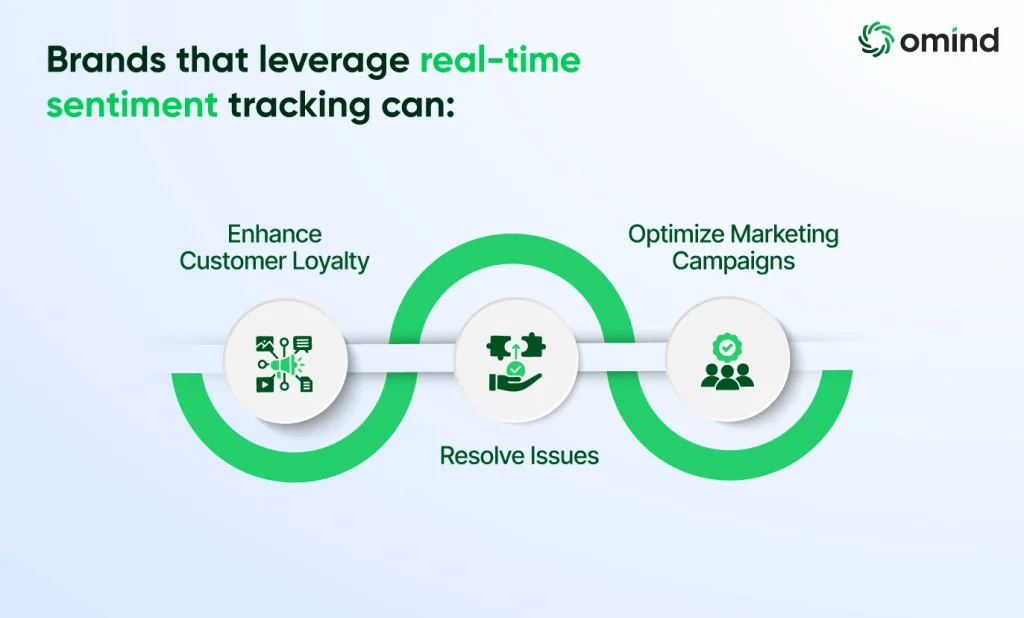 - Enhance customer loyalty by engaging with positive mentions.
- Resolve issues before they escalate by responding to negative feedback instantly.
- Optimize marketing campaigns based on audience sentiment trends.
## How Sentiment Varies Across Social Media Platforms
Each social platform has its own tone, audience, and engagement style. That’s why a one-size-fits-all approach to sentiment analysis simply won’t work.
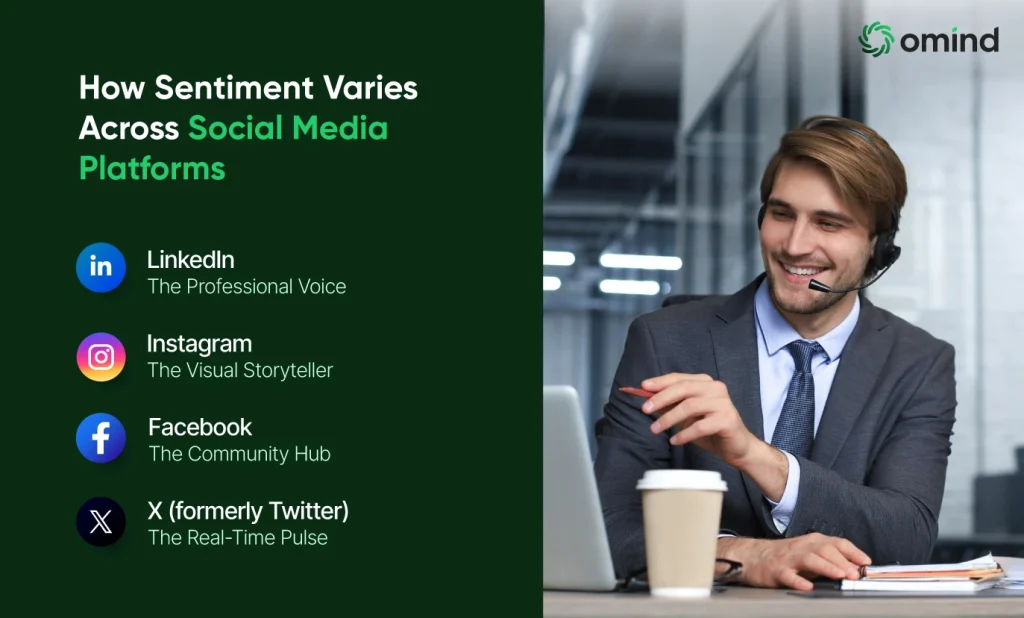### LinkedIn – The Professional Voice
- Conversations are industry-driven and formal.
- Sentiment reflects B2B trends, career growth, and corporate opinions.
- Negative sentiment? Often related to company policies or leadership changes.
### Instagram – The Visual Storyteller
- Highly visual and emotion-driven platform.
- Positive sentiment thrives on trends, aesthetics, and influencer marketing.
- Negative sentiment often stems from brand controversies, influencer missteps, or product quality concerns.
### Facebook – The Community Hub
- Engagement is centered around brand pages, discussions, and groups.
- Family and peer recommendations heavily influence sentiment.
- Negative sentiment surfaces in comment threads, review sections, and long-form complaints.
### X (Twitter) – The Real-Time Pulse
- Fast-paced, high-intensity platform where opinions change instantly.
- Sentiment shifts with trending hashtags, viral topics, and news events.
- A single tweet can make or break a brand’s reputation.
For brands, understanding sentiment across these platforms is key to tailoring messaging and engagement strategies effectively.
## The Role of Geography in Sentiment Analysis
Sentiment isn’t just about what people are saying—it’s also about where they’re saying it from.
A brand’s perception in the US vs. India vs. Europe can be drastically different due to cultural nuances, economic factors, and regional trends.
Example: A luxury fashion brand may see high positive sentiment in Europe but mixed reactions in cost-sensitive markets.
### Why Geographical Sentiment Analysis Matters:
- Helps localize marketing campaigns for different regions.
- Enables brands to address regional concerns proactively.
- Provides insights for cultural sentiment trends and product positioning.
## What to Look for in a Multi-Platform Sentiment Analysis Tool
Choosing the right AI-powered sentiment analysis tool can be a game-changer. Here’s what you should look for:
- **Multi-Platform Coverage –** Track sentiment across LinkedIn, Instagram, Facebook, and X.
- **Real-Time Sentiment Tracking –** Get alerts on negative sentiment spikes before they escalate.
- **Geographical Sentiment Breakdown –** Analyze customer perception by region.
- **AI & NLP-Powered Insights –** Advanced models that detect sarcasm, context, and tone nuances.
- **Customizable Dashboards –** Filter sentiment data by platform, region, or sentiment type.
Want to explore a tool that offers all these features? Learn more about Omind Social Listening.
## The Business Impact of Multi-Platform Sentiment Analysis
Brands that use sentiment tracking tools can:
- **Strengthen brand reputation –** Monitor and address negative sentiment before it escalates.
- **Improve customer engagement –** Respond to comments, reviews, and complaints in real-time.
- **Optimize marketing campaigns –** Tailor content based on audience sentiment.
- **Refine product development –** Use sentiment insights to enhance product features.
Case Study: A global e-commerce brand found negative sentiment around product packaging in specific regions. By addressing the issue with localized packaging improvements, they boosted customer satisfaction and reduced returns by 20%.
## Challenges in Sentiment Analysis & How to Overcome Them
### 1. Platform-Specific Language Differences
Solution: Train AI models to recognize tone, formality, and platform-specific language.
### 2. Sarcasm & Context Misinterpretation
Solution: Use deep learning NLP models to improve sarcasm and intent detection.
### 3. Data Overload & Real-Time Processing
Solution: Implement AI-powered automation to process large volumes of sentiment data.
## The Future of Sentiment Analysis in Digital Marketing
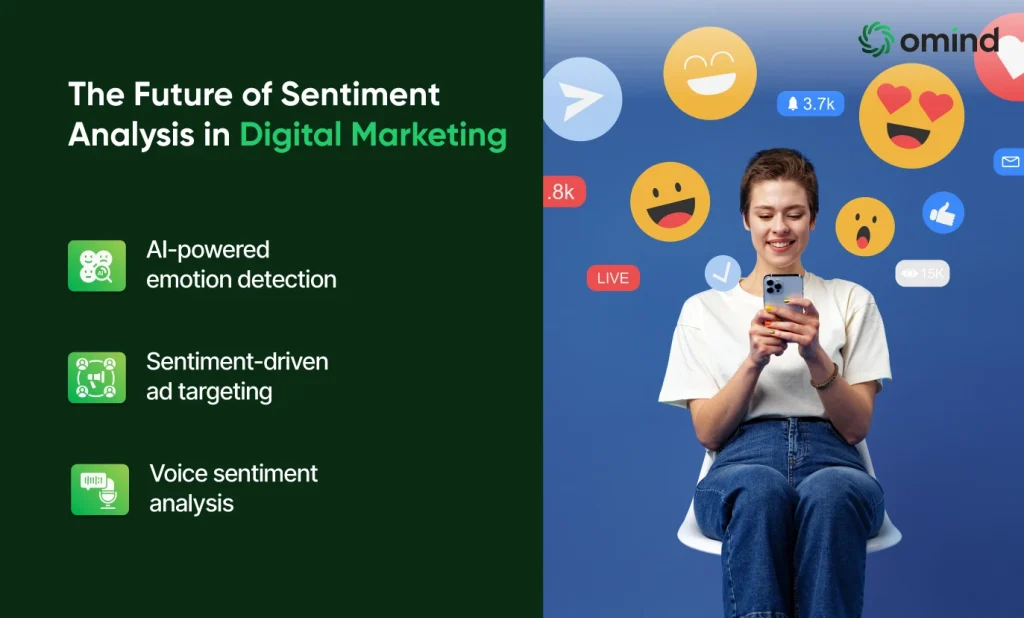- AI-powered emotion detection from video content (Instagram Reels, TikTok).
- Sentiment-driven ad targeting, where ads adapt based on audience mood.
- Voice sentiment analysis for detecting customer emotions in call center interactions.
Brands that integrate multi-platform sentiment analysis today will lead in [personalized marketing](/okf/article/platforms-for-marketing-types.md), customer satisfaction, and brand trust.
### Final Thoughts: How Omind Social Listening Can Help
Sentiment analysis isn’t just about data—it’s about understanding people.
At Omind.ai, we take social listening to the next level with our AI-powered sentiment analysis platform. Our [**Omind Social Listening**](/okf/page/schedule-a-demo.md) tool tracks real-time audience sentiment across LinkedIn, Instagram, Facebook, and X—helping businesses refine their brand messaging, optimize marketing campaigns, and enhance customer satisfaction.
Whether you're managing brand reputation, launching a new campaign, or handling crisis response, [**Omind Social Listening ensures you stay ahead of the conversation.**](/okf/page/blog.md)
**And here’s the big news! We are launching our Social Listening feature soon—stay tuned!**
---
## Setting SMART Goals for Call Center Agents with Examples
Setting clear goals is essential for your call center agents because it helps everyone know what to focus on. When agents have clear, achievable targets, they can focus their efforts, and businesses can measure their progress effectively. SMART goals for call center agents provide a clear idea for success with specific, measurable, attainable, relevant, and time-bound aims. Achieving these goals can help with better [customer satisfaction](/okf/article/improve-csat-score-contact-centers.md), higher efficiency, and an effective workforce.
## Components of SMART Goals
Having a SMART goal provides a structured framework for goal setting. With components like specific, measurable, etc., organizations can create actionable objectives that improve their performance. Let's see them in detail.
**Specific:** A specific goal gives you a clear outline of what needs to be achieved. It avoids ambiguity and ensures that everyone clearly understands the goals. For instance, instead of providing a general goal like "Improve customer satisfaction," a specific goal would be "Increase customer satisfaction scores by 10% through effective problem resolution”. Tools like Omind's CX software can help in tracking these improvements.
**Measurable:** Measuring the impact helps you identify whether you have accomplished the goal. Using metrics and key performance indicators (KPIs) is essential to identify them. If you set a goal to reduce average call handle time by 2 minutes, it is a measurable goal that can be tracked through call data analysis, which Omind's QA software excels in.
**Attainable:** An attainable goal should be realistic and achievable with the available resources. It should challenge employees without being overly demanding. Achievable goals can improve motivation and engagement. For example, a company trains agents on a new product, and it could be attainable if you aim to increase sales of that product by 5% within the next quarter.
**Relevant:** Smart goals for call center agents must be relevant and connect with the overall business objectives so that they contribute to the organization's success. For example, a goal to increase customer satisfaction scores is relevant to a call center's role in building [customer loyalty and retention.](/okf/article/employee-lifecycle-management-retention-costs.md)
**Time-Bound:** A goal should have a clear deadline. Setting specific timelines helps prioritize tasks and manage workload effectively. For instance, achieving a first call resolution rate of 80% within the next six months is a time-bound goal that provides a clear target and timeframe.
Now that we've broken down the components of SMART goals, let's explore how you can apply these principles specifically to your call center agents.
## How to Set Call Center SMART Goals?
Having SMART goals for call center agents will improve performance and help you achieve all your objectives. Let's look at some of the actionable steps for creating clear, actionable, and measurable goals for your team.
- **Define Your Objectives:** An organization must set precise goals for its call center agents. Clearly explain what they want to achieve. Instead of giving something generic, provide a specific outcome, such as "improve customer satisfaction scores by 10% in the next quarter".
- **Use Metrics:** A business can use quantifiable metrics to measure progress. Clarify how you will measure goals. For example, you can aim to reduce the average call handle time by 2 minutes with a specific metric. This will be very helpful for accurate performance evaluation.
- **Achievable and Practical Objectives:** When you set smart goals for your agents, they should be challenging but achievable. Consider your team's capabilities, resources, and past performance. Setting unrealistic goals may demotivate your team, while overly easy goals might not drive improvement. Always have a balance between ambition and practicality.
- **Align with Objectives:** It is essential to ensure your call center goals connect with organizational objectives. Your team's efforts should support the company's overall strategy. For example, if the company aims to increase sales, a relevant call center goal might be to boost upselling and cross-selling rates.
- **Deadline and Accountability:** A deadline helps your agents finish their work within a stipulated time, creating a sense of urgency and accountability. With Omind, managers can track deadlines effectively and keep everyone on target. Break down larger goals into smaller ones with specific timelines. Regular assessment and progress reviews help keep everyone focused and motivated.
## Have you seen how you set goals? Explore the roles of management in setting goals.
## Management's Role in Setting SMART Goals
Leaders lay the foundation for setting and achieving SMART goals. Let's explore how managers can empower agents in this process.
1. Managers are significant in guiding and supporting agents as they set SMART goals. *They can help identify areas for improvement, suggest relevant metrics, and provide resources and training.*
2. *The managers collaborate with agents during the goal-setting process.* Through motivation, the top management helps their staff set their own goals. This develops a sense of ownership and accountability and increases motivation and engagement.
3. *Utilize user-friendly dashboards to show [key performance indicators](/okf/article/contact-center-performance-metrics.md) (KPIs) and progress towards goals.* Omind's dashboards promote transparency and empower agents to track individual and team achievements.
4. The role of feedback is unavoidable as it contributes to growth and development. If you are a manager, *regularly review progress with your agents and identify areas of success and opportunities for improvement.* Offer support to help them close performance gaps and achieve their SMART goals.
5. *Integrate SMART goal-setting principles into training sessions and one-on-one meetings.* This continuous reinforcement ensures agents fully understand the importance of SMART goals and allows them to refine their goals throughout the year. This regular practice will enable managers to cultivate a high-performing and results-oriented call center team.
Now, let’s see some examples to learn more.
## Examples of SMART Goals for Call Center Agents
Giving agents smart goals can help them perform better both individually and as a team. The following examples may help you improve your agent's productivity.
### 1. Reduce Agent Absenteeism
**Goal:** Reduce agent absenteeism by 10% this quarter.
**Explanation:** High absenteeism affects call center operations and increases workloads for other agents. Setting a goal like this reduces the workload on others, maintains a consistent workforce, and improves overall efficiency.
### 2. Improve CSAT & NPS Scores
**Goal:** Improve CSAT (Customer Satisfaction) and NPS (Net Promoter Score) by 5% this month.
**Explanation:** Customer satisfaction is vital for retaining and improving the company's reputation. A [unified customer experience](/okf/article/what-is-a-customer-experience-automation-platform.md) improves trust and advocacy among clients. A specific SMART goal improves these scores, while agents can focus on delivering better service and resolving issues faster than before.
### 3. Reduce Call Transfers
**Goal:** Reduce call transfers by 15% this year.
**Explanation:** Frequent call transfers may frustrate your clients and lead to dissatisfaction. Aim to reduce transfers by encouraging agents to resolve issues and improve their problem-solving skills.
### 4. Improve Key Performance Indicator (KPI)
**Goal:** Improve key performance indicator (KPI) response time by 20% this quarter.
**Explanation:** Specific KPIs, like response time, are crucial for measuring efficiency and effectiveness. If a firm improves these [metrics](/okf/article/customer-engagement-automation-strategies.md), it can lead to faster service and higher customer satisfaction.
### 5. Respond to All Customer Feedback
**Goal:** Respond to your customer feedback within 24 hours.
**Explanation:** Effective and timely responses to [customer feedback](/okf/article/voice-of-customer-programs-how-leading-brands-like-apple-integrate-social-insights.md) demonstrate that the company values their comments and is committed to improving their experience. This goal ensures that agents prioritize customer feedback and address concerns swiftly.
### 6. Acquire a New Skill by This Date
**Goal:** Acquire a new skill (advanced troubleshooting) by the end of this year.
**Explanation:** Promote continuous learning and skill development, which are vital for career growth and adapting to new challenges.
### 7. Attend a Specific Number of Training Courses
**Goal:** Attend at least three training courses every quarter.
**Explanation:** Smart goals for call center agents, like training sessions, keep them updated on new technologies and best practices. A goal like this can ensure they continually improve their knowledge and performance.
While setting SMART goals can be powerful, you should avoid a few pitfalls to maximize their effectiveness.
## Mistakes to Avoid When Setting SMART Goals
When setting SMART goals for call center agents, you should avoid some common pitfalls. These mistakes can halt progress and demotivate your team.
1. Avoid Setting goals alone. Involve your team in the goal-setting process. The goals are more realistic when everyone contributes,
2. Don't set goals and forget them. Schedule regular check-ins to review and adjust goals if necessary.
3. Avoid being vague, and ensure your goals are clear and specific. This will avoid confusion and ensure everyone knows what's expected.
4. Don't Focus only on numbers. Use both quantitative and qualitative metrics. The numbers are important, but customer feedback is also crucial.
5. Don't Overload your team with too many goals, especially non-achievable goals. Focus on the most important ones and prioritize what matters most.
6. It is not good to be rigid with the agents. Stay flexible and be ready to adapt goals as necessary. If something is not working, you can change course.
7. Don't Ignore progress. Celebrate achievements and recognize milestones to motivate the team and acknowledge their efforts.
8. Don't Skip regular updates. Keep track of progress and monitor to identify issues early.
9. Provide Necessary Tools and Training, and don't Neglect resources. Your team needs the tools and training. Providing proper resources empowers agents to meet their goals effectively.
Now, you might wonder how technology fits into all of this—let's explore the role of quality assurance software in achieving SMART goals.
## Quality Assurance Software and SMART Goals
So, you might be wondering how you will ensure quality and achieve a smart goal. This is where Omind's role comes in. Their advanced [quality assurance software](/okf/article/quality-assurance-management-software.md) ensures that your SMART goals are constantly monitored and achieved. With the right technology, managers can monitor agent performance, identify areas for improvement, and make data-driven decisions.
QA software monitors agent interactions in real-time, allowing managers to track performance against specific metrics. You can assess everything by analyzing call recordings, screen captures, and text-based interactions and improve overall agent performance.
Tools like Real-time scorecards powered by QA software provide immediate feedback on agent performance. These scorecards are good for highlighting strengths and weaknesses, where agents will find areas for improvement. With data-driven insights, managers can offer coaching and support to enhance agent performance.
To wrap things up, let's summarize how integrating SMART goals with the right tools can skyrocket your call center's efficiency and customer satisfaction.
## Conclusion
SMART goals for call center agents help set clear objectives and improve performance, identifying pitfalls and areas for improvement. The right assurance software can increase agent performance and customer satisfaction in call centres. Such tools also provide a unified customer experience, allowing agents to track relevant details. They can track progress, provide support, and create a high-performing call center culture.
A provider like Omind can revolutionize your call center's SMART goal strategy. It's [AI-driven insights](/okf/article/developing-customer-insights-analytics-growth-sales.md) and voice assistance (Mindvoice) can improve your agents' experience. Omind's support helps call centres monitor agent performance in real-time and improve customer satisfaction. [Schedule a demo](/okf/page/schedule-a-demo.md) with Omind today and explore the various options to improve your agent's productivity.
### Turn SMART goals into measurable performance
Omind's AI QMS tracks each agent against their SMART goals in real time — automated scorecards, coaching prompts, clear improvement paths.
[See agent performance in AI QMS →](/okf/page/ai-qms.md)
---
## Setting Up Email Marketing Automation: Tips and Tools
Crafting compelling email campaigns is a cornerstone of successful marketing. Just look at [this Hubspot guide](https://blog.hubspot.com/marketing/email-marketing-stats): Over 64% of small businesses use email marketing to reach their customers. But keeping up with individual interactions and sending timely messages can be a challenge, especially if you’re a larger enterprise with multiple subscribers and customers. This is where email marketing automation comes in to make your email marketing a breeze. Let’s talk about how you can use it to your advantage, in this article.
## What is Email Marketing Automation?
Email marketing automation utilizes predefined rules to deliver personalized email messages based on [customer actions and preferences](/okf/article/developing-customer-insights-analytics-growth-sales.md), while also ensuring that the brand is fulfilling its marketing goals of reaching out to customers for both retention and acquisition. These messages are crafted to resonate with customer actions and preferences, encouraging deeper connections. By automating outreach based on predefined rules and data, you can reach new customers for acquisition while nurturing existing relationships for long-term retention. This two-pronged approach, driven by customer behavior and preferences, fuels sustainable growth for your brand.
## Why Automate Your Email Marketing?
There are several compelling reasons to embrace email marketing automation. Here’s a few of them!
**Unleashing Strategic Focus:** Imagine being bogged down by repetitive email tasks. Automation liberates you from this burden, freeing up valuable time and mental space. This allows you to shift your focus to strategic initiatives. Craft compelling marketing strategies, take a look into audience insights, and develop innovative content that resonates with your customers.
**Personalized Experiences at Scale:** Automation allows you to [deliver targeted messages](/okf/page/marketing-ai.md) that resonate deeply with each recipient. Harness customer data like purchase history, browsing behavior, and preferences: Data that allows you to craft emails that feel relevant and speak directly to their needs and interests, building a more engaging experience for your audience.
**Segmentation: The Power of Precision:** Automation tools act as a powerful segmentation engine. You can now divide your audience into distinct groups based on shared characteristics, such as buyer groups, age groups, etc. This allows you to tailor email campaigns that resonate with each segment. You can craft messages that address their specific needs and pain points, leading to a significant boost in engagement and conversion rates.
**Eliminating Error: The Pursuit of Flawless Delivery:** Manually sending emails can be a minefield for errors: Humans can only be so perfect before automation steps in to save the day. Typos, incorrect formatting, or even accidental omissions can derail your campaigns. Automation eliminates this risk entirely. With predefined rules and triggers, you can ensure consistent and accurate delivery of your messages, every single time.
## The Automation Advantage
[Studies by the Content Marketing Institute](https://contentmarketinginstitute.com/articles/experts-thoughts-email-marketing/) provide compelling evidence: automated email campaigns out perform traditional blasts in a landslide. Here's why automation reigns supreme:
- **Precision Targeting:** Imagine sending an email about hiking boots to someone who just bought a beach umbrella. It's a clear mismatch, right? Automation eliminates this issue. When you automate the sorting of your customer data, you can segment your audience with laser focus as we discussed above. Purchase history, browsing behavior, and even website interactions can be used to create highly targeted groups. This ensures each recipient receives emails that are directly relevant to their interests, significantly boosting click-through rates.
- **Personalization Powerhouse:** This magic ingredient that transforms an email from forgettable to unforgettable. Automation unlocks the ability to handcraft greetings, product recommendations, and even content based on individual preferences. Imagine receiving an email that addresses you by name and suggests products near your location based on your recent online searches. Customers tend to feel the most understood when addressed by name, or when they receive even a simple birthday greeting coupled with a custom offer. All is possible with the help of automation.
- **Nurturing Relationships at Scale:** Building strong customer relationships is the cornerstone of sustainable business growth. Automation allows you to nurture these relationships efficiently. [Triggered email sequences](/okf/page/marketing-ai.md) can be crafted to welcome new subscribers, re-engage inactive customers, or offer post-purchase support. This consistent communication keeps your brand top-of-mind and improves customer loyalty.
- **Automated Upselling and Cross-Selling:** Automation can also be [a powerful tool](/okf/article/mapping-customer-journey-in-email-marketing.md) for driving sales. Imagine a customer who abandons their cart. An automated email reminding them of the forgotten items, or suggesting complementary products, can nudge them back towards completion. This strategic use of automation enables upselling and cross-selling opportunities, maximizing the potential value of each customer interaction.
## Steps to Automate Your Email Workflows
Here's a detailed roadmap to guide you through the process of automating your email marketing.
### Step 1: Choosing the Perfect Platform
Every team needs the right tools to succeed. In automation, your platform is the cornerstone. Carefully evaluate your budget and marketing needs. Popular options like Omind offer a range of features and pricing structures. Research each platform's capabilities to ensure it aligns with your campaign goals and email volume. Don't be afraid to encourage free trials or demos to test-drive the functionalities before making a commitment. Also selecting a marketing automation platform [that’s omnichannel](/okf/page/home.md) ensures that your marketing isn’t just limited to emails, but can be clubbed together with social media and other platforms.
### Step 2: Building Buyer Personas
Before building your automated workflows, it's crucial to understand who you're reaching out to. Craft detailed [buyer personas](/okf/article/developing-customer-insights-analytics-growth-sales.md) that represent your ideal customer profile. Consider demographics like age, location, and income. Dig deeper into their interests, passions, and pain points. Utilize surveys, website behavior analytics, and even social media listening to glean valuable customer insights. This knowledge allows you to segment your audience effectively for targeted campaigns that resonate deeply, building stronger connections.
### Step 3: Setting Campaign Goals
Every marketing initiative thrives with a clear mission statement. In automation, that mission translates to defining your campaign goals. What do you want each workflow to achieve? Are you aiming to nurture leads with informative content, convert website visitors into paying customers with special offers, or re-engage inactive subscribers with enticing reminders? Defining these goals upfront guides your content strategy and ensures your automation efforts are laser-focused on driving measurable results.
### Step 4: Establishing Enrollment Criteria
Imagine a wildlife documentary where the camera traps only activate when a specific animal walks by. [Automation workflows](/okf/article/building-a-marketing-automation-strategy.md) function similarly. Identify the specific actions that will trigger automated emails. It could be signing up for a newsletter, abandoning a shopping cart filled with sporting equipment, or making a high-value purchase. By establishing clear triggers, you ensure your automated messages are delivered at the most opportune moments in the customer journey, maximizing impact and relevance.
### Step 5: Outlining the Automation Process
Think of your automation workflow as a meticulously planned adventure for your audience. Each email acts as a checkpoint along the way. Map out the sequence of emails for each workflow, defining the content, timing, and triggers for each message. Maybe a seven-day welcome series for new subscribers, a multi-stage nurturing sequence for leads who haven't converted yet, or a win-back campaign for inactive customers offering exclusive discounts. By meticulously planning the content and timing of each email, you create a seamless and engaging experience for your audience, guiding them towards your desired outcomes.
### Step 6: Creating Compelling Campaign Assets
The heart of any marketing campaign is the message itself. In automation, captivating email content is crucial. Craft compelling emails that align with your brand voice and resonate with your target audience. Don't just tell, show! Incorporate high-quality visuals and optimize your emails for mobile devices, where a significant portion of emails are opened today.
### Step 7: Testing and Refinement
Before unleashing your automation workflows on the world, a rigorous testing phase is essential. Thoroughly test the email sequence and triggers to ensure everything functions as intended. This includes checking for typos, broken links, and proper display across different devices. Consider sending test emails to yourself or a small group to identify and rectify any potential issues before your workflows go live.
### Step 8: Execution and Performance Tracking
With all the pieces in place, it's time to launch your automated workflows! But the work doesn't stop there. Track the performance of your campaigns closely. Analyze key metrics like open rates, click-through rates, and conversion rates to identify areas for improvement. A/B test different subject lines, email content, and call-to-actions to continuously refine your workflows and optimize their effectiveness. Remember, automation is an ongoing process, and continuous learning is key to maximizing your results.
## Implementing Email Automation Workflows
Here are some popular workflows you can implement to enhance your email marketing efforts.
- **Topic-Based Trigger Workflows**
Imagine a new visitor signing up for your newsletter about fitness tips. Wouldn't it be great to greet them with a series of emails tailored to their interests? Topic-based trigger workflows allow you to do just that. Triggered by subscriber actions like signing up or downloading a specific content piece, these automated sequences allow you to introduce your brand, showcase your expertise, and nurture leads based on their chosen topic. For example, a fitness newsletter signup could trigger a welcome series introducing different workout routines, healthy recipe suggestions, and exclusive discounts on fitness gear. This approach builds deeper connections and lays the foundation for long-term engagement.
### Welcome Workflows
First impressions matter, and email marketing automation ensures you make a positive one. Welcome workflows greet new subscribers or customers with a warm welcome and valuable information. This could be a series of emails introducing your brand story, highlighting your core services, and showcasing the benefits of being a subscriber or customer. Don't forget the power of incentive! Offering exclusive discounts or early access to new content can encourage engagement and establish a sense of value right from the start. Welcome workflows set the tone for a positive customer relationship.
### Lead Nurturing and Re-Engagement Workflows
Not all leads convert immediately. Lead nurturing and re-engagement workflows are designed to keep the conversation going with potential customers who haven't made a purchase yet. Nurture leads with educational content tailored to their interests and challenges. Provide valuable blog posts, informative ebooks, or exclusive webinars that address their pain points and showcase your expertise. For inactive subscribers, re-engagement workflows can be a powerful tool to win them back. Send offers based on their past browsing behavior or remind them about abandoned carts with enticing incentives. These workflows prevent leads from slipping away and rekindle their interest in your brand, ultimately driving conversions.
### Custom Workflows
The beauty of automation lies in its flexibility. Custom workflows allow you to design targeted email sequences for specific events, promotions, or lifecycle stages. For example, if you're running a limited-time sale, you can trigger automated emails creating a sense of urgency and highlighting the exclusive deals available. Abandoned cart workflows can be customized to remind customers about forgotten items and offer recommendations for complementary products. Additionally, lifecycle stage workflows can be crafted to target customers at different stages of their journey. Send birthday greetings with special offers or anniversary emails expressing gratitude for their continued business. By customizing workflows for various scenarios, you can deliver highly relevant and timely messages that resonate with each recipient.
### Internal Workflows
Email marketing automation can also streamline internal communication. Utilize automation to send notifications to your sales team when a new lead signs up, equipping them with the information needed to follow up promptly. Customer service teams can harness automated workflows to send confirmation emails for support tickets or follow-up surveys to gauge customer satisfaction. These internal workflows ensure everyone is on the same page.
## Maximizing Your Email Marketing with Automation
Email automation is powerful—but only if managed and optimized regularly. Here's how to unlock its full potential:
**1. Create Great Content:**
Automation delivers emails, but content drives results. Write compelling copy, use strong visuals, and share valuable information that encourages action.
**2. Segment Smartly:**
Group your audience by demographics, interests, or behavior. Targeted emails lead to higher engagement.
**3. Personalize Beyond First Names:**
Customize emails based on purchase history, browsing habits, or interactions to make them more relevant.
**4. Automate Intelligently:**
Trigger emails based on behavior and milestones, then test sequences before launching to ensure everything works.
**5. Analyze and Improve:**
Track metrics like open, click-through, and conversion rates. A/B test subject lines, content, and CTAs regularly to optimize performance.
**6. Stay Strategic:**
Stay updated on trends, explore new tactics, and refine your strategy to keep campaigns fresh and effective.
**7. Design for Mobile:**
Most emails are read on phones. Ensure responsive, mobile-first designs for better engagement.
**8. Consistent Testing:**
Test workflows, triggers, and landing pages thoroughly. Don’t “set and forget”—optimize continuously.
The future of email marketing is bright, and automation is the key that unlocks its full potential. By aligning workflows, personalizing content, and prioritizing strategic initiatives, you can craft email marketing campaigns that resonate with your audience and deliver measurable results. So, unleash the power of automation and watch your email marketing efforts blossom.
If you’d like a helping hand when it comes to marketing, CX, and marketing automation, Omind is your answer. [Omind](/okf/page/home.md) leverages AI to bring you a[ conversational platform](/okf/article/writing-a-chatbot-script-examples-and-steps.md) that helps visitors engage with your business and turns visitors into paying customers. To see how our platform works, [schedule a demo](/okf/page/schedule-a-demo.md) today.
---
## Simple Steps to Improve Your CSAT Score in Contact Centers
Customer satisfaction is one of the most important aspects of any successful business. This satisfaction is quantified through Customer Satisfaction (CSAT) scores. High CSAT scores indicate happy customers, which in turn leads to increased positive word-of-mouth, and ultimately business growth. On the other hand, low CSAT scores signal potential problems and can also harm a company's reputation.
This short guide will walk you through what CSAT means for a business and how you can improve your CSAT score.
## Understanding CSAT Scores
The Customer Satisfaction (CSAT) score is a critical metric that measures how satisfied customers are with a specific interaction. It provides a snapshot of the [unified customer experience](/okf/article/what-is-a-customer-experience-automation-platform.md) at a particular moment, such as a recent purchase, support interaction, or product usage.
Unlike Net Promoter Score (NPS), which gauges overall likelihood to recommend, or Customer Effort Score (CES), which measures the ease of interacting with a company, CSAT focuses on the immediate customer experience. While NPS and CES offer valuable insights into the broader customer journey, CSAT directly correlates with the quality of service delivered during a specific touchpoint.
To calculate CSAT, you determine the percentage of [customers who express satisfaction](/okf/article/improve-csat-score-contact-centers.md) with their interaction. Typically, customers are asked to rate their experience on a scale (e.g., 1-5 or 1-7), with the top scores representing satisfaction. The formula is:
**CSAT = (Number of Satisfied Customers / Total Number of Respondents) \* 100**
For example, if 80 out of 100 customers rate their interaction as "satisfied" or "very satisfied," the CSAT score is 80%.
It's important to note that while CSAT is a valuable metric, it should be used in conjunction with other customer feedback data to gain a comprehensive understanding of customer sentiment.
## Steps to Improve CSAT Score
Now that we have an understanding of the CSAT, let’s take a broad look at the steps involved in improving it. Post that, we’ll go through each step in detail.
- **Understanding Customer Expectations:** Gathering and analyzing customer feedback is vital to aligning services with customer needs.
- **Enhance Quality Assurance Processes:** [Quality assurance](/okf/article/developing-customer-insights-analytics-growth-sales.md) ensures consistent delivery of excellent customer service.
- **Provide Multi-Channel Support:** Offering multiple communication channels, such as phone, email, and live chat, caters to diverse customer preferences.
- **Use of AI in Tracking and Analyzing Feedback:** Artificial intelligence transforms feedback analysis by quickly identifying trends, patterns, and common issues.
- **Regular Training and Development of Agents:** Continuous learning is essential for agent growth.
Now let’s go through each step and see how we can improve CSAT.
## Understand Customer Expectations
To truly excel in customer service, contact centers must possess an in-depth understanding of customer expectations, which requires a multifaceted approach that combines qualitative and quantitative research methods.
### Qualitative Research
- **In-depth Customer Interviews:** These one-on-one conversations allow for detailed exploration of customer experiences, motivations, and pain points. By looking into individual stories, [contact centers can uncover](/okf/article/contact-center-analytics-metrics-2025.md) nuanced insights that may be missed in other research methods.
- **Focus Groups:** Bringing together a group of customers to discuss a specific topic facilitates rich discussions and the identification of shared experiences and opinions. Focus groups can be particularly valuable for uncovering latent needs and exploring potential solutions.
### Quantitative Research
- **Customer Surveys:** Surveys can be used to gather data from a large number of customers on a variety of topics, including satisfaction levels, preferences, and expectations. By analyzing survey results, contact centers can identify trends and patterns in customer sentiment.
- **Data Analytics:** Using customer data, such as purchase history, website behavior, and social media interactions, can provide valuable insights into [customer preferences](/okf/article/what-is-a-customer-experience-automation-platform.md) and behaviors.
By combining these research methods, contact centers can create a comprehensive picture of customer expectations. This knowledge lets agents anticipate customer needs, provide proactive solutions, and build stronger customer relationships.
For instance, if a contact center discovers through customer interviews that many customers are frustrated by long wait times, they can implement strategies to reduce wait times, such as increasing staffing levels during peak hours or offering self-service options.
By truly understanding and addressing customer expectations, contact centers can significantly improve customer satisfaction.
## Enhance Quality Assurance Processes
Effective QA is a part of a [unified customer experience](/okf/article/what-is-a-customer-experience-automation-platform.md). It involves a proactive approach to identifying areas for improvement and driving agent performance.
A comprehensive QA system should evaluate agents across multiple dimensions, including:
- **Response Time:** This metric measures the speed at which agents answer calls and address customer inquiries. It directly impacts customer satisfaction and overall efficiency.
- **Problem Resolution:** Effective agents should resolve customer issues efficiently and completely. This metric assesses an agent's ability to find solutions and provide satisfactory outcomes.
- **Customer Sentiment:** Understanding [how customers feel during interactions](/okf/page/blog.md) is crucial. QA should evaluate agents' ability to build rapport, empathize with customers, and create positive interactions.
To ensure consistency in evaluations, call calibration sessions are essential. These sessions involve a group of quality analysts listening to calls together and applying evaluation criteria consistently. Call calibration helps to standardize evaluation processes and prevents discrepancies in scoring.
Providing constructive feedback is vital for agent development. Instead of solely focusing on errors, QA should highlight strengths and areas for improvement. Specific and actionable feedback allows agents to enhance their performance. Effective feedback should be delivered in a supportive and coaching-oriented manner.
Additionally, consider incorporating peer review into the QA process. Agents can learn from their peers by listening to each other's calls and providing feedback. A collaborative approach allows for continuous improvement and knowledge sharing.
## Multi-Channel Support
Offering multiple channels of communication (e.g., phone, email, live chat, social media) is crucial for meeting diverse customer preferences. However, providing options isn't enough. To deliver [exceptional customer experiences](/okf/page/digital-transformation.md), contact centers must ensure a seamless journey across all channels.
- **Unified Customer View:** Integrating customer data from various channels into a single platform provides a holistic view of the customer journey. This enables agents to access relevant information regardless of the channel, leading to more personalized and efficient interactions.
- **Consistent Experience:** Maintain consistent branding, messaging, and service standards across all channels. This builds trust and reinforces the company's identity. Agents should be equipped to handle inquiries effectively, regardless of the channel through which they arrive.
- **Channel Optimization:** Measure performance metrics for each channel (e.g., response time, resolution rate, customer satisfaction) to identify strengths and weaknesses. Allocate resources accordingly and optimize processes to make a [unified customer experience](/okf/page/digital-transformation.md).
## Use of AI In Improving CSAT
AI is a powerful tool for transforming feedback analysis into actionable insights. By automating routine tasks and uncovering hidden patterns, AI can significantly enhance the efficiency and effectiveness of feedback management.
- **Sentiment Analysis:** AI-powered sentiment analysis tools can accurately determine the emotional tone of customer interactions, helping to identify areas of concern and prioritize issues. By understanding customer sentiment, contact centers can proactively address negative experiences.
- **Predictive Analytics:** Using historical data, AI can forecast potential issues and trends. This enables contact centers to be proactive in addressing customer needs and preventing problems from escalating. For example, if AI identifies a surge in inquiries about a specific product, the contact center can increase staffing and resources accordingly.
- **Automated Feedback Summarization:** AI can quickly summarize large volumes of customer feedback, identifying key themes and pain points. This saves time for analysts and ensures that critical insights are not overlooked.
By effectively combining multi-channel support with AI-driven feedback analysis, contact centers can create a customer-centric environment that drives satisfaction.
## Regular Training and Development of Agents
Create a culture of continuous learning by offering a variety of training programs, including product knowledge updates, problem solving and sales skills training, and customer service best practices. Implement coaching and mentoring programs to provide ongoing support and development opportunities. Recognize and reward top performers to motivate agents.
By diligently executing these strategies for a customer-centric culture, contact centers can achieve substantial improvements in [CSAT scores for contact centers](https://www.rccbpo.com/blog/why-choose-nearshore-call-center-services-in-el-salvador/).
## CSAT For Better Business Growth
Improving CSAT scores requires a multifaceted approach. By understanding customer expectations, refining quality assurance, offering multi-channel support, using AI, and investing in agent development, contact centers can significantly enhance customer satisfaction. Remember, the journey to higher CSAT scores is ongoing; consistent focus on customer needs is key to long-term success.
If you’d like a helping hand when it comes to marketing, CX and marketing automation, Omind is your answer. [Omind](/okf/page/home.md) leverages AI to bring to you a[conversational platform](/okf/article/writing-a-chatbot-script-examples-and-steps.md) that helps visitors [engage](/okf/page/marketing-ai.md) with your business and turns visitors into paying customers. To see how our platform works, [schedule a demo](/okf/page/schedule-a-demo.md) today.
---
## Social Listening Secrets: How Nike and Adidas Stay Ahead of the Game
Imagine being able to predict exactly what your customers want before they even realize it themselves. Sounds like magic, doesn't it? Well, for industry giants like Nike and Adidas, it's not magic—it's social listening.
In our digital-first world, [social listening](/okf/page/social-listening.md) is a powerful strategy used to monitor conversations online and gain insights into consumer preferences, competitor activities, and emerging trends. But how exactly do these iconic brands use it to stay at the top?
### **Why Social Listening Is a Game Changer**
Think of social listening as having millions of conversations with customers simultaneously. Nike and Adidas tap into these conversations to:
#### 1. Predict Consumer Trends and Preferences
Ever noticed how Nike and Adidas always seem ahead of fashion trends? It's no accident! By continuously analyzing social chatter, they spot trends early, tailor products accordingly, and stay one step ahead of everyone else.
#### 2. Keep an Eye on Competitors
Just like watching a rival on the field, these brands analyze what competitors are doing right (or wrong) online. They quickly adapt and respond strategically—turning competitor weaknesses into their own strengths.
#### 3. Manage Brand Reputation Like Pros
Remember when social media buzzes over brand controversies? Nike and Adidas certainly do. They use social listening to swiftly detect and [neutralize negative sentiments](/okf/article/sentiment-analysis-for-linkedin-instagram-facebook-x-ai-social-listening.md), managing public perception proactively.
#### 4. Turn Customer Insights into Innovation
Your tweets, posts, and comments are gold mines for brands. Nike and Adidas listen to customer feedback and innovate directly based on what you love or wish for—creating products that resonate deeply with fans worldwide.
### **Real-Life Examples of Social Listening in Action**
- **Nike's Perfectly Timed Product Launches:** Nike doesn’t guess when launching new Air Jordans—they know. By pinpointing peak consumer excitement through social data, their product drops become massive successes every single time.
- **Adidas’ Agile Marketing Moves:** Ever wonder how Adidas always nails their marketing? They closely monitor social conversations and swiftly launch campaigns like "Impossible is Nothing," capitalizing on cultural moments and driving brand relevance.
### How Can Your Brand Join the Winners?
You might think, “Sure, that's great for Nike and Adidas, but what about my brand?” That’s exactly where Omind Social Listening steps in.
With Omind Social Listening, your brand can:
- Predict and swiftly respond to market trends.
- Deepen connections by truly understanding customer sentiment.
- Protect your brand’s reputation proactively.
- Spark meaningful innovation from [real consumer conversations](/okf/article/how-to-use-real-time-chat-for-better-customer-interactions.md).
### The Bottom Line: Level Up Your Brand with Omind
Just as Nike and Adidas have mastered social listening to dominate their markets, your brand can achieve similar success. It’s not just about listening—it’s about understanding, responding, and innovating. Are you ready to elevate your brand’s competitive intelligence?
Let [Omind Social Listening](/okf/page/social-listening-free-trial.md) be your secret weapon in winning the market leadership game.
---
## Social Selling Strategies: How B2B Giants Like IBM Use Social Listening Tools to Drive Lead Generation
Ever wonder how brands like IBM seem to know exactly what their customers need, sometimes even before the customer does?
It’s not magic. It’s social listening, which is completely transforming how B2B companies discover and engage with leads.
Here’s a closer look at how IBM does it—and how you can too.
### What is Social Selling and Why Should You Care?
Think about how we all research before buying—from a gadget to a car. B2B buyers do the same. They scroll through LinkedIn, read reviews, analyze posts, and form opinions—long before they ever talk to your sales team.
Social selling is how businesses keep up. It’s not about cold emails or sales pitches. It’s about:
- Listening to what your audience is saying
- Engaging with them meaningfully
- Showing up in the right digital spaces at the right time
That’s where **[social listening tools](/okf/page/social-listening.md)** come in.
### How IBM Turns Social Listening Into a Lead Magnet
IBM doesn’t just watch social media from the sidelines. They actively use it to generate leads and drive strategic conversations. Here's how:
###### 1. They Listen for Buying Intent
IBM sets up listening tools to track key phrases like:
- “Need help with cloud migration”
- “Looking for a scalable cybersecurity solution”
These real-time signals help their sales team reach out with context and relevance—often before competitors even notice.
###### 2. They Build Real-Time Buyer Personas
By analyzing digital conversations, IBM understands what different audiences care about. Whether it’s CTOs worrying about compliance or marketers looking into automation, they continuously update personas to stay relevant.
###### 3. They Engage at the Right Moment
If someone voices frustration about outdated infrastructure, an IBM rep might share a helpful guide or invite them to a webinar—not push a product.
This subtle, helpful [engagement builds trust](/okf/page/blog.md) and keeps the conversation going.
###### 4. They Monitor Competitor Mentions
IBM doesn’t just focus on its brand—the company also listens to what people are saying about them and their competitors.
When someone voices disappointment with a rival service, IBM is ready to step in with a better alternative, tailored messaging, and perfect timing.
###### 5. They Score Leads Using AI
IBM uses AI to assess which leads are most engaged. Instead of following up with every like or comment, they focus on buyers who show consistent interest or intent, saving time and boosting conversion rates.
### How Can Your B2B Team Do This Too? Importance of Social Listening Tools.
Social listening isn’t just for enterprise giants. Here’s how you can start:
### Omind: Your Smart Social Listening Partner
You don’t need IBM’s budget or team size to get results. Omind brings powerful social listening capabilities tailored for B2B companies of all sizes.
Here’s what you get with Omind:
- Real-time keyword and brand tracking
- Buyer intent signals across platforms
- Competitor monitoring and [sentiment analysis](/okf/article/sentiment-analysis-for-linkedin-instagram-facebook-x-ai-social-listening.md)
- AI-driven lead scoring
- Seamless CRM integration
Whether you're nurturing early-stage leads or identifying sales-ready buyers, Omind helps you cut through the noise and focus on what matters.
### Final Thought: Start Listening, Stop Guessing
IBM’s social selling success isn’t about luck—it’s about strategy. By using social listening to understand their audience, they turn digital conversations into real business opportunities.
With Omind, you can do the same.
Start listening to your market, engaging with value, and connecting with the right people—at the right time.
Explore what [Omind’s Social Listening Platform](/okf/page/social-listening-free-trial.md) can do for your business.
---
## Solving Quality Issues and Visibility Problems with QA Automation Data for Call Centers
*While automated QA tools successfully flag performance issues across every customer call, many enterprise centers still struggle to eliminate repeat compliance errors. Discover how leading operations go beyond raw dashboards to build a modernized quality framework that turns automated findings into verified business outcomes.* A decade ago, quality assurance teams struggled because they could only review a small sample of customer interactions. Today, deploying qa automation for call centers allows enterprise operations to evaluate every single conversation. Consequently, software easily identifies compliance risks, surfaces coaching opportunities, and flags performance issues on scale. However, many enterprise organizations continue to experience repeat compliance violations and escalating growth in customer complaints. Because of these systemic gaps, agent performance remains stagnant, and customer experiences stay highly inconsistent. Therefore, the core operational challenge is no longer about establishing data visibility. Instead, leadership must find a practical way to turn raw compliance findings into measurable operational improvement. ### Key Takeaways
- •QA automation delivers 100% interaction coverage and instant issue detection, solving visibility but not resolution.
- •Findings-to-Outcomes Gap causes repeated compliance violations, unchanged escalations, and stagnant agent performance.
- •Move beyond coaching completion rates to measure actual behavior change and long-term effectiveness.
- •Five-step framework: Automate evaluation → Identify patterns → Assign ownership → Track interventions → Verify outcomes.
- •AIQMS separates agent issues from process problems and connects raw findings to measurable business results.
- •Modern quality management turns data overload into reduced risk, better coaching ROI, and stronger customer experience.
{TOC} ## QA Automation for Call Centers Has Solved the Coverage Problem
Modern infrastructure handles massive scales without breaking. Specifically, automated quality platforms audit 100% of phone calls and text interactions instantly. Because human reviewers no longer spend hours listening to random audio files, scoring has become standardized across the enterprise. Consequently, compliance violations trigger instant alerts, and supervisors instantly see where customer experience risks reside. For instance, companies invest heavily in these platforms to [expand quality monitoring coverage and reduce manual review workloads](/okf/article/automated-quality-management.md). Most organizations successfully achieve this baseline layer of performance visibility. However, a major bottleneck begins immediately after these automated findings start accumulating in dashboards. Data Ingestion to Business Outcome Execution
1
Raw Interaction Data
Multi-channel customer contact inputs capturing raw audio variations, structural metadata, and conversational endpoints.
→
2
QA Automation Engine
The core computation node parsing real-time intents, phoneme misalignments, and compliance checks.
→
!
Massive Data Stack
**The Bottleneck:** Unstructured historical storage layers where extreme concurrent volumes risk systemic latency spikes.
→
3
Operational Execution
Dynamic translation into real-time micro-coaching alerts and immediate voice accent stabilization routines.
→
✓
Business Outcomes
Measurable verification: Drastic reductions in AHT, elevated FCR velocity, and ironclad compliance security.
## Why Do Many QA Automation Projects Underperform Expectations?
Here are some reasons QA automation projects fail: - **Delivers** an endless stream of noise and alerts instead of creating better strategic decisions.
- **Fails** to prioritize which issues create the greatest operational and brand risks for the business.
- **Overlooks** actual human performance improvements, leaving core customer metrics completely unchanged.
- **Neglects** to establish clear accountability, leaving it unclear who owns the issue or how to measure long-term resolution success.
## Findings-to-Outcomes Gap in Modern Quality Programs
The findings-to-outcomes gap represents a specific operational distance. Specifically, it is the distance between [identifying a quality issue through automated software and proving that business outcomes improved](/okf/article/automated-call-auditing-operational-improvement.md). When this gap exists, audit findings repeat month after month without resolution. Consequently, internal coaching programs show plenty of supervisor activity but zero actual performance improvement. Customer escalation trends remain unchanged, and compliance risks continue resurfacing on identical call types. Therefore, operations leaders struggle to explain performance movement to executive stakeholders because data remains siloed in quality dashboards. ## Why Do QA Automation Findings Often Fail to Improve Coaching Outcomes?
Tracking coaching completion is entirely different from tracking coaching effectiveness. For instance, most enterprise organizations track how many training sessions supervisors assign and complete. However, very few platforms track actual behavior change or long-term performance improvement. Because follow-up validation rarely occurs, the same exact errors continue appearing in agent workflows. This pattern proves that generic training scripts do not address the root causes of poor customer interactions. Consequently, teams [waste valuable supervisor hours on repetitive cycles](/okf/article/hidden-costs-of-manual-qa.md) that fail to shift behavioral metrics. “ Automation tells you exactly where the fire is, but it does not hand your supervisors the extinguisher. If your quality tools stop at the scorecard, your operational metrics will remain permanently stalled.” — Enterprise Operations Executive
## Why does Automation Struggles to Separate Agent Problems from Operational Problems?
Low quality scores do not automatically explain root causes. For instance, a repetitive call error might stem from an individual agent's performance. Alternatively, it could originate from broken training materials, flawed scripts, or system-wide software latency. Without operational context, [corrective actions become complete guesswork for supervisors](/okf/article/why-call-center-qa-software-falls-short.md). Automated software reveals exactly what happened during a customer call. However, leadership teams still need to diagnose precisely why the breakdown occurred before rewriting agent guidelines. ## Why Raw Findings Fail to Explain Broad Performance Trends?
Even after deploying automated quality software, executive leadership teams continue to ask fundamental questions. Specifically, they demand to know why CSAT scores decline or why customer escalations keep increasing. They need to identify which specific teams are improving and which specific training interventions delivered a return on investment. Answering these questions requires macro trend analysis rather than individual interaction analysis. Because raw tools focus on single interactions, they miss the broader operational patterns. Therefore, organizations treat the technology as a finish line, which triggers severe business costs. ## How Modern Quality Programs Convert Findings into Outcomes?
To resolve these challenges, enterprise operations must transition to a five-step operational framework. This framework turns automated signals into verified business value. - **Step 1: Automate Quality Evaluation.** Use automated engines to harvest quality signals across 100% of interactions to establish total visibility.
- **Step 2: Identify Patterns Across Teams.** Look past single calls to isolate systemic root causes across entire departments.
- **Step 3: Assign Clear Ownership.** Route specific findings to the exact supervisor or process owner responsible for corrective action.
- **Step 4: Track Interventions.** Document every coaching session, process adjustment, and training update inside a unified system.
- **Step 5: Measure Outcome Improvement.** Run delta reports to verify whether agent behaviors and compliance metrics shifted.
## From QA Automation to Quality Management Modernization
Relying on legacy automated tools alone does not build operational accountability, coaching effectiveness, or clear performance visibility. Therefore, mature enterprise environments are moving from simple QA automation for call centers toward holistic quality management modernization. This evolution requires an operational system layer that connects raw data findings directly to executive execution. An [Advanced AI Quality Management System (AIQMS) acts as this critical layer](/okf/article/ai-qms-core-cx-excellence.md). Consequently, instead of drowning supervisors in alert noise, the system converts raw visibility into predictable, verified performance improvement. ## Conclusion
Most enterprise contact centers can now easily automate their basic quality reviews. Because technology has become accessible, generating thousands of data findings is no longer a competitive advantage. The real advantage belongs to organizations that convert those findings into better coaching outcomes, reduced regulatory risk, and stronger agent retention. [Automated QMS auditing platform](/okf/page/ai-qms.md) solves your interaction coverage problem. Modernized quality management solves your long-term execution problem. ### Is your automated QA platform generating endless alerts without fixing agent performance?
Stop drowning your supervisors in dashboard noise. [Click here to book our operational demo blueprint for quality modernization](/okf/page/schedule-a-demo.md) and learn how to bridge the findings-to-outcomes gap in your contact center.
---
## Speech Analytics in Call Centers: Automating QA to Elevate CX and Agent Performance
In 2026, speech analytics in call centers doesn’t just track conversations—it transforms them. AI-driven platforms like Omind analyze every customer interaction, uncovering sentiment, behavioral trends, and compliance risks in real time, empowering supervisors and agents with actionable feedback.
### Key Takeaways
- • Speech analytics automates QA, monitoring 100% of calls, chats, and emails.
- • Real-time sentiment analysis detects emotions for instant agent coaching.
- • Flags compliance risks and service issues instantly, reducing errors.
- • Automated scorecards ensure consistent, unbiased performance evaluations.
- • Boosts CSAT, FCR, and lowers AHT with data-driven insights.
- • Omind’s platform integrates seamlessly with CRM and telephony systems.
{TOC}
## Speech Analytics 101: AI Insights for Call Center QA
[Speech analytics](/okf/article/speech-analytics-in-contact-centers-real-time-insights-and-use-cases.md) employs artificial intelligence (AI) and natural language processing (NLP) to automatically transcribe, interpret, and score every customer call, chat, or interaction. Instead of sampling a handful of calls manually, the system delivers automated coverage for 100% of interactions:
- **Sentiment Analysis:** Detects customer emotions, from frustration to enthusiasm, and reports them instantly for agent adaptation and coaching.
- **Agent Performance Metrics:** Monitors agent adherence to scripts, objection handling, empathy, and resolution rates, enabling precise, unbiased scoring and personalized development.
- **Trend & Keyword Detection:** Flags recurring issues, product feedback, and service bottlenecks by analyzing language patterns and keywords at scale.
- **Compliance Automation:** Instantly reveals missed regulatory disclosures and policy breaches, minimizing risk and audit failures.
- **Automated QA Scorecards:** Fills and calibrates QA scorecards for supervisors, ensuring consistent, real-time benchmarking of performance without manual paperwork.
## Why Speech Analytics Is a Game Changer for QA Automation in Call Centers
- **Comprehensive Coverage:** No interaction goes unreviewed; automation enables detailed monitoring and scoring of every call, chat, and email.
- **Immediate Intervention:** Automated alerts mean problems—like a heated conversation, potential regulatory breach, or process bottleneck—are flagged for rapid supervisor response.
- **Continuous Coaching:** Agents receive instant feedback and tailored training prompts based on speech analytics data, fostering continuous skill improvement and engagement.
- **Operational Efficiency:** Automation frees QA and management teams from manual review, enabling them to focus on strategic improvement and more complex customer needs.
- **Data-Driven Decisions:** Leadership can confidently define and adapt service KPIs using [real-time analytics](/okf/article/contact-center-analytics-software-qa-2025.md), staying ahead of evolving customer expectations and compliance rules.
- **Improved KPIs:** Call centers see higher CSAT, stronger FCR, and lower AHT, resulting from proactive, AI-driven coaching and operations.
## Choosing the Right Speech Analytics QA Solution: The Omind Advantage
 How to choose speech analytics in call centers? For QA automation to yield maximum benefit, call centers should seek:
- **High Accuracy:** Advanced AI engines with robust sentiment and compliance detection.
- **Omnichannel Analytics:** Coverage for calls, chats, emails, and voice notes.
- **Dynamic Scorecards:** Customizable QA metrics and dashboards tailored to your business.
- **Seamless Integration:** Easy connection to CRM, telephony, and agent desktops.
- **Continuous Learning:** Platforms that evolve with your business, updating models, scorecards, and best practices regularly.
- **Compliance and Security:** Full audit trails and rigorous data privacy standards.
Omind’s speech analytics platform is purpose-built for automated QA and [performance management,](/okf/article/call-center-performance-management-ai-kpi-operational-excellence.md) offering industry-leading accuracy, real-time feedback, flexible deployment, and deep operational reporting.
## Speech Analytics for Next Generation Call Centers QA Automation
[QA automation](/okf/page/ai-qms.md) powered by speech analytics gives call center teams the tools to monitor, score, and improve every interaction. With solutions like Omind, supervisors and agents can automate the tedious aspects of QA, focus on agent growth, respond to customer needs faster, and deliver consistent, data-driven excellence.
In 2025 and beyond, investing in speech analytics for QA isn’t just a technical upgrade—it’s the path to true service transformation.
Ready to transform your call center with speech analytics? [Book a demo with Omind](/okf/page/schedule-a-demo.md) today and see how AI-powered QA automation elevates compliance, performance, and customer experience.
### AI-powered speech analytics running QA on every call
Omind's AI QMS uses speech analytics to score, transcribe, and analyze 100% of calls automatically — sentiment, compliance, agent performance, all live.
[See AI QMS speech analytics →](/okf/page/ai-qms.md)
---
## Speech Analytics in Contact Centers: Real-Time Insights and Use Cases
**Speech analytics** has emerged as a game-changer for contact centers, providing immediate intel on customer sentiment, agent behavior, and compliance trends—all while unlocking team productivity and fueling a data-driven CX strategy. When integrated with an **[AI-powered Quality Management System](/okf/page/ai-qms.md) (AI QMS)** like Omind’s, speech analytics takes performance management, compliance, and customer satisfaction to the next level.
### Key Takeaways
- • Speech analytics with Omind’s AI QMS analyzes 100% of interactions, providing real-time sentiment detection and personalized call routing.
- • Automates QA scoring for compliance and agent performance, improving FCR, CSAT, and operational efficiency.
- • Real-time coaching and microlearning enhance agent skills, boost morale, and reduce churn through targeted feedback.
- • Identifies churn risks and compliance issues instantly, enabling proactive support and audit-ready operations.
- • Unified dashboards deliver actionable CX insights, driving strategic decisions and process optimization across channels.
### Table of Contents
## Leveraging Speech Analytics for Real-Time Customer Insights
Modern speech analytics platforms utilize AI to transcribe and analyze every customer interaction for emotion, keywords, and intent. Real-time analysis enables:
- **Sentiment Detection:** The system deciphers tone, pace, and pitch, flagging dissatisfaction, urgency, or confusion while the call is still in progress. This empowers agents to adjust their approach instantly, improve empathy, and resolve issues before escalation.
- **Personalization and Smart Routing:** AI identifies the nature and urgency of calls, routing each customer to the most qualified agent and providing context so agents can tailor service effectively.
- **Trend Identification:** Processing thousands of calls daily, the software uncovers emerging patterns in customer feedback, product issues, or service pain points. This proactive intelligence equips CX leaders to act before small problems become widespread.
- **Customer Journey Mapping:** By analyzing conversational data across channels, contact centers gain a holistic view of [customer journeys](/okf/page/blog.md), helping to align offerings and streamline processes.
- **Immediate Feedback:** Supervisors and agents receive actionable insights during or immediately after calls, enabling continuous improvement in real time.
## Use Cases for Speech Analytics: Driving Agent Success and Compliance
### 1. Automated Quality Monitoring
Speech analytics automates the QA process, scoring calls for compliance, script adherence, and agent behavior. Instead of reviewing a few random calls, it analyzes 100%, ensuring fair and comprehensive evaluations.
### 2. Coaching and Training Interventions
These platforms spotlight strengths and weaknesses—such as handling objections or empathizing with frustrated customers—empowering targeted training and microlearning. Personalized agent feedback boosts morale, skill, and consistency.
### 3. Compliance and Risk Management
Speech analytics instantly flags regulatory breaches or non-compliance with internal policies (e.g., missing disclosures, improper handling of sensitive information). It helps contact centers minimize risk and remain audit-ready, particularly critical in industries like finance and healthcare.
### 4. Churn Prediction and Proactive Support
AI recognizes signals and trigger words indicative of dissatisfaction or churn. Contact centers can proactively reach out or course-correct before a customer defects—protecting revenue and reputation.
### 5. Operational Efficiency
By tracking common call drivers and friction points, speech analytics empowers centers to optimize workflows, reduce average handle time (AHT), and route calls based on identified intent—maximizing both CX and agent productivity.
### 6. Strategic Insights for Leadership
Executives can use aggregated data to guide **[CX strategy](/okf/page/blog.md)**, improve product offerings, benchmark against competition, and deploy resources where they’ll have the most impact.
## The Role of AI QMS' Speech Analytics in Automating Contact Center QA
Integrating speech analytics with an **AI QMS** like Omind’s amplifies its impact:
- **100% Automated Interaction Monitoring:** Every call, chat, and email is transcribed, analyzed, and scored without the limits of manual sampling.
- **[Smart QA Scorecards](/okf/article/call-center-quality-assurance-scorecard-creation.md):** AI applies consistent, unbiased scoring aligned with custom KPIs like FCR, CSAT, and compliance.
- **Real-Time Coaching:** Agents receive feedback and corrective tips instantly based on live speech analytics findings.
- **Predictive Risk Management:** AI QMS uses speech data to identify patterns of churn, dissatisfaction, or compliance risks before they escalate.
- **Unified Dashboards:** Leaders can view speech analytics data alongside QA results, workforce metrics, and CX trends in a single, actionable view. The [contact center analytics software](/okf/article/contact-center-analytics-software-qa-2025.md) provides greater insights and deeper understanding of QA.
## Conclusion
Speech analytics enables contact centers to make smarter, faster decisions, elevating agent performance and customer experiences. Leading teams leveraging these tools see improved **First Call Resolution (FCR)**, higher **Customer Satisfaction (CSAT)**, reduced compliance risk, and greater operational agility.
When paired with Omind’s **AI QMS**, speech analytics becomes more than an insight engine—it becomes a performance transformation platform. By combining real-time analysis with automated QA, predictive insights, and immediate coaching, Omind helps contact centers move from reactive monitoring to proactive excellence.
**Ready to see how speech analytics and AI QMS can transform your contact center?** [Book a demo with Omind](/okf/page/schedule-a-demo.md) today and discover how to elevate compliance, agent performance, and customer satisfaction.
### **About the Author**
[**Robin Kundra**](https://in.linkedin.com/in/robinkundra), Head of Customer Success & Implementation at **Omind**, has led several AI voicebot implementations across banking, healthcare, and retail. With expertise in Voice AI solutions and a track record of enterprise CX transformations, Robin’s recommendations are anchored in deep insight and proven results.
---
## Speech Clarity Software for Contact Centers Reduces Communication Friction
*Most contact centers misdiagnose conversational friction. While metrics reflect rising AHT and high transfer volumes, the root cause remains purely mechanical. Specifically, standard telecom compression and floor noise degrade the acoustic signal path long before it reaches the customer.* Speech Clarity Software for Contact Centers Reduces Communication Friction. The system enables operation leaders with the precise data required for procurement sign-off. The software sits inline and continuously corrects the acoustic path before the signal ever reaches the customer's ear. This guide gives you an evaluation framework for speech clarity software, built for people who must defend the purchase to finance. ### Key Takeaways
- •Most contact centers misdiagnose friction as process issues, while root causes are mechanical: telecom compression, floor noise, and degraded acoustic signals.
- •Speech clarity software sits inline, using DSP + ML for real-time audio cleanup, voice enhancement, and accent harmonization without noticeable latency.
- •Training and coaching hit hard limits on bad audio streams — fix the signal as infrastructure, not just the human.
- •Evaluate rigorously: sub-250ms latency, verified MOS/PEAQ scores, A/B pilots on high-friction calls (AHT, repeats, transfers), and matching deployment model to your environment.
- •Separate root causes — noise, codecs, accents, delivery speed — then match the right tool; real pilots prove ROI before company-wide rollout.
{TOC} ## Critical Business Problems for Contact Centers
Most contact centers run into problems like agents follow the process and customers still don't understand them. Here are some reasons why: - **Compliance isn't comprehension:** An agent can clear every item on a QA checklist while the acoustic signal drops half the payload. Compliance measures whether the right words are said. It says nothing about whether the customer heard them.
- **Repetition inflates handle time:** Every time a customer says "sorry, can you repeat that," the call gets longer. Check your interaction data for [explicit clarification phrases](/okf/article/ai-voice-chat-bot.md) that count is your real friction metric, not average CSAT.
- **Misunderstandings create escalations:** Acoustic ambiguity causes billing errors and configuration mistakes that look like tier-2 problems. However, they are not. These issues signal problems wearing a tier-2 costume and routing them to a supervisor doesn't fix the underlying audio.
- **Bad audio erodes trust:** Sub-optimal clarity signals a cut-rate operation, whether that's true. Customers respond by abandoning self-service and demanding a human being, which is the opposite of what self-service was supposed to save you.
- **Standard reporting hides this entirely:** Call duration dashboards look normal because they only measure time, not cognitive load. A five-minute call with three repeated fields and a frustrated agent reports identically to a clean five-minute call.
## What Communication Friction Actually Costs You?
Repeating account numbers or confirmation codes [adds real seconds to every tier-1 validation call](/okf/article/communication-clarity-software-bpo-reduce-aht.md). Multiply that by call volume and it becomes a staffing line item. Repeat contacts follow the same pattern. A customer who mishears a policy term calls back within days, and that second call costs you the same as the first one did. Escalations climb too. Comprehension fatigue alone drives a meaningful share of supervisor transfers. Agents pay a cost as well. Straining to be heard over floor noise burns people out faster, and contact center attrition is expensive enough without an avoidable acoustic tax on top of it. ### Where Training Stops Working?
Coaching can't fix bad audio streams. A noisy background interrupts audio signals, causing disruption. Thus, training cannot help agents here. Annual attrition above 40% is common in contact centers, and it resets your coaching investment every time trained agents leave. New-hire ramp time stretches further when pronunciation modules get added to onboarding, which delays the moment agents become productive. This is the point where engineering teams stop trying to fix the human and start fixing the signal instead. It's a hardware-and-software problem and requires real look at integration risk before anyone signs anything. ### Diagnosing The Actual Root Cause of Communication Friction
When reviewing real-time voice technology, understanding the difference between [speech improvement software and speech analytics](/okf/article/speech-improvement-software-contact-centers.md) helps enterprise leaders focus on live call stabilization rather than reactive reporting. Before buying anything, find out which of these four problems you have. They require different fixes, and the wrong fix wastes the budget. - Dense floor layouts create bleed-through noise from the next desk over. Remote setups add unmanaged variables — home Wi-Fi, echoing rooms, appliance noise.
- **Human communication.** Cross-regional teams introduce accent variation on both ends of the call. Customers under cognitive load struggle with unfamiliar cadences, no matter how clearly the agent is speaking. Before rolling out voice software, run diagnostics to confirm whether [pronunciation-driven repeat requests are inflating handle times](/okf/article/accent-barrier-in-contact-centers.md).
- Low-bitrate carrier codecs compress voice into a narrow band before it ever hits your software stack. Packet loss adds robotic artifacts and clipped syllables on top of that.
- Fast-paced legal disclaimers force agents to speed up delivery during exactly the moments where clarity matters most.
- When assessing operational drag across verticals, notice how [accent harmonization in travel reservation calls](/okf/article/accent-harmonization-travel-contact-centers.md) mitigates errors in names, dates, and PNR codes.
## What is Speech Clarity Software?
Speech clarity software uses digital signal processing and machine learning to optimize a voice stream in real time. It sits between the agent's microphone and the session border controller. The platform upgrades audio without adding latency as a human can feel. There are four real categories, and vendors blur the lines between them constantly. - **[Audio cleanup software](/okf/article/noise-suppression-software.md)** isolates ambient noise like HVAC hum, keyboard clicks, the person two desks over.
- **Voice enhancement software** repairs what the codec already destroyed. It reconstructs high-frequency consonants like /f/, /s/, and /t/ and cuts listening effort.
- **Communication clarity software** addresses phonetic and structural variation, not volume or noise. It's the right category for global teams whose customers and agents don't share an accent baseline.
- **[Real-time accent harmonization](/okf/page/accent-harmonizer.md)** adapts phonemes toward a target cadence while keeping the agent's actual [voice, pitch, and emotional tone intact](/okf/article/ai-voice-harmonizer-software-contact-centers.md).
- **Coaching platforms** run after the call, analyzing recordings for pronunciation feedback. Useful for long-term development. Useless for the call that's happening right now.
## What Accent Harmonization Is — And Isn't?
Accent Harmonizer: Core Capabilities It Is It Is Not Real-time phonetic adjustment Full voice replacement Sub-10ms processing Batch processing with delay Identity and emotion preserved Flat, robotic text-to-speech Targeted intelligibility fixes A wholesale rewrite of speech ## How to Evaluate Accent Harmonizing Platform Properly?
To ensure speech clarity tools perform under live floor stress, review key operational tests for [contact center accent modification software evaluation](/okf/article/evaluate-accent-correction-software-contact-centers.md). Here is what you need to check: ### Latency Is the Whole Game
Inline processing must run both directions without [introducing lag](/okf/article/how-real-time-accent-harmonizer-works-in-live-customer-conversations.md), or you get double-talk and unnatural pauses. Total latency must stay under roughly 250ms, or the conversation stops feeling like a conversation. Ask every vendor for their measured processing overhead under production load. ### Measure Intelligibility with Real Metrics
Use standardized methods: PEAQ scores or a wideband perceptual assessment, mapped to mean opinion score (MOS) improvements. If a vendor can't produce verified MOS data before-and-after, they can't prove the product works. ### Running a real pilot
- **Set a baseline first:** Track a control cohort's AHT, repeat-contact rate, and transfer volume for 30 days before changing anything. QA scores drift because human auditors adapt to bad audio over time — don't rely on them as your baseline.
- **Pick the right call types:** Test on claims processing or multi-factor authentication, where friction is highest. Skip short, scripted calls where there's little friction to remove in the first place.
- **Watch adoption, not just audio quality:** If agents disable the tool or it interferes with their CRM window, it doesn't matter how clean the output sounds — nobody's using it.
- **Run an actual A/B split:** Compare AHT and repeat contacts between a control group and a treatment group under identical call volume and let that comparison carry your ROI case to finance.
### Deployment models
- **Telephony-level deployment** runs speech enhancement as an inline SIP proxy inside your network core, typically forking audio via SIPREC. It requires zero endpoint configuration but needs real SIP infrastructure to work up front.
- **Audio-layer deployment** installs a virtual audio driver on the agent's desktop, between the headset and the softphone. Lighter on central infrastructure, heavier on endpoint governance — CPU usage and OS audio stack conflicts become your problem.
- **Cloud-based processing** routes WebRTC or SIP streams to an external processing cluster. It scales fast without local hardware, but it adds up to 25ms of routing latency and raises data residency questions you'll need answered before legal signs off.
- **Hybrid deployment** handles noise suppression locally and offloads phonetic harmonization to a private cloud cluster. It satisfies stricter data security requirements, but it costs more upfront in dedicated GPU hardware.
## Conclusion
The fix here isn't more coaching. It's treating audio degradation as an infrastructure problem, because that's what it is. Four things matter before you buy anything: separate environmental noise from codec loss from phonetic variance, because they need different tools. Accept that coaching has a hard ceiling a compressed stream can't get past. Match the vendor's actual architecture to your specific failure mode instead of buying a broad platform. And validate everything with a real pilot before it goes anywhere near a company-wide rollout. ### Ready to stop guessing and start measuring your acoustic friction?
Book a technical architecture review with our systems engineers. We'll audit your current SIP trunk topology, benchmark real-world latency, and run a scoped pilot against your live call data — before you commit to a platform. **[Schedule Your Technical Evaluation Stack Review](/okf/page/schedule-a-demo.md)**
---
## Speech Improvement Software vs Speech Analytics: What Changes the Live Call Experience?
“Sorry, could you repeat that?”
The call is already being recorded, transcribed, scored, analyzed, and monitored. None of those systems prevented the repetition. **Speech analytics explain what happened. Speech improvement software acts on the live audio before repetition, rephrasing, and recovery time inflate the call.** In contact centers, "speech improvement software" can describe tools that alter or enhance live speech rather than simply analyzing it. ### Key Takeaways
- •Speech analytics explain what happened after the call; speech improvement software changes the live audio before repetition and repair inflate AHT.
- •The real cost is conversational repair — missed phrases trigger repetition, rephrasing, and context recovery that add seconds without advancing the task.
- •Diagnose speech friction by tracking repeat requests, rephrasing, slow pacing, interruptions, and elevated AHT by geography or cohort — not every high-AHT issue is speech-related.
- •Analytics detect patterns and coaching changes future behavior; only real-time speech improvement alters what the customer hears on the active call.
- •Effective solutions run as a low-latency virtual audio layer before CCaaS, preserving voice identity without infrastructure or SIP changes.
- •Prove value with controlled pilots measuring AHT, repeat-request frequency, transfers, FCR, and CSAT — AHT drops only matter if resolution quality holds.
- •Enterprise buyers must verify production-like latency, graceful failure (audio continues if processing stops), and measurable operational impact — not just demo samples.
{TOC} ## The Real Cost Is Conversational Repair
The operational problem is not accent; it is repair work inside the conversation. Repetition Loop & Friction Lifecycle **Step 1** Customer Misses Phrase
→
**Step 2** Asks for Repetition
→
**Step 3** Agent Repeats / Rephrases
→
**Step 4** Customer Confirms
→
**Step 5** Agent Regains Context
→
**Step 6** Call Continues
That repair sequence adds seconds without advancing the actual task. - More talk time
- More interruptions
- Slower pacing
- More escalation triggers
- Lower contacts handled per paid hour
The cycle drives the main economic problem: [avoidable AHT inflation](/okf/article/call-center-aht-reduction-voice-ai.md). The cost is a misunderstood phrase and everything the conversation must do to recover from it. ## How to Tell Whether You Actually Have a Speech-Friction Problem?
This diagnostic checklist separates speech friction from structural inefficiency: - Repeated "can you say that again?" moments
- Agents rephrasing the same information
- Unusually slow speech in certain teams
- Customer interruptions
- Elevated AHT by geography or cohort
- Communication-related QA deductions
- Escalation patterns without obvious process failure
Not every high-AHT problem is a speech problem. It may instead be caused by: - Slow systems
- Poor knowledge access
- Authentication friction
- Complex workflows
- Excessive time
If the call is long because the customer and agent keep repairing the conversation, speech improvement may be relevant. If the call is long because the workflow is broken, it is not. ## Why Analytics and Coaching Do Not Solve the Same Problem
Contact Center Voice Solutions: Capability & Operational Impact Capability & Primary Job Operational Scope & Live Call Impact Speech Analytics **Primary Job:** Detect and explain patterns Key Identification Areas:
- Repetition
- Silence
- Sentiment
- Escalation
- QA issues
**Operational Insight:** Post-call [diagnosis does not change](/okf/article/call-center-repeat-calls-root-cause-diagnosis.md) what the customer hears on the active line.
Agent Coaching **Primary Job:** Change future human behavior Agent Improvement Focus:
- Pacing
- [Pronunciation](/okf/article/ai-pronunciation-training-for-contact-centers.md)
- Call control
- Communication habits
**Operational Insight:** Relies on behavior change and ongoing reinforcement, leaving current calls vulnerable to friction. Call center agent scoring automation addresses scoring friction, but cannot fix live audio signals.
Speech Improvement **Primary Job:** Modify live audio during active interactions Real-Time Execution:
- Acts directly during the live interaction
- Corrects speech signals before customers request repetition
- Complements analytics (identification) and coaching (long-term adaptation)
**Operational Insight:** Directly closes the real-time gap by optimizing clarity on the active line instantly.
## How Real-Time Speech Improvement Works?
Real-Time Voice Architecture Flow **Step 1** Agent Voice
→
**Step 2** Local Audio Layer
→
**Step 3** CCaaS Platform
→
**End Point** Customer
The **[Accent Harmonizer](/okf/page/accent-harmonizer.md)** operates cleanly within this architecture: - Runs as a virtual audio device
- Processes speech before it reaches the CCaaS
- Preserves voice identity and emotional delivery
- Does not require replacing existing call center infrastructure
- Does not require SIP routing changes
[Latency](/okf/article/how-real-time-accent-harmonizer-works-in-live-customer-conversations.md) must remain strictly constrained. If live processing creates noticeable delay, [the system causes interruptions](/okf/article/ai-accent-harmonization-contact-center-clarity.md) and taking over the exact friction. ## How to Prove Whether It Reduces AHT?
Controlled Pilot Evaluation Framework vs. Subjective Sampling Core Methodology
**Primary Test Group** Enabled Group (AI Voice Clarification Active)
**Baseline Group** Control Group (Unmodified Live Audio)
Performance Metrics Tracked
**AHT**
**Repeat Requests**
**Rephrasing Events**
**Transfers**
**Supervisor Escalations**
**FCR**
**CSAT**
Normalization Factors
Call Type
Queue
Geography
Agent Tenure
Call Complexity
“AHT reduction is only useful if resolution quality holds.”
If AHT falls while FCR or CSAT deteriorates, you may simply be shortening calls badly. To evaluate economic impact, calculate: Interaction Capacity Recovery Formula **Avoidable Seconds Saved**Per Interaction
×
**Monthly Call Volume**Total Inbound/Outbound
=
**Recovered Interaction Capacity**FTE & Cost Efficiency
Convert that capacity directly into paid labor hours to quantify the return. ## What Enterprise Buyers Should Verify Before Deployment?
Focus on three structural technical checks before committing resources: 1. **Latency:** Test under production-like endpoint conditions, not demo conditions.
2. **Failure Behavior:** If processing stops, normal audio must continue without dropping the call.
3. **Measurable Impact:** Verify that the vendor proves improvement using operational metrics rather than before/after audio samples.
4. **Beyond Analyzing Post-call Metrics:** IT and operations teams must prioritize [evaluating accent neutralization software](/okf/article/the-guide-to-accent-neutralization-software.md) on live call handling times, endpoint compatibility, and failure behavior.
## Conclusion
The contact-center stack already has plenty of tools for analyzing conversations. The gap appears when the problem is live comprehension friction. Speech analytics can expose it. Coaching can try to change future behavior. Speech improvement software addresses the current interaction by acting on the audio itself. If repeat requests, rephrasing, and conversational recovery are adding measurable seconds to calls, the right question is not whether you need more analytics. It is whether you need to remove the friction before analytics has to report it. ### Stop Reporting Live Call Friction
Speech analytics ex-post-facto explains why calls inflate; real-time audio enhancement prevents conversational repair while the customer is on the line. Validate the latency, architecture, and operational ROI of live audio stabilization for your contact center. **[Schedule a Controlled Pilot Demo](/okf/page/schedule-a-demo.md)**
---
## Speech Intelligibility vs Accent: Why Clarity Matters in Call Centers
Communication breakdowns are often blamed on accent in contact center environments. But accents are not always the reason customers struggle to understand agents. What matters more is speech intelligibility in call centers — how clearly spoken words are understood during real conversations. When intelligibility is low, customers experience friction, repetition, and frustration, even if the agent speaks correctly.
Understanding the difference between *accent* and *speech intelligibility* is critical for call center leaders trying to improve customer experience, reduce friction, and scale support operations effectively.
### Key Takeaways
- • Accent reflects identity, but speech intelligibility determines how easily words are understood in live calls.
- • Low intelligibility creates friction: repetition, hesitation, longer AHT, and lower FCR/CSAT.
- • Traditional accent training is slow, inconsistent, and doesn't address real-time audio or perception issues.
- • AI accent harmonization enhances clarity in real time without erasing natural voice, tone, or identity.
- • Reduces cognitive load for agents and customers—faster resolutions, higher confidence, smoother CX.
{TOC}
## What Is Speech Intelligibility?
Speech intelligibility refers to how easily a listener can understand spoken words during a conversation. In call center environments, intelligibility is influenced by factors such as:
- [Pronunciation clarity](https://www.accentharmonizer.ai/blog/accent-harmonization-voice-clarity-solutions-enterprise/)
- Speech pacing and articulation
- Audio compression and network quality
- Background noise and echo
- Overlapping speech or interruptions
Improving intelligibility at the point of delivery requires evaluating [accent conversion for call center interactions](/okf/article/ai-accent-conversion-for-call-centers.md) to prevent misheard numbers and instructions. Importantly, speech intelligibility focuses on outcomes and measures communication success.
Two speakers with very different accents can have equally high intelligibility if their speech is clear and well processed. Likewise, a speaker with a familiar accent can still be difficult to understand if clarity degrades during live calls.
In customer support, intelligibility is what determines whether information is received accurately the first time.
## What Is Accent and Why Isn’t It the Core Problem?
An accent reflects a speaker’s background, shaped by geography, native language, and cultural exposure. It influences pronunciation patterns, rhythm, and intonation. However, accents do not capture the accuracy or intent of what is being said.
In call center environments, accents are assumed to be the cause of [customer misunderstandings](/okf/article/ai-accent-harmonizer-for-contact-centers-agent-experience.md). This happens because listeners tend to notice *differences* before they evaluate *clarity*.
As a result, many organizations arrive at a common but flawed conclusion:
> *If customers struggle to understand agents, the accent must be the issue.*
In practice, customer frustration rarely comes from hearing something unfamiliar. It comes from having to work harder to understand what is being said. In short, accent influences perception while speech intelligibility determines comprehension.
Speech Intelligibility vs Accent Aspect Accent Speech Intelligibility What it represents Linguistic background Clarity of spoken communication Is it subjective? Often Largely objective Does it affect understanding? Sometimes Directly Can it fluctuate during calls? Rarely Frequently Impact on CX metrics Indirect High In real call environments, customers do not evaluate how agents speak — they evaluate whether they can understand them without effort.
## Why Speech Intelligibility Directly Impacts Call Center Performance?
Poor intelligibility creates operational drag across multiple KPIs.
1. **[Increased Average Handle Time ](/okf/article/intelligent-call-routing-dialics-automation.md)(AHT):** When customers ask agents to repeat information, conversations slow down. Even small clarity issues compound across thousands of calls.
2. **Lower First-Call Resolution (FCR):** Misheard details like names, numbers, instructions lead to follow-up calls and escalations.
3. **Declining Customer Satisfaction (CSAT):** Customers rarely articulate “intelligibility” in surveys. Instead, feedback appears as:
- “Hard to understand”
- “Conversation felt difficult”
- “Agent wasn’t clear”
4. **Agent Fatigue and Confidence Loss:** Agents who are frequently asked to repeat themselves experience [higher stress and reduced confidence](/okf/article/ai-accent-harmonization-contact-center-clarity.md), even when they are knowledgeable and competent.
5. **Compliance Failure:** Operations managers often mistake reading compliance disclosures for actual customer comprehension, leading to [preventable compliance tracking failures](/okf/article/contact-center-compliance-voice-clarity.md).
## Why Accent Training Alone Doesn’t Solve the Problem?
Many organizations attempt to address communication challenges through:
- Accent training programs
- [Pronunciation coaching](/okf/article/ai-pronunciation-training-for-contact-centers.md)
- Script standardization
While these methods can help at the margins, they face structural limitations. Accent coaching takes months to show improvement and varies widely between individuals. More importantly, accent training assumes the problem lies with the agent. In many cases, the issue lies in how speech is delivered and perceived during live calls.
## How AI Improves Speech Intelligibility in Call Centers?
Achieving real clarity requires distinguishing between simple target accent matching and [true AI accent neutralization for speech intelligibility](/okf/article/ai-accent-neutralization-solutions.md). Modern AI-driven speech clarity systems focus on improving how speech is delivered to the listener. These systems work in real time:
- Enhance articulation clarity
- Reduce background noise
- Normalize inconsistent speech patterns
- Improve intelligibility under compressed audio conditions
AI enables customers to understand agents without erasing identity or introducing unnatural speech patterns. The approach aligns more closely with operational outcomes: smoother conversations, fewer repetitions, and more efficient resolutions. [Accent Harmonizer](/okf/page/accent-harmonizer.md) improves clarity while preserving the agent’s natural voice characteristics.
## Practical Steps for Improving Speech Clarity in Call Centers
For teams evaluating communication improvement strategies, the following approach is more effective than accent-centric initiatives:
1. **Assess where breakdowns occur:** Identify moments in calls where repetition, clarification, or confusion spikes.
2. **Separate perception from comprehension:** Distinguish between “sounds unfamiliar” and “cannot understand.”
3. **Evaluate intelligibility under real conditions:** Include noise, overlap, network variability, and high-pressure interactions.
4. **Use technology that adapts in real time:** Static training cannot respond dynamically to live conversations.
5. **Measure outcomes, not assumptions:** Track AHT, FCR, and CSAT improvements after clarity interventions.
## Closing Perspective
Accent and speech intelligibility are often discussed together, but they are not the same. Accent reflects identity, while speech intelligibility determines understanding. Traditional QA tools monitor call friction, but deploying [speech improvement software vs speech analytics](/okf/article/speech-improvement-software-contact-centers.md) reveals how live audio modification changes active call outcomes compared to post-call tracking.
In call centers, customer experience improves when conversations flow without friction. By focusing on clarity instead of correction, organizations can improve communication outcomes, support diverse teams, and deliver better customer experiences on a scale.
Discover how speech intelligibility can be enhanced. [Book a demo](/okf/page/schedule-a-demo.md) to know more.
---
## Stages of Creating Customer Purchase Journey Maps
Creating a customer-centric business may offer an advantage over your competitors. Delivering values at every stage can develop a good impression and retain customers with your brand. A [customer purchase journey map](/okf/page/blog.md) is what you visualize the steps a client takes from the awareness stage to the final buy and beyond. These maps help a lot by improving the customer experience and keeping the value strong.
Building an excellent customer purchase journey map involves several key stages. First, a company must gather insights through data and generative AI to understand customer behavior and pain points. Next, define the different phases of the journey, from awareness to decision and loyalty. The final stage is to refine the map based on feedback, and customer needs for a satisfying journey.
Now that we've set the stage. It's time to dive into how we can make these journey maps a reality with the right team in place.
- A dedicated team is critical in managing the customer purchase journey mapping process. This team ensures that the journey map reflects CX and finds areas for improvement. If all goes well, customers are happy, and the business grows.
- The team starts by collecting the data and analyzing it carefully for improvement. They also collaborate with other departments and continuously update the journey map. Leaders should ensure the team is good at analyzing data, managing customer experience, and communicating well. By focusing on these areas, the team can create a customer purchase journey map that enhances CX.
- Utilizing tools like Omind's platform, which leverages generative AI, can significantly enhance your ability to understand customer behavior and refine **[customer journey maps](/okf/page/blog.md)**.
Got the team ready? Great! Let's move on to the nuts and bolts of identifying where and how your customers interact with your brand."
## **Mapping Touch and Interaction Points**
### **Identifying Touchpoints**
The journey starts by identifying all potential customer touchpoints. It is the first step in mapping the customer purchase journey. Any interaction a customer has with a brand is part of this touchpoint. The interaction can be through a website, social media, or in-store visits. Identifying these points will help you understand where customers engage with the brand.
- **Digital Interactions:** Emails, online ads, and mobile apps are essential touchpoints in the digital landscape.
- **Physical Interactions:** In-store visits, product trials, and events are essential for understanding the offline customer experience.
## **Mapping Interactions**
Using a combination of data collection tools and AI is vital for maximum results. It will help you effectively map interactions across different channels and platforms. Techniques like customer surveys and feedback forms can give you an idea of customer behavior. Additionally, integration platforms are helpful for a comprehensive view of the journey. It does not matter which platform customers interact on; omnichannel platforms offer data in a single place.
- **Visual Mapping Tools:** Utilize journey mapping software to represent client interactions visually.
- **Continuous Monitoring:** Regularly update the map according to customer behaviors and ensure it remains accurate and useful.
With our touchpoints laid out, it's time to fine-tune and understand what makes a customer's journey stand out.
## **Identifying Characteristics of Effective Journeys**
1. Successful customer journeys include features that enhance the overall experience. These include personalized interactions and quick resolution of issues customers face.
2. Offering consistency also matters to develop brand trust and recognition. Engaging and interactive touchpoints will keep customers interested and invested in their journey.
3. Additionally, the journey's success depends on anticipating customer needs and adaptation. The customer purchase journey offers a smooth experience from start to finish.
4. Leveraging insights is crucial for refining customer interactions and experiences. You can use data analytics and customer feedback to understand pain points and areas for improvement.
5. They are necessary for businesses to make informed decisions. Personalization has a more significant role as it helps to tailor interactions based on customer preferences.
6. This will create a relevant and satisfying experience. A firm that wants to keep their clients with them should offer swift solutions to their problems. When you are solving problems, it enhances overall satisfaction.
7. Furthermore, continuous updating and refinement based on new data ensures better customer service. In this way, you can foster long-term customer loyalty.
Now that we know what a stellar journey looks like. Let's use this insight to tailor our journey maps to specific customer segments.
## **Using Maps to Target Specific Markets**
The purchase Journey maps are valuable information that helps you understand and segment target markets. By visualizing every phase, businesses can identify clients' behaviors, preferences, and pain points. This understanding allows companies to create tailored marketing strategies that attract specific groups. Through the analysis, [you can learn the patterns and trends](/okf/page/blog.md) that help you stay in the market.
Once you identify the segmentation, personalized journey mapping becomes a powerful strategy for reaching desired customer groups. Customizing the map to meet each segment's unique needs and preferences ensures that marketing efforts are relevant and engaging.
This effort involves tailoring messages, offers, and interactions that fit each segment's interests and behaviors. [Data analytics](/okf/page/blog.md) will also help you refine and update according to the situation. By offering personalized experiences, you can develop satisfaction and loyalty. This is one of the best ways to drive growth and success in their targeted markets.
Alright, we've pinpointed our target markets. Let's see how we can assess the strengths and weaknesses of our mapped-out journeys.
## **Measuring Strengths and Weaknesses**
### **Assessing the Customer Experience**
1. Collect and evaluate customer feedback through surveys and reviews.
2. Use tools to track customer behavior and engagement across touchpoints.
3. Conduct usability tests to observe customer interactions with products and services.
4. Implement A/B testing to compare different journey paths and identify more effective approaches.
### **Identifying Journey Gaps**
1. Map out pain points and areas of improvement by using customer feedback and data.
2. Understand the root cause of the issues that cause dissatisfaction or drop-offs.
3. Develop plans to address identified gaps, such as enhancing customer support or streamlining processes.
4. Continuously monitor and update the journey map for improvements.
Feeling confident about what's working and what's not? Perfect. Now, it's crunch time to examine the dollars and sense aspect of our journey maps.
### **Quantifying Benefits and Costs**
**Evaluate ROI:** If you want to identify the success of your customer purchase journey maps, measuring their return on investment (ROI) is vital. Measuring both tangible and intangible benefits from improved customer experiences is good. Tangible benefits include increased sales, customer retention, and cost savings. Intangible benefits are brand reputation and customer satisfaction.
**Costs and Benefits:** When investing in journey mapping, weighing the expected benefits against the costs of launching is important. You need a good idea of the essential tools for collecting and analyzing data. Companies must ensure that the expected benefits, like more loyal customers and more money, are more significant than the costs of journey mapping activities. Listening to purchases and making changes based on the market is vital to getting the best long-term returns
To ensure your company maximizes ROI from journey mapping, platforms like [Omind](/okf/page/home.md) can provide the tools for effective data collection and analysis, leading to better-informed business decisions.
With our ROI considerations in mind, let's avoid common traps that could sidetrack our journey mapping efforts.
## **Avoiding Pitfalls in Purchase Journey Mapping**
### **Common Mistakes to Avoid**
Identifying and solving common mistakes is vital during the implementation of journey maps. Avoid pitfalls such as:
1. Overlooking crucial touchpoints or stages in the customer journey.
2. Relying on assumptions rather than data-driven insights.
3. Failing to involve relevant stakeholders or departments in the mapping process.
4. Neglecting updates and refining the journey map based on evolving customer needs and trends.
## **Best Practices for Success**
To be successful in the customer purchase journey mapping process, follow the best practices such as:
1. Conduct research and data analysis to understand customer behaviors and preferences.
2. Collaborate cross-functionally to gain different perspectives and insights.
3. Prioritize simplicity and clarity in the journey map design to ease understanding and implementation.
4. Continuously monitor and evaluate the effectiveness of the map and alter it.
And just like that, we've covered a lot in the customer purchase journey maps. Are you ready to see how all these pieces fit together for a winning strategy?
### **Conclusion**
Customer purchase journey mapping is a strategic move for businesses looking to shine in today's competitive landscape. By understanding every step of the customer journey, organizations can deliver exceptional client experiences. The map will help you drive satisfaction, loyalty, and growth in the business. It also assists in identifying pain points, streamlining processes, and offering personalized interactions. When customers are happy, it will improve engagement and retention.
Technology is evolving, so companies must update themselves to improve CX. The business should combine the human touch with innovation and technology to get maximum results. Innovations such as AI-driven analytics, predictive modeling, and real-time journeys help enhance the customer experience. With this, you can gain deeper insights into customer behavior, anticipate needs, and deliver exceptional experiences. The customer-centricity journey is the key to staying ahead of the curve.
Are you ready to refine your customer experience? Partner with Omind and unlock the full potential of customer purchase journey mapping. With smart AI and data analysis, our platform can make customers happy and keep them loyal. Don't wait; [contact us today](/okf/page/schedule-a-demo.md) to offer excellent customer experiences.
---
## Stages of the HR Life Cycle: A Simple Guide for HR
The HR life cycle is a strategic framework that guides organizations through the various stages of employee management. From attracting and recruiting talent to offboarding them, each stage plays a critical role in the success of a business. Let’s take a look at the key stages of the HR cycle in any company.
## Attraction and Recruitment
Alt text: Stages of the HR Life Cycle
The first stage of the HR cycle involves attracting and recruiting qualified candidates. To effectively achieve this, organizations must:
- **Craft a compelling organizational brand:** A strong brand attracts top talent and builds a positive employer-employee relationship.
- **Build a robust candidate pipeline:** Proactive recruitment efforts are essential to ensure a steady flow of qualified applicants.
- **Implement a transparent selection process:** A fair and unbiased selection process enhances the candidate experience and builds trust.
- **Track relevant metrics:** Analyzing candidate demographics and application completion rates provides valuable insights for optimizing recruitment strategies.
## Induction and Onboarding
Once a candidate is hired, the induction and onboarding process commences. Here, the HR personnel integrate new employees into the organization's culture and pave the way for their association together. Key activities during this phase include clearly communicating job roles, responsibilities, and performance expectations. This ensures that new hires have a clear understanding of their duties and the standards expected of them. Use employee experience solutions such as [Mind WorkPlace, Employee Life Cycle Management Solutions,](/okf/page/employee-life-cycle-management.md) by Omind for seamless Onboarding.
This phase is ideal for helping new hires understand the company’s values, mission, and culture. Introduce structure and support early to foster team belonging. Track time to productivity to evaluate onboarding effectiveness.
## Employee Development
To retain and nurture top talent during the HR cycle, organizations must prioritize [employee development](/okf/article/employee-experience-management-software-practices.md). They must provide ample opportunities for learning, growth, and career advancement. This is how organizations can equip their employees with the necessary skills and knowledge to succeed. It’s also important to collaborate with employees to create personalized Personal Development Plans (PDPs) that allow them to set clear career goals and develop tailored strategies to achieve them.
Encouraging the growth of future leaders through leadership development and mentorship programs can also strengthen the organization's talent pipeline and create a culture of mentorship. By tracking [employee performance](/okf/article/call-center-metrics-examples-performance-tracking.md) and productivity post-training, organizations can effectively evaluate the ROI of their training programs, ensuring that their development efforts are aligned with their strategic objectives.
## Engagement and Retention
Engaged employees are a valuable asset to any organization, as they exhibit greater productivity, satisfaction, and loyalty. To improve employee engagement and retention, organizations must prioritize initiatives that promote job satisfaction and well-being. This includes creating a positive work environment, offering competitive compensation and benefits, and investing in employee development. They should also maintain open and regular communication channels with employees, which is crucial to understand them and build trust.
To measure engagement success, track key metrics like retention rate, voluntary turnover, and eNPS. These offer insights into employee satisfaction and help refine engagement strategies.
## Career Planning and Management
In previous years, an employee’s primary goal in life was typically to have a long-lasting career, especially within one place. However, times have changed, and people now switch between organizations much sooner, because of dissatisfaction with their role, or with the company. The Great Resignation of 2021 and 2022 was an example of this: Nearly [24 million Americans](https://sloanreview.mit.edu/article/toxic-culture-is-driving-the-great-resignation/) quit their jobs in this period. Therefore, effective career planning and management help employees stick to one role, achieve their career goals and become an important cog in the organization’s engine. Key activities to make your employee feel included are:
- **Providing personalized career guidance:** Help employees identify their strengths, weaknesses, and career aspirations.
- **Creating transparent career pathways:** Outline clear paths for advancement within the organization.
- **Conducting regular performance reviews:** Provide feedback and opportunities for growth.
- **Supporting employee development:** Invest in training and development to help employees advance in their careers.
## Rewards and Recognition
Recognizing and rewarding employees is a fundamental strategy in the HR cycle for employee retention, boosting morale, and driving exceptional performance. By celebrating achievements and milestones through well-structured recognition programs, organizations can create a positive and supportive work environment. These programs can range from public acknowledgments to personalized awards, reinforcing the value employees bring to the company. Solutions like Employee Life Cycle Management measure how employees feel about their experiences with the organization and let employers take measures accordingly.
- **Offering rewards:** A combination of monetary and non-monetary rewards can increase employee motivation. Bonuses or salary increases provide tangible incentives for outstanding performance, but non-monetary rewards, such as additional time off, professional development opportunities, or public recognition, can also be highly motivating, especially when tailored to individual preferences and needs.
- **Monitor employee satisfaction:** Tracking employee satisfaction and engagement levels is crucial to measure the effectiveness of reward programs. By using metrics such as employee net promoter score (eNPS), employee satisfaction surveys, and turnover rates, organizations can assess the impact of rewards on employee morale, productivity, and overall well-being. This data can help identify areas for improvement and optimize reward programs to ensure they are driving the desired outcomes.
## Offboarding and Exit
When employees do decide to end their association with the company, the subsequent offboarding process for them is a critical aspect of the HR cycle, as it can significantly impact an organization's reputation and the morale of remaining employees. A well-executed offboarding process ensures a smooth transition for departing employees and helps maintain positive relationships. HR teams should make sure that exit interviews take place, as they are a valuable tool for gathering feedback on the employee's experience and identifying areas for improvement. By understanding the reasons for an employee's departure, organizations can take steps to address any underlying issues and enhance their retention efforts.
It’s also important to try and maintain positive relationships with departing employees is essential for preserving the organization's reputation and a positive employer brand. Parting ways on good terms can leave a lasting impression and encourage former employees to remain ambassadors for the company.
Finally, tracking offboarding metrics allows organizations to evaluate the effectiveness of their offboarding process and identify areas for improvement. By measuring factors such as employee satisfaction during the offboarding process and the timeliness of exit paperwork, organizations can ensure a smooth transition for departing employees and themselves.
## Conclusion
The HR cycle is a dynamic framework that guides organizations through the various stages of employee management. By effectively managing each stage, organizations can create a positive work environment, attract and retain top talent.
For the best in workplace experience augmentation, use Omind’s solutions, built with the power of AI and automation, to make the entire HR cycle a breeze. [Click here to start the journey](/okf/page/schedule-a-demo.md).
---
## Standardizing on Accent Harmonization for Frictionless Contact Center Workforce
Workers spend [3.2 hours per week](https://www.emailtooltester.com/en/blog/workplace-communication-statistics/) trying to understand or gain clarity from someone's poor communication. That's 166 hours a year per employee just decoding unclear messages. The communication challenges like unclear speech, misinterpretations, and similar issues quietly drain $10,689 per employee annually in lost productivity. Moreover, these challenges slow down workflows and introduce friction into customer interactions for both speakers and listeners.
Legacy approaches such as accent training, voice modulation, or full voice conversion were designed for limited contexts. They do not align with the speed, scale, or diversity of modern teams. Accent harmonization with AI integration changes the model.
Instead of altering a person’s voice or requiring them to change how they speak, it improves clarity in real time. It gives agents a clarity layer of improving internal communication and customer-facing interactions without compromising authenticity.
### Key Takeaways
- • Unclear communication costs 3.2 hours/week per employee—$10,689/year in lost productivity.
- • Legacy training/modulation is slow, inconsistent, and often demoralizing or robotic.
- • AI harmonization clarifies speech in real-time while preserving natural tone, rhythm, and identity.
- • Reduces cognitive load, repetition, and fatigue for both agents and customers.
- • Boosts AHT/FCR, CSAT, agent confidence, and supports inclusive global hiring.
- • Drives ROI: scalable clarity layer—lowers stress, attrition, and operational friction.
{TOC}
## Limitations of Legacy Approaches to Speech Clarity
Before explaining what harmonization solves, it is necessary to outline why existing methods fall short in real organizational environments.
### Accent Training: Slow, Inconsistent, and Demoralizing
Legacy accent training is a slow process and voice conversion tools often sound 'robotic,' sacrificing emotional resonance. Both methods fail to scale because they treat the speaker as the problem.
### Voice Modulation and Conversion
Tools that modify or convert voices aim to improve clarity but often introduce artificial qualities—flattened tone, mismatched emotion, or synthetic resonance. For roles where tone and authenticity matter, this can degrade trust and impact conversation flow.
### Scaling Issue Across Workforce Operations
Traditional methods cannot support large-scale operations. Training does not scale across hundreds or thousands of employees. Voice conversion introduces inconsistencies across voices and environments. Both demand ongoing overhead, making them impractical for modern, distributed teams.
Why Alternative Methods Fall Short Method Flaws Impact on Workforce Accent Training Low ROI & High Effort Demoralizing for staff. It takes months to show minor results. Voice Conversion Loss of Authenticity Replaces the voice entirely. The reproduced audio sounds robotic. Modulation Tools Emotional Flattening Strips away tone and empathy, destroying customer rapport. ## How AI Accent Harmonization Works?
[Accent translation](/okf/page/accent-harmonizer.md) doesn’t "change" who is speaking. It functions as a real-time system adjusting audio.
- **Real-time Phonetic Adjustment:** Harmonization refines pronunciation patterns, so speech becomes easier to process. It improves clarity without converting, masking, or replacing the speaker’s natural vocal identity. This distinction matters in environments where human connection and tone are essential.
- **Zero-lag Performance Across Workforce:** Because technology works instantly, organizations can deploy consistent clarity across teams of any size. Every employee receives the same clarity baseline from the moment the tool is implemented.
Multilingual workforces expand fast, which creates unexpected performance variance. [AI accent harmonizer for call centers solving communication bottleneck](/okf/article/ai-accent-harmonizer-call-center-scalability-bottleneck.md) stabilizes the entire training and deployment funnel. [Multi-market delivery centers adopt accent harmonization](/okf/article/accent-harmonizer-philippine-bpos.md) to seamlessly manage shifting regional listener expectations.
## Why It’s Becoming a Preferred Standard for Contact Center Workforces?
Once the mechanism is understood, the practical advantages become clearer across communication-heavy workflows.
- **Reduced [Cognitive Load](/okf/article/ai-voice-clarity-solutions-cognitive-load.md) for Speakers and Listeners:** When clarity improves, everyone expends less mental effort to communicate. Employees stay focused on tasks, decisions, and customer needs rather than parsing unclear speech. This reduces fatigue, especially in high-interaction roles.
- **Efficient Collaboration in Work Environments**: Clearer speech reduces interruptions, repetition, and follow-up clarifications. For customer-facing teams, this improves the flow of conversations. For internal teams, it reduces friction during meetings, cross-functional handoffs, and rapid decision cycles.
- **Supports Friction-less Communication:** Traditional approaches require employees to change how they speak. Harmonization does not. It creates a shared clarity standard across the workforce without imposing speech adjustments or identity compromises.
## Measurable Impact on Operations and Customer Experience
The shift toward harmonization isn’t theoretical—clarity improvements translate directly into operational and customer-facing outcomes.
### Lower AHT and Higher First-Time Resolution
Clearer communication reduces repeated explanations and misheard details, which can lead to faster conversations and fewer escalations.
### Improved CSAT and More Predictable Interactions
Customers respond better when communication is effortless. With clarity consistent across employees, service interactions become more predictable, regardless of location or experience level.
### Lower Attrition Through Reduced Stress and Higher Confidence
Employees feel more confident when they do not worry about being misunderstood. Reduced communication strain contributes to lower stress levels and can support better retention in interaction-heavy roles.
## Why Are Organizations Standardizing on Accent Harmonization?
Beyond immediate benefits, harmonization aligns with broader workforce strategies around scalability, fairness, and efficiency.
### Aligned With Modern Workforce Inclusivity Goals
Accent labor disproportionately hits employees with non-native accents or regional dialects. It creates a cognitive load on the
Many organizations are moving away from approaches that pressure employees to modify natural speech. Harmonization supports equitable communication without erasing individuality.
### Removes Clarity-Related Hiring Limitations
Teams no longer need to make hiring decisions based on speech clarity challenges. With harmonization acting as a clarity layer, talent selection becomes more focused on skill and suitability rather than spoken delivery.
### Long-term Clarity Infrastructure for Evolving Teams
As organizations expand, restructure, or shift into hybrid work, harmonization provides a scalable clarity foundation that adapts to changing communication environments.
## Choosing an AI Voice Clarity Solution
For organizations comparing solutions, here are several criteria to determine the suitable harmonization system:
- **[Real-Time Processing Accuracy](/okf/article/can-ai-accent-bias-removal-tools-remove-bias-in-contact-centers.md)**
- **Preservation of Natural Voice Signature**
- **Clarity Consistency Across Different Speaking Styles**
- **Ease of Integration Across Current Tools and Workflows**
- **Privacy and Security Standards**
These factors define whether the solution can operate as a reliable, enterprise-level communication enhancer.
## Conclusion
AI accent harmonization provides a consistent and scalable communication layer for contact center workforce. The platform helps agents improve communication clarity and reduces their cognitive load. Additionally, it supports smoother interactions without forcing people to change how they speak. For organizations seeking reliable clarity across internal and external communication, harmonization offers a practical, adaptable path forward.
If your organization is looking for AI voice clarity solutions for your workforce, count on Accent Harmonizer. Our advanced AI-integrated system empowers your global talent and manages communication friction.
Book a [Live Stress-Test Demo](/okf/page/schedule-a-demo.md) Today!!
---
## Steps and Examples for WhatsApp Business Automation
WhatsApp reigns supreme as the preferred messaging platform for countless individuals. Businesses that embrace WhatsApp Business automation gain a direct line of communication with their target audience, fostering stronger relationships and brand loyalty. This article delves into the world of WhatsApp Business automation, exploring its significance, functionalities, and applications.
## The Role of Automation in Enhancing Business Communication on WhatsApp
WhatsApp Business automation refers to the process of employing tools and techniques to automate specific tasks within your WhatsApp Business communication. Your business can be enabled to deliver a consistent and efficient customer experience, even outside of business hours.
Automation streamlines communication by automating repetitive tasks. In the context of WhatsApp Business, this translates to sending automated responses, scheduling messages, and utilizing chatbots to handle basic inquiries. This frees up valuable time for human representatives to focus on complex customer interactions.
## WhatsApp Business App versus WhatsApp Business API: Key Differences and Uses
The WhatsApp Business App offers basic automation features for small businesses. These include sending automated greetings and away messages. However, for advanced automation capabilities like integrating chatbots and scheduling mass marketing messages, the WhatsApp Business API is the preferred solution. The API requires integration with a third-party WhatsApp Business Solution Provider (BSP). WhatsApp Business automation, when implemented strategically, becomes a digital power tool. It fosters improved customer service, streamlines operations, and unlocks valuable data insights for targeted marketing campaigns.
## The Advantages of Automating Your WhatsApp Communication
**Cost Savings:**
- Automating repetitive tasks like sending greetings, responding to FAQs, and following up with customers reduces the need for manual labor, leading to significant cost reductions.
- **Improved Efficiency:** Streamlined communication workflows through automation free up valuable time for your team to focus on high-priority tasks and complex customer interactions.
- **24/7 Customer Support:** Respond to basic inquiries and offer automated support even outside of business hours. This improves customer satisfaction by providing a sense of responsiveness and addressing their needs promptly.
- **Enhanced Customer Engagement:** Utilize automated reminders for appointments, abandoned carts, or special offers to keep customers informed and engaged with your brand.
- **Boosted Sales:** Targeted promotional messages and timely updates can nudge customers towards completing purchases, ultimately driving sales growth.
- **Improved Data Collection and Analysis:** Automated interactions provide valuable data on customer behavior and preferences. Analyze this data to personalize future interactions, refine [marketing campaigns](/okf/article/creating-a-free-whatsapp-marketing-bot-in-5-steps.md), and enhance the overall customer experience.
- **Reduced Human Error:** Automation eliminates the possibility of human error in repetitive tasks, ensuring consistent and accurate communication with your customers.
- **Scalability:** As your business grows, you can easily scale your WhatsApp customer support thanks to automation, ensuring efficient communication even with a larger customer base.
- **Improved Brand Image:** A responsive and helpful customer support experience fosters brand loyalty and creates a positive brand image among your customers.
## Top Use Cases of WhatsApp Business Automation
**Automating Payment Reminders to Drive Faster Payments**
Sending automated payment reminders via WhatsApp nudges customers to settle outstanding balances promptly. This improves cash flow and reduces the need for manual follow-up.
**Setting Up Welcome Messages and Instant Responses for New Customers**
Personalized welcome messages greet new customers, fostering a positive first impression. Furthermore, instant responses can address basic inquiries, ensuring a smooth customer experience right from the start.
**Recovering Abandoned Carts with Targeted Notifications**
Abandoned carts are a common challenge in e-commerce. WhatsApp Business automation enables businesses to send targeted notifications reminding customers about abandoned carts, potentially influencing them to complete their purchases.
**Sending Live Delivery Updates to Build Trust**
Keeping customers informed about their orders builds trust and reduces delivery-related inquiries. Automated live delivery updates on WhatsApp ensure transparency and a seamless customer experience.
**Using Chatbots for Automating Sales and Customer Queries**
Chatbots powered by AI can handle basic customer inquiries and guide them through the sales funnel. This frees up human representatives to address complex customer interactions, while the chatbot efficiently handles routine tasks.
**Providing After-Sales Support for Improved Customer Retention**
Following up with customers after a purchase demonstrates your commitment to their satisfaction. Automated messages can request feedback, offer troubleshooting assistance, or promote related products, fostering positive relationships and encouraging repeat business.
## Setting Up a Verified WhatsApp Business Profile
Building trust and establishing legitimacy are crucial for successful customer interactions with an automated instance of WhatsApp. A good business profile makes it easier for customers to trust you. Here's how to create a verified WhatsApp Business profile:
1. **Download the WhatsApp Business App:** Available for free on Android and iOS, the app provides a dedicated platform for managing your business communication.
2. **Register your Business Number:** Use the phone number designated specifically for your business communication. Ensure this number is different from your personal WhatsApp number.
3. **Complete your Business Profile:** Fill in essential details like your company name, a visually appealing profile picture, and a comprehensive [business description](/okf/article/whatsapp-business-automation.md) highlighting your products or services. Consider including your website URL for easy customer access to more information.
4. **Verify your Business Profile:** Verification adds a green checkmark badge beside your business name, signifying authenticity to your customers. Verification requires submitting supporting documents like a business license or utility bill that showcases your company registration details. WhatsApp will review your submission and verify your profile if everything aligns.
## Prerequisites for Harnessing WhatsApp Business Automation
To leverage WhatsApp Business automation effectively, a verified WhatsApp Business profile is essential. Additionally, depending on your chosen automation level, you may need to consider partnering with a BSP for advanced automation features offered by the WhatsApp Business API.
**Automating Greeting and Away Messages**
The WhatsApp Business app allows you to create automated greeting messages that introduce your business and set expectations for response times. Similarly, you can configure away messages to inform customers of your unavailability and direct them to alternative communication channels if needed.
## Steps for Setting Up Automation with WhatsApp Business App
1. Open the WhatsApp Business App and tap the three dots in the top right corner.
2. Select "Business tools" from the menu.
3. Choose "Greeting message" or "Away message" depending on your desired automation.
4. Enable the feature and customize your message content. You can personalize greetings by including the customer's name (if available).
5. Set the schedule for when the greeting or away message should be displayed.
## Advanced Automation Features Available Through WhatsApp Business API
The WhatsApp Business API unlocks a wider range of automation possibilities. Here's a glimpse:
- **Schedule mass marketing messages:** Promote special offers, announce new product launches, or send personalized birthday greetings to a large audience.
- **Integrate chatbots:** Utilize sophisticated chatbots to handle complex customer inquiries, provide product recommendations, or automate the sales process.
- **Automate order confirmations and shipping updates:** Keep customers informed about their purchases throughout the fulfillment journey.
**Integrating Chatbots and Automating Promotional Messages**
Integrating chatbots with the WhatsApp Business API lets businesses create intelligent virtual assistants that can answer customer questions 24/7. Additionally, the API allows for scheduling and sending targeted promotional messages segmented by customer demographics or purchase history
## Exploring Automation Features in the WhatsApp Business App
While the WhatsApp Business API offers more advanced automation capabilities, the built-in features within the app provide a solid foundation for streamlining basic communication:
- **Greeting Messages:** Craft a personalized welcome message that automatically greets new customers upon initiating a chat. This message can introduce your business, set expectations for response times, or offer a call to action. You can even personalize the greeting by including the customer's name (if available).
- **Away Messages:** Configure automated away messages to inform customers when you're unavailable. This could be during business off-hours, holidays, or even for planned vacations. Consider offering alternative communication channels like email or social media in your away message for urgent inquiries.
- **Quick Replies:** Anticipate frequently asked questions and create pre-written responses accessible within the chat window. When a customer asks a common question, you can simply select the corresponding quick reply, saving time and ensuring consistency in your responses.
## Guidelines for Maintaining Compliance and Privacy in WhatsApp Marketing
Trust and transparency are fundamental principles for building lasting customer relationships. Here are key considerations for responsible WhatsApp marketing:
- **User Consent is Paramount:** Always obtain explicit user consent before sending marketing messages. This can be achieved by incorporating an opt-in option within your customer acquisition channels.
- **Clear Opt-Out Mechanisms:** Provide customers with a clear and straightforward way to opt-out of receiving marketing messages. This could be through a dedicated "Unsubscribe" button within your messages or a simple instruction to reply "STOP" to opt-out.
- **Transparency in Data Usage:** Be transparent about how you collect, store, and utilize customer data. Outline your data privacy policy and ensure it's easily accessible to your customers.
- **Focus on Value, Not Spam:** Avoid bombarding customers with promotional messages. Instead, focus on delivering valuable content that informs, educates, or entertains them. This could include product updates, special offers, or industry insights relevant to your target audience.
- **Respect User Privacy:** Do not share customer contact information or personal details with third parties without their explicit consent.
- **Adhere to WhatsApp's Business Policies:** Familiarize yourself with WhatsApp's Business Policies and ensure your marketing practices comply with their guidelines. This includes adhering to their anti-spam regulations and avoiding deceptive or misleading content.
## Theoretical Examples of Successful WhatsApp Business Automation
**The Instant-Response Service Company: Enhancing Customer Service**
A service company offering on-demand repairs leveraged WhatsApp Business automation to implement a chatbot. The chatbot efficiently handled basic troubleshooting inquiries, freeing up human representatives to address complex technical issues. This resulted in faster resolution times and significantly improved customer satisfaction.
**The Proactive Health Clinic: Streamlining Appointment Reminders**
A health clinic used WhatsApp Business automation to send automated appointment reminders to patients. This not only reduced missed appointments but also saved valuable staff time previously spent on manual reminder calls.
**E-commerce Platforms: Leveraging WhatsApp for Abandoned Cart Recovery**
An e-commerce platform utilized WhatsApp Business automation to send personalized notifications to customers who abandoned carts. These targeted messages included product recommendations and special offers, prompting customers to revisit their carts and complete their purchases.
## FAQs about WhatsApp Business Automation
**Can you automate WhatsApp messages?**
Yes, WhatsApp Business automation allows you to automate various tasks like sending greeting messages, responding to frequently asked questions, and scheduling promotional messages.
**Is WhatsApp Automation free?**
The basic automation features offered by the WhatsApp Business App are free to use. However, advanced automation capabilities through the WhatsApp Business API may incur fees depending on the chosen WhatsApp BSP.
**How does WhatsApp Automation work?**
WhatsApp Business automation utilizes a combination of pre-programmed triggers and responses. You define the triggers (e.g., a new customer message or a specific time) and the corresponding automated actions (e.g., sending a greeting message or responding to a common inquiry).
**How many users can use a WhatsApp Business API?**
Multiple users can manage a single WhatsApp Business API account. This allows for efficient collaboration and ensures consistent communication across your customer service team.
## Conclusion
WhatsApp Business automation helps streamline communication, enhance customer service, and unlock growth opportunities. By strategically implementing this powerful tool, businesses can forge stronger customer relationships, optimize operations, and gain a competitive edge.
Use Omind’s AI-powered solutions to take your[ WhatsApp marketing](/okf/article/whatsapp-business-automation.md) to the next level. Omind’s customer suite gives you everything you need for quality marketing and[ to connect](/okf/page/conversational-ai.md) with your customers. S[chedule a demo](/okf/page/schedule-a-demo.md) with us today.
---
## Steps for Successful Campaign Management
Campaign management plays a vital role in any marketing strategy. It involves planning, executing, and tracking efforts to meet specific goals. A successful campaign needs a structured approach. Start by setting clear goals and identifying your target audience. Allocate your budget, plan a timeline, and create compelling content. Finally, track performance to measure success and make improvements.
## Identify Goals and Metrics
The first step in effective campaign management is to establish clear and measurable objectives. These goals should align with the overall business strategy and provide a framework for evaluating campaign success. Common campaign goals typically include increasing a business’ revenue, generating leads and driving more traffic to the website, and so on.
Once goals are defined, it's crucial to [identify relevant metrics](/okf/article/call-center-metrics-examples-performance-tracking.md) that can be used to track progress and measure performance. The SMART system is a great way to measure this. SMART stands for Specific, Measurable, Achievable, Relevant, and Time-bound.
Some examples of metrics that can be used to track campaign performance include:
- **Revenue:** Total sales generated by the campaign
- **Brand awareness:** How well the visitors know the brand
- **Website traffic:** How many people are going to the website
- **Lead generation:** Number of qualified leads generated
- **Conversion rates:** Percentage of website visitors who take a desired action (e.g., making a purchase, signing up for a newsletter)
- **Customer satisfaction:** How much did the customer like the entire experience
## Identify and Understand Your Target Audience
The adage “know thy customer” was invented for a reason; brands need to be aware of whom they’re selling to in order to create campaigns that are effective. Once you have this understanding, however, you’re already halfway there to getting meaningful conversions: The rest depends on creating content that resonates with the audience and getting them to the last [stages in the customer journey](/okf/article/creating-good-customer-journey-maps-a-guide-with-examples.md).
This is why it's essential that you conduct thorough market research and create detailed [customer personas](/okf/article/personalized-shopping-customer-experience.md) to gain insights into your audience's preferences and any pain points that you can address.
## Define Your Budget
A well-defined budget is essential for successful campaign management. It provides a framework for allocating resources and ensures that the campaign stays within budget. When creating a budget, consider all costs associated with the campaign, including:
- **Media expenses:** Costs of advertising on various channels (e.g., social media, search engines, email)
- **Content creation:** Costs of producing content (e.g., videos, blog posts, infographics)
- **Design:** Costs of designing marketing materials (e.g., website, landing pages, graphics)
- **Development:** Costs of building and maintaining marketing tools and platforms
- **Personnel costs:** Salaries and wages of team members involved in the campaign
Once the budget is defined, it's important to obtain approval from key stakeholders to ensure that the campaign has the necessary resources to succeed.
## Plan Your Timeline
A well-planned timeline is crucial for keeping the campaign on track and ensuring that all deliverables are completed on time. The timeline should outline the key milestones and deadlines for each phase of the campaign, taking into account dependencies between different tasks.
Using [campaign management software](/okf/article/email-marketing-automation.md) can simplify the process of planning and tracking the timeline. These tools allow you to create a visual representation of the campaign timeline, adjust due dates as needed, and assign tasks to team members.
## Develop Your Marketing Mix
A marketing mix is the combination of marketing tools and tactics that you can use to start and manage a marketing campaign. Creating an optimal marketing mix will Depend on specific goals, your target audience, and your budget.
When developing your marketing mix, consider the strengths and weaknesses of each channel and select those that are most likely to reach your target audience and achieve your campaign objectives. Some of the more common components used in a marketing mix are as follows.
- **Social Media Marketing:** [Social media marketing](/okf/article/how-to-supercharge-your-social-media-with-chatgpt.md) uses various social media platforms, such as Facebook, Instagram, Twitter, LinkedIn, and TikTok, to connect with and engage your target audience. By creating and sharing valuable content, participating in conversations, and running targeted advertising campaigns, you can build brand awareness, generate leads, and drive customer growth.
- **Search Engine Marketing (SEM):** Search engine marketing (SEM) involves paid advertising on search engines like Google to increase your website's visibility and drive traffic. When someone searches for relevant keywords, your ads may appear at the top of the search results page, making it easier for potential customers to find your business.
- **Content Marketing:** Content marketing consists of creating and distributing valuable content that attracts and engages your target audience. Content here typically includes long form articles, blogs, infographics, audio-video content and more. By providing valuable information and resources, you can position your business as an authority in your industry and build trust with potential customers.
- **Email Marketing:** [Email marketing](/okf/article/email-marketing-automation.md) is a powerful tool for nurturing leads, building relationships, and driving conversions. By sending targeted emails to your subscribers, you can provide valuable information, promote your products or services, and encourage repeat business.
## Create and Launch Content
As we learnt above, content is a fundamental component of any successful marketing campaign. It should be informative, engaging, and aligned with the campaign goals and target audience. When creating content, consider factors such as:
- **Format:** Choose the most appropriate format for your content (e.g., blog post, video, infographic)
- **Messaging:** Ensure that your messaging is clear, concise, and compelling
- **Call to action:** Encourage the target audience to take a desired action (e.g., make a purchase, sign up for a newsletter)
Once the content is created, it should be reviewed by relevant team members and approved before launch. Campaign trackers and templates can be used to streamline the content creation process and ensure that all deliverables are completed on time.
## Track and Analyze Results
Regular tracking and analysis of campaign performance is essential for identifying areas for improvement and [optimizing the campaign](/okf/article/omnichannel-retail-strategy.md), collecting and analyzing data on key metrics, such as:
- **Lead profitability:** The revenue generated by each lead
- **Conversion rates:** The percentage of website visitors who take a desired action
- **Click-through rate (CTR):** The percentage of people who click on a link or ad
- **Unique visitors:** The number of individuals who have visited the website
- **Organic traffic:** The number of visitors who have arrived at the website through search engines
- **Backlinks:** The number of websites that link to the campaign website
By analyzing this data, you can identify which marketing tactics are working well and which need to be adjusted. This information can be used to make data-driven decisions and optimize the campaign for better results.
## Steps For Success
Successful campaign management needs a clear structure. Start by setting goals and identifying your audience. Allocate your budget wisely and plan your timeline. Create engaging content and track performance closely. With these steps and the right tools, you'll boost your chances of success and drive business growth.
If you’d like a helping hand with campaign management and marketing automation, Omind is your answer. Using the power of AI, Omind helps visitors[ engage](/okf/page/arya.md) with your business and turn them into paying customers. To see how our platform works, schedule a demo at[ this link](/okf/page/schedule-a-demo.md) today.
---
## Steps to Create an Automated Sales and Marketing Funnel
## What is an Automated Sales and Marketing Funnel?
[Marketing funnel automation](/okf/page/marketing-ai.md) is a process that guides customers from awareness to purchase. Unlike a traditional marketing funnel that requires manual intervention at each step, an automated sales and marketing funnel leverages technology to streamline and optimize the customer journey, making it more efficient and effective. By joining sales and marketing efforts, a business can create a powerful team that nurtures leads and boosts sales. The important part of this automation is to save time and money and, at the same time, give you better insights into your customers.
## Benefits of Marketing Funnel Automation
This sales and marketing funnel offers many advantages for businesses. Let's see how it can transform your operations.
### 1. Efficiency Gains
A well-implemented automated funnel can drastically reduce your time on repetitive tasks like sending follow-up emails and lead scoring, allowing your team to focus more on strategic and creative activities. Automation handles regular tasks like email follow-ups and leads scoring so your team can focus on building relationships and closing deals. Freeing up your team for valuable work is essential for driving growth.
### 2. Improved Data Analytics
With automation, an organization gets lots of valuable data. The details will help you better understand your customers, spot trends, and make smarter decisions. With data-driven insights, a business can optimize marketing campaigns and tailor its process to specific customer segments.
### 3. Quality Leads and Conversion
A marketing and sales executive identifies high-quality leads faster through automation. When they understand where to stress more with relevant content and timing, you increase the chances of converting them into valuable customers. A business can make sure that such results help with a higher return on investment for your marketing efforts and sales pipeline.
### 4. Reduce Expenses
Going with automation might be costly in the initial stage, but it pays off later. Do you know how? It saves money on labor, marketing materials, and other expenses. Automation also streamlines processes and improves efficiency. In the long run, this cutting-edge technology reduces operating costs and boosts profitability.
### 5. Customer Segmentation
Customers are different, and understanding them is important to increasing your chance of retaining them with your business. [Automation technology provided by Omind](/okf/article/ai-automation-exploration.md) can segment your customers based on behavior, purchase patterns, preferences, and demographics, ensuring tailored marketing strategies for each group. It increases the chances of winning their hearts by offering valuable product suits to particular customers.
Now that we've discussed the benefits, let's examine the stages of the marketing funnel.
## Stages of the Sales and Marketing Funnel
There is a stage for customers that can be maintained well with marketing funnel automation. Let's break down the key stages now.
- **Awareness:** The first job is to introduce your brand to the customers. This is where they will learn about your goods and services and form a strong opinion of your brand. The goal is to make people aware of your existence and what you offer. So, you may use marketing in all channels at this stage to get more visibility.
- **Interest:** Once you've caught attention, it's time to ignite their interest. So, in this stage, [create content](/okf/article/creating-content-for-different-stages-of-the-customers-buying-journey.md) that addresses their needs and problems, like blog posts, videos, and social media updates. The AI-powered platform at Omind can help you create content that has an effect on your audience.
- **Consideration:** At this stage, customers evaluate your products. Show off what makes your services special and how they can solve their problems better than others. Provide valuable information and resources, such as customer testimonials and case studies, to build trust.
- **Decision:** Now, customers are ready to make a choice. To direct them to your brand, offer compelling calls to action, create urgency, and provide clear benefits. Solve any problem that stops their purchase and make the buying process as smooth as possible. Limited-time offers or free trials also help them make a purchase.
- **Action:** The action is the ultimate goal of the funnel—converting prospects into customers. To close the deal, ensure your checkout process works well, give customers many payment choices, and offer excellent customer service. Providing an easy checkout experience to improve [customer satisfaction](/okf/article/client-satisfaction-metrics-measurement.md).
- **Retention:** The journey doesn't end after the purchase. Keep customers engaged with exceptional service, build strong relationships, and encourage more purchases. Offer loyalty programs and effective retention strategies to build long-term customer loyalty. A business can offer personalized and exclusive recommendations to strengthen customer relationships.
After maintaining customer relationships, the next logical step is understanding your market better. Let's explore how you can do that.
## Conduct Market Research
Companies must conduct marketing research if they want to be successful. The study provides invaluable insights into their target audience and competitive landscape.
### Audience Needs and Problems
1. To be successful in business, you must deeply understand your target audience. Marketing funnel automation can help you identify their needs, desires, and challenges.
2. Knowing that will let you tailor your strategy to meet their specific requirements. Conduct surveys and interviews for a better result. Omind's AI-driven tools can assist you in [identifying their needs, desires, and challenges](/okf/article/understanding-the-trends-in-modern-digital-commerce.md) quickly and accurately.
### Competitive Analysis
1. If you want to be successful in the market, learn about your competitors. Identify their strengths, weaknesses, target audience, and marketing strategies.
2. This information will help you differentiate your product from others and reveal opportunities for improvement.
### Primary and Secondary Research
1. Gather primary and secondary data to get a complete view of the market. Primary research includes collecting data from your target audience through surveys, interviews, and observations.
2. The secondary research includes analyzing existing data like industry reports, market studies, and government statistics.
With a solid understanding of your market, it's time to develop a content strategy that resonates with your audience.
## Develop a Content Strategy
Content is one of the essential parts of having a strong online presence and engaging your audience.
Make content that resonates with your target audience to build trust and authority. Provide valuable and informative material to position your brand as a leader in the market. Encourage sharing your content to increase brand visibility and potential customer acquisition.
### Types of Content
If you want to promote your brands, you can use many methods of content.
- **Blogs:** It is a knowledge hub where people obtain in-depth information, establish thought leadership, and improve SEO.
- **Videos:** Normal content engages customers with words, but videos engage audiences visually, simplify complex concepts, and leave a lasting impression.
- **Email Campaigns:** The [email method](/okf/article/email-marketing-automation.md) remains important for building relationships, nurturing leads, and driving conversions through personalized content.
A business should also consider effective content distribution to maximize its reach and impact. Use [social media platforms](/okf/article/increase-engagement-social-media-strategies.md), search engine optimization (SEO), email marketing, and content partnerships to share your content with the right audience. These tools are essential to understanding the audience's online behavior and helping you pick the most suitable channels for distribution.
Now that your email campaigns are in place let's talk about hooking your audience with irresistible lead magnets.
## Create Engaging Lead Magnets
Lead magnets are the tools for capturing potential customers' information. Let's explore what they are and how to create effective ones.
- This method involves sharing contacts in exchange for an offer. The main goal is to get more people to sign up for your email list and build a specific audience. By giving something of value up front, you build trust and get people to interact with you.
- For companies to succeed with lead magnets, they should be relevant to their target audience, solve issues, offer immediate value, and be easily accessible and downloadable. You must ensure your content is attractive, structured, and informative.
- Countless options are available here, such as eBooks (for in-depth knowledge), webinars (for interactive learning experiences), and free trials (for firsthand experience of your product or service). The best depends on your target audience and your business's value proposition.
Now, let’s see how to launch and optimize your marketing campaign.
## Launch and Optimize Your Campaign
It is a place where you need more attention and execution. Let's see some key steps
1. **Building Various Content:** Various types of content will provide the foundation for your campaign. These may be blog posts, videos, or ebooks that address your target audience's pain points and provide valuable information. With many content formats, you can reach a wider audience and learn their preferences.
2. **Compelling CTAs:** Make your CTAs clear and compelling. They should also guide your audience toward desired actions. Whether signing up for a newsletter, downloading a free resource, or making a purchase, your CTAs should be placed in an ideal place to encourage conversions. Omind's platform allows you to craft engaging CTAs that drive conversions.
3. **Monitoring and Optimizing KPIs:** Key performance indicators (KPIs) tell you the success of your campaign. Track metrics such as website traffic, conversion rates, engagement, and [return on investment (ROI)](/okf/article/impact-ai-in-shaping-customer-experience.md). Analyze your data to identify trends, strengths, and areas for improvement. They let you make data-driven decisions to optimize your campaign.
4. **A/B Testing:** With A/B testing, you can determine which version of your marketing works best. Try different mixes of headlines, images, calls to action (CTAs), and landing pages to find the best ones. By testing your strategy constantly, you can get better results and make it more effective. Omind's platform offers robust A/B testing features to fine-tune your marketing strategies.
## Omind AI: Your marketing funnel automation accelerator
An automated marketing funnel automation is an excellent tool for success in your effort. Consider other things, such as regular updation and adapting to changing market conditions and customer behaviors. Find your target audience, conduct thorough market research, and create high-quality content.
Are you trying for a sales and marketing funnel? Omind is the best choice for making many changes in your approach. The AI-driven platform automates every funnel stage, from lead generation to customer retention. You can also do many things, such as:
- Personalize customer experiences.
- Increase sales efficiency.
- Boost ROI.
- Enhance customer loyalty.
[Book a demo with Omind today](/okf/page/schedule-a-demo.md) and discover how our cutting-edge solutions can help you achieve your business goals.
---
## Steps to Send Automatic Email Campaigns
Say goodbye to the manual, mundane, and hectic days of traditional emailing! **Automatic email campaigns** can revolutionize the way you connect with your audience. Whether you're nurturing leads, promoting a sale, or simply staying in touch, automated emails make it easier to maintain a continuous and meaningful connection with your customers.
*However, setting up automatic email campaigns is an essential skill for marketers and business owners alike.*
In this blog, we'll walk you through the key steps to [set up and send effective automatic email campaigns](/okf/page/marketing-ai.md). We'll cover everything you need to know to launch campaigns that truly perform.
## **Where and Why Use Automatic Emails?**
*Ever wonder where automatic emails really shine?*
Automatic emails are incredibly versatile and can be used in a variety of scenarios.
Whether you’re sending out a welcome email to new subscribers, a birthday discount to loyal customers, or a series of educational emails for lead nurturing, automatic emails ensure your message hits the inbox at exactly the right time.
**But why go automatic?**
*It’s all about staying relevant and timely without chaining yourself to your desk.*
Automatic emails let you maintain continuous engagement with your audience while freeing you up to focus on other business-critical tasks.
Plus, they help keep your brand top of mind and can significantly boost customer retention and conversion rates by delivering personalized experiences at scale.
So, whether you're looking to increase sales, improve customer service, or keep your audience engaged, automatic emails are your go-to tool.
- **Save Time and Ensure Scalability**:
Automated email campaigns streamline your marketing efforts by handling repetitive tasks. Your strategies can scale with your business growth without additional resource allocation.
- **Consistently Monitor and Optimize**:
One of the greatest advantages of automatic emails is the ability to monitor their performance closely. This ongoing analysis allows you to tweak and optimize your campaigns continuously, ensuring you always achieve the best possible results.
## **Step-by-Step Guide to Send Automatic Emails: Take Your Digital Marketing to the Next Level**
Sending automatic email campaigns can dramatically enhance your marketing strategy by ensuring you communicate with your customers at the most impactful moments.
Let's break down how you can set up these campaigns effectively.
### **Map Your Buyer Journey**
The first step is to thoroughly map your buyer's journey to identify critical touchpoints where automated emails will be most effective. These touchpoints might include:
- **After Purchase**: Sending a thank-you email or a request for product feedback.
- **Newsletter Signup**: A welcome email that confirms their subscription and provides valuable content.
- **Cart Abandonment**: Reminders or offers designed to encourage customers to complete their purchases.
That being said, craft targeted messages that resonate with your audience, keeping them engaged and moving smoothly along the customer journey.
### **Choose the Right Email Marketing Automation Tools**
Selecting the right tools is crucial for effective email marketing. Look for software that aligns with your business needs while considering the below attributes:
- **Ease of Use**: The platform should be user-friendly, allowing you and your team to create, manage, and track campaigns without needing extensive technical knowledge.
- **Features**: Ensure the tool offers advanced features like segmentation, A/B testing, and detailed analytics.
- **Affordability**: Choose software that fits your budget but also offers good value for the features and scalability you need.
### **Compose Your High-Converting Email Sequence**
Design an email sequence that progressively builds on the previous messages, guiding your customers toward the next steps in their journey. Key elements to focus on include:
- **Subject Lines**: These should be compelling and clear to improve open rates.
- **Preview Text**: The snippet of text that appears next to your subject line in the inbox should complement the subject and encourage opening.
- **Creatives and Content**: Use high-quality images and well-crafted copy that align with your brand.
- **Call-to-Action (CTA)**: Each email should have a clear, persuasive CTA that drives the recipient toward your desired action.
### **Design Your Email Campaign**
- Once your sequences are designed, set up specific campaigns for different segments of your audience to personalize the experience further.
- Schedule these emails within your marketing program to ensure they are sent at the right times, optimizing for when your customers are most likely to engage.
### **Setup Triggers**
Finally, use your email automation platform's builder to arrange emails in the sequence you’ve designed. Set up triggers based on user actions or behavioral criteria to send these emails automatically.
**For example,** a trigger might be set to send a discount offer if a customer hasn’t made a purchase within six months.
These detailed steps will equip you to create automatic email campaigns, driving engagement and conversions. And this might be useful for you: [**Planning Email Marketing Campaigns with Landing Pages**](/okf/article/email-automation-examples-marketing-campaigns.md)
*Read on to learn a few essential tips!*
## **Verify Domain and Email Settings**
*First things first, let’s make sure your emails actually land in those inboxes!*
Verifying your email domain isn't just a technical step—it's your first move in boosting the credibility and deliverability of your emails.
Think of it like setting the foundation of your house before you start decorating; it ensures everything else stands strong.
**Plus, setting up sender authentication?**
That’s your polish. It screams professionalism all while telling email providers you’re the real deal, not spam.
## **Monitor Email Campaign Performance**
Once your emails are up and running, it's crucial to keep an eye on how they're doing.
*You wouldn’t bake a cake without checking if it’s done, right?*
Analyzing the performance data of your email campaigns gives you the insights you need to see what’s working and what’s not. This is where you get to play detective, diving into the numbers, figuring out patterns, and making sense of what makes your audience click (literally).
**And don’t forget to experiment!**
Testing different elements like subject lines, content, or call to actions can reveal new ways to enhance your strategy. Think of it as tweaking your recipes based on taste tests. Each little adjustment is a step towards perfection. So, keep refining, keep testing, and watch your email campaigns become more effective over time.
Also Read: [**Setting Up Email Marketing Automation: Tips and Tools**](/okf/article/email-marketing-automation.md)
## **Final Word**
As we've explored the steps to set up effective automatic email campaigns, it's clear that the right strategy, tools, and execution can significantly enhance your marketing efforts.
*But ensure that your marketing messages reach the right people at the right time with the right impact.*
Remember, the goal is to make each interaction with your customers as personalized and engaging as possible. This eventually drives valuable conversions and loyalty.
*Are you looking to supercharge your marketing strategy?*
*Get ready to unlock the full potential of email automation and see tangible results in your marketing efforts!*
Discover how Omind’s [**Marketing AI**](/okf/page/marketing-ai.md) can elevate your brand's communications across multiple platforms. With its powerful marketing automation capabilities, you can individualize the customer experience on all channels.
*We made it possible for you to provide a seamless omnichannel service that resonates with your audience, regardless of where they are.*
[**Schedule a demo**](/okf/page/schedule-a-demo.md) with us today! See how **Omind** can simplify your digital marketing efforts and help you achieve outstanding results.
## **Frequently Asked Questions**
Following are some of the FAQs to provide practical insights for businesses:
**1. Can automatic email campaigns integrate with other marketing channels?**
**Yes**, automatic email campaigns can and should integrate with other marketing channels to create a unified marketing strategy.
*For instance, email content can be coordinated with social media posts to reinforce messages, or email subscriber actions can trigger targeted social media ads.*
Integration platforms like Engage or native integrations within marketing automation software can help synchronize these channels seamlessly, enhancing the overall customer journey.
**2. How do you measure the success of automatic email campaigns?**
While open rates and click-through rates are standard metrics, businesses should also consider conversion rates, email sharing/forwarding rates, and overall ROI to measure success.
Advanced analytics can track how email campaigns contribute to specific business goals like lead generation or direct sales. Tools like Google Analytics and integrated CRM systems offer comprehensive tracking and reporting features to assess these metrics.
**3. What role does AI play in optimizing automatic email campaigns?**
AI can significantly enhance automatic email campaigns by predicting the best times to send emails, personalizing content for individual subscribers, and optimizing subject lines and email layouts for higher engagement.
AI algorithms analyze user behaviors and preferences to continuously learn and adapt the campaign’s approach, ensuring that emails are always relevant and timely, thereby improving the overall campaign effectiveness.
Also Read: [**Top Email Automation Tools of 2024 for Businesses**](/okf/article/email-marketing-automation.md)
---
## Strategies For Creating and Sending SMS and Email Campaigns
In today's digital age, email and SMS campaigns are powerful tools for reaching and engaging with customers. By crafting compelling messages, personalizing content, and optimizing your campaigns, you can achieve your marketing objectives and drive business growth. This guide will provide you with a comprehensive overview of email and SMS campaign creation strategies, from defining your goals to analyzing campaign performance.
## Defining Campaign Goals
The initial and most crucial step in crafting an effective SMS or email campaign is to establish clear and measurable objectives. These objectives will serve as the guiding compass for your entire campaign, ensuring that your efforts are aligned with your overall marketing strategy.
When defining campaign goals, it's crucial to set reasonable goals. Avoid vague goals and establish quantifiable targets that can be tracked. Ensure your goals align with your overall business objectives and are achievable within your resources. Setting a specific deadline creates a sense of urgency and accountability.
To effectively target your audience, identify their demographics, psychographics, and behaviors. Consider factors such as age, gender, and location, as well as their interests, values, and past interactions with your brand. Segment your audience based on customer characteristics, actions, demographics, or psychographics to tailor your messaging and improve campaign effectiveness.
## Gathering and Managing Contact Lists
It's essential to gather contacts through various channels and ensure the quality of your data to maximize your campaign's effectiveness. Some of the best practices for managing contact lists include:
- **Opt-in forms:** Make it easy for users to sign up for your email list by placing clear and prominently displayed opt-in forms on your website, social media pages, and other relevant channels.
- **Data quality:** Regularly verify and update your contact information to ensure accuracy. This helps prevent deliverability issues and maintains a clean contact list.
- **Segmentation:** Divide your contacts into smaller segments based on demographics, interests, or behavior. This allows you to tailor your messaging and improve campaign relevance. For example, you could segment your contacts by age, location, purchase history, or engagement level.
## Crafting Compelling Campaign Messages
To create messages for effective SMS or email campaigns, make sure you’re writing something that is concise, relevant, and personalized. Use [customer data to personalize your content](/okf/article/personalized-customer-care-importance.md) and tailor your messaging to specific audience segments. Enhance visual appeal by using high-quality images and videos, optimizing image size, and providing descriptive alt text.
Some more tips for writing compelling content include:
- **Subject lines:** Make them catchy and relevant to your audience.
- **Call to action (CTA):** Clearly state what you want your audience to do.
## Setting Up Automation and Scheduling
[Automation and scheduling](/okf/article/go-high-level-conversation-ai-appointment-bookings.md) are essential tools for maximizing the efficiency and effectiveness of your SMS and email campaigns. By automating certain tasks and scheduling your campaigns for optimal delivery times, you can achieve better results.
Below are a few tips for automating your campaigns.
- **Triggers:** Define specific events that will trigger automated emails or SMS messages. For example, you can set up a welcome email to be sent automatically when a new subscriber joins your list or an abandoned cart reminder to be sent to customers who leave items in their shopping cart without completing the purchase.
- **Timing:** Send your campaigns at the best time for your audience. Consider their time zone, daily routines, and when they are most likely to check their emails or SMS messages. Use data analytics to identify the optimal send times for your target audience.
- **Drip campaigns:** [Create a series of emails](/okf/article/steps-for-successful-campaign-management.md) or SMS messages that are sent over time. This can be used to nurture leads, educate customers, or promote related products or services. For example, you could create a welcome series that introduces your brand and provides valuable content to new subscribers.
- **A/B testing:** Experiment with different versions of your campaigns to see which performs better. This could involve testing different subject lines, email content, or send times. By analyzing the results of your A/B tests, you can identify the most effective strategies for your campaigns.
## Testing and Quality Assurance
Before sending your campaign, it's crucial to conduct thorough testing to ensure error-free content and optimal rendering across different devices and email clients. Test personalization variables to verify their accuracy. Carefully proofread your content for typos and grammatical errors. Ensure your emails render correctly in various email clients and on different devices.
Finally, verify that your emails are not flagged as spam by using spam testing tools. This comprehensive testing process will help you identify and address any issues before sending your campaign, ensuring a positive experience for your recipients.
## Sending and Monitoring Campaigns
Once you've finalized your campaign and are satisfied with its content, it's time to send it to your audience. However, it's crucial to monitor your campaign's performance in real-time to track key metrics and identify areas for improvement. Here’s how you can do this:
- **Real-time tracking:** Use your email marketing or SMS platform to monitor your campaign's performance as it's being sent. This allows you to identify and address any issues promptly.
- **Key metrics:** [Track key metrics](/okf/article/call-center-metrics-examples-performance-tracking.md) such as open rates, click-through rates, delivery rates, and conversions. This data will provide insights into how your campaign is performing and whether it's achieving your desired results.
- **Data analysis:** Analyze your campaign data to identify trends, strengths, and weaknesses. Look for patterns in your audience's behavior and identify areas where you can make improvements.
- **Feedback:** Collect feedback from your audience through surveys, social media, or other channels. This will help you understand their perception of your campaign and identify areas for improvement in future campaigns.
If you’d like a helping hand with creating and sending campaigns over email and SMS, Omind is your answer. [Omind](/okf/page/home.md)’s Engage platform helps see how visitors interact with your business and helps you turn them into paying customers. To see how our platform works, schedule a demo at[ this link](/okf/page/schedule-a-demo.md) today.
---
## Strategies to Increase Social Media Engagement
The world has been transformed through many ways thanks to the power of social media. Businesses have been harnessing the many digital platforms available worldwide to build their digital persona and presence. 77% of businesses [now use social media](https://www.forbes.com/advisor/in/business/social-media-statistics/) to reach out to their customers. It’s very clear that marketing needs Social Media Engagement in order to attract visitors and turn them into customers.
Engagement - likes, shares, comments, and clicks - is the lifeblood of a thriving social media profile. This guide outlines actionable strategies to increase engagement and amplify your brand's voice.
## Understanding Your Audience
Before embarking on any social media strategy, it's imperative to have a deep-seated comprehension of your target audience. It involves a meticulous examination of their demographic attributes, the things that pique their interest, and their online habits. Armed with relevant knowledge, you can strategically align your messaging to seamlessly resonate with their preferences and aspirations.
To truly [understand your audience,](/okf/article/developing-customer-insights-analytics-growth-sales.md) consider these key aspects:
- **Demographics:** Age, gender, location, income, education, occupation, and family status can provide valuable insights into their lifestyle and preferences.
- **Psychographics:** Uncover their values, beliefs, attitudes, interests, and lifestyles to connect with them on a deeper level.
- **Behaviors:** Understand their online habits, platform preferences, content consumption patterns, and purchasing behaviors.
- **Pain Points:** Identify the challenges and frustrations your target audience faces to offer solutions through your content.
- **Goals and Aspirations:** Discover what your audience hopes to achieve and how your brand can help them reach their objectives.
## Posting Strategies
Determining the optimal posting times for your audience is crucial to increase engagement. While general trends exist, the most effective times can vary significantly based on your industry, target audience demographics, and platform.
- **Audience Research:** Analyze your audience's online behavior to identify their peak activity times.
- **Platform Analytics:** Utilize built-in analytics tools to determine when your followers are most engaged.
- **Experimentation:** Test different posting times to find what works best for your audience.
Hootsuite [mentions that 8:00 AM](https://blog.hootsuite.com/best-time-to-post-on-social-media/) PST is generally the best time to post on social media, but for specific post times and engagement times, you will need a substantial dataset from your previous posts and when your customers have last seen them. A platform like Omind gives you the opportunity to see how your [customers are interacting](/okf/article/marketing-automation-examples-b2b-b2c.md) with you through every step of the [customer journey](/okf/article/creating-customer-purchase-journey-maps.md), including via social media.
## Content Tactics
In the fast-paced world of social media, visuals are paramount. Images, videos, and graphics are potent tools to grab attention and convey information swiftly and effectively. A well-crafted image can evoke emotions, tell a story, or simply make a statement.
- **Images:** High-quality, visually appealing images can complement your text and enhance your message. Whether it's product shots, infographics, or inspirational imagery, images can make your content more shareable.
- **Videos:** Short-form videos are highly engaging and can be used to showcase products, share behind-the-scenes glimpses, or tell compelling stories. Instagram Reels and TikTok are now the [most-saved type of content](https://www.statista.com/statistics/1356226/instagram-engagement-reels-posts-type-of-interaction/) on social media, so make sure your strategy includes plenty of short-form video.
- **Graphics:** Infographics, data visualizations, and other graphic elements can simplify complex information and make it more digestible for your audience.
### The Art of the Headline
A compelling headline is your first opportunity to capture your audience's attention. A well-crafted headline should be both informative and intriguing, prompting readers to click through and learn more.
- **Emotional Appeal:** Tap into your audience's emotions by using powerful language and storytelling techniques.
- **Curiosity:** Spark curiosity by asking questions or teasing upcoming content.
- **Clarity:** Clearly communicate the main point of your post.
### **The Magic of Memes and GIFs**
Memes and GIFs have become integral to social media culture. They can be a powerful tool for connecting with your audience on a more casual and relatable level. Meme marketing is now an entire genre of business marketing, with a [$2 billion dollar industry](https://persuasion-nation.com/meme-marketing-statistics/) of its own.
- **Humor:** Use memes and GIFs to inject humor into your content and create a positive association with your brand.
- **Relatability:** Choose memes and GIFs that resonate with your target audience and their interests.
- **Timing:** Use memes and GIFs strategically to complement your message and avoid appearing forced.
## Engagement Techniques
Social media is a dynamic platform that thrives on interaction. To cultivate a thriving online community, actively participate in conversations by promptly responding to comments and direct messages. [Real-time engagement](/okf/article/improving-your-personalized-customer-experience-with-ai.md) can be amplified through platforms like Stories and live videos, which offer opportunities for direct interaction with your audience.
To encourage active participation, incorporate clear calls-to-action (CTAs) that prompt specific actions, such as liking, sharing, commenting, or visiting your website. Generating excitement through giveaways and contests can significantly increase engagement. Additionally, interactive elements like polls, quizzes, and thought-provoking questions can stimulate discussions and gather valuable audience insights. Using relevant hashtags can expand your content's reach, making it discoverable by a wider audience. To build trust and authenticity, you can also consider sharing user-generated content (UGC) that showcases real people using your product or service. Visually appealing formats like shareable graphics and carousels can encourage sharing and viral spread. Ultimately, infusing your brand with a distinct personality and sense of humor can forge deeper connections with your audience, making them more likely to engage with your content.
## Harnessing Social Media Tools and Analytics
Data is the cornerstone of effective social media management. By using analytics tools, businesses can gain invaluable insights into audience behavior, content performance, and campaign effectiveness. [Tracking engagement metrics](/okf/article/omnichannel-retail-strategy.md) such as likes, shares, comments, and click-through rates provides a clear picture of what resonates with your audience. Armed with this data, you can make informed decisions to refine your strategy, optimizing content, posting times, and overall approach for maximum impact.
Scheduling tools are essential for maintaining a consistent social media presence. By planning and scheduling content in advance, you can ensure a steady stream of engaging posts while freeing up time for other tasks. To enhance customer interactions and provide efficient support, consider [incorporating chatbots](/okf/article/chatbot-use-cases-industries-functions.md) into your strategy. These tools can automate routine inquiries, provide instant responses, and even qualify leads, ultimately improving customer satisfaction and freeing up your team to focus on more complex issues.
There’s several methods you can gather data and perform analyses. Let’s take a look at a few below.
### A/B Testing
A/B testing is a powerful methodology for refining your social media strategy. By experimenting with different content formats, posting times, and visual elements, you can gain valuable insights into what resonates most effectively with your audience. A data-driven approach allows you to make informed decisions about which elements to prioritize and which to refine or eliminate. By systematically testing various approaches, you can optimize your content to increase engagement and impact.
### Competitive Analysis
This is essential for staying ahead of the curve. By closely monitoring your competitors' social media strategies, you can identify successful tactics that you can adapt to your own brand. Understanding their strengths and weaknesses can help you differentiate your brand and capitalize on opportunities. However, it's crucial to avoid direct imitation and instead focus on finding unique ways to implement similar concepts that align with your brand identity.
### Sentiment Analysis
Sentiment analysis is a powerful method of study that provides valuable insights into how your audience perceives your brand. By tracking the overall sentiment expressed in comments, mentions, and social media conversations, you can gauge the effectiveness of your messaging and identify areas for improvement. Addressing negative feedback promptly and professionally can help mitigate potential damage to your brand reputation. Simultaneously, amplifying positive mentions can contribute to building a strong and loyal following.
## Platform-Specific Strategies
Each social media platform boasts its own unique characteristics, algorithms, and user demographics. To maximize your impact, it's essential to develop platform-specific strategies. A deep understanding of each platform's nuances, including its algorithms and best practices, is crucial. This knowledge allows you to tailor your content and engagement tactics to resonate with the specific audience and environment of each platform.
Platform-specific features, such as Instagram Stories, TikTok Reels, and Twitter hashtags, can significantly enhance your visibility and engagement. By adapting your content format and style to align with the preferences of each platform's user base, you can create a more immersive and relevant experience for your audience.
## Building a Consistent Brand Voice: The Foundation of Trust
A strong brand voice is the cornerstone of a successful social media presence. It is the distinct personality and tone that sets your brand apart and makes it memorable. Carefully defining your brand's personality and tone is crucial in establishing a consistent and authentic image. While maintaining consistency across all platforms can be challenging, it is essential for building trust and loyalty among your audience.
A unified brand voice creates a cohesive experience for your followers, reinforcing your brand identity and values. By consistently communicating your brand's message and personality, you build deeper connections with your audience, encouraging them to engage with your content and become loyal advocates for your brand.
## Conclusion
Increasing social media engagement requires a strategic approach. By understanding your audience, creating compelling content, and actively engaging with your followers, you can build a thriving online community. Remember, it's about building relationships, not just promoting products. Implement these strategies, measure your results, and adapt your approach as needed. Your social media success depends on it.
If you’d like a helping hand in improving your social media strategy through marketing automation, Omind is your answer. [Omind](/okf/page/home.md) leverages AI to bring to you a[ conversational platform](/okf/article/writing-a-chatbot-script-examples-and-steps.md) that helps visitors[ engage](/okf/page/marketing-ai.md) with your business and turns visitors into paying customers. To see how our platform works, [schedule a demo](/okf/page/schedule-a-demo.md) today.
---
## Streamlining Customer Interactions with Omind Arya’s Call Automation
Delivering exceptional customer service has been and will always be critical for building brand perception, retaining customers, and driving business growth. However, managing a high volume of calls can be a challenge, leading to long wait times and frustrated customers. The **Advanced AI Engine for Call Automation** helps solve these issues by efficiently routing calls to the appropriate teams and assisting agents in being more productive with their calls.
This is where Omind Arya comes in – our all-new advanced AI engine, named after the famed Indian mathematician Aryabhatta, designed to streamline call automation and enhance customer experiences significantly.
## How Arya Augments Call Centres
Our advanced AI engine integrates with your existing call center infrastructure, transforming the way businesses handle customer interactions. Here's how Arya allows businesses to automate calls and[ elevate customer service](/okf/article/marketing-tool-for-businesses.md):
- **Intelligent Call Routing:** Arya's advanced AI algorithms analyze incoming calls, identifying the nature of the inquiry and efficiently routing them to the most suitable agent or [IVR system](https://www.ibm.com/think/topics/interactive-voice-response). This ensures customers are connected with the right resources quickly, reducing wait times and[ improving satisfaction.](/okf/page/blog.md)
- **Automated Resolution for Common Issues:** Arya can be programmed to address frequently asked questions and handle routine tasks such as account updates, appointment scheduling, and order tracking. This frees up human agents to focus on complex issues requiring personalized attention.
- **Real-Time Guidance for Agents:** Arya acts as a virtual guide thanks to the Coach persona, providing agents with real-time guidance during calls. By analyzing customer sentiment and conversation history, Arya suggests relevant knowledge base articles, scripts, and next-best-action recommendations, allowing agents to deliver accurate and efficient service.
- **Improved First Call Resolution Rates:** By equipping agents with the right information and automating routine tasks, Arya helps resolve customer issues on the first call, eliminating the need for frustrating call transfers and callbacks. This enhances [customer satisfaction](/okf/article/improve-csat-score-contact-centers.md) and also reduces operational costs for businesses.
## Measurable Results with Omind Arya
Businesses that harness Arya's capabilities reap a multitude of benefits:
### Enhanced Customer Satisfaction
- **Swift Resolutions**
- Arya's efficient call routing and automated resolution capabilities significantly reduce customer wait times, leading to faster issue resolution.
- **Personalized Interactions**
- By [analyzing customer data](/okf/article/transforming-customer-journeys-ais-role-in-delivering-unified-experiences.md) and preferences, Arya enables agents to deliver tailored and empathetic interactions, fostering stronger customer relationships.
- **Seamless Experiences**
- Arya's smooth and intuitive call flows minimize customer frustration and improve overall satisfaction.
### Boosted Agent Productivity
- **Real-Time Guidance**
- Arya’s Coach persona provides agents with real-time suggestions, knowledge base articles, and best practices, allowing them to handle calls more effectively and confidently.
- **Improved First Call Resolution Rates**
- By equipping agents with the right tools and information, Arya helps them resolve customer issues on the first contact, reducing the need for callbacks and escalations.
### Lowered Operational Costs
- **Optimized Workforce Management**
- Arya's data-driven insights enable businesses to optimize staffing levels and schedules, reducing labor costs.
- **Reduced Call Handling Time**
- By streamlining call flows and automating routine tasks, Arya lowers average call handling time, leading to increased call volume capacity.
- **Minimized Agent Errors**
- Arya's real-time guidance and error prevention features reduce the likelihood of human error, minimizing costly mistakes and improving overall operational efficiency.
### Actionable Insights and Analytics
- **Data-Driven Decision Making**
- Arya generates detailed [reports and analytics](/okf/article/contact-center-analytics-metrics-2025.md) on call metrics, customer sentiment, and agent performance, allowing businesses to make informed decisions.
- **Identifying Trends and Opportunities**
- By analyzing historical data, Arya can identify patterns and trends, helping businesses proactively address potential issues and capitalize on emerging opportunities.
- **Continuous Improvement**
- Arya's insights enable businesses to continuously refine their call center operations, optimize processes, and deliver exceptional customer experiences.
## The Future of Call Automation
Arya represents the perfect opportunity for businesses to enhance customer experience through call automation. It is a glimpse into the future of call center performance. As Arya continues to evolve, so too will the companies that embrace its endless possibilities. [Explore how Arya can transform customer interactions](/okf/page/schedule-a-demo.md) and shape the future of their operations.
---
## Streamlining Customer Service With Conversational AI In Airlines
With AI making inroads in nearly every segment of operations in 2024, it’s no surprise that the aviation industry has also adopted AI to soar higher. Core flight operations have had some level of automation for the past few decades, but conversational AI is now a part of airlines’ customer support and ground operations as well. For instance, a study shows that [60% of customers](https://worldmetrics.org/technology-in-airline-industry-statistics/) now use self-check-in when booking tickets, proof that customers now prioritize a self-serve experience on their customer journey.
At the same time, the aviation industry has always been a tumultuous one, and in this article, we talk about some of the problems with the airline industry, specifically with regards to customer experience, that we can tackle with AI.
## How Airline Customer Service Can be Turbulent
Modern air travel is marked by intricate customer journeys: A customer spends a significant amount of time doing bookings, check-in, and at baggage handling. There’s also potential flight disruptions to contend. Airlines face a daunting task in managing the sheer volume of customer inquiries across various channels, from phone calls and emails to social media and messaging apps. Rising fuel costs, changing infrastructure and geopolitical uncertainties also lead to airlines having problems with maintaining transactions and handling customers.
The challenge is compounded by the need to provide timely, accurate, and consistent responses while adhering to stringent service level agreements. Hiring and retaining skilled [customer service](/okf/article/advanced-ai-for-customer-experience.md) agents is increasingly difficult, while budget constraints limit the expansion of support teams. These factors converge to create a perfect storm, demanding innovative solutions to enhance efficiency and customer experience.
Traditional customer service methods, such as call centers and email support, have limitations. They are often characterized by long wait times, repetitive inquiries, and a lack of personalization. While these channels remain essential, they cannot fully address the evolving needs of today’s travelers.
## Improvements with Conversational AI
Therefore, to ensure maximum accessibility and customer convenience, conversational AI in airlines must be integrated across a variety of communication channels, such as:
- **AI-Chatbots:** Implementing AI-powered chatbots on the airline's website to provide immediate assistance with inquiries, bookings, and troubleshooting.
- **Mobile App Integration:** Integrating conversational AI in airlines to offer on-the-go support and personalized recommendations.
- **Voice Assistants:** Enabling voice-activated interactions through platforms such as Google Assistant, Amazon Alexa, and Apple Siri for hands-free assistance.
By establishing a consistent AI presence across these channels, airlines can meet customers where they are and provide an [omnichannel experience](/okf/article/omnichannel-trends.md). For optimal efficiency, airline systems and their AI can also be integrated with third-party systems, such as:
- **CRM Systems:** Connecting the AI to the airline's [CRM to access customer data](/okf/article/customer-relationship-management-retail-strategy.md), history, and preferences, enabling personalized interactions.
- **Booking and Reservation Systems:** Integrating the AI with the airline's booking engine to allow customers to make reservations, changes, or cancellations directly through the chatbot.
- **Departure and Arrival Information Systems:** Connecting the AI to real-time flight information to provide accurate and up-to-date flight status updates.
- **Payment Gateways:** Integrating payment processing capabilities to enable customers to complete transactions within the conversational interface.
- **Airline Operations Systems:** Linking the AI to internal airline systems for access to baggage information, flight schedules, and crew details, allowing for efficient problem resolutions.
## Benefits Of AI In Airline Customer Service
### Operational Efficiency and Cost Savings
[Conversational AI in airlines](/okf/article/voice-conversational-ai-customer-service.md) is a huge boost for significant operational improvements and cost reductions within the airline industry. By automating routine inquiries such as flight status, baggage tracking, and fare inquiries, AI frees up human agents to concentrate on complex issues. It can accelerate response times for common queries and also enhances overall service quality. Reduced reliance on human agents for handling routine tasks translates to substantial cost savings. Airlines can optimize their workforce, reallocate resources to other critical areas, and potentially downsize their call centers. Additionally, AI-driven automation can help manage peak travel periods more efficiently, ensuring consistent service levels even during high-demand times.
### Enhanced Customer Satisfaction
AI-powered systems are instrumental in delivering personalized and exceptional customer experiences. By going through vast amounts of customer data, chatbots can offer tailored recommendations, such as suitable flight options, hotel bookings, or upgrade opportunities. These personalized interactions create a sense of value and enhance customer satisfaction. [AI-driven chatbots](/okf/article/chat-bot-gpt-building-guide.md) can address customer issues by analyzing past interactions and anticipating potential problems. For instance, if a flight is delayed, the chatbot can automatically notify affected passengers and offer alternative travel options or compensation vouchers and lounge access.
This continuous learning process enables airlines to stay ahead of evolving customer needs and industry trends. By harnessing the power of AI, airlines can optimize their operations, reduce costs, and deliver exceptional customer service. This data-driven approach allows for informed decision-making, enabling airlines to identify areas for improvement and allocate resources effectively.
## The Future of Flight
By embracing this technology, airlines can position themselves as leaders in customer-centric innovation. As the industry continues to evolve, AI will play an increasingly vital role in shaping the future of air travel.
By addressing immediate challenges and laying the foundation for long-term growth, airlines can create a seamless and enjoyable customer experience. This, in turn, will drive customer loyalty, increase revenue, and solidify the airline’s position as a preferred choice for travelers.
For companies looking to implement conversational AI in airlines, Omind offers a comprehensive suite of solutions that can help you in multiple areas, such as marketing automation, customer support and call center assistance. [Schedule](/okf/page/schedule-a-demo.md) a demo with us.
---
## Supervisors Use Automated Call Auditing to Fix Contact Centers QA Problems
*Automated call auditing tools are excellent at detecting service issues, but finding problems is only half the battle. Learn how enterprise contact centers can use closed-loop quality management to turn data insights into permanent agent performance improvements.* Five years ago, the biggest challenge in contact center quality management was finding quality issues hidden across thousands of customer interactions. Today, automated call auditing platforms can evaluate conversations at scale. These tools uncover compliance risks and identify coaching opportunities far faster than manual review processes. However, many contact centers continue to face recurring compliance violations, escalation growth, and stagnant agent performance. Consequently, the problem is no longer finding operational issues. Instead, the real problem is ensuring audit findings become measurable operational improvement. ### Key Takeaways
- •Automated call auditing evaluates 100% of interactions, solving the detection problem but not resolution.
- •Audit-to-Action Gap causes recurring compliance issues, escalations, and stagnant performance despite rich data.
- •Closed-loop quality management turns findings into permanent improvements via root-cause identification and ownership.
- •AIQMS connects audits to coaching, measures real behavior change instead of completion rates.
- •Tracks compliance trends, separates agent vs. process issues, and verifies risk reduction over time.
- •Delivers measurable ROI: fewer violations, lower escalations, better coaching impact, and stronger customer experience.
{TOC} ## Automated Call Auditing Has Solved the Detection Problem
Modern systems track interaction data across every channel. Because of this[, software evaluates 100% of calls instead of a tiny sample](/okf/article/why-every-contact-center-needs-ai-qms-in-2025.md). ### What Modern Automated Call Auditing Can Identify?
Specifically, automated review engines look for specific speech patterns, script omissions, and acoustic anomalies. This mechanism allows organizations to detect: - Compliance violations and legal disclosure failures
- Script adherence failures and skipped verification steps
- Customer frustration signals like high sentiment volatility
- Escalation triggers and repeated transfers
- Agent behavior issues like long silences
Visual Logic Architecture: AI QMS Auditing Detection Engine Pipeline Stage Technical Mechanics & Core Logic System Output & Entity Value 1. Raw Call Audio Input Inbound/outbound stereo streams captured via modern telephony integrations (SIP trunking, WebRTC). Regional acoustic profiling ingestion accounts for local variations in offshore hubs like Latin America and the Philippines. - Uncompressed, dual-channel audio format
- Metadata injection (Agent ID, Timestamp)
2. Speech-to-Text Parsing Deep learning automatic speech recognition models run NLP layer processing on the raw audio data, removing background noise artifacts and aligning temporal acoustic frames. - Speaker-diarized text transcriptions
- Confidence scores mapped down to word levels
3. Compliance & Behavior Grading The parsed text runs through automated rule engines built for structural regulatory scripts (PCI-DSS, script adherence) and soft-skills behavioral tracking powered by Omind AI QMS models. It relies on building a repeatable, cross-departmental [framework that turns automated findings into verified business outcomes](/okf/article/qa-automation-call-centers-outcomes.md) rather than isolated alerts. - Pass/Fail tags on standard legal disclosures
- Sentiment metrics and agent-behavior scores
4. Performance Trend Flags Aggregates session data across the workspace to flag high-risk macro systemic trends, identify outliers, and bubble up operational anomalies directly to the supervisor dashboard. - Structured trend logs & trigger alerts
- Targeted coaching assignment inputs
Tracking interaction history is merely step one. True structural health problems faster than ever. However, detection alone rarely guarantees improvement. Therefore, this capability creates a brand-new operational bottleneck. ## Why Automated Call Auditing Findings Rarely Become Operational Improvement?
If automated call auditing is working, why do the same quality issues keep returning week after week? ### Audit Findings Often Create More Data Than Direction
Organizations generate thousands of audit findings daily. Therefore, [leadership teams face a massive wall of metric data](/okf/article/why-call-center-qa-software-falls-short.md). The core challenge becomes prioritization. For instance, managers must figure out which findings create actual business risk. Without clear prioritization, audit programs produce visibility but not action. ### Automated Call Auditing Identifies Issues but Not Ownership
An automated call record shows that an error occurred. However, an audit finding rarely explains the root cause of that error. Is this an individual agent issue? Alternatively, is this a team issue or a broken script process? Because of this ambiguity, corrective actions often become complete guesswork. ### Automated Call Auditing Findings Rarely Translate into Coaching Improvements
Most contact centers track coaching completion rates. Specifically, they measure whether a manager delivered a session. However, few systems measure actual behavior change or coaching effectiveness. Consequently, supervisors repeat the same coaching cycles with unclear outcomes. ### Audit Findings Often Become Fragmented Across Teams
[QA teams review specific automated findings](/okf/article/ai-call-center-auditing-delivers-real-time-control-at-scale.md). Meanwhile, operations teams review daily performance reports. Additionally, compliance teams review high-level risk spreadsheets. Because each group sees different information, the organization suffers from delayed decision-making. ## The Audit-to-Action Gap: Where Most Automated Call Auditing Programs Stall
The Audit-to-Action Gap is the distance between identifying an audit finding and proving the issue has been resolved. This is where many contact centers lose the financial value generated by their initial technology investments. ### Common Symptoms of the Audit-to-Action Gap
You can identify this operational gap through specific performance indicators. For example, look for: - Repeated audit findings month after month
- Compliance risks that continue resurfacing during reviews
- Escalation trends that never disappear from dashboards
- Coaching programs with unclear business impact
## The Hidden Cost of Unresolved Audit Findings
When quality issues persist, the financial drain extends far beyond the QA department. Specifically, it hurts the entire enterprise. - **Compliance Risk Continues to Accumulate:** Unresolved findings [increase the likelihood of regulatory exposure](/okf/article/call-center-compliance-checklist-ai-qms.md). Because errors stay active, you face audit failures and customer disputes.
- **Escalation Volume Continues to Grow:** Small service failures become recurring customer issues. Therefore, escalations increase while root causes remain completely unresolved.
- **Supervisors Spend More Time Repeating Coaching Cycles:** Managers revisit the same behaviors repeatedly. This happens because nobody verifies long-term improvement. Consequently, labor costs rise.
- **Customer Experience Declines Before Leadership Notices:** Quality issues persist long enough to affect CSAT and NPS metrics. Eventually, these dynamic damages customer retention and brand perception.
## The Five Operational Steps Turn Audit Findings into Measurable Improvement
Contact center leaders deploy [AI call monitoring and quality scoring](/okf/article/call-center-call-monitoring-software.md) to eliminate manual call selection blind spots and streamline agent coaching. To build a repeatable workflow, contact centers must anchor their auditing program in clear, sequential operational stages: Closed-Loop Performance Optimization Workflow Workflow Stage Technical Mechanics & Processing Logic Target Output & Operational Value 1. Audit AI QMS ingests 100% of customer interactions across voice and digital streams, replacing manual sampling practices. It automatically runs real-time compliance checks, conversational analytics, and script adherence parsing. - Comprehensive, multi-channel interaction logs
- Instant compliance adherence grading
2. Identify The analytics layer isolates friction points, script deviations, and critical compliance vulnerabilities. It specifically flags regional phonetic struggles or dialect gaps common in nearshore hubs across Latin America and the Philippines. - Granular trend analysis and risk profiles
- Targeted phonetic and accent friction metrics
3. Assign The system bypasses delayed, manual scheduling queues by utilizing automated, data-triggered logic rules. Micro-coaching modules tailored to the identified error type are instantly routed directly to the specific agent's workspace. - Contextual micro-coaching assignments
- Immediate, automated supervisor routing
4. Intervene Agents complete target behavioral tracks or deploy live operational fixes. For acute cross-accent delivery hurdles, the system utilizes Accent Harmonizer software to bridge the phonetic distance between regional agent pairs in real-time. - Live voice optimization (sub-150ms latency)
- Rapid agent skill deployment loops
5. Verify AI QMS continuously tracks subsequent interactions to confirm sustained behavioral modification. It verifies skill acquisition and ensures that repeated, costly compliance errors do not resurface over historical agent timelines. - Validated skill growth metrics
- Documented mitigation of compliance risk
## How Do Mature Contact Centers Close the Audit-to-Action Gap?
High-performing enterprise contact centers do not just collect interaction data. Instead, they engineer operational workflows to handle data effectively. - **They Connect Audit Findings to Performance Trends:** Mature organizations track patterns across agents and programs. For instance, they find out if a compliance issue is widespread.
- **They Measure Coaching Effectiveness Instead of Coaching Completion:** The goal is not assigning tasks. Because performance matters most, they [track if agent behavior improves after the session](/okf/article/call-center-agent-coaching-software-ai-qms.md).
- **They Monitor Compliance Trends Instead of Isolated Violations:** Leaders focus on risk trends over time. Therefore, they can see if their operational risk exposure is shrinking.
- **They Give Each Team Visibility into Relevant Metrics:** QA, operations, and compliance teams use unified dashboards. Consequently, all stakeholders remain aligned on organizational priorities.
## How AIQMS Helps Contact Centers Close the Audit-to-Action Gap?
AIQMS enters your workflow as the core engine that connects auditing data to actual human improvement. It does not just find mistakes; it manages remediation. “ Technology that detects errors without orchestrating the human workflow to fix them simply creates more corporate noise. True operations leadership requires a closed-loop system from detection to verified behavior change. ”— VP of Customer Operations
### How Do Operations Teams Separate Agent Problems from Process Problems?
AIQMS tracks agent-level and program-level data side by side. Because of this, managers can instantly see where a problem lives. If one agent struggles, it requires coaching. However, if fifty agents fail the same metric, it requires a process overhaul. ### How Compliance Leaders Track Whether Risk Is Shrinking?
The platform provides live compliance summaries and risk trend reporting. Therefore, compliance leaders do not have to dig through individual call records. Instead, they monitor the overall velocity of risk remediation across the enterprise. ### How Leaders Track Performance Improvement Over Time?
[Omind’s AIQMS](/okf/page/ai-qms.md) connects your automated call auditing results directly to your manager’s activity logs. Consequently, leadership can verify if a training intervention produces measurable financial results. ## Conclusion
Automated call auditing has fundamentally improved how contact centers find quality issues. However, identifying problems and resolving them are two different operational tasks. The organizations generating the greatest value from their systems are not those that produce the most data charts. Instead, they are the ones that turn findings into coaching improvement and compliance risk reduction. In other words, they close the Audit-to-Action Gap. ### Ready to close your operational data gaps?
Don't let your auditing tools create information overload without actual behavior change. Schedule a technical walkthrough of AIQMS to see how we help enterprise operations teams measure coaching effectiveness, track compliance trends, and bridge the Audit-to-Action Gap. [Book Your Demo Now](/okf/page/schedule-a-demo.md)
---
## Support Ticket Duplication Prevent Operational Costs from Rising Without More Customers
*Is your support backlog growing faster than your customer base? Discover how hidden support ticket duplication inflates operational costs and how to fix your workflows.* Most support leaders assume rising ticket volume means rising customer demand. However, this assumption is often incorrect. In many cases, it simply means the same customer issue enters your support operation multiple times. The specific issue, known as support ticket duplication, inflates your operational costs. Consequently, you might notice your support backlogs growing rapidly while your customer base remains flat. Your cost-to-serve increases, and resolution times get longer. Therefore, your agents face declining productivity. Tickets count measure activity, but they do not necessarily measure actual customer problems. ### Key Takeaways
- •Support backlogs often grow faster than customer base due to hidden ticket duplication, inflating costs and resolution times.
- •Duplication arises from multiple channels, internal escalations, AI-to-human handoffs, omnichannel breaks, and weak identity resolution.
- •Ticket volume misleads: same issues create multiple records, leading to parallel workflows and administrative waste.
- •Costs include inflated backlogs, higher cost-per-resolution, reduced agent productivity, and poor workforce planning.
- •Warning signs: ticket growth exceeds customer growth, frequent merges, rising escalations, and longer resolution times despite hiring.
- •Omind Chat AI fixes it by unifying channels into one continuous conversation record, preserving context, and linking identities across platforms.
- •Focus on conversation continuity to eliminate waste, improve efficiency, and turn support data into reliable insights.
{TOC} ## Why Support Volumes Grow Faster Than Customer Demand?
When operations experience an artificial volume spike, it is usually a symptom of [context fragmentation](/okf/article/customer-context-contact-centers-data-debt.md) forcing parallel workflows to emerge. Before diagnosing duplication, we must understand why support volumes spike. Most operations leaders struggle to explain these sudden operational symptoms. - **Customer Growth:** This is the most obvious explanation. Sometimes, a larger customer base naturally creates more tickets.
- **Product and Service Complexity:** When you launch more products, you introduce more edge cases. As a result, support demand rises.
- **Self-service Failures:** If customers cannot resolve issues independently, they turn to your team. Therefore, support volume rises quickly.
- **[Escalation Loops](/okf/article/gen-ai-chatbot-platforms-enterprise-production-failure.md):** Issues often move between teams repeatedly. Because of this, operational work multiplies.
- **Support Ticket Duplication:** This factor is often overlooked. However, it is frequently the most expensive issue to fix.
## What Is Support Ticket Duplication?
Support ticket duplication occurs when one customer issue generates multiple records inside your support operation. This creates fragmented tracking across your tools. - **Customer-created Duplication:** It happens when a customer sends multiple messages about one issue. For instance, they might email twice in one hour.
- **Agent-created Duplication:** Sometimes, agents open new internal records for an existing case. Consequently, parallel workflows begin.
- **System-created Duplication:** Automated system triggers can malfunction. Therefore, your software creates duplicate records for a single incoming email.
- **Channel-created Duplication:** When systems treat every communication channel as an isolated silo, replication occurs. Each channel builds its own ticket.
## Five Hidden Sources of Support Ticket Duplication
To fix the issue, you must find where these duplicates originate. Specifically, five main operational gaps cause this friction. ### Source #1 — Customers Submit the Same Issue Through Multiple Channels
A customer needs help immediately. Consequently, they open a web chat, send an email, and send a WhatsApp message about the same issue. Your support team sees three tickets, but the customer only sees one problem. ### Source #2 — Internal Escalation Creates Parallel Records
Your front-line support team creates a ticket. Following this, the engineering team creates a bug record, and operations builds a third follow-up file. One issue now occupies multiple disjointed workflows. ### Source #3 — AI-to-Human Escalations Generate Duplicate Cases
It is a growing enterprise problem. An [AI bot opens a case, but the customer gets impatient](/okf/article/gen-ai-chatbot-personality-enterprise-cx.md) and submits a new web form. Now, multiple systems track the same issue. “ Legacy tools force operations to treat channels as separate data buckets. Until your backend views interactions as a single thread, automation will increase your ticket replication rates. ” — Customer Experience Systems Architect
### Source #4 — Omnichannel Journeys Break Conversation Continuity
Customers frequently switch platforms during the day. They might start on Instagram, move to WhatsApp, and finish over email. Without continuity, [every channel becomes a new ticket source](/okf/article/gen-ai-chatbots-for-brand-consistency.md). ### Source #5 — Weak Identity Resolution
Many tools fail to recognize that the same customer is using different contact points. Therefore, every single interaction becomes a separate, unlinked record. ## Support Ticket Duplication vs Ticket Volume Growth
Differentiating between real volume growth and duplicate growth is critical. Most organizations only measure raw ticket volume, but very few track duplicate volume. ### Why Can Ticket Counts Be Misleading?
Volume only measures system activity. It does not reflect actual customer demand or service health. - **When Rising Ticket Volume Reflects Real Growth:** Legitimate increases happen when you acquire new users. For instance, launching a new product line naturally drives new inquiries.
- **When Rising Ticket Volume Signals Operational Friction:** Conversely, spikes often signal operational failures. These include duplicate entries, repeat handling, and fragmented conversations across teams.
## Why Duplicate Tickets Cost More Than Most Teams Realize
The financial impact extends far beyond simple operational inconvenience. It directly harms your bottom-line engineering and supports economics. - **Artificially Inflated Backlogs:** Your workload appears much larger than reality. This creates unnecessary panic among support managers.
- **Higher Cost Per Resolved Issue:** Multiple agents end up working on the exact same problem. Consequently, you pay twice for one resolution.
- **Reduced Agent Utilization:** Agents waste valuable time investigating duplicate records. This actively reduces their actual productive capacity.
- **Workforce Planning Errors:** Support leaders often hire new staff against inflated demand data. Therefore, you overspend on staffing.
- **Inaccurate Forecasting:** [Historical ticket data becomes completely unreliable](/okf/article/gen-ai-chatbots-conversation-analytics.md) for future planning. Because the metrics are skewed, your budgets are missing the mark.
- **Customer Frustration and Effort:** Customers must repeat their information to multiple agents. As a result, their confidence in your service drops.
## The Warning Signs Your Support Operation Has a Duplication Problem
You can audit your operation immediately using clear indicators. Look for these signs in your weekly metrics: - **Ticket Growth Exceeds Customer Growth:** Your customer base is steady, but your ticket volume climbs.
- **Agents Regularly Merge Tickets:** Staff spend hours linking identical issues manually.
- **Escalation Volumes Continue Rising:** Internal teams keep receiving duplicate assignments.
- **Resolution Times Increase Despite Hiring:** You add staff, but tickets take longer to close.
- **Customers Frequently Switch Channels:** Users jump from chat to email to get faster answers.
- **Multiple Teams Work the Same Issue:** Engineering and support unknowingly investigate the same bug report simultaneously.
## How Omind Chat AI Reduces Support Ticket Duplication?
High-performing teams fix their workflows before expanding their headcount. Deploying an enterprise engine like [Omind Chat AI](/okf/page/chat-ai.md) addresses the structural failures that cause ticket duplication. - **Maintain a Single Conversation Record:** Omind Chat AI unifies web, WhatsApp, email, SMS, and social channels into one continuous timeline. It treats diverse platforms as a single conversation, preventing your system from splitting interactions into separate files.
- **Eliminate Parallel Escalation Paths:** The platform links internal tracking systems directly to the parent conversation record. This prevents backend software and human agents from creating separate, disconnected entries.
- **Preserve Context During AI-to-Human Transfers:** Omind Chat AI passes the full generative AI interaction history directly to the live team. Consequently, context remains completely intact, and the customer never needs to restart the conversation.
- **Audit Escalation Workflows:** Review how your internal teams hand off cases. Ensure your backend software does not generate fresh tickets during escalations.
- **Connect Customer Identity Across Channels:** The system maps diverse contact points like phone numbers and email addresses to a single master profile. It ensures your [infrastructure recognizes the sender instantly](/okf/article/customer-service-handoff-process-continuity.md), regardless of the channel they choose.
## Conclusion
A growing support backlog is not always evidence of growing customer demand. Rather, it is often evidence that the exact same problem entered your system multiple times. Enterprise teams scale support efficiently is not necessarily handling fewer customer problems. Instead, they are the teams preventing a single issue from becoming multiple records, escalations, and workflows. Focus on continuity to eliminate this hidden waste. ### Is Support Ticket Duplication Inflating Your Cost-to-Serve?
Do not let fragmented channels drain your support budget. [Contact our team for a tailored operational architecture audit](/okf/page/schedule-a-demo.md) to unify your customer conversations.
---
## Talk Like a Local: How Accent Harmonizers Are Changing Global CX
## **Global CX Is Booming—But Can Everyone Understand You?**
As businesses expand globally, one thing becomes clear fast: accents matter. While English is the common tongue of global commerce, the way it’s spoken varies dramatically from Lagos to London, from Chennai to Chicago. For customer service teams, these differences can lead to frustrating misunderstandings—and poor customer experience (CX).
### **Enter the game-changer: Accent Harmonizers**.
Accent Harmonizers are AI-driven tools that adjust spoken language in real-time, making accents clearer, more neutral, and easier to understand—**without altering meaning, tone, or intent**.
According to a Harvard Business Review study, customers are 32% more likely to report satisfaction when they fully understand the person they’re speaking with. That’s why tools like Omind.AI’s [real-time Accent Harmonizer](/okf/page/accent-harmonizer.md) are transforming how support teams communicate worldwide.
## **What Is an Accent Harmonizer—and Why Does Global CX Need It?**
Let’s define it straight: an Accent Harmonizer is an AI tool that processes live voice interactions and subtly modifies the speaker’s accent for better clarity and comprehension—*in real-time*.
## **Accent Harmonization vs. Translation or Scripting**
- **It’s not a translator**. It doesn’t change the language—just the clarity and cadence of the accent.
- **It’s not a script**. It works with natural, spontaneous conversation.
- **It’s not invasive**. It preserves agent emotion, tone, and authenticity.
And best of all? It’s seamless. Customers hear a voice that sounds like a local, increasing comfort and trust almost instantly.
Omind.AI’s Accent Harmonizer uses advanced neural voice modeling and context-aware speech processing to ensure that agents sound natural—even when serving across geographies.
**The Numbers Don’t Lie — Accent Clarity Impacts CX Metrics**
Language friction is a silent killer in CX. And when customers struggle to understand an agent, even great service can fall flat.
**Data That Speaks Volumes**
- A 2022 Zendesk CX Trends report found that 70% of customers switch brands due to communication issues.
- In a [Statista study](https://www.statista.com/statistics/1348205/global-customer-satisfaction-call-centers/), 46% of call center complaints globally cited “*unclear communication*” as a key driver of dissatisfaction.
- Companies that deployed accent-neutralizing AI reported up to 21% higher CSAT scores and 19% fewer escalations (source: internal benchmarking from Omind.AI client implementations).
### **Omind.AI in Action**
Omind.AI’s Real-Time Accent Harmonizer has shown measurable results across industries:
- Retail BPOs improved their First Call Resolution (FCR) by 17%.
- Healthcare call centers reduced hold times due to miscommunication by over 22%.
- Travel & hospitality clients reported a 31% boost in voice CSAT.
*And yes—agents love it too. With fewer "Can you repeat that?" moments, their confidence skyrockets, and so does performance.*
### **How Omind.AI’s Accent Harmonizer Works in Real-Time**
Behind the scenes, Omind’s tool uses deep learning, speech harmonization, and sentiment preservation to make real-time conversations friction-free. The [accent correction software works beyond demos](/okf/article/evaluate-accent-correction-software-contact-centers.md), providing complete clarity in production environments.
**Seamless Integration, Zero Disruption**
- **Cloud-native deployment** ensures it works across any voice platform—Genesys, Twilio, Avaya, etc.
- **Zero latency** means there's no awkward delay in conversations.
- **Accent libraries** adapt dynamically based on region, language, and even user behavior.
Agents from different regions—from South India to South Africa—are harmonized to a customer’s preferred accent profile in real time. This boosts clarity while keeping emotional expression and conversational tone intact.
Even better? It works alongside Omind’s other CX tools, including [**AI Voicebot**](/okf/page/voice-ai.md), [**Arya**](/okf/page/arya.md) and [**AI QMS**](/okf/page/ai-qms.md), creating a complete AI-augmented agent experience.
### **Use Cases Across Industries**
- **Customer Service & BPO -** Reduce repeat calls, improve comprehension, and delight global customers with voice clarity that doesn’t compromise authenticity.
- **Healthcare & Insurance -** Ensure critical information is heard and understood—whether you’re explaining billing, scheduling appointments, or verifying coverage.
- **Travel & Hospitality -** Support international guests in their preferred accent tone. Fewer miscommunications, happier travelers, and better reviews.
- **eCommerce & Retail -** Help your global support team sound local—without retraining or hiring new agents per region.
### **Conclusion: It's Time to Stop Repeating Yourself**
The global economy doesn’t speak in one accent. So why should your contact center?
**Accent Harmonization** is not just a "nice-to-have"—it’s a **strategic advantage**. In a world where milliseconds and misunderstandings can cost millions, clarity becomes currency.
Omind.AI’s Real-Time Accent Harmonizer is helping companies scale globally without sacrificing empathy, human touch, or comprehension. It’s smart, seamless, and ready to revolutionize your CX.
Want to hear the difference yourself? [Schedule a free demo](/okf/page/schedule-a-demo.md) and experience how "*talking like a local*" can transform your CX.
---
## Tasks Small Businesses Should Automate
In today's competitive business environment, small businesses face the constant challenge of maximizing efficiency with limited resources. Thanks to **Small Business Task Automation**, however, businesses can make short work of a lot of repetitive tasks. By automating these repetitive tasks, small businesses can free up valuable time and resources, reduce errors, and gain valuable insights to fuel growth.
Let’s take a look at some of the benefits of automation and other considerations for small business task automation.
## Benefits Of Small Business Task Automation
- **Cost Savings:** Automating tasks lowers labor costs associated with manual work. It also minimizes overhead expenses by streamlining processes and reducing errors that might require rework.
- **Time Efficiency:** By automating tasks, employees can dedicate their time to more strategic initiatives, such as customer interaction, product development, and marketing campaigns.
- **Error Reduction:** Manual work is prone to human error. Automation removes this risk by ensuring consistency and accuracy in task execution.
- **Data-Driven Insights:** Many automation tools offer valuable data analytics features. These insights can provide crucial information about customer behavior, campaign performance, and operational bottlenecks, enabling businesses to make informed decisions for optimization.
## The Various Tasks That Can Be Automated
Let’s now take a look at all the various categories of small business task automation and how they can be achieved.
### Automating Your Calendar and Appointments
Appointments and scheduling can become a logistical nightmare for small businesses. Here's where automation tools come to the rescue:
- **Streamlined Scheduling:** Online scheduling platforms allow both clients and staff to book appointments easily at their convenience, thereby doing away with the necessity for repetitive correspondence.
- **Reduced Errors:** Manual scheduling is prone to errors like double-booking or time conflicts. Automation software ensures accurate scheduling and sends automatic notifications to all parties involved, minimizing miscommunication.
- **Enhanced Customer Service:** Automated appointment reminders ensure that clients don't miss appointments. Additionally, automated follow-up emails can be sent after appointments to gather feedback and [ensure customer satisfaction](/okf/article/implementing-conversational-customer-service-and-automation-tools.md).
- **Tracking Appointments:** Scheduling platforms offer valuable insights into appointment trends, allowing businesses to optimize their schedule and staff allocation based on data.
### Automating Your CRM Systems
Customer Relationship Management (CRM) systems are powerful tools that can be automated to optimize sales processes:
- **Automated Sales Follow-Up:** [Automating email ](/okf/article/email-marketing-automation.md)and task sequences for sales follow-up ensures timely communication with potential customers. This increases the conversion rate and shortens sales cycles.
- **Centralized Customer Data:** CRM systems provide a centralized repository of customer data, including contact information, interaction history, and purchase behavior. This allows for better customer segmentation and targeted marketing campaigns.
- **Simplified Customer Interaction Tracking:** Manually tracking customer interactions is cumbersome. CRM systems automatically store and track every interaction between a customer and the business, for a more streamlined customer experience.
### Automating Social Media
Social media is a [powerful marketing tool.](/okf/article/increase-engagement-social-media-strategies.md) Automation helps manage social media presence efficiently:
- **Scheduled Posts:** Schedule social media posts in advance to maintain consistency and reach a wider audience throughout the day or week.
- **Targeted Messaging:** Utilize automation tools to segment your audience and adjust social media messages for specific demographics or interests. This increases engagement and conversion rates.
- **Optimization:** Track user engagement with your social media content to understand what resonates with your audience. This allows you to refine your social media strategy based on real-time data.
### Automating Your Lead Generation
[Lead generation](/okf/article/how-to-automate-lead-generation-using-marketing-automation.md) is the lifeblood of any business, and manually attracting potential customers can be a time-consuming and resource-heavy endeavor. Here's where automation shines: it allows you to streamline this process, freeing up your time to nurture leads and close deals.
- **Targeted Ads:** Unleash the power of social media advertising by automating targeted campaigns. Set specific demographics and interests to reach ideal customers with personalized ads that capture their attention.
- **Engagement Campaigns:** Automate social media engagement campaigns to attract and interact with potential customers. Schedule your social media posts and participate in conversations to be an active member of the community and someone that your followers can look up to.
- **Email Newsletter Automation:** Craft [personalized email newsletters](/okf/article/email-automation-examples-marketing-campaigns.md) that nurture leads and keep them engaged. Schedule automated blasts based on lead behavior or interests, providing valuable content that builds trust and positions you as an industry expert.
- **A/B Testing:** Optimize your landing pages for maximum conversion by employing automated A/B testing. Test different headlines, layouts, and calls to action to see what resonates best with your audience, and automatically adjust your page to maximize lead capture.
- **Lead Capture Forms:** Utilize automation to streamline lead capture from your landing pages. Automate form submission processes to capture lead information efficiently, minimizing the effort required from potential customers.
- **24/7 Availability:** Provide instant customer support and collect lead information around the clock by deploying chatbots on your website. These automated chat assistants can answer basic questions, qualify leads, and schedule appointments, all while freeing up your human resources for more complex tasks.
### Automation Of Email Marketing
Managing email campaigns can be a time-consuming process. Email marketing automation helps by:
- **Efficient Email Creation and Delivery:** Schedule and automatically send email campaigns to a targeted audience list.
- **Personalized Communication:** Segment your email list and personalize email content based on customer demographics and purchase history.
- **Automated Follow-Ups and Responses:** Automate email follow-ups based on customer behavior. Additionally, set up automated responses for commonly asked questions, saving time spent on repetitive email replies.
### Automating How You Gather Customer Feedback
Customer feedback is crucial for improving business operations. Automate the process of collecting feedback to gain valuable insights:
- **Automated Surveys:** Send automated surveys via email or SMS after customer interactions (e.g., post-purchase or service call).
- **Actionable Insights:** Analyze customer feedback data to identify areas for improvement and gain insights into customer needs and preferences, which can then be used to refine your marketing strategies.
- **Customer Feedback Tools:** Vendors like Omind offer features for creating and sending automated surveys, collecting feedback, and analyzing results.
## Conclusion
Automation is now a necessity for small businesses. By automating repetitive tasks, businesses can save time, reduce errors, and gain valuable insights. And if you’d like a helping hand when it comes to small business task automation, Omind is your answer. [Omind](/okf/page/home.md) offers a [ conversational platform](/okf/article/writing-a-chatbot-script-examples-and-steps.md) that helps visitors[ engage](/okf/page/marketing-ai.md) with your business and helps you turn them into paying customers. To see how our platform works, [schedule a demo](/okf/page/schedule-a-demo.md) today.
---
## Telecom Teams Use Gen AI Voicebots to Manage High-Volume Support Calls
Telecom support teams operate under conditions most customer service environments never face.
Inbound volumes surge around billing runs, prepaid recharges, plan migrations, and SIM activations. Additionally, it is often within narrow windows where even minor issues trigger repeat calls. Add an unplanned network disruption or service degradation, and queues can grow faster than teams can respond.
Over time, these patterns expose a structural mismatch.
Headcount scales slowly, training lags new offerings, and customers often enter support already frustrated by delays or prior failed attempts. Traditional fixes—adding agents or [extending IVR menus](/okf/article/generative-ai-voicebots-customer-experience.md)—tend to absorb cost without stabilizing demand.
This is why many telecom teams are rethinking how frontline capacity is built, using Gen AI voicebots to handle volume more intelligently rather than simply routing it elsewhere.
### Key Takeaways
- • Telecom support faces structural volatility—billing spikes, outages, and plan changes drive unpredictable high-volume surges.
- • Legacy IVR and rigid automation struggle with natural phrasing, multi-intent calls, and context—leading to misroutes and escalations.
- • Gen AI voicebots interpret intent dynamically, maintain context across turns, and handle troubleshooting with flexible dialogue.
- • Absorbs routine tasks (status checks, activations) and reduces agent load while preserving seamless escalation with full context.
- • Stabilizes experience during peaks—prevents queues, lowers repeat calls, and maintains consistent quality across shifts.
- • Drives ROI: cuts AHT, boosts containment/FCR, scales capacity without proportional headcount—redefines telecom support resilience.
### Table of Contents
## High-volume Calls Are a Structural Problem in Telecom Support
High call volumes in telecom are rarely random. Support teams often see predictable spikes immediately after billing cycles or large-scale plan changes, when inconsistencies prompt customers to seek clarification. At the same time, unplanned events such as outages or third-party integration failures can redirect demand almost instantly.
The challenge is not average volume but volatility. Staffing models and telecom call center automation frameworks are typically designed for steady-state operations. When volumes fluctuate sharply, small inefficiencies in routing or handling time multiply across thousands of interactions, quickly overwhelming even well-staffed centers.
What breaks under volume volatility:
- [Routing errors](/okf/article/ai-voicebots-myths.md) that are negligible at low volume compound rapidly
- Average handling time increases due to repeat explanations
- Escalation queues grow faster than agents can recover
- Supervisory oversight weakens during peak surges
## Where Traditional Telecom Call Center Automation Falls Short
Most telecom automation layers were designed to route calls, not resolve them. [According to Gartner](https://www.gartner.com/en/newsroom/press-releases/2022-08-31-gartner-predicts-conversational-ai-will-reduce-contac), contact centers worldwide are expected to reduce up to $80 billion in agent labor costs by 2026 through conversational AI automation, with a growing share of routine interactions being automated rather than handled by live agents.
Rule-based IVR systems depend on predefined paths and narrow intent recognition. When customers describe issues in unexpected ways—or combine multiple problems in one request—these systems struggle. Misrouting increases. Escalations pile up. Agents inherit calls already burdened by repetition and irritation.
Common outcomes of rigid IVR-driven automation:
- Customers repeat the same issue multiple times
- Calls reach agents without usable context
- Resolution time increases instead of decreasing
- Automation becomes an extra step, not a filter
## How do Gen AI Voicebots Change High-volume Support Handling?
Gen AI voicebots approach high-volume handling differently by treating intent as something that evolves during a conversation rather than a fixed input at the start.
Instead of forcing callers into predefined paths, the system can ask clarifying questions, adjust responses mid-interaction, and retain context as the issue becomes clearer.
This matters at scale because it allows the system to:
- Interpret varied phrasing for the same issue
- Handle multi-intent conversations without restart
- Reduce unnecessary transfers between queues
- Preserve context when escalation is required
## Managing Troubleshooting Calls at Scale with Gen AI Voicebots
Troubleshooting calls are among the most frequent and resource-intensive interactions telecom teams face.
Connectivity issues, account access problems, device configuration questions, and service activation errors often arrive at high volumes and vary widely in how customers describe them.
Gen AI voicebots can guide customers through structured troubleshooting while remaining flexible in conversation. They can clarify symptoms, ask follow-up questions, and narrow down likely causes before deciding whether escalation is necessary.
Even when a full resolution is not possible, partial diagnosis reduces handling time downstream.
How Troubleshooting Calls Are Handled at Scale Troubleshooting Stage Traditional Call Handling Gen AI Voicebot–Assisted Handling Issue description Customer explains issue once per transfer Voicebot captures and refines issue context Initial diagnosis Agent-led, varies by experience Structured clarification through prompts Common issue resolution Dependent on agent availability Automated where confidence is high Edge-case handling Immediate escalation Escalation after narrowing problem scope Context passed to agent Partial or inconsistent Structured summary of prior interaction Impact during call surges Longer queues and retries Reduced agent load and repeat calls ## Operational Impact on Telecom Teams
[Gartner reports](https://www.gartner.com/en/newsroom/press-releases/2023-07-31-gartner-says-conversational-ai-capabilities-will-help-drive-worldwide-contact-center-market-to-16-percent-growth-in-2023) that conversational AI and virtual assistants are among the fastest-growing segments in global contact center technology, driving investment as support leaders seek both improved efficiency and better customer experience outcomes.
### Reduced Agent Load Without Reducing Control
When automation absorbs repeatable interactions, agents can focus on complex cases—but only if escalation thresholds are carefully defined and reviewed. Without ongoing tuning, even advanced systems risk pushing either too much or too little work downstream.
### Faster Response During Traffic Spikes
Automation absorbs initial demand during outages or billing surges, preventing queues from escalating while teams stabilize the situation.
### More Consistent Customer Experience Across Shifts
Unlike human teams, voicebots do not vary by shift, region, or staffing pressure, which helps standardize responses during peak periods.
## Key Considerations Before Deploying a Gen AI Voicebot in Telecom
Deploying Gen AI voicebots is not a plug-and-play exercise. Teams need to consider training data quality, escalation logic, and how conversations are logged and reviewed.
Key considerations are often overlooked:
- Coverage gaps in historical call data
- Edge cases that trigger false confidence
- Regional compliance and call recording rules
- Agent readiness for changed call flows
Compliance requirements vary by region, and handoff design matters as much as automation itself. Additionally, change management is equally important. Agents must understand how automation supports their role rather than replaces it.
## Why Are Gen AI Voicebots Core to Telecom Support Strategy?
As call volumes grow and volatility increases, telecom teams are moving away from treating automation as an add-on. Gen AI voicebots are increasingly viewed as infrastructure—capacity that flexes with demand rather than collapsing under it.
Platforms such as [Omind’s Gen AI Voicebot](/okf/page/voice-ai.md) are an example of how high-volume telecom scenarios can be supported through natural, context-aware voice interactions that reduce pressure on frontline support teams.
## Conclusion
High-volume support is not a temporary challenge for telecom operators.
It is structural. Scaling human teams alone have limits, and legacy automation struggles under real-world variability.
Gen AI voicebots offer a different approach—one that absorbs demand intelligently, supports troubleshooting at scale, and stabilizes operations during peak periods. Used thoughtfully, they act less as replacements and more as capacity multipliers for modern telecom support teams.
### Want to go deeper?
See how Gen AI voicebots are being applied to manage high-volume telecom support interactions and explore how this approach works in practice. [Schedule a demo for telecom voicebots](/okf/page/schedule-a-demo.md)!!
### **About the Author**
[**Robin Kundra**](https://in.linkedin.com/in/robinkundra), Head of Customer Success & Implementation at **Omind**, has led several AI voicebot implementations across banking, healthcare, and retail. With expertise in Voice AI solutions and a track record of enterprise CX transformations, Robin’s recommendations are anchored in deep insight and proven results.
---
## The 7 Hidden Costs of Manual QA (And It’s More Than Just Salaries)
On paper, manual call center QA looks cheap. A few analysts, some scorecards, a couple of sample calls—it’s the fast-food version of quality management: quick, familiar, and deceptively affordable.
But just like fast food, the hidden costs add up fast. Beneath the neat spreadsheets, manual QA quietly racks up agent churn, compliance risks, customer loss, and wasted hours.
Manual QA isn’t oversight—it’s an expensive fossil. Let’s dig into the seven hidden costs leaders rarely budget for, and why [AI QMS](/okf/page/ai-qms.md) is the smarter, healthier upgrade.
### Key Takeaways
- • Manual QA causes agent churn due to bias; AI QMS ensures fair, 100% coverage.
- • Compliance risks slip through in manual QA; AI flags issues in real time.
- • Lost coaching opportunities in manual reviews; AI enables instant feedback.
- • Manual QA leads to customer churn; AI detects patterns to prevent issues.
- • Inconsistent CX from manual methods; AI provides bias-free consistency.
- • Slow reaction to risks in manual QA; AI offers real-time risk detection.
{TOC}
## 7 Hidden Drawbacks of Manual QA Testing
Relying purely on manual audits introduces a [cost of managing cx with incomplete visibility](/okf/article/quality-assurance-bpo-guide.md) across all service channels.
### **1. Agent Churn from Perceived Bias**
Manual QA reviews a tiny slice of calls—about 2%. Agents feel judged on a handful of “gotcha” samples while 98% of their work goes unseen. It’s like grading a student’s year on one pop quiz.
The result? Distrust, disengagement, and exits.
[Gallup](https://www.gallup.com/workplace/247391/fixable-problem-costs-businesses-trillion.aspx#:~:text=Exit%20Interview%20Right-,Employee%20Experience,costs%2Dbusinesses%2Dtrillion.aspx) says replacing an employee costs up to 200% of their salary. That’s not just turnover—that’s a revolving door burning cash.
**With AI QMS:** Every interaction counts. Bias fades. Coaching feels fair. Agents stop seeing QA as the enemy and start seeing it as fuel for growth.
### **2. Compliance Breaches That Slip Through**
When you check 2% of calls, you miss 98% of risks. Somewhere in that pile could be a PCI slip, a HIPAA violation, or a disclosure skipped under pressure.
And regulators don’t grade on a curve. They fine per incident.
*[HIPAA penalties](https://www.hipaajournal.com/what-are-the-penalties-for-hipaa-violations-7096/) can reach more than $50,000 per violation.* One missed call can equal an analyst’s annual salary—times ten.
**With AI QMS:** Every call, every chat, every email gets scanned. If there’s a risk, you know about it before the auditor does.
### **3.** **Lost Coaching Opportunities**
One of the hidden costs of manual QA is the way it ties up supervisors in the least valuable part of the job: filling checklists. Manual QA ties up supervisors in the least valuable part of the job: filling checklists. Coaching becomes an afterthought, delivered late, if at all.
It’s like having a coach who only watches 2% of the game tape and gives feedback three weeks after the match.
**With AI QMS:** Supervisors stop being scorekeepers and start being coaches. Agents get feedback in real time, when it matters, not when the season’s already over.
### **4.** **Customer Churn from Unresolved Issues**
Manual QA is too narrow to catch recurring issues before they snowball. By the time a problem surfaces, customers have already switched to your competitor.
Bain & Company found that boosting [retention by 5%](https://hbr.org/2014/10/the-value-of-keeping-the-right-customers) can increase profits by 25–95%. That means every preventable churn is money leaking out the back door.
**With AI QMS:** Patterns emerge instantly. If five customers are frustrated about the same billing error, you’ll know before it becomes 500 angry reviews.
### **5.** **Brand Damage from Inconsistent CX**
Manual QA often punishes the wrong agents and ignores the ones who need help. The result is an uneven customer experience—sometimes amazing, sometimes a train wreck.
And customers don’t grade on averages—they remember the worst experience they had and post it on Twitter.
**With AI QMS:** Bias-free scoring ensures consistency across teams, regions, and shifts. The brand experience stops depending on luck of the draw.
### **6.** **Inefficient Resource Allocation**
Manual QA is labor-heavy and impact-light. Sampling, listening, scoring, reporting—it’s a hamster wheel of admin.
The hidden cost isn’t just QA salaries. It’s the hours supervisors waste pushing paper instead of driving performance.
**With AI QMS:** **[Automation](/okf/article/why-every-contact-center-needs-ai-qms-in-2025.md)** does the grunt work. Humans do the smart work. And suddenly, supervisors have time for strategy instead of spreadsheets.
### **7.** **Slow Reaction to Emerging Risks**
In 2025, one bad call can go viral before your Monday morning meeting. Manual QA, with its weeks-long lag, reacts too late. By then, the story isn’t just a call—it’s a headline.
**With AI QMS:** Risks are flagged in real time. Leaders intervene before a frustrated customer becomes a PR crisis.
## **Why AI QMS Eliminates These Hidden Costs**?
Beyond headcount and salaries, the single biggest hidden drainage of capital stems from [unresolved automated call auditing findings](/okf/article/automated-call-auditing-operational-improvement.md), which leave systemic compliance and workflow errors unaddressed. AI QMS resolves this bottleneck. It analyzes 100% of interactions in real time. That means:
- **Fair scoring** that earns agent trust instead of fueling attrition.
- **Automated compliance monitoring** that catches risks before they catch you.
- **Dashboards and insights** that free leaders from admin hell.
- **Pattern detection** that saves customers before they churn.
- **Speed and scale** manual QA can never match.
Instead of being a hidden expense, QA becomes a **flywheel of value**—[spinning out better agents](/okf/article/contact-center-quality-assurance-solutions.md), happier customers, and stronger compliance.
## **Final Thoughts**
The hidden costs of manual QA don’t live in your budget—they live in **attrition, churn, fines, and missed opportunities.**
AI QMS doesn’t just reduce those costs. It flips QA from fossil to future.
The real question isn’t “Can we afford AI QMS?” but “How much longer can we afford to keep paying the hidden costs of manual QA?”
Ready to [schedule a demo](/okf/page/schedule-a-demo.md) with Omind today.
---
## The Agent Experience in AI QMS: Transforming Quality Management from Oversight to Empowerment
Think back to your early days on the contact center floor—nervous before your first live call, unsure of what “quality” meant, and waiting for that dreaded, opaque QA score. You weren’t alone. For decades, quality management in contact centers has been more about monitoring and less about mentoring. Traditional QA processes often left agents feeling scrutinized rather than supported.
But the game is changing.
Omind.ai’s agent-centric **[AI Quality Management System (AI QMS)](/okf/page/ai-quality-management-call-center.md)** is helping contact centers evolve from top-down oversight to real-time empowerment. It’s a shift from punitive audits to actionable coaching, from monthly scores to continuous growth. The result? A transformed agent experience—and better customer outcomes—all powered by the precision and scalability of **AI-powered call auditing**.
## From Policing to Partnership: The Evolution of Contact Center QA
Traditional QA practices in contact centers were designed for control—not collaboration. Legacy systems relied on manual sampling (typically 1–2% of calls), subjective scoring, and feedback delays stretching for weeks. Agents were scored, ranked, and left to guess what went wrong.
With **Omind.ai’s AI QMS**, that outdated model is obsolete.
## What’s changed:
- **100% call coverage:** Every voice, chat, and email interaction is evaluated—instantly and consistently through **AI-powered call auditing**.
- **Unbiased AI scoring:** Objective criteria replace subjective judgment, reducing disputes and increasing fairness.
- **Real-time feedback:** Agents receive actionable insights while the interaction is still fresh, enabling course correction on the fly.
This transformation doesn’t just improve productivity—it redefines trust. Agents no longer feel like QA is “done to them.” Instead, they become active participants in their own growth journey.
**What Makes Omind’s AI QMS Truly Agent-Centric with AI-Powered Call Auditing?**
“The best quality management systems don’t just monitor performance—they motivate it,” says Priya Mehta, a contact center operations lead who recently transitioned to an AI-powered QA framework. “When agents see the value in real-time feedback, they lean in. They care more. They grow faster.”
**Agent-centric design is more than just a UX decision—it’s a cultural reset.** [Omind.ai’s AI QMS](/okf/page/ai-qms.md) is built on the belief that agents thrive when they have the right tools, timely feedback, and full transparency. With AI-powered call auditing, every customer interaction becomes a learning opportunity. This approach gives agents clear insights that help them grow, rather than simply being monitored.
**Agent-centric design is more than a UX decision—it’s a cultural reset.** Omind.ai’s AI QMS empowers agents by providing the tools, feedback, and transparency they need to thrive. Powered by AI-driven call auditing, it turns every customer interaction into a valuable learning opportunity.
### a. Real-Time Coaching Powered by AI-Powered Call Auditing
Imagine finishing a tough customer call and immediately getting clarity—not just a score, but guidance. That’s what real-time coaching unlocks.
“Before Omind, we’d wait weeks for feedback. Now I know exactly what to improve—right after the call,” shared Marcus Thomas, a support rep for a global e-commerce brand. “It’s made me more confident and proactive on the next one.”
With **AI-powered call auditing**, the system surfaces insights the moment an interaction ends, enabling agents to refine their approach while it’s still top of mind.
Gone are the days of waiting weeks for a QA review. Omind’s AI QMS delivers **instant, in-the-moment coaching** after each interaction. Agents can immediately see what they did well, where they can improve, and how to adjust their approach. It’s like having a personal coach on every call—without the overhead.
### b. Transparent, Explainable Scoring with AI-Powered Insights
AI shouldn’t be a black box. Omind’s AI QMS provides full visibility into how scores are generated. Agents can trace each evaluation back to specific behaviors, tone markers, or policy touchpoints—eliminating confusion and promoting fairness.
“Now I can actually see why I was marked down, and more importantly, how to avoid it in the future,” says a BPO agent in financial services. “It’s not about punishment—it’s about progress.”
Confusing scorecards erode trust. Omind.ai brings clarity with **explainable AI** that shows:
- Which behaviors were evaluated
- How scores were calculated
- Why specific points were gained or lost
Agents no longer ask, “Why did I get docked?”—they know. This transparency builds psychological safety and encourages continuous improvement.
### c. Personalized Micro-Learning from AI-Powered Call Auditing Data
Every agent learns differently. With Omind’s AI QMS, learning is tailored to the individual—not the average. Based on real performance data, agents receive specific modules to close knowledge or behavior gaps.
“The system recommended a quick empathy training for me after a tough call streak. I completed it over lunch, and it immediately made my next calls smoother,” noted Carlos Lima, a healthcare support rep. “It’s smart, fast, and surprisingly relevant.”
Omind’s system doesn’t just score—it teaches. Based on QA data, the platform recommends **targeted micro-learning modules**, such as:
- Scenario-based quizzes
- Bite-sized training videos
- Gamified role-play simulations
Every agent receives a personalized learning path aligned with their strengths and growth areas.
### d. Two-Way Feedback Channels Enhanced by AI-Powered Evaluations
Empowerment isn’t just about receiving feedback—it’s about being heard. Omind’s platform allows agents to flag questionable evaluations, provide context, or dispute scoring with professionalism.
Supervisors, in turn, gain deeper insight into real-world challenges and can refine coaching strategies accordingly. This closed loop builds mutual respect and sharpens both sides of the performance equation.
“The ability to comment on my reviews made me feel like a partner, not just a performer,” said a [SupportSave](https://www.supportsave.com/) tier-2 support agent. “Even when the score stands, I feel acknowledged—and that matters.”
Quality isn’t a monologue—it’s a dialogue. With Omind.ai, agents can:
- Add context to flagged interactions
- Challenge AI assessments respectfully
- Suggest improvements or clarifications
Supervisors review these inputs, helping both AI and human evaluators evolve. The result is **collaborative QA** that feels less like judgment and more like joint problem-solving.
## Platform Capabilities That Drive Results
Omind.ai’s AI QMS combines intelligent automation, real-time analytics, and intuitive design to elevate agent performance and ensure compliance at scale. More than a backend tool, it’s a transformative platform that enhances every layer of quality management—from auditing to engagement—through the power of **[AI-powered call auditing](/okf/article/call-audit-tool-and-processes.md)**.
Whether you’re supporting thousands of inbound calls or managing a multilingual customer service operation, Omind’s AI QMS adapts to your workflows and business objectives, driving both efficiency and excellence.
### Enhanced Compliance & Accuracy
Ensure regulatory adherence and precise call evaluations with **AI-powered call auditing** of both voice and non-voice interactions. Customizable audit sheets support detailed performance assessments and reduce human error.
### Improved Agent Performance
Through real-time coaching and feedback, Omind pinpoints skill gaps and promotes proactive learning. Managers can track trends and personalize coaching plans.
### Optimized Process Efficiency
By automating audit allocation and scoring, the system reduces manual effort, operational costs, and turnaround time—streamlining quality assurance across teams.
### Powerful Dashboard and Analytics
Visualize quality trends, agent progress, coaching effectiveness, and compliance metrics from a centralized dashboard. Enable strategic decision-making backed by data.
## Culture Shift: Building a Pro-Agent Quality Ecosystem
Today’s contact centers face a complex balancing act: delivering exceptional customer experiences while keeping agents engaged, empowered, and aligned with compliance standards. Traditional quality assurance systems often overlooked the human element—treating QA as a rigid scoring mechanism rather than a living part of company culture.
Omind.ai’s agent-first AI QMS introduces a culture shift by embedding quality management into the daily rhythm of the contact center. Rather than operating in a silo, QA becomes a strategic function that unites supervisors, agents, and leadership around a shared goal: continuous improvement—made possible with transparent, scalable **AI-powered call auditing**.
**Conclusion: Empower Agents. Elevate Quality. Lead the Future.**
The era of “gotcha” QA is over. With Omind.ai’s AI QMS, contact centers no longer have to choose between control and compassion. They can have both: rigorous, data-driven quality standards delivered through a system that prioritizes agent growth and transparency—all backed by **AI-powered call auditing**.
## Quality isn’t a report card—it’s a conversation.
Let’s make that conversation real-time, collaborative, and centered on what matters most: empowering the people who power your customer experience.
**Ready to turn your QA into a competitive advantage?**
Contact Omind.ai today to book a demo and see how our **AI-powered call auditing** solution enhances compliance, auditing, and agent performance.
---
## The Five Personas of ARYA: Choosing the Right AI Approach for Your Business Needs
In a landscape where businesses are striving to deliver faster, smarter, and more consistent customer experiences, traditional QA and support tools fall short. That’s why Omind.ai developed ARYA **AI Platform for Contact Centers** that adapts to your business challenges in real-time.
What makes ARYA unique? It’s not just a system. It’s an ecosystem of five intelligent personas, each built to solve a specific CX, QA, or operational challenge.
## **Five Personas of Arya AI Platform for Contact Centers**
Let’s explore the five personas of ARYA AI Platform for Contact Centers and how they can help elevate your business operations.
### 1. Co-Pilot: Real-Time Agent Assist
The Co-Pilot persona acts as an AI-powered assistant for customer service agents. It works in the background during live interactions, offering intelligent prompts, fetching answers from the knowledge base, and automatically summarizing calls or chats.
**Use case:** Improve agent productivity, reduce response time, and deliver consistent resolutions.
###### Key Features:
- Real-time knowledge prompts
- AI-suggested responses
- Call summarization and next steps
### 2. Quality Auditor: Scalable Interaction Monitoring
Most contact centers audit less than 5% of interactions. [ARYA’s Quality Auditor](/okf/page/ai-qms.md) persona ensures 100% omnichannel quality checks, helping QA teams catch compliance gaps, behavioral trends, and performance anomalies—at scale.
**Use case:** Automate compliance monitoring and standardize agent evaluation.
###### Key Features:
- AI-generated scorecards
- SLA and policy tracking
- Anomaly and risk detection
### 3. Coach: Personalized Agent Development
ARYA’s Coach persona helps [improve agent performance](/okf/article/call-center-quality-management-agent-performance.md) through personalized feedback. It analyzes tone, empathy, and response patterns to recommend custom training modules—driving continuous learning and service excellence.
**Use case:** Close performance gaps and improve soft skills through targeted coaching.
###### Key Features:
- Skill-gap analysis
- Agent-specific improvement plans
- Automated coaching suggestions
### 4. Product Persona: Actionable Customer Feedback Loop
This persona captures product-related feedback from customer interactions and categorizes them into trends, helping product teams take informed decisions. Whether it’s a recurring bug or a new feature request, it ensures that customer voice reaches the product roadmap.
**Use case:** Enable customer-driven product improvements and reduce churn.
###### Key Features:
- Tagging of product mentions
- Sentiment-based insights
- Cross-functional team visibility
### 5. Digital Cockpit: Real-Time Intelligence for CX Leaders
The Digital Cockpit persona offers a unified dashboard for supervisors and CX leaders. It provides real-time visibility into agent performance, [customer sentiment](/okf/article/customer-interaction-data-analytics-basics.md), and escalation risks, enabling proactive interventions and strategic decision-making.
**Use case:** Monitor operations in real-time and [optimize CX strategies](https://business.adobe.com/blog/how-to/cx-strategies) at scale.
###### Key Features:
- KPI dashboards
- Escalation alerts
- Supervisor and agent-level views
### Why Choose Omind ARYA - **AI Platform for Contact Centers**?
**[ARYA AI Platform for Contact Centers](/okf/page/arya.md)** is more than an AI product. It’s a modular, adaptive solution designed to fit your CX goals—whether you’re focused on live support, QA automation, agent training, customer insights, or performance monitoring.
- **Plug-and-play personas:** Start with one and scale as needed.
- **Omnichannel compatibility:** Works across calls, chats, and emails.
- **Industry-ready:** Built for contact centers, BPOs, and enterprises.
### Final Thoughts
In a business world where experience defines brand success, Omind’s ARYA **AI Platform for Contact Centers**' personas offer the intelligence, flexibility, and precision your operations need. Each persona works independently or as part of an integrated system, solving specific pain points and creating a path to operational excellence.
ARYA is not just an AI—it’s your strategy, your QA engine, your coaching partner, your product feedback loop, and your performance command center.
Ready to see which ARYA fits your needs? [Book a demo today →](/okf/page/schedule-a-demo.md).
---
## The Future of BPO is Autonomous: Moving Beyond Manual Audits
For years, BPOs have relied on manual audits as the backbone of their quality assurance (QA) operations. A few auditors listening to a handful of calls, ticking boxes, and delivering feedback weeks later was once considered the gold standard. But in an era of instant feedback, omnichannel volumes, and rising client expectations, this model is starting to look like a relic.
### Key Takeaways
- • Manual audits cover just 2% of interactions, creating blind spots and delays.
- • Autonomous QA analyzes 100% of omnichannel interactions with AI QMS.
- • Delivers real-time coaching, boosting retention by 22% and morale.
- • Automates compliance monitoring, cutting violations by 50%.
- • Unlocks insights from data, turning BPOs into strategic advisors.
- • Drives ROI: 50% QA efficiency, 15% FCR lift, redefines BPO value.
### Table of Contents
## The BPO at a Crossroads
It’s time to acknowledge the obvious: manual audits are yesterday’s news. The next evolutionary step is **[Autonomous QA](/okf/article/quality-assurance-bpo-automation-solutions.md).** Powered by AI, this system improves efficiency and adds move value to the organization. As clients demand real-time insights, flawless compliance, and added value, BPOs who don’t evolve risk being left behind.
## The Legacy Model: Why Manual Audits No Longer Work
Reviewing 2% of calls weeks after the fact doesn’t cut it anymore. Clients want assurance, not anecdotes. Traditional QA leaves massive blind spots:
- Tiny samples: 98% of interactions go unchecked.
- Subjectivity: Scores depend on auditor mood and interpretation.
- Delayed feedback: Coaching happens long after the opportunity to improve is lost.
Manual QA was fine when data was scarce and speed wasn’t everything. Today, it’s a liability. Thus, [transitioning from manual audits to autonomous QA](/okf/article/contact-center-quality-management.md) becomes essentail.
> *McKinsey reports that over 60% of contact center leaders admit their QA processes fail to link meaningfully to business outcomes.*
## The Evolution Toward Autonomous QA
Autonomous QA is not a buzzword; it’s the BPO industry’s next operating model. By leveraging [AI-powered Quality Management Systems](/okf/page/ai-qms.md) (QMS), BPOs can:
- Monitor 100% of interactions across voice, chat, and email.
- Deliver real-time feedback to agents.
- Provide consistent, bias-free scoring.
- Generate actionable insights for clients beyond call handling.
> “In a world where AI can evaluate every interaction, auditing 2% feels like negligence, not process.” — Industry Analyst, CX Futures Forum
## Strategic Benefits of Autonomous QA for BPOs
### 1. Transparency and Accountability at Scale
Clients are demanding transparency. Autonomous QA eliminates the guesswork. Every interaction is analyzed, every risk flagged, every opportunity noted. This isn’t just QA—it’s a trust engine that strengthens BPO-client relationships.
### 2. Real-Time Coaching that Drives Retention
Delayed feedback is like telling a pilot about turbulence after landing. Autonomous QA empowers supervisors to provide real-time coaching, helping agents correct mistakes instantly. The result? Better morale, higher retention, and measurable performance gains.
According to Deloitte, organizations that improve employee experience see a 2.5x boost in customer satisfaction scores.
### 3. Compliance as a Differentiator, Not a Liability
In industries like BFSI and healthcare, compliance isn’t optional—it’s existential. Autonomous QA **[automates monitoring for HIPAA](/okf/article/automated-hipaa-compliance-monitoring.md)**, PCI-DSS, and other frameworks, flagging risks instantly. Compliance shifts from a vulnerability to a competitive edge.
### 4. Data Insights that Elevate BPOs into Strategic Advisors
Beyond compliance and coaching, Autonomous QA offers clients something priceless: intelligence. Sentiment analysis, product feedback, and emerging market trends can all be extracted from conversations. Suddenly, the BPO isn’t just a service vendor—it’s a strategic advisor helping clients shape market strategy.
## The ROI of Autonomous QA
Autonomous QA pays for itself quickly:
- **Efficiency Gains:** Automating manual tasks cuts QA workloads by up to 50%.
- **Attrition Reduction:** Fairer, more effective coaching reduces churn by up to 22%.
- **Customer Impact:** [AI-driven insights](/okf/article/the-future-of-quality-management-how-ai-is-transforming-customer-service.md) improve First Call Resolution (FCR) by 15% and boost CSAT by measurable margins.
- **Risk Mitigation:** Automated compliance reduces violations and costly penalties by up to 50%.
> “Efficiency used to be the story BPOs told. Today, efficiency is the baseline. Clients want insight, compliance, and innovation—and that requires Autonomous QA.” — VP, Global BPO Strategy
## The Risks of Standing Still
Competitors who embrace automation will win market share, and those who don’t will slowly lose relevance. Manual audit–dependent BPOs won’t just fall behind—they’ll become irrelevant.
Gartner predicts that by 2026, AI will analyze 75% of customer service interactions, making manual QA obsolete.
## The Broader Implications: Redefining the BPO Value Proposition
Autonomous QA isn’t just a tool—it’s the foundation for a new value proposition:
- BPOs move from low-cost labor arbitrage to high-value, data-driven partnerships.
- QA becomes a lever for innovation, not just compliance.
- Agents evolve from script readers to empowered brand ambassadors.
> “Innovation in BPO has often been about shaving cents off a transaction. Autonomous QA flips that narrative—it adds dollars through better retention, compliance, and insights.” — CX Thought Leader
## Conclusion: The Autonomous Future is Now
The future of BPO is autonomous. Manual audits belong in the history books, not the boardroom. **Autonomous QA** flips the script—transforming QA from a cost center into a proactive, data-driven engine for growth, compliance, and client value.
The question for BPO leaders isn’t whether to adopt Autonomous QA. It’s whether you’re ready to lead the next evolution of the industry—or be left behind. Lets [get started](/okf/page/schedule-a-demo.md) with Omind and AI QMS .
### **About the Author**
[**Robin Kundra**](https://in.linkedin.com/in/robinkundra), Head of Customer Success & Implementation at **Omind**, has led several AI voicebot implementations across banking, healthcare, and retail. With expertise in Voice AI solutions and a track record of enterprise CX transformations, Robin’s recommendations are anchored in deep insight and proven results.
---
## The Future of Conversational AI in Personalization: A Look at Customer Service
The rapid advancement of artificial intelligence has brought transformative changes to customer service, particularly through the development of conversational AI. This technology encompasses systems and applications that enable machines to communicate with humans using natural language. Core components of conversational AI include natural language processing (NLP), machine learning, and speech recognition.
Conversational chatbots have come a long way from its early days of simple, rules-based models that could only handle basic queries through predefined scripts. Today’s advanced AI-driven solutions, including sophisticated language processing models, are capable of understanding context, learning from interactions, and delivering highly personalized experiences.
By leveraging sophisticated NLP and machine learning algorithms, these systems can comprehend and predict user intent with remarkable accuracy, offering more relevant and effective responses. This evolution has significantly enhanced the efficiency of customer service operations while also improving customer satisfaction through more meaningful interactions. Conversational AI technologies play a crucial role in enhancing accessibility and user experience, guiding users through website navigation, assisting with application usage, and providing answers to queries.
In the modern marketplace, [personalization in customer service](/okf/article/personalized-shopping-customer-experience.md) has become essential. Consumers now expect tailored experiences that address their specific needs and preferences. Conversational AI meets these expectations by analyzing customer data, learning from previous interactions, and adapting its responses to provide personalized service. This approach not only enhances the overall customer experience but also fosters trust and loyalty, driving business growth.
In this blog, we will examine the crucial role of personalization and how conversational [AI enhances customer experience](/okf/article/impact-ai-in-shaping-customer-experience.md). Additionally, we will discuss future trends in conversational AI, best practices for its implementation, and strategies to overcome common challenges.
## The Role of Conversational AI in Personalization
Conversational AI technology plays a pivotal role in personalizing customer interactions by leveraging data and advanced algorithms to deliver tailored experiences. Through natural language processing (NLP) and machine learning, AI systems can understand individual customer preferences, anticipate needs, and provide customized responses.
A conversational AI tool can be integrated with existing customer support software, allowing businesses to train the AI with human dialogue and create goals or intents based on FAQs.
### How AI and Natural Language Processing Personalize Customer Interactions
Conversational AI personalizes customer interactions by analyzing data from past interactions, customer profiles, and real-time inputs. This analysis enables AI systems to tailor responses and recommendations based on individual preferences and behaviors. By continually learning from each interaction, these systems refine their understanding of customers, providing increasingly personalized experiences over time.
**Examples of Personalized Support through AI**:
1. **Customized Recommendations**: [AI-driven chatbots](/okf/article/implementing-ai-driven-chatbots.md) can suggest products or services based on a customer’s previous purchases and browsing history, enhancing the shopping experience.
2. **Personalized Assistance**: Virtual assistants can provide tailored support, such as addressing specific customer issues or guiding users through processes based on their unique needs and preferences. Natural language generation enables these virtual agents to construct humanlike sentences, making interactions clearer and more relevant.
3. **Context-Aware Responses**: AI systems can remember past interactions and use this context to offer more relevant solutions and follow-up questions, making the conversation feel more natural and personalized.
4. **Dynamic Content Delivery**: AI can adjust the information presented to customers in real-time, ensuring that the content is relevant to their current context and preferences.
### **Benefits of Personalization for Businesses and Customers**
1. **Improved Customer Satisfaction**: Personalized interactions make customers feel valued and understood, leading to higher satisfaction rates and better overall experiences.
2. **Increased Engagement**: Tailored recommendations and relevant responses keep customers more engaged, increasing the likelihood of conversions and repeat visits.
3. **Efficiency and Cost Savings**: By handling routine queries and providing accurate information quickly, AI reduces the need for human intervention, lowering operational costs and improving efficiency.
4. **Enhanced Customer Loyalty**: Consistently personalized experiences foster trust and loyalty, encouraging customers to return and continue using the service or product.
5. **Data-Driven Insights**: AI gathers valuable data from customer interactions, providing businesses with insights into customer behavior and preferences, which can inform marketing strategies and product development.
6. **24/7 Availability**: AI-powered customer support can operate around the clock, offering personalized assistance at any time, which improves customer satisfaction and loyalty.
By incorporating conversational AI, businesses can transform their customer service approach, making interactions more personalized and efficient. This not only enhances the customer experience but also drives business growth through increased engagement, loyalty, and operational efficiency.
## Future Trends in Conversational AI
The field of conversational AI is evolving rapidly, driven by continuous advancements in technology and growing demands for more sophisticated customer interactions. Generative AI, with its ability to create new content such as text, images, videos, and music, is playing a significant role in this evolution. Emerging technologies and innovations are set to redefine how businesses engage with their customers, offering more seamless, intuitive, and personalized experiences.
Advancements in NLP are enhancing the ability of conversational AI models to process language, understand user intent, and handle the flow of typical human conversation. This ensures better recognition of various types of inputs and improves the overall interaction quality.
### **Emerging Technologies and Innovations in Conversational AI**
1. **Advanced Natural Language Processing (NLP)**:
Recent developments in NLP are enabling AI systems to better understand and generate human language. These advancements make it possible for conversational AI to interpret nuances, context, and intent more accurately, resulting in more natural and effective interactions. Improved NLP models are enhancing the capabilities of [chatbots and virtual assistants](/okf/article/chatbots-vs-conversational-ai.md), making them more conversational and human-like.
2. **Integration with Internet of Things (IoT)**:
The integration of conversational AI with IoT devices is creating smarter, more interactive environments. Voice-activated assistants like Amazon Alexa and Google Assistant are becoming central hubs for controlling connected devices, providing users with seamless, voice-driven experiences across various applications, from home automation to healthcare.
3. **Emotion AI**:
Emotion AI, or affective computing, is an emerging technology that enables AI systems to detect and respond to human emotions. By analyzing vocal tones, facial expressions, and other physiological signals, conversational AI can tailor its responses to suit the emotional state of the user. This capability enhances the personalization of customer interactions, making them more empathetic and effective.
4. **Multi-Modal AI**:
Multi-modal AI combines text, voice, and visual inputs to create more comprehensive and interactive experiences. For example, AI systems can process and respond to spoken language, text commands, and even interpret visual cues like gestures or images. This multi-faceted approach enables more dynamic and versatile customer interactions.
### **Predictions for the Future Impact on Customer Service**
#### 1. **Enhanced Customer Experience**:
AI-driven personalization will become even more refined, providing customers with highly tailored interactions that anticipate their needs and preferences. By leveraging advanced analytics and machine learning, conversational AI will offer proactive support, such as suggesting products before customers realize they need them, thereby enhancing the overall customer experience.
#### 2. **Increased Automation and Efficiency**:
As conversational AI continues to improve, it will handle more complex queries and tasks, reducing the need for human intervention in customer service operations. This increased automation will lead to significant cost savings and efficiency gains for businesses, allowing human agents to focus on more strategic and value-added activities.
#### 3. **Greater Accessibility and Inclusivity**:
With advancements in NLP and speech recognition, conversational AI will become more accessible to a broader range of users, including those with disabilities. Features like real-time language translation and voice-to-text capabilities will make customer service more inclusive, ensuring that all customers can engage with businesses effectively.
#### 4. **Data-Driven Insights and Decision Making**:
Conversational AI will play a crucial role in gathering and analyzing customer data, providing businesses with valuable insights into customer behavior, preferences, and trends. This data will inform strategic decisions, from product development to marketing strategies, enabling businesses to better meet customer needs and stay competitive.
#### 5. **Improved Security and Compliance**:
Future advancements in AI will enhance the security and privacy of customer interactions. Conversational AI systems will incorporate robust security measures to protect sensitive information and ensure compliance with data protection regulations, building customer trust and confidence in AI-driven services.
#### 6. **Ubiquitous AI Assistants**:
AI-powered virtual assistants will become ubiquitous across various industries and applications, from customer service to healthcare and beyond. These assistants will not only handle routine tasks but also provide expert advice and support, transforming how businesses operate and deliver value to their customers.
The future of conversational AI holds immense potential for transforming customer service. By embracing emerging technologies and innovations, businesses can offer more personalized, efficient, and secure interactions, ultimately enhancing customer satisfaction and loyalty.
## Implementing Conversational AI for Enhanced Customer Experience and Satisfaction
Successfully deploying conversational AI in customer service requires adherence to best practices and strategies to overcome common challenges. This ensures the AI system is effective, user-friendly, and delivers significant value to both businesses and customers.
### **Best Practices for Deploying Conversational AI in Customer Service**
1. **Identify Clear Use Cases**:
Start by identifying clear use cases for conversational AI—like answering FAQs, handling customer queries, or offering personalized recommendations. Defined goals help guide development and ensure alignment with business needs. Knowing how conversational AI works—using tools like ASR, NLP, and TTS—can further improve these applications.
1. **Focus on High-Quality Training Data**:
The effectiveness of conversational AI heavily depends on the quality of the training data. Use diverse and comprehensive datasets that cover various customer queries and scenarios to train the AI. Regularly update the data to reflect current trends and issues, enhancing the AI’s ability to understand and respond accurately.
1. **Ensure Seamless Integration**:
Integrate conversational AI with existing customer relationship management (CRM) systems, databases, and other tools. This allows the AI to access relevant customer information, providing more personalized and context-aware responses. Seamless integration also ensures smooth transitions between AI and human agents when necessary.
1. **Design for Natural Conversations**:
Design conversational flows that feel like real human dialogue. Use advanced NLP to understand context and intent, so the AI can respond more naturally. Add feedback loops to learn from user interactions and improve the experience over time.
1. **Prioritize User Experience**:
Focus on delivering a positive user experience by making the AI interactions intuitive and straightforward. Provide clear instructions and options for users, and ensure the AI can handle errors gracefully. Regularly gather user feedback to identify areas for improvement and refine the system accordingly.
### **Strategies for Overcoming Common Challenges**
1. **Addressing Data Privacy and Security:**
Implement robust security measures to protect sensitive customer data. Use encryption, access controls, and regular audits to ensure data privacy and compliance with regulations. Clearly communicate data handling practices to customers to build trust in the AI system.
2. **Managing Customer Expectations**:
Set realistic expectations for what the conversational AI can and cannot do. Clearly indicate when users are interacting with an AI and provide easy access to human agents for more complex queries. This helps avoid frustration and enhances customer satisfaction.
3. **Ensuring Continuous Improvement**:
Conversational AI should be a dynamic, continuously evolving system. Regularly update the AI with new data, user feedback, and advancements in technology to improve its performance and accuracy. Establish a process for ongoing monitoring and optimization to keep the AI relevant and effective.
4. **Handling Multilingual Support**:
For businesses operating in multiple regions, providing multilingual support is crucial. Train the AI to handle various languages and dialects accurately. Use NLP tools that support language translation and localization, ensuring the AI can engage effectively with a diverse customer base.
5. **Balancing Automation and Human Touch**
Automation is great for routine tasks, but the human touch is still essential for complex or sensitive issues. Make sure your AI can recognize when to hand off to a human agent. This ensures customers always get the right level of support.
To use conversational AI effectively, follow best practices and tackle challenges early. Doing so helps businesses deliver faster, more personalized service that keeps up with customer expectations.
## **Takeaway**
Conversational AI has transformed customer service. It has evolved from basic chatbots to advanced AI systems that understand context and communicate naturally. These tools now offer highly personalized experiences, improving both efficiency and customer satisfaction. Personalized service is no longer optional—it’s essential.
The future looks even brighter. Advancements like emotion AI, better natural language processing (NLP), IoT integration, and multi-modal AI will make interactions more seamless and intuitive.
By following best practices and addressing challenges early, businesses can unlock the full value of conversational AI. This leads to better satisfaction, loyalty, and operational efficiency. As the technology evolves, customer service will become even more personalized and effective.
Companies that prioritize customer experience gain a strong competitive edge. If you're looking to enhance CX through AI, [Omind](/okf/page/home.md) can help. We simplify the process and deliver results.
[Schedule a demo with us](/okf/page/schedule-a-demo.md) today to see how we can elevate your customer experience.
---
## The Future of Global Communication: Where Accent Harmonization Leads Next
In a world that’s more connected than ever, clear communication is the foundation of progress. Yet, accents—beautiful and diverse as they are—can still create barriers to understanding. Imagine a world where these barriers disappear, where every voice is heard and easily understood, no matter where it's from. This is no longer a distant dream. Thanks to our **accent harmonizer for call centers**, that future is here.
Accent Harmonizer is transforming how we speak and understand one another. Its breakthrough technology doesn’t erase vocal identity—it enhances it. By subtly harmonizing accents in real time, the technology ensures mutual understanding without losing the unique voice of the speaker. For companies seeking a smarter communication solution, our **[AI accent harmonizer for call centers](/okf/article/ai-accent-harmonizer-for-call-centers.md)** offers a truly powerful tool.
### Customer Service Reimagined: Clarity Meets Empathy with Our Accent Harmonizer
Accent harmonization has the most immediate impact in global customer service. Companies have long struggled to bridge the gap between customers and agents across regions. Miscommunication, repetition, and even frustration can arise from accent differences. These issues reduce satisfaction and increase costs.
With Accent Harmonizer, these problems disappear. A customer in Berlin can speak with an agent in Bangalore and feel like they're in the same room. The platform doesn't change what’s said—it makes it sound more familiar to the listener. The conversation becomes smoother, clearer, and more empathetic.
That means fewer misunderstandings, higher first-call resolution rates, and improved customer trust. For global brands, this translates to higher satisfaction, reduced agent training time, and scalable success. Our **AI accent harmonizer for call centers** ensures exceptional conversations—no matter where they start.
### Fair Hiring: Global Talent Without Accent Bias, Thanks to Accent Harmonization
The benefits of accent harmonization go beyond customer service. It helps companies build stronger, more diverse teams. In hiring, accents can unintentionally influence decisions. Great candidates are sometimes overlooked—not because of what they say, but how they sound.
Accent Harmonizer eliminates this bias. In video interviews or virtual meetings, it ensures every voice is crystal clear. Ideas, not accents, take center stage. This allows recruiters to focus on skills, not speech patterns.
By using our **accent harmonizer for call centers** in recruitment settings, companies access a global talent pool with confidence. The result is a more inclusive, innovative workforce—and a workplace where everyone is heard.
### What’s Next: The Future of **Accent Harmonizer for Call Centers**
Accent harmonization is just the beginning. The technology is evolving fast, and the road ahead is exciting.
- **Emotional Intelligence Recognition:** Future versions of Accent Harmonizer will not only adjust accents but also detect emotions. This means support teams and AI systems will understand tone and respond with empathy—even across language or cultural divides. It’s a major leap for emotional engagement and customer care.
- **Real-Time Multilingual Conversations:** Imagine talking to someone in another language and hearing them in your own—with a familiar accent. That’s where Accent Harmonizer is headed. By combining real-time translation with accent harmonization, we’re moving toward true global fluency.
These innovations will empower international collaboration, education, diplomacy, and digital services like never before.
### Accessibility & Media: New Frontiers for Clarity
- **Accessibility for All:** Accent Harmonizer helps people who struggle to understand certain accents—whether due to hearing impairments or language processing challenges. By clarifying speech in real time, it improves accessibility in workplaces, classrooms, and everyday life. Our **[real-time accent harmonizer](/okf/page/accent-harmonizer.md)** plays a vital role in building inclusive experiences.
- **Smarter Content Creation:** The media and entertainment industries are also benefiting. Voice actors and dubbing professionals can now use Accent Harmonizer to adapt performances to multiple regions—without re-recording. Audiences enjoy better emotional resonance and authenticity. For creators, it's a game-changer in localization.
With our AI voice harmonizer software, you can scale content production globally, while keeping creative quality intact.
### Delivering an Equitable World: **Accent Harmonizer for Call Centers**
Accent Harmonizer is more than an innovation. It’s a movement toward a world where communication is clearer, fairer, and more human. As we tear down the accent barrier, we open new doors—for businesses, communities, and individuals alike.
The future of global communication speaks one universal language: understanding. And with Accent Harmonizer, powered by Sanas.ai, that future is already taking shape.
### Ready to Break the Accent Barrier?
Omind’s Accent Harmonizer, powered by Sanas.ai, is the trusted by call centers and enterprises to lead in global communication. Let’s create a future where everyone is understood.
Visit www.omind.ai to learn more or [request a demo today.](/okf/page/schedule-a-demo.md)
---
## The Future of Quality Management: How AI is Transforming Customer Service
### **Why AI is Changing Quality Management**
In today’s fast-paced customer service world, ensuring high-quality interactions isn’t just important—it’s essential. But let’s be honest: traditional Quality Management (QM) methods, relying on manual call evaluations and subjective assessments, just don’t cut it anymore. They’re slow, inconsistent, and, quite frankly, outdated. Enter **[AI-Driven Quality Management Systems (AI-QMS)](/okf/page/ai-qms.md)**—your ultimate game-changer for automating evaluations, improving accuracy, and driving continuous improvement.
### **The Need for Automation in Quality Management**
Manual call evaluations are **time-consuming, inconsistent, and inefficient**. AI-powered QM eliminates this bottleneck by **reducing manual dependency by over 40%**. Instead of evaluating a handful of calls at random, AI enables businesses to analyze **every single customer interaction**, ensuring fair, data-driven agent assessments.
### **Making Better Decisions with AI-Powered Insights**
AI-driven Quality Management Systems provide **real-time case summaries, sentiment analysis, and [performance metrics](/okf/article/contact-center-performance-metrics.md)**, making it easier than ever for managers to understand how an agent handled an interaction. With AI scanning vast amounts of data instantly, businesses can pinpoint **key issues, emerging trends, and training opportunities** with precision—helping them make proactive, data-driven decisions.
### **Faster Evaluations with Greater Accuracy**
Traditional call evaluations take hours, limiting QA teams from analyzing large volumes of cases. [AI-powered QM changes](/okf/page/blog.md) that by **reducing evaluation time by 30%**, allowing businesses to scale their quality audits efficiently while maintaining accuracy. Faster assessments mean **quicker corrective actions**, directly improving customer service outcomes.
### **Ensuring Compliance with AI-Powered Quality Management**
One of AI-QMS’s biggest advantages? **Ensuring compliance with industry standards and Standard Operating Procedures (SOPs)**. Unlike manual assessments, AI-driven evaluations remove human bias, ensuring **objective, standardized, and transparent** performance assessments. This leads to more reliable quality scores and fosters greater trust within organizations.
### **Automating Agent Training and Coaching**
Traditional coaching sessions can be inconsistent and time-consuming. AI-QMS changes that by offering [automated, data-backed coaching](/okf/article/revolutionizing-agent-coaching-training-with-ai-driven-quality-management.md) tailored to each agent’s strengths and weaknesses. AI doesn’t just highlight problem areas—it recommends personalized training modules, ensuring continuous learning without supervisor intervention. The result? Agents improve faster and more effectively.
### **Continuous Improvement with AI Learning**
AI-powered Quality Management isn’t static—it **evolves continuously**. Built-in **feedback loops** ensure that as more data is analyzed, AI refines its insights, making evaluations even more precise over time. This self-learning capability means your QM system keeps getting **better, smarter, and more impactful**, delivering stronger business outcomes.
### **Why Businesses Should Adopt AI in Quality Management**
Companies that embrace AI-QMS don’t just **save time and cut costs**—they gain a serious competitive edge by delivering **higher-quality customer experiences**. Automating evaluations, generating [data-driven insights](/okf/article/contact-center-analytics-software-qa-2025.md), and **fostering ongoing improvements** is no longer a luxury—it’s a necessity in today’s customer-centric world.
### **Upgrade Your Quality Management with AI**
Are you prepared to harness AI for seamless, efficient, and accurate quality management? The time to act is now. Omind uses the power of AI and ML to help boost your customer conversion rates. To see how our platform works, [schedule a demo today](/okf/page/schedule-a-demo.md).
---
## The Impact of AI in Customer Experience
Welcome to the dynamic world of customer experience. If you've ever visited a store, used an app, or engaged with a service and walked away feeling satisfied, delighted, or even just adequately served, then you've been on the receiving end of customer experience.
At its core, [customer experience](/okf/article/advanced-ai-for-customer-experience.md) encapsulates every interaction, impression, and touchpoint a customer has with a business or brand. It’s the emotional, cognitive, and practical reactions consumers have, and it greatly influences their decisions, from repeat business to brand loyalty.
Now, imagine intertwining this already intricate dance of human emotions and decisions with the power of artificial intelligence. In recent years, AI has made quite the entrance into the CX sphere.
AI's emergence in customer experience isn't just about automation or [chatbots](/okf/article/implementing-ai-driven-chatbots.md); it's about deeply understanding customer needs, predicting them, and personalizing interactions like never before.
Join us as we journey through the transformative influence of AI in shaping superior customer experiences. The future of CX is here, and it's brilliantly intelligent!
## AI’s Role in Enhancing the Customer Support Team in CX: Integral, Not Just Incremental
Have you ever pondered how certain businesses just seem to ‘get’ you? How they almost magically suggest products that align with your tastes or address issues even before you voice them? Well, it’s no sorcery, but rather the finesse of AI at play in the realm of customer experience.
Take Netflix, for instance. The platform doesn’t just randomly suggest shows; it harnesses the power of AI to analyze your viewing history, cross-references it with millions of other users, and voilà! A tailor-made list of binge-worthy series is at your fingertips. That’s superior CX backed by AI. This AI-driven approach is pivotal in creating a [personalized customer experience](/okf/article/personalized-shopping-customer-experience.md), understanding and predicting customer needs to offer highly personalized offerings.
Now, let’s sprinkle in some numbers for perspective.
[Gartner](https://www.gartner.com/en/newsroom/press-releases/2023-08-30-gartner-reveals-three-technologies-that-will-transform-customer-service-and-support-by-2028) predicts that by 2028, over 80% of customer interactions will be managed by applying generative AI technology. The numbers are crystal clear: AI’s influence in CX is not a fleeting craze. It’s a transformative shift, backed by solid growth and adoption metrics.
But beyond the stats, it’s the tangible benefits that make the story compelling. Faster response times, hyper-personalized marketing, predictive support, and efficient problem-solving are just the tip of the iceberg. The real essence? Businesses are better poised to understand, connect with, and serve their customers in ways previously thought impossible.
## **Navigating the Complexities of AI Implementation**
As businesses race to embrace the myriad of opportunities AI offers in the customer experience domain, they often stumble upon challenges unique to this transformative technology. Integrating AI into your CX strategy isn't simply about injecting a new tool into the mix; it's about reshaping the way a business interacts with its customers.
But do not worry, for every challenge, there's a proven strategy or best practice waiting to be leveraged. Let's discuss some common hurdles and their solutions.
### Data Insufficiency:
AI thrives on data. But many businesses either lack the volume of quality data required or have data spread across disparate systems making it hard to collate and analyze.
- **Solution:** By pairing AI with good data management tools, you can pull all that data together and make it work for you. Plus, today's AI can often make sense of even smaller datasets, helping your business stay on track.
### Lack of Expertise:
While AI tools have become more user-friendly, there's still a steep learning curve involved. The absence of in-house expertise can stymie AI integration efforts.
- **Solution:** It's natural to feel a bit daunted by AI's complexity. However, the silver lining is that today's AI tools are more user-centric. And with the right training and resources, your team can quickly get up to speed and make the most of AI's potential.
### Cultural Resistance:
Employees might view AI as a threat, fearing job displacement or added complexity to their roles.
- **Solution:** Addressing employees' concerns about AI is crucial. Open dialogue and training can help them see AI as a tool that complements their roles, rather than replacing them. By showcasing the benefits, it becomes an ally, not a threat.
### Integration with Legacy Systems:
Many businesses operate with legacy systems, and integrating modern AI solutions into these systems can be a complex task.
- **Solution:** Merging AI with older systems can seem daunting, right? But with the right approach, even legacy systems can embrace modern AI. It's all about finding compatible solutions and taking it step by step.
### Ethical Concerns:
From data privacy issues to biased algorithms, businesses can face backlash if AI is not implemented with ethical considerations in mind.
- **Solution:** By setting clear guidelines and constantly testing for biases, businesses can ensure AI serves everyone fairly. Being transparent about data use also builds trust with the audience.
## Measuring the ROI of Artificial Intelligence in Enhancing Customer Satisfaction
In the rapidly evolving landscape of business, any investment, be it time, money, or resources, requires justification. This holds particularly true for technological investments like artificial intelligence. But why exactly is it crucial to measure the ROI of AI in customer experience? Analyzing customer insights gained through AI is key to understanding its impact, offering valuable information and trends that help in gaining a deeper understanding of the customer base.
For starters, CX is often the frontline of business interactions. It’s where customers form perceptions, make decisions, and build (or break) loyalty. Incorporating AI into this delicate ecosystem is not just about enhancing efficiency or automation; it’s about amplifying every touchpoint to deliver superior value to both the customer and the business.
### Tools and methodologies
Successfully gauging the impact of AI on customer experience requires a blend of modern tools and robust methodologies. These not only measure direct returns but also help businesses capture subtler, long-term benefits. Let's dive into some of the tools and approaches that are making waves in this arena.
#### Customer Analytics Platforms:
Tools like Adobe Analytics, Google Analytics, and Mixpanel provide insights into user behaviors, funnel performance, and customer journeys. When integrated with AI-driven modules, they can paint a clearer picture of where AI is boosting engagement and conversions.
#### Sentiment Analysis Tools:
Leveraging Natural Language Processing (NLP), tools like Brandwatch or Lexalytics can analyze customer feedback, reviews, and social media mentions to gauge sentiment shifts resulting from AI-driven CX initiatives.
#### AI-Driven Forecasting Tools:
Systems like TensorFlow and Prophet can predict future trends based on historical data. By comparing forecasts made with and without AI integrations, businesses can ascertain the predictive accuracy and its contribution to decision-making.
#### A/B Testing Platforms:
Tools like Optimizely or VWO allow businesses to run controlled experiments, comparing AI-enhanced CX strategies against traditional methods to quantify improvements.
#### Qualitative Surveys & Feedback Systems:
Direct feedback via platforms like SurveyMonkey or Typeform, combined with AI analysis, can provide richer insights into areas where AI is genuinely enhancing the customer experience.
## **Balancing AI Innovation with Ethical Practices in CX**
Navigating the world of AI in customer experience? It's a journey filled with promise, but there are some ethical roadblocks you should be aware of. Let's take a moment to unpack the less-talked-about side of AI in CX and how to steer clear of potential pitfalls.
### Navigating Ethical Challenges of AI in CX and Best Practices
#### Biased Algorithms:
AI learns from data. If this data is skewed, the AI can develop and perpetuate biases, leading to unfair or discriminatory customer experiences.
- **Solution:** Regularly test and review AI algorithms to identify and rectify any inherent biases. Use diverse datasets for training to ensure fairness.
#### Data Privacy Concerns:
Customers value their privacy. Misusing or failing to protect the data they entrust businesses with can harm reputation and trust.
- **Solution:** Implement robust data security protocols. Always inform customers about how their data is used and stored.
#### Over-reliance on Automation:
Sometimes, the human touch is irreplaceable. Over-automating processes can make customer interactions feel cold and impersonal.
- **Solution:** While automation can boost efficiency, always keep avenues open for human interaction. Strive for a balance that retains the personal touch.
#### Transparency Issues:
If customers don't understand how AI is affecting their experience or how their data is being used, it can lead to mistrust or apprehension.
- **Solution:** Clearly communicate to customers how AI tools are being used to enhance their experience. An informed customer is often a more trusting one.
Keep in mind, AI can truly transform customer experience. But it's crucial to use it ethically so everyone benefits. Being open and clear about your approach not only reduces risks but also builds lasting trust.
## **Cross-industry Lessons and Takeaways**
Every industry has its unique challenges and opportunities when it comes to customer experience. And AI? It's like a versatile technology, adapting and delivering in different ways for each sector. Let's explore how various industries are harnessing the power of AI to enhance CX, and see what lessons we can draw from their journeys.
### How different sectors are leveraging AI for CX
From healthcare to retail, AI's touch on customer experience is evident across industries. Let's delve into how various sectors harness AI to elevate their [customer journey maps](/okf/page/blog.md).
#### Healthcare:
In the healthcare sector, AI is transforming patient care and experience. Virtual health assistants, driven by AI, can handle patient queries, set up appointments, or provide medical information. Predictive analytics can foresee patient needs, optimizing hospital resource allocation. Moreover, personalized treatment plans powered by AI help in providing tailored medical advice, enhancing patient satisfaction and trust.
**Lessons:**
- AI can drastically improve service personalization.
- Predictive analytics can lead to better resource management.
#### Retail:
For retailers, AI has reshaped the shopping experience. Chatbots assist online shoppers, recommending products based on their browsing history. In physical stores, AI-driven cameras and sensors help in inventory management, ensuring products are always in stock. Personalized marketing, using AI insights, offers targeted promotions increasing the chances of sales.
**Lessons:**
- Personalized customer assistance, both online and offline, can enhance shopping experiences.
- Inventory management can be optimized with AI-driven analytics.
#### Banking and Finance:
The financial sector uses AI to streamline customer service and ensure security. Chatbots and virtual assistants address customer queries 24/7, while AI-driven systems detect fraudulent activities, enhancing the trust factor. Personalized financial advice based on AI analytics helps customers make informed investment decisions.
**Lessons:**
- AI can provide round-the-clock customer support.
- Security and trust are paramount, and AI can play a pivotal role in enhancing both.
#### Travel and Hospitality:
In this sector, AI boosts customer experience by personalizing travel plans and accommodations. For instance, AI-driven systems can suggest travel itineraries based on past trips or preferences. In hotels, virtual concierges assist guests, recommending local attractions or making reservations.
**Lessons:**
- Personalized experiences lead to memorable trips and higher customer retention.
- Virtual assistants can provide valuable local insights, enhancing the guest experience.
#### Real Estate:
AI is changing the property game. Virtual tours, powered by AI, provide potential buyers or renters with immersive experiences of properties. Predictive analytics help real estate agents understand market trends, ensuring clients get the best deals. AI-driven CRM systems ensure timely follow-ups, enhancing client relationships.
**Lessons:**
- Virtual tours can give customers a realistic feel of properties, enhancing decision-making.
- Predictive insights can be a game-changer in dynamic markets.
To sum it up, no matter the industry, it's clear that AI is making a significant mark on improving customer experience. The adaptability and versatility of AI ensure that every industry can find ways to enhance CX, drawing lessons from each other's experiences.
## The Future of Customer Experience Through AI Innovation
The evolution towards exceptional customer support marks a pivotal shift in the future of customer experience, emphasizing it as a competitive advantage and a key feature for companies to stand out.
Looking ahead, the blend of AI and customer experience is set to shape a dynamic future. So, what’s on the horizon? Let’s dive into the next chapter of this AI-driven customer journey.
### Predictions based on current trends
#### Personalization at its Peak:
With AI gaining a deeper understanding of individual preferences, we can expect hyper-personalized customer interactions. Think of recommendations so spot-on that it feels like the system knows you better than you know yourself.
#### Voice and Chatbots Everywhere:
As voice recognition systems become more sophisticated, expect to see an increased presence of [voice assistants in customer service](/okf/article/chatbots-vs-conversational-ai.md). Similarly, chatbots will become more intuitive, handling complex queries with ease.
#### Proactive Customer Service:
Instead of reacting to issues, AI will help businesses be [proactive in CX ](/okf/article/artificial-intelligence-role-in-customer-service.md)by anticipating problems and addressing them even before they occur. Imagine getting a solution even before you realize there's a problem.
#### Enhanced Data Security:
With data breaches becoming a growing concern, AI will play a pivotal role in enhancing cybersecurity, ensuring customer data remains uncompromised.
## **Conclusion**
The power of AI in shaping customer experiences is undeniable. But it's essential to use it thoughtfully and strategically. Merging AI with the latest technologies promises a transformation in how we interact with customers, opening up possibilities we're only just starting to grasp. For businesses that keep up with these changes, the future looks promising.
Navigating the world of AI in customer experience can feel like uncharted territory. But as we've delved into throughout this article, the rewards can be significant. Now's the perfect time for a bit of self-reflection: where does your business stand in terms of leveraging AI for CX?
For businesses keen on future-proofing their operations, staying informed and adaptable to these AI-driven nuances is crucial. Reflect on your current strategies, and consider how AI can elevate them. That's where [Omind](/okf/page/home.md) can help.
With thoughtful implementation and a finger on the pulse of emerging trends, there's no limit to where your business can go in delivering exceptional customer experiences. [Schedule a demo with us ](/okf/page/schedule-a-demo.md)today and let us be your guide in this journey, and together, we can achieve remarkable results.
---
## The Impact of Automation Training on Business Efficiency
In today’s fast-changing business world, digital transformation is redefining how we operate, compete, and grow. At the center of this shift is **automation**—a key driver of efficiency, innovation, and success. No longer just a strategic edge, automation has become a must-have for businesses aiming to stay relevant in a digital-first economy.
However, simply installing automation tools isn’t enough. The true value of these technologies comes to life when your people know how to use them. This is where **automation training** becomes a game-changer.
### The Role of Training in Building a Digital-Ready Workforce
Automation training isn’t just about learning to use new systems—it’s about unlocking potential. By equipping teams with the right skills, businesses can convert disruption into opportunity. Trained employees can work smarter, faster, and more collaboratively—driving process improvements and digital transformation from within.
In a world where agility matters, automation training ensures your workforce can evolve with the tech. It’s the bridge between investing in tools and achieving tangible results. More importantly, it builds a resilient organization—one that’s ready to innovate, scale, and lead in the future of work.
## The Necessity of Automation Training
In today’s fast-paced business world, staying competitive isn’t just about speed—it’s about **smart decision-making**. Automation and artificial intelligence have moved from being optional enhancements to absolute essentials. It’s no longer about keeping up; it’s about staying in the game.
But technology alone isn’t enough. To truly benefit from automation, businesses must focus on **automation training**. Having cutting-edge tools is great, but knowing how to use them effectively is what sets leaders apart. Automation training empowers teams, turning technology from a shiny object into a powerful engine for growth. It’s not just a line item in your budget—it’s a long-term investment in your company’s core strength.
### Turning Employees into Digital Navigators
[Technology is only as effective as the people using it](/okf/article/impact-ai-in-shaping-customer-experience.md). Think of automation training as the compass and map your business needs to navigate the digital sea. Without it, even the most advanced tools can feel overwhelming or go underused. With proper training, your employees become active participants in your transformation journey—not just passive observers.
And it’s not just about automation. Training in **data security** and digital tools creates a workforce that’s not only skilled but also resilient and future-ready. It’s like planting the seeds of a thriving business ecosystem—one that can weather disruption, adapt to change, and grow stronger over time.
## Automation Training and Skill Development
Diving into the world of workplace automation and training opens up a treasure trove of opportunities for skill development among employees. It's like stepping into a gym for the first time, where every piece of equipment, every exercise, is designed to strengthen a different muscle.
When we talk about employee engagement in the context of automation training, we're essentially discussing how to turn a repetitive task's potentially mundane process into an exciting journey of discovery and empowerment. It's about transforming the training room (or virtual platform) into a space where curiosity is ignited, and every learning moment is an opportunity to engage more deeply with the fabric of our work.
Moreover, automation training is a catalyst for continuous learning. It ignites a curiosity in employees to explore further and automate tasks, to not just ask "how" but "why" and "what if." This mindset is invaluable in today's fast-paced world, where the only constant is change.
Automation training equips employees with a toolkit of skills that are indispensable in the digital age. It's about building a bridge between human potential and technological innovation, ensuring that our workforce is not just prepared for the future but is actively shaping it. Through this training, employees emerge as not just workers who perform tasks, but as thinkers, innovators, and leaders in their own right.
## Enhancing Employee Engagement through Automation Training
The impact of automation training on employee engagement is profound. Introducing automation without adequate training is like giving someone a powerful tool but not allowing them to explore its full potential. However, effective automated training is like handing employees the keys to a high-performance vehicle and teaching them how to drive it. This experience empowers and inspires employees, boosting their engagement and sense of ownership.
Now, let's pivot to how we can make automation software training not just informative but genuinely engaging and interactive.
## Here are a few strategies:
1. **Gamification:** Introduce elements of play and competition into the learning process. Leaderboards, badges, and rewards for completing training modules or mastering new skills can transform the learning experience from a chore into a challenge that employees are eager to undertake.
2. **Real-world Projects:** Apply training to real-world scenarios or projects within the organization. This approach not only makes the learning process more relevant but also allows employees to see the immediate impact of their new skills, reinforcing the value of their learning.
3. **Peer Learning and Collaboration:** Encourage employees to learn together. This could be through group projects, peer review sessions, or collaborative problem-solving tasks. Learning from and with peers not only enhances the learning experience but also builds a sense of community and shared purpose.
4. **Continuous Feedback and Support:** Make feedback a constant part of the training process. Immediate, constructive feedback helps learners adjust their approach and understand concepts more deeply.
5. **Personalization:** Tailor the training experience to meet individual learning styles and needs. Personalized learning paths that allow employees to explore areas of interest at their own pace can significantly enhance engagement.
By adopting these strategies, we can ensure that automation training is not just a mandate but a mission that employees are excited to embark on.
## Automation Training as a Catalyst for Organizational Growth
In the dynamic narrative of organizational growth, the automation tool and training emerges not just as a chapter but as a pivotal character driving the plot forward. The relationship between automation training and organizational growth is symbiotic, with each element fueling the other's success. It's a story of transformation, where businesses evolve by empowering their most valuable asset—their people.
Imagine a scenario where a company decides to implement a new, automation software tool. Without proper training, this tool is like an uncharted territory, full of potential yet daunting. However, with comprehensive automation training, employees quickly become explorers, adept at navigating this new landscape, uncovering efficiencies, and driving productivity. This is where the magic happens—processes are streamlined, costs are reduced, and innovation flourishes, setting the stage for growth.
## Case Studies on the Impact of Automation Training
Let's look at some compelling data and case studies that underscore the positive impact of automation and employee training on business growth:
1. **The Efficiency Boost**
2. According to a study by McKinsey Global Institute, around 60% of all occupations could automate 30% or more of their activities, leading to a substantial efficiency boost. Companies that adopted automation training have reported up to a 50% reduction in processing times for critical operations. This reduction allows them to reallocate resources to strategic initiatives, directly contributing to growth.
3. **Innovation and Market Expansion:** After introducing automation in its product development processes, a tech company implemented extensive training programs for engineers and product managers. The result was a 40% faster time-to-market for new products and a 25% increase in product innovation, measured by patents filed per year. This innovation facilitated expansion into new markets, driving substantial business growth.
4. **Employee Satisfaction and Retention:** Automation training significantly impacts employee satisfaction and retention, crucial for organizational growth. A Deloitte survey showed that companies investing in training, including automation training, have a 34% higher retention rate. Happy, engaged employees are more productive and innovative, driving company growth and stability.
Strategic investment in automation training unlocks efficiencies, fosters innovation, improves employee satisfaction, and boosts competitiveness, vital for sustainable growth. Automation training will increasingly shape the future of businesses, becoming an indispensable tool for organizational development and business operations.
**Read More:** [Maximizing Efficiency in Document Processing Services](/okf/article/maximizing-efficiency-in-document-processing-services-a-guide-to-best-practices.md)
## Measuring the ROI of Automation Training
When it comes to automation training, the big question often is: **“What’s the real payoff?”** In the high-stakes game of business, every investment—especially in workforce enablement—needs to earn its keep. Calculating the ROI of automation training isn’t just about spreadsheets and cost analysis; it’s about measuring the real-world value it adds across the organization.
Here are five practical ways to track the impact:
- **Performance Metrics**: Look at task completion times, error rates, and overall productivity. If your team starts delivering faster results with fewer mistakes, the training is clearly working.
- **Employee Competency**: Pre- and post-training assessments reveal how much employees have improved. Enhanced skills often translate directly into better performance and creative problem-solving.
- **Operational Cost Savings**: Automation training leads to smarter processes. If you’re spending less to get more done, that’s a direct ROI win.
- **Engagement & Retention**: Engaged employees are productive—and they stick around. A visible drop in turnover and a lift in morale post-training signal qualitative ROI that translates into real savings.
- **Customer Satisfaction**: Improved internal efficiency usually shows up in your customer experience. Watch for increases in CSAT and NPS scores as indirect ROI indicators.
### The Long-Term Business Value
Short-term wins are great, but automation training pays dividends well into the future. Think of it as **planting a tree** that will offer both shade and fruit as your organization matures.
- **Future-Proofing the Workforce**: Employees trained in automation aren’t just current—they’re forward-ready. That means less disruption and faster adaptation when new technologies emerge.
- **Enhancing Competitive Edge**: A digitally fluent team moves faster, innovates more freely, and keeps you one step ahead of the competition.
- **Fostering Continuous Improvement**: Training creates a culture of growth where learning and process optimization become daily habits.
- **Attracting and Retaining Talent**: Top talent looks for employers who invest in their development. Automation training strengthens your employer brand and boosts retention.
- **Driving Sustainable Growth**: When efficiency, innovation, and engagement improve together, your business is set up for long-term success—not just short-term wins.
In the end, **automation training isn't just a cost center—it’s a growth engine**. The ROI lives not only in the numbers but in the culture, capabilities, and momentum it builds across your business.
## **Takeaway**
As we've journeyed through the evolving landscape of automation training, several key points have illuminated our path. At its core, automation training emerges not just as a tool to automate tasks, but as a transformative force, driving [business experience](/okf/page/blog.md) and efficiency, empowering employees, and shaping the future of work.
We've explored the necessity of embracing automation to stay competitive, highlighting how it's no longer a luxury but a requirement in today's fast-paced business environment. The role of machine learning and automation training in skill development cannot be overstated, offering a pathway for employees to not only adapt but thrive amidst technological advancements.
## Train your employees
But here's the catch: the mere implementation of automation tools and technologies isn't enough. The real game-changer lies in effectively training our workforce to harness these tools. This is where [Omind](/okf/page/home.md) steps into the spotlight. It's not just about keeping pace with technological advancements; it's about empowering our teams with the knowledge and skills to leverage these technologies, enhancing business efficiency and paving the way for a robust digital workforce.
1. **Conduct a Skills Gap Analysis:** Identify the areas where automation could significantly impact your business and where skills gaps currently exist.
2. **Set Clear Objectives:** Define what you aim to achieve with your automation training program, whether it's enhancing efficiency, boosting employee engagement, or preparing for future technological advancements.
3. **Choose the Right Tools and Platforms:** Invest in training platforms that offer flexibility, engagement, and the ability to scale as your business and its needs grow.
4. **Foster a Culture of Continuous Learning:** Encourage an environment where ongoing development is valued, supported, and recognized.
5. **Measure and Adapt:** Continuously assess the effectiveness of your training programs and be prepared to adapt them based on feedback and changing business needs.
---
## The Power of People: Unlock Efficiency and Strategy with Human Resource Information Systems (HRIS)
In today’s ever-shifting business landscape, Human Resources (HR) isn’t just about payroll and paperwork anymore—it’s the nerve center of employee experience, organizational culture, and business growth. And how do modern HR teams juggle all of this? The answer lies in smart technology—namely, the [Human Resources Information Systems (HRIS)](/okf/page/employee-life-cycle-management.md).
An HRIS isn’t just another back-office tool. It’s a strategic enabler. Think of it as your HR team’s digital co-pilot—automating repetitive tasks, safeguarding employee data, generating insights, and driving culture from behind the scenes. According to a 2024 Deloitte survey, 60% of HR leaders reported increased efficiency and agility after implementing an HRIS.
> "HR without tech is like a car without a steering wheel—bound to crash into spreadsheets."
## Beyond the Basics: Core Functions of a Robust Human Resources Information Systems (HRIS)
An effective HRIS is a one-stop shop for everything people-related. It integrates workflows, creates accountability, and drives employee autonomy. Let’s break down what a top-tier Human Resources Information Systems (HRIS) like Omind offers:
**1. Employee Data Management**
Securely stores everything from emergency contacts and job history to performance reviews and training records. It replaces disjointed systems and paper trails with a single source of truth.
**2. Payroll Processing**
Handles payroll, tax deductions, and direct deposits—automatically. This not only ensures accuracy but saves time. According to SHRM, automated payroll can cut processing time by up to 80%.
**3. Benefits Administration**
Employees can easily enroll in or update their benefits, while HR monitors eligibility, changes, and compliance—all in one place.
**4. Time and Attendance Tracking**
Automates everything from clock-ins and PTO requests to overtime and scheduling. This function improves payroll accuracy and helps spot absenteeism trends.
**5. Performance Management**
Enables goal setting, real-time feedback, and structured reviews. A Gallup study showed that companies with effective performance management practices had 23% higher profitability.
**6. Reporting and Analytics**
Want to know which department has the highest attrition or where training is paying off? Powerful dashboards and [workforce analytics](/okf/article/contact-center-workforce-management.md) provide clear answers.
**7. Employee Self-Service**
Empowers employees to update info, view pay slips, apply for leave, and access HR documents anytime—reducing email chains and increasing transparency.
> "Let your HR team do strategy, not stapling."
## The Tangible Benefits: Why Every Organization Needs an HRIS
**Boosted Efficiency:** Automates everything repetitive—payroll, leave requests, benefits enrollment—so HR can focus on engagement, not Excel.
**Higher Accuracy:** With centralized data and fewer human touchpoints, errors plummet. Goodbye to typos in tax forms and misfiled benefit requests.
**Regulatory Compliance:** Most HRIS systems come with built-in alerts for labor law changes and automatic compliance checks. In 2023, U.S. companies paid over $8 billion in labor-related penalties. A good HRIS helps you avoid being part of that statistic.
**Improved Employee Experience:** Self-service portals, easy access to documents, transparent processes—it all leads to happier, more empowered employees.
**Strategic Planning:** With instant access to data and [KPIs](/okf/article/transform-call-center-kpis-with-accent-harmonization.md), HR can model workforce trends, forecast hiring needs, and proactively address turnover.
**Scalability:** Growing from 50 to 5,000 employees? A cloud-based HRIS scales with you. No need to revamp systems mid-growth.
## HRIS vs. HRMS vs. HCM: What’s the Real Deal with Human Resources Information Systems
Choosing the right HR tech stack can feel like alphabet soup—HRIS, HRMS, HCM—what’s what?
- **HRIS (Human Resource Information System):** Think of this as the backbone of HR operations. It focuses on core administrative functions—employee data management, payroll, attendance, and benefits tracking.
- **HRMS (Human Resource Management System):** This is HRIS with extra flair. It includes all the basics of HRIS but adds modules for recruiting, onboarding, performance reviews, and employee development.
- **HCM (Human Capital Management):** The full monty. It includes HRMS functionalities and layers on strategic features like succession planning, compensation management, advanced analytics, and learning development. Often referred to as Enterprise Lifecycle Management (ELM) in large-scale orgs.
> "If HR tech were ice cream, HRIS is vanilla, HRMS is Neapolitan, and HCM is the entire dessert buffet—with whipped cream analytics on top."
Bottom line? Your choice depends on your company size, growth stage, and how much strategic muscle you want to build into your HR operations.
## Omind’s Employee Lifecycle Management: From Hire to Inspire
Omind’s Employee Lifecycle Management system automated end-to-end Human Resources Information Systems that doesn’t just manage data—it enhances the entire employee journey. Whether you’re onboarding a junior developer or retiring a senior executive, Omind ensures seamless transitions and consistent experiences.
### The 6 Stages of the Employee Lifecycle (and How Omind Excels)
Understanding and optimizing every stage of the employee lifecycle is key to building a resilient, high-performing workforce—Omind empowers each step with automation, insights, and a people-first approach.
**1. Attraction:** A great employer brand brings top talent to your door. Omind strengthens your internal culture with tools that foster a positive employee experience, translating to better Glassdoor reviews and a stronger talent pipeline.
**2. Recruitment:** Omind supports ATS integrations and application tracking, helping you move candidates through the pipeline quickly. Automated screening and approval workflows simplify decision-making.
**3. Onboarding:** New hires access essential documents, e-learning, and introductions before Day 1. Feedback tools and workflows create smoother ramp-up. A Glassdoor study showed that strong onboarding increases retention by 82%.
**4. Development & Engagement:** Use performance modules, OKR tracking, and continuous feedback loops. Omind’s LMS enables role-based learning paths and reskilling. Engagement surveys and sentiment analysis help HR gauge morale.
**5. Retention:** Retention isn’t luck—it’s strategy. Omind equips managers with tools to identify burnout, recognize achievements, and realign underperforming teams. Its People & Culture dashboard acts as an early-warning system.
**6. Offboarding:** Omind tracks exit interviews, asset returns, and documentation. Clean exits mean better alumni networks, boomerang hires, and preserved brand integrity.
> "You only exit well if you enter well. Lifecycle management is HR feng shui."
## Key Features That Set Omind Apart
Omind isn't just another HRIS—it's a complete ecosystem designed to reduce friction, enhance productivity, and create an exceptional employee experience throughout the entire lifecycle. With a user-first design and deep functionality, here’s what makes Omind stand out:
- **Automated Attendance:** Say goodbye to buddy-punching. Biometric systems, geo-tagged mobile check-ins, and real-time visibility make attendance seamless.
- **Performance Management:** Track KPIs, feedback, and development goals all in one place. Smart dashboards and auto-reminders keep performance reviews consistent and on schedule.
- **Payroll & Leave:** One unified platform for salary runs, deductions, reimbursements, and multi-country compliance. Payroll nightmares, be gone.
- **Employee Self-Service:** From downloading payslips to updating contact info—employees handle it themselves, anytime, anywhere.
- **Compliance Management:** Never miss a regulation update again. Auto-alerts for policy renewals, contract expirations, and mandatory trainings keep you ahead of compliance.
- **Learning Management (LMS):** Launch skill-building paths, assign training, and monitor completion—all backed by progress analytics and certification tracking.
- **Asset & ID Tracking:** Track everything issued to employees—from laptops to access cards. Gain full visibility and reduce loss.
- **Onboarding Feedback:** Automate pulse checks to assess satisfaction during Day 7, Day 30, and Day 90. Continuously optimize the onboarding journey.
- **Custom Branding:** Your people, your look. Customize the interface to reflect your culture—from login screens to dashboard colors.
- **Voicebot & Chatbot Integration:** Reduce HR workload and improve employee engagement with [**AI-powered bots**](/okf/page/conversational-ai.md) that handle common queries, onboarding assistance, and leave FAQs.
> "Why chase down forms when you can have a chatbot do it faster—and without the attitude?"
Omind's intuitive platform is not just a toolbox—it’s a strategic weapon for modern HR teams that want to be proactive, people-first, and tech-forward. Attendance: Biometric and app-based attendance systems eliminate buddy punching.
## The HRIS Analyst: Your Digital HR Gatekeeper
An HRIS is only as good as its manager. That’s where the HRIS Analyst comes in. This role bridges IT, HR, and business needs. From managing integrations and building reports to troubleshooting workflows and ensuring data integrity, HRIS analysts ensure your system delivers peak performance.
## Final Thoughts: Empower People, Empower Business
Investing in a robust HRIS like [**Omind**](/okf/page/home.md) isn’t just about digitizing HR. It’s about amplifying the potential of your people. It’s about data-backed decisions, smoother experiences, and building a workplace people want to stay in. When HR works smarter, people perform better—and businesses grow faster.
> "Give your HR team a cape, not a clipboard. Let tech do the heavy lifting."
Are you ready to put your people first? Omind’s Employee Lifecycle Management System is built for modern businesses that value experience, strategy, and growth. [Let’s talk](/okf/page/schedule-a-demo.md).
---
## The Rise of Anticipatory AI: How Voicebots Will Predict and Proactively Serve Customer Needs
At Omind, we believe customer service is on the cusp of its next great leap. We are moving from a purely reactive model to a proactive partnership, where voicebots anticipate customer needs and deliver solutions before a single question is asked. As organizations invest more in predictive analytics—spending on predictive AI tools is projected to double from $10 billion in 2023 to over $20 billion by 2026—**[anticipatory voice AI](/okf/page/voice-ai.md)** is rapidly emerging as the defining edge in customer experience.
### Key Takeaways
- • Anticipatory Voice AI shifts customer service from reactive responses to proactive care.
- • Predictive analytics, contextual intelligence, and real-time data power accurate foresight.
- • Proactive outreach boosts satisfaction, cuts repeat contacts, and prevents cancellations.
- • Real-world use cases span retail, travel, and banking with measurable ROI gains.
- • Omind’s platform integrates deep data, adaptive learning, and customizable intelligence to deliver anticipatory AI at scale.
### Table of Contents
## **1. From Reactive to Proactive: The Next Evolution of Voice AI**
Anticipatory Voice AI in Action - Real World ScenariosToday’s voicebots excel at understanding and responding: they fetch order statuses, reset passwords, and route calls. But this “command-and-response” paradigm leaves opportunity on the table. Imagine instead a voicebot that:
- Knows your shipment is stuck in customs and calls you with an ETA and expedited-clearance option.
- Detects your subscription is about to renew and offers a loyalty discount before your card is charged.
This shift—from reactive support to **anticipatory care**—turns every interaction into a moment of delight. Research shows that 68% of consumers rate proactive communication as the most valuable aspect of service; businesses that adopt anticipatory AI see a 25% lift in satisfaction and a 15% drop in repeat contacts.
## **2. The Technology Behind a Thoughtful Assistant**
Delivering predictions with precision requires a seamless blend of capabilities:
- **Predictive Analytics**: By mining purchase histories, service logs, and even third-party signals like weather or traffic, voicebots identify patterns that foreshadow user needs. A spike in support tickets around a firmware update, for instance, signals an impending wave of troubleshooting requests.
- **Contextual Intelligence**: Going beyond raw data, anticipatory AI maps relationships—your flight delay triggers a search for alternate routes, your recent purchase of baby monitors flags potential setup queries. This contextual tapestry enables the bot to speak with genuine insight.
- **Real-Time Data Streams**: A voicebot integrated with inventory systems, delivery trackers, and CRM platforms stays on watch for live events. When stock dwindles or payment fails, it picks up the thread and steps in immediately.
As one Omind customer quipped, “It’s like having a mind reader in your call center—spooky, but insanely useful.”
## **3. Anticipatory AI in Action: Real-World Scenarios**
These examples show anticipatory AI turning predictions into meaningful action:
- **Retail:** When a bestselling blender goes on backorder, the voicebot proactively reach out to customers. It can inform them about delays, offer quick refunds or reserve a limited-stock replacement model, as required. This outreach cuts cancellations by 30%.
- **Travel & Hospitality:** A major storm reroutes flights; Omind’s anticipatory bot not only alerts passengers but also pre-books next available seats and suggests nearby hotel options—boosting rebooking rates by 45%.
- **Banking:** Detecting an unusual overseas transaction pattern, the bot reaches out: “We see a charge in Tokyo for $1,200. Is this you?” This real-time fraud check cuts false declines by 60% and strengthens trust.
## **4. Building Your Anticipatory Voicebot with Omind**
Omind’s platform empowers enterprises to go beyond simple automation. We combine:
- **Deep Data Integration**: Bidirectional APIs connect to your ERP, CRM, IoT sensors, and thirdparty feeds.
- **Adaptive Machine Learning**: Models continuously retrain on fresh interaction logs, refining predictions in real time.
- **Customizable Intelligence Layers**: Define business rules, escalation paths, and customer personas to ensure every proactive outreach aligns with your brand.
## **Conclusion: The Future Is Proactive**
Anticipatory AI transforms voicebots from order-takers into trusted advisers. By predicting needs and engaging customers before they even think to call, businesses can slash costs, deepen loyalty, and differentiate in crowded markets. With Omind’s end t oend solution, you’ll unlock those benefits in weeks, not months—putting you at the forefront of the next era in customer engagement.
*Ready to redefine service?* Contact Omind to request your [**demo**](/okf/page/schedule-a-demo.md) and experience how anticipatory voice AI can turn every conversation into a competitive advantage.
### **About the Author**
[**Robin Kundra**](https://in.linkedin.com/in/robinkundra), Head of Customer Success & Implementation at **Omind**, has led several AI voicebot implementations across banking, healthcare, and retail. With expertise in Voice AI solutions and a track record of enterprise CX transformations, Robin's recommendations are anchored in deep insight and proven results.
---
## The ROI of Clarity: How Omind’s Accent Harmonizer Drives Measurable CX Success
In today’s hyper-connected global marketplace, **Customer Experience (CX)** is the ultimate competitive advantage. Brands invest billions in self-service tools, loyalty programs, and omnichannel platforms to win customer loyalty. But amid all the buzzwords and big-ticket tech, one powerful CX lever often gets overlooked: **the clarity of human communication** can be improved with real-time accent harmonization software - especially in voice interactions where customer emotions run high.
Omind.ai’s [Accent Harmonizer](/okf/page/accent-harmonizer.md) software **powered by Sanas.ai**—an AI breakthrough that transforms real-time speech for clearer, more natural conversations without compromising identity, tone, or intent. More than just a speech enhancement tool, it’s a **hard KPI driver**, helping businesses unlock operational efficiency, boost satisfaction, and retain top talent through **Accent Harmonization and deliver CX Success**.
### Key Takeaways
- • Boosts CSAT by up to 21% with clearer, empathetic communication.
- • Reduces AHT by 18–20%, increasing agent productivity.
- • Improves FCR by 17% through reduced misunderstandings.
- • Enhances agent confidence and retention by preserving identity.
- • Expands global talent pool without communication barriers.
- • Creates unified brand voice for scalable CX excellence.
### Table of Contents
## The Hidden Cost of Miscommunication: It’s Not Just About Frustration
Think of this: a frustrated customer calls for support and struggles to understand the agent due to accent variance—or vice versa. It’s a communication gap that leads to far more than inconvenience. Miscommunication is a **silent cost center**, dragging down performance across key metrics:
- **Higher Average Handle Time (AHT)**: Repetitive clarifications extend call duration.
- **Lower First Contact Resolution (FCR)**: Customers call back for issues that could have been resolved in one call.
- **Decreased Customer Satisfaction (CSAT)**: Misunderstood customers feel unheard and unsupported.
- **Agent Burnout and Turnover**: Constant communication hurdles lead to mental fatigue, resulting in higher attrition rates.
These aren't theoretical risks—they’re **measurable leaks in your CX funnel**. And they’re costing you real money.
## Accent Harmonizer, Powered by Sanas.ai, Built for Performance
**Accent Harmonizer**, Omind.ai’s real-time Accent Harmonizer powered by **Sanas.ai**, adjusts spoken language in real-time to improve intelligibility between speakers with different native accents. It doesn’t erase personality—it **enhances understanding**, bridging the gap to ensure fluid, frictionless conversations.
This clarity brought through Accent Harmonization translates directly into **quantifiable CX success**. Here’s how Accent Harmonization for CX Success delivers real ROI:
### 1. CSAT Soars When Customers Feel Understood and Agents Improve Clarity with Accent Harmonization
When every word lands with ease, frustration fades. Agents and customers align quickly, conversations feel more human, and empathy becomes more effective. Clear communication also creates a perception of professionalism, which enhances brand trust.
Accent Harmonization delivers CX Success by enabling seamless interaction regardless of linguistic background, which not only minimizes the cognitive load on the customer but fosters a more empathetic connection. This is especially critical in high-stakes interactions such as financial support, healthcare inquiries, or technical troubleshooting, where customers expect to feel reassured, not strained.
- **Result:** Clients using **Accent Harmonizer** report **up to a 21% increase in CSAT**.
- **Why it works:**
- Reduced need for repetition or clarification.
- Greater sense of empathy and connection.
- Faster resolutions create more satisfying experiences.
- Increased confidence and fluency in agent responses due to improved feedback loops.
> *"We didn’t just fix clarity—we restored trust."* — VP of Customer Operations, CX Leader
### 2. AHT Drops—And Efficiency Skyrockets
Time is money in a contact center. Every extra second on a call compounds across thousands of interactions. Misunderstandings, clarification loops, and communication fatigue waste valuable minutes that add up to substantial costs. Accent Harmonizer streamlines the interaction by eliminating these barriers—agents and customers understand each other clearly and move through conversations with greater speed and confidence.
Accent Harmonization for CX Success doesn’t just speed things up; it elevates the quality of the call by reducing the mental strain on both parties. Agents spend less time repeating or rephrasing themselves and more time resolving the issue at hand. This leads to smoother, more productive calls that benefit both the customer and the company.
Additionally, agents feel more in control when they’re not battling language friction. This confidence empowers them to handle higher call volumes or dedicate extra attention to more complex interactions—resulting in better outcomes and reduced stress.
- **Result:** Clients see an **18–20% reduction in AHT**.
- **Impact:**
- Higher agent productivity.
- Reduced staffing pressure.
- Lower cost-per-call.
- More confident and proactive agent behavior.
> *“It’s like we shaved off all the friction, but none of the personality.”* — Operations Leader, Global BPO
### 3. FCR Gets a Clarity-Driven Boost from Accent Harmonization
First Contact Resolution (FCR) is a hallmark of excellent service. It’s not just about resolving issues—it's about doing it right the first time. Unfortunately, language friction and misunderstandings are among the top culprits of repeat calls and unresolved queries. They can lead to misheard information, missed cues, or instructions being lost in translation.
**Accent Harmonizer** eliminates this gap by enabling clearer, crisper conversations from the outset. The platform delivers CX Success by ensuring that agents and customers get on the same page quickly, without the need for re-clarification or escalating simple issues. This improves not just resolution rates, but also customer confidence in your service team.
It also empowers agents. When they no longer have to overexplain or second-guess whether they were understood, they can focus on solving the issue rather than repeating themselves. That clarity results in faster, more confident decisions—and far fewer return calls.
- **Result:** **Accent Harmonizer** drives up to a **17% improvement in FCR**.
- **How:**
- Clearer understanding from the start.
- Less need for call transfers or callbacks.
- Issues resolved faster and more completely.
- Agents communicate with greater accuracy and assurance.
First Contact Resolution (FCR) is a hallmark of excellent service. But accent friction often causes miscommunication, missed details, or the need for follow-up calls.
-
## Beyond KPIs: Improving Clarity with Accent Harmonization is key for CX Success
Accent Harmonizer Beyond KPI**[Accent Harmonizer](/okf/page/accent-harmonizer.md)** delivers measurable impact—but the value doesn’t stop at the dashboard.
### Unlock a Global Talent Pool by Improve Confidence and Clarity with Accent Harmonization.
With accent clarity built-in, businesses can confidently hire top-tier agents from diverse regions—without letting communication concerns limit their options. This expands access to highly skilled, cost-effective workforces and enables operational resilience across multiple markets.
### Boost Agent Confidence and Retention
The impact of Accent Harmonization for CX Success is not just customer-facing. It significantly enhances the **agent experience (AX)** as well. Agents who know they’re being understood clearly—regardless of their accent—report greater confidence, lower stress, and higher job satisfaction. This positive cycle leads to:
- Stronger agent-customer rapport.
- Greater willingness to handle complex issues.
- Increased retention and reduced attrition costs.
Confidence breeds competence, and competence drives results.
### Create a Unified Brand Voice
Clarity ensures consistent customer interactions across global teams—reinforcing a brand experience that feels both local and premium. Whether a customer calls from New York, Manila, or Mexico City, they encounter the same effortless, high-quality communication.
### Scale Without Barriers
Want to expand support across new geographies or time zones? With Accent Harmonization powered by Sanas.ai, you can scale globally without letting accents slow you down. New agents can onboard faster, teams remain agile, and service levels stay consistently high.
## Clarity Is a Competitive Advantage in CX Program
In the race for customer loyalty, it’s not just about speed or channels—it’s about **connection**. And connection starts with being understood.
Omind.ai’s Accent Harmonizer powered by Sanas.ai, is more than just a communication tool—it’s a **CX multiplier**, a **talent enabler**, and a **confidence booster** for frontline agents. It brings clarity, consistency, and cohesion to every customer interaction through **[Accent Harmonization for CX](https://www.fusioncx.com/digital-solutions/mindspeech/) Success**.
**Ready to see the ROI of clarity in action?** [Request a demo](/okf/page/schedule-a-demo.md) to explore explore Accent Harmonizer.
### **About the Author**
[**Robin Kundra**](https://in.linkedin.com/in/robinkundra), Head of Customer Success & Implementation at **Omind**, has led several AI voicebot implementations across banking, healthcare, and retail. With expertise in Voice AI solutions and a track record of enterprise CX transformations, Robin’s recommendations are anchored in deep insight and proven results.
---
## The ROI of Empathy: How Voice Harmonization Reduces Agent Stress and Boosts CSAT
Call center leaders talk a lot about efficiency, but too often they overlook empathy—not just for customers, but for agents. Behind every headset is a person navigating accents, background noise, and the emotional weight of customer frustration. The cognitive load is real, and over time it drives stress, burnout, and churn.
Enter [Accent Harmonizer](/okf/page/accent-harmonizer.md), Omind’s accent translation solution designed to ease communication barriers, reduce agent stress, and ultimately improve the customer experience. When agents feel supported, customers feel it too. This is empathy with measurable ROI.
### Key Takeaways
- • Voice harmonization reduces agent cognitive load from accents and noise.
- • Lowers stress and burnout, cutting attrition costs up to 200% of salary.
- • Boosts agent confidence and empathy, improving CSAT by 2.5x.
- • Enhances retention, preserving knowledge and reducing training expenses.
- • Accent Harmonizer embeds empathy as strategy, yielding ROI in trust and loyalty.
### Table of Contents
## **The Hidden Cost of Cognitive Load**
Every second an agent spends straining to interpret tone, accent, or noisy audio adds to cognitive load. It’s more than inconvenience—it’s exhausting. Studies show that prolonged cognitive strain is one of the fastest routes to burnout, which in turn drives higher attrition.
High attrition isn’t just an HR problem—it’s a financial one. *[Gallup research](https://www.gallup.com/workplace/650174/employee-retention-depends-getting-recognition-right.aspx) shows replacing an employee can cost up to 200% of their annual salary.* When call centers cycle through agents, institutional knowledge and customer rapport are lost, while recruitment and training expenses pile up.
## **How Voice Harmonization Lightens the Load**?
Accent Harmonizer uses AI-powered voice harmonization to smooth accents, reduce noise interference, and create more consistent, easier-to-understand conversations. For agents, this is like taking a weight off their shoulders. They don’t have to strain to process every word, freeing up mental energy to focus on empathy and resolution.
By removing communication friction, Accent Harmonizer creates a calmer environment where [agents feel more confident](/okf/article/accent-harmonizer-technology-boosting-agent-confidence.md) and less fatigued.
**The payoff:** Lower stress, reduced burnout, and higher employee satisfaction.
## **From Agent Wellness to Customer Experience**
Customer experience (CX) isn’t just shaped by processes and scripts—it’s shaped by the emotional state of agents. Stressed agents project stress. Supported agents project calm. Also, [unmeasured communication friction quietely damages QA health](/okf/article/qa-scorecards-communication-friction-csat.md) weeks before a CSAT drop
By harmonizing voices and reducing strain, Accent Harmonizer indirectly improves CSAT. Happier agents listen more attentively, respond with more patience, and resolve issues with empathy.
According to Deloitte, organizations that prioritize employee experience see a 2.5x improvement in customer satisfaction scores.
**The payoff:** Investing in agent wellness translates directly into measurable gains in CX.
## **The Retention Dividend**
Employee churn is one of the most expensive hidden costs in call centers. Burnout from constant communication struggles is a major driver. By easing those struggles, Accent Harmonizer helps agents stay longer.
Reduced churn means more experienced agents on the floor, less money spent on recruiting and training, and stronger, more consistent customer relationships.
**The payoff:** Stability that boosts both operational efficiency and customer trust.
## **Voice Harmonization as a Business Strategy**
Voice harmonization isn’t just a technology—it’s a strategy for embedding empathy into the DNA of customer service. When agents feel supported, they bring their best selves to every call. Customers, in turn, reward that empathy with loyalty.
This is why the [ROI of Accent Harmonizer](/okf/article/clarity-with-accent-harmonization-getting-the-roi.md) is measured not just in dollars saved but in trust earned. And in today’s competitive market, that may be the most valuable metric of all.
## **Conclusion**
The ROI of empathy is real. With Accent Harmonizer, call centers can reduce agent stress, lower attrition, and improve CSAT by removing the invisible communication barriers that make conversations harder than they need to be.
Supporting agents isn’t charity—it’s strategy. By investing in technologies like [voice harmonization](/okf/article/ai-accent-harmonizer-for-call-centers.md), leaders can build healthier workplaces and stronger customer relationships at the same time.
### **Why Omind’s Accent Harmonizer Is the Next Step**?
Omind’s Accent Harmonizer balances or blend voices. By reducing the strain of difficult conversations, this platform makes life easier for agents and better for customers. If you’re serious about reducing churn, boosting CSAT, and building a resilient workforce, it’s time to add voice harmonization to your strategy.
Ready to experience the ROI of empathy? Explore how voice harmonization can transform both your agent experience and your customer outcomes. Lets [schedule a demo](/okf/page/schedule-a-demo.md) today!
---
## The ROI of Voice AI Agents: How Gen AI Voicebots Drive Revenue, Not Just Cost Savings
For years, the primary business case for conversational AI was straightforward: reduce costs. Automating routine inquiries and deflecting calls delivered real savings, but only told half the story. Modern voice AI assistants unlock new value by engaging customers proactively, personalizing every interaction, and driving revenue—not just cutting expenses. This accelerates the business case and the ROI of Voice AI Agents.
### Key Takeaways
- • Voice AI Agents shift contact centers from cost centers to profit centers.
- • Proactive, personalized upsells and cross-sells boost conversions and order value.
- • Emotional intelligence and 24/7 support strengthen loyalty and lifetime value.
- • A phased implementation roadmap ensures rapid deployment and measurable ROI.
- • Omind’s Gen-AI Voicebot platform makes revenue-focused voice AI accessible.
{TOC}
## The Shift from Cost-Center to Profit-Center
Traditional contact centers have long been viewed as cost centers—necessary but expensive. [Generative AI voicebots](/okf/page/voice-ai.md) redefine this model by transforming the voice channel into an active profit center through strategic capabilities:
- **Proactive Sales Engagement:** Voicebots initiate personalized upsell and cross-sell offers based on loyalty profiles and real-time context.
- **Intelligent Lead Qualification:** Automated discovery dialogues qualify leads and route high-potential prospects to sales teams.
- **Dynamic Pricing and Offers:** Integrated pricing engines enable time-sensitive deals and tailored promotions mid-call.
- **Automated Transaction Processing:** Voicebots execute actions—payments, bookings, renewals—within the call flow.
- **Data-Driven Insights:** Interaction data informs targeted campaigns and new revenue streams.
Automating repetitive transactional tasks decouples operating costs from demand spikes. They prevent [contact center queue failure](/okf/article/contact-center-capacity-planning.md) during peak seasons. By embedding [revenue-generation logic](/okf/article/how-ai-voice-agents-boost-revenue-by-tackling-abandoned-callbacks.md) into every call, voice AI assistants shift customer service into a strategic growth engine.
## Example: Revenue Uplift in Hotels & Casinos
- **Pre-Stay Engagement:** When a guest calls to confirm a reservation, the voicebot accesses loyalty data and suggests suite upgrades or spa packages tailored to past preferences.
- **During-Stay Engagement:** Guests seeking local recommendations receive restaurant bookings, room service upgrades, or casino vouchers.
- **Impact:** Upsell conversion rates increased by 35%, ancillary revenue per guest rose by 20%, and guest satisfaction improved through personalized interactions.
## Boosting Sales Conversions with Proactive Engagement
Generative AI voicebots drive sales by [engaging customers](/okf/article/customer-engagement-automation-strategies.md) at key moments:
- **Automated Lead Qualification & Nurturing:** Voicebots ask targeted questions, score leads, and schedule follow-ups, boosting sales-qualified leads by 30%.
- **Contextual Cross-Selling & Up-Selling:** During order status checks, voicebots suggest warranties or accessories, increasing average order value by 20%.
- **Cart Recovery Calls:** Abandoned carts trigger reminder calls with incentives, recovering 15% of lost sales.
- **Dynamic Offer Presentation:** Mid-call promotions yield a 25% uplift in incremental revenue.
- **Seamless Transaction Execution:** Voicebots complete transactions—upgrades, renewals, bookings—within the same conversation.
These proactive engagements convert support calls into revenue opportunities.
## Strengthening Customer Loyalty and Lifetime Value
Retaining customers delivers higher returns than acquiring new ones. Voice AI Agents foster loyalty by:
- **Personalized Greetings & Recognition:** Detect returning customers and reference past interactions.
- **Contextual Follow-up & Proactive Outreach:** Remind customers of renewals and milestones with tailored offers.
- **Emotional Intelligence & Dynamic Tone:** Use sentiment analysis to adapt responses or escalate when necessary.
- **Tailored Loyalty Offers:** Present exclusive rewards—coupons, upgrades—driving 18% offer redemption.
- **24/7 White-Glove Support:** Premium assistance anytime.
- **Continuous Feedback Loops:** Collect ratings and feedback, improving NPS by 12%.
Organizations report 30% higher repeat purchase rates, 15% boost in lifetime value, and reduced churn.
## Implementation Roadmap
To maximize the **ROI of Voice AI Agents**, follow these four strategic phases:
- **Scale & Automate:** Expand use cases, add channels, support new languages, and introduce proactive campaigns.
- **Discovery & Use Case Prioritization:** Identify high-impact scenarios and set KPIs.
- **Pilot Deployment:** Launch for one use case with core integrations and collect performance data.
- **Monitoring & Optimization:** Track conversion, revenue, CSAT; refine flows and scripts.
## Measuring the ROI of Voice AI Agents: Key Metrics and Best Practices
Capturing the true ROI of Voice AI Agents requires monitoring a balanced set of indicators that link revenue gains, cost efficiencies, and customer satisfaction improvements. Below are the essential metrics to track:
Metric Purpose Revenue per Call Incremental revenue from voicebot upsells and offers. Conversion Rate Uplift Increase in sales conversions attributable to voicebot engagement. Cost Savings Operational expense reduction per interaction. Customer Satisfaction Improvement in CSAT scores after voicebot deployment. Containment Rate Percentage of calls handled end-to-end by the voicebot without escalation.
## The ROI of Voice AI Agents – The Future is Conversational & Profitable
Generative AI voicebots deliver far more than [cost savings](/okf/article/ai-voicebots-myths.md); they are transformative engines for revenue growth, customer loyalty, and operational excellence. By shifting from reactive menus to proactive, personalized conversations and measuring the **ROI of Voice AI Agents**, businesses unlock new profit streams and elevate the voice channel to a strategic advantage.
**Ready to maximize the ROI of Voice AI Agents in your organization?**
[Book a demo](/okf/page/schedule-a-demo.md) of Omind’s Gen-AI Voicebot platform today.
---
## The Secret to 10x Customer Engagement: Advanced Omnichannel Automation
**"Customers don’t just buy products—they buy experiences."**
In an era where brands are fighting for attention, what sets the winners apart isn’t just clever campaigns or flashy ads. It’s the ability to connect with customers seamlessly across every touchpoint, offering value and relevance at every interaction. The secret weapon? Omnichannel automation for customer engagement—an evolved form of [marketing automation](/okf/article/marketing-automation-saas-strategies.md) that ensures consistent, personalized experiences across channels.
Let’s dive into how advanced omnichannel strategies can transform your marketing campaigns and deliver a unified customer experience that builds loyalty, drives sales, and multiplies engagement.
## Why Omnichannel Automation is the Ultimate Game-Changer
Today’s customer journey is anything but linear. A potential buyer might discover your brand on Instagram, visit your website, check reviews on Google, and finally make a purchase via your mobile app. If any one of these touchpoints feels disconnected, you risk losing them.
This is where [omnichannel automation](/okf/article/omnichannel-retail-strategy.md) shines. It ensures every interaction—whether it’s via email, SMS, social media, or push notifications—is part of a cohesive, personalized journey. With automation driving this process, brands can scale these efforts effortlessly.
## A Seamless Journey in Action
Here’s how omnichannel automation can create a winning customer journey:
- **Discovery:** A customer sees an Instagram ad showcasing a product they’d love.
- **Engagement:** They visit your website and browse related items.
- **Follow-Up:** An email reminds them of their visit, with curated recommendations.
- **Conversion:** A timely SMS offers an exclusive discount, nudging them to complete the purchase.
- **Retention:** A push notification invites them to join a loyalty program for future benefits.
Every step is intentional, personalized, and builds toward a conversion.
## Tools and Strategies to Master Omnichannel Marketing
##### 1. Consolidate Customer Data
Disjointed data is the enemy of seamless marketing. Start by centralizing data from all your channels into a unified platform. Tools like Omind.ai and [Salesforce Marketing Cloud](https://www.salesforce.com/in/marketing/) allow you to track and analyze customer interactions in real time.
**Why it Matters:**
When you know your customer’s preferences, habits, and behaviors, you can anticipate their needs and deliver messages that resonate. For instance:
If a customer frequently engages with emails but rarely clicks on social ads, focus your efforts on improving email content.
##### 2. Prioritize Hyper-Personalization
Personalization is more than using a customer’s first name. It’s about delivering content that aligns with their unique journey. With [marketing automation](/okf/article/ai-powered-marketing-campaigns-personalization-at-scale.md), you can tailor interactions based on browsing history, purchase patterns, and engagement triggers.
**Example of Hyper-Personalization:**
A customer who bought running shoes last month might receive:
- An email: “Explore our top picks for winter running gear.”
- An SMS: “Complete your running set with 15% off socks—offer ends tonight!”
This level of personalization not only boosts engagement but also builds trust.
##### 3. Automate Customer Workflows
Designing workflows is like choreographing a dance. Every step must feel natural, guiding the customer toward the desired action.
**Actionable Workflow Example:**
- Trigger: A customer signs up for your newsletter.
- Step 1: Send a welcome email introducing your brand.
- Step 2: Three days later, send an email showcasing popular products.
- Step 3: One week later, send an SMS offering a discount on their first purchase.
- Step 4: If no purchase is made, follow up with a push notification highlighting customer reviews.
This automated sequence keeps the conversation alive without overwhelming the customer.
##### 4. Engage in Real Time
Timing is everything. A delayed response can mean the difference between a sale and a lost opportunity. Real-time engagement tools like AI chatbots and dynamic push notifications allow you to meet customers where they are, exactly when they need you.
**Example in Action:**
**Scenario:** A customer adds a product to their cart but doesn’t check out.
**Response:**
- Email: “Your cart is waiting—complete your purchase today!”
- SMS: Sent a few hours later with a discount code: “Hurry—your favorite items are still available at 10% off!”
These timely nudges can significantly reduce cart abandonment rates.
## What Makes Omnichannel Automation Worth It?
##### 1. Higher Engagement
Customers engage more when they feel understood. Tailoring messages for each channel ensures maximum relevance.
##### 2. Greater ROI
Omnichannel automation ensures every dollar spent delivers results by optimizing campaigns for the channels that matter most to your audience.
##### 3. Increased Retention
Consistency across channels builds trust. When customers know what to expect, they’re more likely to return.
##### 4. Simplified Operations
A single dashboard to manage all campaigns reduces complexity and allows your team to focus on strategy and creativity.
## A Real-World Example: The Power of Omnichannel Automation
A subscription-based beauty brand saw engagement drop for inactive subscribers. Using omnichannel automation, they re-engaged customers through a targeted workflow:
- Email: Highlighted new product launches.
- SMS: Offered a 20% discount for subscribers reactivating their account.
- Push Notification: Showcased personalized recommendations based on past purchases.
**The result?**
- A 35% increase in reactivations within two weeks.
- Higher customer satisfaction scores due to timely, relevant interactions.
### Elevate Your Marketing Campaigns Today
Brands that master [marketing automation and omnichannel strategies](/okf/article/omnichannel-retail-strategy.md) aren’t just meeting customer expectations—they’re exceeding them. By unifying data, personalizing interactions, and automating workflows, you can create a unified customer experience that drives engagement, builds loyalty, and increases revenue.
Don’t wait—start exploring omnichannel automation today and [discover how](/okf/page/schedule-a-demo.md) it can revolutionize your marketing efforts.
---
## The Ultimate Guide to Social Listening: Unlocking Insights for Business Growth
### What is Social Listening?
Have you ever wondered what people really think about your brand? Imagine walking into a room full of your customers, competitors, and industry experts, all talking about you—but instead of just hearing your name, you get to know exactly what they love, what frustrates them, and what they wish you’d improve. That’s the power of social listening for business growth.
[Social listening ](/okf/page/social-listening.md)is the process of monitoring digital conversations to understand what customers are saying about a brand, industry, or competitors. By analyzing mentions, comments, and trends across social media platforms, businesses can gain valuable insights into customer sentiment, preferences, and emerging trends.
Unlike social monitoring, which focuses on tracking direct brand mentions, social listening goes beyond that. It’s about tuning into the larger conversation—understanding industry discussions, customer emotions, and market shifts—so you can make smarter, data-driven decisions. If you're looking for actionable insights tailored for **D2C brands**, check out our blog on 10 Essential Tips for Crafting an Effective [Social Listening Strategy for D2C Brands](/okf/article/10-essential-tips-for-crafting-an-effective-social-listening-strategy-for-d2c-brands.md).
### Why Social Listening Matters (And Why You Should Care)
###### 1. Understand Customer Sentiment
What if you could read your customers’ minds? Social listening is the next best thing! By tracking brand mentions and analyzing sentiment, you can see whether people are raving about your latest product—or if there’s an issue that needs urgent attention. Learn how **sentiment analysis** plays a crucial role across platforms like LinkedIn, Instagram, Facebook, and X in our in-depth blog: [Sentiment Analysis for LinkedIn, Instagram, Facebook & X: AI Social Listening](/okf/article/sentiment-analysis-for-linkedin-instagram-facebook-x-ai-social-listening.md).
###### 2. Enhance Customer Experience
People love brands that listen. When customers see that you’re paying attention to their feedback and acting on it, they feel valued. This builds loyalty, increases engagement, and improves brand reputation.
###### 3. Identify Market Trends Before They Go Mainstream
Ever wish you could predict the next big thing in your industry? With social listening, you can spot emerging trends before they become mainstream, giving your brand a competitive edge.
###### 4. Keep an Eye on Competitors
Wouldn’t it be great to know what customers love (or hate) about your competitors? Social listening gives you that superpower. By tracking competitor mentions and feedback, you can find opportunities to outperform them. Want to master **competitive benchmarking** using social listening? Read our guide on [Competitive Benchmarking in Social Listening: Analyze Brand Sentiment & Stay Ahead](/okf/article/competitive-benchmarking-in-social-listening-analyze-brand-sentiment-stay-ahead.md).
###### 5. Manage Brand Crises Before They Escalate
One viral tweet can make or break a brand. With social listening, you can detect potential PR issues before they explode and take immediate action to manage them.
### How to Get Started with Social Listening
###### Step 1: Choose the Right Social Listening Tools
If you want to become a social listening pro, you’ll need the right tools. Here are some of the best ones:
- Brandwatch – AI-powered consumer insights and trend analysis.
- Hootsuite Insights – Monitors social mentions and sentiment.
- Sprout Social – Provides social analytics and engagement tracking.
- Meltwater – Analyzes news and social media trends.
- Mention – Tracks brand mentions across platforms.
- Talkwalker – AI-driven sentiment analysis and industry tracking.
###### Step 2: Set Up Relevant Keywords & Hashtags
Think of social listening like tuning into the right radio station. To hear the right conversations, you need to track the right keywords:
- Your brand name and product names.
- Competitor names (because why not keep an eye on them?).
- Industry-related hashtags (to spot trends before your competitors do).
- Common customer pain points (so you can offer solutions before they ask).
###### Step 3: Analyze the Data & Extract Actionable Insights
Once you've gathered data, look for patterns:
- Are customers asking the same questions?
- Are there common complaints about a feature?
- Are competitors launching a campaign that's generating buzz?
Understanding these patterns helps you refine your marketing strategies, product offerings, and customer engagement.
###### Step 4: Take Action & Engage!
What good is social listening if you don’t act on the insights? Here’s what you can do:
- Respond to customers who mention your brand (especially the unhappy ones!).
- Use insights to create engaging content that resonates with your audience.
- Adjust your marketing campaigns based on customer feedback.
### Social Listening in Action: Real-World Applications
Still, wondering if social listening is worth it? Let’s look at how brands are using it to their advantage:
###### 1. Product Development
Companies like Apple and [Samsung use social listening](https://econsultancy.com/how-samsung-uses-social-listening-for-product-marketing-sentiment-analysis/) to gather customer feedback on their products and use that data to refine new versions. Want to know what features your audience wants? Just listen!
###### 2. Influencer Marketing
Not sure which influencer to collaborate with? Track online conversations to identify influencers who are genuinely engaging with your target audience.
###### 3. Customer Support Enhancement
Many brands (like Netflix and Zappos) use social listening to respond to customer queries in real-time. Quick responses make customers feel heard and valued.
###### 4. Campaign Effectiveness Tracking
Ever launched a campaign and wondered if it’s resonating with your audience? Social listening tells you what people think, in real-time.
###### 5. Crisis Prevention
Remember the backlash brands like Pepsi and H&M faced due to controversial ads? With social listening, you can detect and address potential PR disasters before they spiral out of control.
### Best Practices for Social Listening Success
- **Monitor Multiple Platforms –** Don’t just stick to Twitter and Instagram. Track conversations on Facebook, LinkedIn, Reddit, Quora, and even niche industry forums.
- **Engage, Don’t Just Observe –** Respond to customer feedback, whether it’s positive or negative. Engaging in conversations humanizes your brand.
- **Keep an Eye on Your Competitors –** Learning from their mistakes (and wins) can help you strategize better.
- **Leverage Insights for Content Marketing –** Use customer feedback to craft relevant blogs, videos, and social posts.
- **Continuously Optimize Your Strategy –** The digital landscape is ever-changing. Keep refining your approach based on the latest insights.
### Omind: Your Ultimate Social Listening Solution
Social listening is a game-changer, but managing it effectively requires the right technology. This is where **Omind** comes in.
Omind’s **[AI-powered Unified CXM Platform](/okf/page/home.md)** helps businesses track customer conversations across multiple social platforms, analyze sentiment, and extract meaningful insights—all in real-time. Whether you’re looking to enhance customer experience, improve brand reputation, or outshine competitors, Omind equips you with the tools needed to listen, understand, and act.
With Omind, you can:
- **Monitor customer sentiment** and detect emerging trends.
- **Track competitors and industry discussions** to gain a strategic edge.
- **Engage with customers in real-time** to boost brand loyalty.
- **Leverage AI-driven insights** to refine your marketing and CX strategies.
- **Prevent crises before they escalate** and manage brand reputation effectively.
Want to learn how AI is transforming real-time insights in social listening? Read our blog on [AI-Powered Social Media Monitoring: How Real-Time Insights Are Transforming Brand Strategy](/okf/page/blog.md).
Ready to transform your approach to social listening? [**Start your free trial**](/okf/page/social-listening-free-trial.md) with **Omind’s advanced social listening tools** today and experience the power of data-driven customer insights.
---
## Top 10 Benefits and Features of WhatsApp Business
WhatsApp Business is no longer just a small-business app for shopfront replies — it's a full enterprise messaging channel with 2+ billion monthly active users, 98% message open rates, and API-level integration into every major CRM, helpdesk, and e-commerce platform. If you sell to consumers anywhere outside the US, WhatsApp is where they are.
This guide covers all 15 features and benefits of WhatsApp Business — the 8 core app features every small business should use, the 7 advanced API features enterprises need, and the 7 business benefits that make WhatsApp the highest-ROI channel most companies aren't fully using.
### Table of Contents
## What Is WhatsApp Business?
WhatsApp Business is Meta's business communication platform, available in two tiers. The free WhatsApp Business App is designed for small businesses — shops, freelancers, service providers — who need to manage customer conversations at a personal scale. The paid WhatsApp Business API (also called WhatsApp Business Platform) is the enterprise channel, integrating with CRMs, helpdesks, chatbots, and e-commerce systems to handle thousands of conversations concurrently.
Both use the same core protocol, meaning customers can't tell whether they're messaging a five-person business or a Fortune 500 support team. That's the point — WhatsApp collapses the experience gap between small and enterprise messaging.
## 8 Core WhatsApp Business Features
### 1. Business Profile
Your Business Profile shows customers who they're talking to — business name, category, description, address, hours, website, and email — all visible before they send the first message. This context alone lifts conversion on cold inquiries.
### 2. Product Catalog
The in-chat catalog lets customers browse your products without leaving WhatsApp. Add photos, prices, descriptions, and links; customers can share individual products with friends, which turns messaging into a distribution channel.
### 3. Quick Replies
Save your most common responses as keyboard shortcuts. Type "/shipping" and your full shipping policy appears — with formatting, media, and links intact. Reduces repetitive typing and standardizes information.
### 4. Labels for Organization
Tag chats by status ("New Customer", "Pending Payment", "VIP", "Shipped") to organize your inbox. Filter and search by label to prioritize. Simple but transformative for anyone managing more than 20 conversations at a time.
### 5. Automated Messages
Set greeting messages for first-time contacts and away messages for after hours. Customers get instant acknowledgment even when you're not immediately available — which drives the trust that keeps conversations warm.
### 6. Broadcast Lists
Send the same message to up to 256 opted-in contacts at once. Recipients see it as a personal message, not a group chat, and their replies stay private. Great for announcements, promotions, or updates.
### 7. Message Statistics
Track sent, delivered, and read counts on your messages. Basic but essential — you need to know whether messages are landing, whether they're being read, and where drop-off happens.
### 8. Business Hours & Location
Publish your business hours and physical location directly on your profile. Customers can get directions, know when to expect a reply, and set expectations before they message. Reduces "are you open?" queries dramatically.
## 7 Advanced Features (WhatsApp Business API)
### 1. Bulk Messaging at Scale
The API removes the 256-contact broadcast cap and lets you message opted-in users at any scale — thousands or millions per campaign. Message quality tiers and Meta's opt-in rules apply, but there's no volume limit.
### 2. Chatbot and AI Agent Integration
Connect an AI chatbot to handle Tier-1 support, order tracking, FAQs, and lead qualification 24/7. Modern Gen AI chatbots (like Omind's Chat AI) handle 60%+ of common queries without human intervention.
### 3. CRM and Helpdesk Sync
Every conversation, every contact, every order syncs into Salesforce, HubSpot, Zendesk, or your CRM of choice. Agents see the full customer history; conversations don't restart every time.
### 4. Template Messages
Pre-approved message templates let you initiate conversations outside the 24-hour session window — order confirmations, appointment reminders, shipping updates. Meta approves templates once, you use them at scale.
### 5. Rich Media & Interactive Buttons
Send images, videos, PDFs, location pins, and interactive buttons (list menus, quick-reply buttons, call-to-action buttons). This turns WhatsApp from a text channel into a full commerce experience.
### 6. Multi-Agent Support
Multiple agents can handle conversations from the same business number, with routing rules, workload balancing, and transfer workflows. Small business apps can't do this; the API makes it native.
### 7. Analytics & Reporting
Track conversation volumes, response times, resolution rates, agent productivity, campaign performance, and conversion metrics in real time. Feed these into your BI stack for full attribution.
## 7 Business Benefits of WhatsApp Business
### 1. 98% Open Rates (vs. 20% for Email)
WhatsApp messages are opened within minutes and read at rates 5x higher than email. If your message actually needs to be seen — an appointment reminder, a delivery notification, a critical account alert — WhatsApp is the highest-signal channel available.
### 2. Instant Customer Support
Customers expect responses in minutes, not hours. WhatsApp makes that operationally possible — fast typing, quick replies, chatbot deflection, and multi-agent workflows all combine to bring response times below 5 minutes for well-run teams.
### 3. Cheaper Than SMS
WhatsApp Business messaging costs a fraction of SMS in most markets — typically $0.005–$0.05 per conversation depending on country and message type. For high-volume notification use cases, this alone can save six figures per year.
### 4. Reach Global Markets
WhatsApp has 2+ billion users across 180 countries, with dominant market share in India, Brazil, Indonesia, Mexico, Spain, and most of Europe. If your growth strategy includes any of these markets, WhatsApp is table stakes.
### 5. Brand Credibility with Verified Badge
The green verified badge (available to eligible API customers) signals legitimacy — critical for reducing fraud impersonation and lifting conversion on customer-initiated messages.
### 6. Personalized Customer Journeys
Combine CRM data with WhatsApp messaging to deliver personalized experiences: reorder reminders based on purchase history, upsell offers based on browsing behavior, service updates based on account status.
### 7. Lower Cart Abandonment
WhatsApp cart-abandonment messages recover 30–50% more revenue than email equivalents — because they're read within minutes, not days. For e-commerce brands, this is often the highest-ROI use case.
## WhatsApp Business App vs. WhatsApp Business API
FeatureBusiness AppBusiness APICostFreePer-conversation pricingConcurrent agents1 (one device)UnlimitedBroadcast limit256 contactsUnlimited (opted-in)Chatbot integrationNoYesCRM syncNoYesAnalyticsBasic statsFull analytics + BI exportGreen verified badgeNoAvailable (eligibility-based)Best forSolo/small businessesGrowth-stage and enterprise## When to Upgrade from App to API
The signals that it's time to move from the free app to the API are clear:
- **You have more than one team member replying to customers.** The app is single-device; the API supports unlimited agents.
- **You're bumping against the 256-contact broadcast limit.** The API removes that ceiling entirely.
- **You want to send order confirmations, delivery updates, or appointment reminders automatically.** These require template messages, which are API-only.
- **You need a chatbot to handle common questions 24/7.** Chatbot integration requires the API.
- **You want conversations to flow into your CRM.** Only the API syncs conversation data into Salesforce, HubSpot, or similar systems.
Most businesses hit at least one of these thresholds within their first year of active WhatsApp use. Migration is not a rip-and-replace — you route customers to a new business number and communicate the change.
## Frequently Asked Questions
**Is WhatsApp Business free?**
Yes — the WhatsApp Business App is free to download and use for small businesses. The WhatsApp Business API is paid, priced per conversation, and is used by growth-stage and enterprise companies needing multi-agent, chatbot, or CRM integration.
**What is the difference between WhatsApp and WhatsApp Business?**
Personal WhatsApp is for individual users. WhatsApp Business is a separate app (or API tier) designed for companies — with business profiles, product catalogs, automated replies, labels, and analytics that don't exist in the personal app.
**How many messages can I send with WhatsApp Business?**
The free app caps broadcasts at 256 opted-in contacts. The API has no volume cap but applies message quality tiers, opt-in rules, and per-conversation pricing.
**Can I use WhatsApp Business for marketing campaigns?**
Yes — with the API and pre-approved template messages. Recipients must have opted in, and Meta enforces strict rules on content, frequency, and quality to prevent spam.
**Do I need a business license to use WhatsApp Business?**
The free app: no license needed. The API: you need a Meta Business Manager account and, in some jurisdictions, business verification documents.
### Ready to scale WhatsApp Business with AI?
Omind's Chat AI turns WhatsApp Business into an enterprise CX channel — Gen AI conversations, CRM sync, 60%+ deflection, and multi-agent workflows. All the API features, deployed in weeks not months.
[Explore Chat AI on WhatsApp →](/okf/page/chat-ai.md)
---
## Top 10 E-commerce Retention Tactics & Trends
In the ever-competitive world of eCommerce, acquiring new customers is just one piece of the puzzle. The real key to sustainable growth lies in keeping your existing customers coming back for more. This is where customer retention strategies come into play.
## Introduction
### Understanding the Significance of Customer Retention in E-commerce
Customer acquisition costs can be a significant drain on your eCommerce business. Studies show that retaining existing customers is far more cost-effective than acquiring new ones. In fact, increasing customer retention by just 5% can lead to a profit increase of 25% to 95%.
### The Changing Dynamics of E-commerce and Customer Retention
The eCommerce landscape is constantly evolving. Today's customers have more choices than ever before, and their expectations are high. They demand a seamless shopping experience, personalized recommendations, and exceptional customer service. To thrive in this environment, eCommerce businesses must prioritize customer retention and [build strong relationships with their audience](/okf/article/generative-ai-in-ecommerce.md).
## Highlighting Key Statistics that Showcase the Impact of Retention Strategies on Revenue
Consider these statistics:
- **Repeat customers are more valuable:** Repeat customers tend to spend more per order and are more likely to convert on marketing campaigns.
- **Retention builds brand loyalty:** Satisfied customers become brand advocates, promoting your business through word-of-mouth marketing.
- **Reduced churn boosts profitability:** By retaining existing customers, you can minimize customer acquisition costs and increase your overall revenue.
## What is Customer Retention and Why It Matters
### Defining Customer Retention in the Context of E-commerce
Customer retention in eCommerce refers to the strategies you employ to keep customers coming back to your online store and making repeat purchases. It's about fostering positive customer experiences that build brand loyalty and encourage long-term relationships.
### Exploring the Importance of Customer Retention for E-commerce Brands
There are several reasons why customer retention is crucial for [eCommerce businesses](/okf/article/chatbot-for-ecommerce-the-ultimate-guide-to-boosting-customer-service-with-ai.md):
- **Increased profitability:** Retaining existing customers is significantly cheaper than acquiring new ones.
- **Enhanced brand loyalty:** Satisfied customers become loyal brand advocates, promoting your products organically.
- **Improved customer lifetime value (CLTV):** Retained customers tend to spend more over time, increasing your CLTV.
- **Valuable customer insights:** Existing customers provide valuable feedback that can be used to improve your products and services.
### How Customer Retention Affects ROI, Customer Loyalty, and Overall Business Growth
Effective customer retention strategies directly impact your return on investment (ROI), customer loyalty, and overall business growth. By retaining customers, you reduce customer acquisition costs, increase average order value (AOV), and generate predictable revenue streams. Loyal customers are more likely to recommend your brand to others, further expanding your reach and driving sales.
## Measuring Customer Retention Rate
### How to Calculate Customer Retention Rate with a Formula
Your customer retention rate (CRR) is a key metric that indicates how many existing customers you retain over a specific period. Here's the formula to calculate it:
**CRR = ((Number of returning customers at the end of the period) / (Number of customers at the beginning of the period) x 100)%**
### Illustrating the Calculation with a Practical Example
Let's say you start a month with 1,000 customers and have 200 new customers sign up during that month. At the end of the month, you have 850 returning customers. Here's how to calculate your CRR:
**CRR = ((850 returning customers at the end of the period - 200 new customers during the period) / (1,000 customers at the beginning of the period)) x 100 = (650/1,000) x 100 = 65%**
### Why Measuring Customer Retention Rate is Crucial for E-commerce Businesses
Monitoring your CRR allows you to track the effectiveness of your retention strategies and identify areas for improvement. A declining CRR indicates a need to refine your approach to keep customers engaged with your brand.
## Top 10 Customer Retention Strategies for E-commerce
Now that you understand the importance of customer retention, let's explore some effective strategies you can implement in your eCommerce business:
### **Implement a Customer Loyalty Program with Tiered Benefits**
Loyalty programs reward customers for their continued patronage. Offer points, discounts, or exclusive rewards based on purchase history, encouraging repeat business and boosting customer lifetime value.
### **Send Targeted SMS and Email Marketing Campaigns to Win Back Customers**
Don't let dormant customers slip away. Targeted email and SMS campaigns can re-engage past customers with personalized offers, product recommendations, or special promotions.
### **Identify and Tailor Experiences for High-Converting Customers**
Analyze customer data to identify high-value customers and personalize their shopping experiences. This could involve offering exclusive product recommendations, early access to sales, or personalized birthday discounts.
### **Enhance User Experience for Online Shopping**
By offering a search bar, wish lists, live chat, reviews, and personalized recommendations, enhance the user experience and keep customers engaged. Also Read: [Chatbots vs. Virtual Assistants: Choosing the Right AI Tools for Customer Interactions](/okf/article/chatbots-vs-conversational-ai.md)
### **Get Customer Support Involved in the Customer Journey**
Empower your customer support team to be retention champions. Train them to go the extra mile to resolve customer issues promptly and courteously. Positive interactions with support can turn a frustrated customer into a loyal brand advocate.
### **Follow Up Immediately with New Customers to Boost Retention**
The initial post-purchase experience is crucial for building customer relationships. Send personalized welcome emails, track orders, and offer helpful resources to ensure a smooth onboarding experience.
### **Create a Referral Program that Incentivizes Word-of-mouth Marketing**
Referral programs leverage the power of word-of-mouth marketing. Offer rewards to existing customers who refer friends and family, encouraging new customer acquisition and boosting brand loyalty.
### **Stay in Touch with Customers and Exceed Expectations**
Don't limit communication to transactional emails. Send engaging newsletters, share valuable content, or offer exclusive promotions to keep customers informed and engaged with your brand.
### **Continuously Gather Insights to Learn More About Your Customers**
Utilize customer feedback surveys, website analytics, and social media engagement to gain valuable insights into customer preferences and buying habits. Use this data to personalize your marketing efforts and tailor your product offerings to meet customer needs.
### **Use Conversion Rate Optimization (CRO) to Improve Retention**
Conversion Rate Optimization (CRO) focuses on improving the user experience on your website to increase conversions and reduce cart abandonment. By optimizing your checkout process, product pages, and navigation, you can create a more user-friendly shopping experience that keeps customers coming back.
## Leveraging Technology and Personalization
### Tailoring Marketing to Customer Behaviors and Preferences
Personalization is key to effective customer retention. Leverage customer data to segment your audience and deliver targeted marketing campaigns that resonate with their interests and purchase history. This could involve recommending products based on past purchases or sending birthday discounts.
### The Role of Technology in Automating and Personalizing Customer Retention Strategies
Technology plays a vital role in automating and personalizing customer retention strategies. Marketing automation tools can help you send targeted email campaigns and personalized birthday offers. Chatbots can provide 24/7 customer support, while recommendation engines can suggest relevant products to individual customers.
### Examples of Successful Technology Implementations in Customer Retention
Many eCommerce businesses are successfully using technology to enhance customer retention. For instance, Sephora utilizes a "Beauty Insider" loyalty program that rewards customers with points for purchases and offers personalized product recommendations. Amazon Prime offers free shipping and exclusive deals, which incentivizes repeat purchases and builds customer loyalty.
To effectively tailor your marketing to fit customer behaviors and preferences, leveraging platforms like Omind can offer the cutting-edge advantage of generative AI, creating highly individualized customer experiences that drive retention.
Also Read: [AI-Driven Predictive Personalization in Marketing](/okf/article/leveraging-ai-predictive-personalization-marketing.md)
## Beyond the Basics: Advanced Retention Techniques
### Creating Members-Only Pricing and Exclusive Deals
Offer exclusive pricing and deals to loyal customers. This creates a sense of exclusivity and incentivizes repeat purchases. Consider offering members-only early access to sales or limited-edition product releases.
### Improving Post-Purchase Communication to Enhance Customer Experiences
The customer journey doesn't end after a purchase. Send order confirmation emails, track order progress updates, and provide clear return and exchange policies. Proactive communication fosters trust and [prevents customer frustration](/okf/article/omnichannel-retail-strategy.md).
### Using Data Analytics to Predict and Improve Customer Behaviors
Leverage data analytics to predict customer behavior and personalize your approach. Identify customers at risk of churn and target them with retention campaigns. Analyze purchase history to recommend complementary products and create a more engaging shopping experience.
### Leveraging Content Strategies to Align with Customer Values and Interests
Develop content that aligns with your target audience's values and interests. This could be blog posts, social media content, or educational resources. Engaging content keeps your brand top-of-mind and fosters a sense of community, strengthening customer relationships.
## Implementing and Monitoring Your Retention Strategy
### Matching Messaging with Customer Timing and Intent
Tailor your messaging to the right customer at the right time. Don't bombard customers with irrelevant emails. Instead, send targeted communications based on customer behavior and purchase history.
### Focusing on Key Customer Retention Metrics
Track key customer retention metrics like customer lifetime value (CLTV), churn rate, and repeat purchase rate. [Monitor these metrics regularly](/okf/article/customer-engagement-automation-strategies.md) to assess the effectiveness of your retention strategies and identify areas for improvement.
### The Importance of Seeking and Acting on Customer Feedback
Actively solicit customer feedback through surveys, social media engagement, and customer service interactions. Analyze feedback to identify areas for improvement and demonstrate that you value customer input.
### How to Adapt and Evolve Your Retention Strategy Over Time
The eCommerce landscape is constantly evolving, so your customer retention strategy should too. Regularly review your strategies, analyze customer data, and adapt your approach based on what's working and what's not. Stay ahead of the curve by embracing new technologies and trends to personalize the customer journey and keep your audience engaged.
## Emerging Trends in E-commerce and Their Impact on Customer Retention
The way customers shop online is constantly changing. Here are some emerging trends to watch and how they can impact your customer retention strategy:
- **The Rise of Social Commerce:** Social media platforms are becoming increasingly important for eCommerce. Develop a strong social media presence and leverage features like shoppable posts to engage customers and drive sales.
- **Omnichannel Marketing:** Customers expect a seamless shopping experience across all channels. Implement an omnichannel marketing strategy that provides a consistent brand experience on your website, mobile app, social media platforms, and email marketing.
- **Personalization at Scale:** Advanced technologies like artificial intelligence (AI) are making it possible to personalize the customer experience at scale. Utilize AI to recommend products, tailor content, and deliver targeted offers that resonate with individual customers.
- **Focus on Sustainability:** Today's consumers are increasingly conscious of environmental and social responsibility. Highlight your brand's commitment to sustainability in your messaging and product offerings to attract and retain environmentally conscious customers.
## How Advancements in AI and Machine Learning are Shaping Retention Strategies
Artificial intelligence (AI) and [machine learning (ML)](/okf/article/machine-learning-in-marketing-strategy.md) are revolutionizing the way eCommerce businesses approach customer retention. These technologies can be used to:
- **Predict customer churn:** AI can analyze customer behavior to identify customers at risk of churning and enable you to proactively reach out with targeted retention campaigns.
- **Personalized product recommendations:** Machine learning algorithms can analyze customer data to recommend products that are most likely to appeal to individual customers.
- **Optimize marketing campaigns:** AI can analyze campaign performance and suggest optimizations to improve conversion rates and reach the right audience.
The Increasing Importance of Sustainability and Brand Values in Retaining Customers
Consumers are increasingly making purchasing decisions based on a brand's values. Highlight your commitment to sustainability, ethical sourcing, and social responsibility in your marketing efforts. Showcase these values through your product offerings, packaging materials, and company culture to attract and retain customers who share your values.
## Conclusion
### Recap of the Top Customer Retention Strategies and Trends
In today's competitive eCommerce landscape, customer retention is no longer an option – it's a necessity. By implementing the strategies outlined above and staying informed about emerging trends, you can build strong customer relationships, boost customer lifetime value, and ensure the long-term success of your eCommerce business.
### Encouraging E-commerce Brands to Focus on Retention for Long-Term Success
The cost of acquiring new customers is significantly higher than retaining existing ones. By focusing on customer retention strategies, you can build brand loyalty, increase customer lifetime value, and achieve sustainable growth for your eCommerce business.
### Final Thoughts on Innovating and Personalizing to Stay Ahead in Customer Retention
The key to success in eCommerce customer retention lies in innovation and personalization. Embrace new technologies, analyze customer data, and continually adapt your strategies to create a unique and engaging shopping experience that keeps customers coming back for more. Remember, it's all about building long-term relationships with your customers and fostering brand loyalty that drives repeat business and propels your eCommerce business forward.
Innovating your eCommerce strategies with insights and AI-driven personalization can set your brand apart. Omind’s platform offers a commendable solution for businesses looking to deeply understand and enhance their customer journeys for improved retention.
[**Boost Retention Now!**](/okf/page/schedule-a-demo.md)
---
## Top 10 Key Benefits of Robotic Process Automation (RPA)
## **RPA at a Glance**
Imagine your team had an extra set of hands that worked lightning fast and never needed a coffee break.
That’s what **Robotic Process Automation (RPA)** bots are like.
In the fast-moving world of business, where efficiency rules, RPA stands out by automating mundane, repetitive tasks. This frees up your team to dive into more strategic and creative projects, boosting productivity across the board.
With the [RPA market in India booming](https://www.grandviewresearch.com/industry-analysis/robotic-process-automation-rpa-market#:~:text=The%20robotic%20process%20automation%20market%20in%20India%20is%20projected%20to,the%20businesses%20functions%20and%20operations.) and expected to surge at a CAGR of 44.6% by 2030, it’s clear that businesses are recognizing the transformative impact of this technology. RPA is reshaping how businesses operate, paving the way for enhanced functions and streamlined operations.
Curious about how RPA can elevate your business?
In this blog, let’s dive deep into how this technology can drive growth and transform your operations and benefits RPA brings to your table.
## **Top 10 Advantages of Implementing RPA in Your Business**
 When it comes to business efficiency, Robotic Process Automation (RPA) is like having a superpower.
For business leaders and CXOs, embracing RPA means not just keeping up with technology but staying ahead of it, ensuring your company operates at peak efficiency while fostering a motivated, skilled workforce ready to drive your business forward.
Let’s see the way it gets your work done, making a significant impact from the back office to the boardroom.
### **1. Increased Productivity**
RPAs handle tasks in minutes, not hours, allowing you to get more done within the same timeframe.
For instance, think about the often tedious process of transferring data from a webpage to a spreadsheet.
Robotic Process Automation bots can automate this seamlessly, turning a time-consuming chore into a swift, background task that’s completed before you know it.
Also, [**what is Intelligent AI Process Automation?**](/okf/page/intelligent-automation.md) Give it a must read now!
### **2. Accuracy**
Accuracy in business is non-negotiable, especially when it comes to data-intensive tasks like entries and migrations. RPA comes to the rescue by significantly reducing human errors.
For tasks that are notoriously prone to mistakes, such as data entry, RPA can ensure high accuracy.
Plus, for complex scenarios where a touch of human judgment is needed, RPA supports a "Human-in-the-Loop" (HITL) approach, blending the best of both worlds.
### **3. Scalability**
As your business grows, the ability to scale operations efficiently can be a game changer. RPA is superbly scalable, adapting to increased workloads without the need to hire more staff.
Take, for example, production planners at Norsk Stål who enhanced their [efficiency by 50%. ](https://www.ssab.com/en/news/2022/09/ssab-and-norsk-stl-as-start-partnership-in-fossilfree-steel-for-the-nordic-market)
They leveraged RPA to manage higher volumes of work, ensuring productivity scales with demand.
### **4. Customer Satisfaction**
It goes without saying that customer expectations are higher than ever. RPA helps businesses provide timely, high-quality service, boosting customer loyalty.
A prime example is The Co-operative Bank.
It utilized RPA to offer proactive customer services, significantly enhancing customer satisfaction. By ensuring quick and accurate responses, RPA helps maintain a positive, reliable brand image.
### **5. Employee Satisfaction**
 Lastly, let's talk about the unsung heroes in your company—the employees.
RPA takes the monotony out of their daily routines by automating mundane tasks, allowing them to focus on more strategic and fulfilling work. This improves job satisfaction and opens up opportunities for staff to learn new skills and engage with cutting-edge technology.
It’s a win-win: your business processes get smarter, and your employees feel more valued and invested in their roles.
### **6. Enhanced Business Agility**
One lesser-discussed yet critical advantage of Robotic Process Automation is its role in enhancing business agility.
- RPA enables companies to adapt quickly to market changes and demands by automating processes at speed.
- This agility allows businesses to respond to competitive pressures and customer needs with unprecedented rapidity.
- It also ensures they can pivot operations or scale up specific process functionalities as needed without the usual time constraints imposed by manual handling.
For more use cases and scenarios to relate RPA better, [**read this guide!**](/okf/article/best-rpa-use-cases-for-various-industries.md)
### **7. Cost Savings**
One of the most compelling benefits of RPA is its ability to slash operational costs dramatically.
RPA bots can just reduce human-related errors and significantly speed up delivery times.
Organizations typically see a reduction in operational costs by 25-50% due to the continuous operation of these digital workers. This cost efficiency stems not just from labor savings but also from the enhanced productivity that comes from executing processes faster and with fewer mistakes.
### **8. Process Optimization**
Consistency is key in business operations.
- RPA excels in increasing workflow consistency, which means fewer errors and less time spent fixing them.
- By automating repetitive tasks, RPA ensures that every process is performed identically—free from the variability that human workers might introduce.
- This uniformity directly translates to fewer operational glitches and a streamlined troubleshooting process.
Also, RPA can simplify complex business processes and improve lead times, making your operations leaner and more agile.
The result? A more efficient business that can adapt quickly to new challenges.
### **9. Improved Analytics**
Data is the lifeblood of decision-making in any modern business, and RPA enhances this critical asset.
By automating data collection and processing, RPA provides more accurate, consistent data for analytics purposes. This allows for improved real-time insights and decision-making.
Consider the metrics that matter most to your business:
- Work volume
- Errors
- Cycle times
- Exceptions.
RPA tools help track these metrics more effectively, offering a clear view of performance and areas for improvement.
With these insights, businesses can fine-tune operations, enhance productivity, and ultimately drive better outcomes.
### **10. Security**
In an era where cyber threats loom large, securing sensitive data and processes has never been more crucial.
**Solution?** RPA offers robust security features that help protect your business from data breaches and other security threats.
- Automated workflows can include mandatory account logouts and two-factor authentication steps that enhance security protocols.
- Plus, RPA can help ensure compliance with various regulatory requirements, making auditing processes simpler and more straightforward.
- With RPA, not only are operations made more efficient, but they are also kept secure from vulnerabilities that could lead to significant financial and reputational damage.
Still want to know much more about the **[RPA benefits](/okf/article/understanding-what-is-robotic-process-automation-rpa-and-its-benefits.md)**.
 ## **The Bottom Line**
Adopting RPA isn't merely about keeping pace with technological advancements; it's about gaining a competitive edge in a fast-evolving marketplace.
By harnessing the diverse benefits of RPA, business leaders can make well-informed choices that drive significant enhancements throughout their organizations. From reducing costs and streamlining processes to harnessing data for better analytics and bolstering security, RPA can revolutionize business operations.
Going forward, this technology paves the way for a more efficient, secure, and data-driven business environment. We encourage companies to explore the transformative potential of RPA to not just meet but exceed current and future challenges in the digital era.
RPA when merged with cutting-edge AI technologies enables businesses to handle complex operations with intelligent, human-like decision-making.
Stay ahead of the curve by partnering with experts like [**Omind**](/okf/page/home.md), empowering your organization to innovate and boost its competitive edge.
[**schedule a demo**](/okf/page/schedule-a-demo.md).
---
## Top 5 Challenges Chatbots Solve for Businesses
In today’s digital-first world, businesses constantly face challenges in delivering exceptional customer service, optimizing processes, and staying competitive. Chatbots for Business Challenges, especially those powered by conversational AI, have become key players in addressing these pain points. With Omind’s advanced chatbots, businesses can overcome these challenges while reaping the benefits of automation and personalization.
Let’s explore the top 5 challenges businesses face and how [**Omind’s chatbots**](/okf/page/chat-ai.md) provide game-changing solutions.
## **1. Managing High Volumes of Customer Queries**
**The Challenge:**
Customer service teams often struggle to handle a flood of inquiries, especially during busy periods or unexpected surges. Delays in responses can frustrate customers, leading to poor experiences and a drop in satisfaction.
**The Solution:**
Omind’s conversational AI ensures instant, 24/7 customer support. With the ability to handle thousands of queries simultaneously, the chatbot answers FAQs, resolves issues, and provides accurate information without human intervention. It can also escalate complex queries to human agents, ensuring seamless collaboration.
**Business Impact:**
- **Reduced response times:** Immediate answers delight customers.
- **Improved CSAT:** Faster, consistent support enhances satisfaction and loyalty.
## **2. Delivering Consistent Customer Service**
**The Challenge:**
Human agents can unintentionally create inconsistencies due to fatigue, lack of training, or individual biases. This inconsistency can impact customer trust and brand perception.
**The Solution:**
Omind’s chatbots deliver consistent service across all interactions. Programmed workflows and AI-powered learning ensure the same high-quality responses regardless of the time or customer volume. Additionally, the chatbot supports agents by offering real-time suggestions during live interactions, enhancing their accuracy and efficiency.
**Business Impact:**
- **Brand trust:** A uniform tone builds reliability.
- **Optimized agent performance:** Real-time assistance improves quality.
## **3. Providing Personalized Customer Experiences**
**The Challenge:**
Customers expect businesses to know them and tailor experiences accordingly. However, delivering personalization at scale can be challenging and resource-intensive.
**The Solution:**
Omind’s chatbots leverage customer data to provide hyper-personalized interactions. From addressing customers by name to offering tailored product recommendations based on purchase history, the chatbot ensures every interaction feels meaningful.
**Business Impact:**
- **Enhanced engagement:** Personalized conversations drive loyalty.
- **Higher conversions:** Relevant recommendations improve sales.
## **4. Controlling Operational Costs**
**The Challenge:**
Running a 24/7 [customer service](/okf/article/service-models-for-customer-service-types.md) team requires significant resources, including salaries, training, and infrastructure. High costs can strain budgets, especially for growing businesses.
**The Solution:**
Omind’s chatbots automate repetitive tasks like answering FAQs and managing routine inquiries, reducing the need for large support teams. Multilingual capabilities further eliminate the cost of hiring language-specific agents, enabling businesses to scale globally with minimal expenses.
**Business Impact:**
- **Cost savings:** Automation reduces dependency on human resources.
- **Scalability:** Effortlessly expand operations without increasing costs.
## **5. Extracting Actionable Customer Insights**
**The Challenge:**
Customer interactions hold valuable insights, but businesses often struggle to capture, analyze, and utilize this data effectively.
**The Solution:**
Omind’s chatbots integrate seamlessly with analytics tools to track sentiment, identify trends, and uncover customer pain points. By providing actionable insights, businesses can refine their strategies and improve both products and services.
**Business Impact:**
- **Data-driven decisions:** Insights guide smarter strategies.
- **Customer-centric growth:** Understand and adapt to customer needs.
### **Why Omind’s Conversational AI Stands Out**
Omind’s chatbots go beyond automation. They’re designed to:
- Reduce operational bottlenecks.
- Deliver exceptional customer experiences.
- Empower businesses with meaningful insights.
With chatbot benefits that cater to businesses of all sizes, Omind’s solutions are tailored to help organizations thrive in a competitive market.
### **Conclusion**
[Conversational AI](/okf/page/conversational-ai.md) has become essential for businesses looking to solve their operational and customer service challenges. Omind’s chatbots provide a scalable, intelligent, and personalized solution, helping businesses not only overcome these challenges but also unlock new growth opportunities.
Ready to revolutionize your customer experience? Let Omind’s conversational AI take your business to the next level. [**Discover the Omind Advantage Today!**](/okf/page/schedule-a-demo.md)
---
## Top 5 Chatbots for 2024: Types and Alternatives
From rudimentary chatbots mimicking human interaction to sophisticated models capable of nuanced dialogue, 2024 marks a significant year in this evolving field of generative, conversational AI chatbots. This journey began with rule-based systems, relying on predefined responses and limited understanding. As machine learning and natural language processing (NLP) advanced, chatbots gained the ability to learn from past interactions and respond more dynamically. Over 53% of companies use some form of AI chatbot internally in their operations, according to a study by Master Of Code.
Today, in 2024, AI conversation boasts advancements like:
- **Personalization:** Chatbots can tailor interactions based on user data and preferences, creating a more engaging experience.
- **Multilingual capabilities:** AI chatbots can communicate across languages, building global interaction and breaking down communication barriers. Google’s Gemini, for instance, supports over 35 languages currently.
This article explores the current state of AI conversation and the top 5 AI chatbots of 2024, along with some key considerations for implementation.
## A Spectrum of AI Chatbots for Diverse Needs
The world of AI conversation chatbots now offers a diverse range of chatbots catering to specific needs:
- **Customer Service Chatbots:** These chatbots provide 24/7 customer support, offering answers to frequently asked questions, resolving issues, and escalating complex matters to human agents.
- **Personal Assistant Chatbots:** These AI companions can manage tasks, [schedule appointments](/okf/article/go-high-level-conversation-ai-appointment-bookings.md), set reminders, and offer information retrieval, streamlining daily routines.
- **AI Therapist Chatbots:** While not a replacement for human therapists or mental health professionals, these chatbots provide some mental health support through personalized exercises, emotional regulation techniques, and crisis intervention resources.
- **Language Learning Chatbots:** By simulating real-world conversations, these chatbots create immersive language learning experiences, enhancing vocabulary and conversational fluency.
- **Entertainment and Gaming Chatbots:** These chatbots provide engaging experiences within games and social applications, offering companionship, role-playing scenarios, and interactive storytelling.
## Notable Developments in AI Chatbot Technology
Here are some of the newest updates for AI conversation chatbots this year.
- **Advanced Conversational Models:** Models like GPT-4o and its successors exhibit heightened capabilities for understanding complex language and generating creative text formats, pushing the boundaries of realistic conversation.
- **Domain-Specific Specialization:** Chatbots specifically designed for healthcare, finance, and IT support can leverage specialized knowledge bases to provide accurate and relevant information.
- **Customizable Platforms:** Businesses can now leverage customizable AI chatbot platforms to tailor chatbots to their unique needs and brand identity.
## Accessing AI Chatbots: A Multi-Platform Approach
AI chatbots are readily available through various platforms, ensuring accessibility for all:
- **Browser-based platforms:** Chatbots can be integrated directly into websites, eliminating the need for additional downloads.
- **Social Media and Messaging Apps:** Chatbots can seamlessly interact with users through familiar social media and messaging platforms. Meta AI on WhatsApp is a good example of this. Omind’s own Connect platform works seamlessly with multiple channels such as SMS, WhatsApp, social media, and mail.
- **[Voice-Activated Chatbots](/okf/article/voice-chatbot-building-guide.md):** Voice assistants enable hands-free interaction with chatbots, ideal for multitasking users.
Now that we’ve gone through the various intricacies of chatbots in 2024, here’s a list that we recommend you check out.
## \#1: Omind Connect
Connect, Omind’s in-house [Gen AI Conversational chatbot](/okf/page/chat-ai.md), uses the power of GPT but takes it many steps further. Here's how Omind Connect differentiates itself.
- **Enhanced Capabilities:** Omind Connect builds upon the foundation of GPT by incorporating additional features like:
- **Domain-specific knowledge:** Being trained on specialized data sets relevant to the user's industry or needs. Omind’s AI chatbot is exceptionally good for industries in retail and ecommerce, Fintech, travel, hospitality, and more.
- **Advanced emotional intelligence:** Connect recognizes and responds to user emotions for a more empathetic and natural interaction.
- **Customizable and Tailored:** Unlike a generic GPT-powered chatbot, Omind Connect offers customization options. Businesses can tailor the chatbot's personality, responses, and functionalities to their specific brand identity and target audience.
- **Focus on User Experience:** Omind Connect prioritizes a no-code, user-friendly experience.
- **Security and Privacy:** Building trust is crucial. Omind Connect emphasizes robust enterprise-grade security protocols and user control over data to ensure user privacy during interactions.
## \#2: GPT-4o
OpenAI’s ChatGPT 4o is the latest update to the almighty GPT. This advanced chatbot model boasts capabilities beyond its predecessors. It can engage in natural, flowing dialogues, even adapting its communication style based on context. ChatGPT 4o offers a range of features like data analysis and the ability to work with various file formats. These features make it a valuable tool for both conversation and tasks that involve information processing and creative text generation. Did you know that the o in 4o stands for Omni?
**Advantages**
- **Natural Language Processing:** ChatGPT 4o excels at natural language processing, enabling human-like conversations that flow smoothly and adapt to context.
- **Multilingual capabilities:** Break down language barriers with ChatGPT 4o's ability to communicate across multiple languages, over 40 of them.
- **Data Analysis and Processing:** Go beyond conversation. ChatGPT 4o can analyze data and work with various file formats, making it a versatile tool.
- **Creative Text Generation:** Unleash your creativity with ChatGPT 4o's ability to generate different text formats, from marketing copy to scripts.
## \#3: Zapier Chat
Zapier, the automation powerhouse, has thrown its hat into the chatbot ring with its innovative Zapier Chat. This user-friendly platform leverages the power of AI conversation to create chatbots that streamline workflows and enhance user experiences.
**Advantages:**
- **Effortless Automation:** Automate tasks within your workflows based on user interactions through the chatbot.
- **Data Collection and Management:** Efficiently collect and manage user data directly within the chatbot interface.
- **Omnichannel Communication:** Offer a centralized and convenient platform for user interaction across various channels.
- **Customization Options:** Tailor the chatbot to perfectly align with your brand identity and needs.
## \#4: Perplexity AI
Perplexity also harnesses the power of AI conversation to provide users with a smarter way to find information and explore new knowledge. Being an online AI chatbot, Perplexity’s easy UI and comprehensive database helps users with all sorts of search queries, offering a more interactive and insightful experience. [Perplexity](https://www.perplexity.ai/) also helps you refine your search by asking additional questions after the first input so that you get a tailored result.
**Advantages:**
- **AI-powered Search:** Gain comprehensive answers and insightful summaries, not just endless links.
- **Guided Exploration:** Ask follow-up questions and go deeper into topics with the Copilot feature.
- **Multilingual Support:** Access information and explore topics in your preferred language.
- **Personalized Learning:** Discover relevant information and trending topics based on your search history.
## \#5: Google Gemini (formerly known as Bard)
Fueled by Google AI's most advanced technology, Gemini can handle a wide range of tasks and provide insightful responses. It can access and process information from the vast world of Google Search, delivering comprehensive and up-to-date responses to your questions. It can also help you brainstorm ideas, generate different creative text formats, and even translate content into various languages.
**Advantages:**
- **Master of Information:** Access and process information from the vast world of Google.
- **Crafting Compelling Content:** Brainstorm ideas, generate creative text formats, and translate content across languages.
- **Conversational Confidence:** Analyze communication styles and suggest conversation starters or witty replies.
- **Constant Learner:** Provide increasingly relevant and personalized responses as you interact with me.
##
Cost, Adoption, and Future Trends
The world of AI chatbots is undergoing a period of rapid evolution, with costs, adoption rates, and functionalities all experiencing significant changes. Here's a closer look at these key trends:
### Cost
- **Freemium Model:** Basic chatbots with limited features are often available for free, making AI conversation accessible to everyone. This allows businesses and individuals to experiment with the technology before committing to a paid plan.
- **Tiered Subscriptions:** For advanced features and functionalities like customization options, multilingual support, and access to larger data sets, paid subscription plans are available. These plans typically offer different tiers with varying capabilities to cater to specific needs and budgets.
- **Pay-Per-Use Options:** Some service providers offer pay-per-use options, where users are charged based on the number of chatbot interactions or the amount of data processed. This can be a cost-effective option for businesses with fluctuating chatbot usage.
### Adoption
- **Spreading Across Industries:** AI chatbots are rapidly being adopted across various industries, with technology, education, and customer service leading the charge. However, AI conversation is finding applications in sectors like healthcare finance, travel, and government services as well.
- **Increased Integration:** Chatbots are seamlessly integrating with existing platforms and workflows. This makes it easier for businesses to leverage AI conversation without major disruptions.
- **Focus on User Experience:** As adoption grows, the focus is shifting towards creating positive user experiences. Developers are prioritizing intuitive interfaces, clear communication, and efficient problem-solving through chatbots.
### Future Trends
- **Proactive Engagement:** The future holds chatbots that can anticipate user needs and proactively offer assistance. This could involve reminding users of upcoming appointments, scheduling maintenance tasks, or suggesting relevant products based on past interactions.
- **Focus on Explainability and Trust:** As AI chatbots become more sophisticated, ensuring their decision-making process is transparent will be crucial. Explainable AI (XAI) techniques will be essential for building user trust and confidence in these evolving technologies.
- **Rise of Decentralized Chatbots:** Emerging technologies like blockchain could pave the way for decentralized chatbot services. This would give users more control over their data and ensure greater privacy during interactions.
**Choosing the Right AI Chatbot for You**
Selecting the perfect AI chatbot requires careful consideration of your specific needs. Here are some key factors to ponder:
- **Use Case:** Identify the primary purpose for using a chatbot. Is it for customer service, internal communication within your organization’s teams, or another purpose? Choosing a multichannel AI chatbot that can assist you with multiple resolutions is key here.
- **Privacy Concerns:** Evaluate the chatbot's data security practices and user control features. Ensure they align with your privacy requirements, especially for business applications.
- **Cost-Benefit Analysis:** Weigh the cost of the chatbot service against the value it provides. Consider the potential return on investment (ROI) for your business or the impact on your personal productivity.
- **User Reviews and Testimonials:** Read user reviews and testimonials to gain insights into the chatbot's performance, ease of use, and overall effectiveness.
### The Future Of AI Is Here
From the affordability of chatbots to their increasing adoption across diverse industries, the technology is poised to revolutionize the way we interact with information and each other. As AI chatbots become more sophisticated, personalized, and transparent, the future holds immense potential for enhanced communication, streamlined workflows, and a more user-centric approach to technology.
If you’d like a helping hand when it comes to marketing, CX, and marketing automation, Omind is your answer. Omind leverages AI to bring you a [conversational platform](/okf/page/conversational-ai.md) that helps visitors[ engage](/okf/page/marketing-ai.md) with your business and turns visitors into paying customers. To see how our platform works, [schedule a demo](/okf/page/schedule-a-demo.md) today.
---
## Top 5 Editable Employee Onboarding Checklist Templates for 2024
Starting a new job can be as nerve-wracking as it is exciting. The key to smoothing out those first-day jitters? A solid **employee onboarding checklist**.
Using editable employee onboarding checklist templates provides a strong foundation that ensures a smooth start for new hires. These templates standardize the onboarding steps, making administrative tasks easier and improving the experience for new employees. This ensures everyone begins with the tools and information they need.
Whether you’re an HR professional crafting the perfect welcome experience or a newbie eager to hit the ground running, this checklist isn’t just a formality—it’s your first step toward a successful and engaging journey with your new team.
So, this blog lets you know how to create an onboarding checklist that ensures every box is ticked, making both newcomers and HR pros feel like they’re part of something bigger from day one.
## Advantages of Employee Onboarding Checklists
Using an **Employee Onboarding Checklist** during the process offers a host of benefits for both employees and employers, from clearer expectations to faster productivity.
Here’s a breakdown of these advantages:
#### **Ensures Consistency**
A checklist standardizes the onboarding process, ensuring every new hire receives the same information and training, which promotes fairness and equality within the workplace.
#### **Improves Efficiency**
Checklists [streamline the onboarding process](/okf/article/guide-to-onboarding-new-employees-a-step-by-step-process.md), reducing the time and effort required to train new employees. This helps in getting new hires up to speed quickly and effectively.
#### **Reduces Onboarding Errors**
With a checklist, important steps are less likely to be overlooked, reducing errors and oversights that could impact the employee's integration into the company.
#### **Enhances Employee Experience**
A well-structured onboarding checklist helps new hires feel valued and prepared. It provides them with the necessary resources and information, improving their job satisfaction and confidence right from the start.
#### **Aids Compliance**
Checklists ensure all legal and procedural requirements are met during the onboarding process, reducing the risk of compliance issues related to employee documentation and training.
#### **Supports Knowledge Retention**
By providing step-by-step guidance, checklists help employees absorb and retain information about their new roles and the company culture more effectively.
- **Encourages Engagement**
Interactive checklists that involve meeting team members, engaging with mentors, and participating in company traditions can promote engagement and foster connections within the team.
- **Tracks Progress**
Employers can use checklists to monitor the progress of onboarding, ensuring that all necessary training and integration steps are completed, which can be especially useful during audits or reviews.
- **Facilitates Feedback**
Incorporating feedback mechanisms into the checklist can provide new hires with a way to share their onboarding experiences, allowing HR to continuously improve the process.
These benefits highlight how essential a thorough and well-crafted [onboarding](https://hbr.org/2023/07/a-guide-to-onboarding-new-hires-for-first-time-managers) checklist is for creating a smooth transition for new employees and ensuring long-term success and integration within the company.
## **Top 5 Editable Employee Onboarding Checklist Templates**
To ensure effective onboarding into your organization, learn these actionable steps to make sure your program fits your company like a glove and really clicks with new hires too.
Below, we explore five comprehensive and editable onboarding checklist templates tailored for various needs within a company.
### **1. New Hire Onboarding Template**
- The first few days are crucial for setting the tone of a new employee’s experience.
A warm welcome can make a big difference. This might include a welcome kit, a detailed first-day agenda, and introductions to key team members. This phase should focus on providing an overview of the company culture and expectations.
- The next comes the legal documents and company policies.
Ensure that all legal paperwork is completed promptly. This includes:
- Employment contracts
- Tax forms
- Compliance-related documents.
Introduce the company’s policies, such as:
- Workplace conduct
- Privacy agreements
- Health and safety procedures.
### **2. Remote Employee Onboarding Checklist Template**
Welcome to the remote age, where coffee breaks are at your kitchen counter and your pets are your new coworkers.
In this digital-first era, it’s absolutely essential to make sure our remote team members feel just as connected and supported as those in a traditional office setting.
- Provide clear and detailed task outlines accessible through virtual platforms, ensuring remote employees understand their daily responsibilities and workflows.
- Use video calls, virtual meetings, and team-building activities to engage remote employees.
- Customize onboarding to address remote work challenges, such as:
- Setting up a functional home office
- Understanding remote communication protocols
- Accessing virtual private networks (VPNs).
- Regular check-ins can help foster a sense of belonging and team cohesion.
### **3. IT Onboarding Template**
As of recent data, India's robust tech sector, which is valued at $250 billion and [employs about 5.4 million IT people](https://www.business-standard.com/industry/news/india-s-tech-sector-needs-1-mn-high-tech-engineers-as-economy-expands-124071100078_1.html#:~:text=India's%20%24250%20billion%20tech%20sector,employing%20about%205.4%20million%20people), having a precise and adaptable onboarding process is a strategic advantage.
Ensuring that your IT onboarding process is thorough and tailored to individual roles plays a critical part in sustaining the vital functions.
- Begin by detailing the essential tasks for new IT hires, such as:
- Setting up emails
- Installing necessary software
- Providing access to the company's internal networks.
This step ensures that new team members can hit the ground running with all the technical setups completed.
- Then, equip your new hires with all the necessary IT hardware, like computers, monitors, and other peripherals, before they start. Make sure they have all the login details and access credentials they need.
This step ensures they’re fully prepared to start without any hitches.
**Note:** Tailor the checklist to accommodate the diversity within IT roles. Recognize that different positions might need specific tools, access, and training.
### **4. HR Onboarding Template**
- Customize the onboarding materials to reflect the company’s branding.
**For instance**, include the company logo, colors, and taglines in all onboarding documents, welcome emails, and online portals. This makes the documents visually appealing while reinforcing the company identity from day one.
- Use onboarding software to streamline and automate various tasks.
**For example,** you can automatically schedule training sessions, send out document submission reminders, and track the status of these tasks. This automation helps in reducing the administrative burden on HR and ensures no step is overlooked.
- Implement tools to track the interactions between supervisors and new hires.
Set up a board with tasks ranging from initial meetings, training sessions to project assignments, allowing both parties to update task status. This keeps the onboarding process transparent and encourages accountability.
**Few Tips for Enhancing the HR Onboarding Checklist:**
- Include regular feedback sessions within the first few months as part of the onboarding process. This could involve informal weekly catch-ups or structured monthly reviews to discuss the new hire’s experiences and any concerns they might have.
- Pairing new hires with experienced mentors can significantly enhance their onboarding experience.
- Recognize and celebrate milestones during the onboarding process, such as the completion of the first project or the end of the probation period. This can boost morale and encourage new hires in their continued success at the company.
This might be useful for you: [**Stages of the HR Life Cycle: A Simple Guide for HR**](/okf/article/stages-of-the-hr-life-cycle-a-simple-guide-for-hr.md)
### **5. General Onboarding Template**
This comprehensive template starts from the moment an offer is accepted. It covers preboarding actions, such as sending out preparatory emails and setting up payroll, to actual onboarding activities.
- **Gamified Elements for Engagement:** Incorporate gamified elements like quizzes or scavenger hunts to make learning about the company more engaging and interactive.
And feel free to modify the checklist to address the specific needs and goals of the organization, ensuring that it remains relevant and effective for all types of new hires.
These onboarding templates serve as quintessential to ensuring new employees are effectively integrated and engaged from their very first day.
Why not find out more about our [**Employee Onboarding Software**](/okf/page/employee-life-cycle-management.md)?
## **Key Takeaways**
It's crucial to customize onboarding checklists to fit the unique culture and needs of your company.
By doing so, you can tackle specific challenges and seize opportunities within your organization, which boosts the overall success of your onboarding process. This personal touch makes new employees feel welcomed and valued right from the start, helping them integrate better and stay committed in the long run.
Plus, we recommend looking into additional resources and tools to create an even more effective and engaging onboarding process.
Why not revisit your current onboarding checklist today to see how it can be improved to better meet the needs of your team and reflect your company’s values?
Here’s an extra boost, [**Omind**](/okf/page/home.md)’s[**AI QMS**](/okf/page/ai-qms.md) can be your go-to. It's slick—helping you monitor newbies and letting them assess their own progress. Less hassle, more harmony.
Curious to see it in action?
[**Hit up this link**](/okf/page/schedule-a-demo.md).
---
## Top 5 Recruitment Strategies for 2024
In today's fast-paced job market, staying ahead isn't just about what you offer but how you find the people who make it all happen. The right talent can transform a business, and getting them on board requires more than the old post-and-pray method. That's where innovative and effective **recruitment strategies** can come into play.
We're in an era where technology isn't just a tool; it's a game-changer. It's reshaping how we connect with potential candidates, making the recruiting process smoother and smarter. But it's not all about algorithms and automation. At the heart of every successful recruitment strategy is inclusivity. It's about creating a space where diverse talents aren't just welcomed; they're sought after.
So, as we dive into the recruitment strategies that are setting the pace for 2024, remember, it's about leveraging the best of tech to not only reach out to current employees but also resonate with the kind of talent that doesn't just fill a role but enriches your team. Let's explore how to make your recruitment process a magnet for the top talent out there.
## **Strategy #1: Leverage AI and Automation in Recruitment**
Imagine a world where finding the perfect team member is as easy as clicking a button. Sounds like a dream, right? Well, with [AI and automation](/okf/article/leveraging-document-automation-software-for-competitive-advantage.md), it's becoming our reality. These tech wonders are changing the game in recruitment, making it easier and faster to find those needle-in-the-haystack candidates.
First off, AI is like having a super-smart assistant who never sleeps. It can sift through piles of resumes in seconds, picking out the ones that match what you're looking for. This means no more late nights drowning in applications for recruiters. Instead, they get to focus on the fun part: talking to candidates who really fit the bill.
But AI doesn't stop there. It also steps in to chat with candidates before a human ever does. Chatbots can answer questions, schedule interviews, and even give feedback. This keeps candidates in the loop and feeling good about the interview process itself. Happy candidates are more likely to stick around, making everyone's life a bit easier.
## **Strategy #2: Emphasize Employer Branding and Culture**
Think of your favorite brand. What makes you choose it over others? It's not just about the product; it's how it makes you feel, right? That's the power of branding, and it's just as crucial when you're on the hunt for top-notch talent. A strong employer brand and a vibrant company culture are your secret weapons in attracting the best of the best.
Here's the deal: people want to work for companies that get them, companies where they can see themselves fitting in and thriving. That's where your employer brand steps in. It's your company's personality, its values, and what it stands for. And your company culture? That's the vibe inside your walls, the day-to-day experience of being part of your team.
So, how do you show off your own job fair's amazing employer brand and culture to the world? Here are a few tips:
### **1. Get Social with Your Values**
Social media isn't just for cat videos and food pics. It's a goldmine for showcasing what your company is all about. Share stories that highlight your values, celebrate your team's achievements, and give a peek into your office life. It's about making your company not just a place to work, but a community people want to be part of.
### **2. Make Your Website a Culture Showcase**
Your company website is often the first place potential candidates go snooping. Make sure it tells your culture story. Dedicate a section to your team, your values, and what makes your company unique. Photos, videos, and behind-the-scenes content can all help paint a picture of what life at your company is like.
### **3. Let Your Team Do the Talking**
There's nothing more powerful than hearing directly from your employees. Encourage your team to share their experiences and testimonials. Whether it's on your website, social media, or employer review sites, real stories from your team can make your company more relatable and attractive to potential candidates.
In a nutshell, emphasizing your employer brand and culture is about showing the world not just what you do, but who you are. It's about creating a connection that goes beyond job descriptions and qualifications. When you get it right, you don't just attract qualified candidates, you attract believers—people who are as excited about your mission as you are. And that's when the magic happens.
**Read More:** [Maximizing Efficiency in Document Processing Services](/okf/article/maximizing-efficiency-in-document-processing-services-a-guide-to-best-practices.md)
## **Strategy #3: Implement a Comprehensive Diversity and Inclusion Strategy**
Diversity in the workplace isn't just a nice-to-have; it's a must-have. Why? Because when you bring together people from different backgrounds, perspectives, and experiences, you're not just ticking a box. You're building a powerhouse for innovation and growth. Diverse teams are the secret sauce behind fresh ideas and breakthroughs that everyone's chasing.
But here's the thing: achieving diversity doesn't happen by accident. It takes a deliberate, thoughtful recruitment strategy. So, how do you make sure your company is a place where everyone feels welcome and valued? Let's dive into some strategies.
### **1. Job Descriptions**
First up, let's talk about job descriptions. These are often the first interaction potential candidates have with your company. To attract a wide range of applicants, your job descriptions need to be as inclusive as possible. Avoid jargon and terms that might deter certain groups. For instance, phrases like "rockstar coder" might not resonate with everyone. Instead, focus on the skills and experiences needed for the job.
### **2. Network**
Next, widen your network. If you're fishing in the same pond as everyone else, you're likely to catch the same fish. To tap into diverse talent pools, you need to explore new platforms and communities. There are job boards and forums dedicated to underrepresented groups in various industries. Posting your job openings there not only shows that you're serious about diversity but also helps you reach candidates you might not find elsewhere.
### **3. Employer Brand**
And don't forget about your employer brand. Your company's online presence should reflect its commitment to diversity and inclusion. Share stories and images that highlight the diversity of your team and the inclusive culture you're building. When potential candidates see people who look like them thriving in your company, it sends a powerful message that they could belong there too.
In short, implementing a comprehensive diversity and inclusion strategy is about more than just filling quotas. It's about creating an environment where a rich tapestry of voices can come together, sparking innovation and driving growth. By crafting inclusive job descriptions, seeking out diverse talent pools, and showcasing your commitment to inclusion, you're laying the groundwork for a company that's not only diverse but also dynamic and forward-thinking.
## **Strategy #4: Focus on Candidate Experience and Engagement**
Let's face it, the journey a candidate takes with your company, from clicking "apply" to getting the job (or not), is a big deal. It's like a sneak peek into what life at your company is like. A positive experience can make them eager to join your team, while a negative one... well, let's just say they might not be so keen.
So, why is nailing the candidate experience so important in your [recruitment strategies](https://semantics.omindtech.com/)?
For starters, top talent has options. Lots of them. If they feel ignored or undervalued during the hiring process, they'll simply move on to the next opportunity. Plus, people talk. A candidate who had a great experience will spread the word, making your company more attractive to other potential stars.
Now, how can you make sure candidates are feeling the love? Here are a few tips:
### **1. Keep them in the loop**
Ever applied for a job and then heard... nothing? It's frustrating, right? Make sure to keep candidates updated on their status, even if it's just to say, "We're still deciding." Tools like automated emails can help you stay in touch without adding more to your plate.
### **2. Make applying easy**
Long, complicated applications are a turn-off. If it takes forever to apply, you might lose great candidates before they even hit "submit." Keep your application process simple and straightforward.
### **3. Give feedback**
Whether it's a "yes, you're hired!" or a "no, but thank you," feedback is gold. It shows you value the time candidates spent applying and interviewing. And for those who didn't make the cut, constructive feedback can help them grow and maybe even reapply in the future.
### **4. Add a personal touch**
Remember, you're dealing with people, not just resumes. Personalized emails, a friendly tone, and showing genuine interest in the hiring team and in candidates can make a big difference. It's about creating a connection that lasts beyond the hiring process.
In essence, focusing on candidate experience and engagement is about treating candidates the way you'd want to be treated. It's about respect, communication, and a bit of kindness. By making the journey a positive one, you're not just filling a role; you're building a reputation as a great place to work. And in today's competitive job market, that's something you can't afford to overlook.
**Read More:** [The Impact of Automation Training on Business Efficiency](/okf/article/the-impact-of-automation-training-on-business-efficiency.md)
## **Strategy #5: Utilize Data-Driven Recruitment for Strategic Decision-Making**
In the world of recruitment, flying blind is a no-go. That's where data-driven recruitment comes into play. Think of it as having a GPS for your hiring journey. It guides you, shows you shortcuts, and helps you avoid traffic jams. By leaning on data strategies and analytics, you can make smarter decisions that lead to better hires.
So, how does analytics make a difference? For starters, it shines a light on which sourcing channels are bringing in the best candidates. Maybe your top talent pool is coming from job boards, social media, or employee referrals. Data helps you see these patterns, so you can focus your efforts (and budget) on what's working and cut back on what's not.
#### Importance of Recruitment Analytics
But it doesn't stop there. Analytics can also help you fine-tune your employee recruitment strategies. From how long it takes to fill a position (time-to-hire) to how much it costs (cost-per-hire), tracking these metrics gives you a clear picture of your hiring health. And if something's off—like it's taking too long to hire—you can dive deeper to find the bottleneck and fix it.
Now, you might be thinking, "Sounds great, but where do I start with implementing these recruitment strategies?" Here's the good news: you don't need to be a data scientist to get started. Many Applicant Tracking Systems (ATS) come with built-in analytics tools. They can track metrics for you, making it easy to see what's working and what's not.
But remember, data is only as good as what you do with it. It's not just about collecting numbers; it's about using those insights to make changes. For example, if you notice that candidates from a certain platform tend to drop off during the application process, maybe it's time to simplify your application form.
## **Takeaway**s - Recruitment Strategies for 2024
As we close the chapter on our exploration of the leading recruitment strategies for 2024, it's evident that the future of hiring is deeply rooted in embracing innovation, fostering inclusivity, and harnessing the power of technology.
The recruitment strategies we've delved into, from the smart application of AI in recruitment processes to the critical emphasis on a robust employer brand and the creation of a diverse and inclusive work environment, for the recruiting team itself serve as a comprehensive guide for any organization looking to excel in talent acquisition.
#### Recognizing the Importance of Recruitment Strategies
However, it's crucial to recognize that adopting these recruiting strategies now isn't merely a suggestion—it's imperative for companies aiming to remain competitive in the ever-evolving talent landscape. The job market is swiftly transforming, and organizations that fail to adapt to these changes risk falling behind. By integrating these modern approaches into your recruitment efforts, you're not just filling vacancies; you're assembling a dynamic team equipped to face future challenges head-on.
Therefore, we encourage all organizations to actively engage with these recruitment strategies, tailor them to meet your specific needs, and stay alert to emerging trends in the recruitment space. The objective is to cultivate a hiring process that is not only efficient but also genuinely inviting and engaging for candidates from diverse backgrounds. This approach is key to your recruiting strategy in attracting top-tier talent and ensuring their long-term commitment to your organization.
Let's commit to shaping a future of work that we can all look forward to with enthusiasm. For more insights and tailored solutions, feel free to explore[ Omind](/okf/page/home.md).
---
## Top AI Tools for Business Efficiency and Productivity in 2024
*Before diving into the future of business efficiency, remember to double-check if your coffee is AI-brewed or handcrafted – because with the tools we're about to uncover, it's getting harder to tell the difference!*
The relentless pursuit of efficiency and productivity is a constant theme in the business world. In today's competitive marketplace, companies are actively seeking ways to streamline operations, optimize workflows, and empower their teams to achieve more. Artificial intelligence (AI) has emerged as a powerful game-changer, offering a plethora of tools and applications that can significantly enhance business efficiency and productivity.
## Introduction
### Importance of AI in Business Efficiency and Productivity
AI is revolutionizing how businesses operate. By automating repetitive tasks, analyzing vast amounts of data, and providing real-time insights, AI tools are enabling companies to:
#### **Reduce costs:**
Manual task automation frees up valuable employee time, allowing them to focus on more strategic initiatives. Also, AI can optimize resource allocation and identify cost-saving areas.
#### **Increase productivity:**
AI streamlining workflows, automating repetitive tasks, and empowering employees speeds up making data-driven decisions. This leads to a significant improvement in overall team productivity.
#### **Enhance decision-making:**
AI tools analyzing vast amounts of data, provide actionable insights to inform strategic decision-making. This allows businesses to make quicker and more informed choices.
#### [**Improve customer experience**](/okf/article/impact-ai-in-shaping-customer-experience.md)**:**
AI-powered [chatbots providing 24/7 customer support](/okf/article/implementing-ai-driven-chatbots.md), personalizing marketing campaigns, and offering targeted recommendations. This leads to a more positive and engaging customer experience.
#### **Gain a competitive advantage:**
By leveraging AI to achieve greater efficiency and generate valuable insights, businesses can gain a significant edge over their competitors.
*As we explore the AI marketplace, let's remember that 'The best way to predict the future is to invent it.' - Alan Kay.*
Read Also: [Chatbots vs. Virtual Assistants: Choosing the Right AI Tools for Customer Interactions](/okf/article/chatbots-vs-conversational-ai.md)
## Overview of How AI Tools Are Transforming the Landscape of Business Operations
AI tools are permeating every facet of business operations, from customer service and marketing to content creation and project management. Here's a glimpse into how AI is transforming these areas:
[**Customer service**](/okf/article/examples-of-companies-using-ai-for-customer-service.md)**:** AI-powered chatbots handling routine inquiries, answering frequently asked questions, and resolving customer issues, freeing up human agents for more complex interactions.
[**Marketing and sales**](/okf/article/leveraging-ai-predictive-personalization-marketing.md)**:** AI can analyze customer data to personalize marketing campaigns, identify potential leads, and predict customer behavior. This allows businesses to target the right audience with the right message at the right time.
**Content creation:** AI-generating engaging content, like blog posts, social media content, and scripts. This enables businesses to create high-quality content consistently and efficiently.
**Project management:** AI tools streamline project workflows, automate tasks, and track progress in real time. This allows teams to collaborate more effectively and deliver projects on time and within budget.
These are just a few examples of how AI is transforming the business marketplace. As AI technology continues to evolve, we can expect even more innovative and powerful tools to emerge, further propelling businesses towards greater efficiency and productivity.
## AI Tools for Every Business Need
The vast array of AI tools available can cater to a wide range of business needs. Let's delve into some of the most popular and effective AI applications across various business functions.
### Top Customer Experience Tools
In today's fast-paced and ever-evolving business marketplace, delivering an exceptional customer experience is necessary. AI-powered tools are revolutionizing the way businesses interact with their customers, providing personalized, efficient, and seamless experiences. Here are three standout tools in the customer experience domain:
#### [**Omind**](/okf/page/home.md)**:**
Omind stands out with its comprehensive approach to [customer experience](/okf/article/advanced-ai-for-customer-experience.md). It combines [generative AI](/okf/article/generative-ai-in-ecommerce.md) with insightful data to craft seamless customer journeys, delivering precisely what's needed at the right time. The platform enables businesses to predict customer trends, automate individualized journeys, and ensure interactions are smooth across multiple channels.
Additionally, [Omind offers composable CX](/okf/article/what-is-composable-commerce-and-its-importance.md), allowing businesses to tailor and adapt their customer experiences with modular components. This flexibility ensures that companies can quickly respond to changing customer needs and market trends. Omind also provides [AI-powered chatbots](/okf/article/chatbots-in-social-media-for-customer-support.md), enabling businesses to offer 24/7 customer support and engage with customers in real-time, making it an ideal choice for those looking to elevate their customer experience swiftly and effectively.
#### **Intercom:**
Intercom is a conversational relationship platform that excels in building better customer relationships through personalized, messenger-based experiences. It offers a suite of features including chatbots, targeted messaging, and customer engagement tools, all designed to make interactions more human and helpful. Intercom's strength lies in its ability to foster meaningful conversations, leading to higher customer satisfaction and loyalty.
#### **Zendesk**:
Zendesk is renowned for its comprehensive customer service solutions, providing a unified platform that includes AI-powered chatbots, ticketing systems, and an extensive knowledge base. It enables businesses to deliver consistent and efficient support across various channels like email, chat, and social media. Zendesk's emphasis on simplicity and integration makes it a popular choice for companies looking to streamline their support processes and enhance their overall customer experience.
*In the realm of customer experience, AI is not just a tool; it's a game changer. As Jeff Bezos says, 'We see our customers as invited guests to a party, and we are the hosts.’*
Read Also: [10 ways Artificial Intelligence Can Improve the Customer Experience](/okf/article/enhanced-cx-through-ai.md)
### Content Creation Tools
Creating high-quality content consistently can be a challenge for businesses. AI-powered content creation tools can help streamline this process:
#### **Jasper:**
This AI writing assistant generates a variety of content formats, including blog posts, social media captions, and marketing copy. Jasper allows users to define the desired tone and style, ensuring content aligns with the brand voice.
#### **Copy.ai:**
Another powerful AI writing tool, Copy.ai, empowers users creating various marketing copy formats like headlines, product descriptions, and ad copy. It utilizes a user-friendly interface and offers a wide range of templates to get users started quickly.
#### **Anyword:**
This AI platform using predictive analytics, optimizes content for maximum impact. Anyword analyzes various content elements and predicts how audiences will respond, allowing businesses to create content that resonates and drives conversions.
### Grammar Checkers and Rewording Tools
Maintaining clear, concise, and error-free communication is crucial for any business. AI-powered grammar checkers and rewording tools can assist in this endeavor:
#### **Grammarly:**
This popular tool goes beyond basic grammar checks. It identifies stylistic inconsistencies, suggests improvements for clarity and fluency, and even checks for plagiarism. Grammarly offers a variety of subscription plans to suit individual and team needs.
#### **Wordtune:**
This AI tool excels at rephrasing sentences and paragraphs, offering alternative ways to express the same idea while maintaining clarity and flow. Wordtune helps users achieve a variety of tones and styles, making it a valuable tool for crafting impactful communication.
#### **ProWritingAid:**
A comprehensive writing assistant, ProWritingAid offers a robust suite of features beyond grammar checking. It provides suggestions for style, overused words, cliches, and even plagiarism detection. ProWritingAid caters to both casual and professional writers, offering a free plan with limited features and paid plans for additional functionalities.
### Video and Image Generation Tools
The ability to create high-quality visuals is becoming increasingly important for businesses. AI-powered tools are making video and image creation more accessible and efficient:
#### **Descript:**
This innovative platform revolutionizes video editing. Descript utilizes a text-based interface, allowing users to edit videos by simply modifying the transcript. This streamlines the editing process and makes it more accessible to users with limited video editing experience.
#### **DALL-E 3:**
This cutting-edge AI system allows users to generate incredibly realistic and creative images based on text descriptions. DALL-E 3 opens up a world of possibilities for businesses seeking unique and impactful visuals for marketing materials, presentations, and product design.
#### **Midjourney:**
Another powerful AI for image creation, Midjourney offers a unique text-to-image generation experience. Users can create dreamlike and artistic visuals using descriptive prompts, pushing the boundaries of creative exploration and visual communication.
### Voice and Music Generation
The ability to create engaging audio content is becoming a valuable asset for businesses. AI tools are making voice-overs and music creation more accessible:
#### **Murf:**
This AI platform enables users to generate realistic and high-quality voice-overs in various languages and tones. Murf offers a user-friendly interface and integrates with popular video editing software, making it ideal for creating engaging video content, tutorials, and presentations.
#### **Splash Pro:**
This AI tool empowering users to enhance their musical creativity. Splash Pro can generate original musical pieces based on user input, including genre, mood, and desired instruments. This allows businesses to create unique and royalty-free music for marketing campaigns, website background sounds, and even in-store music.
#### **AIVA:**
This AI system specializes in composing music. Users can provide AIVA with various parameters, such as genre, mood, and desired instruments, and the system will generate original and high-quality musical pieces. AIVA is a valuable tool for businesses seeking unique and royalty-free music for various applications.
### Knowledge Management and Grounding
Consolidating and managing knowledge effectively is crucial for any business. AI tools can streamline knowledge capture and retrieval:
#### **Mem:**
This AI-powered platform revolutionizes knowledge consolidation. Mem allows users to capture information from various sources, including articles, videos, and emails, and then automatically organizes it into a searchable knowledge base. This makes it easier for teams to access and share important information.
#### **Notion AI Q&A:**
This innovative feature integrates seamlessly with the popular Notion workspace platform. Notion AI Q&A allows users to ask questions directly within their Notion documents and receive answers generated by AI. This leverages the power of AI to surface insights from existing team knowledge and documentation, fostering a more collaborative and knowledge-driven work environment.
#### **Personal AI:**
AI assistants like Jarvis and LaMDA are continuously evolving to become personalized knowledge management tools. These AI assistants can learn user preferences and habits, proactively surface relevant information, and even anticipate user needs, creating a more efficient and personalized knowledge management experience.
### Task and Project Management
Effective task and project management are essential for ensuring timely project completion and achieving business goals. Here are some AI-powered tools that can streamline these processes:
#### **ClickUp:**
This comprehensive project management platform integrates various features, including task management, communication tools, and time tracking. ClickUp utilizes AI to automate workflows, suggest dependencies, and provide real-time project insights, enabling teams to collaborate effectively and deliver projects on schedule.
#### **Asana:**
This popular task management platform leverages AI to personalize task recommendations and automate repetitive tasks. Asana helps teams prioritize tasks, track progress, and collaborate seamlessly, fostering improved workflow efficiency and project management.
#### **BeeDone:**
This AI-powered task management tool caters to individual users seeking a personalized approach. BeeDone utilizes AI to learn user behavior and preferences, suggesting tasks based on context and helping users stay focused and productive throughout the workday.
### Transcription and Meeting Assistants
Capturing key takeaways and action items from meetings can be time-consuming. AI-powered transcription and meeting assistants can streamline this process:
#### **Fireflies:**
This innovative AI assistant acts as a virtual notetaker for meetings. Fireflies can transcribe meetings in real-time, summarize key points, and even generate action items. This allows participants to focus on the discussion while Fireflies captures all the important details for future reference.
#### **Airgram:**
This user-friendly platform excels at transcribing audio and video recordings. Airgram utilizes AI to generate accurate transcripts with timestamps, allowing users to easily search and reference specific parts of the recording. This is a valuable tool for meetings, interviews, and lectures.
#### **Krisp:**
This AI-powered noise cancellation tool enhances communication clarity in virtual meetings and conference calls. Krisp effectively removes background noise and echoes, ensuring a smooth and distraction-free communication experience for all participants.
### Scheduling and Time Management
Effective scheduling and time management are crucial for individual and team productivity. AI tools can streamline these processes:
#### **Reclaim:**
This AI-powered scheduling assistant helps busy professionals optimize their calendars. Reclaim analyzes user preferences, availability, and communication history to schedule meetings efficiently, minimizing back-and-forth emails and ensuring participants' time is respected.
#### **Clockwise:**
This intelligent calendar tool focuses on optimizing team schedules. Clockwise utilizes AI to analyze team calendars, identify potential conflicts, and suggest optimal meeting times that minimize disruptions and maximize team productivity.
#### **Motion:**
This AI-powered time management tool helps users identify and eliminate time wasters. Motion tracks user activity and provides insights into how time is spent. This allows users to identify areas for improvement and optimize their daily routines for greater productivity.
### Automation and Efficiency
Automating repetitive tasks allows employees to focus on more strategic initiatives. AI tools can significantly enhance automation capabilities:
#### **Zapier:**
This popular automation platform allows users to connect various apps and services. Zapier utilizes AI to identify automation opportunities and suggest workflows that can streamline repetitive tasks across different applications, minimizing manual work and freeing up valuable employee time.
#### **Lumen5:**
This AI-powered tool automates video content creation. Users can simply input text or provide a blog post URL, and Lumen5 will generate a professional-looking video with visuals, music, and narration. This is a valuable tool for businesses seeking to create engaging video content quickly and easily.
#### **Flowrite:**
This AI writing assistant streamlines written communication. Flowrite helps users generate different content formats, such as emails, social media posts, and even meeting summaries. It utilizes AI to suggest improvements for clarity, conciseness, and overall effectiveness, allowing users to communicate professionally and efficiently.
## Conclusion
In conclusion, among the myriad AI tools available for enhancing business operations, [customer experience](/okf/page/home.md) tools emerge as particularly crucial. In today's competitive marketplace, the quality of customer experience can significantly influence a company's success. A superior customer experience not only fosters loyalty and satisfaction but also drives revenue growth through increased retention and positive referrals.
This emphasis on customer experience brings [Omind.ai](/okf/page/home.md) into the spotlight. With its comprehensive approach, Omind.ai leverages generative [AI and insightful data](/okf/article/enhanced-cx-through-ai.md) to create seamless customer journeys, ensuring personalized and efficient interactions across various channels. By integrating Omind.ai into your business strategy, you're not just adopting an AI tool; you're committing to a future where your brand is synonymous with exceptional customer service, setting you apart from the competition.
[**Learn More About Omind Now!**](/okf/page/home.md)
---
## Top Chatbot Providers in 2024
Today, across industries, AI-automated chatbots have rapidly evolved from novelty to necessity. These intelligent virtual assistants are being adopted everywhere by businesses to enhance customer experiences and improve response times for queries. This guide takes a look at the top chatbot providers in 2024, exploring their key functionalities, so that you can make an informed decision for your specific needs.
## The Benefits of AI Chatbots for Businesses
[AI chatbots](/okf/article/implementing-ai-driven-chatbots.md) offer a multitude of advantages for businesses across various industries. These virtual assistants can significantly enhance customer service by automating routine conversations and tasks. They can provide instant responses to customer inquiries, reducing wait times. They can also gather valuable customer data, enabling businesses to personalize their interactions and tailor offerings to specific preferences.
Perhaps one of the most important features, however, is that chatbots can be deployed 24/7, ensuring continuous customer support and availability. In essence, AI chatbots can serve as a powerful tool for businesses to improve customer experiences, streamline operations, and gain a competitive edge.
## Choosing the Right Chatbot Provider
Selecting the ideal chatbot provider depends on your business's specific needs, budget, and technical expertise. Consider the following factors when making your decision:
- **Features and Functionality:** Assess the features offered by each provider to ensure they meet your chatbot requirements.
- **Ease of Use:** Evaluate the user-friendliness of the platform to determine how easily you can create and manage chatbots.
- **Integration Capabilities:** Consider the platform's [ability to integrate](/okf/article/crm-marketing-automation-integration.md) with your existing systems and applications.
- **Scalability:** If your business is growing, ensure the chatbot provider can handle increasing chatbot traffic and complexity.
- **Pricing:** Compare pricing plans from different providers to find the best value for your budget.
By carefully evaluating these factors, you can select a chatbot provider that aligns with your business goals and delivers exceptional conversational experiences for your customers. With that said, let’s take a look at our choices for chatbot providers in 2024.
## Omind Conversational AI Platform
[Omind Conversational AI](/okf/page/conversational-ai.md) shines with its focus on user-friendliness. Businesses with limited technical expertise can build and deploy chatbots without extensive coding knowledge. Our conversational AI platform offers a simple interface with pre-built conversation flows, making chatbot development accessible even for non-programmers.
### Key strengths of Omind Connect
- **Intuitive Interface:** The low-code interface simplifies chatbot usage for businesses, even for those without coding experience.
- **Omnichannel Support:** Connect can be deployed across various platforms, including websites, messaging apps, and social media, ensuring steady customer engagement.
- **Multilingual support:** Connect is trained in multiple languages to handle conversations from across the world.
- **Instant query resolution:** Our chatbot has enabled faster resolution times for all our partners, by up to 80% in some instances.
- **Pricing:** Omind offers flexible pricing depending on use-case. Please reach out to us to [schedule a demo ](/okf/page/schedule-a-demo.md)and to learn more!
## ChatGPT
For the simplest of chatbots, ChatGPT itself offers a powerful and easy-to-use interface for interacting with large language models: In fact, most chatbots are modeled on the GPT-3 and GPT-4 LLMs. Businesses can use the OpenAI platform to create chatbots capable of engaging in natural and informative conversations.
### Features Of ChatGPT
- **Simple Integration:** ChatGPT integrates with existing applications, making it easy to incorporate chat functionality into your current systems.
- **NLP Expertise:** ChatGPT boasts advanced NLP capabilities, allowing chatbots to understand and respond to complex user queries effectively.
- **Ease of Use:** The user-friendly interface makes it easy for businesses to create and manage their chatbots, even with minimal technical knowledge.
### Limitations Of ChatGPT
- **Limited Platform Access:** Chatbots can only be accessed through the ChatGPT interface, hindering integration with other platforms and applications.
- **Limited Query Complexity:** While powerful, ChatGPT might not be ideal for scenarios requiring highly specific or technical responses.
- **Coding knowledge required:** To make a chatbot with GPT requires some coding knowledge and knowledge of accessing the OpenAI APIs, and other processes.
- **Pricing:** ChatGPT Plus plans start at $20 per month, with additional features available in higher tiers.
## Salesforce
Salesforce offers a robust chatbot development platform specifically designed for businesses already using the Salesforce CRM ecosystem. Businesses can use Salesforce Einstein, an AI engine, to create intelligent chatbots that integrate with existing customer data.
### Salesforce's Advantages
- **CRM Integration:** Your CRM can now be integrated with Salesforce, offering a unified view of customer interactions. And if you don’t have a CRM, Salesforce has a solution for that as well.
- **Advanced Analytics:** Salesforce provides comprehensive analytics to track chatbot performance and optimize conversational flows.
- **Scalability:** The platform scales efficiently to accommodate the needs of growing businesses with high chatbot traffic volumes.
### Drawbacks of Salesforce
- **Steeper Learning Curve:** Setting up and managing Salesforce chatbots might require a steeper learning curve compared to more user-friendly platforms.
- **Cost Considerations:** Salesforce pricing can be higher than some competitors, especially for businesses that don't already utilize the Salesforce CRM suite.
- **Pricing:** Salesforce chatbot development costs vary depending on chosen features and integrations. Businesses should contact Salesforce for a customized quote.
## Sprinklr
Sprinklr is a comprehensive customer experience management platform that includes a powerful chatbot development solution. Businesses can create chatbots for various social media platforms in addition to websites and messaging apps.
### Features Of Sprinklr
- **Omnichannel Engagement:** Their chatbots can be deployed across social media, messaging apps, websites, and other communication channels.
- **Social Listening:** Sprinklr integrates social listening tools, allowing businesses to use insights from social media conversations to refine chatbot responses.
- **Advanced Reporting:** Robust reporting tools provide valuable insights into chatbot performance and customer interactions.
### Considerations for using Sprinklr
- **Complexity for Simple Needs:** For simpler chatbot functionalities, Sprinklr's comprehensive platform might be way more complex than necessary.
- **Cost Factor:** Sprinklr pricing can be high, especially for smaller businesses. And that’s despite Sprinklr offering customized pricing based on features and usage.
## Dialpad
Dialpad is a unified communications platform offering built-in chatbot functionality. Businesses can adopt Dialpad's AI-powered assistant, AI Dialer, to create chatbots that can handle various tasks, including customer service, lead generation, and appointment scheduling.
### Dialpad's Key Benefits
- **Unified Communications Integration:** Chatbots integrate with Dialpad's unified communications platform, providing a cohesive customer experience.
- **AI-Powered Interactions:** Dialpad's AI technology enables chatbots to engage in natural and intelligent conversations with customers.
- **Salesforce Integration:** Businesses using Salesforce CRM can integrate Dialpad's chatbots for a unified view of customer interactions.
### Potential Considerations for Dialpad
- **Limited Customization for Advanced Scenarios:** While powerful, Dialpad's chatbots might not offer the level of customization required for highly complex functionalities.
- **Cost Factor:** Dialpad's pricing can be higher than some standalone chatbot platforms, especially for businesses primarily focused on chatbot functionality.
**Pricing:** Dialpad offers customized pricing plans based on features and usage. Businesses should contact Dialpad for a detailed quote.
## Intercom
Intercom is a customer messaging platform that includes chatbot capabilities. Businesses can create chatbots to automate routine tasks, provide self-service support, and engage customers in personalized conversations.
### Intercom's Advantages
- **Customer Messaging Integration:** Chatbots can integrate with Intercom's customer messaging platform, offering a unified customer experience.
- **Personalization Features:** Intercom's platform allows businesses to personalize chatbot interactions based on customer data, enhancing engagement.
- **Analytics and Reporting:** Intercom provides detailed analytics to track chatbot performance and optimize conversational flows.
### Things to Consider with Intercom
- **Steeper Learning Curve:** Setting up and managing Intercom chatbots might require a steeper learning curve compared to some more user-friendly platforms.
- **Cost Considerations:** Intercom pricing can be higher than some standalone chatbot platforms, especially for businesses with limited budgets.
- **Pricing:** Intercom offers customized pricing plans based on features and usage.
## Kore.ai
Kore.ai is an enterprise-grade chatbot platform that offers a wide range of features and customization options. Businesses can create highly sophisticated chatbots to handle complex tasks and integrate with various systems.
### Kore.ai's Key Strengths
- **Extensive Customization:** Kore.ai offers a high degree of customization, allowing businesses to create chatbots tailored to their specific needs and workflows.
- **Enterprise-Grade Features:** The platform includes features such as natural language processing, machine learning, and integration with various enterprise systems.
- **Scalability:** Kore.ai can handle high volumes of chatbot interactions, making it suitable for large enterprises.
### Considerations for using Kore.ai
- **Steeper Learning Curve:** The platform's extensive features and customization options can require a steeper learning curve.
- **Higher Cost:** Kore.ai is typically priced higher than some other chatbot platforms, reflecting its enterprise-grade capabilities.
- **Pricing:** Kore.ai pricing is based on a subscription model with various pricing tiers. Businesses should contact Kore.ai for a customized quote.
To make it easier to compare, we’ve made a table for you.
For the best in conversational AI across multiple languages and use-cases, choose Omind to be your partner in customer experience and satisfaction. [Click here to schedule a demo with us](/okf/page/schedule-a-demo.md).
---
## Top Customer Support Quality Assurance Tools
The service and support you give your customers is vital to building strong relationships and loyalty and keeping your brand high in the market. Your QA may be better, but to get more organized, a business needs [customer support quality assurance tools](/okf/article/examples-of-companies-using-ai-for-customer-service.md). These tools ensure that every interaction meets high standards, helping companies to maintain standards.
In this article, let's explore some of the customer support quality assurance tools that help you create better satisfaction in customers and streamline processes.
## The List of Top Customer Support Quality Assurance Tools
Let's examine the list and see how it works. Here, you can explore what each tool does, what it's good at, and its uniqueness. Some may be good at user-friendliness, while others may be better at automation. Each has its strengths comparing others. We'll help you determine what is perfect for your customer support team.
### **1. Omind AI**
Omind is an AI tool that helps businesses, especially in delivering top-tier customer support. Explore some of the advantages of Omind's tool in quality assurance.
- **AI-Driven Insights:** [Omind's AI-driven insights](/okf/page/blog.md) help maintain a high level of customer support performance. A business can empower teams to make data-driven decisions that improve the overall quality of customer interactions.
- **Workflow Automation:** If you want to reduce manual work and streamline your processes, Omind is one of the best choices. It offers invaluable efficiency through [tailored automation](/okf/page/marketing-ai.md), which saves time and supports your teams in maintaining consistency in delivering excellent service.
- **Tailored Training Programs:** Every team's needs are different. Understanding this, Omind offers tailored training programs that meet the specific needs of your support team. Training is essential for your agents to update their knowledge according to trends.
- **Performance Monitoring:** Since performance monitoring is vital, this platform by Omind allows managers to track and assess agent progress to check that any gaps in service quality are addressed promptly, keeping the customer experience at its best.
Now that we've explored Omind AI let's see what SupportLogic Auto QA offers regarding predictive insights.
### **2. SupportLogic Auto QA**
SupportLogic is a tool that uses predictive scores to help teams proactively improve customer support and many more.
- **Real-Time Insights:** Here, a team gets real-time insights into agent performance, helping managers quickly identify and address issues affecting their quality. When you have such a tool, it identifies problems before they impact [customer satisfaction](/okf/page/blog.md).
- **Predicted Scores:** Predicting QA, [CSAT](/okf/page/ai-qms.md), and CES scores allows teams to anticipate customer satisfaction and take measures immediately. These predictive insights enable better decision-making and more targeted training efforts.
- **QA Workflows:** SupportLogic provides two options for businesses, such as manual and automated QA workflows, so you can choose what is best for your support team. This adaptability will allow companies to scale QA as their team grows.
- **AI Highlights and Analytics:** You can choose to get AI-suggestion highlights and voice/speech analytics to gain deeper insights into customer interactions, making it easier to improve communication and service strategies.
Next is MaestroQA, another strong contender for your QA needs. Let's dive in!
### **3. MaestroQA**
MaestroQA might be a good choice for improving the quality of your agents. See its specialization now.
- **Coaching and Training:** This tool ensures continuous training and learning for your agents to improve their customer support skills. The tool mainly focuses on development and ensures that agents are always prepared to handle the customers.
- **Screen Capture for Observation:** If you want to observe workflows in real-time, this platform's Screen Capture feature is beneficial. The visibility option allows call centers to identify areas where agents might need additional guidance.
- **Training Courses and Quizzes:** With Maestro, managers can assign training courses and quizzes directly to agents. This option ensures that all agents are updated with their knowledge.
- **Automatic Ticket Assignment:** The tool automatically assigns tickets to graders, streamlining the quality assurance process. This automation ensures that every interaction is reviewed consistently, helping maintain high standards across the board.
After MaestroQA, let's focus on Klaus and its unique AI-powered features.
### **4. Klaus**
It is an AI-powered QA tool with sentiment-based filters and personalized scorecards. Its KPI tracking and benchmarking capabilities provide valuable insights for achieving high service standards.
- **AI-Powered QA Tool:** The customer support quality assurance tools that offer AI-powered solutions have more advantages. With its [AI support](/okf/article/artificial-intelligence-role-in-customer-service.md), Klaus makes performance reviews more accurate and ensures that every customer contact meets high-quality standards.
- **Sentiment-Based Filters:** The platform has an option for categorizing conversations based on sentiment, making it easier to identify and address issues. This feature helps you pick the right interactions that may need more attention.
- **Personalized Scorecards:** Each agent is different, so Klaus' personalized scorecards are tailored to each person and provide clear and actionable feedback. These scorecards greatly help understand an agent's strengths and areas for improvement.
- **KPI and Benchmark Tracking:** With Klaus, it's easy to keep track of standards and key performance indicators (KPIs). This feature allows teams to measure success correctly and ensure their strategies are in line with industry standards, leading to better results.
Let's talk about EvaluAgent, which focuses on engaging agents in the QA process.
### **5. EvaluAgent**
EvaluAgent is a quality assurance tool that improves customer support interactions through AI-driven insights and automated workflows.
- **Engaging Agents in QA:** The tool actively involves agents in the QA process, encouraging their participation and commitment to continuous improvement. EvaluAgent plays a good role in creating a culture of excellence within the support team, such as how Omind empowers agents with AI-driven insights for top-tier performance.
- **Streamlined Evaluation:** This tool's quality assistance process simplifies every process and helps you evaluate faster and more accurately. This option in the tool assists companies in maintaining high standards of service.
- **Call Player and Ticket Viewer:** EvaluAgent has tools like Call Player and Ticket Viewer that make it easy to evaluate customer contacts. These features allow you to listen to all your interactions, giving you useful information about your performance.
- **Smart Triggers:** Smart Triggers automate the assignment of training courses based on performance metrics. This process ensures that agents receive timely and relevant training, helping them quickly acquire the necessary skills.
Okay, let's check out Aprikot and its smart data analytics solutions.
### **6. Aprikot**
Aprikot is a company that helps businesses with smart data analytics and AI-powered solutions. It is also one of the best customer support quality assurance tools for improving your agents' skills.
- **Simple QA with Chrome Extension:** Simplifying QA with the help of the Google Chrome extension is an advantage with Aprikot. This option makes it easy for teams to conduct evaluations directly from their browser. A call center can use this option to enhance accessibility and efficiency in the QA process.
- **CRM Integration:** The platform easily [integrates with CRM](/okf/article/crm-marketing-automation-integration.md) systems and helps businesses access data from anywhere. Now, you can streamline your evaluation process by connecting QA tasks with existing customer data.
- **Customizable Rubrics:** Aprikot offers pre-configured and customizable rubrics to fit various evaluation needs. These flexible rubrics allow teams to tailor their assessments to meet specific criteria and performance standards.
- **Enhanced Reporting:** Beyond these features, Aprikot provides robust reporting tools to track and analyze performance [trends](/okf/article/marketings-top-trends-to-watch.md). These reports offer actionable insights that help teams continuously improve customer support quality according to market changes.
Last, let's look at Summatti and its robust omnichannel analytics.
### **7. Summatti**
A call center looking for a customer support quality assurance tool can consider this option. It is designed to help organizations collect and analyze customer feedback to improve their services and products.
- **Omnichannel Analytics:** [Omnichannel support](/okf/article/omnichannel-trends.md) helps your team gather insights across various communication channels. This comprehensive view ensures that no aspect of the customer experience (CX) is overlooked.
- **Insights and Automated Scorecards:** In addition, the platform also offers real-time insights and automated scorecards to help businesses streamline the evaluation process and provide immediate feedback. With this option, managers can quickly identify areas for improvement and track performance effectively.
- **Customizable Dashboard:** The customizable option for tracking status and performance metrics is essential for quality assurance (QA). Choosing this tool can allow users to tailor their views to focus on the most relevant data for their needs.
- **Actionable Recommendations:** Summatti delivers finer and more actionable recommendations based on the collected data, helping teams implement improvements more effectively. These insights support strategic decision-making and enhance overall customer support quality.
You have explored all the tools and their uniqueness. Now, it's time for you to learn how to choose the best tool for your business.
## How to Choose the Best QA Tool for Your Needs?
Exploring several customer support quality assurance tools is vital to come to a decision. The market you visit may have plenty of options, but you must check for all features that align with your business goals, and it must improve the quality of your agents as provided by Omind. Consider the following factors when making your decision:
### **Factors to Consider**
1. **Integrations:** Always check the tool's capability to integrate with your current system, such as CRM, communication channels, and other essential systems. A tool that integrates smoothly into your technology can save time and effort.
2. **Key Features:** Identify the core functionalities that align with your QA goals. Look for features like call recording, screen recording, speech analytics, sentiment analysis, and automated scoring. They are essential; you get all these options when you partner with tools like Omind.
3. **Pricing:** Each tool has a different pricing option, so evaluate different models (per agent, per seat, or subscription-based) to find a plan that fits your budget and team size. Consider the long-term cost of ownership, including additional storage, training, or support fees.
4. **Scalability:** Your business may increase, so consider choosing a flexible tool for business growth. Check whether the provider can handle increasing call volumes, agent numbers, and data without compromising performance.
5. **Support:** Technology might get in trouble sometimes. Select a partner who always provides consistent customer support and maximizes the tool's potential. Look for providers offering responsive support channels like email, phone, and live chat.
### **Customizable Scorecards and Grading**
There are many customer support quality assurance tools, but getting one like Omind, a flexible QA tool, allows you to create tailored scorecards that reflect your business objectives and customer expectations. Effective grading calibration gives consistency among evaluators, leading to fair and reliable assessments.
### **Dashboards and Reporting**
A host who provides comprehensive dashboards and reporting capabilities with valuable insights into agent performance, team trends, and customer satisfaction is an advantage. Look for tools that offer customizable reports, data visualization, and trend analysis to identify areas for improvement.
### **Automation and AI Capabilities**
Using the power of automation and AI to streamline your QA process and discover hidden patterns. [Advanced tools like Omind](/okf/article/marketing-automation-specialist-career.md) automate routine tasks, prioritize critical issues, and provide recommendations for coaching and training.
### **User-Friendliness and Compliance**
Adopting the tool is essential, so consider the user-friendly interface for easy acceptance. Additionally, prioritize tools that comply with relevant industry regulations, such as data privacy and security standards.
## Conclusion
The list of customer support QA tools is the best option for your pick-up. Before you finalize one, make sure that it fits your goals and budget without compromising the essential features. You may look into real-time insights, automated workflows, and data-driven decision-making. Take the time to research, compare, and test different options to find the best fit for your team.
Omind's QA is a powerful tool for improving customer support quality. It is the best tool for getting real-time insights, automated workflows, and AI-driven analysis to optimize agent performance and customer satisfaction. Are you curious about checking our customer support quality assurance tool? [Take a demo from Omind ](/okf/page/schedule-a-demo.md)and see how our tool improves the quality of your customer support.
---
## Top Employee Experience Management Software Practices
Retaining top talent has become a challenge for CXOs and business leaders around the world. [A report from 2023](https://www.aihr.com/blog/employee-experience-statistics/) suggests that over 49% of employees feel their employers aren’t doing enough for them. However, this is slowly changing; companies are increasingly recognizing the importance of employee experience management. Another 2023 study from Zendesk shows that 83% of EX professionals now believe that a positive EX ensures a happy, engaged workforce, translating into significant business benefits.
Read on to find out just how important employee experience management is and what steps can be taken to ensure you have happy employees.
## Why Employee Experience Management Matters
Investing in EX creates a ripple effect that positively impacts a company's bottom line. Here's how:
- **Boosts Employee Engagement:** When employees feel valued and supported, they're more likely to be engaged and enthusiastic about their work. This translates into increased productivity and a stronger sense of ownership.
- **Improves Productivity and Innovation:** Engaged employees are more likely to go the extra mile, contributing fresh ideas and solutions that drive innovation. They're also more efficient, leading to increased productivity.
- **Enhances Customer Service:** Happy employees translate into happy customers. Engaged employees are more likely to deliver exceptional customer service, leading to [higher customer satisfaction](/okf/article/essential-employee-management-tips-for-business.md).
- **Reduces Employee Turnover and Associated Costs:** A positive EX reduces employee turnover. The cost of replacing an employee can be significant, so retention is a major benefit of strong EX management.
## Key Features of Employee Experience Management Software
Employee experience management (EXM) software, such as Omind’s Workspace, can be a powerful tool for organizations seeking to create a thriving workplace**.** By providing a centralized platform for managing various EX initiatives, EXM software equips companies with the necessary tools to improve the employee experience. Here are key features to look for:
- **User-Friendly Interfaces and Easy Navigation:** The software should be intuitive and easy for employees to use, regardless of technical expertise. A clear and simple interface encourages engagement and facilitates data collection.
- **Comprehensive Analytics and Reporting Tools:** EXM software should provide robust data analysis features. These tools help identify trends, track progress over time, and measure the impact of EX initiatives on key metrics.
- **Customizable Dashboards:** The ability to personalize dashboards allows employees and managers to focus on specific metrics relevant to their roles. This provides targeted insights and promotes data-driven decision-making.
- **Automated Feedback and Recognition Systems:** Regular feedback and recognition are crucial for boosting employee morale. EXM software can automate feedback loops and recognition programs, ensuring employees feel valued and appreciated.
- **Integration with Existing Systems:** Integration with existing HR and business systems streamlines data collection and analysis. This eliminates manual data entry and promotes a holistic view of the employee experience.
## Points To Note For Successful EXM Software Implementation
To maximize the benefits of EXM software, careful implementation is key. Here are essential strategies to consider:
### Secure Commitment from Senior Leadership
Gaining buy-in from senior leadership is crucial for successful EXM software implementation. Leadership endorsement demonstrates a commitment to improving the employee experience and encourages participation from all levels of the organization.
- **Communicate the Benefits:** Clearly articulate the potential benefits of EXM software to senior leadership, highlighting how it can [improve employee engagement, productivity](/okf/article/human-resources-information-systems-hris.md), and overall business outcomes.
- **Involve Key Stakeholders:** Engage key stakeholders in the decision-making process to ensure their support and alignment with the EXM initiative.
- **Allocate Necessary Resources:** Ensure that adequate resources, including budget, time, and personnel, are allocated to support the implementation and ongoing use of the software.
### Ensure Scalability and Flexibility
Choose EXM software that can scale with your company's growth and adapt to evolving EX initiatives. The software should be flexible enough to accommodate future needs and changes in your organization's structure or priorities.
- **Consider Future Growth:** Evaluate the software's scalability to ensure it can handle increased user loads and data volumes as your company expands.
- **Assess Customization Options:** Look for software that offers customization options to tailor the platform to your specific needs and workflows.
- **Stay Updated on Software Updates:** Regularly review software updates and upgrades to ensure that the platform remains compatible with your evolving requirements.
### Focus on Ease of Use and User Adoption
Prioritizing user-friendliness throughout the implementation process is essential for ensuring high adoption rates among employees. Invest in training and user support to help employees effectively utilize the EXM software.
- **Provide Comprehensive Training:** Offer clear and concise training programs to educate employees on how to use the software efficiently.
- **Offer Ongoing Support:** Establish a dedicated support channel to address employee questions and concerns promptly.
- **Encourage Feedback:** Gather feedback from employees to identify any usability issues and make necessary improvements.
### Choose Vendors with Strong Support
Select an EXM software vendor with a proven track record and a commitment to ongoing support. Look for vendors with a strong reputation for customer service and software updates.
- **Research Vendor Reputation:** Investigate the vendor's reputation in the market and read customer reviews to assess their reliability and responsiveness.
- **Evaluate Support Services:** Consider the level of support offered by the vendor, such as phone, email, and online resources.
- **Assess Software Updates:** Ensure that the vendor provides regular software updates to address new features, bug fixes, and security enhancements.
## Best Practices for Employee Engagement
Employee experience management software is a valuable tool, but it's only one piece of the puzzle. Here are additional best practices to nurture employee engagement:
- **Regular and Transparent Communication:** Regular, open communication builds trust and a sense of belonging. Employees appreciate being kept informed about company decisions, strategies, and goals.
- **Providing Growth Opportunities and Career Development:** Investing in employee development shows a commitment to their long-term success. Offer training programs, mentorship opportunities, and career development resources.
- **Recognizing and Rewarding Achievements:** Publicly acknowledging and rewarding employees' achievements boosts morale and motivates others. Create a culture of recognition that celebrates individual and team accomplishments.
- **Building a Positive and Inclusive Company Culture:** A positive and inclusive work environment encourages collaboration and innovation. Promote diversity and inclusion initiatives to create a workplace where everyone feels valued and respected.
## Measuring the Impact of Employee Experience Management
Tracking the results of your EX efforts is crucial for demonstrating success. Here's how to measure the impact of your EX programs:
- **Track Employee Engagement Metrics and Feedback:** Use EXM software and surveys to gather employee feedback on engagement and overall experience. Track key metrics like employee net promoter score (eNPS) over time to measure progress.
- **Analyze Productivity and Performance Improvements:** Monitor [key performance indicators (KPIs)](/okf/article/call-center-metrics-examples-performance-tracking.md) to assess changes in employee productivity and performance. Look for improvements in areas like output, efficiency, and error rates.
- **Assess the Overall Impact on Company Culture:** A positive EX contributes to a healthy company culture. Measure changes in employee happiness, teamwork, and overall morale. Additionally, track customer metrics to assess the indirect impact of EX on customer outcomes.
## Conclusion
Employee [experience management](/okf/article/advanced-ai-for-customer-experience.md) is an investment that yields significant returns. By prioritizing EX, companies create a positive work environment that attracts and retains top talent. Investing in EXM software and implementing effective strategies can transform your workplace into a thriving hub of engagement and innovation.
If you’d like a helping hand when it comes to understanding your employees, Omind is your answer. [Omind](/okf/page/home.md) uses the best of AI to bring to you an [employee experience management](/okf/page/employee-life-cycle-management.md) solution that lets you create a quantitative analysis of how your employees are doing. To see how our platform works, [schedule a demo](/okf/page/schedule-a-demo.md) today.
---
## Top Marketing Automation Trends in 2024
## **Introduction**
In an era where digital transformation is reshaping industries, marketing automation has emerged as a critical tool for businesses aiming to streamline their marketing efforts and enhance overall [customer experience](/okf/article/best-marketing-tools-for-small-businesses-in-2024.md). Marketing automation involves using software and technology to automate repetitive marketing tasks, such as email campaigns, social media postings, and ad management, allowing marketers to focus on more strategic activities.
Staying updated with the latest trends in marketing automation is essential for businesses to remain competitive and responsive to changing consumer expectations. As we look ahead to 2024, advancements in artificial intelligence (AI) and machine learning are set to revolutionize marketing automation, offering unprecedented levels of personalization and predictive analytics.
By understanding and adopting these new trends, businesses can optimize their marketing efforts, enhance customer experiences, and drive better ROI. In this blog, we will explore the top trends in marketing automation for 2024, providing insights and actionable strategies to help you stay ahead in the rapidly evolving digital landscape.
## Understanding the Basics: What is Marketing Automation?
Marketing automation refers to the use of software and technologies designed to streamline, automate, and measure marketing tasks and workflows. This allows businesses to improve operational efficiency and grow revenue faster by replacing manual and repetitive marketing processes with automated solutions. Essentially, marketing automation helps companies target customers with automated messages across email, web, social, and text, tailoring these based on customer interactions and behaviors.
By [utilizing automation](/okf/article/the-impact-of-automation-training-on-business-efficiency.md), businesses can manage and segment their customer data, create and execute targeted campaigns, and analyze the results to continuously optimize their strategies. Examples of marketing automation include automated email marketing campaigns, social media scheduling, lead nurturing through targeted content, and customer segmentation for personalized marketing efforts.
Marketing automation not only saves time and reduces human error but also provides insights into customer behavior and campaign performance. This data-driven approach allows marketers to make informed decisions, refine their strategies, and ultimately achieve better results.
## New Trends in Marketing Automation for 2024
In 2024, marketing automation is set to evolve with new technologies and shifting consumer expectations. Key trends include deeper integration of AI and machine learning, enhanced personalization, [omnichannel strategies](/okf/article/omnichannel-retail-strategy.md), predictive analytics, and conversational AI. These advancements will enable businesses to create more targeted and effective marketing campaigns. Let's delve deeper into these trends and learn how to leverage them for optimized marketing efforts.
### AI and Machine Learning Integration
The integration of [artificial intelligence (AI)](/okf/article/impact-ai-in-shaping-customer-experience.md) and machine learning into marketing automation is revolutionizing the way businesses approach their marketing strategies. AI can analyze vast amounts of data quickly, identifying patterns and insights that humans might miss. This enables marketers to create more targeted and effective campaigns.
For example, AI can predict customer behavior, allowing businesses to send personalized messages at the right time. A notable case study is Amazon, which uses machine learning algorithms to recommend products to users based on their browsing and purchasing history, significantly boosting sales and customer satisfaction.
### Personalization and Customer Experience
[Personalization is key to enhancing customer experience](/okf/article/personalized-shopping-customer-experience.md), and marketing automation makes this possible at scale. By leveraging data on customer preferences and behaviors, businesses can deliver tailored content that resonates with their audience. This personalized approach not only improves engagement but also increases ROI.
For instance, Netflix uses personalized recommendations to keep users engaged, leading to higher retention rates. Another example is Coca-Cola’s "Share a Coke" campaign, which personalized bottles with individual names, resulting in a significant increase in sales and customer engagement.
### Omnichannel Marketing Automation
Integrating various marketing channels into a seamless omnichannel experience is crucial for reaching customers wherever they are. Marketing automation tools can manage and synchronize campaigns across email, social media, SMS, and more, ensuring a consistent message.
A successful example is Starbucks, which uses its mobile app to integrate in-store, online, and mobile experiences. Customers can order and pay through the app, earn rewards, and receive personalized offers, creating a unified and engaging customer journey that boosts loyalty and sales.
### Predictive Analytics
[Predictive analytics](/okf/article/arya-in-product-management-leveraging-predictive-analytics-for-smarter-product-decisions.md) in marketing automation allows businesses to anticipate future customer behaviors and trends based on historical data. This helps in creating proactive strategies that cater to customer needs before they even express them.
For example, HubSpot uses predictive analytics to score leads, helping sales teams prioritize their efforts on the most promising prospects. This has led to more efficient sales processes and higher conversion rates. Another case study is IBM, which uses predictive analytics to optimize its marketing campaigns, resulting in a substantial increase in response rates and revenue.
### Chatbots and Conversational AI
[Chatbots and conversational AI](/okf/article/implementing-ai-driven-chatbots.md) are transforming customer engagement by providing instant, personalized interactions. These tools can handle a variety of tasks, from answering common queries to guiding users through complex processes.
For instance, Sephora’s chatbot on Facebook Messenger assists customers with product recommendations and booking in-store makeovers, enhancing the shopping experience. Another success story is Domino's Pizza, which uses a chatbot for order taking, allowing customers to place orders quickly and easily through various messaging platforms, resulting in improved customer satisfaction and increased sales.
## Latest Trends in Marketing Automation Technology
The landscape of marketing automation technology is rapidly evolving, driven by advancements in data analytics, artificial intelligence, and integration capabilities. Staying updated with these technological trends is essential for businesses aiming to optimize their marketing strategies and achieve better outcomes.
### Advanced Data Analytics
Data analytics plays a crucial role in refining marketing strategies, enabling businesses to make informed decisions based on comprehensive insights. Advanced data analytics tools can process large volumes of data to identify trends, patterns, and customer preferences. Technologies such as Big Data, AI, and machine learning enhance the ability to analyze data effectively.
### Integration with CRM Systems
Integrating marketing automation with Customer Relationship Management (CRM) systems offers numerous benefits, including improved customer data management, enhanced communication, and streamlined marketing processes. This integration allows businesses to have a unified view of their customers, enabling personalized marketing efforts based on comprehensive customer profiles.
By following these trends, businesses can create more targeted and effective marketing campaigns that drive higher engagement and conversion rates.
## How to Implement the Latest Marketing Automation Trends
Adopting the latest marketing automation trends can significantly enhance your marketing efforts. Here is a step-by-step guide to help you get started:
1. **Identify Your Goals**: Clearly define what you aim to achieve with marketing automation, such as increasing lead generation, improving customer engagement, or boosting sales.
2. **Choose the Right Tools**: Select marketing automation tools that align with your goals and business needs. Consider features like AI integration, data analytics, and CRM compatibility.
3. **Integrate with Existing Systems**: Ensure seamless integration with your existing CRM and other marketing platforms to create a unified workflow.
4. **Segment Your Audience**: Use data analytics to segment your audience based on behavior, preferences, and demographics. This allows for more targeted and personalized marketing efforts.
5. **Develop Personalized Campaigns**: Create campaigns that address the specific needs and interests of each segment. Utilize AI and machine learning to enhance personalization.
6. **Implement Omnichannel Strategies**: Coordinate your marketing efforts across various channels, including email, social media, and SMS, to provide a consistent and seamless customer experience.
7. **Leverage Predictive Analytics**: Use predictive analytics to anticipate customer behavior and trends, allowing you to proactively address their needs and optimize your marketing strategies.
8. **Deploy Chatbots and Conversational AI**: Integrate chatbots into your customer engagement strategy to provide instant support and personalized interactions.
9. **Monitor and Optimize**: Continuously track the performance of your marketing campaigns using advanced analytics tools. Make data-driven adjustments to improve effectiveness and ROI.
By following these steps and staying updated with the latest trends, you can maximize the benefits of marketing automation and drive significant improvements in your marketing efforts.
## **Takeaway**
In 2024, the landscape of marketing automation is set to be transformed by several key trends, including AI and machine learning integration, enhanced personalization, omnichannel strategies, predictive analytics, and the use of chatbots and conversational AI. These advancements will enable businesses to deliver more targeted, efficient, and effective marketing campaigns, ultimately improving customer engagement and driving higher ROI.
Staying ahead in marketing automation requires a commitment to continuous learning and adaptation. By embracing these latest trends and integrating advanced technologies into your marketing strategies, you can ensure your business remains competitive and responsive to the ever-evolving digital landscape.
As you implement these trends, focus on understanding your customers' needs, leveraging data for insights, and creating personalized experiences that resonate with your audience. This proactive approach will help you maximize the benefits of marketing automation and achieve sustained success.
For businesses looking to hop on these latest trends in marketing automation, partnering with[ Omind](/okf/page/home.md) can be a strategic move. We can help businesses navigate the complexities of marketing automation.
[Schedule a demo with us](/okf/page/schedule-a-demo.md) today to explore how we can transform your marketing automation strategies into tangible results.
---
## Top Mobile Marketing Automation Platforms in 2024: A Comprehensive Guide
In today's digital age, mobile devices have become an indispensable part of our lives. Businesses that fail to capitalize on the mobile landscape risk losing significant market share. Mobile marketing automation platforms streamline the process of sending targeted, personalized messages to mobile users. These platforms use the power of insights to segment audiences, automate campaigns, and measure performance. Through automation, businesses can focus on creating engaging content and building stronger relationships with their customers.
Let’s take a look at the best mobile-marketing automation platforms of 2024, and some key considerations for choosing the right platform for your business.
## How Mobile Marketing Automation Platforms Work
- **Data Analysis:** Platforms collect and [analyze data](/okf/article/marketing-automation-workflow-examples.md) about user behavior, preferences, and interactions to gain insights into customer preferences.
- **User Segmentation:** Based on data analysis, platforms segment users into groups with similar characteristics, allowing businesses to deliver targeted messages.
- **Automated Engagement:** [Platforms automate tasks](/okf/article/b2b-marketing-automation-strategies-tools.md) such as sending triggered messages, scheduling campaigns, and personalizing content, saving time and effort.
- **Cross-Channel Management:** Platforms allow businesses to coordinate messaging across multiple channels, ensuring a consistent experience for customers.
- **A/B Testing:** Platforms enable businesses to experiment with different messaging strategies and measure their effectiveness.
- **Analytics:** Comprehensive analytics tools provide insights into campaign performance, allowing businesses to identify areas for improvement.
## Key Features of Mobile Marketing Automation Platforms
- **User Segmentation:** Platforms allow businesses to divide their audience into segments based on demographics, behavior, or preferences, ensuring that messages are relevant to each recipient.
- **Personalized Messaging:** By adapting user data, platforms can deliver tailored messages that resonate with individual customers, increasing engagement and conversions.
- **Analytics:** Comprehensive analytics tools provide insights into [campaign performance](/okf/article/steps-for-successful-campaign-management.md), helping businesses measure the effectiveness of their mobile marketing efforts.
## Top Mobile Marketing Automation Platforms
Let’s take a look at the best marketing automation platforms for mobile in this section. Remember that each platform comes with a specific set of use-cases for businesses.
### 1. Omind: User-Friendly Omnichannel Engagement
[Omind’s marketing automation platform](/okf/page/marketing-ai.md) was designed with user-friendliness in mind. Its no-code interface allows businesses to create and manage mobile marketing campaigns without requiring extensive technical expertise. And the best part is that Engage works great not just with mobile, but also through websites and other digital platforms. Some key strengths of Omind include:
- **Omnichannel Engagement:** Omind breaks down communication silos by enabling businesses to reach customers across [multiple channels](/okf/page/blog.md). This includes push notifications, in-app messages, and email, allowing for a consistent customer experience.
- **AI-Powered Insights:** Omind makes use of the best of AI (with GPT) to provide businesses with valuable data about customer behavior and campaign performance. These insights allow businesses to optimize their campaigns for better results.
- **Pricing Structure:** Omind offers flexible and competitive pricing based on your business requirements.
## CleverTap: Deep User Insights for Optimization
CleverTap is a mobile marketing automation platform that prioritizes understanding customer behavior. Its robust analytics features offer deep user insights, allowing businesses to optimize their [marketing strategies](/okf/page/blog.md) for better engagement and conversions. You would like CleverTap if you want:
- **Deep User Insights:** CleverTap provides detailed information about customer behavior and preferences. Businesses can gain insights into user acquisition, engagement, and retention patterns.
- **A/B Testing Capabilities:** CleverTap offers A/B testing features, allowing businesses to experiment with different messaging strategies and creatives. This approach helps identify the most effective messaging formats and approaches.
- **Detailed Analytics Dashboard:** CleverTap provides a comprehensive analytics dashboard with a wealth of data about campaign performance. Businesses can track key metrics such as click-through rates, conversion rates, and user engagement, allowing them to measure success and identify areas for improvement.
However, you might not like CleverTap for the following reasons:
- **Learning Curve:** CleverTap's advanced features may have a steeper learning curve for new users. Businesses may require some training or support to fully utilize the platform's capabilities.
- **Pricing Structure:** CleverTap's pricing can be higher for larger businesses with a substantial user base.
## OneSignal: Real-Time Push Notifications at Scale
OneSignal is a popular mobile marketing automation platform specializing in real-time push notifications. Its reliable and efficient delivery capabilities make it a go-to choice for businesses seeking to engage their mobile audience. OneStrength is for you if you need:
- **Real-Time Push Notifications:** OneSignal excels at delivering timely push notifications to users' devices. This enables businesses to provide instant updates, alerts, or promotional offers, capturing user attention and driving engagement.
- **In-App Messaging:** In addition to push notifications, OneSignal offers in-app messaging capabilities. Businesses can use in-app messages to deliver personalized content, offer support, or promote products within their mobile apps.
- **Cross-Platform Compatibility:** OneSignal supports multiple platforms, including iOS, Android, and the web. Businesses can reach their entire mobile audience regardless of the device they use.
However, OneSignal comes with some drawbacks:
- **Learning Curve:** While OneSignal offers a robust set of features, its advanced personalization and automation capabilities might require additional technical expertise or integrations with other platforms.
- **Pricing Structure:** OneSignal offers a free tier with limitations, and businesses may need to upgrade to paid plans for larger user bases or advanced features.
## MoEngage: Personalized Push Notifications with Machine Learning
MoEngage is a mobile marketing automation platform that uses machine learning to deliver highly personalized push notifications. Its capabilities enable businesses to send messages that resonate with individual users, increasing engagement and conversions. Some of the advantages of MoEngage include:
- **Personalized Push Notifications:** MoEngage's machine learning algorithms analyze user data to deliver highly relevant push notifications. This personalized approach helps businesses engage users and drive conversions.
- **Real-Time Analytics:** MoEngage provides [real-time analytics](/okf/page/blog.md), allowing businesses to track campaign performance and make data-driven decisions. This helps optimize campaigns for better results.
- **Cross-Channel Capabilities:** MoEngage offers capabilities for both email marketing and in-app messaging. Businesses can create a unified omnichannel marketing strategy using MoEngage.
But businesses should also consider the following before signing up for MoEngage:
- **Technical Expertise:** MoEngage's advanced features, particularly those that use machine learning, may require technical expertise for optimal implementation and configuration.
- **Pricing Structure:** MoEngage's pricing can be higher compared to some other platforms, especially for larger businesses with extensive user bases.
## Braze: Comprehensive Mobile Marketing Automation
Braze is a comprehensive mobile marketing automation platform that offers a wide range of features for engaging with mobile users. Its audience segmentation, personalization, and automation capabilities make it a popular choice for businesses seeking a versatile solution. This is for any businesses that wants:
- **Personalized Messaging:** Braze enables businesses to deliver highly personalized messages across multiple channels, including push notifications, in-app messages, and email. This helps create a more engaging customer experience.
- **Audience Segmentation:** Braze allows businesses to segment their audience based on various criteria, enabling them to [target specific groups](/okf/page/blog.md) with tailored messages. This helps increase the relevance and effectiveness of marketing campaigns.
- **Automation Tools:** Braze offers powerful automation tools, simplifying the process of creating and managing campaigns. Businesses can automate the mundane tasks, saving time and effort.
At the same time, Braze might not be suitable for you because of the following:
- **Learning Curve:** Braze's extensive features and customization options may have a steeper learning curve for new users. Businesses may need training or support to fully make use of the platform's capabilities.
- **Pricing Structure:** Braze's pricing can be higher compared to some other platforms, especially for larger businesses with extensive user bases.
## Omnisend: Omnichannel Marketing with Automation
Omnisend is a mobile marketing automation platform that combines email marketing, SMS marketing, and push notifications. Its automation features and customizable templates make it a popular choice for businesses seeking a [unified omnichannel marketing](/okf/page/blog.md) solution. Businesses should choose Omnisend for:
- **Omnichannel Marketing:** Omnisend allows businesses to coordinate messaging across multiple channels, ensuring a consistent customer experience. This helps increase engagement and conversions.
- **Automation Tools:** Omnisend offers powerful automation tools, simplifying the process of creating and managing campaigns.
- **Customizable Templates:** Omnisend provides customizable templates for email and SMS messages, allowing businesses to create visually appealing and branded content.
There are also some considerations for using Omnisend.
- **Focus on Email and SMS:** While Omnisend offers push notifications, its primary focus is on email and SMS marketing. Businesses that require advanced push notification features may need to consider other platforms.
- **Pricing Structure:** Omnisend's pricing can vary based on the features and user base. Businesses should carefully evaluate their needs and budget before committing.
Mobile marketing automation platforms are essential tools for businesses looking to reach and engage their mobile audience. These platforms help businesses maximize their marketing investment by carefully analyzing customer data and utilizing the best of AI and automation. Considering the features and capabilities of different platforms, businesses can select the best solution to meet their specific needs and achieve their marketing goals.
If you’d like a helping hand when it comes to marketing automation integration, [Omind](/okf/page/home.md) brings to you a [conversational platform](/okf/page/conversational-ai.md) that helps visitors engage with your business and helps convert them into paying customers. To see how our platform works, [schedule a demo](/okf/page/schedule-a-demo.md) today.
---
## Top SaaS Marketing Automation Tools and Strategies
## **A Glimpse into SaaS Marketing Automation**
Well, SaaS marketing automation strategies are a must-have for businesses. They help streamline marketing tasks, save valuable time, and make it easier to connect with customers on a personal level.
How does it do that?
By automating repetitive tasks, allowing businesses to focus on building strong [customer relationships](/okf/article/customer-relationship-management-retail-strategy.md) and driving growth.
In this guide, we'll explore the key features that make SaaS marketing automation so powerful, along with its primary objectives.
## **Common Criteria for Choosing the Right SaaS Marketing Automation Tools**
SaaS marketing automation plays a pivotal role in achieving key business objectives, making it easier for companies to enhance their overall customer experience.
Here are a few criteria to consider when selecting the right SaaS marketing automation tool based on your business needs and budget:
### **Price**
SaaS marketing automation tools come with a range of pricing options. Some tools offer tiered pricing based on features or the size of your business, while others might offer customizable plans.
### **Feature Set**
Not all marketing automation tools are created equal, so understanding the features you need is crucial.
Common features to look for include:
- Email marketing automation
- Customer segmentation
- Lead scoring
- Analytics
- Social media integration.
Advanced tools may offer AI-driven insights, multichannel automation, and personalization options.
## **Use Cases**
Every business has different marketing strategies, so consider how well the tool aligns with your specific use cases.
Whether you're focusing on lead generation, customer retention, or nurturing potential clients, the automation platform should offer tailored solutions for these goals.
#### **Scalability**
Consider how well the tool can scale up as your business expands, accommodating a larger customer base and more complex marketing efforts without compromising performance.
Imagine you’re a small e-commerce business using a basic marketing tool that fits your needs for now. However, as your customer base grows, you need more advanced features like behavioral tracking and multi-channel campaign management.
#### **Ease of Use**
The tool should be intuitive and easy to navigate for your team.
A steep learning curve can slow down adoption, reducing the efficiency you're aiming for. Look for user-friendly interfaces, clear documentation, and readily available customer support to ensure smooth onboarding and everyday use.
#### **Integration Capabilities**
Your marketing automation tool should integrate seamlessly with your existing software stack, including:
- CRM
- Email marketing platforms
- Analytics tools
- Social media channels.
The more seamless the integrations, the easier it is to create a unified marketing system that works efficiently across different departments.
Read this too: [**Best Practices for Integrating Marketing Automation Tools**](/okf/article/best-practices-for-integrating-marketing-automation-tools.md)
#### **Customer Support and Training**
Don’t overlook the importance of reliable customer support and ongoing training resources.
Whether it’s troubleshooting technical issues or learning to use advanced features, having a responsive support team and access to training materials can make a huge difference.
#### **Customization and Flexibility**
Every business has unique processes, so the ability to customize workflows, dashboards, and reports to fit your specific needs is crucial.
A tool that offers flexibility in adjusting campaigns, workflows, and data analysis will give your team more control over marketing operations.
#### **Data Security and Compliance**
Depending on your industry, compliance with regulations like GDPR or HIPAA might be essential.
Make sure the platform you choose offers strong data security features and is compliant with relevant data protection laws, ensuring your customers' information is safe.
#### **ROI and Long-Term Value**
Beyond just the initial price tag, assess how quickly you can see a return on investment (ROI) from the tool. A tool that may seem cost-effective initially but lacks key features or scalability could end up costing more in the long run.
So, balance immediate budget constraints with the tool’s long-term value to your business growth.
Take [Omind’s Marketing AI](/okf/page/marketing-ai.md) for instance. The tool maximizes customer retention by understanding why customers disengage. It fine-tunes onboarding and engagement tactics with AI for higher lifetime value.
By considering these factors, you'll be in a much better position to select the right marketing automation tool tailored to your business needs and budget.
## **Objectives of SaaS Marketing Automation Tools**
One key goal?
- Improving the in-app experience. By delivering personalized content and timely notifications, automation ensures users stay engaged and satisfied without you having to lift a finger constantly.
And what about email marketing?
- It’s a breeze with automation. You can create targeted, [data-driven campaigns](/okf/article/campaign-optimisation-best-practices.md) that connect with customers on a personal level—minus the endless manual effort.
It doesn’t stop there. Automation helps you extend your social media reach too.
- Scheduling posts, ensuring consistent messaging, and analyzing your interactions across platforms become so much easier. This way, you can stay relevant without being stuck behind a screen all day.
Plus, with all that customer data, you can leverage it to better understand your audience. From personalized recommendations to special offers, you can make your customers feel seen and valued.
Finally, automation streamlines your workflows including
- Taking care of repetitive tasks
- Reducing manual errors
- Freeing up your team to focus on more strategic projects.
So, in a nutshell, SaaS marketing automation boosts efficiency while keeping everything personal and engaging.
Also Read: [**6 Popular Email Automation Examples for Marketing Campaigns**](/okf/article/email-automation-examples-marketing-campaigns.md)
## **5 Top SaaS Marketing Automation Tools You Must Try**
Whether you're just starting or already running an established business, these SaaS marketing automation platforms will help you streamline your processes and enhance customer engagement.
Each caters to different business sizes and goals, ensuring there’s a perfect fit for everyone.
Here's the detailed breakdown of the top tools:
 ### **1. Omind Marketing AI**
Unlock the full potential of every automated campaign with **Omind Marketing AI**. Our tool uses AI to help you refine customer journeys and predict actions for better outcomes.
Let’s dive deep into this feature-packed tool!
- **Journey Orchestration:**
Easily map and optimize each step of the customer journey with intuitive tools, creating seamless, personalized experiences that drive satisfaction and engagement.
- **User Segmentation:**
Segment your audience based on behavior, preferences, and demographics to deliver highly targeted marketing strategies that resonate with the right people at the right time.
- **Omnichannel Communication:**
Manage communications across multiple channels—WhatsApp, email, SMS, social media—from one platform, ensuring consistent messaging and maximizing reach.
- **Hyper-Personalization:**
Use AI and machine learning to tailor content, offers, and interactions for each customer, enhancing loyalty and conversions with uniquely relevant experiences.
- **Recommendations:**
Leverage AI-powered recommendation engines to suggest products or content that align with customer interests, boosting sales and satisfaction with personalized suggestions.
### **2. EngageBay**
If you’re looking for an all-in-one platform that handles CRM, email personalization, and marketing analytics, EngageBay is a great choice.
It even includes live chat, making it a well-rounded tool for businesses that want to manage customer interactions from one place.
Whether you’re just starting out or ready to scale, EngageBay offers a range of plans to suit your needs across all aspects of [customer engagement](/okf/article/customer-engagement-automation-strategies.md).
### **3. HubSpot**
HubSpot is a name that needs no introduction in the marketing world.
It’s much more than just automation—it’s a powerhouse that covers everything from SEO to social media management, all seamlessly integrated with their CRM.
So, whether you're building your website or managing social media campaigns, HubSpot’s got your back. They also offer flexible plans to cater to different business sizes:
- **Starter Plan**: Great for small businesses, providing essential tools to kickstart your marketing efforts.
- **Professional Plan**: A robust package designed for growing companies looking to dive deeper into automation, SEO, and analytics.
- **Enterprise Plan**: Geared towards large enterprises, offering advanced features like custom reporting, AI, and team collaboration.
### **4. ConvertKit**
If email marketing is at the heart of your strategy, ConvertKit has you covered.
It’s built with creators in mind, making audience engagement and email marketing automation a breeze.
You can set up email funnels in no time and track how well your campaigns are doing, all from one easy-to-use platform.
ConvertKit offers plans tailored to creators at every stage:
- **Free Plan**: Ideal for those starting out, allowing you to grow your audience and send your first campaigns without paying a cent.
- **Creator Plan**: This plan is designed for growing businesses and creators who need more control over their email automation.
- **Creator Pro Plan**: For professionals who need the full range of features, offering advanced analytics and optimization tools.
### **5. ActiveCampaign**
ActiveCampaign is known for its sophisticated email sequences and contact segmentation.
This tool automates your customer engagement while offering a personal touch. Its automated triggers make it easy to send the right message to the right person at the perfect time, without lifting a finger.
- **Lite Plan**: A cost-effective option with essential tools for businesses just getting started with automation.
- **Pro Plan**: Packed with advanced features for companies that need more complex automation workflows and deeper contact management.
You might find this relevant: [**Top Mobile Marketing Automation Platforms in 2024: A Comprehensive Guide**](/okf/article/mobile-marketing-automation-platforms.md)
Stay tuned for insights that can transform your marketing efforts!
## **Marketing Automation Strategies for SaaS Companies**
The below mentioned strategies, when implemented thoughtfully, can transform how you manage marketing automation for your SaaS company.
 #### **Eject Converted Users**
1.
Once a user has converted, there’s no need to keep them in your lead-nurturing workflows. Segmenting your audience based on their actions is key here.
For example, once a user completes a purchase, they can automatically be moved into a retargeting or post-purchase email campaign.
**And here’s a pro tip:** Setting up real-time automation ensures you’re acting on conversions instantly, keeping your strategy sharp and up to date.
#### **Be Clear with Naming Conventions**
2.
When it comes to your lead generation, having a solid naming structure across your company helps avoid confusion and keeps everyone on the same page.
Imagine having a company-wide dictionary or knowledge base where all your teams can refer to the same terms. It simplifies collaboration and makes reporting much easier down the road.
#### **Integrate Your Marketing Automation Tools**
3.
Smooth integrations between your marketing automation tools are non-negotiable.
When your tools work together, you get better data insights and can create workflows that adapt to customer behavior.
#### **Don’t Forget Your Churned Users**
4.
Churned users aren’t gone forever, so don’t leave them behind!
Set up automation to re-engage these users with personalized sequences aimed at bringing them back.
Adding churn surveys into your CRM can help you understand why users left in the first place and inform future strategies to win them back.
#### **Build Out Email Marketing Functions**
5.
is still one of the most powerful tools for SaaS companies, especially for lead generation.
By building targeted email nurture flows, you can guide leads through the customer journey, providing relevant content at each stage.
**Pro tip:** Ensure these email flows are nurturing leads until they’re ready to convert and even beyond.
For more information about email marketing, read our blog on: [**How to Choose and Implement Your Email Marketing Platform Tools**](/okf/article/how-to-choose-and-implement-your-email-marketing-platform-tools.md)
6. **Make the Most of Your Data**
Your marketing automation is only as good as the data you feed into it.
- The more data you gather, the better you can personalize and optimize your campaigns.
- Whether through attribution models or manual data analysis, having clear insights allows you to align your strategies with real customer behavior.
For example, tracking which campaigns are driving the most conversions helps you focus your efforts on what’s working best.
7. **Build a Multi-Touchpoint Attribution Strategy**
Multi-touchpoint attribution helps you understand the various touchpoints that contribute to a lead’s conversion.
To map out customer journeys effectively, it requires:
- A robust tech stack
- Clear audience lists
- Well-defined personas.
**Note:** While lead scoring is a great way to prioritize your prospects, be cautious not to assign too much weight to a single interaction.
## **The Bottom Line**
Implementing these strategies will enhance your marketing efforts and create stronger connections with your audience. A balanced approach helps you accurately assess how each touchpoint influences the overall SaaS marketing journey.
Looking for a powerful tool to elevate your marketing game?
[**Marketing AI** ](/okf/page/marketing-ai.md)[**Schedule a demo today** ](/okf/page/schedule-a-demo.md)[**Omind**](/okf/page/home.md).
---
## Top Trends and Examples of Omnichannel Retail Experience Design
People are changing their behavior, and businesses cannot avoid this transformation. One may like a specific type, while others may not go near that. While offering a personalized experience comes with challenges, technological advancements have made it more achievable than ever. So, let us dive into the world of easy shopping experiences that keep customers with your brand. Today, we're discussing omnichannel retail experience design, a digital game-changer.
So, what exactly is omnichannel shopping experience design? It is a journey where customers smoothly move between online and offline platforms. It's like having your favorite store at your fingertips, whether you look on your phone or shop in-store—all possible in one place.
Now, why don't we use the multichannel method? It can provide different touchpoints for customers, but omnichannel goes the extra mile. *Omnichannel channels integrate into one single experience. It's all about meeting customers where they are and making their trip smooth sailing from start to finish.*
Thanks to the wonders of technology, we can now tailor these experiences to each unique customer. From personalized recommendations to targeted promotions, the options are endless. The competition is fierce, so a business must think of something unique. By leveraging technology and data, you can build meaningful connections with customers beyond just a transaction.
So, secure yourself and get ready to explore the exciting world of the omnichannel shopping experience. Trust me, you don't want to miss out on this ride!
## **Unlocking the Power of Omnichannel Experience in Retail**
Imagine this: A customer enters your store, finds the perfect product, and completes the online buy later that evening. That's the magic of digital experience in retail, and it's a game-changer.
First, let's talk about happy customers. Omnichannel is not built for sales alone but instead for building relationships. Customers can shop whenever, wherever, and however they want. This leads to one thing: trust. Loyal customers are more likely to stick around and spend more. It's a win-win situation for everyone involved.
But it's not just customers who profit from this. Over time, by effectively merging online and offline channels, businesses might see cost savings due to increased efficiency and customer retention. No more handling different systems or dealing with inventory nightmares. It's all easy from here on out with an omnichannel retail experience.
Firms gain a deeper knowledge of the customer journey. Data clearly shows what customers want and how they act across different touchpoints. Armed with this information, you can tailor your strategies to meet customers' needs every step of the way.
The omnichannel shopping experience isn't just a trend; it's the future. From happy customers to streamlined processes, the benefits are endless. So, what are you waiting for? It's time to accept the revolution and take your retail game to the next level. Going omnichannel seems tough, but [Omind ](/okf/page/schedule-a-demo.md)makes it simple and has a big impact.
With the basics out of the way, are you ready to dive into the nitty-gritty? Let's check out the hottest trends in omnichannel retail design."
### **Key Omnichannel Retail Experience Design Trends**
Let's talk trends! In this changing world, staying ahead of the game is important. Here are the top trends shaping the future of omnichannel shopping experience design:
- Separate online and in-store interactions are not very popular now. Today, it's all about easily integrating the two to create a unified customer journey. Whether they're browsing online or coming to shop, the experience stays constant and effortless.
- Personalization is king, and multichannel is vital as customers prefer different modes. The power of data can easily be used here to speak directly to individual customers. From tailored suggestions to targeted promotions, it's all about making each customer feel valued.
- Mobile apps are taking center stage in the in-store shopping experience. Companies use mobile technology to enhance in-store journeys, from personalized suggestions to mobile payments. It's like having a personal shopping helper that you can use anytime.
- Instead of single programs, companies are building unified brand experiences through omnichannel programs. Customers can earn and receive rewards easily across online and offline channels, creating a cohesive and engaging experience.
Keeping up with these trends is crucial for any retail business. Leveraging a platform like Omind can help you stay ahead by seamlessly integrating these innovative strategies into your customer experience design.
Theory is fine and dandy, but let's get real. It's storytime with some of the biggest names mastering omnichannel retail.
## **Exploring Real-Life Examples of Successful Omnichannel Retail**
Let's take a deep dive into the success stories of some top brands that have mastered the art of omnichannel retail:
### **1. Disney Theatrical Group**
Step into the magical world of Disney with their clever use of technology, like Magic Bands. They put them on tickets, keys, photos, and even payments. By integrating technology into the customer experience, Disney creates unique journeys that delight tourists.
### **2. Starbucks**
Fueling more than just caffeine needs, Starbucks excels in providing an easy user experience through its rewards programs. Whether you're ordering your morning coffee, earning points with every purchase, or redeeming free drinks. With this idea, Starbucks ensures that every contact with their brand is effortless and rewarding.
### **3. Sephora**
Beauty lovers flock to Sephora for more than makeup and skincare items. With its Beauty Bag, Sephora gives out personalized rewards and perks. The offer helps create immersive experiences that keep customers involved and returning for more.
### **4. Amazon**
As the e-commerce giant, Amazon offers unique shopping experiences. The company tailors every shopping journey through services like Amazon Prime to suit individual tastes. It also offers fast shipping and integrated recommendations based on past purchases and browsing behavior.
### **5. Walgreens**
Transforming the pharmacy experience, Walgreens improves in-store visits through its mobile application features. From quickly refilling prescriptions to accessing personalized deals and digital coupons, Walgreens uses mobile technology to simplify the customer journey and provide added convenience.
### **6. PUMA**
Stepping up its game in the competitive world of athletic wear, PUMA focuses on personalized marketing and effective customer engagement tools. By leveraging data insights and experiences, PUMA creates tailored campaigns and connections with customers. This is more than selling goods; it fosters brand loyalty and advocacy.
### **7. Crate & Barrel**
By redefining home decor shopping, Crate & Barrel enables customers to use tools like the 3D Room Designer. This omnichannel strategy allows shoppers to imagine furniture and decor in their spaces. The visuals helped make the buying process more interactive, convenient, and enjoyable.
### **8. Pizza Hut**
Satisfying cravings with a personalized touch, Pizza Hut utilizes data-driven loyalty programs to enhance customer experiences. From targeted promos to customized offers and rewards, the company ensures that every pizza lover feels valued and appreciated.
While these brands are leading the way, creating an effective omnichannel strategy is accessible to all retailers through solutions provided by companies like Omind, which specialize in enhancing the shopping experience across various channels.
Feeling inspired yet? Let's turn that inspiration into action. Here's how you can craft an omnichannel strategy that's as effective as it is dynamic.
## **Crafting Effective Omnichannel Retail Strategies**
Strategies are important when it comes to omnichannel retail experience. Let us see some of the famous strategies.
1. **Breaking Down Silos:** To develop an easy omnichannel approach, it'sit's crucial to break down operational silos. It is about avoiding solo methods and opening the door for others to suggest the best. By developing collaboration across departments, you can ensure a unified approach to customer experience design.
2. **Customer-Centric Design:** Putting the customer at the key of every decision is important. Whether online or in-store, design principles that prioritize user experience. Create a design that makes it clear and consistent across all platforms.
3. **Centralized Data:** A unified view of customer data is important when you offer personalized experiences. By combining them, businesses can gain insights into customer behavior and preferences. This process assists you in tailoring interactions accordingly.
4. **Data Analytics:** The key to optimizing the omnichannel journey is using the power of analytics. Businesses can track customer interactions and identify pain points by leveraging standardized measurements and analytics tools. This will help improve strategies for maximum effectiveness.
Crafting these strategies requires a deep understanding of technology and customer data. Omind can assist in breaking down silos and centralizing data, making it easier for businesses to adopt a truly customer-centric design.
So, what's in it for you? Let's weigh the good, the bad, and the profitable sides of going omnichannel.
## **Benefits and Challenges of Omnichannel Retail**
In the dynamic world of retail, mastering omnichannel strategies brings both opportunities and challenges:
**Scalable Benefits:** Omnichannel strategies provide many scalable benefits to stores. They increase customer engagement, expand market reach, and increase conversion rates. By integrating online and offline channels, retailers can meet customers where they are now. This provides a good shopping experience that drives growth and income.
**Challenges:** However, navigating the omnichannel environment comes with hurdles. One of the main challenges is data integration and consistency across channels. With disparate systems and databases, having a unified view of customer data can be complex. You may also face problems with maintaining consistency in branding, pricing, and promotions. Without proper integration and synchronization, stores may offer bad experiences that frustrate customers.
**Competitive Advantage:** Despite the challenges, omnichannel retail can be a game-changer for companies. If you successfully implement it, you can gain a competitive edge in the market. Retailers can differentiate themselves from competitors by offering personalized interactions at every touchpoint. When you are unique, you build lasting relationships with customers. This advantage drives sales, strengthens the brand image, and fosters customer loyalty.
All good things must end, but with omnichannel retail experience, it's more of a continuous journey. Let's glimpse the future and see where this road might take us next.
### **Conclusion and Future Directions**
Technology has come a long way from the past to the present. The omnichannel retail experience can undoubtedly change the way you interact with customers. Consumers today want smooth experiences across all platforms, and now, it is possible with omnichannel technology.
Omnichannel retail has a lot of exciting things in store. The possibilities for innovation are endless, from incorporating cutting-edge technology like augmented reality and artificial intelligence. To fulfill changing customer expectations, retailers must accept innovation, especially omnichannel tactics. The path toward omnichannel excellence is never-ending. And you may take this adventure with a companion like Omind.
Let's explore how Omind can improve your omnichannel shopping experience in more detail. Would you like to [start a demo](/okf/page/schedule-a-demo.md) to see our solutions in action?
---
## Traditional QA vs. AI-Powered QMS: A Side-by-Side Feature Breakdown
For decades, the contact center quality assurance (QA) process has remained largely unchanged. A dedicated team of auditors manually listens to a small fraction of calls, scores them against a checklist, and delivers feedback to agents days or even weeks later. This model was the best we had, but in an era of instant customer feedback and massive data volumes, it’s no longer enough. The traditional approach is slow, subjective, and leaves massive blind spots in your customer experience.
It’s time for an evolution, not just an incremental improvement. Modern contact centers are moving away from the limitations of manual sampling and embracing **[AI-powered Quality Management Systems](/okf/page/ai-qms.md) (QMS).** This isn’t just a new tool; it’s a fundamental shift in how quality, compliance, and performance are managed. An AI QMS automates the entire evaluation process, providing comprehensive, unbiased, and real-time insights that were previously impossible to obtain.
But what does this change actually look like on the ground? For managers tasked with building a business case, a direct comparison is the clearest way to see the overwhelming advantage.
### Key Takeaways
- • AI QMS analyzes 100% of interactions vs. traditional QA's 1-2% sample.
- • Delivers objective, consistent scoring free from human bias.
- • Provides real-time feedback for immediate coaching impact.
- • Proactively flags compliance risks across all channels.
- • Personalizes agent coaching, boosting skills by 22-35%.
- • Cuts QA costs 50%, lifts FCR 15%, and halves compliance violations.
{TOC}
## The Head-to-Head Comparison: Manual Audits vs. AI Automation
Feature Traditional QA (The Old Way) AI-Powered QMS (The New Way) Scope of Analysis Manual review of a tiny sample (typically 1–2% of interactions). Automated analysis of 100% of all interactions—calls, chats, and emails. Evaluation Bias Highly subjective; scores vary between different auditors and are prone to human bias and mood. Completely objective and consistent; AI applies the same criteria to every interaction, every time. Feedback Loop Delayed; feedback is often delivered days or weeks later in formal reviews, long after the moment has passed. Instant; real-time feedback and coaching insights are delivered to agents and supervisors immediately after an interaction. Compliance Monitoring Reactive and based on luck; violations are only found by chance in the small sample, often after the damage is done. Proactive and comprehensive; AI scans every interaction for compliance keywords and script adherence, flagging risks instantly. Agent Coaching Generic and infrequent; based on lagging indicators and a few isolated data points. Personalized and continuous; AI identifies specific, recurring skill gaps for each agent and generates targeted coaching plans. Operational Efficiency Labor-intensive and costly; requires a large team of auditors to manually listen, review, and fill out scorecards. Highly efficient; automates the entire review process, cutting QA workloads by up to 50% and freeing up managers for high-value tasks. Business Insights Limited and anecdotal; provides a narrow view of customer issues based on a handful of conversations. Deep and actionable; uncovers comprehensive insights on customer sentiment, product flaws, and market trends from all conversations. For a deeper dive into the methodology, learn **[how automated sampling fixes the gaps in manual QA](/okf/article/automated-sampling-in-qa.md)**.
## Beyond the Checklist: The Tangible Impact of AI QMS
The differences in the table aren’t just about features; they translate into significant, measurable business outcomes. Let’s explore three key areas where AI QMS creates transformative value.
### 1. From Guesswork to Certainty: The Power of 100% Monitoring
The single biggest flaw in traditional QA is the reliance on a tiny sample. You can’t fix problems you don’t know exist, and when you’re only listening to 2 out of every 100 calls, you’re missing 98% of the story. An AI QMS evaluates every single [**interaction**](/okf/article/automated-call-quality-monitoring-software-omind.md), automatically. This full-spectrum coverage means you can instantly identify recurring issues, spot missed sales opportunities, and understand the true drivers of customer frustration—giving you the full truth, not a partial guess.
### 2. From Policing to Empowering: The Shift to Real-Time Coaching
Delayed feedback is ineffective feedback. By the time an agent hears about a mistake they made last week, the context is lost. Omind’s AI QMS provides immediate, consistent feedback, allowing supervisors to coach agents when it matters most. More importantly, the insights are data-driven and personalized. The system can identify that one agent struggles with empathy statements while another needs help with product knowledge. This targeted approach turns supervisors from auditors into effective coaches, boosting agent skills by 22–35% and improving retention.
### 3. From Reactive Audits to Proactive Protection: Automating Compliance
In a traditional model, finding a compliance breach is a matter of luck. With an AI QMS, it’s a matter of certainty. The system proactively scans every call and chat for required disclosures and restricted keywords (related to HIPAA, PCI-DSS, etc.). This automated oversight allows organizations to **[reduce compliance violations](/okf/article/best-customer-experience-software-ominds-ai-qms.md)** by as much as 50%, minimizing financial penalties and ensuring you are always audit-ready.
Moving beyond legacy tools requires testing whether vendors can move from simple detection into a [closed-loop corrective QA workflow](/okf/article/call-center-quality-management-software-ai-qms.md).
## Building Your Business Case: The ROI of AI-Powered QA
For any manager, the decision to [adopt new technology](/okf/article/ai-powered-quality-management-business-case.md) comes down to return on investment. An AI-powered QMS delivers clear, quantifiable results across the board:
- **Reduced Operational Costs:** Cut QA workloads by 50% and reduce service costs by up to 30% by automating manual tasks.
- **Improved Agent Performance:** Increase agent retention by 22% with fairer, more effective coaching, leading to significant savings in training and recruitment costs.
- **Enhanced Customer Experience:** Improve First Call Resolution (FCR) by 15% and [boost CSAT scores](/okf/article/improve-csat-score-contact-centers.md) by resolving issues more effectively on the first try.
- **Mitigated Risk:** Halve the number of compliance violations and their associated penalties through 100% automated monitoring.
## The Verdict: It’s Time to Evolve
Traditional QA is no longer fit for purpose. It’s a system built for a different era, leaving your business exposed to risk and blindness to opportunity. An **AI-powered QMS** flips the script, turning your quality assurance from a reactive, costly necessity into a proactive, data-driven engine for growth and efficiency.
Ready to evolve beyond Jurassic QA? **[Book your demo](/okf/page/schedule-a-demo.md)** with Omind today and see how AI-driven quality can transform your compliance, agent performance, and customer satisfaction.
---
## Training Needs Analysis with AI QMS: Identify Skill Gaps Fast, Train Smarter
Imagine this: You’re managing a team of 150 customer service reps. Everyone’s working hard—but performance is dipping, customer satisfaction is dropping, and training programs don’t seem to stick.
You ask yourself, “Where’s the disconnect?”
The missing link might be your current approach to **Training Needs Analysis (TNA)**.
Welcome to a smarter, faster, and more effective way to handle TNA—powered by [**AI-enabled Quality Management Systems (AI QMS)**](/okf/article/ai-qms-trends-the-future-of-quality-management-system.md). Let’s walk through how it works and why it’s changing the way organizations develop their people.
### **What Is Training Needs Analysis?**
Training Needs Analysis is a process that helps organizations determine:
- What skills employees currently lack
- Who needs additional support or development
- What kind of training would be most effective
It’s the foundation of any good training strategy. But here’s the problem: most companies are still using outdated TNA methods—like manager surveys, one-off feedback sessions, or generic skill checklists.
These methods are often biased, slow, and miss the full picture.
### **Why Traditional Training Analysis Isn’t Enough Anymore**
Today’s teams are fast-moving, customer-facing, and spread across channels. Performance issues can surface in subtle ways—and if you’re relying on [manual evaluations](/okf/article/hidden-costs-of-manual-qa.md), it’s easy to miss early warning signs.
Some common problems with traditional TNA:
- It’s time-consuming and resource-heavy
- Results often depend on manager interpretation
- It doesn’t scale well in large or distributed teams
- It can’t provide real-time insights
That’s why forward-thinking teams are switching to AI-driven solutions.
### How AI-Powered QMS Changes the Game
An AI Quality Management System is like an intelligent assistant that never sleeps. It continuously monitors performance, analyzes conversations, and highlights training opportunities—automatically.
Here’s how it elevates your training needs analysis:
###### 1. Identify Skill Gaps in Real Time
Instead of waiting for quarterly reviews, [AI QMS analyzes live interactions](/okf/article/beyond-manual-monitoring-how-ominds-ai-qms-is-transforming-call-center-qa.md)—calls, chats, and emails—to uncover where employees are struggling. You get data-backed insights like missed upsell opportunities, poor tone, or inaccurate information.
###### 2. Forecast Future Training Needs
AI doesn’t just look backward. It identifies trends that point to future issues—like a new product launch that might require advance training or process changes that need reinforcement.
###### 3. Recommend Personalized Learning Paths
Generic training is no longer effective. AI QMS connects performance gaps to relevant training content, assigning specific modules to each employee based on their unique needs.
###### 4. Enable Continuous Feedback and Growth
Because we always capture performance data, employees receive timely feedback. Managers don’t have to wait for a monthly meeting—they can step in and coach at the moment it matters most.
###### 5. Scale with Consistency
Whether you have 50 or 5,000 team members, AI QMS ensures that every evaluation is fair, consistent, and data-driven. This creates a more transparent and trustworthy performance culture.
### What This Looks Like in Action
Let’s say one of your agents—Sana—is great at resolving technical issues but often misses empathy cues in difficult conversations.
With AI QMS in place, the system picks up this pattern, alerts her manager, and automatically recommends a quick training on [handling emotional conversations](/okf/article/emotional-intelligence-in-quality-management-the-key-to-empathetic-agents.md). Sana completes the module, and her next customer feedback score improves by 20%.
That’s the power of precision-driven, personalized training—delivered right when it's needed.
### Why Omind AI QMS Is Built for This
If you're ready to make this level of training insight your new normal, **Omind AI QMS** is the right tool for the job.
Here’s how Omind supports smarter, faster, and more impactful training decisions:
1. **Automatic Performance Scoring-** No need for manual audits—AI handles evaluation with consistency and speed.
2. **Behavioral and Sentiment Analysis-** Understand not just what’s said, but how it’s said—tone, emotion, and intent.
3. **Seamless LMS Integration-** Connect your training systems for smooth delivery of personalized learning.
4. **Real-Time Coaching Triggers-** Alert managers with actionable coaching prompts during live performance tracking.
5. **Role-Based Benchmarks-** Set and [measure performance](/okf/article/call-center-performance-metrics.md) against standards for each job.
### **Final Thoughts: Smarter Training Starts with Smarter Analysis**
Training is only effective when it’s targeted, timely, and tied to performance. Traditional methods simply can’t keep up with the pace of today’s business.
By using [**Omind AI QMS**](/okf/page/ai-qms.md), you move from guesswork to precision. You identify problems early, guide employees with relevant learning, and measure the impact in real time.
It’s not just an upgrade—it’s a shift in how you build and support high-performing teams.
**Ready to modernize your training approach?**
[**Book your demo with Omind AI QMS today**](/okf/page/schedule-a-demo.md) and start identifying skill gaps before they impact performance.
---
## Transform Call Center KPIs with Accent Harmonization: The Advantage
In today’s hyper-connected economy, your contact center is more than just a communication hub — it’s the engine that powers customer loyalty, operational efficiency, and brand experience. But a subtle and often overlooked barrier continues to undermine this engine: **accent friction**. When agents and customers struggle to understand each other due to differing accents, the resulting miscommunication can erode even the most well-designed customer journeys.
Omind’s cutting-edge **[accent harmonization](/okf/page/accent-harmonizer.md)** solution, powered by Sanas.ai. It is a real-time AI-based voice enhancer that is engineered to eliminate accent friction and transform core **Contact Center KPIs**. From AHT to CSAT, delivers measurable, meaningful improvements in call center KPIs.
### The Silent KPI Killer: Accent Friction
Accent-related miscommunication doesn’t just frustrate—it inflates costs and damages key metrics. Here’s how it silently disrupts contact center performance and impacts the ability to transform [Call Center KPIs](https://www.fusioncx.com/blog/call-center/call-center-outsourcing-with-fusion-cx-a-guide/):
- **Longer Average Handling Time (AHT):** More time spent clarifying, repeating, and decoding.
- **Higher Escalation Rates:** Misunderstood issues often escalate unnecessarily.
- **Lower First Call Resolution (FCR):** Incomplete understanding = repeated contacts.
- **Poor Customer Satisfaction (CSAT):** Customers equate difficulty in communication with poor service.
- **Agent Stress and Attrition:** Repetitive friction erodes agent confidence and job satisfaction.
- **Constrained Hiring:** Accent concerns limit your ability to hire globally.
Accent Harmonization tackles all of these pain points with ethical, secure, and intelligent AI.
### **Transform Call Center KPIs with Real-Time Accent Harmonization**
#### 1. **Reduces Average Handling Time (AHT)**
- **The Challenge:** Every repetition and clarification adds seconds — or minutes — to calls.
- **Accent Harmonization’s Edge:** By harmonizing accents in real-time, the platform ensures clarity from the first word.
- **Impact:** AHT drops by 15–20%, enabling agents to handle more calls per shift without burnout. One of the fastest ways to **transform call center KPIs with accent harmonization** is through AHT gains.
#### 2. **Boosts First Call Resolution (FCR)**
- **The Challenge:** Misunderstandings sabotage issue resolution.
- **Accent Harmonization’s Edge:** Clearer conversations drive better diagnoses and resolutions in one go.
- **Impact:** FCR increases by up to 17%, reducing repeat call volume and enhancing operational efficiency.
#### 3. **Elevates Customer Satisfaction (CSAT)**
- **The Challenge:** Frustration from miscommunication tanks CX.
- **Accent Harmonization’s Edge:** By eliminating friction and preserving natural tone, it fosters trust and empathy.
- **Impact:** CSAT improvements of up to 21%, and as high as 31% in industries like travel.
#### 4. **Improves Conversion Rates**
- **The Challenge:** Sales depend on rapport, persuasion, and crystal-clear product messaging.
- **Accent Harmonization’s Edge:** Confident agents who connect quickly convert more leads.
- **Impact:** Sales and upsell performance rises measurably, especially in voice-heavy channels.
#### 5. **Slashes Agent Training Time**
- **The Challenge:** Accent training is expensive and time-consuming.
- **Accent Harmonization’s Edge:** Removes the need for accent coaching altogether.
- **Impact:** Accelerated onboarding and reduced L&D costs, with more time focused on service excellence.
#### 6. **Expands Global Talent Pools**
- **The Challenge:** Bias against strong accents limits hiring options.
- **Accent Harmonization’s Edge:** Removes the accent barrier entirely.
- **Impact:** 10% or greater expansion in qualified talent pools across non-traditional geographies.
### **Transform Call Center KPIs with Real-Time Accent Harmonization**: **The Advantage**
In a world driven by metrics, your contact center KPIs tell the real story — and Accent Harmonization is rewriting that narrative. Here's a snapshot of how accent harmonization moves the needle across your most important performance indicators:
Metric Baseline With Accent Harmonization Observed Impact Average Handling Time X mins X - 15–20% reduction First Call Resolution A% A + up to 17% improvement Cost per Contact – ↓ Operational efficiency ↑ Customer Satisfaction C% C + up to 21% (31% in travel) Brand Affinity – ↑ Improved Conversion Rate E% E + Measurable lift Revenue per Agent – ↑ Increased Agent Training Time Y weeks Y - Reduced significantly Onboarding Time – ↓ Faster onboarding Agent Turnover Rate I% I - Noticeable drop Retention & Hiring Costs – ↑, ↓ Higher retention, lower hiring cost Talent Pool Size Local only +10% (global) Hiring diversity ↑ (Note: Results vary based on baseline metrics, type of program, team size, and deployment model.)
### Why Accent Harmonization is the Ethical Choice
Accent Harmonization uses **on-device processing**, **zero data storage**, and strict adherence to privacy and security standards, your data never leaves your ecosystem. It’s also built using a **diverse, global training corpus**, ensuring that outcomes are equitable and free of bias.
Omind’s transparent approach ensures your accent harmonization journey is built on trust, clarity, and measurable value. It's a responsible way to **transform call center KPIs with accent harmonization** without compromising ethics.
### Ready to Transform Call Center KPIs with Accent Harmonization?
Your [contact center deserves clarity](/okf/article/ai-accent-harmonizer-for-call-centers.md), your agents deserve confidence, and your customers deserve better experiences.
**[Book a free demo with Omind.ai today](/okf/page/schedule-a-demo.md)** and discover how Accent Harmonization can deliver transformative value to your contact center.
---
## Transformative Effects and Future Prospects of Composable Commerce
Monolithic ecommerce platforms, once the industry standard, are giving way to a more modular and adaptable approach: composable commerce. Traditional ecommerce platforms were often built as monolithic structures, where all functionalities were tightly coupled within a single system. This approach presented limitations in terms of scalability, flexibility, and integration with new technologies. Composable Commerce Trends are disrupting this model by advocating for a modular approach that allows businesses to innovate quickly, scale efficiently, and better meet evolving customer expectations.
Here, independent best-of-breed components – from product information management (PIM) to payment gateways – communicate seamlessly through APIS.
In this article, we’ll take a peek into the core principles of composable commerce, its transformative effects on businesses, and the exciting prospects it holds for the future.
## The Rise of Composable Commerce from Headless Commerce
The concept of composable commerce builds upon the foundation laid by headless commerce. Headless architecture separates the front-end presentation layer (the storefront) from the back-end commerce engine. This separation allows businesses to customize the customer experience without being restricted by the limitations of a single platform. Composable commerce takes this concept a step further by enabling businesses to assemble their commerce ecosystem using independent, best-of-breed components.
[Composable commerce ](/okf/article/what-is-composable-commerce-and-its-importance.md) can be defined as an architectural approach to building ecommerce experiences by assembling independent, interoperable business capabilities. These capabilities, often referred to as microservices, are loosely coupled and communicate through APIs. The core principles of composable commerce revolve around:
- **Microservices Architecture:** Functionality is broken down into independent, modular components.
- **API-First Integration:** APIs are the primary method of communication between components.
- **Business Agility:** The system is designed for rapid adaptation and innovation.
- **Best-of-Breed Selection:** Businesses can choose the most suitable solution for each component.
## Why Composable Commerce Matters
The composable approach to commerce offers several distinct advantages over traditional monolithic architectures. Here's how composable commerce is shaping the future of digital commerce:
- **Flexibility and Agility**
Composable commerce lets businesses adapt quickly to changing market trends and customer demands. With independent components, businesses can easily integrate new functionalities, experiment with different technologies, and personalize the shopping experience at a granular level.
- **Enabling Unique, Personalized Customer Experiences**
By leveraging customer data and leveraging best-of-breed solutions, composable commerce allows businesses to create personalized shopping experiences that cater to individual preferences. In turn, this builds deeper customer engagement and brand loyalty.
- **Scalability and Cost-Efficiency**
Businesses can scale their composable commerce infrastructure by adding or removing components as needed. This eliminates the need for expensive upgrades to a monolithic system and optimizes operational costs.
- **Future-Proofing Businesses with Emerging Technologies**
Composable commerce is designed to accommodate emerging technologies. Businesses can seamlessly integrate components built with new technologies like artificial intelligence (AI) and machine learning (ML) without disrupting their existing infrastructure.
## Key Trends Shaping Composable Commerce
- **AI Transforming Digital Retail and Personalization**
AI is playing an increasingly significant role in composable commerce. AI-powered chatbots can provide personalized customer support, recommend products based on browsing behavior, and optimize pricing strategies in real-time.
- **The Growing Importance of API-first Integrations for System Efficiency and Security**
API-first integrations are the backbone of composable commerce. Secure and robust APIs ensure efficient communication between components, streamlining operational processes and enhancing overall system security.
- **Effective Data Orchestration to Redefine Personalization**
Data orchestration solutions are crucial in composable commerce. They allow businesses to gather data from various sources, including customer interactions, product information, and purchase history, and create a unified customer profile. This data can then be leveraged for highly personalized experiences.
- **Emergence of Composable Stack Marketplaces and Headless Commerce Solutions**
The composable commerce market is witnessing the rise of marketplaces offering pre-built, best-of-breed components for businesses to assemble their commerce ecosystems. Additionally, headless commerce solutions are becoming increasingly sophisticated, offering businesses greater flexibility when building their storefronts.
## Challenges and Realities of Implementing Composable Commerce
While composable commerce unlocks a world of potential with its flexibility and agility, navigating its implementation requires careful consideration of several challenges. One key hurdle lies in striking a balance between embracing innovation and maintaining a cohesive system. The very modularity that empowers businesses also introduces complexity in managing an intricate ecosystem of independent components. Seamless communication through APIs becomes paramount, necessitating robust planning, coordination, and rigorous testing procedures to ensure a smooth user experience. Furthermore, transitioning from a monolithic system to a composable architecture can be a significant undertaking.
Businesses must factor in the economic and operational challenges associated with integrating new components, retraining staff potentially unfamiliar with the new architecture, and potentially even replacing legacy systems that may not integrate seamlessly.
Business Impacts of Composable Commerce
The benefits of implementing a composable commerce strategy extend far beyond technical advantages. Here's how composable commerce can positively impact a business:
**Enhanced Customer Experiences and Loyalty through POS Innovations**
Composable commerce allows businesses to integrate innovative point-of-sale (POS) solutions. This can streamline the checkout process, offer personalized promotions at checkout, and provide a more convenient shopping experience for customers, ultimately nurturing loyalty.
**Agility in Responding to Market Shifts and Consumer Behaviors**
With composable commerce, businesses can quickly adapt their offerings and experiences to changing market trends and consumer demands. This agility allows them to gain a competitive edge and stay ahead of the curve.
**Benefits of Comprehensive Omnichannel Fulfillment and Inventory Management**
Composable commerce facilitates seamless integration with omnichannel fulfillment and inventory management solutions. This allows businesses to provide a unified customer experience across all channels, whether customers are shopping online or in-store, and effectively manage inventory across various locations.
## **Real-world Examples of Successful Implementation and Outcomes**
Several businesses have successfully implemented composable commerce strategies and reaped tangible benefits. Leading sports apparel companies, for instance, have utilized composable commerce to personalize product recommendations, streamline the online buying journey, and offer a seamless omnichannel experience for their customers. This has resulted in increased customer satisfaction, improved conversion rates, and overall business growth.
## The Future of Composable Commerce
The future of retail is undoubtedly composable. Analysts predict significant growth in the composable commerce market, driven by the increasing need for agility, personalization, and scalability. This future will see a shift away from traditional monolithic platforms towards flexible, modular ecosystems. These composable ecosystems will allow businesses to adapt and innovate at an accelerated pace, catering to the ever-evolving demands of the digital commerce landscape.
However, the success of composable commerce hinges on strong partnerships and a robust ecosystem. Technology providers and businesses need to work together to create a thriving marketplace of best-in-class components and seamless integration solutions. This will empower businesses to build and maintain their composable commerce infrastructure, ultimately paving the way for a future of hyper-personalized customer experiences, seamless omnichannel shopping journeys, and agile business operations. As composable commerce matures, we can expect to see significant shifts in the way consumers engage with brands and how businesses operate within the digital commerce landscape.
If you’d like a helping hand when it comes to moving to composable commerce for your business, Omind is your answer. [Omind](/okf/page/home.md) leverages AI to bring to you a[ conversational platform](/okf/page/conversational-ai.md) that helps visitors [engage with your business](/okf/page/marketing-ai.md) and turns visitors into paying customers. To see how our platform works, [schedule a demo at this link today](/okf/page/schedule-a-demo.md).
---
## Transforming BFSI with Gen AI Voicebots: Enhancing Efficiency, Security, and Customer Engagement
In the rapidly evolving BFSI landscape, customers demand instant, secure, and context-aware support. Gen AI Voicebots in **[BFSI](/okf/page/banking-financial-services-and-insurance.md)** rise to this challenge by offering deep personalization, proactive engagement, and stringent compliance—all at scale. Their ability to maintain conversational context and adhere to regulatory standards makes them vital for modern financial institutions.
### Key Takeaways
- • Voice AI in Financial Services automates account inquiries and delivers personalized advice instantly.
- • Proactive collections and secure in-call payments improve cash flow and customer goodwill.
- • Voice biometrics and real-time anomaly detection strengthen fraud prevention and authentication.
- • Automated audit trails and compliance scripting ensure end-to-end regulatory adherence.
- • 24/7 availability with context-aware dialogue boosts satisfaction and loyalty during peak and off hours.
{TOC}
## Role of Gen AI Voicebots in BFSI
In the financial sector, voice interactions are mission-critical — handling millions of customer inquiries daily across account management, payments, and security checks. Traditional IVR and scripted systems often frustrate users with rigid menus and long wait times, eroding trust and increasing operational costs. **[Gen AI Voicebots](/okf/page/voice-ai.md)** in BFSI bridge this gap by offering:
- High-volume scalability, supporting thousands of concurrent calls during peak periods without degradation in performance.
- Deep personalization, dynamically tailoring guidance and product recommendations based on each customer’s financial profile and transaction history.
- Proactive engagement, from automated fraud alerts to timely payment reminders, ensuring customers stay informed and supported.
- Embedded compliance and security, using voice biometrics and encrypted data handling to meet stringent regulatory requirements.
- Continuous learning, leveraging real-time analytics to refine conversation models, improve accuracy, and drive better business outcomes.
These intelligent voice assistants operate 24/7, transforming customer service from a cost center into a strategic advantage for banks, financial services, and insurance providers.
## Account Inquiries & Personalized Financial Advice
Traditional menus frustrate customers seeking simple account details. Generative voicebots change this by:
- **Natural Language Queries:** Customers ask, “What’s my checking balance?” or “Show my last three transactions,” and the bot retrieves accurate information instantly.
- **Contextual Personalization:** By securely accessing spending history and profile data, the bot offers tailored advice—such as switching to a savings plan with better yield or suggesting a credit card upgrade suited to the user’s lifestyle.
- **Dynamic Financial Insights:** Voicebots can monitor monthly spending patterns and proactively alert customers to unusual activity or budgeting opportunities.
**Impact:** Personalized voice AI reduces call duration by 40% and increases uptake of recommended financial products by 15%.
## Streamlining Collections & Payment Reminders
In high-stakes financial environments like [automating debt collection at scale with AI voice bots](/okf/article/ai-voice-bot-for-collections.md), deterministic guardrails ensure every promise-to-pay is written directly to the ledger without compliance breaches. Automated, empathetic outreach transforms collections into positive engagements:
- **Dynamic Reminder Calls:** Voicebots place timely calls to remind customers of upcoming or overdue payments, explaining details and due dates conversationally.
- **Negotiation Capabilities:** Based on predefined policies, the bot can discuss payment plan options, negotiate terms, and schedule payment dates.
- **Secure In-Call Payments:** Integrated with payment gateways, bots accept payments via voice or touch-tone input, completing transactions within the same call.
**Impact:** Automated collections increase payment compliance by 25% while preserving customer relationships and reducing agent workload by 50%.
## Security & Fraud Detection
Security is paramount in finance. Voice AI augments protection through:
- **Voice Biometrics:** Unique voiceprints authenticate customers seamlessly, preventing unauthorized access without extra friction.
- **Real-Time Fraud Alerts:** On detecting suspicious transactions, the bot initiates immediate verification calls, confirming activity before fraud escalates.
- **Anomaly Detection:** During calls, AI analyzes speech patterns and conversation content. Unusual behavior triggers escalation to a human agent with full context, safeguarding accounts.
**Impact:** Early trials show a 30% reduction in fraud losses and a 20% decrease in false positives compared to legacy systems.
## Ensuring Compliance & Auditability
Maintaining regulatory compliance is non-negotiable. Voice AI platforms support this through:
- **Automated Audit Trails:** Every interaction is transcribed, timestamped, and stored immutably for easy auditing and dispute resolution.
- **Secure Data Handling:** End-to-end encryption (AES-256) and strict access controls ensure PHI/PII is protected in transit and at rest.
- **Compliance Scripting & Disclosures:** Bots deliver required legal scripts verbatim—KYC prompts, AML warnings, and consent notices—maintaining a defensible record.
**Impact:** Institutions achieve 100% compliance in voice interactions and reduce manual audit preparation time by 60%.
## Conclusion & Next Steps
**[Voice AI in Financial Services](/okf/article/financial-services-transformation-how-banks-are-leveraging-voice-ai-for-customer-support.md)** represents the future of banking and finance: secure, compliant, and customer-centric at scale. By integrating generative AI voicebots, institutions can streamline operations, strengthen security, and deliver personalized service around the clock.
**Ready to transform your financial customer support?**
Omind’s Gen-AI Voicebot helps you deliver faster, smarter, and more personalized conversations.
**[Book a demo](/okf/page/schedule-a-demo.md)** and see how it transforms your customer experience.
---
## Transforming Contact Centers with AI Agent Assist
AI Agent Assist solutions are changing the game for contact centers and BPOs (Business Process Outsourcing), addressing everyday challenges and empowering teams to deliver exceptional service. At the forefront of this transformation is Arya Co-Pilot, an advanced [AI Agent Assist platform](/okf/article/advanced-ai-engine-for-industries.md) that optimizes operations and elevates agent performance in [call centers worldwide. ](/okf/article/call-center-metrics-examples-performance-tracking.md)
## **The Real Challenges Agents Face Every Day**
Call center agents often juggle multiple responsibilities and encounter roadblocks that impact their productivity and the customer experience:
###### **Struggling with Too Many Applications**
Switching between CRMs, ERPs, and knowledge bases slows agents down, causing inefficiencies and mental fatigue.
###### **Delays in Finding Key Information**
Without real-time data, resolution times increase, resulting in higher Average Handle Time (AHT) and lower First Call Resolution (FCR) rates.
###### **Uneven Service Quality**
Service consistency can falter without real-time guidance, negatively affecting Customer Satisfaction Scores (CSAT).
###### **Repetition Drains Engagement**
Monotonous tasks prevent agents from focusing on meaningful, high-value customer interactions.
###### **Communication Barriers**
Misunderstandings due to accent differences and lengthy post-call tasks like logging can disrupt the flow of work.
Arya Co-Pilot eliminates these hurdles with cutting-edge AI Agent Assist features designed to empower agents.
### **How Arya Co-Pilot Revolutionizes Call Centers**
###### **Real-Time Guidance That Makes a Difference**
- Delivers instant recommendations to resolve queries faster.
- Assists with email drafting to ensure professional, timely communication.
**Key Metrics Improved:** FCR, CSAT, AHT, Escalation Rate
**Business Outcome:** Faster resolutions and happier customers.
###### **Unified Workflows for Maximum Efficiency**
Arya Co-Pilot seamlessly integrates CRMs, ERPs, and other backend systems, reducing unnecessary task-switching.
Features include:
- Automatic call summaries and booking notes.
- Real-time access to SOPs.
**Key Metrics Improved:** AHT, FCR, CSAT
**Business Outcome:** Smoother workflows and less strain on agents.
###### **Instant Information at Your Fingertips**
Agents gain direct access to updated customer data and knowledge bases, enabling quick, accurate responses.
**Key Metrics Improved:** FCR, NPS, AHT, Error Rate
**Business Outcome:** Improved accuracy and faster resolutions.
###### **Personalized Coaching for Growth**
Arya’s coaching tools use data to provide tailored feedback and training plans.
Capabilities include:
- Real-time knowledge assessments.
- Automated notifications for agents and supervisors.
**Key Metrics Improved:** CSAT, Quality Score, Agent Retention
**Business Outcome:** Engaged agents and better compliance.
###### **Automation That Frees Up Time**
Repetitive tasks like query categorization and prioritization are handled automatically, allowing agents to focus on customer interactions.
**Key Metrics Improved:** Productivity, Retention
**Business Outcome:** Higher agent satisfaction and operational efficiency.
###### **Breaking Down Communication Barriers**
Real-time transcription and pronunciation tools overcome accent-related issues, improving clarity and understanding.
**Key Metrics Improved:** AHT, CSAT
**Business Outcome:** Smoother conversations and enhanced customer satisfaction.
###### **Comprehensive Customer Insights**
Arya Co-Pilot summarizes call histories, notes, and customer data in real-time to help agents resolve issues quickly and efficiently.
**Key Metrics Improved:** AHT, CSAT
**Business Outcome:** Faster, more effective interactions.
### **Why AI Agent Assist Matters More Than Ever**
Implementing an AI Agent Assist platform like Arya Co-Pilot is essential for contact centers looking to:
- Reduce the mental load on agents.
- Handle complex queries with ease.
- Deliver exceptional customer experiences.
### **Measuring Success with Arya Co-Pilot**
Arya Co-Pilot directly improves key performance metrics:
- **AHT:** Streamlined processes lead to quicker resolutions.
- **FCR:** Better tools help agents resolve issues on the first call.
- **CSAT:** Accurate, timely responses increase satisfaction.
- **Agent Productivity:** Automation allows agents to focus on meaningful work.
- **NPS:** Consistent service builds stronger customer loyalty.
### **Business Transformation Made Possible**
Adopting Arya Co-Pilot brings real results:
- **Scalable Operations:** Faster onboarding and reduced training times.
- **Higher Customer Satisfaction:** Quick resolutions and seamless interactions.
- **Engaged Employees:** Reduced burnout and higher retention rates.
- **Operational Excellence:** Consistent quality and minimal errors.
#### **The Future of Contact Centers is AI-Driven**
AI Agent Assist platforms like Arya Co-Pilot are not just tools—they are the backbone of modern, competitive contact centers. By leveraging Arya Co-Pilot, businesses can transform customer engagement, create unforgettable experiences, and stay ahead in an evolving market. Start using [**AI Agent Assist**](/okf/page/schedule-a-demo.md) today to create seamless [customer experiences.](/okf/article/beyond-automation-enhancing-customer-engagement-with-conversational-ai-chatbots.md)
---
## Transforming Customer Feedback into Product Enhancements with Arya
In today's dynamic business environment, understanding and acting on customer feedback is crucial for product success. However, the challenge lies in efficiently collecting, analyzing, and implementing this feedback to drive **AI-driven product enhancement**. This is where Omind's [ARYA](/okf/page/arya.md) Product Management Persona comes into play, serving as an intelligent assistant that bridges the gap between customer insights and product development.
### The Challenge: Navigating the Sea of Customer Feedback
Businesses often face several hurdles when attempting to leverage customer feedback:
- **Overwhelming Data Volume**: The sheer amount of feedback from various channels can be daunting, making it difficult to extract actionable insights.
- **Siloed Information**: Feedback scattered across departments can lead to fragmented understanding and delayed responses.
- **Rapid Market Changes**: Keeping up with evolving customer preferences requires swift adaptation, which is challenging without real-time insights.
These challenges can hinder a company's ability to respond promptly to customer needs, potentially impacting satisfaction and loyalty.
### Introducing ARYA: Your AI-Powered Product Management Assistant
**ARYA** is an advanced AI engine developed by Omind, designed to enhance various aspects of business operations, including product management. The [Product Management Persona](/okf/article/arya-in-product-management-leveraging-predictive-analytics-for-smarter-product-decisions.md) of ARYA focuses on transforming customer feedback into strategic product decisions.
**Key Features of ARYA's Product Management Persona**:
- **Channels Relevant Customer Feedback**: ARYA integrates customer feedback directly into the development cycle, identifying key areas for product improvement.
- **Informs Strategic Decisions with AI Insights**: Employing advanced analytics, ARYA parses through large datasets to extract significant trends and patterns regarding customer behaviors and preferences.
By leveraging these capabilities, ARYA ensures that product enhancements are data-driven and aligned with customer needs, significantly boosting product relevance and customer satisfaction. AI [Customer Experience Platform](/okf/article/real-time-decisions-made-easy-with-aryas-product-management-capabilities.md).
### How ARYA Transforms Customer Feedback into Product Enhancements
**1. Real-Time Feedback Integration**
ARYA continuously monitors various customer interaction channels—such as emails, chats, and social media—to gather feedback in real-time. This immediate collection allows businesses to stay updated on [customer sentiments](/okf/article/real-time-sentiment-analysis-contact-center.md) and emerging issues without delay.
**2. Advanced Data Analysis**
Utilizing [natural language processing](https://en.wikipedia.org/wiki/Natural_language_processing) and machine learning algorithms, ARYA analyzes the collected feedback to identify common themes, sentiments, and pain points. This analysis provides a clear understanding of what customers are experiencing and expecting.
**3. Strategic Product Recommendations**
Based on the analyzed data, ARYA offers actionable recommendations for AI-driven product enhancements. These suggestions are prioritized according to factors like customer impact and alignment with business goals, ensuring that development efforts focus on areas that will deliver the most value.
**4. Continuous Improvement Loop**
After implementing product changes, ARYA continues to monitor customer feedback to assess the effectiveness of the AI-driven product enhancements. This ongoing loop facilitates continuous improvement, allowing businesses to adapt swiftly to customer needs and market trends.
### Benefits of Implementing Arya in Product Management
**[Enhanced Customer Satisfaction](/okf/page/blog.md)**: By directly addressing customer feedback, products become more aligned with user expectations, leading to increased satisfaction.
 - **Data-Driven Decision Making**: ARYA's analytical capabilities provide a solid foundation for making informed product decisions, reducing reliance on guesswork.
- **Increased Operational Efficiency**: Automating the feedback analysis process saves time and resources, allowing teams to focus on strategic initiatives.
- **Competitive Advantage**: Being responsive to customer needs helps businesses stay ahead in the market, fostering loyalty and attracting new customers.
### Conclusion: Empowering Product Management with Arya
Incorporating **Omind's ARYA Product Management Persona** into your business strategy enables a proactive approach to product development. By effectively channeling customer feedback into actionable insights, ARYA ensures that your products evolve in line with customer expectations, driving satisfaction and [business growth](/okf/article/advanced-ai-engine-for-business-optimization.md).
Embrace ARYA to transform how you manage product feedback and take a significant step towards delivering exceptional customer experiences.
For more information on ARYA and its capabilities, [Schedule a demo](/okf/page/schedule-a-demo.md).
---
## Transforming Customer Journeys: AI’s Role in Delivering Unified Experiences
A superior customer experience (CX) has the power to turn hesitant shoppers into devoted brand advocates. Yet, delivering such an exceptional level of service is no easy feat. With the growing number of customer interaction channels, businesses face the challenge of managing these touchpoints consistently and cohesively. This is where AI in Customer Journey Transformation plays a crucial role, helping enterprises navigate these complexities and deliver unified, personalized experiences at scale.
Today's consumers, especially Gen Z and millennials, demand seamless interactions across all platforms, whether it’s through voice, chat, or social media. Unfortunately, many companies still handle these channels in isolation, leading to disjointed experiences, fragmented data, and inefficiencies in service.
Imagine a scenario where John, a customer, adds a laptop to his online shopping cart but decides to complete the purchase later. The next day, when he visits the store, the sales associate is unaware of his online activity. Frustrated, John calls customer service, only to find that they, too, lack access to his cart information. Each interaction channel—online, in-store, and via phone—operates in silos, causing frustration and ultimately leading John to abandon his purchase.
Such fragmentation not only delays service but also erodes customer trust and satisfaction. Moreover, valuable data collected across these channels remains isolated, limiting insights into customer needs and preferences. This disjointed approach can significantly undermine CX efforts, as demonstrated in the following discussion.
## The Role of AI in Unifying Customer Interaction Channels
AI has emerged as a game-changer in integrating various customer interaction channels, dismantling organizational silos, and addressing the challenges faced by consumers across spoken and written communication platforms. But how exactly can AI transform CX and resolve customer issues?
## AI's Power in Data Aggregation and Analysis
Effective data integration and management are vital for overcoming the challenges of diverse, voluminous, and fast-moving customer data. AI in CX can revolutionize these processes in several ways. By automating data collection and aggregation through schema mapping, data normalization, deduplication, and automated ETL (Extract, Transform, Load) tools, AI ensures data consistency across different sources. Furthermore, AI enhances data quality processes, enabling large-scale, accurate data annotation and labeling.
[Generative AI](/okf/article/conversational-ai-vs-generative-ai-differences.md) (gen AI) takes this a step further by producing bias-free, cost-effective synthetic data, driving AI adoption in industries such as retail, manufacturing, and autonomous vehicles. Traditional AI models also bolster data security and privacy by detecting threats in real-time and automating data cleansing to enhance reliability. AI-powered analytics offer descriptive, diagnostic, predictive, and prescriptive insights, helping organizations better understand customer data and anticipate customer needs.
However, to fully harness AI's potential, challenges like bias in AI models, the complexity of black-box algorithms, and the need for robust data privacy measures must be addressed.
## Integrating Customer Lifecycle Touchpoints with AI
By extending traditional and generative AI tools to unify data across all touchpoints in the customer lifecycle—spanning sales, support, and marketing—businesses can develop a comprehensive understanding of their customers.
Traditional AI and machine learning (ML) algorithms integrate disparate databases into a centralized system, enabling seamless data access across departments. This integration provides customer service representatives with a 360-degree view of each customer, allowing them to monitor every interaction, whether it involves contact details, survey responses, or purchase histories.
On the other hand, generative AI utilizes natural language processing (NLP) and deep learning models to personalize customer interactions. By analyzing vast amounts of data from channels like social media, emails, and chat logs, generative AI creates detailed customer profiles. When integrated with customer relationship management (CRM) systems and customer data platforms (CDPs), AI enables businesses to deliver personalized, contextually relevant responses. This not only enhances customer satisfaction but also ensures a consistent and unified experience across all touchpoints.
[AI-driven predictive analytics](/okf/article/leveraging-ai-predictive-personalization-marketing.md) can also identify patterns in historical data to forecast future customer behaviors. For example, machine learning algorithms can detect early signs of customer dissatisfaction, enabling proactive intervention. AI in CX can monitor network performance and automatically inform customers about service outages, providing estimated resolution times and reducing frustration.
Additionally, AI-powered marketing platforms leverage automated data mining, real-time data processing, and advanced segmentation algorithms to target campaigns more effectively. By analyzing past interactions, browsing history, and behavioral data, AI helps businesses create precise customer personas and segments, allowing for the delivery of personalized marketing messages and offers at the optimal time.
## Delivering Personalized Experiences at Every Stage
AI in CX not only streamlines data flow but also facilitates personalized experiences throughout the customer lifecycle. Personalization is key, and a 360-degree view of customers—enabled by AI—offers several advantages:
- **Enhanced Convenience**: Customers can effortlessly switch between channels (e.g., website, app, in-store) without needing to repeat information, making interactions smoother and more efficient.
- **Consistent Information**: Uniform responses and consistent branding across channels reduce confusion and frustration, building trust and reliability.
- **Personalization**: Integrated customer data allows for personalized recommendations and offers, with previous interactions and purchase history informing tailored support.
- **Efficient Issue Resolution**: Intelligent routing directs customers to the most appropriate support channels or agents, while real-time data access ensures quick and effective problem-solving.
- **Proactive Engagement**: AI-driven notifications and reminders help customers complete their journeys, while follow-up communications, such as feedback requests and product suggestions, improve engagement.
- **Customer Satisfaction**: Reduced friction and streamlined processes enhance the overall experience, fostering loyalty and encouraging repeat business.
Embracing AI in customer experience management (CXM) is crucial for businesses looking to stay competitive. The ability to unify customer interactions across channels and deliver personalized experiences will set successful businesses apart.
By breaking down silos and integrating customer interaction channels, companies can revolutionize their customer journeys and achieve lasting success.
*AI is not just a tool; it's a strategic imperative for modern CXM. The future of customer experience is unified, personalized, and powered by AI—let’s embrace it.*
**Source:** For a more in-depth look into how AI is revolutionizing customer experience, you can read the original blog published by the [Everest Group](https://www.everestgrp.com/cx-customer-experience/revolutionizing-customer-journeys-creating-a-unified-customer-experience-through-ai-blog.html).
---
## Transforming Customer Support with Omind’s Gen AI Voicebot
### AI That Listens, Learns & Understands Like a Human
Imagine calling customer support and actually getting the help you need—instantly. No frustrating menus. No repeating yourself. Just a seamless conversation with an AI voicebot that understands you as if you were speaking to a real human. With [Omind’s Gen AI Voicebot](/okf/page/voice-ai.md), this is now a reality.
### What Makes Omind’s AI Voicebot Different?
- No robotic scripts—it engages in natural conversations.
- Understands tone, sentiment, and urgency in real-time.
- Recognizes past interactions and provides instant solutions.
- Continuously learns and improves from every conversation.
### The Power of Personalization in Customer Service
Today’s customers expect more than just quick responses. They demand personalized, efficient support. Whether it's tracking an order, resolving a technical issue, or managing a subscription, they do not have time for long wait times or multiple transfers.
Research shows that 80% of customers are more likely to stay loyal to brands that offer personalized experiences. In contrast, 64% of customers switch brands after a single negative support experience.
With Omind’s AI Voicebot, every interaction is:
- Personalized based on user history and preferences.
- Context-aware, reducing the need for customers to repeat information.
- Fast and efficient, leading to higher customer satisfaction.
### Why Omind’s Gen AI Voicebot is a Game-Changer
Unlike [traditional IVR systems](/okf/article/from-ivrs-to-human-like-ai-voicebot-experiences.md) or basic AI chatbots, Omind’s Gen AI Voicebot combines real-time intelligence, deep learning, and human-like conversational capabilities to transform customer interactions.
###### 1. Eliminates Frustrating Phone Menus
Traditional IVR systems force customers through rigid, outdated menu options. Omind’s AI Voicebot understands natural speech, allowing customers to speak freely instead of navigating complex prompts.
###### 2. Context-Aware, Instant Problem Solving
The AI seamlessly integrates with [CRM systems](https://www.salesforce.com/in/crm/), previous interactions, and support tickets to retrieve relevant details before the customer even explains the issue.
- If a customer calls about a delivery delay, the voicebot identifies the order, checks the tracking status, and provides an immediate update.
- If a user needs account assistance, the AI securely verifies their identity and resolves the request within seconds.
###### 3. AI That Learns and Evolves in Real-Time
Most [AI chatbots](/okf/page/chat-ai.md) require manual updates. Omind’s AI continuously fine-tunes its responses based on real-time interactions, adapting to customer needs within hours instead of weeks.
###### 4. Seamless Context Carry-Over
Customers often feel frustrated when transferred between bots and human agents, losing conversation history in the process. Omind’s AI Voicebot retains context, ensuring a smooth transition when a live agent is required.
###### 5. Multi-Language and Accent Adaptability
Omind’s AI supports [multiple languages and dialects](/okf/article/multilingual-voice-ai-for-support.md), allowing businesses to cater to a global customer base without language barriers.
### Real-World Impact: How Omind’s AI Voicebot Enhances Customer Support
###### Scenario 1: Quick Issue Resolution Without Repetition
Jane, a working mother, contacts her internet provider regarding frequent WiFi disruptions. Instead of waiting on hold, Omind’s AI Voicebot recognizes her past issue, retrieves the service history, and automatically schedules a technician visit.
- No frustrating hold times
- No need to repeat information
- Immediate resolution with proactive support
###### Scenario 2: VIP Support for Premium Customers
Raj, a small business owner, experiences a software glitch. The AI Voicebot recognizes that he is on a premium plan, pulls up his subscription details, and provides a troubleshooting guide tailored to his software version. It even offers advanced tips based on his usage history.
- Faster troubleshooting with personalized guidance
- Proactive recommendations that enhance user experience
- Higher customer retention due to premium-level support
### Why Businesses Are Adopting Omind’s AI Voicebot
- **50% Faster Call Resolutions –** Reduced wait times and more efficient interactions.
- **30-40% Cost Reduction –** Decreased reliance on human agents for routine queries.
- **25% Improvement in [Customer Satisfaction](/okf/page/blog.md) (CSAT) –** Personalized and responsive AI-driven support.
By reducing operational costs and increasing efficiency, businesses can scale their support teams without adding extra resources.
### Competitive Edge: How Omind’s AI Voicebot Stands Out
Compared to competitors like Balto.ai, Observe.ai, Genesys, NICE, and Verint, Omind’s AI Voicebot offers key advantages:
- **Real-time AI learning –** Improves automatically from every interaction.
- **True voice intelligence –** Understands tone, intent, and urgency.
- **Seamless AI-to-human handoffs –** Transfers full conversation history when escalating to an agent.
- **Multi-language support and accent adaptation –** Enables [global customer service](/okf/article/transforming-customer-support-with-omind-s-gen-ai-voicebot.md) capabilities.
### The Future of AI-Powered Customer Support
The evolution of AI Voicebots is just beginning. The next generation of AI-powered support will include:
- **Proactive updates –** AI will notify customers about deliveries, service reminders, and account updates.
- **[Automated lead qualification](/okf/article/ai-voice-agents-lead-qualification.md) –** Businesses can prioritize high-intent customers more effectively.
- **Real-time outage alerts –** AI will proactively inform users about service disruptions.
Omind’s goal is not to replace human agents but to enhance their capabilities by handling routine queries efficiently, allowing human agents to focus on high-value customer interactions.
### Enhancing Customer Experience with Omind’s AI Voicebot
Omind’s Gen AI Voicebot is not just an upgrade—it is redefining customer service.
If your business is looking for:
- Instant, [human-like AI-driven conversations](/okf/article/gen-ai-voicebots-customer-support.md)
- Hyper-personalized customer interactions
- Faster, cost-effective, and scalable support
It is time to experience the future of AI-driven voice automation.
##### See Omind’s Gen AI Voicebot in Action
Schedule a Demo and discover how AI-powered customer interactions can drive business growth.
### Final Thoughts: The Future of AI-Powered Support is Here
Customer expectations are evolving. Personalized, AI-driven support is no longer optional—it is essential for businesses that want to stay competitive.
With Omind’s AI Voicebot, companies can deliver faster resolutions, reduce costs, and provide exceptional customer experiences.
[Book a demo today](/okf/page/schedule-a-demo.md) and explore the next generation of AI-powered customer service.
---
## Transforming Healthcare with Voice AI: From Appointment Scheduling to Patient Triage
The healthcare industry is at a crossroads: patients demand seamless, empathetic support around the clock, while providers strive to optimize workflows and reduce administrative burdens. **Voice AI in Healthcare** powered by generative AI offers the solution—a 24/7 virtual assistant that understands context, senses emotion, and integrates securely with health records. This shift transforms patient interactions into personalized, proactive journeys that improve outcomes and operational efficiency.
### Key Takeaways
- • Voice AI assistants deliver conversational, context-aware scheduling and triage.
- • Personalized reminders and follow-ups reduce no-show rates and boost adherence.
- • Symptom-based triage tools streamline urgent care and resource allocation.
- • Automated administrative tasks free staff for high-value clinical activities.
- • HIPAA-compliant architectures protect patient data at every interaction.
### Table of Contents
## Foundations: Personalization and Patient Empowerment
Generative AI voicebots leverage advanced Natural Language Understanding (NLU) and CRM integration to:
- **Recognize Patients Instantly:** Voice or caller ID-based identification recalls medical history and preferences.
- **Contextual Conversations:** Track multi-turn dialogues—no repeated explanations.
- **Tailored Recommendations:** Suggest specialists, preventative screenings, or wellness programs based on patient profile.
By placing the patient at the center, healthcare providers foster trust, improve satisfaction, and promote proactive care management.
## Streamlining Appointment Scheduling and Reminders
**Conversational Booking:** Patients simply say, “I need a follow-up with Dr. Lee next week.” The voicebot checks availability, books the slot, and updates the Electronic Health Record (EHR).
**Automated Reminders:** AI-driven notifications via call, SMS, or email confirm appointments and provide prep instructions—reducing no-shows by up to 30%.
**Rescheduling Flexibility:** When conflicts arise, patients can modify appointments conversationally, with the bot suggesting optimal alternatives in real time.
## Proactive Patient Engagement and Education
Beyond scheduling, voice AI extends care through:
- **Post-Discharge Check-Ins:** Automated follow-ups gauge patient recovery, flagging concerns for human review.
- **Medication Adherence Prompts:** Personalized reminders and dosage instructions boost compliance and reduce readmissions.
- **Wellness Coaching:** Scheduled check-ins deliver tailored lifestyle tips, nutrition advice, and exercise reminders.
Proactive engagement leads to better chronic disease management and more informed, empowered patients.
## Intelligent Symptom Assessment & Triage
**Conversational Triage:** Upon call, the voicebot asks targeted questions (“Describe your pain on a scale of 1–10”) to assess symptom severity.
**Adaptive Pathways:** Based on responses, the bot recommends self-care tips, schedules same-day visits, or escalates emergencies to human clinicians.
**Resource Optimization:** Automated pre-screening reduces non-urgent ER visits by triaging appropriate cases to telehealth or primary care, improving overall system efficiency.
## Administrative Automation: Efficiency Gains
AI voicebots handle routine tasks, freeing clinical staff for patient-facing work:
- **Prescription Refills:** Verify patient identity, check refill eligibility, and submit orders directly to pharmacies.
- **Insurance Verification:** Query coverage details and co-pay amounts in real time.
- **Medical Record Updates:** Securely transcribe call notes and consent forms into the EHR without manual entry.
This automation cuts administrative workloads by up to 40%, reducing errors and operational costs.
## Ensuring Data Security & HIPAA Compliance
Protecting Protected Health Information (PHI) is non-negotiable:
- **End-to-End Encryption:** AES-256 encryption for voice streams and transcripts ensures confidentiality.
- **Secure API Integrations:** Robust authentication and audit logs govern EHR access.
- **Voice Biometrics & MFA:** Verify patient identity with voiceprints and multi-factor authentication to prevent unauthorized disclosures.
- **Compliance Monitoring:** Continuous bias and security audits uphold GDPR, HIPAA, and ISO 27001 standards.
Trustworthy AI underpins patient confidence and regulatory adherence.
## Conclusion & Next Steps
Generative AI voicebots are revolutionizing healthcare by combining conversational intelligence with clinical rigor. **Voice AI in Healthcare** enables providers to deliver seamless, patient-centric services at scale, driving better outcomes and operational excellence.
**Ready to transform your patient engagement?**
Schedule a demo of Omind’s Voice AI platform and discover the future of healthcare support: [ with Voice AI](/okf/page/voice-ai.md)
---
## Transforming Support with a Call Center Sentiment Analysis Tool and AI
*Most contact centers don't have a sentiment problem. They have an execution gap — and the difference costs them more than they realize.*
You can detect customer frustration and score agent performance. You might even have dashboards full of real-time sentiment signals. But none of it changes outcomes — because QA feedback arrives days too late, only 1–2% of calls are ever reviewed, and compliance risks slip through unnoticed in the 98% that never get touched.
This is where AI quality management systems reframe the entire equation: not by generating better reports, but by transforming sentiment signals into operational control.
### Key Takeaways
- • Traditional QA reviews just 1–2% of calls, creating massive blind spots in compliance, coaching, and performance.
- • AI QMS delivers 100% interaction coverage with real-time sentiment analysis, automated scoring, and compliance monitoring.
- • Shifts feedback from days/weeks delayed to real-time alerts and instant coaching interventions.
- • Eliminates subjective scoring variance and enables proactive compliance tracking across global BPO operations.
- • Transforms QA from a back-office audit function into a live operational control layer that drives behavior change.
- • Delivers measurable ROI: faster agent improvement, reduced compliance risk, higher retention, and consistent CX at scale.
### Table of Contents
## What Is an AI Quality Management System?
Sentiment analysis and AI QMS are often treated as synonyms. They are not. Sentiment analysis detects signals. An AI QMS acts on them.
A full AI quality management platform combines four integrated capabilities: [sentiment and emotion detection](/okf/article/ai-sentiment-analysis-call-center.md), automated QA scoring against predefined rubrics, compliance monitoring, and real-time alerts that trigger coaching interventions. Remove any one of those layers and you're left with a reporting tool — not a performance system.
The distinction matters. Standalone sentiment tools detect that a caller is frustrated. An AI QMS routes that frustration to a supervisor alert, flags the interaction for compliance review, and adds it to the agent's coaching queue — all before the call ends.
Traditional QA vs AI QMS: Coverage & Speed Traditional QA AI QMS 1–2% calls reviewed 100% interaction coverage Days-delayed feedback loops Real-time feedback loops ## Why Do Your Call Center Sentiment Analysis Tool Needs a QMS Layer?
The [sampling problem in contact center quality assurance](/okf/article/automated-quality-management.md) is structural, not operational. Supervisors reviewing 1–2% of calls aren't cutting corners — they're hitting the ceiling of what manual review allows.
That ceiling creates three compounding failures. First, missed compliance violations: a regulatory script deviation in an unsampled call is invisible until a complaint surfaces. Second, delayed feedback loops: coaching that happens days or weeks after an interaction forces agents to correct behavior they can't meaningfully recall. Third, inconsistent scoring: across distributed teams and offshore BPO operations, manual evaluation introduces subjective variance that makes performance data unreliable.
Delayed coaching doesn't just slow improvement — it systematically rewards the wrong behaviors by letting them go unchallenged long enough to become habits.
## AI QMS vs Traditional QA: What Actually Changes
Capability Comparison: Traditional QA vs. Omind AI QMS Capability Traditional QA AI QMS Interaction coverage 1–2% sampling 100% of calls Feedback speed Days or weeks Real-time Scoring consistency Manual, subjective Automated, standardized Compliance tracking Reactive audits Proactive monitoring Coaching triggers Scheduled reviews Event-driven alerts What automation replaces isn't the QA analyst — it's the manual call listening, spreadsheet-based scoring, and post-call audit workflows that occupy analyst time without producing proportional insight. Analysts shift from reviewing interactions to acting on the ones that matter most.
## How an AI Call Center Sentiment Analysis Tool Drives Quality?
The most persistent gap between sentiment tools and QMS platforms is operationalization — the bridge between data and behavior change.
Live sentiment monitoring enables immediate intervention: supervisors receive alerts when a call's emotional trajectory shifts toward frustration, with options to join via whisper or barge before the situation escalates. This isn't a reporting capability. It's a live intervention layer.
Post-call, [AI QMS](/okf/page/ai-qms.md) compresses the feedback window from days to minute. Agents receive [structured coaching tied to specific moments](/okf/article/call-center-agent-coaching-software-ai-qms.md) in specific calls — not generalized feedback based on a supervisor's impression. Pattern-based coaching identifies recurring behaviors across hundreds of interactions rather than drawing conclusions from a handful of sampled calls.
## Compliance Monitoring at Global BPO Scale
For organizations operating [distributed contact center teams across geographies](/okf/article/call-center-quality-management-for-bpo.md) and time zones, compliance consistency is an ongoing operational challenge. AI QMS solves this through always-on monitoring: script adherence, regulatory checkpoints, and disclosure requirements tracked across every interaction, not just audited ones.
Standardized scoring eliminates the evaluator-to-evaluator variance that makes compliance data unreliable in manual audit frameworks. Every interaction is assessed against the same rubric, regardless of which team or region handled it. Audit readiness becomes a byproduct of normal operations rather than a preparation effort.
## Selecting the Best Call Center Sentiment Analysis Tool for Your Team
Here are the evaluation criteria for AI-based QMS solutions for call centers:
### Evaluation checklist
- Analyzes 100% of interactions — not sampled subsets
- Combines sentiment detection with automated QA scoring
- Enables real-time intervention, not just post-call reporting
- Supports compliance monitoring across interaction types
- Scales across multi-region BPO operations with consistent scoring
### Red flags to avoid
- Sentiment-only tools with no QA scoring or action layer
- Post-call analytics platforms that lack real-time alerting
- Systems that require manual integration with QA workflows
## The broader shift: QA as a revenue and risk lever
The most forward-looking contact center operations have already stopped treating QA as a back-office audit function. When quality management operates in real time — [catching compliance violations before they become complaints](/okf/article/call-center-compliance-checklist-ai-qms.md), coaching agents in the moment rather than after the fact, identifying CX patterns at scale — it becomes a direct driver of retention, efficiency, and risk reduction.
Early adopters gain a compounding advantage: faster agent ramp times, lower compliance exposure, and more consistent customer experiences. The gap between organizations that have made this shift and those still sampling 2% of calls will only widen as AI QMS capabilities continue to mature.
### Ready for the Next Step
Most contact centers already have the data. What they lack is the system to act on it — at scale, in real time. If your QA process still relies on sampling and delayed feedback, you're not just missing insights. You're missing outcomes.
[Explore AI QMS for your operation](/okf/page/schedule-a-demo.md)
---
## Transforming Support with AI-Powered Ticket Automation
**Buckle up—we're diving deeper into how this tech marvel is transforming customer support.**
In today's connected world, customer experience isn’t a luxury. It’s a deal-breaker. Over 80% of consumers say their experience matters as much as the product or service itself. Yet, traditional support models often miss the mark.
Long wait times frustrate customers. No one likes being on hold for 20 minutes—only to speak with someone who can’t help. Service quality is often inconsistent. One agent may be amazing, while the next one disappoints. And then there's the lack of personalization. When support feels generic, customers feel like just another number.
This is where AI steps in.
In this blog, we explore how AI-powered ticket automation is changing the game. By handling repetitive tasks and offering smart insights, AI helps businesses provide faster, more personalized support.
Tools like [Omind's generative AI platform](/okf/page/conversational-ai.md) are paving the way. They help companies move beyond outdated models. The platform delivers the kind of experience today’s customers expect—efficient, tailored, and always on point.
## Understanding AI-Powered Ticket Automation
AI ticketing systems leverage artificial intelligence to automate various tasks within the customer support ticketing process. These systems can define and categorize incoming tickets based on keywords and past interactions. Further, they assign them to the appropriate agent with relevant expertise, and even automate solutions to frequently asked questions. By implementing AI in ticket resolution, companies can significantly improve efficiency and customer satisfaction.
## The Evolution of Ticketing Systems
The shift from manual to automated ticketing systems has revolutionized customer support. Support agents using traditional methods manually create tickets, sort through them based on limited criteria, and assign them individually. This process was time-consuming and prone to errors. Advancements in AI technology have significantly changed this, allowing for the intelligent automation of these processes. Here's a comparison of traditional vs. AI-powered ticketing solutions:
## Key Features of AI Ticket Automation Systems
AI ticketing systems boast a range of features that streamline support operations and empower agents:
- **Automated Ticket Generation, Classification, and Assignment**
- AI can automatically generate tickets upon receiving customer requests via various channels (email, chat, [social media](/okf/article/chatbots-in-social-media-for-customer-support.md)), categorize them based on issue type using Natural Language Processing (NLP), and assign them to the most qualified support agent based on expertise and workload.
- **Natural Language Processing (NLP) for Understanding User Queries**
- NLP allows AI systems to analyze the sentiment and intent behind customer inquiries. This enables them to provide accurate solutions from a knowledge base or chatbot responses, or route tickets appropriately for further assistance.
- **Integration with CRM and Other Existing Systems**
- Seamless integration with CRM systems and other internal tools like knowledge bases gives a comprehensive view of customer data, purchase histories, and past interactions. This empowers agents to provide more informed and personalized support interactions.
- **Omnichannel Support**
- AI ticketing systems offer omnichannel support, allowing customers to interact with support teams across various platforms (email, chat, social media) for a unified experience. This eliminates the need for customers to repeat information across different channels.
## Benefits of AI Powered Ticketing Automation for Support Teams and Customers
Both support teams and customers reap significant benefits from AI-powered ticketing systems:
- **Increased Efficiency and Reduced Response Times**
- Automation frees up agents' time from repetitive tasks like ticket creation, classification, and routing. This allows them to focus on resolving complex issues faster and providing more personalized support. A study by Gartner found that AI-powered ticketing systems can reduce average ticket resolution times by 20%.
- **Improved Accuracy in Ticket Resolution and Routing**
- AI-powered classification ensures tickets are routed to the most relevant agent with the necessary expertise, leading to faster and more accurate resolutions. This reduces the back-and-forth communication often seen in traditional ticketing systems.
- **Enhanced Customer Satisfaction**
- Personalized and timely support through AI-powered chatbots or automated [solutions for common issues improves](/okf/article/implementing-ai-driven-chatbots.md) customer satisfaction. Salesforce reports that 73% of customers say that [AI-powered chatbots improve their customer service experience](/okf/article/chatbot-for-ecommerce-the-ultimate-guide-to-boosting-customer-service-with-ai.md).
- **Reduction in Repetitive Tasks**
- Automation empowers support agents to focus on complex issues and provide higher-value interactions with customers, leading to increased job satisfaction and morale.
## Challenges and Solutions in Implementing AI-Ticketing
While AI ticketing offers numerous advantages, there are challenges to consider:
- **Addressing Data Privacy and Security Concerns:** When using AI ticketing systems, companies must implement robust protocols for data storage, access control, and encryption to ensure customer data privacy and security. Regular security audits and adherence to data privacy regulations are crucial.
- **Ensuring Seamless Integration with Existing Workflows and Technology:** Careful planning and execution are required to integrate AI ticketing systems with existing workflows and technology, avoiding disruptions. This may involve training for agents on the new system and updating internal documentation.
- **Training for Support Teams to Adapt to AI-Powered Systems:** Equipping support teams with the necessary training to adapt to and leverage AI-powered systems is crucial for successful implementation. Training should cover:
- Understanding the capabilities and limitations of AI ticketing systems.
- Effectively utilizing AI-generated insights and recommendations.
- Handling complex issues that require human intervention and judgment.
- Escalating tickets appropriately when AI solutions are not sufficient.
### **Future Trends and Developments**
The future of AI ticketing is brimming with exciting possibilities:
**Predictive Analytics for Preemptive Support and Ticketing**
AI can analyze customer data, past interactions, and purchase history. With these insights, it predicts potential issues before they arise. It can then offer solutions or preventive tips—even before a ticket is created. This reduces the number of reactive tickets and improves customer satisfaction.
**Machine Learning Enhances AI Ticketing Accuracy Over Time**
Machine learning makes AI systems smarter. As these systems process more data and interactions, they learn and improve. Over time, AI becomes better at spotting patterns and classifying tickets more accurately. It can also suggest more relevant solutions. For example, it may detect trends in customer queries and flag product issues before they spread.
**Voice and Video Create a More Human Support Experience**
Adding voice and video to AI ticketing makes support more natural and interactive. Voice assistants can answer basic questions and handle routine tasks. For complex issues, video chat enables face-to-face help with agents. However, the interface design must be intuitive. Natural Language Processing (NLP) is also critical to ensure accurate speech recognition and a clear understanding of customer intent.
**AI Ticketing Expands Across Industries**
AI ticketing is no longer limited to customer support teams. Today, it's being used in IT help desks, HR departments, and even healthcare. As the technology improves, more industries are adopting it. This broad adoption shows how flexible and powerful AI ticketing solutions can be.
### **Conclusion**
The impact of AI on ticket automation and customer support is undeniable. By embracing AI-powered ticketing solutions, companies can gain a significant competitive advantage by [offering exceptional customer experiences](/okf/page/schedule-a-demo.md) that are efficient, personalized, and responsive. As AI technology continues to evolve, the future of customer support promises to be even more intelligent, proactive, and customer-centric.
---
## Travel Efficiency Through Robotic Process Automation
The travel industry was one of the hardest hit during the pandemic. Now, with millions vaccinated, it's slowly getting back on its feet. The recovery is gradual and filled with challenges—cost-cutting, changing customer behavior, and rising expectations from tech-savvy travelers. To manage these, many travel companies are turning to digital tools like [robotic process automation](/okf/page/intelligent-automation.md) (RPA).
RPA can be integrated into various industries, including travel. RPA plays a crucial role in increasing efficiency while saving time and money. Travel companies often deal with large volume transactions, repetitive in nature which puts pressure on the staff. RPA can help them streamline the process and deliver a better customer experience.
Nowadays, travel customers want customized features such as – amenities, local bookings, intra-city transport, etc. To meet these requirements, various travel brands are turning to automation. When these brands integrate their systems with an RPA software like Mind RPA, they can provide solutions to specific customer needs and at the same time make their business scalable. With Robotic Process Automation software, it is possible to cater to the growing demands while reducing costs without disrupting the existing system.
RPA has helped the travel industry in many ways:
## Enhanced Scalability
RPA has abilities to scale up to huge demands without having to hire additional resources. In addition, the advanced features have the potential to boost productivity, minimize operational costs, and cater to the customer can all be accomplished with RPA’s advanced features.
## Streamline Processing
Designed to improve the security, quality, as well as timeliness of the process used in the travel and hospitality sectors, RPA can assist travel businesses in processing complex information, predicting and suggesting new destinations to each customer based on their travel patterns, and significantly bringing down the cost of transaction processing. RPA can also align data to loyal customers’ preferences and booking history and help reduce manual work and cost.
## Improved Regulatory Compliance
In the wake of the pandemic, travel agencies have to maintain high levels of security to comply with increasing border security and strict airline regulations both domestically and internationally. Besides having valid passports and an up-to-date visa, travel customers today must have vaccination certificates or COVID-test results. Robotic Process Automation software robots can help process a customer’s booking and personal information, keep the data in a central log for regularly monitoring, accessing, and updating to reflect travel regulations changes. RPA solutions automate every repetitive compliance task and reduce the risk of non-compliance by eliminating errors and complying with the designated workflows.
## Significant Cost Reductions
RPA implementation costs are typically insignificant compared to the high expenses that often accompany the implementation of other enterprise software. Also, a single robotic process automation solutions license can help automate several different processes such as -customer communication or order processing. This way, [RPA solutions](https://eclerx.com/insights/how-rpa-can-prepare-the-travel-industry-for-the-next-normal) lead to considerable savings in a short time, offer a quick return on investment, and allows travel companies to provide their customers with the lowest price.
## Flexible Automation
With RPA software, travel and hospitality companies can automate repetitive, rules-based business responsibilities, like- data entry, web crawling, as well as payment processing. It can also be used for complex automation, leaving your employees responsible for tasks that require creativity and judgment. in fact, automating the entire travel booking process with robotic process automation is not something unheard of.
## Focusing On Customer’s Needs
In the age of smart devices, many apps are automated to serve their users. With digital transformation, it is possible to reach out to a larger audience geographically and provide them with online assistance. Robotic process automation software providers can create custom bots to help travel companies substitute human interaction in online platforms, leaving their employees to focus on fulfilling customer needs.
For example, RPA bots can suggest destinations based on customer preferences, recommend fares using travel history, find the best deals within budget, and manage bookings end-to-end—without human help. During the pandemic, they also handled COVID compliance checks for international travel. Some bots even assist with lost luggage. Overall, they help deliver a smoother, more personalized customer experience.
With the help of [RPA software](/okf/article/understanding-what-is-robotic-process-automation-rpa-and-its-benefits.md) like Mind RPA, Travel brands can securely save user information and comply with industry regulations. In addition, due to its centralized and secure nature, such information can be monitored and updated in one place, saving time, providing travel brands with more control over their customer, and eliminating scope for error.
## How can Omind Technologies help?
With a robotic process automation provider like [Omind Technologies](/okf/page/home.md), travel and hospitality businesses can unlock these benefits. Our RPA software handles everything—from simple automations to complex, rule-based tasks. Custom RPA bots can automate customer communication, streamline order processing, and ensure compliance with ease.
In the post-pandemic world, the travel and hospitality industry is still recovering from major losses. Investing in robotic process automation (RPA) is a smart move. It cuts operational costs, speeds up bookings, and helps track competitors. RPA also lets you offer better travel deals and improves the customer experience. This leads to stronger customer loyalty—a valuable asset in today’s competitive market.
---
## Trends for AI in Finance for 2024
The financial sector has largely been a traditionally operating one, preferring to work within its tried-and-tested methodologies and dependencies. However, the rise of AI over the last few years has slowly brought about change in the financial sector as well. A [report from Nvidia](https://blogs.nvidia.com/blog/ai-in-financial-services-survey-2024/) suggests over 75% of surveyed organizations believe that AI and LLMs (Large Language Model) are an integral part of their workflow. Trends for AI in Finance are now shaping how the industry adopts and predicts the future use of this technology, proving that AI in finance is here to stay.
In this article, we’d like to talk about some of these trends that AI has been shaping in the finance sector and how you can use AI to create a unified customer experience for your finance venture.
## Streamlining Operations with Automation
One of the most impactful applications of AI in finance is automation. Repetitive tasks that were once handled by human employees are now being efficiently managed by AI-powered systems. Loan processing, for instance, is a prime example. Traditionally, loan applications involved manual verification of documents, credit checks, and risk assessments. AI algorithms can now automate these processes, significantly reducing processing time and error rates. Such an advancement now frees up valuable employee resources to focus on tasks such as building client relationships and providing personalized financial advice to those who opt for it.
Take, for example, lending giant UpStart: The firm [used automation](https://www.gartner.com/en/documents/3982638) to improve their CX for customers that applied for loans. This led to an 89% increase in loan applications and approvals solely through an automated process.
## Revolutionizing Customer Experience
The way customers interact with financial institutions is also evolving rapidly. [AI-powered chatbots](/okf/article/chat-bot-gpt-building-guide.md) are creating a unified customer experience. These virtual assistants can answer questions about customer accounts, help process transactions, and also provide basic financial guidance if there is a knowledge bank built in. The 24/7 availability of such customer service enhances convenience and leads to more satisfaction. NLP is also being used to analyze customer data and identify patterns that can be adapted to personalize financial products and services. By analyzing vast amounts of this data, NLP can identify spending habits, investment goals, and risk tolerances. According to the [Consumer Financial Protection Bureau](https://www.consumerfinance.gov/data-research/research-reports/chatbots-in-consumer-finance/chatbots-in-consumer-finance/#note12), nearly 37% of the American population interacted with a chatbot in 2022, and companies saved over 60 cents per interaction with an AI chatbot.
## Enhancing Risk Management through Data Analysis
Financial institutions have always grappled with managing risk. AI offers a powerful toolset for this challenge. AI algorithms can analyze vast datasets, including financial transactions, market trends, and customer behavior, to identify patterns and predict potential risks. There are reports of [companies using AI ](https://www.autofinancenews.net/allposts/technology/machine-learning-for-auto-lenders-how-to-boost-productivity/)to reduce risk by over 23% in the last year alone, which is a significant endorsement for AI in finance.
## The Role of Cloud Computing and Data
The integration of AI into the financial sector wouldn't be possible without the robust foundation provided by cloud computing and data. Cloud platforms act as the digital powerhouse for AI, offering the essential infrastructure for storing, processing and analyzing the massive datasets that fuel models for AI in finance.
Financial institutions generate a staggering amount of data – from transaction histories and investment records to customer demographics and market trends. However, traditional on-premise IT systems often struggle to handle the sheer volume and complexity of this information. A [McKinsey report](https://www.mckinsey.com/capabilities/mckinsey-digital/our-insights/three-big-moves-that-can-decide-a-financial-institutions-future-in-the-cloud) suggests that only 13% of finance companies actually used the cloud for their workflow, but over 54% were looking to switch to cloud computing soon.
Cloud computing offers a scalable and cost-effective solution. Here's how:
- **Scalability:** Cloud platforms offer on-demand storage and processing power. Financial institutions can easily scale their infrastructure up or down based on their evolving AI needs. This eliminates the need for expensive upfront investments in hardware and software, allowing institutions to be more flexible and agile.
- **High Availability:** Cloud providers ensure high availability of data and computing resources. This means minimal downtime and disruptions, which is crucial for ensuring the smooth operation of AI models. Financial transactions can't afford to wait for a server reboot.
- **Cost Efficiency:** Cloud computing eliminates the need for expensive hardware maintenance and upgrades. Financial institutions only pay for the resources they use, which translates to significant cost savings. This frees up resources that can be reinvested into further AI development and innovation.
## AI Augmenting Fraud Detection
Financial institutions are leveraging AI's prowess in anomaly detection to combat fraud. AI algorithms can analyze vast amounts of transaction data in real-time, identifying patterns and deviations from a [customer's typical spending habits](/okf/article/mapping-the-customer-journey-in-banking.md). This allows for immediate intervention and potential fraud prevention. [A study by Juniper Research ](https://www.juniperresearch.com/research/fintech-payments/fraud-identity/fraud-detection-prevention-banking-market-report/)found that AI-powered fraud detection solutions are expected to save a significant sum of money for financial institutions globally, between 2024 and 2029, highlighting the significant impact of AI in safeguarding the finance industry.
## The Power Of AI In Investments
In the world of investment management, AI is assisting portfolio managers in dealing with a market that is constantly in flux. Algorithms can analyze vast datasets, incorporating historical market trends, company financials, news sentiment, and even social media data to identify undervalued assets and generate potentially alpha-rich investment opportunities. Finance managers can now make [data-driven decisions](/okf/article/how-to-be-a-data-driven-retailer.md) and also free themselves from the time-consuming task of manually sifting through mountains of information. According to a PwC report, [90% of asset managers](https://www.pwc.com/gx/en/industries/financial-services/asset-management/publications/asset-and-wealth-management-revolution-2023.html) believe AI will significantly improve their investment decision-making capabilities, underscoring the transformative potential of AI in the investment world.
## Regulatory Considerations and the Path Forward
As AI continues to permeate the financial sector, regulatory bodies are closely scrutinizing its implementation, while also exploring the use-cases of AI themselves. The United States Consumer Finance Protection Bureau [recently released guidelines around AI](https://www.centraleyes.com/ai-regulation-in-finance/) in finance, as an example of the good that AI can do for organizations and communities.
Concerns around fairness, transparency, and data privacy are paramount. Regulatory frameworks must be developed to ensure responsible use of AI in finance while encouraging innovation. Open communication and collaboration between financial institutions, technology companies, and regulatory bodies will be essential for providing context for this evolving field.
## AI: The Future of Finance
The integration of AI into the financial sector is still in its early stages, but the potential for transformation is undeniable. AI is poised to streamline operations, enhance [customer experience](/okf/article/understanding-the-trends-in-modern-digital-commerce.md), and improve risk management. As AI technology continues to evolve and regulatory frameworks adapt, we can expect even more innovative applications to emerge in the years to come. The future of finance is one driven by data, intelligence, and a collaborative approach between humans and machines.
If you’re part of a finance organization and want to create a unified customer experience, and also help your internal teams, [Omind](/okf/page/home.md) harnesses AI with our [conversational platform](/okf/article/writing-a-chatbot-script-examples-and-steps.md) that helps visitors engage with your business and turns visitors into paying customers, along with employee experience and workplace experience solutions as well. To see how our platform works, [schedule a demo](/okf/page/schedule-a-demo.md) today.
---
## Trends for AI in Healthcare for 2024
Artificial intelligence (AI) is changing healthcare fast—and for the better. According to Deloitte, over 53% of respondents believe AI will transform the industry in the coming years. The global healthcare AI market is projected to grow at over [39% CAGR ](https://www.grandviewresearch.com/industry-analysis/artificial-intelligence-ai-healthcare-market) by 2030.
Beyond the buzz, AI is starting to show real results. It’s improving how patients receive care and how providers work. This article looks at the top AI trends shaping healthcare in 2024.
## Speeding Up Administration In Healthcare
Healthcare administration is often bogged down by time-consuming tasks that divert resources from patient care. AI is making inroads here by helping healthcare centers in automating routine processes. From handling insurance claims and eligibility checks to scheduling appointments and managing medical records, AI significantly enhances efficiency. Machine learning algorithms analyze vast datasets to optimize workflows, reduce errors, and accelerate revenue cycle management. Over 72% of the world’s healthcare leaders believe that AI can be trusted for non-critical but important tasks in healthcare like the ones we have listed.
AI is a game-changer in patient engagement. By automating appointment reminders, delivering personalized health information, and facilitating efficient communication, AI strengthens the patient-provider relationship. Moreover, AI-powered chatbots provide accessible support, answering patient inquiries and offering guidance. This enhanced engagement leads to improved patient satisfaction and better adherence to treatment plans.
The [healthcare industry](/okf/page/healthcare.md) generates enormous amounts of data. AI excels at managing and extracting valuable insights from this data. By automating data entry, cleaning, and analysis, AI ensures data accuracy and supports informed decision-making. This data-driven approach enables healthcare organizations to optimize resource allocation, identify trends, and improve overall healthcare delivery.
## AI as a Diagnostic Powerhouse
AI is revolutionizing medical diagnosis through its exceptional ability to analyze complex medical images. Algorithms are trained on vast datasets of labeled images to recognize patterns and anomalies with unparalleled precision. This capability is particularly valuable in detecting diseases at their earliest stages when treatment is most effective. The UK’s National Health Service is already using [34% of AI for its diagnostics](https://radixweb.com/blog/ai-in-healthcare-statistics).
**Radiology:** AI excels in interpreting X-rays, MRIs, and CT scans, identifying subtle abnormalities that might be overlooked by human radiologists. For instance, AI algorithms can accurately detect lung nodules, indicating potential lung cancer, or identify early signs of Alzheimer's disease in brain scans. A study by Euronews shows that many radiologists already are starting to trust AI in their field: [Over 75% of them, in fact.](https://www.euronews.com/health/2024/05/15/will-ai-replace-radiologists-or-make-them-more-efficient)
**Pathology:** AI-powered image analysis assists pathologists in examining tissue samples, aiding in cancer diagnosis and prognosis. By analyzing microscopic images, AI can identify specific biomarkers and cellular changes, providing crucial information for treatment planning.
**Ophthalmology:** AI is transforming eye care by detecting eye diseases like diabetic retinopathy and glaucoma through image analysis. Early identification of these conditions is crucial for preventing vision loss. Some reports say that AI can detect eye issues with over 93% accuracy.
## Personalized Medicine Takes Center Stage
AI fuels the rise of personalized medicine. By analyzing genetic data, medical history, and lifestyle factors, algorithms tailor treatment plans to individual patients. This precision approach optimizes therapy, reduces side effects, and enhances treatment efficacy. For example, AI-driven drug discovery accelerates the development of targeted therapies, promising breakthroughs in treating complex diseases.
## AI-Powered Drug Development
Traditionally, the process of drug discovery has been a lengthy and costly endeavor, often characterized by high rates of failure, as the early days of the COVID pandemic taught us. AI is poised to change this by introducing unprecedented efficiency and precision into every stage of the drug development pipeline: Research by Nova One Advisor shows that the market for AI-enhanced drug discovery will reach a CAGR of over 30% by the year 2033.
By analyzing vast datasets of biological, chemical, and clinical information, machine learning algorithms can uncover intricate patterns and correlations that would be imperceptible to human researchers. This approach enables the rapid identification of promising drug targets, significantly reducing the time and resources expended on dead-ends.
AI is also instrumental in optimizing drug design. By simulating the interaction between molecules and biological targets at an atomic level, AI can predict a compound's efficacy, safety, and potential side effects with remarkable accuracy, allowing researchers to refine drug candidates with precision, increasing the likelihood of developing safe and effective treatments. This translates to faster access to life-saving medications for patients.
## AI for Mental Health Support
The global burden of mental health challenges underscores the urgent need for innovative solutions. In recent years, AI has also emerged as a valuable ally in addressing this crisis. A report from the [World Health Organization](https://www.who.int/europe/news/item/06-02-2023-artificial-intelligence-in-mental-health-research--new-who-study-on-applications-and-challenges) stressed upon the need to use AI in a digital action plan for improving mental health across the world, which drives home the effectiveness around AI.
[**AI-powered chatbots**](/okf/page/chat-ai.md) and virtual assistants offer accessible, round-the-clock support, providing a lifeline for individuals seeking assistance. Digital health advisory companions can offer a range of services, including providing information about mental health conditions, offering coping strategies, and conducting initial assessments to identify potential mental health concerns.
By simulating human conversation, AI chatbots also create a safe and non-judgmental space where individuals can openly discuss their feelings and experiences. This accessibility is particularly crucial for those who may face barriers to seeking professional help, such as stigma, cost, or geographic location. While AI cannot replace the depth, professionalism, accuracy and complexity of human therapy, it can serve as a valuable first point of contact, offering immediate support and reducing feelings of isolation.
AI can also play a role in early intervention. By analyzing patterns in user interactions and identifying potential red flags, AI-powered systems can alert healthcare providers to individuals at risk of developing mental health conditions. Early identification enables timely interventions, potentially preventing the escalation of symptoms and improving overall outcomes.
## The Future Of AI In Healthcare
While data privacy and algorithmic bias remain challenges, the benefits of AI in healthcare are significant. As technology evolves and collaboration between healthcare and AI experts grows, AI is set to become a key driver of better care and improved outcomes.
If you’re in the healthcare industry and haven’t started your AI journey yet, now’s the time. [Omind](/okf/page/home.md)'s conversational AI platform helps you [engage](/okf/page/marketing-ai.md) visitors and convert them into customers. [Schedule a demo ](/okf/page/schedule-a-demo.md)today to see it in action.
---
## Understanding Artificial Intelligence & its Response Systems
In today’s tech-driven world, artificial intelligence (AI) stands as a monumental pillar that drives efficiency and innovation. As business leaders and CXOs, you must be better positioned to adapt to changing market conditions by understanding the modern applications of AI response systems.
The journey of AI began in the mid-20th century, fueled by the vision of scientists who dreamed of creating machines capable of intelligent behavior.
**But today?** It has come a long way, powering everything from self-driving cars to virtual assistants. The potential of AI is undeniable.
*According to recently established reports, over 266 million companies are already using or exploring AI in their operations.*
### **Reasons for the Surge in AI Adoption**
- **Enhance Response Systems:** [AI-powered chatbots and virtual assistants](/okf/page/conversational-ai.md) provide instant responses to customer inquiries, improving satisfaction and efficiency.
- **Deliver Real-Time Analytics:** AI can analyze vast amounts of data in real-time, providing actionable insights to inform decision-making.
- **Automate Processes:** Routine tasks can be automated, freeing up human resources for more strategic work.
- **Personalize Customer Interactions:** AI can tailor experiences to individual preferences, building stronger customer relationships.
In this blog, we'll explore how AI powers up response systems, delivering instant analytics, streamlining decision-making, and tailoring customer interactions. It’s time now to boost your operational efficiency and ensure customers are highly satisfied!
### **What Exactly is an AI Response System?**
As AI continues to evolve, its applications will become even more diverse and sophisticated. So, an AI response system is a sophisticated technology that processes inputs from its environment and generates responses based on learned or predefined data.
For business leaders, understanding and implementing these AI response systems can result in significant strategic advantages.
**Example:**
Consider a scenario in which a retail CEO implements an AI system to manage customer inquiries. Previously, customer service agents spent hours responding to common questions about store hours, return policies, and product availability.
*With an* [*AI response system*](/okf/page/marketing-ai.md) *in place, these queries are automatically handled by the AI, which accurately pulls information from a database and crafts responses in real-time. This frees up agents to handle more complex customer needs while reducing response times and increases customer satisfaction.*
[**Click here**](/okf/page/case-studies.md) for more case studies on AI-integrated business solutions.
Before we dive into its types and techniques of AI response systems, let’s know more about their modern applications.
### **Applications of AI Response Systems**
Apart from the [AI-powered chatbots](/okf/page/chat-ai.md) that handle routine customer inquiries, there are various industry-wide applications of AI response systems:
- **Medical Diagnosis and Healthcare:** AI can assist in diagnosing diseases, analyzing medical images, and providing personalized treatment recommendations.
- **Content Creation and Media:** AI can generate creative content, such as articles, scripts, and even music.
- **Educational Tools:** AI-powered tutoring systems can provide personalized instruction and support to students of all ages. Recall the boom of ChatGPT, for instance.
By combining these methods and applications, AI response systems are transforming industries and improving our daily lives. From enhancing customer service to revolutionizing healthcare, AI is poised to make a significant impact on the world.
## **Types and Techniques of AI Response Systems**
Let's explore three primary types of AI response systems to better understand their functionalities and how they can be leveraged for optimal business performance.
### **1. Rule-based Systems**
Rule-based systems operate on a series of predefined rules. These are sets of if-then conditions that guide the system's responses to specific situations.
*For instance, in customer service, a rule-based system might automatically respond to common queries like password resets or account status updates based on scripted answers. This method is straightforward and highly effective in situations where responses can be standardized.*
### **2. Expert Systems**
Expert systems mimic the decision-making ability of a human expert by applying complex rule-based algorithms to data. These systems are particularly valuable in fields like medical diagnosis, law, and finance, where they can assess vast amounts of information faster than human counterparts.
*For example, in the financial sector, an expert system can analyze market conditions, past trading data, and regulatory compliance to provide investment advice or flag potential fraud.*
### **3. Machine Learning Systems**
Machine learning systems represent a more advanced type of AI that learns from past data without being explicitly programmed with rules. These systems improve over time, making them highly effective for applications requiring adaptation to new trends or patterns.
*A prominent example is predictive analytics in sales and marketing.*
Here, machine learning models are used to:
- Forecast consumer behavior
- Optimize marketing campaigns
- Personalize customer interactions based on data-driven insights
By staying informed about these systems and their capabilities, you can ensure that your organization sets the benchmark for industry innovations.
And now comes the foundational technologies that make these systems effectively work!
## **The Building Blocks of AI Response Systems**
Imagine building a robot that can understand and respond to human language. That's essentially what AI response systems do.
To achieve this, they rely on several key technologies and methods:
### **1. Natural Language Processing (NLP)**
Think of NLP as the robot's ability to understand human language (Say [conversational AI](/okf/article/what-is-conversational-ai.md)). It involves breaking down sentences into words, understanding their meaning, and interpreting the context.
- NLP techniques help AI systems recognize patterns, identify keywords, and extract relevant information from text.
### **2. Deep Learning and Neural Networks**
These are powerful machine learning techniques inspired by the human brain. Neural networks are composed of interconnected layers of artificial neurons that can learn and adapt.
- Deep learning models can process large amounts of data and identify complex patterns, making them ideal for tasks like [language translation and sentiment analysis.](/okf/page/voice-ai.md)
If you are interested in incorporating Machine Learning in your retail organization, read our blog on: [**10 Machine Learning Projects in Retail You Must Practice**](/okf/article/machine-learning-projects-in-retail.md)
### **3. Pattern Recognition**
AI response systems can identify patterns and trends in data, which is crucial for understanding user behavior and preferences. By recognizing patterns, AI can anticipate user needs and provide more relevant responses.
### **4. Contextual Understanding**
AI response systems must be able to [understand the context of a conversation](/okf/page/accent-harmonizer.md) to provide accurate and relevant answers. This involves considering factors like:
- Previous interactions
- User preferences
- Current topic of discussion
*Are you looking to create your own AI response system? We got you covered!*
## **Building Smarter: A Step-by-Step Guide to Designing Effective AI Response Systems**
Designing an effective AI response system is crucial for leveraging AI technologies to enhance business operations and customer interactions.
Here's a straightforward guide for business leaders on how to create a robust AI response system:
- **Setting Clear Goals**
*Are you looking to improve customer service speed, enhance the quality of your customer interactions, or perhaps* [*reduce the workload on your human staff*](/okf/page/ai-qms.md)*?*
Start by defining what you want your AI response system to achieve. Having specific, measurable goals will guide the development process and help ensure the system aligns with your business objectives.
- **Collecting and Utilizing Large Datasets**
AI systems learn from data, so the quality and size of your datasets are paramount. Gather comprehensive data sets that reflect the various scenarios the AI will handle. This could be customer interaction logs, inquiry and response pairs, and other relevant data.
*FYI: The more data you can provide, the better the system will perform, as it can learn and adapt from a broader array of interactions.*
- **Balancing Automated Responses with Human Oversight**
*While AI response systems are remarkably capable, don't they still require a human touch to truly excel?*
Design your system so that it knows when to escalate more complex or sensitive issues to human agents. This balance ensures that while your system operates efficiently, it also respects the nuances that only human judgment can provide.
- **Ensuring Contextual Relevance and Appropriateness**
Your AI system should not only understand the questions but also the context in which they are asked. This involves programming it to recognize different types of inquiries and respond appropriately, considering the customer’s history and the specifics of their question.
Implement these steps to create an AI response system that meets the technical demands of your operations and enhances overall customer satisfaction.
Also Read: [**How to Utilize Artificial Intelligence in Business Operations**](/okf/article/use-of-ai-in-business-operations.md)
## **The Bottom Line**
Businesses are on the cusp of seeing AI response systems become even more integrated and intelligent, along with enhanced NLP and predictive capabilities. To summarize, the profound impact of AI on society offers incredible benefits, such as:
- Rule-based systems - Enhance efficiency by automating routine tasks
- Expert systems - Augment human expertise with deep, analytical insights
- Machine learning systems - Adapt and scale operations to dynamically meet customer needs and market changes
Integrating these AI response systems into your business strategy is not just an option; it's a necessity.
*So, why not harness these advanced capabilities in your own operations?*
Partner with [**Omind**](/okf/page/home.md), the AI-fueled engine that propels businesses forward, improving efficiency and driving exceptional results across customer experiences and operational workflows.
Contact us today to [**schedule a demo with Omind**](/okf/page/schedule-a-demo.md) and start transforming your productivity and operational efficiency.
---
## Understanding Automated Call Routing and Tracking
**Automated call routing** is a key tool for businesses aiming to improve customer service and communication. It directs incoming calls to the right agent quickly and efficiently. This reduces wait times for customers and boosts productivity for agents. In this article, we’ll explore how automated call routing and tracking work, their benefits, and how to implement them successfully.
## Core Principles of Automated Call Routing
**Automated call routing** removes the guesswork from handling incoming calls. Traditional systems often depend on manual routing, which can cause delays and customer frustration.
With automation, calls are sorted and resolved faster using preset rules based on:
- **Caller Information**: Caller ID, location, and past interactions.
- **Call Needs**: IVR systems collect details like department choice or reason for the call.
- **Agent Availability and Skills**: Calls are routed to agents who are free and have the right expertise.
These inputs are processed using algorithms and logic. Urgent calls or ones needing specific skills get priority. This reduces wait times and ensures customers are connected to the best-fit agent, creating a smooth and efficient [experience](/okf/article/improving-your-personalized-customer-experience-with-ai.md).
## Boosting Customer Experience with Automated Routing
**Automated call routing** brings multiple benefits that boost customer satisfaction. Here’s how:
- **Shorter Wait Times**: Calls are distributed efficiently, reducing hold time for customers.
- **Personalized Service**: The system uses caller data and history to route returning customers to the right agent—often one they’ve spoken to before.
- **Better First Call Resolution**: Customers reach agents with the right expertise the first time. This avoids multiple transfers and saves time.
- **Faster Team Collaboration**: Routing integrates with internal databases to connect callers with the right team or person without delays.
- **Smooth Department Handoff**: If a case needs more than one department, the system can transfer or conference in agents—ensuring a unified, professional response.
## Implementing Automated Call Routing and Tracking
The success of an automated call-routing system hinges on careful planning and ongoing optimization. Here's a breakdown of the key steps involved in implementation:
1. **Assessment and Planning:** The initial stage involves a thorough evaluation of existing call-handling workflows. This assessment identifies bottlenecks and defines specific objectives for the automated system, such as reducing wait times or improving first-call resolution rates.
2. **Technical Setup:** Choosing compatible call routing software is crucial. Make sure whatever solution you’re choosing is compatible with IVR and [automation platforms](/okf/page/home.md). This stage also involves configuring routing rules based on the defined objectives and call routing criteria.
3. **Training and Monitoring:** Team members need to be adequately trained on using the new system, including understanding routing rules and procedures for handling escalated calls. Additionally, ongoing monitoring of the system's performance is essential to identify areas for further optimization and ensure the system continues to meet evolving business needs.
## Measuring Success With Automated Routing
Evaluating the effectiveness of an automated call routing system requires monitoring several KPIs to provide insights into the system's impact on customer service and overall operational efficiency. Here are a few of the more important KPIs to consider.
- **Average Handle Time (AHT):** AHT measures the average time that is spent during one call. A decrease in AHT indicates improved efficiency and faster call resolution.
- **Customer Satisfaction Scores:** Customer feedback provides valuable insight into the overall customer experience with the call routing system. High satisfaction scores indicate that callers are being routed efficiently and their needs are being met promptly.
- **First Call Resolution Rate:** This metric tracks the percentage of calls resolved on the initial contact. A higher rate signifies that callers are reaching the right agents and their inquiries are being addressed effectively.
ROI analysis for automated call routing systems should consider both direct and indirect benefits. Direct benefits include reduced call center staffing costs due to improved efficiency. Indirect benefits consist of increased [customer satisfaction](/okf/article/developing-customer-insights-analytics-growth-sales.md), improved brand reputation, and potentially increased sales conversion rates. Additionally, assessing the system's scalability and flexibility is important to ensure it can adapt to future growth and changing business needs. Scalable systems can handle increased call volumes as a business expands, while flexible systems allow for modifications to routing rules and criteria as required.
## Advanced Features for Enhanced Efficiency
Modern automated call routing systems offer a range of advanced features that further enhance efficiency and build a [unified customer experience](/okf/article/understanding-the-trends-in-modern-digital-commerce.md):
- **Interactive Voice Response (IVR):** IVR systems allow callers to self-direct their calls by providing menus with options to select departments, topics, or specific actions. This reduces reliance on agents for basic inquiries and streamlines call routing.
- **Skills-Based Routing:** Routing calls based on agent skills ensures callers are connected to agents with the expertise to address their specific needs. For instance, calls concerning technical issues can be routed to agents with technical knowledge.
- **Call Analytics and Reporting:** Automated systems generate detailed reports on call volume, wait times, call resolution rates, and other metrics. This data allows for continuous improvement of routing strategies and identification of areas for further optimization.
- **Call Queuing and Callback Options:** These features allow callers to hold their position in a queue or opt for a callback when agents are unavailable. This reduces frustration and ensures that all callers are eventually connected with an agent.
## Integration with Marketing Campaigns
Automated call routing can be a valuable tool for tracking the effectiveness of marketing campaigns. By assigning unique tracking numbers to specific campaigns, businesses can gain insights into which campaigns generate the most phone leads. This data can then be used to optimize marketing strategies and maximize return on investment.
## The Best Way To Route Calls
Automated call routing is a powerful technology that revolutionizes the way businesses manage incoming calls. By intelligently directing calls and streamlining communication, businesses can significantly enhance [customer service](/okf/article/voice-conversational-ai-customer-service.md), improve internal collaboration, and ultimately achieve greater operational efficiency. With careful planning, implementation, and ongoing monitoring, automated call routing systems offer a significant return on investment, ensuring a positive impact on both customer satisfaction and business growth.
If you’d like a helping hand when it comes to building a [unified customer experience](/okf/page/digital-transformation.md), via CX and marketing automation, Omind is your answer. [Omind](/okf/page/home.md) leverages AI to bring to you a[ conversational platform](/okf/article/writing-a-chatbot-script-examples-and-steps.md) that helps visitors engage with your business and turns visitors into paying customers. To see how our platform works, [schedule a demo](/okf/page/schedule-a-demo.md) today.
---
## Understanding Benefits and Types of Automation in Call Centers
Call centers have undergone a significant transformation in the way they operate, driven by the rapid advancements in technology. The average handling time (AHT) for calls in the United States is now 6 minutes, and more than [8.4 billion AI and ML-enabled](https://www.statista.com/statistics/973815/worldwide-digital-voice-assistant-in-use/) voice assistants will be in use by the end of the year.
Automation has emerged as the magic behind the new way that call centers operate and interact with customers. In taking care of the grunt work that is involved in a call, it has become an indispensable tool for modern call centers. This article explores the various types of automation in call centers, their benefits, and the technologies that can be used in different situations.
## Types of Automation in Call Centers
Here are some of the key types of automation in call centers:
### Interactions
 These categories deal with the moments of interaction, the main aspect of call centers.
- **Chatbots:** Chatbots are AI-powered virtual assistants that can interact with customers in real-time through text or voice. They can provide instant responses to common queries, offer product recommendations, and even help with simple transactions.
Omind’s [Conversational AI](/okf/page/conversational-ai.md) is an example of a chatbot that can talk to people in multiple languages, across platforms and across the world. [Click here to get a demo of our conversational AI solution](/okf/page/schedule-a-demo.md)!
- **Robotic Process Automation (RPA):** RPA involves using software robots to automate repetitive tasks, such as data entry, form filling, and file transfers. This can significantly reduce the workload of human agents and improve accuracy.
- **AI-Powered IVR Systems:** Advanced IVR systems can use AI and machine learning to provide more sophisticated interactions with callers. They can understand natural language and also help route calls to the appropriate agents based on caller intent.
### Forecasting
These refer to the ability to predict things ahead of time.
- **Call Volume Prediction:** Forecasting automation uses historical data, statistical models, and machine learning algorithms to [predict future call volumes](/okf/article/call-monitoring-recording-software.md). This enables call centers to optimize staffing and avoid understaffing or overstaffing.
- **Agent Scheduling Optimization:** By accurately predicting call volumes, call centers can use forecasting to optimize agent schedules. This ensures that agents are available when needed to handle incoming calls, while minimizing idle time.
### Workflow
This category deals with how workflows can be improved in the workplace.
- **Task Automation:** Workflow automation involves automating routine tasks, such as data entry, email management, and report generation. This allows agents to focus on more value-added activities.
- **Process Optimization:** By automating repetitive tasks, call centers can identify bottlenecks and inefficiencies in their workflows, allowing them to optimize and improve overall productivity.
### Agent Guidance
- **Knowledge Base Access:** Agent guidance systems provide agents with easy access to relevant information, such as product knowledge, troubleshooting guides, and company policies. This helps agents provide accurate and consistent responses to customer inquiries.
- **Real-Time Assistance:** These systems can offer real-time assistance to agents, such as suggesting next best actions or providing guidance on handling difficult calls. This can help to improve agent performance and reduce errors.
### Sales and Marketing
- **Lead Qualification:** Automation can help to streamline lead qualification by automatically scoring leads based on predefined criteria. This allows sales teams to focus their efforts on the most promising leads.
- **Follow-Up Automation:** Sales and marketing tools can automatically send follow-up emails, schedule appointments, and track customer interactions. This helps to improve conversion rates and build stronger relationships with customers.
As an example, Omind’s [Marketing AI](/okf/page/marketing-ai.md) helps you with all aspects of your marketing insights and gives you the data you need to help you understand your customers better.
### Scheduling
- **Optimal Scheduling:** Scheduling automation uses AI algorithms to optimize agent schedules based on factors such as call volume, agent availability, and skill sets. This ensures that agents are scheduled effectively to meet customer demand and avoid underutilization.
- **Shift Management:** These systems can also help to manage shift changes and overtime, ensuring that agents are scheduled fairly and efficiently.
## Key Benefits of Automation In Call Centers
 There are several benefits to applying automation into operational workflow.
- **Improved Efficiency and Productivity:** Simplifying repetitive tasks, enabling agents to focus on complex interactions.
- **Enhanced Customer Experience:** Providing quicker responses and routing, leading to faster issue resolution.
- **Reduced Operational Costs:** Decreasing labor costs through efficient staffing and data-driven management.
- **Data Collection and Analytics:** Facilitating the gathering of critical data for optimizing decision-making.
- **Better Scalability:** Handling demand fluctuations smoothly, without the need for temporary staff.
- **Increased Customer Satisfaction:** Offering immediate interactions through technologies like IVR, improving overall satisfaction.
## Understanding Technologies For Automation in Call Centers
With the [advent of AI and ML](/okf/article/best-ai-tools-business-efficiency.md), call centers need not manually automate various tasks. From simple interactions to complex decision-making, most of the workload is shared by AI. Here's a deeper dive into some of the key technologies used in call centers:
### Conversational AI and Chatbots
- **Natural Language Processing (NLP):** At the heart of conversational AI and chatbots is NLP, which enables computers to understand and interpret human language. NLP algorithms analyze the text or speech input from a customer and extract meaning, allowing the chatbot to provide relevant responses.
- **Machine Learning:** Chatbots are trained on large datasets of customer interactions to learn patterns and improve their responses over time. Machine learning algorithms enable them to adapt to different contexts, understand nuances in language, and provide more personalized and accurate assistance.
- **Workflow Automation:** [Chatbots](/okf/page/chat-ai.md) can automate many routine tasks, such as answering frequently asked questions, providing product information, and even helping complete simple orders.
### IVR Systems
- **Voice Recognition:** IVR systems use voice recognition technology to understand and respond to spoken commands from callers. This allows customers to navigate menus and interact with the system without having to press buttons.
- **Voice bots:** Voice bots have emerged as a newer entrant in the world of automation in call centers. Human-like voices may attend the call, but voice bots are likely on the other side attending to customers. These powerful solutions are trained on speech and accent data to sound just like humans.
Omind has a [voice bot](/okf/page/voice-ai.md) that can offer 24/7 support to your customers. [Click here to learn about our Voice Bot Solution.](/okf/page/schedule-a-demo.md)
### Automatic Call Distributors (ACDs)
- **Call Queuing:** ACDs manage incoming calls by placing them in queues and routing them to available agents according to predefined rules. This helps to ensure that calls are handled promptly and efficiently.
- **Skill-Based Routing:** ACDs can use skill-based routing to match callers with agents who have the expertise to handle their specific needs. This improves customer satisfaction and efficiency.
- **Predictive Dialing:** Predictive dialing is a technique used by ACDs to dial phone numbers and connect calls to available agents. This can help to increase productivity and improve overall call center performance.
## Applications For Automation in Call Centers
 - **Self-Service Interactions:** Solutions like chatbots and IVR systems engage customers independently.
- **Workflow Optimization:** Reduces workload by automating administrative and routine tasks.
- **Automated Sales:** Streamlines sales cycles and improves engagement through automated follow-ups.
- **Task Automation through RPA:** Utilizes robots to [automate repetitive tasks](/okf/article/understanding-what-is-robotic-process-automation-rpa-and-its-benefits.md), increasing agent capacity.
- **Enhanced Scheduling and Forecasting:** Automation aids in scheduling and predicting staffing needs efficiently.
## Challenges of Implementing Call Center Automation
Implementing call center automation can present several challenges. One of the key concerns is maintaining a balance between automation and human interaction. While automation can improve efficiency and reduce costs, it is essential to ensure that customers still receive personalized and empathetic service. This requires careful consideration of which tasks are best suited for automation and which require human intervention.
Another challenge is integrating new technologies with existing systems. This can be complex and time-consuming, requiring technical expertise and careful planning. Additionally, training employees to use new tools might seem like a significant hurdle. It is essential to provide comprehensive training programs and address employee concerns to ensure the successful adoption of these technologies.
At the end of it all, data privacy and compliance are critical considerations when implementing automation. Call centers must adhere to relevant regulations and ensure that customer data is protected throughout the journey. This may involve implementing robust security measures and conducting regular audits.
## Final Thoughts
Call center automation offers numerous benefits, including improved efficiency, reduced costs, and enhanced customer experience. By selecting the right tools and addressing potential challenges, organizations can successfully use automation to improve their operations and achieve long-term success.
Explore [Omind Conversational AI](/okf/page/conversational-ai.md).
---
## Understanding Call Monitoring and Recording Software
Call centers play an excellent role in customer satisfaction and retention. However, to maintain the quality of your agents, a business needs [call monitoring recording software](/okf/article/call-audit-tool-and-processes.md) that helps you ensure the quality of the conversation between agents and clients. The benefits of call monitoring recording tools are vast, such as training employees, resolving disputes, and ensuring compliance with industry regulations. This software also provides valuable insights into customer preferences and pain points, which helps you make better decisions. Investing in call monitoring software can improve agents' productivity and business efficiency.
## What is Call Monitoring and Recording?
The call monitoring method is like peeking into the agent-customer conversation without interrupting. Through this method, a person who monitors can check how things are going. The monitoring process may assist the top management in understanding customers' wants, how well employees handle calls, and where things need improvement.
The Call recording process differs from this, where the tool records the entire conversation for later review. These tools are very helpful, as you can check the call at your convenience. They also help in training new staff, checking for quality, and even solving disputes. Both are powerful tools for call centers because they improve sales, help you understand customers better, and make your business run smoother.
## Benefits of Call Monitoring Recording Software
Software that can record calls is like a coach for your call center team. It's a powerful tool that can improve performance and customer satisfaction.
### **Improve Agent Performance**
Through call monitoring, a team leader can identify strengths and weaknesses in their team. This can help tailor training programs, provide specific feedback, and create a clear path for growth. You can also identify the top performers and recognize and reward them to create a positive work environment. With [Omind's detailed analytics](/okf/article/developing-customer-insights-analytics-growth-sales.md), recognizing top performers becomes straightforward.
### **Better Decision Making**
Call recordings are a goldmine of information. They can help you identify trends, measure performance, and make informed decisions to improve overall processes. The data you get will also help you identify areas where additional training or resources are needed.
### **Create a Learning Culture**
Call monitoring recording software informs agents that their calls might be reviewed, so they strive for excellence. Sharing successful calls can inspire other team members and create a positive learning environment. Omind's call recording software makes sharing and learning from exemplary calls easy. A culture like this can develop a culture of continuous improvement and help them to reach their full potential.
### **Tracking Progress and Goals**
You must try achieving your goals, and regularly reviewing calls helps you track your progress. This process identifies areas for improvement and celebrates successes. A call center can help your agents stay motivated and focused by setting clear expectations and providing regular feedback.
Let's dive deeper into the different ways you can monitor calls.
## Different Types of Call Monitoring Tools
The market is wide, and many types of call monitoring offer various ways to oversee interactions. Let's look at some of them now.
- **Silent Call Monitoring:** It is an option for listening in on a call without the agent or customer knowing. Top management can ensure the quality of the call and agents' performance with this process. If you identify the best performance, you can appreciate the agents, or if you find any problems, implement a solution to improve the call quality. Platforms like [Omind provide detailed insights](/okf/article/improve-csat-score-contact-centers.md) to help you recognize and address issues promptly.
- **Whisper Monitoring:** Think of a situation where you need to help your agent during the call. This option can coach an agent without the customer's knowledge during a call. It helps guide agents in real time and boosts agent confidence, leading to increased customer satisfaction.
- **Barge Monitoring:** This is quite the opposite of whisper monitoring. Here, a manager or authority can interfere in a live call and talk to the agent and the customer. It's helpful in resolving issues or providing assistance if necessary. It improves customer satisfaction and ensures positive call resolutions, especially in complex or escalated situations.
- **Call Recording:** The software saves all conversations for future reference. The recordings become essential for training, quality control, and dispute resolution. With call recording, you can efficiently identify training needs, measure performance, and address customer complaints.
After knowing the types of tool, let’s see the importance of following rules and different laws
## Legal Considerations
It is difficult to assess the legal landscape of call monitoring recording, but following the rules can avoid legal consequences.
1. **Federal Law:** Under the Federal Wiretap Act (18 U.S.C. § 2511), one-party consent is generally sufficient for recording conversations. This means that, generally, only one person involved in the call needs to know it's being recorded. However, businesses should also consider local laws, corporate policies, and ethical standards, which may require informing all parties.
2. **Compliance in Specific Sectors:** Industries subject to specific regulations, such as healthcare (HIPAA), financial services (PCI DSS), and public companies (SOX), have additional requirements for call monitoring and recording. Update your knowledge and follow these rules to avoid penalties and protect sensitive information.
3. **Inform All Parties:** Transparency is key to your success. Inform customers about the call recording. A business may mention it during the call or in the recording. As mentioned above, it is essential to [build trust with the customers](/okf/article/building-a-marketing-automation-strategy.md) and avoid penalties (Not for all states).
In the following section, let’s see who will benefit from this software.
## Who Benefits from Call Monitoring and Recording Software?
A business owner may be confused about who will benefit from this Call monitoring and recording software. So, let's discuss the use of this tool across various departments.
1. **Call Centers and Answering Services:** Call agents rely on consistent performance to maintain customer satisfaction. Call monitoring and recording help ensure they follow scripts, handle inquiries, and resolve issues promptly.
2. **Customer Service and Support:** If you have a customer service and support team, they will benefit greatly from this software. It understands customer needs and pain points, which are essential for your success. By listening to call records, customer service teams can find training gaps, improve problem-solving skills, and make customers happier.
3. **Sales Departments:** A successful sales team can use all monitoring to refine sales pitches, identify successful techniques, and assist new hires. The team gets many ideas that uncover improvement opportunities and increase sales performance.
4. **Marketing Departments:** The marketing department needs to evaluate the quality of leads and see how well campaigns are working. Call records give marketers helpful information about how customers act, what they like, and how they talk, which helps them improve their marketing messages and reach the right people.
Before implementing software, a call center must consider many important things that will help them have a successful transition. Explore how you can plan that.
## How do you Implement Call Monitoring Recording Software?
Before implementing software, a call center must consider many important things that will help them have a successful transition. Explore how you can plan that.
- **Integration:** Check how it easily [integrates with your existing system](/okf/article/omnichannel-retail-strategy.md), such as a phone system or CRM. Ensure all call data are accessible from a single platform so that you can streamline workflows and reduce manual data entry. The existing data is vital to understanding previous conversations.
- **Compatibility and Scalability:** Choose software that aligns with your I.T. infrastructure. It should also be capable of handling a high call volume. Your solution should be scalable to accommodate future growth and changing business needs.
- **Legal Requirements:** Check the tool to ensure it adheres to data privacy and security regulations. Implement measures to protect customer data and ensure compliance with relevant laws, mitigating legal risks and maintaining customer trust. When you choose a partner like Omind, you don't have to worry about these issues.
- **Comprehensive Insights:** Use the software's analytics features to get meaningful information. Dashboards and reports can provide useful information about agents' performance, customers' behaviour, and the call centre's overall efficiency. This can help you make data-based decisions and improve processes.
If you like to maximize the benefits of call monitoring and recording, you need a better strategy.
**Maximizing Efficiency with Call Monitoring and Recording Software**
If you like to maximize the benefits of call monitoring and recording, you need a better strategy.
Everything has a goal, including call monitoring and recording software. Mention what you want to achieve with this tool, such as improving customer satisfaction, increasing sales, or enhancing agent performance. Establish key performance indicators (KPIs) to measure progress and success.
Provide your agents with effective scripts to improve call quality and consistency. Scripts serve as a foundation for interactions and allow agents to adapt to individual customer needs. Some calls provide valuable insights. Analyze these interactions to identify potential problems, uncover opportunities, and refine processes.
Assess your call monitoring and recording strategy when you get time. Identify areas for improvement, adapt to changing business needs, and ensure the software continues to deliver value. Open communication is essential. Explain the purpose of call monitoring and recording to employees and customers and build trust.
Now, let’s see the key features you need to look for while selecting a tool.
## Key Features to Look for in Call Monitoring and Recording Software
Are you looking for a call monitoring recording software? It's a good decision, but you must select one that offers a variety of features to optimize call center operations.
### **Silent, Whisper, and Barge Capabilities**
These options are essential for supervisors to observe agent performance. Finding software that has all these capabilities, such as Silent, Whisper, and Barge monitoring, can improve the quality of your agents.
### **A.I. Recording and Analysis**
A tool you go for must-have [A.I. (artificial intelligence)](/okf/article/transforming-customer-journeys-ais-role-in-delivering-unified-experiences.md) recording to analyze sentiment and identify keywords. This advanced technology saves time, improves accuracy, and uncovers valuable insights from the audio data. Omind's AI-driven analysis tools can fast-track your data processing and uncover significant patterns.
### **Q.A. Tools and Compliance Management**
When you select a tool, ensure its adherence to quality standards and legal requirements with built-in quality assurance tools. These tools safeguard private data, spot areas needing training, and assess agent effectiveness.
### **Omnichannel Communication**
Today, customers interact through various channels, making it essential for businesses to offer integrated [omnichannel communication](/okf/article/omnichannel-trends.md) options. Look for software that supports multiple communication platforms, allowing you to monitor and record calls, emails, chats, and social media interactions in a unified interface.
### **Predictive Dialing and Routing**
Predictive dialing and intelligent routing can maximize agent performance and customer experience (CX). With Omind's intelligent routing systems, you'll see a marked improvement in call handling and customer satisfaction. These tools effectively link clients with possible agents to reduce abandoned calls.
### **Customization and Third-Party Integrations**
The need for now is not constant. A platform should have the option with customizable dashboards that display key performance indicators. Additionally, look for easy integration with other business applications, such as CRM systems and workforce management tools.
### **Comprehensive Reporting**
Your selection of call monitoring recording software must provide a detailed report about performance. The software should offer customizable reporting options to track key metrics, identify trends, and measure the impact of call-monitoring initiatives.
## Conclusion
Call centers are the backbone of your process, helping you maintain good relationships with customers and improve performance. With the assistance of call monitoring recording software, a business can improve productivity and know what customers want.
If you want to improve customer satisfaction and agents' capability, Omind's call recording software can be your first choice. It best monitors agent performance, identifies customer pain points, and optimizes your call center strategy. With advanced analytics and integration technology, Omind helps you deliver exceptional customer experiences. [Contact us](/okf/page/schedule-a-demo.md) today for a demo.
---
## Understanding Composable Commerce: B2C Needs and Solutions
## **A Look at Composable Commerce in the B2C Setting**
Composable commerce for B2C is something about change and adaptability. Businesses nowadays want to avoid incline on an all-in-one system. Instead, they can choose the best-in-class parts that fit their needs. Think of a toolbox where you have diverse tools. You can select only the one you need instead of getting a set you don't need. With this, you can make your eCommerce platforms fit your needs.
What is the use of Composable commerce for B2C? This method allows a company to build its e-commerce system using replaceable parts. It is just like a house with movable pieces. If you want to change the kitchen, you can do so without rebuilding the whole thing. What is the use of it? You can change things according to the market without building the entire system.
If you are a B2C company, composable commerce is a game-changer. It allows you to respond to consumer trends and behaviors, ensuring customers a more personalized shopping experience. You can offer excellent service and reduce costs by selecting one that fits your needs. Traditional commerce platforms come with all-in-one options. They are hard to adjust to change and the market. Composable commerce is flexible, allowing you to update or change without replacing the entire system.
Alright, fasten your seat belt now. We're about to dive into the heart of what makes composable commerce tick!
## **Characteristics of Composable Commerce Solutions**
**Modular Business Capabilities**
Composable commerce lets businesses handpick exactly what they need—just like snapping together LEGO bricks. Each module serves a specific purpose, so you only invest in capabilities that drive value. The result? Greater efficiency and lower costs.
**Headless Architecture**
In composable commerce, the front end and back end are decoupled. Picture a car where you can swap out the dashboard without touching the engine. This headless setup enables unmatched flexibility, allowing businesses to innovate freely and stay on-trend.
**Personalization**
Winning customer loyalty requires personalized experiences—and composable commerce delivers. Whether customers engage via your website, mobile app, or social media platform, you can serve tailored content every time. Omind takes it further by using generative AI to create deeply personalized interactions that boost engagement and retention.
**Third-Party Integration**
Think of composable commerce like your smartphone—you can plug in any app you want. Businesses easily integrate top-tier tools and services, gaining a competitive edge while enhancing performance and customer satisfaction.
**Adaptability to Change**
Composable commerce evolves with your business. As customer needs shift and markets change, you can scale or modify components without rebuilding from scratch—like a wardrobe that updates with every fashion trend. It’s the ultimate way to stay ahead.
Hang tight! We're now shifting gears to explore the endless perks of composable commerce for B2C.
## **Advantages of Composable Commerce in B2C**
### **1. Improved User Experience**
Composable commerce greatly offers better conversions. Imagine an easy-to-find and easy-to-purchase retail experience according to the customer's tastes. When you offer what customers want, they keep on coming for more. This will motivate them to share their views to attract new people. Omind's generative AI platform optimizes these experiences, ensuring every customer feels individually valued and understood.
### **2. Faster Time to Value**
One of the main advantages of composable commerce is faster time to value. The solutions and accelerators let companies add functionality to keep up with the trend. This helps with quick deployment and instant benefits, like having a ready-made toolkit with everything you need to face challenges. Because of modularity, changes, and integrations will guarantee agility and improvement.
### **3. More Affordable Total Ownership**
Navigating new additions can pose challenges with other systems, but composable commerce for B2C offers a manageable solution. Because of its uniqueness, businesses don't need to spend much money on extra infrastructure. Long-term savings also matter when you add something to the old systems. With this composable commerce, you can find best-of-breed solutions tailored to particular tasks.
### **4. Superior Brand Management**
The needs of your clients are constantly changing. As a brand, you cannot fail to engage your customers according to the trend. With this innovative method, firms can guarantee that their online presence matches their brand identity. A powerful, identifiable brand that sticks with the crowd can satisfy its client's needs by offering more engagement.
Feeling curious about how specific tools fit into this composable puzzle? Let's see how Salesforce shapes up.
## **The Salesforce Approach to Composable Commerce**
1. You need to offer a platform with transparent pricing. This idea must be part of your composable commerce strategy. With this methodology, businesses can budget appropriately and quickly understand their costs.
2. It guarantees better financial planning and removes any hidden expenses. Being transparent is vital when you offer a service to your customers.
3. Salesforce offers companies who want to get into the market fast. A faster and more effective setup is possible by embracing composable commerce. Consider a project with a pre-assembled kit that can solve issues faster.
4. This speeds up setup and allows you to enjoy the benefits right away. These accelerators are easy to use with current systems without any problems. , So a firm can reduce deployment downtime and disturbance.
5. Reducing technical debt is another tactic of Salesforce's composable commerce. This approach is necessary to maintain scalability and market flexibility. Composable commerce strategies, like those employed by Salesforce, aim to reduce technical debt while maintaining scalability. This is achieved by ensuring businesses can update and adapt their platforms without accruing outdated or hard-to-maintain technology.
As we zoom in further, check out these killer features that keep Salesforce at the forefront of composable commerce.
## **Key Features of Salesforce Composable Commerce Solutions**
### **Page Designer Support**
1. Salesforce composable commerce for B2B solutions offers page designer support. This feature lets you quickly design and customize your web pages using modern methods.
2. This is an advantage that helps you keep up with the market. It is a powerful design toolkit that easily integrates with your current platform. So you can make the design process smooth and efficient.
### **Comprehensive Suite of Commerce APIs**
1. A complete suite of APIs is available to streamline processes within Salesforce's composable commerce solutions. These APIs are built to communicate between different systems, ensuring efficient operations. This will help your business systems to improve coordination and performance.
### **Social Channel Integration**
1. Social channel integration is another standout feature that you experience with this. Using social platforms will foster your marketing effort. By connecting to various social media sites, you can reach out to customers effectively.
2. This option is a direct line to your audience on their favorite platforms. This will allow you to engage more customers and impact marketing efforts.
### **Secure Access Control**
1. Salesforce provides a secure and identity-led access control for its commerce APIs. So, you don't need to worry about security threats maximum. This means that they control and watch access to sensitive information and functionalities.
2. Imagine a high-security vault where only authorized individuals can enter. That's the power of using this method. It can secure your data and operations without any problems.
### **Omnichannel Inventory Service**
1. The online inventory service is part of this flexible inventory management. It helps track and control multiple channels. The omnichannel method is like having a central command center that gives real-time updates and controls your inventory.
### **Data-Driven Personalized Recommendations**
1. Personalization is one of the best ways to impress your customers. Salesforce's composable commerce solutions provide data-driven personalized recommendations, enhancing your clients' shopping experience.
2. By analyzing customer data, companies can offer tailored product suggestions. With this method, you know exactly what your customers like, helping to increase customer happiness and sales.
As businesses seek flexible, efficient solutions, considering how well-aligned tools like those from Omind are with these composable commerce principles could be the key to unlocking unparalleled growth and customer satisfaction.
Ready for the grand finale? Let's bring it home with how Salesforce lights up the path for B2C composable commerce success.
## **Salesforce Composable Commerce as a Solution for B2C Needs**
- Composable Commerce offers a comprehensive answer for B2C businesses. With the power of Salesforce's platform, firms gain access to features that enhance eCommerce operations.
- This method efficiently manages commerce solutions with simple interfaces and capabilities. From designing web pages to commerce APIs, companies can succeed in today's competitive market.
- Adopting composable commerce for B2C brings flexibility and efficiency. This system allows you to tailor needs and apply updates faster, reducing time and enhancing agility.
If you are a company trying to elevate CX, solutions like Omind provide greater advantages. [Omind's](/okf/page/schedule-a-demo.md) generative AI and data use help build easy customer journeys across touchpoints. Ready to know the power of Composable Commerce? [Click here to book a demo now!](/okf/page/schedule-a-demo.md)
---
## Understanding Conversational AI and Automation
Is your company in need of an assistant who can handle repetitive tasks and respond to customer inquiries 24/7? The arrival of conversational automation makes this dream possible. It is a technology that [combines AI with automation](/okf/article/generative-ai-revolutionizing-customer-experience.md) to create a chatbot and virtual assistant that can have a natural conversation with your customers.
Over the years, companies have adopted this technology to improve their customer experience (CX). This was started with a simple chatbot and later evolved into a better system that understands and responds to customer queries. Now, this technology is rapidly changing how the business handles their clients. It is a vital innovation that can streamline customer service, schedule appointments, and troubleshoot basic issues. Conversational automation frees up your agents and helps them concentrate on the other essential problems.
## The Evolution of Conversational AI
Have you ever wondered how this system changed from preprogrammed to having more natural conversations? Let's examine how talking AI has changed over time.
The first chatbots had limited options, such as answering basic questions that were already set. However, if a customer asks a complicated question, it cannot answer accurately. When technology improved, the system changed, and more options were added to offer a unified customer experience. Natural Language Processing (NLP) and Machine Learning (ML) are crucial technologies that enable chatbots to understand and process human language today. It is a sophisticated technology that understands human speech, figures out what is happening, and even learns from past conversations.
Now, it can handle basic tasks and more complex functions. [Conversational AI](/okf/article/what-is-conversational-ai.md) can handle routine inquiries, freeing human agents for more complicated problems. The main advantage is that it will handle customers at their earliest convenience. This improves customer satisfaction and reduces wait times, leading to an everlasting relationship with your customers.
## Key Components of Conversational AI
You might think this is magic, but it's driven by some impressive technology. Let's see what makes this robot more impressive.
Machine Learning (ML) algorithms assess vast amounts of data to find patterns and improve over time. This helps chatbots learn from every conversation and respond more smartly and accurately. It's a specialty that you find with Omind, where we help businesses find patterns for improvement.
- **Natural Language Processing (NLP):** This technology enables software to interpret and understand human language, even when it's informal or contains indirect questions. Through this, robots understand the meaning behind our words, even if we use slang or indirect questions.
- **Data Mining:** Chatbots use data mining methods to [discover hidden insights](/okf/article/developing-customer-insights-analytics-growth-sales.md) within customer conversations. This helps businesses better understand customer wants and preferences.
Automatic Speech Recognition (ASR) helps chatbots transcribe spoken language into text for processing. Adding voice-powered interactions makes things even easier for users. These tools work together to create a more natural and engaging conversational experience. With the help of AI, an organization can quickly provide personalized interaction that creates more meaningful relationships. AI helps chatbot:
- Understand the context of a conversation and respond properly.
- Learn from past interactions and improve their reactions over time.
- Personalize interactions based on user info and preferences.
## How does Conversational AI transform business Operations?
Implementing this technology will benefit the customer and your company in many ways. Explore how it can be helpful for your firm.
### 1. Enhancing Customer and Employee Experience
The arrival of conversational automation AI led to automating routine jobs, opening a way for quick and efficient customer support. It reduces the burden for your workers, which allows them to focus on more strategic tasks. When it comes to the customers, they want to get basic queries immediately. This benefit leads to higher happiness and productivity on both fronts. Omind helps companies automate routine jobs efficiently, providing seamless customer service and improved employee productivity.
### 2. Competitive Advantage
By adopting conversational AI, businesses can gain a significant edge over their competitors. All-time personalized support and streamlined internal processes enhance overall efficiency, placing companies ahead in the market.
### 3. Examples Across Industries
1. **Retail:** If a retail business uses [AI-powered chatbots](https://www.forbes.com/councils/forbesbusinessdevelopmentcouncil/2023/07/18/customer-support-using-ai-chatbots-for-efficiency-and-empathy/), it helps with product inquiries, order tracking, and personalized suggestions.
2. **Healthcare:** In this sector, the virtual assistants handle appointment scheduling and patient questions and provide health information.
3. **Finance:** Automated systems handle customer service for banking, insurance claims, and investment advice.
## Comparison with Other Digital Solutions
Conversational automation AI has key differences from other digital solutions. Let's see how it compares.
- Do you remember those robots that could only answer yes or no questions? Traditional chatbots work with preprogrammed scripts and keywords. Conversational automation is much better. It uses Machine Learning and NLP to understand the meaning behind words and react naturally. It gives clients the feeling that they are talking to a live person, not a machine.
- Think about a call center where this automation can handle routine questions. This lowers wait times and improves efficiency. Filling out web forms can be boring sometimes. Chatbots provide a more easy way for customers to get answers or make requests, leading to higher engagement. It also links customers with live agents, but availability can be limited.
- A traditional chatbot might offer only limited and generic knowledge. A conversational automation chatbot can access customers' purchase details and suggest related goods for a more personal, leading to a [unified customer experience](/okf/page/blog.md). Consistency is another advantage; it always helps and provides information that connects to your brand voice.
It allows businesses to build better relationships with clients and drive growth.
## Implementing Conversational AI and Automation
With the power of conversation automation, a business can always provide better service. But how do you get started? Explore now.
### Steps to Success
Implementing conversational AI involves more than just putting in a chatbot. Here's a roadmap to ensure a smooth and happy journey:
**Know Your Why (Reason):** What problems are you trying to solve with the help of AI? Is it improving customer service, increasing staff engagement, or capturing valuable customer insights? Having a clear goal in mind will be useful for your implementation process.
**Choose Your AI Wisely:** Not all conversational automation AI platforms are equal. They are different in one way or the other. What do you want to assure here? Look for features that match your needs, such as strong natural language processing, easy integration with current systems, and more.
NLP and Machine Learning are key features to consider. Select a platform that effectively understands human language variations, including slang and complex questions. Machine learning enables chatbots to improve from each interaction.
## How Are Conversational AI and RPA Revolutionizing Customer Experience?
Just think about an innovation that can answer your questions and take action behind the scenes. You can make this happen by mixing conversational automation AI with Robotic Process Automation (RPA). See how they're redefining customer experience.
Robotic Process Automation (RPA):
It's a robot that can [automate daily tasks](/okf/article/email-marketing-automation.md) across different systems, such as updating customer records or handling invoices. Omind employs RPA, a technology that automates daily tasks across different systems, such as updating customer records or handling invoices.
### Conversational AI and RPA Join Forces
A customer who chats with a conversational AI chatbot must reset the password. The chatbot, using RPA, can explain the process and safely reset the password in the background. The combination offers several benefits, such as:
- It resolves customer problems quickly and efficiently.
- Automate jobs and eliminate the risk of human error.
- Conversational AI works constantly, while RPA finishes the job around the clock.
### Challenges and Innovations
The future looks bright, but integrating conversational automation with RPA has some difficulties. One problem is maintaining easy interaction between the two technologies. Additionally, when there are complex jobs, human intervention might be required.
## The Future of Conversation: Where is Conversational AI Headed?
Conversational automation AI plays a big role in many areas, especially in customer service. But what's next? Think chatbots can answer more than your question and do daily tasks, like predicting customers' needs. This will be a reality with the help of conversational RPA, where AI and automation combine to create a super-powered helper that provides a unified customer experience. Companies like [Omind](/okf/page/schedule-a-demo.md) are in charge of creating these next-generation solutions with endless possibilities.
Another area you may expect is generative AI, where chatbots not just respond but create product descriptions or personalized offers. This helps clients' conversations be more engaging and even creative. The technology is continuously growing, and we can expect even more sophisticated and personalized conversational experiences in the future.
While this technology is exciting, managing it can be challenging. That's where experts like Omind come in. As a leading experience management platform, Omind helps companies harness the power of conversational automation AI. They offer comprehensive services, from selecting the right platform to implementing a successful conversational AI strategy. [Schedule a demo](/okf/page/schedule-a-demo.md) and be the best in customer relations.
---
## Understanding Hyper Targeting in Digital Marketing: An AI Approach
Hyper Targeting is a powerful marketing strategy that allows marketers to reach their customers with highly customized messages, ensuring their marketing efforts focus on the most relevant audience.
By leveraging data about the target group, marketers can create more effective campaigns and yield a higher return on investment. This section will explore the benefits of Hyper Targeting and how it can be implemented in digital marketing campaigns.
### Key Takeaways
- • Hyper Targeting goes beyond basic demographics to deliver highly personalized messages to narrow, well-understood audience segments at the right time and channel.
- • Key benefits include higher conversion rates, increased engagement, stronger customer loyalty, and improved ROI compared to mass marketing.
- • Evolution from broad demographic targeting to sophisticated use of behavioral, contextual, and real-time data powered by AI and machine learning.
- • AI enables predictive models, hyper-personalization, real-time interactions, automated document processing, and precise programmatic advertising.
- • Success requires balancing automation with human creativity, using quality data, and integrating AI tools for marketing automation.
- • Platforms like Omind leverage AI-driven Hyper Targeting to enhance customer experiences, marketing automation, and overall business growth.
{TOC}
## What Is Hyper Targeting?
Hyper Targeting is a strategic marketing approach. It involves identifying and understanding the target audience in great detail, going beyond basic demographics.
It aims to deliver relevant messages to people at the right time and through the right channels. Marketers can create personalized campaigns that resonate with each subgroup by segmenting the audience based on their characteristics.
### How Hyper Targeting Works in Digital Marketing
In digital marketing, Hyper Targeting drives better results and improves the overall effectiveness of marketing campaigns.
By targeting specific groups of consumers, marketers can ensure that their messages are more likely to be well-received and generate higher engagement. Additionally, Hyper Targeting can help businesses stay top of mind for their target audience, increasing the likelihood of future purchases.
### Unpacking the Advantages of Hyper Targeting
Hyper Targeting offers numerous advantages for marketers and businesses seeking sales growth. Some of the key benefits include:
- Higher conversions: Marketers can expect higher conversion rates from their campaigns by targeting the right audience.
- Increased engagement: Personalized messaging can increase engagement with social media profiles and other online platforms.
- Improved customer loyalty: Hyper Targeting helps businesses build stronger customer relationships by delivering relevant content and offers.
## How Hyper Targeting Has Developed Over Time

### Shifting from Bulk Marketing to Personalized Marketing
Mass marketing was the dominant approach in the past, where advertisers would blanket the market with generic messages and hope for a broad reach.
However, as technology advanced and data became more available, marketers shifted their strategies toward Hyper Targeting.
### Looking Back at the Growth of Hyper Targeting
Hyper Targeting emerged as a more effective and efficient way to reach consumers by leveraging data and insights to create highly personalized messages.
This approach has evolved, becoming more sophisticated and precise in targeting capabilities.
For instance, in the early days of Hyper Targeting, marketers relied on demographic data to segment their audience.
Today, they can tap into various data sources, including behavioral, contextual, and social media data, to create even more relevant and persuasive messages.
### The Influence of Technology on Hyper Targeting
The growth of Hyper Targeting can be attributed to several technological advancements:
1. Data Collection and Analytics
- The advent of big data and advanced analytics has enabled marketers to gather and analyze vast amounts of information about their target audience.
2. Artificial Intelligence (AI) and Machine Learning
- AI and machine learning have revolutionized Hyper Targeting by enabling marketers to process and analyze data more efficiently, leading to more accurate audience segmentation and prediction of consumer behavior.
3. Programmatic Advertising
- The rise of programmatic advertising has allowed marketers to automate buying and selling advertising space, enabling them to deliver hyper-targeted ads to their audience in real time.
## Grasping How Hyper Targeting Tactics Work
Hyper Targeting is a marketing strategy that relies on collecting and analyzing extensive user data to deliver personalized messages to a narrow audience across different advertising channels.
By [leveraging artificial intelligence](/okf/page/home.md) (AI), marketers can achieve more awareness, higher conversions, and better engagements. AI's ability to analyze data and make real-time decisions allows for creating custom segments, replacing the spray-and-pray model with a more practical approach.
### How Predictive Models Improve Targeting
The most significant advancements brought by AI in advertising revolve around hyper-personalization and targeting. AI's capacity to analyze extensive user data has ushered in a new era of precision in advertising, ensuring messages reach the right audience with remarkable accuracy.
This is achieved through machine learning algorithms that process audience behavior data, enabling a comprehensive understanding of consumer preferences and allowing for precise channel selection.
### Expanding Customer Reach with Behavioral Analysis
Infopro Digital, a business-to-business digital media outlet, leveraged AI to offer more advanced targeting options to its advertising customers. By analyzing the user's navigation path and behavior, they could deliver hyper-targeted advertising that more accurately reached their audience.
This approach requires experienced technical teams to handle vast data lakes but can provide a competitive advantage in the advertising market. AI-driven targeting strategies can facilitate cross-channel integration, ensuring a cohesive brand presence across various media platforms.
## Utilizing AI in Hyper Targeting
AI has revolutionized Hyper Targeting in digital marketing, enabling marketers to create more personalized and effective campaigns.
By analyzing vast amounts of data, AI can identify unique and relevant audiences for your brand, leading to higher conversions and better engagement. This data-driven approach has replaced the traditional spray-and-pray model with a more efficient and targeted strategy.
### Using AI to Customize Real-Time Customer Interactions
AI-driven technologies allow marketers to hyper-personalize ad messages and images to individual consumers. This level of personalization enhances the customer experience, making them feel that the brand understands their preferences and needs.
Additionally, AI can predict ad performance before launching campaigns, enabling marketers to optimize their strategies and improve overall results.
### Progress in AI-Powered Document Processing for Data Insights
AI has also made significant advancements in document processing, which can be used to extract valuable insights for Hyper Targeting.
Machine learning algorithms can analyze and process vast amounts of data, identifying patterns and trends that can inform marketing strategies. This data-driven approach helps brands better understand their customers and create more relevant and effective campaigns.
## Implementing Successful Hyper Targeting Tactics in Your Business
### Balancing Automation and Human Touch in Customer Experience
To achieve successful Hyper Targeting, businesses must balance automation and the human touch in customer experience. While AI and automation can streamline processes and improve efficiency, human input is essential for creativity, relationship-building, and [adapting to trends](/okf/article/marketings-top-trends-to-watch.md).
By combining the strengths of both humans and machines, businesses can create a more personalized and engaging customer experience.
### Integrating AI-Powered Tools for Enhanced Marketing Automation
Integrating AI-powered tools into marketing strategies can significantly improve Hyper Targeting efforts. These tools can analyze extensive user data, enabling more precise targeting and personalization.
For example, Infopro Digital used Dataiku's AI capabilities to offer advanced targeting options to its advertising customers, leveraging user navigation paths and behavior for more accurate targeting. By harnessing the power of AI, businesses can achieve better awareness, higher conversions, and improved engagement.
### Capitalizing on Quality Data for Effective Decision-Making
Quality data is crucial for effective Hyper Targeting and decision-making. AI algorithms can process vast amounts of data to create custom segments and target audiences with real-time programmatic ads.
This data-driven approach allows businesses to replace the spray-and-pray model with a more effective and efficient strategy. Businesses can make informed decisions and optimize their Hyper Targeting efforts by focusing on collecting, analyzing, and leveraging quality data.
## Conclusion
The world of digital marketing has evolved significantly with the advent of data analytics and AI-driven tools, and the practice of Hyper Targeting has been at the forefront of this paradigm shift. It has transformed from a simple strategy dependent on demographic data to an intricate, personalized marketing method.
Omind's experience management platform utilizes this sophistication and precision of Hyper Targeting to elevate the quality of customer, [business](/okf/article/impact-ai-in-shaping-customer-experience.md), and employee experiences. Their products effortlessly synchronize the power of AI’s real-time decision-making capabilities with communication, marketing automation, document processing, and quality management tasks.
Leveraging technology like this has never been more important. As we continue to stride forward in the age of data-driven marketing, familiarity with Hyper Targeting and integration of AI-powered tools such as those offered by Omind could be the difference between business growth and stagnation.
### Hyper-targeting, powered by real-time customer signals
Omind's Marketing AI identifies micro-segments, predicts campaign response, and delivers personalization at the individual level — not the audience level.
[Explore Marketing AI →](/okf/page/marketing-ai.md)
---
## Understanding Service Models For Customer Service
A service model for customer service outlines a company’s approach to interacting with customers. It includes the strategies, policies, and tools employed to address customer needs and resolve issues. Good customer service models are crucial for building a strong brand reputation. In this article, we’ll take a look at the service models for customer service, different types, and how they can be implemented.
A well-defined customer service model offers several advantages. It provides a clear framework for customer interactions, ensuring consistency in service delivery. A robust model also helps allocate resources efficiently, reducing costs and maximizing productivity. By [understanding customer expectations](/okf/article/developing-customer-insights-analytics-growth-sales.md), businesses can tailor their service offerings accordingly, leading to increased retention.
### Key Takeaways
- • A strong customer service model provides consistency, efficient resource allocation, and tailored experiences that boost retention and brand reputation.
- • Reactive models respond to customer-initiated issues, while proactive models anticipate needs to prevent problems and build stronger relationships.
- • Multiple service channels — email, phone, text, chatbots, social media, self-service, and hybrid — cater to diverse customer preferences and needs.
- • Success relies on clear communication, empathy, timely responses, agent expertise, and continuous feedback mechanisms.
- • Delivers higher customer satisfaction, optimized operations, better retention, and competitive advantage through consistent, high-quality support.
- • Build effective models by identifying customer needs, training teams, implementing feedback loops, and regularly evaluating KPIs.
- • AI-powered solutions like Omind’s conversational AI combine reactive and proactive elements to handle high volumes while maintaining consistent CX.
{TOC}
## The Two Main Types of Service Models For Customer Service
Let’s take a look at the categories of service models before we get into the different types.
### Reactive Service Model
A reactive service model is a customer support approach that primarily responds to customer issues after they arise. This means that customers initiate contact when they encounter problems, questions, or complaints. The service team then works to resolve these issues as they come in.
**Key characteristics of a reactive service model:**
- **Customer-initiated contact:** Customers [reach out to the company](/okf/article/improving-your-personalized-customer-experience-with-ai.md) for assistance.
- **Problem-solving focus:** The primary goal is to address and resolve existing issues.
- **Issue-driven:** Actions are taken in response to specific customer problems.
- **Examples:** Responding to customer inquiries via phone, email, or live chat, troubleshooting product issues, handling returns and refunds.
While essential for maintaining customer satisfaction, a reactive approach alone might not be sufficient to build strong, long-term customer relationships. It can lead to an increased volume of customer contacts and potentially damage brand reputation if issues are not resolved promptly.
### Proactive Service Model
This service model focuses on anticipating customer needs and addressing potential issues before they escalate. Such an approach involves [reaching out to customers ](/okf/article/advanced-ai-for-customer-experience.md)with relevant information, offering assistance, or suggesting solutions without waiting for customers to initiate contact.
**Key characteristics of a proactive service model:**
- **Customer-centric focus:** Understanding customer needs.
- **Preventive actions:** Taking steps to avoid potential problems.
- **Relationship building:** Strengthening customer relationships
- **Examples:** Offering personalized recommendations, providing product updates, conducting customer surveys
A proactive service model can significantly enhance the experience by demonstrating a genuine interest in customer well-being. It can also lead to improved brand reputation. By taking a forward approach, businesses can build stronger relationships with their customers and gain a competitive advantage.
## Different Types of Service Models For Customer Service
With the nuances of what customer service models are, out of the way, let’s take a look at the different types of service models that exist.
### Email-based Customer Service Model
[Email-based customer service](/okf/article/email-automation-examples-marketing-campaigns.md) relies on electronic communication for interacting with customers. This channel is often preferred for non-urgent inquiries, issues requiring detailed explanations, or situations where a written record is necessary.
**Key characteristics:**
- **Asynchronous communication:** There's a delay between sending and receiving messages.
- **Detailed inquiries:** Suitable for complex issues or questions that require in-depth responses.
- **Written record:** Provides a documented history of the interaction for both the customer and the business.
- **Scalability:** Can handle a high volume of inquiries efficiently.
- **Potential drawbacks:** Slower response times compared to real-time channels, increased risk of misunderstandings due to lack of nonverbal cues.
### Phone-based Customer Service Model
[Phone-based customer service](/okf/article/contact-center-monitoring.md) involves direct, real-time communication between customers and agents via telephone. This channel is often used for urgent issues, complex problems requiring immediate attention, or when customers prefer a personal conversation.
**Key characteristics:**
- **Real-time interaction:** Enables immediate back-and-forth communication.
- **Personal connection:** Offers a higher level of personal interaction compared to other channels.
- **Problem-solving:** Useful for resolving issues quickly and efficiently.
- **Potential drawbacks:** High operational costs, limited availability, and potential for longer wait times.
### Text-based Customer Service Model
Text-based customer service [utilizes SMS or messaging apps](/okf/article/enterprise-marketing-automation-tools-component.md) for customer interactions. This channel is typically used for short, simple inquiries, notifications, or appointment reminders.
**Key characteristics:**
- **Brevity:** Suitable for concise messages and quick interactions.
- **Accessibility:** Most people have mobile phones, making it a widely accessible channel.
- **Informal tone:** Allows for a more casual and conversational style.
- **Potential drawbacks:** Limited character count, lack of visual aids, and potential for misunderstandings.
### Automated/Chatbot Customer Service Model
Automated customer service [relies on chatbots](/okf/article/customer-service-chatbot-benefits.md) to handle customer inquiries. These systems can provide instant responses to common questions, freeing up human agents for more complex issues.
**Key characteristics:**
- **24/7 availability:** Customers can receive assistance at any time.
- **Efficiency:** Quickly handles routine inquiries and tasks.
- **Scalability:** Can handle a high volume of interactions simultaneously.
- **Potential drawbacks:** Limited ability to handle complex or unusual requests, potential for impersonal interactions.
### Social Media Customer Service Model
[Social media customer service](/okf/article/increase-engagement-social-media-strategies.md) involves interacting with customers on social media platforms. This channel is crucial for managing brand reputation, addressing customer complaints, and engaging with the target audience.
**Key characteristics:**
- **Public forum:** Interactions are visible to other users.
- **Real-time engagement:** Allows for rapid response to customer comments and messages.
- **Community building:** Can encourage a sense of community
- **Potential drawbacks:** Negative comments can spread quickly, requiring careful crisis management.
### Self-Service Customer Service Model
[Self-service customer service ](/okf/article/five-dimensions-of-service-quality.md)allows customers to find information and resolve issues independently through resources like FAQs, knowledge bases, online portals, or mobile apps.
**Key characteristics:**
- **Customer support:** Gives customers control over the support process.
- **Cost-effective:** Reduces the workload on customer support agents.
- **24/7 availability:** Customers can access information anytime.
- **Potential drawbacks:** May not be suitable for complex or urgent issues.
### Hybrid Customer Service Model
A hybrid customer service model combines multiple channels to provide a comprehensive support experience. This approach allows businesses to cater to different customer preferences and needs.
**Key characteristics:**
- **Flexibility:** Offers customers multiple ways to interact with the business.
- **Improved customer satisfaction:** Meets the needs of a wider range of customers.
- **Efficiency:** Optimizes resource allocation by directing customers to the most appropriate channel.
- **Potential challenges:** Requires coordination between different channels and teams.
## Essential Elements for Successful Customer Service Models
Good customer service is predicated on clear and open communication. Service representatives must possess the ability to accurately understand and articulate customer needs, ensuring that their concerns are addressed comprehensively. Demonstrating empathy and understanding is equally crucial, as it inculcates connection and trust between the customer and the business. Timely responses to customer inquiries and issues are essential for maintaining the experience. The foundation of [exceptional customer service](/okf/article/five-dimensions-of-service-quality.md) lies in the knowledge and expertise of service representatives, enabling them to provide solutions and exceed customer expectations.
## Benefits of Customer Service Models
A well-structured customer service model yields substantial benefits for a business. By establishing consistent service delivery standards, businesses can significantly enhance customer satisfaction. A deep understanding of customer needs gives organizations the chance to optimize resource allocation, ensuring that support is directed where it's most impactful. A robust customer service model is also instrumental in retention, providing a competitive advantage in the marketplace.
## Building a Successful Customer Service Model
- **Identifying Customer Needs:** Understanding customer expectations is fundamental to building a service model. Conduct surveys, [analyze customer data](/okf/article/call-center-performance-metrics.md), and gather feedback to identify key needs and pain points.
- **Training and Development for Customer Service Teams:** Invest in comprehensive training programs to equip service representatives with the skills and knowledge required to excel. Continuous development ensures that employees stay updated on products, services, and customer expectations.
- **Implementing Feedback Mechanisms:** Establish systems for gathering customer feedback. Use this information to identify areas for improvement and make necessary adjustments to the service model.
## Evaluating the Success of Your Customer Service Model
To gauge the efficacy of a customer service model, businesses must meticulously track KPIs such as [customer satisfaction scores](/okf/article/improve-csat-score-contact-centers.md), average response times, and first-contact resolution rates. Continuous evaluation of these metrics is crucial for identifying areas of improvement and optimizing service delivery. Additionally, staying abreast of industry trends and evolving customer expectations necessitates regular review and refinement of the customer service model to ensure its ongoing relevance and efficacy.
## Building Service Models For Customer Service
A well-defined customer service model is essential for building strong customer relationships. By understanding the different types of models and their components, businesses can create a strategy that aligns with their goals and customer expectations. An approach combined with excellent communication, empathy, and timely responses, forms the foundation of a successful customer service model. Continuous evaluation and improvement are key to maintaining a competitive edge.
If you’d like a helping hand when it comes to implementing a customer service model and monitoring the progress, Omind is your answer. [Omind](/okf/page/home.md) uses AI in our [conversational platform](/okf/article/writing-a-chatbot-script-examples-and-steps.md) that helps visitors engage with your business and turn them into paying customers. To see how our platform works, [schedule a demo](/okf/page/schedule-a-demo.md) today.
### Ready to add AI-led service to your model mix?
Omind's Conversational AI handles Tier 1 volume across voice, chat, and messaging — freeing agents for complex work while keeping CX consistent.
[See AI-led service in action →](/okf/page/conversational-ai.md)
---
## Understanding Talking To Chatbots
**Chatbots** have come a long way since their early days as simple rule-based systems, when they were first introduced in the early 1960s. Early chatbots were primarily used for simple tasks like providing rudimentary information and answering pre-defined FAQs, but have now become capable of performing a wide range of functions. Today, **AI Chatbots** are powered by advancements in AI and NLP, allowing them to engage in more natural and meaningful conversations with humans and provide services like customer support and learning—even going so far as to write code based on given parameters.
Let’s take a look at how we can maximize the use of talking to AI chatbots such as Omind’s Connect, and what we can learn about talking to chatbots effectively, understanding their limitations and strengths.
## How Do Chatbots Work
Chatbots use [AI and NLP](/okf/article/ai-chatbot-solutions-for-ecommerce-customer-support.md) to understand and respond to human language through several steps: Pre-processing, Natural Language Understanding, Dialogue Management, Language Generation, and Learning. They process input text, extract relevant information, and generate appropriate responses based on their knowledge base and programming. Chatbots can be [integrated into various platforms](/okf/article/helpdesk-chatbots-automation.md), including websites, social media, and messaging apps. Integrations like these allow users to interact with them in a convenient and familiar manner.
To improve their responses over time, chatbots employ machine learning techniques. They learn from their interactions with users, identifying patterns and trends to refine their understanding of language and context.
## Effective Communication with AI Chatbots
Talking to chatbots requires a nuanced understanding of their capabilities and limitations. While they can be invaluable tools, it's essential to recognize that they are not infallible.
[When formulating queries](/okf/article/conversational-ai-vs-generative-ai-differences.md), make sure that they have clarity and conciseness. Avoid using vague or ambiguous language, as it can lead to misunderstandings. Instead, employ specific keywords and phrases to guide the chatbot towards a more accurate comprehension of your intent.
Here are some common phrases that often yield effective results:
- **Seeking assistance:** "Can you help me with..."
- **Requesting information:** "What do you know about..." or "I need information on..."
- **Seeking recommendations:** "Can you recommend..."
These simple steps ensure that you can make the most of your talking to chatbots, and seeing to that they provide the most relevant and helpful responses to your queries.
## Common Use Cases for AI Chatbots
AI chatbots have found applications across a broad spectrum of industries and domains, revolutionizing the way we interact with technology. Here are some of the most prominent use cases:
- **Providing Instant Answers to Simple Questions:** Chatbots excel at swiftly and accurately addressing common inquiries, saving users both time and effort. They can efficiently handle questions such as store hours, product availability, or basic troubleshooting, freeing up human agents to tackle more complex issues.
- **Handling Repetitive Inquiries:** By automating repetitive tasks, chatbots significantly reduce the workload of human agents, allowing them to focus on more strategic and value-added activities. This is particularly beneficial in customer service roles, where chatbots can handle a large volume of inquiries, such as account balance checks or password resets.
- **Enhancing Customer Service and Support:** Chatbots offer the advantage of providing [24/7 assistance](/okf/article/go-high-level-conversation-ai-appointment-bookings.md), significantly improving customer experiences. They can promptly address customer concerns, provide information, and even resolve simple issues, leading to increased satisfaction and loyalty. Chatbots can also collect valuable customer data, which can be used to refine products and services and personalize interactions.
## Limitations and Challenges in Interacting with Chatbots
While talking to chatbots can be valuable for users and businesses, they do have limitations. They may struggle with complex or high-stake interactions that require nuanced understanding or expert judgment. Chatbots may also not always provide the most accurate or helpful responses. It can be due to limitations in their training data or programming. It’s particularly important to pick a highly-trained chatbot, such as [Omind Connect. ](/okf/page/conversational-ai.md)
Addressing trust issues and the fear of mistakes is also important. Users may be hesitant to rely on chatbots for critical tasks, especially if they have had negative experiences in the past.
## Best Practices for Integrating Chatbots
To maximize the benefits of AI chatbots, it is crucial to integrate them effectively into your operations. It involves a careful balance of chatbot usage and human interaction, ensuring an easier transition between the two, and utilizing chatbots to augment rather than replace human workers.
### Balancing Chatbot Usage and Human Interaction
- **Identify Suitable Tasks:** Carefully evaluate which tasks are best suited for chatbots. Consider factors such as the frequency of the task, the complexity of the interaction, and the [potential for automation](/okf/article/best-practices-for-integrating-marketing-automation-tools.md).
- **Set Clear Boundaries:** Define clear guidelines for when chatbots should be used and when human agents should intervene. This helps prevent confusion and ensures a smooth customer experience.
- **Provide Human Oversight:** Even when chatbots are handling regular tasks, it's essential to have human agents overseeing their performance and intervening when necessary.
### Ensuring a Smooth Transition For Humans
- **Clear Handoff Procedures:** Establish clear procedures for transferring conversations from chatbots to human agents.
- **Contextual Handoffs:** When transferring a conversation, provide the human agent with all relevant context, including the chatbot's previous interactions with the customer.
- **Training Human Agents:** Train human agents on how to effectively interact with customers who have previously engaged with chatbots. This helps ensure a consistent customer experience and prevents confusion.
### Using Chatbots to Augment Rather Than Replace
- **Focus on Complementary Roles:** Use chatbots to handle the mundane tasks so that employees can focus on more complex work. This allows human agents to provide higher-quality service and build stronger relationships with customers.
- **Continuous Improvement:** Regularly evaluate the performance of chatbots and make necessary adjustments to ensure they are effectively supporting human agents. This involves gathering feedback from both customers and employees to identify areas for improvement.
- **Ethical Considerations:** When integrating chatbots into your operations, it is essential to consider ethical implications. Ensure that chatbots are used in a way that respects customer privacy and avoids discriminatory practices.
## Enhancing Chatbot Performance Over Time
Chatbots can be continuously improved by incorporating user feedback, improving personalization and response accuracy, and engaging in ongoing learning and adaptation. Personalization can also enhance chatbot performance by tailoring responses to individual users' needs and preferences. You can do this by collecting and analyzing user data, such as past interactions and preferences. Chatbots should ideally be adapting to new information and trends, almost constantly: This can only be done through regular updates to their knowledge base and the use of machine learning techniques.
## Conclusion
AI chatbots have the potential to revolutionize the way we interact with technology. By understanding how to communicate effectively with these intelligent systems, we can use their capabilities to improve our lives and work. It is essential to stay informed about their capabilities and limitations. This is how we can ensure that we are using chatbots the right way.
If you’d like to have your customers talking to an advanced AI-powered chatbot to help them more easily, Omind’s Connect solution is perfect for you. Connect works in multiple languages, has helped in 80% of queries resolved for our customers and is powered by the mighty GPT. [Schedule a demo](/okf/page/schedule-a-demo.md) today.
---
## Understanding the Customer Value Journey: How to Engage and Implement?
The customer value journey (CVJ) is a crucial concept in digital marketing. It outlines the steps potential customers take, from initial awareness of your brand to becoming loyal promoters. It emphasizes the importance of aligning organizational and customer interests. By providing value at every touchpoint, you create a win-win situation, ensuring customer satisfaction and business growth. Read this quick guide on the various steps of the entire CVJ.
## The 8-Step Customer Value Journey Explained
The CVJ consists of eight distinct stages, each playing a vital role in building strong customer relationships:
### **1. Awareness**
- **Strategies**: Utilize targeted **paid advertising** campaigns on relevant platforms like social media or search engines. Create informative and engaging **content marketing** (blog posts, infographics, videos) that addresses your target audience's pain points and showcases your brand as a solution.
### **2. Engagement**
- **Building Trust**: Publish high-quality content that educates and entertains your audience. Respond promptly to comments and questions on social media. Feature customer testimonials and case studies to build trust and credibility.
- **Social Media Power**: Utilize social media platforms to connect and engage with your audience. Host interactive sessions, answer questions in real-time, and run contests to increase brand awareness and engagement.
### **3. Subscription**
- **Value Exchange**: Offer valuable resources like e-books, white papers, or webinars in exchange for contact information. This allows you to nurture leads and personalize future communications.
- **Frictionless Opt-In**: Make the subscription process as simple as possible. Use short and clear opt-in forms, and consider offering multiple subscription options based on user preferences.
### **4. Conversion**
- **Low-Entry Offers**: Attract potential customers with enticing introductory offers like free trials, demos, or discounts. This allows them to experience the value of your product or service with minimal risk.
- **Personalization**: Tailor your conversion messages and offers based on the user's interests, browsing history, and past interactions. This increases the relevance and effectiveness of your conversion attempts.
### **5. Excitement**
- **Exceed Expectations**: Deliver exceptional customer service and go beyond the initial purchase. Offer onboarding tutorials, personalized recommendations, or loyalty programs to keep customers engaged and satisfied.
- **The Power of Surprise**: Occasionally surprise customers with unexpected perks or upgrades. This builds positive emotions and strengthens the customer relationship.
### **6. Growth**
- **Relevant Recommendations**: Utilize data insights to recommend upsells and cross-sells that are genuinely relevant to the customer's needs and purchase history. Avoid a "pushy" sales approach.
- **Value-Added Services**: Offer additional services or subscriptions that enhance the customer's experience with your core product. This increases customer lifetime value and encourages repeat business.
### **7. Advocate**
- **Make it Easy**: Make it easy for satisfied customers to share their positive experiences. Utilize short surveys, social media prompts, or dedicated testimonial pages to gather feedback and encourage advocacy.
- **Incentivize Testimonials**: Offer rewards or loyalty points for customers who provide detailed and positive testimonials. These testimonials can then be used to build trust with potential customers.
### **8. Promote**
- **Community Building**: Slowly build a vibrant social media community where customers can interact with each other and the brand. Encourage discussions, answer questions, and address concerns publicly.
- **Referral Programs**: Implement a referral program that rewards customers for recommending your brand to their network. This incentivizes customer advocacy and leverages the power of word-of-mouth marketing.
## Implementing the Customer Value Journey
Now that you understand the CVJ stages, let's explore strategies to implement them successfully:
1. **Increase Brand Awareness**: Leverage targeted **digital advertising** campaigns alongside informative and engaging **content marketing** strategies.
2. **Boost Engagement and Subscriptions**: Offer valuable content that resonates with your target audience. Simplify the opt-in process for subscriptions by minimizing barriers like lengthy forms.
3. **Convert Customers**: Attract them with **low-entry offers** that showcase your product's or service's benefits. Personalize the conversion process based on customer needs and preferences.
4. **Excite and Ascend Customers**: Provide **customization options** and offer complementary products to enhance the customer experience.
5. **Encourage Advocacy**: Utilize short, easy-to-complete surveys to gather feedback and incentivize customers for testimonials.
6. **Increase Promoters**: Implement **referral programs** that reward customers for recommending your brand. Enable a **social media community** for interactive engagement.
## Aligning Sales and Marketing Around the Customer Value Journey
For a seamless customer experience, collaboration between **sales** and **marketing** is essential:
1. **Break Down Barriers**: Encourage open communication and collaboration between departments to ensure a cohesive CVJ strategy.
2. **Shared Goals and Vocabulary**: Establish clear, shared goals throughout the organization and ensure both teams utilize a common language to describe the customer journey.
3. **Regular Meetings**: Conduct frequent meetings to discuss customer interactions, identify areas for improvement, and ensure alignment across the CVJ.
## Maximizing Benefits Through the Customer Value Journey
The customer value journey effectively unlocks a treasure trove of benefits for your business. By analyzing the actions of your most passionate promoters, you can glean valuable insights into what drives their advocacy. Replicating these strategies across your customer base unlocks a powerful word-of-mouth marketing engine. Additionally, the CVJ allows you to minimize customer churn. Through data analysis, you can identify key [touchpoints throughout the journey](/okf/article/mapping-customer-journey-in-email-marketing.md) that nurture customer relationships and loyalty. This not only reduces customer churn but also extends the customer lifecycle, increasing their overall value to your business.
Plus, the CVJ leverages advanced data analytics tools to track customer behavior at every stage. This data goldmine lets you continuously improve your CVJ strategy by identifying areas for optimization and personalization. Finally, the CVJ builds a culture of customer feedback. By actively soliciting and analyzing customer input, you can refine your offerings and services to ensure they consistently meet evolving customer needs and exceed expectations. In essence, the CVJ is a powerful tool that helps you build stronger customer relationships, unlock advocacy, and ultimately drive sustainable business growth.
## Conclusion
The CVJ is a powerful framework for building strong customer relationships. By understanding and implementing its different stages, you can transform strangers into brand advocates. Each step in the CVJ, from initial awareness to active promotion, contributes to building a loyal customer base and ultimately driving sustainable business growth.
If you’d like a helping hand when it comes to understanding and implementing steps for the customer journey, Omind is your answer. [Omind](/okf/page/home.md) leverages AI to bring to you a[ conversational platform](/okf/article/writing-a-chatbot-script-examples-and-steps.md) that helps visitors[ engage](/okf/page/arya.md) with your business and turns visitors into paying customers. To see how our platform works, schedule a demo at[ this link](/okf/page/schedule-a-demo.md) today.
---
## Understanding the Differences and Benefits of Omnichannel Commerce and Experience Design
Have you heard about Omnichannel a lot? So what is that? Let us break it down now. Think about a shopping journey that you can experience online and offline together. That is the magic of omnichannel commerce and experience design. Having several touchpoints is not enough; what counts is a unified plan that improves the whole customer experience.
Now, the twist is omnichannel isn't just about commerce. It's also about offering exceptional experiences across every interaction point, whether online or in-store. So, while omnichannel commerce focuses on sales channels, omnichannel experience design zooms out to cover the entire customer journey.
Today's customers have higher expectations for seamless and personalized experiences. So, the omnichannel plays a more significant role in satisfying customers. It's about meeting customers where they are, anticipating their needs, and delivering a consistent, personalized experience every step of the way.
Let's peel another layer, shall we? Dive into the details of omnichannel versus multichannel. It's like comparing apples to oranges; you're about to discover why.
## **Omnichannel vs. Multichannel Experience**
First, you need to understand what omnichannel and multichannel experiences mean. Omnichannel meaning is different from multichannel. It is a unified approach where all customer touchpoints are easily integrated, giving a better journey across various platforms. Simply saying, it connects all the channels. So, multichannel includes many channels but lacks the integration you experience in omnichannel strategies.
You're shopping online, and you add things to your cart. If you do not find them in-store, you get frustrated. That's the difference between omnichannel and multichannels. Omnichannel means uniform experience regardless of the platform. But, a company does not get this unified experience in multiple channels.
Now, why does this merging matter? Simply put, it's all about meeting customer standards. In today's busy world, buyers are expecting more. Satisfying them with the conventional channels is a little challenging now. By integrating all platforms, businesses can offer a better [customer experience](/okf/article/customer-service-quality-assurance.md) that develops loyalty and growth.
Ever wondered why some brands stick with you? Let's zoom in on the magic behind the scenes – the significance of omnichannel experience design.
## **Significance of Omnichannel Experience Design**
### **1. Enhancing Interactions**
Have you ever thought about what makes a customer stick with a brand? There can be many reasons. However, one of them will be the omnichannel experience. It helps customers to engage with a brand across various touchpoints. By valuing all these interactions, you can create memorable moments that lead to a strong connection. When a customer purchases again, it shows your products and services are fantastic.
### **2. Driving Satisfaction and Engagement**
A well-designed omnichannel experience provides value at every step of the journey. When customers get a seamless, simple experience, they get more satisfaction. This action increases loyalty, better retention rates, and greater business success. Omind can help make these excellent interactions real, not just ideas.
### **3. Personalisation and Consistency**
Today, most customers expect more than just products or services. Omnichannel design meets expectations with convenience, personalization, and consistency. If a business understands its clients, it can stay ahead and drive sustainable growth.
Now, let's switch gears and talk about benefits. The world of omnichannel has a bouquet of perks waiting, and we're about to sniff them out one by one.
## **What are the Benefits of the Omnichannel Method?**
**Happy Customers and Seamless Experiences:** Omnichannel means a lot in customer experience (CX). By giving expected experiences across all touchpoints, firms can delight their audience and foster long-term relationships. Whether online or in-store, they get expected results, leading to greater satisfaction and loyalty.
**Cost Savings and Efficiency:** Say goodbye to the costly old process and hello to cost savings! An integrated omnichannel approach makes everything easy and reduces ineffectiveness. By centralizing operations, businesses can optimize resources and divide them more than before. An omnichannel approach integrates various channels and operations to provide a cohesive customer experience across all touchpoints. When businesses introduce such systems, they drive down costs and boost productivity.
**Deeper Insights and Better Decisions:** Omnichannel also means lots of data and insights that help in many areas. Businesses gain insights into customers' behavior and preferences by tracking customer interactions across platforms. Those data allow you to make decisions, tailor preferences, and enhance business strategy. Leveraging a platform like Omind, which specializes in integrating customer data, can provide the insights needed for these informed decisions.
**Stronger Brand Identity:** Consistency is key to brand identity, and omnichannel does that. With a unified message and experience across multiple platforms, companies reinvent their brand image and connect more deeply with their audience. A company with a strong brand identity can build loyalty and distinguish itself from competitors.
**Enhanced Employee Experience:** Happy employees are always equal to happy customers. By minimizing issues through omnichannel integration, businesses empower their employees to focus on other complicated matters. This leads to higher job satisfaction, improved morale, and better customer experiences.
Feeling curious about how omnichannel magic happens in marketing and commerce? Buckle up; we're diving into the heart of it next.
## **Omnichannel Marketing and Commerce**
- Omnichannel does not mean throwing multiple platforms into the mix. It is about weaving them together into an integrated plan. By combining online and offline efforts, companies can create a better experience that surpasses individual touchpoints. This holistic method ensures consistency in messaging, branding, and customer interactions.
- Have you ever visited a store after looking online? It does not happen maximum with this method. That's where omnichannel shopping steps in. Omnichannel means a consistent experience everywhere. Whether browsing online or making a purchase in-store, customers receive the same high-quality.
- The gap between online and in-store is shrinking. Omnichannel plays a crucial role in bridging and filling this gap. With that, customers get the best, no matter where they are. Omnichannel allows businesses to meet customers' needs at their points, driving engagement and sales across channels. For businesses unsure how to weave their strategies into a cohesive omnichannel plan, a demo with companies like Omind could be the first step towards revolutionizing their retail experience.
Ready to get your hands dirty? Let's roll up our sleeves and break down how to develop a killer omnichannel approach.
## **Developing an Omnichannel Approach**
Let's explore the critical steps in building a practical omnichannel approach that puts the customer at the center of everything.
1. **Breaking Down Silos:** The first step in building an [omnichannel strategy](https://www.forbes.com/councils/forbesagencycouncil/2023/09/28/omnichannel-marketing-the-benefits-and-how-to-get-started/) is to recognize and break up organizational silos. These silos find that a lack of collaboration between groups leads to inconsistent customer experiences. A company must develop a culture of cross-functional teamwork that breaks down barriers and encourages integration across channels.
2. **User-Centered Design:** It's not enough to have multiple touchpoints; they must also be simple, approachable, and consistent. This is what user-centric design promotes. With this method, you can prioritize the needs and preferences of users across all platforms. If you have everything handy, it can create experiences that connect and drive engagement.
3. **Unified Customer Data:** Unified customer data is the center of the omnichannel approach. This means breaking down data problems and integrating a system to reach a single point of truth. Collecting unified customer data can gain valuable insights into customer behavior, preferences, and interactions. Thus, a firm can now deliver personalized experiences to each customer.
4. **Consistent Measurement:** Businesses need to standardize metrics to ensure a consistent customer experience. Metrics are important for tracking performance and identifying areas for growth. By establishing clear benchmarks and KPIs, businesses can monitor progress and ensure that every touchpoint contributes to the overall success of the omnichannel strategy.
5. **Continuous Improvement:** An omnichannel plan comes with a commitment to continuous growth. A business can refine its approach by assessing analytics according to the situation. This means the omnichannel experience is flexible based on customer expectations and behaviors.
Think omnichannel's just a buzzword? Think again. Let's explore its scalability and impact, proving it's the real deal in handling complex customer journeys.
## **Omnichannel Scalability and Its Impact**.
Omnichannel's beauty shines in its flexibility, particularly in navigating complex customer journeys. Offering a fantastic experience in all places is easy with the adoption of this method. The customer may be browsing online, visiting an actual store, or engaging on social media; omnichannel strategies can adapt. No matter how hard the journey is, the scalability ensures a happy customer experience at every touchpoint.
Omnichannel plans are not monotonous but adaptable to different scales and complexities. For instance, a small boutique may focus on integrating its online and in-store inventory to provide a unified shopping experience. However, a multinational company implements advanced [AI algorithms](/okf/article/10-innovative-ways-ai-is-revolutionizing-whatsapp-marketing.md) to personalize customer interactions across global markets. Now, you can understand flexibility is how omnichannel strategies work. It can meet the unique needs of businesses of all sizes.
When the business grows, maintaining consistency will be challenging for many firms. So, a company can tackle this situation by investing in training programs, clear brand guidelines, and centralized management systems. With the flexible character, it is easy to expand by adopting an omnichannel platform. Navigating these complexities requires the flexibility and innovation that Omind's omnichannel solutions offer, making scalability an opportunity rather than a challenge.
Alright, you've made it this far—pat yourself on the back! To wrap things up, let's discuss what embracing omnichannel means for businesses looking to thrive.
## **Conclusion: Embracing Omnichannel**
A business that wants to thrive in today's customer-centric landscape must adopt the omnichannel method. Omnichannel is about knowing and satisfying customer needs. By offering a consistent experience across all touchpoints, businesses can build trust, loyalty, and long-lasting relationships. Omnichannel means not selling goods or services but building meaningful connections with customers.
As technology advances and customer behaviors evolve. So, you must invest more in technologies to stay agile and meet changing demands. From AI-driven personalization to realistic virtual experiences, the future of omnichannel holds endless possibilities for innovation and growth.
A company must adopt innovation to stand out in the market. Standing out from the crowd requires more attention and offers a commitment to providing exceptional experiences. Are you looking for omnichannel support? [Schedule a demo with Omind](/okf/page/schedule-a-demo.md) to learn how to improve your CX with the omnichannel method.
---
## Understanding the Five Dimensions Of Service Quality
In today’s competitive marketplace, businesses can potentially succeed or fail based on their ability to deliver exceptional customer experiences. A key reason for this comes down to service quality. By closely examining customer feedback, organizations can pinpoint areas for improvement and strengthen their offerings. A cornerstone in understanding customer perceptions is the concept of service quality dimensions. Let’s take a look at the five dimensions of service quality and how they can make a difference in your [customer service experience](/okf/article/generative-ai-revolutionizing-customer-experience.md).
### Key Takeaways
- • SERVQUAL measures service quality by evaluating the gap between customer expectations and perceptions across five key dimensions.
- • Tangibles: Focus on physical facilities, modern equipment, and clear communication materials to create strong first impressions.
- • Reliability: Consistently deliver on promises through accurate performance, swift problem resolution, proper recordkeeping, and timeliness.
- • Responsiveness: Provide quick, accessible support with timely communication and a genuine willingness to help customers.
- • Assurance: Build trust through demonstrated expertise, credibility, security, and courteous treatment of customers.
- • Empathy: Show genuine care by offering personalized attention, active listening, and understanding individual customer needs.
- • Mastering these five dimensions helps businesses exceed expectations, strengthen relationships, enhance reputation, and drive long-term success.
{TOC}
## An Introduction To SERVQUAL
SERVQUAL, or Service Quality, is a foundational framework in the realm of service marketing. Developed in the 1980s by Parasuraman, Zeithaml, and Berry, it was a groundbreaking attempt to quantify the often intangible concept of service quality.
At its core, SERVQUAL measures the gap between what customers expect from a service and what they perceive they actually receive. This gap, or discrepancy, is calculated by comparing customer responses to a series of statements about their expectations and perceptions of service quality across five key dimensions: tangibles, reliability, responsiveness, assurance, and empathy.
A key innovation of SERVQUAL was its operationalization of these dimensions into measurable items. By quantifying these qualitative aspects, it enabled researchers and practitioners to compare service quality across different industries and organizations. However, the model has also faced criticisms, including its reliance on self-reported data and potential for common method bias.
Despite its limitations, SERVQUAL remains a valuable tool for understanding customer perceptions and guiding service improvement initiatives. It has been widely adopted and adapted over the years, leading to the development of other service quality models and measurement instruments.
Let’s take a closer look at each of the five dimensions of service quality now.
## Tangibles: The Physical Face of Service
Tangibles are the first impressions customers form about a business. While often overlooked, they significantly impact overall service quality. A well-maintained physical environment conveys professionalism and care.
- **Facilities:** The ambiance of a physical space significantly impacts customer experience. A clean, well-maintained environment with comfortable seating, proper lighting, and a functional layout encourages a positive atmosphere. Consider the emotional response you want to evoke. A modern, minimalist design might suit a tech company, while a cozy, vintage aesthetic could be ideal for a coffee shop.
- **Equipment:** Modern, up-to-date equipment signifies a commitment to efficiency and quality service. Using outdated equipment can lead to frustration and delays, diminishing customer satisfaction. Investing in reliable equipment demonstrates a company's dedication to smooth operation and customer convenience.
- **Communication materials:** Clear, informative, and visually appealing communication materials enhance the customer experience. This includes brochures, signage, website design, and even [social media posts](/okf/article/increase-engagement-social-media-strategies.md). The information should be easy to understand and navigate, presented in a visually engaging way that aligns with the brand identity. For instance, a hospital website should prioritize user-friendly navigation and clear instructions, while a fashion brand's social media might focus on creative visuals and storytelling.
## Reliability: Delivering on Promises
Reliability is a key part of customer satisfaction. Customers value consistency and accuracy in service delivery.
- **Performance:** This is the core of reliability. Every service delivered should meet the exact standards outlined. For instance, a restaurant promising a 30-minute wait should consistently deliver on that promise. Or, a tech support team guaranteeing a solution within 24 hours must adhere to that timeline.
- **Problem resolution:** Issues are inevitable, but how they're handled defines reliability. Customers value swift, effective solutions. It involves active listening, clear communication, and timely resolution. A hotel that promptly addresses a room issue with a sincere apology and a suitable upgrade demonstrates strong problem-solving reliability.
- **Recordkeeping:** Accurate and up-to-date records are also essential to reliable service. They provide a clear history of interactions, ensuring consistency and efficiency. For example, a healthcare provider maintaining precise medical records guarantees accurate treatment plans and avoids potential errors.
- **Timeliness:** Delivering services within promised timelines is crucial. It demonstrates respect for customers' time and builds trust. A courier service guaranteeing next-day delivery must adhere to this promise to maintain its reputation.
## Responsiveness: Acting with Speed and Care
Responsiveness reflects a company’s commitment to [customer service](/okf/article/customer-service-quality-assurance.md). Quick and helpful responses create positive customer experiences.
- **Availability:** Having multiple channels of communication open (phone, email, live chat) and ensuring quick response times. For instance, a 24/7 customer support line or an [online chat feature](/okf/article/customer-service-chatbot-benefits.md) available during business hours demonstrates a commitment to accessibility.
- **Timeliness:** This refers to the speed of response. Customers appreciate quick resolutions. For example, a tech support team aiming to resolve issues within an hour, or a retail store responding to online queries within 24 hours, showcases a commitment to timeliness.
- **Communication:** Keeping customers informed about the status of their requests is crucial. This builds trust and reduces frustration. For example, a delivery service providing regular updates on the shipment's progress, or a repair service sending text alerts about service appointments, demonstrates effective communication.
- **Willingness to help:** A genuine desire to assist customers is evident in the tone and content of interactions. [Going the extra mile](/okf/article/smart-goals-for-call-center-agents-examples.md) to find a solution or offering alternative options demonstrates a helpful attitude. For instance, a customer service representative suggesting multiple solutions to a problem or offering to escalate an issue to a supervisor showcases a willingness to help.
## Assurance: Inspiring Trust and Confidence
Assurance is about building customer confidence. It's founded on competence, credibility, and security. Demonstrating expertise in the service is crucial. A strong reputation for honesty and reliability is essential. Protecting customer data and ensuring their safety is paramount. Finally, treating customers with respect and courtesy is fundamental to building trust.
## Empathy: Understanding and Caring
Empathy is about connecting with customers on an emotional level. It involves understanding their perspective and responding with compassion. Treating each customer as a unique individual creates a personalized experience. This is individual attention. Actively paying attention to customers' needs and concerns demonstrates care. Showing genuine concern for customers' well-being makes it easy for customers to contact the company and builds trust.
## Conclusion
The five dimensions of service quality work together to create exceptional [customer experiences](/okf/article/advanced-ai-for-customer-experience.md). By understanding these dimensions, businesses can identify areas for improvement and develop strategies to exceed customer expectations. By consistently delivering high-quality service across all five dimensions, businesses can build strong customer relationships, enhance brand reputation, and achieve long-term success.
To kickstart and improve your customer service quality, consider partnering with Omind to bring out the best in your customer service and customer experience. [To start your journey with us, click here](/okf/page/schedule-a-demo.md).
### Score every RATER dimension on every call — automatically
Omind's AI QMS scores 100% of interactions against Reliability, Assurance, Tangibles, Empathy, and Responsiveness. No more 2% manual samples.
[Explore AI QMS →](/okf/page/ai-qms.md)
---
## Understanding the Importance of Customer Service Management
In the bustling world of business, the spotlight often shines brightest on the stars of the show: our customers.
Effective Customer Service Management (CSM) acts as the director behind the scenes, streamlining every interaction to ensure a seamless, enjoyable experience that keeps the audience coming back for more.
But what exactly is CSM, and why is it so crucial for your business?
Let’s dive in.
In this blog, we're unpacking the essentials of CSM, a key player in business-customer relationships.
### **What is Customer Service Management (CSM)?**
Customer Service Management is the art and science of managing all interactions between a company and its customers.
At its core, it involves overseeing the entire customer journey, ensuring that each touchpoint is efficient as well as enriches the [customer’s overall experience](/okf/article/ai-customer-experience.md).
This strategic approach aims to:
- Solve customer issues swiftly
- Personalize interactions
- Use feedback to drive continuous improvement in products and services.
### **Goals of Customer Service Management**
The objectives of effective CSM are clear and impactful:
- **Building Rapport**
The connection between a business and its customers thrives on understanding and trust.
CSM focuses on humanizing interactions, ensuring customers feel heard, valued, and respected.
- **Customer Retention**
Keeping your customers happy isn’t just nice, it’s necessary.
CSM strategies are designed to ensure customers not only stay but become enthusiastic advocates for your brand.
In essence, CSM is about creating a cohesive, pleasant customer experience that leads to a stronger, more resilient brand.
## **How is Customer Service Management Important Today?**
Never forget that every customer interaction can tip the scales towards success or setback.
Customer Service Management (CSM) plays a pivotal role here.
Let's explore how potent CSM can turn everyday customer encounters into your business's winning edge.
**Consider this scenario:**
Imagine you’re dining at a new restaurant. Your first visit there is pleasant, the food is good, but what really makes you want to come back is the thoughtful service—the server remembers your preference for extra napkins and brings you a sample of a new dessert just because.
This personal touch influences your perception positively, making the restaurant memorable and increasing the likelihood you’ll return. **This is what effective CSM does**; it leaves a positive impression, making customers feel valued and understood, thus driving loyalty.
Secondarily, when customers are happy, they not only stick with your brand but also become vocal advocates for it.
Take the technology giant, Apple. Their customer support isn’t just about troubleshooting; it’s an opportunity to educate and empower users, which enhances overall satisfaction.
As a result of resolving beyond customer’s expectation, it can significantly enhance the company’s reputation.
## **Benefits of Effective Customer Service Management**
- **Increased customer loyalty:**
Just like making a friend feel valued keeps them coming back, [positive customer interactions](/okf/article/customer-interaction-data-analytics-basics.md) foster loyalty. When customers feel cared for, they’re more likely to stick with your brand long-term.
- **Shaping brand perception:**
Think of customer service as your brand’s ambassador.
Every good interaction helps paint your brand in a positive light, reinforcing what you stand for and attracting customers who share the same values.
- **Providing regular feedback:**
Feedback via customer service is like getting insider tips on how to win a game.
It offers direct insight into what works and what doesn’t, guiding you on how to enhance your offerings and stay ahead of the curve.
- **Serving as a differentiator:**
In a sea of options, excellent customer service can be the lifeline that pulls customers to your shore.
It sets you apart from competitors, making your brand the go-to choice for service that goes the extra mile.
You might find this relevant: [**Understanding Service Models For Customer Service**](/okf/article/service-models-for-customer-service-types.md)
## **Strategies for High-Quality Customer Service**
- **Speed is key:**
Think of it like a quick-save when you’re about to lose all your progress in a video game. Customers appreciate when their issues are addressed quickly and efficiently, making them feel respected and valued.
- **Maintaining omnichannel availability:**
Being everywhere, like your favorite coffee shop, makes it super convenient for customers to reach you, whether they’re on a chat, an email, or social media.
Consistent service across all channels keeps the customer experience smooth and hassle-free.
### **Employee Empowerment and Training**
- Think of it as drafting the best players for your team.
Start with a solid onboarding process that welcomes new hires and introduces them to your company culture.
Then, dive into comprehensive training sessions that equip them with the necessary tools and knowledge to excel.
**For example**, a coffee shop might train baristas not just to make perfect coffee but also to handle busy morning rushes with a smile.
- Consider ongoing training like sharpening a pencil—the better the point, the better the drawing.
Provide regular workshops and upskilling opportunities to keep your team’s skills sharp. This can lead to more positive and effective customer interactions, much like how a well-trained sales associate can help customers make satisfying purchase decisions.
### **Feedback and Continuous Improvement**
**Step 1:**
- Set up a feedback loop as if it’s your ecosystem’s water cycle—essential and renewing.
- Use customer feedback to nourish and improve your service. This could be as simple as sending out a survey after a customer service interaction and using the responses to make necessary changes.
**Step 2:**
- Regular evaluations are like health check-ups for your customer service strategy.
- Schedule them to assess the effectiveness of your customer service and make adjustments based on the feedback received.
- This helps ensure that your service remains top-notch, much like how a software update improves functionality and user experience.
### **Technology and Tools in Customer Service Management**
Technology acts like a well-oiled machine—smoothing out operations and enhancing the efficiency of your service.
From automating routine tasks to managing large volumes of customer queries via chatbots, technology ensures that your customer service runs smoothly and efficiently, freeing up your team to focus on more complex issues.
AI tools [analyze customer behavior and preference](/okf/page/conversational-ai.md)s to tailor experiences that meet their specific needs, much like how a streaming service recommends movies you might like based on your viewing history.
## **Key Takeaways**
Customer service management is a support function influencing customer perceptions and enhancing satisfaction. It helps you sculpt a business reputation that attracts new customers while keeping the existing ones fiercely loyal.
Are you ready to take your customer service to the next level?
Consider [**Omind**](/okf/page/home.md). We enhance your efficiency and deliver exceptional results across customer interactions and operational workflows.
Our [**Conversational AI**](/okf/page/conversational-ai.md) sets the bar high when it comes to personalized customer service. Powered by GPT and Generative AI, it enables businesses to deliver seamless, personalized conversations across multiple platforms.
[**Schedule a demo with us today**](/okf/page/schedule-a-demo.md) and begin the journey of transforming your conversational customer service capabilities.
---
## Understanding the Path to Successful Omnichannel Retail Strategy
The retail industry is undergoing a seismic shift. Traditional, siloed approaches to customer engagement are no longer sufficient. Today's consumers expect a seamless, integrated experience across all touchpoints, from online browsing to in-store purchases and mobile app interactions. This is where an Omnichannel Retail Strategy steps in. Read on to find out more about how it can be implemented for your business.
## Challenges of Traditional Retail and the Rise of Omnichannel
Retailers who cling to channel-specific strategies face significant hurdles. Disconnected experiences can leave customers confused and frustrated. A shopper researching a product online might encounter a different price or limited stock information in-store. This inconsistency breeds dissatisfaction and hinders customer loyalty. Omnichannel retail tackles this challenge head-on, providing a unified experience across all channels.
Omnichannel retail is one step more than having a web presence alongside a physical store. It's a strategic approach that integrates all customer touchpoints – physical stores, websites, mobile apps, social media platforms, and more – into a cohesive whole. The core principle lies in creating a consistent brand experience for customers, regardless of how they choose to interact.
## The Importance of a Holistic Approach
The benefits of a holistic approach are undeniable. Customers today expect a smooth transition between online and offline interactions. Imagine browsing a product online and having the option to reserve it for in-store pickup. Or, picture seamlessly accessing purchase history and loyalty points through a mobile app. Omnichannel retail fosters this seamlessness, fostering stronger customer connections. Executing an omnichannel strategy effectively presents a unique set of challenges. Gone are the days of independent channel management. Omnichannel demands a unified vision that integrates customer data, inventory management, and marketing efforts across all platforms. While complex, the rewards are substantial.
## Non-Linear Customer Journeys and Millennial Preferences
The modern customer journey is rarely linear. Consumers research products online, compare prices in-store, and might ultimately purchase through a mobile app. Additionally, millennial preferences for convenience and personalization necessitate a flexible, omnichannel approach.
## Data-Driven Personalization: The Key to Customer Experience
Omnichannel retail thrives on data. By harnessing customer purchase history, browsing behavior, and preferences, retailers can personalize the shopping experience. Imagine receiving targeted product recommendations based on past purchases, or receiving notifications for discounts on items left in your online shopping cart. This level of personalization fosters customer loyalty and satisfaction. One of the most significant advantages of omnichannel retail is the ability to connect with customers on their terms. Whether browsing online or visiting a physical store, customers receive a consistent brand message and have access to the information they need. This fosters trust and strengthens customer relationships.
## Building Customer Loyalty Through Flexibility, Consistency and Retention
Omnichannel retail empowers customers with flexibility. They can research online, buy in-store, and enjoy the convenience of home delivery, all within the same ecosystem. This flexibility, coupled with targeted promotions and loyalty programs, fosters customer retention and repeat business. By using customer data and creating personalized experiences, an effective Omnichannel Retail Strategy directly impacts sales. Targeted product recommendations, relevant promotions, and a seamless shopping journey all contribute to increased conversion rates and higher average order values. While consistency is crucial across channels, omnichannel retail doesn't necessitate a one-size-fits-all approach. Communication strategies can be tailored to each platform. Social media might be ideal for sharing engaging content, while in-store interactions might prioritize personalized product recommendations. The key lies in maintaining a consistent brand voice while leveraging the strengths of each channel.
## An Example Of An Effective Omnichannel Strategy
Imagine a customer researching a new pair of running shoes online. They can then visit a physical store to try on different sizes and styles. The in-store staff, armed with access to the customer's online browsing history, can recommend complementary products like socks or athletic apparel. Alternatively, a customer might discover a product on social media, be directed to the brand's website for detailed information, and ultimately choose to purchase the item through the mobile app with a one-click checkout option. These examples showcase the seamless integration and customer-centric approach that defines successful omnichannel retail.
## Designing a Successful Omnichannel Retail Strategy
Developing a successful omnichannel strategy requires careful planning and execution. Here are some key steps:
- **Identify Customer Touchpoints and Shopping Habits:** Understand how your target audience interacts with your brand across various channels.
- **Maintain Consistent Branding:** Ensure consistent messaging, brand voice, and visual identity across all touchpoints.
- **Integrate Systems for Operational Efficiency:** Integrate inventory management, customer relationship management (CRM), and marketing automation systems for seamless data flow.
- **Personalize the Customer Experience:** Leverage customer data to tailor product recommendations, promotions, and communication styles to individual preferences.
- **Optimize Inventory Management:** Implement real-time inventory visibility across all channels to ensure product availability and avoid stockouts. This fosters customer trust and reduces order fulfillment delays.
## Technology and System Integration: The Backbone of Omnichannel
Technology plays a critical role in successful omnichannel retail. Here's how:
- **System Integration for Streamlined Operations:** Integrating various systems like inventory management, point-of-sale (POS), and e-commerce platforms creates a unified data hub. This fosters efficient order fulfillment, reduces errors, and improves overall operational efficiency.
- **Real-Time Inventory Management Across Channels:** Real-time inventory visibility allows for accurate stock levels to be displayed online and in-store. This eliminates customer frustration caused by product unavailability and fosters trust.
## Emerging Trends in Omnichannel Retail
The future of retail is brimming with exciting developments:
- **Integration of Social Commerce:** Social media platforms are increasingly becoming avenues for direct product purchases. Integrating social commerce into the omnichannel strategy allows for interactive customer engagement and impulse purchases.
- **The Growing Importance of Digital Supply Chains:** Efficient and agile digital supply chains are crucial for omnichannel success. They enable faster order fulfillment, improved inventory management, and a more responsive approach to changing customer demands.
- **Development of Immersive Retail Experiences:** Technologies like augmented reality (AR) and virtual reality (VR) are paving the way for more immersive in-store experiences. Customers can virtually try on clothes, visualize furniture placement in their homes, or explore products in 3D, all within the physical store environment.
## Omnichannel Retail FAQ
**1. What is Omnichannel Retail and What are its Core Elements?**
Omnichannel retail is more than a multi-channel approach. It creates a unified customer experience across all touchpoints, from online stores and mobile apps to physical stores and social media platforms. Core elements include consistent branding, data-driven personalization, integrated systems, and real-time inventory management.
**2. Can You Share Examples of Successful Omnichannel Strategies?**
Leading retailers like Walmart excel at omnichannel retail. They offer online grocery pickup in-store, allow customers to scan product barcodes in-store for detailed information, and provide a seamless mobile app experience for browsing, loyalty programs, and checkout.
**3. Who Are Some Prominent Omnichannel Retailers?**
Walmart, Amazon, Sephora, and Nike are just a few examples of retailers who have successfully implemented omnichannel strategies. They prioritize customer experience across all channels, resulting in brand loyalty and business growth.
## The Inescapable Future of Omnichannel Retail
In today's dynamic retail world, by providing a seamless, personalized, and data-driven shopping experience across all channels, retailers can forge stronger customer connections, drive sales growth, and stay ahead of the curve.
If you’d like a helping hand when it comes to marketing and marketing automation, Omind is your answer. [Omind](/okf/page/home.md) leverages AI to bring to you a conversational platform that helps visitors [engage](/okf/page/marketing-ai.md) with your business and turns visitors into paying customers. To see how our platform works, [schedule a demo](/okf/page/schedule-a-demo.md) today.
---
## Understanding the Rise, History, and Importance of Automation Technology
Automation technology has fundamentally transformed how we live and work. From the industrial giants of the past to the smart homes of today, automation has been entwined with our lives at some point. This article explores the history and significance of automation, taking a closer look at the various types of automation, their applications, and the impact automation has had on our world.
## Understanding Automation
At its core, automation refers to the use of technology to execute tasks with minimal human intervention. This technology can range from basic mechanical devices to complex software and robotic systems. The fundamental principle lies in implementing tools and systems that can perform tasks without the need for continuous manual input.
What we can consider the very first form of automation actually dates back to 1200 BC in Ancient Greece, using automated mechanics to control water flow for devices such as water clocks. The real wave of automation, of course, took place during the Industrial Revolution in the early 17th century. With the advent of electrical power for industrial usage, automation soon took over the most mundane and difficult tasks, making lives easier and production better.
The 20th century witnessed the rapid advancement of automation technology. The emergence of relay logic, electronic amplifiers, and ultimately, computers, laid the groundwork for the automation systems we utilize today. The Space Age further propelled the evolution of automation with advancements in control design, algorithms, and digital control systems.
The scope of automation today is vast, consisting of a wide spectrum of industries and applications. From the assembly lines of car manufacturing plants to the self-checkout systems at grocery stores, automation plays a crucial role in streamlining processes and enhancing operational efficiency. Even in our daily lives, automation has become commonplace, with smart homes featuring automated lighting, temperature control, and even appliance operation.
## Types of Automation
The diverse world of automation takes up various forms, each tailored to address specific tasks and applications.
- **Robotic Process Automation (RPA):** [RPA focuses on automating](/okf/article/understanding-what-is-robotic-process-automation-rpa-and-its-benefits.md) repetitive, high-volume tasks, particularly within the administrative and data processing domains. RPA software tools can mimic human actions, automating tasks like data entry, form filling, and report generation, thereby improving efficiency and reducing human error. RPA is used across multiple industries since most industries require data processing for various tasks.
- **Industrial Automation:** The earliest form of automation utilizes machinery and control systems to automate various stages of the manufacturing process. From assembly lines with robotic arms to automated quality control systems, industrial automation plays a critical role in modern manufacturing, ensuring consistency, efficiency, and large-scale production.
- **Cognitive Automation:** A more emergent field, cognitive automation integrates the power of AI and ML capabilities into existing automation systems. Cognitive automation gives machines the ability to handle complex tasks that traditionally required human judgment and expertise. Applications include AI-powered fraud detection in financial services, automated customer service chatbots, and even in healthcare for early-stage disease detection, amongst others.
- **Home Automation, Retail Automation, and Autonomous Systems:** Home automation systems allow for the control of lighting, thermostats, and even appliances through smartphone apps or voice assistants. Retail automation consists of self-checkout systems and automated inventory management solutions. The most advanced form of automation that we currently are capable of, autonomous systems self-driving vehicles, drones, and robots capable of operating independently in environments that were once solely human-dominated.
## How Automation Shapes Our World
Automation technology has demonstrably impacted numerous industries and aspects of our daily lives. Here's a closer look at some significant applications:
- **Manufacturing:** Robotics and AI play a vital role in modern manufacturing processes, from automating assembly lines and material handling to performing complex quality control checks, enhancing productivity and also improving worker safety by removing them from hazardous environments.
- **Retail and Marketing:** Automation streamlines inventory management, facilitates order fulfillment, and even personalizes the [customer experience](/okf/article/improving-your-personalized-customer-experience-with-ai.md) through chatbots and recommendation engines. We will cover marketing automation in a separate section below.
- **Finance, Transportation, and Energy:** Automation plays a crucial role in the financial services industry, enabling fraud detection, risk management, and high-frequency trading. In transportation, automation is revolutionizing logistics with self-driving trucks and automated warehouse management systems. The energy sector leverages automation for optimizing energy distribution and consumption through smart grids and automated demand-response systems.
- **Construction and Agriculture:** The construction industry is witnessing the rise of robotic construction equipment and automated building information modeling (BIM) software for design and planning. Similarly, the agricultural sector is embracing automation with robotic milking machines, autonomous tractors, and AI-powered precision agriculture techniques.
## An Insight Into Marketing Automation
One of the most underrated aspects of automation is its usage in the marketing domain. [Marketing automation](/okf/article/what-is-marketing-automation.md) integrates into the broader world of automation technologies: It utilizes software and tools to automate repetitive marketing tasks, streamline workflows, and deliver targeted messaging to customers, allowing marketing teams to work smarter, not harder, and achieve significant results.
**Benefits of Marketing Automation:**
- **Enhanced Efficiency and Productivity:** Marketing automation [automates repetitive tasks](/okf/page/marketing-ai.md) such as email marketing campaigns, social media scheduling, and lead nurturing. Doing so frees up marketing professionals to focus on strategic initiatives, content creation, and building relationships with customers.
- **Personalized Customer Experiences:** Automation enables marketers to segment their audience based on demographics, interests, and past behavior, allowing for the delivery of targeted content and personalized messaging, enhancing customer engagement and loyalty.
- **Improved Lead Generation and Nurturing:** Automation streamlines the lead generation process by capturing leads from various channels and nurturing them through targeted email sequences. Teams can now convert potential customers into paying ones more effectively.
- **Measurable Results and Data-Driven Decisions:** Marketing automation platforms provide valuable data and analytics on campaign performance. Marketers can track key metrics like open rates, click-through rates, and conversion rates, allowing them to optimize campaigns for better results and make data-driven decisions.
- **Increased Revenue and ROI:** By improving efficiency, personalizing customer experiences, and nurturing leads more effectively, marketing automation can significantly boost revenue and return on investment (ROI) for marketing campaigns.
## Benefits and Challenges of Automation
Automation offers numerous advantages, but also presents certain challenges that require careful consideration.
Some of the benefits of automation include:
- **Accuracy, Consistency, and Cost Reduction:** Automation minimizes errors associated with manual processes, leading to consistent and high-quality outputs.
- **Safety and Scalability:** Automating hazardous tasks safeguards workers from
injuries and exposure to dangerous environments. Additionally, automation systems can be easily scaled up or down to adapt to fluctuating production demands.
- **Informed Decision-Making and Competitive Advantage:** Automation facilitates the collection and analysis of vast amounts of data, enabling data-driven insights for informed decision-making.
Some of the considerations for automation are:
- **High Initial Cost:** Implementing automation technology often involves a substantial upfront investment in equipment, software, and system integration. This can be a barrier for smaller businesses or those with limited financial resources.
- **Societal Impact:** The widespread adoption of automation necessitates careful consideration of its societal implications. Issues like income inequality and the changing nature of work require proactive strategies to ensure a smooth transition for the workforce.
- **Environmental Considerations:** The environmental impact of automation technology needs to be evaluated. Increased reliance on automation may lead to higher energy consumption in some cases. However, automation can also contribute to environmental sustainability efforts through advancements in areas like smart grids and precision agriculture.
## The Future of Automation
As technology continues to evolve, automation is poised to play an even more transformative role in the future. Here are some key trends to watch:
- **Technological Integration:** The convergence of automation with AI, the Internet of Things (IoT), and collaborative robotics holds immense potential. This integration will lead to more intelligent and adaptable automation systems capable of learning, self-correcting, and interacting seamlessly with humans.
- **Broader Impact:** Automation has the potential to reshape various industries beyond manufacturing. In healthcare, AI-powered diagnostics and robotic surgery could become commonplace. Logistics and transportation could be revolutionized by autonomous vehicles and drone delivery systems. Agriculture could witness a shift towards fully automated farms with AI-driven crop management and robotic harvesting.
- **Competitive Edge:** Businesses that embrace automation and adapt their workforce strategies will be better positioned to thrive in the evolving market. Continuous innovation and investment in automation technologies will be essential for maintaining a competitive edge.
- **Importance in Modern Workflows:** Automation will fundamentally transform the way we work. Tasks will be increasingly automated, freeing up human workers to focus on higher-order cognitive skills like critical thinking, creativity, and problem-solving. Additionally, automation can promote sustainable practices by optimizing resource utilization and minimizing waste.
Automation technology, therefore, has become an indispensable force shaping our world. From revolutionizing industries to transforming daily life experiences, its impact is undeniable. As we move forward, navigating the opportunities and challenges presented by automation will be crucial for ensuring a future that benefits both society and the workforce.
If you’d like a helping hand when it comes to marketing automation, Omind is your answer. [Omind](/okf/page/home.md) leverages AI to bring to you a conversational platform that helps visitors[ engage](/okf/page/marketing-ai.md) with your business and turns visitors into paying customers. To see how our platform works, [schedule a demo](/okf/page/schedule-a-demo.md) today.
### Automation that transforms CX, not just cuts cost
Omind's Conversational AI is where automation meets customer experience — resolving Tier 1 support, personalizing at scale, freeing agents for complex work.
[See Conversational AI in action →](/okf/page/conversational-ai.md)
---
## Understanding the Trends in Modern Digital Commerce
Technological advancements and the advent of multichannel, omnichannel marketing are continuously reshaping consumer behaviors, making it crucial for businesses to stay informed about emerging trends. The consumers of today no longer look at a purchase as something that gets done in a store. In fact, physical storefronts seem to be dwindling in number as digital commerce only grows in popularity. This includes marketing, customer service, and data analytics, all working together to create a seamless and personalized shopping experience.
This article explores the evolving world of modern digital commerce, its impact on consumer behavior, and the necessity for businesses to adapt to thrive in this dynamic environment.
## Going Beyond Simple Transactions
Digital commerce transcends the limitations of traditional commerce. It encompasses the entire customer journey from initial awareness of a business or product, all the way to post-purchase engagement, with several comprehensive stages in between.
It makes the best use of [marketing automation](/okf/article/what-is-marketing-automation.md),which is also an emerging field, to deliver targeted content across various channels, reaching the right customer with the right message at the right time. Data gathered from these channels provides valuable insights, into not just customer behavior, but almost their lives, enabling businesses to personalize product recommendations and optimize marketing campaigns for maximum impact.
## Personalization and Recommendation Engines
Personalization has become the cornerstone of a successful digital commerce experience. AI and data-powered recommendation engines take center stage, transforming the way customers discover and interact with products.
Here's how these intelligent algorithms work:
### Data Gathering Powerhouse
Recommendation engines are data hungry. They take a closer look into a customer's browsing behavior, past searches, and past interactions. They might analyze abandoned carts, items added to wishlists, and time spent on specific product pages. Additionally, some engines consider demographic information and social media activity to create a well-rounded customer profile.
### The Alchemy of AI
Once data is collected, AI algorithms work their magic. They identify patterns and connections within the vast dataset, uncovering hidden preferences and purchase intent. If you were to buy an appliance on the internet, the engine, having analyzed past searches for lifestyle appliances through your activity on web browsers or the organization’s website, will also recommend household appliances or electronics – products that complement their initial interest but go a step further by catering to their goals.
## Driving Sales and Customer Satisfaction
The power of personalized recommendations ends up creating a potent synergy between driving sales and customer satisfaction, ultimately propelling businesses forward.
Studies consistently demonstrate the undeniable link between personalized recommendations and increased sales. When presented with products that resonate with their unique needs and interests, customers are more likely to convert. A tailored approach like this directly addresses the customer, significantly increasing the likelihood of a purchase. By presenting relevant products at the right time, businesses can capitalize on targeted recommendations and witness a measurable rise in sales and revenue. This feeling of being understood also bolsters [customer satisfaction](/okf/article/client-satisfaction-metrics-measurement.md), leading to a more positive shopping experience. Satisfied customers are more likely to return for future purchases and recommend the brand to others, increasing goodwill, loyalty and driving long-term business growth.
Personalized recommendations create a powerful feedback loop that benefits both businesses and customers. Increased sales provide businesses with valuable data on customer preferences and buying habits. This data, in turn, is fed back into the recommendation engine, allowing it to refine its suggestions and deliver even more relevant product recommendations in the future.
## The Rise of AI and ML
The marriage of artificial intelligence (AI) and machine learning (ML) is transforming digital commerce at an unprecedented pace. With the advent of technology like GPT, both are now tangible tools that enhance customer experiences and drive business growth.
### AI Chatbots: The Ever-Present Assistants
These intelligent virtual assistants are now commonplace in a wide variety of businesses, providing real-time customer support. They can answer basic product inquiries, guide customers through the purchase process, and even resolve simple issues. Chatbots have been proven to improve customer satisfaction by offering immediate assistance and freeing up support staff to handle more complex inquiries. Additionally, [**AI chatbots**](/okf/page/chat-ai.md) can be programmed to learn and adapt over time, offering increasingly personalized and efficient support interactions.
ML algorithms are the brains behind the magic. They analyze vast amounts of customer data, including purchase history, browsing behavior, and even social media interactions. By identifying patterns and trends within this data, ML algorithms can predict customer behavior with surprising accuracy.
## Headless and API-Driven modern digital commerce
Traditional e-commerce platforms often operate with the front-end UI tightly coupled to the back-end commerce functionalities like product databases and shopping cart: A rather monolithic structure that can hinder innovation and limit customization. However, a new wave of e-commerce solutions is emerging – headless and API-driven architecture. Let's explore how this approach is revolutionizing digital commerce:
**Decoupling the Front-End and Back-End:** The front-end presentation layer, responsible for the visual experience (website, mobile app), is decoupled from the back-end commerce engine that handles core functionalities like product management, order processing, and customer data. This separation allows for greater flexibility and innovation on both sides.
**API Powerhouse:** APIs now act as the messengers between the decoupled front-end and back-end. These APIs provide a standardized way for different systems to communicate and exchange data. The headless commerce back-end exposes its functionalities through well-documented APIs, allowing developers to build custom front-end experiences tailored to specific needs.
**Faster Innovation Cycles:** Headless architecture now encourages a faster pace of innovation. Changes to the back-end commerce engine don't require a complete overhaul of the front-end UI. Developers can experiment and iterate on the customer experience independently, leading to quicker implementation of new features and functionalities.
## Benefits of Embracing Modern Digital Commerce
Businesses that embrace digital commerce trends can reap significant benefits:
- **Enhanced Customer Experience:** Personalized recommendations, AI-powered chatbots, and omnichannel content create a more engaging and satisfying shopping experience for customers.
- **Increased Operational Efficiency and Scalability:** Automation and data analytics optimize operations, leading to improved efficiency and scalability for businesses.
- **Improved Sales and Revenue:** Targeted marketing campaigns based on customer data insights drive higher sales and revenue growth.
- **Building Customer Trust:** Transparency throughout the buying process and personalized interactions build trust and loyalty among customers.
## Challenges in Implementing Modern Digital Commerce
Despite the advantages, implementing digital commerce innovations comes with challenges:
- **Data Security and Privacy:** Businesses must ensure robust data security measures are in place to protect customer information. They also need to comply with data privacy regulations like the GDPR and CCPA.
- **Logistical and Supply Chain Hurdles:** Integrating digital commerce technologies with complex logistics and supply chain operations can be challenging. Businesses need to ensure seamless coordination between online and offline operations.
- **Keeping Pace with Technological Advancements:** The digital commerce landscape is constantly evolving. Businesses must have the agility to adapt to new technologies and stay ahead of the curve.
- **Creating a Seamless Omnichannel Experience:** Providing a consistent and positive customer experience across all channels requires careful planning and integration of various technologies. Choosing the [right omnichannel solution](/okf/page/conversational-ai.md) to help businesses implement this goes a long way!
## Strategies for Digital Commerce Success
Here are some key strategies for businesses to navigate the digital commerce landscape:
- **Personalization Throughout the Customer Journey:** Integrate personalization into every aspect of the [customer journey](/okf/article/customer-value-journey-implementation.md), from product recommendations to marketing messages.
- **Mobile-First Approach:** With the increasing use of mobile devices for shopping, businesses must prioritize a mobile-first approach. Mobile websites and apps need to be optimized for seamless UX.
- **Sustainable and Ethical Practices:** Consumers value businesses that prioritize sustainability. Integrate sustainable practices into your digital commerce operations to attract environmentally conscious customers.
## The Future of Modern Digital Commerce
Emerging technologies like the Internet of Things (IoT) and blockchain will further revolutionize digital commerce. Here's what we can expect:
- **Impact of Emerging Technologies:** IoT devices will create new ways to interact with customers and personalize the shopping experience. Blockchain technology and decentralized finance will enhance security and transparency in online transactions.
- **Shifting Consumer Preferences and Behaviors:** Consumers will become even more demanding, and their expectations will continue to evolve. Businesses will need to prioritize agility and continuous innovation to meet these changing demands.
- **Adapting for Digital Commerce Success:** The key to success in modern digital commerce will be the ability to adapt to new technologies and consumer behaviors. Businesses that embrace change and invest in innovation will be best positioned to thrive in the ever-evolving digital landscape.
Staying informed about modern digital commerce trends is essential for businesses of all sizes. By embracing these trends, businesses can create a competitive advantage, enhance the customer experience, and ensure long-term success in the dynamic world of digital commerce. The future holds exciting possibilities for modern digital commerce, and businesses that continuously innovate and adapt will be the ones shaping the landscape for years to come.
If you’d like a helping hand with transitioning to modern digital commerce, good CX, and marketing automation, Omind is your answer. [Omind](/okf/page/home.md) leverages AI to bring to you a [conversational platform](/okf/page/conversational-ai.md) that helps visitors[ engage](/okf/page/marketing-ai.md) with your business and turns visitors into paying customers. To see how our platform works, [schedule a demo](/okf/page/schedule-a-demo.md) today.
---
## Understanding Voice AI ROI for Modern Contact Centers
Voice AI has become a financial decision as much as a technical one. With rising call volumes and constant pressure to deliver consistent, always-on service, the real question is no longer whether automation works—it’s how much economic value it creates at scale.
Evaluating Voice AI ROI goes far beyond cost-per-call reductions. Leaders now look at how how it may influence operational resilience, service continuity during peak periods, and capacity planning without assuming proportional headcount growth. These factors—[scalability](/okf/article/scalable-voice-ai-support.md), continuity, and experience consistency—form the core of Voice AI’s economic impact.
To assess ROI effectively, organizations need a structured method: defining strategic goals, understanding the full cost structure, and measuring how automation redistributes work across the system. Only then can teams see how Voice AI fits into long-term service economics rather than treating it as a one-off efficiency experiment.
### Key Takeaways
- • Voice AI ROI goes beyond cost-per-call savings—focuses on resilience, scalability, and consistent CX during peaks.
- • Intelligent demand orchestration filters routine tasks, freeing agents for complex, high-value conversations.
- • Elastic capacity handles surges without staffing increases—keeps costs predictable and service available 24/7.
- • Data-driven routing with full context reduces misroutes, AHT, and customer repetition.
- • Avoids “short-term savings trap”—balance immediate savings with long-term CX stability and loyalty.
- • Drives ROI: lower operational costs, higher FCR/CSAT, and resilient service—Voice AI becomes strategic CX infrastructure.
### Table of Contents
## What "ROI" Truly Means for Voice AI?
In traditional IT, ROI is simply about money in versus money out. For Voice AI, though, ROI is a broader measure that looks at the overall health of your service delivery model.
Labor substitution matters, but the real value is in making operations more resilient. Rather than focusing solely on costs, leaders consider how [Voice AI supports](/okf/article/transforming-customer-support-with-omind-s-gen-ai-voicebot.md) workload distribution between automated systems and human agents during busy periods.
A high-performing [voice agent for customer service lowers abandonment rates](/okf/article/voice-agent-customer-service-reduce-hold-times.md) and shrinks average speed of answer to under two seconds. "Real-Time Dialogue AI" differs from basic IVRs or chatbots because it supports real-time conversations. It handles human intent, complex dialogue, and important handoffs to live agents. These tools help teams see how "Real-Time Dialogue AI" fits with their current systems.
## Breaking Down the Voice AI Cost Structure
Voice AI cost structures are shaped by how platforms are deployed, integrated, and governed across contact center operations. Instead of a single metric, efficiency stems from three main operational changes: intelligent demand orchestration, elastic capacity management, and data-driven routing accuracy.
These shifts are often examined alongside broader customer experience indicators, including retention signals and satisfaction metrics. By optimizing operations, Voice AI not only drives internal efficiency but also contributes to customer stickiness, which is crucial for fostering long-term loyalty and executive urgency.
1. **Intelligent Demand Orchestration:** Voice AI works as a smart filter, sorting and handling routine requests like order tracking or password resets before they get to an agent. This way, human agents can focus on complex or sensitive conversations that need a personal touch.
2. **Elastic Capacity Management:** Traditional centers struggle to handle sudden spikes in demand. Voice AI is frequently evaluated for its ability to support service availability during demand surges, potentially reducing reliance on short-term staffing adjustments. Cost-per-interaction stability is often one of the metrics examined when assessing how Voice AI behaves under variable demand conditions.
3. **Data-Driven Routing Accuracy:** Voice AI can collect intent data early in a call, which is often assessed for its impact on routing accuracy and handle time patterns. This means callers reach the right specialist the first time, with all the needed context.
## Common Pitfalls in Voice AI ROI Assessment
Interest in Voice AI is rising, but [ROI models](/okf/article/roi-of-voice-ai-agents.md) often fall short if they ignore real-world operations. Most problems come from unclear definitions of success, not from the technology itself. To build a strong evaluation model, organizations should avoid these two common mistakes:
### 1. The "Short-Term Savings" Trap
Many leaders focus too much on cutting costs right away. While saving money is important, treating Voice AI solely as a cost-cutting tool misses its broader benefits.
- **The Risk:** If you only track how much money you save per call, you could miss how AI improves around-the-clock service or more consistent call routing.
- **The Solution:** Treat cost savings as just one part of ROI. Balance it with long-term service stability and your ability to keep up with changing customer needs.
### 2. Underestimating the "Human + System" Integration
Voice AI is a change management project. ROI assessments often get stuck because they don’t consider:
- **Technical Integration:** The effort required to sync AI with legacy telephony and [CRM systems](/okf/page/blog.md).
- **Organizational Readiness:** The need for new governance processes, agent training, and cross-departmental alignment.
- **Continuous Tuning:** The ongoing work required to keep AI models accurate as customer behavior shifts.
## How CX Leaders Make the Call?
For leading CX teams, Voice AI is a strategic choice. It helps balance three key priorities: automation, human engagement, and consistent customer experience.
Instead of treating ROI and cost as separate numbers, successful leaders view them as interrelated factors that shape the long-term success of their service model.
### CX Leader’s Strategic Checklist
Before expanding, decision-makers should ask these key questions to make sure their investment is realistic:
- **Journey Mapping:** Where exactly does Voice AI sit in the [customer journey](/okf/page/blog.md)? Is it a "front-door" greeter or a specialized resolution tool?
- **The "Human" Safety Net:** How seamless is the escalation path? If the AI reaches its limit, does the human agent receive the full transcript and context?
- **Adaptive Governance:** How will we monitor performance as customer language and intentions change over time?
- **Data Intelligence:** Are we using the insights gathered from these automated interactions to improve our broader [CX strategy](/okf/page/blog.md)?
As part of this long-term planning, enterprise leaders often evaluate broader financing and capital allocation strategies beyond technology budgets including [types of commercial mortgage loans for growth](https://www.rccbpo.com/blog/types-of-commercial-mortgage-loans-for-growth-in-2026/) that support infrastructure expansion and operational scale
## Conclusion
For CX leaders, the aim is to choose Voice AI agents to build a clear, data-driven strategy. By grounding investment decisions in realistic assumptions and structured analysis, Voice AI can be positioned more deliberately within long-term service strategies.
Every contact center has a different interaction mix, cost structure, and CX mandate. A guided demo of Omind’s [Voice AI](/okf/article/voice-agent-customer-service-reduce-hold-times.md) allows teams to explore how Voice AI may fit within their operational model —across integration depth, governance, and scalability—before making ROI assumptions.
[Book a Demo](/okf/page/schedule-a-demo.md) to know more.
---
## Understanding Voice Conversational AI for Customer Service
Have you ever wondered how you get all-time online service when approaching a business? It is the magic of AI (Artificial Intelligence). The arrival of [voice conversational AI](/okf/page/voice-ai.md) is changing how customers interact with business. It is one of the new ways clients can conveniently interact at any time and anywhere. Initially, the AI system handled basic queries, but the latest advancements in natural language processing now allow them to provide more or less human-like conversation.
Voice conversational AI is not like text-based AI but goes further, allowing users to interact with spoken words and making the process faster and more stable. The difference is crucial as it offers human-like conversation. With this technology, a company can provide a personalized experience and an ally that understands and responds in real time. It is vital for improving service efficiency and providing a unified customer experience. [According to Precedence Research](https://www.precedenceresearch.com/conversational-ai-market), the conversational AI market is expected to grow from USD 10.08 billion in 2022 to approximately USD 40.7 billion by 2030.
## How Voice Conversational AI Works?
Legacy telephony systems create long queues that drive away users. Modern [voice agent for customer service reduces hold times](/okf/article/voice-agent-customer-service-reduce-hold-times.md) and captures every call automatically during traffic spikes. The voice AI system guides the callers through the process even after working hours. It provides all-time service, solves basic problems, and leads customers to agents for complicated issues. It is a clever technology that understands and responds to our spoken requests like an agent on the other side. But how does this happen? Let's go through a multi-step training process:
- **Training with Audio Data:** Building an AI is not enough; you need to feed it hours and hours of conversations. Data scientists and machine learning engineers feed the AI vast amounts of audio data, including customer service interactions, helping it recognize different speech patterns, accents, and pronunciations.
- **Machine Learning, NLP, and ASR:** Many powerful technologies are behind voice conversational AI. Machine learning algorithms help the AI learn and improve over time. Natural Language Processing (NLP) allows AI to understand the meaning behind our words, slang, or informal language. Finally, Automated Speech Recognition (ASR) converts your spoken words into text the AI can interpret. Are you getting more excitement? There is plenty of work behind this voice.
- **The Challenge of Natural Speech:** While this process is impressive, replicating natural human speech and understanding complex questions remains challenging. Sometimes, the AI might misinterpret or confuse the intent or struggle with accents. However, researchers are continuously working on managing these problems.
## Key Components of Voice Conversational AI
You have learned how it works, but what key components make a voice conversational AI famous? In the following section, you are going learn that.
### Speech-to-Text (STT)
This technology does not understand your voice directly. Instead, it turns the voice into text that turns your voice into something the AI can understand. Complex algorithms convert your spoken words into text, accounting for accents, background noise, mumbling, and variations in speaking styles (slow, fast, excited). This is the power of this particular technology called STT.
### Natural Language Understanding (NLU)
Have you listened to the [conversational AI](/okf/page/conversational-ai.md) given a human-like conversation? The AI tries to put itself in your shoes and offer maximum assistance. NLU understands the words you say and tries to grasp the meaning and intent behind them. It considers context, emotions, and slang to understand your question and analyzes to give the most appropriate answer.
### Intent Detection and Value Extraction
Once the AI understands the meaning of your question, it determines your intent (like checking order status or resetting a password) while extracting essential details like account numbers or reference codes. It tries to figure out what you want to achieve (check order status, reset password, etc.), while value extraction checks out important details like your account number or reference code. They can work together to identify follow-up questions or clarifications needed to fully understand the user's request.
### Text-to-speech (TTS)
This process is where the AI talks. TTS converts the AI's generated response back into natural-sounding speech. The user will feel like they're conversing with a human, not a robot reading from a script. Advanced TTS systems can improve things, adding pauses and emphasis to make the speech more natural and engaging. This holistic approach to AI can be seen in tools developed by Omind, where easy integration ensures a more human-like interaction.
## Benefits of Voice Conversational AI in Customer Service
Beyond just cost, [enterprises automate without breaking clarity](/okf/article/ai-enabled-voicebots-enterprise-guide.md). If your IVR is frustrating users, it's often because your legacy setup lacks transactional depth. Switching to a tool optimized for resolution solves the core [voice automation platform resolution problem](/okf/article/voice-automation-platforms-fixing.md) before customers abandon the call. Omind's conversational AI delivers efficiency and scale while keeping every interaction transparent, contextual, and aligned with your brand standards. Here's how it transforms customer service:
1. This *AI technology is available 24/7,* providing support whenever customers need it while freeing up your staff for more complex, empathy-driven tasks. If a customer is convenient at night, it is possible with this technology. This frees up your staff for other issues where users need empathy and different feelings.
2. Are your staff tired of answering the same questions repeatedly? No more worries. The conversational AI can handle those tasks on behalf of your staff. *It can answer frequently asked questions, guide customers through processes like resetting passwords, or take orders.*
3. Data is one of the biggest advantages of digitalization. So, here, AI can collect data and analyze interactions to gain valuable insights into customer behavior, preferences, and pain points. You can use this information as a goldmine to *personalize the customer experience*, offering targeted recommendations and solutions that truly connect with your audience.
4. With voice conversational AI, a company can handle basic inquiries and tasks so people do not want to call for basic needs. The process may help you *reduce overall call volume on your customer service lines.* It also shortens wait times for customers who need to speak to a human agent. AI technology is vital for customer satisfaction and a unified customer experience. Imagine using Omind's platform to reduce your customer service workload—focusing your team's efforts on solving the most critical issues efficiently.
## Hurdles in Implementing Voice Conversational AI
Like every process, this technology also has its problems, but you can minimize the impact with a plan. Let's discuss the hurdles you face in this AI revolution.
The world is a diverse place, especially in terms of linguistics. Voice AI is improving at understanding accents, dialects, and slang, but it is still challenging. Consider your AI struggling with a thick Scottish accent or heavy Brooklyn slang. As technology advances, it will help to identify such speech patterns in the future.
Natural conversations bounce back and forth. It is a great challenge for voice conversational AI to keep track of context across multiple conversational turns. For instance, if a customer asks about a product and mentions its color, the AI must connect them to understand the client's specific inquiry. Getting advanced AI technology like those provided by Omind is very important to maintain contextual conversations.
A user's voice contains personal details. Security and privacy are essential regarding voice data collected by conversational AI. Businesses must store this data securely and use it responsibly under relevant regulations. Use robust security that protects your customer's data from any threat. If you have a strong partner like Omind, you can face any challenges, especially security issues.
## Top Voice Conversational AI Solutions for Customer Service
You might be thinking about the best companies available for this technology. Well, there are many in the market, but here are some leading options to consider alongside their unique strengths:
- **Omind:** A better platform in the technology field, especially in the voice conversational AI. This platform goes beyond voice interactions, providing a complete experience management solution that uses generative AI to craft seamless customer journeys across various touchpoints, including mobile apps, websites, and social media. Additionally, Omind utilizes insightful data analytics to personalize the customer experience and identify areas for improvement. Whether you want to automate your tasks or provide security, the company has its solution.
- **Mindsay:** A no-code interface allows businesses to build and deploy AI solutions without programming expertise. Additionally, the company offers [multilingual support](/okf/article/multilingual-voice-ai-for-support.md), catering to a global audience, and boasts a user-friendly interface with drag-and-drop functionality for easy chatbot development.
- **Floatbot:** This Company provides a self-learning voice bot that focuses on business productivity. Floatbot can automate routine tasks like scheduling appointments, processing payments, and answering common questions about products or services. It learns from past interactions to improve its responses over time.
- **LumenVox:** A specialist in customer care telephony services. LumenVox offers highly optimized voice solutions for businesses. Their voice AI focuses on clarity and natural-sounding interactions, ensuring a smooth customer experience over the phone. It also comes with robust security features to ensure the privacy of customer voice data.
- **AI Rudder:** This company focuses on a sector-specific approach. The AI voice bot services are tailored to different industries, focusing on optimizing operational efficiency within a particular field. For example, this AI can be specifically designed to handle customer service inquiries in the healthcare or financial services industries. Additionally, they offer ongoing support and maintenance to ensure their voice bots continue to function without fail.
## Practical Applications in Industries
Voice conversational AI is changing, and many companies from different sectors are using it to simplify their jobs and maximize productivity. Industries across the board are using Omind's solutions to transform their customer interactions and internal processes. Explore some of the sectors using this technology.
1. **Banks:** This is one of the sectors where AI technology is mainly used to provide a unified customer experience. [Clients can check their account balance](/okf/article/conversational-ai-in-banking-applications.md) or transfer money with a simple voice command. It also handles routine banking tasks so executives can handle other important financial tasks. The banks use voice AI to offer personalized financial advice and fraud prevention alerts, even analyzing customer interactions to identify potential security risks.
2. **Telecommunications:** Do you have experience waiting for customer service? Voice technology can streamline support for telecom companies. With convenient voice support, a company can troubleshoot internet connectivity issues, pay bills, or upgrade its service plans. It can also analyze customer interactions to identify areas for network improvement and predict potential service outages.
3. **Retail:** Do you want to revolutionize your [shopping experience with voice AI](/okf/article/gen-ai-voice-assistants-in-retail.md)? Imagine browsing a virtual store and asking a voice assistant for product recommendations or size availability. The voice technology will streamline the checkout process, allowing customers to pay for their purchases with a simple voice command. A retailer can use the voice to gather customer feedback and personalize product recommendations based on past purchases.
4. **Healthcare:** Healthcare is another area where this technology can change how you treat your patients. It provides 24/7 access to basic medical information and appointment scheduling. Patients also get answers to common health questions or schedule a follow-up appointment with their doctor. With voice AI, a hospital can streamline patient data collection, assist in monitoring chronic conditions, and improve various aspects of the patient experience.
## Strategies for Effective Implementation
Are you ready to use the power of voice conversational AI for your customer service? Here are some key strategies to ensure a smooth and successful implementation:
**Know Your Audience:** Your customers are like your heroes, and you must segregate them from others. Define your target audience and their specific needs. What are their problems in customer service? How would a voice AI assist them? Tailoring your AI and maximizing its effectiveness.
**Speak Their Language:** Content preparation for this process differs from writing for text. Conversations must be concise and flow naturally. Develop clear, concise scripts for your voice AI that sound natural and engaging when spoken aloud. Consider factors like tone and pacing to create a positive user experience.
**Technology:** The right technology and platform is crucial. A provider like Omind offers comprehensive support that can be customized according to the situation. Many voice conversational AI solutions are available, each with strengths and weaknesses. Select the one that fits your needs.
**Integration:** Ensure your voice assistance AI integrates with your existing customer service frameworks. It might be your CRM system, knowledge base, or ticketing platform. Your AI needs to access relevant customer data and provide a more comprehensive and efficient service experience.
**Continuous Improvement:** Humans are best, and conversational AI is still evolving. When new technology comes, it can give a more human-like conversation. So, updating its performance and gathering user feedback is essential. This ensures your voice AI stays relevant to deliver a unified customer experience. By getting Omind's expertise, these strategies become easier to execute and yield better results.
## What is the Future of Voice Conversational AI in Customer Service?
The advancement in voice technology is increasing, and this sector is booming further and changing everything we do. Here's what we can expect:
In the future, you can expect voice AI that understands complex questions, sarcasm, and cultural nuances. The improvement in natural language understanding (NLU) and natural language processing (NLP) is changing how customers communicate with businesses. Omind is one of the best in these, constantly innovating to ensure your business stays ahead of the curve.
Voice AI is breaking down language barriers, making it easy to switch between languages and understand accents worldwide. It is essential to offer exceptional service in their native languages. The future of customer service is concentrated on hyper-personalization. Voice technology will tailor interactions to individual customer needs and preferences. It can remember your past purchases, recommend products you'll love, and even anticipate your questions before you ask.
## Wrapping Up
The opportunity and the implementation of voice conversational AI are changing customer service. It is a vital tool that benefits companies by offering all-time service, improved efficiency, and a more personalized experience. There are many challenges, but the future looks bright with technological advancements.
If you are running a business looking for cutting-edge technology, Omind can be your first choice. The company focuses on conversational AI technology- text or voice—all you find in one place. It is one of the best in using generative AI to craft seamless customer journeys across various touchpoints, including voice assistants, mobile apps, and social media. This omnichannel approach is essential for a unified customer experience and helps to improve trust with your brand.
Go with our voice conversational AI and see how Omind can help you design and implement a solution tailored to your unique needs. [Schedule a demo today](/okf/page/schedule-a-demo.md) and discuss the various options to fit your needs.
---
## Understanding What is Conversational AI and How it Works
Do you sometimes feel like you're chatting with an online customer service agent? That's where [conversational AI](/okf/article/automated-customer-service-examples.md) or conversational interfaces play a greater role. So, what exactly is the conversational AI? It is a technology that talks to you in natural words like you would with a friend. The chatbot can send you pre-written replies or generate dynamic responses based on the context of your conversation. Conversational AI is smart and understands what you're saying, even if you ask a strange question.
Compare NLP (Natural Language Processing) to the brain that thinks, looks at your words, and figures out what you say. Then, machine learning (ML) comes in, which helps AI learn and improve over time. If you talk to it more, it will understand you better. Deep learning is a branch of machine learning (ML) that helps AI get even smarter and allows us to have more natural conversations.
What do you think about AI now? Chatbots on websites are examples of this, while voice assistants like Siri and Alexa utilize conversational AI technology. [Customer service solutions use conversational AI](/okf/article/what-is-a-customer-experience-automation-platform.md), where AI assistants can handle repeated questions, helping humans to spend time on more complex issues.
Now that we've grasped what conversational AI is, let's see how it works step-by-step.
## How Conversational AI Works?
Knowing what conversational AI is is vital before you explore it. It's a fantastic combination of technologies working together. Let's take a look and see how it makes a natural conversation.
### How Machine Learning Makes Conversational AI Smarter?
Compare AI to a student who gets better with every conversation. That's the power of machine learning (ML) at play. Let's see how it works:
**Learning from Experience:** ML algorithms assess past conversations, find patterns, and deeply understand how people use language.
**Continuous Improvement:** The AI improves its understanding and reaction to natural language whenever you interact with it.
### How Does Natural Language Processing Make Sense of Your Words?
To dive deep into assessing what conversational AI is, you need to know about Natural Language Processing (NLP). It is like the brain of conversational AI, helping it to understand the meaning behind your words. It's like a translator, decoding human language into a form the computer can understand. Here's how NLP works:
**Natural Language Understanding (NLU):** This will focus on identifying the meaning of your message. Whether you are asking a question, giving a command, or simply making a statement, NLU works it out.
**Natural Language Generation (NLG):** Once NLU knows what you intend to do, NLG takes the next step. It creates a clear and appropriate response based on the extracted meaning.
You can compare NLU as your ears and NLG as your voice. Both work together to ensure smooth contact between you and the conversational AI. Tools like those developed by Omind efficiently integrate NLU and NLG, making customer interactions more intuitive and satisfactory.
### The Conversational AI Pipeline
Now, it is time for us to explore the journey your message goes within a conversational AI system:
**Input Generation:** You can engage with the system by typing your message or using a command.
**Automatic Speech Recognition (ASR):** If you give voice requests, ASR will take it. This technology turns your spoken words into text the computer can understand.
**Natural Language Processing (NLP):** Now, NLP takes its job. NLU decodes the meaning of your message, while NLG creates a response.
**Text-to-voice (TTS):** Finally, TTS takes the generated text and converts it back into voice. This is like giving the AI a voice box, helping it to deliver its answer like a human.
Did you understand conversational AI and how it works? The next time you chat with a virtual assistant, remember the amazing teamwork happening behind the scenes.
Pretty cool, right? Now, let's break down the key components and technologies that make all this possible.
## Components and Technologies of Conversational AI
Conversational AI is changing the way we communicate with machines. But what makes these tools important? Let's explore this now.
Conversational AI uses machine learning (ML) as its learning engine. Powerful ML learns vast amounts of data, including past conversations and human interactions. By understanding linguistic patterns, these models help the AI become more intelligent and modify its replies. Whenever you encounter the ML models, they refine understanding and lead to more accurate and natural conversations.
Deep learning takes it one more step further. This advanced method will help you achieve even greater accuracy and responsiveness. The AI analyzes language with the help of deep learning, leading to a more accurate understanding of user intent. Deep Learning models can create responses much faster, helping users to have a smoother conversational flow.
Some conversational AI systems give some additional inputs other than text. Advanced text analysis methods can analyze sentiment, humor, and other aspects of human communication. In some uses, computer vision allows the AI to analyze visual data, such as facial expressions or images sent by the user. With these aspects, conversational AI can become even more smart and flexible. Omind's advanced AI tools ensure that such technologies are available and tailored to businesses, driving superior customer and employee experiences.
Powerful tools like transformer-based models, such as BERT, have been developed to improve NLP, helping AI systems understand the context of a conversation. Transformer models analyze the whole sentence, not just individual words. This deeper knowledge will lead to a more accurate interpretation of user intent and give helpful responses.
## Benefits and Challenges of Conversational AI
Understanding conversational AI will greatly help you if you want such technology. Let's discover the benefits and challenges of this technology.
### Boosting Customer Experience
- One of the best benefits of modern technology is its 24/7 availability. Virtual assistants and chatbots answer questions and resolve problems around the clock.
- AI is smart enough to analyze user data and past interactions to give personalized recommendations and help. This will lead to customer satisfaction and loyalty.
### Optimizing Operations
- Automating repetitive tasks like common FAQs will free human agents to handle more complicated issues.
- AI-powered systems can handle lots of queries simultaneously. So, even during peak times, you can offer better customer satisfaction.
### Challenges of conversational AI
- Interpreting and reacting to different languages, dialects, and slang can challenge AI systems.
- Security is the biggest concern when protecting data. Therefore, companies must implement strong security methods. Choosing providers like Omind, known for robust security protocols, can significantly mitigate such risks.
- Integrating AI with current systems and workflows may be challenging. Therefore, you need to plan well and seek support from technical experts.
Now that we've highlighted the benefits and challenges. Let’s now talk about how you can design and implement these solutions effectively.
## Designing and Implementing Conversational AI Solutions
Learning what conversational AI is is not enough; we should know how to implement it. Let us dive into them now.
### Defining Your Purpose
The journey starts with a clear understanding of your goals. Here's what you need to consider:
- **Identifying Use Cases:** What specific problems will your conversational AI solve? Will it handle customer service inquiries? Will it guide users through complex processes or offer personalized recommendations?
- **Target Audience:** Who are you building this AI for? Understanding their needs, preferences, and communication styles is essential. With its extensive experience in experience management, Omind ensures that its AI solutions align perfectly with your target audience's expectations and requirements.
### Choosing the Right Tools
Once you have a roadmap, it's time to pick the platform that will power your conversational AI:
- **Platform Selection:** Different platforms have different capabilities. So, consider factors like scalability, ease of use, and integration with existing systems.
### Crafting Engaging Conversations
A conversational AI must be able to use natural and engaging conversations. Here's where the magic of design comes in:
- **Dialogue Design:** Crafting a clear and user-friendly dialogue flow is important. This involves defining conversation paths, anticipating user questions, and ensuring a smooth flow of information.
- **Interaction Flow Optimization:** Continually improve your dialogue flow based on user interactions. This ensures the AI gives the most relevant and helpful responses at each conversation stage.
### Learning and Evolving
The best-talking AIs will always learn and improve constantly. Here's how to ensure your work keeps up with the trend:
- Gather user feedback to refine your AI's answers and address any shortcomings.
- Training your AI is vital, so offer new data sets and human interactions. This will help the AI provide more accurate answers.
- While we're on the topic of continuous learning, let's peek into the future trends and what's on the horizon for conversational AI.
## Future Trends and Perspectives in Conversational AI
The future of conversational AI looks brighter, with plenty of exciting options. Technologies like Natural Language Processing (NLP), deep learning, and model training methods will help AI to understand and respond to complex human language. The role of Conversational AI is increasing in sectors like healthcare, education, and finance.
However, new challenges like bias in AI training data and the ethical implications of ever-more-sophisticated conversational interfaces will require continuous innovation and adaptation. As an organization, you must be ready to address the challenges while using these new technologies. Understand that conversational AI changes how we connect with machines and transform the world around us.
Businesses like [Omind](/okf/page/schedule-a-demo.md) are taking a greater role in developing excellent technologies as conversational AI evolves. With AI skills, Omind can assist companies in creating and implementing conversational AI solutions to [improve customer interactions](/okf/article/improving-your-personalized-customer-experience-with-ai.md). Are you thinking of implementing conversational AI at your firm? Consider Omind as your partner who can help you explore better opportunities ahead. [Schedule a demo](/okf/page/schedule-a-demo.md) with us to learn more about conversational AI.
---
## Understanding What is Marketing Automation
Do you imagine a technology that can do repetitive tasks and free your employees to do more complex tasks? That's possible with marketing automation. Previously, humans sent emails, managed social media, and followed leads using more manual or essential digital tools. [Marketing automation](/okf/page/blog.md) handles those tasks effectively to save time. A business can provide the basic direction; this automation will handle the rest.
It's not just about handling social media and email; it also divides your audience for focused campaigns and even tracks the impact of your efforts in real-time. Marketing automation isn't the same as CRM (Customer Relationship Management) systems. CRMs handle the sales cycle, and marketing automation focuses on developing potential customers before they're ready to buy. Automation builds relationships and guides users with relevant, personalized information.
Now, let's explore how marketing automation works.
## How Marketing Automation Works?
Marketing automation handles daily tasks that take your team's time. With most marketing automation tools, a firm can schedule social media posts for the entire week in one go or instantly send personalized welcome emails to new subscribers. Let's see how it works.
- Integrating this system with your CRM is easy, providing a central hub for all your customer data. If you think of an option, Omind AI's solution integrates easily with existing CRMs, enhancing your marketing efficiency. This combination lets you track a [customer's journey](/okf/page/blog.md) from the beginning through the sales process and even after that.
- Some people think automation is only for email, but it can do many tasks. You can automate social media management and ad campaigns and even personalize website experiences based on visitor behavior. This multi-channel approach is better and ensures your message gets to the customers at the right time on their preferred platform.
- Data is significant in automation marketing, so analyze it (website visits, email opens, purchase history) to build personalized experiences. Collected data will assist you in sending targeted email campaigns based on past purchases. You can also tailor website content according to the customer's interests.
Now, let's learn how automation helps your business.
## Benefits of Marketing Automation
Automation is a powerful tool to change your marketing effort. Here's how it helps your company.
**Develop Efficiency and Productivity:** When automation takes over routine tasks, your team can handle other complex issues. Posting social media, sending emails, and managing lead nurturing campaigns are now easier than before, so your team can concentrate more on crafting compelling content and assessing marketing data.
**Easy Lead Generation and Engagement:** Automation marketing will help you attract new leads and nurture old ones more effectively. With personalized messages, you can keep your brand on top of your customers' minds and turn them into loyal customers.
**Improve ROI:** Automation will be a great help in getting people to your business. With a handful of insights, you can segment your audience and deliver campaigns that connect with their needs and interests. This systematic approach leads to higher engagement rates and improves your return on investment (ROI).
**Personalized Journeys:** Your clients may expect the same experience across all interactions. An organization can achieve this personalization through automation. Omind's AI automation ensures consistent and personalized customer experiences at every touchpoint. Create automated processes and ensure your customers receive content and offers throughout their journey.
So, what are the key elements that bring this whole system together?
## Components of Marketing Automation
Accepting an automation tool comes with several features that help you achieve your goals. They help automate tasks and give you valuable insights for the future. Let's break down the components now.
1. **Marketing Intelligence:** The technology with automation does not just do the daily job; it uses marketing intelligence to understand user behavior across different channels. This data allows you to tailor your marketing efforts for maximum impact.
2. **Workflow Automation:** Repetitive tasks may steal your staff's time. However, companies can free their employees from more important tasks with advanced workflow automation. It lets you automate campaigns, send messages to new subscribers, and remind customers about the items left in the cart. Getting curious? The system handles all such types of work easily without needing manual intervention.
3. **Advertising Automation:** Advertising plays a vital role in reminding customers about your brand and products. Automation helps manage and optimize advertising campaigns. It does tasks like ad placement, budget allocation, and performance tracking so you can ensure your ads reach the right audience to maximize your return on ad spend (ROAS).
**Core Functionalities**
- **Campaign Management:** Create, manage, and schedule campaigns.
- **Data Warehousing:** Gather and store customer data from different sources to comprehensively view your audience and their interactions.
Ready to get started with marketing automation? Here's your implementation roadmap.
## Implementing Marketing Automation
By this time, you may have decided to use the power of automation. So, you're ready to harness the power of marketing automation? Here's a plan to get you started.
1. *Knowing your target* is unavoidable before you take action. So, create buyer personas and understand their needs, preferences, and pain points. When you get a clear picture of your audience, you can connect your products and services to theirs.
2. *A customer journey boosts your automation efforts*. Map audience interaction with your brand from the start to post-purchase engagement. Knowing these details will let you use personalized automation at every stage.
**Best Practices**
- Try automation with small, not everything at once. Then, move to the next stage.
- Double-check your customer data to ensure it is clean and accurate.
- Monitor your results and optimize with new [data insights](/okf/page/blog.md).
However, like any powerful tool, automation comes with its own set of challenges.
## Challenges and Solutions in Marketing Automation
Along with benefits, automation has its challenges. Let's assess them and see how you can tackle them for your success:
- **Data Overload and Relevance Problem:** Data overload is a challenge that may lead to irrelevant messages to your audience. Here, you need to focus on quality over quantity. Use data, divide your audience, and tailor communications. Being relevant is essential in marketing automation.
- **GDPR Compliance and Ethical Data Use:** Data privacy, like GDPR (General Data Protection Regulation), is a must when using others' data. Try obtaining consent from users before collecting and utilizing their data for marketing purposes. Openness and ethical data practices are part of building trust with your customers.
- **Integration:** Generally, automation easily integrates with your existing CRM, email marketing platform, and other marketing tools. Look for solutions that offer open APIs or pre-built integrations to avoid data barriers and ensure a smooth flow of information.
- **Adapting to the Evolving Customer:** You cannot expect the taste and needs of customers always to be the same. What worked in the past month might not fit today. Tackle this situation with [continuous adaptation](/okf/article/understanding-the-trends-in-modern-digital-commerce.md). Regularly assess data to learn customer preferences and adjust your automation strategies accordingly. Look for AI like Omind that provides comprehensive insights to adapt your strategy in real-time.
Now, looking forward, what does the future hold for marketing automation?
## The Future of Marketing Automation
Automation marketing is not a concept, but it is a reality now. The future holds more exciting possibilities with new technologies that reshape the way you work. The rise of Artificial intelligence (AI) and machine learning (ML) is modernizing marketing automation. AI-powered chatbots will have personalized conversations, and ML will optimize campaign delivery for maximum impact. They may streamline your workflows and help you make data-driven decisions.
Do you wonder who will be the center of marketing automation? Of course, the users. Feeling curious? Businesses would expect a shift towards hyper-personalized experiences where individual needs and preferences are highlighted more. Advanced automation delivers content and offers and provides support in various touchpoints. A process like this can develop deeper customer connections and loyalty.
Automation is not only accepted by the big players. Now, technology is more accessible and affordable to businesses of all sizes. Scalable solutions will accept various needs and budgets and allow all-size companies to adopt automation for repetitive tasks and personalization.
## Wrapping Up
Before automation, repetitive tasks consumed valuable time that marketing and sales staff could have otherwise spent on more strategic activities. However, the introduction of automated marketing with a data-driven strategy changed the business's approach to work. It simplifies tasks, personalizes them, and drives growth. The future looks even brighter with AI and machine learning.
Do you need help managing your customer journey across various touchpoints?[ Omind ](/okf/page/home.md)AI solution may be the best choice for you to address your customers' pain points. With us, you can automate email and social media and add campaigns with maximum impact. Omind offers solutions for many businesses in e-commerce, retail, and more. [Visit our site today](/okf/page/schedule-a-demo.md) and see how we can offer solutions with our advanced automation system.
---
## Understanding What is Robotic Process Automation (RPA) and Its Benefits
Robotic Process Automation (RPA) has become a game-changer in many fields, changing how companies do things they do repeatedly. RPA is a software tool called "bots" that automatically performs tedious, rule-based tasks. This frees up people to work on more critical projects.
Imagine that entering data or making reports will be easy with RPA. That shows how powerful RPA is. It works with software programs like a person would. It moves through interfaces, takes in data, does math, and sends out results—all without getting tired and with a significantly reduced margin for error compared to manual processes. This virtual workforce is particularly adept at tackling high-volume business processes, from finance and HR to customer service and IT support.
As businesses try to stay competitive, RPA can unlock various benefits. It improves productivity and flexibility to enhance customer experiences and cost savings. When you make your clients feel valued, they return to you for more. This not only retains them, but they also become your brand ambassadors and drive more customers. Are you considering integrating AI with automation? Omind's platform can elevate this transition, creating more intelligent automation solutions that cater to your business needs.
Now that you're hooked on RPA's promise. See how this tech operates in the following sections.
## **How Does RPA Work?**
Examining the workings of robotic process automation (RPA), you will find many fascinating links. Automation connects technology and software systems that resemble human interaction. It mimics human user actions, passing through digital interfaces and accurately carrying out tasks.
The foundation of RPA capability is the development and administration of software bots. They are like virtual assistants created to carry out various jobs throughout a variety of corporate procedures. These bots boost human capabilities with exceptional efficiency, integrating into existing workflows from data entry and validation and system integration.
This unique process enhances its ability to use cutting-edge technology like machine learning (ML) and [artificial intelligence (AI).](/okf/article/conversational-ai-in-retail.md) These bots adjust, increase performance over time, and change business requirements through AI-driven decision-making and ML-powered learning.
Omind uses the same cutting-edge tech to automate and improve customer journeys. It shows how generative AI can further refine and add to RPA solutions. Furthermore, process and task-mining techniques are frequently used to create RPA solutions. By analyzing historical data and user interactions, organizations can uncover potential for automation and gain valuable insights.
With the nuts and bolts of RPA clear, it's time to explore the different flavors this technology offers—trust me, it's more varied than your morning coffee options.
## **Types of Robotic Process Automation (RPA)**
While exploring, you understand there are diverse automation types tailored to specific business needs. There are three categories: Attended Automation, Unattended Automation, and the innovative Hybrid RPA.
[***Automation*** ](/okf/article/what-is-a-customer-experience-automation-platform.md)is famous for the cooperation between human workers and RPA bots. In this scenario, bots work with employees, assisting them in real-time with tasks that need human intervention. This dynamic combination enhances output and efficiency, empowering workers to focus on vital tasks while offloading repetitive tasks to the bots.
On the other hand, ***Unattended Automation*** works autonomously, with bots executing predefined tasks without human guidance. These bots work in the background, handling batch processing, scheduled tasks, and large-scale data operations with minimal involvement. Unattended Automation is well-suited for scenarios where 24/7 operations are crucial. With this, companies can assist their clients even after working hours.
***Hybrid RPA*** combines the approaches above, allowing it to adapt to different automation needs. Combining parts of attended and unattended automation, Hybrid RPA smoothly transitions between human-led and bot-driven activities. This process optimizes resource use and workflow efficiency.
The functionalities of Hybrid RPA extend beyond simple task execution, covering a variety of capabilities. It improves collaboration, decision-making, and scalability of your **customer experience** and other tasks. You can achieve automation maturity from workload balancing to adaptive process and cognitive automation while keeping human-centric workflows.
That's pretty nifty, right? But hold on—it gets even better. Let's check out the amazing perks RPA offers.
### **Benefits of Robotic Process Automation (RPA)**
Exploring the benefits of RPA reveals many advantages that help with various organizational operations. So, let's examine some points now.
- Among these benefits, automating repetitive tasks increases efficiency and accuracy. By relieving employees of manual, repetitive activities, RPA allows them to focus on complex jobs requiring human involvement. This saves time, minimizes errors, and improves operational efficiency and customer satisfaction. Likewise, Omind's solution focuses on enhancing customer experiences. It does this by addressing pain points with smart automation. This ensures your company gets these same benefits in all customer interactions.
- Moreover, it plays a significant role in improving customer service and ensuring compliance with regulatory standards. By streamlining processes, RPA helps organizations offer consistent, high-quality services while mitigating the risk of errors. This can enhance the customer experience and build stakeholder trust and loyalty.
- In addition to operational excellence, robotic process automation reduces cost and improves productivity. By automating processes, organizations can reduce operational costs and enhance the use of human capital. This leads to profit, faster time to market, and a competitive edge in the marketplace.
- Furthermore, automation allows organizations to handle workloads with ease and efficiency. Whether scaling up to meet growing demand or optimizing resources, RPA provides the flexibility and agility to adapt to changing businesses. This scalability, coupled with the rapid return on investment (ROI) offered by RPA implementations, makes it a compelling choice for companies seeking sustainable growth.
RPA sounds no-brainer, but where's it making the biggest splash? Let's snoop around various industries to snag some insider info.
## **Applications and Industry Adoption of RPA**
Exploring RPA reveals an exciting landscape where automation drives efficiency, innovation, and growth across diverse sectors. From finance and HR to customer service and supply chain management, this reshapes how organizations work and compete in today's digital age.
1. The adoption of RPA is widespread among industries now. It fits organizations of all sizes, streamlines processes, reduces costs and enhances agility. Key sectors embracing RPA include finance, where bots automate invoice processing and regulatory reporting, leading to faster transaction processing and better compliance.
2. Automation is revolutionizing talent acquisition, onboarding, and employee management processes. It frees HR professionals from administrative burdens and allows them to focus on talent development and workforce planning.
3. Customer service is another area where RPA is making significant advances. Bots handle routine inquiries, ticket routing, and data retrieval. They boost service quality and drive customer happiness.
4. Supply chain management is another area where this technology is shining. Here, bots automate order, inventory management, and logistics coordination, leading to greater efficiency and cost savings throughout the supply chain.
5. Several factors come into play when assessing processes for RPA compatibility. These include the volume and frequency of tasks, the amount of rule-based decision-making, and more. Automation also helps with cost savings and productivity gains. Legal compliance and data security are crucial considerations while implementing this automation.
Clear about application and adoption? Let us now discuss the challenges and considerations.
## **Challenges and Considerations in Adopting RPA**
Adopting RPA may include issues and factors businesses must handle to guarantee a smooth implementation. Overcoming challenges needs a comprehensive strategy that addresses everything from beginning to end.
Flexibility is the first problem you face while implementing this automation technology. Even if RPA excels at automating rule-based, repetitive jobs, its scalability may be limited by system compatibility and human decision-making requirements. Companies that want to manage complex processes and workflows must assess RPA solutions' scalability before embracing them.
Adoption of this also involves significant security and privacy issues. Organizations automate sensitive data handling procedures, so data security, regulatory compliance, and cyber threat protection become critical. For this reason, you need to implement strong security measures, such as access controls, data encryption, and routine security audits, to mitigate risk.
Furthermore, robotic process automation requires a mentality and cultural change inside the company. Staff involvement is necessary for the success of this automation. Communicate advantages and offer training and help for more clarity.
Companies must also invest in new quality assurance standards to guarantee the accuracy, performance, and dependability of RPA implementations. This entails building robust testing frameworks and implementing feedback systems to improve RPA processes. Partnering with an experienced platform like [Omind ](/okf/page/schedule-a-demo.md)can ease this transition, providing the expertise and support needed to navigate these challenges effectively.
Have you navigated the RPA maze of challenges? That's cool. Now, let's compare it to its techie cousins, AI, and others, and see who wins the race.
## **RPA vs AI and Other Technologies**
Comparing RPA with AI and other technologies reveals differences between these technologies. Let us explore them now.
RPA focuses on automating tasks and repetitive jobs by mimicking human actions within digital systems. Unlike AI, RPA works within predefined rules and workflows, making it well-suited for tasks that follow transparent, structured processes. In contrast, AI uses algorithms and data to analyze complex patterns and make predictions. It also adapts to evolving scenarios, offering greater flexibility for handling unstructured data and dynamic environments.
RPA offers several unique advantages over traditional workflow automation tools and BPM software. Traditional automation tools require coding and customization. RPA platforms have simple user interfaces and visual programming. They help business users design, deploy, and manage automation processes with minimal IT involvement.
Moreover, RPA integrates with AI technologies to improve its processing capabilities. By leveraging AI-driven algorithms, RPA bots can analyze unstructured data, extract insights, and make informed choices in real time. This integration allows you to automate complex tasks that require human-like reasoning and judgment, such as document processing, sentiment analysis, and fraud detection.
### **Implementation and Scaling of RPA**
The RPA process must be strategically planned, executed, and optimized to achieve its full potential. See how you can do that.
## **Steps for RPA Implementation**
**Build Phase:** Building, operating, and managing are the three steps in implementing RPA. During the build phase, organizations construct or configure bots to carry out certain activities, design RPA workflows, and discover and rank automation opportunities. This involves working with stakeholders, assessing procedures, and establishing precise goals and success standards.
**Operation Phase:** During the operation phase, companies integrate RPA bots into live environments, track their functionality, and handle mistakes and exceptions. To ensure compliance and security, you need clear rules and defined roles. Establishing governance procedures is also vital. Train and assist end users to make the integration into regular operations go more smoothly.
**Orchestrate:** Ultimately, companies grow RPA implementations to automate enterprise-wide during the Setup phase. This involves identifying ways to optimize and standardize processes and fusing RPA with other technologies and systems. Continuous assessment and refining are unavoidable in making automation workflows. By utilizing analytics and performance indicators, firms can discover blocks in workflows, optimize procedures, and stimulate ongoing enhancement and novelty.
Scaling RPA requires careful planning and coordination to align with business goals and scalability requirements. Organizations must also invest in training, resources, and infrastructure to meet the increasing need for automation skills and guarantee long-term success.
Firms must assess several options while choosing RPA software to guarantee compatibility, functionality, and user-friendliness. These include analyzing the vendor's track record and standing, support services, deployment options, and licensing fees. You should also conduct exhaustive proof-of-concept and pilot tests to confirm the software is appropriate for your needs.
Are you all set on the present? Fasten your seatbelts—we're about to leap into the future of RPA, and it's looking brighter than ever!
### **Future Trends in RPA**
Peeking at future RPA trends shows us tech reshaping the market and changing workflows. What will the future of robotic process automation (RPA) be? Read the following section to learn more.
Hyperautomation is a comprehensive approach to automation that blends RPA with AI, machine learning, and other cutting-edge technology. By combining RPA with cognitive capabilities, you may automate end-to-end business processes, applications, and departments. Hyperautomation has the potential to completely transform how businesses run by fostering large-scale creativity, agility, and efficiency.
Similarly, the next frontier in automation is a new one called RPAAI, or Robotic Process Automation with Artificial Intelligence. Using AI-driven algorithms for natural language processing and predictive analytics, RPAAI goes beyond typical RPA. This enables businesses to automate complex processes like fraud detection and risk assessment like human beings.
Future growth and evolution of the RPA market are anticipated due to several factors, including the growing need for automation and changing client demands. The development of industry-specific automation platforms, the spread of cloud-based RPA solutions, and the convergence of RPA with augmented reality, blockchain, and the Internet of Things are significant trends influencing the RPA market in the future.
In conclusion, RPA's future shines. It is ready to be a key part of automation, boosting productivity, sparking creativity, and upping competitiveness. With this, business users can easily create, implement, and manage automation workflows. The future leans towards hyper-automation. Omind's generative AI platform is ready to merge with your RPA strategies. It will keep your business at the forefront of innovation and efficiency.
Feeling jazzed about RPA's future? Perfect! Let's round up with some final food for thought before you dash off to automate the world.
### **A Final Thought**
As this technology evolves, businesses can gain more advantages with RPA. The future of Robotic Process Automation (RPA) trends is set to revolutionize business operations. The idea of hyper-automation, integrating RPA with AI, promises easy handling of tasks. RPAAI, the fusion of RPA with advanced AI capabilities, allows organizations to tackle complex tasks with human-like reasoning. Embrace these trends with experts like Omind and empower your company to drive innovation and enhance competitiveness. [Schedule a demo ](/okf/page/schedule-a-demo.md)with us for more details.
---
## Unified Commerce: Key Advantages and Best Practices for Seamless Shopping
Unified commerce is where the once-clear lines between digital and physical shopping blur into one continuous, harmonious retail journey.
In this new retail landscape, every interaction is interconnected. Whether you’re clicking through a digital catalog, chatting with a virtual assistant, or wandering the aisles of your favorite store, unified commerce becomes your personal shopper.
It knows your taste, budget, and purchase history, available 24/7 across all platforms—making every decision easier and every purchase more satisfying.
This blog uncovers the key advantages of this integrated approach. Plus, don’t miss our guide on the best practices for implementing unified commerce to ensure a seamless shopping journey for every customer.
## **Unified Commerce vs Omnichannel Strategies**
Unified commerce and omnichannel strategies are both designed to streamline the shopping experience across multiple platforms, but they differ fundamentally in their approach and implementation.
Here's a quick overview before we dive into a comparative table:
**AspectUnified CommerceOmnichannel StrategiesIntegration**Single integrated platform for all operationsMultiple platforms that are interconnected but not fully integrated**Data Management**Centralized, allows for one source of truth across all channelsData often pulled from different sources for each channel**Customer Experience**A truly seamless experience with consistent information across all touchpointsInconsistencies can occur due to less integrated systems**Inventory Visibility**Real-time inventory updates are visible across all channels simultaneouslyInventory updates are frequent but may not be fully synchronized in real-time across all channels**Complexity and Cost**Generally higher upfront cost Potentially lower initial costs with scalability **Flexibility**Highly flexible due to a single unified system Less flexible as changes must be synchronized across separate systems
**Note:** Understanding these differences can help businesses choose the strategy that best fits their operational model and customer engagement goals.
For more details about omnichannel services, read our article on: [**Omnichannel Retail Trends for 2024**](/okf/article/omnichannel-trends.md)
## **Key Advantages of Unified Commerce**
Let’s take a look at the key advantages of unified commerce.
### **1. Improved Customer Experience and Personalization**
Unified commerce takes personalization to the next level.
By having a centralized view of customer interactions across all channels, retailers can offer a more delightful, increasing customer satisfaction and loyalty.
### **2. Real-time Data Integration and Visibility**
One of the biggest headaches in retail is managing inventory across multiple channels. Unified commerce solves this.
Whether a customer buys online or in a physical store, the inventory is updated instantly across all platforms.
It eliminates the frustration of out-of-stock products after you've already made plans and decisions based on availability, ensuring a smoother operation and happier customers.
### **3. Operational Efficiency and Streamlined Processes**
With [unified commerce](/okf/page/retail-ecommerce.md), say goodbye to the chaos of managing separate systems for online, mobile, and brick-and-mortar stores.
Integrating all sales channels into one platform reduces IT complexity as well as cuts down on the resources needed to manage disparate systems.
This streamlining leads to fewer errors, faster processing, and ultimately, cost savings.
### **4. Enhanced Decision-making through Comprehensive Data Insights**
Unified commerce platforms collect vast amounts of data from every customer interaction, be it consumer behavior, market trends, and operational performance.
This wealth of insights enables more informed decision-making such as:
- Adjusting product offerings and pricing strategies
- Optimizing marketing campaigns and store layouts.
Also Read: [**Data-Driven Retail: Fueling Growth Through Insights**](/okf/article/how-to-be-a-data-driven-retailer.md)
## **Challenges and Solutions in Unified Commerce**
Implementing unified commerce can be a complex endeavor, particularly for businesses transitioning from traditional retail models.
FYI, nearly [65% of retail businesses](https://www.altexsoft.com/whitepapers/legacy-system-modernization-how-to-transform-the-enterprise-for-digital-future/) acknowledge the challenge of integrating legacy systems with new technologies as a significant barrier to achieving unified commerce.
Here’s a step-by-step guide addressing the magnitude of a few challenges.
### **\#1: Legacy Technology Integration Obstacles**
Step 1: Assess and Audit Existing Systems Step 2: Develop an Integration Roadmap Step 3: Opt for Modular Upgrades Step 4: Leverage APIs and Middleware Conduct a thorough assessment of your current IT infrastructure to identify all legacy systems and their functionalities.
Specific limitations and capabilities of these systems are crucial for planning an effective integration strategy. Create a detailed plan that includes the selection of new technologies that can seamlessly integrate with your existing systems.
Prioritize upgrades that will deliver the most significant impact on operational efficiency and customer experience. Instead of a complete overhaul, which can be risky and disruptive, consider modular upgrades.
Implement solutions that bridge old and new systems, ensuring continuous operations and minimal downtime. Use APIs and middleware to create communication layers between old and new systems.
This enables smooth interaction without full-scale replacements and supports unified commerce transitions. ### **\#2: Overcoming IT and Operational Challenges**
 Step Description **Step 1: Streamline Data Management** Consolidate data sources to create a unified data management framework. This integration is critical for maintaining accurate inventory, pricing, and customer data across all channels. **Step 2: Foster Cross-Departmental Collaboration** Break down silos between IT and operations departments to ensure everyone is aligned with the unified commerce objectives. Regular meetings and shared goals can help synchronize efforts and improve implementation efficiency. **Step 3: Continuous Training and Support** Invest in ongoing training for staff to help them adapt to new systems and processes. Continuous learning and support are vital for maintaining productivity and morale during the transition period. **Step 4: Monitor and Optimize** After implementation, continuously monitor the performance of the new unified commerce system. Use analytics to identify bottlenecks or inefficiencies and optimize the system based on real-time data and feedback. This might be useful for you: [**Elevate Shopping with AI-Driven Retail Solutions**](/okf/page/retail-ecommerce.md)
## **Future Trends in Unified Commerce**
As we look ahead, the future of retail through unified commerce platforms promises a landscape that is increasingly responsive to the needs of both retailers and consumers.
The integration of these platforms is set to redefine the shopping experience, offering seamless interactions that span across physical and digital channels. This evolution will enable retailers to offer more personalized, intuitive services, making shopping easier and more enjoyable for consumers.
By 2030, the unified commerce market is projected to grow at a [CAGR of 8.3%](https://virtuemarketresearch.com/report/unified-commerce-market#:~:text=Global%20Unified%20Commerce%20Market%20Size,at%20a%20CAGR%20of%208.3%25.). It indicates a significant impact on retailer-consumer interactions. As these systems become more sophisticated, they will harness deeper insights from consumer behavior, leading to enhanced customer engagement and satisfaction.
The expected outcome?
Retailers will be able to anticipate needs and preferences, tailor experiences, and build stronger relationships with consumers, ultimately fostering loyalty and driving sales.
Why not visit our [**latest blog archives**](/okf/page/blog.md) and benefit from experience management and more?
## **Wrapping Up**
The march toward unified commerce is a revolution in retail. It promises a future where shopping is more connected, personalized, and efficient, benefiting all stakeholders in the retail ecosystem.
As we continue to witness this transformation, it's clear that unified commerce will play a pivotal role in shaping the next generation of retail experiences.
Partner with [**Omind**](/okf/page/home.md), the [**AI-powered engine**](/okf/page/conversational-ai.md) designed to propel your retail business forward by enhancing efficiency and delivering exceptional results across customer interactions and operational workflows.
[**schedule a demo**](/okf/page/schedule-a-demo.md)
---
## Unifying Retail and Digital Experience
Customers today expect a consistent shopping experience across all channels, whether they’re browsing online, visiting a physical store, or interacting through social media. There are customers that prefer checking a brand’s website before visiting a physical location, or looking at reviews. Unified commerce makes it easier for businesses to facilitate this consistency.
Unified commerce is a strategic approach that integrates all aspects of a retailer's operations, including in-store and digital channels, into a single, unified system. The brand creates a centralized hub for customer data, product information, inventory levels, and order management so that every step a customer takes during the journey is consistent with what the business needs. Let’s take a look at some of the components of unified commerce and how we can enable it for a unified customer experience.
## Core Features of Unified Commerce
At the heart of unified commerce lies a set of key characteristics that ensure a smooth and efficient shopping experience. Let’s look at some of these now.
- **Channel Integration:** Customers seamlessly transition between online and offline channels without losing information or encountering disruptions. Therefore, unified retail implies that all channels, physical and virtual, be integrated to ensure that there are no disruptions to the customers when switching.
- **Data Consistency:** Unified retail commerce ensures all customer and transaction data is centralized and synchronized across all platforms, eliminating discrepancies and providing a holistic view of customer behavior and preferences.
- **Inventory Visibility:** Real-time inventory visibility across all channels is crucial. Customers can accurately check stock levels online and in physical stores, reducing frustration over out-of-stock items.
- **Order Management:** Unified commerce solutions streamlines the order fulfillment process, enabling efficient order tracking, returns, and exchanges across all channels. This provides greater transparency and convenience for customers.
- **Customer Experience:** By leveraging customer data, unified commerce can provide personalized interactions across verticals for a unified customer experience. Concepts include targeted product recommendations, personalized marketing campaigns, and loyalty programs that reward omnichannel engagement.
- **Backend Integration:** The backbone of unified commerce lies in streamlined backend operations and seamless data flow, allowing for efficient inventory management, order processing, and customer service interactions.
## Unified Commerce vs. Omnichannel Commerce
Breakthroughs in digital commerce typically revolve around unified commerce and [omnichannel commerce](/okf/article/differences-and-benefits-of-omnichannel-commerce-and-experience-design.md). They might appear similar on the surface, but there's a crucial difference in their approach. Omnichannel retailing focuses on integrating various sales channels independently. Customers can shop through multiple channels, but the systems behind each channel may not be fully integrated, merely in touch with each other.
Unified commerce solutions centralizes all systems, creating a unified platform that seamlessly connects all aspects of the customer journey, building a more cohesive and personalized shopping experience. Think of it as an extension of omnichannel commerce.
## Benefits of Implementing Unified Commerce
Let's now explore some key benefits of adopting a unified commerce solutions and strategies.
- **Seamless Customer Experience:** Ensure a unified customer experience across the entire customer journey, while also ensuring customer loyalty and satisfaction.
- **Personalization:** By using customer data from various channels, retailers can personalize product recommendations, marketing campaigns, and promotions. They can then make a [catered approach](/okf/article/b2b-marketing-automation-strategies-tools.md) that translates to higher customer conversion rates.
- **Single View of the Customer:** Unified retail provides a comprehensive understanding of customer behavior across all channels. This allows for better customer segmentation, targeted marketing efforts, and improved customer service.
- **Inventory Optimization:** Real-time inventory visibility across channels allows for optimized stock levels. Retailers can avoid overstocking or understocking, leading to improved efficiency and reduced costs.
- **Improved Decision-Making:** Access to comprehensive analytics from all channels allows for data-driven decision-making. Retailers can gain valuable insights into customer behavior, marketing effectiveness, and inventory management, enabling them to make informed strategic choices.
- **Enhanced Agility and Scalability:** A unified commerce platform allows retailers to adapt to changing market dynamics more easily. Integrating new channels becomes simpler, increasing agility and scalability for future growth.
- **Increased Sales Opportunities:** A cohesive shopping experience across all channels leads to higher conversion rates and increased sales opportunities. Customers are more likely to complete purchases when the experience is seamless and frustration-free.
## Technology for Unified Commerce
Several key technologies play a crucial role in enabling unified commerce solutions:
- **Microservices Architecture:** This approach breaks down complex applications into smaller, independently developed and managed services. This fosters flexibility and scalability for integrated commerce platforms.
- **API-First Approach:** APIs facilitate efficient data exchange between different systems. This allows businesses to use different entities, including third-party unified solutions, and integrate between the various components of a unified commerce platform.
- **Cloud-Native SaaS (Software as a Service):** Scalable cloud-based solutions enable retailers to leverage unified commerce platforms without significant upfront investment. This approach also simplifies maintenance and upgrades.
- **Headless Commerce:** This architecture decouples the front end (user interface) from the back end (data and logic). This allows for greater flexibility in creating personalized user experiences across different channels.
## Implementing Unified Commerce: A Step-by-Step Guide
Transitioning to a unified commerce model requires careful planning and execution. Here's a roadmap to guide you through the implementation process:
#### **Embrace the MACH Architecture:**
The foundation for a successful unified commerce platform lies in the [MACH architecture](https://www.sitecore.com/resources/insights/development/what-is-mach-architecture), a concept introduced by the MACH alliance. MACH stands for Microservices, API-first development, Cloud-native deployment, and Headless commerce. By adopting these principles, you ensure flexibility, scalability, and seamless integration across various systems.
#### **Integrate Point-of-Sale (POS) Systems**
A crucial step involves integrating your POS systems with the unified retail platform. This ensures real-time data exchange between online and physical stores. Customers can then enjoy features like checking online inventory while in-store or completing online purchases with in-store pickup options.
#### **Implement Inventory Management Solutions**
Accurate and real-time inventory visibility is paramount. Invest in robust inventory management solutions that connect seamlessly with the unified commerce platform. This allows for centralized inventory tracking across all channels, preventing stockouts and overstocking situations.
#### **Customer Data Platforms (CDPs)**
CDPs serve as a central repository for all customer data gathered from various channels, like purchase history, browsing behavior, demographics, and loyalty program information. By integrating your CDP with the unified commerce platform, you gain a holistic view of your customers, enabling personalized marketing and targeted promotions.
#### **Enforce Customer Relationship Management (CRM) Systems**
A robust CRM system plays a vital role in managing customer interactions across all touchpoints. Ensure your [CRM integrates seamlessly](/okf/article/crm-marketing-automation-integration.md) with the unified retail platform, allowing sales associates and customer service representatives to access a complete customer profile irrespective of the channel used for interaction.
#### **Explore Advanced Commerce Technologies**
The retail landscape is constantly evolving. Consider exploring advanced commerce technologies like live shopping experiences, voice commerce functionalities, and social commerce integrations. Integrating these features with your unified commerce platform broadens your reach and caters to customer preferences for new shopping experiences.
1.
## Challenges and Overcoming Strategies
Implementing unified commerce isn't without its challenges. Here are some common hurdles and strategies to address them:
- **Legacy Technology Issues:** Businesses may struggle with compatibility issues between existing legacy systems and the new unified retail platform. Conduct a thorough system audit to identify potential roadblocks and explore solutions like migration to cloud-based solutions or implementing APIs to facilitate communication.
- **Siloed Systems:** Data fragmentation across disparate systems can hinder a unified view of the customer. Invest in data integration solutions to bridge the gap between existing systems and ensure seamless data flow within the unified retail platform.
- **Compliance Concerns:** Data security and regulatory compliance are crucial considerations. Ensure your unified commerce platform adheres to all relevant data privacy regulations. Implement robust security protocols to safeguard customer information.
## A Unified Future For Commerce
By providing a seamless and personalized shopping experience across all channels, unified retail empowers retailers to build stronger customer relationships, optimize operations, and drive significant business growth. By embracing the technologies and strategies outlined above, retailers can unlock the full potential of unified commerce and thrive in the ever-evolving retail landscape.
If you’d like to bring unified commerce into your organization and customer experiences, Omind is your answer. [Omind](/okf/page/home.md) leverages AI to bring to you a[ conversational platform](/okf/page/conversational-ai.md) that helps visitors[ engage](/okf/page/marketing-ai.md) with your business and turns visitors into paying customers. To see how our platform works, [schedule a demo](/okf/page/schedule-a-demo.md) at today.
---
## Upgrading Contact Center Capacity Planning when Resolution Capacity Matters More Than Agent Count
Your workforce forecast says you have enough agents scheduled for peak hours. Your service-level dashboard says otherwise. Queues are backing up, abandon rates are climbing, and customers are calling back twice in the same afternoon. The standard response is predictable: add headcount, approve overtime, or expand BPO contracts. Yet, despite expanding payroll, service levels still collapse under demand spikes. Enterprise contact centers do not have a demand problem. They have a resolution bottleneck. Traditional workforce management focuses on managing human inputs—agent count, shift adherence, and handle times—rather than measuring output capacity: completed resolutions.
### Key Takeaways
- •Workforce forecasts and staffing expansions fail when resolution bottlenecks — not demand — cause queue backups, high abandon rates, and repeat contacts.
- •Traditional WFM optimizes agent inputs and Erlang calculations but ignores friction that reduces true resolution capacity per agent.
- •Five major capacity killers: authentication delays, repeat contacts, legacy IVR limitations, lack of self-service transactions, and slow response to seasonal spikes.
- •Authentication alone can waste thousands of agent hours monthly; repeat contacts create artificial demand that inflates volume forecasts.
- •Enterprise voice automation must deliver full intent recognition, secure authentication, transactional execution, and contextual escalation to expand resolution capacity.
- •Evaluate solutions on workload reduction, API-driven transactions, system integration, peak elasticity, and outcome-based metrics rather than simple deflection.
- •True capacity comes from automating repeatable workflows, not just adding headcount — enabling contact centers to absorb demand spikes without proportional cost increases.
{TOC} ## Resolution Bottleneck in Contact Centers
Traditional operational models assume a linear relationship between customer inquiries and labor requirements: Traditional Agent Capacity Expansion Model **Trigger** Demand Increases
→
**Execution** Hire More Agents
→
**Outcome** Increase Operating Capacity
In modern enterprise operations, this linear model fails. When customer volume spikes, relying solely on human processing creates an operational failure loop: Contact Center Capacity Collapse Chain Stage Operational Trigger & Operational Impact Stage 1: Inflow Shock Demand increases rapidly, flooding inbound channels past baseline capacity limits. Stage 2: Volume Spikes Repetitive, transactional interactions surge, overwhelming front-line tier-1 agents. Stage 3: Handling Bottleneck Average Handle Time (AHT) inflates as agents struggle under cognitive overload and system lag. Stage 4: Backlog Accumulation Queue growth accelerates, leading to high abandon rates and inflated hold times. Stage 5: Friction Escalation Repeat contacts surge due to unresolved initial queries, compounding the overall volume. Stage 6: System Breakdown Operational capacity collapses, causing severe SLA breaches, agent burnout, and CSAT drop. The operations fail because nearly every interaction requires manual human intervention. Adding agents into a system bound by manual processing overhead expands costs without solving the underlying throughput constraint. ## Why Traditional Contact Center Capacity Planning Keeps Failing?
Legacy capacity planning optimizes inputs rather than outcomes. Workforce management (WFM) tools calculate staffing models based on: - Agent availability and occupancy
- Forecast accuracy targets
- Schedule adherence
- Erlang-C calculations
These models ignore operational friction points that degrade capacity in real time: - Complex multi-step verification flows
- Unresolved repeat contacts
- IVR drop-offs requiring full restarts
- Manual data entry across legacy platforms
Traditional Capacity = Available Agents × Scheduled Hours Resolution Capacity = Completed Resolutions / Available Resources A enterprise contact center can maintain 98% forecast accuracy, optimal schedule adherence, and full staffing, yet still experience queue failure if every interaction requires manual human processing. ## The Five Hidden Capacity Killers Inside Enterprise Contact Centers
Capacity loss rarely happens all at once. It accumulates across millions of customer interactions through structural operational friction. ### 1. Authentication Delays Consume Capacity One Call at a Time
Identity verification introduces invisible handle-time expansion on every inbound call. Inefficient Customer Verification Flow **Step 1**Customer Calls
→
**Step 2**Agent Begins Verification
→
**Step 3**Customer Searches Account Details
→
**Step 4**Agent Repeats Questions
→
**Step 5**CRM Lookup Executes
→
**Bottleneck**Handle Time Expands
A 30-to-40-second verification delay across 500,000 monthly calls wastes over 4,000 agent hours on administrative identity checks alone. Delegating identity verification to [automated customer authentication bottlenecks](/okf/article/gen-ai-voicebots-in-bfsi.md) remove this overhead before the conversation reaches an agent. ### 2. Repeat Contacts Create Artificial Demand
Many contact centers build forecasts around demand they inadvertently created. Operational Friction & Capacity Loss Cycle Step 01
Customer Contacts Support
→
Step 02
Issue Partially Resolved
→
Step 03
Customer Calls Again
→
Impact
Duplicate Workload Consumes Capacity
Unresolved interactions artificially inflate volume. Eliminating repeat contacts expands capacity without requiring a reduction in original customer inquiries. This is critical for [reducing abandoned calls](/okf/article/how-ai-voice-agents-boost-revenue-by-tackling-abandoned-callbacks.md) during high-volume periods. ### 3. Legacy IVRs Route Customers but Do Not Resolve Problems
Routing an inquiry is not the same as resolving it. Legacy IVR Failure & Escalation Loop **Step 1**Customer Enters IVR
→
**Step 2**Intent Recognition Fails
→
**Step 3**Info Repeated
→
**Step 4**Customer Requests Agent
→
**Step 5**Agent Restarts Workflow
Traditional IVR structures optimize navigation menus instead of execution. Poor containment increases transfer rates and inflates average handle time (AHT) once the call reaches a human representative. Overcoming [legacy IVR challenges](/okf/article/gen-ai-voicebots-vs-legacy-ivr.md) require moving from static routing menus to direct workflow execution. ### 4. Transaction Limitations Force Agents into Manual Processing
Customers frequently call for simple administrative actions because self-service channels lack transactional permissions. - Updating account addresses
- Changing payment methods
- Checking order status modifications
- Verifying coverage or claims progress
When self-service systems only provide information rather than completing tasks, human agents become a human data-entry layer for predictable requests. ### 5. Seasonal Demand Exposes Workforce Model Weaknesses
Recruitment schedules cannot keep pace with sudden demand fluctuations. Contact Center BPO Seasonal Capacity Lag **Step 1** Demand Spike Occurs
→
**Step 2** Recruitment Starts
→
**Step 3** Training Period
→
**Step 4** Agent Ramp-Up
→
**Step 5** Peak Volume Ends
Because hiring moves slower than volume spikes, enterprises rely on expensive temporary measures like BPO expansions, overtime, or emergency staffing contracts to cover the gap. ## What Enterprise Voice Automation Must Solves?
Implementing [enterprise voice automation](/okf/article/voice-automation-software.md) requires systems capable of executing complex end-to-end tasks: - **Intent Recognition:** Understanding natural, non-linear human speech without rigid menu structures.
- **Integrated Authentication:** Verifying user identities securely prior to executing actions.
- **Workflow Execution:** Reading and writing data directly to CRMs, core banking systems, ERPs, and ticketing platforms.
- **Conversational Handling:** Managing interruptions, pauses, background noise, and multi-language switches.
- **Contextual Escalation:** Transferring complex edge cases to human agents alongside full interaction histories and pre-verified details.
## How To Evaluate Resolution Automation for Your Contact Center?
Modern capacity planning must evaluate whether downstream APIs and human escalation queues can handle [peak traffic concurrency without latency degradation](/okf/article/scalable-voice-ai-support.md). Use this checklist for [evaluating enterprise AI voicebot solutions](/okf/article/evaluate-voice-bot-customer-support.md) to increase resolution capacity: - **Workload Reduction:** Does the platform fully resolve inquiries, or does it merely route callers to a queue?
- **Transaction Execution:** Can it read and write data directly to your core systems via secure APIs?
- **System Integration:** Does it connect natively into existing CRM, CTI, and WFM platforms without requiring complete infrastructure replacement?
- **Peak Elasticity:** Can the platform absorb sudden 5x or 10x volume spikes without degradation or queue buildup?
- **Outcome Measurement:** Does the platform report on completed, verified transactions rather than superficial deflection metrics?
## Conclusion
Contact centers are not constrained by customer demand; they are constrained by their ability to complete resolutions without linear headcount growth. Adding agents treats the symptom of high volume, whereas expanding resolution capacity resolves the underlying operational bottleneck. True resolution capacity relies on decoupling headcount from peak demand while ensuring callers do not experience hidden post-AI delays with [AI voice agents that reduce hold times](/okf/article/ai-voice-bot-transform-customer-support.md) during peak call spikes. ### Measure Your Hidden Resolution Capacity Gap
Assess your enterprise workflows to identify where capacity is lost: 1. Audit your highest-volume call types for repeatable, predictable manual tasks.
2. Calculate total time spent on manual identity verification across all calls.
3. Identify transaction types that can be fully automated through backend API execution.
Stop adding headcount to solve bottlenecks. Discover how [Omind’s Voice AI](/okf/page/voice-ai.md) automates complex workflows, eliminate verification overhead, and instantly absorb 10x volume spikes. [Book a Resolution Capacity Audit](/okf/page/schedule-a-demo.md)
---
## Use AI Chatbot Software Online for Free
Are you struggling to navigate a complex website or tired of waiting on hold for customer service? There's no need to worry. A new wave of [friendly AI assistants](/okf/page/chat-ai.md), called chatbots, can help address many business challenges. These programs use artificial intelligence to make conversations, answer your questions, and even complete tasks. You can now see them everywhere, from e-commerce stores to educational platforms, offering a faster and more convenient way to get things done.
Picture a situation where your customers get service all the time, at their convenience time. The virtual assistant can guide you through a purchase, troubleshoot a technical issue, or answer your questions naturally and confidently. Are you getting curious? That's the best part of using chatbots. You don't have to be very experienced to create one. You don't need much experience to handle them or to create a simple chatbot online for free, for personal or business use.
Are you looking to create your chatbot online for free? Then, this article is for you. Let's see how this helps build one to fulfill your needs.
## Building Your Own AI Chatbot
When you decide to create one, you have two options. One is to create a free online chatbot, and the other is to get support from providers like Omind in the market. The choice is yours; let's see what you have to do before you step in.
### A Guide to Creating an Effective AI Chatbot:
- **Define Your Purpose & Skills:** There must be a goal for creating one for your business, like in every field. It is essential because you can check whether it is achieved or not. Start by identifying the specific problem you are addressing, what tasks it will perform (answering FAQs, scheduling appointments, etc.), and what value it will provide to users. Identifying them is crucial for your success.
- **Choose Your Platform & Channels:** The next step is to select the platforms where users will interact with your conversational AI. A firm can consider user behavior and where they're most comfortable engaging. Identify what type of technology you need to respond to your customers. Chatbots and voice bots are virtual assistants that interact with users through text or speech. Chatbots handle text-based conversations, while voice bots react to spoken commands. Both use AI to understand and respond to customers' queries, making interactions more convenient and effective.
- **Select Your AI Chatbot:** Whether you are looking for a chatbot for free or getting support from third parties, research user-friendly interfaces (drag-and-drop, templates) and necessary features like natural language processing (NLP) and conversation branching. It is also vital for you to check the compatibility with your existing CRM or marketing tools, if needed.
- **Design Engaging Conversation Flows:** Use chatbot editors to map conversation paths with decision trees and visually branch options.
- **Write Conversational Language:** A chatbot's responses should be crafted in a natural, friendly tone, avoiding technical jargon. Prioritize user experience and clarify your conversations to offer a[ unified customer experience](/okf/page/voice-ai.md).
### 2. Key Considerations:
- **Anticipate User Queries:** Identify the most common questions or requests your conversational AI will encounter. Based on that, you can create responses that address them effectively.
- **Engaging Branching Logic:** Structure conversation flows to handle different user inputs and guide users toward their expected outcomes.
- **Personality & Tone:** Use a touch of personality that connects with your brand voice to make the interaction feel more natural and engaging.
### 3. Testing and Refining:
- **Thorough Testing:** Run your chatbot through various scenarios to identify gaps in understanding or areas for improvement in responses.
- **Iterative Refinement:** Based on testing results, refine conversation flows, responses, and overall functionality to ensure a smooth user experience.
### 4. Integrating NLP:
- **Harnessing NLP Power:** Explore platforms that offer Natural Language Processing (NLP) capabilities. Enhancing the chatbot's ability to understand user intent and respond accordingly will be helpful.
- **Accuracy & Efficiency:** NLP can improve your chatbot's ability to interpret user queries and deliver accurate, contextually relevant responses. If you work with Omind, you get ongoing support and analytics to continuously improve your chatbot's performance.
### 5. Implementing User Feedback:
- **Gather User Insights:** User feedback is essential. Collect it through surveys, chat ratings, or sentiment analysis to identify areas for improvement.
- **Data-Driven Enhancements:** Assess user feedback to know recurring issues, understand user preferences, and continuously refine your chatbot's responses and functionalities. Offering a unified experience is essential for your success.
## Optimizing and Monitoring Your AI Chatbot
An AI chatbot online, free or built with an expert like Omind, can be a 24/7 personal assistant who answers your clients' questions. It can guide them through online tasks and troubleshoot problems via a friendly chat. That's what a chatbot does. But building them requires more than just your fingers. Let's dive deep into the steps for creating a virtual ally that delivers a unified customer experience for your users.
### Step 1: Blueprinting Your Bot
As we discussed, knowing what you want to achieve with this implementation is the first step. It can be anything from qualifying leads to offering personalized product recommendations. The next job is to find where your target audience spends their time online. Go for a research [AI chatbot](/okf/article/what-is-ai-chatbot.md) online, free software. It must have user-friendly interfaces and features that match your needs. Look for drag-and-drop capabilities and other functionalities to understand user intent.
### Step 2: Scripting Engaging Conversations
You can use chatbot designers to visualize how conversations will go. With these tools, you can make decision trees with many possible outcomes. This way, your robot can handle different user inputs and help them get the desired result. Avoid robotic language. Use friendly, natural tones that fit your brand's style. Ensure the language is clear and concise, and give them multiple methods to solve the problem.
### Step 3: Building a Brainy Bot
Test your chatbot in different scenarios. This will help you identify problems with understanding or areas where responses need improvement. Consider integrating NLP capabilities into your chatbot. It can help the bot to understand intent and lead to more accurate and efficient interactions.
### Step 4: Ensuring Continuous Improvement
Use chatbot analytics to gain valuable insights and to identify trends. Track key metrics like customer satisfaction scores and task completion rates to assess performance.
Implement new data information and train your chatbot. You can use human-annotated data or machine learning to allow the chatbot to learn and adapt automatically.
## Advantages of AI Chatbots
AI chatbots are doing many things the way we do in our lives. These virtual assistants engage users by answering questions, solving problems, and personalizing the customer experience. Let's explore some of the key advantages of this technology.
**1. All-time Engagement and Support:** A chatbot does not need a break, unlike a customer care executive. Clients are different, and they need solutions as soon as possible. Traditional support might make customers wait or limit service time. AI chatbots can help mitigate this problem by providing round-the-clock availability.
**2. Streamline Operations and Reduce Costs:** It doesn't matter whether you use AI chatbots online for free; they can handle many customers at a time, freeing your agent for more important tasks. Once you implement such an innovation, it reduces costs in many ways, such as staff training, [automating daily tasks ](/okf/page/chat-ai.md)like appointment scheduling or order tracking, and improving efficiency. Use Omind's AI chatbots, which offer excellent scalability, reducing operational costs and increasing efficiency.
**3. Personalized Interactions:** Providing a unified customer experience is essential to retaining your clients. With vast customer data, AI can personalize interactions and provide a more relevant experience. It greets customers by name, offers product recommendations, and tailors their responses to specific needs. These are vital to developing customer loyalty and satisfaction and promoting a positive brand perception.
## Practical Tips for AI Chatbot Development
So, you might be ready to use your own AI chatbot now, but you may be facing some issues with coding. Using a free online chatbot is good, but it's better to get help from experts like Omind if you want it ready fast and to avoid roadblocks. You can find several user-friendly chatbot development platforms online to help you bring your conversational AI to life. But before you dive in, let's discuss some practical tips.
1. Always remember the stakeholders and prioritize user experience. Craft clear, concise conversations that are useful for clients. Avoid jargon and use a friendly, approachable tone that connects with your brand voice.
2. Utilize chatbot editors, and don't force users down a single conversation track. Provide options for users and allow them to switch directions if necessary.
3. There will be times when your chatbot gets blocked by complex queries. Instead of using an 'I don't understand' response, offer a clear path to connect with a human agent. If you train your chatbot more, it can tackle such a situation.
4. Start with FAQs and common user queries and continuously add new information based on user interactions. Don't let your chatbot become a monotonous question-and-answer machine. Inject personality and use natural language variations to keep the conversation engaging.
5. Find where your target audience spends time online. Integrate your chatbot effortlessly with your website, social media platforms, or messaging apps and ensure users can interact with it.
6. Provide clear calls to action, whether directing them to a product page, offering more resources, or connecting them with a human representative.
7. When it is live, monitor its performance and gather user feedback. Then, use the collected information to tailor it to offer a unified customer experience.
## FAQs on Using AI Chatbot Software
The use of AI chatbots is becoming popular among businesses and individuals. Still, entering the world of chatbot creation may be difficult. Here are some of the frequently asked questions to help your customers.
### **1. Is Creating an AI Chatbot Easy?**
Creating a chatbot, whether online for free or with a vendor, is becoming more accessible than ever. Many user-friendly platforms offer drag-and-drop interfaces, pre-built templates, and visual editors that require only minimal coding knowledge. They are a good option for those with limited technical expertise.
### **2. How Long Does it Take to Develop a Chatbot?**
It depends on the complexity. A simpler one with basic functionalities can be developed in days or weeks. However, more complex chatbots with advanced features like natural language processing (NLP) require more time as they involve coding.
### **3. Are There Free AI Chatbot Platforms Available?**
Indeed, you see platforms offering free plans or freemium models for chatbot development. These free plans have limitations on features or the number of interactions your chatbot can handle, but if you want a chatbot with all functions, you need expert help. Omind's experts and comprehensive platform ensure you have all the functionality and support you need without limitations.
Here is some advice if you want to use a chatbot on online free platforms:
- Make sure the platform offers the functionalities you need, such as pre-built templates, conversation editors, and [integrations with your existing tools](/okf/article/crm-marketing-automation-integration.md).
- It should have a user-friendly interface and clear instructions to smooth the development process, even for beginners.
- Think of your future needs. If you plan to grow your chatbot's capabilities or user base, choose a platform that offers paid plans with the features you need.
While there is a free online chatbot option, creating a sophisticated and impactful AI might require more experienced hands, such as [Omind](/okf/page/schedule-a-demo.md). The company is a leader in experienced management and offers a comprehensive suite of AI-powered chatbot solutions that scale with your business needs. [Explore Omind's platform](/okf/page/schedule-a-demo.md) to discover how its advanced features and guidance to build your dream chatbot. This virtual assistance can streamline your business operations, deliver a unified customer experience, and drive growth.
### Outgrown free chatbot tools?
Omind's Chat AI is built for enterprise scale — Gen AI-powered, CRM and helpdesk integrated, trained on your brand voice. Free tools can't get there.
[Explore Chat AI for enterprise →](/okf/page/chat-ai.md)
---
## Using Generative AI to Elevate Your Ecommerce Business
**Generative AI is emerging as a powerful tool for e-commerce businesses, offering the potential to revolutionize customer journeys.**
## **Introduction to Generative AI in Ecommerce:**
### **Overview of Generative AI**
Generative AI refers to artificial intelligence technologies that can generate new content, including text, images, and videos, by learning from existing data. Unlike traditional AI, which analyzes data and provides insights, generative AI produces new, previously unseen outputs.
You can rapidly transform customer experiences by exploring the full potential of generative AI in your ecommerce platform. Companies like **Omind** specialize in harnessing this technology to create unparalleled customer journeys.
### **Importance and Growing Presence in E-commerce:**
In the fiercely competitive e-commerce arena, customer experience reigns supreme. Generative AI is revolutionizing how businesses connect with shoppers. It goes beyond data analysis, actively creating personalized content and interactions. This translates to significant advantages: highly relevant product recommendations, targeted marketing campaigns, and automated tasks. By personalizing the customer journey at every turn, generative AI fuels sales growth, fosters customer loyalty, and unlocks operational efficiency – making it an essential tool for e-commerce success.
## **Differences Between Non-Generative and Generative AI**
Feature Non-Generative AI Generative AI Primary Function Analyzes and interprets data Creates new data instances Output Insights, predictions & classifications New text, images, videos, code, music, etc. Data Usage Learns from existing data Learns from existing data to generate new data Examples Recommendation systems, fraud detection, chatbots (limited) Image generation, text descriptions, personalized marketing materials Business Focus Improve efficiency, automate tasks, make predictions Enhance creativity, generate new content, personalize experiences ## **Advantages of Generative AI for E-Commerce:**
Generative AI unlocks a [powerful toolkit for e-commerce success](/okf/article/chatbot-for-ecommerce-the-ultimate-guide-to-boosting-customer-service-with-ai.md). By personalizing content and recommendations, it caters to individual preferences, leading to increased customer satisfaction and sales. This personalized approach fosters loyalty and repeat business, giving you a competitive edge.
**Large Language Models (LLMs)** are a powerful subset of generative AI that understand and generate human-like text. They offer significant benefits, including:
- **Enhanced Customer Service:**
[AI-powered chatbots](/okf/page/chat-ai.md) handle inquiries 24/7, providing personalized solutions and efficient support.
- **Streamlined Operations:**
LLMs automate repetitive tasks like content creation and product descriptions, freeing up resources for strategic initiatives.
By leveraging generative AI and LLMs, e-commerce businesses can unlock a future of:
- **Personalized Experiences:**
Every touchpoint is tailored to individual needs, fostering deeper connections and engagement.
- **Targeted Marketing:**
Personalized messaging and content resonate with audiences, driving conversions and sales.
- **Data-Driven Decisions:**
Gain actionable insights from AI analysis to optimize strategies and product offerings.
To truly elevate customer satisfaction and sales through personalized experiences, partnering with experts like [**Omind**](/okf/page/home.md) can help you leverage generative AI effectively and efficiently.
## **Generative AI Applications in E-Commerce:**
 Application Description Product Descriptions & Content Generation Creates unique and SEO-friendly product descriptions, saving time and resources for marketing teams. This ensures product information is relevant and increases discoverability in search engines. Product Images & Ads Creation Generates personalized images and advertisements tailored to customer preferences, improving engagement and conversion rates. This can involve creating variations based on demographics, browsing history, or previous purchases. Personalized Product Recommendations Analyzes customer data to provide highly personalized product recommendations, enhancing the shopping experience and increasing the likelihood of finding desired products. Chatbots for Customer Support Offers real-time, personalized customer support through AI-powered chatbots. This improves service quality and availability by providing 24/7 assistance and handling basic inquiries efficiently. New Product Design & Customization Assists in designing new products or customizing existing ones based on customer demands and insights gleaned from user data. This allows businesses to cater to specific customer preferences and potentially identify new product opportunities. Customer Engagement & Marketing Campaigns Generates personalized marketing content, including emails, social media posts, and targeted ads, improving campaign effectiveness and customer engagement. This fosters deeper connections with customers and drives conversions. Inventory & Supply Chain Management Optimization Provides predictive insights for inventory management, reducing costs and improving efficiency. This can involve optimizing stock levels, forecasting demand, and streamlining order fulfillment processes. Fraud Detection & Prevention Uses AI algorithms to identify and prevent fraudulent activities, protecting businesses and customers. This helps maintain a secure online shopping environment and minimizes financial losses. ## **Key Modalities of Generative AI in E-Commerce:**
- **Text, Image, Audio, Video, and 3D Representations**
Generative AI isn't a one-dimensional tool. It excels in a rich orchestra of modalities, including text, image, audio, video, and even 3D representations. This versatility unlocks a treasure trove of applications that can transform the e-commerce experience.
## **Applications of These Modalities in Ecommerce**
1. **Bringing Products to Life: Enhanced Product Visualization**
Imagine generating high-quality, SEO-friendly product descriptions in seconds. Or, take it a step further and create stunning product images directly from those descriptions. Generative AI can even craft personalized 3D models, allowing customers to virtually interact with products before they buy. This immersive experience fosters a deeper connection with products and boosts purchasing confidence.
2. **The Power of Personalization: Content Creation Tailored to You**
Generative AI goes beyond product descriptions. It can craft personalized marketing materials that resonate with individual preferences. Think targeted email campaigns with compelling product suggestions, or social media posts that speak directly to a customer's interests. AI can even generate custom video ads that showcase products relevant to a viewer's past browsing history. This personalized touch fosters deeper [customer engagement](/okf/article/what-is-customer-service-management-importance.md) and significantly increases the impact of marketing efforts.
3. **Beyond the Screen: Interactive Customer Experiences**
The future of e-commerce is interactive, and generative AI is leading the charge. Imagine AI-powered chatbots that understand natural language and can answer customer inquiries in a nuanced and helpful way. This eliminates long wait times and provides a more personalized level of service. Generative AI can also create audio recommendations, suggesting products based on a customer's past purchases or listening habits. This adds a whole new layer of engagement and fosters a more immersive shopping journey.
## **Implementing Generative AI in E-Commerce Platforms**
- **Integrating Generative AI into Ecommerce Systems**
- The successful use of generative AI in e-commerce relies on smooth integration with existing systems. This involves ensuring compatibility between AI tools and your current e-commerce platform and workflows. Achieving seamless operation allows AI to function effectively within your established processes, maximizing its impact on your business.
- **Steps for Seamless Implementation**
- There are key steps to follow for a smooth implementation of generative AI in your e-commerce platform. First, you'll need to choose the right AI tools that align with your specific needs and goals. This is followed by preparing high-quality datasets to train the AI models. Once the data is prepared, the models can be trained to learn and generate the desired outputs, such as product descriptions or personalized content. Finally, the AI solutions can be deployed in stages, allowing you to monitor performance and make adjustments as needed before full integration.
- **Challenges and Considerations in Generative AI Adoption**
- Several challenges and considerations come with adopting generative AI in e-commerce. One concern is data privacy, ensuring customer data is handled responsibly and adheres to relevant regulations. Another challenge is model bias, where the AI model might inherit biases present in the training data. This necessitates careful data selection and monitoring to mitigate bias in the generated outputs. Finally, generative AI models require ongoing monitoring and updates to maintain accuracy and effectiveness as customer behavior and market trends evolve.
## **Top Generative AI Tools for E-Commerce**
- **Brief Overview of Top Generative AI Tools**
The e-commerce landscape offers a variety of generative AI tools that can enhance your business. These tools encompass a range of functionalities including content generation, personalized recommendations, [customer service chatbots](/okf/article/customer-service-chatbot-benefits.md), and advanced analytics. By utilizing these tools, you can streamline operations, personalize the customer experience, and gain valuable insights to optimize your business strategy.
- **Personalized Recommendations and Customer Service Bots**
Some of the leading generative AI tools, such as GPT-3 and other large language models (LLMs), excel in creating personalized interactions and support for your customers. These AI systems can be trained on your product data and customer behavior to generate personalized product recommendations, answer customer questions in a natural language format, and even provide basic troubleshooting assistance. This allows you to deliver a more engaging and efficient customer experience, potentially leading to increased sales and customer satisfaction.
- **Sentiment Analysis and Customer Feedback Tools**
AI-powered tools can analyze customer reviews, social media comments, and other forms of feedback to generate valuable insights. You can leverage these tools to understand customer preferences, identify areas for improvement, and gauge overall customer satisfaction. By analyzing sentiment and feedback, you gain a deeper understanding of your customer base, allowing you to tailor your offerings and marketing strategies to better meet their needs.
- **AI-Driven Analytics for Predictive Insights**
Generative AI can be harnessed to create powerful predictive analytics tools. These tools analyze vast amounts of data, including customer behavior, market trends, and sales history, to forecast future trends and consumer behavior. This allows you to make data-driven decisions about inventory management, product development, and marketing campaigns. By anticipating future demand and customer preferences, you can gain a competitive edge and optimize your business strategy for long-term success.
## **Personalization and Customer Experience**
- **Dynamic User Experiences for Enhanced Engagement**
Generative AI plays a key role in crafting dynamic user experiences for your e-commerce platform. This is achieved through the generation of personalized content and product recommendations. Imagine a scenario where a customer browsing your website is greeted with product suggestions tailored to their past purchases and browsing history. [Generative AI](/okf/article/leveraging-ai-predictive-personalization-marketing.md) can analyze customer data to achieve this level of personalization, making the shopping experience more engaging and relevant for each individual. This can lead to increased customer satisfaction and a higher likelihood of conversion.
- **AI in Personalizing Shopping Experiences at Scale**
One of the significant advantages of generative AI is its ability to personalize the shopping experience at scale. Traditional personalization methods might become cumbersome and impractical as your customer base grows. However, generative AI can handle vast amounts of data, allowing it to personalize experiences for each customer, regardless of the size of your business. This ensures that every customer feels valued and receives targeted recommendations that cater to their specific needs and interests.
- **Benefits of Personality AI for Customer Loyalty and Retention**
Generative AI can go beyond simply personalizing product recommendations. By analyzing customer data and interactions, AI models can even begin to understand customer personalities. This allows you to tailor the entire shopping experience, from product suggestions to marketing messages, to resonate with each customer's unique preferences. This deeper level of personalization can foster stronger customer loyalty and encourage repeat business. By understanding and catering to individual personalities, you can build lasting relationships with your customer base, leading to long-term success for your e-commerce business.
## **Marketing and Customer Acquisition**
- **Automated Content Creation for Marketing**
Generative AI can be a powerful tool for streamlining your marketing efforts. One key benefit is the ability to automate content creation. AI-powered tools can generate various marketing materials, such as product descriptions, social media posts, and even email campaigns. This allows you to produce high-quality content quickly and efficiently, saving you time and resources. Additionally, generative AI can be used to personalize this content for different audience segments, further enhancing the effectiveness of your marketing campaigns.
- **Using Generative AI for Ad Creatives**
Reaching your target audience effectively requires compelling and personalized ad creatives. Generative AI can assist in this area by creating personalized and impactful ad copy, product descriptions, and visuals. By analyzing customer data and preferences, AI can tailor ad creatives to resonate with specific audience segments. This targeted approach can significantly improve the performance of your marketing campaigns, leading to higher click-through rates and conversion rates.
- **Language Translation and Voice Shopping**
Generative AI has the potential to broaden your customer base and reach a global audience. Language translation tools powered by AI can automatically translate your website content and marketing materials into different languages, making your products and services accessible to customers worldwide. Furthermore, AI can facilitate voice-activated shopping experiences. This allows customers to search for products and complete purchases using simple voice commands, increasing convenience and accessibility for your customers. By embracing these capabilities of generative AI, you can expand your reach, attract new customers, and drive sales growth.
## **Impact on Operational Efficiency**
- **Automating Tasks for Profitability**
[AI automation](/okf/page/marketing-ai.md) of routine tasks reduces costs and improves margins, contributing to overall profitability.
- **Improving Inventory and Order Management**
AI-driven systems optimize inventory levels and streamline order processing, enhancing operational efficiency.
- **Real-Time Data Analysis and Insights for Decision Making**
Generative AI provides actionable insights from real-time data, supporting informed decision-making and strategic planning.
## **Challenges in Utilizing Generative AI**
- **Data Quality and Harmonization**
One of the significant challenges in utilizing generative AI effectively is ensuring high-quality, harmonized data. Generative AI models rely on vast amounts of data to learn and produce accurate outputs. However, data quality can be a major hurdle. Inconsistent data formats, missing values, and errors can all negatively impact the performance of AI models. Furthermore, data from different sources may need to be harmonized to ensure consistency and allow for accurate analysis. Addressing these data quality and harmonization challenges is crucial for successfully implementing generative AI and reaping its full benefits.
- **Maintaining Customer Trust**
As businesses embrace generative AI, it's essential to maintain customer trust in AI-enhanced services. This can be achieved by striking a balance between innovation and customer privacy and security. Customers should be informed about how their data is being used to train AI models, and they should have control over how their data is shared. Additionally, businesses need to implement robust security measures to protect customer data from unauthorized access or misuse. By prioritizing transparency, privacy, and security, businesses can build trust with their customers and ensure the long-term success of their AI initiatives.
- **Ethical Considerations and Responsible AI Usage**
The ethical implications of generative AI require careful consideration. One concern is bias mitigation. If the data used to train AI models contains biases, these biases can be perpetuated in the AI's outputs. It's crucial to implement strategies to identify and mitigate biases in the data and the AI models themselves. Furthermore, businesses need to be transparent about how they are using generative AI and the potential limitations of this technology. By adopting a responsible approach to AI usage, businesses can ensure that generative AI is implemented ethically and contributes to positive outcomes for both businesses and customers.
## **Future Prospects and Innovations in Generative AI**
## **Potential for AR/VR Shopping Experiences**
The future of e-commerce might involve immersive and interactive shopping experiences powered by generative AI and augmented reality (AR) or virtual reality (VR) technologies. Imagine a scenario where customers can virtually try on clothes in their living room using AR or explore a 3D replica of a physical store using VR. Generative AI can play a crucial role in these experiences by creating realistic product simulations and personalizing the virtual environment based on customer preferences. This has the potential to revolutionize the shopping experience, making it more engaging and convenient for customers.
## **Hyper-Personalized Marketing Through AI**
Generative AI holds immense potential for creating highly personalized marketing strategies that resonate with individual customers. By analyzing vast amounts of customer data, AI can predict individual preferences and tailor marketing messages accordingly. This could involve generating personalized product recommendations, targeted ad campaigns, and even customized email marketing content. [Hyper-personalization through AI](/okf/article/leveraging-ai-predictive-personalization-marketing.md) can lead to more effective marketing campaigns with higher conversion rates and ultimately drive customer loyalty and sales growth.
## **Challenges and Ethical Considerations for Future Advancements**
As generative AI and related technologies like AR/VR evolve, businesses must navigate challenges related to ethics, privacy, and technology adoption. Ethical considerations around bias mitigation and responsible data use will remain crucial. Furthermore, ensuring customer privacy and security in these new immersive shopping experiences will be paramount.
Additionally, businesses need to be prepared for the challenges of technology adoption, such as ensuring broad customer access to AR/VR hardware and creating user-friendly interfaces for these new technologies. By addressing these challenges and prioritizing responsible innovation, businesses can leverage the potential of generative AI and related technologies to create a more engaging and personalized shopping experience for customers in the future.
**Don't let your competition steal the spotlight. Be a leader in the future of e-commerce. Request your [Omind demo](/okf/page/schedule-a-demo.md) today.**
---
## Using WhatsApp for Business: Methods to Generate Leads
## **A Look at How to Use WhatsApp to Find Business Leads**
What do you think of when someone mentions WhatsApp? Messages, chats, video calls, and more. Can we use it for your business? Yes, with WhatsApp business, you can reach your audience quickly. Companies are always looking for new methods to reach out to their customers. One way that is becoming more popular is using WhatsApp lead generation. So, how exactly does WhatsApp turn chats into opportunities? Let's find out.
In this digital era, using WhatsApp businesses to sell your goods and services is becoming critical. With over 2 billion active users, WhatsApp gives you a direct and personal way to connect with your audience. Integrating WhatsApp with AI and other automation tools significantly impacts customers, particularly in lead generation. Many businesses use WhatsApp as part of their marketing plans, and they are seeing a significant rise in leads and sales.
What sets WhatsApp apart from other platforms? WhatsApp is unlike traditional methods like calling or email marketing. It is more personal and fosters connections with potential buyers. Additionally, its popularity in many countries ensures that companies can reach a diverse audience. Perfecting customer service on WhatsApp can be intricate, but with [Omind's](/okf/page/schedule-a-demo.md) AI-driven insights, ensuring every interaction counts towards boosting your sales is easier.
Now that we've laid the groundwork, let's explore why WhatsApp could be your next big lead generation superstar.
### **Why Use WhatsApp for Lead Generation**
In the world of lead generation, WhatsApp stands out as a powerful tool with several unique advantages.
#### **High Open Rates and Engagement**
WhatsApp lead generation is unlike older methods such as email marketing or phone calls. It has incredibly open rates and engagement levels. Just think about yourself and how you use this app. It is accessible and always reachable to you. Sending messages via WhatsApp increases the likelihood of prompt viewing and replies, enhancing the potential for converting leads into customers.
#### **Faster Customer Service and Increased Sales Potential**
A big win with WhatsApp lead generation is quicker customer service. This app also assists companies in developing direct interaction with clients. Businesses can enhance [customer experience](/okf/article/automated-customer-service-examples.md) and improve sales by giving instant support. When this process happens, it leads to higher conversion rates and increased sales potential.
#### **Improvement in Conversion Rates**
WhatsApp's personalized approach to communication is unique. It nurtures leads and builds stronger relationships with customers. WhatsApp helps businesses tailor their interactions to individual tastes and preferences through targeted messaging or personalized offers. These advantages help improve conversion rates and foster long-term loyalty.
#### **Integration with Meta Family for Direct Traffic**
WhatsApp business is part of the Meta family of platforms, including Facebook Page and Instagram. Integrating with them, therefore, can drive direct traffic and engagement across many channels. Businesses can maximize their reach by leveraging WhatsApp for customer questions generated from social media or integrating WhatsApp Business API for automated messaging.
Now that you're hooked on the benefits let's get into the meat of it - the strategies that turn potential into profit.
## **Effective Strategies for Generating Leads on WhatsApp**
To unlock WhatsApp's full potential for lead generation, businesses need to adopt strategies that engage and convert prospects effectively.
- Integrating WhatsApp chat on websites provides an easy way for businesses to connect with visitors in real time. With instant communication, companies can address customer questions, provide support, and nurture leads within the browsing experience, increasing their conversion chances.
- Click-to-WhatsApp ads offer an engaging way to connect with prospects through targeted advertising efforts. By incorporating a direct link to start a conversation on WhatsApp, businesses can catch the attention of potential customers and encourage immediate interaction. So now, you can drive lead generation and foster meaningful connections. Successfully leveraging Click-to-WhatsApp ads requires a deep understanding of your audience's behavior. Discover how Omind's data analytics can optimize your ad strategies for better engagement.
- WhatsApp QR codes are the best way for customers to start business conversations. Through QR codes into marketing materials, packaging, or promotional materials, businesses can start a chat on WhatsApp. Since it is convenient, QR codes can remove barriers to engagement and drive lead generation.
- The WhatsApp chatbot allows companies to automate interactions and give personalized responses to customer inquiries. By implementing AI-powered chatbots, businesses can streamline lead qualification and provide fast support. It delivers relevant information and ensures a seamless and efficient user experience.
- WhatsApp interactions present opportunities to nurture leads and drive conversions. Since WhatsApp provides high-quality content, images, or multimedia, businesses can capture prospects' interest and provide memorable customer journeys. This can increase the likelihood of conversion and foster long-term relationships.
Excellent strategies, right? But let's not stop there. Nailing the execution is just as crucial, so here come the best practices to make every message count.
## **Best Practices for WhatsApp Lead Generation**
To maximize the result of WhatsApp as a lead generation tool, businesses must stick to these best practices:
**Adapting Messaging to the Channel's Tone:** WhatsApp is known for its informal and conversational tone, so businesses need to adapt their messaging accordingly. Showcase your brand personality and engage in genuine conversations to establish rapport with prospects. This creates a more authentic connection, eventually driving lead-generation efforts.
**Nurturing Relationships with Existing Customers:** Retaining customers is the key to a business's success. While attracting new leads is vital, focus on nurturing relationships with current customers on WhatsApp. Offer value, provide support, and set clear follow-up expectations to strengthen customer loyalty. Encouraging repeat business can also build each customer's lifetime value.
**Balance Between Human Interaction and Automation:** While automation is essential, balancing human interaction and [automation on WhatsApp ](/okf/article/whatsapp-business-automation.md)is crucial. By leveraging automation for repetitive tasks and routine questions, businesses can free up time for personalized interactions and maintain a human touch. This can ensure a positive customer experience throughout the sales journey.
**Keeping Messages Short and Conversational:** Time is valuable, especially when you sell a product. Businesses should aim to keep WhatsApp texts short, concise, and conversational. Avoiding overly promotional or pushy sales tactics is crucial. Companies can increase engagement and conversion by providing value and addressing customer needs.
Let's switch gears and explore some nifty tools that can ramp up your WhatsApp lead-generation game.
## **Tools and Applications for WhatsApp Lead Generation**
To improve lead generation efforts on WhatsApp, businesses may use different tools and applications tailored to their specific needs:
### **1. Differences between WhatsApp Business App and API**
Knowing the difference between WhatsApp Business App and API is crucial. The WhatsApp Business App is for small and medium-sized enterprises (SMEs). It has basic features for customer communication. In contrast, the WhatsApp API offers more advanced options for larger enterprises.
### **2. Overview of Tools for Inbound Lead Generation and Communication**
Many tools are available to help businesses generate organic leads and communicate on WhatsApp. Chatbots with CRM integrations, analytics platforms, and automation tools are examples. These tools can streamline lead management processes, enhance customer interaction, and track performance effectively.
### **3. WhatsApp Business App and WhatsApp API**
Businesses have the option of using the WhatsApp Business App and WhatsApp API. Depending on the organization's size and requirements, the WhatsApp Business App provides a straightforward solution for direct customer contact and lead generation. The WhatsApp API offers greater flexibility and scalability, helping businesses integrate with their existing systems and workflows.
### **4. Features Supporting Lead Organization, Automation, and Collaboration**
Tools and applications designed for WhatsApp lead generation include automation and collaboration in lead management. These features may include lead tracking and division, automated responses and follow-ups, and team communication functionalities. Businesses can easily create leads, improve efficiency, and drive better results with them. While exploring lead generation tools, consider how Omind could fit into your strategy. It offers seamless integration and superior lead management with advanced AI and analytics.
Got all that? Cool, let's see how you can tell if all these strategies are hitting the mark.
## **Measuring Success in WhatsApp Lead Generation**
To assess the effectiveness of WhatsApp lead generation, businesses can use different metrics and analytics tools:
1. Monitoring open rates and engagement metrics gives valuable insights into the effectiveness of WhatsApp lead-generation efforts. Businesses can track message open rates, response times, and user interactions. They can use this data to assess interest in their WhatsApp communications. The data will allow you to refine strategies and optimize future campaigns accordingly.
2. Analyzing conversion rates and assessing their effect on sales is essential for measuring success. Businesses can see how well their lead-generation efforts work by tracking metrics like conversion rates, lead-to-sale ratios, and revenue from WhatsApp leads. They can also find areas to improve. This can drive growth and profitability.
3. Applying analytics tools helps to gain deeper insights into lead management and campaign success on WhatsApp. Businesses can use analytics dashboards and metrics to find trends. They can then optimize their lead-generation strategies for maximum effectiveness. The data ensure a higher return on investment (ROI) and better results.
4. Examining case studies showing real-life business success strategies helps you to achieve similar results. By studying successful examples, you can learn from best practices and understand the key factors contributing to success. Learning about them gains confidence, ultimately driving better outcomes. Monitoring KPIs is crucial for success. With Omind's analytics dashboard, gain the insights you need to refine your WhatsApp strategies and maximize ROI.
With the tech side sorted, it's time for a reality check on staying legal and ethical in our quest for leads.
## **Legal and Ethical Considerations**
When participating in lead generation activities on WhatsApp, businesses have to follow specific legal and ethical considerations to protect user privacy:
Before getting into it, familiarise yourself with lead creation rules and standards, including WhatsApp's Business and Commerce Policies. These policies are vital for firms to interact with users, collect data, and conduct platform promotional activities. Doing so ensures a fair and transparent environment for all parties involved.
Businesses should learn about the limitations of promotional messages and user privacy when participating in lead generation. Avoid spamming users. The messages may violate WhatsApp's policies or privacy rights. Respecting user privacy and data security builds trust and credibility, mitigating legal risks.
Getting consent for further contact is crucial when generating leads on WhatsApp. Businesses must ensure users opt-in to receive messages. They must also provide clear and honest information about why and how often they will message. With permission, businesses can build good relationships with leads and avoid legal issues related to unwanted messaging or privacy violations.
With all the legal boxes ticked, let's peer into the crystal ball and see what future tactics and trends might redefine WhatsApp lead generation.
## **Innovative Tactics and Future Trends**
To be successful, businesses can explore new tactics and future trends:
**Emerging Trends in WhatsApp Marketing:** Keeping an eye on new trends in WhatsApp marketing and lead generation is essential to staying ahead in the market. Learn all about the rise of WhatsApp Shopping and in-app payments. This will help businesses find new chances to engage with customers and boost sales on the platform.
**Integration of WhatsApp with AI Chatbots:** The integration with AI chatbots shows exciting possibilities and solutions for your business. By accepting AI-powered chatbots, firms can offer round-the-clock help, attend to inquiries, and deliver personalized experiences to users. They enhance customer happiness and streamline lead-generation efforts on WhatsApp.
**Exploring New Lead Generation Methods:** To stay ahead, businesses should explore innovative lead generation strategies, such as special offers or virtual assistants tailored to their specific goals. The experiment with innovative approaches will capture the attention and drive conversion on the platform.
**Adapting Strategies:** Adapting strategies to fit WhatsApp's updates and user preferences is essential. It's critical to long-term success. Whether it's optimizing messaging formats for WhatsApp Business API enhancements or incorporating new features, businesses must stay agile and responsive. Doing so will give an idea about make and user behavior to maintain a competitive edge in lead generation.
Phew, that was quite the journey through the world of WhatsApp lead-generation strategies! Before we wrap up, let's recap why this is the game-changer your business needs.
### **Conclusion**
Choosing a way to boost sales shows you're ready for customer issues. WhatsApp lead generation will help you reach clients with a higher engagement rate. Utilizing AI chatbots provides individualized customer service and offers virtual assistants. Such communication methods will help you remain ahead of the curve in 2024 and beyond.
Businesses can measure success and improve their strategy by monitoring key performance indicators (KPIs) such as open and conversion rates. Ensure user privacy when using WhatsApp Business. With WhatsApp's flexible communication features, lead-generation opportunities are more accessible than ever. Support from experts like Omind and other companies will streamline your customer's experience and generate more leads. Want to boost your sales? [Schedule a demo now.](/okf/page/schedule-a-demo.md)
---
## Voice AI Agents for Managing Studient Support for Admissions and Helpdesk Services
Admissions teams are no longer just handling applications. Walk into any university support center during enrollment season and you'll find staff fielding the same questions on loop. The questions are predictable, but the [high call volume](/okf/article/gen-ai-voicebots-high-volume-customer-service.md) makes things more complex. When thousands of applicant’s flood phones and inboxes within the same two-week window, even a well-staffed team hits a wall.
This is the admissions-to-helpdesk convergence problem. And it's reshaping how institutions think about student support. The AI-based voicebot for admissions processing is helping college students and institutions. Lets check how it helps in the process.
### Key Takeaways
- • Admissions teams become overwhelmed during enrollment spikes as repetitive inquiries (status checks, documents, scheduling, fees) blur into full student helpdesk operations.
- • Legacy IVR systems drive high abandonment rates (over 40%) due to rigid menus and lack of context, while Gen AI Voicebots understand natural language and retain conversation context.
- • Handles full admissions-to-enrollment journey: application status, document checklists, interview/tour scheduling, portal support, and fee confirmations with live CRM/SIS integration.
- • Manages massive seasonal spikes (4x–5x volume) through concurrent call handling, 24/7 after-hours coverage, and intelligent tiered escalation with full context to agents.
- • Real-time multilingual support with language switching removes barriers for international applicants, improving accessibility and reducing enrollment drop-offs.
- • Boosts efficiency with high containment rates, improved first-call resolution, lower abandonment, and frees staff for complex cases requiring human judgment and relationship building.
{TOC}
## Why Have Admissions Desks Become Student Helpdesks?
The line between "admissions" and "student support" has blurred almost completely. Applicants today expect the same responsiveness from a university that they get from their bank or their streaming service. It can handle high inquiry volumes during admissions by deploying \[[voice AI for automated appointment booking](/okf/article/voice-ai-automated-appointment-scheduling-roi.md) during campus tours.
The inquiry categories landing on admissions desks now read like a general helpdesk ticket queue:
- - Application status and documentation
- - Fee payment confirmation and receipts
- - Student portal access and login resets
- - Interview and campus tour scheduling
- - Scholarship eligibility and disbursement timelines
- - Housing assignments and onboarding paperwork
Traditional IVR systems — the press-1-for-this, press-2-for-that phone trees — were designed for a simpler era. They can route calls, but they cannot hold context, they cannot understand a follow-up question, and they abandon students the moment a request falls outside a preset menu. Abandonment rates on legacy IVR systems in education can exceed 40% during peak periods.
## What Do Gen AI Voicebots Actually Do?
An [**AI voice agent**](/okf/article/24-7-ai-voice-agents-for-call-centers.md) is a conversational system that understands natural speech, retains context within a call, handles interruptions, and routes intelligently when a situation requires a human.
The core capability stack looks like this:
- - **Speech recognition and NLP:** The system processes what a student says — not a keyword match — and interprets intent. "I applied back in February and still haven't heard anything" maps to application status, not a generic inquiry bucket.
- - **Context retention:** If a student asks about their application status, then follows up with "What documents do I still need to submit?", the voicebot understands the second question is still about the same application.
- - **Multilingual processing:** Students can switch languages mid-conversation. The system adjusts without requiring the caller to restart, select a language from a menu, or be transferred.
- - **CRM and SIS integration:** The voicebot connects to student information systems (Banner, Ellucian, Salesforce Education Cloud, Slate) and helpdesk platforms (Zendesk, Freshdesk, ServiceNow) to pull live data and push updates automatically.
- - **Escalation with context:** When a call needs a human — financial disputes, emotional situations, complex accommodations requests — the voicebot transfers the student with a full conversation summary attached, so the agent does not start from zero.
## High-Impact Use Cases in Real University Operations
The institutions seeing the clearest operational return are deploying voicebots across the full admissions-to-enrollment journey, not just at one touchpoint.
- - **Admissions inquiry automation** handles the repetitive front end: eligibility questions, deadline confirmations, documentation checklists, application status checks. These calls are predictable enough that a well-configured voicebot can contain them completely — no agent required.
- - **Student helpdesk support** covers the operational layer: portal login issues, ID verification, class registration questions, and fee payment assistance. Students can authenticate, get answers, and complete basic transactions without waiting in a queue.
- - **Interview and campus tour scheduling** is another high-volume, low-complexity task that voicebots handle well. A student can confirm availability, book a slot, receive confirmation, and reschedule if needed — all within a single phone call.
- - **After-hours coverage** closes the gap that no staffing model solves cleanly. International applicants are often calling from time zones that do not align with campus operating hours. A voicebot running 24/7 handles those calls now they happen rather than routing them to a voicemail that gets returned 14 hours later.
## Managing Enrollment Season Spikes
The enrollment season call curve is not gradual. It spikes sharply around application deadlines, scholarship announcement windows, orientation periods, and semester starts. A support team that handles 400 calls a day in October might face 2,000 calls a day in January.
[Gen AI voicebots](/okf/article/gen-ai-voicebot-future-of-customer-service-support.md) do not get overwhelmed. They handle concurrent calls without degradation in response time or accuracy. The practical effect is that institutions can absorb a 4x or 5x volume increase without proportional headcount increases, and without the extended wait times that drive applicants toward competitors.
The framework here involves three tiers.
- - Tier 1: The voicebot handles everything it can autonomously — the majority of calls during a spike.
- - Tier 2: Calls that require system access or light verification sit in a second tier where the voicebot assists the student but a human confirms or completes the action.
- - Tier 3: Calls involving financial disputes, appeals, or sensitive circumstances escalate immediately to a specialist with full conversation context in hand.
## Multilingual Support for International Applicants
Language barriers cost institutions enrollment. An applicant who cannot get a clear answer in their native language does not always escalate the call — they sometimes just abandon the process.
Modern voice agents with AI handle real-time language switching with [accent clarity](/okf/article/speech-clarity-ai-for-call-centers.md) across major world languages. For universities with large international applicant pools or offshore admissions support, this capability removes a significant friction point from the enrollment funnel.
### What to Measure?
ROI in student support automation is concrete when institutions track the right indicators:
- - **Inquiry containment rate:** the percentage of calls fully resolved by the voicebot without agent escalation
- - **Average handle time:** across both bot-handled and escalated calls
- - **First-call resolution:** whether the student left the interaction with their question answered
- - **Enrollment period abandonment rate:** calls dropped before reaching resolution during peak seasons
- - **Cost per inquiry:** fully loaded cost including agent time, management overhead, and technology infrastructure
## The Bigger Picture
Student expectations around support are not going backward. The applicants’ institutions are trying to recruit grew up with instant answers on demand. A 20-minute hold time frustrates them and shapes how they perceive the institution.
[Omind Voice AI](/okf/page/voice-ai.md) is not a replacement for human relationship-building in admissions. They are the operational layer that protects human capacity for the conversations needing the nuance and judgment.
The front door to modern student operations is increasingly conversational, always-on, and multilingual by default. The institutions getting ahead of enrollment season pressure are the ones building that infrastructure now.
*Want to see how Omind Voice AI handles admissions and student helpdesk operations on a scale?*
*[Book a demo](/okf/page/schedule-a-demo.md) or talk to our team about a voice AI assessment for your institution.*
---
## Voice AI Customer Support Automation: How to Get Past FAQs and Actually Resolve the Call
A customer dials in with a specific frustration: “My order says delivered, but I never received it.” A weak voice AI system can identify the issue, collect the order number, read a troubleshooting script, and transfer the caller. That counts as an automated interaction. But if a human agent still must investigate the delivery, check policy, determine eligibility, create a replacement, and communicate the result, the support work itself was never automated. If the voice AI identifies the problem but gives the work back to an agent, the conversation was automated. The support operation was not. Voice AI customer support automation requires [moving beyond simple dialogue management](/okf/article/ai-voicebot-customer-service-and-support.md) to execute the underlying mechanics of customer service.
### Key Takeaways
- •Voice AI automation has three levels: Answer (static info), Assist (prep for human), and Resolve (complete the action and verify the backend result).
- •True resolution requires authentication, data retrieval, policy check, permitted write action, verification, and confirmed outcome—not just dialogue.
- •Containment can lie: a call that never reaches an agent is not resolved if the customer must call back later with the same problem.
- •Track three metrics: containment rate, repeat contact rate, and autonomous resolution rate to measure actual workload removal.
- •Hand off when authority is missing, certainty fails, or judgment is required—preserving full context so the human does not restart the work.
- •Ask vendors what outcomes they can complete, what human work disappears, and how they handle unfinished workflows—not just supported intents.
- •Success is measured by verified support work removed from the human queue, not by conversations handled or intents recognized.
{TOC} ## The Three Levels of Voice AI Customer Support Automation
Evaluating deployment maturity requires examining three distinct operational tiers: Answer, Assist, and Resolve. ### Level 1: Answer
The voice AI provides static information. - Order status
- Store hours
- Return policy
- Basic account information
**Operational effect:** Drives [self-service rate](/okf/article/scalable-voice-ai-support.md). While useful, this tier is limited. The system prevents routine contacts from reaching an agent, but it does not remove transactional support work from the enterprise. ### Level 2: Assist
The voice AI handles part of the interaction before routing. It identifies intent, authenticates the caller, retrieves account data, collects troubleshooting details, and prepares an escalation package. **Operational effect:** Drives [AHT reduction](/okf/article/gen-ai-voicebots-cost-reduction-aht-savings.md). This makes the human agent faster, but the contact still hits the queue. Reduced handle time and autonomous resolution remain separate business outcomes. ### Level 3: Resolve
Voice AI completes the permitted support action and verifies the result in backend systems. - Modify an order
- Reschedule an appointment
- Update an account profile
- Creating a replacement request
- Execute an approved billing action
**Operational effect:** Removes contacts from the human queue. ## What Real Resolution Looks Lengthy and Mechanical
Consider the [missing-order workflow](/okf/article/ai-voicebot-ecommerce-support.md). A genuinely automated resolution requires an autonomous agent to: 1. Authenticate the customer against identity records.
2. Retrieve the order details from the ERP or CRM.
3. Check the carrier delivery status API.
4. Review the applicable enterprise support policy.
5. Determine whether the customer qualifies for an automated replacement or store credit.
6. Execute the permitted action via a backend write.
7. Verify that the backend system accepted the transaction.
8. Confirm the outcome to the customer.
The metric of success is not the step count. It is the architectural progression: This represents the point where voice AI for customer service removes actual support workload rather than simply acting as an intelligent front door. A system that stops after stating, “I can see your order was marked delivered,” has answered. A system that gathers details and routes the caller has assisted. Only execution completes the work. ## Why Can Containment Lie?
A caller spends four minutes interacting with a voice bot. The system never transfers the call. The issue remains unresolved. The customer hangs up in frustration, only to call back twenty minutes later. The first interaction registers as a success in a [containment report](/okf/article/voice-ai-roi-contact-centers.md). Operationally, the demand still exists. Evaluating performance requires tracking three distinct metrics rather than relying on containment alone: Contact Center Performance Metrics & Definitions Metric Operational Definition What It Measures Containment Rate Did the customer avoid a human during that interaction? Interaction deflection Repeat Contact Rate Did the same underlying problem return within a defined window? Unresolved friction Autonomous Resolution Rate Did the customer's issue reach a complete outcome without human intervention? True workload removal A caller who never reached an agent is not necessarily a resolved caller. Operations leaders must ask whether automation eliminated the need for another contact. ## When Voice AI Should Hand Off
Maximum autonomy is not always the correct architectural goal. Certain scenarios demand a [structured human handoff](/okf/article/gen-ai-voicebot-customer-service-escalation.md): - **Authority failure:** The system lacks permission to execute the requested action, such as a refund exceeding approved financial thresholds or a regulated compliance procedure.
- **Certainty failure:** Identity cannot be verified, backend records conflict, or required data fields are missing.
- **Judgment required:** The request falls outside deterministic business rules, involving policy exceptions or discretionary complaint handling.
A reliable handoff must preserve the verified identity, customer intent, data already collected, actions already attempted, and the specific reason for escalation. autonomous customer service aims for zero unnecessary human handling, not zero human agents. ## Three Questions That Expose Weak Support Automation
Enterprise buyers evaluating deployment platforms should discard generic feature checklists in favor of three operational questions: 1. **What support outcomes can the system actually complete?** Do not ask only about supported intents. Ask what customer problems the system can bring to a verified conclusion without human assistance.
2. **What human work disappears when it succeeds?** Does it reduce live calls reaching agents, AHT, repeat contacts, seasonal staffing pressure, and queue volume? If nothing disappears operationally, the software is simply moving work around.
3. **What happens when the system cannot finish the workflow?** Examine how escalation functions, whether context survives the handoff, how API failures are handled, and whether the customer is forced to repeat themselves.
## Automate the Work, Not Just the Conversation
Genuine automation relies on a strict operational sequence: understand, authenticate, retrieve, act, verify, and resolve. The primary metric of success is not how many conversations the voice AI touched. It is how much verified support work disappeared from the human queue. Pick one high-volume support workflow that currently reaches an agent and test whether [Omind Voice AI](/okf/page/voice-ai.md) can complete it without [giving the work back to the queue](/okf/article/gen-ai-voice-bot-enterprise-guide.md). Stop settling for conversational bots that pass the work back to your human agents. Omind integrates deeply with your backend systems to authenticate callers, check live data, execute write actions, and verify outcomes automatically. [Request a Live Resolution Workflow Demo](/okf/page/schedule-a-demo.md)
---
## Voice AI for Automated Appointment Scheduling Working 24/7
Managing appointment calendars over the phone creates constant operational friction. Contact center agents and front-desk teams spend hundreds of hours handling repetitive scheduling, cancellations, and status inquiries. Peak call hours lead to long queue times, high abandon rates, and missed revenue opportunities after business hours. Deploying **voice AI automated appointment scheduling** solves this capacity barrier by using interactive voice bots to handle end-to-end booking conversations in real time. Rather than relying on static IVR menus or manual intake, an AI voice agent for appointment scheduling conducts multi-turn spoken dialogues, checks backend availability instantly, and updates systems without human intervention. This shift converts high-friction phone interactions into fully automated transactional workflows.
### Key Takeaways
- • Phone scheduling creates constant friction, long queues, high abandon rates, and lost after-hours revenue.
- • Voice AI automates end-to-end booking 24/7 via real-time STT, intent extraction, calendar/CRM APIs, and TTS.
- • Manages full lifecycle: new bookings, rescheduling, cancellations, availability checks, reminders, and seamless handoffs.
- • Sub-200ms latency prevents interruptions and drop-offs, enabling natural multi-turn dialogue.
- • Boosts booking rates with zero missed calls, no hold times, 24/7 coverage, and instant after-hours conversions.
- • Outperforms chatbots and forms for high-intent phone channels needing spoken interaction and dynamic changes.
- • Delivers ROI via higher completion rates, lower cost per booking, reduced no-shows, and staff hours reclaimed.
{TOC} ## What Is Voice AI Automated Appointment Scheduling?
Voice AI automated appointment scheduling is the application of conversational artificial intelligence to handle spoken booking requests and sync conversation outcomes directly with calendars, CRMs, or enterprise scheduling platforms. Voice AI Technical Flow Architecture **Customer Spoken Request**Inbound real-time audio stream
🢃
**Voice AI Processing Layer**- Speech-to-Text (STT) transcription
- Intent Recognition & Entity Extraction
- Business Logic Execution via **Voice AI**
🢃
Real-Time API Integration 🡸🡺 Enterprise Calendar / CRM
Sub-150ms bidirectional data exchange
🢃
**Text-to-Speech (TTS) Response**Low-latency audio synthesis delivered to end user
By connecting speech processing models directly to backend data sources, the system autonomously handles every stage of the booking lifecycle: - Understanding intent, spoken dates, and specific service needs
- Capturing verified customer contact details
- Querying backend calendar APIs for real-time availability
- Presenting open time slots and resolving scheduling conflicts
- Confirming, updating, or canceling existing calendar events
- Escalating complex edge cases directly to live operational teams
## How Does Voice AI Appointment Scheduling Work?
A production-grade voice AI for appointment scheduling operates as an automated transactional bridge between telephony networks and backend business software. 1. **Call Initiation:** The customer dials in or receives an automated outbound scheduling call.
2. **Intent & Entity Extraction:** The voice AI appointment booking engine identifies the core request (e.g., booking, changing, or canceling) and extracts key variables like preferred dates or service types.
3. **Data Verification:** The system verifies caller identity against CRM records or captures new customer information.
4. **Backend Query:** The AI initiates an API call to query calendar databases for live slot availability.
5. **Dynamic Offer:** The agent offers open slots naturally using low-latency text-to-speech synthesis.
6. **Customer Confirmation:** The caller selects a preferred time slot through continuous dialogue.
7. **Database Write:** The Voice AI writes the confirmed appointment directly into the CRM or scheduling platform.
8. **Triggered Notification:** The platform sends an automated confirmation via SMS, email, or WhatsApp.
9. **Conditional Handoff:** If rule validation fails or a policy exception occurs, the system executes a seamless [customer service handoff process](/okf/article/gen-ai-voicebot-customer-service-escalation.md) to route the call to a staff member.
## What Can an AI Voice Agent Automate During Appointment Booking?
Deploying a **voicebot for appointment booking** extends far beyond taking a simple intake message. Modern conversational engines manage complex, dynamic schedule changes across the entire lifecycle: - **New Appointment Creation:** Booking first-time or recurring service appointments directly into calendar software.
- **Rescheduling & Changes:** Modifying existing bookings dynamically without agent involvement.
- **Cancellations & Slot Recovery:** Processing cancellations instantly and opening canceled slots back up to incoming callers.
- **Live Availability Checks:** Answering real-time questions about technician, provider, or slot availability.
- **Automated Confirmations:** Executing outbound confirmation calls to lock in attendance.
- **Interactive Reminders:** Calling customers ahead of time to confirm, cancel, or move to upcoming dates.
- **Pre-Booking Intake:** Capturing customer details, service choices, and site instructions prior to final booking.
- **Contextual Agent Handoff:** Transferring edge-case callers to human staff complete with full call transcripts and preliminary intake data.
## Why Low Latency Matters for Voicebot Appointment Booking?
In voice interaction, response latency directly impacts task completion rates. When callers experience multi-second delays during back-and-forth schedule negotiations, dialogue flow breaks down. Unnatural pauses cause callers to talk over the bot, miss slot options, or abandon the call entirely out of frustration. Impact of API Latency on Voice AI Interaction Flow **High Latency Execution (>300ms)** Suboptimal
Caller Input **"Friday morning"**
🢂 System State **Processing Delay...**
🢂 UX Friction **Confused Interruption**
🢂 Outcome **Call Abandonment**
**Low Latency Execution (<200ms)** Optimal Path
Caller Input **"Friday morning"**
🢂 System State **Real-Time API Lookup**
🢂 Voice Output **"I have 9 AM open."**
🢂 Outcome **Booking Confirmed**
Achieving fluid conversation requires [sub-200ms processing speeds](/okf/article/enterprise-voice-ai-accuracy-predictability.md) across the entire speech-to-text, reasoning, and text-to-speech pipeline. The low latency processing speeds across the pipeline makes [advanced voicebot essential for scheduling](/okf/article/voice-ai-latency.md). Furthermore, backend calendar and CRM API queries must execute in parallel to prevent database lookup times from stalling active voice synthesis. achieving fluid dialogue flow requires sub-200ms processing speeds across the pipeline, making" ## Can Voice AI Improve Appointment Booking Rates?
Implementing a **voice AI booking system** drives higher total booking volume by eliminating structural friction points across phone operations: - **Zero Missed Calls:** Answers 100% of inbound calls during [peak queue spikes](/okf/article/gen-ai-voicebots-high-volume-customer-service.md) or staff outages.
- **24/7 Coverage:** Captures intent instantly when customers call after standard operational hours.
- **Zero Hold Times:** Eliminates long queue delays that lead to caller disconnects.
- **Immediate Callbacks:** Automates outbound follow-ups on web leads or pending service requests instantly.
- **Reduced Drop-Offs:** Replaces tedious back-and-forth phone tag with immediate slot confirmation.
Actual performance gains depend heavily on conversation flow design, backend API speed, calendar data accuracy, and clear escalation rules for non-standard requests. ## Voice AI vs Chatbots vs Online Booking Forms
While digital forms and web chat serve static digital entry points, [Voice AI automates the high-volume phone channel](/okf/article/voicebot-vs-chatbot-customer-service.md) where high-intent customers still prefer spoken interaction. Voice AI vs. Traditional Interfaces Capability Voice AI Chatbot Online Booking Form Spoken Interaction Yes No No Inbound Call Handling Yes No No 24/7 Availability Yes Yes Yes Clarifies Complex Requests Conversationally Conversationally Limited Real-Time Calendar Sync Yes (via API) Yes (via API) Yes Dynamic Rescheduling High Moderate Limited Contextual Human Handoff Yes Yes No Voice AI is critical for organizations where customers default to calling due to operational urgency, complex scheduling preferences, or immediate service needs. ## Where Can Businesses Use Voice AI Appointment Scheduling?
- **Healthcare and Dental:** Automates [patient scheduling](/okf/article/voice-ai-in-healthcare-appointment-scheduling.md), appointment modifications, automated pre-procedure reminders, and front-desk overflow during morning call surges.
- **Home Services and Site Visits:** Manages technician dispatches, field inspections, installation windows, and repair service visits. Deploying a dedicated **site visit scheduling voicebot** streamline route planning by matching technician skills and geographic availability to caller constraints.
- **Real Estate:** [Schedules property viewings](/okf/article/gen-ai-voicebot-real-estate-inquiries.md), open house walkthroughs, and buyer consultations directly with agent calendar availability.
- **Automotive:** Handles [service center bookings](/okf/article/ai-voicebot-automotive-customer-support.md), routine maintenance scheduling, test drives, and loaner vehicle coordination.
- **Logistics and Operations:** Coordinates dock appointments, delivery windows, site pickups, and operational handoffs across supply chain nodes.
## How to Measure the ROI of Voice AI Appointment Scheduling?
[Measuring return on investment](/okf/article/roi-of-voice-ai-agents.md) requires evaluating both direct operational cost reductions and top-line revenue recovery: - **Booking Completion Rate:** Percentage of inbound scheduling calls completed without human intervention.
- **Cost Per Completed Booking:** Total infrastructure cost divided by successfully booked appointments.
- **After-Hours Conversion:** Volume and monetary value of bookings secured outside standard business hours.
- **Call Abandonment Rate:** Reduction in dropped scheduling calls during peak queue periods.
- **No-Show Rate:** Impact of automated confirmation and interactive reminder calls on attendance.
- **Staff Hours Saved:** Hours reallocated from administrative scheduling to higher-value operations.
## What to Look for in Voice AI Appointment Booking Software?
Selecting enterprise-grade [Voice AI platform](/okf/page/voice-ai.md) requires looking beyond basic conversational capabilities to assess infrastructure reliability: - **Sub-200ms Latency:** Ensures natural conversational cadence and prevents caller interruption overlap.
- **Interruption Management:** Handles natural user interjections mid-sentence without losing dialogue context.
- **Deep API Integrations:** Native connectors for CRMs, EHRs, enterprise calendars, and field management systems.
- **Real-Time Concurrency:** Capacity to handle thousands of simultaneous scheduling calls without queue degradation.
- **Safeguards & Validation:** Multi-step verification logic to prevent double-booking or erroneous inputs.
- **Contextual Handoff:** Telephony capability to transfer callers and full interaction state directly to live agents.
## Automating Appointment Scheduling with Omind Voice AI
Omind Voice AI delivers high-performance voice AI for appointment booking built for demanding enterprise workflows. Omind connects intelligent intent recognition with real-time calendar logic to manage complex scheduling conversations end-to-end. By unifying low-latency speech synthesis, deep CRM integration, and intelligent human escalation logic, Omind converts phone operations into a scalable growth engine. [Experience how Voice AI](/okf/page/schedule-a-demo.md) can transform your booking operations by scheduling a personalized platform demo today.
---
## Voice AI for Customer Service Giving Accurate Answers and Resolving Buyer Issues
Most customer service leaders face an operational contradiction. Despite years of multi-million-dollar investments in IVRs, chatbots, self-service portals, and knowledge bases, contact center heads are still hiring more agents, managing expanding queues, and battling rising support costs. The question facing enterprise operations is no longer about automating conversations. The real question is why customer service organizations still require massive human effort to complete routine transactional work. Many voice AI customer service [deployments improve conversations](/okf/article/ai-voicebot-customer-service-and-support.md). Far fewer improve operations. The difference comes down to whether a system merely responds to customer requests or resolves them.
### Key Takeaways
- •Despite heavy investments in IVRs and chatbots, contact centers continue expanding headcount because most automation delivers information rather than completing transactions.
- •The core problem is a resolution bottleneck: manual workflows for authentication, updates, and processing create repeat contacts and inflate AHT regardless of staffing levels.
- •True Voice AI excels through natural speech understanding, secure authentication, backend transactional execution, and seamless CRM/ERP integration.
- •Unlike traditional IVRs (rigid menus) or chatbots (limited execution), modern Voice AI handles interruptions, performs actions, and escalates with full context.
- •Manual authentication alone wastes hundreds of agent hours monthly; Voice AI reclaims this capacity by verifying identity and executing workflows end-to-end.
- •High-impact workflows for automation: identity verification, payment updates, delivery/order investigations, and account recovery.
- •Evaluate Voice AI by resolution rate, transaction completion, capacity created, and cost reduction — not just conversational realism or deflection metrics.
{TOC} ## What Voice AI Means in Modern Customer Service?
Modern Voice AI for customer service combines automatic speech recognition, natural language understanding, workflow automation, and deep backend integration. Unlike legacy IVRs that force callers through rigid keypad menus, Voice AI allows customers to speak naturally while the system interprets intent. However, understanding what a customer wants is only half the operational equation. Natural dialogue does not lower unit economics on its own. The enterprise value of Voice AI comes from completing customer tasks end-to-end without agent intervention. ### Customer Service Breaks Because Resolution Slows Down
The conventional management assumption assumes a simple chain: Contact Center Capacity Escalation Workflow **Stage 1** More Customers
→
**Stage 2** More Calls
→
**Stage 3** Need More Agents
Most contact center executives believe they have a call volume problem. They have a resolution bottleneck. When individual transactions require human effort to alter database states or process approvals, capacity stalls regardless of how many calls are answered. ## Why Do Customer Service Teams Keep Hiring Despite Years of Automation Investment?
Enterprises have spent a decade deploying self-service tools, yet staffing requirements continue to climb. This occurs because legacy automation focuses almost exclusively on information delivery. Modern contact center workloads, however, are driven by transaction completion. ### Information Delivery vs. Resolution Automation
Consider the operational difference between traditional automation and resolution automation: - **Traditional Automation:** A customer calls asking, *"How do I change my payment method?"* The system provides spoken instructions or texts a link. The customer remains unable to complete the task over the phone, leading to an agent transfer or a repeat contact.
- **Resolution Automation:** A customer says, *"I need to update my payment method."* The system verifies identity, ingests the new payment credentials via secure backend integration, updates the billing database, and confirms execution. The issue is resolved entirely in the channel.
Reducing information requests does not automatically reduce operational workload. Until an automated system handles the transaction itself, human agents remain tethered to low-value data entry. ## Why Voice AI Produces Different Outcomes Than IVRs and Chatbots?
To understand why traditional tools, fail to lower operating overhead, compare their operational capabilities against voice-native resolution engines. Evaluated directly through an [AI Voice Agent vs IVR](/okf/article/gen-ai-voicebots-vs-legacy-ivr.md) lens, the architectural differences become clear: Contact Center Voice Solutions: Feature Matrix Capability Traditional IVR Chatbot Modern Voice AI Understanding Natural Speech Limited Partial Yes Handles Interruptions No N/A Yes Executes Workflows Limited Limited Yes Performs Authentication Partial Partial Yes Supports Transactional Requests Limited Partial Yes Operates on Voice Channel Yes No Yes The operational distinction between these technologies is not conversational polish—it is back-end execution capability. ## The Hidden Cost of Human-Dependent Customer Service Workflows
Repetitive administrative tasks introduce compounding labor overhead into contact center operations. [Identity verification costs](/okf/article/gen-ai-voicebots-in-bfsi.md) illustrate how small delays distort capacity across large call volumes. Enterprise Impact Analysis: The Hidden Cost of Manual Authentication **Baseline Scenario: Enterprise contact center handling **100,000 customer interactions/month**.**
Per-Call Overhead **+30 Seconds** Idle labor per contact
Monthly Lost Time **3,000,000 Sec** 50,000 total minutes
Capacity Drain **833 Agent Hours** Spent purely on verification
**Operational Bottleneck:**- Forces continuous hiring of full-time FTEs purely to ask security questions before resolving issues.
- Inflates AHT (Average Handle Time) and increases queue spillover during peak volume windows.
Similar sources of capacity loss plague operations daily: - Manual database looks up across fragmented legacy systems.
- Account updates and password/mFA resets.
- Payment except for processing and billing adjustments.
- Order status investigations and shipment tracking.
- Cold transfers caused by imprecise routing.
Customer service costs are driven primarily by workflow friction, not inherent customer demand. ## Resolution Capacity Formula Most Customer Service Leaders Ignore
Legacy operations rely on headcount, occupancy, service levels, and average handle time (AHT) to calculate staffing needs. Effective operational planning requires shifting focus to [contact center capacity planning](/okf/article/contact-center-capacity-planning.md) centered on issue resolution rather than agent availability. Calculating true resolution throughput requires a distinct formula: Mathematical Model: Enterprise Contact Center Resolution Capacity Core Capacity FormulaResolution Capacity = Completed Issues X FCR Rate X Automation Coverage
**1. Completed Issues** Total volume of inbound customer tickets handled across voice and digital channels.
**2. FCR Rate** First-Contact Resolution percentage; direct indicator of agent clarity and real-time guidance.
**3. Automation Coverage** Proportion of routine workflows offloaded to AI without human intervention.
**Strategic Takeaway for BPO & CX Leaders:**- Linear agent headcount additions only increase *Completed Issues*, failing to address underlying operational inefficiencies.
- Deploying **Voice AI** expands *Automation Coverage*, while **Accent Harmonizer** drives higher *FCR Rates* by eliminating phonetic misunderstandings.
When an organization increases the volume of completed issues without adding labor hours, it expands net operational capacity. Voice AI creates enterprise value by driving this exact variable. ## What Voice AI Must Actually Do to Improve Customer Service?
Deploying Voice AI as an operational engine requires specific capabilities designed around execution rather than simple response generation. - **Understand Customer Intent:** Customers rarely speak in structured prompts. They interrupt, correct themselves mid-sentence, and share multi-part requests. Voice AI must handle mid-stream corrections without forcing the caller to restart the conversation.
- **Authenticate Customers Efficiently:** Identity verification should never dominate total contact time. [Voice AI](/okf/page/voice-ai.md) performs multi-factor or voice biometrics verification in seconds, securing interaction before workflow execution begins.
- **Execute Transactions:** The system must possess transactional authority. Whether updating subscription tiers, processing refunds, or scheduling field appointments, the Voice AI must write changes directly to system databases.
- **Integrate With Enterprise Systems:** Voice AI requires bidirectional integration with CRMs, ERPs, billing platforms, and ticket engines. Without direct API access to core databases, Voice AI degrades into an interactive voice portal.
- **Escalate With Context:** When complex cases require human intervention, the Voice AI must pass the full interaction summary, verified identity, and partial action history to the representative. This eliminates caller repetition and preserves [call abandonment economics](/okf/article/how-ai-voice-agents-boost-revenue-by-tackling-abandoned-callbacks.md) during peak queue times.
## Four Customer Service Workflows Where Voice AI Creates Immediate Capacity
Focusing deployment efforts on operationally expensive, repetitive tasks yields immediate capacity gains. ### **Identity Verification**
- **Operational Friction:** Manual verification consumes 30 to 60 seconds of agent time on every call before issue diagnosis begins.
- **Voice AI Impact:** Authenticates the caller securely in the background, handing off a fully verified session to the agent or downstream automation.
### **Payment Exceptions**
- **Operational Friction:** Declined cards and late billing updates require agents to collect sensitive financial data manually over the phone.
- **Voice AI Impact:** Guides callers through PCI-compliant payment updates and processes retry logic automatically within the voice session.
### **Delivery Failures and Order Investigations**
- **Operational Friction:** Logistics status calls inflate queues during peak seasons, creating severe handle time spikes.
- **Voice AI Impact:** Queries carrier APIs in real time, provides location updates, and initiates re-shipments or claim tickets directly.
### **Account Recovery**
- **Operational Friction:** Locked accounts and multi-factor resets require agent verification, stalling high-volume queues.
- **Voice AI Impact:** Automates account unlock protocols, validates identity out-of-band, and restores access without human agent effort.
## Conclusion
Most customer service organizations do not have a call volume problem—they have a resolution capacity bottleneck. Voice AI should not be evaluated by how realistic it sounds or how many calls it answers. It must be evaluated by how many customer issues it completes end-to-end, how much capacity it creates, and how much manual labor it removes from front-line agents. Organizations that treat Voice AI as a resolution engine rather than a conversational tool are the ones that fundamentally transform contact center economics. ### Measure Capacity Lost Inside One Workflow
Select a high-volume workflow—such as identity verification, payment updates, or order status checks—and analyze its operational impact: 1. Calculate the total monthly volume of interactions for that specific workflow.
2. Multiply that volume by the average seconds agents spend processing it.
3. Factor in repeat contact rates resulting from incomplete first-contact resolutions.
Quantifying the labor consumed by single workflow friction points reveals the operational capacity waiting to be reclaimed through resolution-focused Voice AI. [Request a Resolution Audit Today](/okf/page/schedule-a-demo.md)
---
## Voice AI for Customer Service Supporting Contact Center Automation
From real-time pipelines and multilingual voicebots to vendor evaluation frameworks — everything enterprise CX leaders need to know.
Most voicebots fail for one simple reason: they cannot understand customers in real time. Long pauses, incorrect responses, and rigid scripts turn automation into frustration. Modern Gen voice AI for customer service solves this by enabling natural conversations, real-time responses, and intelligent collaboration between AI systems and human agents.
The provided content offers a comprehensive overview of Voice AI for customer service, highlighting its evolution from legacy IVR to generative AI-powered voicebots, key enterprise use cases, multilingual capabilities, platform requirements, vendor evaluation criteria, and future trends.
### Key Takeaways
- • Legacy IVR and rule-based bots fail on natural conversations; Gen-AI voice agents enable real-time, context-aware, dynamic responses with low latency.
- • High-ROI use cases include appointment scheduling, order tracking, billing/payments, support triage (reducing misroutes up to 60%), multilingual handling, and proactive outbound calls.
- • Multilingual voice AI is essential for global contact centers, with automatic detection, code-switching support, and accent tolerance across 20+ languages.
- • Enterprise-ready platforms demand sub-second latency, CRM integrations, compliance (SOC 2, HIPAA, PCI-DSS), human escalation with whisper/barge-in, and robust analytics.
- • Vendor evaluation focuses on intent accuracy (tested on real data), end-to-end latency (<850ms), first call resolution as top ROI proxy, multilingual performance, integration depth, and failure diagnostics.
- • Future success lies in proactive, emotionally aware voice AI that automates routine interactions, frees humans for complex cases, boosts CX/CSAT, and delivers strong ROI through cost efficiency and better experiences.
{TOC}
## What Is Voice AI for Customer Service?
Voice AI for customer service refers to artificial intelligence systems capable of conducting spoken conversations with customers — understanding what they say, reasoning about intent, and responding naturally — without requiring a human agent to be present. Unlike a pre-recorded phone tree, [Gen AI voicebots vs. legacy voice IVR](/okf/article/gen-ai-voicebots-vs-legacy-ivr.md) represent a fundamental shift in how enterprises manage caller expectations.
Four generations of technology define this space:
Voice Interaction Technologies Comparison Technology Capability Key Limitation Traditional IVR Menu-driven routing via keypad or simple speech Zero conversational ability; rigid scripts Rule-Based Voicebot Pattern-matched phrases trigger scripted replies Breaks on synonyms, accents, or rephrasing Conversational AI Voicebot NLU-driven intent detection; contextual turns Struggles with open-ended requests Gen-AI Voice Agent LLM reasoning; dynamic, context-aware responses Requires careful guardrails and latency tuning ## What Is an AI Voicebot?
An AI voicebot handles inbound or outbound phone interactions autonomously. It converts a caller's speech into text, processes intent, queries backend systems, and synthesizes a spoken reply — all within milliseconds. The term is often used interchangeably with "voice agent" or "conversational voice bot," though voicebot typically implies a more structured, task-specific system.
> "The shift from IVR to Gen-AI voice is as significant as the shift from static web pages to dynamic applications. The interface looks similar; the underlying intelligence is completely different."
>
> — Contact Center AI Architect
Traditional centers scale up by relying on expensive seasonal hiring or external BPOs. Instead, modern enterprises are deploying a [voicebot for customer service to expand contact center resolution capacity](/okf/article/voicebot-for-customer-service-enterprise-capacity.md) without multiplying baseline headcount. AI voicebots are deployed across appointment scheduling, order tracking, billing inquiries, support triage, and even voice-based sales assistance — handling millions of calls at a fraction of the cost of human-only operations.
## Enterprise Use Cases for Voice AI
Generic use case lists don't help operators make decisions. Below are the five highest-ROI deployments, each with a clear operational workflow:
- **Appointment Scheduling** Voicebot checks calendar availability, confirms identity via account lookup, and books — without agent involvement.
- **Order Status & Tracking** Integrates with OMS via API; reads back real-time shipping status and handles exceptions like delays or returns.
- **Billing & Payments** Handles balance inquiries, payment processing, and dispute escalation — with PCI-compliant voice capture.
- **Support Triage** Identifies issue category and urgency before routing to the right agent queue — reducing misroutes by up to 60%.
- **Multilingual Support** Detects caller language dynamically and switches response model — critical for global BPO and offshore contact centers.
- **Proactive Outbound** Initiates outbound calls for appointment reminders, debt collection, and customer re-engagement campaigns.
True resolution means moving beyond conversational responses; deploying an [automated customer service voice agent resolving client request](/okf/article/automated-customer-service-voice-agent.md)s ensure that every customer interaction results in a verified backend state change.
## Multilingual Voicebots for Global Contact Centers
Global BPO operations face a challenge traditional IVR never solved: a single contact center may need to handle callers in 20+ languages, often with regional accent variation within each. Modern [multilingual voice AI is transforming customer support](/okf/article/multilingual-voice-ai-for-support.md) for decentralized teams:
- Automatic language detection from the first utterance
- Dynamic model routing to language-specific speech recognition engines
- Code-switching support — where callers blend two languages mid-sentence
- Accent-tolerant acoustic models trained on regional speech data
Competitors rarely address multilingual infrastructure in depth. For offshore contact centers serving English, Spanish, French, Arabic, and Mandarin simultaneously, this capability isn't a feature — it's a prerequisite.
## What Makes a Voicebot Platform Enterprise-Ready?
[Generative voice AI agent](/okf/page/voice-ai.md) is more than a voice model. Enterprise deployments require a full orchestration layer:
- Real-time voice processing with sub-second latency SLAs
- Pre-built CRM integrations (Salesforce, ServiceNow, Zendesk)
- Conversation analytics and intent trend reporting
- Human escalation protocols with live agent whisper and barge-in to avoid the common [bot-to-human fail](/okf/article/gen-ai-voicebot-customer-service-escalation.md)
- SOC 2 Type II, HIPAA, and PCI-DSS compliance frameworks ensuring [accuracy and predictability in enterprise voice AI](/okf/article/enterprise-voice-ai-accuracy-predictability.md)
- A/B testing infrastructure for conversation design iteration
## How to Evaluate Voice AI Vendors?
Enterprise buyers should assess vendors across six critical dimensions before committing to a platform:
- **Intent Recognition Accuracy** — Benchmark on your own call recordings, not vendor-supplied datasets
- **End-to-End Latency** — Require measured sub-850ms performance in your target geographies
- **First Call Resolution Rate** — The single best proxy for automation quality when calculating the [ROI of voice AI agents](/okf/article/roi-of-voice-ai-agents.md)
- **Multilingual Capability** — Test each required language independently, including regional accents
- **Integration Depth** — Native connectors vs. generic APIs have significant implementation cost differences
- **Analytics Granularity** — Can you diagnose why a specific call failed? Aggregate dashboards aren't enough
## Future of Voice AI in Customer Service
Voice AI for customer service is no longer an emerging experiment — it's operational infrastructure. The contact centers winning cost efficiency and customer satisfaction today aren't those with the most agents. They're the ones where AI handles routine volume intelligently, and humans focus on conversations that genuinely require human judgment.
Voicebots grow more [proactive and anticipatory](/okf/article/anticipatory-voice-ai-predict-customer-needs.md), resolving entire journeys autonomously. These bots are emotionally aware (detecting frustration and adjusting tone in real time), and more deeply integrated with enterprise systems.
For CX leaders evaluating this space now, the critical decision isn't *whether* to deploy voice AI — it's *which architecture* to build on. A platform with weak latency, limited multilingual support, or shallow integrations will generate more escalations than it prevents.
The right voice AI deployment doesn't just reduce cost. It improves the experience customers remember.
### See How a Gen-AI Voice Bot Handles Real Conversations
[Book a demo](/okf/page/schedule-a-demo.md) to know how Gen AI Voicebot handles real calls.
### The AI voicebot this article describes
Omind's Voice AI powers Tier 1 customer support with Gen AI conversations — natural, multilingual, integrated with your CRM.
[Explore Voice AI →](/okf/page/voice-ai.md)
---
## Voice AI for Insurance Claims Intake: Why FNOL Breaks Under Pressure
Voice AI for insurance claims intake is transforming how carriers handle the First Notice of Loss (FNOL). FNOL is the most time-sensitive and data-intensive touchpoint in the insurance claims lifecycle. For example, a driver calling insurance claims support services after a crash does not want a twelve-step phone tree. Instead, they want immediate assistance to start the recovery process.
Unfortunately, most traditional FNOL systems still fail that test. Human agents often struggle to juggle complex forms while trying to calm distressed callers. Consequently, critical details are missed, notes become rushed, and essential fields stay incomplete. By the time the claim finally reaches an adjuster, vital parts of the story have already disappeared.
That damage compounds quickly. For instance, one wrong address can delay inspections, while missing injury details might trigger unnecessary compliance reviews. Furthermore, bad intake notes create a cycle of callbacks that nobody has the time to manage. As a result, senior adjusters spend hours fixing intake failures instead of resolving claims efficiently.
## What Makes FNOL So Difficult for Insurance Teams
FNOL is not another support call. It is the operational handoff that determines how the entire claim moves afterward. Specifically, the intake stage affects triage speed, fraud review, liability assessment, repair scheduling, and customer communication.
However, most [insurance intake workflows](/okf/article/gen-ai-voicebots-vs-legacy-ivr.md) still rely heavily on manual effort.
Agents search multiple screens during live calls to verify policy details manually. They type while customers speak emotionally and out of sequence. It creates friction immediately.
People rarely describe accidents in neat chronological order, often rambling and backtracking. They often forget details halfway through the conversation. Half the story gets buried under stress, noise, and rushed typing.
## Why Catastrophe Events Expose Weak Intake Systems?
The cracks become impossible to ignore during catastrophes like a hurricane or wildfire breaks. And suddenly, call queues explode. Industry reports from [McKinsey & Company](https://www.mckinsey.com/industries/public-sector/our-insights/disaster-recovery-lessons-from-around-the-world) have repeatedly shown that catastrophe spikes overwhelm traditional claims staffing models.
One storm turns the call queue into a traffic jam nobody can clear.
Consequently, hold times stretch past an hour. Temporary agents get rushed into production. Intake quality drops exactly when carriers need precision most and the cycle repeats every year.
## How Voice AI for Insurance Claims Intake Actually Works?
Most executives hear “AI voicebot” and imagine another IVR system.
That comparison misses the point completely.
Old IVRs forced callers into rigid menus:
- Press 1 for auto
- Press 2 for property
- Press 3 to repeat everything again
People hated them because the system controlled the conversation.
Modern voice AI for insurance claims intake flips that model. The caller explains the incident naturally. Meanwhile, the system extracts structured claim data in real time.
Specifically, the voice AI captures:
- Date of loss
- Incident location
- Vehicle or property damage
- Injury indicators
- Parties involved
- Policy verification details
The form gets built in the background while the customer speaks. That changes the experience immediately.
## Why Real-Time Validation Matters for Customers?
Most intake errors are painfully small like
- The wrong birth date
- A mistyped policy number
- An incomplete address
However, those small errors create massive downstream delays.
Modern voice AI systems validate information during the call itself. For example, policy status can be checked instantly through API connections to claims management systems.
If coverage is inactive, the system flags it immediately. Or, if the incident falls outside coverage territory, escalation begins before the claim moves deeper into the workflow. That prevents days of avoidable cleanup later.
### Why Latency Matters More Than Most Vendors Admit?
Latency is a massive drawback for voice AI systems for insurance claims intake. If a voicebot pauses too long, callers assume the system broke. Specifically, delays longer than a few seconds make interactions feel artificial and frustrating.
This is why [low-latency conversational infrastructure](bhttps:/www.omind.ai/blog/conversational-ai/gen-ai-voicebot/ai-voicebot-accuracy-contact-center/) matters operationally, not cosmetically.
The system must respond naturally under pressure. Otherwise, callers start yelling “representative” into the phone again.
## The Operational Impact Across the Claims Lifecycle
Insurance operations teams understand that one sloppy intake call creates days of downstream cleanup. An incorrect policy number gets copied into multiple systems. Missing injury details trigger additional callbacks and errors delay inspections.
Then the adjuster inherits the mess. Voice AI reduces that damage at the source.
### Faster FNOL Processing Without Rushing Callers
Straightforward FNOL calls that once lasted fifteen minutes can drop below five. The AI platform removes dead time. Thus, agents can skip:
- Searching multiple screens
- Placing callers on hold
The systems enable conversations to keep moving. Consequently, intake teams process higher volumes without turning every interaction into a race against the queue.
### Better Intake Consistency During High-Volume Events
Human performance changes throughout the day. Fatigue builds. Night shifts rush calls. Temporary staff miss details.
AI does not get tired during the 400th FNOL call of the day. That consistency matters during catastrophe events.
Instead of panic-hiring temporary staff every storm season, carriers can absorb thousands of FNOL calls simultaneously without collapsing intake quality. That stability protects both operations and customer trust.
### Why 24/7 Intake Changes Claims Speed
A customer reports water damage at 1:00 AM. Traditionally, that claim sits untouched until morning. However, with a 24/7 voice AI intake system starts the process immediately. Specifically, [photos, incident details, and escalation triggers](/okf/article/anticipatory-voice-ai-predict-customer-needs.md) can enter the workflow before the next business day begins.
## How Voice AI Supports Compliance and Audit Readiness?
This is where many AI conversations become dangerously shallow. Insurance intake is loaded with regulatory exposure. Miss a disclosure requirement or mishandle payment information, and the problem becomes legal instead of operational.
### Why Consistency Reduces Compliance Risk?
Human agents skip steps under pressure. AI does not get impatient. A [properly configured voice AI workflow](/okf/article/voice-conversational-ai-regulated-environments.md) applies the same compliance process every time.
That includes:
- Consent capture
- Audit logging
- Identity verification
- PCI DSS safeguards
- HIPAA-aligned data handling
- Call transcript retention
Consequently, carriers reduce intake variability across shifts, regions, and catastrophe surges.
## Expertise Anchor: Why Audit Trails Matter
Regulators and legal teams increasingly expect traceable intake documentation.
NAIC guidance requires insurers and producers to retain accurate documentation of consumer communications, disclosures, and transaction records for regulatory review. Modern voice AI platforms create timestamped transcripts linked directly to intake events. The platform skips vague summaries or shorthand notes, recording actual conversational tied to specific moments in the call. That becomes critical during disputes, litigation, or compliance reviews.
## Why Integration Architecture Determines Success?
Many AI deployments fail for as workflow never connects properly to the claims ecosystem. Nobody should still be copy-pasting claim details between five disconnected systems in 2026. Modern [voice AI platforms](/okf/page/voice-ai.md) connect directly into:
- Claims management systems
- Policy administration platforms
- CRM environments
- Identity verification systems
- Fraud detection workflows
Consequently, claim records get created during the conversation itself instead of waiting for post-call admin work. It removes another hidden bottleneck. The adjuster receives structured intake data immediately instead of deciphering rushed notes from a chaotic call.
## Where Insurance Voice AI Expands Beyond FNOL?
FNOL is only the beginning. Insurance carriers are already extending voice AI into:
- Claims status updates
- Document reminder calls
- Repair scheduling
- Adjuster appointment coordination
- Settlement communication workflows
These interactions consume huge amounts of adjuster time despite requiring limited judgment. As a result, automation pressure is shifting beyond intake and into broader claims servicing operations. However, rollout discipline matters.
The safest implementation path usually starts with after-hours intake and overflow coverage. That allows operations teams to measure escalation quality, containment rates, and integration stability before expanding further. That caution is healthy, because bad voice AI creates new problems instead of solving old ones.
- If escalation fails, frustration spikes
- If integrations break, adjusters reject the workflow
- If the system sounds robotic, callers lose trust instantly
Technology only works when it disappears into the operational flow instead of forcing people to adapt around it.
## **Conclusion**
The real value is not “efficiency.” That word has lost meaning in insurance operations. The real value is operational relief during moments when claims teams are overwhelmed. An optimized voice AI for insurance claims intake can:
- Shorter queues
- Cleaner intake data
- Fewer callbacks
Faster triage
Less rework
Less caller exhaustion
And fewer moments where a stressed policyholder feels abandoned immediately after something goes wrong.
### **Is your FNOL process ready for the next surge?**
Learn how to scale your intake capacity instantly without adding headcount or sacrificing data quality. [Book a demo today](/okf/page/schedule-a-demo.md).
---
## Voice AI for Sales and Marketing Captures, Converts, and Scales Revenue Conversations
Sales and marketing teams don't have a tools problem. They have a missed-conversation problem.
Traditional systems fail in the gaps. Inbound calls vanish into voicemails; lead responses lag by 48 hours; prospects who inquire late at night are met with silence until the next afternoon—long after they’ve moved on to a faster competitor. Meanwhile, high-value reps are sidelined by administrative friction, losing hours to manual CRM updates and scheduling tasks that should have been automated years ago
Voice AI for sales and marketing removes these problems. Not by making salespeople faster at the same tasks, but by handling tasks that shouldn't require a person at all — so reps spend time on the interactions that actually need them.
Here's how that works across the full revenue funnel.
### Key Takeaways
- • Enterprises lose revenue from missed conversations — unanswered inbound calls, delayed follow-ups, and unqualified leads that slip through.
- • AI voicebots automate repetitive, high-volume tasks: inbound qualification, appointment booking, follow-ups, and outbound reminders — 24/7.
- • Gen AI enables natural, multi-turn conversations with context retention, dynamic responses, and real-time CRM updates — far beyond scripted IVR.
- • Drives speed-to-lead: instant response to inbound inquiries increases conversion rates significantly compared to delayed human follow-up.
- • Boosts rep productivity: eliminates admin work (logging, scheduling) and unqualified lead chasing — reps focus on high-value, complex deals.
- • Scales pipeline without headcount: consistent qualification, faster handoffs, and reduced churn from better first-call resolution and trust.
### Table of Contents
## What Is Voice AI for Sales and Marketing?
The term gets muddied. Voice AI is not IVR — those press-1-for-billing phone trees that frustrate callers and route them badly. It's not a basic voicebot reading from a script. And it's not a transcription tool that passively logs what happened on a call.
Generative AI voicebots are conversational. They detect intent, ask follow-up questions dynamically, handle objections, and update your CRM in real time. The difference matters when you put them side by side:
IVR vs AI Voicebot vs Gen AI Voicebot – Capability Comparison Capability IVR (Traditional) AI Voicebot Gen AI Voicebot Interaction Type Menu-based (Press 1, 2, 3) Rule-based conversational Dynamic, human-like conversation Understanding None (input-based routing) Intent recognition (limited NLP) Deep contextual understanding (LLMs) Personalization None Basic (script-driven) Real-time, CRM-driven personalization Flexibility Rigid flows Semi-flexible Fully adaptive conversations Learning Ability None Limited (manual updates) Continuous learning from interactions CRM Integration Minimal Moderate Real-time, multi-object updates + insights The generative tier is what makes Voice AI a revenue tool rather than a cost-reduction tool. Unlike demo bots, [Enterprise-Grade AI Voicebot](/okf/article/gen-ai-voice-bot-enterprise-guide.md) can handle real-time, context-aware complexity.
## Where Traditional Sales and Marketing Break Down?
Before mapping Voice AI to solutions, it helps to be specific about where the breakdowns happen.
- **[Lead leakage](/okf/article/ai-voice-agents-lead-qualification.md)** is the most common yet least discussed factor. For example, a prospect may call after seeing a paid ad during non-operational hours. If no one picks up and the caller doesn't leave a message, that lead—and the ad spend used to generate it—evaporates without a trace.
- **Qualification inconsistency** compounds the leakage. Marketing sends volume into the pipeline; sales filter it manually, using different criteria depending on who's working the queue. Some good leads get dropped. Some bad ones waste a rep's morning.
- **Handoff delays** sit between marketing and sales. A lead fills out a form. It hits a queue. An SDR picks it up when they have time. The window where that prospect is most engaged — the minutes right after they raised their hand — closes before anyone calls.
- **Data fragmentation** is the invisible one. Conversations happen, but nothing structured comes out of them. The CRM gets updated inconsistently. Forecasts are built on incomplete information.
## How Voice AI Transforms the Entire Sales Funnel?
The reason Voice AI outperforms point solutions is that it operates across every stage rather than solving for one.
- **At the top of the funnel**: AI voicebot for marketing handles inbound calls from campaigns the moment they come in — 24/7, with context from the channel that drove the call. A prospect who clicked an ad for enterprise pricing gets a different conversation than one who called from a general awareness campaign. No human rep could manage that volume with that consistency. Deploying **[24/7 AI voice agents](/okf/article/24-7-ai-voice-agents-for-call-centers.md)** ensures every campaign dollar is captured, regardless of the time zone.
- **During qualification: I**t asks the right questions dynamically. Budget, timeline, decision-making authority — not from a static form, but through a back-and-forth that adapts based on what the prospect says. Qualified leads get routed instantly. Unqualified ones get handled appropriately without consuming rep time.
- **In the consideration stage:** Theinbound and outbound voice AIruns follow-up sequences automatically. A prospect who requested a demo but hasn't confirmed gets a voice follow-up with context from the previous interaction. Not a generic call. Not a template email. A continuation of the same conversation.
- **At the decision stage:** It hands off the conversation to humans and with everything the rep needs already in the CRM. Call summary, qualification status, objections raised, next steps agreed on. The rep walks in warmed up.
- **Post-sale:** AI call agents for sales handle upsell and renewal outreach, collect feedback, and trigger marketing workflows. Most companies leave this entirely by email. However, voice converts better.
## The ROI Case of Voice AI for Sales and Marketing
The [business case](/okf/article/roi-of-voice-ai-agents.md) sits in four places.
- **Speed-to-lead** is the most direct. Responding within five minutes of a form fill increases conversion rates significantly compared to responding within an hour. Voice AI closes that gap completely for inbound.
- **Rep productivity** compounds over time. Reps who aren't logging calls, chasing unqualified leads, or booking their own meetings spend more time on complex deals. That's where their leverage is.
- **Pipeline quality** improves when qualification is consistent. Better-qualified leads close faster and churn less. The downstream effects on CAC and LTV are real even if they take a quarter to show up.
- **Scale without headcount** is the CFO argument. A Voice AI system handles 500 follow-up calls the same way it handles 50. Adding pipeline capacity doesn't require adding SDRs proportionally.
## When to Automate and When to Send a Human?
Voice AI handles volume well while humans handle values. The division isn't complicated.
- **Automate:** qualification calls, follow-up sequences, scheduling, after-hours inbound, re-engagement campaigns, renewal outreach.
- **Send a human:** complex enterprise deals, active negotiation, relationship-building with strategic accounts, anything where the prospect's trust in a person is part of closing the deal.
The mistake is deploying AI where relationship is the product, or deploying humans where throughput is the goal.
## Conclusion
[**Voice AI**](/okf/page/voice-ai.md) doesn't replace sales teams or marketing functions. It removes the friction between them.
When every inbound call gets answered, every lead gets qualified consistently, and every follow-up happens on time, the downstream effects compound. Marketing generates leads that convert. Sales works deals that are worth their time. Revenue becomes more predictable because the gaps that were losing it get closed.
The advantage in any competitive market goes to the team that responds first, qualifies faster, and doesn't let conversations fall through the cracks. Voice AI is how you build that advantage systematically rather than hoping the team outworks everyone else's.
### Ready Explore
Ready to stop missing conversations? Every unanswered call is a lead you paid to lose.
[See Voice AI in action — book a demo.](/okf/page/schedule-a-demo.md)
### AI voice agents your sales team actually wants
Omind's Voice AI runs outbound qualification and inbound intent capture — natural conversations, CRM sync, measurable pipeline lift.
[Explore Voice AI for sales →](/okf/page/voice-ai.md)
---
## Voice AI in 2025: From Novelty to Necessity – What Businesses Need to Know Now
In just a few short years, Voice AI has transformed from an experimental gimmick to an indispensable business tool. In 2025, enterprises that hesitate risk falling behind as customer expectations shift toward natural, handsfree interactions. Below, we outline the critical trends, market dynamics, and strategic imperatives that make [generative Voice AI](/okf/page/voice-ai.md) a necessity—and how you can act today to stay competitive.
### Key Takeaways
- • Voice AI is moving from optional to essential in 2025, with market growth surpassing $18B and widespread enterprise adoption.
- • Generative voice assistants enable richer, more natural conversations by moving beyond rigid scripts.
- • Omnichannel orchestration and embedded intelligence make customer journeys seamless and predictive.
- • Failing to adopt Voice AI increases churn, inflates costs, and leaves businesses at a competitive disadvantage.
- • Strategic success in 2025 requires auditing journeys, leveraging RAG + fine-tuning, embracing multimodal extensions, and prioritizing security.
### Table of Contents
## **1. Market Momentum: Why 2025 Is the Tipping Point**
- **Explosive Growth**: The global Voice AI solutions market surpassed $12 billion in 2024 and is projected to exceed $18 billion by end of 2025, a growth rate of over 50% year-over-year.
- **Ubiquitous Adoption**: 68% of Fortune 500 companies now deploy Voice AI in at least one customerfacing channel, up from just 22% in 2022.
- **Customer Expectations**: Surveys show 74% of consumers prefer voice-enabled selfservice for routine inquiries, and 61% expect companies to proactively offer voice options rather than web or chat only.
This convergence of market demand and technological maturity makes 2025 a watershed moment: Voice AI is no longer optional—it’s central to customer engagement strategies.
## 2. **Core Trends Driving Voice AI Utility**
**2.1 Generative Voice Assistants**
Advances in large language models (LLMs) now allow voice agents to understand complex intent and craft conversational responses, rather than following rigid scripts. This shift toward **generative Voice AI** unlocks:
- **Rich Dialogues**: Meaningful, humanlike conversations that reduce frustration.
- **Dynamic Problem Solving**: On-the-fly suggestions and clarifications instead of fixed decision trees.
**2.2 Omnichannel Orchestration**
Voice can no longer live in isolation. In 2025, leading enterprises integrate Voice AI with chat, email, and social platforms, ensuring customer history and context persist across channels. The result is frictionless handoffs and personalized journeys.
**2.3 Embedded Intelligence**
Predictive analytics and sentiment detection are embedded directly into voice flows. Agents can anticipate customer needs—identifying churn signals or crosssell opportunities—before the conversation ends.
**2.4 EnterpriseGrade Reliability**
As Voice AI moves to missioncritical use cases (e.g., banking, healthcare), uptime, security, and compliance are nonnegotiable. In 2025, expect 99.99% SLAs, endtoend encryption, and full audit trails in every enterprise offering.
## 3. **The High Cost of Inaction**
Delay in Voice AI adoption carries real risks:
- **Churn & Dissatisfaction**: Companies without seamless voice options see 20–30% higher defection rates among digitalfirst customers.
- **Operational Inefficiency**: Without voicepowered selfservice, contact centers experience 15% longer handle times and a 12% increase in live agent staffing costs.
- **Competitive Disadvantage**: Innovators using generative voice are launching new services—like conversational commerce and proactive outreach—that set new benchmarks for service, leaving laggards scrambling to catch up.
## **4. Strategic Imperatives for 2025**
 How Generative Voice AI by Omind Can Help You?
**4.1 Audit Your Customer Journeys**
Map every customer touchpoint and identify top use cases for voice: order tracking, appointment scheduling, billing inquiries, or product guidance.
**4.2 Leverage RAG and FineTuning**
Ensure your [Voice AI for business](/okf/article/gen-ai-voicebots-for-businesses.md) optimization is both accurate and brand-aligned by combining Retrieval Augmented Generation (RAG) with proprietary data finetuning. This dual approach minimizes hallucinations while preserving your tone and policies.
**4.3 Embrace Multimodal Extensions**
Start planning for multimodal interactions: couple voice with on-screen visuals or SMS followups to enrich experiences and boost resolution rates.
**4.4 Prioritize Security and Compliance**
Select a platform that meets industry regulations (HIPAA, PCIDSS, GDPR) and provides robust monitoring, logging, and rolebased access control.
**4.5 Measure and Optimize Continuously**
Define clear KPIs—containment rate, average handle time, CSAT—and deploy analytics to track performance. Use A/B testing to refine prompts, flows, and integrations.
## **5. How Omind Can Help You Leap Forward**
Omind’s Voice AI platform is built for enterprise demands:
- **Rapid Deployment**: Launch generative voice agents in under 30 days with prebuilt templates and connectors.
- **Advanced RAG Engine**: Realtime retrieval from your knowledge bases ensures every response is grounded in the latest data.
- **Custom FineTuning**: Tailor language models to your brand voice, domain, and compliance requirements.
- **Omnichannel Hub**: Seamlessly orchestrate voice alongside chat, email, and social channels.
- **Enterprise-Grade Security**: 99.99% uptime, endtoend encryption, and global data residency options.
## **Conclusion: Act Now or Watch the Future Pass By**
2025 is the year when Voice AI stops being a novelty and becomes a must-have. Whether you’re just starting or scaling your existing deployments, the time to act is now. Partner with Omind to harness generative, proactive, and secure Voice AI—so your business stays ahead in a world where every customer expects to be heard.
### **About the Author**
[**Robin Kundra**](https://in.linkedin.com/in/robinkundra), Head of Customer Success & Implementation at **Omind**, has led several AI voicebot implementations across banking, healthcare, and retail. With expertise in Voice AI solutions and a track record of enterprise CX transformations, Robin’s recommendations are anchored in deep insight and proven results.
---
## Voice AI in Healthcare: A Human Touch to Patient Experience and Efficiency
Imagine a healthcare world where your questions are answered instantly, your appointments effortlessly scheduled, and your care personalized—all with just your voice. Sounds futuristic? This is today's reality, thanks to [Generative AI (Gen AI) Voicebots. ](/okf/page/voice-ai.md)
Healthcare is changing rapidly, and Voice AI sits at the heart of this transformation, combining technology with compassion to revolutionize patient care and operational workflows.
### Key Takeaways
- • Gen AI Voicebots deliver instant answers, effortless 24/7 appointment scheduling, and personalized care through simple voice interaction.
- • Patients gain always-on support, inclusive access for visual or mobility challenges, customized reminders, and less waiting time.
- • Staff benefit from automated scheduling, rapid symptom triage, actionable analytics, and major operational cost savings.
- • Real-world impact includes virtual companions for chronic care and automated post-discharge follow-ups that cut readmissions.
- • Future advances will add real-time emotion sensing plus deeper EHR, telemedicine, and remote monitoring integration.
- • Omind’s Gen AI Voicebot combines human-centric design with advanced AI to deliver personalized, efficient, and empathetic care.
{TOC}
### How Does Voice AI Elevate Your Experience?
Voice AI brings a sense of comfort and ease to healthcare interactions. It streamlines patient intake while [voice AI automated appointment scheduling](/okf/article/voice-ai-automated-appointment-scheduling-roi.md) to handle front-desk scheduling surges:
1. **Always Here for You (24/7 Support):** Need to book an appointment at midnight? No problem. Voicebots are ready to assist anytime, eliminating anxiety and uncertainty about your health concerns.
2. **Accessible Care for Everyone:** Whether visually impaired or facing mobility challenges, everyone deserves hassle-free access to healthcare. Voice AI ensures everyone feels included and cared for.
3. **Personalized Attention:** Forgetfulness happens, but Voice AI remembers for you—medication reminders, follow-up visits, and health tips customized to your unique needs.
4. **Less Waiting, More Caring:** Routine inquiries are swiftly addressed, leaving you with less waiting time and more peace of mind.
### Voice AI’s Magic Behind the Scenes
Healthcare professionals also experience the powerful impact of Voice AI through improved operational efficiency:
1. **Smart Scheduling & Reminders:** Voicebots effortlessly [handle your scheduling](/okf/article/voice-ai-for-patient-appointment-scheduling-improving-engagement.md), cancellations, and appointment confirmations, allowing healthcare staff to focus on meaningful patient interactions.
2. **Rapid, Intelligent Triage:** Voice AI quickly evaluates symptoms and guides patients to the right care promptly, maximizing efficiency and resource management.
3. **Insightful Analytics:** Voice interactions offer valuable data insights, helping healthcare providers continuously refine their services to meet patient needs better.
4. **Operational Cost Savings:** By automating routine tasks, hospitals save significantly, directing valuable resources back into patient care.
### Voice AI in Action: Real-Life Examples
Healthcare organizations are successfully using Voice AI:
1. **Virtual Health Companions:** Chronic patients benefit immensely from regular check-ins and [personalized care reminders](/okf/article/patients-are-forgetting-their-appointments-can-ai-finally-cure-it.md), improving overall health management.
2. **Seamless Post-Hospitalization Follow-ups:** Automated voice calls post-discharge help patients recover faster and reduce hospital readmissions.
### The Exciting Future of Voice AI in Healthcare
As Gen AI evolves, expect voice interactions that sense and respond to emotions in real-time, creating deeply personal healthcare experiences. Integration with Electronic Health Records (EHR), telemedicine, and remote monitoring technologies will further amplify the benefits.
### Omind’s Gen AI Voicebot: Your Healthcare Companion
In a rapidly digitalizing [healthcare world](/okf/page/healthcare.md), Omind’s Gen AI Voicebot emerges as the ideal companion. With state-of-the-art AI technology and a deeply human-centric design, Omind’s voicebot ensures personalized care, seamless operational management, and exceptional patient satisfaction.
Ready to experience healthcare enhanced by the warmth and intelligence of Voice AI? [Omind](/okf/page/schedule-a-demo.md) is here to lead the way, ensuring your care is personalized, efficient, and empathetic.
---
## Voice AI Latency Shapes Real-Time Voicebot Conversations
A low latency voicebot is one with the smallest millisecond number on a benchmark. It includes how quickly a caller receives response after speech detection, recognition, reasoning, backend actions, speech generation, and network delivery.
*The latency that matters most is the latency the caller experiences under real operating conditions.*
Evaluating a low-latency voicebot requires analyzing end-to-end voice-to-voice latency across actual call center traffic, legacy telephony routing, and backend integrations. Measuring isolated model speed without account lookups or PSTN transport creates a dangerous performance blind spot. ### Key Takeaways
- • AI-powered Voice agents deliver instant answers, effortless 24/7 appointment scheduling, and personalized care through simple voice interaction.
- •Patients gain always-on support, inclusive access for visual or mobility challenges, customized reminders, and less waiting time.
- •Staff benefit from automated scheduling, rapid symptom triage, actionable analytics, and major operational cost savings.
- •Real-world impact includes virtual companions for chronic care and automated post-discharge follow-ups that cut readmissions.
- •Future advances will add real-time emotion sensing plus deeper EHR, telemedicine, and remote monitoring integration.
- •Omind’s Voice AI combines human-centric design with advanced AI to deliver personalized, efficient, and empathetic care.
{TOC} ## What Is a Low Latency Voicebot?
A low latency voicebot is a conversational voice system engineered to minimize the operational delay between the moment a user finishes speaking and the exact millisecond the bot’s audible response begins playing in the caller's earpiece. In architectural terms, this total elapsed duration is known as voice-to-voice latency. Voice-to-Voice Latency Architecture **Trigger** Caller Finishes Speaking
→
**Step 1** Audio Stream Ingestion
→
**Step 2** Real-Time Processing
→
**Output** Caller Hears AI Response
When enterprise vendors advertise low latency, they often cite isolated sub-metrics rather than full turn completion: - Speech-to-Text (STT) transcription speed
- Large Language Model (LLM) inference latency
- Text-to-Speech (TTS) audio chunk generation
Published figures may range from tens of milliseconds for individual model inference to several hundred milliseconds or around a second for complete voice-to-voice interactions. These numbers are only meaningful when the same start and end points are being measured. ## Where Voicebot Latency Comes From?
Understanding voice AI delay requires breaking down the full transaction journey. A complete turn follows a continuous latency budget framework across four distinct operational layers: Real-Time Voice Architecture **Listen** Audio Stream & Signal Capture
→
**Think** Phoneme & NLU Processing
→
**Act** Harmonization & Payload Delivery
→
**Speak** Low-Latency Clear Output
### Listen — Endpointing and Speech Recognition
The system must determine when the caller has finished speaking using Voice Activity Detection (VAD) and endpointing logic. If the endpointing threshold is set too conservatively, the bot waits in silence for hundreds of milliseconds after the caller stops speaking. If set too aggressively, it clips the caller mid-sentence. Once silence is declared, the audio stream is passed to the Automated Speech Recognition (ASR) engine to produce a transcript. ### Think — Reasoning and Model Processing
The transcript is ingested into the orchestration layer. The voicebot identifies intent, evaluates historical context, injects system prompts, and routes the query through an LLM or NLU engine to generate the conversational response. ### Act — APIs, Tools, and Backend Systems
Production systems rarely generate isolated text. The voicebot must query a CRM, verify account credentials, retrieve inventory levels, book an appointment, or [execute an enterprise workflow automation trigger](/okf/article/customer-engagement-automation-strategies.md). Database queries, authentication handshakes, and third-party API response times introduce significant overhead to the processing loop. ### Speak — Text-to-Speech Synthesis and Delivery
The generated text response is streamed into a TTS engine, converted into audio buffers, and transmitted through WebRTC or traditional Public Switched Telephone Network (PSTN) telephony infrastructure to reach the caller's earpiece. *End-to-end voicebot latency is the sum of these layers—not the speed of any one model.*
## Why Fast Models Can Still Produce Slow Conversations?
A fast LLM does not automatically create a fast voicebot. System performance frequently collapses outside the AI inference engine due to unoptimized orchestration and legacy stack integration. Common operational bottlenecks include: - Poorly tuned VAD causing [excessive padding before turn detection](/okf/article/ai-voicebot-design-for-customer-support.md)
- Sequential, un-pipelined API execution where the bot waits for database responses before initiating TTS streaming
- High network latency and geographic distance between telephony gateways, orchestration servers, and model endpoints
- Unoptimized prompt context windows that force large token ingest processing times
- Telephony packetization delays over SIP/PSTN networks
These micro-delays aggregate quickly. When response lag exceeds normal human conversational thresholds, caller behavior changes fundamentally: System Delay & Dialogue Breakdown Cycle **\[System Delay\]**
▼
Caller encounters unexpected silence
▼
Caller assumes the bot failed or disconnected
▼
Caller repeats the prompt ("Hello? Did you hear me?")
▼
Bot starts playing the delayed response
▼
**Speech overlap occurs (Double-talking)**
▼
Barge-in triggers; system cancels response mid-sentence
▼
**Transcript degrades; turn-taking collapses entirely**
*Latency makes conversation slower. It changes how the caller behaves and destabilize turn-taking.*
## Low Latency in a Demo vs. Low Latency at Scale
Testing an [AI voice agent](/okf/page/voice-ai.md) in a single-user sandboxed environment yields performance metrics that rarely hold up under real-world contact center conditions. A [controlled vendor demo](/okf/article/gen-ai-voice-bot-enterprise-guide.md) typically operates under idealized parameters: a single active caller, a streamlined context window, local edge servers, no real-time CRM reads, and zero network congestion. Enterprise production deployments face severe environmental friction: - [Hundreds of concurrent active calls](/okf/article/gen-ai-voicebots-high-volume-customer-service.md) competing for GPU resources and API worker threads
- Multi-system database lookups across legacy, on-premises CRMs
- Global route over variable cellular and landline networks
- Complex multi-turn authentication flows and live guardrail filtering
When evaluating deployment readiness, enterprise technical leaders should ask: *"Your median response time is fast. What does the slowest 5% of conversation turns look like during peak call volume?"*
## 5 Questions to Ask Before Believing a Voice AI Latency Claim
Before committing to a vendor implementation, demand clear parameters around advertised speed metrics: 1. **What are the exact measurements start and end points?** Are you quoting model-only processing time, time to first audio byte, or complete end-to-end voice-to-voice turn completion?
2. **Is this metric a median or average?** An average latency figure can easily mask high-tail delay spikes that ruin 1 out of every 10 customer interactions.
3. **Does the measurement include PSTN and telephony network transport?** Does the timing account for standard SIP trunking, jitter buffers, and cellular audio encoding, or was it benchmarked purely over local browser WebRTC?
4. **Does the benchmark include [live backend API and database lookups](/okf/article/ai-voice-agent-integration.md)?** How does the system perform when it must authenticate a caller, query a CRM, or fetch real-time database records mid-conversation?
5. **How does latency scale under peak concurrent call volume?** Does the architecture maintain sub-second turn completion when [processing 1,000 simultaneous interactions](/okf/article/scalable-voice-ai-support.md) during a surge?
Low latency is not an isolated benchmark metric. The goal is an enterprise voice deployment that stays responsive, accurate, and contextually grounded when real callers, complex integrations, legacy networks, and peak call volumes intersect. ### Eliminate Dead Air and Transform Your Enterprise Voice CX
Latency is the single biggest factor in whether callers trust your voicebot or abandon the call. Benchmark your real-world voice-to-voice speed and experience true sub-second response times across complex CRM integrations and high call volumes. [Explore how **Omind Voice AI**](/okf/page/schedule-a-demo.md) delivers real-time, low-latency enterprise conversations designed for scale.
---
## Voice Automation Software Handles Call Spikes, Cuts Costs, and Scales CX Without Hiring
When call volumes spike, most contact centers default to hiring, training, and firefighting. But that model breaks under pressure — costs rise, quality drops, and agent churn increases.
Voice automation software changes the equation entirely. It absorbs volume instantly, stabilizes customer experience, and scales without adding headcount. Here's what it means for your operation — and how to deploy it right.
### Key Takeaways
- • Voice automation replaces rigid IVR with conversational Gen AI that understands natural speech, holds context, and resolves calls end-to-end.
- • Instantly absorbs call spikes without extra hiring, maintains SLA, and keeps CSAT stable during peak loads.
- • Delivers strong ROI: 35–40% reduction in peak staffing needs, lower CPI, higher FCR, and reduced AHT on escalated calls.
- • Accent harmonization layer is critical for global/offshore operations — fixes ASR failures, reduces repeats, and boosts accuracy across dialects.
- • Superior to IVR, chatbots, and RPA: native voice channel, full context awareness, live system integration, and intelligent escalation.
- • Key success factors: sub-800ms latency, multi-accent accuracy, warm handoffs, and omnichannel context sharing for seamless CX
{TOC}
## What Is Voice Automation Software (And Why It's Replacing IVR in 2026)
Voice automation software is an AI-powered layer that handles inbound and outbound calls through natural, conversational dialogue — not menu trees. Unlike traditional [Interactive Voice Response (IVR) systems](/okf/article/voice-conversational-ai-customer-service.md), which force callers through rigid, numbered options, modern voice automation understands intent, holds context, and completes tasks end-to-end.
There are three distinct generations of this technology worth understanding:
- **Traditional IVR:** Menu-based, rigid, no natural language processing.
- **Rule-based bots:** Keyword-triggered, limited to pre-scripted flows.
- **[Gen AI voice automation](/okf/article/gen-ai-voicebot-future-of-customer-service-support.md):** Conversational, context-aware, integrated with live systems.
If your tech stack stalls under abrupt traffic surges, look closely at your line-rate transaction infrastructure. Shifting to automated edge-level systems [handles call spikes, cuts costs, and scales CX](/okf/article/enterprise-voice-bot-resolution-capacity.md) without relying on linear agent hiring. Paired with a [low latency voicebot at scale](/okf/article/voice-ai-latency.md), your system manages high concurrency without losing sub-second, turn-taking responsiveness across live channels.
In the modern enterprise CX stack, voice automation sits directly at the intersection of your telephony layer, CRM, and AI engine. It autonomously resolves high-volume tasks such as order tracking, payment reminders, account authentication, and intent-based call routing. However, managing volume surges effectively is only possible when [enterprise inbound call automation](/okf/article/ai-inbound-call-automation-guide.md) confirms backend database transactions before closing or transferring a call.
## How Voice Automation Software Actually Works (Step-by-Step)
Understanding the architecture matters — especially when you're evaluating vendors or scoping deployment. A [production-grade voice automation](/okf/article/gen-ai-voice-bot-enterprise-guide.md) system flows through five stages:
- Input capture: The call enters via telephony (SIP/PSTN) or app-based voice channel.
- Speech-to-text + intent detection: Audio is transcribed and parsed for meaning, not just keywords.
- Context and decision engine: An LLM-backed layer processes context, history, and workflow logic.
- Response generation: The system queries live data — billing, CRM, ticketing — to formulate an answer.
- Text-to-speech output: The response is delivered in natural voice, sub-second.
Latency is the hidden make-or-break metric. Any delay above one second in voice response creates an unnatural pause that signals 'bot' to the caller. Enterprise-grade systems run the full loop — transcription to response — in under 800ms.
## Where Voice Automation Software Actually Delivers ROI
The business case lives in four operational areas. Each maps to a measurable KPI:
Voice AI Agent Use Cases & Business Impact Use Case Primary Impact Key Metric Affected Call deflection Reduces agent handle volume Cost per interaction (CPI) First-call resolution Resolves without transfer FCR, CSAT Peak load handling No hiring spikes needed SLA adherence 24/7 support coverage Consistent off-hours response Abandonment rate A practical before/after: A mid-size BPO handling e-commerce returns used to require 40 additional agents during peak sale periods. After deploying voice automation for order status and return initiation, peak staffing requirements dropped by 35% — while CSAT held flat and AHT on escalated calls fell by 18% (agents spent time only on complex cases).
## Voice Automation vs. Traditional Automation: IVR, RPA, and Chatbots
A common mistake is assuming existing automation already covers the voice channel. It doesn't — at least not effectively.
Voice Channel Technologies: Capability Comparison Capability IVR Chatbot Voice Automation Natural conversation ✗ Partial ✓ Handles call spikes ✗ ✗ ✓ Voice channel native ✓ ✗ ✓ Context awareness ✗ Partial ✓ Live system integration Limited Partial ✓ IVR fails because it [routes, not resolves](/okf/article/ai-voicebots-replace-conversational-ivr-software.md). Chatbots solve text volume but don't touch the phone channel. RPA automates backend processes but has no customer-facing voice capability. Voice automation is the missing layer that bridges all three gaps — on the channel customers still use most.
## The Hidden Failure Points: Why Most Voice Automation Breaks in Production
Vendor demos look polished. Production environments don't. Here's where deployments quietly fail — and what the downstream business impact looks like:
- Accent and dialect mismatch: ASR engines trained on limited accent data mis-transport, forcing repeat attempts and longer AHT.
- Background noise degradation: Call centers are loud. Engines that don't isolate primary speaker audio fail in real deployments.
- [Poor escalation logic](/okf/article/gen-ai-voicebot-customer-service-escalation.md): Bots that don't know when to hand off gracefully create frustration spirals — and repeat calls.
- Over-automation: Pushing automation into high-complexity, high-emotion calls destroy CSAT and brand perception.
> "Accuracy matters more than automation rate. A system that resolves 60% of calls with 95% accuracy outperforms one that attempts 90% with 70% accuracy every single time." — AI Voice Systems Architect
## The Accent Problem: Why It's a CX Killer in Offshore and Global Operations
This is the differentiation point most vendors avoid. For BPOs operating across geographies — or serving diverse customer bases — accent-related misrecognition is not an edge case. It's a daily operational cost.
When a speech recognition engine mishears a caller's accent, the bot asks for repetition. The customer repeats, gets misheard again, and either escalates or abandons. That interaction now costs more than a live agent would call.
The problem is compounded for offshore operations where both callers and systems may carry non-native speech patterns. Standard ASR models are predominantly trained on North American or Western European accent profiles — meaning global deployments inherit a built-in accuracy gap.
The solution isn't louder speech or slower talking. It's an [accent harmonization laye](/okf/page/accent-harmonizer.md)r at preprocessing stage that normalizes acoustic variation before feeding audio to the core ASR engine. The result: accurate transcription regardless of accent origin, with no degradation in latency.
## How Voice Automation Handles Call Spikes Without Hiring?
The spike scenario is where traditional contact center models collapse. A [telecom outage](/okf/article/gen-ai-voicebot-telecom-high-volume-support.md), a banking system failure, an e-commerce flash sale — any of these can drive 3–10x normal call volume within minutes.
The traditional response: emergency staffing, extended hold times, degraded SLA, and burned-out agents. The aftermath: attrition spikes, retraining costs, and months of recovery.
Voice automation for support solves this structurally. Because it runs on cloud-based parallel processing, it can handle thousands of simultaneous calls without queue overflow. It identifies intent in seconds — routing complex queries to agents and resolving high-volume, repeatable inquiries ("Is the network down?", "What's my order status?") instantly.
Scaling your contact center without increasing headcount requires a shift in core metrics, moving past standard call containment. It must actively address the [voice automation platform resolution problem](/okf/article/voice-automation-platforms-fixing.md) directly at the infrastructure level.
The spike becomes a non-event. Agents are available for the calls that need them.
## ROI Breakdown: What Voice Automation Software Actually Saves
The [ROI calculation](/okf/article/roi-of-voice-ai-agents.md) isn't complicated, but most vendors obscure it with vague "up to X%" claims. Here's the actual formula:
### Simple ROI Formula for Voice Automation
ROI = (Calls automated × cost per call) – platform cost
Multiply the number of calls successfully handled by automation with your average cost per call, then subtract the annual platform investment.
To fill in the variables: if your current cost per interaction (CPI) is $4.50 and you're handling 50,000 calls/month, automating 40% of volume saves $90,000/month before platform costs. At a typical SaaS pricing of $15,000–30,000/month for enterprise tiers, payback is immediate.
Beyond direct cost savings, track three secondary ROI drivers:
- Agent productivity: Freed from repetitive calls, agents handle higher-value interactions — improving FCR and CSAT on complex queries.
- Retention: Reduced repetitive workload cuts agent burnout — a real cost given that average BPO attrition runs 30–45% annually.
- Revenue protection: Faster resolution during high-stress events (outages, delays) reduces churn from frustrated customers.
## How to Choose the Right Voice Automation Software: Buyer Checklist
Generic voice bot platform vendor evaluations miss the variables that matter at scale. Use this checklist for enterprise CX deployments:
- Real-time latency under 1 second end-to-end (transcription + response + TTS).
- Multi-accent and dialect handling with [documented accuracy benchmarks](/okf/article/enterprise-voice-ai-accuracy-predictability.md) across accent profiles.
- Native integration with your CRM, billing, and ticketing systems — not just webhook support.
- Intelligent escalation logic with warm handoff (context passed to the agent, not just a transfer).
- Scalability under burst load — ask vendors for concurrent call handling capacity.
- Omnichannel parity — voice automation that shares context with your chat and email channels.
## The Future of Voice Automation Software
The next wave of [conversational voicebot for business](/okf/page/voice-ai.md) is about doing it better, with more human context:
- [Emotion-aware AI](/okf/article/emotionally-intelligent-ai-voicebots-transforming-customer-service.md): Systems that detect caller frustration in real time and adapt tone or trigger faster escalation.
- [Hyper-personalization](/okf/article/personalized-customer-care-importance.md): Voice responses tailored to individual customer history, preferences, and predicted intent.
- Voice biometrics: Passive authentication through voiceprints eliminating security question friction entirely.
- AI-human hybrid workflows: Real-time AI assist that whispers context to agent’s mid-call, not just post-call coaching.
The shift isn't from human to machine. It's from reactive firefighting to proactive, scalable CX — where automation handles the volume and agents deliver the judgment.
Learn how voice automation handles real call spikes, [book a live demo](/okf/page/schedule-a-demo.md).
### The voice automation software this article describes
Omind's Voice AI is the enterprise voice automation stack — Gen AI conversations, real deployments, measurable ROI in weeks.
[Explore Voice AI →](/okf/page/voice-ai.md)
---
## Voice Clarity for Telecom Contact Centers: Why Customers Leave After Bad Calls
Voice clarity for telecom contact centers has evolved into a critical retention issue, not just a technical support hurdle. Typically, telecom customers reach out to support teams while under significant stress. Whether their internet has failed or a bill looks incorrect, frustration begins before the agent even says hello.
However, the situation collapses entirely when the customer struggles to understand the conversation. When agents and customers are forced to repeat themselves, a simple two-minute billing explanation can suddenly take ten minutes. Consequently, both sides stop listening carefully, leading to a total breakdown in communication.
Most telecom leaders blame hold times or staffing shortages for poor CSAT scores. Many calls fail because the conversation itself is physically exhausting. This "interaction fatigue" drives churn faster than most companies are willing to admit.
### Key Takeaways
- • Poor voice clarity in telecom contact centers causes repetition, listening fatigue, and interaction breakdowns that drive customer churn and increase AHT.
- • Accent differences and unclear audio create high cognitive load, turning simple calls into exhausting experiences that frustrate customers and agents.
- • Accent Harmonization with Neural Voice Modeling cleans confusing phonetics in real-time while preserving the agent’s natural tone and personality.
- • Delivers low-latency (<200ms) optimization, reducing average handle time by 8-12% and eliminating repetition cycles.
- • Improves downstream AI performance: higher transcription accuracy, better sentiment analysis, stronger intent recognition, and lower IVR escalation rates.
- • Reduces agent burnout, supervisor stress, silent churn, and operational drag while enhancing customer retention in high-stress telecom support.
- • Seamlessly integrates with existing CCaaS platforms to turn frustrating calls into smooth resolutions and protect customer loyalty.
### Table of Contents
## Why Voice Clarity Matters More Than Ever
Telecom support calls leave almost no room for error. Agents must explain complex billing changes, payment disputes, or technical outages where precision is key. Customers need to grasp numbers and instructions correctly the first time. If a single word is missed, the entire interaction must restart.
### The "Listening Fatigue" Fact or in Global Teams
While offshore support models keep operations running 24/7, accent differences can sometimes create unintended strain. The primary issue is not agent capability; rather, it is the listening fatigue that builds when comprehension isn't instantaneous.
- **The Repetition Cycle:** Customers lose focus after hearing (or saying) *"Sorry, can you repeat that?"* multiple times.
- **The Queue Domino Effect:** One confusing conversation slows down every customer waiting in line, causing waiting times to spike.
- **The Strategic Shift:** To solve this, forward-thinking leaders are moving away from traditional coaching. Instead, they are evaluating [accent harmonization vs. accent training](/okf/article/accent-harmonization-vs-accent-training.md) to deliver immediate clarity for their global teams.
## The Hidden Cost of Repetition in Telecom Support
Most telecom companies significantly underestimate the operational damage caused by unclear conversations. For instance, a billing dispute that should take four minutes often stretches to twelve due to poor audio. Consequently, a simple troubleshooting flow becomes a frustrating cycle of interruption and repetition.
When this happens, the entire contact center starts operating in "catch-up mode." This pressure eventually spreads across the whole organization:
- **Agent Drain:** Staff feel exhausted because they spend half their shift repeating basic information.
- **Supervisor Stress:** Leadership sees queues spiking during peak hours without a clear "technical" reason for the delay.
- **The "Silent" Churn:** Customers call back hours later because they misunderstood instructions during the first interaction.
### Driving Efficiency at the Source
These repeat calls quietly destroy operational efficiency. However, Telecom BPOs using accent harmonization often see a different result. By improving speech clarity, these organizations frequently reduce average handle time (AHT) by 8 to 12 percent.
This is because [call center AHT reduction with voice AI](/okf/article/call-center-aht-reduction-voice-ai.md) cuts call time at the source—the conversation itself. When customers understand an explanation the first time it is spoken, the entire workflow accelerates:
1. **Verification flows** move faster.
2. **Device IDs and alphanumeric strings** sound clearer.
3. **Technical instructions** stop bouncing back and forth.
## How Accent Harmonization Actually Works?
While most companies still rely on traditional accent training, coaching alone cannot fully solve live-call comprehension issues. Accent harmonization approaches the problem differently by addressing the physics of the sound in real-time.
### Science of Real-Time Phonetic Optimization
The system analyzes speech patterns during the live conversation and instantly adjusts specific phonetic sounds that customers commonly mishear. Crucially, this process does not replace the agent’s voice.
- **Human-Centric Design:** Agents maintain their unique tone, pacing, and personality. Customers never hear a robotic or "uncanny valley" filter.
- **Neural Voice Modeling:** By leveraging [neural voice modeling](/okf/article/neural-voice-modeling-the-science-behind-natural-accent-harmonization.md), the software cleans up confusing syllables while keeping the voice sounding authentic.
- **Low Latency:** The system operates with delays under 200 milliseconds. Consequently, the conversation flows naturally, allowing customers to focus on the solution rather than decoding speech patterns.
## Improving AI Performance Across the Contact Center
The impact of voice clarity extends far beyond the immediate agent-customer interaction. Today, telecom providers depend heavily on speech analytics, QA monitoring, and AI transcription. However, these tools are only as effective as the audio they receive.
### Eliminating "Garbage In, Garbage Out"
Bad audio inevitably creates bad analytics. If speech recognition misses keywords, supervisors end up reviewing broken transcripts, causing sentiment scoring to drift and compliance checks to lose accuracy.
By integrating [AI noise cancellation and accent harmonization](/okf/article/ai-noise-cancellation-software-call-centers.md), providers ensure their downstream systems process high-quality input. This results in:
- **Stronger Transcriptions:** More accurate records for legal and training purposes.
- **Better Topic Detection:** Improved ability for AI to categorize why customers are calling.
- **Enhanced Self-Service:** Clearer speech significantly improves intent recognition in IVRs and voicebots.
When the AI understands a caller accurately the first time, more customers complete self-service flows without needing to yell "representative" into the phone. As a result, escalation rates drop, and operational efficiency rises.
## Telecom Providers Cannot Ignore Conversation Fatigue Anymore
Telecom outsourcing has become a brutally competitive landscape. While every BPO promises automation, analytics, and "customer obsession," most vendor presentations end up sounding identical. However, carriers remember something much simpler: who actually solved the problem.
In the end, carriers prioritize partners who reduce repeat calls, shorten queues, and make angry customers easier to handle.
## The Hidden Impact of Cognitive Load
Many telecom leaders still treat voice clarity as a "soft-skill" issue, but this framing misses the measurable business impact. Customers rarely remember the exact policy that frustrated them; instead, they remember how tiring the conversation felt.
This emotional fatigue is often caused by a high [cognitive load during accent-heavy calls](/okf/article/ai-voice-clarity-solutions-cognitive-load.md). When a customer has to strain to understand an agent, they reach a point of "listening exhaustion" that pushes them toward competitors faster than most brands realize. Reducing this mental strain is the key to turning a standard support call into a retention win.
## Operational Infrastructure that Works Immediately
For leaders ready to move beyond the pilot phase, the next step is understanding [how to evaluate voice harmonization tools](/okf/article/voice-harmonization-tools-contact-center.md) for a seamless rollout. Because telecom teams cannot afford six-month deployment disruptions, they need improvements that integrate into existing CCaaS platforms without rebuilding infrastructure.
[Accent Harmonizer](/okf/page/accent-harmonizer.md) around this operational reality. We help telecom contact centers reduce confusion without stripping away the human connection. Ultimately, customers are not grading an agent's pronunciation; they are deciding whether the interaction feels painful enough to leave.
### Don't Lose Another Customer to an Exhausting Support Call
Every repetitive interaction is a missed opportunity for retention. [Book a Demo with Omind AI](/okf/page/schedule-a-demo.md) to eliminate cognitive load, empower your agents, and turn high-stress calls into seamless resolutions.
---
## Voice Commerce Revolution: How E-commerce Brands are Boosting Sales with Conversational AI
**“Hey Alexa, add running shoes to my cart.”**
And just like that, without typing or tapping, a purchase is underway.
Welcome to the voice commerce revolution—where shopping happens through conversations, not clicks. With the rise of **[Conversational AI](/okf/page/conversational-ai.md)**, e-commerce brands are reimagining the way they connect with customers. It’s smarter, faster, and far more intuitive than traditional shopping.
Let’s explore how this transformation is taking shape.
### What is Voice Commerce and Why It Matters
[Voice commerce](/okf/article/from-call-centers-to-ai-powered-voicebots-revolutionizing-ecommerce-customer-support.md) lets customers use voice commands to search for and purchase products through devices like Alexa, Google Assistant, or even mobile apps.
Conversational AI powers these interactions. It uses advanced technology to understand natural speech, respond intelligently, and provide a seamless experience—just like talking to a helpful store associate.
Together, these tools create a shopping experience that’s efficient, natural, and increasingly expected by customers.
### Why E-commerce Brands Are Embracing Voice
Customer behavior is changing fast. Today’s shoppers want convenience, speed, and real-time assistance—and voice commerce delivers all three.
Here’s why more [e-commerce](/okf/page/retail-ecommerce.md) brands are going voice-first:
- Voice-powered shopping is hands-free and quick.
- It reduces effort and decision fatigue.
- Smart speakers and assistants are already in millions of homes.
- Customers are more likely to complete purchases when it’s easy to ask, “Can you help me find this?”
According to industry [reports](https://www.gminsights.com/industry-analysis/voice-commerce-market), voice commerce is expected to surpass **$40 billion** in the US by 2025. That’s a trend worth paying attention to.
### How Conversational AI Improves the Shopping Journey
 1. Creates Seamless Customer Experiences
Voice assistants guide users through the shopping journey—answering questions, offering suggestions, and helping them check out with ease.
2. Increases Conversions and Reduces Abandonment
When customers don’t have to click through multiple pages or search bars, they’re more likely to complete their purchases.
3. Delivers Personalized Recommendations
AI-powered voicebots can suggest products based on past behavior, current needs, and even the way a customer phrases a question.
4. Provides 24/7 Customer Support
From order updates to return requests, voicebots never take a break—ensuring round-the-clock [customer support](/okf/article/gen-ai-voicebots-customer-support.md) that feels responsive and human.
### What Voice Commerce Looks Like in Practice
Real examples of voice commerce in action include:
- Reordering essentials with a quick voice command.
- Getting real-time product suggestions based on spoken needs.
- Using voice to check shipping status or make changes to an order.
- Providing feedback after a purchase, hands-free.
It’s not a future trend. It’s already here—and your customers may already expect it.
##### Challenges to Be Aware Of
Implementing voice commerce isn’t without its hurdles. Brands need to consider:
- Accuracy in recognizing various accents and dialects.
- Data privacy and the importance of secure voice interactions.
- Smooth integration with existing e-commerce platforms.
- Creating natural, brand-aligned conversations that still feel helpful.
- Overcoming these challenges requires the right technology partner.
### How Omind’s Gen AI Voicebot Makes a Difference
If you’re looking to create a truly human-like [voice shopping experience](/okf/article/gen-ai-voice-assistants-in-retail.md), **Omind’s Gen AI Voicebot** is built for that exact purpose.
Here’s how it supports your brand:
- Understands customer intent across languages and accents.
- Delivers instant, intelligent responses across the shopping journey.
- Offers end-to-end support—from product discovery to after-sales service.
- Easily integrates with your current systems.
- Increases customer satisfaction and reduces manual workload.
Whether your customer wants to find a new product or track an old order, Omind’s Voicebot ensures every interaction feels fast, helpful, and personalized.
### Final Thoughts
Voice commerce isn’t just a feature—it’s the next big channel in e-commerce. It’s how modern brands are making shopping feel more personal, intuitive, and human.
With **Conversational AI** and voice technology, you’re not just simplifying transactions—you’re building meaningful connections. And with [**Omind’s Gen AI Voicebot**](/okf/page/voice-ai.md), you’re giving your brand a voice that listens, understands, and drives results.
**Ready to elevate your e-commerce experience with voice?**
Explore Omind’s Gen AI Voicebot and [schedule a demo](/okf/page/schedule-a-demo.md) today .
---
## Voice Harmonization: Preserving Identity While Boosting Clarity in Digital Dialogue
## Introduction: When Voices Meet the Digital Stage
Every voice tells a story. The rhythm, timbre, and pitch carry not just information, but identity. Yet in the noisy, fast-paced world of contact centers and remote collaboration, that identity often gets drowned out by static, overlapping conversations, or the infamous “flat robot voice” produced by legacy systems.
This is where **[Voice Harmonization](/okf/page/accent-harmonizer.md), powered by Accent Harmonizer**, steps in. Instead of stripping voices down to a generic standard, it blends **clarity and individuality**—preserving what makes each speaker human while ensuring they’re universally understood.
As one CX executive recently put it: *“Our agents no longer sound filtered. They sound like themselves, just clearer.”*
### Key Takeaways
- • Accent Harmonizer harmonizes accents while preserving agent vocal identity.
- • Reduces AHT by nearly a minute, boosting efficiency by 20–25%.
- • Enhances NPS and CSAT with clearer, more empathetic voices.
- • Noise cancellation ensures distraction-free, clear communication.
- • Seamlessly integrates across phone, video, and messaging platforms.
- • Supports global teams with multilingual, inclusive dialogue.
### Table of Contents
## Preserving Vocal Identity Through Voice Harmonization
Unlike legacy solutions that flatten accents into sameness, **Accent Harmonizer dynamically modifies only the necessary phonetic features for clarity**—leaving the natural timbre, rhythm, pitch, and emotional tone intact.
That means:
- Agents still sound like themselves, not a machine.
- Regional color and cultural nuance remain part of the voice.
- Customers get clarity without losing the human connection.
*“Neutralization erased individuality. Harmonization highlights it,”* noted one consultant after deploying Accent Harmonizer across multilingual teams.
## Boosting Clarity Across Channels
Digital conversations aren’t limited to voice calls. Customers now interact via phone, video chat, and even voice messaging inside apps. Each channel presents new challenges—background chatter, broadband glitches, inconsistent microphones.
**Accent Harmonizer uses deep neural models to detect, adjust, and balance** phonetic and prosodic sounds. The platform supports speech and noise suppression in real time**,** transforming global CX and [managing accents](/okf/article/talk-like-a-local-how-accent-harmonizers-are-changing-global-cx.md) like locals.
- **Noise cancellation** keeps focus on the voice, minimizing distractions.
- **Accent harmonization** improves intelligibility without muting individuality.
- **Channel adaptability** ensures performance across phone calls, video conferencing, or mobile messaging.
 Voice harmonization helps boost clarity across channels
The system supports a wide range of dialects and languages while preserving each speaker’s nuances, making **multilingual communication effortless and inclusive.**
## Case Studies: From Noise to Nuance through Voice Harmonization
Real-world deployments show measurable impact:
- A **global hotel chain** improved booking conversions and pre-payment rates once customers heard clearer, warmer voices during reservations.
- An **employee benefits provider** saw significant **NPS gains** after harmonization eliminated robotic tones and suppressed background noise.
- In collections campaigns, **Kept and Cure Rates improved**, with QA scores remaining high—proof that harmonization boosts trust as much as clarity.
- Enterprises leveraging Accent Harmonizer reduced **Average Handle Time by nearly a minute** across campaigns and saw **agent efficiency gains of 20–25%**.
One operations leader summarized: *“Our calls went from sounding chaotic to calm. Customers stopped asking agents to repeat themselves, and satisfaction spiked.”*
Learn how these improvements translate to [KPIs in Transform Call Center KPIs with ](/okf/article/transform-call-center-kpis-with-accent-harmonization.md)The Accent Harmonizer.
## Seamless Integration and Global Reach
Accent Harmonizer harmonization works **seamlessly across devices and platforms,** requiring minimal infrastructure changes to deliver immediate results without operational disruption.
Global brands that deployed Accent Harmonizer reported:
- **Lower error rates** on customer interactions.
- **Faster onboarding** since accent training became unnecessary.
- **Improved inclusiveness** and brand reputation by enabling diverse voices to be clearly understood.
Testimonials consistently highlight ease of integration and measurable benefits for global teams—higher engagement, faster resolution, and stronger loyalty.
## The Future of Digital Dialogue with Voice Harmonization
Voice Harmonization is more than technology—it’s a new philosophy of digital dialogue. Looking ahead, expect advancements like:
- **Emotion-aware modulation**: adjusting tone dynamically based on sentiment.
- **Localization layers**: adapting accents not just for global clarity, but regional familiarity.
- **Unified brand voice**: enterprises creating a signature “harmonized” sound across every geography.
By **preserving vocal timbre while blending clarity with natural speech**, Accent Harmonizer ensures every conversation—whether in customer service, remote work, or multinational collaboration—is transparent, authentic, and personalized.
## Clarity Meets Identity with Accent Harmonizer
Ultimately, voice harmonization is about achieving balance. Customers demand clarity. Agents deserve authenticity. Businesses need consistency.
**Accent Harmonizer** delivers all three—removing noise, harmonizing accents, and preserving individuality. Every voice is clearer. Each interaction is smoother. Every agent unmistakably identifies themselves.
Ready to harmonize your brand voice? Let’s make every conversation clear, authentic, and globally understood. [Reach out to us](/okf/page/schedule-a-demo.md) for questions, demo requests and more.
### **About the Author**
[**Robin Kundra**](https://in.linkedin.com/in/robinkundra), Head of Customer Success & Implementation at **Omind**, has led several AI voicebot implementations across banking, healthcare, and retail. With expertise in Voice AI solutions and a track record of enterprise CX transformations, Robin’s recommendations are anchored in deep insight and proven results.
---
## Voice of Customer Programs: How Leading Brands Like Apple Integrate Social Insights
In today’s fast-paced business environment, staying in tune with customer feedback is crucial for success. That’s where **Voice of Customer (VoC) programs** come into play. These programs help brands capture and analyze customer sentiments, needs, and experiences to drive product innovation, improve services, and maintain loyalty. However, the real game-changer is the integration of **social insights** into these programs, a strategy that leading brands like **Apple** have perfected.
Let’s dive into how **Apple** has mastered the art of **[social listening](/okf/page/social-listening.md)**, and how you can harness the same power for your brand.
### What Are Voice of Customer Programs?
**Voice of Customer (VoC) programs** are structured strategies that collect and analyze feedback from customers through surveys, reviews, social media, and direct interactions. The goal is to turn this valuable feedback into actionable insights that improve products, services, and overall [customer experiences](/okf/article/voice-of-customer-programs-how-leading-brands-like-apple-integrate-social-insights.md).
What’s even more exciting? **Social insights**—feedback gathered from social media platforms—have revolutionized the way brands interact with their customers. This is where Apple has excelled, and we can learn a lot from their approach.
### Social Insights: Why They Matter in VoC Programs
Social media platforms are where customers freely express their thoughts, opinions, and emotions. Integrating **[social insights](/okf/article/beyond-mentions-how-leading-brands-use-social-listening-for-strategic-insights.md)** into your VoC program enables you to capture real-time feedback that can drive impactful changes. Here’s why it matters:
- **[Track Real-Time Sentiments](/okf/article/sentiment-analysis-for-linkedin-instagram-facebook-x-ai-social-listening.md):** Social media offers immediate and unfiltered opinions from customers, allowing brands to gauge satisfaction levels as they happen.
- **Spot Emerging Trends:** By monitoring online conversations, brands can stay ahead of trends and adjust their strategies accordingly.
- **Respond Instantly:** Social media is fast, and so should be your response. Engaging with customers in the moment helps build stronger relationships and customer loyalty.
### How Apple Masters Social Listening
Apple is a prime example of a brand that seamlessly integrates **social insights** into its **VoC program**. Let’s take a closer look at how Apple uses social listening to stay connected with its customers:
###### 1. Real-Time Monitoring:
Apple continuously monitors social media platforms to track customer feedback. Whether it’s praise for a new feature or complaints about a recent update, Apple listens closely to customer conversations online. By doing so, they can respond quickly to issues and act on positive feedback to further improve customer experiences.
###### 2. Turning Feedback into Action:
When Apple receives feedback, especially negative feedback, it doesn’t ignore it. For example, when users complained about battery life issues, Apple acted swiftly to improve the software through updates. This responsiveness shows that customer feedback directly influences the company’s product development.
###### 3. Engaging with Fans and Influencers:
Apple doesn’t just wait for customers to voice their concerns. They proactively engage with influencers and brand advocates on social media. By building strong relationships with these key figures, Apple can better understand customer perceptions and market trends.
###### 4. Customer Support That Feels Personal:
Apple’s **Genius Bar** and customer service teams are more than just problem solvers; they are also valuable sources of customer feedback. Apple listens carefully to customer issues during support interactions and integrates this feedback into future product updates, ensuring the company continually improves.
### The Benefits of Social Insights in VoC Programs
Integrating **social insights** into your VoC program offers numerous benefits, such as:
 - **Faster Response Time:** Social media allows brands to identify customer concerns in real time and address them quickly.
- **Customer-Centric Innovation:** By listening to social feedback, brands can create products and services that better meet customer expectations.
- **Stronger Customer Relationships:** Engaging with [customers on social platforms](/okf/page/blog.md) helps build trust, loyalty, and a deeper connection.
- **Better Decision-Making:** Social insights provide clear, actionable data that supports smarter business decisions.
### Introducing Omind Social Listening: Your Solution for VoC Success
If you’re looking to implement a **social listening** strategy like Apple, **Omind Social Listening** is your perfect solution. [Omind](/okf/page/home.md) offers a powerful platform that enables brands to capture, analyze, and act on social media feedback in real-time. With Omind, you can:
- **Monitor Social Media in Real-Time:** Keep track of customer sentiments and discussions across multiple platforms.
- **Turn Insights into Action:** Use powerful analytics to interpret social feedback and inform product development, marketing strategies, and customer service.
- **Engage Directly with Customers:** Respond to feedback instantly and show customers that you care.
- **Drive Continuous Improvement:** Integrate social insights into your VoC program to fuel ongoing product and service innovation.
### Ready to Take Your VoC Program to the Next Level?
By integrating **social insights** into your VoC strategy, you can transform the way your brand connects with customers. Just like [Apple](https://www.apple.com), your brand can use real-time social feedback to enhance customer experiences, make informed business decisions, and stay ahead of market trends.
**Omind Social Listening** can help you harness the power of social media to unlock valuable insights and foster stronger customer relationships. Ready to get started? [Schedule a demo now! ](/okf/page/social-listening-free-trial.md).
### Turn every customer signal into a VoC advantage
Omind's Marketing AI unifies social, review, and feedback data into a single voice-of-customer intelligence layer — the same approach top consumer brands use to stay ahead.
[Explore Marketing AI →](/okf/page/marketing-ai.md)
---
## Voice of Customer: Strategies and Tools for Call Center Quality Improvement
In customer service, the customer’s voice isn’t just feedback—it’s the secret sauce for survival. Studies show that a strong **Voice of Customer (VoC) program can increase retention rates by up to 25%. That’s not pocket change: for call centres** juggling thousands of interactions a day, it’s the difference between bleeding customers and building loyalty. By 2025, listening to the customer isn’t optional—it’s mission-critical.
This blog dives into the strategies and tools for capturing VoC, the role of AI in amplifying it, and a step-by-step plan to turn raw feedback into CX gold.
### Key Takeaways
- • A strong Voice of Customer (VoC) program boosts retention by up to 25% and drives 20% higher CSAT and 15% better loyalty, per Gartner.
- • Omind’s AI-powered tools analyze 100% of interactions, using sentiment analysis and transcription to uncover real-time customer insights.
- • Multiple VoC channels—surveys, social listening, CES—combined with AI provide a 360° view of customer needs and pain points.
- • Real-time feedback and coaching from Omind’s AI QMS improve agent empathy, compliance, and operational efficiency.
- • Acting on VoC insights and closing the feedback loop builds customer trust and drives proactive CX improvements.
### Table of Contents
## Why Voice of Customer Matters in Call Centers
Call centers are the heartbeat of the customer experience. Every call, chat, or email is a live focus group where customers tell you precisely what they think—whether you want to hear it or not. Ignore it, and you risk churn. Capture it, and you gain a competitive edge.
Here’s why **[Voice of Customer programs](/okf/article/voice-of-customer-programs-how-leading-brands-like-apple-integrate-social-insights.md)** matter:
- **Spot friction before it festers**: Billing headaches, long hold times, confusing policies—if customers keep complaining, VoC will surface it early.
- **Sharpen coaching**: When 72% of customers say agents lack empathy (PwC), training fueled by actual customer feedback becomes priceless.
- **Build trust**: Customers who see feedback acted upon are 2x more likely to stay. Think of it as “relationship ROI.”
- **Boost CX metrics**: [According to Gartner,](https://gpivendorresources.gartner.com/en/articles/6746347-voice-of-the-customer-voc-overview) companies with robust VoC programs outperform their peers by **20% in customer satisfaction** and **15% in loyalty**.
> “The most expensive feedback is the one you never collect—because it shows up later as churn.” — Kishore Saraogi, Co-founder & COO, Fusion CX
## Techniques for Capturing VoC
Great VoC programs cast a wide net, mixing quick-hit surveys with deeper listening. The trick is to blend scale with context.
Technique Description Benefit Surveys Post-call, SMS, or email surveys capture immediate impressions. Scalable and easy, but response fatigue is real. Call Transcription & Analytics AI tools like Omind transcribe and analyze 100% of interactions. Unfiltered, unbiased, and scalable feedback. Social Listening Tracking mentions and reviews across platforms. Extends VoC beyond the call center into the public square. Focus Groups & Interviews One-on-one conversations dig into root causes. Rich detail, though not scalable. Customer Effort Score (CES) How easy was it to solve your issue? Customers with low effort are 94% more likely to repurchase (CEB). Together, these approaches reveal both the “what” (quantitative metrics) and the “why” (qualitative insight).
## The AI Advantage: Omind’s Role in VoC
Surveys capture a sliver. AI captures the story. Traditional programs rely on 2–5% of interactions. AI analyzes **100% in** **real-time**, surfacing signals that humans would miss.
With **Omind’s sentiment analysis tools**:
- **Tone detection**: Flags frustration or delight instantly. A sigh or long pause can be as telling as words.
- **Compliance monitoring**: Identifies missed disclosures before they result in fines.
- **Actionable coaching**: Feedback seamlessly integrates into training modules, transforming critique into actionable growth.
- **Omnichannel unification**: From calls to tweets, Omind stitches every voice into one narrative.
> “VoC is no longer about asking questions—it’s about listening at scale. AI gives us the ears to hear every customer, every time.” — Robin Kundra, VP Customer Success – Transformation, Omind
## 6 Steps to Implement a Strong VoC Program
Rolling out VoC is less about tech and more about discipline. Here’s the playbook:
1. **Define Objectives** – Don’t Chase Vanity Metrics. Determine whether the goal is to reduce churn, improve compliance, or increase CSAT.
2. **Select Feedback Channels** – Surveys? Analytics? Social listening? Utilize multiple sources to gain a 360° view.
3. **Deploy AI Tools** – With Omind’s sentiment analysis, transcription, and QA, you capture insights at scale without drowning in data.
4. **Analyze & Prioritize** – Focus on patterns, not anecdotes. If 40% of callers mention long wait times, that’s your red flag.
5. **Act on Insights** – Close the Gap between Data and Delivery. Feed findings into coaching, workflows, or product tweaks.
6. **Close the Loop** – Inform customers about the changes. Even a line like, *“We reduced hold times after your feedback”*, builds trust.
## Conclusion
The **Voice of** **the Customer** is the North Star for Call Center Quality Improvement. By combining classic methods like surveys with modern AI tools, leaders move from reactive fixes to proactive strategy. With Omind’s **[AI QMS](/okf/page/ai-qms.md)**, every customer whisper becomes a data point, every complaint a roadmap, and every compliment a coaching moment.
Don’t just hear your customers. **Act on them.** That’s how loyalty is built.
Ready to amplify your VoC strategy? **[Schedule a demo](/okf/page/schedule-a-demo.md)** with Omind today.
### **About the Author**
[**Robin Kundra**](https://in.linkedin.com/in/robinkundra), Head of Customer Success & Implementation at **Omind**, has led several AI voicebot implementations across banking, healthcare, and retail. With expertise in Voice AI solutions and a track record of enterprise CX transformations, Robin’s recommendations are anchored in deep insight and proven results.
---
## Voice of Customer: Transforming Product Management in BPO & Contact Centers
In today’s customer-centric world, understanding the **Voice of Customer (VoC)** has become essential for every business sector, particularly for BPOs and contact centers. These organizations sit at the heart of customer interaction, where every conversation holds a wealth of actionable insights. But are businesses fully leveraging this resource? This blog delves into how the **Voice of Customer** is reshaping product management strategies in BPOs and contact centers, enhancing customer satisfaction, driving product innovation, and boosting operational efficiency.
### **What is the Voice of Customer (VoC)?**
The [**Voice of Customer**](/okf/page/voice-ai.md) refers to the process of capturing, analyzing, and acting on customer feedback, opinions, and expectations. In BPOs and contact centers, this typically involves analyzing interactions such as calls, chats, emails, and surveys. By mining these data sources, organizations can uncover recurring customer pain points and preferences—key insights that fuel product management decisions.
By tapping into the **Voice of Customer**, businesses gain a better understanding of what their customers truly need, allowing them to design services and products that deliver exceptional value.
### **Why is Voice of Customer Important for BPOs & Contact Centers?**
##### **1. Customer-Centric Strategy**
The **Voice of Customer** allows BPOs and contact centers to adopt a customer-first approach by tailoring solutions to real customer needs. This focus on customer experience differentiates businesses in the highly competitive outsourcing industry.
##### **2. Product and Service Innovation**
VoC insights empower product managers to refine existing offerings or develop new ones that address customer challenges. For example, if customers frequently complain about long wait times, product management can prioritize AI-powered tools to streamline call handling.
##### **3. Enhanced Customer Retention**
Listening to the **Voice of Customer** fosters trust and loyalty. When customers see their feedback implemented, they are more likely to remain loyal to the brand. For BPOs, this means maintaining long-term client relationships and securing high-value contracts.
### **How to Effectively Capture the Voice of Customer in BPOs & Contact Centers**
##### **1. Leverage Advanced Analytics Tools**
Modern AI-driven tools can analyze massive volumes of VoC data from various channels to uncover patterns and trends. These tools allow businesses to process feedback in real-time, enabling proactive problem-solving.
##### **2. Integrate Omnichannel Feedback**
Customers interact through multiple channels, such as voice calls, chats, emails, and social media. Consolidating this feedback provides a 360-degree view of customer sentiment, helping product teams create comprehensive solutions.
##### **3. Conduct Regular Surveys**
Direct surveys remain a vital component of capturing the **Voice of Customer**. They allow organizations to gather specific feedback about services or products, offering structured insights for product management.
##### **4. Build Feedback Loops with Product Teams**
BPOs and contact centers should establish seamless feedback loops that connect VoC insights with product management teams. This ensures that customer concerns are translated into actionable improvements.
### **Benefits of Incorporating Voice of Customer into Product Management**
##### **1. Faster Problem Resolution**
Analyzing the **Voice of Customer** helps identify recurring issues. Product teams can address these root causes, reducing the number of complaints and improving operational efficiency.
##### **2. Improved Customer Experience (CX)**
VoC data enables contact centers to train agents and equip them with tools that address customer pain points effectively, leading to smoother interactions and higher satisfaction rates.
##### **3. Competitive Advantage**
By leveraging the **Voice of Customer**, BPOs can stand out in the market by delivering superior client results. Tailored solutions based on VoC insights provide a clear edge over competitors.
### **Real-World Applications of Voice of Customer in Contact Centers** **Proactive Problem Solving**:
- **Proactive Problem Solving:** A global BPO identified an increase in customer complaints about order delays. By analyzing the **Voice of Customer**, they pinpointed inefficiencies in the delivery tracking process. The product team implemented real-time tracking features, reducing complaints by 40%.
- **AI-Powered Chatbots:** A contact center designed an AI chatbot using VoC insights to address frequent customer queries. This innovation reduced average handling time by 30%, allowing agents to focus on complex issues and boosting customer satisfaction.
### **How Omind.ai Empowers BPOs with the Voice of Customer**
At Omind.ai, we recognize the transformative power of the **Voice of Customer** in reshaping BPO and contact center operations. Our solutions, driven by advanced AI and analytics, help businesses:
- Capture and analyze VoC data across channels like calls, chats, and emails.
- Provide actionable insights for product management and customer experience teams.
- Enable real-time decision-making with predictive analytics and AI-powered tools.
With Omind.ai, you can fully unlock the potential of the **Voice of Customer**, drive product innovation, and differentiate your services in a competitive landscape.
#### **Final Thoughts**
The **Voice of Customer** is no longer optional—it’s the foundation of customer-centric product management. For BPOs and contact centers, leveraging VoC insights is the key to enhancing CX, driving loyalty, and staying ahead of the competition.
[Omind.ai](/okf/page/schedule-a-demo.md) is here to help you lead the way. Let us partner with you to build a better, more customer-focused future.
Discover how [Omind.ai ](/okf/page/schedule-a-demo.md)can elevate your VoC strategy. Let’s transform customer experience together.
---
## Voicebot for Customer Service Expand Contact Center Resolution Capacity Without Expanding Support Teams
*Enterprise support fails during volume surges. Human headcount can't scale instantly. When outages or billing errors hit, queue latency compounds fast. Traditional workforce planning relies on slow hiring and fragile scheduling. Consequently, SLAs drop.* To fix this, technical leaders are prioritizing operational elasticity. A modern voicebot for customer service, creates a soft-defined infrastructure layer. It handles thousands of messy, real-world conversations at once. Scaling your resolution limits isn't a matter of floor space. Modern systems focus directly on programmatic throughput, demonstrating how smart tech can [expand contact center resolution capacity without expanding support teams](/okf/article/enterprise-voice-bot-resolution-capacity.md) organically. Stop scaling your support team through headcount. Assess voicebot for customer service as deterministic infrastructure built to scale throughput. ### Key Takeaways
- •Volume surges expose a resolution capacity crisis—human headcount scales linearly and slowly while demand spikes exponentially.
- •Queue delays create secondary demand loops (repeat calls, multi-channel tickets), compounding backlogs and agent burnout.
- •Workforce planning fails due to historical forecasting limits, weeks-long hiring lags, high attrition (>45%), and fragile attendance.
- •Modern voicebots for customer service act as transactional engines: authenticating, reading/writing to CRM/ERP/Billing via native APIs for full autonomous resolution.
- •Deliver operational elasticity: instant sub-second provisioning, thousands of concurrent sessions, 24/7 availability without shift premiums, and automatic surge handling.
- •Offload repetitive tasks, reduce escalations, free agents for complex issues, flatten costs, and stabilize SLAs during spikes.
{TOC} ## Why Do Customer Service Teams Run Out of Capacity Before They Run Out of Demand?
Support infrastructure stays bound to human labor limits. Meanwhile, inbound triggers remain completely unthrottled. Macro factors introduce sudden volatility. E-commerce platforms see 3x volume surges during promotions. Utility providers face sudden, localized failures that spike call volume instantly. Similarly, open enrollment periods saturate public phone networks within minutes of a portal update. [Human labor simply cannot scale](/okf/article/scalable-voice-ai-support.md) at this speed. ### Queue Growth Creates Secondary Demand
When call volume spikes exceed agent bandwidth, the underlying cause is almost always an unaddressed [resolution bottleneck in contact centers](/okf/article/contact-center-capacity-planning.md). A customer stuck on a 45-minute hold often opens parallel channels. They submit a web ticket. They trigger live chat or call again from another device. As a result, agents burn cycles closing duplicates instead of resolving unique issues. ## Why Workforce Planning Breaks Before Customer Demand Does?
WFM algorithms rely on advance modeling to predict staffing needs. However, these models assume linear behavior. Modern operations are anything but linear. Workforce Management (WFM) vs. Elastic Cloud Infrastructure Matrix Vector WFM Forecasting Model Real-World Enterprise Reality Operational Impact Scaling Velocity Linear / Planned Exponential / Instantaneous SLA degradation during spikes Capacity Sourcing Delayed Pipeline (Weeks) Immediate Software Provisioning Chronic staffing deficits Resiliency Fragile (Dependent on Attendance) Fault-Tolerant (Elastic Clusters) High vulnerability to attrition Here is the breakdown of the operational limitations in human-centric support: - **Assume historical predictability:** Forecasting engines rely on past logs to predict future concurrency, which breaks down instantly during unexpected "black swan" incidents like sudden system or API failures.
- **Suffer from delayed capacity:** Hiring processes including sourcing, interviewing, onboarding, and training. It take weeks to implement, meaning new capacity usually arrives long after the initial spike or incident has passed.
- **Battles structural attrition:** Centers constantly lose baseline capacity to high annual churn rates (often over 45%), forcing teams to spend their budgets just maintaining equilibrium instead of expanding throughput.
- **Overestimate dashboard headcount:** Managers mistake scheduled staff for actual concurrent capacity, overlooking the daily erosion caused by absenteeism, training, and shift gaps, which leads to expensive over-provisioning.
- **Lag digital growth:** Human labor scales linearly through lengthy recruiting timelines, making it impossible for a human-only fulfillment layer to keep pace with software and user bases that can scale exponentially overnight.
## Why Enterprises Turn to Voice Agents for Customer Service?
The shift toward voicebot architecture reflects a breakdown in legacy delivery models. Legacy telephony simply can't meet modern demand or cost targets: - **Demand instant self-service:** Customers refuse to navigate lengthy IVR menus or endure long waiting times, expecting on-demand resolution for routine tasks like account updates and data verification to avoid switching to competitors.
- **Require expanded service hours:** Global operations necessitate continuous availability across all time zones, which forces companies to pay expensive shift differentials and overnight wage premiums for 24/7 human coverage.
- **Drive up resolution costs:** Rising wages, competitive labor markets, and complex tech stacks extend training timelines and increase loaded agent costs year-over-year, threatening enterprise margins unless routine transactions are automated.
- **Build elastic capacity buffers:** Enterprises shift focuses toward scaling transactional capacity instantly during volume surges, offloading high-volume, repetitive tasks so human agents remain free to handle complex, high-value escalations.
## Why Customer Service Voicebots Fail After Deployment?
First-generation [voicebots often fail due to architectural limits](/okf/article/why-ai-voicebots-fail-after-deployment.md). Most function as audio FAQ systems, not stateful execution engines. - **Fail to complete backend work:** Legacy bots rely on simple keyword matching without read/write integration, meaning they can state a balance but cannot process a payment, adding customer friction instead of providing actual resolution.
- **Depend heavily on agent escalation:** Rigid bots default to a blind transfer the moment they encounter any conversational variance; if 70% of sessions land back in the human queue, the bot acts as an expensive router rather than a capacity mechanism.
- **Break during messy human conversations:** [When callers change their mind mid-conversation](/okf/article/voice-ai-customer-support-containment-failures.md), shift contexts, or correct themselves mid-sentence, state-machine engines lose track. It causes script crashes and force manual escalation loop.
- **Collapse under sudden volume surges:** Systems that function smoothly in low-traffic testing often trigger API throttling, timeouts, and database bottlenecks during a 400% traffic spike, proving they aren't enterprise-grade when the human team is saturated.
## What Do Modern Voicebots for Customer Service Actually Do?
Modern conversational systems function as headless transactional engines. They combine real-time NLU with deep orchestration across the enterprise stack. ### Resolve Requests Instead of Routing Calls
Modern systems focus on full session resolution, not routing. Specifically, the platform triggers a multi-step workflow the moment it authenticates a caller. Technical Workflow Diagram: Automated Voice ERP Resolution Architecture **Ingestion** Inbound Call
→
**Verification** Instant ANI / IVR Auth
→
**Parsing** NLU Intent Mapping
→
**Execution** Direct Core ERP Write
→
**Resolution** Session Resolved
The system authenticates the user, reads records, maps intent, and writes updates—all without human intervention. ### Executing Actions Across Business Systems
The voicebot uses native API hooks that need zero middleware refactoring. Unified Voicebot Control Plane with Integration Architecture Target System Sub-Plane Functional Scope & Core Integration Variables AI QMS Auditable Power Page Link Vector CRM Integration Sub-Plane (Read/Write State Engine) - Executes bi-directional state synchronization during runtime to pull client sentiment histories instantly.
- Triggers real-time intent logging and automatic ticket updates immediately following Gen AI Voicebot disengagement.
Yes Gen AI Voicebot ERP & Logistics Sub-Plane (Supply Chain Operations) - Queries inventory stock vectors and distribution node routing directly via secure enterprise microservices.
- Modifies target regional shipment timelines dynamically in response to multi-lingual nearshore voice requests.
Partial Omind Core Architecture Billing & Payment Sub-Plane (Tokenized Transactions) - Orchestrates secure session handoffs to payment gateways using PCI-compliant token validation flows.
- Masks downstream audio and transaction records dynamically before processing by the external AI QMS pipeline.
Yes [AI QMS Compliance](https://www.theaiqms.com/) For example, during an order change, the platform checks loyalty tier in the CRM, verifies inventory in the ERP, and updates the ledger through billing—simultaneously. ### Scale Through High-Volume Interactions
Modern systems run on decoupled microservices with under 10ms processing latency. The platform spins up virtual nodes on demand. Consequently, it processes 5,000 concurrent calls without connection drops. This lets the enterprise absorb surges without expanding BPO headcount. ### Support Customers Beyond Business Hours
Because the system runs on cloud infrastructure, it [maintains 24/7/365 availability](/okf/article/gen-ai-voicebots-customer-support.md). It processes complex transactions on nights, weekends, and holidays. It needs no shift premiums or offshore coverage. Consequently, the SLA stays flat regardless of time or volume. ## How Voicebots Expand Resolution Capacity?
Deploying an enterprise voicebot adds a scalable computational layer directly into telephony infrastructure. This changes how the org manages volume. - **Alleviate queue pressure:** Intercept traffic at the SIP trunk layer to resolve routine inquiries like identity checks instantly, lowering agent workload without changing headcount.
- **Boost resolution throughput:** Process thousands of sessions concurrently while writing directly to backend systems, bypassing the fixed, one-at-a-time conversation ceiling of human agents.
- **Absorb sudden demand spikes:** Scale instances automatically to handle up to 500% volume surges, resolving routine payloads instantly and filtering only complex remnants to the human team.
- **Optimize human capital allocation:** Offload repetitive tasks like password resets to automation so agents can dedicate their time to high-value, complex problem-solving.
## Conclusion
Every support organization eventually hits a threshold. Inbound volume expands faster than human capacity can scale. At that point, linear hiring becomes slow, expensive, and fragile. The real question isn't whether to automate basic conversations. Instead, it's whether expanding headcount still makes sense as a scaling strategy. Enterprises deploying a modern voicebot for customer services add a conversational interface. They build elasticity directly into their architecture and let organizations scale transaction handling instantly. A [voice enabled AI agent](/okf/page/voice-ai.md) manages traffic spikes, and keep budgets flat, while protecting margins and stabilizing customer experience. ### Ready to Stop Scaling Support Through Headcount?
See how a voicebot for customer service resolves requests, not just routes them at enterprise scale. [Book a Technical Demo](/okf/page/schedule-a-demo.md)
---
## Voicebot Implementation Guide for Enterprises: Scaling Without Failure
Most enterprise voicebot projects don't fail in design. They failed in production — three months after the vendor demo or six months after budget approval. Not because AI is incompetent. Because implementation consistently ignores the variables that only show up in live customer environments: accent diversity, backend latency and multi-turn context collapse.
As part of our [Gen AI Voicebots for Businesses: The Complete Guide](/okf/article/gen-ai-voicebots-for-businesses.md), this framework focuses on what breaks and how to deploy voicebots that survive the "2 PM Friday" rush. This voicebot implementation guide for enterprises serves as your roadmap for high-stakes transition.
### Key Takeaways
- • Most enterprise voicebot projects fail in production (not design) due to real-world variables like accent diversity, backend latency, and multi-turn context collapse.
- • Start with high-volume predictable use cases (order tracking, appointments, password resets) and design for exception paths + barge-in handling.
- • Train on real 90-day call data, use Shadow Mode pilots, and pressure-test with dirty data for accents, load, and context pivots.
- • Voicebots excel for emotional/urgent calls; chatbots for documentation-heavy or asynchronous needs. Support vs. Lead Gen requires different designs and metrics.
- • Red flags: Curated samples only, roadmap promises, uptime-only SLAs. Demand real noisy audio tests, P95 latency, and graceful degradation.
{TOC}
## Voicebot Implementation Guide for Enterprise Lists Call Volume Breakpoints
The "Demo-to-Production" gap is where most projects die. According to voicebot implementation guide for enterprises, when a pilot scaled from 5% to 40% of call volume often sees containment rates drop significantly.
### What Actually Breaks First:
- **ASR Degradation:** Automatic Speech Recognition (ASR) degrades in noisy environments (cars, warehouses, crowded rooms). Word error rates (WER) that are acceptable in testing have become brand-damaging in the real world.
- **Cascading Intent Errors:** A single misclassification in "Turn 2" of a conversation cascade through the entire interaction. For a deeper look at these pitfalls, see our analysis on [why enterprise voicebot projects often stall post-deployment](/okf/article/why-ai-voicebots-fail-after-deployment.md).
- **The Latency Threshold:** Every API call to your CRM or ticketing system adds 150–400ms. If you stack these, customers start talking over the bot (barge-in loops), breaking the conversational flow.
## Enterprise Voicebot Architecture — What Happens During a Call
Most vendor diagrams show a clean linear flow: speech in, response out. The real pipeline is a failure-prone chain with six distinct breakage points. During system implementation, technical teams must perform failure-injection testing to validate [transaction continuity under post-write timeouts](/okf/article/voice-ai-failover.md).
The actual call pipeline:
1. **ASR** — converts speech to text, sensitive to noise, accents, and microphone quality
2. **NLU/LLM layer** — extracts intent and entities from transcribed text
3. **Context engine** — maintains conversation state across turns
4. **Decision layer** — determines action: respond, escalate, or trigger API
5. **Backend API calls** — pulls live data from CRM, ticketing, order systems
6. **TTS (Text-to-Speech)** converts response back to audio
> A customer saying, *"I want to change my delivery address"* followed by *"Actually, just cancel it"* requires persistent state that legacy systems lack. This is the primary reason brands are [upgrading from legacy IVR to Generative AI](/okf/article/gen-ai-voicebots-vs-legacy-ivr.md).
## Step-by-Step Enterprise Voicebot Implementation Framework
Here is the step-by-step voicebot implementation guide for enterprises:
### Step 1 — Identify High-Impact Use Cases
Don’t start with your hardest calls. Start with high-volume, structurally predictable tasks:
- Order status & Tracking
- Appointment confirmations
- Password resets
- Basic account lookups
### Step 2 — Design Conversational Flows, Not Scripts
Scripts are rigid and conversations are fluid. Design for the "Exception Path" first. What happens when the customer backtracks in turn three? Your design must include explicit barge-in handling and graceful fallback logic.
### Step 3 — Integration Layer Setup
Does the voicebot need a real-time CRM lookup, or can you use a 15-minute cache? Test your APIs under simulated load, not single-threaded, to ensure response times remain under the audible threshold (approx. <800ms).
### Step 4 — Train with Real Call Data
Synthetic data produces bots that only work in labs. Pull 90 days of actual call recordings, transcribe them, and tag intents manually. This captures real-world noise, accents, and false starts.
### Step 5 — Pilot to Production Rollout
Before going live, deploy the bot in "Shadow Mode"—processing calls in parallel with agents but not responding. This allows you to validate intent accuracy against real agent actions without risking the customer experience.
## Voicebot vs. Chatbot — Enterprise Deployment Decision Framework
When skimming through voicebot implementation guide for enterprises, look for tool is which is appropriate for the specific interaction type.
Voicebots outperform when:
- The customer is calling in an emotional or urgent state
- The interaction benefits from a conversational, human-like exchange
- Speed and immediacy matter more than documentation or reference
- The customer is already on the phone and transfer friction is high
Chatbots outperform when:
- The customer needs references or copy information
- The interaction involves documentation, complex forms, or multi-step comparisons
- The customer prefers asynchronous communication
- The interaction is research-oriented rather than resolution-oriented
## Voicebot Implementation for Customer Support vs. Lead Generation
These are fundamentally different deployment contexts and treating them with the same implementation model is a common source of underperformance.
Customer Support vs Lead Generation: Voice AI Design Comparison Feature Customer Support
(Resolution-Centric) Lead Generation
(Progression-Centric) Primary Objective Solving a specific problem accurately. Qualifying and advancing the prospect. Success Metrics Containment Rate, FCR, CSAT. Conversion Rate, Lead Quality, Engagement Time. Design Philosophy Conservative: Structured and direct to minimize error. Flexible: Persuasive and conversational to maintain interest. Escalation Path Fast, clear, and immediate for complex issues. Strategic; used to hand off "warm" leads to sales. Confidence Threshold High: The bot only acts when it is nearly certain. Moderate: Prioritizes keeping the conversation moving. Failure Cost High: A wrong answer leads to churn or frustration. Lower: A minor error is secondary to losing the lead's attention. Ideal Outcome Efficient resolution or "containment." A "next-step" commitment (demo, call, etc.). ## Enterprise Voicebot Platform Evaluation Checklist
Most enterprise evaluations are structurally flawed because they rely on "sterile" data provided by the vendor. To ensure your Gen AI voicebot survives the real world, you must move to operational stress tests.
### 1. The Deep-Dive Testing Protocol
Stop using curated samples. Instead, pressure-test the platform using your own "dirty" data.
- **Accent & Dialect Robustness:** Do not use vendor audio. Pull 50–100 actual call recordings from your highest-volume geographic regions. Test the bot's Word Error Rate (WER) against these real-world voices.
- **Latency Under Load:** Single-thread benchmarks are meaningless. Ask for **P95 Latency data** (the response time for the slowest 5% of calls) at your projected peak concurrency (e.g., 500+ simultaneous calls).
- **Contextual "Pivot" Testing:** Build a 5-turn test script that includes an **Intent Pivot** (e.g., the user starts asking about a bill but suddenly asks about a lost card). See if the bot maintains context or suffers "context collapse."
- **Integration Resiliency:** Verify how the bot behaves when *your* systems fail. Request documentation on API rate limits and specific "graceful degradation" behaviors for downstream outages.
### 2. The "Filter" Questions
Evaluating vendor readiness requires benchmarking end-to-end turn completion using a [low latency voicebot deployment checklist](/okf/article/voice-ai-latency.md) before launching. Use these questions to separate polished marketing from production-ready engineering:
Critical Questions to Ask Voice AI Vendors The Question Why It Matters “What is your WER on 'noisy' audio?” Lab environments don't have barking dogs, traffic, or bad cellular reception. You need the real-world accuracy rate. “Can you share industry-specific production data?” Accuracy in a retail bot doesn't translate to accuracy in a highly regulated banking environment. “Walk me through the 'Low-Confidence' logic.” If the NLU is unsure, does it loop the user, guess incorrectly, or execute a "warm handoff"? The fallback behavior defines the CX. ### 3. Red Flags: When to Stop the Evaluation
If a vendor displays these behaviors, the risk of production failure is high:
- **The "Curated Sample" Trap:** They refuse to run tests on your provided customer audio and insist on using their own "optimized" files.
- **The "Roadmap" Dodge:** They answer current performance gaps with "That's coming in Q4." You cannot deploy a production bot on a promise.
- **The Uptime-Only SLA:** Their SLA guarantees the servers stay on but offers no protection for Accuracy Degradation or Drift overtime.
## Conclusion
Success in enterprise voicebot deployment is defined by resilience. A bot that performs perfectly in a quiet testing lab but collapses under the weight of a regional accent or a 400ms API delay is a liability.
The transition to [Omind Voice AI](/okf/page/voice-ai.md) offers a generational leap in customer self-service. However, the enterprises that will realize the highest ROI are those that respect the "2 PM Friday" reality: where latency is high, backgrounds are noisy, and customers are in a hurry. Build for the chaos of the real world, and the production phase will take care of itself.
*Ready to move from pilot to production? **[Book a Demo with Gen AI Voicebot](/okf/page/schedule-a-demo.md)** to see how our enterprise-grade Voicebots handle real-world complexity*
---
## Voicebot vs Chatbot for Customer Service: What Actually Works at Scale
Most comparisons stop at features. For enterprise contact centers, the real question isn't which channel looks better on a spec sheet. Rather they must focus on which one keeps working when customers demand spikes overnight. This blog deconstructs the voicebot vs. chatbot for customer service debate. Also, it identifies which technology anchors a high-volume support strategy.
### Key Takeaways
- • Chatbots handle async text channels with forgiving latency; voicebots manage real-time phone calls requiring instant response and specialized ASR/NLU/TTS architecture.
- • The real debate isn't features—it's spike absorption: voicebots shield agents during call surges (e.g., 50k→200k in 90 mins) where chatbots cannot help voice channels.
- • Voicebots deliver stronger ROI vs humans at scale through agent cost avoidance and handle time reduction, reaching breakeven in 6–12 months despite higher initial setup.
- • True conversational voicebots need multi-turn memory, intent recovery, and graceful escalation—unlike legacy IVR scripts that fail on accents, noise, or unexpected inputs.
- • Gen AI voicebots enable dynamic, open-ended conversations with guardrails for compliance, outperforming rule-based systems in handling ambiguity and novel situations.
- • Choose voicebots for high-volume, volatile call centers; chatbots for structured digital workflows; omnichannel for best results—evaluated on concurrency, real-condition accuracy, multilingual support, and CRM integration.
{TOC}
## What Is Voicebot vs Chatbot?
At their core, the difference is straightforward. A chatbot handles text-based conversations—across web, app, or messaging platforms—and works in an async or near-sync cadence. A voicebot (or AI voicebot) handles phone-based, real-time conversations, built on a stack of automatic speech recognition (ASR), natural language understanding (NLU), and text-to-speech (TTS).
But defining them by interface misses the operational point. The meaningful distinction is *interaction pressure*: chatbots operate in a forgiving, low-latency environment where a user waits a few seconds without complaint. Voicebots must respond in real time, on a live call, with no margin for hesitation. That difference shapes everything—from NLU tuning requirements to cost structure to where each tool breaks under load. This is a primary reason why [designing AI voicebots for customer support](/okf/article/ai-voicebot-design-for-customer-support.md) requires a fundamentally different architecture than building a standard chatbot.
## Why "Voicebot vs Chatbot" Is the Wrong Question?
Every comparison piece on this topic eventually reaches the same conclusion: "use both." That advice isn't wrong—but it sidesteps the actual decision enterprise CX teams face: *where* should automation absorb volume, and *where* must humans stay in the loop?
The traditional comparison ignores three factors that define contact center performance:
- **Call spikes.** A telecom outage or a product recall generates surges that no chatbot can absorb because the demand is coming through the phone. Enterprises must understand [how Omind Voice AI help scale](/okf/article/gen-ai-voicebots-high-volume-customer-service.md) during these high-volume periods.
- **Cost per interaction (CPI) pressure.** Reducing CPI is a board-level priority. The tool that looks cheaper to deploy isn't always the one that reduces per-interaction cost at volume.
- **Failure mode asymmetry.** When a chatbot fails, it's a nuisance. When a voicebot fails, it's a crisis. Poorly designed handoffs often lead to a [bot-to-human fail](/okf/article/gen-ai-voicebot-customer-service-escalation.md), where the bot simply doesn't know when to stop talking.
While many organizations deploy conversational tools to handle inbound traffic, its [essential to answer calls and resolve customer issues](/okf/article/voice-ai-customer-service-enterprise-guide.md) is what determines true operational ROI. Text chatbots handle basic intake, complex troubleshooting often demands dynamic dialogue—such as using [AI voice engines for IT service desk resolution](/okf/article/voice-ai-for-it-helpdesk.md) to parse verbal corrections during live calls.
## How Do Voicebot vs Chatbot for Customer Service Perform?
Chatbot vs AI Voicebot – When to Use Which Channel Dimension Chatbot AI Voicebot Best channel Digital (web, app, messaging) Phone / call center Core strength Structured workflows, deflection Real-time intent capture, call containment Core weakness Cannot absorb voice-channel demand Accuracy degrades with noise or strong accents CX risk level Medium — user can retry easily High — misrecognition on a live call erodes trust fast Scalability High — relatively easy to scale async Critical for spike absorption in call-heavy ops ROI driver Ticket deflection, resolution speed Agent cost avoidance, handle time reduction ## What Happens During a Call Spike??
Imagine a mid-size telecom company. A regional outage hits on a Saturday afternoon. Within 90 minutes, inbound call volume goes from 50,000 to 200,000. What happens next depends entirely on the automation stack in place.
Stress Test Scenario: 50k → 200k Calls in 90 Minutes Approach Outcome During Surge Human-only model Queue explosion within minutes. SLA breach. Agents handling repeat "is the service down?" calls instead of complex cases. CSAT freefall. Chatbot only Digital channels deflect some volume. But 80%+ of surge is voice. The chatbot does nothing for call queue length. Agents are still overwhelmed. AI Voicebot (deployed) Voicebot handles outage acknowledgment, status updates, and call containment at scale. Queue stabilizes. Agents handle escalations only. Omnichannel (voicebot + chatbot) Digital overflow handled by chatbot. Voice surge absorbed by voicebot. Humans reserved for complex, unresolvable issues. **Optimal outcome.** The spike scenario is the stress test that exposes which automation strategy is enterprise-grade. A chatbot alone, however sophisticated, cannot solve a voice-channel crisis. This is where [scalable voice AI support](/okf/article/scalable-voice-ai-support.md) becomes the only viable "shield" for your human agents.
## Cost Per Interaction: When Voicebots Become Cheaper Than Humans
Voicebots carry a higher setup cost than chatbots. ASR/NLU infrastructure, telephony integration, and voice-specific tuning require more upfront investment. Competitors frequently use this to argue chatbots are the economical choice—but this frames the wrong comparison.
The relevant comparison is voicebot vs human agent on the calls that currently go to agents. In high-volume call environments, a single voicebot handling 1,000 interactions per day at an average handle time of 4 minutes avoids hundreds of agent-hours. At full-time equivalent (FTE) costs in a BPO environment—factoring hiring, training, and attrition—the ROI inflection point typically arrives within 6–12 months of deployment at scale.
## What Makes a Voicebot Truly Conversational?
The phrase "conversational AI voicebot" gets used loosely. In practice, most deployed voicebots are sophisticated IVR trees—they route calls, confirm account details, and read scripted responses. That's useful, but it's not conversational.
True conversational ability requires three things most deployments lack: multi-turn memory (retaining context across the whole call, not resetting after each exchange), intent recovery (recognizing when a user's phrasing diverges from expected patterns and adapting rather than failing), and graceful escalation (detecting when a call should transfer to a human before the caller's frustration peaks).
### And Why Legacy voicebot customer service Fail?
Most [legacy voice IVRs fail](/okf/article/gen-ai-voicebots-vs-legacy-ivr.md) because they rely on deterministic scripts rather than understanding the nuances of human speech. A voicebot trained on clean, studio-quality voice samples will underperform in real call center conditions. The gap between benchmark accuracy and live-call accuracy is where most enterprise deployments get into trouble.
## Multilingual Voicebots, Accents, and Offshore CX
Global support operations add a layer of complexity that most voicebot comparisons ignore entirely. Accent mismatch—between a voicebot trained primarily on one dialect and callers speaking another—produces repetition loops, lower first-call resolution, and measurable CSAT decline.
This isn't a marginal issue. For companies running offshore customer service or supporting multilingual markets, voice quality and accent clarity directly shape how customers perceive brand competence. A caller who has to repeat themselves three times before being understood has already formed an opinion—regardless of whether the issue gets resolved.
The emerging solution is accent normalization: a processing layer that harmonizes caller speech to the voicebot's recognition model before NLU parsing occurs. Early deployments show meaningful improvement in first-pass recognition rates and a corresponding lift in containment rates without requiring callers to adapt to the technology.
## Gen AI Voicebots: What Actually Changed
Traditional voicebots run on deterministic, rule-based flows. Every possible conversation path must be anticipated and scripted in advance. When a caller says something unexpected, the system either misroutes or falls back to a default prompt—neither of which is good for CX.
[Omind Voice AI](/okf/page/voice-ai.md) shift this fundamentally. Instead of matching input to a pre-defined decision tree, a Gen AI model generates responses dynamically based on the full conversational context. This enables genuinely open-ended conversations, better handling of ambiguous intent, and adaptive responses to novel situations.
The enterprise-ready architecture combines Gen AI's conversational flexibility on high-stakes response types—billing, refunds, policy statements—where accuracy is non-negotiable.
## When to Use a Chatbot vs a Voicebot: A Decision Framework?
- **Deploy a chatbot when** your customer service volume is primarily digital, your workflows are structured and predictable, and the dominant use cases are information retrieval, ticket logging, or guided self-service. Chatbots also perform well as the first line of support in async channels where resolution time of minutes rather than seconds is acceptable.
- **Deploy an AI voicebot when** you run a high-volume call center, your inbound call patterns are volatile, or your per-agent cost is a meaningful business lever. Voicebots deliver the most value on high-frequency, moderate-complexity calls: account inquiries, status updates, appointment scheduling, and first-level triage.
- **Build an omnichannel automation strategy when** your customers move between digital and voice channels, your support operation spans multiple markets or languages, and you're managing a long-term shift from reactive support to proactive CX. This isn't a technology choice—it's an operational architecture decision that should be driven by where your volume actually lives.
## How to Evaluate a Voicebot Platform for Customer Service?
Once the strategic decision is made, platform selection comes down to five criteria that separate deployments that scale from those that stall:
- **Concurrency handling.** Can the platform handle your peak call load—not average load—without degradation? Stress-test this before signing.
- **Conversational accuracy in real conditions.** Benchmark against your actual call recordings, not vendor-provided demos in controlled environments.
- **Multilingual and accent support.** If you operate across markets, test explicitly in each language and dialect. Don't assume English-language accuracy translates.
- **CRM and telephony integration.** A voicebot that can't pull real-time account data or write interaction summaries back to your CRM is a routing tool, not a CX tool.
- **Analytics and QA visibility.** You need call-level data on containment rate, escalation triggers, and misrecognition events—not just aggregate dashboards.
Before moving from pilot to production, [evaluate the voicebot platform](/okf/article/evaluate-voice-bot-customer-support.md) against actual call recordings, not vendor demos.
## The Future: From Channel Choice to Automation Strategy
The voicebot vs chatbot debate is already becoming outdated. The more consequential question is how AI automation—across voice, text, and async channels—absorb demand volatility without degrading CX or inflating cost.
The contact centers winning on this are not the ones with the most sophisticated individual AI tools. They're the ones that have mapped their actual demand patterns, identified the interactions where automation genuinely performs better than humans, and built systems where AI and human agents complement rather than compete.
### See how Omind Voice AI perform in real contact center conditions
Without increasing cost or compromising CX—built for high-volume, enterprise-scale operations.
[**Request a live demo**](/okf/page/schedule-a-demo.md)
---
## Voicebots vs. Chatbots: Which Conversational AI is Right for Your Business?
In a world where customers demand instant, personalized support, **Conversational AI** solutions like **voicebots** and **chatbots** are empowering businesses to deliver efficient, round-the-clock assistance. But how do you decide which technology aligns with your business goals?
This blog provides an **in-depth conversational AI comparison**, exploring the strengths, use cases, and business benefits of voicebots and chatbots. Let’s dive into the practicalities of **voicebots vs chatbot**s to help you make an informed choice.
## **Understanding Voicebots and Chatbots**
##### **What Are Chatbots?**
[Chatbots](/okf/article/understanding-talking-to-chatbots.md) are AI-driven tools that interact with users via text-based interfaces, such as websites, apps, or messaging platforms. They excel at handling structured queries and providing quick, automated responses.
**Example:**
A chatbot on an e-commerce site can guide users to products based on their preferences or answer FAQs like “What’s your return policy?”
##### **What Are Voicebots?**
[Voicebots ](/okf/article/voice-conversational-ai-customer-service.md)use speech recognition technology to communicate with users through spoken language. They’re designed for hands-free interactions, offering a natural and human-like experience.
**Example:**
A voicebot can assist customers calling a bank by providing account details or scheduling appointments without human intervention.
## **Voicebot vs Chatbot: Key Differences**
### **When to Choose Chatbots**
##### **1. Customer Support on Digital Platforms**
Chatbots excel in resolving repetitive queries like:
- “Where is my order?”
- “How can I reset my password?”
For example, a SaaS company can use a chatbot integrated with their CRM to automate support and free up human agents for complex tasks.
##### **2. E-commerce Assistance**
Chatbots provide personalized product recommendations, increasing the chances of conversion. For instance, “Looking for hiking gear? Check out these options with discounts.”
##### **3. Lead Qualification**
B2B companies can deploy chatbots to collect customer details and qualify leads. Example: “What’s your budget range for this software?”
##### **4. Employee Self-Service**
Internal HR or IT chatbots handle routine tasks like leave requests or troubleshooting, improving employee productivity.
### **When to Choose Voicebots**
##### **1. Call Center Automation**
Voicebots reduce operational costs by handling high-volume, Tier-1 queries. For example, telecom companies use voicebots to address billing inquiries or service activation.
##### **2. Healthcare**
Patients can book, reschedule, or cancel appointments using a voicebot, ensuring smooth interactions, especially for elderly users who may prefer spoken communication.
##### **3. Travel Assistance**
Airlines and travel agencies use voicebots to assist travelers in real-time, answering questions like, “What time does my flight depart?”
##### **4. Voice Commerce**
Voicebots integrated with smart devices allow customers to place orders or manage subscriptions with voice commands, such as “Order my regular coffee beans.”
### **Benefits of Conversational AI for Businesses**
##### **Chatbot Benefits**
- **Scalability**: Manage thousands of simultaneous queries without increasing staffing costs.
- **Cost-Effective**: Reduce customer support expenses while improving response times.
- **Multilingual Support**: Break language barriers with built-in translation features.
- **Data Insights**: Analyze user interactions to optimize [customer service strategies](https://www.salesforce.com/service/customer-service-strategy/).
##### **Voicebot Benefits**
- **Human-Like Experience**: Engage customers with natural, conversational tone and sentiment detection.
- **Hands-Free Convenience**: Ideal for users who can’t interact via text, such as drivers or visually impaired customers.
- **Real-Time Support**: Handle complex, time-sensitive issues efficiently, enhancing customer satisfaction.
- **Emotional Recognition**: Detect frustration or joy in tone, enabling better escalation processes.
### **Real-Life Industry Applications: Voicebot vs Chatbot**
##### **Banking**:
A chatbot provides instant text updates on balances or transactions, while a voicebot assists with fraud alerts, asking, “Did you authorize a ₹5,000 payment?”
##### **Healthcare**:
Chatbots handle online appointment scheduling; voicebots follow up with patients for medication reminders.
##### **Retail**:
Chatbots help users browse product catalogs online, while voicebots can assist over customer care lines with delivery updates.
### **Why Not Use Both? A Hybrid Approach**
Combining voicebots and chatbots ensures a seamless customer journey across multiple channels.
**Example:**
A user starts a conversation with a chatbot on your website but prefers speaking to someone. The chatbot escalates the query to a voicebot for immediate assistance.
This hybrid model enhances **omnichannel support**, ensuring no customer query falls through the cracks.
### **How to Choose the Right Conversational AI?**
Here’s a quick framework to decide:
##### **Customer Preferences**
Are your users more comfortable texting, or do they prefer speaking?
For younger, tech-savvy audiences, chatbots might suffice. For older demographics, voicebots could be a better fit.
##### **Nature of Queries**
Text-based FAQs are ideal for chatbots. Voicebots handle multi-layered, conversational queries effectively.
##### **Budget**
Chatbots are cost-effective for startups. Voicebots require higher initial investment but are invaluable for industries like healthcare and finance.
##### **Business Goals**
If your goal is rapid scalability and wide reach, chatbots are a great start. For personalized, hands-free service, voicebots are indispensable.
#### **Conclusion: Conversational AI for Future-Ready Businesses**
Whether you choose chatbots, voicebots, or a combination of both, integrating [**Conversational AI**](/okf/article/conversational-ai-examples-business-benefits.md) into your operations can transform the way you interact with customers. It’s not just about automating processes—it’s about building lasting relationships through meaningful, efficient communication.
So, where do you start? Evaluate your audience, business needs, and the strengths of each technology. With the right approach, Conversational AI can be your key to delivering exceptional customer experiences and staying ahead in today’s competitive landscape.
Ready to elevate your customer experience? [Contact us](/okf/page/schedule-a-demo.md) to find the perfect Conversational AI solution tailored to your business!
---
## Ways AI will Improve Customer Experience in 2024
With advanced technology comes the responsibility to improvise [customer interactions](/okf/article/customer-interaction-data-analytics-basics.md). Many businesses have understood the importance of AI customer experience as a differentiator. This tool has now become an integral part of every business strategy.
Over 65% companies are actively using AI customer experience and 64% offering customer self-service solutions, according to Capterra’s 2023 CX Investments Survey.
In addition, nearly all Fortune 1000 companies (99%) are actively investing in AI, per research from NewVantage Partners.
Shoppers who have had a hassle-free shopping experience are more likely to make a purchase and shop again.
Artificial Intelligence (AI) once a futuristic concept limited to sci-fi movies, is no longer under the imaginative radar. In fact it has become a pivot tool for many businesses by changing the customer experience landscape.
As we look ahead, let’s explore how AI customer experience will revolutionize in the coming year and why your business should be ready to embrace these changes.
1. **Fast, 24/7 Customer Support**
When customers face any issues, they’d expect a fact, convenient and 24/7 support from humans or bots.
When companies utilize the feature of a conversational bot, they are also providing their customers with natural and human-like conversations at any time of the day. It could be during the weekends or late at night when the agents have signed out.
Chatbots have proven their worth time and again by helping agents focus on what’s more important–improving customer experience. These chatbots respond to queries, common questions, thus freeing up agents and letting them focus on high-risk and complex issues.
Other than providing 24/7 support, AI can also help agents deliver quicker responses by making use of smart tools like macro suggestions that helps with pre-written responses to customers based on the context of the conversation.
There is also another great tool called generative AI that helps agents expand the content, creating a well-written reply based on a few words suggested by the agent.
AI customer experience can be leveraged by using such intelligent tools that helps the team achieve faster first response time, decreased handle times and shorter wait times.
**AI Customer Experience Example-**
Companies like Intercom have successfully implemented conversational AI to provide exceptional customer support and AI customer experience. By automating routine tasks and improving response times, they've enhanced customer satisfaction and operational efficiency.
Ready to elevate your customer support game? [**Omind**](/okf/page/home.md) can help you implement cutting-edge AI solutions to deliver exceptional customer experiences.
2. **Improving Efficiency and Productivity**
AI is helping businesses improve how they handle customer service. Here's how:
- AI tools like chatbots can answer simple questions and do routine tasks, so customer service agents have more time to deal with tricky problems.
- AI can figure out which agent is best suited for a specific customer issue based on the agent's skills and experience.
- AI can quickly understand what a customer is saying and send the problem to the right person right away, saving time and reducing frustration.
These improvements can help businesses save money and make customers happier.
### **AI Customer Experience Example-**
Companies like Zendesk have leveraged AI to improve ticket routing and resolution times, resulting in increased agent productivity. By optimizing operations, businesses can achieve significant cost savings and deliver superior service.
3. **Hyper-Personalized Interactions**
AI is making shopping more personal.
Computers can now learn what you like and suggest things you might enjoy.This helps stores offer you special deals and products that suit your taste.
For example, fancy clothing stores use AI to figure out what kind of clothes you prefer and then show you only those items. This makes shopping more fun and makes customers feel special.
### **AI Customer Experience Example-**
Luxury brands like Burberry have successfully implemented AI-driven personalization to deliver exceptional customer experiences. By understanding their customers' desires and preferences, they create tailored shopping experiences that drive brand loyalty and customer advocacy.
Also Read: [**Creating a Personalized Shopping Experience for Your Customers**](/okf/article/personalized-shopping-customer-experience.md)
4. **Anticipating Customer Needs**
AI can predict what you'll need next.
Computers are getting really smart at figuring out what you like and what you might want in the future.
By looking at all the things you've done before, businesses can guess what you'll need next. This helps them be ready for you and avoid any problems.
For example, if you often buy running shoes in the spring, a store might offer you a discount on running socks around that time. Or, if you've called customer service about a problem twice, a company might reach out to help you before you call again.
### **AI Customer Experience Example-**
Airlines like Delta have implemented predictive analytics to optimize flight schedules, prevent delays, and provide personalized travel experiences. By doing this, Delta can make sure passengers are happy and keep coming back.
5. **AI-Powered Quality Assurance**
AI can now listen to calls between customers and employees and give scores based on how well the employee did. It can also tell what parts of the call were good and what could be improved. This helps companies train their employees to be even better at helping customers.
Imagine AI listening to hundreds of calls and finding out that most customers have a problem with something specific. The company can then teach its employees how to handle that problem better.
### **AI Customer Experience Example-**
Contact centers like Genesys have successfully implemented AI-powered quality assurance to improve agent performance. By providing actionable insights, AI empowers businesses to deliver consistent and high-quality service.
6. **Predict and Prevent Customer Churn**
By looking at information about customers, smart computers can figure out who might stop using a product or service.This gives businesses a chance to do something about it before they lose the customer. For example, if someone hasn't used a streaming service in a while, the company can offer them a discount to keep them as a customer.
### **AI Customer Experience Example-**
Telecommunications companies like T-Mobile have implemented AI-driven churn prediction models to identify customers at risk of leaving. By offering targeted retention offers and improving customer service, they have successfully reduced churn rates.
7. **Driving Sales and Customer Satisfaction**
AI can look at what you buy and like, then suggest other things you might enjoy. This helps stores offer you special deals and products that you'll actually want.
These insights enable businesses to create highly targeted promotions aligned with individual customer preferences and behaviors, thus maximizing sales and customer satisfaction.
### **AI Customer Experience Example-**
Retailers like Nordstrom have successfully implemented AI-driven personalized offers, resulting in increased sales. Well-timed deals can excite customers and keep them interested in what a business has to offer.
8. **Optimizing Operations**
Computers can now look at past data and current information to figure out how many people a company needs to work at different times. This helps businesses create work schedules that are fair for employees and good for the company.
### **AI Customer Experience Example-**
Call centers like Five9 have implemented AI-driven workforce management solutions to improve agent productivity and operational efficiency. Having the right number of people working at the right time can save money and make customers happier.
Also Read: [**AI for Operational Efficiency: Core Use Cases and Strategies**](/okf/article/call-center-performance-management-ai-kpi-operational-excellence.md)
9. **Creating Consistent Brand Experiences**
Consistency is crucial for building a strong brand identity. AI can help businesses maintain a consistent brand voice across all channels. Chatbots can be programmed to reflect the brand's personality, and AI tools can ensure consistency in messaging and tone.
### **AI Customer Experience Example-**
Companies like Zappos have successfully implemented AI-driven brand consistency to create a unified AI customer experience. Speaking with one clear voice helps people trust and like a company.
10. **Empowering Customers**
Smart computers are creating online guides filled with information.
These guides are always up-to-date and can understand what customers are asking, even if they don't use exact words. So, whether you need help with a product, troubleshooting a problem, or just finding information, you can quickly find what you need without having to talk to someone.
For example, if you have a question about your internet connection, you can look it up in the online guide and find easy-to-follow steps to fix the problem.
### **AI Customer Experience Example-**
Software companies like Salesforce have implemented AI-powered knowledge management solutions to improve customer self-service. By providing easy access to information, businesses can reduce support ticket volume and improve customer experience.
## **Conclusion**
There are several reasons why companies should opt for AI-driven customer experiences. Hence, when companies leverage AI for their customer service needs and satisfaction, the employees can focus on individuals and high-risk tasks that require human intervention.
Buyers might appreciate the flexibility these tools provide. Companies can provide an improved experience, which could lead to higher revenues too.
Incorporating AI customer experience into your software will enable companies to do more with less.
From empowering customer service teams to deliver exceptional, personalized support to streamlining operations, Omind is at the forefront of intelligent customer experience.
[Schedule a demo with Omind today](/okf/page/schedule-a-demo.md) and discover how we can help you leverage your AI customer experience today!
---
## What Contact Centers Should Evaluate Before Deploying Real-Time Voice Harmonization?
*Deploying speech modification tools requires balancing strict latency limits with natural human expression. This guide provides an operational framework to help enterprise contact centers evaluate and scale real-time voice technologies successfully.* Customers regularly ask support agents to repeat themselves during live calls. Consequently, conversations take longer than planned. Escalations occur frequently even when agents strictly follow approved internal scripts. Operations leaders usually blame these issues on poor agent coaching or inadequate training. However, another hidden factor often drives these friction points. This factor is [real-time communication friction](/okf/article/call-center-communication-friction-software.md) between the agent and the caller. Can real-time voice harmonization improve customer understanding without disrupting the natural flow of conversation? Therefore, this article provides a practical evaluation framework for operations leaders rather than a generic technology overview. ### Key Takeaways
- •Communication friction persists despite perfect compliance — pronunciation, noise, and accents drive repeats, higher AHT, and unnecessary escalations.
- •Real-time voice harmonization processes audio inline (<150ms) to boost intelligibility while fully preserving the agent’s natural voice, identity, and emotion.
- •Unlike voice replacement, full translation, or post-call tools, harmonization keeps original language and tone — it optimizes phonemes for clarity, not synthetic overhaul.
- •Excels in noisy environments and technical calls with alphanumeric data; performs poorly with bad headsets or when the root issue is agent knowledge gaps.
- •Measure success via live metrics: drop in clarification/repeat requests, lower escalations, and high agent adoption — not just vendor demo audio quality.
- •Success demands rigorous evaluation: latency under 150-250ms, production pilots on high-friction calls, infrastructure audit, and focus on operational scalability over marketing claims.
{TOC} ## Why Communication Friction Persists Even in High-Performing Contact Centers?
- **Compliance Does Not Guarantee Customer Understanding:** Agents often follow their training protocols perfectly. However, perfect compliance process does not automatically mean the customer understands every word. For instance, pronunciation differences can still cause immediate friction during a live conversation.
- **Repeat Clarification Requests Increase Call Effort:** When customers cannot grasp a phrase, they ask for clarification. Consequently, repeat requests quickly drive-up Average Handle Time (AHT). This repetition increases friction and lowers overall customer satisfaction scores.
- **Misunderstandings Drive Escalations:** Small miscommunications often snowball into larger customer frustrations. Because of this, customers frequently demand to speak with supervisors. Therefore, minor clarity issues turn into costly operational escalations.
- **Communication Friction Creates Hidden Operational Costs:** Friction forces agents to spend more time repeating basic information. As a result, your team handles fewer total calls per shift. This inefficiency raises your overall cost per call significantly.
## What Is Real-Time Voice Harmonization?
**Real-time voice harmonization** modifies speech characteristics during live conversations to improve intelligibility. Crucially, it preserves the speaker's core identity and natural communication style. Real-Time Voice Harmonization vs Alternative Voice Technologies Technology Alternative Approach Accent Harmonizer Approach [Accent Neutralization](/okf/article/the-guide-to-accent-neutralization-software.md) Strips away regional markers and flattens the agent's identity entirely toward a synthetic benchmark. Enhances speech clarity and removes background noise without erasing the speaker's cultural identity. Voice Replacement Swaps the human voice completely with a synthetic avatar profile or generic text-to-speech engine. Retains the actual agent's unique voice while optimizing acoustic frequencies for immediate cross-region comprehension. [Translation](/okf/article/accent-translation-software.md) Converts the spoken words into a completely different language, introducing semantic delays. Preserves the original language but realigns phonemes so spoken words are cleanly audible and intelligible. Post-Call Analytics Processes audio asynchronously after the interaction closes, serving strictly for retrospective training and compliance logs. Operates inline during live calls to dynamically neutralize communication friction in real time. ## Real-time Voice Harmonization Supports Customer Understanding
- **Improving Speech Intelligibility:** The technology cleans up confusing consonants and muddy vowel sounds. Consequently, the listener hears sharp, distinct words even over poor phone lines.
- **Reducing Listening Effort:** Customers do not need to strain to understand their agent. As a result, the interaction feels less exhausting for the consumer.
- **Supporting Consistent Communication:** Every customer receives high-clarity experience regardless of which agent answers the phone. Therefore, brand consistency improves your entire support ecosystem.
- **Preserving Natural Conversation Flow:** Because the [processing happens so quickly](/okf/article/how-real-time-accent-harmonizer-works-in-live-customer-conversations.md), regular conversation turn-taking remains intact. Thus, agents can interrupt or validate customers naturally without awkward pauses.
## Where Real-Time Voice Harmonization Performs Well?
- **Scenarios With Strong Results:** The software delivers excellent results in noisy environments where background chatter disrupts the conversation. Additionally, it excels during technical calls that involve complex alphanumeric strings.
- **Scenarios With Mixed Outcomes:** Results can vary if agents use low-quality, uncertified analog headsets. Because the input audio is degraded, the software struggles to separate speech from static noise.
- **Situations Where Technology May Not Solve the Problem:** Technology cannot fix an agent who lacks basic product knowledge. If the agent gives incorrect process information, optimization software cannot save the interaction.
## How Do Contact Centers Measure Real-time Voice Harmonization Success?
- **Clarification Requests Per Call:** Track how often customers say phrases like "Excuse me?" or "What was that?". Successful deployment should cause these requests to drop significantly.
- **Repeat Information Requests:** Monitor how many times agents must repeat addresses or policy numbers. Lower repetition rates prove that customer understanding has improved.
- **Escalation Frequency:** Analyze the volume of supervisor transfers due to communication breakdown. Consequently, a drop in these transfers indicates better operational alignment.
- **Agent Acceptance Rates:** Check whether agents keep the software enabled during their shifts. High uninstallation or opt-out rates indicate that the tool interferes with their daily workflow.
## Conclusion
Deploying real-time voice harmonization is fundamentally a live operations challenge rather than a simple software purchase. The success of [advance voice harmonization tools for contact center](/okf/page/accent-harmonizer.md) depend on maintaining low latency, natural vocal tones, and infrastructure scalability. Buyers must evaluate actual production capabilities rather than [controlled vendor demonstrations](/okf/article/voice-harmonization-tools-contact-center.md). Ultimately, effective pilots focus on measurable customer understanding metrics to drive true operational value. ### Ready to evaluate voice technology for your enterprise team?
Book our Technical Infrastructure audit to check your network latency and telephony compatibility before launching an audio pilot. [Access Now](/okf/page/schedule-a-demo.md)
---
## What Drives Gen AI Chatbot Solutions in Call Centers and Shapes Performance?
Gen-AI chatbots deployed in contact centers often behave inconsistently—even when they appear to use the same underlying model. One handles ambiguity calmly. Another escalates prematurely. A third collapses under edge cases. These differences are frequently attributed to “model quality,” but that explanation is incomplete and often misleading.
In production environments, chatbot behavior is not determined by the model alone. It emerges from system design choices: how models are constrained, how context is supplied, how memory is handled, and how failures are bounded. Two chatbots can share a model and still behave in fundamentally different ways because they are embedded in different control architectures.
Understanding this distinction matters for CX leaders and operations teams because chatbot behavior increasingly shapes upstream quality risk—long before interactions reach agents, QA teams, or compliance systems. This analysis explains why those differences occur, using a diagnostic lens grounded in contact center reality rather than model comparisons or trend narratives.
### Key Takeaways
- • Same underlying model can produce wildly different behavior — differences come from orchestration, prompting, memory, grounding, and guardrails.
- • Orchestration and control logic matter far more than raw model capability — they decide when, how, and under what constraints generation occurs.
- • Prompting shapes tone but cannot enforce hard policy boundaries — explicit constraints and policy layers are required for consistency.
- • Unbounded memory causes context drift and contamination — bounded, grounded retrieval is essential for factual stability.
- • Failure handling defines risk — conservative escalation vs. aggressive persistence creates very different operational outcomes.
- • Enterprise success requires controlled generation, observability, traceability, and deliberate boundaries — not just advanced models.
### Table of Contents
## **Behavior Is Emergent Property, not a Model Feature**
A Gen-AI model generates responses. A chatbot, by contrast, is a system that decides *when*, *how*, and *under what constraints* those responses are allowed to surface.
Behavioral differences arise from five interacting layers:
1. Model architecture
2. Orchestration and control logic
3. Prompting and policy enforcement
4. Memory, retrieval, and grounding
5. Guardrails and failure handling
Most evaluations collapse these layers into a single judgment: “This chatbot works” or “This one doesn’t.” In practice, that judgment reflects architectural choices, not intelligence.
## Model Architecture vs. Orchestration: Where Control Actually Lives
Orchestration layers determine:
- When the model is invoked
- What context does it receives
- Whether responses are filtered, rewritten, or suppressed
- How uncertainty is handled
In contact centers, orchestration matters more than raw model capability because conversations are constrained by policy, escalation logic, and compliance requirements. A weaker model with strong orchestration can behave more reliably than a stronger model embedded in a loose control structure.
### Prompting Is Not Behavior Control
Prompting shapes tone and framing. It does not enforce limits.
Relying on prompts alone to manage chatbot behavior introduces fragility:
- Prompts degrade under conversational drift
- Edge cases accumulate silently
- Policy violations are detected only after the fact
In regulated or high-risk environments, prompts must be subordinated to policy layers that explicitly restrict what the system can do. Without those layers, behavior varies unpredictably as context shifts.
## Memory, Retrieval, and Grounding: The Difference Between Recall and Drift
Chatbot memory is often treated as a feature. Operationally, it is a liability unless tightly governed.
Unbounded memory leads to:
- Context contamination
- Inconsistent responses across sessions
- Latent bias introduced by prior interactions
Grounded responses are constrained to verified sources or predefined knowledge—produces more stable but narrower conversational scope. The trade-off is not intelligence versus simplicity. It is expressiveness versus controllability. Different teams make different trade-offs, and those choices surface as behavioral differences.
## Guardrails and Failure Modes: What Happens When Things Go Wrong
Every chatbot fails. The relevant question is how.
Some systems:
- Escalate immediately under uncertainty
- Loop without resolution
- Produce plausible but unhelpful responses
Instead of model failures, these outcomes are more failure-mode design decisions.
In contact center environments, failure handling defines operational risk. A chatbot that escalates conservatively behaves very differently from one that attempts to resolve aggressively, even if both use identical models and prompts.
### Why This Matters Specifically in Call Centers?
In call centers, [AI agent assist](/okf/article/transforming-contact-centers-with-ai-agent-assist.md) increasingly act as first-contact systems. They structure what happens next and their behavior affects:
- How intent is captured
- When escalation occurs
- What context is handed to agents
- Where quality risk enters the system
[Gen-AI Chatbot](/okf/page/chat-ai.md) is typically deployed here as upstream signal generators. Their practical function is to normalize early interaction data: intent labels, escalation triggers, and unresolved paths.
### How This Feels on the Floor?
From an operational perspective, these differences are not abstract. One day, agents receive clean, well-routed interactions with clear context. Another day, they inherit fragmented conversations that require reconstruction before resolution can even begin.
QA teams see the downstream effects: inconsistent adherence flags, hard-to-trace escalation logic, and patterns that only emerge weeks later. None of this feels like “AI failure.” It feels like system ambiguity surfacing late, when it is hardest to correct.
## Why Call Center Operating Models Expose Gen-AI Chatbot Weaknesses Faster?
Call centers are unusually good at revealing where Gen-AI chatbot architectures break. This is not because call centers are hostile environments for automation, but because they compress risk, volume, and accountability into the same operational loop.
Three characteristics make behavioral flaws surface quickly:
### Interaction Volume Amplifies Variance
Small inconsistencies that go unnoticed in low-volume deployments become operational noise at scale. A chatbot that occasionally misroutes, hesitates, or over-answers will generate measurable downstream friction when exposed to thousands of similar intents per day. Call centers do not tolerate “mostly correct” behavior for long.
### Escalation Paths Are Tightly Coupled to Cost and Compliance
In customer support environments, escalation is not a neutral fallback—it is a financial and regulatory event. Chatbots that escalate too early inflate handle time and staffing pressure. Chatbots that escalate too late expose agents and supervisors to unresolved policy risk. These trade-offs make failure modes visible and auditable, rather than theoretical.
### Accountability Does Not Sit with The Model
In call centers, responsibility is distributed across CX leadership, operations, QA, and compliance teams. When a chatbot behaves unpredictably, the question is not “why did the model do this,” but “which system boundary failed.” This forces architectural scrutiny that many other domains avoid.
## Chatbots as Controlled Input Channels, Not Decision Engines
Gen ai chatbot solutions with correct Used correctly, Gen-AI chatbots function as controlled input channels.
They:
- Reduce variance at the point of entry
- Produce structured conversational artifacts
- Surface early friction consistently
They do not:
- Make quality judgments
- Enforce compliance decisions
- Replace human evaluation
Treating chatbots as decision engines creates false confidence. Treating them as input controls creates analytical clarity.
### Why Cannot Manual QA Compensate?
Manual QA systems were designed for limited volume and delayed review. They struggle when upstream signals are inconsistent.
Even advanced QA frameworks depend on:
- Stable interaction structures
- Comparable [conversational patterns](/okf/article/understanding-talking-to-chatbots.md)
- Reliable escalation markers
When those inputs vary widely, QA becomes reactive. Predictive or risk-based QA only works when upstream systems constrain variance rather than amplify it.
### Why “Same Model” Chatbots Behave Differently?
System Layer Design Choices & Their Behavioral Impact System Layer Design Choice Behavioral Impact Trade-off / Risk Orchestration Loose vs. strict invocation rules Response consistency Flexibility vs. predictability Policy Layer Implicit vs. explicit constraints Risk exposure Agility vs. safety Memory Persistent vs. bounded Context drift Coherence vs. hallucination risk Retrieval Open vs. grounded Factual stability Creativity vs. hallucination Failure Handling Escalation vs. persistence Operational risk User trust vs. containment ## Architectural Insight Most Teams Miss
The critical question for contact centers is whether the system knows where quality risk enters and contains it early. Chatbots sit upstream of QA and compliance. Their value is architectural, not performative. When positioned correctly, they make downstream quality systems more legible. When overextended, they obscure accountability.
If you are evaluating how conversational systems feed into QA, compliance, or performance monitoring, one useful exercise is to map where interaction signals originate and how they are handed off downstream. Reviewing real deployment architectures can clarify whether upstream systems are stabilizing or amplifying quality risk.
[Explore how structured conversational inputs](/okf/page/schedule-a-demo.md) are handled in production environments with Omind.
### **About the Author**
[**Robin Kundra**](https://in.linkedin.com/in/robinkundra), Head of Customer Success & Implementation at **Omind**, has led several AI voicebot implementations across banking, healthcare, and retail. With expertise in Voice AI solutions and a track record of enterprise CX transformations, Robin’s recommendations are anchored in deep insight and proven results.
---
## What High-performing Call Center Quality Assurance Checklist Measure?
*Most contact centers already run a quality assurance program. They maintain scorecards, conduct regular audits, and track evaluation scores across teams. Yet, operating leadership frequently faces a persistent contradiction: QA scores remain high or improve, while customer satisfaction drops, repeat contacts surge, and compliance risks escalate.*
The breakdown rarely stems from a missing call center quality assurance checklist. It stems from measuring operational activities without evaluating whether those behaviors drive business outcomes.
When a quality program functions merely as an administrative audit, high scores mask systemic friction. A modern [contact center quality assurance](/okf/article/contact-center-quality-assurance-software.md) framework must move beyond surface compliance. It needs to pinpoint the precise behaviors, workflow breakdowns, and operational risks that shape customer experience and business performance.
### Key Takeaways
- • High QA scores frequently decouple from real customer outcomes, masking systemic friction when checklists prioritize checked boxes over resolution and experience.
- • Structure effective QA checklists using a behavioral hierarchy: Foundational (compliance), Performance (listening/knowledge), Outcome (FCR/ownership), and Operational (documentation).
- • Manual sampling (typically 2-3%) creates blind spots, evaluator bias, and false confidence, leaving 97%+ of interactions unreviewed and risks undetected.
- • Shift QA focus from agent scoring to root-cause analysis to identify process bottlenecks, policy issues, and knowledge gaps affecting entire teams.
- • Link QA metrics to business KPIs: resolution accuracy boosts FCR, compliance tracking reduces risk, and friction detection lowers escalations and repeats.
- • AI-driven modern QA delivers 100% coverage, real-time analytics, automated alerts, speech/sentiment insights, and continuous coaching cycles.
- • Transform QA into a strategic engine by weighting outcome behaviors, expanding visibility, and fixing systemic issues instead of repeated individual coaching.
{TOC}
## What Is a Call Center Quality Assurance Checklist?
A call center quality assurance checklist is a structured evaluation framework used to measure customer interactions against defined operational and service standards.
Traditionally, supervisors and analysts use these checklists to audit calls, chats, or emails. The objective is to evaluate agent performance, enforce brand standards, and verify procedural compliance.
Traditional QA Checklist Functions & Capabilities Core Function Operational Scope & Strategic Objectives 1. Standardize Evaluation Criteria Across Supervisors **Calibration & Scorecard Consistency**- Aligns subjective evaluator scoring across multi-supervisor teams to maintain uniform rating baselines.
- Establishes explicit scoring rubric benchmarks across global delivery locations (e.g., LATAM and Philippines).
2. Identify Individual Coaching & Training Needs **Targeted Agent Skill Development**- Surfaces specific execution failures on sampled calls to guide 1-on-1 supervisory sessions.
- Flags recurring soft-skill and process bottlenecks to inform classroom training revisions.
3. Enforce Regulatory Compliance & Verification Steps **Audit Trail & Risk Mitigation**- Verifies agent adherence to mandatory disclosures, authentication checks, and legal statements.
- Provides documented audit trails for regulated sectors (e.g., Healthcare HIPAA, BFSI PCI-DSS).
4. Track Service Quality Baseline Across Communication Channels **Omnichannel Quality Benchmarking**- Monitors performance stability across Voice, Email, Chat, and Social channels over time.
- Establishes macro quality trends across operating units to measure long-term operational health.
Not all evaluation criteria deliver equal value. A checklist that gives identical weight to standard greetings and root-cause resolution creates a distorted view of performance. The utility of a quality assurance checklist depends entirely on what it measures, how those criteria are weighted, and whether the data drives operational action.
## Why Don’t High QA Scores Always Lead to Better Customer Experience?
When quality assurance operates in isolation, contact centers experience a decoupling of QA metrics from customer outcomes. Operations leaders are left trying to explain why performance scorecards look green while customer retention and operational efficiency fall.
The False Confidence Gap in Contact Center Quality Management Apparent Operational Health (QA Perception) Actual Customer Experience (Business Reality) **High Internal Compliance & Scores**- **High Adherence:** Agents follow assigned schedule and call scripts rigidly.
- **Script Compliance:** Mandatory disclosures and standard opening phrases are spoken.
- **Checked Boxes:** High manual scorecard ratings based on superficial checklist items.
**Declining CX Metrics & High Churn**- **Unresolved Escalations:** Root causes remain unaddressed despite polite script adherence.
- **Repeat Contacts:** First Contact Resolution (FCR) drops due to lack of real problem solving.
- **Customer Friction:** Rigid script adherence increases customer cognitive fatigue and effort.
**↓ THE FALSE CONFIDENCE GAP ↓**Systemic Risk: [High internal QA scores](/okf/article/qa-in-customer-service-operational-visibility.md) mask severe customer dissatisfaction because traditional sampling (1–5%) measures procedural compliance rather than resolution quality.
## Which Checklist Categories Actually Predict Customer Outcomes?
To build an effective [quality monitoring checklist](/okf/article/call-center-compliance-checklist-ai-qms.md), evaluation criteria should be organized by business impact rather than arbitrary categories. Separating criteria into functional tiers allows organizations to differentiate basic procedural steps from high-impact behaviors.
QA Behavioral Hierarchy Behavioral Tier Core Metrics & Evaluated Behaviors Outcome Behaviors **Business & Sentiment Impact**- **FCR (First Contact Resolution):** Securing full issue resolution on the initial interaction.
- **Escalation Control:** Managing call tension to prevent unnecessary supervisor transfers.
- **Empathy:** Active emotional alignment to boost CSAT and customer trust.
Performance Behaviors **Interaction Execution & Flow**- **Resolution:** Accuracy and speed in diagnosing customer issues.
- **Call Control:** Efficiently guiding the conversation pace and structure.
- **Active Listening:** Processing customer details without requiring repetitive clarification.
Foundational Behaviors **Mandatory Protocol & Risk Safeguards**- **Greeting:** Professional and brand-aligned opening statements.
- **Verification:** Strict adherence to identity authentication protocols.
- **Compliance:** Reading mandatory disclosures (HIPAA, PCI-DSS, regulatory scripts).
Operational Behaviors **System & Process Hygiene**- **CRM Notes:** Logging accurate, structured summaries post-call.
- **Case Documentation:** Correct dispositions and ticket tagging for cross-team visibility.
### 1. Foundational Behaviors
These requirements establish operational baselines, protect customer data security, and enforce regulatory rules.
- **Greeting and Verification:** Confirming customer identity using required authentication protocols before disclosing account details.
- **Compliance Adherence:** Delivering mandatory disclosures, opt-out terms, and accurate privacy statements.
### 2. Performance Behaviors
These skills dictate the efficiency and direction of the interaction.
- **Active Listening:** Acknowledging the core reason for the contract without interrupting or forcing the customer to repeat information.
- **Product and Process Knowledge:** Navigating internal systems and policy knowledge bases efficiently to provide accurate information.
- **Call Control:** Guiding the customer through complex diagnostic steps without rushing or extending handle times unnecessarily.
### 3. Outcome Behaviors
These critical drivers directly shape customer experience, lifetime value, and operational cost structures.
- **First Contact Resolution (FCR):** Addressing the primary issue and anticipating logical next steps to prevent unnecessary repeat contacts.
- **Ownership and Escalation Prevention:** Taking responsibility for complex issues rather than executing blind transfers or generic callbacks.
- **Resolution Accuracy:** Ensuring the action taken matches customer expectations and operational guidelines.
### 4. Operational Behaviors
These administrative tasks support internal record-keeping and downstream cross-functional visibility.
- **Documentation Accuracy:** Logging structured, clear, and actionable notes in the CRM.
- **Case Routing:** Categorizing case types, dispositions, and escalation reasons correctly.
## Connecting QA Scores to CSAT, FCR, and Compliance Exposure
A high performing call center quality management framework connects internal evaluation metrics directly to operational key performance indicators (KPIs).
QA Metric to Operational Impact QA Metric / Function Operational Impact & Business Value QA Resolution Accuracy **Reduces Repeat Contacts & Boosts FCR**- Eliminates secondary callbacks by verifying complete issue resolution.
- Drives higher First Contact Resolution (FCR) across high-volume queues.
QA Compliance Tracking **Lowers Regulatory Risk Exposure**- Automates mandatory script adherence and disclosure verifications.
- Prevents costly compliance fines in heavily regulated environments (e.g., Healthcare, BFSI).
QA Friction Detection **Decreases Unnecessary Escalations**- Pinpoints agent-customer miscommunication before call sentiment drops.
- Deflects Tier-2/Tier-3 supervisor call transfers by equipping agents with targeted prompts.
QA Targeted Scoring **Drives Precision Agent Coaching**- Replaces broad, generic scorecards with granular skill-gap analytics.
- Triggers automated, micro-coaching modules based on specific performance dips.
## Why Quality Assurance Must Move Beyond Agent Scoring?
Traditional quality programs focus exclusively on evaluating individual rep performance. While agent accountability matters, treating every issue as an agent error blinds leadership to structural operational friction.
Root-Cause Analytics Pipeline Stage 1: Agent Deduction Stage 2: Pattern Isolation Stage 3: Root-Cause Analysis **Detection Trigger**- Identifies localized operational errors (e.g., Wrong Process executed).
- Flags discrepancy in agent execution paths.
**Scope Isolation**- Aggregates recurring failure points across interactions.
- Calculates organizational impact (e.g., Affects 30% of Team).
**Systemic Diagnosis**- Pins down underlying system failure.
- Identifies upstream source (e.g., Unclear Knowledge Base Article).
**↓ OPERATIONAL ACTION DISPATCHED ↓**Automated Remediation: Update Knowledge Base Article & Trigger Workflow Sync
When evaluating interactions, quality teams must transition from personal performance audits to systemic root-cause analysis:
1. **Detecting Process Bottlenecks:** If multiple representatives struggle with a specific workflow, the underlying cause is typically an over-complicated CRM interface or an outdated process, not poor agent effort.
2. **Identifying Policy Misalignments:** High deduction rates on specific guidelines often signal rigid policies that frustrate both customers and staff.
3. **Uncovering Knowledge Gaps:** Recurring errors across newly onboarded cohorts point to gaps in initial training programs or confusing documentation in the internal knowledge repository.
Shift the operational focus:
By analyzing aggregated evaluation data, contact centers fix systemic issues at the organizational level rather than repeatedly coaching reps for operational failures beyond their control.
## The Hidden Cost of Sampling Customer Interactions
Most enterprise contact centers evaluate a microscopic fraction of their total interaction volume due to manual labor constraints.
QA Operational Risk Analysis (Total Monthly Interactions: 50,000) Evaluation Category Coverage Share (%) Volume & Risk Impact Manual QA Sample Size 2–3% - **1,000 to 1,500 reviews** completed per month
- High labor expenditure with minimal statistically significant coverage
Operational Blind Spot 97–98% - **48,500+ unevaluated interactions** monthly
- Severe risk exposure across compliance, sentiment, and churn indicators
### Operational Risks of Small Sample Sizes
- **Coaching Biases:** Evaluating only 2 to 3 calls per month per agent creates an inaccurate representation of performance. A rep can receive a poor monthly score due to a single anomalous call.
- **Undetected Compliance Risks:** Non-compliant behaviors that occur intermittently remain hidden within the 98% unreviewed interaction pool until external audits or legal escalations highlight failure.
- **Delayed Friction Detection:** Emerging product issues, widespread outage spikes, or broken process steps go unnoticed for weeks because manual sampling lacks statistical density.
Limited sample sizes force leadership to make operational, staffing, and customer experience [decisions based on incomplete data](/okf/article/qa-for-call-center.md).
## How Modern Contact Centers Evaluate Quality at Scale?
To address sampling blind spots, enterprise teams are upgrading from manual sampling to continuous evaluation models supported by [AI Quality Management Software](/okf/article/ai-quality-management-system.md).
TRADITIONAL QA VS. MODERN QA SYSTEM FEATURE TRADITIONAL MANUAL QA MODERN AI-DRIVEN QA Coverage 1% – 3% Sampling Up to 100% Coverage Audit Speed Manual / Days Later Near Real-Time Focus Rep Scorecards Root Cause & Trends Risk Detection Reactive Automated & Immediate Analysis Type Subjective / Variable Objective Baseline - **Automated Interaction Auditing:** Modern systems apply conversational intelligence to review voice and digital channels automatically. Rather than waiting days for manual evaluations, leadership receives continuous tracking across 100% of interactions.
- **Speech Analytics and Sentiment Tracking:** Using advanced [speech analytics platforms](/okf/article/speech-analytics-in-call-centers-qa-automation.md) analyze acoustic cues, customer sentiment, keyword usage, and talk-to-listen ratios. Supervisors instantly identify non-compliant interactions, high-friction calls, or abrupt escalations without listening to hours of audio.
- **Automated Escalation and Compliance Alerts:** When severe compliance breaches such as missing mandatory disclaimers or high legal risk phrasing [contact center compliance monitoring tools](/okf/page/ai-qms.md) flag interaction for immediate management review.
- **Continuous Agent Coaching Cycles:** Instead of waiting for monthly standard reviews, [agent coaching workflows](/okf/article/call-center-agent-coaching-software-ai-qms.md) automatically highlight skill gaps, assign micro-learning modules, and track performance improvements in real time.
## Operational Excellence Depends on Measurement Quality
High internal quality scores mean little if customer satisfaction continues to fall, repeat calls escalate, and regulatory risks remain undetected. A scorecard that rewards procedural compliance while ignoring root-cause resolution creates a dangerous operational blind spot.
An enterprise quality framework must move beyond manual point-scoring. By aligning evaluation criteria with measurable business goals, weighting outcome-based behaviors, and expanding visibility across interactions, contact center leaders transform quality assurance from a passive compliance audit into a strategic operational engine.
### Upgrade Your QA Scorecards with AI
Evaluating a tiny sample of calls with static checklists leaves your operation exposed to compliance risks, agent bias, and unresolved customer friction. Omind AI QMS automates scorecard scoring across up to 100% of your interactions.
[Book a Personalized Demo with Our Quality Intelligence Specialists Today](/okf/page/schedule-a-demo.md)
### Turn your QA checklist into automated scoring
Omind's AI QMS runs your quality rubric against 100% of calls — every checklist item auto-scored, every agent tracked, every trend surfaced.
[Explore AI QMS →](/okf/page/ai-qms.md)
---
## What is a Chatbot, Its Working, Types and Use Cases
When we hear the word “chatbot”, our mind may wander to robots on the silver screen. While we have seen that movie robots and chatbots can both carry a conversation, chatbots are far different.
But what is their mission, what are chatbots used for? Improving a business’s customer experience.
Ever wished you could get instant help from a business, no matter the time of day?
[**Chatbots**](/okf/page/chat-ai.md) are making it a reality. These AI-powered virtual assistants can provide round-the-clock support, freeing up human agents to handle more complex tasks.
Chatbots can perform a range of functions, from answering simple questions to facilitating complex transactions. And they are no longer just limited to customer support. Businesses today are using them in marketing, sales, HR, and beyond.
Let's dive into what are chatbots used for, why they were invented, how they've evolved, and how businesses can leverage them to enhance customer service.
## **How Do Chatbots Work?**
While chatbots may seem like magic to some, their functioning is based on a blend of computer programming, artificial intelligence (AI), and natural language processing (NLP). Here's a simplified breakdown of what are chatbots used for and how they work:
1. **Input Analysis**: The user inputs a question or message, which the chatbot processes.
2. **Understanding**: Using NLP, the chatbot breaks down the input to understand the context, keywords, and intent behind the user’s message. In more advanced bots, machine learning algorithms help improve accuracy over time by learning from past interactions.
3. **Response Generation**: Once the chatbot understands the user's intent, it generates an appropriate response. It can either provide direct answers, ask follow-up questions, or perform an action (like booking an appointment or sharing a document).
4. **Learning and Improvement**: The best chatbots continuously learn from interactions and get better at providing accurate and relevant answers.
This efficient process makes chatbots particularly valuable for businesses, offering 24/7 service, reducing response time, and significantly cutting down costs.
[Omind](/okf/page/home.md) can help your business implement AI-powered chatbots that provide fast, efficient, and personalized customer support, ensuring your customers always feel heard and valued.
## **Types of Chatbots**
Chatbots come in various forms, each designed to serve different functions. Understanding these different types will help businesses choose the right chatbot solution to suit their specific needs.
1. **Rule-Based Chatbots**: These are the simplest type of chatbots. They follow predefined rules and scripts to respond to queries. If a user asks a question outside of their predefined programming, the bot may not be able to provide a useful response. These are ideal for handling basic inquiries and performing simple tasks like FAQs and appointment bookings.
2. **AI-Powered Chatbots**: These are more advanced, capable of understanding natural language and learning from past interactions. Powered by AI and machine learning, they can interpret more complex questions and provide more accurate, personalized responses. These bots improve over time and are great for businesses with large volumes of customer queries or more nuanced conversations.
3. **Contextual Chatbots**: These chatbots use machine learning to remember past interactions and context. For example, if a customer has spoken to the bot before about an order, the chatbot will retain that information and pick up the conversation from where it left off. This makes the user experience feel more personalized and natural.
4. **Voice-Activated Chatbots**: With the rise of voice assistants like Siri, Alexa, and Google Assistant, [voice-activated chatbots](/okf/article/ai-voice-chat-bot.md) are becoming increasingly popular. These bots respond to spoken queries, making them ideal for businesses looking to add voice functionality to their services. They are often used in smart home devices, mobile apps, and customer service hotlines.
5. **Hybrid Chatbots**: These combine the best of both worlds – rule-based and AI-powered. Hybrid chatbots follow a set of rules but also have the capability to handle more complex queries using AI. This offers flexibility, allowing businesses to meet a wider range of user needs.
Also Read: [Ways AI will Improve Customer Experience in 2024](/okf/article/ai-customer-experience.md)
## **Cases to Understand What Are Chatbots Used For?**
Chatbot adoption is rapidly expanding across industries, driven by their ability to automate interactions and improve customer experience. From customer support to lead generation, here are some of the top ways businesses are using chatbots to streamline operations and boost engagement:
#### 1. **Customer Support**
One of the most common chatbot use cases is real-time customer support. Chatbots can answer FAQs, troubleshoot common issues, and guide users through steps—all without human intervention. They reduce support team workload while ensuring 24/7 availability, improving response time and customer satisfaction.
#### 2. **Lead Generation and Qualification**
Chatbots play a vital role in capturing and qualifying leads. When a visitor lands on your website, a chatbot can engage them with relevant questions, collect contact details, and evaluate their potential as a customer. Omind’s AI chatbots automate this process, ensuring no opportunity is missed.
#### 3. **E-commerce and Retail Support**
In online retail, chatbots act as virtual shopping assistants. They help users discover products, offer personalized recommendations, track orders, and even complete transactions. This improves the shopping experience and increases conversions by making assistance instant and tailored.
#### 4. **HR and Recruitment**
Chatbots are streamlining internal HR processes by automating candidate screening, scheduling interviews, and answering common HR queries. This frees up HR teams to focus on more strategic tasks while improving the candidate experience.
#### 5. **Marketing and Engagement**
Chatbots are becoming essential in delivering personalized marketing. They interact one-on-one with users, recommend products, promote offers, and gather behavioral data to tailor future communication. This improves customer engagement and retention.
#### 6. **Healthcare**
In healthcare, chatbots assist with scheduling appointments, checking symptoms, and answering basic medical queries. While they don’t replace doctors, they provide an accessible first point of contact—enhancing patient convenience and reducing call volumes.
#### 7. **Financial Services**
Banks and financial institutions are using chatbots to support customers with balance checks, payment reminders, and transaction updates. Some even leverage bots for fraud detection by flagging unusual account activity in real time.
Also Read: [Steps to Create an Automated Sales and Marketing Funnel](/okf/article/marketing-funnel-automation.md)
## **Conclusion**
As technology continues to advance, chatbots are becoming increasingly sophisticated and versatile. Their ability to understand natural language, learn from interactions, and provide personalized assistance makes them invaluable assets for businesses across various industries.
From offering 24/7 support to streamlining sales, marketing, and internal processes, they provide endless possibilities for improving efficiency & customer satisfaction and that’s precisely what are chatbots used for.
Whether you need a simple rule-based bot or an AI-powered assistant that grows smarter over time, Omind can help transform your business with cutting-edge chatbot solutions. [Schedule a free trial today](/okf/page/schedule-a-demo.md)!
---
## What Is a Conversational AI Voice Bot and How Does It Work?
A customer calls to change an appointment, then interrupts: “Actually, I just need to know the cancellation policy.” A system that keeps pursuing the original booking request has missed the correction, even if every response sounds natural. A **conversational AI voice bot** should recognize the change and respond to the question the caller is now asking. Real phone conversations include interruptions, unfinished sentences, shifting requests, and information the system cannot safely establish. Understanding how voicebots handle those conditions is a useful starting point for evaluating them.
### Key Takeaways
- • Evaluate conversational voicebots on their ability to dynamically track dialogue context, handle mid-call corrections, and adapt to shifting user intents.
- • Ensure robust turn-taking and barge-in support so the system gracefully processes caller interruptions without cutting off phrases or repeating outdated prompts.
- • Deploy voice interfaces selectively for concise information requests, guided issue categorization, or structured data collection where screen navigation is unnecessary.
- • Diagnose system failures across distinct categories, including speech recognition errors, context mismatches, turn-taking poor timing, and grounded knowledge limitations.
- • Verify vendor performance under unscripted call conditions, prioritizing reliable uncertainty management and explicit human escalation pathways over conversational polish.
- • Leverage Omind’s Gen AI Voicebot (Sayin) to implement natural multi-turn dialogue, real-time interruption handling, and seamless contextual handoffs across enterprise workflows.
{TOC} ## What Is a Conversational AI Voice Bot?
A conversational AI voice bot is software designed to exchange spoken messages with a user while tracking enough context to respond across multiple turns. Depending on its design, it can answer questions, request clarification, collect information, or connect a conversation to an approved business workflow. Some implementations combine automatic speech recognition, intent detection, dialogue rules, and text-to-speech. Others use language models for interpretation or response generation, and some employ more integrated speech-processing approaches. The shared aim is to make a spoken exchange responsive to what the caller says, including relevant changes in meaning. It does not follow that every voicebot can reason correctly, remember every detail, or execute actions in business systems. ## What Happens During a Real Conversational Voicebot Interaction?
Consider the caller who begins by requesting an appointment change but then asks about cancellation terms. ### Understanding the initial request
The first utterance gives the system a likely task: changing an appointment. It may identify the request from a speech transcript or another speech-processing approach. If a customer's name or date was heard incorrectly, later dialogue may proceed from a false assumption. An accurately captured sentence can still be interpreted incorrectly, particularly when it is indirect or ambiguous. ### Following a correction rather than the old script
When the caller says, “Actually, I only want to know the cancellation policy,” the system should treat that as a revision of the active request. Continuing to ask for a new appointment date would indicate a dialogue-control failure. A good response may acknowledge the changed request and move to the cancellation-policy question, rather than restarting the call or preserving a task the caller has abandoned. ### Handling interruptions and turn-taking
Speech happens in real time. Callers pause, speak over system audio, restart a thought, or respond before a prompt is finished. A voicebot must make decisions about when an utterance has ended and when it should speak. *Barge-in* describes an interruption in which the caller speaks while the system is talking. Supporting it involves more than stopping playback: the system must interpret the new input and decide whether it replaces, corrects, or supplements the previous request. Poor timing can cause a bot to talk over a customer or answer before a sentence is complete. ### Responding with appropriate uncertainty
If an approved policy source provides the cancellation terms, the voicebot can explain them in language suited to a phone conversation. If the terms vary by booking type, it may need to ask which booking the caller means. If the source is unavailable or the answer cannot be established, natural-sounding speech is not a substitute for reliable information. The appropriate response may be clarification, an explicit limitation, or an approved human-assisted path. ## How Is a Conversational AI Voicebot Different From Other Voice Technologies?
The terminology is not standardized across vendors. The following are useful distinctions of emphasis, not fixed technical categories: - **Voicebot:** A broad label for software that conducts spoken interactions.
- **Conversational AI voicebot:** Emphasizes dialogue spanning multiple turns, with some handling of context and changes in intent.
- **Voice assistant:** Often refers to spoken-request systems used in personal, workplace, or service environments.
- **AI voice agent:** Often emphasizes performing configured tasks or actions, rather than responding conversationally alone.
- **Conversational AI:** The broader field of natural-language interaction, including voice and text.
A fixed-menu IVR can be suitable for predictable routing, and some IVR systems also support speech and context. Likewise, a text-based chatbot with a speech interface can support substantial conversation. ## When Is a Conversational Voicebot the Right Interface?
Voice is useful when the caller can explain a need verbally and receive a manageable response without inspecting a screen. It is not automatically the best channel for every stage of a service journey. - **Short information requests:** A caller asks about an eligibility rule, service window, or published policy. A spoken answer can work well when the information is clear, current, and concise.
- **Guided clarification:** A customer describes an issue in everyday language. The voicebot asks a follow-up question to identify the relevant category instead of requiring the customer to choose from a long menu.
- **Structured request capture:** The system gathers a limited set of details for an authorized next step, while making clear whether it has merely recorded the request or performed an action.
Voice becomes less suitable when users must compare several detailed alternatives, review complex documents, check a large amount of structured information, or visually verify a high-stakes decision. In those cases, a web form, written summary, or human-assisted interaction may serve the task better. A caller may want to start by phone but receive details in writing. For more detailed service workflows, Omind's [AI voicebot customer-service guide](/okf/article/ai-voicebot-customer-service-and-support.md) covers the contact-center applications beyond this foundational explanation. ## Why Do Conversational AI Voicebots Sometimes Fail?
A conversational voicebot can fail in several different ways, and the corrective response depends on where the failure occurred. - **Speech capture:** Noise or unusual terminology causes the system to record the wrong word or number. Asking the caller to confirm a consequential detail may be safer than proceeding.
- **Intent and context:** The system hears the words correctly but treats a correction as a new, unrelated task—or continues the request the caller abandoned. It needs to update the active dialogue appropriately.
- **Turn-taking:** The bot interrupts prematurely or keeps speaking while the caller tries to correct it. Better interruption handling and prompts may help, but performance must be tested under realistic call conditions.
- **Knowledge reliability:** The system gives an answer unsupported by its available source. It should recognize uncertainty and avoid presenting an invented policy as fact.
- **Workflow boundaries:** The bot understands the request but cannot perform the associated action. It should accurately describe what it can do next rather than announce an unverified result.
A reliable evaluation examines how frequently relevant errors occur and whether the system recovers appropriately, not simply how human its voice sounds. ## What Should Businesses Evaluate Before Choosing a Conversational Voicebot?
For early-stage evaluation, begin with real spoken exchanges rather than a vendor's ideal script. Ask five questions: 1. Can it follow a mid-call correction without restarting an unrelated workflow?
2. Does it handle pauses, interruptions, and unclear speech without repeatedly talking over the caller?
3. Can it distinguish information grounded in approved sources from answers it cannot establish?
4. Does it state clearly when a request exceeds its configured functions?
5. Can the buyer review example conversations and assess where the system misunderstood, recovered, or required human assistance?
They do not replace enterprise reviews of integrations, security, operational controls, or production reliability. Omind's [enterprise voicebot guide](/okf/article/ai-enabled-voicebots-enterprise-guide.md) explores those broader requirements. [Omind Voice AI](/okf/page/voice-ai.md) presents natural dialogue, interruption handling, inbound service workflows, and contextual handoffs as product capabilities. A prospective buyer should verify how those behaviors work for their languages, call conditions, and configured use cases instead of assuming universally successful outcomes. ## Understand the Conversation Before Evaluating the Automation
A conversational AI voice bot is more than a voice layered over a chatbot or a scripted phone menu. Its practical value depends on how it follows changing intent, manages speaking turns, handles uncertainty, and recognizes when voice is not the best way to continue. [Book a demo](/okf/page/schedule-a-demo.md)
---
## What is a Customer Experience Automation Platform?
The days of passive consumers are long gone, as customers now want prompt, attentive service from all points of contact. Customer Experience Automation (CXA) platforms are a potent new technology that has risen to prominence as a result of this shift in expectations. This article talks about CXA platforms and their impact on [customer experiences](/okf/article/e-commerce-customer-experience-analysis-dos-and-donts.md) across ecommerce.
## The Seeds of Change: The Emergence of CX Automation
CX automation is on the rise. Two key factors are driving this shift: the growing complexity of customer journeys and the demand for instant service.
Today’s customer journey spans multiple platforms—social media, mobile apps, websites, and physical stores. For businesses, tracking these interactions and maintaining consistency is a challenge. At the same time, customers now have more influence than ever. With social media and online reviews, they expect fast responses—and won’t settle for delays.
**Customer Experience Automation (CXA)** is the use of technology to streamline and personalize interactions throughout the [customer journey](/okf/article/creating-customer-purchase-journey-maps.md). It combines automation tools, machine learning, and artificial intelligence to create seamless experiences. The goal isn’t to replace human agents but to support them.
Here’s how CXA helps:
- **Free Up Human Agents:** CXA automates routine tasks like order tracking and FAQs. This allows support agents to focus on complex issues that need a human touch.
- **Offer 24/7 Support:** Chatbots and automated systems provide consistent, around-the-clock help—no matter the time or location.
- **Personalize the Experience:** CXA uses customer data to tailor each interaction. For example, a chatbot might greet a user by name and recall past queries. A website may suggest products based on purchase history.
## The CX Automation Arsenal
CX automation platforms offer many features designed to enhance customer interactions. Here are some key elements:
- **Omnichannel Communication:** Customers can reach your business through email, phone, chat, or social media. They get consistent answers across all channels.
- **Self-Service Options:** Help customers solve problems on their own. Tools like FAQs, knowledge bases, and chatbots reduce the load on support teams and offer quick solutions for simple issues.
- **Data-Driven Insights:** CXA platforms collect and analyze customer data. This helps businesses understand behavior, spot trends, and personalize experiences.
- **Automated Workflows:** Automate key tasks like follow-up emails, order updates, and appointment bookings. This keeps customers informed and improves efficiency.
- **Intelligent Routing:** AI can send each inquiry to the right agent. It considers the issue type, agent skills, and availability to reduce wait times.
- **Seamless Integrations:** Connect your [CXA tools](/okf/page/home.md) with CRM and helpdesk platforms. This creates a unified view of each customer and smooth data flow across teams.
## The Business Case for CX Automation
Companies who opt for CX automation give themselves a significant competitive advantage. With reports from consultancies that over 70% of businesses are slowly switching to automated CX platforms and [composable commerce](/okf/article/what-is-composable-commerce-and-its-importance.md), it’s clear that this is the path ahead for any upcoming organization. Furthermore, CXA platforms optimize operational efficiency through intelligent task automation and self-service enablement. Repetitive inquiries are handled autonomously, freeing up human agents for complex, value-added interactions. This translates to demonstrable cost savings and streamlined workflows. Finally, CXA platforms empower data-driven decision making by gleaning actionable insights from customer interactions.
## The Human Touch in a Machine Age: Challenges and Considerations
While CX automation platforms offer brands numerous benefits, it's important to acknowledge the challenges and maintain a human-centric approach:
- **Maintaining the Human Touch:** Customers still value genuine human interaction. Don't let automation completely replace the human element of customer service. Train your customer service representatives to handle complex issues and provide personalized support when needed.
- **Data Bias:** Be aware of potential biases within the data used by CXA platforms. Regularly monitor and adjust algorithms to ensure fair and unbiased interactions with customers.
- **Ethical Considerations:** Transparency is key. Inform customers about how their data is being used and empower them to control their data privacy settings.
## The Future of CX Automation: A Glimpse into Tomorrow
The future of CX automation platforms is brimming with innovation. We can expect to see:
- **Chatbots Are The Now:** [AI-powered chatbots](/okf/page/chat-ai.md) are already part and parcel of most CXA platforms, like Omind. Traditional chatbots could well be deprecated completely with how quickly these chatbots have adapted to users, and vice versa.
- **The Power of Predictive Analytics:** By leveraging advanced analytics, CX automation platforms will be able to predict customer needs and proactively address issues before they arise.
- **The Hyper-personalization Revolution:** Customer experiences will become hyper-personalized, with content, recommendations, and support tailored to individual customer preferences and needs.
**The Symphony of Human and Machine**
Customer Experience Automation platforms are revolutionizing the way businesses interact with customers. By leveraging the power of technology, businesses can deliver seamless, personalized, and efficient customer experiences that foster loyalty and drive growth. However, it's crucial to remember that CX automation platforms should complement, not completely replace, human interaction. The future of customer experience lies in a harmonious symphony where human empathy and technological innovation work together to create lasting customer relationships.
Omind is a CX and BX platform that leverages the best of industry knowledge, AI, ML, and more proprietary prowess to help you[ engage](/okf/page/marketing-ai.md) in the best way possible. If you’d like to learn more about how you can augment your composable commerce experience with us,[ schedule a demo](/okf/page/schedule-a-demo.md) today.
---
## What is Changing in Digital Retail Customer Experience in 2024?
## **Introduction to Digital Retail Customer Experience in 2024**
The retail landscape is undergoing a dramatic transformation. Consumers today expect a seamless and immersive shopping experience, regardless of whether they browse online, visit your store, or use a combination of both. Integrating your digital and physical environments is no longer an option – it's a necessity for survival and growth.
This guide delves into the key trends shaping the digital retail customer experience in 2024. We'll explore innovative technologies, [strategies for customer engagement](/okf/article/customer-engagement-automation-strategy.md), and methods to bridge the gap between online and in-store shopping. By understanding these elements, you can make informed decisions to elevate your customer experience and gain a competitive edge.
## **Innovations Driving the Digital Retail Customer Experience**
The digital retail experience is fueled by a wave of groundbreaking technologies. Here's how you can leverage them to empower your customers:
- **Unify eCommerce, Mobile Apps, and Physical Stores:**
Break down silos between your online store, mobile app, and brick-and-mortar locations. Ensure product information, promotions, and loyalty programs are consistent across all touchpoints.
- **Embrace Cutting-Edge Technologies:**
Augmented Reality (AR) and Virtual Reality (VR) can transform product visualization. Imagine customers trying on clothes virtually or experiencing furniture placement in their homes. Additionally, Radio Frequency Identification (RFID) and Near Field Communication (NFC) sensors can streamline inventory management and enable contactless payments. Finally, interactive digital signage can showcase dynamic product information and promotions.
- **Personalize Through Data Analytics and AI:**
Leverage customer data to personalize product recommendations, targeted marketing campaigns, and loyalty programs. Advanced AI can analyze purchase patterns and suggest relevant items, creating a more engaging shopping experience.
- **Real-Time Availability and Seamless Purchases:**
Ensure real-time product availability across all channels. Offer options like "Buy Online, Pick Up In-Store" (BOPIS) and curbside pickup for added convenience. Streamline checkout processes with diverse digital payment options.
For those looking to embrace cutting-edge technologies like AI for personalization, solutions like Omind can streamline the implementation process, making it easier to analyze customer data and personalize the shopping experience.
## **Enhancing Customer Engagement**
A successful [digital retail experience](/okf/article/conversational-ai-strategy.md) goes beyond transactions. Here's how to foster deeper customer connections:
- **Create Immersive In-Store Experiences:**
Utilize interactive displays, in-store events, and product demonstrations to engage customers and showcase your products in exciting ways.
- **Social Media and Mobile Apps for Engagement:**
[Leverage social media platforms to connect](/okf/article/chatbots-in-social-media-for-customer-support.md) with customers on a personal level. Encourage user-generated content and build communities around your brand. Utilize mobile apps to deliver personalized recommendations, loyalty programs, and exclusive offers.
- **Automated Customer Service for Retention:**
Implement [chatbots powered by AI](/okf/page/chat-ai.md) to answer basic questions, resolve simple issues, and offer 24/7 customer support. This not only improves convenience but also helps retain customers.
- **Dynamic Content Delivery with Digital Signage:**
Utilize digital signage throughout your store to display dynamic content, including product information, special offers, and personalized messages for a more engaging shopping experience.
Platforms such as Omind offer sophisticated [AI-powered chatbots](/okf/article/implementing-ai-driven-chatbots.md) that are easy to integrate, offering round-the-clock customer service that could significantly boost retention and satisfaction.
## Strategies for Blending In-Store and Online Shopping

The future of retail lies in a seamless omnichannel experience. Here are strategies to bridge the digital and physical divide:
- **Empower Store Associates:**
Equip your store associates with digital tools like tablets to access customer purchase history, recommend personalized products, and assist with online orders.
- **Maintain Consistent Inventory Levels:**
Ensure consistent and up-to-date inventory levels across all channels. This eliminates customer frustration and builds trust.
- **Diverse Digital Payment Options:**
Provide a variety of digital payment options, including contactless payments, mobile wallets, and buy-now-pay-later solutions.
- **Convenience with BOPIS, Curbside Pickup, and More:**
Offer convenient fulfillment options like BOPIS, curbside pickup, and in-store kiosks for returns. This caters to busy customers who value speed and ease.
- **Revolutionize Returns with Digital Solutions:**
Implement a streamlined online return process with options for printing return labels or initiating returns through your mobile app. This reduces friction and improves customer satisfaction.
Utilizing a platform like Omind can provide store associates with instant access to customer insights, enabling truly personalized service, both online and in-store.
## **Overcoming Challenges in Implementing Digital Retail Solutions**
Innovation brings its own set of challenges. Here's how to navigate them:
- **Technical Integration and Communication:**
Seamless integration between various digital platforms and legacy systems is crucial. Invest in robust infrastructure and ensure clear communication channels to avoid technical glitches.
- **Investment vs. ROI:**
Carefully evaluate the return on investment (ROI) for any new technology you consider. Focus on solutions that offer tangible benefits like increased conversion rates, improved operational efficiency, and enhanced customer satisfaction.
- **Brand Experience Consistency:**
Regardless of the touchpoint, customers expect a consistent brand experience. Develop clear guidelines for content creation and customer interactions across all platforms.
- **Workforce Development:**
As technology evolves, invest in training your workforce to manage these innovations effectively. This ensures your team can leverage digital tools to provide exceptional customer service and support the evolving retail landscape.
## **The Future of Retail**
The retail landscape continues to evolve, and the future is shaped by the following trends:
- **Omni-Channel Strategies:**
A seamless omnichannel experience will be the cornerstone of retail success. Customers expect a unified journey across online, mobile, and physical stores.
- **Predictive Analytics:**
Leverage [data analytics](/okf/article/customer-interaction-data-analytics-basics.md) to predict stock needs and optimize assortment planning. This ensures you have the right products in stock at the right time, minimizing lost sales and maximizing profitability.
- **Sustainable Practices and Ethical Considerations:**
Consumers today are increasingly conscious of sustainability and ethical practices. Integrate these considerations into your digital retail strategy, focusing on eco-friendly packaging, responsible sourcing, and fair labor practices.
- **Further Integration of Technology:**
The potential for integration between various technologies is vast. Imagine voice-activated shopping experiences, AI-powered product recommendations based on real-time emotions, or integration with smart home devices for seamless product control.
As retailers look toward integrating more advanced technologies, working with Omind can help seamlessly blend AI, predictive analytics, and real-time engagement tools to create a future-proof retail experience.
## **Conclusion**
The digital retail experience is the driving force for the next generation of retail. By prioritizing a customer-centric approach and embracing innovative technologies, retailers can create a seamless and engaging shopping experience that fosters brand loyalty and drives business growth. Remember, the retail landscape is constantly evolving. By staying informed about the latest trends and implementing effective strategies, you can ensure your business thrives in the digital age.
[**Forge a Unified Customer Experience: Let Omind Be Your Roadmap**](/okf/page/schedule-a-demo.md)
---
## What is Composable Commerce and Its Importance?
Composable commerce is rapidly transforming e-commerce as we know it, providing businesses with unprecedented flexibility and agility. This approach departs from the limitations of traditional, monolithic commerce platforms and embraces a modular architecture built upon best-of-breed solutions. We’ll talk about the composable commerce definition in this article, exploring its core principles, implementation strategies, and the advantages it offers for modern e-commerce.
## A Microservices-based Approach
At its core, composable commerce is a development philosophy centered around the concept of microservices. Microservices architectures decompose an application into a collection of independent, loosely coupled services. Each service encapsulates a specific business capability, such as product management, order processing, or user authentication. These services communicate via well-defined APIs, enabling a high degree of modularity and independence.
This modularity is further accentuated by the separation of concerns between the frontend (presentation layer) and the backend (business logic layer). The frontend, typically built with technologies like React or Vue.js, is responsible for rendering the user interface. The backend, often leveraging Node.js or Java Spring, handles business logic and interacts with various microservices through APIs. This separation lets developers independently update or replace frontend and backend components without impacting the entire system.
## Openness, Agility, and Business Focus
Several key principles underpin the composable commerce approach:
1. **Business Centricity:** Composable commerce prioritizes business needs. By decoupling the frontend and backend, it empowers business users to adapt and configure functionalities without relying solely on developers. This fosters a collaborative environment where business goals translate directly into technical implementations.
2. **Modular Architecture:** The modular nature of composable commerce facilitates agility and scalability. Businesses can readily add, remove, or replace individual components as needed. This enables them to experiment with new technologies and features without jeopardizing the entire platform.
3. **Open Ecosystem:** Composable commerce thrives on open standards and APIs. This allows businesses to integrate best-of-breed solutions from various vendors, fostering a rich ecosystem of innovation.
## The MACH Alliance: A Foundation for Composable Commerce
The composable commerce architecture aligns perfectly with the principles outlined by the MACH Alliance, a consortium advocating for modern e-commerce technologies. MACH stands for:
- **Microservices:** Decomposing the application into independent, loosely coupled services.
- **API-first:** Prioritizing API-driven communication between components for seamless integration.
- **Cloud-native:** Leveraging the scalability and elasticity of cloud-based platforms.
- **Headless:** Decoupling the frontend from the backend for independent development and deployment.
By adhering to these principles, composable commerce architectures can achieve unparalleled flexibility and adaptability.
## Composable vs. Traditional & Headless Commerce: A Clear Distinction
## Benefits of a Composable Commerce Approach
Adopting a composable commerce approach offers numerous advantages for businesses:
- **Development Efficiency:** Modular design simplifies development processes. Teams can work on individual components independently, accelerating development lifecycles.
- **Operational Cost Optimization:** Businesses can select and integrate only the functionalities they require, optimizing resource allocation and reducing vendor lock-in.
- **Future-Proof Agility:** The modular architecture allows businesses to readily adapt to evolving market trends and [customer](/okf/page/blog.md) expectations. Integration of new technologies or functionalities becomes a seamless process.
- **Omnichannel Experiences:** Composable commerce empowers businesses to deliver consistent and personalized customer journeys across all touchpoints, from mobile apps to web stores to social media platforms.
## Implementing Composable Commerce: A Strategic Approach
Transitioning to a composable commerce architecture can be a strategic initiative. Here are some key considerations:
- **Start with the Frontend:** A phased approach is recommended. Begin by migrating the frontend to a headless architecture using frameworks like React or Vue.js. This establishes the foundation for independent frontend development.
- **API-first Development:** Embrace API-first development principles. Clearly define and document APIs between services to facilitate seamless integration and foster a robust ecosystem of composable components.
- **Leveraging a Composable Mindset:** The success of a composable approach hinges on a cultural shift. Encourage collaboration between business and development teams to ensure alignment between business objectives and technical implementation.
## Technical Considerations For Composable Commerce
Beyond the core principles, composable commerce introduces several technical considerations for implementation. This section explores these intricacies, ensuring a comprehensive understanding of the architecture.
### **Managing the Microservice World**
A composable commerce architecture can encompass a multitude of microservices. Efficient discovery and orchestration of these services become paramount. Here's how to tackle this challenge:
- **Service Registry:** Implement a service registry to maintain a centralized catalog of all microservices. This registry stores service metadata, enabling other services to locate and interact with them dynamically.
- **API Gateway:** An API gateway acts as a single entry point for all API requests. It routes incoming requests to the appropriate microservice based on predefined rules and ensures consistent authentication and authorization across all APIs.
- **Containerization:** Containerization technologies like Docker provide a lightweight approach to packaging and deploying microservices. Containers ensure consistent environments across development, testing, and production stages, streamlining deployment processes.
## Data Management and Consistency: Ensuring Data Integrity
Data management is crucial in any e-commerce platform. In a composable architecture, ensuring data consistency across various microservices requires careful consideration:
- **Event Sourcing:** Event sourcing captures every change made to data as a stream of events. This approach facilitates data reconstruction and simplifies auditing.
- **CQRS (Command Query Responsibility Segregation):** CQRS separates read and write operations. This improves scalability and performance by allowing dedicated databases for reads (queries) and writes (commands).
- **API Contracts and Versioning:** Clearly defined API contracts ensure consistent data exchange between microservices. Versioning APIs allows for updates while maintaining backward compatibility with existing integrations.
## Security Considerations in a Composable Ecosystem
Security is paramount in e-commerce. A composable architecture introduces a broader attack surface, demanding robust security measures:
- **API Security:** Implement robust API security protocols like OAuth or OpenID Connect to authenticate and authorize API requests. This ensures only authorized applications can access sensitive data.
- **Micronaut Authentication and Authorization:** Enforce authentication and authorization at the microservice level. This ensures unauthorized access attempts are blocked before reaching sensitive data stores.
- **Vulnerability Management:** Regularly scan and patch vulnerabilities within individual microservices and the underlying infrastructure. A proactive approach to security is crucial in a composable environment.
## Maintaining Visibility Across the System
Monitoring and observability are essential for maintaining a healthy composable commerce platform. Here's how to achieve comprehensive oversight:
- **Distributed Tracing:** Implement distributed tracing tools to track requests across their entire journey through various microservices. This enables pinpointing performance bottlenecks and identifying potential issues.
- **Log Management:** Utilize log management solutions to aggregate logs from all microservices and infrastructure components. This facilitates log analysis and troubleshooting across the entire system.
- **Metrics Collection and Alerting:** Collect key performance metrics from individual microservices and infrastructure components. Set up alerts to notify teams of potential issues or performance degradation.
## Advanced Concepts in Composable Commerce
Composable commerce opens doors to explore advanced functionalities that can further enhance the [customer experience](/okf/page/blog.md) and operational efficiency.
- **Headless CMS Integration:** Content management systems (CMS) play a vital role in e-commerce by managing product descriptions, marketing content, and blog posts. Composable commerce allows for the integration of headless CMS solutions like Contentful or Prismic. These systems provide a content API for seamless integration with the frontend, enabling content updates without redeploying the entire application.
- **Progressive Web Apps (PWAs):** PWAs offer app-like experiences within a web browser. By leveraging composable commerce with a PWA framework like Gatsby or Next.js, businesses can create highly engaging and performant storefronts that deliver a native app feel without requiring app store downloads.
- **Personalization at Scale:** Composable architectures empower businesses to personalize the customer journey across all touchpoints. By integrating with Customer Data Platforms (CDPs) and leveraging machine learning algorithms, businesses can dynamically tailor product recommendations, promotions, and content based on individual customer behavior and preferences.
- **GraphQL Integration:** GraphQL is a query language that allows clients to request specific data from an API. This approach optimizes data fetching by retrieving only the data required for a particular view, improving performance and reducing network traffic. Composable commerce architectures can leverage GraphQL to deliver a more efficient and performant user experience.
- **Composable UIs (User Interfaces):** Composable UIs build upon the concept of composable components and extend it to the frontend. UI component libraries like Chakra UI or Ant Design offer pre-built, reusable UI components that can be assembled to create complex user interfaces. This approach streamlines frontend development and fosters consistency across the application.
## The Future of E-commerce: A Composable World
Composable commerce represents a paradigm shift in e-commerce architecture. By embracing composable principles, businesses gain unprecedented flexibility, agility, and future-proofing capabilities. As the e-commerce world continues to evolve, composable commerce is poised to play a central role, empowering businesses to deliver exceptional customer experiences and stay ahead of the curve.
Omind is a CX and BX platform that leverages the best of industry knowledge, AI, ML, and more proprietary prowess to help you[ engage](/okf/page/marketing-ai.md) in the best way possible. If you’d like to learn more about how you can augment your composable commerce experience with us,[ schedule a demo ](/okf/page/schedule-a-demo.md)at this link today.
---
## What is Intelligent AI Process Automation?
We live In the era of rapid digital transformation where businesses are constantly seeking ways to enhance efficiency and streamline operations.
And the best part? **Intelligent AI Process Automation (IAPA)** stands at the forefront of this evolution, combining advanced technologies like:
- Robotic process automation (RPA)
- Artificial intelligence (AI)
- Machine learning (ML)
- Natural language processing.
**The aim?** Revolutionizing how organizations operate.
*But what exactly is Intelligent AI Process Automation (IAPA), and how can it benefit your business?*
In this blog, we will explore the core components of IAPA, illustrating how these technologies work together to automate routine tasks, make data-driven decisions, and improve overall productivity.
Whether you're a business leader looking to innovate or simply curious about the future of work, this blog will provide valuable insights into the real-world applications and its potential to drive your organization forward.
## **Definition: Intelligent AI Process Automation**
**Intelligent AI Process Automation (IAPA)** combines robotic process automation (RPA) with artificial intelligence and other advanced technologies to create workflows that think, learn, and improve without human intervention.
With IAPA, you can reduce the need for human involvement, and adapt swiftly to changing business environments.
## **6 Technological Components of Intelligent AI Process Automation**

Let’s break down the key technologies behind Intelligent AI Process Automation (IAPA) in a friendly and easy-to-understand way.
### 1. **Robotic Process Automation (RPA)**
This involves the use of software robots to [automate repetitive and rule-based tasks](/okf/page/arya.md), allowing human employees to focus on higher-value activities.
Think of RPA as the digital worker that handles repetitive and routine tasks for you. Whether it’s data entry, processing invoices, or pulling reports, RPA takes care of these tasks quickly and accurately, freeing up your team to focus on more important work.
Also Read: [**Mind RPA - Robotic Process Automation**](/okf/page/intelligent-automation.md)
### 2. **Artificial Intelligence (AI)**
AI is like the brain behind the operation. It analyzes vast amounts of data and helps make informed decisions.
For instance, AI can help identify trends in customer behavior, enabling businesses to respond effectively and tailor their services to meet customer needs.
[**Click here**](/okf/page/case-studies.md) for more case studies on AI-integrated business solutions.
### 3. **Machine Learning**
ML algorithms enable systems to learn from data patterns and improve their performance over time, facilitating decision-making and enhancing process accuracy.
This is a subset of AI that’s all about learning from data. Machine learning algorithms find patterns in data and use them to make predictions.
*For example, if you want to forecast sales, machine learning can analyze past sales data to give you insights into future performance.*
If you are interested in incorporating Machine Learning in your retail organization, read our blog on: [**10 Machine Learning Projects in Retail You Must Practice**](/okf/article/machine-learning-projects-in-retail.md)
### 4. **Natural Language Processing (NLP)**
NLP is the technology that helps computers [understand human language](/okf/page/conversational-ai.md). It allows machines to interpret, respond to, and even generate text, making it useful for chatbots and virtual assistants.
Imagine having a system that can understand customer inquiries and respond intelligently—that’s NLP at work!
### 5. **Computer Vision**
*This technology helps machines “see” and interpret visual information.*
For instance, tools like Optical Character Recognition (OCR) can transform scanned documents or images into editable text. This means you can quickly digitize paperwork without having to retype everything manually.
### 6. **Process Mining**
Think of process mining as a diagnostic tool for your business processes. It uses data analysis to examine how processes are currently functioning, identifying bottlenecks and inefficiencies.
With these insights, organizations can refine their workflows, making them smoother and more efficient.
## **Other Core Components of Intelligent AI Process Automation**
Apart from these technologies, Intelligent AI Process Automation helps businesses become more efficient, responsive, and data-driven. The ultimate goal is to improve productivity and better outcomes.
*In simple terms, it’s all about leveraging the power of technology to make work easier and more effective!*
Let’s dive in to learn a few other components of IAPA!
1. **Data Analytics**: Integrated analytics tools help organizations gather, analyze, and derive insights from large volumes of data, informing decision-making and process optimization.
2. **Workflow Automation**: This component focuses on [automating end-to-end workflows](/okf/page/arya.md) by integrating various systems and processes, ensuring smooth transitions between tasks and departments.
3. **Integration Capabilities**: IAPA systems must integrate with existing IT infrastructure and applications to ensure seamless data flow and process continuity across different platforms.
4. **Cognitive Capabilities**: These include advanced functionalities like image recognition and sentiment analysis, which allow systems to interpret and respond to unstructured data, further enhancing automation.
5. **User Interface (UI) and Experience**: A user-friendly interface is essential for facilitating human interaction with AI systems, ensuring that employees can easily engage with the automation tools and processes.
## **Real-World Applications of IAPA**
Intelligent AI Process Automation (IAPA) has been successfully implemented across various industries.
Following are some noteworthy examples:
1. **Telecom Provider**
*A leading telecom provider utilized Natural Language Processing (NLP) to enhance customer service.*
By implementing AI-driven chatbots, the company achieved a **16% reduction in call volume** while maintaining **90% accuracy** in handling customer inquiries.
**Outcome:** This improved customer satisfaction and allowed human agents to focus on more complex issues, streamlining overall operations.
2. **Credit Card Service**
*A major credit card service company adopted IAPA to automate invoice processing.*
With AI handling **100,000 vendor invoices monthly**, the system achieved an impressive **99% accuracy** rate.
**Outcome:** This automation minimized errors and significantly reduced the time employees spent on manual data entry, leading to faster payments and improved vendor relationships.
3. **Agribusiness Company**
*An agribusiness firm implemented Intelligent AI Process Automation to refine its operational processes.*
As a result, the company saw a remarkable **90% improvement** in various workflows, translating into a **400% return on investment (ROI)**.
**Outcome:** This significant enhancement allowed the company to operate more efficiently, reduce costs, and ultimately boost profitability.
4. **Healthcare Provider**
*In the healthcare sector, a provider leveraged IAPA to expedite claims processing.*
By automating this crucial function, the provider achieved claims processing that was **six times faster** than previous methods.
**Outcome:** This rapid turnaround improved cash flow and enhanced patient satisfaction, as claims were resolved quickly and efficiently.
These real-world applications demonstrate how IAPA can transform operations, drive efficiency, and deliver measurable results across different industries.
## **Challenges and Risks of Implementing Intelligent AI Process Automation**
- **Privacy and Data Security**: There are risks associated with improperly handling personal data, which can lead to privacy breaches and regulatory penalties.
- **Security and Accuracy**: AI systems can be vulnerable to adversarial attacks, potentially compromising the accuracy and reliability of their outputs.
- **Fairness**: Automated decision-making can lead to biased outcomes if the underlying algorithms are not carefully designed and monitored.
- **Transparency**: A lack of clear understanding about how AI systems make decisions can erode trust among users and stakeholders.
- **Performance**: It is crucial to ensure that AI systems operate effectively without causing harm to individuals or the organization.
- **Costs**: The high expenses associated with implementing IAPA can limit access for smaller businesses and may exacerbate existing digital divides.
*By embracing IAPA, organizations can significantly enhance their performance and maintain a competitive edge in today’s fast-paced business environment.*
If you’re still one the fence of implementing IAPA, read our article on: [**Exploring the Differences and Uses of Automation And AI**](/okf/article/ai-automation-exploration.md)
## **Conclusion**
As mentioned so far, Intelligent AI Process Automation marks a transformative leap beyond traditional RPA by seamlessly integrating cognitive technologies. This advancement brings significant benefits across various business functions.
However, to fully harness its potential, organizations must proactively address challenges related to security, fairness, and costs.
**Consider** [**Omind**](/okf/page/home.md), the AI-powered engine designed to elevate your business by optimizing efficiency and delivering outstanding results in customer interactions and operational workflows.
Reach out to us today to [**schedule a demo**](/okf/page/schedule-a-demo.md) and embark on your journey toward transforming your business with cutting-edge digital solutions.
---
## What Is Real-Time Interaction Management?
Real-time customer interaction management (RTIM) is an analytical approach that allows businesses to deliver relevant experiences to their customers. Thanks to the benefits that come with data collected in real-time coupled with aspects like predictive modeling, RTIM enables businesses to understand customers' needs in the moment and deliver the most appropriate response. The term was first introduced in 2012 by a researcher from Forrester, and the methodology continues to grow rapidly as a means of understanding customers better.
Let’s learn more about RTIM in this article and see how businesses can use real-time customer interactions to understand them better.
## Key Elements of Effective RTIM
- **Customer recognition:** Identifying customers across all channels, including websites, mobile apps, social media, and physical stores. This enables businesses to provide a consistent and personalized experience, regardless of where the customer interacts.
- **Contextual understanding:** Comprehending the customer's current situation and needs based on various factors such as their location, browsing history, purchase history, and recent interactions.
- **Actionable insights:** Determining how to make changes in the customer journey based on contextual data. This involves analyzing real-time data to identify opportunities for upselling, cross-selling, or providing personalized assistance.
- **Data capture:** Collecting and analyzing interaction data to gain insights into customer behavior, preferences, and pain points. This data can be used to improve RTIM strategies and deliver even more personalized experiences.
## Benefits of RTIM
- **Enhanced customer satisfaction:** By delivering personalized experiences that meet customers' needs at the moment, RTIM can capitalize on customer time.
- **Increased revenue:** RTIM can drive revenue growth by enabling businesses to upsell, cross-sell, and provide personalized recommendations.
- **Improved customer retention:** By addressing customer needs promptly and effectively, RTIM can help businesses reduce customer churn.
- **Operational efficiency:** RTIM can streamline operations by automating routine tasks and help businesses optimize their resources and improve efficiency.
## How To Implement RTIM
Implementing RTIM involves a combination of methodologies. To effectively start real-time customer interaction management (RTIM), clearly define your business goals and how RTIM can contribute to achieving them. Identify the specific customer experiences you aim to improve or create, to provide a clear direction for your RTIM initiatives and ensure that your efforts are aligned. Once you've established your goals, assess your current technology infrastructure to identify any gaps or limitations that may hinder RTIM implementation. Evaluate your existing systems and tools to determine if they are capable of supporting real-time data processing, personalization, and customer journey orchestration.
The time then comes to collect and analyze customer data. Gather relevant information from various sources, including your website, mobile app, social media, and CRM system. Use this data to understand your customers better. A better way to make sure that the data is used properly is via a data strategy: It should outline how you will collect, store, and analyze customer data. Don’t forget to comply with relevant data privacy regulations to protect customer information.
Once your data strategy is in place, choose the appropriate technologies to support your RTIM initiatives.
Finally, the team aspect: Train your team to effectively use the necessary tools and technologies during implementation. Emphasize the importance of RTIM in delivering personalized customer experiences and how it can benefit the organization. Thoroughly test the RTIM implementation to identify and address any issues that may arise.
## The Challenges of RTIM
Despite its benefits, implementing RTIM can present several challenges:
- **Organizational resistance to change:** Overcoming resistance from employees who may be reluctant to adopt new technologies or processes.
- **Data challenges:** Activating first-party data and ensuring its quality and accuracy.
- **Technical debt:** Dealing with fragmented systems and outdated tools that can hinder RTIM implementation.
- **Integration challenges:** Keeping pace with evolving technologies and ensuring smooth integration between different systems.
## **Technological Foundations for RTIM**
In the sections above, we’ve mentioned that several technologies are used for implementing effective real-time customer interaction management. These technologies enable businesses to utilize customer data to deliver personalized experiences across all channels. Let’s take a look at the more important tools you should be using.
### Customer Journey Orchestration Tools
Customer journey orchestration tools are essential for managing customer interactions across multiple channels in real time. These tools provide a centralized platform for coordinating customer interactions, ensuring a consistent experience. Key features of customer journey orchestration tools include:
- **Real-time interaction tracking:** Monitoring customer interactions across all channels to gain insights into their behavior and preferences.
- **Personalized messaging:** Delivering targeted messages and offers based on customer data and context.
- **Campaign management:** Creating and managing campaigns across multiple channels to reach specific customer segments.
- **A/B testing:** Experimenting with different messaging and offers to optimize customer engagement.
### Customer Data Platforms (CDPs)
Customer data platforms (CDPs) are software platforms used to collect and analyze customer data from multiple sources. CDPs provide a unified view of the customer, enabling businesses to personalize interactions and deliver relevant experiences. Key features of CDPs include:
- **Data aggregation:** Collecting and consolidating customer data from multiple sources, including CRM systems, website analytics, and social media platforms.
- **Data enrichment:** Collecting customer data from more than one source to ensure diversification of data.
- **Data activation:** Making customer data accessible to different systems and applications for personalized interactions.
- **Data governance:** Ensuring that the data collected complies with relevant regulatory bodies.
## Measuring the Success of RTIM
To measure the success of RTIM, businesses should focus on the following metrics:
- **ROI and customer lifetime value (CLV):** Assessing the financial impact of RTIM on the business.
- **Operational efficiency and reduced servicing costs:** Evaluating how RTIM improves operational efficiency and reduces costs.
- **Enhanced customer experiences and personalized interactions:** Measuring the impact of RTIM on customer satisfaction and loyalty.
## Real-Time For The Win
Real-time customer interaction management is a powerful tool that can help businesses create exceptional customer experiences. By using the power of AI in conjunction with real-time data, businesses can deliver relevant interactions to result in happier customers.
If you’d like a helping hand when it comes to real-time interaction management, Omind is your answer. [Omind](/okf/page/home.md)’s powerful AI solutions help your visitors[ engage](/okf/page/arya.md) with your business and turn them into paying customers. To see how our platform works, schedule a demo at[ this link](/okf/page/schedule-a-demo.md) today.
---
## What Makes a Chatbot ‘Generative’? Understanding Gen AI Chatbots for Business
The term *“AI chatbot”* has become so broad that it often hides more than it explains. Rule-based bots, NLP-driven assistants, and generative systems are frequently grouped under the same label—even though they behave very differently in real-world business environments.
As generative AI enters customer support, sales, and internal operations, this distinction matters. What makes a chatbot *generative* is not a marketing term or a UI upgrade—it is a fundamental change in how responses are produced, controlled, and scaled.
Understanding this difference is the starting point for any business evaluating generative AI chatbots.
### Key Takeaways
- • “Generative” means dynamic response creation—not just better UI or voice; it synthesizes replies token-by-token instead of selecting pre-written ones.
- • Legacy chatbots (rule-based/NLP) break on variation; generative systems handle open-ended, multi-turn, ambiguous queries with contextual continuity.
- • Generation brings flexibility but introduces non-determinism—hallucinations, tone drift, and compliance risk require strong guardrails and grounding.
- • Enterprise success depends on controlled generation, traceability, omnichannel context persistence, and integration—not raw model power.
- • Evaluate for governance first: how output is constrained, audited, escalated, and improved over time—capability without control creates liability.
- • Generative chatbots evolve from interfaces into conversational infrastructure when generation is orchestrated, governed, and outcome-aligned.
### Table of Contents
## Why Legacy “Chatbot” Is No Longer a Useful Term?
For years, chatbots were defined by scripts and decision trees. Later, NLP added intent recognition and basic language understanding. Today, large language models have introduced systems that can *generate* responses dynamically.
Yet all three are still often described as “AI chatbots.” This collapse of definitions leads to confusion:
- Buyers expect generative flexibility from non-generative systems
- Teams underestimate the risks of deploying generative models without control
- Enterprises struggle to evaluate platforms using the wrong criteria
## What Does “Generative” Mean in the Context of a Chatbot?
A generative chatbot produces responses dynamically rather than selecting from a predefined set of answers. Instead of matching an input to a scripted reply, a generative system:
- Interprets the user’s input in context
- Synthesizes a response token by token
- Adapts language, structure, and phrasing in real time
The [enterprise conversational AI platform](/okf/page/chat-ai.md) with large language models are trained on broad linguistic patterns. However, generation does not imply understanding, intent, or decision-making in the human sense. It is probabilistic, not deterministic.
For businesses, this distinction is critical. Technology enables flexibility and introduces variability designed for deliberately.
## How Generative Chatbots Differ from Rule-Based and NLP Chatbots?
### Rule-based Chatbots
Rule-based chatbots follow predefined flows. Every possible path is authored in advance.
**Strengths**
- Predictable behavior
- High control
- Suitable for narrow, repetitive tasks
**Limitations**
- Break easily outside scripted paths
- High maintenance as complexity grows
### NLP-driven Chatbots
NLP chatbots add intent recognition and entity extraction. They classify user input and route it to predefined responses.
**Strengths**
- More flexible than rules
- Can handle paraphrasing and variation
**Limitations**
- Still limited to pre-authored responses
- Struggle with open-ended queries
### Generative AI Chatbots
Generative chatbots synthesize responses dynamically.
**Strengths**
- Handle open-ended questions
- Maintain conversational flow
- Reduce dependence on exhaustive scripting
**Trade-offs**
- Non-deterministic output
- Requires governance and guardrails
- Higher operational complexity
## What Generation Enables Business Conversations?
When designed correctly, generative chatbots enable capabilities that were difficult or impractical before:
- Responding to long-tail, unanticipated questions
- Handling multi-part or ambiguous queries
- Maintaining conversational continuity across turns
- Reducing friction caused by rigid flow resets
## Enabling Guardrails for Generative AI
One of the most common misconceptions is that generative chatbots must be free form to be effective. In enterprise environments, the opposite is true.
Effective generative chatbots rely on:
- **Knowledge grounding** to limit responses to approved sources
- **Policy constraints** to enforce compliance and tone
- **Fallback logic** for uncertainty and ambiguity
- **Human escalation paths** when confidence drops
## Where Generative Chatbots Break Down at Enterprise Scale?
Many early deployments fail not because the technology is weak, but because contact centers underestimate the realities. Common failure points include:
- Hallucinated responses in regulated workflows
- Inconsistent tone across teams and regions
- Poor handling of multilingual and regional language nuance
- Over-automation that removes necessary human judgment
## Generative Chatbots in a Business Environment
In practice, businesses do not operate on a single channel. Customers move between web, messaging apps, mobile apps, and assisted channels. Enterprise-ready systems treat generation as channel-agnostic:
- Context persists across touchpoints
- Conversations do not reset with each interface
- Channel differences affect delivery, not intelligence
## Internal vs Customer-facing Use Cases for Generative AI Chatbots
Most discussions focus on customer support, but generative chatbots operate internally as well.
### Customer-facing use cases
- Support and service inquiries
- Guided sales and onboarding
- Account and policy clarification
### Internal use cases
- IT and HR assistance
- Policy and knowledge access
- Quality and compliance support
These [AI assistants for internal operations](/okf/article/breaking-global-communication-barriers-how-ai-noise-cancellation-accent-harmonization-elevate-contact-center-cx.md) often face stricter accuracy and traceability requirements, making governance even more critical.
## How Businesses Should Evaluate a Generative AI Chatbot?
Rather than asking *what the chatbot can do*, enterprises should ask *how to monitor the technology*.
Key evaluation criteria for managed [generative chatbot deployments](/okf/article/why-ai-voicebots-fail-after-deployment.md) include:
- Degree of control over generated output
- Traceability and auditability of responses
- Flexibility across channels and regions
- Integration with enterprise systems
- Analytics that support continuous improvement
## From Chatbots to Conversational Infrastructure
As generative AI matures, chatbots are evolving from interfaces into foundational systems that sit beneath multiple experiences.
In this model:
- Generation is orchestrated, not improvised
- Conversations are assets, not sessions
- Governance is built in, not added later
This transition is still uneven, but it is reshaping how enterprises think about conversational AI.
## Clarity Before Capability
Generative AI chatbots represent a real shift in operations when their generative nature is deployed carefully. The decision workflow about how responses are created, constrained, and scaled. For businesses, clarity on this distinction is the foundation for every successful deployment that follows.
### How Generative Chatbots Work at Enterprise Scale
Understanding what makes a chatbot generative is the first step. The next is seeing how the technology runs in practice. Explore how Omind’s Gen AI Chatbot applies these principles in real-world enterprise environments.
[Explore the Gen AI Chatbot](/okf/page/schedule-a-demo.md)
---
## What Speech Clarity AI Fixes in Call Centers, and What Doesn't?
When a customer says, "Sorry, could you repeat that?", the underlying cause is rarely singular. The breakdown might stem from a low-quality headset, ambient noise masking a keyword, network packet loss, unfamiliar pronunciation, or a confusing, incorrect answer. Only some of those are speech problems. A call can be entirely audible and still be exceptionally difficult to understand. Speech clarity AI for call centers addresses this precise gap, but only when communication friction originates in the live audio or speech layer. The platform prevents friction in the speech or audio layer. A call can be audible and still hard to understand. Find out which one you have before you buy anything.
### Key Takeaways
- • Speech clarity AI only helps when friction starts in the live audio or speech layer—not knowledge gaps, wrong answers, routing, or workflows.
- • A call can be fully audible yet hard to understand due to noise, audio degradation, or unfamiliar pronunciation patterns.
- • Real-time AI processes live speech for noise suppression, enhancement, or accent harmonization—but must stay low-latency and natural-sounding.
- • Match the tool to the problem: noise filters won’t fix accents; accent tools won’t silence open-floor noise.
- • Signals it may help: frequent repeats, spelling loops, clarification clusters around accents, and QA tags pointing to comprehension—not knowledge.
- • Measure repeats and confirmation loops first; only then check AHT, FCR, or CSAT with proper control groups to isolate impact.
- • Diagnose the friction layer before buying—speech clarity tech won’t fix operational or knowledge problems.
{TOC} ## Why Can Clear Audio Still Be Hard to Understand?
Hearing a voice and understanding it are separate things. When a caller asks for a repeat, the cause usually sits in one of four layers. - **Environmental Noise:** Background conversation, traffic and keyboard sound can cover words. The voice is fine, but the listener misses parts of it.
- **Audio Degradation:** The way audio is captured, transmitted or processed can make speech harder to tell apart. The words arrive, but they blur.
- **Speech Intelligibility:** Every word is audible, yet the pronunciation patterns are unfamiliar to the listener, so understanding takes more effort. Accent familiarity is one common source. Our piece on [speech intelligibility vs accent](/okf/article/speech-intelligibility-vs-accent-call-centers.md) covers that distinction, and the guide to [listening effort in voice clarity](/okf/article/ai-voice-clarity-solutions-cognitive-load.md) goes deeper on the cognitive side.
- **Operational Problems:** The answer is wrong, the explanation is confusing, the agent lacks knowledge, the workflow is broken, or the two people share no language. No audio processing touches any of these.
Before evaluating speech clarity software, a contact center needs to know which layer is producing the friction. ## What Speech Clarity AI Does During a Live Call?
AI-powered speech clarity software processes live speech so the listener understands it more easily. The product manages speech enhancement, noise reduction, voice isolation, or improve pronunciation characteristics causing comprehension friction. The flow is simple. Live voice goes in, the software processes it in real time and cleaner or modified speech reaches the listener. Real-Time Accent Harmonizer Flow Stage 1 **Live Voice Input**
→
Stage 2 (<150ms) **Real-Time AI Processing**
→
Stage 3 (Output) **Harmonized Speech Output**
Three operating conditions decide whether that works in a real conversation: 1. Latency must stay low enough that neither party notices a delay.
2. The output must sound natural.
3. And the processing should fix the targeted problem without clipping words or a flattening voice.
That last condition deserves the hardest testing. AI speech enhancement removing noise but leaving a robotic voice is trading one comprehension problem for another. ## Speech Enhancement, Noise Cancellation and Accent Harmonization Solve Different Problems
These three terms get used as if they were interchangeable. They aim at different failures, so match the problems your callers report to the technology built for it. Caller Experience vs. Speech Technology Mapping What the Caller Experiences Likely Friction Point Technology Designed for It Background sound covers words Environmental noise Noise suppression The voice is audible but degraded Audio quality Speech enhancement Words are audible, but pronunciation keeps triggering repeats Cross-accent comprehension [Accent Harmonization](https://www.accentharmonizer.ai/blog/ai-accent-improvement-software/) The information is wrong or confusing Knowledge or process gap Not a speech clarity problem (Process / Training Issue) The categories overlap in practice, and one product may cover more than one row. Even so, a noise filter will not help a caller who struggles with pronunciation. An accent tool will not help when the agent sits next to a loud open floor. For the noise side, see our guides to [noise suppression software](/okf/article/noise-suppression-software.md) and [AI noise cancelling software](/okf/article/ai-noise-cancelling-software.md). ## When Speech Clarity Software Helps and When It Does Not?
Signals that speech clarity may be part of the problem, include: - Callers often ask agents to repeat words
- Agents re-spell names or repeat numbers and instructions
- Confirmation loops stretch simple exchanges
- Clarification requests cluster around accent pairings
- QA reviews point to comprehension, not knowledge, as the friction
- Transfers or escalations follow repeated misunderstandings
### Problems Speech Clarity AI Will Not Solve
Weak product knowledge, wrong information, poor routing, slow CRM screens, broken workflows, unclear policy, limited agent authority, language mismatch and disorganized call structure all sit outside its reach. Software that processes speech cannot repair any of them. A long handle time is not evidence that you need speech clarity software. You need evidence that comprehension friction is contributing to it. ## Measuring Whether Speech Clarity Affects Contact Center Performance
Call center speech clarity is measurable, but only if you measure the right things in the right order. Start with the signals closest to the speech itself. Count repeat requests, clarification requests, spelling and confirmation loops, repeated numbers or names, and transfers that follow a misunderstanding. QA teams can tag these during call reviews. Then look at downstream metrics: AHT, FCR, transfer rate, escalation rate and CSAT. These are operational outcomes with many causes. A drop in AHT does not show that speech clarity caused it, because routing, tooling and staffing changes move it too. To isolate the effect, compare a baseline or control group against the intervention group, then against post-deployment performance. Segment by team, call type, geography, accent or language profile, and audio environment where the data allows. Speech clarity for contact centers only earns its budget when that comparison holds up. ## Where Omind Accent Harmonizer Fit?
Omind’s [Accent Harmonizer](/okf/page/accent-harmonizer.md), powered by Sanas, works on the live speech layer of a call. The platform is built for cases where comprehension friction starts in how speech is produced and heard. It does not address agent knowledge, routing or workflow. Whether that describes your calls is what the measurement above should tell you. ### Diagnosing Before Deployment
Speech clarity technology should not be the first answer to every difficult call. First find where communication fails. If customers hear the agent but keep struggling with the speech itself, real-time speech clarity may address a layer that coaching, routing and noise cancellation cannot. Measure that friction first, then decide how, or whether, to intervene. ### Find out whether unclear speech is driving your repeat requests
If QA data shows repetition or cross-accent comprehension is affecting live calls, test Omind Accent Harmonizer against a controlled baseline before committing to a rollout. [Book an Accent Harmonizer demo](/okf/page/schedule-a-demo.md) | [How to evaluate speech clarity software](/okf/article/speech-clarity-software-evaluation-guide.md)
---
## What Voice Conversational AI in Regulated Environments Can Support?
In regulated industries, technology adoption is rarely blocked by ambition. It is constrained by accountability. Voice conversational AI is no exception. While interest in voice-based automation continues to grow, regulators, auditors, and risk teams remain indifferent to innovation narratives. What matters is whether systems behave predictably, remain auditable, and defer appropriately when uncertainty appears.
The relevant question, then, is not whether voice conversational AI is capable. It is where it can operate safely—and where it must step back.
### Key Takeaways
- • In regulated industries, voice conversational AI must prioritize accountability, predictability, and auditability over innovation claims.
- • Core pipeline (ASR → NLU → Dialogue → TTS) enables multi-turn context but does not imply reasoning or compliance judgment.
- • Risk exposure accumulates across data retention, response accuracy, and traceability—requires bounded design and governance.
- • Omnichannel context and persistent memory expand compliance surface area—demands strict controls and escalation paths.
- • Voice AI supports standardization and visibility but cannot enforce regulations or interpret policy—accountability remains external.
- • Safe deployments emphasize restraint, immutability, and human oversight—success is measured by discipline, not capability breadth.
### Table of Contents
## What Voice Conversational AI Actually Does?
[Voicebot for call center](/okf/article/how-voicebot-for-call-center-boosts-sales-customer-satisfaction-in-retail.md) is not a single system, and it is not an autonomous agent. At a basic level, it is a coordinated pipeline that converts spoken language into structured intent and routes that intent to predefined actions.
Most implementations rely on four core components:
- **Automatic speech recognition (ASR)** to convert speech into text
- **Natural language understanding (NLU)** to infer intent and extract entities
- **Dialogue management** to maintain conversational state across turns
- **System handoff layers** that trigger actions in downstream platforms such as CRMs, ticketing systems, or knowledge bases
These components allow systems to move beyond single-command voice interfaces and support multi-turn conversations where context is preserved within a defined session. However, this capability is often misunderstood.
[Conversational AI voicbot](/okf/article/gen-ai-voicebots-vs-legacy-ivr.md) does not understand language in a human sense. It operates on probabilistic mappings between inputs and predefined response paths. Context retention does not imply reasoning, and fluent speech output does not imply judgment.
Just as importantly, conversational AI does not interpret regulations, assess legal risk, or make compliance decisions. Those responsibilities sit outside the conversational layer and remain dependent on system design, governance controls, and human oversight.
## Where Compliance and Risk Exposure Enters the Voice AI Stack?
Compliance risk in [24/7 AI voice agents for call center](/okf/article/24-7-ai-voice-agents-for-call-centers.md) does not originate from a single failure point. It accumulates across the system.
One exposure point is data capture and retention. Voice interactions generate audio recordings, transcripts, and metadata. Each artifact introduces questions around storage duration, access controls, and traceability. These concerns exist regardless of whether a human or an AI conducts the interaction.
Another risk surface is response accuracy and consisten**cy**. Voice systems may generate confident but incomplete or incorrect responses, particularly in edge cases. In regulated contexts, an inaccurate response can be more damaging than a delayed one.
A third issue is auditability. Without reliable logs, versioned dialogue logic, and timestamped records of what was said and why, organizations struggle to reconstruct events during audits or investigations. The more conversationally flexible a system becomes, the more critical this traceability becomes.
These risks are systemic. They are not resolved by improving model performance alone.
## When Capability Becomes Liability During Context Retention and Omnichannel Design
Modern [voicebot AI for customer support](/okf/article/gen-ai-voicebot-customer-service-escalation.md) often supports multi-turn context and continuity across channels, such as transitioning a user from voice to chat without losing conversational state. From a user experience perspective, this is desirable.
From a governance perspective, it is complicated.
Persistent context expands the surface area of exposure. A system that remembers prior interactions must also manage how long that memory persists, where it is stored, and how it is accessed. Omnichannel continuity introduces additional synchronization and logging requirements that are easy to underestimate.
In regulated environments, the same capabilities that reduce friction can quietly increase compliance risk if not bounded carefully. Context, if left unmanaged, becomes liability.
## What “Supporting Compliance” Actually Means?
[Voice AI for enterprise](/okf/article/voice-ai-enterprises-scripted-bots-failing.md) is sometimes described as “helping with compliance.” That phrase is vague enough to be misleading.
In practical terms, support usually means three things:
- **Standardization**: Conversational flows reduce variability in how information is presented or collected.
- **Visibility**: Automated tagging and structured transcripts make post-interaction review more scalable.
- **Early signal detection**: Certain patterns can surface interactions that warrant closer human review.
These are supporting controls. They do not enforce regulations, interpret policy, or replace compliance functions. They can improve consistency and review coverage, but accountability remains external to the conversational system.
Any framing beyond these risks overstating what voice AI can responsibly deliver.
## What Operating Within These Constraints Looks Like in Practice
At some point, theory must meet reality. In practice, systems that operate responsibly in regulated environments tend to prioritize restraint over capability breadth.
[Omind’s Gen AI Voicebot](/okf/page/voice-ai.md) is deployed with defined escalation thresholds, controlled dialogue logic, and post-interaction review workflows, reflecting an approach where voice conversational AI operates within clearly bounded conditions rather than attempting to manage compliance outcomes directly.
This kind of deployment does not eliminate risk. It acknowledges it—and designs around it.
## Common Mistakes That Create Compliance Risk
Most compliance failures associated with voice AI are not caused by the technology itself. They result from deployment decisions. Common missteps include:
- Treating [Gen AI voicebot for customer support](/okf/article/gen-ai-voicebot-customer-service-escalation.md) as a simple IVR upgrade
- Allowing CX teams to deploy systems without legal or risk oversight
- Assuming functional testing equates to compliance readiness
- Ignoring models, prompt, or configuration drift over time
These mistakes are rarely dramatic. They are incremental and often invisible until scrutiny arrives.
## Conclusion
[Gen AI Voicebot](/okf/article/how-gen-ai-transforms-voicebots.md) is becoming increasingly difficult to avoid. So is regulatory accountability.
In regulated environments, success is unlikely to come from systems that promise intelligence or autonomy. It will come from systems that are constrained, auditable, and intentionally unremarkable in how they behave under pressure.
The safest voice AI deployments are not impressive but disciplined.
### Evaluate Voice Conversational AI in a Regulated Context
If your organization is exploring voice conversational AI under regulatory constraints, a controlled product walkthrough can clarify where these systems add value. We can help you assess how these tools can review workflows. [Schedule a demo](/okf/page/schedule-a-demo.md)
### **About the Author**
[**Robin Kundra**](https://in.linkedin.com/in/robinkundra), Head of Customer Success & Implementation at **Omind**, has led several AI voicebot implementations across banking, healthcare, and retail. With expertise in Voice AI solutions and a track record of enterprise CX transformations, Robin’s recommendations are anchored in deep insight and proven results.
---
## When Does Accent Conversion Software Make Sense for Contact Centers?
*When traditional coaching hits a ceiling, hidden communication loops can quietly drain your contact center's daily capacity. Discover how operations leaders use real-time accent conversion technology to lower average handling times and stabilize offshore delivery metrics without changing their core telephony stack.* Most contact center operations leaders do not wake up searching for new voice applications. Instead, they start by [investigating rising Average Handling Time (AHT)](/okf/article/call-center-aht-reduction-voice-ai.md) and increasing supervisor escalations. Consequently, they look closely at why customers repeatedly ask agents to restate information. Therefore, teams often evaluate accent conversion software only after traditional training strategies stop producing meaningful efficiency gains. Over time, a clear operational pattern emerges. Despite extensive QA programs, communication training, and process improvements, voice conversations still require unnecessary clarification. At that point, the question shifts from how to train agents better to how to remove friction on a scale. Because of this, technology enters the discussion. ### Key Takeaways
- •Traditional coaching hits scalability and attrition ceilings, failing to reduce clarification loops in live calls.
- •Hidden communication friction inflates AHT and escalations but rarely appears in standard dashboards.
- •Real-time accent conversion subtly improves pronunciation and intelligibility without changing agent identity or core voice.
- •Software delivers immediate impact, high scalability, and predictable costs versus slow, high-overhead training or hiring.
- •Ideal when AHT rises despite coaching, escalations increase, or offshore teams serve native-English markets.
- •Turns operational friction into seamless connections, recovering hidden capacity without telephony overhauls.
{TOC} ## The Hidden Cost of Speech Clarification in Contact Centers
Communication friction rarely shows up as a single, catastrophic misunderstanding. Instead, it appears when customers ask agents to repeat names, email addresses, or troubleshooting steps. For instance, re-reading compliance disclosures multiple times drain valuable agent capacity. Consequently, dozens of small comprehension delays accumulate throughout the day. ### Why Communication Friction Rarely Appears in Contact Center Dashboards?
Most organizations track standard operational metrics like AHT, First Call Resolution (FCR), and occupancy rates. However, very few dashboards track clarification loops or repeat requests explicitly. As a result, the true cost of comprehension failure remains completely hidden inside larger operational metrics. ### How Small Delays Become Capacity Problems?
When agents repeat simple instructions, call durations increase. Therefore, overall agent availability drops across the entire floor. This specific friction increases queue pressure and forces leaders to hire more headcount. Consequently, once organizations recognize this hidden cost, they initially attempt to solve it through training. ## Why Traditional Accent Reduction Programs Often Hit a Ceiling?
For years, operations leaders relied heavily on [communication coaching and pronunciation training](/okf/article/accent-harmonization-vs-accent-training.md). These customer-facing speech programs seemed like the most logical path forward. Specifically, companies invested in heavy classroom training before letting agents handle live customer traffic. - **Scalability Problem:** Human learning speeds vary wildly from person to person. Because classroom environments cannot replicate live production stress, results remain highly inconsistent. Consequently, maintaining these programs requires heavy coaching dependencies and ongoing management effort.
- **Attrition Challenge That Resets Progress:** Contact centers face notoriously high agent turnover rates. When a trained agent leaves, your entire training investment leaves with them. Therefore, the organization enters a perpetual loop of retraining costs, resetting operational progress back to zero.
### When Organizations Start Looking Beyond Training?
While audio samples demonstrate capability, [evaluating accent neutralization software](/okf/article/the-guide-to-accent-neutralization-software.md) under production conditions helps operations verify whether speech processing truly reduces conversational repair. Consequently, business leaders reach a tipping point. They begin exploring technical infrastructure when communication challenges continue despite heavy training investments. ## What Real-time Accent Conversion Software Actually Does and Doesn't?
Accent Harmonizer Capabilities What Accent Harmonizer Does? What It Does Not Change? **Modifies specific pronunciation patterns** instantly during a live call. **Does not replace human agents** with autonomous bots. **Adjusts speech intelligibility** to improve immediate listener comprehension. **Does not generate synthetic conversations**. **Applies subtle acoustic corrections** to the audio stream without altering the speaker's core identity. **Does not create deepfake AI voice clones**. Human interaction remains completely intact. Modern platforms prioritize customer comprehension over total accent removal. Because [preserving voice identity maintains emotional authenticity](/okf/article/voice-harmonization-preserving-identity-boosting-clarity.md), completely changing an agent's voice backfires. Therefore, systems focus narrowly on clearing up phonetic friction. ### Why is the Category Gaining Attention in Contact Centers?
Consequently, this category is gaining major traction among global BPOs. Leaders realize they can stabilize operational metrics without rewriting their entire curriculum. ## When Contact Centers Typically Evaluate Accent Conversion Software?
- **Rising AHT Despite Coaching Investments:** When coaching metrics improve but [live call durations remain stagnant](/okf/article/transform-call-center-kpis-with-accent-harmonization.md), technology becomes necessary.
- **Escalation Rates Increasing Without Process Changes:** Customers ask for supervisors because they struggle to understand the conversation, not because policies are broken.
- **Offshore Operations Expanding into Native-English Markets:** As delivery centers expand globally, immediate clarity becomes a strict operational requirement.
- **Headcount Growth Failing to Improve Capacity:** If hiring more people fails to reduce queue backlogs, underlying call efficiency is usually the culprit.
## How Do Buyers Compare Their Available Options?
Before [evaluating specific software vendors](/okf/article/evaluate-accent-correction-software-contact-centers.md), most organizations compare several high-level operational approaches. Leadership teams must determine why [contact centers need accent changing software when training programs plateau](/okf/article/accent-changing-software-contact-center.md) to justify structural tech budgets. ### Option 1 — Accent Training Programs
- **Strengths:** Builds long-term human skills and improves general confidence.
- **Limitations:** High attrition destroys the return on investment.
### Option 2 — Additional QA Coaching
- **Strengths:** Targets specifically, low-performing agents directly.
- **Limitations:** Highly labor-intensive and fails to scale across large footprints.
### Option 3 — Hiring Different Talent Pools
- **Strengths:** Drastically reduces language friction at the source.
- **Limitations:** Local labor availability is thin and hiring costs skyrocket immediately.
### Option 4 — Accent Conversion Software
- **Strengths:** Instant scalability, zero footprint attrition impact, and predictable costs.
- **Limitations:** Requires IT integration and upfront technical validation.
Which Approach Solves Which Problem? Approach Speed to Impact Scalability Operational Overhead Long-Term Cost **Training** Slow Low High Variable **QA Coaching** Slow Medium High High **New Talent Acquisition** Medium Low Low Extremely High **Real-Time Accent Harmonizer** Immediate High Low Predictable ## Conclusion
Ultimately, communication friction is an operations problem before it becomes a technology problem. Contact centers rarely start by looking for accent conversion tools. Instead, they seek answers for rising metrics and coaching plateaus. Therefore, the right choice depends on improving comprehension, reducing operational drag, and protecting infrastructure stability. Also, before rolling out a deployment, operations teams must understand how [AI accent conversion modifies agent pronunciation](/okf/article/ai-accent-conversion-for-call-centers.md) in live call environments. Consequently, [AI voice harmonizer software](/okf/page/accent-harmonizer.md) turns operational friction into seamless human connection. It removes the acoustic barriers during conversations that slow down your business. ### Is communication friction inflating your average handling time?
[Book our contact center capacity recovery demo](/okf/page/schedule-a-demo.md) to map clarification loops, audit hidden capacity drains, and score your platform's readiness for local audio processing.
---
## When Does Accent Translation Software Make Sense for Contact Centers?
Offshore contact centers face persistent cost pressure caused by conversational friction. Consequently, customer support leaders struggle to maintain margins as average handle time increases. Most operations teams do not actively search for new software tools. Instead, they attempt to resolve immediate operational metrics on their dashboards. Specifically, teams struggle with rising Average Handle Time (AHT) and elevated repeat call volume. Consequently, costs per contact increase across offshore teams. Communication friction remains invisible inside standard reporting suites. Furthermore, legacy QA dashboards track call durations without isolating speech comprehension delays. Therefore, executive teams fail to diagnose the root cause of capacity leakage. Eventually, operations leaders must answer a practical financial question. Specifically, at what threshold does speech friction cost enough to justify evaluating accent translation software?
### Key Takeaways
- •Offshore contact centers lose capacity to invisible speech friction, driving up AHT, repeat calls, and cost per contact.
- •Accent translation software delivers real-time voice harmonization with sub-50ms latency, preserving natural tone and emotion.
- •Unlike slow, variable training programs, software provides instant impact across 100% of calls with high scalability and consistency.
- •Communication friction creates hidden costs through clarification loops (15-45s per call), higher occupancy, burnout, and attrition.
- •Evaluation makes financial sense when training plateaus, labor costs rise, expanding into new markets, or facing fixed headcount mandates.
- •Delivers measurable ROI via reduced AHT, improved FCR, lower escalations, faster agent ramp-up, and increased capacity without added headcount.
- •Best used complementarily with training: software handles live phonetic clarity while coaching focuses on skills and culture.
{TOC} ## What Is Accent Translation Software?
Accent translation software modifies voice characteristics during live telecommunication streams. Specifically, the system processes raw digital audio signals between agents and callers. The software adjusts acoustic features, pitch, and phonetic timing in real time. Consequently, the listener hears an familiar pronunciation pattern. Modern [accent conversion software evaluation](/okf/article/accent-conversion-software-evaluation.md) workflows focus on acoustic alignment rather than linguistic text translation. Real-Time Accent Harmonization Integration Path **Step 1** Agent Voice Input Raw Audio Capture
→
**Step 2** Virtual Audio Layer Accent Harmonizer (<150ms)
→
**Step 3** CCaaS Platform Stream to Customer
In contrast to text-to-speech tools, accent translation preserves human voice identity. Specifically, the software retains the original tone, emphasis, and emotional cadence. Consequently, customer interactions feel natural during live support calls. ## Accent Translation Software vs Traditional Accent Reduction Programs
Accent Neutralization Training vs Accent Translation Software Evaluation Area Accent Neutralization Training Accent Translation Software Time to Impact Slow (Months) Immediate Scalability Limited by coaching staff High (Instant software provisioning) Consistency Variable across shifts Consistent across 100% of calls Deployment Speed Slow operational rollout Fast virtual audio deployment Traditional training relies on behavioral modification through repeated coaching. Consequently, agent skill improvement requires months of instruction. In contrast, software processing delivers instant clarity across every call. ## The Hidden Cost of Communication Friction in Contact Centers
Communication friction acts as an unmeasured operational tax on contact center labor. Consequently, margins erode quietly across offshore sites. ### **Why Customers Ask Agents to Repeat Information?**
Clarification loops occur when a caller misses critical speech phonemes. Specifically, the customer pauses to process unfamiliar cadence patterns. Consequently, the caller asks the agent to repeat account details or troubleshooting instructions. These small delays add 15 to 45 seconds to total call length. Therefore, total labor capacity decreases across the entire shift. ### **How Communication Friction Inflates Operational Costs?**
Cumulative clarification delays inflate total handle time across thousands of daily queue interactions. Consequently, required staffing levels rise to meet steady call volumes. Clarification Loops & Capacity Friction **Trigger** Clarification Loops (15–45s per call)
→
**Stage 1 Impact** Increased AHT (Average Handle Time)
→
**Stage 2 Impact** Inflated Queue Times & Higher Occupancy
→
**Business Outcome** Capacity Deficit & High Cost Per Contact
Phonetic Clarification Loops Adds 15–45 seconds per call due to repetition, word-verification, and phonetic misalignments between callers and agents. Operational Cascades Extended call durations directly inflate wait times across call queues, driving agent occupancy rates to unsustainable levels. Financial Impact Drives up Cost Per Contact (CPC) and creates severe capacity deficits, forcing contact centers to over-hire to maintain target SLAs. Furthermore, longer call queues increase agent occupancy rates. High occupancy leads to workforce burnout and elevated attrition. Consequently, recruitment and onboarding costs rise continuously. ### **Why Most Operational Dashboards Fail to Surface the Root Cause?**
Standard contact center metrics aggregate total call durations into single figures. Specifically, QA scorecards record high handle times as process inefficiency. Consequently, supervisors mandate additional compliance training instead of solving speech friction. However, process training fails to eliminate phonetic comprehension delays. ## **Why Contact Centers First Try Training Before Evaluating Software**
Organizations routinely attempt internal training initiatives before approving software budgets. Consequently, learning and development teams lead early interventions. - **Common Approaches Organizations Use:** Contact centers deploy formal pronunciation workshops and phonetics coaching. Specifically, managers purchase language certification courses for offshore recruits. Furthermore, supervisors conduct soft-skills training to improve conversational pacing.
- **Where These Programs Deliver Results:** Initial training builds agent confidence and improves basic grammar usage. Consequently, new hires learn enterprise compliance scripts faster. Indeed, voice coaching establishes basic baseline standards for fresh offshore teams.
## **Why Additional Training Eventually Produces Smaller Operational Gains?**
Behavioral training eventually hits a firm operational plateau. Specifically, human speech habits return during high-stress customer interactions. Training Friction & Attrition Reset Timeline **Phase 1** Initial Training
→
**Phase 2** Short-Term Skill Gain
→
**Phase 3** Attrition Reset
→
**Phase 4** Re-Coaching Costs
Furthermore, agent attrition resets institutional knowledge every few months. Consequently, ongoing coaching expenses grow while operational capacity improvements stall. Therefore, operational leadership must evaluate automated [communication clarity software for BPO](/okf/article/communication-clarity-software-bpo-reduce-aht.md) alternatives. ## When Do Enterprises Begin Evaluating Accent Translation Software?
Enterprise buying processes trigger when traditional coaching methods reach their practical limit. Specifically, finance leaders demand structural operational changes. ### Rising Labor Costs Without Equivalent Capacity Gains
Wages for experienced bilingual agents increase steadily in major offshore regions. Consequently, contact centers cannot simply solve volume spikes by hiring more personnel. Operations teams must maximize the call capacity of existing personnel. ### Persistent Communication Friction Despite Coaching Programs
High QA scores often co-exist with long average handle times. Specifically, agents pass compliance checks but struggle with caller comprehension. Consequently, management realizes that performance issues stem from phonetic friction rather than process errors. ### Offshore Expansion into New Customer Markets
Expanding operations into lower-cost geographic regions introduces unfamiliar accent variants. Consequently, customer satisfaction metrics drop during early site rollouts. Deploying [cross-accent communication AI](/okf/article/cross-accent-communication-ai.md) mitigates customer friction during geographic expansion. ## How Accent Translation Software Works Inside Existing Infrastructure?
Technical feasibility determines whether procurement teams move forward with software trials. Consequently, integration simplicity remains a critical requirement. ### **Telephony Compatibility Requirements**
Enterprise platforms must integrate cleanly with established CCaaS environments. Specifically, software must support systems like Genesys, Five9, and Twilio. Native API hooks allow seamless routing without changing existing SIP trunking configs. ### **Understanding Virtual Audio Layer Architecture**
Modern software operates directly on the agent workstation as a virtual audio driver. Specifically, the application intercepts microphone input before sending audio to the softphone. Real-Time Audio Processing Pipeline **Input Layer** Agent Headset
→
**Processing Engine** Virtual Audio Layer
→
**Telephony Client** CCaaS Softphone
→
**Network Transport** WebRTC / SIP
Consequently, the solution bypasses complex server-side telephony integrations. This architecture simplifies security reviews and accelerates pilot deployments. ### **Why Real-time Processing Matters?**
Processing delay destroys conversational naturalness if latency exceeds human perception thresholds. Specifically, delays above 200 milliseconds create awkward audio overlaps. Modern engines achieve sub-50ms latency for real-time streams, maintaining natural voice flow. ## **Why IT Teams Often Resist Accent Translation Software at First?**
Information technology and security teams approach real-time media software with initial skepticism. Consequently, vendors must demonstrate strict operational stability. - **Concerns About Latency and Call Quality:** Engineers worry that local audio processing will consume workstation CPU cycles. Specifically, high CPU utilization causes packet loss or audio jitter. Enterprise tools avoid this by utilizing optimized lightweight audio pipelines.
- **Security and Compliance Reviews:** Security officers evaluate how voice data flows through the local virtual driver. Specifically, platforms built for enterprise HIPAA compliance ensure end-to-end data encryption. Automated triage parses webhook payloads while maintaining regional data residency compliance.
## **What Separates Enterprise Software from Consumer Voice Tools?**
Consumer voice utilities cannot withstand the rigorous uptime requirements of high-volume contact centers. Consequently, enterprise procurement requires specialized architecture. - **Real-time Performance Requirements:** Consumer software often introduces variable audio latency during long streaming sessions. In contrast, enterprise engines enforce strict sub-50ms latency for real-time streams. Consequently, agent conversations remain natural without dropped packets.
- **Integration Into Existing Contact Center Operations:** Enterprise architectures deploy via silent enterprise MSI packages across thousands of agent desktops. Furthermore, administrative dashboards integrate with central IAM systems for automated user provisioning.
## **How Contact Centers Evaluate Accent Translation Software Vendors?**
Procurement teams evaluate vendors through structured technical proofs of concept. Consequently, teams analyze key operational criteria: - **Sub-50ms Processing Latency:** Real-time audio streams must flow without perceptible delays.
- **Voice Identity Preservation:** The software must retain pitch, tone, and human emotion.
- **Telephony Platform Compatibility:** The software must hook into existing WebRTC and SIP setups.
- **Enterprise Security Standards:** End-to-end encryption with regional data residency compliance.
- **Rapid Desktop Deployment:** Workstation installation must require zero network routing changes.
## **Operational Metrics Teams Monitor During Evaluation**
Executive sponsors measure success through clear balance-sheet improvements. Specifically, operational teams track six core metrics during software pilots: - **Average Handle Time (AHT):** Measures total call duration reduction.
- **First Contact Resolution (FCR):** Tracks reduction in repeat clarification calls.
- **Call Transfer Rates:** Monitors escalations driven by communication frustration.
- **Supervisor Intervention Frequency:** Evaluates live call assistance requests.
- **Agent Ramp Time:** Measures how quickly new offshore hires reach target capacity.
- **Cost Per Contact:** Calculates total operational savings per call minute.
Implementing target tools delivers measurable [call center AHT reduction with voice AI](/okf/article/call-center-aht-reduction-voice-ai.md) across offshore queues. Consequently, operational capacity increases without increasing headcount. ## When Accent Translation Software Makes Financial Sense?
Evaluating an enterprise [voice harmonization software evaluation](/okf/article/voice-harmonization-software-call-center-evaluation.md) framework makes financial sense when: 1. **Large Offshore Support Operations:** Speech comprehension delays directly increase paid agent labor hours.
2. **Global BPO Providers:** Contract margins depend on meeting strict client SLA targets.
3. **High-Escalation Technical Support:** Complex calls suffer severely from clarification loops.
4. **Fixed Headcount Mandates:** Operations must handle growing contact volumes without hiring additional staff.
Operational Scenarios & Friction Points Business Matrix Operational Focus Key Drivers & Friction Points SCENARIO 1: Offshore Support - High AHT from speech friction
- High cost per contact
SCENARIO 2: Global BPO Service - Tight SLA margin constraints
- Rapid agent scaling needs
SCENARIO 3: Specialized Technical Support - Complex terminology loops
- Expensive tier-2 escalations
SCENARIO 4: Fixed Headcount Goal - Scaling volume without hiring
- Maximizing existing labor capacity
## Accent Translation Software vs Accent Neutralization Training
Organizations should view software deployment and training as complementary operational strategies. Specifically, training handles cultural alignment while software resolves live phonetic friction. Accent Neutralization Training vs. Accent Translation Software Strategic Dimension Accent Neutralization Training Accent Translation Software Primary Goal Soft skill development Live [real-time voice harmonization](/okf/article/real-time-voice-harmonization.md) Operational Impact Gradual communication enhancement Immediate time reduction Ongoing Overhead Continuous coaching labor Fixed software licensing Scalability Risk High agent attrition loss Zero loss (Software remains on desktop) Consequently, hybrid deployments allow teams to focus training budgets on customer service skills while software guarantees speech clarity. ## Conclusion
Communication friction rarely appears as an explicit line item on operational balance sheets. Instead, it manifests through inflated handle times, rising escalation rates, and growing staffing pressure. The real evaluation question is not whether conversational friction exists inside your contact center. The question is whether that friction costs enough in leaked labor capacity to justify evaluating an automated solution. When operational dashboards reveal rising handle times despite continuous coaching, enterprise leaders must assess new technical approaches. Implementing [real-time accent harmonization in live calls](/okf/article/how-real-time-accent-harmonizer-works-in-live-customer-conversations.md) provides the structural efficiency required to scale global contact center operations. ### Ready to Turn Speech Friction into Operational Efficiency?
Clarification loops and phonetic misunderstandings silently erode your contact center’s handle times and gross margins. When coaching programs plateau, [real-time AI powered accent harmonizer](/okf/page/accent-harmonizer.md) delivers immediate, scalable clarity across every live call. - **Sub-50ms Processing:** Natural voice flow with zero conversational latency.
- **Seamless CCaaS Integration:** Virtual driver architecture compatible with top platforms.
- **Measurable ROI:** Directly reduce Average Handle Time (AHT) and eliminate repeat calls.
[Schedule Your Enterprise Demo](/okf/page/schedule-a-demo.md)
---
## When Is Voice Harmonization Software for Call Centers Worth Evaluating?
*Evaluating voice harmonization software is less about speech technology and more about fixing hidden operational drag. This guide outlines how real-time clarity tools directly reduce handle times and lower escalation rates in enterprise contact centers.* Most enterprise executives do not look for new software because they want to play with speech technology. Instead, they look for answers when operational metrics begin to slip. If your metrics are dropping, you might be considering a voice harmonization software call center deployment. Specifically, [hidden communication friction](/okf/article/accent-harmonization-software-for-call-centers.md) often manifests as rising costs, customer complaints, and rigid QA inconsistency. The core question is not about how technology works. Rather, you must figure out what operational problem is painful enough to justify the budget. ### Key Takeaways
- •Hidden communication friction drives rising handle times, repeat contacts, and escalations in contact centers.
- •Five warning signals: customers asking for repeats, QA-CSAT gaps, unexplained repeat contacts, offshore escalations, and client concerns.
- •Four core failures: cognitive processing strain, critical misunderstandings, agent burnout from constant adaptation, and eroded offshore economics.
- •Traditional fixes (accent training, QA coaching, script tweaks) fail due to long timelines, low scalability, and high attrition loss.
- •Real-time voice harmonization delivers immediate clarity across all calls, preserves agent identity, and integrates seamlessly with existing softphones.
- •Evaluation priorities: sub-150ms latency, voice authenticity, security/compliance, and fast deployment to unlock ROI via lower handle times and escalations.
{TOC} ## Five Signals That Your Contact Center May Have a Communication Friction Problem
Operational drag rarely announces itself clearly. However, specific warning signs show that your team is struggling with accent and clarity challenges during live calls. ### Customers Frequently Ask Agents to Repeat Information
When customers cannot understand an agent, handle times immediately balloon. For instance, a simple confirmation takes three attempts instead of one. Consequently, your First Contact Resolution (FCR) drops while customer frustration rises. This repetition destroys your capacity planning models. ### QA Scores Look Healthy but Complaints Continue
Sometimes, your internal QA metrics show perfect compliance scores. However, your customer satisfaction (CSAT) scores continue to plummet. This gap occurs because standard QA forms check boxes for script adherence. They do not measure the actual friction your customers experience during the conversation. ### Repeat Contacts Are Rising Without an Obvious Root Cause
If customers call back repeatedly for the same issue, check your [communication clarity](/okf/article/ai-voice-chat-bot.md). Because customers nod along without truly understanding the instructions, they fail to resolve their issues. Therefore, they dial back into your queue, which artificially inflates your overall service costs. ### Offshore Teams Receive Disproportionate Escalations
Global delivery models rely on cost efficiency. However, if your offshore tiers pass too many calls to domestic tier-two agents, your savings vanish. Frequent escalations often signal that customers are pushing back against accent variations rather than the technical answer itself. ### Communication Quality Becomes a Client Concern
For Business Process Outsourcing (BPO) providers, [communication friction poses an immediate revenue risk](/okf/article/real-time-accent-harmonizer-software-bpo.md). For example, clients may complain during quarterly reviews about speech clarity. Consequently, this friction threatens contract renewals and shrinks your margins. ## The Four Communication Failures That Create Business Risk
Communication friction is rarely just a minor annoyance. Ultimately, it creates distinct operational failures that damage your bottom line. ### Failure #1: Customers Cannot Easily Process What They Hear
When listening requires [intense cognitive effort, customers check out](/okf/article/ai-voice-clarity-solutions-cognitive-load.md). Because they are working hard to decode pronunciation, they miss the actual answer. This friction leads to longer conversations and higher operational expenses. ### Failure #2: Customers Misunderstand Critical Information
Misunderstandings create compliance risks. For instance, if a customer mishears a billing disclosure, they may file a formal dispute later. Consequently, your legal and compliance teams must spend hours reviewing the audio files. ### Failure #3: Agents Carry the Burden of Constant Speech Adaptation
Agents face immense pressure when they must manually alter their natural speech patterns for eight hours a day. Therefore, they experience rapid fatigue. This constant strain [accelerates agent burnout and drives up attrition rates](/okf/article/voice-harmonization-agent-stress-csat.md). ### Failure #4: Communication Quality Undermines Offshore Economics
Offshore operations are designed to capture labor arbitrage. However, when speech barriers require you to build larger QA teams, those financial advantages disappear. As a result, executives face pressure to move workloads back onshore. ## Why Traditional Approaches Often Fail to Solve the Problem?
For years, operations managers used traditional fixes to address accent gaps. Beyond reviewing simple performance dashboards, operations executives must analyze exactly [when accent conversion software makes sense](/okf/article/accent-conversion-software-evaluation.md) based on live operational friction. Unfortunately, these old tools struggle to scale in modern environments. Traditional vs. Real-time Intervention Flow Workflow Path Phase 1: Input Phase 2: Processing Phase 3: Direct Output Phase 4: Business Outcome Traditional Workflow Agent Speech Months of Accent Training Minor Clarity Shift High Attrition Loss Real-Time Flow (Omind) Agent Speech Accent Harmonizer Layer Immediate Clear Audio Retained Talent & Clear CX - **Accent Training:** [Accent reduction programs require months of classroom work](/okf/article/accent-harmonization-vs-accent-training.md). Moreover, the results are highly variable. Because call center attrition sits at record highs, you often lose that training investment within ninety days.
- **QA Coaching:** Supervisors can coach agents on tone and pacing. However, a supervisor can only listen to a tiny fraction of total calls. Therefore, coaching remains entirely reactive and cannot fix systemic pronunciation challenges.
- **Script Optimization:** Shortening a script does not improve audio clarity. Even if you simplify the words, the customer must still decode the pronunciation. Thus, changing the text fails to solve the root problem.
- **Hiring Filters:** Tightening speech requirements during recruitment sounds logical. Nevertheless, this strategy [drastically shrinks your available talent pool](/okf/article/accent-reduction-software-evaluation.md). Consequently, your recruitment costs rise as open seats remain empty.
## Where Voice Harmonization Software Fits in the Modern Contact Center Stack?
Modern platforms fix speech barriers instantly. This technology integrates directly into your existing infrastructure to assist agents as they speak. ### The Architecture Behind Real-Time Voice Harmonization
The technology functions as an invisible digital layer. Specifically, the [processing happens during live transmission](/okf/article/how-real-time-accent-harmonizer-works-in-live-customer-conversations.md) without changing the agent's core identity. - **Agent Speech:** The agent speaks naturally into their headset.
- **Harmonization Layer:** The software adjusts accent markers and background noise instantly.
- **Softphone:** The modified audio signal passes directly into your dialer system.
- **Customer:** The customer hears perfectly clear, accessible audio.
## Why Are Enterprises Exploring Real-time Communication Enhancement?
Real-time adjustment removes the delay of traditional training. Because the tool applies corrections instantly, every single call benefits from the first day of deployment. This approach provides immediate consistency across global teams. Traditional Accent Training vs Real-Time Voice Harmonization Software Metric / Feature Traditional Accent Training Real-Time Voice Harmonization Software Call Center Time to Value 3 to 6 Months Immediate Deployment Scalability Low (One agent at a time) High (Entire enterprise cohorts) Cost Dynamics High ongoing training fees Predictable software licensing Attrition Risk Total loss of training capital Zero loss (Software stays with the seat) ## How Enterprises Evaluate Voice Harmonization Software?
When you evaluate vendors in this category, look past marketing claims. Instead, focus on these critical performance variables during your technical validation. Deciding on an architectural path is critical to pinpointing exactly [when voice harmonization software for call centers is worth evaluating](/okf/article/real-time-voice-harmonization.md) for large-scale operations. “ When reviewing voice harmonization tools, do not just look at clarity scores. You must audit the latency overhead. If a tool adds more than 150 milliseconds of delay, your agents will constantly interrupt your customers. ” - **Latency Requirements:** Real-time tools must process audio instantly. If the software introduces noticeable delay, conversations become awkward. Therefore, you must test the processing speed under heavy network loads.
- **Voice Authenticity Preservation:** The software should never make your workforce sound like synthetic robots. Instead, it must [preserve the agent's natural emotion, gender, and unique identity](/okf/article/voice-harmonization-preserving-identity-boosting-clarity.md) while removing pronunciation friction.
- **Security and Compliance:** Data privacy is non-negotiable. Consequently, you must verify how the vendor processes audio. Look for platforms that handle voice data locally on the endpoint or via secure, encrypted pipelines.
- **Deployment Complexity:** Enterprise IT teams cannot afford long implementation cycles. Ensure the platform integrates directly with your current softphones. It should run smoothly alongside your existing CRM software.
Before setting up baseline procurement criteria, operation leaders should [evaluate accent harmonization software for call centers](/okf/article/voice-harmonization-software-call-center-evaluation.md) to isolate hidden operational metrics slipping under the radar. They must look closely at how an [AI accent harmonizer for call centers solving communication bottleneck](/okf/article/ai-accent-harmonizer-call-center-scalability-bottleneck.md) symptoms protects processing margins. ## Conclusion
Do not view a voice harmonization software call center tool as an experimental IT project. Instead, treat it as a direct operational optimization tool. The strongest business case appears when communication friction is actively hurting your handle times, customer satisfaction, and global labor economics. Once those costs become clear, deploying an [AI powered accent harmonizer](/okf/page/accent-harmonizer.md) becomes a necessary operational upgrade. ### Ready to eliminate communication friction in your global operations?
[Book our *Enterprise Contact Center Evaluation Framework*](/okf/page/schedule-a-demo.md) to know your potential and benchmark your latency requirements before testing real-time voice tools.
---
## Where Gen AI Chatbots Break Down in Enterprise Use Cases?
From hallucinations to handoff breakdowns, Gen AI chatbots often struggle once they move beyond pilots. This article examines where those failures occur in real enterprise environments—and what separates early success from systems that scale.
### Key Takeaways
- • Demos impress but hide production realities—hallucinations, latency, and cost spikes emerge only at scale.
- • Hallucinations in business-critical flows erode trust—confident but wrong answers are worse than silence.
- • Latency and token costs compound rapidly in high-volume environments—early pilots mask this reality.
- • Poor handoff design loses context—customers repeat themselves, agents lose time, satisfaction drops.
- • Monitoring gaps make quality drift invisible—non-deterministic outputs demand observability and audit trails.
- • Production success requires controlled generation, governance, and intentional design—not just advanced models.
### Table of Contents
## The Gap Between Demo and Deployment
Gen AI chatbots have reached a point where demos are rarely the problem. Most systems can hold a coherent conversation, respond fluently, and impress stakeholders in controlled environments. Yet many of these same deployments stall, degrade, or quietly roll back once exposed to real production conditions.
The issue is not whether Gen AI chatbots *work*. It’s whether they work under enterprise constraints—high volume, compliance requirements, cost controls, and human-in-the-loop operations. That gap between pilot success and production reliability is where most failures occur.
Some enterprise teams address these gaps by layering governance and quality controls around their conversational systems. For example, platforms such as **[Gen AI Chatbot by Omind](/okf/page/chat-ai.md)** are designed to operate with structured intent handling, monitoring, and escalation logic in production environments.
## Why “Gen AI Chatbot” Is a Misleadingly Broad Term?
The term *Gen AI chatbot* is often used as if it describes a single category of system. In practice, it covers a wide spectrum—from lightweight conversational interfaces layered on top of large language models to deeply integrated enterprise gen ai chatbot platforms embedded in business workflows.
This distinction matters. A chatbot design actions or FAQs or assist internal users behaves very differently from one expected to handle regulated customer interactions, trigger backend actions, or escalate issues in real time. Treating these use cases as interchangeable is one of the earliest causes of production failure.
## Failure Pattern #1: Hallucinations in Business-critical Flows
Generative systems are probabilistic by design. In low-stakes interactions flexibility is a strength. However, high-stake enterprise workflows in regulated or transactional contexts, it becomes a liability.
In these contexts, risks surface that many [Gen AI chatbot in regulated industries](/okf/article/ai-chatbots-regulated-industries-compliance.md) are still learning to manage. Hallucinations don’t always appear as obviously wrong answers. More often, they show up as:
- Overconfident responses when the system lacks sufficient context
- Subtle deviations from approved language or policy
- Inconsistent answers to the same query across conversations
Prompt tuning and guardrails can reduce frequency, but they rarely eliminate the issue on their own. Enterprises that deploy Gen AI chatbots without clearly defined boundaries for where generation is allowed often discover this only after trust has already been eroded.
## Failure Pattern #2: Latency and Cost at Scale
Performance in production looks very different from performance in pilots. As conversation volumes grow, latency becomes visible to customers, and token usage becomes visible to finance teams.
What initially feels like a marginal delay or manageable cost can quickly compound:
- Longer response times during peak traffic
- Unpredictable inference costs across use cases
- Infrastructure bottlenecks when systems are stressed simultaneously
These issues rarely surface in early testing. They emerge only when Gen AI chatbots are exposed to real demand patterns—making retroactive fixes expensive and disruptive.
## Failure Pattern #3: Breakdown in Human Handoff
One of the most common enterprise pain points is not what Gen AI chatbots say—but how they exit the conversation.
Poorly designed handoff mechanisms in [Gen AI chatbot for customer support](/okf/article/genai-chatbots-smarter-customer-support.md) often lead to:
- Loss of conversational context when escalating to agents
- Repetition that frustrates customers
- Agents inheriting conversations without clarity on intent or history
In production, this creates a hidden operational cost. Even when chatbots resolve a portion of interactions successfully, ineffective handoffs can negate those gains by increasing agent effort and lowering CX scores.
## Failure Pattern #4: Monitoring and Accountability Gaps
Traditional QA models were built for scripted or human-led interactions. Applying them directly to Gen AI chatbot conversations often fails.
Enterprises struggle with questions such as:
- How do we audit conversations that are non-deterministic?
- How do we explain why a chatbot responded a certain way?
- How do we detect quality drift over time?
Without robust [conversation analytics for Gen AI chatbots](/okf/article/gen-ai-chatbots-conversation-analytics.md), teams are left reacting to incidents instead of proactively managing quality. This lack of visibility is one of the main reasons Gen AI chatbots lose executive confidence after initial rollout.
## Why Do Most Gen AI Chatbots Stall After the Pilot Phase?
When Gen AI chatbots fail to scale, the root cause is rarely the model alone. More often, it’s a mismatch between experimentation and operational reality.
Common blockers include:
- Systems optimized for demos, not durability
- Fragmented tooling across CX, IT, and compliance teams
- Overreliance on manual oversight that doesn’t scale
Pilots create optimism. Production exposes friction. Enterprises that don’t plan for this transition early often find themselves stuck in a perpetual proof-of-concept loop.
## What Do Production-grade Gen AI Chatbots Do Differently?
Successful enterprise deployments tend to share a few structural characteristics:
- **Controlled generation**, where AI operates within clearly defined boundaries
- **Built-in observability**, allowing teams to track quality, intent, and outcomes
- **Designed escalation paths**, not improvised fallbacks
These systems are not more “intelligent” in the abstract. They are more intentionally designed with failure modes in mind rather than discovered after the fact.
## How Enterprises Evaluate Gen AI Chatbots Before Scaling?
Before expanding Gen AI chatbot deployments, mature teams ask different questions:
- Where is generation appropriate—and where is it not?
- How is quality measured beyond surface-level accuracy?
- What happens when the chatbot fails, not when it succeeds?
Evaluation shifts from feature comparison to risk management, operational fit, and long-term sustainability.
## From Experimentation to Enterprise Reality
Gen AI chatbots are not failing because technology lacks potential. They fail when enterprises treat production as an extension of experimentation rather than a fundamentally different phase.
The organizations that succeed are not those chasing the most advanced models, but those designing systems that acknowledge constraints—regulatory, operational, and human—from the start. In enterprise environments, reliability is not a byproduct of innovation. It is the result of deliberate design.
### Explore a Gen AI Chatbot Designed for Enterprise Use Cases
Teams evaluating Gen AI chatbots at scale often need to see how these considerations translate into real workflows. For contact centers assessing production readiness, a structured walkthrough can help surface gaps before deployment.
Review a Gen AI Chatbot [product walkthrough](/okf/page/schedule-a-demo.md) here.
### **About the Author**
[**Robin Kundra**](https://in.linkedin.com/in/robinkundra), Head of Customer Success & Implementation at **Omind**, has led several AI voicebot implementations across banking, healthcare, and retail. With expertise in Voice AI solutions and a track record of enterprise CX transformations, Robin’s recommendations are anchored in deep insight and proven results.
---
## Why Accent Translation Tool Is Becoming Critical for Contact Centers?
If the issue was truly resolved, customers wouldn’t call back.
Yet repeat calls remain a persistent problem across contact centers even when agents follow scripts, systems work as intended, and issues are technically addressed. The breakdown isn’t effort or intent. It’s understanding.
One of the most under-recognized causes is accent friction.
Even in English-speaking interactions, differences in pronunciation, rhythm, and phonetics can quietly disrupt comprehension. The issue isn’t language fluency—it’s clarity under pressure. When customers don’t fully absorb information the first time, they often call again to reconfirm, clarify, or correct what was misunderstood.
That’s why many contact centers are now evaluating an accent translation tool. The platform reduces communication friction during live calls and improves true first-call resolution.
### Key Takeaways
- • Repeat calls often stem from clarity failures, not just process or knowledge gaps.
- • Accent friction increases cognitive effort, causing partial understanding and delayed resolution.
- • Real-time accent translation smooths pronunciation during live calls without erasing natural voice.
- • Reduces repetition loops, confirmation delays, and post-call doubt—lowers repeat call rates.
- • Improves first-call resolution, shortens AHT, and boosts customer confidence in instructions.
### Table of Contents
## What Is Accent Friction?
Accent friction refers to the extra cognitive effort required to understand unfamiliar pronunciation patterns during a live conversation.
This matters because contact center calls are not casual chats. They happen:
- Under time pressure
- While navigating systems
- Often during emotionally charged moments
## How Communication Friction Disrupts the Customer Journey?
[Communication friction during live calls](/okf/article/ai-accent-harmonization-for-contact-center.md) in contact centers causes a shift in customer journey. The caller pauses more often, ask for repetitions, or mentally “fill in the gaps” when something isn’t fully clear. On the surface, the call continues yet customer comprehension weakens.
This disruption creates delayed failure. The customer leaves the interaction believing the issue is resolved, only to realize later that a step was misunderstood or an instruction was incomplete. That’s when repeat calls happen.
Accent friction introduces micro-breakdowns that compound.
1. **Partial Understanding Feels Like Resolution:** A customer may *think* they understood the solution—but key steps, timelines, or conditions were unclear. The call ends. The issue resurfaces. They call again.
2. **Repetition Replaces Progress:** When agents repeat themselves or rephrase frequently, valuable call time is consumed without moving toward resolution. Important details get compressed or skipped.
3. **Confirmation Loops Replace Confidence:** Customers hesitate to ask for clarification repeatedly. Instead, they disengage mentally leading to incorrect follow-through after the call.
None of these shows up clearly in QA scorecards yet shows up later as repeat volume.
## Why Haven’t Traditional Solutions Solved the Problem?
Accent training focuses on long-term pronunciation improvement but has its limits. It:
- Takes months
- Varies widely by individual
- Cannot adapt dynamically to different listener profiles
Most importantly, it does nothing for calls happening in current time.
### Neutralization Often Trades Clarity for Authenticity
Some approaches attempt to “flatten” accents entirely. This can introduce robotic speech patterns, delay response times, or reduce agent confidence—creating new friction instead of removing it.
### Scripts and Talk Tracks Miss the Root Cause
Standardization helps consistency, not comprehension. If pronunciation itself creates friction, better wording alone won’t solve it.
## What an Accent Translation Tool Does?
An accent translation tool works in real time to improve phonetic clarity of the speaker. Advanced [accent harmonizer](/okf/page/accent-harmonizer.md) platforms instead of retraining agents, they:
- Adjust pronunciation patterns dynamically
- Preserves the agent’s natural voice and identity
- Aligns speech output with what listeners process more easily
### Why Accent Translation Is Different from Accent Neutralization?
[Accent clarity technology](/okf/article/accent-translation-software.md) removes the need for agents to self-monitor while speaking, fixing hesitations and error rates. Here is a brief difference between accent translation and neutralization:
Accent Translation vs Neutralization Aspect Accent Neutralization Accent Translation Tool Timing Long-term Real-time Adaptability Fixed Dynamic Agent Effort High Minimal Voice Identity Often reduced Preserved Impact on Live Calls Limited Immediate ## Key Functions of an Accent Translation Tool
An accent translation tool is designed to address clarity in real-time. Unlike training programs or post-call coaching, these tools operate during live conversations by focusing on phonetic delivery rather than language or intent. Their core functions typically include:
- **Real-time pronunciation alignment** to improve listener comprehension
- **Dynamic adaptation** without requiring agents to change how they speak
- **Preservation of voice identity**, tone, and natural cadence
The result is speech that sounds familiar to the listener while remaining authentic to the speaker. This is critical in contact center environments where speed, confidence, and emotional intelligence all matter.
## Improving Clarity to Prevent Repeat Calls
Repeating calls are often framed as process failures or knowledge gaps. However, they are mostly clarity failures. An accent translation tool helps ensure that information is not just delivered but fully absorbed. This reduces the likelihood that customers need to call back to reconfirm, clarify, or correct misunderstandings.
An [accent clarity tool in call centers](https://www.accentharmonizer.ai/) addresses this problem, making information flow smoother. The tool:
- **Clearer First Explanations:** When customers immediately grasp instructions, fewer steps need repeating, and fewer assumptions are made after the call.
- **Faster Convergence to Resolution:** Calls progress linearly instead of looping. This increases the likelihood that the issue is genuinely resolved the first time.
- **Higher Confidence at Call Close:** Customers leave the interaction more certain about next steps—reducing the impulse to “double-check” later.
## Balancing Clarity and Authenticity in Customer Conversations
Accent translation tools that focus solely on “neutralization” risk stripping away individuality, confidence, and emotional nuance. This can make conversations feel artificial—even if they are technically clear.
The more effective approach is harmonization rather than replacement. [Speech clarity tools for contact centers](/okf/article/can-ai-accent-bias-removal-tools-remove-bias-in-contact-centers.md) make conversations clear without erasing an agent’s natural voice, these tools maintain authenticity while [reducing repeat calls](/okf/article/speech-analytics-ai-contact-center-qa.md).
## Why This Matters for Contact Center Performance?
Accent friction doesn’t show up cleanly in dashboards. It hides behind metrics like:
- Repeat call rates
- Extended handle times
- Lower first-call resolution
When clarity improves, conversations progress more smoothly, customers retain information better, and the need for follow-up interactions drops. Over time, this translates into lower operational load and more confident customer experiences—without adding pressure on agents.
## Final Takeaway
Accent friction is one of the underlying causes of repeat calls. By addressing clarity during live interactions, translation tools ensure:
- Fewer callbacks
- Higher first-call resolution
- More confident customer interactions
### Want to Reduce Repeat Calls Caused by Accent Friction?
Accent friction doesn’t show up clearly in reports—but its impact is felt every day in repeat calls, longer handle times, and frustrated customers.
See how a real-time accent translation tool can improve clarity during live interactions—without changing how agents speak.
**[Schedule a demo to see Accent Harmonizer in action](/okf/page/schedule-a-demo.md)**
### **About the Author**
[**Robin Kundra**](https://in.linkedin.com/in/robinkundra), Head of Customer Success & Implementation at **Omind**, has led several AI voicebot implementations across banking, healthcare, and retail. With expertise in Voice AI solutions and a track record of enterprise CX transformations, Robin’s recommendations are anchored in deep insight and proven results.
---
## Why AI Call Auditing Software Are Moving Beyond Manual Audits for Compliance and CX?
For years, call audits have been the unsung backbone of contact center operations. Hidden away in back offices, QA specialists would spend hours listening to random call samples, filling out spreadsheets, and flagging compliance issues long after the customer had hung up.
But in 2025, that manual model feels prehistoric. Sampling **[1–5% of total interactions](/okf/article/automated-quality-management.md)** leaves **95–99% of your call data completely unaudited**. Meanwhile, customer expectations have soared, regulations have tightened, and leaders can no longer afford to make decisions with 99% of the story missing.
Enter **AI call auditing software** — the evolution of quality assurance that’s turning hindsight into foresight.
This isn’t just about automation; it’s about intelligence. It’s about auditing every call in real time, identifying compliance risks before they become violations, and uncovering patterns that drive performance and [CX improvements](/okf/article/best-customer-experience-software-ominds-ai-qms.md).
> “AI call auditing software replacing the magnifying glass with a microscope. You’re no longer spotting surface-level issues — you’re seeing the DNA of customer interactions.” — **Robin Kundra**, VP Customer Success – Transformation, Omind
### Key Takeaways
- • Manual audits review 1-5% of interactions, creating 95-99% blind spots, subjectivity, and compliance risks.
- • AI software audits 100% of omnichannel interactions with NLP for full visibility and sentiment detection.
- • Automated, unbiased scoring ensures consistent evaluations against custom quality standards.
- • Real-time alerts and coaching reduce agent errors by 25% and boost FCR by 15%.
- • Proactive compliance monitoring slashes violations by 50% and ensures instant regulatory adherence.
- • Drives ROI: 15% CSAT lift, 50% QA workload reduction, transforms audits into predictive growth.
### Table of Contents
## Why Manual Call Auditing Is Failing Fast?
[Traditional call auditing](/okf/article/traditional-qa-vs-ai-powered-qms.md) was built for a slower, simpler world. Today, it’s struggling to keep pace with omnichannel complexity and customer expectations.
- **Limited Coverage**. Manual QA teams typically review less than 5% of interactions. That means the majority of calls — including the ones with compliance breaches or missed upsell opportunities — slip through the cracks.
- **Subjective and Inconsistent Scoring**. Even the most experienced human evaluators interpret tone, empathy, and compliance differently. The result? Inconsistent data and frustrated agents.
- **Delayed Feedback**. By the time a call is audited and reviewed, days or weeks may have passed. That’s not just inefficient — it’s useless in a real-time CX world.
- **Compliance Blind Spots**. In regulated industries, a single missed disclosure can cost millions. Without real-time monitoring, you’re discovering violations *after* they’ve already happened.
- **Unscalable Costs**. The only way to [expand coverage manually](/okf/article/hidden-costs-of-manual-qa.md) is to add more auditors — an expensive, linear model that breaks as you scale.
## **What Is AI Call Auditing Software?**
**AI call auditing software** is an advanced quality management solution that uses **Artificial Intelligence (AI)**, **Natural Language Processing (NLP)**, and **machine learning** to automatically review, score, and analyze [100% of customer interactions](/okf/article/automated-call-quality-monitoring-software-omind.md).
Instead of relying on random samples, it turns every call into structured data — detecting emotion, measuring compliance, and flagging risks in real time.
It’s not just a smarter way to audit; it’s a fundamentally different way to manage quality and compliance.
## **How AI Call Auditing Software Works**?
Modern [AI call auditing tools](/okf/article/ai-call-center-quality-software.md) combine multiple layers of automation and intelligence:
1. **Full Interaction Capture:** The software records and transcribes every call across voice, chat, and digital channels — ensuring 100% coverage.
2. **NLP-powered Analysis:** Using **Natural Language Processing**, it detects tone, sentiment, and key phrases — like product mentions, cancellations, or disclosures. It can tell the difference between a satisfied customer and one ready to churn.
3. **Automated Scoring:** The system automatically scores each interaction against your [custom quality standards](/okf/article/industry-benchmarking-how-omind-ai-qms-can-improve-your-quality-metrics.md) — accuracy, empathy, compliance, and resolution. No bias, no inconsistency.
4. **Real-time Alerts:** When the AI detects a potential issue — such as missing required language or escalating customer frustration — it triggers instant notifications for supervisors or even on-screen prompts for agents.
5. **Predictive Insights:** By analyzing trends across millions of interactions, the software identifies recurring problems — like frequent policy confusion or high-effort calls — enabling proactive resolution before they snowball.
6. **Continuous Learning:** The more data it processes, the smarter it gets. AI models continuously adapt to language patterns, industry nuances, and new compliance rules.
> “AI auditing systems don’t just listen — they learn. They turn static data into living intelligence.” — **Bradley Call, CEO, Omind**
## **Key Benefits of AI Call Auditing Software**
1. **100% Visibility, Zero Guesswork**. Every interaction is analyzed — not just a handful. That means no more blind spots, no more incomplete data.
2. **Objective, Consistent Evaluation**. [AI eliminates subjectivity](/okf/article/quality-management-in-the-call-center.md) and ensures every agent is evaluated fairly using the same criteria.
3. **Faster Feedback Loops**. Real-time analysis turns audits from reactive reports into immediate coaching moments.
4. **Proactive Compliance Monitoring**. AI automatically checks every interaction against regulations like **HIPAA**, **GDPR**, and **PCI-DSS**, alerting you to potential violations instantly.
5. **Massive Efficiency Gains**. Automated auditing reduces manual workloads by up to **50%**, freeing QA teams to focus on coaching and improvement instead of repetitive listening.
6. **Actionable Business Insights**. Because AI processes every interaction, it reveals patterns — like common customer pain points, training gaps, or sales opportunities — that drive strategy.
## **The ROI: From Reactive Audits to Predictive Intelligence**
Companies implementing **AI call auditing software** consistently report measurable ROI across multiple dimensions.
Metric Before AI Auditing After AI Auditing QA Coverage 1–5% 100% of interactions Agent Errors High ↓ 25% reduction FCR Moderate ↑ 15% improvement CSAT Flat ↑ 15% higher Compliance Violations Common ↓ 50% fewer breaches QA Team Workload Heavy ↓ 50% reduction Beyond the numbers, AI auditing transforms the culture of quality. Agents get feedback that’s consistent, timely, and actionable — not punitive. Supervisors become mentors instead of auditors. And leaders finally see their customer experience as it truly is: measurable, dynamic, and improvable.
## **How AI Improves Agent Confidence**?
One of the biggest myths about automation is that it replaces people. In reality, **AI call auditing software** strengthens them. By giving agents access to real-time feedback, [sentiment analytics](/okf/article/ai-sentiment-analysis-call-center.md), and performance data, it builds confidence and accountability. They know exactly what success looks like — and how to achieve it.
QA teams, meanwhile, move from repetitive auditing to meaningful coaching. They can focus on outliers, root causes, and development, not paperwork.
The result? Higher retention, better morale, and a culture of continuous improvement.
## **What to Look for in AI Call Auditing Software**?
Not all “AI” is created equal. When [evaluating solutions](/okf/article/call-center-quality-management-software-ai-qms.md), prioritize these capabilities:
- **100% Call Coverage:** Anything less still leaves you blind.
- **Advanced NLP & Sentiment Analysis:** Detect tone, emotion, and compliance in context.
- **Automated Scoring & Feedback:** Objective evaluations tied to business goals.
- **Real-Time Alerts:** For live coaching and compliance notifications.
- **Predictive Analytics:** Insights that forecast issues before they escalate.
- **Secure, Scalable Architecture:** Ensure enterprise-grade data protection.
- **Seamless Integrations:** Works fluidly with your CRM, WFM, and communication platforms.
## **The Omind Advantage: AI Auditing That Thinks Ahead**
**Omind’s AI-Powered Quality Management System ([AI QMS](/okf/page/ai-qms.md))** is redefining what’s possible in auditing. It’s not just about monitoring — it’s about mastering quality at scale. With Omind, contact centers can:
- Audit **100% of interactions** automatically across all channels.
- Detect emotion, intent, and compliance issues in real time.
- Score calls objectively with **custom AI models** tailored to your KPIs.
- Deliver instant coaching prompts and compliance alerts.
- Visualize insights through dynamic, role-based dashboards.
Omind’s clients report:
- **25% fewer agent errors**
- **15% improvement in CSAT**
- **22% increase in retention**
- **50% reduction in compliance violations**
> “Omind doesn’t just audit calls — it audits growth. It’s where AI turns compliance into confidence.” — **Robin Kundra**, Omind
## **The Future of AI Call Auditing**
The next frontier of [call auditing](/okf/article/call-audit-tool-and-processes.md) isn’t automation — it’s anticipation. Future-ready AI systems will move from detecting issues to *preventing* them, using predictive modeling and emotional intelligence to guide both agents and customers. Expect innovations like:
- **Emotion AI:** Mapping frustration, empathy, and tone in real time.
- **Voice Harmonization :** Improving clarity and reducing miscommunication.
- **AI Copilots (Arya):** Supervisors’ digital assistants for instant insights and coaching cues.
- **Predictive Coaching Engines:** Identifying training needs before performance dips.
Gartner predicts that by **2026, 75% of customer interactions will be analyzed by AI systems**, up from 30% in 2021. The [call audit of the future](/okf/article/guide-call-center-quality-assurance-automation.md) will be proactive, predictive, and profoundly human-centered.
## **Stop Auditing Blind. Start Auditing Smart.**
Manual audits are relics of another era — time-consuming, limited, and blind to what really matters. **AI call auditing software** replaces outdated guesswork with intelligent, always-on analysis. It doesn’t just listen; it learns, it guides, and it helps your business grow.
It’s time to retire from the headphones and spreadsheets — and step into a world where every call counts, and every insight drives action.
Ready to see what your audits have been missing? [Schedule a demo](/okf/page/schedule-a-demo.md) with Omind and experience the power of AI call auditing that scales with your ambitions.
### The AI call auditing this article describes
Omind's AI QMS runs continuous, automated auditing across every call — full transcripts, scored evaluations, compliance-ready records.
[Explore AI QMS →](/okf/page/ai-qms.md)
---
## Why AI Noise Cancelling Software Delivers True Studio-quality Audio?
In the era of hybrid work and open-concept offices, the biggest threat to productivity and professionalism isn’t your people — it’s their environment.
The barking dog, the clinking dishes, the side conversations in the next cubicle — these sounds may seem harmless, but they’re silent killers of focus and credibility. Whether it’s a customer support call or a million-dollar sales pitch, background noise can turn a seamless interaction into an unprofessional experience within seconds.
While noise-canceling headsets offer partial relief, they can’t eliminate the unpredictable symphony of modern workspaces. That’s where **AI noise cancelling software** steps in — transforming everyday communication by using intelligence, not insulation, to ensure every voice is heard clearly.
> “Noise is inevitable. Miscommunication is not. AI noise cancelling software doesn’t just block chaos — it clarifies connection.”
> — **Bradley Call, CEO, Omind**
### Key Takeaways
- • Noise cuts comprehension 25%, inflates AHT 20%, and erodes trust in hybrid/remote setups.
- • AI noise cancelling isolates voice in milliseconds, preserving warmth without distortion.
- • Bi-directional + omni-directional filtering cleans both sides from any environment.
- • Slashes AHT 18% (7.3 → 6.0 min), boosts CSAT 12 points, and cuts stress 30%.
- • Enables true flexible work, raises agent focus 25%, and integrates with QA for outcome-linked clarity.
- • Drives ROI: 70% of teams adopting by 2026, turns noise into strategic trust advantage.
{TOC}
## **The Unseen Cost of a Noisy Call**
Noise doesn’t just annoy — it costs businesses real money. According to industry data, poor audio quality can reduce comprehension by up to **25%** and increase **Average Handle Time (AHT)** by nearly **20%**. That means longer calls, more repetition, and fewer satisfied customers.
The effects go deeper:
- **Eroded Trust:** Customers equate poor audio with poor service. Even when your message is right, bad sound makes your brand feel careless.
- **[Agent Stress](/okf/article/voice-harmonization-agent-stress-csat.md):** Constant noise creates mental fatigue. Over time, this erodes focus, increases mistakes, and contributes to burnout.
- **Lost Productivity:** Every “Can you repeat that?” or “Sorry, I didn’t catch that” adds seconds that compound into hours of wasted time each week.
In hybrid and remote teams, these problems multiply. A single agent working from a noisy apartment or coffee shop can compromise the experience of dozens of customers.
## **How AI Noise Cancelling Software Changes the Game**?
Unlike traditional tools that passively muffle sound, **[AI noise cancelling software](/okf/article/noise-suppression-software.md)** uses deep learning to actively understand and enhance communication. It doesn’t just suppress — it *selects*.
Using advanced neural networks, it identifies which frequencies belong to the human voice and which belong to the chaos. Then it surgically removes the latter — all in milliseconds.
### **Here’s How It Works**
1. **Isolate the Speaker’s Voice**: The AI is trained to recognize the unique frequencies and cadence of human speech. It focuses on the speaker’s voiceprint, locking onto the patterns that define intelligibility.
2. **Eliminate All Background Noise**: From keyboard clicks and sirens to air conditioners and café chatter, the system filters out every unwanted sound — dynamically, without distorting tone or warmth.
3. **Work Bi-directionally**: The best solutions clean up audio on both ends. Your employees aren’t distracted by a noisy customer, and your customers hear your brand representative as if they’re in a private, soundproof studio.
4. **Adapt in Real Time**: AI noise cancelling software learns as it listens. Whether your agent moves from a quiet room to a bustling coworking space, the system recalibrates instantly for consistent clarity.
The result? Conversations that sound natural, human, and uninterrupted — regardless of where they happen.
## **The Strategic Advantage of Pristine Audio**
Implementing **AI noise cancelling software** isn’t just about technology; it’s a business decision that drives performance, flexibility, and trust.
### *Unwavering Professionalism*
Every call, meeting, or demo sounds like it’s happening in a studio. This consistency builds confidence with clients and customers, reinforcing your reputation for excellence.
### *A Truly Flexible Workforce*
Remote and hybrid work are here to stay — but so is background noise. AI-powered noise suppression empowers teams to work effectively from anywhere — whether it’s a busy home, a shared workspace, or even on the road — without sacrificing professionalism or [customer experience](/okf/article/talk-like-a-local-how-accent-harmonizers-are-changing-global-cx.md).
### *Enhanced Focus and Reduced Stress*
Noise is one of the top five causes of workplace distraction. By removing it entirely, you create mental space for your employees to listen better, think faster, and respond more effectively. That leads to fewer mistakes, quicker resolutions, and happier employees.
Metric Before AI Noise Cancelling After Implementation Impact Average Handle Time (AHT) 7.3 min 6.0 min -18% faster resolution Customer Satisfaction (CSAT) 82% 94% +12% improvement Agent Focus Index Moderate High +25% improvement Agent Stress Index Elevated Reduced -30% reduction In a market where customer experience defines competitiveness, clear communication isn’t optional — it’s strategic.
> “When sound gets smarter, service gets stronger. Every clear word is a step closer to customer trust.”
> — **Bradley Call, CEO, Omind**
## **Omind’s Advantage: Smart Silence, Human Clarity**
At **Omind**, we’ve gone beyond traditional suppression. Our **[Accent Harmonizer](/okf/page/accent-harmonizer.md)**, powered by **Sanas**, integrates state-of-the-art, omni-directional noise cancellation into a single, intelligent platform.
But that’s just one part of the story. Combined with Accent Harmonizer, Omind’s proprietary **AI voice technology**, we deliver a complete **voice clarity ecosystem** designed for modern, multilingual customer experience operations.
## **What Makes Omind Different**?
- **Omni-directional Noise Cancellation:** Removes unwanted sounds from any direction — even in open spaces or remote environments.
- **Accent Harmonization:** Clarifies diverse accents for global audiences while preserving each speaker’s authentic tone.
- **[Speech Clarity AI](/okf/article/speech-clarity-ai-for-call-centers.md):** Enhances pronunciation and intelligibility in real time.
- **Integration with AI QMS:** Links voice clarity directly to agent performance metrics, QA scores, and customer sentiment analytics.
This combination ensures that the only thing your customer focuses on is the *value* you deliver — not the noise behind it.
## **The Future of Work Sounds Like This**
By 2026, Gartner predicts that **over 70% of customer-facing teams** will adopt AI-powered voice enhancement tools to improve clarity, accessibility, and engagement.
This isn’t just a technology upgrade — it’s an evolution in how humans communicate in a digital world. As conversations become increasingly global and remote, sound quality becomes the currency of trust.
The future won’t belong to the loudest voices.
It will belong to the clearest ones.
## **Silence the Distractions. Amplify the Message.**
Your team’s productivity shouldn’t depend on their surroundings. To avoid over-engineering your audio stack, run a thorough diagnosis on your headsets and room acoustics before looking to [fix noise cancellation issues before buying software](/okf/article/ai-noise-cancellation-software-call-centers.md). With **AI noise cancelling software**, you can guarantee clarity, confidence, and connection — no matter where they work or who they talk to.
**Ready to silence the distractions and amplify your message? [Schedule a demo](/okf/page/schedule-a-demo.md) with Omind** and experience how Accent Harmonizer can make every conversation feel calm, confident, and crystal-clear.
---
## Why AI Voicebots Are Replacing Conversational IVR Software in Customer Support?
Most conversational IVR systems work—until they don't. The moment call volumes spike, flows break, wait times rise, and customers default to agents anyway. You've invested in automation, but the system folds exactly when you need it most.
The real question isn't how to improve IVR. It's whether IVR is the right system at all for modern, high-volume customer support.
For enterprises running contact centers at scale, this isn't an academic debate. Every overflow call is a cost. Every broken flow is a customer experience failure. And every season, every outage, every campaign launch reveals the same ceiling.
### Key Takeaways
- • Conversational IVR works for simple routing but breaks during spikes, multi-intent queries, and complex requests, leading to overflow, longer queues, and poor CX.
- • AI Voicebots shift from routing to full resolution — handling end-to-end tasks, maintaining context, and executing actions via CRM/backend integrations without transfers.
- • During high-volume spikes, AI voicebots offer elastic concurrency and dynamic intent handling, absorbing demand without queues or CSAT drops.
- • AI Voicebots deliver higher containment, lower cost per interaction, reduced repeat calls, and better scalability compared to IVR’s typical 25–45% containment ceiling.
- • Generative AI voice assistants go further with dynamic responses, cross-interaction memory, and adaptability to the long tail of complex queries.
- • Key evaluation criteria: real-time multi-intent handling, deep integrations, multilingual + accent support, transparent spike performance, and continuous learning — moving beyond rule-based “IVR with NLP.”
### Table of Contents
## What Is Conversational IVR Software and How it Breaks in Real Operations?
Conversational IVR software was a genuine step forward. Instead of navigating keypad menus, customers could speak naturally. They can state their issue in plain language and being routed to the right destination. Intent recognition replaced touch-tone. Interactions became less robotic.
It handles structured queries well: account balances, order status, appointment confirmations, basic troubleshooting paths. For high-frequency, low-complexity interactions, it delivers real containment.
But the operational reality is more complicated. Conversational IVR is built on pre-designed flows — branching logic that assumes customers will follow predictable paths. They don't.
Where IVR consistently breaks down:
- Multi-intent conversations where the customer wants to resolve more than one issue
- Ambiguous inputs that fall outside trained recognition patterns
- High-concurrency spikes where queue pressure overwhelms flow capacity
- Escalation loops that land customers back at the start of the same failed journey
[Human-like AI voicebot experiences](/okf/article/from-ivrs-to-human-like-ai-voicebot-experiences.md) help overcome these limitations, preventing customer frustrating loops.
## What Is an AI Voicebot for Customer Support?
An AI voicebot goes beyond call routing. It conducts full conversations, executes tasks, and maintains context across an entire interaction without handing off to a human for every non-standard request.
Where IVR routes, a voicebot resolves. It can process a refund, update account details, track an order, or troubleshoot a service issue — all in a single voice interaction, without transferring to a queue.
Conversational IVR vs AI Voicebot – Capability Comparison Capability Conversational IVR AI Voicebot Role Routing layer Resolution layer Interaction Step-based, linear Dynamic, multi-intent Scalability Limited by flow design Elastic concurrency Use Case Simple queries & routing End-to-end customer journeys Spike Handling Queues overflow Absorbs demand without queues Task Execution Transfers to agent Completes actions directly ## Why Conversational IVR Fails During High-Volume Spikes?
Every contact center has a spike profile. It might be an outage. A billing cycle. A product launch. A regulatory deadline. Whatever the trigger, the pattern is predictable: volume surges, IVR flows congest, fallback rates to live agents climb, and queues extend.
IVR wasn't designed for elasticity. Each additional concurrent call is one more instance trying to navigate the same fixed flow architecture. When capacity is breached, the automation that was meant to reduce agent load instead generates more escalations than if it hadn't existed.
What a spike looks like operationally:
- Campaign goes live — call volume triples in 90 minutes
- IVR containment drops as flows reach capacity and route to agents
- Agent queues extend; average handle time increases as agents take volume the IVR should have contained
- CSAT falls — not because agents performed poorly, but because the system failed before the agent was ever reached
## How AI Voicebots Handle Customer Support at Scale Without Breaking CX?
Every contact center has a "spike profile"—a billing cycle, an outage, or a campaign launch. IVR wasn't designed for this elasticity. What a spike looks like operationally in an IVR setup is falling CSAT and extended queues.
AI voicebots change this dynamic through:
1. **Elastic Concurrency:** There is no flow capacity ceiling. A surge that overwhelms an IVR deployment is absorbed by [scaling customer service during high-volume periods](/okf/article/gen-ai-voice-bot-enterprise-guide.md) using infrastructure that grows with demand.
2. **Intent Resolution, Not Just Routing:** Resolution is the difference between a transfer and a completed request. AI voicebots integrate with CRMs to [automate appointment scheduling and task execution](/okf/article/voice-ai-automated-appointment-scheduling-roi.md), ending the call with a outcome, not a handoff.
3. **Consistency Across Global Operations:** For enterprises running multilingual centers, [multilingual voice AI](/okf/article/multilingual-voice-ai-for-support.md) ensures standardized interaction quality regardless of location or team composition.
## IVR vs AI Voicebots — What Actually Reduces Cost Per Interaction?
The business case for conversational IVR has always been cost reduction through containment. That logic holds — but only up to the ceiling IVR can reach.
### Why IVR Savings Plateau?
IVR containment rates typically range between 25–45% depending on query complexity and implementation quality. The interactions that fall through are disproportionately complex, high-cost, and high-emotion. IVR catches easy calls. The expensive ones still land with agents.
### Where AI Voicebots Drive Cost Reduction?
- Higher resolution rates reduce agent escalations in mid-complexity queries
- Lower repeat call rates — issues resolved in the first interaction don't generate callbacks
- Reduced agent dependency during peak windows, where overstaffing costs are highest
- Consistent execution removes quality variance that drives repeat contacts
## What to Look for in an AI Voicebot Platform Beyond IVR Features?
As the category matures, the market is filling with products that look like AI voicebots but perform like better IVR. Distinguishing real capability from [surface-level NLP requires evaluation](/okf/article/gen-ai-voicebots-high-volume-customer-service.md) on operational criteria, not feature lists.
Must-have capabilities:
- Real-time intent handling — including multi-intent, interruptions, and mid-conversation pivots
- Deep integration with CRM, billing, and backend systems for actual task execution
- Multi-language support and accent normalization for global deployments
- Elastic concurrency benchmarks that are transparent and testable
- Analytics and learning loops that improve resolution rates over time
Red flags to watch for:
- Script-based bots with an NLP layer — rule-based logic with a conversational front end is still IVR
- Escalation handling that defaults to queue transfer without context transfer
- No production spike data from comparable deployments
## Generative AI Voice Assistants: Why the Next Generation Is Different Again
[Generative AI voice assistants](/okf/page/voice-ai.md) generate responses dynamically, handling queries that fall outside any predefined category. They understand context not just within a call, but across interaction history. Moreover, these tools adapt to conversational in real time.
For enterprise contact centers, the operational implication is significant. Faster deployment cycles, broader query coverage, and better CX outcomes on the long tail of interactions that neither IVR nor first-generation voicebots handle well. The enterprises adopting Gen AI voice today are setting the cost and experience benchmarks their competitors will be chasing in two years.
## When Should You Replace Conversational IVR?
IVR is suitable for narrow, high-volume, low-complexity query sets. The question is whether the queries you need to contain at scale fall within that narrow range — and for most enterprises, the answer is increasingly no.
Signals that the system has hit its ceiling:
- IVR containment rates have plateaued below target despite optimization efforts
- Spike events consistently produce agent overflow, regardless of IVR investment
- CSAT scores on automated interactions are tracking lower than on agent interactions
- Cost per interaction is rising as query complexity increases
## Conclusion
Contact centers are witnessing a permanent shift in customer support environment. The transition from conversational IVR to AI Voicebots represents the move from static logic to dynamic intelligence.
Enterprises that continue to patch legacy IVR systems are essentially trying to solve volume problems with old-school technology. Meanwhile, those adopting generative AI voice assistants are realizing lower costs per interaction and higher CSAT for instant scalability.
### Audit Your Escalation Patterns
See a [demo of Gen AI Voicebot](/okf/page/schedule-a-demo.md) handling multi-intent spikes.
---
## Why Are BPOs Rebuilding Quality with Automated Call Scoring Software?
Most BPO leaders already know that quality assurance has a scaling problem. Traditional scorecards cannot keep up with rising interaction volumes, hybrid channels, and stricter compliance demands. That is why automated call scoring software is no longer a future bet. It has become a present necessity for teams that want consistent, measurable performance.
At the same time, the evolution of the contact center QMS has shifted expectations. It is no longer just a repository for evaluations. Instead, it acts as a decision engine that connects quality, compliance, and customer experience. As a result, leaders now expect insights that influence hiring, training, and even revenue strategy.
Meanwhile, [real time call monitoring in call center environments](/okf/article/real-time-call-monitoring-call-center-ai-qms.md) is redefining how quickly teams can respond to risk and opportunity. Rather than waiting for post-call reviews, managers now intervene during live interactions. This shift is not just operational. It is cultural, as it moves QA from policing to coaching.
### Key Takeaways
- • Traditional QA in BPOs reviews less than 5% of interactions, creating dangerous blind spots in compliance, quality, and customer experience.
- • Automated call scoring software enables 100% interaction coverage across voice, chat, and email, removing sampling bias and evaluator subjectivity.
- • Modern AI QMS platforms act as intelligent decision engines, delivering real-time call monitoring, live coaching alerts, and pattern detection for scripts, training, and process gaps.
- • Automated scoring reduces QA evaluation time by over 60%, improves scoring consistency, builds agent trust, and accelerates onboarding.
- • Real-time monitoring shifts QA from policing to coaching, reduces attrition, prevents compliance violations instantly, and improves agent experience during live calls.
- • For BPOs, automated QA + intelligent QMS transforms quality from a back-office cost center into a strategic driver of efficiency, compliance, revenue protection, and competitive advantage.
{TOC}
## Why Traditional QA Models Are Breaking Under Pressure?
Legacy QA models were built for a different era. They relied on sampling a small percentage of calls, often less than five percent. However, customer expectations have grown faster than these systems. [Embracing automated quality management](/okf/article/automated-quality-management.md) is the only way to fix the costly blind spots created by these tiny sample sizes. A single missed compliance error can now lead to regulatory penalties or brand damage.
According to a report by McKinsey & Company, companies that effectively use analytics in customer operations can reduce service costs by up to 30% while improving satisfaction. This highlights a clear gap between [traditional QA and modern expectations](/okf/article/traditional-qa-vs-ai-powered-qms.md).
Furthermore, manual evaluations introduce subjectivity. Two analysts may score the same call differently. That inconsistency erodes trust among agents. As a result, performance conversations often become debates instead of coaching sessions.
> Industry expert reflect, “What gets measured gets improved, but only if it is measured consistently.”
## From Contact Center QMS to Intelligent Decision Systems
Modern contact center QMS platforms are evolving into intelligence layers. They do not just store evaluations. Instead, they analyze every interaction across voice, chat, and email. This creates a complete picture of agent performance. This is particularly vital for [quality management for BPOs](/okf/article/call-center-quality-management-for-bpo.md) operating in multi-client environments.
For example, contact centers have introduced AI-driven quality management features. These systems evaluate 100% of interactions instead of small samples. That shift alone changes how leaders think about quality.
A real-world case study shows that AI-driven QA reduced evaluation time by over 60% while improving scoring accuracy. This demonstrates how automation directly impacts operational efficiency.
However, the real value lies in pattern detection. When a product line triggers frequent compliance alerts, it signals a deeper issue. It may point to unclear scripts or training gaps. Similarly, consistent underperformance within a team may indicate systemic [agent performance management](/okf/article/call-center-quality-management-agent-performance.md) rather than individual failure.
## The Rise of Automated Call Scoring Software in BPO Operations
Automated call scoring software changes the economics of quality assurance. Instead of relying on human evaluators for every call, AI models assess interactions at scale. They analyze tone, language, [sentiment analysis](/okf/article/ai-sentiment-analysis-call-center.md), and adherence to scripts. The approach enables 100% interaction coverage. As a result, blind spots disappear. Leaders gain visibility into trends that were previously invisible.
When shifting away from arbitrary sampling, centers must ensure they aren't just multiplying bad data. Transitioning to predictive [call center agent scoring automation for optimizing the performance](/okf/article/call-center-agent-scoring-automation-outcomes.md) allows teams to grade behaviors that actually influence sentiment. According to research from Gartner, organizations that implement AI in customer service see significant improvements in both efficiency and customer satisfaction.
Moreover, automated scoring reduces evaluator bias. It applies to the same criteria across every interaction. That consistency builds trust among agents. It also makes performance reviews more objective and actionable, effectively [standardizing quality customer service](/okf/article/quality-customer-service-in-call-center.md) in every interaction.
Some BPOs report faster onboarding times after adopting automated scoring. This is likely to happen because new agents receive consistent feedback from day one. However, I cannot verify exact percentages across all organizations.
## Real Time Call Monitoring in Call Center Environments: From Insight to Action
The combination of automation and real time call monitoring in call center environments creates a powerful feedback loop. Instead of analyzing past performance, teams act in the moment.
For instance, supervisors can receive alerts when a call shows signs of escalation. They can then guide the agent or intervene directly. This improves the [agent experience in AI QMS](/okf/article/ai-quality-management-agent-experience.md), turning oversight into empowerment..
Additionally, real-time monitoring supports compliance. In regulated industries, missing a disclosure can have serious consequences. Automated alerts ensure that agents follow required scripts during live interactions.
There is also a cultural impact. Agents begin to see QA as a support system rather than a policing mechanism. This shift improves engagement and reduces attrition.
## What This Means for BPO Leaders?
Modern BPOs are moving beyond basic compliance checklists and utilizing [automated call quality scoring to diagnose systemic process failures](/okf/article/automated-call-quality-scoring-root-cause-analysis.md) across multi-client environments. The transition to automated QA is not just a technology upgrade. It represents a shift in how BPOs operate. Quality moves from a back-office function to a strategic driver of growth.
Leaders who adopt automated call scoring software gain a competitive advantage. They can identify trends faster, respond to risks earlier, and coach agents more effectively. At the same time, an advanced [contact center QMS](/okf/page/ai-qms.md) ensures that insights translate into action.
However, implementation requires careful planning. Organizations must align scoring models with business outcomes. They must also ensure transparency so that agents understand how they are evaluated.
## Conclusion
BPOs can no longer rely on outdated QA models that sample a fraction of interactions. Customer expectations, compliance requirements, and operational complexity demand a new approach.
Automated call scoring software, combined with an intelligent [QMS system software](/okf/article/qms-system-software-call-centers-ai.md), enables continuous quality management. Meanwhile, real time call monitoring in call center environments ensures that insights lead to immediate action.
The result is a system that does not just measure performance but actively improves it. For BPO leaders, the question is no longer whether to adopt these technologies. It is how quickly they can integrate them into their operations before competitors do.
See how automated call scoring software works in real BPO environments. [Book a personalized demo](/okf/page/schedule-a-demo.md) to experience real time call monitoring in call center operations and discover how you can achieve 100% interaction coverage.
---
## Why Are Contact Centers Adopting AI Voice Harmonization for Measurable Performance Gains?
**AI voice harmonization** is increasingly being evaluated by contact center leaders to improve call performance metrics such as Average Handle Time (AHT), First Call Resolution (FCR), and Customer Satisfaction (CSAT). The interest is not driven by novelty, but by a persistent operational problem: customers and agents losing time inside conversations due to mishearing, repetition, and clarification loops.
In high-volume contact centers, these breakdowns are measurable. They lengthen calls, increase callbacks, and create inconsistent customer experiences across teams. This is particularly critical when implementing [AI voice harmonization for banking financial companies](https://www.rccbpo.com/blog/ai-voice-harmonization-for-banking-financial-companies/), where a single misheard digit or a misunderstood policy detail can lead to significant compliance risks. Traditional fixes—accent training, scripting, or coaching—address behavior over time, but do not solve clarity issues during live calls.
This is where AI voice harmonization in contact centers is being adopted: as a real-time intervention focused on speech clarity, not accent removal.
### Key Takeaways
- • Accent friction causes repeat calls, longer AHT, and lower FCR—even when agents are fluent and scripts are followed.
- • AI voice harmonization improves real-time intelligibility without altering natural voice, tone, or agent identity.
- • Reduces repetition loops, clarification delays, and cognitive effort—calls progress faster and more confidently.
- • Boosts FCR and CSAT by ensuring customers understand instructions the first time, lowering callbacks.
- • Enables global teams to scale without accent-based routing or restrictive hiring—supports inclusive operations.
- • Drives measurable ROI: shorter AHT, fewer repeats, higher resolution rates, and consistent CX at scale.
{TOC}
## What Is AI Voice Harmonization in Contact Centers?
In call center environments, voice and accent changer tools run real-time speech processing. It improves intelligibility while preserving the agent’s natural voice and tone. [AI audio harmonizer](/okf/article/ai-harmonizer-audio-call-center.md) technology is now a critical layer for voice clarity in live calls.
When understanding breaks down, a predictable chain reaction follows:
- Calls take longer because instructions must be repeated.
- Customers lose confidence and patience.
- Agents compensate by overexplaining or rushing.
- Resolution slips, even when the agent has the right answer.
Instead, [AI accent neutralization for contact center](/okf/article/ai-accent-neutralization-call-centers.md) works by reducing communication` friction that commonly leads to misunderstanding in live customer interactions. The objective is practical: ensure customers clearly understand what the agent is saying the first time.
This definition matters because AI voice harmonization is often confused with adjacent concepts that serve different purposes.
> **“AI voice harmonization does not change who the agent is speaking as; it changes how easily the customer understands what is being said.”**
## AI Voice Harmonization vs Accent Training vs Accent Neutralization
AI accent harmonization frequently overlaps with other accent-related technologies. The distinctions are operationally important.
- **Accent training** focuses on long-term behavioral change. Results vary by agent and require sustained effort.
- **Accent neutralization** attempts to standardize speech, often producing unnatural or synthetic output.
- **[AI voice harmonization](/okf/page/accent-harmonizer.md)** improves clarity in real time without altering the speaker’s identity.
For contact centers, the difference is measurable. Training and neutralization operate outside the call. Voice harmonization operates inside the call, where performance outcomes are determined.
## Performance Problems AI Voice Harmonization Is Designed to Solve
Contact centers do not struggle because agents lack knowledge. They struggle because information is not always understood clearly under live conditions.
When speech clarity breaks down:
- Calls take longer due to repetition.
- Customers lose confidence in interaction.
- Agents compensate by overexplaining or rushing.
- Resolution quality declines even when the correct solution is provided.
These behaviors directly affect AHT, FCR, CSAT, and escalation rates. [Accent harmonization with AI](/okf/article/ai-accent-harmonization-for-contact-center.md) technology targets this specific failure point by reducing mishearing and clarification loops during live conversations.
## Why Are Contact Centers Adopting AI Voice Harmonization?
[Accent harmonizer software](/okf/article/ai-accent-harmonizer-roi-cx.md) is driven by a small set of repeatable performance outcomes that show up consistently across contact center operations.
### Reduced Average Handle Time Without Script Compression
One of the primary reasons contact centers adopt AI voice harmonization is AHT reduction driven by clarity, not speed. When customers understand instructions without repetition, calls naturally become shorter without forcing agents to rush or truncate conversations.
This makes [audio harmonization software](/okf/article/accent-harmonization-software-for-call-centers.md) different from traditional AHT optimization tactics that often degrade customer experience.
### Improved First Call Resolution
Many repeat calls stem from misunderstood instructions rather than incomplete solutions. By improving real-time intelligibility, AI-based [accent correction software](/okf/article/evaluate-accent-correction-software-contact-centers.md) increases the likelihood that customers will fully understand next steps, reducing avoidable callbacks and follow-ups.
### More Consistent CSAT Across Global Teams
Global and multilingual contact centers often see wide CSAT variation despite standardized processes. AI voice harmonization reduces one source of that variability—speech clarity—making customer experience outcomes more consistent across regions and teams.
### Agent Performance Without Identity Suppression
Unlike accent neutralization approaches, AI accent translation tool does not require agents to modify their natural speaking style. By lowering the cognitive load associated with being misunderstood, agents can focus on problem-solving rather than self-monitoring how they sound.
## How AI Voice Harmonization Works in Live Calls?
From an operational standpoint, Accent Harmonizer functions as a real-time audio layer:
- The agent’s speech is analyzed with low latency.
- Pronunciation elements that commonly cause confusion are adjusted.
- Tone, emotion, and speaker identity are preserved.
- The customer hears a clearer version of the same voice.
There is no language translation, no synthetic voice replacement, and no delay introduced into the conversation when deployed correctly.
> **“Voice harmonization improves clarity inside the conversation. It does not fix poor processes, unclear policies, or weak training.”**
## Where AI Voice Harmonization Delivers Measurable Gains?
Performance improvements tend to surface first in environments where clarity failures are costly:
- **High-volume customer support**, where repetition directly increases operating costs.
- **Multilingual contact centers**, where pronunciation variance affects comprehension.
- **Sales and collections calls**, where understanding directly impacts outcomes.
- **Remote and hybrid teams**, where call conditions vary widely.
In each case, the value of AI voice harmonization is reflected in call metrics rather than subjective impressions.
## Limitations of AI Voice Harmonization
For accuracy and credibility, limits must be stated clearly.
AI voice harmonization:
- Does not fix poor language proficiency.
- Does not replace coaching, training, or clear product communication.
- Does not compensate for flawed call flows or policies.
- Can introduce artifacts if poorly tuned or misapplied.
## Why AI Voice Harmonization Is Becoming an Operational Requirement?
Contact centers are adopting AI voice harmonization not to standardize accents, but to control performance variability caused by miscommunication. Modern IT infrastructures deploy [voice harmonizer software for contact centers](/okf/article/ai-voice-harmonizer-software.md) via virtual audio drivers to ensure sub-50ms latency on live calls.
As operations scale globally, clarity becomes a dependency rather than a preference. Metrics such as AHT, FCR, CSAT, and agent consistency are increasingly influenced by how well conversations are understood in real time.
AI voice harmonization is being adopted because it addresses that dependency directly, measurably, and without forcing agents to change who they are.
## What to Evaluate Before Adopting AI Voice Harmonization?
If you are considering AI voice harmonization for your contact center, the decision should be grounded in operational evidence, not vendor claims.
Before initiating an infrastructure overhaul, operational teams must discover [what contact centers should evaluate before deploying real-time voice harmonization](/okf/article/real-time-voice-harmonization.md) systems:
- Where miscommunication shows up most clearly in your metrics (AHT variance, repeat calls, CSAT dips).
- Whether clarity issues are happening *inside live conversations* rather than upstream in training or policy.
- How a real-time voice harmonization layer would integrate with your existing telephony and QA stack.
- What measurable changes you would expect to see within the first few weeks of deployment.
Teams exploring Accent Harmonizer solutions start by reviewing call-level impact, before making broader rollout decisions. Here the goal is to find a voice harmonization software that improves the metrics and defines success for a call center.
Contact center leaders can [book a demo](/okf/page/schedule-a-demo.md) for Accent Harmonizer by Omind to determine whether it’s fit for their operations.
---
## Why Brands Are Moving Beyond Scripted Bots to Voice AI for Enterprises?
Last week, Sarah, a loyal customer of a major telecom company, kept repeating her request to an automated system. She got stuck in an "I didn’t understand that" loop while trying to fix a billing error, growing more frustrated as time passed without help. Stories like this show that scripted voicebots in customer service no longer meet customer needs. They need innovative Voice AI for enterprises to resolve customers problems faster.
Automation isn’t the problem. The real issue is that rule-based systems can’t adapt to real conversations. When customers call with urgent billing questions or time-sensitive requests, they often get stuck in unnecessary escalations that waste time. These rigid systems can increase average call resolution time [by 30%](https://www.gartner.com/en/documents/1453533), costing companies thousands each month.
> *"The greatest technology in the world hasn't replaced the ultimate relationship-building tool between a customer and a business: **the human touch**."*
>
> **— Shep Hyken, Customer Service Expert**
### Key Takeaways
- • Scripted bots fail on complex intents, natural phrasing, and emotional cues—only 14% of queries fully resolved (Gartner 2024).
- • Gen AI voicebots use LLMs for true intent reasoning, multi-turn context, and human-like responses—no rigid menus.
- • Handles combined requests, emotional tone, and exceptions—perfect for empathy-driven support and sales.
- • True multilingual reasoning + cultural fluency—no separate scripts per language.
- • Intelligent escalation with full context handoff—agents start informed, not repeating.
- • Drives ROI: lifts NPS, cuts cost-to-serve, and scales global CX—turns voice AI into strategic growth engine.
### Table of Contents
## Why Scripted Voicebots Are Breaking at Enterprise Scale?
Scripted, rule-based voicebots frequently fail when confronted with real-world customer interactions. Their design relies on rigid decisions and fixed paths, making them brittle and frustrating. In fact according to [Garter](https://www.gartner.com/en/newsroom/press-releases/2024-08-19-gartner-survey-finds-only-14-percent-of-customer-service-issues-are-fully-resolved-in-self-service), only 14% of customer service queries are fully resolved using self-service channels.
Here are the critical limitations that undermine customer experience:
1. **Cannot Handle Combined or Complex Intents:**
Scripted bots treat every request as separate. They cannot manage multiple related issues simultaneously. As a result, the system breaks or forces the customer to restart the process for each issue, leading to a frustrating experience.
2. **Reliance on Exact Keyword Matches**
Rule-based systems depend on customers using specific keywords (e.g., "account support"). If a customer says, "I need help with my account" instead, the bot fails to understand the intent.The bot misses the meaning when customers use different natural language to describe the same problem.
3. **Inability to Handle Exceptions**
If a customer's situation doesn't perfectly match the pre-written script, the bot cannot adjust or adapt. Customers are often routed through pointless menus or immediately punted to a human agent, defeating the purpose of automation.
4. **Slow and Error-prone Multilingual Support**
Each language requires a separate, manually maintained script. In scripted bots updates are slow, often introduce errors, and significantly hurt the global [customer experience](/okf/page/blog.md).
## What Defines a Gen AI Voicebot Beyond Marketing Claims?
Conversational AI voicebots, powered by **Large Language Models (LLMs)**, understand **intent** and **meaning** rather than relying on fixed keywords or scripts.
These advanced systems provide superior customer experience through:
- **Holistic Understanding:** They process complex, multi-layered requests and recognize [emotional cues](/okf/article/emotionally-intelligent-ai-voicebots-transforming-customer-service.md) (like frustration) simultaneously.
- **Real-Time Reasoning:** The conversational **[voice AI bots for enterprises](/okf/article/enterprise-voice-ai-accuracy-predictability.md)** adapt to changing requests without making the customer repeat information.
- **Multi-Turn Context:** They remember and connect earlier parts of the conversation, maintaining a coherent dialogue.
- **Dynamic Response Generation:** Instead of using canned phrases, they create unique, contextual responses for a truly human-like interaction.
This flexibility allows them to handle unexpected situations effectively.
## Why Has Voice AI for Enterprises Become a Strategic CX Investment?
Voice AI has become a boardroom priority because it directly impacts two critical executive metrics: Net Promoter Score (NPS) and Cost-to-Serve.
- **Improve Customer Satisfaction and NPS**
- **The Driver:** Customer expectations have outgrown traditional, clunky automation. People want the smooth, intelligent experience of consumer AI assistants in their support calls.
- **The Solution:** Voice AI provides high-quality, seamless, and **[24/7 support](/okf/page/blog.md)** without the traditional cost of hiring more agents or suffering a drop in quality during off-hours.
- **Reduces Operational Expense (Cost-to-Serve)**
- **Scalable Global Service:** Companies expanding into new markets can deliver consistent, native-quality service across multiple languages and regions from a single platform, eliminating the need to hire vast, multi-lingual agent teams.
- **Audit & Compliance:** AI-powered systems ensure consistent policy application and maintain detailed, auditable logs, which is crucial for regulated industries.
> *"You'll never have a product or price advantage again. They can be easily duplicated, but **a strong customer service culture can't be copied**."*
>
> **— Jerry Fritz, Director of Management Institute, University of Wisconsin**
## Scripted Bots vs.Conversational AI: A Direct Comparison
The competitive difference between traditional, rule-based systems and modern **[Conversational AI](/okf/page/conversational-ai.md)** is defined by their core operational approach.
Feature Scripted Voicebots
(Traditional) Conversational AI Voicebots
(Gen AI) Core Intelligence Rely on fixed decision trees and rigid rules. Powered by Large Language Models (LLMs) for human-like reasoning. Language & Intent Fails on anything other than exact keyword matches. Understands intent, meaning, and emotion regardless of phrasing. Context Handling Treats every request as separate; cannot handle combined intents. Provides multi-turn context retention and holistic problem understanding. Handling Exceptions Cannot adapt; breaks or sends customers to pointless menus. Adapts in real-time to customer changes and unexpected issues. Response Generation Uses pre-written, canned scripts and standardized replies. Creates unique responses tailored to the specific conversation context. Multilingual Support Requires a separate, manual script for each language. Offers true multilingual reasoning that incorporates cultural context. Emotional Awareness None. Interactions are transactional and cold. High. Detects emotional cues and adjusts tone/approach accordingly. ### Where Scripted Bots Still Make Sense?
- **Authentication and Verification:** Delivering a code, confirming a customer received it, or basic ID checks.
- **Simple Menu Routing (IVR):** Straightforward, predictable choices (e.g., "Press 1 for Sales, 2 for Support).
- **Simple Status Inquiries:** Tracking numbers, account balances, appointment confirmations, or single-point information retrieval.
- **Payment and Transaction Confirmations:** Reading back-order details or confirming payment authorization based on standardized formats.
### Where is Conversational AI Essential?
- **Emotional and Empathy-Driven Calls:** Handling customers who are upset, frustrated, anxious, or need personalized assurance.
- **Complex Support Cases:** Troubleshooting, flexibility, step-by-step problem-solving, or handling technical issues that require back-and-forth reasoning.
- **[Lead Qualification and Sales](/okf/article/ai-voice-agents-lead-qualification.md):** Exploring customer needs, handling objections, and adapting to the conversation's flow.
- **Upsell and Retention Efforts:** Exercising situational judgment to know when to solve the problem and when to introduce an offer.
## How Omind's Gen AI Voicebot Enables Enterprise-Grade Voice AI?
Omind’s Gen AI Voicebot closes the gap between theory and reality, delivering **[human-like AI voice interactions](/okf/article/from-ivrs-to-human-like-ai-voicebot-experiences.md)** at the scale and security required by major enterprises. The platform was built from scratch for complex organizations handling millions of interactions.
### Core Capabilities
- **Context Across the Journey:** Maintains conversation context across the entire customer lifecycle, not just the current call.
- **Intelligent Escalation:** Makes escalation decisions based on a genuine assessment of its capability, not on fixed, predetermined rules.
- **Real-Time Integration:** Integrates instantly with existing CRM, ticketing, and telephony systems to access and use customer data in real-time.
### Global & Adaptive Intelligence
- **True Multilingual Reasoning:** The voicebot is designed to think in each language, retaining cultural context and local business practices rather than just performing literal translation.
- **Continuous Self-Improvement:** The platform uses adaptive intelligence to learn from every conversation. Performance improves automatically over time, better at problem-solving, escalating, and [anticipating customer needs](/okf/article/anticipatory-voice-ai-predict-customer-needs.md)—without manual updates.
### Enterprise-Ready Deployment
- **Security and Compliance:** Provides robust security controls, detailed compliance frameworks, and audit trails required for regulated industries. Omind's Voicebot solutions for contact centers work within existing enterprise environments.
- **Seamless Fit:** Works within existing enterprise environments. Organizations do not have to change their business processes to accommodate the technology; the platform adjusts to them.
### How do Gen AI Voicebots Reshape Customer Support Operations?
The shift to Generative AI voicebots is not simple call deflection; it's a fundamental rethinking of the customer service workflow.
Feature Gen AI Voicebot Approach Benefit for CX Call Deflection Starts a natural, contextual conversation and solves issues or smoothly transitions what it can’t. Eliminates frustrating IVR menus; intervention depends on bot capability, not fixed rules. Context-Aware Routing If a human is needed, the bot transfers the call with full context: issue summary, verified data, and customer emotional state. Agents start the call fully informed, which reduces handling time (AHT) and boosts first-call resolution (FCR). Personalization Connects to CRM to use customer history, preferences, and value tier (e.g., long-term vs. first-time customer). Adapts the approach to the individual, making every interaction feel tailored and valued. Proactive Service Automated follow-ups (e.g., checking if a refund is processed) and proactive intent detection (e.g., spotting interest in an upgrade). Reduces repeat calls, increases overall satisfaction, and transforms service from reactive to proactive. ## **From Scripted Automation to Intelligent Conversation**
Switching from rule-based automation to generative AI voicebots can bring significant change to automated customer service. [Gen AI voicebots](/okf/page/voice-ai.md) deliver smart, helpful customer interactions, solve problems quickly, and maintain high quality. These systems manage complex tasks and handle detailed conversations, increasing [ROI](/okf/article/roi-of-voice-ai-agents.md).
See how Omind’s Gen AI voice bot for enterprises helps companies move beyond scripted automation and achieve smart, human-like voice engagement that grows with your business. Let’s [book a demo](/okf/page/schedule-a-demo.md) today.
---
## Why Businesses Run Out of Conversation Capacity Before They Run Out of Demand?
*Most enterprises mistake conversation bottlenecks for staffing or workflow problems, which drives up overhead costs. Discover how deploying voice AI for business automation allows you to scale communication capacity without increasing headcount.* Most enterprises meticulously track production limits, warehouse space, staffing schedules, and cloud infrastructure limits. However, almost no leadership team measures conversation capacity. Consequently, support queues grow, inbound leads rot, appointments remain unconfirmed, and collections accounts age. These operational breakdowns stem from a single, unaddressed corporate bottleneck. Specifically, your [organization cannot process inbound and outbound conversations](/okf/article/gen-ai-voicebots-for-businesses.md) as fast as demand arrives. To scale operations, deploying voice ai for business automation has become the critical lever for the modern enterprise. ### Key Takeaways
- •Most enterprises ignore conversation capacity as a core metric, mistaking bottlenecks for staffing issues and driving up overhead.
- •Traditional automation (CRM, RPA, workflows) sits below the conversation layer, leaving human-dependent interactions as the real bottleneck.
- •Voice AI for business automation scales capacity without headcount growth, handling thousands of concurrent calls 24/7 with high containment.
- •Critical functions impacted first: Customer Support, Lead Qualification, Appointment Scheduling, and Collections suffer from delays and lost revenue.
- •Adaptive Voice AI maintains context, supports multilingual operations, and resolves intent on first contact—unlike rigid FAQ bots or escalation-heavy systems.
- •Use Conversation Load Index (CLI) to prioritize: High-volume, predictable processes like Tier 1 Support and Scheduling offer immediate automation ROI.
- •Enterprise Voice AI turns communication from a costly constraint into scalable software utility, boosting efficiency and redefining BPO value.
{TOC} ## Operational Bottleneck Most Automation Projects Never Address
For over two decades, IT leaders have poured capital into automating backend workflows. You are likely to use advanced CRM tools, automated ticket routing systems, and complex robotic process automation (RPA) engines. These platforms excel at moving structured data across internal databases without human intervention. When peak concurrent inbound calls flood your infrastructure, you must address the hidden structural constraints that dictate [how an enterprise voice bot prevents businesses from running out of contact center capacity](/okf/article/enterprise-voice-bot-resolution-capacity.md) before adding infrastructure licenses. ### Why Labor Costs Continue Rising Anyway?
Despite these massive software investments, your customer-facing headcount continues to expand. Support departments hire more agents, sales development teams grow, and scheduling coordinators require constant recruitment. Because conversations remain entirely human-dependent, your operational expenses scale linearly with customer volume. ### Missing Layer Between Customer Intent and Workflow Execution
Traditional business systems manage data, but they fail to manage the raw human interactions that generate that data. The core structural bottleneck is that most customer support teams reach absolute capacity boundaries during seasonal traffic. To fix this, leadership must [turn to scalable voice AI solutions](/okf/article/scalable-voice-ai-solution.md). It separate resolution caps from agent seats. Traditional Human Bottleneck Workflow **Customer Intent**
→**Conversation** \[The Human Bottleneck\]
→**Workflow**
→**Outcome**
As a result, a massive operational gap persists between customer intent and workflow execution. Most automation systems sit below the conversation layer, leaving front-line staff buried under manual phone interactions. ## Understanding Conversation Capacity as an Operational Metric
To solve this issue, operations leaders must treat conversation capacity as a core metric. We define this metric using a straightforward operational formula: Conversation Capacity Formula **Conversation Capacity** =
Conversations Successfully Completed
Available Operational Resources
### What Happens When Capacity Breaks?
When inbound conversation volume exceeds your staff's available hours, the customer experience degrades rapidly. For instance, hold times spike, staff burnout accelerates, and [abandoned calls rise](/okf/article/how-ai-voice-agents-boost-revenue-by-tackling-abandoned-callbacks.md). Furthermore, sales development reps miss critical follow-up windows, which actively destroy pipeline value. ## Four Business Functions Where Conversation Capacity Fails First
### Customer Support
Support teams frequently face [containment stagnation](/okf/article/gen-ai-voicebots-cost-reduction-aht-savings.md). Even with self-service portals, queue lengths grow because customers prefer voice channels for complex problems. Consequently, the cost per resolution rises while customer satisfaction scores drop. ### Lead Qualification
Marketing budgets suffer when sales development reps face inbound overload. Because reps can only make a finite number of calls per hour, response times slip past the critical five-minute window. Therefore, conversion rates plunge and customer acquisition costs skyrocket. ### Appointment Scheduling
Manual confirmation processes introduce severe revenue leakage. When scheduling teams face backlogs, open calendar slots remain unfilled due to delayed confirmations. This unused operational capacity directly reduces top-line enterprise revenue. ### Collections and Payment Reminders
Outreach backlogs severely harm corporate cash flow. Because agents prioritize high-value accounts, smaller delinquent balances receive inconsistent follow-up. This reality lowers recovery rates and inflates days’ sales outstanding (DSO) metrics. ## Why Traditional Business Automation Reaches a Ceiling?
### Workflow Automation Removes Administrative Work
Standard workflow tools are highly efficient at handling administrative tasks. For example, they instantly create support tickets, update database fields, and send automated email alerts. However, they cannot talk to an anxious customer who demands immediate answers. ### CRM Automation Removes Manual Coordination
CRM systems effectively manage internal tasks and trigger follow-up reminders for account managers. Yet, a reminder does not execute the actual outreach. A human must still dial the phone, navigate gatekeepers, and handle the live interaction. ### RPA Removes Repetitive Actions
RPA bots copy and paste data across legacy systems perfectly. They eliminate keystrokes, but they lack the cognitive flexibility to manage unpredictable human dialogue. ## Why Many Voice AI Deployments Fail to Increase Operational Capacity?
Many early IT projects involving an [AI-based voice agent](/okf/page/voice-ai.md) fail to deliver true operational scale. The failure happens because companies build basic systems that do not respect human behavior. ### Automating FAQs Is Not Capacity Expansion
Simple voice bots that merely read FAQ pages aloud do not expand capacity. Customers quickly grow frustrated with rigid voice menus and demand immediate human escalation. ### Escalation-Heavy Systems Shift Work Instead of Removing It
If an [AI voice automation system hands off 70% of calls to live agents](/okf/article/gen-ai-voicebot-customer-service-escalation.md), it has not solved the underlying problem. It merely creates an expensive routing mechanism that shifts manual labor rather than eliminating it. ### Containment Is More Important Than Automation Volume
True operational efficiency requires high containment rates, low escalation rates, and definitive resolution rates. A [viable voicebot platform](/okf/article/voice-ai-platform-for-cx-automation.md) must resolve the customer's intent completely on the first call without human intervention. ### Conversation Failure Is the Real KPI
Real conversations are messy. Customers interrupt speakers, switch topics mid-sentence, use multiple languages, and change their minds. If your AI voice services [fail when a customer deviates from a rigid script](/okf/article/why-ai-voicebots-fail-after-deployment.md), your operational capacity remains flat. Scripted Bot Failure vs. Adaptive Voice AI Context Processing **Scripted Bot Failure**Rigid Menu Flow ↓ Unexpected Request ↓ "I don't understand" ↓ **Escalation / Frustration**
**Adaptive Voice AI**Natural Language Input ↓ Intent + Context Understood ↓ Dynamic Response ↓ **Seamless Resolution**
## How Voice AI for Business Automation Changes the Capacity Equation?
Deploying enterprise voice AI for business automation alters your cost structure by decoupling conversation volume from human headcount. Contact centers often run out of operational throughput because their system [lacks resolution capacity during call volume spikes](/okf/article/scalable-voice-ai-support.md). ### Handling High-volume Repetitive Conversations
An advanced ai voice agents deployment handles thousands of concurrent calls simultaneously. Your business can [handle sudden spikes in inbound volume](/okf/article/gen-ai-voicebots-high-volume-customer-service.md) without adding a single temporary worker to the call center. ### Maintaining Context Across Intent Changes
[Modern voice AI solutions](/okf/article/how-gen-ai-transforms-voicebots.md) utilize advanced natural language processing to handle sudden conversational shifts. If a customer changes topics mid-conversation, the system adapts instantly without breaking the interaction flow or requiring a human transfer. ### Supporting Multilingual Operations at Scale
An enterprise-grade **voice ai customer service** platform communicates fluently in dozens of languages. This capability allows your business to support global markets without recruiting, hiring, and managing multilingual support teams. ### Extending Service Availability Beyond Staffing Limits
Voice bots do not require shifts, breaks, or sleep. They provide reliable, high-quality [interactions 24 hours a day, 7 days a week](/okf/article/24-7-ai-voice-agents-for-call-centers.md), ensuring your business captures every single lead or support request instantly. ### Increasing Operational Throughput Without Matching Headcount Growth
By offloading routine interactions to an automated system, your existing team can focus exclusively on high-value, complex customer issues. Consequently, your operational throughput rises while your overhead remains completely flat. ## The Conversation Load Index (CLI): A Framework for Identifying Automation Opportunities
To help prioritize your automation strategy, we developed the Conversation Load Index (CLI). This framework scores operational processes based on five distinct factors: 1. **Conversation Volume:** Total interactions per month.
2. **Frequency:** How often interaction occurs.
3. **Urgency:** The required response speed.
4. **Resolution Predictability:** How structured the resolution path is.
5. **Escalation Impact:** The financial cost of routing the call to a human.
Automation Opportunity Assessment Business Function Volume Predictability Escalation Cost CLI Score Automation Priority Tier 1 Support High High High 9.2 Immediate Appointment Scheduling High High Medium 8.7 Immediate Inbound Lead Qualification Medium High High 7.9 Strong Candidate Delinquent Collections High Medium Medium 7.5 Strong Candidate ## Conclusion
Enterprises are aggressively removing communication bottlenecks at the edge of the organization for success. The next frontier of corporate scalability is expanding your core conversation capacity without increasing your operational headcount. Shifting to an [enterprise-grade voice AI](/okf/page/voice-ai.md) strategy transforms communication from a costly human constraint into an instantly scalable software utility. ### Ready to eliminate your organization's conversation bottlenecks?
Book an operational review with our automation architecture team today. We will calculate your Conversation Load Index (CLI) and identify the specific communication gaps draining your team's productivity. [Schedule Your Capacity Audit](/okf/page/schedule-a-demo.md)
---
## Why Call Center Audit Software for BPO Often Fails to Deliver ROI?
Is your BPO still betting its reputation on a 2% random call sample? That can be handful. While most firms have upgraded their tech stacks, many still struggle to turn data into actual performance gains. Consequently, the search for effective call center audit software for BPO often leads to expensive dashboards that provide visibility without any real execution.
Most quality teams are sitting on a quiet crisis. They have graduated from spreadsheets and the [hidden costs of manual QA](/okf/article/hidden-costs-of-manual-qa.md) to an AI-based QA platform that see’s 100% of your interactions.
In this post, you will learn how to bridge the gap between AI scoring and agent behavior. We will explore the essential features of high-performing audit tools and how to build a business case that focuses on measurable outcomes rather than just tech features.
### Key Takeaways
- • Manual audits still cover just 1–3% of calls, leaving massive blind spots and delayed feedback in BPO quality programs.
- • AI QA platforms deliver 100% interaction scoring, sentiment analysis, and compliance flagging—but visibility alone is not execution.
- • Multi-client BPOs face compliance variability, SLA gaming risks, and governance gaps unless the platform supports client-specific workflows.
- • AI misclassifies accents, sarcasm, and paraphrased compliance language—ongoing human calibration is essential, not optional.
- • True value comes from an "audit operating system": automated detection + owned workflows, direct coaching integration, and audience-specific reporting.
- • Stop asking “Does it score 100%?”—ask “What happens after the score?” The execution layer turns AI insights into behavior change and measurable ROI.
{TOC}
## The Execution Gap in Modern Call Center Audit Software for BPO
Every vendor selling call center audit software for BPOs leads with the same story: manual QA only samples 1–3% of calls, human reviewers introduce bias, delayed feedback loops mean agents never improve in time. All of that is true. The AI pitch — 100% call scoring, real-time sentiment analysis, automated compliance flagging — is also genuinely valuable.
But here's what the pitch skips: visibility is not the same as execution.
Scoring a call tells you something happened. It doesn't ensure anything changes. In a BPO environment, where you might be running QA programs for 8 different clients under 8 different SLA frameworks, the gap between "flagged" and "fixed" is where quality programs die.
The audit lifecycle diagram above shows what this looks like in practice. To bridge this, organizations must look for specific [quality management system features](/okf/article/quality-management-system-software-call-centers.md) that go beyond simple data collection and into workflow automation.
## Managing Multi-Client Complexity with BPO Audit Tools
Off-the-shelf call center QA assumes a single client, a single compliance standard, and a single definition of a "good call." BPO audit programs often fail to yield expected financial returns because discovery remains siloed from agent remediation. Driving operational change requires a [unified workflow to turn audit findings into measurable improvement](/okf/article/automated-call-auditing-operational-improvement.md) across teams. Contact centers live in the opposite reality.
Your healthcare client is operating under strict regulations that require specialized [automated compliance monitoring](/okf/article/automated-hipaa-compliance-monitoring.md) to reduce violation risks. The AI platform you deployed scores all three against the same rubric unless someone built the logic to separate them.
This creates three specific failure modes:
- **Compliance variability risk.** A flag that would trigger immediate remediation under one client's contract gets buried in a general-purpose queue. By the time it surfaces, the SLA window has passed.
- **SLA-driven QA pressure.** When a client contract ties penalties to QA scores, teams start gaming the audit sample rather than fixing the underlying behavior. AI removes selection bias, but only if you have robust [multi-client environment strategies](/okf/article/call-center-quality-management-for-bpo.md) in place
- **Vendor governance gaps.** In multi-tier BPO structures, audit findings sometimes need to travel up to a client's compliance team, not just stay inside your own QA function. Most platforms aren't built for that reporting layer.
## The AI Accuracy Conversation Nobody Wants to Have
Here's an uncomfortable reality: AI QA tools misclassify calls. They struggle with heavy accents or misread sarcasm as positivity. Additionally, the platform flag regulatory language incorrectly when an agent paraphrases rather than recites verbatim.
A mature audit program has a calibration cadence: human reviewers spot-check AI scores, disagreements get logged, the model gets updated. This isn't a one-time setup — it's an ongoing operational function. If you're not budgeting QA analyst time for calibration work, you're not running an AI-augmented audit program. You're just running an uncalibrated one at greater scale.
## Building an Audit Operating System, Not Just an Audit Tool
The BPOs that get genuine value from [AI QA audit software](/okf/page/ai-qms.md) aren't using it as a reporting tool. They're using it as the data layer of an audit operating system — one where technology handles detection, and humans’ own execution.
That means three things in practice:
- **Workflow ownership.** Every flag category has a named owner and a response SLA. A compliance flag on a financial services call doesn't go into a general queue — it goes to the lead for that client, within a defined window.
- **Coaching integration.** Audit findings feed directly into the coaching agent. Supervisors receive weekly summaries tied to specific call examples. Improvement targets are tracked across coaching sessions, not just noted once and forgotten.
- **Client-specific governance.** Audit reports are structured for the audience receiving them. Internal QA teams see trend data. Client compliance officers see the verbatim evidence they need to satisfy their own regulatory requirements.
## The Bottom Line
If you're evaluating call center audit software for your BPO, the right question isn't "does it score 100% of calls?" They all do. The right question is: what happens after the score?
Most call center audit software for BPO platforms stop at the dashboard. Yours must go further to provide real value. The difference between a technology project and a quality transformation is the execution layer. Success means [moving beyond manual audits to autonomous quality control](/okf/article/future-of-bpo-autonomous-qa.md) that turns AI-generated insight into measurable behavior change.
### **Is Your QA Headcount Driving Growth or Just Managing Noise?**
Transitioning to call center audit software for BPO shouldn't be about eliminating your team; it should be about elevating them. Stop wasting your analysts' time on manual sampling and start focusing on high-impact coaching and client retention. [See how AI QMS delivers 100% coverage](/okf/page/schedule-a-demo.md) and learn why the future of BPO quality is autonomous.
---
## Why Contact Center Quality Automation Is Becoming Essential for Operations?
Modern contact centers are deep into their cloud era. Leaders have spent years stabilizing infrastructure, improving up time, and creating more flexible environments for distributed teams. But even as systems become stronger, one area continues to create daily operational turbulence: the quality and consistency of customer interactions.
This gap is becoming more visible as organizations realize that resilient infrastructure does not automatically translate into resilient service. Many modernization programs focus heavily on the technical stack while underestimating the operational backbone that keeps conversations accurate, compliant, and consistent.
This is where contact center quality automation emerges as a modern priority of its own — separate from cloud strategy, yet equally vital for stability.
### Key Takeaways
- • Cloud strengthens infrastructure uptime, but does not address interaction quality, consistency, or compliance risks.
- • Manual QA samples only a fraction of calls, creating blind spots, subjectivity, delays, and missed defects.
- • AI QMS automates 100% interaction analysis, removes bias, and enables real-time alerts for proactive fixes.
- • Shortens feedback loops, accelerates coaching, and maintains audit-ready consistency during volume spikes.
- • Integrates quality insights into CRM, WFM, and operations for holistic resilience.
- • Drives ROI: predictable CX, lower risk, faster corrections—turns quality automation into strategic stability layer.
### Table of Contents
## Cloud Systems Miss Strengthen Interactions
Cloud adoption is now almost universal in the contact center world. It improves uptime, enables remote work, supports scalability, and streamlines IT operations. However, these benefits focus exclusively on technical reliability.
Operational reliability, by contrast, depends on something cloud technology cannot directly influence:
- how accurately agents respond
- how consistently they follow processes
- how quickly deviations are detected
- how well compliance is maintained across teams
- how thorough [interactions are audited](/okf/article/quality-management-roi-unpacking-the-impact-of-ai-powered-auditing.md)
These are behavioral and process-layer challenges, not infrastructure-layer challenges.
And this is the heart of the blind spot: even in fully cloud-enabled environments, interaction quality often remains manually monitored, inconsistently scored, and slow to improve.
## Persistent Risks That Undermine Operational Resilience
No matter how advanced the systems become, operational instability continues to emerge from the same sources:
- **Inconsistent manual QA coverage** that reviews a tiny fraction of interactions
- **Delayed feedback loops**, leading to missed coaching moments
- **Compliance deviations** detected after they’ve already impacted customers
- **Evaluator subjectivity**, creating discrepancies across teams
- **Limited visibility** into day-to-day performance patterns
These gaps directly affect customer experience, [regulatory exposure](/okf/article/call-center-quality-management-agent-performance.md), and overall service predictability. None of them are resolved by cloud migration alone — because they originate from human processes, not infrastructure.
This is why leaders are now rethinking what “modernization” means. Technology upgrades strengthen the system, but automation upgrades strengthen the service itself.
## Modernization Layer Most Teams Overlook in Contact Center Quality Automation
As expectations rise, contact centers are searching for ways to remove variability from everyday operations. This shift is driving the adoption of contact center quality automation, which addresses the stability challenges that infrastructure upgrades cannot fix. [Quality automation](/okf/article/traditional-qa-vs-ai-powered-qms.md) brings structure, consistency, and speed to QA processes by:
- analyzing every interaction, not a small, audited sample
- reducing human bias in scoring
- improving the accuracy of evaluations
- detecting compliance deviations earlier
- shortening the gap between issue detection and agent coaching
These improvements represent meaningful AI QMS benefits that directly support operational continuity. [Gartner predicts](https://www.gartner.com/en/newsroom/press-releases/2024-09-18-gartner-says-30-percent-of-enterprises-will-automate-more-than-half-of-their-network-activities-by-2026) that by 2026, 30% of enterprises will automate over half of their operational activities specifically to improve operational resilience and responsiveness.
Solutions like **[Omind’s AI QMS](/okf/page/ai-qms.md)** deliver these capabilities through automated auditing, real-time analytics, and structured feedback mechanisms focused-on quality outcomes rather than infrastructure alignment.
## Automated Contact Center QA as a Stability Engine
Automated QA does more than speed up evaluations; it reduces operational volatility. Here’s how:
1. **Real-time detection of performance or compliance risks**: Issues are identified as conversations happen or shortly after — not days or weeks later.
2. **Consistent and objective scoring**: Automation minimizes evaluator variability, ensuring fair and standardized assessments.
3. **Faster, more predictable coaching workflows**: Agents receive targeted feedback earlier, leading to [faster performance improvements](/okf/article/call-center-performance-metrics.md).
4. **Operational continuity during disruptions**: When staffing shortages, volume spikes, or sudden workforce transitions occur, automation maintains audit throughput and stability.
This is why automated contact center QA plays such a crucial role in environments where even small inconsistencies can have a large downstream effect.
## Why Resilience Requires Strengthening the Quality Layer?
A contact center can have high uptime, fast response systems, and reliable routing mechanisms — yet still deliver unpredictable experiences to customers.
That’s because resilience has two distinct dimensions:
- **System resilience** supported by cloud or hybrid infrastructure
- **Quality resilience** supported by [automated QA](/okf/article/automated-qa-for-call-centers.md) and consistent oversight
These two dimensions do not overlap. They solve different problems. And in many organizations, the second dimension is still underdeveloped.
This is why leaders are now expanding modernization roadmaps to include quality automation as a strategic priority, not an operational afterthought.
## Phases of a Contact Center Modernization Roadmap
Organizations building true operational resilience are moving beyond simple cloud migration. This approach ensures that as your systems move to the cloud, your quality and service standards move with them.
Building Resilience Through Quality Automation Phase Strategic Objective Impact on Resilience Platform Reliability Stabilize cloud/hybrid environments. Reduces system-level downtime. Ensures the technical stack is ready for high-volume data processing. Quality Foundation Deploy Automated QA Eliminates blind spots in 100% of interactions. Replaces manual sampling with objective, AI-driven scoring. Compliance Guardrails Transition from reactive to proactive audits. Protects the brand from regulatory exposure. Detects script deviations and PII risks in real-time. Performance Intelligence Turn raw data into coaching insights. Increase agent productivity. Identifies specific skill gaps and automates the feedback loop. Operational Feedback Close the loop between data and action. Ensures service consistency during volume spikes. Use trend analytics to refine global processes and agent workflows. Omind’s AI QMS supports this modernization path by offering automated audits, [real-time analytics](/okf/article/speech-analytics-in-contact-centers-real-time-insights-and-use-cases.md), and actionable feedback — without requiring changes to the underlying infrastructure.
## What do Operationally Resilient Teams Achieve?
Organizations that strengthen their quality layer see improvements that compound over time:
- predictable customer experience outcomes
- faster performance corrections
- higher compliance accuracy
- fewer operational surprises
- clearer visibility into interaction patterns
- reduced manual rework and evaluator load
These gains are not dependent on cloud migration — yet they dramatically enhance the overall impact of modernization initiatives.
## Conclusion
Cloud-enabled infrastructure may keep your systems running, but contact center quality automation keeps your service consistent, compliant, and predictable. As the industry continues to modernize, leaders who invest in the quality layer gain a more stable operation, a more confident workforce, and a more resilient customer experience.
If strengthening your operational resilience is a priority this year, you can **[book a demo](/okf/page/schedule-a-demo.md)** to see how Omind’s AI-powered QMS supports automated audits, real-time insights, and continuous quality improvement.
### **About the Author**
[**Robin Kundra**](https://in.linkedin.com/in/robinkundra), Head of Customer Success & Implementation at **Omind**, has led several AI voicebot implementations across banking, healthcare, and retail. With expertise in Voice AI solutions and a track record of enterprise CX transformations, Robin’s recommendations are anchored in deep insight and proven results
---
## Why Do Contact Centers Fail Compliance Audits Even When Agents Follow the Script?
*Even when contact center agents follow scripts perfectly, hidden compliance risks emerge if customers cannot understand the audio. Discover how AI Voice Clarity Software eliminates pronunciation friction and background noise to ensure every mandatory disclosure passes regulatory audits.* Imagine a standard compliance scenario. An offshore agent reads a mandatory financial disclosure perfectly. Every syllable matches the approved script. Suddenly, the customer interrupts: "Sorry, could you repeat that last part?" The agent patienty repeats the legal jargon. The customer murmurs agreement and ends the call. Weeks later, that same customer files an official complaint, disputes a payment, or challenges their legal consent. Consequently, internal auditors flag the interaction as a compliance failure. The script itself was completely accurate. However, the actual communication failed entirely. Contact centers frequently conflate script delivery with regulatory compliance. True compliance does not stop when an agent finishes reading a block of text. Instead, compliance requires ensuring that the customer comprehends the terms. When background noise or pronunciation barriers distort the message, your organization faces severe regulatory risk. ### Key Takeaways
- •Traditional QA only checks script adherence, missing customer comprehension and creating hidden compliance risks.
- •Accent friction, background noise, and poor audio lead to misunderstood mandatory disclosures despite perfect script delivery.
- •AI Voice Clarity Software (Accent Harmonizer) removes pronunciation barriers and noise in real time for clear communication.
- •Ensures customers truly understand regulatory terms, reducing disputes, complaints, and audit failures.
- •Improves key metrics: lowers repetition rates, AHT, and boosts FCR while protecting compliance across industries.
- •Enables global BPO operations to deliver understandable audio without forcing agents to change their natural speech.
{TOC} ## The Compliance Assumption Most Contact Centers Make
Traditional Quality Assurance (QA) programs rely on assumptions. They assume that if an agent says the words, the customer absorbs the information. Therefore, typical QA scorecards focus heavily on a few basic metrics: - Did the agent deliver the required disclosure?
- Was the exact language used without omission?
- Did the conversation match the approved script?
These questions create a massive operational blind spot. Traditional QA measures script adherence, keyword spotting, and checkbox auditing. Standard checkbox auditing confirms words were spoken but misses whether they were parsed, demonstrating how [mechanical QA tracking creates a dangerous customer experience blind spot](/okf/article/qa-scorecards-communication-friction-csat.md). The Hidden Compliance Gap **100% QA Script Adherence Score**
→
**Agent Followed Script Perfectly**
→
**Compliance Gap** Customer comprehension was unmeasured and unverified
This mechanical approach rarely measures whether the customer understood the disclosure. Because traditional tools ignore comprehension, a dangerous [gap forms between script delivery and legal safety](/okf/article/speech-intelligibility-vs-accent-call-centers.md). ## How Disclosure Misunderstandings Turn into Compliance Events?
Misunderstandings do not immediately turn into angry complaints. Instead, the real damage surfaces weeks after the call ends. Consider how these hidden vulnerabilities impact three major industries: ### Banking and Financial Services
Agents must clearly [explain complex interest rates, late fees, and payment obligations](/okf/article/accent-harmonizer-fintech-kyc-calls.md). If a customer mishears a single percentage point, they will later contest the entire financial agreement. ### Insurance Providers
During onboarding, agents [detail coverage exclusions, waiting periods, and policy limitations](/okf/article/accent-neutralization-insurance-call-centers.md). When a claim gets denied later, the policyholder often claims they never heard the exclusions during enrollment. ### Telecommunications
Representatives routinely state contract terms, early termination fees, and data usage policies. Consequently, fuzzy audio during these critical statements [leads to billing disputes and customer churn](/okf/article/voice-clarity-for-telecom-contact-centers.md). ## Why Accent Friction Creates Hidden Compliance Exposure?
To fix this issue, operations leaders must reframe the problem. This challenge is not about agents having regional accents. Rather, communication clarity itself is an unpredictable compliance variable. The Comprehension Risk Equation **Audio Clarity**
+
**Environmental Noise**
+
**Pronunciation Friction**
=
**Comprehension Risk**
In global delivery models, several factors degrade the auditory signal. Specifically, strong regional accents, noisy floor environments, and poor telecom lines combine to ruin audio quality. When call quality degrades, [multi-accent communication breaks down entirely](/okf/article/cross-accent-communication-ai.md). This friction creates a high comprehension risk. If a customer struggles to parse an agent's pronunciation, they often nod along just to end the call. They have not consented; they have simply given up. ## The QA Metrics That Miss Disclosure Comprehension Problems
Why do traditional auditing tools miss this exposure? Because standard QA systems track historical performance metrics like sentiment, resolution, and handling times. The Missing Piece in Standard QA Tracking **Adherence**
+
**Sentiment**
+
**Handling Time**
=
**Standard QA Tracking**
→
**Zero Comprehension Analytics**
They completely overlook the behavioral signs of customer confusion. To find real compliance risks, managers must track different interaction markers. For instance, you should monitor: - The frequency of script repetitions per call.
- Direct clarification requests from the customer.
- Spoken confusion markers like "what did you say?"
- The need for agents to re-explain legal terms.
If your data shows rising repetition rates and frequent escalations, your organization already carries unmitigated compliance risks. ## The Cost of Repeating Mandatory Disclosures at Scale
When agents must repeat disclosures, the financial penalties hit both operations and compliance teams. This friction destroys contact center efficiency across four major areas: Impact of Clarity Friction on Key Business Metrics Business Metric Direct Impact of Clarity Friction Average Handle Time (AHT) Every script repetition [adds costly seconds to the interaction](/okf/article/call-center-aht-reduction-voice-ai.md). First Contact Resolution (FCR) Misunderstood instructions force customers to call back for clarification. Audit Exposure Unclear audio allows customers to legally challenge agreements later. Customer Satisfaction (CSAT) Forcing customers to strain to hear legal text causes deep frustration. Ultimately, poor audio clarity turns mandatory regulatory scripts into an operational bottleneck that drains profitability. ## How AI Voice Clarity Software Helps Reduce Comprehension Risk?
To eliminate this vulnerability, enterprise contact centers are deploying AI voice clarity software like [Accent Harmonizer](/okf/page/accent-harmonizer.md), powered by Sanas. The technology operates directly within the audio path to fix communication friction before it reaches the customer. “ In heavily regulated industries, clarity is a compliance imperative. Real-time audio modification ensures that critical disclosures and consent statements are understood by the customer. It dramatically reduces legal exposure while maintaining the human authenticity of every interaction. ”— Chief Compliance Officer
An AI accent voice clarity system improves speech intelligibility in real time. It serves as a real time voice clarity solution that removes background noise and balances audio signals. Furthermore, utilizing a cross-accent communication AI helps [align pronunciation dynamics automatically](/okf/article/ai-accent-harmonizer-voice-modulation.md). Voice harmonization software call center application functions without forcing agents to alter their natural speech. Because it acts as a [real-time accent harmonizer software](/okf/article/real-time-accent-harmonizer-software.md), customers receive clean, understandable audio during critical disclosures. ## Where AI Voice Clarity Software Delivers the Greatest Compliance Value?
Real-Time Voice Harmonization Workflow **Incoming Audio**
→
**Voice Harmonization Software**
→
**Clear, Compliant Disclosure**
Implementing an AI voice clarity software system provides immediate protection across several high-risk operational environments: - **Debt Collection:** Keeps payment obligation disclosures clear to prevent debt harassment claims.
- **Healthcare Intake:** Ensures patient consent and eligibility discussions [meet strict privacy guidelines](/okf/article/accent-harmonizer-for-healthcare-bpo.md).
- **Telecom Sales:** Validates terms of service changes to eliminate post-sale billing disputes.
- **Insurance Underwriting:** Confirms the customer hears every policy limitation during verbal signing.
## Questions Compliance Leaders Should Ask Before Deploying Voice-clarity Technology
Before purchasing a real time voice clarity solution, compliance and IT leaders must evaluate vendors using these strict criteria: 1. **Can we measure comprehension improvements?** Ensure the vendor provides data on reduced repetition rates.
2. **How is latency managed?** The software must process audio in milliseconds to prevent conversational lag.
3. **Does deployment affect call recording?** Your compliance recorders must capture the exact audio stream delivered to the customer.
4. **How is customer data protected?** Confirm the platform processes audio locally or via secure architecture without storing sensitive data.
5. **Can it support global BPO environments?** The tool must scale across diverse geographies and handle various language pairings effortlessly.
## Conclusion
Compliance failures are rarely caused by agents skipping their scripts. Instead, they occur because customers cannot clearly hear or understand what the agent said. As contact centers scale globally, communication clarity becomes a core component of risk management. Organizations can protect their operations by deploying AI voice clarity software to ensure every regulatory disclosure is fully understood. ### Is Your Contact Center Exposed to Hidden Compliance Risks?
Do not wait for an unexpected audit failure or a spike in customer disputes to evaluate your audio clarity. [Contact our enterprise technology team](/okf/page/schedule-a-demo.md) to schedule an audio risk assessment and see how Omind’s Accent Harmonizer secures your compliance workflows.
---
## Why Do Enterprises Evaluate Accent Harmonization Software for Call Centers?
*Evaluating accent harmonization software helps contact centers target the root causes of high repeat calls and ballooning handle times. This guide explains how dropping this real-time layer into your tech stack improves operational metrics without expanding agent training schedules.* Most contact centers buy new speech tools when leaders notice recurring operational symptoms. These problems include rising repeat calls, customer complaints, and onboarding challenges. Furthermore, QA inconsistency and offshore communication concerns frequently frustrate management. Technology is rarely your starting point. The business problem always comes first. [Enterprise contact centers](/okf/article/accent-harmonization-software-for-call-centers.md) rarely search for an accent harmonization software call center platform because of speech theory. They begin evaluating this category when communication friction directly harms operational performance. Consequently, workforce scalability drops, customer outcomes suffer, and offshore delivery confidence erodes. Technology becomes relevant only after your existing training stops producing consistent results. ### Key Takeaways
- •Communication friction drives high repeat calls, elevated AHT, QA-CSAT disconnects, offshore resistance, and inconsistent onboarding in scaling contact centers.
- •Traditional interventions like accent training and manual coaching reach scalability limits, degrade under pressure, and fail to deliver consistent real-time results.
- •Accent harmonization software applies real-time phonetic adjustments during live calls, ensuring clarity without requiring agents to change behavior.
- •Delivers consistency across large, global, and diverse agent populations while fitting seamlessly into existing voice paths and CCaaS platforms with sub-noticeable latency.
- •Evaluation focuses on latency, voice authenticity, security/compliance (SOC 2), PII handling, and scalability under peak loads.
- •Strong ROI through reduced repeat contacts, escalations, and onboarding time — especially valuable for BPOs, offshore teams, and regulated industries.
- •Enables workforce scalability, protects operational metrics, and lowers total costs by addressing root communication friction without expanding training schedules.
{TOC} ## The Operational Problems That Usually Trigger Category Evaluation
Operational friction shows up in your metrics long before you look for software. When communication gaps break your workflows, several clear symptoms appear across your daily operations. - **Customers Frequently Ask Agents to Repeat Information:** When customers struggle to understand agents, call times expand. Therefore, longer calls [increase your average handle time (AHT) and spike telecom costs](/okf/article/call-center-aht-reduction-voice-ai.md). Customers must exert more effort to complete simple transactions, quickly draining satisfaction scores.
- **Repeat Contacts Stay High Despite Process Improvements:** First-contact resolution (FCR) pressure will remain high if agents and customers [mishear critical numbers or names](/okf/article/ai-voice-chat-bot.md). Misunderstandings create downstream errors, driving operating costs.
- **QA Scores and Customer Experience Tell Different Stories:** Your internal quality assurance checklist might show perfect process adherence. For instance, the agent said the greeting and followed the script. Yet, customer satisfaction (CSAT) data reveals deep user frustration. The disconnect exposes hidden communication failures often missed by the standard QA metrics.
- **Offshore Teams Face Disproportionate Scrutiny:** Offshore delivery branches face harsh internal critiques due to subtle regional variations. Consequently, scaling resistance builds within the business. This resistance limits your ability to shift workloads to cost-effective global regions.
- **Onboarding Investments Produce Inconsistent Outcomes:** Classroom training requires significant time and money. Despite these investments, workforce readiness remains highly variable after graduation. New hires often struggle during their first live weeks because classroom speech practice fails to mimic real-world call pressure.
## Why Traditional Interventions Often Reach Their Limits?
Enterprise cross-border teams usually determine [when does accent conversion software make sense for contact centers](/okf/article/accent-conversion-software-evaluation.md) only after standard training programs plateau. To solve these issues, companies usually try manual programs first. However, traditional methods have natural structural limits that prevent complete consistency. Traditional Interventions vs. Operational Limits Intervention Operational Strengths Structural Gaps & Limits Accent Training Builds foundational language skills and structural linguistic competence. Requires weeks to complete, stalling speed-to-proficiency; trained speech patterns rapidly degrade under high-stress call conditions. Coaching Programs Offers targeted, personalized performance feedback directly to agents. Extremely difficult and cost-prohibitive to scale across thousands of global, decentralized, or work-from-home desktop environments. Hiring Standards Effectively filters out low-performing candidates prior to onboarding. Drastically shrinks the available labor pool, which artificially inflates recruitment timelines and customer acquisition costs. Manual QA Programs Identifies specific speech errors and workflow adherence deviations. Provides retroactive fixes days after the customer interaction, rather than active real-time operational assistance on live calls. ## What Accent Harmonization Software Actually Changes?
When manual approaches stall, enterprise technology bridges the gap. The [contact centers need accent changing software when training programs plateau](/okf/article/accent-changing-software-contact-center.md) tries to protect capacity. Software changes the delivery of the voice itself without altering human behavior. ### Real-Time Communication Support During Live Calls
Software alters specific phonetic elements instantly as the agent speaks. Therefore, the customer hears a clear, familiar tone without any perceptible delay. This intervention happens automatically during the live interaction. ### Consistency Across Large Agent Populations
Human coaching cannot reach every agent every day. In contrast, software applies identical clarity standards across thousands of desktop environments simultaneously. This automation removes performance variance between your top performers and new hires. ### Improved Speech Clarity Without Requiring Behavioral Change
Traditional training demands that agents consciously modify how they speak. This [cognitive load can distract them from solving customer problems](/okf/article/ai-voice-clarity-solutions-cognitive-load.md). Conversely, software handles the modification mechanically. As a result, agents focus entirely on the customer's actual problem. ### Supporting Global Workforce Models
This software allows companies to source talent from diverse geographic regions. Because the tool normalizes delivery, you can scale operations in new markets without worrying about localized speech variations. ## How Accent Harmonization Software Fits into the Technology Stack?
Deploying a new tool requires clear architectural alignment. The software must sit directly within your existing voice path to work effectively. Real-Time Audio Harmonization Flow Step Architecture Node Data Transformation & Processing Logic Real-Time Status 1 Agent Voice (Source) - Captures raw local audio stream directly from the agent's headset microphone at the desktop level.
- Contains regional phoneme variations and distinct first-language linguistic influences (e.g., nearshore Latin America or offshore Philippines centers).
Raw Input 2 Accent Harmonizer Layer - Intercepts the audio payload locally before transmission using low-latency AI modeling from Omind.
- Modifies target phonemes in real-time to match native market expectations while preserving the agent's unique identity, emotion, and conversational tone.
Active (Yes) 3 Softphone Application - Receives the newly harmonized, crystal-clear audio stream as its default virtual microphone input source.
- Encodes the clean audio packet instantly without modifying the runtime environment or adding structural system lag.
Processed 4 Contact Center Platform (CCaaS) - Routes the inbound/outbound audio payload through institutional enterprise cloud telephony networks.
- Feeds high-fidelity audio directly into adjacent analysis tools like AI QMS for clean keyword tagging and compliance tracking.
Routed 5 Customer (Destination) - Hears perfectly clear, uncompromised audio with zero comprehension friction.
- Experiences higher first-call resolution rates and improved overall brand sentiment.
Delivered ### Why Real-Time Processing Matters?
To protect the customer experience, the audio processing layer must introduce virtually zero latency. If the system lags, agents will accidentally interrupt customers. Specifically, [processing must happen in milliseconds](/okf/article/how-real-time-accent-harmonizer-works-in-live-customer-conversations.md) to keep the conversation natural. ## How Enterprises Evaluate Accent Harmonization Software?
Procurement teams must look past marketing promises. When evaluating a [voice harmonization tools contact center](/okf/article/voice-harmonization-tools-contact-center.md) project, focus on these five core areas. - **Latency:** Measure the exact milliseconds added to the audio path.
- **Voice Authenticity:** Ensure the output sounds like a natural human observer, not a synthetic robot.
- **Security and Compliance:** Verify that the system holds SOC 2 Type II certifications.
- **PII Handling:** Confirm that the software processes voice data in memory without saving customer audio to disk.
- **Scalability:** Test the platform under peak call volumes to ensure system stability.
Frontline operational inefficiencies often trigger the need for leadership teams to begin [evaluating accent neutralization software](/okf/article/accent-neutralization-software-bpo-evaluation-guide.md) to minimize customer friction points. When assessing software options for high-volume queues, learn how to audit vendor claims and [evaluate AI accent modification software](/okf/article/evaluate-accent-correction-software-contact-centers.md) using live pilot tests.## Building a Business Case for Evaluation
A successful business case focuses entirely on waste reduction. You must calculate the exact cost of communication friction to justify the software. - **Quantifying Repeat Contact Costs:** Multiply your total monthly repeat call volume by your average cost per contact. If communication gaps cause even 5% of these callbacks, the financial drain is substantial. Removing that friction directly protects your bottom line.
- **Quantifying Escalation Costs:** When agents cannot resolve an issue due to communication blocks, they transfer the call to expensive tier-two teams. Therefore, tracking the root cause of these escalations reveals significant hidden costs.
- **Quantifying Onboarding Costs:** Calculate the money spent on extended voice training for new hires. If software reduces onboarding time by two weeks, you can save thousands of dollars per agent during ramp periods.
## Where Accent Harmonization Software Delivers the Strongest Value?
This technology is not a universal fix for every desk. However, specific environments see immediate returns on investment. - **BPO Environments:** Business process outsourcers operate on razor-thin margins. For these companies, hitting strict client SLAs is critical. Software helps [BPOs protect their margins](/okf/article/real-time-accent-harmonizer-software-bpo.md) and win larger enterprise contracts.
- **Offshore Customer Service Teams:** Centers located in distinct global hubs benefit significantly. The software stabilizes delivery, which builds deeper confidence with onshore corporate leadership.
- **Regulated Customer Conversations:** In financial or healthcare environments, mistaking a digit can violate compliance rules. Clear communication ensures agents capture critical data accurately on the first try.
## Conclusion
[Enterprise leaders evaluate accent harmonization software](/okf/article/accent-translation-software.md) because communication friction damages operational performance. It becomes necessary when workforce scalability drops and global delivery costs rise. By fixing clarity issues with [AI-powered accent translation software](/okf/page/accent-harmonizer.md), contact centers protect their metrics, support their staff, and lower total operating expenses. ### Ready to benchmark your voice stack?
[Book our *Operational Evaluation Framework for Contact Center Audio Layers*](/okf/page/schedule-a-demo.md) to calculate the exact cost of communication friction in your centers.
---
## Why Every Retail Business Needs a Conversational AI Strategy
Conversational AI in Retail, a fusion of intelligent algorithms and natural language processing, is revolutionizing the retail landscape and becoming a strategic imperative for businesses. In this section, we will explore:
Conversational AI, often exemplified by [chatbots](/okf/page/chat-ai.md) and voice assistants, represents the fusion of intelligent algorithms and natural language processing designed to interact with users, providing seamless and personalized experiences.
By implementing conversational AI in retail, you would be:
- Offering seamless omnichannel support in the phygital retail world
- Answering customer inquiries efficiently
- Tracking customer interactions, feedback, and product details
- Providing personalized assistance throughout the buying journey
Conversational AI in retail offers numerous benefits for both businesses and customers, such as:
1. Elevating customer engagement
2. Providing more personalized experiences
3. Improving customer service efficiency
Conversational AI has a profound impact on business operations, including:
1. Reducing costs associated with customer service
2. Boosting sales by offering real-time customer service
3. Gathering and analyzing data related to customer interactions and shopping cart abandonment
## Why Retail Needs a Conversational AI Strategy

In the competitive world of online retail, customer expectations are higher than ever. They demand seamless and personalized experiences, and Conversational AI in Retail is a versatile solution that addresses these challenges. By enabling tailored interactions and automating various aspects of online retail operations, Conversational AI enhances customer satisfaction and drives revenue growth.
AI-powered chatbots and [virtual assistants](/okf/page/arya.md) can personalize the shopping experience by analyzing customers' preferences, purchase history, and other available data. This personalized approach not only improves the shopping experience but also boosts customer satisfaction and increases sales. For instance, retailers can provide live order updates, delivery tracking, and dynamic product suggestions through conversational AI.
- **Simplifying Processes and Cutting Expenses:** Conversational AI for Retail can help automate order processing, delivery tracking, and customer support, leading to reduced overheads and optimized resource allocation. According to a study, retail businesses using conversational AI solutions have seen a 50% decrease in the cost of care, a 4x increase in converted sales, and a 20% increase in customer satisfaction.
- **Providing Instant Client Service**: One of the key benefits of implementing a [conversational AI strategy in retail](/okf/article/how-conversational-ai-agents-boost-sales-satisfaction-for-retail-e-commerce-brands.md) is the ability to provide real-time customer service. Conversational AI assistants can easily integrate with knowledge management systems, allowing them to provide 24/7 conversations for fast problem resolution. This level of support ensures that customers receive assistance whenever they need it, leading to increased customer satisfaction and loyalty.
- **Enhancing Sales and Client Loyalty**: Conversational AI for Retail can significantly improve sales and customer retention by offering personalized shopping experiences, automating common retail customer conversations, and providing real-time customer service. By leveraging AI-driven tools and strategies, retailers can enhance customer interactions, streamline operations, and reduce costs, ultimately leading to increased sales and customer loyalty.
## Building a Winning Conversational AI Model

To implement an effective Conversational AI for Retail strategy, it's crucial to understand the pain points and opportunities that AI can address. These may include personalizing promotions and discounts, automating order processing, and enhancing customer satisfaction. By identifying these areas, you can tailor your AI strategy to deliver the most value to your customers.
There are numerous Conversational AI for Retail tools available, each with its unique features and capabilities. To choose the right tools for your business, consider factors such as ease of integration, scalability, and compatibility with your existing systems. Evaluate various solutions like DRUID, Yellow.ai, and LivePerson to find the best fit for your needs.
Implementing Conversational AI for Retail [requires seamless integration with your existing systems](/okf/page/conversational-ai.md), such as CRM, inventory management, and customer support platforms. This will ensure that your AI tools can access the necessary data and interact with customers effectively. Plan the integration process carefully to minimize disruptions and maximize the impact of your AI strategy.
Once your Conversational AI for Retail strategy is in place, it's essential to monitor its performance and make adjustments as needed. Track key performance indicators (KPIs) such as customer satisfaction, conversion rates, and resolution times to evaluate the effectiveness of your AI tools. Use these insights to refine your strategy and continuously improve the customer experience.
## Challenges and Solutions in Implementing Conversational AI for Retail
One of the primary concerns when implementing conversational AI for retail is ensuring data security and privacy. Retailers must adhere to strict regulations and guidelines to protect customer information and maintain trust. To address this challenge, retailers should:
- Implement robust data security measures, such as encryption and secure storage solutions.
- Ensure compliance with data protection regulations, such as GDPR and CCPA.
- Provide transparent information about data usage and sharing practices to customers.
### Handling AI Learning Curve and Adaptation
Implementing conversational AI for retail requires overcoming the learning curve associated with AI technology. Retailers must invest time and resources to understand and adapt to the capabilities and limitations of AI systems. To address this challenge:
- Provide training and resources for employees to understand and effectively use AI technology.
- Collaborate with AI technology providers to receive ongoing support and updates.
- Continuously monitor and refine AI systems to improve their performance and effectiveness.
### Managing Customer Expectations and Feedback
Conversational AI for retail must meet customer expectations for personalized and responsive support. Retailers should:
- Regularly gather and analyze customer feedback to identify areas for improvement.
- Continuously refine AI systems to better understand and address customer needs and preferences.
- Communicate the benefits of [AI-driven support to customers](/okf/article/transforming-customer-support-with-omind-s-gen-ai-voicebot.md), emphasizing its potential for enhanced customer experiences.
### Overcoming Technological Limitations and Dependencies
Conversational AI for retail may face limitations in natural language understanding and context interpretation. Additionally, AI systems may depend on third-party integrations and support. To address these challenges:
- Monitor industry advancements in AI technology and explore new solutions to address limitations.
- Establish strong relationships with AI technology providers to ensure ongoing support and updates.
- Develop alternative solutions in case of technological dependencies or limitations.
## Case Studies: Transforming Retail with Conversational AI
### Case Example 1: Supermarket's Experience Enhancement
Conversational AI for Retail has been instrumental in improving the customer experience in supermarkets. By implementing AI-driven chatbots and virtual assistants, supermarkets can provide personalized product recommendations, real-time order updates, and seamless customer support. This has led to increased customer satisfaction and loyalty.
### Case Example 2: AI Chatbot Use in Clothing Retail
Apparel retailers have successfully integrated conversational AI into their customer service operations. AI chatbots can help customers find specific products, provide personalized style recommendations, and assist with order tracking and returns. This has resulted in a more efficient and satisfying shopping experience for customers.
### Case Example 3: Shoe Vendor's Voice AI Success
A shoe retailer has leveraged voice-powered AI technology to enhance its customer service and product discovery processes. By using [AI-enabled voice assistants](/okf/page/voice-ai.md), customers can quickly find the perfect pair of shoes, receive personalized style advice, and get real-time updates on orders and deliveries. This has led to increased sales and a more engaging customer experience.
## Conclusion
We've explored the potential of Conversational AI for Retail, shedding light on how it personalizes customer experiences, streamlines operations, reduces costs, and ultimately boosts sales. While introducing this technology may come with its unique challenges, the significant benefits it brings to the retail industry, as evidenced by successful case studies, are invaluable.
Unleash the potential of conversational AI with Omind. Our platform offers experience management solutions perfected for businesses of various sizes. Our "Connect" product for Conversational AI, combined with their generative AI and data analytics, promises to enhance your retail customers' journeys and experiences. Embrace the evolution of retail and shape the future of your operations with Omind. [Schedule a demo](/okf/page/schedule-a-demo.md) for more details.
---
## Why Most AI Voicebots Fail Months After Deployment in Customer Support
Most AI voicebots don’t fail at launch. They pass pilots and meet early containment targets. The dashboards show improvement, ensuring leadership moves on and look other way just as the customer experience slip.
Then, a few months later, something shifts. Customers start repeating themselves. Agents quietly reroute calls. Escalations increase, but not in a way that triggers alarms. The voicebot is still “live,” but trust in it is fading.
This is the most common failure pattern in **AI voicebots for customer support** today—and it has very little to do with whether the bot uses generative AI or how impressive the demo looked.
### Key Takeaways
- • Most AI voicebots fail after launch—not at pilots—when “live” is mistaken for “working.”
- • Early containment and deflection metrics mask slow degradation caused by intent drift and changing customer needs.
- • When containment becomes the primary goal, voicebots optimize for control—not resolution—creating downstream CX friction.
- • Internal trust breaks before external complaints—agents bypass automation long before customers escalate formally.
- • Adding more intelligence rarely fixes post-deployment failures; weak governance and unclear ownership are the root causes.
- • Long-term success depends on treating voicebots as governed systems—not one-time deployments or standalone interfaces.
{TOC}
## The Pattern Nobody Talks About: When “Live” Is Mistaken for “Working”
In customer support, deployment is often treated as the finish line. Once an AI voicebot goes live, success is measured through a narrow set of metrics: containment, deflection, average handle time.
Early on, those numbers usually hold. What they don’t show is how the system behaves as reality changes. Every time you pivot a product or shift a policy, your voicebot becomes a little more obsolete. The [scripted voicebots break under real customer variability](/okf/article/voice-ai-enterprises-scripted-bots-failing.md). It remains frozen in its launch-day assumptions, creating a widening gap between what your customers need and what your tech is allowed to do.
The result is slow erosion. It leads to calls being technically resolved, but not satisfactorily. They cause escalations without useful context. And agents begin to distrust what the system hands over to them.
## Why is Deployment Not the Hard Part?
Standing up an AI voicebot is a project. Operating one is an ongoing responsibility.
After deployment, ownership often becomes unclear. AI teams step back. Vendors move into maintenance mode. Contact center leaders inherit outcomes without necessarily having control over how the system adapts.
Customer support is dynamic by nature. Promotions, outages, regulatory changes, and seasonal spikes all reshape why customers call. When the AI-based conversational voicebot is not governed with that same rhythm, misalignment is inevitable.
This is where many voice agents quietly lose momentum.
## Failure Mode 1: Intent Drift Is Invisible Until It Hurts
Customer intent is not static. Over time, intent distributions drift. New edge cases appear. Old intents fragment into sub-issues. If those shifts are not reviewed and recalibrated, the AI voice bot starts making confident but unhelpful decisions.
This doesn’t always show up as obvious misclassification. Instead, it appears as:
- Extra clarification loops
- Increased fallback paths
- “Handled” calls that feel unresolved to the customer
Because [bots that don’t know when to escalate](/okf/article/gen-ai-voicebot-customer-service-escalation.md), the high-level automation metrics still look acceptable and degradation is easy to miss. The issue is not understanding language. It is the absence of continuous intent governance.
## Failure Mode 2: When Containment Becomes a Hidden CX Cost
Containment targets are typically defined early in a deployment and treated as fixed goals. Over time, those targets can begin to work against customer experience.
If a call is technically completed by the conversational voice bot, it counts as success—even if escalation would have served the customer better. The system optimizes for staying in control, not for resolving uncertainty.
Customers feel stuck and agents receive escalations that are emotionally charged.
Additionally, supervisors see downstream handle times rise without a clear cause.
What looks like efficiency at the top of the funnel becomes friction later in the journey.
## Failure Mode 3: Trust Breaks Inside the Contact Center First
One of the earliest warning signs of post-deployment failure appears internally.
When agents stop trusting the context provided by the voicebot, they stop using it. Summaries are ignored and handoffs are reworked manually. Informal workarounds emerge to bypass automation altogether.
At that point, improving [unpredictable responses in enterprise voice AI](/okf/article/enterprise-voice-ai-accuracy-predictability.md) rarely helps. Once trust erodes, the platform becomes something to work around rather than work with.
This internal breakdown usually happens long before customers formally complain.
## Why More Intelligence Rarely Solves These Problems?
When AI voicebots struggle in production, the instinctive response is to add more intelligence: more context, more autonomy, more generative capability.
One of the most common post-deployment failures occurs when systems attempt blindly to retry failed operations rather than executing [authoritative system of record reconciliation](/okf/article/voice-ai-failover.md). But most of the failures described above are not caused by insufficient intelligence. They are caused by unclear boundaries, misaligned incentives, and weak operational feedback loops.
In fact, adding intelligence without tightening constraints often accelerates failure. A more capable system can make the wrong decision faster and with greater confidence.
The difference between voicebots that deteriorate and those that stabilize over time is rarely the model. It is how the system is governed once it is live.
## The Trade-offs Behind AI Voicebots That Actually Hold Up
The AI voicebots that remain effective months after deployment tend to make deliberate trade-offs early:
- They limit the scope of automation and review it frequently
- They accept lower containment in exchange for higher trust
- They treat human override as a design feature, not an exception
- They align success metrics with customer outcomes, not just automation rates
This is where enterprise-grade approaches to AI voicebots for customer support diverge from lighter implementations. Survivability depends less on intelligence and more on how tightly the voicebot is integrated into real operational workflows.
## Where Architecture and Operations Quietly Matter?
At this stage, differences in how voicebots are built and governed begin to show. Some AI voicebots for customer support work as a standalone interface. These systems are designed to be sustainable. They come with clean dialogue design, but post-deployment drop-offs almost always point back to an architectural [voice automation platform resolution problem](/okf/article/voice-automation-platforms-fixing.md). Other platforms embed them directly into contact center operations, with real-time visibility, controlled handoffs, and explicit ownership over post-launch behavior.
Platforms such as [**Gen AI voicebots designed for contact center operations**](/okf/page/voice-ai.md) reflect this second approach, where survivability is treated as a design constraint rather than an afterthought. The emphasis is not just on understanding speech or generating responses, but on maintaining predictable behavior as conditions change.
This distinction becomes relevant only after deployment, which is why it is often overlooked during evaluation.
## Evaluating AI Voicebots Beyond the Demo
When assessing an AI voicebot for customer support, the most important questions are operational:
- Who owns the system after go-live?
- How are new intents reviewed and approved?
- What signals indicate degradation before customers complain?
- How easily can humans intervene when automation no longer helps?
These questions determine whether a voicebot improves with time or slowly undermines confidence.
## Failure Is a Systems Problem, not a Technology One
AI voicebots do not fail because the technology is immature. They fail because customer support environments change faster than most deployments are designed to handle.
The difference between voicebots that fail months after launch and those that continue to add value is not whether they use generative AI. It is whether they are treated as living systems—governed, constrained, and accountable long after the initial rollout.
For teams assessing whether their current voice automation can sustain real operational pressure over time, examining how an enterprise AI voicebot for customer support is architected can be a useful starting point. If this challenge feels familiar, a [**guided demo**](/okf/page/schedule-a-demo.md) can help surface where long-term resilience typically breaks down—before those failures show up in customer experience.
### Skip the failure modes. Start with Voice AI built for production.
Omind's Voice AI is engineered for the post-deployment realities this article warns about — continuous learning, guardrails, real observability.
[Explore Voice AI →](/okf/page/voice-ai.md)
---
## Why Most Customer Support Voicebots Fail When Callers Change Their Mind Mid-Conversation?
*Many enterprise voice tools deliver high pilot marks but fail to handle actual, chaotic client calls. This detailed guide breaks down the four structural conversation breakdowns that kill containment rates and inflate support costs.* A customer calls your support line to dispute an unexpected charge on their bill. Halfway through the verification process, they pause. "Actually, before we continue, I also need to update my shipping address." For a human agent, this shift is trivial. For standard voice AI for customer support, however, this moment is catastrophic. Because the [system cannot handle the sudden deviation](/okf/article/ai-voicebot-customer-service-and-support.md), it loses track of the original billing issue. The automated flow breaks entirely. Consequently, the call escalates to a live queue. Your organization just paid for the automated infrastructure, the agent's premium time, and the queue management system for a single interaction. Many enterprise leaders believe that [voicebots for call centers](/okf/article/voicebot-conversational-ai-contact-center.md) fail due to poor speech recognition or background noise. However, production data reveals a different reality. Traditional systems fail because human conversations do not follow rigid, pre-programmed scripts. ### Key Takeaways
- •Most voicebots excel in pilots but fail in real calls when customers change their mind mid-conversation.
- •Containment Rate is the true ROI metric: Calls Fully Resolved Within Automation ÷ Total Automated Calls.
- •Four fatal breakdowns — Intent Switching, Multi-Issue Conversations, Interruptions, and Language Switching — destroy containment.
- •Rigid decision trees collapse on natural human behavior, causing escalations, longer queues, and inflated costs.
- •Context-aware AI that handles barge-ins, multi-intent flows, and real-time shifts is essential for production success.
- •Evaluate vendors by asking: “What happens when the customer stops behaving like the demo?”
{TOC} ## Customer Support Teams and Containment Problem
Enterprises continue to pour capital into chatbot deployments, IVR modernization, and digital self-service initiatives. Yet, inbound call queues grow longer. Hiring pipelines remain strained, and escalations continue to climb. The issue is not a lack of technology. Instead, the issue stems from a fundamental misunderstanding of what makes automation valuable. Adding automation without genuine resolution capability simply shifts the pressure point. ### The KPI That Determines Whether Voice AI Delivers ROI
To[ evaluate an ai voice support implementation](/okf/article/evaluate-voice-bot-customer-support.md), contact center leaders must look past Average Handle Time (AHT). The metric that truly matters is the Containment Rate. Containment Rate Formula Containment Rate =
Calls Fully Resolved Within Automation
Total Automated Calls
× 100
If your AHT decreases but your overall support costs continue to rise, your [containment strategy is failing](/okf/article/why-ai-voicebots-fail-after-deployment.md). Automation volume can spike while containment stays completely flat. ### Why Containment Plateaus in Most Deployments?
Most tools easily automate linear, low-complexity tasks. This creates an initial spike in containment metrics during early phases. However, real customers soon expose system weaknesses. When complex issues arise, performance drops sharply. This drop creates a clear containment ceiling that traditional tools cannot breach. ## The Four Conversation Breakdowns Impacting Customer Support Automation
While procurement teams evaluate a **voicebot platform** based on pristine vendor demos, customers judge it during chaotic, real-world interactions. Four distinct conversational friction points account for most containment failures. ### Breakdown #1 — Intent Switching
Real callers do not complete tasks in a linear sequence. A customer might start with a billing inquiry, switch to an address update, and then jump to a payment question. Linear Decision Tree vs. Multi-Intent Mesh Topology Architectural Vector Linear Decision Tree Layout Multi-Intent Mesh Topology Real-Time? Routing Logic - Maps rigid, predictable conditional paths.
- Forces users through standard binary sequences.
- Dynamically shifts paths based on user tone.
- Interlinks multiple operational intents at once.
No Barge-In Handling - Fails or breaks the script on sudden interruptions.
- Acts as a high-friction interactive voicemail menu.
- Processes immediate live call customer barge-ins.
- Pauses instantly while maintaining core conversation objectives.
Yes Acoustic Clarity Integration - Fails to mitigate local phonetic mismatches.
- Triggers compounding repetition loops for offshore agents.
- Tracks regional dial pairs across global contact hubs.
- Mitigates accent friction under heavy concurrent load.
Yes Quality Assurance (QA) Scaling - Relies on manual retrospective sampling models.
- Limits review scope to a standard 1% to 5% coverage window.
- Automates continuous evaluation across all interactions.
- Triggers predictive, data-driven behavioral alerts instantly.
Yes Traditional systems fail ecause they rely on a single-intent [design built on rigid decision trees](/okf/article/voice-ai-enterprises-scripted-bots-failing.md). When a user shifts topics, the architecture collapses. As a result, transfer rates spike, containment plunge, and queue pressure rises. ### Breakdown #2 — Multi-Issue Conversations
Enterprise customers rarely call to discuss a single item. For instance, a caller may need a refund request, a delivery status check, and an account verification during one session. If your voicebot customer service tool can only resolve one issue per call, the customer must hang up and call back. This hidden limitation drives up repeat contact volume and destroys customer satisfaction. ### Breakdown #3 — Interruptions
Humans do not wait for a machine to finish reading a legal disclaimer before speaking. They interrupt to correct information, ask clarifying questions, or change their immediate priorities. "True conversational fluidness requires millisecond-level barge-in handling. If an AI agent cannot pause, process an interruption, and retain its core objective, it is merely an interactive voicemail menu." Industry Perspective on Conversational Architecture When systems ignore natural speech pacing, call duration stretches and [customer frustration leads to immediate escalation](/okf/article/gen-ai-voicebot-customer-service-escalation.md). ### Breakdown #4 — Language Switching
In global markets, language is fluid. A customer might start a conversation in English, switch to Hindi to explain a specific issue, and then return to English. Standard translation-based platforms struggle deeply with this behavior. Because they process language sequentially, they experience context fragmentation, intent loss, and severe response inconsistency. ## What Happens After Failed Voice AI Conversation Leads to an Escalation?
When a conversational failure occurs, the financial penalty is immediate. The interaction follows a costly, compounding path: This loop places intense staffing pressure on your workforce management team. ### Why Are Escalation Costs Often Underestimated?
The true cost of an escalation extends far beyond the agent's hourly wage. It disrupts accurate forecasting models and demands supervisor intervention. Furthermore, it triggers high volumes of repeat contacts from frustrated customers. ### The Compounding Effect on Support Operations?
A single failed automation attempt does not remain isolated. It degrades the accuracy of your operational scheduling. Consequently, your entire contact center suffers from erratic service levels and unpredictable waiting times. ## Chatbots, Voicebots, and AI Agents Solve Different Support Problems
AI Agent Categories — Enterprise Deployment Comparison Category Best For Typical Limitation AI Chat Agent Digital self-service channels Cannot handle voice demand AI Voice Agent Basic call automation Struggles with complex conversations AI Agent Workflow execution across systems Requires deep orchestration - **When a Chatbot Is Enough:** Chatbots work effectively for text-based, asynchronous interactions. Use them for simple links, order tracking, and clear FAQ answers.
- **When Voice AI Becomes Necessary:** When customers call your contact center, they want immediate voice experience. Real-time [customer service ai voice systems](/okf/article/voice-agent-customer-service-reduce-hold-times.md) are necessary when [high inbound volumes strain your live agent workforce](/okf/article/voice-automation-software.md).
- **When Organizations Need AI Agents Instead:** If resolution requires executing deep workflows across multiple legacy systems, you need an integrated AI agent. These systems go beyond text parsing to perform actual operational tasks.
## The Customer Support Workflows Most Suitable for Voice AI
Natural voice ai assistant for business should prioritize the following core operational areas to maximize their initial automation impact: - **High-Volume Account Inquiries:** Account balances, credential updates, and verification checks match the core strengths of **voice ai for customer support**. These repeatable workflows offer a reliable foundation for automation.
- **[Appointment Scheduling and Rescheduling](/okf/article/voice-ai-automated-appointment-scheduling-roi.md):** Calendar management relies on structured data fields like dates, times, and names. Because these intents remain predictable, containment rates stay high.
- **Collections and Payment Reminders:** Outbound collections demand massive operational scale. Automated systems can handle initial outreach, process standard payments, and route complex financial disputes to specialized agents.
- **[Lead Qualification](/okf/article/ai-voice-agents-lead-qualification.md):** Speed determines conversion rates. Automating the initial qualification phase ensures that inbound leads receive immediate responses before being routed to sales teams.
- **After-Hours Support:** Providing continuous coverage can strain budgets. Automated systems manage night and weekend traffic efficiently, resolving straightforward issues without requiring live staff.
## Question Buyers Should Ask Before Investing in Voice AI
When evaluating an [**AI voice**](/okf/page/voice-ai.md) customer service platform, do not focus exclusively on language lists or basic software integrations. Instead, ask one specific question: *"What happens when the customer stops behaving like the demo?"* Your enterprise automation strategy succeeds or fails based on how it handles unexpected human behavior. True ROI is won or lost in the moments when callers change their minds. ### Ready to break through your containment ceiling?
Don't let rigid decision trees inflate your operational costs. Schedule a technical deep-dive with our engineering team to see how our context-aware architecture processes interruptions and multi-intent shifts in real production environments. [Request a Live Production Stress-Test](/okf/page/schedule-a-demo.md)
---
## Why Predictive Analytics of QMS Software is the Future of AI Quality Management?
Many quality leaders feel frustrated because traditional QA frameworks only find problems after customers are already affected. Most teams still review a small sample of interactions, score them manually, and address issues with delayed coaching. In busy contact centers, this reactive method limits visibility, slows progress, and allows future risks to go unnoticed.
Industry experts agree that predictive analytics QMS software is changing quality management by helping teams prevent defects rather than just find them. Instead of reviewing only a few conversations, [predictive models](/okf/article/automated-call-quality-monitoring-software-omind.md) analyze real-time patterns, spot early warning signs, and alert supervisors before issues get worse.
### Key Takeaways
- • Traditional QA samples 1–3% of interactions, missing patterns and delaying coaching.
- • Predictive analytics QMS analyzes 100% of data to forecast risks before defects occur.
- • Detects early signals: sentiment shifts, script deviations, compliance gaps, and behavior drift.
- • Enables proactive coaching, root-cause fixes, and process refinements for defect prevention.
- • Supports configurable scorecards, explainable models, and integrated workflows for regulated industries.
- • Drives ROI: shifts QA from reactive to predictive—cuts defects, boosts compliance, and elevates CX.
### Table of Contents
## **Why Traditional QA Struggles to Prevent Defects**?
A good quality program should be accurate, visible, and consistent. Manual QA frameworks often fall short because they were built for smaller workloads and simpler customer needs.
### **Constraints in Conventional QA**
- **[Sampling Gaps](/okf/article/automated-quality-management.md):** Reviewing 1–3% of interactions prevents analysts from seeing systemic patterns. Traditional manual review typically captures only 1-3% of total communications, leaving organizations vulnerable to undetected, systemic compliance failures in the remaining 97% of interactions. This limited coverage is the primary exposure point for severe financial risks, such as GDPR penalties or CCPA fines, which can reach millions.
- **Subjective Scoring:** Coaching sessions often occur days or weeks after performance issues arise, contributing to the hidden costs of manual QA.
- **Compliance Blind Spots:** Script deviations, disclosure errors, or risky statements may go unnoticed.
- **Late Detection of Performance Drift:** Emerging behavioral issues rarely surface early.
Predictive analytics addresses these problems by finding warning signs earlier and with greater reliability.
## **How Does Predictive Analytics in QMS Systems Work?**
Predictive analytics QMS software uses machine learning to review interaction data and predict risks or errors before they occur. The software typically focuses on four main areas.
**1. Scaled Quality Monitoring Analytics**
Instead of sampling, the system reviews every interaction. This helps the platform find:
- [Behavior patterns](/okf/article/speech-analytics-in-contact-centers-real-time-insights-and-use-cases.md) linked with lower CX scores
- Recurring knowledge gaps
- Sentiment or tone variations that may indicate agent stress
- Repeated process errors or prolonged handle times
Predictive QA platforms for BPOs provide teams with a strong foundation for accurate predictions.
**2. Performance Prediction in Call Centers**
Predictive models surface early indicators that correlate with potential defects, such as:
- Rising negative sentiment
- Consistent script deviation
- High-frequency customer escalation keywords
- Repeated misunderstanding or back-and-forth
- Irregular silence patterns or talk-time imbalances
These signals help supervisors identify where problems could begin.
**3. Predictive Risk Alerts**
Instead of waiting for a dip in QA scores, predictive QA analytics tools send early notifications about:
- Quality drift
- High-risk compliance patterns
- Potential error spikes
- Changes in behavior that historically correlate with defects
This approach allows teams to take action early, rather than just react to problems after they occur.
**4. Automated Root-Cause Interpretation**
The performance prediction system in call centers highlights the likely contributors to future defects. Examples include:
- Knowledge base inconsistencies
- Process steps agents frequently miss
- Complex product features are frequently misunderstood
- High-effort moments in journeys such as verification, payment, or troubleshooting
These insights help leaders address the root causes, not just the symptoms.
## **Why Do Predictive Analytics Supports Defect Reduction?**
The main benefit of [predictive analytics](https://www.theaiqms.com/blog/predictive-analytics-ai-qms-call-volume/) is preventing problems, not just measuring them. When teams spot risks earlier, they can act sooner and reduce future defects.
### **Key Preventative Advantages**
- **Earlier Intervention:** Supervisors can act before an issue escalates. Real-time insight generation techniques can boost First-Call Resolution (FCR) rates by over 11 percentage points and reduce Average Handle Time (AHT) by more than 25%.
- **Consistent Coaching Guidance:** Forecast-based recommendations improve the precision of coaching.
- **Improved Process Reliability:** Repeated errors reveal systemic issues in the process.
- **Compliance Reinforcement:** Predictive systems ensure adherence by tracking industry-specific regulatory patterns (e.g., HIPAA/GDPR) and providing an automated audit log that confirms proactive, consistent intervention.
- **Greater Team Consistency:** Agents receive real-time guidance tied to predictable behavior patterns.
Predictive QA platforms for BPOs help teams plan ahead, making these tools more valuable than ever.
## **Modern Predictive-driven Quality System Should Include**
For predictive quality management to be an authoritative tool, a platform must support the following:
### **1. Unified Omnichannel Data & Context Ingestion**
Voice transcripts, chat logs, email threads, and bot interactions should all be reviewed and combined. The system needs to organize this data and retain key details, such as customer effort score or lifetime value, so predictive models can learn from a clear, complete view of customer risks.
### **2. Role-specific Scorecards and Metrics**
Instead of relying on fixed templates, the system should allow QA and training teams to set their own criteria aligned with business goals, such as compliance, FCR, or upsell success. This control, along with version history and audit trails, shows the system is trustworthy and flexible in real QA situations.
### **3. Interpretable and Explainable Predictive Models**
Your system cannot be a "black box." It must clearly show *why* an interaction was flagged as high-risk. This feature directly addresses the rising global regulatory mandate for transparency. For instance, the **EU's** [**GDPR** grants](https://gdpr-info.eu/art-22-gdpr/) individuals the "right to an explanation" for automated decisions affecting them, and the **[NIST AI Risk Management Framework](https://www.nist.gov/itl/ai-risk-management-framework)** emphasizes "*Explainability*" as a core principle for building **trustworthy AI**. Without this auditable logic, your predictive system becomes a liability rather than a risk mitigator.
### **4. Automated and Integrated Coaching Workflows**
When a problem is found, the system should start a workflow immediately. Improvement tasks should be automatically assigned to the right agents or trainers and easily fit into current Learning Management Systems or CRM tools. This forms the foundation for effective **[quality coaching with AI-driven insights](/okf/article/call-center-quality-management-agent-performance.md)**.
### **5. Risk-aware Compliance Monitoring with Pattern Detection**
Compliance tracking should be proactive, not reactive. The system needs built-in rules for industry regulations, such as HIPAA, GDPR, or PCI-DSS. It should also track unusual patterns, such as a sudden rise in disclosure failures within a team, and maintain an audit log to demonstrate consistent, reliable compliance.
## **Where Omind’s AI QMS Fits in This Predictive Evolution?**
Predictive QA platforms evaluate:
- Full-interaction datasets
- Detect behavioral signals
- Support continuous coaching.
- Forecast performance drift
- Automate quality monitoring analytics.
- Generate real-time coaching insights
[Omind’s AI QMS](/okf/page/ai-qms.md) meets these needs by using predictive modeling for scoring, behavior analysis, risk detection, and coaching.
### **Capabilities include**
- Predictive analytics-driven scoring
- Early performance and compliance signals
- Automated call evaluations across channels
- Behavior-anchored coaching journeys
- Sentiment and effort trend analysis
## **Conclusion**
Predictive analytics helps today’s contact centers manage quality better. These models spot risks sooner, support more accurate coaching, and reduce differences across large teams. This shift turns quality management from reacting to problems into preventing them. As organizations update their QA systems, predictive analytics QMS software is the best way to cut defects, improve compliance, and help agents grow.
The platform is built to support this change by adding predictive tools directly into daily quality tasks. The advanced system helps teams turn early insights into lasting performance improvements.
### **Identify risks before they grow. Move your QA approach from reacting to predicting.**
Learn how Omind’s AI QMS uses predictive analytics to cut defects, improve coaching, and boost compliance in every interaction. [Book a demo](/okf/page/schedule-a-demo.md) today.
### **About the Author**
[**Robin Kundra**](https://in.linkedin.com/in/robinkundra), Head of Customer Success & Implementation at **Omind**, has led several AI voicebot implementations across banking, healthcare, and retail. With expertise in Voice AI solutions and a track record of enterprise CX transformations, Robin’s recommendations are anchored in deep insight and proven results.
---
## Why QA Scorecards Miss Communication Friction Until It Impacts CSAT?
*Traditional QA scorecards often miss hidden communication friction because they check for process compliance rather than true customer comprehension. Learn how deploying an accent harmonizer protects your contact center's CSAT and FCR by optimizing speech clarity in real time.* A customer call finishes and undergoes a thorough quality review. The reviewer ticks every box on the evaluation sheet. The agent followed the approved script perfectly, met all regulatory compliance markers, resolved the technical issue, and demonstrated active empathy. Yet, the post-call customer satisfaction survey comes back with a negative rating. Alternatively, the customer calls back the next day because they misunderstood a critical set-up instruction. While the official [quality assurance scorecard registers a successful interaction](/okf/article/contact-center-compliance-voice-clarity.md), the actual customer experience indicates an operational failure. Traditional quality assurance in contact centers usually measures whether information was delivered. However, these programs rarely verify whether the customer clearly understood that information. That specific blind spot is precisely where communication friction hides, quietly damaging operational health long before leadership notices a trend. ### Key Takeaways
- •Traditional QA scorecards focus on script adherence and process compliance, completely missing customer comprehension and hidden communication friction.
- •Communication friction appears as repetition requests, clarification needs, and misinterpretations, damaging CSAT, FCR, and inflating AHT.
- •Global contact centers face greater risks due to accent differences, background noise, and cross-regional audio challenges.
- •AI Accent Harmonizer delivers real-time voice clarity, removing pronunciation barriers and noise while preserving the agent’s natural voice.
- •Enables proactive QA by tracking true comprehension metrics like repetition frequency and clarification rates before they impact CSAT.
- •Builds a complete quality strategy combining process adherence with communication clarity for better customer experience and efficiency.
{TOC} ## The Communication Friction Problem Most QA Teams Don't Measure
The communication friction occurs when customers must work harder to understand information during a live conversation. QA scorecards often miss the true cost of miscommunication when agents spend extra seconds [entering repair mode on live calls](/okf/article/accent-barrier-in-contact-centers.md). This problem persists even when agents follow the correct internal processes flawlessly. The Hidden Friction Gap **Perfect Process Compliance**
+
**Auditory Hardship**
=
**Hidden Friction Gap**
This issue manifests during daily customer interactions through specific behavioral patterns: - The customer frequently requests verbal clarification.
- The customer misinterprets straightforward instructions.
- The agent must repeatedly explain basic account details.
- The customer blindly agrees to terms without full comprehension.
Traditional call center quality monitoring frameworks completely overlook these subtle friction points. Because evaluators focus on checking process boxes, the actual ease of the conversation goes entirely unmeasured. ## Why QA Scorecards Rarely Capture Communication Clarity?
Standard quality evaluation forms allocate points to predictable categories like greetings, identity verification, script compliance, empathy statements, and final resolution steps. The Problem with Standard QA Metrics **Process** (90%)
+
**True Comprehension** (0%)
=
**Standard QA Metric Weight**
Consequently, very few scorecards explicitly [track speech clarity, comprehension signals, listener effort](/okf/article/speech-intelligibility-vs-accent-call-centers.md), or repetition frequency. When scorecards ignore customer understanding, communication friction remains invisible. The operational breakdown stays hidden until core customer-facing metrics begin to decline sharply across the entire department. ## The Early Warning Signs of Communication Friction
QA managers do not have to wait for a drop in quarterly satisfaction metrics to spot conversational drag. Specifically, teams should monitor these early warning indicators: - **Frequent Repetition Requests:** Customers regularly saying "excuse me?" or "can you repeat that?"
- **Elevated Clarification Rates:** Customers asking for terms to be rephrased in simpler language.
- **Spike in Mid-Call Transfers:** Agents routing calls to tier-two support because of dialogue impasses.
- **Unusual Callback Patterns:** Customers phoning back within 48 hours to re-verify instructions they just received.
The Silent Escalation: From Repetition to CSAT Decline **Unmeasured Repetition Requests**
→
**Customer Confirmation Bias Builds** (Gradual frustration & distrust)
→
**Dropped CSAT Score** (Weeks Later)
By the time aggregate CSAT drops, these localized signals have typically been present within your call queues for months. ## How Communication Friction Impacts CSAT, FCR, and AHT?
Unaddressed communication friction triggers an immediate operational chain reaction across your entire contact center infrastructure: The Downstream Accent Friction Stage 1 **Clarity Friction**
Phonetic mismatches or heavy accent distances manifest during critical cross-accent segments.
→
Stage 2 **Customer Confusion**
Listeners experience immediate cognitive fatigue, leading to misunderstood instructions or misaligned details.
→
Stage 3 **Repeat Explanations**
Agents get caught in continuous repetition loops, breaking natural conversational cadence.
→
Critical Impact **Inflated AHT & Lower CSAT**
This friction hits operational margins directly by: - Increasing AHT by 15–30% on cross-accent calls.
- Dropping FCR and triggering early disengagement.
- Damaging overall CSAT and building customer trust gaps.
First, [Average Handle Time (AHT) inflates](/okf/article/call-center-aht-reduction-voice-ai.md) because agents must spend additional minutes repeating statements. Second, First Call Resolution (FCR) drops when misunderstood instructions force customers to call back. Ultimately, overall customer satisfaction plummets because patrons feel the [conversation required excessive personal effort](/okf/article/ai-voice-clarity-solutions-cognitive-load.md), which erodes long-term brand trust. ## Why Global Contact Centers Face Greater Communication Complexity?
Modern enterprise workforce models rely on highly distributed architectures, utilizing offshore teams, nearshore facilities, and multilingual agent bases. “ When a domestic customer calls in about a complex technical or billing dispute, they are already carrying a heavy cognitive load. If you introduce cross-accent acoustic degradation into that environment, cognitive fatigue sets in. ”— Global BPO Delivery Director
Even highly skilled agents encounter communication barriers when speaking with customers from different regional or linguistic backgrounds. QA leaders must refrain from [treating accents as an individual performance issue](/okf/article/can-ai-accent-bias-removal-tools-remove-bias-in-contact-centers.md). Instead, frame this as a structural communication quality scoring challenge that impacts both the customer and the agent simultaneously. ### The Limits of Coaching as a Long-Term Fix
When clarity issues surface, organizations routinely fall back on traditional fixes like [intensive coaching, accent training, and script reinforcement](/okf/article/accent-harmonization-vs-accent-training.md). However, these manual interventions are time-intensive, incredibly difficult to scale, and yield inconsistent results across large agent populations. For a busy QA manager, maintaining consistent communication quality across thousands of distributed agents via classroom training alone becomes mathematically impossible. ## How Accent Harmonizers Help QA Teams Reduce Communication Friction?
To overcome these scaling limits, contact centers are deploying an accent harmonizer for QA managers. It uses real-time speech processing to improve intelligibility while preserving the agent's natural voice and authentic conversational style. ### Key Technology Integrations
An [advanced AI voice clarity software deployment](/okf/article/advanced-ai-accent-features-voice-harmonizer.md) resolves auditory friction instantly. Introducing a real time voice clarity solution like [Omind’s Accent Harmonizer](/okf/page/accent-harmonizer.md) into the desktop stack, operations teams can remove ambient floor noise and soften pronunciation. The voice harmonization software automates [cross-accent communication with AI](/okf/article/cross-accent-communication-ai.md), ensuring customers comprehend instructions effortlessly. ## Metrics QA Managers Should Track Beyond Traditional Scorecards
To build an accurate baseline, quality assurance in contact centers must track metrics that reflect the actual customer listening experience: Innovative QA Metrics for Voice Clarity & Performance Innovative QA Metric Operational Definition Tactical Goal Customer Clarification Rate Percentage of call time spent re-explaining instructions. Reduce below 5% of total call volume. Repetition Frequency Number of times an agent must repeat a standardized script block. Maintain a 1:1 delivery-to-comprehension ratio. Clarity-Driven Escalations Volume of calls transferred due to conversational misalignment. Eliminate preventable tier-two overhead. Analyzing these data points alongside traditional compliance scorecards gives managers early visibility into friction before it impacts top-line CSAT. ## Building a More Complete Quality Monitoring Strategy
A modern call center quality monitoring strategy must balance process adherence with customer comprehension. Real-Time Voice Harmonization Workflow **Incoming Audio**
→
**Voice Harmonization Software**
→
**Clear, Compliant Disclosure**
As enterprise service environments become more globalized, managing communication quality shifts from a subjective coaching exercise into a highly predictable, software-driven operational variable. ## Conclusion
Communication friction rarely shows up first on a traditional QA scorecard. Instead, it emerges later as a dropped CSAT score, an influx of repeat contacts, and inflated handle times. By utilizing an accent harmonizer for QA managers, quality assurance teams can pinpoint and resolve hidden conversational drag early, protecting both the customer experience and operational efficiency. ### Stop Letting Hidden Communication Friction Drain Your CSAT Scores
Is process compliance masking structural clarity issues in your global queues? [Contact our quality management analytics team](/okf/page/schedule-a-demo.md) to request a live demo of our voice harmonization software and discover how to optimize your communication scoring.
---
## Why Quality Assurance Management Software Is a Non-Negotiable Asset?
For years, quality assurance in the contact center has revolved around checklists, manual audits, and random call sampling. Supervisors listen to a handful of interactions—usually just 1–5%—and score them against a fixed rubric. While this process was the industry standard for decades, it’s built on a fundamental flaw: a **[99% blind spot](/okf/article/automated-quality-management.md)**.
When 99% of your customer interactions go unreviewed, you’re not managing quality—you’re managing assumptions. This limited visibility creates a ripple effect: compliance risks go unnoticed; coaching opportunities are missed, and inconsistent service becomes the norm.
But the game is changing. The global market for **quality assurance management software** is projected to exceed **$20 billion by 2030**, signaling a clear industry shift away from outdated, manual methods. Modern solutions don’t just digitize checklists—they **redefine quality** by turning QA from a reactive audit function into a proactive, data-driven engine for growth.
> “The future of QA isn’t about catching errors—it’s about building confidence, consistency, and customer trust.” — **Robin Kundra**, VP Customer Success – Transformation, Omind
### Key Takeaways
- • Manual QA reviews 1-5% of interactions, causing 99% blind spots, bias, delays, and compliance risks.
- • QMS software centralizes AI-driven automation for unbiased scoring and full visibility across channels.
- • Real-time AI coaching reduces agent errors by 25% and builds confidence during live interactions.
- • Proactive compliance monitoring slashes violations by 50% and ensures 24/7 audit readiness.
- • Shifts culture from punitive to empowering, boosting retention by 22% and satisfaction by 22%.
- • Drives ROI: 15% FCR/CSAT lift, 50% QA workload cut, $20B market by 2030, redefines QA as growth engine.
### Table of Contents
## **The Hidden Costs of Manual QA**
Holding onto traditional QA practices isn’t harmless—it’s costly. The [cracks in manual quality systems](/okf/article/hidden-costs-of-manual-qa.md) run deep, impacting efficiency, compliance, and morale.
### **Massive Visibility Gaps**
When only 1–5% of calls are reviewed; you have no visibility into broader performance patterns or recurring customer pain points. It’s like reading one page of a book and claiming to understand the plot.
### **Subjectivity and Bias**
Manual scoring is as inconsistent as human interpretation. One evaluator’s “empathetic response” might be another’s “script deviation.” The result? Frustrated agents and unreliable performance data.
### **Delayed and Ineffective Feedback**
By the time an agent receives coaching, the moment that matters is gone. Delayed feedback erodes learning impact and turns QA into a compliance checkbox rather than a performance tool.
### **Impossible to Scale**
Increasing QA coverage in a manual model requires hiring more people. Costs rise, productivity stalls, and yet 90% of your interactions remain invisible. It’s a scalability trap.
### **Compliance Risks**
In regulated industries, missing a single compliance breach—like a skipped PCI-DSS disclosure—can trigger fines, legal exposure, and reputational damage. With limited monitoring, these risks multiply.
> “Relying on sampling is like inspecting one tire and assuming the car’s fine. You won’t notice the blowout until it’s too late.” — **Bradley Call, CEO, Omind**
## **What Is Quality Assurance Management Software?**
**Quality assurance management software** is a centralized, intelligent platform designed to [automate and manage](/okf/article/call-center-quality-management-software-ai-qms.md) every aspect of QA and compliance in the contact center. It replaces spreadsheets, email chains, and isolated review systems with a unified source of truth that’s accessible, consistent, and actionable.
While early tools focused on digitization, modern QMS solutions—like **Omind’s [AI QMS](/okf/page/ai-qms.md)**—have evolved into intelligent ecosystems that leverage automation, analytics, and artificial intelligence.
They don’t just evaluate quality—they **optimize it**.
## **The Core Features of Modern Quality Assurance Management Software**
Modern QA systems are not about more data—they’re about *better insights*. Here’s how they make quality measurable, scalable, and transformative.
### **100% Interaction Monitoring**
AI analyzes every customer interaction—calls, chats, and emails—to [eliminate the 99%](/okf/article/automated-call-quality-monitoring-software-omind.md) blind spot. Instead of relying on random sampling, you get a complete, unbiased view of customer experience, compliance, and performance.
### **Automated, Unbiased Scoring**
[AI-driven algorithms score](/okf/article/call-center-quality-assurance-scorecard-creation.md) interactions against your organization’s custom criteria. This ensures consistency, eliminates human bias, and enables fair, data-backed evaluations for every agent.
### **Real-Time Coaching and Feedback**
The best **quality assurance management software** doesn’t wait for post-call reviews. It provides real-time prompts to agents—helping them correct errors, reinforce empathy, or maintain compliance during live interactions. This instant guidance builds confidence and reduces repeat mistakes.
### **Proactive Compliance Monitoring**
Acting as a digital compliance officer, the system automatically scans every call for regulatory risks—HIPAA, PCI-DSS, GDPR—and flags violations instantly. This 24/7 vigilance ensures audit-readiness and reduces risk exposure by up to 50%.
### **Advanced Analytics and Dashboards**
Interactive dashboards turn raw data into insight. Managers can visualize performance trends, [track key metrics](/okf/article/call-center-metrics-examples-performance-tracking.md) like CSAT and FCR, and identify emerging patterns before they impact CX.
> “Quality assurance management software doesn’t just tell you what’s happening—it tells you *why* it’s happening.” — **Robin Kundra**, Omind
## **The ROI of Moving Beyond Manual QA**
The shift from manual QA to automation isn’t a “nice-to-have”—it’s a measurable business imperative. Companies that implement **quality assurance management software** see transformative gains across the board.
### **Enhanced Agent Performance**
[Real-time coaching](/okf/article/call-center-quality-management-agent-performance.md) and personalized feedback have led to a **25% reduction in agent errors** and a **22% increase in agent retention**. With instant, actionable guidance, agents perform better—and feel more supported by doing it.
### **Improved Customer Experience**
Empowered agents solve issues faster and with greater empathy. This translates to a **15% boost in First Call Resolution (FCR)** and **15% higher CSAT scores**, directly driving customer loyalty.
### **Reduced Risk and Stronger Compliance**
Automated compliance checks reduce violations by **up to 50%**, providing a constant safety net for businesses in highly regulated sectors.
### **Greater Efficiency**
Automation cuts QA workloads by as much as **50%**, freeing analysts to focus on coaching and strategic analysis rather than tedious call sampling.
> “When QA becomes automated, teams stop chasing metrics and start improving outcomes.” — **Bradley Call, CEO, Omind**
## **From Reactive to Proactive: How AI Redefines QA**
The biggest leap forward in **quality assurance management software** is AI. It moves QA from a backward-looking audit to a forward-looking intelligence function.
AI-powered systems don’t just tell you what happened—they predict what will happen. By analyzing patterns across millions of interactions, AI identifies skill gaps, recurring friction points, and even potential customer churn triggers before they escalate.
It’s quality assurance that thinks ahead.
With [predictive analytics](/okf/article/data-driven-decision-making-with-ai-powered-qms-analytics.md), **Omind’s AI QMS** helps organizations anticipate coaching needs, optimize staffing, and continually refine CX strategies. The result? A proactive, always-learning quality ecosystem.
## **Why Quality Assurance Management Software Is a Cultural Shift**?
Adopting a [modern QMS](/okf/article/quality-management-system-software-call-centers.md) isn’t only about technology—it’s about changing the culture of quality.
In traditional setups, QA is often seen as punitive: a mechanism for finding errors. But when insights are real-time, data is transparent, and coaching is personalized; QA becomes a tool for empowerment.
Agents no longer dread evaluations—they embrace them as opportunities to improve. Leaders move from “fault-finding” to “future-building.”
This cultural shift has lasting impact: McKinsey reports that organizations emphasizing empowerment in QA see **22% higher employee satisfaction** and **17% better customer experience scores**.
## **The Omind Advantage: From Checklists to Continuous Improvement**
**Omind’s AI-Powered Quality Management System** is built for organizations ready to evolve beyond sampling and scorecards. It’s an intelligent, scalable solution that automates QA without losing human touch.
With **Omind**, you can:
- Monitor and evaluate **100% of interactions** automatically.
- Detect sentiment, tone, and compliance in real time.
- Deliver in-the-moment coaching to boost agent confidence.
- Cut manual QA workloads in half.
- Tie QA metrics directly to outcomes like CSAT, FCR, and revenue.
This is not just software—it’s a strategic enabler that transforms [quality management](/okf/article/ai-qms-trends-the-future-of-quality-management-system.md) from a cost center into a catalyst for excellence.
## **It’s Time to Evolve Your QA Strategy**
In today’s customer-driven economy, relying on 1–5% of data is no longer sustainable. Visibility, speed, and intelligence define success—and **quality assurance management software** delivers all three.
It empowers agents, protects compliance, and elevates every customer's interaction into a measurable, improvable moment.
Manual QA can spot errors. Modern QA prevents them.
**Ready to transform your quality assurance with 100% visibility and AI-driven insights? [Schedule a demo](/okf/page/schedule-a-demo.md) with Omind** and see how Omind’s AI-powered QMS can empower your team and drive operational excellence.
### **About the Author**
[**Robin Kundra**](https://in.linkedin.com/in/robinkundra), Head of Customer Success & Implementation at **Omind**, has led several AI voicebot implementations across banking, healthcare, and retail. With expertise in Voice AI solutions and a track record of enterprise CX transformations, Robin’s recommendations are anchored in deep insight and proven results.
---
## Why Quality Management System Software Is No Longer Optional?
In today’s hyper-competitive landscape, *quality isn’t a differentiator—it’s the entry fee*. Yet, countless organizations still manage their most critical processes through spreadsheets, email chains, and disjointed checklists. This patchwork approach might have worked a decade ago, but in 2025, it’s not just inefficient—it’s dangerous.
Manual systems create silos, invite human error, and leave businesses blind to compliance risks and performance gaps. For call centers that can mean 99% of customer interactions going unanalyzed. It could lead to manufacturers missing out on ongoing defects or failed audits.
The writing on the wall is clear: **the era of manual quality management is over**. The global **[quality management system](/okf/article/quality-management-system-software-call-centers.md)** market, valued at over **$11 billion in 2024**, is projected to **surpass $20 billion by 2030**. This growth reflects one undeniable truth—organizations that centralize and automate quality processes aren’t just more efficient; they’re more compliant, profitable, and resilient.
> “Quality management system software turns chaos into clarity. It’s not about replacing people—it’s about empowering them with intelligence.” — **Robin Kundra**, VP Customer Success – Transformation, Omind
### Key Takeaways
- • Manual systems review just 1-5% of interactions, creating 99% blind spots, bias, and compliance risks.
- • QMS software centralizes document control, audits, compliance, and CAPA for scalable quality management.
- • AI QMS analyzes 100% interactions with NLP, predicts issues (30% defect reduction), and automates monitoring.
- • Real-time AI coaching cuts agent errors by 25% and improves FCR by 15%.
- • Reduces QA workloads by 50%, slashes violations by 50%, and boosts CSAT by 15%.
- • Drives ROI: 20% lower churn, market growth to $20B by 2030, transforms quality into resilient growth.
### Table of Contents
## **The Hidden Costs of Manual Quality Management**
Before diving into modern solutions, it’s worth examining why the old ways are breaking down. Manual quality systems have become the corporate equivalent of duct tape—holding things together but offering no long-term stability.
### **1. Limited Visibility and Data Gaps**
In call centers, manual QA reviews just 1–5% of interactions, leaving a **[99% blind spot](/okf/article/automated-quality-management.md)** where the most valuable insights live. The same sampling problem exists in manufacturing, logistics, and healthcare—anywhere quality depends on complete visibility.
Without a unified system, leadership teams can’t see performance trends, compliance issues, or recurring process failures until it’s too late.
### **2. Inconsistency and Human Bias**
Manual evaluations are inherently subjective. Two supervisors might score the same performance differently, leading to inconsistent data and eroded employee trust. Decisions made on “gut feel” rarely align with reality.
### **3. Inefficiency and Lack of Scalability**
Manual processes don’t scale—they sprawl. As operations grow, so does the need for more QA staff, more time, and more spreadsheets. It’s a linear model that quickly collapses under the weight of modern volume.
### **4. Compliance Risks**
Tracking ISO 9001, HIPAA, PCI-DSS, or GDPR compliance manually is a ticking time bomb. One missed step in a checklist or an outdated document can lead to audit failures, fines, and reputational damage that takes years to repair.
> “Manual QA is like running your business on guesswork and goodwill—it works until it doesn’t.” — **Bradley Call, CEO, Omind**
## **What Is Quality Management System Software?**
At its core, **quality management system software (QMS software)** is a centralized digital platform designed to automate, monitor, and optimize every process tied to quality and compliance. It serves as the single source of truth for your organization, replacing a patchwork of manual tools with an integrated, intelligent system.
While use cases vary by industry, a comprehensive QMS typically includes:
- **Document Control:** Centralized management of all quality-related documents, ensuring every stakeholder has access to the latest versions.
- **Audit Management:** Streamlines the planning, execution, and follow-up of internal and external [audits](/okf/article/call-audit-tool-and-processes.md).
- **Compliance Management:** Automates adherence to industry regulations and standards.
- **Training Management:** Tracks certifications, reminders, and employee skill readiness.
- **Corrective and Preventive Actions (CAPA):** Identifies non-conformances and ensures they’re resolved before they recur.
For contact centers, **quality management system software** extends beyond documents and audits—it evaluates every customer interaction to measure performance, compliance, and experience.
## **The AI-Powered Revolution: From Digitization to Intelligence**
Early QMS tools digitized documentation and audit workflows. Modern QMS platforms, like **Omind’s [AI QMS](/okf/page/ai-qms.md)**, take it several steps further by embedding Artificial Intelligence (AI) and Machine Learning (ML) into every layer of quality management.
AI doesn’t just record—it reasons. It doesn’t just track—it teaches.
Here’s how AI is revolutionizing **quality management system software**:
### **1. Analyzing 100% of Interactions**
AI tools evaluate **every call, chat, and email**, providing a full, unbiased view of quality and compliance. Sampling bias disappears, and insights become actionable at scale.
### **2. Predictive Analytics**
By analyzing historical patterns, AI predicts potential issues before they occur—whether it’s an agent struggling with tone, a process bottleneck, or a likely compliance violation. This proactive approach can reduce defect rates by up to **30%**.
### **3. Automated Compliance Monitoring**
AI continuously scans interactions and documentation for potential breaches of standards like HIPAA, GDPR, or ISO. The powerful **[speech analytics](/okf/article/speech-analytics-in-call-centers-qa-automation.md)** system flags issues in real time, ensuring you’re always audit-ready.
### **4. Real-Time Coaching and Guidance**
AI turns quality management into a live experience. If sentiment dips or a disclosure is missed, agents receive real-time prompts, transforming every call into a learning opportunity.
These capabilities transform quality management system software from a reactive record-keeper into a proactive partner in performance.
## **The Tangible ROI of a Modern QMS**
Investing in automation and intelligence pays off in measurable ways. Organizations that have adopted modern **quality management system software** report significant improvements across efficiency, compliance, and customer experience.
Outcome Measured Impact Enhanced Performance 25% reduction in agent or process errors, 15% improvement in First Call Resolution (FCR) Greater Efficiency 50% reduction in QA and audit workloads Improved Customer Experience 15% increase in CSAT and 20% lower churn Reduced Compliance Risk 50% fewer violations, full audit readiness Beyond numbers, these outcomes reflect a deeper cultural shift—from firefighting problems to continuously improving processes.
## **Why Omind Leads the Next Generation of Quality Management System Software**?
**Omind’s AI-Powered Quality Management System (AI QMS)** is purpose-built to bring clarity and confidence to complex operations. It combines the best automation, analytics, and user experience to help businesses achieve 100% visibility and continuous improvement.
With **Omind’s QMS**, organizations can:
- [Monitor 100% of interactions](/okf/article/automated-call-quality-monitoring-software-omind.md) automatically with AI and NLP.
- Detect sentiment, compliance, and tone in real time.
- Deliver personalized coaching to agents and teams instantly.
- Reduce QA workloads by 50% and cut training time dramatically.
- Link every quality metric to business outcomes like CSAT, NPS, and retention.
The result is a unified system that empowers both leaders and frontline employees. Quality stops being an isolated department—it becomes the heartbeat of operational excellence.
> “Omind’s AI QMS doesn’t just improve QA—it transforms how organizations think about performance. It helps them shift from measuring output to cultivating outcomes.” — **Robin Kundra**, Omind
## **The Future of Quality Is Automated**
By 2026, [Gartner predicts](https://www.gartner.com/en/newsroom/press-releases/2021-12-01-gartner-predicts-that-by-2026--75--of-customers-will-#:~:text=Gartner%20for%20Customer%20Service%20%26%20Support,for%20Customer%20Service%20%26%20Support%20Leaders) that **75% of customer interactions will be analyzed by AI-powered quality management systems**, up from just 30% in 2021. The trend is clear: the future belongs to organizations that harness automation not just to monitor quality, but to elevate it.
The next wave of QMS innovation will combine [**predictive analytics**,](/okf/article/contact-center-analytics-software-qa-2025.md) **emotion AI**, and **automated process correction**, allowing businesses to spot inefficiencies and quality risks before they impact customers.
In other words, **quality management system software** is evolving from digital oversight into intelligent foresight.
## **Conclusion**
In an environment where a single missed detail can ripple across thousands of customers, **manual quality management is no longer an option**. Spreadsheets can’t keep pace with the complexity, speed, and compliance requirements of today’s market.
Modern **quality management system software** provides the automation, analytics, and AI intelligence needed to make quality measurable, scalable, and profitable.
By adopting solutions like **Omind’s AI QMS**, businesses move beyond firefighting—they predict, prevent, and perfect.
**Ready to move beyond spreadsheets? [Schedule a demo](/okf/page/schedule-a-demo.md) with Omind** and discover how AI-powered quality management system software can automate compliance, empower your team, and drive sustainable excellence.
### **About the Author**
[**Robin Kundra**](https://in.linkedin.com/in/robinkundra), Head of Customer Success & Implementation at **Omind**, has led several AI voicebot implementations across banking, healthcare, and retail. With expertise in Voice AI solutions and a track record of enterprise CX transformations, Robin’s recommendations are anchored in deep insight and proven results.
---
## Why Traditional Call Center QA Software Falls Short at Scaling?
Call center QA software is supposed to bring structure and consistency to quality evaluation. For years, it helped teams formalize reviews, track compliance, and score agent performance. The approach became standard across mid-to-large contact centers globally, particularly in regulated or high-volume operations.
But as contact centers scale across channels, volumes, and customer expectations, many QA teams are discovering a gap: quality scores improve, yet customer outcomes don’t. The disconnect is related to structural limitation of traditional call center QA software. Legacy evaluation forms often fail because the [call center quality checklist](/okf/article/call-center-quality-assurance-checklist.md) rewards rigid adherence instead of first-contact resolution.
### Key Takeaways
- • Traditional QA samples only 2–5% of interactions, leaving most conversations unexamined and risks undetected.
- • Manual scoring introduces bias, inconsistency, and fatigue, weakening reliability and agent trust.
- • Feedback loops are slow and retrospective, delaying coaching until issues have already impacted customers.
- • QA metrics focus on compliance and process adherence, often missing true customer understanding and emotional resolution.
- • Strong QA scores can coexist with declining CSAT when clarity, effort, and real outcomes are overlooked.
- • Modern AI QMS shifts to 100% coverage, real-time insights, and proactive quality—redefines QA as strategic CX driver.
{TOC}
## Original Promise of Call Center QA Software
Early call center QA software was built to solve clear problems:
- Replace ad hoc call reviews with standardized evaluation forms
- Ensure agents followed scripts, disclosures, and policies
- Provide defensible audit trails for compliance
- Introducing measurable quality benchmarks across teams
For lower volumes and simpler interaction models, this worked. QA teams gained visibility, managers gained consistency, and compliance risks became easier to document. However, these tools were designed for a time when sampling was acceptable and lagging insight was tolerable.
## Where Legacy Call Center QA Software Breaks Down in Modern Contact Centers?
When applied in modern, high-volume contact centers, these constraints reveal themselves through specific operational gaps that QA teams frequently encounter. Legacy toolkits fail because they break down under scale, lacking the native coverage required to track the [five dimensions of service quality](/okf/article/five-dimensions-of-service-quality-blueprint.md) accurately.
### QA Still Operates on Samples
Most traditional QA models review [2–5% of total interactions](https://cloudconnect.in/blogs/call-center-quality-assurance-explained-metrics-best-practices-ai/). Sampling was chosen to balance cost, reviewer bandwidth, and reporting needs, but it introduces blind spots as volumes scale:
- Critical failure patterns go unseen
- Rare but high-impact issues surface too late
- QA insights reflect reviewer choice, not customer reality
This is one of the most persistent [QA sampling issues in contact centers](/okf/article/automated-sampling-in-qa.md), often leading to unrecognized operational and CX risks. Industry QA benchmarking reports note that many contact centers still monitor only a fraction of interactions due to manual review limitations, and that small sample sizes can be statistically insufficient for reliable performance evaluation.
### Scores Explain Performance but Not Outcomes
Agents can pass QA and still:
- Trigger repeat calls
- Create customer confusion
- Escalate issues downstream
For example, an agent may follow every script requirement yet fail to clarify next steps, leading to repeat contacts that QA scores don’t capture. The interaction scores well, but the customer calls back for confirmation creating repeat volume without triggering QA alerts.
### Feedback Arrives Too Late to Change Behavior
QA reviews often happen days or weeks after an interaction. By then:
- Context is lost
- Coaching becomes generic
- Behavioral correction is delayed
The delay is due to manual review scheduling, calibration cycles, and managerial approval processes.
## Why “Better QA Software” Isn’t the Same as Better Quality?
Upgrading tools without changing the quality model reinforces the same limitations. Key structural mismatches include:
- **Evaluation vs. diagnosis**: Scoring calls doesn’t explain systemic issues
- **Compliance checking vs. risk detection**: Passing rules ≠ preventing failure
- **Individual reviews vs. behavioral patterns**: Single calls hide trends
These mismatches reflect patterns often observed in contact center quality audits. To prevent platform failure post-implementation, evaluate software against a [30-day pilot evaluation scorecard](/okf/article/call-center-quality-management-software-ai-qms.md) using your own interaction data. According to [contact center metrics research](https://crmxchange.com/uploadedFiles/Featured_White_Papers/PDF/37-003_MetricsWP_M1.0.pdf), a large majority of centers track quality scores across channels, but this measurement often focuses on isolated metrics.
## How AI Is Reshaping What Call Center QA Software Can Do?
AI automates QA and changes its scope. [Advanced QMS platforms](/okf/page/ai-qms.md) can analyze high volume interaction. It enables:
- Pattern detection across thousands of calls
- Visibility into recurring friction points
- Objective trend identification
Full-interaction analysis is a core theme in [intelligent QA for contact centers](/okf/article/automated-call-quality-monitoring-software-omind.md), though depth and accuracy vary by implementation.
### Moving from Subjective Scoring to Structured Quality Signals
AI reduces reviewer variance by applying consistent quality markers across interactions. Instead of debating scores, teams can focus on:
- Behavioral signals
- Risk indicators
- Outcome-linked quality drivers
This is where agent performance quality insights become actionable not anecdotal.
## Shift from QA Software to AI Quality Management Systems (QMS)
This evolution marks a category shift.
Traditional QA Software vs AI Quality Management Systems Aspect Traditional QA Software AI Quality Management Systems Evaluates past calls Diagnoses systemic quality issues Coverage Samples interactions Analyzes all interactions Detection Flags errors Identifies risk patterns Feedback Reactive coaching Preventive quality insights The distinction reflects observed industry positioning patterns rather than a universal capability guarantee.
## What Modern Contact Centers Should Expect from Call Center QA Software?
Evaluating agent checklists manually leaves leadership teams blind to sudden metric swings. Operations executives need deeper system access to discover [why customer metrics drop](/okf/article/contact-center-quality-management-software-shift.md) despite high internal compliance scores. Modern QA platforms should support:
- Insight into why customers call back, not just what agents said
- Early [signals of compliance drift](/okf/article/automated-hipaa-compliance-monitoring.md), before audits fail
- Clear links between quality behaviors and CX outcomes
- Coaching driven by patterns, not isolated incidents
[Customer satisfaction research](https://www.sqmgroup.com/resources/library/blog/call-center-quality-assurance-impacts-customer-service-kpis/) reveals that about 93% of customers expect their issue to be resolved on the first contact, yet roughly 30% of calls are not resolved on first contact, highlighting the gap between QA measurement and actual experience outcomes. Each expectation reflects a balance between operational feasibility, customer experience impact, and compliance risk.
## Choosing QA Technology Based on Outcomes, Not Features
Instead of comparing feature lists, CX and operations leaders should ask:
### Questions That Matter
- What percentage of interactions are analyzed?
- Can QA insights explain repeat contacts and escalations?
- Does the system surface emerging risks—or just score adherence?
- How quickly can insights influence agent behavior?
These questions reveal whether a platform supports continuous quality improvement or simply documents past performance.
### Rethinking QA as a Continuous Quality System
Quality cannot be managed episodically in [high-volume contact centers](https://www.theaiqms.com/blog/ai-call-center-quality-assurance-software/). A sustainable approach treats QA as:
- Continuous, not sampled
- Diagnostic, not judgment-based
- Predictive, not retrospective
The cost of staying reactive is not just inefficiency—it’s compounding customer friction.
## Final Perspective
Call center QA software is evolving from evaluation to intelligence. Software and systems together create quality. The next phase of QA will focus on:
- Understanding patterns before failures occur
- Aligning quality signals with real customer outcomes
- Enabling proactive intervention at scale
The shift from scoring calls to managing quality systems defines modern [AI-driven quality management](/okf/article/quality-management-system-software-call-centers.md).
### Moving from QA Scores to Quality Intelligence
Traditional call center QA software shows *what* happened on a small sample of interactions. Modern AI Quality Management Systems focus on *why* quality breaks down across every conversation.
If you’re exploring how AI-driven quality management systems surface systemic risks and performance patterns at scale, you can [see how this approach works in practice](/okf/page/schedule-a-demo.md).
---
## Why You Need AI Call Center Quality Software for Future-proofing QA?
There was a time when call center quality assurance meant a manager sitting in a quiet room, headphones on, listening to a handful of recorded calls and filling out scorecards by hand. It was tedious, subjective, and reactive — the operational equivalent of trying to steer a ship while looking in the rearview mirror.
Fast-forward to today. Customer expectations are higher, regulations are stricter, and competition is relentless. Yet, most call centers still monitor only **[1–5% of customer interactions](/okf/article/automated-quality-management.md)**, leaving **95–99% of data completely unseen**.
That blind spot is costing businesses millions — in lost revenue, missed opportunities, and preventable compliance risks.
Enter **AI call center quality software** — the next evolution of QA. Powered by artificial intelligence, machine learning, and [real-time analytics](/okf/article/speech-analytics-in-contact-centers-real-time-insights-and-use-cases.md), these platforms replace outdated sampling methods with 100% visibility into interactions. QA is no longer about finding mistakes; it’s about *unlocking intelligence* that drives better performance, higher retention, and exceptional customer experience.
> “AI isn’t here to replace quality analysts — it’s here to make them superhuman. It gives them the power to see patterns, predict behavior, and personalize coaching like never before.” — **Robin Kundra**, VP Customer Success – Transformation, Omind
### Key Takeaways
- • Traditional QA monitors 1-5% of interactions, causing 95-99% blind spots, bias, delays, and compliance risks.
- • AI software analyzes 100% of omnichannel interactions with NLP for emotion, tone, and sentiment insights.
- • Automated, unbiased scoring ensures consistent, fair evaluations for transparent performance reviews.
- • Real-time coaching reduces agent errors by 25% and boosts FCR by 15% during live interactions.
- • Proactive compliance automation slashes violations by 50% and ensures 24/7 regulatory adherence.
- • Drives ROI: 22% retention lift, 15% CSAT increase, 50% QA workload cut, transforms QA into growth engine.
### Table of Contents
## **The Problem with Traditional QA: You Can’t Manage What You Don’t See**
The [legacy QA process](/okf/article/hidden-costs-of-manual-qa.md) hasn’t changed much in decades — and that’s the problem.
- **Limited Coverage:** Reviewing a tiny sample of interactions gives you a skewed picture of your operation.
- **Human Bias:** Evaluators interpret “empathy” or “tone” differently, creating inconsistent results.
- **Delayed Feedback:** By the time an agent receives feedback, the customer is long gone and the teachable moment has passed.
- **Scalability Issues:** To increase coverage, you’d have to hire more analysts — an expensive, linear approach that doesn’t scale with demand.
- **Compliance Risks:** When 95% of calls go unchecked, you’re leaving potential violations (HIPAA, PCI-DSS, GDPR) completely unseen.
Traditional QA is like using a flashlight in a stadium. You might illuminate a few areas, but most of the field remains in darkness. AI call center quality software turns on the floodlights.
## **What AI Call Center Quality Software Actually Does**?
[AI-driven QA platforms](/okf/page/ai-quality-management-call-center.md) don’t just record — they interpret, evaluate, and guide in real time. Let’s break down what makes this technology transformative.
### **1. It Listens 100% of Interactions**
AI software automatically captures and analyzes every conversation across voice, chat, and email. This eliminates the guesswork of random sampling and provides a complete, unbiased understanding of what’s really happening in your contact center.
**2. It Understands Emotion, Not Just Words**
Using **Natural Language Processing (NLP)**, AI call center quality software identifies tone, sentiment, and emotion. It knows when a customer is frustrated, confused, or delighted — and why.
This level of insight lets you catch problems before they escalate and recognize moments of excellence worth celebrating.
**3. It Scores Automatically and Fairly**
Every interaction is evaluated against consistent, customizable criteria. No bias. No inconsistency. Just data-driven objectivity that agents can trust. That means fairer performance reviews, more accurate coaching, and a culture of transparency.
**4. It Coaches in Real Time**
Forget to wait until next week’s review. Modern systems provide **live feedback** during the call.
If an agent skips a required disclosure or a customer’s sentiment dips, AI can send a real-time prompt:
*“Clarify the refund policy.”
“Acknowledge their frustration.”
“Reconfirm the solution timeline.”*
This instant guidance doesn’t just improve that one call — it accelerates learning across the board.
### **5. It Automates Compliance Monitoring**
[Regulatory risk](/okf/article/automated-hipaa-compliance-monitoring.md) is one of the biggest QA headaches. AI systems continuously scan all interactions for compliance breaches and flag potential violations as they happen.
No more reactive audits or scrambling before reviews. With AI, compliance becomes proactive — and peace of mind becomes standard.
## **How AI Transforms QA from Cost Center to Growth Engine**?
Companies that have adopted AI call center quality software aren’t just optimizing processes — they’re transforming outcomes.
Here’s what real-world data shows:
Metric Improvement Agent Errors ↓ 25% Agent Retention ↑ 22% First Call Resolution (FCR) ↑ 15% Customer Satisfaction (CSAT) ↑ 15% Compliance Violations ↓ 50% QA Workload ↓ 50% In short, AI doesn’t just make QA faster — it makes it smarter. It connects [quality to business](/okf/article/contact-center-analytics-software-qa-2025.md) impact, proving that better service equals better profitability.
## **Why AI QA Builds Stronger Agents — Not Just Better Metrics**?
AI-powered QA isn’t replacing people; it’s about building [stronger agents](/okf/article/ai-quality-management-agent-experience.md). Professionals thrive when feedback is consistent, timely, and actionable. Instead of vague notes about “tone” or “attitude,” they get real-time insights they can apply immediately.
Supervisors, freed from repetitive review tasks, can focus on high-value coaching and development. This shift builds confidence, autonomy, and engagement — turning QA from a source of anxiety into a source of growth.
> “When QA stops being punitive and starts being predictive, everything changes. Agents feel supported, not judged — and that’s when real performance improvement begins.” — **Bradley Call, CEO, Omind**
## **What to Look for in AI Call Center Quality Software**?
Not all AI is created equal. When evaluating platforms, here’s what to look for:
1. **Full Interaction Coverage:** 100% monitoring across voice, chat, and digital.
2. **Advanced NLP & Sentiment Analysis:** Go beyond transcription — understand emotion and intent.
3. **Real-Time Coaching:** Instant, on-call prompts for improvement.
4. **[Automated Scoring](/okf/article/call-center-quality-assurance-scorecard-creation.md):** Consistent, unbiased evaluations for every interaction.
5. **Compliance Automation:** Continuous scanning for data and policy adherence.
6. **Custom Dashboards:** Visibility into metrics like CSAT, AHT, and compliance trends.
7. **Scalability & Security:** Enterprise-grade infrastructure with seamless CRM and WFM integration.
If your software doesn’t deliver on these points, you’re not leveraging true AI QA — you’re just digitizing old problems.
## **The Omind Edge: Where AI QA Meets Human Intelligence**
**Omind’s [AI-Powered Quality Management System](/okf/page/ai-qms.md) (AI QMS)** redefines what quality management can achieve. It’s not about more data — it’s about *more understanding.*
With Omind, [call centers](https://www.fusioncx.com/) can:
- Analyze 100% of interactions across every channel.
- Detect emotion, compliance, and intent with advanced AI.
- Deliver live coaching prompts during active calls.
- Automate compliance tracking with 95% accuracy.
- Visualize data through intuitive dashboards linking QA to business outcomes.
Omind’s clients have seen measurable, sustainable improvements:
- **25% fewer agent errors**
- **15% higher [CSAT](/okf/article/call-center-quality-assurance-software-customer-satisfaction.md)**
- **50% faster feedback loops**
- **22% better retention**
Omind’s AI doesn’t just evaluate quality — it engineers it.
> “Omind transforms QA from a rearview process into a real-time advantage. You’re not just monitoring calls — you’re building mastery.” — **Robin Kundra**, Omind
## **The Future of AI QA: Predictive, Proactive, and Personal**
The evolution of QA is far from over. As AI grows more sophisticated, expect systems that do more than evaluate — they’ll anticipate. **What’s next:**
- **Predictive Coaching:** Identifying agents likely to struggle before metrics dip.
- **Emotion AI:** Recognizing stress, satisfaction, and empathy in real time.
- **Accent Harmonization :** Smoothing [voice clarity](/okf/article/voice-harmonization-preserving-identity-boosting-clarity.md) across global centers.
- **AI Copilots (Arya):** Supervisors digital assistants for instant insights and task automation.
Gartner predicts that by **2026, 75% of customer interactions will be analyzed by AI**, up from 30% in 2021. The future isn’t about listening to more calls — it’s about understanding *every one of them.*
## **The Future of QA Is Already Here**
AI has redefined what’s possible in call center quality management. It’s faster, fairer, and infinitely smarter.
If your team is still sampling 5% of calls and working from spreadsheets, you’re not just behind — you’re invisible to 99% of your data.
It’s time to trade checklists for insights, and audits for action.
**The [future of QA](/okf/article/contact-center-quality-assurance-solutions.md) isn’t coming — it’s already here.**
**Ready to experience it? [Schedule a demo](/okf/page/schedule-a-demo.md) with Omind** and see how our AI-powered call center quality software delivers 100% visibility, real-time coaching, and measurable business growth.
### **About the Author**
[**Robin Kundra**](https://in.linkedin.com/in/robinkundra), Head of Customer Success & Implementation at **Omind**, has led several AI voicebot implementations across banking, healthcare, and retail. With expertise in Voice AI solutions and a track record of enterprise CX transformations, Robin’s recommendations are anchored in deep insight and proven results.
---
## Your QA Scores are Missing 98% of the Customer Story
Quality assurance is the backbone of the contact center, yet most teams only see 2% of the picture. By relying on manual sampling and "post-mortem" coaching, leaders are missing the recurring friction points that drive churn in the other 98% of conversations.
As [Harvard Business Review Analytic Services](https://a.sfdcstatic.com/content/dam/www/ocms/assets/pdf/platform/closing-the-customer-experience-gap.pdf) highlights, a massive disconnect exists: while 93% of executives agree CX is critical, only 15% rate their performance as "very effective."
To survive in 2026, QA must evolve. It can no longer be a "policing" function that checks for script adherence; it must become a real-time intelligence engine that captures emotional resolution.
### Key Takeaways
- • Traditional QA samples only a tiny fraction of calls, creating blind spots and reactive insights.
- • Manual scoring introduces bias, inconsistency, and fatigue—undermining fairness and trust.
- • QA metrics often prioritize process adherence over customer comprehension and emotional resolution.
- • Strong QA scores can coexist with declining CSAT when clarity, effort, and understanding are overlooked.
- • Modern QA evolves toward broader coverage, real-time patterns, and proactive coaching.
{TOC}
## What Is QA for Call Center Operations?
QA for call center refers to the process of monitoring, evaluating, and improving customer interactions to ensure [service quality](/okf/article/customer-service-quality-assurance.md), compliance, and consistency. It involves reviewing calls or conversations against defined criteria, identifying performance gaps, and using feedback to enhance agent effectiveness and customer experience.
At its core, quality assurance exists to create alignment between how support teams are expected to perform and how they interact with customers in real situations.
### Why QA for Call Centers Is Important
Effective [QA programs](/okf/article/call-center-quality-assurance-programs.md) play a central role in maintaining service reliability across growing support teams. When implemented correctly, QA helps organizations:
- Maintain consistent communication standards
- Identify coaching and training gaps
- Reduce compliance and policy risks
- Improve first-contact resolution
- Support long-term agent development
Without QA, performance evaluation becomes subjective, and customer experience varies significantly between agents and shifts. Evaluating a 2% sample size creates significant blind spots and high [operational costs from limited qa visibility](/okf/article/quality-assurance-bpo-guide.md). However, having QA in place does not automatically guarantee visibility into everything customers experience.
## How QA for Call Centers Typically Works?
Most call centers follow a structured QA workflow designed to evaluate agent performance and identify improvement opportunities.
Traditional QA Process in Practice Step What Happens in Practice Interaction selection A small percentage of customer calls or chats are chosen for review Evaluation QA analysts assess interactions using predefined scorecards Scoring Agents are graded on compliance, communication, and process adherence Feedback Results are shared through coaching or performance reviews Improvement Insights are used for training and quality improvement initiatives This process provides teams with a standardized method for reviewing interactions and tracking [agent performance](/okf/article/call-center-quality-management-agent-performance.md) over time. However, as contact volumes increase, this model begins to show structural constraints.
## Common Metrics Used in Call Center QA
Most QA scorecards rely on a consistent set of evaluation criteria. These typically include:
- Script and policy adherence
- Accuracy of information provided
- Call flow and process compliance
- Empathy and tone
- Issue resolution quality
- Documentation completeness
These metrics help standardize evaluations and create measurable performance benchmarks across teams. They assess whether procedures were followed, instead of how clearly the customer understood the interaction.
## Where Traditional QA for Call Centers Falls Short?
Traditional QA is increasingly becoming a bottleneck for scaling organizations. As call volumes rise, the structural limitations of manual review create a gap in the analysis, derailing even the most experienced teams. Drawbacks of traditional call center quality assurance:
1. **Sampling Risk:** In a traditional model, a QA analyst typically reviews 2–5 interactions per agent, per month. For an agent handling 500+ calls, this means over 98% of their work goes unmonitored. This gap causes high-impact events like a legal compliance slip go unnoticed.
2. **Reviewer Fatigue:** [Manual QA](/okf/article/hidden-costs-of-manual-qa.md) is inherently subjective, and different analysts interpret "empathy" or "active listening" differently. Without constant calibration sessions, agent trust erodes because scores begin to feel dependent on who graded the call rather than how the agent performed. Over time, daily call reviews lead to scoring fatigue, where analysts default to middle-of-the-road scores or miss subtle cues toward the end of a shift.
3. **Reactive Feedback Loop:** Since traditional QA is reactive, most coaching occurs days after the interaction. As a result, agents often repeat the same mistake hundreds of times before receiving coaching on a specific behavior. While post-call feedback may explain why a customer left, it does little to influence the interaction in real time.
4. **Compliance Over Comprehension:** Most legacy scorecards are designed to measure process adherence. Basically, agents often become so focused on hitting the checkboxes to protect their QA score that they stop listening to the customer's actual problem. As a result, they land a "Perfect" QA score for a call that still resulted in a 1-star CSAT rating because the customer felt unheard.
## Metrics Don’t Fully Capture Conversation Quality
[QA scorecards](/okf/article/call-center-quality-assurance-scorecard-creation.md) typically focus on agent actions:
- Was the script followed?
- Was the policy explained?
- Was the process completed correctly?
Thus, customers experience interactions differently. Their perception is shaped by clarity, understanding, and how easily the issue was resolved — factors that are not always captured through compliance-based metrics.
Traditional QA Process in Practice Step What Happens in Practice Interaction selection A small percentage of customer calls or chats are chosen for review Evaluation QA analysts assess interactions using predefined scorecards Scoring Agents are graded on compliance, communication, and process adherence Feedback Results are shared through coaching or performance reviews Improvement Insights are used for training and quality improvement initiatives ## Reasons QA Scores Look Strong as CX Declines
In many organizations, QA performance and customer experience metrics move in opposite directions.
- QA evaluates agent behavior, not customer comprehension
- Metrics focus on adherence rather than outcomes
- Sampling limits visibility into recurring friction
- Customer experience reflects cumulative conversation quality
The disconnect explains why organizations can report stable QA scores while simultaneously seeing declines in CSAT, repeat contacts, or escalation rates.
## What Modern QA for Call Centers Is Evolving Toward?
[Gartner](https://www.gartner.com/en/customer-service-support) reinforce the importance of evolving quality programs alongside customer expectations. QA is gradually shifting from isolated evaluation toward broader visibility.
Modern approaches emphasize:
- Broader conversation coverage rather than narrow sampling
- Pattern identification across interactions
- Early detection of recurring friction points
- Insight generation that supports training and process improvement
As QA programs evolve, many organizations are complementing traditional scorecards with [AI-driven quality management systems](/okf/article/ai-qms-trends-the-future-of-quality-management-system.md). Solutions such as Omind’s AI QMS analyze large volumes of customer conversations, helping teams identify recurring quality patterns, communication gaps, and operational risks that manual reviews may not surface consistently.
## Conclusion
QA for call center operations remains essential. It provides structure, accountability, and a foundation for performance improvement.
At the same time:
- Traditional QA models have natural visibility limits
- Sampling restricts insight as volume grows
- [Compliance metrics](/okf/article/call-center-performance-metrics.md) alone cannot explain customer experience outcomes
As a result, teams looking to improve quality are expanding visibility without abandoning QA.
### Want deeper visibility into call quality?
See how teams use AI-driven quality management to expand conversation coverage and uncover patterns traditional QA may miss. Let’s [schedule a demo](/okf/page/schedule-a-demo.md) today!!
### Modern QA runs on AI, not spreadsheets
Omind's AI QMS is where call center QA teams operate today — automated evaluations, live coaching, unified dashboards.
[Explore AI QMS →](/okf/page/ai-qms.md)
---
## About Omind | AI-Powered Contact Center Solutions Company
## The Omind Library · Six channels, one shelf
# Built by *operators*,
for operators.
Omind wasn’t built in a lab by engineers who’d never staffed a contact center. It was built inside one — Fusion CX, the global BPO that runs millions of customer conversations a day across twelve countries. We know what a bad call sounds like, what a supervisor needs on a Monday morning, and what compliance actually means when regulators come calling. That’s the product you’re looking at.
###### An Omind Technologies product suite
### Backed by *Fusion CX Limited,* a global CX provider.
Employees
0 K+
Delivery locations
0
Countries
0
Languages served
0 +
#### The long version
### We've been
running
these calls for
*twenty-one years.*
Omind is the AI product suite from [Fusion CX](https://www.fusioncx.com/), a leading global customer experience company that has been running since 2004. Twenty thousand employees, forty-one delivery locations, twelve countries, twenty-eight languages. When we talk about the texture of contact center work — the queue spikes, the QA arguments, the compliance reviews, the late-night escalations — **we’re talking about our own floors.**
That’s where every Omind product comes from. [**AIQMS**](/okf/page/ai-qms.md) was built because our own QA teams were drowning in 2% sampling. [**Accent Harmonizer**](/okf/page/accent-harmonizer.md) was deployed because our global CX teams needed to sound better and deliver real-time clarity in the US market. **[Voice AI](/okf/page/voice-ai.md) and [Chat AI](/okf/page/chat-ai.md)** were built because we saw — in our own call centers — exactly which conversations don’t need a human and exactly which ones do. [**Arya**](/okf/page/arya.md) emerged because our operations teams needed one engine that could handle five different roles, not five tools that didn’t talk to each other.
This is the practical difference between an AI company selling into BPOs and a BPO that decided to build its own AI. We’re not guessing at the pain. We’re solving our own — and then offering the same tools to the teams we partner with.
Today, Omind serves 120+ enterprise clients across BFSI, healthcare, retail, travel, and telecom — alongside the Fusion CX sister brands ([Ameridial](https://www.ameridial.com/), [RCC BPO](https://www.rccbpo.com/), [Sequential](https://www.sequentialtech.com/), [SupportSave](https://www.supportsave.com/), [ServeRetail](https://www.serveretail.com/), [Skycom](https://www.skycomcallcenter.com/), [Boomsourcing](https://www.boomsourcing.com/), [Scribeology](https://www.scribeology.com/)) that use Omind products every day. *If it’s not good enough for us, it doesn’t get to our customers.*
## Where we work
## Six Omind hubs.
*Forty-one Fusion CX sites.*
Omind’s product and delivery team spans six hubs across North America, Europe, and Asia — with deployment support from the full Fusion CX global footprint.
##### North America
### Atlanta, USA
*Product · Sales*
Primary US hub for go-to-market and enterprise accounts across the Americas.
##### North America
### Utah, USA
*Engineering · Platform*
Product engineering and platform operations for global deployments.
##### Europe
### Casablanca, Morocco
*EMEA · Enterprise*
EMEA go-to-market, regulatory engagement, & European enterprise clients.
##### Asia
### Kolkata, India
*HQ · Product · Engineering*
Global headquarters and the largest CX, product, and engineering team.
##### Asia
### Bangalore, India
*AI R&D · Engineering*
AI research, model development, and deployment engineering for voice and chat.
##### Asia-Pacific
### Cebu, Philippines
*Delivery · APAC*
APAC deployment operations and client services for the Pacific region.
### The team running *the show.*
Operators first, technologists second. Between them, the leadership team has spent decades inside BPO operations, enterprise sales, and customer success across four continents.
[  ](https://www.linkedin.com/in/pankaj-dhanuka-5391a815/)
## Pankaj Dhanuka
## MD & CEO
---
[ Linkedin ](https://www.linkedin.com/in/pankaj-dhanuka-5391a815/)
[  ](https://www.linkedin.com/in/kishoresaraogi/)
## Kishore Saraogi
## MD & COO
---
[ Linkedin ](https://www.linkedin.com/in/kishoresaraogi/)
[  ](https://www.linkedin.com/in/brad-call-1400b5a/)
## Bradley Call
## CEO · Operations
---
[ Linkedin ](https://www.linkedin.com/in/brad-call-1400b5a/)
[  ](https://www.linkedin.com/in/kunal-bose-3bbb141b/)
## Kunal Bose
## CTO & AI Lead
---
[ Linkedin ](https://www.linkedin.com/in/kunal-bose-3bbb141b/)
[  ](https://www.linkedin.com/in/manash-kundu/)
## Manash Kundu
## Automation Practice Lead
---
[ Linkedin ](https://www.linkedin.com/in/manash-kundu/)
[  ](https://www.linkedin.com/in/dirghayuraichura/)
## Dirghayu Raichura
## Lead Software Engineer · AI Solutions
---
[ Linkedin ](https://www.linkedin.com/in/dirghayuraichura/)
[  ](https://www.linkedin.com/in/tucker-toolson-9967ab111/)
## Tucker Toolson
## Director · Client Services
---
[ Linkedin ](https://www.linkedin.com/in/tucker-toolson-9967ab111/)
[  ](https://www.linkedin.com/in/tom-berg-367134167/)
## Tom Berg
## Director · Sales & BD
---
[ Linkedin ](https://www.linkedin.com/in/tom-berg-367134167/)
[  ](https://www.linkedin.com/in/arifulanam/)
## Ariful Anam
## VP Marketing
---
[ Linkedin ](https://www.linkedin.com/in/arifulanam/)
[  ](https://www.linkedin.com/in/baishalib/)
## Baishali Bhattacharyya
## Marketing Director & Sales Support
---
[ Linkedin ](https://www.linkedin.com/in/baishalib/)
## The Omind Portfolio
### We teach AI. We deploy AI.
Not only do we deploy AI in customer experience across industries — we train the models the world will run on.

### We deploy AI in CX.
Voice AI, chat AI, quality management, and marketing AI — put to work in banking, healthcare, retail, telecom, and BPO. Enterprise-grade, deployed in days.
[ Explore Omind AI ](/okf/page/products.md)

### We train the robots.
Teleoperation programs, human demonstration data, and multimodal capture for humanoids, surgical robots, industrial systems, and warehouse fleets. Robot training data at scale.
[ Explore Roborax ](https://www.roborax.ai/)

### We teach the models.
Annotation for LLMs, computer vision, and generative AI across autonomous driving, healthcare, retail, security, and finance. Trusted by leading AI teams.
[ Explore Annotera ](https://www.annotera.ai/)
## What we believe
## Three things we're
*serious about.*
We had a list of five values. We cut it to three, because a list of five is usually a list of none.
##### Principle 01
### Deliver what *works on live calls*.
Every Omind product runs inside Fusion CX operations before it touches an external customer. If it doesn’t hold up under real queue pressure, real compliance pressure, real CSAT pressure — *it doesn’t deliver*. That’s a filter most AI vendors can’t apply. We can, because the same teams building the AI are also on the hook for the P&L of the contact centers using it.
##### Principle 02
### Regulated by *default*.
BFSI compliance frameworks. HIPAA. PCI. GDPR. Regional data residency. These aren’t features we bolted on — they’re the floor we started from, because our BPO clients couldn’t afford otherwise. *We don’t sell AI that can’t defend itself in an audit*. Every conversation is logged, every decision traceable, every deployment configured for the regulator that actually matters to your business.
##### Principle 03
### Human plus AI, *not AI instead*.
Our view of CX automation is pragmatic, not utopian. Bots should handle the tier-one repetitive work — balance inquiries, refill reminders, flight rebookings — so humans can handle the moments that genuinely need judgment. *We optimise for the partnership between agents and AI*, not for replacing the people who make CX actually work. Our agent co-pilot, quality coach, and training-needs analysis tools all point in that direction.
## At a glance
0
Years of contact center operating experience underneath every Omind product.
0 +
Enterprise clients across BFSI, healthcare, retail, travel, and telecom.
0 M+
Customer interactions processed every month across the Omind platform.
0 +
Countries served directly — with Fusion CX backing in twelve more.
## Come build *with us*
We hire operators first, technologists second. If you’ve spent time inside a BPO, a contact center, or an enterprise CX organisation — and you know how to build software that respects what that work actually is — we’d like to talk.
[ See open roles ](/okf/page/careers.md)
---
## Accent Harmonizer
Accent Harmonizer · Powered by Sanas
# Same voice.
*Clearer to the listener.*
AI voice harmonizer software delivers real-time accent harmonization and omni-directional noise cancellation for contact centers. Agents speak naturally. Customers understand immediately. No latency. No loss of identity.
[ See It Live ](#demo-wrap)
[ Book a Demo ](/okf/page/schedule-a-demo.md)
## Accent training takes *months*.
Harmonization takes *200 milliseconds.*
We don’t ask agents to speak differently. Our AI-powered accent harmonizer changes how the listener hears them — in real time, mid-call, without changing who they are.
## The Impact
## Clearer calls,
*everywhere it counts.*
Teams running Accent Harmonizer, with Voice Harmonization report faster resolution, higher conversion, and measurable improvements in quality compliance.
##### 01
### Crystal-clear conversations
Real-time AI accent and voice clarity with omni-directional noise cancellation eliminates the miscommunication that drives repeat calls.
##### 02
### Global collaboration, without friction
Cross-accent communication AI that breaks down accent barriers across distributed teams — onshore, nearshore, offshore — with consistent clarity on every call.
##### 03
### Higher CSAT, faster resolution
Better comprehension means faster resolution, stronger rapport, and measurably higher customer satisfaction scores.
##### 04
### Confident agents
Reduces the cognitive load of accent-related self-monitoring — so agents focus on the customer, not on how they sound.
##### 05
### Operational efficiency
Voice harmonization software delivers fewer repeat calls, lower handle time, and improved first-call resolution. The ROI compounds quickly at scale.
##### 06
### Attrition relief
Accent-related stress is a silent driver of voice-role attrition. Removing it changes the tenure math.
## Same agent. Same voice.
*Sounding Clearer to Listeners*
What you’re about to hear are real recordings from agents across our delivery network. Toggle each region OFF to hear it raw.
Toggle ON to hear the same audio through Accent Harmonizer, in real-time.
India
ON OFFON
▶
Philippines
ON OFFON
▶
Africa
ON OFFON
▶
LATAM
ON OFFON
▶
## Best with headphones · click each region’s ON/OFF toggle to compare
## 01 — Real-Time Harmonization
### Real-time accent harmonizer — processing in
*under 200 milliseconds.*
The AI accent harmonizer for call centers dynamically adapts speech patterns in real time without altering the agent’s voice identity, tone, or emotion. Customers hear clarity. Agents hear themselves. - Sub-200ms latency — no perceptible delay in live conversation
- Voice identity, tone, and emotion fully preserved
- Works on both sides — agents and customers are both harmonized when needed
- Performance consistent across voice types, genders, and accent varieties


## 02 — Noise Cancellation
### Quiet from.
*every direction.*
Omni-directional background noise suppression creates distraction-free calls from any environment — open-plan floors, home offices, co-working spaces, anywhere agents work. Unlike basic accent changing software, Accent Harmonizer pairs noise cancellation with real-time accent clarity in a single lightweight layer. - Suppresses keyboard, fan, traffic, chatter, echo, and ambient hum
- Works in any environment — no soundproofing required
- Preserves voice detail and presence while eliminating noise
- Applies to both sides of the call — customer noise is also filtered
## 03 — Deployment
### Installs in hours.
*Not quarters.*
Call center accent harmonization software that deploys within your existing telephony and contact center ecosystem via a lightweight virtual audio device. No hardware refresh. No workflow change. No rip-and-replace. - Works with existing CCaaS, softphones, and major contact center platforms
- Virtual audio device model — no driver conflicts, no infrastructure change
- Deploys from 10 agents to 10,000 in the same timeframe
- No behavior change required — agents work exactly as they did before


## 04 — Enterprise Security
### Compliance-ready
*from day one.*
Unlike legacy accent neutralization software, audio is processed in real time and never stored. No PII collected. No training data retained. End-to-end call privacy protection with a certification posture that clears enterprise procurement. - SOC 2 Type II-aligned architecture
- ISO 27001, HIPAA, GDPR, PCI, CCPA posture
- Zero-knowledge principle — no audio storage, no PII retention
- On-device processing options for regulated environments
## Where It Fits
## Built for every
*voice-first workflow.*
Voice harmonization tools built for every voice-first workflow.
Wherever clarity drives outcomes, Accent Harmonizer changes the equation.
#### Contact Centers
The AI accent harmonizer for contact centers ensures agents and customers understand each other on the first exchange, not the third. Fewer repeats. Shorter handle time. Higher first-call resolution.
#### Sales Teams
Clearer calls build trust faster. Rapport forms earlier. Close rates rise — measurably — when the prospect isn’t straining to understand.
#### BPO Operations
AI accent solutions for BPO operations that reduce accent-related stress driving silent attrition in offshore voice roles, and shorten new-hire ramp time to proficiency.
#### Enterprise Communications
Consistent cross-accent communication clarity across webinars, town halls, cross-border leadership meetings, and distributed team standups.
#### Healthcare &
Insurance
Critical for contexts where misheard words carry compliance, clinical, or financial consequences. Paired with HIPAA-aligned posture.
## Self-Check
## You probably need this
*if any of these sound familiar.*
If even two or three of these are true in your operation, the impact is already showing up somewhere in your numbers — you may just not have connected it to accent clarity yet.
## Operations
High call volumes into US, UK, AUS or other English-speaking markets
AHT plateauing despite coaching and training investment
First-call resolution inconsistent; repeat calls eating capacity
## Customer Experience
CSAT not reflecting the effort agents are putting in
Post-call surveys cite “difficulty understanding the agent”
Escalations trending higher than they should for routine queries
## Agent Side
Offshore or nearshore agents report accent-related stress
Voice-role attrition above your blended average
New agent ramp time stretching due to communication friction
#### If even two or three of these sound familiar,
the cost is already in your numbers.
[ Book an assessment call ](/okf/page/schedule-a-demo.md)
## Integration
## No rip. No replace.
*No disruption.*
This real-time voice clarity solution sits in your existing telephony stack as a lightweight virtual audio layer. Your CCaaS, your softphone, your CRM — everything keeps working exactly as it does today. We add clarity; we don’t take anything away.
[ Talk to us about deployment ](/okf/page/schedule-a-demo.md)
## AI Accent Harmonizer Results — Measured in Live Deployment
- 0 %
Reduction in Average Handle Time within the first 30 days.
+ 0 %
Agent conversion rate improvement after deployment.
+ 0 %
Quality compliance improvement from 57% to 74.3% within four months.
" A great platform that helped us get qualified leads & reduce no response rate. Very easy to use and integrates across all our core system. I've already recommended others to use the same. "
Ashish RanaDigital Marketing Lead
" AIQMS has enabled us to identify areas requiring focus and determine the best methods to address them. "
Caroline LoorPresident - Flinsco
" Omind assists in evaluating interactions, and it helps analyze areas of opportunity that advisors have. It’s easy and simple to use, and it doesn’t require a lot of technical knowledge. "
Joseph C.Quality Analyst
" Omind is helping in providing the summary and make it easy to understand the interaction. What I like about the tool is that it provides with a summary of the interaction. "
Evelyn Y.Quality Analyst
" Everything you need to manage your team & learn more about the organization in one amazing tool! I liked the old design but I definitely love the new one! "
Michael BenedictCorporate Compliance Officer
" Using WhatsApp marketing, we've achieved real-time customer engagement, with the team's adaptable approach & exceptional support aligning perfectly with our business needs. "
Varsha PatilHead Customer Technology
## Frequently Asked
## Answers, *without the hedging.*
#### What is Accent Harmonizer, actually?
Accent Harmonizer is an AI voice harmonization solution built on Sanas technology. It works as real-time accent harmonizer software that neutralizes accent differences and cancels background noise during live calls — improving comprehension for both agents and customers while preserving the agent’s voice identity, tone, and emotion.
#### How does it actually improve communication?
Unlike traditional accent adaptation software that requires weeks of agent training, Accent Harmonizer dynamically adapts speech in real time. It reduces the cognitive effort required to understand accented speech. That reduction shows up as fewer misunderstandings, shorter calls, higher first-call resolution, and measurably higher satisfaction scores — without asking agents to change how they naturally speak.
#### Does it affect call quality or introduce latency?
Processing happens in real time with sub-200ms latency — imperceptible in live conversation. Call audio quality is preserved or improved. The agent’s tone, emotion, and vocal characteristics carry intact. This is AI voice harmonizer software designed for production telephony, not a consumer filter.
#### Can it integrate with our existing telephony?
Yes. This voice harmonization software for call centers deploys as a virtual audio layer inside your existing contact center and telephony stack — no infrastructure overhaul, no driver conflicts, no workflow changes. Deployments from 10 to 10,000 agents run on the same time limit because the install is lightweight.
#### Who actually benefits from it?
Contact centers, BPOs, sales teams, healthcare and insurance support, virtual educators — any enterprise with high-volume voice communication across diverse geographies where AI accent voice clarity affects outcomes.
#### Is it secure enough for regulated contact centers?
Traditional accent neutralization software and accent changing software typically flatten speech into a single output accent, stripping the agent’s vocal identity in the process. Accent reduction software takes a different but equally limiting approach, asking agents to train away their natural speech patterns. Accent Harmonizer does neither. It harmonizes pronunciation for listener clarity while fully preserving the speaker’s voice, tone, and emotion — in real time, with no training required.
#### How is this different from accent neutralization software?
Traditional accent neutralization software and accent changing software typically flatten speech into a single output accent, stripping the agent’s vocal identity in the process. Accent reduction software takes a different but equally limiting approach, asking agents to train away their natural speech patterns. Accent Harmonizer does neither. It harmonizes pronunciation for listener clarity while fully preserving the speaker’s voice, tone, and emotion — in real time, with no training required.
#### Can it handle multiple accents simultaneously?
Yes. The AI accent harmonizer modulation engine supports cross-accent communication across any combination of speaker accents and listener markets.
## Hear what your calls
*could sound like.*
[ Book a demo ](/okf/page/schedule-a-demo.md)
---
## AI Accent Converter | Real-Time Accent Transformation for Call Centers
#### Accent Converter
### Break language barriers with *real-time AI* accent conversion.
Speak globally & sound like a local — instantly adapt to any global accent, improving clarity and confidence.
[ Request a Call Back ](#)
[ See the use cases ](#)

Real-time accent conversion
## Achieve *seamless global communication* with AI-powered real-time accent conversion.
This innovative technology uses *advanced AI models* to interpret and harmonize speech patterns in real time. As a result, listeners hear a more familiar and neutral accent — improving understanding, reducing friction, and elevating the overall communication experience. With Omind, you can connect better, respond faster, and communicate globally with confidence.
## Features
## Features of AI-powered
*real-time* accent converter.
Real-time voice technology reshaping the way global teams communicate across borders.
##### Feature 01
#### Accent *Neutralization Engine.*
Reduces regional speech variance to create a clear, standard accent for improved comprehension.
##### Feature 02
#### Noise Cancellation *Integration.*
Enhances clarity by reducing background distractions in real-time voice processing.
##### Feature 03
#### Custom *Accent
Profiles.*
Tailor accent harmonization per campaign or customer region preferences.
##### Feature 04
#### Multilingual *Support.*
Supports diverse global languages with automatic accent adaptation for each.
##### Feature 05
#### Cloud-Based *Scalability.*
Easily deploy across different teams & locations with centralized management and updates.
##### Feature 06
#### Live *Voice Processing.*
Converts speech in real time without any delay or conversation lag.
### Bring clarity to *every conversation* with
our accent conversion solution.
[ Get In Touch ](#)
## Advantages
## Advantages of *AI-powered* accent changer.
Boost performance and clarity in every multilingual interaction.
##### i
#### Higher Customer *Satisfaction.*
Improved speech clarity leads to better call outcomes and customer trust.
##### ii
#### Reduced *Call Times.*
Clear communication minimizes misunderstandings and shortens resolution time.
##### iii
#### Increased *Agent Confidence.*
Agents focus on solving problems — not on being understood.
##### iv
#### Global Market *Adaptability.*
Easily operate internationally without language barrier concerns.
#### Seamless Tech *Integration.*
Easily plugs into your existing telephony software.
#### Lower *Training Costs.*
Reduces the need for intensive language and accent training programs.
#### Improved First *Call Resolution.*
Clearer conversations help resolve issues on the first call itself.
#### Brand Consistency *Across Regions.*
Maintains uniform customer experience by standardizing communication tone globally.
## Get In Touch
### Get in *touch.*
Tell us about your CX program. We’ll get back to you within one business day with the next steps for your demo.
Reach out to us
# Schedule your *demo*
First Name \*
Last Name \*
Work Email \*
Phone number \*
Company \*
Select Industry \*
Select Industry \*Retail and E-commerceTravel, Hospitatlity and TransportBanking, Financial Services and InsuranceHealthcare
Area of Interest \*
Area of Interest \*Advance AI Engine – AryaAI QMSConversational AIGen AI ChatbotGen AI VoicebotAccent Harmonizer
Message \*
Please leave this field empty.

Your information will be securely sent to and stored in Google Sheets for the purpose of processing your form submission.
## Trusted by enterprise contact centers worldwide


## Frequently Asked
## You have questions. *We have answers.*
#### What is an AI-powered Accent Converter?
An AI-powered Accent Harmonizer is a smart tool that uses artificial intelligence to make strong accents easier to understand during call conversations. It helps customers hear clearly.
#### Does it delay or affect call quality?
No, it operates with ultra-low latency, delivering smooth and uninterrupted conversations.
#### Can it handle multiple languages and dialects?
Yes, the system supports multiple languages with intelligent regional accent adaptation.
#### Is the Accent Harmonizer suitable for inbound and outbound calls?
Absolutely. It works for all types of voice interactions — sales, support, surveys, and more.
#### Is it secure and compliant for sensitive industries like healthcare or finance?
Yes. Omind ensures HIPAA, PCI-DSS, and enterprise-level compliance and encryption.
#### Can we configure it to match brand tone or voice?
Yes. Custom voice profiles allow alignment with brand tone, pitch, and speaking style.
#### How long does integration take?
Most implementations are completed within days and require minimal disruption to operations.
#### Does it work with existing CCaaS or CRM systems?
Yes, our API-first architecture ensures seamless integration with major CCaaS and CRM platforms.
---
## AI Accent Enhancer | Real-Time Speech Clarity for BPO Agents
#### Accent Enhancer
### Neutralise *strong accents* & enhance voice clarity using advanced voice AI.
Enhance and harmonize accents in real-time for crystal-clear communication across global teams.
[ Request a Call Back ](#)
[ See the use cases ](#)

Real-time accent neutralisation
## Make every global conversation *crystal clear* with AI-powered accent neutraliser & voice enhancer.
This innovative technology uses *advanced AI models* to interpret and enhance speech patterns in real time. As a result, listeners hear a more familiar and neutral accent — improving understanding, reducing friction, and elevating the overall communication experience. With Omind, you can connect better, respond faster, and communicate globally with confidence.
## Features
## Features of AI-powered *real-time* accent neutraliser.
Real-time voice technology reshaping the way global teams communicate across borders.
##### Feature 01
#### Accent *Neutralization Engine.*
Reduces regional speech variance to create a clear, standard accent for improved comprehension.
##### Feature 02
#### Noise Cancellation *Integration.*
Enhances clarity by reducing background distractions in real-time voice processing.
##### Feature 03
#### Custom *Accent
Profiles.*
Tailor accent harmonization per campaign or customer region preferences.
##### Feature 04
#### Multilingual *Support.*
Supports diverse global languages with automatic accent adaptation for each.
##### Feature 05
#### Cloud-Based *Scalability.*
Easily deploy across different teams & locations with centralized management and updates.
##### Feature 06
#### Live *Voice Processing.*
Converts speech in real time without any delay or conversation lag.
### Bring clarity to *every conversation* with
our accent neutralisation solution.
[ Get In Touch ](#)
## Advantages
## Advantages of *AI-powered* accent softner.
Boost performance and clarity in every multilingual interaction.
##### i
#### Higher Customer *Satisfaction.*
Improved speech clarity leads to better call outcomes and customer trust.
##### ii
#### Reduced *Call Times.*
Clear communication minimizes misunderstandings and shortens resolution time.
##### iii
#### Increased *Agent Confidence.*
Agents focus on solving problems — not on being understood.
##### iv
#### Global Market *Adaptability.*
Easily operate internationally without language barrier concerns.
#### Seamless Tech *Integration.*
Easily plugs into your existing telephony software.
#### Lower *Training Costs.*
Reduces the need for intensive language and accent training programs.
#### Improved First *Call Resolution.*
Clearer conversations help resolve issues on the first call itself.
#### Brand Consistency *Across Regions.*
Maintains uniform customer experience by standardizing communication tone globally.
## Get In Touch
### Get in *touch.*
Tell us about your CX program. We’ll get back to you within one business day with the next steps for your demo.
Reach out to us
# Schedule your *demo*
First Name \*
Last Name \*
Work Email \*
Phone number \*
Company \*
Select Industry \*
Select Industry \*Retail and E-commerceTravel, Hospitatlity and TransportBanking, Financial Services and InsuranceHealthcare
Area of Interest \*
Area of Interest \*Advance AI Engine – AryaAI QMSConversational AIGen AI ChatbotGen AI VoicebotAccent Harmonizer
Message \*
Please leave this field empty.

Your information will be securely sent to and stored in Google Sheets for the purpose of processing your form submission.
## Trusted by enterprise contact centers worldwide


## Frequently Asked
## You have questions. *We have answers.*
#### What is an AI-powered Accent Neutraliser?
An AI-powered Accent Neutraliser is a smart tool that uses artificial intelligence to make strong accents easier to understand during call conversations. It helps customers hear clearly.
#### Does it delay or affect call quality?
No, it operates with ultra-low latency, delivering smooth and uninterrupted conversations.
#### Can it handle multiple languages and dialects?
Yes, the system supports multiple languages with intelligent regional accent adaptation.
#### Is the Accent Harmonizer suitable for inbound and outbound calls?
Absolutely. It works for all types of voice interactions — sales, support, surveys, and more.
#### Is it secure and compliant for sensitive industries like healthcare or finance?
Yes. Omind ensures HIPAA, PCI-DSS, and enterprise-level compliance and encryption.
#### Can we configure it to match brand tone or voice?
Yes. Custom voice profiles allow alignment with brand tone, pitch, and speaking style.
#### How long does integration take?
Most implementations are completed within days and require minimal disruption to operations.
#### Does it work with existing CCaaS or CRM systems?
Yes, our API-first architecture ensures seamless integration with major CCaaS and CRM platforms.
---
## AI Accent Modulator | Agent Communication Enhancement Software
#### Accent modulator
### Modulate, enhance & harmonise your *voice in real time* with AI.
Seamless voice transformation for gaming, meetings, recordings, and online communication.
[ Request a Call Back ](#)
[ See the use cases ](#)

Real-time voice modulation
## Modulate your voice live with *studio-quality effects,* clarity boosts & real-time processing.
This innovative technology uses *advanced AI models* to interpret and modulate speech patterns in real time. As a result, listeners hear a more familiar and neutral accent — improving understanding, reducing friction, and elevating the overall communication experience. With Omind, you can connect better, respond faster, and communicate globally with confidence.
## Features
## Features of AI-powered *real-time* accent modulator.
Real-time voice technology reshaping the way global teams communicate across borders.
##### Feature 01
#### Accent *Neutralization Engine.*
Reduces regional speech variance to create a clear, standard accent for improved comprehension.
##### Feature 02
#### Noise Cancellation *Integration.*
Enhances clarity by reducing background distractions in real-time voice processing.
##### Feature 03
#### Custom *Accent
Profiles.*
Tailor accent harmonization per campaign or customer region preferences.
##### Feature 04
#### Multilingual *Support.*
Supports diverse global languages with automatic accent adaptation for each.
##### Feature 05
#### Cloud-Based *Scalability.*
Easily deploy across different teams & locations with centralized management and updates.
##### Feature 06
#### Live *Voice Processing.*
Converts speech in real time without any delay or conversation lag.
### Bring clarity to *every conversation* with
our accent conversion solution.
[ Get In Touch ](#)
## Advantages
## Advantages of *AI-powered* accent modulator.
Boost performance and clarity in every multilingual interaction.
##### i
#### Higher Customer *Satisfaction.*
Improved speech clarity leads to better call outcomes and customer trust.
##### ii
#### Reduced *Call Times.*
Clear communication minimizes misunderstandings and shortens resolution time.
##### iii
#### Increased *Agent Confidence.*
Agents focus on solving problems — not on being understood.
##### iv
#### Global Market *Adaptability.*
Easily operate internationally without language barrier concerns.
#### Seamless Tech *Integration.*
Easily plugs into your existing telephony software.
#### Lower *Training Costs.*
Reduces the need for intensive language and accent training programs.
#### Improved First *Call Resolution.*
Clearer conversations help resolve issues on the first call itself.
#### Brand Consistency *Across Regions.*
Maintains uniform customer experience by standardizing communication tone globally.
## Get In Touch
### Get in *touch.*
Tell us about your CX program. We’ll get back to you within one business day with the next steps for your demo.
Reach out to us
# Schedule your *demo*
First Name \*
Last Name \*
Work Email \*
Phone number \*
Company \*
Select Industry \*
Select Industry \*Retail and E-commerceTravel, Hospitatlity and TransportBanking, Financial Services and InsuranceHealthcare
Area of Interest \*
Area of Interest \*Advance AI Engine – AryaAI QMSConversational AIGen AI ChatbotGen AI VoicebotAccent Harmonizer
Message \*
Please leave this field empty.

Your information will be securely sent to and stored in Google Sheets for the purpose of processing your form submission.
## Trusted by enterprise contact centers worldwide


## Frequently Asked
## You have questions. *We have answers.*
#### What is an AI-powered Accent Modulator?
An AI-powered Accent Modulator is a smart tool that uses artificial intelligence to make strong accents easier to understand during call conversations. It helps customers hear clearly.
#### Does it delay or affect call quality?
No, it operates with ultra-low latency, delivering smooth and uninterrupted conversations.
#### Can it handle multiple languages and dialects?
Yes, the system supports multiple languages with intelligent regional accent adaptation.
#### Is the Accent Harmonizer suitable for inbound and outbound calls?
Absolutely. It works for all types of voice interactions — sales, support, surveys, and more.
#### Is it secure and compliant for sensitive industries like healthcare or finance?
Yes. Omind ensures HIPAA, PCI-DSS, and enterprise-level compliance and encryption.
#### Can we configure it to match brand tone or voice?
Yes. Custom voice profiles allow alignment with brand tone, pitch, and speaking style.
#### How long does integration take?
Most implementations are completed within days and require minimal disruption to operations.
#### Does it work with existing CCaaS or CRM systems?
Yes, our API-first architecture ensures seamless integration with major CCaaS and CRM platforms.
---
## AI QMS
AIQMS · Quality Monitoring
# Score every call.
*Not every fiftieth.*
Traditional QA samples less than 2% of interactions. Omind’s AI quality management platform monitors up to 100% — automatically scoring voice and non-voice conversations against your compliance framework, surfacing coaching moments, and flagging risk the moment it appears. AIQMS for call centers that replaces sampling with certainty.
[ Request a Demo ](/okf/page/schedule-a-demo.md)
[ See it in action ](#call-video)

## Manual QA misses *98%* of what matters.
AIQMS misses *nothing.*
Every conversation scored. Every compliance risk surfaced. Every coaching moment captured — the AI-powered quality management system built for enterprise scale.
## The Shift
## Why enterprises are replacing manual QA
in call centers with *AIQMS.*
Manual sampling cannot keep pace. Here’s how an automated quality management system changes the equation for compliance-driven contact centers handling thousands of daily interactions.
## Component
## Traditional QA Sampling
## Omind AIQMS
#### Coverage
Reviews only 1–2% of calls, leaving the vast majority unmonitored
Monitors 100% of customer interactions, voice and non-voice
#### Evaluation
Manual scoring by QA analysts, subject to fatigue and inconsistency
Automated scoring by AI QMS against predefined parameters & compliance rules.
#### Cycle speed
Slow cycles — feedback often arrives days after the interaction
Real-time insights delivered immediately for faster coaching and escalation
#### Compliance
Risks routinely missed due to limited sampling
Continuous monitoring across every single interaction
#### Bias & fairness
Analyst bias skews scoring and performance assessments
Randomized audit allocation eliminates evaluator bias
#### Scalability
More calls demand more QA headcount, driving costs up
AI-driven quality management scales effortlessly — no additional headcount as volume grows.
## 01 — Audit Engine
### Audit sheets that
*actually fit your operation.*
AI QMS evaluates every voice and non-voice transaction across the contact center. Our AI-powered quality management system customizes audit sheets to your business processes, ensuring every assessment is relevant, consistent, and actionable.
- Full conversation analysis across voice, chat, email, and messaging
- Custom audit sheets configured to your compliance framework
- Consistent scoring — no analyst fatigue, no drift
- Every interaction auditable and replayable


## 02 — Dashboard & Analytics
### One view.
*Every signal that matters.*
The AI quality management software dashboard gives call center QA leads and managers a real-time view of agent performance, compliance health, and team-wide scores — all in one place, with performance trends, compliance summaries, and coaching progress.
- Real-time agent, team, and program-level performance views
- Performance trend reports and compliance summaries
- Coaching progress tracked from flag to resolution
- Role-based access for QA, operations, and compliance leaders
## 03 — Feedback & Training
### Insights that become
*action within hours.*
AIQMS software identifies individual agent training needs and surfaces them to managers with specific, actionable recommendations — closing the loop between QA findings and performance improvement.
- Agent-level training gaps identified automatically
- Coaching recommendations tied to specific conversation moments
- Real-time monitoring for corrective action when it matters
- Measurable improvement tracked from flag to resolution


## 04 — Randomized Audit Allocation
### Fair scoring isn't a setting.
*It's the architecture.*
QMS audit automation ensures evaluations are never concentrated in a single analyst or skewed by familiarity — by automatically distributing audits based on workload, availability, and fairness rules.
- Automatic assignment across analysts — no manual queue management
- No single analyst consistently scores the same agents
- Improves scoring consistency through even distribution
- Creates an auditable trail for compliance reporting
- Eliminates favoritism, grade inflation, and subjective patterns
## 05 — Voice of Customer
### Every audited interaction *becomes customer intelligence.*
AI-based QMS software identifies individual agent training needs and surfaces them to managers with specific, actionable recommendations — closing the loop between QA findings and performance improvement.
- Converts audited interactions into theme-level customer intelligence
- Detects recurring complaints, escalation drivers, and experience gaps
- Supports bulk-upload analysis across historical conversation datasets
- Surfaces actionable trends across voice and non-voice channels
- Built directly on top of your QA audit framework — no duplicate workflows, AIQMS delivers a unified voice of the customer.

## How it Works
## From interaction *to insight*,
fully automated.
The AI-powered QMS handles the entire QA workflow end-to-end, so your team focuses on coaching and improvement, not manual auditing.
- #### Capture every interaction
The system ingests voice and non-voice conversations from every channel the moment they occur — across your CCaaS, telephony, and messaging stack.
- #### Analyze in real time
AI models process each conversation against your quality parameters, compliance rules, and script expectations — identifying moments that matter.
- #### Score automatically
Every interaction is evaluated against your customized audit scorecard — consistent, explainable, and traceable back to the conversation moment that drove each score.
- #### Surface insights and alerts
Managers receive immediate alerts for compliance risks, performance gaps, and coaching opportunities as they happen — not days later.
- #### Improve continuously
AI-based QMS solutions for call centers feed insights directly into targeted coaching, closing specific performance gaps and driving measurable improvements over time.
## Integrates Cleanly
## Fits your stack.
*Without replacing it.*
AI QMS call center software that connects to the CRM, CCaaS, and ticketing systems your teams already use — adding a quality management intelligence layer on top, not a rip-and-replace.

## AI QMS Results — Proven in Enterprise Deployment
0 %
Call coverage. Zero sampling blind spots. Every interaction scored.
- 0 %
Decline in soft-skill errors within eight weeks of deployment.
+ 0 %
QA operational efficiency, with no additional headcount required.
0 %
Conversion rate improvement over five months
0 %
Reduction in Average Handle Time overall
" AIQMS has enabled us to identify areas requiring focus and determine the best methods to address them. "
Caroline LoorPresident - Flinsco
" Omind assists in evaluating interactions, and it helps analyze areas of opportunity that advisors have. It’s easy and simple to use, and it doesn’t require a lot of technical knowledge. "
Joseph C.Quality Analyst
" Omind is helping in providing the summary and make it easy to understand the interaction. What I like about the tool is that it provides with a summary of the interaction. "
Evelyn Y.Quality Analyst
" Everything you need to manage your team & learn more about the organization in one amazing tool! I liked the old design but I definitely love the new one! "
Michael BenedictCorporate Compliance Officer
" Using WhatsApp marketing, we've achieved real-time customer engagement, with the team's adaptable approach & exceptional support aligning perfectly with our business needs. "
Varsha PatilHead Customer Technology
" A great platform that helped us get qualified leads & reduce no response rate. Very easy to use and integrates across all our core system. I've already recommended others to use the same. "
Ashish RanaDigital Marketing Lead
## Frequently Asked
## Answers, *without the hedging.*
#### How does the AI-powered auditing system actually work?
AI QMS is Omind’s artificial intelligence quality management system that uses natural language understanding to analyze every conversation against your predefined quality parameters, compliance rules, and script expectations. It evaluates tone, language, adherence, and soft skills across voice and non-voice interactions — then maps the findings to specific moments in the conversation, ensuring coaching is precise rather than generic.
#### How does the system identify agent training needs?
Our AI-based QMS software analyzes every customer interaction to pinpoint patterns at the individual agent level — active listening gaps, empathy phrasing issues, compliance misses, or script deviations. These surface as agent coaching cards with specific moments, recommended modules, and expected impact on QA scores.
#### What reports can we generate from the dashboard?
Performance trend reports, compliance summaries, agent coaching progress, audit allocation distribution, call coverage analytics, sentiment trends, and team-level scorecards — all configurable by role, program, or time range. Everything is exportable for compliance reporting and leadership reviews. The AI quality management software dashboard is built for QA leads, operations managers, and compliance officers. What’s more, you get a unified voice of the customer.
#### How does randomized audit allocation ensure fairness?
The QMS audit automation engine distributes audits automatically across your QA analysts based on workload and availability, ensuring no single analyst consistently scores the same agents. This eliminates evaluator bias, reduces grade inflation, and creates an auditable trail showing who evaluated what and when — critical for compliance-driven contact centers.
#### Can AI QMS integrate with our existing systems?
Yes. This QMS for call centers is a standalone, purpose-built platform that connects to your CCaaS, telephony, CRM, and ticketing systems via standard APIs. It operates as an AI QMS call center software that integrates into your existing stack — no infrastructure replacement required.
#### What role does AI play in QMS compared to traditional quality tools?
Traditional QMS tools require manual sampling, subjective scoring, and delayed feedback cycles. AI in QMS fundamentally changes this by automating 100% of conversation evaluation, removing human bias from scoring, and delivering real-time coaching insights. Where legacy tools audit 1–2% of calls after the fact, an AI quality management system evaluates every interaction as it happens — turning quality from a periodic audit function into a continuous intelligence layer. The result is AI in quality management that operates at enterprise scale without scaling headcount.
#### Does AI QMS use generative AI?
Yes. Omind’s AI quality management system combines generative AI with deterministic compliance rules. Generative AI powers natural language understanding that evaluates tone, empathy, and soft skills, while deterministic logic enforces hard compliance parameters such as script adherence, disclosure requirements, and regulatory checklists. This hybrid approach means the generative AI quality management system delivers nuanced evaluation without sacrificing the auditability that regulated industries require.
#### How is AI QMS different from a general QMS platform?
General-purpose quality management software is designed for manufacturing, ISO compliance, or document control — not contact center operations. Omind’s AI-powered quality management system is purpose-built for contact centers and BPOs, with features like real-time conversation scoring, sentiment detection, AI-powered call auditing, randomized audit allocation, and agent coaching cards. It’s contact center quality management software designed from day one for voice and non-voice interaction quality, not document workflows.
## Stop sampling..
*Start monitoring everything.*
[ Book a demo ](/okf/page/schedule-a-demo.md)
## Resources
## Our *recent* blogs.
The latest from the Omind editorial team on AI, CX, and contact center transformation.
[  ](/okf/article/24-7-ai-voice-agents-for-call-centers.md)
- Voice AI
- October 12, 2026
### [How do 24/7 AI Voice Agents Support Customer Service Operations?](/okf/article/24-7-ai-voice-agents-for-call-centers.md)
- By Manish Jain
[  ](/okf/article/accent-harmonizer-the-future-of-accent-conversion-ai-software-for-call-centers.md)
- Accent Harmonizer
- October 9, 2026
### [How Accent Conversion AI Software Works in Live Calls?](/okf/article/accent-harmonizer-the-future-of-accent-conversion-ai-software-for-call-centers.md)
- By Manash Kundu
[  ](/okf/article/ai-voice-bot-transform-customer-support.md)
- Voice AI
- October 8, 2026
### [How AI Voice Agents Reduce Hold Times in Customer Service?](/okf/article/ai-voice-bot-transform-customer-support.md)
- By Manish Jain
[  ](/okf/article/ai-accent-neutralization-solutions.md)
- Accent Harmonizer
- October 6, 2026
### [AI Accent Neutralization Solutions and How They Differ](/okf/article/ai-accent-neutralization-solutions.md)
- By Imran Zahid
[  ](/okf/article/ai-inbound-call-automation-guide.md)
- Voice AI
- October 5, 2026
### [How AI Inbound Call Automation Works in Enterprise Contact Centers?](/okf/article/ai-inbound-call-automation-guide.md)
- By Manash Kundu
[  ](/okf/article/ai-accent-conversion-for-call-centers.md)
- Accent Harmonizer
- October 2, 2026
### [AI Accent Conversion for Call Centers Improving Live Customer Conversations](/okf/article/ai-accent-conversion-for-call-centers.md)
- By Manish Jain
---
## AI Quality Management Software | 100% Call Auditing & Compliance
#### Smarter Monitoring, Better Conversations
### AI-Powered *quality management* software for call centers.
Boost performance and compliance with real-time, AI-driven call center quality management tools.
[ Request a Call Back ](#)
[ See the use cases ](#)
AUDIT QUEUE · 100% COVERAGE Call 5847 · Sentiment positive · 02:14 92 Call 5848 · Sentiment neutral · 04:38 78 Call 5849 · Compliance flag · 06:02 64 Call 5850 · Sentiment positive · 03:21 88 AI-DRIVEN CALL SCORING real-time · bias-free
AI-Powered QMS for contact centers
## Transform call performance with *AI-powered quality management* software for contact centers.
Delivering consistent, high-quality customer service is critical in today’s competitive *BPO and contact center space*. Omind’s AI-Powered Quality Management Software helps you monitor, analyze, and optimize agent performance with unmatched speed and accuracy. Eliminate manual reviews, identify trends, and ensure 100% interaction coverage.
Our intelligent system uses *machine learning and natural language processing* (NLP) to automatically score calls, detect sentiment, flag compliance risks, and generate performance insights. Whether you manage a small support team or a large global contact center, this AI solution enhances efficiency, transparency, and service quality across every touchpoint.
## Features
## Features of AI-powered *quality management* software.
Real-time insights and automation that redefine contact center quality management.
##### Feature 01
#### Automated *Call Scoring.*
Instantly evaluates every call for tone, accuracy, and protocol adherence.
##### Feature 02
#### 100% *Interaction Monitoring.*
Analyzes all voice and text interactions without missing a single conversation.
##### Feature 03
#### Custom *Evaluation Criteria.*
Configure scoring rubrics tailored to campaign, region, or industry needs.
##### Feature 04
#### Real-Time *Agent
Coaching.*
Delivers feedback and guidance live during calls to boost performance.
##### Feature 05
#### Sentiment & *Emotion Detection.*
Identifies caller mood and emotional cues to improve engagement.
##### Feature 06
#### Multilingual *Analytics Support.*
Supports multiple languages for global quality management in real time.
### Upgrade your call center quality with *Omind's AI-driven QMS solution.*
Empower your QA teams with intelligent automation. Contact us today to see how Omind’s AI-Powered Quality Management System can transform call center operations, compliance, and customer satisfaction.
[ Get In Touch ](#)
## Advantages
## Advantages of *AI-powered* quality management tool.
Improve performance, reduce manual work, and ensure customer excellence at scale.
##### i
#### Scalable *QA Automation.*
Analyze thousands of calls without increasing headcount or QA costs.
##### ii
#### Faster *Issue Resolution.*
Real-time alerts help supervisors address problems before they escalate.
##### iii
#### Improved *Compliance Monitoring.*
Ensure adherence to industry regulations with automated policy checks.
##### iv
#### Consistent *Agent Evaluation.*
Eliminate human bias with AI-based scoring and benchmarking.
#### Deeper *Customer Insights.*
Analyze sentiment and behavior trends across channels and campaigns.
#### Enhanced *Training Programs.*
Use data-backed feedback to personalize training and skill development.
#### Boosted *CSAT & NPS Scores.*
Deliver better experiences that translate into higher customer satisfaction and loyalty.
## Get In Touch
### Get in *touch.*
Tell us about your CX program. We’ll get back to you within one business day with the next steps for your demo.
Reach out to us
# Schedule your *demo*
First Name \*
Last Name \*
Work Email \*
Phone number \*
Company \*
Select Industry \*
Select Industry \*Retail and E-commerceTravel, Hospitatlity and TransportBanking, Financial Services and InsuranceHealthcare
Area of Interest \*
Area of Interest \*Advance AI Engine – AryaAI QMSConversational AIGen AI ChatbotGen AI VoicebotAccent Harmonizer
Message \*
Please leave this field empty.

Your information will be securely sent to and stored in Google Sheets for the purpose of processing your form submission.
## Trusted by enterprise contact centers worldwide


## What AI Quality Management Software Really Does
AI quality management software transforms how contact centers evaluate performance. Instead of sampling a fraction of interactions and hoping the sample is representative, modern AI QMS scores 100% of calls, chats, emails, and messaging interactions automatically — producing near-real-time quality signals across every channel a customer touches. The result: your quality data reflects what actually happened, not what a small evaluator team had time to score.
For enterprise call centers, this shift is architectural rather than incremental. Legacy speech analytics platforms sit outside the coaching workflow; modern AI QMS lives inside it, delivering real-time prompts to agents mid-call, flagging compliance risks the moment they occur, and surfacing systemic issues (in product, policy, or process) that traditional QA misses entirely.
## 8 Core Capabilities of AI-Powered Quality Management Software
**1. 100% interaction coverage.** Every call, chat, email, and messaging conversation gets scored automatically — no sampling, no missed context. This alone changes what a QA program can achieve.
**2. Real-time speech analytics.** Transcription, scoring, sentiment analysis, and compliance detection happen live — not at end-of-week. Coaching is only effective when the moment is fresh.
**3. Automated agent coaching prompts.** When agents miss empathy cues or drift from compliance scripts, the system surfaces coaching mid-conversation — via agent desktop or supervisor whisper.
**4. Custom scoring rubrics with calibration.** Your rubric is unique. Modern AI QMS supports fully configurable criteria, weights, and evaluator calibration until AI–human agreement exceeds 90%.
**5. Compliance monitoring with real-time alerts.** PCI-DSS, HIPAA, GDPR, mini-Miranda, DNC — whatever regulatory framework you operate under, modern AI QMS catches violations the moment they occur, not after the auditor arrives.
**6. Sentiment and emotion analysis.** Detect frustration, satisfaction, confusion, and empathy on every interaction. This drives CSAT prediction and churn-risk detection long before the survey arrives.
**7. Native CCaaS integration.** Genesys, Five9, Amazon Connect, NICE, Talkdesk — modern AI QMS plugs in directly, without middleware or nightly reconciliation batches.
**8. Multi-channel scoring.** Voice, chat, email, and messaging all scored against the same rubric — giving you consistent quality signals across every channel your customers use.
## How AI QMS Differs From Legacy Speech Analytics
The category has bifurcated. Legacy speech analytics tools were built for a batch-processing era — they capture, transcribe, analyze, and report on a delay measured in days. AI-powered quality management software processes the same data stream in real time and pushes the insights back into the workflow, where they can actually change behavior.
Concretely, the differences show up in five places: coverage (2–5% samples vs 100% coverage), speed (days vs seconds), coaching model (weekly retrospectives vs in-call prompts), compliance posture (discovered after the fact vs flagged in real time), and cost economics ($5–$15 per audited call vs a fraction of a cent). Contact centers that make the switch typically retire their legacy analytics platform within 18 months.
## Deployment Considerations: What to Plan For
Successful AI QMS deployment follows a predictable pattern. The first 30 days focus on foundations: finalize the QA rubric, integrate with your CCaaS and CRM, and pilot with a single team of 15–25 agents. The next 30 days expand: roll out to 3–5 additional teams, enable real-time coaching prompts, train supervisors on the new dashboards, and start weekly quality reviews driven by the data. The final 30 days optimize: full contact center rollout, compliance alerts turned on, sentiment tracking added to weekly reporting, and monthly cross-functional reviews with product/marketing on root-cause patterns.
The failure mode we see repeatedly: buyers skip the pilot and go straight to full rollout. Without calibration against senior human evaluators, AI scoring drifts from what your QA team considers “correct” — and agents lose trust in the system. 30 days of calibration prevents 6 months of remediation.
## Integration Ecosystem: The AI QMS Stack
Modern AI QMS is not a standalone tool — it’s the analytical layer that connects your CCaaS, WFM, CRM, LMS, and coaching platforms. The AI QMS ingests interaction data from your CCaaS (calls, chats, tickets), enriches it with customer context from your CRM, generates coaching plans that flow into your LMS, and produces performance signals your WFM can use for scheduling and skill routing decisions.
The best integrations are bi-directional: coaching outcomes feed back into the scoring model, human evaluator overrides continuously improve AI calibration, and compliance flags trigger workflows in your governance systems. When AI QMS is deployed well, it becomes the connective tissue of the entire contact center operations stack.
## ROI Framework: What Contact Centers Actually Get
The economics of AI quality management software play out consistently across enterprise deployments. A 200-agent contact center running legacy QA typically spends ~$400K/year on QA analyst headcount, exposes itself to unquantified compliance risk, delivers coaching effectiveness limited by weekly cadence, and runs at baseline industry attrition of 8–10% monthly.
The same center running modern AI QMS typically reduces QA analyst headcount cost 40–60% (analysts move to calibration and escalation review), drops compliance risk to near-zero (100% coverage plus real-time alerts), lifts CSAT 10–25% within two quarters, and cuts attrition by 3–5 percentage points via better coaching and culture. Payback windows are typically 4–6 months. After year one, most centers describe AI QMS as foundational — in the same category as the CCaaS itself.
## Choosing the Right AI Quality Management Software
The vendors that stand out in evaluation cycles share four traits: they support your CCaaS natively (no middleware); they calibrate their AI against your senior evaluators, not against a generic baseline; they deliver real-time coaching prompts, not just retrospective scoring; and they operate transparently — you can see why the AI scored an interaction the way it did.
The vendors that fail are usually those that treat AI QMS as “speech analytics with a nicer UI.” That framing misses the point. The value of AI QMS is not the analytics — it’s what happens with the analytics: coaching prompts that reach agents in-call, compliance alerts that reach supervisors in real time, and executive dashboards that turn quality data into strategic decisions.
## Frequently Asked
## You have questions. *We have answers.*
#### What is an AI-Powered Quality Management System?
It’s a software solution that automates QA processes using AI to monitor and evaluate every interaction.
#### Can this system score both voice and chat interactions?
Yes, it supports omnichannel quality monitoring including voice, chat, and email conversations.
#### Is it suitable for regulated industries like healthcare or finance?
Absolutely. The system includes compliance detection features that align with HIPAA, PCI, and more.
#### How is it different from traditional QA tools?
Unlike manual QA tools, it provides real-time analysis, 100% interaction coverage, and bias-free scoring.
#### How long does setup and integration take?
Most clients are up and running within 1–2 weeks with API-based integration into existing systems.
---
## AI Resources | Customer Experience & Contact Center Automation Guides
AI Customer Experience Resources & Insights - Omind
# Resources for
people who *actually
run contact centers.*
Everything Omind publishes — from weekly operator notes on the blog to the CX Compass field manifestos, from 45-minute podcast interviews to deployment playbooks and customer case studies. *One library. Six channels. Each doing a different job.*
### The *six channels.*
Each channel here exists for a different reason. Skim the rows below to figure out which one matches what you’re actually looking for.
##### Ch. I
##### Blog · Weekly
### The *Blog.*
##### Notes on CX, AI, and the conversation.
Short-form operator notes published weekly — what’s changed in CX this month, what’s broken about a particular QA practice, how a specific industry is handling a specific problem. Read one in five minutes; subscribe to get them as they drop.
- FORMAT *Article · 5–10 min*
- CADENCE *Weekly*
- COST *Free*
[ Open the blog ](/okf/page/blog.md)
##### Ch. II
##### Imprint · Quarterly volumes
### The *CX Compass* Series.
##### Field manifestos on the sacred cows of CX.
Short, opinionated, slightly provocative books that take aim at one fossilized CX practice at a time. Killing the QA dinosaur. Making the most of your service provider. The future of conversational AI. Read on a flight, not at your desk.
- FORMAT *PDF book · 48–56 pp*
- CADENCE *Every few months*
- COST *Free download*
[ Open the Compass ](/okf/page/cx-compass-series.md)
##### Ch. III
##### Customer stories
### Case *Studies.*
##### Numbers, names, before and after.
What happens when AI actually meets a real contact center. Real deployments — healthcare QA hitting 100% audit coverage, retail quadrupling qualified leads. Customer experience case studies are numbers-first.
- FORMAT *Case study · 8–12 pp*
- CADENCE *Quarterly*
- COST *Free · NDA exceptions on request*
[ Read the case ](/okf/page/case-studies.md)
##### Ch. IV
##### Podcast · Monthly
### Omind *Pulse.*
##### Operator conversations. Not marketing theatre.
Long-form interviews with the operators, founders, and engineers building the future of CX. Recorded in our Kolkata studio. No sponsor reads, no lead-magnet pitches — just 45-minute conversations with people who’ve actually done the work.
- FORMAT *Interview · ~45 min*
- CADENCE *Monthly*
- COST *Free · Spotify, Apple, YouTube*
[ Listen now ](/okf/page/podcast.md)
##### Ch. V
##### Reference · Field guides
### The *Operator's* Library.
##### E-books, checklists, deployment playbooks.
Practical reference material for people actually deploying AI in contact centers. Deployment playbooks, QA frameworks, HIPAA checklists, procurement scoring matrices. Less theory, more things you can use this week.
- FORMAT *PDF guide · 20–40 pp*
- CADENCE *Quarterly releases*
- COST *Free · email required*
[ Browse guides ](/okf/page/e-books.md)
##### Ch. VI
##### Events · In person
### *Events* & conferences.
##### Meet us on the conference circuit.
Where to find the Omind team in person — CX Global Manila in June, LeadsCon Vegas in August, Customer Contact Week London in September. Book a twenty-minute meeting in advance and bring one real problem.
- FORMAT *In-person · booth + talks*
- CADENCE *~6 events per year*
- COST *Meetings free · register with host*
[ See the calendar ](/okf/page/events.md)
## Find your way in
## What are you actually
*looking for?*
Six core products and AI call center resources available for clients across compliance, communication, automation, and workforce performance — at enterprise scale.
##### For the evaluator
#### You're evaluating *AI CX vendors.*
- Start with the case studies
- The AI CX vendor evaluation framework
- Book an on-site meeting
##### For the operator
#### You run a contact center *today.*
- CX Compass Vol. I — Killing the QA Dinosaur
- The voicebot deployment playbook
- Omind Pulse Ep. 01
##### For the compliance lead
#### You own *audit & regulation.*
- BFSI compliance posture
- HIPAA checklist for conversational AI
- 100% coverage AI QMS
##### For the curious
#### You're new to *AI-in-CX.*
- Start with the case studies
- The AI CX vendor evaluation framework
- Book an on-site meeting
## Latest *from the library.*
A rotating cross-section of what’s just dropped. Three channels, three latest pieces.
## Blog
## This week
### What *collections calls* actually sound like in 2026.
A close read of 12 months of NBFC collections conversations — what regulators flagged, what agents learned, and which scripts still don’t work in Hindi.
[ Read the post ](/okf/page/blog.md)
## CX Compass · Vol. III
## New drop
### Request and
*Response.*
The future of CX with voice & chat bots. A practical guide to designing conversational enterprises where humans & bots harmonize to keep the dialogue alive. 56 pages.
[ Download the book ](/okf/page/request-and-response.md)
## Case study
## Featured
### From sampling blind spots to *100% visibility.*
How Omind AI QMS transformed quality, compliance, & revenue across contact center operations, replacing 2% sample reviews with continuous full-coverage scoring.
[ Read the case ](/okf/page/case-studies.md)
## Follow the *whole library.*
One email per week. Whatever dropped — a blog post, a new Compass volume, the latest podcast episode, a case study. No cross-promos. No sales reach-outs on the back of a download.
[ Follow the library ](/okf/page/blog.md)
---
## AI Social Listening | Real-Time Brand Monitoring & Sentiment Analysis
Social Listening
# Decode audience sentiment & *strengthen brand strategy.*
Track brand sentiment, monitor conversations, and gain deep insights into how your audience perceives your brand across *LinkedIn, Instagram, Facebook, and X.* Make data-driven decisions to enhance brand reputation.
[ Book a Demo ](/okf/page/schedule-a-demo.md)
[ See capabilities ](#features)

Benefits & Use Cases
## Maximize brand impact with *data-driven decisions.*
Understanding social conversations is key to brand success. AI-driven Social Media Listening delivers real-time sentiment analysis, identifies key trends, and highlights both positive and negative mentions.
##### i
#### Real-time *sentiment analysis.*
Instantly understand how the brand is being discussed online.
##### ii
#### Brand reputation *management.*
Identify and address negative feedback before it escalates.
##### iii
#### Data-driven *decision making.*
Gain actionable insights to refine brand strategies.
Capabilities
## The capabilities that *power brand monitoring.*
From multi-platform tracking to channel- and location-wise sentiment breakdowns, every signal in one dashboard.
##### Feature 01
#### Multi-Platform *Tracking.*
Monitor mentions and engagement across LinkedIn, Instagram, Facebook, and X.
##### Feature 02
#### Visual Sentiment *Analysis.*
Detailed graphical insights into positive, negative, and neutral mentions.
##### Feature 03
#### Top Negative & *Positive Mentions.*
Quickly identify critical feedback and highlights to respond strategically.
##### Feature 04
#### Sentiment *Word Clouds.*
Visualize common themes in brand perception with word clouds.
##### Feature 05
#### Channel & Location-Wise *Breakdown.*
Understand how sentiment varies across platforms and geographies.
##### Feature 06
#### Custom *Date Range Selection.*
Filter insights by time periods to track sentiment shifts and campaign impact.
### Tell us about the *conversations* you want to listen to.
[ Schedule a Demo Today ](/okf/page/schedule-a-demo.md)
Frequently Asked
## You have questions. *We have answers.*
Which social platforms does Omind track?We cover LinkedIn, Instagram, Facebook, and X (Twitter) via native APIs for accuracy and completeness.
How accurate is the AI sentiment scoring?85-92% accuracy for English out of the box. We fine-tune for domain-specific vocabulary.
Can we set up alerts for negative spikes?Yes. Configure thresholds and receive alerts via email, Slack, or webhook.
Does it support languages beyond English?Yes. 20+ languages including Hindi, Spanish, Portuguese, French, German, Arabic, and more.
How does this integrate with our stack?Native exports to Slack, Teams, email, and BI tools. API access for CRM enrichment.
---
## AI Solutions for Banking & Financial Services | Omind BFSI Platform
#### Industry · Banking, Financial Services & Insurance
# Every call recorded.
*Every word auditable.*
BFSI conversations carry regulatory weight that retail conversations don’t. Every interaction is a compliance artifact — and a collections outcome, a claim settlement, a servicing moment, a fraud check. Omind handles all of it, at scale, with the audit trail your regulators expect.
[ Book a demo ](/okf/page/schedule-a-demo.md)
[ See the use cases ](#omind-fits)
COMPLIANCE MONITOR · LIVEALL GREENcall in progress Collections · Account #8472 Agent: Priya R. · 02:34 elapsed real-time checksIdentity verification complete✓Mini-miranda disclosure read✓Prohibited language · none detected✓Payment arrangement SOP followed✓Sentiment tracking · neutral trending up●Recording encrypted · chain of custody✓AUDITED TODAY4,218 calls · 100%VIOLATIONS2 flagged
## In BFSI, the conversation
*is the record.*
A retail agent can soften a tone and move on. A financial services agent cannot. Every word on every call is a regulatory event — subject to disclosure rules, language prohibitions, and audit trails that can surface years later. Omind monitors every call, not a 2% sample, and makes the record defensible.
## The Math of BFSI CX
## Four numbers that define
*the operating constraint.*
These aren’t Omind benchmarks — they’re the structural realities of regulated financial services. Omind exists to move each of them.
of calls
must be auditable
0 %
Regulators increasingly expect 100% monitoring — not a 2% sample. Manual QA can’t scale to that. AI auditing can, consistently, and at a fraction of the cost.
compliance
penalty exposure
$ 0 M+
A single unchecked language violation in collections or mis-sold product conversation can trigger penalties in the tens of millions. Prevention is the only economic strategy.
of contact volume
is collections
0 %
For many lenders and NBFCs, collections alone accounts for nearly half of all call-center volume. Voicebots handle tier-1 reminders; agents handle the hard conversations.
faster claims
close repeat buys
0 x
Insurance claim speed is the single strongest predictor of policy renewal. AI-assisted intake, triage, and status communication cut cycle times dramatically.
## Where Omind Fits
## Five BFSI conversations.
*Five places Omind earns its keep.*
Each scenario below maps to an operational reality of modern BFSI contact centers. Each runs on specific Omind products, with measurable outcomes.
Scenario 01
## 01
## 100% call monitoring,
*not a 2% sample.*
Regulators increasingly demand full-coverage QA, but manual audit teams can only review a fraction of call volume. Omind audits every call — voice and chat — against your compliance framework, surfacing violations before they reach regulators or damage customers.
- Every agent call and chat automatically scored against the compliance framework
- Prohibited language, missing disclosures, mis-sold products — all flagged in near real time
- Supervisors notified during the shift, not in the monthly review cycle
- Audit logs with full recording + transcript + decision trail preserved for regulator requests
- Training Needs Analysis feeds Arya’s coaching engine — same issue doesn’t recu
## Products Running
– AIQMS
– Arya · Quality Auditor + Coach
## Typical Outcome
of interactions scored — zero sampling
+ 0 %
reduction in repeat compliance findings
- 0 %
Scenario 02
## 02
## Collections that
*recover without risk.*
Collections is half of BFSI contact volume and the most compliance-sensitive work your team does. Omind runs tier-1 reminders and payment intent conversations via voicebot, leaves the hard cases to human agents — and audits every single call for harassment, misrepresentation, and SOP adherence.
- Voicebot runs early-stage reminders — friendly, compliant, in 15+ languages
- Payment intents captured in the conversation, pushed to the ledger automatically
- Harder cases escalate to human agents with full attempt history
- Every human call auto-audited for mini-miranda, prohibited language, harassment signals
- Payment plans arranged, recorded, and confirmed on the borrower’s preferred channel
## Products Running
– Voice AI
– Chat AI
– AIQMS
## Typical Outcome
lift in early-bucket recovery rate
+ 0 %
reduction in cost per successful contact
- 0 %
Scenario 03
## 03
## KYC & authentication,
*without the friction.*
Every BFSI call starts with identity verification — and every KYC friction point is a place customers abandon. Omind handles authentication conversationally, captures KYC data from documents and speech, and hands the verified session to agents or bots with zero re-verification.
- Customer authenticates via voice + security questions + OTP — all conversational
- KYC data captured from documents shared on chat — parsed and validated against records
- Suspicious signals (voice mismatch, velocity anomaly) route to fraud team with context
- Verified session persists — customer doesn’t re-authenticate if escalated to an agent
- Full audit trail preserved for regulator review
## Products Running
– Voice AI
– Chat AI
– Arya · Co-Pilot
## Typical Outcome
reduction in verification abandonment
+ 0 %
average time shaved off every authenticated call
- 0 m
Scenario 04
## 04
## Insurance claims,
*closed in days not weeks.*
Claim speed is the single strongest predictor of policy renewal. Omind handles first notice of loss on voice and WhatsApp, captures structured claim data from conversational responses, and keeps the policyholder informed at every stage — without them calling for an update.
- Policyholder reports loss via voice or WhatsApp — conversational FNOL
- Structured data captured inside the conversation — no paper forms
- Documents and photos accepted inline, parsed, attached to the claim
- Proactive status updates on the policyholder’s channel — without them asking
- Settlement and disbursement confirmed in the conversation; renewal window opens with goodwill intact
## Products Running
– Voice AI
– Chat AI
– Arya · Co-Pilot
## Typical Outcome
faster average claim cycle time
0 x
lift in policy renewal after a claim
+ 0 %
Scenario 05
## 05
## Servicing & wealth queries,
*resolved without a callback.*
“What’s my balance?” “Has my SIP hit?” “Can I update my nominee?” The bulk of BFSI servicing volume is tier-1. Omind resolves these inside the conversation — authenticated, logged, and done — while Arya assists agents live on the wealth, advisory, and high-net-worth calls that need human judgment.
- Routine servicing — balances, transactions, statement requests, nominee updates — handled end-to-end
- Wealth and advisory calls: Arya surfaces client portfolio context and relevant scripts
- Co-Pilot summarizes the call, drafts follow-ups, files to CRM automatically
- Every call auto-audited for disclosure compliance and advice suitability
- Relationship managers focus on judgment and advice, not data entry
## Products Running
– Voice AI
– Chat AI
– Arya · Co-Pilot
– AIQMS
## Typical Outcome
of servicing queries resolved without human escalation
0 %
after-call work time for RMs and agents
- 0 %
## Built for Regulators
## Compliance isn't a feature.
*It's the posture.*
Every Omind deployment for BFSI is configured around the regulatory framework your institution operates under — and the evidence your compliance team needs when regulators call.
Regulatory Alignment
## Configured to your *specific framework.*
Omind’s compliance rules aren’t a generic template. They’re configured around the regulator your institution answers to — and updated as regulations evolve.
- RBI guidelines for Indian banks and NBFCs
- FCA and PRA for UK financial services
- SEC and FINRA for US securities and wealth
- IRDAI for Indian insurance
- PCI DSS for payment card environments
- GDPR and CCPA for data protection
Audit Readiness
## Evidence on demand. *Not on request.*
When regulators request a call from eighteen months ago, your team finds it in seconds — not weeks. Full chain of custody, encrypted storage, immutable audit trails.
- 100% call recording with encrypted storage
- Full transcripts, searchable and exportable
- Immutable audit logs for decisions and escalations
- Role-based access controls with SSO
- Long-term retention policies configured per regulation
- Regulator-ready export formats
Language & Disclosure
## Every word checked.
*Every disclosure verified.*
Prohibited language in collections, missing mini-mirandas, suitability disclosures on wealth advice — Omind monitors all of it in real time, flags violations before the call ends.
- Prohibited language detection (harassment, threats, misrepresentation)
- Mandatory disclosure verification (mini-miranda, suitability, risk)
- SOP adherence monitoring across interaction types
- Real-time supervisor alerts on violations
Data Residency
## Where your data lives
*is where you choose.*
Data residency matters to your regulator. Omind deployments support region-specific hosting, with no cross-border data movement unless you explicitly authorize it
- Region-specific deployments (India, EU, US, APAC, Middle East)
- Customer data never leaves the configured region
- SOC 2 Type II aligned, ISO 27001 certified
- Private cloud and on-prem deployment options available
## End-to-End
## One customer.
*Six regulated moments.* One
platform.
Here’s what the Omind stack looks like across a BFSI customer’s lifecycle — from onboarding to servicing to claims — with compliance baked into every touchpoint.

" AIQMS has enabled us to identify areas requiring focus and determine the best methods to address them. "
Caroline LoorPresident - Flinsco
" Omind assists in evaluating interactions, and it helps analyze areas of opportunity that advisors have. It’s easy and simple to use, and it doesn’t require a lot of technical knowledge. "
Joseph C.Quality Analyst
" Omind is helping in providing the summary and make it easy to understand the interaction. What I like about the tool is that it provides with a summary of the interaction. "
Evelyn Y.Quality Analyst
" Everything you need to manage your team & learn more about the organization in one amazing tool! I liked the old design but I definitely love the new one! "
Michael BenedictCorporate Compliance Officer
" Using WhatsApp marketing, we've achieved real-time customer engagement, with the team's adaptable approach & exceptional support aligning perfectly with our business needs. "
Varsha PatilHead Customer Technology
" A great platform that helped us get qualified leads & reduce no response rate. Very easy to use and integrates across all our core system. I've already recommended others to use the same. "
Ashish RanaDigital Marketing Lead
## Measured in BFSI Deployments
0 %
Of interactions audited · zero sampling, zero blind spots.
+ 0 %
Lift in early-bucket collections recovery rate.
0 x
Faster average claim cycle time, closed in the conversation.
- 0 %
Reduction in repeat compliance findings across QA cycles.
## Every call recorded.
*Every word auditable.*
[ Book a demo ](/okf/page/schedule-a-demo.md)
---
## AI Solutions for Retail & eCommerce | Customer Experience Automation
#### Industry · Retail & e-Commerce
# Every shopper asks. *Answer them all.*
Where is my order? Is this in stock in medium? Can I return this? Do you have a store in Bangalore? The questions are the same ten thousand times a day. Omind answers them instantly across every channel — so your agents can handle the ten that matter, and your cart conversion stops leaking.
[ Book a demo ](/okf/page/schedule-a-demo.md)
[ See the use cases ](/okf/page/case-studies.md)
RETAIL FUNNEL · WHERE OMIND ACTS01DiscoveryProduct questions · chat · social DMsGen AI Chatbot02ConsiderationStock & sizing queries · recommendationsVoicebot · Chatbot03PurchaseCart recovery · checkout help · paymentGen AI Chatbot04Post-purchaseOrder status · returns · exchangesVoicebot · Chatbot05Loyalty & CX signalQuality audit · VoC · coaching feedback loopAI QMS · AryaCOVERAGEevery stage · every channel
## Retail CX isn't a support function.
It's where *revenue is won or leaks.*
Every unanswered product question is an abandoned cart. Every missed DM is a lost sale. Every delayed order reply is a refund request and a lost repeat customer. Retail operators don’t need more dashboards — they need AI that closes these loops before they cost money.
## The Math of Retail CX
## Four numbers that *shape your P&L.*
These aren’t Omind benchmarks — they’re the realities of modern retail operations. Omind exists to move each of them.
of online carts
get abandoned
0 %
Most never recover. Timely, personalized follow-up across WhatsApp, SMS, and email is what turns that cart back into revenue.
peak volume in
sale season
0 x
Black Friday, Diwali, EOSS — your support team can’t scale 5× in a week. AI voicebots and chatbots can, without quality slipping.
of shoppers check
reviews before buying
0 %
What they read in reviews and what they hear from your bots must match. Arya pulls VoC from conversations straight into product decisions.
more expensive to
acquire than retain
0 x
Yet most retail CX operations treat repeat buyers the same as first-timers. AI QMS and personalization close that gap.
## Where Omind Fits
## Five retail conversations.
*Five places Omind earns its keep.*
Every scenario below maps to the real operational pain retail CX teams live with. Each one runs on specific Omind products, with measurable outcomes.
Scenario 01
## 01
## Abandoned cart
*recovery, on channel.*
Shoppers leave — payment timeout, sizing doubt, distraction, comparison shopping. The window to win them back is hours, not days. Omind runs the conversation across WhatsApp, SMS, and email, contextually.
- Shopper abandons checkout; cart event fires into Omind
- Within 30 minutes, personalized WhatsApp message with product image, cart link, and any relevant offer
- If no response, 24-hour follow-up via SMS or email with sizing guidance or stock reassurance
- Shopper replies with a question — the chatbot answers conversationally, not with a template
- Cart recovered; attribution captured, feeds back into segmentation
## Products Running
– Chat AI
– Arya · Product Lens
## Typical Outcome
recovery rate on abandoned carts
0 %
time to recovery conversation
- 0 %
Scenario 02
## 02
## Peak season volume
*Awithout peak season chaos.*
Sale events don’t wait for your support team to staff up. AI voicebots and chatbots handle the 80% that’s routine — order status, stock, returns, exchanges — so the agents you have can focus on the 20% that needs them.
- Peak-season volume hits; voicebot and chatbot absorb tier-1 demand with zero queue
- Order status, tracking, return initiation, stock lookup — all resolved end-to-end
- Escalations to human agents arrive with full context attached
- AI QMS audits every interaction — agent and bot — continuously during peak
- Post-peak: Arya surfaces the queries that spiked, feeding back into FAQ updates and product ops
## Products Running
– Voice AI
– Chat AI
– AIQMS
– Arya
## Typical Outcome
of peak-season queries resolved without human escalation
0 %
hold time on voice & chat during peak
0 s
Scenario 03
## 03
## Segment · Payer
## One inbox for every
*social DM, chat, and email..*
Your customer doesn’t think in channels. They DM on Instagram, follow up on WhatsApp, email if it’s urgent. Omind’s unified inbox turns seven channels into one thread — with AI handling the routine and humans handling the rest.
- All inbound conversations — WhatsApp, web chat, email, SMS, Instagram, Facebook, Messenger — route into one inbox
- Shared conversation history per customer, regardless of channel they last used
- AI responds where it can; flags the rest for human agents with full context
- Agent replies on the customer’s preferred channel, not the one they logged into
- Every conversation auto-audited for tone, compliance, and CSAT drivers
## Products Running
– Chat AI
– Conversational AI Platform
– AIQMS
## Typical Outcome
channels unified in one support console
0 +
first-response time, across channels
- 0 %
Scenario 04
## 04
## Voice of the shopper,
*translated into product signal.*
Your customers are telling you what’s wrong — sizing charts, shipping delays, checkout friction, missing variants. But the signal lives inside thousands of conversations that no one reads. Arya reads them all.
- Every conversation — voice, chat, email — parsed for product, policy, and operational signals
- Trending pain points surfaced weekly: sizing complaints, return reasons, shipping friction, checkout drop-offs
- Signals routed to merchandising, operations, and engineering teams
- Closed-loop tracking — was the signal acted on, did the complaint rate drop?
- Customer experience improves where it actually breaks, not where surveys guess
## Products Running
– Arya · Product Lens
– AIQMS
## Typical Outcome
of conversations analyzed — no sampling
0 %
average time from signal to team action
0 d
Scenario 05
## 05
## Returns & exchanges
*that don't feel like punishment.*
Returns are the most fragile moment in retail CX — the customer is already unhappy, and a clumsy process tips them out of your brand for good. Omind makes the flow conversational, fast, and repeat-friendly.
- Customer initiates return on WhatsApp or web chat — bot recognizes order, asks the right questions
- Return approved, label issued, pickup scheduled — in the conversation, no forms
- If the issue is a size or fit problem, bot suggests an exchange for an alternative in stock
- Return reasons feed into Arya’s Product Lens — sizing charts and listings get corrected
- CSAT stays high despite a friction moment — and repeat purchase probability is preserved
## Products Running
– Chat AI
– Voice AI
– Arya · Product Lens
## Typical Outcome
exchange-over-refund rate on eligible items
0 %
CSAT on return flow
0 /5
## End-to-End
## One shopper.
*Six touchpoints.* One platform.
Here’s what the Omind stack looks like across the shopper’s lifecycle — from first DM to repeat purchase, with every Omind product doing its specific job.

" Using WhatsApp marketing, we've achieved real-time customer engagement, with the team's adaptable approach & exceptional support aligning perfectly with our business needs. "
Varsha PatilHead Customer Technology
" A great platform that helped us get qualified leads & reduce no response rate. Very easy to use and integrates across all our core system. I've already recommended others to use the same. "
Ashish RanaDigital Marketing Lead
" AIQMS has enabled us to identify areas requiring focus and determine the best methods to address them. "
Caroline LoorPresident - Flinsco
" Omind assists in evaluating interactions, and it helps analyze areas of opportunity that advisors have. It’s easy and simple to use, and it doesn’t require a lot of technical knowledge. "
Joseph C.Quality Analyst
" Omind is helping in providing the summary and make it easy to understand the interaction. What I like about the tool is that it provides with a summary of the interaction. "
Evelyn Y.Quality Analyst
" Everything you need to manage your team & learn more about the organization in one amazing tool! I liked the old design but I definitely love the new one! "
Michael BenedictCorporate Compliance Officer
## Measured in Retail Deployments
0 %
Of routine queries resolved without human escalation.
+ 0 %
Cart recovery rate on abandoned checkouts.
0 +
Channels unified into one inbox and support console.
0 /7
Coverage across voice, chat, email, and social — including peak.
## Every shopper asks.
*Answer them all.*
[ Book a demo ](/okf/page/schedule-a-demo.md)
---
## AI Solutions for Travel, Hospitality & Transport | Omind CX Platform
#### Industry · Travel, Hospitality & Transport
# The flight is delayed.
*The traveler isn't waiting.*
Travelers call in fifteen languages, at three in the morning, from an airport they’ve never been to. They don’t care which system is down or which team you haven’t staffed. Omind answers — in their language, on their channel, in the first second of the query.
[ Book a demo ](/okf/page/schedule-a-demo.md)
[ See the use cases ](/okf/page/case-studies.md)
DISRUPTION RESPONSE · LIVE03:14 UTCevent Flight AA2187 · delayed 4h 218 passengers affected omind response+0sWhatsApp + SMS · 218 passengers+2sVoicebot accepting rebookings · 15 lang+4m142 passengers rebooked autonomously+12mComplex cases routed with context+45mAll 218 passengers accommodatedHOLD TIME AVG0 secondsCSAT HELD4.3 / 5
## Travel CX is measured
at the *disruption moment.*
Booking flows rarely break loyalty. Reschedules, cancellations, lost luggage, missed connections — those do. How you respond in the first ninety seconds of trouble decides whether the traveler writes a review, switches carriers, or becomes a repeat customer.
## The Math of Travel CX
## Four numbers that *travel
operators live with.*
These aren’t Omind benchmarks — they’re the operational realities of modern travel. Omind exists to move each of them.
travel doesn't
sleep
0 /7
Passengers check in at every hour of every time zone. Staffing a multilingual contact center to match is prohibitively expensive — AI closes that gap.
languages in a
single booking day
0 +
International carriers, hotel groups, and OTAs handle conversations in dozens of languages. One system that natively speaks them all outperforms fifteen separate queues.
the window to
recover a traveler
0 s
Disruption CSAT collapses fast. If a traveler doesn’t get a response in ninety seconds of a delay, cancellation, or loss event, the review is already being written.
volume spike on
disruption days
0 x
Weather, ATC issues, strikes — your operation can 5× overnight with zero warning. AI voicebots and chatbots absorb the spike without breaking SLA.
## Where Omind Fits
## Five travel conversations. .
*Five places Omind earns its keep*
Each scenario maps to an operational pain that travel CX teams actually live with. Each one runs on specific Omind products, with measurable outcomes.
Scenario 01
## 01
## Disruption recovery,,
*in the first ninety seconds.*
A flight is delayed. A ferry is cancelled. A hotel is overbooked. Omind notifies affected travelers on their preferred channel, offers rebooking options instantly, and handles the recovery conversation end-to-end — in whatever language the traveler speaks.
- Operational event fires — Omind detects within seconds
- Affected travelers receive personalized WhatsApp or SMS in their language of record
- Voicebot picks up rebooking calls with zero queue — in 15+ languages natively
- Rebookings, lounge passes, hotel vouchers, compensation — all issued in the conversation
- Complex cases escalate to human agents with full context attached
## Products Running
– Voice AI
– Chat AI
– Conversational AI Platform
## Typical Outcome
hold time during a 5× volume disruption spike
0 s
to first contact on the traveler's preferred channel
0 s
Scenario 02
## 02
## Booking assistance,
*in the language they call in.*
A traveler calls from Dubai in Arabic. Another from Mexico City in Spanish. A third on WhatsApp from Jakarta in Bahasa. One Omind voicebot and chatbot handle all three natively — no separate teams, no translation layers, no language menu.
- Traveler calls or messages — language detected automatically
- Voicebot or chatbot responds in the same language, with native intent handling
- Mid-conversation language switching supported — if they change, the bot follows
- Bookings, modifications, cancellations all completed inside the conversation
- Offshore agents on English-speaking shifts use Accent Harmonizer for crystal-clear calls
## Products Running
– Voice AI
– Chat AI
– Accent Harmonizer
## Typical Outcome
languages natively supported across voice and chat
0 +
average handle time on offshore-served English calls
- 0 %
Scenario 03
## 03
## In-trip assistance,
*wherever the traveler is.*
Lost luggage in Singapore. Forgotten charger in Paris. Question about the room service menu in Mumbai. Omind is the 24/7 concierge that answers in the traveler’s pocket — on WhatsApp, SMS, or voice — without requiring an app download or a loyalty login.
- Traveler messages or calls — identified by booking reference or phone number
- Full context loaded: booking, loyalty status, current stage of trip, any active issues
- Queries resolved inside the conversation — baggage tracking, menu, directions, amenities
- Upsell opportunities surfaced naturally — room upgrade, spa booking, airport transfer
- Complex issues (claims, refunds, policy exceptions) escalate to human agents with history
## Products Running
– Chat AI
– Voice AI
– Arya · Co-Pilot
## Typical Outcome
of in-trip queries resolved without human escalation
0 %
coverage across time zones and channels
0 /7
Scenario 04
## 04
## Loyalty signal, *from conversations*
not surveys.
Travelers tell you the truth inside the conversation — the shower pressure, the wifi drop, the breakfast complaint they’d never fill out a survey about. Arya reads all of them and translates the signal into operational and product decisions, property by property.
- Every voice and chat interaction parsed for property, policy, and experience signals
- Trending issues surfaced per property, per route, per vessel — not a single global dashboard
- General Managers and Flight Ops get specific, location-level action items
- Closed-loop tracking — was the complaint acted on, did it stop recurring?
- Loyalty teams see CSAT and NPS drivers, predicted before surveys arrive
## Products Running
– Arya · Product Lens
– Arya · Digital Cockpit
– AIQMS
## Typical Outcome
of interactions analyzed — no sampling, no blind spots
0 %
average time from signal to property-level action
0 d
Scenario 05
## 05
## Ancillary revenue,
*captured in the conversation.*
Seat upgrades, baggage add-ons, room upgrades, tour packages, airport transfers, travel insurance. Omind catches the moments these are relevant to a specific traveler and offers them contextually — not in a banner, not in a follow-up email, but in the booking conversation itself.
- Traveler books or modifies reservation — Omind reads booking context and preferences
- Relevant ancillary products surfaced in the conversation, timed to the moment
- Offers personalized to loyalty tier, past behavior, and current trip context
- Completion happens inline — no redirect, no cart, no friction
- Arya analyzes take-rate, iterates offer logic continuously
## Products Running
– Chat AI
– Voice AI
– Arya · Product Lens
## Typical Outcome
ancillary attach rate in conversation-driven moments
+ 0 %
loyalty-tier upgrade acceptance rate
+ 0 %
## End-to-End
## One traveler.
*Six moments.* One platform.
Here’s what the Omind stack looks like across a traveler’s lifecycle — from inspiration to return — with every product doing its specific job.

" A great platform that helped us get qualified leads & reduce no response rate. Very easy to use and integrates across all our core system. I've already recommended others to use the same. "
Ashish RanaDigital Marketing Lead
" AIQMS has enabled us to identify areas requiring focus and determine the best methods to address them. "
Caroline LoorPresident - Flinsco
" Omind assists in evaluating interactions, and it helps analyze areas of opportunity that advisors have. It’s easy and simple to use, and it doesn’t require a lot of technical knowledge. "
Joseph C.Quality Analyst
" Omind is helping in providing the summary and make it easy to understand the interaction. What I like about the tool is that it provides with a summary of the interaction. "
Evelyn Y.Quality Analyst
" Everything you need to manage your team & learn more about the organization in one amazing tool! I liked the old design but I definitely love the new one! "
Michael BenedictCorporate Compliance Officer
" Using WhatsApp marketing, we've achieved real-time customer engagement, with the team's adaptable approach & exceptional support aligning perfectly with our business needs. "
Varsha PatilHead Customer Technology
## Measured in BFSI Deployments
0 s
Hold time during disruption-day volume spikes.
0 +
Languages natively supported across voice and chat.
0 %
Of in-trip queries resolved without human escalation.
0 /7
Coverage across every time zone, every channel.
## The flight is delayed.
*The traveler isn't waiting.*
[ Book a demo ](/okf/page/schedule-a-demo.md)
---
## AI-Powered Digital Transformation Solutions | Omind Automation Platform
Digital Transformation
# Transform your contact centre into an *AI-native operation.*
A staged transformation playbook for BPOs and enterprise CX teams — *built around measurable outcomes:* higher deflection, lower handle time, and customer journeys that compound in value.
[ Schedule a Demo ](#)
[ See the playbook ](#)
### 3–5x
Deflection lift on automated journeys
### −30%
Average handle time reduction
### 100%
Interaction coverage with AI QMS

The transformation gap
## Most BPO transformations *stall in pilots.* Ours don't.
Every CX leader has been pitched the same story: bots will deflect, AI will coach, dashboards will reveal. Then the pilot ends, the integrations stay siloed, and the operation looks remarkably like it did before — minus a budget line.
The gap isn’t the technology. It’s the *operating model.* AI tools dropped into a 2015 contact-centre architecture inherit its limits: sampling-based QA, scripted IVRs, agents toggling between five systems to resolve one ticket.
Our digital transformation playbook starts with the operating model and works back to the tools. We *rebuild the journey end to end* — data layer, decisioning, automation, agent assist, QA — so each AI capability compounds the next.
The result: contact centres that don’t just *add* AI, they’re *built on it.* Coverage goes from 5% sampled to 100% audited. Deflection moves from 15% to 65%. Handle time drops by a third. And the system gets smarter with every conversation.
## Outcomes
## Four outcomes our
*transformations deliver.*
Indicative ranges from production deployments across BFSI, healthcare, retail, and telecom contact centres. Actual outcomes depend on baseline maturity and journey scope.
##### Outcome 01
0 -65%
## Deflection *uplift.*
Of inbound contact volume resolved end-to-end by AI voicebots and chatbots, without agent handoff.
##### Outcome 02
- 0 –35%
## AHT *reduction.*
Average handle time cut through agent assist, automated summarisation, and pre-call context surfacing.
##### Outcome 03
0 %
## QA *coverage.*
Every interaction audited by AI QMS — replacing 2–5% manual sampling with real-time, bias-free scoring.
##### Outcome 04
+ 0 –18pts
## CSAT *lift.*
Sustained customer satisfaction gain driven by faster resolution, language fit, and proactive recovery paths.
## The playbook
## A four-phase *transformation
playbook.*
From baseline assessment to scaled operation, structured in 90-day phases so value compounds without big-bang risk.
## i
Weeks 1–4
## Assess.
We map your contact-centre operating model end to end — channels, queues, AHT distribution, intent taxonomy, agent workflow, integration surface, QA practice.
– Journey audit + intent map
– Automation opportunity heat-map
– ROI baseline + 18-month target
## ii
Weeks 4–12
## Architect.
We design the target architecture: data layer, AI orchestration, channel routing, agent assist surface, QA loop. Integrations are designed once, deployed reusably.
– Target-state architecture
– Integration design (APIs + connectors)
– Phased rollout sequencing
## iii
Weeks 8–20
## Activate.
First production journeys go live — typically two to four high-volume intents — with full instrumentation, agent training, and the QMS loop running from day one.
– Production AI journeys
– Agent assist rollout
– AI QMS coverage at 100%
## iv
Quarter 2+ onward
## Scale.
We expand journey coverage, layer in language and accent harmonisation, and tune the feedback loop. QA insights drive bot training; bot transcripts drive QA criteria.
– Multi-language expansion
– Compound coaching loop
– Quarterly outcome reviews
## Capability layer
## The *underlying capabilities* that power transformation.
Six foundational capabilities — running on the Arya engine — that the playbook composes into customer-facing journeys.
##### Capability 01
## Data *Engineering.*
Structuring, governance, and unification of contact-centre data — interaction logs, CRM, telephony, knowledge base — into a single analytical layer.
Cart recovery
Governance
Compliance
##### Capability 02
## Data *Sciences.*
Speech, text, and image models tuned for CX — intent classification, sentiment scoring, summarisation, and entity extraction at production latency.
NLP
Speech
Vision
##### Capability 03
## Smart Decision *Rules.*
An adaptive decisioning layer that learns from outcomes — routing, offer next-best-action, escalation triggers — without rebuilding the rule tree each quarter.
ML routing
NBA
Triggers
##### Capability 04
## Digital *Workflows.*
Process automation for the long tail of post-call work — disposition, CRM updates, ticket creation, compliance logging — that drains agent capacity.
BPM
RPA
Disposition
##### Capability 05
## Native APIs & *Connectors.*
Pre-built integrations with major CCaaS, CRM, telephony, and knowledge platforms — so connecting to your stack doesn’t become a six-month project.
CCaaS
CRM
Telephony
##### Capability 06
## Low-Code *Orchestration.*
Visual flow builders that let CX teams adjust journeys, add intents, and tune escalation paths without engineering tickets.
Visual builder
Self-serve
Versioned
## Industry tracks
## Four industry tracks — *each with its own outcomes profile.*
The transformation playbook adapts to vertical-specific intent mixes, regulatory constraints, and channel preferences.
Track 01
BFSI
## Banking, Financial Services & *Insurance.*
KYC automation, claims intake voicebots, collections workflows, and AI QMS calibrated to FCA, GDPR, and PCI compliance frameworks. High-stakes, compliance-led transformation.
### 45%
KYC time reduction
### 100%
Call compliance audited
### −28%
Collections AHT
### +14
NPS uplift
Track 02
Healthcare
## *Healthcare.*
HIPAA-compliant patient communication — appointment scheduling, prescription refills, follow-up reminders, and benefits queries — automated with empathy and clinical accuracy.
### 62%
Scheduling automated
### -35%
No-show rate
### 24/7
Patient access
### +18
Patient CSAT
Track 03
Retail & e-Comm
## Retail & *e-Commerce.*
Order status, returns, product Q&A, and abandoned-cart recovery — automated across WhatsApp, web chat, and voice. Built for seasonal volume spikes without seasonal hiring.
### 5x
Peak-volume capacity
### 70%
Order status deflection
### +22%
Cart recovery rate
### -40%
Return resolution time
Track 04
Travel & Hospitality
## Travel, Hospitality & *Transport.*
Multilingual booking, modification, disruption recovery, and loyalty enquiries — handled in the customer’s native language with seamless handoff to human agents for complex cases.
### 28+
Languages supported
### 55%
Bookings automated
### -45%
Disruption wait time
### +16
Guest CSAT
## Trusted by enterprise CX leaders worldwide


## Frequently Asked Questions
## You have questions. *We have answers.*
#### What does a typical engagement look like?
Most engagements start with a 4-week Assess phase to map your current operating model and identify the highest-ROI journeys to transform first. Architect (8 weeks) and Activate (12 weeks) follow, with first production journeys live by month 5. Scale runs continuously from month 6 onward.
#### How long until we see measurable ROI?
Most clients see measurable AHT reduction and deflection lift within 60 days of the first production journey going live (typically month 5–6 of engagement). Full payback on transformation cost averages 9–14 months, depending on baseline volume and journey scope.
#### Does Omind work alongside our existing CCaaS, CRM, and telephony stack?
Yes. We integrate with major CCaaS platforms (Genesys, NICE, Five9, Amazon Connect), CRMs (Salesforce, Zendesk, Freshdesk, Dynamics), and most cloud telephony. We don’t require a stack replacement — the playbook is designed to layer onto what you have.
#### Who owns the data and models built during transformation?
You do. All data remains in your environment under your data-handling policies. Models trained on your interactions are licensed to you for use within your operation. We don’t pool client data across tenants.
#### Is this suitable for a regulated industry like banking or healthcare?
Yes — we hold SOC 2 Type II and align with HIPAA, GDPR, FCA, and PCI-DSS frameworks. Compliance posture is established in the Architect phase and validated before any production journey goes live. We’ve deployed in BFSI, healthcare, and government adjacent environments.
## Resources
## Our *recent* writing.
Field notes from transformation engagements, framework write-ups, and the occasional contrarian take from the Omind editorial team.
[  ](/okf/article/24-7-ai-voice-agents-for-call-centers.md)
- Voice AI
- October 12, 2026
### [How do 24/7 AI Voice Agents Support Customer Service Operations?](/okf/article/24-7-ai-voice-agents-for-call-centers.md)
- By Manish Jain
[  ](/okf/article/accent-harmonizer-the-future-of-accent-conversion-ai-software-for-call-centers.md)
- Accent Harmonizer
- October 9, 2026
### [How Accent Conversion AI Software Works in Live Calls?](/okf/article/accent-harmonizer-the-future-of-accent-conversion-ai-software-for-call-centers.md)
- By Manash Kundu
[  ](/okf/article/ai-voice-bot-transform-customer-support.md)
- Voice AI
- October 8, 2026
### [How AI Voice Agents Reduce Hold Times in Customer Service?](/okf/article/ai-voice-bot-transform-customer-support.md)
- By Manish Jain
## Ready to start the
*transformation conversation?*
Tell us about your contact-centre baseline. We’ll come back with a sketch of what an Assess engagement would look like for your operation — scope, timeline, and outcome targets.
[ Schedule a Demo ](#)
[ See case studies ](#)
---
## Arya AI | Real-Time Agent Coaching & Call Center Quality Auditing
Arya · Advanced AI Engine
# One AI engine. Five roles.
Acts as your *quality auditor.*
Arya AI is an advanced AI engine that works alongside your contact center teams — auditing quality, coaching agents in real time, summarizing calls, surfacing product feedback, and running the operational cockpit. One intelligence layer from Omind, five ways it earns its keep.
[ Book a demo ](/okf/page/schedule-a-demo.md)
[ See the five roles ](#five-roles)
Quality Auditor Coach Co-Pilot Product Lens Digital Cockpit
## Not another point tool.
*An AI colleague across the operation.*
Arya AI sits inside contact center workflow — reading conversations, watching performance, surfacing coaching, summarizing calls, categorizing tickets. Not a dashboard to check. An AI engine that acts.
## The Five Roles
## One engine. *Five places* it shows up.
Arya is a single intelligence layer that plays five distinct roles across your contact center — each turning operational data into action.

## Why Arya
## Built for business outcomes,
*not dashboards.*
Measurable improvements in customer satisfaction, revenue, and agent effectiveness — with evidence within the first quarter. That’s what Arya AI delivers from day one.
##### 01
### Customer satisfaction that lifts itself
Streamlines interactions, catches friction early, and identifies the moments that drive CSAT and NPS up — quarter over quarter.
##### 02
### Revenue you can trace to the call
Surfaces upsell and cross-sell signals inside conversations, improves sales conversion, and feeds product decisions with real customer voice.
##### 03
### Agent expertise,
compounding
Continuous coaching, in-call assistance, and personalized training plans mean every agent gets better — and the best ones get measurably great.
## 01 — Quality Auditor
### Evaluates every interaction.
*Not a sample of them.*
Arya AI scores every agent interaction against your organizational framework — compliance, soft skills, product knowledge — and turns the findings into a Training Needs Analysis, not just another report. The Arya AI engine removes sampling bias, so every interaction is reviewed the same way. - Scores compliance, soft skills, and product knowledge consistently
- Feeds findings directly into Training Needs Analysis (TNA)
- Surfaces coaching moments tied to specific conversation segments
- Removes sampling bias — every interaction reviewed the same way


## 02 — Coach
### A supervisor *who never*
misses a coaching moment.
Arya acts as a virtual supervisor with full product and process knowledge — guiding agents on soft skills, pronunciation, and tone. Every coaching plan built by the Arya AI platform is personalized to the agent, not copy-pasted from a template. - Personalized weekly coaching plans per agent
- Soft skills, pronunciation, and tone guidance
- Tracks delta between coaching cycles — measurable impact
- Surfaces moments supervisors should intervene on personally
## 03 — Co-Pilot
### Notes, scripts, SOPs.
*Live, while the call runs..*
Arya sits alongside your agents inside the tools they already use — summarizing calls as they happen, taking notes, surfacing the right script at the right moment, and handling SOP lookups. The Arya AI co-pilot eliminates post-call notetaking and context switching. - Live call summarization — no more post-call note-taking
- Contextual script and SOP guidance mid-conversation
- Integrates into existing desktop without swivel-chair tools
- Passes clean summary and action items to CRM automatically
CO-PILOT · ON-CALL ASSISTLIVEsuggested script · this moment"I understand this is frustrating.Let me pull up your account — I cansee the charge you're asking about."live summary · so farCustomer · disputed charge on card ending 4218Amount · $127.50 · transaction dated Mar 12Customer reports · no such purchaseupdating as call continues…SOP · dispute resolutionStep 1 · Verify customer identity✓Step 2 · Initiate dispute claim formnextStep 3 · Issue temporary credit
VOICE-OF-CUSTOMER · THIS MONTHtrending product signalsCheckout flow · multi-step painmentioned in 412 conversations · ↑ 38% WoWMobile app · login frictionmentioned in 286 conversations · ↑ 22% WoWShipping · rural delivery delaysmentioned in 194 conversations · ↑ 15% WoWrouted toProduct teamEngineeringOperations
## 04 — Product Lens
### Customer conversations,
*translated into product signal.*
Arya channels relevant customer feedback from conversations directly into actionable product intelligence — informing strategic decisions with real voice-of-customer data, not survey fragments.
- Extracts product signals from every conversation, continuously
- Trends, spikes, and emerging issues flagged automatically
- Routes signals to product, engineering, and operations teams
- Closes the loop between customer voice and roadmap decisions
## 05 — Digital Cockpit
### One view. *The whole operation*, every shift.
The Arya AI operational cockpit manages backlog, TAT/AHT, resolution severity, and sentiment in one live view — with predictive CSAT/NPS and interaction categorization built in. For leaders who run contact centers, not just dashboards that display them. - Predictive CSAT and NPS — know the score before the survey arrives
- Backlog, TAT, AHT, and severity in one live cockpit
- Interaction categorization and prioritization, automated
- Sentiment analysis across voice and non-voice channels
OPERATIONAL COCKPITLIVEPREDICTED CSAT 4.5/5 +0.2 vs last weekAHT 4m 12s -18s vs targetBACKLOG 247 within SLA · 89%SEVERITY HIGH 12 all assignedsentiment · last 24 hours00:0012:00nowtrending up
## Arya AI Engine — Measured Across Enterprise Deployments
0
Distinct roles Arya plays across the contact center — one engine, five surfaces.
0 d
Typical time to first measurable improvement on CSAT, AHT, or compliance.
0 %
Of interactions analyzed — no sampling, no gaps, no blind spots.
" A great platform that helped us get qualified leads & reduce no response rate. Very easy to use and integrates across all our core system. I've already recommended others to use the same. "
Ashish RanaDigital Marketing Lead
" AIQMS has enabled us to identify areas requiring focus and determine the best methods to address them. "
Caroline LoorPresident - Flinsco
" Omind assists in evaluating interactions, and it helps analyze areas of opportunity that advisors have. It’s easy and simple to use, and it doesn’t require a lot of technical knowledge. "
Joseph C.Quality Analyst
" Omind is helping in providing the summary and make it easy to understand the interaction. What I like about the tool is that it provides with a summary of the interaction. "
Evelyn Y.Quality Analyst
" Everything you need to manage your team & learn more about the organization in one amazing tool! I liked the old design but I definitely love the new one! "
Michael BenedictCorporate Compliance Officer
" Using WhatsApp marketing, we've achieved real-time customer engagement, with the team's adaptable approach & exceptional support aligning perfectly with our business needs. "
Varsha PatilHead Customer Technology
## Frequently Asked
## Answers, *without the hedging.*
#### How is Arya different from a point tool like a QA scorer or coaching app?
Arya AI is a single intelligence engine that plays five roles across the operation — quality auditor, coach, co-pilot, product lens, and digital cockpit.
#### What kind of training does Arya provide for agents?
Personalized multi-week plans tailored to each agent — the Arya AI coach guides them on soft skills, pronunciation, tone, product knowledge, and resolution patterns.
#### Can Arya integrate with our existing systems?
Yes, Arya AI engine integrates seamlessly with your existing contact center tech. It runs alongside the existing stack.
#### How does Arya improve customer satisfaction?
Three compounding ways: the Arya AI engine analyzes every interaction to predict CSAT before the survey arrives, coach agents on the specific moments that move CSAT up, and surfaces product and process issues that drive dissatisfaction so they can be fixed at the source, not worked around on the call.
#### What outcomes do deployments typically show?
Within 90 days: measurable improvements on CSAT, AHT, compliance, and agent consistency. Over longer horizons: compounding gains as the coaching loops, product feedback loops, and operational insights accumulate — revenue from better conversions, retention from better experience, efficiency from better operations.
#### What is Arya AI by Omind?
Arya AI is an advanced AI engine built by Omind for enterprise contact centers. Unlike standalone QA tools, coaching apps, or analytics dashboards, Arya is a single intelligence layer that performs five distinct roles from one underlying model. The Arya AI engine learns from every interaction across all five surfaces, so improvements in one role compound into improvements across the entire operation.
#### How does Arya compare to other AI platforms for contact centers?
Most AI platforms for contact centers offer one capability — QA scoring, agent assist, or analytics — as an add-on to a CCaaS product. Arya AI is purpose-built as a unified intelligence engine that covers all five: quality, coaching, co-pilot, product intelligence, and operational command.
## One engine. Five roles.
*Every contact center.*
[ Book a demo ](/okf/page/schedule-a-demo.md)
---
## Blog
# Notes on CX, AI,
and the *conversation.*
Weekly writing from the Omind team on how contact centers, BPOs, and enterprise CX teams are using AI to move the metrics that matter — compliance, CSAT, resolution, revenue. No hot takes. No hype. Just what we see working in live deployments.
## Browse
[ All ](/okf/page/blog.md) [ Accent Harmonizer ](https://www.omind.ai/category/accent-harmonizer/) [ Arya ](https://www.omind.ai/category/arya/) [ BFSI ](https://www.omind.ai/category/banking-financial-services-insurances/) [ Chat AI ](https://www.omind.ai/category/conversational-ai/chat-ai/) [ Conversational AI ](https://www.omind.ai/category/conversational-ai/) [ Employee Life Cycle Management ](https://www.omind.ai/category/employee-life-cycle-management/) [ Healthcare ](https://www.omind.ai/category/healthcare/) [ Intelligent Automation ](https://www.omind.ai/category/intelligent-automation/) [ Marketing AI ](https://www.omind.ai/category/marketing-ai/) [ QMS ](https://www.omind.ai/category/qms/) [ Retail and Ecommerce ](https://www.omind.ai/category/retail-and-ecommerce/) [ Social Listening ](https://www.omind.ai/category/social-listening/) [ Travel Hospitality Transport ](https://www.omind.ai/category/travel-hospitality-transport/) [ Voice AI ](https://www.omind.ai/category/conversational-ai/voice-ai/)
[  ](/okf/article/24-7-ai-voice-agents-for-call-centers.md)
- Voice AI
- October 12, 2026
### [How do 24/7 AI Voice Agents Support Customer Service Operations?](/okf/article/24-7-ai-voice-agents-for-call-centers.md)
- By Manish Jain
[  ](/okf/article/accent-harmonizer-the-future-of-accent-conversion-ai-software-for-call-centers.md)
- Accent Harmonizer
- October 9, 2026
### [How Accent Conversion AI Software Works in Live Calls?](/okf/article/accent-harmonizer-the-future-of-accent-conversion-ai-software-for-call-centers.md)
- By Manash Kundu
[  ](/okf/article/ai-voice-bot-transform-customer-support.md)
- Voice AI
- October 8, 2026
### [How AI Voice Agents Reduce Hold Times in Customer Service?](/okf/article/ai-voice-bot-transform-customer-support.md)
- By Manish Jain
[  ](/okf/article/ai-accent-neutralization-solutions.md)
- Accent Harmonizer
- October 6, 2026
### [AI Accent Neutralization Solutions and How They Differ](/okf/article/ai-accent-neutralization-solutions.md)
- By Imran Zahid
[  ](/okf/article/ai-inbound-call-automation-guide.md)
- Voice AI
- October 5, 2026
### [How AI Inbound Call Automation Works in Enterprise Contact Centers?](/okf/article/ai-inbound-call-automation-guide.md)
- By Manash Kundu
[  ](/okf/article/ai-accent-conversion-for-call-centers.md)
- Accent Harmonizer
- October 2, 2026
### [AI Accent Conversion for Call Centers Improving Live Customer Conversations](/okf/article/ai-accent-conversion-for-call-centers.md)
- By Manish Jain
[  ](/okf/article/ai-voicebot-accuracy-benchmark.md)
- Voice AI
- October 1, 2026
### [How to Measure and Improve AI Voicebot Accuracy in Contact Centers?](/okf/article/ai-voicebot-accuracy-benchmark.md)
- By Baishali Bhattacharyya
[  ](/okf/article/voice-ai-failover.md)
- Voice AI
- September 28, 2026
### [Recover Safely When Voice AI Failover Breaks a Live Transaction](/okf/article/voice-ai-failover.md)
- By Baishali Bhattacharyya
[  ](/okf/article/call-center-call-monitoring-software.md)
- QMS
- September 25, 2026
### [Moving to Automated Quality Scoring with AI Call Monitoring for Call Centers](/okf/article/call-center-call-monitoring-software.md)
- By Baishali Bhattacharyya
[  ](/okf/article/speech-clarity-ai-for-call-centers.md)
- Accent Harmonizer
- September 24, 2026
### [What Speech Clarity AI Fixes in Call Centers, and What Doesn’t?](/okf/article/speech-clarity-ai-for-call-centers.md)
- By Bradley Call
[  ](/okf/article/call-center-performance-management-ai-kpi-operational-excellence.md)
- QMS
- September 22, 2026
### [Call Center Performance Management for Continuous Improvement and KPI Tracking](/okf/article/call-center-performance-management-ai-kpi-operational-excellence.md)
- By Manish Jain
[  ](/okf/article/the-guide-to-accent-neutralization-software.md)
- Accent Harmonizer
- September 21, 2026
### [Evaluating Accent Neutralization Software for Contact Centers](/okf/article/the-guide-to-accent-neutralization-software.md)
- By Manish Jain
PrevPage1[Page2](https://www.omind.ai/wp-cron.php/page/2/?doing_wp_cron=1792649519.7850289344787597656250)[Page3](https://www.omind.ai/wp-cron.php/page/3/?doing_wp_cron=1792649519.7850289344787597656250)…[Page51](https://www.omind.ai/wp-cron.php/page/51/?doing_wp_cron=1792649519.7850289344787597656250)[Next](https://www.omind.ai/wp-cron.php/page/2/?doing_wp_cron=1792649519.7850289344787597656250)
---
## Careers
Careers · We're hiring
# Build AI that runs on *real
contact center floors.*
Omind isn’t a lab. Our code runs inside Fusion CX operations every day — 20,000+ employees, 41 delivery locations, millions of customer conversations. If you want to ship AI that gets pressure-tested in production the day after release, not left in a demo environment, we’re hiring.
[ See open roles ](#job-open)
[ About Omind ](/okf/page/company.md)
Open positions
across 2 cities
0
Interactions your
code will touch
0 M+
Enterprise clients
using what you ship
0
Countries across
Fusion CX network
0
## Why build here
instead of *the other places?*
We’re not going to pretend we’re Silicon Valley with pool tables and stock options. Here’s what we actually offer that most AI shops can’t.
##### Reason 01
#### Your code ships *to real production* on day one.
Most AI engineers never see their work run at enterprise scale. Here, your voicebot dials a real customer on Tuesday. Your QA model scores 10,000 calls before Friday. **We don’t have a “demo environment” problem** — we have 20,000 people on live floors who will tell us within hours if something’s broken.
##### Reason 02
#### You get *operator context* most engineers never do.
Sit next to a contact center supervisor for a day. Listen to what an AHT spike actually sounds like. Watch a QA team argue about a scorecard. **We build software for people we can literally walk over to.** That proximity to real users is the thing most AI startups have to fake with “customer research.”
##### Reason 03
#### Backing of a *large BPO parent*, not a runway clock.
Fusion CX has been running operations since 2004. That means we’re not one funding round away from shutting the product down. **We’re building for the long horizon** — multi-year customer relationships, real compliance frameworks, categories we expect to matter a decade from now.
##### Reason 04
#### You'll work *across regulated industries*, not just marketing tech.
BFSI compliance frameworks. HIPAA-covered healthcare deployments. RBI-regulated collections. PCI-compliant processing. **This isn’t “move fast and break things” territory** — this is “your code has to defend itself in an audit.” Which is harder, rarer, and more interesting engineering.
## Open *positions.*
Five roles open right now across engineering, customer success, and implementation. Both India offices actively hiring.
## Full Time
## Job category
## Engineering
## [Customer Success Manager (CSM) – Bengaluru](/okf/career/customer-success-manager-csm-bengaluru.md)
[ Apply for This Position ](/okf/career/customer-success-manager-csm-bengaluru.md)
## Full Time
## Job category
## Customer Experience
## [MERN Stack Implementation Engineer – Bengaluru](/okf/career/mern-stack-implementation-engineer-bengaluru.md)
[ Apply for This Position ](/okf/career/mern-stack-implementation-engineer-bengaluru.md)
## Full Time
## Job category
## Engineering
## [Software Engineer – Kolkata, India](/okf/career/software-engineer-kolkata-india.md)
[ Apply for This Position ](/okf/career/software-engineer-kolkata-india.md)
#### How we hire
### Three things we *look for.*
1. #### Operators first, *technologists second.*.
We hire people who’ve either been in a contact center, supported one, or can walk into one and understand what’s going on within a day. If you’ve spent your career on pure SaaS without touching the back office of a real operation — you’ll have to do some unlearning. If you’ve been deep in BPO, CX, or enterprise support — you’ll be right at home.
2. #### Ship *quality,* then ship more.
We care about velocity, but not at the expense of the audit trail. Our customers are BFSI compliance officers and HIPAA-covered healthcare organisations. A broken deployment isn’t a missed sprint — it’s a regulator letter. We hire engineers who know the difference between “it works on my machine” and “it defends itself in production.”
3. #### No superstar *culture.*
The work here is cross-functional by default — engineers sit with implementation teams, implementation teams sit with contact-center supervisors, supervisors write tickets. If you need heroics and solo ownership to feel valuable, this probably isn’t the place. If you’re motivated by working alongside people who know operations cold, you’ll thrive.
## What we offer
## The *fine print.*
Compensation, benefits, and the boring-but-important stuff. We prioritise the things that actually matter over the things that photograph well on Instagram.
##### Compensation
#### Market*-leading* pay.
Benchmarked against leading India tech employers at every level. ESOPs for senior roles. Annual review with clear progression paths — no “wait and see” promotion cycles.
##### Health & wellbeing
#### Comprehensive *cover for family.*
Health insurance for you, your spouse, your children, and your parents. Mental health support. Annual health checks. No surprise exclusions.
##### Learning
#### A *library budget,* not a corporate LMS.
Annual learning budget you choose how to spend — books, courses, conferences, certifications. Work with our product team on the Compass Series or Omind Pulse if you want to publish.
##### Time off
#### Real *vacation time,* actually taken.
Generous annual leave, sick days, and parental leave. Managers actively push people to take breaks. No unspoken “bad optics” about being off.
##### Hybrid
#### *In-person* for what needs it.
Most roles are hybrid with 2-3 days in the office. Some roles require full on-site presence because the work is inherently collaborative with contact-center teams. We say which upfront.
##### Travel
#### See our *global sites*, up close.
Deployments and customer visits take engineers to US, UK, APAC offices. Bangalore engineers have visited Manila, Kolkata deployments, and US client sites. Your passport will see some use.
## The *process.* No games.
Five steps. Roughly four weeks end-to-end. We tell you the steps upfront so you can plan. We commit to response times on our end.
##### 01
#### Apply
Send us your CV and a short note on which role you’re interested in and why. Generic applications get polite responses — thoughtful ones get fast ones.
##### 02
#### Intro call
Thirty-minute conversation with our hiring lead. You ask us questions, we ask you questions, we establish whether there’s a real fit before going further.
##### 03
#### Skills round
Role-specific. For engineering: a short technical conversation plus a realistic take-home (not a LeetCode puzzle). For CS roles: a scenario walk-through.
##### 04
#### Team meet
You meet the people you’d actually work with. We show you what we’re working on this week, you show us how you’d approach it.
##### 05
#### Offer
We move fast on offers when we’re confident. References, formal offer, start-date conversation — usually within a week of the team meet.
### Didn't see the *right role?*
We’re often hiring for positions that haven’t been posted yet. If you’d fit somewhere in the operator-first model — send a note with your background and what you’d want to build here.
[ Browse open roles ](mailto:hr@omindtech.com)
---
## Case Studies | How Businesses Improved CX with Omind AI Solutions
# What happens when
AI actually meets
*your contact center.*
Not case studies as marketing theatre — numbers, names, before and after. From healthcare QA teams hitting 100% audit coverage to sales floors quadrupling qualified leads, here’s what teams are doing with Omind right now.
## The *library.*
### [How AIQMS Increased Audit Coverage and Drove 216% Higher Transfer Rates for a BPO Sales Program](/okf/case-study/how-aiqms-increased-audit-coverage-and-drove-216-higher-transfer-rates-for-a-bpo-sales-program.md)
A BPO sales organization faced a familiar challenge: quality assurance teams could review only a fraction of customer interactions, limiting their ability to identify coaching opportunities and influence frontline performance.
[ Read case study ](/okf/case-study/how-aiqms-increased-audit-coverage-and-drove-216-higher-transfer-rates-for-a-bpo-sales-program.md)
### [How Accent Harmonizer Drove Measurable Gains in Agent Performance, Conversion, & Compliance](/okf/case-study/how-accent-harmonizer-drove-measurable-gains-in-agent-performance-conversion-compliance.md)
A leading Indian building materials brand partnered with Omind to fix a critical gap in its customer acquisition engine — high inbound traffic was generating enquiries, but intent was being
[ Read case study ](/okf/case-study/how-accent-harmonizer-drove-measurable-gains-in-agent-performance-conversion-compliance.md)
### [From Sampling Blind Spots Up To 100% Visibility](/okf/case-study/from-sampling-blind-spots-up-to-100-visibility.md)
A leading Indian building materials brand partnered with Omind to fix a critical gap in its customer acquisition engine — high inbound traffic was generating enquiries, but intent was being
[ Read case study ](/okf/case-study/from-sampling-blind-spots-up-to-100-visibility.md)
### [Fenesta’s Customer Engagement with Omind – Success Story](/okf/case-study/fenestas-customer-engagement-with-omind-success-story.md)
A leading Indian building materials brand partnered with Omind to fix a critical gap in its customer acquisition engine — high inbound traffic was generating enquiries, but intent was being
[ Read case study ](/okf/case-study/fenestas-customer-engagement-with-omind-success-story.md)
## Aggregate Impact
## What we see *across deployments.*
Outcomes measured across the full Omind deployment portfolio, aggregated by industry. Individual case studies vary — but the pattern is consistent.
## Retail
### Conversion lifted. Inboxes unified.
cart recovery rate
+ 0 %
channels unified
0 +
queries resolved
0 %
## Travel
### Zero queues.
Fifteen languages.
hold at 5× spike
0 s
languages live
0 +
ancillary attach
+ 0 %
## BFSI
### Every call audited. Compliance tightened.
calls scored
0 %
early-bucket recovery
+ 0 %
repeat findings
- 0 %
## Healthcare
### No-shows halved. Refills remembered.
no-show rate
- 0 %
on-time refills
+ 0 %
HIPAA-audited
0 %
## In Our Customers' Words
## The short *version.*
###### "
A great platform that helped us get qualified leads and reduce no-response rate. Very easy to use, integrates across all our core systems. *I've already recommended it to others.*
### Ashish Rana
Digital Marketing Lead
###### "
Using WhatsApp marketing, we've achieved *real-time customer engagement,* with the team's adaptable approach and exceptional support aligning perfectly with our business needs.
### Varsha Patil
Head of Customer Technology
###### "
AI QMS has enabled us to *identify areas requiring focus* and determine the best methods to address them — with evidence rather than guesswork.
### Caroline Loor
President · Flinsco
###### "
Everything you need to manage your team and learn more about the organization in one tool. *I love the new design — friendly and easy to navigate.*
### Michael Benedict
Corporate Compliance Officer
## Trusted by teams across industries
## A partial list of organizations running Omind in production today — across healthcare, financial services, retail, travel, and BPO operations.


## Running Omind in production?
### We'd love to tell
Then *your story.*
If you’ve deployed Omind and seen meaningful change in your contact center — compliance, CSAT, recovery rates, AHT, revenue — we’d like to write it up. Our team does the heavy lifting: discovery interview, data review, draft for your legal team’s review, and a polished final asset.
[ Tell us your story ](/okf/page/products.md)
## Need a specific case study?
### Ask for the *right one.*
Many of our most detailed case studies live under NDA until customers approve publication. If you’re evaluating Omind for a specific scenario — collections, HIPAA-audited QA, multilingual voicebot, disruption recovery — let us know and we’ll share what’s relevant.
[ Request a case study ](/okf/page/case-studies.md)
## Want results
like these *for your team?*
Tell us about your operation. We’ll show you exactly where Omind AI can move the needle — with numbers, not promises.
[ Schedule a demo ](/okf/page/schedule-a-demo.md)
---
## Chat AI
Chat AI
# Messaging that
*resolves itself.*
*Omind Chat AI* is a generative AI chatbot and unified inbox — web, WhatsApp, email, SMS, social — in one place. Resolve queries faster, qualify leads, and sell more, without writing a line of code.
[ Book a demo ](/okf/page/schedule-a-demo.md)
[ See the use cases ](/okf/page/case-studies.md)
### 6+
Channels unified on one platform
### 82%
Conversations AI-resolved end-to-end
### Minutes
From flow design to live deployment
Unified Inbox
WhatsApp 24
Web Chat 12
Email 8
Instagram 5
Messenger 3
SMS 2
Rohan M. · WhatsApp Resolved
Rohan M.
Hey, is the Urban Jacket still in stock?
Omind AI
Yes! Available in Black and Navy, sizes S–XL. Any preference?
Rohan M.
Black, medium
Omind AI
ItemUrban Jacket · Black · M
Price₹4,499
DeliveryTomorrow, 6pm
Omind AI
Want me to save it to your cart?Add to cartNot now
Rohan M.
Add to cart
Omind AI
Done. **Checkout link sent.** Anything else?
customer is typing…
↻ Replay
## One message. Any channel.
*Every answer.*
Customers don’t care which app they’re using. They care whether you understand them. Omind Chat AI treats web, WhatsApp, email, SMS, and social as one conversation — because to the customer, that’s exactly what it is.
## Why Teams Choose It
## Built for conversation,
*engineered for scale.*
Generative AI responses, on-brand customization, pre-built templates, and enterprise security — together in one unified messaging platform.
## 01
## Generative, not scripted
Grounded in your knowledge base, not rigid flows. Generative AI responses adapt to intent, tone, and context — each conversation resolved on its own terms.
## 02
## Your brand, your voice
Customize the messenger, conversation openers, and visual surface — your Chat AI reads as an extension of your brand, not a bolt-on widget.
## 03
## Templates that ship on day one
Lead capture, cart abandonment, support, CSAT, booking flows — pre-built and ready to customize, not rebuilt from scratch.
## 04
## Enterprise-grade from the start
Role-based access, SSO, data residency controls, audit logs, and encryption — built to pass procurement, not just product review.
## One Platform
## Every channel
*your customers use.*
One underlying conversational intelligence, delivered through every surface where customers reach out. Context carries across channels — so a *WhatsApp message yesterday* informs the web chat today.

01 — No-Code Builder
### Live in minutes.
*Not sprint cycles.*
Design Chat AI conversation flows visually, connect channels with a click, and ship without engineering. Business teams build, iterate, and improve the experience without waiting on a backlog.
- Visual flow builder — no code, no training required
- Connect WhatsApp, email, web, social, and SMS with one click
- Live preview as you build — test before you ship
- Version control and rollback for every change
FLOW BUILDER · CART ABANDONMENT TRIGGER cart abandoned · 1h SEND MESSAGE still interested? 10% off if yes IF CUSTOMER REPLIES yes / no / no reply YES apply 10% · send link NO REPLY retry 24h later DEPLOYED 8 minutes after publish live across WhatsApp · web · SMS
02 — Unified Inbox
### Every conversation,
*one place.*
Our AI-powered helpdesk brings customer interactions from chat, email, SMS, and social into a single inbox — handled by the AI until complexity demands a human, then escalated with full context already attached.
- AI handles tier-1 end-to-end across every channel
- Seamless handoff with full conversation context preserved
- Agents work from one unified view — no tab switching
- Customer history persists across channels and sessions
INBOX · AI + HUMAN Priya S. · order tracking ai handling · 2 turns WhatsApp now Alex K. · refund request escalated → Maya R. Email 2m Jamal B. · booking change resolved by ai · 45s Web 4m Sara M. · product inquiry ai handling · 1 turn Instagram 5m Luis A. · account verification resolved by ai · 22s SMS 9m AI-RESOLVED TODAY 82%
03 — Ticket Management
### Complex issues
*stay on track.*
Structured ticket workflows for conversations that can’t resolve in a single session — continuous context, SLA tracking, and automatic routing so nothing goes cold and nothing gets lost.
- Automatic ticket creation for multi-session conversations
- SLA tracking with escalation triggers built in
- Continuous conversation thread — no tab switching, no missed updates
- Routing rules based on channel, intent, customer segment, or priority
TICKET · #8421 IN PROGRESS Refund · subscription cancellation Opened by Alex K. · 2 days ago CHANNEL Email → Web PRIORITY High ASSIGNED Maya R. SLA 4h 22m left timeline Opened via Email AI gathered context · 2d ago Escalated to Maya R. policy exception needed · 1d ago Customer followed up · Web active · 2h ago
04 — Actionable Insights
### Every conversation
*teaches you something.*
Customizable dashboards show what customers are asking, how Chat AI is responding, where escalations cluster, and which templates are converting — turning every message into data you can act on.
- Live volume, resolution rate, and CSAT per channel
- Top intents and trending queries, surfaced automatically
- Template performance and conversion tracking
- Agent and bot productivity side by side
CONVERSATION ANALYTICS LAST 7 DAYS conversations handled 62,104 +18% vs last week resolution AI-resolved · 82% Escalated · 16% Drop · 2% by channel WhatsApp 28,412 Web chat 18,204 Email 9,508 Instagram & Messenger 5,980
## The Capability
## Human-like conversations.
*Enterprise-grade outcomes.*
One underlying conversational intelligence, delivered through every surface where customers reach out. Enterprise gen ai messaging that treats every channel as a single conversation — so a WhatsApp message yesterday informs the web chat today.
## i
## Lead capture
Qualify website and WhatsApp visitors through natural conversation, sync qualified leads directly to your CRM.
## ii
## Cart abandonment
Recover abandoned carts with timed messages, personalized incentives, and direct checkout links — without a single email.
## iii
## Customer support
Tier-1 resolution for FAQs, order tracking, account updates, and routing — 24/7 across every channel.
## iv
## CSAT & feedback
Collect post-resolution satisfaction scores and open-ended feedback inside the same channel the conversation happened in.
## v
## Appointment booking
Book, reschedule, and confirm appointments conversationally — calendar integration and SMS confirmations handled.
## vi
## Order tracking
Proactive shipment updates and on-demand status checks across WhatsApp, SMS, and web — no more “where’s my order” tickets.
## Proven across deployments
## Outcomes from *production teams.*
##### Indicative ranges from enterprise Chat AI deployments. Actual numbers depend on baseline volume, channel mix, and integration depth.
0 %
Of conversations resolved end-to-end without human handoff.
0 +
Channels unified — WhatsApp, web, email, SMS, Instagram, Messenger.
0 /7
Availability with zero queue time, across every connected channel.
" A great platform that helped us get qualified leads & reduce no response rate. Very easy to use and integrates across all our core system. I've already recommended others to use the same. "
Ashish RanaDigital Marketing Lead
" AIQMS has enabled us to identify areas requiring focus and determine the best methods to address them. "
Caroline LoorPresident - Flinsco
" Omind assists in evaluating interactions, and it helps analyze areas of opportunity that advisors have. It’s easy and simple to use, and it doesn’t require a lot of technical knowledge. "
Joseph C.Quality Analyst
" Omind is helping in providing the summary and make it easy to understand the interaction. What I like about the tool is that it provides with a summary of the interaction. "
Evelyn Y.Quality Analyst
" Everything you need to manage your team & learn more about the organization in one amazing tool! I liked the old design but I definitely love the new one! "
Michael BenedictCorporate Compliance Officer
" Using WhatsApp marketing, we've achieved real-time customer engagement, with the team's adaptable approach & exceptional support aligning perfectly with our business needs. "
Varsha PatilHead Customer Technology
## Frequently Asked
## Answers, *without the hedging.*
#### What makes Chat AI different from a traditional chatbot?
Traditional chatbots rely on scripted decision trees and fixed keyword matching — anything off-script breaks. Omind Chat AI uses large language models to produce personalized, human-like responses in real time, grounded in your knowledge base. It understands intent, holds context across turns, and adapts to how the customer phrases things. This is generative AI, not a rules engine.
#### Which channels are supported?
WhatsApp, web chat, email, SMS, Instagram, Facebook Messenger, and more — all unified into one omnichannel inbox with shared context. A customer who messages you on WhatsApp yesterday and web chat today is still one conversation, not two.
#### Can it handle multiple languages?
Yes. Chat AI natively handles multilingual conversations and auto-detects the customer’s language — with native intent handling rather than translation layered on English. Language switching mid-conversation is supported.
#### How long does it take to set up?
Our no-code builder gets a working Chat AI live in minutes. Pre-built templates for the most common flows — lead capture, cart abandonment, support, CSAT, booking — ship on day one. Full enterprise deployments with deep system integration typically go live within two to four weeks.
#### How does it improve customer support?
Chat AI centralizes every customer conversation in one inbox — chat, email, SMS, social — and handles tier-1 resolution end-to-end. Agents see shared context, skip repetitive work, and resolve complex issues faster. Actionable insights surface where to focus next.
#### What happens when the AI can't resolve a query?
The conversation escalates to a human agent with the full context already attached — customer history, intent, tried approaches, and relevant account data. The agent picks up exactly where Chat AI left off. The customer doesn’t repeat anything.
#### What are the best use cases for Chat AI?
The most impactful deployments use Chat AI for lead capture and qualification, cart abandonment recovery, tier-1 customer support, appointment booking, order tracking, and CSAT collection. Generative AI delivers the strongest ROI in high-volume messaging environments.
## Messaging that
*actually resolves.*
[ Book a demo ](/okf/page/schedule-a-demo.md)
---
## Conversational AI Platform | Chatbots & Voicebots for Customer Engagement
Conversational AI · Chat & Voice
# Conversations that *resolve themselves.*
Omind’s conversational AI platform deploys Gen AI chatbots and voicebots trained for real enterprise workflows — not FAQ trees. Conversational AI for customer service that handles tier-1 resolution end-to-end and escalates to humans with full context when complexity demands it.
[ Book a demo ](/okf/page/schedule-a-demo.md)
[ See the use cases ](/okf/page/case-studies.md)
Live Conversation · Healthcare Support Omind AI Active
Customer
Hi, I need to reschedule Thursday's appointment with Dr. Patel.
Omind AI
Of course. I see your Thursday 2pm slot with Dr. Patel. When works better?
Customer
Is next Tuesday morning available?
Omind AI
Yes — Tuesday at **10:30am** is open. Shall I book it?
Customer
Yes, please.
Omind AI
Booked. Confirmation sent by SMS. Anything else I can help with?
customer is typing…
↵
↻ Replay conversation
## Most chatbots *answer.*
Ours *resolve*
Conversational AI services built on LLMs with real enterprise workflows wired in — billing, bookings, verification, payments, escalation. When the AI can’t solve it, it hands off to a human with the full story already told.
## The Capability
## Human-like conversations.
*Enterprise-grade outcomes.*
Built on advanced NLP and omnichannel conversational AI understands intent, holds context, and knows exactly when to hand off.
## 01
## Understands intent, not just keywords
Advanced NLP reads context and sentiment, determines the best response path, and routes to a human when the conversational AI assistant reaches the limit of its resolution scope.
## 02
## Build without a single line of code
The intuitive no-code builder lets your team create chatbots and voicebots that feel natural from day one — across every channel.
## 03
## Contextual, not scripted
Advanced conversational AI responses adapt to conversation context in real time, driving meaningful interactions that build trust and bring customers back.
## 04
## Instant resolution at any scale
Conversational AI chatbot and voicebot handling thousands of simultaneous conversations without degrading quality. Billing at midnight, booking at peak — your AI never puts a customer on hold.
01 — Chat AI
### Digital support
*that actually resolves.*
Conversational Chat AI service that automates customer interactions across website chat, messaging platforms, WhatsApp, and customer portals — with generative responses grounded in your knowledge base, not generic templates.
- Frequently asked questions and account inquiries
- Order tracking and status updates
- Appointment scheduling and rescheduling
- Product and service inquiries with live availability
- Lead qualification and routing to sales
[ Explore Chat AI ](/okf/page/chat-ai.md)
CHAT · RETAIL ORDER LIVE customer Where's my order from last week? omind ai Your order #4821 shipped Tuesday and is out for delivery today — estimated by 6pm. Want tracking? Yes please omind ai Sent to your registered mobile. Anything else I can help with? Returns Reorder Done RESOLVED IN 38 seconds HUMAN ESCALATION not required
02 — Voice AI
### The voice channel
*that never sleeps.*
Powered by Sayin.AI, our conversational AI voice assistant handles inbound and outbound voice calls with natural speech synthesis, multilingual support, and LLM-grounded intelligence — not IVR trees.
- Handles inbound customer calls automatically
- Account, policy, and transaction inquiries
- Outbound verification, reminders, and collections
- Real-time conversational AI with multilingual support — auto detected
- Reduces call center workload without reducing quality
[ Explore Voice AI ](/okf/page/voice-ai.md)
VOICE CALL · BANKING 00:42 speaking · agent voice Sayin.AI · natural speech omind ai · speaking Hi, I'm calling about your recent transaction verification. customer Yes, that was me. omind ai Thanks — confirmed. The transaction is now approved. Anything else? LANGUAGE English · auto-detected LATENCY < 400ms
## THE PLATFORM CORE
## Human-like conversations.
*Enterprise-grade outcomes.*
The conversational AI software capabilities that separate a production platform from a weekend prototype.
## i
## No-code bot builder
Design and deploy conversational workflows without coding. Business teams build, refine, and ship without engineering bottlenecks.
## ii
## Omnichannel native
Omnichannel conversational AI that engages customers across voice, web chat, SMS, and messaging platforms — with one underlying conversational logic.
## iii
## Pre-built intent library
50+ ready-to-use conversational scenarios accelerate deployment from months to days — across retail, BFSI, healthcare, and telecom.
## iv
## Seamless agent handoff
When complexity demands a human, the AI escalates with the full conversation context. No repeating. No lost intent. No reset.
## v
## Multilingual conversations
Multilingual conversational AI that serves customers across global markets, with automatic language detection and native intent handling.
## vi
## Enterprise integrations
Conversational AI integration with your CRM, CCaaS, ticketing, and data platforms through standard APIs. Configured during onboarding — no overhaul.
## Competitive Clarity
## How Omind compares
*at the decision stage.*
Enterprise buyers evaluating conversational AI solutions typically shortlist established CCaaS platforms alongside purpose-built AI solutions. Here’s how we stack up across the three dimensions that matter most.
## Capability
## Accent Harmonizer
## Others
#### No-code bot builder
Full
Partial
#### Pre-built intent library
50+ intents
Limited
#### Deployment time
Days
Weeks to months
#### Gen AI / LLM-powered
Native
Add-on
#### Unified chatbot + voicebot
One platform
Separate products
#### Seamless agent handoff
Full context
Basic transfer
#### Dedicated onboarding
Included
Partial
## Conversational AI Platform — Proven Across Enterprise Deployments
0 M+
Customer interactions handled per month across deployments.
0 /7
Availability across voice, chat, and messaging — zero hold time.
0 d
Time to measurable ROI on most enterprise deployments.
0 +
Pre-built intents across retail, BFSI, healthcare, and telecom.
" A great platform that helped us get qualified leads & reduce no response rate. Very easy to use and integrates across all our core system. I've already recommended others to use the same. "
Ashish RanaDigital Marketing Lead
" AIQMS has enabled us to identify areas requiring focus and determine the best methods to address them. "
Caroline LoorPresident - Flinsco
" Omind assists in evaluating interactions, and it helps analyze areas of opportunity that advisors have. It’s easy and simple to use, and it doesn’t require a lot of technical knowledge. "
Joseph C.Quality Analyst
" Omind is helping in providing the summary and make it easy to understand the interaction. What I like about the tool is that it provides with a summary of the interaction. "
Evelyn Y.Quality Analyst
" Everything you need to manage your team & learn more about the organization in one amazing tool! I liked the old design but I definitely love the new one! "
Michael BenedictCorporate Compliance Officer
" Using WhatsApp marketing, we've achieved real-time customer engagement, with the team's adaptable approach & exceptional support aligning perfectly with our business needs. "
Varsha PatilHead Customer Technology
## Frequently Asked
## Answers, *without the hedging.*
#### What is Conversational AI, practically?
Conversational AI technology enables machines to understand, process, and respond to human language in a natural, contextual way — through text (chatbots) or voice (voicebots). Omind’s conversational AI platform brings this capability to any business without requiring coding expertise and resolves queries end-to-end rather than routing every question to a human.
#### Which industries benefit most?
Any industry with high customer-interaction volume — retail, BFSI, healthcare, telecommunications, hospitality, and BPO. If your team spends significant time answering repetitive queries, conversational AI for customer service creates immediate capacity and measurable ROI within the first 90 days.
#### Can it integrate with our existing systems?
Yes. Our conversational AI software connects with CRMs, helpdesks, telephony, and data platforms via standard APIs. Conversational AI integration is configured during onboarding — no infrastructure overhaul required. If it has an API, we can connect to it.
#### How does it actually improve customer service?
Conversational AI for customer engagement handles routine queries instantly and at scale, reducing waiting times, improving first-contact resolution, and freeing human agents for complex, high-value interactions. Customers get faster answers. Agents get less repetitive work. Both sides of the conversation improve.
#### What are the business outcomes?
Lower operational cost, 24/7 availability, consistent response quality, faster resolution, improved CSAT, and scalability without proportional headcount growth. Most enterprise conversational AI deployments show measurable impact within 90 days, with full ROI visible within six months.
#### How long does deployment take?
With our pre-built intent library and no-code builder, most conversational AI deployments go live within days to a few weeks — significantly faster than traditional CCaaS bot implementations. Complex deployments with deep system integration typically take four to six weeks.
#### What’s the difference between a conversational AI platform and a basic chatbot?
A basic chatbot follows scripted decision trees and fails when queries fall outside predefined paths. An advanced conversational AI platform uses generative AI and natural language understanding to interpret intent, hold multi-turn context, and resolve complex queries autonomously. Omind’s conversational AI solutions go further — combining chatbot and voicebot capabilities in a single conversational AI platform with enterprise integrations, compliance controls, and seamless human handoff built in from day one.
#### Can conversational AI handle voice calls, not just chat?
Yes. Omind’s conversational AI voicebot, powered by Sayin.AI, handles inbound and outbound voice calls with natural speech synthesis and sub-400ms latency. The voicebot platform supports multilingual conversations with autodetection, outbound verification and collections, and appointment scheduling — all without IVR trees. It’s the same conversational AI voice assistant technology used across banking, healthcare, and insurance deployments.
#### How does Omind’s platform compare to enterprise alternatives?
Most enterprise conversational AI platforms from established CCaaS vendors treat AI as an add-on to their core telephony product. Omind’s conversational AI platform is purpose-built around generative AI — with native LLM intelligence, a no-code builder, 50+ pre-built intents, and unified chatbot-voicebot capabilities in a single product. Enterprise buyers evaluating conversational AI companies typically find that purpose-built platforms deploy faster, integrate more cleanly, and deliver measurable ROI within 90 days.
## Conversations your
customers *actually want.*
[ Book a demo ](/okf/page/schedule-a-demo.md)
---
## CX Compass Series
An Omind Imprint · Est. 2025
# The *CX Compass* Series.
## Field guides for CX leaders who've had enough of *fossilized QA,* transactional partnerships, and bots that sound like vending machines.
Customer expectations aren’t rising. They’re sprinting. Meanwhile, most playbooks haven’t been updated since the last time your team argued about average handle time. The CX Compass Series is our attempt to fix that — one short, sharp, slightly provocative book at a time.
[ Explore the series ](#catalogue-wrap)
[ Book a Demo ](/okf/page/schedule-a-demo.md)
#### Editor's note
### This isn't a
whitepaper *stack.*
It’s a growing library — one that evolves like the CX world itself. Every few months, we chart a new direction: from *quality assurance* to *partnerships*, from *AI adoption* to *conversational design*, and onward into whatever’s next.
Each book takes aim at a sacred cow, pokes holes in the old playbook, and points the way toward smarter, fairer, more human-plus-tech solutions. We keep them short enough to finish on a flight, and sharp enough that you’ll dog-ear at least three pages.
Download one, download them all — either way, you’re not just getting books. You’re joining a journey to make CX a little less boring, a lot more effective, and infinitely more human.
## Catalogue · Vol. I–III
## Three volumes live.
*More in the works.*
Each title in the Compass Series tackles one sacred cow of CX. Read in any order. Best read with coffee and a deeply skeptical mood.
[  ](/okf/page/killing-the-qa-dinosaur.md)
## Volume I
## [Killing the *QA Dinosaur.*](/okf/page/killing-the-qa-dinosaur.md)
## Why Call Centers Need AIQMS Now.
How to move beyond fossilized QA practices — the 2% sample reviews, the retrospective scorecards, the spreadsheets that gather dust — and embrace AI-driven Quality Management Systems that deliver real-time, 100% coverage insights.
---
[ Read the book ](/okf/page/killing-the-qa-dinosaur.md)
[  ](/okf/page/how-to-make-the-most-out-of-your-cx-service-provider.md)
## Volume II
## [The Gardener's *Guide.*](/okf/page/how-to-make-the-most-out-of-your-cx-service-provider.md)
## How make the most of CX service provider.
Stop treating outsourcing like a transactional line item and start cultivating a true strategic partnership.
This practical playbook shows you how to move past vanity metrics and nurture a CX garden that delivers year-round growth.
---
[ Read the book ](/okf/page/how-to-make-the-most-out-of-your-cx-service-provider.md)
[  ](/okf/page/request-and-response.md)
## Volume III
## [Request & *Response.*](/okf/page/request-and-response.md)
## The future of CX with voice and chat bots.
Move past fragmented channels and build a living, listening enterprise that speaks with one brand voice.
This practical playbook shows you how to deploy smarter, adaptive bots that improvise like seasoned teammates.
---
[ Read the book ](/okf/page/request-and-response.md)
#### Coming soon
### Volume IV is
on the *press.*
The Compass is a living series. New titles drop every few months — agent empowerment, AI ethics, omnichannel that actually works, and whatever else turns out to be broken that quarter. Sign up once and we’ll send the next one straight to your inbox the moment it’s live.
[ Talk to our Team ](/okf/page/schedule-a-demo.md)

## Navigate the future of CX *with us*
Download the CX Compass volumes, join the mailing list, and let’s build something less boring together.
[ Schedule a demo ](/okf/page/schedule-a-demo.md)
---
## Employee life cycle management
Employee Life Cycle Management
# Streamline every step — *from hire to retire.*
Streamline every stage of the employee journey, from recruitment to retirement. Ensure *seamless transitions*, maximize engagement, and drive productivity across your organization.
[ Book a Demo ](#)
[ See capabilities ](#)

## Trusted by enterprise contact centers worldwide


## Benefits & Use Cases
## Next-gen HR for a *changing
employee lifecycle.*
With Employee Lifecycle Management, adaptability is at your fingertips, enabling your teams to excel in any environment. From recruitment to retirement, empower your organization with seamless processes and data-driven insights.
##### i
#### People & *culture.*
Unify your employees on one platform and discover key insights.
##### ii
#### Payroll & *expense tracking.*
Automate payroll and expense tracking for prompt payments and regulatory compliance.
##### iii
#### Performance & *analytics.*
Drive a culture of high performance and foster business growth.
Simplified employee management
## Simplified employee management
with *next-gen HR.*
Nine capabilities — *attendance, performance, payroll, self-service, compliance, asset tracking, learning, branding & onboarding* — composed into a single HR platform that scales with your organization.
## Features
## The capabilities that *power HR.*
Nine integrated modules — from biometric attendance to learning management to compliance — all on one HRMS platform.
##### Feature 01
#### Automated *Attendance.*
Easily monitor attendance with advanced biometric and automated systems.
##### Feature 02
#### Performance *Management.*
Enhance productivity through efficient performance management tools.
##### Feature 03
#### Payroll & *Leave.*
Automate payroll and leave processes for seamless management.
##### Feature 04
#### Employee *Self-Service.*
Provide employees with a comprehensive self-service HR portal.
##### Feature 05
#### Compliance *Management.*
Maintain legal compliance with reliable management solutions.
##### Feature 06
#### Asset & *ID Tracking.*
Track assets and ID cards with precision and ease.
##### Feature 07
#### Learning *Management.*
Facilitate learning and development with an integrated LMS.
##### Feature 08
#### Custom *Branding.*
Customize the platform with unique branding options.
##### Feature 09
#### Onboarding *Feedback.*
Improve onboarding experiences with thorough assessment and feedback.
### Tell us about the *lifecycle stage* you'd
modernize first.
[ Schedule a Demo Today ](#)
## Frequently Asked
## You have questions. *We have answers.*
#### What makes Omind's HRMS different from other employee management platforms?
Most HRMS platforms cover one or two lifecycle stages well — recruitment, payroll, or LMS — and leave the rest fragmented. Omind covers the full hire-to-retire journey on one cloud-based platform, with biometric attendance, compliance automation, asset tracking, and an integrated LMS built in. The result: a single source of truth for every employee event, audit-ready, with no integration overhead between modules.
#### Does the platform support multi-country compliance and payroll?
Yes. Payroll, tax, and compliance modules are configurable for multiple jurisdictions, with built-in rule sets for India (PF, ESI, PT, TDS), the US, the UK, the Philippines, and Mexico. New geographies can be added as your operation expands. Audit trails meet local statutory retention requirements.
#### How does the platform handle high-volume BPO hiring and attrition?
Built specifically for high-throughput operations like contact centres and BPOs, with bulk onboarding workflows, automated document collection, biometric enrollment, and rapid offboarding paths. Production deployments routinely process thousands of joiners and leavers per month without manual bottlenecks.
#### Can employees access HR self-service on mobile?
Yes — the self-service portal works on mobile browsers and supports the most common employee transactions: leave requests, payslip access, attendance regularisation, expense submission, and document downloads. No app install required.
#### How does this integrate with our existing payroll provider or finance system?
Pre-built integrations for SAP SuccessFactors, Workday, ADP, Greythr, Keka, and major finance ERPs (Oracle, NetSuite, Tally). For everything else, a generic REST and CSV import/export layer covers the gap. Most clients run a parallel cycle for one payroll period before cutover.
#### How is employee data secured?
All data is encrypted at rest and in transit, with role-based access controls and full audit logging. The platform aligns with SOC 2, GDPR, and India’s DPDP Act. Sensitive PII fields (PAN, Aadhaar, SSN) are masked by default and access-logged. Customer data stays in your designated region and is never used to train shared models.
---
## Events
# Meet us on
the *conference circuit.*
We’re on the road most quarters — speaking, exhibiting, and meeting the operators who are actually deploying AI in contact centers. If you’re headed to any of the conferences below, let’s book a coffee.
## All *upcoming* stops.
We travel to both CX/contact-center conferences and the vertical events where our customers actually show up. Book an on-site meeting in advance — calendars fill up fast.
## April,7 2025
## Las Vegas, USA
## MGM Grand
### [LeadsCon 2025 – Experience AI-Powered Innovation with Omind](/okf/event/leadscon-2025-experience-ai-powered-innovation-with-omind.md)
Are you ready to take your lead generation strategy to the next level? Join Omind in partnership with Boomsourcing at
[ Book an Event ](/okf/event/leadscon-2025-experience-ai-powered-innovation-with-omind.md)
## April,3 2025
## Diamond Hotel,
## Philippines, Manila
### [2nd Annual CX Global Summit Philippines 2025](/okf/event/2nd-annual-cx-global-summit-philippines-2025.md)
Omind at CX Global Summit Philippines 2025: Transforming Customer Experience with AI In today’s fast-paced digital landscape, customer expectations are
[ Book an Event ](/okf/event/2nd-annual-cx-global-summit-philippines-2025.md)
## At a glance
## The *2026 calendar* by quarter.
A quick shape of where you’ll find us this year. Exact booth numbers and speaking slots confirmed closer to each event.
## Q1 · Jan–Mar
### Ramp + roadmap
### Internal planning
No public events
### Product release cycle
Arya + AI QMS
## Q2 · Apr–Jun
### APAC focus
### CX Global Summit
Manila · June 16–18
### Planned Philippines roundtable
Industry briefing
## Q3 · Jul–Sep
### US + Europe
### LeadsCon
Las Vegas · Aug 25
### Customer Contact Week
London · Sep 10
## Q4 · Oct–Dec
### Global wrap
### India CX Summit
Bengaluru · Oct
### AI in Finance
NYC · Nov
### GITEX Global
Dubai · Dec
## Running Omind in production?
### Twenty minutes.
*One real problem.*
Conference meetings work best when you bring us something specific — a QA program that isn’t scaling, a voicebot pilot that stalled, a collections operation that’s burning compliance penalties. We’ll sit down, look at your actual numbers, and give you straight answers about whether Omind can help.
[ Request a case study ](/okf/page/case-studies.md)
- Pre-booked 20-minute sessions with our product and operations leads
- Live demos calibrated to your specific vertical
- No presentation decks — your numbers on a whiteboard
- Follow-up summary within 48 hours, not a CRM ping storm
## Don't want to track this?
*Let us tell you.*
Subscribe and we’ll send a single email before each event we’re attending — with booth numbers, speaking slots, and a link to book your meeting. Nothing else.
[ Schedule a demo ](/okf/page/schedule-a-demo.md)
---
## Free eBooks | AI Guides for Contact Centers & Customer Experience
The Operator's Library · Free Downloads
# E-books & *field guides*
for operators.
Our library of practical, reference-style guides — written for people who are actually deploying AI in contact centers. Checklists, frameworks, benchmark data, deployment playbooks. ***Less theory, more things you can use this week.***
## Sibling imprint
## Looking for the *CX Compass Series?*
Short, opinionated field manifestos on sacred cows of CX — QA, partnerships, conversational design. Read on a flight, not at your desk.
[ Open the Compass ](/okf/page/cx-compass-series.md)
## You are here
## E-books & *field guides.*
Operator-grade reference material — deployment checklists, procurement frameworks, industry benchmarks. Downloadable, saveable, annotatable.
[ Scroll the library ](#the-library)
## The *library.*
Each guide is a PDF you can download, share, and annotate. Two titles live today, more shipping quarterly — sign up to any download and we’ll email you when the next one drops.
Deployment Industry Procurement QA & Compliance All
[  ](/okf/e-book/why-customer-experience-will-make-or-break-your-2025-revenue-goals.md)
### [Why Customer Experience Will Make or Break Your 2025 Revenue Goals](/okf/e-book/why-customer-experience-will-make-or-break-your-2025-revenue-goals.md)
Why Customer Experience Will Drive Your 2025 Revenue Goals In today’s competitive landscape, customer experience (CX) has become the ultimate differentiator, directly influencing revenue growth. Companies prioritizing CX achieve 5.7
[ Download the guide ](/okf/e-book/why-customer-experience-will-make-or-break-your-2025-revenue-goals.md)
## How downloads work
### A quick form.
Then *straight to your inbox.*
Every Operator’s Library download asks for a few details so we know who’s reading. That lets us send you the next guide when it ships, and skip the ones that aren’t relevant to your role.
We don’t share your email with anyone. You can unsubscribe any time with one click. No sales team will cold-call you the next day — we hate that as much as you do.

## Want them *all?*
Subscribe to the library and we’ll email you every new guide as it ships, plus a single bundle of everything currently published. One click, one email per quarter.
[ Send Me the Guides ](/okf/page/schedule-a-demo.md)
---
## Healthcare AI Solutions | Patient Engagement & Automation Platform
Industry · Healthcare · HIPAA-Aware
# Patients don't
*wait on hold.*
A missed appointment costs the clinic $150. A forgotten prescription costs the patient more. Healthcare CX operates where commercial stakes and clinical outcomes meet — and Omind answers the call, schedules the visit, confirms the refill, and hands the complex cases to humans, all inside HIPAA guardrails.
[ Book a demo ](/okf/page/schedule-a-demo.md)
[ See the use cases ](#one-industry)
PATIENT OUTREACH · LIVEHIPAAtoday's outreach 3,412 appointments · reminded 4 providers · 23 clinics · 14 languages outreach sequenceT-72hSMS reminder · in preferred languageT-24hWhatsApp · confirm / reschedule optionsT-4hVoicebot call · for unconfirmed onlyT+0Check-in link · 60min beforeT+24hFollow-up · feedback + care planNO-SHOW RATE-34%HIPAA COMPLIANT100%
## Every patient conversation
is *operational and clinical* at once.
Appointment scheduling affects clinic utilization. Refill reminders affect adherence. Eligibility calls affect revenue cycles. Omind treats every patient touchpoint as both — a business outcome and a care moment — with the security posture healthcare institutions require.
## Healthcare Is Not One Industry
## Five very different
*operating realities.*
Omind adapts to each — from payer eligibility workflows to pharmacy refill automation to provider scheduling.
## Payer
Eligibility, claims, prior auth, member services
## Provider
Scheduling, reminders, intake, billing
## Pharmacy
Refills, adherence, prior auth, delivery
## MedTech
Refills, adherence, prior auth, delivery
## Health & Wellness
Device support, training, service requests
## The Math of Healthcare CX
## Four numbers the
*clinical ops team tracks.*
These aren’t Omind benchmarks — they’re the operational realities of modern healthcare. Omind exists to move each of them.
cost of a single
no-show visit
$ 0
No-shows don’t just lose revenue — they lose the slot, the staff cost, and the care opportunity. Conversational reminders drop them materially.
of prescriptions
go unfilled on time
0 %
Medication non-adherence is a clinical and commercial problem. Refill reminders at the right moment, on the patient’s preferred channel, move the needle.
average eligibility
call duration
0 m
Provider-payer eligibility and prior-auth calls eat hours of staff time. AI voicebots handle routine checks in minutes, escalate only the non-standard cases.
HIPAA penalty
exposure per incident
$ 0 m+
Every patient call, every PHI transmission is a compliance event. Omind’s HIPAA posture makes conversational AI defensible, not risky.
## Where Omind Fits
## Five healthcare conversations.
*Five places Omind earns its keep.*
Each scenario below maps to the real operational pain healthcare CX teams live with. Each one runs on specific Omind products, with measurable outcomes.
Scenario 01
## 01
## Segment · Provider
## Appointments scheduled.
*No-shows prevented.*
A missed slot is pure loss — revenue, staff time, patient care all gone. Omind runs the full reminder sequence across SMS, WhatsApp, and voice, captures confirmations and reschedules in the conversation, and surfaces the patients at highest no-show risk for human follow-up.
- Patient scheduled — reminder sequence begins T-72h on SMS
- T-24h WhatsApp with confirm / reschedule options in the patient’s preferred language
- T-4h voicebot call for unconfirmed patients — reschedules handled in the call
- High-risk no-show predictions surfaced to the scheduling team for human follow-up
- Check-in link sent 60 minutes before visit · post-visit follow-up sent at T+24h
## Products Running
– Voice AI
– Chat AI
– Arya · Digital Co-Pilot
## Typical Outcome
reduction in appointment no-show rate
+ 0 %
lift in reschedule capture before slot-loss cutoff
+ 0 %
Scenario 02
## 02
## Segment · Pharmacy
## Refills remembered.
*Adherence improved.*
Roughly half of prescriptions don’t get filled on time. Omind runs refill reminders, handles the entire re-order conversation on WhatsApp or voice, confirms delivery, and escalates any clinical concern the patient raises — without violating HIPAA or forcing a portal login.
- Pharmacy Rx data signals a refill due — Omind reaches out on the patient’s preferred channel
- Patient confirms refill in the conversation — no portal, no login
- Delivery slot confirmed · pharmacy dispenses · shipment tracked in thread
- Clinical concerns (side effects, new symptoms) flagged and routed to pharmacists or providers
- Adherence patterns fed back to care team · high-risk patients surfaced for outreach
## Products Running
– Voice AI
– Chat AI
– Arya · Product Lens
## Typical Outcome
lift in early-bucket recovery rate
+ 0 %
reduction in cost per successful contact
- 0 %
Scenario 03
## 03
## Segment · Payer
## Eligibility & prior auth,
*in minutes not hours.*
Provider-payer eligibility and prior-auth calls swallow staff time and delay care. Omind voicebots handle the routine benefits verification end-to-end — member ID, plan lookup, coverage confirmation — and escalate only the non-standard cases where human judgment is actually needed.
- Provider staff calls payer IVR — voicebot picks up, 0 seconds queue
- Member ID, DOB, service code captured conversationally · eligibility confirmed from policy data
- Benefits, co-pay, deductible, and prior-auth status read back · emailed or faxed as record
- Non-standard or complex cases escalate to human agents with full context
- AI QMS audits every call for HIPAA compliance and plan-disclosure accuracy
## Products Running
– Voice AI
– Chat AI
– Arya · Co-Pilot
## Typical Outcome
reduction in average eligibility call duration
- 0 %
of routine verifications resolved without human escalation
0 %
Scenario 04
## 04
## Segment · Payer + Provider
## Member services
*in fifteen languages.*
Health plans serve diverse populations — immigrants, elderly, rural, low-literacy — where language and accessibility decide whether a member gets care. Omind speaks the member’s language natively, 24/7, without separate queues or translation hand-offs.
- Member calls or messages — language auto-detected, no menu selection
- Coverage, claims, ID card, PCP change, network search — all handled conversationally
- Offshore agents serving English-speaking members use Accent Harmonizer for clarity
- Complex cases (grievances, appeals, escalated claims) route to human agents with context
- Every interaction logged with full audit trail · accessible for CMS Star quality review
## Products Running
– Voice AI
– Chat AI
– Accent Harmonizer
– Arya · Co-Pilot
## Typical Outcome
languages natively supported across voice and chat
0 +
AHT improvement on offshore-served English calls
- 0 %
Scenario 05
## 05
## Segment · All Healthcare
## Every call HIPAA-audited.
*Every agent coached to standard.*
Healthcare call centers carry regulatory risk that retail contact centers don’t. Omind audits every call — HIPAA disclosure, PHI handling, soft skills, clinical accuracy — and turns the findings into personalized coaching, not just reports for compliance reviews.
- Every agent interaction — voice and chat — scored against HIPAA and quality framework
- PHI exposure, identity verification, disclosure accuracy all monitored continuously
- Supervisors notified during the shift, not in the monthly cycle
- Personalized coaching plans — on empathy, clinical vocabulary, compliance — auto-generated per agent
- Audit trail preserved for CMS, state regulator, and accreditation review
## Products Running
– AIQMS
– Arya · Quality Auditor + Coach
## Typical Outcome
of interactions audited — zero sampling gaps
0 %
reduction in repeat compliance findings quarter-over-quarter
- 0 %
## Built for Healthcare
## HIPAA isn't a feature.
*It's the default.*
Every Omind deployment for healthcare is configured around the security, privacy, and audit posture that providers, payers, and pharmacies operate under — from first conversation to long-term retention.
HIPAA Posture
## PHI handling,
*end to end.*
Every conversation with protected health information is handled under a Business Associate Agreement, with encryption in transit and at rest, and access controls that meet HIPAA Security Rule standards.
- BAA signed before any PHI touches the platform
- Encryption in transit (TLS 1.3+) and at rest (AES-256)
- Role-based access controls with SSO enforcement
- Minimum-necessary data handling by default
- Audit logs for every PHI access event
- Configurable retention per institutional policy
Patient Identity
## Verification
*without the friction.*
Every patient conversation opens with identity verification — but traditional multi-factor workflows drive abandonment. Omind handles authentication conversationally, with the same rigor and less patient frustration.
- Voice, knowledge-based, and OTP authentication in conversation
- Verified session persists across handoffs — no re-authentication
- Suspicious patterns flagged for fraud or impersonation review
- Accessibility-aware flows for elderly and low-literacy patients
Regulatory & Accreditation
## Ready for every review.
*CMS, state, URAC, NCQA.*
Healthcare quality reviews depend on evidence trails, not claims of process. Omind’s audit logs and recording preservation meet the evidence thresholds of Medicare Stars, state insurance regulators, and accreditation bodies.
- CMS Medicare Stars quality measure tracking
- URAC and NCQA-aligned documentation
- State insurance regulator audit readiness
- Joint Commission-aligned call documentation
Data Residency
## Where your patient data
*stays, stays.*
Healthcare data residency varies by country and institution. Omind supports region-specific hosting, no cross-border movement unless explicitly authorized, and private cloud or on-prem deployment for institutions that require it.
- Region-specific deployments (US, EU, APAC, India)
- Patient data stays in the configured region
- SOC 2 Type II aligned, ISO 27001 certified
- Private cloud and on-prem options available
## End-to-End
## One patient.
*Six care moments.* One platform.
Here’s what the Omind stack looks like across a patient’s journey — from intake to follow-up — with HIPAA-aware conversation AI at every touchpoint.
" AIQMS has enabled us to identify areas requiring focus and determine the best methods to address them. "
Caroline LoorPresident - Flinsco
" Omind assists in evaluating interactions, and it helps analyze areas of opportunity that advisors have. It’s easy and simple to use, and it doesn’t require a lot of technical knowledge. "
Joseph C.Quality Analyst
" Omind is helping in providing the summary and make it easy to understand the interaction. What I like about the tool is that it provides with a summary of the interaction. "
Evelyn Y.Quality Analyst
" Everything you need to manage your team & learn more about the organization in one amazing tool! I liked the old design but I definitely love the new one! "
Michael BenedictCorporate Compliance Officer
" Using WhatsApp marketing, we've achieved real-time customer engagement, with the team's adaptable approach & exceptional support aligning perfectly with our business needs. "
Varsha PatilHead Customer Technology
" A great platform that helped us get qualified leads & reduce no response rate. Very easy to use and integrates across all our core system. I've already recommended others to use the same. "
Ashish RanaDigital Marketing Lead
## Measured in Healthcare Deployments
- 0 %
Reduction in appointment no-show rate across provider networks.
+ 0 %
Lift in on-time medication refill completion.
0 %
Of interactions audited for HIPAA and quality framework compliance.
0 +
Languages natively supported for member and patient conversations.
## Patients don't *wait on hold.*
[ Book a healthcare demo ](/okf/page/schedule-a-demo.md)
---
## Home 3 (Archive)
Contact Center AI Platform
# AI that listens to
*every conversation.*
Call center quality assurance software, accent neutralization AI, and voicebots for customer service – on one enterprise platform.
[ Request a demo ](/okf/page/schedule-a-demo.md)
[ See the platform ](#the-platform)
## The Omind Portfolio
### We teach AI. We deploy AI.
Not only do we deploy AI in customer experience across industries — we train the models the world will run on.

### We deploy AI in CX.
Voice AI, chat AI, quality management, and marketing AI — put to work in banking, healthcare, retail, telecom, and BPO. Enterprise-grade, deployed in days.
[ Explore Omind AI ](/okf/page/products.md)

### We train the robots.
Teleoperation programs, human demonstration data, and multimodal capture for humanoids, surgical robots, industrial systems, and warehouse fleets. Robot training data at scale.
[ Explore Roborax ](https://roborax.ai/)

### We teach the models.
Annotation for LLMs, computer vision, and generative AI across autonomous driving, healthcare, retail, security, and finance. Trusted by leading AI teams.
[ Explore Annotera ](https://annotera.ai/)
## Your QA team hears *2%* of calls. Your customers judge you on *100%*.
Omind’s contact center quality management software closes that gap. Every call scored. Every accent clarified. Every routine inquiry automated.
## The Platform
## One intelligence layer across *every interaction.*
We don’t replace your contact center. We listen to every conversation it handles — and turn each one into quality, clarity, automation, and insight.

## 01 — Quality
### Score every call.
*Not every fiftieth.*
AIQMS replaces manual sampling with automated call center auditing across every interaction. It flags compliance risks, sentiment drops, and coaching gaps the moment they happen. Speech analytics built for the contact center.
- Call center quality monitoring software that scores every conversation.
- Speech analytics for the call center with real-time risk and coaching signal
- Custom scorecards aligned to compliance and CSAT frameworks
- Surfaces coaching and risk signals in real time
- Cuts manual QA review workload by up to 80%
[ Explore AIQMS ](/okf/page/ai-qms.md)


## 02 — Clarity
### Same voice.
*Clearer to the listener.*
Accent Harmonizer neutralizes regional accents during live calls — no latency, no loss of identity, no post-call processing. The accent reduction software enables agents to speak naturally. - Real-time AI accent neutralization during live calls, under 200ms
- Agent identity and emotion fully preserved
- Reduces repeat queries, AHT, and miscommunication
- Deploys across existing telephony — no infrastructure change
[ Explore Accent Harmonizer ](/okf/page/accent-harmonizer.md)
## 03 — Next-Gen Voice & Chat
### Conversations that
*resolve themselves.*
Voice AI and Chat AI deliver automated customer service for real enterprise workflows — not FAQ trees. They handle tier-1 resolution end-to-end, and escalate to humans with full context when complexity demands it.
- Voice AI for customer support across multi-turn conversations
- Lead qualification, scheduling, payments, tier-1 support
- 24/7 automated customer service across voice, web, & much more
- Escalates with full context — customers never repeat themselves
[ Explore Conversational AI ](/okf/page/conversational-ai.md)


## 04 — Next-Gen Analytics
### Data that reads itself.
*So your leaders don't have to.*
Arya turns conversations, QA outcomes, and operational data into one living signal layer — predicting staffing gaps, surfacing coaching moments, and catching burnout before it costs you an agent.
- Predictive scheduling across historical and seasonal patterns
- Burnout and training signals before they hit performance
- QA, conversation, and attendance in one live dashboard
- Decisions from data, not spreadsheets
[ Explore Arya ](/okf/page/arya.md)
AI-powered Voice Agent for Customer Engagement
# The voice channel *that never sleeps.*
Not an IVR. Not a menu tree. A Voice AI that holds natural conversation, handles interruptions, switches languages mid-call, and resolves issues end-to-end. This AI voice bot works 24/7, at the scale of every call you receive — replacing hold queues with instant, intelligent resolution.
[ Book a demo ](/okf/page/schedule-a-demo.md)

Choose your AI agent
🏢
Collections
BFSI / lending . Debt resolution call
✓
🚢
Scheduling
Healthcare / clinic . Appointment + reminder
✓
⚡
Travel Booking
Travel & Hospitality - Booking Assistance & Itinerary Management
✓
🛡️
Qualification
Insurance / BPO . Lead screen + handoff
✓
Natural voice · **ultra-low latency**
📞
Select an agent
Tap a card above to continue
›
📞
Selected agent
Experience It Live
Agent description here.
Full Name
Work Email (optional)
Phone Number 🇺🇸 +1 🇮🇳 +91 🇨🇦 +1 🇯🇲 +1 🇵🇭 +63
📞 Call me now Not now — go back By submitting, you consent to receive calls from omind.ai, which may be placed by an AI agent, a human representative, or both. Message and data rates may apply.
📞
Calling you now…
+1 555 123 4567
Answer your phone — agent is ready
← Try a different agent
## Proven in Enterprise Deployment
0 %
Call coverage. Zero sampling blind spots. Every interaction scored.
- 0 %
Average Handle Time reduction across live enterprise deployments.
- 0 %
Drop in soft-skill errors within eight weeks of deployment.
## Same agent. Same voice.
*Sounding Clearer to Listeners*
What you’re about to hear are real recordings from agents across our delivery network. Toggle each region OFF to hear it raw.
Toggle ON to hear the same audio through Accent Harmonizer, in real-time.
India
ON OFFON
▶
Philippines
ON OFFON
▶
Africa
ON OFFON
▶
LATAM
ON OFFON
▶
## Best with headphones · click each region’s ON/OFF toggle to compare
" Omind assists in evaluating interactions, and it helps analyze areas of opportunity that advisors have. It’s easy and simple to use, and it doesn’t require a lot of technical knowledge. "
Joseph C.Quality Analyst
" Omind is helping in providing the summary and make it easy to understand the interaction. What I like about the tool is that it provides with a summary of the interaction. "
Evelyn Y.Quality Analyst
" AIQMS has enabled us to identify areas requiring focus and determine the best methods to address them. "
Caroline LoorPresident - Flinsco
" Everything you need to manage your team & learn more about the organization in one amazing tool! I liked the old design but I definitely love the new one! "
Michael BenedictCorporate Compliance Officer
" Using WhatsApp marketing, we've achieved real-time customer engagement, with the team's adaptable approach & exceptional support aligning perfectly with our business needs. "
Varsha PatilHead Customer Technology
" A great platform that helped us get qualified leads & reduce no response rate. Very easy to use and integrates across all our core system. I've already recommended others to use the same. "
Ashish RanaDigital Marketing Lead
## Trusted by enterprise contact centers worldwide


## Hear what your contact
center *sounds like.*
[ Request a demo ](/okf/page/schedule-a-demo.md)
## Frequently Asked
## You have questions. *We have answers.*
#### What is a Unified Customer Experience?
Unified CX connects every touchpoint—from AI voicebots to human agents—into a single, data-driven ecosystem. By integrating your CRM and CCaaS platforms, it ensures consistent customer context and eliminates the data silos that drive up support costs.
#### How does AI QMS differ from traditional QA?
Traditional QA samples 1–2% of calls manually. AI QMS uses natural language processing to audit up to 100% of interactions instantly, providing total visibility into compliance and agent performance.
#### Can AI automate 100% of call center auditing?
Yes. Our AI QMS audits every single interaction for compliance, sentiment, and performance. Book a demo to see how it can streamline your operations.
#### What is AI Accent Harmonization?
It is real-time technology that aligns an agent’s accent with the listener’s preference. It improves clarity and customer satisfaction without changing the agent’s natural voice or emotion.
#### What is the benefit of AI Accent Neutralization?
AI Accent Neutralization (or harmonization) adjusts an agent’s accent in real-time to improve clarity for the listener. This improves customer satisfaction scores and reduces Average Handle Time (AHT) without requiring extensive agent retraining.
#### How does a Voicebot handle lead generation?
Our Voicebots qualify leads by conducting natural, two-way conversations and syncing data directly to your CRM. They can handle 24/7 scheduling and follow-ups without human oversight.
#### How does Arya AI improve workforce intelligence?
Arya AI analyzes trends across call quality and staffing efficiency to predict performance gaps. It turns raw contact center data into “smart action plans,” helping leaders optimize schedules and coaching based on actual performance data.
## Resources
## Our *recent* blogs.
The latest from the Omind editorial team on AI, CX, and contact center transformation.
[  ](/okf/article/24-7-ai-voice-agents-for-call-centers.md)
- Voice AI
- October 12, 2026
### [How do 24/7 AI Voice Agents Support Customer Service Operations?](/okf/article/24-7-ai-voice-agents-for-call-centers.md)
- By Manish Jain
[  ](/okf/article/accent-harmonizer-the-future-of-accent-conversion-ai-software-for-call-centers.md)
- Accent Harmonizer
- October 9, 2026
### [How Accent Conversion AI Software Works in Live Calls?](/okf/article/accent-harmonizer-the-future-of-accent-conversion-ai-software-for-call-centers.md)
- By Manash Kundu
[  ](/okf/article/ai-voice-bot-transform-customer-support.md)
- Voice AI
- October 8, 2026
### [How AI Voice Agents Reduce Hold Times in Customer Service?](/okf/article/ai-voice-bot-transform-customer-support.md)
- By Manish Jain
[  ](/okf/article/ai-accent-neutralization-solutions.md)
- Accent Harmonizer
- October 6, 2026
### [AI Accent Neutralization Solutions and How They Differ](/okf/article/ai-accent-neutralization-solutions.md)
- By Imran Zahid
[  ](/okf/article/ai-inbound-call-automation-guide.md)
- Voice AI
- October 5, 2026
### [How AI Inbound Call Automation Works in Enterprise Contact Centers?](/okf/article/ai-inbound-call-automation-guide.md)
- By Manash Kundu
[  ](/okf/article/ai-accent-conversion-for-call-centers.md)
- Accent Harmonizer
- October 2, 2026
### [AI Accent Conversion for Call Centers Improving Live Customer Conversations](/okf/article/ai-accent-conversion-for-call-centers.md)
- By Manish Jain
---
## How to Make the Most Out of Your CX Service Provider
## 02
*CX Compass Book No. 2*
A series on CX leadership
# How to make the most out of your *CX service provider.*
CX partnerships don’t grow wild — they’re *cultivated, watered, and sometimes even weeded.* Treat a provider like a vendor, and all you’ll harvest are invoices and headaches.
[ Get Your Free Copy ](#)

An introduction
## A gardener's guide to planting, nurturing & *harvesting better customer experience.*
CX partnerships don’t grow wild — they’re cultivated, watered, and sometimes even weeded. Treat a provider like a vendor, and all you’ll harvest are invoices and headaches. Treat them like a *true partner,* and suddenly you’re cultivating loyalty, resilience, and growth that lasts season after season.
This book is your gardener’s guide to making CX outsourcing actually flourish. From choosing the right seed of intent, to courtship that tests the soil, to pruning governance and fertilizing with technology, it shows how to turn outsourcing from a transactional patch of ground into a *thriving, transformational garden* that keeps producing value year after year.
### *Some companies plant roses in desert sand and wonder why they never bloom. Others water weeds and call it progress.*
The ones who thrive know their soil, pick their seeds with intent, and tend the garden through every season. This guide gives you that playbook — *witty truths, cautionary tales, and practical steps* — so your CX partnerships don’t just survive, they flourish.
#### What's inside
### What you'll *learn inside.*
Five chapters of practical guidance for getting outcomes — not just hours — out of your CX partnership.
### Why intent matters.
Choosing the right provider for cost, scale, transformation, or tech leverage.
### Courtship vs. commitment.
Avoiding glossy pitches and finding true soil-to-seed fit.
### Contracts that work.
Moving beyond activity metrics to outcomes & shared risk.
### The fragile first 90 days.
How onboarding makes or breaks the relationship.
### The Tech & AI multiplier.
Using the right tools as fertilizer, not shelfware.
### Continuous improvement & co-creation.
Keeping partnerships alive season after season.
## For the reader
## Who should *read this?*
Four kinds of CX practitioners who’ll get the most from these chapters.
#### CX *leaders.*
Seeking to get more than just “coverage” from providers.
#### Procurement *teams.*
Negotiating contracts that align incentives with impact.
#### Operations *managers.*
Tired of vanity scorecards that don’t improve customer experience.
#### *Executives.*
Who see outsourcing as a strategic lever, not a cost line.

## Get your free copy
### Get your *free copy.*
### The grass isn't greener on the other side. *It's greener where you water it.*
**Download your copy** and start evolving with AI QMS. We’ll email the PDF straight to your inbox.
[ Get Your Free Copy ](#)
### Please fill out the form below to access How to Make the Most Out of Your CX Service Provider.
First Name \*
Last Name \*
Work Email \*
Company \*
Role / Title \*
Select Industry \*
Select Industry \*Retail and E-commerceTravel, Hospitatlity and TransportBanking, Financial Services and InsuranceHealthcare
I agree to receive relevant insights, event invites, and marketing communications from Omind. I understand I can unsubscribe anytime.

---
## Industry AI Solutions | Vertical-Specific Contact Center Automation
## Industries · Four Verticals · One Platform
# Every industry has its own
*conversation..*
Automated quality, real-time voice clarity, intelligent conversations, and workforce intelligence — on one enterprise platform.
[ Book a demo ](/okf/page/schedule-a-demo.md)
## The Four Verticals
## Pick your *operational reality.*
Each vertical page shows the exact scenarios Omind solves — with products mapped, outcomes measured, and compliance posture configured for your regulator.
Vertical 01
### [Retail & e-Commerce ](/okf/page/retail-ecommerce.md)
Every shopper asks. Answer them all.
Cart recovery
Peak-season scaling
Unified inbox
Voice of shopper
[ Explore ](/okf/page/retail-ecommerce.md)
Vertical 02
### [Travel, Hospitality & Transport](/okf/page/travel-hospitality-transport.md)
The flight is delayed. The traveler isn't waiting.
Disruption recovery
15+ languages
In-trip concierge
Ancillary revenue
[ Explore ](/okf/page/travel-hospitality-transport.md)
Vertical 03
### [Banking, Financial Services & Insurance](/okf/page/banking-financial-services-and-insurance.md)
Every call recorded. Every word auditable.
100% call monitoring
Collections
KYC & auth
Claims
Wealth servicing
[ Explore ](/okf/page/banking-financial-services-and-insurance.md)
Vertical 04
### [Healthcare](/okf/page/healthcare.md)
Patients don't wait on hold.
HIPAA-aware
No-show reduction
Medication adherence
Payer eligibility
Pharmacy refills
[ Explore ](/okf/page/healthcare.md)
## Industry Realities
## The operational pain
*underneath each vertical.*
A quick preview of what each industry page digs into — the specific conversations, regulators, and revenue levers that distinguish it.
## [Pick your *operational reality.*](/okf/page/retail-ecommerce.md)
Cart abandonment eats 70% of online intent. Peak-season volume spikes 5× without warning. Seven channels — WhatsApp, web, email, SMS, Instagram, Facebook, Messenger — fragment the same customer across queues.
01
***Five scenarios covered:*** abandoned cart recovery · peak-season scaling · unified inbox · voice of shopper · returns & exchanges
[ Explore retail ](/okf/page/retail-ecommerce.md)
## [Travel & *Hospitality*](/okf/page/travel-hospitality-transport.md)
Disruption is where travel CX is measured. A 90-second window decides whether the passenger writes a review or becomes a repeat customer. Calls come in 15+ languages, at every hour of every time zone.
02
***Five scenarios covered:*** disruption recovery · multilingual booking · in-trip concierge ·property-level VoC · ancillary revenue capture
[ Explore travel ](/okf/page/travel-hospitality-transport.md)
## [BFSI](/okf/page/banking-financial-services-and-insurance.md)
Every call is a regulatory event. Regulators (RBI, FCA, SEC, IRDAI) increasingly expect 100% monitoring, not a 2% sample. Collections alone is nearly half of contact volume — and the highest-compliance-risk work your team does.
03
***Five scenarios covered:*** 100% call monitoring · collections · KYC & authentication · insurance claims · servicing & wealth
[ Explore BFSI ](/okf/page/banking-financial-services-and-insurance.md)
## [Healthcare](/okf/page/healthcare.md)
Every conversation is operational and clinical at once. $150 per no-show. 50% of prescriptions unfilled on time. $10M+ HIPAA penalty exposure per incident. Five segments — payer, provider, pharmacy, MedTech, wellness — each with a different reality.
04
***Five scenarios covered:*** no-show reduction · medication adherence · eligibility & prior auth · multilingual member services · HIPAA call audit
[ Explore healthcare ](/okf/page/healthcare.md)
## Shared Capabilities
## Four themes *every industry*
touches.
Different verticals share operational requirements. Omind is configured per industry — but the capabilities underneath are shared, which means the platform deepens as you scale across verticals.
Theme 01
## Compliance & *audit readiness.*
Regulated industries can’t run CX on sampling. Every conversation needs to be auditable, recordable, and defensible when regulators call. Omind monitors every interaction — voice and chat — against the regulatory framework your institution operates under.
Applies to **BFSI · Healthcare** · regulated segments in all verticals
Theme 02
## Peak-volume *elasticity.*
Black Friday, flight cancellations, weather disruptions, open enrollment — operational volume spikes 5× without warning. AI voicebots and chatbots absorb the spike without staffing up, without SLA breach, without quality drop.
Applies to **Retail · Travel ·** Healthcare · open enrollment at BFSI
Theme 03
## Multilingual *at scale.*
Global operations serve diverse populations. One voicebot and chatbot natively handle 15+ languages — auto-detected, mid-call switching supported, no separate queues per language. Accent Harmonizer makes offshore English calls crystal-clear.
Applies to **all four verticals** · critical for Travel and Healthcare
Theme 04
## Voice of customer, *read at scale.*
The truth about your product, policy, and operations lives inside customer conversations — not surveys. Arya reads every conversation, surfaces trending signals, and routes them to the teams who can act. 100% coverage, no sampling.
Applies to **all four verticals** · powers product and policy decisions
## Measured Across Industry Deployments
0 %
Of routine queries resolved without human escalation, across every vertical.
0 %
Of interactions audited · zero sampling, zero compliance blind spots.
0 +
Languages natively supported across voice and chat channels.
0 /7
Coverage across every channel, every time zone, every vertical.
## Your industry has
a specific pain.
*Omind has the platform.*
[ Book a demo ](/okf/page/schedule-a-demo.md)
---
## Intelligent Automation
Intelligent Automation
# Reimagine your business with *intelligent automation.*
Automate workflows, process documents, mine data insights, and streamline communication — all from one platform. Boost productivity, reduce costs, and stay ahead of the competition.
[ Book a Demo ](#)
[ See capabilities ](#)

## Trusted by enterprise contact centers worldwide


## Benefits & Use Cases
## Why our intelligent automation
solutions *lead the industry.*
Our solutions combine AI with automation to streamline processes, boost accuracy, and drive efficiency, helping businesses stay ahead of the competition.
##### i
#### Boosted *Productivity.*
Automate routine tasks and complex workflows, allowing your teams to focus on more strategic activities.
##### ii
#### Enhanced Accuracy.
Reduce human error with AI-powered automation that ensures consistent, reliable results.
##### iii
#### Cost Efficiency.
Cut down on operational costs by eliminating manual processes and increasing resource utilization.
##### iv
#### Data-Driven Decisions.
Leverage insights from Process and Communication Mining to make informed, strategic decisions.
Key innovations
## Key innovations in our *intelligent
automation suite.*
Experience *superior efficiency* with AI insights, workflow automation, and smart document processing. Enhance accuracy and streamline operations with real-time process and communication mining.
## Features
## The capabilities that *power automation.*
Seven foundational capabilities you can compose into business workflows — from document processing to decision logic to integration.
##### Feature 01
#### Workflow *Automation.*
Design, execute, and monitor workflows with minimal human intervention. Automate multi-step processes to streamline operations.
##### Feature 02
#### Intelligent Document *Processing.*
Transform unstructured data into actionable insights. Automate document classification, extraction, and validation.
##### Feature 03
#### Process *Mining.*
Analyze and visualize business processes to identify bottlenecks, inefficiencies, and opportunities for improvement.
##### Feature 04
#### Smart Decision *Rules.*
Utilize AI and machine learning to create intelligent decision-making frameworks that adapt to your business needs.
##### Feature 05
#### Communication *Mining.*
Extract valuable insights from communication channels like emails and chat, enabling better decision-making and process optimization.
##### Feature 06
#### Process *Automation.*
Automate repetitive tasks and processes across your organization, ensuring consistency and freeing up human resources for more value-added activities.
### Tell us about the *process* you'd
automate first.
[ Get In Touch ](#)
## Frequently Asked
## You have questions. *We have answers.*
#### What's the difference between RPA and Intelligent Automation?
RPA (Robotic Process Automation) handles repeatable, rules-based tasks — copying data between systems, filling forms, triggering scripts. Intelligent Automation layers AI on top: it can read unstructured documents, interpret natural language, make context-aware decisions, and learn from process variations. RPA does the same task the same way every time. Intelligent Automation adapts.
#### Which processes should we automate first?
Start where three conditions overlap: high volume, low variability, and a clear handoff to a system of record. Invoice processing, KYC verification, claims intake, returns disposition, and customer onboarding are classic first targets. Our Process Mining capability surfaces these candidates automatically by analyzing existing workflow data.
#### How does Intelligent Document Processing handle unstructured data?
IDP combines OCR, NLP, and computer vision to classify documents (invoice vs. contract vs. claim), extract structured fields from free-form text, and validate values against business rules. It learns from corrections — so accuracy improves as your operations team annotates exceptions.
#### Can the platform scale to enterprise volumes?
Yes. The platform is built on cloud-native infrastructure that scales horizontally — production deployments routinely process millions of documents and orchestrate tens of thousands of concurrent workflows. There’s no hard ceiling on workflow count, document throughput, or integration endpoints.
#### How does Omind integrate with our existing ERP, CRM, and core systems?
We ship pre-built connectors for major platforms — SAP, Oracle, Salesforce, Dynamics, Workday, ServiceNow — alongside a generic REST/SOAP layer for proprietary systems. Most integrations go live in days, not months. Where APIs aren’t available, RPA bridges the gap.
#### Who owns the data and the trained models?
You do. Data stays in your environment under your governance policies. Models trained on your interactions are licensed to you for use within your operation. We don’t pool client data across tenants, and we hold SOC 2 Type II alongside HIPAA, GDPR, and PCI-DSS alignment.
---
## Killing the QA Dinosaur
## 01
*CX Compass Book No. 1*
A series on CX leadership
# Killing the *QA dinosaur.*
Traditional call center QA isn’t just outdated — ***it’s prehistoric.*** Sampling a tiny fraction of calls, scoring them on rigid checklists, and delivering feedback weeks later might have worked in the Jurassic era. Today it’s a fossilized process.
[ Get Your Free Copy ](#)

An introduction
## Why call centers need *AIQMS* now.
Traditional call center QA isn’t just outdated — *it’s prehistoric.* Sampling a tiny fraction of calls, scoring them on rigid checklists, and delivering feedback weeks later might have worked in the Jurassic era, but today it’s a fossilized process that frustrates agents, alienates customers, and leaves leaders blind.
AI QMS changes everything. By analyzing *100% of interactions,* delivering real-time coaching, and cutting through subjective bias, it replaces the fossilized scorecard with a living system that adapts and evolves with every conversation.
## This book is your survival guide out of the extinction cycle.
#### What's inside
### What you'll *learn inside.*
Five chapters mapping the path from prehistoric QA to a living, learning quality system.
### Why traditional QA failed.
The sampling trap, fossilized scorecards, and illusion of control.
### The extinction cycle.
How outdated practices keep repeating themselves.
### AI QMS in action.
From 100% coverage to real-time insights, coaching, and compliance.
### The 100-day adoption plan.
Practical steps to evolve without the chaos of big-bang transformations.
### The Quality Flywheel.
A framework where better data fuels better coaching, which fuels better CX.
## What we offer
## The *fine print.*
Four kinds of CX practitioners who’ll get the most from these chapters.
#### CX *leaders.*
Tired of vanity scorecards that don’t improve customer experience.
#### Operations *managers.*
Looking for real-time, actionable insights.
#### QA *teams.*
Tired of vanity scorecards that don’t improve customer experience.
#### *Executives.*
Demanding measurable ROI from quality initiatives.

## Get your free copy
### Get your *free copy.*
### Extinction is a choice. *Evolution is too.*
**Download your copy** and start evolving with AI QMS. We’ll email the PDF straight to your inbox.
[ Get Your Free Copy ](#)
### Fill out the form below to get a copy of The CX Compass Book 1 — Killing the QA Dinosaur: Why Call Centers Need AI QMS Now.
First Name \*
Last Name \*
Work Email \*
Company \*
Role / Title \*
Select Industry \*
Select Industry \*Retail and E-commerceTravel, Hospitatlity and TransportBanking, Financial Services and InsuranceHealthcare
I agree to receive relevant insights, event invites, and marketing communications from Omind. I understand I can unsubscribe anytime.

---
## Marketing AI | AI-Powered Marketing Automation & Personalization
Marketing AI
# Harness AI to turn data into *actionable marketing insights.*
Enhance customer engagement with AI-driven insights for *unified omnichannel experiences.* Decode customer behavior, personalize interactions, and improve satisfaction and loyalty across every channel.
[ Book a Demo ](#)
[ See capabilities ](#)

## Trusted by enterprise contact centers worldwide


## Benefits & Use Cases
## Decode the power behind every
*automated campaign.*
Delve into channel preferences, lifestyle trends, and prime engagement times with AI. Refine customer journeys and forecast actions to propel your results.
##### i
#### Empower marketing with *predictive AI.*
Prevent churn and boost customer lifetime value. Discover low engagement causes and optimize strategies tailored to individual preferences.
##### ii
#### Transform engagement with *AI insights.*
Identify and eliminate journey bottlenecks. Enhance customer experiences and re-engage users effectively to boost retention.
##### iii
#### Supercharge *marketing ROI.*
Elevate your strategies with AI-driven insights and increase marketing ROI.
##### iv
#### Maximize customer *retention.*
Understand why customers disengage. Fine-tune onboarding and engagement tactics with AI for higher lifetime value.
Monetize every touchpoint
## Monetize every touchpoint:
*swipe, tap & click.*
Five marketing capabilities — *journey orchestration, segmentation, omnichannel reach, hyper-personalization, and recommendation* — composed into campaigns that learn from every interaction.
## Features
## Five capabilities that *power
every campaign.*
From journey design to channel orchestration to AI-driven recommendation — the building blocks of modern marketing, in one platform.
##### Feature 01
#### Journey *Orchestration.*
Effortlessly map and optimize every step of your customer’s journey with intuitive tools. Visualize, plan, and enhance customer interactions from start to finish — driving engagement and satisfaction by ensuring each customer enjoys a seamless and personalized experience.
##### Feature 02
#### User *Segmentation.*
Dive deep into your customer data to create precise segments based on behavior, preferences, and demographics. Tailor your marketing strategies to target the right audience with pinpoint accuracy, delivering relevant messages to the right people at the right time.
##### Feature 03
#### Omnichannel *Communication.*
Connect with your audience across multiple channels — WhatsApp, email, SMS, social media, and more — all from a single platform. Ensure your message is consistent and reaches customers wherever they are.
##### Feature 04
#### Hyper-*Personalization.*
Leverage advanced AI and machine learning to create highly personalized experiences for each customer. Customize content, offers, and interactions based on individual preferences and behaviors — boosting customer loyalty and conversion rates.
##### Feature 05
#### *Recommendation*
Utilize powerful recommendation engines to suggest products, services, and content your customers will love. Enhance their shopping or browsing experience with smart, data-driven suggestions — driving sales and enhancing user satisfaction.
##### Feature 06
#### Need content
Utilize powerful recommendation engines to suggest products, services, and content your customers will love. Enhance their shopping or browsing experience with smart, data-driven suggestions — driving sales and enhancing user satisfaction.
### Tell us about the *journey* you'd
build first.
[ Schedule a Demo Today ](#)
## Frequently Asked
## You have questions. *We have answers.*
#### How is Omind's Marketing AI different from a traditional marketing automation platform?
Traditional marketing automation runs scheduled sends and rule-based triggers. Omind’s Marketing AI predicts behavior before it happens — anticipating churn, recommending next-best offers, and reshaping journeys in real time as customers interact. It merges fragmented touchpoints into a single customer profile, then orchestrates personalized journeys across every channel from one platform.
#### Which channels does the platform orchestrate?
WhatsApp, email, SMS, push notifications, in-app messages, social (Meta, Instagram), web (chat and on-site personalization), and voice campaigns — all from a single console with unified customer profiles and consistent messaging across touchpoints.
#### How does it integrate with our existing martech stack?
Native connectors for Salesforce, HubSpot, Adobe Experience Cloud, Braze, Segment, Shopify, and most CDPs. Custom REST/webhook integrations for everything else. We’re designed to coexist with your existing stack — not replace it — and most integrations go live in days, not months.
#### How much customer data do we need before AI personalization works?
Predictive models reach useful accuracy at around 10,000 unique customers with 90 days of behavioral data. With smaller volumes, the platform still runs rule-based segmentation and content personalization — the AI layers compound as data accumulates. Most clients see meaningful predictive lift within the first quarter of deployment.
#### How is customer data handled — GDPR, consent, and ownership?
All customer data stays in your environment under your governance policies. We provide built-in consent management, preference centers, and audit trails aligned with GDPR, CCPA, and India’s DPDP Act. Models trained on your data are licensed to you exclusively — we don’t pool data across tenants, and you can export or delete on request.
#### How are personalized journeys built — does this need a developer?
No. The Journey Orchestration canvas is a visual builder — drag triggers, conditions, channel actions, and AI decision nodes onto a flow, then publish. Marketers run it without engineering tickets. For advanced cases (custom AI models, complex routing logic), our APIs are fully exposed.
---
## Omind AI | Contact Center Solutions for QMS, Voice AI & Automation
Contact Center AI Platform
# AI that listens to
*every conversation.*
Call center quality assurance software, accent neutralization AI, and voicebots for customer service – on one enterprise platform.
[ Request a demo ](/okf/page/schedule-a-demo.md)
[ See the platform ](#the-platform)
## The Platform
## One intelligence layer across *every interaction.*
We don’t replace your contact center. We listen to every conversation it handles — and turn each one into quality, clarity, automation, and insight.

## 01 — Quality
### Score every call.
*Not every fiftieth.*
AIQMS replaces manual sampling with automated call center auditing across every interaction. It flags compliance risks, sentiment drops, and coaching gaps the moment they happen. Speech analytics built for the contact center.
- Call center quality monitoring software that scores every conversation.
- Speech analytics for the call center with real-time risk and coaching signal
- Custom scorecards aligned to compliance and CSAT frameworks
- Surfaces coaching and risk signals in real time
- Cuts manual QA review workload by up to 80%
[ Explore AIQMS ](/okf/page/ai-qms.md)

## AI-Powered Quality Management
## Your QA team hears *2%* of calls. Your customers judge you on *100%*.
Omind’s contact center quality management software closes that gap. Every call scored. Every accent clarified. Every routine inquiry automated.

## 02 — Clarity
### Same voice.
*Clearer to the listener.*
Accent Harmonizer neutralizes regional accents during live calls — no latency, no loss of identity, no post-call processing. The accent reduction software enables agents to speak naturally.
- Real-time AI accent neutralization during live calls, under 200ms
- Agent identity and emotion fully preserved
- Reduces repeat queries, AHT, and miscommunication
- Deploys across existing telephony — no infrastructure change
[ Explore Accent Harmonizer ](/okf/page/accent-harmonizer.md)
## 03 — Next-Gen Voice & Chat
### Conversations that
*resolve themselves.*
Voice AI and Chat AI deliver automated customer service for real enterprise workflows — not FAQ trees. They handle tier-1 resolution end-to-end, and escalate to humans with full context when complexity demands it.
- Voice AI for customer support across multi-turn conversations
- Lead qualification, scheduling, payments, tier-1 support
- 24/7 automated customer service across voice, web, & much more
- Escalates with full context — customers never repeat themselves
[ Explore Conversational AI ](/okf/page/conversational-ai.md)


## 04 — Next-Gen Analytics
### Data that reads itself.
*So your leaders don't have to.*
Arya turns conversations, QA outcomes, and operational data into one living signal layer — predicting staffing gaps, surfacing coaching moments, and catching burnout before it costs you an agent.
- Predictive scheduling across historical and seasonal patterns
- Burnout and training signals before they hit performance
- QA, conversation, and attendance in one live dashboard
- Decisions from data, not spreadsheets
[ Explore Arya ](/okf/page/arya.md)
AI-powered Voice Agent for Customer Engagement
### The voice channel *that never sleeps.*
Not an IVR. Not a menu tree. A Voice AI that holds natural conversation, handles interruptions, switches languages mid-call, and resolves issues end-to-end. This AI voice bot works 24/7, at the scale of every call you receive — replacing hold queues with instant, intelligent resolution.
[ Book a demo ](/okf/page/schedule-a-demo.md)

Collections
BFSI / lending . Debt resolution call
Scheduling
Healthcare / clinic . Appointment + reminder
Travel Booking
Travel & Hospitality - Booking Assistance & Itinerary Management
Qualification
Insurance / BPO . Lead screen + handoff
Collections### Experience It Live
FULL NAME
WORK EMAIL (optional)
PHONE NUMBER 🇺🇸 +1 🇬🇧 +44 🇮🇳 +91 🇦🇺 +61
Submit Not now — go back By submitting, you consent to receive calls which may be placed by an AI agent, a human representative, or both. Message and data rates may apply.
Submitting...'; const formData = new FormData(); formData.append('action', 'voicebot'); formData.append('security', wp_ajax_obj.nonce); formData.append('fullname', fullNameVal); formData.append('fname', firstNameVal); formData.append('user_email', emailVal); formData.append('user_phone', userPhoneVal); formData.append('agent_phone', activeAgentData.contact); formData.append('agent_title', activeAgentData.title); fetch(wp_ajax_obj.ajax_url, { method: 'POST', body: formData }) .then(res => res.json()) .then(response => { if (response.success) { isSubmitted = true; modalCard.classList.add('is-submitted'); submitBtn.innerHTML = `${phoneIconSvg}Call ${activeAgentData.contact}`; } else { alert(response.data?.message || 'Failed to submit enquiry.'); submitBtn.innerHTML = 'Submit'; } }) .catch(err => { console.error('AJAX Error:', err); alert('An error occurred. Please try again.'); submitBtn.innerHTML = 'Submit'; }); }); })();
## Proven in Enterprise Deployment
0 %
Call coverage. Zero sampling blind spots. Every interaction scored.
- 0 %
Average Handle Time reduction across live enterprise deployments.
- 0 %
Drop in soft-skill errors within eight weeks of deployment.
## Same agent. Same voice.
*Sounding Clearer to Listeners*
What you’re about to hear are real recordings from agents across our delivery network. Toggle each region OFF to hear it raw.
Toggle ON to hear the same audio through Accent Harmonizer, in real-time.
India
ON OFFON
▶
Philippines
ON OFFON
▶
Africa
ON OFFON
▶
LATAM
ON OFFON
▶
## Best with headphones · click each region’s ON/OFF toggle to compare
" Omind assists in evaluating interactions, and it helps analyze areas of opportunity that advisors have. It’s easy and simple to use, and it doesn’t require a lot of technical knowledge. "
Joseph C.Quality Analyst
" Omind is helping in providing the summary and make it easy to understand the interaction. What I like about the tool is that it provides with a summary of the interaction. "
Evelyn Y.Quality Analyst
" AIQMS has enabled us to identify areas requiring focus and determine the best methods to address them. "
Caroline LoorPresident - Flinsco
" Everything you need to manage your team & learn more about the organization in one amazing tool! I liked the old design but I definitely love the new one! "
Michael BenedictCorporate Compliance Officer
" Using WhatsApp marketing, we've achieved real-time customer engagement, with the team's adaptable approach & exceptional support aligning perfectly with our business needs. "
Varsha PatilHead Customer Technology
" A great platform that helped us get qualified leads & reduce no response rate. Very easy to use and integrates across all our core system. I've already recommended others to use the same. "
Ashish RanaDigital Marketing Lead
## Trusted by enterprise contact centers worldwide


## Hear what your contact
center *sounds like.*
[ Request a demo ](/okf/page/schedule-a-demo.md)
## Frequently Asked
## You have questions. *We have answers.*
#### What is a Unified Customer Experience?
Unified CX connects every touchpoint—from AI voicebots to human agents—into a single, data-driven ecosystem. By integrating your CRM and CCaaS platforms, it ensures consistent customer context and eliminates the data silos that drive up support costs.
#### How does AI QMS differ from traditional QA?
Traditional QA samples 1–2% of calls manually. AI QMS uses natural language processing to audit up to 100% of interactions instantly, providing total visibility into compliance and agent performance.
#### Can AI automate 100% of call center auditing?
Yes. Our AI QMS audits every single interaction for compliance, sentiment, and performance. Book a demo to see how it can streamline your operations.
#### What is AI Accent Harmonization?
It is real-time technology that aligns an agent’s accent with the listener’s preference. It improves clarity and customer satisfaction without changing the agent’s natural voice or emotion.
#### What is the benefit of AI Accent Neutralization?
AI Accent Neutralization (or harmonization) adjusts an agent’s accent in real-time to improve clarity for the listener. This improves customer satisfaction scores and reduces Average Handle Time (AHT) without requiring extensive agent retraining.
#### How does a Voicebot handle lead generation?
Our Voicebots qualify leads by conducting natural, two-way conversations and syncing data directly to your CRM. They can handle 24/7 scheduling and follow-ups without human oversight.
#### How does Arya AI improve workforce intelligence?
Arya AI analyzes trends across call quality and staffing efficiency to predict performance gaps. It turns raw contact center data into “smart action plans,” helping leaders optimize schedules and coaching based on actual performance data.
## Resources
## Our *recent* blogs.
The latest from the Omind editorial team on AI, CX, and contact center transformation.
[  ](/okf/article/24-7-ai-voice-agents-for-call-centers.md)
- Voice AI
- October 12, 2026
### [How do 24/7 AI Voice Agents Support Customer Service Operations?](/okf/article/24-7-ai-voice-agents-for-call-centers.md)
- By Manish Jain
[  ](/okf/article/accent-harmonizer-the-future-of-accent-conversion-ai-software-for-call-centers.md)
- Accent Harmonizer
- October 9, 2026
### [How Accent Conversion AI Software Works in Live Calls?](/okf/article/accent-harmonizer-the-future-of-accent-conversion-ai-software-for-call-centers.md)
- By Manash Kundu
[  ](/okf/article/ai-voice-bot-transform-customer-support.md)
- Voice AI
- October 8, 2026
### [How AI Voice Agents Reduce Hold Times in Customer Service?](/okf/article/ai-voice-bot-transform-customer-support.md)
- By Manish Jain
[  ](/okf/article/ai-accent-neutralization-solutions.md)
- Accent Harmonizer
- October 6, 2026
### [AI Accent Neutralization Solutions and How They Differ](/okf/article/ai-accent-neutralization-solutions.md)
- By Imran Zahid
[  ](/okf/article/ai-inbound-call-automation-guide.md)
- Voice AI
- October 5, 2026
### [How AI Inbound Call Automation Works in Enterprise Contact Centers?](/okf/article/ai-inbound-call-automation-guide.md)
- By Manash Kundu
[  ](/okf/article/ai-accent-conversion-for-call-centers.md)
- Accent Harmonizer
- October 2, 2026
### [AI Accent Conversion for Call Centers Improving Live Customer Conversations](/okf/article/ai-accent-conversion-for-call-centers.md)
- By Manish Jain
---
## Omind Awards & Recognitions | Global AI Leadership Recognition
Third-party recognition · 2024–2026
# Other serious people have *vetted us.*
Five industry awards across two years, from three continents. Plus customer reviews, analyst coverage, and press mentions. We don’t put much stock in the “innovation is in our DNA” framing — *but when other operators, judges, and analysts look at what we ship, they tend to like it.* Here’s the receipts.
Industry awards
6
Continents won in
3
Consecutive years recognized
3
Industry bodies
4
The trophy shelf
## Awards on the *record.*
Chronologically, oldest forward. Each award carries the issuing body, the category won, and the geography where it was presented.
ET Enterprise AI Awards
### Best *Data Labeling/Annotation* Platform
Presented at 2nd Edition of the ET Enterprise AI Awards 2026 — recognised as best data labeling/annotation platform.
September 17th, 2026
Bengaluru, India

Smart CX Summit
### Best *Innovation in CX.*
Presented at the *8th Edition Smart CX Summit and Awards* — recognising measurable innovation across conversational AI and contact center automation.
August 20, 2025
Dubai · UAE

Smart CX Summit
### Best AI Solution *for Contact Centers.*
Awarded at the *7th Edition Smart CX Summit and Awards 2025* — category-specific recognition for contact-center-focused AI deployments.
April 30, 2025
Bengaluru · India

Middle East Gen AI Summit
### Best AI Consulting *for CX.*
Awarded at the *2nd Edition Middle East Gen AI & Analytics Summit* — validation of Omind’s advisory work across regional CX transformation programs.
February 12, 2025
Dubai · UAE

Smart CX Summit
### Best *AI Innovation* in CX.
Recognised at the *6th Edition Smart CX Summit and Awards 2024* — Omind’s first Smart CX win, kicking off consecutive recognitions in 2024 and 2025.
August 29, 2024
Dubai · UAE

CACES
### AI *Excellence* Award.
Presented at the *4th International CACES* (Conversational AI & Customer Experience Summit) — international recognition of Omind’s conversational AI work.
April 18, 2024
Bengaluru · India

The honest read
## What these awards *actually* validate.
01
#### Industry judges keep saying *yes*.
Winning the Smart CX Summit in consecutive years (2024 then 2025) means the same body of judges thought our work improved enough year-over-year to award us again. One win is a lucky breakout; two is pattern recognition.
02
#### We ship across *two continents* and it shows.
Recognition in both South Asia (Bengaluru) and the Middle East (Dubai) within single years proves the product actually works across regulatory and language contexts — not just in the home market.
03
#### The categories *match what we build*.
“Best AI Solution for Contact Centers.” “Best AI Consulting for Customer Experience.” These aren’t generic “most innovative startup” plaques — they’re category-specific awards in the exact space we operate in.
04
#### But awards *aren’t proof. Deployments are*.
We’re proud of these, but they don’t close deals. What closes deals is 120+ enterprise clients running Omind in production today. If you’re evaluating us, trust the case studies more than the trophies.
Reviews & ratings
## Beyond the *trophy shelf.*
G2
Customer reviews
4.6 / 5.0
★★★★★
“Customers Love Us” badge — reflecting aggregate scores across AI QMS and Conversational AI.
SourceForge
Software directory
4.5 / 5.0
★★★★☆
Featured listing for Omind AI QMS — with verified-user reviews spanning BPO, healthcare, and financial services.
MBE · NMSDC
Certifications
2 active
✓✓
Minority Business Enterprise and NMSDC certifications — relevant for US enterprise procurement programs.
In the press
## Selected *coverage.*
September 2026
FusionCX wins Best Data Labeling/Annotation Platform at the 2nd Edition of the ET Enterprise AI Awards in Bengaluru.
August 2025
Omind wins *Best Innovation in CX* at the 8th Smart CX Summit in Dubai.
June 2025
How *Fusion CX* is scaling AI quality management to 100% audit coverage.
April 2025
Omind takes *Best AI Solution for Contact Centers* at 7th Smart CX Summit.
February 2025
Recognised at the *Middle East Gen AI & Analytics Summit* — Best AI Consulting for CX.
August 2024
Omind debuts at Smart CX Summit — *Best AI Innovation in Customer Experience.*
## Enough about the *trophies.*What can we ship for you?
The awards are nice. What matters more is whether Omind can move a number in your operation next quarter.
[Talk to delivery](/okf/page/schedule-a-demo.md)[Back to About](/okf/page/company.md)
---
## Omind Global Locations | AI Solutions Across 14 Countries
Global Footprint · 3 Regions · 14 Countries
# Our Global Locations
Omind delivers AI-powered contact center solutions from 14 countries across the Americas, Europe, Asia, and Africa — ensuring round-the-clock coverage and multilingual support for enterprise clients worldwide.
🇺🇸
### [United States](/okf/page/united-states.md)
Atlanta, GA — Enterprise AI deployment hub for North American operations
[Learn more →](/okf/page/united-states.md)
🇨🇦
### [Canada](/okf/page/canada.md)
Supporting Canadian enterprise CX operations
[Learn more →](/okf/page/canada.md)
🇮🇳
### [India](/okf/page/india.md)
Kolkata & Bangalore — Global headquarters and primary delivery center
[Learn more →](/okf/page/india.md)
🇦🇺
### [Australia](/okf/page/australia.md)
Regional client support and service delivery hub
[Learn more →](/okf/page/australia.md)
🇵🇭
### [Philippines](/okf/page/philippines.md)
Major offshore delivery center for voice and digital CX
[Learn more →](/okf/page/philippines.md)
🇬🇧
### [UK](/okf/page/uk.md)
European enterprise sales and client success hub
[Learn more →](/okf/page/uk.md)
🇩🇪
### [Germany](/okf/page/germany.md)
European hub for enterprise digital solutions
[Learn more →](/okf/page/germany.md)
🇨🇴
### [Colombia](/okf/page/colombia.md)
LATAM nearshore delivery for bilingual CX operations
[Learn more →](/okf/page/colombia.md)
🇯🇲
### [Jamaica](/okf/page/jamaica.md)
Caribbean nearshore voice operations center
[Learn more →](/okf/page/jamaica.md)
🇧🇿
### [Belize](/okf/page/belize.md)
Central American nearshore delivery location
[Learn more →](/okf/page/belize.md)
🇸🇻
### [El Salvador](/okf/page/el-salvador.md)
Nearshore bilingual support operations
[Learn more →](/okf/page/el-salvador.md)
🇦🇱
### [Albania](/okf/page/albania.md)
European multilingual delivery center
[Learn more →](/okf/page/albania.md)
🇽🇰
### [Kosovo](/okf/page/kosovo.md)
Southeast European operations hub
[Learn more →](/okf/page/kosovo.md)
🇲🇦
### [Morocco](/okf/page/morocco.md)
North African multilingual CX delivery center
[Learn more →](/okf/page/morocco.md)
## Ready to Scale Your CX Operations?
Explore how Omind's global delivery network can support your contact center transformation.
[Schedule a Demo](/okf/page/schedule-a-demo.md)
---
## Omind Offices in Albania | AI CX Solutions
## AL
*Country · Albania*
Southeast Europe
# AI-Powered *CX
Management*
Solutions in the
Albania.
Omind delivers smart, scalable AI customer experience (CX) solutions tailored for businesses in Albania.
[ Talk to Albania team ](/okf/page/schedule-a-demo.md)
[ See Products ](#see-products)

Next-gen AI tools
## Empower your *customer experience* with
next-gen AI tools in Albania.
As Albania embraces *digital transformation,* businesses require CX tools that adapt to local language, scale with demand, and enhance operational efficiency. Omind enables Albanian brands to automate customer support, improve agent productivity, and deliver omnichannel engagement with precision.
From *Tirana’s tech startups* to tourism, retail, and financial service providers, Omind’s solutions — like 100% AI call audits, Smart Voice Agents, and WhatsApp and email automation — are built to support multilingual, cost-effective service delivery across the region.
## Products
## Our *AI-powered* product offerings.
Explore our intelligent tools that transform communication, compliance, marketing, and workforce performance at scale.
##### Product 01
#### [AI *QMS.*](/okf/page/ai-qms.md)
Conducts 100% call quality audits with real-time analytics and compliance insights.
[ Explore AI QMS ](/okf/page/ai-qms.md)
##### Product 02
#### [Accent *Harmonizer.*](/okf/page/accent-harmonizer.md)
Enhances clarity and neutrality of voice calls with real-time accent optimization.
[ Explore Accent Harmonizer ](/okf/page/accent-harmonizer.md)
##### Product 03
#### [Conversational *AI.*](/okf/page/conversational-ai.md)
Supports Albanian and English for seamless, automated engagement across channels.
[ Explore Conversational AI ](#)
##### Product 04
#### Voice *AI.*
Natural-sounding voice agents that handle inbound & outbound conversations intelligently.
[ Explore Voice AI ](/okf/page/voice-ai.md)
##### Product 05
#### [Chat *AI.*](/okf/page/chat-ai.md)
Always-on chat support for websites, social platforms, and apps.
[ Explore Chatbot ](/okf/page/chat-ai.md)
##### Product 06
#### [Arya *AI Engine.*](/okf/page/arya.md)
Centralized AI platform for real-time coaching, automation, & performance improvement.
[ Explore Arya ](/okf/page/arya.md)
### Built for *Albania's* most dynamic industries.
Our AI-powered CX tools are adaptable for Albania’s most dynamic and customer-facing industries.
##### Industry 01
#### [Banking, Financial Services & Insurance.](/okf/page/banking-financial-services-and-insurance.md)
Offer secure, AI-enabled customer interactions with real-time support & compliance.
##### Industry 02
#### [Healthcare.](/okf/page/healthcare.md)
Enhance patient support with HIPAA-compliant bots for scheduling and follow-up.
##### Industry 03
#### [Retail & e-Commerce.](/okf/page/retail-ecommerce.md)
Automate product queries, returns, and order tracking in multiple languages.
##### Industry 04
#### [Travel, Hospitality & Transport.](/okf/page/travel-hospitality-transport.md)
Automate bookings, updates, and customer support across key tourist regions.
## Why Omind
## Outcomes our *AI delivers.*
Four pillars that define how Omind transforms enterprise CX operations.
##### i
#### Transform *Customer Experience.*
Deliver personalized, always-on service across voice, chat, and messaging.
##### ii
#### Optimize *Business Operations.*
Eliminate manual processes and drive smarter decisions with predictive analytics.
##### iii
#### Cost *Efficiency.*
Automate support to reduce staffing costs while improving customer service quality.
##### iv
#### Scalable *Solutions.*
Built for fast-growth companies, from startups to Fortune 500s.
## Advantages
## Why Albanian enterprises
*choose Omind.*
Three core advantages that drive measurable CX outcomes for our Albanian-based clients.
#### Boost
*Productivity.*
Enable agents with real-time guidance, dynamic scripts, and auto-summarization.
#### Customer *Satisfaction
& Retention.*
Reduce response time, personalize service, and boost customer loyalty.
#### Data-Driven
*Insights.*
Leverage sentiment analysis, QA reports, and voice-of-customer trends.
#### iii
#### MBE certification,
*active*
Recognized *Minority Business Enterprise* through formal certification — relevant for US enterprise procurement teams operating diverse-supplier mandates. Eligible for tier-1 spend categorization in most Fortune 500 supplier diversity programs.
##### Issued by *NMSDC*
#### iv
#### Federal & state contract eligibility. *production.*
US-incorporated entity with *federal SAM.gov registration*, GSA-eligible contracting structure, and active state-level certifications across multiple jurisdictions. Set up for both prime and subcontractor relationships.
##### Vehicle *US-incorporated d/b/a Fusion CX*
## Frequently Asked
## You have questions. *We have answers.*
#### Can Omind support customer service in the Albanian language?
Yes. Our Conversational AI and Voicebots support Albanian and English, delivering localized and culturally accurate experiences.
#### What platforms does your Marketing AI work with?
Omind automates engagement across WhatsApp, Meta Messenger, Email, and SMS — ideal for both B2B and B2C brands in Albania.
#### How are call audits handled through your QA system?
Our AI QMS performs 100% automated audits, flagging compliance, tone, sentiment, and coaching opportunities in real time.
#### Do you offer AI-powered voicebots for tourism and travel businesses?
Absolutely. Our Gen-AI Voicebots are trained to handle travel inquiries, bookings, cancellations, and multilingual support scenarios.
#### Is your platform secure and compliant with European data privacy regulations?
Yes. Omind’s platform is GDPR-compliant and supports secure hosting, encryption, and privacy standards for European operations.
## Resources
## Our *recent* blogs.
The latest from the Omind editorial team on AI, CX, and contact center transformation.
[  ](/okf/article/24-7-ai-voice-agents-for-call-centers.md)
- Voice AI
- October 12, 2026
### [How do 24/7 AI Voice Agents Support Customer Service Operations?](/okf/article/24-7-ai-voice-agents-for-call-centers.md)
- By Manish Jain
[  ](/okf/article/accent-harmonizer-the-future-of-accent-conversion-ai-software-for-call-centers.md)
- Accent Harmonizer
- October 9, 2026
### [How Accent Conversion AI Software Works in Live Calls?](/okf/article/accent-harmonizer-the-future-of-accent-conversion-ai-software-for-call-centers.md)
- By Manash Kundu
[  ](/okf/article/ai-voice-bot-transform-customer-support.md)
- Voice AI
- October 8, 2026
### [How AI Voice Agents Reduce Hold Times in Customer Service?](/okf/article/ai-voice-bot-transform-customer-support.md)
- By Manish Jain
[  ](/okf/article/ai-accent-neutralization-solutions.md)
- Accent Harmonizer
- October 6, 2026
### [AI Accent Neutralization Solutions and How They Differ](/okf/article/ai-accent-neutralization-solutions.md)
- By Imran Zahid
[  ](/okf/article/ai-inbound-call-automation-guide.md)
- Voice AI
- October 5, 2026
### [How AI Inbound Call Automation Works in Enterprise Contact Centers?](/okf/article/ai-inbound-call-automation-guide.md)
- By Manash Kundu
[  ](/okf/article/ai-accent-conversion-for-call-centers.md)
- Accent Harmonizer
- October 2, 2026
### [AI Accent Conversion for Call Centers Improving Live Customer Conversations](/okf/article/ai-accent-conversion-for-call-centers.md)
- By Manish Jain
## Start a conversation — *your message matters.*
Tell us about your CX program. We’ll get back to you with exactly which products and which configuration we’d propose for your Albanian operations.
[ Schedule a Demo ](/okf/page/schedule-a-demo.md)
[ Back to all locations ](/okf/page/locations.md)
---
## Omind Offices in Australia | AI CX Solutions
## AL
*Country · Australia*
APAC / Oceania
# AI-Powered *CX Management* Solutions in Australia.
Omind helps Australian and APAC-facing contact centers scale AI-powered customer experience without sacrificing consistency or compliance.
[ Schedule a Demo ](/okf/page/schedule-a-demo.md)
[ See Products ](#see-products)

AI for the Australian market
## Unlock *AI-driven* customer experience innovation across Australia.
Australian businesses serve customers across a wide time zone spread and increasingly rely on offshore and onshore hybrid contact center models. Omind’s AI suite gives *Australian brands consistent* quality scoring, real-time agent coaching, and omnichannel automation regardless of where an agent is physically located.
Australian teams use *Omind to standardize* quality audits across onshore and offshore teams, reduce average handling time, and cut through accent-related friction in cross-border service delivery.
## Products
## Our *AI-powered* product offerings
Tools built to keep Australian contact centers consistent across onshore and offshore teams.
##### Product 01
#### [AI *QMS.*](/okf/page/ai-qms.md)
Up to 100% call quality audits powered by AI, giving accurate, bias-free performance insights across distributed teams.
[ Explore AI QMS ](/okf/page/ai-qms.md)
##### Product 02
#### [Accent *Harmonizer.*](/okf/page/accent-harmonizer.md)
Real-time voice modulation that reduces cross-accent friction between offshore agents and Australian customers.
[ Explore Accent Harmonizer ](/okf/page/accent-harmonizer.md)
##### Product 03
#### [Conversational *AI.*](/okf/page/conversational-ai.md)
Automates support across chat, voice, and messaging using NLP and generative AI.
[ Explore Conversational AI ](#)
##### Product 04
#### Voice *AI.*
AI voice agents offering natural, human-like conversation for support, sales, and retention across time zones.
[ Explore Voice AI ](/okf/page/voice-ai.md)
##### Product 05
#### [Chat *AI.*](/okf/page/chat-ai.md)
Always-on assistance with context-aware responses tailored to Australian customer workflows.
[ Explore Chatbot ](/okf/page/chat-ai.md)
##### Product 06
#### [Arya *AI Engine.*](/okf/page/arya.md)
Unified CX orchestration with real-time coaching, automation, and predictive insights.
[ Explore Arya ](/okf/page/arya.md)
### Built for *Australia's* key industries.
Omind’s AI solutions support the scale and compliance needs of Australia’s core sectors.
##### Industry 01
#### [Banking, Financial Services & Insurance.](/okf/page/banking-financial-services-and-insurance.md)
Support secure, AI-compliant assistance aligned to Australian privacy and financial services obligations.
##### Industry 02
#### [Healthcare.](/okf/page/healthcare.md)
Manage patient interactions securely, with real-time voice assistance for appointments and follow-up workflows.
##### Industry 03
#### [Retail & e-Commerce.](/okf/page/retail-ecommerce.md)
Automate product recommendations, resolve support tickets, and optimize upsell opportunities across channels.
##### Industry 04
#### [Travel, Hospitality & Transport.](/okf/page/travel-hospitality-transport.md)
Improve booking experiences and automate itinerary updates and multilingual support.
## Why Omind
## Outcomes our *AI delivers.*
Four pillars that define how Omind transforms enterprise CX operations.
##### i
#### Transform *Customer Experience.*
Deliver exceptional service with AI personalization and intelligent automation.
##### ii
#### Optimize *Business Operations.*
Automate repetitive workflows and monitor performance in real time.
##### iii
#### Cost *Efficiency.*
Reduce labor overhead and improve accuracy through AI-powered processes.
##### iv
#### Scalable *Solutions.*
Built for fast-growth companies, from startups to enterprises.
## Advantages
## Why Australian enterprises
*choose Omind.*
Core advantages that drive measurable CX outcomes for our Australian clients.
#### Boost
*Productivity.*
Real-time agent assist and smart routing improve resolution times across onshore and offshore teams alike.
#### Customer *Satisfaction
& Retention.*
Improve CSAT and reduce churn with consistent service quality regardless of agent location.
#### Data-Driven
*Insights.*
Unlock actionable insights across all touchpoints using omnichannel analytics and feedback loops.
## Frequently Asked
## You have questions. *We have answers.*
#### Does Omind support offshore and onshore hybrid contact center models?
Yes. Our AI QMS applies the same scoring criteria across onshore Australian teams and offshore delivery centers, giving you one consistent quality standard regardless of location.
#### How does Accent Harmonizer help Australian businesses using offshore support teams?
It standardizes agent voice tone and clarity in real time, reducing the friction Australian customers sometimes experience with cross-accent conversations.
#### How does Omind handle data privacy for Australian customers?
Omind supports configurable data handling and adaptable access controls for enterprise privacy requirements. For specific documentation on data residency and processing, you can [talk to our team during the demo](/okf/page/schedule-a-demo.md).
#### Can I automate WhatsApp, SMS, and email campaigns for Australian customers?
Yes. Our Marketing AI supports personalized, automated campaigns across WhatsApp, SMS, Email, and Messenger.
#### What makes your call quality audits different from traditional QA?
Unlike manual sampling, our AI QMS audits up to 100% of calls with consistent and bias-free scoring. The platform reduces backlog and gives supervisors real-time visibility instead of end-of-week reports.
## Resources
## Our *recent* blogs.
The latest from the Omind editorial team on AI, CX, and contact center transformation.
[  ](/okf/article/24-7-ai-voice-agents-for-call-centers.md)
- Voice AI
- October 12, 2026
### [How do 24/7 AI Voice Agents Support Customer Service Operations?](/okf/article/24-7-ai-voice-agents-for-call-centers.md)
- By Manish Jain
[  ](/okf/article/accent-harmonizer-the-future-of-accent-conversion-ai-software-for-call-centers.md)
- Accent Harmonizer
- October 9, 2026
### [How Accent Conversion AI Software Works in Live Calls?](/okf/article/accent-harmonizer-the-future-of-accent-conversion-ai-software-for-call-centers.md)
- By Manash Kundu
[  ](/okf/article/ai-voice-bot-transform-customer-support.md)
- Voice AI
- October 8, 2026
### [How AI Voice Agents Reduce Hold Times in Customer Service?](/okf/article/ai-voice-bot-transform-customer-support.md)
- By Manish Jain
[  ](/okf/article/ai-accent-neutralization-solutions.md)
- Accent Harmonizer
- October 6, 2026
### [AI Accent Neutralization Solutions and How They Differ](/okf/article/ai-accent-neutralization-solutions.md)
- By Imran Zahid
[  ](/okf/article/ai-inbound-call-automation-guide.md)
- Voice AI
- October 5, 2026
### [How AI Inbound Call Automation Works in Enterprise Contact Centers?](/okf/article/ai-inbound-call-automation-guide.md)
- By Manash Kundu
[  ](/okf/article/ai-accent-conversion-for-call-centers.md)
- Accent Harmonizer
- October 2, 2026
### [AI Accent Conversion for Call Centers Improving Live Customer Conversations](/okf/article/ai-accent-conversion-for-call-centers.md)
- By Manish Jain
## Start a conversation — *your message matters.*
Tell us about your CX program. We’ll get back to you with exactly which products and
which configuration we’d propose for your Australian operations.
[ Schedule a Demo ](/okf/page/schedule-a-demo.md)
[ Back to all locations ](/okf/page/locations.md)
---
## Omind Offices in Belize | AI CX Solutions
## BL
*Country · Belize*
Central America
# AI-Powered *CX
Management*
Solutions in the
Belize.
Omind delivers smart, multilingual customer experience solutions powered by AI to elevate service quality across Belize.
[ Talk to Belize team ](/okf/page/schedule-a-demo.md)
[ See Products ](#see-products)

AI built for Belize
## Enhance customer experience with
*scalable AI tools* built for Belize.
As Belize emerges as a *strategic BPO and service delivery hub* in Central America, the demand for intelligent, scalable, and multilingual CX solutions continues to grow. Omind empowers Belizean businesses and contact centers to automate customer engagement, ensure 100% quality compliance, and scale operations cost-effectively across English and Spanish.
From *Belize City to San Ignacio and Placencia,* Omind’s AI tools — like Gen-AI chatbots, smart voicebots, WhatsApp automation, and employee lifecycle management — help transform CX operations for local businesses, nearshore BPOs, and public sector services.
## Products
## Our *AI-powered* product offerings.
Explore our intelligent tools that transform communication, compliance, marketing, and workforce performance at scale.
##### Product 01
#### [AI *QMS.*](/okf/page/ai-qms.md)
Conducts 100% automated call & chat audits with performance scoring & compliance alerts.
[ Explore AI QMS ](/okf/page/ai-qms.md)
##### Product 02
#### [Accent *Harmonizer.*](/okf/page/accent-harmonizer.md)
Enhances voice clarity and reduces bias in multilingual voice interactions.
[ Explore Accent Harmonizer ](#)
##### Product 03
#### [Conversational *AI.*](/okf/page/conversational-ai.md)
Multilingual support in English, Spanish, & Belizean Kriol for seamless interaction.
[ Explore Conversational AI ](/okf/page/conversational-ai.md)
##### Product 04
#### [Voice *AI.*](/okf/page/voice-ai.md)
AI-powered voice agents that automate inbound and outbound customer calls with human-like tone.
[ Explore Voice AI ](/okf/page/voice-ai.md)
##### Product 05
#### [Chat *AI.*](/okf/page/chat-ai.md)
24/7 chat support on web, WhatsApp, and social platforms, tailored to Belizean customers.
[ Explore Cha AI ](/okf/page/chat-ai.md)
##### Product 06
#### [Arya *AI Engine.*](/okf/page/arya.md)
An end-to-end CX engine offering real-time agent assistance, training, and data-driven decision-making.
[ Explore Arya ](/okf/page/arya.md)
### Built for Belize's *most promising* industries.
Omind supports Belize’s most promising industries with powerful AI tools to scale CX excellence.
##### Industry 01
#### [Banking, Financial Services & Insurance.](/okf/page/banking-financial-services-and-insurance.md)
Offer secure, AI-assisted support with KYC compliance and faster resolutions.
##### Industry 02
#### [Healthcare.](/okf/page/healthcare.md)
Automate appointment management and patient interactions using HIPAA-compliant chat and voicebots.
##### Industry 03
#### [Retail & e-Commerce.](/okf/page/retail-ecommerce.md)
Enable quick response, order tracking, & cross-sell automation across sales channels.
##### Industry 04
#### [Travel, Hospitality & Transport.](/okf/page/travel-hospitality-transport.md)
Power guest communications and multilingual support in Belize’s booming tourism industry.
## Why Omind
## Outcomes our *AI delivers.*
Four pillars that define how Omind transforms enterprise CX operations.
##### i
#### Transform *Customer Experience.*
Deliver multilingual, automated, and intelligent service across all channels.
##### ii
#### Optimize *Business Operations.*
Reduce manual workloads through automation and predictive analytics.
##### iii
#### Cost *Efficiency.*
Cut operational costs while improving first-call resolution and customer satisfaction.
##### iv
#### Scalable *Solutions.*
Grow seamlessly with seasonal demands or client onboarding in BPO environments.
## Advantages
## Why Belizean enterprises
*choose Omind.*
Three core advantages that drive measurable CX outcomes for our Belize-based clients.
#### Boost
*Productivity.*
Enable agents with live AI coaching, real-time script recommendations, and performance dashboards.
#### Customer *Satisfaction
& Retention.*
Improve CSAT and retention with proactive and responsive engagement.
#### Data-Driven
*Insights.*
Analyze every customer touchpoint to drive informed business and support decisions.
## Frequently Asked
## You have questions. *We have answers.*
#### Can Omind's AI tools support English and Spanish?
Yes. Our Conversational AI and Voicebots are trained in English and Latin American Spanish to ensure local language fluency.
#### Is your solution suitable for Belize-based BPOs and call centers?
Absolutely. Omind is designed to support high-volume, multilingual operations and integrates easily with existing CRMs and contact center platforms.
#### What makes Omind's AI QMS better than manual QA?
Our AI QMS audits 100% of interactions in real time — offering accurate, unbiased scoring and instant coaching recommendations.
#### Can I automate customer outreach via WhatsApp, Messenger, and Email?
Yes. Our Marketing AI enables personalized, automated campaigns across WhatsApp, Meta Messenger, SMS, and Email.
#### Does your platform comply with Belizean and international data privacy laws?
Yes. Omind is GDPR- and HIPAA-compliant, and we help businesses align with local data privacy regulations in Belize.
## Resources
## Our *recent* blogs.
The latest from the Omind editorial team on AI, CX, and contact center transformation.
[  ](/okf/article/24-7-ai-voice-agents-for-call-centers.md)
- Voice AI
- October 12, 2026
### [How do 24/7 AI Voice Agents Support Customer Service Operations?](/okf/article/24-7-ai-voice-agents-for-call-centers.md)
- By Manish Jain
[  ](/okf/article/accent-harmonizer-the-future-of-accent-conversion-ai-software-for-call-centers.md)
- Accent Harmonizer
- October 9, 2026
### [How Accent Conversion AI Software Works in Live Calls?](/okf/article/accent-harmonizer-the-future-of-accent-conversion-ai-software-for-call-centers.md)
- By Manash Kundu
[  ](/okf/article/ai-voice-bot-transform-customer-support.md)
- Voice AI
- October 8, 2026
### [How AI Voice Agents Reduce Hold Times in Customer Service?](/okf/article/ai-voice-bot-transform-customer-support.md)
- By Manish Jain
[  ](/okf/article/ai-accent-neutralization-solutions.md)
- Accent Harmonizer
- October 6, 2026
### [AI Accent Neutralization Solutions and How They Differ](/okf/article/ai-accent-neutralization-solutions.md)
- By Imran Zahid
[  ](/okf/article/ai-inbound-call-automation-guide.md)
- Voice AI
- October 5, 2026
### [How AI Inbound Call Automation Works in Enterprise Contact Centers?](/okf/article/ai-inbound-call-automation-guide.md)
- By Manash Kundu
[  ](/okf/article/ai-accent-conversion-for-call-centers.md)
- Accent Harmonizer
- October 2, 2026
### [AI Accent Conversion for Call Centers Improving Live Customer Conversations](/okf/article/ai-accent-conversion-for-call-centers.md)
- By Manish Jain
## Start a conversation — *your message matters.*
Tell us about your CX program. We’ll get back to you with exactly which products and which configuration we’d propose for your Belizean operations.
[ Schedule a Demo ](/okf/page/schedule-a-demo.md)
[ Back to all locations ](/okf/page/locations.md)
---
## Omind Offices in Canada | AI CX Solutions
## CA
*Country · Canada*
North America
# AI-Powered *CX
Management*
Solutions in the
Canada.
Omind empowers Canadian enterprises with intelligent customer experience (CX) management solutions powered by AI & automation.
[ Talk to Canada team ](/okf/page/schedule-a-demo.md)
[ See Products ](/okf/page/products.md)

Scalable, personalized CX
## Deliver *scalable and personalized*
customer experiences with AI in Canada.
Omind brings *enterprise-grade AI CX solutions* to Canadian organizations, enhancing customer engagement across English and French-speaking audiences. Our suite includes automated quality audits, smart voice agents, and omnichannel tools built for today’s digital-first economy.
From *Toronto’s tech hubs* to Montreal’s bilingual markets, Omind enables brands to automate WhatsApp, Meta Messenger, email campaigns, and elevate every interaction through AI-led personalization, compliance, and performance analytics — keeping pace with Canadian privacy standards and customer expectations.
## Products
## Our *AI-powered* product
offerings.
Explore our intelligent tools that transform communication, compliance, marketing, and workforce performance at scale.
##### Product 01
#### [AI *QMS.*](/okf/page/ai-qms.md)
Automates 100% of call audits to ensure compliance, fairness, and actionable performance insights.
[ Explore AIQMS ](/okf/page/ai-qms.md)
##### Product 02
#### [Accent *Harmonizer.*](/okf/page/accent-harmonizer.md)
Harmonizes accents and eliminates noise to improve communication quality across regions.
[ Explore Accent Harmonizer ](/okf/page/accent-harmonizer.md)
##### Product 03
#### [Conversational *AI.*](/okf/page/conversational-ai.md)
Enables natural interactions across chat, email, and messaging channels in English and French.
[ Explore Conversational AI ](/okf/page/conversational-ai.md)
##### Product 04
#### [Voice *AI.*](/okf/page/voice-ai.md)
AI voice agents simulate human-like conversations, boosting call center efficiency and availability.
[ Explore Voice AI ](/okf/page/voice-ai.md)
##### Product 05
#### [Chat *AI.*](/okf/page/chat-ai.md)
Context-aware, multilingual bots resolve queries instantly across websites and social channels.
[ Explore Chat AI ](/okf/page/chat-ai.md)
##### Product 06
#### [Arya *AI Engine.*](/okf/page/arya.md)
Central AI platform for managing customer journeys, coaching agents, and driving intelligent workflows.
[ Explore Arya ](/okf/page/arya.md)
### Built for Canadian *enterprises* across regulated industries.
Our AI solutions are trusted by Canadian enterprises across diverse and regulated industries.
##### Industry 01
#### [Banking, Financial Services & Insurance.](/okf/page/banking-financial-services-and-insurance.md)
Provide secure, AI-enabled service for account management and financial product inquiries.
##### Industry 02
#### [Healthcare.](/okf/page/healthcare.md)
Support patients with HIPAA/PIPEDA-compliant bots, appointment management, and 24/7 contact handling.
##### Industry 03
#### [Retail & e-Commerce.](/okf/page/retail-ecommerce.md)
Deliver omnichannel support, product discovery, & post-purchase care with intelligent bots.
##### Industry 04
#### [Travel, Hospitality & Transport.](/okf/page/travel-hospitality-transport.md)
Automate bookings, multilingual support, and personalized experiences across provinces.
## Why Omind
## Outcomes our *AI delivers.*
Four pillars that define how Omind transforms enterprise CX operations.
##### i
#### Transform *Customer Experience.*
Deliver seamless, omnichannel support with AI-powered personalization.
##### ii
#### Optimize *Business Operations.*
Improve agent performance and operational flow with real-time AI insights.
##### iii
#### Cost *Efficiency.*
Reduce support costs through automation without sacrificing service quality.
##### iv
#### Scalable *Solutions.*
Serve diverse audiences and seasonal volumes with adaptive AI tools.
## Advantages
## Why Canadian enterprises
*choose Omind.*
Three core advantages that drive measurable CX outcomes for our Canadian-based clients.
#### Boost
*Productivity.*
AI-driven agent assist and automation reduce handle times and improve resolutions.
#### Customer *Satisfaction
& Retention.*
Enhance CSAT and loyalty with proactive, data-informed support.
#### Data-Driven
*Insights.*
Track sentiment and intent across platforms to make smarter CX decisions.
## Frequently Asked
## You have questions. *We have answers.*
#### How does Omind support bilingual CX in Canada?
Our Conversational AI and Gen-AI Voicebots support both English and Canadian French, enabling truly bilingual, context-aware experiences.
#### Can Omind integrate with Shopify, Zendesk, or Salesforce?
Yes. Omind offers plug-and-play integrations with Canada’s leading CRMs, e-commerce platforms, and help desks.
#### Is your quality assurance system compliant with Canadian data regulations?
Absolutely. Our AI QMS supports PIPEDA and HIPAA compliance, auditing 100% of calls with secure, encrypted processing.
#### Do you offer AI marketing tools for Canadian audiences?
Yes. Our Marketing AI automates engagement across WhatsApp, Meta Messenger, and Email, with GPT-generated messaging aligned to Canadian audiences.
#### Can Omind support Canadian HR operations and compliance?
Yes. Our Employee Life Cycle Management solution automates HR processes including onboarding, time tracking, and performance reviews — tailored for Canadian labor regulations.
## Resources
## Our *recent* blogs.
The latest from the Omind editorial team on AI, CX, and contact center transformation.
[  ](/okf/article/24-7-ai-voice-agents-for-call-centers.md)
- Voice AI
- October 12, 2026
### [How do 24/7 AI Voice Agents Support Customer Service Operations?](/okf/article/24-7-ai-voice-agents-for-call-centers.md)
- By Manish Jain
[  ](/okf/article/accent-harmonizer-the-future-of-accent-conversion-ai-software-for-call-centers.md)
- Accent Harmonizer
- October 9, 2026
### [How Accent Conversion AI Software Works in Live Calls?](/okf/article/accent-harmonizer-the-future-of-accent-conversion-ai-software-for-call-centers.md)
- By Manash Kundu
[  ](/okf/article/ai-voice-bot-transform-customer-support.md)
- Voice AI
- October 8, 2026
### [How AI Voice Agents Reduce Hold Times in Customer Service?](/okf/article/ai-voice-bot-transform-customer-support.md)
- By Manish Jain
[  ](/okf/article/ai-accent-neutralization-solutions.md)
- Accent Harmonizer
- October 6, 2026
### [AI Accent Neutralization Solutions and How They Differ](/okf/article/ai-accent-neutralization-solutions.md)
- By Imran Zahid
[  ](/okf/article/ai-inbound-call-automation-guide.md)
- Voice AI
- October 5, 2026
### [How AI Inbound Call Automation Works in Enterprise Contact Centers?](/okf/article/ai-inbound-call-automation-guide.md)
- By Manash Kundu
[  ](/okf/article/ai-accent-conversion-for-call-centers.md)
- Accent Harmonizer
- October 2, 2026
### [AI Accent Conversion for Call Centers Improving Live Customer Conversations](/okf/article/ai-accent-conversion-for-call-centers.md)
- By Manish Jain
## Start a conversation — *your message matters.*
Tell us about your CX program. We’ll get back to you with exactly which products and which configuration we’d propose for your Canadian operations.
[ Schedule a Demo ](/okf/page/schedule-a-demo.md)
[ Back to all locations ](/okf/page/locations.md)
---
## Omind Offices in Colombia | AI CX Solutions
## CA
*Country · Colombia*
South America
# AI-Powered *CX
Management*
Solutions in the
Colombia.
Omind brings multilingual, scalable, and intelligent customer experience solutions to forward-thinking businesses across Colombia.
[ Talk to Colombia team ](/okf/page/schedule-a-demo.md)
[ See Products ](#see-products)

AI for Colombia's BPO sector
## Deliver modern, *multilingual CX* with
AI-powered tools in Colombia.
Colombia’s fast-growing *tech and BPO ecosystem* is driving the demand for AI-driven customer experience (CX) solutions. Omind empowers Colombian businesses to automate customer engagement, monitor quality, and optimize support across every channel — with Spanish and English support built-in.
Whether you’re operating from *Bogotá, Medellín, or Cali*, Omind helps automate WhatsApp and email communication, deploy smart voice agents, and conduct 100% AI-powered quality audits — designed for retail, fintech, healthcare, and call center operations in Colombia.
## Products
## Our *AI-powered* product offerings.
Explore our intelligent tools that transform communication, compliance, marketing, and workforce performance at scale.
##### Product 01
#### [AI*QMS.*](/okf/page/ai-qms.md)
100% call and chat audits powered by AI, with instant feedback and compliance checks.
[ Explore AIQMS ](/okf/page/ai-qms.md)
##### Product 02
#### [Accent *Harmonizer.*](/okf/page/accent-harmonizer.md)
Enhances clarity and neutrality in multilingual voice interactions.
[ Explore Accent Harmonizer ](#)
##### Product 03
#### [Conversational *AI.*](/okf/page/conversational-ai.md)
Engages customers naturally in Spanish and English across chat, voice, and messaging.
[ Explore Conversational AI ](/okf/page/conversational-ai.md)
##### Product 04
#### [Voice *AI.*](/okf/page/voice-ai.md)
Empathetic, human-like voice agents trained for Latin American Spanish interactions.
[ Explore Voice AI ](/okf/page/voice-ai.md)
##### Product 05
#### [Chat *AI.*](/okf/page/chat-ai.md)
AI chat agents available 24/7 across WhatsApp, websites, and social platforms.
[ Explore Chat AI ](/okf/page/chat-ai.md)
##### Product 06
#### [Arya *AI Engine.*](/okf/page/arya.md)
Unified AI platform for CX automation, real-time coaching, and predictive insights.
[ Explore Arya ](/okf/page/arya.md)
### Built for Colombia's *digital-first* sectors.
Omind’s AI tools are tailored for Colombia’s digital-first, service-led sectors.
##### Industry 01
#### [Banking, Financial Services & Insurance.](/okf/page/banking-financial-services-and-insurance.md)
Offer fast, compliant support with automated KYC, queries, and more.
##### Industry 02
#### [Healthcare.](/okf/page/healthcare.md)
Enable HIPAA-compliant, AI-assisted patient scheduling and follow-up in real time.
##### Industry 03
#### [Retail & e-Commerce.](/okf/page/retail-ecommerce.md)
Automate customer queries, returns, and cross-selling through smart, multilingual bots.
##### Industry 04
#### [Travel, Hospitality & Transport.](/okf/page/travel-hospitality-transport.md)
Deliver multilingual guest service and booking automation at scale.
## Why Omind
## Outcomes our *AI delivers.*
Four pillars that define how Omind transforms enterprise CX operations.
##### i
#### Transform *Customer Experience.*
Deliver high-speed, personalized support through every customer channel.
##### ii
#### Optimize *Business Operations.*
Automate manual workflows and gain predictive insights on CX quality.
##### iii
#### Cost *Efficiency.*
Reduce operational costs while improving first-contact resolution and customer satisfaction.
##### iv
#### Scalable *Solutions.*
Easily adapt to growing demand across geographies, languages, and verticals.
## Advantages
## Why Colombian enterprises
*choose Omind.*
Three core advantages that drive measurable CX outcomes for our Colombia-based clients.
#### Boost
*Productivity.*
Equip agents with AI co-pilots, real-time training, and automated summaries.
#### Customer *Satisfaction
& Retention.*
Increase NPS and retention with personalized, proactive engagement.
#### Data-Driven
*Insights.*
Unlock voice-of-customer insights from every interaction to guide business decisions.
## Frequently Asked
## You have questions. *We have answers.*
#### Does Omind support Spanish-language automation for Colombia?
Yes. Our AI chatbots and voicebots are fluent in Latin American Spanish and optimized for Colombian accents and expressions.
#### Can I automate WhatsApp and Meta Messenger campaigns with Omind?
Absolutely. Our Marketing AI lets you run smart, localized campaigns across WhatsApp, Messenger, and Email.
#### How does your AI QMS improve quality assurance over manual processes?
It automates 100% of call and chat audits with sentiment analysis, agent coaching triggers, and compliance flags in real time.
#### Is your platform suitable for Colombian BPOs serving North American clients?
Yes. Omind is built for multilingual, high-volume support environments and includes accent harmonization and compliance tools for U.S. and LATAM markets.
#### Is Omind compliant with Colombia's data protection regulations?
Yes. Omind adheres to Colombian data privacy laws and is also GDPR- and HIPAA-compliant for global operations.
## Resources
## Our *recent* blogs.
The latest from the Omind editorial team on AI, CX, and contact center transformation.
[  ](/okf/article/24-7-ai-voice-agents-for-call-centers.md)
- Voice AI
- October 12, 2026
### [How do 24/7 AI Voice Agents Support Customer Service Operations?](/okf/article/24-7-ai-voice-agents-for-call-centers.md)
- By Manish Jain
[  ](/okf/article/accent-harmonizer-the-future-of-accent-conversion-ai-software-for-call-centers.md)
- Accent Harmonizer
- October 9, 2026
### [How Accent Conversion AI Software Works in Live Calls?](/okf/article/accent-harmonizer-the-future-of-accent-conversion-ai-software-for-call-centers.md)
- By Manash Kundu
[  ](/okf/article/ai-voice-bot-transform-customer-support.md)
- Voice AI
- October 8, 2026
### [How AI Voice Agents Reduce Hold Times in Customer Service?](/okf/article/ai-voice-bot-transform-customer-support.md)
- By Manish Jain
[  ](/okf/article/ai-accent-neutralization-solutions.md)
- Accent Harmonizer
- October 6, 2026
### [AI Accent Neutralization Solutions and How They Differ](/okf/article/ai-accent-neutralization-solutions.md)
- By Imran Zahid
[  ](/okf/article/ai-inbound-call-automation-guide.md)
- Voice AI
- October 5, 2026
### [How AI Inbound Call Automation Works in Enterprise Contact Centers?](/okf/article/ai-inbound-call-automation-guide.md)
- By Manash Kundu
[  ](/okf/article/ai-accent-conversion-for-call-centers.md)
- Accent Harmonizer
- October 2, 2026
### [AI Accent Conversion for Call Centers Improving Live Customer Conversations](/okf/article/ai-accent-conversion-for-call-centers.md)
- By Manish Jain
## Start a conversation — *your message matters.*
Tell us about your CX program. We’ll get back to you with exactly which products and which configuration we’d propose for your Colombian operations.
[ Schedule a Demo ](/okf/page/schedule-a-demo.md)
[ Back to all locations ](/okf/page/locations.md)
---
## Omind Offices in El Salvador | AI CX Solutions
## SV
*Country · El Salvador*
Central America
# AI-Powered *CX
Management*
Solutions in
El Salvador.
Omind delivers multilingual, AI-driven customer experience solutions to power digital transformation across El Salvador.
[ Schedule a Demo ](/okf/page/schedule-a-demo.md)
[ See Products ](#see-products)

AI for El Salvador's CX sector
## Modernize customer experience with *AI tools* built for El Salvador's growing CX sector.
As El Salvador strengthens its position in the *global BPO and tech services market*, the need for intelligent, scalable, and cost-effective CX solutions is greater than ever. Omind helps Salvadoran companies automate customer engagement, improve agent performance, and deliver real-time, omnichannel support — across Spanish and English platforms.
From *San Salvador to Santa Ana*, Omind supports call centers, financial services, retail, and travel businesses with Gen-AI chatbots, smart voicebots, WhatsApp automation, and 100% call audits that improve efficiency, compliance, and satisfaction.
## Products
## Our *AI-powered* product offerings.
Explore our intelligent tools that transform communication, compliance, marketing, and workforce performance at scale.
##### Product 01
#### [AI*QMS.*](/okf/page/ai-qms.md)
AI-powered quality assurance system offering 100% automated audits with real-time scoring and feedback.
[ Explore AIQMS ](/okf/page/ai-qms.md)
##### Product 02
#### [Accent *Harmonizer.*](/okf/page/accent-harmonizer.md)
Enhances clarity in multilingual call interactions, reducing misunderstandings and accent bias.
[ Explore Accent Harmonizer ](/okf/page/accent-harmonizer.md)
##### Product 03
#### [Conversational *AI.*](/okf/page/conversational-ai.md)
Delivers accurate, multilingual support in Latin American Spanish and English.
[ Explore Conversational AI ](/okf/page/conversational-ai.md)
##### Product 04
#### [Voice *AI.*](/okf/page/voice-ai.md)
Human-like voice agents that automate inbound and outbound calls across sectors.
[ Explore Voice AI ](/okf/page/voice-ai.md)
##### Product 05
#### [Chat *AI.*](/okf/page/chat-ai.md)
Chatbots that instantly respond on websites, WhatsApp, and mobile platforms — 24/7.
[ Explore Chat AI ](/okf/page/chat-ai.md)
##### Product 06
#### [Arya *AI Engine.*](/okf/page/arya.md)
All-in-one AI platform that empowers agents with live support, predictive insights, and training tools.
[ Explore Arya ](/okf/page/arya.md)
### Built for El Salvador's *digital industries.*
Omind’s solutions are purpose-built for El Salvador’s leading digital and service industries.
##### Industry 01
#### [Banking, Financial Services & Insurance.](/okf/page/banking-financial-services-and-insurance.md)
Enable fast, secure, and compliant digital support for customer inquiries.
##### Industry 02
#### [Healthcare.](/okf/page/healthcare.md)
Improve appointment management, patient communication, and compliance with AI-enabled tools.
##### Industry 03
#### [Retail & e-Commerce.](/okf/page/retail-ecommerce.md)
Automate customer support, order tracking, and post-purchase engagement.
##### Industry 04
#### [Travel, Hospitality & Transport.](/okf/page/travel-hospitality-transport.md)
Automate booking and guest support for El Salvador’s growing tourism sector.
## Why Omind
## Outcomes our *AI delivers.*
Four pillars that define how Omind transforms enterprise CX operations.
##### i
#### Transform *Customer Experience.*
Deliver instant, multilingual, and intelligent customer interactions.
##### ii
#### Optimize *Business Operations.*
Reduce staffing costs while boosting CX quality with AI-powered automation.
##### iii
#### Cost *Efficiency.*
Reduce overhead by automating high-volume support and QA tasks.
##### iv
#### Scalable *Solutions.*
Easily scale to meet local demand or support global client needs.
## Advantages
## Why Salvadoran enterprises
*choose Omind.*
Three core advantages that drive measurable CX outcomes for our El Salvador-based clients.
#### Boost
*Productivity.*
Equip agents with AI copilots, dynamic scripts, and automated call summaries.
#### Customer *Satisfaction
& Retention.*
Improve CSAT and NPS through proactive, consistent service delivery.
#### Data-Driven
*Insights.*
Gain actionable intelligence from every customer conversation and support interaction.
## Frequently Asked
## You have questions. *We have answers.*
#### Can Omind support Spanish-language bots for Salvadoran customers?
Yes. Our Conversational AI and Voicebots are fluent in Latin American Spanish and optimized for Salvadoran customer interactions.
#### Can I automate WhatsApp, Email, and Messenger for customer support in El Salvador?
Absolutely. Omind’s Marketing AI automates and personalizes messaging across all major platforms.
#### What makes your AI QMS different from traditional QA systems?
Omind’s AI QMS performs 100% automated audits with real-time compliance tracking, sentiment analysis, and coaching feedback.
#### Is your AI platform suitable for El Salvador's BPO sector?
Yes. Our tools are scalable, multilingual, and purpose-built for high-volume contact center environments.
#### Is Omind compliant with local data privacy and international standards?
Yes. Omind is designed to comply with Salvadoran regulations and meets global standards like GDPR and HIPAA.
## Resources
## Our *recent* blogs.
The latest from the Omind editorial team on AI, CX, and contact center transformation.
[  ](/okf/article/24-7-ai-voice-agents-for-call-centers.md)
- Voice AI
- October 12, 2026
### [How do 24/7 AI Voice Agents Support Customer Service Operations?](/okf/article/24-7-ai-voice-agents-for-call-centers.md)
- By Manish Jain
[  ](/okf/article/accent-harmonizer-the-future-of-accent-conversion-ai-software-for-call-centers.md)
- Accent Harmonizer
- October 9, 2026
### [How Accent Conversion AI Software Works in Live Calls?](/okf/article/accent-harmonizer-the-future-of-accent-conversion-ai-software-for-call-centers.md)
- By Manash Kundu
[  ](/okf/article/ai-voice-bot-transform-customer-support.md)
- Voice AI
- October 8, 2026
### [How AI Voice Agents Reduce Hold Times in Customer Service?](/okf/article/ai-voice-bot-transform-customer-support.md)
- By Manish Jain
[  ](/okf/article/ai-accent-neutralization-solutions.md)
- Accent Harmonizer
- October 6, 2026
### [AI Accent Neutralization Solutions and How They Differ](/okf/article/ai-accent-neutralization-solutions.md)
- By Imran Zahid
[  ](/okf/article/ai-inbound-call-automation-guide.md)
- Voice AI
- October 5, 2026
### [How AI Inbound Call Automation Works in Enterprise Contact Centers?](/okf/article/ai-inbound-call-automation-guide.md)
- By Manash Kundu
[  ](/okf/article/ai-accent-conversion-for-call-centers.md)
- Accent Harmonizer
- October 2, 2026
### [AI Accent Conversion for Call Centers Improving Live Customer Conversations](/okf/article/ai-accent-conversion-for-call-centers.md)
- By Manish Jain
## Start a conversation — *your message matters.*
Tell us about your CX program. We’ll get back to you with exactly which products and which configuration we’d propose for your Salvadoran operations.
[ Schedule a Demo ](/okf/page/schedule-a-demo.md)
[ Back to all locations ](/okf/page/locations.md)
---
## Omind Offices in Germany | AI CX Solutions
## AL
*Country · Germany*
Western & Central Europe
# AI-Powered *CX Management* Solutions in Germany.
Omind brings enterprise-grade AI customer experience automation to German contact centers, built around data protection standards German businesses can’t compromise on.
[ Schedule a Demo ](/okf/page/schedule-a-demo.md)
[ See Products ](#see-products)

AI for the German market
## Bring *AI-driven* customer experience precision to the German market.
German enterprises operate under some of the strictest data protection expectations in Europe, and customer experience tooling must meet that bar without slowing teams down. *Omind’s AI suits contact center* operations, call quality auditing, and omnichannel engagement while keeping data aligned with GDPR and BDSG requirements.
Omind supports financial services, insurance providers, retail and logistics operations contact centers across regions. The *AI stack reduces average* handling time, standardize quality scoring across teams, and give agents real-time coaching instead of after-the-fact reviews.
## Products
## Our *AI-powered* product offerings.
Tools built to support compliance-conscious German contact centers at scale.
##### Product 01
#### [AI *QMS.*](/okf/page/ai-qms.md)
Automated call quality audits across 100% of interactions, with scoring criteria configurable to German compliance and coaching standards.
[ Explore AI QMS ](/okf/page/ai-qms.md)
##### Product 02
#### [Accent *Harmonizer.*](/okf/page/accent-harmonizer.md)
Real-time voice modulation for clarity across multilingual and cross-border teams serving the DACH region.
[ Explore Accent Harmonizer ](/okf/page/accent-harmonizer.md)
##### Product 03
#### [Conversational *AI.*](/okf/page/conversational-ai.md)
Automates chat, voice, and messaging support in German and English using NLP and generative AI.
[ Explore Conversational AI ](#)
##### Product 04
#### Voice *AI.*
AI voice agents that handle routine and complex calls with natural, context-aware conversation.
[ Explore Voice AI ](/okf/page/voice-ai.md)
##### Product 05
#### [Chat *AI.*](/okf/page/chat-ai.md)
Always-on, context-aware support for German-language and multilingual customer bases.
[ Explore Chatbot ](/okf/page/chat-ai.md)
##### Product 06
#### [Arya *AI Engine.*](/okf/page/arya.md)
Unified CX orchestration with real-time coaching, automation, and predictive insights.
[ Explore Arya ](/okf/page/arya.md)
### Built for *Germany's* key industries.
Omind’s AI solutions support the compliance and scale needs of Germany’s core sectors.
##### Industry 01
#### [Banking, Financial Services & Insurance.](/okf/page/banking-financial-services-and-insurance.md)
Support AI assistance built with configurable data handling controls for regulated financial services environments.
##### Industry 02
#### [Healthcare.](/okf/page/healthcare.md)
Handle patient interactions with data protection standards aligned to German healthcare regulation.
##### Industry 03
#### [Retail & e-Commerce.](/okf/page/retail-ecommerce.md)
Automate order support, returns, and personalized recommendations across German and EU customer bases.
##### Industry 04
#### [Travel, Hospitality & Transport.](/okf/page/travel-hospitality-transport.md)
Automate booking changes, itinerary updates, and multilingual support for cross-border travel operations.
## Why Omind
## Outcomes our *AI delivers.*
Four pillars that define how Omind transforms enterprise CX operations.
##### i
#### Transform *Customer Experience.*
Deliver exceptional service with AI personalization and intelligent automation.
##### ii
#### Optimize *Business Operations.*
Automate repetitive workflows and monitor performance in real time.
##### iii
#### Cost *Efficiency.*
Reduce labor overhead and improve accuracy through AI-powered processes.
##### iv
#### Scalable *Solutions.*
Built for fast-growth companies, from startups to enterprises.
## Advantages
## Why German enterprises
*choose Omind.*
Core advantages that drive measurable CX outcomes for our German clients.
#### Boost
*Productivity.*
Real-time agents assist and smart routing shorten resolution times without adding headcount.
#### Customer *Satisfaction
& Retention.*
Improve CSAT and reduce churn with faster, more consistent service quality.
#### Data-Driven
*Insights.*
Unlock actionable insights across all touchpoints with omnichannel analytics built around EU-compliant data handling.
## Frequently Asked
## You have questions. *We have answers.*
#### How does Omind handle data security for German contact centers?
Omind supports configurable access controls, audit logging, and data handling settings to adapt enterprise data governance requirements. For specific regulatory documentation, [our team can walk through data residency and processing details during a demo](/okf/page/schedule-a-demo.md).
#### Can Omind's voice and chat agents handle German-language conversations?
Yes. Our conversational AI platform supports multiple languages and can be configured for industry-specific terminology as part of implementation.
#### Can Omind support financial services and insurance contact centers?
Yes. Our platform supports financial services and insurance clients for quality monitoring, agent coaching, and customer interaction automation.
#### Can I automate WhatsApp and email campaigns for German customers?
Yes. Our Marketing AI supports personalized, automated campaigns across WhatsApp, Email, and Messenger.
#### What makes your call quality audits different from manual QA?
Unlike manual sampling, our AI QMS audits 100% of calls with consistent scoring criteria and real-time performance visibility — reducing reviewer bias and audit backlog.
## Resources
## Our *recent* blogs.
The latest from the Omind editorial team on AI, CX, and contact center transformation.
[  ](/okf/article/24-7-ai-voice-agents-for-call-centers.md)
- Voice AI
- October 12, 2026
### [How do 24/7 AI Voice Agents Support Customer Service Operations?](/okf/article/24-7-ai-voice-agents-for-call-centers.md)
- By Manish Jain
[  ](/okf/article/accent-harmonizer-the-future-of-accent-conversion-ai-software-for-call-centers.md)
- Accent Harmonizer
- October 9, 2026
### [How Accent Conversion AI Software Works in Live Calls?](/okf/article/accent-harmonizer-the-future-of-accent-conversion-ai-software-for-call-centers.md)
- By Manash Kundu
[  ](/okf/article/ai-voice-bot-transform-customer-support.md)
- Voice AI
- October 8, 2026
### [How AI Voice Agents Reduce Hold Times in Customer Service?](/okf/article/ai-voice-bot-transform-customer-support.md)
- By Manish Jain
[  ](/okf/article/ai-accent-neutralization-solutions.md)
- Accent Harmonizer
- October 6, 2026
### [AI Accent Neutralization Solutions and How They Differ](/okf/article/ai-accent-neutralization-solutions.md)
- By Imran Zahid
[  ](/okf/article/ai-inbound-call-automation-guide.md)
- Voice AI
- October 5, 2026
### [How AI Inbound Call Automation Works in Enterprise Contact Centers?](/okf/article/ai-inbound-call-automation-guide.md)
- By Manash Kundu
[  ](/okf/article/ai-accent-conversion-for-call-centers.md)
- Accent Harmonizer
- October 2, 2026
### [AI Accent Conversion for Call Centers Improving Live Customer Conversations](/okf/article/ai-accent-conversion-for-call-centers.md)
- By Manish Jain
## Start a conversation — *your message matters.*
Tell us about your CX program. We’ll get back to you with exactly which products and
which configuration we’d propose for your German operations.
[ Schedule a Demo ](/okf/page/schedule-a-demo.md)
[ Back to all locations ](/okf/page/locations.md)
---
## Omind Offices in India | AI CX Solutions
## IN
*Country · India*
South Asia
# AI-Powered *CX
Management*
Solutions in India.
Omind empowers Indian Contact Centers and business process teams with intelligent, automated, and scalable customer experience (CX) solutions powered by AI.
[ Schedule a Demo ](/okf/page/schedule-a-demo.md)
[ See Products ](#see-products)

Scalable AI for India
## Redefine customer experience with
*scalable AI-driven solutions* in India.
India’s fast-growing *digital economy* demands smarter, multilingual customer engagement. Omind’s AI-powered CX platform helps Indian businesses automate support across channels, reduce response times, and improve satisfaction — cost-effectively and at scale.
From the *startup hubs of Bengaluru* to legacy enterprises in Mumbai and Delhi, Omind enables brands to automate WhatsApp, Meta Messenger, and email campaigns, conduct 100% call audits, and deploy Smart AI voice agents — all while supporting regional languages like Hindi, Tamil, Bengali, and English.
## Products
## Our *AI-powered CX* solutions
for the India market.
Explore our intelligent tools that transform communication, compliance, marketing, and workforce performance at scale.
##### Product 01
#### [AI *QMS.*](/okf/page/ai-qms.md)
100% AI-powered call quality audits with compliance tracking and unbiased performance metrics.
[ Explore AI QMS ](/okf/page/ai-qms.md)
##### Product 02
#### [Accent *Harmonizer.*](/okf/page/accent-harmonizer.md)
Real-time voice clarity optimization for diverse Indian accents and environments.
[ Explore Accent Harmonizer ](/okf/page/accent-harmonizer.md)
##### Product 03
#### [Conversational *AI.*](/okf/page/conversational-ai.md)
Enables seamless, natural conversations in English, Hindi, Hinglish, and other Indian languages.
[ Explore Conversational AI ](/okf/page/conversational-ai.md)
##### Product 04
#### [Voice *AI.*](/okf/page/voice-ai.md)
Smart AI voice agents that reduce hold times and enhance call resolution.
[ Explore Voice AI ](/okf/page/voice-ai.md)
##### Product 05
#### [Chat *AI.*](/okf/page/voice-ai.md)
Contextual, always-on support bots for web, WhatsApp, and mobile apps.
[ Explore Chat AI ](/okf/page/chat-ai.md)
##### Product 06
#### [Arya *AI Engine.*](/okf/page/arya.md)
End-to-end CX orchestration platform with predictive analytics, coaching, and automation.
[ Explore Arya ](/okf/page/arya.md)
### Built for India's *top industries.*
Our AI tools are tailored for India’s top industries to drive scalable, compliant CX excellence.
##### Industry 01
#### [Banking, Financial Services & Insurance.](/okf/page/banking-financial-services-and-insurance.md)
Deliver secure, real-time, and paperless service using AI-powered CX tools.
##### Industry 02
#### [Healthcare.](/okf/page/healthcare.md)
Support patient journeys with HIPAA- and NDHM-compliant chatbots, voicebots, and appointment automation.
##### Industry 03
#### [Retail & e-Commerce.](/okf/page/retail-ecommerce.md)
Deliver real-time support, personalize shopping, and automate returns across India’s retail ecosystem.
##### Industry 04
#### [Travel, Hospitality & Transport.](/okf/page/travel-hospitality-transport.md)
Automate booking and multilingual guest support for India’s dynamic tourism sector.
## Why Omind
## Outcomes our *AI delivers.*
Four pillars that define how Omind transforms enterprise CX operations.
##### i
#### Transform *Customer Experience.*
Automate CX across all major Indian languages with real-time personalization.
##### ii
#### Optimize *Business Operations.*
Streamline workflows and insights to improve CX quality and agent performance.
##### iii
#### Cost *Efficiency.*
Reduce operational overhead by automating repetitive support and marketing tasks.
##### iv
#### Scalable *Solutions.*
Handle surges during festive seasons or sale events with AI that scales instantly.
## Advantages
## Why Indian enterprises
*choose Omind.*
Three core advantages that drive measurable CX outcomes for our India-based clients.
#### Boost
*Productivity.*
Equip agents with AI copilots and performance dashboards for faster resolution.
#### Customer *Satisfaction
& Retention.*
Increase CSAT and loyalty with intelligent, proactive communication.
#### Data-Driven
*Insights.*
Make informed decisions based on multilingual customer sentiment and performance data.
## Frequently Asked
## You have questions. *We have answers.*
#### How does Omind serve Indian businesses of different sizes?
Omind supports everything from startups to large enterprises with modular, scalable AI tools that integrate easily into your tech stack.
#### Do your bots support regional Indian languages?
Yes. Our Conversational AI and Voicebots support English, Hindi, Tamil, Bengali, Marathi, and even Hinglish — ensuring inclusive, culturally relevant experiences.
#### Can I automate WhatsApp and SMS for lead generation and service?
Absolutely. Our Marketing AI enables personalized, automated campaigns across WhatsApp, SMS, and email in local languages.
#### What makes Omind's QA platform different from manual audits?
Our AI QMS audits 100% of customer interactions, not just samples — improving accuracy, transparency, and training insights.
#### Is your HR automation platform suitable for Indian compliance?
Yes. Our Employee Life Cycle Management system automates recruitment, onboarding, and payroll with support for Indian regulatory needs.
## Resources
## Our *recent* blogs.
The latest from the Omind editorial team on AI, CX, and contact center transformation.
[  ](/okf/article/24-7-ai-voice-agents-for-call-centers.md)
- Voice AI
- October 12, 2026
### [How do 24/7 AI Voice Agents Support Customer Service Operations?](/okf/article/24-7-ai-voice-agents-for-call-centers.md)
- By Manish Jain
[  ](/okf/article/accent-harmonizer-the-future-of-accent-conversion-ai-software-for-call-centers.md)
- Accent Harmonizer
- October 9, 2026
### [How Accent Conversion AI Software Works in Live Calls?](/okf/article/accent-harmonizer-the-future-of-accent-conversion-ai-software-for-call-centers.md)
- By Manash Kundu
[  ](/okf/article/ai-voice-bot-transform-customer-support.md)
- Voice AI
- October 8, 2026
### [How AI Voice Agents Reduce Hold Times in Customer Service?](/okf/article/ai-voice-bot-transform-customer-support.md)
- By Manish Jain
[  ](/okf/article/ai-accent-neutralization-solutions.md)
- Accent Harmonizer
- October 6, 2026
### [AI Accent Neutralization Solutions and How They Differ](/okf/article/ai-accent-neutralization-solutions.md)
- By Imran Zahid
[  ](/okf/article/ai-inbound-call-automation-guide.md)
- Voice AI
- October 5, 2026
### [How AI Inbound Call Automation Works in Enterprise Contact Centers?](/okf/article/ai-inbound-call-automation-guide.md)
- By Manash Kundu
[  ](/okf/article/ai-accent-conversion-for-call-centers.md)
- Accent Harmonizer
- October 2, 2026
### [AI Accent Conversion for Call Centers Improving Live Customer Conversations](/okf/article/ai-accent-conversion-for-call-centers.md)
- By Manish Jain
## Start a conversation — *your message matters.*
Tell us about your CX program. We’ll get back to you with exactly which products and which configuration we’d propose for your India operations.
[ Schedule a Demo ](/okf/page/schedule-a-demo.md)
[ Back to all locations ](/okf/page/locations.md)
---
## Omind Offices in Jamaica | AI CX Solutions
## JM
*Country · Jamaica*
Caribbean
# AI-Powered *CX
Management*
Solutions in Jamaica.
Omind delivers multilingual, intelligent customer experience solutions to power Jamaica’s fast-growing digital and BPO economy.
[ Schedule a Demo ](/okf/page/schedule-a-demo.md)
[ See Products ](#see-products)

AI for Jamaica's service economy
## Reimagine customer experience with *AI-powered solutions* for Jamaica's service-first economy.
As Jamaica becomes a *Caribbean hub for BPOs* and service innovation, businesses need smarter, more scalable CX solutions. Omind equips Jamaican enterprises and contact centers with AI-powered voice and chat automation, real-time agent assistance, and marketing AI to drive satisfaction, compliance, and growth.
Whether you’re based in *Kingston, Montego Bay, or Portmore,* Omind helps you automate WhatsApp, Meta Messenger, and email outreach, conduct 100% call audits, and deploy Smart AI Voicebots trained in English, Patois, and global accents — enhancing every customer interaction.
## Products
## Our *AI-powered* product offerings.
Explore our intelligent tools that transform communication, compliance, marketing, and workforce performance at scale.
##### Product 01
#### [AI*QMS.*](/okf/page/ai-qms.md)
100% automated QA audits with compliance tracking, sentiment scoring, and performance feedback.
[ Explore AIQMS ](/okf/page/ai-qms.md)
##### Product 02
#### [Accent *Harmonizer.*](/okf/page/accent-harmonizer.md)
Standardizes agent voice tone and clarity for improved CX across UK regions.
[ Explore Accent Harmonizer ](/okf/page/accent-harmonizer.md)
##### Product 03
#### [Conversational *AI.*](/okf/page/conversational-ai.md)
Delivers natural customer conversations across English and Caribbean dialects.
[ Explore Conversational AI ](/okf/page/conversational-ai.md)
##### Product 04
#### [Voice *AI.*](/okf/page/voice-ai.md)
Smart voice agents that automate calls while maintaining a human-like tone and empathy.
[ Explore Voice AI ](/okf/page/voice-ai.md)
##### Product 05
#### [Chat *AI.*](/okf/page/chat-ai.md)
Multilingual chatbots that instantly resolve queries across websites, WhatsApp, and apps.
[ Explore Chat AI ](/okf/page/chat-ai.md)
##### Product 06
#### [Arya *AI Engine.*](/okf/page/arya.md)
Your all-in-one AI platform for real-time agent assist, training, and predictive insights.
[ Explore Arya ](/okf/page/arya.md)
### Built for Jamaica's *key industries.*
Omind’s AI CX tools are optimized for key industries in Jamaica and the wider Caribbean region.
##### Industry 01
#### [Banking, Financial Services & Insurance.](/okf/page/banking-financial-services-and-insurance.md)
Deliver 24/7 service with secure, compliant conversational AI.
##### Industry 02
#### [Healthcare.](/okf/page/healthcare.md)
Manage appointments and patient communication with HIPAA-compliant, AI-powered bots.
##### Industry 03
#### [Retail & e-Commerce.](/okf/page/retail-ecommerce.md)
Enable smart product support, order tracking, and loyalty engagement across channels.
##### Industry 04
#### [Travel, Hospitality & Transport.](/okf/page/travel-hospitality-transport.md)
Automate guest bookings, multilingual support, and itinerary updates.
## Why Omind
## Outcomes our *AI delivers.*
Four pillars that define how Omind transforms enterprise CX operations.
##### i
#### Transform *Customer Experience.*
Deliver highly responsive, personalized experiences across digital and voice.
##### ii
#### Optimize *Business Operations.*
Improve efficiency and accuracy through automation and real-time insights.
##### iii
#### Cost *Efficiency.*
Cut operational costs with AI-driven self-service and streamlined agent workflows.
##### iv
#### Scalable *Solutions.*
Adapt instantly to seasonal surges and business growth with modular tools.
## Advantages
## Why Jamaican enterprises
*choose Omind.*
Three core advantages that drive measurable CX outcomes for our Jamaica-based clients.
#### Boost
*Productivity.*
Empower agents with AI co-pilots, automated call summaries, and real-time coaching.
#### Customer *Satisfaction
& Retention.*
Increase CSAT and loyalty through faster, personalized, omnichannel support.
#### Data-Driven
*Insights.*
Use sentiment analytics, QA reports, and social listening to improve strategy.
## Frequently Asked
## You have questions. *We have answers.*
#### Does Omind support Jamaican English and Patois in its AI bots?
Yes. Our bots and voice agents are trained in Jamaican English and can be customized to support local dialects for better engagement.
#### Can Omind integrate with our CRM or call center platforms?
Absolutely. We integrate with tools like Salesforce, Zendesk, Freshdesk, and most cloud contact center platforms used in Jamaica.
#### What makes your QA system more effective than manual audits?
Our AI QMS performs 100% call and chat audits in real time — offering objective scoring, instant feedback, and consistent evaluation.
#### Can Omind automate WhatsApp and Messenger communication for Jamaican customers?
Yes. Our Marketing AI lets you run personalized, localized campaigns across WhatsApp, Meta Messenger, SMS, and Email.
#### Is Omind suitable for both local Jamaican businesses and BPOs serving the US market?
Yes. Our platform is designed for global scalability while offering localization, multilingual support, and compliance with Jamaican and U.S. data laws.
## Resources
## Our *recent* blogs.
The latest from the Omind editorial team on AI, CX, and contact center transformation.
[  ](/okf/article/24-7-ai-voice-agents-for-call-centers.md)
- Voice AI
- October 12, 2026
### [How do 24/7 AI Voice Agents Support Customer Service Operations?](/okf/article/24-7-ai-voice-agents-for-call-centers.md)
- By Manish Jain
[  ](/okf/article/accent-harmonizer-the-future-of-accent-conversion-ai-software-for-call-centers.md)
- Accent Harmonizer
- October 9, 2026
### [How Accent Conversion AI Software Works in Live Calls?](/okf/article/accent-harmonizer-the-future-of-accent-conversion-ai-software-for-call-centers.md)
- By Manash Kundu
[  ](/okf/article/ai-voice-bot-transform-customer-support.md)
- Voice AI
- October 8, 2026
### [How AI Voice Agents Reduce Hold Times in Customer Service?](/okf/article/ai-voice-bot-transform-customer-support.md)
- By Manish Jain
[  ](/okf/article/ai-accent-neutralization-solutions.md)
- Accent Harmonizer
- October 6, 2026
### [AI Accent Neutralization Solutions and How They Differ](/okf/article/ai-accent-neutralization-solutions.md)
- By Imran Zahid
[  ](/okf/article/ai-inbound-call-automation-guide.md)
- Voice AI
- October 5, 2026
### [How AI Inbound Call Automation Works in Enterprise Contact Centers?](/okf/article/ai-inbound-call-automation-guide.md)
- By Manash Kundu
[  ](/okf/article/ai-accent-conversion-for-call-centers.md)
- Accent Harmonizer
- October 2, 2026
### [AI Accent Conversion for Call Centers Improving Live Customer Conversations](/okf/article/ai-accent-conversion-for-call-centers.md)
- By Manish Jain
## Start a conversation — *your message matters.*
Tell us about your CX program. We’ll get back to you with exactly which products and which configuration we’d propose for your Jamaican operations.
[ Schedule a Demo ](/okf/page/schedule-a-demo.md)
[ Back to all locations ](/okf/page/locations.md)
---
## Omind Offices in Kosovo | AI CX Solutions
## XK
*Country · Kosovo*
Southeast Europe
# AI-Powered *CX
Management*
Solutions in Kosovo.
Omind helps Kosovar businesses scale customer experience with smart, multilingual, and AI-powered CX solutions.
[ Schedule a Demo ](/okf/page/schedule-a-demo.md)
[ See Products ](#see-products)

Next-gen AI in Kosovo
## Optimize your *customer experience* with
next-gen AI tools in Kosovo.
Kosovo’s evolving business landscape demands intelligent, multilingual, and scalable customer experience solutions. Omind delivers *cutting-edge AI tools* that transform how Kosovar businesses engage with customers — from automated communication and quality assurance to smart agent enablement.
Whether you’re a *growing startup in Pristina*, a tourism operator in Prizren, or a financial institution serving urban markets, Omind helps you reduce service times, enhance customer satisfaction, and unlock smarter workforce performance across digital and voice channels.
## Products
## Our *AI-powered* product offerings.
Explore our intelligent tools that transform communication, compliance, marketing, and workforce performance at scale.
##### Product 01
#### [AI *QMS.*](/okf/page/ai-qms.md)
Conducts 100% AI-powered call quality audits for compliance, performance, and customer insight.
[ Explore AI QMS ](/okf/page/ai-qms.md)
##### Product 02
#### [Accent *Harmonizer.*](/okf/page/accent-harmonizer.md)
Real-time voice modulation to improve clarity and reduce miscommunication.
[ Explore Accent Harmonizer ](/okf/page/accent-harmonizer.md)
##### Product 03
#### [Conversational *AI.*](/okf/page/conversational-ai.md)
Engages customers seamlessly in Albanian, Serbian, and English across chat and voice.
[ Explore Conversational AI ](/okf/page/conversational-ai.md)
##### Product 04
#### [Voice *AI.*](/okf/page/voice-ai.md)
Smart, human-like AI voice agents for sales, support, and follow-ups.
[ Explore Voice AI ](/okf/page/voice-ai.md)
##### Product 05
#### [Chat *AI.*](/okf/page/chat-ai.md)
Always-on chatbots for instant customer responses across web and mobile.
[ Explore Chat AI ](/okf/page/chat-ai.md)
##### Product 06
#### [Arya *AI Engine.*](/okf/page/arya.md)
Unified AI platform that powers smarter CX with predictive analytics, coaching, and automation.
[ Explore Arya ](/okf/page/arya.md)
### Built for Kosovo's *most dynamic* sectors.
Our AI-powered tools support a wide range of customer-facing industries in Kosovo.
##### Industry 01
#### [Banking, Financial Services & Insurance.](/okf/page/banking-financial-services-and-insurance.md)
Secure, scalable AI tools that enhance trust, compliance, and customer service quality.
##### Industry 02
#### [Healthcare.](/okf/page/healthcare.md)
Improve patient support with HIPAA-compliant bots and AI-driven scheduling and follow-ups.
##### Industry 03
#### [Retail & e-Commerce.](/okf/page/retail-ecommerce.md)
Automate product support, order tracking, and customer queries with intelligent bots.
##### Industry 04
#### [Travel, Hospitality & Transport.](/okf/page/travel-hospitality-transport.md)
Streamline reservations, customer service, and multilingual experiences for travelers.
## Why Omind
## Outcomes our *AI delivers.*
Four pillars that define how Omind transforms enterprise CX operations.
##### i
#### Transform *Customer Experience.*
Deliver consistent, intelligent, and proactive customer interactions.
##### ii
#### Optimize *Business Operations.*
Use AI to automate repetitive tasks and unlock smarter workflows.
##### iii
#### Cost *Efficiency.*
Reduce service costs while delivering personalized, real-time support.
##### iv
#### Scalable *Solutions.*
Adapt your CX as your business grows, with tools that scale effortlessly.
## Advantages
## Why Kosovar enterprises
*choose Omind.*
Three core advantages that drive measurable CX outcomes for our Kosovo-based clients.
#### Boost
*Productivity.*
Empower agents with real-time AI co-pilots and automation tools.
#### Customer *Satisfaction
& Retention.*
Provide faster, smarter responses to drive loyalty and retention.
#### Data-Driven
*Insights.*
Make smarter business decisions through real-time data and analytics.
## Frequently Asked
## You have questions. *We have answers.*
#### Does Omind support customer service in Albanian and Serbian?
Yes. Our Conversational AI and Voicebots support Albanian, Serbian, and English to ensure inclusive, multilingual customer engagement.
#### How does Omind's AI QMS work?
Our AI QMS audits 100% of voice and chat interactions, helping you maintain compliance, improve agent performance, and identify customer pain points.
#### Can I run WhatsApp and Messenger campaigns through Omind in Kosovo?
Absolutely. Our Marketing AI lets you automate marketing on WhatsApp, Meta Messenger, and Email with localized messaging.
#### Are your AI voicebots suitable for hospitality and tourism services?
Yes. Our Gen-AI Voicebots can manage bookings, FAQs, and multilingual support for tourism operators across Kosovo.
#### Is your platform GDPR-compliant?
Yes. Omind adheres to GDPR and other regional data privacy standards, with secure data hosting and encryption.
## Resources
## Our *recent* blogs.
The latest from the Omind editorial team on AI, CX, and contact center transformation.
[  ](/okf/article/24-7-ai-voice-agents-for-call-centers.md)
- Voice AI
- October 12, 2026
### [How do 24/7 AI Voice Agents Support Customer Service Operations?](/okf/article/24-7-ai-voice-agents-for-call-centers.md)
- By Manish Jain
[  ](/okf/article/accent-harmonizer-the-future-of-accent-conversion-ai-software-for-call-centers.md)
- Accent Harmonizer
- October 9, 2026
### [How Accent Conversion AI Software Works in Live Calls?](/okf/article/accent-harmonizer-the-future-of-accent-conversion-ai-software-for-call-centers.md)
- By Manash Kundu
[  ](/okf/article/ai-voice-bot-transform-customer-support.md)
- Voice AI
- October 8, 2026
### [How AI Voice Agents Reduce Hold Times in Customer Service?](/okf/article/ai-voice-bot-transform-customer-support.md)
- By Manish Jain
[  ](/okf/article/ai-accent-neutralization-solutions.md)
- Accent Harmonizer
- October 6, 2026
### [AI Accent Neutralization Solutions and How They Differ](/okf/article/ai-accent-neutralization-solutions.md)
- By Imran Zahid
[  ](/okf/article/ai-inbound-call-automation-guide.md)
- Voice AI
- October 5, 2026
### [How AI Inbound Call Automation Works in Enterprise Contact Centers?](/okf/article/ai-inbound-call-automation-guide.md)
- By Manash Kundu
[  ](/okf/article/ai-accent-conversion-for-call-centers.md)
- Accent Harmonizer
- October 2, 2026
### [AI Accent Conversion for Call Centers Improving Live Customer Conversations](/okf/article/ai-accent-conversion-for-call-centers.md)
- By Manish Jain
## Start a conversation — *your message matters.*
Tell us about your CX program. We’ll get back to you with exactly which products and which configuration we’d propose for your Kosovar operations.
[ Schedule a Demo ](/okf/page/schedule-a-demo.md)
[ Back to all locations ](/okf/page/locations.md)
---
## Omind Offices in Morocco | AI CX Solutions
## MA
*Country · Morocco*
North Africa
# AI-Powered *CX
Management*
Solutions in Morocco.
Omind delivers intelligent and multilingual AI-driven CX solutions tailored for Moroccan enterprises and customer service teams.
[ Schedule a Demo ](/okf/page/schedule-a-demo.md)
[ See Products ](#see-products)

AI-powered CX in Morocco
## Enhance *customer experience* with
AI-powered solutions in Morocco.
As Morocco accelerates *digital adoption* across retail, telecom, travel, and public services, the demand for smart and scalable CX solutions is rising. Omind equips Moroccan businesses with cutting-edge AI tools to deliver faster resolutions, personalized communication, and multilingual support — including Arabic, French, and English.
Whether you’re operating in *Casablanca, Rabat, or Marrakesh,* Omind helps automate WhatsApp, Meta Messenger, and email outreach, run 100% AI-powered call quality audits, and deploy Smart AI Voicebots that adapt to diverse dialects and customer expectations.
## Products
## Our *AI-powered CX* solutions
for the India market.
Explore our intelligent tools that transform communication, compliance, marketing, and workforce performance at scale.
##### Product 01
#### [AI*QMS.*](/okf/page/ai-qms.md)
Automates 100% of voice and chat audits to improve quality assurance and compliance.
[ Explore AIQMS ](/okf/page/ai-qms.md)
##### Product 02
#### [Accent *Harmonizer.*](/okf/page/accent-harmonizer.md)
Enhances speech clarity across Moroccan Arabic, French-accented English, and other dialects.
[ Explore Accent Harmonizer ](/okf/page/accent-harmonizer.md)
##### Product 03
#### [Conversational *AI.*](/okf/page/conversational-ai.md)
Engages customers in Arabic, French, and English across all digital touchpoints.
[ Explore Conversational AI ](/okf/page/conversational-ai.md)
##### Product 04
#### [Voice *AI.*](/okf/page/voice-ai.md)
Smart AI voice agents that speak like humans and understand local linguistic nuances.
[ Explore Voice AI ](#)
##### Product 05
#### [Chat *AI.*](/okf/page/chat-ai.md)
Delivers fast, intelligent responses across websites, messaging apps, and mobile apps.
[ Explore Chat AI ](/okf/page/chat-ai.md)
##### Product 06
#### [Arya *AI Engine.*](/okf/page/arya.md)
Centralized platform that powers CX transformation with predictive analytics, coaching, and automation.
[ Explore Arya ](/okf/page/arya.md)
### Built for Morocco's *key sectors.*
Our AI-powered solutions help Moroccan businesses across key sectors deliver superior customer service.
##### Industry 01
#### [Banking, Financial Services & Insurance.](/okf/page/banking-financial-services-and-insurance.md)
Drive trust and service efficiency with secure, automated conversations.
##### Industry 02
#### [Healthcare.](/okf/page/healthcare.md)
Offer HIPAA-aligned support for appointment bookings, patient queries, and follow-up reminders.
##### Industry 03
#### [Retail & e-Commerce.](/okf/page/retail-ecommerce.md)
Automate order updates, return handling, and product inquiries across digital storefronts.
##### Industry 04
#### [Travel, Hospitality & Transport.](/okf/page/travel-hospitality-transport.md)
Improve guest experiences with multilingual booking bots and 24/7 travel support.
## Why Omind
## Outcomes our *AI delivers.*
Four pillars that define how Omind transforms enterprise CX operations.
##### i
#### Transform *Customer Experience.*
Engage customers in their preferred language with intelligent automation.
##### ii
#### Optimize *Business Operations.*
Reduce manual load and drive smarter workflows using real-time analytics.
##### iii
#### Cost *Efficiency.*
Lower support center costs through automation and self-service tools.
##### iv
#### Scalable *Solutions.*
Easily expand support to handle growing volumes and regional diversification.
## Advantages
## Why Moroccan enterprises
*choose Omind.*
Three core advantages that drive measurable CX outcomes for our Morocco-based clients.
#### Boost
*Productivity.*
Enable agents with real-time co-pilots, scripts, and call summaries.
#### Customer *Satisfaction
& Retention.*
Increase CSAT and loyalty through quicker, personalized service.
#### Data-Driven
*Insights.*
Leverage voice-of-customer analytics and predictive trends to optimize decisions.
## Frequently Asked
## You have questions. *We have answers.*
#### Does Omind support Arabic and French for Moroccan customers?
Yes. Our Conversational AI and Voicebots are fluent in Arabic, French, and English to serve Morocco’s multilingual landscape effectively.
#### Can Omind automate outreach via WhatsApp and Messenger for Moroccan audiences?
Absolutely. Our Marketing AI automates campaigns across WhatsApp, Meta Messenger, and Email, localized by language and intent.
#### How does your AI QMS improve contact center performance?
It conducts 100% call and chat audits using AI, identifying training needs, compliance issues, and improvement areas instantly.
#### Are your AI voicebots adaptable to Moroccan Arabic and dialects?
Yes. Our Gen-AI Voicebots are trained to recognize and respond in Moroccan Arabic and regional variations for improved clarity and trust.
#### Is Omind's platform compliant with Moroccan data privacy regulations?
Yes. We follow GDPR standards and ensure localized data practices to meet Moroccan security and compliance requirements.
## Resources
## Our *recent* blogs.
The latest from the Omind editorial team on AI, CX, and contact center transformation.
[  ](/okf/article/24-7-ai-voice-agents-for-call-centers.md)
- Voice AI
- October 12, 2026
### [How do 24/7 AI Voice Agents Support Customer Service Operations?](/okf/article/24-7-ai-voice-agents-for-call-centers.md)
- By Manish Jain
[  ](/okf/article/accent-harmonizer-the-future-of-accent-conversion-ai-software-for-call-centers.md)
- Accent Harmonizer
- October 9, 2026
### [How Accent Conversion AI Software Works in Live Calls?](/okf/article/accent-harmonizer-the-future-of-accent-conversion-ai-software-for-call-centers.md)
- By Manash Kundu
[  ](/okf/article/ai-voice-bot-transform-customer-support.md)
- Voice AI
- October 8, 2026
### [How AI Voice Agents Reduce Hold Times in Customer Service?](/okf/article/ai-voice-bot-transform-customer-support.md)
- By Manish Jain
[  ](/okf/article/ai-accent-neutralization-solutions.md)
- Accent Harmonizer
- October 6, 2026
### [AI Accent Neutralization Solutions and How They Differ](/okf/article/ai-accent-neutralization-solutions.md)
- By Imran Zahid
[  ](/okf/article/ai-inbound-call-automation-guide.md)
- Voice AI
- October 5, 2026
### [How AI Inbound Call Automation Works in Enterprise Contact Centers?](/okf/article/ai-inbound-call-automation-guide.md)
- By Manash Kundu
[  ](/okf/article/ai-accent-conversion-for-call-centers.md)
- Accent Harmonizer
- October 2, 2026
### [AI Accent Conversion for Call Centers Improving Live Customer Conversations](/okf/article/ai-accent-conversion-for-call-centers.md)
- By Manish Jain
## Start a conversation — *your message matters.*
Tell us about your CX program. We’ll get back to you with exactly which products and which configuration we’d propose for your Moroccan operations.
[ Schedule a Demo ](/okf/page/schedule-a-demo.md)
[ Back to all locations ](/okf/page/locations.md)
---
## Omind Offices in Philippines | AI CX Solutions
## PH
*Country · Philippines*
Southeast Asia
# AI-Powered *CX
Management*
Solutions in the Philippines.
Omind delivers intelligent, multilingual, and scalable customer experience (CX) solutions across the Philippines.
[ Schedule a Demo ](/okf/page/schedule-a-demo.md)
[ See Products ](#see-products)

CX innovation at scale
## Revolutionize your *customer experience*
with AI in the Philippines.
Omind’s AI-powered CX solutions empower Philippine businesses to meet customer demands across every interaction. Through *real-time analytics, multilingual automation*, and seamless integration, our tools transform service delivery and agent performance while keeping costs under control.
In a thriving BPO hub like the Philippines — known for *exceptional English fluency* and a customer-centric workforce — Omind adds value by equipping local teams with AI-driven tools like Smart Voice Agents, WhatsApp automation, & 100% QA audits. Our platform helps companies deliver round-the-clock support, reduce AHT, & stay compliant in a dynamic global market.
## Products
## Our *AI-powered* product offerings.
Explore our intelligent tools that transform communication, compliance, marketing, and workforce performance at scale.
##### Product 01
#### [AI *QMS.*](/okf/page/ai-qms.md)
AI-powered call quality audits with 100% coverage and actionable, bias-free evaluations.
[ Explore AI QMS ](/okf/page/ai-qms.md)
##### Product 02
#### [Accent *Harmonizer.*](/okf/page/accent-harmonizer.md)
Real-time speech harmonization and noise reduction for clearer, bias-free communication.
[ Explore Accent Harmonizer ](/okf/page/accent-harmonizer.md)
##### Product 03
#### [Conversational *AI.*](/okf/page/conversational-ai.md)
Multilingual, natural conversations powered by NLP to automate customer interactions across all channels.
[ Explore Conversational AI ](/okf/page/conversational-ai.md)
##### Product 04
#### [Voice *AI.*](/okf/page/voice-ai.md)
Smart AI voice agents that sound human-like and automate inbound and outbound call handling.
[ Explore Voicebot ](/okf/page/voice-ai.md)
##### Product 05
#### [Chat *AI.*](/okf/page/chat-ai.md)
Personalized, always-on chat support that understands context, intent, and resolves queries instantly.
[ Explore Chatbot ](/okf/page/chat-ai.md)
##### Product 06
#### [Arya *AI Engine.*](/okf/page/arya.md)
Unified CX orchestration platform with real-time coaching, automation, & predictive insights.
[ Explore Arya ](/okf/page/arya.md)
### Built for the *Philippine* market.
Our solutions adapt across verticals to streamline support, increase efficiency, and deliver powerful experiences.
##### Industry 01
#### [Banking, Financial Services & Insurance.](/okf/page/banking-financial-services-and-insurance.md)
Drive secure, responsive, and always-on financial customer experiences.
##### Industry 02
#### [Healthcare.](/okf/page/healthcare.md)
Ensure compliance, automate patient support, and improve satisfaction through intelligent bots.
##### Industry 03
#### [Retail & e-Commerce.](/okf/page/retail-ecommerce.md)
Enable real-time support, product recommendations, and seamless checkouts across channels.
##### Industry 04
#### [Travel, Hospitality & Transport.](/okf/page/travel-hospitality-transport.md)
Automate bookings, personalize experiences, and handle multilingual queries effortlessly.
## Why Omind
## Outcomes our *AI delivers.*
Four pillars that define how Omind transforms enterprise CX operations.
##### i
#### Transform *Customer Experience.*
Deliver consistent, personalized service across touchpoints with intelligent automation.
##### ii
#### Optimize *Business Operations.*
Streamline workflows and decision-making with predictive insights and automation.
##### iii
#### Cost *Efficiency.*
Reduce overheads through automation and scalable solutions without compromising quality.
##### iv
#### Scalable *Solutions.*
Support business growth with agile AI tools adaptable to volume and complexity.
## Advantages
## Why Philippine enterprises
*choose Omind.*
Three core advantages that drive measurable CX outcomes for our Philippine-based clients.
#### Boost
*Productivity.*
Empower agents with real-time coaching, knowledge base access, and automation tools.
#### Customer *Satisfaction
& Retention.*
Improve resolution speed, sentiment, and brand loyalty with AI-led support.
#### Data-Driven
*Insights.*
Leverage interaction analytics and customer feedback from social platforms to improve CX.
## Frequently Asked
## You have questions. *We have answers.*
#### What makes Omind different from other CX providers in the Philippines?
Omind combines cutting-edge generative AI with BPO domain expertise. Our tools — like Arya, our AI engine — offer 100% call quality audits, real-time agent assistance, and multilingual capabilities tailored for the Philippine workforce.
#### Can Omind integrate with existing platforms like CRMs or ERPs?
Yes. Omind integrates seamlessly with Salesforce, Zendesk, Freshdesk, and most enterprise tools — eliminating the need for a system overhaul.
#### How do you handle marketing automation across platforms?
Our Marketing AI automates outreach across WhatsApp, Meta Messenger, Email, and SMS — sending the right message at the right time using behavioral insights and GPT-powered copy.
#### Do you offer voice AI agents that sound human-like?
Absolutely. Our Gen-AI Voicebots use natural speech synthesis and sentiment analysis, enabling smooth, lifelike conversations in multiple languages and accents — including Filipino and neutral English.
#### Can Omind support both customer experience and HR automation?
Yes. Omind’s platform covers both CX and internal operations. Our Employee Life Cycle Management system automates everything from hiring and onboarding to leave, compliance, and performance — enabling a full hire-to-retire solution.
## Resources
## Our *recent* blogs.
The latest from the Omind editorial team on AI, CX, and contact center transformation.
[  ](/okf/article/24-7-ai-voice-agents-for-call-centers.md)
- Voice AI
- October 12, 2026
### [How do 24/7 AI Voice Agents Support Customer Service Operations?](/okf/article/24-7-ai-voice-agents-for-call-centers.md)
- By Manish Jain
[  ](/okf/article/accent-harmonizer-the-future-of-accent-conversion-ai-software-for-call-centers.md)
- Accent Harmonizer
- October 9, 2026
### [How Accent Conversion AI Software Works in Live Calls?](/okf/article/accent-harmonizer-the-future-of-accent-conversion-ai-software-for-call-centers.md)
- By Manash Kundu
[  ](/okf/article/ai-voice-bot-transform-customer-support.md)
- Voice AI
- October 8, 2026
### [How AI Voice Agents Reduce Hold Times in Customer Service?](/okf/article/ai-voice-bot-transform-customer-support.md)
- By Manish Jain
[  ](/okf/article/ai-accent-neutralization-solutions.md)
- Accent Harmonizer
- October 6, 2026
### [AI Accent Neutralization Solutions and How They Differ](/okf/article/ai-accent-neutralization-solutions.md)
- By Imran Zahid
[  ](/okf/article/ai-inbound-call-automation-guide.md)
- Voice AI
- October 5, 2026
### [How AI Inbound Call Automation Works in Enterprise Contact Centers?](/okf/article/ai-inbound-call-automation-guide.md)
- By Manash Kundu
[  ](/okf/article/ai-accent-conversion-for-call-centers.md)
- Accent Harmonizer
- October 2, 2026
### [AI Accent Conversion for Call Centers Improving Live Customer Conversations](/okf/article/ai-accent-conversion-for-call-centers.md)
- By Manish Jain
## Start a conversation — *your message matters.*
Tell us about your CX program. We’ll get back to you with exactly which products and which configuration we’d propose for your Philippine operations.
[ Schedule a Demo ](/okf/page/schedule-a-demo.md)
[ Back to all locations ](/okf/page/locations.md)
---
## Omind Offices in UK | AI CX Solutions
## UK
*Country · United Kingdom*
Western Europe
# AI-Powered *CX
Management*
Solutions in the UK.
Intelligent, secure, and scalable CX automation for UK businesses — powered by Omind’s enterprise-grade AI tools.
[ Schedule a Demo ](/okf/page/schedule-a-demo.md)
[ See Products ](#see-products)

AI for the UK market
## Revolutionize customer experience with
*AI-driven solutions* built for the UK market.
From *financial services in London* to retail chains across Manchester and tech startups in Edinburgh, UK businesses are under pressure to deliver seamless, 24/7 customer experiences. Omind’s AI-powered CX suite helps UK brands engage smarter — automating contact centre operations, enabling omnichannel support, and enhancing agent performance with real-time intelligence.
Whether you’re aiming to boost NPS, reduce handling time, or stay *FCA and GDPR compliant*, Omind’s solutions are designed to support digital transformation with localized AI features, including WhatsApp automation, smart AI voice agents, and 100% call quality audits.
## Products
## Our *AI-powered* product offerings.
Omind’s cutting-edge suite transforms how UK brands communicate, operate, and retain their customers.
##### Product 01
#### [AI*QMS.*](/okf/page/ai-qms.md)
Delivers 100% automated quality audits across calls, chats, and emails.
[ Explore AIQMS ](/okf/page/ai-qms.md)
##### Product 02
#### [Accent *Harmonizer.*](/okf/page/accent-harmonizer.md)
Standardizes agent voice tone and clarity for improved CX across UK regions.
[ Explore Accent Harmonizer ](/okf/page/accent-harmonizer.md)
##### Product 03
#### [Conversational *AI.*](/okf/page/conversational-ai.md)
Multilingual bots trained for British English, slang, and contextual service.
[ Explore Conversational AI ](/okf/page/conversational-ai.md)
##### Product 04
#### [Voice *AI.*](/okf/page/voice-ai.md)
Empathetic, lifelike voice agents that manage routine and complex calls autonomously.
[ Explore Voice AI ](/okf/page/voice-ai.md)
##### Product 05
#### [Chat *AI.*](/okf/page/chat-ai.md)
Context-aware digital agents for 24/7 instant support across websites and social platforms.
[ Explore Chatbot ](#)
##### Product 06
#### [Arya *AI Engine.*](/okf/page/arya.md)
AI-powered CX brain for agent assist, sentiment tracking, and real-time insights.
[ Explore Arya ](/okf/page/arya.md)
### Built for the UK's *top industries.*
Omind’s CX automation tools support top industries in the United Kingdom with intelligent engagement.
##### Industry 01
#### [Banking, Financial Services & Insurance.](/okf/page/banking-financial-services-and-insurance.md)
Maintain FCA compliance while improving resolution and satisfaction.
##### Industry 02
#### [Healthcare.](/okf/page/healthcare.md)
NHS-aligned support for appointment booking, patient follow-ups, and reminders.
##### Industry 03
#### [Retail & e-Commerce.](/okf/page/retail-ecommerce.md)
Power seamless service journeys from product inquiry to returns and loyalty offers.
##### Industry 04
#### [Travel, Hospitality & Transport.](/okf/page/travel-hospitality-transport.md)
Automate bookings, ticketing, and 24/7 customer assistance in real time.
## Why Omind
## Outcomes our *AI delivers.*
Four pillars that define how Omind transforms enterprise CX operations.
##### i
#### Transform *Customer Experience.*
Deliver highly responsive, personalized experiences across digital and voice.
##### ii
#### Optimize *Business Operations.*
Improve efficiency and accuracy through automation and real-time insights.
##### iii
#### Cost *Efficiency.*
Cut operational costs with AI-driven self-service and streamlined agent workflows.
##### iv
#### Scalable *Solutions.*
Adapt instantly to seasonal surges and business growth with modular tools.
## Advantages
## Why UK enterprises
*choose Omind.*
Three core advantages that drive measurable CX outcomes for our UK-based clients.
#### Boost
*Productivity.*
Empower agents with tools like co-pilots, dynamic scripts, and post-call summaries.
#### Customer *Satisfaction
& Retention.*
Enhance CSAT and loyalty through intelligent engagement and faster responses.
#### Data-Driven
*Insights.*
Leverage analytics from conversations, platforms, and feedback to drive better decisions.
## Frequently Asked
## You have questions. *We have answers.*
#### Can Omind's platform support British English and UK-specific CX requirements?
Yes. Our voice and chat agents are optimized for British English, regional expressions, and UK cultural norms.
#### How does your AI QMS ensure 100% quality assurance?
It reviews all interactions (voice, chat, email) with AI-based scoring, sentiment analysis, and compliance checks.
#### Does Omind help with WhatsApp, Email, and Meta Messenger automation?
Absolutely. Our Marketing AI automates personalized campaigns across these channels with Gen-AI-enhanced messaging.
#### Is your solution suitable for UK contact centres and BPOs?
Yes. We work with UK-based and offshore BPOs, offering full scalability, remote onboarding, and agent lifecycle tools.
#### Are Omind's systems compliant with UK data and security standards?
Yes. Our solutions are GDPR-compliant and designed to support FCA, NHS, and other UK regulatory frameworks.
## Resources
## Our *recent* blogs.
The latest from the Omind editorial team on AI, CX, and contact center transformation.
[  ](/okf/article/24-7-ai-voice-agents-for-call-centers.md)
- Voice AI
- October 12, 2026
### [How do 24/7 AI Voice Agents Support Customer Service Operations?](/okf/article/24-7-ai-voice-agents-for-call-centers.md)
- By Manish Jain
[  ](/okf/article/accent-harmonizer-the-future-of-accent-conversion-ai-software-for-call-centers.md)
- Accent Harmonizer
- October 9, 2026
### [How Accent Conversion AI Software Works in Live Calls?](/okf/article/accent-harmonizer-the-future-of-accent-conversion-ai-software-for-call-centers.md)
- By Manash Kundu
[  ](/okf/article/ai-voice-bot-transform-customer-support.md)
- Voice AI
- October 8, 2026
### [How AI Voice Agents Reduce Hold Times in Customer Service?](/okf/article/ai-voice-bot-transform-customer-support.md)
- By Manish Jain
[  ](/okf/article/ai-accent-neutralization-solutions.md)
- Accent Harmonizer
- October 6, 2026
### [AI Accent Neutralization Solutions and How They Differ](/okf/article/ai-accent-neutralization-solutions.md)
- By Imran Zahid
[  ](/okf/article/ai-inbound-call-automation-guide.md)
- Voice AI
- October 5, 2026
### [How AI Inbound Call Automation Works in Enterprise Contact Centers?](/okf/article/ai-inbound-call-automation-guide.md)
- By Manash Kundu
[  ](/okf/article/ai-accent-conversion-for-call-centers.md)
- Accent Harmonizer
- October 2, 2026
### [AI Accent Conversion for Call Centers Improving Live Customer Conversations](/okf/article/ai-accent-conversion-for-call-centers.md)
- By Manish Jain
## Start a conversation — *your message matters.*
Tell us about your CX programme. We’ll get back to you with exactly which products and which configuration we’d propose for your UK operations.
[ Schedule a Demo ](/okf/page/schedule-a-demo.md)
[ Back to all locations ](/okf/page/locations.md)
---
## Omind Offices in United States | AI CX Solutions
## US
*Country · United States*
North America
# AI-Powered *CX
Management*
Solutions in the
United States.
Omind delivers next-gen AI customer experience (CX) solutions built to scale across U.S. enterprises.
[ Talk to US team ](/okf/page/schedule-a-demo.md)
[ See Products ](/okf/page/products.md)

Innovation at scale
## Unlock *AI-driven customer experience*
innovation in the United States.
Omind empowers U.S. brands with *real-time automation*, omnichannel engagement, and deep CX analytics. Our intelligent solutions are designed to improve agent performance, reduce operational costs, and boost customer satisfaction across voice, chat, email, and social channels.
With the U.S. leading global expectations in digital-first service, our tools — like *100% automated call audits*, Smart AI voice agents, and personalized WhatsApp and email campaigns — help you meet rising demands and stay ahead in competitive markets. From California to New York, enterprises trust Omind to drive measurable CX outcomes.
## Products
## Our *AI-powered* product
offerings.
Explore our intelligent tools that transform communication, compliance, marketing, and workforce performance at scale.
##### Product 01
#### [AI*QMS.*](/okf/page/ai-qms.md)
Up to 100% call quality audits powered by AI, providing accurate, bias-free performance insights.
[ Explore AIQMS ](/okf/page/ai-qms.md)
##### Product 02
#### [Accent *Harmonizer.*](/okf/page/accent-harmonizer.md)
Real-time voice modulation that ensures clarity, consistency, and enhanced communication in every call.
[ Explore Accent Harmonizer ](/okf/page/accent-harmonizer.md)
##### Product 03
#### [Conversational *AI.*](/okf/page/conversational-ai.md)
Automates support across chat, voice, and messaging channels using NLP and generative AI.
[ Explore Conversational AI ](/okf/page/conversational-ai.md)
##### Product 04
#### [ Voice *AI.*](/okf/page/voice-ai.md)
Smart AI voice agents offering natural, human-like conversations for support, sales, and retention.
[ Explore Voice AI ](/okf/page/voice-ai.md)
##### Product 05
#### [Chat *AI.*](/okf/page/chat-ai.md)
Always-on assistance with context-aware responses tailored to your workflows and customer needs.
[ Explore Chat AI ](/okf/page/chat-ai.md)
##### Product 06
#### [Arya *AI Engine.*](/okf/page/arya.md)
Unified CX orchestration platform with real-time coaching, automation, & predictive insights.
[ Explore Arya ](/okf/page/arya.md)
### Built for *U.S.-based* industries.
Our AI solutions are built to support the unique CX needs of U.S.-based industries.
##### Industry 01
#### [Banking, Financial Services & Insurance.](/okf/page/banking-financial-services-and-insurance.md)
Enable 24/7 service with secure, compliant, & responsive AI assistance.
##### Industry 02
#### [Healthcare.](/okf/page/healthcare.md)
Manage patient interactions securely with HIPAA-compliant bots & real-time voice assistance.
##### Industry 03
#### [Retail & e-Commerce.](/okf/page/retail-ecommerce.md)
Automate product recommendations, resolve support tickets, & optimize upsell opportunities.
##### Industry 04
#### [Travel, Hospitality & Transport.](/okf/page/travel-hospitality-transport.md)
Improve booking experiences & automate itinerary updates & multilingual support.
## Why Omind
## Outcomes our *AI delivers.*
Four pillars that define how Omind transforms enterprise CX operations.
##### i
#### Transform *Customer Experience.*
Deliver exceptional service with AI personalization and intelligent automation.
##### ii
#### Optimize *Business Operations.*
Automate repetitive workflows and monitor performance in real-time.
##### iii
#### Cost *Efficiency.*
Reduce labor overhead and improve accuracy through AI-powered processes.
##### iv
#### Scalable *Solutions.*
Built for fast-growth companies, from startups to Fortune 500s.
## Advantages
## Why U.S. enterprises
*choose Omind.*
Three core advantages that drive measurable CX outcomes for our U.S.-based clients.
#### Boost
*Productivity.*
Real-time agent assist, smart routing, & faster resolutions elevate agent efficiency.
#### Customer *Satisfaction
& Retention.*
Improve CSAT, reduce churn, and deliver superior service experiences.
#### Data-Driven
*Insights.*
Unlock actionable insights across all touchpoints using omnichannel analytics and feedback loops.
#### iii
#### MBE certification,
*active*
Recognized *Minority Business Enterprise* through formal certification — relevant for US enterprise procurement teams operating diverse-supplier mandates. Eligible for tier-1 spend categorization in most Fortune 500 supplier diversity programs.
##### Issued by *NMSDC*
#### iv
#### Federal & state contract eligibility. *production.*
US-incorporated entity with *federal SAM.gov registration*, GSA-eligible contracting structure, and active state-level certifications across multiple jurisdictions. Set up for both prime and subcontractor relationships.
##### Vehicle *US-incorporated d/b/a Fusion CX*
## Frequently Asked
## You have questions. *We have answers.*
#### How does Omind support U.S. businesses with AI-driven CX?
We provide AI-powered solutions like Arya, Gen-AI chatbots, and voicebots tailored for high-volume, multilingual U.S. contact centers. Our platform ensures real-time insights, automation, and regulatory compliance.
#### Can I automate email, WhatsApp, and Meta Messenger campaigns with Omind?
Yes. Our Marketing AI supports personalized, automated campaigns across WhatsApp, Messenger, SMS, and Email — driving customer retention and engagement at scale.
#### What makes your call quality audits different from traditional QA?
Unlike manual sampling, our AI QMS audits 100% of calls with accuracy, fairness, and real-time performance insights — reducing bias and increasing compliance visibility.
#### Do your AI voicebots support North American English and industry-specific use cases?
Absolutely. Our Gen-AI voicebots are trained on U.S. accents and can be customized for industries like healthcare, retail, and financial services — delivering contextual, human-like conversations.
#### Can your platform support HR and employee lifecycle automation?
Yes. Our Employee Life Cycle Management module handles everything from recruitment to performance reviews, benefits tracking, and policy access — reducing HR complexity and boosting engagement.
## Resources
## Our *recent* blogs.
The latest from the Omind editorial team on AI, CX, and contact center transformation.
[  ](/okf/article/24-7-ai-voice-agents-for-call-centers.md)
- Voice AI
- October 12, 2026
### [How do 24/7 AI Voice Agents Support Customer Service Operations?](/okf/article/24-7-ai-voice-agents-for-call-centers.md)
- By Manish Jain
[  ](/okf/article/accent-harmonizer-the-future-of-accent-conversion-ai-software-for-call-centers.md)
- Accent Harmonizer
- October 9, 2026
### [How Accent Conversion AI Software Works in Live Calls?](/okf/article/accent-harmonizer-the-future-of-accent-conversion-ai-software-for-call-centers.md)
- By Manash Kundu
[  ](/okf/article/ai-voice-bot-transform-customer-support.md)
- Voice AI
- October 8, 2026
### [How AI Voice Agents Reduce Hold Times in Customer Service?](/okf/article/ai-voice-bot-transform-customer-support.md)
- By Manish Jain
[  ](/okf/article/ai-accent-neutralization-solutions.md)
- Accent Harmonizer
- October 6, 2026
### [AI Accent Neutralization Solutions and How They Differ](/okf/article/ai-accent-neutralization-solutions.md)
- By Imran Zahid
[  ](/okf/article/ai-inbound-call-automation-guide.md)
- Voice AI
- October 5, 2026
### [How AI Inbound Call Automation Works in Enterprise Contact Centers?](/okf/article/ai-inbound-call-automation-guide.md)
- By Manash Kundu
[  ](/okf/article/ai-accent-conversion-for-call-centers.md)
- Accent Harmonizer
- October 2, 2026
### [AI Accent Conversion for Call Centers Improving Live Customer Conversations](/okf/article/ai-accent-conversion-for-call-centers.md)
- By Manish Jain
## Start a conversation — *your
message matters.*
Tell us about your CX program. We’ll get back to you with exactly which products and which configuration we’d propose for your U.S. operations.
[ Schedule a Demo ](/okf/page/schedule-a-demo.md)
[ Back to all locations ](/okf/page/locations.md)
---
## Omind Podcast | AI, CX & Contact Center Automation Conversations
# Omind *Pulse.*
## Long-form conversations with the operators, founders, and engineers building the future of *customer experience.* Hosted from our Kolkata studio.
## All *episodes.*
Long-form conversations on CX, AI, and the real mechanics of running contact centers — one episode per month. New season kicking off now.
## Ep. 01
## [Omind Pulse Ep.1: Startups, AI, and CX Insights with Jyotendra Thokchom & Jitesh Bajaj](/okf/podcast/omind-pulse-ep-1-startups-ai-and-cx-insights-with-jyotendra-thokchom-jitesh-bajaj.md)
Welcome to the inaugural episode of Omind Pulse!
Play
[ ](/okf/podcast/omind-pulse-ep-1-startups-ai-and-cx-insights-with-jyotendra-thokchom-jitesh-bajaj.md)
## At a glance
## The *2026 calendar* by quarter.
A quick shape of where you’ll find us this year. Exact booth numbers and speaking slots confirmed closer to each event.
## Q1 · Jan–Mar
### Ramp + roadmap
### Internal planning
No public events
### Product release cycle
Arya + AI QMS
## Q2 · Apr–Jun
### APAC focus
### CX Global Summit
Manila · June 16–18
### Planned Philippines roundtable
Industry briefing
## Q3 · Jul–Sep
### US + Europe
### LeadsCon
Las Vegas · Aug 25
### Customer Contact Week
London · Sep 10
## Q4 · Oct–Dec
### Global wrap
### India CX Summit
Bengaluru · Oct
### AI in Finance
NYC · Nov
### GITEX Global
Dubai · Dec
## About the show
### Operator
*conversations.*
Not marketing theatre.
Omind Pulse is the podcast for people who actually run contact centers, BPOs, and enterprise CX operations. We sit down with **founders, operators, engineers, and customers** to talk about what’s working, what’s breaking, and what’s actually changing — without the usual vendor-marketing gloss.
Each episode is a 45-minute interview recorded in our Kolkata studio. No sponsor reads. No lead-magnet pitches. Just long-form conversations with people who’ve done the work.
Hosted by the Omind team, informed by 21 years of Fusion CX operating history, and **built for the kind of people who skip the first ten minutes of most podcasts.**
### Host
Omind editorial team
### Episode length
~45 minutes
### Cadence
Monthly
## Think you'd make
*a great guest?*
We look for operators, engineers, and founders with something specific to say about CX, AI, and how the two actually fit together — not abstract thought leaders. If that’s you, send us a note.
[ Pitch yourself as a guest ](#)
---
## Privacy Policy | Omind Data Protection & Compliance
# Privacy *Policies*
#### Current as of November 3, 2025
## Committed to the Best Data Security Practices
Omind is a brand name for Omind Technologies Pvt Ltd and takes special care of data security and privacy for subscribers and visitors to our website. We are focused and implementing the same data privacy protection on any of our future digital platforms, applications, subdomains, etc.
This Privacy Policy notice describes the privacy and data security practices that Omind Technologies implements in regard to its services and visitor confidentiality. It also elaborates on the privacy principles, data collection, compliance, clients’ data, etc.
## Privacy Principles
Omind has strict adherence to the following principles of data privacy.
- We collect as much personal information as required to offer our services.
- We do not use any personal information other than the ones we specify in this Privacy Policy, unless you (the client, visitor, or user) agree.
- We do not store any personal information once we no longer need them.
- We do not share any personal information with third parties, except the ones specified in this Privacy Policy.
## What Information Do We Collect?
### Visitors
Our collection of data depends on how the visitors use our website.
In case of registration for any event or obtaining content or information, we collect only the contact information (including emails), which allows us to fulfill the visitors’ requests.
We may also use cookies, or other related technologies to collect or manage information directly from the visitors’ computer and store it in log files. Such information may include the visitors’ IP address, ISP (internet service provider), referring and exit pages, browser, operating system, clickstream data, and date/time stamp.
We use such information to manage and enhance our website, analyze customer and market trends, gather demographic information that is non-identifiable, and also track the movement of the visitors around the website.
### Users
At the time of registering with Omind, we need and collect information, including the name of the user, name and size of the concerned organization, job title, type of business, email address, and contact number.
We also collect billing addresses and credit card information if the user signs up for our product.
## How Do We Use the Information?
### Visitors
We collect the information from visitors and use it for various purposes, which may include market research.
We may share the information with third parties for various business and marketing purposes.
We collect and store information from job applicants for recruitment purposes. We may also store or retain your data for a considerable period of time, which allows us to consider the applicant for any future openings with us.
Omind does not share visitor information or data with any other parties, other than the ones mentioned in our Privacy Policy. We will not sell or exchange any of the visitors’ information with any third parties without the consent of the visitor concerned.
In case of registration for any event or conference co-hosted by Omind and any of our partners, sponsors, vendors, or clients, we may share the visitor information with the partners, sponsors, vendors, or clients.
Please check the privacy notice of our partners, sponsors, vendors, or clients to know more about how they collect, share, or use the information. Omind is not liable for any data breach from the side of the partners, sponsors, vendors, or clients.
We will share your personal information or data stored with us to respond to any legal proceedings, investigations, court orders, or to investigate suspected fraud, illegal activities, or any situation that may lead to physical, mental, or intellectual property harm to any person or organization.
In case Omind is ordered to disclose visitors’ personal information by any competent court of law, we will notify the same to you (if the concerned jurisdiction permits us), so that you may practice your rights (if applicable) to data protection and privacy.
### Users
Omind collects information related to availing our products and services to process and fulfill such orders, create billing data, improve services, do market research, and for certain other general purposes.
We may share the collected information with third parties for marketing purposes.
We will not make your information public, or share the same with any third parties except for the purposes specified in our Privacy Policy. We also do not sell, rent, or exchange user data with third parties without the consent of the concerned user.
We will share your personal information or data stored with us to respond to any legal proceedings, investigations, court orders, or to investigate suspected fraud, illegal activities, or any situation that may lead to physical, mental, or intellectual property harm to any person or organization.
In case Omind is ordered to disclose visitors’ personal information by any competent court of law, we will notify the same to you (if the concerned jurisdiction permits us), so that you may practice your rights (if applicable) to data protection and privacy.
## How May We Contact You?
- Omind may send a welcome email once the visitor or user opts for our products or services.
- We may also send product or service-related announcements, newsletters, account updates, or privacy policy updates through email communications.
- Consent is taken at the time of opting for our services.
- Visitors or users may choose to stop receiving product or service-related announcements, newsletters, account updates, and privacy policy updates by unsubscribing to our email newsletters.
## Retaining Personal Information
Notwithstanding anything mentioned in our privacy policy, we retain visitor or user information for as long as the account is active or as much needed to fulfill the purpose of fulfilling the service for which the information has been collected or as long as applicable by law.
We will also retain your information as and when needed to comply with legal obligations, enforce agreements, or resolve disputes.
## Cookies
We use cookies to the extent of the definition, that is, a small amount of session-based data collected by sending anonymous unique identifiers into the visitors’ or users’ computer hard disk. We use both session ID and persistent cookies to fulfill the purpose each of them is for.
## Privacy Policy Updates
We may make changes and updates to our privacy policy and will intimate the same to the visitors or users on the email address registered with us.
Omind encourages all our visitors, users, clients, vendors, partners, and sponsors to review this page periodically to be updated with our privacy and data policies.
---
## Products
The Omind Platform · Five Products · One Intelligence Layer
# One AI platform.
*Every customer conversation.*
Five products, four pillars, one shared intelligence layer. Built for contact centers and enterprise CX teams who need to listen to every interaction, not a 2% sample — and turn what they hear into quality, clarity, automation, and insight.
[ Schedule a demo ](/okf/page/schedule-a-demo.md)
[ Explore Products ](#pick-pillars)
## The Platform
## Four pillars..
*Every conversation.*
Every pillar feeds and draws from the same intelligence layer — one model learning across every customer interaction, so each product gets smarter as the others run.

## Products by Pillar
### Pick the pillars. *Find the product.*
Each pillar solves a distinct part of the contact center challenge. Start anywhere — the platform works together.
##### Pillar 01
### 01
## Quality,
*measured everywhere.*
Replace manual sampling with AI-driven auditing that evaluates every voice and non-voice interaction. Surface compliance risks, coaching opportunities, and performance gaps the moment they appear.
##### Product · Flagship
#### [AIQMS](/okf/page/ai-qms.md)
Automated quality management that monitors 100% of customer interactions, scoring calls against your compliance frameworks and surfacing coaching moments in real time.
- Call auditing
- Compliance monitoring
- Agent coaching
- Randomized allocation
[ Explore AIQMS ](/okf/page/ai-qms.md)
## *100*%
Call coverage · every interaction scored, zero sampling blind spots
## *-63*%
Soft-skill errors within 8 weeks of deployment
##### Pillar 02
### 02
## Clarity,
*in real time.*
Remove accent barriers in live calls without changing who your agents are. Real-time harmonization and omni-directional noise cancellation deliver crystal-clear conversations from any environment.
##### Product · Voice
#### [Accent Harmonizer](/okf/page/accent-harmonizer.md)
Real-time accent neutralization for live calls — sub-200ms latency, agent identity fully preserved, with omni-directional noise cancellation that works in any environment.
- Real-time harmonization
- Noise cancellation
- Sub-200ms
- SOC 2 · HIPAA · GDPR
[ Explore Accent Harmonizer ](/okf/page/accent-harmonizer.md)
## *-11*%
Reduction in Average Handle Time within the first 30 days
## *+17.4*%
Improvement in agent conversion rate after deployment
##### Pillar 03
### 03
## Automation
*that resolves.*
Conversational AI trained for real enterprise workflows — not FAQ trees. Gen AI voicebots and chatbots that handle tier-1 resolution end-to-end, and escalate with full context when complexity demands a human.
##### Platform · Overview
#### [Conversational AI](/okf/page/conversational-ai.md)
The unified conversational platform — chat and voice, web, inbound and outbound. One engine, every channel.
- Platform
- Omnichannel
- 50+ intents
[ Platform overview ](/okf/page/conversational-ai.md)
##### Product · Voice
#### [Voice AI](/okf/page/voice-ai.md)
The voice channel that never sleeps. Natural dialogue, interruption handling, 15+ languages. Not an IVR- a real AI voice agent.
- Natural dialogue
- <400ms latency
- 15+ languages
[ Explore Voice AI ](#)
##### Product · Chat
#### [Chat AI](/okf/page/chat-ai.md)
Unified inbox across WhatsApp, web, email, SMS, and social. Generative AI grounded in your knowledge base, ticketing built in.
- Unified inbox
- 7+ channels
- No-code
[ Explore Chat AI ](/okf/page/chat-ai.md)
##### Pillar 04
### 04
## Intelligence,
*across the operation.*
One AI engine that shows up in five places — auditing quality, coaching agents, assisting on live calls, surfacing product feedback, and running the operational cockpit. A teammate, not a dashboard.
##### Product · Advanced AI Engine
#### [Arya](/okf/page/arya.md)
The advanced AI engine that works alongside your contact center — acting as Quality Auditor, Coach, Co-Pilot, Product Lens, and Digital Cockpit. Five roles, one intelligence layer.
- Quality Auditor
- Coach
- Co-Pilot
- Product Lens
- Digital Cockpit
[ Explore Arya ](/okf/page/arya.md)
## *5*
Distinct roles across the operation · one shared engine
## *9d*
Typical time to first measurable improvement
## Better Together
## Every product stands alone.
*Together, they compound.*
Most enterprises start with one product and expand. Here’s what the stack looks like when two or more pillars run in the same operation.
##### Scenario 01
### Global voice operations
Offshore or nearshore teams serving English-speaking markets. Clarity removes the accent friction, QMS catches what training missed, Arya coaches the persistent gaps.
###### Accent Harmonizer + AIQMS + Arya
##### Scenario 02
### 24/7 digital CX
Retail, healthcare, or BFSI needing always-on support across voice & digital. Voicebot handles tier-1, chatbot runs the unified inbox, QMS audits both the bot & the human handoffs.
###### Voice AI + Chat AI + AIQMS
##### Scenario 03
### Enterprise BPO transformation
Multi-program BPOs standardizing quality, accelerating ramp, and turning voice of customer into product signal — across 1,000+ agents with compliance reporting built in.
###### AIQMS + Arya + Accent Harmonizer
## Enterprise Readiness
## Ready for *regulated*
contact centers.
Certifications and posture that clear enterprise procurement without a separate security review cycle.

## SOC 2
##### TYPE II ALIGNED

## ISO 27001
##### INFO SECURITY

## HIPAA
##### HEALTHCARE READY

## PCI DSS
##### PAYMENT READY
## Start with one.
Scale to the *whole platform.*
[ Request a demo ](/okf/page/schedule-a-demo.md)
---
## Request and Response
## 03
*CX Compass Book No. 3*
A series on CX leadership
# The future of CX with *voice & chat bots.*
This book is your practical guide to building the *Conversational Enterprise* — a living, listening ecosystem where bots and humans don’t compete, they complement.
[ Get Your Free Copy ](#)

An introduction
## The future of CX with *voice & chat bots.*
Silence is expensive — and in CX, *it’s deadly*. Every pause between a customer’s request and your response is loaded with impatience, frustration, and judgment. The longer the silence, the faster trust evaporates. A chatbot that loops canned replies, a voicebot that stumbles over intent, or a human agent chained to rigid scripts all create the same problem: dead air where there should be dialogue.
This book is your practical guide to building the *Conversational Enterprise* — a living, listening ecosystem where bots and humans don’t compete, they complement. You’ll see why scripts collapse under real conversations, how Gen AI voicebots and chatbots can improvise like seasoned teammates, and how to design recovery paths for the inevitable “oops” moments.
### *It’s about creating a symphony of voices — digital and human — that keeps the dialogue alive, seamless, and unmistakably on brand.*
Because in the end, customers don’t care about your org chart or tech stack. They don’t want “channels.” They want *one conversation, uninterrupted,* wherever and however they reach out.
#### What's inside
### What you'll *learn inside.*
Seven chapters on building a Conversational Enterprise — from scripts that collapse to bots that improvise.
### Why silence is expensive.
The costly gap between request and response.
### Skip the script.
Why rigid flows frustrate more than they help.
### Gen AI bots in action.
Smarter, adaptive chat & voicebots that feel like teammates.
### Never trust a bot alone.
How to balance automation with the human touch.
### Oops moments.
The hidden costs of bad conversational design — & how to fix them.
### Compounding conversations.
Building CX that gets smarter every day.
## For the reader
## Who should *read this?*
Four kinds of CX practitioners who’ll get the most from these chapters.
#### CX *leaders.*
Looking to modernize their service model with conversational AI.
#### Digital transformation *teams.*
Tasked with breaking down silos and building continuity.
#### Operations *managers.*
Tired of “oops moments” and bot fails.
#### *Executives.*
Who want technology that scales without losing the human touch.

## Get your free copy
### Get your *free copy.*
### The future of CX isn't a solo act. *It's a choir* — every voice, human and digital, in harmony.
**Download your copy** and start evolving with AI QMS. We’ll email the PDF straight to your inbox.
[ Get Your Free Copy ](#)
### Please fill out the form below to access How to Make the Most Out of Your CX Service Provider.
First Name \*
Last Name \*
Work Email \*
Company \*
Role / Title \*
Select Industry \*
Select Industry \*Retail and E-commerceTravel, Hospitatlity and TransportBanking, Financial Services and InsuranceHealthcare
I agree to receive relevant insights, event invites, and marketing communications from Omind. I understand I can unsubscribe anytime.

---
## Schedule a Demo | Experience Omind AI Solutions Firsthand
*Contact Us*
# Discover *growth* with our AI-driven CX platform.
Contact our sales team for tailored solutions and expert guidance to elevate your business.
Email
[*sales@omindtech.com*](mailto:sales@omindtech.com)
Call
*Mon–Fri · 8am to 5pm*
Reach out to us
### Schedule your *demo*
First Name \*
Last Name \*
Work Email \*
Phone number \*
Company \*
Select Industry \*
Select Industry \*Retail and E-commerceTravel, Hospitatlity and TransportBanking, Financial Services and InsuranceHealthcare
Area of Interest \*
Area of Interest \*Advance AI Engine – AryaAI QMSConversational AIGen AI ChatbotGen AI VoicebotAccent Harmonizer
Message \*
Please leave this field empty.

Your information will be securely sent to and stored in Google Sheets for the purpose of processing your form submission.
## Trusted by enterprise CX leaders worldwide


## The numbers
## Outcomes our customers
*measure.*
### 2x
## Growth in qualified leads.
Higher intent traffic captured and qualified through smart conversational journeys.
### <20%
## Reduced no-response rate.
Fewer unanswered inquiries thanks to always-on AI agents & proactive follow-ups.
### 85%
## Queries automated by Omind.
Routine support resolved without human handoff, freeing agents for complex cases.
" A great platform that helped us get qualified leads & reduce no response rate. Very easy to use and integrates across all our core system. I've already recommended others to use the same. "
Ashish RanaDigital Marketing Lead
" AIQMS has enabled us to identify areas requiring focus and determine the best methods to address them. "
Caroline LoorPresident - Flinsco
" Omind assists in evaluating interactions, and it helps analyze areas of opportunity that advisors have. It’s easy and simple to use, and it doesn’t require a lot of technical knowledge. "
Joseph C.Quality Analyst
" Omind is helping in providing the summary and make it easy to understand the interaction. What I like about the tool is that it provides with a summary of the interaction. "
Evelyn Y.Quality Analyst
" Everything you need to manage your team & learn more about the organization in one amazing tool! I liked the old design but I definitely love the new one! "
Michael BenedictCorporate Compliance Officer
" Using WhatsApp marketing, we've achieved real-time customer engagement, with the team's adaptable approach & exceptional support aligning perfectly with our business needs. "
Varsha PatilHead Customer Technology
## Contact Details
## We'd love to *hear from you.*
#### *Email* us.
Our friendly team is here to help.
#####
#### *Call* us.
Mon–Fri from 8am to 5pm.
##### [+1 (855) 200-9184](tel:+18552009184)
---
## Social listening free trial
*Social Listening · Free Trial*
# Try social listening, *free for one month.*
Track brand mentions, sentiment, and trends across LinkedIn, Instagram, Facebook, and X — with the full dashboard, no commitment. *Easy peasy.*
### Start your *free trial.*
Full Name \*
Work Email \*
Company \*
Phone number \*
Message \*

Why a free trial?
## See your brand the way *your audience
does* — before you commit to anything.
A free month is the easiest way to understand your true social sentiment. Watch the dashboard light up with real conversations, real themes, and real trends about your brand. By the end of the trial you’ll know *exactly what social listening can do for you* — and whether it’s worth scaling up.
## Trusted by enterprise CX leaders worldwide


---
## The Omind Portfolio
## The Omind Portfolio · Three brands, one AI value chain
# We teach AI.
*We deploy AI.*
Not only do we deploy AI in customer experience across industries — we train the models the world will run on. Omind powers CX. Annotera teaches the models. Roborax trains the robots.
## 01 — Quality
### We deploy AI
*in customer experience.*
One enterprise platform that listens to every conversation, scores every interaction, and coaches every agent in real time — deployed across banking, healthcare, retail, telecom, and BPO.
- AI QMS scores 100% of interactions — no sampling, no blind spots
- Accent Harmonizer delivers real-time voice clarity on live calls
- Voice AI and Chat AI resolve tier-1 support end-to-end
- Arya turns conversations and QA outcomes into one live signal layer
[ Explore the Omind platform ](/okf/page/products.md)

[  ](https://www.annotera.ai/)
## 02 — Quality
### We teach *AI models.*
Production-grade training data for the models the world will run on — trusted by leading AI teams across autonomous driving, healthcare, retail, security, and finance.
- RLHF, LLM fine-tuning, and GenAI evaluation data at scale
- Computer vision annotation — image, video, 3D, and sensor fusion
- Three-layer QA with 99.2% first-pass accuracy
- 350+ dedicated specialists across domains and languages
[ Explore Annotera ](https://www.annotera.ai/)
## 03 — Quality
### We train *the robots.*
Robot training data for embodied AI — the human demonstrations, teleoperation programs, and multimodal capture that teach robots to work in the physical world.
- Teleoperation and human demonstration data programs
- Multimodal sensor capture — vision, force, depth, and telemetry
- Humanoid, surgical, industrial, and warehouse robotics
- Scoped and running in four weeks, built to scale
[ Explore Roborax ](https://www.roborax.ai/)
[  ](https://www.roborax.ai/)
---
## Voice AI
AI-powered Voice Agent for Customer Engagement
# The voice channel *that never sleeps.*
Not an IVR. Not a menu tree. A Voice AI that holds natural conversation, handles interruptions, switches languages mid-call, and resolves issues end-to-end. This AI voice bot works 24/7, at the scale of every call you receive — replacing hold queues with instant, intelligent resolution.
[ Book a demo ](/okf/page/schedule-a-demo.md)
[ What It Does ](#what-does)
Collections
BFSI / lending . Debt resolution call
Scheduling
Healthcare / clinic . Appointment + reminder
Travel Booking
Travel & Hospitality - Booking Assistance & Itinerary Management
Qualification
Insurance / BPO . Lead screen + handoff
Collections### Experience It Live
FULL NAME
WORK EMAIL (optional)
PHONE NUMBER 🇺🇸 +1 🇬🇧 +44 🇮🇳 +91 🇦🇺 +61
Submit Not now — go back By submitting, you consent to receive calls which may be placed by an AI agent, a human representative, or both. Message and data rates may apply.
Submitting...'; const formData = new FormData(); formData.append('action', 'voicebot'); formData.append('security', wp_ajax_obj.nonce); formData.append('fullname', fullNameVal); formData.append('fname', firstNameVal); formData.append('user_email', emailVal); formData.append('user_phone', userPhoneVal); formData.append('agent_phone', activeAgentData.contact); formData.append('agent_title', activeAgentData.title); fetch(wp_ajax_obj.ajax_url, { method: 'POST', body: formData }) .then(res => res.json()) .then(response => { if (response.success) { isSubmitted = true; modalCard.classList.add('is-submitted'); submitBtn.innerHTML = `${phoneIconSvg}Call ${activeAgentData.contact}`; } else { alert(response.data?.message || 'Failed to submit enquiry.'); submitBtn.innerHTML = 'Submit'; } }) .catch(err => { console.error('AJAX Error:', err); alert('An error occurred. Please try again.'); submitBtn.innerHTML = 'Submit'; }); }); })();
## Trusted by industry - Deployed across 5 BPO operators


## Your customers are talking.
Your *IVR* isn't listening.
Menu trees and DTMF tones were built for a different era. A voicebot conversational AI understands customers the way a person does — instantly, contextually, and without pressing 1 for anything. Conversational AI voicebot technology replaces rigid menus with natural dialogue.
## What It Does
## A voice agent that *shows up for work*
every hour of every day.
An AI voicebot that handles the routine, qualifies the complex, and escalates with full context when a human is needed. Voicebots are built for every high-volume voice workflow.
## 01
## Inbound
support
Voicebot for customer support that resolves account inquiries, policy lookups, transaction verification, and order status on the first call without hold.
## 02
## Appointments & bookings
Reschedule, book, confirm, cancel — across calendars, providers, and business rules. SMS confirmation sent automatically.
## 03
## Outbound
campaigns
Verification calls, payment reminders, renewal follow-ups, satisfaction surveys — AI voice bots handling outbound campaigns at volumes humans cannot staff for.
## 04
## Lead
qualification
Voicebot for lead generation that qualifies inbound leads through natural conversation, captures intent, and routes to sales with the full context already attached.
01 — Natural Dialogue
### It speaks like a person.
*Because it listens like one.*
Natural turn-taking, context-aware responses, and human-like speech synthesis mean customers rarely realize they’re speaking with an voice AI for customer service. The voice bot mirrors human conversational rhythm — customers hang up with their problem solved, not their patience tested.
- Turn-taking that mirrors human conversational rhythm
- Natural speech synthesis — expressive, not robotic
- Context held across the full conversation, not turn-by-turn
- Sentiment-aware tone adaptation when the customer is frustrated
TURN-TAKING PATTERN 00:00 00:42 omind ai customer greeting clarify confirm & close intent yes AVG PAUSE 340ms natural human-like TURNS 6 avg · fully resolved OVERLAP HANDLING yield & acknowledge mirrors human discourse rules
02 — Interruption Handling
### It listens when
*you cut it off.*
Most voicebot AI systems break when a caller interrupts or changes intent mid-sentence. Omind’s Gen AI voicebot yields gracefully, recognizes the new intent, responds, and returns to the original thread — exactly like a human agent would.
- Detects and yields to customer mid-sentence
- Recognizes new intent without restarting the flow
- Preserves the original conversation context for pickup later
- Mirrors how humans actually handle overlapping speech

03 — Multilingual
### Fifteen languages.
*One voicebot.*
Multilingual voicebots that auto-detect the caller’s language and respond natively — no language selection menu, no separate IVR trees. The AI voicebot uses real-time data and historical context from your CRM and account systems to personalize every interaction to the individual caller.
- Automatic language detection — no menu selection required
- Native intent handling, not translation layered on English
- Mid-call language switching supported
- 15+ languages with more added quarterly
LANGUAGE COVERAGE English native हिन्दी · Hindi native Español · Spanish native العربية · Arabic native Português · Portuguese native Tagalog · Filipino native Français · French native Bahasa Indonesia native + 7 more rolling quarterly MID-CALL SWITCHING seamless customer switches language · bot follows
04 — Analytics & Insights
### Every call, *measurable.*
Every trend, actionable.
Real-time analytics show what your customers are calling about, how the voicebot platform is handling it, where it’s escalating, and where deployment gaps exist — turning the voice bot channel into a continuously optimizing system rather than a black box.
- Live dashboards for call volume, resolution rate, and escalation
- Top intents and trending queries, surfaced continuously
- Drop-off points flagged for flow optimization
- Sentiment trends mapped to specific intents and agents

### Every country, in *detail.*
## Dimension
## Legacy IVR
## Voice AI
#### Conversation style
Rigid menu trees — “Press 1 for billing, press 2 for…”
Free-form natural dialogue — customers speak normally, like talking to a person
#### Intent recognition
Keyword matching and DTMF tones only — anything off-script fails
NLP-powered, context-aware — understands meaning, not just keywords
#### Interruption handling
Breaks the flow, repeats prompts, frustrates callers
Handles interruptions mid-sentence — the conversation keeps moving
#### Escalation logic
Rule-based routing — customers bounce between queues
Dynamic, sentiment-aware escalation — routes to the right agent at the right moment
#### Multilingual support
Separate IVR trees per language — expensive and slow to maintain
Natively multilingual — one system handles 15+ languages seamlessly
#### Setup & updates
Dev-heavy changes — weeks to update a single menu option
Low-code, agile — update flows in hours, not weeks
#### CSAT impact
Consistently among the top drivers of poor customer experience scores
Measurably higher satisfaction — customers feel heard from the first word
## AI Voicebot Results — Proven in Enterprise Deployment
0 /7
Always on. No queues, no hold music, no after-hours gaps.
0 %
Of calls resolved end-to-end without human escalation.
0 +
Languages natively supported, with auto-detection and mid-call switching.
" A great platform that helped us get qualified leads & reduce no response rate. Very easy to use and integrates across all our core system. I've already recommended others to use the same. "
Ashish RanaDigital Marketing Lead
" AIQMS has enabled us to identify areas requiring focus and determine the best methods to address them. "
Caroline LoorPresident - Flinsco
" Omind assists in evaluating interactions, and it helps analyze areas of opportunity that advisors have. It’s easy and simple to use, and it doesn’t require a lot of technical knowledge. "
Joseph C.Quality Analyst
" Omind is helping in providing the summary and make it easy to understand the interaction. What I like about the tool is that it provides with a summary of the interaction. "
Evelyn Y.Quality Analyst
" Everything you need to manage your team & learn more about the organization in one amazing tool! I liked the old design but I definitely love the new one! "
Michael BenedictCorporate Compliance Officer
" Using WhatsApp marketing, we've achieved real-time customer engagement, with the team's adaptable approach & exceptional support aligning perfectly with our business needs. "
Varsha PatilHead Customer Technology
## Frequently Asked
## Answers, *without the hedging.*
#### How is this different from a traditional IVR?
IVR relies on rigid menu trees and DTMF keypresses; anything off script breaks the flow. The AI voicebot enables natural conversation, understands intent contextually, and adapts dynamically to what the caller says in any supported language.
#### Can the voicebot handle interruptions?
Yes, and it’s one of the strongest differentiators. Callers can interrupt mid-sentence, change intent, ask for clarification, or pivot entirely — without restarting the flow. The voicebot AI yields gracefully, recognizes the new intent, responds, and can return to the original thread if appropriate.
#### Can it integrate with our existing systems?
Yes. The voice bot platform connects with CRMs, contact center platforms, telephony providers, and custom backend systems through standard APIs. Integration is configured during onboarding — no infrastructure overhaul required. Your existing stack keeps running; we add the AI voice bot intelligence layer on top.
#### How does personalization work?
The AI voicebot uses real-time data and historical context — pulling from your CRM, account systems, and conversation history — to tailor responses to the individual caller. A returning customer doesn’t have to re-verify themselves, re-explain their situation, or start from zero.
#### What happens when the AI can't resolve a query?
It escalates to a human agent with the full conversation context already captured — caller intent, what’s been tried, sentiment signals, relevant account data. The customer doesn’t repeat themselves, and the agent picks up exactly where the AI left off.
#### How long does deployment take?
Most voicebot deployments go live within two to four weeks, depending on integration depth. Pre-built intent libraries for common use cases (banking, retail, healthcare, telecom) accelerate significantly compared to traditional CCaaS voice implementations.
#### What is an AI voicebot, and how does it work?
An AI voicebot is an artificial intelligence voicebot that uses natural language processing and generative AI to hold real conversations with callers — understanding intent, maintaining context across multiple turns, and resolving queries autonomously. Omind’s Gen AI voicebot, powered by Sayin.AI, adds natural speech synthesis, interruption handling, and multilingual support to deliver human-like conversations at enterprise scale.
#### Can a voicebot handle customer service calls end-to-end?
Yes. Voicebot customer service is not limited to simple FAQ lookup. Omind’s voicebot for customer support handles account inquiries, transaction verification, appointment scheduling, payment reminders, and outbound campaigns end-to-end — with 78% of calls resolved without human escalation. When escalation is needed, the voice bot hands off with full conversation context, so the agent picks up exactly where the AI left off.
#### How does an AI voicebot compare to chatbot-only solutions?
A chatbot voicebot comparison typically comes down to channel coverage. Most vendors offer chatbots for text channels and treat voice as an add-on or a separate product. Omind’s platform unifies chatbot and voicebot on the same conversational AI engine — shared context, shared intent library, shared analytics. Customers can start a conversation on chat and continue it on voice without repeating themselves. Voicebot conversational AI and chatbot intelligence run on a single underlying platform, not two stitched-together products.
## The voice channel
*you've been waiting for.*
[ Book a demo ](/okf/page/schedule-a-demo.md)